

Salvia XPSR
228 貼文

Salvia XPSR
舉報
封鎖用戶
Bringing you the latest in crypto, gaming, and AI 🤖🔥 Stay ahead of the curve.
0 關注
14 粉絲
11 點讚數
貼文
·
--
查看翻譯
AI Audits Still Depend On Trust 🤖
$FET made autonomous agents a serious crypto narrative. $VFY sits beside the harder question of how their behaviour gets independently checked.
OpenAI, Google, Meta, Anthropic, Nvidia and xAI have signed a voluntary White House agreement covering AI safety reviews.
The accord calls for internal controls and outside audits.
Reporting also notes that it has no enforcement mechanism, public disclosure requirement or implementation deadline.
I do not think that makes audits pointless.
It shows why an auditor’s conclusion can still leave users trusting another institution’s process. ZK introduces a different form of evidence. An AI application could generate proof that an agent operated within encoded limits without revealing proprietary models, private inputs or the strategy behind its actions.
zkVerify checks whether that submitted proof is cryptographically valid.
The network does not decide whether the policy was intelligent, and the proof only covers the rules encoded into it.
A badly designed rule can still be followed perfectly.
But for measurable requirements, verifiable execution can strengthen the evidence behind an audit.
As agents gain authority over wallets, payments and business systems, reports written after the event will face growing pressure from proofs produced alongside execution.
That verification workload is where VFY’s utility becomes especially relevant.
#AI #Altcoin Season#
AI Audits Still Depend On Trust 🤖
$FET made autonomous agents a serious crypto narrative. $VFY sits beside the harder question of how their behaviour gets independently checked.
OpenAI, Google, Meta, Anthropic, Nvidia and xAI have signed a voluntary White House agreement covering AI safety reviews.
The accord calls for internal controls and outside audits.
Reporting also notes that it has no enforcement mechanism, public disclosure requirement or implementation deadline.
I do not think that makes audits pointless.
It shows why an auditor’s conclusion can still leave users trusting another institution’s process. ZK introduces a different form of evidence. An AI application could generate proof that an agent operated within encoded limits without revealing proprietary models, private inputs or the strategy behind its actions.
zkVerify checks whether that submitted proof is cryptographically valid.
The network does not decide whether the policy was intelligent, and the proof only covers the rules encoded into it.
A badly designed rule can still be followed perfectly.
But for measurable requirements, verifiable execution can strengthen the evidence behind an audit.
As agents gain authority over wallets, payments and business systems, reports written after the event will face growing pressure from proofs produced alongside execution.
That verification workload is where VFY’s utility becomes especially relevant.
#AI #Altcoin Season#
$FET made autonomous agents a serious crypto narrative. $VFY sits beside the harder question of how their behaviour gets independently checked.
OpenAI, Google, Meta, Anthropic, Nvidia and xAI have signed a voluntary White House agreement covering AI safety reviews.
The accord calls for internal controls and outside audits.
Reporting also notes that it has no enforcement mechanism, public disclosure requirement or implementation deadline.
I do not think that makes audits pointless.
It shows why an auditor’s conclusion can still leave users trusting another institution’s process. ZK introduces a different form of evidence. An AI application could generate proof that an agent operated within encoded limits without revealing proprietary models, private inputs or the strategy behind its actions.
zkVerify checks whether that submitted proof is cryptographically valid.
The network does not decide whether the policy was intelligent, and the proof only covers the rules encoded into it.
A badly designed rule can still be followed perfectly.
But for measurable requirements, verifiable execution can strengthen the evidence behind an audit.
As agents gain authority over wallets, payments and business systems, reports written after the event will face growing pressure from proofs produced alongside execution.
That verification workload is where VFY’s utility becomes especially relevant.
#AI #Altcoin Season#
65
·
--
查看翻譯
Don't Get Tricked By The Pump 📈
We've all seen a token pumping, felt like we were missing out and considered jumping in before the move got away from us.
That's exactly where having automated decision tools can save you from a bad trade.
$QNT has plenty of reasons to look interesting right now, with recent institutional announcements helping create buzz around the token.
But when Pear Protocol's free Agent Pear checked the actual setup, the data wasn't nearly as exciting.
QNT was trading below its 50-day moving average, RSI was sitting around 43, and Pear's pair-signal engine couldn't find a reliable mean-reverting hedge with enough statistical evidence to recommend a high-conviction pair trade.
So instead of seeing a hot token and automatically finding a reason to trade it, Pear found a reason not to.
I'd much rather have an AI that does that instead of telling me what it thinks I want to hear.
And when the data does support a trade, non-custodial execution happens through $HYPE .
Make smarter trading decisions at app.pear.garden
#Altcoin Season#
Don't Get Tricked By The Pump 📈
We've all seen a token pumping, felt like we were missing out and considered jumping in before the move got away from us.
That's exactly where having automated decision tools can save you from a bad trade.
$QNT has plenty of reasons to look interesting right now, with recent institutional announcements helping create buzz around the token.
But when Pear Protocol's free Agent Pear checked the actual setup, the data wasn't nearly as exciting.
QNT was trading below its 50-day moving average, RSI was sitting around 43, and Pear's pair-signal engine couldn't find a reliable mean-reverting hedge with enough statistical evidence to recommend a high-conviction pair trade.
So instead of seeing a hot token and automatically finding a reason to trade it, Pear found a reason not to.
I'd much rather have an AI that does that instead of telling me what it thinks I want to hear.
And when the data does support a trade, non-custodial execution happens through $HYPE .
Make smarter trading decisions at app.pear.garden
#Altcoin Season#
We've all seen a token pumping, felt like we were missing out and considered jumping in before the move got away from us.
That's exactly where having automated decision tools can save you from a bad trade.
$QNT has plenty of reasons to look interesting right now, with recent institutional announcements helping create buzz around the token.
But when Pear Protocol's free Agent Pear checked the actual setup, the data wasn't nearly as exciting.
QNT was trading below its 50-day moving average, RSI was sitting around 43, and Pear's pair-signal engine couldn't find a reliable mean-reverting hedge with enough statistical evidence to recommend a high-conviction pair trade.
So instead of seeing a hot token and automatically finding a reason to trade it, Pear found a reason not to.
I'd much rather have an AI that does that instead of telling me what it thinks I want to hear.
And when the data does support a trade, non-custodial execution happens through $HYPE .
Make smarter trading decisions at app.pear.garden
#Altcoin Season#
44
·
--
查看翻譯
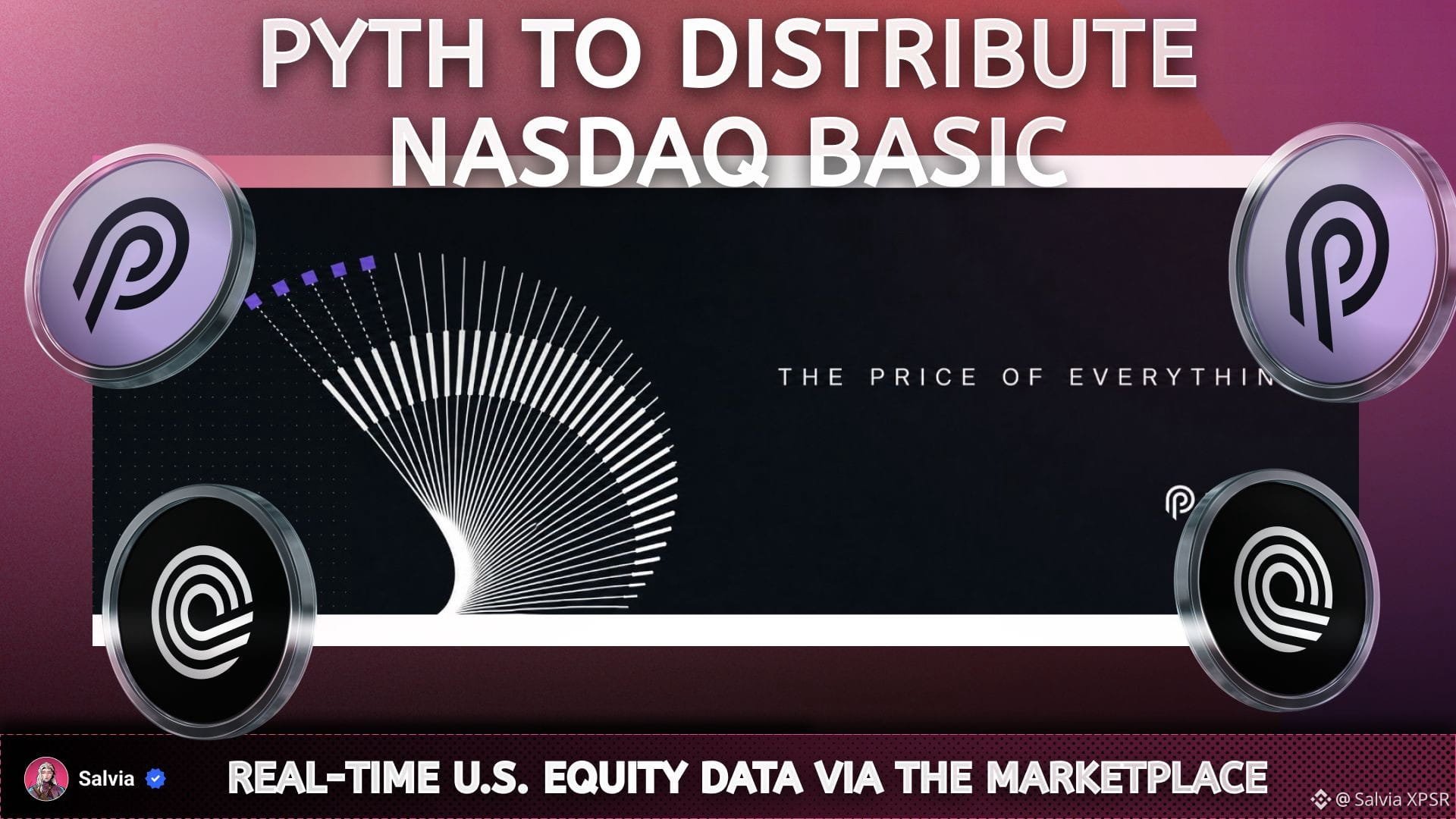
Nasdaq Basic is headed through Pyth 🔥
$ONDO has brought tokenized U.S. stocks into the crypto conversation. $PYTH now has a different role in that market: Pyth has been approved to distribute Nasdaq Basic through its Data Marketplace.
Nasdaq Basic carries live bids, offers and trades for U.S. equities, along with official opening and closing prices. Those reference prices caught my eye.
They are used to value positions at the start and end of the trading day.
There is a licensing process behind the headline.
Clients contract directly with Nasdaq and need written approval before receiving the feed through Pyth. Nasdaq controls access to its data; Pyth gives it another route into financial software and blockchain-native applications.
I’d call the approval a meaningful distribution win.
I want to see which clients choose Pyth as their Nasdaq Basic provider next. That will show us how much demand this new route attracts.
#Altcoin Season#
Nasdaq Basic is headed through Pyth 🔥
$ONDO has brought tokenized U.S. stocks into the crypto conversation. $PYTH now has a different role in that market: Pyth has been approved to distribute Nasdaq Basic through its Data Marketplace.
Nasdaq Basic carries live bids, offers and trades for U.S. equities, along with official opening and closing prices. Those reference prices caught my eye.
They are used to value positions at the start and end of the trading day.
There is a licensing process behind the headline.
Clients contract directly with Nasdaq and need written approval before receiving the feed through Pyth. Nasdaq controls access to its data; Pyth gives it another route into financial software and blockchain-native applications.
I’d call the approval a meaningful distribution win.
I want to see which clients choose Pyth as their Nasdaq Basic provider next. That will show us how much demand this new route attracts.
#Altcoin Season#
$ONDO has brought tokenized U.S. stocks into the crypto conversation. $PYTH now has a different role in that market: Pyth has been approved to distribute Nasdaq Basic through its Data Marketplace.
Nasdaq Basic carries live bids, offers and trades for U.S. equities, along with official opening and closing prices. Those reference prices caught my eye.
They are used to value positions at the start and end of the trading day.
There is a licensing process behind the headline.
Clients contract directly with Nasdaq and need written approval before receiving the feed through Pyth. Nasdaq controls access to its data; Pyth gives it another route into financial software and blockchain-native applications.
I’d call the approval a meaningful distribution win.
I want to see which clients choose Pyth as their Nasdaq Basic provider next. That will show us how much demand this new route attracts.
#Altcoin Season#
59
·
--
查看翻譯
Don't Get Tricked By The Pump 📈
We've all seen a token pumping, felt like we were missing out and considered jumping in before the move got away from us.
That's exactly where having automated decision tools can save you from a bad trade.
$QNT has plenty of reasons to look interesting right now, with recent institutional announcements helping create buzz around the token.
But when Pear Protocol's free Agent Pear checked the actual setup, the data wasn't nearly as exciting.
QNT was trading below its 50-day moving average, RSI was sitting around 43, and Pear's pair-signal engine couldn't find a reliable mean-reverting hedge with enough statistical evidence to recommend a high-conviction pair trade.
So instead of seeing a hot token and automatically finding a reason to trade it, Pear found a reason not to.
I'd much rather have an AI that does that instead of telling me what it thinks I want to hear.
And when the data does support a trade, non-custodial execution happens through $HYPE .
Make smarter trading decisions at app.pear.garden
#Altcoin Season#
Don't Get Tricked By The Pump 📈
We've all seen a token pumping, felt like we were missing out and considered jumping in before the move got away from us.
That's exactly where having automated decision tools can save you from a bad trade.
$QNT has plenty of reasons to look interesting right now, with recent institutional announcements helping create buzz around the token.
But when Pear Protocol's free Agent Pear checked the actual setup, the data wasn't nearly as exciting.
QNT was trading below its 50-day moving average, RSI was sitting around 43, and Pear's pair-signal engine couldn't find a reliable mean-reverting hedge with enough statistical evidence to recommend a high-conviction pair trade.
So instead of seeing a hot token and automatically finding a reason to trade it, Pear found a reason not to.
I'd much rather have an AI that does that instead of telling me what it thinks I want to hear.
And when the data does support a trade, non-custodial execution happens through $HYPE .
Make smarter trading decisions at app.pear.garden
#Altcoin Season#
We've all seen a token pumping, felt like we were missing out and considered jumping in before the move got away from us.
That's exactly where having automated decision tools can save you from a bad trade.
$QNT has plenty of reasons to look interesting right now, with recent institutional announcements helping create buzz around the token.
But when Pear Protocol's free Agent Pear checked the actual setup, the data wasn't nearly as exciting.
QNT was trading below its 50-day moving average, RSI was sitting around 43, and Pear's pair-signal engine couldn't find a reliable mean-reverting hedge with enough statistical evidence to recommend a high-conviction pair trade.
So instead of seeing a hot token and automatically finding a reason to trade it, Pear found a reason not to.
I'd much rather have an AI that does that instead of telling me what it thinks I want to hear.
And when the data does support a trade, non-custodial execution happens through $HYPE .
Make smarter trading decisions at app.pear.garden
#Altcoin Season#
52
·
--
最強的IP不需要自我介紹。
有一種文化IP,必須贏得關注。打造社羣。發展品牌。穩步擴展到新的市場。
還有那臺 DeLorean。
$PENGU 持有者知道什麼叫強IP。他們親身經歷過擴張的全過程。
$DMC 甚至跳過了“建設階段”。40年的全球認可在代幣到來之前就已經抵達。每個市場。每一代人。無需經營社羣,也能讓人們在意。
大多數品牌需要花幾十年才能抵達的那種起跑姿勢。
#Altcoin Season#
最強的IP不需要自我介紹。
有一種文化IP,必須贏得關注。打造社羣。發展品牌。穩步擴展到新的市場。
還有那臺 DeLorean。
$PENGU 持有者知道什麼叫強IP。他們親身經歷過擴張的全過程。
$DMC 甚至跳過了“建設階段”。40年的全球認可在代幣到來之前就已經抵達。每個市場。每一代人。無需經營社羣,也能讓人們在意。
大多數品牌需要花幾十年才能抵達的那種起跑姿勢。
#Altcoin Season#
有一種文化IP,必須贏得關注。打造社羣。發展品牌。穩步擴展到新的市場。
還有那臺 DeLorean。
$PENGU 持有者知道什麼叫強IP。他們親身經歷過擴張的全過程。
$DMC 甚至跳過了“建設階段”。40年的全球認可在代幣到來之前就已經抵達。每個市場。每一代人。無需經營社羣,也能讓人們在意。
大多數品牌需要花幾十年才能抵達的那種起跑姿勢。
#Altcoin Season#
1
1.2k
·
--
查看翻譯
The SEC Just Reframed Financial Privacy 🔐
$ZEC made selective privacy understandable to crypto markets. $VFY sits on the verification side of that same shift.
On September 23, SEC Commissioner Hester Peirce argued that Americans deserve both security and privacy.
These were her personal views rather than formal SEC policy, but the use cases were remarkably specific.
She described financial institutions collecting larger stores of names, addresses and transaction data while struggling to isolate illegal activity. Her alternative was attribute-based verification.
A customer could prove accredited-investor status or successful sanctions screening without exposing the private data behind that answer.
The identity application would create the credential and Zero Knowledge proof.
zkVerify could independently check whether that submitted proof is cryptographically valid.
The institution would receive a usable result without adding another copy of the customer’s documents to its database. The privacy comes from the credential system and proof design. zkVerify makes the resulting evidence practical to verify at scale.
VFY is used when that checking work is submitted to the network.
I think the regulatory conversation is moving closer to the problem zkVerify was designed to address.
If finance adopts proof-based compliance, independent verification becomes part of the institutional stack.
#Privacy #Altcoin Season#
The SEC Just Reframed Financial Privacy 🔐
$ZEC made selective privacy understandable to crypto markets. $VFY sits on the verification side of that same shift.
On September 23, SEC Commissioner Hester Peirce argued that Americans deserve both security and privacy.
These were her personal views rather than formal SEC policy, but the use cases were remarkably specific.
She described financial institutions collecting larger stores of names, addresses and transaction data while struggling to isolate illegal activity. Her alternative was attribute-based verification.
A customer could prove accredited-investor status or successful sanctions screening without exposing the private data behind that answer.
The identity application would create the credential and Zero Knowledge proof.
zkVerify could independently check whether that submitted proof is cryptographically valid.
The institution would receive a usable result without adding another copy of the customer’s documents to its database. The privacy comes from the credential system and proof design. zkVerify makes the resulting evidence practical to verify at scale.
VFY is used when that checking work is submitted to the network.
I think the regulatory conversation is moving closer to the problem zkVerify was designed to address.
If finance adopts proof-based compliance, independent verification becomes part of the institutional stack.
#Privacy #Altcoin Season#
$ZEC made selective privacy understandable to crypto markets. $VFY sits on the verification side of that same shift.
On September 23, SEC Commissioner Hester Peirce argued that Americans deserve both security and privacy.
These were her personal views rather than formal SEC policy, but the use cases were remarkably specific.
She described financial institutions collecting larger stores of names, addresses and transaction data while struggling to isolate illegal activity. Her alternative was attribute-based verification.
A customer could prove accredited-investor status or successful sanctions screening without exposing the private data behind that answer.
The identity application would create the credential and Zero Knowledge proof.
zkVerify could independently check whether that submitted proof is cryptographically valid.
The institution would receive a usable result without adding another copy of the customer’s documents to its database. The privacy comes from the credential system and proof design. zkVerify makes the resulting evidence practical to verify at scale.
VFY is used when that checking work is submitted to the network.
I think the regulatory conversation is moving closer to the problem zkVerify was designed to address.
If finance adopts proof-based compliance, independent verification becomes part of the institutional stack.
#Privacy #Altcoin Season#
54
·
--
查看翻譯
Hypercall Just Entered A New Volume Regime 🔥
$LINK shows how quickly an infrastructure narrative strengthens once usage becomes measurable.
$SYN is reaching that stage through Hypercall.
The latest venue data shows approximately $398.77M in notional options volume over seven days.
Hypercall’s displayed all-time volume was approximately $459.11M in the same snapshot.
That means roughly 87% of the venue’s recorded volume arrived during a single week.
This is more than a temporary increase from a quiet baseline. It shows Hypercall can process activity at a completely different scale when liquidity and demand align.
The next bullish confirmation would be retention. If Hypercall sustains even part of this pace, the market will have to evaluate SYN against a much larger operating footprint.
#DeFi #AltcoinSeason
Hypercall Just Entered A New Volume Regime 🔥
$LINK shows how quickly an infrastructure narrative strengthens once usage becomes measurable.
$SYN is reaching that stage through Hypercall.
The latest venue data shows approximately $398.77M in notional options volume over seven days.
Hypercall’s displayed all-time volume was approximately $459.11M in the same snapshot.
That means roughly 87% of the venue’s recorded volume arrived during a single week.
This is more than a temporary increase from a quiet baseline. It shows Hypercall can process activity at a completely different scale when liquidity and demand align.
The next bullish confirmation would be retention. If Hypercall sustains even part of this pace, the market will have to evaluate SYN against a much larger operating footprint.
#DeFi #AltcoinSeason
$LINK shows how quickly an infrastructure narrative strengthens once usage becomes measurable.
$SYN is reaching that stage through Hypercall.
The latest venue data shows approximately $398.77M in notional options volume over seven days.
Hypercall’s displayed all-time volume was approximately $459.11M in the same snapshot.
That means roughly 87% of the venue’s recorded volume arrived during a single week.
This is more than a temporary increase from a quiet baseline. It shows Hypercall can process activity at a completely different scale when liquidity and demand align.
The next bullish confirmation would be retention. If Hypercall sustains even part of this pace, the market will have to evaluate SYN against a much larger operating footprint.
#DeFi #AltcoinSeason
79
·
--
查看翻譯
The SYN Treasury Story Is Starting 👀
$ONDO reflects the growing connection between digital assets and traditional capital markets. $SYN may now be entering that conversation through SonicStrategy.
The company has proposed a private placement of up to 4.5M USD.
The financing would include up to 2.25M USD in cash subscriptions and another 2.25M USD in subscriptions paid with digital assets.
Those digital assets have not been identified as SYN, and the placement remains subject to approval and completion.
The existing 500,000 SYN purchase nevertheless makes the financing worth following.
If future proceeds or in-kind subscriptions expand the position, SonicStrategy could begin developing into a more meaningful public-market holder of SYN.
The treasury thesis is still early. The structure required to expand it is visible.
#Altcoin Season#
The SYN Treasury Story Is Starting 👀
$ONDO reflects the growing connection between digital assets and traditional capital markets. $SYN may now be entering that conversation through SonicStrategy.
The company has proposed a private placement of up to 4.5M USD.
The financing would include up to 2.25M USD in cash subscriptions and another 2.25M USD in subscriptions paid with digital assets.
Those digital assets have not been identified as SYN, and the placement remains subject to approval and completion.
The existing 500,000 SYN purchase nevertheless makes the financing worth following.
If future proceeds or in-kind subscriptions expand the position, SonicStrategy could begin developing into a more meaningful public-market holder of SYN.
The treasury thesis is still early. The structure required to expand it is visible.
#Altcoin Season#
$ONDO reflects the growing connection between digital assets and traditional capital markets. $SYN may now be entering that conversation through SonicStrategy.
The company has proposed a private placement of up to 4.5M USD.
The financing would include up to 2.25M USD in cash subscriptions and another 2.25M USD in subscriptions paid with digital assets.
Those digital assets have not been identified as SYN, and the placement remains subject to approval and completion.
The existing 500,000 SYN purchase nevertheless makes the financing worth following.
If future proceeds or in-kind subscriptions expand the position, SonicStrategy could begin developing into a more meaningful public-market holder of SYN.
The treasury thesis is still early. The structure required to expand it is visible.
#Altcoin Season#
55
·
--
查看翻譯
The Order Ticket Is Just A Sentence Now 🗣️
$BNKR and $GMX sit at opposite ends of the same problem. One built an interface for traders who already know what a stop order is. The other assumes you can just say it.
Bankr's execution layer takes plain English and turns it into the order types a trading desk would use. Swaps, limit orders, stop orders, DCA, TWAP, leveraged positions, Polymarket, NFTs and transfers, all from an instruction rather than a form.
The part that gets underrated is which order types made the list.
DCA and TWAP are not beginner features. They are the tools you reach for in DeFi when size is a problem and you do not want to move the price against yourself. Putting them behind a sentence rather than a configuration screen changes who can use them, not what they do.
That is the real accessibility argument in this category, and it is narrower than the marketing version. Natural language does not make a bad trade good. It removes the step where someone who understood the trade gave up on the interface.
The caveat sits in the same place as the benefit. An ambiguous instruction gets interpreted, and an interpreted order is still an order. Precision in the sentence now does the work the form used to do.
Say what you mean. That was always the requirement. It just used to be enforced by dropdowns.
#DeFi #Trading
The Order Ticket Is Just A Sentence Now 🗣️
$BNKR and $GMX sit at opposite ends of the same problem. One built an interface for traders who already know what a stop order is. The other assumes you can just say it.
Bankr's execution layer takes plain English and turns it into the order types a trading desk would use. Swaps, limit orders, stop orders, DCA, TWAP, leveraged positions, Polymarket, NFTs and transfers, all from an instruction rather than a form.
The part that gets underrated is which order types made the list.
DCA and TWAP are not beginner features. They are the tools you reach for in DeFi when size is a problem and you do not want to move the price against yourself. Putting them behind a sentence rather than a configuration screen changes who can use them, not what they do.
That is the real accessibility argument in this category, and it is narrower than the marketing version. Natural language does not make a bad trade good. It removes the step where someone who understood the trade gave up on the interface.
The caveat sits in the same place as the benefit. An ambiguous instruction gets interpreted, and an interpreted order is still an order. Precision in the sentence now does the work the form used to do.
Say what you mean. That was always the requirement. It just used to be enforced by dropdowns.
#DeFi #Trading
$BNKR and $GMX sit at opposite ends of the same problem. One built an interface for traders who already know what a stop order is. The other assumes you can just say it.
Bankr's execution layer takes plain English and turns it into the order types a trading desk would use. Swaps, limit orders, stop orders, DCA, TWAP, leveraged positions, Polymarket, NFTs and transfers, all from an instruction rather than a form.
The part that gets underrated is which order types made the list.
DCA and TWAP are not beginner features. They are the tools you reach for in DeFi when size is a problem and you do not want to move the price against yourself. Putting them behind a sentence rather than a configuration screen changes who can use them, not what they do.
That is the real accessibility argument in this category, and it is narrower than the marketing version. Natural language does not make a bad trade good. It removes the step where someone who understood the trade gave up on the interface.
The caveat sits in the same place as the benefit. An ambiguous instruction gets interpreted, and an interpreted order is still an order. Precision in the sentence now does the work the form used to do.
Say what you mean. That was always the requirement. It just used to be enforced by dropdowns.
#DeFi #Trading
69
·
--
查看翻譯
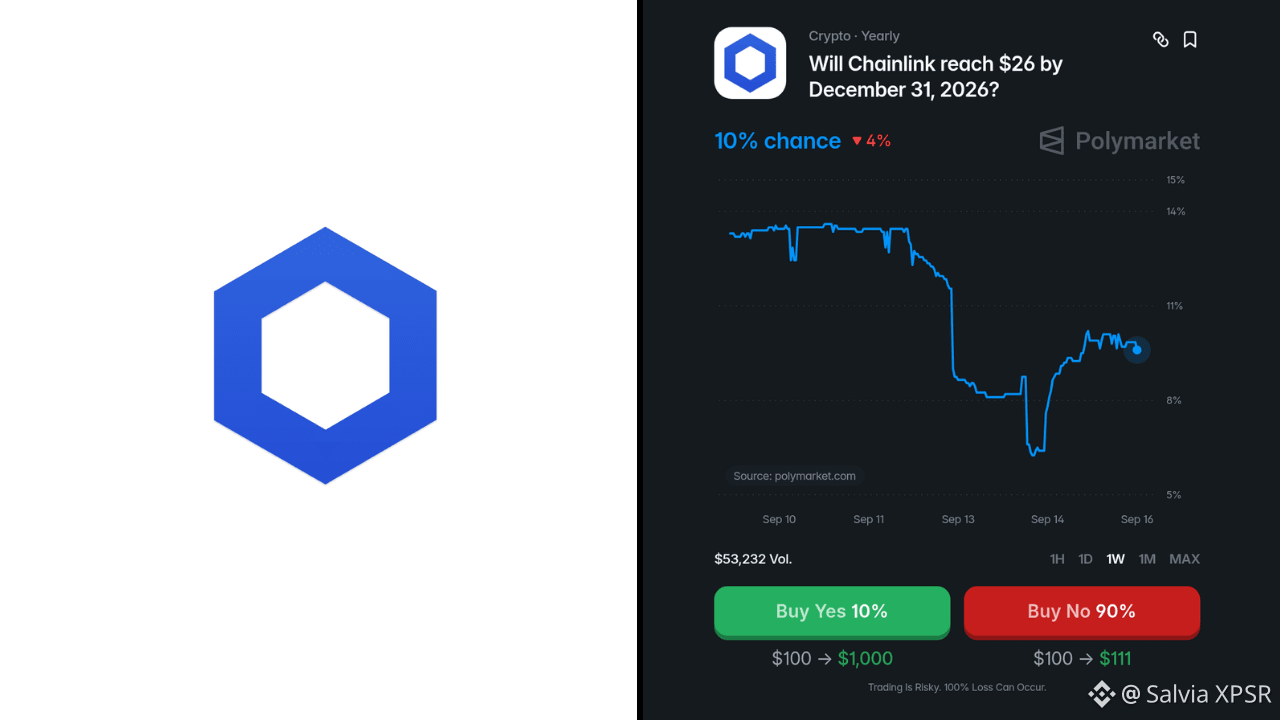
Can $LINK really hit $26? 📈
10% on Yes after another move lower.
I'm buying the long shot.
LINK does not need to hold $26 for months. For a price-target prediction, what matters is whether the qualifying price condition is reached before the deadline.
That difference is why I'm interested.
And 10% is the magic number where the payout becomes very easy to visualize.
Roughly $10 bought around 10% represents about $100 if Yes ultimately resolves, before fees and execution differences.
That's approximately $90 of potential profit if I get the call right.
Obviously the market only offers that payout because nine out of ten probability points are currently sitting against me.
But that's exactly why I like it.
One aggressive altcoin rotation could change the entire conversation.
And I don't have to wait for $26 either.
If Chainlink momentum pushes this prediction from 10% to 25%, I can exit the Polymarket position beforehand and take the repricing.
That's much more interesting to me than simply buying another chart and hoping.
I know my target.
I know my deadline.
I know what the crowd thinks.
Now I choose a side.
Yes.
#Altcoin Season#
Can $LINK really hit $26? 📈
10% on Yes after another move lower.
I'm buying the long shot.
LINK does not need to hold $26 for months. For a price-target prediction, what matters is whether the qualifying price condition is reached before the deadline.
That difference is why I'm interested.
And 10% is the magic number where the payout becomes very easy to visualize.
Roughly $10 bought around 10% represents about $100 if Yes ultimately resolves, before fees and execution differences.
That's approximately $90 of potential profit if I get the call right.
Obviously the market only offers that payout because nine out of ten probability points are currently sitting against me.
But that's exactly why I like it.
One aggressive altcoin rotation could change the entire conversation.
And I don't have to wait for $26 either.
If Chainlink momentum pushes this prediction from 10% to 25%, I can exit the Polymarket position beforehand and take the repricing.
That's much more interesting to me than simply buying another chart and hoping.
I know my target.
I know my deadline.
I know what the crowd thinks.
Now I choose a side.
Yes.
#Altcoin Season#
10% on Yes after another move lower.
I'm buying the long shot.
LINK does not need to hold $26 for months. For a price-target prediction, what matters is whether the qualifying price condition is reached before the deadline.
That difference is why I'm interested.
And 10% is the magic number where the payout becomes very easy to visualize.
Roughly $10 bought around 10% represents about $100 if Yes ultimately resolves, before fees and execution differences.
That's approximately $90 of potential profit if I get the call right.
Obviously the market only offers that payout because nine out of ten probability points are currently sitting against me.
But that's exactly why I like it.
One aggressive altcoin rotation could change the entire conversation.
And I don't have to wait for $26 either.
If Chainlink momentum pushes this prediction from 10% to 25%, I can exit the Polymarket position beforehand and take the repricing.
That's much more interesting to me than simply buying another chart and hoping.
I know my target.
I know my deadline.
I know what the crowd thinks.
Now I choose a side.
Yes.
#Altcoin Season#
55
·
--
了解你的風險:在進場前先做風險評估 🛡️
$INJ 促使複雜的衍生品成為鏈上交易版圖中熟悉的一部分。$SYN 透過 Hypercall 的明確風險選擇權,為這場對話再添一種工具。
當交易者買入「全額支付」的選擇權時,權利金決定該部位的最大可能風險。
市場即使朝不利方向變動,也不會在長期選擇權本身觸發保證金強制平倉。
但仍然存在明確的取捨。該選擇權有到期日,若所需的價格變動未能在時間內發生,整筆權利金都可能損失。
因此,選擇權與永續合約在不同情境中都很有用。
永續合約提供持續的方向性曝險,但要求交易者自行管理保證金與強制平倉風險。選擇權則讓交易者在進場前選擇時間範圍,並預先定義權利金所承擔的風險。
Hypercall 將這份選擇帶入 Hyperliquid 生態系。
對我而言,當產品能再提供交易者一項工具,而不是要求他們取代自己已在使用的工具時,就會變得更具吸引力。
#DeFi #Hyperliquid
了解你的風險:在進場前先做風險評估 🛡️
$INJ 促使複雜的衍生品成為鏈上交易版圖中熟悉的一部分。$SYN 透過 Hypercall 的明確風險選擇權,為這場對話再添一種工具。
當交易者買入「全額支付」的選擇權時,權利金決定該部位的最大可能風險。
市場即使朝不利方向變動,也不會在長期選擇權本身觸發保證金強制平倉。
但仍然存在明確的取捨。該選擇權有到期日,若所需的價格變動未能在時間內發生,整筆權利金都可能損失。
因此,選擇權與永續合約在不同情境中都很有用。
永續合約提供持續的方向性曝險,但要求交易者自行管理保證金與強制平倉風險。選擇權則讓交易者在進場前選擇時間範圍,並預先定義權利金所承擔的風險。
Hypercall 將這份選擇帶入 Hyperliquid 生態系。
對我而言,當產品能再提供交易者一項工具,而不是要求他們取代自己已在使用的工具時,就會變得更具吸引力。
#DeFi #Hyperliquid
$INJ 促使複雜的衍生品成為鏈上交易版圖中熟悉的一部分。$SYN 透過 Hypercall 的明確風險選擇權,為這場對話再添一種工具。
當交易者買入「全額支付」的選擇權時,權利金決定該部位的最大可能風險。
市場即使朝不利方向變動,也不會在長期選擇權本身觸發保證金強制平倉。
但仍然存在明確的取捨。該選擇權有到期日,若所需的價格變動未能在時間內發生,整筆權利金都可能損失。
因此,選擇權與永續合約在不同情境中都很有用。
永續合約提供持續的方向性曝險,但要求交易者自行管理保證金與強制平倉風險。選擇權則讓交易者在進場前選擇時間範圍,並預先定義權利金所承擔的風險。
Hypercall 將這份選擇帶入 Hyperliquid 生態系。
對我而言,當產品能再提供交易者一項工具,而不是要求他們取代自己已在使用的工具時,就會變得更具吸引力。
#DeFi #Hyperliquid
52
·
--
查看翻譯
Profit Without Chasing Pumps 🧘
Watching $ONDO and $FET pump without you is one of the easiest ways to start making bad trades.
That's exactly the kind of FOMO Pear Protocol's Agent Pear Vault can help take out of trading.
Instead of waiting for you to spot the next opportunity, the Vault continuously monitors the market for statistical pair-trading setups and can automatically size, enter, manage and exit qualifying trades.
So your capital can already be looking for opportunities while you're working, sleeping or watching everyone on CT celebrate a pump you missed.
And because the strategy trades relative-value opportunities instead of simply chasing whichever token is going up, you don't need to turn every market pump into an emergency buy.
That's probably one of my favorite parts of automated trading. You can miss the pump without having to miss the opportunity.
Put your FOMO away and autopilot your strategy at pear.garden
#Altcoin Season#
Profit Without Chasing Pumps 🧘
Watching $ONDO and $FET pump without you is one of the easiest ways to start making bad trades.
That's exactly the kind of FOMO Pear Protocol's Agent Pear Vault can help take out of trading.
Instead of waiting for you to spot the next opportunity, the Vault continuously monitors the market for statistical pair-trading setups and can automatically size, enter, manage and exit qualifying trades.
So your capital can already be looking for opportunities while you're working, sleeping or watching everyone on CT celebrate a pump you missed.
And because the strategy trades relative-value opportunities instead of simply chasing whichever token is going up, you don't need to turn every market pump into an emergency buy.
That's probably one of my favorite parts of automated trading. You can miss the pump without having to miss the opportunity.
Put your FOMO away and autopilot your strategy at pear.garden
#Altcoin Season#
Watching $ONDO and $FET pump without you is one of the easiest ways to start making bad trades.
That's exactly the kind of FOMO Pear Protocol's Agent Pear Vault can help take out of trading.
Instead of waiting for you to spot the next opportunity, the Vault continuously monitors the market for statistical pair-trading setups and can automatically size, enter, manage and exit qualifying trades.
So your capital can already be looking for opportunities while you're working, sleeping or watching everyone on CT celebrate a pump you missed.
And because the strategy trades relative-value opportunities instead of simply chasing whichever token is going up, you don't need to turn every market pump into an emergency buy.
That's probably one of my favorite parts of automated trading. You can miss the pump without having to miss the opportunity.
Put your FOMO away and autopilot your strategy at pear.garden
#Altcoin Season#
66
·
--
查看翻譯
One BlackRock headline creates two trades 👀
BlackRock saying AI compute could eventually be priced, financed and traded as tokenized assets gives me a pretty simple way to look at the AI trade from here.
$VVV is already catching the demand side. From September 17 to 23, VVV moved from $25.69 to $30.24, roughly +18%, with its market cap now around $1.46B.
Then there is $B3, which I see as the more asymmetric side of the same narrative.
B3 moved roughly +27% from its September 17 close to September 23, and today has already seen about $39M in volume against a ~$34M market cap. That is the kind of price action I watch when a new narrative starts finding a smaller token.
The thesis underneath it is B3IQ.
Instead of only accessing AI compute, B3IQ lets buyers own the physical NVIDIA machine, put as little as 30% down on select systems and keep 85% of realized gross revenue when B3 sells the available capacity.
So I see two sides of the same trade.
VVV gives me exposure to AI inference demand.
B3 gives me exposure to the idea that the GPU itself becomes a financeable asset.
If BlackRock keeps pushing compute into the digital-a$sset conversation, I expect both narratives to get more attention, but the smaller valuation on B3 is what makes that side especially interesting to me 🔥
#Altcoin Season# #RWA
One BlackRock headline creates two trades 👀
BlackRock saying AI compute could eventually be priced, financed and traded as tokenized assets gives me a pretty simple way to look at the AI trade from here.
$VVV is already catching the demand side. From September 17 to 23, VVV moved from $25.69 to $30.24, roughly +18%, with its market cap now around $1.46B.
Then there is $B3, which I see as the more asymmetric side of the same narrative.
B3 moved roughly +27% from its September 17 close to September 23, and today has already seen about $39M in volume against a ~$34M market cap. That is the kind of price action I watch when a new narrative starts finding a smaller token.
The thesis underneath it is B3IQ.
Instead of only accessing AI compute, B3IQ lets buyers own the physical NVIDIA machine, put as little as 30% down on select systems and keep 85% of realized gross revenue when B3 sells the available capacity.
So I see two sides of the same trade.
VVV gives me exposure to AI inference demand.
B3 gives me exposure to the idea that the GPU itself becomes a financeable asset.
If BlackRock keeps pushing compute into the digital-a$sset conversation, I expect both narratives to get more attention, but the smaller valuation on B3 is what makes that side especially interesting to me 🔥
#Altcoin Season# #RWA
BlackRock saying AI compute could eventually be priced, financed and traded as tokenized assets gives me a pretty simple way to look at the AI trade from here.
$VVV is already catching the demand side. From September 17 to 23, VVV moved from $25.69 to $30.24, roughly +18%, with its market cap now around $1.46B.
Then there is $B3, which I see as the more asymmetric side of the same narrative.
B3 moved roughly +27% from its September 17 close to September 23, and today has already seen about $39M in volume against a ~$34M market cap. That is the kind of price action I watch when a new narrative starts finding a smaller token.
The thesis underneath it is B3IQ.
Instead of only accessing AI compute, B3IQ lets buyers own the physical NVIDIA machine, put as little as 30% down on select systems and keep 85% of realized gross revenue when B3 sells the available capacity.
So I see two sides of the same trade.
VVV gives me exposure to AI inference demand.
B3 gives me exposure to the idea that the GPU itself becomes a financeable asset.
If BlackRock keeps pushing compute into the digital-a$sset conversation, I expect both narratives to get more attention, but the smaller valuation on B3 is what makes that side especially interesting to me 🔥
#Altcoin Season# #RWA
52
·
--
倉位規模應符合你的需求 🎯
UNI 生態系統讓靈活的交易規模在 DeFi 中變得司空見慣。
$SYN 通過 Hypercall 將這種靈活性帶到與股票掛鉤的期權中。
標準的美國股票期權合約通常代表 100 股。若期權報價爲每股 2.50 美元,那麼購買一份合約的成本爲 250 美元(不含費用)。
這種乘數可能會讓一個更小的交易想法,比最初預期的更昂貴才能表達出來。
Hypercall 支持約從 1 美元起的分數倉位。
交易者可以選擇更小的權利金投入,同時仍能查看合約的行權價、到期日和收益情況。
更小的規模並不會消除風險。已購買的期權可能到期一文不值,而報價條款仍然很重要。
改變的是:某個人需要爲單個倉位投入的資金量。
Hypercall 在 Hyperliquid 上爲其期權市場帶來靈活的倉位規模,讓 SYN 的故事帶來明確的用戶價值。
#DeFi #Hyperliquid
倉位規模應符合你的需求 🎯
UNI 生態系統讓靈活的交易規模在 DeFi 中變得司空見慣。
$SYN 通過 Hypercall 將這種靈活性帶到與股票掛鉤的期權中。
標準的美國股票期權合約通常代表 100 股。若期權報價爲每股 2.50 美元,那麼購買一份合約的成本爲 250 美元(不含費用)。
這種乘數可能會讓一個更小的交易想法,比最初預期的更昂貴才能表達出來。
Hypercall 支持約從 1 美元起的分數倉位。
交易者可以選擇更小的權利金投入,同時仍能查看合約的行權價、到期日和收益情況。
更小的規模並不會消除風險。已購買的期權可能到期一文不值,而報價條款仍然很重要。
改變的是:某個人需要爲單個倉位投入的資金量。
Hypercall 在 Hyperliquid 上爲其期權市場帶來靈活的倉位規模,讓 SYN 的故事帶來明確的用戶價值。
#DeFi #Hyperliquid
UNI 生態系統讓靈活的交易規模在 DeFi 中變得司空見慣。
$SYN 通過 Hypercall 將這種靈活性帶到與股票掛鉤的期權中。
標準的美國股票期權合約通常代表 100 股。若期權報價爲每股 2.50 美元,那麼購買一份合約的成本爲 250 美元(不含費用)。
這種乘數可能會讓一個更小的交易想法,比最初預期的更昂貴才能表達出來。
Hypercall 支持約從 1 美元起的分數倉位。
交易者可以選擇更小的權利金投入,同時仍能查看合約的行權價、到期日和收益情況。
更小的規模並不會消除風險。已購買的期權可能到期一文不值,而報價條款仍然很重要。
改變的是:某個人需要爲單個倉位投入的資金量。
Hypercall 在 Hyperliquid 上爲其期權市場帶來靈活的倉位規模,讓 SYN 的故事帶來明確的用戶價值。
#DeFi #Hyperliquid
80
·
--
從你的加密錢包獲取股票期權 📱
$ONDO 將傳統資產引入鏈上金融。通過 $SYN,Hypercall 的期權市場將目光投向圍繞熟悉股票的“超調用”(Hypercall)式期權。
當交易者可以選擇他們想要如何暴露在某項資產之上時,RWA 機會就會變得更加有趣。
股票視角可能關注下週的財報、短期的回調,或需要數天時間才能發展的一次行情。不同的視角需要不同的合約。
Hypercall 把這種選擇帶進了它的期權界面。
以 NVDA 的交易爲例,流程從標的資產以及可用的到期時間開始。在選擇倉位規模之前,交易者可以查看行權價、權利金和到期收益。
分割合約允許小額持倉,資金規模可從約 1 美元起。平臺也支持單次買入期權或賣出期權之外的策略。
交易者可以瀏覽期權鏈,並決定現有合約是否符合自己的看法。
對我來說,這讓 Hypercall 在 DeFi 裏的位置更容易理解。該產品爲 SYN 的論點提供了可落地的構建基礎。
#DeFi
從你的加密錢包獲取股票期權 📱
$ONDO 將傳統資產引入鏈上金融。通過 $SYN,Hypercall 的期權市場將目光投向圍繞熟悉股票的“超調用”(Hypercall)式期權。
當交易者可以選擇他們想要如何暴露在某項資產之上時,RWA 機會就會變得更加有趣。
股票視角可能關注下週的財報、短期的回調,或需要數天時間才能發展的一次行情。不同的視角需要不同的合約。
Hypercall 把這種選擇帶進了它的期權界面。
以 NVDA 的交易爲例,流程從標的資產以及可用的到期時間開始。在選擇倉位規模之前,交易者可以查看行權價、權利金和到期收益。
分割合約允許小額持倉,資金規模可從約 1 美元起。平臺也支持單次買入期權或賣出期權之外的策略。
交易者可以瀏覽期權鏈,並決定現有合約是否符合自己的看法。
對我來說,這讓 Hypercall 在 DeFi 裏的位置更容易理解。該產品爲 SYN 的論點提供了可落地的構建基礎。
#DeFi
$ONDO 將傳統資產引入鏈上金融。通過 $SYN,Hypercall 的期權市場將目光投向圍繞熟悉股票的“超調用”(Hypercall)式期權。
當交易者可以選擇他們想要如何暴露在某項資產之上時,RWA 機會就會變得更加有趣。
股票視角可能關注下週的財報、短期的回調,或需要數天時間才能發展的一次行情。不同的視角需要不同的合約。
Hypercall 把這種選擇帶進了它的期權界面。
以 NVDA 的交易爲例,流程從標的資產以及可用的到期時間開始。在選擇倉位規模之前,交易者可以查看行權價、權利金和到期收益。
分割合約允許小額持倉,資金規模可從約 1 美元起。平臺也支持單次買入期權或賣出期權之外的策略。
交易者可以瀏覽期權鏈,並決定現有合約是否符合自己的看法。
對我來說,這讓 Hypercall 在 DeFi 裏的位置更容易理解。該產品爲 SYN 的論點提供了可落地的構建基礎。
#DeFi
60
·
--
Sui 剛剛將非洲支付中的 Gas 清除 🌍
$SUI 已作爲在尼日利亞爲 Daya 提供的結算基礎設施上線。
使用 Daya 的企業可以在跨境轉移所支持的穩定幣,而無需獲取或持有 SUI 來支付網絡費用。
該集成已經在 Daya Business、Daya Pro 及其開發者 API 中運行。
這些產品涵蓋支付、流動性、匯款、資金管理以及 fintech 集成。
隨着更多本地貨幣通道上線,計劃擴展至南非、加納和肯尼亞。
對終端用戶而言,區塊鏈的複雜性開始消失。
對 Sui 而言,每一家使用 Daya 的企業,都是無 Gas 穩定幣基礎設施能夠支持真實商業活動的證據。
這就是我想看到的採用模式。
網絡在底層運行,而企業只需要獲得更快、更便宜的金融服務。
#Altcoin Season# #DeFi
Sui 剛剛將非洲支付中的 Gas 清除 🌍
$SUI 已作爲在尼日利亞爲 Daya 提供的結算基礎設施上線。
使用 Daya 的企業可以在跨境轉移所支持的穩定幣,而無需獲取或持有 SUI 來支付網絡費用。
該集成已經在 Daya Business、Daya Pro 及其開發者 API 中運行。
這些產品涵蓋支付、流動性、匯款、資金管理以及 fintech 集成。
隨着更多本地貨幣通道上線,計劃擴展至南非、加納和肯尼亞。
對終端用戶而言,區塊鏈的複雜性開始消失。
對 Sui 而言,每一家使用 Daya 的企業,都是無 Gas 穩定幣基礎設施能夠支持真實商業活動的證據。
這就是我想看到的採用模式。
網絡在底層運行,而企業只需要獲得更快、更便宜的金融服務。
#Altcoin Season# #DeFi
$SUI 已作爲在尼日利亞爲 Daya 提供的結算基礎設施上線。
使用 Daya 的企業可以在跨境轉移所支持的穩定幣,而無需獲取或持有 SUI 來支付網絡費用。
該集成已經在 Daya Business、Daya Pro 及其開發者 API 中運行。
這些產品涵蓋支付、流動性、匯款、資金管理以及 fintech 集成。
隨着更多本地貨幣通道上線,計劃擴展至南非、加納和肯尼亞。
對終端用戶而言,區塊鏈的複雜性開始消失。
對 Sui 而言,每一家使用 Daya 的企業,都是無 Gas 穩定幣基礎設施能夠支持真實商業活動的證據。
這就是我想看到的採用模式。
網絡在底層運行,而企業只需要獲得更快、更便宜的金融服務。
#Altcoin Season# #DeFi
57
·
--
我會停止把這件事只稱作“預言機更新”🧠
圍繞 $PYTH 的更大故事,是分發(distribution)。$SOL 讓加密用戶也覺得快速金融應用很“正常”,而現在 Pyth 正在把這些應用、金融科技(fintech)、交易場所以及 RWA 產品所需要的底層數據層推向前臺。
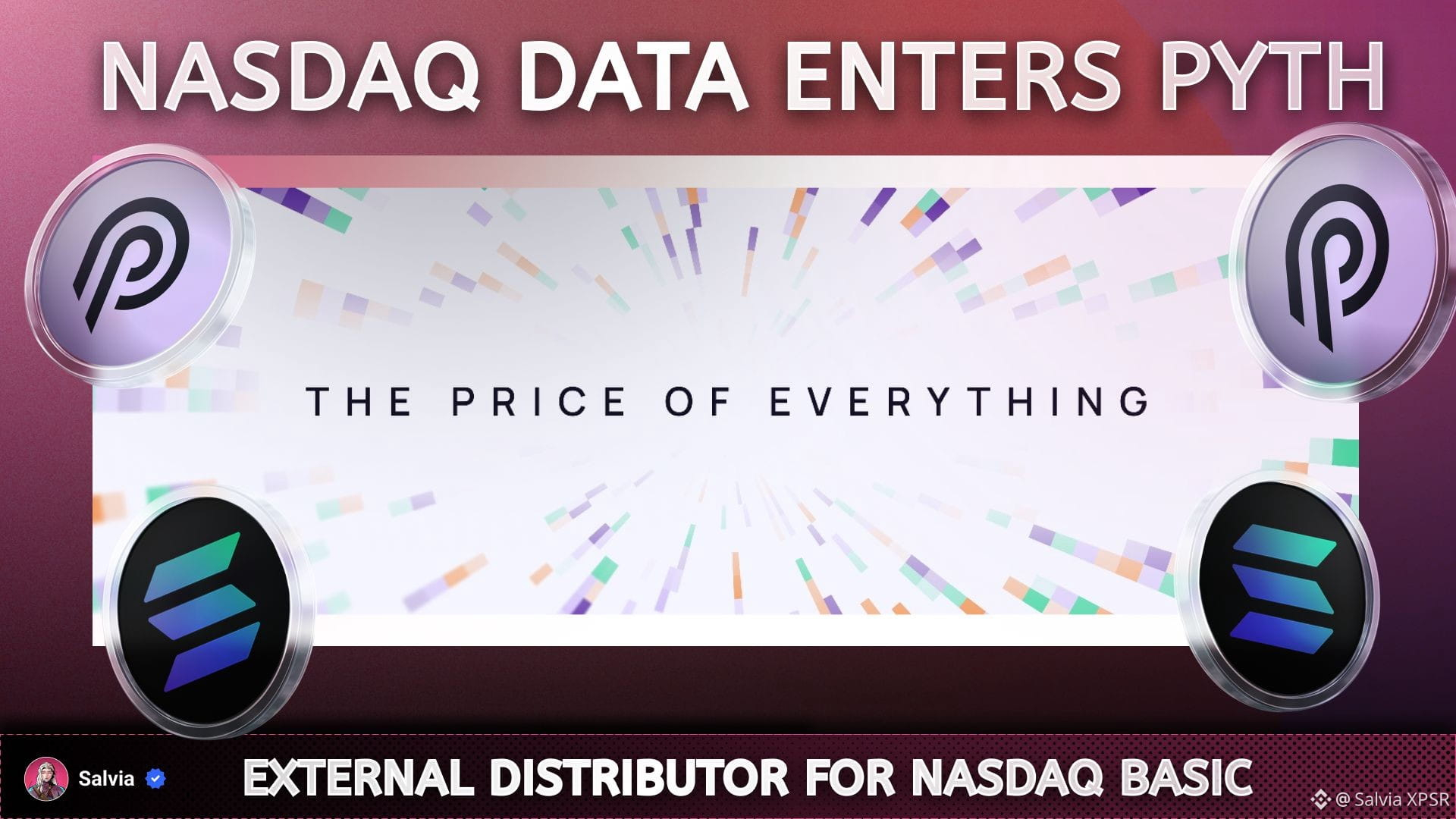
對於獲得批准的客戶,只要他們與納斯達克(Nasdaq)直接簽約授權,就可以通過 Pyth 的數據市場(Data Marketplace)獲得 Nasdaq Basic。
這一點很關鍵,因爲 Nasdaq Basic 並不是什麼小衆的加密數據集。它是面向美國市場的實時股票行情數據,服務於經紀商、銀行、金融科技平臺以及投資應用等方方面面。
數據市場(Data Marketplace)才讓事情變得有意思。
出版方可以通過一次集成來分發專有數據,同時保留署名(attribution),並保留商業控制權。客戶則會獲得一條爲“軟件原生目的地”設計的渠道,而不是隻適用於傳統的市場數據通路。
這對於 Pyth 來說,是一個真正的品類擴張。
Pyth Pro 已經擁有 3,500+ 條數據源(feeds)。Pyth 有 138+ 個第一方(first-party)出版方。Pyth Indices 在 8 月實現了 159 萬美元 ARR。Terminal 在一個月內帶來了 90,850 位訪客。
通過市場把 Nasdaq Basic 引入,更是增加了一種新的“論據點”。
市場數據業務不再只是概念。Pyth 正在打造機構真正能用的產品,而 $PYTH 似乎仍未完全跟上公司層面的戰略方向。
#Altcoin Season#
我會停止把這件事只稱作“預言機更新”🧠
圍繞 $PYTH 的更大故事,是分發(distribution)。$SOL 讓加密用戶也覺得快速金融應用很“正常”,而現在 Pyth 正在把這些應用、金融科技(fintech)、交易場所以及 RWA 產品所需要的底層數據層推向前臺。
對於獲得批准的客戶,只要他們與納斯達克(Nasdaq)直接簽約授權,就可以通過 Pyth 的數據市場(Data Marketplace)獲得 Nasdaq Basic。
這一點很關鍵,因爲 Nasdaq Basic 並不是什麼小衆的加密數據集。它是面向美國市場的實時股票行情數據,服務於經紀商、銀行、金融科技平臺以及投資應用等方方面面。
數據市場(Data Marketplace)才讓事情變得有意思。
出版方可以通過一次集成來分發專有數據,同時保留署名(attribution),並保留商業控制權。客戶則會獲得一條爲“軟件原生目的地”設計的渠道,而不是隻適用於傳統的市場數據通路。
這對於 Pyth 來說,是一個真正的品類擴張。
Pyth Pro 已經擁有 3,500+ 條數據源(feeds)。Pyth 有 138+ 個第一方(first-party)出版方。Pyth Indices 在 8 月實現了 159 萬美元 ARR。Terminal 在一個月內帶來了 90,850 位訪客。
通過市場把 Nasdaq Basic 引入,更是增加了一種新的“論據點”。
市場數據業務不再只是概念。Pyth 正在打造機構真正能用的產品,而 $PYTH 似乎仍未完全跟上公司層面的戰略方向。
#Altcoin Season#
圍繞 $PYTH 的更大故事,是分發(distribution)。$SOL 讓加密用戶也覺得快速金融應用很“正常”,而現在 Pyth 正在把這些應用、金融科技(fintech)、交易場所以及 RWA 產品所需要的底層數據層推向前臺。
對於獲得批准的客戶,只要他們與納斯達克(Nasdaq)直接簽約授權,就可以通過 Pyth 的數據市場(Data Marketplace)獲得 Nasdaq Basic。
這一點很關鍵,因爲 Nasdaq Basic 並不是什麼小衆的加密數據集。它是面向美國市場的實時股票行情數據,服務於經紀商、銀行、金融科技平臺以及投資應用等方方面面。
數據市場(Data Marketplace)才讓事情變得有意思。
出版方可以通過一次集成來分發專有數據,同時保留署名(attribution),並保留商業控制權。客戶則會獲得一條爲“軟件原生目的地”設計的渠道,而不是隻適用於傳統的市場數據通路。
這對於 Pyth 來說,是一個真正的品類擴張。
Pyth Pro 已經擁有 3,500+ 條數據源(feeds)。Pyth 有 138+ 個第一方(first-party)出版方。Pyth Indices 在 8 月實現了 159 萬美元 ARR。Terminal 在一個月內帶來了 90,850 位訪客。
通過市場把 Nasdaq Basic 引入,更是增加了一種新的“論據點”。
市場數據業務不再只是概念。Pyth 正在打造機構真正能用的產品,而 $PYTH 似乎仍未完全跟上公司層面的戰略方向。
#Altcoin Season#
36
·
--
一個 70% 的周漲幅會帶來兩筆交易 👀
$NEAR 在七天內上漲超過 70%,讓交易者面對兩種截然不同的局面:動量交易者看到的可能仍有空間的突破,而另一些人則將其視爲一段已經延伸的走勢,並在看到走弱信號後再做另一側的交易。
我不會把這兩種觀點都當作自動成立的信號,因爲真正有用的信號是在第一次走勢之後纔出現。
如果價格在初始動量降溫後仍能繼續站穩,那麼延續的可能性仍然成立;而若無法守住,則會形成回撤的交易設置。
這就是今天的交易決策。
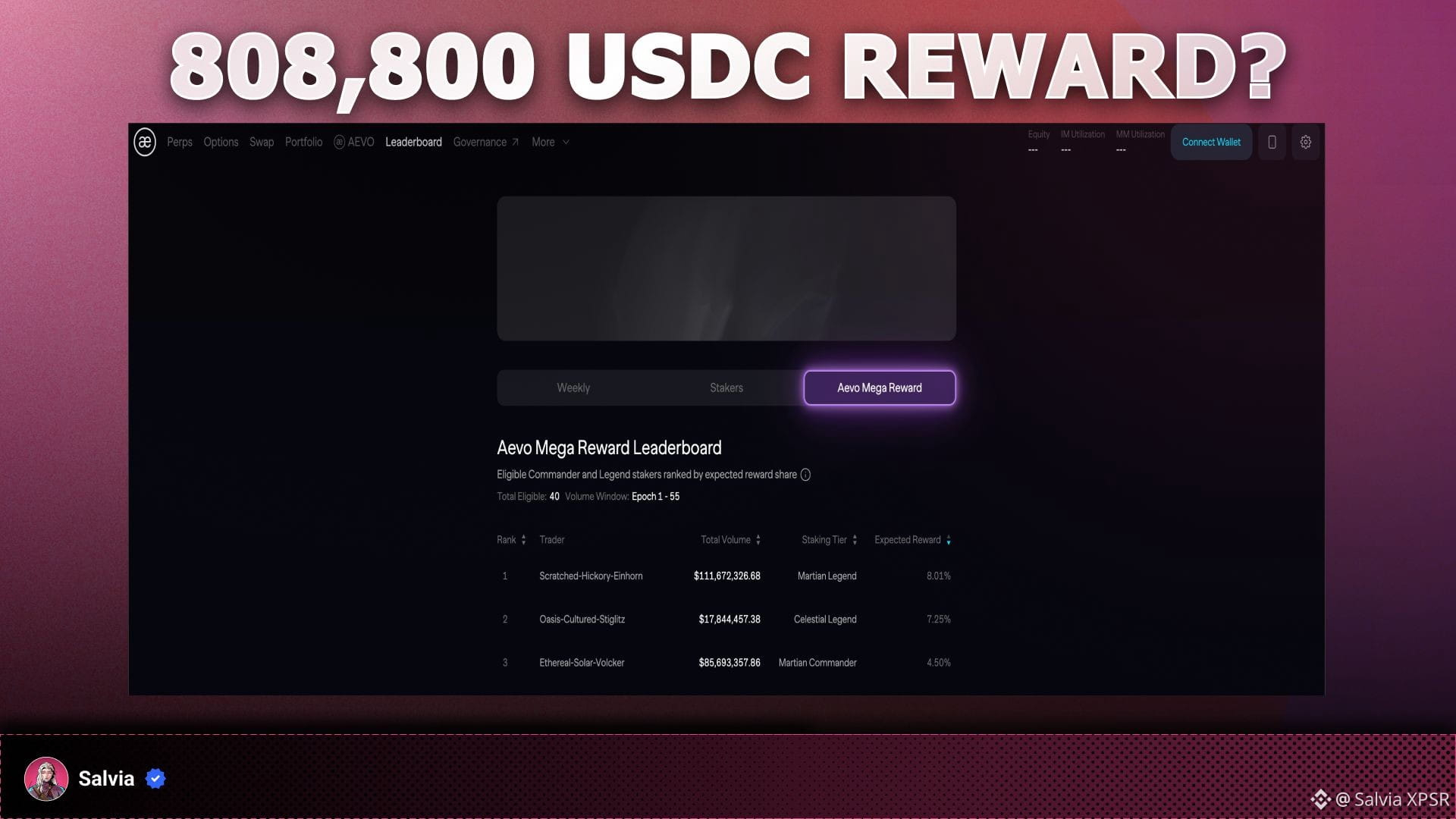
$AEVO 目前將 NEAR 列爲本週符合條件的 Perp Majors 之一,所以無論我選擇哪一邊交易,符合條件的交易量也會同步計入年終排行榜。
排行榜用於衡量向 Aevo 預計在年末分配 808,800 USDC 的累計 10m 交易量要求推進的進度。
對我來說,這意味着這筆交易能產生雙重價值。
該設置讓我現在就有事可做,而交易量也會持續累積到 12 月 🔥
#Altcoin Season#
一個 70% 的周漲幅會帶來兩筆交易 👀
$NEAR 在七天內上漲超過 70%,讓交易者面對兩種截然不同的局面:動量交易者看到的可能仍有空間的突破,而另一些人則將其視爲一段已經延伸的走勢,並在看到走弱信號後再做另一側的交易。
我不會把這兩種觀點都當作自動成立的信號,因爲真正有用的信號是在第一次走勢之後纔出現。
如果價格在初始動量降溫後仍能繼續站穩,那麼延續的可能性仍然成立;而若無法守住,則會形成回撤的交易設置。
這就是今天的交易決策。
$AEVO 目前將 NEAR 列爲本週符合條件的 Perp Majors 之一,所以無論我選擇哪一邊交易,符合條件的交易量也會同步計入年終排行榜。
排行榜用於衡量向 Aevo 預計在年末分配 808,800 USDC 的累計 10m 交易量要求推進的進度。
對我來說,這意味着這筆交易能產生雙重價值。
該設置讓我現在就有事可做,而交易量也會持續累積到 12 月 🔥
#Altcoin Season#
$NEAR 在七天內上漲超過 70%,讓交易者面對兩種截然不同的局面:動量交易者看到的可能仍有空間的突破,而另一些人則將其視爲一段已經延伸的走勢,並在看到走弱信號後再做另一側的交易。
我不會把這兩種觀點都當作自動成立的信號,因爲真正有用的信號是在第一次走勢之後纔出現。
如果價格在初始動量降溫後仍能繼續站穩,那麼延續的可能性仍然成立;而若無法守住,則會形成回撤的交易設置。
這就是今天的交易決策。
$AEVO 目前將 NEAR 列爲本週符合條件的 Perp Majors 之一,所以無論我選擇哪一邊交易,符合條件的交易量也會同步計入年終排行榜。
排行榜用於衡量向 Aevo 預計在年末分配 808,800 USDC 的累計 10m 交易量要求推進的進度。
對我來說,這意味着這筆交易能產生雙重價值。
該設置讓我現在就有事可做,而交易量也會持續累積到 12 月 🔥
#Altcoin Season#
50
·
--
Fhenix 以 32% 的價格看起來很便宜 🚨
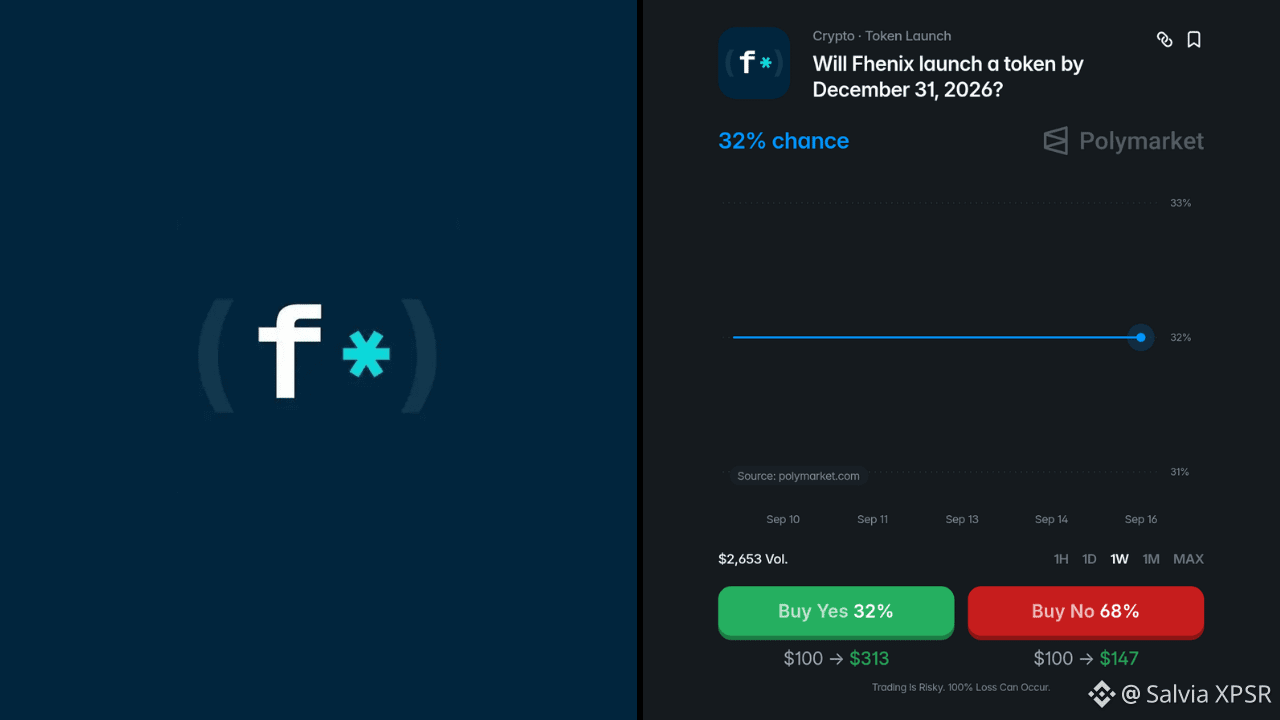
32% 的人選擇是,且幾乎只有 2.7K 美元成交。
這正是我喜歡去尋找非對稱 Polymarket 交易的地方。
我買入“是”。
Fhenix 仍在積極交付隱私基礎設施。它目前的產品圍繞 CoFHE 展開,將全同態加密帶入 EVM 應用,並且在 8 月發佈了另一項重要的代幣標準組件:將公開與保密的代幣功能結合起來。
但這並不能證明代幣今年一定會推出。
然而在 32% 的概率下,我不需要證明。
我需要的是市場低估發生的可能性。
成交量低這一點讓我更感興趣,因爲這個預測目前還沒有吸引多少資金。只要有一則有分量的公告,就能讓一個流動性很薄的市場非常迅速地發生變化。
我更願意把一些 $SOL 輪動到這種可能性上,而不是等敘事已經開始走熱之後,再去買另一個隨機的隱私代幣。
記住,清算並不是我唯一的退出方式。
如果在更強的代幣信號推動下,“是”的概率從 32% 走到 50%,我可以在之前賣出。
這就是遊戲。
在所有人都找到催化劑之前,先找到這個市場。
#Altcoin Season#
Fhenix 以 32% 的價格看起來很便宜 🚨
32% 的人選擇是,且幾乎只有 2.7K 美元成交。
這正是我喜歡去尋找非對稱 Polymarket 交易的地方。
我買入“是”。
Fhenix 仍在積極交付隱私基礎設施。它目前的產品圍繞 CoFHE 展開,將全同態加密帶入 EVM 應用,並且在 8 月發佈了另一項重要的代幣標準組件:將公開與保密的代幣功能結合起來。
但這並不能證明代幣今年一定會推出。
然而在 32% 的概率下,我不需要證明。
我需要的是市場低估發生的可能性。
成交量低這一點讓我更感興趣,因爲這個預測目前還沒有吸引多少資金。只要有一則有分量的公告,就能讓一個流動性很薄的市場非常迅速地發生變化。
我更願意把一些 $SOL 輪動到這種可能性上,而不是等敘事已經開始走熱之後,再去買另一個隨機的隱私代幣。
記住,清算並不是我唯一的退出方式。
如果在更強的代幣信號推動下,“是”的概率從 32% 走到 50%,我可以在之前賣出。
這就是遊戲。
在所有人都找到催化劑之前,先找到這個市場。
#Altcoin Season#
32% 的人選擇是,且幾乎只有 2.7K 美元成交。
這正是我喜歡去尋找非對稱 Polymarket 交易的地方。
我買入“是”。
Fhenix 仍在積極交付隱私基礎設施。它目前的產品圍繞 CoFHE 展開,將全同態加密帶入 EVM 應用,並且在 8 月發佈了另一項重要的代幣標準組件:將公開與保密的代幣功能結合起來。
但這並不能證明代幣今年一定會推出。
然而在 32% 的概率下,我不需要證明。
我需要的是市場低估發生的可能性。
成交量低這一點讓我更感興趣,因爲這個預測目前還沒有吸引多少資金。只要有一則有分量的公告,就能讓一個流動性很薄的市場非常迅速地發生變化。
我更願意把一些 $SOL 輪動到這種可能性上,而不是等敘事已經開始走熱之後,再去買另一個隨機的隱私代幣。
記住,清算並不是我唯一的退出方式。
如果在更強的代幣信號推動下,“是”的概率從 32% 走到 50%,我可以在之前賣出。
這就是遊戲。
在所有人都找到催化劑之前,先找到這個市場。
#Altcoin Season#
61
·
--
AI不應該運行這隻基金 🤖❌
熱點觀點:我不想讓一個自治代理去決定機構資本會發生什麼。
我希望它去完成決策之下的工作。
這也是爲什麼我覺得 Theoriq 推動的策展人(curator)模型,比“AI 管理一切”的敘事更有說服力。
人類會定義哪些場所是合格的、策略參數、集中度上限,以及應該觸發平倉(unwind)的條件。
然後 AI 可以 24/7 持續掃描那些人類不擅長盯的東西:利率、流動性、抵押品健康度、跨場所價差,以及投資組合狀態的變化。
Theoriq 當前的模型甚至更進一步:擬議交易會先根據政策進行驗證,通過 TEE 共識處理,並在資金移動之前針對實時投資組合進行模擬。
這種差異在去中心化的 AI 網絡(例如 $TAO )讓自治智能的能力大幅提升時會變得尤爲重要。
更好的模型不會消除判斷。
它們會提升一個優秀策展人能夠處理的信息量。
我認爲勝出的架構是:由人類決定什麼是可接受的,由機器確保在這些邊界之內不會遺漏任何東西。
#山寨幣季#
AI不應該運行這隻基金 🤖❌
熱點觀點:我不想讓一個自治代理去決定機構資本會發生什麼。
我希望它去完成決策之下的工作。
這也是爲什麼我覺得 Theoriq 推動的策展人(curator)模型,比“AI 管理一切”的敘事更有說服力。
人類會定義哪些場所是合格的、策略參數、集中度上限,以及應該觸發平倉(unwind)的條件。
然後 AI 可以 24/7 持續掃描那些人類不擅長盯的東西:利率、流動性、抵押品健康度、跨場所價差,以及投資組合狀態的變化。
Theoriq 當前的模型甚至更進一步:擬議交易會先根據政策進行驗證,通過 TEE 共識處理,並在資金移動之前針對實時投資組合進行模擬。
這種差異在去中心化的 AI 網絡(例如 $TAO )讓自治智能的能力大幅提升時會變得尤爲重要。
更好的模型不會消除判斷。
它們會提升一個優秀策展人能夠處理的信息量。
我認爲勝出的架構是:由人類決定什麼是可接受的,由機器確保在這些邊界之內不會遺漏任何東西。
#山寨幣季#
熱點觀點:我不想讓一個自治代理去決定機構資本會發生什麼。
我希望它去完成決策之下的工作。
這也是爲什麼我覺得 Theoriq 推動的策展人(curator)模型,比“AI 管理一切”的敘事更有說服力。
人類會定義哪些場所是合格的、策略參數、集中度上限,以及應該觸發平倉(unwind)的條件。
然後 AI 可以 24/7 持續掃描那些人類不擅長盯的東西:利率、流動性、抵押品健康度、跨場所價差,以及投資組合狀態的變化。
Theoriq 當前的模型甚至更進一步:擬議交易會先根據政策進行驗證,通過 TEE 共識處理,並在資金移動之前針對實時投資組合進行模擬。
這種差異在去中心化的 AI 網絡(例如 $TAO )讓自治智能的能力大幅提升時會變得尤爲重要。
更好的模型不會消除判斷。
它們會提升一個優秀策展人能夠處理的信息量。
我認爲勝出的架構是:由人類決定什麼是可接受的,由機器確保在這些邊界之內不會遺漏任何東西。
#山寨幣季#
65
登入以探索更多內容
加入幣安廣場中的全球加密貨幣用戶
⚡️ 獲取加密貨幣的最新和實用資訊。
💬 受到全球最大加密貨幣交易所的信任。
👍 發掘來自經過驗證創作者的真實見解。
電子郵件 / 電話號碼
熱門話題
比特币资金费率升至10%未平仓合约回升
105,081 次瀏覽
269 討論中
非農只增加 2.9 萬,失業率升到 4.2%,BTC 卻沒有立刻直線起飛。不是利多失效,而是市場可能已經把“弱就業=緊縮壓力下降”提前交易了一遍。
現在更值得盯的是倉位:BTC 永續年化資金費率已升至約 10%,未平倉合約回到約 65.3 萬枚 BTC。弱數據給了多頭理由,擁擠槓桿卻降低了容錯。若價格繼續站穩 8.6 萬並消化高費率,趨勢仍強;若費率不降、價格先跌回數據公佈後的震盪區,普通回踩也可能演變成多頭去槓桿。
我的處理:已有多單隻上移保護,不在消息後補第二筆;等費率回落或回踩確認。你現在更怕錯過上漲,還是更怕多頭太擠?
僅爲個人市場觀察,不構成投資建議。
$BTC #比特币资金费率升至10%未平仓合约回升 #比特币站上8.6万美元涨2.99%
老姚的加密人生
·4 人按讚
·39.5k 次瀏覽
比特币站上8.6万美元涨2.99%
209,357 次瀏覽
346 討論中
Zcash较9月峰值回落21%
59,974 次瀏覽
155 討論中