

Mathew Kinzy 1
45 貼文

Mathew Kinzy 1
舉報
封鎖用戶
0 關注
4 粉絲
0 點讚數
貼文
查看翻譯
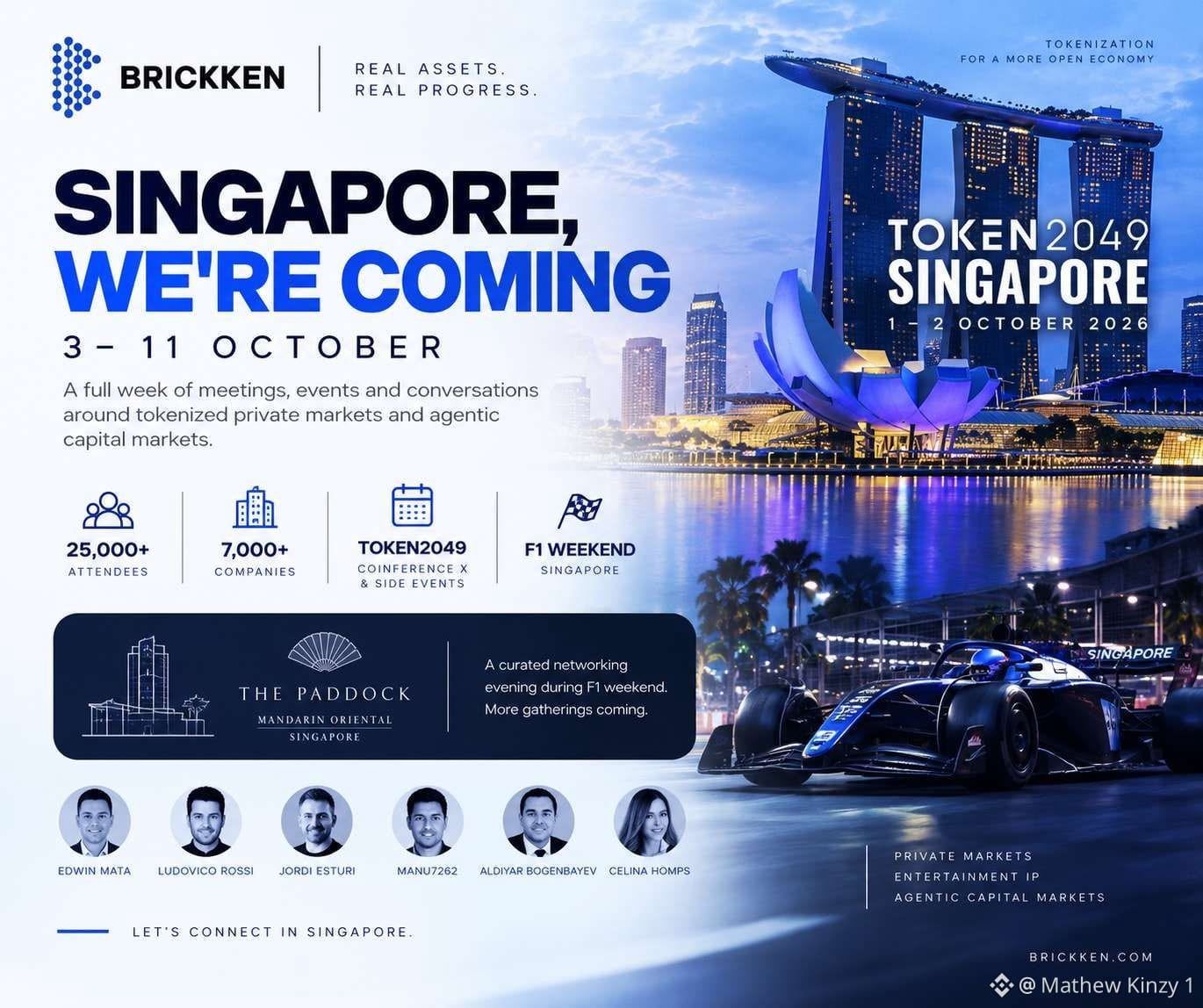
JUST IN 🇸🇬: BRICKKEN IS HEADING TO SINGAPORE
Brickken will be on the ground from October 3–11, joining one of the biggest weeks on the global crypto calendar.
TOKEN2049 Singapore alone expects 25,000+ attendees, 7,000+ companies and 300+ speakers at Marina Bay Sands on October 7–8.
Brickken’s week includes:
→ CoinFerenceX
→ TOKEN2049
→ Singapore side events
→ Conversations around tokenized private markets and agentic capital markets
→ The Paddock, Brickken’s curated gathering on October 10 during F1 weekend
From building tokenization infrastructure to taking the conversation directly to institutions and market participants globally, Singapore represents another major stop for the Brickken ecosystem.
RWA is moving beyond simply putting assets onchain.
The next conversation is about the infrastructure that makes tokenized capital markets actually work at scale.
$BKN #Brickken #RWA #Tokenization
JUST IN 🇸🇬: BRICKKEN IS HEADING TO SINGAPORE
Brickken will be on the ground from October 3–11, joining one of the biggest weeks on the global crypto calendar.
TOKEN2049 Singapore alone expects 25,000+ attendees, 7,000+ companies and 300+ speakers at Marina Bay Sands on October 7–8.
Brickken’s week includes:
→ CoinFerenceX
→ TOKEN2049
→ Singapore side events
→ Conversations around tokenized private markets and agentic capital markets
→ The Paddock, Brickken’s curated gathering on October 10 during F1 weekend
From building tokenization infrastructure to taking the conversation directly to institutions and market participants globally, Singapore represents another major stop for the Brickken ecosystem.
RWA is moving beyond simply putting assets onchain.
The next conversation is about the infrastructure that makes tokenized capital markets actually work at scale.
$BKN #Brickken #RWA #Tokenization
Brickken will be on the ground from October 3–11, joining one of the biggest weeks on the global crypto calendar.
TOKEN2049 Singapore alone expects 25,000+ attendees, 7,000+ companies and 300+ speakers at Marina Bay Sands on October 7–8.
Brickken’s week includes:
→ CoinFerenceX
→ TOKEN2049
→ Singapore side events
→ Conversations around tokenized private markets and agentic capital markets
→ The Paddock, Brickken’s curated gathering on October 10 during F1 weekend
From building tokenization infrastructure to taking the conversation directly to institutions and market participants globally, Singapore represents another major stop for the Brickken ecosystem.
RWA is moving beyond simply putting assets onchain.
The next conversation is about the infrastructure that makes tokenized capital markets actually work at scale.
$BKN #Brickken #RWA #Tokenization
65
查看翻譯
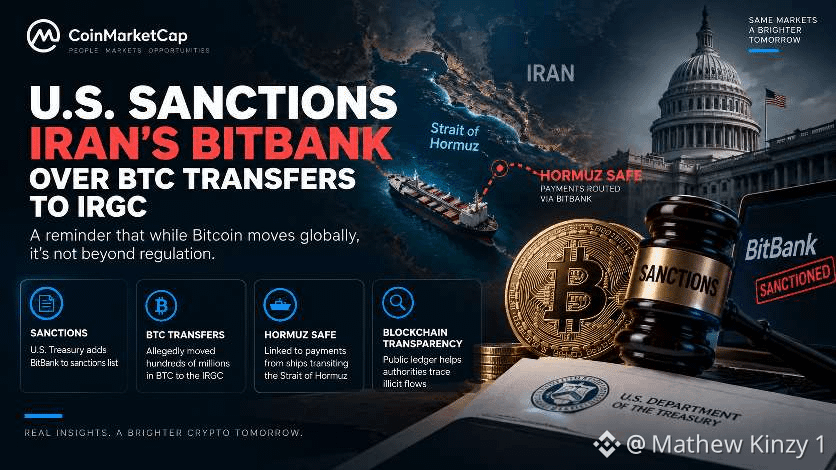
Bitcoin was designed to move without banks. That doesn't mean it moves beyond regulation.
The U.S. Treasury has sanctioned Iranian crypto exchange BitBank, alleging it was part of a network that transferred hundreds of millions of dollars in $BTC to the IRGC. Treasury says payments connected to the Hormuz Safe system were routed through the exchange.
What interests me is what this says about Bitcoin itself.
A permissionless network can move value globally, but its public ledger also creates a trail investigators can analyze. And once those funds interact with exchanges, custodians or other regulated infrastructure, sanctions enforcement can become much more practical.
So crypto's borderless nature doesn't automatically mean financial activity becomes invisible or unreachable.
As $BTC becomes more integrated into global finance, compliance and blockchain intelligence may become just as important as the infrastructure moving the money.
Does blockchain transparency ultimately make crypto harder to use for sanctions evasion than traditional financial networks?
Bitcoin was designed to move without banks. That doesn't mean it moves beyond regulation.
The U.S. Treasury has sanctioned Iranian crypto exchange BitBank, alleging it was part of a network that transferred hundreds of millions of dollars in $BTC to the IRGC. Treasury says payments connected to the Hormuz Safe system were routed through the exchange.
What interests me is what this says about Bitcoin itself.
A permissionless network can move value globally, but its public ledger also creates a trail investigators can analyze. And once those funds interact with exchanges, custodians or other regulated infrastructure, sanctions enforcement can become much more practical.
So crypto's borderless nature doesn't automatically mean financial activity becomes invisible or unreachable.
As $BTC becomes more integrated into global finance, compliance and blockchain intelligence may become just as important as the infrastructure moving the money.
Does blockchain transparency ultimately make crypto harder to use for sanctions evasion than traditional financial networks?
The U.S. Treasury has sanctioned Iranian crypto exchange BitBank, alleging it was part of a network that transferred hundreds of millions of dollars in $BTC to the IRGC. Treasury says payments connected to the Hormuz Safe system were routed through the exchange.
What interests me is what this says about Bitcoin itself.
A permissionless network can move value globally, but its public ledger also creates a trail investigators can analyze. And once those funds interact with exchanges, custodians or other regulated infrastructure, sanctions enforcement can become much more practical.
So crypto's borderless nature doesn't automatically mean financial activity becomes invisible or unreachable.
As $BTC becomes more integrated into global finance, compliance and blockchain intelligence may become just as important as the infrastructure moving the money.
Does blockchain transparency ultimately make crypto harder to use for sanctions evasion than traditional financial networks?
55
查看翻譯
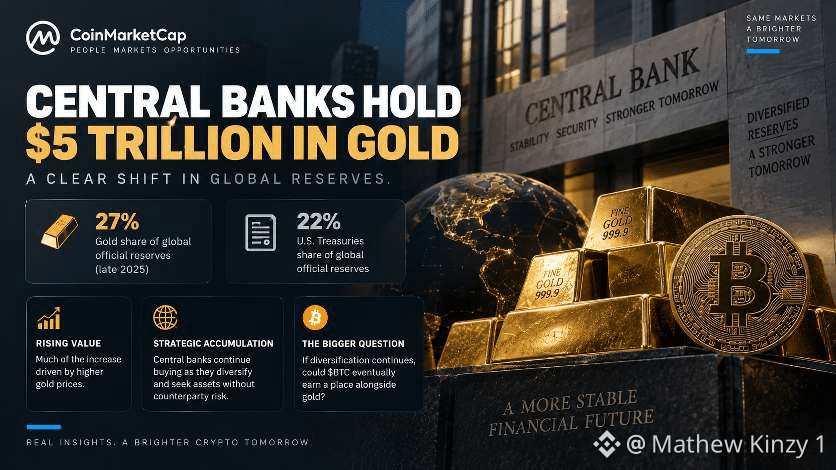
Central banks holding roughly $5 trillion in gold tells a bigger story than gold simply hitting new highs.
Gold reached about 27% of global official reserves by late 2025, overtaking U.S. Treasuries at roughly 22%. But much of that increase came from gold’s rising price, not purchases alone.
Still, central banks have continued accumulating gold as they diversify reserves and seek an asset without issuer or counterparty risk.
That makes the $BTC comparison interesting.
Bitcoin shares gold’s scarcity narrative, but becoming a serious reserve asset would also require deep liquidity, reliable custody and resilience during periods of global stress.
If reserve diversification continues, could $BTC eventually earn a place alongside gold?
Central banks holding roughly $5 trillion in gold tells a bigger story than gold simply hitting new highs.
Gold reached about 27% of global official reserves by late 2025, overtaking U.S. Treasuries at roughly 22%. But much of that increase came from gold’s rising price, not purchases alone.
Still, central banks have continued accumulating gold as they diversify reserves and seek an asset without issuer or counterparty risk.
That makes the $BTC comparison interesting.
Bitcoin shares gold’s scarcity narrative, but becoming a serious reserve asset would also require deep liquidity, reliable custody and resilience during periods of global stress.
If reserve diversification continues, could $BTC eventually earn a place alongside gold?
Gold reached about 27% of global official reserves by late 2025, overtaking U.S. Treasuries at roughly 22%. But much of that increase came from gold’s rising price, not purchases alone.
Still, central banks have continued accumulating gold as they diversify reserves and seek an asset without issuer or counterparty risk.
That makes the $BTC comparison interesting.
Bitcoin shares gold’s scarcity narrative, but becoming a serious reserve asset would also require deep liquidity, reliable custody and resilience during periods of global stress.
If reserve diversification continues, could $BTC eventually earn a place alongside gold?
63
查看翻譯
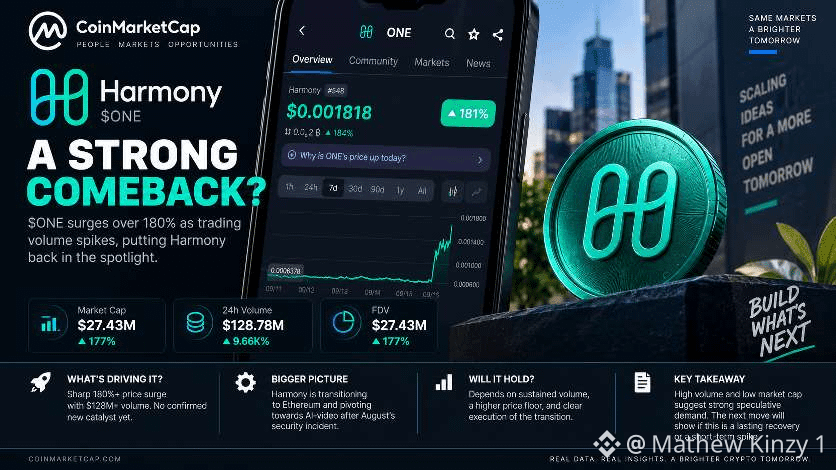
$ONE jumping more than 180% looks like a comeback on the chart. The story underneath it is much stranger.
Harmony exploded from roughly $0.00064 into the $0.0018 area on the chart, while 24-hour volume reached about $128.8M. That volume is enormous relative to the roughly $27.4M market cap shown on CoinMarketCap, which tells me this isn't a normal low-volatility recovery.
I went looking for the obvious catalyst. There doesn't appear to be one.
Recent market coverage also flagged Harmony among the day's biggest gainers without a confirmed fresh catalyst.
That makes the context behind the move even more important.
Harmony is going through one of the biggest transitions in its history. After August's security incident, where unauthorized $ONE was minted, the project proposed sunsetting its independent Layer 1 and migrating ONE to Ethereum while pivoting toward an AI-video initiative.
So this rally isn't happening after everything has returned to normal. It's happening while the future structure and utility of $ONE are still being worked out.
And that changes how I read the pump
With such a small market cap and unusually high turnover, speculative demand, short-term positioning and thinner liquidity can produce violent percentage moves. A 180% candle by itself doesn't prove that the market has fundamentally repriced Harmony
Can it hold?
I think the next part of the chart matters more than the pump itself. If $ONE can establish a higher trading range after volume cools, while the Ethereum migration gets clearer execution and exchange support, there would be more evidence that buyers are willing to hold rather than simply chase momentum
If volume disappears and price quickly gives back most of the move, this will look much more like a liquidity-driven spike
$ONE is up triple digits, but the real test starts after the candle
Do you see this as the market pricing in a second life for ONE, or simply traders chasing one of today's strongest momentum plays?
$ONE jumping more than 180% looks like a comeback on the chart. The story underneath it is much stranger.
Harmony exploded from roughly $0.00064 into the $0.0018 area on the chart, while 24-hour volume reached about $128.8M. That volume is enormous relative to the roughly $27.4M market cap shown on CoinMarketCap, which tells me this isn't a normal low-volatility recovery.
I went looking for the obvious catalyst. There doesn't appear to be one.
Recent market coverage also flagged Harmony among the day's biggest gainers without a confirmed fresh catalyst.
That makes the context behind the move even more important.
Harmony is going through one of the biggest transitions in its history. After August's security incident, where unauthorized $ONE was minted, the project proposed sunsetting its independent Layer 1 and migrating ONE to Ethereum while pivoting toward an AI-video initiative.
So this rally isn't happening after everything has returned to normal. It's happening while the future structure and utility of $ONE are still being worked out.
And that changes how I read the pump
With such a small market cap and unusually high turnover, speculative demand, short-term positioning and thinner liquidity can produce violent percentage moves. A 180% candle by itself doesn't prove that the market has fundamentally repriced Harmony
Can it hold?
I think the next part of the chart matters more than the pump itself. If $ONE can establish a higher trading range after volume cools, while the Ethereum migration gets clearer execution and exchange support, there would be more evidence that buyers are willing to hold rather than simply chase momentum
If volume disappears and price quickly gives back most of the move, this will look much more like a liquidity-driven spike
$ONE is up triple digits, but the real test starts after the candle
Do you see this as the market pricing in a second life for ONE, or simply traders chasing one of today's strongest momentum plays?
Harmony exploded from roughly $0.00064 into the $0.0018 area on the chart, while 24-hour volume reached about $128.8M. That volume is enormous relative to the roughly $27.4M market cap shown on CoinMarketCap, which tells me this isn't a normal low-volatility recovery.
I went looking for the obvious catalyst. There doesn't appear to be one.
Recent market coverage also flagged Harmony among the day's biggest gainers without a confirmed fresh catalyst.
That makes the context behind the move even more important.
Harmony is going through one of the biggest transitions in its history. After August's security incident, where unauthorized $ONE was minted, the project proposed sunsetting its independent Layer 1 and migrating ONE to Ethereum while pivoting toward an AI-video initiative.
So this rally isn't happening after everything has returned to normal. It's happening while the future structure and utility of $ONE are still being worked out.
And that changes how I read the pump
With such a small market cap and unusually high turnover, speculative demand, short-term positioning and thinner liquidity can produce violent percentage moves. A 180% candle by itself doesn't prove that the market has fundamentally repriced Harmony
Can it hold?
I think the next part of the chart matters more than the pump itself. If $ONE can establish a higher trading range after volume cools, while the Ethereum migration gets clearer execution and exchange support, there would be more evidence that buyers are willing to hold rather than simply chase momentum
If volume disappears and price quickly gives back most of the move, this will look much more like a liquidity-driven spike
$ONE is up triple digits, but the real test starts after the candle
Do you see this as the market pricing in a second life for ONE, or simply traders chasing one of today's strongest momentum plays?
28
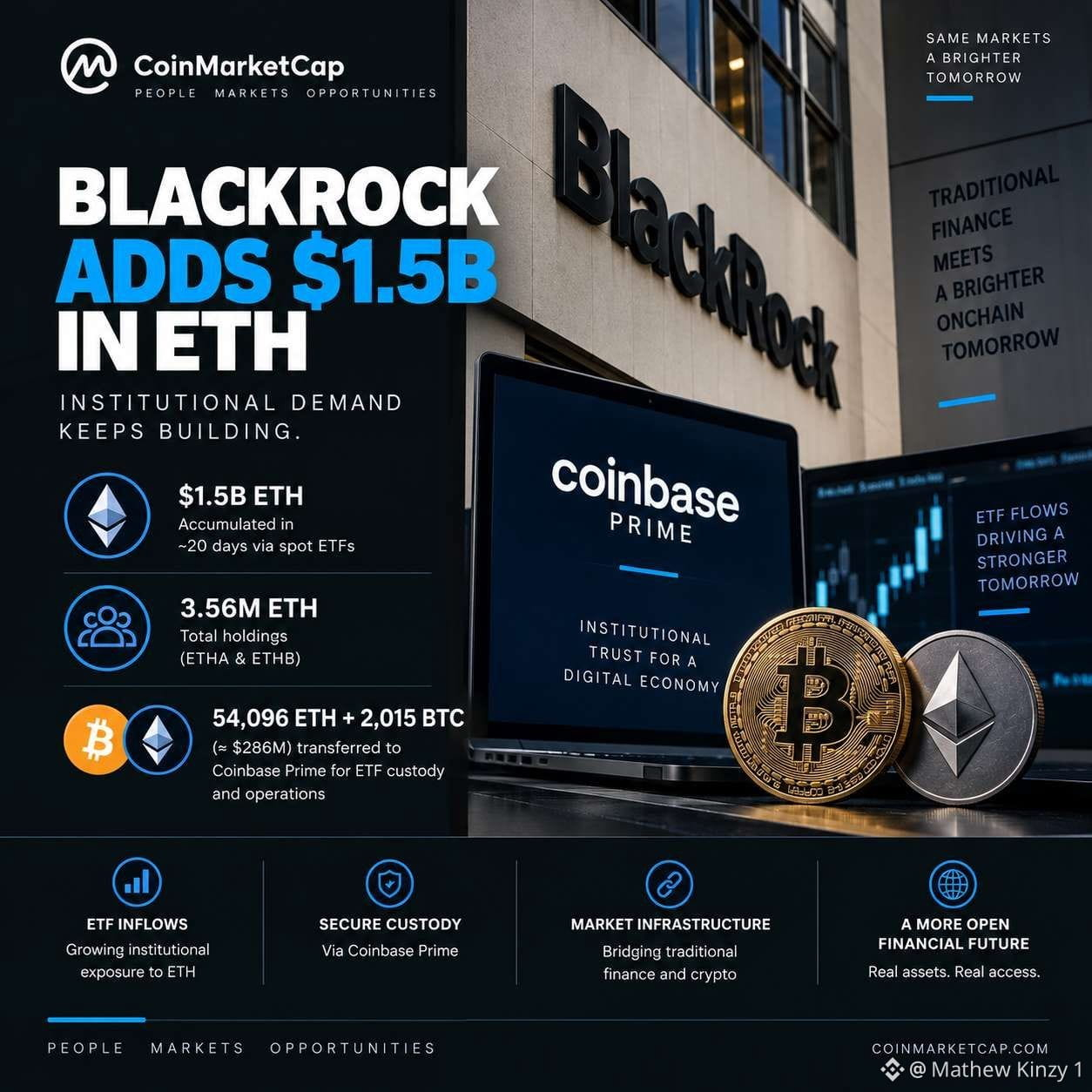
在大約20天內有15億美元的以太坊(ETH)涌入,這是一組值得關注的數字。
據報道,貝萊德(BlackRock)的現貨以太坊ETF在此期間合計新增了約15億美元的 $ETH,使其合計持倉達到約356萬枚ETH。
但我覺得故事裏還有另一部分同樣引人關注。
貝萊德還將54,096枚ETH以及2,015枚 $BTC(合計價值約2.86億美元)轉入了Coinbase Prime。
乍一看,這麼大規模的轉賬很容易被解讀爲潛在的拋售壓力。但涉及機構級ETF基礎設施的資金流動,並不一定是方向性的交易。在這種情況下,這些轉賬被認爲與資金的託管和運營管理有關。
這種區別很關鍵。
隨着加密貨幣ETF持續增長,我們將會看到越來越大量的 $BTC 和 $ETH 在機構錢包、託管方以及執行場所之間流轉。僅僅看交易本身,並不總能告訴我們機構是在買入、賣出,還是在爲ETF產品背後管理資產。
更大的信號可能在於持續的需求本身。
如果數十億美元能夠在數週內流入以太坊ETF,那麼ETH正日益成爲機構可以通過熟悉的傳統金融基礎設施來獲取的資產。
現在我在關注這些流入是否會繼續。
機構ETF資金流對 $ETH 的重要性,是否正在超過來自個人“巨鯨”錢包的資金動向?
在大約20天內有15億美元的以太坊(ETH)涌入,這是一組值得關注的數字。
據報道,貝萊德(BlackRock)的現貨以太坊ETF在此期間合計新增了約15億美元的 $ETH,使其合計持倉達到約356萬枚ETH。
但我覺得故事裏還有另一部分同樣引人關注。
貝萊德還將54,096枚ETH以及2,015枚 $BTC(合計價值約2.86億美元)轉入了Coinbase Prime。
乍一看,這麼大規模的轉賬很容易被解讀爲潛在的拋售壓力。但涉及機構級ETF基礎設施的資金流動,並不一定是方向性的交易。在這種情況下,這些轉賬被認爲與資金的託管和運營管理有關。
這種區別很關鍵。
隨着加密貨幣ETF持續增長,我們將會看到越來越大量的 $BTC 和 $ETH 在機構錢包、託管方以及執行場所之間流轉。僅僅看交易本身,並不總能告訴我們機構是在買入、賣出,還是在爲ETF產品背後管理資產。
更大的信號可能在於持續的需求本身。
如果數十億美元能夠在數週內流入以太坊ETF,那麼ETH正日益成爲機構可以通過熟悉的傳統金融基礎設施來獲取的資產。
現在我在關注這些流入是否會繼續。
機構ETF資金流對 $ETH 的重要性,是否正在超過來自個人“巨鯨”錢包的資金動向?
據報道,貝萊德(BlackRock)的現貨以太坊ETF在此期間合計新增了約15億美元的 $ETH,使其合計持倉達到約356萬枚ETH。
但我覺得故事裏還有另一部分同樣引人關注。
貝萊德還將54,096枚ETH以及2,015枚 $BTC(合計價值約2.86億美元)轉入了Coinbase Prime。
乍一看,這麼大規模的轉賬很容易被解讀爲潛在的拋售壓力。但涉及機構級ETF基礎設施的資金流動,並不一定是方向性的交易。在這種情況下,這些轉賬被認爲與資金的託管和運營管理有關。
這種區別很關鍵。
隨着加密貨幣ETF持續增長,我們將會看到越來越大量的 $BTC 和 $ETH 在機構錢包、託管方以及執行場所之間流轉。僅僅看交易本身,並不總能告訴我們機構是在買入、賣出,還是在爲ETF產品背後管理資產。
更大的信號可能在於持續的需求本身。
如果數十億美元能夠在數週內流入以太坊ETF,那麼ETH正日益成爲機構可以通過熟悉的傳統金融基礎設施來獲取的資產。
現在我在關注這些流入是否會繼續。
機構ETF資金流對 $ETH 的重要性,是否正在超過來自個人“巨鯨”錢包的資金動向?
42
代幣化股票剛剛從一個實驗走向了某種美國監管機構願意在公有區塊鏈上測試的事物。
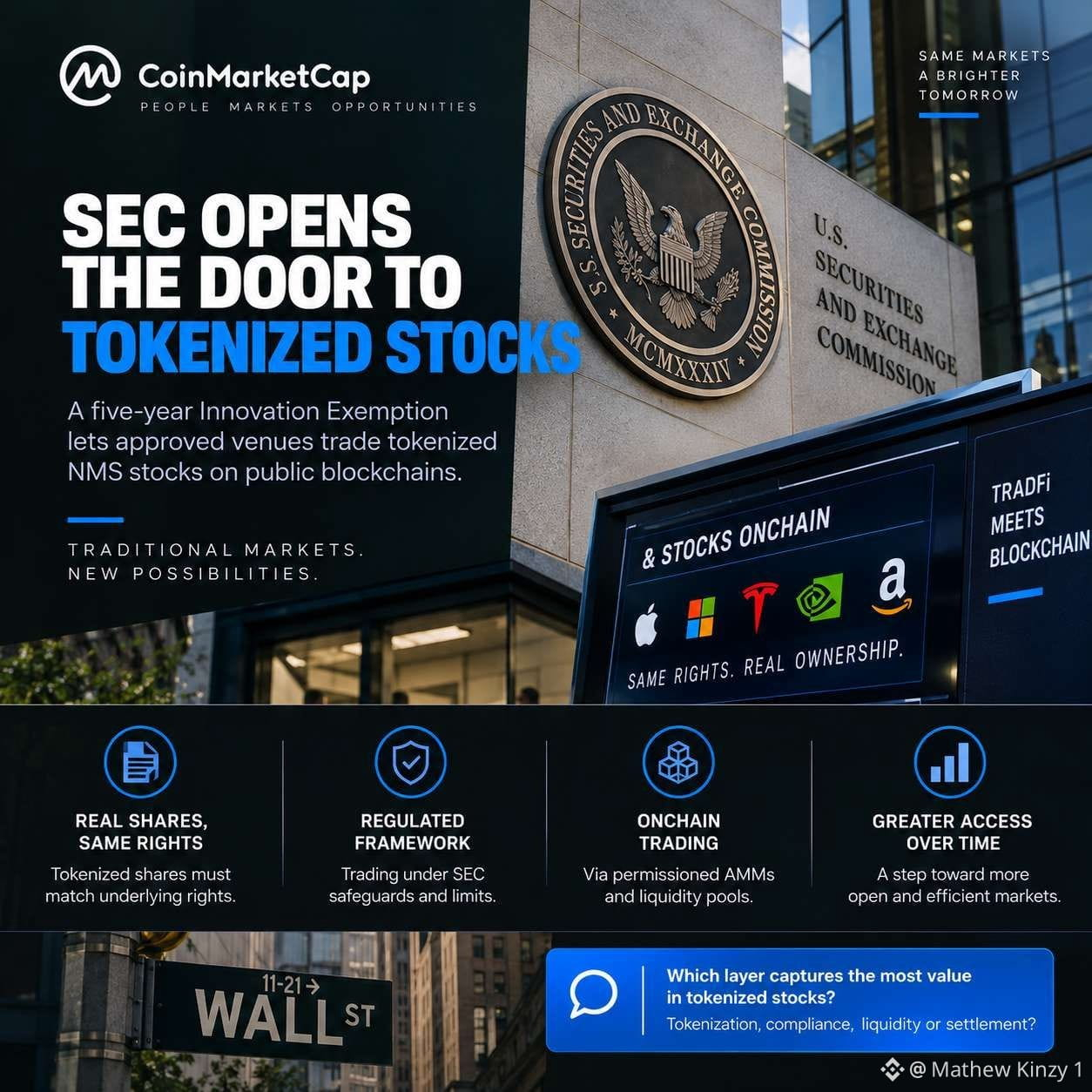
9月17日,美國證券交易委員會(SEC)推出一項為期五年的「創新豁免(Innovation Exemption)」,允許符合資格的代幣化證券交易場所(Tokenized Securities Venues)透過許可式AMM(自動做市商)與流動性池促進代幣化NMS股票的交易。
我覺得最有趣的細節是,這並不只是把股票代號放到鏈上。
符合資格的代幣化股份必須保留與相應傳統股份相同的權利與特權。智慧合約必須是公開且可審計的;當底層股票被暫停交易時,交易也必須停止;而交易場所則要在代號與成交量的限制之下運作。不在框架涵蓋範圍內的是那些只追蹤股票價格的合成產品。
這個差別,關乎整個RWA(真實世界資產)討論。
我們花了多年時間在追問:傳統資產能否在鏈上流通?更有意思的問題或許現在是:
當它們真的開始上鏈時,需要哪些基礎設施?
代幣化股票仍然需要合規、流動性、投資者接入、結算、代管與可靠的生命週期基礎設施。
對我而言,這正是RWA機會能夠遠超過「發行另一種代幣」的原因。
SEC表示,這項為期五年的框架是暫時性的,目的是產生數據以供制定更長期的規則。
如果股票日益轉向上鏈,哪一層能夠承接最多價值:代幣化、合規、流動性還是結算基礎設施?
#Macro Insights# #RWA #Tokenization
代幣化股票剛剛從一個實驗走向了某種美國監管機構願意在公有區塊鏈上測試的事物。
9月17日,美國證券交易委員會(SEC)推出一項為期五年的「創新豁免(Innovation Exemption)」,允許符合資格的代幣化證券交易場所(Tokenized Securities Venues)透過許可式AMM(自動做市商)與流動性池促進代幣化NMS股票的交易。
我覺得最有趣的細節是,這並不只是把股票代號放到鏈上。
符合資格的代幣化股份必須保留與相應傳統股份相同的權利與特權。智慧合約必須是公開且可審計的;當底層股票被暫停交易時,交易也必須停止;而交易場所則要在代號與成交量的限制之下運作。不在框架涵蓋範圍內的是那些只追蹤股票價格的合成產品。
這個差別,關乎整個RWA(真實世界資產)討論。
我們花了多年時間在追問:傳統資產能否在鏈上流通?更有意思的問題或許現在是:
當它們真的開始上鏈時,需要哪些基礎設施?
代幣化股票仍然需要合規、流動性、投資者接入、結算、代管與可靠的生命週期基礎設施。
對我而言,這正是RWA機會能夠遠超過「發行另一種代幣」的原因。
SEC表示,這項為期五年的框架是暫時性的,目的是產生數據以供制定更長期的規則。
如果股票日益轉向上鏈,哪一層能夠承接最多價值:代幣化、合規、流動性還是結算基礎設施?
#Macro Insights# #RWA #Tokenization
9月17日,美國證券交易委員會(SEC)推出一項為期五年的「創新豁免(Innovation Exemption)」,允許符合資格的代幣化證券交易場所(Tokenized Securities Venues)透過許可式AMM(自動做市商)與流動性池促進代幣化NMS股票的交易。
我覺得最有趣的細節是,這並不只是把股票代號放到鏈上。
符合資格的代幣化股份必須保留與相應傳統股份相同的權利與特權。智慧合約必須是公開且可審計的;當底層股票被暫停交易時,交易也必須停止;而交易場所則要在代號與成交量的限制之下運作。不在框架涵蓋範圍內的是那些只追蹤股票價格的合成產品。
這個差別,關乎整個RWA(真實世界資產)討論。
我們花了多年時間在追問:傳統資產能否在鏈上流通?更有意思的問題或許現在是:
當它們真的開始上鏈時,需要哪些基礎設施?
代幣化股票仍然需要合規、流動性、投資者接入、結算、代管與可靠的生命週期基礎設施。
對我而言,這正是RWA機會能夠遠超過「發行另一種代幣」的原因。
SEC表示,這項為期五年的框架是暫時性的,目的是產生數據以供制定更長期的規則。
如果股票日益轉向上鏈,哪一層能夠承接最多價值:代幣化、合規、流動性還是結算基礎設施?
#Macro Insights# #RWA #Tokenization
60
緊急快訊 🚨:美國代幣化股票邁出又一步
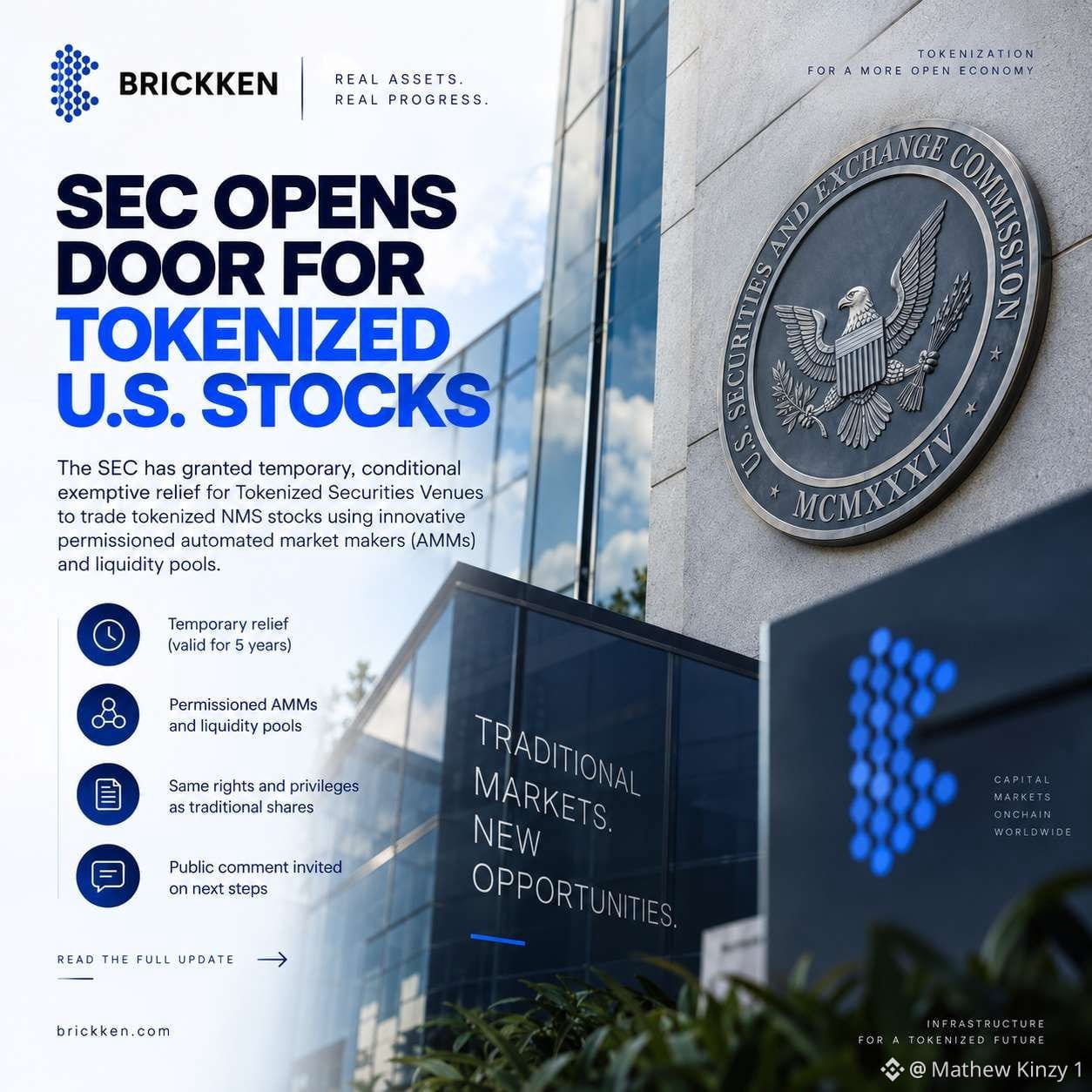
美國證券交易委員會(SEC)已批准臨時、附條件的豁免措施,允許符合條件的代幣化證券交易場所,使用獲許可的自動做市商和流動性池來交易代幣化的NMS股票。
該豁免將持續五年,同時SEC在收集公衆對潛在變更和下一步措施的反饋。
這也契合更廣泛的2026年轉變:SEC此前已澄清代幣化證券的不同結構,而美國交易所也已提交變更,使證券能夠以代幣化形式交易。
討論正在從“股票能否被代幣化?”轉向
現在變成了:
“合規的鏈上市場基礎設施到底長什麼樣?”
這對RWA來說是更大的進展。
$BKN #Brickken #RWA #Tokenization
緊急快訊 🚨:美國代幣化股票邁出又一步
美國證券交易委員會(SEC)已批准臨時、附條件的豁免措施,允許符合條件的代幣化證券交易場所,使用獲許可的自動做市商和流動性池來交易代幣化的NMS股票。
該豁免將持續五年,同時SEC在收集公衆對潛在變更和下一步措施的反饋。
這也契合更廣泛的2026年轉變:SEC此前已澄清代幣化證券的不同結構,而美國交易所也已提交變更,使證券能夠以代幣化形式交易。
討論正在從“股票能否被代幣化?”轉向
現在變成了:
“合規的鏈上市場基礎設施到底長什麼樣?”
這對RWA來說是更大的進展。
$BKN #Brickken #RWA #Tokenization
美國證券交易委員會(SEC)已批准臨時、附條件的豁免措施,允許符合條件的代幣化證券交易場所,使用獲許可的自動做市商和流動性池來交易代幣化的NMS股票。
該豁免將持續五年,同時SEC在收集公衆對潛在變更和下一步措施的反饋。
這也契合更廣泛的2026年轉變:SEC此前已澄清代幣化證券的不同結構,而美國交易所也已提交變更,使證券能夠以代幣化形式交易。
討論正在從“股票能否被代幣化?”轉向
現在變成了:
“合規的鏈上市場基礎設施到底長什麼樣?”
這對RWA來說是更大的進展。
$BKN #Brickken #RWA #Tokenization
69
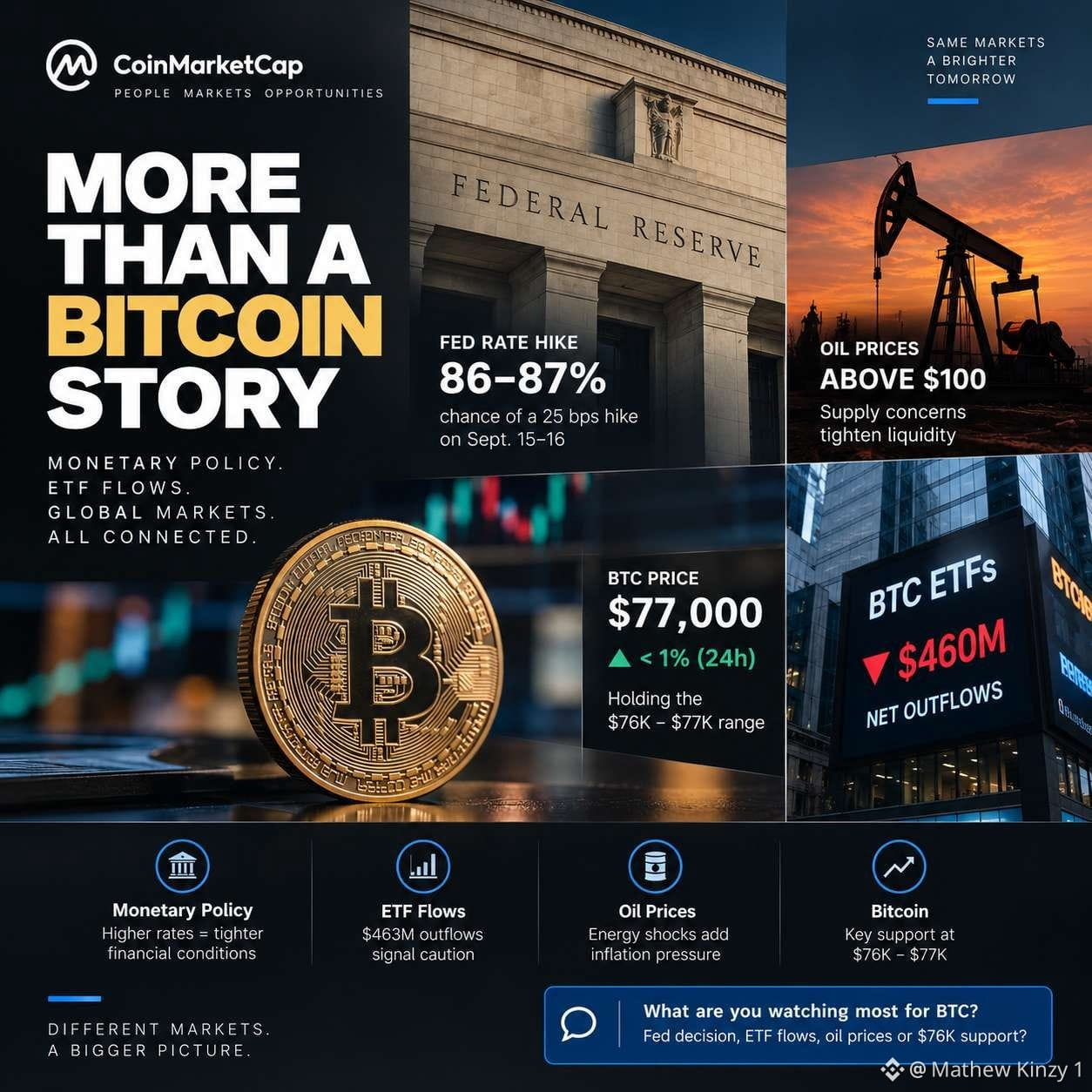
比特幣盤整在約 77K 附近,同時市場對美聯儲升息的機率定價為 86–87%,這告訴我它正在變得比「比特幣故事」更大。
$BTC 目前夾在三股力量之間,值得一起觀察。
第一,貨幣政策。若升息 25 個基點,將使金融狀況在風險資產已因殖利率偏高而承壓的情況下進一步收緊。
第二,現貨比特幣 ETF 據報出現約 4.6 億美元的資金淨流出。機構需求曾是比特幣最強的順風之一,因此這些流量是否趨於穩定很關鍵。
第三,油價又回到視野。供給方面的擔憂推升能源價格,這形成另一個潛在的通膨問題;而此時市場也正試圖預測美聯儲接下來會怎麼做。
然而,$BTC 仍持續守在約 76K–77K 這一帶。
這種韌性才是我感興趣的。
如果比特幣能在消化 ETF 賣壓、更高的利率預期,以及由能源驅動的流動性緊縮之下仍不丟掉這個區間,它可能告訴我們支撐性、也就是潛在需求的強度還剩多少。
但如果 76K 在 ETF 流出加速的同時被跌破,同樣的韌性也可能很快消失。
因此,下一波比特幣走勢或許將由加密圈外的因素決定。
你最在意 $BTC 的哪一項:美聯儲決策、ETF 資金流、油價,還是 76K 的支撐?
比特幣盤整在約 77K 附近,同時市場對美聯儲升息的機率定價為 86–87%,這告訴我它正在變得比「比特幣故事」更大。
$BTC 目前夾在三股力量之間,值得一起觀察。
第一,貨幣政策。若升息 25 個基點,將使金融狀況在風險資產已因殖利率偏高而承壓的情況下進一步收緊。
第二,現貨比特幣 ETF 據報出現約 4.6 億美元的資金淨流出。機構需求曾是比特幣最強的順風之一,因此這些流量是否趨於穩定很關鍵。
第三,油價又回到視野。供給方面的擔憂推升能源價格,這形成另一個潛在的通膨問題;而此時市場也正試圖預測美聯儲接下來會怎麼做。
然而,$BTC 仍持續守在約 76K–77K 這一帶。
這種韌性才是我感興趣的。
如果比特幣能在消化 ETF 賣壓、更高的利率預期,以及由能源驅動的流動性緊縮之下仍不丟掉這個區間,它可能告訴我們支撐性、也就是潛在需求的強度還剩多少。
但如果 76K 在 ETF 流出加速的同時被跌破,同樣的韌性也可能很快消失。
因此,下一波比特幣走勢或許將由加密圈外的因素決定。
你最在意 $BTC 的哪一項:美聯儲決策、ETF 資金流、油價,還是 76K 的支撐?
$BTC 目前夾在三股力量之間,值得一起觀察。
第一,貨幣政策。若升息 25 個基點,將使金融狀況在風險資產已因殖利率偏高而承壓的情況下進一步收緊。
第二,現貨比特幣 ETF 據報出現約 4.6 億美元的資金淨流出。機構需求曾是比特幣最強的順風之一,因此這些流量是否趨於穩定很關鍵。
第三,油價又回到視野。供給方面的擔憂推升能源價格,這形成另一個潛在的通膨問題;而此時市場也正試圖預測美聯儲接下來會怎麼做。
然而,$BTC 仍持續守在約 76K–77K 這一帶。
這種韌性才是我感興趣的。
如果比特幣能在消化 ETF 賣壓、更高的利率預期,以及由能源驅動的流動性緊縮之下仍不丟掉這個區間,它可能告訴我們支撐性、也就是潛在需求的強度還剩多少。
但如果 76K 在 ETF 流出加速的同時被跌破,同樣的韌性也可能很快消失。
因此,下一波比特幣走勢或許將由加密圈外的因素決定。
你最在意 $BTC 的哪一項:美聯儲決策、ETF 資金流、油價,還是 76K 的支撐?
49
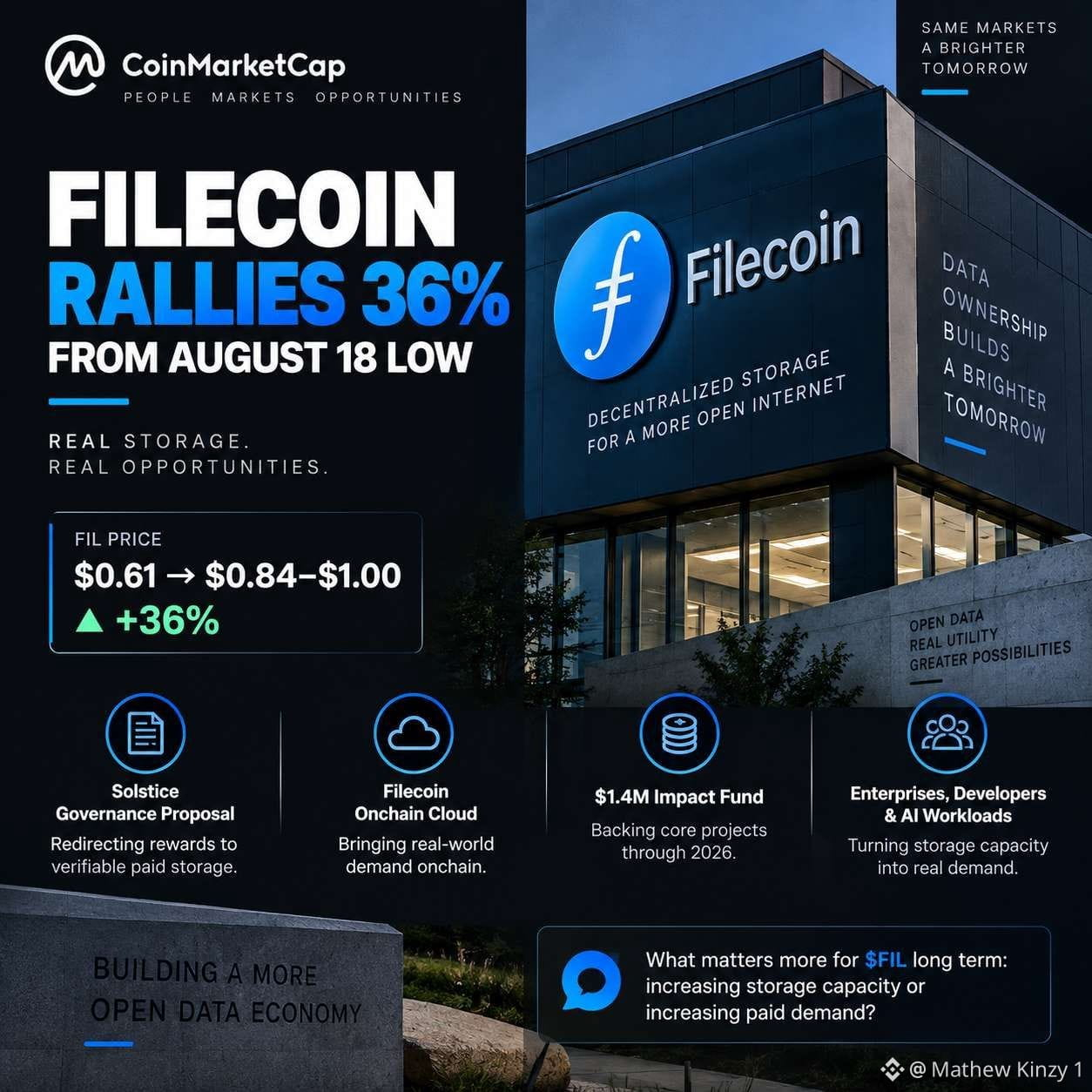
$FIL 從 8 月低點反彈 36% 這件事很有趣,但價格的修復並不是我最關注的 Filecoin 部分。
更大的轉變似乎正在圖表之下發生。
Filecoin 最初是圍繞一個直截了當的想法而建:建立一個去中心化的儲存市場。但擁有龐大的儲存容量並不會自動創造出一個經濟。仍然需要有人付費才能使用它。
因此,近期推動可驗證的付費儲存(verifiable paid storage)以及 Filecoin Onchain Cloud,特別引人注意。
如果 $FIL 能夠從一個被儲存容量主導的敘事,轉向由企業、開發者與 AI 工作負載所帶來的實際鏈上需求驅動,那麼市場對該網路的估值方式可能會出現顯著改變。
AI 讓這件事更具吸引力。模型與代理正在產生海量資料,而這些資料需要被儲存、驗證並確保長期可用。
因此,Filecoin 的下一階段可能不再是要證明網路能存多少資料。
它可能是要證明人們實際願意付費讓它儲存多少有用的資料。
價格可以很快回升。但要製造可持續的需求要困難得多。
對 $FIL 而言,長期更重要的是:提升儲存容量,還是提升對該儲存的付費需求?
$FIL 從 8 月低點反彈 36% 這件事很有趣,但價格的修復並不是我最關注的 Filecoin 部分。
更大的轉變似乎正在圖表之下發生。
Filecoin 最初是圍繞一個直截了當的想法而建:建立一個去中心化的儲存市場。但擁有龐大的儲存容量並不會自動創造出一個經濟。仍然需要有人付費才能使用它。
因此,近期推動可驗證的付費儲存(verifiable paid storage)以及 Filecoin Onchain Cloud,特別引人注意。
如果 $FIL 能夠從一個被儲存容量主導的敘事,轉向由企業、開發者與 AI 工作負載所帶來的實際鏈上需求驅動,那麼市場對該網路的估值方式可能會出現顯著改變。
AI 讓這件事更具吸引力。模型與代理正在產生海量資料,而這些資料需要被儲存、驗證並確保長期可用。
因此,Filecoin 的下一階段可能不再是要證明網路能存多少資料。
它可能是要證明人們實際願意付費讓它儲存多少有用的資料。
價格可以很快回升。但要製造可持續的需求要困難得多。
對 $FIL 而言,長期更重要的是:提升儲存容量,還是提升對該儲存的付費需求?
更大的轉變似乎正在圖表之下發生。
Filecoin 最初是圍繞一個直截了當的想法而建:建立一個去中心化的儲存市場。但擁有龐大的儲存容量並不會自動創造出一個經濟。仍然需要有人付費才能使用它。
因此,近期推動可驗證的付費儲存(verifiable paid storage)以及 Filecoin Onchain Cloud,特別引人注意。
如果 $FIL 能夠從一個被儲存容量主導的敘事,轉向由企業、開發者與 AI 工作負載所帶來的實際鏈上需求驅動,那麼市場對該網路的估值方式可能會出現顯著改變。
AI 讓這件事更具吸引力。模型與代理正在產生海量資料,而這些資料需要被儲存、驗證並確保長期可用。
因此,Filecoin 的下一階段可能不再是要證明網路能存多少資料。
它可能是要證明人們實際願意付費讓它儲存多少有用的資料。
價格可以很快回升。但要製造可持續的需求要困難得多。
對 $FIL 而言,長期更重要的是:提升儲存容量,還是提升對該儲存的付費需求?
50
𝗛𝗲𝗿𝗲 𝗶𝘀 𝘁𝗵𝗲 𝟏𝟓 𝗼 𝗦𝗲𝗽𝘁𝗲𝗺𝗯𝗲𝗿 𝗰𝗼𝘂𝗹𝗱 𝗯𝗲 𝗮 𝗴𝗮𝗺𝗲-𝗰𝗵𝗮𝗻𝗴𝗲𝗿 𝗳𝗼𝗿 𝗰𝗿𝘆𝗽𝘁𝗼 𝗼𝘃𝗲𝗿 𝗮𝗻𝗼𝘁𝗵𝗲𝗿 𝗴𝗿𝗲𝗲𝗻 𝗰𝗮𝗻𝗱𝗹𝗲.
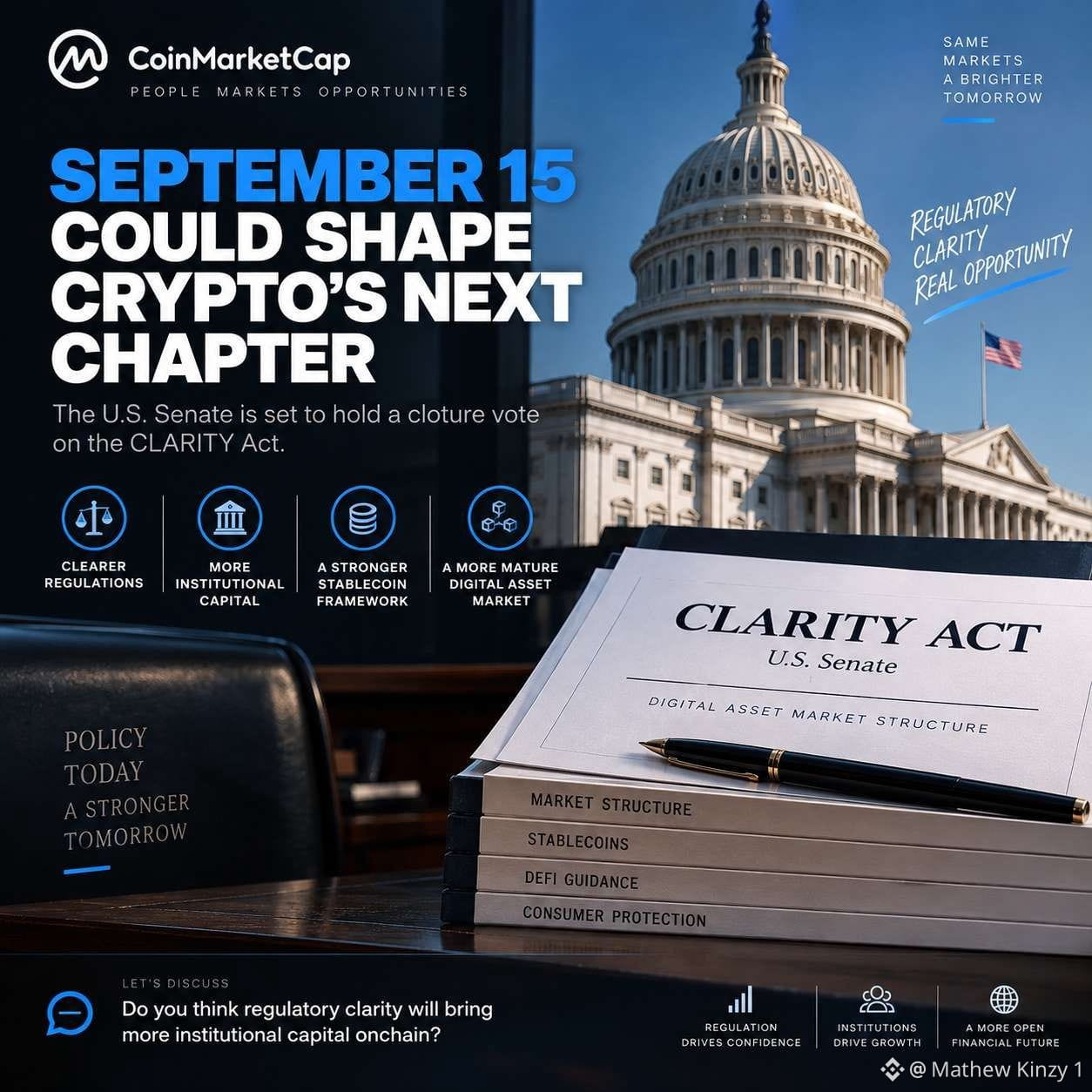
據報導,美國參議院正準備就《CLARITY Act》進行閉幕投票(cloture),而我認為更大的重點在於:若加密貨幣終於有更清晰的規則,能明確誰負責監管什麼,會發生什麼。
多年來,對產業而言最棘手的問題不只是「監管」。更在於「監管不確定性」。
這種不確定性會影響交易所、DeFi、穩定幣、代幣發行方,甚至也影響那些正在評估是否能安全地在鏈上建置或配置資本的機構。
據稱,修訂後的法案包含在倫理、穩定幣收益、DeFi 責任等方面的重大變動,因此通過也不代表所有爭議會立刻消失。
但更清晰的市場結構,可能會讓討論從「𝗖𝗮𝗻 𝘁𝗵𝗶𝘀 𝗹𝗲𝗴𝗮𝗹𝗹𝘆 𝗼𝗽𝗲𝗿𝗮𝘁𝗲?」轉向「𝗛𝗼𝘄 𝗱𝗼 𝘄𝗲 𝗯𝘂𝗶𝗹𝗱 𝘁𝗵𝗶𝘀 𝘄𝗶𝘁𝗵𝗶𝗻 𝘁𝗵𝗲 𝗿𝘂𝗹𝗲𝘀?」
這種差異在像 RWA 這樣的領域特別重要,因為機構採用高度依賴合規與法規明確性。
我關注 9 月 15 日,與其說是把它視為一個政治事件,不如說它可能是美國加密市場的一個潛在基礎建設時刻。
你認為監管明確性會讓更多的機構資本在鏈上進入,還是市場其實已經比華盛頓的等待更快在推進?
#Macro Insights# #RWA #Tokenization
𝗛𝗲𝗿𝗲 𝗶𝘀 𝘁𝗵𝗲 𝟏𝟓 𝗼 𝗦𝗲𝗽𝘁𝗲𝗺𝗯𝗲𝗿 𝗰𝗼𝘂𝗹𝗱 𝗯𝗲 𝗮 𝗴𝗮𝗺𝗲-𝗰𝗵𝗮𝗻𝗴𝗲𝗿 𝗳𝗼𝗿 𝗰𝗿𝘆𝗽𝘁𝗼 𝗼𝘃𝗲𝗿 𝗮𝗻𝗼𝘁𝗵𝗲𝗿 𝗴𝗿𝗲𝗲𝗻 𝗰𝗮𝗻𝗱𝗹𝗲.
據報導,美國參議院正準備就《CLARITY Act》進行閉幕投票(cloture),而我認為更大的重點在於:若加密貨幣終於有更清晰的規則,能明確誰負責監管什麼,會發生什麼。
多年來,對產業而言最棘手的問題不只是「監管」。更在於「監管不確定性」。
這種不確定性會影響交易所、DeFi、穩定幣、代幣發行方,甚至也影響那些正在評估是否能安全地在鏈上建置或配置資本的機構。
據稱,修訂後的法案包含在倫理、穩定幣收益、DeFi 責任等方面的重大變動,因此通過也不代表所有爭議會立刻消失。
但更清晰的市場結構,可能會讓討論從「𝗖𝗮𝗻 𝘁𝗵𝗶𝘀 𝗹𝗲𝗴𝗮𝗹𝗹𝘆 𝗼𝗽𝗲𝗿𝗮𝘁𝗲?」轉向「𝗛𝗼𝘄 𝗱𝗼 𝘄𝗲 𝗯𝘂𝗶𝗹𝗱 𝘁𝗵𝗶𝘀 𝘄𝗶𝘁𝗵𝗶𝗻 𝘁𝗵𝗲 𝗿𝘂𝗹𝗲𝘀?」
這種差異在像 RWA 這樣的領域特別重要,因為機構採用高度依賴合規與法規明確性。
我關注 9 月 15 日,與其說是把它視為一個政治事件,不如說它可能是美國加密市場的一個潛在基礎建設時刻。
你認為監管明確性會讓更多的機構資本在鏈上進入,還是市場其實已經比華盛頓的等待更快在推進?
#Macro Insights# #RWA #Tokenization
據報導,美國參議院正準備就《CLARITY Act》進行閉幕投票(cloture),而我認為更大的重點在於:若加密貨幣終於有更清晰的規則,能明確誰負責監管什麼,會發生什麼。
多年來,對產業而言最棘手的問題不只是「監管」。更在於「監管不確定性」。
這種不確定性會影響交易所、DeFi、穩定幣、代幣發行方,甚至也影響那些正在評估是否能安全地在鏈上建置或配置資本的機構。
據稱,修訂後的法案包含在倫理、穩定幣收益、DeFi 責任等方面的重大變動,因此通過也不代表所有爭議會立刻消失。
但更清晰的市場結構,可能會讓討論從「𝗖𝗮𝗻 𝘁𝗵𝗶𝘀 𝗹𝗲𝗴𝗮𝗹𝗹𝘆 𝗼𝗽𝗲𝗿𝗮𝘁𝗲?」轉向「𝗛𝗼𝘄 𝗱𝗼 𝘄𝗲 𝗯𝘂𝗶𝗹𝗱 𝘁𝗵𝗶𝘀 𝘄𝗶𝘁𝗵𝗶𝗻 𝘁𝗵𝗲 𝗿𝘂𝗹𝗲𝘀?」
這種差異在像 RWA 這樣的領域特別重要,因為機構採用高度依賴合規與法規明確性。
我關注 9 月 15 日,與其說是把它視為一個政治事件,不如說它可能是美國加密市場的一個潛在基礎建設時刻。
你認為監管明確性會讓更多的機構資本在鏈上進入,還是市場其實已經比華盛頓的等待更快在推進?
#Macro Insights# #RWA #Tokenization
49
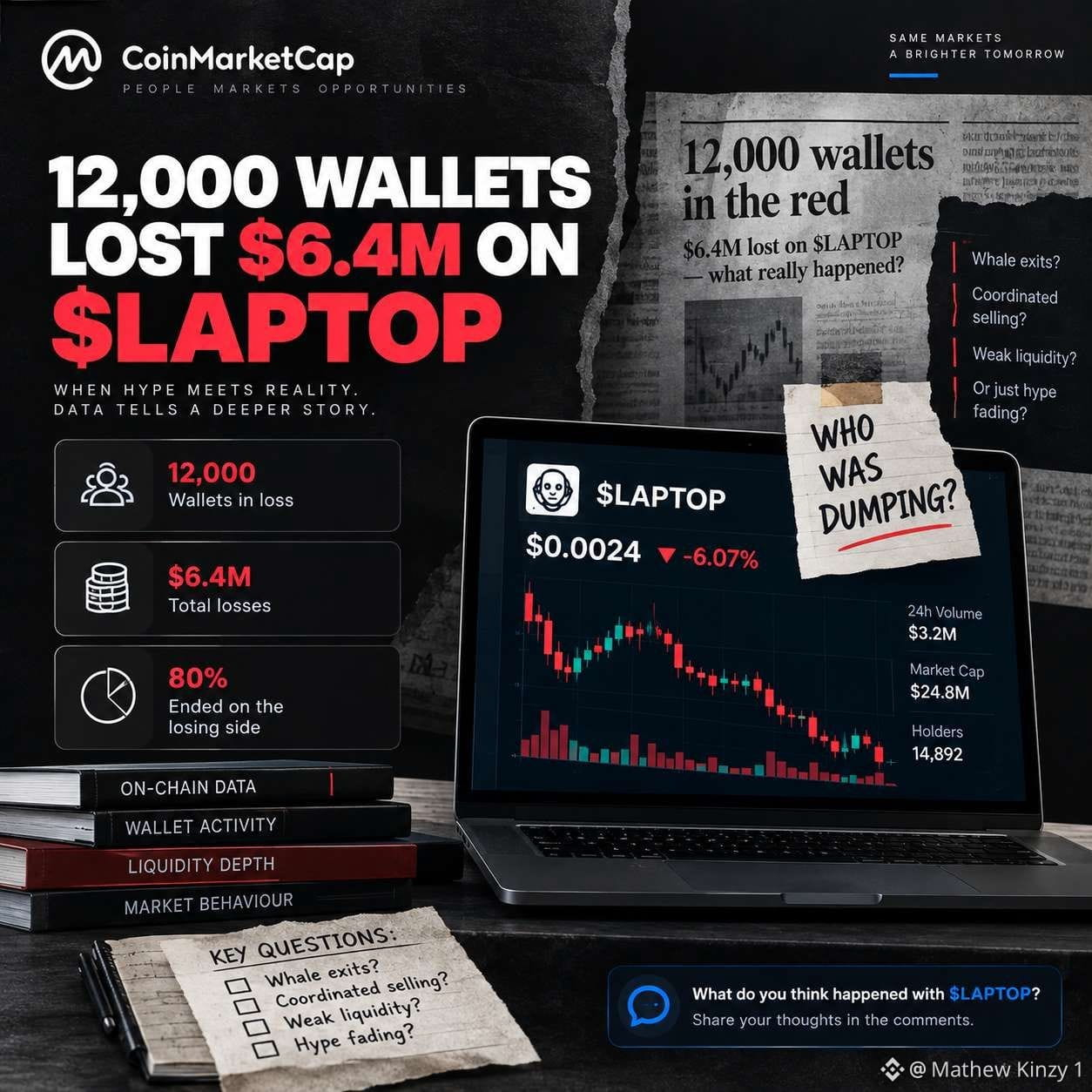
據報導,12,000 個錢包因 $LAPTOP 損失 640 萬美元,但讓我注意到的反而是 80% 這個數字。
當這麼多錢包在單一代幣上處於虧損的一方時,我覺得更有用的問題並不只是「為什麼 $LAPTOP 會跌?」
而是:在其他人都在買的時候,是誰在賣?
這就是為什麼鏈上分析會很有價值。
一個代幣可能從價格走勢與社群活動看起來相當健康,但持有人集中度、流動性深度以及早期錢包的行為,卻能講出完全不同的故事。
如果相對小的一群人在早期進場,並一路分發給後來成千上萬的買家,那麼圖表只會呈現事後的結果;而錢包的資金流動才是真正的關鍵。
像這樣的情況也提醒我們:研究小市值代幣不應只停留在查看價格、成交量與社群熱度。
我想知道供給掌握在誰手上、集中度有多高、流動性所在位置,以及最早期的錢包正在做什麼。
你認為 $LAPTOP 這件事到底發生了什麼:鯨魚撤出、協同式拋售、流動性偏弱,還是只是熱度消退而已?
據報導,12,000 個錢包因 $LAPTOP 損失 640 萬美元,但讓我注意到的反而是 80% 這個數字。
當這麼多錢包在單一代幣上處於虧損的一方時,我覺得更有用的問題並不只是「為什麼 $LAPTOP 會跌?」
而是:在其他人都在買的時候,是誰在賣?
這就是為什麼鏈上分析會很有價值。
一個代幣可能從價格走勢與社群活動看起來相當健康,但持有人集中度、流動性深度以及早期錢包的行為,卻能講出完全不同的故事。
如果相對小的一群人在早期進場,並一路分發給後來成千上萬的買家,那麼圖表只會呈現事後的結果;而錢包的資金流動才是真正的關鍵。
像這樣的情況也提醒我們:研究小市值代幣不應只停留在查看價格、成交量與社群熱度。
我想知道供給掌握在誰手上、集中度有多高、流動性所在位置,以及最早期的錢包正在做什麼。
你認為 $LAPTOP 這件事到底發生了什麼:鯨魚撤出、協同式拋售、流動性偏弱,還是只是熱度消退而已?
當這麼多錢包在單一代幣上處於虧損的一方時,我覺得更有用的問題並不只是「為什麼 $LAPTOP 會跌?」
而是:在其他人都在買的時候,是誰在賣?
這就是為什麼鏈上分析會很有價值。
一個代幣可能從價格走勢與社群活動看起來相當健康,但持有人集中度、流動性深度以及早期錢包的行為,卻能講出完全不同的故事。
如果相對小的一群人在早期進場,並一路分發給後來成千上萬的買家,那麼圖表只會呈現事後的結果;而錢包的資金流動才是真正的關鍵。
像這樣的情況也提醒我們:研究小市值代幣不應只停留在查看價格、成交量與社群熱度。
我想知道供給掌握在誰手上、集中度有多高、流動性所在位置,以及最早期的錢包正在做什麼。
你認為 $LAPTOP 這件事到底發生了什麼:鯨魚撤出、協同式拋售、流動性偏弱,還是只是熱度消退而已?
3
𝗪𝗮𝗹𝗹 𝗦𝘁𝗿𝗲𝗲𝘁 𝗰𝗵𝗼𝗼𝘀𝗶𝗻𝗴 𝗘𝘁𝗵𝗲𝗿𝗲𝘂𝗺 𝗼𝘃𝗲𝗿 𝗕𝗶𝘁𝗰𝗼𝗶𝗻? 𝗜 𝘁𝗵𝗶𝗻𝗸 𝘁𝗵𝗮𝘁 𝗾𝘂𝗲𝘀𝘁𝗶𝗼𝗻 𝗺𝗶𝘀𝘀𝗲𝘀 𝘁𝗵𝗲 𝗺𝗼𝗿𝗲 𝗶𝗻𝘁𝗲𝗿𝗲𝘀𝘁𝗶𝗻𝗴 𝗽𝗮𝗿𝘁.
如果機構持續累積 ETH,那更大的故事可能在於:為什麼機構一開始就想要接觸以太坊。
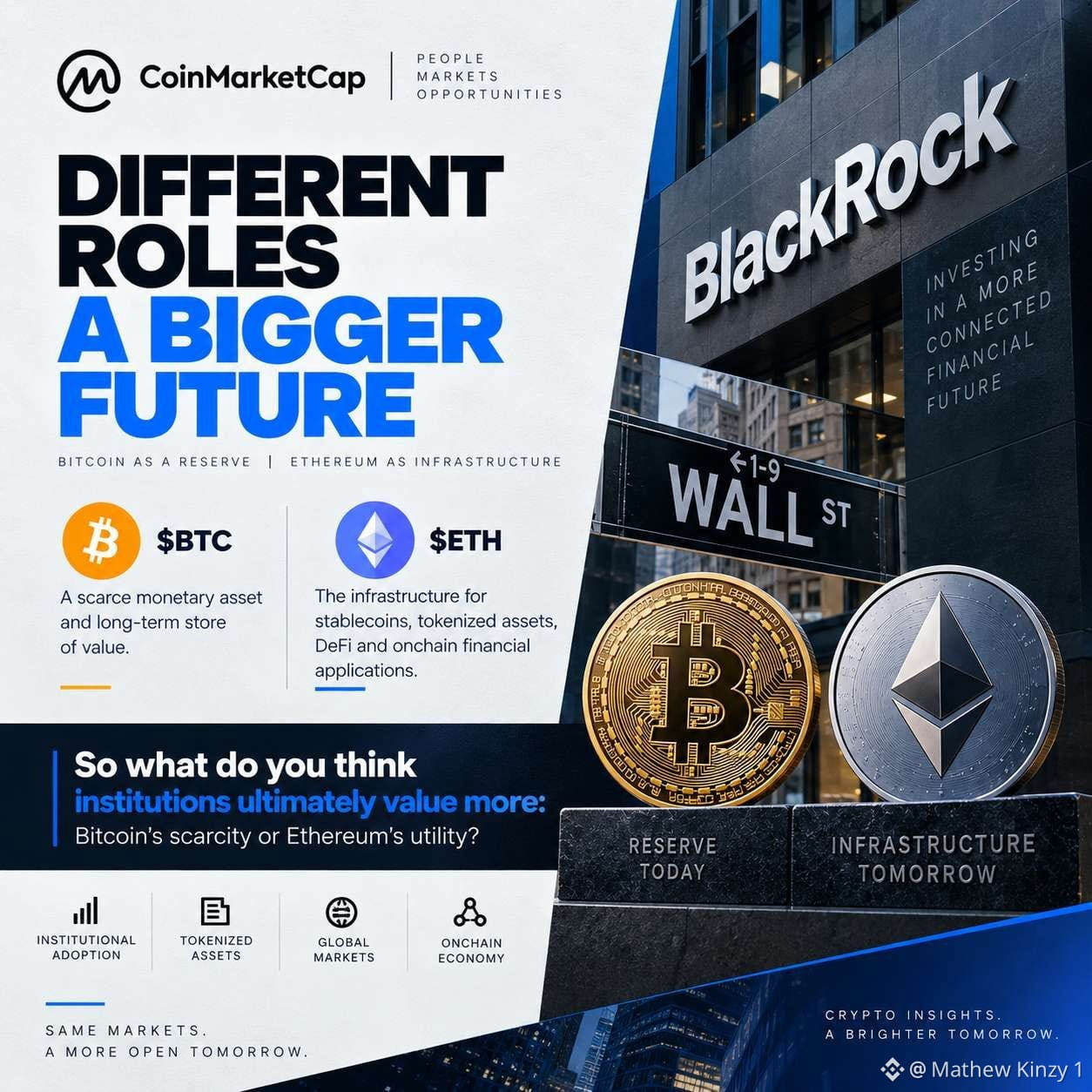
$BTC 越來越被視為一種稀缺的貨幣資產,以及長期價值儲存。 $ETH 提供了不同的東西:能夠曝險於一個由穩定幣、代幣化資產、DeFi 以及其他金融應用真正運作的生態系。
當傳統金融進一步走向鏈上化,這種差異就會變得重要。
機構未必是在選擇 $ETH 來取代 $BTC。 他們可能只是對每種資產分配完全不同的角色。
比特幣可以繼續扮演「儲備型」資產的角色,而以太坊則成為推動代幣化金融市場的基礎設施。
如果事情發展成這樣,單純只用價格表現來比較兩者,最終可能會變得不那麼有用。
𝗦𝗼 𝘄𝗵𝗮𝘁 𝗱𝗼 𝘆𝗼𝘂 𝘁𝗵𝗶𝗻𝗸 𝗶𝗻𝘀𝘁𝗶𝘁𝘂𝘁𝗶𝗼𝗻𝘀 𝘂𝗹𝘁𝗶𝗺𝗮𝘁𝗲𝗹𝘆 𝘃𝗮𝗹𝘂𝗲 𝗺𝗼𝗿𝗲: 𝗕𝗶𝘁𝗰𝗼𝗶𝗻’𝘀 𝘀𝗰𝗮𝗿𝗰𝗶𝘁𝘆 𝗼𝗿 𝗘𝘁𝗵𝗲𝗿𝗲𝘂𝗺’𝘀 𝘂𝘁𝗶𝗹𝗶𝘁𝘆?
#宏觀洞察#
𝗪𝗮𝗹𝗹 𝗦𝘁𝗿𝗲𝗲𝘁 𝗰𝗵𝗼𝗼𝘀𝗶𝗻𝗴 𝗘𝘁𝗵𝗲𝗿𝗲𝘂𝗺 𝗼𝘃𝗲𝗿 𝗕𝗶𝘁𝗰𝗼𝗶𝗻? 𝗜 𝘁𝗵𝗶𝗻𝗸 𝘁𝗵𝗮𝘁 𝗾𝘂𝗲𝘀𝘁𝗶𝗼𝗻 𝗺𝗶𝘀𝘀𝗲𝘀 𝘁𝗵𝗲 𝗺𝗼𝗿𝗲 𝗶𝗻𝘁𝗲𝗿𝗲𝘀𝘁𝗶𝗻𝗴 𝗽𝗮𝗿𝘁.
如果機構持續累積 ETH,那更大的故事可能在於:為什麼機構一開始就想要接觸以太坊。
$BTC 越來越被視為一種稀缺的貨幣資產,以及長期價值儲存。 $ETH 提供了不同的東西:能夠曝險於一個由穩定幣、代幣化資產、DeFi 以及其他金融應用真正運作的生態系。
當傳統金融進一步走向鏈上化,這種差異就會變得重要。
機構未必是在選擇 $ETH 來取代 $BTC。 他們可能只是對每種資產分配完全不同的角色。
比特幣可以繼續扮演「儲備型」資產的角色,而以太坊則成為推動代幣化金融市場的基礎設施。
如果事情發展成這樣,單純只用價格表現來比較兩者,最終可能會變得不那麼有用。
𝗦𝗼 𝘄𝗵𝗮𝘁 𝗱𝗼 𝘆𝗼𝘂 𝘁𝗵𝗶𝗻𝗸 𝗶𝗻𝘀𝘁𝗶𝘁𝘂𝘁𝗶𝗼𝗻𝘀 𝘂𝗹𝘁𝗶𝗺𝗮𝘁𝗲𝗹𝘆 𝘃𝗮𝗹𝘂𝗲 𝗺𝗼𝗿𝗲: 𝗕𝗶𝘁𝗰𝗼𝗶𝗻’𝘀 𝘀𝗰𝗮𝗿𝗰𝗶𝘁𝘆 𝗼𝗿 𝗘𝘁𝗵𝗲𝗿𝗲𝘂𝗺’𝘀 𝘂𝘁𝗶𝗹𝗶𝘁𝘆?
#宏觀洞察#
如果機構持續累積 ETH,那更大的故事可能在於:為什麼機構一開始就想要接觸以太坊。
$BTC 越來越被視為一種稀缺的貨幣資產,以及長期價值儲存。 $ETH 提供了不同的東西:能夠曝險於一個由穩定幣、代幣化資產、DeFi 以及其他金融應用真正運作的生態系。
當傳統金融進一步走向鏈上化,這種差異就會變得重要。
機構未必是在選擇 $ETH 來取代 $BTC。 他們可能只是對每種資產分配完全不同的角色。
比特幣可以繼續扮演「儲備型」資產的角色,而以太坊則成為推動代幣化金融市場的基礎設施。
如果事情發展成這樣,單純只用價格表現來比較兩者,最終可能會變得不那麼有用。
𝗦𝗼 𝘄𝗵𝗮𝘁 𝗱𝗼 𝘆𝗼𝘂 𝘁𝗵𝗶𝗻𝗸 𝗶𝗻𝘀𝘁𝗶𝘁𝘂𝘁𝗶𝗼𝗻𝘀 𝘂𝗹𝘁𝗶𝗺𝗮𝘁𝗲𝗹𝘆 𝘃𝗮𝗹𝘂𝗲 𝗺𝗼𝗿𝗲: 𝗕𝗶𝘁𝗰𝗼𝗶𝗻’𝘀 𝘀𝗰𝗮𝗿𝗰𝗶𝘁𝘆 𝗼𝗿 𝗘𝘁𝗵𝗲𝗿𝗲𝘂𝗺’𝘀 𝘂𝘁𝗶𝗹𝗶𝘁𝘆?
#宏觀洞察#
14
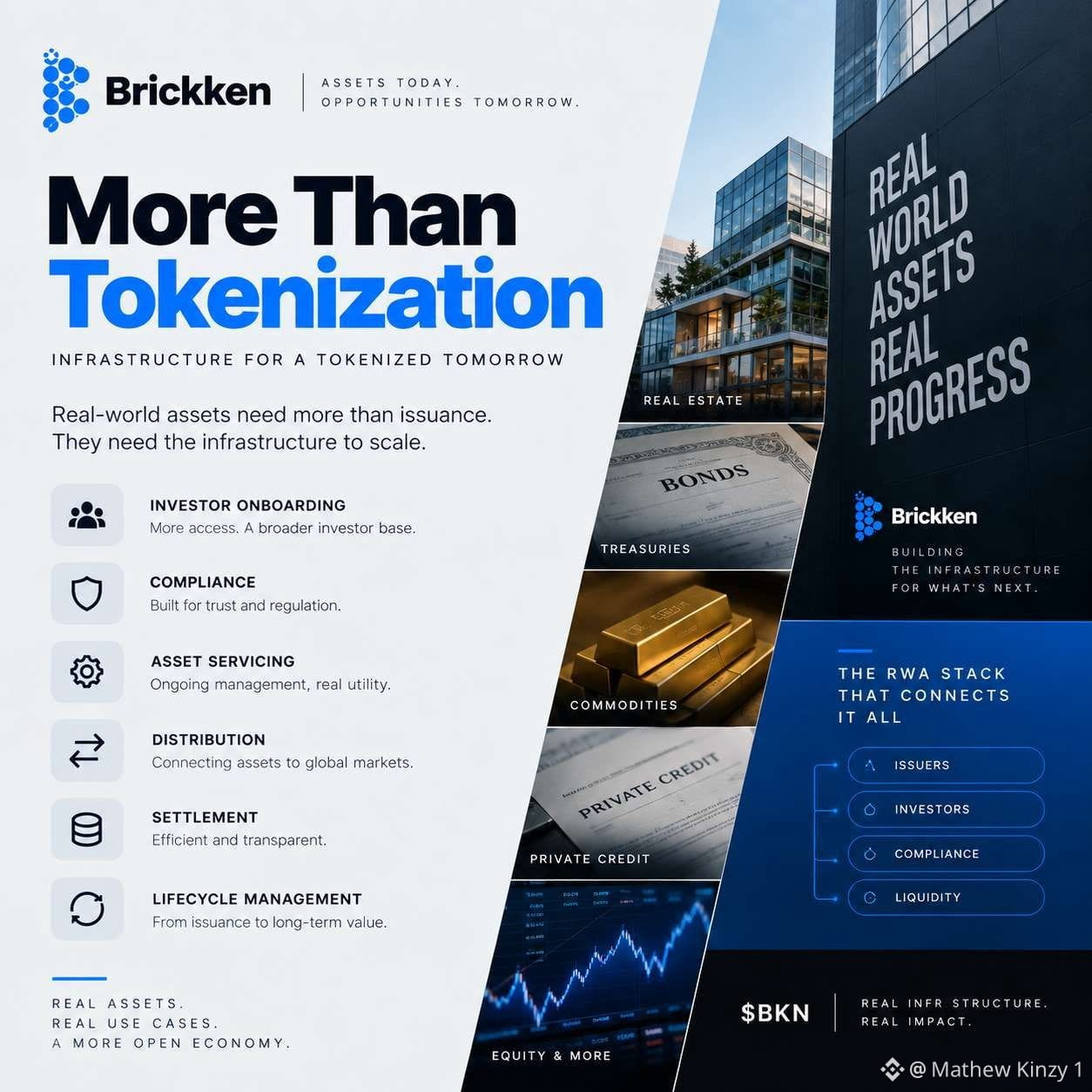
RWA 賽事最終可能不再是比拼誰能代幣化最多資產,而是比拼誰擁有那些資產所倚賴的基礎設施。
這個差異很重要。
把資產放到鏈上只是流程的一部分。真正的採用還需要投資者入金/導入、合規、資產服務、分銷、交割,以及在發行後進行整個生命週期管理。
因此,我更關注以基礎設施為導向的專案,例如 Brickken 和 $BKN
對我而言,值得深思的問題並不只是能代幣化多少資產。而是當代幣化市場規模持續擴大時,平台能否建立起機構願意反覆使用的系統。
如果 RWAs 最終成為一個價值兆美元的鏈上產業,最大的贏家未必一定是那些個別被代幣化的資產。
他們可能是那些在背後默默連接發行方、投資者、合規與流動性的基礎設施層。
你認為 RWA 堆疊中的哪個部分,能在長期內捕獲最多價值:發行、基礎設施、分銷,還是流動性?
#RWA #Tokenization #Macro Insights#
RWA 賽事最終可能不再是比拼誰能代幣化最多資產,而是比拼誰擁有那些資產所倚賴的基礎設施。
這個差異很重要。
把資產放到鏈上只是流程的一部分。真正的採用還需要投資者入金/導入、合規、資產服務、分銷、交割,以及在發行後進行整個生命週期管理。
因此,我更關注以基礎設施為導向的專案,例如 Brickken 和 $BKN
對我而言,值得深思的問題並不只是能代幣化多少資產。而是當代幣化市場規模持續擴大時,平台能否建立起機構願意反覆使用的系統。
如果 RWAs 最終成為一個價值兆美元的鏈上產業,最大的贏家未必一定是那些個別被代幣化的資產。
他們可能是那些在背後默默連接發行方、投資者、合規與流動性的基礎設施層。
你認為 RWA 堆疊中的哪個部分,能在長期內捕獲最多價值:發行、基礎設施、分銷,還是流動性?
#RWA #Tokenization #Macro Insights#
這個差異很重要。
把資產放到鏈上只是流程的一部分。真正的採用還需要投資者入金/導入、合規、資產服務、分銷、交割,以及在發行後進行整個生命週期管理。
因此,我更關注以基礎設施為導向的專案,例如 Brickken 和 $BKN
對我而言,值得深思的問題並不只是能代幣化多少資產。而是當代幣化市場規模持續擴大時,平台能否建立起機構願意反覆使用的系統。
如果 RWAs 最終成為一個價值兆美元的鏈上產業,最大的贏家未必一定是那些個別被代幣化的資產。
他們可能是那些在背後默默連接發行方、投資者、合規與流動性的基礎設施層。
你認為 RWA 堆疊中的哪個部分,能在長期內捕獲最多價值:發行、基礎設施、分銷,還是流動性?
#RWA #Tokenization #Macro Insights#
22
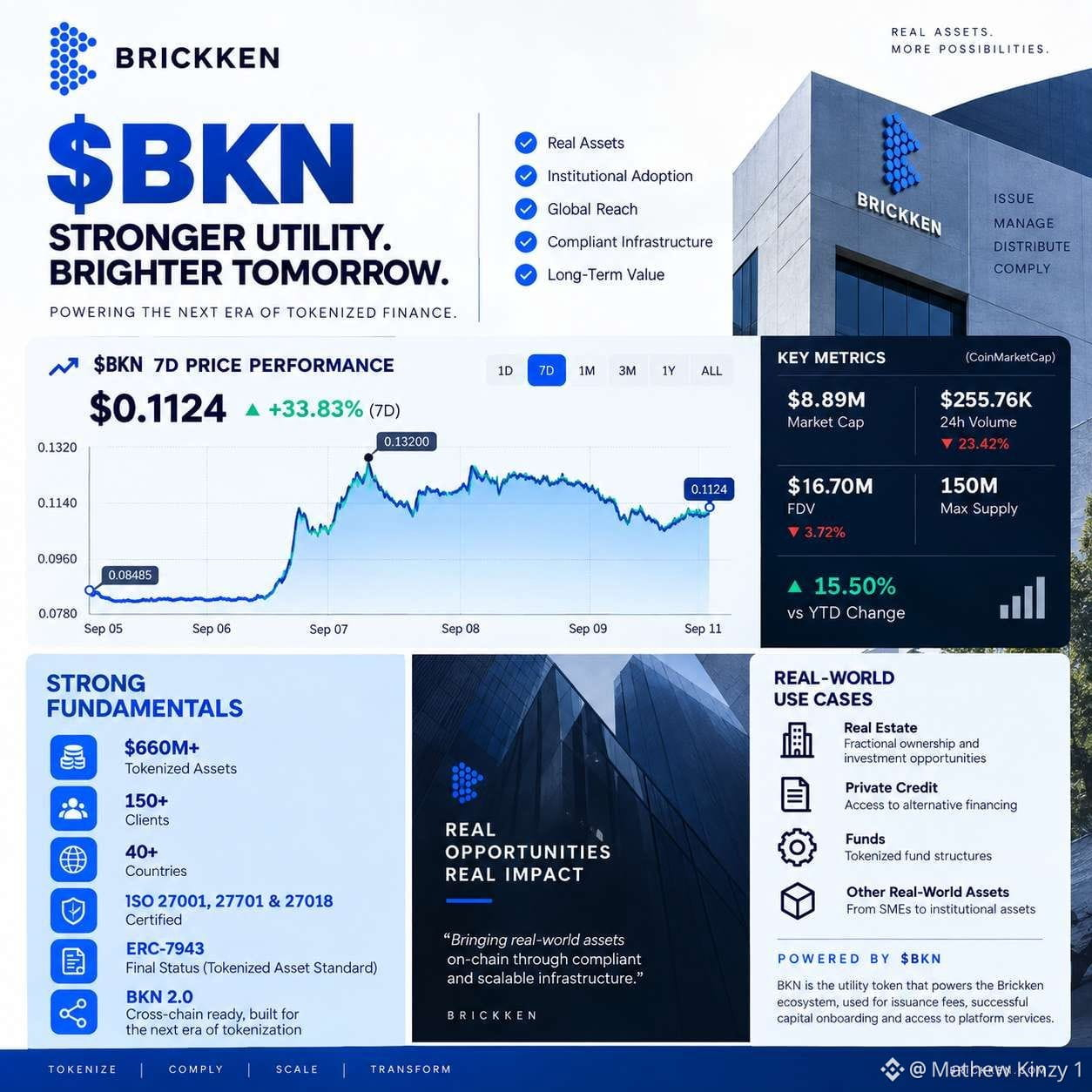
$BKN正在表明:價格動能只是故事的一部分。
在從約$0.08區間強勁上漲並推進至$0.11+之後,更大的圖景仍然是Brickken不斷擴張的基礎設施。
→ $660M+ 代幣化
→ 150+ 客戶
→ 40+ 國家
→ BKN 2.0
→ ERC-7943 最終狀態
→ RAMS + 主動式(agentic)基礎設施
BKN 2.0 也把論點延伸至跨鏈基礎設施與可程式化資本。
現在的問題不在於 $BKN 是否還能再有一週綠燈。
而是:Brickken的採用成長,是否能轉化為更深層的生態系效用。
這才是值得持續觀察的趨勢。
$BKN #Brickken #RWA #Tokenization
$BKN正在表明:價格動能只是故事的一部分。
在從約$0.08區間強勁上漲並推進至$0.11+之後,更大的圖景仍然是Brickken不斷擴張的基礎設施。
→ $660M+ 代幣化
→ 150+ 客戶
→ 40+ 國家
→ BKN 2.0
→ ERC-7943 最終狀態
→ RAMS + 主動式(agentic)基礎設施
BKN 2.0 也把論點延伸至跨鏈基礎設施與可程式化資本。
現在的問題不在於 $BKN 是否還能再有一週綠燈。
而是:Brickken的採用成長,是否能轉化為更深層的生態系效用。
這才是值得持續觀察的趨勢。
$BKN #Brickken #RWA #Tokenization
在從約$0.08區間強勁上漲並推進至$0.11+之後,更大的圖景仍然是Brickken不斷擴張的基礎設施。
→ $660M+ 代幣化
→ 150+ 客戶
→ 40+ 國家
→ BKN 2.0
→ ERC-7943 最終狀態
→ RAMS + 主動式(agentic)基礎設施
BKN 2.0 也把論點延伸至跨鏈基礎設施與可程式化資本。
現在的問題不在於 $BKN 是否還能再有一週綠燈。
而是:Brickken的採用成長,是否能轉化為更深層的生態系效用。
這才是值得持續觀察的趨勢。
$BKN #Brickken #RWA #Tokenization
62
下一個重大的加密催化劑並不是代幣發行。
而是一場投票。
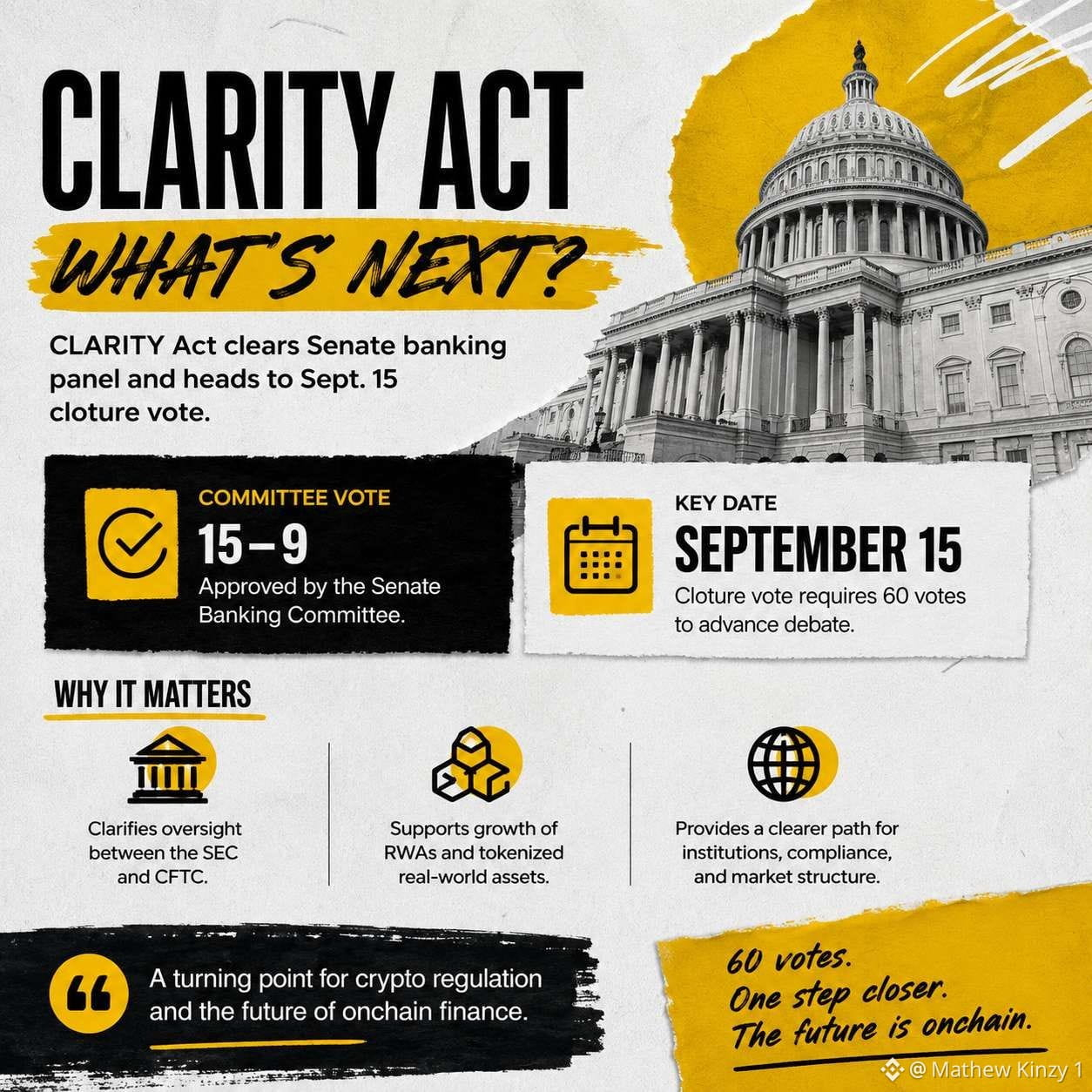
《CLARITY法案》已獲參議院銀行委員會以15–9的結果通過,這使9月15日成爲關注焦點:屆時將就終止辯論(cloture)進行表決;若要推動該法案進入全面院會辯論階段,則需要60名參議員支持。
我認爲更重要的故事在於:一旦它繼續推進,會發生什麼。
多年來,美國數字資產市場面臨的最大問題之一是監管管轄權不清。
誰來監管什麼?
美國證券交易委員會(SEC)?
美國商品期貨交易委員會(CFTC)?
兩者都監管?
《CLARITY法案》試圖在兩者之間劃定更清晰的邊界,併爲數字資產建立真正的市場結構。
這對加密交易之外的領域同樣重要。
對於現實世界資產(RWA),更清晰的規則可能會讓機構獲得他們一直在等待的東西:在美國發行、分發與運營代幣化資產方面更可預期的框架。
代幣化國債、私募信貸、股票、基金以及其他現實世界資產,已經在鏈上加速流動。
技術並不會等待監管。
但機構資本需要的不只是“能用”的技術。
它還需要在合規、託管、市場準入、投資者保護以及二級交易方面的明確性。
因此9月15日值得重點關注。
這次投票本身並不能直接讓《CLARITY法案》成爲法律。它決定參議院能否朝着全面辯論推進。
但如果有60票支持,那麼討論將從:
“美國會不會建立加密市場結構?”
轉變爲:
“這種市場結構實際會是什麼樣子?”
對加密而言,這很關鍵。
而對試圖把數萬億美元的傳統資產與鏈上基礎設施連接起來的RWA行業來說,可能還會更爲重大。
9月15日現在已經進入我的視線。
#CLARITYAct #RWA #Tokenization #Crypto #CryptoRegulation
下一個重大的加密催化劑並不是代幣發行。
而是一場投票。
《CLARITY法案》已獲參議院銀行委員會以15–9的結果通過,這使9月15日成爲關注焦點:屆時將就終止辯論(cloture)進行表決;若要推動該法案進入全面院會辯論階段,則需要60名參議員支持。
我認爲更重要的故事在於:一旦它繼續推進,會發生什麼。
多年來,美國數字資產市場面臨的最大問題之一是監管管轄權不清。
誰來監管什麼?
美國證券交易委員會(SEC)?
美國商品期貨交易委員會(CFTC)?
兩者都監管?
《CLARITY法案》試圖在兩者之間劃定更清晰的邊界,併爲數字資產建立真正的市場結構。
這對加密交易之外的領域同樣重要。
對於現實世界資產(RWA),更清晰的規則可能會讓機構獲得他們一直在等待的東西:在美國發行、分發與運營代幣化資產方面更可預期的框架。
代幣化國債、私募信貸、股票、基金以及其他現實世界資產,已經在鏈上加速流動。
技術並不會等待監管。
但機構資本需要的不只是“能用”的技術。
它還需要在合規、託管、市場準入、投資者保護以及二級交易方面的明確性。
因此9月15日值得重點關注。
這次投票本身並不能直接讓《CLARITY法案》成爲法律。它決定參議院能否朝着全面辯論推進。
但如果有60票支持,那麼討論將從:
“美國會不會建立加密市場結構?”
轉變爲:
“這種市場結構實際會是什麼樣子?”
對加密而言,這很關鍵。
而對試圖把數萬億美元的傳統資產與鏈上基礎設施連接起來的RWA行業來說,可能還會更爲重大。
9月15日現在已經進入我的視線。
#CLARITYAct #RWA #Tokenization #Crypto #CryptoRegulation
而是一場投票。
《CLARITY法案》已獲參議院銀行委員會以15–9的結果通過,這使9月15日成爲關注焦點:屆時將就終止辯論(cloture)進行表決;若要推動該法案進入全面院會辯論階段,則需要60名參議員支持。
我認爲更重要的故事在於:一旦它繼續推進,會發生什麼。
多年來,美國數字資產市場面臨的最大問題之一是監管管轄權不清。
誰來監管什麼?
美國證券交易委員會(SEC)?
美國商品期貨交易委員會(CFTC)?
兩者都監管?
《CLARITY法案》試圖在兩者之間劃定更清晰的邊界,併爲數字資產建立真正的市場結構。
這對加密交易之外的領域同樣重要。
對於現實世界資產(RWA),更清晰的規則可能會讓機構獲得他們一直在等待的東西:在美國發行、分發與運營代幣化資產方面更可預期的框架。
代幣化國債、私募信貸、股票、基金以及其他現實世界資產,已經在鏈上加速流動。
技術並不會等待監管。
但機構資本需要的不只是“能用”的技術。
它還需要在合規、託管、市場準入、投資者保護以及二級交易方面的明確性。
因此9月15日值得重點關注。
這次投票本身並不能直接讓《CLARITY法案》成爲法律。它決定參議院能否朝着全面辯論推進。
但如果有60票支持,那麼討論將從:
“美國會不會建立加密市場結構?”
轉變爲:
“這種市場結構實際會是什麼樣子?”
對加密而言,這很關鍵。
而對試圖把數萬億美元的傳統資產與鏈上基礎設施連接起來的RWA行業來說,可能還會更爲重大。
9月15日現在已經進入我的視線。
#CLARITYAct #RWA #Tokenization #Crypto #CryptoRegulation
59
本週最大的 RWA(現實世界資產)故事之一併非來自某個 RWA 協議。
而是來自倫敦證券交易所。
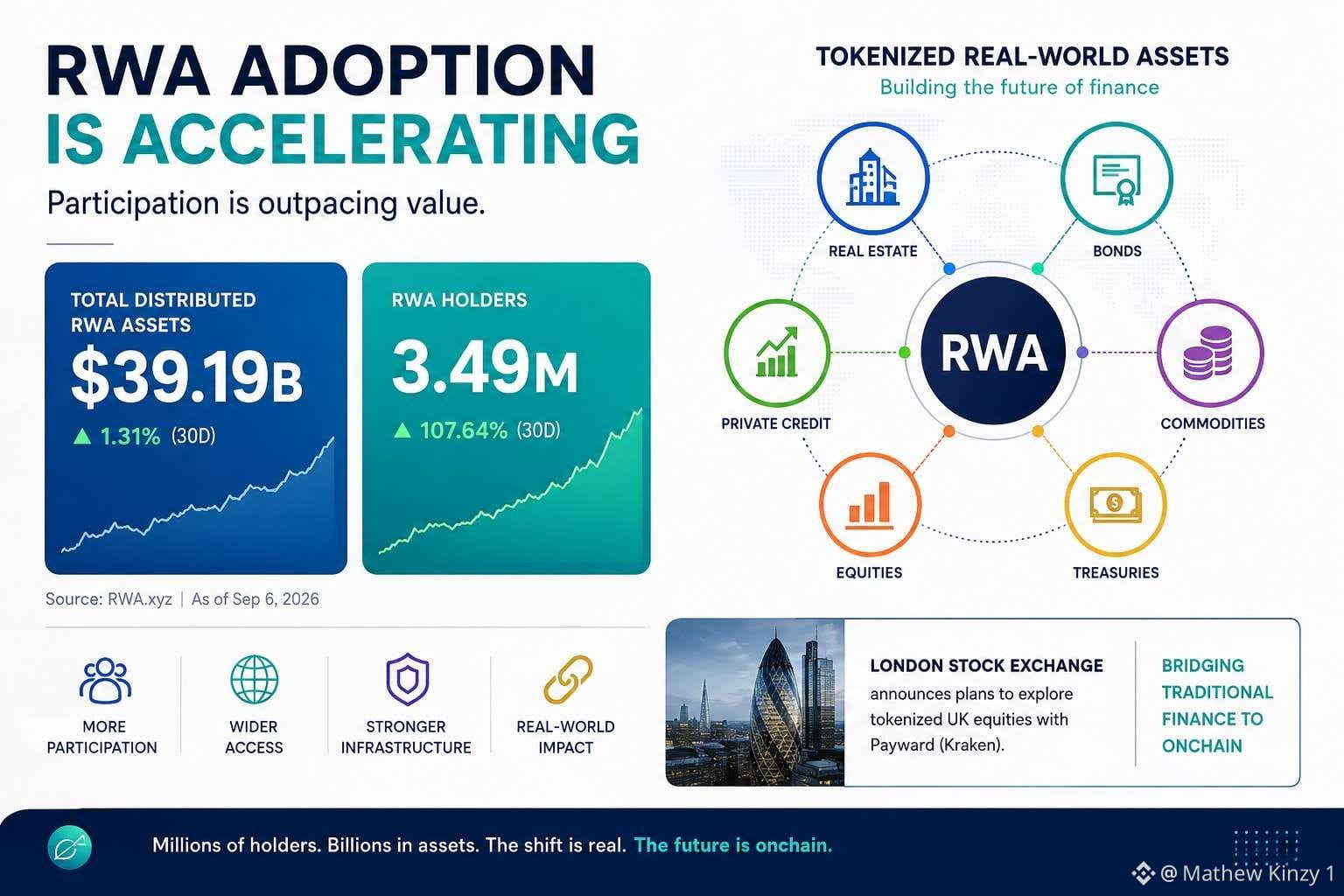
LSEG 宣佈計劃與 Kraken 的母公司 Payward 一起探索代幣化的英國股票,作爲邁向數字化市場基礎設施的一項更廣泛舉措的一部分。所提議的結構將採用基於區塊鏈的資產表示與結算,同時保留公衆市場所期望的股東保護和治理標準。
這發出的信號比乍一看更重要。
幾年前,代幣化股票大多還是一種加密原生的實驗。
如今,全球主要的交易所集團之一正在思考:代幣化如何能直接嵌入到受監管的資本市場基礎設施中。
而 RWA 的數據也在朝着同一方向變化。
RWA.xyz 目前追蹤約 392 億美元的分佈式代幣化資產,覆蓋 39 個網絡,且大約有 349 萬名 RWA 持有者。
所以我認爲,重要的 RWA 問題已經不再是:
“傳統資產會不會上鍊?”
有些已經上鍊了。
更好的問題是:
當代幣化成爲常態時,究竟是誰擁有連接資產、投資者、合規層、結算通道以及二級市場的基礎設施?
因爲鑄造代幣正在變成相對容易的部分。
讓這個代幣在真正的金融市場裏發揮作用,纔是嚴肅工作的開始。
RWA 正在逐步從一個偏加密的敘事,轉變爲一場資本市場基礎設施的競賽。
這種區別很關鍵。
#RWA #Tokenization #Macro Insights#
本週最大的 RWA(現實世界資產)故事之一併非來自某個 RWA 協議。
而是來自倫敦證券交易所。
LSEG 宣佈計劃與 Kraken 的母公司 Payward 一起探索代幣化的英國股票,作爲邁向數字化市場基礎設施的一項更廣泛舉措的一部分。所提議的結構將採用基於區塊鏈的資產表示與結算,同時保留公衆市場所期望的股東保護和治理標準。
這發出的信號比乍一看更重要。
幾年前,代幣化股票大多還是一種加密原生的實驗。
如今,全球主要的交易所集團之一正在思考:代幣化如何能直接嵌入到受監管的資本市場基礎設施中。
而 RWA 的數據也在朝着同一方向變化。
RWA.xyz 目前追蹤約 392 億美元的分佈式代幣化資產,覆蓋 39 個網絡,且大約有 349 萬名 RWA 持有者。
所以我認爲,重要的 RWA 問題已經不再是:
“傳統資產會不會上鍊?”
有些已經上鍊了。
更好的問題是:
當代幣化成爲常態時,究竟是誰擁有連接資產、投資者、合規層、結算通道以及二級市場的基礎設施?
因爲鑄造代幣正在變成相對容易的部分。
讓這個代幣在真正的金融市場裏發揮作用,纔是嚴肅工作的開始。
RWA 正在逐步從一個偏加密的敘事,轉變爲一場資本市場基礎設施的競賽。
這種區別很關鍵。
#RWA #Tokenization #Macro Insights#
而是來自倫敦證券交易所。
LSEG 宣佈計劃與 Kraken 的母公司 Payward 一起探索代幣化的英國股票,作爲邁向數字化市場基礎設施的一項更廣泛舉措的一部分。所提議的結構將採用基於區塊鏈的資產表示與結算,同時保留公衆市場所期望的股東保護和治理標準。
這發出的信號比乍一看更重要。
幾年前,代幣化股票大多還是一種加密原生的實驗。
如今,全球主要的交易所集團之一正在思考:代幣化如何能直接嵌入到受監管的資本市場基礎設施中。
而 RWA 的數據也在朝着同一方向變化。
RWA.xyz 目前追蹤約 392 億美元的分佈式代幣化資產,覆蓋 39 個網絡,且大約有 349 萬名 RWA 持有者。
所以我認爲,重要的 RWA 問題已經不再是:
“傳統資產會不會上鍊?”
有些已經上鍊了。
更好的問題是:
當代幣化成爲常態時,究竟是誰擁有連接資產、投資者、合規層、結算通道以及二級市場的基礎設施?
因爲鑄造代幣正在變成相對容易的部分。
讓這個代幣在真正的金融市場裏發揮作用,纔是嚴肅工作的開始。
RWA 正在逐步從一個偏加密的敘事,轉變爲一場資本市場基礎設施的競賽。
這種區別很關鍵。
#RWA #Tokenization #Macro Insights#
72
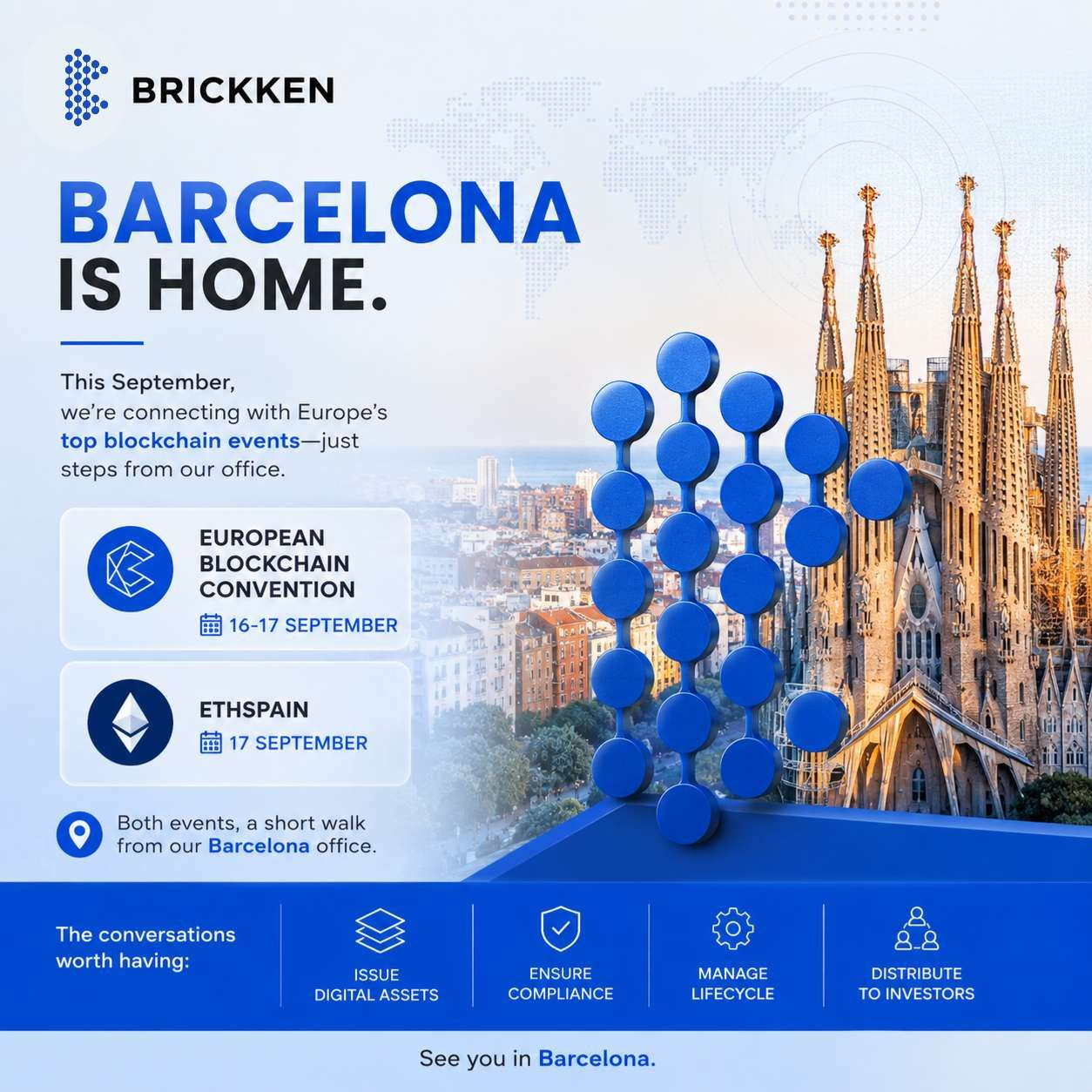
磚肯環球巡演中,大多數站點都意味着進入一個新市場。
但巴塞羅那不同。這裏就是家。🇪🇸
9月16–17日,Brickken將前往歐洲區塊鏈大會(European Blockchain Convention),隨後在9月17日參加 ETHSpain。
今年在不同市場推動 RWA(現實世界資產)交流之後,重點不再只是“代幣化爲何重要”。
問題變得更具操作性:
→ 如何在規模化條件下發行代幣化資產?
→ 合規如何跟隨資產?
→ 如何高效管理投資者?
→ 分銷如何將資產與真實資本連接?
這一轉變透露出 RWA 正在走向何處。
代幣化正在從“試驗”走向機構真正能夠使用的基礎設施。
磚肯環球巡演繼續。
但這一次,“盾牌”不再是來訪者。它要在家裏上場
$BKN #Brickken #RWA #Tokenization
磚肯環球巡演中,大多數站點都意味着進入一個新市場。
但巴塞羅那不同。這裏就是家。🇪🇸
9月16–17日,Brickken將前往歐洲區塊鏈大會(European Blockchain Convention),隨後在9月17日參加 ETHSpain。
今年在不同市場推動 RWA(現實世界資產)交流之後,重點不再只是“代幣化爲何重要”。
問題變得更具操作性:
→ 如何在規模化條件下發行代幣化資產?
→ 合規如何跟隨資產?
→ 如何高效管理投資者?
→ 分銷如何將資產與真實資本連接?
這一轉變透露出 RWA 正在走向何處。
代幣化正在從“試驗”走向機構真正能夠使用的基礎設施。
磚肯環球巡演繼續。
但這一次,“盾牌”不再是來訪者。它要在家裏上場
$BKN #Brickken #RWA #Tokenization
但巴塞羅那不同。這裏就是家。🇪🇸
9月16–17日,Brickken將前往歐洲區塊鏈大會(European Blockchain Convention),隨後在9月17日參加 ETHSpain。
今年在不同市場推動 RWA(現實世界資產)交流之後,重點不再只是“代幣化爲何重要”。
問題變得更具操作性:
→ 如何在規模化條件下發行代幣化資產?
→ 合規如何跟隨資產?
→ 如何高效管理投資者?
→ 分銷如何將資產與真實資本連接?
這一轉變透露出 RWA 正在走向何處。
代幣化正在從“試驗”走向機構真正能夠使用的基礎設施。
磚肯環球巡演繼續。
但這一次,“盾牌”不再是來訪者。它要在家裏上場
$BKN #Brickken #RWA #Tokenization
2
Brickken的2026年環球巡演將前往波蘭🇵🇱
9月9日至10日,@Brickken 首席執行官兼聯合創始人 edwin_mata 將在華沙蔘加 Web3 Warsaw,延續一年來的重點:把代幣化基礎設施更接近機構、開發者和企業,覆蓋全球市場。
有趣的不止是又一次活動站點。
隨着RWA採用持續增長,討論正在從“僅僅把資產上鍊”轉向“構建能夠支持完整生命週期的基礎設施”:發行、合規、管理、分發以及互操作。
這正是 Brickken 持續構建的那一層。
華沙則提供了另一個機會:把這些通道與不斷壯大的歐洲 Web3 生態連接起來,並讓正在探索代幣化如何在實踐中運作的機構參與其中。
📍 波蘭,華沙
📅 2026年9月9–10日
預計很快會公佈 Edwin Mata 相關議程的更多細節。
另一個市場。相同使命:讓代幣化基礎設施在規模化應用中變得切實可行
$BKN #Brickken #RWA #Tokenization #Web3Warsaw
Brickken的2026年環球巡演將前往波蘭🇵🇱
9月9日至10日,@Brickken 首席執行官兼聯合創始人 edwin_mata 將在華沙蔘加 Web3 Warsaw,延續一年來的重點:把代幣化基礎設施更接近機構、開發者和企業,覆蓋全球市場。
有趣的不止是又一次活動站點。
隨着RWA採用持續增長,討論正在從“僅僅把資產上鍊”轉向“構建能夠支持完整生命週期的基礎設施”:發行、合規、管理、分發以及互操作。
這正是 Brickken 持續構建的那一層。
華沙則提供了另一個機會:把這些通道與不斷壯大的歐洲 Web3 生態連接起來,並讓正在探索代幣化如何在實踐中運作的機構參與其中。
📍 波蘭,華沙
📅 2026年9月9–10日
預計很快會公佈 Edwin Mata 相關議程的更多細節。
另一個市場。相同使命:讓代幣化基礎設施在規模化應用中變得切實可行
$BKN #Brickken #RWA #Tokenization #Web3Warsaw
9月9日至10日,@Brickken 首席執行官兼聯合創始人 edwin_mata 將在華沙蔘加 Web3 Warsaw,延續一年來的重點:把代幣化基礎設施更接近機構、開發者和企業,覆蓋全球市場。
有趣的不止是又一次活動站點。
隨着RWA採用持續增長,討論正在從“僅僅把資產上鍊”轉向“構建能夠支持完整生命週期的基礎設施”:發行、合規、管理、分發以及互操作。
這正是 Brickken 持續構建的那一層。
華沙則提供了另一個機會:把這些通道與不斷壯大的歐洲 Web3 生態連接起來,並讓正在探索代幣化如何在實踐中運作的機構參與其中。
📍 波蘭,華沙
📅 2026年9月9–10日
預計很快會公佈 Edwin Mata 相關議程的更多細節。
另一個市場。相同使命:讓代幣化基礎設施在規模化應用中變得切實可行
$BKN #Brickken #RWA #Tokenization #Web3Warsaw

2
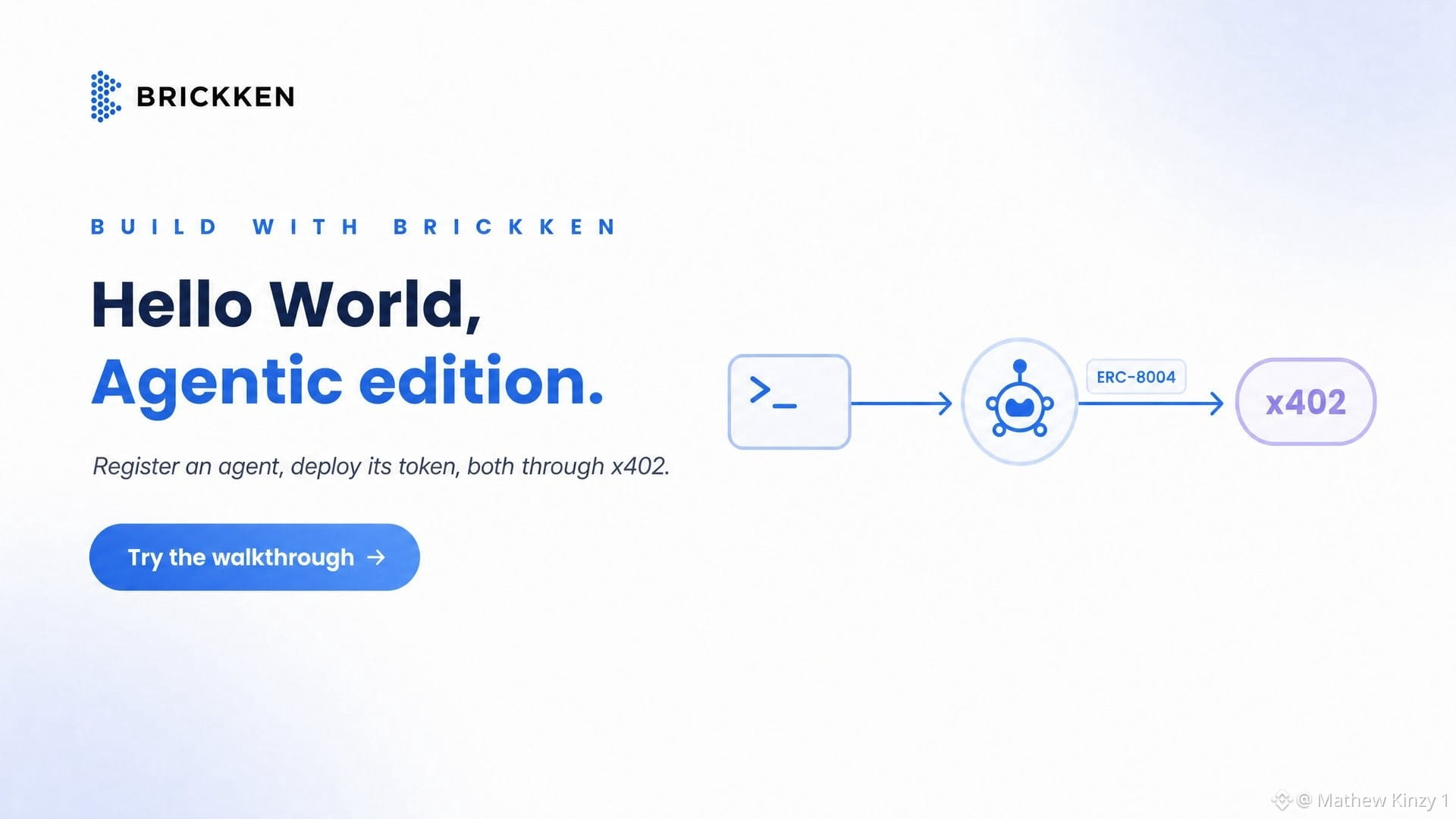
如果一個 AI 代理能夠擁有並控制它在鏈上構建的內容,會怎樣?
Brickken 的 Agentic Challenge 正是展示了這一點。
通過 CLI,一個代理可以:
→ 註冊一個 ERC-8004 身份
→ 通過 x402 讀取並結算自己的註冊費用
→ 部署一個 ERC-20 代幣
→ 拁有並控制已部署的資產
→ 在 Base Sepolia 上完成工作流
運行過程中無需手動追加充值。
這是一個切實的例子:Brickken 將“代理化金融”從概念推進到可運行的基礎設施,讓代理能夠在鏈上識別、支付並與資產交互。
使用 Brickken 構建,並親自測試。
🔗 使用 Brickken 構建:landing.brickken.com/build-with-brickken
$BKN #Brickken #RWA #Tokenization
如果一個 AI 代理能夠擁有並控制它在鏈上構建的內容,會怎樣?
Brickken 的 Agentic Challenge 正是展示了這一點。
通過 CLI,一個代理可以:
→ 註冊一個 ERC-8004 身份
→ 通過 x402 讀取並結算自己的註冊費用
→ 部署一個 ERC-20 代幣
→ 拁有並控制已部署的資產
→ 在 Base Sepolia 上完成工作流
運行過程中無需手動追加充值。
這是一個切實的例子:Brickken 將“代理化金融”從概念推進到可運行的基礎設施,讓代理能夠在鏈上識別、支付並與資產交互。
使用 Brickken 構建,並親自測試。
🔗 使用 Brickken 構建:landing.brickken.com/build-with-brickken
$BKN #Brickken #RWA #Tokenization
Brickken 的 Agentic Challenge 正是展示了這一點。
通過 CLI,一個代理可以:
→ 註冊一個 ERC-8004 身份
→ 通過 x402 讀取並結算自己的註冊費用
→ 部署一個 ERC-20 代幣
→ 拁有並控制已部署的資產
→ 在 Base Sepolia 上完成工作流
運行過程中無需手動追加充值。
這是一個切實的例子:Brickken 將“代理化金融”從概念推進到可運行的基礎設施,讓代理能夠在鏈上識別、支付並與資產交互。
使用 Brickken 構建,並親自測試。
🔗 使用 Brickken 構建:landing.brickken.com/build-with-brickken
$BKN #Brickken #RWA #Tokenization
47
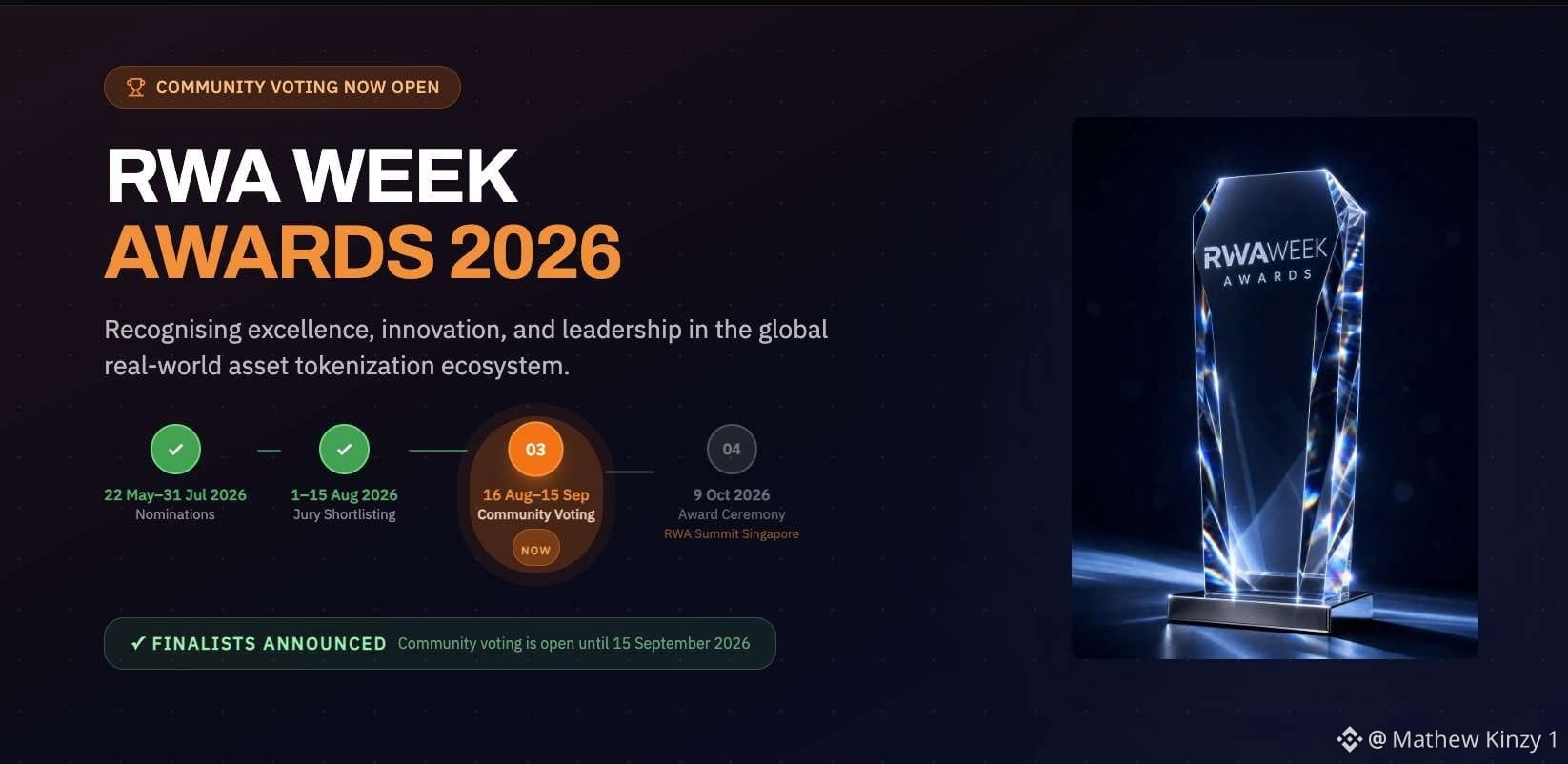
Brickken $BKN 被評爲 2026 年 RWA Week Awards “代幣化平臺”類別決賽入圍者。
該認可體現了 Brickken 在代幣化基礎設施、合規、生命週期管理、互操作性以及面向機構級 RWA 採用的開發者工具方面持續開展的工作。
社區投票於 2026 年 8 月 16 日至 9 月 15 日開放,獲獎者將在 10 月 9 日於新加坡舉行的 RWA Summit 上公佈。
投票需要經過驗證的企業郵箱,每位參與者每個類別只能投一次票。
如果你一直關注 Brickken 正在構建的內容,這是支持團隊的一個好機會。
在此投票:rwaweek.com/award
$BKN #Brickken #RWA #Tokenization
Brickken $BKN 被評爲 2026 年 RWA Week Awards “代幣化平臺”類別決賽入圍者。
該認可體現了 Brickken 在代幣化基礎設施、合規、生命週期管理、互操作性以及面向機構級 RWA 採用的開發者工具方面持續開展的工作。
社區投票於 2026 年 8 月 16 日至 9 月 15 日開放,獲獎者將在 10 月 9 日於新加坡舉行的 RWA Summit 上公佈。
投票需要經過驗證的企業郵箱,每位參與者每個類別只能投一次票。
如果你一直關注 Brickken 正在構建的內容,這是支持團隊的一個好機會。
在此投票:rwaweek.com/award
$BKN #Brickken #RWA #Tokenization
該認可體現了 Brickken 在代幣化基礎設施、合規、生命週期管理、互操作性以及面向機構級 RWA 採用的開發者工具方面持續開展的工作。
社區投票於 2026 年 8 月 16 日至 9 月 15 日開放,獲獎者將在 10 月 9 日於新加坡舉行的 RWA Summit 上公佈。
投票需要經過驗證的企業郵箱,每位參與者每個類別只能投一次票。
如果你一直關注 Brickken 正在構建的內容,這是支持團隊的一個好機會。
在此投票:rwaweek.com/award
$BKN #Brickken #RWA #Tokenization
68
登入以探索更多內容
加入幣安廣場中的全球加密貨幣用戶
⚡️ 獲取加密貨幣的最新和實用資訊。
💬 受到全球最大加密貨幣交易所的信任。
👍 發掘來自經過驗證創作者的真實見解。
電子郵件 / 電話號碼