

Erica 1
128 貼文

Erica 1
舉報
封鎖用戶
Binance KOL | Crypto Analyst | #BTC Holder | #SOL and #ETH
0 關注
6 粉絲
13 點讚數
貼文
·
--
查看翻譯
CryptoPunks at 50 ETH again? 👀
I’m going against the crowd on this one.
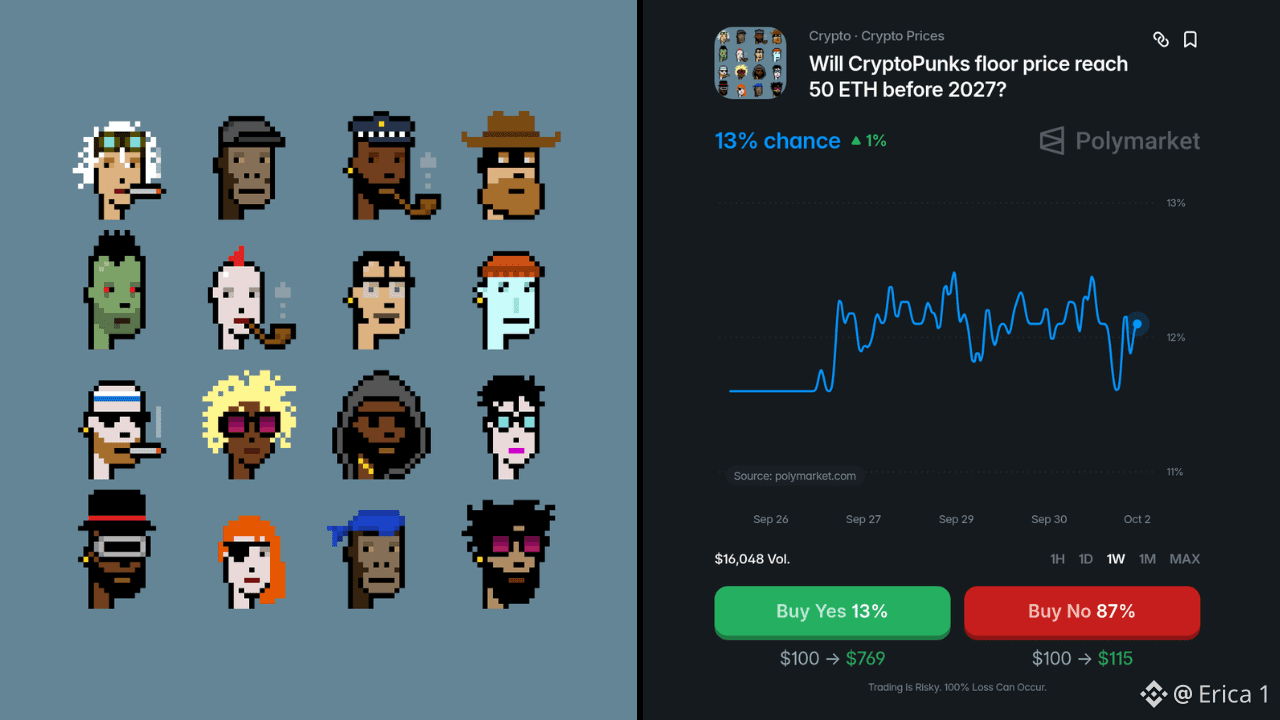
Only 13% of Polymarket traders currently see the CryptoPunks floor reaching 50 ETH before 2027, but that low probability is exactly what makes YES interesting to me.
NFTs have shown before how quickly sentiment can return once liquidity and attention rotate back into the sector. I don't need a full-blown NFT mania either. If that 13% starts repricing upward, my position becomes more valuable before the final result is even known.
The screenshot puts $100 on my side at a potential $769 gross payout if held to a correct resolution.
That's the part of Polymarket I think people underestimate.
I'm not buying a Punk for 50 ETH. I'm taking a much smaller position on whether the market gets there.
And if I want to put some $HYPE to work instead of simply holding it, this gives me another type of trade entirely.
#Altcoin Season#
CryptoPunks at 50 ETH again? 👀
I’m going against the crowd on this one.
Only 13% of Polymarket traders currently see the CryptoPunks floor reaching 50 ETH before 2027, but that low probability is exactly what makes YES interesting to me.
NFTs have shown before how quickly sentiment can return once liquidity and attention rotate back into the sector. I don't need a full-blown NFT mania either. If that 13% starts repricing upward, my position becomes more valuable before the final result is even known.
The screenshot puts $100 on my side at a potential $769 gross payout if held to a correct resolution.
That's the part of Polymarket I think people underestimate.
I'm not buying a Punk for 50 ETH. I'm taking a much smaller position on whether the market gets there.
And if I want to put some $HYPE to work instead of simply holding it, this gives me another type of trade entirely.
#Altcoin Season#
I’m going against the crowd on this one.
Only 13% of Polymarket traders currently see the CryptoPunks floor reaching 50 ETH before 2027, but that low probability is exactly what makes YES interesting to me.
NFTs have shown before how quickly sentiment can return once liquidity and attention rotate back into the sector. I don't need a full-blown NFT mania either. If that 13% starts repricing upward, my position becomes more valuable before the final result is even known.
The screenshot puts $100 on my side at a potential $769 gross payout if held to a correct resolution.
That's the part of Polymarket I think people underestimate.
I'm not buying a Punk for 50 ETH. I'm taking a much smaller position on whether the market gets there.
And if I want to put some $HYPE to work instead of simply holding it, this gives me another type of trade entirely.
#Altcoin Season#
69
·
--
查看翻譯
The Solana Killer Debate Just Changed 👀
Calling every fast Layer 1 a Solana killer became one of crypto’s most exhausted narratives. $SOL earned its position through users, applications and liquidity. $SUI has always had strong technology, but technology alone was never enough to justify the comparison.
The user data is finally making that conversation more interesting.
Sui has reportedly moved ahead of NEAR, TON, Arbitrum and Injective in daily active users.
That does not mean Sui has beaten Solana.
It means Sui is beginning to clear the first hurdle that destroys most Layer 1 challengers. Getting people to actually use the network.
What makes this bullish to me is the timing. Sui has already shown huge transaction capacity, while its ecosystem is expanding across DeFi, payments, trading, gaming and consumer applications.
Now the activity numbers are starting to support the infrastructure thesis.
More active users create a stronger environment for builders. Better applications can attract more liquidity, and deeper liquidity makes the network more useful again.
That cycle is how a technically impressive chain becomes an economically important one.
Sui still needs to prove this activity is durable and that users continue returning without relying on temporary incentives.
But surpassing four recognised ecosystems on daily participation shows the gap is closing much faster than many expected.
I am increasingly convinced that Sui will not remain a speculative alternative in the Layer 1 race. It is building the usage required to become a genuine market leader.
#Altcoin Season# #DeFi
The Solana Killer Debate Just Changed 👀
Calling every fast Layer 1 a Solana killer became one of crypto’s most exhausted narratives. $SOL earned its position through users, applications and liquidity. $SUI has always had strong technology, but technology alone was never enough to justify the comparison.
The user data is finally making that conversation more interesting.
Sui has reportedly moved ahead of NEAR, TON, Arbitrum and Injective in daily active users.
That does not mean Sui has beaten Solana.
It means Sui is beginning to clear the first hurdle that destroys most Layer 1 challengers. Getting people to actually use the network.
What makes this bullish to me is the timing. Sui has already shown huge transaction capacity, while its ecosystem is expanding across DeFi, payments, trading, gaming and consumer applications.
Now the activity numbers are starting to support the infrastructure thesis.
More active users create a stronger environment for builders. Better applications can attract more liquidity, and deeper liquidity makes the network more useful again.
That cycle is how a technically impressive chain becomes an economically important one.
Sui still needs to prove this activity is durable and that users continue returning without relying on temporary incentives.
But surpassing four recognised ecosystems on daily participation shows the gap is closing much faster than many expected.
I am increasingly convinced that Sui will not remain a speculative alternative in the Layer 1 race. It is building the usage required to become a genuine market leader.
#Altcoin Season# #DeFi
Calling every fast Layer 1 a Solana killer became one of crypto’s most exhausted narratives. $SOL earned its position through users, applications and liquidity. $SUI has always had strong technology, but technology alone was never enough to justify the comparison.
The user data is finally making that conversation more interesting.
Sui has reportedly moved ahead of NEAR, TON, Arbitrum and Injective in daily active users.
That does not mean Sui has beaten Solana.
It means Sui is beginning to clear the first hurdle that destroys most Layer 1 challengers. Getting people to actually use the network.
What makes this bullish to me is the timing. Sui has already shown huge transaction capacity, while its ecosystem is expanding across DeFi, payments, trading, gaming and consumer applications.
Now the activity numbers are starting to support the infrastructure thesis.
More active users create a stronger environment for builders. Better applications can attract more liquidity, and deeper liquidity makes the network more useful again.
That cycle is how a technically impressive chain becomes an economically important one.
Sui still needs to prove this activity is durable and that users continue returning without relying on temporary incentives.
But surpassing four recognised ecosystems on daily participation shows the gap is closing much faster than many expected.
I am increasingly convinced that Sui will not remain a speculative alternative in the Layer 1 race. It is building the usage required to become a genuine market leader.
#Altcoin Season# #DeFi
73
·
--
商店正在開始封鎖你的代理 🛒
亞馬遜上週封禁了 Meta 的購物代理,並表示:代表客戶代購的第三方應用應當公開運作,並尊重平臺的決策。
這場較量值得關注,因爲代理如果不出示銀行卡、地址,並提供足夠的歷史記錄以證明其是在爲真實的人行事,就無法購買任何東西。
從 1 月開始,$FET 讓代理通過 ASI:One 下單並替用戶支付:在卡片側使用 Visa;而且越來越多的代理支付會結算到 $SOL 上——其中 x402 轉賬在 8 月底前已超過 3500 萬。
所以基礎通道存在,而“商店”則是決定代理必須披露什麼信息才能使用它們。
任何一個說“可以”的商家,最終都會持有另一份關於你是誰的副本;而任何一個說“不可以”的商家,是因爲它無法區分代理和機器人。
Arcium 會改變商店需要接收的內容:把代理所出示的任何信息拆分成碎片,分佈在一組節點上,確保沒有任何單個節點持有可讀的副本;但該集羣仍會返回商家所需要的“是/否”結果。
該答案在 Solana 上作爲普通公開交易落地,因此商家會保留“檢查確實發生了”的記錄,而不需要保留背後的具體材料。
計算層自 2 月 2 日起已在 Mainnet Alpha 上上線,而將其帶給 AI 模型的 Blackthorn 尚未發佈。
代理式購物被包裝成便利性,但本質上是一個“披露”的問題;而我的判斷是:它會落在代理能夠證明自身而無需交出其所有者的地方。
#AI #Solana
商店正在開始封鎖你的代理 🛒
亞馬遜上週封禁了 Meta 的購物代理,並表示:代表客戶代購的第三方應用應當公開運作,並尊重平臺的決策。
這場較量值得關注,因爲代理如果不出示銀行卡、地址,並提供足夠的歷史記錄以證明其是在爲真實的人行事,就無法購買任何東西。
從 1 月開始,$FET 讓代理通過 ASI:One 下單並替用戶支付:在卡片側使用 Visa;而且越來越多的代理支付會結算到 $SOL 上——其中 x402 轉賬在 8 月底前已超過 3500 萬。
所以基礎通道存在,而“商店”則是決定代理必須披露什麼信息才能使用它們。
任何一個說“可以”的商家,最終都會持有另一份關於你是誰的副本;而任何一個說“不可以”的商家,是因爲它無法區分代理和機器人。
Arcium 會改變商店需要接收的內容:把代理所出示的任何信息拆分成碎片,分佈在一組節點上,確保沒有任何單個節點持有可讀的副本;但該集羣仍會返回商家所需要的“是/否”結果。
該答案在 Solana 上作爲普通公開交易落地,因此商家會保留“檢查確實發生了”的記錄,而不需要保留背後的具體材料。
計算層自 2 月 2 日起已在 Mainnet Alpha 上上線,而將其帶給 AI 模型的 Blackthorn 尚未發佈。
代理式購物被包裝成便利性,但本質上是一個“披露”的問題;而我的判斷是:它會落在代理能夠證明自身而無需交出其所有者的地方。
#AI #Solana
亞馬遜上週封禁了 Meta 的購物代理,並表示:代表客戶代購的第三方應用應當公開運作,並尊重平臺的決策。
這場較量值得關注,因爲代理如果不出示銀行卡、地址,並提供足夠的歷史記錄以證明其是在爲真實的人行事,就無法購買任何東西。
從 1 月開始,$FET 讓代理通過 ASI:One 下單並替用戶支付:在卡片側使用 Visa;而且越來越多的代理支付會結算到 $SOL 上——其中 x402 轉賬在 8 月底前已超過 3500 萬。
所以基礎通道存在,而“商店”則是決定代理必須披露什麼信息才能使用它們。
任何一個說“可以”的商家,最終都會持有另一份關於你是誰的副本;而任何一個說“不可以”的商家,是因爲它無法區分代理和機器人。
Arcium 會改變商店需要接收的內容:把代理所出示的任何信息拆分成碎片,分佈在一組節點上,確保沒有任何單個節點持有可讀的副本;但該集羣仍會返回商家所需要的“是/否”結果。
該答案在 Solana 上作爲普通公開交易落地,因此商家會保留“檢查確實發生了”的記錄,而不需要保留背後的具體材料。
計算層自 2 月 2 日起已在 Mainnet Alpha 上上線,而將其帶給 AI 模型的 Blackthorn 尚未發佈。
代理式購物被包裝成便利性,但本質上是一個“披露”的問題;而我的判斷是:它會落在代理能夠證明自身而無需交出其所有者的地方。
#AI #Solana
78
·
--
市場數據每一毫秒都變得更不有用 ⚡
$2Z 的核心建立在一個簡單的事實:市場資訊是有「保存期限」的。
$HYPE 說明了這點為何重要,因為價格、流動性與訂單簿都在不斷變化。
一筆市場數據在產出時或許完全正確。但如果它花太久才到達要用它來採取行動的系統,市場可能早就已經移動。
因此,交付速度和數據本身同樣重要。
DoubleZero Edge 透過為高效能系統打造的專用網路基礎設施,將具時間敏感性的資訊傳遞過去。
更好的數據更有用。
更新的數據更具可操作性。
#DeFi #Trading
市場數據每一毫秒都變得更不有用 ⚡
$2Z 的核心建立在一個簡單的事實:市場資訊是有「保存期限」的。
$HYPE 說明了這點為何重要,因為價格、流動性與訂單簿都在不斷變化。
一筆市場數據在產出時或許完全正確。但如果它花太久才到達要用它來採取行動的系統,市場可能早就已經移動。
因此,交付速度和數據本身同樣重要。
DoubleZero Edge 透過為高效能系統打造的專用網路基礎設施,將具時間敏感性的資訊傳遞過去。
更好的數據更有用。
更新的數據更具可操作性。
#DeFi #Trading
$2Z 的核心建立在一個簡單的事實:市場資訊是有「保存期限」的。
$HYPE 說明了這點為何重要,因為價格、流動性與訂單簿都在不斷變化。
一筆市場數據在產出時或許完全正確。但如果它花太久才到達要用它來採取行動的系統,市場可能早就已經移動。
因此,交付速度和數據本身同樣重要。
DoubleZero Edge 透過為高效能系統打造的專用網路基礎設施,將具時間敏感性的資訊傳遞過去。
更好的數據更有用。
更新的數據更具可操作性。
#DeFi #Trading
72
·
--
B3IQ 的需求正在超越其估值 📊
$TAO 和 $VVV 展示了市場已經為 AI 經濟的不同部分分配了多少價值。
TAO 目前市值約 36 億美元,而 VVV 約 13.7 億美元。
$B3 仍被估值約 3800 萬美元。
然而 B3IQ 在前兩週就已售出 8 位數規模的 GPU,之後 B3 Labs 也已報告在部署需求上超過 9 位數。
這意味著 B3 約為 VVV 估值的 1/36、以及 TAO 的 1/95;同時 B3IQ 已經看到了對其所提供的 AI 底層實體基礎設施的顯著需求。
這個比較並不完美。
部署需求並非已入帳的營收,而代幣市值也無法直接衡量底層企業的價值。
但如果 B3IQ 能持續把這些需求轉化為已部署的機器、使用率以及持續性的租賃收入,這個差距就會更值得關注。
TAO 把機器智慧變現。
VVV 把推論存取權變現。
B3IQ 則圍繞著對 GPU 的所有權(而這些 GPU 最終都需要)。
如果 AI 運算持續成為更大的市場,那麼這個估值落差就值得追蹤。🔥
#AI #Altcoin Season#
B3IQ 的需求正在超越其估值 📊
$TAO 和 $VVV 展示了市場已經為 AI 經濟的不同部分分配了多少價值。
TAO 目前市值約 36 億美元,而 VVV 約 13.7 億美元。
$B3 仍被估值約 3800 萬美元。
然而 B3IQ 在前兩週就已售出 8 位數規模的 GPU,之後 B3 Labs 也已報告在部署需求上超過 9 位數。
這意味著 B3 約為 VVV 估值的 1/36、以及 TAO 的 1/95;同時 B3IQ 已經看到了對其所提供的 AI 底層實體基礎設施的顯著需求。
這個比較並不完美。
部署需求並非已入帳的營收,而代幣市值也無法直接衡量底層企業的價值。
但如果 B3IQ 能持續把這些需求轉化為已部署的機器、使用率以及持續性的租賃收入,這個差距就會更值得關注。
TAO 把機器智慧變現。
VVV 把推論存取權變現。
B3IQ 則圍繞著對 GPU 的所有權(而這些 GPU 最終都需要)。
如果 AI 運算持續成為更大的市場,那麼這個估值落差就值得追蹤。🔥
#AI #Altcoin Season#
$TAO 和 $VVV 展示了市場已經為 AI 經濟的不同部分分配了多少價值。
TAO 目前市值約 36 億美元,而 VVV 約 13.7 億美元。
$B3 仍被估值約 3800 萬美元。
然而 B3IQ 在前兩週就已售出 8 位數規模的 GPU,之後 B3 Labs 也已報告在部署需求上超過 9 位數。
這意味著 B3 約為 VVV 估值的 1/36、以及 TAO 的 1/95;同時 B3IQ 已經看到了對其所提供的 AI 底層實體基礎設施的顯著需求。
這個比較並不完美。
部署需求並非已入帳的營收,而代幣市值也無法直接衡量底層企業的價值。
但如果 B3IQ 能持續把這些需求轉化為已部署的機器、使用率以及持續性的租賃收入,這個差距就會更值得關注。
TAO 把機器智慧變現。
VVV 把推論存取權變現。
B3IQ 則圍繞著對 GPU 的所有權(而這些 GPU 最終都需要)。
如果 AI 運算持續成為更大的市場,那麼這個估值落差就值得追蹤。🔥
#AI #Altcoin Season#
47
·
--
午夜不僅僅是卡爾達諾的隱私功能 🌙
這種區別實際上經常被忽略。
NIGHT 作爲卡爾達諾原生資產推出,而 Midnight 與 $ADA 之間有着顯而易見的淵源和生態聯繫。
但網絡本身被定位爲其自身的第 1 層(Layer 1)以及 Web3 的隱私層,而不只是卡爾達諾內部某個私有執行功能。
這改變了我對這一機會的看法。
目標並不是讓某個既有生態系統的隱私性稍微提升一點。
而是讓應用擁有自己的基礎層,用於決定哪些內容將變爲公開、私有以及可驗證。
這使得 Midnight 進入了與 $ZEC 等網絡以及其他隱私基礎設施更廣泛的討論,而不是把它簡單歸結爲另一個卡爾達諾產品。
卡爾達諾是起源故事的一部分。
Midnight 真正試圖服務的市場要比單一生態系統大得多。
#Layer1 #Web3
午夜不僅僅是卡爾達諾的隱私功能 🌙
這種區別實際上經常被忽略。
NIGHT 作爲卡爾達諾原生資產推出,而 Midnight 與 $ADA 之間有着顯而易見的淵源和生態聯繫。
但網絡本身被定位爲其自身的第 1 層(Layer 1)以及 Web3 的隱私層,而不只是卡爾達諾內部某個私有執行功能。
這改變了我對這一機會的看法。
目標並不是讓某個既有生態系統的隱私性稍微提升一點。
而是讓應用擁有自己的基礎層,用於決定哪些內容將變爲公開、私有以及可驗證。
這使得 Midnight 進入了與 $ZEC 等網絡以及其他隱私基礎設施更廣泛的討論,而不是把它簡單歸結爲另一個卡爾達諾產品。
卡爾達諾是起源故事的一部分。
Midnight 真正試圖服務的市場要比單一生態系統大得多。
#Layer1 #Web3
這種區別實際上經常被忽略。
NIGHT 作爲卡爾達諾原生資產推出,而 Midnight 與 $ADA 之間有着顯而易見的淵源和生態聯繫。
但網絡本身被定位爲其自身的第 1 層(Layer 1)以及 Web3 的隱私層,而不只是卡爾達諾內部某個私有執行功能。
這改變了我對這一機會的看法。
目標並不是讓某個既有生態系統的隱私性稍微提升一點。
而是讓應用擁有自己的基礎層,用於決定哪些內容將變爲公開、私有以及可驗證。
這使得 Midnight 進入了與 $ZEC 等網絡以及其他隱私基礎設施更廣泛的討論,而不是把它簡單歸結爲另一個卡爾達諾產品。
卡爾達諾是起源故事的一部分。
Midnight 真正試圖服務的市場要比單一生態系統大得多。
#Layer1 #Web3
51
·
--
銀行無法在欺詐問題上互通信息 🕵️
國際刑警組織(INTERPOL)預計,2025 年全球欺詐損失約爲 4420 億美元,而這個數字不斷攀升的原因並不是銀行缺少數據。
每家銀行看到的只是自己那一側。收款的賬戶、打開它的設備、以及上週在另外四家機構也運行過的同一類模式——所有這些都分散在彼此獨立的系統中,若不移交客戶記錄,就無法進行對比。
當在 $SOL 上的應用試圖對交易對手進行篩查時,也會遇到同樣的阻礙,因爲 Solana 程序在執行之前必須先獲得完整的輸入。
因此,行業只能在損失之後才共享信息——在報告和查封行動中,而不是在之前。
Arcium 針對的是這樣一種版本:兩家機構共同計算,但彼此都不會收到對方的數據。由於每一方都以碎片形式輸入到由多臺節點構成的集羣中,任何單個節點都沒有可讀的完整副本,而集羣仍能返回答案——這裏的答案是:同樣的模式是否同時出現在雙方。
這個答案以普通的公共交易形式落到 Solana 上,因此監管方可以看到檢查何時運行。
自 2 月 2 日起,計算層已在 Mainnet Alpha 上上線,已有十五支團隊在其上構建。
欺詐發生在那些被禁止彼此溝通的機構之間的縫隙中,而我認爲,在不移動數據的前提下消除這些縫隙,比用某一家銀行的歷史數據訓練的任何 AI 模型都更有價值。
#AI #Solana
銀行無法在欺詐問題上互通信息 🕵️
國際刑警組織(INTERPOL)預計,2025 年全球欺詐損失約爲 4420 億美元,而這個數字不斷攀升的原因並不是銀行缺少數據。
每家銀行看到的只是自己那一側。收款的賬戶、打開它的設備、以及上週在另外四家機構也運行過的同一類模式——所有這些都分散在彼此獨立的系統中,若不移交客戶記錄,就無法進行對比。
當在 $SOL 上的應用試圖對交易對手進行篩查時,也會遇到同樣的阻礙,因爲 Solana 程序在執行之前必須先獲得完整的輸入。
因此,行業只能在損失之後才共享信息——在報告和查封行動中,而不是在之前。
Arcium 針對的是這樣一種版本:兩家機構共同計算,但彼此都不會收到對方的數據。由於每一方都以碎片形式輸入到由多臺節點構成的集羣中,任何單個節點都沒有可讀的完整副本,而集羣仍能返回答案——這裏的答案是:同樣的模式是否同時出現在雙方。
這個答案以普通的公共交易形式落到 Solana 上,因此監管方可以看到檢查何時運行。
自 2 月 2 日起,計算層已在 Mainnet Alpha 上上線,已有十五支團隊在其上構建。
欺詐發生在那些被禁止彼此溝通的機構之間的縫隙中,而我認爲,在不移動數據的前提下消除這些縫隙,比用某一家銀行的歷史數據訓練的任何 AI 模型都更有價值。
#AI #Solana
國際刑警組織(INTERPOL)預計,2025 年全球欺詐損失約爲 4420 億美元,而這個數字不斷攀升的原因並不是銀行缺少數據。
每家銀行看到的只是自己那一側。收款的賬戶、打開它的設備、以及上週在另外四家機構也運行過的同一類模式——所有這些都分散在彼此獨立的系統中,若不移交客戶記錄,就無法進行對比。
當在 $SOL 上的應用試圖對交易對手進行篩查時,也會遇到同樣的阻礙,因爲 Solana 程序在執行之前必須先獲得完整的輸入。
因此,行業只能在損失之後才共享信息——在報告和查封行動中,而不是在之前。
Arcium 針對的是這樣一種版本:兩家機構共同計算,但彼此都不會收到對方的數據。由於每一方都以碎片形式輸入到由多臺節點構成的集羣中,任何單個節點都沒有可讀的完整副本,而集羣仍能返回答案——這裏的答案是:同樣的模式是否同時出現在雙方。
這個答案以普通的公共交易形式落到 Solana 上,因此監管方可以看到檢查何時運行。
自 2 月 2 日起,計算層已在 Mainnet Alpha 上上線,已有十五支團隊在其上構建。
欺詐發生在那些被禁止彼此溝通的機構之間的縫隙中,而我認爲,在不移動數據的前提下消除這些縫隙,比用某一家銀行的歷史數據訓練的任何 AI 模型都更有價值。
#AI #Solana
68
·
--
黃金更換類別 🌍
在我大多數投資生涯中,黃金一直非常簡單。
擁有它。
存儲它。
等待。
代幣化已經改變了存儲與轉移的方式。但具有生產力的抵押品,會改變該資產本身在金融體系中的角色。
Theoriq Gold Vault 接受 $XAUt,並將這種由黃金支持的頭寸轉化爲策略的基礎:在設定的限額內借入穩定幣,並將其部署到那些風險調整後價差有意義的地方。
黃金敞口仍然是錨點,而營運資金則發揮其應有的作用。
隨之而來的 tqGOLD 頭寸本身也被設計爲可組合——可作爲抵押品、基礎交易對,或在 DeFi 中作爲另一層收益策略的底座。
這就是爲什麼 $PAXG 以及更廣泛的代幣化黃金類別對我來說更有意思。
第一階段是:
“實體黃金能否存在於鏈上?”
顯然可以。
第二階段是:
“在不把它變成投資者從未想要的東西的前提下,圍繞這塊黃金還能構建怎樣的金融基礎設施?”
這纔是一個更大的市場設計問題。
#Altcoin Season#
黃金更換類別 🌍
在我大多數投資生涯中,黃金一直非常簡單。
擁有它。
存儲它。
等待。
代幣化已經改變了存儲與轉移的方式。但具有生產力的抵押品,會改變該資產本身在金融體系中的角色。
Theoriq Gold Vault 接受 $XAUt,並將這種由黃金支持的頭寸轉化爲策略的基礎:在設定的限額內借入穩定幣,並將其部署到那些風險調整後價差有意義的地方。
黃金敞口仍然是錨點,而營運資金則發揮其應有的作用。
隨之而來的 tqGOLD 頭寸本身也被設計爲可組合——可作爲抵押品、基礎交易對,或在 DeFi 中作爲另一層收益策略的底座。
這就是爲什麼 $PAXG 以及更廣泛的代幣化黃金類別對我來說更有意思。
第一階段是:
“實體黃金能否存在於鏈上?”
顯然可以。
第二階段是:
“在不把它變成投資者從未想要的東西的前提下,圍繞這塊黃金還能構建怎樣的金融基礎設施?”
這纔是一個更大的市場設計問題。
#Altcoin Season#
在我大多數投資生涯中,黃金一直非常簡單。
擁有它。
存儲它。
等待。
代幣化已經改變了存儲與轉移的方式。但具有生產力的抵押品,會改變該資產本身在金融體系中的角色。
Theoriq Gold Vault 接受 $XAUt,並將這種由黃金支持的頭寸轉化爲策略的基礎:在設定的限額內借入穩定幣,並將其部署到那些風險調整後價差有意義的地方。
黃金敞口仍然是錨點,而營運資金則發揮其應有的作用。
隨之而來的 tqGOLD 頭寸本身也被設計爲可組合——可作爲抵押品、基礎交易對,或在 DeFi 中作爲另一層收益策略的底座。
這就是爲什麼 $PAXG 以及更廣泛的代幣化黃金類別對我來說更有意思。
第一階段是:
“實體黃金能否存在於鏈上?”
顯然可以。
第二階段是:
“在不把它變成投資者從未想要的東西的前提下,圍繞這塊黃金還能構建怎樣的金融基礎設施?”
這纔是一個更大的市場設計問題。
#Altcoin Season#
63
·
--
SYN 的活動正在跑贏其估值 📊
$UNI 說明了爲什麼 DeFi 資產常常會根據其產品所帶來的活動來衡量其價值。$SYN 現在給出了一個引人注目的相對價值對比。
Hypercall 已達到 Derive 近期七日名義成交量的約三分之一。
根據 Duncan Reucassel 分享的數據,SYN 的估值仍接近 DRV 的十二分之一。
這些比例意味着:Hypercall 以單位代幣估值所產生的近期成交量大約是其四倍。
僅憑成交量並不足以構成完整的估值模型。留存、收入、流動性以及代幣價值的歸屬仍然至關重要。
如果 Hypercall 能夠維持其成交量,並且擬議的“買入回購分成”機制得以實施,那麼這種對比就會變得愈發重要。
市場目前給予 $SYN 的估值明顯小於其相對活動所暗示的水平。
#Altcoin Season#
SYN 的活動正在跑贏其估值 📊
$UNI 說明了爲什麼 DeFi 資產常常會根據其產品所帶來的活動來衡量其價值。$SYN 現在給出了一個引人注目的相對價值對比。
Hypercall 已達到 Derive 近期七日名義成交量的約三分之一。
根據 Duncan Reucassel 分享的數據,SYN 的估值仍接近 DRV 的十二分之一。
這些比例意味着:Hypercall 以單位代幣估值所產生的近期成交量大約是其四倍。
僅憑成交量並不足以構成完整的估值模型。留存、收入、流動性以及代幣價值的歸屬仍然至關重要。
如果 Hypercall 能夠維持其成交量,並且擬議的“買入回購分成”機制得以實施,那麼這種對比就會變得愈發重要。
市場目前給予 $SYN 的估值明顯小於其相對活動所暗示的水平。
#Altcoin Season#
$UNI 說明了爲什麼 DeFi 資產常常會根據其產品所帶來的活動來衡量其價值。$SYN 現在給出了一個引人注目的相對價值對比。
Hypercall 已達到 Derive 近期七日名義成交量的約三分之一。
根據 Duncan Reucassel 分享的數據,SYN 的估值仍接近 DRV 的十二分之一。
這些比例意味着:Hypercall 以單位代幣估值所產生的近期成交量大約是其四倍。
僅憑成交量並不足以構成完整的估值模型。留存、收入、流動性以及代幣價值的歸屬仍然至關重要。
如果 Hypercall 能夠維持其成交量,並且擬議的“買入回購分成”機制得以實施,那麼這種對比就會變得愈發重要。
市場目前給予 $SYN 的估值明顯小於其相對活動所暗示的水平。
#Altcoin Season#
76
·
--
SYN 構建強大的催化劑堆棧 🚀
$AAVE 展示了產品活躍度與代幣需求如何相互強化一個 DeFi 敘事。$SYN 目前正同時迎來數個看漲信號。
• SonicStrategy 購買了 500,000 枚 SYN
• Hypercall 日度名義成交額超過 2 億美元
• 其對衝錢包占 TradeXYZ 部分日 S&P 500 永續合約成交量的 29.628%
• Hypercall 達到約 Derive 最近七日名義成交量的三分之一
• SYN 仍約爲 DRV 報告估值的十二分之一
財庫採購帶來了一個新的買家類別。
期權成交量體現了真實的產品使用。
對衝活動表明:Hypercall 能夠在其自身交易場所以外也帶來成交量。
相對估值爲市場在這些指標持續的情況下重新評估價差留下空間。
在山寨幣季期間,單個催化劑會吸引關注。由一系列可衡量的催化劑構成的堆棧,能夠持續支撐它。
#Altcoin Season#
SYN 構建強大的催化劑堆棧 🚀
$AAVE 展示了產品活躍度與代幣需求如何相互強化一個 DeFi 敘事。$SYN 目前正同時迎來數個看漲信號。
• SonicStrategy 購買了 500,000 枚 SYN
• Hypercall 日度名義成交額超過 2 億美元
• 其對衝錢包占 TradeXYZ 部分日 S&P 500 永續合約成交量的 29.628%
• Hypercall 達到約 Derive 最近七日名義成交量的三分之一
• SYN 仍約爲 DRV 報告估值的十二分之一
財庫採購帶來了一個新的買家類別。
期權成交量體現了真實的產品使用。
對衝活動表明:Hypercall 能夠在其自身交易場所以外也帶來成交量。
相對估值爲市場在這些指標持續的情況下重新評估價差留下空間。
在山寨幣季期間,單個催化劑會吸引關注。由一系列可衡量的催化劑構成的堆棧,能夠持續支撐它。
#Altcoin Season#
$AAVE 展示了產品活躍度與代幣需求如何相互強化一個 DeFi 敘事。$SYN 目前正同時迎來數個看漲信號。
• SonicStrategy 購買了 500,000 枚 SYN
• Hypercall 日度名義成交額超過 2 億美元
• 其對衝錢包占 TradeXYZ 部分日 S&P 500 永續合約成交量的 29.628%
• Hypercall 達到約 Derive 最近七日名義成交量的三分之一
• SYN 仍約爲 DRV 報告估值的十二分之一
財庫採購帶來了一個新的買家類別。
期權成交量體現了真實的產品使用。
對衝活動表明:Hypercall 能夠在其自身交易場所以外也帶來成交量。
相對估值爲市場在這些指標持續的情況下重新評估價差留下空間。
在山寨幣季期間,單個催化劑會吸引關注。由一系列可衡量的催化劑構成的堆棧,能夠持續支撐它。
#Altcoin Season#
61
·
--
一個爲萬物而生的期權市場 🌐
$SYN 在 $HYPE 生態中,伴隨 Hypercall 向加密貨幣與股票期權領域的擴展而落地。
更大的機會超越了爲加密衍生品再增加一個交易場所。
任何由 Hyperliquid 永續合約市場支持的資產,都有可能通過 Hypercall 獲得期權市場。這讓加密貨幣、代幣化股票及其他鏈上資產能夠共享同一交易基礎設施。
分割持倉與基於錢包的訪問,也可能將這些市場帶給那些因傳統合約規模或賬戶要求而被排除在外的交易者。
最終能否形成持久的成交量,將取決於執行表現。
隨着山寨幣季(Altcoin Season)從單純的現貨投機擴展開來,期權或將成爲鏈上交易中愈發重要的一部分。
#Altcoin Season#
一個爲萬物而生的期權市場 🌐
$SYN 在 $HYPE 生態中,伴隨 Hypercall 向加密貨幣與股票期權領域的擴展而落地。
更大的機會超越了爲加密衍生品再增加一個交易場所。
任何由 Hyperliquid 永續合約市場支持的資產,都有可能通過 Hypercall 獲得期權市場。這讓加密貨幣、代幣化股票及其他鏈上資產能夠共享同一交易基礎設施。
分割持倉與基於錢包的訪問,也可能將這些市場帶給那些因傳統合約規模或賬戶要求而被排除在外的交易者。
最終能否形成持久的成交量,將取決於執行表現。
隨着山寨幣季(Altcoin Season)從單純的現貨投機擴展開來,期權或將成爲鏈上交易中愈發重要的一部分。
#Altcoin Season#
$SYN 在 $HYPE 生態中,伴隨 Hypercall 向加密貨幣與股票期權領域的擴展而落地。
更大的機會超越了爲加密衍生品再增加一個交易場所。
任何由 Hyperliquid 永續合約市場支持的資產,都有可能通過 Hypercall 獲得期權市場。這讓加密貨幣、代幣化股票及其他鏈上資產能夠共享同一交易基礎設施。
分割持倉與基於錢包的訪問,也可能將這些市場帶給那些因傳統合約規模或賬戶要求而被排除在外的交易者。
最終能否形成持久的成交量,將取決於執行表現。
隨着山寨幣季(Altcoin Season)從單純的現貨投機擴展開來,期權或將成爲鏈上交易中愈發重要的一部分。
#Altcoin Season#
46
·
--
最大的交易獎勵需要時間👀
跟隨 $HYPE 和 $ZEC 的交易員通常每週用一個數字來衡量——他們的盈虧(PnL)。但我認爲,這忽略了在數月中,穩定的交易量會帶來什麼。
這就是爲什麼我在 Aevo 上設定了到12月累計達到 10m 的成交量要求。
Aevo 預計在年末分發 808,800 USDC 獎勵;要符合資格,需在累計合格成交量中達到 10m,並持有活躍的 COMMANDER 或 LEGEND 質押。
但並不是每個市場都能產生那樣的成交量。
期權符合條件,而永續成交量來自當周在 Perp Majors 中選擇的項目。
當前列表包含 BTC、ETH、SOL、ZEC、NEAR、HYPE 和 LIT 等加密市場,以及部分精選的股指永續合約。
這讓每週的入選名單比你最初看到的更重要。
對我來說,它表明哪些交易真的重要 🔥
#Altcoin Season#
最大的交易獎勵需要時間👀
跟隨 $HYPE 和 $ZEC 的交易員通常每週用一個數字來衡量——他們的盈虧(PnL)。但我認爲,這忽略了在數月中,穩定的交易量會帶來什麼。
這就是爲什麼我在 Aevo 上設定了到12月累計達到 10m 的成交量要求。
Aevo 預計在年末分發 808,800 USDC 獎勵;要符合資格,需在累計合格成交量中達到 10m,並持有活躍的 COMMANDER 或 LEGEND 質押。
但並不是每個市場都能產生那樣的成交量。
期權符合條件,而永續成交量來自當周在 Perp Majors 中選擇的項目。
當前列表包含 BTC、ETH、SOL、ZEC、NEAR、HYPE 和 LIT 等加密市場,以及部分精選的股指永續合約。
這讓每週的入選名單比你最初看到的更重要。
對我來說,它表明哪些交易真的重要 🔥
#Altcoin Season#
跟隨 $HYPE 和 $ZEC 的交易員通常每週用一個數字來衡量——他們的盈虧(PnL)。但我認爲,這忽略了在數月中,穩定的交易量會帶來什麼。
這就是爲什麼我在 Aevo 上設定了到12月累計達到 10m 的成交量要求。
Aevo 預計在年末分發 808,800 USDC 獎勵;要符合資格,需在累計合格成交量中達到 10m,並持有活躍的 COMMANDER 或 LEGEND 質押。
但並不是每個市場都能產生那樣的成交量。
期權符合條件,而永續成交量來自當周在 Perp Majors 中選擇的項目。
當前列表包含 BTC、ETH、SOL、ZEC、NEAR、HYPE 和 LIT 等加密市場,以及部分精選的股指永續合約。
這讓每週的入選名單比你最初看到的更重要。
對我來說,它表明哪些交易真的重要 🔥
#Altcoin Season#
72
·
--
最好的基礎設施服務多個市場 🧱
圍繞 $FET 的 AI 代理,以及圍繞 $IMX 的遊戲經濟,似乎是完全不同的市場。
但仔細看看,兩者面對的是同一個問題。
一個 AI 代理可能需要先證明它遵守了支出限額,然後才能轉移資金。
一款競爭性遊戲可能需要證明某個結果符合它的規則,而不暴露隱藏機制。
在每一種情況下,應用都會生成證明,並決定哪些信息保持私密。
缺失的那一環是一套能夠可靠覈驗這些證據的獨立系統。
zkVerify 圍繞這一項單一且專業的工作而構建。
它的網絡會驗證提交的證明,併產出其他應用或鏈條可以使用的結果。
我喜歡這個模型的地方在於:驗證需求可以來自多個行業領域。
因此,VFY 的效用並不侷限於某一種消費者類型或某一個 ZK 應用。
新的集成也能把完全不同類型的證明活動,帶到同一層覈驗之上。
執行風險在於採用,但可觸達的使用場景卻異常廣泛。
這也讓 VFY 成爲我在 ZK 基礎設施市場裏更有意思的“挑選者+鏟子”類代幣之一。
#AI #Altcoin Season#
最好的基礎設施服務多個市場 🧱
圍繞 $FET 的 AI 代理,以及圍繞 $IMX 的遊戲經濟,似乎是完全不同的市場。
但仔細看看,兩者面對的是同一個問題。
一個 AI 代理可能需要先證明它遵守了支出限額,然後才能轉移資金。
一款競爭性遊戲可能需要證明某個結果符合它的規則,而不暴露隱藏機制。
在每一種情況下,應用都會生成證明,並決定哪些信息保持私密。
缺失的那一環是一套能夠可靠覈驗這些證據的獨立系統。
zkVerify 圍繞這一項單一且專業的工作而構建。
它的網絡會驗證提交的證明,併產出其他應用或鏈條可以使用的結果。
我喜歡這個模型的地方在於:驗證需求可以來自多個行業領域。
因此,VFY 的效用並不侷限於某一種消費者類型或某一個 ZK 應用。
新的集成也能把完全不同類型的證明活動,帶到同一層覈驗之上。
執行風險在於採用,但可觸達的使用場景卻異常廣泛。
這也讓 VFY 成爲我在 ZK 基礎設施市場裏更有意思的“挑選者+鏟子”類代幣之一。
#AI #Altcoin Season#
圍繞 $FET 的 AI 代理,以及圍繞 $IMX 的遊戲經濟,似乎是完全不同的市場。
但仔細看看,兩者面對的是同一個問題。
一個 AI 代理可能需要先證明它遵守了支出限額,然後才能轉移資金。
一款競爭性遊戲可能需要證明某個結果符合它的規則,而不暴露隱藏機制。
在每一種情況下,應用都會生成證明,並決定哪些信息保持私密。
缺失的那一環是一套能夠可靠覈驗這些證據的獨立系統。
zkVerify 圍繞這一項單一且專業的工作而構建。
它的網絡會驗證提交的證明,併產出其他應用或鏈條可以使用的結果。
我喜歡這個模型的地方在於:驗證需求可以來自多個行業領域。
因此,VFY 的效用並不侷限於某一種消費者類型或某一個 ZK 應用。
新的集成也能把完全不同類型的證明活動,帶到同一層覈驗之上。
執行風險在於採用,但可觸達的使用場景卻異常廣泛。
這也讓 VFY 成爲我在 ZK 基礎設施市場裏更有意思的“挑選者+鏟子”類代幣之一。
#AI #Altcoin Season#
64
·
--
Zora 只是把華爾街放進你的口袋 📱
$JUP 透過把複雜的鏈上交易壓縮成一個乾淨的介面,成為了用戶的主要目的地。
下一個品類領導者將走得更遠。
用戶將能在不同生態系之間建立並交易市場,而不必去想橋、Gas 路徑,或是底層是哪一條鏈。
加密貨幣仍將這些操作分散在各種上線平台、錢包、DEX 和橋接之間。
|
這種摩擦正在拖慢消費者採用。能消除它的產品,可能會成為鏈上活動的預設介面。
$ZORA 剛把這整套全棧功能直接放進了它的 iOS 和 Android App。
用戶現在可以
• 直接在手機上建立自訂交易組合(Custom Pairs)
• 將代幣與梗圖、主流資產(majors)和代幣化股票配對
• 在 Solana、BNB Chain、Robinhood Chain 和 Base 之間進行跨鏈交易
這不只是另一項行動功能而已,而是讓 Zora 變成一個隨身攜帶的鏈上指揮中心。
在新任 CEO 的帶領下,這項雄心看起來大幅更宏大。
如果團隊能把這個體驗做得真正無縫,Zora 就有一條可信的路徑,通往成為加密世界主要的消費者目的地之一。
我會非常非常密切地關注這次發布。
#Altcoin Season#
Zora 只是把華爾街放進你的口袋 📱
$JUP 透過把複雜的鏈上交易壓縮成一個乾淨的介面,成為了用戶的主要目的地。
下一個品類領導者將走得更遠。
用戶將能在不同生態系之間建立並交易市場,而不必去想橋、Gas 路徑,或是底層是哪一條鏈。
加密貨幣仍將這些操作分散在各種上線平台、錢包、DEX 和橋接之間。
|
這種摩擦正在拖慢消費者採用。能消除它的產品,可能會成為鏈上活動的預設介面。
$ZORA 剛把這整套全棧功能直接放進了它的 iOS 和 Android App。
用戶現在可以
• 直接在手機上建立自訂交易組合(Custom Pairs)
• 將代幣與梗圖、主流資產(majors)和代幣化股票配對
• 在 Solana、BNB Chain、Robinhood Chain 和 Base 之間進行跨鏈交易
這不只是另一項行動功能而已,而是讓 Zora 變成一個隨身攜帶的鏈上指揮中心。
在新任 CEO 的帶領下,這項雄心看起來大幅更宏大。
如果團隊能把這個體驗做得真正無縫,Zora 就有一條可信的路徑,通往成為加密世界主要的消費者目的地之一。
我會非常非常密切地關注這次發布。
#Altcoin Season#
$JUP 透過把複雜的鏈上交易壓縮成一個乾淨的介面,成為了用戶的主要目的地。
下一個品類領導者將走得更遠。
用戶將能在不同生態系之間建立並交易市場,而不必去想橋、Gas 路徑,或是底層是哪一條鏈。
加密貨幣仍將這些操作分散在各種上線平台、錢包、DEX 和橋接之間。
|
這種摩擦正在拖慢消費者採用。能消除它的產品,可能會成為鏈上活動的預設介面。
$ZORA 剛把這整套全棧功能直接放進了它的 iOS 和 Android App。
用戶現在可以
• 直接在手機上建立自訂交易組合(Custom Pairs)
• 將代幣與梗圖、主流資產(majors)和代幣化股票配對
• 在 Solana、BNB Chain、Robinhood Chain 和 Base 之間進行跨鏈交易
這不只是另一項行動功能而已,而是讓 Zora 變成一個隨身攜帶的鏈上指揮中心。
在新任 CEO 的帶領下,這項雄心看起來大幅更宏大。
如果團隊能把這個體驗做得真正無縫,Zora 就有一條可信的路徑,通往成為加密世界主要的消費者目的地之一。
我會非常非常密切地關注這次發布。
#Altcoin Season#

46
·
--
$PYTH 在 $516M 的位置就顯得早了些 📈
$ZEC 擁有隱私、信任以及“硬通貨”圈層的關注者,他們正從另一種角度盯着金融基礎設施。XLM 則具備支付、銀行清算通道以及跨境流動性相關的受衆——這些人早就明白,當金融要通過軟件流轉時,可靠的數據爲什麼至關重要。
現在看看 Pyth 的佈局。
價格在 $0.065 左右。
市值接近 $516M。
304K 持有者。
24 小時成交量上漲超過 23%。
而且這次公告並不是某種很小的生態集成。
Pyth 已通過 Pyth Data Marketplace 獲准成爲 Nasdaq Basic 的外部分發商。
Nasdaq Basic 是實時的美國股票市場數據:最佳買價與賣價、相關規模、最新成交、成交規模,以及官方的開盤與收盤參考價格。
獲批客戶可以直接向 Nasdaq 授權,並通過 Pyth 獲取這份數據。
這種關聯度,是大多數加密基礎設施項目從未觸及的。
Pyth 已爲 8 月的 RWA 永續合約成交量定價 $723.77B,覆蓋了所追蹤市場的 96.27%。它在 8 月還實現了 $10.4M 的 ARR,其中約 $2.9M 爲新增總 ARR。
所以上漲的邏輯,並不只是因爲出現了一根綠色K線。
關鍵在於:Pyth 的市值仍顯得相對較小,而它正在進入的這個領域卻更大。
圖表上的 Oracle 標籤。
產品中的市場數據業務。
這就是機會所在 🚀
#Altcoin Season# #PYTH
$PYTH 在 $516M 的位置就顯得早了些 📈
$ZEC 擁有隱私、信任以及“硬通貨”圈層的關注者,他們正從另一種角度盯着金融基礎設施。XLM 則具備支付、銀行清算通道以及跨境流動性相關的受衆——這些人早就明白,當金融要通過軟件流轉時,可靠的數據爲什麼至關重要。
現在看看 Pyth 的佈局。
價格在 $0.065 左右。
市值接近 $516M。
304K 持有者。
24 小時成交量上漲超過 23%。
而且這次公告並不是某種很小的生態集成。
Pyth 已通過 Pyth Data Marketplace 獲准成爲 Nasdaq Basic 的外部分發商。
Nasdaq Basic 是實時的美國股票市場數據:最佳買價與賣價、相關規模、最新成交、成交規模,以及官方的開盤與收盤參考價格。
獲批客戶可以直接向 Nasdaq 授權,並通過 Pyth 獲取這份數據。
這種關聯度,是大多數加密基礎設施項目從未觸及的。
Pyth 已爲 8 月的 RWA 永續合約成交量定價 $723.77B,覆蓋了所追蹤市場的 96.27%。它在 8 月還實現了 $10.4M 的 ARR,其中約 $2.9M 爲新增總 ARR。
所以上漲的邏輯,並不只是因爲出現了一根綠色K線。
關鍵在於:Pyth 的市值仍顯得相對較小,而它正在進入的這個領域卻更大。
圖表上的 Oracle 標籤。
產品中的市場數據業務。
這就是機會所在 🚀
#Altcoin Season# #PYTH
$ZEC 擁有隱私、信任以及“硬通貨”圈層的關注者,他們正從另一種角度盯着金融基礎設施。XLM 則具備支付、銀行清算通道以及跨境流動性相關的受衆——這些人早就明白,當金融要通過軟件流轉時,可靠的數據爲什麼至關重要。
現在看看 Pyth 的佈局。
價格在 $0.065 左右。
市值接近 $516M。
304K 持有者。
24 小時成交量上漲超過 23%。
而且這次公告並不是某種很小的生態集成。
Pyth 已通過 Pyth Data Marketplace 獲准成爲 Nasdaq Basic 的外部分發商。
Nasdaq Basic 是實時的美國股票市場數據:最佳買價與賣價、相關規模、最新成交、成交規模,以及官方的開盤與收盤參考價格。
獲批客戶可以直接向 Nasdaq 授權,並通過 Pyth 獲取這份數據。
這種關聯度,是大多數加密基礎設施項目從未觸及的。
Pyth 已爲 8 月的 RWA 永續合約成交量定價 $723.77B,覆蓋了所追蹤市場的 96.27%。它在 8 月還實現了 $10.4M 的 ARR,其中約 $2.9M 爲新增總 ARR。
所以上漲的邏輯,並不只是因爲出現了一根綠色K線。
關鍵在於:Pyth 的市值仍顯得相對較小,而它正在進入的這個領域卻更大。
圖表上的 Oracle 標籤。
產品中的市場數據業務。
這就是機會所在 🚀
#Altcoin Season# #PYTH
36
·
--
貸款不凍結 🏦
這是我覺得最合理的「虛擬金庫」觀點。
你會依據某些條件,向他人出借資本。
但一旦貸款獲批,那些條件並不會立刻凍結。
擔保會移動。價格會變動。部位會調整。借款人也會把資本部署到別處。
因此,設計了具備「持續」且經加密驗證的擔保監控的虛擬金庫,監控範圍涵蓋多個交易場所;而不是把最初的擔保檢查視為整個流程的終點。
這更符合機構信貸的需求。
特別是像 $ONDO 這樣的平台,持續把代幣化資產更深地推向鏈上金融。
貸款可能會持續六個月。
支撐它的資料每天都在變。
那麼,為什麼放貸方只需要透過偶爾的報告來理解該部位呢?
對我而言,真正有趣的產品不只是金庫。
而是在資金離開之後,協議的即時檢視。
#Altcoin Season#
貸款不凍結 🏦
這是我覺得最合理的「虛擬金庫」觀點。
你會依據某些條件,向他人出借資本。
但一旦貸款獲批,那些條件並不會立刻凍結。
擔保會移動。價格會變動。部位會調整。借款人也會把資本部署到別處。
因此,設計了具備「持續」且經加密驗證的擔保監控的虛擬金庫,監控範圍涵蓋多個交易場所;而不是把最初的擔保檢查視為整個流程的終點。
這更符合機構信貸的需求。
特別是像 $ONDO 這樣的平台,持續把代幣化資產更深地推向鏈上金融。
貸款可能會持續六個月。
支撐它的資料每天都在變。
那麼,為什麼放貸方只需要透過偶爾的報告來理解該部位呢?
對我而言,真正有趣的產品不只是金庫。
而是在資金離開之後,協議的即時檢視。
#Altcoin Season#
這是我覺得最合理的「虛擬金庫」觀點。
你會依據某些條件,向他人出借資本。
但一旦貸款獲批,那些條件並不會立刻凍結。
擔保會移動。價格會變動。部位會調整。借款人也會把資本部署到別處。
因此,設計了具備「持續」且經加密驗證的擔保監控的虛擬金庫,監控範圍涵蓋多個交易場所;而不是把最初的擔保檢查視為整個流程的終點。
這更符合機構信貸的需求。
特別是像 $ONDO 這樣的平台,持續把代幣化資產更深地推向鏈上金融。
貸款可能會持續六個月。
支撐它的資料每天都在變。
那麼,為什麼放貸方只需要透過偶爾的報告來理解該部位呢?
對我而言,真正有趣的產品不只是金庫。
而是在資金離開之後,協議的即時檢視。
#Altcoin Season#
80
·
--
代幣頁面現在顯示是誰發起的 🧾
$ENS 讓鏈上名稱變得清晰可讀,$PYTH 讓價格變得清晰可讀。聲譽一直是缺失的字段,而 Bankr 已經把它加到了每個代幣頁面上。
通過 Bankr 發起的每一個代幣現在都會顯示創始人的 Ethos 聲譽評分,由 Ethos Network 提供支持。
多年來,這裏匿名發起一直是默認設置。這不會改變。它只是讓匿名變成一種“選擇”,而不是一種你在每一次購買時都默認帶着的假設。
我關心它的原因,是把它當作一個數據點,而不是一個標題。
以前,要弄清楚某個東西是誰部署的,意味着要用區塊瀏覽器、查看錢包歷史,並進行相當多的猜測。這幾乎沒有人會在點擊之前的三十秒內完成。頁面上的一個字段,會改變這三十秒裏“可能發生的事情”。
評分“不是”什麼,同樣同等重要。
聲譽是社交層面的背書,而不是審計。高分並不能讓合約更安全;沒有歷史的構建者也不必然是一種風險。它應當與流動性鎖定、合約驗證等內容並列,作爲多個字段之一出現,而絕不能把它當成答案本身。
我真正會關注的是它帶來的對比可能性。
創始人是否開始選擇加入?那些帶有可見身份標註的發起,是否比匿名發起更能讓流動性維持更久?以前沒人能幹淨地測量這一點,而這份數據集比任何單獨的分數都更有意思。
數字本身並不是重點。重點在於頁面上是否出現身份——因爲現在市場可以給出這種差異的定價。
#DeFi #Base
代幣頁面現在顯示是誰發起的 🧾
$ENS 讓鏈上名稱變得清晰可讀,$PYTH 讓價格變得清晰可讀。聲譽一直是缺失的字段,而 Bankr 已經把它加到了每個代幣頁面上。
通過 Bankr 發起的每一個代幣現在都會顯示創始人的 Ethos 聲譽評分,由 Ethos Network 提供支持。
多年來,這裏匿名發起一直是默認設置。這不會改變。它只是讓匿名變成一種“選擇”,而不是一種你在每一次購買時都默認帶着的假設。
我關心它的原因,是把它當作一個數據點,而不是一個標題。
以前,要弄清楚某個東西是誰部署的,意味着要用區塊瀏覽器、查看錢包歷史,並進行相當多的猜測。這幾乎沒有人會在點擊之前的三十秒內完成。頁面上的一個字段,會改變這三十秒裏“可能發生的事情”。
評分“不是”什麼,同樣同等重要。
聲譽是社交層面的背書,而不是審計。高分並不能讓合約更安全;沒有歷史的構建者也不必然是一種風險。它應當與流動性鎖定、合約驗證等內容並列,作爲多個字段之一出現,而絕不能把它當成答案本身。
我真正會關注的是它帶來的對比可能性。
創始人是否開始選擇加入?那些帶有可見身份標註的發起,是否比匿名發起更能讓流動性維持更久?以前沒人能幹淨地測量這一點,而這份數據集比任何單獨的分數都更有意思。
數字本身並不是重點。重點在於頁面上是否出現身份——因爲現在市場可以給出這種差異的定價。
#DeFi #Base
$ENS 讓鏈上名稱變得清晰可讀,$PYTH 讓價格變得清晰可讀。聲譽一直是缺失的字段,而 Bankr 已經把它加到了每個代幣頁面上。
通過 Bankr 發起的每一個代幣現在都會顯示創始人的 Ethos 聲譽評分,由 Ethos Network 提供支持。
多年來,這裏匿名發起一直是默認設置。這不會改變。它只是讓匿名變成一種“選擇”,而不是一種你在每一次購買時都默認帶着的假設。
我關心它的原因,是把它當作一個數據點,而不是一個標題。
以前,要弄清楚某個東西是誰部署的,意味着要用區塊瀏覽器、查看錢包歷史,並進行相當多的猜測。這幾乎沒有人會在點擊之前的三十秒內完成。頁面上的一個字段,會改變這三十秒裏“可能發生的事情”。
評分“不是”什麼,同樣同等重要。
聲譽是社交層面的背書,而不是審計。高分並不能讓合約更安全;沒有歷史的構建者也不必然是一種風險。它應當與流動性鎖定、合約驗證等內容並列,作爲多個字段之一出現,而絕不能把它當成答案本身。
我真正會關注的是它帶來的對比可能性。
創始人是否開始選擇加入?那些帶有可見身份標註的發起,是否比匿名發起更能讓流動性維持更久?以前沒人能幹淨地測量這一點,而這份數據集比任何單獨的分數都更有意思。
數字本身並不是重點。重點在於頁面上是否出現身份——因爲現在市場可以給出這種差異的定價。
#DeFi #Base
65
·
--
RWA 永續合約正在成爲真正的市場 📊
隨着 $HYPE 持續將鏈上永續合約放在聚光燈下,以及 $ONDO 讓代幣化資產成爲重要的市場敘事,RWA 永續合約正逐漸成爲這兩種主題交匯的關鍵點。
發行規模和市值讓 RWA 變得“可見”,但交易量則展示了用戶究竟在選擇在哪裏參與。
隨着該賽道持續成長,我正在關注的就是這一信號。
在過去 30 天裏,Injective 在其鏈上市場中錄得了 2.149 億美元的 RWA 永續合約成交量。
讓我印象深刻的是,Injective 的 RWA 理論背後已經有可衡量的交易活動支撐。
對我來說,Injective 正在成爲圍繞 RWA 永續合約“真正發生行動”的生態系統 🔥
#Macro Insights#
RWA 永續合約正在成爲真正的市場 📊
隨着 $HYPE 持續將鏈上永續合約放在聚光燈下,以及 $ONDO 讓代幣化資產成爲重要的市場敘事,RWA 永續合約正逐漸成爲這兩種主題交匯的關鍵點。
發行規模和市值讓 RWA 變得“可見”,但交易量則展示了用戶究竟在選擇在哪裏參與。
隨着該賽道持續成長,我正在關注的就是這一信號。
在過去 30 天裏,Injective 在其鏈上市場中錄得了 2.149 億美元的 RWA 永續合約成交量。
讓我印象深刻的是,Injective 的 RWA 理論背後已經有可衡量的交易活動支撐。
對我來說,Injective 正在成爲圍繞 RWA 永續合約“真正發生行動”的生態系統 🔥
#Macro Insights#
隨着 $HYPE 持續將鏈上永續合約放在聚光燈下,以及 $ONDO 讓代幣化資產成爲重要的市場敘事,RWA 永續合約正逐漸成爲這兩種主題交匯的關鍵點。
發行規模和市值讓 RWA 變得“可見”,但交易量則展示了用戶究竟在選擇在哪裏參與。
隨着該賽道持續成長,我正在關注的就是這一信號。
在過去 30 天裏,Injective 在其鏈上市場中錄得了 2.149 億美元的 RWA 永續合約成交量。
讓我印象深刻的是,Injective 的 RWA 理論背後已經有可衡量的交易活動支撐。
對我來說,Injective 正在成爲圍繞 RWA 永續合約“真正發生行動”的生態系統 🔥
#Macro Insights#
63
·
--
你的規模就是你最大的成本 🐋
每一輪週期都會帶來更多資本,而這些資本需要在規模上實現流轉;任何嘗試過的人都知道,屏幕上顯示的費用並不是最昂貴的部分,真正昂貴的是所有其他人都在學習:你已經進入市場。
這就是爲什麼大宗交易(block trades)一開始就轉移到場外(OTC)桌面,以及爲什麼如今在 $CC 上的機構會與 Euroclear、LSEG 和 Societe Generale 在一個網絡上運行跨境日內回購(repo),在這個網絡裏,每家公司只能看到交易自己這一側。
在 $SOL 上,工具更快、DeFi 受衆更大,所以一個大買家最終會把一筆訂單切成幾十份,最後仍然會被識別出來。
場外交易桌要解決“泄露”問題,就會讓你信任該交易桌:它把敞口轉移出去,而不是把風險消除掉,因爲該交易桌仍然會看到每一條報價和每一位客戶。
Arcium 的生態頁面列出了 Undesk——一個在 Solana 上的保密場外 OTC 交易桌;而下面闡述的方法,正是讓它不僅僅是一次品牌重塑的原因。
報價和訂單以碎片形式分佈在一組節點構成的集羣中,單個節點都無法獲得可讀的雙方副本;但撮合結果仍然是正確的,因此交易桌可以在不讀取任何一方需求內容的情況下,將買家和賣家配對。
已成交的交易會在 Solana 上以普通公開交易的方式結算,因此撮合在之後會留下記錄,而且在此之前沒有發生信息泄露。
今天在 Mainnet Alpha 上運行“封裝匹配”(sealing the matching),該網絡自 2 月 2 日起已上線;而“封裝轉賬金額本身”(sealing the transfer amount)是 C-SPL,目前尚未發佈。
規模一直都爲“可見性”付出額外成本——我會關注那些最早無法看到自己訂單流的交易桌,開始從哪裏把成交量拉走。
#DeFi #Solana
你的規模就是你最大的成本 🐋
每一輪週期都會帶來更多資本,而這些資本需要在規模上實現流轉;任何嘗試過的人都知道,屏幕上顯示的費用並不是最昂貴的部分,真正昂貴的是所有其他人都在學習:你已經進入市場。
這就是爲什麼大宗交易(block trades)一開始就轉移到場外(OTC)桌面,以及爲什麼如今在 $CC 上的機構會與 Euroclear、LSEG 和 Societe Generale 在一個網絡上運行跨境日內回購(repo),在這個網絡裏,每家公司只能看到交易自己這一側。
在 $SOL 上,工具更快、DeFi 受衆更大,所以一個大買家最終會把一筆訂單切成幾十份,最後仍然會被識別出來。
場外交易桌要解決“泄露”問題,就會讓你信任該交易桌:它把敞口轉移出去,而不是把風險消除掉,因爲該交易桌仍然會看到每一條報價和每一位客戶。
Arcium 的生態頁面列出了 Undesk——一個在 Solana 上的保密場外 OTC 交易桌;而下面闡述的方法,正是讓它不僅僅是一次品牌重塑的原因。
報價和訂單以碎片形式分佈在一組節點構成的集羣中,單個節點都無法獲得可讀的雙方副本;但撮合結果仍然是正確的,因此交易桌可以在不讀取任何一方需求內容的情況下,將買家和賣家配對。
已成交的交易會在 Solana 上以普通公開交易的方式結算,因此撮合在之後會留下記錄,而且在此之前沒有發生信息泄露。
今天在 Mainnet Alpha 上運行“封裝匹配”(sealing the matching),該網絡自 2 月 2 日起已上線;而“封裝轉賬金額本身”(sealing the transfer amount)是 C-SPL,目前尚未發佈。
規模一直都爲“可見性”付出額外成本——我會關注那些最早無法看到自己訂單流的交易桌,開始從哪裏把成交量拉走。
#DeFi #Solana
每一輪週期都會帶來更多資本,而這些資本需要在規模上實現流轉;任何嘗試過的人都知道,屏幕上顯示的費用並不是最昂貴的部分,真正昂貴的是所有其他人都在學習:你已經進入市場。
這就是爲什麼大宗交易(block trades)一開始就轉移到場外(OTC)桌面,以及爲什麼如今在 $CC 上的機構會與 Euroclear、LSEG 和 Societe Generale 在一個網絡上運行跨境日內回購(repo),在這個網絡裏,每家公司只能看到交易自己這一側。
在 $SOL 上,工具更快、DeFi 受衆更大,所以一個大買家最終會把一筆訂單切成幾十份,最後仍然會被識別出來。
場外交易桌要解決“泄露”問題,就會讓你信任該交易桌:它把敞口轉移出去,而不是把風險消除掉,因爲該交易桌仍然會看到每一條報價和每一位客戶。
Arcium 的生態頁面列出了 Undesk——一個在 Solana 上的保密場外 OTC 交易桌;而下面闡述的方法,正是讓它不僅僅是一次品牌重塑的原因。
報價和訂單以碎片形式分佈在一組節點構成的集羣中,單個節點都無法獲得可讀的雙方副本;但撮合結果仍然是正確的,因此交易桌可以在不讀取任何一方需求內容的情況下,將買家和賣家配對。
已成交的交易會在 Solana 上以普通公開交易的方式結算,因此撮合在之後會留下記錄,而且在此之前沒有發生信息泄露。
今天在 Mainnet Alpha 上運行“封裝匹配”(sealing the matching),該網絡自 2 月 2 日起已上線;而“封裝轉賬金額本身”(sealing the transfer amount)是 C-SPL,目前尚未發佈。
規模一直都爲“可見性”付出額外成本——我會關注那些最早無法看到自己訂單流的交易桌,開始從哪裏把成交量拉走。
#DeFi #Solana
63
·
--
下一場 AI 競賽不會是模型之爭 🤖
AI 平臺正從試驗模型,轉向爲數百萬用戶和代理提供持續服務。
這種轉變需要能夠在規模化條件下提供推理能力的物理基礎設施。
$VVV 已經在聚焦這一未來。
近日,威尼斯(Venice)實現年化收入超過 1 億美元;在從 Dragonfly、Coinbase Ventures、F-Prime 等處以 10 億美元估值融資 6,500 萬美元之後,公司表示,部分資金將用於建設自有計算基礎設施和首個數據中心,從而降低對租用 GPU 的依賴。
$B3 致力於通過 B3IQ 讓這種自有模式變得可獲得。
產品圍繞五個基礎支柱展開。
• 專用 NVIDIA 硬件
• 完整的權限與根訪問
• 美國境內託管
• 私有或可帶來收益的算力
• 只要所有者想要,便可進行實體交付
B3IQ 的所有者可以在 B3 的包銷(offtake)合同下將未使用的產能提供出來,並保留已實現總收入的 85%,或者將整臺機器完全留給自身工作負載。
對 AI 構建者而言,這個思路很簡單。
即便推理平臺開始擁有其產品背後的 GPU,物理計算也正在成爲戰略性基礎設施。
我認爲,隨着 AI 基礎設施從“公司租用的東西”,逐漸變成“公司越來越想掌控的東西”,B3 這一層值得關注。
#AI #DePIN
下一場 AI 競賽不會是模型之爭 🤖
AI 平臺正從試驗模型,轉向爲數百萬用戶和代理提供持續服務。
這種轉變需要能夠在規模化條件下提供推理能力的物理基礎設施。
$VVV 已經在聚焦這一未來。
近日,威尼斯(Venice)實現年化收入超過 1 億美元;在從 Dragonfly、Coinbase Ventures、F-Prime 等處以 10 億美元估值融資 6,500 萬美元之後,公司表示,部分資金將用於建設自有計算基礎設施和首個數據中心,從而降低對租用 GPU 的依賴。
$B3 致力於通過 B3IQ 讓這種自有模式變得可獲得。
產品圍繞五個基礎支柱展開。
• 專用 NVIDIA 硬件
• 完整的權限與根訪問
• 美國境內託管
• 私有或可帶來收益的算力
• 只要所有者想要,便可進行實體交付
B3IQ 的所有者可以在 B3 的包銷(offtake)合同下將未使用的產能提供出來,並保留已實現總收入的 85%,或者將整臺機器完全留給自身工作負載。
對 AI 構建者而言,這個思路很簡單。
即便推理平臺開始擁有其產品背後的 GPU,物理計算也正在成爲戰略性基礎設施。
我認爲,隨着 AI 基礎設施從“公司租用的東西”,逐漸變成“公司越來越想掌控的東西”,B3 這一層值得關注。
#AI #DePIN
AI 平臺正從試驗模型,轉向爲數百萬用戶和代理提供持續服務。
這種轉變需要能夠在規模化條件下提供推理能力的物理基礎設施。
$VVV 已經在聚焦這一未來。
近日,威尼斯(Venice)實現年化收入超過 1 億美元;在從 Dragonfly、Coinbase Ventures、F-Prime 等處以 10 億美元估值融資 6,500 萬美元之後,公司表示,部分資金將用於建設自有計算基礎設施和首個數據中心,從而降低對租用 GPU 的依賴。
$B3 致力於通過 B3IQ 讓這種自有模式變得可獲得。
產品圍繞五個基礎支柱展開。
• 專用 NVIDIA 硬件
• 完整的權限與根訪問
• 美國境內託管
• 私有或可帶來收益的算力
• 只要所有者想要,便可進行實體交付
B3IQ 的所有者可以在 B3 的包銷(offtake)合同下將未使用的產能提供出來,並保留已實現總收入的 85%,或者將整臺機器完全留給自身工作負載。
對 AI 構建者而言,這個思路很簡單。
即便推理平臺開始擁有其產品背後的 GPU,物理計算也正在成爲戰略性基礎設施。
我認爲,隨着 AI 基礎設施從“公司租用的東西”,逐漸變成“公司越來越想掌控的東西”,B3 這一層值得關注。
#AI #DePIN
62
登入以探索更多內容
加入幣安廣場中的全球加密貨幣用戶
⚡️ 獲取加密貨幣的最新和實用資訊。
💬 受到全球最大加密貨幣交易所的信任。
👍 發掘來自經過驗證創作者的真實見解。
電子郵件 / 電話號碼
熱門話題
Zcash现货ETF首现周度净流出9360万美元
111,017 次瀏覽
115 討論中
$ZEC
ZEC ETF突然翻車
大錘10天就曾經說ZEC要瀑布
現在是雪上加霜了
首周淨流出9360萬美元
接盤俠都TM去哪了?
ZEC這波
突然有點尷尬了
前段時間他是最靚的仔
無數ETF爭先追捧
其中最首當其衝的就是灰度ZCSH
前兩週還流入了9820萬美元
當時我發帖還調侃
說別TM很快再獲利套現
結果還真被我說中了
這次灰度整整流出9360萬美元
直接來個大反轉
目前ZEC已經跌到了大約1308美元
一週之內跌了71.5%
目前距離前高回撤已經23%左右了
爲啥前兩週大家都在搶ZEC
現在都跑路了
其實幣圈很現實
ETF是追漲的核彈
也有可能會變成跌的時候的原子彈
其實大錘在9月23號就說過
ZEC要大跌
不知道有多少夥伴記得
目前來看
ZEC日線拐頭
4小時轉空頭
短期下跌趨勢已定
之前爲什麼會判斷瀑布
因爲頂部走了末端旗形同時還是上升通道
且衝高不破
大概率要跌
最起碼要橫盤震盪
所以短期下跌是一定的
初步判定會跌到1100左右
1041是多頭最後防守位
如跌破
則破壞了多頭結構
可能就要走更大級別的震盪或回調
短期看跌
長期看漲
開單帶損
切勿扛單
#zcash现货etf首现周度净流出9360万美元
孔大锤
·8 人按讚
·62.9k 次瀏覽
希腊警方破获加密诈骗团伙拘17人
11,387 次瀏覽
77 討論中
比特币冲击8.7万美元遇阻回落
170,453 次瀏覽
275 討論中