

DAYA11 1
161 貼文

DAYA11 1
舉報
封鎖用戶
Technical Analyst , Crypto-Educator . Post on crypto , Post on Bitcoin and alt coin. Read carefully the instructions given in the post , Do Your Own Research .
https://coinmarketcap.com/community/profile/DayaAkanurkar11/
0 關注
3 粉絲
21 點讚數
貼文
·
--
查看翻譯
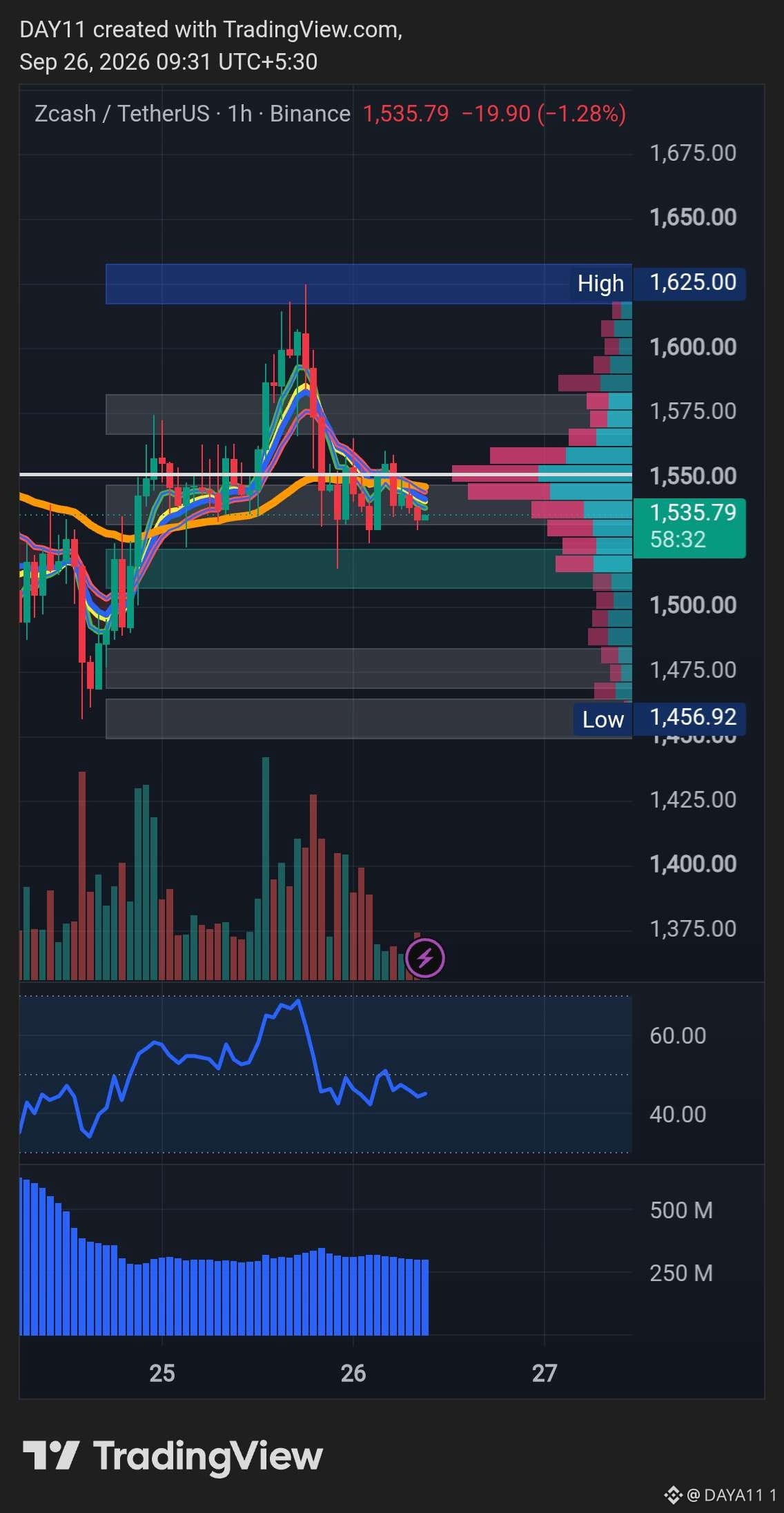
$ZEC
✅Short - $1534
🔴SL- $1577
🟢TP1- $1521
🟢TP2- $1500
🟢TP3- $1485
$ZEC
✅Short - $1534
🔴SL- $1577
🟢TP1- $1521
🟢TP2- $1500
🟢TP3- $1485
✅Short - $1534
🔴SL- $1577
🟢TP1- $1521
🟢TP2- $1500
🟢TP3- $1485
63
·
--
$BTC
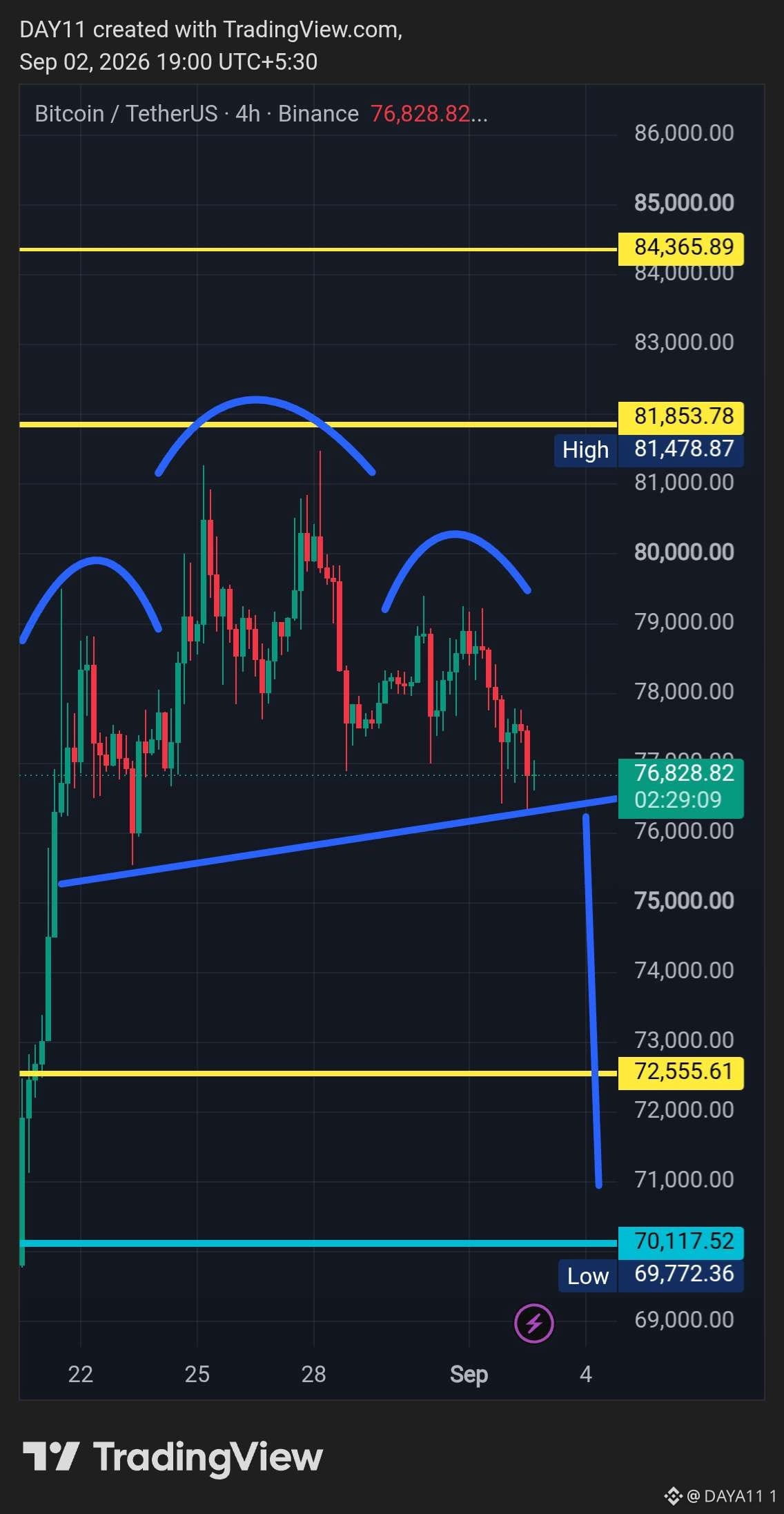
👉三個藍色弧線標示出連續的高點:
左側較高位約 ~$79.8k,中間更高的峰值約 $81.5k,接著右側較低的高點約 $79.8–80k。這是在局部高點之後的「較低高點」序列。
👉向上傾斜的藍色線正在充當上升支撐,把8月中旬的低點連接到目前的 $76.5–77k 區域。價格現在正在測試它。
那條向下陡峭的藍線指向約 ~$71k,若該支撐失守,看起來像是衡量漲跌 / 下破投影。
👉水平位階:
阻力:$81,854(剛略高於近期高點)以及 $84,366
支撐:$72,556 與青色線在 $70,118
這種結構在4小時圖上,符合潛在的頭肩形態或分配型態,且頸線略微上揚。頭到頸線的距離約 $4.5–5k,若頸線跌破,將投影到 $71.5–72.5k 區域——對應到黃色的 $72,556 線以及圖上標示的下跌。
從這裡的情境👇
🟢支撐守住(偏多延續 / 區間仍維持)
若出現4h 反彈並在 ~$77.5–78k 上方重新收回,將讓反彈後的區間繼續成立。接下來上行測試目標會是 $79–80k,接著是 $81.5k 高點 / $81,854 的水位。若能明確突破並站穩 $81.5–82.5k,將重新打開通往 $84.4k 的路徑。
🟢支撐失敗(偏空延續)
若4h 收盤跌破上升藍線以及 $76.5k 區域,將確認較低高點結構並啟動衡量目標。第一目標:$75k,接著是黃色的 $72,556 水位;圖上對 $71k 的投影以及更深層支撐則在 $70,118 的青色線那一帶。該區域也同時契合8月下旬的啟動平台。
量能以及接下來幾個4h的收盤更重要,勝過單一長上影線/下影線的穿刺。圖表正處於轉折點:上升支撐與 $76.5–77k 集結的水位,是用來判斷這是不是8月反彈內部的健康回撤,或是更深度回調的開始。
非財務建議——在真正發生有效突破前,價格可能會先穿越各個位階。注意4h 收盤相對於那條藍色趨勢線的表現。
$BTC
👉三個藍色弧線標示出連續的高點:
左側較高位約 ~$79.8k,中間更高的峰值約 $81.5k,接著右側較低的高點約 $79.8–80k。這是在局部高點之後的「較低高點」序列。
👉向上傾斜的藍色線正在充當上升支撐,把8月中旬的低點連接到目前的 $76.5–77k 區域。價格現在正在測試它。
那條向下陡峭的藍線指向約 ~$71k,若該支撐失守,看起來像是衡量漲跌 / 下破投影。
👉水平位階:
阻力:$81,854(剛略高於近期高點)以及 $84,366
支撐:$72,556 與青色線在 $70,118
這種結構在4小時圖上,符合潛在的頭肩形態或分配型態,且頸線略微上揚。頭到頸線的距離約 $4.5–5k,若頸線跌破,將投影到 $71.5–72.5k 區域——對應到黃色的 $72,556 線以及圖上標示的下跌。
從這裡的情境👇
🟢支撐守住(偏多延續 / 區間仍維持)
若出現4h 反彈並在 ~$77.5–78k 上方重新收回,將讓反彈後的區間繼續成立。接下來上行測試目標會是 $79–80k,接著是 $81.5k 高點 / $81,854 的水位。若能明確突破並站穩 $81.5–82.5k,將重新打開通往 $84.4k 的路徑。
🟢支撐失敗(偏空延續)
若4h 收盤跌破上升藍線以及 $76.5k 區域,將確認較低高點結構並啟動衡量目標。第一目標:$75k,接著是黃色的 $72,556 水位;圖上對 $71k 的投影以及更深層支撐則在 $70,118 的青色線那一帶。該區域也同時契合8月下旬的啟動平台。
量能以及接下來幾個4h的收盤更重要,勝過單一長上影線/下影線的穿刺。圖表正處於轉折點:上升支撐與 $76.5–77k 集結的水位,是用來判斷這是不是8月反彈內部的健康回撤,或是更深度回調的開始。
非財務建議——在真正發生有效突破前,價格可能會先穿越各個位階。注意4h 收盤相對於那條藍色趨勢線的表現。
👉三個藍色弧線標示出連續的高點:
左側較高位約 ~$79.8k,中間更高的峰值約 $81.5k,接著右側較低的高點約 $79.8–80k。這是在局部高點之後的「較低高點」序列。
👉向上傾斜的藍色線正在充當上升支撐,把8月中旬的低點連接到目前的 $76.5–77k 區域。價格現在正在測試它。
那條向下陡峭的藍線指向約 ~$71k,若該支撐失守,看起來像是衡量漲跌 / 下破投影。
👉水平位階:
阻力:$81,854(剛略高於近期高點)以及 $84,366
支撐:$72,556 與青色線在 $70,118
這種結構在4小時圖上,符合潛在的頭肩形態或分配型態,且頸線略微上揚。頭到頸線的距離約 $4.5–5k,若頸線跌破,將投影到 $71.5–72.5k 區域——對應到黃色的 $72,556 線以及圖上標示的下跌。
從這裡的情境👇
🟢支撐守住(偏多延續 / 區間仍維持)
若出現4h 反彈並在 ~$77.5–78k 上方重新收回,將讓反彈後的區間繼續成立。接下來上行測試目標會是 $79–80k,接著是 $81.5k 高點 / $81,854 的水位。若能明確突破並站穩 $81.5–82.5k,將重新打開通往 $84.4k 的路徑。
🟢支撐失敗(偏空延續)
若4h 收盤跌破上升藍線以及 $76.5k 區域,將確認較低高點結構並啟動衡量目標。第一目標:$75k,接著是黃色的 $72,556 水位;圖上對 $71k 的投影以及更深層支撐則在 $70,118 的青色線那一帶。該區域也同時契合8月下旬的啟動平台。
量能以及接下來幾個4h的收盤更重要,勝過單一長上影線/下影線的穿刺。圖表正處於轉折點:上升支撐與 $76.5–77k 集結的水位,是用來判斷這是不是8月反彈內部的健康回撤,或是更深度回調的開始。
非財務建議——在真正發生有效突破前,價格可能會先穿越各個位階。注意4h 收盤相對於那條藍色趨勢線的表現。
68
·
--
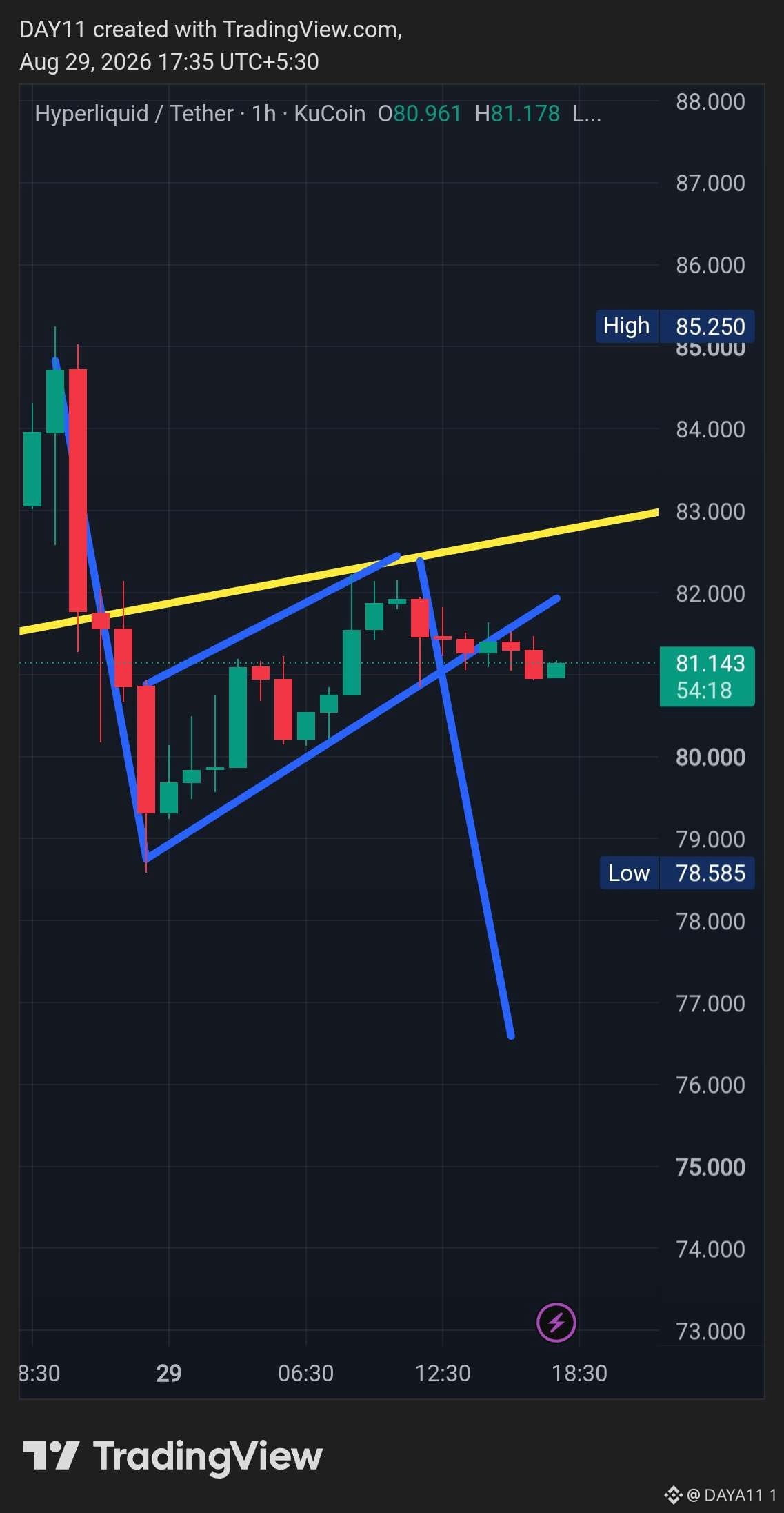
$HYPE :熊旗?
我畫了1小時週期的 $HYPE 圖表。
讓我們來理解一下——
支柱:從大約 $85 向大約 $78.6–$79 的下跌。
藍色線——這兩條藍色線表示阻力位與支撐位。如果價格跌破支撐並獲得確認,這面旗形將會走完;但如果價格跌破的是阻力,這就意味着熊旗無效。留意 $BTC 的走勢。交易者應僅在突破並獲得確認後進場,並在 $76.51 進行離場。像往常一樣,在採取任何行動之前請自行研究。
#DYOR #NFA
$HYPE :熊旗?
我畫了1小時週期的 $HYPE 圖表。
讓我們來理解一下——
支柱:從大約 $85 向大約 $78.6–$79 的下跌。
藍色線——這兩條藍色線表示阻力位與支撐位。如果價格跌破支撐並獲得確認,這面旗形將會走完;但如果價格跌破的是阻力,這就意味着熊旗無效。留意 $BTC 的走勢。交易者應僅在突破並獲得確認後進場,並在 $76.51 進行離場。像往常一樣,在採取任何行動之前請自行研究。
#DYOR #NFA
我畫了1小時週期的 $HYPE 圖表。
讓我們來理解一下——
支柱:從大約 $85 向大約 $78.6–$79 的下跌。
藍色線——這兩條藍色線表示阻力位與支撐位。如果價格跌破支撐並獲得確認,這面旗形將會走完;但如果價格跌破的是阻力,這就意味着熊旗無效。留意 $BTC 的走勢。交易者應僅在突破並獲得確認後進場,並在 $76.51 進行離場。像往常一樣,在採取任何行動之前請自行研究。
#DYOR #NFA
76
·
--
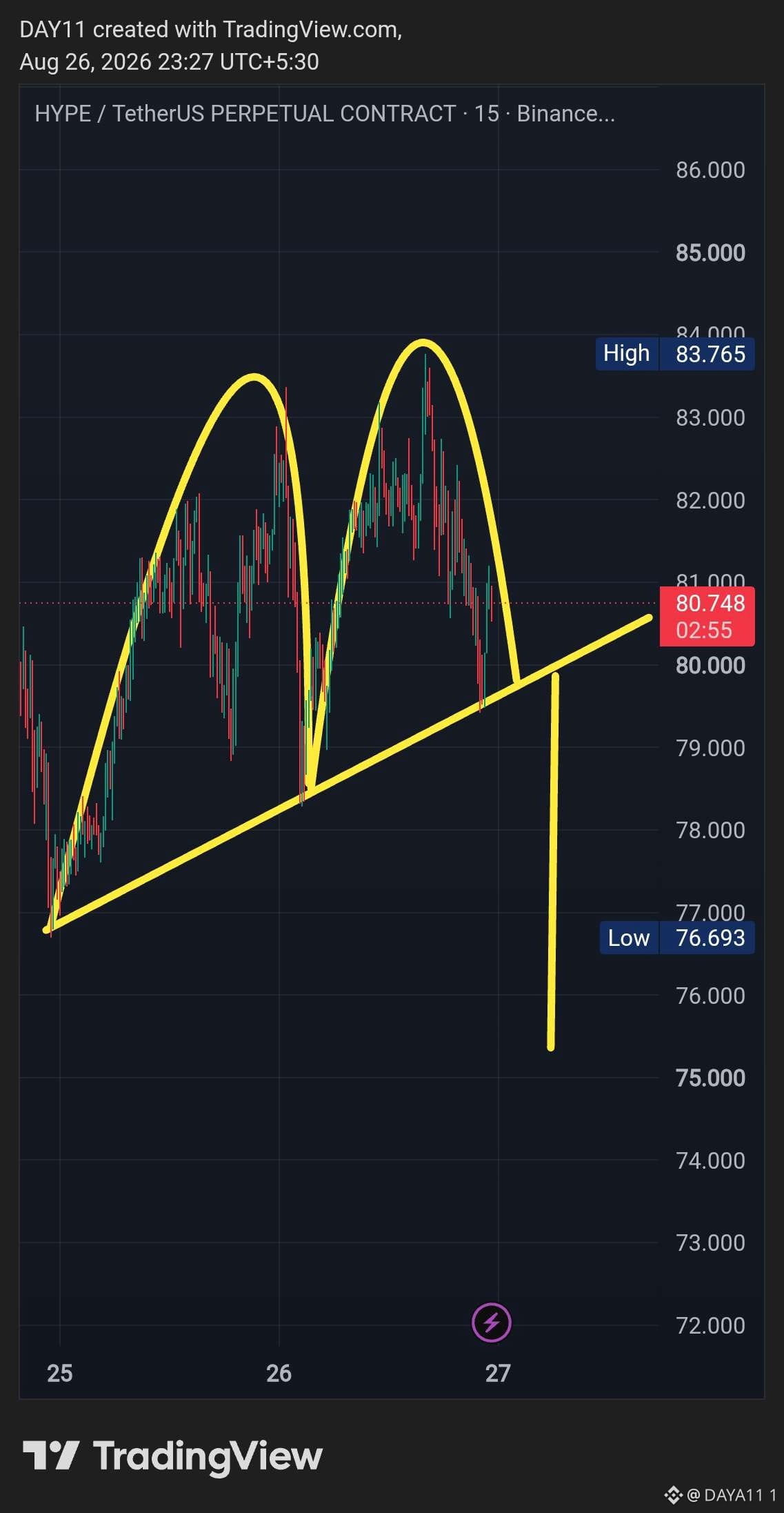
#HYPE $ HYPE
這是一個雙頂形態(M 型形態),其特徵是圓弧形頂部 + 上升的支撐趨勢線。
兩個圓弧形峯頂高度相近(都大約在 83.5–84 區間附近)。
左側峯頂和右側峯頂共同構成經典的“ M ”形態。
由於頂部是弧形而不是尖銳的,這種形態有時也被稱爲“圓弧型雙頂”。
用黃色上升趨勢線連接低點(兩個峯之間的谷底,以及更早的那個低點)。
這相當於一種動態支撐/頸線。
最右側的黃色豎線表示一次急劇下跌。
這似乎是在標記跌破上升支撐之下的情況。
這種形態通常如何演變?
✅ 價格先形成第一個頂部 → 隨後回撤。
✅ 價格在接近同一水平處再次形成第二個頂部 → 再次失敗。
✅ 價格跌破頸線/上升支撐(你畫的那條黃色線)。
✅ 量度目標通常約等於:將該形態的高度從跌破點向下投射。
#HYPE $ HYPE
這是一個雙頂形態(M 型形態),其特徵是圓弧形頂部 + 上升的支撐趨勢線。
兩個圓弧形峯頂高度相近(都大約在 83.5–84 區間附近)。
左側峯頂和右側峯頂共同構成經典的“ M ”形態。
由於頂部是弧形而不是尖銳的,這種形態有時也被稱爲“圓弧型雙頂”。
用黃色上升趨勢線連接低點(兩個峯之間的谷底,以及更早的那個低點)。
這相當於一種動態支撐/頸線。
最右側的黃色豎線表示一次急劇下跌。
這似乎是在標記跌破上升支撐之下的情況。
這種形態通常如何演變?
✅ 價格先形成第一個頂部 → 隨後回撤。
✅ 價格在接近同一水平處再次形成第二個頂部 → 再次失敗。
✅ 價格跌破頸線/上升支撐(你畫的那條黃色線)。
✅ 量度目標通常約等於:將該形態的高度從跌破點向下投射。
這是一個雙頂形態(M 型形態),其特徵是圓弧形頂部 + 上升的支撐趨勢線。
兩個圓弧形峯頂高度相近(都大約在 83.5–84 區間附近)。
左側峯頂和右側峯頂共同構成經典的“ M ”形態。
由於頂部是弧形而不是尖銳的,這種形態有時也被稱爲“圓弧型雙頂”。
用黃色上升趨勢線連接低點(兩個峯之間的谷底,以及更早的那個低點)。
這相當於一種動態支撐/頸線。
最右側的黃色豎線表示一次急劇下跌。
這似乎是在標記跌破上升支撐之下的情況。
這種形態通常如何演變?
✅ 價格先形成第一個頂部 → 隨後回撤。
✅ 價格在接近同一水平處再次形成第二個頂部 → 再次失敗。
✅ 價格跌破頸線/上升支撐(你畫的那條黃色線)。
✅ 量度目標通常約等於:將該形態的高度從跌破點向下投射。
79
·
--
$BTC
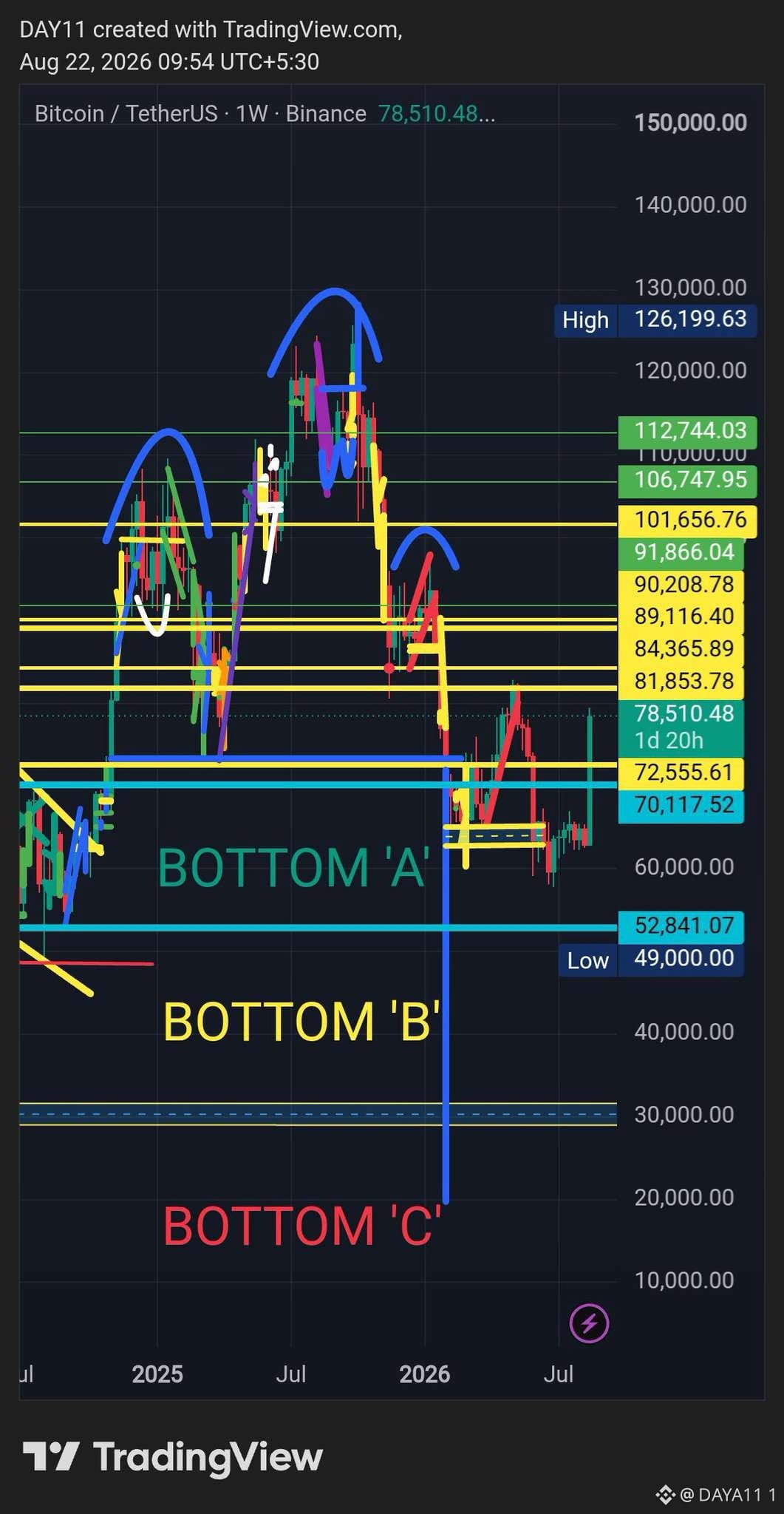
讓我們來聊聊目前 $BTC 的情況。我之前提過下面的圖表:這是一個 頭肩形態(Head & Shoulder Pattern)。它目前仍在有效(active),但當 $BTC 上破並站穩 82K 之上時,這個形態就會失效(Closed)。
當然,這可能是假突破式的拉昇(fake out pump)。之後還會有一次下跌來修正底部(我在之前的帖子裏也說過,接近 35k)。現在在 63k、64k,那裏是 $BTC 形成的最強支撐。Btc 接下來會嘗試回測;如果回測成功,我們就能看到反彈繼續。但如果失敗,$BTC 將會在 2026 年 10 月之前去尋找它的底部。就這些。
🚨 別忘了,我們還有兩個月來完成 4 年一輪的 $BTC 週期。
#NFA #DYOR
$BTC
讓我們來聊聊目前 $BTC 的情況。我之前提過下面的圖表:這是一個 頭肩形態(Head & Shoulder Pattern)。它目前仍在有效(active),但當 $BTC 上破並站穩 82K 之上時,這個形態就會失效(Closed)。
當然,這可能是假突破式的拉昇(fake out pump)。之後還會有一次下跌來修正底部(我在之前的帖子裏也說過,接近 35k)。現在在 63k、64k,那裏是 $BTC 形成的最強支撐。Btc 接下來會嘗試回測;如果回測成功,我們就能看到反彈繼續。但如果失敗,$BTC 將會在 2026 年 10 月之前去尋找它的底部。就這些。
🚨 別忘了,我們還有兩個月來完成 4 年一輪的 $BTC 週期。
#NFA #DYOR
讓我們來聊聊目前 $BTC 的情況。我之前提過下面的圖表:這是一個 頭肩形態(Head & Shoulder Pattern)。它目前仍在有效(active),但當 $BTC 上破並站穩 82K 之上時,這個形態就會失效(Closed)。
當然,這可能是假突破式的拉昇(fake out pump)。之後還會有一次下跌來修正底部(我在之前的帖子裏也說過,接近 35k)。現在在 63k、64k,那裏是 $BTC 形成的最強支撐。Btc 接下來會嘗試回測;如果回測成功,我們就能看到反彈繼續。但如果失敗,$BTC 將會在 2026 年 10 月之前去尋找它的底部。就這些。
🚨 別忘了,我們還有兩個月來完成 4 年一輪的 $BTC 週期。
#NFA #DYOR
72
·
--
#ETH
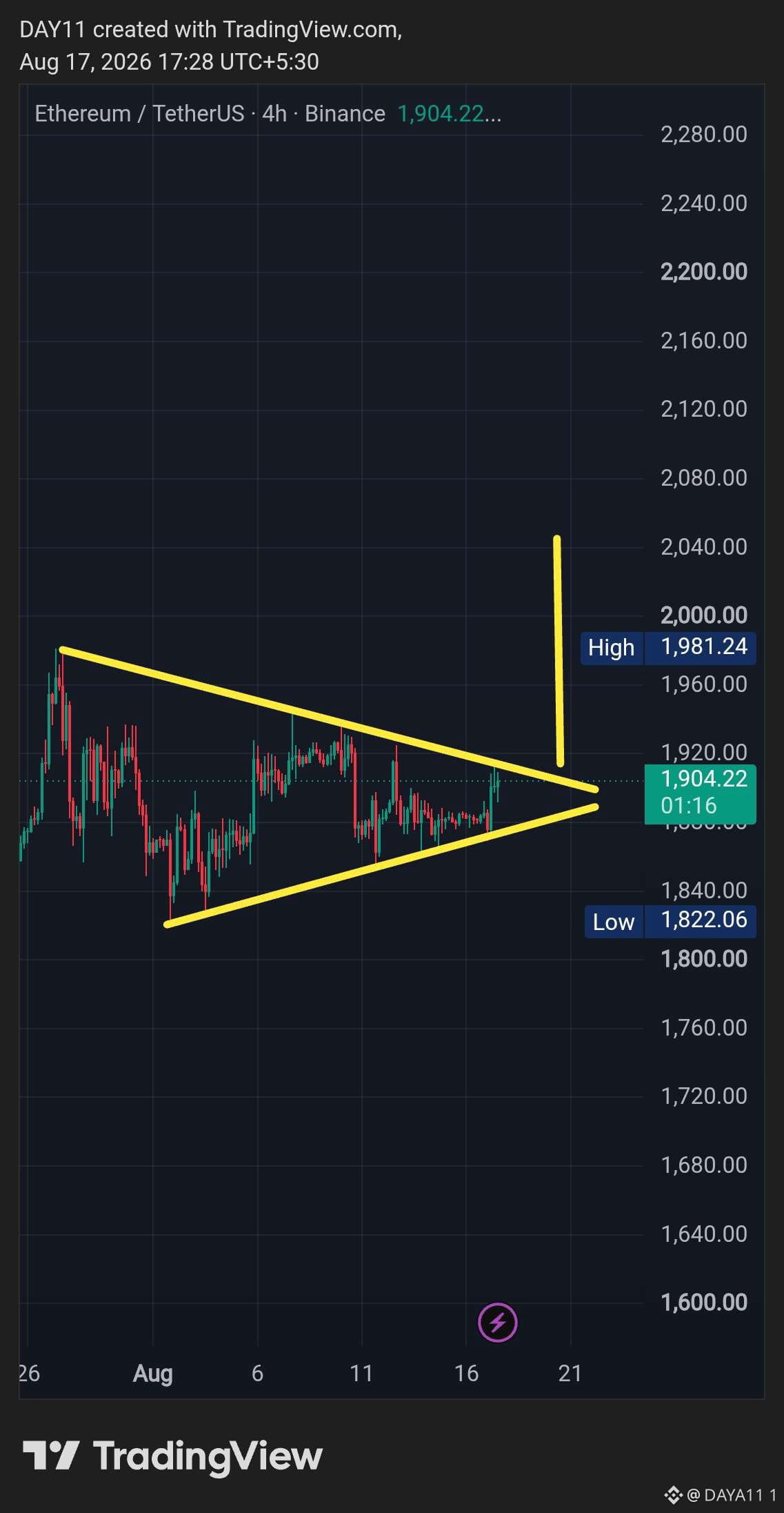
這是一個對稱三角形(收斂趨勢線)形態,出現在4小時週期。
上方趨勢線:
連接較低的高點的下降阻力線。
下方趨勢線:
連接較高的低點的上升支撐線。
這兩條線在圖表右側向同一點收斂(頂點位於接近當前價格的區域)。
一支豎直的黃色箭頭從接近頂點的位置向上指示,暗示預期將出現看漲突破。
這是一個經典的盤整形態,通常在此前的行情之後形成,並且往往以強勁的方向性突破收尾(具體是延續還是反轉取決於更大級別的趨勢背景)。
看漲突破
結合向上的箭頭
最常見的預期
需要在上方下降趨勢線上方實現乾淨的收盤,並且成交量上升。
潛在的量度漲幅目標 ≈ 從突破點向上投影三角形高度 → 大致指向 1,980–2,040 區間(或根據精確測量可能更高)。
看跌跌破:
跌破並收在上升的下方趨勢線下方。
可能會回測近期低點附近 1,822,甚至更低。
成交量 & 確認:
三角形往往會伴隨放量後被突破。留意突破當根K線上的成交量放大。
在頂點附近容易出現假突破——請等待4小時收盤價在趨勢線之外出現明確的決定性突破。
#ETH
這是一個對稱三角形(收斂趨勢線)形態,出現在4小時週期。
上方趨勢線:
連接較低的高點的下降阻力線。
下方趨勢線:
連接較高的低點的上升支撐線。
這兩條線在圖表右側向同一點收斂(頂點位於接近當前價格的區域)。
一支豎直的黃色箭頭從接近頂點的位置向上指示,暗示預期將出現看漲突破。
這是一個經典的盤整形態,通常在此前的行情之後形成,並且往往以強勁的方向性突破收尾(具體是延續還是反轉取決於更大級別的趨勢背景)。
看漲突破
結合向上的箭頭
最常見的預期
需要在上方下降趨勢線上方實現乾淨的收盤,並且成交量上升。
潛在的量度漲幅目標 ≈ 從突破點向上投影三角形高度 → 大致指向 1,980–2,040 區間(或根據精確測量可能更高)。
看跌跌破:
跌破並收在上升的下方趨勢線下方。
可能會回測近期低點附近 1,822,甚至更低。
成交量 & 確認:
三角形往往會伴隨放量後被突破。留意突破當根K線上的成交量放大。
在頂點附近容易出現假突破——請等待4小時收盤價在趨勢線之外出現明確的決定性突破。
這是一個對稱三角形(收斂趨勢線)形態,出現在4小時週期。
上方趨勢線:
連接較低的高點的下降阻力線。
下方趨勢線:
連接較高的低點的上升支撐線。
這兩條線在圖表右側向同一點收斂(頂點位於接近當前價格的區域)。
一支豎直的黃色箭頭從接近頂點的位置向上指示,暗示預期將出現看漲突破。
這是一個經典的盤整形態,通常在此前的行情之後形成,並且往往以強勁的方向性突破收尾(具體是延續還是反轉取決於更大級別的趨勢背景)。
看漲突破
結合向上的箭頭
最常見的預期
需要在上方下降趨勢線上方實現乾淨的收盤,並且成交量上升。
潛在的量度漲幅目標 ≈ 從突破點向上投影三角形高度 → 大致指向 1,980–2,040 區間(或根據精確測量可能更高)。
看跌跌破:
跌破並收在上升的下方趨勢線下方。
可能會回測近期低點附近 1,822,甚至更低。
成交量 & 確認:
三角形往往會伴隨放量後被突破。留意突破當根K線上的成交量放大。
在頂點附近容易出現假突破——請等待4小時收盤價在趨勢線之外出現明確的決定性突破。
55
·
--
$asve
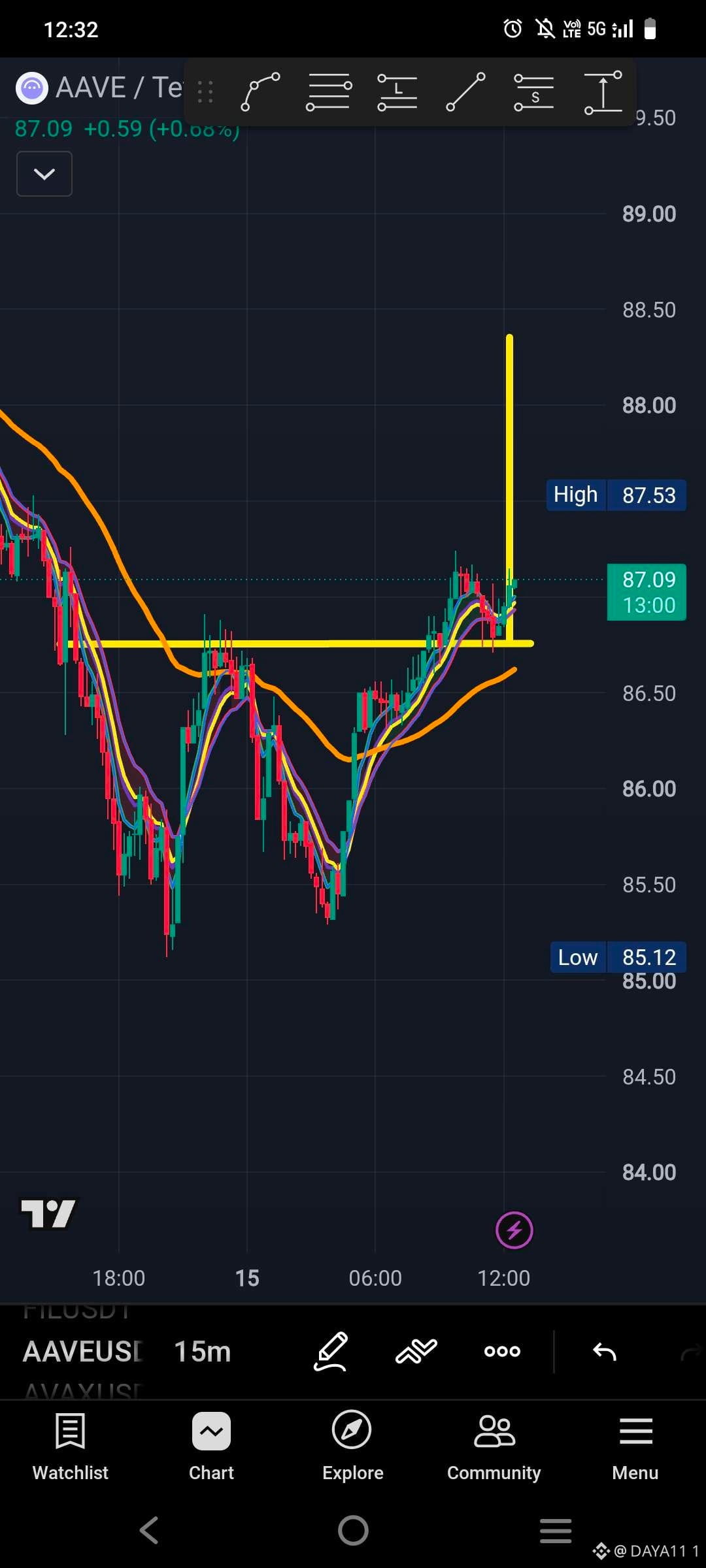
這是一個 15 分鐘時間框架的交易
多單 - $87
止損 - $86.32
第一目標 - $87.25
第二目標 - $87.75
第三目標 - $88.33
在深入之前請自行研究
非財務建議
$asve
這是一個 15 分鐘時間框架的交易
多單 - $87
止損 - $86.32
第一目標 - $87.25
第二目標 - $87.75
第三目標 - $88.33
在深入之前請自行研究
非財務建議
這是一個 15 分鐘時間框架的交易
多單 - $87
止損 - $86.32
第一目標 - $87.25
第二目標 - $87.75
第三目標 - $88.33
在深入之前請自行研究
非財務建議
67
·
--
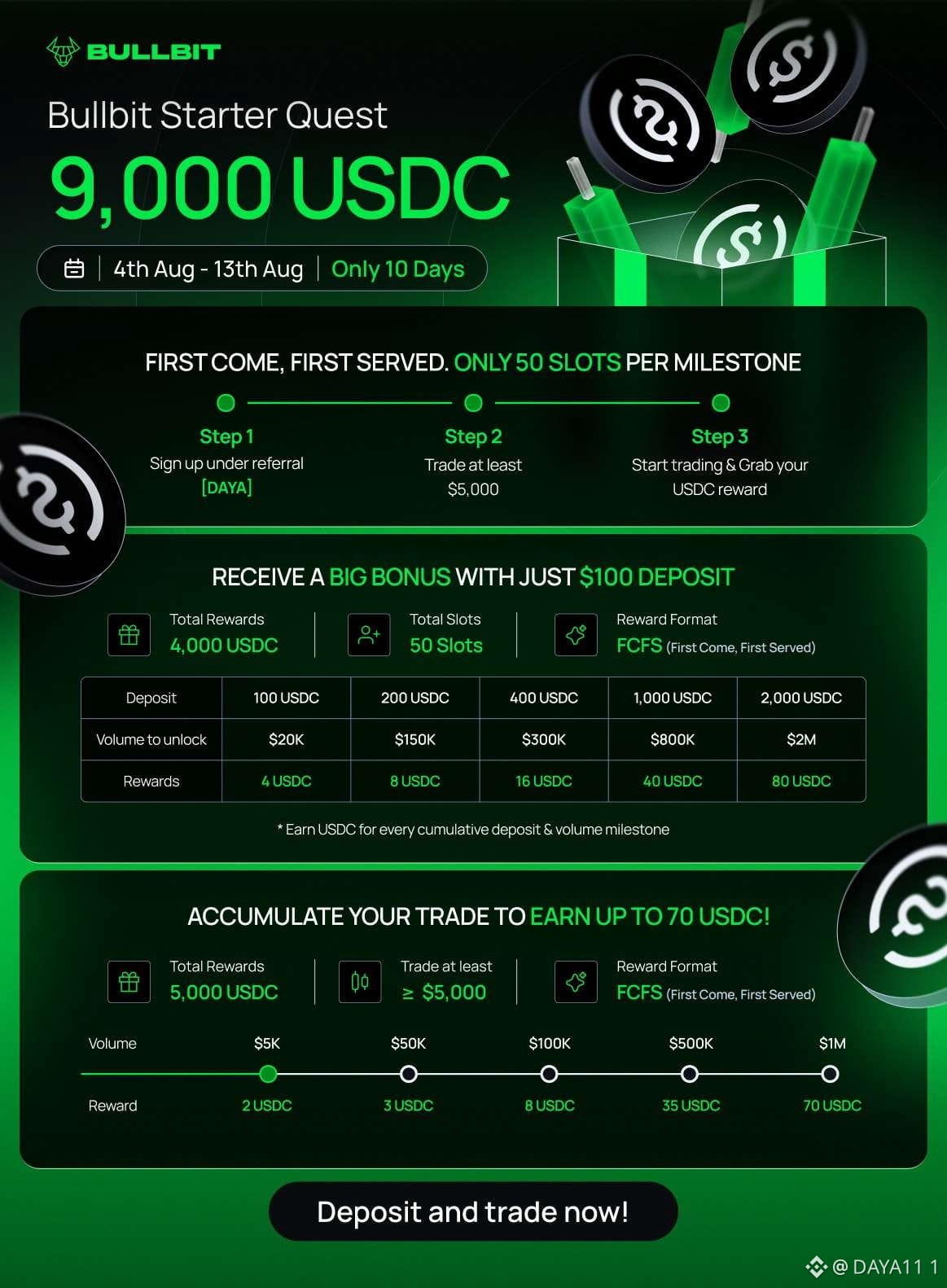
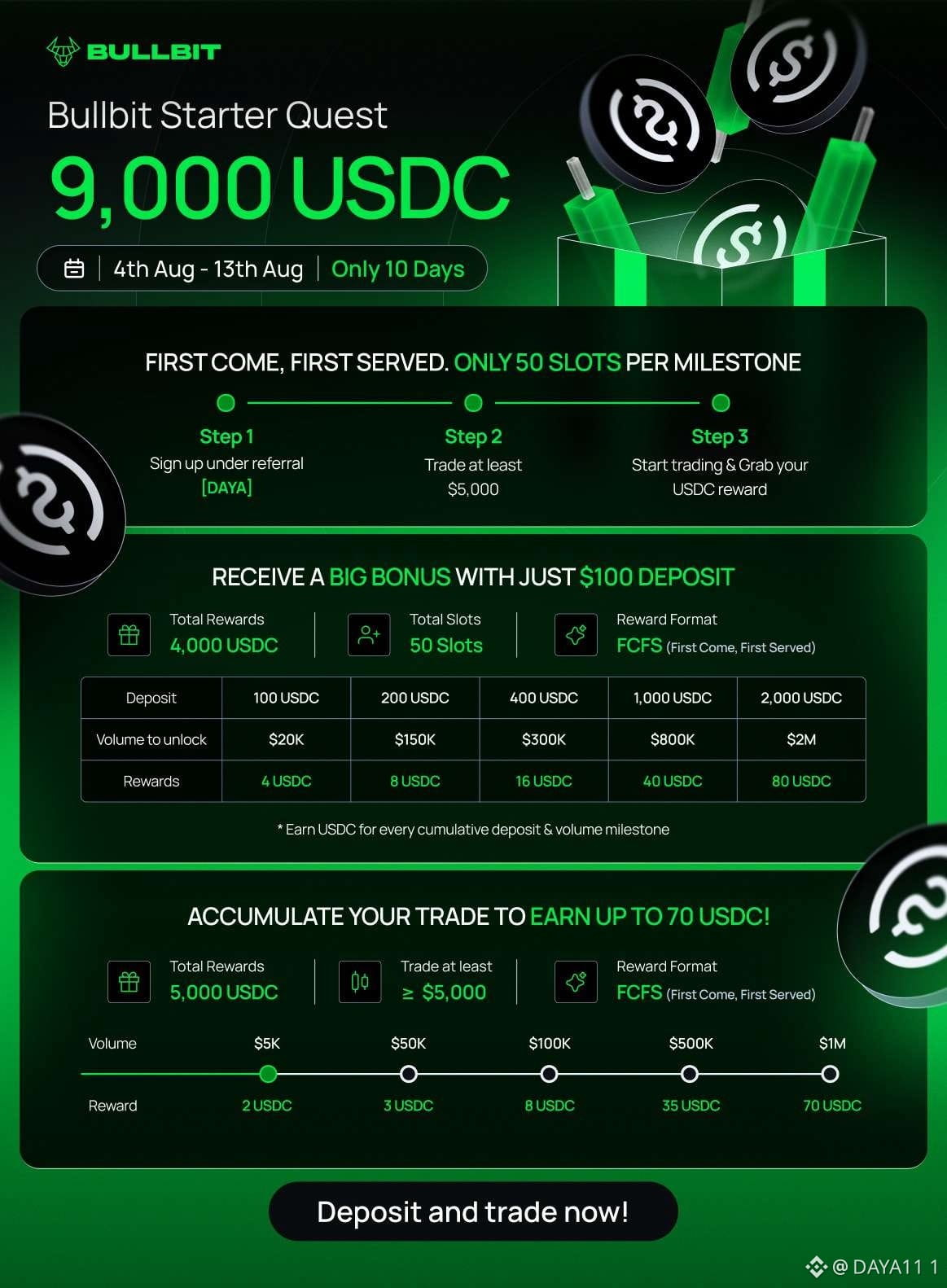
🚀 Bullbit 初學者入門任務已上線!
搶先拿下 9,000 USDC 獎勵份額
+ 20% 現金回饋優惠 💰
✅ 使用我的邀請連結註冊
✅ 100% 免費關注我的交易
✅ 交易並開始賺取收益
📅 僅限至 8 月 13 日 | 名額有限
👉 立即加入:https://app.bullbit.ai/sign-up?ref=DAYA
#Bullbit #加密貨幣 #交易
🚀 Bullbit 初學者入門任務已上線!
搶先拿下 9,000 USDC 獎勵份額
+ 20% 現金回饋優惠 💰
✅ 使用我的邀請連結註冊
✅ 100% 免費關注我的交易
✅ 交易並開始賺取收益
📅 僅限至 8 月 13 日 | 名額有限
👉 立即加入:https://app.bullbit.ai/sign-up?ref=DAYA
#Bullbit #加密貨幣 #交易
搶先拿下 9,000 USDC 獎勵份額
+ 20% 現金回饋優惠 💰
✅ 使用我的邀請連結註冊
✅ 100% 免費關注我的交易
✅ 交易並開始賺取收益
📅 僅限至 8 月 13 日 | 名額有限
👉 立即加入:https://app.bullbit.ai/sign-up?ref=DAYA
#Bullbit #加密貨幣 #交易
·
--
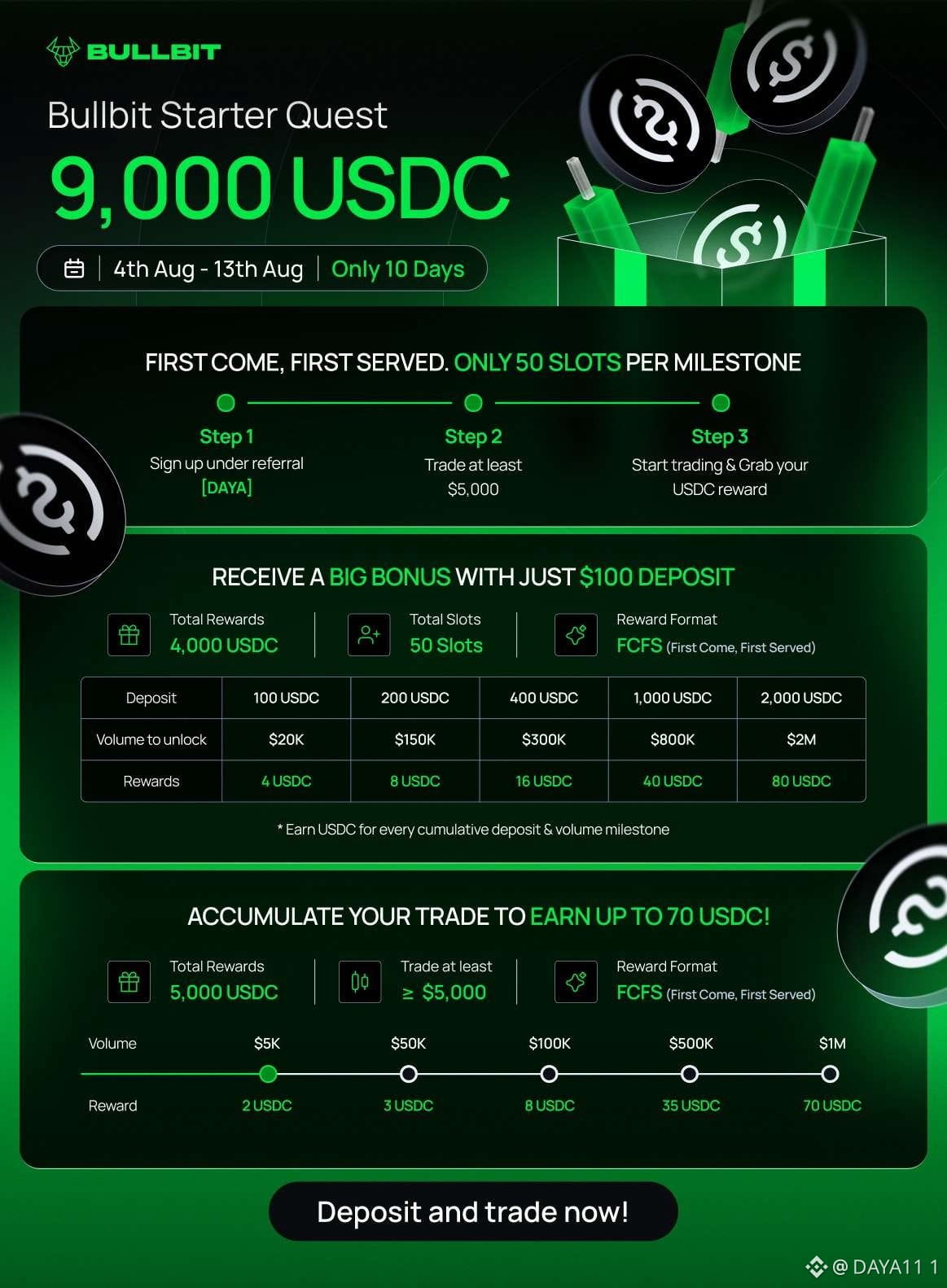
🚀 Bullbit 新手任務現已上線!
快來領取 9,000 USDC 獎勵份額
+20% 現金回饋優惠 💰
✅ 使用我的推薦連結註冊
✅ 免費關注我的交易
✅ 交易並開始賺取收益
📅 僅限到 8 月 13 日 | 名額有限
👉 立即加入:
https://app.bullbit.ai/sign-up?ref=DAYA
#Bullbit #Crypto #Trading
🚀 Bullbit 新手任務現已上線!
快來領取 9,000 USDC 獎勵份額
+20% 現金回饋優惠 💰
✅ 使用我的推薦連結註冊
✅ 免費關注我的交易
✅ 交易並開始賺取收益
📅 僅限到 8 月 13 日 | 名額有限
👉 立即加入:
https://app.bullbit.ai/sign-up?ref=DAYA
#Bullbit #Crypto #Trading
快來領取 9,000 USDC 獎勵份額
+20% 現金回饋優惠 💰
✅ 使用我的推薦連結註冊
✅ 免費關注我的交易
✅ 交易並開始賺取收益
📅 僅限到 8 月 13 日 | 名額有限
👉 立即加入:
https://app.bullbit.ai/sign-up?ref=DAYA
#Bullbit #Crypto #Trading
3
·
--
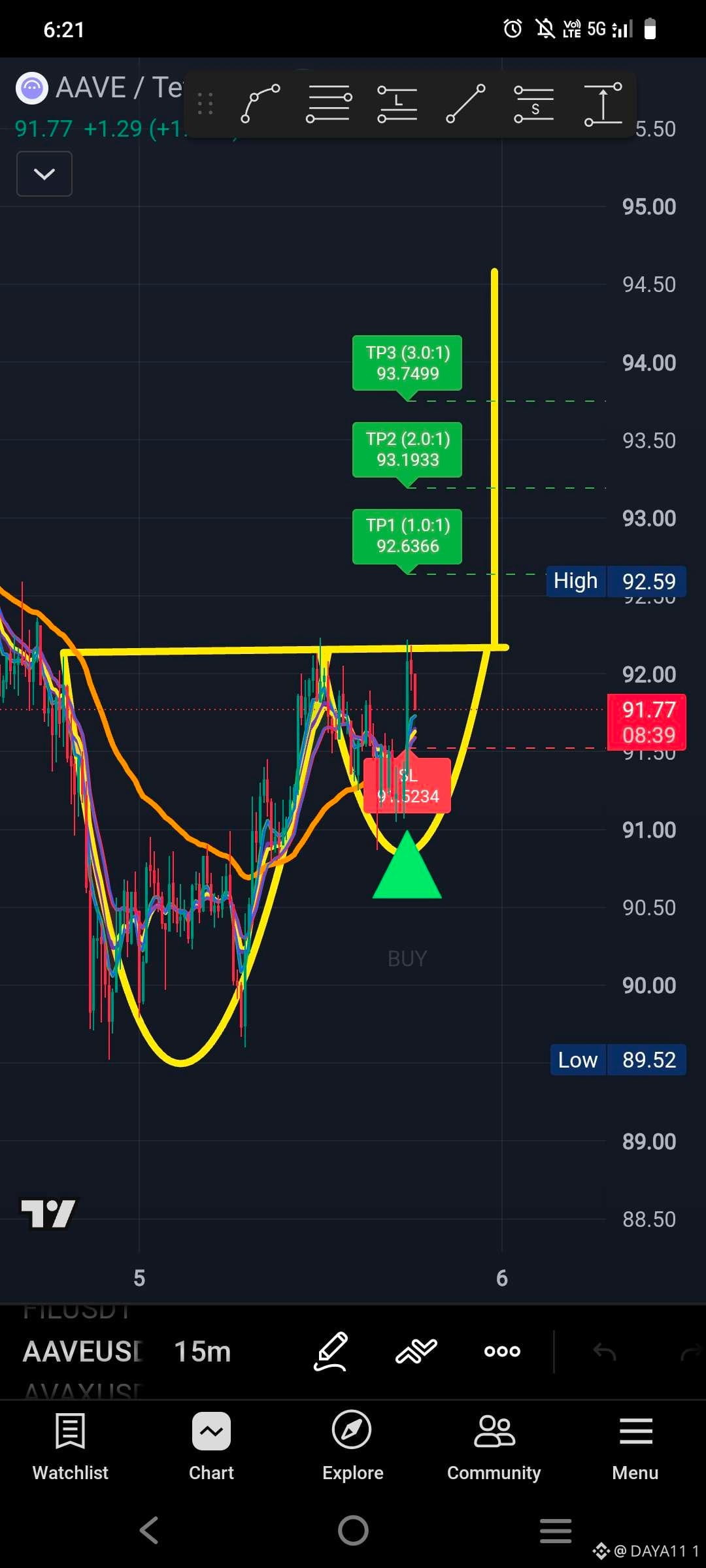
$AAVE
✅進場區:
目前價格附近 ~91.85
🔴止損(SL):91(偏緊,位於近期結構下方 + W 的第二個低點)
目標(Targets):
🎯TP1(1R)→ 92.38
🎯TP2(2R)→ 92.92
🎯TP3(3R)→ 93.45
這與我們先前看到的模式相當吻合。由雙底測得的量度推算指向約 94 中段,因此 TP3 相對於那個目標仍屬審慎。
我喜歡的點:
SL 合理(在近期低點之下 + 頸線支撐)
風險報酬清晰
指標 + 價格型態一致
需要留意:
價格仍在突破位之上方附近盤旋。理想情況是快速回測 ~91.40–91.50 並站穩。
若是乾淨地失守 SL 區間,代表該設置無效,W 形態也將失敗。
整體而言,這看起來像是在 15m 級別上偏穩健的短線做多設置。W 結構 + 指標訊號的組合,使其勝率高於單獨依賴其中任一項。
#NFA #DYOR
$AAVE
✅進場區:
目前價格附近 ~91.85
🔴止損(SL):91(偏緊,位於近期結構下方 + W 的第二個低點)
目標(Targets):
🎯TP1(1R)→ 92.38
🎯TP2(2R)→ 92.92
🎯TP3(3R)→ 93.45
這與我們先前看到的模式相當吻合。由雙底測得的量度推算指向約 94 中段,因此 TP3 相對於那個目標仍屬審慎。
我喜歡的點:
SL 合理(在近期低點之下 + 頸線支撐)
風險報酬清晰
指標 + 價格型態一致
需要留意:
價格仍在突破位之上方附近盤旋。理想情況是快速回測 ~91.40–91.50 並站穩。
若是乾淨地失守 SL 區間,代表該設置無效,W 形態也將失敗。
整體而言,這看起來像是在 15m 級別上偏穩健的短線做多設置。W 結構 + 指標訊號的組合,使其勝率高於單獨依賴其中任一項。
#NFA #DYOR
✅進場區:
目前價格附近 ~91.85
🔴止損(SL):91(偏緊,位於近期結構下方 + W 的第二個低點)
目標(Targets):
🎯TP1(1R)→ 92.38
🎯TP2(2R)→ 92.92
🎯TP3(3R)→ 93.45
這與我們先前看到的模式相當吻合。由雙底測得的量度推算指向約 94 中段,因此 TP3 相對於那個目標仍屬審慎。
我喜歡的點:
SL 合理(在近期低點之下 + 頸線支撐)
風險報酬清晰
指標 + 價格型態一致
需要留意:
價格仍在突破位之上方附近盤旋。理想情況是快速回測 ~91.40–91.50 並站穩。
若是乾淨地失守 SL 區間,代表該設置無效,W 形態也將失敗。
整體而言,這看起來像是在 15m 級別上偏穩健的短線做多設置。W 結構 + 指標訊號的組合,使其勝率高於單獨依賴其中任一項。
#NFA #DYOR
75
·
--
如果你看過我之前的貼文,就繼續看這篇吧
弱點早在數年前一開始產生種子時,就已被內建在該種子中了。
🔴為什麼這不代表公司「知道這些種子」
Coinkite 並沒有儲存或知道任何人的個別種子短語(seed phrases)。
問題在於一個長期存在的程式碼錯誤:用來產生隨機數的方式出問題了。由於韌體是開源的,任何人只要仔細研究舊程式碼(而且 Coinkite 自己也說 AI 工具可能也有幫助),都可能發現隨機性已壞掉,進而在離線狀態下計算出可能的弱種子。
這是嚴重的公司過失——一個存在多年的關鍵錯誤——但這並不是證據顯示 Coinkite 被駭入、並且暗中保存了一份使用者種子清單。若真是那樣,攻擊模式看起來會非常不一樣。
用簡單話來總結。
✅正常的種子 → 幾乎不可能猜到(可能性太多)。
✅這些壞掉的種子 → 因韌體錯誤而使可能性大幅下降 → 讓具備足夠資源的攻擊者能在離線狀態下計算。
實體錢包保持離線,且未被碰觸。損害在弱種子被建立的當下就已經造成。
這就是為什麼這次事件震驚了這麼多人。它打破了那個核心假設:「只要裝置是離線的、種子從未離開它,資金就安全。」當隨機性本身已被破壞時,這個假設就不成立。
如果你在受影響期間於 Coldcard 產生了種子,那唯一仍然安全的路徑依舊是官方作法:更新到修正後的韌體、建立一個全新的種子,並且小心地轉移資金。其他錢包上(或在修正後的 Coldcard 韌體上)所產生、正常且正確的種子仍然是安全的。
如果你看過我之前的貼文,就繼續看這篇吧
弱點早在數年前一開始產生種子時,就已被內建在該種子中了。
🔴為什麼這不代表公司「知道這些種子」
Coinkite 並沒有儲存或知道任何人的個別種子短語(seed phrases)。
問題在於一個長期存在的程式碼錯誤:用來產生隨機數的方式出問題了。由於韌體是開源的,任何人只要仔細研究舊程式碼(而且 Coinkite 自己也說 AI 工具可能也有幫助),都可能發現隨機性已壞掉,進而在離線狀態下計算出可能的弱種子。
這是嚴重的公司過失——一個存在多年的關鍵錯誤——但這並不是證據顯示 Coinkite 被駭入、並且暗中保存了一份使用者種子清單。若真是那樣,攻擊模式看起來會非常不一樣。
用簡單話來總結。
✅正常的種子 → 幾乎不可能猜到(可能性太多)。
✅這些壞掉的種子 → 因韌體錯誤而使可能性大幅下降 → 讓具備足夠資源的攻擊者能在離線狀態下計算。
實體錢包保持離線,且未被碰觸。損害在弱種子被建立的當下就已經造成。
這就是為什麼這次事件震驚了這麼多人。它打破了那個核心假設:「只要裝置是離線的、種子從未離開它,資金就安全。」當隨機性本身已被破壞時,這個假設就不成立。
如果你在受影響期間於 Coldcard 產生了種子,那唯一仍然安全的路徑依舊是官方作法:更新到修正後的韌體、建立一個全新的種子,並且小心地轉移資金。其他錢包上(或在修正後的 Coldcard 韌體上)所產生、正常且正確的種子仍然是安全的。
弱點早在數年前一開始產生種子時,就已被內建在該種子中了。
🔴為什麼這不代表公司「知道這些種子」
Coinkite 並沒有儲存或知道任何人的個別種子短語(seed phrases)。
問題在於一個長期存在的程式碼錯誤:用來產生隨機數的方式出問題了。由於韌體是開源的,任何人只要仔細研究舊程式碼(而且 Coinkite 自己也說 AI 工具可能也有幫助),都可能發現隨機性已壞掉,進而在離線狀態下計算出可能的弱種子。
這是嚴重的公司過失——一個存在多年的關鍵錯誤——但這並不是證據顯示 Coinkite 被駭入、並且暗中保存了一份使用者種子清單。若真是那樣,攻擊模式看起來會非常不一樣。
用簡單話來總結。
✅正常的種子 → 幾乎不可能猜到(可能性太多)。
✅這些壞掉的種子 → 因韌體錯誤而使可能性大幅下降 → 讓具備足夠資源的攻擊者能在離線狀態下計算。
實體錢包保持離線,且未被碰觸。損害在弱種子被建立的當下就已經造成。
這就是為什麼這次事件震驚了這麼多人。它打破了那個核心假設:「只要裝置是離線的、種子從未離開它,資金就安全。」當隨機性本身已被破壞時,這個假設就不成立。
如果你在受影響期間於 Coldcard 產生了種子,那唯一仍然安全的路徑依舊是官方作法:更新到修正後的韌體、建立一個全新的種子,並且小心地轉移資金。其他錢包上(或在修正後的 Coldcard 韌體上)所產生、正常且正確的種子仍然是安全的。

71
·
--
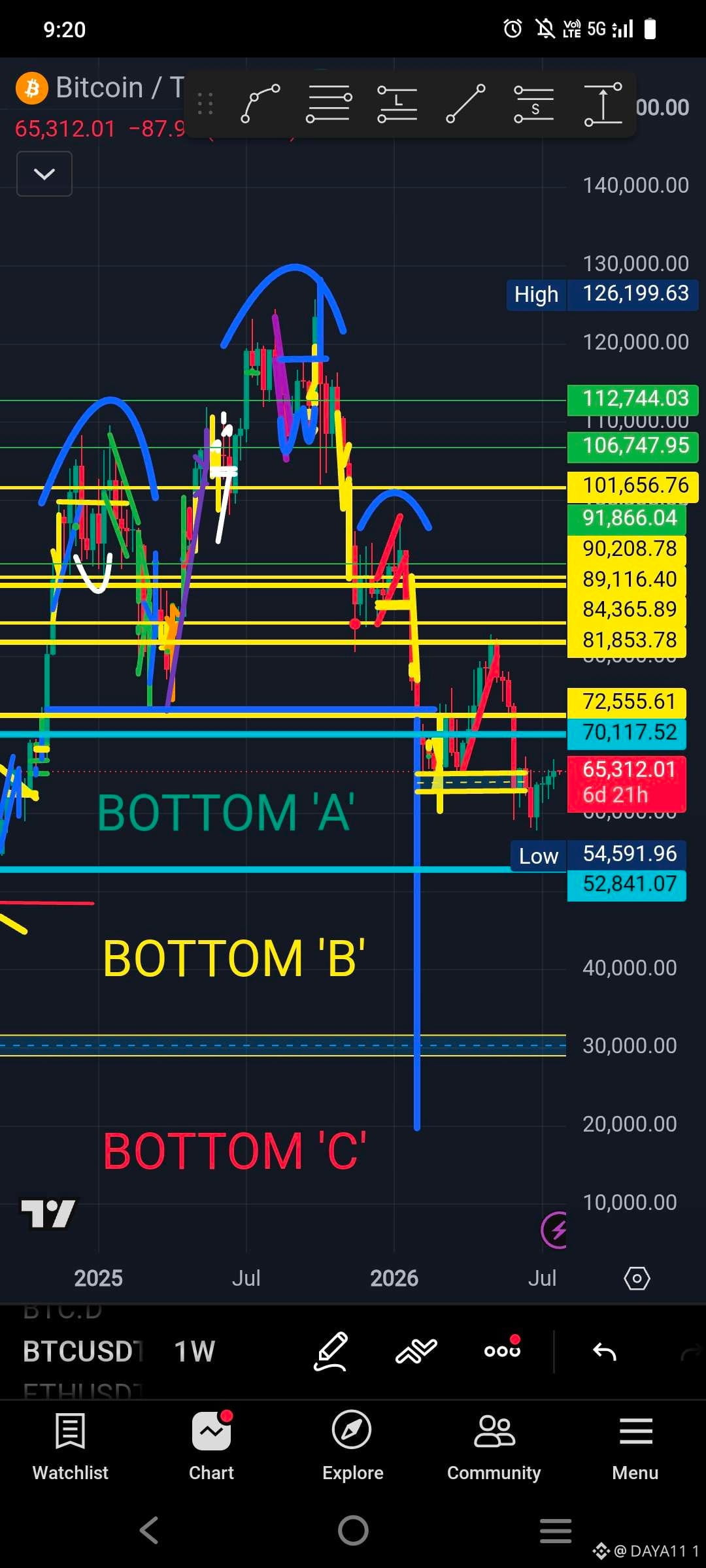
$BTC
底部在哪裡?是現在這裡,還是等?👇
底部在七月嗎?
底部在十月?(十月四年週期已完成)請閱讀我之前那篇文章。
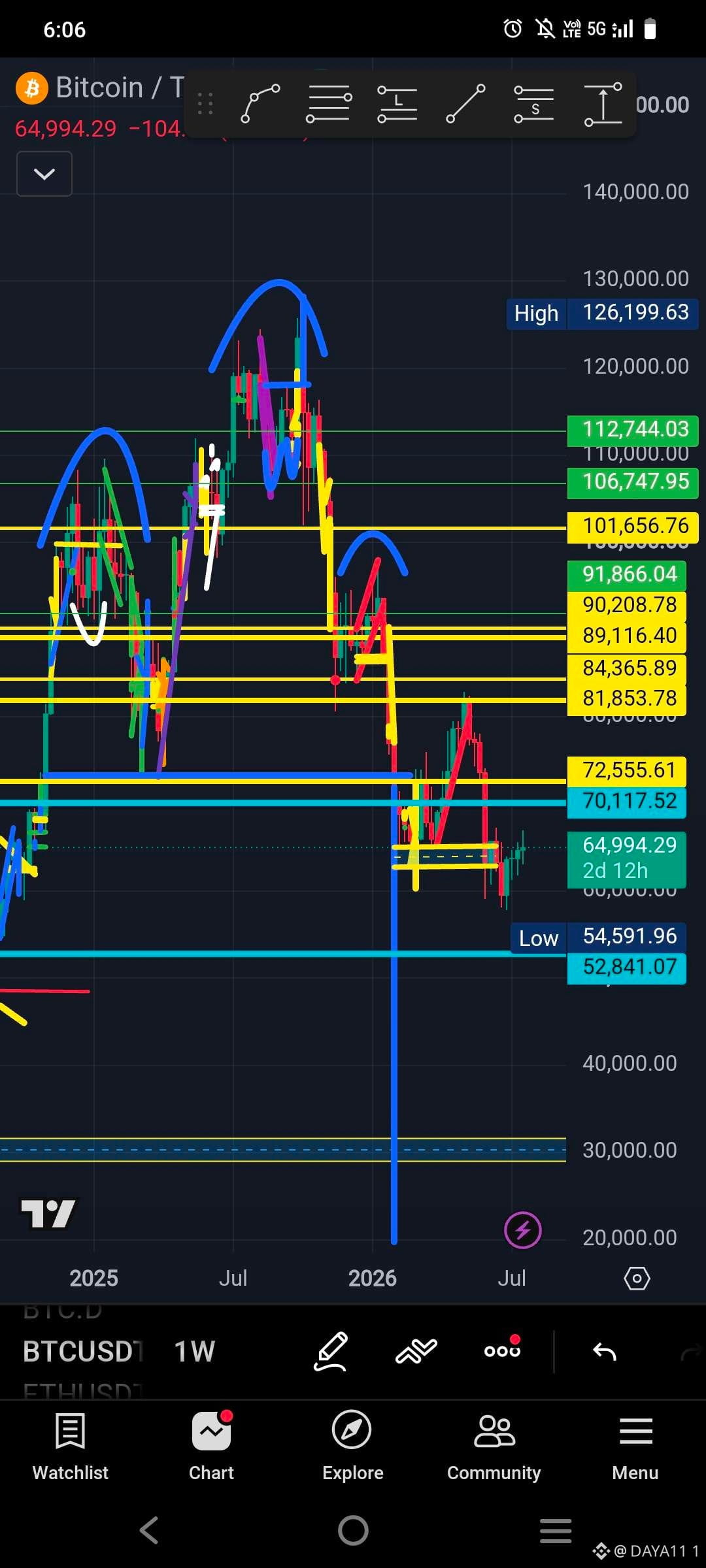
我的 1 週 頭肩形態 👇
🚨#AscendEX(原 BitMax):ZachXBT 在 2026 年 6 月下旬就指出延遲/卡住的提款,以及幾乎空的熱錢包(缺少主要流動資產,如 ETH、USDT、USDC、SOL)。隨後交易所以 MiCA(未獲授權)、一筆失敗的策略性流動性交易,以及更廣泛的財務/營運壓力為由,自 2026 年 7 月 1 日起徹底停止營運。自動化提款停止;一切改為人工審核,且不保證時間或全額。
🚨#BitMEX:在經營 11 年後宣布退場(永續合約先驅)。2026 年 9 月 23 日關閉。新註冊停止;持倉將分階段強制平倉。此舉與一項訴訟同時發生,指控存在所謂「內線交易辦公室」,並刻意凍結伺服器以觸發強平。
🚨#BitMart:剛宣布(2026 年 7 月 26 日)在經營九年後有序退場。立即停止新註冊/入金/新訂單;所有交易於 8 月 26 日結束;平台營運於 2027 年 1 月 31 日停止。提款目前仍開放(暫時),但會有額外合規審查。BMX 代幣暴跌約 58–60%。全球 CEO 表示自己遭到解職,且未被告知或未在決策中被諮詢。
上個循環是 #FTX(以及其他一串)。這一輪則是一群中型與老牌平台在不太或不那麼低調地退出:退出理由是流動性、監管(尤其 MiCA)以及「市場環境」壓力。
✅此刻是否正是底部,取決於典型的底部報價者賭博。這些失敗是經典的「晚熊/早復甦」訊號(邊緣市場的投降 + 被迫去槓桿)。它們會移除槓桿與弱手,市場就能因此修復。
✅但價格確認仍需要通常的關鍵因素:持續的 ETF 資金流入轉為正值、長期持有者行為出現轉變,以及宏觀面不要再來一次下探的下一波。
$BTC
底部在哪裡?是現在這裡,還是等?👇
底部在七月嗎?
底部在十月?(十月四年週期已完成)請閱讀我之前那篇文章。
我的 1 週 頭肩形態 👇
🚨#AscendEX(原 BitMax):ZachXBT 在 2026 年 6 月下旬就指出延遲/卡住的提款,以及幾乎空的熱錢包(缺少主要流動資產,如 ETH、USDT、USDC、SOL)。隨後交易所以 MiCA(未獲授權)、一筆失敗的策略性流動性交易,以及更廣泛的財務/營運壓力為由,自 2026 年 7 月 1 日起徹底停止營運。自動化提款停止;一切改為人工審核,且不保證時間或全額。
🚨#BitMEX:在經營 11 年後宣布退場(永續合約先驅)。2026 年 9 月 23 日關閉。新註冊停止;持倉將分階段強制平倉。此舉與一項訴訟同時發生,指控存在所謂「內線交易辦公室」,並刻意凍結伺服器以觸發強平。
🚨#BitMart:剛宣布(2026 年 7 月 26 日)在經營九年後有序退場。立即停止新註冊/入金/新訂單;所有交易於 8 月 26 日結束;平台營運於 2027 年 1 月 31 日停止。提款目前仍開放(暫時),但會有額外合規審查。BMX 代幣暴跌約 58–60%。全球 CEO 表示自己遭到解職,且未被告知或未在決策中被諮詢。
上個循環是 #FTX(以及其他一串)。這一輪則是一群中型與老牌平台在不太或不那麼低調地退出:退出理由是流動性、監管(尤其 MiCA)以及「市場環境」壓力。
✅此刻是否正是底部,取決於典型的底部報價者賭博。這些失敗是經典的「晚熊/早復甦」訊號(邊緣市場的投降 + 被迫去槓桿)。它們會移除槓桿與弱手,市場就能因此修復。
✅但價格確認仍需要通常的關鍵因素:持續的 ETF 資金流入轉為正值、長期持有者行為出現轉變,以及宏觀面不要再來一次下探的下一波。
底部在哪裡?是現在這裡,還是等?👇
底部在七月嗎?
底部在十月?(十月四年週期已完成)請閱讀我之前那篇文章。
我的 1 週 頭肩形態 👇
🚨#AscendEX(原 BitMax):ZachXBT 在 2026 年 6 月下旬就指出延遲/卡住的提款,以及幾乎空的熱錢包(缺少主要流動資產,如 ETH、USDT、USDC、SOL)。隨後交易所以 MiCA(未獲授權)、一筆失敗的策略性流動性交易,以及更廣泛的財務/營運壓力為由,自 2026 年 7 月 1 日起徹底停止營運。自動化提款停止;一切改為人工審核,且不保證時間或全額。
🚨#BitMEX:在經營 11 年後宣布退場(永續合約先驅)。2026 年 9 月 23 日關閉。新註冊停止;持倉將分階段強制平倉。此舉與一項訴訟同時發生,指控存在所謂「內線交易辦公室」,並刻意凍結伺服器以觸發強平。
🚨#BitMart:剛宣布(2026 年 7 月 26 日)在經營九年後有序退場。立即停止新註冊/入金/新訂單;所有交易於 8 月 26 日結束;平台營運於 2027 年 1 月 31 日停止。提款目前仍開放(暫時),但會有額外合規審查。BMX 代幣暴跌約 58–60%。全球 CEO 表示自己遭到解職,且未被告知或未在決策中被諮詢。
上個循環是 #FTX(以及其他一串)。這一輪則是一群中型與老牌平台在不太或不那麼低調地退出:退出理由是流動性、監管(尤其 MiCA)以及「市場環境」壓力。
✅此刻是否正是底部,取決於典型的底部報價者賭博。這些失敗是經典的「晚熊/早復甦」訊號(邊緣市場的投降 + 被迫去槓桿)。它們會移除槓桿與弱手,市場就能因此修復。
✅但價格確認仍需要通常的關鍵因素:持續的 ETF 資金流入轉為正值、長期持有者行為出現轉變,以及宏觀面不要再來一次下探的下一波。
73
·
--
👉當前狀態——$BTC 在從近期 $59k 低點出現一波不錯的反彈後,當前大約在 $62,000–$63,000 附近交易。它正橫盤於震盪區間,走勢有些扭打,但還沒有出現令人信服的突破。
👉65k 作爲局部阻力——是的,這正是關鍵位。它正處在短期均線附近、此前的擺動高點區域,以及一個近期多次被賣方守住的區間。若能出現日線/周線的有效收盤站上該位,就會爲我提到的 70k–81k 目標打開空間(並且可能使部分近端偏空結構失效)。
👉我的情景對比可能發生的情況——我的判斷在偏空環境下更具策略性:在 65k–66k 進行流動性“洗盤”——這在震盪市場中很常見。價格經常會掃高以觸發止損/清算與“喫到流動性”,隨後再反轉。
拒絕並下挫指向 52k(本月),再到 45k–40k(下月)——這將延續我們前面討論的 H&S 下跌,並與我更大週期的底部論點一致。
✅短期可能性——(未來幾天/本月):
🔴我的看空情景(在 65k–66k 附近被拒):若上漲時成交量仍然偏弱,並且在該阻力位附近出現賣壓,這種情況非常“活躍”。那裏一旦失敗,的確可能先加速回到 $58k–$55k;若動能轉向並向下發力,52k 將成爲一個可衡量的目標。
🟢看多情景:強 ETF 資金流入、宏觀利好消息,或空頭回補,可能推動價格突破 65k,並指向 68k–70k+。在某些週期中,7 月曆史上曾在前期月份偏弱後出現偏“走強”的傾向。
✅我的結論——
市場仍處於“拿出證據(prove it)”的狀態:在 65k 下方驗證後續方向。我的總體觀點——繼續維持偏空壓力:先進行更高位的流動性掃盤,然後在下一輪下跌前纔會出現經典的看空陷阱/分配結構;這也符合此前的 ATH 後修正階段的整體走勢。
👉當前狀態——$BTC 在從近期 $59k 低點出現一波不錯的反彈後,當前大約在 $62,000–$63,000 附近交易。它正橫盤於震盪區間,走勢有些扭打,但還沒有出現令人信服的突破。
👉65k 作爲局部阻力——是的,這正是關鍵位。它正處在短期均線附近、此前的擺動高點區域,以及一個近期多次被賣方守住的區間。若能出現日線/周線的有效收盤站上該位,就會爲我提到的 70k–81k 目標打開空間(並且可能使部分近端偏空結構失效)。
👉我的情景對比可能發生的情況——我的判斷在偏空環境下更具策略性:在 65k–66k 進行流動性“洗盤”——這在震盪市場中很常見。價格經常會掃高以觸發止損/清算與“喫到流動性”,隨後再反轉。
拒絕並下挫指向 52k(本月),再到 45k–40k(下月)——這將延續我們前面討論的 H&S 下跌,並與我更大週期的底部論點一致。
✅短期可能性——(未來幾天/本月):
🔴我的看空情景(在 65k–66k 附近被拒):若上漲時成交量仍然偏弱,並且在該阻力位附近出現賣壓,這種情況非常“活躍”。那裏一旦失敗,的確可能先加速回到 $58k–$55k;若動能轉向並向下發力,52k 將成爲一個可衡量的目標。
🟢看多情景:強 ETF 資金流入、宏觀利好消息,或空頭回補,可能推動價格突破 65k,並指向 68k–70k+。在某些週期中,7 月曆史上曾在前期月份偏弱後出現偏“走強”的傾向。
✅我的結論——
市場仍處於“拿出證據(prove it)”的狀態:在 65k 下方驗證後續方向。我的總體觀點——繼續維持偏空壓力:先進行更高位的流動性掃盤,然後在下一輪下跌前纔會出現經典的看空陷阱/分配結構;這也符合此前的 ATH 後修正階段的整體走勢。
👉65k 作爲局部阻力——是的,這正是關鍵位。它正處在短期均線附近、此前的擺動高點區域,以及一個近期多次被賣方守住的區間。若能出現日線/周線的有效收盤站上該位,就會爲我提到的 70k–81k 目標打開空間(並且可能使部分近端偏空結構失效)。
👉我的情景對比可能發生的情況——我的判斷在偏空環境下更具策略性:在 65k–66k 進行流動性“洗盤”——這在震盪市場中很常見。價格經常會掃高以觸發止損/清算與“喫到流動性”,隨後再反轉。
拒絕並下挫指向 52k(本月),再到 45k–40k(下月)——這將延續我們前面討論的 H&S 下跌,並與我更大週期的底部論點一致。
✅短期可能性——(未來幾天/本月):
🔴我的看空情景(在 65k–66k 附近被拒):若上漲時成交量仍然偏弱,並且在該阻力位附近出現賣壓,這種情況非常“活躍”。那裏一旦失敗,的確可能先加速回到 $58k–$55k;若動能轉向並向下發力,52k 將成爲一個可衡量的目標。
🟢看多情景:強 ETF 資金流入、宏觀利好消息,或空頭回補,可能推動價格突破 65k,並指向 68k–70k+。在某些週期中,7 月曆史上曾在前期月份偏弱後出現偏“走強”的傾向。
✅我的結論——
市場仍處於“拿出證據(prove it)”的狀態:在 65k 下方驗證後續方向。我的總體觀點——繼續維持偏空壓力:先進行更高位的流動性掃盤,然後在下一輪下跌前纔會出現經典的看空陷阱/分配結構;這也符合此前的 ATH 後修正階段的整體走勢。
74
·
--
#比特幣 $BTC #印度
最近有一份報告在流傳,內容涉及#加密貨幣在印度被禁(?),但我之前就說過:“目前印度的加密貨幣既沒有被完全監管,也沒有被完全禁止。”
👉它是要納稅的,並且還要遵守一些反洗錢(AML)規則)。別擔心,我們有過2017年的經驗:當時RBI把加密貨幣列爲禁令,但#Wazirx推出了P2P,當時一直在運作。
😡我反對許多意見領袖口中所說的“禁令”。在今天並不存在這類法律的情況下,這會製造不必要的恐慌(FUD)。與此同時,RBI的影響是真實存在的,議會委員會也在積極工作,未來政策方向可能會收緊(尤其是圍繞銀行接入和穩定幣)。
“儘管RBI一直反對加密貨幣,並且最近重申了希望將其置於正式金融體系之外的立場,但政府或議會並沒有出臺任何禁令。”我們沒有任何來自印度政府或RBI等的官方且真實的消息來源,或任何在議會通過的法律。
印度議會已經任命了一個委員會,工作正在進行中,僅此而已。RBI一直反對加密貨幣,從不(從未)持積極態度。
✅這只是RBI對政府/議會小組的建議/輸入,不是政府決定或已頒佈的法律。
✅印度仍然對加密貨幣收益徵收30% + 1% TDS,並且自2023年以來已將VASP納入PMLA(AML規則)。
✅所以這屬於灰色地帶——有徵稅、並且被部分監管,但並非完全被監管或被禁止。
✅沒有通過任何新的立法。此前的禁令草案法案(2019/2021)從未被提出或通過。
#比特幣 $BTC #印度
最近有一份報告在流傳,內容涉及#加密貨幣在印度被禁(?),但我之前就說過:“目前印度的加密貨幣既沒有被完全監管,也沒有被完全禁止。”
👉它是要納稅的,並且還要遵守一些反洗錢(AML)規則)。別擔心,我們有過2017年的經驗:當時RBI把加密貨幣列爲禁令,但#Wazirx推出了P2P,當時一直在運作。
😡我反對許多意見領袖口中所說的“禁令”。在今天並不存在這類法律的情況下,這會製造不必要的恐慌(FUD)。與此同時,RBI的影響是真實存在的,議會委員會也在積極工作,未來政策方向可能會收緊(尤其是圍繞銀行接入和穩定幣)。
“儘管RBI一直反對加密貨幣,並且最近重申了希望將其置於正式金融體系之外的立場,但政府或議會並沒有出臺任何禁令。”我們沒有任何來自印度政府或RBI等的官方且真實的消息來源,或任何在議會通過的法律。
印度議會已經任命了一個委員會,工作正在進行中,僅此而已。RBI一直反對加密貨幣,從不(從未)持積極態度。
✅這只是RBI對政府/議會小組的建議/輸入,不是政府決定或已頒佈的法律。
✅印度仍然對加密貨幣收益徵收30% + 1% TDS,並且自2023年以來已將VASP納入PMLA(AML規則)。
✅所以這屬於灰色地帶——有徵稅、並且被部分監管,但並非完全被監管或被禁止。
✅沒有通過任何新的立法。此前的禁令草案法案(2019/2021)從未被提出或通過。
最近有一份報告在流傳,內容涉及#加密貨幣在印度被禁(?),但我之前就說過:“目前印度的加密貨幣既沒有被完全監管,也沒有被完全禁止。”
👉它是要納稅的,並且還要遵守一些反洗錢(AML)規則)。別擔心,我們有過2017年的經驗:當時RBI把加密貨幣列爲禁令,但#Wazirx推出了P2P,當時一直在運作。
😡我反對許多意見領袖口中所說的“禁令”。在今天並不存在這類法律的情況下,這會製造不必要的恐慌(FUD)。與此同時,RBI的影響是真實存在的,議會委員會也在積極工作,未來政策方向可能會收緊(尤其是圍繞銀行接入和穩定幣)。
“儘管RBI一直反對加密貨幣,並且最近重申了希望將其置於正式金融體系之外的立場,但政府或議會並沒有出臺任何禁令。”我們沒有任何來自印度政府或RBI等的官方且真實的消息來源,或任何在議會通過的法律。
印度議會已經任命了一個委員會,工作正在進行中,僅此而已。RBI一直反對加密貨幣,從不(從未)持積極態度。
✅這只是RBI對政府/議會小組的建議/輸入,不是政府決定或已頒佈的法律。
✅印度仍然對加密貨幣收益徵收30% + 1% TDS,並且自2023年以來已將VASP納入PMLA(AML規則)。
✅所以這屬於灰色地帶——有徵稅、並且被部分監管,但並非完全被監管或被禁止。
✅沒有通過任何新的立法。此前的禁令草案法案(2019/2021)從未被提出或通過。

85
·
--
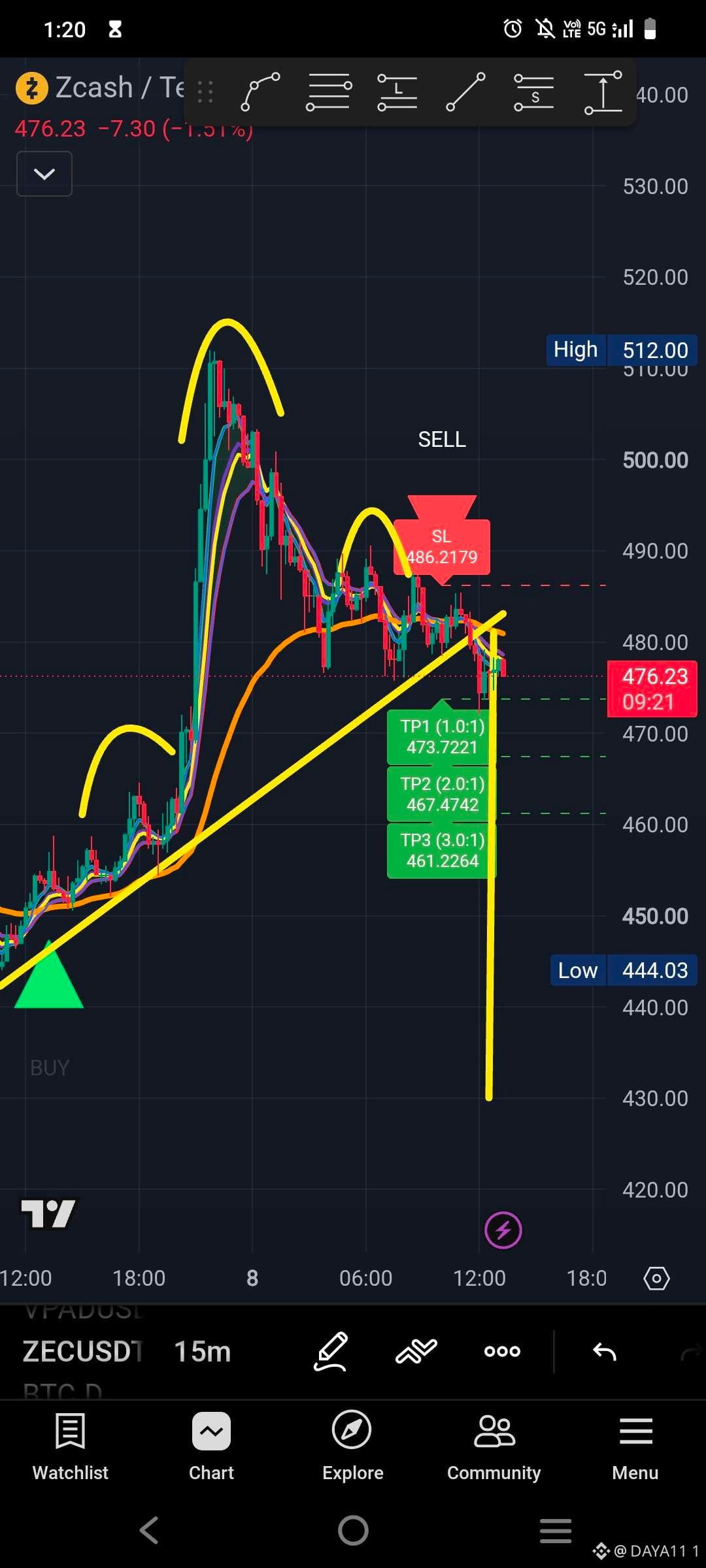
交易設置快速總結
頭肩形態——在價格上漲到512高位之後,形態看起來有效,頸線出現跌破。✅
上升趨勢向下突破——價格從左下方的關鍵上升黃色趨勢線上方跌破。清晰的看空結構破壞。✅
指標賣出信號——與您的自定義設置形成強有力的共振。✅
(關注我在X上的動態:Indicator- @DayaAkanurkar11)
在此澄清之後,短線設置更爲清晰。頭肩形態 + 上升趨勢線破位 + 指標,共同構成了一個15分鐘看空交易的穩固基礎。
交易設置快速總結
頭肩形態——在價格上漲到512高位之後,形態看起來有效,頸線出現跌破。✅
上升趨勢向下突破——價格從左下方的關鍵上升黃色趨勢線上方跌破。清晰的看空結構破壞。✅
指標賣出信號——與您的自定義設置形成強有力的共振。✅
(關注我在X上的動態:Indicator- @DayaAkanurkar11)
在此澄清之後,短線設置更爲清晰。頭肩形態 + 上升趨勢線破位 + 指標,共同構成了一個15分鐘看空交易的穩固基礎。
頭肩形態——在價格上漲到512高位之後,形態看起來有效,頸線出現跌破。✅
上升趨勢向下突破——價格從左下方的關鍵上升黃色趨勢線上方跌破。清晰的看空結構破壞。✅
指標賣出信號——與您的自定義設置形成強有力的共振。✅
(關注我在X上的動態:Indicator- @DayaAkanurkar11)
在此澄清之後,短線設置更爲清晰。頭肩形態 + 上升趨勢線破位 + 指標,共同構成了一個15分鐘看空交易的穩固基礎。
·
--
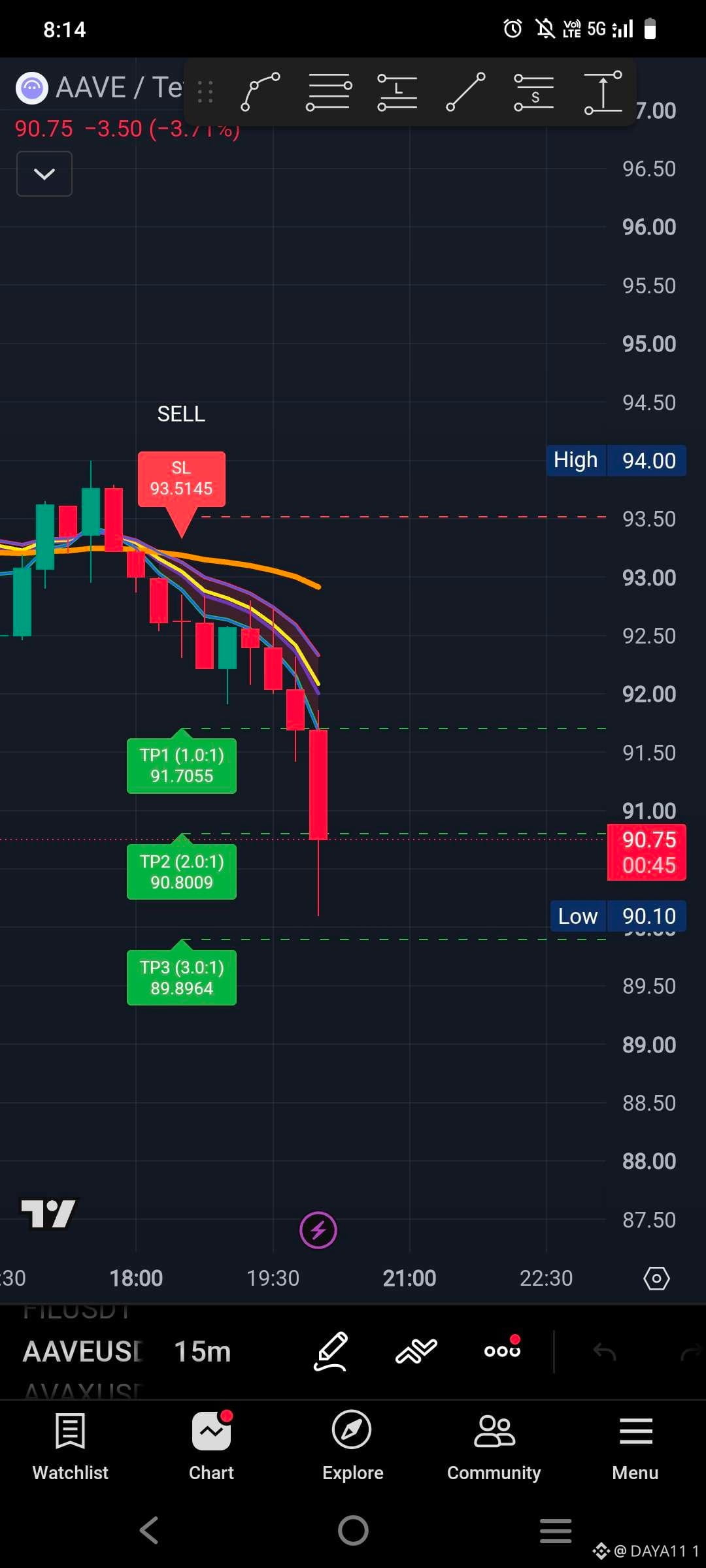
$AAVE 信號更新
TP1 ✅
TP2 ✅
兩個目標都成功命中。這次行情帶來了不錯的盈利 🤑
重要課程:當價格開始反轉時,務必調整止盈(TP)或先分批止盈。
恭喜所有跟隨信號並從中獲利的人 🎉
想要在你的圖表上獲得乾淨的信號,並配有合適的止損(SL)以及多個止盈目標(TP)嗎?
評論 INDICATOR
#CryptoSignals #Bitcoin #$Aave #Trading #Altcoins
非財務建議,請理性交易,注意風險。
$AAVE 信號更新
TP1 ✅
TP2 ✅
兩個目標都成功命中。這次行情帶來了不錯的盈利 🤑
重要課程:當價格開始反轉時,務必調整止盈(TP)或先分批止盈。
恭喜所有跟隨信號並從中獲利的人 🎉
想要在你的圖表上獲得乾淨的信號,並配有合適的止損(SL)以及多個止盈目標(TP)嗎?
評論 INDICATOR
#CryptoSignals #Bitcoin #$Aave #Trading #Altcoins
非財務建議,請理性交易,注意風險。
TP1 ✅
TP2 ✅
兩個目標都成功命中。這次行情帶來了不錯的盈利 🤑
重要課程:當價格開始反轉時,務必調整止盈(TP)或先分批止盈。
恭喜所有跟隨信號並從中獲利的人 🎉
想要在你的圖表上獲得乾淨的信號,並配有合適的止損(SL)以及多個止盈目標(TP)嗎?
評論 INDICATOR
#CryptoSignals #Bitcoin #$Aave #Trading #Altcoins
非財務建議,請理性交易,注意風險。

61
·
--
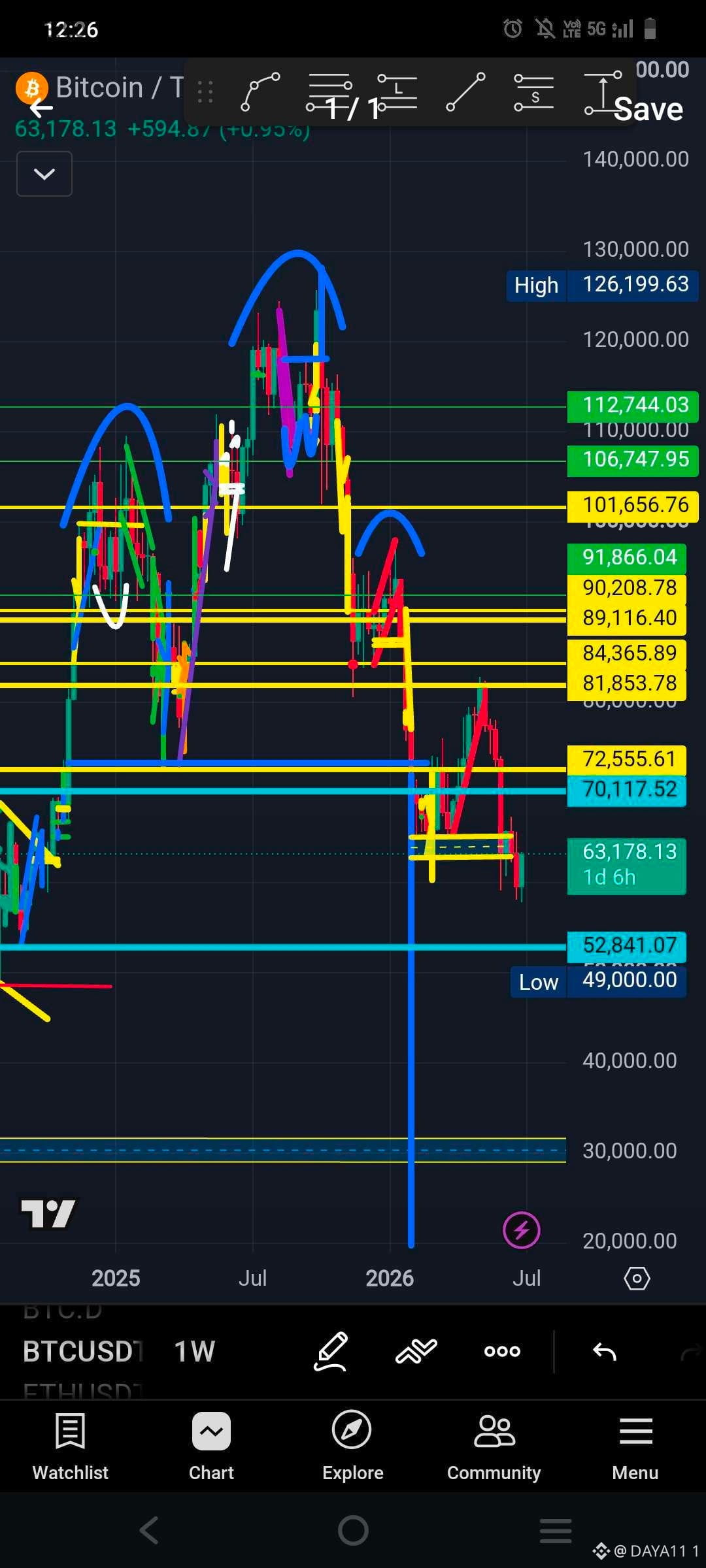
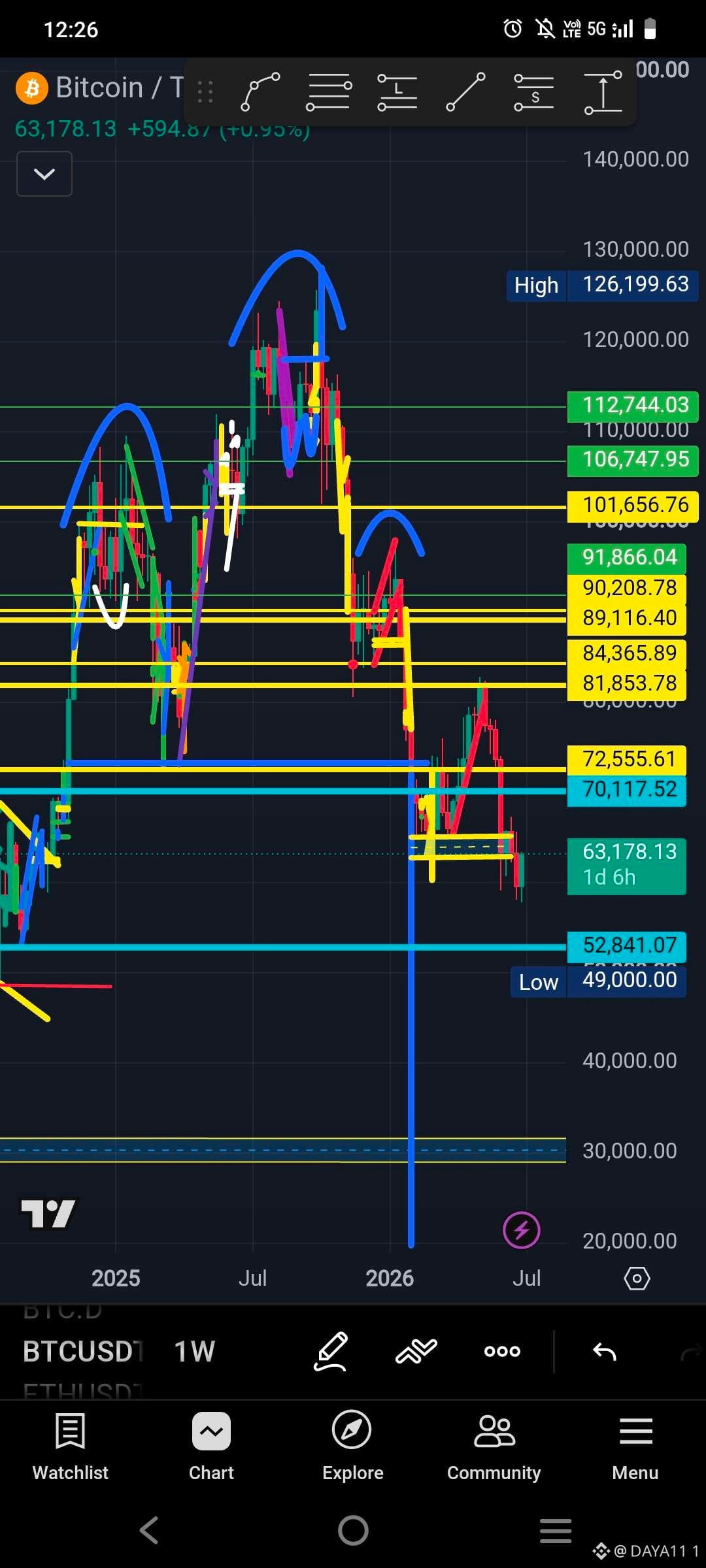
👉當前狀態——$BTC在從近期$59k低點出現不錯的反彈後,交易在約$62,000–$63,000附近。它在震盪區間內盤整,行情略顯雜亂,尚未有令人信服的突破。
👉65k作爲局部阻力——是的,這正是目前的關鍵位。它處在短期均線附近、先前的擺動高點附近,以及一個近期多次遭到賣方守住的區域。若出現日線/周線有效收盤站上該位,就將爲我提到的70k–81k目標打開通道(並且可能使部分短期偏空結構失效)。
👉我的情景對比可能發生的事——我的判斷在偏空環境下有戰術層面的合理性:
流動性在65k–66k區間“掃損”→ 這在震盪行情中很常見。價格往往會掃過高點,以觸發止損/獲取流動性,然後再反轉。
拒絕後下跌,指向本月的52k,接着下個月到45k–40k → 這將延續我們前面討論過的H&S下跌(參見我之前的帖子 $BTC頭肩形態),並與我更大週期的底部論點一致。
✅短期可能性——(未來幾天/本月):
🔴我的看跌情景(65k–66k遭拒):若上漲時成交量持續走弱,並且在該阻力附近出現賣壓,那這個情景很“活躍”。若在這裏失敗,的確可能先加速回到$58k–$55k區間;如果動能向下增強,52k可視爲一個量化目標。
🟢看漲情景:強勁的ETF資金流入、積極的宏觀消息,或空頭回補,都可能推動價格突破65k,並將目標指向68k–70k+。歷史上,七月在某些週期中往往會在前幾個較弱月份之後表現出偏強(轉綠)。
✅我的結論——
市場仍處於“拿出證據”的模式:在65k下方還需要證明。我的總體觀點是:繼續承壓偏空;在下一輪下跌之前,先出現更高位置的流動性掃蕩,這是典型的看跌陷阱/分配格局,符合整體的ATH之後修正階段的走勢邏輯。
👉當前狀態——$BTC在從近期$59k低點出現不錯的反彈後,交易在約$62,000–$63,000附近。它在震盪區間內盤整,行情略顯雜亂,尚未有令人信服的突破。
👉65k作爲局部阻力——是的,這正是目前的關鍵位。它處在短期均線附近、先前的擺動高點附近,以及一個近期多次遭到賣方守住的區域。若出現日線/周線有效收盤站上該位,就將爲我提到的70k–81k目標打開通道(並且可能使部分短期偏空結構失效)。
👉我的情景對比可能發生的事——我的判斷在偏空環境下有戰術層面的合理性:
流動性在65k–66k區間“掃損”→ 這在震盪行情中很常見。價格往往會掃過高點,以觸發止損/獲取流動性,然後再反轉。
拒絕後下跌,指向本月的52k,接着下個月到45k–40k → 這將延續我們前面討論過的H&S下跌(參見我之前的帖子 $BTC頭肩形態),並與我更大週期的底部論點一致。
✅短期可能性——(未來幾天/本月):
🔴我的看跌情景(65k–66k遭拒):若上漲時成交量持續走弱,並且在該阻力附近出現賣壓,那這個情景很“活躍”。若在這裏失敗,的確可能先加速回到$58k–$55k區間;如果動能向下增強,52k可視爲一個量化目標。
🟢看漲情景:強勁的ETF資金流入、積極的宏觀消息,或空頭回補,都可能推動價格突破65k,並將目標指向68k–70k+。歷史上,七月在某些週期中往往會在前幾個較弱月份之後表現出偏強(轉綠)。
✅我的結論——
市場仍處於“拿出證據”的模式:在65k下方還需要證明。我的總體觀點是:繼續承壓偏空;在下一輪下跌之前,先出現更高位置的流動性掃蕩,這是典型的看跌陷阱/分配格局,符合整體的ATH之後修正階段的走勢邏輯。
👉65k作爲局部阻力——是的,這正是目前的關鍵位。它處在短期均線附近、先前的擺動高點附近,以及一個近期多次遭到賣方守住的區域。若出現日線/周線有效收盤站上該位,就將爲我提到的70k–81k目標打開通道(並且可能使部分短期偏空結構失效)。
👉我的情景對比可能發生的事——我的判斷在偏空環境下有戰術層面的合理性:
流動性在65k–66k區間“掃損”→ 這在震盪行情中很常見。價格往往會掃過高點,以觸發止損/獲取流動性,然後再反轉。
拒絕後下跌,指向本月的52k,接着下個月到45k–40k → 這將延續我們前面討論過的H&S下跌(參見我之前的帖子 $BTC頭肩形態),並與我更大週期的底部論點一致。
✅短期可能性——(未來幾天/本月):
🔴我的看跌情景(65k–66k遭拒):若上漲時成交量持續走弱,並且在該阻力附近出現賣壓,那這個情景很“活躍”。若在這裏失敗,的確可能先加速回到$58k–$55k區間;如果動能向下增強,52k可視爲一個量化目標。
🟢看漲情景:強勁的ETF資金流入、積極的宏觀消息,或空頭回補,都可能推動價格突破65k,並將目標指向68k–70k+。歷史上,七月在某些週期中往往會在前幾個較弱月份之後表現出偏強(轉綠)。
✅我的結論——
市場仍處於“拿出證據”的模式:在65k下方還需要證明。我的總體觀點是:繼續承壓偏空;在下一輪下跌之前,先出現更高位置的流動性掃蕩,這是典型的看跌陷阱/分配格局,符合整體的ATH之後修正階段的走勢邏輯。
83
·
--
👉當前狀態 — 在從近期 $59k 低點出現一輪不錯的反彈後,$BTC 目前大約在 $62,000–$63,000 附近交易。它正處於震盪區間,波動很“碎”,尚未出現令人信服的突破。
👉把 65k 當作局部阻力 — 沒錯,這就是眼下的關鍵位。它正貼近短期移動均線、先前的擺動高點,以及一個賣方近期多次守住的區域。如果能在其上方實現清晰的日線/周線收盤,這將爲我提到的 70k–81k 目標打開空間(並且可能使部分短期偏空結構失效)。
👉我的設想 vs 可能發生的情況 — 我這次的判斷在偏空情境下更具戰術意義:
在 65k–66k 進行流動性“掃盤”→ 這是震盪市場常見的行爲。價格經常會掃過高點以觸發止損/吸走流動性,然後纔會反轉。
隨後出現回絕並下跌至 52k(本月),然後下個月到 45k–40k → 這將延續我們之前討論過的 H&S 下跌,並與我更大的週期底部論點相一致。
✅短期可能性 —(未來幾天/本月):
🔴我的看跌情形(65k–66k 遭到拒絕):如果上漲端量能持續偏弱,並且在該阻力位附近出現賣壓,這種情況就非常“在場”。如果在那裏失敗,價格確實可能先加速回到 $58k–$55k,並在動能向下建立後,以 52k 作爲測算目標。
🟢看漲情形:強勁的 ETF 資金流入、偏利好的宏觀消息,或空頭回補,都可能推動價格突破 65k,並指向 68k–70k+。歷史上,在一些週期中,7 月在此前幾個月偏弱之後往往更容易出現轉綠的表現。
✅我的結論 —
市場仍處於“拿出證據(prove it)”的階段:在 65k 之下繼續承受看空壓力。總體觀點是:在下一段下跌之前,先來一次向上掃流動性的“更高位洗盤”,這將是一種典型的熊市陷阱 / 分銷(distribution)格局;它也符合當前從 ATH(歷史高點)後的修正階段所體現的整體結構。
👉當前狀態 — 在從近期 $59k 低點出現一輪不錯的反彈後,$BTC 目前大約在 $62,000–$63,000 附近交易。它正處於震盪區間,波動很“碎”,尚未出現令人信服的突破。
👉把 65k 當作局部阻力 — 沒錯,這就是眼下的關鍵位。它正貼近短期移動均線、先前的擺動高點,以及一個賣方近期多次守住的區域。如果能在其上方實現清晰的日線/周線收盤,這將爲我提到的 70k–81k 目標打開空間(並且可能使部分短期偏空結構失效)。
👉我的設想 vs 可能發生的情況 — 我這次的判斷在偏空情境下更具戰術意義:
在 65k–66k 進行流動性“掃盤”→ 這是震盪市場常見的行爲。價格經常會掃過高點以觸發止損/吸走流動性,然後纔會反轉。
隨後出現回絕並下跌至 52k(本月),然後下個月到 45k–40k → 這將延續我們之前討論過的 H&S 下跌,並與我更大的週期底部論點相一致。
✅短期可能性 —(未來幾天/本月):
🔴我的看跌情形(65k–66k 遭到拒絕):如果上漲端量能持續偏弱,並且在該阻力位附近出現賣壓,這種情況就非常“在場”。如果在那裏失敗,價格確實可能先加速回到 $58k–$55k,並在動能向下建立後,以 52k 作爲測算目標。
🟢看漲情形:強勁的 ETF 資金流入、偏利好的宏觀消息,或空頭回補,都可能推動價格突破 65k,並指向 68k–70k+。歷史上,在一些週期中,7 月在此前幾個月偏弱之後往往更容易出現轉綠的表現。
✅我的結論 —
市場仍處於“拿出證據(prove it)”的階段:在 65k 之下繼續承受看空壓力。總體觀點是:在下一段下跌之前,先來一次向上掃流動性的“更高位洗盤”,這將是一種典型的熊市陷阱 / 分銷(distribution)格局;它也符合當前從 ATH(歷史高點)後的修正階段所體現的整體結構。
👉把 65k 當作局部阻力 — 沒錯,這就是眼下的關鍵位。它正貼近短期移動均線、先前的擺動高點,以及一個賣方近期多次守住的區域。如果能在其上方實現清晰的日線/周線收盤,這將爲我提到的 70k–81k 目標打開空間(並且可能使部分短期偏空結構失效)。
👉我的設想 vs 可能發生的情況 — 我這次的判斷在偏空情境下更具戰術意義:
在 65k–66k 進行流動性“掃盤”→ 這是震盪市場常見的行爲。價格經常會掃過高點以觸發止損/吸走流動性,然後纔會反轉。
隨後出現回絕並下跌至 52k(本月),然後下個月到 45k–40k → 這將延續我們之前討論過的 H&S 下跌,並與我更大的週期底部論點相一致。
✅短期可能性 —(未來幾天/本月):
🔴我的看跌情形(65k–66k 遭到拒絕):如果上漲端量能持續偏弱,並且在該阻力位附近出現賣壓,這種情況就非常“在場”。如果在那裏失敗,價格確實可能先加速回到 $58k–$55k,並在動能向下建立後,以 52k 作爲測算目標。
🟢看漲情形:強勁的 ETF 資金流入、偏利好的宏觀消息,或空頭回補,都可能推動價格突破 65k,並指向 68k–70k+。歷史上,在一些週期中,7 月在此前幾個月偏弱之後往往更容易出現轉綠的表現。
✅我的結論 —
市場仍處於“拿出證據(prove it)”的階段:在 65k 之下繼續承受看空壓力。總體觀點是:在下一段下跌之前,先來一次向上掃流動性的“更高位洗盤”,這將是一種典型的熊市陷阱 / 分銷(distribution)格局;它也符合當前從 ATH(歷史高點)後的修正階段所體現的整體結構。
65
·
--
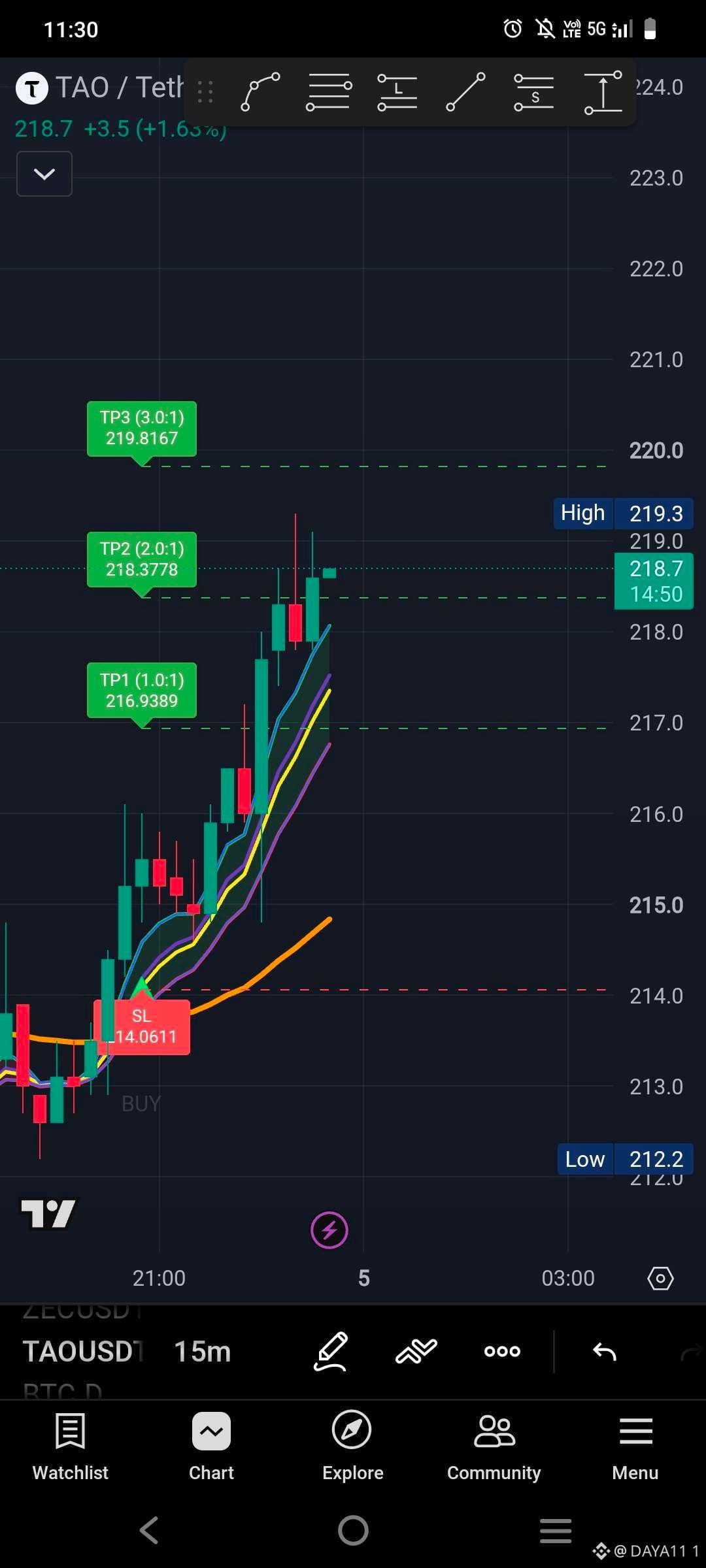
👉當前狀態 - $BTC 在從近期 $59k 低點獲得一波不錯的反彈後,交易在約 $62,000–$63,000 附近。它正在震盪區間內來回波動,目前還沒有出現令人信服的突破。
👉65k 作爲局部阻力 — 是的,這就是目前的關鍵價位。它正靠近短期均線、此前的擺動高點,以及一個賣方近期多次成功防守的區域。若出現日線/周線收盤乾淨站上該位,將爲我提到的 70k–81k 目標打開空間(並且可能使部分近端的看空結構失效)。
👉我的劇本 vs 可能發生的事 — 我的判斷在偏空環境下具備戰術合理性:
65k–66k 的流動性誘捕 → 在震盪市場中很常見。價格往往會掃到高點以觸發止損/攫取流動性,然後再反轉。
隨後拒絕上漲並下跌至 52k(本月),再到下個月的 45k–40k → 這將延續我們之前討論的 H&S 下行,並且與我更大週期的底部論點一致。
✅短期可能性 -(未來幾天/本月):
🔴我的看空情景(在 65k–66k 被拒):如果上漲時量能偏弱,並且在該阻力附近出現賣壓,這種情況非常有戲。那裏一旦失敗,的確可能先加速回到 $58k–$55k;如果下行動能增強,52k 將是一個可衡量的目標。
🟢看多情景:強勁的 ETF 資金流入、利好宏觀消息,或空頭回補,可能推動價格突破 65k 並指向 68k–70k+。歷史上,7 月在某些週期裏往往會在前幾個月走弱之後出現偏強的表現。
✅我的結論 -
市場目前仍處於“拿出證據”的狀態:65k 下方依舊偏空。我總體觀點是繼續看空壓力——在下一波下跌之前,先進行更高一檔的流動性掃盤再下行,這種經典的“熊陷阱/派發”結構,符合整體從 ATH(歷史高點)後的修正階段。
👉當前狀態 - $BTC 在從近期 $59k 低點獲得一波不錯的反彈後,交易在約 $62,000–$63,000 附近。它正在震盪區間內來回波動,目前還沒有出現令人信服的突破。
👉65k 作爲局部阻力 — 是的,這就是目前的關鍵價位。它正靠近短期均線、此前的擺動高點,以及一個賣方近期多次成功防守的區域。若出現日線/周線收盤乾淨站上該位,將爲我提到的 70k–81k 目標打開空間(並且可能使部分近端的看空結構失效)。
👉我的劇本 vs 可能發生的事 — 我的判斷在偏空環境下具備戰術合理性:
65k–66k 的流動性誘捕 → 在震盪市場中很常見。價格往往會掃到高點以觸發止損/攫取流動性,然後再反轉。
隨後拒絕上漲並下跌至 52k(本月),再到下個月的 45k–40k → 這將延續我們之前討論的 H&S 下行,並且與我更大週期的底部論點一致。
✅短期可能性 -(未來幾天/本月):
🔴我的看空情景(在 65k–66k 被拒):如果上漲時量能偏弱,並且在該阻力附近出現賣壓,這種情況非常有戲。那裏一旦失敗,的確可能先加速回到 $58k–$55k;如果下行動能增強,52k 將是一個可衡量的目標。
🟢看多情景:強勁的 ETF 資金流入、利好宏觀消息,或空頭回補,可能推動價格突破 65k 並指向 68k–70k+。歷史上,7 月在某些週期裏往往會在前幾個月走弱之後出現偏強的表現。
✅我的結論 -
市場目前仍處於“拿出證據”的狀態:65k 下方依舊偏空。我總體觀點是繼續看空壓力——在下一波下跌之前,先進行更高一檔的流動性掃盤再下行,這種經典的“熊陷阱/派發”結構,符合整體從 ATH(歷史高點)後的修正階段。
👉65k 作爲局部阻力 — 是的,這就是目前的關鍵價位。它正靠近短期均線、此前的擺動高點,以及一個賣方近期多次成功防守的區域。若出現日線/周線收盤乾淨站上該位,將爲我提到的 70k–81k 目標打開空間(並且可能使部分近端的看空結構失效)。
👉我的劇本 vs 可能發生的事 — 我的判斷在偏空環境下具備戰術合理性:
65k–66k 的流動性誘捕 → 在震盪市場中很常見。價格往往會掃到高點以觸發止損/攫取流動性,然後再反轉。
隨後拒絕上漲並下跌至 52k(本月),再到下個月的 45k–40k → 這將延續我們之前討論的 H&S 下行,並且與我更大週期的底部論點一致。
✅短期可能性 -(未來幾天/本月):
🔴我的看空情景(在 65k–66k 被拒):如果上漲時量能偏弱,並且在該阻力附近出現賣壓,這種情況非常有戲。那裏一旦失敗,的確可能先加速回到 $58k–$55k;如果下行動能增強,52k 將是一個可衡量的目標。
🟢看多情景:強勁的 ETF 資金流入、利好宏觀消息,或空頭回補,可能推動價格突破 65k 並指向 68k–70k+。歷史上,7 月在某些週期裏往往會在前幾個月走弱之後出現偏強的表現。
✅我的結論 -
市場目前仍處於“拿出證據”的狀態:65k 下方依舊偏空。我總體觀點是繼續看空壓力——在下一波下跌之前,先進行更高一檔的流動性掃盤再下行,這種經典的“熊陷阱/派發”結構,符合整體從 ATH(歷史高點)後的修正階段。
59
·
--
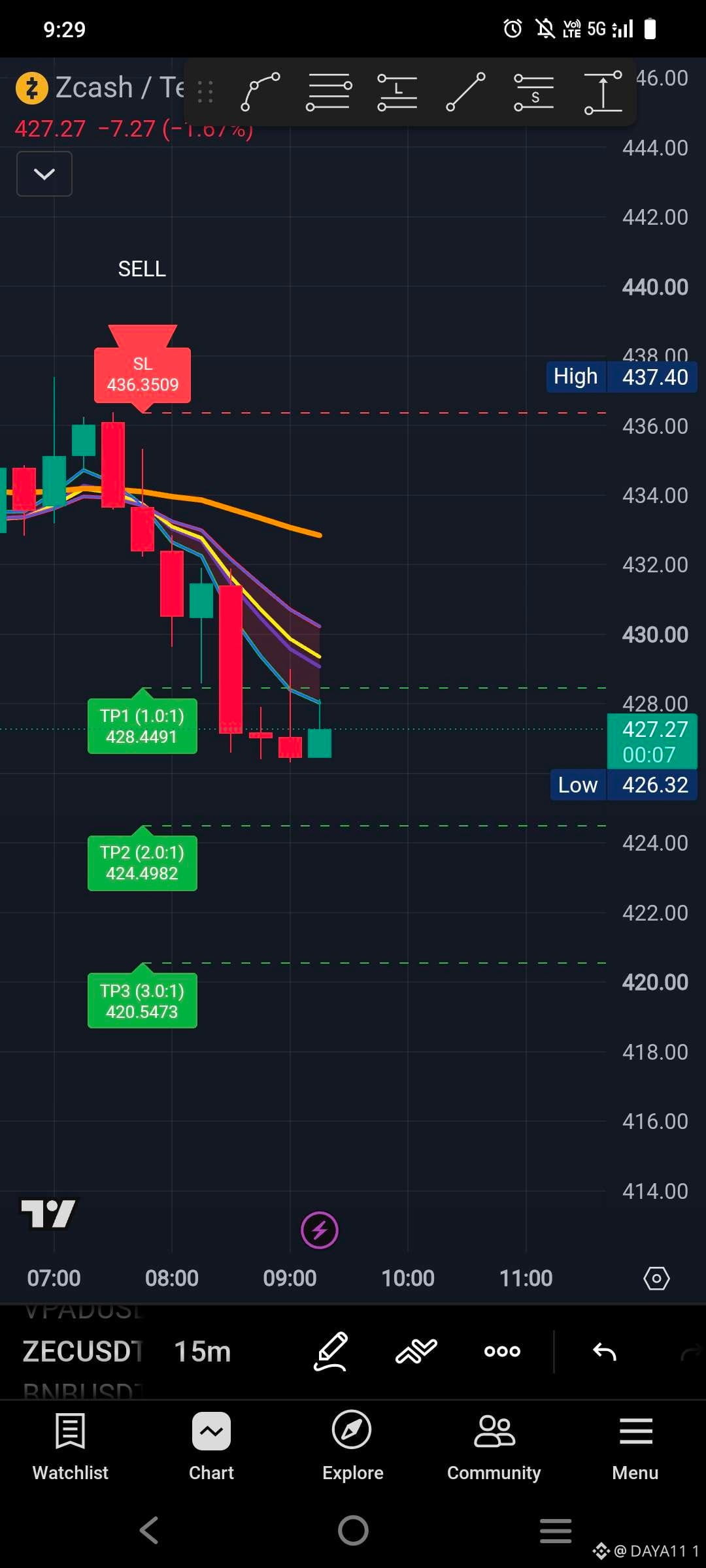
“ $ZEC剛剛在15m圖表上發出一個乾淨的短線信號 📈”
$ZEC已成功觸發TP1 ✅ ,現在價格正在向TP2 & TP3移動。同時,每一位新手都應該把止盈(TP)設置好。下面這裏解釋了最佳入場與出場 👇
✅“想把這個指標用於你自己的交易嗎?
私信或評論‘INDICATOR’”
祝您交易愉快 🤑 享受賺錢!
#Bitcoin #CryptoSignals #Trading #Altcoins
“ $ZEC剛剛在15m圖表上發出一個乾淨的短線信號 📈”
$ZEC已成功觸發TP1 ✅ ,現在價格正在向TP2 & TP3移動。同時,每一位新手都應該把止盈(TP)設置好。下面這裏解釋了最佳入場與出場 👇
✅“想把這個指標用於你自己的交易嗎?
私信或評論‘INDICATOR’”
祝您交易愉快 🤑 享受賺錢!
#Bitcoin #CryptoSignals #Trading #Altcoins
$ZEC已成功觸發TP1 ✅ ,現在價格正在向TP2 & TP3移動。同時,每一位新手都應該把止盈(TP)設置好。下面這裏解釋了最佳入場與出場 👇
✅“想把這個指標用於你自己的交易嗎?
私信或評論‘INDICATOR’”
祝您交易愉快 🤑 享受賺錢!
#Bitcoin #CryptoSignals #Trading #Altcoins
5
登入以探索更多內容
加入幣安廣場中的全球加密貨幣用戶
⚡️ 獲取加密貨幣的最新和實用資訊。
💬 受到全球最大加密貨幣交易所的信任。
👍 發掘來自經過驗證創作者的真實見解。
電子郵件 / 電話號碼