
Bullionist 1
91 貼文

Bullionist 1
舉報
封鎖用戶
$SOL Holder 🤝|| CMC KOL || Tg~ @irtaxa17
0 關注
9 粉絲
3 點讚數
貼文
·
--
查看翻譯
Not everything moving fast is new.
$SEI was engineered for trading speed most chains can't touch. Sub-second finality, built for assets that need to move the moment the market does.
The DeLorean isn't new, but it moves like it belongs there anyway.
40 years of recognition doesn't slow an asset down once it's onchain. $DMC brings that legacy to a chain built for exactly this kind of momentum.
Speed found its match. History just needed the rails. ⚡
#Altcoin Season#
Not everything moving fast is new.
$SEI was engineered for trading speed most chains can't touch. Sub-second finality, built for assets that need to move the moment the market does.
The DeLorean isn't new, but it moves like it belongs there anyway.
40 years of recognition doesn't slow an asset down once it's onchain. $DMC brings that legacy to a chain built for exactly this kind of momentum.
Speed found its match. History just needed the rails. ⚡
#Altcoin Season#
$SEI was engineered for trading speed most chains can't touch. Sub-second finality, built for assets that need to move the moment the market does.
The DeLorean isn't new, but it moves like it belongs there anyway.
40 years of recognition doesn't slow an asset down once it's onchain. $DMC brings that legacy to a chain built for exactly this kind of momentum.
Speed found its match. History just needed the rails. ⚡
#Altcoin Season#
54
·
--
查看翻譯
Vaults Without The Jargon 🔐
Here's how I explain Space and Time's Virtual Vault model to someone in two minutes.
Imagine an institution wants to borrow onchain.
The lender needs confidence that the borrower still meets the agreed conditions after the money moves.
That's normally where things get complicated.
Space and Time makes the underlying information verifiable continuously rather than relying entirely on occasional snapshots.
For me, that's the interesting part.
The borrower can preserve sensitive information while proving relevant conditions.
The lender gets stronger visibility without needing every piece of private data exposed publicly.
As $XLM pushes deeper into financial infrastructure, these are exactly the problems institutional onchain credit needs to solve.
Privacy and verification don't have to be opposites.
Virtual Vaults are interesting because they're designed around having both.
#Altcoin Season#
Vaults Without The Jargon 🔐
Here's how I explain Space and Time's Virtual Vault model to someone in two minutes.
Imagine an institution wants to borrow onchain.
The lender needs confidence that the borrower still meets the agreed conditions after the money moves.
That's normally where things get complicated.
Space and Time makes the underlying information verifiable continuously rather than relying entirely on occasional snapshots.
For me, that's the interesting part.
The borrower can preserve sensitive information while proving relevant conditions.
The lender gets stronger visibility without needing every piece of private data exposed publicly.
As $XLM pushes deeper into financial infrastructure, these are exactly the problems institutional onchain credit needs to solve.
Privacy and verification don't have to be opposites.
Virtual Vaults are interesting because they're designed around having both.
#Altcoin Season#
Here's how I explain Space and Time's Virtual Vault model to someone in two minutes.
Imagine an institution wants to borrow onchain.
The lender needs confidence that the borrower still meets the agreed conditions after the money moves.
That's normally where things get complicated.
Space and Time makes the underlying information verifiable continuously rather than relying entirely on occasional snapshots.
For me, that's the interesting part.
The borrower can preserve sensitive information while proving relevant conditions.
The lender gets stronger visibility without needing every piece of private data exposed publicly.
As $XLM pushes deeper into financial infrastructure, these are exactly the problems institutional onchain credit needs to solve.
Privacy and verification don't have to be opposites.
Virtual Vaults are interesting because they're designed around having both.
#Altcoin Season#
67
·
--
查看翻譯
10 Cents Looks Stretched 👀
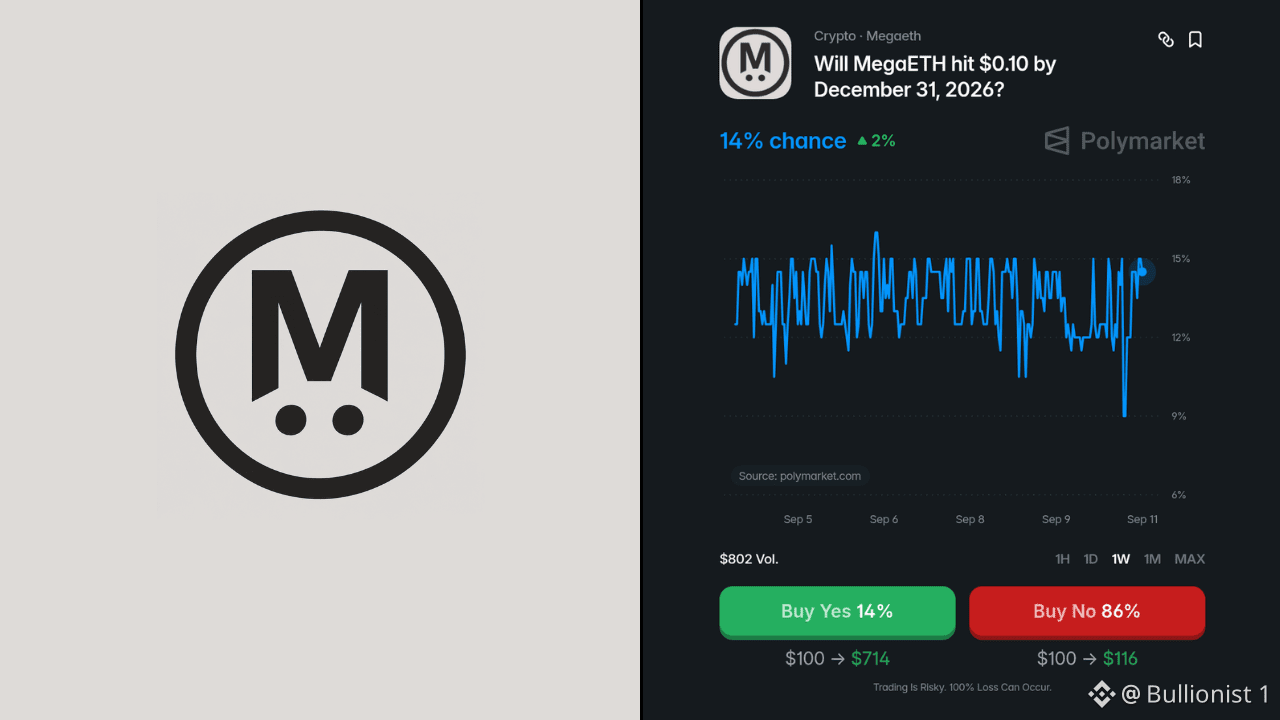
Polymarket only gives MegaETH a 14% chance of reaching $0.10 this year.
I'm with the bears.
MEGA recently traded around $0.04, making $0.10 a serious move from here.
The prediction chart isn't showing much conviction either.
Most of the week has been spent bouncing between roughly 12% and 15%.
No sustained breakout.
No serious repricing.
Just traders repeatedly refusing to pay more for Yes.
$ARB also reminds me how competitive the scaling market becomes once attention starts rotating between ecosystems.
$POL sits inside that wider scaling conversation too.
Here's the interesting part.
Only $802 has traded in this specific Polymarket market.
That makes this an emerging opportunity, not a crowded trade.
Sometimes that's exactly where I want to be early.
#Altcoin Season#
10 Cents Looks Stretched 👀
Polymarket only gives MegaETH a 14% chance of reaching $0.10 this year.
I'm with the bears.
MEGA recently traded around $0.04, making $0.10 a serious move from here.
The prediction chart isn't showing much conviction either.
Most of the week has been spent bouncing between roughly 12% and 15%.
No sustained breakout.
No serious repricing.
Just traders repeatedly refusing to pay more for Yes.
$ARB also reminds me how competitive the scaling market becomes once attention starts rotating between ecosystems.
$POL sits inside that wider scaling conversation too.
Here's the interesting part.
Only $802 has traded in this specific Polymarket market.
That makes this an emerging opportunity, not a crowded trade.
Sometimes that's exactly where I want to be early.
#Altcoin Season#
Polymarket only gives MegaETH a 14% chance of reaching $0.10 this year.
I'm with the bears.
MEGA recently traded around $0.04, making $0.10 a serious move from here.
The prediction chart isn't showing much conviction either.
Most of the week has been spent bouncing between roughly 12% and 15%.
No sustained breakout.
No serious repricing.
Just traders repeatedly refusing to pay more for Yes.
$ARB also reminds me how competitive the scaling market becomes once attention starts rotating between ecosystems.
$POL sits inside that wider scaling conversation too.
Here's the interesting part.
Only $802 has traded in this specific Polymarket market.
That makes this an emerging opportunity, not a crowded trade.
Sometimes that's exactly where I want to be early.
#Altcoin Season#
60
·
--
查看翻譯
Your Trading Strategy Starts As Network Traffic 🏎️
A trader sees a swap button, while the infrastructure underneath sees packets travelling between machines.
That distinction matters most when the trade is time-sensitive.
A route through $JUP can look perfect when it is calculated and look completely different by the time the transaction reaches the infrastructure capable of including it.
The smart contract did nothing wrong. The state simply moved while the information was travelling.
Ethereum traders hit the same physical limit through $UNI , because no amount of application-level routing makes the path between the user, an RPC and a validator disappear.This is why I think DeFi networking gets more important as the applications themselves improve.
DoubleZero is built below those applications. Its architecture allows edge infrastructure such as RPC systems to connect into the same high-performance transport layer used for distribut$ed-system traffic.The exchange still chooses the route and the smart contract still executes the transaction.
DoubleZero focuses on getting the information between the machines involved more efficiently.Everyone in DeFi studies execution.
Far fewer people study the road the execution request had to travel first.
#Altcoin Season#
Your Trading Strategy Starts As Network Traffic 🏎️
A trader sees a swap button, while the infrastructure underneath sees packets travelling between machines.
That distinction matters most when the trade is time-sensitive.
A route through $JUP can look perfect when it is calculated and look completely different by the time the transaction reaches the infrastructure capable of including it.
The smart contract did nothing wrong. The state simply moved while the information was travelling.
Ethereum traders hit the same physical limit through $UNI , because no amount of application-level routing makes the path between the user, an RPC and a validator disappear.This is why I think DeFi networking gets more important as the applications themselves improve.
DoubleZero is built below those applications. Its architecture allows edge infrastructure such as RPC systems to connect into the same high-performance transport layer used for distribut$ed-system traffic.The exchange still chooses the route and the smart contract still executes the transaction.
DoubleZero focuses on getting the information between the machines involved more efficiently.Everyone in DeFi studies execution.
Far fewer people study the road the execution request had to travel first.
#Altcoin Season#
A trader sees a swap button, while the infrastructure underneath sees packets travelling between machines.
That distinction matters most when the trade is time-sensitive.
A route through $JUP can look perfect when it is calculated and look completely different by the time the transaction reaches the infrastructure capable of including it.
The smart contract did nothing wrong. The state simply moved while the information was travelling.
Ethereum traders hit the same physical limit through $UNI , because no amount of application-level routing makes the path between the user, an RPC and a validator disappear.This is why I think DeFi networking gets more important as the applications themselves improve.
DoubleZero is built below those applications. Its architecture allows edge infrastructure such as RPC systems to connect into the same high-performance transport layer used for distribut$ed-system traffic.The exchange still chooses the route and the smart contract still executes the transaction.
DoubleZero focuses on getting the information between the machines involved more efficiently.Everyone in DeFi studies execution.
Far fewer people study the road the execution request had to travel first.
#Altcoin Season#
59
·
--
查看翻譯
The ecosystem where I'm seeing growth 🔥
During altcoin season, $ETH liquidity spreads across more networks while L1s like $SUI compete for new users, making distribution a major growth lever.
Personally I think access matters as much as the applications waiting on the other side.
When entering an ecosystem requires wrapped assets, a separate bridge, and multiple interfaces, users can drop off before making their first onchain action, so networks that reduce those steps give every app inside them a wider potential audience.
Injective is improving that access through both centralized and onchain entry points.
Coinbase users can now deposit and withdraw native INJ directly on Injective without relying on a separate bridge or wrapped asset, while Jumper adds another route, allowing users to arrive in INJ or native USDC from supported networks through one interface.
For me, expanding distribution like this gives every market and application on Injective more room to grow.
This is why I’m bullish on Injective as a growing ecosystem ⚡️
#Altcoin Season#
The ecosystem where I'm seeing growth 🔥
During altcoin season, $ETH liquidity spreads across more networks while L1s like $SUI compete for new users, making distribution a major growth lever.
Personally I think access matters as much as the applications waiting on the other side.
When entering an ecosystem requires wrapped assets, a separate bridge, and multiple interfaces, users can drop off before making their first onchain action, so networks that reduce those steps give every app inside them a wider potential audience.
Injective is improving that access through both centralized and onchain entry points.
Coinbase users can now deposit and withdraw native INJ directly on Injective without relying on a separate bridge or wrapped asset, while Jumper adds another route, allowing users to arrive in INJ or native USDC from supported networks through one interface.
For me, expanding distribution like this gives every market and application on Injective more room to grow.
This is why I’m bullish on Injective as a growing ecosystem ⚡️
#Altcoin Season#
During altcoin season, $ETH liquidity spreads across more networks while L1s like $SUI compete for new users, making distribution a major growth lever.
Personally I think access matters as much as the applications waiting on the other side.
When entering an ecosystem requires wrapped assets, a separate bridge, and multiple interfaces, users can drop off before making their first onchain action, so networks that reduce those steps give every app inside them a wider potential audience.
Injective is improving that access through both centralized and onchain entry points.
Coinbase users can now deposit and withdraw native INJ directly on Injective without relying on a separate bridge or wrapped asset, while Jumper adds another route, allowing users to arrive in INJ or native USDC from supported networks through one interface.
For me, expanding distribution like this gives every market and application on Injective more room to grow.
This is why I’m bullish on Injective as a growing ecosystem ⚡️
#Altcoin Season#
43
·
--
查看翻譯
Will $2M hit the Linera sale? 📊
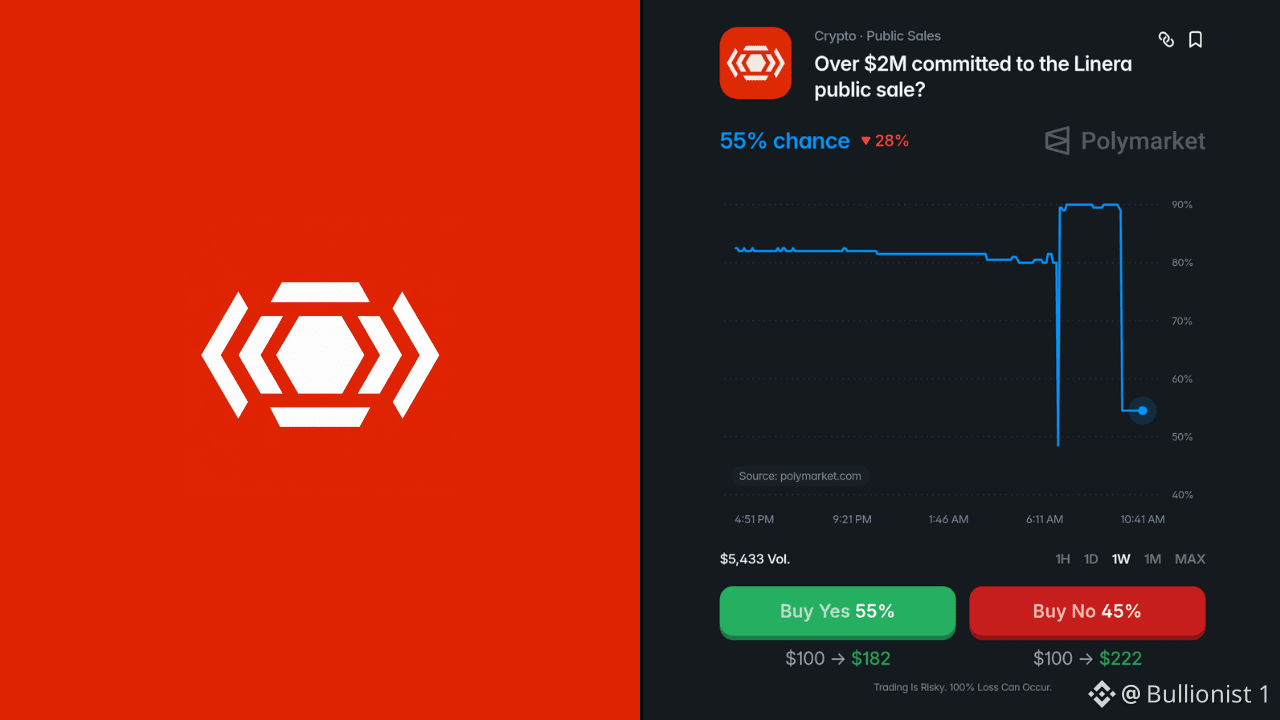
Everyone still technically has this leaning Yes at 55%, and a chunk of that side has been funded through $SOL too, though I'd argue that's a weaker use of the coin than backing the actual trend here.
This market was sitting near 85% not long ago before it cratered hard down into the 50s.
Down a massive 28%, and I don't think that headline number has caught up to the chart yet.
Still fairly quiet, $5,433 in volume, leaving real room for this to keep moving.
I'm taking No, even against the current lean. A drop this steep this recently rarely stops on the first attempt.
Exit anytime, no need to wait around for the sale to actually close, and $HYPE shows up plenty on public sale questions just like this one.
Polymarket remains the place to catch a shift like this early.
#Altcoin Season#
Will $2M hit the Linera sale? 📊
Everyone still technically has this leaning Yes at 55%, and a chunk of that side has been funded through $SOL too, though I'd argue that's a weaker use of the coin than backing the actual trend here.
This market was sitting near 85% not long ago before it cratered hard down into the 50s.
Down a massive 28%, and I don't think that headline number has caught up to the chart yet.
Still fairly quiet, $5,433 in volume, leaving real room for this to keep moving.
I'm taking No, even against the current lean. A drop this steep this recently rarely stops on the first attempt.
Exit anytime, no need to wait around for the sale to actually close, and $HYPE shows up plenty on public sale questions just like this one.
Polymarket remains the place to catch a shift like this early.
#Altcoin Season#
Everyone still technically has this leaning Yes at 55%, and a chunk of that side has been funded through $SOL too, though I'd argue that's a weaker use of the coin than backing the actual trend here.
This market was sitting near 85% not long ago before it cratered hard down into the 50s.
Down a massive 28%, and I don't think that headline number has caught up to the chart yet.
Still fairly quiet, $5,433 in volume, leaving real room for this to keep moving.
I'm taking No, even against the current lean. A drop this steep this recently rarely stops on the first attempt.
Exit anytime, no need to wait around for the sale to actually close, and $HYPE shows up plenty on public sale questions just like this one.
Polymarket remains the place to catch a shift like this early.
#Altcoin Season#
41
·
--
查看翻譯
Your Trading Strategy Stops Working When Copied 🌾
Find a pool paying properly and the position is public, so the crowd arrives and the yield you found disappears.
$JUP now carries around $3B in total value across its trading and earn products, and every position sitting in them is readable by anyone.
That means the good opportunities have the shortest lives, because finding one and holding it are not the same thing anymore.
And institutions never operated this way, since $CC settles for DTCC members on a design where each party only receives data about its own side.
So professional money keeps its positioning private while retail broadcasts it for free.
Midnight lets you hold a position nobody can read while still proving the protocol rules were followed.
The strategy keeps paying because nobody can see it to crowd into it.
Every yield edge on a public chain still dies within days, and that will keep happening until the position stops being readable.
#Privacy #DeFi
Your Trading Strategy Stops Working When Copied 🌾
Find a pool paying properly and the position is public, so the crowd arrives and the yield you found disappears.
$JUP now carries around $3B in total value across its trading and earn products, and every position sitting in them is readable by anyone.
That means the good opportunities have the shortest lives, because finding one and holding it are not the same thing anymore.
And institutions never operated this way, since $CC settles for DTCC members on a design where each party only receives data about its own side.
So professional money keeps its positioning private while retail broadcasts it for free.
Midnight lets you hold a position nobody can read while still proving the protocol rules were followed.
The strategy keeps paying because nobody can see it to crowd into it.
Every yield edge on a public chain still dies within days, and that will keep happening until the position stops being readable.
#Privacy #DeFi
Find a pool paying properly and the position is public, so the crowd arrives and the yield you found disappears.
$JUP now carries around $3B in total value across its trading and earn products, and every position sitting in them is readable by anyone.
That means the good opportunities have the shortest lives, because finding one and holding it are not the same thing anymore.
And institutions never operated this way, since $CC settles for DTCC members on a design where each party only receives data about its own side.
So professional money keeps its positioning private while retail broadcasts it for free.
Midnight lets you hold a position nobody can read while still proving the protocol rules were followed.
The strategy keeps paying because nobody can see it to crowd into it.
Every yield edge on a public chain still dies within days, and that will keep happening until the position stops being readable.
#Privacy #DeFi
51
·
--
查看翻譯
$HYPE Proved Buybacks Work. $SUI Went Further 🔥
Hyperliquid showed the market how powerful token buybacks can be.
Its Assistance Fund converts trading fees into HYPE before permanently burning the tokens.
That model is one reason HYPE gets so much credit for value capture.
Sui is taking a different route.
Its buybacks are funded by yield generated from native stablecoins.
The latest figures show:
• More than 609,800 SUI purchased YTD
• 8,000 SUI acquired on September 5 alone
• A buyback treasury worth roughly $490,000
This is why I find Sui’s model interesting.
Hyperliquid’s buybacks grow with trading activity.
Sui’s can grow alongside stablecoin adoption, payments and capital sitting onchain.
As stablecoin float expands, the yield can fund further open-market SUI purchases without relying on new token issuance.
Purchased tokens are reinvested into the ecosystem rather than burned.
I think that gives Sui a wider economic flywheel built around everyday network usage.
HYPE proved buybacks can transform a token thesis.
Sui may prove they can help grow an entire ecosystem.
#DeFi #Altcoin Season#
$HYPE Proved Buybacks Work. $SUI Went Further 🔥
Hyperliquid showed the market how powerful token buybacks can be.
Its Assistance Fund converts trading fees into HYPE before permanently burning the tokens.
That model is one reason HYPE gets so much credit for value capture.
Sui is taking a different route.
Its buybacks are funded by yield generated from native stablecoins.
The latest figures show:
• More than 609,800 SUI purchased YTD
• 8,000 SUI acquired on September 5 alone
• A buyback treasury worth roughly $490,000
This is why I find Sui’s model interesting.
Hyperliquid’s buybacks grow with trading activity.
Sui’s can grow alongside stablecoin adoption, payments and capital sitting onchain.
As stablecoin float expands, the yield can fund further open-market SUI purchases without relying on new token issuance.
Purchased tokens are reinvested into the ecosystem rather than burned.
I think that gives Sui a wider economic flywheel built around everyday network usage.
HYPE proved buybacks can transform a token thesis.
Sui may prove they can help grow an entire ecosystem.
#DeFi #Altcoin Season#
Hyperliquid showed the market how powerful token buybacks can be.
Its Assistance Fund converts trading fees into HYPE before permanently burning the tokens.
That model is one reason HYPE gets so much credit for value capture.
Sui is taking a different route.
Its buybacks are funded by yield generated from native stablecoins.
The latest figures show:
• More than 609,800 SUI purchased YTD
• 8,000 SUI acquired on September 5 alone
• A buyback treasury worth roughly $490,000
This is why I find Sui’s model interesting.
Hyperliquid’s buybacks grow with trading activity.
Sui’s can grow alongside stablecoin adoption, payments and capital sitting onchain.
As stablecoin float expands, the yield can fund further open-market SUI purchases without relying on new token issuance.
Purchased tokens are reinvested into the ecosystem rather than burned.
I think that gives Sui a wider economic flywheel built around everyday network usage.
HYPE proved buybacks can transform a token thesis.
Sui may prove they can help grow an entire ecosystem.
#DeFi #Altcoin Season#
52
·
--
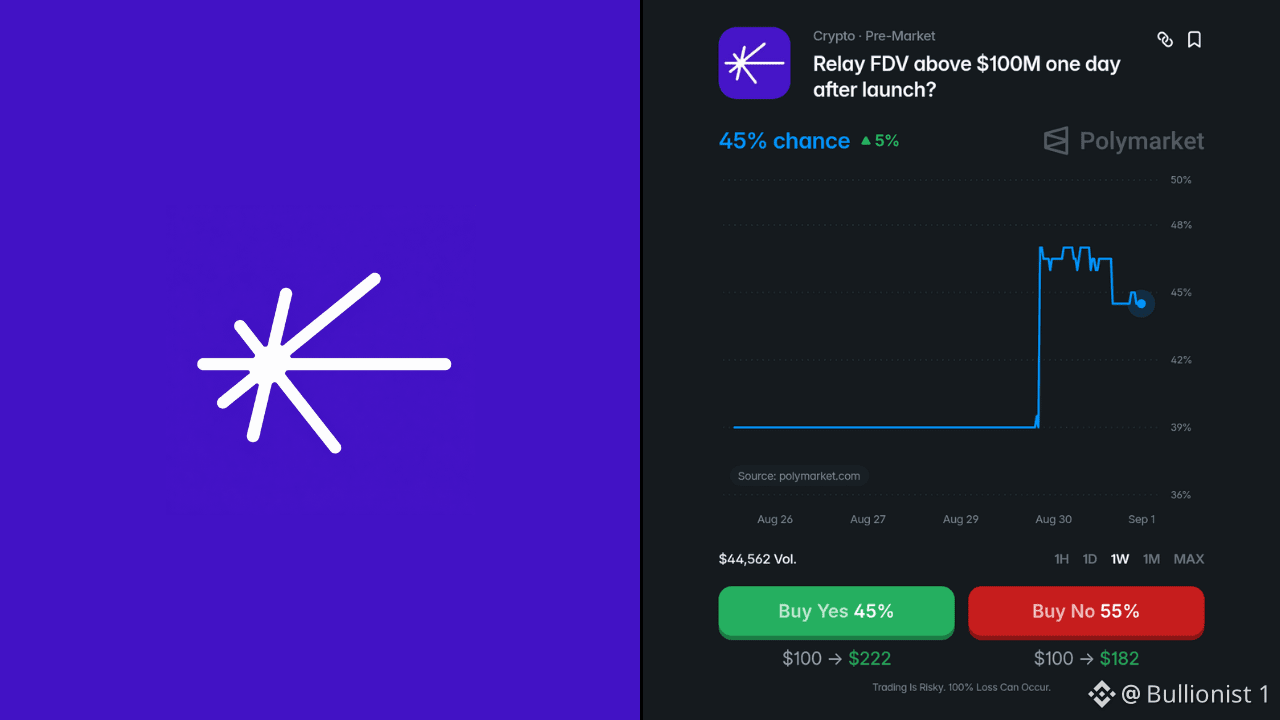
Will Relay的FDV真的會清到1億美元嗎?👀
44,562。這已經是目前站在突破背後、且該突破自發生以來就一直穩穩守住的成交量。
現在是45%的機率,上漲了5%,但嚴格說來在那段走勢前仍是處於相對弱勢的一方——畢竟在那次拉升之前已經相當長時間盤整走平。
我選「Yes」。如果這種突破能在如此多的靜默盤整後仍保持得這麼乾淨,通常代表這波行情是真的。
這其中相當一部分的量也跑進了 $TRUMP ——用法比起單純把幣丟著不動、只等價格自己走出來要聰明得多。
隨時都可以收尾,不需要等到發射/上線那天才定案。
Polymarket 正逐漸變成你在關注的任何標的上進行交易的地方,而在這些關於FDV的問題上,$HYPE 也常常會跟著走。
#Altcoin Season#
Will Relay的FDV真的會清到1億美元嗎?👀
44,562。這已經是目前站在突破背後、且該突破自發生以來就一直穩穩守住的成交量。
現在是45%的機率,上漲了5%,但嚴格說來在那段走勢前仍是處於相對弱勢的一方——畢竟在那次拉升之前已經相當長時間盤整走平。
我選「Yes」。如果這種突破能在如此多的靜默盤整後仍保持得這麼乾淨,通常代表這波行情是真的。
這其中相當一部分的量也跑進了 $TRUMP ——用法比起單純把幣丟著不動、只等價格自己走出來要聰明得多。
隨時都可以收尾,不需要等到發射/上線那天才定案。
Polymarket 正逐漸變成你在關注的任何標的上進行交易的地方,而在這些關於FDV的問題上,$HYPE 也常常會跟著走。
#Altcoin Season#
44,562。這已經是目前站在突破背後、且該突破自發生以來就一直穩穩守住的成交量。
現在是45%的機率,上漲了5%,但嚴格說來在那段走勢前仍是處於相對弱勢的一方——畢竟在那次拉升之前已經相當長時間盤整走平。
我選「Yes」。如果這種突破能在如此多的靜默盤整後仍保持得這麼乾淨,通常代表這波行情是真的。
這其中相當一部分的量也跑進了 $TRUMP ——用法比起單純把幣丟著不動、只等價格自己走出來要聰明得多。
隨時都可以收尾,不需要等到發射/上線那天才定案。
Polymarket 正逐漸變成你在關注的任何標的上進行交易的地方,而在這些關於FDV的問題上,$HYPE 也常常會跟著走。
#Altcoin Season#
76
·
--
查看翻譯
Ten Days Is Not A Market Cycle ⏳
$LINK has had years for the market to understand what infrastructure demand looks like.
New infrastructure tokens need time for usage and a clear narrative to develop.
The first few trading sessions often reveal more about market conditions than long-term product value.
October 10, 2025 was an extreme example.
A record 19.16 billion dollars in crypto positions were liquidated in one day.
Forced selling spread through the market before investors could separate one project from another.
$VFY had completed its TGE on September 30, only ten days earlier.
Its first ten days ended in a market-wide liquidation event.
That context does not prove the token is mispriced.
It means the early chart cannot be assessed without acknowledging the market it launched into.
zkVerify is a purpose-built blockchain for verifying zero-knowledge proofs.
$VFY is consumed when those proofs are verified, linking network use to the token’s role.
The meaningful test now is whether proof volume and developer adoption grow as verification demand expands.
If this token gets a fair chance and exposure as a prominent infra’ token, you could be super early rn 🧠
#Altcoin Season#
Ten Days Is Not A Market Cycle ⏳
$LINK has had years for the market to understand what infrastructure demand looks like.
New infrastructure tokens need time for usage and a clear narrative to develop.
The first few trading sessions often reveal more about market conditions than long-term product value.
October 10, 2025 was an extreme example.
A record 19.16 billion dollars in crypto positions were liquidated in one day.
Forced selling spread through the market before investors could separate one project from another.
$VFY had completed its TGE on September 30, only ten days earlier.
Its first ten days ended in a market-wide liquidation event.
That context does not prove the token is mispriced.
It means the early chart cannot be assessed without acknowledging the market it launched into.
zkVerify is a purpose-built blockchain for verifying zero-knowledge proofs.
$VFY is consumed when those proofs are verified, linking network use to the token’s role.
The meaningful test now is whether proof volume and developer adoption grow as verification demand expands.
If this token gets a fair chance and exposure as a prominent infra’ token, you could be super early rn 🧠
#Altcoin Season#
$LINK has had years for the market to understand what infrastructure demand looks like.
New infrastructure tokens need time for usage and a clear narrative to develop.
The first few trading sessions often reveal more about market conditions than long-term product value.
October 10, 2025 was an extreme example.
A record 19.16 billion dollars in crypto positions were liquidated in one day.
Forced selling spread through the market before investors could separate one project from another.
$VFY had completed its TGE on September 30, only ten days earlier.
Its first ten days ended in a market-wide liquidation event.
That context does not prove the token is mispriced.
It means the early chart cannot be assessed without acknowledging the market it launched into.
zkVerify is a purpose-built blockchain for verifying zero-knowledge proofs.
$VFY is consumed when those proofs are verified, linking network use to the token’s role.
The meaningful test now is whether proof volume and developer adoption grow as verification demand expands.
If this token gets a fair chance and exposure as a prominent infra’ token, you could be super early rn 🧠
#Altcoin Season#
69
·
--
查看翻譯
Would You Trust A Confident AI 🤖
Theoriq openly says it doesn't believe short-term price direction can be reliably predicted by anyone, AI included.
That's an unusual thing for an AI driven project to admit out loud in public.
Most AI trading claims sell pure confidence, a model that supposedly already knows exactly where price goes next.
So what does Theoriq actually test instead, if not direction?
Something narrower and a lot more honest, whether a model can sense the range of likely outcomes rather than commit to one single confident direction call.
Sensing rising uncertainty is what real risk management actually runs on underneath everything else.
Guessing direction with false confidence is closer to gambling with extra steps in between.
Being precise about what a system can and can't do builds more lasting trust than overselling ever manages to, the exact lesson $RENDER proved out across its own network.
Holders backing $THQ are backing a team willing to say a genuinely hard problem is actually hard, instead of quietly pretending otherwise for the sake of a headline.
I respect a team that tells me what doesn't work just as much as one that tells me what does.
#Altcoin Season#
Would You Trust A Confident AI 🤖
Theoriq openly says it doesn't believe short-term price direction can be reliably predicted by anyone, AI included.
That's an unusual thing for an AI driven project to admit out loud in public.
Most AI trading claims sell pure confidence, a model that supposedly already knows exactly where price goes next.
So what does Theoriq actually test instead, if not direction?
Something narrower and a lot more honest, whether a model can sense the range of likely outcomes rather than commit to one single confident direction call.
Sensing rising uncertainty is what real risk management actually runs on underneath everything else.
Guessing direction with false confidence is closer to gambling with extra steps in between.
Being precise about what a system can and can't do builds more lasting trust than overselling ever manages to, the exact lesson $RENDER proved out across its own network.
Holders backing $THQ are backing a team willing to say a genuinely hard problem is actually hard, instead of quietly pretending otherwise for the sake of a headline.
I respect a team that tells me what doesn't work just as much as one that tells me what does.
#Altcoin Season#
Theoriq openly says it doesn't believe short-term price direction can be reliably predicted by anyone, AI included.
That's an unusual thing for an AI driven project to admit out loud in public.
Most AI trading claims sell pure confidence, a model that supposedly already knows exactly where price goes next.
So what does Theoriq actually test instead, if not direction?
Something narrower and a lot more honest, whether a model can sense the range of likely outcomes rather than commit to one single confident direction call.
Sensing rising uncertainty is what real risk management actually runs on underneath everything else.
Guessing direction with false confidence is closer to gambling with extra steps in between.
Being precise about what a system can and can't do builds more lasting trust than overselling ever manages to, the exact lesson $RENDER proved out across its own network.
Holders backing $THQ are backing a team willing to say a genuinely hard problem is actually hard, instead of quietly pretending otherwise for the sake of a headline.
I respect a team that tells me what doesn't work just as much as one that tells me what does.
#Altcoin Season#
78
·
--
Sui 很便宜——我覺得它被嚴重低估了 👀
我不認爲每一個被打壓的山寨幣都值得再給一次機會。
$APT 和 $TON 都表明:當流動性迴歸時,被忽視的 L1 會出現多麼劇烈的重新定價。
在大約 $0.76 的價格水平,Sui 仍然被當作故事已經結束來估值。
我認爲市場對傷害的定價是準確的,但卻忽略了復甦的潛力。$0.50 到 $0.80 之間的流動性區間已經被驗證過。
我接下來的路線圖很簡單。
• $2.02 作爲第一個認真對待的目標
• 若擴張加速,則看向 $4.42
• 在之前的主要高點附近,大約 $5.35
要讓這筆交易產生意義,Sui 並不需要再創造一個荒謬的全新歷史高點。
它只需要回到它之前已經到達過的區域。
在這個價格下,風險是顯而易見的。
我認爲上行空間被低估了。
#Altcoin Season#
Sui 很便宜——我覺得它被嚴重低估了 👀
我不認爲每一個被打壓的山寨幣都值得再給一次機會。
$APT 和 $TON 都表明:當流動性迴歸時,被忽視的 L1 會出現多麼劇烈的重新定價。
在大約 $0.76 的價格水平,Sui 仍然被當作故事已經結束來估值。
我認爲市場對傷害的定價是準確的,但卻忽略了復甦的潛力。$0.50 到 $0.80 之間的流動性區間已經被驗證過。
我接下來的路線圖很簡單。
• $2.02 作爲第一個認真對待的目標
• 若擴張加速,則看向 $4.42
• 在之前的主要高點附近,大約 $5.35
要讓這筆交易產生意義,Sui 並不需要再創造一個荒謬的全新歷史高點。
它只需要回到它之前已經到達過的區域。
在這個價格下,風險是顯而易見的。
我認爲上行空間被低估了。
#Altcoin Season#
我不認爲每一個被打壓的山寨幣都值得再給一次機會。
$APT 和 $TON 都表明:當流動性迴歸時,被忽視的 L1 會出現多麼劇烈的重新定價。
在大約 $0.76 的價格水平,Sui 仍然被當作故事已經結束來估值。
我認爲市場對傷害的定價是準確的,但卻忽略了復甦的潛力。$0.50 到 $0.80 之間的流動性區間已經被驗證過。
我接下來的路線圖很簡單。
• $2.02 作爲第一個認真對待的目標
• 若擴張加速,則看向 $4.42
• 在之前的主要高點附近,大約 $5.35
要讓這筆交易產生意義,Sui 並不需要再創造一個荒謬的全新歷史高點。
它只需要回到它之前已經到達過的區域。
在這個價格下,風險是顯而易見的。
我認爲上行空間被低估了。
#Altcoin Season#
42
·
--
總計銷燬了 7700 萬枚代幣 🔥
$ETH 的交易者瞭解銷燬機制,而 $HYPE 的交易者則懂得什麼纔是真正的交易所手續費收入。兩者結合,正在悄悄發生在 Aevo 上,而且數據還在繼續增長。
主線非常簡單。Options Easy Mode 上線後,更多交易者開始使用期權。HYPE 部署到 PERPS+ 上,之前在無保障(naked)perps 上交易 HYPE 的交易者,如今在該資產上擁有了明確的風險控制工具。每一次新增都會帶來更多交易活動,而更多交易活動會產生更多交易所手續費;這些費用會用於每月的回購與銷燬。
本月從公開市場回購並銷燬了 100 萬枚代幣。
產品已經交付,成交量隨之而來,銷燬就開始運轉。
這是一個項目能採取的最佳路徑 🌟
#Altcoin Season#
總計銷燬了 7700 萬枚代幣 🔥
$ETH 的交易者瞭解銷燬機制,而 $HYPE 的交易者則懂得什麼纔是真正的交易所手續費收入。兩者結合,正在悄悄發生在 Aevo 上,而且數據還在繼續增長。
主線非常簡單。Options Easy Mode 上線後,更多交易者開始使用期權。HYPE 部署到 PERPS+ 上,之前在無保障(naked)perps 上交易 HYPE 的交易者,如今在該資產上擁有了明確的風險控制工具。每一次新增都會帶來更多交易活動,而更多交易活動會產生更多交易所手續費;這些費用會用於每月的回購與銷燬。
本月從公開市場回購並銷燬了 100 萬枚代幣。
產品已經交付,成交量隨之而來,銷燬就開始運轉。
這是一個項目能採取的最佳路徑 🌟
#Altcoin Season#
$ETH 的交易者瞭解銷燬機制,而 $HYPE 的交易者則懂得什麼纔是真正的交易所手續費收入。兩者結合,正在悄悄發生在 Aevo 上,而且數據還在繼續增長。
主線非常簡單。Options Easy Mode 上線後,更多交易者開始使用期權。HYPE 部署到 PERPS+ 上,之前在無保障(naked)perps 上交易 HYPE 的交易者,如今在該資產上擁有了明確的風險控制工具。每一次新增都會帶來更多交易活動,而更多交易活動會產生更多交易所手續費;這些費用會用於每月的回購與銷燬。
本月從公開市場回購並銷燬了 100 萬枚代幣。
產品已經交付,成交量隨之而來,銷燬就開始運轉。
這是一個項目能採取的最佳路徑 🌟
#Altcoin Season#
54
·
--
沒有憑證的代理就像在黑暗中“飛行”,🧠
空間與時間解決了每一個“代理型 AI”系統遲早都會遇到的唯一難題。
一個代理可以在毫秒內執行。
但它自身無法做到的是:證明它在採取行動之前所讀取的內容。
$TAO 正在構建去中心化的 AI 基礎設施,最終將爲機構級別的自主金融決策提供算力支持。
這會帶來的問責缺口並不小。
當代理讀取一個價格時,該響應會在運行時被消耗,而不會被記錄下來。
當它檢查抵押品時,它所看到的餘額在此之後已經被多次覆蓋。
當它應用一條規則時,該邏輯在鏈下運行,因此鏈上只記錄結果。
當它權衡歷史時,它查詢的索引可能已被重組,無法重新回放。
無法被任何人還原的交易,就沒有人能爲之辯護。
空間與時間將查詢、數據以及加密證明一併保留,使得代理的決策在結算很久之後仍然可以被覈驗。
每一個答覆都會攜帶它的證明。
$HYPE 正以一種速度擴展鏈上資本市場:一旦自主代理開始管理真實倉位,這種問責缺口就會立刻演變成系統性風險。
空間與時間被定位爲每個認真對待的“代理型金融”協議所必需的、經過驗證的數據層。
能夠證明自己爲何交易的代理,纔會成爲機構信任的對象。
#Altcoin Season# #AI
沒有憑證的代理就像在黑暗中“飛行”,🧠
空間與時間解決了每一個“代理型 AI”系統遲早都會遇到的唯一難題。
一個代理可以在毫秒內執行。
但它自身無法做到的是:證明它在採取行動之前所讀取的內容。
$TAO 正在構建去中心化的 AI 基礎設施,最終將爲機構級別的自主金融決策提供算力支持。
這會帶來的問責缺口並不小。
當代理讀取一個價格時,該響應會在運行時被消耗,而不會被記錄下來。
當它檢查抵押品時,它所看到的餘額在此之後已經被多次覆蓋。
當它應用一條規則時,該邏輯在鏈下運行,因此鏈上只記錄結果。
當它權衡歷史時,它查詢的索引可能已被重組,無法重新回放。
無法被任何人還原的交易,就沒有人能爲之辯護。
空間與時間將查詢、數據以及加密證明一併保留,使得代理的決策在結算很久之後仍然可以被覈驗。
每一個答覆都會攜帶它的證明。
$HYPE 正以一種速度擴展鏈上資本市場:一旦自主代理開始管理真實倉位,這種問責缺口就會立刻演變成系統性風險。
空間與時間被定位爲每個認真對待的“代理型金融”協議所必需的、經過驗證的數據層。
能夠證明自己爲何交易的代理,纔會成爲機構信任的對象。
#Altcoin Season# #AI
空間與時間解決了每一個“代理型 AI”系統遲早都會遇到的唯一難題。
一個代理可以在毫秒內執行。
但它自身無法做到的是:證明它在採取行動之前所讀取的內容。
$TAO 正在構建去中心化的 AI 基礎設施,最終將爲機構級別的自主金融決策提供算力支持。
這會帶來的問責缺口並不小。
當代理讀取一個價格時,該響應會在運行時被消耗,而不會被記錄下來。
當它檢查抵押品時,它所看到的餘額在此之後已經被多次覆蓋。
當它應用一條規則時,該邏輯在鏈下運行,因此鏈上只記錄結果。
當它權衡歷史時,它查詢的索引可能已被重組,無法重新回放。
無法被任何人還原的交易,就沒有人能爲之辯護。
空間與時間將查詢、數據以及加密證明一併保留,使得代理的決策在結算很久之後仍然可以被覈驗。
每一個答覆都會攜帶它的證明。
$HYPE 正以一種速度擴展鏈上資本市場:一旦自主代理開始管理真實倉位,這種問責缺口就會立刻演變成系統性風險。
空間與時間被定位爲每個認真對待的“代理型金融”協議所必需的、經過驗證的數據層。
能夠證明自己爲何交易的代理,纔會成爲機構信任的對象。
#Altcoin Season# #AI
71
·
--
《清晰法案》會成為法律嗎?👀
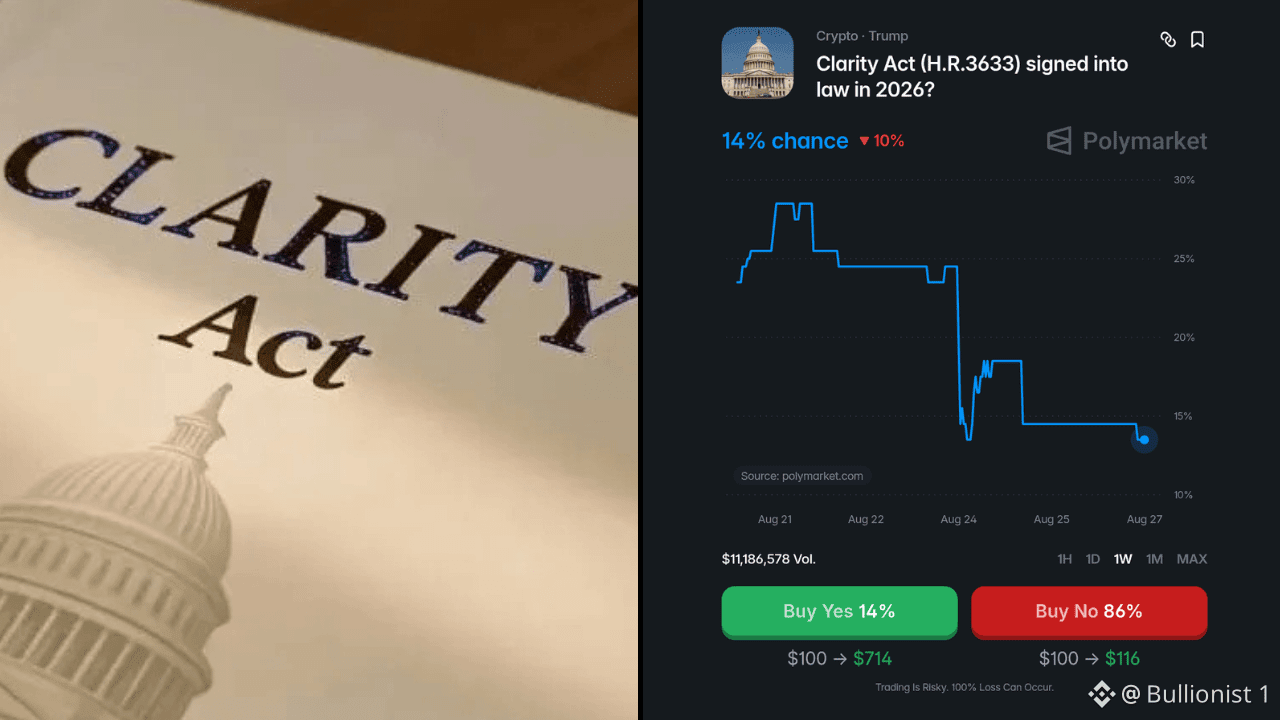
$11,186,578。先把這個數字大聲唸出來一下,因為它就是此刻這個單一問題所承載的規模。
這讓它成為整個平台上最大的市場之一,不只是加密貨幣領域,而是整個版圖。
目前有 14% 的機率,下降了 10%。這張圖表在不久前還接近 28%,而且自那之後幾乎一直在滑落。
像這種立法,一旦市場開始為一波又一波的延遲做定價,通常就很少會再快速回彈。
我選「不」。當這麼龐大的規模在像這樣的走勢中如此明確地同意一致時,我更願意相信這個規模,而不是期待突然出現的加開投票。
$HYPE 一直是為這個部位提供實際資金的一種幣,且它在 Polymarket 的成交量正在快速上升,它也正逐漸成為平台上更受認可的名字之一。
$ARB 往往也會緊跟其後,在同樣吸引這麼多關注的市場裡一起出現。
越來越多加密與 web3 的人正在意識到,這是一種比起只是在自己持有的幣上坐等頭條推動價格,更能真正從你讀懂的新聞中獲利的方法。
Polymarket 真的正在成為你用來交易你「實際」密切關注的任何事情的地方:政治、加密貨幣監管,或其他任何夾在兩者之間的議題。
不過,落到另一邊也並非完全不可能;畢竟這是一個立法程序,任何事情都可能改變。
#Altcoin Season#
《清晰法案》會成為法律嗎?👀
$11,186,578。先把這個數字大聲唸出來一下,因為它就是此刻這個單一問題所承載的規模。
這讓它成為整個平台上最大的市場之一,不只是加密貨幣領域,而是整個版圖。
目前有 14% 的機率,下降了 10%。這張圖表在不久前還接近 28%,而且自那之後幾乎一直在滑落。
像這種立法,一旦市場開始為一波又一波的延遲做定價,通常就很少會再快速回彈。
我選「不」。當這麼龐大的規模在像這樣的走勢中如此明確地同意一致時,我更願意相信這個規模,而不是期待突然出現的加開投票。
$HYPE 一直是為這個部位提供實際資金的一種幣,且它在 Polymarket 的成交量正在快速上升,它也正逐漸成為平台上更受認可的名字之一。
$ARB 往往也會緊跟其後,在同樣吸引這麼多關注的市場裡一起出現。
越來越多加密與 web3 的人正在意識到,這是一種比起只是在自己持有的幣上坐等頭條推動價格,更能真正從你讀懂的新聞中獲利的方法。
Polymarket 真的正在成為你用來交易你「實際」密切關注的任何事情的地方:政治、加密貨幣監管,或其他任何夾在兩者之間的議題。
不過,落到另一邊也並非完全不可能;畢竟這是一個立法程序,任何事情都可能改變。
#Altcoin Season#
$11,186,578。先把這個數字大聲唸出來一下,因為它就是此刻這個單一問題所承載的規模。
這讓它成為整個平台上最大的市場之一,不只是加密貨幣領域,而是整個版圖。
目前有 14% 的機率,下降了 10%。這張圖表在不久前還接近 28%,而且自那之後幾乎一直在滑落。
像這種立法,一旦市場開始為一波又一波的延遲做定價,通常就很少會再快速回彈。
我選「不」。當這麼龐大的規模在像這樣的走勢中如此明確地同意一致時,我更願意相信這個規模,而不是期待突然出現的加開投票。
$HYPE 一直是為這個部位提供實際資金的一種幣,且它在 Polymarket 的成交量正在快速上升,它也正逐漸成為平台上更受認可的名字之一。
$ARB 往往也會緊跟其後,在同樣吸引這麼多關注的市場裡一起出現。
越來越多加密與 web3 的人正在意識到,這是一種比起只是在自己持有的幣上坐等頭條推動價格,更能真正從你讀懂的新聞中獲利的方法。
Polymarket 真的正在成為你用來交易你「實際」密切關注的任何事情的地方:政治、加密貨幣監管,或其他任何夾在兩者之間的議題。
不過,落到另一邊也並非完全不可能;畢竟這是一個立法程序,任何事情都可能改變。
#Altcoin Season#
72
·
--
Sui 很便宜——我認爲它被嚴重定價錯誤了 👀 我不認爲每一個被打壓的山寨幣都值得再給一次機會。 $APT 和 $TON 都表明,當流動性迴歸時,被冷落的 L1 可能會以多麼劇烈的方式重新定價。 以大約 $0.76 的價格來看,Sui 仍然被估值得像故事已經結束一樣。 我認爲市場是在正確地定價損失,但卻忽略了復甦的潛力。$0.50 到 $0.80 之間的流動性區間已經被驗證過了。 從這裏開始,我的路線圖很簡單。 • 作爲第一個嚴肅目標,$2.02 • 如果擴張加速,目標 $4.42 • 在此前一次主要高點附近,$5.35 這筆交易要成立,Sui 並不需要創造一個荒唐的新的歷史最高價。 它只需要重新回到它已經到達過的區域即可。 這個價格下的風險顯而易見。 我認爲上漲空間被低估了。 #Altcoin Season#
Sui 很便宜——我認爲它被嚴重定價錯誤了 👀 我不認爲每一個被打壓的山寨幣都值得再給一次機會。 $APT 和 $TON 都表明,當流動性迴歸時,被冷落的 L1 可能會以多麼劇烈的方式重新定價。 以大約 $0.76 的價格來看,Sui 仍然被估值得像故事已經結束一樣。 我認爲市場是在正確地定價損失,但卻忽略了復甦的潛力。$0.50 到 $0.80 之間的流動性區間已經被驗證過了。 從這裏開始,我的路線圖很簡單。 • 作爲第一個嚴肅目標,$2.02 • 如果擴張加速,目標 $4.42 • 在此前一次主要高點附近,$5.35 這筆交易要成立,Sui 並不需要創造一個荒唐的新的歷史最高價。 它只需要重新回到它已經到達過的區域即可。 這個價格下的風險顯而易見。 我認爲上漲空間被低估了。 #Altcoin Season#
69
·
--
有人能讀懂你所有的提示詞 👀 想想你今年輸入了什麼:薪資問題、醫療症狀、你曾爲之緊張的合同、以及你可能不該粘貼的工作代碼。你把這些全都交了出去,連想都沒想一下,而對方公司把它們用來改進自己的模型。 $RENDER 向操作員支付報酬,讓他們在自己擁有的機器上運行別人的任務——這也是如今大量 AI 算力運作的方式。於是,回答你的那臺機器是按小時租來的,而你從未選過它;並且,隨着這類活動佔比增長,相關付款也會結算到 $SOL。你的提示詞會在“恰好”接下這項任務的任何一臺機器上都可被讀取。並不是因爲有人做錯了什麼,而是因爲“今天的計算只能以這種方式發生”。這是整個 AI 行業裏最被低估、卻最少被討論的風險。市場花了兩年時間爭論到底誰擁有模型,幾乎沒有時間去討論誰讀取輸入。第二個問題——也就是誰在讀輸入——正是我開始圍繞它建立倉位的原因。 Arcium 以不同方式運行這些計算:把每一次計算拆分到只保存某個片段的節點上,這樣任何操作員都永遠看不到完整的輸入。於是結果返回時是正確的,而任何可讀的信息從未以“完整形式”落在單一機器上。這樣的保證類型,與公司承諾“之後刪除內容”是完全不同的。 這個網絡自 2 月 2 日以來一直在運行,已有超過 4,000 個節點、超過 30 個應用;在其基礎上構建的團隊已融資超過 7.5M 美元。但 Blackthorn 將把同樣的保證帶到專門針對 AI 模型的場景中,而它目前還沒有發佈。那你自己的思考裏,已經有多少部分正在別人的服務器上?要讓你停止繼續往這座“堆”裏添加,你需要付出怎樣的代價? #AI #Solana
有人能讀懂你所有的提示詞 👀 想想你今年輸入了什麼:薪資問題、醫療症狀、你曾爲之緊張的合同、以及你可能不該粘貼的工作代碼。你把這些全都交了出去,連想都沒想一下,而對方公司把它們用來改進自己的模型。 $RENDER 向操作員支付報酬,讓他們在自己擁有的機器上運行別人的任務——這也是如今大量 AI 算力運作的方式。於是,回答你的那臺機器是按小時租來的,而你從未選過它;並且,隨着這類活動佔比增長,相關付款也會結算到 $SOL。你的提示詞會在“恰好”接下這項任務的任何一臺機器上都可被讀取。並不是因爲有人做錯了什麼,而是因爲“今天的計算只能以這種方式發生”。這是整個 AI 行業裏最被低估、卻最少被討論的風險。市場花了兩年時間爭論到底誰擁有模型,幾乎沒有時間去討論誰讀取輸入。第二個問題——也就是誰在讀輸入——正是我開始圍繞它建立倉位的原因。 Arcium 以不同方式運行這些計算:把每一次計算拆分到只保存某個片段的節點上,這樣任何操作員都永遠看不到完整的輸入。於是結果返回時是正確的,而任何可讀的信息從未以“完整形式”落在單一機器上。這樣的保證類型,與公司承諾“之後刪除內容”是完全不同的。 這個網絡自 2 月 2 日以來一直在運行,已有超過 4,000 個節點、超過 30 個應用;在其基礎上構建的團隊已融資超過 7.5M 美元。但 Blackthorn 將把同樣的保證帶到專門針對 AI 模型的場景中,而它目前還沒有發佈。那你自己的思考裏,已經有多少部分正在別人的服務器上?要讓你停止繼續往這座“堆”裏添加,你需要付出怎樣的代價? #AI #Solana
77
·
--
華爾街流動性現在用白話說明了 🏦 本輪週期中,代幣化股票一直是較清晰的 RWA 敘事之一,證明確實存在需求:把持有權益放到鏈上,而不是透過券商。 但缺口在於流動性面,因為實際上要拿這些資產去做做市或成為 LP,多半仍是那些本來就熟悉 DEX 的人所承擔的工作。 $ONDO 幾乎把整個論點都建立在:提供一種代幣化收益——其憑證清楚、可驗證——而不是只停留在敘事上。 $AERO 則用這一整個週期證明:DEX 不需要長得像傳統的老牌交易所,才能成為新資產類別的預設交易場所;它只需要流動性真的出現。 問題在於,多數想要這種曝險的人仍無法直接參與。 你自己架設一個流動性部位,意味著要選擇交易池參數、管理再平衡,還得看管那個為「嗜戰的去中心化玩家(degens)」設計的 DEX 介面——而不是為了某個只想在自己已經相信的股票上獲得簡單 DeFi 收益的人。 Bankr 剛在 Base 上推出首批股票代幣,AAPL、NVDA、META 和 GOOGL 已在平台上實時上線,並且直接與 Aerodrome 展開合作,把流動性這一塊也一併帶了過來。 真正關鍵的是:這份流動性是如何被提供的。 任何人都能用白話成為那些股票交易對的 LP;Bankr 代理會在 Aerodrome 本身開啟並管理該部位,並在全天候進行調整,而不是等著有人登入後再手動再平衡。 這也包含華爾街休市的時段。 代幣化股票仍會在夜間與週末在鏈上交易,而它們背後的流動性也同樣不會休息。 為一個全新的資產類別打造你自己的 LP 工具,通常才是最困難的部分。 Bankr 已把這一切打包進 Aerodrome Stock LP 這項技能,現已在終端機上線。 #RWA #DeFi
華爾街流動性現在用白話說明了 🏦 本輪週期中,代幣化股票一直是較清晰的 RWA 敘事之一,證明確實存在需求:把持有權益放到鏈上,而不是透過券商。 但缺口在於流動性面,因為實際上要拿這些資產去做做市或成為 LP,多半仍是那些本來就熟悉 DEX 的人所承擔的工作。 $ONDO 幾乎把整個論點都建立在:提供一種代幣化收益——其憑證清楚、可驗證——而不是只停留在敘事上。 $AERO 則用這一整個週期證明:DEX 不需要長得像傳統的老牌交易所,才能成為新資產類別的預設交易場所;它只需要流動性真的出現。 問題在於,多數想要這種曝險的人仍無法直接參與。 你自己架設一個流動性部位,意味著要選擇交易池參數、管理再平衡,還得看管那個為「嗜戰的去中心化玩家(degens)」設計的 DEX 介面——而不是為了某個只想在自己已經相信的股票上獲得簡單 DeFi 收益的人。 Bankr 剛在 Base 上推出首批股票代幣,AAPL、NVDA、META 和 GOOGL 已在平台上實時上線,並且直接與 Aerodrome 展開合作,把流動性這一塊也一併帶了過來。 真正關鍵的是:這份流動性是如何被提供的。 任何人都能用白話成為那些股票交易對的 LP;Bankr 代理會在 Aerodrome 本身開啟並管理該部位,並在全天候進行調整,而不是等著有人登入後再手動再平衡。 這也包含華爾街休市的時段。 代幣化股票仍會在夜間與週末在鏈上交易,而它們背後的流動性也同樣不會休息。 為一個全新的資產類別打造你自己的 LP 工具,通常才是最困難的部分。 Bankr 已把這一切打包進 Aerodrome Stock LP 這項技能,現已在終端機上線。 #RWA #DeFi
71
·
--
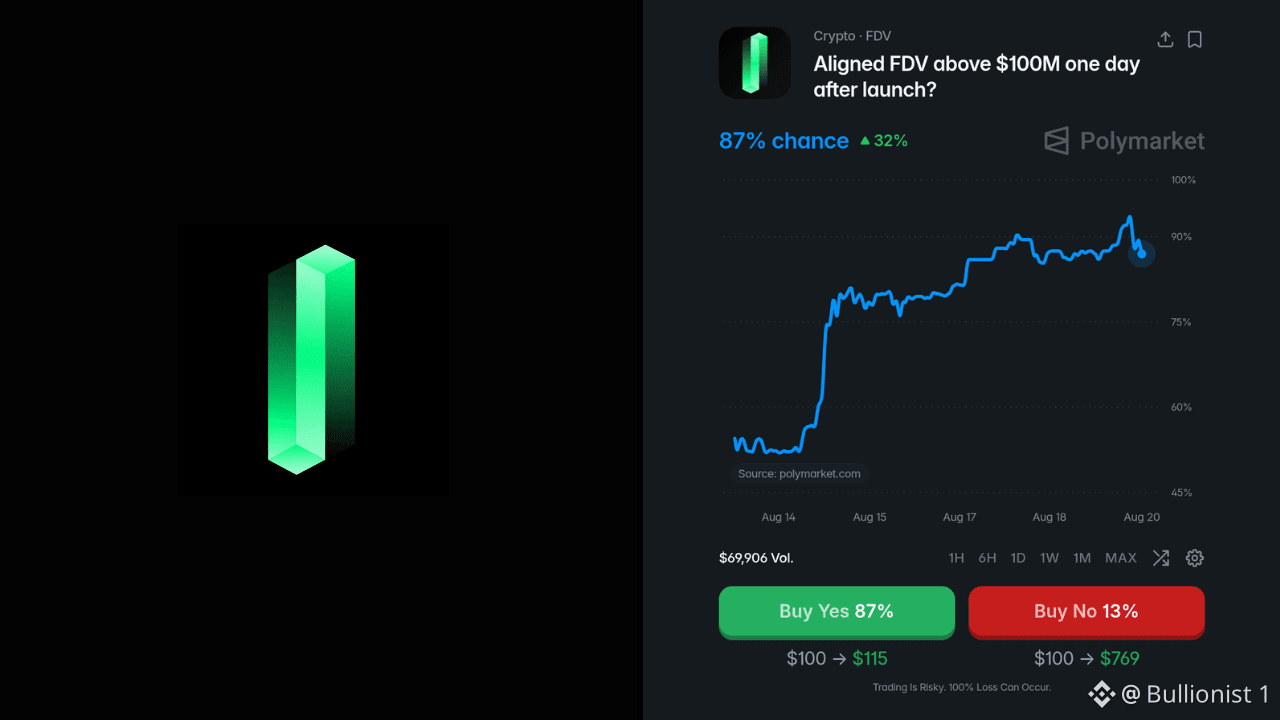
Aligned 是否即將要突破 1 億美元?🚀 這張圖表近期是整個板塊裡最乾淨、走勢最漂亮的上升之一。 目前有 87% 的機率,上漲幅度高達 32%。 量能 69,906 美元也印證了這次行情背後累積了多強的信心。 這裡是我覺得最明顯的幾點。 ✅ 從 50 多一路穩定爬升,直到超過 75%。✅ 從那之後更緊密、更穩的盤整上推,直接衝進 80% 末段(高 80)。✅ 整段上漲途中幾乎沒有真正的回撤。這種穩定、不中斷的上升通常意味著底下有真正的需求在累積,而不只是一次單點的炒作浪潮。我在這裡偏向「是」。 這種走勢清爽到近乎無瑕的圖表,在衝刺終點線前很少會立刻大幅反轉。 $BNB 這週以來一直在積極提供資金支持這段走勢的成形。 $POL 這類穩定上升的架構也常會出現,若你打算做這檔,值得先備好。 Polymarket 仍然是把這種強烈判讀真正變現的較可靠方式之一,尤其是在其他市場也讓人感覺有點不穩的時候。 不過在下決定前,還是建議你自己再去看一眼圖表。 #Altcoin Season#
Aligned 是否即將要突破 1 億美元?🚀 這張圖表近期是整個板塊裡最乾淨、走勢最漂亮的上升之一。 目前有 87% 的機率,上漲幅度高達 32%。 量能 69,906 美元也印證了這次行情背後累積了多強的信心。 這裡是我覺得最明顯的幾點。 ✅ 從 50 多一路穩定爬升,直到超過 75%。✅ 從那之後更緊密、更穩的盤整上推,直接衝進 80% 末段(高 80)。✅ 整段上漲途中幾乎沒有真正的回撤。這種穩定、不中斷的上升通常意味著底下有真正的需求在累積,而不只是一次單點的炒作浪潮。我在這裡偏向「是」。 這種走勢清爽到近乎無瑕的圖表,在衝刺終點線前很少會立刻大幅反轉。 $BNB 這週以來一直在積極提供資金支持這段走勢的成形。 $POL 這類穩定上升的架構也常會出現,若你打算做這檔,值得先備好。 Polymarket 仍然是把這種強烈判讀真正變現的較可靠方式之一,尤其是在其他市場也讓人感覺有點不穩的時候。 不過在下決定前,還是建議你自己再去看一眼圖表。 #Altcoin Season#
69
·
--
Yaps 已消失,AURA 已登場 🔥 早早進入新的積分系統,可能就是 $100 空投與在該數字後面多加幾個零之間的差別。 $KAITO 最近已終止 Yaps,這個獎勵發文與互動的積分系統,並看起來已用 AURA 取代:AURA 會衡量你從真實帳戶中實際獲得的關注度,而不是僅看原始發文量。 $ENA 在大家還沒搞清楚它最終會變成什麼之前,就先很久運行了它的積分系統,而那些提早到場的人在真正關鍵的時候就拿到了實打實的領先優勢。 Yaps 的餘額也不會消失。每個 Yaps 餘額中都有一定比例會直接轉換為 AURA,所以在那個時期就出現、參與的創作者,會在新系統中被確認,而不是從零開始。 對於任何新手來說,今天其實已經有幾種開始賺取 AURA 的方式。安裝 Kaito Pulse 可從第一天開始產生 AURA,推薦朋友能分得他們終身 AURA 的一部分,而既有的 Yaps 持有者則因為早在之前就出現而獲得領先。 我個人認為,使用產品並完成帳號驗證可能也包含在其中!也許會有即將到來的空投,但讓我們拭目以待。 與其後來才發現自己等太久才開始,讓我更願意早點進入一個以真實數據為基礎的積分系統。 #Altcoin Season# #Macro Insights#
Yaps 已消失,AURA 已登場 🔥 早早進入新的積分系統,可能就是 $100 空投與在該數字後面多加幾個零之間的差別。 $KAITO 最近已終止 Yaps,這個獎勵發文與互動的積分系統,並看起來已用 AURA 取代:AURA 會衡量你從真實帳戶中實際獲得的關注度,而不是僅看原始發文量。 $ENA 在大家還沒搞清楚它最終會變成什麼之前,就先很久運行了它的積分系統,而那些提早到場的人在真正關鍵的時候就拿到了實打實的領先優勢。 Yaps 的餘額也不會消失。每個 Yaps 餘額中都有一定比例會直接轉換為 AURA,所以在那個時期就出現、參與的創作者,會在新系統中被確認,而不是從零開始。 對於任何新手來說,今天其實已經有幾種開始賺取 AURA 的方式。安裝 Kaito Pulse 可從第一天開始產生 AURA,推薦朋友能分得他們終身 AURA 的一部分,而既有的 Yaps 持有者則因為早在之前就出現而獲得領先。 我個人認為,使用產品並完成帳號驗證可能也包含在其中!也許會有即將到來的空投,但讓我們拭目以待。 與其後來才發現自己等太久才開始,讓我更願意早點進入一個以真實數據為基礎的積分系統。 #Altcoin Season# #Macro Insights#
83
登入以探索更多內容
加入幣安廣場中的全球加密貨幣用戶
⚡️ 獲取加密貨幣的最新和實用資訊。
💬 受到全球最大加密貨幣交易所的信任。
👍 發掘來自經過驗證創作者的真實見解。
電子郵件 / 電話號碼
熱門話題
AnthropicCEO呼吁放缓AI发展
58,291 次瀏覽
186 討論中
頂級大佬們突然集結在社交媒體上爲“人類安全”呼籲放緩 AI 開發,看似充滿了技術倫理擔當,但拆開背後的利益賬本,不過是一場極其標準的公關明牌與行業再分蛋糕。
達里奧·阿莫迪拿 OpenAI 模型入侵事件做鋪墊,預測訓練集羣可能演化成殭屍網絡,並提出開放員工級權限給第三方審查、建立全球監管等訴求。馬斯克迅速站臺,奧爾特曼緊跟附和,這一幕表面上是領袖合唱,實則各懷心思。
Anthropic 踩中的是“安全與合規”的生態位。在算力儲備和資本體量上,它很難硬剛微軟與 OpenAI,把“安全”錨定爲品牌底色,不僅能在 B 端市場溢價變現,更能搶佔合規標準的定義權。
奧爾特曼的順水推舟更精明。OpenAI 剛歷經安全團隊變動的輿論反噬,接下議題能低成本完成公關止血。更深層的邏輯在於拉高行業監管門檻。當開發前沿模型需要疊加繁複的審查與審計時,頂尖玩家的護城河被瞬間加固,初創團隊將失去彎道超車的可能。
至於追趕梯隊的馬斯克,任何能讓領跑者增加研發週期、踩剎車的阻力,都是他樂見其成的戰略緩衝。
當基座模型具備自主調用 API 和代碼修正能力後,安全邊界的模糊確實帶來了風險。然而寄希望於大佬們在社交平臺上的互動去實現全球監管,顯然忽視了商業利益的撕扯。
真正重塑格局的動作,在於向第三方機構開放員工級訪問權限。這標誌着競爭正在轉移:從單純比拼算力,轉向“算力 + 自動化合規審計”的雙重博弈。誰能率先將安全審計轉化爲標準化套件,誰就能在企業級交付中吞下最大的蛋糕。
大佬們高喊的是人類未來,卡住的卻是後來者的入場券。$BTC
#anthropicceo呼吁放缓ai发展
周东野
·6 人按讚
·11.9k 次瀏覽
Anthropic选择纳斯达克IPO
20,426 次瀏覽
109 討論中
SEC收到灰度莱特币信托转ETF申请
228,262 次瀏覽
617 討論中