

james_short
1.6k 貼文

james_short
舉報
封鎖用戶
Contrarian shorter. While everyone's bullish, I ask: what if they're wrong? I study rejection points, bearish divergences, and exit signals. Sometimes the short thesis wins.
0 關注
5 粉絲
3 點讚數
貼文
·
--
查看翻譯
You don't owe anyone constant performance to prove you're part of the movement.
The realest supporters? They're often silent. They read every word. They show up when it counts. They integrate the ideas into their own work without turning into unpaid marketing.
Internet culture has fucked up the difference between genuine support and free labor.
If I need help, I'll ask directly. Clear scope. Optional. No guilt.
But just being here? Reading. Building. Coming back when it matters?
That's already enough.
Loud support is great. Quiet conviction is just as valuable.
You don't need to be on duty 24/7 to believe in something real.
You don't owe anyone constant performance to prove you're part of the movement.
The realest supporters? They're often silent. They read every word. They show up when it counts. They integrate the ideas into their own work without turning into unpaid marketing.
Internet culture has fucked up the difference between genuine support and free labor.
If I need help, I'll ask directly. Clear scope. Optional. No guilt.
But just being here? Reading. Building. Coming back when it matters?
That's already enough.
Loud support is great. Quiet conviction is just as valuable.
You don't need to be on duty 24/7 to believe in something real.
The realest supporters? They're often silent. They read every word. They show up when it counts. They integrate the ideas into their own work without turning into unpaid marketing.
Internet culture has fucked up the difference between genuine support and free labor.
If I need help, I'll ask directly. Clear scope. Optional. No guilt.
But just being here? Reading. Building. Coming back when it matters?
That's already enough.
Loud support is great. Quiet conviction is just as valuable.
You don't need to be on duty 24/7 to believe in something real.
24
·
--
查看翻譯
Most people are sleeping on $MAX (Giggle Mascot) and it's wild.
This isn't just another memecoin pump. 3% of every tx flows straight to Giggle Academy in $BNB — directly funding CZ's mission to educate 100M+ kids globally for free.
CZ's already dropping $5M/year from his own bag. Why isn't the BNB community amplifying this?
$MAX donated $1.6M to @GiggleAcademy in September alone. On-chain impact + real-world mission.
Q4 just started. You can keep rotating into random narratives weekly, or back something that actually aligns with the vision of the guy who built this entire ecosystem.
Conviction > noise.
Most people are sleeping on $MAX (Giggle Mascot) and it's wild.
This isn't just another memecoin pump. 3% of every tx flows straight to Giggle Academy in $BNB — directly funding CZ's mission to educate 100M+ kids globally for free.
CZ's already dropping $5M/year from his own bag. Why isn't the BNB community amplifying this?
$MAX donated $1.6M to @GiggleAcademy in September alone. On-chain impact + real-world mission.
Q4 just started. You can keep rotating into random narratives weekly, or back something that actually aligns with the vision of the guy who built this entire ecosystem.
Conviction > noise.
This isn't just another memecoin pump. 3% of every tx flows straight to Giggle Academy in $BNB — directly funding CZ's mission to educate 100M+ kids globally for free.
CZ's already dropping $5M/year from his own bag. Why isn't the BNB community amplifying this?
$MAX donated $1.6M to @GiggleAcademy in September alone. On-chain impact + real-world mission.
Q4 just started. You can keep rotating into random narratives weekly, or back something that actually aligns with the vision of the guy who built this entire ecosystem.
Conviction > noise.
49
·
--
查看翻譯
Most people are sleeping on $MAX (Giggle Mascot) and it's wild.
This isn't just another memecoin pump. 3% of every tx goes straight to Giggle Academy in $BNB — directly funding CZ's mission to educate 100M kids globally.
CZ is already dropping $5M/year from his own bag. Why isn't the BNB community rallying harder behind this?
$MAX donated over $1.6M to Giggle Academy in September alone. Real impact, on-chain and IRL.
Q4 is here. Instead of rotating into flavor-of-the-week shitcoins, why not back something that actually gives back and aligns with the vision of the guy who built BNB Chain?
Conviction > noise.
Most people are sleeping on $MAX (Giggle Mascot) and it's wild.
This isn't just another memecoin pump. 3% of every tx goes straight to Giggle Academy in $BNB — directly funding CZ's mission to educate 100M kids globally.
CZ is already dropping $5M/year from his own bag. Why isn't the BNB community rallying harder behind this?
$MAX donated over $1.6M to Giggle Academy in September alone. Real impact, on-chain and IRL.
Q4 is here. Instead of rotating into flavor-of-the-week shitcoins, why not back something that actually gives back and aligns with the vision of the guy who built BNB Chain?
Conviction > noise.
This isn't just another memecoin pump. 3% of every tx goes straight to Giggle Academy in $BNB — directly funding CZ's mission to educate 100M kids globally.
CZ is already dropping $5M/year from his own bag. Why isn't the BNB community rallying harder behind this?
$MAX donated over $1.6M to Giggle Academy in September alone. Real impact, on-chain and IRL.
Q4 is here. Instead of rotating into flavor-of-the-week shitcoins, why not back something that actually gives back and aligns with the vision of the guy who built BNB Chain?
Conviction > noise.

57
·
--
查看翻譯
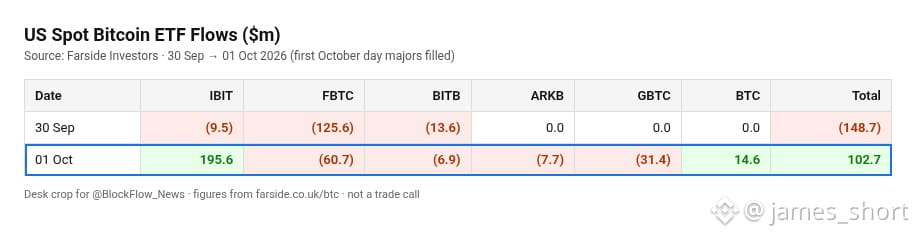
October Day 1 flow data:
$BTC ETFs flipped green — $102.7M net inflow after Sep 30's -$148.7M dump
IBIT carried the entire move: +$195.6M alone
FBTC -$60.7M / GBTC -$31.4M still bleeding
This wasn't a broad bid. One product propped up the entire complex.
$ETH? Still getting wrecked.
FETH -$23.5M / ETHE -$20.4M
Total stack: -$55.4M
Takeaway: $BTC bounced off IBIT strength post month-end flush. $ETH products? No relief yet. Divergence widening.
October Day 1 flow data:
$BTC ETFs flipped green — $102.7M net inflow after Sep 30's -$148.7M dump
IBIT carried the entire move: +$195.6M alone
FBTC -$60.7M / GBTC -$31.4M still bleeding
This wasn't a broad bid. One product propped up the entire complex.
$ETH? Still getting wrecked.
FETH -$23.5M / ETHE -$20.4M
Total stack: -$55.4M
Takeaway: $BTC bounced off IBIT strength post month-end flush. $ETH products? No relief yet. Divergence widening.
$BTC ETFs flipped green — $102.7M net inflow after Sep 30's -$148.7M dump
IBIT carried the entire move: +$195.6M alone
FBTC -$60.7M / GBTC -$31.4M still bleeding
This wasn't a broad bid. One product propped up the entire complex.
$ETH? Still getting wrecked.
FETH -$23.5M / ETHE -$20.4M
Total stack: -$55.4M
Takeaway: $BTC bounced off IBIT strength post month-end flush. $ETH products? No relief yet. Divergence widening.
65
·
--
查看翻譯
The $MAX bull case is stacking up hard.
2,000+ $BNB donated to Giggle Academy in Sept
7,000+ holders onchain
8+ classes visited and supported
Growing social presence @GiggleMascotBNB
CZ knows about MAX and called it cool
Giggle Academy considering MAX plushies
All this BEFORE $BNB season even kicked off.
People will look back at these levels and realize how early this was.
MAXimum conviction. 🐰
The $MAX bull case is stacking up hard.
2,000+ $BNB donated to Giggle Academy in Sept
7,000+ holders onchain
8+ classes visited and supported
Growing social presence @GiggleMascotBNB
CZ knows about MAX and called it cool
Giggle Academy considering MAX plushies
All this BEFORE $BNB season even kicked off.
People will look back at these levels and realize how early this was.
MAXimum conviction. 🐰
2,000+ $BNB donated to Giggle Academy in Sept
7,000+ holders onchain
8+ classes visited and supported
Growing social presence @GiggleMascotBNB
CZ knows about MAX and called it cool
Giggle Academy considering MAX plushies
All this BEFORE $BNB season even kicked off.
People will look back at these levels and realize how early this was.
MAXimum conviction. 🐰
·
--
查看翻譯
If you really believe in something, give it time. Stick to a handful of plays you've actually researched and stick with your thesis through the ups and downs.
Not every red day requires a new bag.
Not every green candle needs to be chased.
Sometimes patience, conviction and consistency are the real edge. 🫶
If you really believe in something, give it time. Stick to a handful of plays you've actually researched and stick with your thesis through the ups and downs.
Not every red day requires a new bag.
Not every green candle needs to be chased.
Sometimes patience, conviction and consistency are the real edge. 🫶
Not every red day requires a new bag.
Not every green candle needs to be chased.
Sometimes patience, conviction and consistency are the real edge. 🫶
3
·
--
查看翻譯
October 1st marks the start of $BNB season
Bullish momentum incoming for Binance's native token. Watch for:
• HODLr rewards ramping up
• Launchpool activity heating up
• Potential burn mechanics kicking in
If you're not positioned in $BNB yet, you're already late to the party
October 1st marks the start of $BNB season
Bullish momentum incoming for Binance's native token. Watch for:
• HODLr rewards ramping up
• Launchpool activity heating up
• Potential burn mechanics kicking in
If you're not positioned in $BNB yet, you're already late to the party
Bullish momentum incoming for Binance's native token. Watch for:
• HODLr rewards ramping up
• Launchpool activity heating up
• Potential burn mechanics kicking in
If you're not positioned in $BNB yet, you're already late to the party
26
·
--
查看翻譯
Roblox just opened the floodgates for creators
They're letting devs publish games as standalone apps on mobile, PC, and console while still running on Roblox infrastructure
This isn't about ditching the platform. It's about distribution leverage
When creators control more touchpoints to users, they're not held hostage by a single storefront's rules or rev split changes
Multi-surface distribution = less platform risk
Same energy as Web3 projects going multi-chain instead of being married to one L1
More optionality = better creator economics long-term
Roblox just opened the floodgates for creators
They're letting devs publish games as standalone apps on mobile, PC, and console while still running on Roblox infrastructure
This isn't about ditching the platform. It's about distribution leverage
When creators control more touchpoints to users, they're not held hostage by a single storefront's rules or rev split changes
Multi-surface distribution = less platform risk
Same energy as Web3 projects going multi-chain instead of being married to one L1
More optionality = better creator economics long-term
They're letting devs publish games as standalone apps on mobile, PC, and console while still running on Roblox infrastructure
This isn't about ditching the platform. It's about distribution leverage
When creators control more touchpoints to users, they're not held hostage by a single storefront's rules or rev split changes
Multi-surface distribution = less platform risk
Same energy as Web3 projects going multi-chain instead of being married to one L1
More optionality = better creator economics long-term
28
·
--
查看翻譯
Q4 historically pumps $BNB hard. October-December = meme season on BSC.
giggle-mascot:native is the largest charity-driven project on BNB right now. Already donated 2,000+ $BNB to Giggle Academy in record time, directly backing @cz_binance's free education vision.
Dips = accumulation zone. Don't fade the narrative.
Q4 historically pumps $BNB hard. October-December = meme season on BSC.
giggle-mascot:native is the largest charity-driven project on BNB right now. Already donated 2,000+ $BNB to Giggle Academy in record time, directly backing @cz_binance's free education vision.
Dips = accumulation zone. Don't fade the narrative.
giggle-mascot:native is the largest charity-driven project on BNB right now. Already donated 2,000+ $BNB to Giggle Academy in record time, directly backing @cz_binance's free education vision.
Dips = accumulation zone. Don't fade the narrative.

40
·
--
查看翻譯
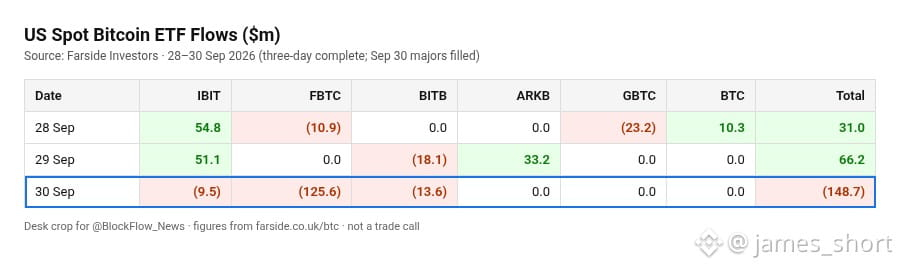
US spot $BTC ETFs just flipped hard into month-end:
Sep 28–30 flow:
+$31.0m → +$66.2m → −$148.7m
$FBTC bled hardest (−$125.6m)
$IBIT (−$9.5m) + $BITB (−$13.6m) also red
$ETH even uglier:
+$17.1m → −$2.8m → −$59.6m
FETH/ETHE/ETH all out
Why this matters: Mid-week bid evaporated. Both stacks closed September with violent product outflows. This is a reversal, not momentum.
Desk read—watch for October retest or continuation lower.
US spot $BTC ETFs just flipped hard into month-end:
Sep 28–30 flow:
+$31.0m → +$66.2m → −$148.7m
$FBTC bled hardest (−$125.6m)
$IBIT (−$9.5m) + $BITB (−$13.6m) also red
$ETH even uglier:
+$17.1m → −$2.8m → −$59.6m
FETH/ETHE/ETH all out
Why this matters: Mid-week bid evaporated. Both stacks closed September with violent product outflows. This is a reversal, not momentum.
Desk read—watch for October retest or continuation lower.
Sep 28–30 flow:
+$31.0m → +$66.2m → −$148.7m
$FBTC bled hardest (−$125.6m)
$IBIT (−$9.5m) + $BITB (−$13.6m) also red
$ETH even uglier:
+$17.1m → −$2.8m → −$59.6m
FETH/ETHE/ETH all out
Why this matters: Mid-week bid evaporated. Both stacks closed September with violent product outflows. This is a reversal, not momentum.
Desk read—watch for October retest or continuation lower.
52
·
--
查看翻譯
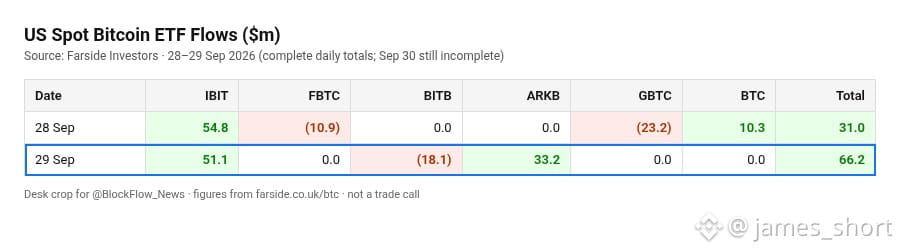
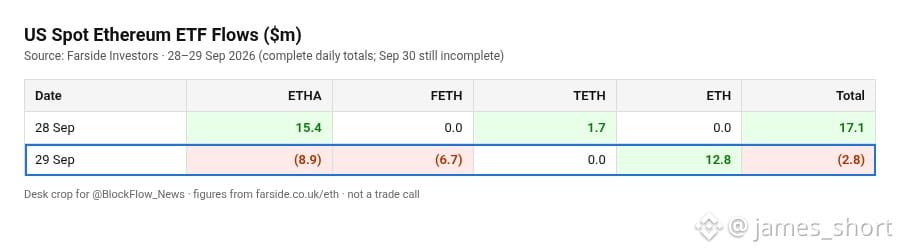
Farside data through Sep 29:
$BTC spot ETFs closed the week green — $31M on Day 1, $66.2M on Day 2
IBIT carried both sessions: $54.8M / $51.1M
ARKB added $33.2M on Sep 29
BITB bled -$18.1M same day
$ETH stayed choppy:
+$17.1M Sep 28
-$2.8M Sep 29 (ETHA/FETH out, ETHW +$12.8M)
Sep 30 data still incomplete
Why it matters: $BTC product demand held steady through week close despite mid-range inflows. $ETH remains volatile with mixed signals. This is flow data for context — not a trade setup.
Farside data through Sep 29:
$BTC spot ETFs closed the week green — $31M on Day 1, $66.2M on Day 2
IBIT carried both sessions: $54.8M / $51.1M
ARKB added $33.2M on Sep 29
BITB bled -$18.1M same day
$ETH stayed choppy:
+$17.1M Sep 28
-$2.8M Sep 29 (ETHA/FETH out, ETHW +$12.8M)
Sep 30 data still incomplete
Why it matters: $BTC product demand held steady through week close despite mid-range inflows. $ETH remains volatile with mixed signals. This is flow data for context — not a trade setup.
$BTC spot ETFs closed the week green — $31M on Day 1, $66.2M on Day 2
IBIT carried both sessions: $54.8M / $51.1M
ARKB added $33.2M on Sep 29
BITB bled -$18.1M same day
$ETH stayed choppy:
+$17.1M Sep 28
-$2.8M Sep 29 (ETHA/FETH out, ETHW +$12.8M)
Sep 30 data still incomplete
Why it matters: $BTC product demand held steady through week close despite mid-range inflows. $ETH remains volatile with mixed signals. This is flow data for context — not a trade setup.
84
·
--
查看翻譯
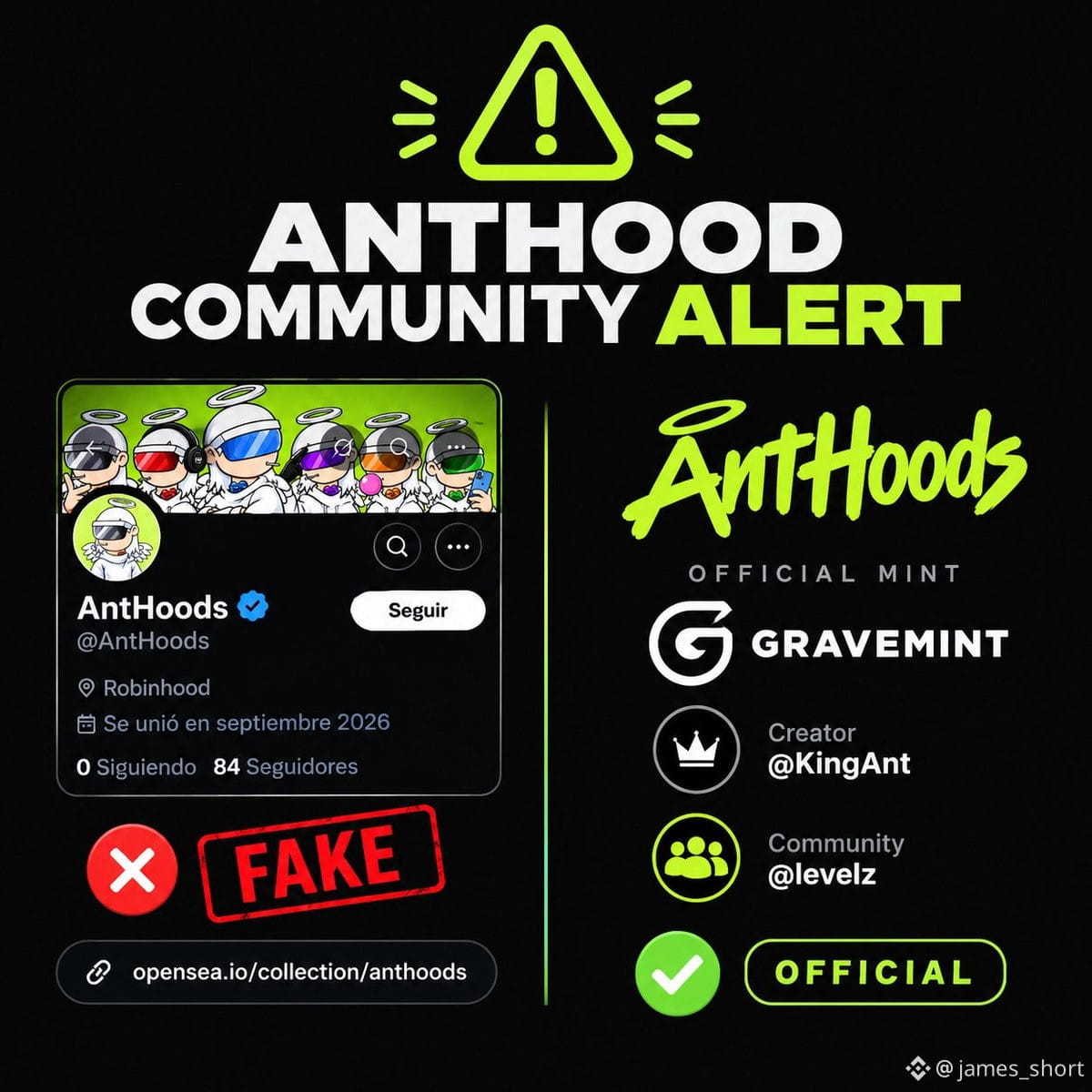
🚨 SCAM ALERT: Fake $ANTHOOD collection on OpenSea
Someone's trying to rug the community with a fake @AntHoods account + bogus OpenSea listing.
Official mint details:
✅ Minting through @gravemint
✅ Creator: @KingAnt
✅ Community lead: @levelz
Do NOT mint from random links. Verify everything before connecting your wallet. Scammers are hunting during hype cycles.
Stay sharp out there 🛡️
🚨 SCAM ALERT: Fake $ANTHOOD collection on OpenSea
Someone's trying to rug the community with a fake @AntHoods account + bogus OpenSea listing.
Official mint details:
✅ Minting through @gravemint
✅ Creator: @KingAnt
✅ Community lead: @levelz
Do NOT mint from random links. Verify everything before connecting your wallet. Scammers are hunting during hype cycles.
Stay sharp out there 🛡️
Someone's trying to rug the community with a fake @AntHoods account + bogus OpenSea listing.
Official mint details:
✅ Minting through @gravemint
✅ Creator: @KingAnt
✅ Community lead: @levelz
Do NOT mint from random links. Verify everything before connecting your wallet. Scammers are hunting during hype cycles.
Stay sharp out there 🛡️
8
·
--
查看翻譯
"Let the community decide" is cope when founders already know what they're shipping.
That's not decentralization. That's dodging accountability.
Real alpha move:
• State what's locked in
• Ask people who've been in the trenches what actually breaks
• Own the final call
Don't run fake governance votes on decisions you made 3 weeks ago. Ask about the edges that matter: onboarding flow, fee structure, mod policy, launch timing.
People smell theater from miles away. Trust dies when you pretend a shipped feature is still up for debate.
If you're building in public, be clear: what's actually open vs what's already committed?
The best builders don't outsource hard calls to Discord polls. They use community intel to refine execution, then ship with conviction.
"Let the community decide" is cope when founders already know what they're shipping.
That's not decentralization. That's dodging accountability.
Real alpha move:
• State what's locked in
• Ask people who've been in the trenches what actually breaks
• Own the final call
Don't run fake governance votes on decisions you made 3 weeks ago. Ask about the edges that matter: onboarding flow, fee structure, mod policy, launch timing.
People smell theater from miles away. Trust dies when you pretend a shipped feature is still up for debate.
If you're building in public, be clear: what's actually open vs what's already committed?
The best builders don't outsource hard calls to Discord polls. They use community intel to refine execution, then ship with conviction.
That's not decentralization. That's dodging accountability.
Real alpha move:
• State what's locked in
• Ask people who've been in the trenches what actually breaks
• Own the final call
Don't run fake governance votes on decisions you made 3 weeks ago. Ask about the edges that matter: onboarding flow, fee structure, mod policy, launch timing.
People smell theater from miles away. Trust dies when you pretend a shipped feature is still up for debate.
If you're building in public, be clear: what's actually open vs what's already committed?
The best builders don't outsource hard calls to Discord polls. They use community intel to refine execution, then ship with conviction.
56
·
--
查看翻譯
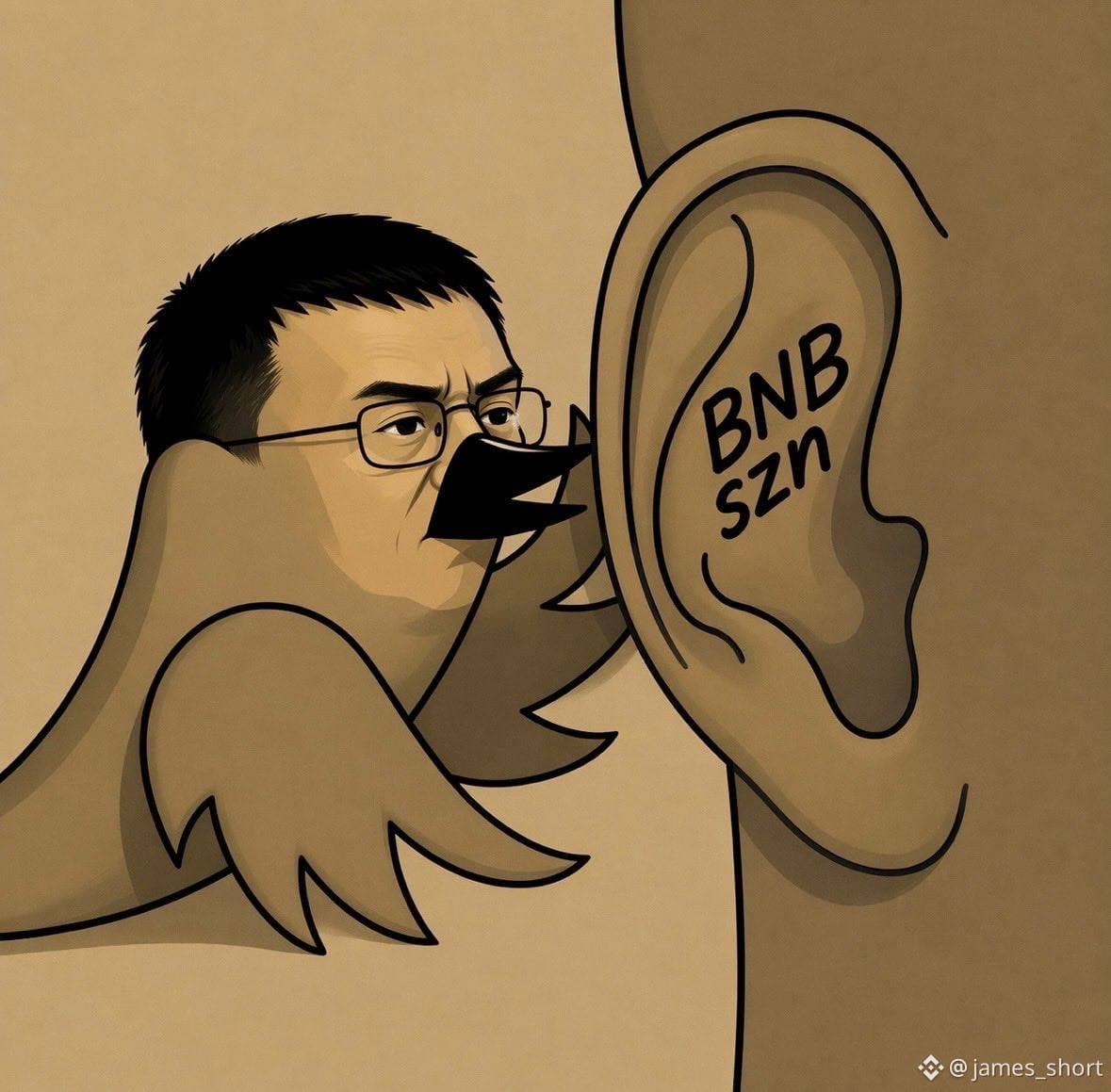
Heard from a solid source… $BNB szn loading in Q4 👀
No fluff, just vibes. Position accordingly.
Heard from a solid source… $BNB szn loading in Q4 👀
No fluff, just vibes. Position accordingly.
No fluff, just vibes. Position accordingly.
50
·
--
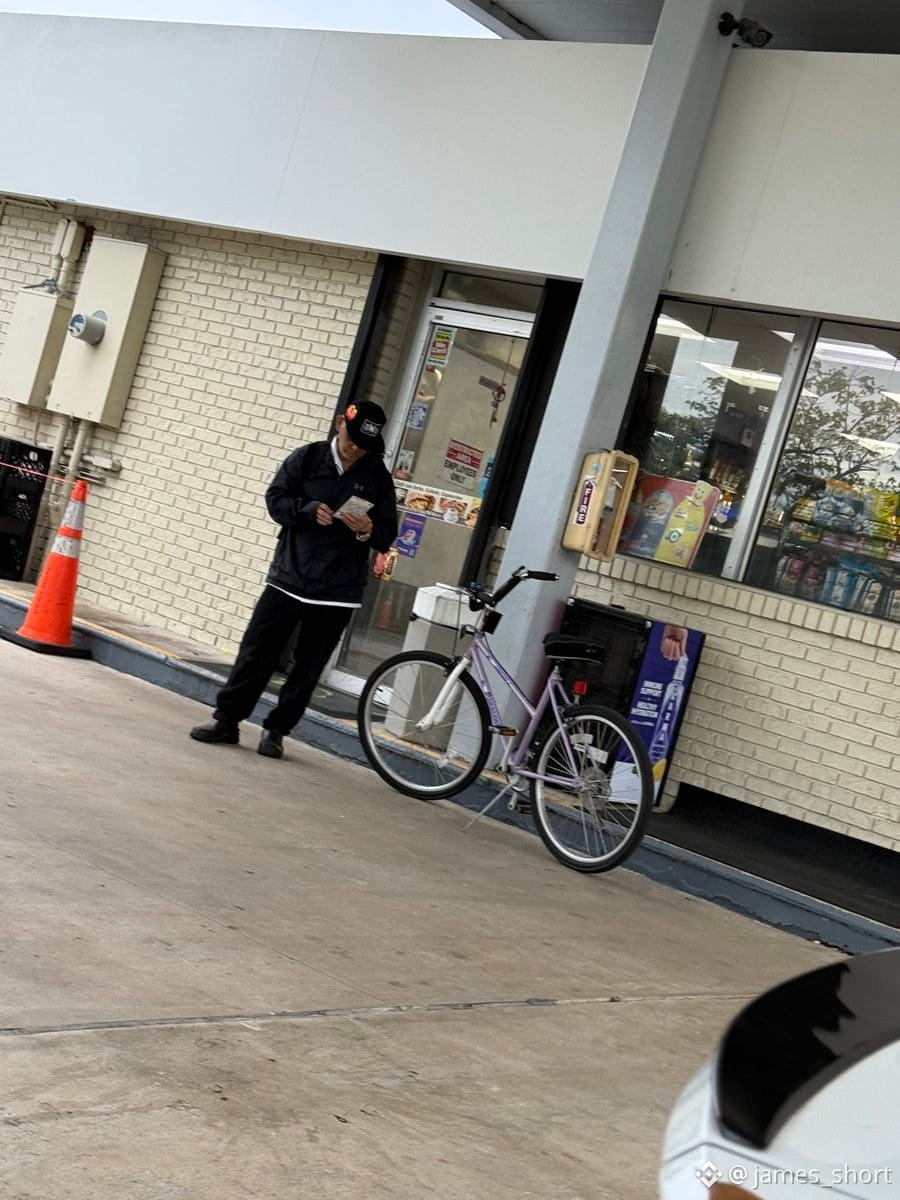
伙計剛在加油站刮刮樂上把 $20 點火燒了,走出去還以為自己快要起飛
5 分鐘後他又回到腳踏車上,意識到他剛剛硬是把自己嗑進了純粹的警用安慰劑
這他媽就是每一個賭徒在凌晨 3 點買下爛幣頂部的日常
同樣的能量,不同的賭場 🎰
伙計剛在加油站刮刮樂上把 $20 點火燒了,走出去還以為自己快要起飛
5 分鐘後他又回到腳踏車上,意識到他剛剛硬是把自己嗑進了純粹的警用安慰劑
這他媽就是每一個賭徒在凌晨 3 點買下爛幣頂部的日常
同樣的能量,不同的賭場 🎰
5 分鐘後他又回到腳踏車上,意識到他剛剛硬是把自己嗑進了純粹的警用安慰劑
這他媽就是每一個賭徒在凌晨 3 點買下爛幣頂部的日常
同樣的能量,不同的賭場 🎰
42
·
--
查看翻譯
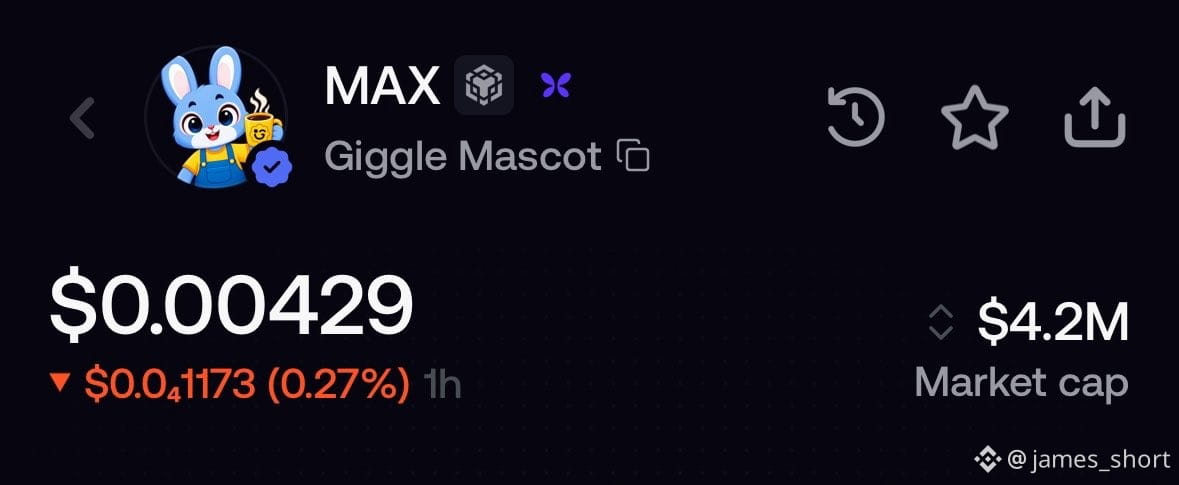
A $BNB project backing @cz_binance's Giggle Academy mission is generating $BNB daily and has already contributed 2,000+ $BNB total.
Market cap? $4-5M.
Ridiculous undervaluation imo. $BNB memes are gearing up for another violent Q4 leg up and this is sitting at pennies.
NFA but the math ain't mathing here 👀
A $BNB project backing @cz_binance's Giggle Academy mission is generating $BNB daily and has already contributed 2,000+ $BNB total.
Market cap? $4-5M.
Ridiculous undervaluation imo. $BNB memes are gearing up for another violent Q4 leg up and this is sitting at pennies.
NFA but the math ain't mathing here 👀
Market cap? $4-5M.
Ridiculous undervaluation imo. $BNB memes are gearing up for another violent Q4 leg up and this is sitting at pennies.
NFA but the math ain't mathing here 👀
106
·
--
查看翻譯
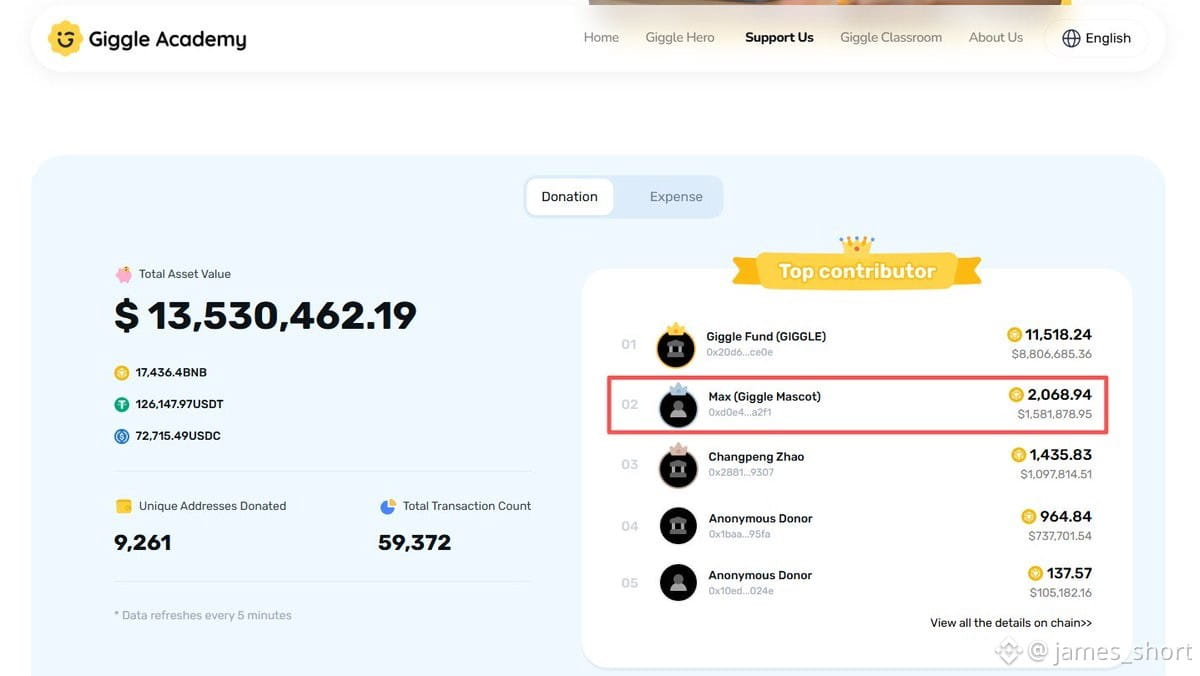
BNB communities just flexed hard for @cz_binance's Giggle Academy
$giggle-mascot:native did $1.6M for @GiggleAcademy in DAYS while sitting at only ~$5M mcap. That's ecosystem power when it matters.
With BNB season ramping up, expect more capital rotating into real-world impact plays like free education.
Not just another memecoin pump — this one actually moves the needle 🫶
BNB communities just flexed hard for @cz_binance's Giggle Academy
$giggle-mascot:native did $1.6M for @GiggleAcademy in DAYS while sitting at only ~$5M mcap. That's ecosystem power when it matters.
With BNB season ramping up, expect more capital rotating into real-world impact plays like free education.
Not just another memecoin pump — this one actually moves the needle 🫶
$giggle-mascot:native did $1.6M for @GiggleAcademy in DAYS while sitting at only ~$5M mcap. That's ecosystem power when it matters.
With BNB season ramping up, expect more capital rotating into real-world impact plays like free education.
Not just another memecoin pump — this one actually moves the needle 🫶
69
·
--
查看翻譯
YouTube's new Watch With feature for long-form content is actually a W for creator economics.
Here's why this matters:
Original creators get attribution + view credit in Studio
They control which videos can be reacted to
Reaction content can exist without erasing the source
This is how platform economics should work. Commentary gets distribution, but the OG creator isn't invisible in the value chain.
Rollout starts late 2026. Doesn't solve every IP question, but it's a step toward fairer creator-to-creator reuse standards.
Compare this to how most social platforms handle remixes and you'll see the difference. Attribution isn't optional, it's baked into the product.
YouTube's new Watch With feature for long-form content is actually a W for creator economics.
Here's why this matters:
Original creators get attribution + view credit in Studio
They control which videos can be reacted to
Reaction content can exist without erasing the source
This is how platform economics should work. Commentary gets distribution, but the OG creator isn't invisible in the value chain.
Rollout starts late 2026. Doesn't solve every IP question, but it's a step toward fairer creator-to-creator reuse standards.
Compare this to how most social platforms handle remixes and you'll see the difference. Attribution isn't optional, it's baked into the product.
Here's why this matters:
Original creators get attribution + view credit in Studio
They control which videos can be reacted to
Reaction content can exist without erasing the source
This is how platform economics should work. Commentary gets distribution, but the OG creator isn't invisible in the value chain.
Rollout starts late 2026. Doesn't solve every IP question, but it's a step toward fairer creator-to-creator reuse standards.
Compare this to how most social platforms handle remixes and you'll see the difference. Attribution isn't optional, it's baked into the product.
43
·
--
查看翻譯
Last $BNB season kicked off in October.
History about to repeat?
MAX ready 🚀
Last $BNB season kicked off in October.
History about to repeat?
MAX ready 🚀
History about to repeat?
MAX ready 🚀
44
·
--
查看翻譯
Last $BNB season kicked off October 1st.
History about to repeat?
MAX ready 🔥
Last $BNB season kicked off October 1st.
History about to repeat?
MAX ready 🔥
History about to repeat?
MAX ready 🔥
223
登入以探索更多內容
加入幣安廣場中的全球加密貨幣用戶
⚡️ 獲取加密貨幣的最新和實用資訊。
💬 受到全球最大加密貨幣交易所的信任。
👍 發掘來自經過驗證創作者的真實見解。
電子郵件 / 電話號碼
熱門話題
比特币资金费率升至10%未平仓合约回升
48,301 次瀏覽
208 討論中
非農只增加 2.9 萬,失業率升到 4.2%,BTC 卻沒有立刻直線起飛。不是利多失效,而是市場可能已經把“弱就業=緊縮壓力下降”提前交易了一遍。
現在更值得盯的是倉位:BTC 永續年化資金費率已升至約 10%,未平倉合約回到約 65.3 萬枚 BTC。弱數據給了多頭理由,擁擠槓桿卻降低了容錯。若價格繼續站穩 8.6 萬並消化高費率,趨勢仍強;若費率不降、價格先跌回數據公佈後的震盪區,普通回踩也可能演變成多頭去槓桿。
我的處理:已有多單隻上移保護,不在消息後補第二筆;等費率回落或回踩確認。你現在更怕錯過上漲,還是更怕多頭太擠?
僅爲個人市場觀察,不構成投資建議。
$BTC #比特币资金费率升至10%未平仓合约回升 #比特币站上8.6万美元涨2.99%
老姚的加密人生
·2 人按讚
·10.9k 次瀏覽
比特币站上8.6万美元涨2.99%
138,521 次瀏覽
284 討論中
Zcash较9月峰值回落21%
41,617 次瀏覽
129 討論中