
Q8_Crypto
5.4k 个内容

Q8_Crypto
举报
屏蔽用户
Q8 Crypto | Market Updates📈
实盘交易
中频交易者
11.8 个月
35 关注
16.4K+ 粉丝
7.5K+ 点赞
帖子
投资组合
全部
引用
直播
·
--
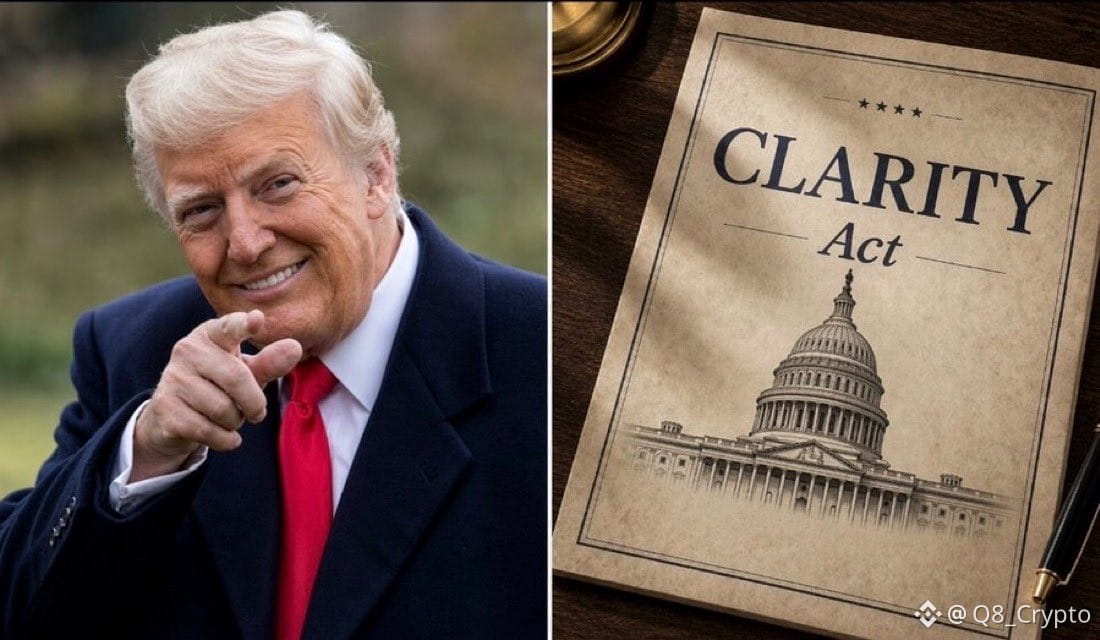
🚨 突发:CLARITY法案迎来重大转折!🇺🇸
据报道,总统特朗普在关键投票前力挺了若干重要变更:
• 两党一致的加密货币伦理规则
• 加密资产 → 剥离或盲目信托
• 各州获得权力,可就违规行为提起诉讼
• 批准概率在数分钟内飙升约10% 📈
加密货币监管刚刚出现了严肃的转向。🚀
🚨 突发:CLARITY法案迎来重大转折!🇺🇸
据报道,总统特朗普在关键投票前力挺了若干重要变更:
• 两党一致的加密货币伦理规则
• 加密资产 → 剥离或盲目信托
• 各州获得权力,可就违规行为提起诉讼
• 批准概率在数分钟内飙升约10% 📈
加密货币监管刚刚出现了严肃的转向。🚀
据报道,总统特朗普在关键投票前力挺了若干重要变更:
• 两党一致的加密货币伦理规则
• 加密资产 → 剥离或盲目信托
• 各州获得权力,可就违规行为提起诉讼
• 批准概率在数分钟内飙升约10% 📈
加密货币监管刚刚出现了严肃的转向。🚀
76
·
--
🇺🇸 特朗普:“5,000 美元的股息将会发生,因为人民值得拥有。”
而加密圈的人正在密切关注。👀🔥
上一次重大的刺激浪潮帮助推动了比特币的历史性上涨——从大约 3,800 美元飙升至 69,000 美元。
再来一次现金注入,会不会点燃下一轮 BTC 牛市浪潮?🚀📈
历史不会重复……但它常常押韵。🟠⚡
🇺🇸 特朗普:“5,000 美元的股息将会发生,因为人民值得拥有。”
而加密圈的人正在密切关注。👀🔥
上一次重大的刺激浪潮帮助推动了比特币的历史性上涨——从大约 3,800 美元飙升至 69,000 美元。
再来一次现金注入,会不会点燃下一轮 BTC 牛市浪潮?🚀📈
历史不会重复……但它常常押韵。🟠⚡
而加密圈的人正在密切关注。👀🔥
上一次重大的刺激浪潮帮助推动了比特币的历史性上涨——从大约 3,800 美元飙升至 69,000 美元。
再来一次现金注入,会不会点燃下一轮 BTC 牛市浪潮?🚀📈
历史不会重复……但它常常押韵。🟠⚡

155
·
--
$SC 目前在 0.000825 美元附近交易,24小时上涨 +10.15%!📈
⚡ 24H 最高: $0.001160
⚡ 24H 最低: $0.000745
⚡ 24H 成交量: 8.41B SC / $7.92M USDT
📊 MA(7): $0.000858
📊 MA(25): $0.000876
📊 MA(99): $0.000777
🔥 在大幅拉升至 $0.001160 之后,$SC 目前正于 $0.000825 附近降温,但仍站在 MA(99) 之上。
🎯 关键价位:
🟢 支撑: $0.000777–$0.000800
🔴 阻力: $0.000900 → $0.000993
🚀 若重新站上 $0.000900,可能点燃再次上攻,重回 $0.00100+!
$SC 多头—我们是在准备下一波吗? ⚡🚀
$SC 目前在 0.000825 美元附近交易,24小时上涨 +10.15%!📈
⚡ 24H 最高: $0.001160
⚡ 24H 最低: $0.000745
⚡ 24H 成交量: 8.41B SC / $7.92M USDT
📊 MA(7): $0.000858
📊 MA(25): $0.000876
📊 MA(99): $0.000777
🔥 在大幅拉升至 $0.001160 之后,$SC 目前正于 $0.000825 附近降温,但仍站在 MA(99) 之上。
🎯 关键价位:
🟢 支撑: $0.000777–$0.000800
🔴 阻力: $0.000900 → $0.000993
🚀 若重新站上 $0.000900,可能点燃再次上攻,重回 $0.00100+!
$SC 多头—我们是在准备下一波吗? ⚡🚀
⚡ 24H 最高: $0.001160
⚡ 24H 最低: $0.000745
⚡ 24H 成交量: 8.41B SC / $7.92M USDT
📊 MA(7): $0.000858
📊 MA(25): $0.000876
📊 MA(99): $0.000777
🔥 在大幅拉升至 $0.001160 之后,$SC 目前正于 $0.000825 附近降温,但仍站在 MA(99) 之上。
🎯 关键价位:
🟢 支撑: $0.000777–$0.000800
🔴 阻力: $0.000900 → $0.000993
🚀 若重新站上 $0.000900,可能点燃再次上攻,重回 $0.00100+!
$SC 多头—我们是在准备下一波吗? ⚡🚀
65
·
--
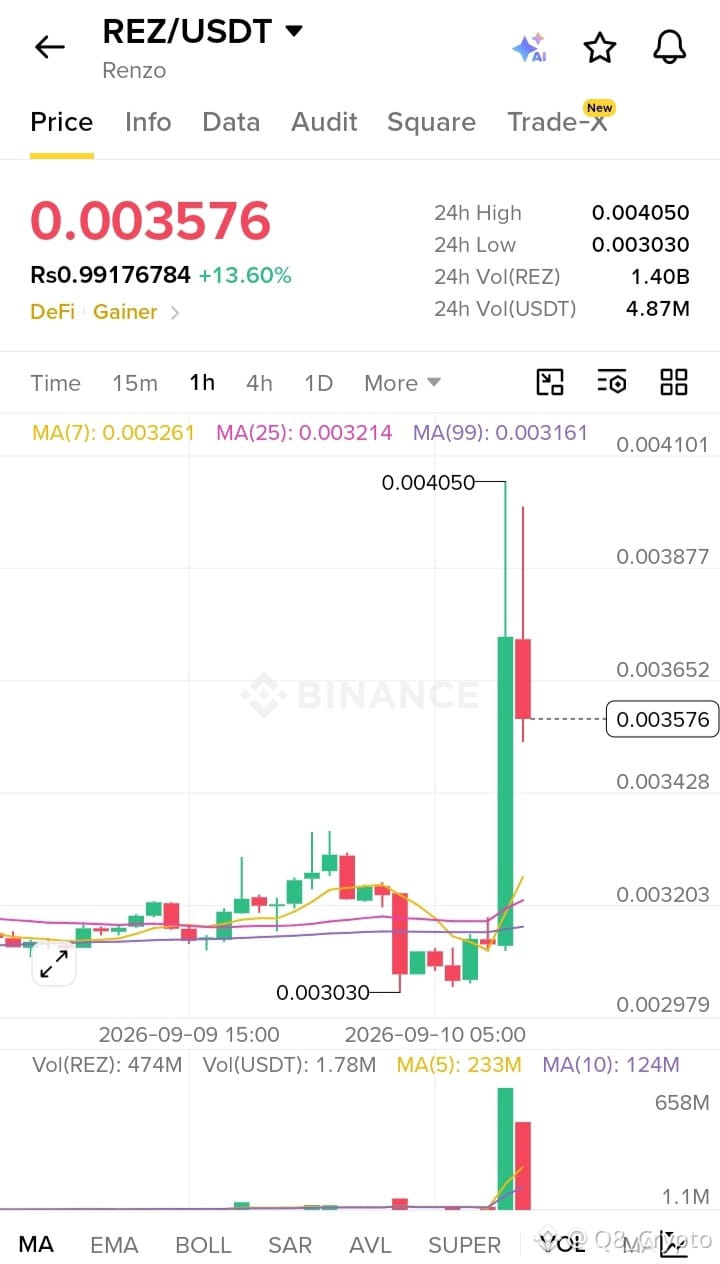
$REZ 目前在 0.003576 美元附近交易,24小时上涨 +13.60%!📈
⚡ 24小时最高价:0.004050 美元
⚡ 24小时最低价:0.003030 美元
⚡ 24小时成交量:14.0亿 REZ / 487万 USDT
📊 MA(7):0.003261 美元
📊 MA(25):0.003214 美元
📊 MA(99):0.003161 美元
🔥 巨大的看涨K线 + 海量成交量确认强劲买盘压力。价格在触及 0.004050 之后现正小幅回调。
🎯 关键价位:
🟢 支撑:0.00342–0.00350 美元
🔴 阻力:0.00388 → 0.00405 美元
🚀 突破 0.00405 美元可能会引发下一轮强劲上行动能!
$REZ 多头正在冲锋!⚡🚀
$REZ 目前在 0.003576 美元附近交易,24小时上涨 +13.60%!📈
⚡ 24小时最高价:0.004050 美元
⚡ 24小时最低价:0.003030 美元
⚡ 24小时成交量:14.0亿 REZ / 487万 USDT
📊 MA(7):0.003261 美元
📊 MA(25):0.003214 美元
📊 MA(99):0.003161 美元
🔥 巨大的看涨K线 + 海量成交量确认强劲买盘压力。价格在触及 0.004050 之后现正小幅回调。
🎯 关键价位:
🟢 支撑:0.00342–0.00350 美元
🔴 阻力:0.00388 → 0.00405 美元
🚀 突破 0.00405 美元可能会引发下一轮强劲上行动能!
$REZ 多头正在冲锋!⚡🚀
⚡ 24小时最高价:0.004050 美元
⚡ 24小时最低价:0.003030 美元
⚡ 24小时成交量:14.0亿 REZ / 487万 USDT
📊 MA(7):0.003261 美元
📊 MA(25):0.003214 美元
📊 MA(99):0.003161 美元
🔥 巨大的看涨K线 + 海量成交量确认强劲买盘压力。价格在触及 0.004050 之后现正小幅回调。
🎯 关键价位:
🟢 支撑:0.00342–0.00350 美元
🔴 阻力:0.00388 → 0.00405 美元
🚀 突破 0.00405 美元可能会引发下一轮强劲上行动能!
$REZ 多头正在冲锋!⚡🚀
183
·
--
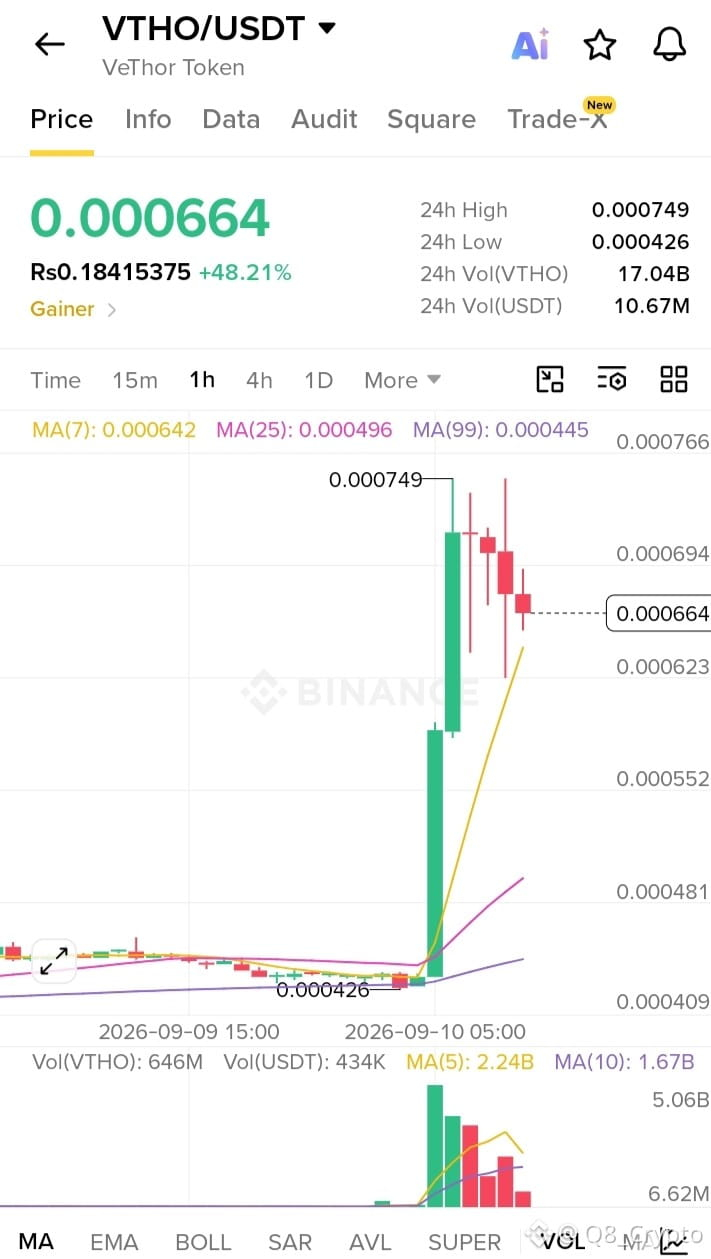
$VTHO 正在 $0.000664 附近交易,过去 24H 大涨 +48.21%!📈
⚡ 24H 最高价:$0.000749
⚡ 24H 最低价:$0.000426
⚡ 24H 成交量:17.04B VTHO / $10.67M USDT
📊 MA(7):$0.000642
📊 MA(25):$0.000496
📊 MA(99):$0.000445
🔥 强劲突破 + 巨量成交推动价格大幅走高。冲高至 $0.000749 后,VTHO 正在 $0.000664 附近降温。
🎯 关键价位:
🟢 支撑:$0.000623–$0.000642
🔴 阻力:$0.000694 → $0.000749
🚀 若能干净利落地突破 $0.000749,可能打开下一轮爆发式上涨的大门。
⚠️ 请密切关注波动率——这波行情已经被明显拉得很“长”了。请自行研究(DYOR)。
$VTHO ——多头已经醒了!🔥🚀
$VTHO 正在 $0.000664 附近交易,过去 24H 大涨 +48.21%!📈
⚡ 24H 最高价:$0.000749
⚡ 24H 最低价:$0.000426
⚡ 24H 成交量:17.04B VTHO / $10.67M USDT
📊 MA(7):$0.000642
📊 MA(25):$0.000496
📊 MA(99):$0.000445
🔥 强劲突破 + 巨量成交推动价格大幅走高。冲高至 $0.000749 后,VTHO 正在 $0.000664 附近降温。
🎯 关键价位:
🟢 支撑:$0.000623–$0.000642
🔴 阻力:$0.000694 → $0.000749
🚀 若能干净利落地突破 $0.000749,可能打开下一轮爆发式上涨的大门。
⚠️ 请密切关注波动率——这波行情已经被明显拉得很“长”了。请自行研究(DYOR)。
$VTHO ——多头已经醒了!🔥🚀
⚡ 24H 最高价:$0.000749
⚡ 24H 最低价:$0.000426
⚡ 24H 成交量:17.04B VTHO / $10.67M USDT
📊 MA(7):$0.000642
📊 MA(25):$0.000496
📊 MA(99):$0.000445
🔥 强劲突破 + 巨量成交推动价格大幅走高。冲高至 $0.000749 后,VTHO 正在 $0.000664 附近降温。
🎯 关键价位:
🟢 支撑:$0.000623–$0.000642
🔴 阻力:$0.000694 → $0.000749
🚀 若能干净利落地突破 $0.000749,可能打开下一轮爆发式上涨的大门。
⚠️ 请密切关注波动率——这波行情已经被明显拉得很“长”了。请自行研究(DYOR)。
$VTHO ——多头已经醒了!🔥🚀
66
·
--
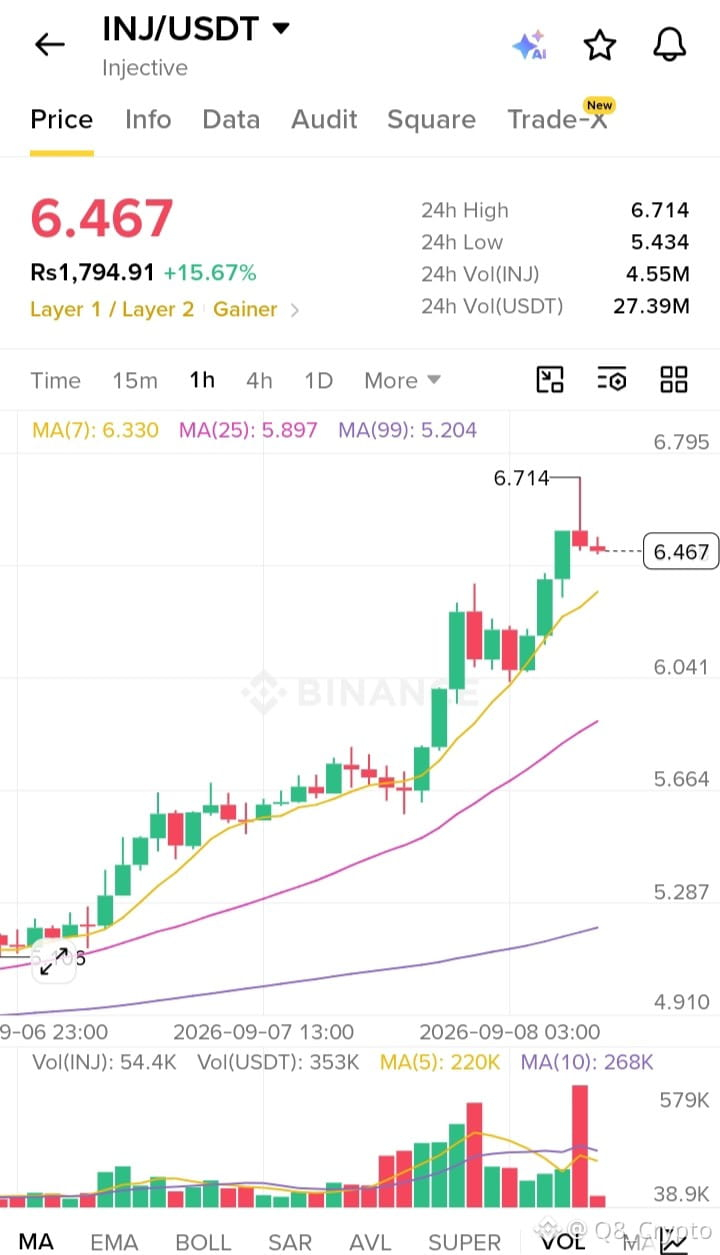
$INJ 现报 $6.467,24 小时强劲上涨 +15.67%!📈
💥 24H 最高价:$6.714
📉 24H 最低价:$5.434
💰 24H 成交量:4.55M INJ / 27.39M USDT
📊 1H 策略:价格仍在 MA7 $6.330、MA25 $5.897 和 MA99 $5.204 上方——强势看涨结构,动能强劲。
🎯 阻力位:$6.714 → $6.795
⚡ 若有效突破 $6.714,可能引发下一段爆发式上行行情!
🔥 $INJ 多头掌控全局——突破观察开启!🚀
$INJ 现报 $6.467,24 小时强劲上涨 +15.67%!📈
💥 24H 最高价:$6.714
📉 24H 最低价:$5.434
💰 24H 成交量:4.55M INJ / 27.39M USDT
📊 1H 策略:价格仍在 MA7 $6.330、MA25 $5.897 和 MA99 $5.204 上方——强势看涨结构,动能强劲。
🎯 阻力位:$6.714 → $6.795
⚡ 若有效突破 $6.714,可能引发下一段爆发式上行行情!
🔥 $INJ 多头掌控全局——突破观察开启!🚀
💥 24H 最高价:$6.714
📉 24H 最低价:$5.434
💰 24H 成交量:4.55M INJ / 27.39M USDT
📊 1H 策略:价格仍在 MA7 $6.330、MA25 $5.897 和 MA99 $5.204 上方——强势看涨结构,动能强劲。
🎯 阻力位:$6.714 → $6.795
⚡ 若有效突破 $6.714,可能引发下一段爆发式上行行情!
🔥 $INJ 多头掌控全局——突破观察开启!🚀
1
73
·
--
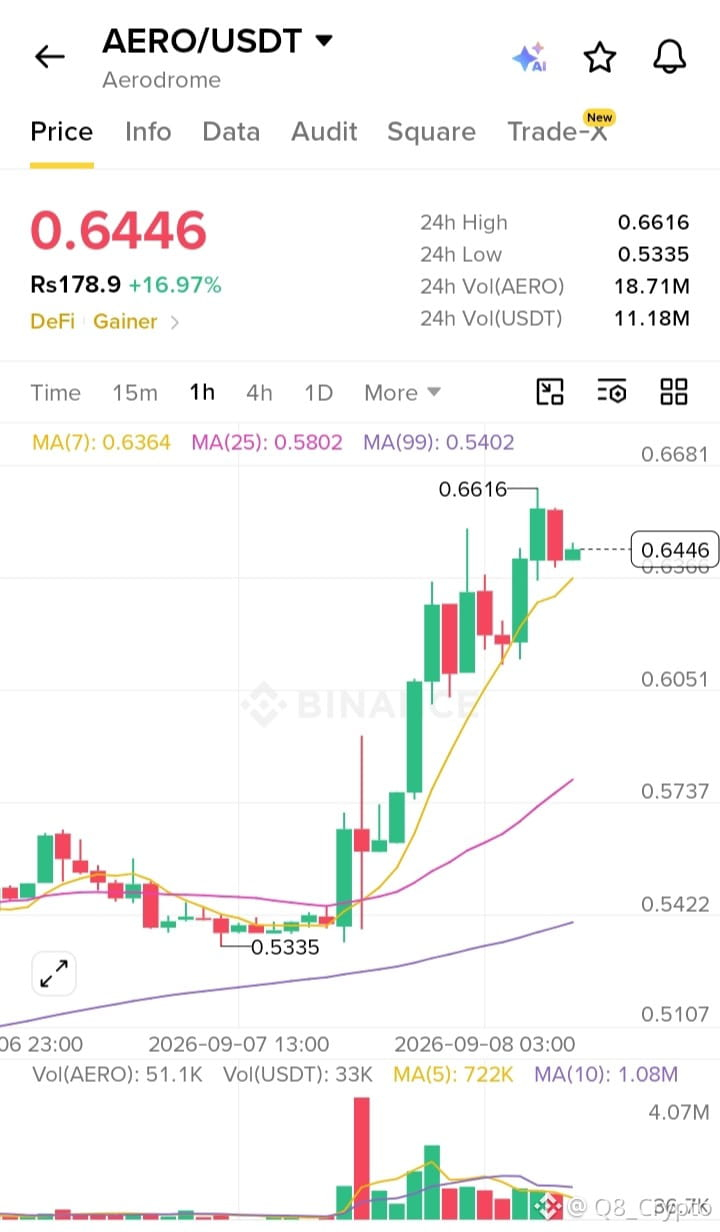
$AERO 正在以 0.6446 美元交易,24H 内强劲上涨 +16.97%!📈
💥 24H 最高价: 0.6616 美元
📉 24H 最低价: 0.5335 美元
💰 24H 成交量: 18.71M AERO / 11.18M USDT
📊 1H 设置:价格仍高于 MA7 0.6364、MA25 0.5802 和 MA99 0.5402——看涨结构清晰。
🎯 阻力位:0.6616 → 0.6681
⚡ 若有效突破 0.6616,可能引发另一轮强劲上涨行情!
🔥 $AERO 多头掌控局面——突破关注已开启!🚀
$AERO 正在以 0.6446 美元交易,24H 内强劲上涨 +16.97%!📈
💥 24H 最高价: 0.6616 美元
📉 24H 最低价: 0.5335 美元
💰 24H 成交量: 18.71M AERO / 11.18M USDT
📊 1H 设置:价格仍高于 MA7 0.6364、MA25 0.5802 和 MA99 0.5402——看涨结构清晰。
🎯 阻力位:0.6616 → 0.6681
⚡ 若有效突破 0.6616,可能引发另一轮强劲上涨行情!
🔥 $AERO 多头掌控局面——突破关注已开启!🚀
💥 24H 最高价: 0.6616 美元
📉 24H 最低价: 0.5335 美元
💰 24H 成交量: 18.71M AERO / 11.18M USDT
📊 1H 设置:价格仍高于 MA7 0.6364、MA25 0.5802 和 MA99 0.5402——看涨结构清晰。
🎯 阻力位:0.6616 → 0.6681
⚡ 若有效突破 0.6616,可能引发另一轮强劲上涨行情!
🔥 $AERO 多头掌控局面——突破关注已开启!🚀
45
·
--
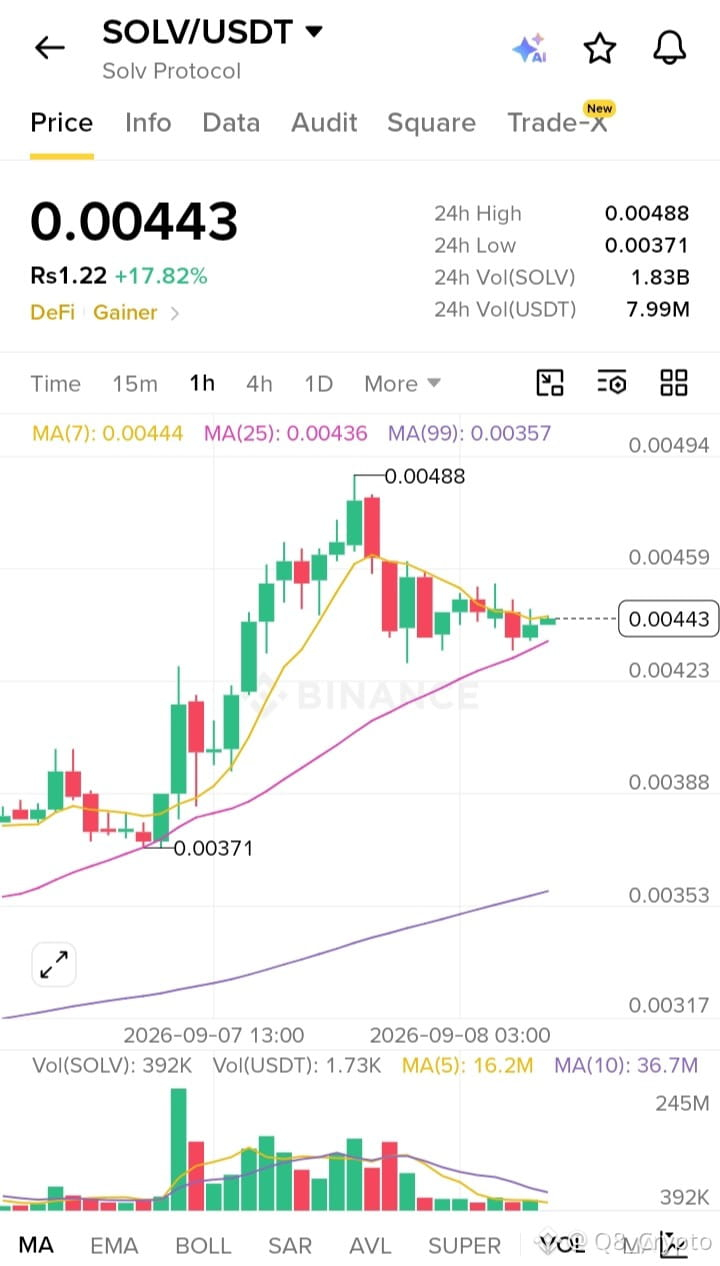
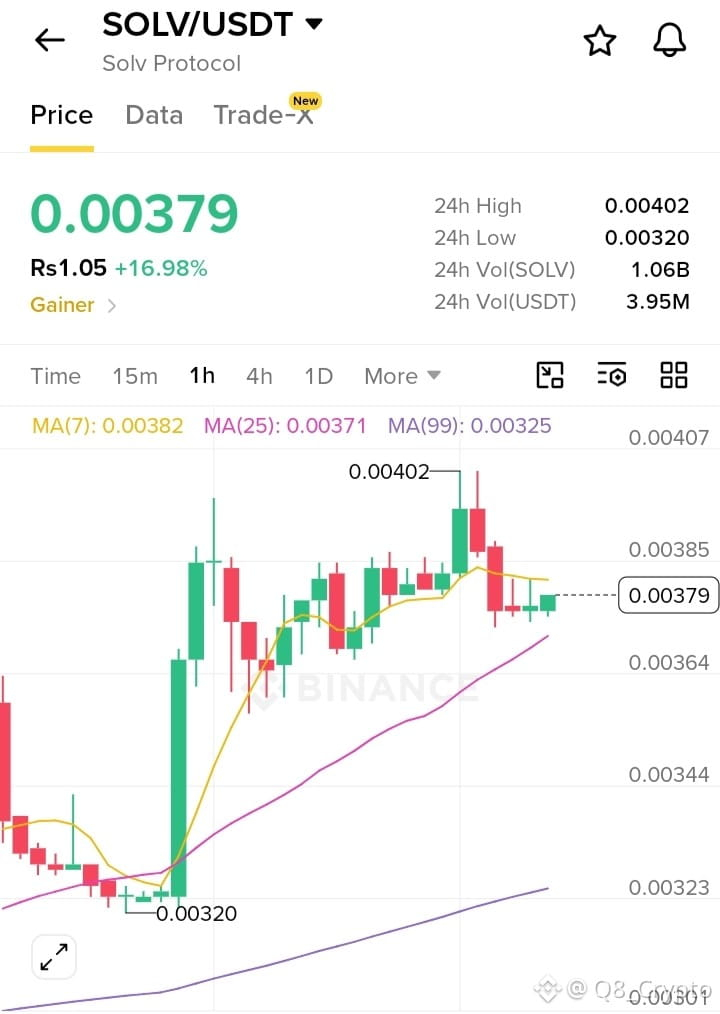
$SOLV 目前交易价格为 0.00443 美元,24 小时上涨 +17.82%!📈
💥 24H 最高:0.00488 美元
📉 24H 最低:0.00371 美元
💰 24H 成交量:1.83B SOLV / 7.99M USDT
📊 1H 设置:价格在 MA7 0.00444 附近并守住其上方,同时高于 MA25 0.00436 & MA99 0.00357,整体结构偏多。
🎯 阻力位:0.00459 → 0.00488
⚡ 若有效突破 0.00488,可能点燃下一轮上攻!
🔥 $SOLV 在强势拉升后进入整固——突破观察开启!🚀
$SOLV 目前交易价格为 0.00443 美元,24 小时上涨 +17.82%!📈
💥 24H 最高:0.00488 美元
📉 24H 最低:0.00371 美元
💰 24H 成交量:1.83B SOLV / 7.99M USDT
📊 1H 设置:价格在 MA7 0.00444 附近并守住其上方,同时高于 MA25 0.00436 & MA99 0.00357,整体结构偏多。
🎯 阻力位:0.00459 → 0.00488
⚡ 若有效突破 0.00488,可能点燃下一轮上攻!
🔥 $SOLV 在强势拉升后进入整固——突破观察开启!🚀
💥 24H 最高:0.00488 美元
📉 24H 最低:0.00371 美元
💰 24H 成交量:1.83B SOLV / 7.99M USDT
📊 1H 设置:价格在 MA7 0.00444 附近并守住其上方,同时高于 MA25 0.00436 & MA99 0.00357,整体结构偏多。
🎯 阻力位:0.00459 → 0.00488
⚡ 若有效突破 0.00488,可能点燃下一轮上攻!
🔥 $SOLV 在强势拉升后进入整固——突破观察开启!🚀
45
·
--
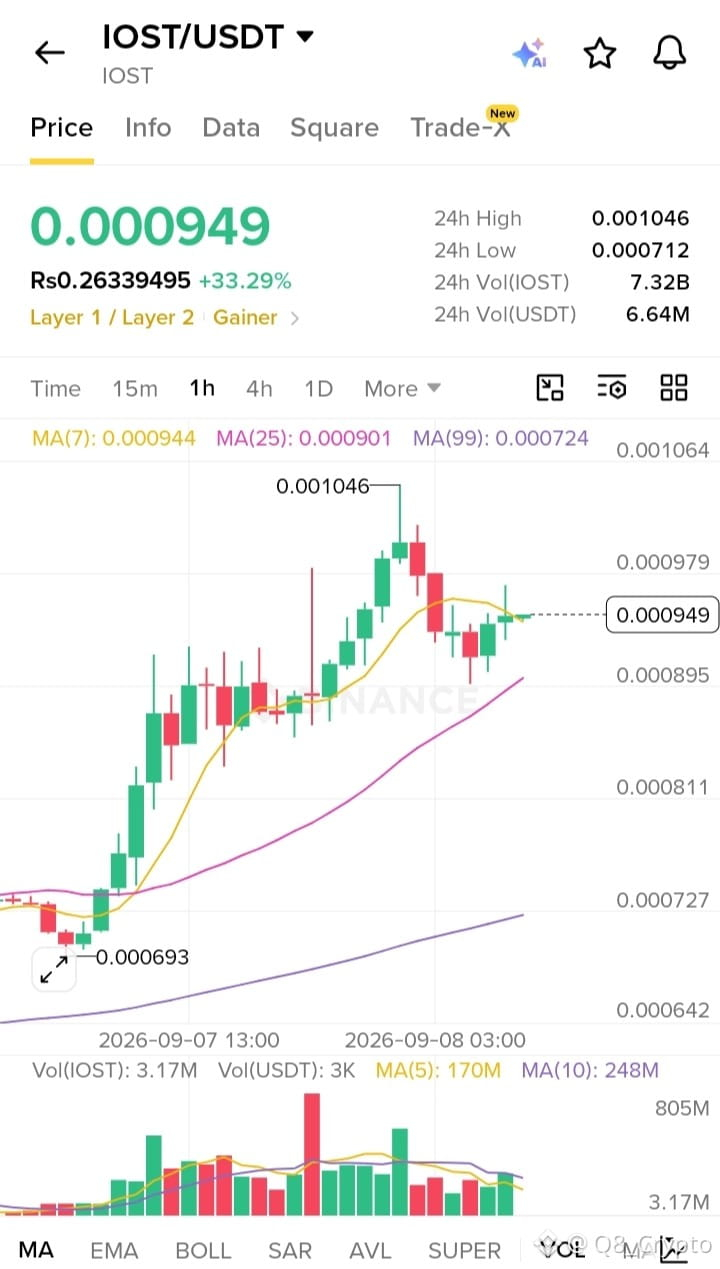
$IOST 正在交易,价格为 $0.000949,24小时上涨 +33.29%!📈
💥 24小时最高价:$0.001046
📉 24小时最低价:$0.000712
💰 24小时成交量:7.32B IOST / 6.64M USDT
📊 1小时结构:价格稳在 MA7 $0.000944、MA25 $0.000901 和 MA99 $0.000724 之上——这是强劲的看涨结构。
🎯 阻力位:$0.000979 → $0.001046
⚡ 若有效突破 $0.001046,可能引发下一波爆发式上涨。
🔥 动能正在升温——$IOST bulls 正在等待突破!🚀
$IOST 正在交易,价格为 $0.000949,24小时上涨 +33.29%!📈
💥 24小时最高价:$0.001046
📉 24小时最低价:$0.000712
💰 24小时成交量:7.32B IOST / 6.64M USDT
📊 1小时结构:价格稳在 MA7 $0.000944、MA25 $0.000901 和 MA99 $0.000724 之上——这是强劲的看涨结构。
🎯 阻力位:$0.000979 → $0.001046
⚡ 若有效突破 $0.001046,可能引发下一波爆发式上涨。
🔥 动能正在升温——$IOST bulls 正在等待突破!🚀
💥 24小时最高价:$0.001046
📉 24小时最低价:$0.000712
💰 24小时成交量:7.32B IOST / 6.64M USDT
📊 1小时结构:价格稳在 MA7 $0.000944、MA25 $0.000901 和 MA99 $0.000724 之上——这是强劲的看涨结构。
🎯 阻力位:$0.000979 → $0.001046
⚡ 若有效突破 $0.001046,可能引发下一波爆发式上涨。
🔥 动能正在升温——$IOST bulls 正在等待突破!🚀
67
·
--
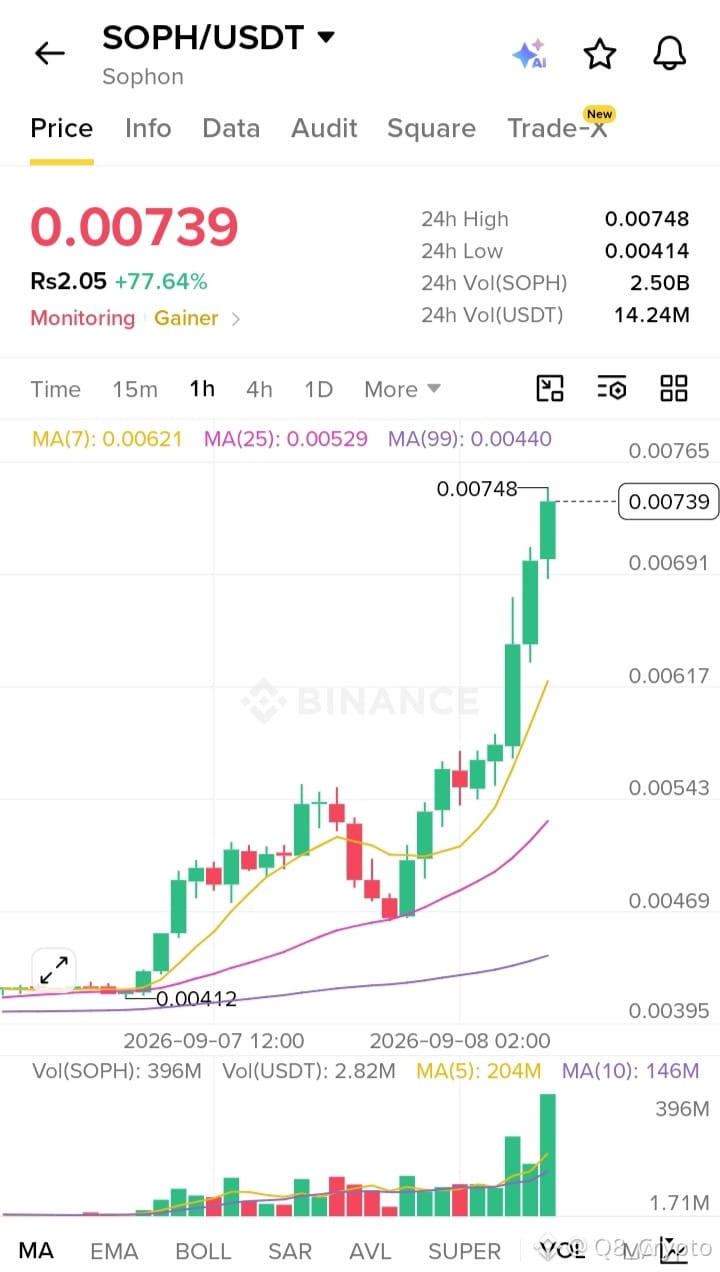
$SOPH 现报 0.00739 美元,过去 24 小时大幅上涨 +77.64%!📈
💥 24H 最高价:0.00748 美元
📉 24H 最低价:0.00414 美元
💰 24H 成交量:2.50B SOPH / 14.24M USDT
📊 1H 成交量:396M SOPH / 2.82M USDT
🔥 动能:强劲看涨突破,成交量加速。价格明显高于 MA7 0.00621、MA25 0.00529 和 MA99 0.00440。
🎯 关键阻力:0.00748 → 0.00765
⚡ 若能顺利突破 0.00748,$SOPH 可能再度开启另一段爆发式上攻行情!
多头全面掌控——请密切关注!🚀🔥
$SOPH 现报 0.00739 美元,过去 24 小时大幅上涨 +77.64%!📈
💥 24H 最高价:0.00748 美元
📉 24H 最低价:0.00414 美元
💰 24H 成交量:2.50B SOPH / 14.24M USDT
📊 1H 成交量:396M SOPH / 2.82M USDT
🔥 动能:强劲看涨突破,成交量加速。价格明显高于 MA7 0.00621、MA25 0.00529 和 MA99 0.00440。
🎯 关键阻力:0.00748 → 0.00765
⚡ 若能顺利突破 0.00748,$SOPH 可能再度开启另一段爆发式上攻行情!
多头全面掌控——请密切关注!🚀🔥
💥 24H 最高价:0.00748 美元
📉 24H 最低价:0.00414 美元
💰 24H 成交量:2.50B SOPH / 14.24M USDT
📊 1H 成交量:396M SOPH / 2.82M USDT
🔥 动能:强劲看涨突破,成交量加速。价格明显高于 MA7 0.00621、MA25 0.00529 和 MA99 0.00440。
🎯 关键阻力:0.00748 → 0.00765
⚡ 若能顺利突破 0.00748,$SOPH 可能再度开启另一段爆发式上攻行情!
多头全面掌控——请密切关注!🚀🔥
1
211
·
--
看涨
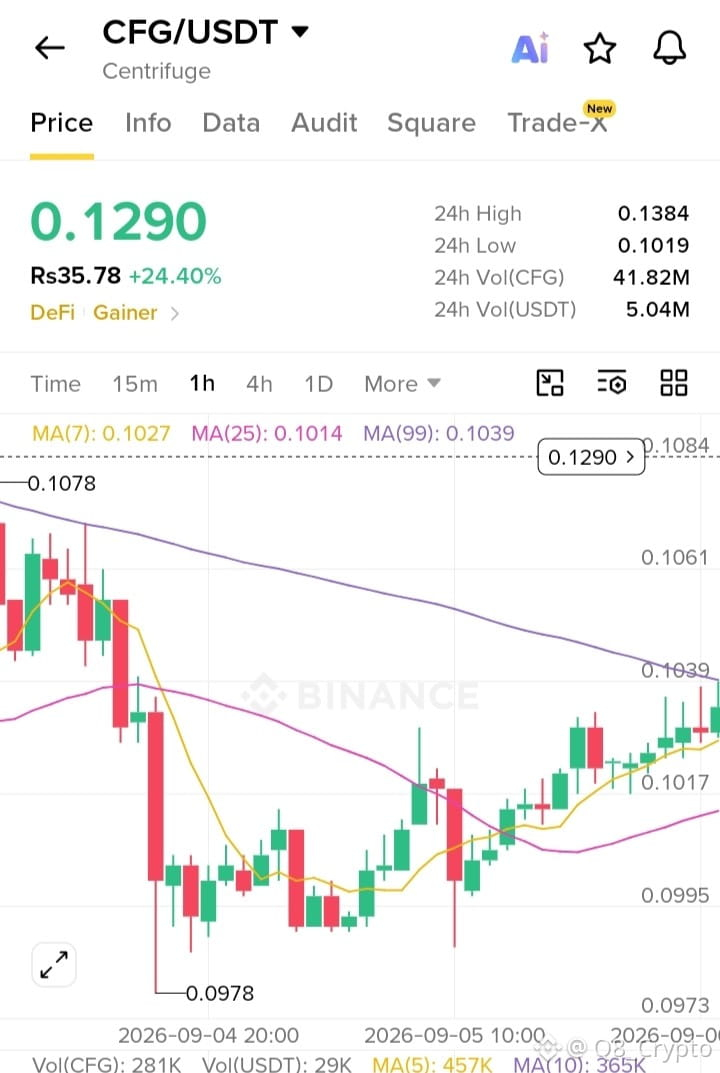
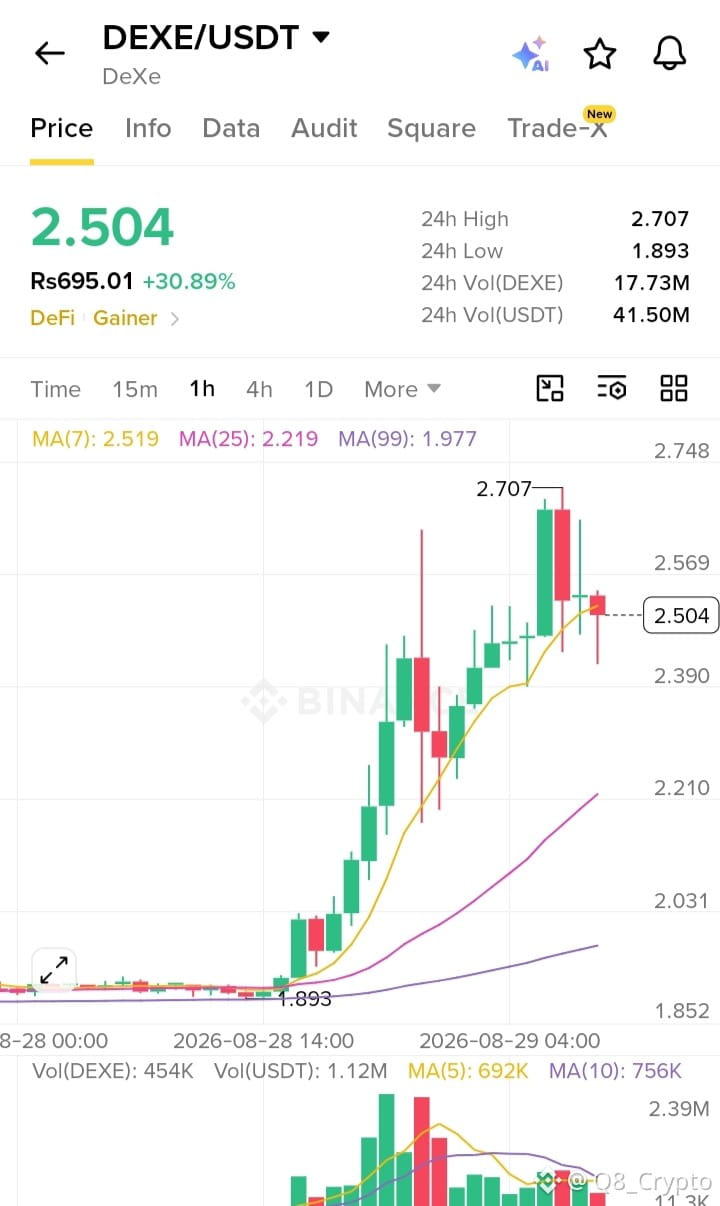
$CFG 正在 $0.1290 高飞,24H 内成交 41.82M CFG,强势上涨 +24.40%! 📈
🟢 买入区间:$0.1240–$0.1290
🎯 TP1:$0.1320
🎯 TP2:$0.1384
🎯 TP3:$0.1450
🛑 SL:$0.1170
24H 最高:$0.1384 | 最低:$0.1019
MA(7):$0.1027 | MA(25):$0.1014 | MA(99):$0.1039
⚡ 价格稳稳守在关键移动均线上方。若能干净利落地突破 $0.1384,可能会引发下一波强劲拉升!🔥
$CFG 值得关注!🚀
$CFG 正在 $0.1290 高飞,24H 内成交 41.82M CFG,强势上涨 +24.40%! 📈
🟢 买入区间:$0.1240–$0.1290
🎯 TP1:$0.1320
🎯 TP2:$0.1384
🎯 TP3:$0.1450
🛑 SL:$0.1170
24H 最高:$0.1384 | 最低:$0.1019
MA(7):$0.1027 | MA(25):$0.1014 | MA(99):$0.1039
⚡ 价格稳稳守在关键移动均线上方。若能干净利落地突破 $0.1384,可能会引发下一波强劲拉升!🔥
$CFG 值得关注!🚀
🟢 买入区间:$0.1240–$0.1290
🎯 TP1:$0.1320
🎯 TP2:$0.1384
🎯 TP3:$0.1450
🛑 SL:$0.1170
24H 最高:$0.1384 | 最低:$0.1019
MA(7):$0.1027 | MA(25):$0.1014 | MA(99):$0.1039
⚡ 价格稳稳守在关键移动均线上方。若能干净利落地突破 $0.1384,可能会引发下一波强劲拉升!🔥
$CFG 值得关注!🚀
129
·
--
看涨
🔥 $SOL — SOL 正在燃烧!🚀
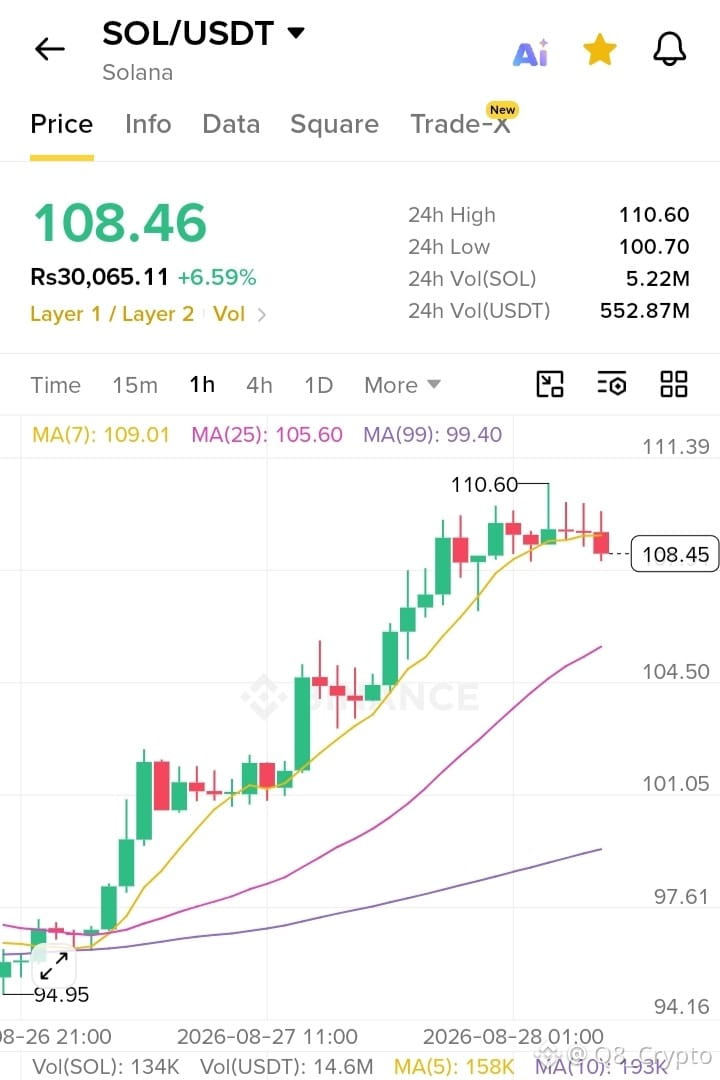
在 1H 图表中,SOL 报 $108.46(+6.59%),此前从 $94.95 强势拉升。📈
🎯 阻力位:$110.60 → $111.39
🛡️ 支撑位:$109.01 → $105.60 → $99.40
📊 24H 最高/最低:$110.60 / $100.70
💰 24H 成交量:5.22M SOL / $552.87M USDT
MA(7):$109.01 | MA(25):$105.60 | MA(99):$99.40
⚡ SOL 正在 $110.60 下方附近盘整,经历了这波巨大的 +6.59% 涨幅。若能干净突破,可能冲击 $111+;但一旦跌破 $105.60,走势设置将被削弱。
$110.60 就是战场!多头准备再来一波上攻吗?🔥🚀
🔥 $SOL — SOL 正在燃烧!🚀
在 1H 图表中,SOL 报 $108.46(+6.59%),此前从 $94.95 强势拉升。📈
🎯 阻力位:$110.60 → $111.39
🛡️ 支撑位:$109.01 → $105.60 → $99.40
📊 24H 最高/最低:$110.60 / $100.70
💰 24H 成交量:5.22M SOL / $552.87M USDT
MA(7):$109.01 | MA(25):$105.60 | MA(99):$99.40
⚡ SOL 正在 $110.60 下方附近盘整,经历了这波巨大的 +6.59% 涨幅。若能干净突破,可能冲击 $111+;但一旦跌破 $105.60,走势设置将被削弱。
$110.60 就是战场!多头准备再来一波上攻吗?🔥🚀
在 1H 图表中,SOL 报 $108.46(+6.59%),此前从 $94.95 强势拉升。📈
🎯 阻力位:$110.60 → $111.39
🛡️ 支撑位:$109.01 → $105.60 → $99.40
📊 24H 最高/最低:$110.60 / $100.70
💰 24H 成交量:5.22M SOL / $552.87M USDT
MA(7):$109.01 | MA(25):$105.60 | MA(99):$99.40
⚡ SOL 正在 $110.60 下方附近盘整,经历了这波巨大的 +6.59% 涨幅。若能干净突破,可能冲击 $111+;但一旦跌破 $105.60,走势设置将被削弱。
$110.60 就是战场!多头准备再来一波上攻吗?🔥🚀
66
·
--
看涨
🔥 $ETH — 多头积蓄压力!🚀
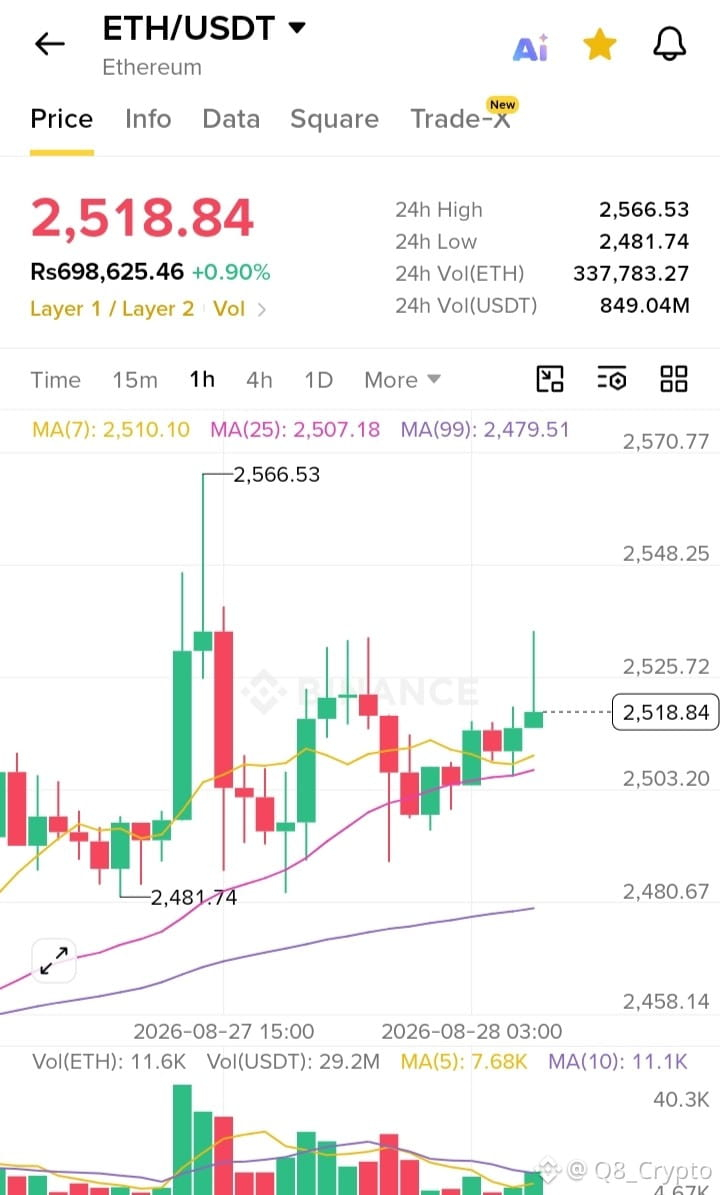
1H 图表显示,ETH 现报 $2,518.84(+0.90%),并保持在所有关键均线上方。📈
🎯 阻力位:$2,525 → $2,548 → $2,566
🛡️ 支撑位:$2,510 → $2,507 → $2,480
📊 24H 最高/最低:$2,566.53 / $2,481.74
💰 24H 成交量:337.8K ETH / $849.04M USDT
MA(7):$2,510.10 | MA(25):$2,507.18 | MA(99):$2,479.51
⚡ $2,525 是触发区。若突破并站稳,ETH 可能推动价格向 $2,548–$2,566 方向运行。被拒绝则可能将价格拉回至 $2,507 附近。
ETH 正在为下一次突破蓄势吗?👀🔥
🔥 $ETH — 多头积蓄压力!🚀
1H 图表显示,ETH 现报 $2,518.84(+0.90%),并保持在所有关键均线上方。📈
🎯 阻力位:$2,525 → $2,548 → $2,566
🛡️ 支撑位:$2,510 → $2,507 → $2,480
📊 24H 最高/最低:$2,566.53 / $2,481.74
💰 24H 成交量:337.8K ETH / $849.04M USDT
MA(7):$2,510.10 | MA(25):$2,507.18 | MA(99):$2,479.51
⚡ $2,525 是触发区。若突破并站稳,ETH 可能推动价格向 $2,548–$2,566 方向运行。被拒绝则可能将价格拉回至 $2,507 附近。
ETH 正在为下一次突破蓄势吗?👀🔥
1H 图表显示,ETH 现报 $2,518.84(+0.90%),并保持在所有关键均线上方。📈
🎯 阻力位:$2,525 → $2,548 → $2,566
🛡️ 支撑位:$2,510 → $2,507 → $2,480
📊 24H 最高/最低:$2,566.53 / $2,481.74
💰 24H 成交量:337.8K ETH / $849.04M USDT
MA(7):$2,510.10 | MA(25):$2,507.18 | MA(99):$2,479.51
⚡ $2,525 是触发区。若突破并站稳,ETH 可能推动价格向 $2,548–$2,566 方向运行。被拒绝则可能将价格拉回至 $2,507 附近。
ETH 正在为下一次突破蓄势吗?👀🔥
57
·
--
看涨
🚀 $BTC — 牛市回归!🔥
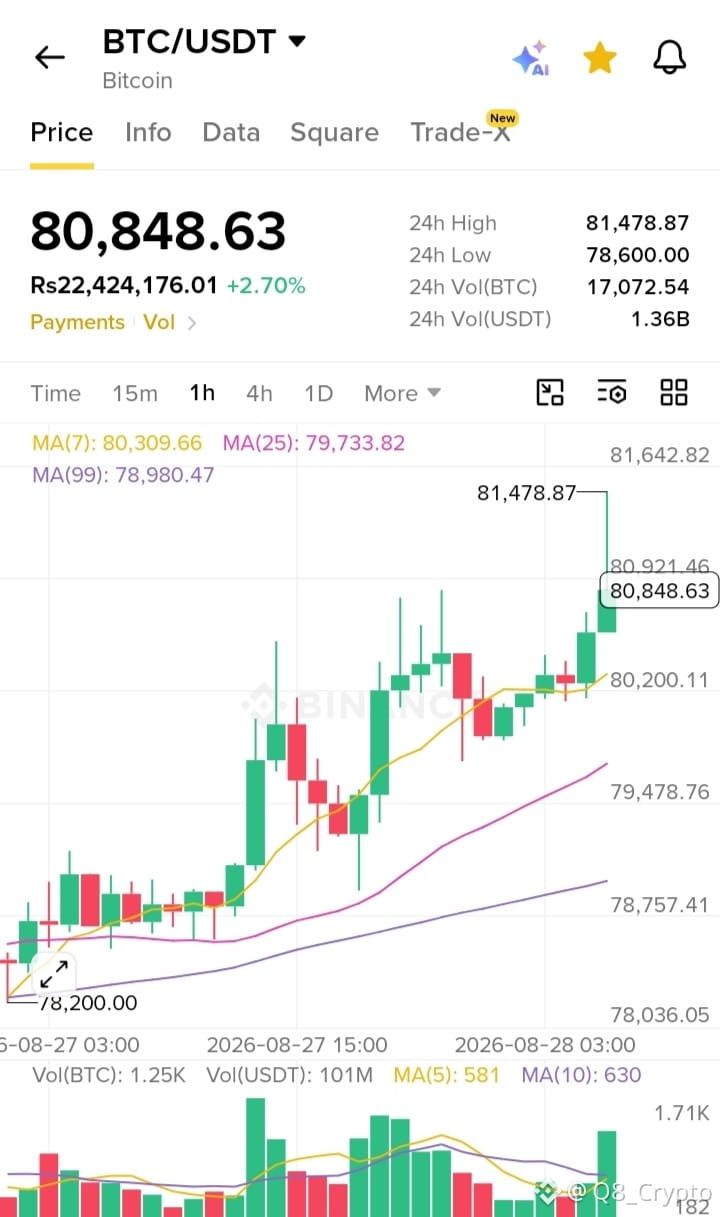
比特币正飞速上涨,现报 $80,848.63(+2.70%),且1小时动能强劲!📈
🎯 阻力位:$80,921 → $81,478 → $81,643
🛡️ 支撑位:$80,309 → $79,734 → $78,980
📊 24小时高/低:$81,478.87 / $78,600
💰 24小时成交量:17,072 BTC / $1.36B USDT
MA(7):$80,309 | MA(25):$79,734 | MA(99):$78,980
⚡ BTC 目前在3条主要均线上方交易。只要有效突破 $81,478,可能会再度引爆一轮强势行情!🔥🚀
接下来看 $81.5K… 还是将迎来回拒?👀
🚀 $BTC — 牛市回归!🔥
比特币正飞速上涨,现报 $80,848.63(+2.70%),且1小时动能强劲!📈
🎯 阻力位:$80,921 → $81,478 → $81,643
🛡️ 支撑位:$80,309 → $79,734 → $78,980
📊 24小时高/低:$81,478.87 / $78,600
💰 24小时成交量:17,072 BTC / $1.36B USDT
MA(7):$80,309 | MA(25):$79,734 | MA(99):$78,980
⚡ BTC 目前在3条主要均线上方交易。只要有效突破 $81,478,可能会再度引爆一轮强势行情!🔥🚀
接下来看 $81.5K… 还是将迎来回拒?👀
比特币正飞速上涨,现报 $80,848.63(+2.70%),且1小时动能强劲!📈
🎯 阻力位:$80,921 → $81,478 → $81,643
🛡️ 支撑位:$80,309 → $79,734 → $78,980
📊 24小时高/低:$81,478.87 / $78,600
💰 24小时成交量:17,072 BTC / $1.36B USDT
MA(7):$80,309 | MA(25):$79,734 | MA(99):$78,980
⚡ BTC 目前在3条主要均线上方交易。只要有效突破 $81,478,可能会再度引爆一轮强势行情!🔥🚀
接下来看 $81.5K… 还是将迎来回拒?👀
94
·
--
看涨
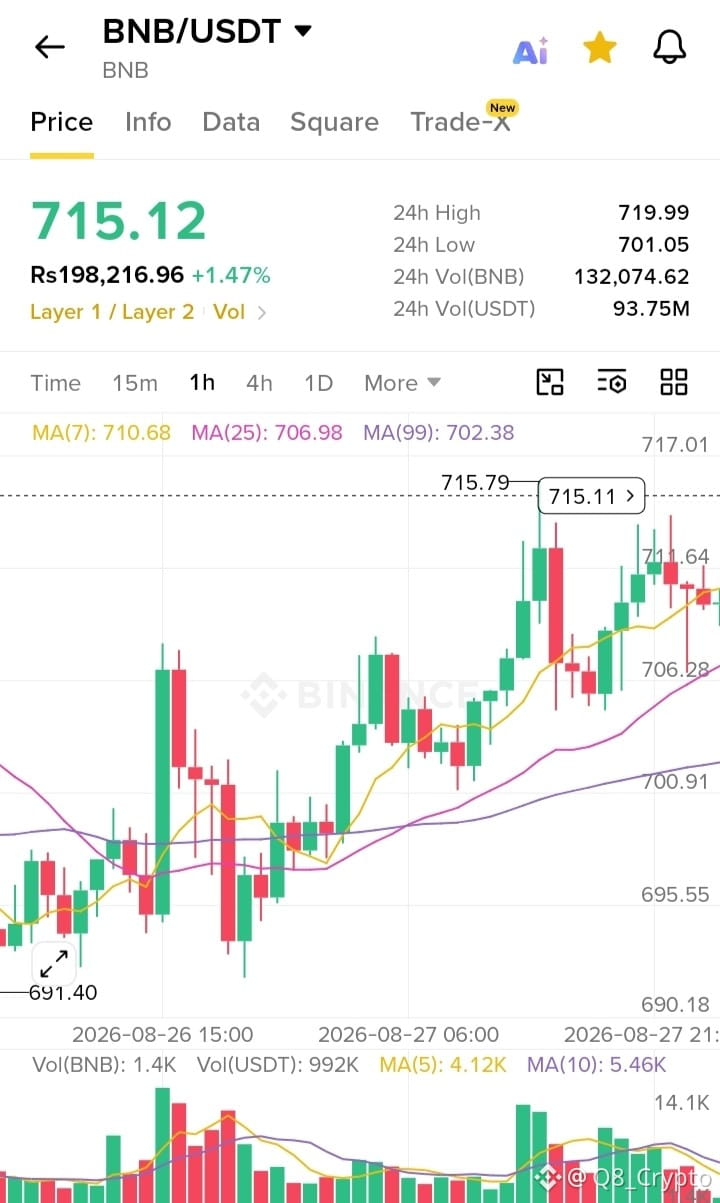
🚀 $BNB — 多头正在掌控局面!🔥
BNB 交易价格为 715.12 美元(+1.47%),稳稳守在关键移动均线之上。📈
🎯 阻力位:715.79 美元 → 719.99 美元
🛡️ 支撑位:710.68 美元 → 706.98 美元 → 702.38 美元
📊 24小时最高/最低:719.99 美元 / 701.05 美元
💰 24小时成交量:132K BNB / 93.75M USDT
MA(7):710.68 美元 | MA(25):706.98 美元 | MA(99):702.38 美元
⚡ 若有效突破 715.79–720 美元区间,可能点燃下一轮上行行情。多头动能强劲——但若在 720 附近遭遇回落/拒绝,可能引发回调至 710–707 一带。
BNB 多头们,我们要突破 720 吗?🚀🔥
🚀 $BNB — 多头正在掌控局面!🔥
BNB 交易价格为 715.12 美元(+1.47%),稳稳守在关键移动均线之上。📈
🎯 阻力位:715.79 美元 → 719.99 美元
🛡️ 支撑位:710.68 美元 → 706.98 美元 → 702.38 美元
📊 24小时最高/最低:719.99 美元 / 701.05 美元
💰 24小时成交量:132K BNB / 93.75M USDT
MA(7):710.68 美元 | MA(25):706.98 美元 | MA(99):702.38 美元
⚡ 若有效突破 715.79–720 美元区间,可能点燃下一轮上行行情。多头动能强劲——但若在 720 附近遭遇回落/拒绝,可能引发回调至 710–707 一带。
BNB 多头们,我们要突破 720 吗?🚀🔥
BNB 交易价格为 715.12 美元(+1.47%),稳稳守在关键移动均线之上。📈
🎯 阻力位:715.79 美元 → 719.99 美元
🛡️ 支撑位:710.68 美元 → 706.98 美元 → 702.38 美元
📊 24小时最高/最低:719.99 美元 / 701.05 美元
💰 24小时成交量:132K BNB / 93.75M USDT
MA(7):710.68 美元 | MA(25):706.98 美元 | MA(99):702.38 美元
⚡ 若有效突破 715.79–720 美元区间,可能点燃下一轮上行行情。多头动能强劲——但若在 720 附近遭遇回落/拒绝,可能引发回调至 710–707 一带。
BNB 多头们,我们要突破 720 吗?🚀🔥
83
·
--
看涨
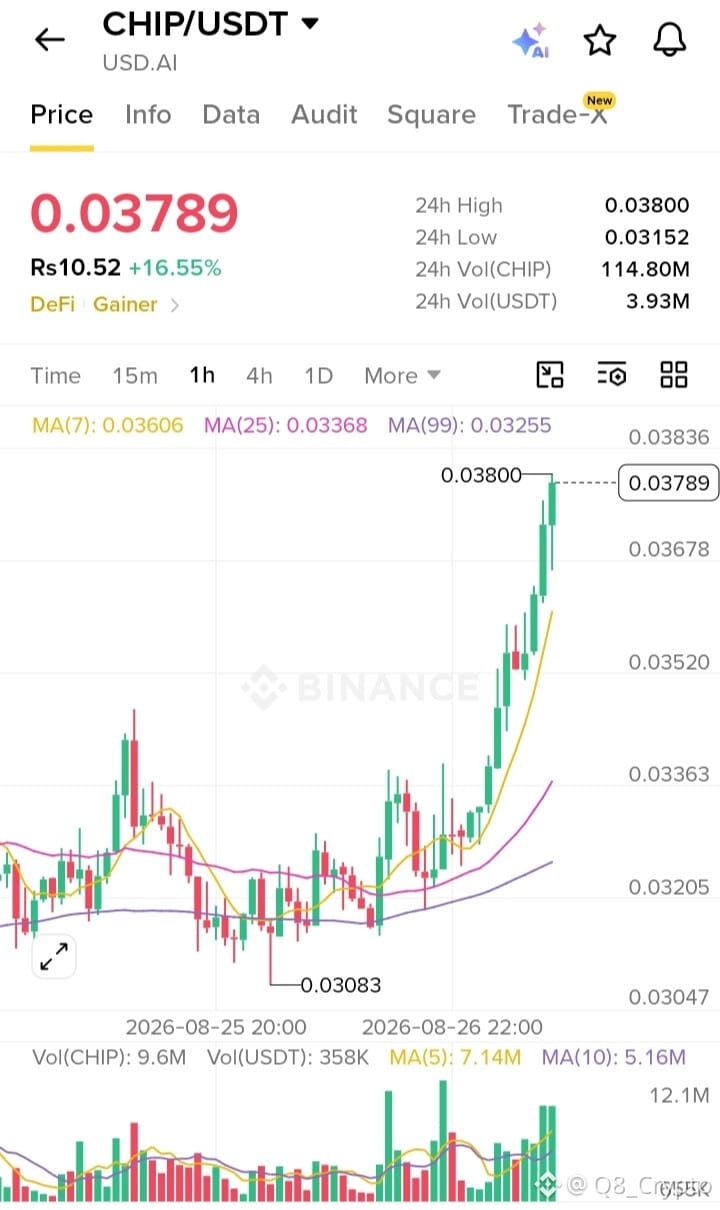
$CHIP 正在交易,价格为 0.03789(+16.55%),刚好低于 24H 最高价 0.03800!💥
📊 1H 动能 • 24H 最高:0.03800 • 24H 最低:0.03152 • MA7:0.03606 • MA25:0.03368 • MA99:0.03255 • 24H 成交量:114.80M CHIP / 3.93M USDT
🔥 价格站上所有主要移动均线,且成交量上升,并出现一连串强势看涨K线。
🎯 突破 0.03800 → 0.03836 下一目标!
⚠️ 支撑位:0.03678 → 0.03606
CHIP 正在冲击阻力位……只要来一个干净的突破,就可能点燃下一轮上涨!🚀🔥
#CHIP #CHIPUSDT #Crypto #DeFi #Binance
$CHIP 正在交易,价格为 0.03789(+16.55%),刚好低于 24H 最高价 0.03800!💥
📊 1H 动能 • 24H 最高:0.03800 • 24H 最低:0.03152 • MA7:0.03606 • MA25:0.03368 • MA99:0.03255 • 24H 成交量:114.80M CHIP / 3.93M USDT
🔥 价格站上所有主要移动均线,且成交量上升,并出现一连串强势看涨K线。
🎯 突破 0.03800 → 0.03836 下一目标!
⚠️ 支撑位:0.03678 → 0.03606
CHIP 正在冲击阻力位……只要来一个干净的突破,就可能点燃下一轮上涨!🚀🔥
#CHIP #CHIPUSDT #Crypto #DeFi #Binance
📊 1H 动能 • 24H 最高:0.03800 • 24H 最低:0.03152 • MA7:0.03606 • MA25:0.03368 • MA99:0.03255 • 24H 成交量:114.80M CHIP / 3.93M USDT
🔥 价格站上所有主要移动均线,且成交量上升,并出现一连串强势看涨K线。
🎯 突破 0.03800 → 0.03836 下一目标!
⚠️ 支撑位:0.03678 → 0.03606
CHIP 正在冲击阻力位……只要来一个干净的突破,就可能点燃下一轮上涨!🚀🔥
#CHIP #CHIPUSDT #Crypto #DeFi #Binance
76
登录解锁更多内容
加入币安广场,与全球加密货币用户互动
⚡️ 获取关于加密货币的最新实用信息。
💬 受到全球最大加密货币交易平台的信赖。
👍 发现来自认证创作者的真知灼见。
邮箱/手机号码
热门话题
比特币涨1.64%突破78000美元
54,649 次浏览
363 人讨论中
比特币反弹喽,还会继续涨吗?对不起,本琴要准备跑路了!
1. 先说为什么涨。最主要原因是因为跌到了昨天讲的7.5万上方的支撑区,这里是好几次底部的低点,到这里他就该反弹!那问题来了,反弹到哪里?
2. 根据这近一个月的表现来看,一般会反弹到7.85万附近,然后就是次阻力8.05万。所以求稳的话你可以选择在接近7.85万附近就止盈,而现货的话贪一点也可以,或者考虑分批离场。
3. 我个人思路还是很明确的,因为近期不确定性实在太大,所以我不是很希望长拿,有不错的利润我就会止盈。因为明晚法案过不过、周三晚上是否加息 以及沃什的态度,这些不确定性都很大,我不是那么愿意去赌,先把确定的利润吃到,等行情明朗了再猛猛操作。
4. 所以昨天舒琴在比特币暴跌的时候就让大家准备抄底,如图所示,在7.6万附近买点现货,现在一看,都已经涨了近2000点了,没有辜负大家的信任。咱们现在就是在支撑位做反弹,然后在阻力位止盈,就这么简单,不到支撑位我是不会下手的,如果继续涨,接近阻力位我反而会考虑做空。
5. 而阻力位的话则是在8.1-8.2万,临近这里我空一手看看,70%的胜算吧,反正就是在支撑和阻力位做波段,小幅跌破/突破就止损,所以不管什么复杂的行情舒琴都是尽量给大家找到交易的机会,每天实时操作~
分析师舒琴
·64次点赞
·48.9k 次浏览
Avalanche集成UAEPass数字保险库
3,551 次浏览
81 人讨论中
英国就代币化黄金征询意见
3,991 次浏览
74 人讨论中