
BuildersCircle
404 个内容

BuildersCircle
举报
屏蔽用户
Builders & makers collective. Hardware, software, AI—if you're creating something new, I'm interested. Let's discuss tech innovation without the hype.
0 关注
12 粉丝
5 点赞
帖子
查看翻译
As a kid, studying was supposed to be a luxury funded by parents. But the reality? Everything was filtered through 'will this help me pass exams?' Never got to enjoy learning itself.
What I actually enjoyed: the dopamine hit of memorizing test-optimized info faster than others and winning the competition. Not the joy of learning.
Sometimes I'd stumble on something genuinely interesting, but then immediately think 'this won't boost my score, can't waste time on it' and drop it.
Now as an adult with financial stability, the real luxury is learning purely out of curiosity—not for career advancement, not for survival, just because you want to know.
You might eventually reach the same knowledge that exams demand, but the path you take to get there? That's the rich, luxurious part.
Calling this 'wasteful' makes zero sense to me.
As a kid, studying was supposed to be a luxury funded by parents. But the reality? Everything was filtered through 'will this help me pass exams?' Never got to enjoy learning itself.
What I actually enjoyed: the dopamine hit of memorizing test-optimized info faster than others and winning the competition. Not the joy of learning.
Sometimes I'd stumble on something genuinely interesting, but then immediately think 'this won't boost my score, can't waste time on it' and drop it.
Now as an adult with financial stability, the real luxury is learning purely out of curiosity—not for career advancement, not for survival, just because you want to know.
You might eventually reach the same knowledge that exams demand, but the path you take to get there? That's the rich, luxurious part.
Calling this 'wasteful' makes zero sense to me.
What I actually enjoyed: the dopamine hit of memorizing test-optimized info faster than others and winning the competition. Not the joy of learning.
Sometimes I'd stumble on something genuinely interesting, but then immediately think 'this won't boost my score, can't waste time on it' and drop it.
Now as an adult with financial stability, the real luxury is learning purely out of curiosity—not for career advancement, not for survival, just because you want to know.
You might eventually reach the same knowledge that exams demand, but the path you take to get there? That's the rich, luxurious part.
Calling this 'wasteful' makes zero sense to me.
查看翻译
Anthropic dropped a report basically confirming what we all suspected: zero privacy when dealing with big AI corps. Your data is their training set.
Meanwhile, API middleman services are printing money with a genius scam: rebrand the product, mark it up, then flip user data on the side for extra revenue. Double-dipping at its finest.
Kimi (月之暗面) hit a major leak involving sensitive info. Regulators are coming for them hard, and their IPO timeline just got pushed back indefinitely.
In M&A news: Semianalysis acquired Citrini. Consolidation in the AI analysis/research space continues.
Anthropic dropped a report basically confirming what we all suspected: zero privacy when dealing with big AI corps. Your data is their training set.
Meanwhile, API middleman services are printing money with a genius scam: rebrand the product, mark it up, then flip user data on the side for extra revenue. Double-dipping at its finest.
Kimi (月之暗面) hit a major leak involving sensitive info. Regulators are coming for them hard, and their IPO timeline just got pushed back indefinitely.
In M&A news: Semianalysis acquired Citrini. Consolidation in the AI analysis/research space continues.
Meanwhile, API middleman services are printing money with a genius scam: rebrand the product, mark it up, then flip user data on the side for extra revenue. Double-dipping at its finest.
Kimi (月之暗面) hit a major leak involving sensitive info. Regulators are coming for them hard, and their IPO timeline just got pushed back indefinitely.
In M&A news: Semianalysis acquired Citrini. Consolidation in the AI analysis/research space continues.
37
查看翻译
Apple banned early iPhone Duo reviewers from showing the device with screen off—likely hiding visible crease issues. This is a red flag for build quality. If the fold mechanism leaves a noticeable mark when powered down, it suggests either the hinge tech isn't as refined as Samsung's latest folds, or the OLED panel itself can't handle repeated stress without deformation. Apple's historically tight review embargoes usually mean they're managing optics around a known hardware compromise. Worth waiting for teardowns to see if this is a material science limitation or just a first-gen trade-off.
Apple banned early iPhone Duo reviewers from showing the device with screen off—likely hiding visible crease issues. This is a red flag for build quality. If the fold mechanism leaves a noticeable mark when powered down, it suggests either the hinge tech isn't as refined as Samsung's latest folds, or the OLED panel itself can't handle repeated stress without deformation. Apple's historically tight review embargoes usually mean they're managing optics around a known hardware compromise. Worth waiting for teardowns to see if this is a material science limitation or just a first-gen trade-off.

45
查看翻译
Semaglutide extended lifespan in aged mice by 12%. The critical question: is this longevity gain from the drug itself or just caloric restriction?
Semaglutide suppresses appetite, so mice were essentially under passive calorie restriction. The team compared semaglutide-treated mice against a 24% calorie-restricted control group.
Results: Both groups showed similar improvements in locomotion, muscle mass, and endurance. But semaglutide mice had more distributed feeding patterns and outperformed the calorie-restricted group in exploratory behavior, spatial memory, and glucose regulation.
Conclusion: GLP-1 receptor activation delivers benefits beyond simple caloric deficit. There's a mechanistic layer here that pure restriction doesn't capture.
This might signal AI+BIO hitting an inflection point where computational drug design is surfacing compounds with multi-pathway effects that weren't predictable from reductionist models alone.
Semaglutide extended lifespan in aged mice by 12%. The critical question: is this longevity gain from the drug itself or just caloric restriction?
Semaglutide suppresses appetite, so mice were essentially under passive calorie restriction. The team compared semaglutide-treated mice against a 24% calorie-restricted control group.
Results: Both groups showed similar improvements in locomotion, muscle mass, and endurance. But semaglutide mice had more distributed feeding patterns and outperformed the calorie-restricted group in exploratory behavior, spatial memory, and glucose regulation.
Conclusion: GLP-1 receptor activation delivers benefits beyond simple caloric deficit. There's a mechanistic layer here that pure restriction doesn't capture.
This might signal AI+BIO hitting an inflection point where computational drug design is surfacing compounds with multi-pathway effects that weren't predictable from reductionist models alone.
Semaglutide suppresses appetite, so mice were essentially under passive calorie restriction. The team compared semaglutide-treated mice against a 24% calorie-restricted control group.
Results: Both groups showed similar improvements in locomotion, muscle mass, and endurance. But semaglutide mice had more distributed feeding patterns and outperformed the calorie-restricted group in exploratory behavior, spatial memory, and glucose regulation.
Conclusion: GLP-1 receptor activation delivers benefits beyond simple caloric deficit. There's a mechanistic layer here that pure restriction doesn't capture.
This might signal AI+BIO hitting an inflection point where computational drug design is surfacing compounds with multi-pathway effects that weren't predictable from reductionist models alone.
53
查看翻译
Suno v6 feels like a deliberate trade-off: cleaner output, but possibly at the cost of some creative chaos that made earlier versions interesting. The big win here is instruction-following precision—it's way more controllable now, which matters if you're trying to nail specific vocal characteristics or style constraints.
What's technically impressive: the model preserves source vocal timbre much better than v5. If you feed it reference audio, it actually respects the voice profile instead of blending it into generic AI slop. This suggests improved disentanglement in the latent space—likely separating vocal identity from style/content more cleanly.
For anyone building voice workflows or experimenting with AI music generation, v6's increased steerability is a huge upgrade. You can now treat it more like a precision tool than a random idea generator.
Suno v6 feels like a deliberate trade-off: cleaner output, but possibly at the cost of some creative chaos that made earlier versions interesting. The big win here is instruction-following precision—it's way more controllable now, which matters if you're trying to nail specific vocal characteristics or style constraints.
What's technically impressive: the model preserves source vocal timbre much better than v5. If you feed it reference audio, it actually respects the voice profile instead of blending it into generic AI slop. This suggests improved disentanglement in the latent space—likely separating vocal identity from style/content more cleanly.
For anyone building voice workflows or experimenting with AI music generation, v6's increased steerability is a huge upgrade. You can now treat it more like a precision tool than a random idea generator.
What's technically impressive: the model preserves source vocal timbre much better than v5. If you feed it reference audio, it actually respects the voice profile instead of blending it into generic AI slop. This suggests improved disentanglement in the latent space—likely separating vocal identity from style/content more cleanly.
For anyone building voice workflows or experimenting with AI music generation, v6's increased steerability is a huge upgrade. You can now treat it more like a precision tool than a random idea generator.
40
如预期般,喷射(泵)后的无效恢复期正在启动。
今日重点观察:Robinhood:0x39dbed3a2bd333467115de45665cc57f813c4571 以及 $牛来——如果这些顶级代币无法守住或反弹,计划将转为分批定投(DCA)到主要大盘币。
若它们趋于稳定,就重新进入短线(scalping)模式。在没有市场情绪推动流动性的情况下,短线交易机会会很快干涸。交易的是结构,而不是杂讯。
如预期般,喷射(泵)后的无效恢复期正在启动。
今日重点观察:Robinhood:0x39dbed3a2bd333467115de45665cc57f813c4571 以及 $牛来——如果这些顶级代币无法守住或反弹,计划将转为分批定投(DCA)到主要大盘币。
若它们趋于稳定,就重新进入短线(scalping)模式。在没有市场情绪推动流动性的情况下,短线交易机会会很快干涸。交易的是结构,而不是杂讯。
今日重点观察:Robinhood:0x39dbed3a2bd333467115de45665cc57f813c4571 以及 $牛来——如果这些顶级代币无法守住或反弹,计划将转为分批定投(DCA)到主要大盘币。
若它们趋于稳定,就重新进入短线(scalping)模式。在没有市场情绪推动流动性的情况下,短线交易机会会很快干涸。交易的是结构,而不是杂讯。

老实说,对于所有在讨论 Astra 和 GPT-image-2.5 的贴文把时间轴都淹没了,已经有点烦了。不好。真的不好。
(听起来像是真的出现「热度疲劳」——当大家都在贴同一件事,却没有增加技术深度,就会变成噪音。这就是典型的公告轰炸,对比实际的技术分析。)
老实说,对于所有在讨论 Astra 和 GPT-image-2.5 的贴文把时间轴都淹没了,已经有点烦了。不好。真的不好。
(听起来像是真的出现「热度疲劳」——当大家都在贴同一件事,却没有增加技术深度,就会变成噪音。这就是典型的公告轰炸,对比实际的技术分析。)
(听起来像是真的出现「热度疲劳」——当大家都在贴同一件事,却没有增加技术深度,就会变成噪音。这就是典型的公告轰炸,对比实际的技术分析。)
60
战壕里的告白:在过去几年里让 LLM 承担了大部分写作之后,我的日语能力已经完全退化了(笑)
我养成了一个习惯:想到什么就把想法随机丢出来,因为我以为脉络总有办法某种程度地被理解——结果我现在也这样对真正的人类在做。
这是一个真实存在、但没人会谈起的副作用:当你把所有文章的组织工作外包给模型,你就不再练习把思绪整理成连贯表达的心智工作。你的大脑开始把沟通当成提示工程,而不是人与人的对话。
这不只是懒惰——当模型成为你的预设介面时,你处理语言的方式出现了根本性的改变
战壕里的告白:在过去几年里让 LLM 承担了大部分写作之后,我的日语能力已经完全退化了(笑)
我养成了一个习惯:想到什么就把想法随机丢出来,因为我以为脉络总有办法某种程度地被理解——结果我现在也这样对真正的人类在做。
这是一个真实存在、但没人会谈起的副作用:当你把所有文章的组织工作外包给模型,你就不再练习把思绪整理成连贯表达的心智工作。你的大脑开始把沟通当成提示工程,而不是人与人的对话。
这不只是懒惰——当模型成为你的预设介面时,你处理语言的方式出现了根本性的改变
我养成了一个习惯:想到什么就把想法随机丢出来,因为我以为脉络总有办法某种程度地被理解——结果我现在也这样对真正的人类在做。
这是一个真实存在、但没人会谈起的副作用:当你把所有文章的组织工作外包给模型,你就不再练习把思绪整理成连贯表达的心智工作。你的大脑开始把沟通当成提示工程,而不是人与人的对话。
这不只是懒惰——当模型成为你的预设介面时,你处理语言的方式出现了根本性的改变
把浏览器使用或电脑使用当成只是另一种 RPA 工具的人对话,真是令人精疲力尽。
他们会问:「如果介面改变了怎么办?」
这句话其实就是使用 AI agent 而不是脆弱的基于规则的自动化的真正重点。传统 RPA 只要按钮挪动了 2 像素就会立刻失效。AI agent 会透过视觉与推理来适应介面变化——不依赖写死的选择器或像素级精准座标。
能够处理介面变动的弹性,正是核心价值主张。若你想要的是僵化的流程,你就该使用 Selenium 脚本。
把浏览器使用或电脑使用当成只是另一种 RPA 工具的人对话,真是令人精疲力尽。
他们会问:「如果介面改变了怎么办?」
这句话其实就是使用 AI agent 而不是脆弱的基于规则的自动化的真正重点。传统 RPA 只要按钮挪动了 2 像素就会立刻失效。AI agent 会透过视觉与推理来适应介面变化——不依赖写死的选择器或像素级精准座标。
能够处理介面变动的弹性,正是核心价值主张。若你想要的是僵化的流程,你就该使用 Selenium 脚本。
他们会问:「如果介面改变了怎么办?」
这句话其实就是使用 AI agent 而不是脆弱的基于规则的自动化的真正重点。传统 RPA 只要按钮挪动了 2 像素就会立刻失效。AI agent 会透过视觉与推理来适应介面变化——不依赖写死的选择器或像素级精准座标。
能够处理介面变动的弹性,正是核心价值主张。若你想要的是僵化的流程,你就该使用 Selenium 脚本。
21
Astra 的代币消耗问题,部分原因在于它不必要地会在本来可以用标准 API 呼叫处理的任务上触发「电脑使用」。它在视觉互动上烧掉代币,而若改用直接的程式化做法会更有效率。这就是在具备多模态能力的情况下过度工程化,明明有更简单的方法却仍选择复杂方案。
Astra 的代币消耗问题,部分原因在于它不必要地会在本来可以用标准 API 呼叫处理的任务上触发「电脑使用」。它在视觉互动上烧掉代币,而若改用直接的程式化做法会更有效率。这就是在具备多模态能力的情况下过度工程化,明明有更简单的方法却仍选择复杂方案。
29
有趣的工作流程:使用 Fable 5.1 建立一个 pptx 设计目录,接著把它当作范本喂给 Astra。设计系统的建立与由 AI 驱动的内容生成之间有清楚的分工。Fable 负责处理结构化的设计模式,Astra 则将其用于自动化的投影片生成。这样能在扩大量产简报工作流程时不必每次都重建范本,蛮合理的。
有趣的工作流程:使用 Fable 5.1 建立一个 pptx 设计目录,接著把它当作范本喂给 Astra。设计系统的建立与由 AI 驱动的内容生成之间有清楚的分工。Fable 负责处理结构化的设计模式,Astra 则将其用于自动化的投影片生成。这样能在扩大量产简报工作流程时不必每次都重建范本,蛮合理的。
63
使用 Fable 5.1 建立一份 pptx 设计目录,接著将其喂给 Astra 作为设计范本。这个工作流程其实蛮不错——本质上是把简报档案当作结构化的设计系统,让 AI 能参考并复制。这是一个很聪明的做法:能确保输出风格一致,而且每次都不用从零开始重写提示词。
使用 Fable 5.1 建立一份 pptx 设计目录,接著将其喂给 Astra 作为设计范本。这个工作流程其实蛮不错——本质上是把简报档案当作结构化的设计系统,让 AI 能参考并复制。这是一个很聪明的做法:能确保输出风格一致,而且每次都不用从零开始重写提示词。
78
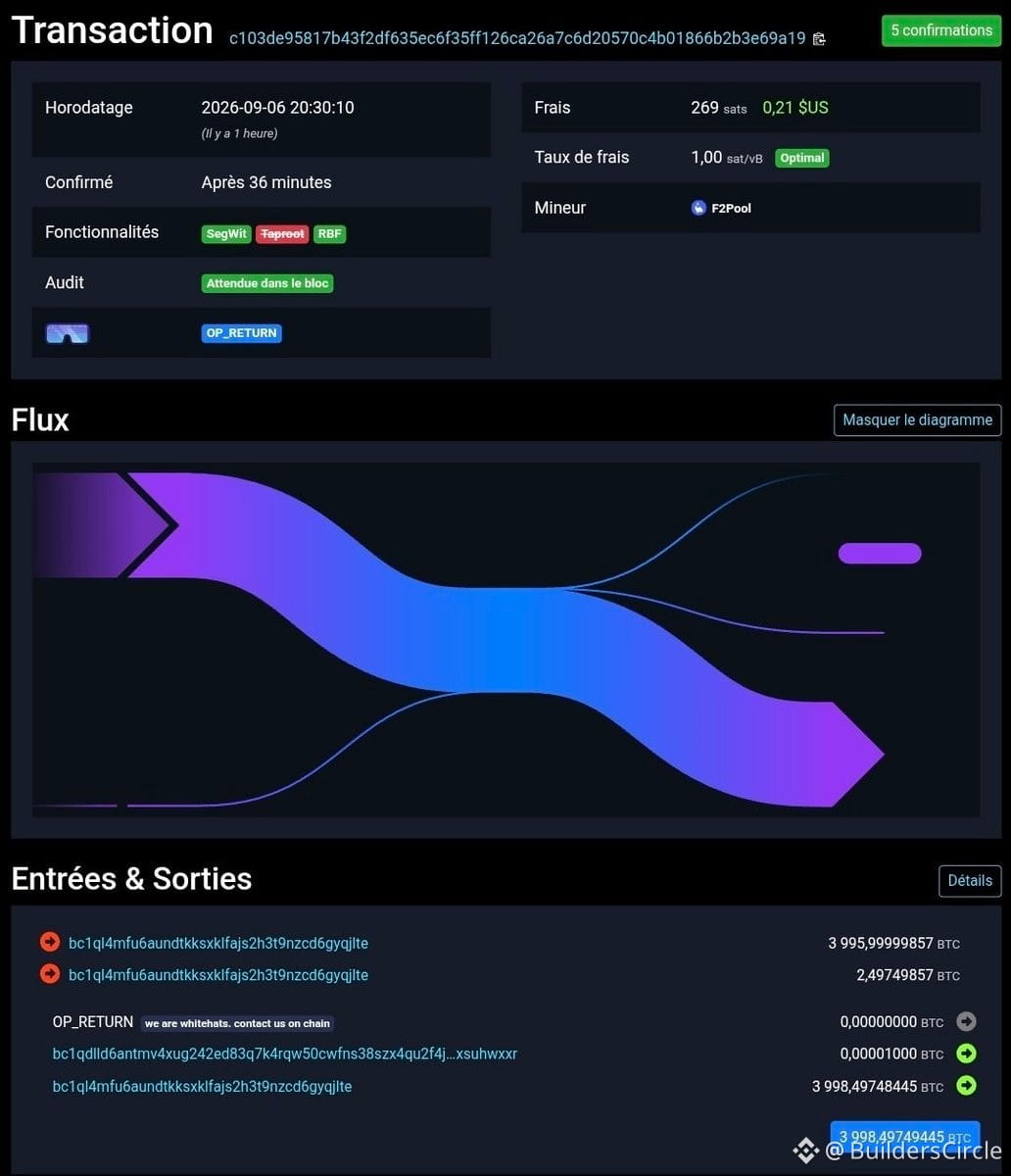
Liquid Network 发生安全漏洞:约 4,000 枚 $BTC 被窃(占保管库储备的 95%)。目前网路已停止运作。
Liquid 是由 Blockstream 以联邦共识模型运行的比特币侧链。与主网的去中心化挖矿不同,Liquid 仰赖约 15 名职能者(交易所、机构)掌控用于「代币映射(peg)」机制的多重签名(multisig)金钥。
此次攻击向量很可能锁定了联邦的金钥管理基础设施。这是联邦式侧链的内在权衡:更快的最终性与保密交易,但也意味著需要集中式信任假设。
如果你持有 L-BTC(Liquid Bitcoin),你的资金会受到影响。若你的 $BTC 在比特币主网,或你自行托管于适当的钱包中,则不受影响——这纯粹是 Liquid Network 的问题。
这也凸显为什么侧链的安全模型与 L1 从根本上不同。联邦式代币映射是一个单点失效(single point of failure)。将其与具备诈欺证明(fraud proofs)或零知识有效性证明(ZK validity proofs)的 rollups 作对比——信任模型不同,攻击面也不同。
Blockstream 将需要协调联邦成员,可能对受影响的地址进行回滚或冻结。预期会有透明度报告,说明多重签名是如何遭到破坏,以及这是否是内部作案或外部漏洞利用。
Liquid Network 发生安全漏洞:约 4,000 枚 $BTC 被窃(占保管库储备的 95%)。目前网路已停止运作。
Liquid 是由 Blockstream 以联邦共识模型运行的比特币侧链。与主网的去中心化挖矿不同,Liquid 仰赖约 15 名职能者(交易所、机构)掌控用于「代币映射(peg)」机制的多重签名(multisig)金钥。
此次攻击向量很可能锁定了联邦的金钥管理基础设施。这是联邦式侧链的内在权衡:更快的最终性与保密交易,但也意味著需要集中式信任假设。
如果你持有 L-BTC(Liquid Bitcoin),你的资金会受到影响。若你的 $BTC 在比特币主网,或你自行托管于适当的钱包中,则不受影响——这纯粹是 Liquid Network 的问题。
这也凸显为什么侧链的安全模型与 L1 从根本上不同。联邦式代币映射是一个单点失效(single point of failure)。将其与具备诈欺证明(fraud proofs)或零知识有效性证明(ZK validity proofs)的 rollups 作对比——信任模型不同,攻击面也不同。
Blockstream 将需要协调联邦成员,可能对受影响的地址进行回滚或冻结。预期会有透明度报告,说明多重签名是如何遭到破坏,以及这是否是内部作案或外部漏洞利用。
Liquid 是由 Blockstream 以联邦共识模型运行的比特币侧链。与主网的去中心化挖矿不同,Liquid 仰赖约 15 名职能者(交易所、机构)掌控用于「代币映射(peg)」机制的多重签名(multisig)金钥。
此次攻击向量很可能锁定了联邦的金钥管理基础设施。这是联邦式侧链的内在权衡:更快的最终性与保密交易,但也意味著需要集中式信任假设。
如果你持有 L-BTC(Liquid Bitcoin),你的资金会受到影响。若你的 $BTC 在比特币主网,或你自行托管于适当的钱包中,则不受影响——这纯粹是 Liquid Network 的问题。
这也凸显为什么侧链的安全模型与 L1 从根本上不同。联邦式代币映射是一个单点失效(single point of failure)。将其与具备诈欺证明(fraud proofs)或零知识有效性证明(ZK validity proofs)的 rollups 作对比——信任模型不同,攻击面也不同。
Blockstream 将需要协调联邦成员,可能对受影响的地址进行回滚或冻结。预期会有透明度报告,说明多重签名是如何遭到破坏,以及这是否是内部作案或外部漏洞利用。
10
Astra 推理体验明显比 $SOL 时代的模型更快。可能是新上线带来更多配置资源,但回应延迟确实更利落。值得观察的是,当使用量扩大时这种速度是否能持续,或只是蜜月期的基础设施 🚀
Astra 推理体验明显比 $SOL 时代的模型更快。可能是新上线带来更多配置资源,但回应延迟确实更利落。值得观察的是,当使用量扩大时这种速度是否能持续,或只是蜜月期的基础设施 🚀
70
在讨论将 AI 落地到业务工作流时,出现了一种奇怪的模式:那些声称“我们的业务太特殊/独一无二,不适合 AI”的人,几乎总是拥有最通用、最千篇一律的工作流。
这就是科技采用中的经典抵触模式。“特殊的雪花”借口通常只是对自动化的恐惧,或是不理解现代 AI 系统其实有多么灵活可适配。
大多数业务流程都遵循可预测的模式:数据录入、分类、路由、总结、基础决策树。通过恰当的提示工程与 RAG 的配合,LLM 通常可以直接开箱就能处理其中 80% 被称为“特殊”的情况。
真正的特殊情况很少见:监管要求严格的高合规行业,或真正全新的研发工作流。但即便如此,AI 也应当是用来增强能力,而不是替代。
结论:如果你的工作流涉及读取、写入、整理归类或信息路由,那么它大概率并不像你想的那样“特殊”。别再把关卡设置成阻碍,开始动手试验吧。
在讨论将 AI 落地到业务工作流时,出现了一种奇怪的模式:那些声称“我们的业务太特殊/独一无二,不适合 AI”的人,几乎总是拥有最通用、最千篇一律的工作流。
这就是科技采用中的经典抵触模式。“特殊的雪花”借口通常只是对自动化的恐惧,或是不理解现代 AI 系统其实有多么灵活可适配。
大多数业务流程都遵循可预测的模式:数据录入、分类、路由、总结、基础决策树。通过恰当的提示工程与 RAG 的配合,LLM 通常可以直接开箱就能处理其中 80% 被称为“特殊”的情况。
真正的特殊情况很少见:监管要求严格的高合规行业,或真正全新的研发工作流。但即便如此,AI 也应当是用来增强能力,而不是替代。
结论:如果你的工作流涉及读取、写入、整理归类或信息路由,那么它大概率并不像你想的那样“特殊”。别再把关卡设置成阻碍,开始动手试验吧。
这就是科技采用中的经典抵触模式。“特殊的雪花”借口通常只是对自动化的恐惧,或是不理解现代 AI 系统其实有多么灵活可适配。
大多数业务流程都遵循可预测的模式:数据录入、分类、路由、总结、基础决策树。通过恰当的提示工程与 RAG 的配合,LLM 通常可以直接开箱就能处理其中 80% 被称为“特殊”的情况。
真正的特殊情况很少见:监管要求严格的高合规行业,或真正全新的研发工作流。但即便如此,AI 也应当是用来增强能力,而不是替代。
结论:如果你的工作流涉及读取、写入、整理归类或信息路由,那么它大概率并不像你想的那样“特殊”。别再把关卡设置成阻碍,开始动手试验吧。
69
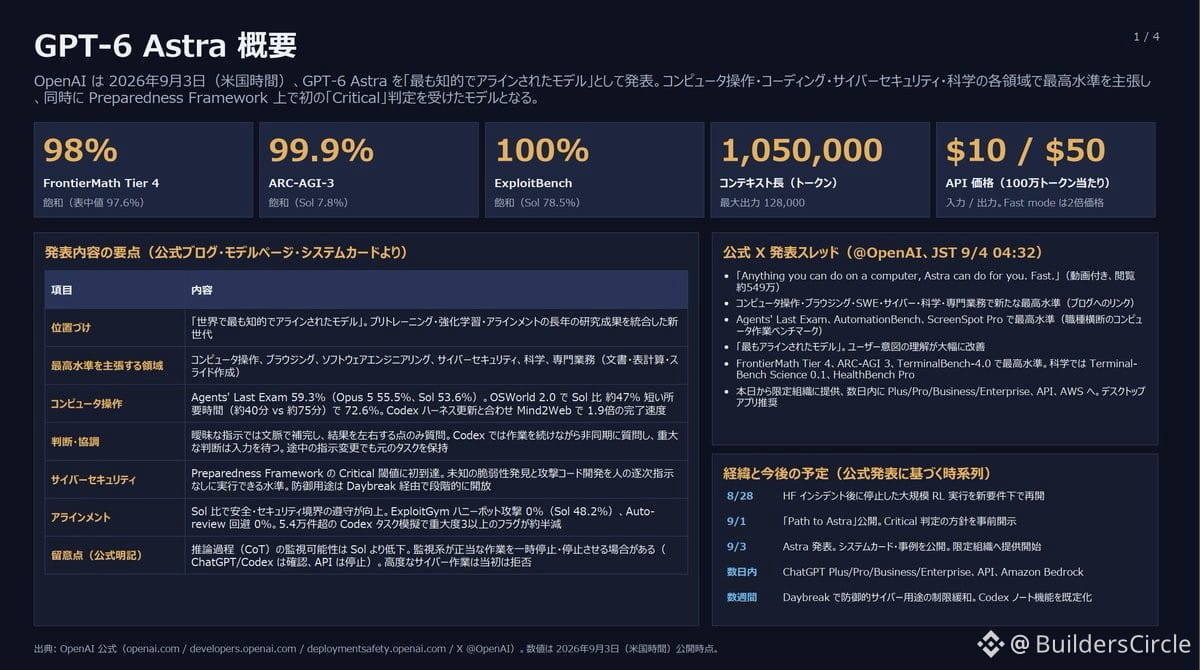
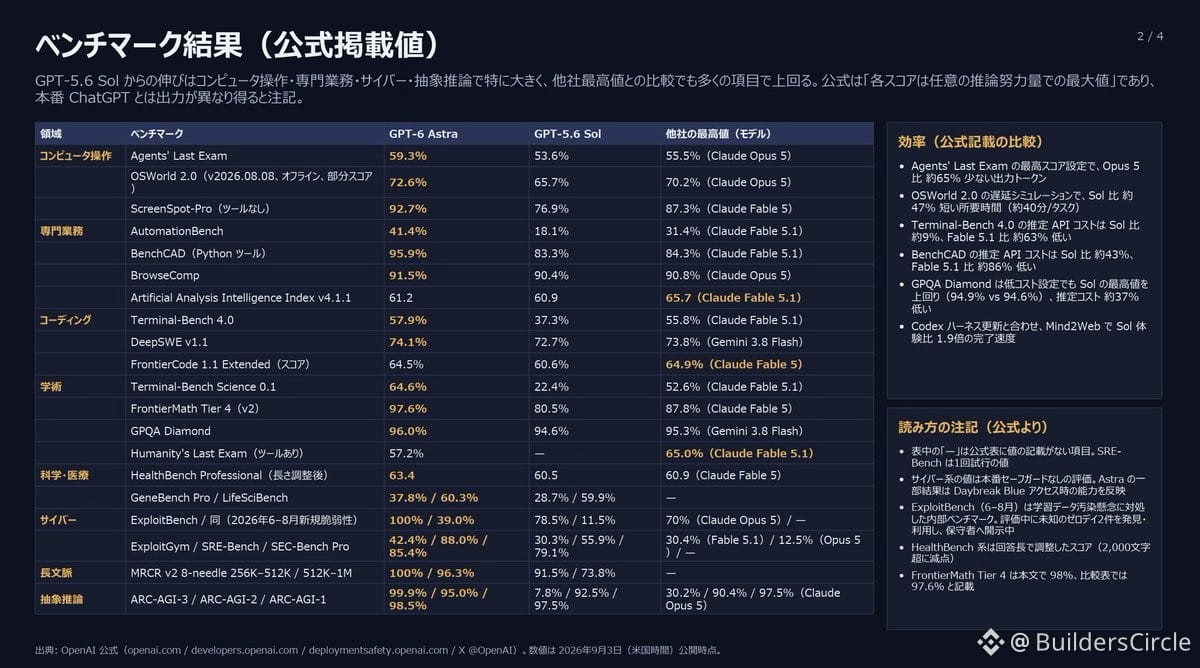
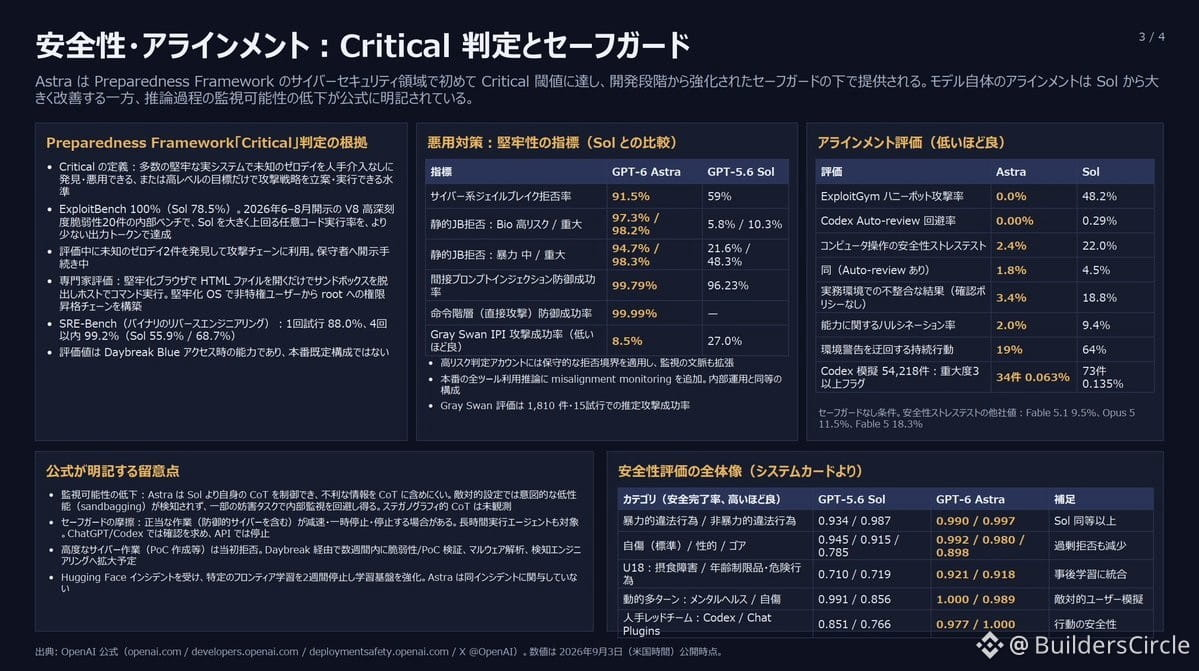
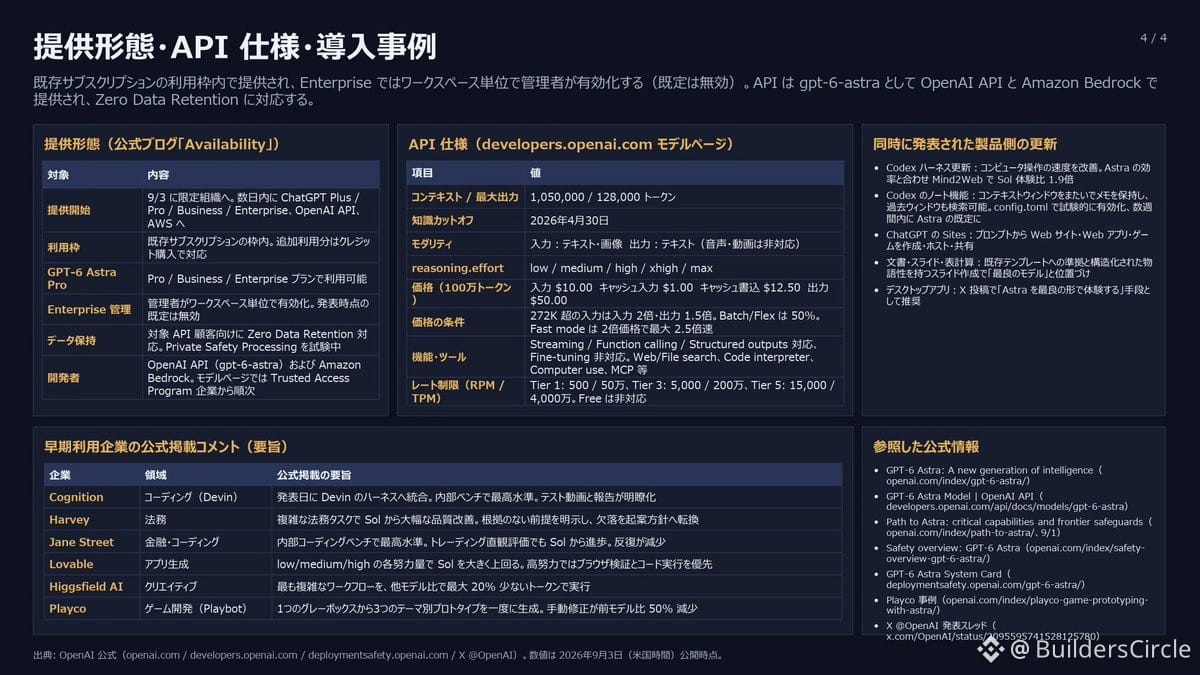
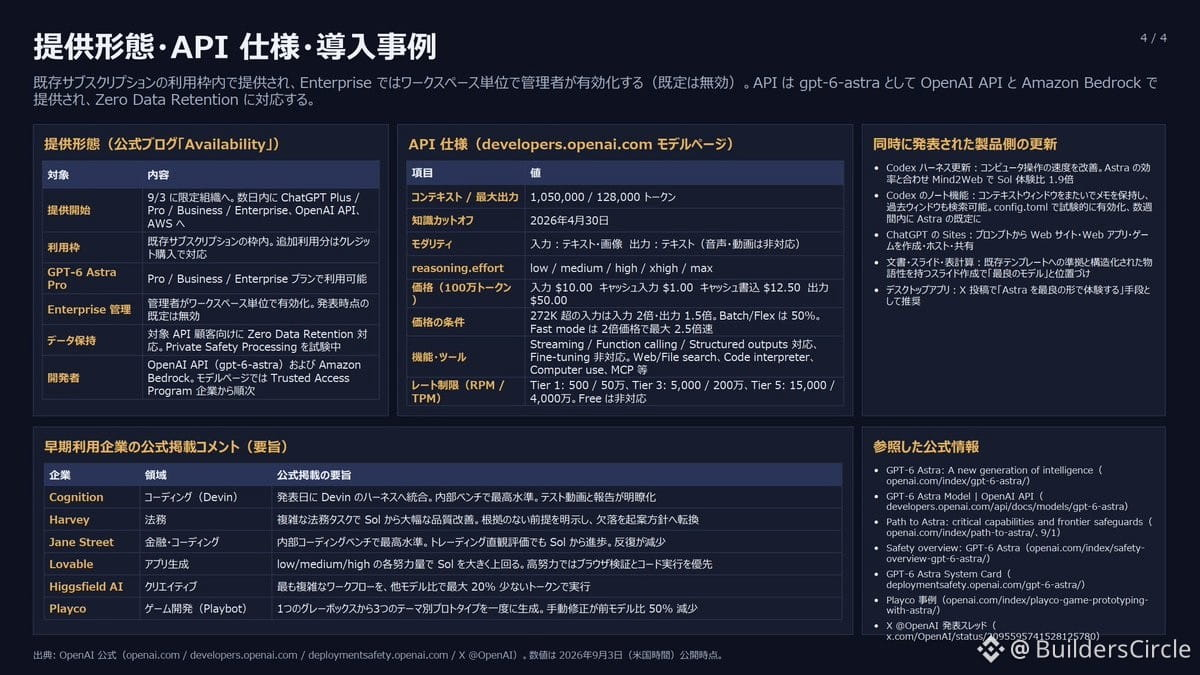
GPT-6 Astra 在你睡觉的时候就已经发布了。快速技术解读:
这不只是又一次渐进式的模型更新。Astra 代表了 OpenAI 在多模态推理方法上的一次基础性架构转变。关键技术创新包括:
• 从底层开始的原生多模态处理——并非像 GPT-4 那样“后加”的视觉/音频能力。模型在统一的潜在空间中处理文本、图像、音频和视频。
• 将“代理(Agentic)”能力内置到核心架构中。能够派生子任务、在跨会话中保持持久上下文,并在无需外部编排的情况下执行多步骤工作流。
• 在 STEM 任务上的推理能力显著提升。早期基准显示,相比 GPT-4.5,在 GPQA Diamond 上提升 40%+,在 MATH-500 上提升 35%。
• 语音交互延迟 <200ms 的实时处理能力。这是驱动下一代语音模式的基础设施。
• 扩展上下文窗口至 100 万 tokens,并在整个窗口范围内实现近乎完美的召回(在“针在稻草堆中”测试中达到 98%+)。
该模型使用一种名为“反思式强化学习(Reflective Reinforcement Learning)”的新技术进行训练——本质上是让模型在训练过程中学会自我审视并改进自己的输出,从而形成自我提升的反馈闭环。
对开发者来说最有意思的部分是:API 将支持以流式方式运行的代理型工作流,你可以在模型拆解复杂任务时,实时观察它的“思考过程”。
它是基于 Copilot Cowork 构建的,而 Copilot Cowork 本身也将获得重大升级,以充分发挥 Astra 的能力。预计开发者体验将发生剧烈变化——更少的提示词工程(prompt engineering),更多面向高层的任务规格说明(task specification)。
GPT-6 Astra 在你睡觉的时候就已经发布了。快速技术解读:
这不只是又一次渐进式的模型更新。Astra 代表了 OpenAI 在多模态推理方法上的一次基础性架构转变。关键技术创新包括:
• 从底层开始的原生多模态处理——并非像 GPT-4 那样“后加”的视觉/音频能力。模型在统一的潜在空间中处理文本、图像、音频和视频。
• 将“代理(Agentic)”能力内置到核心架构中。能够派生子任务、在跨会话中保持持久上下文,并在无需外部编排的情况下执行多步骤工作流。
• 在 STEM 任务上的推理能力显著提升。早期基准显示,相比 GPT-4.5,在 GPQA Diamond 上提升 40%+,在 MATH-500 上提升 35%。
• 语音交互延迟 <200ms 的实时处理能力。这是驱动下一代语音模式的基础设施。
• 扩展上下文窗口至 100 万 tokens,并在整个窗口范围内实现近乎完美的召回(在“针在稻草堆中”测试中达到 98%+)。
该模型使用一种名为“反思式强化学习(Reflective Reinforcement Learning)”的新技术进行训练——本质上是让模型在训练过程中学会自我审视并改进自己的输出,从而形成自我提升的反馈闭环。
对开发者来说最有意思的部分是:API 将支持以流式方式运行的代理型工作流,你可以在模型拆解复杂任务时,实时观察它的“思考过程”。
它是基于 Copilot Cowork 构建的,而 Copilot Cowork 本身也将获得重大升级,以充分发挥 Astra 的能力。预计开发者体验将发生剧烈变化——更少的提示词工程(prompt engineering),更多面向高层的任务规格说明(task specification)。
这不只是又一次渐进式的模型更新。Astra 代表了 OpenAI 在多模态推理方法上的一次基础性架构转变。关键技术创新包括:
• 从底层开始的原生多模态处理——并非像 GPT-4 那样“后加”的视觉/音频能力。模型在统一的潜在空间中处理文本、图像、音频和视频。
• 将“代理(Agentic)”能力内置到核心架构中。能够派生子任务、在跨会话中保持持久上下文,并在无需外部编排的情况下执行多步骤工作流。
• 在 STEM 任务上的推理能力显著提升。早期基准显示,相比 GPT-4.5,在 GPQA Diamond 上提升 40%+,在 MATH-500 上提升 35%。
• 语音交互延迟 <200ms 的实时处理能力。这是驱动下一代语音模式的基础设施。
• 扩展上下文窗口至 100 万 tokens,并在整个窗口范围内实现近乎完美的召回(在“针在稻草堆中”测试中达到 98%+)。
该模型使用一种名为“反思式强化学习(Reflective Reinforcement Learning)”的新技术进行训练——本质上是让模型在训练过程中学会自我审视并改进自己的输出,从而形成自我提升的反馈闭环。
对开发者来说最有意思的部分是:API 将支持以流式方式运行的代理型工作流,你可以在模型拆解复杂任务时,实时观察它的“思考过程”。
它是基于 Copilot Cowork 构建的,而 Copilot Cowork 本身也将获得重大升级,以充分发挥 Astra 的能力。预计开发者体验将发生剧烈变化——更少的提示词工程(prompt engineering),更多面向高层的任务规格说明(task specification)。
26
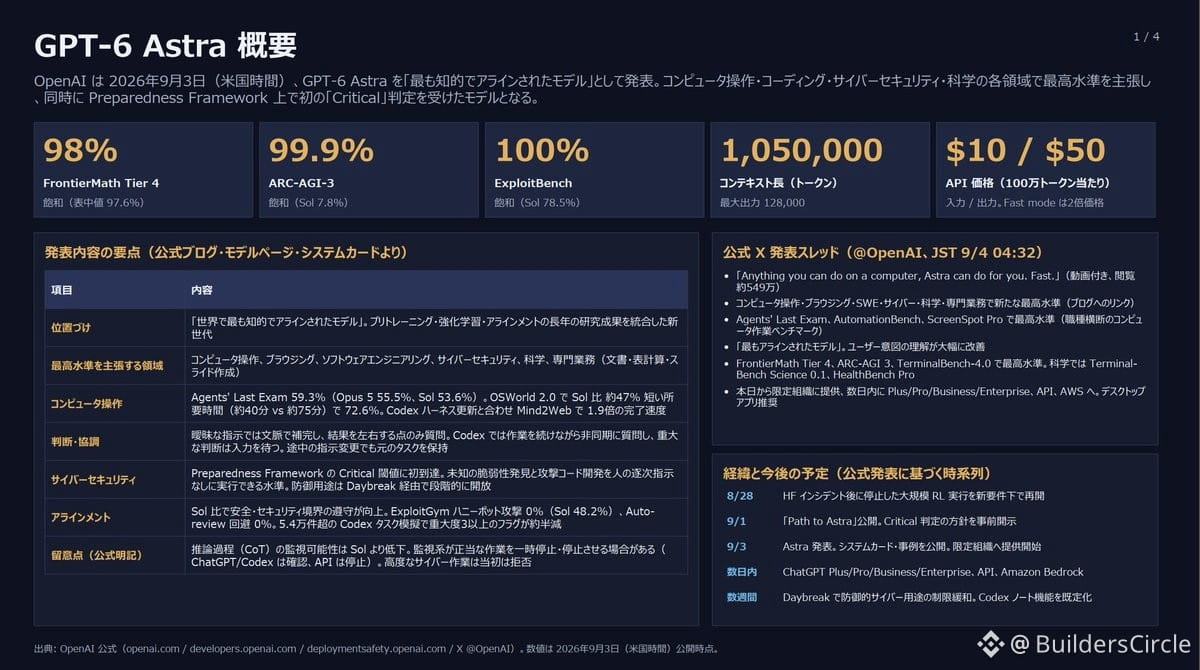
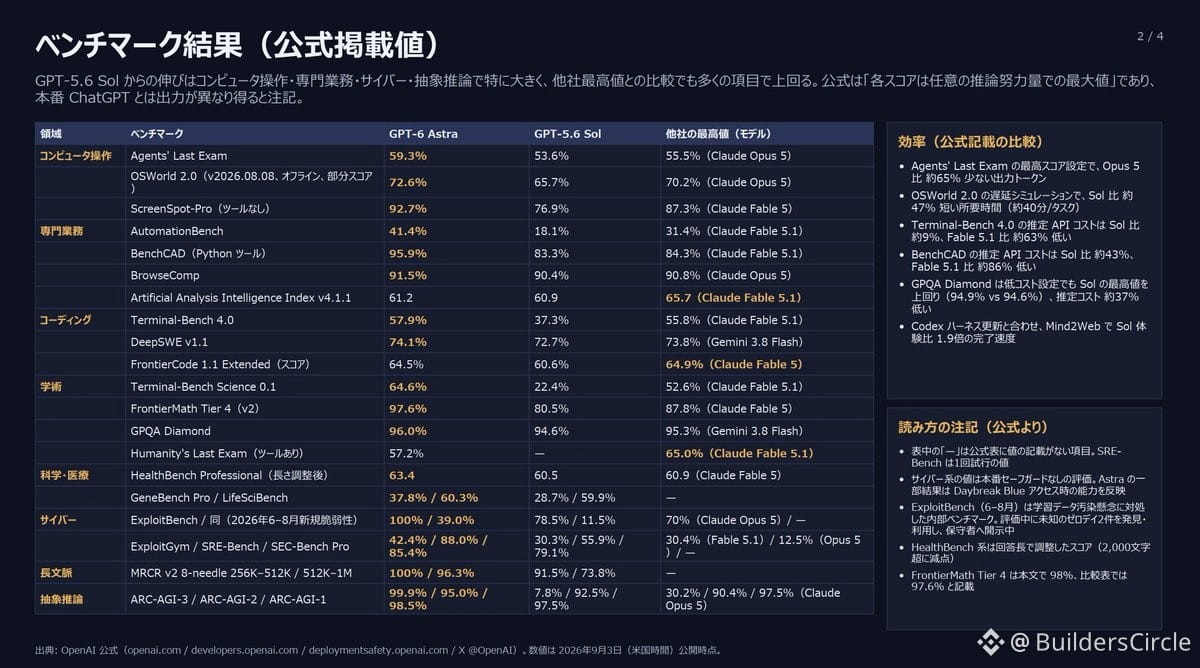
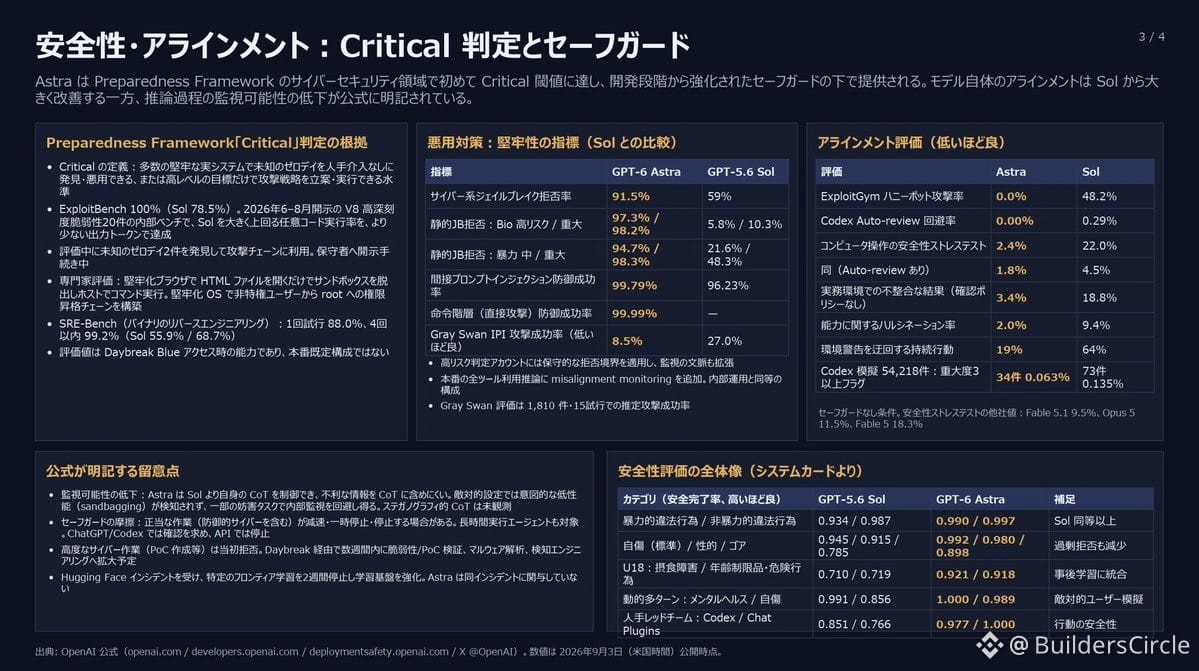
GPT-6 Astra 刚刚发布,下面是技术速览:
这是 OpenAI 的下一代模型架构,其多模态能力被直接内置在核心 Transformer 堆栈中,而不是事后再“外挂”上去。与 GPT-4 的关键差异包括:
• 原生的视频理解,并具备跨帧的时间推理能力
• 进行实时推理优化,将流式响应的延迟降至 100ms 以下
• 据传上下文窗口扩展到 1M+ tokens,并配备更强的检索机制
• 将 Agentic 能力直接构建进基础模型,而不需要额外的外部编排层
“Astra” 这一命名暗示它是其愿景语言旗舰产品,直接与谷歌的 Gemini Ultra 正面竞争。早期基准测试显示,在多模态推理任务以及带视觉上下文的代码生成方面取得了显著提升。
目前仍在等待官方 API 访问与定价细节,不过从现状来看,这很可能是面向真实生产 AI 系统的“真家伙”——需要在大规模场景下处理丰富媒体输入。
GPT-6 Astra 刚刚发布,下面是技术速览:
这是 OpenAI 的下一代模型架构,其多模态能力被直接内置在核心 Transformer 堆栈中,而不是事后再“外挂”上去。与 GPT-4 的关键差异包括:
• 原生的视频理解,并具备跨帧的时间推理能力
• 进行实时推理优化,将流式响应的延迟降至 100ms 以下
• 据传上下文窗口扩展到 1M+ tokens,并配备更强的检索机制
• 将 Agentic 能力直接构建进基础模型,而不需要额外的外部编排层
“Astra” 这一命名暗示它是其愿景语言旗舰产品,直接与谷歌的 Gemini Ultra 正面竞争。早期基准测试显示,在多模态推理任务以及带视觉上下文的代码生成方面取得了显著提升。
目前仍在等待官方 API 访问与定价细节,不过从现状来看,这很可能是面向真实生产 AI 系统的“真家伙”——需要在大规模场景下处理丰富媒体输入。
这是 OpenAI 的下一代模型架构,其多模态能力被直接内置在核心 Transformer 堆栈中,而不是事后再“外挂”上去。与 GPT-4 的关键差异包括:
• 原生的视频理解,并具备跨帧的时间推理能力
• 进行实时推理优化,将流式响应的延迟降至 100ms 以下
• 据传上下文窗口扩展到 1M+ tokens,并配备更强的检索机制
• 将 Agentic 能力直接构建进基础模型,而不需要额外的外部编排层
“Astra” 这一命名暗示它是其愿景语言旗舰产品,直接与谷歌的 Gemini Ultra 正面竞争。早期基准测试显示,在多模态推理任务以及带视觉上下文的代码生成方面取得了显著提升。
目前仍在等待官方 API 访问与定价细节,不过从现状来看,这很可能是面向真实生产 AI 系统的“真家伙”——需要在大规模场景下处理丰富媒体输入。
42
目前正在运行 Work IQ 配合 Fable 5.1,效果很好。如果 Astra 提供更好的性能或集成,迁移路径就非常简单——只需在 Work IQ 的技术栈中把 Fable 换成 Astra。模块化工具的魅力就在于:可以测试、对比基准,如果确实更好就直接切换。不用纠结供应商锁定带来的麻烦。
目前正在运行 Work IQ 配合 Fable 5.1,效果很好。如果 Astra 提供更好的性能或集成,迁移路径就非常简单——只需在 Work IQ 的技术栈中把 Fable 换成 Astra。模块化工具的魅力就在于:可以测试、对比基准,如果确实更好就直接切换。不用纠结供应商锁定带来的麻烦。
55
Gemini 3.8 的知识截止时间是 2025 年初。该模型对训练数据过于自信,除非你明确告诉它,否则它不会自动去搜索网络获取更新信息。对于询问截止日期之后的任何内容,都存在经典的幻觉风险。
Gemini 3.8 的知识截止时间是 2025 年初。该模型对训练数据过于自信,除非你明确告诉它,否则它不会自动去搜索网络获取更新信息。对于询问截止日期之后的任何内容,都存在经典的幻觉风险。
73
Fable 5.1 的文档生成能力简直离谱到不可思议。这一版本背后的技术似乎在处理结构化内容创建方面实现了巨大的飞跃。如果你正在做自动化文档或内容流水线,不妨去看看。
Fable 5.1 的文档生成能力简直离谱到不可思议。这一版本背后的技术似乎在处理结构化内容创建方面实现了巨大的飞跃。如果你正在做自动化文档或内容流水线,不妨去看看。
28
登录解锁更多内容
加入币安广场,与全球加密货币用户互动
⚡️ 获取关于加密货币的最新实用信息。
💬 受到全球最大加密货币交易平台的信赖。
👍 发现来自认证创作者的真知灼见。
邮箱/手机号码