
Modern day woman
136 个内容

Modern day woman
举报
屏蔽用户
Web3 writer and content creator
I create content for a living
0 关注
7 粉丝
28 点赞
帖子
查看翻译
$CCD
Proving who you are online shouldn’t mean handing over your personal documents every time.
Concordium takes a different approach by separating identity verification from the blockchain. Independent Identity Providers verify users, while zero-knowledge proofs make it possible to confirm specific information without exposing the details behind it.
You can prove what a platform needs to know without giving it access to everything else.
That’s a much better direction for digital identity.
#Concordium #DigitalIdentity #ZKP
77
查看翻译
$CCD
One thing I appreciate about Concordium’s identity model is that the blockchain doesn’t have to handle everything.
Independent Identity Providers verify users’ identities, while Concordium provides the infrastructure for privacy-preserving verification.
This separation matters. Your passport details don’t need to live on-chain, and you don’t have to keep exposing your documents every time you need to prove something.
A more thoughtful approach to digital identity.
#Concordium #DigitalIdentity #Privacy
查看翻译
$CCD
Proving your age online shouldn’t mean sharing your entire identity.
With zero-knowledge proofs, Concordium makes it possible to verify specific information without exposing the personal details behind it.
It’s a more thoughtful approach to digital identity, where businesses can verify what they need and individuals can keep their private information protected.
You should be able to prove what matters without sharing everything.
#Concordium #ZKP #DigitalPrivacy
67
查看翻译
$CCD
Digital identity shouldn’t come at the cost of personal privacy.
Think about how often people share their passports, full names and dates of birth just to prove one specific thing about themselves.
Concordium is taking a different approach with its identity layer and zero-knowledge proofs.
Users can verify their identity through an independent Identity Provider and later prove specific information, such as being above 18, without exposing their underlying personal details.
This creates room for a better balance between what businesses need to verify and what individuals deserve to keep private.
I believe this is an important direction for digital identity.
Prove what matters. Keep the rest private.
#Concordium #ZKP #DigitalIdentity #Privacy
66
查看翻译
$CCD
We’re entering a phase where AI agents won’t just be responding to prompts. They’ll be interacting with other agents, accessing services, making payments and carrying out tasks on behalf of people and businesses.
But there’s something we need to think about.
When one agent interacts with another, how does it know there’s a real, verified entity behind the system it’s dealing with?
This is why I find Concordium’s Agent Registry particularly interesting.
It goes beyond giving an AI agent a name or an on-chain profile. It creates a connection between the agent and a verified human or business responsible for it.
Through the Verified by Concordium Badge, that verification can be checked without publicly exposing the owner’s personal information.
I think this will become increasingly valuable as the agentic economy develops. Trust between autonomous systems cannot depend entirely on what an agent claims about itself.
There needs to be something verifiable behind that claim.
And that’s the kind of foundation Concordium is working to establish.
54
查看翻译
$CCD
Building on Ethereum, Solana or another blockchain doesn’t mean you should have to start all over to access better identity infrastructure.
That’s one thing I appreciate about Concordium’s approach.
Projects can integrate its identity layer while continuing to operate within their existing ecosystems.
This is particularly important as AI agents become more active across multiple networks. They need a way to prove who stands behind them, regardless of where they operate.
Concordium is making identity verification more accessible across chain boundaries, without forcing developers to migrate their entire projects.
Different chains, shared access to verifiable identity.
That’s the kind of interoperability the agentic economy needs.
#Concordium #Blockchain #Web3 #AI
55
查看翻译
$CCD
Creating AI agents is becoming easier, and that’s exciting. But it also introduces a challenge we shouldn’t overlook.
What happens when a malicious agent gets blocked? Its creator can simply deploy another one. Without a way to connect that agent to an accountable owner, the problem keeps repeating.
This is why identity matters in the growing agent economy.
Concordium is building infrastructure that links AI agents to verified individuals and businesses while keeping their personal information private.
So we’re not just talking about identifying an agent. We’re talking about knowing who stands behind it when something goes wrong.
AI can operate independently, but accountability shouldn’t disappear.
#Concordium #AI #Blockchain #AgenticEconomy
71
查看翻译
$CCD
Something I find interesting about the growth of AI agents is how quickly we’re giving them the ability to move money.
With x402, agents can pay for services and complete transactions without going through the usual payment forms or sign-up processes.
That’s a huge step for the internet economy.
But there’s another side to this. If an agent can make thousands of transactions, what happens when something goes wrong? Who is responsible? And how do we know the person or business behind it?
Concordium is working on this identity gap by connecting agents to verified owners while using zero-knowledge proofs to protect their private information.
I think this is an important part of making agentic commerce work at scale.
We need to make it easy for AI agents to transact, but we also need to know who’s behind those transactions.
Payment gives agents the ability to act. Identity gives those actions accountability.
61
查看翻译
$CCD
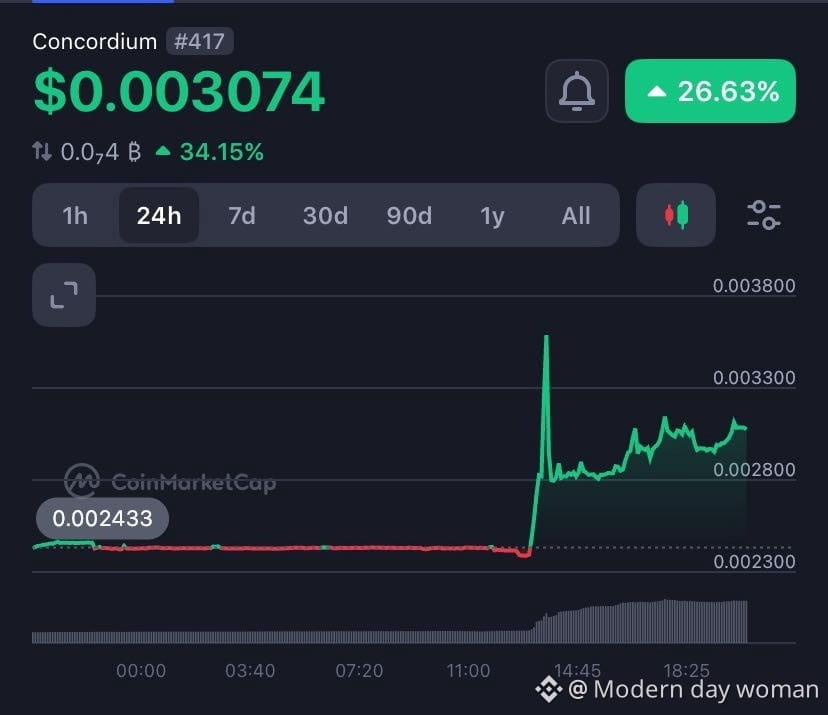
$CCD is making moves! A 26% gain in 24 hours is exciting to see, but there’s a bigger story behind the growing attention.
Concordium has been building steadily around one of the biggest opportunities in Web3: the agentic economy.
From the growing Agent Registry and Verified by Concordium Badge to x402 payments and cross-chain identity verification, the ecosystem is taking important steps towards making AI agents more trustworthy and accountable.
Town Hall #6 also brought exciting updates, including the upcoming Agent Kit, Protocol-Level Locks and 75 million CCD in builder grants.
It’s encouraging to see the technology, partnerships and developer opportunities coming together.
There’s a lot happening in the Concordium ecosystem, and I’m excited about what’s ahead.
#Concordium #CCD #Blockchain #AI
$CCD
AI 代理可以付款、执行交易并与平台互动。
但谁该为它们的行为负责?
这是 Concordium Town Hall #6 的重要讨论之一。
随著代理经济日益发展,确认 AI 代理背后的负责者,与了解代理能做什么同样重要。
Concordium 正在建置身分识别基础设施,让这一切成为可能,同时保护个人资讯。
未来需要智慧代理,也需要问责机制。
#Concordium #AI #代理经济
$CCD
AI 代理可以付款、执行交易并与平台互动。
但谁该为它们的行为负责?
这是 Concordium Town Hall #6 的重要讨论之一。
随著代理经济日益发展,确认 AI 代理背后的负责者,与了解代理能做什么同样重要。
Concordium 正在建置身分识别基础设施,让这一切成为可能,同时保护个人资讯。
未来需要智慧代理,也需要问责机制。
#Concordium #AI #代理经济
AI 代理可以付款、执行交易并与平台互动。
但谁该为它们的行为负责?
这是 Concordium Town Hall #6 的重要讨论之一。
随著代理经济日益发展,确认 AI 代理背后的负责者,与了解代理能做什么同样重要。
Concordium 正在建置身分识别基础设施,让这一切成为可能,同时保护个人资讯。
未来需要智慧代理,也需要问责机制。
#Concordium #AI #代理经济
$CCD
币安遭骇事件再次让一项重要议题受到关注:加密货币需要的不只是安全的钱包和快速的交易,也需要更好的方式,在出问题时追究责任。
Concordium 透过协定层级的身分识别来应对这项挑战,将帐户连结至经验证的身分,同时以零知识证明保护使用者的个人资讯。
其协定层级代币也为发行者提供内建控管功能,例如暂停、允许清单和封锁清单。
随著数位资产持续在不同网路和平台间流通,打造兼顾隐私、透明度与问责性的基础架构将日益重要。
隐私与问责性可以并存。Concordium 正以此为核心原则,打造相关技术。
$CCD
币安遭骇事件再次让一项重要议题受到关注:加密货币需要的不只是安全的钱包和快速的交易,也需要更好的方式,在出问题时追究责任。
Concordium 透过协定层级的身分识别来应对这项挑战,将帐户连结至经验证的身分,同时以零知识证明保护使用者的个人资讯。
其协定层级代币也为发行者提供内建控管功能,例如暂停、允许清单和封锁清单。
随著数位资产持续在不同网路和平台间流通,打造兼顾隐私、透明度与问责性的基础架构将日益重要。
隐私与问责性可以并存。Concordium 正以此为核心原则,打造相关技术。
币安遭骇事件再次让一项重要议题受到关注:加密货币需要的不只是安全的钱包和快速的交易,也需要更好的方式,在出问题时追究责任。
Concordium 透过协定层级的身分识别来应对这项挑战,将帐户连结至经验证的身分,同时以零知识证明保护使用者的个人资讯。
其协定层级代币也为发行者提供内建控管功能,例如暂停、允许清单和封锁清单。
随著数位资产持续在不同网路和平台间流通,打造兼顾隐私、透明度与问责性的基础架构将日益重要。
隐私与问责性可以并存。Concordium 正以此为核心原则,打造相关技术。
75
$CCD
AI 代理能透过行动证明自己能做什么,但要证明它背后是谁,则是另一回事。
Concordium 与 XDC AI 的整合,将身分验证带入生态系,同时不必要求代理改变其运作的平台,借此填补这项缺口。
透过「Concordium 验证」徽章,使用者可以确认代理是否与已验证的拥有者有所关联,而无须揭露个人资料。
这并不能保证代理会有良好的行为,但能让人们有所依据、亲自验证,而不是只能相信承诺。
AI 代理基础设施需要有成长的空间,而身分验证不应意味著一切都得从头开始。
$CCD
AI 代理能透过行动证明自己能做什么,但要证明它背后是谁,则是另一回事。
Concordium 与 XDC AI 的整合,将身分验证带入生态系,同时不必要求代理改变其运作的平台,借此填补这项缺口。
透过「Concordium 验证」徽章,使用者可以确认代理是否与已验证的拥有者有所关联,而无须揭露个人资料。
这并不能保证代理会有良好的行为,但能让人们有所依据、亲自验证,而不是只能相信承诺。
AI 代理基础设施需要有成长的空间,而身分验证不应意味著一切都得从头开始。
AI 代理能透过行动证明自己能做什么,但要证明它背后是谁,则是另一回事。
Concordium 与 XDC AI 的整合,将身分验证带入生态系,同时不必要求代理改变其运作的平台,借此填补这项缺口。
透过「Concordium 验证」徽章,使用者可以确认代理是否与已验证的拥有者有所关联,而无须揭露个人资料。
这并不能保证代理会有良好的行为,但能让人们有所依据、亲自验证,而不是只能相信承诺。
AI 代理基础设施需要有成长的空间,而身分验证不应意味著一切都得从头开始。
78
$CCD
AI 智能代理可以进行交易并与人互动,但谁是它们背后的操作者?
透过 Concordium 与 XDC AI 的整合,智能代理可以在不泄露个人资讯,也不改变运作地点的情况下,与其所有者建立可验证的连结。
「Verified by Concordium」徽章增添了一层重要的问责机制,但并不保证智能代理的行为。
随著 AI 智能代理承担更多责任,在不牺牲隐私的前提下验证所有权,变得愈发重要。
$CCD
AI 智能代理可以进行交易并与人互动,但谁是它们背后的操作者?
透过 Concordium 与 XDC AI 的整合,智能代理可以在不泄露个人资讯,也不改变运作地点的情况下,与其所有者建立可验证的连结。
「Verified by Concordium」徽章增添了一层重要的问责机制,但并不保证智能代理的行为。
随著 AI 智能代理承担更多责任,在不牺牲隐私的前提下验证所有权,变得愈发重要。
AI 智能代理可以进行交易并与人互动,但谁是它们背后的操作者?
透过 Concordium 与 XDC AI 的整合,智能代理可以在不泄露个人资讯,也不改变运作地点的情况下,与其所有者建立可验证的连结。
「Verified by Concordium」徽章增添了一层重要的问责机制,但并不保证智能代理的行为。
随著 AI 智能代理承担更多责任,在不牺牲隐私的前提下验证所有权,变得愈发重要。
59
$CCD
打造 AI 代理市集,不只是建立实用的代理。开发者也需要思考,使用者如何确认代理背后的拥有者身分。
但身分验证不应要求代理拥有者公开私人资讯。
Concordium 作为 XDC AI 专属的身分验证层,让开发者能在保护隐私的同时,将可验证的所有权引入 AI 生态系。
「Concordium 验证」徽章可协助使用者确认代理与已验证拥有者之间的关联,但不保证该代理会如何行为。
随著 AI 代理市集持续成长,妥善拿捏问责与隐私之间的平衡将至关重要。
$CCD
打造 AI 代理市集,不只是建立实用的代理。开发者也需要思考,使用者如何确认代理背后的拥有者身分。
但身分验证不应要求代理拥有者公开私人资讯。
Concordium 作为 XDC AI 专属的身分验证层,让开发者能在保护隐私的同时,将可验证的所有权引入 AI 生态系。
「Concordium 验证」徽章可协助使用者确认代理与已验证拥有者之间的关联,但不保证该代理会如何行为。
随著 AI 代理市集持续成长,妥善拿捏问责与隐私之间的平衡将至关重要。
打造 AI 代理市集,不只是建立实用的代理。开发者也需要思考,使用者如何确认代理背后的拥有者身分。
但身分验证不应要求代理拥有者公开私人资讯。
Concordium 作为 XDC AI 专属的身分验证层,让开发者能在保护隐私的同时,将可验证的所有权引入 AI 生态系。
「Concordium 验证」徽章可协助使用者确认代理与已验证拥有者之间的关联,但不保证该代理会如何行为。
随著 AI 代理市集持续成长,妥善拿捏问责与隐私之间的平衡将至关重要。
62
$CCD
打造 AI 代理市集,不只是要问「这些代理能做什么?」也要问「谁是它们背后的负责人?」
XDC AI 选择 Concordium 作为其独家的身分验证层,代理拥有者便能在保护自身身分隐私的同时,建立与代理之间可验证的连结。
「Verified by Concordium」徽章有助于验证所有权,但无法保证代理的行为。
随著 AI 代理承担更多责任,可验证的所有权与隐私必须并行
$CCD
打造 AI 代理市集,不只是要问「这些代理能做什么?」也要问「谁是它们背后的负责人?」
XDC AI 选择 Concordium 作为其独家的身分验证层,代理拥有者便能在保护自身身分隐私的同时,建立与代理之间可验证的连结。
「Verified by Concordium」徽章有助于验证所有权,但无法保证代理的行为。
随著 AI 代理承担更多责任,可验证的所有权与隐私必须并行
打造 AI 代理市集,不只是要问「这些代理能做什么?」也要问「谁是它们背后的负责人?」
XDC AI 选择 Concordium 作为其独家的身分验证层,代理拥有者便能在保护自身身分隐私的同时,建立与代理之间可验证的连结。
「Verified by Concordium」徽章有助于验证所有权,但无法保证代理的行为。
随著 AI 代理承担更多责任,可验证的所有权与隐私必须并行
61
$CCD
Concordium($CCD)在过去 30 天内上涨了 24.71%。
但除了价格走势,了解 CCD 在 Concordium 生态系统中的作用也很重要。
CCD 用于支付网络交易费用、支持质押以帮助保障网络安全,并在治理中发挥作用。
价格走势可能瞬息万变,但了解代币的实际用途,能让你获得比单看图表更全面的信息。
关注市场动态,也别忽略其背后的技术。
$CCD
Concordium($CCD)在过去 30 天内上涨了 24.71%。
但除了价格走势,了解 CCD 在 Concordium 生态系统中的作用也很重要。
CCD 用于支付网络交易费用、支持质押以帮助保障网络安全,并在治理中发挥作用。
价格走势可能瞬息万变,但了解代币的实际用途,能让你获得比单看图表更全面的信息。
关注市场动态,也别忽略其背后的技术。
Concordium($CCD)在过去 30 天内上涨了 24.71%。
但除了价格走势,了解 CCD 在 Concordium 生态系统中的作用也很重要。
CCD 用于支付网络交易费用、支持质押以帮助保障网络安全,并在治理中发挥作用。
价格走势可能瞬息万变,但了解代币的实际用途,能让你获得比单看图表更全面的信息。
关注市场动态,也别忽略其背后的技术。
55
$CCD
区块链可以处理成千上万笔交易,但当网络需要改变时,会发生什么?
这正是治理发挥重要作用的地方。
在 Concordium,$CCD 的作用不止于支付交易费。它还与网络治理息息相关,让持有者能够参与协议相关决策。
这很重要,因为区块链并非一成不变的产品。随着技术发展和新应用场景涌现,网络需要建立机制,为未来做出决策。
如果只从交易的角度看待代币,就会忽略这幅更大的图景。代币在网络中的作用,能让你更深入地了解生态系统如何设计,以及它将如何持续运作。
了解 $CCD 在治理方面的作用,能让你更全面地认识这个代币在 Concordium 中的实际用途。
#Concordium #CCD #Crypto #Blockchain
73
$CCD
我觉得 Concordium 有一点很有意思:让区块链更易于使用,并不意味着要降低其底层技术的重要性。
企业可以为交易手续费买单,这样用户无需先获取 $CCD,就能与应用交互。
与此同时,网络仍会处理这些交易,手续费也仍然以 CCD 支付。
这巧妙地区分了用户的使用体验与维持系统运行的机制。
最好的基础设施往往在幕后默默运作。人们可以使用产品,而不必了解背后的每一个技术细节。
我认为,这也是让区块链的实用性惠及那些还不熟悉加密货币的人们的重要一环。
$CCD
$CCD
我觉得 Concordium 有一点很有意思:让区块链更易于使用,并不意味着要降低其底层技术的重要性。
企业可以为交易手续费买单,这样用户无需先获取 $CCD,就能与应用交互。
与此同时,网络仍会处理这些交易,手续费也仍然以 CCD 支付。
这巧妙地区分了用户的使用体验与维持系统运行的机制。
最好的基础设施往往在幕后默默运作。人们可以使用产品,而不必了解背后的每一个技术细节。
我认为,这也是让区块链的实用性惠及那些还不熟悉加密货币的人们的重要一环。
$CCD
我觉得 Concordium 有一点很有意思:让区块链更易于使用,并不意味着要降低其底层技术的重要性。
企业可以为交易手续费买单,这样用户无需先获取 $CCD,就能与应用交互。
与此同时,网络仍会处理这些交易,手续费也仍然以 CCD 支付。
这巧妙地区分了用户的使用体验与维持系统运行的机制。
最好的基础设施往往在幕后默默运作。人们可以使用产品,而不必了解背后的每一个技术细节。
我认为,这也是让区块链的实用性惠及那些还不熟悉加密货币的人们的重要一环。
$CCD
35
$CCD
关于区块链代币,我觉得更多人应该问一个问题:
如果这个网络真的变得有用,会发生什么?
对于 Concordium 来说,网络活动越多,需要处理的交易就越多,而每笔交易都需要支付以 $CCD 计价的网络费用。
但交易费用只是其中一部分。验证者和委托者也会质押 CCD 来帮助保障网络安全,而 CCD 也在治理中发挥作用。
我感兴趣的是,这些功能让代币与网络的实际运作联系起来,而不是让它的用途止步于投机。
我认为,理解这种联系,比单纯看代币代码更能作为评估 $CCD 的良好起点。
$CCD
关于区块链代币,我觉得更多人应该问一个问题:
如果这个网络真的变得有用,会发生什么?
对于 Concordium 来说,网络活动越多,需要处理的交易就越多,而每笔交易都需要支付以 $CCD 计价的网络费用。
但交易费用只是其中一部分。验证者和委托者也会质押 CCD 来帮助保障网络安全,而 CCD 也在治理中发挥作用。
我感兴趣的是,这些功能让代币与网络的实际运作联系起来,而不是让它的用途止步于投机。
我认为,理解这种联系,比单纯看代币代码更能作为评估 $CCD 的良好起点。
关于区块链代币,我觉得更多人应该问一个问题:
如果这个网络真的变得有用,会发生什么?
对于 Concordium 来说,网络活动越多,需要处理的交易就越多,而每笔交易都需要支付以 $CCD 计价的网络费用。
但交易费用只是其中一部分。验证者和委托者也会质押 CCD 来帮助保障网络安全,而 CCD 也在治理中发挥作用。
我感兴趣的是,这些功能让代币与网络的实际运作联系起来,而不是让它的用途止步于投机。
我认为,理解这种联系,比单纯看代币代码更能作为评估 $CCD 的良好起点。
29
$CCD
了解代币在其中发挥作用的各项工作,才能更好地理解它的意义。
以 Concordium 为例。一笔交易需要得到处理,网络需要保持安全,同时还需要对协议作出决策。
$CCD 在这三方面都发挥着作用。
它用于支付网络费用,验证者和委托者会质押它来帮助保障链的安全,它也参与治理。
我觉得有意思的是,这些功能彼此相连。它们并非为了让代币显得有用而随意添加的功能,而是在同一个网络中满足不同的需求。
这也是我看待 $CCD 的角度:少关注代码,多留意它实际发挥的作用。
$CCD
了解代币在其中发挥作用的各项工作,才能更好地理解它的意义。
以 Concordium 为例。一笔交易需要得到处理,网络需要保持安全,同时还需要对协议作出决策。
$CCD 在这三方面都发挥着作用。
它用于支付网络费用,验证者和委托者会质押它来帮助保障链的安全,它也参与治理。
我觉得有意思的是,这些功能彼此相连。它们并非为了让代币显得有用而随意添加的功能,而是在同一个网络中满足不同的需求。
这也是我看待 $CCD 的角度:少关注代码,多留意它实际发挥的作用。
了解代币在其中发挥作用的各项工作,才能更好地理解它的意义。
以 Concordium 为例。一笔交易需要得到处理,网络需要保持安全,同时还需要对协议作出决策。
$CCD 在这三方面都发挥着作用。
它用于支付网络费用,验证者和委托者会质押它来帮助保障链的安全,它也参与治理。
我觉得有意思的是,这些功能彼此相连。它们并非为了让代币显得有用而随意添加的功能,而是在同一个网络中满足不同的需求。
这也是我看待 $CCD 的角度:少关注代码,多留意它实际发挥的作用。
41
登录解锁更多内容
加入币安广场,与全球加密货币用户互动
⚡️ 获取关于加密货币的最新实用信息。
💬 受到全球最大加密货币交易平台的信赖。
👍 发现来自认证创作者的真知灼见。
邮箱/手机号码