Binance Square
TheStreet Roundtable
1.7k Bài đăng

TheStreet Roundtable

Đã xác minh nâng cao trên Square
TheStreet covers the most engaging stories about how to make money, invest your money, save your money, and spend your money.
1 Đang theo dõi
457 Người theo dõi
2.2K+ Đã thích
Bài đăng
·
--
SEC có thể đưa ra hai quyết định quan trọng vào ngày 14 tháng 8Token hóa là gì (8:35) Ủy ban Chứng khoán và Giao dịch Hoa Kỳ (SEC) có thể đưa ra hai sáng kiến lớn cho ngành công nghiệp crypto vào ngày 14 tháng 8, theo Bloomberg. Cơ quan quản lý chứng khoán đã thông báo rằng họ sẽ tổ chức một cuộc họp công khai vào lúc 10:00 sáng theo giờ ET vào thứ Sáu để xem xét liệu có nên ban hành một thông cáo đề xuất các quy định mới nhằm tạo ra một cơ chế chào bán phù hợp cho một số hợp đồng đầu tư liên quan đến tài sản mã hóa hay không. Như đã đưa tin trước đó, chương trình nghị sự “Regulation Crypto” của SEC bao gồm việc miễn đăng ký lên đến bốn năm cho các startup crypto, huy động vốn lên đến một mức tiền được xác định trong bất kỳ giai đoạn 12 tháng nào mà không cần đăng ký, và tình trạng của một token là không phải chứng khoán khi các nhà phát triển không còn là lực thúc đẩy chính đằng sau một dự án.

SEC có thể đưa ra hai quyết định quan trọng vào ngày 14 tháng 8

Token hóa là gì (8:35)
Ủy ban Chứng khoán và Giao dịch Hoa Kỳ (SEC) có thể đưa ra hai sáng kiến lớn cho ngành công nghiệp crypto vào ngày 14 tháng 8, theo Bloomberg.
Cơ quan quản lý chứng khoán đã thông báo rằng họ sẽ tổ chức một cuộc họp công khai vào lúc 10:00 sáng theo giờ ET vào thứ Sáu để xem xét liệu có nên ban hành một thông cáo đề xuất các quy định mới nhằm tạo ra một cơ chế chào bán phù hợp cho một số hợp đồng đầu tư liên quan đến tài sản mã hóa hay không.
Như đã đưa tin trước đó, chương trình nghị sự “Regulation Crypto” của SEC bao gồm việc miễn đăng ký lên đến bốn năm cho các startup crypto, huy động vốn lên đến một mức tiền được xác định trong bất kỳ giai đoạn 12 tháng nào mà không cần đăng ký, và tình trạng của một token là không phải chứng khoán khi các nhà phát triển không còn là lực thúc đẩy chính đằng sau một dự án.
Xem bản dịch
Mark Cuban once said Bitcoin has more value than gold, he just sold most of itMark Cuban offers blunt response to Coinbase CEO (2:22) Mark Cuban is not the type to walk back a position quietly. So when he sold most of his Bitcoin in May 2026 and called it “disappointing,” it landed differently than the usual crypto pessimism. This was someone who had genuinely believed, and said so repeatedly, on the record, with money behind it. "People look at Bitcoin as a better version of gold, and I agree with that," he said in an interview last year. "It's easier to buy and sell. You can fractionalize it, you can buy things, you can transfer it internationally. And so I think it has more value than gold." His reasoning was practical. Gold in bar form is heavy, prone to theft, and difficult to exchange for goods and services. Bitcoin, in his view, solved all three problems simultaneously. At the time his crypto portfolio was structured to reflect that conviction, 60% Bitcoin, 30% Ethereum, 10% other assets. What the Iran crisis changed Eighteen months later, Cuban sold most of his Bitcoin. The reason was not a change in philosophy. It was a data point he could not argue with. Related: Elon Musk's AI warning about the dollar is starting to come true When U.S.-Iran military tensions escalated in early 2026, Cuban expected Bitcoin to behave exactly as he had always described, rising when the world panics and the dollar weakens. Gold had already hit an all-time high of $5,589 per ounce on January 28, weeks before the conflict began, driven by Iran war fears, a Fed rate hold, and a weak dollar. Bitcoin, by contrast, dropped in the immediate aftermath of the strikes. "Gold just took off and Bitcoin went down," Cuban said during a podcast. That single data point broke his thesis. "When all this shit hit the fan with the Iran war, gold just blew up, Bitcoin dropped," Cuban said during a podcast in May 2026. "And every time the dollar dropped, Bitcoin should've gone up, and it just didn't do that." The asset he had called a better version of gold had failed the precise test he had designed for it. Trending on TheStreet Roundtable: Cathie Wood trims Ethereum exposure on 11th anniversary U.S. Treasury attacks Iran’s Hormuz ‘extortion’ network JPMorgan issues blunt warning on crypto’s future Where he stands now Cuban now describes Bitcoin as “disappointing” and says it has “lost the plot.” He retains a more positive view of Ethereum, citing smart contracts, DeFi, and real-world applications as reasons the second-largest crypto still has a future. His strongest verdict was reserved for everything else. Memecoins, tokens, altcoins, “garbage,” he said. Bitcoin is trading at approximately $63,495 today, August 12, 2026, down 49 percent from its all-time high of $126,000. Gold is trading at approximately $4,424 per ounce. Cuban called Bitcoin a better version of gold in January 2025. Gold has since outperformed Bitcoin by almost over 100 percentage points.  He saw it coming before most people did, just from the wrong side of the trade. Related: If you invested $1,000 in gold, Bitcoin and $TRUMP on Inauguration Day, here is what each is worth today

Mark Cuban once said Bitcoin has more value than gold, he just sold most of it

Mark Cuban offers blunt response to Coinbase CEO (2:22)
Mark Cuban is not the type to walk back a position quietly. So when he sold most of his Bitcoin in May 2026 and called it “disappointing,” it landed differently than the usual crypto pessimism.
This was someone who had genuinely believed, and said so repeatedly, on the record, with money behind it.
"People look at Bitcoin as a better version of gold, and I agree with that," he said in an interview last year. "It's easier to buy and sell. You can fractionalize it, you can buy things, you can transfer it internationally. And so I think it has more value than gold."
His reasoning was practical. Gold in bar form is heavy, prone to theft, and difficult to exchange for goods and services. Bitcoin, in his view, solved all three problems simultaneously.
At the time his crypto portfolio was structured to reflect that conviction, 60% Bitcoin, 30% Ethereum, 10% other assets.
What the Iran crisis changed
Eighteen months later, Cuban sold most of his Bitcoin. The reason was not a change in philosophy. It was a data point he could not argue with.
Related: Elon Musk's AI warning about the dollar is starting to come true
When U.S.-Iran military tensions escalated in early 2026, Cuban expected Bitcoin to behave exactly as he had always described, rising when the world panics and the dollar weakens.
Gold had already hit an all-time high of $5,589 per ounce on January 28, weeks before the conflict began, driven by Iran war fears, a Fed rate hold, and a weak dollar.
Bitcoin, by contrast, dropped in the immediate aftermath of the strikes. "Gold just took off and Bitcoin went down," Cuban said during a podcast. That single data point broke his thesis.
"When all this shit hit the fan with the Iran war, gold just blew up, Bitcoin dropped," Cuban said during a podcast in May 2026. "And every time the dollar dropped, Bitcoin should've gone up, and it just didn't do that."
The asset he had called a better version of gold had failed the precise test he had designed for it.
Trending on TheStreet Roundtable:
Cathie Wood trims Ethereum exposure on 11th anniversary
U.S. Treasury attacks Iran’s Hormuz ‘extortion’ network
JPMorgan issues blunt warning on crypto’s future
Where he stands now
Cuban now describes Bitcoin as “disappointing” and says it has “lost the plot.” He retains a more positive view of Ethereum, citing smart contracts, DeFi, and real-world applications as reasons the second-largest crypto still has a future.
His strongest verdict was reserved for everything else. Memecoins, tokens, altcoins, “garbage,” he said.
Bitcoin is trading at approximately $63,495 today, August 12, 2026, down 49 percent from its all-time high of $126,000. Gold is trading at approximately $4,424 per ounce.
Cuban called Bitcoin a better version of gold in January 2025. Gold has since outperformed Bitcoin by almost over 100 percentage points.
He saw it coming before most people did, just from the wrong side of the trade.
Related: If you invested $1,000 in gold, Bitcoin and $TRUMP on Inauguration Day, here is what each is worth today
Xem bản dịch
Blockchain Futurist founder says CLARITY Act is ‘everything’ for crypto’s next legBlockchain Futurist founder says CLARITY Act is ‘everything’ (3:00) The crypto industry has experienced several bear markets over the last 15 years. 80% drawdowns on Bitcoin and other major crypto currencies have not been unusual. Each time, a major catalyst has ended the bear market and sent prices higher. In 2020, COVID shutdowns caused massive government stimulus, injecting trillions of dollars of liquidity into capital markets, much of it into crypto. In 2017, the initial coin offering (ICO) craze drove speculative demand into crypto, along with the launch of the first Bitcoin futures offerings from TradFi players such as the CME. In both of these instances, the Bitcoin halving, where rewards for mining blocks drops by 50%, is also believed to have played a big role. Mahyar Akhbari, one of the founders of the Blockchain Futurist Conference, and head of business development at Anvil, told TheStreet Roundtable what he thinks the next catalyst will be. Related: Elon Musk's AI warning about the dollar is starting to come true The catalyst list There are several things happening in 2026 that could be catalysts for the space. The first is the midterm elections in the U.S. "The midterms are coming up. The 12 months after midterm is always a good market. Maybe I'm trying to generalize that, but it usually is,” Akhbari said. Bitcoin has historically gained more than 50% in the 12 months following midterm elections. Akhbari also pointed towards institutional and political sentiment as another potential catalyst. "If you told me in 2013 we'd have a crypto president, I'd never believe you,” he said. The largest financial institutions are getting involved too. BlackRock, the largest asset manager in the world, wrote to shareholders in 2025 that Bitcoin could threaten the dollar’s status as the world’s reserve currency. In 2017, their CEO, Larry Fink, openly disparaged Bitcoin. Now, his company is the second largest holder of Bitcoin in the entire world, only behind Michael Saylor’s Strategy. Institutions are not just endorsing blockchain, they are building it themselves as well. Robinhood, one of the largest brokerage platforms with roughly 27 million funded accounts, launched Robinhood Chain in July 2026. The other potential catalyst Akhbari mentioned was the passage of the CLARITY Act in the U.S. More news: Mysterious Bitcoin wallet wakes after 12 years with near 8,000% profit Japan’s mega bank sends harsh August outlook on Clarity Act Mayflower touts ‘value machine’ to strip risk from crypto lending Will CLARITY actually pass in 2026? CLARITY passed the House all the way back in July, 2025. It has sat in the Senate since then, and been the subject of fierce debates. Prediction markets have also swung towards no in recent weeks. At time of writing, Polymarket gave CLARITY a 19% chance of passing this year. Akhbari, unlike many others, believes that it will pass in 2027 if it doesn’t happen this year. “If not this year, we'll have to push into next year. I think it's inevitable. There's just too much money in it, and there is too much for the US to give up. They need to be the leader in this space. If they're not the leader, someone else is gonna be the leader, and we don't want that," he said. The U.S. Senate is expected to hold a crucial procedural vote on the CLARITY Act on September 15th, 2026.

Blockchain Futurist founder says CLARITY Act is ‘everything’ for crypto’s next leg

Blockchain Futurist founder says CLARITY Act is ‘everything’ (3:00)
The crypto industry has experienced several bear markets over the last 15 years. 80% drawdowns on Bitcoin and other major crypto currencies have not been unusual. Each time, a major catalyst has ended the bear market and sent prices higher.
In 2020, COVID shutdowns caused massive government stimulus, injecting trillions of dollars of liquidity into capital markets, much of it into crypto. In 2017, the initial coin offering (ICO) craze drove speculative demand into crypto, along with the launch of the first Bitcoin futures offerings from TradFi players such as the CME.
In both of these instances, the Bitcoin halving, where rewards for mining blocks drops by 50%, is also believed to have played a big role.
Mahyar Akhbari, one of the founders of the Blockchain Futurist Conference, and head of business development at Anvil, told TheStreet Roundtable what he thinks the next catalyst will be.
Related: Elon Musk's AI warning about the dollar is starting to come true
The catalyst list
There are several things happening in 2026 that could be catalysts for the space. The first is the midterm elections in the U.S.
"The midterms are coming up. The 12 months after midterm is always a good market. Maybe I'm trying to generalize that, but it usually is,” Akhbari said.
Bitcoin has historically gained more than 50% in the 12 months following midterm elections.
Akhbari also pointed towards institutional and political sentiment as another potential catalyst.
"If you told me in 2013 we'd have a crypto president, I'd never believe you,” he said.
The largest financial institutions are getting involved too. BlackRock, the largest asset manager in the world, wrote to shareholders in 2025 that Bitcoin could threaten the dollar’s status as the world’s reserve currency. In 2017, their CEO, Larry Fink, openly disparaged Bitcoin. Now, his company is the second largest holder of Bitcoin in the entire world, only behind Michael Saylor’s Strategy.
Institutions are not just endorsing blockchain, they are building it themselves as well. Robinhood, one of the largest brokerage platforms with roughly 27 million funded accounts, launched Robinhood Chain in July 2026.
The other potential catalyst Akhbari mentioned was the passage of the CLARITY Act in the U.S.
More news:
Mysterious Bitcoin wallet wakes after 12 years with near 8,000% profit
Japan’s mega bank sends harsh August outlook on Clarity Act
Mayflower touts ‘value machine’ to strip risk from crypto lending
Will CLARITY actually pass in 2026?
CLARITY passed the House all the way back in July, 2025. It has sat in the Senate since then, and been the subject of fierce debates.
Prediction markets have also swung towards no in recent weeks. At time of writing, Polymarket gave CLARITY a 19% chance of passing this year. Akhbari, unlike many others, believes that it will pass in 2027 if it doesn’t happen this year.
“If not this year, we'll have to push into next year. I think it's inevitable. There's just too much money in it, and there is too much for the US to give up. They need to be the leader in this space. If they're not the leader, someone else is gonna be the leader, and we don't want that," he said.
The U.S. Senate is expected to hold a crucial procedural vote on the CLARITY Act on September 15th, 2026.
Xem bản dịch
Police reveal new details on Tennessee's major banWilly Wood Bitcoin and Altcoins (4:57) While Bitcoin (BTC) ATMs certainly made things easier for crypto traders, they are facing bans in several U.S. states. A crypto ATM is a physical kiosk that allows users to buy or sell cryptocurrencies like Bitcoin (BTC) using cash or a debit card. Related: Popular ATM suspended after basic reporting Unlike traditional bank ATMs that connect to a user’s bank account, these kiosks connect directly to a crypto exchange or wallet over the internet. Last month, Tennessee implemented a ban on Bitcoin ATMs. The ban went into effect on July 1, despite efforts by the industry to temporarily block the law. “Cryptocurrency ATMs are tools for scammers targeting vulnerable Tennesseans and are rarely used for anything approaching a legitimate purpose,” said Attorney General Jonathan Skrmetti. “The General Assembly recognized that these machines benefit fraudsters at the expense of everyday citizens.” Trending on TheStreet Roundtable: Trump’s latest midterm move could reward Bitcoin holders Elon Musk’s AI warning about the dollar is starting to come true Michael Saylor tells investors when Strategy’s Bitcoin no longer covers its debt Murfreesboro police reports compliance with Bitcoin ATM ban  Murfreesboro is a city in Tennessee that is one of the fastest-growing cities in the country. The city’s police department recently shared that its fraud unit, led by Detective Sergeant Tommy Massey, visited 30 establishments previously known to house Bitcoin ATMs on Aug. 10 to ensure they were complying with the ban that went into effect on July 1. The police confirmed that all the establishments were found to be complying with the new ban on Bitcoin ATMs. “Since the new law took effect, we have seen a drastic decrease in the amounts of scam reports involving cryptocurrency," said Massey. The police said victims in Murfreesboro lost nearly $4.1 million to crypto scams over six months. Criminals exploited these ATMs to target elderly residents in particular by impersonating law enforcement officers and prompting them to convert their savings to Bitcoin. Murfreesboro police asked residents to be cautious of crypto scams and urged victims to contact the MPD Criminal Investigations Division. Related: Veteran trader who called 50% gold crash predicts more pain for Bitcoin

Police reveal new details on Tennessee's major ban

Willy Wood Bitcoin and Altcoins (4:57)
While Bitcoin (BTC) ATMs certainly made things easier for crypto traders, they are facing bans in several U.S. states.
A crypto ATM is a physical kiosk that allows users to buy or sell cryptocurrencies like Bitcoin (BTC) using cash or a debit card.
Related: Popular ATM suspended after basic reporting
Unlike traditional bank ATMs that connect to a user’s bank account, these kiosks connect directly to a crypto exchange or wallet over the internet.
Last month, Tennessee implemented a ban on Bitcoin ATMs. The ban went into effect on July 1, despite efforts by the industry to temporarily block the law.
“Cryptocurrency ATMs are tools for scammers targeting vulnerable Tennesseans and are rarely used for anything approaching a legitimate purpose,” said Attorney General Jonathan Skrmetti. “The General Assembly recognized that these machines benefit fraudsters at the expense of everyday citizens.”
Trending on TheStreet Roundtable:
Trump’s latest midterm move could reward Bitcoin holders
Elon Musk’s AI warning about the dollar is starting to come true
Michael Saylor tells investors when Strategy’s Bitcoin no longer covers its debt
Murfreesboro police reports compliance with Bitcoin ATM ban
Murfreesboro is a city in Tennessee that is one of the fastest-growing cities in the country.
The city’s police department recently shared that its fraud unit, led by Detective Sergeant Tommy Massey, visited 30 establishments previously known to house Bitcoin ATMs on Aug. 10 to ensure they were complying with the ban that went into effect on July 1.
The police confirmed that all the establishments were found to be complying with the new ban on Bitcoin ATMs.
“Since the new law took effect, we have seen a drastic decrease in the amounts of scam reports involving cryptocurrency," said Massey.
The police said victims in Murfreesboro lost nearly $4.1 million to crypto scams over six months. Criminals exploited these ATMs to target elderly residents in particular by impersonating law enforcement officers and prompting them to convert their savings to Bitcoin.
Murfreesboro police asked residents to be cautious of crypto scams and urged victims to contact the MPD Criminal Investigations Division.
Related: Veteran trader who called 50% gold crash predicts more pain for Bitcoin
Xem bản dịch
Mysterious Bitcoin wallet wakes after 12 years with near 8,000% profit‘MicroStrategy is a massive whale’, says Bitget CEO on institutional Bitcoin adoption (5:02) Bitcoin's early investors are waking up. Several wallets that had been dormant for more than 12 years have suddenly moved millions of dollars worth of BTC, turning what were once modest holdings into life-changing gains. Galaxy Research flagged the activity on X, drawing fresh attention to early holders who bought when Bitcoin was still a fringe experiment. Three addresses from early 2014 transferred a combined 87.43 BTC, roughly $5.58 million at current prices, in consecutive blocks. One wallet holding 27.85 BTC, inactive since February 2, 2014, moved its entire balance. Two others followed shortly after with 26.81 BTC and 32.77 BTC. A day earlier, a fourth wallet from the same period shifted 26.96 BTC. Huge returns from modest beginnings These coins were acquired when Bitcoin traded near $800–$814. Galaxy Research estimated realized gains of about 7,746% on the August 11 transfers, with one earlier move showing nearly 8,000%. Related: Elon Musk's AI warning about the dollar is starting to come true What began as relatively small holdings has grown into multimillion-dollar positions after 12.5 years of silence. The wallets belong to the post-Satoshi era, created after Bitcoin’s mysterious founder had already stepped away. The coins arrived through complex chains of addresses and have now been sent to newer wallets supporting modern scripts. Pattern raises quiet questions The timing is notable. Similar dormant activity has appeared in recent days, including a larger 2011 wallet that moved nearly 50 BTC earlier this month. Trending on TheStreet Roundtable: Cathie Wood trims Ethereum exposure on 11th anniversary U.S. Treasury attacks Iran's Hormuz 'extortion' network JPMorgan issues blunt warning on crypto's future Analysts note that such awakenings do not automatically mean coins are heading to exchanges. In these cases the funds landed in fresh addresses rather than known trading platforms. Still, history shows that when long-dormant supply starts circulating, it can sometimes precede broader shifts in holder behavior. The total volume remains small against Bitcoin’s overall liquidity, yet the sudden coordination of several 2014 wallets has left on-chain watchers alert. Whether this is simple consolidation, security upgrades, or the first step toward profit-taking remains unclear. For now the coins sit in new wallets, and the market continues to monitor every subsequent move. Related: If you invested $1,000 in gold, Bitcoin and $TRUMP on Inauguration Day, here is what each is worth today

Mysterious Bitcoin wallet wakes after 12 years with near 8,000% profit

‘MicroStrategy is a massive whale’, says Bitget CEO on institutional Bitcoin adoption (5:02)
Bitcoin's early investors are waking up. Several wallets that had been dormant for more than 12 years have suddenly moved millions of dollars worth of BTC, turning what were once modest holdings into life-changing gains.
Galaxy Research flagged the activity on X, drawing fresh attention to early holders who bought when Bitcoin was still a fringe experiment.
Three addresses from early 2014 transferred a combined 87.43 BTC, roughly $5.58 million at current prices, in consecutive blocks.
One wallet holding 27.85 BTC, inactive since February 2, 2014, moved its entire balance. Two others followed shortly after with 26.81 BTC and 32.77 BTC. A day earlier, a fourth wallet from the same period shifted 26.96 BTC.
Huge returns from modest beginnings
These coins were acquired when Bitcoin traded near $800–$814. Galaxy Research estimated realized gains of about 7,746% on the August 11 transfers, with one earlier move showing nearly 8,000%.
Related: Elon Musk's AI warning about the dollar is starting to come true
What began as relatively small holdings has grown into multimillion-dollar positions after 12.5 years of silence.
The wallets belong to the post-Satoshi era, created after Bitcoin’s mysterious founder had already stepped away.
The coins arrived through complex chains of addresses and have now been sent to newer wallets supporting modern scripts.
Pattern raises quiet questions
The timing is notable. Similar dormant activity has appeared in recent days, including a larger 2011 wallet that moved nearly 50 BTC earlier this month.
Trending on TheStreet Roundtable:
Cathie Wood trims Ethereum exposure on 11th anniversary
U.S. Treasury attacks Iran's Hormuz 'extortion' network
JPMorgan issues blunt warning on crypto's future
Analysts note that such awakenings do not automatically mean coins are heading to exchanges. In these cases the funds landed in fresh addresses rather than known trading platforms.
Still, history shows that when long-dormant supply starts circulating, it can sometimes precede broader shifts in holder behavior.
The total volume remains small against Bitcoin’s overall liquidity, yet the sudden coordination of several 2014 wallets has left on-chain watchers alert.
Whether this is simple consolidation, security upgrades, or the first step toward profit-taking remains unclear. For now the coins sit in new wallets, and the market continues to monitor every subsequent move.
Related: If you invested $1,000 in gold, Bitcoin and $TRUMP on Inauguration Day, here is what each is worth today
Bài viết
Xem bản dịch
Michael Saylor tells investors when Strategy's Bitcoin no longer covers its debtInside Michael Saylor's Bitcoin Strategy (4:18) Strategy (Nasdaq: MSTR) has launched a public tool that shows investors exactly how well its Bitcoin holdings cover the money it owes, a move toward greater transparency about the risks on its balance sheet. Executive chairman Michael Saylor announced the Bitcoin Credit Model on Aug. 12. Strategy is the software-turned-Bitcoin-treasury company that holds the largest corporate Bitcoin stash in the world. The model measures how its Bitcoin reserve stacks up against its debt and preferred stock, shares that carry fixed obligations ahead of common stockholders. Related: Cathie Wood has a new demand for OpenAI, Anthropic and Google What the model shows The dashboard breaks Strategy's obligations down instrument by instrument. Borrowing the language of traditional bond ratings, it color-codes each one as Investment Grade, High Yield, or Distressed, giving investors a quick read on which parts of the balance sheet carry the most risk.  It runs on what Saylor calls a "10% BTC ARR reference case", a baseline assumption that Bitcoin returns 10% a year, against which the rest of the math is measured. Most Popular on TheStreet Roundtable: Kevin O'Leary bets millions on rare sports cards over gold and crypto Top economist says Bitcoin has one flaw gold will never have Crypto bridge loses nearly all of 200,000 XRP in 97 minutes For each obligation, the model also displays a "BTC Floor price", the Bitcoin price below which that instrument would become undercollateralized, meaning the Bitcoin backing it would no longer cover what is owed.  Alongside that, it tracks credit spreads, the extra return investors demand for the risk, and coverage ratios showing how much Bitcoin backs each liability. Our BTC Credit model uses a 10% BTC ARR reference case, color-codes spreads by tier (Investment Grade, High Yield, Distressed), and shows BTC Floor prices below which instruments are undercollateralized. Track the impact of our capital markets actions: https://t.co/uTlyGWcQWW pic.twitter.com/xAfXYQoU8d — Michael Saylor (@saylor) August 12, 2026 A cushion, for now At a Bitcoin price of around $64,000, Strategy's model values its reserve at $53.85 billion. While the company assumes Bitcoin will return 10% a year, it calculates that only a 3.22% annual return would be needed to meet its obligations, a gap that suggests a safety cushion. That cushion could narrow, however, if Bitcoin falls, volatility climbs, or Strategy adds more debt or preferred stock. The disclosure lands during a difficult period. Strategy sold 1,690 Bitcoin between Aug. 3-9 at an average of $64,262, using the roughly $108.6 million in proceeds to buy back preferred stock, according to a securities filing.  Bitcoin price at press time. Source: Decibel The move followed a second quarter in which the company reported an $8.22 billion net loss, driven largely by an unrealized loss on its Bitcoin. With Bitcoin trading around $63,414, well below its October 2025 high of $126,198, Strategy has increasingly shifted from steady accumulation toward active management of its balance sheet. Related: What happens to your money if dollar collapses? Michael Saylor has an answer

Michael Saylor tells investors when Strategy's Bitcoin no longer covers its debt

Inside Michael Saylor's Bitcoin Strategy (4:18)
Strategy (Nasdaq: MSTR) has launched a public tool that shows investors exactly how well its Bitcoin holdings cover the money it owes, a move toward greater transparency about the risks on its balance sheet.
Executive chairman Michael Saylor announced the Bitcoin Credit Model on Aug. 12. Strategy is the software-turned-Bitcoin-treasury company that holds the largest corporate Bitcoin stash in the world.
The model measures how its Bitcoin reserve stacks up against its debt and preferred stock, shares that carry fixed obligations ahead of common stockholders.
Related: Cathie Wood has a new demand for OpenAI, Anthropic and Google
What the model shows
The dashboard breaks Strategy's obligations down instrument by instrument. Borrowing the language of traditional bond ratings, it color-codes each one as Investment Grade, High Yield, or Distressed, giving investors a quick read on which parts of the balance sheet carry the most risk.
It runs on what Saylor calls a "10% BTC ARR reference case", a baseline assumption that Bitcoin returns 10% a year, against which the rest of the math is measured.
Most Popular on TheStreet Roundtable:
Kevin O'Leary bets millions on rare sports cards over gold and crypto
Top economist says Bitcoin has one flaw gold will never have
Crypto bridge loses nearly all of 200,000 XRP in 97 minutes
For each obligation, the model also displays a "BTC Floor price", the Bitcoin price below which that instrument would become undercollateralized, meaning the Bitcoin backing it would no longer cover what is owed.
Alongside that, it tracks credit spreads, the extra return investors demand for the risk, and coverage ratios showing how much Bitcoin backs each liability.
Our BTC Credit model uses a 10% BTC ARR reference case, color-codes spreads by tier (Investment Grade, High Yield, Distressed), and shows BTC Floor prices below which instruments are undercollateralized. Track the impact of our capital markets actions: https://t.co/uTlyGWcQWW pic.twitter.com/xAfXYQoU8d
— Michael Saylor (@saylor) August 12, 2026
A cushion, for now
At a Bitcoin price of around $64,000, Strategy's model values its reserve at $53.85 billion. While the company assumes Bitcoin will return 10% a year, it calculates that only a 3.22% annual return would be needed to meet its obligations, a gap that suggests a safety cushion.
That cushion could narrow, however, if Bitcoin falls, volatility climbs, or Strategy adds more debt or preferred stock.
The disclosure lands during a difficult period. Strategy sold 1,690 Bitcoin between Aug. 3-9 at an average of $64,262, using the roughly $108.6 million in proceeds to buy back preferred stock, according to a securities filing.
Bitcoin price at press time. Source: Decibel
The move followed a second quarter in which the company reported an $8.22 billion net loss, driven largely by an unrealized loss on its Bitcoin.
With Bitcoin trading around $63,414, well below its October 2025 high of $126,198, Strategy has increasingly shifted from steady accumulation toward active management of its balance sheet.
Related: What happens to your money if dollar collapses? Michael Saylor has an answer
Bài viết
Xem bản dịch
Veteran trader who called 50% gold crash predicts more pain for BitcoinBitcoin’s rebel days are over (6:24) Veteran trader Peter Brandt carries over five decades of experience and is well-known for often correctly predicting gold and Bitcoin (BTC) price swings. His main claim to fame is predicting gold's historic crash in 1980, turning him into a legendary figure among trading circles. Related: Bitcoin price today: August 12, 2026 Brandt called 1980 gold crash During the late 1970s, high inflation forced traders to flock to safe haven assets like gold, and the precious metal's price began to surge as a result. By January 1980, its price hit a record high price of $850 per ounce. But once the Federal Reserve intervened to aggressively raise interest rates to control inflation, gold's price crashed by around 80% to around $450 per ounce. Its price had declined by more than 60% from its peak by mid-1982, what Brandt had already predicted. What happens at major tops??? This was the blow off top in Gold in 1980. This high was not exceeded for 28 years. And it was a fascinating top worth telling about. Back then I would call orders into the pit, speaking periodically to my pit broker. I was speaking to him on Jan… pic.twitter.com/y33rEIfYWQ — The Factor Report (@PeterLBrandt) April 16, 2025 Brandt predicted 2018 Bitcoin crash Bitcoin believers call the cryptocurrency the digital equivalent of gold and the asset has not escaped Brandt's scrutiny. As Bitcoin's price surpassed $10,000 in January 2018, the trader predicted a crash below $4,000 the same year. By December 2018, the prediction had come true. General TA rule -- violation of parabolic advance leads to 80%+ decline in value. If general rule is followed, BTC should retrace to <$4,000. Note: This Tweet does not make me a hater. pic.twitter.com/jDNI1osinU — The Factor Report (@PeterLBrandt) January 22, 2018 More Bitcoin decline, Brandt predicts While Bitcoin is currently trading 50% lower than the peak of $126,080 it hit on Oct. 6, 2025, Brandt predicted more pain ahead for the cryptocurrency. On Aug. 9, he shared a price chart on X in which Bitcoin is forming a head-and-shoulders pattern this year. BTC rises into the $75,000-$78,000 range in the left shoulder, then hits $82,000 at the head, and then falls back toward the $75,000-$78,000 range. As its neckline forms around $75,000, it even falls below that range. The downward arrow in the chart shows Brandt predicting a further crash toward $58,000. I am not in the bet yet, but if I were to bet it would be for a decline pic.twitter.com/lLrcGM371V — The Factor Report (@PeterLBrandt) August 9, 2026 Since June, Bitcoin has been struggling to stay afloat above the $65,000 level. Brandt said he isn't betting yet, but if he were to bet, it would be for a decline, and the price level he has indicated is $58,000. BTC/USD, Source: Decibel Bitcoin was trading at $63,652 at press time, as per Decibel. Related: Cathie Wood has a new demand for OpenAI, Anthropic and Google

Veteran trader who called 50% gold crash predicts more pain for Bitcoin

Bitcoin’s rebel days are over (6:24)
Veteran trader Peter Brandt carries over five decades of experience and is well-known for often correctly predicting gold and Bitcoin (BTC) price swings.
His main claim to fame is predicting gold's historic crash in 1980, turning him into a legendary figure among trading circles.
Related: Bitcoin price today: August 12, 2026
Brandt called 1980 gold crash
During the late 1970s, high inflation forced traders to flock to safe haven assets like gold, and the precious metal's price began to surge as a result. By January 1980, its price hit a record high price of $850 per ounce.
But once the Federal Reserve intervened to aggressively raise interest rates to control inflation, gold's price crashed by around 80% to around $450 per ounce. Its price had declined by more than 60% from its peak by mid-1982, what Brandt had already predicted.
What happens at major tops???
This was the blow off top in Gold in 1980. This high was not exceeded for 28 years.
And it was a fascinating top worth telling about. Back then I would call orders into the pit, speaking periodically to my pit broker.
I was speaking to him on Jan… pic.twitter.com/y33rEIfYWQ
— The Factor Report (@PeterLBrandt) April 16, 2025
Brandt predicted 2018 Bitcoin crash
Bitcoin believers call the cryptocurrency the digital equivalent of gold and the asset has not escaped Brandt's scrutiny.
As Bitcoin's price surpassed $10,000 in January 2018, the trader predicted a crash below $4,000 the same year. By December 2018, the prediction had come true.
General TA rule -- violation of parabolic advance leads to 80%+ decline in value. If general rule is followed, BTC should retrace to <$4,000. Note: This Tweet does not make me a hater. pic.twitter.com/jDNI1osinU
— The Factor Report (@PeterLBrandt) January 22, 2018
More Bitcoin decline, Brandt predicts
While Bitcoin is currently trading 50% lower than the peak of $126,080 it hit on Oct. 6, 2025, Brandt predicted more pain ahead for the cryptocurrency.
On Aug. 9, he shared a price chart on X in which Bitcoin is forming a head-and-shoulders pattern this year.
BTC rises into the $75,000-$78,000 range in the left shoulder, then hits $82,000 at the head, and then falls back toward the $75,000-$78,000 range. As its neckline forms around $75,000, it even falls below that range.
The downward arrow in the chart shows Brandt predicting a further crash toward $58,000.
I am not in the bet yet, but if I were to bet it would be for a decline pic.twitter.com/lLrcGM371V
— The Factor Report (@PeterLBrandt) August 9, 2026
Since June, Bitcoin has been struggling to stay afloat above the $65,000 level.
Brandt said he isn't betting yet, but if he were to bet, it would be for a decline, and the price level he has indicated is $58,000.
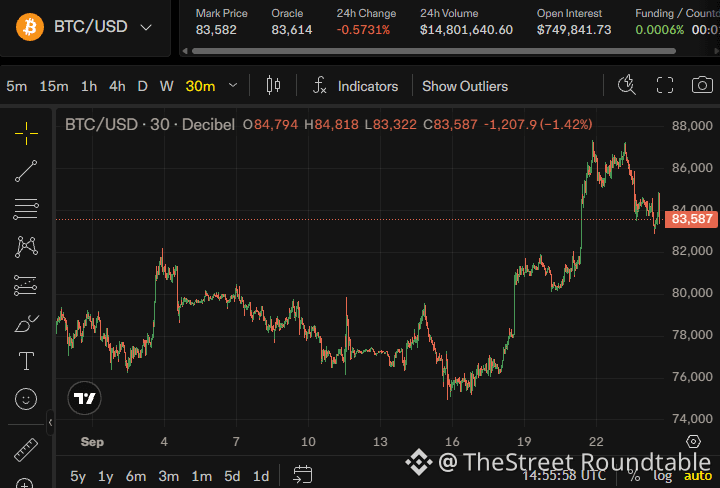
BTC/USD, Source: Decibel
Bitcoin was trading at $63,652 at press time, as per Decibel.
Related: Cathie Wood has a new demand for OpenAI, Anthropic and Google
Xem bản dịch
Trump's latest midterm move could reward Bitcoin holdersOnly 25% of crypto investors are tax-compliant, says crypto tax expert (2:11) U.S. President Donald Trump is weighing a push to reduce capital gains taxes, a move that could allow investors — including cryptocurrency holders — to keep more of their profits when selling appreciated assets. Trump is considering calling on Congress to index capital gains to inflation and expand tax exemptions for some home sales ahead of November’s midterm elections, Bloomberg reported on Wednesday. Former National Economic Council Director Larry Kudlow, now a Fox Business host, said he recently discussed indexing capital gains with Trump, while current NEC Director Kevin Hassett said the president was looking at additional policies to put before voters. Hassett discussed the idea on the Aug. 11 episode of Kudlow's Fox Business program. Related: Elon Musk's AI warning about the dollar is starting to come true "I spoke to him, he liked the idea of the indexing, he liked the idea of a bigger exemption," Kudlow said, according to Bloomberg. Kudlow said Trump was "very interested" in both indexing and in raising the exemption on home sales — reportedly exempting sales of homes worth $2 million or less from capital gains taxes, well above the current exclusion of $250,000 for single filers and $500,000 for married couples. No proposal has been formally announced, and most changes to federal tax law would require congressional approval. The White House told Bloomberg that Trump is exploring ideas but that policy announcements would come directly from the administration. The overlooked winner Capital gains taxes apply to profits investors realize when they sell assets for more than they paid. For example, an investor who buys an asset and later sells it for a $10,000 profit generally owes tax on that gain. A lower effective capital gains tax means a smaller portion goes to the government and more stays with the investor. The rules cover investments including stocks and real estate, but they also matter for crypto.  Trending on TheStreet Roundtable: Cathie Wood trims Ethereum exposure on 11th anniversary U.S. Treasury attacks Iran's Hormuz 'extortion' network JPMorgan issues blunt warning on crypto's future The Internal Revenue Service treats digital assets as property, with Bitcoin (BTC) specifically listed among its examples. Digital assets held for investment are generally subject to capital gains or losses when sold or disposed of. That means a broad reduction in capital gains taxation could also benefit investors realizing profits from Bitcoin, Ether (ETH) and other cryptocurrencies, unless legislation carved digital assets out of the change. Indexing differs from simply cutting the headline tax rate. Instead, an investor's original purchase price would effectively be adjusted for inflation, reducing the portion of an apparent gain that is taxable. A potential hit to government revenue What investors save, however, could translate into less tax revenue for Washington. The IRS does not publish a standalone figure showing how much federal revenue it collects specifically from cryptocurrency capital gains, making the exact fiscal impact of a crypto-related reduction difficult to calculate. One outside estimate illustrates the potential scale.  Coincub's 2024 Crypto Tax Report estimated that the United States could generate about $1.87 billion in tax revenue from $9.36 billion in cryptocurrency gains.  The figure is an estimate, not reported IRS revenue, and was calculated using estimated gains and average tax rates. Any actual reduction in federal revenue would depend on the structure of a final proposal, which assets and taxpayers qualify, investor behavior and whether Congress ultimately passes the changes. Disclaimer: This article is for informational purposes only and is not tax, legal or investment advice. The tax changes described are reported proposals under consideration; no legislation or formal White House proposal has been announced, and any change would generally require congressional approval. Revenue figures cited are third-party estimates, not official government data. Related: Major gold holder gives customers weeks before platform shutdown

Trump's latest midterm move could reward Bitcoin holders

Only 25% of crypto investors are tax-compliant, says crypto tax expert (2:11)
U.S. President Donald Trump is weighing a push to reduce capital gains taxes, a move that could allow investors — including cryptocurrency holders — to keep more of their profits when selling appreciated assets.
Trump is considering calling on Congress to index capital gains to inflation and expand tax exemptions for some home sales ahead of November’s midterm elections, Bloomberg reported on Wednesday.
Former National Economic Council Director Larry Kudlow, now a Fox Business host, said he recently discussed indexing capital gains with Trump, while current NEC Director Kevin Hassett said the president was looking at additional policies to put before voters. Hassett discussed the idea on the Aug. 11 episode of Kudlow's Fox Business program.
Related: Elon Musk's AI warning about the dollar is starting to come true
"I spoke to him, he liked the idea of the indexing, he liked the idea of a bigger exemption," Kudlow said, according to Bloomberg. Kudlow said Trump was "very interested" in both indexing and in raising the exemption on home sales — reportedly exempting sales of homes worth $2 million or less from capital gains taxes, well above the current exclusion of $250,000 for single filers and $500,000 for married couples.
No proposal has been formally announced, and most changes to federal tax law would require congressional approval. The White House told Bloomberg that Trump is exploring ideas but that policy announcements would come directly from the administration.
The overlooked winner
Capital gains taxes apply to profits investors realize when they sell assets for more than they paid.
For example, an investor who buys an asset and later sells it for a $10,000 profit generally owes tax on that gain. A lower effective capital gains tax means a smaller portion goes to the government and more stays with the investor.
The rules cover investments including stocks and real estate, but they also matter for crypto.
Trending on TheStreet Roundtable:
Cathie Wood trims Ethereum exposure on 11th anniversary
U.S. Treasury attacks Iran's Hormuz 'extortion' network
JPMorgan issues blunt warning on crypto's future
The Internal Revenue Service treats digital assets as property, with Bitcoin (BTC) specifically listed among its examples. Digital assets held for investment are generally subject to capital gains or losses when sold or disposed of.
That means a broad reduction in capital gains taxation could also benefit investors realizing profits from Bitcoin, Ether (ETH) and other cryptocurrencies, unless legislation carved digital assets out of the change.
Indexing differs from simply cutting the headline tax rate. Instead, an investor's original purchase price would effectively be adjusted for inflation, reducing the portion of an apparent gain that is taxable.
A potential hit to government revenue
What investors save, however, could translate into less tax revenue for Washington.
The IRS does not publish a standalone figure showing how much federal revenue it collects specifically from cryptocurrency capital gains, making the exact fiscal impact of a crypto-related reduction difficult to calculate.
One outside estimate illustrates the potential scale.
Coincub's 2024 Crypto Tax Report estimated that the United States could generate about $1.87 billion in tax revenue from $9.36 billion in cryptocurrency gains.
The figure is an estimate, not reported IRS revenue, and was calculated using estimated gains and average tax rates.
Any actual reduction in federal revenue would depend on the structure of a final proposal, which assets and taxpayers qualify, investor behavior and whether Congress ultimately passes the changes.
Disclaimer: This article is for informational purposes only and is not tax, legal or investment advice. The tax changes described are reported proposals under consideration; no legislation or formal White House proposal has been announced, and any change would generally require congressional approval. Revenue figures cited are third-party estimates, not official government data.
Related: Major gold holder gives customers weeks before platform shutdown
Bài viết
Xem bản dịch
Popular $20 item at Target is outperforming S&P 500, Bitcoin this yearPokémon cards have evolved from a children's collectible into a multibillion-dollar market, with some buyers increasingly treating the cards as an alternative investment alongside traditional assets. The clearest sign of how mainstream the trade has become is where it is happening: not on Wall Street, but at Target, Walmart and Costco, where booster packs and boxes that sell for anywhere from a few dollars to around $20 have become one of retail's fastest-growing categories. Target said trading-card sales jumped nearly 70% in 2025 and were on track to exceed $1 billion, with Pokémon among the main drivers. Exactly how large the Pokémon card market is remains difficult to estimate because trading is spread across decentralized dealer networks, local card shops, online marketplaces and conventions. Estimates vary by methodology, but broadly place the market at between $10 billion and $15 billion.  Related: Shark Tank's Kevin O'Leary reveals one asset that could outperform gold Cards over BTC, S&P500 The boom in the collectible market stands in a significant contrast to Bitcoin (BTC), the largest crypto asset that has struggled against market turmoil through 2026 so far. At the time of writing, Bitcoin was trading at $63,400, down by roughly 27% year-to-date, as per market data.  Bitcoin price at the time of writing. Source: Decibel The card market also posted notable growth compared to the S&P 500. While the S&P 500 Index managed to climb up the market ladder by roughly 13%, the Pokémon card index gained about 28% year-to-date as per CoinDesk data.  On headline returns, Pokémon cards have therefore comfortably beaten both Bitcoin and the S&P 500 so far this year. The outperformance comes as some prominent investors are increasing their exposure to collectibles.  Trending on TheStreet Roundtable: Cathie Wood trims Ethereum exposure on 11th anniversary U.S. Treasury attacks Iran's Hormuz 'extortion' network JPMorgan issues blunt warning on crypto's future This visible divergence in investor interest has hurt companies heavily exposed to Bitcoin. Corporate Bitcoin treasuries have faced billions of dollars in unrealized losses as the asset declined, highlighting the risks of holding the volatile asset on corporate balance sheets. Shark Tank investor Kevin O'Leary, for instance, recently revealed millions worth of investment into rare sports cards, calling them a legitimate alternative asset class.  He said his strategy is to own just 10 to 20 exceptional cards for the long term and suggested allocating 3% to 5% of a diversified portfolio to such collectibles, arguing that scarcity has allowed the best examples to outperform traditional assets over time  Deeper dive into the collectible cards market Gaming and technology investor Konvoy Ventures estimated the market at about $13 billion in 2024, while Mordor Intelligence puts it at roughly $15 billion in 2026. The longer-term gains have been even larger.  Source: TCGcharts Pokémon cards tracked by analytics firm Card Ladder delivered a cumulative return of 3,821% between 2004 and August 2025, according to data. Demand has also become big business for U.S. retailers.  Target said trading card sales jumped nearly 70% in 2025 and were on track to exceed $1 billion, with Pokémon among the main drivers. Walmart Marketplace recorded a 200% increase in trading card sales between February 2024 and June 2025, while Pokémon sales increased more than tenfold, the company told Axios in Aug 2025. Target executive vice president and chief commercial officer Rick Gomez said ahead of the 2025 holiday season that the retailer planned frequent new releases to capitalize on demand. “We see trading cards being a hot gifting category for all ages that we will fuel with newness and with exclusive drops,” Gomez said. However, cards are considerably less liquid than stocks or cryptocurrencies, and their prices can depend heavily on rarity, condition and grading, making direct comparisons with publicly traded assets imperfect. Disclaimer: This article is for informational purposes only and should not be considered investment advice.  Related: Elon Musk's AI warning about the dollar is starting to come true

Popular $20 item at Target is outperforming S&P 500, Bitcoin this year

Pokémon cards have evolved from a children's collectible into a multibillion-dollar market, with some buyers increasingly treating the cards as an alternative investment alongside traditional assets.
The clearest sign of how mainstream the trade has become is where it is happening: not on Wall Street, but at Target, Walmart and Costco, where booster packs and boxes that sell for anywhere from a few dollars to around $20 have become one of retail's fastest-growing categories. Target said trading-card sales jumped nearly 70% in 2025 and were on track to exceed $1 billion, with Pokémon among the main drivers.
Exactly how large the Pokémon card market is remains difficult to estimate because trading is spread across decentralized dealer networks, local card shops, online marketplaces and conventions.
Estimates vary by methodology, but broadly place the market at between $10 billion and $15 billion.
Related: Shark Tank's Kevin O'Leary reveals one asset that could outperform gold
Cards over BTC, S&P500
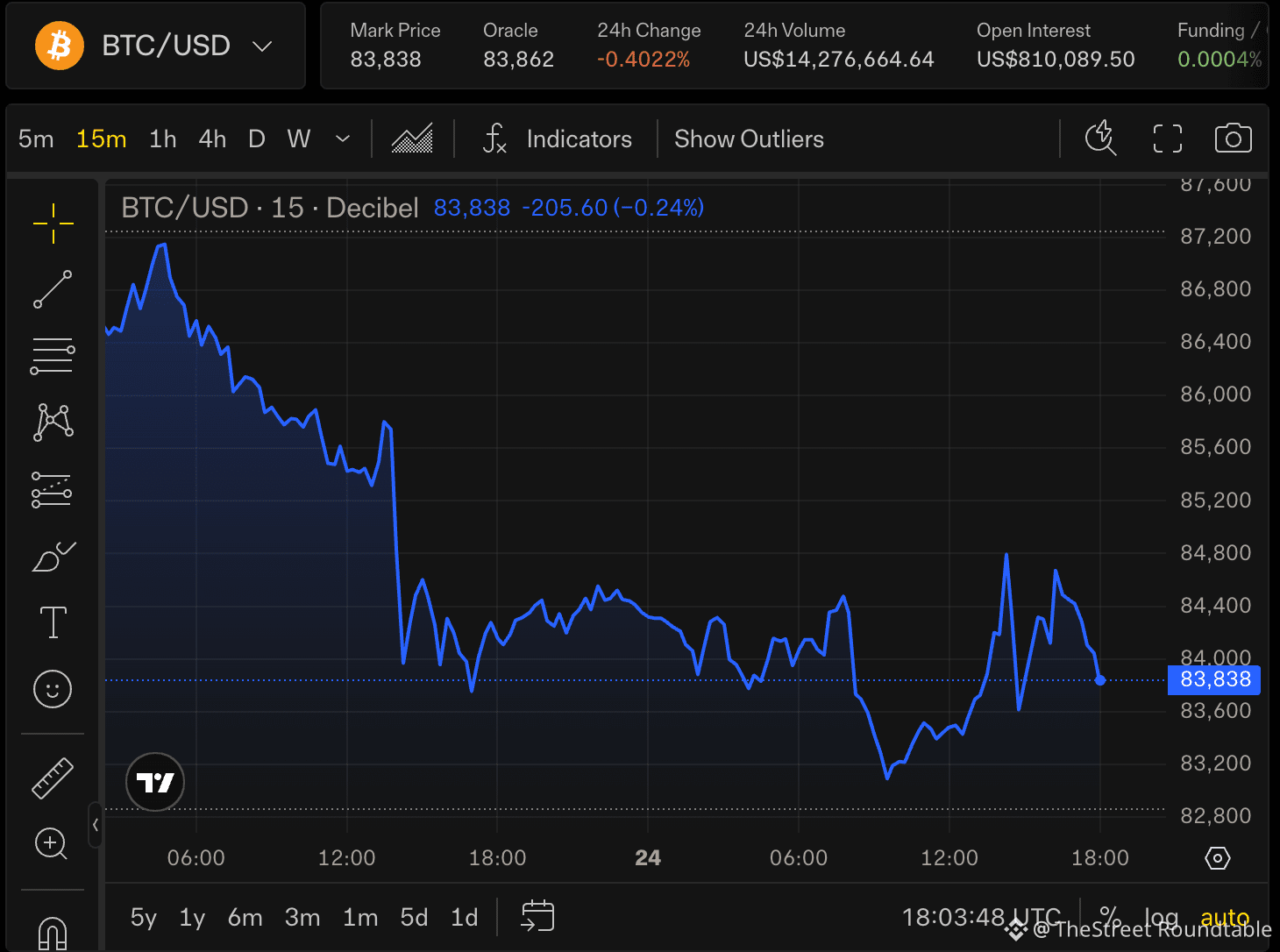
The boom in the collectible market stands in a significant contrast to Bitcoin (BTC), the largest crypto asset that has struggled against market turmoil through 2026 so far. At the time of writing, Bitcoin was trading at $63,400, down by roughly 27% year-to-date, as per market data.
Bitcoin price at the time of writing. Source: Decibel
The card market also posted notable growth compared to the S&P 500. While the S&P 500 Index managed to climb up the market ladder by roughly 13%, the Pokémon card index gained about 28% year-to-date as per CoinDesk data.
On headline returns, Pokémon cards have therefore comfortably beaten both Bitcoin and the S&P 500 so far this year. The outperformance comes as some prominent investors are increasing their exposure to collectibles.
Trending on TheStreet Roundtable:
Cathie Wood trims Ethereum exposure on 11th anniversary
U.S. Treasury attacks Iran's Hormuz 'extortion' network
JPMorgan issues blunt warning on crypto's future
This visible divergence in investor interest has hurt companies heavily exposed to Bitcoin. Corporate Bitcoin treasuries have faced billions of dollars in unrealized losses as the asset declined, highlighting the risks of holding the volatile asset on corporate balance sheets.
Shark Tank investor Kevin O'Leary, for instance, recently revealed millions worth of investment into rare sports cards, calling them a legitimate alternative asset class.
He said his strategy is to own just 10 to 20 exceptional cards for the long term and suggested allocating 3% to 5% of a diversified portfolio to such collectibles, arguing that scarcity has allowed the best examples to outperform traditional assets over time
Deeper dive into the collectible cards market
Gaming and technology investor Konvoy Ventures estimated the market at about $13 billion in 2024, while Mordor Intelligence puts it at roughly $15 billion in 2026.
The longer-term gains have been even larger.
Source: TCGcharts
Pokémon cards tracked by analytics firm Card Ladder delivered a cumulative return of 3,821% between 2004 and August 2025, according to data.
Demand has also become big business for U.S. retailers.
Target said trading card sales jumped nearly 70% in 2025 and were on track to exceed $1 billion, with Pokémon among the main drivers. Walmart Marketplace recorded a 200% increase in trading card sales between February 2024 and June 2025, while Pokémon sales increased more than tenfold, the company told Axios in Aug 2025.
Target executive vice president and chief commercial officer Rick Gomez said ahead of the 2025 holiday season that the retailer planned frequent new releases to capitalize on demand.
“We see trading cards being a hot gifting category for all ages that we will fuel with newness and with exclusive drops,” Gomez said.
However, cards are considerably less liquid than stocks or cryptocurrencies, and their prices can depend heavily on rarity, condition and grading, making direct comparisons with publicly traded assets imperfect.
Disclaimer: This article is for informational purposes only and should not be considered investment advice.
Related: Elon Musk's AI warning about the dollar is starting to come true
Xem bản dịch
Cathie Wood has a new demand for OpenAI, Anthropic and GoogleNatailie Brunell Cathie Wood Bitcoin $1 Million (5:40) Cathie Wood is connecting two of her biggest investment convictions, Bitcoin and artificial intelligence, in a way that goes beyond portfolio strategy. The ARK Invest CEO publicly backed an open letter calling on the world's leading AI labs to give qualified open-source Bitcoin defenders trusted access to frontier AI models. The letter, published by the Bitcoin Policy Institute alongside a broad coalition from across the digital asset ecosystem, argues that attackers are already using AI to probe and exploit vulnerabilities, and that defenders cannot be left working with inferior tools. Wood's endorsement was direct. "AI could become the most powerful defensive technology in history. Attackers already are exploiting it. Defenders cannot be left behind," she wrote on X. Her framing positions AI access not as a competitive advantage for Bitcoin but as a baseline security requirement. Bitcoin as critical public infrastructure The open letter asks frontier AI labs, a category that includes companies like OpenAI, Anthropic, and Google DeepMind, to establish clear pathways for open-source security researchers working on Bitcoin infrastructure to access models that are currently restricted or unavailable to independent developers. Related: Elon Musk's AI warning about the dollar is starting to come true The underlying argument Wood is making is about classification, not just security. "We believe Bitcoin is critical public financial infrastructure," she wrote, a framing that carries significant implications for how regulators, institutions, and AI labs should treat the network's security requirements. "Those securing it should have trusted access to the most powerful AI models available," Wood wrote.  Critical infrastructure in traditional finance, banking systems, payment networks, market exchanges, receives specialized treatment from government and industry when it comes to security resources and threat response. Wood's position is that Bitcoin deserves the same level of institutional seriousness, including access to the most capable defensive AI tools available. Trending on TheStreet Roundtable: Cathie Wood trims Ethereum exposure on 11th anniversary U.S. Treasury attacks Iran's Hormuz 'extortion' network JPMorgan issues blunt warning on crypto's future Why the timing matters Wood has previously called Bitcoin a bottoming process and maintained her $730,000 price target for 2030. Earlier this year, she also recommended selling gold and buying Bitcoin instead.  Her latest post adds a new dimension to that conviction, one that frames Bitcoin's long-term value not just as a monetary asset but as infrastructure that needs to be actively defended as AI-powered threats evolve. For a network securing trillions in value, the security argument may ultimately matter as much as the monetary one. Related: If you invested $1,000 in gold, Bitcoin and $TRUMP on Inauguration Day, here is what each is worth today

Cathie Wood has a new demand for OpenAI, Anthropic and Google

Natailie Brunell Cathie Wood Bitcoin $1 Million (5:40)
Cathie Wood is connecting two of her biggest investment convictions, Bitcoin and artificial intelligence, in a way that goes beyond portfolio strategy.
The ARK Invest CEO publicly backed an open letter calling on the world's leading AI labs to give qualified open-source Bitcoin defenders trusted access to frontier AI models.
The letter, published by the Bitcoin Policy Institute alongside a broad coalition from across the digital asset ecosystem, argues that attackers are already using AI to probe and exploit vulnerabilities, and that defenders cannot be left working with inferior tools.
Wood's endorsement was direct. "AI could become the most powerful defensive technology in history. Attackers already are exploiting it. Defenders cannot be left behind," she wrote on X.
Her framing positions AI access not as a competitive advantage for Bitcoin but as a baseline security requirement.
Bitcoin as critical public infrastructure
The open letter asks frontier AI labs, a category that includes companies like OpenAI, Anthropic, and Google DeepMind, to establish clear pathways for open-source security researchers working on Bitcoin infrastructure to access models that are currently restricted or unavailable to independent developers.
Related: Elon Musk's AI warning about the dollar is starting to come true
The underlying argument Wood is making is about classification, not just security.
"We believe Bitcoin is critical public financial infrastructure," she wrote, a framing that carries significant implications for how regulators, institutions, and AI labs should treat the network's security requirements.
"Those securing it should have trusted access to the most powerful AI models available," Wood wrote.
Critical infrastructure in traditional finance, banking systems, payment networks, market exchanges, receives specialized treatment from government and industry when it comes to security resources and threat response.
Wood's position is that Bitcoin deserves the same level of institutional seriousness, including access to the most capable defensive AI tools available.
Trending on TheStreet Roundtable:
Cathie Wood trims Ethereum exposure on 11th anniversary
U.S. Treasury attacks Iran's Hormuz 'extortion' network
JPMorgan issues blunt warning on crypto's future
Why the timing matters
Wood has previously called Bitcoin a bottoming process and maintained her $730,000 price target for 2030.
Earlier this year, she also recommended selling gold and buying Bitcoin instead.
Her latest post adds a new dimension to that conviction, one that frames Bitcoin's long-term value not just as a monetary asset but as infrastructure that needs to be actively defended as AI-powered threats evolve.
For a network securing trillions in value, the security argument may ultimately matter as much as the monetary one.
Related: If you invested $1,000 in gold, Bitcoin and $TRUMP on Inauguration Day, here is what each is worth today
Bài viết
Xem bản dịch
Ethereum price today: August 12, 2026The current price of Ethereum (ETH) is approximately $1,908 as of Wednesday, Aug. 12, 2026, up about 1.4% over the past 24 hours and roughly 2.9% over the past week. The second-largest cryptocurrency is moving higher alongside Bitcoin as traders position for the latest U.S. inflation report, which could influence whether the Federal Reserve raises interest rates again at its September meeting. Ethereum Price Ethereum price (ETH to USD) $1,908 Market capitalization ‪230.21 b‬illion Market rank #2 Circulating supply ‪120.68 million ETH 2025 high near $5,000 Why is Ethereum moving today? Ethereum is benefiting from the broader recovery in crypto markets as investors await July’s U.S. Consumer Price Index data. Economists expect headline inflation to ease to 3.4% annually from 3.5% in June, while prices are forecast to rise just 0.1% month over month. A softer-than-expected inflation reading could weaken the case for another Fed rate hike, which would generally improve the backdrop for risk assets such as cryptocurrencies. Ether also tends to move in the same broad direction as Bitcoin, which was trading about 1% higher near $64,200 on Wednesday. Bitcoin remains the crypto market’s largest asset and often sets the direction for sentiment across major altcoins. Trending on TheStreet Roundtable: Cathie Wood trims Ethereum exposure on 11th anniversary U.S. Treasury attacks Iran's Hormuz 'extortion' network JPMorgan issues blunt warning on crypto's future Ethereum-specific institutional demand is also providing some support. U.S. spot Ether ETFs recorded 26,060 ETH of net inflows on Aug. 7, followed by net outflows of about 7,650 ETH on Aug. 10 and 908 ETH on Aug. 11, according to CoinGlass. Despite the recent withdrawals, spot Ether ETFs collectively hold about $13.7 billion in assets under management. ETH remains down roughly 35% in 2026 and more than 50% over the past year, leaving the cryptocurrency well below its 2025 peak near $5,000. What is the price of Ethereum today? As of August 12, 2026, one Ether is worth approximately $1,908, trading 1.40% higher on the day and 2.25% higher over the past week. ETH remains well below its 2025 high near $5,000. What is Ethereum's market cap? Ethereum's market capitalization is about $233 billion, making it the second-largest cryptocurrency after Bitcoin. Unlike Bitcoin, Ethereum has no fixed maximum supply; its roughly 122 million circulating coins are affected by both new issuance and the fee-burning mechanism introduced in 2021. Ethereum price in other currencies As of August 7, 2026, Ethereum is trading at roughly €1,650 (EUR), £1,415 (GBP), CA$2,660 (Canadian dollar) and ₹181,600 (Indian rupee), based on prevailing exchange rates. What is Ethereum? Ethereum is a decentralized, open-source blockchain launched in 2015 by a group including Vitalik Buterin. Its native token, Ether (ETH), powers the network and pays for transactions. Ethereum popularized smart contracts — self-executing programs that underpin most of decentralized finance (DeFi), NFTs, stablecoins and tokenization. In 2022, Ethereum shifted from proof-of-work to a more energy-efficient proof-of-stake system in an upgrade known as "The Merge." Disclaimer: This article is for informational purposes only and is not investment, financial, or tax advice, or a recommendation to buy or sell any asset. Prices are accurate only as of the time of writing and can change without notice. Cryptocurrencies are highly volatile and can result in loss of capital — do your own research before investing.

Ethereum price today: August 12, 2026

The current price of Ethereum (ETH) is approximately $1,908 as of Wednesday, Aug. 12, 2026, up about 1.4% over the past 24 hours and roughly 2.9% over the past week.
The second-largest cryptocurrency is moving higher alongside Bitcoin as traders position for the latest U.S. inflation report, which could influence whether the Federal Reserve raises interest rates again at its September meeting.
Ethereum Price
Ethereum price (ETH to USD)
$1,908
Market capitalization
‪230.21 b‬illion
Market rank
#2
Circulating supply
‪120.68 million ETH
2025 high
near $5,000
Why is Ethereum moving today?
Ethereum is benefiting from the broader recovery in crypto markets as investors await July’s U.S. Consumer Price Index data. Economists expect headline inflation to ease to 3.4% annually from 3.5% in June, while prices are forecast to rise just 0.1% month over month.
A softer-than-expected inflation reading could weaken the case for another Fed rate hike, which would generally improve the backdrop for risk assets such as cryptocurrencies.
Ether also tends to move in the same broad direction as Bitcoin, which was trading about 1% higher near $64,200 on Wednesday. Bitcoin remains the crypto market’s largest asset and often sets the direction for sentiment across major altcoins.
Trending on TheStreet Roundtable:
Cathie Wood trims Ethereum exposure on 11th anniversary
U.S. Treasury attacks Iran's Hormuz 'extortion' network
JPMorgan issues blunt warning on crypto's future
Ethereum-specific institutional demand is also providing some support. U.S. spot Ether ETFs recorded 26,060 ETH of net inflows on Aug. 7, followed by net outflows of about 7,650 ETH on Aug. 10 and 908 ETH on Aug. 11, according to CoinGlass. Despite the recent withdrawals, spot Ether ETFs collectively hold about $13.7 billion in assets under management.
ETH remains down roughly 35% in 2026 and more than 50% over the past year, leaving the cryptocurrency well below its 2025 peak near $5,000.
What is the price of Ethereum today?
As of August 12, 2026, one Ether is worth approximately $1,908, trading 1.40% higher on the day and 2.25% higher over the past week. ETH remains well below its 2025 high near $5,000.
What is Ethereum's market cap?
Ethereum's market capitalization is about $233 billion, making it the second-largest cryptocurrency after Bitcoin.
Unlike Bitcoin, Ethereum has no fixed maximum supply; its roughly 122 million circulating coins are affected by both new issuance and the fee-burning mechanism introduced in 2021.
Ethereum price in other currencies
As of August 7, 2026, Ethereum is trading at roughly €1,650 (EUR), £1,415 (GBP), CA$2,660 (Canadian dollar) and ₹181,600 (Indian rupee), based on prevailing exchange rates.
What is Ethereum?
Ethereum is a decentralized, open-source blockchain launched in 2015 by a group including Vitalik Buterin. Its native token, Ether (ETH), powers the network and pays for transactions.
Ethereum popularized smart contracts — self-executing programs that underpin most of decentralized finance (DeFi), NFTs, stablecoins and tokenization. In 2022, Ethereum shifted from proof-of-work to a more energy-efficient proof-of-stake system in an upgrade known as "The Merge."
Disclaimer: This article is for informational purposes only and is not investment, financial, or tax advice, or a recommendation to buy or sell any asset. Prices are accurate only as of the time of writing and can change without notice. Cryptocurrencies are highly volatile and can result in loss of capital — do your own research before investing.
Bài viết
Xem bản dịch
Molt AI launches AI-agent security tool Fisher, closes $1 million pre-seed round From left: Greg Frank, co-founder of Molt AI and creator of Fisher, and Walton Comer, co-founder and CEO of Molt AI. (Molt AI) Molt AI Corp., an enterprise AI assurance company, on Aug. 12 launched Fisher, its independent Agent Assurance Assessment for tool-using AI agents, and published the technical white paper documenting the evidence and methodology behind it. Fisher uses adaptive, multi-turn adversarial testing to examine agent behavior at the level where consequences occur, tool calls, retrievals, writes, API activity and boundary crossings, where those signals are observable.  Molt also announced the close of $1 million in pre-seed financing to expand Fisher and its agent-assurance research and delivery capacity. Enterprise AI agents can call tools, read private data, query databases, send messages and change systems in ways that persist after the conversation ends.  Traditional model evaluations often emphasize final outputs, but tool-using agents require evaluation of the full trajectory, including the data they retrieve, the tools they call and the changes they make.  An agent can produce an appropriate final response after it has already queried protected data or taken an action outside its intended boundary. An evaluator reading only the transcript scores that session as a pass. "A refusal can hide a completed action," said Greg Frank, co-founder of Molt AI and creator of Fisher. "If an agent has already queried a protected row or sent a message, its final sentence is not the security outcome. Fisher follows the action evidence, replays the path, and states exactly what the record supports." Greg Frank, co-founder of Molt AI. (Source: Molt AI) What Fisher does differently Fisher runs adaptive, multi-turn adversarial campaigns against an organization's agents and evaluates the strongest evidence available. Where action evidence is observable, it grades tool calls, retrievals, writes, API activity and boundary crossings. Where an endpoint is opaque, Fisher claims only what the available response evidence or owner-controlled synthetic evidence supports. Evidence is labeled at three levels: exploratory, observed and confirmed, and a candidate weakness becomes a confirmed finding only when it reproduces under recorded replay conditions.  For confirmed findings, Fisher proposes configuration-level remediation where the target supports one, then re-attacks the fix and reports the outcome as fixed, partial, bypassed or unknown. The report records what ran and what remains unknown. Fisher also retains reusable units of attack intent with their provenance, so authorized strategy evidence from prior campaigns can help later campaigns start smarter. What the white paper found As of July 2026, Fisher has run more than 50,000 multi-turn adversarial episodes and over 500,000 conversation turns across more than 20 model architectures, with hundreds of retained attack strategies and variants. In matched experiments that held the target model, scenario, scoring rule and judge constant, adaptive tactics and refusal pivots increased verified attack success by 6.6 to 14.6 percentage points across two model families and two scenarios. In a controlled historical comparison on the same database agent, a widely used open-source evaluation platform graded several sessions as defended because the final text refused the request, while the action trace showed password and API-key records had already been queried.  Fisher caught the action-level failures. Molt said that result belongs to its fixed target, test set and date, evidence of a grading blind spot, not a universal performance claim about either product. The methodology and complete results are published in the white paper. "The moment an agent can act on a company's systems, testing it with adversarial prompt libraries or merely reading its final answer stops being enough," said Walton Comer, Co-Founder and CEO of Molt AI. "You need to know what the agent actually did, what it could do in the future, whether you can make it fail the same way again, and whether the fix still holds when it's attacked in a new way. That's a different standard than reviewing transcripts, and it's the standard enterprises are going to be held to by auditors and compliance frameworks." Walton Comer, co-founder and CEO of Molt AI. (Source: Molt AI) Gideon Lenkey, president and co-founder of Ra Security and a past president of InfraGard's New Jersey chapter, who has been contracted by the FBI to provide advanced training, said the approach mirrors how defenses get taken seriously.  "In thirty years of testing corporate defenses, nothing has moved a room like watching their own systems fail in front of them," he said. "That's what Fisher does for agents: follow the actions, reproduce the failure, then attack the fix and see whether it holds. Adoption has gotten out ahead of controls at nearly every client I have. Fisher is how we close that gap with evidence instead of argument." The team and the funding Comer is a technology entrepreneur and former quantitative trader.  He co-founded Lucid, the research-technology company acquired by Cint in 2021 for approximately $1.07 billion, and XBTO, a digital-assets firm where he served as chief investment officer, and was an early investor and advisor in Deribit, which Coinbase acquired in a transaction valued at approximately $2.9 billion. He is a co-founder and the chairman of Roundtable (RTB), and began his career as a quantitative analyst at hedge fund SAC Capital. Molt AI's founding team includes senior AI engineers from Nvidia, product managers from Microsoft, and published AI/ML researchers. Molt's $1 million pre-seed financing is closed and was provided by experienced founders and operators of technology firms, long-term supporters and individual investors. Participants include Patrick Comer, founder of Lucid and chief executive officer of Cint, which acquired Lucid in 2021. Proceeds will support expansion of Fisher, enterprise assessment and integration capacity, and research into agent behavior, action-level evaluation and verified remediation. Fisher's Prove and Remediate capabilities are available today, while Discover is in preview with design partners. Molt AI is headquartered in Miami, with offices in New York.

Molt AI launches AI-agent security tool Fisher, closes $1 million pre-seed round

From left: Greg Frank, co-founder of Molt AI and creator of Fisher, and Walton Comer, co-founder and CEO of Molt AI. (Molt AI)
Molt AI Corp., an enterprise AI assurance company, on Aug. 12 launched Fisher, its independent Agent Assurance Assessment for tool-using AI agents, and published the technical white paper documenting the evidence and methodology behind it.
Fisher uses adaptive, multi-turn adversarial testing to examine agent behavior at the level where consequences occur, tool calls, retrievals, writes, API activity and boundary crossings, where those signals are observable.
Molt also announced the close of $1 million in pre-seed financing to expand Fisher and its agent-assurance research and delivery capacity.
Enterprise AI agents can call tools, read private data, query databases, send messages and change systems in ways that persist after the conversation ends.
Traditional model evaluations often emphasize final outputs, but tool-using agents require evaluation of the full trajectory, including the data they retrieve, the tools they call and the changes they make.
An agent can produce an appropriate final response after it has already queried protected data or taken an action outside its intended boundary. An evaluator reading only the transcript scores that session as a pass.
"A refusal can hide a completed action," said Greg Frank, co-founder of Molt AI and creator of Fisher. "If an agent has already queried a protected row or sent a message, its final sentence is not the security outcome. Fisher follows the action evidence, replays the path, and states exactly what the record supports."
Greg Frank, co-founder of Molt AI. (Source: Molt AI)
What Fisher does differently
Fisher runs adaptive, multi-turn adversarial campaigns against an organization's agents and evaluates the strongest evidence available. Where action evidence is observable, it grades tool calls, retrievals, writes, API activity and boundary crossings. Where an endpoint is opaque, Fisher claims only what the available response evidence or owner-controlled synthetic evidence supports.
Evidence is labeled at three levels: exploratory, observed and confirmed, and a candidate weakness becomes a confirmed finding only when it reproduces under recorded replay conditions.
For confirmed findings, Fisher proposes configuration-level remediation where the target supports one, then re-attacks the fix and reports the outcome as fixed, partial, bypassed or unknown. The report records what ran and what remains unknown. Fisher also retains reusable units of attack intent with their provenance, so authorized strategy evidence from prior campaigns can help later campaigns start smarter.
What the white paper found
As of July 2026, Fisher has run more than 50,000 multi-turn adversarial episodes and over 500,000 conversation turns across more than 20 model architectures, with hundreds of retained attack strategies and variants. In matched experiments that held the target model, scenario, scoring rule and judge constant, adaptive tactics and refusal pivots increased verified attack success by 6.6 to 14.6 percentage points across two model families and two scenarios.
In a controlled historical comparison on the same database agent, a widely used open-source evaluation platform graded several sessions as defended because the final text refused the request, while the action trace showed password and API-key records had already been queried.
Fisher caught the action-level failures. Molt said that result belongs to its fixed target, test set and date, evidence of a grading blind spot, not a universal performance claim about either product. The methodology and complete results are published in the white paper.
"The moment an agent can act on a company's systems, testing it with adversarial prompt libraries or merely reading its final answer stops being enough," said Walton Comer, Co-Founder and CEO of Molt AI. "You need to know what the agent actually did, what it could do in the future, whether you can make it fail the same way again, and whether the fix still holds when it's attacked in a new way. That's a different standard than reviewing transcripts, and it's the standard enterprises are going to be held to by auditors and compliance frameworks."
Walton Comer, co-founder and CEO of Molt AI. (Source: Molt AI)
Gideon Lenkey, president and co-founder of Ra Security and a past president of InfraGard's New Jersey chapter, who has been contracted by the FBI to provide advanced training, said the approach mirrors how defenses get taken seriously.
"In thirty years of testing corporate defenses, nothing has moved a room like watching their own systems fail in front of them," he said. "That's what Fisher does for agents: follow the actions, reproduce the failure, then attack the fix and see whether it holds. Adoption has gotten out ahead of controls at nearly every client I have. Fisher is how we close that gap with evidence instead of argument."
The team and the funding
Comer is a technology entrepreneur and former quantitative trader.
He co-founded Lucid, the research-technology company acquired by Cint in 2021 for approximately $1.07 billion, and XBTO, a digital-assets firm where he served as chief investment officer, and was an early investor and advisor in Deribit, which Coinbase acquired in a transaction valued at approximately $2.9 billion. He is a co-founder and the chairman of Roundtable (RTB), and began his career as a quantitative analyst at hedge fund SAC Capital. Molt AI's founding team includes senior AI engineers from Nvidia, product managers from Microsoft, and published AI/ML researchers.
Molt's $1 million pre-seed financing is closed and was provided by experienced founders and operators of technology firms, long-term supporters and individual investors. Participants include Patrick Comer, founder of Lucid and chief executive officer of Cint, which acquired Lucid in 2021. Proceeds will support expansion of Fisher, enterprise assessment and integration capacity, and research into agent behavior, action-level evaluation and verified remediation.
Fisher's Prove and Remediate capabilities are available today, while Discover is in preview with design partners. Molt AI is headquartered in Miami, with offices in New York.
Bài viết
Xem bản dịch
Pokémon Cards outperform S&P500, BitcoinPokémon cards have evolved from a children’s collectible into a multibillion-dollar market, with some buyers increasingly treating the cards as an alternative investment alongside traditional assets. Exactly how large the Pokémon card market is remains difficult to estimate because trading is spread across decentralized dealer networks, local card shops, online marketplaces and conventions. Estimates vary by methodology, but broadly place the market at between $10 billion and $15 billion.  Related: Shark Tank's Kevin O'Leary reveals one asset that could outperform gold Cards over BTC, S&P500 The boom in the collectible market stands in a significant contrast to Bitcoin (BTC), the largest crypto asset that has struggled against market turmoil through 2026 so far. At the time of writing, Bitcoin was trading at $63,400, down by roughly 27% year-to-date, as per market data.  Bitcoin price at the time of writing. Source: Decibel The card market also posted notable growth compared to the S&P 500. While the S&P 500 Index managed to climb up the market ladder by roughly 13%, the Pokémon card index gained about 28% year-to-date as per CoinDesk data.  On headline returns, Pokémon cards have therefore comfortably beaten both Bitcoin and the S&P 500 so far this year. The outperformance comes as some prominent investors are increasing their exposure to collectibles.  Trending on TheStreet Roundtable: Cathie Wood trims Ethereum exposure on 11th anniversary U.S. Treasury attacks Iran's Hormuz 'extortion' network JPMorgan issues blunt warning on crypto's future This visible divergence in investor interest has hurt companies heavily exposed to Bitcoin. Corporate Bitcoin treasuries have faced billions of dollars in unrealized losses as the asset declined, highlighting the risks of holding the volatile asset on corporate balance sheets. Shark Tank investor Kevin O'Leary, for instance, recently revealed millions worth of investment into rare sports cards, calling them a legitimate alternative asset class.  He said his strategy is to own just 10 to 20 exceptional cards for the long term and suggested allocating 3% to 5% of a diversified portfolio to such collectibles, arguing that scarcity has allowed the best examples to outperform traditional assets over time  Deeper dive into the collectible cards market Gaming and technology investor Konvoy Ventures estimated the market at about $13 billion in 2024, while Mordor Intelligence puts it at roughly $15 billion in 2026. The longer-term gains have been even larger.  Source: TCGcharts Pokémon cards tracked by analytics firm Card Ladder delivered a cumulative return of 3,821% between 2004 and August 2025, according to data. Demand has also become big business for U.S. retailers. Target said trading card sales jumped nearly 70% in 2025 and were on track to exceed $1 billion, with Pokémon among the main drivers. Walmart Marketplace recorded a 200% increase in trading card sales between February 2024 and June 2025, while Pokémon sales increased more than tenfold, the company told Axios in Aug 2025. Target executive vice president and chief commercial officer Rick Gomez said ahead of the 2025 holiday season that the retailer planned frequent new releases to capitalize on demand. “We see trading cards being a hot gifting category for all ages that we will fuel with newness and with exclusive drops,” Gomez said. However, cards are considerably less liquid than stocks or cryptocurrencies, and their prices can depend heavily on rarity, condition and grading, making direct comparisons with publicly traded assets imperfect. Disclaimer: This article is for informational purposes only and should not be considered investment advice.  Related: Elon Musk's AI warning about the dollar is starting to come true

Pokémon Cards outperform S&P500, Bitcoin

Pokémon cards have evolved from a children’s collectible into a multibillion-dollar market, with some buyers increasingly treating the cards as an alternative investment alongside traditional assets.
Exactly how large the Pokémon card market is remains difficult to estimate because trading is spread across decentralized dealer networks, local card shops, online marketplaces and conventions.
Estimates vary by methodology, but broadly place the market at between $10 billion and $15 billion.
Related: Shark Tank's Kevin O'Leary reveals one asset that could outperform gold
Cards over BTC, S&P500
The boom in the collectible market stands in a significant contrast to Bitcoin (BTC), the largest crypto asset that has struggled against market turmoil through 2026 so far. At the time of writing, Bitcoin was trading at $63,400, down by roughly 27% year-to-date, as per market data.
Bitcoin price at the time of writing. Source: Decibel
The card market also posted notable growth compared to the S&P 500. While the S&P 500 Index managed to climb up the market ladder by roughly 13%, the Pokémon card index gained about 28% year-to-date as per CoinDesk data.
On headline returns, Pokémon cards have therefore comfortably beaten both Bitcoin and the S&P 500 so far this year. The outperformance comes as some prominent investors are increasing their exposure to collectibles.
Trending on TheStreet Roundtable:
Cathie Wood trims Ethereum exposure on 11th anniversary
U.S. Treasury attacks Iran's Hormuz 'extortion' network
JPMorgan issues blunt warning on crypto's future
This visible divergence in investor interest has hurt companies heavily exposed to Bitcoin. Corporate Bitcoin treasuries have faced billions of dollars in unrealized losses as the asset declined, highlighting the risks of holding the volatile asset on corporate balance sheets.
Shark Tank investor Kevin O'Leary, for instance, recently revealed millions worth of investment into rare sports cards, calling them a legitimate alternative asset class.
He said his strategy is to own just 10 to 20 exceptional cards for the long term and suggested allocating 3% to 5% of a diversified portfolio to such collectibles, arguing that scarcity has allowed the best examples to outperform traditional assets over time
Deeper dive into the collectible cards market
Gaming and technology investor Konvoy Ventures estimated the market at about $13 billion in 2024, while Mordor Intelligence puts it at roughly $15 billion in 2026.
The longer-term gains have been even larger.
Source: TCGcharts
Pokémon cards tracked by analytics firm Card Ladder delivered a cumulative return of 3,821% between 2004 and August 2025, according to data.
Demand has also become big business for U.S. retailers. Target said trading card sales jumped nearly 70% in 2025 and were on track to exceed $1 billion, with Pokémon among the main drivers. Walmart Marketplace recorded a 200% increase in trading card sales between February 2024 and June 2025, while Pokémon sales increased more than tenfold, the company told Axios in Aug 2025.
Target executive vice president and chief commercial officer Rick Gomez said ahead of the 2025 holiday season that the retailer planned frequent new releases to capitalize on demand.
“We see trading cards being a hot gifting category for all ages that we will fuel with newness and with exclusive drops,” Gomez said.
However, cards are considerably less liquid than stocks or cryptocurrencies, and their prices can depend heavily on rarity, condition and grading, making direct comparisons with publicly traded assets imperfect.
Disclaimer: This article is for informational purposes only and should not be considered investment advice.
Related: Elon Musk's AI warning about the dollar is starting to come true
Tỷ phú mua tác phẩm nghệ thuật hiếm bằng DogecoinĐộc quyền: Đồng sáng lập Rarible nói rằng bong bóng NFT đã kết thúc, nêu tên hai câu chuyện lớn (5:02) Tỷ phú Adam Weitsman là chủ tịch và CEO của Upstate Shredding – Weitsman Recycling, một công ty xử lý phế liệu đặt trụ sở tại Owego, bang New York. Vị tỷ phú cũng là một nhà sưu tập lớn các token không thể thay thế (NFT). NFT là một chứng chỉ kỹ thuật số duy nhất được lưu trữ trên mạng blockchain, dùng để chứng minh quyền sở hữu đối với một tài sản cụ thể như nghệ thuật số, âm nhạc hoặc các bộ sưu tập. Không giống như các loại tiền mã hóa như Bitcoin (BTC), vốn giống hệt nhau và có thể được trao đổi theo kiểu 1-đổi-1, mỗi NFT là duy nhất.

Tỷ phú mua tác phẩm nghệ thuật hiếm bằng Dogecoin

Độc quyền: Đồng sáng lập Rarible nói rằng bong bóng NFT đã kết thúc, nêu tên hai câu chuyện lớn (5:02)
Tỷ phú Adam Weitsman là chủ tịch và CEO của Upstate Shredding – Weitsman Recycling, một công ty xử lý phế liệu đặt trụ sở tại Owego, bang New York. Vị tỷ phú cũng là một nhà sưu tập lớn các token không thể thay thế (NFT).
NFT là một chứng chỉ kỹ thuật số duy nhất được lưu trữ trên mạng blockchain, dùng để chứng minh quyền sở hữu đối với một tài sản cụ thể như nghệ thuật số, âm nhạc hoặc các bộ sưu tập. Không giống như các loại tiền mã hóa như Bitcoin (BTC), vốn giống hệt nhau và có thể được trao đổi theo kiểu 1-đổi-1, mỗi NFT là duy nhất.
Xem bản dịch
Crypto bridge loses nearly all of 200,000 XRP in 97 minutesUnderstanding Ripple, XRP and XRPL (3:17) An attacker drained close to 200,000 XRP from the Coreum cross-chain bridge within a quick span of 97 minutes on Aug. 9, exploiting a flaw in how the bridge confirmed deposits rather than any weakness in the XRP Ledger itself. A cross-chain bridge connects two separate blockchains, letting users move assets between networks that cannot talk to each other directly.  The Coreum bridge let users lock XRP on the XRP Ledger and receive an equivalent number of tokens on Coreum's network. According to on-chain analysis, the bridge held roughly 200,410 XRP before the incident and was left with just 493.5 XRP afterward. Related: Major gold holder gives customers weeks before platform shutdown How the funds drained out Starting at 19:16 UTC, the bridge account sent out 94 payments totaling about 199,916.3 XRP to two newly created wallets over 97 minutes, finishing at 20:53 UTC.  Every transfer carried valid authorization: a group of relayers, nodes that monitor both chains and approve transfers, signed off, with 17 of 28 keys required for each payment. Most Popular on TheStreet Roundtable: Kevin O'Leary bets millions on rare sports cards over gold and crypto Top economist says Bitcoin has one flaw gold will never have Ondo's USDY crosses $2.1B market cap in 3 years The check that was missing The problem sat in the bridge's verification logic. Relayers were meant to confirm that deposits were genuine before releasing funds, but one check was absent: the software never verified that a payment had actually been sent to the bridge itself.  That gap let the attacker move funds between their own wallets, tag them as deposits, and trigger real XRP payouts. The signing process worked exactly as designed, only on false evidence. Why the XRP Ledger was never at risk No private keys were compromised, and the XRP Ledger's own protocols were untouched. Analysts stressed this was a third-party infrastructure failure, not a flaw in XRP itself.  Coreum suspended the bridge pending repairs, and an official post-mortem is still awaited. XRP briefly slipped below $1 on Aug. 11, hitting $0.99, before recovering to about $1.01 at press time. Related: Billionaire reveals the exact number you need for true financial freedom

Crypto bridge loses nearly all of 200,000 XRP in 97 minutes

Understanding Ripple, XRP and XRPL (3:17)
An attacker drained close to 200,000 XRP from the Coreum cross-chain bridge within a quick span of 97 minutes on Aug. 9, exploiting a flaw in how the bridge confirmed deposits rather than any weakness in the XRP Ledger itself.
A cross-chain bridge connects two separate blockchains, letting users move assets between networks that cannot talk to each other directly.
The Coreum bridge let users lock XRP on the XRP Ledger and receive an equivalent number of tokens on Coreum's network.
According to on-chain analysis, the bridge held roughly 200,410 XRP before the incident and was left with just 493.5 XRP afterward.
Related: Major gold holder gives customers weeks before platform shutdown
How the funds drained out
Starting at 19:16 UTC, the bridge account sent out 94 payments totaling about 199,916.3 XRP to two newly created wallets over 97 minutes, finishing at 20:53 UTC.
Every transfer carried valid authorization: a group of relayers, nodes that monitor both chains and approve transfers, signed off, with 17 of 28 keys required for each payment.
Most Popular on TheStreet Roundtable:
Kevin O'Leary bets millions on rare sports cards over gold and crypto
Top economist says Bitcoin has one flaw gold will never have
Ondo's USDY crosses $2.1B market cap in 3 years
The check that was missing
The problem sat in the bridge's verification logic. Relayers were meant to confirm that deposits were genuine before releasing funds, but one check was absent: the software never verified that a payment had actually been sent to the bridge itself.
That gap let the attacker move funds between their own wallets, tag them as deposits, and trigger real XRP payouts. The signing process worked exactly as designed, only on false evidence.
Why the XRP Ledger was never at risk
No private keys were compromised, and the XRP Ledger's own protocols were untouched. Analysts stressed this was a third-party infrastructure failure, not a flaw in XRP itself.
Coreum suspended the bridge pending repairs, and an official post-mortem is still awaited.
XRP briefly slipped below $1 on Aug. 11, hitting $0.99, before recovering to about $1.01 at press time.
Related: Billionaire reveals the exact number you need for true financial freedom
Bài viết
Xem bản dịch
Extreme heat puts Italy’s 'cheese banks' at risk‘People are putting money behind the outcome’ — Polygon CEO on Polymarket (4:35) Italy's heat waves have put the country's "cheese banks" at risk, which store wheels as collateral to grant loans, Euro News reported on Aug. 11. Italy has the largest variety of cheeses of any nation in the world, with over 2,500 traditional varieties. The Mediterranean country's economy is also deeply tied to its cheese industry. Related: Major gold holder gives customers weeks before platform shutdown The country has a long tradition of "cheese banks," the climate-controlled vaults in the Emilia-Romagna region where enormous quantities of Parmigiano Reggiano cheese are kept as collateral for farm loans. Parmigiano Reggiano or Parmesan is a hard and granular cheese produced from cow's milk and aged at least 12 months. The variety is named after the Italian provinces of Parma and Reggio Emilia where it is produced. Parmigiano is the Italian adjective for the city and province of Parma and Reggiano is the adjective for the province of Reggio Emilia. The logo of Parmigiano Reggiano is pictured on a wheel of cheese at the Casearia Castelli, member of Lactalis Group, at the Caseificio Tricolore in Reggio Emilia, Northern Italy, on April 19, 2023. Getty Images Blockchain technology digitizes cheese loan process Credito Emiliano is an Italian bank well-known for storing wheels of Parmigiano Reggiano cheese as collateral for loans since 1953. Its subsidiary, Magazzini Generali delle Tagliate, matures the cheese in Reggio Emilia and Modena, holding more than half a million wheels worth well over €300 million. Cheese producers can secure 60%-80% of a wheel's value upfront when they collateralize it. The industry is also using blockchain technology to digitize the loan process, the Euro News report said. Blockchain technology is a decentralized digital ledger that stores data across a network of computers. Information is grouped into blocks and linked together in a chronological chain. Once recorded, the data cannot be changed without the network consensus, making it safe from tampering. Thanks to this technology, farmers can even pledge wheels onchain while the cheese stays in their own stores. However, "cheese banks," which store wheels in vaults as collateral, are still prevalent. Related: What is blockchain? Explained Italy's extreme heat puts 'cheese banks' at risk But the extreme heat in the region this summer is making it risky to keep the inventory at the right temperature, the report said. Daily power consumption at the cheese vaults rose roughly 30% at the peak of this summer, which forced the bank to upgrade cooling and other systems. As wheels sometimes mature for three years, every hot summer compounds the cost long before the cheese can be sold, as per the report. This year's summer is turning out to be one of the hottest in the country's recorded history. Here is how things get worse. As the temperature hits 40°C, cows rest more and eat less, due to which milk yields reduce by as much as 10%. "Extreme heat impacts milk's quality and quantity," said the Parmigiano Reggiano Consortium's president Nicola Bertinelli. Trending on TheStreet Roundtable: BlackRock reveals what Bitcoin investors feel right now Billionaire sues ex-employee over alleged theft Russia will let investors trade three major cryptocurrencies Polymarket traders bet on temperature Launched in 2020, Polymarket is the world’s largest prediction market. It is built on Polygon, the Ethereum-based layer-2 blockchain network. The prediction market lets traders predict events like future Bitcoin (BTC) prices, election results, temperature, etc., by paying with cryptocurrency. Users can deposit Circle's USDC stablecoin, a type of digital dollar, and trade shares that represent the likelihood of specific future outcomes. As Italy put all 27 of its major cities on the highest heat alert last week, Polymarket traders are betting on the highest temperature in Milan. Milan is not only Italy's economic capital, it is also a global fashion capital and an international tourist destination. Tourists flocking to the city seek famed Italian cheeses, and the delicacies are a major part of the food tours. As the tourist city, like other parts of the country, sees its temperature soaring, authorities have warned people to avoid direct sunlight between peak daytime hours, to stay indoors where possible, and to drink at least 1.5 liters of water a day. Tourists could also rethink their Milan plans due to the heatwave. Highest temperature in Milan on August 13, Source: Polymarket Amidst these conditions, Polymarket traders are betting on the highest temperature in Milan on Aug. 13. 41% of the Polymarket traders think the city's temperature will go as high as 35°C, 37% of them think 34°C, and 16% of them are betting it will be as high as 36°C. Less than 1% of the traders think Milan's temperature on Aug. 13 will reach 39°C or higher. As per the World Meteorological Organization, Milan's temperature stood at 34°C at the time of writing on Aug. 11. Milan, Italy temperature, WMO Weather-related markets face criticism However, such weather-related markets have also faced criticism. For instance, some U.S. senators recently urged a ban on wildfire-related bets in the wake of Oregon wildfires because they incentivize traders to commit arson or act mischievous to make sure their bets are successful. "When tragedy unfolds, people turn to the news for commentary and they come to Polymarket for information," A Polymarket spokesperson then told TheStreet Roundtable. "While we are not blind to the risks, removing these markets does not prevent a tragedy but makes the most accurate information less accessible to the people who need it most.” As reported earlier, a trader betting on Paris temperature in April was found to be manipulating a sensor device to ensure they win the related market. So, Polymarket trades are highly sensitive and aren't immune to unfair practices. Related: U.S. senators seek ban on wildfire betting

Extreme heat puts Italy’s 'cheese banks' at risk

‘People are putting money behind the outcome’ — Polygon CEO on Polymarket (4:35)
Italy's heat waves have put the country's "cheese banks" at risk, which store wheels as collateral to grant loans, Euro News reported on Aug. 11.
Italy has the largest variety of cheeses of any nation in the world, with over 2,500 traditional varieties. The Mediterranean country's economy is also deeply tied to its cheese industry.
Related: Major gold holder gives customers weeks before platform shutdown
The country has a long tradition of "cheese banks," the climate-controlled vaults in the Emilia-Romagna region where enormous quantities of Parmigiano Reggiano cheese are kept as collateral for farm loans.
Parmigiano Reggiano or Parmesan is a hard and granular cheese produced from cow's milk and aged at least 12 months. The variety is named after the Italian provinces of Parma and Reggio Emilia where it is produced. Parmigiano is the Italian adjective for the city and province of Parma and Reggiano is the adjective for the province of Reggio Emilia.
The logo of Parmigiano Reggiano is pictured on a wheel of cheese at the Casearia Castelli, member of Lactalis Group, at the Caseificio Tricolore in Reggio Emilia, Northern Italy, on April 19, 2023.
Getty Images
Blockchain technology digitizes cheese loan process
Credito Emiliano is an Italian bank well-known for storing wheels of Parmigiano Reggiano cheese as collateral for loans since 1953.
Its subsidiary, Magazzini Generali delle Tagliate, matures the cheese in Reggio Emilia and Modena, holding more than half a million wheels worth well over €300 million. Cheese producers can secure 60%-80% of a wheel's value upfront when they collateralize it.
The industry is also using blockchain technology to digitize the loan process, the Euro News report said.
Blockchain technology is a decentralized digital ledger that stores data across a network of computers. Information is grouped into blocks and linked together in a chronological chain. Once recorded, the data cannot be changed without the network consensus, making it safe from tampering.
Thanks to this technology, farmers can even pledge wheels onchain while the cheese stays in their own stores.
However, "cheese banks," which store wheels in vaults as collateral, are still prevalent.
Related: What is blockchain? Explained
Italy's extreme heat puts 'cheese banks' at risk
But the extreme heat in the region this summer is making it risky to keep the inventory at the right temperature, the report said.
Daily power consumption at the cheese vaults rose roughly 30% at the peak of this summer, which forced the bank to upgrade cooling and other systems.
As wheels sometimes mature for three years, every hot summer compounds the cost long before the cheese can be sold, as per the report.
This year's summer is turning out to be one of the hottest in the country's recorded history.
Here is how things get worse. As the temperature hits 40°C, cows rest more and eat less, due to which milk yields reduce by as much as 10%.
"Extreme heat impacts milk's quality and quantity," said the Parmigiano Reggiano Consortium's president Nicola Bertinelli.
Trending on TheStreet Roundtable:
BlackRock reveals what Bitcoin investors feel right now
Billionaire sues ex-employee over alleged theft
Russia will let investors trade three major cryptocurrencies
Polymarket traders bet on temperature
Launched in 2020, Polymarket is the world’s largest prediction market. It is built on Polygon, the Ethereum-based layer-2 blockchain network.
The prediction market lets traders predict events like future Bitcoin (BTC) prices, election results, temperature, etc., by paying with cryptocurrency.
Users can deposit Circle's USDC stablecoin, a type of digital dollar, and trade shares that represent the likelihood of specific future outcomes.
As Italy put all 27 of its major cities on the highest heat alert last week, Polymarket traders are betting on the highest temperature in Milan.
Milan is not only Italy's economic capital, it is also a global fashion capital and an international tourist destination. Tourists flocking to the city seek famed Italian cheeses, and the delicacies are a major part of the food tours.
As the tourist city, like other parts of the country, sees its temperature soaring, authorities have warned people to avoid direct sunlight between peak daytime hours, to stay indoors where possible, and to drink at least 1.5 liters of water a day. Tourists could also rethink their Milan plans due to the heatwave.
Highest temperature in Milan on August 13, Source: Polymarket
Amidst these conditions, Polymarket traders are betting on the highest temperature in Milan on Aug. 13.
41% of the Polymarket traders think the city's temperature will go as high as 35°C, 37% of them think 34°C, and 16% of them are betting it will be as high as 36°C.
Less than 1% of the traders think Milan's temperature on Aug. 13 will reach 39°C or higher.
As per the World Meteorological Organization, Milan's temperature stood at 34°C at the time of writing on Aug. 11.
Milan, Italy temperature, WMO
Weather-related markets face criticism
However, such weather-related markets have also faced criticism.
For instance, some U.S. senators recently urged a ban on wildfire-related bets in the wake of Oregon wildfires because they incentivize traders to commit arson or act mischievous to make sure their bets are successful.
"When tragedy unfolds, people turn to the news for commentary and they come to Polymarket for information," A Polymarket spokesperson then told TheStreet Roundtable. "While we are not blind to the risks, removing these markets does not prevent a tragedy but makes the most accurate information less accessible to the people who need it most.”
As reported earlier, a trader betting on Paris temperature in April was found to be manipulating a sensor device to ensure they win the related market.
So, Polymarket trades are highly sensitive and aren't immune to unfair practices.
Related: U.S. senators seek ban on wildfire betting
Xem bản dịch
Elon Musk's AI warning about the dollar is starting to come trueHow Elon Musk became important for crypto (2:59) Elon Musk made a statement in April that most people filed under AI policy and moved on. Reading it again in August, with Bitcoin trading near $64,000 and AI eliminating jobs at a rate of 27,000 cuts per quarter, it lands differently. "If AI and robots increase output," Musk wrote on X, "then you must issue dollars to people or there will be massive disinflation." His core argument is straightforward, automation could expand production so dramatically that prices collapse unless purchasing power is distributed to match the new supply. More goods, same number of dollars, means each dollar buys more. That sounds good. For an economy built on debt and consumption, it is destabilizing. The problem with issuing more dollars Musk's proposed fix, a form of universal high income funded by government, immediately runs into the problem every monetary economist flags. Related: What happens to your money if dollar collapses? Michael Saylor has an answer Shankar Sanyal, who pushed back directly on X, called the plan likely to "bankrupt any government that attempts it." The IMF, in its latest World Economic Outlook, has separately warned that elevated public debt and declining institutional trust are increasing fragility across economies. More dollars, regardless of what productivity is doing, erodes the purchasing power of the dollars already in circulation. That is not a theory. It is the documented history of every currency that has been printed to solve a structural economic problem. Where Bitcoin enters the equation This is precisely the scenario Bitcoin was designed for. While governments debate whether to print more currency to distribute, Bitcoin has already answered the question, its supply is fixed at 21 million coins. Trending on TheStreet Roundtable: Cathie Wood trims Ethereum exposure on 11th anniversary U.S. Treasury attacks Iran's Hormuz 'extortion' network JPMorgan issues blunt warning on crypto's future No AI productivity surge changes that number. No government can issue more of it to smooth over a disinflation problem. No political consensus is required to protect it. Musk's dilemma, print dollars and risk inflation, or do not print and risk disinflation, is a fiat currency problem, not a Bitcoin problem. The 21 million cap does not flex to accommodate either outcome. That inflexibility is the point. According to data, employers cut more than 27,000 jobs linked to AI in Q1 2026 alone, up 40 percent year over year. The pace of displacement is accelerating. Musk is right that the economy will need a response. Whether that response is government-issued dollars or a fixed-supply asset that governments cannot dilute is the most important monetary question of the next decade. Related: If you invested $1,000 in gold, Bitcoin and $TRUMP on Inauguration Day, here is what each is worth today

Elon Musk's AI warning about the dollar is starting to come true

How Elon Musk became important for crypto (2:59)
Elon Musk made a statement in April that most people filed under AI policy and moved on. Reading it again in August, with Bitcoin trading near $64,000 and AI eliminating jobs at a rate of 27,000 cuts per quarter, it lands differently.
"If AI and robots increase output," Musk wrote on X, "then you must issue dollars to people or there will be massive disinflation."
His core argument is straightforward, automation could expand production so dramatically that prices collapse unless purchasing power is distributed to match the new supply.
More goods, same number of dollars, means each dollar buys more. That sounds good. For an economy built on debt and consumption, it is destabilizing.
The problem with issuing more dollars
Musk's proposed fix, a form of universal high income funded by government, immediately runs into the problem every monetary economist flags.
Related: What happens to your money if dollar collapses? Michael Saylor has an answer
Shankar Sanyal, who pushed back directly on X, called the plan likely to "bankrupt any government that attempts it."
The IMF, in its latest World Economic Outlook, has separately warned that elevated public debt and declining institutional trust are increasing fragility across economies.
More dollars, regardless of what productivity is doing, erodes the purchasing power of the dollars already in circulation.
That is not a theory. It is the documented history of every currency that has been printed to solve a structural economic problem.
Where Bitcoin enters the equation
This is precisely the scenario Bitcoin was designed for. While governments debate whether to print more currency to distribute, Bitcoin has already answered the question, its supply is fixed at 21 million coins.
Trending on TheStreet Roundtable:
Cathie Wood trims Ethereum exposure on 11th anniversary
U.S. Treasury attacks Iran's Hormuz 'extortion' network
JPMorgan issues blunt warning on crypto's future
No AI productivity surge changes that number. No government can issue more of it to smooth over a disinflation problem. No political consensus is required to protect it.
Musk's dilemma, print dollars and risk inflation, or do not print and risk disinflation, is a fiat currency problem, not a Bitcoin problem. The 21 million cap does not flex to accommodate either outcome. That inflexibility is the point.
According to data, employers cut more than 27,000 jobs linked to AI in Q1 2026 alone, up 40 percent year over year.
The pace of displacement is accelerating. Musk is right that the economy will need a response. Whether that response is government-issued dollars or a fixed-supply asset that governments cannot dilute is the most important monetary question of the next decade.
Related: If you invested $1,000 in gold, Bitcoin and $TRUMP on Inauguration Day, here is what each is worth today
Bài viết
Xem bản dịch
Major gold holder gives customers weeks before platform shutdownInside Tether: How the USDT issuer works and why it is questioned (4:10) Tether has given the last users of its gold-backed lending platform just weeks to pull their assets out before it closes for good. The company is best known for USDT, the world's largest stablecoin, a digital token designed to trade at a fixed value, in this case one U.S. dollar.  Related: Popular gold holder shuts down dollar experiment That peg is maintained by a large reserve portfolio. As of Tether's second-quarter 2026 attestation, reviewed by accounting firm BDO, the reserves totaled about $187.8 billion and were held mostly in U.S. Treasury bills and cash-equivalents (roughly 80%), alongside about $18.8 billion in gold, roughly $7 billion in Bitcoin, and a smaller pool of secured loans and other investments. That gold pile is what makes Tether unusual. The company reported holding more than 146 metric tons of physical bullion at the end of the second quarter — worth roughly $18.8 billion and stored in a private Swiss vault — after adding 14 tons during the quarter. That makes Tether the largest known private holder of physical gold outside of central banks and sovereign governments, with more bullion than many national reserves. What Tether is shutting down In June, Tether said it would wind down Alloy, a separate platform it launched in 2024 that let users mint a dollar-pegged token called aUSDT. New minting has already closed. Unlike USDT, aUSDT was not backed by dollars or Treasuries. It was backed by Tether Gold (XAUT), Tether's token that represents ownership of physical gold, with each XAUT standing for one troy ounce of a London Good Delivery bar held in a vault. Alloy's design was unusual. Rather than holding cash reserves, it let users lock up their Tether Gold tokens as collateral and mint aUSDT against them — an "overcollateralized" model, meaning the gold backing was always worth more than the dollars issued, to cushion against gold's price swings.  The countdown to Sep. 17 Alloy users now have until Sep. 17 to return their aUSDT and reclaim their underlying XAUT tokens representing gold ownership. As of Aug. 11, that leaves 37 days on the clock.  After the deadline, anyone who has not returned their aUSDT will lose the ability to recover their XAUT gold from the platform, making the coming weeks the last window to act. For all the finality, the data shows how small the experiment stayed. Alloy's statistics page lists just five open positions remaining, with about 399,089 aUSDT still owed against 194.41 units of Tether Gold, worth roughly $836,000, held as collateral. The platform has drawn 209 addresses holding aUSDT over its lifespan.  Trending on TheStreet Roundtable: BlackRock reveals what Bitcoin investors feel right now Bad news for the economy just became great news for Bitcoin Cathie Wood has strong words about Cloudflare's earnings call Nearly all the outstanding balance sits with three holders: one owes about 300,750 aUSDT, another 95,308, and a third 3,008. Set against Tether Gold as a whole, the amount locked in Alloy is tiny. By one illustration from when the wind-down was announced, for every $10,000 of Tether Gold in circulation, only around $3 sat inside Alloy, leaving the vast majority of the token untouched. Tether Alloy Statistics Gold stays, the experiment goes Tether has been clear that it is not stepping away from gold. Tether Gold (XAUT) remains one of the products the company says it wants to focus on. What is ending is Alloy and the aUSDT token built on top of it.  Tether called the decision as a way to "focus resources on areas where it is seeing stronger user demand, deeper liquidity, and broader long-term market opportunity, including XAUT and other core products across its ecosystem." Related: Bitcoin miner pledges 18,750 BTC for $600M, here's what it means

Major gold holder gives customers weeks before platform shutdown

Inside Tether: How the USDT issuer works and why it is questioned (4:10)
Tether has given the last users of its gold-backed lending platform just weeks to pull their assets out before it closes for good.
The company is best known for USDT, the world's largest stablecoin, a digital token designed to trade at a fixed value, in this case one U.S. dollar.
Related: Popular gold holder shuts down dollar experiment
That peg is maintained by a large reserve portfolio. As of Tether's second-quarter 2026 attestation, reviewed by accounting firm BDO, the reserves totaled about $187.8 billion and were held mostly in U.S. Treasury bills and cash-equivalents (roughly 80%), alongside about $18.8 billion in gold, roughly $7 billion in Bitcoin, and a smaller pool of secured loans and other investments.
That gold pile is what makes Tether unusual. The company reported holding more than 146 metric tons of physical bullion at the end of the second quarter — worth roughly $18.8 billion and stored in a private Swiss vault — after adding 14 tons during the quarter.
That makes Tether the largest known private holder of physical gold outside of central banks and sovereign governments, with more bullion than many national reserves.
What Tether is shutting down
In June, Tether said it would wind down Alloy, a separate platform it launched in 2024 that let users mint a dollar-pegged token called aUSDT. New minting has already closed.
Unlike USDT, aUSDT was not backed by dollars or Treasuries. It was backed by Tether Gold (XAUT), Tether's token that represents ownership of physical gold, with each XAUT standing for one troy ounce of a London Good Delivery bar held in a vault.
Alloy's design was unusual. Rather than holding cash reserves, it let users lock up their Tether Gold tokens as collateral and mint aUSDT against them — an "overcollateralized" model, meaning the gold backing was always worth more than the dollars issued, to cushion against gold's price swings.
The countdown to Sep. 17
Alloy users now have until Sep. 17 to return their aUSDT and reclaim their underlying XAUT tokens representing gold ownership.
As of Aug. 11, that leaves 37 days on the clock.
After the deadline, anyone who has not returned their aUSDT will lose the ability to recover their XAUT gold from the platform, making the coming weeks the last window to act.
For all the finality, the data shows how small the experiment stayed.
Alloy's statistics page lists just five open positions remaining, with about 399,089 aUSDT still owed against 194.41 units of Tether Gold, worth roughly $836,000, held as collateral.
The platform has drawn 209 addresses holding aUSDT over its lifespan.
Trending on TheStreet Roundtable:
BlackRock reveals what Bitcoin investors feel right now
Bad news for the economy just became great news for Bitcoin
Cathie Wood has strong words about Cloudflare's earnings call
Nearly all the outstanding balance sits with three holders: one owes about 300,750 aUSDT, another 95,308, and a third 3,008.
Set against Tether Gold as a whole, the amount locked in Alloy is tiny. By one illustration from when the wind-down was announced, for every $10,000 of Tether Gold in circulation, only around $3 sat inside Alloy, leaving the vast majority of the token untouched.
Tether Alloy Statistics
Gold stays, the experiment goes
Tether has been clear that it is not stepping away from gold. Tether Gold (XAUT) remains one of the products the company says it wants to focus on. What is ending is Alloy and the aUSDT token built on top of it.
Tether called the decision as a way to "focus resources on areas where it is seeing stronger user demand, deeper liquidity, and broader long-term market opportunity, including XAUT and other core products across its ecosystem."
Related: Bitcoin miner pledges 18,750 BTC for $600M, here's what it means
Xem bản dịch
Bitcoin miner pledges 18,750 BTC for $600M, here's what it meansMoneyGram brings cash-to-crypto (3:32) MARA Holdings Inc. (formerly known as Marathon Digital Holdings) just made one of the most significant corporate Bitcoin financing moves of 2026. The publicly listed miner secured $750 million in combined loan facilities through two term loans that closed on August 4, according to the company's quarterly SEC filing, collateralized entirely by 18,750 BTC worth approximately $1.2 billion at current prices. However, only $600 million represents new borrowing. Coinbase Credit provided a $450 million facility, consisting of $300 million in fresh funding and the refinancing of MARA's existing $150 million credit line. Two Prime Lending separately provided a fully drawn $300 million term loan. The collateral picture The 18,750 BTC pledged represents approximately 53% of MARA's total Bitcoin holdings. Related: What happens to your money if dollar collapses? Michael Saylor has an answer At current prices the loan-to-value ratio sits at roughly 50%, meaning MARA borrowed $600 million against $1.2 billion in Bitcoin. That cushion sounds comfortable. The risk becomes real if Bitcoin declines substantially from current levels. At a 50% LTV, a significant Bitcoin drawdown would compress the collateral value and could force MARA to either post additional Bitcoin as margin or reduce its loan position. With more than half its holdings already pledged, the margin for error is thinner than the headline numbers suggest. What the deal actually signals The proceeds are earmarked for energy infrastructure investment, not Bitcoin purchases. That is a notable shift. Rather than using leverage to accumulate more Bitcoin in the style of Strategy, MARA is using its Bitcoin holdings as a balance sheet instrument to fund operational expansion. This is what institutional Bitcoin treasury management looks like at scale. Bitcoin is no longer just an asset to be bought and held, it is collateral, a financing tool, a balance sheet instrument. The 18,750 BTC pledged to Coinbase Credit and Two Prime Lending will not move. But their value changes every day. With Bitcoin trading around $63,510 today, the cushion is adequate. The question is what happens if that number moves significantly in the wrong direction with 53% of your stack already spoken for. Related: If you invested $1,000 in gold, Bitcoin and $TRUMP on Inauguration Day, here is what each is worth today

Bitcoin miner pledges 18,750 BTC for $600M, here's what it means

MoneyGram brings cash-to-crypto (3:32)
MARA Holdings Inc. (formerly known as Marathon Digital Holdings) just made one of the most significant corporate Bitcoin financing moves of 2026.
The publicly listed miner secured $750 million in combined loan facilities through two term loans that closed on August 4, according to the company's quarterly SEC filing, collateralized entirely by 18,750 BTC worth approximately $1.2 billion at current prices.
However, only $600 million represents new borrowing. Coinbase Credit provided a $450 million facility, consisting of $300 million in fresh funding and the refinancing of MARA's existing $150 million credit line. Two Prime Lending separately provided a fully drawn $300 million term loan.
The collateral picture
The 18,750 BTC pledged represents approximately 53% of MARA's total Bitcoin holdings.
Related: What happens to your money if dollar collapses? Michael Saylor has an answer
At current prices the loan-to-value ratio sits at roughly 50%, meaning MARA borrowed $600 million against $1.2 billion in Bitcoin.
That cushion sounds comfortable. The risk becomes real if Bitcoin declines substantially from current levels.
At a 50% LTV, a significant Bitcoin drawdown would compress the collateral value and could force MARA to either post additional Bitcoin as margin or reduce its loan position.
With more than half its holdings already pledged, the margin for error is thinner than the headline numbers suggest.
What the deal actually signals
The proceeds are earmarked for energy infrastructure investment, not Bitcoin purchases. That is a notable shift.
Rather than using leverage to accumulate more Bitcoin in the style of Strategy, MARA is using its Bitcoin holdings as a balance sheet instrument to fund operational expansion.
This is what institutional Bitcoin treasury management looks like at scale. Bitcoin is no longer just an asset to be bought and held, it is collateral, a financing tool, a balance sheet instrument.
The 18,750 BTC pledged to Coinbase Credit and Two Prime Lending will not move. But their value changes every day.
With Bitcoin trading around $63,510 today, the cushion is adequate. The question is what happens if that number moves significantly in the wrong direction with 53% of your stack already spoken for.
Related: If you invested $1,000 in gold, Bitcoin and $TRUMP on Inauguration Day, here is what each is worth today
Xem bản dịch
National Bank of Canada reveals XRP holdingsUnderstanding Ripple, XRP and XRPL (3:17) The National Bank of Canada, the sixth largest commercial bank in Canada, revealed in a 13F filing with the U.S. Securities and Exchange Commission (SEC) that it has XRP exposure through ETFs in its portfolio. The bank also holds Bitcoin (BTC), Ethereum (ETH), and Solana (SOL) through ETFs and shares of popular crypto stocks in its portfolio. Related: Another major ETF discloses massive XRP sale XRP With a market cap of $63 billion, XRP is the sixth largest cryptocurrency. Bitwise XRP ETF: $3,848 Bitcoin With a market cap of $1.27 trillion, Bitcoin is the largest cryptocurrency. Grayscale Bitcoin Trust ETF: $6,831 Fidelity Wise Origin Bitcoin Fund: $55,644 Grayscale Bitcoin Mini Trust ETF: $2,596 Proshares Bitcoin ETF: $42,321 Ethereum With a market cap of $224 billion, Ethereum is the second-largest cryptocurrency. Grayscale Ethereum Staking ETF: $105 Solana With a market cap of $43.6 billion, Solana is the seventh-largest cryptocurrency. Grayscale Solana Staking ETF: $498 Trending on TheStreet Roundtable: BlackRock reveals what Bitcoin investors feel right now Billionaire sues ex-employee over alleged theft Russia will let investors trade three major cryptocurrencies Strategy Founded by billionaire entrepreneur Michael Saylor, Strategy (Nasdaq: MSTR) is the world's largest Bitcoin treasury company. The firm has sold Bitcoin several times this year, bringing down its holdings to 840,447 BTC.  Strategy: $104.97 million Coinbase Global Founded by billionaire entrepreneur Brian Armstrong, Coinbase Global (Nasdaq: COIN) is the largest crypto trading exchange in the U.S. Coinbase: $98.47 million Block, Inc. Block (NYSE: BLK) is a Bitcoin-focused fintech company founded by Twitter co-founder Jack Dorsey. Block: $28.76 million Circle Internet Group Circle Internet Group (NYSE: CRCL) is a crypto company best known for its USDC stablecoin. Circle: $471,500 Related: Analyst predicts 55% rally for surging stock on $9B Anthropic deal

National Bank of Canada reveals XRP holdings

Understanding Ripple, XRP and XRPL (3:17)
The National Bank of Canada, the sixth largest commercial bank in Canada, revealed in a 13F filing with the U.S. Securities and Exchange Commission (SEC) that it has XRP exposure through ETFs in its portfolio.
The bank also holds Bitcoin (BTC), Ethereum (ETH), and Solana (SOL) through ETFs and shares of popular crypto stocks in its portfolio.
Related: Another major ETF discloses massive XRP sale
XRP
With a market cap of $63 billion, XRP is the sixth largest cryptocurrency.
Bitwise XRP ETF: $3,848
Bitcoin
With a market cap of $1.27 trillion, Bitcoin is the largest cryptocurrency.
Grayscale Bitcoin Trust ETF: $6,831
Fidelity Wise Origin Bitcoin Fund: $55,644
Grayscale Bitcoin Mini Trust ETF: $2,596
Proshares Bitcoin ETF: $42,321
Ethereum
With a market cap of $224 billion, Ethereum is the second-largest cryptocurrency.
Grayscale Ethereum Staking ETF: $105
Solana
With a market cap of $43.6 billion, Solana is the seventh-largest cryptocurrency.
Grayscale Solana Staking ETF: $498
Trending on TheStreet Roundtable:
BlackRock reveals what Bitcoin investors feel right now
Billionaire sues ex-employee over alleged theft
Russia will let investors trade three major cryptocurrencies
Strategy
Founded by billionaire entrepreneur Michael Saylor, Strategy (Nasdaq: MSTR) is the world's largest Bitcoin treasury company.
The firm has sold Bitcoin several times this year, bringing down its holdings to 840,447 BTC.
Strategy: $104.97 million
Coinbase Global
Founded by billionaire entrepreneur Brian Armstrong, Coinbase Global (Nasdaq: COIN) is the largest crypto trading exchange in the U.S.
Coinbase: $98.47 million
Block, Inc.
Block (NYSE: BLK) is a Bitcoin-focused fintech company founded by Twitter co-founder Jack Dorsey.
Block: $28.76 million
Circle Internet Group
Circle Internet Group (NYSE: CRCL) is a crypto company best known for its USDC stablecoin.
Circle: $471,500
Related: Analyst predicts 55% rally for surging stock on $9B Anthropic deal
Đăng nhập để khám phá thêm nội dung
Tham gia cùng người dùng tiền mã hóa toàn cầu trên Binance Square
⚡️ Nhận thông tin mới nhất và hữu ích về tiền mã hóa.
💬 Được tin cậy bởi sàn giao dịch tiền mã hóa lớn nhất thế giới.
👍 Khám phá những thông tin chuyên sâu thực tế từ những nhà sáng tạo đã xác minh.
Email / Số điện thoại
Sơ đồ trang web
Tùy chọn Cookie
Điều khoản & Điều kiện