

CR Insights
11.5k Bài đăng

CR Insights
Báo cáo
Chặn người dùng
Crypto trader & Web3 researcher | Crypto explorer sharing market insights, airdrops, ecosystem updates & opportunities
477 Đang theo dõi
15.0K+ Người theo dõi
10.4K+ Đã thích
Bài đăng
Tất cả
Trích dẫn
Video
Live
PINNED
·
--
Đã xác minh
Bài viết
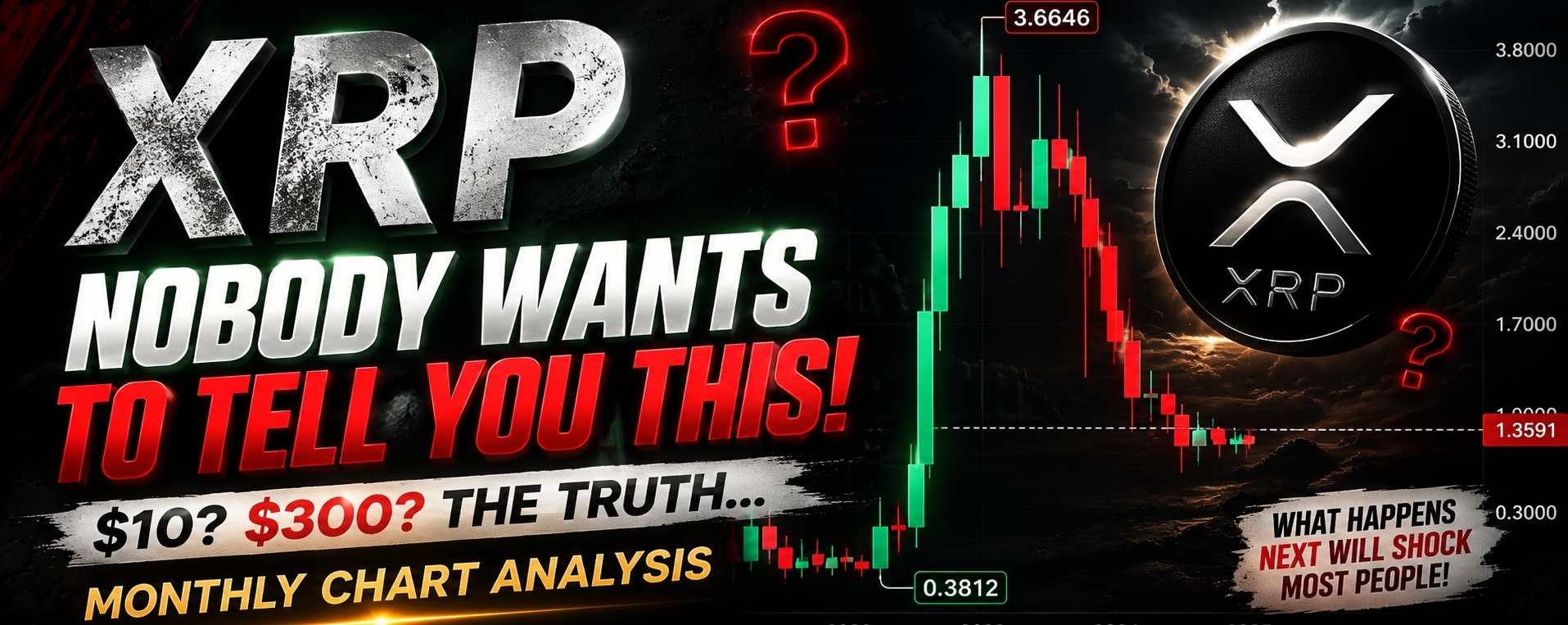
Không ai muốn nói với bạn điều này về cấu trúc tháng của XRPMọi người đang chiến đấu vì $10 $XRP và $300 XRP trong khi biểu đồ tháng đang cho thấy sự cạn kiệt động lượng trong thời gian thực.
Nhìn kỹ vào cấu trúc.
Nến mở rộng khổng lồ từ khu vực $0.38
Đẩy mạnh về phía $3.66
Sau đó là nhiều nến từ chối hàng tháng
Đóng thấp hơn sau đỉnh
Động lượng đang phai nhạt thay vì tăng tốc
Điều đó thường cho tôi biết một điều: thị trường đang bước vào giai đoạn làm mát hoặc phân phối, không phải giai đoạn khám phá giá sạch sẽ.
Nếu $XRP thực sự chuẩn bị cho một cú nhảy ngay lập tức về các mục tiêu cực đoan, các nến tháng thường sẽ cho thấy:
Không ai muốn nói với bạn điều này về cấu trúc tháng của XRP
Mọi người đang chiến đấu vì $10 $XRP và $300 XRP trong khi biểu đồ tháng đang cho thấy sự cạn kiệt động lượng trong thời gian thực.
Nhìn kỹ vào cấu trúc.
Nến mở rộng khổng lồ từ khu vực $0.38
Đẩy mạnh về phía $3.66
Sau đó là nhiều nến từ chối hàng tháng
Đóng thấp hơn sau đỉnh
Động lượng đang phai nhạt thay vì tăng tốc
Điều đó thường cho tôi biết một điều: thị trường đang bước vào giai đoạn làm mát hoặc phân phối, không phải giai đoạn khám phá giá sạch sẽ.
Nếu $XRP thực sự chuẩn bị cho một cú nhảy ngay lập tức về các mục tiêu cực đoan, các nến tháng thường sẽ cho thấy:
Nhìn kỹ vào cấu trúc.
Nến mở rộng khổng lồ từ khu vực $0.38
Đẩy mạnh về phía $3.66
Sau đó là nhiều nến từ chối hàng tháng
Đóng thấp hơn sau đỉnh
Động lượng đang phai nhạt thay vì tăng tốc
Điều đó thường cho tôi biết một điều: thị trường đang bước vào giai đoạn làm mát hoặc phân phối, không phải giai đoạn khám phá giá sạch sẽ.
Nếu $XRP thực sự chuẩn bị cho một cú nhảy ngay lập tức về các mục tiêu cực đoan, các nến tháng thường sẽ cho thấy:
28
6
153
113.4k
PINNED
·
--
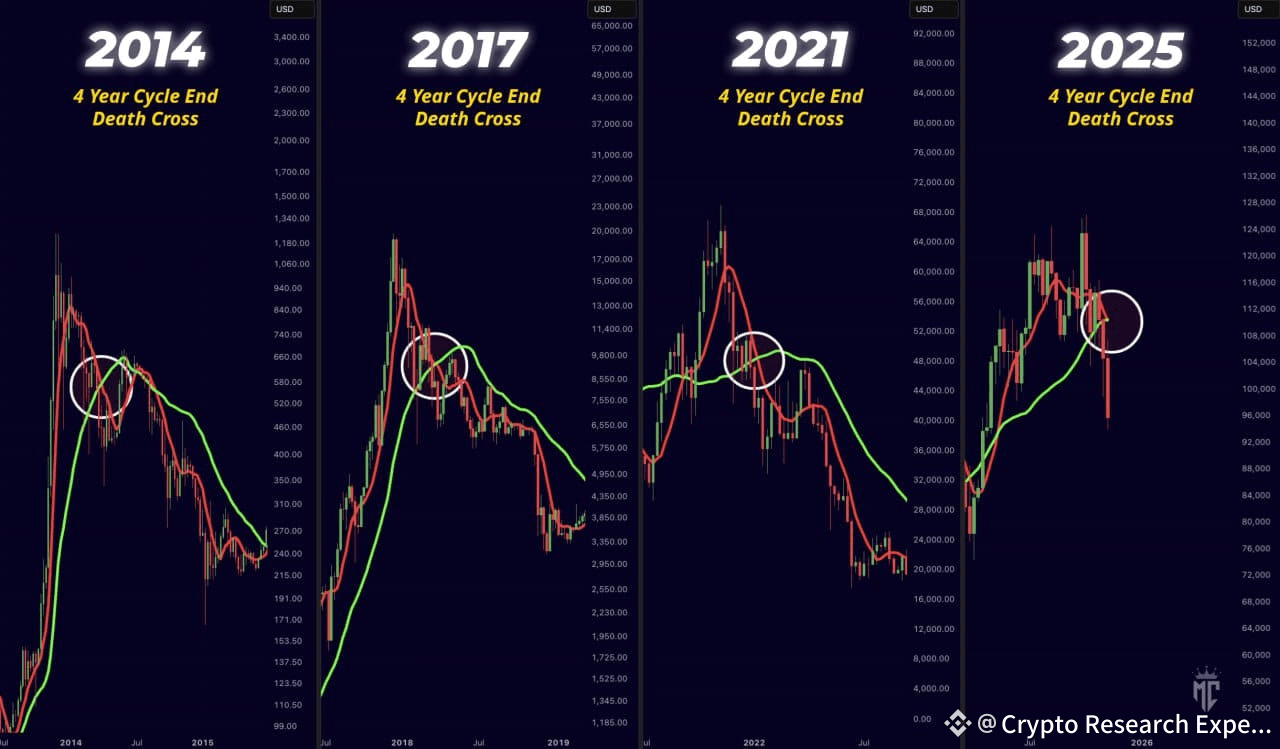
🔥 MỖI VÒNG XOÁY BITCOIN ĐỀU KẾT THÚC VỚI MỘT CÁI CHẾT GIAO THOA… VẬY TẠI SAO LẦN NÀY LẠI KHÁC? ⚠️💀📉$BTC
📊 Mỗi chu kỳ bò BTC lớn mà chúng ta đã thấy — 2013, 2017, 2021 — cuối cùng đều kết thúc với cái Chết Giao Thoa huyền thoại trên các khung thời gian cao hơn.
🤯 Tuy nhiên ngay bây giờ, Bitcoin đang gia tăng sự sợ hãi cực độ nhanh hơn cả năm 2021, thanh khoản đang trở nên mỏng manh, và sự biến động đang bùng nổ.
🧩 Lịch sử cho chúng ta biết tín hiệu tương tự quay trở lại mỗi chu kỳ… câu hỏi là KHI, chứ không phải CÓ HAY KHÔNG.
⚡ Bất kỳ ai phớt lờ điều này đang mơ mộng — các chu kỳ không thay đổi, chỉ có cảm xúc là thay đổi.
🚨 Hãy luôn tỉnh táo. Hãy quản lý rủi ro. Thị trường không quan tâm đến hy vọng.
🔥 MỖI VÒNG XOÁY BITCOIN ĐỀU KẾT THÚC VỚI MỘT CÁI CHẾT GIAO THOA… VẬY TẠI SAO LẦN NÀY LẠI KHÁC? ⚠️💀📉$BTC
📊 Mỗi chu kỳ bò BTC lớn mà chúng ta đã thấy — 2013, 2017, 2021 — cuối cùng đều kết thúc với cái Chết Giao Thoa huyền thoại trên các khung thời gian cao hơn.
🤯 Tuy nhiên ngay bây giờ, Bitcoin đang gia tăng sự sợ hãi cực độ nhanh hơn cả năm 2021, thanh khoản đang trở nên mỏng manh, và sự biến động đang bùng nổ.
🧩 Lịch sử cho chúng ta biết tín hiệu tương tự quay trở lại mỗi chu kỳ… câu hỏi là KHI, chứ không phải CÓ HAY KHÔNG.
⚡ Bất kỳ ai phớt lờ điều này đang mơ mộng — các chu kỳ không thay đổi, chỉ có cảm xúc là thay đổi.
🚨 Hãy luôn tỉnh táo. Hãy quản lý rủi ro. Thị trường không quan tâm đến hy vọng.
📊 Mỗi chu kỳ bò BTC lớn mà chúng ta đã thấy — 2013, 2017, 2021 — cuối cùng đều kết thúc với cái Chết Giao Thoa huyền thoại trên các khung thời gian cao hơn.
🤯 Tuy nhiên ngay bây giờ, Bitcoin đang gia tăng sự sợ hãi cực độ nhanh hơn cả năm 2021, thanh khoản đang trở nên mỏng manh, và sự biến động đang bùng nổ.
🧩 Lịch sử cho chúng ta biết tín hiệu tương tự quay trở lại mỗi chu kỳ… câu hỏi là KHI, chứ không phải CÓ HAY KHÔNG.
⚡ Bất kỳ ai phớt lờ điều này đang mơ mộng — các chu kỳ không thay đổi, chỉ có cảm xúc là thay đổi.
🚨 Hãy luôn tỉnh táo. Hãy quản lý rủi ro. Thị trường không quan tâm đến hy vọng.
100
60
174
399.1k
·
--
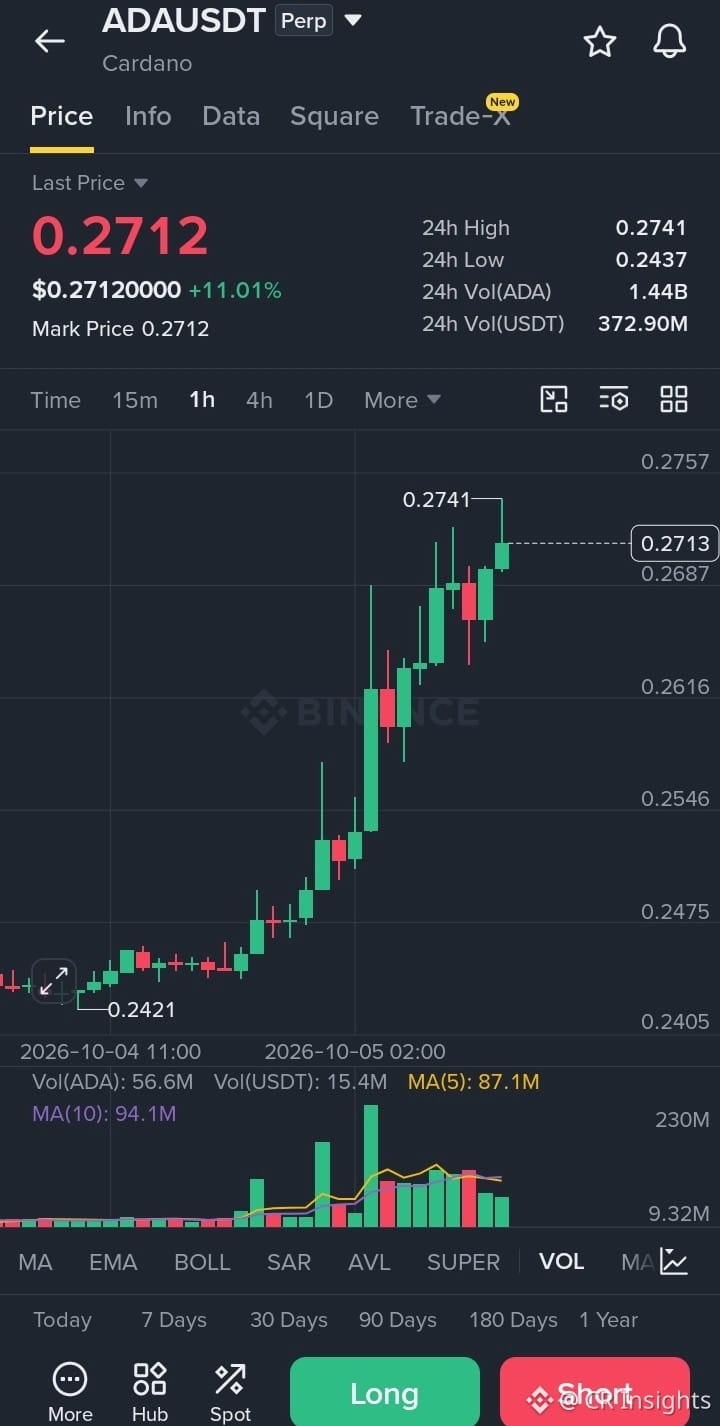
ADA VỪA CHẠM $0.273 — VÀ CÁC BÊN SHORT ĐANG Ở PHÍA TRÊN NÓ
$ADA đã tăng từ $0.2438 lên $0.2731 trong khoảng hai ngày. Khối lượng hôm nay đã mạnh, với khối lượng futures khoảng $1.04B và open interest khoảng $624M.
Nhưng phần hữu ích nằm ngay phía trên giá.
Bản đồ thanh lý hiện tại ước tính khoảng $441K các lệnh short quanh $0.2723. ADA hiện đang giao dịch ngay trong vùng đó, nên một đợt đẩy lên nữa có thể buộc các short này đóng vị thế theo đà tăng.
Vì vậy $0.2731 quan trọng hơn nến xanh 11%.
Vượt lên và giữ vững phía trên nó có thể ép các short ở gần và đưa $0.28 vào tầm ngắm.
Nếu ADA bị từ chối và rơi trở lại dưới $0.267, kịch bản ép co sẽ không còn.
Vượt $0.2731 → tìm cơ hội tiếp diễn.
Mất $0.267 → đừng đuổi theo lệnh long.
#SECHaltsCryptoETFReviewsAmidFundingLapse
ADA VỪA CHẠM $0.273 — VÀ CÁC BÊN SHORT ĐANG Ở PHÍA TRÊN NÓ
$ADA đã tăng từ $0.2438 lên $0.2731 trong khoảng hai ngày. Khối lượng hôm nay đã mạnh, với khối lượng futures khoảng $1.04B và open interest khoảng $624M.
Nhưng phần hữu ích nằm ngay phía trên giá.
Bản đồ thanh lý hiện tại ước tính khoảng $441K các lệnh short quanh $0.2723. ADA hiện đang giao dịch ngay trong vùng đó, nên một đợt đẩy lên nữa có thể buộc các short này đóng vị thế theo đà tăng.
Vì vậy $0.2731 quan trọng hơn nến xanh 11%.
Vượt lên và giữ vững phía trên nó có thể ép các short ở gần và đưa $0.28 vào tầm ngắm.
Nếu ADA bị từ chối và rơi trở lại dưới $0.267, kịch bản ép co sẽ không còn.
Vượt $0.2731 → tìm cơ hội tiếp diễn.
Mất $0.267 → đừng đuổi theo lệnh long.
#SECHaltsCryptoETFReviewsAmidFundingLapse
$ADA đã tăng từ $0.2438 lên $0.2731 trong khoảng hai ngày. Khối lượng hôm nay đã mạnh, với khối lượng futures khoảng $1.04B và open interest khoảng $624M.
Nhưng phần hữu ích nằm ngay phía trên giá.
Bản đồ thanh lý hiện tại ước tính khoảng $441K các lệnh short quanh $0.2723. ADA hiện đang giao dịch ngay trong vùng đó, nên một đợt đẩy lên nữa có thể buộc các short này đóng vị thế theo đà tăng.
Vì vậy $0.2731 quan trọng hơn nến xanh 11%.
Vượt lên và giữ vững phía trên nó có thể ép các short ở gần và đưa $0.28 vào tầm ngắm.
Nếu ADA bị từ chối và rơi trở lại dưới $0.267, kịch bản ép co sẽ không còn.
Vượt $0.2731 → tìm cơ hội tiếp diễn.
Mất $0.267 → đừng đuổi theo lệnh long.
#SECHaltsCryptoETFReviewsAmidFundingLapse
271
·
--
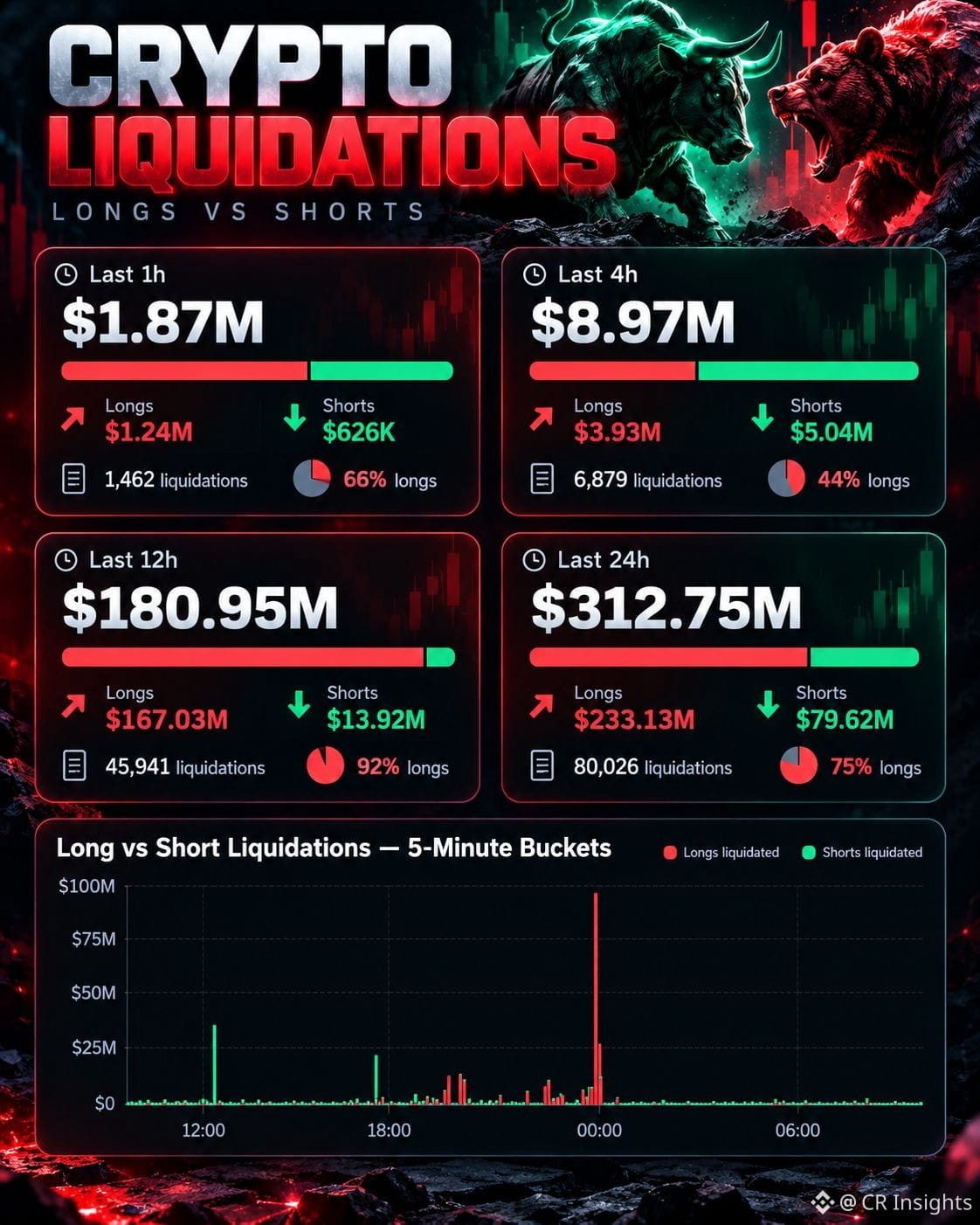
$313M VỪA BỊ THANH LÝ — 75% LÀ LONG
24 giờ qua đã xóa sổ $312,75M vị thế crypto, trong đó $233,13M đến từ long. Con số này chiếm 75% tổng số.
Nhưng con số lớn hơn là 12 giờ gần nhất: $180,95M bị thanh lý, và 92% là long.
Đó là một cú xả đòn bẩy nghiêm trọng.
Với trader, phần quan trọng không phải là ăn mừng con số thanh lý. Mà là điều gì sẽ xảy ra tiếp theo.
Một thị trường vừa ép phải rời khỏi lệnh một lượng long lớn đến vậy thì bên dưới nó sẽ ít đòn bẩy long bị “kẹt” hơn. Nhưng nếu BTC bắt đầu hướng tới một vùng thanh lý nặng khác, những lần thoát bắt buộc đó vẫn có thể đẩy nhanh đợt biến động kế tiếp.
Vì vậy, không phải là chạy theo nhịp bật đầu tiên.
Giao dịch tốt hơn là quét thanh khoản tiếp theo.
Nếu BTC quét qua một vùng thanh khoản long lớn rồi nhanh chóng chiếm lại, thì đợt xả này có thể trở thành sự xác nhận cho một lệnh long.
Nếu nó phá thủng vùng đó và tiếp tục chấp nhận giao dịch bên dưới, đừng chống lại đợt thanh lý.
Đòn bẩy đã cho thấy thị trường đang yếu ở đâu.
$BTC #liquidate
$313M VỪA BỊ THANH LÝ — 75% LÀ LONG
24 giờ qua đã xóa sổ $312,75M vị thế crypto, trong đó $233,13M đến từ long. Con số này chiếm 75% tổng số.
Nhưng con số lớn hơn là 12 giờ gần nhất: $180,95M bị thanh lý, và 92% là long.
Đó là một cú xả đòn bẩy nghiêm trọng.
Với trader, phần quan trọng không phải là ăn mừng con số thanh lý. Mà là điều gì sẽ xảy ra tiếp theo.
Một thị trường vừa ép phải rời khỏi lệnh một lượng long lớn đến vậy thì bên dưới nó sẽ ít đòn bẩy long bị “kẹt” hơn. Nhưng nếu BTC bắt đầu hướng tới một vùng thanh lý nặng khác, những lần thoát bắt buộc đó vẫn có thể đẩy nhanh đợt biến động kế tiếp.
Vì vậy, không phải là chạy theo nhịp bật đầu tiên.
Giao dịch tốt hơn là quét thanh khoản tiếp theo.
Nếu BTC quét qua một vùng thanh khoản long lớn rồi nhanh chóng chiếm lại, thì đợt xả này có thể trở thành sự xác nhận cho một lệnh long.
Nếu nó phá thủng vùng đó và tiếp tục chấp nhận giao dịch bên dưới, đừng chống lại đợt thanh lý.
Đòn bẩy đã cho thấy thị trường đang yếu ở đâu.
$BTC #liquidate
24 giờ qua đã xóa sổ $312,75M vị thế crypto, trong đó $233,13M đến từ long. Con số này chiếm 75% tổng số.
Nhưng con số lớn hơn là 12 giờ gần nhất: $180,95M bị thanh lý, và 92% là long.
Đó là một cú xả đòn bẩy nghiêm trọng.
Với trader, phần quan trọng không phải là ăn mừng con số thanh lý. Mà là điều gì sẽ xảy ra tiếp theo.
Một thị trường vừa ép phải rời khỏi lệnh một lượng long lớn đến vậy thì bên dưới nó sẽ ít đòn bẩy long bị “kẹt” hơn. Nhưng nếu BTC bắt đầu hướng tới một vùng thanh lý nặng khác, những lần thoát bắt buộc đó vẫn có thể đẩy nhanh đợt biến động kế tiếp.
Vì vậy, không phải là chạy theo nhịp bật đầu tiên.
Giao dịch tốt hơn là quét thanh khoản tiếp theo.
Nếu BTC quét qua một vùng thanh khoản long lớn rồi nhanh chóng chiếm lại, thì đợt xả này có thể trở thành sự xác nhận cho một lệnh long.
Nếu nó phá thủng vùng đó và tiếp tục chấp nhận giao dịch bên dưới, đừng chống lại đợt thanh lý.
Đòn bẩy đã cho thấy thị trường đang yếu ở đâu.
$BTC #liquidate
182
·
--
$101M USDC ĐANG DI CHUYỂN VÀO INJECTIVE
Ban đầu, $101,4M USDC được phát hành trên Injective trông giống như một con số tăng trưởng tiếp nhận khác.
Phần thú vị hơn là mức tăng 33,59% trong vòng một tháng thể hiện trong ảnh chụp màn hình.
Mức tăng đó đang diễn ra trong lúc hệ sinh thái Cosmos chuyển từ Noble USDC sang native USDC do Injective phát hành.
Injective cho biết họ đang tiếp quản hơn $100M USDC hiện có từ Noble, đồng thời trở thành tiêu chuẩn USDC chính thống trên toàn Cosmos và dYdX.
Và đây không chỉ là thay đổi thương hiệu.
Native USDC mang lại cho các ứng dụng trên Injective một tài sản đô la chung để giao dịch, cho vay, thanh toán và làm tài sản thế chấp, trong khi IBC kết nối thanh khoản đó giữa các chuỗi Cosmos tham gia.
Sau đó còn có thêm một bằng chứng nữa:
Kraken hiện hỗ trợ nạp và rút native USDC trực tiếp trên Injective.
Điều này loại bỏ một bước trung gian qua chuỗi giữa sàn giao dịch và các thị trường onchain của Injective.
Vì vậy tôi không theo dõi giá INJ trước.
Tôi theo dõi việc phát hành và quá trình di chuyển USDC.
Bởi vì sự chuyển dịch quan trọng không chỉ đơn thuần là Injective có $100M+ USDC.
Mà là liệu thanh khoản đó có tiếp tục trở thành tài sản thanh toán chung nằm dưới toàn bộ hệ sinh thái hay không.
Nếu điều đó xảy ra, USDC sẽ không còn chỉ là một tài sản khác trên Injective.
Nó trở thành một phần của hạ tầng tài chính của mạng lưới.
#İNJ
$101M USDC ĐANG DI CHUYỂN VÀO INJECTIVE
Ban đầu, $101,4M USDC được phát hành trên Injective trông giống như một con số tăng trưởng tiếp nhận khác.
Phần thú vị hơn là mức tăng 33,59% trong vòng một tháng thể hiện trong ảnh chụp màn hình.
Mức tăng đó đang diễn ra trong lúc hệ sinh thái Cosmos chuyển từ Noble USDC sang native USDC do Injective phát hành.
Injective cho biết họ đang tiếp quản hơn $100M USDC hiện có từ Noble, đồng thời trở thành tiêu chuẩn USDC chính thống trên toàn Cosmos và dYdX.
Và đây không chỉ là thay đổi thương hiệu.
Native USDC mang lại cho các ứng dụng trên Injective một tài sản đô la chung để giao dịch, cho vay, thanh toán và làm tài sản thế chấp, trong khi IBC kết nối thanh khoản đó giữa các chuỗi Cosmos tham gia.
Sau đó còn có thêm một bằng chứng nữa:
Kraken hiện hỗ trợ nạp và rút native USDC trực tiếp trên Injective.
Điều này loại bỏ một bước trung gian qua chuỗi giữa sàn giao dịch và các thị trường onchain của Injective.
Vì vậy tôi không theo dõi giá INJ trước.
Tôi theo dõi việc phát hành và quá trình di chuyển USDC.
Bởi vì sự chuyển dịch quan trọng không chỉ đơn thuần là Injective có $100M+ USDC.
Mà là liệu thanh khoản đó có tiếp tục trở thành tài sản thanh toán chung nằm dưới toàn bộ hệ sinh thái hay không.
Nếu điều đó xảy ra, USDC sẽ không còn chỉ là một tài sản khác trên Injective.
Nó trở thành một phần của hạ tầng tài chính của mạng lưới.
#İNJ
Ban đầu, $101,4M USDC được phát hành trên Injective trông giống như một con số tăng trưởng tiếp nhận khác.
Phần thú vị hơn là mức tăng 33,59% trong vòng một tháng thể hiện trong ảnh chụp màn hình.
Mức tăng đó đang diễn ra trong lúc hệ sinh thái Cosmos chuyển từ Noble USDC sang native USDC do Injective phát hành.
Injective cho biết họ đang tiếp quản hơn $100M USDC hiện có từ Noble, đồng thời trở thành tiêu chuẩn USDC chính thống trên toàn Cosmos và dYdX.
Và đây không chỉ là thay đổi thương hiệu.
Native USDC mang lại cho các ứng dụng trên Injective một tài sản đô la chung để giao dịch, cho vay, thanh toán và làm tài sản thế chấp, trong khi IBC kết nối thanh khoản đó giữa các chuỗi Cosmos tham gia.
Sau đó còn có thêm một bằng chứng nữa:
Kraken hiện hỗ trợ nạp và rút native USDC trực tiếp trên Injective.
Điều này loại bỏ một bước trung gian qua chuỗi giữa sàn giao dịch và các thị trường onchain của Injective.
Vì vậy tôi không theo dõi giá INJ trước.
Tôi theo dõi việc phát hành và quá trình di chuyển USDC.
Bởi vì sự chuyển dịch quan trọng không chỉ đơn thuần là Injective có $100M+ USDC.
Mà là liệu thanh khoản đó có tiếp tục trở thành tài sản thanh toán chung nằm dưới toàn bộ hệ sinh thái hay không.
Nếu điều đó xảy ra, USDC sẽ không còn chỉ là một tài sản khác trên Injective.
Nó trở thành một phần của hạ tầng tài chính của mạng lưới.
#İNJ

1
496
·
--
BTC NHẬN ĐƯỢC CON SỐ LẠM PHÁT TỐT—RỒI MẤT MẤT GIÁ THẦU
Đó là phần mà các nhà giao dịch nên theo dõi.
Chỉ số PCE lõi hạ nhiệt hơn dự kiến và BTC đã đẩy lên trên 85.000 USD khi áp lực tăng lãi suất trong tháng 10 giảm bớt.
Nhưng đà tăng không duy trì được.
Lợi suất trái phiếu Kho bạc Mỹ vẫn đang đi ngược với điều mà BTC cần. Lợi suất 10 năm đã tăng chạm 5,34% trong thời gian ngắn—mức cao nhất kể từ năm 2002—trong khi dầu Brent đã quay lại trên 100 USD.
Ngoài ra còn có dòng tiền ETF.
Sau chín phiên liên tiếp hút vào khoảng 3,1 tỷ USD, các ETF giao ngay BTC của Mỹ bất ngờ ghi nhận 148,7 triệu USD dòng tiền ròng chảy ra vào ngày 30/9.
Vì vậy, BTC hiện đang có một kịch bản khá “kỳ lạ”:
Dữ liệu lạm phát tốt → tiêu đề tích cực
Lợi suất dài hạn cao → cản gió thanh khoản
Dòng tiền ETF đi vào → gần đây mạnh
Dòng tiền ETF → vừa chuyển sang tiêu cực
Điều đó tạo ra phép thử thực sự.
BTC có thể giữ vững 82K–83K trong khi lợi suất vẫn cao và nhu cầu từ ETF hạ nhiệt không?
Nếu làm được, thị trường đang cho thấy nhu cầu giao ngay đủ mạnh để hấp thụ áp lực vĩ mô.
Nếu không, thì cú đẩy lên 85K có thể không phải là một đợt bứt phá đúng nghĩa mà giống một bài kiểm tra về thanh khoản hơn.
Tôi đang theo dõi phản ứng quanh mức 82K, chứ không phải một tiêu đề tích cực khác.$BTC
BTC NHẬN ĐƯỢC CON SỐ LẠM PHÁT TỐT—RỒI MẤT MẤT GIÁ THẦU
Đó là phần mà các nhà giao dịch nên theo dõi.
Chỉ số PCE lõi hạ nhiệt hơn dự kiến và BTC đã đẩy lên trên 85.000 USD khi áp lực tăng lãi suất trong tháng 10 giảm bớt.
Nhưng đà tăng không duy trì được.
Lợi suất trái phiếu Kho bạc Mỹ vẫn đang đi ngược với điều mà BTC cần. Lợi suất 10 năm đã tăng chạm 5,34% trong thời gian ngắn—mức cao nhất kể từ năm 2002—trong khi dầu Brent đã quay lại trên 100 USD.
Ngoài ra còn có dòng tiền ETF.
Sau chín phiên liên tiếp hút vào khoảng 3,1 tỷ USD, các ETF giao ngay BTC của Mỹ bất ngờ ghi nhận 148,7 triệu USD dòng tiền ròng chảy ra vào ngày 30/9.
Vì vậy, BTC hiện đang có một kịch bản khá “kỳ lạ”:
Dữ liệu lạm phát tốt → tiêu đề tích cực
Lợi suất dài hạn cao → cản gió thanh khoản
Dòng tiền ETF đi vào → gần đây mạnh
Dòng tiền ETF → vừa chuyển sang tiêu cực
Điều đó tạo ra phép thử thực sự.
BTC có thể giữ vững 82K–83K trong khi lợi suất vẫn cao và nhu cầu từ ETF hạ nhiệt không?
Nếu làm được, thị trường đang cho thấy nhu cầu giao ngay đủ mạnh để hấp thụ áp lực vĩ mô.
Nếu không, thì cú đẩy lên 85K có thể không phải là một đợt bứt phá đúng nghĩa mà giống một bài kiểm tra về thanh khoản hơn.
Tôi đang theo dõi phản ứng quanh mức 82K, chứ không phải một tiêu đề tích cực khác.$BTC
Đó là phần mà các nhà giao dịch nên theo dõi.
Chỉ số PCE lõi hạ nhiệt hơn dự kiến và BTC đã đẩy lên trên 85.000 USD khi áp lực tăng lãi suất trong tháng 10 giảm bớt.
Nhưng đà tăng không duy trì được.
Lợi suất trái phiếu Kho bạc Mỹ vẫn đang đi ngược với điều mà BTC cần. Lợi suất 10 năm đã tăng chạm 5,34% trong thời gian ngắn—mức cao nhất kể từ năm 2002—trong khi dầu Brent đã quay lại trên 100 USD.
Ngoài ra còn có dòng tiền ETF.
Sau chín phiên liên tiếp hút vào khoảng 3,1 tỷ USD, các ETF giao ngay BTC của Mỹ bất ngờ ghi nhận 148,7 triệu USD dòng tiền ròng chảy ra vào ngày 30/9.
Vì vậy, BTC hiện đang có một kịch bản khá “kỳ lạ”:
Dữ liệu lạm phát tốt → tiêu đề tích cực
Lợi suất dài hạn cao → cản gió thanh khoản
Dòng tiền ETF đi vào → gần đây mạnh
Dòng tiền ETF → vừa chuyển sang tiêu cực
Điều đó tạo ra phép thử thực sự.
BTC có thể giữ vững 82K–83K trong khi lợi suất vẫn cao và nhu cầu từ ETF hạ nhiệt không?
Nếu làm được, thị trường đang cho thấy nhu cầu giao ngay đủ mạnh để hấp thụ áp lực vĩ mô.
Nếu không, thì cú đẩy lên 85K có thể không phải là một đợt bứt phá đúng nghĩa mà giống một bài kiểm tra về thanh khoản hơn.
Tôi đang theo dõi phản ứng quanh mức 82K, chứ không phải một tiêu đề tích cực khác.$BTC

251
·
--
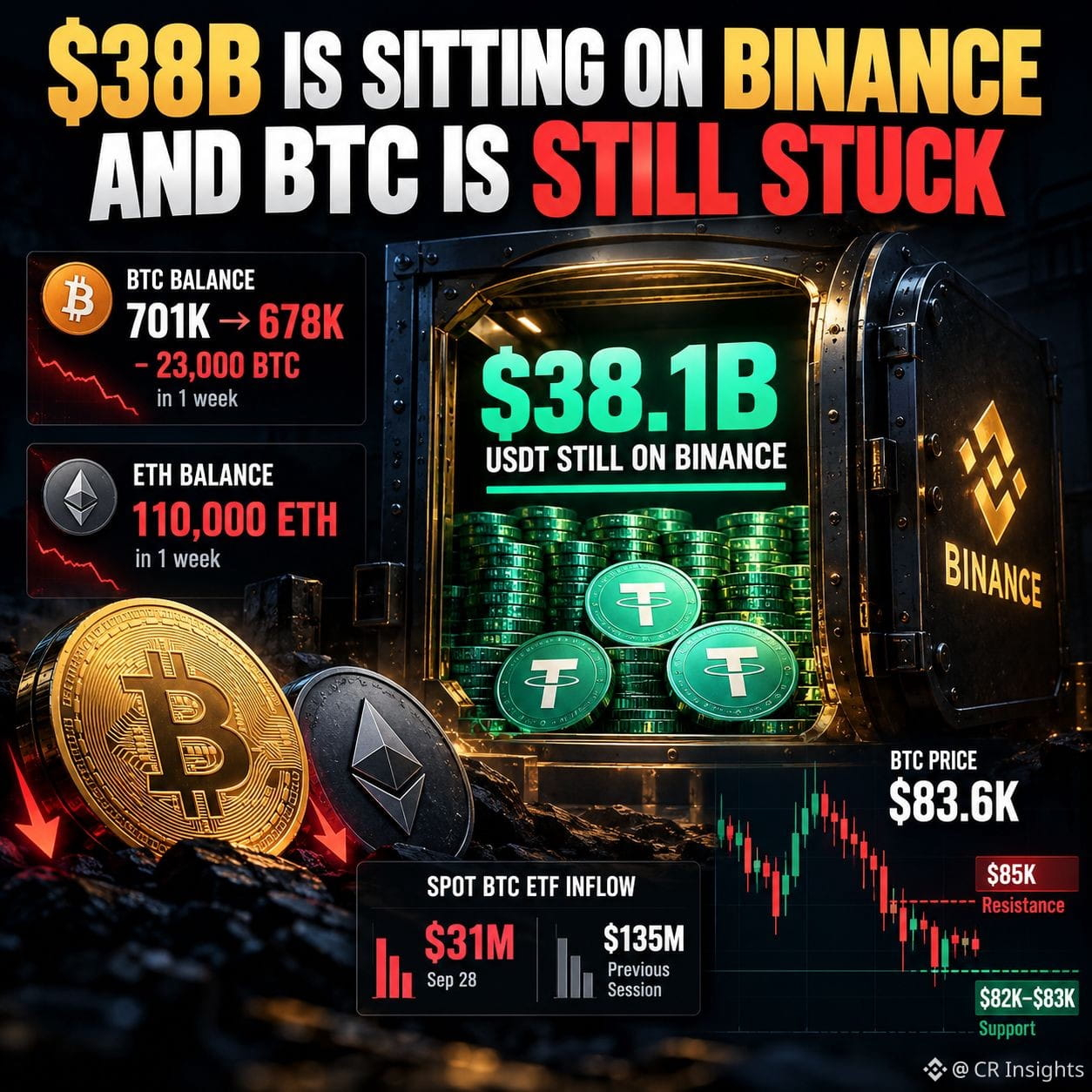
$38B ĐANG NẰM TRÊN BINANCE — VÀ BTC VẪN BỊ “KẸT”
Có một tín hiệu thanh khoản đang ẩn trong số dư mới nhất của Binance.
Lượng BTC mà Binance nắm giữ đã giảm khoảng 23.000 BTC trong vòng một tuần, từ chừng 701K xuống còn 678K. Số dư ETH cũng giảm khoảng 110.000 ETH.
Nhưng USDT không rời đi.
Binance vẫn nắm giữ xấp xỉ 38,1B USD USDT vào ngày 28 tháng 9.
Đó là phần tôi thấy thú vị hơn nhiều so với một tiêu đề khác kiểu “BTC tăng giá/giảm giá”.
Hàng tồn kho crypto đang rời sàn trong khi thanh khoản USD vẫn nằm đó.
Vì vậy, thị trường hiện đang có hai luồng diễn biến rất khác nhau xảy ra cùng một nơi: ít tồn kho BTC/ETH hơn, nhưng lại có một “cục” năng lực mua stablecoin khổng lồ đang chờ ở ngoài lề.
Hôm nay BTC quanh mức 83,6K USD, với vùng hỗ trợ ngắn hạn nằm ở 82K–83K và mốc kháng cự đầu tiên là 85K. Dòng tiền vào ETF vẫn dương, nhưng tốc độ đã chậm lại: dòng tiền vào spot BTC ETF ngày 28/9 chỉ khoảng 31 triệu USD, so với xấp xỉ 135 triệu USD của phiên trước.
Điều đó để lại một phép thử thị trường khá đơn giản.
Nếu BTC giành lại mốc 85K trong khi USDT trên sàn vẫn cao, thì một phần thanh khoản đang “nhàn rỗi” đó cuối cùng có thể bắt đầu đuổi theo thị trường spot.
Nếu BTC rơi khỏi mốc 82K, thì cùng khoản 38B USD này lại kể một câu chuyện hoàn toàn khác: các trader đã có sẵn thanh khoản, nhưng không sẵn sàng triển khai.
Bước đi tiếp theo không chỉ nói về việc trong crypto có bao nhiêu tiền.
Mà là liệu số tiền đã nằm sẵn ở đó cuối cùng có chịu di chuyển hay không.
$BTC $ETH
$38B ĐANG NẰM TRÊN BINANCE — VÀ BTC VẪN BỊ “KẸT”
Có một tín hiệu thanh khoản đang ẩn trong số dư mới nhất của Binance.
Lượng BTC mà Binance nắm giữ đã giảm khoảng 23.000 BTC trong vòng một tuần, từ chừng 701K xuống còn 678K. Số dư ETH cũng giảm khoảng 110.000 ETH.
Nhưng USDT không rời đi.
Binance vẫn nắm giữ xấp xỉ 38,1B USD USDT vào ngày 28 tháng 9.
Đó là phần tôi thấy thú vị hơn nhiều so với một tiêu đề khác kiểu “BTC tăng giá/giảm giá”.
Hàng tồn kho crypto đang rời sàn trong khi thanh khoản USD vẫn nằm đó.
Vì vậy, thị trường hiện đang có hai luồng diễn biến rất khác nhau xảy ra cùng một nơi: ít tồn kho BTC/ETH hơn, nhưng lại có một “cục” năng lực mua stablecoin khổng lồ đang chờ ở ngoài lề.
Hôm nay BTC quanh mức 83,6K USD, với vùng hỗ trợ ngắn hạn nằm ở 82K–83K và mốc kháng cự đầu tiên là 85K. Dòng tiền vào ETF vẫn dương, nhưng tốc độ đã chậm lại: dòng tiền vào spot BTC ETF ngày 28/9 chỉ khoảng 31 triệu USD, so với xấp xỉ 135 triệu USD của phiên trước.
Điều đó để lại một phép thử thị trường khá đơn giản.
Nếu BTC giành lại mốc 85K trong khi USDT trên sàn vẫn cao, thì một phần thanh khoản đang “nhàn rỗi” đó cuối cùng có thể bắt đầu đuổi theo thị trường spot.
Nếu BTC rơi khỏi mốc 82K, thì cùng khoản 38B USD này lại kể một câu chuyện hoàn toàn khác: các trader đã có sẵn thanh khoản, nhưng không sẵn sàng triển khai.
Bước đi tiếp theo không chỉ nói về việc trong crypto có bao nhiêu tiền.
Mà là liệu số tiền đã nằm sẵn ở đó cuối cùng có chịu di chuyển hay không.
$BTC $ETH
Có một tín hiệu thanh khoản đang ẩn trong số dư mới nhất của Binance.
Lượng BTC mà Binance nắm giữ đã giảm khoảng 23.000 BTC trong vòng một tuần, từ chừng 701K xuống còn 678K. Số dư ETH cũng giảm khoảng 110.000 ETH.
Nhưng USDT không rời đi.
Binance vẫn nắm giữ xấp xỉ 38,1B USD USDT vào ngày 28 tháng 9.
Đó là phần tôi thấy thú vị hơn nhiều so với một tiêu đề khác kiểu “BTC tăng giá/giảm giá”.
Hàng tồn kho crypto đang rời sàn trong khi thanh khoản USD vẫn nằm đó.
Vì vậy, thị trường hiện đang có hai luồng diễn biến rất khác nhau xảy ra cùng một nơi: ít tồn kho BTC/ETH hơn, nhưng lại có một “cục” năng lực mua stablecoin khổng lồ đang chờ ở ngoài lề.
Hôm nay BTC quanh mức 83,6K USD, với vùng hỗ trợ ngắn hạn nằm ở 82K–83K và mốc kháng cự đầu tiên là 85K. Dòng tiền vào ETF vẫn dương, nhưng tốc độ đã chậm lại: dòng tiền vào spot BTC ETF ngày 28/9 chỉ khoảng 31 triệu USD, so với xấp xỉ 135 triệu USD của phiên trước.
Điều đó để lại một phép thử thị trường khá đơn giản.
Nếu BTC giành lại mốc 85K trong khi USDT trên sàn vẫn cao, thì một phần thanh khoản đang “nhàn rỗi” đó cuối cùng có thể bắt đầu đuổi theo thị trường spot.
Nếu BTC rơi khỏi mốc 82K, thì cùng khoản 38B USD này lại kể một câu chuyện hoàn toàn khác: các trader đã có sẵn thanh khoản, nhưng không sẵn sàng triển khai.
Bước đi tiếp theo không chỉ nói về việc trong crypto có bao nhiêu tiền.
Mà là liệu số tiền đã nằm sẵn ở đó cuối cùng có chịu di chuyển hay không.
$BTC $ETH
156
·
--
$BR — DÀI
$BR đã bật mạnh từ $0.8300 và hiện đang tích lũy quanh $0.842. Việc giữ trên $0.8300 giúp cấu trúc phục hồi vẫn được duy trì.
Kế hoạch giao dịch:
Vào lệnh: $0.8380–$0.8430
Chốt lời 1 (TP1): $0.8600
Chốt lời 2 (TP2): $0.8780
Chốt lời 3 (TP3): $0.8950
Cắt lỗ (SL): $0.8280
$BR — DÀI
$BR đã bật mạnh từ $0.8300 và hiện đang tích lũy quanh $0.842. Việc giữ trên $0.8300 giúp cấu trúc phục hồi vẫn được duy trì.
Kế hoạch giao dịch:
Vào lệnh: $0.8380–$0.8430
Chốt lời 1 (TP1): $0.8600
Chốt lời 2 (TP2): $0.8780
Chốt lời 3 (TP3): $0.8950
Cắt lỗ (SL): $0.8280
$BR đã bật mạnh từ $0.8300 và hiện đang tích lũy quanh $0.842. Việc giữ trên $0.8300 giúp cấu trúc phục hồi vẫn được duy trì.
Kế hoạch giao dịch:
Vào lệnh: $0.8380–$0.8430
Chốt lời 1 (TP1): $0.8600
Chốt lời 2 (TP2): $0.8780
Chốt lời 3 (TP3): $0.8950
Cắt lỗ (SL): $0.8280
2
936
·
--
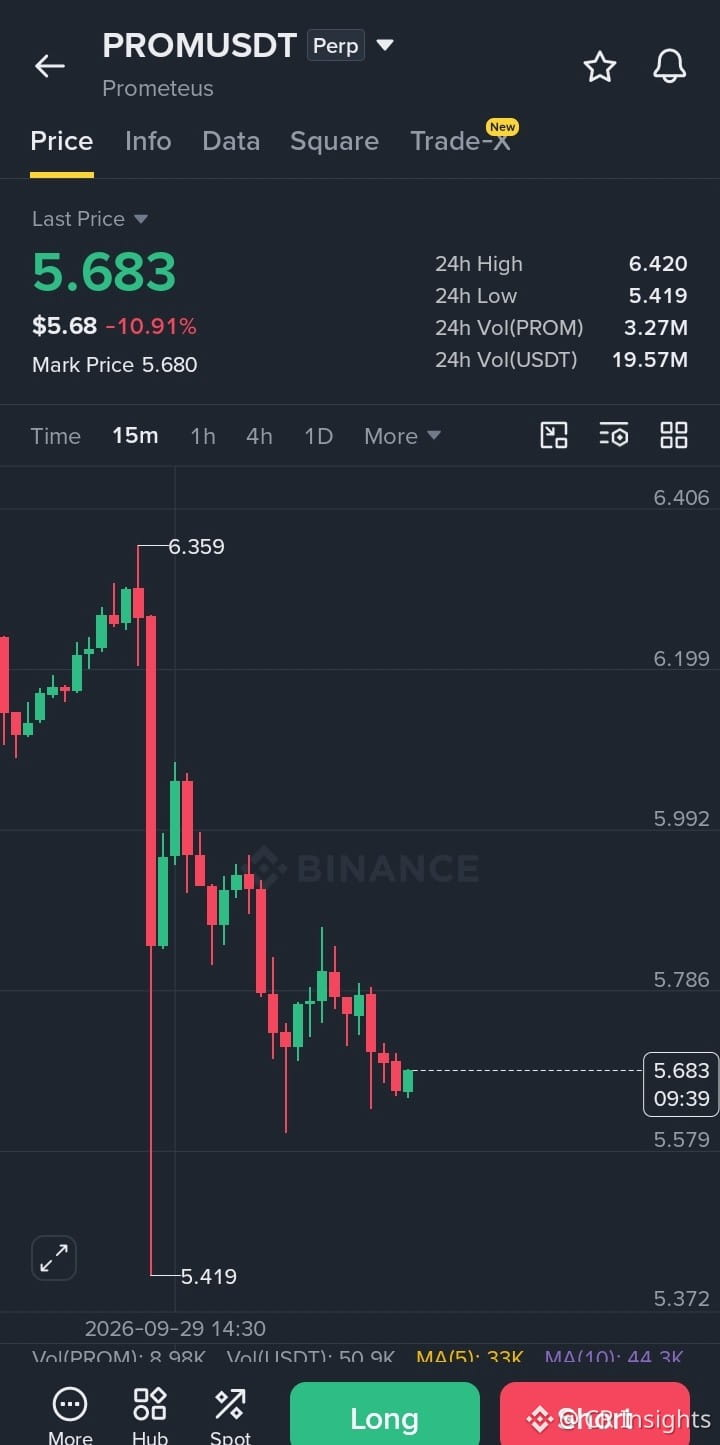
$PROM — NGẮN
$PROM bị từ chối ở $6.359 và tiếp tục tạo đỉnh thấp hơn và đáy thấp hơn. Giá đang giữ gần mức đáy của phiên.
Kế hoạch giao dịch:
Vào lệnh: $5.68–$5.75
Chốt lời 1 (TP1): $5.58
Chốt lời 2 (TP2): $5.42
Chốt lời 3 (TP3): $5.30
Cắt lỗ (SL): $5.88
$PROM — NGẮN
$PROM bị từ chối ở $6.359 và tiếp tục tạo đỉnh thấp hơn và đáy thấp hơn. Giá đang giữ gần mức đáy của phiên.
Kế hoạch giao dịch:
Vào lệnh: $5.68–$5.75
Chốt lời 1 (TP1): $5.58
Chốt lời 2 (TP2): $5.42
Chốt lời 3 (TP3): $5.30
Cắt lỗ (SL): $5.88
$PROM bị từ chối ở $6.359 và tiếp tục tạo đỉnh thấp hơn và đáy thấp hơn. Giá đang giữ gần mức đáy của phiên.
Kế hoạch giao dịch:
Vào lệnh: $5.68–$5.75
Chốt lời 1 (TP1): $5.58
Chốt lời 2 (TP2): $5.42
Chốt lời 3 (TP3): $5.30
Cắt lỗ (SL): $5.88
249
·
--
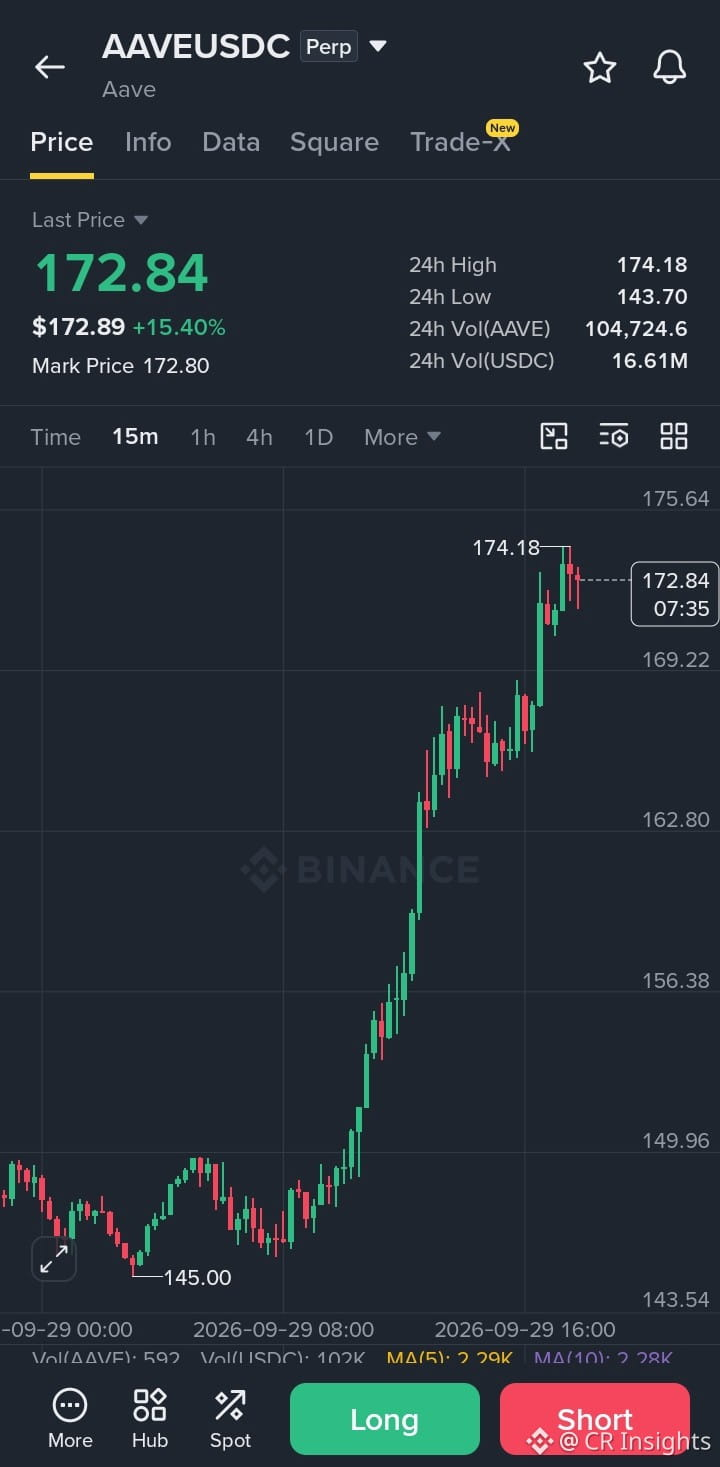
$AAVE — DÀI
{future}(AAVEUSDT)
$AAVE đang trong một xu hướng tăng mạnh 15M sau khi bứt phá khỏi vùng $145. Giá đang giữ gần mức cao $174.18, với cấu trúc bứt phá vẫn còn nguyên vẹn.
Kế hoạch giao dịch:
Vào lệnh: $169.50–$172.00
TP1: $174.20
TP2: $178.00
TP3: $182.00
SL: $166.50
$AAVE — DÀI
$AAVE đang trong một xu hướng tăng mạnh 15M sau khi bứt phá khỏi vùng $145. Giá đang giữ gần mức cao $174.18, với cấu trúc bứt phá vẫn còn nguyên vẹn.
Kế hoạch giao dịch:
Vào lệnh: $169.50–$172.00
TP1: $174.20
TP2: $178.00
TP3: $182.00
SL: $166.50
$AAVE đang trong một xu hướng tăng mạnh 15M sau khi bứt phá khỏi vùng $145. Giá đang giữ gần mức cao $174.18, với cấu trúc bứt phá vẫn còn nguyên vẹn.
Kế hoạch giao dịch:
Vào lệnh: $169.50–$172.00
TP1: $174.20
TP2: $178.00
TP3: $182.00
SL: $166.50
119
·
--
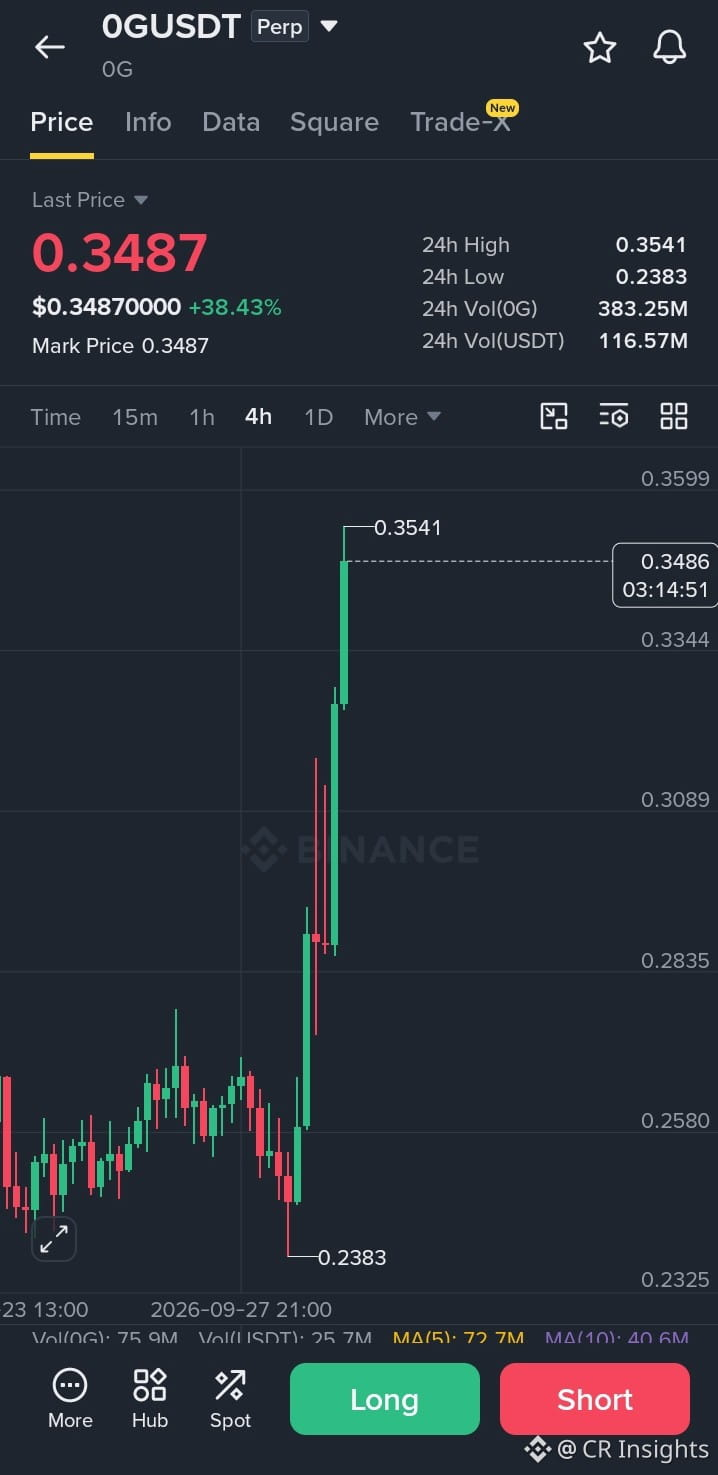
$0G — DÀI
{future}(0GUSDT)
$0G bứt phá mạnh khỏi vùng $0.258 và hiện đang giữ trên $0.334. Cấu trúc phá vỡ vẫn mang tính tăng khi giá vẫn nằm trên vùng phá vỡ gần đây.
Kế hoạch giao dịch:
Vào lệnh: $0.3300–$0.3400
TP1: $0.3540
TP2: $0.3700
TP3: $0.3900
Cắt lỗ: $0.3150
$0G — DÀI
$0G bứt phá mạnh khỏi vùng $0.258 và hiện đang giữ trên $0.334. Cấu trúc phá vỡ vẫn mang tính tăng khi giá vẫn nằm trên vùng phá vỡ gần đây.
Kế hoạch giao dịch:
Vào lệnh: $0.3300–$0.3400
TP1: $0.3540
TP2: $0.3700
TP3: $0.3900
Cắt lỗ: $0.3150
$0G bứt phá mạnh khỏi vùng $0.258 và hiện đang giữ trên $0.334. Cấu trúc phá vỡ vẫn mang tính tăng khi giá vẫn nằm trên vùng phá vỡ gần đây.
Kế hoạch giao dịch:
Vào lệnh: $0.3300–$0.3400
TP1: $0.3540
TP2: $0.3700
TP3: $0.3900
Cắt lỗ: $0.3150
283
·
--
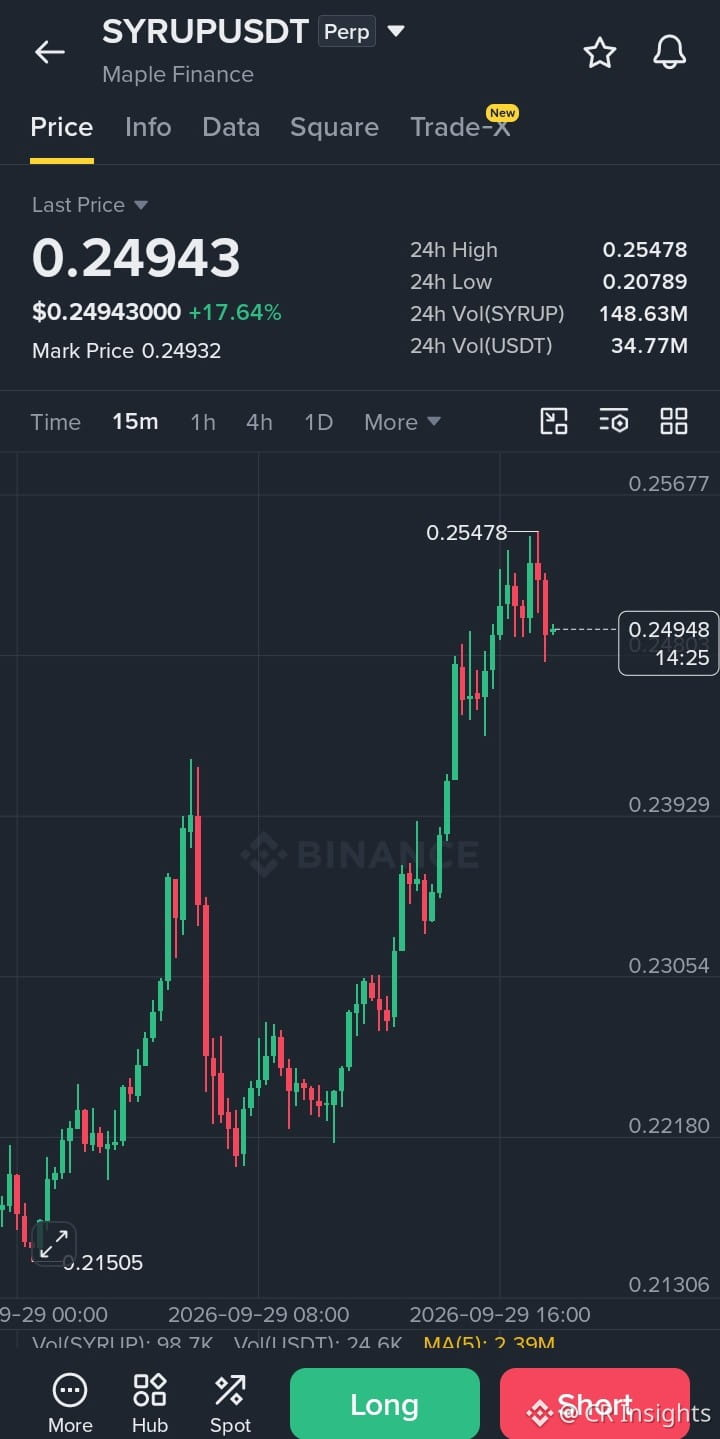
$SYRUP — DÀI
{future}(SYRUPUSDT)
$SYRUP đang duy trì một xu hướng tăng mạnh 15M sau khi bứt phá lên trên $0.24. Giá đang tích lũy gần đỉnh $0.2548, giữ nguyên cấu trúc tăng giá.
Kế hoạch giao dịch:
Vào lệnh: $0.2440–$0.2480
Chốt lời 1: $0.2548
Chốt lời 2: $0.2620
Chốt lời 3: $0.2700
Cắt lỗ: $0.2370
$SYRUP — DÀI
$SYRUP đang duy trì một xu hướng tăng mạnh 15M sau khi bứt phá lên trên $0.24. Giá đang tích lũy gần đỉnh $0.2548, giữ nguyên cấu trúc tăng giá.
Kế hoạch giao dịch:
Vào lệnh: $0.2440–$0.2480
Chốt lời 1: $0.2548
Chốt lời 2: $0.2620
Chốt lời 3: $0.2700
Cắt lỗ: $0.2370
$SYRUP đang duy trì một xu hướng tăng mạnh 15M sau khi bứt phá lên trên $0.24. Giá đang tích lũy gần đỉnh $0.2548, giữ nguyên cấu trúc tăng giá.
Kế hoạch giao dịch:
Vào lệnh: $0.2440–$0.2480
Chốt lời 1: $0.2548
Chốt lời 2: $0.2620
Chốt lời 3: $0.2700
Cắt lỗ: $0.2370
180
·
--
MICRON KIẾM LỜI NGÀY MAI — TÔI KHÔNG CHỈ ĐANG THEO DÕI DOANH THU 👀
Micron công bố vào ngày mai, và thành thật mà nói, con số doanh thu 50B$ không phải phần mà tôi quan tâm nhất.
Con số mà tôi cứ quay lại là 86%.
Đó là dự báo biên lợi nhuận gộp (gross margin) Q4 của Micron. Ở Q3, công ty đã đạt 84,9% biên lợi nhuận gộp không theo chuẩn GAAP, vì vậy về cơ bản công ty đang yêu cầu thị trường tin rằng biên lợi nhuận có thể còn tăng cao hơn nữa.
Nhưng có một điểm “bẫy”.
Chính Micron đã nói rằng triển vọng biên lợi nhuận Q4 của họ dựa trên giả định mức độ tăng giá (rate of price increases) sẽ giảm đáng kể.
Đó là lý do ngày mai trở nên thú vị.
Nếu giá bộ nhớ không tăng nhanh như trước, nhưng Micron vẫn có thể mang về khoảng 86% biên lợi nhuận, thì điều này bắt đầu giống ít hơn một cú tăng giá tạm thời và nhiều hơn một chu kỳ bộ nhớ mạnh mẽ hơn.
Nhưng nếu biên lợi nhuận yếu hơn và ban lãnh đạo bắt đầu nói về áp lực giá, cung hoặc cầu theo cách khác đi, thì thị trường sẽ có thêm điều mới để suy nghĩ.
Vì vậy, tôi không chỉ hỏi:
“Micron có vượt kỳ vọng lợi nhuận không?”
Tôi đang theo dõi ban lãnh đạo sẽ nói gì về FY2027.
Bởi bài kiểm tra thực sự của siêu chu kỳ bộ nhớ này không phải là việc Micron có thể có một quý bùng nổ nhất.
Mà là liệu các biên lợi nhuận này và nhu cầu bộ nhớ được thúc đẩy bởi AI có thể tiếp tục duy trì ở mức cao sau quý này hay không.
Ngày mai sẽ cho chúng ta câu trả lời rõ ràng hơn nhiều.
$MU
#EarningsSeason #Micron #MU #Semiconductors
MICRON KIẾM LỜI NGÀY MAI — TÔI KHÔNG CHỈ ĐANG THEO DÕI DOANH THU 👀
Micron công bố vào ngày mai, và thành thật mà nói, con số doanh thu 50B$ không phải phần mà tôi quan tâm nhất.
Con số mà tôi cứ quay lại là 86%.
Đó là dự báo biên lợi nhuận gộp (gross margin) Q4 của Micron. Ở Q3, công ty đã đạt 84,9% biên lợi nhuận gộp không theo chuẩn GAAP, vì vậy về cơ bản công ty đang yêu cầu thị trường tin rằng biên lợi nhuận có thể còn tăng cao hơn nữa.
Nhưng có một điểm “bẫy”.
Chính Micron đã nói rằng triển vọng biên lợi nhuận Q4 của họ dựa trên giả định mức độ tăng giá (rate of price increases) sẽ giảm đáng kể.
Đó là lý do ngày mai trở nên thú vị.
Nếu giá bộ nhớ không tăng nhanh như trước, nhưng Micron vẫn có thể mang về khoảng 86% biên lợi nhuận, thì điều này bắt đầu giống ít hơn một cú tăng giá tạm thời và nhiều hơn một chu kỳ bộ nhớ mạnh mẽ hơn.
Nhưng nếu biên lợi nhuận yếu hơn và ban lãnh đạo bắt đầu nói về áp lực giá, cung hoặc cầu theo cách khác đi, thì thị trường sẽ có thêm điều mới để suy nghĩ.
Vì vậy, tôi không chỉ hỏi:
“Micron có vượt kỳ vọng lợi nhuận không?”
Tôi đang theo dõi ban lãnh đạo sẽ nói gì về FY2027.
Bởi bài kiểm tra thực sự của siêu chu kỳ bộ nhớ này không phải là việc Micron có thể có một quý bùng nổ nhất.
Mà là liệu các biên lợi nhuận này và nhu cầu bộ nhớ được thúc đẩy bởi AI có thể tiếp tục duy trì ở mức cao sau quý này hay không.
Ngày mai sẽ cho chúng ta câu trả lời rõ ràng hơn nhiều.
$MU
#EarningsSeason #Micron #MU #Semiconductors
Micron công bố vào ngày mai, và thành thật mà nói, con số doanh thu 50B$ không phải phần mà tôi quan tâm nhất.
Con số mà tôi cứ quay lại là 86%.
Đó là dự báo biên lợi nhuận gộp (gross margin) Q4 của Micron. Ở Q3, công ty đã đạt 84,9% biên lợi nhuận gộp không theo chuẩn GAAP, vì vậy về cơ bản công ty đang yêu cầu thị trường tin rằng biên lợi nhuận có thể còn tăng cao hơn nữa.
Nhưng có một điểm “bẫy”.
Chính Micron đã nói rằng triển vọng biên lợi nhuận Q4 của họ dựa trên giả định mức độ tăng giá (rate of price increases) sẽ giảm đáng kể.
Đó là lý do ngày mai trở nên thú vị.
Nếu giá bộ nhớ không tăng nhanh như trước, nhưng Micron vẫn có thể mang về khoảng 86% biên lợi nhuận, thì điều này bắt đầu giống ít hơn một cú tăng giá tạm thời và nhiều hơn một chu kỳ bộ nhớ mạnh mẽ hơn.
Nhưng nếu biên lợi nhuận yếu hơn và ban lãnh đạo bắt đầu nói về áp lực giá, cung hoặc cầu theo cách khác đi, thì thị trường sẽ có thêm điều mới để suy nghĩ.
Vì vậy, tôi không chỉ hỏi:
“Micron có vượt kỳ vọng lợi nhuận không?”
Tôi đang theo dõi ban lãnh đạo sẽ nói gì về FY2027.
Bởi bài kiểm tra thực sự của siêu chu kỳ bộ nhớ này không phải là việc Micron có thể có một quý bùng nổ nhất.
Mà là liệu các biên lợi nhuận này và nhu cầu bộ nhớ được thúc đẩy bởi AI có thể tiếp tục duy trì ở mức cao sau quý này hay không.
Ngày mai sẽ cho chúng ta câu trả lời rõ ràng hơn nhiều.
$MU
#EarningsSeason #Micron #MU #Semiconductors
262
·
--
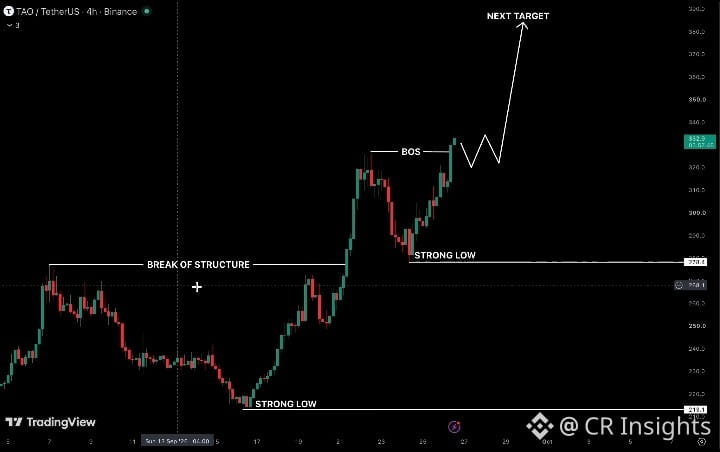
$TAO — MỨC GIÁ $300 LÀ ĐIỂM GIAO DỊCH
TAO đã chạy từ $222 lên $341 trong mười ngày. Giờ nó đã bị kéo lùi về vùng $300–$316.
Đó là nơi tôi sẽ đánh giá bước di chuyển này.
Nếu người mua bảo vệ khu vực này và giá quay trở lại trên $341, đà bứt phá vẫn còn chỗ để đi tới $428. Nhưng nếu $300 bị phá vỡ, tôi sẽ không còn xem cú rơi này là một thiết lập “mua bắt đáy” nữa. $280–$270 sẽ là khu vực tiếp theo mà tôi kỳ vọng giá sẽ kiểm tra.
Sau một nhịp tăng $120, việc mua chỉ vì nó đang điều chỉnh là không phải là giao dịch. Phản ứng quanh $300–$316 mới là thứ đáng chú ý.
$TAO #TAO
$TAO — MỨC GIÁ $300 LÀ ĐIỂM GIAO DỊCH
TAO đã chạy từ $222 lên $341 trong mười ngày. Giờ nó đã bị kéo lùi về vùng $300–$316.
Đó là nơi tôi sẽ đánh giá bước di chuyển này.
Nếu người mua bảo vệ khu vực này và giá quay trở lại trên $341, đà bứt phá vẫn còn chỗ để đi tới $428. Nhưng nếu $300 bị phá vỡ, tôi sẽ không còn xem cú rơi này là một thiết lập “mua bắt đáy” nữa. $280–$270 sẽ là khu vực tiếp theo mà tôi kỳ vọng giá sẽ kiểm tra.
Sau một nhịp tăng $120, việc mua chỉ vì nó đang điều chỉnh là không phải là giao dịch. Phản ứng quanh $300–$316 mới là thứ đáng chú ý.
$TAO #TAO
TAO đã chạy từ $222 lên $341 trong mười ngày. Giờ nó đã bị kéo lùi về vùng $300–$316.
Đó là nơi tôi sẽ đánh giá bước di chuyển này.
Nếu người mua bảo vệ khu vực này và giá quay trở lại trên $341, đà bứt phá vẫn còn chỗ để đi tới $428. Nhưng nếu $300 bị phá vỡ, tôi sẽ không còn xem cú rơi này là một thiết lập “mua bắt đáy” nữa. $280–$270 sẽ là khu vực tiếp theo mà tôi kỳ vọng giá sẽ kiểm tra.
Sau một nhịp tăng $120, việc mua chỉ vì nó đang điều chỉnh là không phải là giao dịch. Phản ứng quanh $300–$316 mới là thứ đáng chú ý.
$TAO #TAO
433
·
--
XRP — ĐANG THEO DÕI ĐƯỜNG XU HƯỚNG GIẢM
Trên biểu đồ theo tháng, đường xu hướng tăng đang nằm quanh $0.80–$0.60. Nếu XRP có một nhịp điều chỉnh đúng cách đi lùi vào vùng đó, thì đó là nơi tôi sẽ chú ý.
Không phải vì $0.80 hay $0.60 được đảm bảo là đáy. Phản ứng tại đó quan trọng hơn.
Nếu đường xu hướng đó giữ vững và XRP bắt đầu xây dựng trở lại đà tăng, thì $3.20–$3.50 là vùng lớn mà tôi muốn thấy lại
Vì vậy tôi không đuổi theo đợt tăng ở mức $1.50. Tôi thà xem XRP sẽ làm gì trước tiên tại đường xu hướng dài hạn.
Nếu nó bị phá vỡ, thì toàn bộ ý tưởng này sẽ thay đổi.
Chỉ là những gì tôi đang thấy trên biểu đồ theo tháng ngay bây giờ.$XRP
XRP — ĐANG THEO DÕI ĐƯỜNG XU HƯỚNG GIẢM
Trên biểu đồ theo tháng, đường xu hướng tăng đang nằm quanh $0.80–$0.60. Nếu XRP có một nhịp điều chỉnh đúng cách đi lùi vào vùng đó, thì đó là nơi tôi sẽ chú ý.
Không phải vì $0.80 hay $0.60 được đảm bảo là đáy. Phản ứng tại đó quan trọng hơn.
Nếu đường xu hướng đó giữ vững và XRP bắt đầu xây dựng trở lại đà tăng, thì $3.20–$3.50 là vùng lớn mà tôi muốn thấy lại
Vì vậy tôi không đuổi theo đợt tăng ở mức $1.50. Tôi thà xem XRP sẽ làm gì trước tiên tại đường xu hướng dài hạn.
Nếu nó bị phá vỡ, thì toàn bộ ý tưởng này sẽ thay đổi.
Chỉ là những gì tôi đang thấy trên biểu đồ theo tháng ngay bây giờ.$XRP
Trên biểu đồ theo tháng, đường xu hướng tăng đang nằm quanh $0.80–$0.60. Nếu XRP có một nhịp điều chỉnh đúng cách đi lùi vào vùng đó, thì đó là nơi tôi sẽ chú ý.
Không phải vì $0.80 hay $0.60 được đảm bảo là đáy. Phản ứng tại đó quan trọng hơn.
Nếu đường xu hướng đó giữ vững và XRP bắt đầu xây dựng trở lại đà tăng, thì $3.20–$3.50 là vùng lớn mà tôi muốn thấy lại
Vì vậy tôi không đuổi theo đợt tăng ở mức $1.50. Tôi thà xem XRP sẽ làm gì trước tiên tại đường xu hướng dài hạn.
Nếu nó bị phá vỡ, thì toàn bộ ý tưởng này sẽ thay đổi.
Chỉ là những gì tôi đang thấy trên biểu đồ theo tháng ngay bây giờ.$XRP
6
1.6k
·
--
Đúng một phần
HAEDAL VỪA CHẠM MỐC 1 TRIỆU USD — NHƯNG HÃY NHÌN XEM TIỀN ĐI VỀ ĐÂU
Haedal’s Lending Vault đã vượt 1M về thanh khoản chỉ trong hai ngày.
Điều khiến tôi chú ý là Haedal không xây thêm một pool cho vay tách biệt.
Vault nhận tiền gửi và tự động phân bổ chúng trên các thị trường cho vay Sui hiện có, bao gồm $NAVI.US , Suilend, Scallop, AlphaFi và CurrentSUI.
Vì vậy, con số 1M này cho chúng ta biết nhiều hơn “Haedal thu hút tiền gửi”.
Nó cho thấy có nhu cầu đối với một cách tiếp cận đơn giản hơn để tham gia các cơ hội cho vay trên Sui mà không cần tự quản lý thủ công nhiều thị trường khác nhau.
Haedal cũng liên tục tăng giới hạn (vault caps) khi thanh khoản đổ vào, và hiện cả SUI lẫn USDC đều đã đạt mức công suất 700K.
Thế nên, điều đáng theo dõi tiếp theo khá đơn giản:
Thanh khoản thực sự sẽ kết thúc ở đâu?
Nếu một hoặc hai thị trường bắt đầu chiếm tỷ trọng lớn hơn đáng kể, điều đó có thể cho thấy nhu cầu cho vay hoặc cơ hội tốt hơn đang tập trung ở đâu trên Sui.
1M là phần tiêu đề.
Phần phân bổ mới là thứ tôi muốn theo dõi.
$HAEDAL $SUI #Haedal @HaedalProtocol
NFA
Từ đây, điều gì quan trọng hơn đối với Haedal?
HAEDAL VỪA CHẠM MỐC 1 TRIỆU USD — NHƯNG HÃY NHÌN XEM TIỀN ĐI VỀ ĐÂU
Haedal’s Lending Vault đã vượt 1M về thanh khoản chỉ trong hai ngày.
Điều khiến tôi chú ý là Haedal không xây thêm một pool cho vay tách biệt.
Vault nhận tiền gửi và tự động phân bổ chúng trên các thị trường cho vay Sui hiện có, bao gồm $NAVI.US , Suilend, Scallop, AlphaFi và CurrentSUI.
Vì vậy, con số 1M này cho chúng ta biết nhiều hơn “Haedal thu hút tiền gửi”.
Nó cho thấy có nhu cầu đối với một cách tiếp cận đơn giản hơn để tham gia các cơ hội cho vay trên Sui mà không cần tự quản lý thủ công nhiều thị trường khác nhau.
Haedal cũng liên tục tăng giới hạn (vault caps) khi thanh khoản đổ vào, và hiện cả SUI lẫn USDC đều đã đạt mức công suất 700K.
Thế nên, điều đáng theo dõi tiếp theo khá đơn giản:
Thanh khoản thực sự sẽ kết thúc ở đâu?
Nếu một hoặc hai thị trường bắt đầu chiếm tỷ trọng lớn hơn đáng kể, điều đó có thể cho thấy nhu cầu cho vay hoặc cơ hội tốt hơn đang tập trung ở đâu trên Sui.
1M là phần tiêu đề.
Phần phân bổ mới là thứ tôi muốn theo dõi.
$HAEDAL $SUI #Haedal @Haedal Protocol
NFA
Từ đây, điều gì quan trọng hơn đối với Haedal?
Haedal’s Lending Vault đã vượt 1M về thanh khoản chỉ trong hai ngày.
Điều khiến tôi chú ý là Haedal không xây thêm một pool cho vay tách biệt.
Vault nhận tiền gửi và tự động phân bổ chúng trên các thị trường cho vay Sui hiện có, bao gồm $NAVI.US , Suilend, Scallop, AlphaFi và CurrentSUI.
Vì vậy, con số 1M này cho chúng ta biết nhiều hơn “Haedal thu hút tiền gửi”.
Nó cho thấy có nhu cầu đối với một cách tiếp cận đơn giản hơn để tham gia các cơ hội cho vay trên Sui mà không cần tự quản lý thủ công nhiều thị trường khác nhau.
Haedal cũng liên tục tăng giới hạn (vault caps) khi thanh khoản đổ vào, và hiện cả SUI lẫn USDC đều đã đạt mức công suất 700K.
Thế nên, điều đáng theo dõi tiếp theo khá đơn giản:
Thanh khoản thực sự sẽ kết thúc ở đâu?
Nếu một hoặc hai thị trường bắt đầu chiếm tỷ trọng lớn hơn đáng kể, điều đó có thể cho thấy nhu cầu cho vay hoặc cơ hội tốt hơn đang tập trung ở đâu trên Sui.
1M là phần tiêu đề.
Phần phân bổ mới là thứ tôi muốn theo dõi.
$HAEDAL $SUI #Haedal @Haedal Protocol
NFA
Từ đây, điều gì quan trọng hơn đối với Haedal?
More TVL
86%
Where liquidity goes
14%
7 phiếu bầu • Cuộc bỏ phiếu đã kết thúc
2
3
2k
·
--
ĐỪNG ĐUỔI THEO $ZEC TRƯỚC KHI BẠN THẤY ĐIỀU NÀY
ZEC đã quay trở lại quanh mức 1.552 USD, nhưng những con số nằm dưới giá hôm nay thú vị hơn nhiều so với chính cây nến.
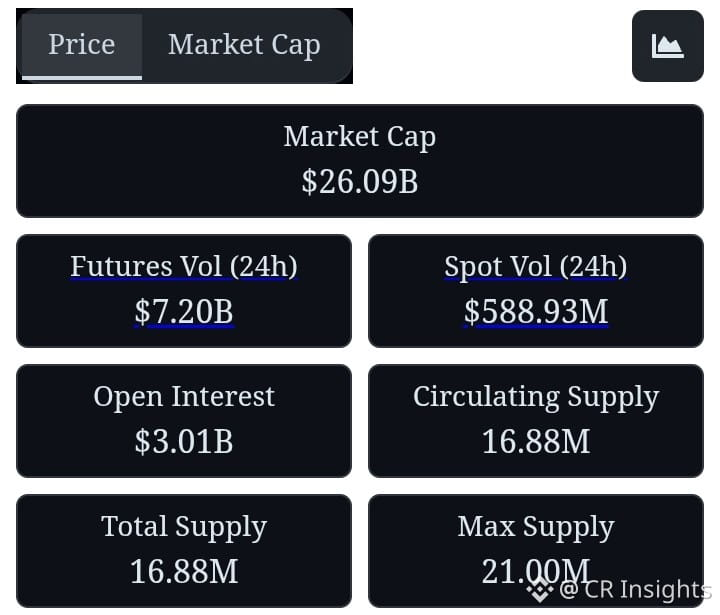
Hiện có khoảng 7,4B USD khối lượng giao dịch hợp đồng tương lai ZEC so với chỉ 603M USD ở thị trường giao ngay, trong khi open interest (OI) đang ở gần 3,03B. Riêng Hyperliquid đã có khoảng 817M USD OI, và funding vẫn đang ở trạng thái dương.
Đồng thời, tiền thật vẫn đang đổ vào ETF.
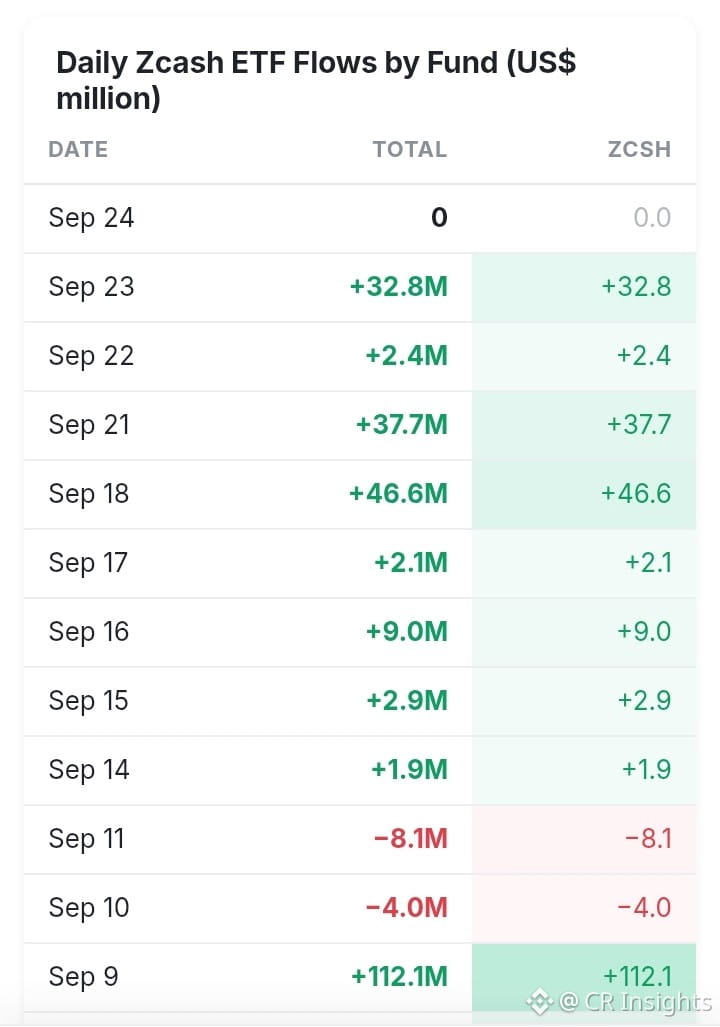
Phiên mới nhất ghi nhận thêm 32,8M USD dòng tiền vào, đưa dòng tiền ròng 30 ngày của ETF Zcash lên xấp xỉ 306M USD và lượng nắm giữ khoảng 644.878 ZEC.
Sau đó, hãy xem điều gì đã xảy ra trong lần bứt phá trước.
ZEC đã chạm khoảng 1.693 USD vào ngày 23 tháng 9, nhưng đợt tăng này không đi kèm với sự bùng nổ mới về OI trên OKX. OI khi đó ở khoảng 186M USD, thấp hơn mức xấp xỉ 229M USD ghi nhận vào ngày 17 tháng 9, trong khi tỷ lệ long/short của tài khoản chỉ là 0,48.
Vì vậy, đợt tăng đó không đơn giản là các vị thế mua mới dồn vào ZEC.
Short đã bị siết chặt, trong khi nhu cầu thật sự đã bắt đầu chảy vào thị trường.
Giờ đây, ZEC đã điều chỉnh xuống dưới 1.600 USD, với cấu trúc hiện tại đặt 1.574–1.601 xung quanh vùng kháng cự ngay lập tức và khoảng 1.518–1.492 ở phía dưới.
Nếu người mua đẩy ZEC quay trở lại vượt 1.600 USD trong khi khối lượng giao ngay cuối cùng mở rộng, thì cú bứt phá thất bại có thể biến thành một vùng siết — đặc biệt khi funding đã dương.
Nhưng ở phía bên kia lại có một cái bẫy.
Nếu ZEC tăng vọt trên 1.600 USD trong khi OI nhảy vọt và spot vẫn mỏng như hiện tại, thì các nhà đầu tư mua đuổi cuối cùng có thể đang cung cấp thanh khoản cho một lần từ chối (rejection) nữa.
Khi đó, 1.600 USD sẽ không chỉ còn là kháng cự. Nó trở thành ranh giới giữa việc giành lại thực sự và một cú bẫy giả do đòn bẩy gây ra.
$ZEC
{future}(ZECUSDT)
#zec
ĐỪNG ĐUỔI THEO $ZEC TRƯỚC KHI BẠN THẤY ĐIỀU NÀY
ZEC đã quay trở lại quanh mức 1.552 USD, nhưng những con số nằm dưới giá hôm nay thú vị hơn nhiều so với chính cây nến.
Hiện có khoảng 7,4B USD khối lượng giao dịch hợp đồng tương lai ZEC so với chỉ 603M USD ở thị trường giao ngay, trong khi open interest (OI) đang ở gần 3,03B. Riêng Hyperliquid đã có khoảng 817M USD OI, và funding vẫn đang ở trạng thái dương.
Đồng thời, tiền thật vẫn đang đổ vào ETF.
Phiên mới nhất ghi nhận thêm 32,8M USD dòng tiền vào, đưa dòng tiền ròng 30 ngày của ETF Zcash lên xấp xỉ 306M USD và lượng nắm giữ khoảng 644.878 ZEC.
Sau đó, hãy xem điều gì đã xảy ra trong lần bứt phá trước.
ZEC đã chạm khoảng 1.693 USD vào ngày 23 tháng 9, nhưng đợt tăng này không đi kèm với sự bùng nổ mới về OI trên OKX. OI khi đó ở khoảng 186M USD, thấp hơn mức xấp xỉ 229M USD ghi nhận vào ngày 17 tháng 9, trong khi tỷ lệ long/short của tài khoản chỉ là 0,48.
Vì vậy, đợt tăng đó không đơn giản là các vị thế mua mới dồn vào ZEC.
Short đã bị siết chặt, trong khi nhu cầu thật sự đã bắt đầu chảy vào thị trường.
Giờ đây, ZEC đã điều chỉnh xuống dưới 1.600 USD, với cấu trúc hiện tại đặt 1.574–1.601 xung quanh vùng kháng cự ngay lập tức và khoảng 1.518–1.492 ở phía dưới.
Nếu người mua đẩy ZEC quay trở lại vượt 1.600 USD trong khi khối lượng giao ngay cuối cùng mở rộng, thì cú bứt phá thất bại có thể biến thành một vùng siết — đặc biệt khi funding đã dương.
Nhưng ở phía bên kia lại có một cái bẫy.
Nếu ZEC tăng vọt trên 1.600 USD trong khi OI nhảy vọt và spot vẫn mỏng như hiện tại, thì các nhà đầu tư mua đuổi cuối cùng có thể đang cung cấp thanh khoản cho một lần từ chối (rejection) nữa.
Khi đó, 1.600 USD sẽ không chỉ còn là kháng cự. Nó trở thành ranh giới giữa việc giành lại thực sự và một cú bẫy giả do đòn bẩy gây ra.
$ZEC
#zec
ZEC đã quay trở lại quanh mức 1.552 USD, nhưng những con số nằm dưới giá hôm nay thú vị hơn nhiều so với chính cây nến.
Hiện có khoảng 7,4B USD khối lượng giao dịch hợp đồng tương lai ZEC so với chỉ 603M USD ở thị trường giao ngay, trong khi open interest (OI) đang ở gần 3,03B. Riêng Hyperliquid đã có khoảng 817M USD OI, và funding vẫn đang ở trạng thái dương.
Đồng thời, tiền thật vẫn đang đổ vào ETF.
Phiên mới nhất ghi nhận thêm 32,8M USD dòng tiền vào, đưa dòng tiền ròng 30 ngày của ETF Zcash lên xấp xỉ 306M USD và lượng nắm giữ khoảng 644.878 ZEC.
Sau đó, hãy xem điều gì đã xảy ra trong lần bứt phá trước.
ZEC đã chạm khoảng 1.693 USD vào ngày 23 tháng 9, nhưng đợt tăng này không đi kèm với sự bùng nổ mới về OI trên OKX. OI khi đó ở khoảng 186M USD, thấp hơn mức xấp xỉ 229M USD ghi nhận vào ngày 17 tháng 9, trong khi tỷ lệ long/short của tài khoản chỉ là 0,48.
Vì vậy, đợt tăng đó không đơn giản là các vị thế mua mới dồn vào ZEC.
Short đã bị siết chặt, trong khi nhu cầu thật sự đã bắt đầu chảy vào thị trường.
Giờ đây, ZEC đã điều chỉnh xuống dưới 1.600 USD, với cấu trúc hiện tại đặt 1.574–1.601 xung quanh vùng kháng cự ngay lập tức và khoảng 1.518–1.492 ở phía dưới.
Nếu người mua đẩy ZEC quay trở lại vượt 1.600 USD trong khi khối lượng giao ngay cuối cùng mở rộng, thì cú bứt phá thất bại có thể biến thành một vùng siết — đặc biệt khi funding đã dương.
Nhưng ở phía bên kia lại có một cái bẫy.
Nếu ZEC tăng vọt trên 1.600 USD trong khi OI nhảy vọt và spot vẫn mỏng như hiện tại, thì các nhà đầu tư mua đuổi cuối cùng có thể đang cung cấp thanh khoản cho một lần từ chối (rejection) nữa.
Khi đó, 1.600 USD sẽ không chỉ còn là kháng cự. Nó trở thành ranh giới giữa việc giành lại thực sự và một cú bẫy giả do đòn bẩy gây ra.
$ZEC
#zec
445
·
--
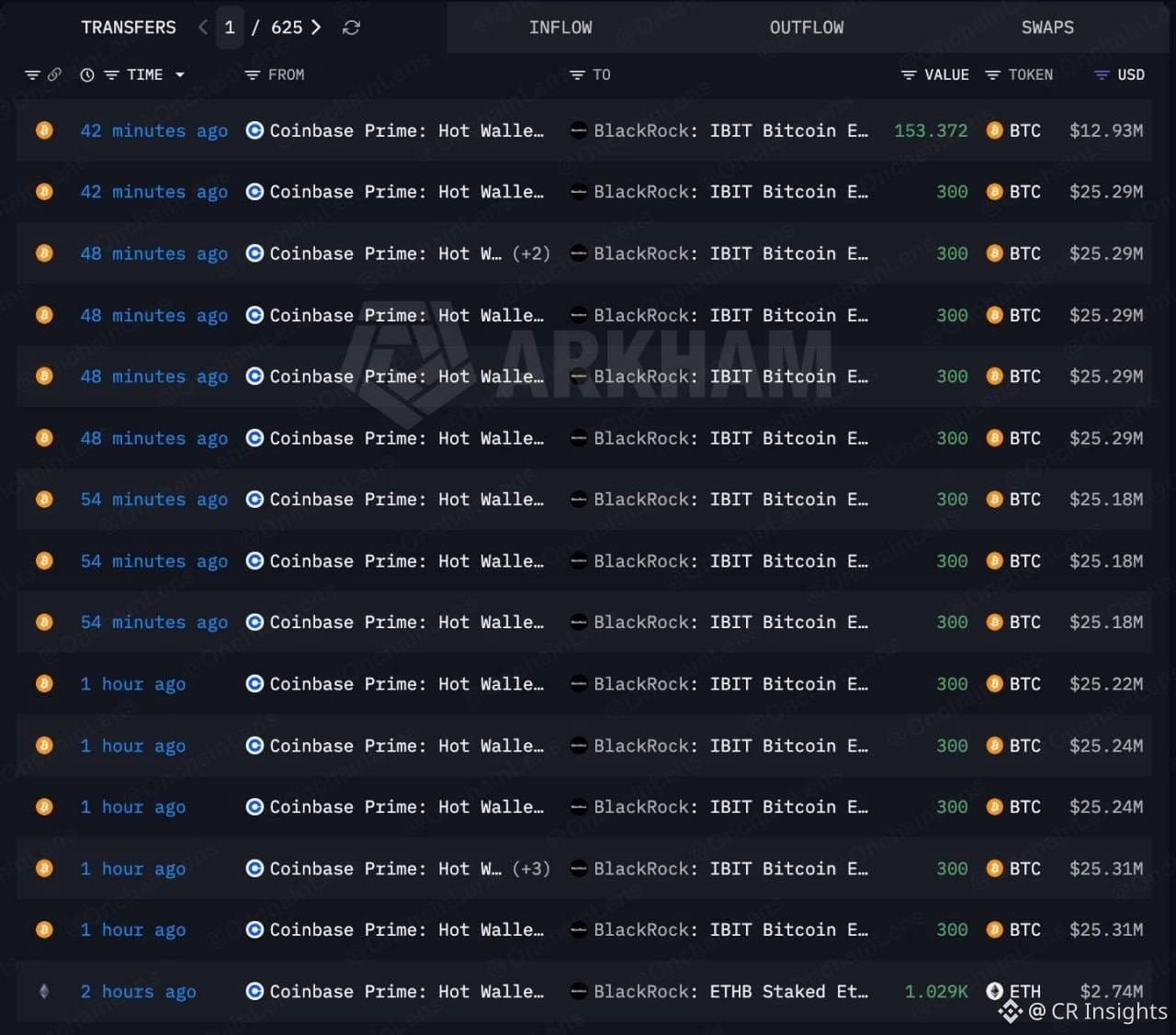
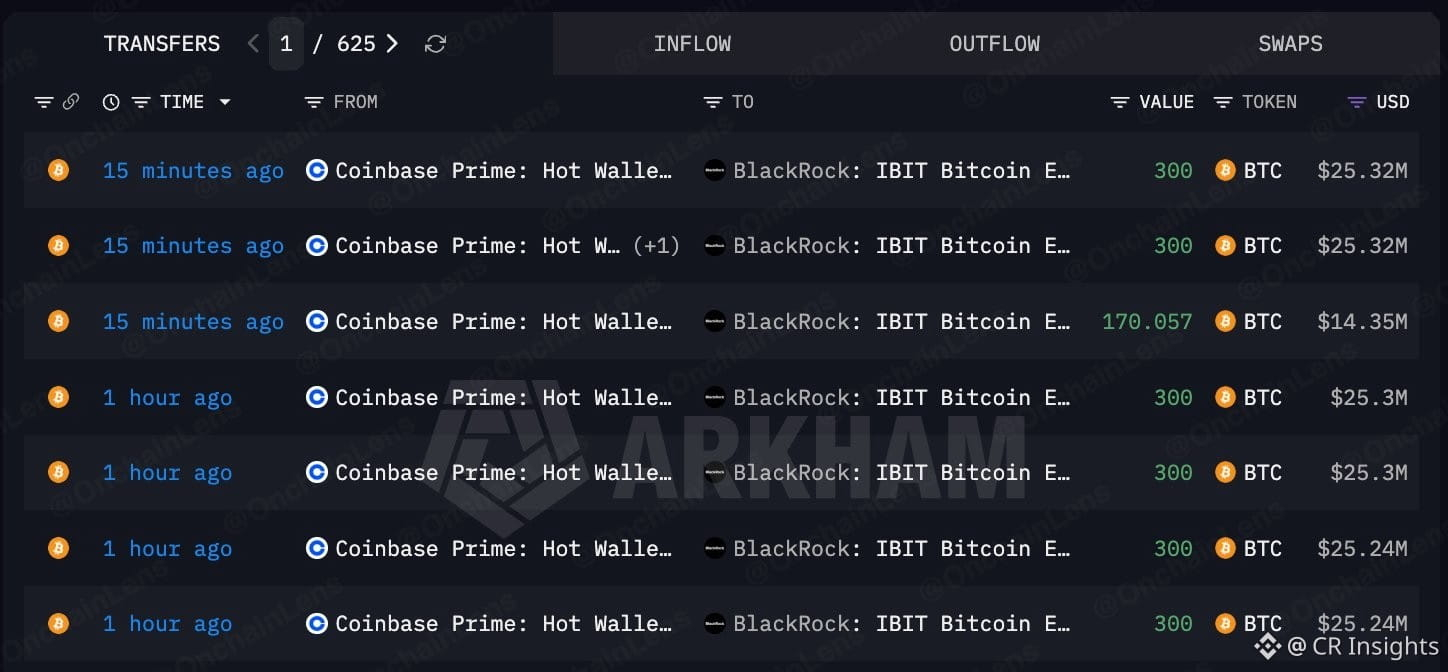
MUA BTC 316 TRIỆU USD CỦA BLACKROCK KHÔNG PHẢI LÀ TÍN HIỆU ONDO
BlackRock vừa chuyển thêm 3.750 BTC — khoảng 316 triệu USD — vào IBIT từ Coinbase Prime.
Gần như cùng thời điểm đó, Ondo đã công bố ba sản phẩm danh mục onchain mới được xây dựng dựa trên các chiến lược do BlackRock phát triển.
Tiêu đề dễ dãi: BlackRock lạc quan về crypto, vậy ONDO sẽ được hưởng lợi.
Phân biệt quan trọng hơn là dòng tiền BTC 316 triệu USD và việc phát triển ONDO là hoàn toàn khác nhau về cơ chế.
Việc mua vào của IBIT tạo ra mức độ tiếp xúc với BTC.
Còn đợt ra mắt của Ondo tạo ra mức độ tiếp xúc danh mục được token hóa, dựa trên các chiến lược do BlackRock phát triển.
Với ONDO, thì tín hiệu đáng theo dõi chính là phương án thứ hai.
Bởi vì phép thử thực sự không phải là việc BlackRock có mua thêm BTC hay không.
Mà là liệu các chiến lược mang tính tổ chức này có thực sự thu hút được vốn onchain, thanh khoản thứ cấp và việc sử dụng DeFi hay không.
Nếu làm được điều đó, ONDO không còn chỉ đơn thuần hưởng lợi từ câu chuyện “tokenization” — hạ tầng của nó đang được sử dụng để đóng gói các quyết định phân bổ cho nhà đầu tư tổ chức thành các sản phẩm onchain có thể giao dịch.
Điều đó khiến động thái ONDO hiện tại có điều gì đó hữu ích hơn để theo dõi so với dòng tiêu đề về BlackRock:
Sản phẩm mới có tạo ra được nhu cầu onchain đo lường được hay thị trường chỉ phản ứng bằng giá trước khi việc sử dụng kịp đến?
$ONDO $BTC
MUA BTC 316 TRIỆU USD CỦA BLACKROCK KHÔNG PHẢI LÀ TÍN HIỆU ONDO
BlackRock vừa chuyển thêm 3.750 BTC — khoảng 316 triệu USD — vào IBIT từ Coinbase Prime.
Gần như cùng thời điểm đó, Ondo đã công bố ba sản phẩm danh mục onchain mới được xây dựng dựa trên các chiến lược do BlackRock phát triển.
Tiêu đề dễ dãi: BlackRock lạc quan về crypto, vậy ONDO sẽ được hưởng lợi.
Phân biệt quan trọng hơn là dòng tiền BTC 316 triệu USD và việc phát triển ONDO là hoàn toàn khác nhau về cơ chế.
Việc mua vào của IBIT tạo ra mức độ tiếp xúc với BTC.
Còn đợt ra mắt của Ondo tạo ra mức độ tiếp xúc danh mục được token hóa, dựa trên các chiến lược do BlackRock phát triển.
Với ONDO, thì tín hiệu đáng theo dõi chính là phương án thứ hai.
Bởi vì phép thử thực sự không phải là việc BlackRock có mua thêm BTC hay không.
Mà là liệu các chiến lược mang tính tổ chức này có thực sự thu hút được vốn onchain, thanh khoản thứ cấp và việc sử dụng DeFi hay không.
Nếu làm được điều đó, ONDO không còn chỉ đơn thuần hưởng lợi từ câu chuyện “tokenization” — hạ tầng của nó đang được sử dụng để đóng gói các quyết định phân bổ cho nhà đầu tư tổ chức thành các sản phẩm onchain có thể giao dịch.
Điều đó khiến động thái ONDO hiện tại có điều gì đó hữu ích hơn để theo dõi so với dòng tiêu đề về BlackRock:
Sản phẩm mới có tạo ra được nhu cầu onchain đo lường được hay thị trường chỉ phản ứng bằng giá trước khi việc sử dụng kịp đến?
$ONDO $BTC
BlackRock vừa chuyển thêm 3.750 BTC — khoảng 316 triệu USD — vào IBIT từ Coinbase Prime.
Gần như cùng thời điểm đó, Ondo đã công bố ba sản phẩm danh mục onchain mới được xây dựng dựa trên các chiến lược do BlackRock phát triển.
Tiêu đề dễ dãi: BlackRock lạc quan về crypto, vậy ONDO sẽ được hưởng lợi.
Phân biệt quan trọng hơn là dòng tiền BTC 316 triệu USD và việc phát triển ONDO là hoàn toàn khác nhau về cơ chế.
Việc mua vào của IBIT tạo ra mức độ tiếp xúc với BTC.
Còn đợt ra mắt của Ondo tạo ra mức độ tiếp xúc danh mục được token hóa, dựa trên các chiến lược do BlackRock phát triển.
Với ONDO, thì tín hiệu đáng theo dõi chính là phương án thứ hai.
Bởi vì phép thử thực sự không phải là việc BlackRock có mua thêm BTC hay không.
Mà là liệu các chiến lược mang tính tổ chức này có thực sự thu hút được vốn onchain, thanh khoản thứ cấp và việc sử dụng DeFi hay không.
Nếu làm được điều đó, ONDO không còn chỉ đơn thuần hưởng lợi từ câu chuyện “tokenization” — hạ tầng của nó đang được sử dụng để đóng gói các quyết định phân bổ cho nhà đầu tư tổ chức thành các sản phẩm onchain có thể giao dịch.
Điều đó khiến động thái ONDO hiện tại có điều gì đó hữu ích hơn để theo dõi so với dòng tiêu đề về BlackRock:
Sản phẩm mới có tạo ra được nhu cầu onchain đo lường được hay thị trường chỉ phản ứng bằng giá trước khi việc sử dụng kịp đến?
$ONDO $BTC

1
425
·
--
AAVE ĐANG CHO VAY ĐỐI LẤY TÀI SẢN THẾ CHẤP MÀ NÓ CHƯA TỪNG NẮM GIỮ
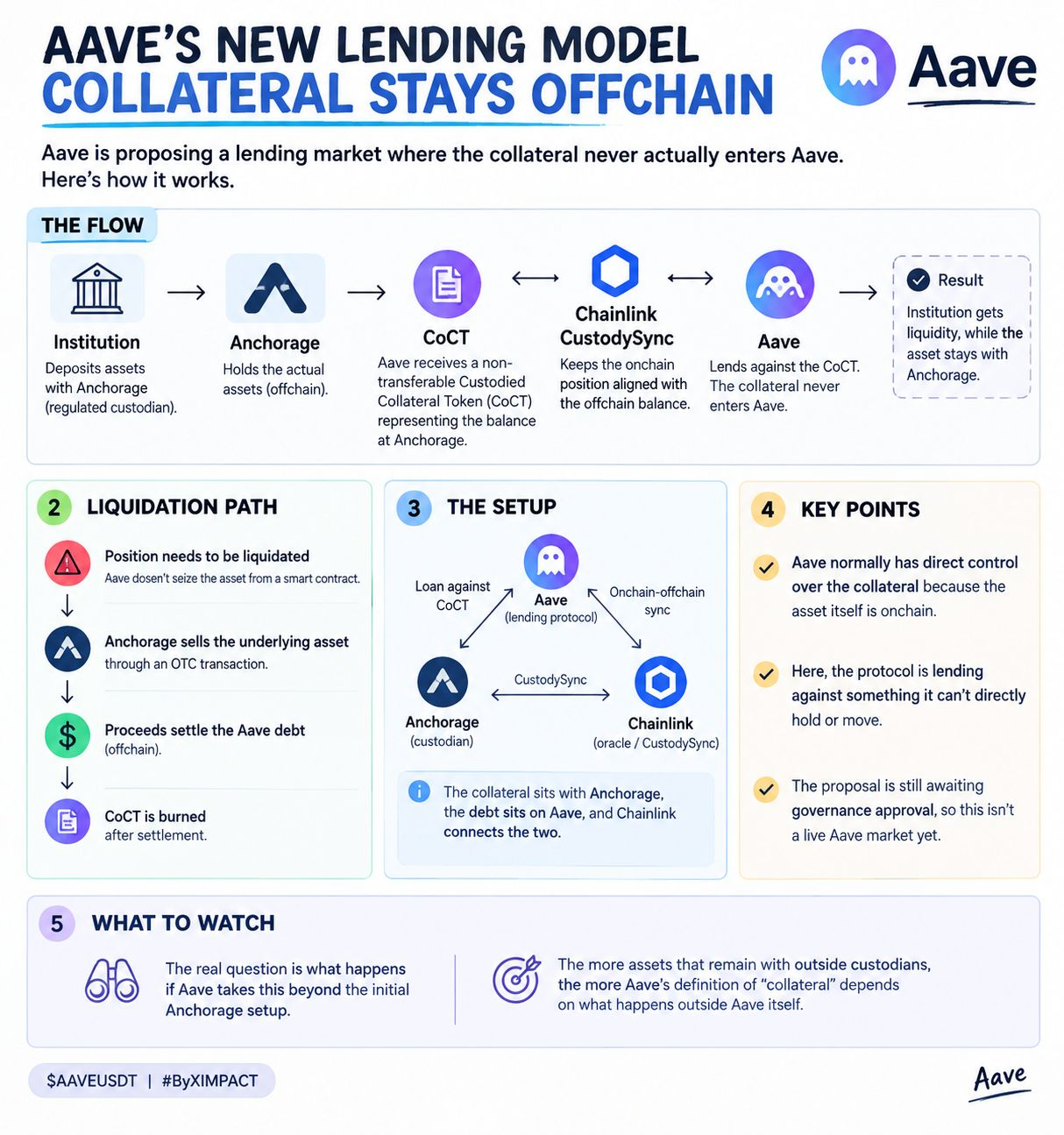
Aave đang đề xuất một thị trường cho vay nơi tài sản thế chấp thực tế không bao giờ đi vào Aave.
Phiên bản đầu tiên sẽ cho phép các tổ chức giữ tài sản của họ tại Anchorage trong khi vay thông qua Aave. Thay vì chính tài sản đó, Aave nhận một Custodied Collateral Token (Token thế chấp được lưu ký) không thể chuyển nhượng, đại diện cho số dư do tổ chức lưu ký nắm giữ, với CustodySync của Chainlink đảm bảo vị thế onchain luôn khớp với số dư ngoài chuỗi.
Con đường thanh lý là phần khiến tôi chú ý. Nếu vị thế cần được thanh lý, Aave không tịch thu tài sản từ một smart contract. Anchorage sẽ bán tài sản cơ sở thông qua một giao dịch OTC, số tiền thu được sẽ thanh toán khoản nợ của Aave, và CoCT sẽ bị đốt sau khi hoàn tất thanh toán.
Điều đó tạo ra một mô hình trong đó tài sản thế chấp nằm với Anchorage, khoản nợ nằm trên Aave, và Chainlink kết nối hai bên.
Thông thường, Aave có quyền kiểm soát trực tiếp đối với tài sản thế chấp vì chính tài sản đó nằm trên chuỗi. Ở đây, giao thức đang cho vay dựa trên một thứ mà nó không thể trực tiếp nắm giữ hoặc di chuyển.
Đề xuất này vẫn đang chờ phê duyệt từ quản trị, nên hiện tại chưa phải là một thị trường Aave đang hoạt động. Tuy nhiên, kiến trúc này đáng chú ý: việc lưu ký được quản lý không còn cần phải tách rời khỏi tín dụng trên onchain.
Phần đáng theo dõi là điều gì xảy ra nếu Aave mở rộng mô hình này vượt xa thiết lập ban đầu với Anchorage. Càng nhiều tài sản được giữ bởi các bên lưu ký bên ngoài, thì định nghĩa “tài sản thế chấp” của Aave càng phụ thuộc vào những gì diễn ra bên ngoài chính Aave.
$AAVE
{future}(AAVEUSDT)
$ETH
AAVE ĐANG CHO VAY ĐỐI LẤY TÀI SẢN THẾ CHẤP MÀ NÓ CHƯA TỪNG NẮM GIỮ
Aave đang đề xuất một thị trường cho vay nơi tài sản thế chấp thực tế không bao giờ đi vào Aave.
Phiên bản đầu tiên sẽ cho phép các tổ chức giữ tài sản của họ tại Anchorage trong khi vay thông qua Aave. Thay vì chính tài sản đó, Aave nhận một Custodied Collateral Token (Token thế chấp được lưu ký) không thể chuyển nhượng, đại diện cho số dư do tổ chức lưu ký nắm giữ, với CustodySync của Chainlink đảm bảo vị thế onchain luôn khớp với số dư ngoài chuỗi.
Con đường thanh lý là phần khiến tôi chú ý. Nếu vị thế cần được thanh lý, Aave không tịch thu tài sản từ một smart contract. Anchorage sẽ bán tài sản cơ sở thông qua một giao dịch OTC, số tiền thu được sẽ thanh toán khoản nợ của Aave, và CoCT sẽ bị đốt sau khi hoàn tất thanh toán.
Điều đó tạo ra một mô hình trong đó tài sản thế chấp nằm với Anchorage, khoản nợ nằm trên Aave, và Chainlink kết nối hai bên.
Thông thường, Aave có quyền kiểm soát trực tiếp đối với tài sản thế chấp vì chính tài sản đó nằm trên chuỗi. Ở đây, giao thức đang cho vay dựa trên một thứ mà nó không thể trực tiếp nắm giữ hoặc di chuyển.
Đề xuất này vẫn đang chờ phê duyệt từ quản trị, nên hiện tại chưa phải là một thị trường Aave đang hoạt động. Tuy nhiên, kiến trúc này đáng chú ý: việc lưu ký được quản lý không còn cần phải tách rời khỏi tín dụng trên onchain.
Phần đáng theo dõi là điều gì xảy ra nếu Aave mở rộng mô hình này vượt xa thiết lập ban đầu với Anchorage. Càng nhiều tài sản được giữ bởi các bên lưu ký bên ngoài, thì định nghĩa “tài sản thế chấp” của Aave càng phụ thuộc vào những gì diễn ra bên ngoài chính Aave.
$AAVE
$ETH
Aave đang đề xuất một thị trường cho vay nơi tài sản thế chấp thực tế không bao giờ đi vào Aave.
Phiên bản đầu tiên sẽ cho phép các tổ chức giữ tài sản của họ tại Anchorage trong khi vay thông qua Aave. Thay vì chính tài sản đó, Aave nhận một Custodied Collateral Token (Token thế chấp được lưu ký) không thể chuyển nhượng, đại diện cho số dư do tổ chức lưu ký nắm giữ, với CustodySync của Chainlink đảm bảo vị thế onchain luôn khớp với số dư ngoài chuỗi.
Con đường thanh lý là phần khiến tôi chú ý. Nếu vị thế cần được thanh lý, Aave không tịch thu tài sản từ một smart contract. Anchorage sẽ bán tài sản cơ sở thông qua một giao dịch OTC, số tiền thu được sẽ thanh toán khoản nợ của Aave, và CoCT sẽ bị đốt sau khi hoàn tất thanh toán.
Điều đó tạo ra một mô hình trong đó tài sản thế chấp nằm với Anchorage, khoản nợ nằm trên Aave, và Chainlink kết nối hai bên.
Thông thường, Aave có quyền kiểm soát trực tiếp đối với tài sản thế chấp vì chính tài sản đó nằm trên chuỗi. Ở đây, giao thức đang cho vay dựa trên một thứ mà nó không thể trực tiếp nắm giữ hoặc di chuyển.
Đề xuất này vẫn đang chờ phê duyệt từ quản trị, nên hiện tại chưa phải là một thị trường Aave đang hoạt động. Tuy nhiên, kiến trúc này đáng chú ý: việc lưu ký được quản lý không còn cần phải tách rời khỏi tín dụng trên onchain.
Phần đáng theo dõi là điều gì xảy ra nếu Aave mở rộng mô hình này vượt xa thiết lập ban đầu với Anchorage. Càng nhiều tài sản được giữ bởi các bên lưu ký bên ngoài, thì định nghĩa “tài sản thế chấp” của Aave càng phụ thuộc vào những gì diễn ra bên ngoài chính Aave.
$AAVE
$ETH
275
·
--
Bài viết
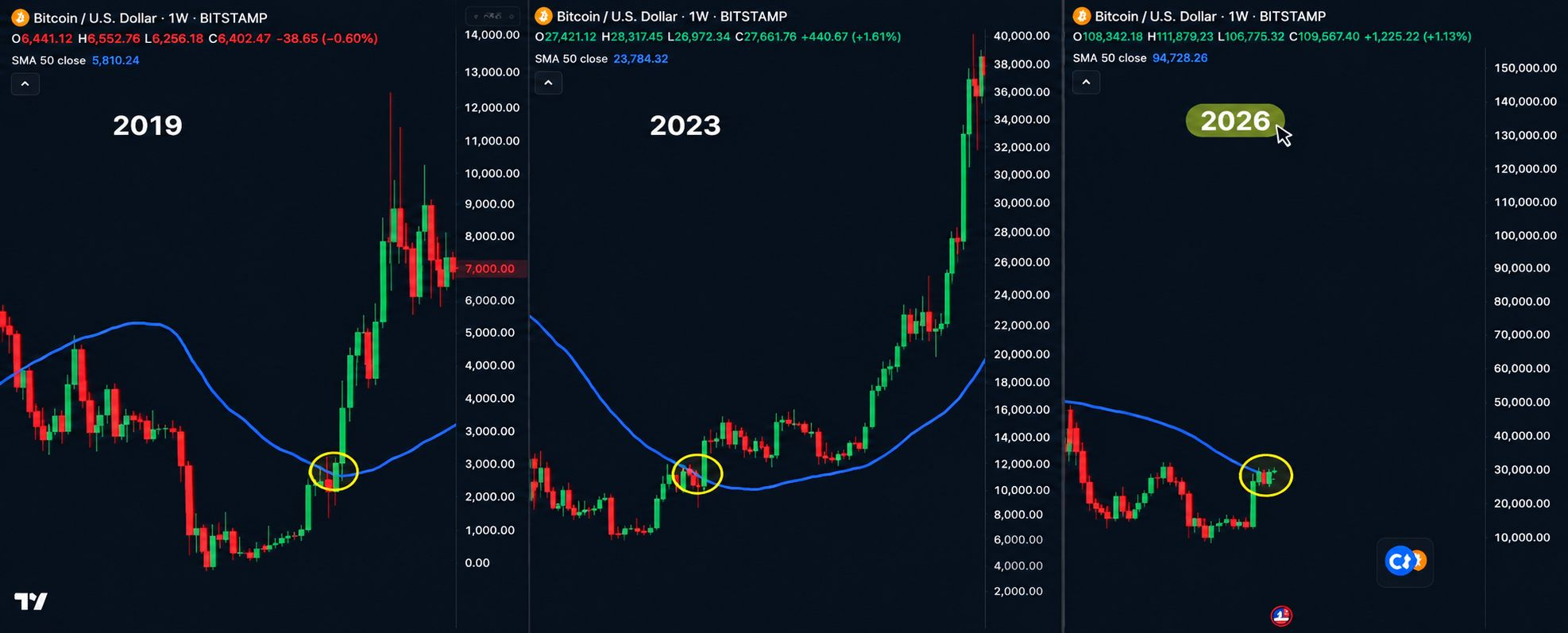
🔥 ĐÂY CÓ PHẢI LÀ NƠI CUỘC TĂNG GIÁ BULL RUN TIẾP THEO CỦA BITCOIN BẮT ĐẦU KHÔNG?Hãy nhìn kỹ vào biểu đồ này.
Điểm thú vị không chỉ nằm ở việc Bitcoin đã vượt qua đường trung bình động 50 tuần. Mà là hiện chúng ta đang thấy một cấu trúc trông rất giống với những khu vực được làm nổi bật vào năm 2019 và 2023 — các giai đoạn khi BTC quay trở lại phía trên đường MA 50W sau một đợt sụt giảm lớn và cuối cùng bước vào một giai đoạn mở rộng mạnh mẽ hơn.
Và năm 2026 hiện đang ở ngay một điểm quyết định rất tương tự.
$BTC đã phục hồi sau đợt điều chỉnh sâu của năm nay, giành lại Đường trung bình động 50W và hiện đang giao dịch quanh mức 85 nghìn USD. Đường trung bình động 50W đang ở khoảng vùng 78 nghìn USD cao, nghĩa là giá không còn chỉ chạm vào đường đó nữa — mà đã tạo ra một khoảng cách nhất định phía trên.
🔥 ĐÂY CÓ PHẢI LÀ NƠI CUỘC TĂNG GIÁ BULL RUN TIẾP THEO CỦA BITCOIN BẮT ĐẦU KHÔNG?
Hãy nhìn kỹ vào biểu đồ này.
Điểm thú vị không chỉ nằm ở việc Bitcoin đã vượt qua đường trung bình động 50 tuần. Mà là hiện chúng ta đang thấy một cấu trúc trông rất giống với những khu vực được làm nổi bật vào năm 2019 và 2023 — các giai đoạn khi BTC quay trở lại phía trên đường MA 50W sau một đợt sụt giảm lớn và cuối cùng bước vào một giai đoạn mở rộng mạnh mẽ hơn.
Và năm 2026 hiện đang ở ngay một điểm quyết định rất tương tự.
$BTC đã phục hồi sau đợt điều chỉnh sâu của năm nay, giành lại Đường trung bình động 50W và hiện đang giao dịch quanh mức 85 nghìn USD. Đường trung bình động 50W đang ở khoảng vùng 78 nghìn USD cao, nghĩa là giá không còn chỉ chạm vào đường đó nữa — mà đã tạo ra một khoảng cách nhất định phía trên.
Điểm thú vị không chỉ nằm ở việc Bitcoin đã vượt qua đường trung bình động 50 tuần. Mà là hiện chúng ta đang thấy một cấu trúc trông rất giống với những khu vực được làm nổi bật vào năm 2019 và 2023 — các giai đoạn khi BTC quay trở lại phía trên đường MA 50W sau một đợt sụt giảm lớn và cuối cùng bước vào một giai đoạn mở rộng mạnh mẽ hơn.
Và năm 2026 hiện đang ở ngay một điểm quyết định rất tương tự.
$BTC đã phục hồi sau đợt điều chỉnh sâu của năm nay, giành lại Đường trung bình động 50W và hiện đang giao dịch quanh mức 85 nghìn USD. Đường trung bình động 50W đang ở khoảng vùng 78 nghìn USD cao, nghĩa là giá không còn chỉ chạm vào đường đó nữa — mà đã tạo ra một khoảng cách nhất định phía trên.
1
1.1k
Đăng nhập để khám phá thêm nội dung
Tham gia cùng người dùng tiền mã hóa toàn cầu trên Binance Square
⚡️ Nhận thông tin mới nhất và hữu ích về tiền mã hóa.
💬 Được tin cậy bởi sàn giao dịch tiền mã hóa lớn nhất thế giới.
👍 Khám phá những thông tin chuyên sâu thực tế từ những nhà sáng tạo đã xác minh.
Email / Số điện thoại