

SawJan
20 Bài đăng

SawJan
Báo cáo
Chặn người dùng
Giao dịch mở

Người nắm giữ SOL
Trader tần suất thấp
{thời gian} năm
8 Đang theo dõi
28 Người theo dõi
21 Đã thích
Bài đăng
Danh mục đầu tư
·
--
📉 Cập nhật thị trường Crypto: phe gấu đang có chút lợi thế
Thị trường crypto đang chịu áp lực giảm nhẹ, với các tài sản lớn giao dịch trong sắc đỏ trong 24 giờ qua.
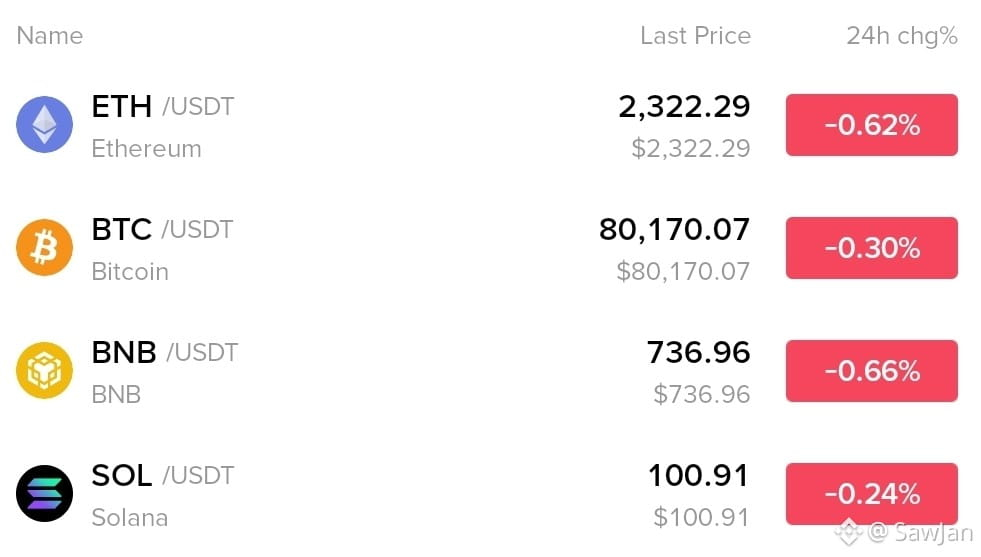
📊 Tổng quan thị trường: 🔹 BTC: $80,170.07 | -0.30% 🔹 ETH: $2,322.29 | -0.62% 🔹 BNB: $736.96 | -0.66% 🔹 SOL: $100.91 | -0.24%
🔍 Dữ liệu cho chúng ta biết điều gì?
• Bitcoin đang cho thấy sức mạnh tương đối, ghi nhận mức giảm nhỏ nhất trong bốn tài sản này. • Ethereum và BNB đang chịu áp lực bán lớn hơn một chút, trong đó BNB ghi nhận mức giảm mạnh nhất. • Solana cho thấy khả năng chống chịu tương đối, với mức giảm phần trăm nhỏ nhất ở -0.24%.
🧠 Kết luận của tôi:
Đây có vẻ là một đợt điều chỉnh nhẹ của thị trường hơn là bằng chứng rõ ràng cho một sự đảo chiều xu hướng lớn. Tuy nhiên, chỉ một snapshot 24 giờ là chưa đủ để xác nhận bước đi tiếp theo.
Những điều quan trọng cần theo dõi tiếp theo là sự ổn định giá của BTC, khối lượng giao dịch, và liệu ETH, BNB và SOL có thể phục hồi các khoản lỗ ngắn hạn của chúng hay không.
Bước đi tiếp theo quan trọng hơn những cây nến đỏ hiện tại. 👀
Chúng ta đang thấy một đợt điều chỉnh lành mạnh hay là khởi đầu của một đợt pullback sâu hơn?
#Bitcoin #Ethereum #BNB #Solana #CryptoMarket
57
·
--
📉 Cập nhật thị trường tiền mã hóa: Phe bán đang nhỉnh hơn đôi chút
Thị trường tiền mã hóa đang chịu áp lực giảm nhẹ, với các tài sản lớn đều giao dịch trong sắc đỏ trong 24 giờ qua.
📊 Toàn cảnh thị trường:
🔹 BTC: $80,170.07 | -0.30%
🔹 ETH: $2,322.29 | -0.62%
🔹 BNB: $736.96 | -0.66%
🔹 SOL: $100.91 | -0.24%
🔍 Dữ liệu cho chúng ta biết điều gì?
• Bitcoin thể hiện sức mạnh tương đối khi ghi nhận mức giảm nhỏ nhất trong số bốn tài sản này.
• Ethereum và BNB chịu áp lực bán lớn hơn đôi chút, trong đó BNB ghi nhận mức giảm mạnh nhất.
• Solana thể hiện khả năng chống chịu tương đối tốt, với mức giảm phần trăm nhỏ nhất là -0.24%.
🧠 Nhận định của tôi:
Đây có vẻ là một đợt điều chỉnh nhẹ của thị trường hơn là dấu hiệu rõ ràng cho thấy xu hướng lớn đang đảo chiều. Tuy nhiên, chỉ một ảnh chụp thị trường trong 24 giờ là chưa đủ để xác nhận diễn biến tiếp theo.
Những yếu tố quan trọng cần theo dõi tiếp theo là sự ổn định giá của BTC, khối lượng giao dịch và liệu ETH, BNB cùng SOL có thể phục hồi các khoản lỗ ngắn hạn hay không.
Diễn biến tiếp theo quan trọng hơn những cây nến đỏ hiện tại. 👀
Liệu đây là một đợt điều chỉnh lành mạnh hay khởi đầu của một nhịp giảm sâu hơn?
#bitcoin #Ethereum #BNB #solana #CryptoMarket
82
·
--
Giảm giá
Thay vì xanh, hôm nay mọi thứ đều đỏ 😬
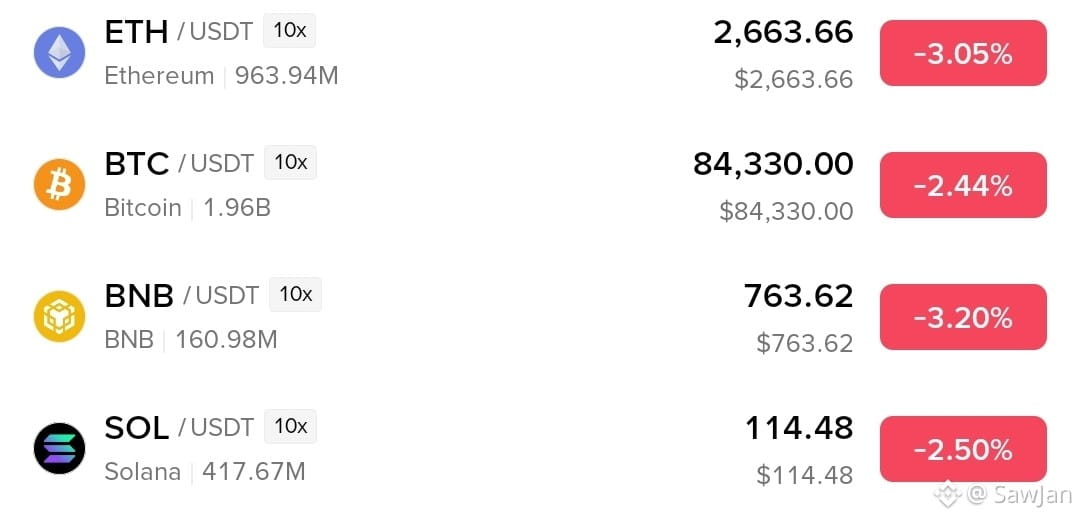
ETH -3.05% | BTC -2.44% | BNB -3.20% | SOL -2.50%
Hôm nay biểu đồ nào cũng nhấp nháy sắc đỏ 🔴
Có vẻ phe bò đang nghỉ ngơi một chút 🐂
Đã đến lúc kiên nhẫn và chờ xem diễn biến tiếp theo 👀
Hãy cùng xem thị trường sẽ đi về đâu từ đây 📉
Thay vì xanh, hôm nay mọi thứ đều đỏ 😬
ETH -3.05% | BTC -2.44% | BNB -3.20% | SOL -2.50%
Hôm nay biểu đồ nào cũng nhấp nháy sắc đỏ 🔴
Có vẻ phe bò đang nghỉ ngơi một chút 🐂
Đã đến lúc kiên nhẫn và chờ xem diễn biến tiếp theo 👀
Hãy cùng xem thị trường sẽ đi về đâu từ đây 📉
ETH -3.05% | BTC -2.44% | BNB -3.20% | SOL -2.50%
Hôm nay biểu đồ nào cũng nhấp nháy sắc đỏ 🔴
Có vẻ phe bò đang nghỉ ngơi một chút 🐂
Đã đến lúc kiên nhẫn và chờ xem diễn biến tiếp theo 👀
Hãy cùng xem thị trường sẽ đi về đâu từ đây 📉
116
·
--
DeFi đang phát triển vượt ra ngoài cuộc đua tìm kiếm APY cao nhất.
@termmax đang áp dụng một cách tiếp cận khác với hoạt động cho vay và vay có lãi suất cố định, giúp người dùng dễ dự đoán hơn khi quản lý vốn trên chuỗi.
Khả năng dự đoán này có thể tạo ra khác biệt lớn. Người vay có thể lên kế hoạch trước, người cho vay có thể hiểu rõ lợi nhuận dự kiến, còn vốn có thể được phân bổ theo một chiến lược rõ ràng hơn thay vì liên tục phản ứng với biến động lãi suất.
Với sự hỗ trợ cho các thị trường đa chuỗi, TermMax đang hướng tới một trải nghiệm DeFi nơi các quyết định tài chính có thể được đưa ra với sự tự tin cao hơn.
Ít bất định hơn.
Có cấu trúc hơn.
Lập kế hoạch vốn tốt hơn.
Đó là hướng đi DeFi cần.
#TermMax #DeFi #Web3
#termmax @termmax
DeFi đang phát triển vượt ra ngoài cuộc đua tìm kiếm APY cao nhất.
@TermMax đang áp dụng một cách tiếp cận khác với hoạt động cho vay và vay có lãi suất cố định, giúp người dùng dễ dự đoán hơn khi quản lý vốn trên chuỗi.
Khả năng dự đoán này có thể tạo ra khác biệt lớn. Người vay có thể lên kế hoạch trước, người cho vay có thể hiểu rõ lợi nhuận dự kiến, còn vốn có thể được phân bổ theo một chiến lược rõ ràng hơn thay vì liên tục phản ứng với biến động lãi suất.
Với sự hỗ trợ cho các thị trường đa chuỗi, TermMax đang hướng tới một trải nghiệm DeFi nơi các quyết định tài chính có thể được đưa ra với sự tự tin cao hơn.
Ít bất định hơn.
Có cấu trúc hơn.
Lập kế hoạch vốn tốt hơn.
Đó là hướng đi DeFi cần.
#TermMax #DeFi #Web3
#termmax @TermMax
68
·
--
DeFi cần nhiều hơn những lời quảng bá—nó cần các công cụ tốt hơn để quản lý vốn.
@termmax đang xây dựng các thị trường cho vay và đi vay với lãi suất cố định, giúp tài chính on-chain trở nên dễ dự đoán hơn. Với khả năng hỗ trợ đa chuỗi và phân bổ vốn rõ ràng hơn, người dùng có thể tự tin hơn khi áp dụng các chiến lược cho vay.
Khả năng khóa lãi suất có thể đặc biệt hữu ích khi thị trường biến động và chi phí vay thả nổi thay đổi nhanh chóng.
Khi DeFi tiếp tục phát triển, thanh khoản dễ dự đoán và quản lý vốn hiệu quả sẽ ngày càng quan trọng.
Đó là lý do #termmax là một dự án đáng theo dõi khi thế hệ tiếp theo của cơ sở hạ tầng tài chính on-chain đang dần thành hình.
#termmax @termmax
DeFi cần nhiều hơn những lời quảng bá—nó cần các công cụ tốt hơn để quản lý vốn.
@TermMax đang xây dựng các thị trường cho vay và đi vay với lãi suất cố định, giúp tài chính on-chain trở nên dễ dự đoán hơn. Với khả năng hỗ trợ đa chuỗi và phân bổ vốn rõ ràng hơn, người dùng có thể tự tin hơn khi áp dụng các chiến lược cho vay.
Khả năng khóa lãi suất có thể đặc biệt hữu ích khi thị trường biến động và chi phí vay thả nổi thay đổi nhanh chóng.
Khi DeFi tiếp tục phát triển, thanh khoản dễ dự đoán và quản lý vốn hiệu quả sẽ ngày càng quan trọng.
Đó là lý do #termmax là một dự án đáng theo dõi khi thế hệ tiếp theo của cơ sở hạ tầng tài chính on-chain đang dần thành hình.
#termmax @TermMax
66
·
--
#TermMax @termmax
DeFi có rất nhiều giao thức cho vay, nhưng lãi suất có thể dự đoán trước vẫn chưa được đánh giá đúng mức.
Đó là lý do TermMax khiến tôi chú ý.
Cho vay và vay với lãi suất cố định giúp việc lập kế hoạch vốn dễ dàng hơn nhiều. Bạn có thể biết trước chi phí thay vì liên tục ứng phó với những thay đổi của thị trường.
Tôi cũng thích định hướng đa chuỗi. Việc có thêm thị trường và thanh khoản trên nhiều hệ sinh thái khác nhau có thể giúp các sản phẩm lãi suất cố định trở nên hữu ích hơn theo thời gian.
Bức tranh tổng thể rất đơn giản: DeFi cần cơ sở hạ tầng giúp người dùng quản lý vốn một cách tự tin hơn.
TermMax đang phát triển theo hướng đó, và tôi rất muốn xem hệ sinh thái này có thể phát triển đến đâu.
Có sự khác biệt giữa các sản phẩm DeFi chạy theo sự chú ý và cơ sở hạ tầng giải quyết vấn đề thực tế.
@termmax rất đáng chú ý vì tập trung vào một nhu cầu thiết thực: vay và cho vay với khả năng dự đoán cao.
Lãi suất cố định có thể giúp người dùng kiểm soát việc phân bổ vốn tốt hơn, đặc biệt khi thị trường biến động.
Thay vì liên tục tự hỏi lãi suất sẽ biến động ra sao, người dùng có thể xây dựng vị thế dựa trên chi phí và kỳ vọng rõ ràng hơn.
Cách tiếp cận đa chuỗi bổ sung thêm một lớp giá trị, có khả năng mở ra cơ hội tiếp cận nhiều thanh khoản và thị trường hơn.
Với tôi, đây là kiểu cơ sở hạ tầng DeFi đáng để quan tâm.
Ít ồn ào hơn. Nhiều tiện ích hơn.
#TermMax
Một điều DeFi vẫn cần là khả năng dự đoán tốt hơn.
Đó là điểm khiến @termmax trở nên đáng chú ý.
Cho vay và vay trên chuỗi với lãi suất cố định có thể giúp việc lập kế hoạch sử dụng vốn dễ dàng hơn. Dù bạn vay để triển khai một chiến lược hay phân bổ thanh khoản, biết trước lãi suất có thể loại bỏ phần lớn sự bất định.
Tôi cũng cho rằng tầm nhìn đa chuỗi rất quan trọng.
Thanh khoản không nên mãi bị mắc kẹt trong các hệ sinh thái riêng biệt.
Nếu TermMax có thể tiếp tục xây dựng các thị trường lãi suất cố định đáng tin cậy trên nhiều chuỗi, đây có thể trở thành cơ sở hạ tầng hữu ích cho nhiều đối tượng người dùng DeFi hơn.
Thông điệp rất đơn giản:
Lãi suất có thể dự đoán.
Lập kế hoạch vốn tốt hơn.
DeFi hiệu quả hơn.
#termmax @termmax
#TermMax @termmax
DeFi có rất nhiều giao thức cho vay, nhưng lãi suất có thể dự đoán trước vẫn chưa được đánh giá đúng mức.
Đó là lý do TermMax khiến tôi chú ý.
Cho vay và vay với lãi suất cố định giúp việc lập kế hoạch vốn dễ dàng hơn nhiều. Bạn có thể biết trước chi phí thay vì liên tục ứng phó với những thay đổi của thị trường.
Tôi cũng thích định hướng đa chuỗi. Việc có thêm thị trường và thanh khoản trên nhiều hệ sinh thái khác nhau có thể giúp các sản phẩm lãi suất cố định trở nên hữu ích hơn theo thời gian.
Bức tranh tổng thể rất đơn giản: DeFi cần cơ sở hạ tầng giúp người dùng quản lý vốn một cách tự tin hơn.
TermMax đang phát triển theo hướng đó, và tôi rất muốn xem hệ sinh thái này có thể phát triển đến đâu.
Có sự khác biệt giữa các sản phẩm DeFi chạy theo sự chú ý và cơ sở hạ tầng giải quyết vấn đề thực tế.
@TermMax rất đáng chú ý vì tập trung vào một nhu cầu thiết thực: vay và cho vay với khả năng dự đoán cao.
Lãi suất cố định có thể giúp người dùng kiểm soát việc phân bổ vốn tốt hơn, đặc biệt khi thị trường biến động.
Thay vì liên tục tự hỏi lãi suất sẽ biến động ra sao, người dùng có thể xây dựng vị thế dựa trên chi phí và kỳ vọng rõ ràng hơn.
Cách tiếp cận đa chuỗi bổ sung thêm một lớp giá trị, có khả năng mở ra cơ hội tiếp cận nhiều thanh khoản và thị trường hơn.
Với tôi, đây là kiểu cơ sở hạ tầng DeFi đáng để quan tâm.
Ít ồn ào hơn. Nhiều tiện ích hơn.
#TermMax
Một điều DeFi vẫn cần là khả năng dự đoán tốt hơn.
Đó là điểm khiến @TermMax trở nên đáng chú ý.
Cho vay và vay trên chuỗi với lãi suất cố định có thể giúp việc lập kế hoạch sử dụng vốn dễ dàng hơn. Dù bạn vay để triển khai một chiến lược hay phân bổ thanh khoản, biết trước lãi suất có thể loại bỏ phần lớn sự bất định.
Tôi cũng cho rằng tầm nhìn đa chuỗi rất quan trọng.
Thanh khoản không nên mãi bị mắc kẹt trong các hệ sinh thái riêng biệt.
Nếu TermMax có thể tiếp tục xây dựng các thị trường lãi suất cố định đáng tin cậy trên nhiều chuỗi, đây có thể trở thành cơ sở hạ tầng hữu ích cho nhiều đối tượng người dùng DeFi hơn.
Thông điệp rất đơn giản:
Lãi suất có thể dự đoán.
Lập kế hoạch vốn tốt hơn.
DeFi hiệu quả hơn.
#termmax @TermMax
77
·
--
Xem bản dịch
TermMax is making DeFi feel more predictable by bringing fixed-rate lending, borrowing, and leverage on-chain. Instead of dealing with constantly changing rates, users can lock in borrowing costs or expected yields until maturity. The protocol also supports managed vaults, multi-chain markets, and one-click leverage, making complex strategies easier to access. What stands out to me is the focus on predictable capital allocation rather than simply chasing short-term incentives. As DeFi matures, fixed-rate markets could become an important building block for both users and institutions. TermMax is definitely one protocol worth watching as this category develops. #termmax @termmax #termmax @termmax
TermMax is making DeFi feel more predictable by bringing fixed-rate lending, borrowing, and leverage on-chain. Instead of dealing with constantly changing rates, users can lock in borrowing costs or expected yields until maturity. The protocol also supports managed vaults, multi-chain markets, and one-click leverage, making complex strategies easier to access. What stands out to me is the focus on predictable capital allocation rather than simply chasing short-term incentives. As DeFi matures, fixed-rate markets could become an important building block for both users and institutions. TermMax is definitely one protocol worth watching as this category develops. #termmax @TermMax #termmax @TermMax
68
·
--
Xem bản dịch
TermMax is building a more flexible way to access fixed-term DeFi markets, giving users better control over yield, maturity, and capital efficiency. What stands out to me about @TermMax is the focus on structured, term-based financial products rather than treating every DeFi position as purely variable. As DeFi evolves, predictable maturity and clearer risk-return profiles could become increasingly important for both users and protocols. TermMax is working toward making these markets more accessible while expanding the possibilities of onchain fixed-term finance. I’ll be watching how the ecosystem develops and how users leverage its growing product stack.
#termmax @termmax
TermMax is building a more flexible way to access fixed-term DeFi markets, giving users better control over yield, maturity, and capital efficiency. What stands out to me about @TermMax is the focus on structured, term-based financial products rather than treating every DeFi position as purely variable. As DeFi evolves, predictable maturity and clearer risk-return profiles could become increasingly important for both users and protocols. TermMax is working toward making these markets more accessible while expanding the possibilities of onchain fixed-term finance. I’ll be watching how the ecosystem develops and how users leverage its growing product stack.
#termmax @TermMax
#termmax @TermMax

68
·
--
Xem bản dịch
The future of trading isn't about choosing between earning yield and staying liquid—it's about having both in one seamless experience.
That's what makes GRVT stand out. By combining the speed and efficiency of a centralized exchange with the transparency and security of decentralized infrastructure, it creates a platform where users remain in control of their assets while accessing a smoother trading experience.
Whether you're trading crypto or real-world assets, your eligible balances don't have to sit idle. Instead, your capital can continue working in the background while remaining available for your next opportunity.
Self-custody, fast execution, and on-chain settlement aren't just technical features—they're building blocks for a more efficient financial system. As more users look for platforms that maximize both flexibility and capital efficiency, solutions like GRVT are becoming increasingly relevant.
The next generation of exchanges won't simply focus on lower fees or faster trades. They'll focus on making every asset more productive without compromising ownership or transparency.
GRVT is moving in that direction by bringing trading, earning, and self-custody together in a single unified experience. That's the kind of innovation that has the potential to reshape how we interact with digital and real-world assets.
@grvt_io #grvt
65
·
--
Tăng giá
Xem bản dịch
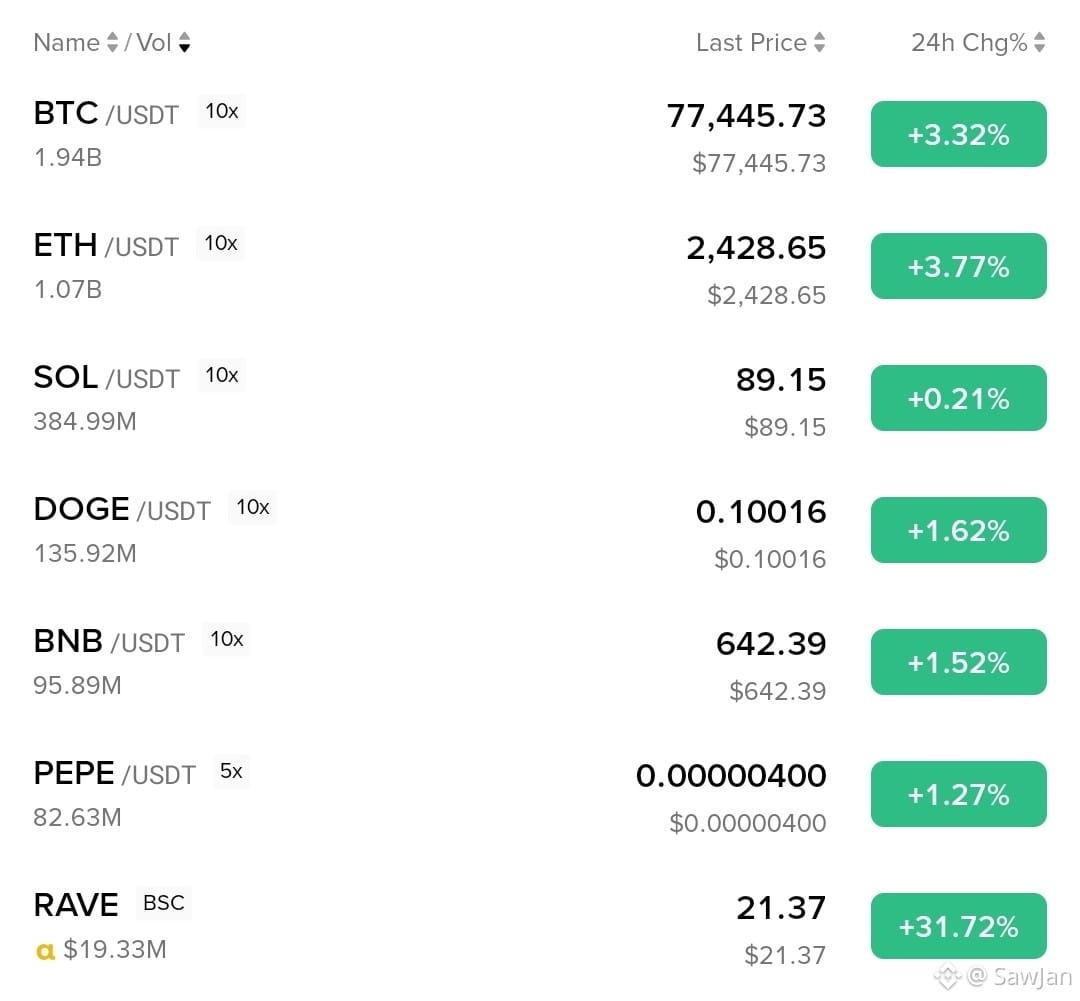
After long time the market is going to be green 💚 and $BTC , $ETH , $SOL and other coin going up start pump and i hope market going well a every coin gain they'res previous price.
After long time the market is going to be green 💚 and $BTC , $ETH , $SOL and other coin going up start pump and i hope market going well a every coin gain they'res previous price.
65
·
--

Bài viết
Xem bản dịch
pixelThe evolution of @Pixels is becoming one of the most interesting case studies in web3 gaming right now. What started as a simple farming-style game has gradually transformed into a much deeper and more structured ecosystem through its Stacked approach. This shift is not just about adding features, but about creating a sustainable loop where players, creators, and the in-game economy all reinforce each other.
At the center of this system is $PIXEL. Instead of being just another in-game currency, it’s being positioned as the core layer that connects activity, rewards, and long-term participation. As more mechanics are introduced into the Stacked ecosystem, the role of $PIXEL becomes more meaningful, especially as utility expands across different parts of the platform.
One of the most important aspects of this evolution is how @Pixels is aligning incentives. Players are no longer just grinding for short-term rewards; they are contributing to a broader system that benefits from active participation. Creators, on the other hand, are becoming key drivers of growth by bringing attention, education, and narrative to the ecosystem. This combination creates a flywheel effect that is hard to replicate.
Another thing worth noting is the focus on scalability. Many web3 games struggle to maintain user interest over time, but the Stacked ecosystem appears designed to continuously introduce new layers of engagement. This keeps the experience fresh while also strengthening the value proposition of $PIXEL .
If this direction continues, @Pixels could set a strong example for how web3 gaming ecosystems should be built — not around short-term hype, but around long-term value creation. The integration of gameplay, economy, and community is what makes this model stand out.
Overall, the growth of @Pixels and its Stacked ecosystem shows that we are moving toward a more mature phase of web3 gaming. It’s no longer just about playing; it’s about participating in an evolving digital economy. And with $PIXEL at the center of it all, the foundation looks solid for future expansion.
pixel
The evolution of @Pixels is becoming one of the most interesting case studies in web3 gaming right now. What started as a simple farming-style game has gradually transformed into a much deeper and more structured ecosystem through its Stacked approach. This shift is not just about adding features, but about creating a sustainable loop where players, creators, and the in-game economy all reinforce each other.
At the center of this system is $PIXEL . Instead of being just another in-game currency, it’s being positioned as the core layer that connects activity, rewards, and long-term participation. As more mechanics are introduced into the Stacked ecosystem, the role of $PIXEL becomes more meaningful, especially as utility expands across different parts of the platform.
One of the most important aspects of this evolution is how @Pixels is aligning incentives. Players are no longer just grinding for short-term rewards; they are contributing to a broader system that benefits from active participation. Creators, on the other hand, are becoming key drivers of growth by bringing attention, education, and narrative to the ecosystem. This combination creates a flywheel effect that is hard to replicate.
Another thing worth noting is the focus on scalability. Many web3 games struggle to maintain user interest over time, but the Stacked ecosystem appears designed to continuously introduce new layers of engagement. This keeps the experience fresh while also strengthening the value proposition of $PIXEL .
If this direction continues, @Pixels could set a strong example for how web3 gaming ecosystems should be built — not around short-term hype, but around long-term value creation. The integration of gameplay, economy, and community is what makes this model stand out.
Overall, the growth of @Pixels and its Stacked ecosystem shows that we are moving toward a more mature phase of web3 gaming. It’s no longer just about playing; it’s about participating in an evolving digital economy. And with $PIXEL at the center of it all, the foundation looks solid for future expansion.
18
·
--
Xem bản dịch
pixelThe evolution of @Pixels is becoming one of the most interesting case studies in web3 gaming right now. What started as a simple farming-style game has gradually transformed into a much deeper and more structured ecosystem through its Stacked approach. This shift is not just about adding features, but about creating a sustainable loop where players, creators, and the in-game economy all reinforce each other.
At the center of this system is $PIXEL. Instead of being just another in-game currency, it’s being positioned as the core layer that connects activity, rewards, and long-term participation. As more mechanics are introduced into the Stacked ecosystem, the role of $PIXEL becomes more meaningful, especially as utility expands across different parts of the platform.
One of the most important aspects of this evolution is how @Pixels is aligning incentives. Players are no longer just grinding for short-term rewards; they are contributing to a broader system that benefits from active participation. Creators, on the other hand, are becoming key drivers of growth by bringing attention, education, and narrative to the ecosystem. This combination creates a flywheel effect that is hard to replicate.
Another thing worth noting is the focus on scalability. Many web3 games struggle to maintain user interest over time, but the Stacked ecosystem appears designed to continuously introduce new layers of engagement. This keeps the experience fresh while also strengthening the value proposition of $PIXEL.
If this direction continues, @Pixels could set a strong example for how web3 gaming ecosystems should be built — not around short-term hype, but around long-term value creation. The integration of gameplay, economy, and community is what makes this model stand out.
Overall, the growth of @Pixels and its Stacked ecosystem shows that we are moving toward a more mature phase of web3 gaming. It’s no longer just about playing; it’s about participating in an evolving digital economy. And with $PIXEL at the center of it all, the foundation looks solid for future expansion. #pixel
pixel
The evolution of @Pixels is becoming one of the most interesting case studies in web3 gaming right now. What started as a simple farming-style game has gradually transformed into a much deeper and more structured ecosystem through its Stacked approach. This shift is not just about adding features, but about creating a sustainable loop where players, creators, and the in-game economy all reinforce each other.
At the center of this system is $PIXEL. Instead of being just another in-game currency, it’s being positioned as the core layer that connects activity, rewards, and long-term participation. As more mechanics are introduced into the Stacked ecosystem, the role of $PIXEL becomes more meaningful, especially as utility expands across different parts of the platform.
One of the most important aspects of this evolution is how @Pixels is aligning incentives. Players are no longer just grinding for short-term rewards; they are contributing to a broader system that benefits from active participation. Creators, on the other hand, are becoming key drivers of growth by bringing attention, education, and narrative to the ecosystem. This combination creates a flywheel effect that is hard to replicate.
Another thing worth noting is the focus on scalability. Many web3 games struggle to maintain user interest over time, but the Stacked ecosystem appears designed to continuously introduce new layers of engagement. This keeps the experience fresh while also strengthening the value proposition of $PIXEL.
If this direction continues, @Pixels could set a strong example for how web3 gaming ecosystems should be built — not around short-term hype, but around long-term value creation. The integration of gameplay, economy, and community is what makes this model stand out.
Overall, the growth of @Pixels and its Stacked ecosystem shows that we are moving toward a more mature phase of web3 gaming. It’s no longer just about playing; it’s about participating in an evolving digital economy. And with $PIXEL at the center of it all, the foundation looks solid for future expansion. #pixel
18
·
--
Xem bản dịch
Seeing @Pixels grow into a full Stacked ecosystem is honestly impressive. What started as a simple web3 game is now evolving into something much bigger, where $PIXEL plays a key role in connecting gameplay, economy, and creators. The way they are building utility around the token shows long-term thinking rather than short-term hype. More players, more creators, and more use cases mean stronger network effects over time. If this momentum continues, Pixels could become a benchmark for how web3 gaming ecosystems should scale. Definitely worth paying attention to how this develops. #pixel
Seeing @Pixels grow into a full Stacked ecosystem is honestly impressive. What started as a simple web3 game is now evolving into something much bigger, where $PIXEL plays a key role in connecting gameplay, economy, and creators. The way they are building utility around the token shows long-term thinking rather than short-term hype. More players, more creators, and more use cases mean stronger network effects over time. If this momentum continues, Pixels could become a benchmark for how web3 gaming ecosystems should scale. Definitely worth paying attention to how this develops. #pixel
20
·
--
Xem bản dịch
Alpha Trading Competition you just see last day of events close no Trading Volume but you just start tarding then end event time . then see you are the last person never win event and Trading leaderboard is high 😂😂😂😂
Alpha Trading Competition you just see last day of events close no Trading Volume but you just start tarding then end event time . then see you are the last person never win event and Trading leaderboard is high 😂😂😂😂
2
·
--
Bài viết
Xem bản dịch
Most DeFi is still stateless execution.Most DeFi is still stateless execution. @mira_network introduces persistent, context-aware agents that learn, adapt, and coordinate capital over time. By combining verifiable data, memory, and programmable liquidity, Mira enables continuous strategy evolution instead of isolated trades. $MIRA aligns data, execution, and incentives into one feedback loop, creating infrastructure for AI-native markets that compound intelligence and capital together. #Mira
Most DeFi is still stateless execution.
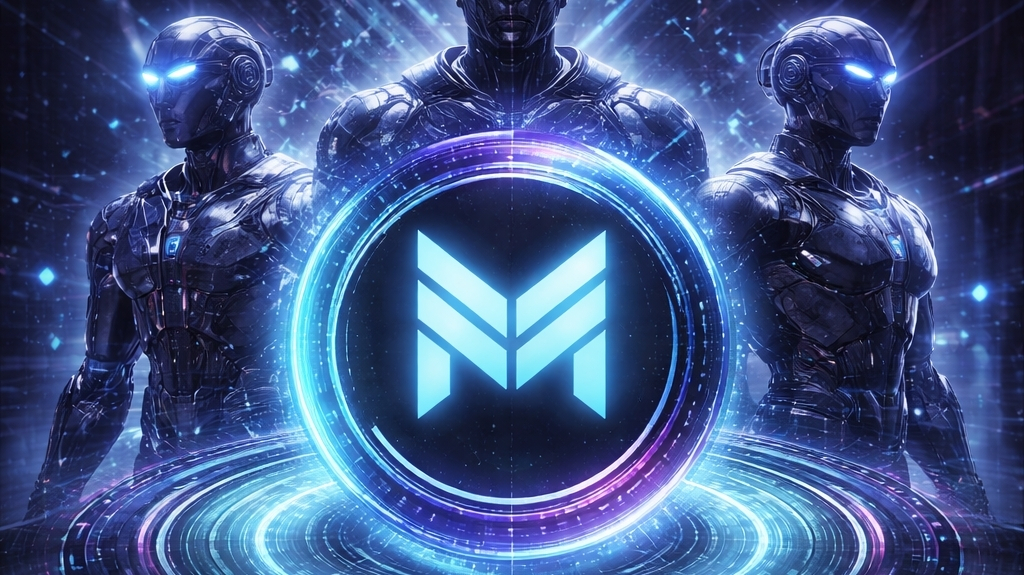
Most DeFi is still stateless execution. @mira_network introduces persistent, context-aware agents that learn, adapt, and coordinate capital over time. By combining verifiable data, memory, and programmable liquidity, Mira enables continuous strategy evolution instead of isolated trades. $MIRA aligns data, execution, and incentives into one feedback loop, creating infrastructure for AI-native markets that compound intelligence and capital together. #Mira
1
·
--
Xem bản dịch
Most DeFi is still stateless execution. @mira_network.Most DeFi is still stateless execution. @mira_network introduces persistent, context-aware agents that learn, adapt, and coordinate capital over time. By combining verifiable data, memory, and programmable liquidity, Mira enables continuous strategy evolution instead of isolated trades. $MIRA aligns data, execution, and incentives into one feedback loop, creating infrastructure for AI-native markets that compound intelligence and capital. #mira $MIRA
Most DeFi is still stateless execution. @mira_network.
Most DeFi is still stateless execution. @mira_network introduces persistent, context-aware agents that learn, adapt, and coordinate capital over time. By combining verifiable data, memory, and programmable liquidity, Mira enables continuous strategy evolution instead of isolated trades. $MIRA aligns data, execution, and incentives into one feedback loop, creating infrastructure for AI-native markets that compound intelligence and capital. #mira $MIRA
4
·
--
Xem bản dịch
Composable intelligence will define the next phase of onchain markets, and @mira_network is building the coordination layer for it. By enabling agents with persistent memory, verifiable data access, and programmable execution, Mira turns isolated smart contract calls into adaptive financial behavior. $MIRA aligns incentives across data providers, strategists, and liquidity venues, creating a feedback loop where strategies improve over time instead of resetting each transaction. This is infrastructure for AI-native DeFi—stateful, context-aware, and capital efficient by design. #mira $MIRA
Composable intelligence will define the next phase of onchain markets, and @mira_network is building the coordination layer for it. By enabling agents with persistent memory, verifiable data access, and programmable execution, Mira turns isolated smart contract calls into adaptive financial behavior. $MIRA aligns incentives across data providers, strategists, and liquidity venues, creating a feedback loop where strategies improve over time instead of resetting each transaction. This is infrastructure for AI-native DeFi—stateful, context-aware, and capital efficient by design. #mira $MIRA
3
·
--
Xem bản dịch
Autonomous agents need unified rails to manage data, memory, and capital without fragmentation.Autonomous agents need unified rails to manage data, memory, and capital without fragmentation. That’s the core of @mira_network—stateful AI actors executing on verifiable infrastructure with continuous context. $MIRA aligns incentives across data, liquidity, and execution, turning isolated transactions into adaptive financial behavior. This is coordination infrastructure for AI-native DeFi, where strategies learn, persist, and compound onchain. #Mira
Autonomous agents need unified rails to manage data, memory, and capital without fragmentation.
Autonomous agents need unified rails to manage data, memory, and capital without fragmentation. That’s the core of @mira_network—stateful AI actors executing on verifiable infrastructure with continuous context. $MIRA aligns incentives across data, liquidity, and execution, turning isolated transactions into adaptive financial behavior. This is coordination infrastructure for AI-native DeFi, where strategies learn, persist, and compound onchain. #Mira
6
12
·
--
Xem bản dịch
Liquidity, identity, and execution need to live in the same layer for AI-driven finance to scale. That’s the vision behind @mira_network—autonomous agents operating on unified rails with verifiable context and programmable capital. $MIRA isn’t just a token, it’s coordination infrastructure for the next machine economy.
#mira $MIRA
#mira $MIRA
10
22
·
--
Xem bản dịch
#BinanceTurns8 Join us in the #BinanceTurns8 celebration and win a share of up to $888,888 in BNB!
#BinanceTurns8 Join us in the #BinanceTurns8 celebration and win a share of up to $888,888 in BNB!
5
5
Đăng nhập để khám phá thêm nội dung
Tham gia cùng người dùng tiền mã hóa toàn cầu trên Binance Square
⚡️ Nhận thông tin mới nhất và hữu ích về tiền mã hóa.
💬 Được tin cậy bởi sàn giao dịch tiền mã hóa lớn nhất thế giới.
👍 Khám phá những thông tin chuyên sâu thực tế từ những nhà sáng tạo đã xác minh.
Email / Số điện thoại
Chủ đề thịnh hành
CanMicrosoftDeliverOnAI
341,868 lượt xem
2,693 đang thảo luận
Phiên 3 của mùa công bố kết quả kinh doanh: Google và Microsoft có vượt kỳ vọng không?
Binance Square Official
·136 lượt thích
·65.5k lượt xem
CanGoogleDefindItsCore
201,338 lượt xem
1,899 đang thảo luận
TinFed
366,683 lượt xem
995 đang thảo luận