

Naveed110
Giao dịch mở

Người nắm giữ SHARE
Trader tần suất cao
{thời gian} năm
161 Đang theo dõi
84 Người theo dõi
153 Đã thích
Bài đăng
Danh mục đầu tư
Tất cả
Trích dẫn
Xem bản dịch


Panda Traders
·
--
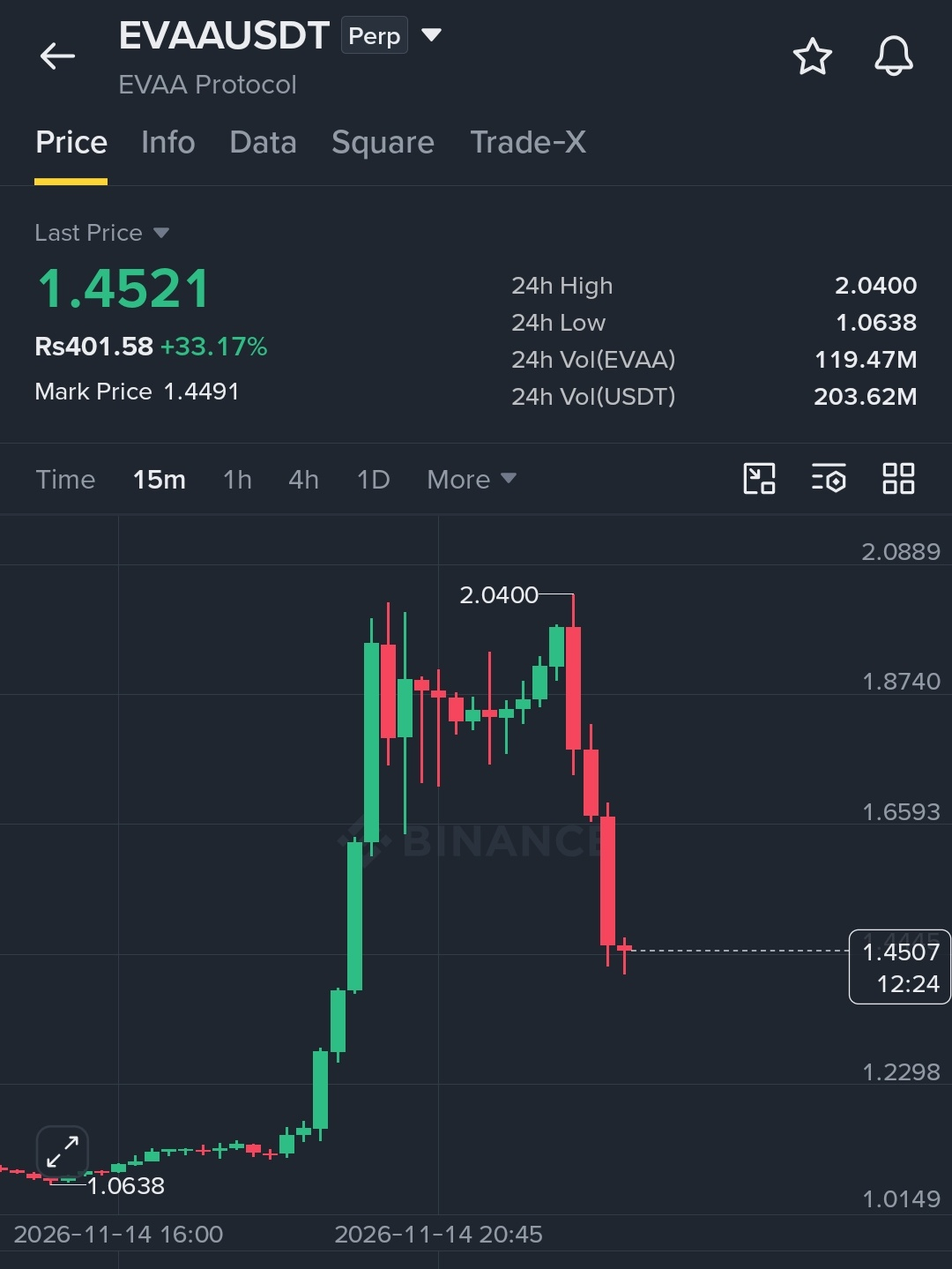
Giảm giáÔi Chúa ơi, cú xả hàng điên rồ quá 😳😳😳😳😳😳😳
$EVAA đã bị xả chính xác như dự đoán
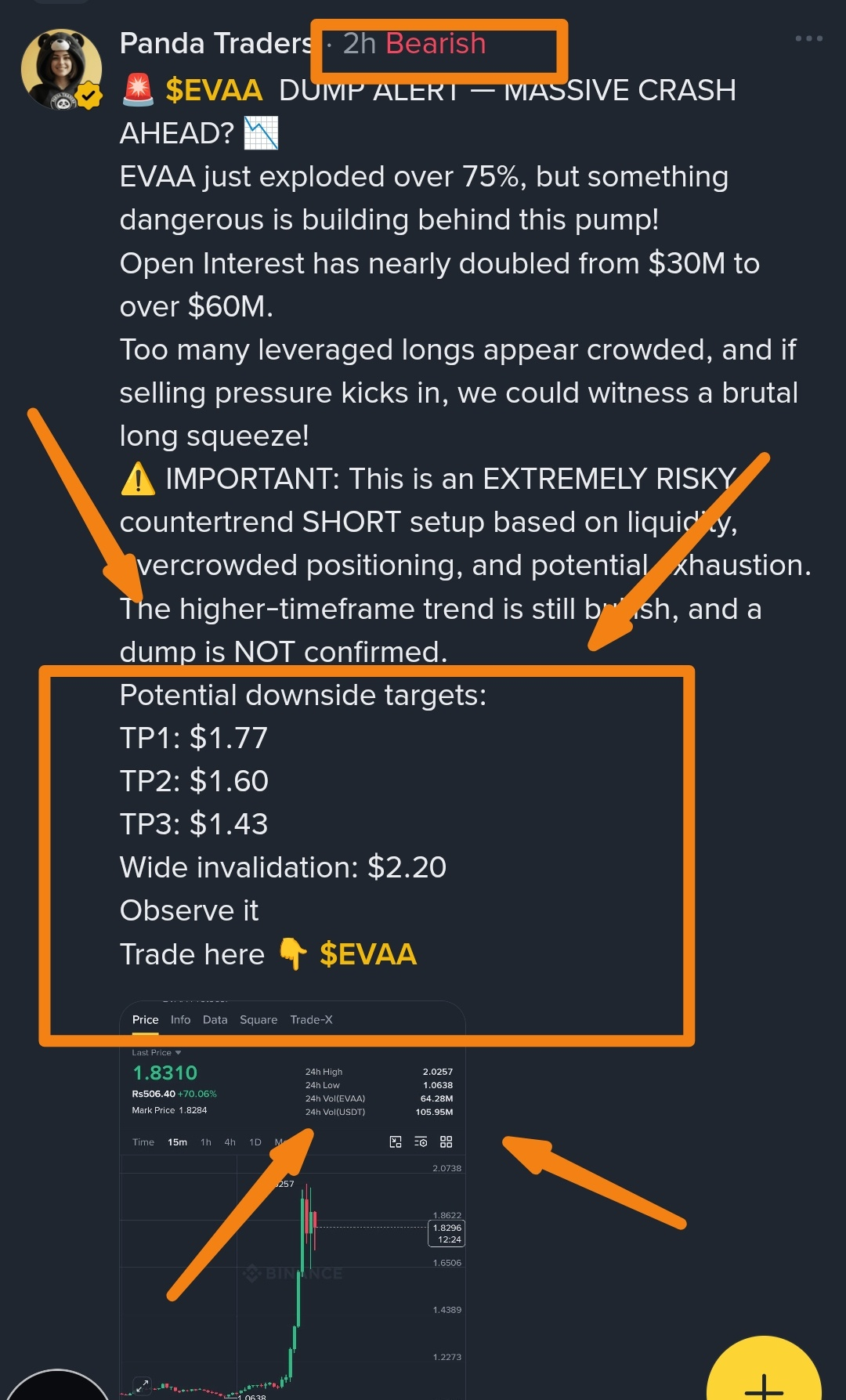
Mới 2 tiếng trước, khi mọi người đều đuổi theo đà tăng, tôi đã cảnh báo rõ ràng với mọi người về mối nguy hiểm 😭😭😭😭😭😭😭
Giờ hãy xem nó bị xả chính xác đến mức nào từ các mức giá tôi đã đề cập và chạm tất cả mục tiêu 🎯
Wooohoooooooo 🔥🔥🔥🔥🔥🔥🔥🔥🔥
Nhớ bình luận bên dưới khoe ảnh lợi nhuận của bạn nhé 🤤
#EVAAUpdate #WhoWillSucceedJensenHuangatNvidia?
$EVAA đã bị xả chính xác như dự đoán
Mới 2 tiếng trước, khi mọi người đều đuổi theo đà tăng, tôi đã cảnh báo rõ ràng với mọi người về mối nguy hiểm 😭😭😭😭😭😭😭
Giờ hãy xem nó bị xả chính xác đến mức nào từ các mức giá tôi đã đề cập và chạm tất cả mục tiêu 🎯
Wooohoooooooo 🔥🔥🔥🔥🔥🔥🔥🔥🔥
Nhớ bình luận bên dưới khoe ảnh lợi nhuận của bạn nhé 🤤
#EVAAUpdate #WhoWillSucceedJensenHuangatNvidia?

CaptainAltcoin
·
--
Giá Bitcoin Có Thể Sắp Giăng Bẫy Phe Bò Với Đợt Biến Động Này!
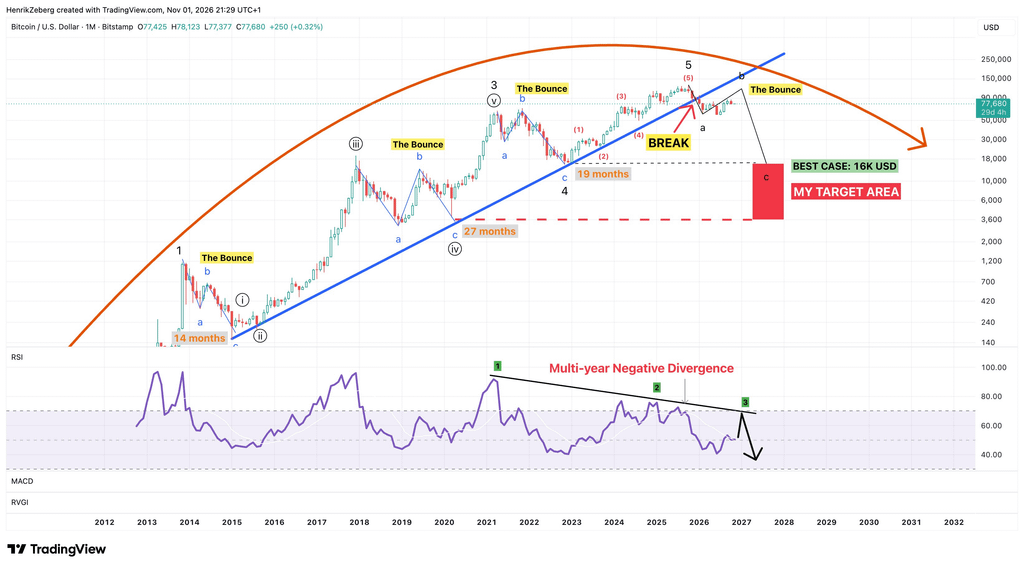
Giá Bitcoin đang cố ổn định quanh mức 78.000 USD sau vài tuần đầy khó khăn, nhưng một nhà phân tích tin rằng đợt tăng lớn tiếp theo có thể biến thành một cái bẫy.
Nhà phân tích vĩ mô Henrik Zeberg cho rằng Bitcoin vẫn có thể tăng lên gần 115.000 USD trước khi thị trường giá xuống trên diện rộng quay trở lại.
Quan điểm của ông khá khác thường vì lạc quan trong ngắn hạn nhưng lại cực kỳ bi quan sau đó.
Zeberg gọi đợt tăng giá dự kiến là “đợt tăng giả” và cho rằng những người nắm giữ Bitcoin có thể nhầm nó với khởi đầu của một thị trường tăng giá lớn khác.
Nhà phân tích vĩ mô Henrik Zeberg cho rằng Bitcoin vẫn có thể tăng lên gần 115.000 USD trước khi thị trường giá xuống trên diện rộng quay trở lại.
Quan điểm của ông khá khác thường vì lạc quan trong ngắn hạn nhưng lại cực kỳ bi quan sau đó.
Zeberg gọi đợt tăng giá dự kiến là “đợt tăng giả” và cho rằng những người nắm giữ Bitcoin có thể nhầm nó với khởi đầu của một thị trường tăng giá lớn khác.
Xem bản dịch

MONEY TIMES
·
--
😂 Thị trường có vấn đề cá nhân với bạn!
Trader nào cũng biết cảm giác đau đớn này...
📈 Khi bạn bán → Thị trường tăng vọt.
😴 Khi bạn giữ → Thị trường đi ngang.
📉 Khi bạn mua → Thị trường sập.
Đến nước này thì tôi không giao dịch thị trường nữa. Thị trường đang giao dịch tôi! 💀
Thành thật đi, chuyện này đã xảy ra với bạn bao nhiêu lần rồi? 😂
$BTC $ETH $SOL
#Crypto #Trading #CryptoMemes
Trader nào cũng biết cảm giác đau đớn này...
📈 Khi bạn bán → Thị trường tăng vọt.
😴 Khi bạn giữ → Thị trường đi ngang.
📉 Khi bạn mua → Thị trường sập.
Đến nước này thì tôi không giao dịch thị trường nữa. Thị trường đang giao dịch tôi! 💀
Thành thật đi, chuyện này đã xảy ra với bạn bao nhiêu lần rồi? 😂
$BTC $ETH $SOL
#Crypto #Trading #CryptoMemes


shuja246
·
--
Tăng giá$Q QUSDT bật lên từ mức đáy $0.03518 — giữ vững $0.0460 sau đợt bán tháo mạnh -55% trong tuần
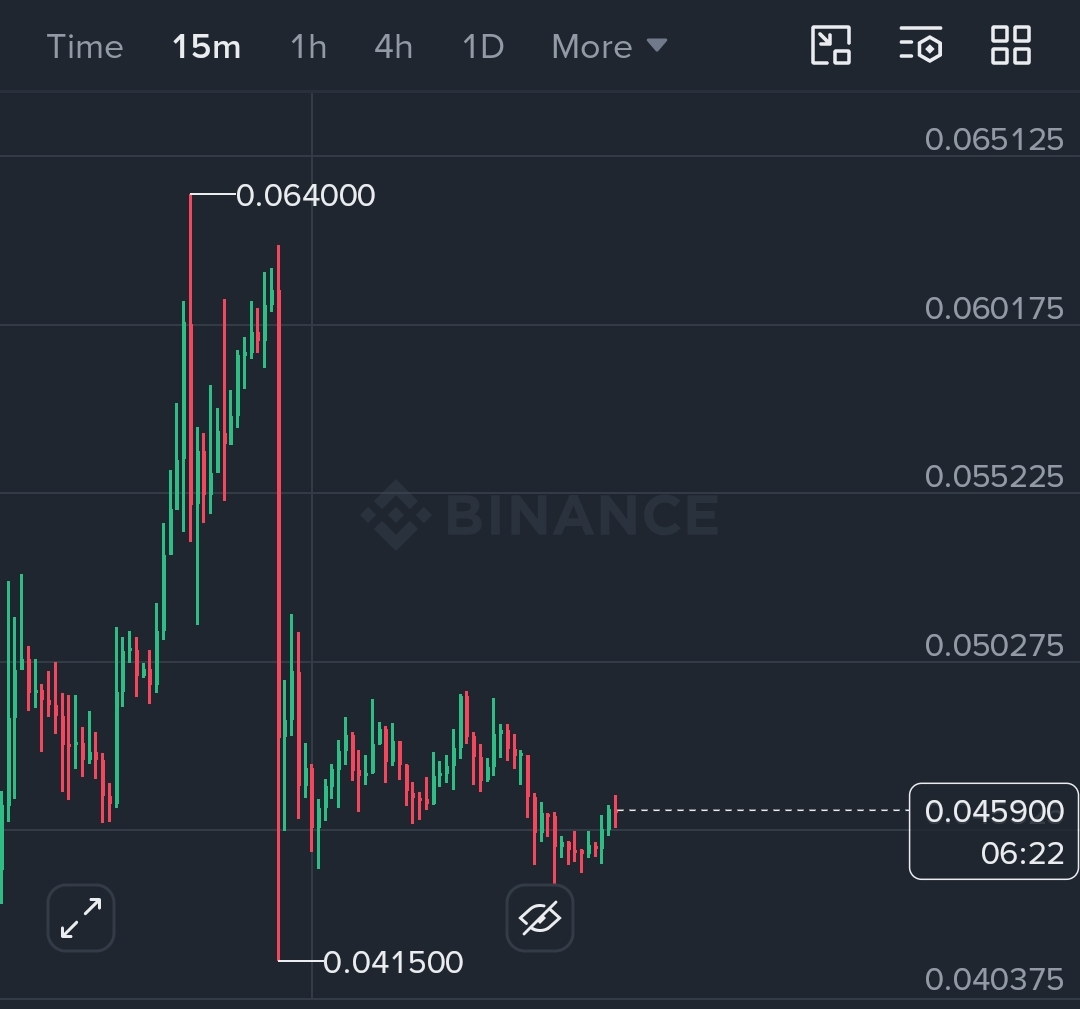
Q $0.04608 (+2.63%) H $0.06400 L $0.04064 | Khối lượng Q 3.98B | $199.14M | MA60 $0.04515 | ATH $0.236013
Quack AI đã tạo ra một nến đầu hàng kinh điển. Giá chạm mức $0.03518 vào ngày 29 tháng 10 lúc 20:15 sau khi đạt $0.070650, rồi bật lên khỏi mức này hai lần để kiểm tra $0.04608. Có thể thấy điều đó trên biểu đồ 15 phút — bên mua đã bảo vệ mức $0.03518. Hiện giá đang giữ trên MA60 ở mức $0.04515.
Hiệu suất: +2.68% hôm nay | -55.51% trong 7 ngày qua | +106.43% trong 30 ngày qua | +99.84% trong 90 ngày qua | +351.78% trong 180 ngày qua | +98.43% trong năm qua. Vẫn tăng +106% trong 30 ngày qua. Đợt bán tháo diễn ra trong 7 ngày qua. MA(5)=10.9M và MA(10)=11.6M trong 15 phút qua. Khối lượng đang giảm dần sau đợt tăng đột biến.
Đây không phải là một nhịp bật lên ngẫu nhiên. Đỉnh mới được hình thành sau khi bật lên từ $Q , tăng từ $0.017007 (ngày 3 tháng 10) để kiểm tra ATH $0.236013 — tăng 12 lần — rồi điều chỉnh 85%. Mức đó là $0.03518.
Hỗ trợ & Kháng cự:
Hỗ trợ: Mức đáy 24 giờ $0.04064 / $0.03518 là ngưỡng hỗ trợ cứng cần được giữ vững. Nếu thủng mức này, chúng ta sẽ mất mốc $0.03518 = $0.032.
Kháng cự: Q $0__0.070650 là đỉnh gần đây. Nếu vượt qua, giá sẽ tiến tới Q $1__0.07+.
Kế hoạch giao dịch:
Tâm lý: LONG miễn là giá giữ trên $0.03518.
Giao dịch: Mua khi giá kiểm tra lại Q $2__0.0460 và có tín hiệu đảo chiều tăng trên khung 15 phút.
Cắt lỗ: Q $3__0.04064
Chốt lời 1: Q $4__0.06400 | Chốt lời 3: $0.07065. Khi chạm TP1, dời điểm dừng lỗ về hòa vốn.
Nếu giá đóng cửa dưới $0.03518, đà giảm sẽ tiếp diễn, vì vậy hãy đứng ngoài.
Tỷ lệ R:R tốt nhất là mua khi vùng hỗ trợ phía trên MA60 được xác nhận, thay vì đuổi theo đỉnh $0.064. Chỉ mạo hiểm 1-2% vì giá biến động rất nhanh.
Mua khi Q $5__0.06400 bứt phá?
Nhấn để giao dịch 👉$Q
#Q #q #QUSDT
Q $0.04608 (+2.63%) H $0.06400 L $0.04064 | Khối lượng Q 3.98B | $199.14M | MA60 $0.04515 | ATH $0.236013
Quack AI đã tạo ra một nến đầu hàng kinh điển. Giá chạm mức $0.03518 vào ngày 29 tháng 10 lúc 20:15 sau khi đạt $0.070650, rồi bật lên khỏi mức này hai lần để kiểm tra $0.04608. Có thể thấy điều đó trên biểu đồ 15 phút — bên mua đã bảo vệ mức $0.03518. Hiện giá đang giữ trên MA60 ở mức $0.04515.
Hiệu suất: +2.68% hôm nay | -55.51% trong 7 ngày qua | +106.43% trong 30 ngày qua | +99.84% trong 90 ngày qua | +351.78% trong 180 ngày qua | +98.43% trong năm qua. Vẫn tăng +106% trong 30 ngày qua. Đợt bán tháo diễn ra trong 7 ngày qua. MA(5)=10.9M và MA(10)=11.6M trong 15 phút qua. Khối lượng đang giảm dần sau đợt tăng đột biến.
Đây không phải là một nhịp bật lên ngẫu nhiên. Đỉnh mới được hình thành sau khi bật lên từ $Q , tăng từ $0.017007 (ngày 3 tháng 10) để kiểm tra ATH $0.236013 — tăng 12 lần — rồi điều chỉnh 85%. Mức đó là $0.03518.
Hỗ trợ & Kháng cự:
Hỗ trợ: Mức đáy 24 giờ $0.04064 / $0.03518 là ngưỡng hỗ trợ cứng cần được giữ vững. Nếu thủng mức này, chúng ta sẽ mất mốc $0.03518 = $0.032.
Kháng cự: Q $0__0.070650 là đỉnh gần đây. Nếu vượt qua, giá sẽ tiến tới Q $1__0.07+.
Kế hoạch giao dịch:
Tâm lý: LONG miễn là giá giữ trên $0.03518.
Giao dịch: Mua khi giá kiểm tra lại Q $2__0.0460 và có tín hiệu đảo chiều tăng trên khung 15 phút.
Cắt lỗ: Q $3__0.04064
Chốt lời 1: Q $4__0.06400 | Chốt lời 3: $0.07065. Khi chạm TP1, dời điểm dừng lỗ về hòa vốn.
Nếu giá đóng cửa dưới $0.03518, đà giảm sẽ tiếp diễn, vì vậy hãy đứng ngoài.
Tỷ lệ R:R tốt nhất là mua khi vùng hỗ trợ phía trên MA60 được xác nhận, thay vì đuổi theo đỉnh $0.064. Chỉ mạo hiểm 1-2% vì giá biến động rất nhanh.
Mua khi Q $5__0.06400 bứt phá?
Nhấn để giao dịch 👉$Q
#Q #q #QUSDT
Xem bản dịch


Binance News
·
--
Michael Saylor on Bitcoin as Digital Gold—and the Re-Architecting of Crypto, Credit and Money
At ParaFi Investor Day 2026, Michael Saylor, executive chairman and co-founder of Strategy, set out a framework for what he termed digital capital, digital credit, digital equity, and digital money, and—in a fireside chat with Jeff Park—discussed the trajectory of digital assets, regulation, and the future of finance. His central argument was that Bitcoin functions as a form of digital capital on which a new asset class of Bitcoin-backed credit can be constructed, with Strategy's own instruments serving as his primary case studies.
Bitcoin as Digital Capital
Saylor framed Bitcoin as digital gold—a store of wealth that, in his telling, has achieved global consensus and now functions as "digital capital." By his estimates, Bitcoin represents roughly two-thirds of the crypto economy's market capitalization, about 80% of its liquidity, and some 90% of its economic value. He argued the market is moving back into a bull phase, noting that the price bounced off the 200-week simple moving average roughly three months prior and had returned to a slight premium—a pattern he said is consistent with a fifteen-year horizon.
The headwinds, in his view, were restrictive trade, foreign, and monetary policy over the past year, compounded by the "gravitational pull" of the AI buildout competing for capital. Because Bitcoin is "pure capital," he argued, anything negative for risk assets weighs disproportionately on it.
On tailwinds, Saylor pointed primarily to bank adoption. As banks move to custody Bitcoin, he said, they can create credit against it—and he estimated that every $10 billion of credit represents roughly one year of supply, a dynamic he characterized as bullish for price. He also cited the tokenization of securities and, more broadly, AI disruption. His reasoning on AI: as automation drives the marginal value of producible goods and services toward zero, investors should seek assets a robot cannot make. Bitcoin, he said, is "a scarce desirable piece of property in cyberspace."
Regulatory Tailwinds and Banking Adoption
Saylor welcomed three pieces of recent government guidance: the Treasury's rules on stablecoins, the SEC opening a path for tokenized securities, and the CFTC greenlighting crypto derivatives for US investors. Notably, he downplayed the stalling of the CLARITY bill, characterizing its roughly 600 pages as "600 pages of restrictions" and arguing the industry is better served by concise, positive rules. He added that Strategy's Bitcoin banking index had moved from 9% to 34%.
Bitcoin-Backed Credit and STRC
Drawing a historical line to the Bank of England and the British consol—credit issued against gold reserves, paying 3% to 5% in perpetuity—Saylor described digital credit as "credit built on digital gold." His logic: if an asset is expected to appreciate, an issuer can sell a credit instrument paying a fraction of that expected return.
As his central example, Saylor pointed to STRC, a perpetual preferred stock Strategy sells to the public, structured around a $100 par value. According to the figures he presented, STRC pays roughly 12%, carries about 48 years of dividends in the capital structure, had about $8.8 billion outstanding, traded around $150 million a day, and was over-collateralized at roughly $6.20 of Bitcoin per dollar of STRC. He described it, by trading volume, as among the most liquid preferred stocks in the market. These figures and characterizations were drawn from Saylor's own presentation.
Returning STRC to Par: Reserves, Buybacks, and Investor Feedback
Saylor acknowledged that STRC traded below par at the start of the summer, prompting Strategy to introduce a multi-year US dollar dividend reserve and a buyback program—he cited roughly $1.5 billion repurchased—to move it back toward par. The lesson he drew was that the market "values US dollar duration more than Bitcoin": the difference between holding ten and one hundred years of Bitcoin backing is immaterial to a credit investor, while the difference between a few months and three years of cash reserves is significant.
He described digital credit as "an alloy of capital and cash," using a metallurgical metaphor to argue that a structure weighted heavily toward Bitcoin with minimal cash is fragile, whereas a roughly 70% Bitcoin / 30% cash blend is more stable. Strategy, he said, now holds about three and a half years of dividends in cash, and has iterated on the instrument—from monthly dividends to a shelf registration, a dedicated USD reserve, variable monthly rates, semi-monthly payments, and a planned move to daily.
Amplifying Bitcoin Per Share and the "Triple Flywheel"
Saylor defined digital equity as the residual spread between the cost of credit and the return on capital—offering 12% while targeting a higher return leaves a spread accruing to equity holders. He stated that Strategy holds about 4% of the Bitcoin that will ever exist, and that the company raised roughly $21 billion in 2025, $25 billion the prior year, and $24 billion before that.
Citing performance since August 2020, he contrasted bonds and money markets with Bitcoin and MSTR, which he said had returned 37% and 51% annually, respectively. He explained that credit against equity is prohibited by the Investment Company Act of 1940, which is why gold-backed credit became the historical norm—and why, in his argument, Bitcoin's stronger assumed performance makes the model more compelling than its gold predecessor.
Saylor described Strategy as "a structured finance company" that, in his framing, strips volatility from Bitcoin on the credit tranche while amplifying it on the equity tranche, invoking a "conservation of energy" between the two. He characterized the mechanism as a triple flywheel: issuing credit to buy Bitcoin, issuing equity at a premium to buy more Bitcoin, with rising Bitcoin reserves reducing credit risk and compressing spreads, enabling further issuance. He noted this model depends on Bitcoin's fixed 21-million supply, and cited Strive as a recent example of a single issuer absorbing a large share of newly produced Bitcoin.
From Quarterly to Daily Dividends
In the fireside chat, Saylor traced the evolution of payment frequency. Quarterly dividends, he said, froze liquidity for much of the quarter and produced volatile ex-dividend events; monthly payments—better suited to retail investors—improved liquidity substantially. Strategy then moved to bi-weekly, believing a NASDAQ ten-day requirement was the floor, until Strive demonstrated daily payment was feasible, which Saylor said tripled turnover by tapping new capital pools.
Strategy is now moving toward daily (calendar-day) dividends, with an October 28th vote for MSTR holders. The stated rationale: in markets moving toward 365-day tokenized trading, a daily-paying instrument can increase liquidity, reduce the size of ex-dividend price moves, attract new capital, and support cross-market and higher-frequency trading strategies.
The Vision for Digital Money
Saylor described a longer-term goal of digital money: an instrument pegged to the dollar with low volatility, paying 6–8%—what he called "the mythical Bitcoin-backed stablecoin." He questioned why investors would hold stablecoins paying nothing if a yield-bearing alternative existed, and sketched a short-duration money-market-style instrument that could serve as a medium of exchange, unit of account, store of value, and collateral. He presented this as an aspiration rather than an existing product.
The Path to Institutional Acceptance
On adoption, Saylor noted STRC grew from zero to over $10 billion in under twelve months, and that Strategy ranks among the largest equity issuers. He acknowledged, however, that digital credit is only in its "sophomore year," that credit investors typically want a three-year track record, and that the asset class must prove it can "manage through bear markets" with an uninterrupted dividend history. He drew a parallel to Bitcoin's own 17-year path to broader acceptance.
On pricing, Saylor declined to forecast the coming year, citing the Fed's dominant influence, but suggested STRC's spread—which he placed at roughly 700 basis points over the 10-year—could compress toward a 400-to-500-basis-point premium over the risk-free rate over time. He also noted that preferred stock once represented about a third of all capital before falling out of use for decades.
Beyond Bitcoin: Regulation Determines Value
Addressing non-Bitcoin digital asset treasuries, Saylor argued the genuinely valuable use cases are stablecoins (moving dollars rapidly), crypto derivatives (perpetual leverage), and digital exchanges for equities, commodities, currencies, and derivatives operating around the clock. His central point was that value flows according to jurisdiction and regulation: whether value accrues to a token, a crypto equity, a regulated bank, or the government depends on the regulatory regime, which can, for example, permit tokenization while restricting custody or transfer. The clearly investable categories in the US today, he said, are digital capital, digital credit, and digital equity, with derivatives emerging and tokens still in a "gray zone."
Bitcoin as Digital Capital
Saylor framed Bitcoin as digital gold—a store of wealth that, in his telling, has achieved global consensus and now functions as "digital capital." By his estimates, Bitcoin represents roughly two-thirds of the crypto economy's market capitalization, about 80% of its liquidity, and some 90% of its economic value. He argued the market is moving back into a bull phase, noting that the price bounced off the 200-week simple moving average roughly three months prior and had returned to a slight premium—a pattern he said is consistent with a fifteen-year horizon.
The headwinds, in his view, were restrictive trade, foreign, and monetary policy over the past year, compounded by the "gravitational pull" of the AI buildout competing for capital. Because Bitcoin is "pure capital," he argued, anything negative for risk assets weighs disproportionately on it.
On tailwinds, Saylor pointed primarily to bank adoption. As banks move to custody Bitcoin, he said, they can create credit against it—and he estimated that every $10 billion of credit represents roughly one year of supply, a dynamic he characterized as bullish for price. He also cited the tokenization of securities and, more broadly, AI disruption. His reasoning on AI: as automation drives the marginal value of producible goods and services toward zero, investors should seek assets a robot cannot make. Bitcoin, he said, is "a scarce desirable piece of property in cyberspace."
Regulatory Tailwinds and Banking Adoption
Saylor welcomed three pieces of recent government guidance: the Treasury's rules on stablecoins, the SEC opening a path for tokenized securities, and the CFTC greenlighting crypto derivatives for US investors. Notably, he downplayed the stalling of the CLARITY bill, characterizing its roughly 600 pages as "600 pages of restrictions" and arguing the industry is better served by concise, positive rules. He added that Strategy's Bitcoin banking index had moved from 9% to 34%.
Bitcoin-Backed Credit and STRC
Drawing a historical line to the Bank of England and the British consol—credit issued against gold reserves, paying 3% to 5% in perpetuity—Saylor described digital credit as "credit built on digital gold." His logic: if an asset is expected to appreciate, an issuer can sell a credit instrument paying a fraction of that expected return.
As his central example, Saylor pointed to STRC, a perpetual preferred stock Strategy sells to the public, structured around a $100 par value. According to the figures he presented, STRC pays roughly 12%, carries about 48 years of dividends in the capital structure, had about $8.8 billion outstanding, traded around $150 million a day, and was over-collateralized at roughly $6.20 of Bitcoin per dollar of STRC. He described it, by trading volume, as among the most liquid preferred stocks in the market. These figures and characterizations were drawn from Saylor's own presentation.
Returning STRC to Par: Reserves, Buybacks, and Investor Feedback
Saylor acknowledged that STRC traded below par at the start of the summer, prompting Strategy to introduce a multi-year US dollar dividend reserve and a buyback program—he cited roughly $1.5 billion repurchased—to move it back toward par. The lesson he drew was that the market "values US dollar duration more than Bitcoin": the difference between holding ten and one hundred years of Bitcoin backing is immaterial to a credit investor, while the difference between a few months and three years of cash reserves is significant.
He described digital credit as "an alloy of capital and cash," using a metallurgical metaphor to argue that a structure weighted heavily toward Bitcoin with minimal cash is fragile, whereas a roughly 70% Bitcoin / 30% cash blend is more stable. Strategy, he said, now holds about three and a half years of dividends in cash, and has iterated on the instrument—from monthly dividends to a shelf registration, a dedicated USD reserve, variable monthly rates, semi-monthly payments, and a planned move to daily.
Amplifying Bitcoin Per Share and the "Triple Flywheel"
Saylor defined digital equity as the residual spread between the cost of credit and the return on capital—offering 12% while targeting a higher return leaves a spread accruing to equity holders. He stated that Strategy holds about 4% of the Bitcoin that will ever exist, and that the company raised roughly $21 billion in 2025, $25 billion the prior year, and $24 billion before that.
Citing performance since August 2020, he contrasted bonds and money markets with Bitcoin and MSTR, which he said had returned 37% and 51% annually, respectively. He explained that credit against equity is prohibited by the Investment Company Act of 1940, which is why gold-backed credit became the historical norm—and why, in his argument, Bitcoin's stronger assumed performance makes the model more compelling than its gold predecessor.
Saylor described Strategy as "a structured finance company" that, in his framing, strips volatility from Bitcoin on the credit tranche while amplifying it on the equity tranche, invoking a "conservation of energy" between the two. He characterized the mechanism as a triple flywheel: issuing credit to buy Bitcoin, issuing equity at a premium to buy more Bitcoin, with rising Bitcoin reserves reducing credit risk and compressing spreads, enabling further issuance. He noted this model depends on Bitcoin's fixed 21-million supply, and cited Strive as a recent example of a single issuer absorbing a large share of newly produced Bitcoin.
From Quarterly to Daily Dividends
In the fireside chat, Saylor traced the evolution of payment frequency. Quarterly dividends, he said, froze liquidity for much of the quarter and produced volatile ex-dividend events; monthly payments—better suited to retail investors—improved liquidity substantially. Strategy then moved to bi-weekly, believing a NASDAQ ten-day requirement was the floor, until Strive demonstrated daily payment was feasible, which Saylor said tripled turnover by tapping new capital pools.
Strategy is now moving toward daily (calendar-day) dividends, with an October 28th vote for MSTR holders. The stated rationale: in markets moving toward 365-day tokenized trading, a daily-paying instrument can increase liquidity, reduce the size of ex-dividend price moves, attract new capital, and support cross-market and higher-frequency trading strategies.
The Vision for Digital Money
Saylor described a longer-term goal of digital money: an instrument pegged to the dollar with low volatility, paying 6–8%—what he called "the mythical Bitcoin-backed stablecoin." He questioned why investors would hold stablecoins paying nothing if a yield-bearing alternative existed, and sketched a short-duration money-market-style instrument that could serve as a medium of exchange, unit of account, store of value, and collateral. He presented this as an aspiration rather than an existing product.
The Path to Institutional Acceptance
On adoption, Saylor noted STRC grew from zero to over $10 billion in under twelve months, and that Strategy ranks among the largest equity issuers. He acknowledged, however, that digital credit is only in its "sophomore year," that credit investors typically want a three-year track record, and that the asset class must prove it can "manage through bear markets" with an uninterrupted dividend history. He drew a parallel to Bitcoin's own 17-year path to broader acceptance.
On pricing, Saylor declined to forecast the coming year, citing the Fed's dominant influence, but suggested STRC's spread—which he placed at roughly 700 basis points over the 10-year—could compress toward a 400-to-500-basis-point premium over the risk-free rate over time. He also noted that preferred stock once represented about a third of all capital before falling out of use for decades.
Beyond Bitcoin: Regulation Determines Value
Addressing non-Bitcoin digital asset treasuries, Saylor argued the genuinely valuable use cases are stablecoins (moving dollars rapidly), crypto derivatives (perpetual leverage), and digital exchanges for equities, commodities, currencies, and derivatives operating around the clock. His central point was that value flows according to jurisdiction and regulation: whether value accrues to a token, a crypto equity, a regulated bank, or the government depends on the regulatory regime, which can, for example, permit tokenization while restricting custody or transfer. The clearly investable categories in the US today, he said, are digital capital, digital credit, and digital equity, with derivatives emerging and tokens still in a "gray zone."

Đăng nhập để khám phá thêm nội dung