

Maxi eth
90 Bài đăng

Maxi eth
Báo cáo
Chặn người dùng
BP-03B4E21442E7
Giao dịch mở

Người nắm giữ BTC
Trader thường xuyên
{thời gian} năm
22 Đang theo dõi
41 Người theo dõi
47 Đã thích
Bài đăng
Danh mục đầu tư
Tất cả
Trích dẫn
·
--
Tăng giá
Xem bản dịch
SanDisk Corporation -
$SNDK
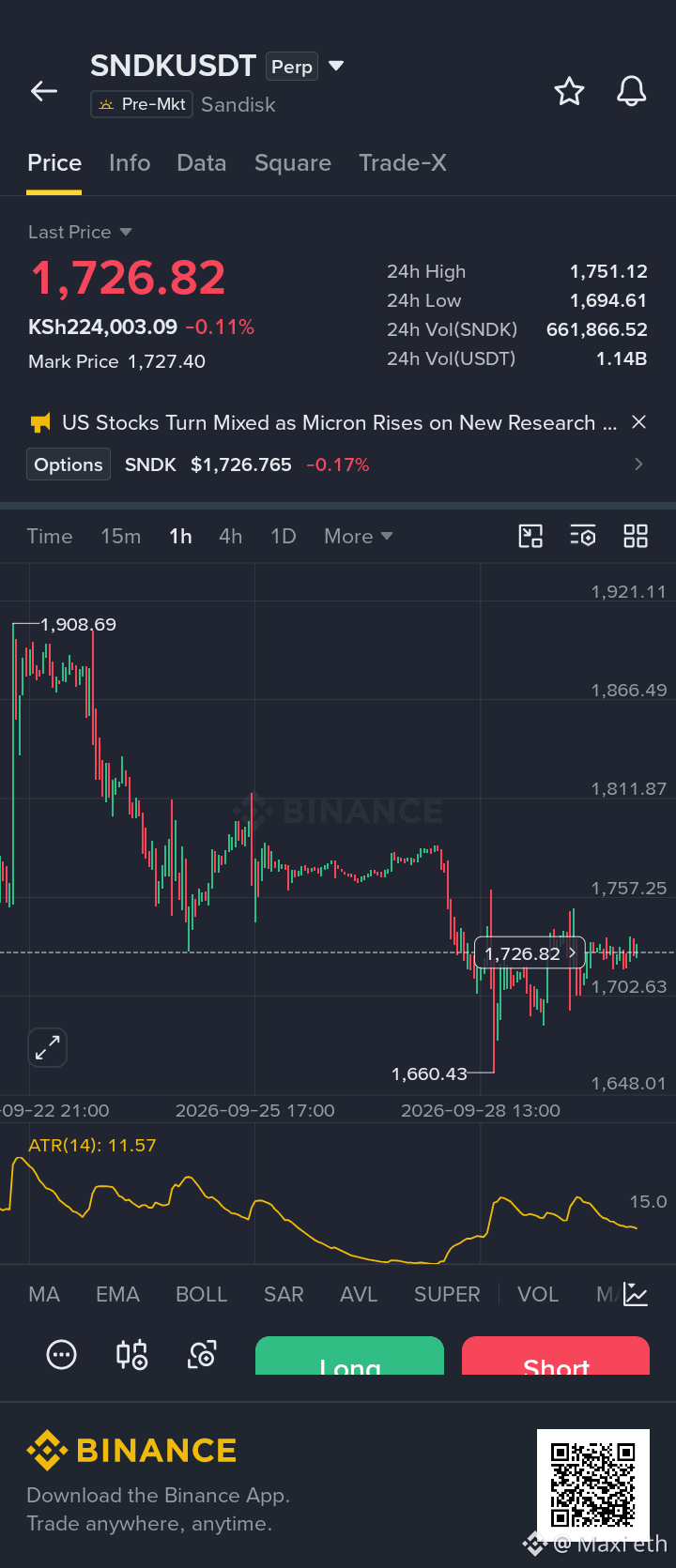
Key Levels & Market Structure
* Primary Trend: Markdown / Bearish continuation on the 1h timeframe, down from the 1,908.69 swing high.
* Immediate Resistance: 1,751.12 (24h High), followed by the broken structural high zone around 1,811.87.
* Immediate Support / Liquidity Target: 1,660.43 (Wick Low / Swing Low).
* Consolidation Range: Price is currently chopping sideways between 1,702.63 and 1,751.12 after the heavy sell-off.
Technical Indicators & Volatility
* ATR (14) at 11.57: Volatility has compressed significantly compared to the rapid drop from 1,908. Lower ATR in this consolidation suggests a volatility squeeze, which usually precedes an expansion move.
* Volume Profile: The 24h volume is high at 1.14B USDT, showing significant participation despite the tight range near the bottom.
Trade Scenarios
1. Bearish Breakdown / Trend Continuation
* Trigger: A 1h candle close below 1,702.63 or a sweep/break of 1,660.43.
* Target: Next psychological/structural demand zone around 1,648.01 and below.
* Invalidation: Price reclaiming and holding above 1,757.25.
2. Bullish Relief Rally / Liquidity Grab
* Trigger: Rejection at the 1,700–1,710 area with high buying volume, targeting short stops above the consolidation.
* Target: 1,751.12 (24h High) and the lower-high structure near 1,811.87.
* Invalidation: Loss of 1,660.43.
SanDisk Corporation -
$SNDK
Key Levels & Market Structure
* Primary Trend: Markdown / Bearish continuation on the 1h timeframe, down from the 1,908.69 swing high.
* Immediate Resistance: 1,751.12 (24h High), followed by the broken structural high zone around 1,811.87.
* Immediate Support / Liquidity Target: 1,660.43 (Wick Low / Swing Low).
* Consolidation Range: Price is currently chopping sideways between 1,702.63 and 1,751.12 after the heavy sell-off.
Technical Indicators & Volatility
* ATR (14) at 11.57: Volatility has compressed significantly compared to the rapid drop from 1,908. Lower ATR in this consolidation suggests a volatility squeeze, which usually precedes an expansion move.
* Volume Profile: The 24h volume is high at 1.14B USDT, showing significant participation despite the tight range near the bottom.
Trade Scenarios
1. Bearish Breakdown / Trend Continuation
* Trigger: A 1h candle close below 1,702.63 or a sweep/break of 1,660.43.
* Target: Next psychological/structural demand zone around 1,648.01 and below.
* Invalidation: Price reclaiming and holding above 1,757.25.
2. Bullish Relief Rally / Liquidity Grab
* Trigger: Rejection at the 1,700–1,710 area with high buying volume, targeting short stops above the consolidation.
* Target: 1,751.12 (24h High) and the lower-high structure near 1,811.87.
* Invalidation: Loss of 1,660.43.
$SNDK
Key Levels & Market Structure
* Primary Trend: Markdown / Bearish continuation on the 1h timeframe, down from the 1,908.69 swing high.
* Immediate Resistance: 1,751.12 (24h High), followed by the broken structural high zone around 1,811.87.
* Immediate Support / Liquidity Target: 1,660.43 (Wick Low / Swing Low).
* Consolidation Range: Price is currently chopping sideways between 1,702.63 and 1,751.12 after the heavy sell-off.
Technical Indicators & Volatility
* ATR (14) at 11.57: Volatility has compressed significantly compared to the rapid drop from 1,908. Lower ATR in this consolidation suggests a volatility squeeze, which usually precedes an expansion move.
* Volume Profile: The 24h volume is high at 1.14B USDT, showing significant participation despite the tight range near the bottom.
Trade Scenarios
1. Bearish Breakdown / Trend Continuation
* Trigger: A 1h candle close below 1,702.63 or a sweep/break of 1,660.43.
* Target: Next psychological/structural demand zone around 1,648.01 and below.
* Invalidation: Price reclaiming and holding above 1,757.25.
2. Bullish Relief Rally / Liquidity Grab
* Trigger: Rejection at the 1,700–1,710 area with high buying volume, targeting short stops above the consolidation.
* Target: 1,751.12 (24h High) and the lower-high structure near 1,811.87.
* Invalidation: Loss of 1,660.43.
361
·
--
Xem bản dịch
The crypto market is currently defined by a high-conviction range consolidation, with assets absorbing supply following the recent impulsive move. Order flow dynamics indicate a transition from retail-led FOMO to institutional accumulation, evidenced by sustained inflows into spot ETFs. This suggests a strengthening floor as market participants defend recent structural breakouts.\n\nOn higher timeframes, the momentum remains bullish, supported by a macro environment pivoting toward easing liquidity. While volatility has compressed, the persistent bid presence during localized pullbacks underscores a "buy-the-dip" sentiment. Investors are closely monitoring key support zones where previous resistance flipped, providing a foundation for the next leg higher. Conversely, overhead liquidity clusters remain the primary targets for short-term expansion. As long as macro conditions remain supportive, the structural bias favors upward rotation. Traders should maintain focus on the integrity of current range lows, as a break below would signal a deeper mean reversion.\n\n#Crypto #Bitcoin #MarketStructure $BTC $ETH
The crypto market is currently defined by a high-conviction range consolidation, with assets absorbing supply following the recent impulsive move. Order flow dynamics indicate a transition from retail-led FOMO to institutional accumulation, evidenced by sustained inflows into spot ETFs. This suggests a strengthening floor as market participants defend recent structural breakouts.\n\nOn higher timeframes, the momentum remains bullish, supported by a macro environment pivoting toward easing liquidity. While volatility has compressed, the persistent bid presence during localized pullbacks underscores a "buy-the-dip" sentiment. Investors are closely monitoring key support zones where previous resistance flipped, providing a foundation for the next leg higher. Conversely, overhead liquidity clusters remain the primary targets for short-term expansion. As long as macro conditions remain supportive, the structural bias favors upward rotation. Traders should maintain focus on the integrity of current range lows, as a break below would signal a deeper mean reversion.\n\n#Crypto #Bitcoin #MarketStructure $BTC $ETH
1
100
·
--
Tăng giá
Xem bản dịch
$BTC
{spot}(BTCUSDT)
Update 1W
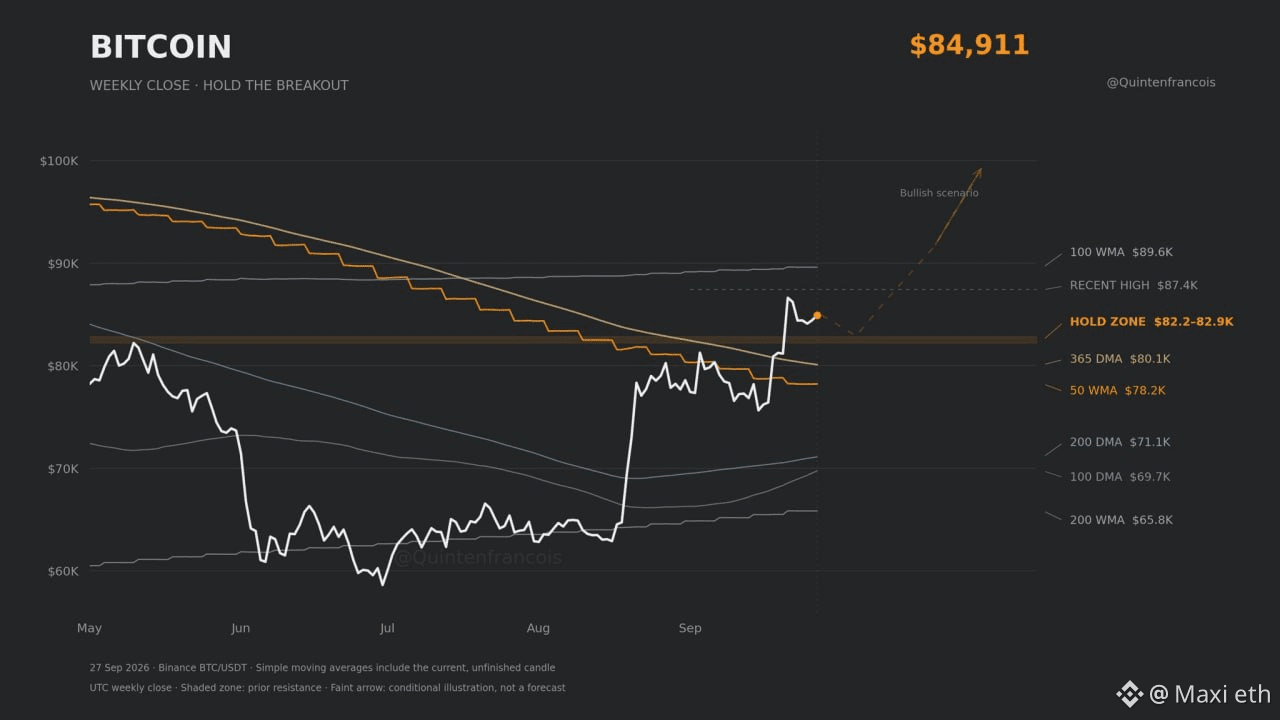
The weekly close is the key level to watch.
If Bitcoin holds above the $82.2–83K zone, it would confirm acceptance of the recent breakout and strengthen the higher-timeframe bullish structure. A failure to hold this area would keep the market in a more neutral, range-bound posture.
This week’s close carries elevated significance for the medium-term outlook.
$BTC
Update 1W
The weekly close is the key level to watch.
If Bitcoin holds above the $82.2–83K zone, it would confirm acceptance of the recent breakout and strengthen the higher-timeframe bullish structure. A failure to hold this area would keep the market in a more neutral, range-bound posture.
This week’s close carries elevated significance for the medium-term outlook.
Update 1W
The weekly close is the key level to watch.
If Bitcoin holds above the $82.2–83K zone, it would confirm acceptance of the recent breakout and strengthen the higher-timeframe bullish structure. A failure to hold this area would keep the market in a more neutral, range-bound posture.
This week’s close carries elevated significance for the medium-term outlook.
65
·
--
Xem bản dịch
💳 Crypto payments are getting more interesting with bPay.
bPay is building around a simple idea: making crypto more practical for everyday payments while keeping the experience accessible to users.
If you’re exploring the project, here are the official details:
CA: 0xb13003bf44de426dd2a3aae3df9c3400de0a7777
Code: BP-03B4E21442E7
DYOR before getting involved and always verify the contract address before interacting. 🔎
#bPay
💳 Crypto payments are getting more interesting with bPay.
bPay is building around a simple idea: making crypto more practical for everyday payments while keeping the experience accessible to users.
If you’re exploring the project, here are the official details:
CA: 0xb13003bf44de426dd2a3aae3df9c3400de0a7777
Code: BP-03B4E21442E7
DYOR before getting involved and always verify the contract address before interacting. 🔎
#bPay
bPay is building around a simple idea: making crypto more practical for everyday payments while keeping the experience accessible to users.
If you’re exploring the project, here are the official details:
CA: 0xb13003bf44de426dd2a3aae3df9c3400de0a7777
Code: BP-03B4E21442E7
DYOR before getting involved and always verify the contract address before interacting. 🔎
#bPay
66
·
--
Tăng giá
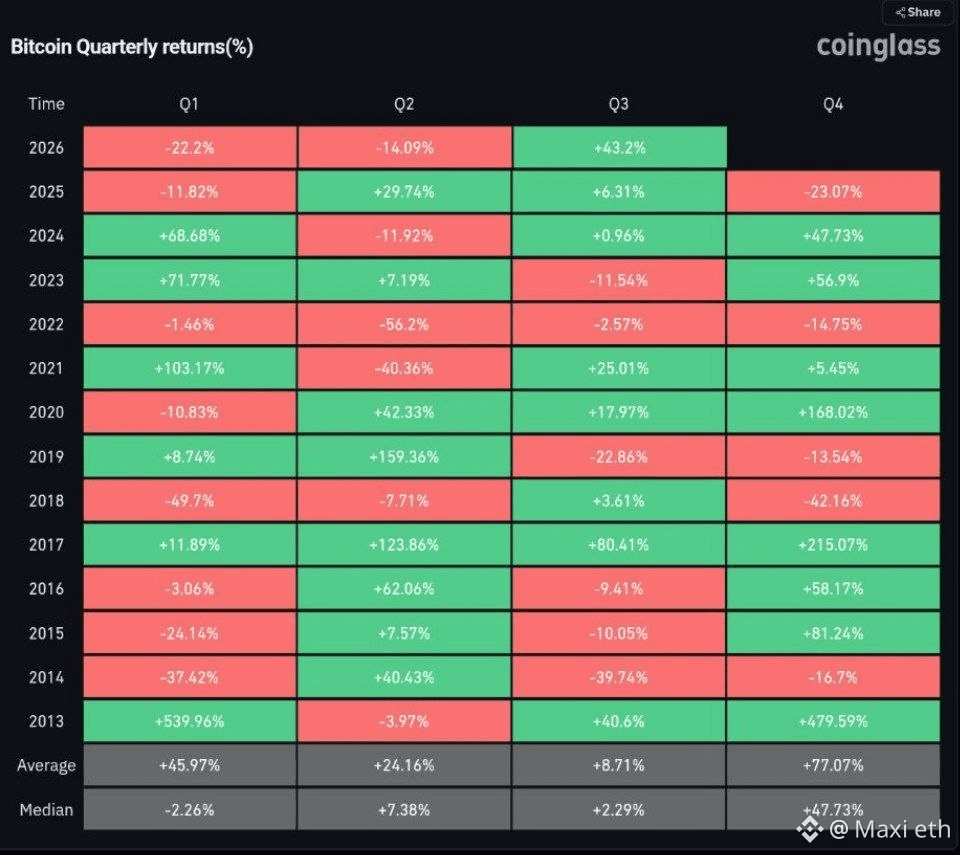
📊 THỊ TRƯỜNG: $BTC sắp đóng cửa với Q3 tốt thứ 2 từ trước đến nay.
📊 THỊ TRƯỜNG: $BTC sắp đóng cửa với Q3 tốt thứ 2 từ trước đến nay.
62
·
--
Xem bản dịch
🚨 ALERT: Saudi Arabia’s pipeline outage threatens up to 4% of global oil supply, with Yanbu’s export stocks lasting just 5–7 days, Reuters reports.
🚨 ALERT: Saudi Arabia’s pipeline outage threatens up to 4% of global oil supply, with Yanbu’s export stocks lasting just 5–7 days, Reuters reports.

1
66
·
--
Tăng giá
#Stocks
Mua $CBRS tại $172.62
SL: $169.11 TP: $261.38
Ghi chú:
1. Giá đang kiểm tra lại vùng hỗ trợ ngang quan trọng quanh $171.64 - $172.62 sau một nhịp điều chỉnh từ các mức đỉnh gần đây.
2. Tỷ lệ rủi ro/lợi nhuận được đặt khoảng 1:25 với mức dừng lỗ ngay dưới vùng hỗ trợ dao động gần đây tại $169.11 và mục tiêu nằm gần vùng kháng cự lớn phía trên tại $261.38.
3. Các chỉ báo động lượng trên VMC Cipher B cho thấy điều kiện quá bán trên khung thời gian ngày, báo hiệu khả năng đảo chiều tăng từ đường hỗ trợ.
#Stocks
Mua $CBRS tại $172.62
SL: $169.11 TP: $261.38
Ghi chú:
1. Giá đang kiểm tra lại vùng hỗ trợ ngang quan trọng quanh $171.64 - $172.62 sau một nhịp điều chỉnh từ các mức đỉnh gần đây.
2. Tỷ lệ rủi ro/lợi nhuận được đặt khoảng 1:25 với mức dừng lỗ ngay dưới vùng hỗ trợ dao động gần đây tại $169.11 và mục tiêu nằm gần vùng kháng cự lớn phía trên tại $261.38.
3. Các chỉ báo động lượng trên VMC Cipher B cho thấy điều kiện quá bán trên khung thời gian ngày, báo hiệu khả năng đảo chiều tăng từ đường hỗ trợ.
Mua $CBRS tại $172.62
SL: $169.11 TP: $261.38
Ghi chú:
1. Giá đang kiểm tra lại vùng hỗ trợ ngang quan trọng quanh $171.64 - $172.62 sau một nhịp điều chỉnh từ các mức đỉnh gần đây.
2. Tỷ lệ rủi ro/lợi nhuận được đặt khoảng 1:25 với mức dừng lỗ ngay dưới vùng hỗ trợ dao động gần đây tại $169.11 và mục tiêu nằm gần vùng kháng cự lớn phía trên tại $261.38.
3. Các chỉ báo động lượng trên VMC Cipher B cho thấy điều kiện quá bán trên khung thời gian ngày, báo hiệu khả năng đảo chiều tăng từ đường hỗ trợ.

163
·
--
Tăng giá
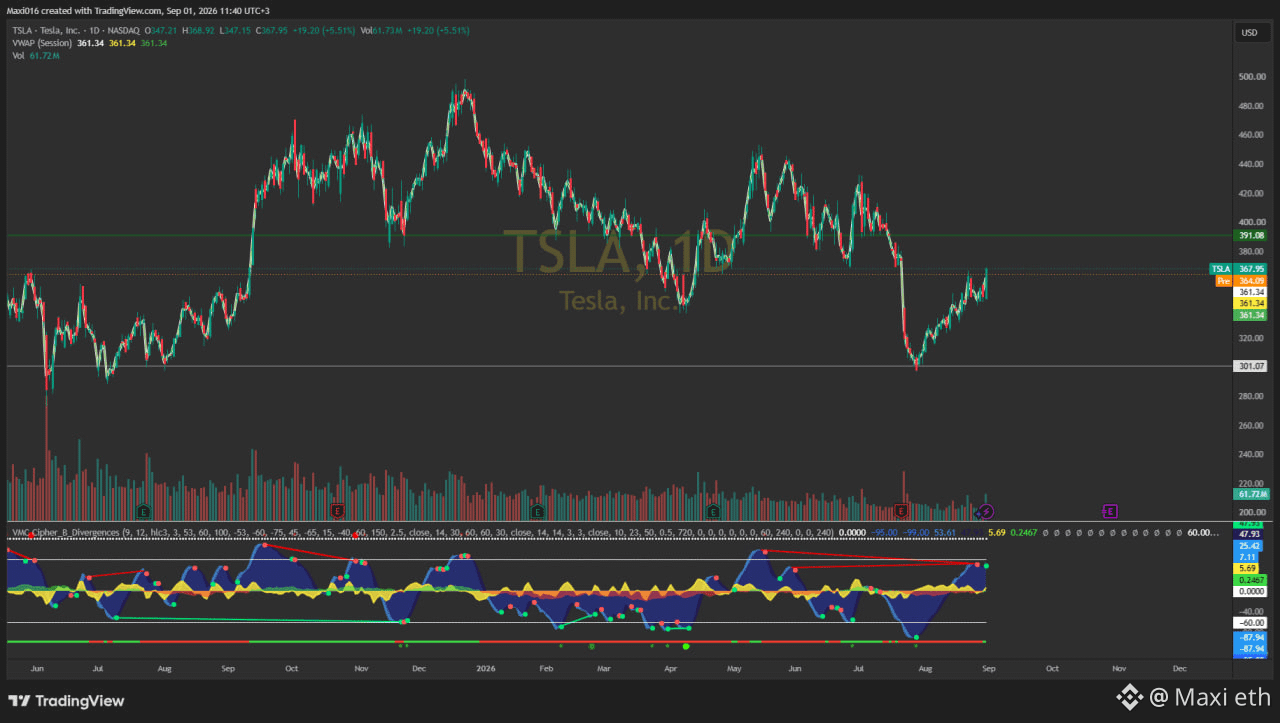
Price Action & Catalyst: $TSLA
{future}(TSLAUSDT)
đang giao dịch gần 367.95 (+5.51%), được đẩy lên nhờ động lượng mạnh trước sự kiện ra mắt Cybercab Robotaxi sắp tới tại Austin vào ngày 3 tháng 9 năm 2026. Thị trường đang định giá tích cực chất xúc tác cơ bản này, đẩy giá quay trở lại các mức kháng cự दैनिक quan trọng.
VMC Cipher B (WaveTrend & MFI):
WaveTrend: Sóng xanh tiếp tục mở rộng mạnh mẽ vào vùng quá mua (~25.42 / 47.93). Khi giá tiến gần đến chất xúc tác ngày 3 tháng 9, hãy theo dõi các tín hiệu phân kỳ phía trên tiềm năng (các chấm đỏ) dọc theo đường xu hướng kháng cự ngang, điều này có thể báo hiệu phản ứng "bán khi tin ra" sau sự kiện.
Money Flow Index (MFI): Dòng tiền vẫn dốc lên rất mạnh, xác nhận khối lượng mua từ tổ chức/cá nhân vững chắc trước thông báo.
Session VWAP & Moving Averages: Đang ở mức 361.34, phù hợp với việc giá gần đây giành lại đường trung bình động 50 ngày, đóng vai trò là hỗ trợ động chính trong ngày.
Các mức quan trọng cần theo dõi
Kháng cự do chất xúc tác: 391.08 (Kháng cự ngang lớn / vùng đỉnh dao động trước đó cần kiểm tra quanh sự kiện ngày 3 tháng 9)
Hỗ trợ ngay lập tức: 361.34 (Hội tụ của Session VWAP / MA 50 ngày)
Hỗ trợ quan trọng: 301.07 (Đáy cục bộ lớn / mức đáy neo)
Các cân nhắc khi thực hiện giao dịch
Bứt phá do sự kiện: Kết quả tin tức tích cực mạnh và nến đóng cửa ngày dứt khoát trên 391.08 sẽ mở ra các mục tiêu tăng ngay lập tức hướng tới vùng khoảng trống thanh khoản 420–440.
Bẫy "bán khi tin ra": Nếu WaveTrend xuất hiện phân kỳ giảm gần 391.08 sau sự kiện ngày 3 tháng 9, hãy kỳ vọng một nhịp điều chỉnh quay về 361.34 để kiểm tra cấu trúc đáy cao hơn trước khi xu hướng có thể tiếp diễn.
Price Action & Catalyst: $TSLA
đang giao dịch gần 367.95 (+5.51%), được đẩy lên nhờ động lượng mạnh trước sự kiện ra mắt Cybercab Robotaxi sắp tới tại Austin vào ngày 3 tháng 9 năm 2026. Thị trường đang định giá tích cực chất xúc tác cơ bản này, đẩy giá quay trở lại các mức kháng cự दैनिक quan trọng.
VMC Cipher B (WaveTrend & MFI):
WaveTrend: Sóng xanh tiếp tục mở rộng mạnh mẽ vào vùng quá mua (~25.42 / 47.93). Khi giá tiến gần đến chất xúc tác ngày 3 tháng 9, hãy theo dõi các tín hiệu phân kỳ phía trên tiềm năng (các chấm đỏ) dọc theo đường xu hướng kháng cự ngang, điều này có thể báo hiệu phản ứng "bán khi tin ra" sau sự kiện.
Money Flow Index (MFI): Dòng tiền vẫn dốc lên rất mạnh, xác nhận khối lượng mua từ tổ chức/cá nhân vững chắc trước thông báo.
Session VWAP & Moving Averages: Đang ở mức 361.34, phù hợp với việc giá gần đây giành lại đường trung bình động 50 ngày, đóng vai trò là hỗ trợ động chính trong ngày.
Các mức quan trọng cần theo dõi
Kháng cự do chất xúc tác: 391.08 (Kháng cự ngang lớn / vùng đỉnh dao động trước đó cần kiểm tra quanh sự kiện ngày 3 tháng 9)
Hỗ trợ ngay lập tức: 361.34 (Hội tụ của Session VWAP / MA 50 ngày)
Hỗ trợ quan trọng: 301.07 (Đáy cục bộ lớn / mức đáy neo)
Các cân nhắc khi thực hiện giao dịch
Bứt phá do sự kiện: Kết quả tin tức tích cực mạnh và nến đóng cửa ngày dứt khoát trên 391.08 sẽ mở ra các mục tiêu tăng ngay lập tức hướng tới vùng khoảng trống thanh khoản 420–440.
Bẫy "bán khi tin ra": Nếu WaveTrend xuất hiện phân kỳ giảm gần 391.08 sau sự kiện ngày 3 tháng 9, hãy kỳ vọng một nhịp điều chỉnh quay về 361.34 để kiểm tra cấu trúc đáy cao hơn trước khi xu hướng có thể tiếp diễn.
đang giao dịch gần 367.95 (+5.51%), được đẩy lên nhờ động lượng mạnh trước sự kiện ra mắt Cybercab Robotaxi sắp tới tại Austin vào ngày 3 tháng 9 năm 2026. Thị trường đang định giá tích cực chất xúc tác cơ bản này, đẩy giá quay trở lại các mức kháng cự दैनिक quan trọng.
VMC Cipher B (WaveTrend & MFI):
WaveTrend: Sóng xanh tiếp tục mở rộng mạnh mẽ vào vùng quá mua (~25.42 / 47.93). Khi giá tiến gần đến chất xúc tác ngày 3 tháng 9, hãy theo dõi các tín hiệu phân kỳ phía trên tiềm năng (các chấm đỏ) dọc theo đường xu hướng kháng cự ngang, điều này có thể báo hiệu phản ứng "bán khi tin ra" sau sự kiện.
Money Flow Index (MFI): Dòng tiền vẫn dốc lên rất mạnh, xác nhận khối lượng mua từ tổ chức/cá nhân vững chắc trước thông báo.
Session VWAP & Moving Averages: Đang ở mức 361.34, phù hợp với việc giá gần đây giành lại đường trung bình động 50 ngày, đóng vai trò là hỗ trợ động chính trong ngày.
Các mức quan trọng cần theo dõi
Kháng cự do chất xúc tác: 391.08 (Kháng cự ngang lớn / vùng đỉnh dao động trước đó cần kiểm tra quanh sự kiện ngày 3 tháng 9)
Hỗ trợ ngay lập tức: 361.34 (Hội tụ của Session VWAP / MA 50 ngày)
Hỗ trợ quan trọng: 301.07 (Đáy cục bộ lớn / mức đáy neo)
Các cân nhắc khi thực hiện giao dịch
Bứt phá do sự kiện: Kết quả tin tức tích cực mạnh và nến đóng cửa ngày dứt khoát trên 391.08 sẽ mở ra các mục tiêu tăng ngay lập tức hướng tới vùng khoảng trống thanh khoản 420–440.
Bẫy "bán khi tin ra": Nếu WaveTrend xuất hiện phân kỳ giảm gần 391.08 sau sự kiện ngày 3 tháng 9, hãy kỳ vọng một nhịp điều chỉnh quay về 361.34 để kiểm tra cấu trúc đáy cao hơn trước khi xu hướng có thể tiếp diễn.
105
·
--
Tăng giá
PHÁ VỠ: Tim Cook sẽ từ chức Giám đốc điều hành (CEO) của Apple vào ngày mai.
$AAPLB Apple đã phát triển từ một công ty trị giá 350 tỷ USD lên 5 nghìn tỷ USD dưới sự lãnh đạo của ông, tăng trưởng gấp 14 lần.
PHÁ VỠ: Tim Cook sẽ từ chức Giám đốc điều hành (CEO) của Apple vào ngày mai.
$AAPLB Apple đã phát triển từ một công ty trị giá 350 tỷ USD lên 5 nghìn tỷ USD dưới sự lãnh đạo của ông, tăng trưởng gấp 14 lần.
$AAPLB Apple đã phát triển từ một công ty trị giá 350 tỷ USD lên 5 nghìn tỷ USD dưới sự lãnh đạo của ông, tăng trưởng gấp 14 lần.
93
·
--
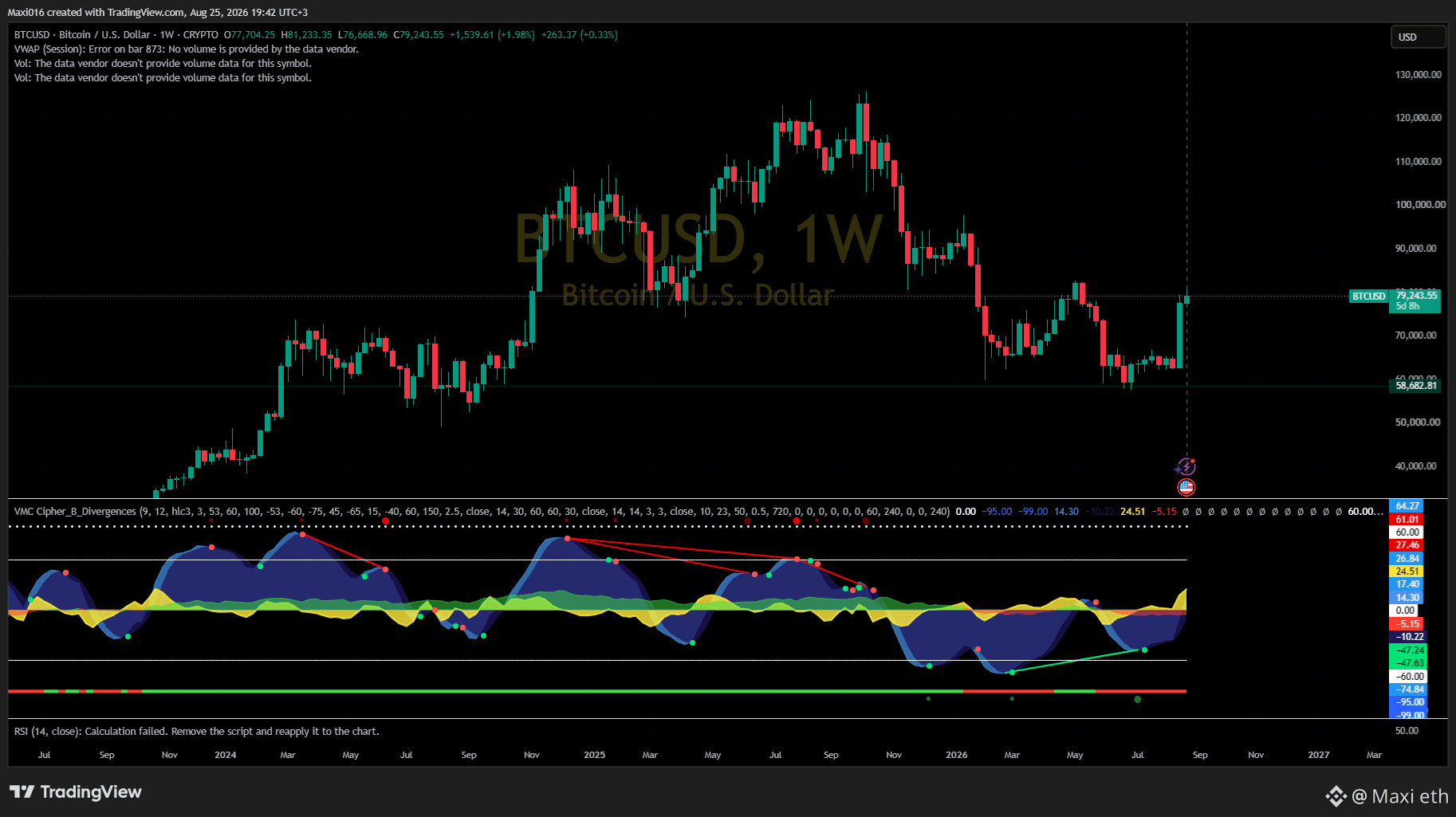
Bitcoin bị từ chối ngay tại đường MA 50 tuần. BTC đẩy lên khoảng 81.265 USD, trong khi MA 50 tuần ở mức quanh 81.085 USD, rồi trượt trở lại xuống dưới 80K.
Điểm quan trọng bây giờ:
🔴 81K–82K: kháng cự chính
🟢 Đóng cửa theo tuần trên 82K: xác nhận mạnh hơn rằng xu hướng giảm rộng hơn có thể đang kết thúc
⚠️ Bị từ chối + mất 80K: có thể kích hoạt giai đoạn tích lũy/điều chỉnh
📈 Mục tiêu tăng giá tiếp theo: từ 83K trở lên nếu BTC giành lại MA 50W một cách dứt khoát
Đây không chỉ là một đường kháng cự thông thường.
MA 50 tuần đã nằm dưới BTC từ tháng 11/2025, nên việc giành lại nó trong một phiên đóng cửa theo tuần sẽ là một tín hiệu cấu trúc rất lớn
Cuộc chiến giờ là vùng 81K → 82K. Bên mua cần biến mức trần đó thành sàn. 🔥 #BitcoinRejectedAt$81K50WeekMA
Bitcoin bị từ chối ngay tại đường MA 50 tuần. BTC đẩy lên khoảng 81.265 USD, trong khi MA 50 tuần ở mức quanh 81.085 USD, rồi trượt trở lại xuống dưới 80K.
Điểm quan trọng bây giờ:
🔴 81K–82K: kháng cự chính
🟢 Đóng cửa theo tuần trên 82K: xác nhận mạnh hơn rằng xu hướng giảm rộng hơn có thể đang kết thúc
⚠️ Bị từ chối + mất 80K: có thể kích hoạt giai đoạn tích lũy/điều chỉnh
📈 Mục tiêu tăng giá tiếp theo: từ 83K trở lên nếu BTC giành lại MA 50W một cách dứt khoát
Đây không chỉ là một đường kháng cự thông thường.
MA 50 tuần đã nằm dưới BTC từ tháng 11/2025, nên việc giành lại nó trong một phiên đóng cửa theo tuần sẽ là một tín hiệu cấu trúc rất lớn
Cuộc chiến giờ là vùng 81K → 82K. Bên mua cần biến mức trần đó thành sàn. 🔥 #BitcoinRejectedAt$81K50WeekMA
Điểm quan trọng bây giờ:
🔴 81K–82K: kháng cự chính
🟢 Đóng cửa theo tuần trên 82K: xác nhận mạnh hơn rằng xu hướng giảm rộng hơn có thể đang kết thúc
⚠️ Bị từ chối + mất 80K: có thể kích hoạt giai đoạn tích lũy/điều chỉnh
📈 Mục tiêu tăng giá tiếp theo: từ 83K trở lên nếu BTC giành lại MA 50W một cách dứt khoát
Đây không chỉ là một đường kháng cự thông thường.
MA 50 tuần đã nằm dưới BTC từ tháng 11/2025, nên việc giành lại nó trong một phiên đóng cửa theo tuần sẽ là một tín hiệu cấu trúc rất lớn
Cuộc chiến giờ là vùng 81K → 82K. Bên mua cần biến mức trần đó thành sàn. 🔥 #BitcoinRejectedAt$81K50WeekMA
1
123
·
--
Tăng giá
Bình minh đang xây dựng một điều đáng để theo dõi. 🔐
Khi blockchain tiến gần hơn tới hạ tầng tài chính trong thế giới thực, quyền riêng tư, tuân thủ và chuyển giao tài sản an toàn ngày càng trở nên quan trọng. Đó là lúc cách tiếp cận của Dusk trở nên thú vị: kết hợp công nghệ tập trung vào quyền riêng tư với hạ tầng được thiết kế cho các thị trường tài chính được quản lý.
Tôi sẽ theo dõi hệ sinh thái phát triển từ đâye
#dusk $DUSK @Dusk_Foundation
Bình minh đang xây dựng một điều đáng để theo dõi. 🔐
Khi blockchain tiến gần hơn tới hạ tầng tài chính trong thế giới thực, quyền riêng tư, tuân thủ và chuyển giao tài sản an toàn ngày càng trở nên quan trọng. Đó là lúc cách tiếp cận của Dusk trở nên thú vị: kết hợp công nghệ tập trung vào quyền riêng tư với hạ tầng được thiết kế cho các thị trường tài chính được quản lý.
Tôi sẽ theo dõi hệ sinh thái phát triển từ đâye
#dusk $DUSK @Dusk
Khi blockchain tiến gần hơn tới hạ tầng tài chính trong thế giới thực, quyền riêng tư, tuân thủ và chuyển giao tài sản an toàn ngày càng trở nên quan trọng. Đó là lúc cách tiếp cận của Dusk trở nên thú vị: kết hợp công nghệ tập trung vào quyền riêng tư với hạ tầng được thiết kế cho các thị trường tài chính được quản lý.
Tôi sẽ theo dõi hệ sinh thái phát triển từ đâye
#dusk $DUSK @Dusk
98
·
--
Maxi eth
·
--
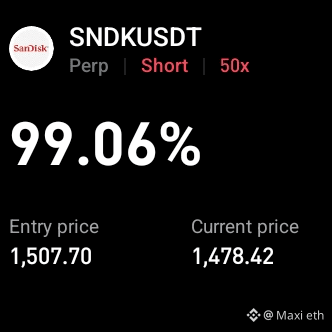
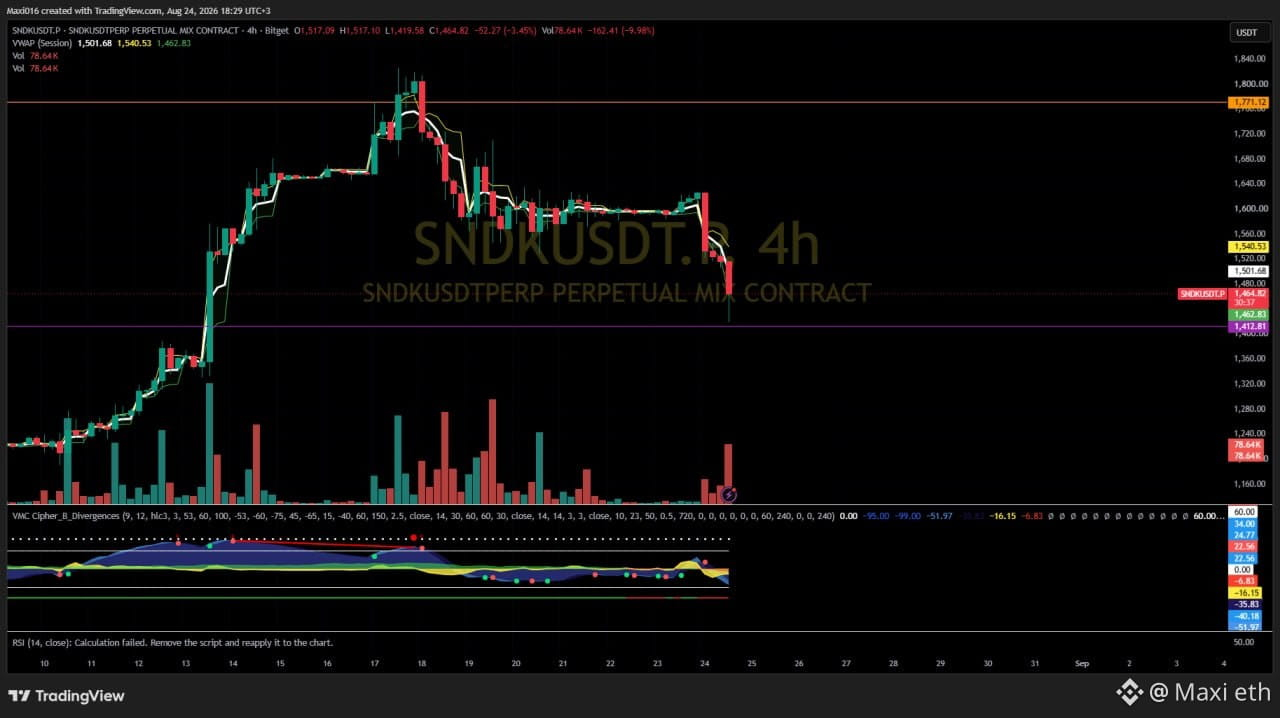
Tài sản: $SNDK USDT.P
Phân tích kỹ thuật:
Diễn biến giá: Giá đã trải qua một đợt suy giảm mạnh xuống $1,464.82 (-9.98% trong ngày) sau giai đoạn phân phối nằm dưới đỉnh $1,800.
VWAP & Các mức: Giao dịch thấp hơn đáng kể so với VWAP của phiên ($1,501.68), với hỗ trợ ngay tại $1,412.81 và kháng cự chính tại $1,771.12.
Khối lượng & Động lượng: Khối lượng bán mạnh (78.64K) và động lượng Cipher B tiêu cực mạnh (-95.00 / -99.00) xác nhận quyền kiểm soát giảm giá quyết liệt.
Thiết lập giao dịch:
Chiến lược: Tiếp diễn xu hướng giảm khi điều chỉnh, vào lệnh quanh 1500$
Mục tiêu chính: Theo dõi khả năng giá giảm chạm hỗ trợ tại $1,412.81, sử dụng $1,540.53–$1,560.00 làm vùng vô hiệu hóa.
Phân tích kỹ thuật:
Diễn biến giá: Giá đã trải qua một đợt suy giảm mạnh xuống $1,464.82 (-9.98% trong ngày) sau giai đoạn phân phối nằm dưới đỉnh $1,800.
VWAP & Các mức: Giao dịch thấp hơn đáng kể so với VWAP của phiên ($1,501.68), với hỗ trợ ngay tại $1,412.81 và kháng cự chính tại $1,771.12.
Khối lượng & Động lượng: Khối lượng bán mạnh (78.64K) và động lượng Cipher B tiêu cực mạnh (-95.00 / -99.00) xác nhận quyền kiểm soát giảm giá quyết liệt.
Thiết lập giao dịch:
Chiến lược: Tiếp diễn xu hướng giảm khi điều chỉnh, vào lệnh quanh 1500$
Mục tiêu chính: Theo dõi khả năng giá giảm chạm hỗ trợ tại $1,412.81, sử dụng $1,540.53–$1,560.00 làm vùng vô hiệu hóa.
74
·
--
Tài sản: $SNDK USDT.P
Phân tích kỹ thuật:
Diễn biến giá: Giá đã trải qua một đợt suy giảm mạnh xuống $1,464.82 (-9.98% trong ngày) sau giai đoạn phân phối nằm dưới đỉnh $1,800.
VWAP & Các mức: Giao dịch thấp hơn đáng kể so với VWAP của phiên ($1,501.68), với hỗ trợ ngay tại $1,412.81 và kháng cự chính tại $1,771.12.
Khối lượng & Động lượng: Khối lượng bán mạnh (78.64K) và động lượng Cipher B tiêu cực mạnh (-95.00 / -99.00) xác nhận quyền kiểm soát giảm giá quyết liệt.
Thiết lập giao dịch:
Chiến lược: Tiếp diễn xu hướng giảm khi điều chỉnh, vào lệnh quanh 1500$
Mục tiêu chính: Theo dõi khả năng giá giảm chạm hỗ trợ tại $1,412.81, sử dụng $1,540.53–$1,560.00 làm vùng vô hiệu hóa.
Tài sản: $SNDK USDT.P
Phân tích kỹ thuật:
Diễn biến giá: Giá đã trải qua một đợt suy giảm mạnh xuống $1,464.82 (-9.98% trong ngày) sau giai đoạn phân phối nằm dưới đỉnh $1,800.
VWAP & Các mức: Giao dịch thấp hơn đáng kể so với VWAP của phiên ($1,501.68), với hỗ trợ ngay tại $1,412.81 và kháng cự chính tại $1,771.12.
Khối lượng & Động lượng: Khối lượng bán mạnh (78.64K) và động lượng Cipher B tiêu cực mạnh (-95.00 / -99.00) xác nhận quyền kiểm soát giảm giá quyết liệt.
Thiết lập giao dịch:
Chiến lược: Tiếp diễn xu hướng giảm khi điều chỉnh, vào lệnh quanh 1500$
Mục tiêu chính: Theo dõi khả năng giá giảm chạm hỗ trợ tại $1,412.81, sử dụng $1,540.53–$1,560.00 làm vùng vô hiệu hóa.
Phân tích kỹ thuật:
Diễn biến giá: Giá đã trải qua một đợt suy giảm mạnh xuống $1,464.82 (-9.98% trong ngày) sau giai đoạn phân phối nằm dưới đỉnh $1,800.
VWAP & Các mức: Giao dịch thấp hơn đáng kể so với VWAP của phiên ($1,501.68), với hỗ trợ ngay tại $1,412.81 và kháng cự chính tại $1,771.12.
Khối lượng & Động lượng: Khối lượng bán mạnh (78.64K) và động lượng Cipher B tiêu cực mạnh (-95.00 / -99.00) xác nhận quyền kiểm soát giảm giá quyết liệt.
Thiết lập giao dịch:
Chiến lược: Tiếp diễn xu hướng giảm khi điều chỉnh, vào lệnh quanh 1500$
Mục tiêu chính: Theo dõi khả năng giá giảm chạm hỗ trợ tại $1,412.81, sử dụng $1,540.53–$1,560.00 làm vùng vô hiệu hóa.
1
330
·
--
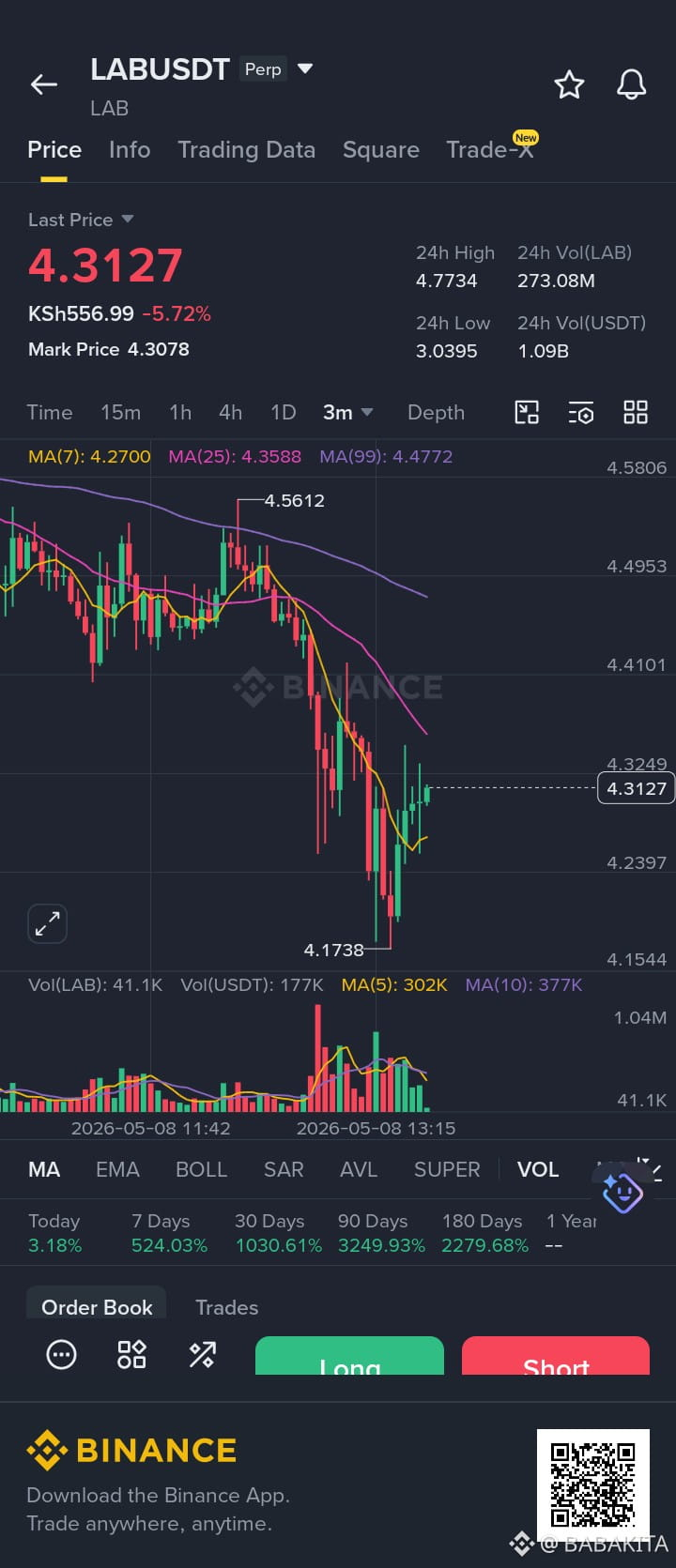
Đối chiếu chéo $LAB — biểu đồ vĩnh viễn 3m:
Giá: $4.328 (giảm so với ~$4.49 khi tôi kiểm tra lần trước ~50 phút trước)
• 24H: -6.01% (giảm thêm, giờ vẫn đang đỏ trong ngày)
• 24H High: $5.00000 (ATH mới kể từ khi ra mắt, vượt qua kháng cự $4.81)
• 24H Low: $3.08221 (sàn rơi trùng khớp)
• Khối lượng giao dịch: $222.3M (rất lớn — gần gấp 2 lần $143M tôi đã trích dẫn trước đó)
Biểu đồ cho thấy gì kể từ lần kiểm tra trước:
• Bị từ chối ở $4.58 → rơi thẳng xuống $4.19 — giá cố gắng retest $4.52 (Bollinger upper) nhưng thất bại mạnh, rơi nhanh liên tiếp -8.5%.
• Sàn bật lại tại $4.19343 — tìm được hỗ trợ ở đó, hiện đang hồi lên $4.328. Vẫn -2.7% so với Bollinger middle ($4.36).
• Vùng tích lũy dịch xuống thấp hơn — vùng $4.40–$4.50 tôi vừa nhắc đã bị phá vỡ. Hiện tại, hành động giá nằm trong $4.19–$4.38.
• Cú dội khối lượng trong nhịp giảm — các cột volume màu đỏ trong đoạn $4.58→$4.19 cao rõ rệt hơn so với các cột xanh trước đó. Áp lực bán chi phối nhịp này.
Nhận định đã đổi:
Giá hiện thấp hơn Bollinger middle ($4.36), nghĩa là xu hướng ngắn hạn đã chuyển sang bearish theo góc nhìn 3m. Đỉnh $5.00 UTC giờ là kháng cự xa vời — giá đã trả lại $0.67 so với đỉnh.
Nếu giữ được $4.19, có thể retest $4.36–$4.40. Nếu $4.19 bị phá vỡ, mốc tiếp theo là vùng $3.80–$4.00. Mức short 73.9% từ trước đó bây giờ càng đáng chú ý — nếu giá tiếp tục rơi, các lệnh short đó đang có lợi. Nhưng nếu bất ngờ đảo chiều từ đây, vẫn có khả năng xuất hiện “squeeze”.
Ngay lúc này? Đà đang giảm, cấu trúc yếu hơn so với cách đây 1 giờ.
Đối chiếu chéo $LAB — biểu đồ vĩnh viễn 3m:
Giá: $4.328 (giảm so với ~$4.49 khi tôi kiểm tra lần trước ~50 phút trước)
• 24H: -6.01% (giảm thêm, giờ vẫn đang đỏ trong ngày)
• 24H High: $5.00000 (ATH mới kể từ khi ra mắt, vượt qua kháng cự $4.81)
• 24H Low: $3.08221 (sàn rơi trùng khớp)
• Khối lượng giao dịch: $222.3M (rất lớn — gần gấp 2 lần $143M tôi đã trích dẫn trước đó)
Biểu đồ cho thấy gì kể từ lần kiểm tra trước:
• Bị từ chối ở $4.58 → rơi thẳng xuống $4.19 — giá cố gắng retest $4.52 (Bollinger upper) nhưng thất bại mạnh, rơi nhanh liên tiếp -8.5%.
• Sàn bật lại tại $4.19343 — tìm được hỗ trợ ở đó, hiện đang hồi lên $4.328. Vẫn -2.7% so với Bollinger middle ($4.36).
• Vùng tích lũy dịch xuống thấp hơn — vùng $4.40–$4.50 tôi vừa nhắc đã bị phá vỡ. Hiện tại, hành động giá nằm trong $4.19–$4.38.
• Cú dội khối lượng trong nhịp giảm — các cột volume màu đỏ trong đoạn $4.58→$4.19 cao rõ rệt hơn so với các cột xanh trước đó. Áp lực bán chi phối nhịp này.
Nhận định đã đổi:
Giá hiện thấp hơn Bollinger middle ($4.36), nghĩa là xu hướng ngắn hạn đã chuyển sang bearish theo góc nhìn 3m. Đỉnh $5.00 UTC giờ là kháng cự xa vời — giá đã trả lại $0.67 so với đỉnh.
Nếu giữ được $4.19, có thể retest $4.36–$4.40. Nếu $4.19 bị phá vỡ, mốc tiếp theo là vùng $3.80–$4.00. Mức short 73.9% từ trước đó bây giờ càng đáng chú ý — nếu giá tiếp tục rơi, các lệnh short đó đang có lợi. Nhưng nếu bất ngờ đảo chiều từ đây, vẫn có khả năng xuất hiện “squeeze”.
Ngay lúc này? Đà đang giảm, cấu trúc yếu hơn so với cách đây 1 giờ.
Giá: $4.328 (giảm so với ~$4.49 khi tôi kiểm tra lần trước ~50 phút trước)
• 24H: -6.01% (giảm thêm, giờ vẫn đang đỏ trong ngày)
• 24H High: $5.00000 (ATH mới kể từ khi ra mắt, vượt qua kháng cự $4.81)
• 24H Low: $3.08221 (sàn rơi trùng khớp)
• Khối lượng giao dịch: $222.3M (rất lớn — gần gấp 2 lần $143M tôi đã trích dẫn trước đó)
Biểu đồ cho thấy gì kể từ lần kiểm tra trước:
• Bị từ chối ở $4.58 → rơi thẳng xuống $4.19 — giá cố gắng retest $4.52 (Bollinger upper) nhưng thất bại mạnh, rơi nhanh liên tiếp -8.5%.
• Sàn bật lại tại $4.19343 — tìm được hỗ trợ ở đó, hiện đang hồi lên $4.328. Vẫn -2.7% so với Bollinger middle ($4.36).
• Vùng tích lũy dịch xuống thấp hơn — vùng $4.40–$4.50 tôi vừa nhắc đã bị phá vỡ. Hiện tại, hành động giá nằm trong $4.19–$4.38.
• Cú dội khối lượng trong nhịp giảm — các cột volume màu đỏ trong đoạn $4.58→$4.19 cao rõ rệt hơn so với các cột xanh trước đó. Áp lực bán chi phối nhịp này.
Nhận định đã đổi:
Giá hiện thấp hơn Bollinger middle ($4.36), nghĩa là xu hướng ngắn hạn đã chuyển sang bearish theo góc nhìn 3m. Đỉnh $5.00 UTC giờ là kháng cự xa vời — giá đã trả lại $0.67 so với đỉnh.
Nếu giữ được $4.19, có thể retest $4.36–$4.40. Nếu $4.19 bị phá vỡ, mốc tiếp theo là vùng $3.80–$4.00. Mức short 73.9% từ trước đó bây giờ càng đáng chú ý — nếu giá tiếp tục rơi, các lệnh short đó đang có lợi. Nhưng nếu bất ngờ đảo chiều từ đây, vẫn có khả năng xuất hiện “squeeze”.
Ngay lúc này? Đà đang giảm, cấu trúc yếu hơn so với cách đây 1 giờ.
386
·
--
Tăng giá
#night $NIGHT
Tương lai của crypto không chỉ là tốc độ hay khả năng mở rộng, mà là quyền riêng tư thực sự hoạt động được. Đó là lý do @MidnightNetwork nổi bật. Được xây dựng để hỗ trợ các smart contract bảo mật thông qua công nghệ zero-knowledge tiên tiến, Night đang định vị mình như một nhân tố then chốt trong bước tiến tiếp theo của Web3.
Khi các tổ chức và cơ quan quản lý thúc đẩy tuân thủ trong khi người dùng đòi quyền kiểm soát dữ liệu của mình, sự cân bằng giữa minh bạch và quyền riêng tư trở nên vô cùng quan trọng. Midnight Network đặt mục tiêu giải quyết vấn đề này bằng cách trao cho các nhà phát triển công cụ để tạo ra các ứng dụng an toàn, riêng tư và có khả năng mở rộng.
Tôi đang theo sát NIGHT vì những câu chuyện như quyền riêng tư thường bùng nổ mạnh mẽ khi thị trường ít ngờ tới nhất.
#night $NIGHT
Tương lai của crypto không chỉ là tốc độ hay khả năng mở rộng, mà là quyền riêng tư thực sự hoạt động được. Đó là lý do @MidnightNetwork nổi bật. Được xây dựng để hỗ trợ các smart contract bảo mật thông qua công nghệ zero-knowledge tiên tiến, Night đang định vị mình như một nhân tố then chốt trong bước tiến tiếp theo của Web3.
Khi các tổ chức và cơ quan quản lý thúc đẩy tuân thủ trong khi người dùng đòi quyền kiểm soát dữ liệu của mình, sự cân bằng giữa minh bạch và quyền riêng tư trở nên vô cùng quan trọng. Midnight Network đặt mục tiêu giải quyết vấn đề này bằng cách trao cho các nhà phát triển công cụ để tạo ra các ứng dụng an toàn, riêng tư và có khả năng mở rộng.
Tôi đang theo sát NIGHT vì những câu chuyện như quyền riêng tư thường bùng nổ mạnh mẽ khi thị trường ít ngờ tới nhất.
Tương lai của crypto không chỉ là tốc độ hay khả năng mở rộng, mà là quyền riêng tư thực sự hoạt động được. Đó là lý do @MidnightNetwork nổi bật. Được xây dựng để hỗ trợ các smart contract bảo mật thông qua công nghệ zero-knowledge tiên tiến, Night đang định vị mình như một nhân tố then chốt trong bước tiến tiếp theo của Web3.
Khi các tổ chức và cơ quan quản lý thúc đẩy tuân thủ trong khi người dùng đòi quyền kiểm soát dữ liệu của mình, sự cân bằng giữa minh bạch và quyền riêng tư trở nên vô cùng quan trọng. Midnight Network đặt mục tiêu giải quyết vấn đề này bằng cách trao cho các nhà phát triển công cụ để tạo ra các ứng dụng an toàn, riêng tư và có khả năng mở rộng.
Tôi đang theo sát NIGHT vì những câu chuyện như quyền riêng tư thường bùng nổ mạnh mẽ khi thị trường ít ngờ tới nhất.
31
·
--
Ai cũng nghĩ quyền riêng tư trong crypto có nghĩa là che giấu mọi thứ… nhưng đó không phải hướng mà ngành đang đi tới.
@MidnightNetwork đang xây dựng quyền riêng tư có thể lập trình, nơi bạn kiểm soát điều gì sẽ được tiết lộ và điều gì sẽ được giữ kín bằng cách sử dụng các chứng minh zero-knowledge. Đây không phải là lý thuyết—đó là hạ tầng được thiết kế để dùng trong thực tế như tuân thủ và chia sẻ dữ liệu an toàn.
Đây là phần mà hầu hết mọi người bỏ qua 👇
$NIGHT không bị tiêu hao như gas. Nó tạo ra DUST, một nguồn tài nguyên tái tạo được dùng cho các giao dịch. Điều đó có nghĩa là vị thế của bạn không bị thu hẹp mỗi lần bạn tương tác với mạng—nó ngược lại sẽ cấp năng lượng cho hoạt động.
Hãy nghĩ về sự thay đổi đó:
Nắm giữ trở thành năng lực.
Việc sử dụng trở nên có thể dự đoán.
Quyền riêng tư trở thành thứ có thể lập trình.
Trong khi đám đông đang đuổi theo các câu chuyện, đây là kiểu thiết kế mà các tổ chức thực sự cần.
Vậy hãy tự hỏi… bạn đang theo dõi tiếng ồn, hay đang định vị nơi câu chuyện tiếp theo đang được xây dựng?
#night $NIGHT
Ai cũng nghĩ quyền riêng tư trong crypto có nghĩa là che giấu mọi thứ… nhưng đó không phải hướng mà ngành đang đi tới.
@MidnightNetwork đang xây dựng quyền riêng tư có thể lập trình, nơi bạn kiểm soát điều gì sẽ được tiết lộ và điều gì sẽ được giữ kín bằng cách sử dụng các chứng minh zero-knowledge. Đây không phải là lý thuyết—đó là hạ tầng được thiết kế để dùng trong thực tế như tuân thủ và chia sẻ dữ liệu an toàn.
Đây là phần mà hầu hết mọi người bỏ qua 👇
$NIGHT không bị tiêu hao như gas. Nó tạo ra DUST, một nguồn tài nguyên tái tạo được dùng cho các giao dịch. Điều đó có nghĩa là vị thế của bạn không bị thu hẹp mỗi lần bạn tương tác với mạng—nó ngược lại sẽ cấp năng lượng cho hoạt động.
Hãy nghĩ về sự thay đổi đó:
Nắm giữ trở thành năng lực.
Việc sử dụng trở nên có thể dự đoán.
Quyền riêng tư trở thành thứ có thể lập trình.
Trong khi đám đông đang đuổi theo các câu chuyện, đây là kiểu thiết kế mà các tổ chức thực sự cần.
Vậy hãy tự hỏi… bạn đang theo dõi tiếng ồn, hay đang định vị nơi câu chuyện tiếp theo đang được xây dựng?
#night $NIGHT
@MidnightNetwork đang xây dựng quyền riêng tư có thể lập trình, nơi bạn kiểm soát điều gì sẽ được tiết lộ và điều gì sẽ được giữ kín bằng cách sử dụng các chứng minh zero-knowledge. Đây không phải là lý thuyết—đó là hạ tầng được thiết kế để dùng trong thực tế như tuân thủ và chia sẻ dữ liệu an toàn.
Đây là phần mà hầu hết mọi người bỏ qua 👇
$NIGHT không bị tiêu hao như gas. Nó tạo ra DUST, một nguồn tài nguyên tái tạo được dùng cho các giao dịch. Điều đó có nghĩa là vị thế của bạn không bị thu hẹp mỗi lần bạn tương tác với mạng—nó ngược lại sẽ cấp năng lượng cho hoạt động.
Hãy nghĩ về sự thay đổi đó:
Nắm giữ trở thành năng lực.
Việc sử dụng trở nên có thể dự đoán.
Quyền riêng tư trở thành thứ có thể lập trình.
Trong khi đám đông đang đuổi theo các câu chuyện, đây là kiểu thiết kế mà các tổ chức thực sự cần.
Vậy hãy tự hỏi… bạn đang theo dõi tiếng ồn, hay đang định vị nơi câu chuyện tiếp theo đang được xây dựng?
#night $NIGHT
23
·
--
Tăng giá
Tích lũy lặng lẽ còn vang hơn cả những lời thổi phồng.
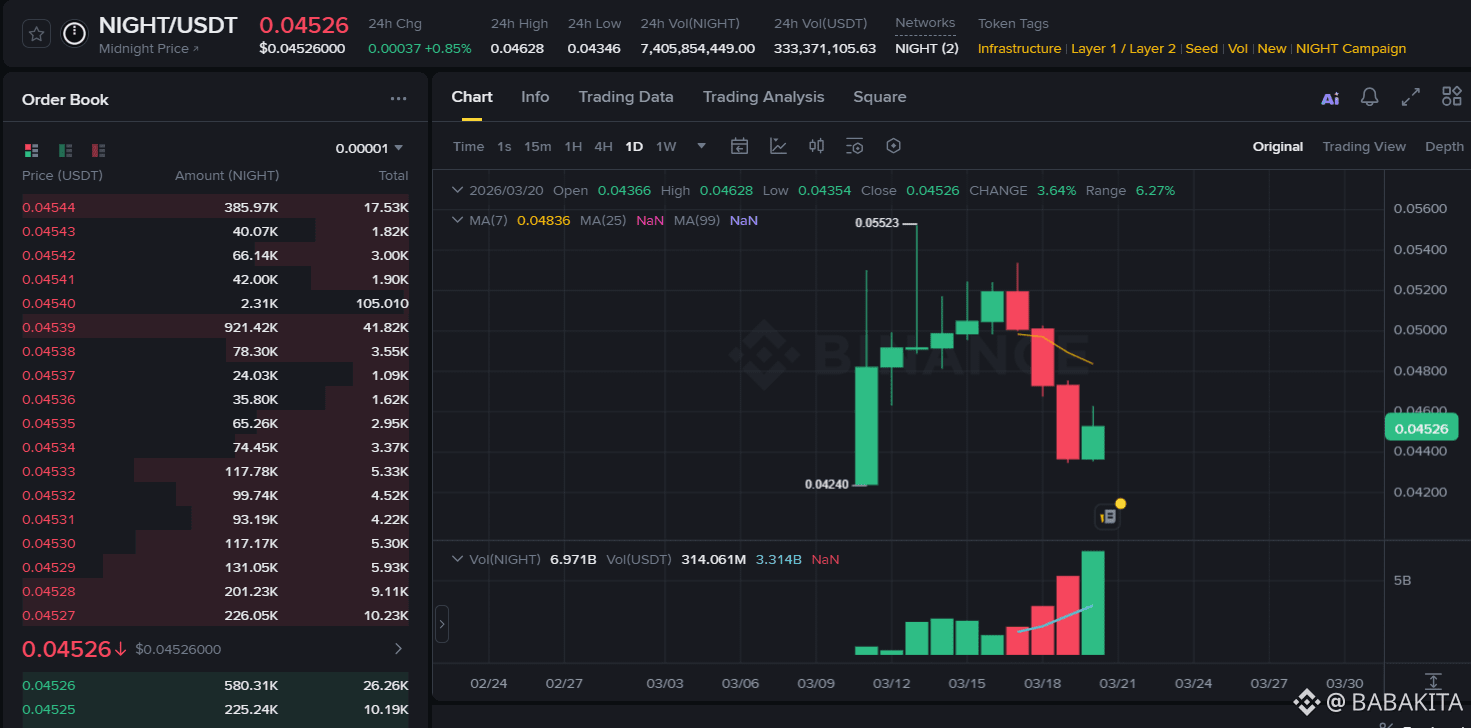
Quan sát @MidnightNetwork work sát sao khi $NIGHT vẫn tiếp tục tạo đà mạnh mẽ ngay dưới bề mặt.
Hạ tầng tập trung vào quyền riêng tư giờ đây không còn là một ngách nữa mà đang dần trở nên thiết yếu khi thị trường trưởng thành và người dùng đòi hỏi nhiều quyền kiểm soát hơn. "
Lợi thế thực sự không phải là đuổi theo những nến xanh, mà là hiểu nơi đổi mới đang âm thầm tăng trưởng kép. #night
{future}(NIGHTUSDT)
Tích lũy lặng lẽ còn vang hơn cả những lời thổi phồng.
Quan sát @MidnightNetwork work sát sao khi $NIGHT vẫn tiếp tục tạo đà mạnh mẽ ngay dưới bề mặt.
Hạ tầng tập trung vào quyền riêng tư giờ đây không còn là một ngách nữa mà đang dần trở nên thiết yếu khi thị trường trưởng thành và người dùng đòi hỏi nhiều quyền kiểm soát hơn. "
Lợi thế thực sự không phải là đuổi theo những nến xanh, mà là hiểu nơi đổi mới đang âm thầm tăng trưởng kép. #night
Quan sát @MidnightNetwork work sát sao khi $NIGHT vẫn tiếp tục tạo đà mạnh mẽ ngay dưới bề mặt.
Hạ tầng tập trung vào quyền riêng tư giờ đây không còn là một ngách nữa mà đang dần trở nên thiết yếu khi thị trường trưởng thành và người dùng đòi hỏi nhiều quyền kiểm soát hơn. "
Lợi thế thực sự không phải là đuổi theo những nến xanh, mà là hiểu nơi đổi mới đang âm thầm tăng trưởng kép. #night
2
25
·
--
Vì sao $NIGHT là “sức mạnh riêng tư” của Midnight Network trong năm 2026Midnight Network nổi bật trong Web3 nhờ giải quyết “bài toán bộ ba riêng tư”: cung cấp đồng thời bảo vệ dữ liệu thực sự, tính lập trình (programmability) và tuân thủ quy định một cách toàn diện. Được xây dựng như một partner chain của Cardano, nền tảng sử dụng các bằng chứng không tri thức (ZKPs) cho “quyền riêng tư hợp lý” (rational privacy)—người dùng chứng minh các sự thật như độ tuổi hoặc số dư mà không tiết lộ toàn bộ chi tiết. Điều này hoàn hảo cho các khoản vay DeFi, danh tính phục vụ game, hoặc các ứng dụng doanh nghiệp xử lý thông tin nhạy cảm.
Cốt lõi của hệ thống là cơ chế hai token. $NIGHT là token quản trị và đặt cược (staking): cho phép người nắm giữ bỏ phiếu cho các nâng cấp, bảo mật mạng và nhận phần thưởng (yields). Hệ thống tạo ra DUST—một tài nguyên không thể giao dịch (non-tradable) dùng cho phí giao dịch riêng tư, giảm dần theo thời gian để ngăn việc tích trữ và đảm bảo quyền truy cập công bằng. Thiết kế đột phá này giúp hạn chế spam trong khi vẫn giữ chi phí ở mức thấp.
Vì sao $NIGHT là “sức mạnh riêng tư” của Midnight Network trong năm 2026
Midnight Network nổi bật trong Web3 nhờ giải quyết “bài toán bộ ba riêng tư”: cung cấp đồng thời bảo vệ dữ liệu thực sự, tính lập trình (programmability) và tuân thủ quy định một cách toàn diện. Được xây dựng như một partner chain của Cardano, nền tảng sử dụng các bằng chứng không tri thức (ZKPs) cho “quyền riêng tư hợp lý” (rational privacy)—người dùng chứng minh các sự thật như độ tuổi hoặc số dư mà không tiết lộ toàn bộ chi tiết. Điều này hoàn hảo cho các khoản vay DeFi, danh tính phục vụ game, hoặc các ứng dụng doanh nghiệp xử lý thông tin nhạy cảm.
Cốt lõi của hệ thống là cơ chế hai token. $NIGHT là token quản trị và đặt cược (staking): cho phép người nắm giữ bỏ phiếu cho các nâng cấp, bảo mật mạng và nhận phần thưởng (yields). Hệ thống tạo ra DUST—một tài nguyên không thể giao dịch (non-tradable) dùng cho phí giao dịch riêng tư, giảm dần theo thời gian để ngăn việc tích trữ và đảm bảo quyền truy cập công bằng. Thiết kế đột phá này giúp hạn chế spam trong khi vẫn giữ chi phí ở mức thấp.
Cốt lõi của hệ thống là cơ chế hai token. $NIGHT là token quản trị và đặt cược (staking): cho phép người nắm giữ bỏ phiếu cho các nâng cấp, bảo mật mạng và nhận phần thưởng (yields). Hệ thống tạo ra DUST—một tài nguyên không thể giao dịch (non-tradable) dùng cho phí giao dịch riêng tư, giảm dần theo thời gian để ngăn việc tích trữ và đảm bảo quyền truy cập công bằng. Thiết kế đột phá này giúp hạn chế spam trong khi vẫn giữ chi phí ở mức thấp.
2
24
·
--
Hào hứng về quyền riêng tư trong blockchain? Midnight Network đang dẫn đầu với công nghệ zero-knowledge đột phá của mình, cho phép các dApp an toàn, có khả năng mở rộng trên nhiều chuỗi mà không ảnh hưởng đến dữ liệu người dùng. Đồng $NIGHT token này cấp nguồn cho quản trị, staking và bảo mật mạng—coi như DUST cho cả các giao dịch được che chắn. Với thiết kế thân thiện với quy định, nó rất phù hợp cho DeFi, gaming và hơn thế nữa. Các đợt tăng gần đây cho thấy đà tăng mạnh khi các câu chuyện về quyền riêng tư đang nóng lên. Xem @MidnightNetwork #night
Hào hứng về quyền riêng tư trong blockchain? Midnight Network đang dẫn đầu với công nghệ zero-knowledge đột phá của mình, cho phép các dApp an toàn, có khả năng mở rộng trên nhiều chuỗi mà không ảnh hưởng đến dữ liệu người dùng. Đồng $NIGHT token này cấp nguồn cho quản trị, staking và bảo mật mạng—coi như DUST cho cả các giao dịch được che chắn. Với thiết kế thân thiện với quy định, nó rất phù hợp cho DeFi, gaming và hơn thế nữa. Các đợt tăng gần đây cho thấy đà tăng mạnh khi các câu chuyện về quyền riêng tư đang nóng lên. Xem @MidnightNetwork #night
1
16
Đăng nhập để khám phá thêm nội dung
Tham gia cùng người dùng tiền mã hóa toàn cầu trên Binance Square
⚡️ Nhận thông tin mới nhất và hữu ích về tiền mã hóa.
💬 Được tin cậy bởi sàn giao dịch tiền mã hóa lớn nhất thế giới.
👍 Khám phá những thông tin chuyên sâu thực tế từ những nhà sáng tạo đã xác minh.
Email / Số điện thoại
Chủ đề thịnh hành
TheoDõiFOMC
152,055 lượt xem
721 đang thảo luận
#TheoDõiFOMC
🔥 FOMC lại bắt đầu trở thành tâm điểm của crypto
Bitcoin vừa bước vào tháng 10, nhưng câu chuyện lớn phía sau thị trường lúc này không chỉ là giá.
Các trader đang bắt đầu hướng sự chú ý về cuộc họp FOMC ngày 27–28/10. Sau một loạt phát biểu mới từ quan chức Fed, kỳ vọng về việc tăng lãi suất ngay trong tháng 10 đã giảm đáng kể.
Điều thú vị là trước đó thị trường từng đặt cược khá cao vào một đợt tăng tiếp theo.
Giờ thì mọi thứ lại quay sang chờ dữ liệu kinh tế và những phát biểu tiếp theo của Fed.
Với crypto, chỉ cần kỳ vọng lãi suất thay đổi mạnh là $BTC có thể lập tức biến động, rồi kéo theo cả thị trường altcoin.
Tháng 10 mới bắt đầu mà macro đã có chuyện để hóng rồi 👀
#Bitcoin #Crypto #Macro #Fed #BinanceSquare
X LEI
·0 lượt thích
·186 lượt xem
TinFed
141,121 lượt xem
520 đang thảo luận
FedMinutesFocusOnOctoberPause
19,976 lượt xem
416 đang thảo luận