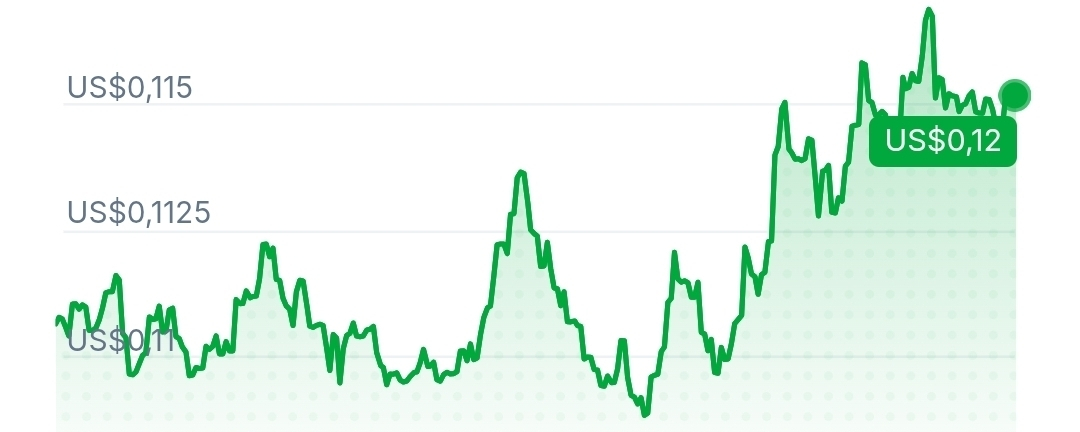
Technically, $VANRY is currently in a consolidation phase, trading around $0.007 to $0.010 after a volatile January. Despite the sideways price action, its status as a core member of the NVIDIA Inception Program remains its biggest "alpha." This partnership provides Vanar developers with direct access to CUDA and TensorRT tools, allowing for sub-second AI inference that is natively verified on the Vanar blockchain.
Vanar is aggressively rebranding as the "default AI infrastructure for Web3 finance," or PayFi. By integrating AI directly into the settlement layer, the chain is attracting high-profile partners like Worldpay and Emirates Digital Wallet. The goal is to facilitate "intelligent payments" where the blockchain automatically handles compliance and fraud detection via the Kayon layer during the transaction itself.
One of Vanar’s biggest technical edges in 2026 is its myNeutron layer. Unlike other blockchains where AI agents "forget" context once a session ends, Vanar achieves a 500:1 data compression ratio to store persistent semantic memory on-chain. This allows AI agents to have long-term "memory" and "reasoning" capabilities without the massive gas costs usually associated with storing large datasets on-chain.
Starting this month (Q1 2026), Vanar is shifting the utility of $VANRY . Access to the network's most advanced AI features—specifically the Kayon Reasoning Engine and Neutron Semantic Memory—now requires a token-based subscription. This moves the token from being just "gas" to a "SaaS-style" utility, creating a consistent on-chain demand loop as developers and AI agents utilize the stack for real-time decision-making.
If you are an active part of the ecosystem, tomorrow, February 4, is a major deadline. Vanar is currently finalizing the "Phase 1" snapshot for its core community incentives. This phase is designed to identify and lock in early supporters before the network transitions into its next major growth stage. Participation in this snapshot is expected to influence future rewards and access to the upcoming AI Subscription Model.
In a major win for the community, the XPLA/CONX ecosystem successfully passed a governance vote (Proposal #105) to support holders affected by the FTX collapse. Approximately 19.6 million tokens are being moved to a dedicated reserve wallet to make affected investors whole. This transparent, DAO-led recovery process has set a new standard for community trust in 2026, contrasting sharply with other projects that abandoned their FTX-impacted users.
Trong khi đó, mạng Plasma ($XPL ) - L1 "ưu tiên stablecoin" - đã đạt được một cột mốc kỹ thuật lớn vào ngày 23 tháng 1 năm 2026, bằng cách tích hợp với NEAR Intents. Điều này cho phép USDT0 gốc của Plasma được hoán đổi qua hơn 25 blockchain khác nhau với tính thanh khoản cấp tổ chức. Nó hiệu quả biến mạng lưới Plasma $XPL thành một "bộ định tuyến stablecoin" toàn cầu, có khả năng xử lý khối lượng giao dịch lớn giữa các chuỗi với trải nghiệm người dùng không phí đặc trưng của nó.
The XPLA/CONX and Aethir partnership has officially entered its first funding cycle this month. The $10 million grant program is now actively distributing funds (ranging from $10k to $500k) to AAA game studios. These grants are unique because they provide a mix of $ATH compute credits for AI-heavy gaming and $XPL /CONX tokens for on-chain infrastructure, specifically targeting "agentic" games where NPCs are powered by live AI models.
Nhà đầu tư trong Plasma ($XPL ) hiện đang điều chỉnh trong một "vùng giá trị" khi giá ổn định quanh $0.10. Thị trường đang theo dõi chặt chẽ sự kiện mở khóa vào ngày 28 tháng 7 năm 2026, nơi khoảng 2.5 tỷ token (25% tổng cung) thuộc về đội ngũ và các nhà đầu tư sớm sẽ được phát hành ra thị trường. Để đối phó với điều này, quỹ đang tích cực thúc đẩy việc triển khai ngân hàng điện tử Plasma One, hy vọng rằng tiện ích thực tế và việc đốt phí sẽ hấp thụ nguồn cung sắp tới.
On February 27, 2026, the network will see another scheduled unlock of approximately 1.5% of the supply (7.5M tokens for the Foundation and 10M for Incentives). To balance this incoming supply, the community is actively discussing a "Storage Burn" proposal. The idea is to permanently burn a portion of the $WAL used to pay for long-term storage, potentially creating a deflationary pressure that scales with the network’s actual usage.
Walrus is no longer operating in a vacuum. It is now being integrated into the broader Sui Stack, alongside projects like Seal (for secrets management) and DeepBook (for liquidity). This "synergy" allows developers to build apps that use Walrus for data, Seal for privacy, and DeepBook for trading—all within a single, cohesive environment. This "plug-and-play" infrastructure is a major reason why Grayscale continues to maintain its WAL Trust.
Following the finalization of the Tusky migration on January 19, the network has reported a noticeable uptick in data retrieval efficiency. By cleaning up legacy asset structures and upgrading the protocol layers, Walrus has reduced the latency for "blob" retrieval, making it the most viable decentralized storage option for Sui’s high-speed gaming and social dApps.
Sau một tuần khó khăn khi token giảm gần 28%, $WAL đã đạt mức RSI (Chỉ số sức mạnh tương đối) "bán quá" là 13.51. Tính đến hôm nay, giá đang có sự phục hồi khiêm tốn, giao dịch quanh mức $0.095. Các nhà giao dịch đang theo dõi mức $0.113 (SMA 7 ngày) như một mức kháng cự chính cần phá vỡ để có một đợt phục hồi ngắn hạn bền vững. Sự biến động này phần lớn được cho là do việc ngừng các chiến dịch "CreatorPad" vào tháng Giêng, đã phát hành những phần thưởng mới vào thị trường.
A significant technical win for Q1 2026 is the partnership with Myriad, a decentralized prediction market. Myriad has shifted its architecture to store all market data—including heavy image files—directly on Walrus. This move transforms Walrus from a simple "blob" storage tool into a critical source of truth for auditable, tamper-proof prediction data, proving its utility in the growing "Verifiable Data" sector.
Mặc dù sự biến động giá gần đây—nơi $DUSK đã chứng kiến một đợt phục hồi mạnh 200% tiếp theo là một sự điều chỉnh—dữ liệu trên chuỗi tiết lộ một sự phân kỳ cá voi lớn. Trong khi các ví bán lẻ nhỏ hơn đang thu lợi, các địa chỉ "Top-100" (cá voi khổng lồ) đã tăng cường nắm giữ của họ thêm 13.88% kể từ đầu năm. Điều này gợi ý rằng trong khi thị trường đang coi $DUSK như một giao dịch "coin riêng tư", các nhà đầu tư cấp tổ chức đang coi nó như một trò chơi hạ tầng cốt lõi cho sự bùng nổ RWA năm 2026.
Dusk has officially integrated Chainlink’s Cross-Chain Interoperability Protocol (CCIP). This is a major strategic pivot for 2026. Recognizing that Real-World Assets (RWAs) cannot exist in a vacuum, this integration allows a regulated asset issued on Dusk to be settled or moved across to other EVM chains like Ethereum or Avalanche without losing its "compliance wrapper." It effectively turns Dusk into the "secure vault" where assets are issued, while allowing them to access the broader liquidity of the DeFi world.
Vào cuối tháng Giêng, công cụ bảo mật Hedger đã ra mắt phiên bản Alpha. Đây là "công thức bí mật" kỹ thuật cho phép Dusk xử lý các giao dịch bảo mật trong khi vẫn tuân thủ quy định. Sử dụng các bằng chứng không kiến thức (ZKPs), Hedger cho phép tính năng "tiết lộ có chọn lọc". Lần đầu tiên, một tổ chức có thể giữ một số tiền giao dịch riêng tư trước công chúng trong khi tự động cung cấp một "bằng chứng tuân thủ" cho một cơ quan quản lý, giải quyết rào cản chính cho việc áp dụng DLT theo thể chế.
The project’s flagship application, DuskTrade, has officially moved into its "Go-Live" phase in collaboration with the Dutch exchange NPEX. This isn't just a pilot; it is a licensed trading venue for tokenized securities. There is currently a pipeline of over €300 million in assets (including corporate bonds and private equity) slated for issuance. This positions Dusk as one of the few chains actually hosting "boring" but high-value regulated assets under the EU's MiCA framework. #dusk @Dusk $DUSK
The Dusk mainnet, which launched on January 7, 2026, has successfully processed over 2.8 million transactions without a single emergency patch or downtime. With the network stable, the focus has shifted to Hyperstaking, a new incentive layer designed to reward early validators and delegators. Currently, about 12% of the total supply (120 million DUSK) is staked, and while the APY is stabilizing, the "Hyperstaking" phase is offering temporary yield boosts to ensure the network remains decentralized during its initial RWA onboarding.