

Ahsan_ BTC
19.5k Bài đăng

Ahsan_ BTC
 Đã xác minh trên Square
Báo cáo
Chặn người dùng
“Hunting entries. Protecting capital
1.3K+ Đang theo dõi
30.4K+ Người theo dõi
30.4K+ Đã thích
Bài đăng
Tất cả
Trích dẫn
Live
·
--
Tăng giá
🚨 $ADA CẢNH BÁO BÓP NGẮN! 🚨
Thanh lý: $1.6512K Short đã bị xóa ở mức $0.2609 trên Binance 💥
Chuyện gì đã xảy ra?
Bên bán vừa bị “đánh cho gãy!” Một vị thế short đã bị đóng cưỡng bức khi ADA bật lên đến $0.2609. Lực mua bị ép này đang đổ thêm nhiên liệu, báo hiệu rằng bên bán đang mất dần thế ở các mức giá này. 📈
Vì sao điều này quan trọng:
• Tín hiệu tăng giá: Shorts đang bị thanh lý khi giá đi lên. Nếu ADA giữ vững trên $0.26, thêm các điểm dừng sẽ bị kích hoạt, tạo hiệu ứng dây chuyền.
• **Chuyển dịch đà:** ADA đang cố gắng giành lại một vùng tâm lý quan trọng. Giữ $0.26 làm hỗ trợ sẽ là chiến thắng lớn cho phe bò.
• Mức cần theo dõi: $0.2609 là “chiến trường”. Giữ trên = tiếp diễn tăng. Mất nó = đi ngang.
Kịch bản giao dịch (Nếu đà tiếp tục):
✅ Vào lệnh: $0.2580 – $0.2610 (khi có xác nhận)
🎯 TP1: $0.2680
🎯 TP2: $0.2750
🎯 TP3: $0.2850
🛑 SL: $0.2480
⚖️ R:R ~ 1:2.5
Triển vọng:
⚡ Ngắn hạn: Shorts đang bị kẹt. Nếu dòng tiền mua tiếp diễn, $0.27 là mục tiêu tiếp theo.
🔭 Dài hạn: ADA là một blue-chip Layer-1. Việc giành lại $0.26 là bước hướng tới một nhịp đảo chiều vĩ mô. Mất $0.25 có thể mở ra cửa cho $0.23.
Tâm lý thị trường: Theo dõi mức tăng đột biến về khối lượng. Thanh lý thường đánh dấu đáy cục bộ hoặc xác nhận bứt phá. Điểm ngoặt quan trọng. 👀
⚠️ Không phải lời khuyên tài chính. Thanh lý có thể biến động mạnh. DYOR và quản lý rủi ro!
Đang theo dõi $ADA? Thả một 🟢 bên dưới nhé!
$ADA
{spot}(ADAUSDT)
#ADA #QNTRises39%
🚨 $ADA CẢNH BÁO BÓP NGẮN! 🚨
Thanh lý: $1.6512K Short đã bị xóa ở mức $0.2609 trên Binance 💥
Chuyện gì đã xảy ra?
Bên bán vừa bị “đánh cho gãy!” Một vị thế short đã bị đóng cưỡng bức khi ADA bật lên đến $0.2609. Lực mua bị ép này đang đổ thêm nhiên liệu, báo hiệu rằng bên bán đang mất dần thế ở các mức giá này. 📈
Vì sao điều này quan trọng:
• Tín hiệu tăng giá: Shorts đang bị thanh lý khi giá đi lên. Nếu ADA giữ vững trên $0.26, thêm các điểm dừng sẽ bị kích hoạt, tạo hiệu ứng dây chuyền.
• **Chuyển dịch đà:** ADA đang cố gắng giành lại một vùng tâm lý quan trọng. Giữ $0.26 làm hỗ trợ sẽ là chiến thắng lớn cho phe bò.
• Mức cần theo dõi: $0.2609 là “chiến trường”. Giữ trên = tiếp diễn tăng. Mất nó = đi ngang.
Kịch bản giao dịch (Nếu đà tiếp tục):
✅ Vào lệnh: $0.2580 – $0.2610 (khi có xác nhận)
🎯 TP1: $0.2680
🎯 TP2: $0.2750
🎯 TP3: $0.2850
🛑 SL: $0.2480
⚖️ R:R ~ 1:2.5
Triển vọng:
⚡ Ngắn hạn: Shorts đang bị kẹt. Nếu dòng tiền mua tiếp diễn, $0.27 là mục tiêu tiếp theo.
🔭 Dài hạn: ADA là một blue-chip Layer-1. Việc giành lại $0.26 là bước hướng tới một nhịp đảo chiều vĩ mô. Mất $0.25 có thể mở ra cửa cho $0.23.
Tâm lý thị trường: Theo dõi mức tăng đột biến về khối lượng. Thanh lý thường đánh dấu đáy cục bộ hoặc xác nhận bứt phá. Điểm ngoặt quan trọng. 👀
⚠️ Không phải lời khuyên tài chính. Thanh lý có thể biến động mạnh. DYOR và quản lý rủi ro!
Đang theo dõi $ADA ? Thả một 🟢 bên dưới nhé!
$ADA
#ADA #QNTRises39%
Thanh lý: $1.6512K Short đã bị xóa ở mức $0.2609 trên Binance 💥
Chuyện gì đã xảy ra?
Bên bán vừa bị “đánh cho gãy!” Một vị thế short đã bị đóng cưỡng bức khi ADA bật lên đến $0.2609. Lực mua bị ép này đang đổ thêm nhiên liệu, báo hiệu rằng bên bán đang mất dần thế ở các mức giá này. 📈
Vì sao điều này quan trọng:
• Tín hiệu tăng giá: Shorts đang bị thanh lý khi giá đi lên. Nếu ADA giữ vững trên $0.26, thêm các điểm dừng sẽ bị kích hoạt, tạo hiệu ứng dây chuyền.
• **Chuyển dịch đà:** ADA đang cố gắng giành lại một vùng tâm lý quan trọng. Giữ $0.26 làm hỗ trợ sẽ là chiến thắng lớn cho phe bò.
• Mức cần theo dõi: $0.2609 là “chiến trường”. Giữ trên = tiếp diễn tăng. Mất nó = đi ngang.
Kịch bản giao dịch (Nếu đà tiếp tục):
✅ Vào lệnh: $0.2580 – $0.2610 (khi có xác nhận)
🎯 TP1: $0.2680
🎯 TP2: $0.2750
🎯 TP3: $0.2850
🛑 SL: $0.2480
⚖️ R:R ~ 1:2.5
Triển vọng:
⚡ Ngắn hạn: Shorts đang bị kẹt. Nếu dòng tiền mua tiếp diễn, $0.27 là mục tiêu tiếp theo.
🔭 Dài hạn: ADA là một blue-chip Layer-1. Việc giành lại $0.26 là bước hướng tới một nhịp đảo chiều vĩ mô. Mất $0.25 có thể mở ra cửa cho $0.23.
Tâm lý thị trường: Theo dõi mức tăng đột biến về khối lượng. Thanh lý thường đánh dấu đáy cục bộ hoặc xác nhận bứt phá. Điểm ngoặt quan trọng. 👀
⚠️ Không phải lời khuyên tài chính. Thanh lý có thể biến động mạnh. DYOR và quản lý rủi ro!
Đang theo dõi $ADA ? Thả một 🟢 bên dưới nhé!
$ADA
#ADA #QNTRises39%
77
·
--
Tăng giá
🚨 CẢNH BÁO BỊ SIẾT NGẮN $SEI ! 🚨
Thanh lý: $4.5714K Short bị xóa sổ ở mức $0.07726 trên Binance 💥
Chuyện gì đã xảy ra?
Bên gấu vừa bị bóp nghẹt! Một vị thế short đã bị đóng cưỡng bức khi SEI bật lên $0.07726. Lực mua dồn dập này tiếp thêm “nhiên liệu”, cho thấy bên bán đang mất dần quyền kiểm soát ở các mốc giá này. 📈
Vì sao điều này quan trọng:
• Tín hiệu tăng giá: Shorts đang bị thanh lý trong lúc giá đi lên. Nếu SEI giữ vững trên $0.077, thêm nhiều lệnh dừng (stop) sẽ được kích hoạt, tạo hiệu ứng dây chuyền.
• **Chuyển động động lượng:** SEI đang cố gắng tạo nền. Việc giành lại $0.077 làm hỗ trợ sẽ là một thắng lớn cho phe bò.
• Mốc cần theo dõi: $0.07726 là “chiến trường”. Giữ vững trên đó = tiếp diễn tăng. Mất mốc này = cú quét lừa.
Thiết lập giao dịch (Nếu động lượng tiếp tục):
✅ Điểm vào: $0.0765 – $0.0775 (khi có xác nhận)
🎯 TP1: $0.0800
🎯 TP2: $0.0830
🎯 TP3: $0.0870
🛑 SL: $0.0740
⚖️ R:R ~ 1:2.5
Triển vọng:
⚡ Ngắn hạn: Shorts đang bị kẹt. Nếu dòng tiền mua tiếp tục theo sau, $0.080 là mục tiêu tiếp theo.
🔭 Dài hạn: SEI là một Layer-1 hiệu năng cao. Cần giành lại $0.08+ để xác nhận xu hướng đảo chiều ở khung lớn.
Tâm lý thị trường: Theo dõi sự bùng nổ về khối lượng. Thanh lý thường đánh dấu đáy cục bộ hoặc xác nhận phá vỡ. Điểm đảo chiều quan trọng. 👀
⚠️ Không phải lời khuyên tài chính. Thanh lý có thể biến động mạnh. DYOR và quản lý rủi ro!
Theo dõi $SEI? Thả một 🟢 ở dưới!
$SEI
{spot}(SEIUSDT)
#SECSaysBuybacksUpgradesDontMakeTokenSecurity #SEİ
🚨 CẢNH BÁO BỊ SIẾT NGẮN $SEI ! 🚨
Thanh lý: $4.5714K Short bị xóa sổ ở mức $0.07726 trên Binance 💥
Chuyện gì đã xảy ra?
Bên gấu vừa bị bóp nghẹt! Một vị thế short đã bị đóng cưỡng bức khi SEI bật lên $0.07726. Lực mua dồn dập này tiếp thêm “nhiên liệu”, cho thấy bên bán đang mất dần quyền kiểm soát ở các mốc giá này. 📈
Vì sao điều này quan trọng:
• Tín hiệu tăng giá: Shorts đang bị thanh lý trong lúc giá đi lên. Nếu SEI giữ vững trên $0.077, thêm nhiều lệnh dừng (stop) sẽ được kích hoạt, tạo hiệu ứng dây chuyền.
• **Chuyển động động lượng:** SEI đang cố gắng tạo nền. Việc giành lại $0.077 làm hỗ trợ sẽ là một thắng lớn cho phe bò.
• Mốc cần theo dõi: $0.07726 là “chiến trường”. Giữ vững trên đó = tiếp diễn tăng. Mất mốc này = cú quét lừa.
Thiết lập giao dịch (Nếu động lượng tiếp tục):
✅ Điểm vào: $0.0765 – $0.0775 (khi có xác nhận)
🎯 TP1: $0.0800
🎯 TP2: $0.0830
🎯 TP3: $0.0870
🛑 SL: $0.0740
⚖️ R:R ~ 1:2.5
Triển vọng:
⚡ Ngắn hạn: Shorts đang bị kẹt. Nếu dòng tiền mua tiếp tục theo sau, $0.080 là mục tiêu tiếp theo.
🔭 Dài hạn: SEI là một Layer-1 hiệu năng cao. Cần giành lại $0.08+ để xác nhận xu hướng đảo chiều ở khung lớn.
Tâm lý thị trường: Theo dõi sự bùng nổ về khối lượng. Thanh lý thường đánh dấu đáy cục bộ hoặc xác nhận phá vỡ. Điểm đảo chiều quan trọng. 👀
⚠️ Không phải lời khuyên tài chính. Thanh lý có thể biến động mạnh. DYOR và quản lý rủi ro!
Theo dõi $SEI ? Thả một 🟢 ở dưới!
$SEI
#SECSaysBuybacksUpgradesDontMakeTokenSecurity #SEİ
Thanh lý: $4.5714K Short bị xóa sổ ở mức $0.07726 trên Binance 💥
Chuyện gì đã xảy ra?
Bên gấu vừa bị bóp nghẹt! Một vị thế short đã bị đóng cưỡng bức khi SEI bật lên $0.07726. Lực mua dồn dập này tiếp thêm “nhiên liệu”, cho thấy bên bán đang mất dần quyền kiểm soát ở các mốc giá này. 📈
Vì sao điều này quan trọng:
• Tín hiệu tăng giá: Shorts đang bị thanh lý trong lúc giá đi lên. Nếu SEI giữ vững trên $0.077, thêm nhiều lệnh dừng (stop) sẽ được kích hoạt, tạo hiệu ứng dây chuyền.
• **Chuyển động động lượng:** SEI đang cố gắng tạo nền. Việc giành lại $0.077 làm hỗ trợ sẽ là một thắng lớn cho phe bò.
• Mốc cần theo dõi: $0.07726 là “chiến trường”. Giữ vững trên đó = tiếp diễn tăng. Mất mốc này = cú quét lừa.
Thiết lập giao dịch (Nếu động lượng tiếp tục):
✅ Điểm vào: $0.0765 – $0.0775 (khi có xác nhận)
🎯 TP1: $0.0800
🎯 TP2: $0.0830
🎯 TP3: $0.0870
🛑 SL: $0.0740
⚖️ R:R ~ 1:2.5
Triển vọng:
⚡ Ngắn hạn: Shorts đang bị kẹt. Nếu dòng tiền mua tiếp tục theo sau, $0.080 là mục tiêu tiếp theo.
🔭 Dài hạn: SEI là một Layer-1 hiệu năng cao. Cần giành lại $0.08+ để xác nhận xu hướng đảo chiều ở khung lớn.
Tâm lý thị trường: Theo dõi sự bùng nổ về khối lượng. Thanh lý thường đánh dấu đáy cục bộ hoặc xác nhận phá vỡ. Điểm đảo chiều quan trọng. 👀
⚠️ Không phải lời khuyên tài chính. Thanh lý có thể biến động mạnh. DYOR và quản lý rủi ro!
Theo dõi $SEI ? Thả một 🟢 ở dưới!
$SEI
#SECSaysBuybacksUpgradesDontMakeTokenSecurity #SEİ
44
·
--
Tăng giá
$DOT CẢNH BÁO ÉP NGẮN!
Thanh lý: 7,8814K đô la Short đã bị xóa ở mức 1,25148 trên Binance 💥
Chuyện gì đã xảy ra?
Bên gấu vừa bị đập cho tơi tả! Một vị thế short đáng chú ý đã bị thanh lý khi DOT bật tăng lên mức 1,2514. Điều này tạo ra lực mua dồn dập, như đổ thêm nhiên liệu vào ngọn lửa—cho thấy phe short đang dần mất quyền kiểm soát ở các mức giá này. 📈
Vì sao điều này quan trọng:
• Tín hiệu tăng giá: 7,8K đô la có vẻ nhỏ, nhưng đây là dấu hiệu rõ ràng rằng đà giảm đang suy yếu. Nếu DOT giữ vững trên 1,25, nhiều điểm dừng của short sẽ bị kích hoạt.
• Chuyển dịch động lượng: DOT đang cố gắng giành lại một vùng tâm lý quan trọng. Vượt lên sạch sẽ trên 1,25 có thể thu hút các lệnh long mới.
• **Mức cần theo dõi:** **1,2514** là ranh giới. Giữ trên được = tiếp diễn tăng. Mất mốc = đi ngang.
Kế hoạch giao dịch (Nếu động lượng tiếp diễn):
✅ Vào lệnh: 1,245 – 1,255 (khi có xác nhận)
🎯 TP1: 1,290
🎯 TP2: 1,330
🎯 TP3: 1,380
🛑 SL: 1,215
⚖️ R:R ~ 1:2,5
Triển vọng:
⚡ Ngắn hạn: Phe short đang bị mắc kẹt. Nếu khối lượng mua tiếp tục theo sau, 1,30 sẽ là mục tiêu tiếp theo.
🔭 Dài hạn: DOT (Polkadot) là một blockchain Layer-0 blue-chip. Việc giành lại mốc 1,25 là một bước hướng tới đợt đảo chiều vĩ mô.
Tâm lý: Hãy theo dõi biến động khối lượng tăng vọt. Các đợt thanh lý thường đánh dấu đáy cục bộ hoặc xác nhận phá vỡ. Điểm uốn quan trọng. 👀
⚠️ Không phải lời khuyên tài chính. Thanh lý có thể biến động mạnh. DYOR và quản lý rủi ro!
Theo dõi $DOT ? Thả một 🟢 bên dưới nhé!
$DOT
{spot}(DOTUSDT)
#dot #CFTCUpdatesGuidanceOnTokenizedAssets
$DOT CẢNH BÁO ÉP NGẮN!
Thanh lý: 7,8814K đô la Short đã bị xóa ở mức 1,25148 trên Binance 💥
Chuyện gì đã xảy ra?
Bên gấu vừa bị đập cho tơi tả! Một vị thế short đáng chú ý đã bị thanh lý khi DOT bật tăng lên mức 1,2514. Điều này tạo ra lực mua dồn dập, như đổ thêm nhiên liệu vào ngọn lửa—cho thấy phe short đang dần mất quyền kiểm soát ở các mức giá này. 📈
Vì sao điều này quan trọng:
• Tín hiệu tăng giá: 7,8K đô la có vẻ nhỏ, nhưng đây là dấu hiệu rõ ràng rằng đà giảm đang suy yếu. Nếu DOT giữ vững trên 1,25, nhiều điểm dừng của short sẽ bị kích hoạt.
• Chuyển dịch động lượng: DOT đang cố gắng giành lại một vùng tâm lý quan trọng. Vượt lên sạch sẽ trên 1,25 có thể thu hút các lệnh long mới.
• **Mức cần theo dõi:** **1,2514** là ranh giới. Giữ trên được = tiếp diễn tăng. Mất mốc = đi ngang.
Kế hoạch giao dịch (Nếu động lượng tiếp diễn):
✅ Vào lệnh: 1,245 – 1,255 (khi có xác nhận)
🎯 TP1: 1,290
🎯 TP2: 1,330
🎯 TP3: 1,380
🛑 SL: 1,215
⚖️ R:R ~ 1:2,5
Triển vọng:
⚡ Ngắn hạn: Phe short đang bị mắc kẹt. Nếu khối lượng mua tiếp tục theo sau, 1,30 sẽ là mục tiêu tiếp theo.
🔭 Dài hạn: DOT (Polkadot) là một blockchain Layer-0 blue-chip. Việc giành lại mốc 1,25 là một bước hướng tới đợt đảo chiều vĩ mô.
Tâm lý: Hãy theo dõi biến động khối lượng tăng vọt. Các đợt thanh lý thường đánh dấu đáy cục bộ hoặc xác nhận phá vỡ. Điểm uốn quan trọng. 👀
⚠️ Không phải lời khuyên tài chính. Thanh lý có thể biến động mạnh. DYOR và quản lý rủi ro!
Theo dõi $DOT ? Thả một 🟢 bên dưới nhé!
$DOT
#dot #CFTCUpdatesGuidanceOnTokenizedAssets
Thanh lý: 7,8814K đô la Short đã bị xóa ở mức 1,25148 trên Binance 💥
Chuyện gì đã xảy ra?
Bên gấu vừa bị đập cho tơi tả! Một vị thế short đáng chú ý đã bị thanh lý khi DOT bật tăng lên mức 1,2514. Điều này tạo ra lực mua dồn dập, như đổ thêm nhiên liệu vào ngọn lửa—cho thấy phe short đang dần mất quyền kiểm soát ở các mức giá này. 📈
Vì sao điều này quan trọng:
• Tín hiệu tăng giá: 7,8K đô la có vẻ nhỏ, nhưng đây là dấu hiệu rõ ràng rằng đà giảm đang suy yếu. Nếu DOT giữ vững trên 1,25, nhiều điểm dừng của short sẽ bị kích hoạt.
• Chuyển dịch động lượng: DOT đang cố gắng giành lại một vùng tâm lý quan trọng. Vượt lên sạch sẽ trên 1,25 có thể thu hút các lệnh long mới.
• **Mức cần theo dõi:** **1,2514** là ranh giới. Giữ trên được = tiếp diễn tăng. Mất mốc = đi ngang.
Kế hoạch giao dịch (Nếu động lượng tiếp diễn):
✅ Vào lệnh: 1,245 – 1,255 (khi có xác nhận)
🎯 TP1: 1,290
🎯 TP2: 1,330
🎯 TP3: 1,380
🛑 SL: 1,215
⚖️ R:R ~ 1:2,5
Triển vọng:
⚡ Ngắn hạn: Phe short đang bị mắc kẹt. Nếu khối lượng mua tiếp tục theo sau, 1,30 sẽ là mục tiêu tiếp theo.
🔭 Dài hạn: DOT (Polkadot) là một blockchain Layer-0 blue-chip. Việc giành lại mốc 1,25 là một bước hướng tới đợt đảo chiều vĩ mô.
Tâm lý: Hãy theo dõi biến động khối lượng tăng vọt. Các đợt thanh lý thường đánh dấu đáy cục bộ hoặc xác nhận phá vỡ. Điểm uốn quan trọng. 👀
⚠️ Không phải lời khuyên tài chính. Thanh lý có thể biến động mạnh. DYOR và quản lý rủi ro!
Theo dõi $DOT ? Thả một 🟢 bên dưới nhé!
$DOT
#dot #CFTCUpdatesGuidanceOnTokenizedAssets
97
·
--
Tăng giá
$QNT CẢNH BÁO SQUEEZE NGẮN!
Thanh lý: $1.9784K Short bị xóa tại $98.9205 trên Binance 💥
Chuyện gì đã xảy ra?
Bọn gấu đã lơ là! Một vị thế short nhỏ nhưng đáng chú ý vừa bị thanh lý khi QNT bật lên gần $99. Khi các lệnh short bị thanh lý, chúng buộc phải mua lại theo giá thị trường — tạo đà cho đợt tăng. 📈
Vì sao điều này quan trọng:
• Tín hiệu tăng giá: Shorts đang chịu áp lực. Nếu vượt lên trên $99 có thể kích hoạt một chuỗi thanh lý ngắn hạn hơn.
• **Chuyển biến đà:** QNT đang cho thấy sức mạnh. Nếu lấy lại $100, kỳ vọng giá sẽ bật nhanh lên khi nhiều lệnh dừng (stop) bị kích hoạt.
• Mức cần theo dõi: $98.92 giờ là chiến trường. Giữ được trên mức này = tiếp diễn tăng. Mất nó = bẫy tăng giá.
Kịch bản giao dịch (Nếu đà tiếp tục):
✅ Vào lệnh: $98.50 – $99.20 (khi có xác nhận)
🎯 TP1: $102.00
🎯 TP2: $105.50
🎯 TP3: $110.00
🛑 SL: $96.00
⚖️ R:R ~ 1:2.5
Triển vọng:
⚡ Ngắn hạn: Shorts đang bị kẹt. Nếu dòng mua tiếp tục theo sau, $100+ là khó tránh.
🔭 Dài hạn: QNT (Quant) là một dự án top về khả năng tương tác. Lấy lại $100 là một chiến thắng tâm lý lớn cho phe bò.
Tâm lý: Hãy theo dõi sự bùng nổ về khối lượng. Thanh lý thường đánh dấu đáy cục bộ hoặc xác nhận phá vỡ. Đây là điểm ngoặt quan trọng. 👀
⚠️ Không phải lời khuyên tài chính. Thanh lý có thể biến động mạnh. DYOR và quản lý rủi ro!
Theo dõi $QNT ? Thả một 🟢 bên dưới!
$QNT
{spot}(QNTUSDT)
#QNT #BitcoinSpotETFsTurnNetPositiveYTD
$QNT CẢNH BÁO SQUEEZE NGẮN!
Thanh lý: $1.9784K Short bị xóa tại $98.9205 trên Binance 💥
Chuyện gì đã xảy ra?
Bọn gấu đã lơ là! Một vị thế short nhỏ nhưng đáng chú ý vừa bị thanh lý khi QNT bật lên gần $99. Khi các lệnh short bị thanh lý, chúng buộc phải mua lại theo giá thị trường — tạo đà cho đợt tăng. 📈
Vì sao điều này quan trọng:
• Tín hiệu tăng giá: Shorts đang chịu áp lực. Nếu vượt lên trên $99 có thể kích hoạt một chuỗi thanh lý ngắn hạn hơn.
• **Chuyển biến đà:** QNT đang cho thấy sức mạnh. Nếu lấy lại $100, kỳ vọng giá sẽ bật nhanh lên khi nhiều lệnh dừng (stop) bị kích hoạt.
• Mức cần theo dõi: $98.92 giờ là chiến trường. Giữ được trên mức này = tiếp diễn tăng. Mất nó = bẫy tăng giá.
Kịch bản giao dịch (Nếu đà tiếp tục):
✅ Vào lệnh: $98.50 – $99.20 (khi có xác nhận)
🎯 TP1: $102.00
🎯 TP2: $105.50
🎯 TP3: $110.00
🛑 SL: $96.00
⚖️ R:R ~ 1:2.5
Triển vọng:
⚡ Ngắn hạn: Shorts đang bị kẹt. Nếu dòng mua tiếp tục theo sau, $100+ là khó tránh.
🔭 Dài hạn: QNT (Quant) là một dự án top về khả năng tương tác. Lấy lại $100 là một chiến thắng tâm lý lớn cho phe bò.
Tâm lý: Hãy theo dõi sự bùng nổ về khối lượng. Thanh lý thường đánh dấu đáy cục bộ hoặc xác nhận phá vỡ. Đây là điểm ngoặt quan trọng. 👀
⚠️ Không phải lời khuyên tài chính. Thanh lý có thể biến động mạnh. DYOR và quản lý rủi ro!
Theo dõi $QNT ? Thả một 🟢 bên dưới!
$QNT
#QNT #BitcoinSpotETFsTurnNetPositiveYTD
Thanh lý: $1.9784K Short bị xóa tại $98.9205 trên Binance 💥
Chuyện gì đã xảy ra?
Bọn gấu đã lơ là! Một vị thế short nhỏ nhưng đáng chú ý vừa bị thanh lý khi QNT bật lên gần $99. Khi các lệnh short bị thanh lý, chúng buộc phải mua lại theo giá thị trường — tạo đà cho đợt tăng. 📈
Vì sao điều này quan trọng:
• Tín hiệu tăng giá: Shorts đang chịu áp lực. Nếu vượt lên trên $99 có thể kích hoạt một chuỗi thanh lý ngắn hạn hơn.
• **Chuyển biến đà:** QNT đang cho thấy sức mạnh. Nếu lấy lại $100, kỳ vọng giá sẽ bật nhanh lên khi nhiều lệnh dừng (stop) bị kích hoạt.
• Mức cần theo dõi: $98.92 giờ là chiến trường. Giữ được trên mức này = tiếp diễn tăng. Mất nó = bẫy tăng giá.
Kịch bản giao dịch (Nếu đà tiếp tục):
✅ Vào lệnh: $98.50 – $99.20 (khi có xác nhận)
🎯 TP1: $102.00
🎯 TP2: $105.50
🎯 TP3: $110.00
🛑 SL: $96.00
⚖️ R:R ~ 1:2.5
Triển vọng:
⚡ Ngắn hạn: Shorts đang bị kẹt. Nếu dòng mua tiếp tục theo sau, $100+ là khó tránh.
🔭 Dài hạn: QNT (Quant) là một dự án top về khả năng tương tác. Lấy lại $100 là một chiến thắng tâm lý lớn cho phe bò.
Tâm lý: Hãy theo dõi sự bùng nổ về khối lượng. Thanh lý thường đánh dấu đáy cục bộ hoặc xác nhận phá vỡ. Đây là điểm ngoặt quan trọng. 👀
⚠️ Không phải lời khuyên tài chính. Thanh lý có thể biến động mạnh. DYOR và quản lý rủi ro!
Theo dõi $QNT ? Thả một 🟢 bên dưới!
$QNT
#QNT #BitcoinSpotETFsTurnNetPositiveYTD
158
·
--
Tăng giá
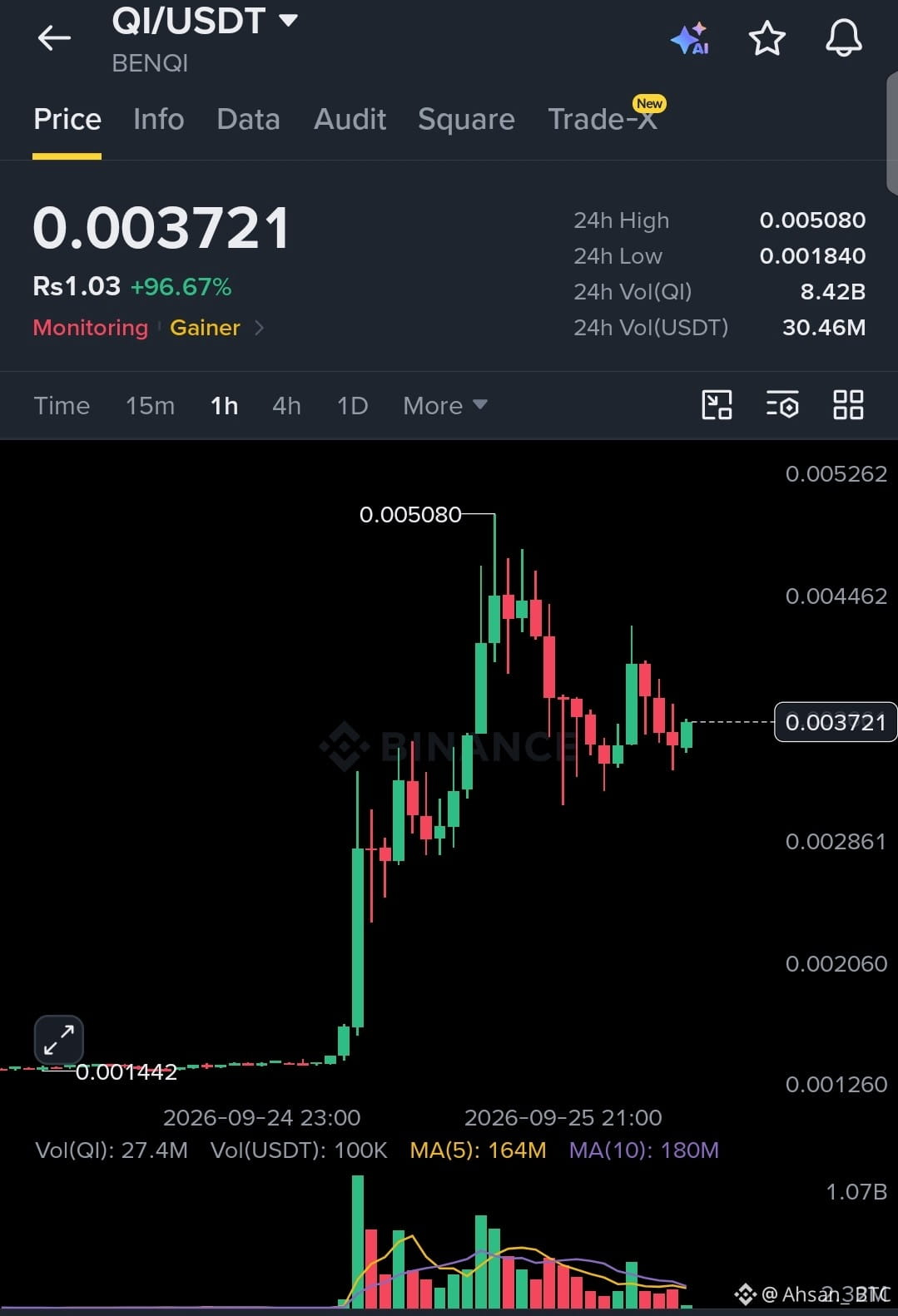
$QI /USDT — Vụ Nổ Parabolic, Giờ Đang Nguội Lại! 🚀🧊
Giá hiện tại: ~$0.003721 (+96.67% 24h) 💚
Tổng quan: BENQI ($QI) là một thị trường thanh khoản phi tập trung và giao thức staking thanh khoản trên mạng Avalanche. Hiện đang được gắn nhãn là “Monitoring” sau một cú bơm khổng lồ gần +100%. 🏔️
Thiết lập Kỹ thuật (1H):
📈 Cú bơm dọc điên cuồng từ $0.00144 lên $0.00508.
🐻 Bị từ chối mạnh ở vùng đỉnh, hiện đang điều chỉnh về $0.0037.
📊 MA5 (164M) < MA10 (180M) = động lượng ngắn hạn đã đảo chiều sang giảm.
📉 Khối lượng suy yếu mạnh = cơn sốt ban đầu đã qua. Kỳ vọng đi ngang/điều chỉnh giật cục.
Các Mức Quan Trọng:
🔴 Kháng cự: $0.00446 → $0.00508 (đỉnh cục bộ)
🟢 Hỗ trợ: $0.00286 → $0.00206 (cấu trúc chính)
Kế hoạch Giao dịch (Rủi ro cao / Mua lúc giảm):
✅ Điểm vào: $0.00340 – $0.00370 (vùng pullback hiện tại)
🎯 TP1: $0.00446
🎯 TP2: $0.00508
🎯 TP3: $0.00580
🛑 SL: $0.00280
⚖️ R:R ~ 1:2.5
Triển vọng:
⚡ Ngắn hạn: Tích lũy trong biên $0.0028–$0.0044. Cần giành lại $0.004 để tiếp tục xu hướng tăng.
🔭 Dài hạn: Cần một chất xúc tác theo narrative Avalanche/DeFi để duy trì đà tăng này. Nếu không, giá có thể chảy ngược về nền.
Tâm lý: Khối lượng QI 8.42B = đầu cơ cực lớn. Đây là kèo biến động mạnh, vốn thấp. Kỳ vọng những nhịp rung lắc dữ dội. 🎢
⚠️ Không phải lời khuyên tài chính. Bơm parabolic rất nguy hiểm nếu đuổi theo. DYOR. Dùng stop-loss chặt chẽ!
Bị bắt $QI pump rồi à? Thả một 🚀 xuống dưới!
$QI
{spot}(QIUSDT)
#QI
#BitcoinSpotETFsTurnNetPositiveYTD
$QI /USDT — Vụ Nổ Parabolic, Giờ Đang Nguội Lại! 🚀🧊
Giá hiện tại: ~$0.003721 (+96.67% 24h) 💚
Tổng quan: BENQI ($QI ) là một thị trường thanh khoản phi tập trung và giao thức staking thanh khoản trên mạng Avalanche. Hiện đang được gắn nhãn là “Monitoring” sau một cú bơm khổng lồ gần +100%. 🏔️
Thiết lập Kỹ thuật (1H):
📈 Cú bơm dọc điên cuồng từ $0.00144 lên $0.00508.
🐻 Bị từ chối mạnh ở vùng đỉnh, hiện đang điều chỉnh về $0.0037.
📊 MA5 (164M) < MA10 (180M) = động lượng ngắn hạn đã đảo chiều sang giảm.
📉 Khối lượng suy yếu mạnh = cơn sốt ban đầu đã qua. Kỳ vọng đi ngang/điều chỉnh giật cục.
Các Mức Quan Trọng:
🔴 Kháng cự: $0.00446 → $0.00508 (đỉnh cục bộ)
🟢 Hỗ trợ: $0.00286 → $0.00206 (cấu trúc chính)
Kế hoạch Giao dịch (Rủi ro cao / Mua lúc giảm):
✅ Điểm vào: $0.00340 – $0.00370 (vùng pullback hiện tại)
🎯 TP1: $0.00446
🎯 TP2: $0.00508
🎯 TP3: $0.00580
🛑 SL: $0.00280
⚖️ R:R ~ 1:2.5
Triển vọng:
⚡ Ngắn hạn: Tích lũy trong biên $0.0028–$0.0044. Cần giành lại $0.004 để tiếp tục xu hướng tăng.
🔭 Dài hạn: Cần một chất xúc tác theo narrative Avalanche/DeFi để duy trì đà tăng này. Nếu không, giá có thể chảy ngược về nền.
Tâm lý: Khối lượng QI 8.42B = đầu cơ cực lớn. Đây là kèo biến động mạnh, vốn thấp. Kỳ vọng những nhịp rung lắc dữ dội. 🎢
⚠️ Không phải lời khuyên tài chính. Bơm parabolic rất nguy hiểm nếu đuổi theo. DYOR. Dùng stop-loss chặt chẽ!
Bị bắt $QI pump rồi à? Thả một 🚀 xuống dưới!
$QI
#QI
#BitcoinSpotETFsTurnNetPositiveYTD
Giá hiện tại: ~$0.003721 (+96.67% 24h) 💚
Tổng quan: BENQI ($QI ) là một thị trường thanh khoản phi tập trung và giao thức staking thanh khoản trên mạng Avalanche. Hiện đang được gắn nhãn là “Monitoring” sau một cú bơm khổng lồ gần +100%. 🏔️
Thiết lập Kỹ thuật (1H):
📈 Cú bơm dọc điên cuồng từ $0.00144 lên $0.00508.
🐻 Bị từ chối mạnh ở vùng đỉnh, hiện đang điều chỉnh về $0.0037.
📊 MA5 (164M) < MA10 (180M) = động lượng ngắn hạn đã đảo chiều sang giảm.
📉 Khối lượng suy yếu mạnh = cơn sốt ban đầu đã qua. Kỳ vọng đi ngang/điều chỉnh giật cục.
Các Mức Quan Trọng:
🔴 Kháng cự: $0.00446 → $0.00508 (đỉnh cục bộ)
🟢 Hỗ trợ: $0.00286 → $0.00206 (cấu trúc chính)
Kế hoạch Giao dịch (Rủi ro cao / Mua lúc giảm):
✅ Điểm vào: $0.00340 – $0.00370 (vùng pullback hiện tại)
🎯 TP1: $0.00446
🎯 TP2: $0.00508
🎯 TP3: $0.00580
🛑 SL: $0.00280
⚖️ R:R ~ 1:2.5
Triển vọng:
⚡ Ngắn hạn: Tích lũy trong biên $0.0028–$0.0044. Cần giành lại $0.004 để tiếp tục xu hướng tăng.
🔭 Dài hạn: Cần một chất xúc tác theo narrative Avalanche/DeFi để duy trì đà tăng này. Nếu không, giá có thể chảy ngược về nền.
Tâm lý: Khối lượng QI 8.42B = đầu cơ cực lớn. Đây là kèo biến động mạnh, vốn thấp. Kỳ vọng những nhịp rung lắc dữ dội. 🎢
⚠️ Không phải lời khuyên tài chính. Bơm parabolic rất nguy hiểm nếu đuổi theo. DYOR. Dùng stop-loss chặt chẽ!
Bị bắt $QI pump rồi à? Thả một 🚀 xuống dưới!
$QI
#QI
#BitcoinSpotETFsTurnNetPositiveYTD
181
·
--
Tăng giá
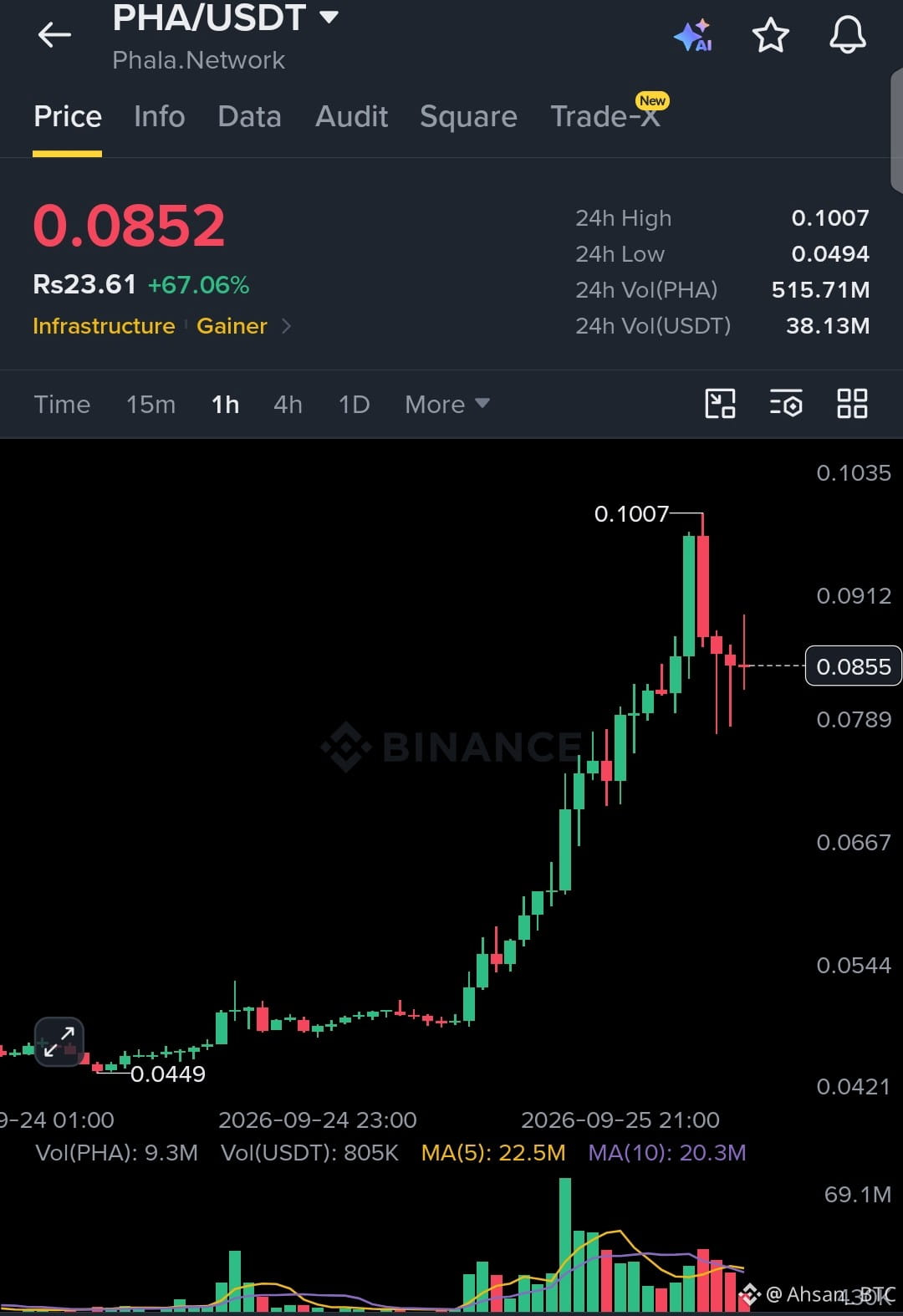
$PHA /USDT — Bùng nổ Mạnh Cơ Sở Hạ Tầng! 🚀🔥
Giá hiện tại: ~$0.0852 (+67.06% 24h) 💚
Tổng quan: Phala Network ($PHA) là một giao thức điện toán đám mây phi tập trung tập trung vào quyền riêng tư và tính toán an toàn ngoài chuỗi. Một “đại gia” trong lĩnh vực "Cơ sở hạ tầng" hiện đang rất nóng. 🖥️🔒
Thiết lập Kỹ thuật (1H):
📈 Vút tăng theo dạng parabol từ $0.0449 lên $0.1007.
🐂 Đang điều chỉnh, tìm hỗ trợ ban đầu quanh $0.085.
📊 MA5 (22.5M) > MA10 (20.3M) = xu hướng chắc chắn tăng, nhưng động lượng đang hạ nhiệt.
📉 Khối lượng giảm dần so với đỉnh = hoạt động chốt lời đang diễn ra.
Các mốc quan trọng:
🔴 Kháng cự: $0.0912 → $0.1007 (đỉnh cục bộ) → $0.1035
🟢 Hỗ trợ: $0.0789 → $0.0667 → $0.0544
Kế hoạch giao dịch (Mua khi điều chỉnh / Theo đà):
✅ Vào lệnh: $0.0780 – $0.0850 (khi pullback / vùng hiện tại)
🎯 TP1: $0.0912
🎯 TP2: $0.1007
🎯 TP3: $0.1150
🛑 SL: $0.0680
⚖️ Tỷ lệ R:R ~ 1:2.5
Triển vọng:
⚡ Ngắn hạn: Kỳ vọng đi ngang tích lũy giữa $0.078–$0.090. Vượt $0.0912 = nhịp tăng tiếp theo.
🔭 Dài hạn: Các coin về cơ sở hạ tầng có dư địa tăng mạnh. Lấy lại mốc $0.10 sẽ đưa việc khám phá giá trở lại bàn cược.
Tâm lý: Khối lượng PHA 515M = lượng “cá voi” quan tâm rất lớn. Câu chuyện cơ sở hạ tầng đang cực hot ngay lúc này. 🐋
⚠️ Không phải lời khuyên tài chính. Bơm mạnh = xả mạnh. DYOR. Dùng điểm dừng lỗ chặt chẽ!
Đang cầm $PHA ? Thả một 🖥️ bên dưới!
$PHA
{spot}(PHAUSDT)
#PHA #BitgetBreachForgedRequestsNotStolenKeys
$PHA /USDT — Bùng nổ Mạnh Cơ Sở Hạ Tầng! 🚀🔥
Giá hiện tại: ~$0.0852 (+67.06% 24h) 💚
Tổng quan: Phala Network ($PHA ) là một giao thức điện toán đám mây phi tập trung tập trung vào quyền riêng tư và tính toán an toàn ngoài chuỗi. Một “đại gia” trong lĩnh vực "Cơ sở hạ tầng" hiện đang rất nóng. 🖥️🔒
Thiết lập Kỹ thuật (1H):
📈 Vút tăng theo dạng parabol từ $0.0449 lên $0.1007.
🐂 Đang điều chỉnh, tìm hỗ trợ ban đầu quanh $0.085.
📊 MA5 (22.5M) > MA10 (20.3M) = xu hướng chắc chắn tăng, nhưng động lượng đang hạ nhiệt.
📉 Khối lượng giảm dần so với đỉnh = hoạt động chốt lời đang diễn ra.
Các mốc quan trọng:
🔴 Kháng cự: $0.0912 → $0.1007 (đỉnh cục bộ) → $0.1035
🟢 Hỗ trợ: $0.0789 → $0.0667 → $0.0544
Kế hoạch giao dịch (Mua khi điều chỉnh / Theo đà):
✅ Vào lệnh: $0.0780 – $0.0850 (khi pullback / vùng hiện tại)
🎯 TP1: $0.0912
🎯 TP2: $0.1007
🎯 TP3: $0.1150
🛑 SL: $0.0680
⚖️ Tỷ lệ R:R ~ 1:2.5
Triển vọng:
⚡ Ngắn hạn: Kỳ vọng đi ngang tích lũy giữa $0.078–$0.090. Vượt $0.0912 = nhịp tăng tiếp theo.
🔭 Dài hạn: Các coin về cơ sở hạ tầng có dư địa tăng mạnh. Lấy lại mốc $0.10 sẽ đưa việc khám phá giá trở lại bàn cược.
Tâm lý: Khối lượng PHA 515M = lượng “cá voi” quan tâm rất lớn. Câu chuyện cơ sở hạ tầng đang cực hot ngay lúc này. 🐋
⚠️ Không phải lời khuyên tài chính. Bơm mạnh = xả mạnh. DYOR. Dùng điểm dừng lỗ chặt chẽ!
Đang cầm $PHA ? Thả một 🖥️ bên dưới!
$PHA
#PHA #BitgetBreachForgedRequestsNotStolenKeys
Giá hiện tại: ~$0.0852 (+67.06% 24h) 💚
Tổng quan: Phala Network ($PHA ) là một giao thức điện toán đám mây phi tập trung tập trung vào quyền riêng tư và tính toán an toàn ngoài chuỗi. Một “đại gia” trong lĩnh vực "Cơ sở hạ tầng" hiện đang rất nóng. 🖥️🔒
Thiết lập Kỹ thuật (1H):
📈 Vút tăng theo dạng parabol từ $0.0449 lên $0.1007.
🐂 Đang điều chỉnh, tìm hỗ trợ ban đầu quanh $0.085.
📊 MA5 (22.5M) > MA10 (20.3M) = xu hướng chắc chắn tăng, nhưng động lượng đang hạ nhiệt.
📉 Khối lượng giảm dần so với đỉnh = hoạt động chốt lời đang diễn ra.
Các mốc quan trọng:
🔴 Kháng cự: $0.0912 → $0.1007 (đỉnh cục bộ) → $0.1035
🟢 Hỗ trợ: $0.0789 → $0.0667 → $0.0544
Kế hoạch giao dịch (Mua khi điều chỉnh / Theo đà):
✅ Vào lệnh: $0.0780 – $0.0850 (khi pullback / vùng hiện tại)
🎯 TP1: $0.0912
🎯 TP2: $0.1007
🎯 TP3: $0.1150
🛑 SL: $0.0680
⚖️ Tỷ lệ R:R ~ 1:2.5
Triển vọng:
⚡ Ngắn hạn: Kỳ vọng đi ngang tích lũy giữa $0.078–$0.090. Vượt $0.0912 = nhịp tăng tiếp theo.
🔭 Dài hạn: Các coin về cơ sở hạ tầng có dư địa tăng mạnh. Lấy lại mốc $0.10 sẽ đưa việc khám phá giá trở lại bàn cược.
Tâm lý: Khối lượng PHA 515M = lượng “cá voi” quan tâm rất lớn. Câu chuyện cơ sở hạ tầng đang cực hot ngay lúc này. 🐋
⚠️ Không phải lời khuyên tài chính. Bơm mạnh = xả mạnh. DYOR. Dùng điểm dừng lỗ chặt chẽ!
Đang cầm $PHA ? Thả một 🖥️ bên dưới!
$PHA
#PHA #BitgetBreachForgedRequestsNotStolenKeys
259
·
--
Tăng giá
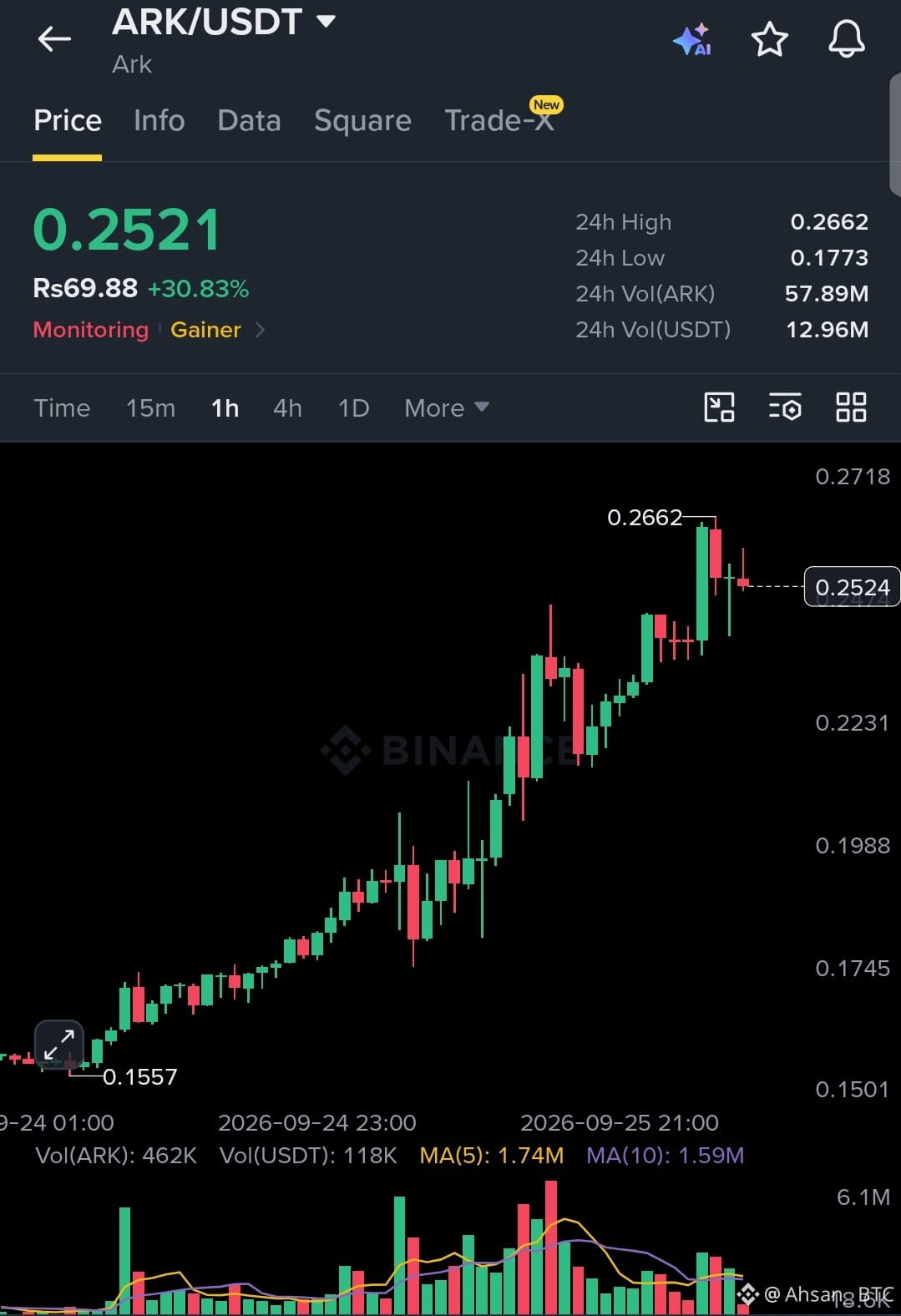
$ARK /USDT — Xu hướng tăng vững, Bò đang nắm quyền! 📈🟢
Giá hiện tại: ~$0.2521 (+30.83% 24h) 💚
Tổng quan: Ark ($ARK) là một dự án blockchain kỳ cựu, tập trung vào khả năng tương tác và giải pháp cho doanh nghiệp. Hiện dự án đang được gắn nhãn là một “Monitoring” gainer, cho thấy đà phục hồi mạnh mẽ. 🏗️
Thiết lập kỹ thuật (1H):
📈 Xu hướng tăng bậc thang chuẩn mực từ $0.1557 lên $0.2662.
🐂 Điều chỉnh lành mạnh, hiện đang tích lũy quanh $0.2521.
📊 MA5 (1.74M) > MA10 (1.59M) = xu hướng tăng vẫn vững chắc. 💪
📉 Khối lượng giảm dần trong giai đoạn tích lũy = hạ nhiệt lành mạnh, không phải xả.
Các mốc quan trọng:
🔴 Kháng cự: $0.2662 → $0.2718
🟢 Hỗ trợ: $0.2231 → $0.1988 (cấu trúc lớn)
Kế hoạch giao dịch (Tiếp diễn theo xu hướng):
✅ Vào lệnh: $0.2450 – $0.2520 (vùng tích lũy hiện tại)
🎯 TP1: $0.2662
🎯 TP2: $0.2800
🎯 TP3: $0.2950
🛑 SL: $0.2200
⚖️ R:R ~ 1:2.5
Triển vọng:
⚡ Ngắn hạn: Giữ trên $0.24 giúp phe bò vẫn hoạt động. Nếu phá vỡ sạch $0.266 thì nhắm tới $0.28+.
🔭 Dài hạn: Cần giữ được $0.20 (hỗ trợ cấu trúc) để duy trì kịch bản đảo chiều tăng theo khung lớn.
Tâm lý: Khối lượng giao dịch $12.96M cho thấy sự quan tâm khá tốt, nhưng đây vẫn là một mã mid/low-cap. Theo dõi lực xác nhận bằng khối lượng ở nhịp tăng tiếp theo. 🐋
⚠️ Không phải lời khuyên tài chính. DYOR. Luôn quản lý rủi ro và dùng lệnh cắt lỗ!
Cưỡi con tàu $ARK ? Thả một 🏛️ xuống dưới!
$ARK
{spot}(ARKUSDT)
#ARK
#NYAndPolymarketSueEachOther #BinanceWillListHyperliquid(HYPE)
$ARK /USDT — Xu hướng tăng vững, Bò đang nắm quyền! 📈🟢
Giá hiện tại: ~$0.2521 (+30.83% 24h) 💚
Tổng quan: Ark ($ARK ) là một dự án blockchain kỳ cựu, tập trung vào khả năng tương tác và giải pháp cho doanh nghiệp. Hiện dự án đang được gắn nhãn là một “Monitoring” gainer, cho thấy đà phục hồi mạnh mẽ. 🏗️
Thiết lập kỹ thuật (1H):
📈 Xu hướng tăng bậc thang chuẩn mực từ $0.1557 lên $0.2662.
🐂 Điều chỉnh lành mạnh, hiện đang tích lũy quanh $0.2521.
📊 MA5 (1.74M) > MA10 (1.59M) = xu hướng tăng vẫn vững chắc. 💪
📉 Khối lượng giảm dần trong giai đoạn tích lũy = hạ nhiệt lành mạnh, không phải xả.
Các mốc quan trọng:
🔴 Kháng cự: $0.2662 → $0.2718
🟢 Hỗ trợ: $0.2231 → $0.1988 (cấu trúc lớn)
Kế hoạch giao dịch (Tiếp diễn theo xu hướng):
✅ Vào lệnh: $0.2450 – $0.2520 (vùng tích lũy hiện tại)
🎯 TP1: $0.2662
🎯 TP2: $0.2800
🎯 TP3: $0.2950
🛑 SL: $0.2200
⚖️ R:R ~ 1:2.5
Triển vọng:
⚡ Ngắn hạn: Giữ trên $0.24 giúp phe bò vẫn hoạt động. Nếu phá vỡ sạch $0.266 thì nhắm tới $0.28+.
🔭 Dài hạn: Cần giữ được $0.20 (hỗ trợ cấu trúc) để duy trì kịch bản đảo chiều tăng theo khung lớn.
Tâm lý: Khối lượng giao dịch $12.96M cho thấy sự quan tâm khá tốt, nhưng đây vẫn là một mã mid/low-cap. Theo dõi lực xác nhận bằng khối lượng ở nhịp tăng tiếp theo. 🐋
⚠️ Không phải lời khuyên tài chính. DYOR. Luôn quản lý rủi ro và dùng lệnh cắt lỗ!
Cưỡi con tàu $ARK ? Thả một 🏛️ xuống dưới!
$ARK
#ARK
#NYAndPolymarketSueEachOther #BinanceWillListHyperliquid(HYPE)
Giá hiện tại: ~$0.2521 (+30.83% 24h) 💚
Tổng quan: Ark ($ARK ) là một dự án blockchain kỳ cựu, tập trung vào khả năng tương tác và giải pháp cho doanh nghiệp. Hiện dự án đang được gắn nhãn là một “Monitoring” gainer, cho thấy đà phục hồi mạnh mẽ. 🏗️
Thiết lập kỹ thuật (1H):
📈 Xu hướng tăng bậc thang chuẩn mực từ $0.1557 lên $0.2662.
🐂 Điều chỉnh lành mạnh, hiện đang tích lũy quanh $0.2521.
📊 MA5 (1.74M) > MA10 (1.59M) = xu hướng tăng vẫn vững chắc. 💪
📉 Khối lượng giảm dần trong giai đoạn tích lũy = hạ nhiệt lành mạnh, không phải xả.
Các mốc quan trọng:
🔴 Kháng cự: $0.2662 → $0.2718
🟢 Hỗ trợ: $0.2231 → $0.1988 (cấu trúc lớn)
Kế hoạch giao dịch (Tiếp diễn theo xu hướng):
✅ Vào lệnh: $0.2450 – $0.2520 (vùng tích lũy hiện tại)
🎯 TP1: $0.2662
🎯 TP2: $0.2800
🎯 TP3: $0.2950
🛑 SL: $0.2200
⚖️ R:R ~ 1:2.5
Triển vọng:
⚡ Ngắn hạn: Giữ trên $0.24 giúp phe bò vẫn hoạt động. Nếu phá vỡ sạch $0.266 thì nhắm tới $0.28+.
🔭 Dài hạn: Cần giữ được $0.20 (hỗ trợ cấu trúc) để duy trì kịch bản đảo chiều tăng theo khung lớn.
Tâm lý: Khối lượng giao dịch $12.96M cho thấy sự quan tâm khá tốt, nhưng đây vẫn là một mã mid/low-cap. Theo dõi lực xác nhận bằng khối lượng ở nhịp tăng tiếp theo. 🐋
⚠️ Không phải lời khuyên tài chính. DYOR. Luôn quản lý rủi ro và dùng lệnh cắt lỗ!
Cưỡi con tàu $ARK ? Thả một 🏛️ xuống dưới!
$ARK
#ARK
#NYAndPolymarketSueEachOther #BinanceWillListHyperliquid(HYPE)
192
·
--
Tăng giá
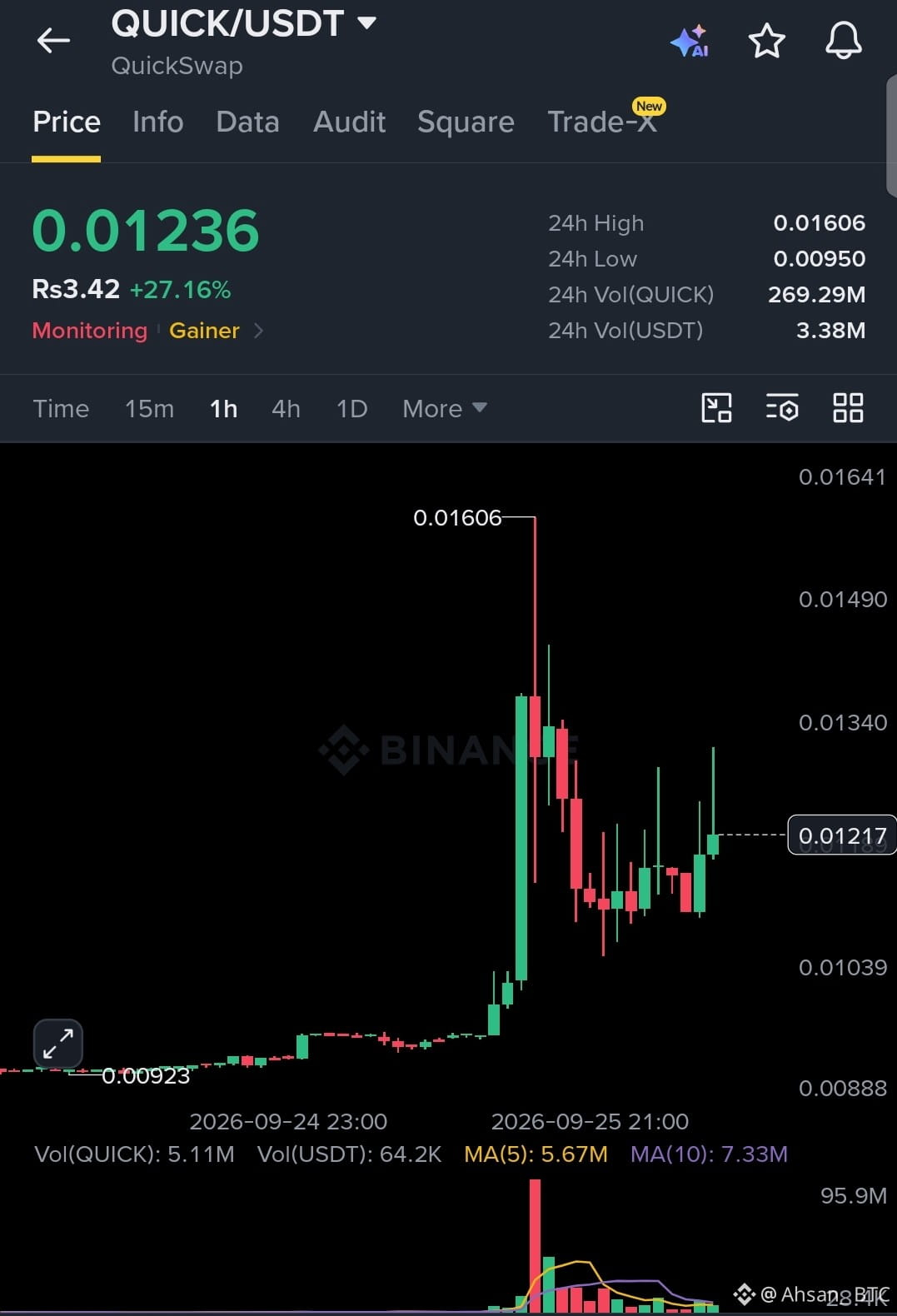
$QUICK /USDT — Nến râu khổng lồ, giờ đang hạ nhiệt! 🧊⚡
Giá hiện tại: ~$0.01236 (+27.16% 24h) 💚
Tổng quan: QuickSwap ($QUICK) là một DEX hàng đầu trên Polygon. Token gắn thẻ “Monitoring” này vừa có một cú tăng đột biến dữ dội — điển hình của biến động do thanh khoản thấp. 🎢
Thiết lập kỹ thuật (1H):
📉 Nến râu “khủng” lên tới $0.01606 — bị từ chối ngay (xả đỉnh).
🐻 Giảm mạnh xuống $0.00950, hiện đang bật trở lại về $0.012.
📊 MA5 (5.67M) < MA10 (7.33M) = cắt xuống (bearish crossover), động lượng suy yếu.
📉 Thanh khoản cạn dần = hết “hype”, trước mắt là vùng dao động lình xình. 😴
Các mốc quan trọng:
🔴 Kháng cự: $0.01340 → $0.01490 → $0.01606
🟢 Hỗ trợ: $0.01039 → $0.00923 (sàn quan trọng)
Kế hoạch giao dịch (Range Scalp):
✅ Vào lệnh: $0.01150 – $0.01200 (gần vùng tích lũy hiện tại)
🎯 TP1: $0.01340
🎯 TP2: $0.01490
🎯 TP3: $0.01600
🛑 SL: $0.01000
⚖️ R:R ~ 1:2.5
Triển vọng:
⚡ Ngắn hạn: Cần lấy lại $0.0134 để tiếp tục xu hướng tăng. Nếu không, kỳ vọng sẽ đi ngang giằng co trong khoảng $0.010–$0.013.
🔭 Dài hạn: Cần một chất xúc tác cho câu chuyện Polygon/DEX để duy trì. Nếu không, giá sẽ “rỉ máu”.
Tâm lý: Thanh khoản cực mỏng ($3.38M khối lượng luân chuyển). Nguy cơ trượt giá CAO. Chỉ dùng lệnh giới hạn. 🐋
⚠️ Không phải lời khuyên tài chính. Thanh khoản thấp = biến động cực độ. DYOR. Cắt lỗ chặt!
Theo dõi $QUICK ? Thả một ⚡ bên dưới!
$QUICK
{spot}(QUICKUSDT)
#QUICK
#CFTCUpdatesGuidanceOnTokenizedAssets
$QUICK /USDT — Nến râu khổng lồ, giờ đang hạ nhiệt! 🧊⚡
Giá hiện tại: ~$0.01236 (+27.16% 24h) 💚
Tổng quan: QuickSwap ($QUICK ) là một DEX hàng đầu trên Polygon. Token gắn thẻ “Monitoring” này vừa có một cú tăng đột biến dữ dội — điển hình của biến động do thanh khoản thấp. 🎢
Thiết lập kỹ thuật (1H):
📉 Nến râu “khủng” lên tới $0.01606 — bị từ chối ngay (xả đỉnh).
🐻 Giảm mạnh xuống $0.00950, hiện đang bật trở lại về $0.012.
📊 MA5 (5.67M) < MA10 (7.33M) = cắt xuống (bearish crossover), động lượng suy yếu.
📉 Thanh khoản cạn dần = hết “hype”, trước mắt là vùng dao động lình xình. 😴
Các mốc quan trọng:
🔴 Kháng cự: $0.01340 → $0.01490 → $0.01606
🟢 Hỗ trợ: $0.01039 → $0.00923 (sàn quan trọng)
Kế hoạch giao dịch (Range Scalp):
✅ Vào lệnh: $0.01150 – $0.01200 (gần vùng tích lũy hiện tại)
🎯 TP1: $0.01340
🎯 TP2: $0.01490
🎯 TP3: $0.01600
🛑 SL: $0.01000
⚖️ R:R ~ 1:2.5
Triển vọng:
⚡ Ngắn hạn: Cần lấy lại $0.0134 để tiếp tục xu hướng tăng. Nếu không, kỳ vọng sẽ đi ngang giằng co trong khoảng $0.010–$0.013.
🔭 Dài hạn: Cần một chất xúc tác cho câu chuyện Polygon/DEX để duy trì. Nếu không, giá sẽ “rỉ máu”.
Tâm lý: Thanh khoản cực mỏng ($3.38M khối lượng luân chuyển). Nguy cơ trượt giá CAO. Chỉ dùng lệnh giới hạn. 🐋
⚠️ Không phải lời khuyên tài chính. Thanh khoản thấp = biến động cực độ. DYOR. Cắt lỗ chặt!
Theo dõi $QUICK ? Thả một ⚡ bên dưới!
$QUICK
#QUICK
#CFTCUpdatesGuidanceOnTokenizedAssets
Giá hiện tại: ~$0.01236 (+27.16% 24h) 💚
Tổng quan: QuickSwap ($QUICK ) là một DEX hàng đầu trên Polygon. Token gắn thẻ “Monitoring” này vừa có một cú tăng đột biến dữ dội — điển hình của biến động do thanh khoản thấp. 🎢
Thiết lập kỹ thuật (1H):
📉 Nến râu “khủng” lên tới $0.01606 — bị từ chối ngay (xả đỉnh).
🐻 Giảm mạnh xuống $0.00950, hiện đang bật trở lại về $0.012.
📊 MA5 (5.67M) < MA10 (7.33M) = cắt xuống (bearish crossover), động lượng suy yếu.
📉 Thanh khoản cạn dần = hết “hype”, trước mắt là vùng dao động lình xình. 😴
Các mốc quan trọng:
🔴 Kháng cự: $0.01340 → $0.01490 → $0.01606
🟢 Hỗ trợ: $0.01039 → $0.00923 (sàn quan trọng)
Kế hoạch giao dịch (Range Scalp):
✅ Vào lệnh: $0.01150 – $0.01200 (gần vùng tích lũy hiện tại)
🎯 TP1: $0.01340
🎯 TP2: $0.01490
🎯 TP3: $0.01600
🛑 SL: $0.01000
⚖️ R:R ~ 1:2.5
Triển vọng:
⚡ Ngắn hạn: Cần lấy lại $0.0134 để tiếp tục xu hướng tăng. Nếu không, kỳ vọng sẽ đi ngang giằng co trong khoảng $0.010–$0.013.
🔭 Dài hạn: Cần một chất xúc tác cho câu chuyện Polygon/DEX để duy trì. Nếu không, giá sẽ “rỉ máu”.
Tâm lý: Thanh khoản cực mỏng ($3.38M khối lượng luân chuyển). Nguy cơ trượt giá CAO. Chỉ dùng lệnh giới hạn. 🐋
⚠️ Không phải lời khuyên tài chính. Thanh khoản thấp = biến động cực độ. DYOR. Cắt lỗ chặt!
Theo dõi $QUICK ? Thả một ⚡ bên dưới!
$QUICK
#QUICK
#CFTCUpdatesGuidanceOnTokenizedAssets
342
·
--
Tăng giá
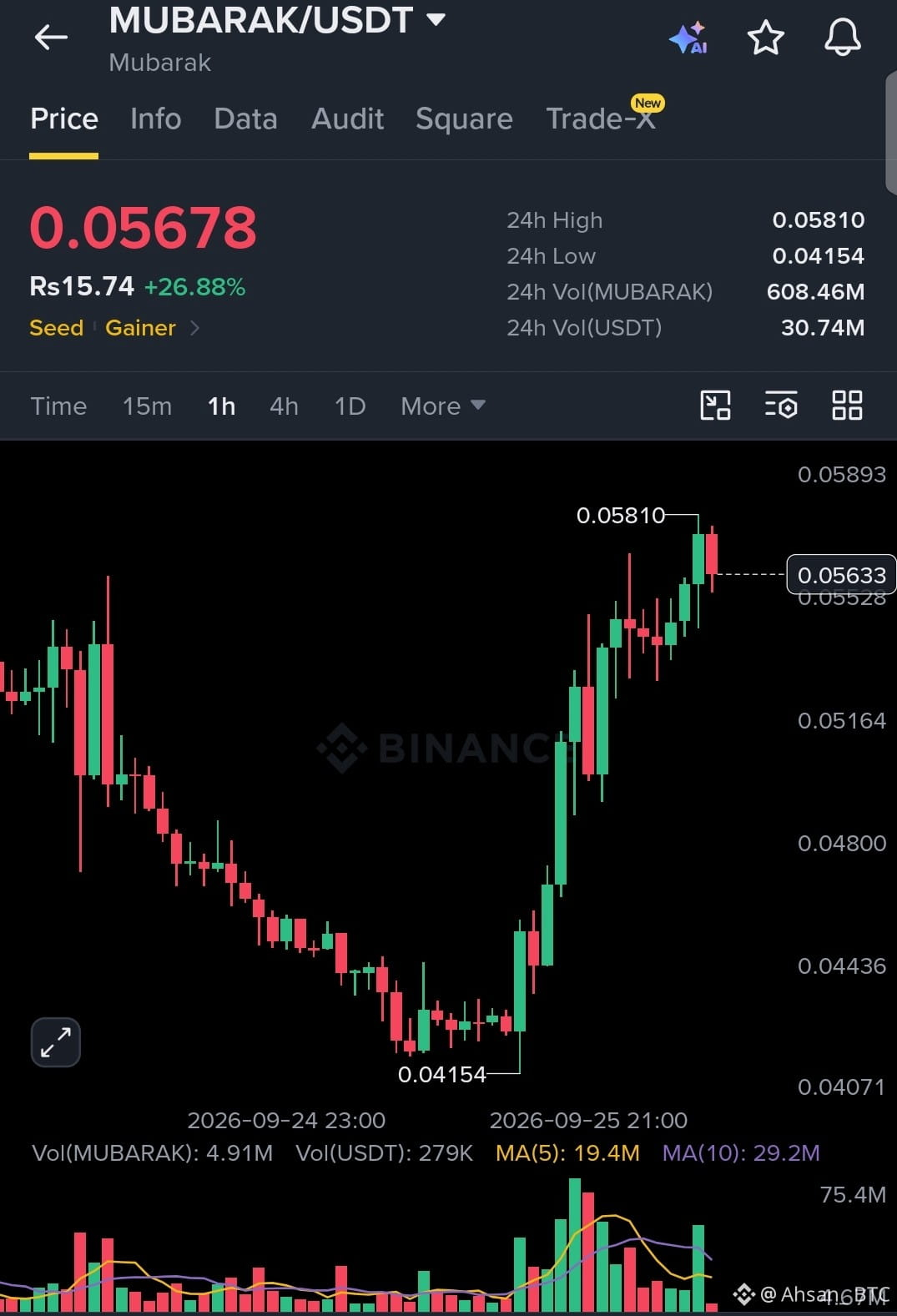
$MUBARAK /USDT — Cú Bơm Meme Parabolic! 🚀🔥
Giá Hiện Tại: ~$0.05678 (+26.88% 24h) 💚
Tổng Quan: MUBARAK là một coin meme được gắn nhãn “Seed” trên Binance, đang bốc cao theo cơn sốt chủ đề Trung Đông. Chơi thuần theo cảm xúc — biến động khổng lồ, khối lượng khổng lồ. 🐋
Thiết Lập Kỹ Thuật (1H):
📈 Bơm dựng đứng điên cuồng từ $0.0415 lên $0.0581.
🐂 Hiện đang tích lũy ngay dưới các đỉnh — vibe cờ bò.
📊 MA5 (19.4M) nằm dưới MA10 (29.2M) — đà tăng ngắn hạn hạ nhiệt sau cú bơm.
📉 Khối lượng giảm dần khỏi đỉnh = pha chốt lời.
Các Mốc Quan Trọng:
🔴 Kháng Cự: $0.0581 → $0.0589 (đỉnh cục bộ)
🟢 Hỗ Trợ: $0.0552 → $0.0516 → $0.0480
Kế Hoạch Giao Dịch (Rủi Ro Cao Theo Đà):
✅ Vào lệnh: $0.0530 – $0.0555 (mua khi điều chỉnh/tái kiểm tra)
🎯 TP1: $0.0581
🎯 TP2: $0.0620
🎯 TP3: $0.0680
🛑 SL: $0.0490
⚖️ R:R ~ 1:2.5
Triển Vọng:
⚡ Ngắn hạn: Giữ $0.055 giúp phe bò còn sống. Vượt $0.0581 = bước chân tăng mới.
🔭 Dài hạn: Coin meme = chỉ là hype thuần. Sẽ tắt nhanh nếu không có tin tức mới hoặc chất xúc tác CZ/Trung Đông. 🎢
Tâm Lý: Khối lượng MUBARAK 608M vẫn còn nóng, nhưng đang hạ nhiệt. Theo dõi các lần cá voi thoát hàng. 🐋
⚠️ Không phải lời khuyên tài chính. Coin meme cực kỳ biến động. DYOR. Dùng stoploss chặt chẽ!
Đang cưỡi con sóng $MUBARAK ? Thả một 🚀 bên dưới!
$MUBARAK
{spot}(MUBARAKUSDT)
#MUBRAK
#BitgetBreachForgedRequestsNotStolenKeys
$MUBARAK /USDT — Cú Bơm Meme Parabolic! 🚀🔥
Giá Hiện Tại: ~$0.05678 (+26.88% 24h) 💚
Tổng Quan: MUBARAK là một coin meme được gắn nhãn “Seed” trên Binance, đang bốc cao theo cơn sốt chủ đề Trung Đông. Chơi thuần theo cảm xúc — biến động khổng lồ, khối lượng khổng lồ. 🐋
Thiết Lập Kỹ Thuật (1H):
📈 Bơm dựng đứng điên cuồng từ $0.0415 lên $0.0581.
🐂 Hiện đang tích lũy ngay dưới các đỉnh — vibe cờ bò.
📊 MA5 (19.4M) nằm dưới MA10 (29.2M) — đà tăng ngắn hạn hạ nhiệt sau cú bơm.
📉 Khối lượng giảm dần khỏi đỉnh = pha chốt lời.
Các Mốc Quan Trọng:
🔴 Kháng Cự: $0.0581 → $0.0589 (đỉnh cục bộ)
🟢 Hỗ Trợ: $0.0552 → $0.0516 → $0.0480
Kế Hoạch Giao Dịch (Rủi Ro Cao Theo Đà):
✅ Vào lệnh: $0.0530 – $0.0555 (mua khi điều chỉnh/tái kiểm tra)
🎯 TP1: $0.0581
🎯 TP2: $0.0620
🎯 TP3: $0.0680
🛑 SL: $0.0490
⚖️ R:R ~ 1:2.5
Triển Vọng:
⚡ Ngắn hạn: Giữ $0.055 giúp phe bò còn sống. Vượt $0.0581 = bước chân tăng mới.
🔭 Dài hạn: Coin meme = chỉ là hype thuần. Sẽ tắt nhanh nếu không có tin tức mới hoặc chất xúc tác CZ/Trung Đông. 🎢
Tâm Lý: Khối lượng MUBARAK 608M vẫn còn nóng, nhưng đang hạ nhiệt. Theo dõi các lần cá voi thoát hàng. 🐋
⚠️ Không phải lời khuyên tài chính. Coin meme cực kỳ biến động. DYOR. Dùng stoploss chặt chẽ!
Đang cưỡi con sóng $MUBARAK ? Thả một 🚀 bên dưới!
$MUBARAK
#MUBRAK
#BitgetBreachForgedRequestsNotStolenKeys
Giá Hiện Tại: ~$0.05678 (+26.88% 24h) 💚
Tổng Quan: MUBARAK là một coin meme được gắn nhãn “Seed” trên Binance, đang bốc cao theo cơn sốt chủ đề Trung Đông. Chơi thuần theo cảm xúc — biến động khổng lồ, khối lượng khổng lồ. 🐋
Thiết Lập Kỹ Thuật (1H):
📈 Bơm dựng đứng điên cuồng từ $0.0415 lên $0.0581.
🐂 Hiện đang tích lũy ngay dưới các đỉnh — vibe cờ bò.
📊 MA5 (19.4M) nằm dưới MA10 (29.2M) — đà tăng ngắn hạn hạ nhiệt sau cú bơm.
📉 Khối lượng giảm dần khỏi đỉnh = pha chốt lời.
Các Mốc Quan Trọng:
🔴 Kháng Cự: $0.0581 → $0.0589 (đỉnh cục bộ)
🟢 Hỗ Trợ: $0.0552 → $0.0516 → $0.0480
Kế Hoạch Giao Dịch (Rủi Ro Cao Theo Đà):
✅ Vào lệnh: $0.0530 – $0.0555 (mua khi điều chỉnh/tái kiểm tra)
🎯 TP1: $0.0581
🎯 TP2: $0.0620
🎯 TP3: $0.0680
🛑 SL: $0.0490
⚖️ R:R ~ 1:2.5
Triển Vọng:
⚡ Ngắn hạn: Giữ $0.055 giúp phe bò còn sống. Vượt $0.0581 = bước chân tăng mới.
🔭 Dài hạn: Coin meme = chỉ là hype thuần. Sẽ tắt nhanh nếu không có tin tức mới hoặc chất xúc tác CZ/Trung Đông. 🎢
Tâm Lý: Khối lượng MUBARAK 608M vẫn còn nóng, nhưng đang hạ nhiệt. Theo dõi các lần cá voi thoát hàng. 🐋
⚠️ Không phải lời khuyên tài chính. Coin meme cực kỳ biến động. DYOR. Dùng stoploss chặt chẽ!
Đang cưỡi con sóng $MUBARAK ? Thả một 🚀 bên dưới!
$MUBARAK
#MUBRAK
#BitgetBreachForgedRequestsNotStolenKeys
242
·
--
Tăng giá
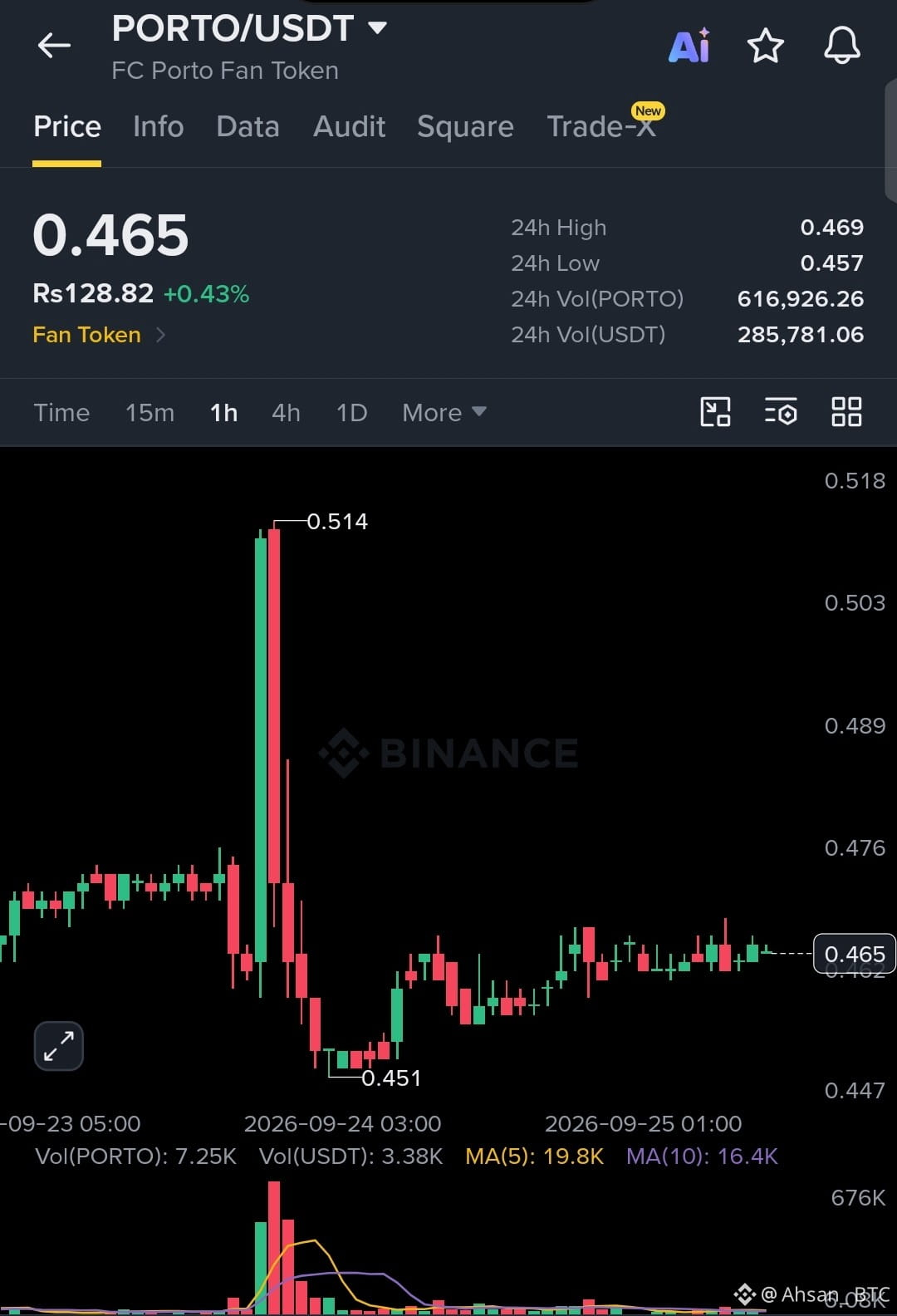
$PORTO /USDT — Fan Token bước vào giai đoạn “nguội” 🧊⚽
Giá hiện tại: ~$0.465 (+0.43% 24h) ➡️
Tổng quan: FC Porto Fan Token — token tiện ích mang lại quyền biểu quyết cho người nắm giữ, phần thưởng VIP và trải nghiệm dành cho fan. Fan token trong thể thao thường tăng mạnh theo “cơn sốt” trước trận và giảm khi sự kiện kết thúc. 🏟️
Thiết lập kỹ thuật (1H):
📉 Bóng nến rất dài tới $0.514 — bị từ chối ngay lập tức (kiểu đỉnh “thổi bay” kinh điển).
🐻 Rơi mạnh xuống $0.451 và hiện đang đi ngang.
📊 MA5 (19.8K) > MA10 (16.4K) = có dấu hiệu cong nhẹ theo hướng tăng, nhưng yếu.
📉 Khối lượng GIẴM — chỉ 285K USDT trong 24h. Không đủ lực. 😴
Các mốc quan trọng:
🔴 Kháng cự: $0.469 → $0.476 → $0.489
🟢 Hỗ trợ: $0.457 → $0.451 (mức quan trọng)
Kế hoạch giao dịch (Chỉ đánh theo biên độ):
✅ Vào lệnh: $0.4550 – $0.4600 (gần hỗ trợ)
🎯 TP1: $0.4690
🎯 TP2: $0.4760
🎯 TP3: $0.4890
🛑 SL: $0.4480
⚖️ R:R ~ 1:2
Triển vọng:
⚡ Ngắn hạn: Bị kẹt trong biên hẹp $0.451–$0.469. Cần khối lượng để bứt phá.
🔭 Dài hạn: Chỉ tăng khi có chất xúc tác từ trận đấu/tin tức. Không có catalyst = khó có chuyển động. Tránh nắm giữ “mù quáng”.
Tâm lý: Khối lượng rất thấp = mức quan tâm hiện tại cũng thấp. Chờ một cú bơm vào ngày thi đấu hoặc thông báo của đội. ⚽
⚠️ Không phải lời khuyên tài chính. Fan tokens chịu ảnh hưởng bởi “hype”. DYOR. Khối lượng thấp = rủi ro trượt giá!
Giữ $PORTO để vào ngày thi đấu? Thả một ⚽ bên dưới!
$PORTO
{spot}(PORTOUSDT)
#porto
$PORTO /USDT — Fan Token bước vào giai đoạn “nguội” 🧊⚽
Giá hiện tại: ~$0.465 (+0.43% 24h) ➡️
Tổng quan: FC Porto Fan Token — token tiện ích mang lại quyền biểu quyết cho người nắm giữ, phần thưởng VIP và trải nghiệm dành cho fan. Fan token trong thể thao thường tăng mạnh theo “cơn sốt” trước trận và giảm khi sự kiện kết thúc. 🏟️
Thiết lập kỹ thuật (1H):
📉 Bóng nến rất dài tới $0.514 — bị từ chối ngay lập tức (kiểu đỉnh “thổi bay” kinh điển).
🐻 Rơi mạnh xuống $0.451 và hiện đang đi ngang.
📊 MA5 (19.8K) > MA10 (16.4K) = có dấu hiệu cong nhẹ theo hướng tăng, nhưng yếu.
📉 Khối lượng GIẴM — chỉ 285K USDT trong 24h. Không đủ lực. 😴
Các mốc quan trọng:
🔴 Kháng cự: $0.469 → $0.476 → $0.489
🟢 Hỗ trợ: $0.457 → $0.451 (mức quan trọng)
Kế hoạch giao dịch (Chỉ đánh theo biên độ):
✅ Vào lệnh: $0.4550 – $0.4600 (gần hỗ trợ)
🎯 TP1: $0.4690
🎯 TP2: $0.4760
🎯 TP3: $0.4890
🛑 SL: $0.4480
⚖️ R:R ~ 1:2
Triển vọng:
⚡ Ngắn hạn: Bị kẹt trong biên hẹp $0.451–$0.469. Cần khối lượng để bứt phá.
🔭 Dài hạn: Chỉ tăng khi có chất xúc tác từ trận đấu/tin tức. Không có catalyst = khó có chuyển động. Tránh nắm giữ “mù quáng”.
Tâm lý: Khối lượng rất thấp = mức quan tâm hiện tại cũng thấp. Chờ một cú bơm vào ngày thi đấu hoặc thông báo của đội. ⚽
⚠️ Không phải lời khuyên tài chính. Fan tokens chịu ảnh hưởng bởi “hype”. DYOR. Khối lượng thấp = rủi ro trượt giá!
Giữ $PORTO để vào ngày thi đấu? Thả một ⚽ bên dưới!
$PORTO
#porto
Giá hiện tại: ~$0.465 (+0.43% 24h) ➡️
Tổng quan: FC Porto Fan Token — token tiện ích mang lại quyền biểu quyết cho người nắm giữ, phần thưởng VIP và trải nghiệm dành cho fan. Fan token trong thể thao thường tăng mạnh theo “cơn sốt” trước trận và giảm khi sự kiện kết thúc. 🏟️
Thiết lập kỹ thuật (1H):
📉 Bóng nến rất dài tới $0.514 — bị từ chối ngay lập tức (kiểu đỉnh “thổi bay” kinh điển).
🐻 Rơi mạnh xuống $0.451 và hiện đang đi ngang.
📊 MA5 (19.8K) > MA10 (16.4K) = có dấu hiệu cong nhẹ theo hướng tăng, nhưng yếu.
📉 Khối lượng GIẴM — chỉ 285K USDT trong 24h. Không đủ lực. 😴
Các mốc quan trọng:
🔴 Kháng cự: $0.469 → $0.476 → $0.489
🟢 Hỗ trợ: $0.457 → $0.451 (mức quan trọng)
Kế hoạch giao dịch (Chỉ đánh theo biên độ):
✅ Vào lệnh: $0.4550 – $0.4600 (gần hỗ trợ)
🎯 TP1: $0.4690
🎯 TP2: $0.4760
🎯 TP3: $0.4890
🛑 SL: $0.4480
⚖️ R:R ~ 1:2
Triển vọng:
⚡ Ngắn hạn: Bị kẹt trong biên hẹp $0.451–$0.469. Cần khối lượng để bứt phá.
🔭 Dài hạn: Chỉ tăng khi có chất xúc tác từ trận đấu/tin tức. Không có catalyst = khó có chuyển động. Tránh nắm giữ “mù quáng”.
Tâm lý: Khối lượng rất thấp = mức quan tâm hiện tại cũng thấp. Chờ một cú bơm vào ngày thi đấu hoặc thông báo của đội. ⚽
⚠️ Không phải lời khuyên tài chính. Fan tokens chịu ảnh hưởng bởi “hype”. DYOR. Khối lượng thấp = rủi ro trượt giá!
Giữ $PORTO để vào ngày thi đấu? Thả một ⚽ bên dưới!
$PORTO
#porto
151
·
--
Tăng giá
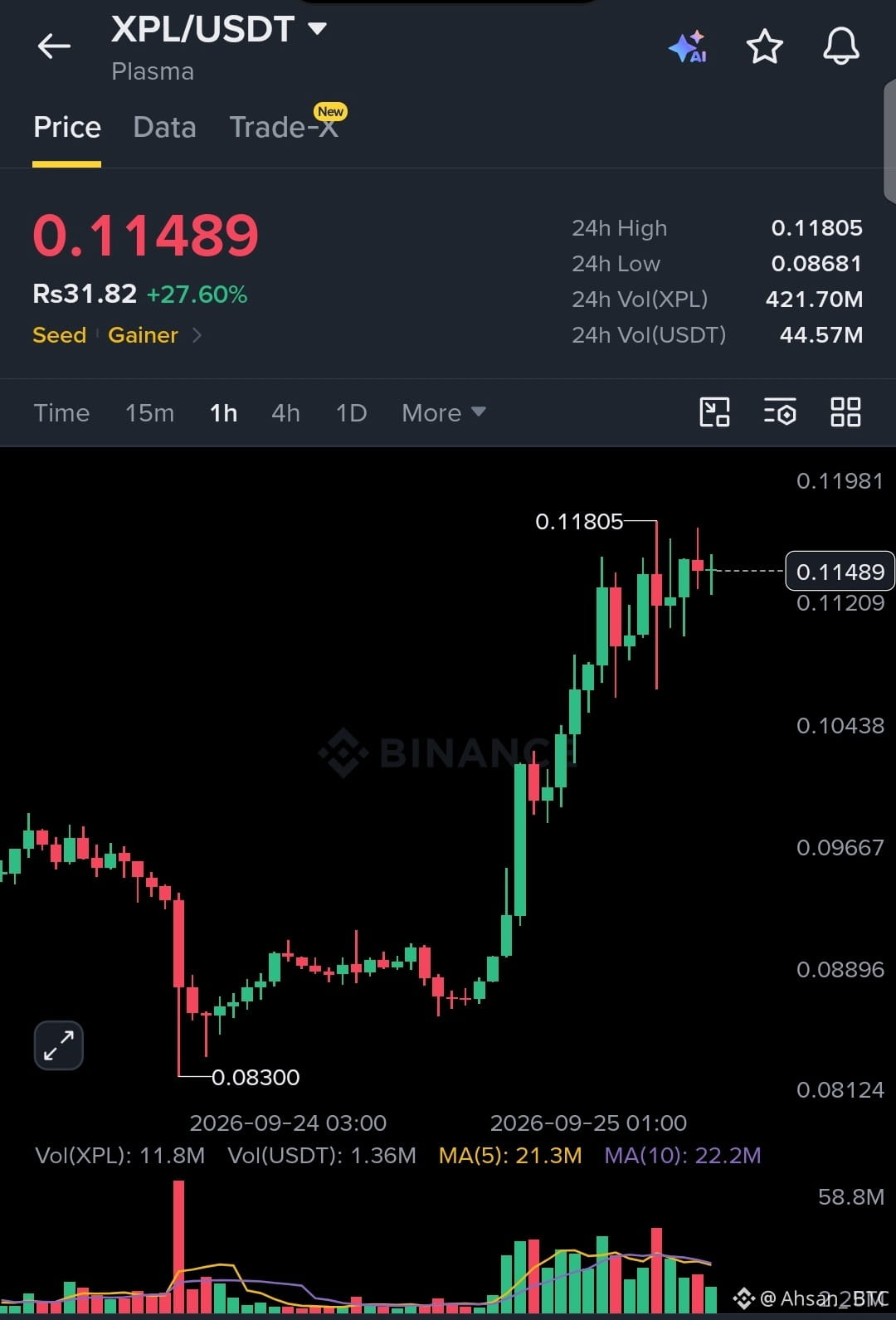
$XPL /USDT (Plasma) — Bùng nổ mạnh mẽ! ⚡📈
Giá hiện tại: ~$0.11489 (+27.60% 24h) 💚
Tổng quan: Plasma ($XPL) là một dự án mới gắn thẻ “Seed” trên Binance. Biến động cao, kèo giai đoạn sớm. Hôm nay là một “mạnh tay” trong mảng hạ tầng/đội tăng. 🚀
Thiết lập kỹ thuật (1H):
📈 Bơm parabol từ $0.083 lên $0.118 cao.
🐂 Đang tích lũy gần vùng đỉnh — cờ tăng (bull flag) hình thành.
📊 MA5 (21.3M) bám sát MA10 (22.2M) = xu hướng vẫn giữ.
📉 Khối lượng giảm dần sau cú spike = giai đoạn hạ nhiệt.
Các mốc quan trọng:
🔴 Kháng cự: $0.1180 → $0.1198
🟢 Hỗ trợ: $0.1120 → $0.1043 → $0.0966
Kế hoạch giao dịch:
✅ Vào lệnh: $0.1100 – $0.1140 (sau nhịp retest)
🎯 TP1: $0.1180
🎯 TP2: $0.1250
🎯 TP3: $0.1350
🛑 SL: $0.1020
⚖️ R:R ~ 1:2.5
Triển vọng:
⚡ Ngắn hạn: Giữ trên $0.112 giúp phe bò kiểm soát. Vượt $0.118 = tiếp diễn xu hướng.
🔭 Dài hạn: Niêm yết mới = rủi ro cao. Cần xác nhận bằng khối lượng + tiện ích (utility) để duy trì.
Tâm lý: Khối lượng XPL 421M = quan tâm lớn. Thẻ Seed = đầu cơ giai đoạn sớm. 🐋
⚠️ Không phải lời khuyên tài chính. Niêm yết mới cực kỳ biến động. DYOR. Đặt SL chặt!
Theo dõi $XPL? Thả một ⚡ bên dưới!
$XPL
{spot}(XPLUSDT)
#XPL
#BinanceWillListHyperliquid(HYPE)
$XPL /USDT (Plasma) — Bùng nổ mạnh mẽ! ⚡📈
Giá hiện tại: ~$0.11489 (+27.60% 24h) 💚
Tổng quan: Plasma ($XPL ) là một dự án mới gắn thẻ “Seed” trên Binance. Biến động cao, kèo giai đoạn sớm. Hôm nay là một “mạnh tay” trong mảng hạ tầng/đội tăng. 🚀
Thiết lập kỹ thuật (1H):
📈 Bơm parabol từ $0.083 lên $0.118 cao.
🐂 Đang tích lũy gần vùng đỉnh — cờ tăng (bull flag) hình thành.
📊 MA5 (21.3M) bám sát MA10 (22.2M) = xu hướng vẫn giữ.
📉 Khối lượng giảm dần sau cú spike = giai đoạn hạ nhiệt.
Các mốc quan trọng:
🔴 Kháng cự: $0.1180 → $0.1198
🟢 Hỗ trợ: $0.1120 → $0.1043 → $0.0966
Kế hoạch giao dịch:
✅ Vào lệnh: $0.1100 – $0.1140 (sau nhịp retest)
🎯 TP1: $0.1180
🎯 TP2: $0.1250
🎯 TP3: $0.1350
🛑 SL: $0.1020
⚖️ R:R ~ 1:2.5
Triển vọng:
⚡ Ngắn hạn: Giữ trên $0.112 giúp phe bò kiểm soát. Vượt $0.118 = tiếp diễn xu hướng.
🔭 Dài hạn: Niêm yết mới = rủi ro cao. Cần xác nhận bằng khối lượng + tiện ích (utility) để duy trì.
Tâm lý: Khối lượng XPL 421M = quan tâm lớn. Thẻ Seed = đầu cơ giai đoạn sớm. 🐋
⚠️ Không phải lời khuyên tài chính. Niêm yết mới cực kỳ biến động. DYOR. Đặt SL chặt!
Theo dõi $XPL ? Thả một ⚡ bên dưới!
$XPL
#XPL
#BinanceWillListHyperliquid(HYPE)
Giá hiện tại: ~$0.11489 (+27.60% 24h) 💚
Tổng quan: Plasma ($XPL ) là một dự án mới gắn thẻ “Seed” trên Binance. Biến động cao, kèo giai đoạn sớm. Hôm nay là một “mạnh tay” trong mảng hạ tầng/đội tăng. 🚀
Thiết lập kỹ thuật (1H):
📈 Bơm parabol từ $0.083 lên $0.118 cao.
🐂 Đang tích lũy gần vùng đỉnh — cờ tăng (bull flag) hình thành.
📊 MA5 (21.3M) bám sát MA10 (22.2M) = xu hướng vẫn giữ.
📉 Khối lượng giảm dần sau cú spike = giai đoạn hạ nhiệt.
Các mốc quan trọng:
🔴 Kháng cự: $0.1180 → $0.1198
🟢 Hỗ trợ: $0.1120 → $0.1043 → $0.0966
Kế hoạch giao dịch:
✅ Vào lệnh: $0.1100 – $0.1140 (sau nhịp retest)
🎯 TP1: $0.1180
🎯 TP2: $0.1250
🎯 TP3: $0.1350
🛑 SL: $0.1020
⚖️ R:R ~ 1:2.5
Triển vọng:
⚡ Ngắn hạn: Giữ trên $0.112 giúp phe bò kiểm soát. Vượt $0.118 = tiếp diễn xu hướng.
🔭 Dài hạn: Niêm yết mới = rủi ro cao. Cần xác nhận bằng khối lượng + tiện ích (utility) để duy trì.
Tâm lý: Khối lượng XPL 421M = quan tâm lớn. Thẻ Seed = đầu cơ giai đoạn sớm. 🐋
⚠️ Không phải lời khuyên tài chính. Niêm yết mới cực kỳ biến động. DYOR. Đặt SL chặt!
Theo dõi $XPL ? Thả một ⚡ bên dưới!
$XPL
#XPL
#BinanceWillListHyperliquid(HYPE)
146
·
--
Tăng giá
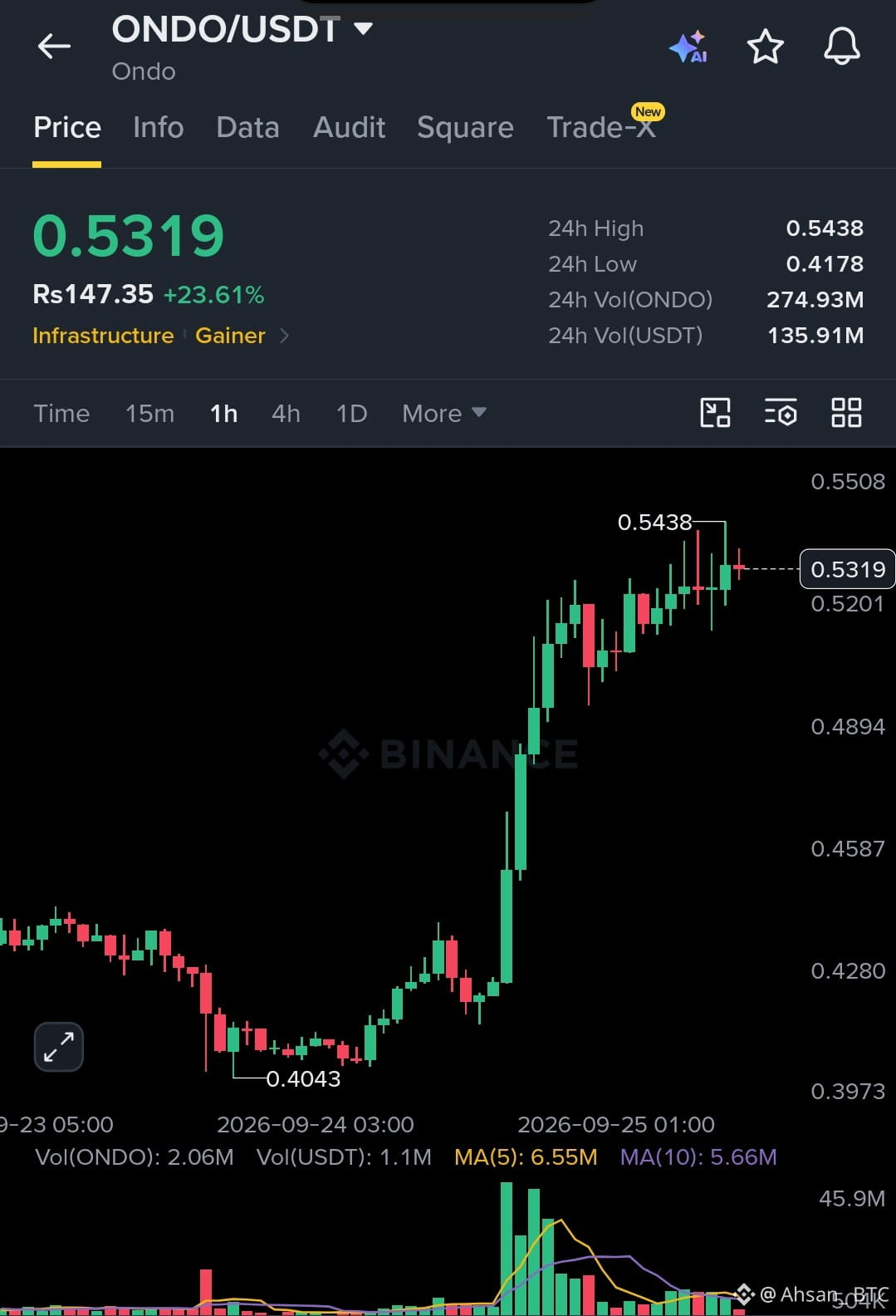
$ONDO /USDT — RWA Khổng lồ đang chuyển động! 🏦🔥
Giá hiện tại: ~$0.5319 (+23.61% 24h) 💚
Tổng quan: ONDO là giao thức Tài sản Thực (RWA) hàng đầu, token hóa tài chính truyền thống (T-Bills, thị trường tiền tệ) trên chuỗi. Câu chuyện vững về tổ chức + giá trị sử dụng thực tế. 🏛️
Thiết lập Kỹ thuật (1H):
📈 Phá vỡ lớn từ vùng nền $0.40 — cú bứt phá dạng parabol.
🐂 Đi ngang/tích lũy cờ đuôi bò gần đỉnh ($0.5438).
📊 MA5 > MA10 = xu hướng tăng vẫn còn hiệu lực.
📉 Khối lượng hạ nhiệt = hạ nhiệt lành mạnh, không phải xả.
Các Mốc Quan trọng:
🔴 Kháng cự: $0.5438 → $0.5508
🟢 Hỗ trợ: $0.5200 → $0.4894 (mức then chốt)
Kế hoạch Giao dịch:
✅ Vào lệnh: $0.5200 – $0.5320
🎯 TP1: $0.5500
🎯 TP2: $0.5800
🎯 TP3: $0.6200
🛑 SL: $0.4850
⚖️ R:R ~ 1:3
Triển vọng:
⚡ Ngắn hạn: Tích lũy $0.52–$0.54, sau đó nhiều khả năng sẽ kiểm định lại $0.55.
🔭 Dài hạn: Blue-chip RWA top. $0.70+ có thể xảy ra nếu BTC giữ ổn định.
Tâm lý: Khối lượng ONDO 274M = sự quan tâm của cá voi. Luân chuyển sang RWA là có thật. 🐋
⚠️ Không phải lời khuyên tài chính. DYOR. Quản lý rủi ro của bạn!
Bạn đang nắm giữ $ONDO? Thả một 🚀 ở dưới nhé!
$ONDO
{spot}(ONDOUSDT)
#ONDO
#OndoFinanceSoughtSaleAfterFoundersDeath
$ONDO /USDT — RWA Khổng lồ đang chuyển động! 🏦🔥
Giá hiện tại: ~$0.5319 (+23.61% 24h) 💚
Tổng quan: ONDO là giao thức Tài sản Thực (RWA) hàng đầu, token hóa tài chính truyền thống (T-Bills, thị trường tiền tệ) trên chuỗi. Câu chuyện vững về tổ chức + giá trị sử dụng thực tế. 🏛️
Thiết lập Kỹ thuật (1H):
📈 Phá vỡ lớn từ vùng nền $0.40 — cú bứt phá dạng parabol.
🐂 Đi ngang/tích lũy cờ đuôi bò gần đỉnh ($0.5438).
📊 MA5 > MA10 = xu hướng tăng vẫn còn hiệu lực.
📉 Khối lượng hạ nhiệt = hạ nhiệt lành mạnh, không phải xả.
Các Mốc Quan trọng:
🔴 Kháng cự: $0.5438 → $0.5508
🟢 Hỗ trợ: $0.5200 → $0.4894 (mức then chốt)
Kế hoạch Giao dịch:
✅ Vào lệnh: $0.5200 – $0.5320
🎯 TP1: $0.5500
🎯 TP2: $0.5800
🎯 TP3: $0.6200
🛑 SL: $0.4850
⚖️ R:R ~ 1:3
Triển vọng:
⚡ Ngắn hạn: Tích lũy $0.52–$0.54, sau đó nhiều khả năng sẽ kiểm định lại $0.55.
🔭 Dài hạn: Blue-chip RWA top. $0.70+ có thể xảy ra nếu BTC giữ ổn định.
Tâm lý: Khối lượng ONDO 274M = sự quan tâm của cá voi. Luân chuyển sang RWA là có thật. 🐋
⚠️ Không phải lời khuyên tài chính. DYOR. Quản lý rủi ro của bạn!
Bạn đang nắm giữ $ONDO ? Thả một 🚀 ở dưới nhé!
$ONDO
#ONDO
#OndoFinanceSoughtSaleAfterFoundersDeath
Giá hiện tại: ~$0.5319 (+23.61% 24h) 💚
Tổng quan: ONDO là giao thức Tài sản Thực (RWA) hàng đầu, token hóa tài chính truyền thống (T-Bills, thị trường tiền tệ) trên chuỗi. Câu chuyện vững về tổ chức + giá trị sử dụng thực tế. 🏛️
Thiết lập Kỹ thuật (1H):
📈 Phá vỡ lớn từ vùng nền $0.40 — cú bứt phá dạng parabol.
🐂 Đi ngang/tích lũy cờ đuôi bò gần đỉnh ($0.5438).
📊 MA5 > MA10 = xu hướng tăng vẫn còn hiệu lực.
📉 Khối lượng hạ nhiệt = hạ nhiệt lành mạnh, không phải xả.
Các Mốc Quan trọng:
🔴 Kháng cự: $0.5438 → $0.5508
🟢 Hỗ trợ: $0.5200 → $0.4894 (mức then chốt)
Kế hoạch Giao dịch:
✅ Vào lệnh: $0.5200 – $0.5320
🎯 TP1: $0.5500
🎯 TP2: $0.5800
🎯 TP3: $0.6200
🛑 SL: $0.4850
⚖️ R:R ~ 1:3
Triển vọng:
⚡ Ngắn hạn: Tích lũy $0.52–$0.54, sau đó nhiều khả năng sẽ kiểm định lại $0.55.
🔭 Dài hạn: Blue-chip RWA top. $0.70+ có thể xảy ra nếu BTC giữ ổn định.
Tâm lý: Khối lượng ONDO 274M = sự quan tâm của cá voi. Luân chuyển sang RWA là có thật. 🐋
⚠️ Không phải lời khuyên tài chính. DYOR. Quản lý rủi ro của bạn!
Bạn đang nắm giữ $ONDO ? Thả một 🚀 ở dưới nhé!
$ONDO
#ONDO
#OndoFinanceSoughtSaleAfterFoundersDeath
136
·
--
Tăng giá
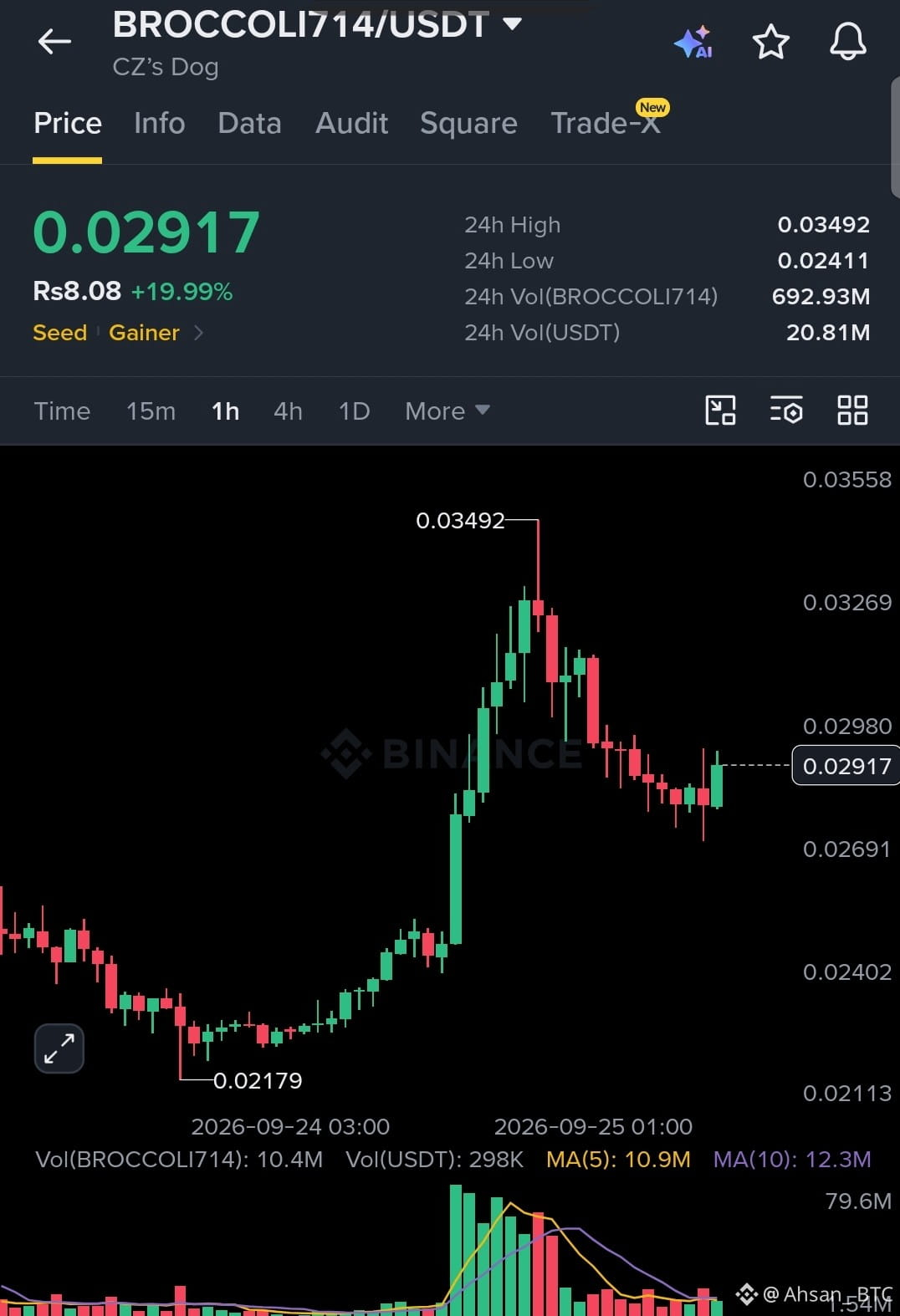
$BROCCOLI714/USDT — CZ's Dog Pumping! 🐕🥦
Giá hiện tại: ~$0.02917 (+19.99% trong 24h) 💚
Tổng quan: Đồng meme coin gắn với Binance của CZ (Changpeng Zhao) và chú chó của ông. Chỉ là trò chơi kể chuyện dựa trên câu chuyện—rủi ro cao, biến động cao. Không dành cho người yếu tim. 🎢
Thiết lập kỹ thuật (1H):
📈 Nến xanh khổng lồ được bơm từ $0.0217 lên $0.0349 đỉnh.
🐻 Giờ đang rút lui — quá trình chốt lời đang diễn ra.
📉 MA5 cắt xuống dưới MA10 = động lượng giảm ngắn hạn.
📊 Khối lượng suy yếu mạnh = độ nóng đang hạ nhiệt.
Các mốc quan trọng:
🔴 Kháng cự: $0.0349 (đỉnh 24h) → $0.0355
🟢 Hỗ trợ: $0.0269 → $0.0240 (quan trọng)
Kế hoạch giao dịch:
✅ Vào lệnh (mua khi điều chỉnh): $0.0265 – $0.0275
🎯 TP1: $0.0298
🎯 TP2: $0.0325
🎯 TP3: $0.0350
🛑 SL: $0.0235
⚖️ R:R ~ 1:2.5
Triển vọng:
⚡ Ngắn hạn: Nhịp điều chỉnh giảm. Chờ giá giành lại vùng hỗ trợ rồi hãy vào. Đừng FOMO vào nến xanh!
🔭 Dài hạn: Đồng meme coin = thuần sentiment. Chết nhanh nếu không có tin tức CZ mới hoặc khối lượng tăng trở lại.
Tâm lý: Khối lượng BROCCOLI 692M vẫn còn nóng, nhưng đang giảm dần. Cần một chất xúc tác mới để giành lại các đỉnh.
⚠️ Không phải lời khuyên tài chính. Meme coins cực kỳ biến động. DYOR. Dùng stop loss chặt!
Đã mua khi điều chỉnh hay chờ? Thả một 🥦 bên dưới!
$BROCCOLI714
{spot}(BROCCOLI714USDT)
#BROCCLI714
#OndoFinanceSoughtSaleAfterFoundersDeath
$BROCCOLI714 /USDT — CZ's Dog Pumping! 🐕🥦
Giá hiện tại: ~$0.02917 (+19.99% trong 24h) 💚
Tổng quan: Đồng meme coin gắn với Binance của CZ (Changpeng Zhao) và chú chó của ông. Chỉ là trò chơi kể chuyện dựa trên câu chuyện—rủi ro cao, biến động cao. Không dành cho người yếu tim. 🎢
Thiết lập kỹ thuật (1H):
📈 Nến xanh khổng lồ được bơm từ $0.0217 lên $0.0349 đỉnh.
🐻 Giờ đang rút lui — quá trình chốt lời đang diễn ra.
📉 MA5 cắt xuống dưới MA10 = động lượng giảm ngắn hạn.
📊 Khối lượng suy yếu mạnh = độ nóng đang hạ nhiệt.
Các mốc quan trọng:
🔴 Kháng cự: $0.0349 (đỉnh 24h) → $0.0355
🟢 Hỗ trợ: $0.0269 → $0.0240 (quan trọng)
Kế hoạch giao dịch:
✅ Vào lệnh (mua khi điều chỉnh): $0.0265 – $0.0275
🎯 TP1: $0.0298
🎯 TP2: $0.0325
🎯 TP3: $0.0350
🛑 SL: $0.0235
⚖️ R:R ~ 1:2.5
Triển vọng:
⚡ Ngắn hạn: Nhịp điều chỉnh giảm. Chờ giá giành lại vùng hỗ trợ rồi hãy vào. Đừng FOMO vào nến xanh!
🔭 Dài hạn: Đồng meme coin = thuần sentiment. Chết nhanh nếu không có tin tức CZ mới hoặc khối lượng tăng trở lại.
Tâm lý: Khối lượng BROCCOLI 692M vẫn còn nóng, nhưng đang giảm dần. Cần một chất xúc tác mới để giành lại các đỉnh.
⚠️ Không phải lời khuyên tài chính. Meme coins cực kỳ biến động. DYOR. Dùng stop loss chặt!
Đã mua khi điều chỉnh hay chờ? Thả một 🥦 bên dưới!
$BROCCOLI714
#BROCCLI714
#OndoFinanceSoughtSaleAfterFoundersDeath
Giá hiện tại: ~$0.02917 (+19.99% trong 24h) 💚
Tổng quan: Đồng meme coin gắn với Binance của CZ (Changpeng Zhao) và chú chó của ông. Chỉ là trò chơi kể chuyện dựa trên câu chuyện—rủi ro cao, biến động cao. Không dành cho người yếu tim. 🎢
Thiết lập kỹ thuật (1H):
📈 Nến xanh khổng lồ được bơm từ $0.0217 lên $0.0349 đỉnh.
🐻 Giờ đang rút lui — quá trình chốt lời đang diễn ra.
📉 MA5 cắt xuống dưới MA10 = động lượng giảm ngắn hạn.
📊 Khối lượng suy yếu mạnh = độ nóng đang hạ nhiệt.
Các mốc quan trọng:
🔴 Kháng cự: $0.0349 (đỉnh 24h) → $0.0355
🟢 Hỗ trợ: $0.0269 → $0.0240 (quan trọng)
Kế hoạch giao dịch:
✅ Vào lệnh (mua khi điều chỉnh): $0.0265 – $0.0275
🎯 TP1: $0.0298
🎯 TP2: $0.0325
🎯 TP3: $0.0350
🛑 SL: $0.0235
⚖️ R:R ~ 1:2.5
Triển vọng:
⚡ Ngắn hạn: Nhịp điều chỉnh giảm. Chờ giá giành lại vùng hỗ trợ rồi hãy vào. Đừng FOMO vào nến xanh!
🔭 Dài hạn: Đồng meme coin = thuần sentiment. Chết nhanh nếu không có tin tức CZ mới hoặc khối lượng tăng trở lại.
Tâm lý: Khối lượng BROCCOLI 692M vẫn còn nóng, nhưng đang giảm dần. Cần một chất xúc tác mới để giành lại các đỉnh.
⚠️ Không phải lời khuyên tài chính. Meme coins cực kỳ biến động. DYOR. Dùng stop loss chặt!
Đã mua khi điều chỉnh hay chờ? Thả một 🥦 bên dưới!
$BROCCOLI714
#BROCCLI714
#OndoFinanceSoughtSaleAfterFoundersDeath
276
·
--
Tăng giá
🔴 $CAKE Thanh lý Long — $2.40952
CAKE hiện quanh $2.45; dữ liệu lịch sử Binance cho thấy mức cao gần đây $2.555 vào ngày 18/9 và mức thấp $2.413 vào ngày 19/9.
Hỗ trợ
S1: $2.40–2.42
S2: $2.30–2.34
S3: $2.20–2.24
Kháng cự
R1: $2.48–2.52
R2: $2.55–2.58
R3: $2.65–2.70
EP: $2.40–2.44
TP1: $2.50
TP2: $2.56
TP3: $2.65–2.70
SL: $2.30
Mẹo nhanh: $2.40–2.42 là vùng phản ứng quan trọng vì lệnh thanh lý được in ở mức $2.4095. Nếu CAKE giành lại được $2.50 và giữ vững, $2.55–2.58 sẽ là khu vực tiếp theo cần theo dõi. Nếu $2.40 bị phá vỡ một cách dứt khoát, đừng cố ép vào lệnh Long và hãy theo dõi $2.30–2.34.
⚠️ Dòng thanh lý là một tín hiệu, không phải là sự xác nhận; hãy điều chỉnh khối lượng vị thế và đòn bẩy cho phù hợp.
$CAKE
{spot}(CAKEUSDT)
#Cake
🔴 $CAKE Thanh lý Long — $2.40952
CAKE hiện quanh $2.45; dữ liệu lịch sử Binance cho thấy mức cao gần đây $2.555 vào ngày 18/9 và mức thấp $2.413 vào ngày 19/9.
Hỗ trợ
S1: $2.40–2.42
S2: $2.30–2.34
S3: $2.20–2.24
Kháng cự
R1: $2.48–2.52
R2: $2.55–2.58
R3: $2.65–2.70
EP: $2.40–2.44
TP1: $2.50
TP2: $2.56
TP3: $2.65–2.70
SL: $2.30
Mẹo nhanh: $2.40–2.42 là vùng phản ứng quan trọng vì lệnh thanh lý được in ở mức $2.4095. Nếu CAKE giành lại được $2.50 và giữ vững, $2.55–2.58 sẽ là khu vực tiếp theo cần theo dõi. Nếu $2.40 bị phá vỡ một cách dứt khoát, đừng cố ép vào lệnh Long và hãy theo dõi $2.30–2.34.
⚠️ Dòng thanh lý là một tín hiệu, không phải là sự xác nhận; hãy điều chỉnh khối lượng vị thế và đòn bẩy cho phù hợp.
$CAKE
#Cake
CAKE hiện quanh $2.45; dữ liệu lịch sử Binance cho thấy mức cao gần đây $2.555 vào ngày 18/9 và mức thấp $2.413 vào ngày 19/9.
Hỗ trợ
S1: $2.40–2.42
S2: $2.30–2.34
S3: $2.20–2.24
Kháng cự
R1: $2.48–2.52
R2: $2.55–2.58
R3: $2.65–2.70
EP: $2.40–2.44
TP1: $2.50
TP2: $2.56
TP3: $2.65–2.70
SL: $2.30
Mẹo nhanh: $2.40–2.42 là vùng phản ứng quan trọng vì lệnh thanh lý được in ở mức $2.4095. Nếu CAKE giành lại được $2.50 và giữ vững, $2.55–2.58 sẽ là khu vực tiếp theo cần theo dõi. Nếu $2.40 bị phá vỡ một cách dứt khoát, đừng cố ép vào lệnh Long và hãy theo dõi $2.30–2.34.
⚠️ Dòng thanh lý là một tín hiệu, không phải là sự xác nhận; hãy điều chỉnh khối lượng vị thế và đòn bẩy cho phù hợp.
$CAKE
#Cake
424
·
--
Tăng giá
🔴 $ONE Long Liquidation — $0.00233
ONE đã cực kỳ biến động: dữ liệu gần đây cho thấy mức cao $0.00239 vào ngày 17/9 và giá dao động quanh $0.00187–0.00212 vào ngày 19/9.
Hỗ trợ
S1: $0.00190–0.00198
S2: $0.00178–0.00185
S3: $0.00160–0.00170
Kháng cự
R1: $0.00215–0.00220
R2: $0.00230–0.00235
R3: $0.00238–0.00245
EP: $0.00192–0.00205
TP1: $0.00220
TP2: $0.00235
TP3: $0.00245+
SL: $0.00178
Mẹo nhỏ: Vùng $0.00230–0.00235 là khu vực then chốt để giành lại vì lệnh thanh lý (liquidation) diễn ra ở mức $0.00233. Nếu phá vỡ rõ ràng + giữ vững phía trên nó có thể mở đường hướng tới vùng $0.00239 gần đây; bị từ chối tại đó sẽ ủng hộ khả năng điều chỉnh về quanh $0.0020.
⚠️ ONE đang di chuyển rất mạnh, vì vậy tránh đuổi theo nến và giữ đòn bẩy ở mức thấp. Dữ liệu liquidation là một tín hiệu, không phải sự xác nhận.
$ONE
{spot}(ONEUSDT)
#ONE
🔴 $ONE Long Liquidation — $0.00233
ONE đã cực kỳ biến động: dữ liệu gần đây cho thấy mức cao $0.00239 vào ngày 17/9 và giá dao động quanh $0.00187–0.00212 vào ngày 19/9.
Hỗ trợ
S1: $0.00190–0.00198
S2: $0.00178–0.00185
S3: $0.00160–0.00170
Kháng cự
R1: $0.00215–0.00220
R2: $0.00230–0.00235
R3: $0.00238–0.00245
EP: $0.00192–0.00205
TP1: $0.00220
TP2: $0.00235
TP3: $0.00245+
SL: $0.00178
Mẹo nhỏ: Vùng $0.00230–0.00235 là khu vực then chốt để giành lại vì lệnh thanh lý (liquidation) diễn ra ở mức $0.00233. Nếu phá vỡ rõ ràng + giữ vững phía trên nó có thể mở đường hướng tới vùng $0.00239 gần đây; bị từ chối tại đó sẽ ủng hộ khả năng điều chỉnh về quanh $0.0020.
⚠️ ONE đang di chuyển rất mạnh, vì vậy tránh đuổi theo nến và giữ đòn bẩy ở mức thấp. Dữ liệu liquidation là một tín hiệu, không phải sự xác nhận.
$ONE
#ONE
ONE đã cực kỳ biến động: dữ liệu gần đây cho thấy mức cao $0.00239 vào ngày 17/9 và giá dao động quanh $0.00187–0.00212 vào ngày 19/9.
Hỗ trợ
S1: $0.00190–0.00198
S2: $0.00178–0.00185
S3: $0.00160–0.00170
Kháng cự
R1: $0.00215–0.00220
R2: $0.00230–0.00235
R3: $0.00238–0.00245
EP: $0.00192–0.00205
TP1: $0.00220
TP2: $0.00235
TP3: $0.00245+
SL: $0.00178
Mẹo nhỏ: Vùng $0.00230–0.00235 là khu vực then chốt để giành lại vì lệnh thanh lý (liquidation) diễn ra ở mức $0.00233. Nếu phá vỡ rõ ràng + giữ vững phía trên nó có thể mở đường hướng tới vùng $0.00239 gần đây; bị từ chối tại đó sẽ ủng hộ khả năng điều chỉnh về quanh $0.0020.
⚠️ ONE đang di chuyển rất mạnh, vì vậy tránh đuổi theo nến và giữ đòn bẩy ở mức thấp. Dữ liệu liquidation là một tín hiệu, không phải sự xác nhận.
$ONE
#ONE
332
·
--
Tăng giá
🟢 Thanh lý ngắn $JST — $0.11674
JST hiện đang quanh mức $0.116, với Binance ghi nhận biên độ 24h gần đây khoảng $0.1131–$0.1166.
Hỗ trợ
S1: $0.1140–0.1150
S2: $0.1125–0.1130
S3: $0.1100–0.1110
Kháng cự
R1: $0.1167–0.1172
R2: $0.1184–0.1200
R3: $0.1220–0.1240
EP: $0.1145–0.1162
TP1: $0.1172
TP2: $0.1200
TP3: $0.1230
SL: $0.1125
Mẹo nhanh: Mức thanh lý $0.11674 là vùng then chốt để lấy lại. Nếu JST phá vỡ và giữ được $0.1172 kèm khối lượng, các mục tiêu tăng giá sẽ trở nên khả dĩ hơn. Nếu bị từ chối tại đây, hãy theo dõi vùng hỗ trợ $0.114–0.115. Các mốc kỹ thuật hiện tại cũng đặt kháng cự quanh $0.1172–$0.1184 và hỗ trợ quanh $0.1151/$0.1125.
⚠️ Dòng chảy thanh lý chỉ là bối cảnh xác nhận, không phải tín hiệu đảo chiều chắc chắn.
$JST
{spot}(JSTUSDT)
#jst
🟢 Thanh lý ngắn $JST — $0.11674
JST hiện đang quanh mức $0.116, với Binance ghi nhận biên độ 24h gần đây khoảng $0.1131–$0.1166.
Hỗ trợ
S1: $0.1140–0.1150
S2: $0.1125–0.1130
S3: $0.1100–0.1110
Kháng cự
R1: $0.1167–0.1172
R2: $0.1184–0.1200
R3: $0.1220–0.1240
EP: $0.1145–0.1162
TP1: $0.1172
TP2: $0.1200
TP3: $0.1230
SL: $0.1125
Mẹo nhanh: Mức thanh lý $0.11674 là vùng then chốt để lấy lại. Nếu JST phá vỡ và giữ được $0.1172 kèm khối lượng, các mục tiêu tăng giá sẽ trở nên khả dĩ hơn. Nếu bị từ chối tại đây, hãy theo dõi vùng hỗ trợ $0.114–0.115. Các mốc kỹ thuật hiện tại cũng đặt kháng cự quanh $0.1172–$0.1184 và hỗ trợ quanh $0.1151/$0.1125.
⚠️ Dòng chảy thanh lý chỉ là bối cảnh xác nhận, không phải tín hiệu đảo chiều chắc chắn.
$JST
#jst
JST hiện đang quanh mức $0.116, với Binance ghi nhận biên độ 24h gần đây khoảng $0.1131–$0.1166.
Hỗ trợ
S1: $0.1140–0.1150
S2: $0.1125–0.1130
S3: $0.1100–0.1110
Kháng cự
R1: $0.1167–0.1172
R2: $0.1184–0.1200
R3: $0.1220–0.1240
EP: $0.1145–0.1162
TP1: $0.1172
TP2: $0.1200
TP3: $0.1230
SL: $0.1125
Mẹo nhanh: Mức thanh lý $0.11674 là vùng then chốt để lấy lại. Nếu JST phá vỡ và giữ được $0.1172 kèm khối lượng, các mục tiêu tăng giá sẽ trở nên khả dĩ hơn. Nếu bị từ chối tại đây, hãy theo dõi vùng hỗ trợ $0.114–0.115. Các mốc kỹ thuật hiện tại cũng đặt kháng cự quanh $0.1172–$0.1184 và hỗ trợ quanh $0.1151/$0.1125.
⚠️ Dòng chảy thanh lý chỉ là bối cảnh xác nhận, không phải tín hiệu đảo chiều chắc chắn.
$JST
#jst
138
·
--
Tăng giá
🔴 $ONE — Thiết lập Long Thanh Lý Kéo Dài
Lệnh long thanh lý $0.00156 đang ở gần vùng thị trường hiện tại. ONE cực kỳ biến động hôm nay: CoinMarketCap hiển thị khoảng $0.00155, với biên độ 24h là $0.000642–$0.001632.
🟩 HỖ TRỢ
S1: $0.00148–$0.00152
S2: $0.00140–$0.00145 ⭐
S3: $0.00125–$0.00130
🟥 KHÁNG CỰ
R1: $0.00160–$0.00163 ⭐
R2: $0.00170–$0.00175
R3: $0.00190–$0.00200
🎯 KẾ HOẠCH LONG
EP: $0.00148–$0.00155
TP1: $0.00163
TP2: $0.00175
TP3: $0.00200
SL: $0.00140
💡 Mẹo Pro
Đừng đuổi theo đợt tăng quá lớn. Vùng $0.00148–$0.00152 là vùng phản ứng then chốt. Việc lấy lại/giữ vững sạch sẽ trên $0.00163 sẽ tạo xác nhận mạnh hơn hướng tới các mức tiếp theo.
Xu hướng khung giờ của ONE hiện đang tăng (bullish), nhưng RSI đã quá mua, trong khi biến động khung ngày rất cao.
Mục tiêu tiếp theo 🎯 → $0.00163 → $0.00175 → $0.00200
⚠️ Thiết lập rủi ro cao: bản tin thanh lý (liquidation) tự nó không đảm bảo xu hướng tiếp diễn. Giữ đòn bẩy thấp và chờ xác nhận.
$ONE
{spot}(ONEUSDT)
#one
🔴 $ONE — Thiết lập Long Thanh Lý Kéo Dài
Lệnh long thanh lý $0.00156 đang ở gần vùng thị trường hiện tại. ONE cực kỳ biến động hôm nay: CoinMarketCap hiển thị khoảng $0.00155, với biên độ 24h là $0.000642–$0.001632.
🟩 HỖ TRỢ
S1: $0.00148–$0.00152
S2: $0.00140–$0.00145 ⭐
S3: $0.00125–$0.00130
🟥 KHÁNG CỰ
R1: $0.00160–$0.00163 ⭐
R2: $0.00170–$0.00175
R3: $0.00190–$0.00200
🎯 KẾ HOẠCH LONG
EP: $0.00148–$0.00155
TP1: $0.00163
TP2: $0.00175
TP3: $0.00200
SL: $0.00140
💡 Mẹo Pro
Đừng đuổi theo đợt tăng quá lớn. Vùng $0.00148–$0.00152 là vùng phản ứng then chốt. Việc lấy lại/giữ vững sạch sẽ trên $0.00163 sẽ tạo xác nhận mạnh hơn hướng tới các mức tiếp theo.
Xu hướng khung giờ của ONE hiện đang tăng (bullish), nhưng RSI đã quá mua, trong khi biến động khung ngày rất cao.
Mục tiêu tiếp theo 🎯 → $0.00163 → $0.00175 → $0.00200
⚠️ Thiết lập rủi ro cao: bản tin thanh lý (liquidation) tự nó không đảm bảo xu hướng tiếp diễn. Giữ đòn bẩy thấp và chờ xác nhận.
$ONE
#one
Lệnh long thanh lý $0.00156 đang ở gần vùng thị trường hiện tại. ONE cực kỳ biến động hôm nay: CoinMarketCap hiển thị khoảng $0.00155, với biên độ 24h là $0.000642–$0.001632.
🟩 HỖ TRỢ
S1: $0.00148–$0.00152
S2: $0.00140–$0.00145 ⭐
S3: $0.00125–$0.00130
🟥 KHÁNG CỰ
R1: $0.00160–$0.00163 ⭐
R2: $0.00170–$0.00175
R3: $0.00190–$0.00200
🎯 KẾ HOẠCH LONG
EP: $0.00148–$0.00155
TP1: $0.00163
TP2: $0.00175
TP3: $0.00200
SL: $0.00140
💡 Mẹo Pro
Đừng đuổi theo đợt tăng quá lớn. Vùng $0.00148–$0.00152 là vùng phản ứng then chốt. Việc lấy lại/giữ vững sạch sẽ trên $0.00163 sẽ tạo xác nhận mạnh hơn hướng tới các mức tiếp theo.
Xu hướng khung giờ của ONE hiện đang tăng (bullish), nhưng RSI đã quá mua, trong khi biến động khung ngày rất cao.
Mục tiêu tiếp theo 🎯 → $0.00163 → $0.00175 → $0.00200
⚠️ Thiết lập rủi ro cao: bản tin thanh lý (liquidation) tự nó không đảm bảo xu hướng tiếp diễn. Giữ đòn bẩy thấp và chờ xác nhận.
$ONE
#one
1
197
·
--
Tăng giá
🟢 $AVA — Thiết lập Short Thanh Lý Ngắn
Short thanh lý mức $0.2593 đang diễn ra sau một biến động bất thường lớn. Dữ liệu từ Binance/thị trường cho thấy AVA gần đây đã từng giao dịch cao tới $0.329, trong khi hiện tại khu vực giá quanh $0.259.
🟩 HỖ TRỢ
S1: $0.250–$0.260 ⭐
S2: $0.235–$0.245
S3: $0.205–$0.215
🟥 KHÁNG CỰ
R1: $0.273–$0.281
R2: $0.289–$0.301 ⭐
R3: $0.325–$0.330
🎯 KỊCH BẢN LONG
EP: $0.250–$0.260
TP1: $0.281
TP2: $0.300
TP3: $0.325
SL: $0.238
💡 Mẹo Pro
Mức quan trọng là $0.281. Việc giành lại và giữ vững phía trên mức này sẽ củng cố kịch bản tiếp diễn; nếu bị từ chối có thể kéo AVA quay lại gần $0.25. Dữ liệu điểm xoay kỹ thuật hiện tại đặt $0.281 là pivot, $0.293/$0.301 là vùng kháng cự, và $0.261/$0.253 là các mức hỗ trợ phía dưới.
⚠️ Biến động cực cao: AVA đã dao động khoảng $0.156 → $0.329 trong biên độ phiên gần đây. Binance cũng đang gắn AVA trong Tag theo dõi của sàn, nghĩa là rủi ro cao hơn và có thể xuất hiện thêm biến động.
Mục tiêu tiếp theo 🎯 → $0.281 → $0.300 → $0.325
Dữ liệu thanh lý chỉ là tín hiệu xác nhận, không phải đảm bảo về hướng đi.
$AVA
{spot}(AVAUSDT)
#AVA
🟢 $AVA — Thiết lập Short Thanh Lý Ngắn
Short thanh lý mức $0.2593 đang diễn ra sau một biến động bất thường lớn. Dữ liệu từ Binance/thị trường cho thấy AVA gần đây đã từng giao dịch cao tới $0.329, trong khi hiện tại khu vực giá quanh $0.259.
🟩 HỖ TRỢ
S1: $0.250–$0.260 ⭐
S2: $0.235–$0.245
S3: $0.205–$0.215
🟥 KHÁNG CỰ
R1: $0.273–$0.281
R2: $0.289–$0.301 ⭐
R3: $0.325–$0.330
🎯 KỊCH BẢN LONG
EP: $0.250–$0.260
TP1: $0.281
TP2: $0.300
TP3: $0.325
SL: $0.238
💡 Mẹo Pro
Mức quan trọng là $0.281. Việc giành lại và giữ vững phía trên mức này sẽ củng cố kịch bản tiếp diễn; nếu bị từ chối có thể kéo AVA quay lại gần $0.25. Dữ liệu điểm xoay kỹ thuật hiện tại đặt $0.281 là pivot, $0.293/$0.301 là vùng kháng cự, và $0.261/$0.253 là các mức hỗ trợ phía dưới.
⚠️ Biến động cực cao: AVA đã dao động khoảng $0.156 → $0.329 trong biên độ phiên gần đây. Binance cũng đang gắn AVA trong Tag theo dõi của sàn, nghĩa là rủi ro cao hơn và có thể xuất hiện thêm biến động.
Mục tiêu tiếp theo 🎯 → $0.281 → $0.300 → $0.325
Dữ liệu thanh lý chỉ là tín hiệu xác nhận, không phải đảm bảo về hướng đi.
$AVA
#AVA
Short thanh lý mức $0.2593 đang diễn ra sau một biến động bất thường lớn. Dữ liệu từ Binance/thị trường cho thấy AVA gần đây đã từng giao dịch cao tới $0.329, trong khi hiện tại khu vực giá quanh $0.259.
🟩 HỖ TRỢ
S1: $0.250–$0.260 ⭐
S2: $0.235–$0.245
S3: $0.205–$0.215
🟥 KHÁNG CỰ
R1: $0.273–$0.281
R2: $0.289–$0.301 ⭐
R3: $0.325–$0.330
🎯 KỊCH BẢN LONG
EP: $0.250–$0.260
TP1: $0.281
TP2: $0.300
TP3: $0.325
SL: $0.238
💡 Mẹo Pro
Mức quan trọng là $0.281. Việc giành lại và giữ vững phía trên mức này sẽ củng cố kịch bản tiếp diễn; nếu bị từ chối có thể kéo AVA quay lại gần $0.25. Dữ liệu điểm xoay kỹ thuật hiện tại đặt $0.281 là pivot, $0.293/$0.301 là vùng kháng cự, và $0.261/$0.253 là các mức hỗ trợ phía dưới.
⚠️ Biến động cực cao: AVA đã dao động khoảng $0.156 → $0.329 trong biên độ phiên gần đây. Binance cũng đang gắn AVA trong Tag theo dõi của sàn, nghĩa là rủi ro cao hơn và có thể xuất hiện thêm biến động.
Mục tiêu tiếp theo 🎯 → $0.281 → $0.300 → $0.325
Dữ liệu thanh lý chỉ là tín hiệu xác nhận, không phải đảm bảo về hướng đi.
$AVA
#AVA
67
·
--
Tăng giá
🔴 $LSK — Thiết lập Long Liquidation
Vị thế long thanh lý ở mức $0.4125 nằm ngay tại một khu vực quan trọng về mặt kỹ thuật. Dữ liệu kỹ thuật hiện tại của Binance cho thấy $0.4125 là mức Fibonacci S1, trong khi $0.4305 là điểm pivot và $0.4485 là kháng cự Fibonacci tiếp theo.
🟩 HỖ TRỢ
S1: $0.410–$0.413 ⭐
S2: $0.400–$0.403
S3: $0.383–$0.390
🟥 KHÁNG CỰ
R1: $0.430–$0.432
R2: $0.447–$0.450
R3: $0.475–$0.480
🎯 KẾ HOẠCH LONG
EP: $0.410–$0.420
TP1: $0.430
TP2: $0.448
TP3: $0.475
SL: $0.398
💡 Mẹo nhỏ
Vùng $0.410–$0.413 là khu vực phản ứng then chốt. Nếu LSK giữ được nó và giành lại $0.430, các mục tiêu tăng sẽ trở nên đáng chú ý hơn. Nếu $0.400 bị phá một cách rõ ràng, đừng cố ép vào lệnh long.
Biến động giá gần đây của LSK cực kỳ mạnh, và hiện tại Binance xếp LSK vào Tag Theo dõi, theo Binance thì điều này cho thấy biến động/rủi ro cao hơn.
Mục tiêu tiếp theo 🎯 → $0.430 → $0.448 → $0.475
⚠️ Do mức độ biến động, hãy giữ đòn bẩy ở thấp và chờ xác nhận thay vì vào lệnh trực tiếp ngay trên tín hiệu thanh lý.
$LSK
{spot}(LSKUSDT)
#LSK
🔴 $LSK — Thiết lập Long Liquidation
Vị thế long thanh lý ở mức $0.4125 nằm ngay tại một khu vực quan trọng về mặt kỹ thuật. Dữ liệu kỹ thuật hiện tại của Binance cho thấy $0.4125 là mức Fibonacci S1, trong khi $0.4305 là điểm pivot và $0.4485 là kháng cự Fibonacci tiếp theo.
🟩 HỖ TRỢ
S1: $0.410–$0.413 ⭐
S2: $0.400–$0.403
S3: $0.383–$0.390
🟥 KHÁNG CỰ
R1: $0.430–$0.432
R2: $0.447–$0.450
R3: $0.475–$0.480
🎯 KẾ HOẠCH LONG
EP: $0.410–$0.420
TP1: $0.430
TP2: $0.448
TP3: $0.475
SL: $0.398
💡 Mẹo nhỏ
Vùng $0.410–$0.413 là khu vực phản ứng then chốt. Nếu LSK giữ được nó và giành lại $0.430, các mục tiêu tăng sẽ trở nên đáng chú ý hơn. Nếu $0.400 bị phá một cách rõ ràng, đừng cố ép vào lệnh long.
Biến động giá gần đây của LSK cực kỳ mạnh, và hiện tại Binance xếp LSK vào Tag Theo dõi, theo Binance thì điều này cho thấy biến động/rủi ro cao hơn.
Mục tiêu tiếp theo 🎯 → $0.430 → $0.448 → $0.475
⚠️ Do mức độ biến động, hãy giữ đòn bẩy ở thấp và chờ xác nhận thay vì vào lệnh trực tiếp ngay trên tín hiệu thanh lý.
$LSK
#LSK
Vị thế long thanh lý ở mức $0.4125 nằm ngay tại một khu vực quan trọng về mặt kỹ thuật. Dữ liệu kỹ thuật hiện tại của Binance cho thấy $0.4125 là mức Fibonacci S1, trong khi $0.4305 là điểm pivot và $0.4485 là kháng cự Fibonacci tiếp theo.
🟩 HỖ TRỢ
S1: $0.410–$0.413 ⭐
S2: $0.400–$0.403
S3: $0.383–$0.390
🟥 KHÁNG CỰ
R1: $0.430–$0.432
R2: $0.447–$0.450
R3: $0.475–$0.480
🎯 KẾ HOẠCH LONG
EP: $0.410–$0.420
TP1: $0.430
TP2: $0.448
TP3: $0.475
SL: $0.398
💡 Mẹo nhỏ
Vùng $0.410–$0.413 là khu vực phản ứng then chốt. Nếu LSK giữ được nó và giành lại $0.430, các mục tiêu tăng sẽ trở nên đáng chú ý hơn. Nếu $0.400 bị phá một cách rõ ràng, đừng cố ép vào lệnh long.
Biến động giá gần đây của LSK cực kỳ mạnh, và hiện tại Binance xếp LSK vào Tag Theo dõi, theo Binance thì điều này cho thấy biến động/rủi ro cao hơn.
Mục tiêu tiếp theo 🎯 → $0.430 → $0.448 → $0.475
⚠️ Do mức độ biến động, hãy giữ đòn bẩy ở thấp và chờ xác nhận thay vì vào lệnh trực tiếp ngay trên tín hiệu thanh lý.
$LSK
#LSK
372
·
--
Tăng giá
🔴 $UNITREE — Thiết lập Long Liquidation
Vị thế long thanh lý 73.815 USD là quan trọng vì UNITREE đang giao dịch quanh mức giữa 70 USD và biến động rất mạnh. Dữ liệu thị trường hiện tại cho thấy khoảng 75.67 USD, với mức tăng +8% trong 24 giờ.
🟩 HỖ TRỢ
S1: $72.5–$73.8 ⭐
S2: $69.5–$70.5
S3: $66.0–$67.5
🟥 KHÁNG CỰ
R1: $76.5–$78.0
R2: $80–$82
R3: $85–$88
🎯 KẾ HOẠCH LONG
EP: $72.5–$75.0
TP1: $78
TP2: $82
TP3: $88
SL: $69.5
💡 Mẹo Pro
Vì đã có một lần thanh lý long tại mức 73.815 USD, đừng mua “mù” theo đúng mức thanh lý. Hãy tìm vùng $72.5–$74 giữ vững và giá lấy lại mốc $76–$78. Nếu giá phá vững xuống dưới $72.5 một cách duy trì, kịch bản này sẽ yếu đi.
Mục tiêu tiếp theo 🎯 → $78 → $82 → $88
⚠️ UNITREE là hợp đồng perpetual trên Binance dựa trên UniTree Technology, và Binance niêm yết đòn bẩy lên tới 20×; sàn có thể điều chỉnh các thông số hợp đồng tùy theo điều kiện thị trường.
$UNITREE
{future}(UNITREEUSDT)
#Unitree
🔴 $UNITREE — Thiết lập Long Liquidation
Vị thế long thanh lý 73.815 USD là quan trọng vì UNITREE đang giao dịch quanh mức giữa 70 USD và biến động rất mạnh. Dữ liệu thị trường hiện tại cho thấy khoảng 75.67 USD, với mức tăng +8% trong 24 giờ.
🟩 HỖ TRỢ
S1: $72.5–$73.8 ⭐
S2: $69.5–$70.5
S3: $66.0–$67.5
🟥 KHÁNG CỰ
R1: $76.5–$78.0
R2: $80–$82
R3: $85–$88
🎯 KẾ HOẠCH LONG
EP: $72.5–$75.0
TP1: $78
TP2: $82
TP3: $88
SL: $69.5
💡 Mẹo Pro
Vì đã có một lần thanh lý long tại mức 73.815 USD, đừng mua “mù” theo đúng mức thanh lý. Hãy tìm vùng $72.5–$74 giữ vững và giá lấy lại mốc $76–$78. Nếu giá phá vững xuống dưới $72.5 một cách duy trì, kịch bản này sẽ yếu đi.
Mục tiêu tiếp theo 🎯 → $78 → $82 → $88
⚠️ UNITREE là hợp đồng perpetual trên Binance dựa trên UniTree Technology, và Binance niêm yết đòn bẩy lên tới 20×; sàn có thể điều chỉnh các thông số hợp đồng tùy theo điều kiện thị trường.
$UNITREE
#Unitree
Vị thế long thanh lý 73.815 USD là quan trọng vì UNITREE đang giao dịch quanh mức giữa 70 USD và biến động rất mạnh. Dữ liệu thị trường hiện tại cho thấy khoảng 75.67 USD, với mức tăng +8% trong 24 giờ.
🟩 HỖ TRỢ
S1: $72.5–$73.8 ⭐
S2: $69.5–$70.5
S3: $66.0–$67.5
🟥 KHÁNG CỰ
R1: $76.5–$78.0
R2: $80–$82
R3: $85–$88
🎯 KẾ HOẠCH LONG
EP: $72.5–$75.0
TP1: $78
TP2: $82
TP3: $88
SL: $69.5
💡 Mẹo Pro
Vì đã có một lần thanh lý long tại mức 73.815 USD, đừng mua “mù” theo đúng mức thanh lý. Hãy tìm vùng $72.5–$74 giữ vững và giá lấy lại mốc $76–$78. Nếu giá phá vững xuống dưới $72.5 một cách duy trì, kịch bản này sẽ yếu đi.
Mục tiêu tiếp theo 🎯 → $78 → $82 → $88
⚠️ UNITREE là hợp đồng perpetual trên Binance dựa trên UniTree Technology, và Binance niêm yết đòn bẩy lên tới 20×; sàn có thể điều chỉnh các thông số hợp đồng tùy theo điều kiện thị trường.
$UNITREE
#Unitree
382
Đăng nhập để khám phá thêm nội dung
Tham gia cùng người dùng tiền mã hóa toàn cầu trên Binance Square
⚡️ Nhận thông tin mới nhất và hữu ích về tiền mã hóa.
💬 Được tin cậy bởi sàn giao dịch tiền mã hóa lớn nhất thế giới.
👍 Khám phá những thông tin chuyên sâu thực tế từ những nhà sáng tạo đã xác minh.
Email / Số điện thoại
Chủ đề thịnh hành
TheoDõiFOMC
142,225 lượt xem
701 đang thảo luận
#TheoDõiFOMC
🔥 FOMC lại bắt đầu trở thành tâm điểm của crypto
Bitcoin vừa bước vào tháng 10, nhưng câu chuyện lớn phía sau thị trường lúc này không chỉ là giá.
Các trader đang bắt đầu hướng sự chú ý về cuộc họp FOMC ngày 27–28/10. Sau một loạt phát biểu mới từ quan chức Fed, kỳ vọng về việc tăng lãi suất ngay trong tháng 10 đã giảm đáng kể.
Điều thú vị là trước đó thị trường từng đặt cược khá cao vào một đợt tăng tiếp theo.
Giờ thì mọi thứ lại quay sang chờ dữ liệu kinh tế và những phát biểu tiếp theo của Fed.
Với crypto, chỉ cần kỳ vọng lãi suất thay đổi mạnh là $BTC có thể lập tức biến động, rồi kéo theo cả thị trường altcoin.
Tháng 10 mới bắt đầu mà macro đã có chuyện để hóng rồi 👀
#Bitcoin #Crypto #Macro #Fed #BinanceSquare
X LEI
·0 lượt thích
·178 lượt xem
TinFed
129,788 lượt xem
504 đang thảo luận
BinanceLaunchesBinanceIntelligence
492,063 lượt xem
3,347 đang thảo luận