

Houria-
3.2k Bài đăng

Houria-
Báo cáo
Chặn người dùng
NEW IN CRYPTO .Content Creator. HODLER Mindset. X:@itxCrypto_Queen
Giao dịch mở
Trader thường xuyên
{thời gian} năm
245 Đang theo dõi
2.8K+ Người theo dõi
4.5K+ Đã thích
Bài đăng
Danh mục đầu tư
Tất cả
Trích dẫn
Video
Live
·
--
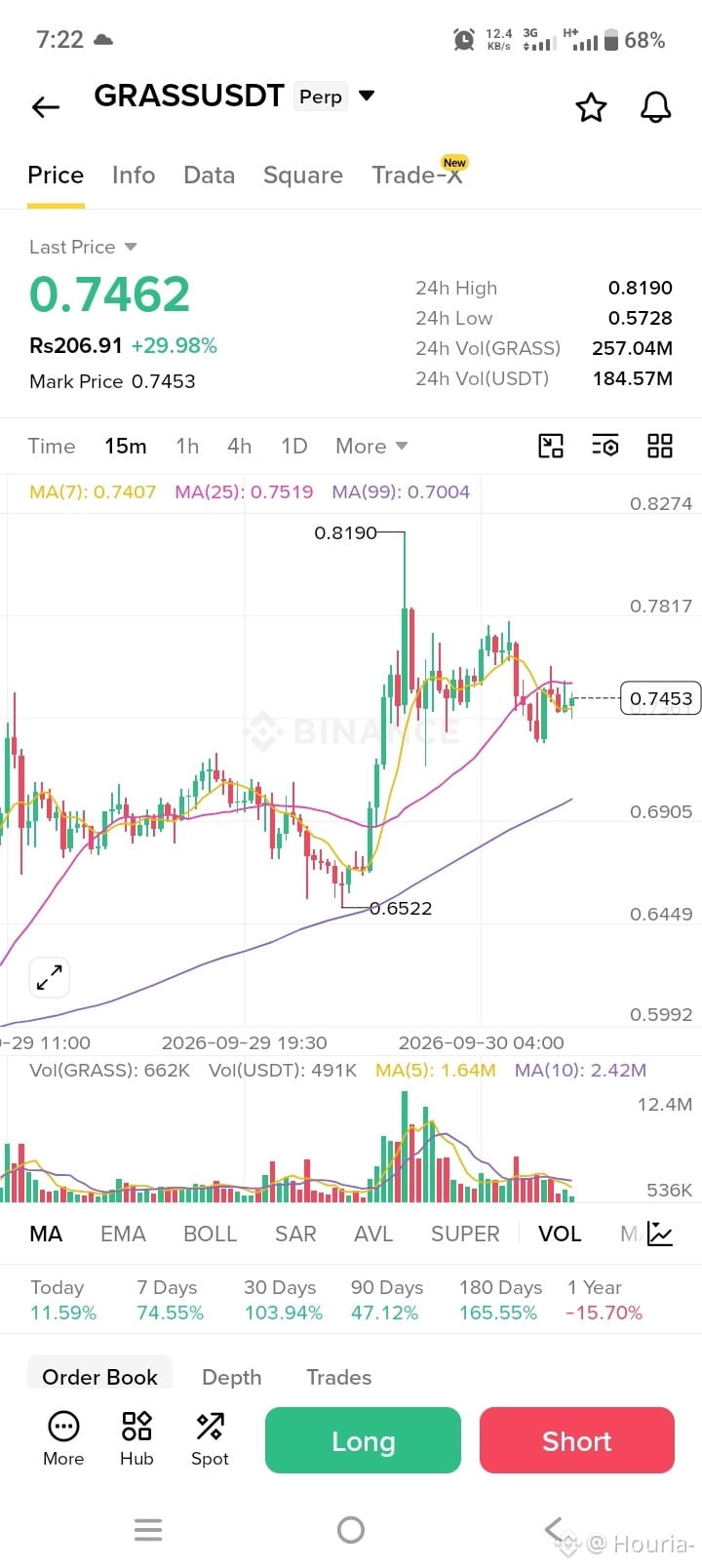
$GRASS đang giữ vùng phá vỡ 🌱🔥
GRASS/USDT hiện quanh $0.746, tăng gần 30% hôm nay sau một biến động mạnh từ $0.65 và đạt đỉnh lên $0.819.
Điều mình đang theo dõi bây giờ là pha tích lũy: giá đang nằm gần MA(7) ở $0.741, trong khi $0.752 là mốc MA(25) gần đó.
Nếu giành lại rõ ràng mức $0.75–0.76 kèm khối lượng, có thể sẽ thúc đẩy thêm để hướng tới $0.819. Nếu đà giảm dần, $0.70–0.72 sẽ là vùng quan trọng cần theo dõi.
Vụ phá vỡ đã xảy ra rồi. Giờ câu hỏi thực sự là liệu GRASS có thể giữ vững vùng cao hơn hay không. 👀📊
#GRASS #Crypto #Altcoins #Binance #TradingCommunity
$GRASS đang giữ vùng phá vỡ 🌱🔥
GRASS/USDT hiện quanh $0.746, tăng gần 30% hôm nay sau một biến động mạnh từ $0.65 và đạt đỉnh lên $0.819.
Điều mình đang theo dõi bây giờ là pha tích lũy: giá đang nằm gần MA(7) ở $0.741, trong khi $0.752 là mốc MA(25) gần đó.
Nếu giành lại rõ ràng mức $0.75–0.76 kèm khối lượng, có thể sẽ thúc đẩy thêm để hướng tới $0.819. Nếu đà giảm dần, $0.70–0.72 sẽ là vùng quan trọng cần theo dõi.
Vụ phá vỡ đã xảy ra rồi. Giờ câu hỏi thực sự là liệu GRASS có thể giữ vững vùng cao hơn hay không. 👀📊
#GRASS #Crypto #Altcoins #Binance #TradingCommunity
GRASS/USDT hiện quanh $0.746, tăng gần 30% hôm nay sau một biến động mạnh từ $0.65 và đạt đỉnh lên $0.819.
Điều mình đang theo dõi bây giờ là pha tích lũy: giá đang nằm gần MA(7) ở $0.741, trong khi $0.752 là mốc MA(25) gần đó.
Nếu giành lại rõ ràng mức $0.75–0.76 kèm khối lượng, có thể sẽ thúc đẩy thêm để hướng tới $0.819. Nếu đà giảm dần, $0.70–0.72 sẽ là vùng quan trọng cần theo dõi.
Vụ phá vỡ đã xảy ra rồi. Giờ câu hỏi thực sự là liệu GRASS có thể giữ vững vùng cao hơn hay không. 👀📊
#GRASS #Crypto #Altcoins #Binance #TradingCommunity
206
·
--
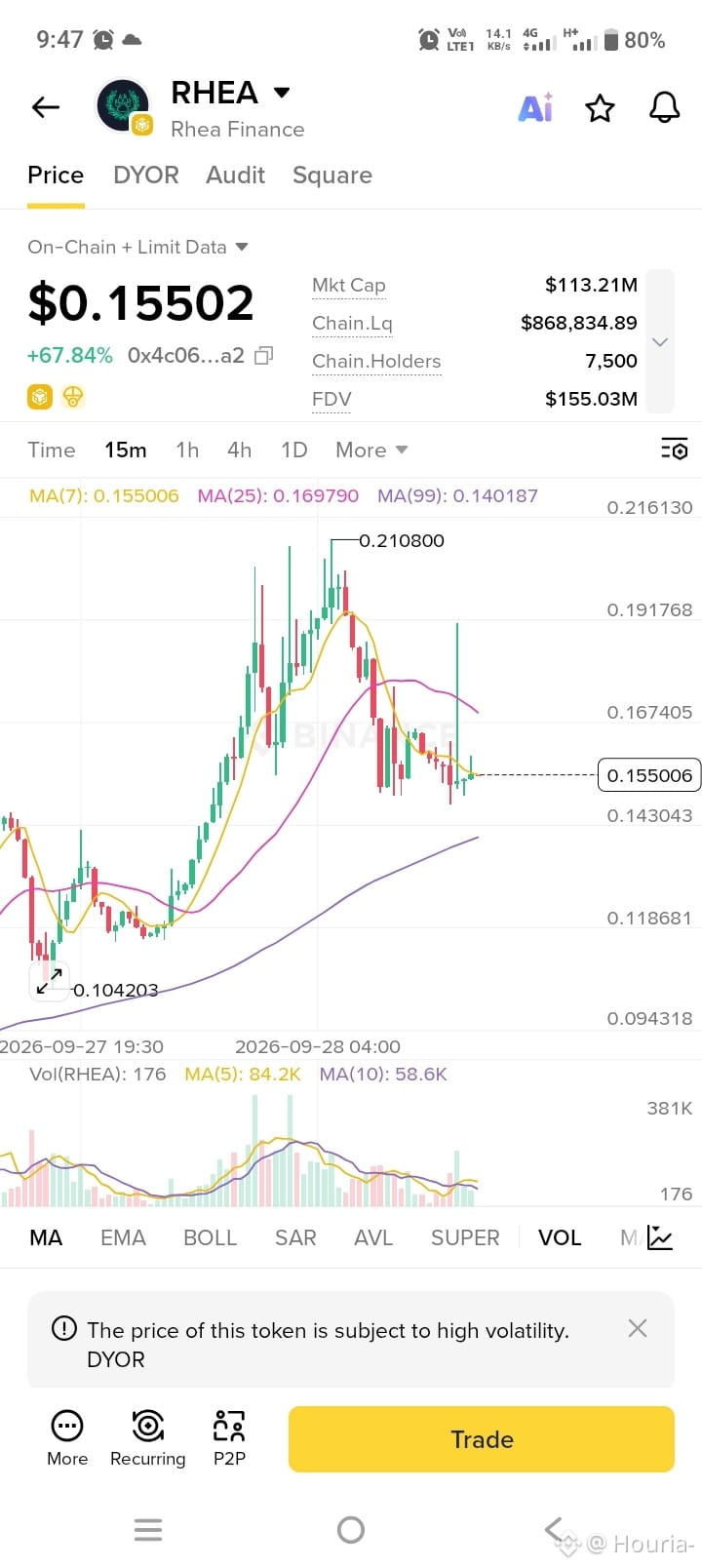
$RHEA đang ở tại một mốc quan trọng 👀
RHEA/USDT đang quanh mức $0.155, tăng gần 68%, nhưng biểu đồ kể một câu chuyện thú vị hơn con số phần trăm.
Sau cú vọt lên $0.2108, giá đã hạ nhiệt và hiện đang tích lũy. $0.155 khá gần MA ngắn hạn (7), trong khi $0.143 trông giống như một vùng hỗ trợ quan trọng ở gần đó.
Nếu bên mua giành lại $0.168–0.170 kèm theo khối lượng, động lượng có thể bắt đầu hình thành trở lại. Cho đến lúc đó, tình hình này giống như sự tích lũy sau một đợt tăng mạnh hơn là một pha bứt phá rõ ràng.
Biến động cao ở đây — xác nhận quan trọng hơn là FOMO. 📊
#RHEA
$RHEA đang ở tại một mốc quan trọng 👀
RHEA/USDT đang quanh mức $0.155, tăng gần 68%, nhưng biểu đồ kể một câu chuyện thú vị hơn con số phần trăm.
Sau cú vọt lên $0.2108, giá đã hạ nhiệt và hiện đang tích lũy. $0.155 khá gần MA ngắn hạn (7), trong khi $0.143 trông giống như một vùng hỗ trợ quan trọng ở gần đó.
Nếu bên mua giành lại $0.168–0.170 kèm theo khối lượng, động lượng có thể bắt đầu hình thành trở lại. Cho đến lúc đó, tình hình này giống như sự tích lũy sau một đợt tăng mạnh hơn là một pha bứt phá rõ ràng.
Biến động cao ở đây — xác nhận quan trọng hơn là FOMO. 📊
#RHEA
RHEA/USDT đang quanh mức $0.155, tăng gần 68%, nhưng biểu đồ kể một câu chuyện thú vị hơn con số phần trăm.
Sau cú vọt lên $0.2108, giá đã hạ nhiệt và hiện đang tích lũy. $0.155 khá gần MA ngắn hạn (7), trong khi $0.143 trông giống như một vùng hỗ trợ quan trọng ở gần đó.
Nếu bên mua giành lại $0.168–0.170 kèm theo khối lượng, động lượng có thể bắt đầu hình thành trở lại. Cho đến lúc đó, tình hình này giống như sự tích lũy sau một đợt tăng mạnh hơn là một pha bứt phá rõ ràng.
Biến động cao ở đây — xác nhận quan trọng hơn là FOMO. 📊
#RHEA
1
248
·
--
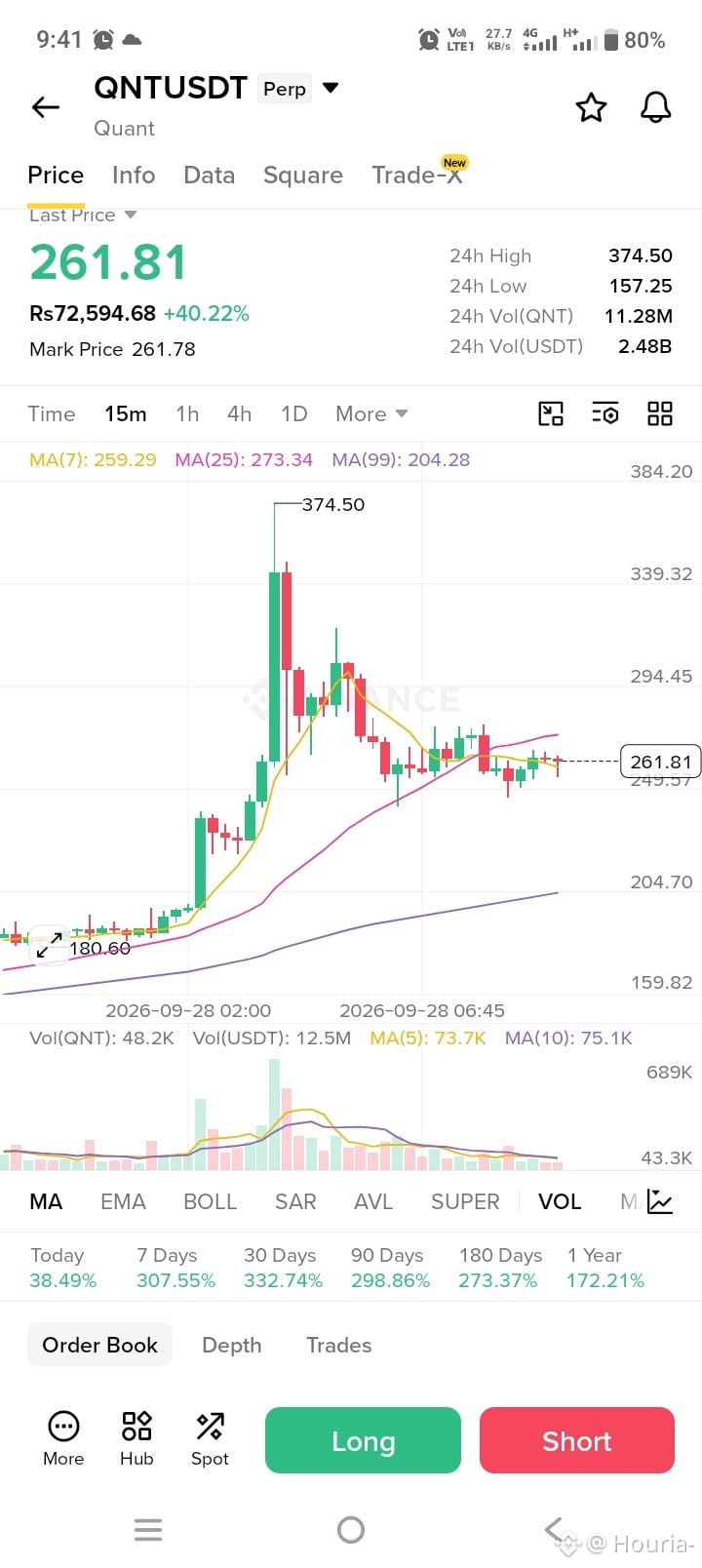
$QNT
{spot}(QNTUSDT)
vừa bật thẳng đứng 🚀
QNT hiện quanh mức 261.81, sau khi chạm 374.50 trên biểu đồ 15m. Động thái này cực mạnh, nhưng điều đáng chú ý là những gì xảy ra sau cú bứt phá.
Giá đang tích lũy quanh 260, trong khi khối lượng giao dịch đã hạ nhiệt.
259–260 là vùng ngay lập tức mình đang theo dõi. Nếu giá quay lại hướng 273–294 có thể kéo đà trở lại, còn việc mất 250 có thể mở ra một nhịp điều chỉnh sâu hơn.
Sau một cú move như vậy, mình đang quan sát phản ứng, không đu theo cây nến. 👀📊
$QNT
vừa bật thẳng đứng 🚀
QNT hiện quanh mức 261.81, sau khi chạm 374.50 trên biểu đồ 15m. Động thái này cực mạnh, nhưng điều đáng chú ý là những gì xảy ra sau cú bứt phá.
Giá đang tích lũy quanh 260, trong khi khối lượng giao dịch đã hạ nhiệt.
259–260 là vùng ngay lập tức mình đang theo dõi. Nếu giá quay lại hướng 273–294 có thể kéo đà trở lại, còn việc mất 250 có thể mở ra một nhịp điều chỉnh sâu hơn.
Sau một cú move như vậy, mình đang quan sát phản ứng, không đu theo cây nến. 👀📊
vừa bật thẳng đứng 🚀
QNT hiện quanh mức 261.81, sau khi chạm 374.50 trên biểu đồ 15m. Động thái này cực mạnh, nhưng điều đáng chú ý là những gì xảy ra sau cú bứt phá.
Giá đang tích lũy quanh 260, trong khi khối lượng giao dịch đã hạ nhiệt.
259–260 là vùng ngay lập tức mình đang theo dõi. Nếu giá quay lại hướng 273–294 có thể kéo đà trở lại, còn việc mất 250 có thể mở ra một nhịp điều chỉnh sâu hơn.
Sau một cú move như vậy, mình đang quan sát phản ứng, không đu theo cây nến. 👀📊
180
·
--
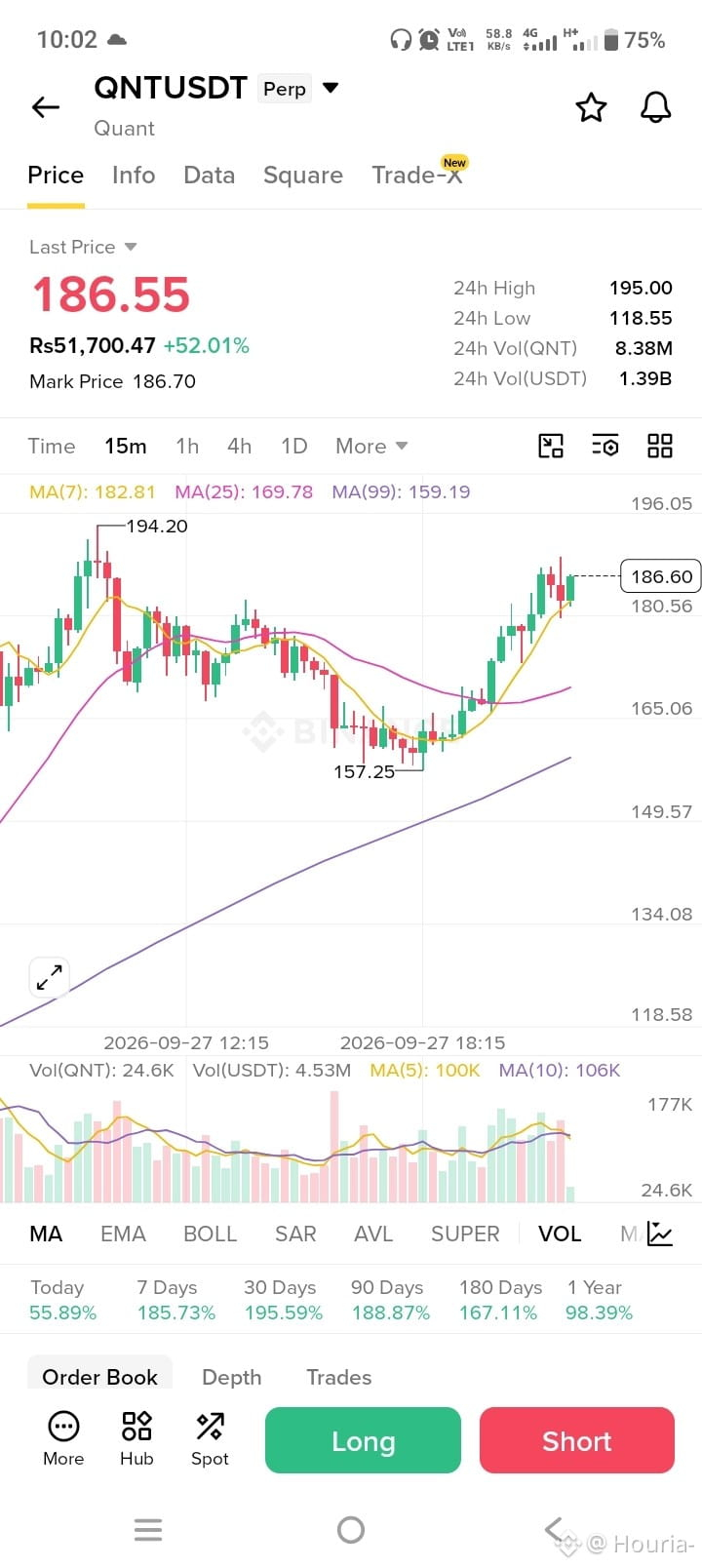
$QNT
{future}(QNTUSDT)
đang nóng lên 🔥
QNT/USDT vừa đẩy lên 186.55, tăng khoảng 52% hôm nay, sau khi bật mạnh từ vùng 157.25.
Cấu trúc khung 15m vẫn còn rất vững: giá đang nằm trên MA(7) 182.81, MA(25) 169.78 và MA(99) 159.19. Mức quan trọng tiếp theo trên biểu đồ của tôi là vùng 194.20–195.
Nếu người mua phá vỡ vùng đó kèm theo khối lượng, đà tăng có thể còn kéo dài. Nhưng sau một cú chạy quá nhanh như vậy, nhịp điều chỉnh về 180–170 cũng là điều hoàn toàn có thể.
Đà mạnh, nhưng đuổi theo đỉnh là một câu chuyện khác. 👀📊
#QNT #Quant #cryptouniverseofficial #ALTCOİNS #Binance
$QNT
đang nóng lên 🔥
QNT/USDT vừa đẩy lên 186.55, tăng khoảng 52% hôm nay, sau khi bật mạnh từ vùng 157.25.
Cấu trúc khung 15m vẫn còn rất vững: giá đang nằm trên MA(7) 182.81, MA(25) 169.78 và MA(99) 159.19. Mức quan trọng tiếp theo trên biểu đồ của tôi là vùng 194.20–195.
Nếu người mua phá vỡ vùng đó kèm theo khối lượng, đà tăng có thể còn kéo dài. Nhưng sau một cú chạy quá nhanh như vậy, nhịp điều chỉnh về 180–170 cũng là điều hoàn toàn có thể.
Đà mạnh, nhưng đuổi theo đỉnh là một câu chuyện khác. 👀📊
#QNT #Quant #cryptouniverseofficial #ALTCOİNS #Binance
đang nóng lên 🔥
QNT/USDT vừa đẩy lên 186.55, tăng khoảng 52% hôm nay, sau khi bật mạnh từ vùng 157.25.
Cấu trúc khung 15m vẫn còn rất vững: giá đang nằm trên MA(7) 182.81, MA(25) 169.78 và MA(99) 159.19. Mức quan trọng tiếp theo trên biểu đồ của tôi là vùng 194.20–195.
Nếu người mua phá vỡ vùng đó kèm theo khối lượng, đà tăng có thể còn kéo dài. Nhưng sau một cú chạy quá nhanh như vậy, nhịp điều chỉnh về 180–170 cũng là điều hoàn toàn có thể.
Đà mạnh, nhưng đuổi theo đỉnh là một câu chuyện khác. 👀📊
#QNT #Quant #cryptouniverseofficial #ALTCOİNS #Binance
241
·
--
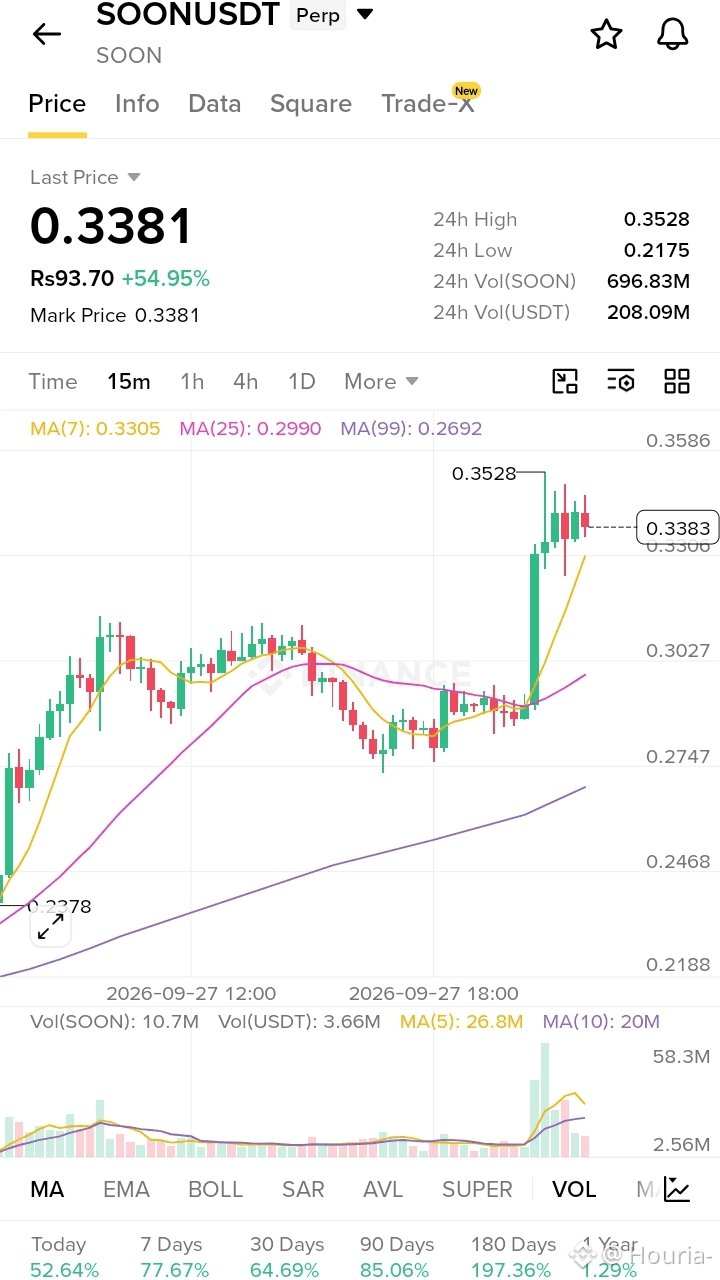
🚀 $SOON đang chuyển động — nhưng biểu đồ đang trở nên thú vị
SOON/USDT vừa tạo một cú breakout mạnh, đẩy lên khoảng +55% trong hôm nay và chạm mức 0.3528.
Điểm khiến tôi chú ý là cấu trúc: giá vẫn đang giữ vững trên MA(7), MA(25) và MA(99), trong khi khối lượng bùng nổ mạnh trong lúc breakout.
Hiện tại, 0.3528 là mốc cần theo dõi. Nếu bên mua có thể giành lại và giữ vững trên mốc này, đà có thể tiếp tục. Nếu không, việc điều chỉnh về vùng 0.330–0.300 cũng sẽ không làm tôi bất ngờ.
Di chuyển nhanh, biến động cao — tôi thà chờ xác nhận hơn là đuổi theo một cây nến xanh. 📊
#Soon #crypto #BİNANCE #altcoins
🚀 $SOON đang chuyển động — nhưng biểu đồ đang trở nên thú vị
SOON/USDT vừa tạo một cú breakout mạnh, đẩy lên khoảng +55% trong hôm nay và chạm mức 0.3528.
Điểm khiến tôi chú ý là cấu trúc: giá vẫn đang giữ vững trên MA(7), MA(25) và MA(99), trong khi khối lượng bùng nổ mạnh trong lúc breakout.
Hiện tại, 0.3528 là mốc cần theo dõi. Nếu bên mua có thể giành lại và giữ vững trên mốc này, đà có thể tiếp tục. Nếu không, việc điều chỉnh về vùng 0.330–0.300 cũng sẽ không làm tôi bất ngờ.
Di chuyển nhanh, biến động cao — tôi thà chờ xác nhận hơn là đuổi theo một cây nến xanh. 📊
#Soon #crypto #BİNANCE #altcoins
SOON/USDT vừa tạo một cú breakout mạnh, đẩy lên khoảng +55% trong hôm nay và chạm mức 0.3528.
Điểm khiến tôi chú ý là cấu trúc: giá vẫn đang giữ vững trên MA(7), MA(25) và MA(99), trong khi khối lượng bùng nổ mạnh trong lúc breakout.
Hiện tại, 0.3528 là mốc cần theo dõi. Nếu bên mua có thể giành lại và giữ vững trên mốc này, đà có thể tiếp tục. Nếu không, việc điều chỉnh về vùng 0.330–0.300 cũng sẽ không làm tôi bất ngờ.
Di chuyển nhanh, biến động cao — tôi thà chờ xác nhận hơn là đuổi theo một cây nến xanh. 📊
#Soon #crypto #BİNANCE #altcoins
235
·
--
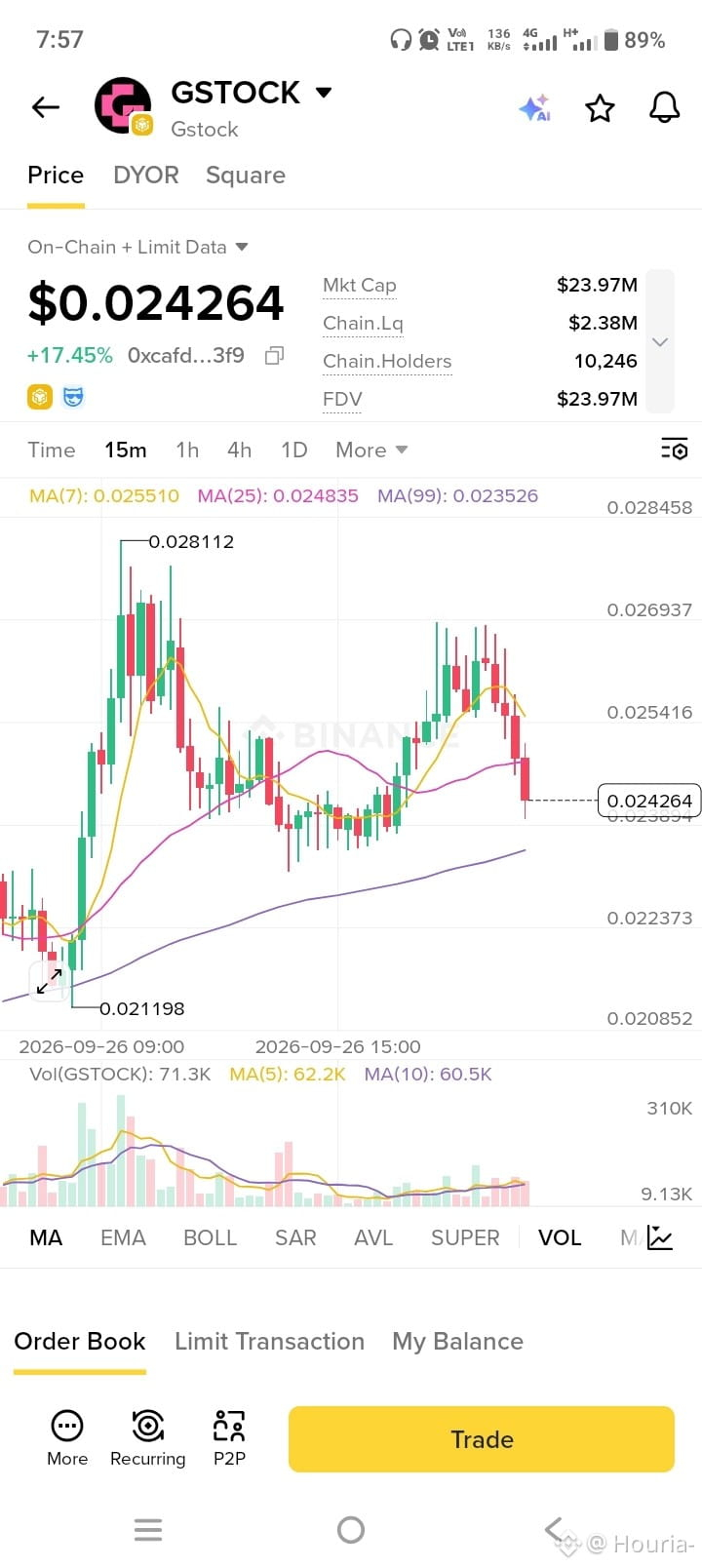
$GSTOCK — đà tốt nhưng biểu đồ hiện đang ở vùng quyết định 📊
$GStock đã có một đợt tăng mạnh từ 0.0212 → 0.0281, nhưng hiện giá đang điều chỉnh về 0.02426.
Trên khung 15M, vùng 0.0240–0.0235 có vẻ rất quan trọng. Nếu tại đây bên mua bảo vệ được, thì có thể sẽ được kiểm tra lại từ 0.0254 → 0.0269.
Nếu mất hỗ trợ, thì mình sẽ theo dõi khu vực kế tiếp quanh 0.0224.
Hiện tại điều quan trọng nhất với mình là volume + xác nhận qua nến. Sau một pha bơm, thay vì đuổi theo, để cấu trúc “thở” sẽ tốt hơn. 👀
#GSTOCK #GStockUSDT #Crypto #Binance #altcoins
$GSTOCK — đà tốt nhưng biểu đồ hiện đang ở vùng quyết định 📊
$GStock đã có một đợt tăng mạnh từ 0.0212 → 0.0281, nhưng hiện giá đang điều chỉnh về 0.02426.
Trên khung 15M, vùng 0.0240–0.0235 có vẻ rất quan trọng. Nếu tại đây bên mua bảo vệ được, thì có thể sẽ được kiểm tra lại từ 0.0254 → 0.0269.
Nếu mất hỗ trợ, thì mình sẽ theo dõi khu vực kế tiếp quanh 0.0224.
Hiện tại điều quan trọng nhất với mình là volume + xác nhận qua nến. Sau một pha bơm, thay vì đuổi theo, để cấu trúc “thở” sẽ tốt hơn. 👀
#GSTOCK #GStockUSDT #Crypto #Binance #altcoins
$GStock đã có một đợt tăng mạnh từ 0.0212 → 0.0281, nhưng hiện giá đang điều chỉnh về 0.02426.
Trên khung 15M, vùng 0.0240–0.0235 có vẻ rất quan trọng. Nếu tại đây bên mua bảo vệ được, thì có thể sẽ được kiểm tra lại từ 0.0254 → 0.0269.
Nếu mất hỗ trợ, thì mình sẽ theo dõi khu vực kế tiếp quanh 0.0224.
Hiện tại điều quan trọng nhất với mình là volume + xác nhận qua nến. Sau một pha bơm, thay vì đuổi theo, để cấu trúc “thở” sẽ tốt hơn. 👀
#GSTOCK #GStockUSDT #Crypto #Binance #altcoins
36
·
--
$2Z
{future}(2ZUSDT)
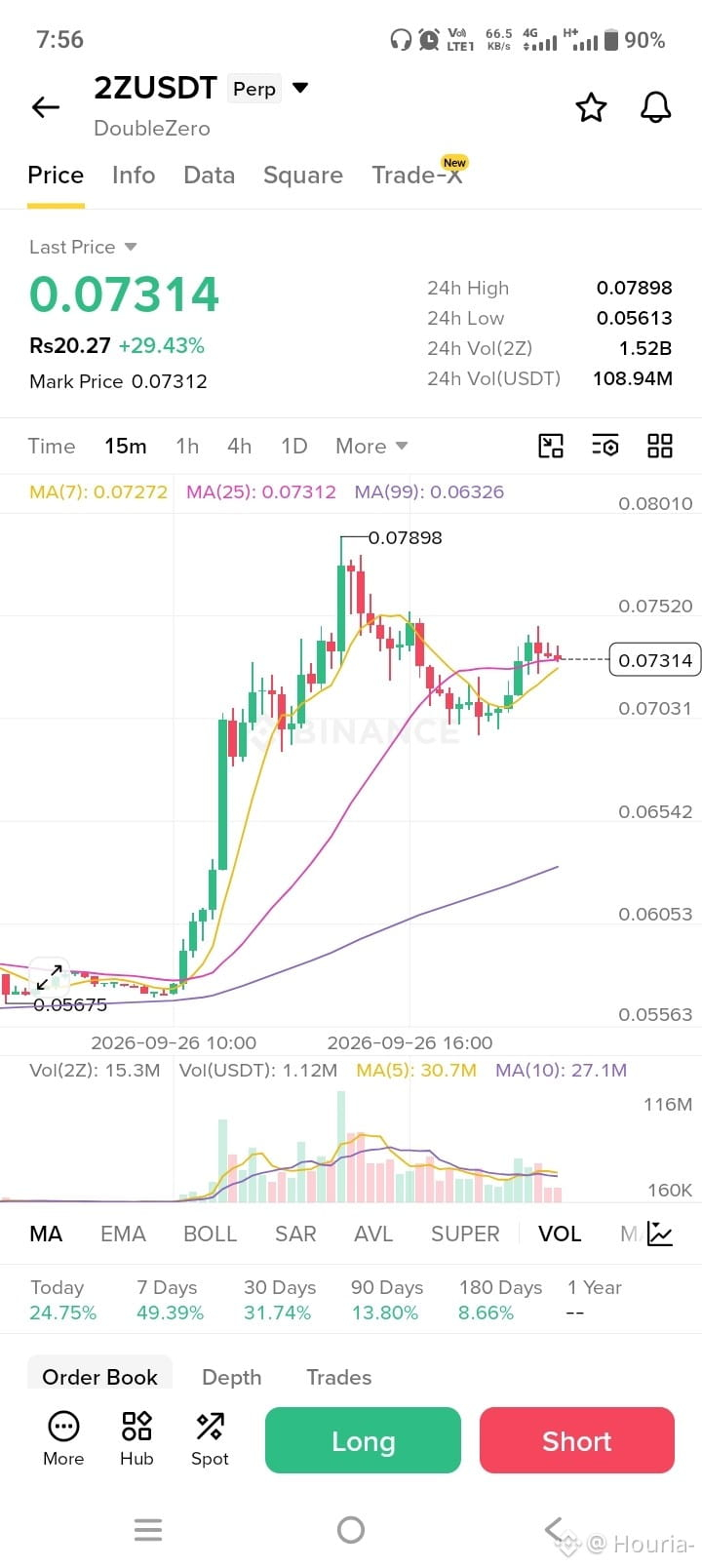
— biểu đồ khá yên ắng, nhưng phần thiết lập đang trở nên thú vị 👀
$2Z hôm nay tăng quanh 29%, giá hiện ở gần $0.0731 sau một đợt bật mạnh từ $0.0568.
Trên biểu đồ 15M, giá đã rút lui khỏi $0.0790 rồi bắt đầu xây dựng một nền tảng quanh $0.070–$0.073. Điểm thú vị: MA7 đã quay trở lại nằm trên MA25, cho thấy động lượng ngắn hạn đang cố gắng đảo chiều đi lên.
Các mốc mình cần theo dõi: $0.0752 → $0.0790 kháng cự
$0.0703 hỗ trợ gần đó
$0.0633 hỗ trợ sâu hơn theo xu hướng
Không phải mọi đợt tăng mạnh đều cần vào lệnh ngay. Đôi khi tín hiệu tốt nhất chỉ là quan sát giá phản ứng như thế nào sau khi “cơn sốt” hạ nhiệt. 📊
$2Z là mã mình sẽ tiếp tục theo dõi. 👀
$2Z
— biểu đồ khá yên ắng, nhưng phần thiết lập đang trở nên thú vị 👀
$2Z hôm nay tăng quanh 29%, giá hiện ở gần $0.0731 sau một đợt bật mạnh từ $0.0568.
Trên biểu đồ 15M, giá đã rút lui khỏi $0.0790 rồi bắt đầu xây dựng một nền tảng quanh $0.070–$0.073. Điểm thú vị: MA7 đã quay trở lại nằm trên MA25, cho thấy động lượng ngắn hạn đang cố gắng đảo chiều đi lên.
Các mốc mình cần theo dõi: $0.0752 → $0.0790 kháng cự
$0.0703 hỗ trợ gần đó
$0.0633 hỗ trợ sâu hơn theo xu hướng
Không phải mọi đợt tăng mạnh đều cần vào lệnh ngay. Đôi khi tín hiệu tốt nhất chỉ là quan sát giá phản ứng như thế nào sau khi “cơn sốt” hạ nhiệt. 📊
$2Z là mã mình sẽ tiếp tục theo dõi. 👀
— biểu đồ khá yên ắng, nhưng phần thiết lập đang trở nên thú vị 👀
$2Z hôm nay tăng quanh 29%, giá hiện ở gần $0.0731 sau một đợt bật mạnh từ $0.0568.
Trên biểu đồ 15M, giá đã rút lui khỏi $0.0790 rồi bắt đầu xây dựng một nền tảng quanh $0.070–$0.073. Điểm thú vị: MA7 đã quay trở lại nằm trên MA25, cho thấy động lượng ngắn hạn đang cố gắng đảo chiều đi lên.
Các mốc mình cần theo dõi: $0.0752 → $0.0790 kháng cự
$0.0703 hỗ trợ gần đó
$0.0633 hỗ trợ sâu hơn theo xu hướng
Không phải mọi đợt tăng mạnh đều cần vào lệnh ngay. Đôi khi tín hiệu tốt nhất chỉ là quan sát giá phản ứng như thế nào sau khi “cơn sốt” hạ nhiệt. 📊
$2Z là mã mình sẽ tiếp tục theo dõi. 👀
136
·
--
$Q
{future}(QUSDT)
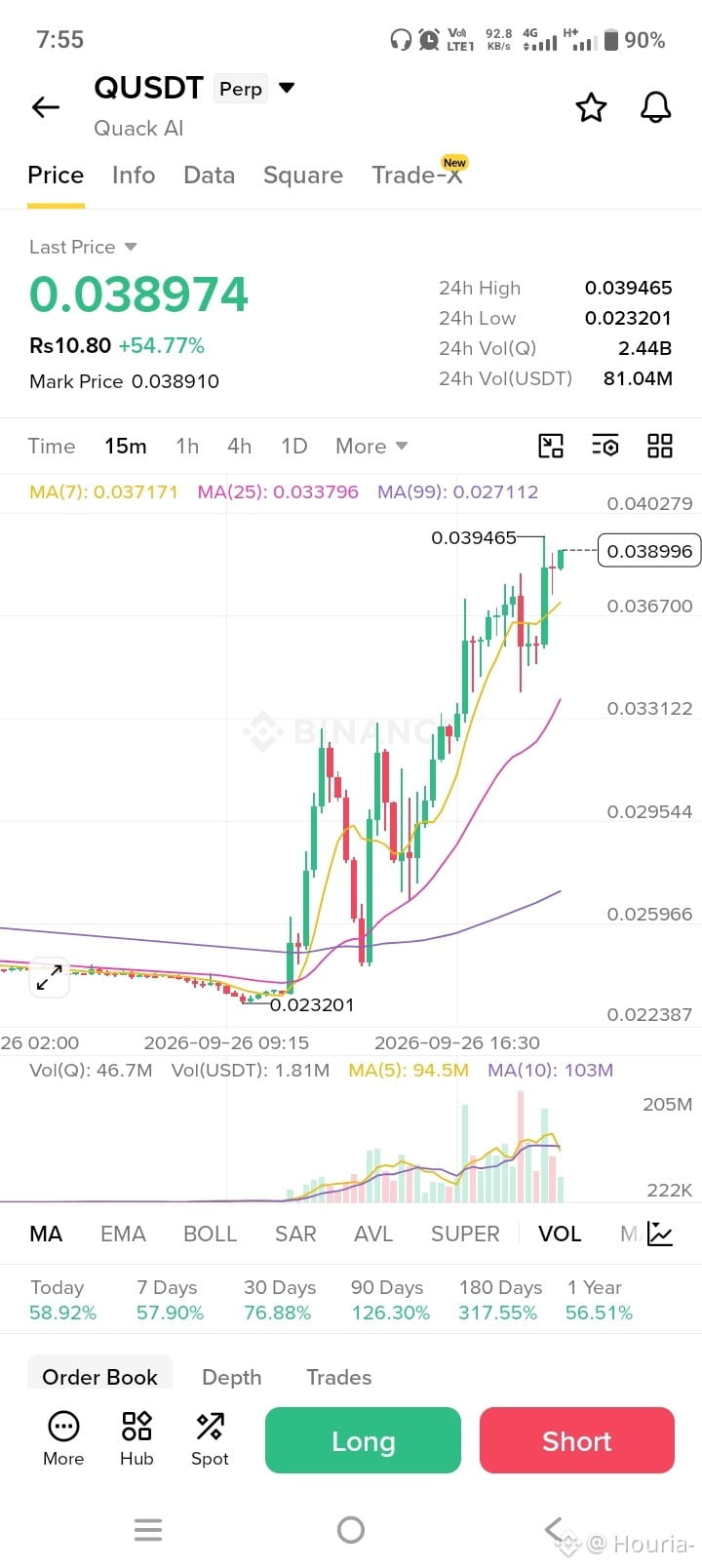
đang di chuyển NHANH 🚀
$QUS vừa được đẩy từ $0.0232 → $0.0395, và biểu đồ 15M vẫn đang thể hiện một cấu trúc tăng giá mạnh.
Điểm mình thích ở đây là giá liên tục tạo ra higher highs + higher lows, trong khi MA7 ($0.0372) vẫn nằm trên MA25 ($0.0338).
Bây giờ vùng quan trọng thì đơn giản:
$0.0395 = đỉnh gần đây
$0.0403 = vùng kháng cự tiếp theo có thể thấy
$0.0367–$0.0372 = vùng hỗ trợ ngắn hạn
Sau một đợt tăng 54%+, biến động có thể rất điên rồ, vì vậy mình muốn thấy sự xác nhận hơn là đuổi theo đỉnh.
QUS hiện đã chính thức nằm trong danh sách theo dõi của mình. 👀📈
$Q
đang di chuyển NHANH 🚀
$QUS vừa được đẩy từ $0.0232 → $0.0395, và biểu đồ 15M vẫn đang thể hiện một cấu trúc tăng giá mạnh.
Điểm mình thích ở đây là giá liên tục tạo ra higher highs + higher lows, trong khi MA7 ($0.0372) vẫn nằm trên MA25 ($0.0338).
Bây giờ vùng quan trọng thì đơn giản:
$0.0395 = đỉnh gần đây
$0.0403 = vùng kháng cự tiếp theo có thể thấy
$0.0367–$0.0372 = vùng hỗ trợ ngắn hạn
Sau một đợt tăng 54%+, biến động có thể rất điên rồ, vì vậy mình muốn thấy sự xác nhận hơn là đuổi theo đỉnh.
QUS hiện đã chính thức nằm trong danh sách theo dõi của mình. 👀📈
đang di chuyển NHANH 🚀
$QUS vừa được đẩy từ $0.0232 → $0.0395, và biểu đồ 15M vẫn đang thể hiện một cấu trúc tăng giá mạnh.
Điểm mình thích ở đây là giá liên tục tạo ra higher highs + higher lows, trong khi MA7 ($0.0372) vẫn nằm trên MA25 ($0.0338).
Bây giờ vùng quan trọng thì đơn giản:
$0.0395 = đỉnh gần đây
$0.0403 = vùng kháng cự tiếp theo có thể thấy
$0.0367–$0.0372 = vùng hỗ trợ ngắn hạn
Sau một đợt tăng 54%+, biến động có thể rất điên rồ, vì vậy mình muốn thấy sự xác nhận hơn là đuổi theo đỉnh.
QUS hiện đã chính thức nằm trong danh sách theo dõi của mình. 👀📈
189
·
--
HIẾM — $RARE
{spot}(RAREUSDT)
👀🔥
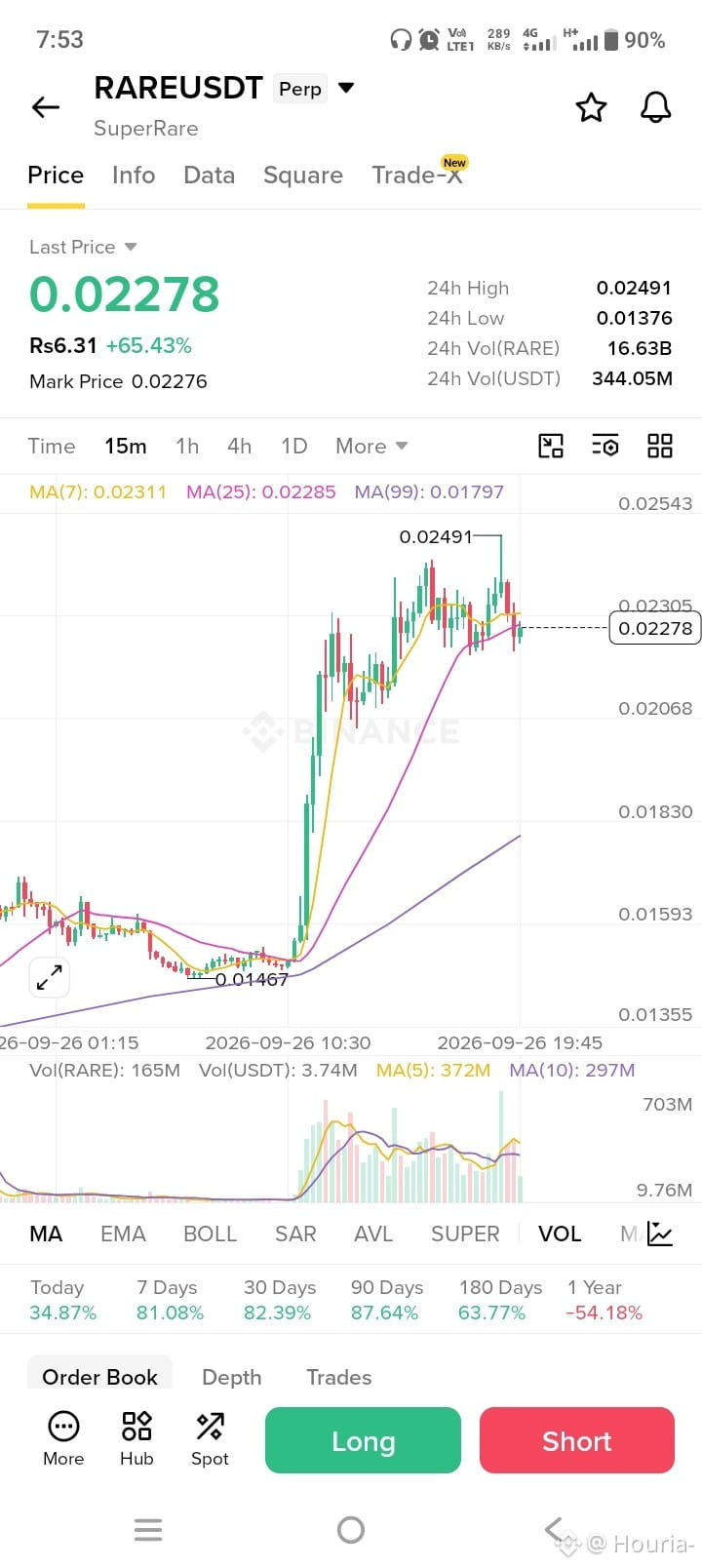
Biểu đồ này đang cho thấy sự bứt phá + tích lũy, chứ không phải một cây nến ngẫu nhiên.
$RARE đã được đẩy từ quanh mức 0.0147 USD → 0.0249 USD, và sau cú tăng mạnh đó, giá vẫn đang giữ gần 0.0228 USD thay vì hoàn toàn quay đầu và xóa sạch đà bơm.
Cấu trúc khung 15M vẫn đang duy trì ở mức cao, với MA25 quanh 0.02285 USD đóng vai trò là một vùng quan trọng cần theo dõi.
Nếu người mua giành lại mốc 0.0235 USD, đỉnh gần đây 0.02491 sẽ lại được chú ý.
Nếu mốc đỉnh đó bị phá vỡ kèm khối lượng, mọi thứ có thể sẽ rất thú vị.
Mình đang theo dõi cấu trúc, không đuổi theo cây nến. 📈
$RARE chắc chắn nằm trong tầm ngắm của mình. 🔥
HIẾM — $RARE
👀🔥
Biểu đồ này đang cho thấy sự bứt phá + tích lũy, chứ không phải một cây nến ngẫu nhiên.
$RARE đã được đẩy từ quanh mức 0.0147 USD → 0.0249 USD, và sau cú tăng mạnh đó, giá vẫn đang giữ gần 0.0228 USD thay vì hoàn toàn quay đầu và xóa sạch đà bơm.
Cấu trúc khung 15M vẫn đang duy trì ở mức cao, với MA25 quanh 0.02285 USD đóng vai trò là một vùng quan trọng cần theo dõi.
Nếu người mua giành lại mốc 0.0235 USD, đỉnh gần đây 0.02491 sẽ lại được chú ý.
Nếu mốc đỉnh đó bị phá vỡ kèm khối lượng, mọi thứ có thể sẽ rất thú vị.
Mình đang theo dõi cấu trúc, không đuổi theo cây nến. 📈
$RARE chắc chắn nằm trong tầm ngắm của mình. 🔥
👀🔥
Biểu đồ này đang cho thấy sự bứt phá + tích lũy, chứ không phải một cây nến ngẫu nhiên.
$RARE đã được đẩy từ quanh mức 0.0147 USD → 0.0249 USD, và sau cú tăng mạnh đó, giá vẫn đang giữ gần 0.0228 USD thay vì hoàn toàn quay đầu và xóa sạch đà bơm.
Cấu trúc khung 15M vẫn đang duy trì ở mức cao, với MA25 quanh 0.02285 USD đóng vai trò là một vùng quan trọng cần theo dõi.
Nếu người mua giành lại mốc 0.0235 USD, đỉnh gần đây 0.02491 sẽ lại được chú ý.
Nếu mốc đỉnh đó bị phá vỡ kèm khối lượng, mọi thứ có thể sẽ rất thú vị.
Mình đang theo dõi cấu trúc, không đuổi theo cây nến. 📈
$RARE chắc chắn nằm trong tầm ngắm của mình. 🔥
205
·
--
$PHA
{future}(PHAUSDT)
ka move ab aur interesting ho gaya 👀
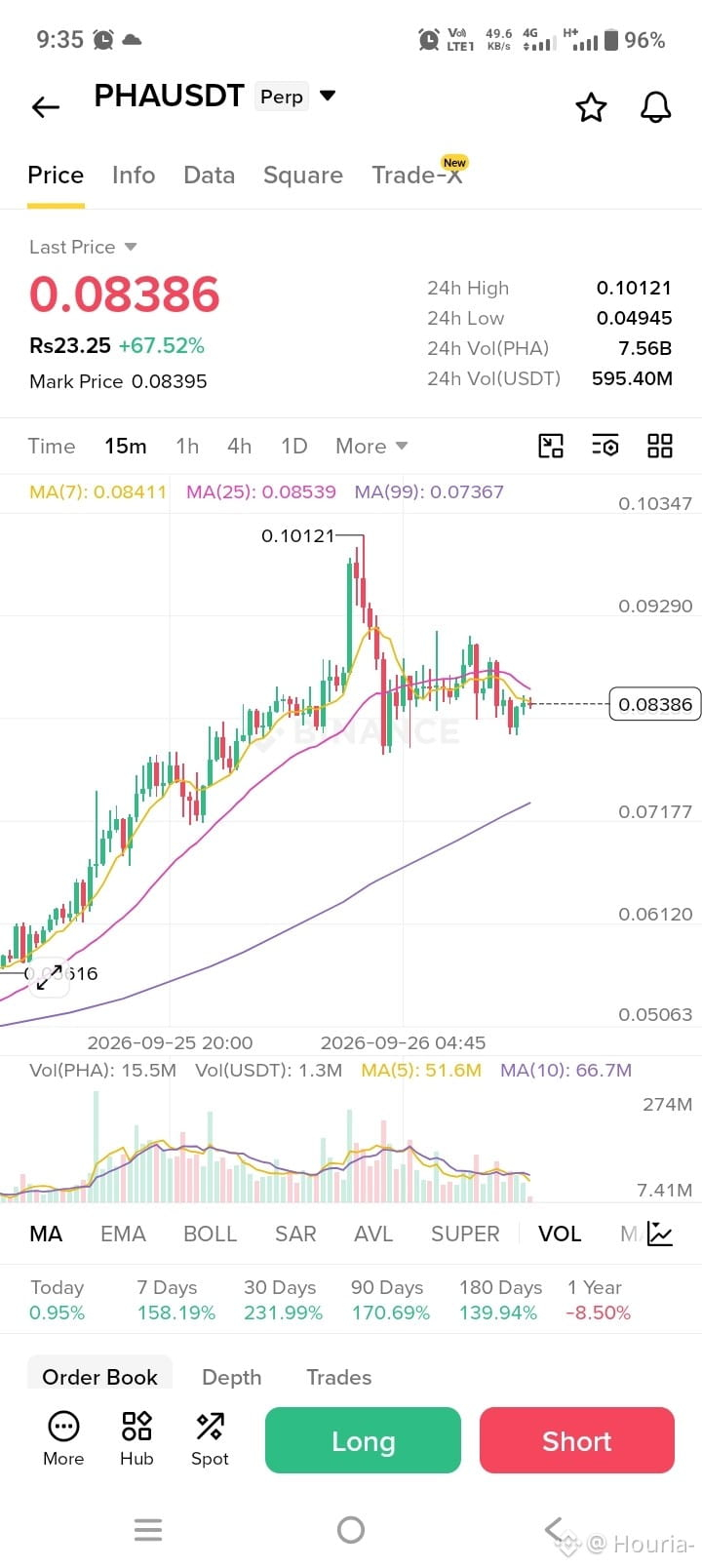
$PHA ne $0.1012 tak push kiya, phir sharp pullback ke baad ab around $0.0839 par consolidate kar raha hai.
15M chart mein price $0.084–$0.085 zone ke around struggle kar raha hai, jabke MA99 ~$0.0737 abhi neeche support structure de rahi hai.
Mujhe yahan chase karne se zyada confirmation + volume important lag raha hai.
Agar buyers momentum wapas build karte hain, $0.0929 → $0.1012 zone dobara interesting ho sakta hai.
Fast pump ke baad market patience test karta hai. 📊
$PHA
ka move ab aur interesting ho gaya 👀
$PHA ne $0.1012 tak push kiya, phir sharp pullback ke baad ab around $0.0839 par consolidate kar raha hai.
15M chart mein price $0.084–$0.085 zone ke around struggle kar raha hai, jabke MA99 ~$0.0737 abhi neeche support structure de rahi hai.
Mujhe yahan chase karne se zyada confirmation + volume important lag raha hai.
Agar buyers momentum wapas build karte hain, $0.0929 → $0.1012 zone dobara interesting ho sakta hai.
Fast pump ke baad market patience test karta hai. 📊
ka move ab aur interesting ho gaya 👀
$PHA ne $0.1012 tak push kiya, phir sharp pullback ke baad ab around $0.0839 par consolidate kar raha hai.
15M chart mein price $0.084–$0.085 zone ke around struggle kar raha hai, jabke MA99 ~$0.0737 abhi neeche support structure de rahi hai.
Mujhe yahan chase karne se zyada confirmation + volume important lag raha hai.
Agar buyers momentum wapas build karte hain, $0.0929 → $0.1012 zone dobara interesting ho sakta hai.
Fast pump ke baad market patience test karta hai. 📊
92
·
--
$PHA
{spot}(PHAUSDT)
đang di chuyển với lực đà rất mạnh 👀
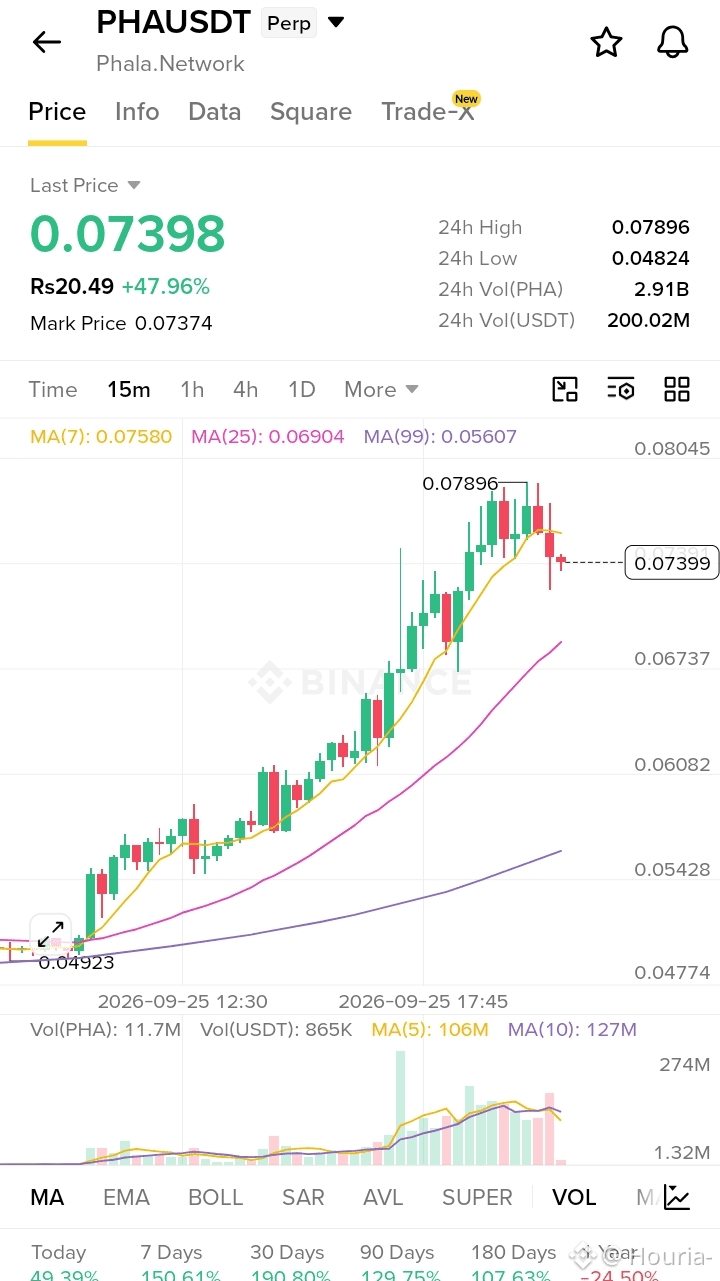
PHAUSDT đang tăng khoảng 48% hôm nay, nhưng điều thu hút sự chú ý của tôi là cấu trúc phía sau đợt tăng. Giá đã đẩy từ khoảng $0.049 → $0.079, trong khi xu hướng khung 15m vẫn đang giữ vững trên MA25 gần $0.069.
Hiện tại, giá đang hạ nhiệt quanh $0.074 sau khi kiểm tra mức $0.079.
Nếu người mua bảo vệ được vùng này, nhịp tiếp theo có thể sẽ trở nên thú vị. Nhưng sau một đợt tăng mạnh như vậy, tôi thà theo dõi nhịp điều chỉnh hơn là đuổi theo một cây nến xanh.
Đà đang rất mạnh — kiên nhẫn quan trọng hơn ở đây. 📊
$PHA
đang di chuyển với lực đà rất mạnh 👀
PHAUSDT đang tăng khoảng 48% hôm nay, nhưng điều thu hút sự chú ý của tôi là cấu trúc phía sau đợt tăng. Giá đã đẩy từ khoảng $0.049 → $0.079, trong khi xu hướng khung 15m vẫn đang giữ vững trên MA25 gần $0.069.
Hiện tại, giá đang hạ nhiệt quanh $0.074 sau khi kiểm tra mức $0.079.
Nếu người mua bảo vệ được vùng này, nhịp tiếp theo có thể sẽ trở nên thú vị. Nhưng sau một đợt tăng mạnh như vậy, tôi thà theo dõi nhịp điều chỉnh hơn là đuổi theo một cây nến xanh.
Đà đang rất mạnh — kiên nhẫn quan trọng hơn ở đây. 📊
đang di chuyển với lực đà rất mạnh 👀
PHAUSDT đang tăng khoảng 48% hôm nay, nhưng điều thu hút sự chú ý của tôi là cấu trúc phía sau đợt tăng. Giá đã đẩy từ khoảng $0.049 → $0.079, trong khi xu hướng khung 15m vẫn đang giữ vững trên MA25 gần $0.069.
Hiện tại, giá đang hạ nhiệt quanh $0.074 sau khi kiểm tra mức $0.079.
Nếu người mua bảo vệ được vùng này, nhịp tiếp theo có thể sẽ trở nên thú vị. Nhưng sau một đợt tăng mạnh như vậy, tôi thà theo dõi nhịp điều chỉnh hơn là đuổi theo một cây nến xanh.
Đà đang rất mạnh — kiên nhẫn quan trọng hơn ở đây. 📊
228
·
--
$XPL hôm nay đang cho thấy một đà tăng đáng kể 📈
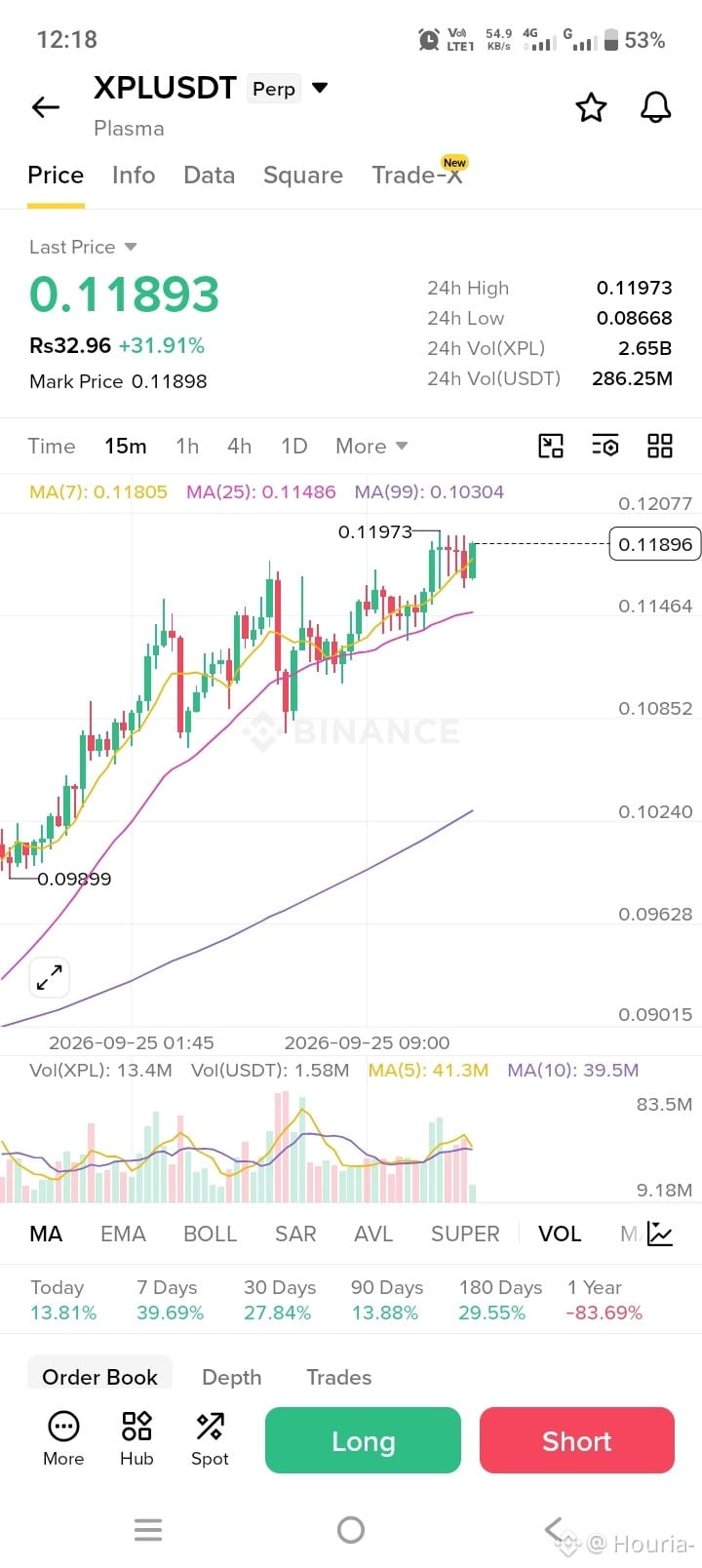
XPLUSDT đang giữ quanh mức $0.119 sau một cú bứt phá mạnh, với giá vẫn nằm trên MA(7), MA(25) và MA(99) trên biểu đồ khung 15 phút. Điều này giữ cho cấu trúc ngắn hạn vẫn mang thiên hướng tăng.
Mức quan trọng tôi đang theo dõi là $0.1197 — nếu có một cú bứt phá rõ ràng kèm khối lượng, có thể mở ra đường hướng tới $0.1207+.
Nếu đà tăng hạ nhiệt, $0.1145–$0.1150 trông giống như một vùng quan trọng cần được giữ.
Tôi sẽ không đuổi theo một nến xanh tại đây. Hãy để biểu đồ xác nhận bước đi tiếp theo. 👀
#XPL #XPLUSDT #Crypto #Binance #Trading
$XPL hôm nay đang cho thấy một đà tăng đáng kể 📈
XPLUSDT đang giữ quanh mức $0.119 sau một cú bứt phá mạnh, với giá vẫn nằm trên MA(7), MA(25) và MA(99) trên biểu đồ khung 15 phút. Điều này giữ cho cấu trúc ngắn hạn vẫn mang thiên hướng tăng.
Mức quan trọng tôi đang theo dõi là $0.1197 — nếu có một cú bứt phá rõ ràng kèm khối lượng, có thể mở ra đường hướng tới $0.1207+.
Nếu đà tăng hạ nhiệt, $0.1145–$0.1150 trông giống như một vùng quan trọng cần được giữ.
Tôi sẽ không đuổi theo một nến xanh tại đây. Hãy để biểu đồ xác nhận bước đi tiếp theo. 👀
#XPL #XPLUSDT #Crypto #Binance #Trading
XPLUSDT đang giữ quanh mức $0.119 sau một cú bứt phá mạnh, với giá vẫn nằm trên MA(7), MA(25) và MA(99) trên biểu đồ khung 15 phút. Điều này giữ cho cấu trúc ngắn hạn vẫn mang thiên hướng tăng.
Mức quan trọng tôi đang theo dõi là $0.1197 — nếu có một cú bứt phá rõ ràng kèm khối lượng, có thể mở ra đường hướng tới $0.1207+.
Nếu đà tăng hạ nhiệt, $0.1145–$0.1150 trông giống như một vùng quan trọng cần được giữ.
Tôi sẽ không đuổi theo một nến xanh tại đây. Hãy để biểu đồ xác nhận bước đi tiếp theo. 👀
#XPL #XPLUSDT #Crypto #Binance #Trading
133
·
--
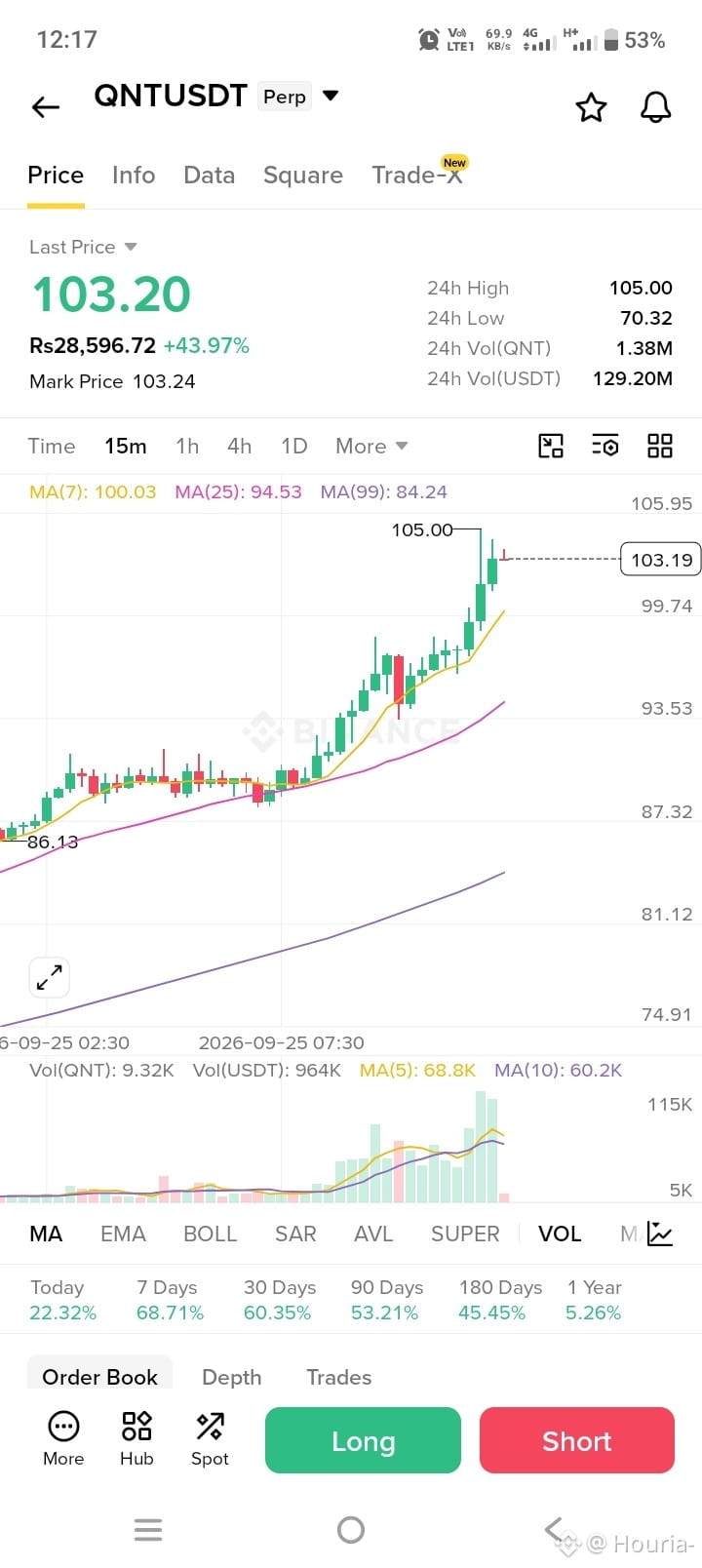
$QNT USDT Đà đang trở nên thú vị 👀🔥
QNT đang thể hiện một cấu trúc khung 15M mạnh, giá quanh $103.20 sau khi đẩy lên gần vùng $105.
Điểm nổi bật là sự đồng pha: giá đang nằm trên MA7 ($100.03), MA25 ($94.53) và MA99 ($84.24), trong khi khối lượng giao dịch cũng tăng lên cùng với đà đi lên.
Hiện tại vùng quan trọng là $105. Một cú breakout sạch kèm khối lượng có thể báo hiệu một nhịp tăng tiếp theo, trong khi bị từ chối có thể dẫn đến việc retest về các đường MA ngắn hạn.
Mình sẽ không đuổi theo cây nến tại đây.
Hãy để QNT xác nhận breakout trước — sự kiên nhẫn thường mang lại một setup rõ ràng hơn. 📊🌿
$QNT USDT Đà đang trở nên thú vị 👀🔥
QNT đang thể hiện một cấu trúc khung 15M mạnh, giá quanh $103.20 sau khi đẩy lên gần vùng $105.
Điểm nổi bật là sự đồng pha: giá đang nằm trên MA7 ($100.03), MA25 ($94.53) và MA99 ($84.24), trong khi khối lượng giao dịch cũng tăng lên cùng với đà đi lên.
Hiện tại vùng quan trọng là $105. Một cú breakout sạch kèm khối lượng có thể báo hiệu một nhịp tăng tiếp theo, trong khi bị từ chối có thể dẫn đến việc retest về các đường MA ngắn hạn.
Mình sẽ không đuổi theo cây nến tại đây.
Hãy để QNT xác nhận breakout trước — sự kiên nhẫn thường mang lại một setup rõ ràng hơn. 📊🌿
QNT đang thể hiện một cấu trúc khung 15M mạnh, giá quanh $103.20 sau khi đẩy lên gần vùng $105.
Điểm nổi bật là sự đồng pha: giá đang nằm trên MA7 ($100.03), MA25 ($94.53) và MA99 ($84.24), trong khi khối lượng giao dịch cũng tăng lên cùng với đà đi lên.
Hiện tại vùng quan trọng là $105. Một cú breakout sạch kèm khối lượng có thể báo hiệu một nhịp tăng tiếp theo, trong khi bị từ chối có thể dẫn đến việc retest về các đường MA ngắn hạn.
Mình sẽ không đuổi theo cây nến tại đây.
Hãy để QNT xác nhận breakout trước — sự kiên nhẫn thường mang lại một setup rõ ràng hơn. 📊🌿
190
·
--
$LSK
{future}(LSKUSDT)
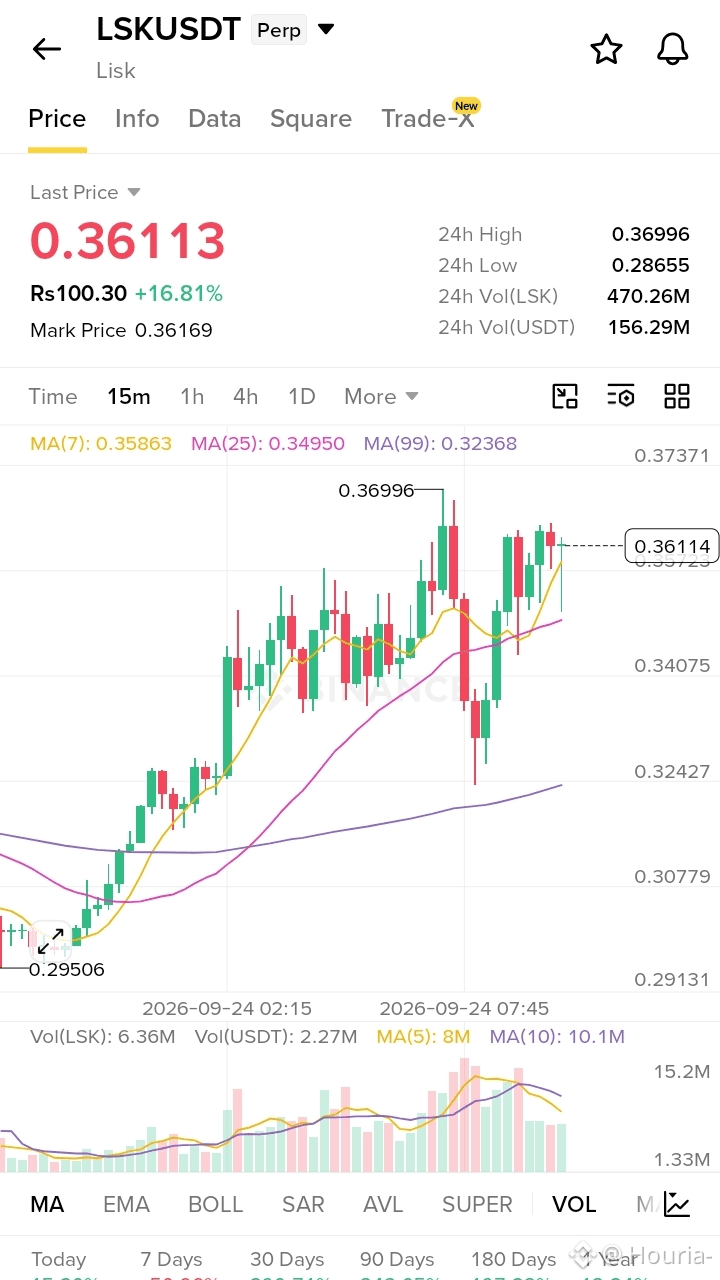
Người Mua Vẫn Đang Giữ Cấu Trúc 👀📊
LSK đang cho thấy một sự phục hồi khá “sạch” trên biểu đồ 15M. Giá đang quanh $0.361, nằm trên MA7, MA25 và MA99, trong khi đỉnh gần đây ở khoảng $0.370.
Điểm nổi bật với tôi là cú bật mạnh sau đợt giảm — người mua đã quay lại và đẩy giá trở lại gần đỉnh trước.
Giờ tôi đang theo dõi sát mốc $0.370. Một đột phá rõ ràng kèm khối lượng có thể giúp đà tiếp tục, còn nếu bị từ chối tại đó thì có thể lại xảy ra một đợt pullback.
Xu hướng trông có vẻ mạnh, nhưng tôi thà đợi xác nhận hơn là đuổi theo. 🌿
$LSK
Người Mua Vẫn Đang Giữ Cấu Trúc 👀📊
LSK đang cho thấy một sự phục hồi khá “sạch” trên biểu đồ 15M. Giá đang quanh $0.361, nằm trên MA7, MA25 và MA99, trong khi đỉnh gần đây ở khoảng $0.370.
Điểm nổi bật với tôi là cú bật mạnh sau đợt giảm — người mua đã quay lại và đẩy giá trở lại gần đỉnh trước.
Giờ tôi đang theo dõi sát mốc $0.370. Một đột phá rõ ràng kèm khối lượng có thể giúp đà tiếp tục, còn nếu bị từ chối tại đó thì có thể lại xảy ra một đợt pullback.
Xu hướng trông có vẻ mạnh, nhưng tôi thà đợi xác nhận hơn là đuổi theo. 🌿
Người Mua Vẫn Đang Giữ Cấu Trúc 👀📊
LSK đang cho thấy một sự phục hồi khá “sạch” trên biểu đồ 15M. Giá đang quanh $0.361, nằm trên MA7, MA25 và MA99, trong khi đỉnh gần đây ở khoảng $0.370.
Điểm nổi bật với tôi là cú bật mạnh sau đợt giảm — người mua đã quay lại và đẩy giá trở lại gần đỉnh trước.
Giờ tôi đang theo dõi sát mốc $0.370. Một đột phá rõ ràng kèm khối lượng có thể giúp đà tiếp tục, còn nếu bị từ chối tại đó thì có thể lại xảy ra một đợt pullback.
Xu hướng trông có vẻ mạnh, nhưng tôi thà đợi xác nhận hơn là đuổi theo. 🌿
1
154
·
--
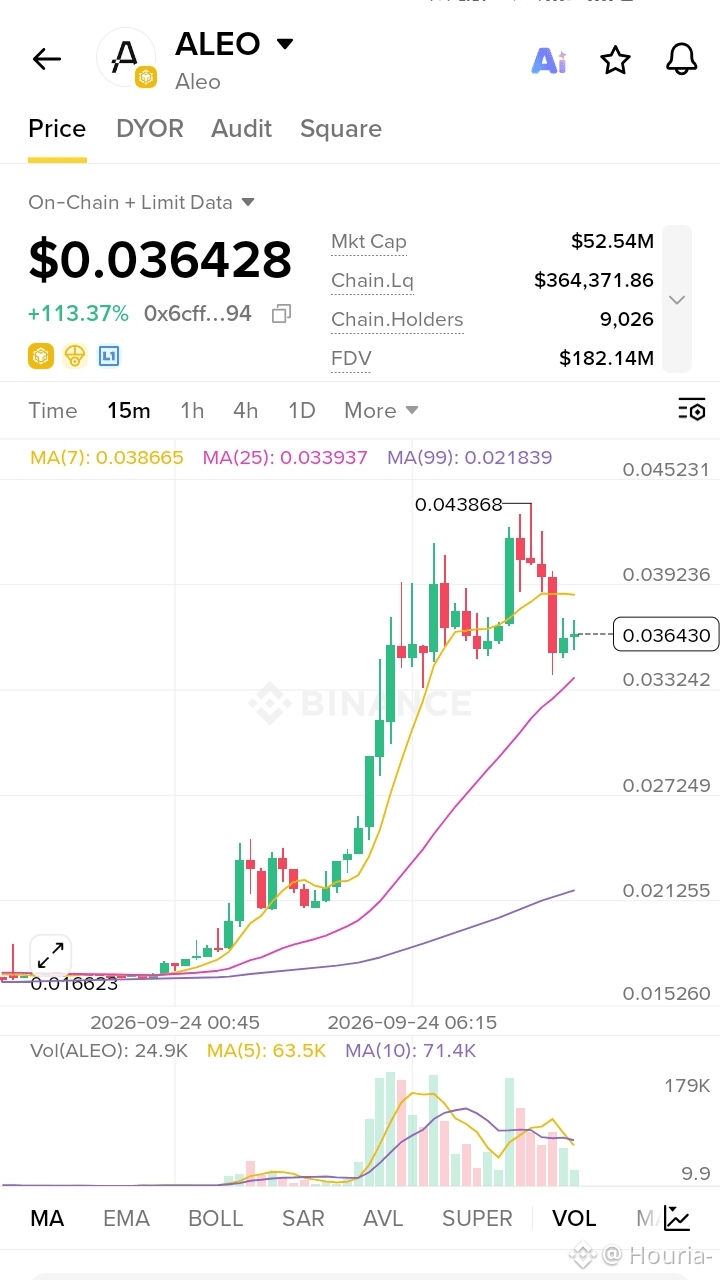
$ALEO Đà tăng mạnh, nhưng giờ đây mới là bài kiểm tra thực sự 👀
ALEO đã tăng +113% hôm nay, và biểu đồ 15M cho thấy rõ động lượng đã nhanh chóng tràn vào thị trường như thế nào.
Giá hiện quanh $0.0364, vẫn cao hơn MA25 và MA99, trong khi đỉnh gần đây nằm quanh $0.0439. Sau cú từ chối mạnh đó, giá đang cố gắng ổn định lại thay vì sụp đổ ngay lập tức.
Với tôi, phần thú vị là điều gì sẽ xảy ra tiếp theo:
ALEO có thể lấy lại vùng $0.039–0.044 với khối lượng hay cần thêm thời gian để hạ nhiệt?
Tôi sẽ không đuổi theo cú bơm ở đây.
Hãy để biểu đồ xác nhận bước đi tiếp theo. 📊🌿
$ALEO Đà tăng mạnh, nhưng giờ đây mới là bài kiểm tra thực sự 👀
ALEO đã tăng +113% hôm nay, và biểu đồ 15M cho thấy rõ động lượng đã nhanh chóng tràn vào thị trường như thế nào.
Giá hiện quanh $0.0364, vẫn cao hơn MA25 và MA99, trong khi đỉnh gần đây nằm quanh $0.0439. Sau cú từ chối mạnh đó, giá đang cố gắng ổn định lại thay vì sụp đổ ngay lập tức.
Với tôi, phần thú vị là điều gì sẽ xảy ra tiếp theo:
ALEO có thể lấy lại vùng $0.039–0.044 với khối lượng hay cần thêm thời gian để hạ nhiệt?
Tôi sẽ không đuổi theo cú bơm ở đây.
Hãy để biểu đồ xác nhận bước đi tiếp theo. 📊🌿
ALEO đã tăng +113% hôm nay, và biểu đồ 15M cho thấy rõ động lượng đã nhanh chóng tràn vào thị trường như thế nào.
Giá hiện quanh $0.0364, vẫn cao hơn MA25 và MA99, trong khi đỉnh gần đây nằm quanh $0.0439. Sau cú từ chối mạnh đó, giá đang cố gắng ổn định lại thay vì sụp đổ ngay lập tức.
Với tôi, phần thú vị là điều gì sẽ xảy ra tiếp theo:
ALEO có thể lấy lại vùng $0.039–0.044 với khối lượng hay cần thêm thời gian để hạ nhiệt?
Tôi sẽ không đuổi theo cú bơm ở đây.
Hãy để biểu đồ xác nhận bước đi tiếp theo. 📊🌿
186
·
--
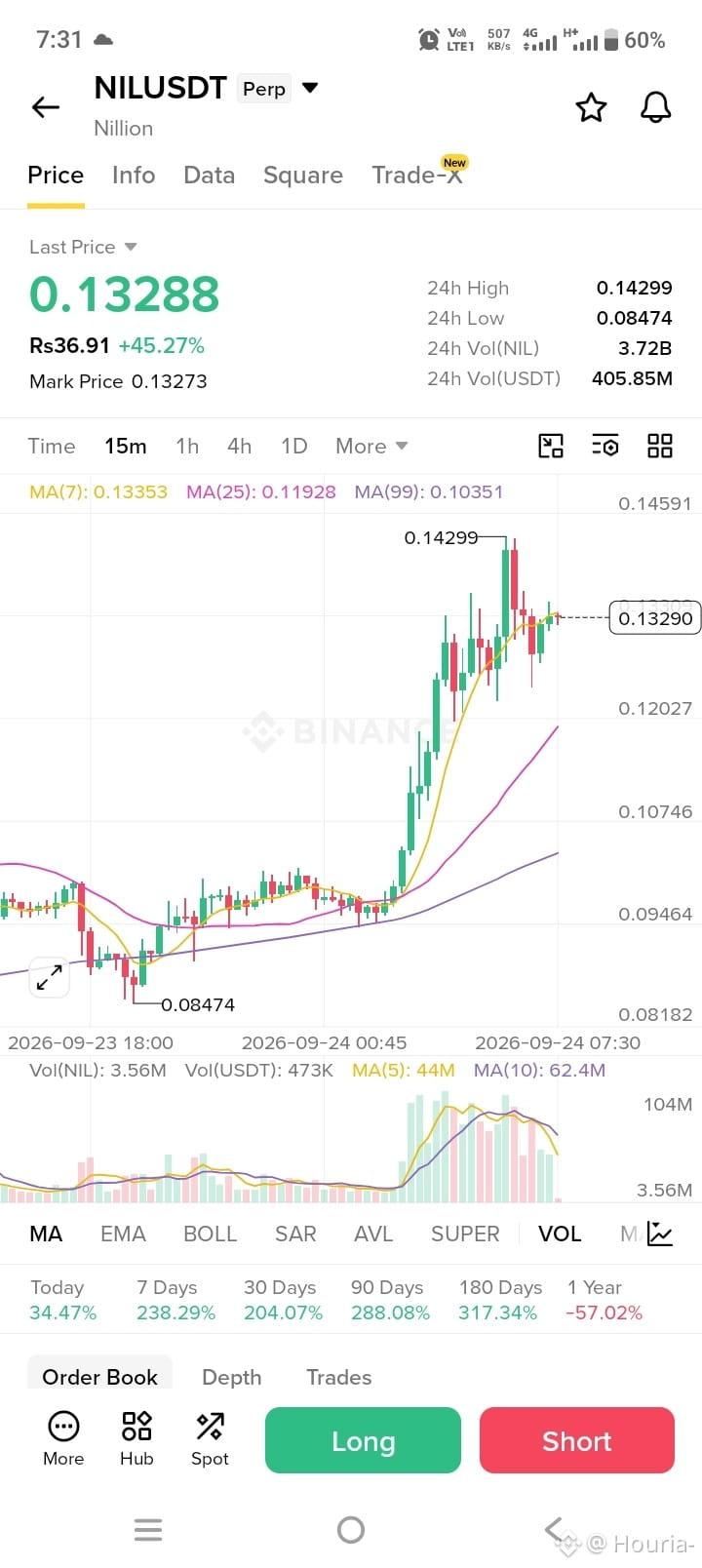
$NIL Động lượng vẫn đang phát biểu 👀🔥
NIL đã có một bước đi mạnh, với giá quanh $0.1329 và mức tăng 24H xấp xỉ 45%.
Điểm mình thích trên biểu đồ 15M này là cấu trúc: giá vẫn đang giao dịch cao hơn MA25 ($0.1193) và MA99 ($0.1035), trong khi đợt tăng đi kèm với sự mở rộng khối lượng khá rõ ràng.
Nhưng sau một cú bơm nhanh như vậy, mình sẽ không đuổi theo một cách mù quáng. Đỉnh gần đây quanh $0.1430 là mức mình đang theo dõi sát.
Nếu bên mua giành lại khu vực đó kèm theo khối lượng, thì động lượng có thể vẫn thú vị. Nếu không, một nhịp điều chỉnh lành mạnh sẽ hoàn toàn bình thường.
Động lượng mạnh thì rất hấp dẫn, nhưng xác nhận quan trọng hơn nỗi FOMO. 📊🌿
$NIL Động lượng vẫn đang phát biểu 👀🔥
NIL đã có một bước đi mạnh, với giá quanh $0.1329 và mức tăng 24H xấp xỉ 45%.
Điểm mình thích trên biểu đồ 15M này là cấu trúc: giá vẫn đang giao dịch cao hơn MA25 ($0.1193) và MA99 ($0.1035), trong khi đợt tăng đi kèm với sự mở rộng khối lượng khá rõ ràng.
Nhưng sau một cú bơm nhanh như vậy, mình sẽ không đuổi theo một cách mù quáng. Đỉnh gần đây quanh $0.1430 là mức mình đang theo dõi sát.
Nếu bên mua giành lại khu vực đó kèm theo khối lượng, thì động lượng có thể vẫn thú vị. Nếu không, một nhịp điều chỉnh lành mạnh sẽ hoàn toàn bình thường.
Động lượng mạnh thì rất hấp dẫn, nhưng xác nhận quan trọng hơn nỗi FOMO. 📊🌿
NIL đã có một bước đi mạnh, với giá quanh $0.1329 và mức tăng 24H xấp xỉ 45%.
Điểm mình thích trên biểu đồ 15M này là cấu trúc: giá vẫn đang giao dịch cao hơn MA25 ($0.1193) và MA99 ($0.1035), trong khi đợt tăng đi kèm với sự mở rộng khối lượng khá rõ ràng.
Nhưng sau một cú bơm nhanh như vậy, mình sẽ không đuổi theo một cách mù quáng. Đỉnh gần đây quanh $0.1430 là mức mình đang theo dõi sát.
Nếu bên mua giành lại khu vực đó kèm theo khối lượng, thì động lượng có thể vẫn thú vị. Nếu không, một nhịp điều chỉnh lành mạnh sẽ hoàn toàn bình thường.
Động lượng mạnh thì rất hấp dẫn, nhưng xác nhận quan trọng hơn nỗi FOMO. 📊🌿
1
228
·
--
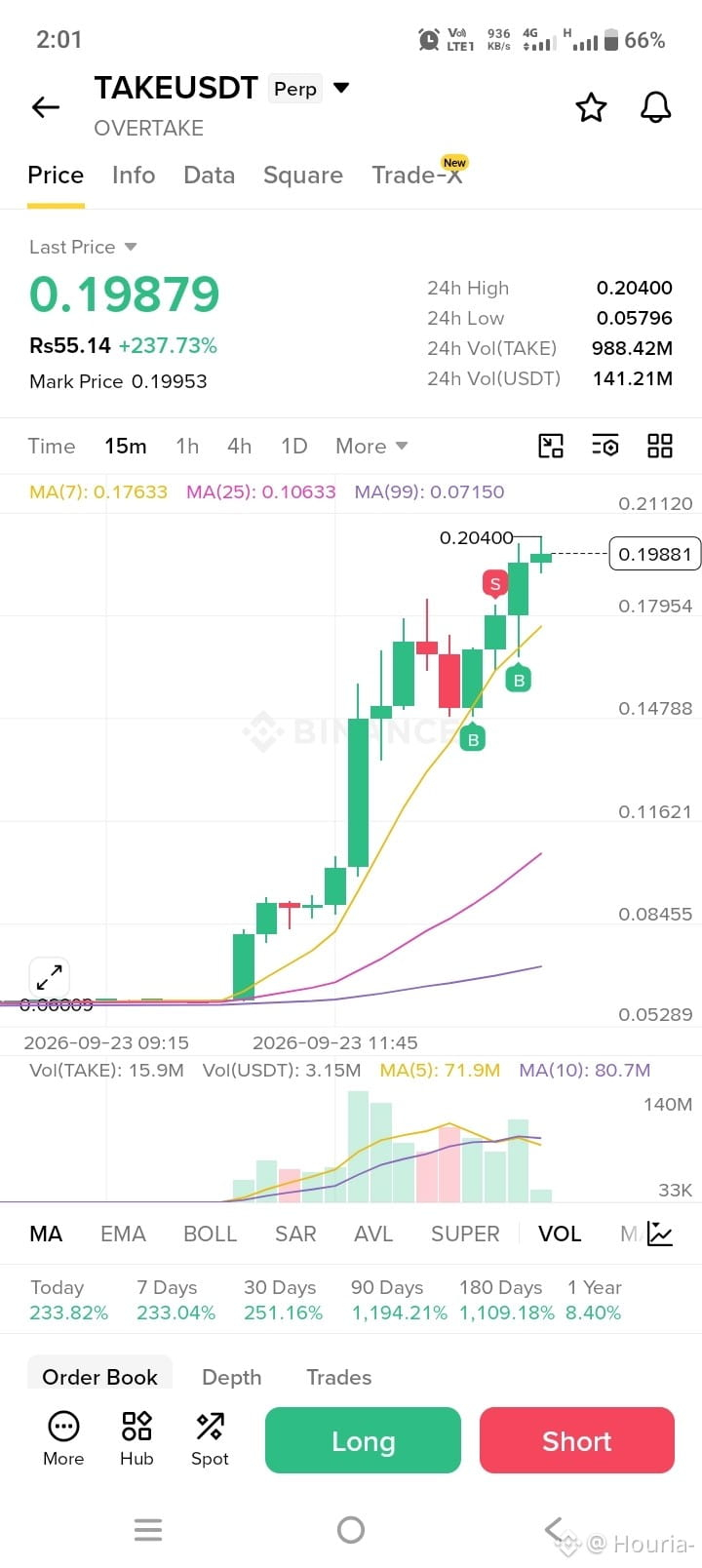
🚀 $TAKE PERP - ĐỘNG THÁI BÙNG NỔ!** 🚀
Quả là một màn bứt phá ngoạn mục! 📈
💰 Giá hiện tại: **$0.19879**
🔥 Thay đổi 24h: **+237.73%**
📊 Mức cao 24h: $0.20400
📉 Mức thấp 24h: $0.05796
Chỉ trong một ngày, đồng coin này đã tăng gấp ba giá trị! Đường MA(7) cắt vàng xác nhận rằng áp lực từ người bán đã bị phá vỡ rõ ràng, và phe bò đã nắm toàn quyền kiểm soát biểu đồ. 💪
📌 Thống kê:
• Hôm nay: +233.82%
• 7 Ngày: +233.04%
• 30 Ngày: +251.16%
• 90 Ngày: +1,194.21% 🤯
Khối lượng cũng đang ủng hộ đợt tăng này rất mạnh - 141M+ USDT trong khối lượng 24h cho thấy đây không chỉ là một cú bơm nhỏ, mà là sự quan tâm thật sự từ thị trường.
#TAKEUSDT
---
Bạn muốn mình điều chỉnh giọng điệu hoặc độ dài cho một nền tảng cụ thể (Twitter/X, Instagram, Telegram) không?
🚀 $TAKE PERP - ĐỘNG THÁI BÙNG NỔ!** 🚀
Quả là một màn bứt phá ngoạn mục! 📈
💰 Giá hiện tại: **$0.19879**
🔥 Thay đổi 24h: **+237.73%**
📊 Mức cao 24h: $0.20400
📉 Mức thấp 24h: $0.05796
Chỉ trong một ngày, đồng coin này đã tăng gấp ba giá trị! Đường MA(7) cắt vàng xác nhận rằng áp lực từ người bán đã bị phá vỡ rõ ràng, và phe bò đã nắm toàn quyền kiểm soát biểu đồ. 💪
📌 Thống kê:
• Hôm nay: +233.82%
• 7 Ngày: +233.04%
• 30 Ngày: +251.16%
• 90 Ngày: +1,194.21% 🤯
Khối lượng cũng đang ủng hộ đợt tăng này rất mạnh - 141M+ USDT trong khối lượng 24h cho thấy đây không chỉ là một cú bơm nhỏ, mà là sự quan tâm thật sự từ thị trường.
#TAKEUSDT
---
Bạn muốn mình điều chỉnh giọng điệu hoặc độ dài cho một nền tảng cụ thể (Twitter/X, Instagram, Telegram) không?
Quả là một màn bứt phá ngoạn mục! 📈
💰 Giá hiện tại: **$0.19879**
🔥 Thay đổi 24h: **+237.73%**
📊 Mức cao 24h: $0.20400
📉 Mức thấp 24h: $0.05796
Chỉ trong một ngày, đồng coin này đã tăng gấp ba giá trị! Đường MA(7) cắt vàng xác nhận rằng áp lực từ người bán đã bị phá vỡ rõ ràng, và phe bò đã nắm toàn quyền kiểm soát biểu đồ. 💪
📌 Thống kê:
• Hôm nay: +233.82%
• 7 Ngày: +233.04%
• 30 Ngày: +251.16%
• 90 Ngày: +1,194.21% 🤯
Khối lượng cũng đang ủng hộ đợt tăng này rất mạnh - 141M+ USDT trong khối lượng 24h cho thấy đây không chỉ là một cú bơm nhỏ, mà là sự quan tâm thật sự từ thị trường.
#TAKEUSDT
---
Bạn muốn mình điều chỉnh giọng điệu hoặc độ dài cho một nền tảng cụ thể (Twitter/X, Instagram, Telegram) không?
276
Đăng nhập để khám phá thêm nội dung
Tham gia cùng người dùng tiền mã hóa toàn cầu trên Binance Square
⚡️ Nhận thông tin mới nhất và hữu ích về tiền mã hóa.
💬 Được tin cậy bởi sàn giao dịch tiền mã hóa lớn nhất thế giới.
👍 Khám phá những thông tin chuyên sâu thực tế từ những nhà sáng tạo đã xác minh.
Email / Số điện thoại
Chủ đề thịnh hành
TheoDõiFOMC
118,574 lượt xem
668 đang thảo luận
#TheoDõiFOMC
🔥 FOMC lại bắt đầu trở thành tâm điểm của crypto
Bitcoin vừa bước vào tháng 10, nhưng câu chuyện lớn phía sau thị trường lúc này không chỉ là giá.
Các trader đang bắt đầu hướng sự chú ý về cuộc họp FOMC ngày 27–28/10. Sau một loạt phát biểu mới từ quan chức Fed, kỳ vọng về việc tăng lãi suất ngay trong tháng 10 đã giảm đáng kể.
Điều thú vị là trước đó thị trường từng đặt cược khá cao vào một đợt tăng tiếp theo.
Giờ thì mọi thứ lại quay sang chờ dữ liệu kinh tế và những phát biểu tiếp theo của Fed.
Với crypto, chỉ cần kỳ vọng lãi suất thay đổi mạnh là $BTC có thể lập tức biến động, rồi kéo theo cả thị trường altcoin.
Tháng 10 mới bắt đầu mà macro đã có chuyện để hóng rồi 👀
#Bitcoin #Crypto #Macro #Fed #BinanceSquare
X LEI
·0 lượt thích
·154 lượt xem
TinFed
102,448 lượt xem
469 đang thảo luận
RippleLaunchesXRPAsiaInSingapore
0 lượt xem
0 đang thảo luận