

Crypto Inertia
628 Bài đăng
Crypto Inertia
Báo cáo
Chặn người dùng

Người nắm giữ BNB
Trader tần suất cao
{thời gian} năm
123 Đang theo dõi
126 Người theo dõi
247 Đã thích
Bài đăng
Tất cả
Trích dẫn
PINNED
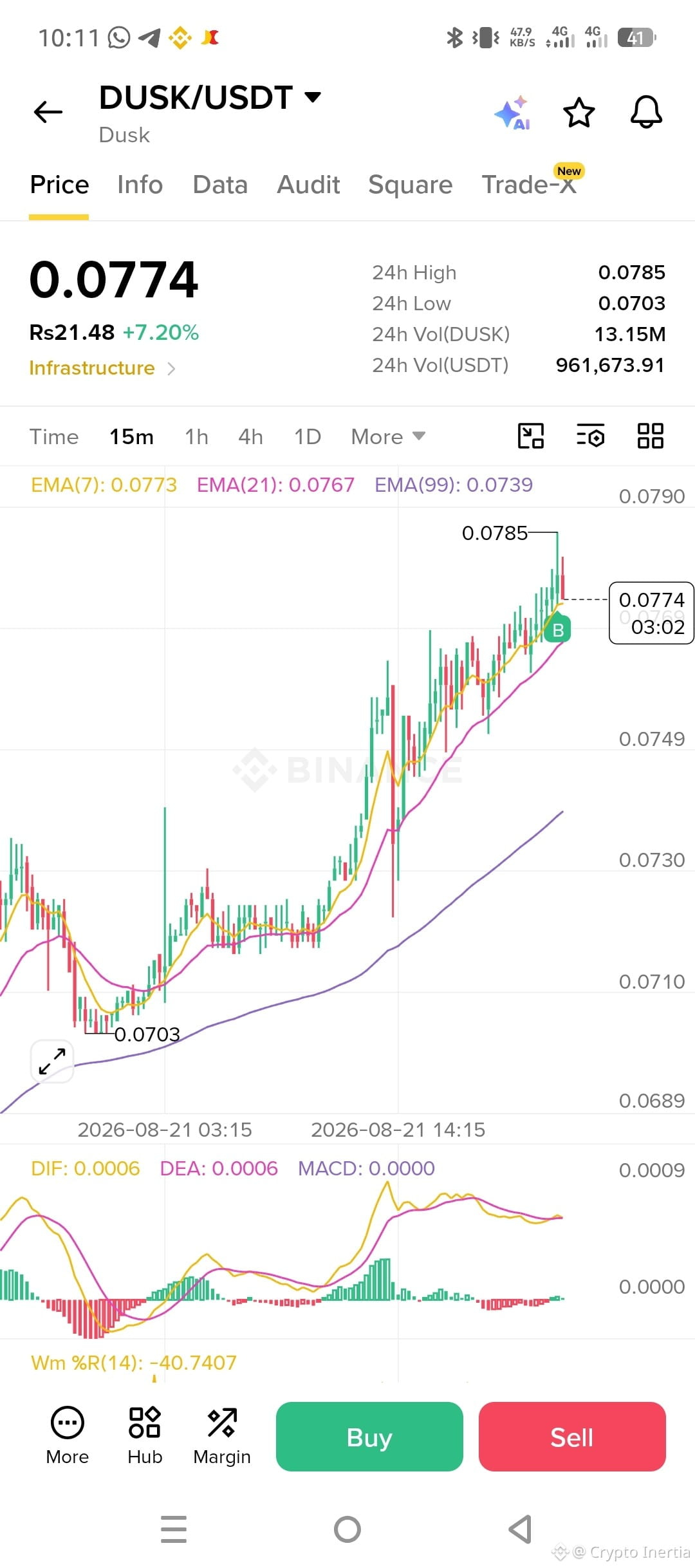
#dusk $DUSK @Dusk_Foundation Tôi đã ngồi với lệnh DUSK của mình và một con số cứ ám ảnh tôi.
Vào lúc 0.0630. Giá hiện tại 0.0779. Tăng khoảng 23%. Trông ổn trên giấy tờ. Nhưng Williams %R đang ở -3.97. Quá mua sâu. MACD vẫn dương và bộ EMA đang nghiêng về xu hướng tăng — 7 nằm trên 21, và 21 nằm trên 99. Mọi thứ đều nói rằng là một xu hướng tăng. Trừ tín hiệu quá mua.
Điều đó cho tôi biết gì? Hoặc là động lượng đủ mạnh để vượt qua kháng cự 0.0785 và tiếp tục chạy, hoặc là nhịp tăng dễ dàng đã xong và việc bị từ chối sẽ kéo nó quay lại về các đường EMA. Có lẽ là cả hai nếu thành thật — kiểm tra kháng cự rồi sau đó hợp nhất.
Rồi tôi nhìn vào khối lượng giao dịch. Trong 24 giờ, có 13.14M DUSK được giao dịch. Đó là hoạt động thật. Không phải biểu đồ chết. Giá mua trung bình ở 0.0630, giá bán trung bình ở 0.0623. Thị trường cân bằng nhưng nghiêng nhẹ về bên mua. Mức vào lệnh của tôi nằm đúng chỗ mà bên mua đã bước vào.
Thứ tôi thực sự không biết là liệu cú bơm này có được thúc đẩy bởi một chiến dịch hay bởi điều gì sâu hơn trong hệ sinh thái. Các đối tác là có thật. NPEX. Chainlink. EURQ. Nhưng biểu đồ không quan tâm đến thông báo. Nó quan tâm đến thanh khoản và động lượng.
Câu hỏi tôi cứ quay lại — khi tôi nghiên cứu một chuỗi cho một chiến dịch và đồng thời giao dịch nó, tôi đang đọc về dự án hay chỉ đang đọc biểu đồ? $DUSK #dusk
#dusk $DUSK @Dusk Tôi đã ngồi với lệnh DUSK của mình và một con số cứ ám ảnh tôi.
Vào lúc 0.0630. Giá hiện tại 0.0779. Tăng khoảng 23%. Trông ổn trên giấy tờ. Nhưng Williams %R đang ở -3.97. Quá mua sâu. MACD vẫn dương và bộ EMA đang nghiêng về xu hướng tăng — 7 nằm trên 21, và 21 nằm trên 99. Mọi thứ đều nói rằng là một xu hướng tăng. Trừ tín hiệu quá mua.
Điều đó cho tôi biết gì? Hoặc là động lượng đủ mạnh để vượt qua kháng cự 0.0785 và tiếp tục chạy, hoặc là nhịp tăng dễ dàng đã xong và việc bị từ chối sẽ kéo nó quay lại về các đường EMA. Có lẽ là cả hai nếu thành thật — kiểm tra kháng cự rồi sau đó hợp nhất.
Rồi tôi nhìn vào khối lượng giao dịch. Trong 24 giờ, có 13.14M DUSK được giao dịch. Đó là hoạt động thật. Không phải biểu đồ chết. Giá mua trung bình ở 0.0630, giá bán trung bình ở 0.0623. Thị trường cân bằng nhưng nghiêng nhẹ về bên mua. Mức vào lệnh của tôi nằm đúng chỗ mà bên mua đã bước vào.
Thứ tôi thực sự không biết là liệu cú bơm này có được thúc đẩy bởi một chiến dịch hay bởi điều gì sâu hơn trong hệ sinh thái. Các đối tác là có thật. NPEX. Chainlink. EURQ. Nhưng biểu đồ không quan tâm đến thông báo. Nó quan tâm đến thanh khoản và động lượng.
Câu hỏi tôi cứ quay lại — khi tôi nghiên cứu một chuỗi cho một chiến dịch và đồng thời giao dịch nó, tôi đang đọc về dự án hay chỉ đang đọc biểu đồ? $DUSK #dusk
Vào lúc 0.0630. Giá hiện tại 0.0779. Tăng khoảng 23%. Trông ổn trên giấy tờ. Nhưng Williams %R đang ở -3.97. Quá mua sâu. MACD vẫn dương và bộ EMA đang nghiêng về xu hướng tăng — 7 nằm trên 21, và 21 nằm trên 99. Mọi thứ đều nói rằng là một xu hướng tăng. Trừ tín hiệu quá mua.
Điều đó cho tôi biết gì? Hoặc là động lượng đủ mạnh để vượt qua kháng cự 0.0785 và tiếp tục chạy, hoặc là nhịp tăng dễ dàng đã xong và việc bị từ chối sẽ kéo nó quay lại về các đường EMA. Có lẽ là cả hai nếu thành thật — kiểm tra kháng cự rồi sau đó hợp nhất.
Rồi tôi nhìn vào khối lượng giao dịch. Trong 24 giờ, có 13.14M DUSK được giao dịch. Đó là hoạt động thật. Không phải biểu đồ chết. Giá mua trung bình ở 0.0630, giá bán trung bình ở 0.0623. Thị trường cân bằng nhưng nghiêng nhẹ về bên mua. Mức vào lệnh của tôi nằm đúng chỗ mà bên mua đã bước vào.
Thứ tôi thực sự không biết là liệu cú bơm này có được thúc đẩy bởi một chiến dịch hay bởi điều gì sâu hơn trong hệ sinh thái. Các đối tác là có thật. NPEX. Chainlink. EURQ. Nhưng biểu đồ không quan tâm đến thông báo. Nó quan tâm đến thanh khoản và động lượng.
Câu hỏi tôi cứ quay lại — khi tôi nghiên cứu một chuỗi cho một chiến dịch và đồng thời giao dịch nó, tôi đang đọc về dự án hay chỉ đang đọc biểu đồ? $DUSK #dusk
72
tham gia vào nội dung này và giành được những phần thưởng bất ngờ, liên kết của ưu đãi là
#BinanceMidAutumn https://t.me/binancecanteen/254
#BinanceSquareTG
$XAI
{spot}(XAIUSDT)
$NOM
{spot}(NOMUSDT)
tham gia vào nội dung này và giành được những phần thưởng bất ngờ, liên kết của ưu đãi là
#BinanceMidAutumn https://t.me/binancecanteen/254
#BinanceSquareTG
$XAI
$NOM
#BinanceMidAutumn https://t.me/binancecanteen/254
#BinanceSquareTG
$XAI
$NOM

421
#dusk $DUSK @Dusk_Foundation ---
Bình minh nói tài chính phi tập trung được quản lý onchain. Hợp tác NPEX. 21X với giấy phép DLT-TSS. Quantoz với EURQ. Mọi thứ đều có vẻ vững chắc.
Nhưng rồi tôi kiểm tra quá trình triển khai thực tế. Dusk Trade vẫn đang được xây dựng. DuskEVM testnet. Hedger testnet. Giấy phép DLT-TSS đang trong quá trình hoàn tất. Đã ký hợp tác nhưng sản phẩm chưa sẵn sàng.
Trên on-chain cũng cùng câu chuyện. 206 nhà cung cấp provisioner. Cổ phần tập trung. Cổ phần chờ gần như bằng không. Bài thuyết trình dành cho tổ chức nhưng hình hài hiện tại trông giống như câu lạc bộ validator.
Không biết đây có phải là bình thường hay khoảng cách quá rộng. Khi các tổ chức mở trình khám phá, họ sẽ thấy gì — cơ sở hạ tầng thanh toán hay một dây chuyền lắp ráp?
$DUSK #dusk
---
#dusk $DUSK @Dusk ---
Bình minh nói tài chính phi tập trung được quản lý onchain. Hợp tác NPEX. 21X với giấy phép DLT-TSS. Quantoz với EURQ. Mọi thứ đều có vẻ vững chắc.
Nhưng rồi tôi kiểm tra quá trình triển khai thực tế. Dusk Trade vẫn đang được xây dựng. DuskEVM testnet. Hedger testnet. Giấy phép DLT-TSS đang trong quá trình hoàn tất. Đã ký hợp tác nhưng sản phẩm chưa sẵn sàng.
Trên on-chain cũng cùng câu chuyện. 206 nhà cung cấp provisioner. Cổ phần tập trung. Cổ phần chờ gần như bằng không. Bài thuyết trình dành cho tổ chức nhưng hình hài hiện tại trông giống như câu lạc bộ validator.
Không biết đây có phải là bình thường hay khoảng cách quá rộng. Khi các tổ chức mở trình khám phá, họ sẽ thấy gì — cơ sở hạ tầng thanh toán hay một dây chuyền lắp ráp?
$DUSK #dusk
---
Bình minh nói tài chính phi tập trung được quản lý onchain. Hợp tác NPEX. 21X với giấy phép DLT-TSS. Quantoz với EURQ. Mọi thứ đều có vẻ vững chắc.
Nhưng rồi tôi kiểm tra quá trình triển khai thực tế. Dusk Trade vẫn đang được xây dựng. DuskEVM testnet. Hedger testnet. Giấy phép DLT-TSS đang trong quá trình hoàn tất. Đã ký hợp tác nhưng sản phẩm chưa sẵn sàng.
Trên on-chain cũng cùng câu chuyện. 206 nhà cung cấp provisioner. Cổ phần tập trung. Cổ phần chờ gần như bằng không. Bài thuyết trình dành cho tổ chức nhưng hình hài hiện tại trông giống như câu lạc bộ validator.
Không biết đây có phải là bình thường hay khoảng cách quá rộng. Khi các tổ chức mở trình khám phá, họ sẽ thấy gì — cơ sở hạ tầng thanh toán hay một dây chuyền lắp ráp?
$DUSK #dusk
---
174
#dusk $DUSK @Dusk_Foundation 'Tôi đã ngồi với hệ sinh thái DUSK và có một điểm cứ lặp đi lặp lại trong đầu.
Dusk đã tập hợp các đối tác được quản lý như không có chuỗi nào khác. NPEX với các giấy phép MTF, Broker và ECSP. 21X với DLT-TSS đầu tiên ở châu Âu. Quantoz với EURQ tuân thủ MiCA. Chainlink cho hạ tầng. Cordial cho lưu ký. Mỗi quan hệ hợp tác đều mang lại thứ gì đó thực sự. Vững chắc.
Nhưng khi tôi lần theo xem các đối tác này hiện thực sự “cắm” vào Dusk như thế nào, các kết nối lại mỏng hơn nhiều so với những gì các thông báo gợi ý. 21X đang “lên kế hoạch” tích hợp DuskEVM. NPEX phát hành nội sinh vẫn cần giấy phép đang trong quá trình xử lý. Dusk Trade đang được xây dựng. Các thỏa thuận đã được ký. Các điểm tích hợp chủ yếu là đi trước.
Hoặc trình tự là có chủ ý — đặt nền tảng pháp lý trước khi triển khai kỹ thuật — hoặc lớp sản phẩm đang chậm hơn lớp quan hệ hợp tác. Có lẽ là cả hai nếu tôi thành thật.
Rồi còn mặt bên kia. Trên chuỗi, mạng chạy với 206 provisioners có phần stake tập trung. Trên giấy tờ, đó là hạ tầng mang tính tổ chức. Trên chuỗi, đó là giai đoạn bootstrap. Hai thực tế này vẫn chưa khớp.
Thứ tôi thực sự không biết là liệu các tổ chức đánh giá Dusk dựa trên danh sách đối tác hay dựa trên trạng thái triển khai. Hiện tại, cả hai đều kể những câu chuyện khác nhau.
Câu hỏi cứ quay lại với tôi — nếu các quan hệ hợp tác là điều mạnh nhất về Dusk và các sản phẩm vẫn đang bắt kịp, vậy điều đó có nghĩa gì cho sáu tháng tới? $DUSK #dusk'
#dusk $DUSK @Dusk 'Tôi đã ngồi với hệ sinh thái DUSK và có một điểm cứ lặp đi lặp lại trong đầu.
Dusk đã tập hợp các đối tác được quản lý như không có chuỗi nào khác. NPEX với các giấy phép MTF, Broker và ECSP. 21X với DLT-TSS đầu tiên ở châu Âu. Quantoz với EURQ tuân thủ MiCA. Chainlink cho hạ tầng. Cordial cho lưu ký. Mỗi quan hệ hợp tác đều mang lại thứ gì đó thực sự. Vững chắc.
Nhưng khi tôi lần theo xem các đối tác này hiện thực sự “cắm” vào Dusk như thế nào, các kết nối lại mỏng hơn nhiều so với những gì các thông báo gợi ý. 21X đang “lên kế hoạch” tích hợp DuskEVM. NPEX phát hành nội sinh vẫn cần giấy phép đang trong quá trình xử lý. Dusk Trade đang được xây dựng. Các thỏa thuận đã được ký. Các điểm tích hợp chủ yếu là đi trước.
Hoặc trình tự là có chủ ý — đặt nền tảng pháp lý trước khi triển khai kỹ thuật — hoặc lớp sản phẩm đang chậm hơn lớp quan hệ hợp tác. Có lẽ là cả hai nếu tôi thành thật.
Rồi còn mặt bên kia. Trên chuỗi, mạng chạy với 206 provisioners có phần stake tập trung. Trên giấy tờ, đó là hạ tầng mang tính tổ chức. Trên chuỗi, đó là giai đoạn bootstrap. Hai thực tế này vẫn chưa khớp.
Thứ tôi thực sự không biết là liệu các tổ chức đánh giá Dusk dựa trên danh sách đối tác hay dựa trên trạng thái triển khai. Hiện tại, cả hai đều kể những câu chuyện khác nhau.
Câu hỏi cứ quay lại với tôi — nếu các quan hệ hợp tác là điều mạnh nhất về Dusk và các sản phẩm vẫn đang bắt kịp, vậy điều đó có nghĩa gì cho sáu tháng tới? $DUSK #dusk'
Dusk đã tập hợp các đối tác được quản lý như không có chuỗi nào khác. NPEX với các giấy phép MTF, Broker và ECSP. 21X với DLT-TSS đầu tiên ở châu Âu. Quantoz với EURQ tuân thủ MiCA. Chainlink cho hạ tầng. Cordial cho lưu ký. Mỗi quan hệ hợp tác đều mang lại thứ gì đó thực sự. Vững chắc.
Nhưng khi tôi lần theo xem các đối tác này hiện thực sự “cắm” vào Dusk như thế nào, các kết nối lại mỏng hơn nhiều so với những gì các thông báo gợi ý. 21X đang “lên kế hoạch” tích hợp DuskEVM. NPEX phát hành nội sinh vẫn cần giấy phép đang trong quá trình xử lý. Dusk Trade đang được xây dựng. Các thỏa thuận đã được ký. Các điểm tích hợp chủ yếu là đi trước.
Hoặc trình tự là có chủ ý — đặt nền tảng pháp lý trước khi triển khai kỹ thuật — hoặc lớp sản phẩm đang chậm hơn lớp quan hệ hợp tác. Có lẽ là cả hai nếu tôi thành thật.
Rồi còn mặt bên kia. Trên chuỗi, mạng chạy với 206 provisioners có phần stake tập trung. Trên giấy tờ, đó là hạ tầng mang tính tổ chức. Trên chuỗi, đó là giai đoạn bootstrap. Hai thực tế này vẫn chưa khớp.
Thứ tôi thực sự không biết là liệu các tổ chức đánh giá Dusk dựa trên danh sách đối tác hay dựa trên trạng thái triển khai. Hiện tại, cả hai đều kể những câu chuyện khác nhau.
Câu hỏi cứ quay lại với tôi — nếu các quan hệ hợp tác là điều mạnh nhất về Dusk và các sản phẩm vẫn đang bắt kịp, vậy điều đó có nghĩa gì cho sáu tháng tới? $DUSK #dusk'
1
1
92
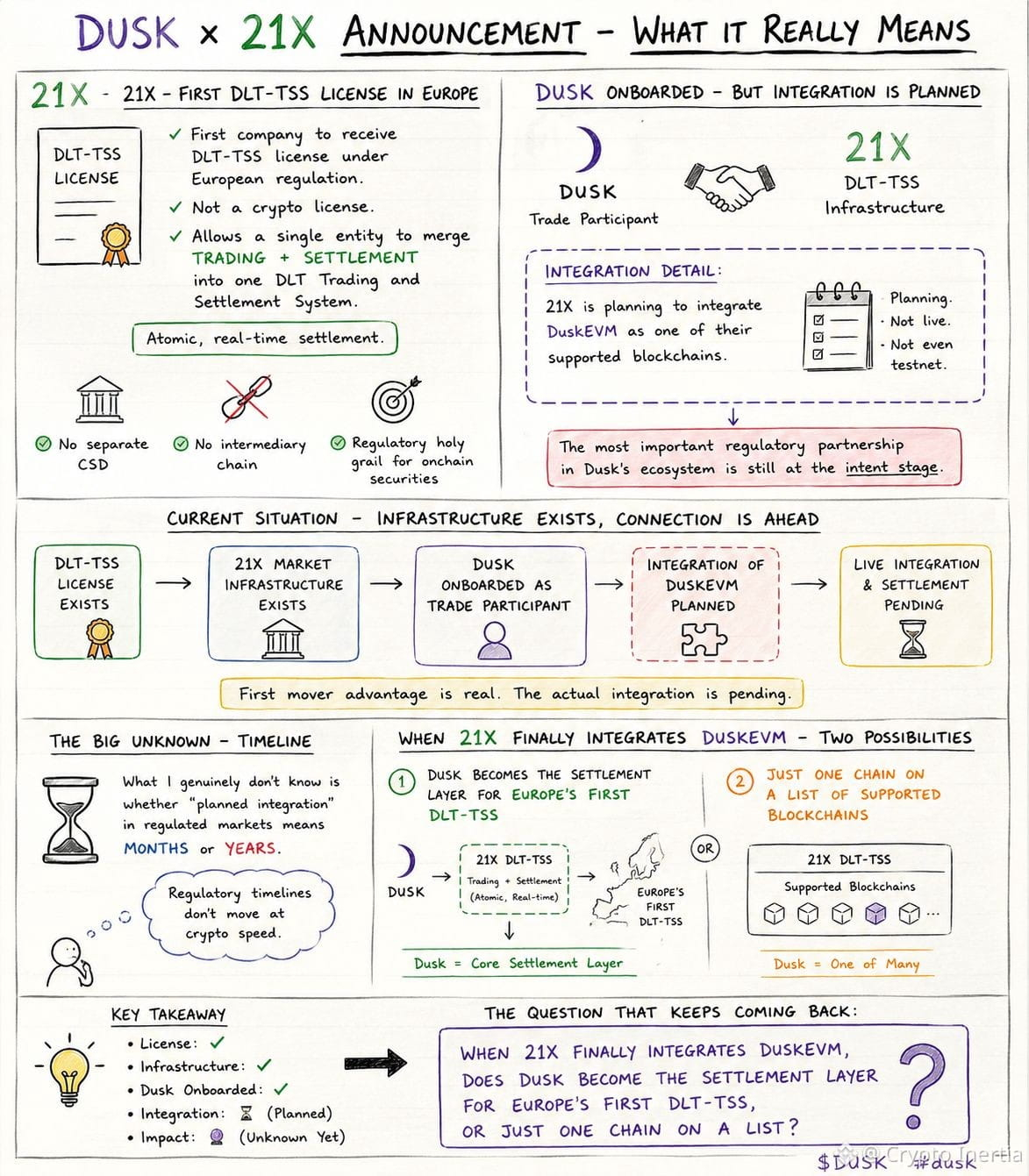
#dusk $DUSK @Dusk_Foundation Tôi đã ngồi với thông báo DUSK và 21X, và có một chi tiết cứ làm tôi bận tâm.
21X là công ty đầu tiên nhận giấy phép DLT-TSS theo quy định của châu Âu$DUSK
{spot}(DUSKUSDT)
. Đây không phải là giấy phép crypto. Nó cho phép một thực thể duy nhất hợp nhất giao dịch và thanh toán — vốn là hai chức năng truyền thống tách biệt — thành một Hệ thống giao dịch và thanh toán DLT. Thanh toán nguyên tử, theo thời gian thực. Không có CSD riêng. Không có chuỗi trung gian. Đây là “thánh địa” về mặt quy định đối với chứng khoán onchain.
Dusk được đưa vào danh sách các bên tham gia giao dịch. Vững. Nhưng rồi tôi đọc chi tiết tích hợp. 21X "dự định tích hợp DuskEVM" như một trong các blockchain mà họ hỗ trợ. Dự định. Không phải đã triển khai. Thậm chí không phải testnet. Đối tác quy định quan trọng nhất trong hệ sinh thái của Dusk vẫn đang ở giai đoạn ý định. Hoặc việc đưa vào quy trình quy định còn lâu hơn những gì thông báo gợi ý, hoặc phần tích hợp kỹ thuật đang chờ DuskEVM trưởng thành trước. Có lẽ cả hai.
Rồi còn có mô hình rộng hơn. NPEX đã xác nhận họ đã có khoản tài trợ từ 200 triệu euro trở lên, nhưng DLT-TSS vẫn đang được tiến hành. Dusk Trade đang được xây dựng. Hedger là testnet. Danh sách đối tác là có thật, nhưng “ngăn xếp” triển khai phía sau vẫn đang được lắp ráp. Câu chuyện về mặt quy định nói “sàn giao dịch chứng khoán đầu tiên được vận hành bằng blockchain của châu Âu”. Tài liệu lại nói “đang xây dựng” và “testnet.”
Điều tôi thật sự không biết là “tích hợp theo kế hoạch” tại các thị trường được quản lý nghĩa là vài tháng hay vài năm. Lịch trình quy định không đi nhanh theo tốc độ crypto.
Câu hỏi mà tôi cứ quay lại — khi 21X cuối cùng tích hợp DuskEVM, thì Dusk có trở thành lớp thanh toán cho DLT-TSS đầu tiên của châu Âu, hay chỉ là một trong nhiều chuỗi trong danh sách?
#dusk $DUSK @Dusk Tôi đã ngồi với thông báo DUSK và 21X, và có một chi tiết cứ làm tôi bận tâm.
21X là công ty đầu tiên nhận giấy phép DLT-TSS theo quy định của châu Âu$DUSK
. Đây không phải là giấy phép crypto. Nó cho phép một thực thể duy nhất hợp nhất giao dịch và thanh toán — vốn là hai chức năng truyền thống tách biệt — thành một Hệ thống giao dịch và thanh toán DLT. Thanh toán nguyên tử, theo thời gian thực. Không có CSD riêng. Không có chuỗi trung gian. Đây là “thánh địa” về mặt quy định đối với chứng khoán onchain.
Dusk được đưa vào danh sách các bên tham gia giao dịch. Vững. Nhưng rồi tôi đọc chi tiết tích hợp. 21X "dự định tích hợp DuskEVM" như một trong các blockchain mà họ hỗ trợ. Dự định. Không phải đã triển khai. Thậm chí không phải testnet. Đối tác quy định quan trọng nhất trong hệ sinh thái của Dusk vẫn đang ở giai đoạn ý định. Hoặc việc đưa vào quy trình quy định còn lâu hơn những gì thông báo gợi ý, hoặc phần tích hợp kỹ thuật đang chờ DuskEVM trưởng thành trước. Có lẽ cả hai.
Rồi còn có mô hình rộng hơn. NPEX đã xác nhận họ đã có khoản tài trợ từ 200 triệu euro trở lên, nhưng DLT-TSS vẫn đang được tiến hành. Dusk Trade đang được xây dựng. Hedger là testnet. Danh sách đối tác là có thật, nhưng “ngăn xếp” triển khai phía sau vẫn đang được lắp ráp. Câu chuyện về mặt quy định nói “sàn giao dịch chứng khoán đầu tiên được vận hành bằng blockchain của châu Âu”. Tài liệu lại nói “đang xây dựng” và “testnet.”
Điều tôi thật sự không biết là “tích hợp theo kế hoạch” tại các thị trường được quản lý nghĩa là vài tháng hay vài năm. Lịch trình quy định không đi nhanh theo tốc độ crypto.
Câu hỏi mà tôi cứ quay lại — khi 21X cuối cùng tích hợp DuskEVM, thì Dusk có trở thành lớp thanh toán cho DLT-TSS đầu tiên của châu Âu, hay chỉ là một trong nhiều chuỗi trong danh sách?
21X là công ty đầu tiên nhận giấy phép DLT-TSS theo quy định của châu Âu$DUSK
. Đây không phải là giấy phép crypto. Nó cho phép một thực thể duy nhất hợp nhất giao dịch và thanh toán — vốn là hai chức năng truyền thống tách biệt — thành một Hệ thống giao dịch và thanh toán DLT. Thanh toán nguyên tử, theo thời gian thực. Không có CSD riêng. Không có chuỗi trung gian. Đây là “thánh địa” về mặt quy định đối với chứng khoán onchain.
Dusk được đưa vào danh sách các bên tham gia giao dịch. Vững. Nhưng rồi tôi đọc chi tiết tích hợp. 21X "dự định tích hợp DuskEVM" như một trong các blockchain mà họ hỗ trợ. Dự định. Không phải đã triển khai. Thậm chí không phải testnet. Đối tác quy định quan trọng nhất trong hệ sinh thái của Dusk vẫn đang ở giai đoạn ý định. Hoặc việc đưa vào quy trình quy định còn lâu hơn những gì thông báo gợi ý, hoặc phần tích hợp kỹ thuật đang chờ DuskEVM trưởng thành trước. Có lẽ cả hai.
Rồi còn có mô hình rộng hơn. NPEX đã xác nhận họ đã có khoản tài trợ từ 200 triệu euro trở lên, nhưng DLT-TSS vẫn đang được tiến hành. Dusk Trade đang được xây dựng. Hedger là testnet. Danh sách đối tác là có thật, nhưng “ngăn xếp” triển khai phía sau vẫn đang được lắp ráp. Câu chuyện về mặt quy định nói “sàn giao dịch chứng khoán đầu tiên được vận hành bằng blockchain của châu Âu”. Tài liệu lại nói “đang xây dựng” và “testnet.”
Điều tôi thật sự không biết là “tích hợp theo kế hoạch” tại các thị trường được quản lý nghĩa là vài tháng hay vài năm. Lịch trình quy định không đi nhanh theo tốc độ crypto.
Câu hỏi mà tôi cứ quay lại — khi 21X cuối cùng tích hợp DuskEVM, thì Dusk có trở thành lớp thanh toán cho DLT-TSS đầu tiên của châu Âu, hay chỉ là một trong nhiều chuỗi trong danh sách?
86
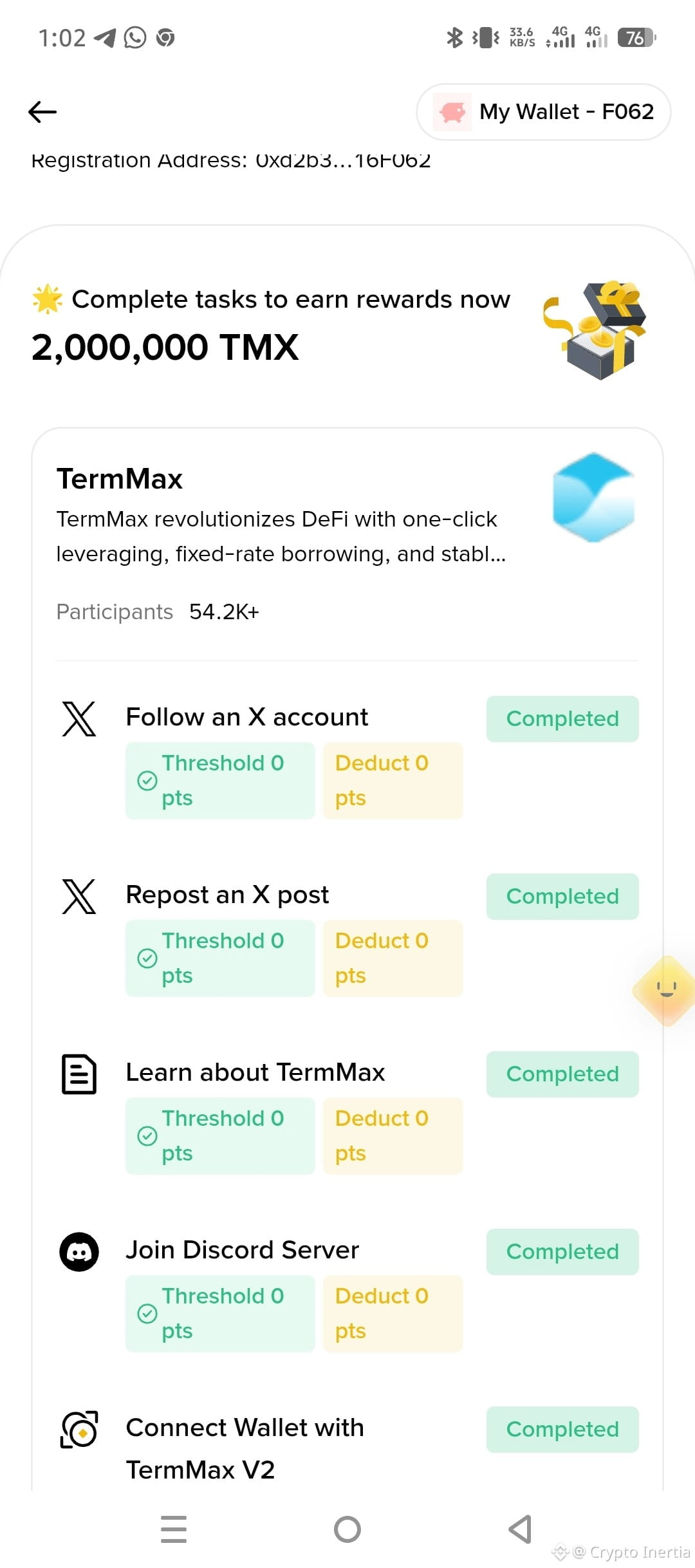
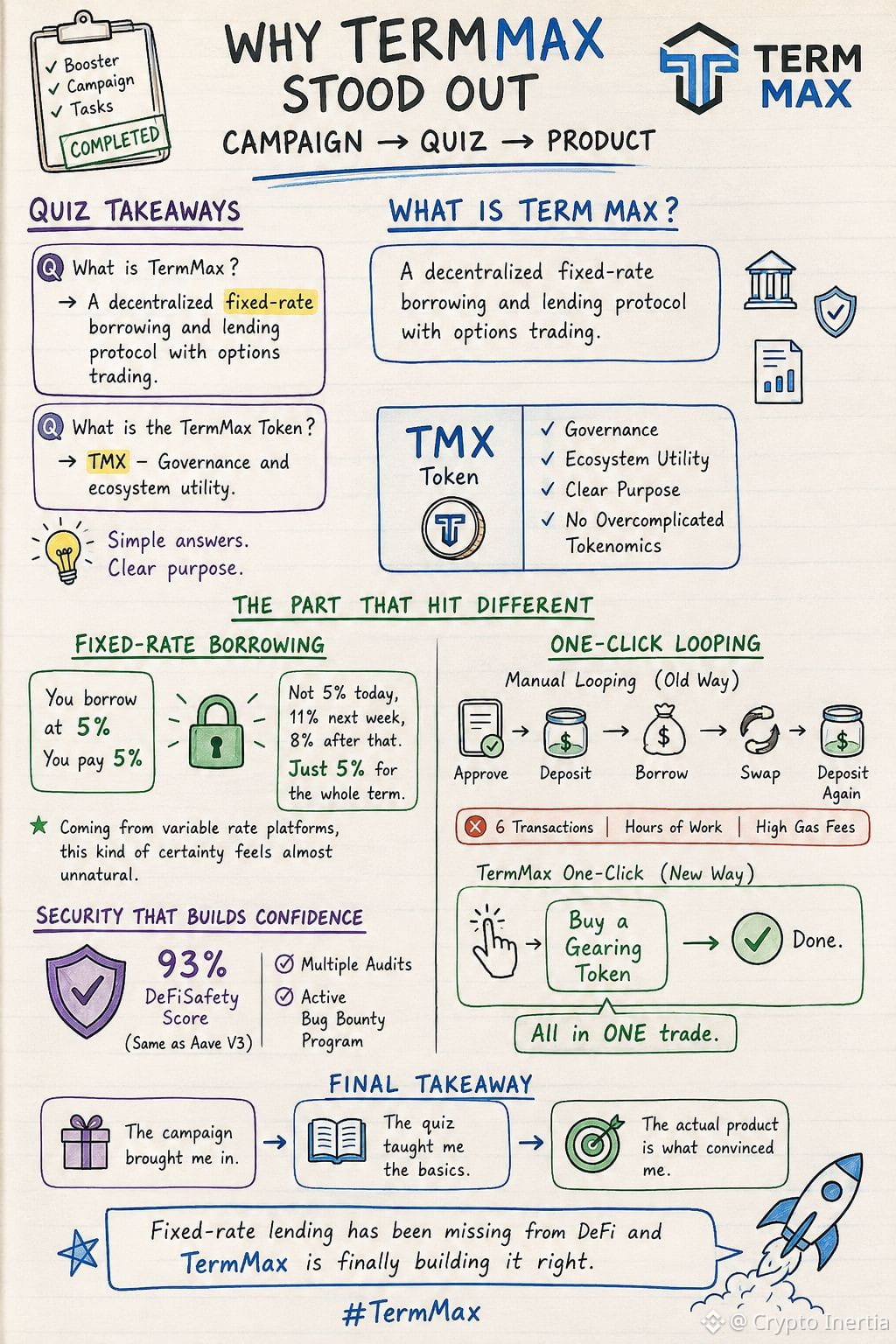
#termmax @termmax Hôm nay mình đã hoàn thành các nhiệm vụ của chiến dịch booster TermMax và có một điều từ phần quiz thực sự đọng lại với mình.
Phần học hỏi hỏi TermMax là gì. Câu trả lời rất đơn giản. Một giao thức vay và cho vay phi tập trung với lãi suất cố định, kèm giao dịch quyền chọn. Lãi suất cố định. Kỳ hạn cố định. Không phải kiểu biến động lãi suất thất thường như chúng ta vẫn quen.
Sau đó còn hỏi về token. TMX. Quyền quản trị và tiện ích trong hệ sinh thái. Tokenomics không bị làm quá phức tạp. Chỉ có một mục đích rõ ràng.
Chính vì vậy mình đã bắt đầu tìm hiểu sâu hơn các tài liệu của @TermMax.
Phần mình cứ phải suy nghĩ mãi là khoản vay lãi suất cố định. Bạn vay với 5%. Bạn trả 5%. Không phải hôm nay 5%, tuần sau 11%, và sau đó là 8%. Chỉ 5% cho cả kỳ hạn. Xuất phát từ những nền tảng mà lãi suất lúc nào cũng lên xuống, cảm giác chắc chắn như vậy thấy gần như không quen.
Cơ chế vòng lặp một cú nhấp cũng rất hay. Mình nhớ hồi trước phải tự vòng lặp thủ công mất sáu giao dịch và cả một buổi chiều. Duyệt (Approve), nạp (deposit), vay (borrow), swap, rồi lại nạp lần nữa. Phí gas ở từng bước. TermMax gói tất cả vào một lần giao dịch. Mua một Gearing Token là xong.
Về bảo mật thì họ rất ổn. Điểm DeFiSafety 93%. Tương đương Aave V3. Nhiều đợt audit và có chương trình bug bounty đang hoạt động.
Chiến dịch đã kéo mình vào. Quiz giúp mình nắm được những kiến thức cơ bản. Còn sản phẩm thực tế mới là thứ thuyết phục mình. Cho vay lãi suất cố định trong DeFi đã thiếu từ lâu và TermMax cuối cùng đang xây dựng đúng cách.
#termmax @TermMax Hôm nay mình đã hoàn thành các nhiệm vụ của chiến dịch booster TermMax và có một điều từ phần quiz thực sự đọng lại với mình.
Phần học hỏi hỏi TermMax là gì. Câu trả lời rất đơn giản. Một giao thức vay và cho vay phi tập trung với lãi suất cố định, kèm giao dịch quyền chọn. Lãi suất cố định. Kỳ hạn cố định. Không phải kiểu biến động lãi suất thất thường như chúng ta vẫn quen.
Sau đó còn hỏi về token. TMX. Quyền quản trị và tiện ích trong hệ sinh thái. Tokenomics không bị làm quá phức tạp. Chỉ có một mục đích rõ ràng.
Chính vì vậy mình đã bắt đầu tìm hiểu sâu hơn các tài liệu của @TermMax.
Phần mình cứ phải suy nghĩ mãi là khoản vay lãi suất cố định. Bạn vay với 5%. Bạn trả 5%. Không phải hôm nay 5%, tuần sau 11%, và sau đó là 8%. Chỉ 5% cho cả kỳ hạn. Xuất phát từ những nền tảng mà lãi suất lúc nào cũng lên xuống, cảm giác chắc chắn như vậy thấy gần như không quen.
Cơ chế vòng lặp một cú nhấp cũng rất hay. Mình nhớ hồi trước phải tự vòng lặp thủ công mất sáu giao dịch và cả một buổi chiều. Duyệt (Approve), nạp (deposit), vay (borrow), swap, rồi lại nạp lần nữa. Phí gas ở từng bước. TermMax gói tất cả vào một lần giao dịch. Mua một Gearing Token là xong.
Về bảo mật thì họ rất ổn. Điểm DeFiSafety 93%. Tương đương Aave V3. Nhiều đợt audit và có chương trình bug bounty đang hoạt động.
Chiến dịch đã kéo mình vào. Quiz giúp mình nắm được những kiến thức cơ bản. Còn sản phẩm thực tế mới là thứ thuyết phục mình. Cho vay lãi suất cố định trong DeFi đã thiếu từ lâu và TermMax cuối cùng đang xây dựng đúng cách.
Phần học hỏi hỏi TermMax là gì. Câu trả lời rất đơn giản. Một giao thức vay và cho vay phi tập trung với lãi suất cố định, kèm giao dịch quyền chọn. Lãi suất cố định. Kỳ hạn cố định. Không phải kiểu biến động lãi suất thất thường như chúng ta vẫn quen.
Sau đó còn hỏi về token. TMX. Quyền quản trị và tiện ích trong hệ sinh thái. Tokenomics không bị làm quá phức tạp. Chỉ có một mục đích rõ ràng.
Chính vì vậy mình đã bắt đầu tìm hiểu sâu hơn các tài liệu của @TermMax.
Phần mình cứ phải suy nghĩ mãi là khoản vay lãi suất cố định. Bạn vay với 5%. Bạn trả 5%. Không phải hôm nay 5%, tuần sau 11%, và sau đó là 8%. Chỉ 5% cho cả kỳ hạn. Xuất phát từ những nền tảng mà lãi suất lúc nào cũng lên xuống, cảm giác chắc chắn như vậy thấy gần như không quen.
Cơ chế vòng lặp một cú nhấp cũng rất hay. Mình nhớ hồi trước phải tự vòng lặp thủ công mất sáu giao dịch và cả một buổi chiều. Duyệt (Approve), nạp (deposit), vay (borrow), swap, rồi lại nạp lần nữa. Phí gas ở từng bước. TermMax gói tất cả vào một lần giao dịch. Mua một Gearing Token là xong.
Về bảo mật thì họ rất ổn. Điểm DeFiSafety 93%. Tương đương Aave V3. Nhiều đợt audit và có chương trình bug bounty đang hoạt động.
Chiến dịch đã kéo mình vào. Quiz giúp mình nắm được những kiến thức cơ bản. Còn sản phẩm thực tế mới là thứ thuyết phục mình. Cho vay lãi suất cố định trong DeFi đã thiếu từ lâu và TermMax cuối cùng đang xây dựng đúng cách.
2
88
#dusk $DUSK @Dusk_Foundation
Tôi đã ngồi xem các thông báo hợp tác của DUSK và có một điều cứ lặp đi lặp lại trong đầu.
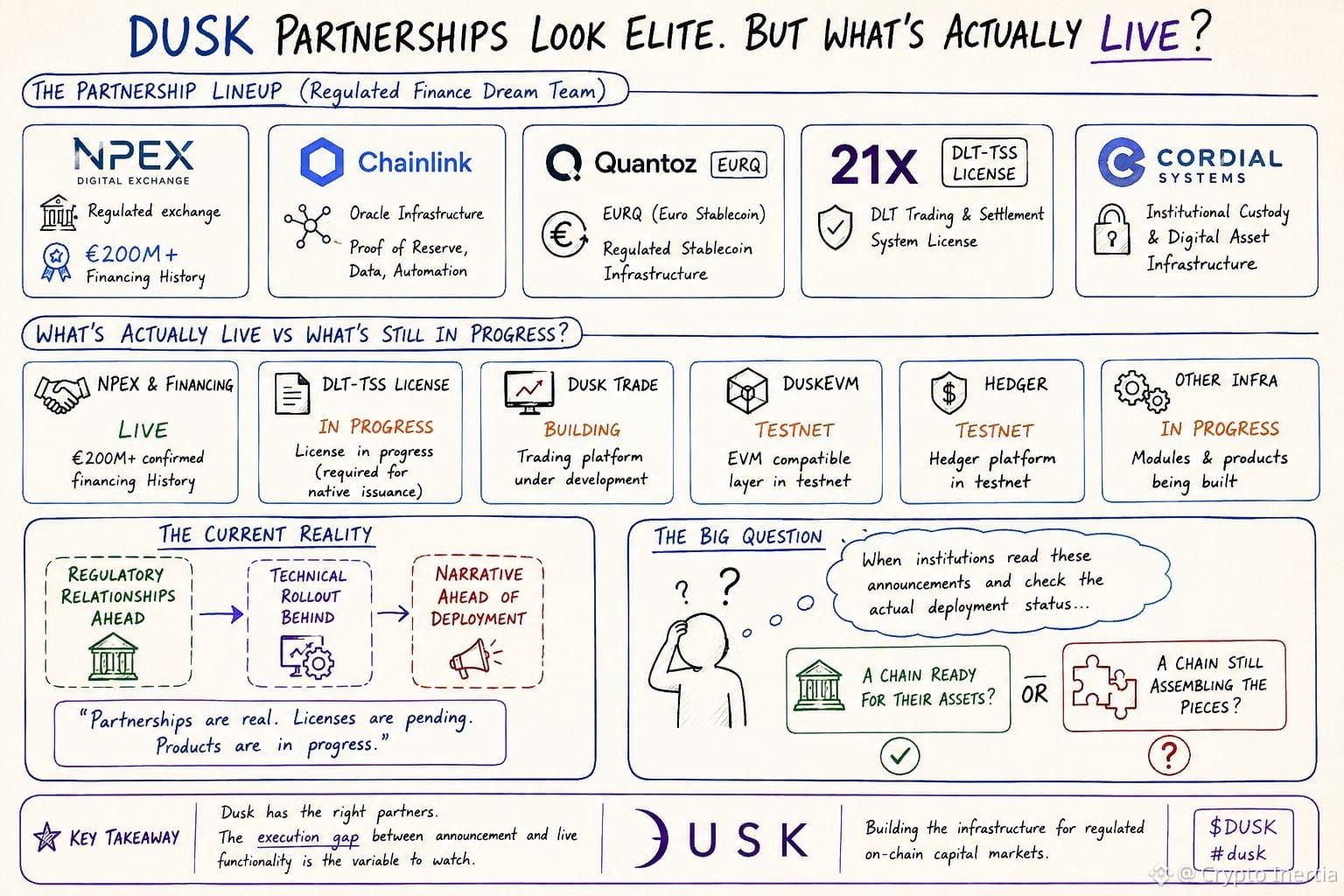
Dusk có NPEX. Chainlink. Quantoz với EURQ. 21X với giấy phép DLT-TSS. Cordial Systems cho mảng lưu ký. Danh sách hợp tác trông giống như một “dream team” tài chính được quản lý. Mỗi bên đều mang giấy phép, hạ tầng hoặc mức độ tiếp cận theo hướng tổ chức. Rất chắc chắn.
Nhưng rồi tôi kiểm tra xem thực tế đang chạy cái gì so với những gì được công bố. NPEX đã xác nhận lịch sử huy động tài chính từ 200 triệu EUR trở lên, nhưng giấy phép DLT-TSS cần cho việc phát hành bản địa vẫn đang được tiến hành. Dusk Trade vẫn đang trong giai đoạn xây dựng. DuskEVM là testnet. Hedger là testnet. Các thông báo hợp tác là có thật. Trạng thái sản xuất của những sản phẩm mà các quan hệ đó phụ thuộc vào lại là một câu chuyện khác.
Nên bạn sẽ có một tình huống trong đó các quan hệ theo khía cạnh pháp lý đi trước quá trình triển khai kỹ thuật. Được nêu tên các tổ chức. Giấy phép thì đang chờ. Sản phẩm thì đang được thực hiện. Lời kể nói “sàn giao dịch bảo mật đầu tiên được vận hành bằng blockchain tại châu Âu”. Tài liệu lại ghi “đang xây dựng” và “testnet”.
Điều tôi thực sự không biết là liệu đây có phải là trình tự thông thường cho hạ tầng được quản lý — đối tác trước, sản phẩm sau — hay khoảng cách giữa thông báo và chức năng chạy thực tế rộng hơn những gì tiêu đề gợi ý.
Câu hỏi cứ quay lại trong đầu tôi — khi các tổ chức đọc các thông báo này rồi kiểm tra trạng thái triển khai thực tế, họ có thấy một chuỗi đã sẵn sàng cho tài sản của họ, hay một chuỗi vẫn đang lắp ráp các mảnh ghép?
#dusk $DUSK @Dusk
Tôi đã ngồi xem các thông báo hợp tác của DUSK và có một điều cứ lặp đi lặp lại trong đầu.
Dusk có NPEX. Chainlink. Quantoz với EURQ. 21X với giấy phép DLT-TSS. Cordial Systems cho mảng lưu ký. Danh sách hợp tác trông giống như một “dream team” tài chính được quản lý. Mỗi bên đều mang giấy phép, hạ tầng hoặc mức độ tiếp cận theo hướng tổ chức. Rất chắc chắn.
Nhưng rồi tôi kiểm tra xem thực tế đang chạy cái gì so với những gì được công bố. NPEX đã xác nhận lịch sử huy động tài chính từ 200 triệu EUR trở lên, nhưng giấy phép DLT-TSS cần cho việc phát hành bản địa vẫn đang được tiến hành. Dusk Trade vẫn đang trong giai đoạn xây dựng. DuskEVM là testnet. Hedger là testnet. Các thông báo hợp tác là có thật. Trạng thái sản xuất của những sản phẩm mà các quan hệ đó phụ thuộc vào lại là một câu chuyện khác.
Nên bạn sẽ có một tình huống trong đó các quan hệ theo khía cạnh pháp lý đi trước quá trình triển khai kỹ thuật. Được nêu tên các tổ chức. Giấy phép thì đang chờ. Sản phẩm thì đang được thực hiện. Lời kể nói “sàn giao dịch bảo mật đầu tiên được vận hành bằng blockchain tại châu Âu”. Tài liệu lại ghi “đang xây dựng” và “testnet”.
Điều tôi thực sự không biết là liệu đây có phải là trình tự thông thường cho hạ tầng được quản lý — đối tác trước, sản phẩm sau — hay khoảng cách giữa thông báo và chức năng chạy thực tế rộng hơn những gì tiêu đề gợi ý.
Câu hỏi cứ quay lại trong đầu tôi — khi các tổ chức đọc các thông báo này rồi kiểm tra trạng thái triển khai thực tế, họ có thấy một chuỗi đã sẵn sàng cho tài sản của họ, hay một chuỗi vẫn đang lắp ráp các mảnh ghép?
Tôi đã ngồi xem các thông báo hợp tác của DUSK và có một điều cứ lặp đi lặp lại trong đầu.
Dusk có NPEX. Chainlink. Quantoz với EURQ. 21X với giấy phép DLT-TSS. Cordial Systems cho mảng lưu ký. Danh sách hợp tác trông giống như một “dream team” tài chính được quản lý. Mỗi bên đều mang giấy phép, hạ tầng hoặc mức độ tiếp cận theo hướng tổ chức. Rất chắc chắn.
Nhưng rồi tôi kiểm tra xem thực tế đang chạy cái gì so với những gì được công bố. NPEX đã xác nhận lịch sử huy động tài chính từ 200 triệu EUR trở lên, nhưng giấy phép DLT-TSS cần cho việc phát hành bản địa vẫn đang được tiến hành. Dusk Trade vẫn đang trong giai đoạn xây dựng. DuskEVM là testnet. Hedger là testnet. Các thông báo hợp tác là có thật. Trạng thái sản xuất của những sản phẩm mà các quan hệ đó phụ thuộc vào lại là một câu chuyện khác.
Nên bạn sẽ có một tình huống trong đó các quan hệ theo khía cạnh pháp lý đi trước quá trình triển khai kỹ thuật. Được nêu tên các tổ chức. Giấy phép thì đang chờ. Sản phẩm thì đang được thực hiện. Lời kể nói “sàn giao dịch bảo mật đầu tiên được vận hành bằng blockchain tại châu Âu”. Tài liệu lại ghi “đang xây dựng” và “testnet”.
Điều tôi thực sự không biết là liệu đây có phải là trình tự thông thường cho hạ tầng được quản lý — đối tác trước, sản phẩm sau — hay khoảng cách giữa thông báo và chức năng chạy thực tế rộng hơn những gì tiêu đề gợi ý.
Câu hỏi cứ quay lại trong đầu tôi — khi các tổ chức đọc các thông báo này rồi kiểm tra trạng thái triển khai thực tế, họ có thấy một chuỗi đã sẵn sàng cho tài sản của họ, hay một chuỗi vẫn đang lắp ráp các mảnh ghép?
1
1
80
#termmax @termmax
Tôi đã sử dụng các nền tảng cho vay DeFi được hai năm và TermMax là nền tảng đầu tiên thực sự khiến tôi bất ngờ.
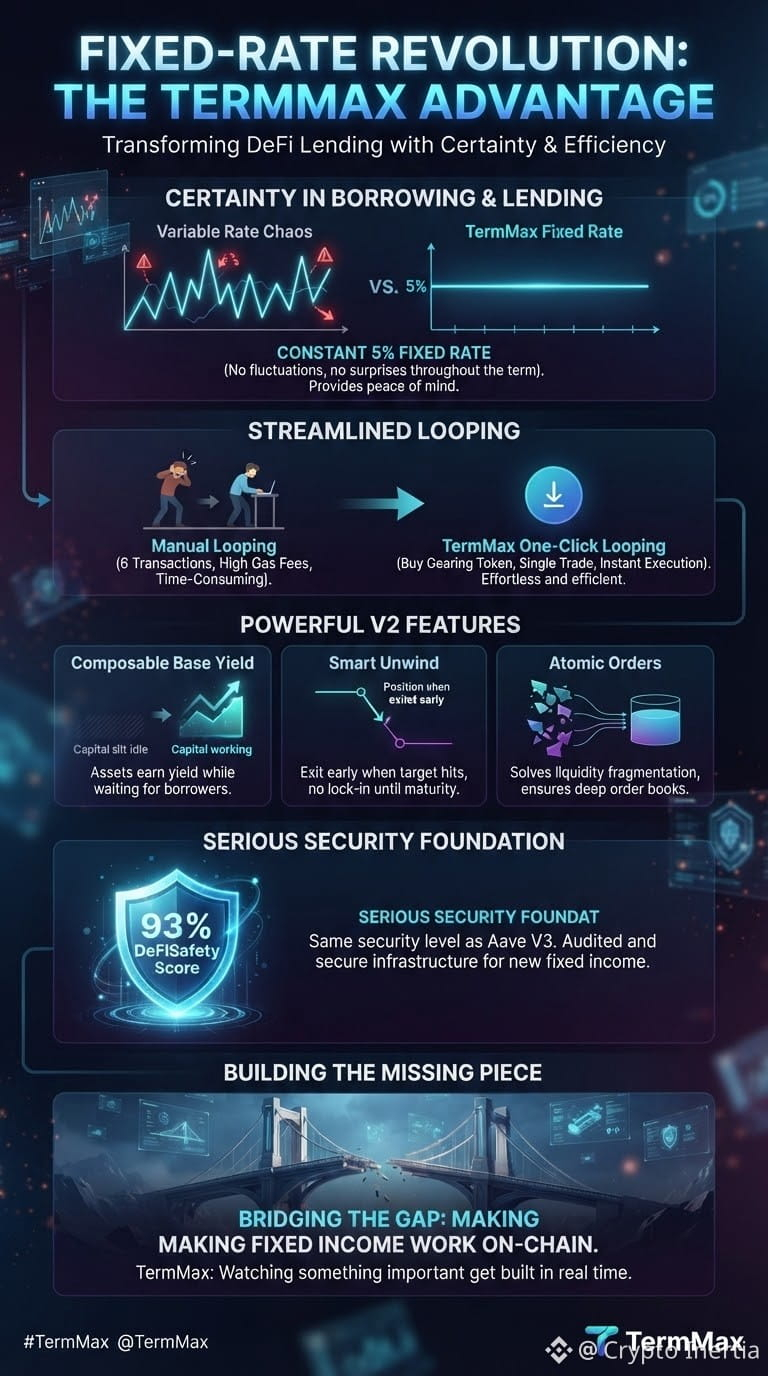
Mọi thứ liên quan đến lãi suất cố định nghe có vẻ đơn giản cho đến khi bạn trải nghiệm nó. Bạn vay ở mức 5%. Bạn trả ở mức 5%. Không phải 5% hôm nay, 8% ngày mai, 12% vào tuần sau khi mức sử dụng tăng cao. Chỉ 5%. Trong suốt thời hạn. Mức độ chắc chắn như vậy hiện không tồn tại ở đâu khác trong DeFi ngay lúc này.
Rồi đến cơ chế lặp (looping) chỉ bằng một lần bấm. Tôi nhớ mình đã phải dành cả một buổi chiều để thực hiện thao tác looping thủ công trên một nền tảng khác. Sáu giao dịch. Phí gas ăn mòn phần vị thế của tôi. Liên tục kiểm tra xem mình có làm đúng không. TermMax làm tất cả chỉ trong một giao dịch. Mua Gearing Token là xong. Thật gần như quá dễ.
Tuy nhiên, những tính năng V2 mới là thứ thực sự thu hút sự chú ý của tôi. Composable Base Yield nghĩa là tài sản của bạn tạo ra lợi nhuận trong khi chờ người đi vay. Không có vốn nhàn rỗi. Smart Unwind cho phép bạn thoát sớm khi đạt mục tiêu của mình thay vì bị khóa cho đến khi đáo hạn. Atomic Orders giải quyết tình trạng phân mảnh thanh khoản đã khiến các nền tảng lãi suất cố định ra đời trước đó thất bại. Đây không phải là những cải tiến nhỏ. Chúng đang giải quyết đúng những vấn đề khiến DeFi lãi suất cố định từng thất bại trước đây.
Và phần bảo mật thì thực sự nghiêm túc. Điểm DeFiSafety 93%. Tương đương Aave V3. Đây là điều hiếm thấy với một giao thức còn khá non trẻ.
Cho vay lãi suất cố định là mảnh ghép còn thiếu trong DeFi. Lãi suất thả nổi thì không thể đoán trước. TermMax đang xây dựng hạ tầng khiến thu nhập cố định hoạt động được trên chuỗi.
Cảm giác như đang xem một thứ quan trọng được xây dựng ngay trước mắt.
$BOME
{spot}(BOMEUSDT)
$BIO
{spot}(BIOUSDT)
$RE
{spot}(REUSDT)
#termmax @TermMax
Tôi đã sử dụng các nền tảng cho vay DeFi được hai năm và TermMax là nền tảng đầu tiên thực sự khiến tôi bất ngờ.
Mọi thứ liên quan đến lãi suất cố định nghe có vẻ đơn giản cho đến khi bạn trải nghiệm nó. Bạn vay ở mức 5%. Bạn trả ở mức 5%. Không phải 5% hôm nay, 8% ngày mai, 12% vào tuần sau khi mức sử dụng tăng cao. Chỉ 5%. Trong suốt thời hạn. Mức độ chắc chắn như vậy hiện không tồn tại ở đâu khác trong DeFi ngay lúc này.
Rồi đến cơ chế lặp (looping) chỉ bằng một lần bấm. Tôi nhớ mình đã phải dành cả một buổi chiều để thực hiện thao tác looping thủ công trên một nền tảng khác. Sáu giao dịch. Phí gas ăn mòn phần vị thế của tôi. Liên tục kiểm tra xem mình có làm đúng không. TermMax làm tất cả chỉ trong một giao dịch. Mua Gearing Token là xong. Thật gần như quá dễ.
Tuy nhiên, những tính năng V2 mới là thứ thực sự thu hút sự chú ý của tôi. Composable Base Yield nghĩa là tài sản của bạn tạo ra lợi nhuận trong khi chờ người đi vay. Không có vốn nhàn rỗi. Smart Unwind cho phép bạn thoát sớm khi đạt mục tiêu của mình thay vì bị khóa cho đến khi đáo hạn. Atomic Orders giải quyết tình trạng phân mảnh thanh khoản đã khiến các nền tảng lãi suất cố định ra đời trước đó thất bại. Đây không phải là những cải tiến nhỏ. Chúng đang giải quyết đúng những vấn đề khiến DeFi lãi suất cố định từng thất bại trước đây.
Và phần bảo mật thì thực sự nghiêm túc. Điểm DeFiSafety 93%. Tương đương Aave V3. Đây là điều hiếm thấy với một giao thức còn khá non trẻ.
Cho vay lãi suất cố định là mảnh ghép còn thiếu trong DeFi. Lãi suất thả nổi thì không thể đoán trước. TermMax đang xây dựng hạ tầng khiến thu nhập cố định hoạt động được trên chuỗi.
Cảm giác như đang xem một thứ quan trọng được xây dựng ngay trước mắt.
$BOME
$BIO
$RE
Tôi đã sử dụng các nền tảng cho vay DeFi được hai năm và TermMax là nền tảng đầu tiên thực sự khiến tôi bất ngờ.
Mọi thứ liên quan đến lãi suất cố định nghe có vẻ đơn giản cho đến khi bạn trải nghiệm nó. Bạn vay ở mức 5%. Bạn trả ở mức 5%. Không phải 5% hôm nay, 8% ngày mai, 12% vào tuần sau khi mức sử dụng tăng cao. Chỉ 5%. Trong suốt thời hạn. Mức độ chắc chắn như vậy hiện không tồn tại ở đâu khác trong DeFi ngay lúc này.
Rồi đến cơ chế lặp (looping) chỉ bằng một lần bấm. Tôi nhớ mình đã phải dành cả một buổi chiều để thực hiện thao tác looping thủ công trên một nền tảng khác. Sáu giao dịch. Phí gas ăn mòn phần vị thế của tôi. Liên tục kiểm tra xem mình có làm đúng không. TermMax làm tất cả chỉ trong một giao dịch. Mua Gearing Token là xong. Thật gần như quá dễ.
Tuy nhiên, những tính năng V2 mới là thứ thực sự thu hút sự chú ý của tôi. Composable Base Yield nghĩa là tài sản của bạn tạo ra lợi nhuận trong khi chờ người đi vay. Không có vốn nhàn rỗi. Smart Unwind cho phép bạn thoát sớm khi đạt mục tiêu của mình thay vì bị khóa cho đến khi đáo hạn. Atomic Orders giải quyết tình trạng phân mảnh thanh khoản đã khiến các nền tảng lãi suất cố định ra đời trước đó thất bại. Đây không phải là những cải tiến nhỏ. Chúng đang giải quyết đúng những vấn đề khiến DeFi lãi suất cố định từng thất bại trước đây.
Và phần bảo mật thì thực sự nghiêm túc. Điểm DeFiSafety 93%. Tương đương Aave V3. Đây là điều hiếm thấy với một giao thức còn khá non trẻ.
Cho vay lãi suất cố định là mảnh ghép còn thiếu trong DeFi. Lãi suất thả nổi thì không thể đoán trước. TermMax đang xây dựng hạ tầng khiến thu nhập cố định hoạt động được trên chuỗi.
Cảm giác như đang xem một thứ quan trọng được xây dựng ngay trước mắt.
$BOME
$BIO
$RE
197
#dusk $DUSK @Dusk_Foundation Tôi lại ngồi với DUDE explorer không chính thức và có một điều cứ lấn cấn mãi trong đầu.
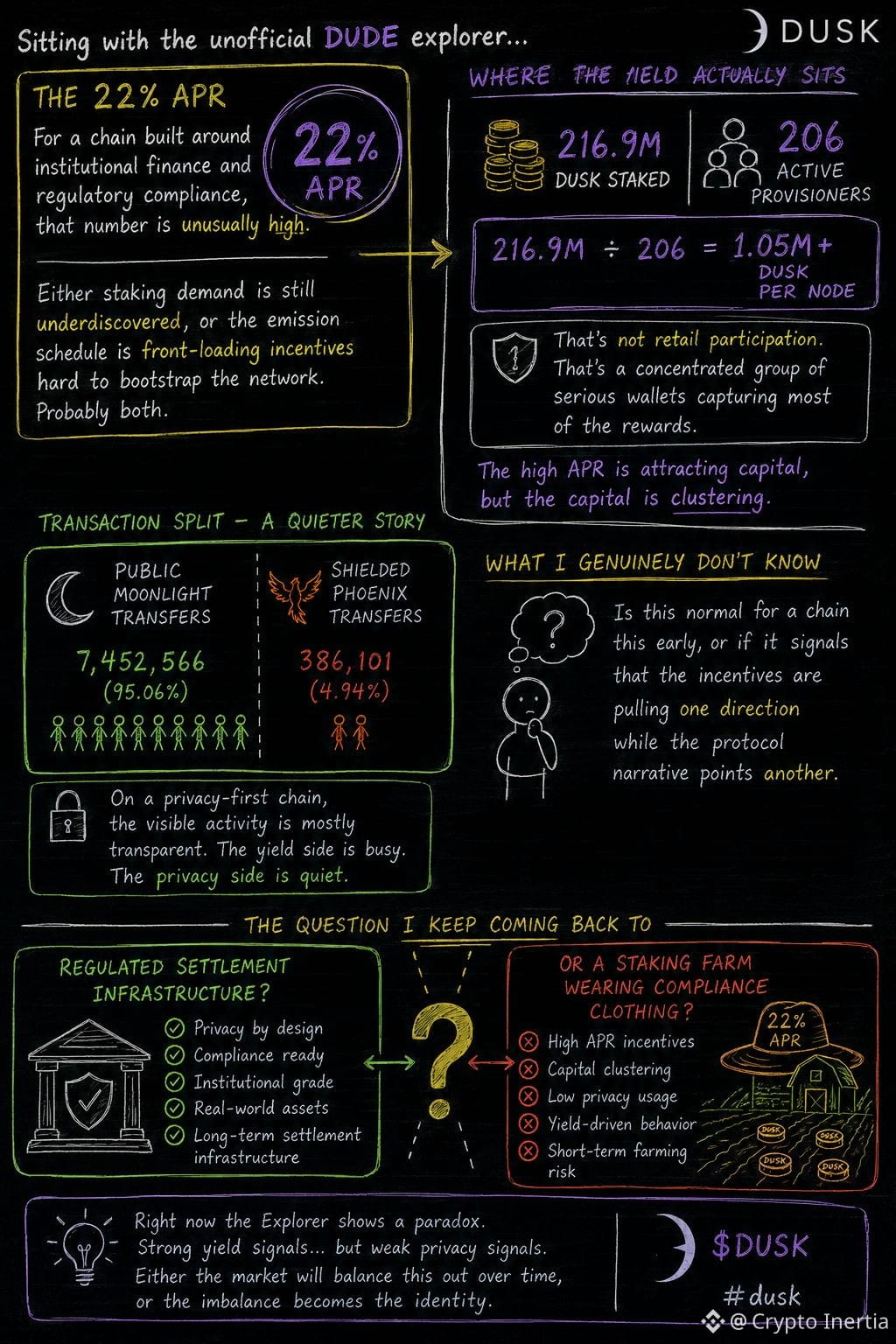
Đó là APR 22%. Với một chuỗi được xây dựng xoay quanh tài chính thể chế và tuân thủ quy định, con số đó bất thường cao. Hoặc nhu cầu staking vẫn còn bị đánh giá thấp, hoặc lịch phát hành đang dồn mạnh ưu đãi để khởi động mạng. Có lẽ cả hai.
Rồi tôi nhìn vào vị trí thực sự của mức lợi suất đó. 216,9M @Dusk được stake. 206 nhà cung cấp dịch vụ active provisioners. Con số tính ra cho thấy trung bình hơn một triệu DUSK cho mỗi node. Đó không phải là sự tham gia của lẻ tẻ. Mà là một nhóm tập trung các ví nghiêm túc đang nắm phần lớn phần thưởng. APR cao đang thu hút vốn, nhưng lượng vốn đó lại đang bị gom cụm.
Trong khi đó, phần tách giao dịch kể một câu chuyện trầm lặng hơn. Các giao dịch Public Moonlight đang chạy nhanh hơn rất nhiều so với các giao dịch shielded Phoenix. Trên một chuỗi ưu tiên quyền riêng tư, hoạt động hiển thị phần lớn là trong suốt. Phía tạo lợi suất thì bận rộn. Còn phía quyền riêng tư thì yên ắng.
Thứ tôi thật sự không biết là liệu đây có phải là điều bình thường đối với một chuỗi còn quá sớm như vậy không, hay nó cho thấy các ưu đãi đang kéo về một hướng trong khi câu chuyện của giao thức lại chỉ sang hướng khác.
Câu hỏi tôi cứ quay lại mãi — khi các tổ chức xem explorer này, họ có thấy cơ sở hạ tầng thanh toán được quản lý hay là một trang trại staking đội “lớp áo” tuân thủ? $DUSK #dusk
#dusk $DUSK @Dusk Tôi lại ngồi với DUDE explorer không chính thức và có một điều cứ lấn cấn mãi trong đầu.
Đó là APR 22%. Với một chuỗi được xây dựng xoay quanh tài chính thể chế và tuân thủ quy định, con số đó bất thường cao. Hoặc nhu cầu staking vẫn còn bị đánh giá thấp, hoặc lịch phát hành đang dồn mạnh ưu đãi để khởi động mạng. Có lẽ cả hai.
Rồi tôi nhìn vào vị trí thực sự của mức lợi suất đó. 216,9M @Dusk được stake. 206 nhà cung cấp dịch vụ active provisioners. Con số tính ra cho thấy trung bình hơn một triệu DUSK cho mỗi node. Đó không phải là sự tham gia của lẻ tẻ. Mà là một nhóm tập trung các ví nghiêm túc đang nắm phần lớn phần thưởng. APR cao đang thu hút vốn, nhưng lượng vốn đó lại đang bị gom cụm.
Trong khi đó, phần tách giao dịch kể một câu chuyện trầm lặng hơn. Các giao dịch Public Moonlight đang chạy nhanh hơn rất nhiều so với các giao dịch shielded Phoenix. Trên một chuỗi ưu tiên quyền riêng tư, hoạt động hiển thị phần lớn là trong suốt. Phía tạo lợi suất thì bận rộn. Còn phía quyền riêng tư thì yên ắng.
Thứ tôi thật sự không biết là liệu đây có phải là điều bình thường đối với một chuỗi còn quá sớm như vậy không, hay nó cho thấy các ưu đãi đang kéo về một hướng trong khi câu chuyện của giao thức lại chỉ sang hướng khác.
Câu hỏi tôi cứ quay lại mãi — khi các tổ chức xem explorer này, họ có thấy cơ sở hạ tầng thanh toán được quản lý hay là một trang trại staking đội “lớp áo” tuân thủ? $DUSK #dusk
Đó là APR 22%. Với một chuỗi được xây dựng xoay quanh tài chính thể chế và tuân thủ quy định, con số đó bất thường cao. Hoặc nhu cầu staking vẫn còn bị đánh giá thấp, hoặc lịch phát hành đang dồn mạnh ưu đãi để khởi động mạng. Có lẽ cả hai.
Rồi tôi nhìn vào vị trí thực sự của mức lợi suất đó. 216,9M @Dusk được stake. 206 nhà cung cấp dịch vụ active provisioners. Con số tính ra cho thấy trung bình hơn một triệu DUSK cho mỗi node. Đó không phải là sự tham gia của lẻ tẻ. Mà là một nhóm tập trung các ví nghiêm túc đang nắm phần lớn phần thưởng. APR cao đang thu hút vốn, nhưng lượng vốn đó lại đang bị gom cụm.
Trong khi đó, phần tách giao dịch kể một câu chuyện trầm lặng hơn. Các giao dịch Public Moonlight đang chạy nhanh hơn rất nhiều so với các giao dịch shielded Phoenix. Trên một chuỗi ưu tiên quyền riêng tư, hoạt động hiển thị phần lớn là trong suốt. Phía tạo lợi suất thì bận rộn. Còn phía quyền riêng tư thì yên ắng.
Thứ tôi thật sự không biết là liệu đây có phải là điều bình thường đối với một chuỗi còn quá sớm như vậy không, hay nó cho thấy các ưu đãi đang kéo về một hướng trong khi câu chuyện của giao thức lại chỉ sang hướng khác.
Câu hỏi tôi cứ quay lại mãi — khi các tổ chức xem explorer này, họ có thấy cơ sở hạ tầng thanh toán được quản lý hay là một trang trại staking đội “lớp áo” tuân thủ? $DUSK #dusk
2
75
#termmax @termmax
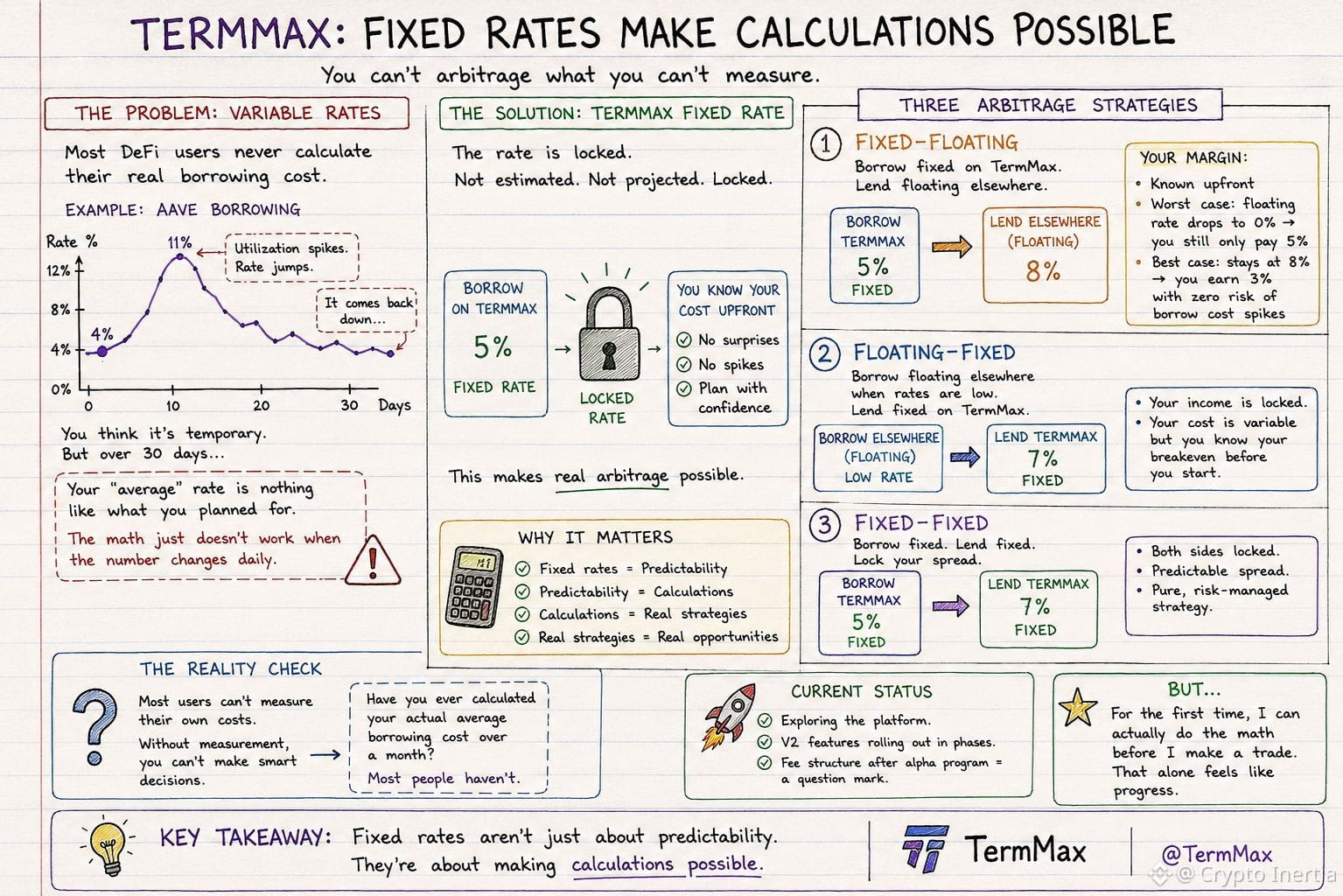
Hầu hết người dùng DeFi chưa bao giờ thực sự tính toán chi phí vay thực của họ. Tôi biết vì chính tôi đã không làm trong nhiều tháng.Bạn vay trên Aave ở mức 4%. Nghe có vẻ ổn. Rồi khi mức sử dụng (utilization) tăng vọt, lãi suất đột nhiên lên 11%. Bạn tự nhủ đó chỉ là tạm thời. Nó lại hạ xuống. Nhưng khi bạn theo dõi nó trong 30 ngày, “lãi suất trung bình” của bạn lại chẳng giống như những gì bạn đã lên kế hoạch. Toán học đơn giản là không vận hành khi con số thay đổi mỗi ngày.
TermMax khắc phục điều này theo cách nghe có vẻ tẻ nhạt cho đến khi bạn nghĩ kỹ. Lãi suất được khóa cố định. Không phải dự ước. Không phải dự phóng. Đã được khóa.
Điều đó có nghĩa là bạn cuối cùng có thể thực hiện arbitrage lãi suất một cách đúng nghĩa. Vay lãi suất cố định trên TermMax ở 5%. Cho vay lãi suất thả nổi ở nơi khác với 8%. Lợi nhuận của bạn được biết trước. Trường hợp xấu nhất, lãi suất thả nổi giảm về 0 và bạn vẫn chỉ mất 5%. Trường hợp tốt nhất, nó giữ ở 8% và bạn bỏ túi 3% mà không có rủi ro chi phí vay bị “thổi bùng” lên.
Hoặc ngược lại. Khi lãi suất thấp, bạn vay thả nổi ở nơi khác. Cho vay cố định trên TermMax ở 7%. Thu nhập của bạn được khóa. Chi phí của bạn biến động nhưng bạn biết điểm hòa vốn trước khi bạn bắt đầu. Tài liệu thực sự nêu rõ điều này. Ba chiến lược: cố định-thả nổi. thả nổi-cố định. cố định-cố định. Nó đọc như một “bộ cẩm nang” của trader trái phiếu, chứ không phải whitepaper DeFi. Và chính điều đó làm nó trở nên thú vị.
Lãi suất cố định không chỉ để dự đoán được. Nó là để tạo ra khả năng tính toán. Bạn không thể arbitrage thứ mà bạn không đo lường được. Và hiện tại trong DeFi, phần lớn người dùng không thể đo được chi phí của chính họ.
Tôi vẫn đang khám phá nền tảng. Chưa phải mọi thứ đều rõ ràng. Các tính năng V2 đang được triển khai theo từng giai đoạn và cơ cấu phí sau chương trình alpha vẫn là một dấu hỏi. Nhưng lần đầu tiên, tôi có thể thực sự làm toán trước khi đặt một giao dịch. Chỉ riêng điều đó cũng đã cảm giác như một bước tiến.
Còn bạn thì sao? Bạn đã từng tính toán chi phí vay trung bình thực tế của mình trong suốt một tháng chưa? Hầu hết mọi người chưa. Và có lẽ đây mới là vấn đề thực mà TermMax đang giải quyết.
#termmax @TermMax
Hầu hết người dùng DeFi chưa bao giờ thực sự tính toán chi phí vay thực của họ. Tôi biết vì chính tôi đã không làm trong nhiều tháng.Bạn vay trên Aave ở mức 4%. Nghe có vẻ ổn. Rồi khi mức sử dụng (utilization) tăng vọt, lãi suất đột nhiên lên 11%. Bạn tự nhủ đó chỉ là tạm thời. Nó lại hạ xuống. Nhưng khi bạn theo dõi nó trong 30 ngày, “lãi suất trung bình” của bạn lại chẳng giống như những gì bạn đã lên kế hoạch. Toán học đơn giản là không vận hành khi con số thay đổi mỗi ngày.
TermMax khắc phục điều này theo cách nghe có vẻ tẻ nhạt cho đến khi bạn nghĩ kỹ. Lãi suất được khóa cố định. Không phải dự ước. Không phải dự phóng. Đã được khóa.
Điều đó có nghĩa là bạn cuối cùng có thể thực hiện arbitrage lãi suất một cách đúng nghĩa. Vay lãi suất cố định trên TermMax ở 5%. Cho vay lãi suất thả nổi ở nơi khác với 8%. Lợi nhuận của bạn được biết trước. Trường hợp xấu nhất, lãi suất thả nổi giảm về 0 và bạn vẫn chỉ mất 5%. Trường hợp tốt nhất, nó giữ ở 8% và bạn bỏ túi 3% mà không có rủi ro chi phí vay bị “thổi bùng” lên.
Hoặc ngược lại. Khi lãi suất thấp, bạn vay thả nổi ở nơi khác. Cho vay cố định trên TermMax ở 7%. Thu nhập của bạn được khóa. Chi phí của bạn biến động nhưng bạn biết điểm hòa vốn trước khi bạn bắt đầu. Tài liệu thực sự nêu rõ điều này. Ba chiến lược: cố định-thả nổi. thả nổi-cố định. cố định-cố định. Nó đọc như một “bộ cẩm nang” của trader trái phiếu, chứ không phải whitepaper DeFi. Và chính điều đó làm nó trở nên thú vị.
Lãi suất cố định không chỉ để dự đoán được. Nó là để tạo ra khả năng tính toán. Bạn không thể arbitrage thứ mà bạn không đo lường được. Và hiện tại trong DeFi, phần lớn người dùng không thể đo được chi phí của chính họ.
Tôi vẫn đang khám phá nền tảng. Chưa phải mọi thứ đều rõ ràng. Các tính năng V2 đang được triển khai theo từng giai đoạn và cơ cấu phí sau chương trình alpha vẫn là một dấu hỏi. Nhưng lần đầu tiên, tôi có thể thực sự làm toán trước khi đặt một giao dịch. Chỉ riêng điều đó cũng đã cảm giác như một bước tiến.
Còn bạn thì sao? Bạn đã từng tính toán chi phí vay trung bình thực tế của mình trong suốt một tháng chưa? Hầu hết mọi người chưa. Và có lẽ đây mới là vấn đề thực mà TermMax đang giải quyết.
Hầu hết người dùng DeFi chưa bao giờ thực sự tính toán chi phí vay thực của họ. Tôi biết vì chính tôi đã không làm trong nhiều tháng.Bạn vay trên Aave ở mức 4%. Nghe có vẻ ổn. Rồi khi mức sử dụng (utilization) tăng vọt, lãi suất đột nhiên lên 11%. Bạn tự nhủ đó chỉ là tạm thời. Nó lại hạ xuống. Nhưng khi bạn theo dõi nó trong 30 ngày, “lãi suất trung bình” của bạn lại chẳng giống như những gì bạn đã lên kế hoạch. Toán học đơn giản là không vận hành khi con số thay đổi mỗi ngày.
TermMax khắc phục điều này theo cách nghe có vẻ tẻ nhạt cho đến khi bạn nghĩ kỹ. Lãi suất được khóa cố định. Không phải dự ước. Không phải dự phóng. Đã được khóa.
Điều đó có nghĩa là bạn cuối cùng có thể thực hiện arbitrage lãi suất một cách đúng nghĩa. Vay lãi suất cố định trên TermMax ở 5%. Cho vay lãi suất thả nổi ở nơi khác với 8%. Lợi nhuận của bạn được biết trước. Trường hợp xấu nhất, lãi suất thả nổi giảm về 0 và bạn vẫn chỉ mất 5%. Trường hợp tốt nhất, nó giữ ở 8% và bạn bỏ túi 3% mà không có rủi ro chi phí vay bị “thổi bùng” lên.
Hoặc ngược lại. Khi lãi suất thấp, bạn vay thả nổi ở nơi khác. Cho vay cố định trên TermMax ở 7%. Thu nhập của bạn được khóa. Chi phí của bạn biến động nhưng bạn biết điểm hòa vốn trước khi bạn bắt đầu. Tài liệu thực sự nêu rõ điều này. Ba chiến lược: cố định-thả nổi. thả nổi-cố định. cố định-cố định. Nó đọc như một “bộ cẩm nang” của trader trái phiếu, chứ không phải whitepaper DeFi. Và chính điều đó làm nó trở nên thú vị.
Lãi suất cố định không chỉ để dự đoán được. Nó là để tạo ra khả năng tính toán. Bạn không thể arbitrage thứ mà bạn không đo lường được. Và hiện tại trong DeFi, phần lớn người dùng không thể đo được chi phí của chính họ.
Tôi vẫn đang khám phá nền tảng. Chưa phải mọi thứ đều rõ ràng. Các tính năng V2 đang được triển khai theo từng giai đoạn và cơ cấu phí sau chương trình alpha vẫn là một dấu hỏi. Nhưng lần đầu tiên, tôi có thể thực sự làm toán trước khi đặt một giao dịch. Chỉ riêng điều đó cũng đã cảm giác như một bước tiến.
Còn bạn thì sao? Bạn đã từng tính toán chi phí vay trung bình thực tế của mình trong suốt một tháng chưa? Hầu hết mọi người chưa. Và có lẽ đây mới là vấn đề thực mà TermMax đang giải quyết.
1
2
94
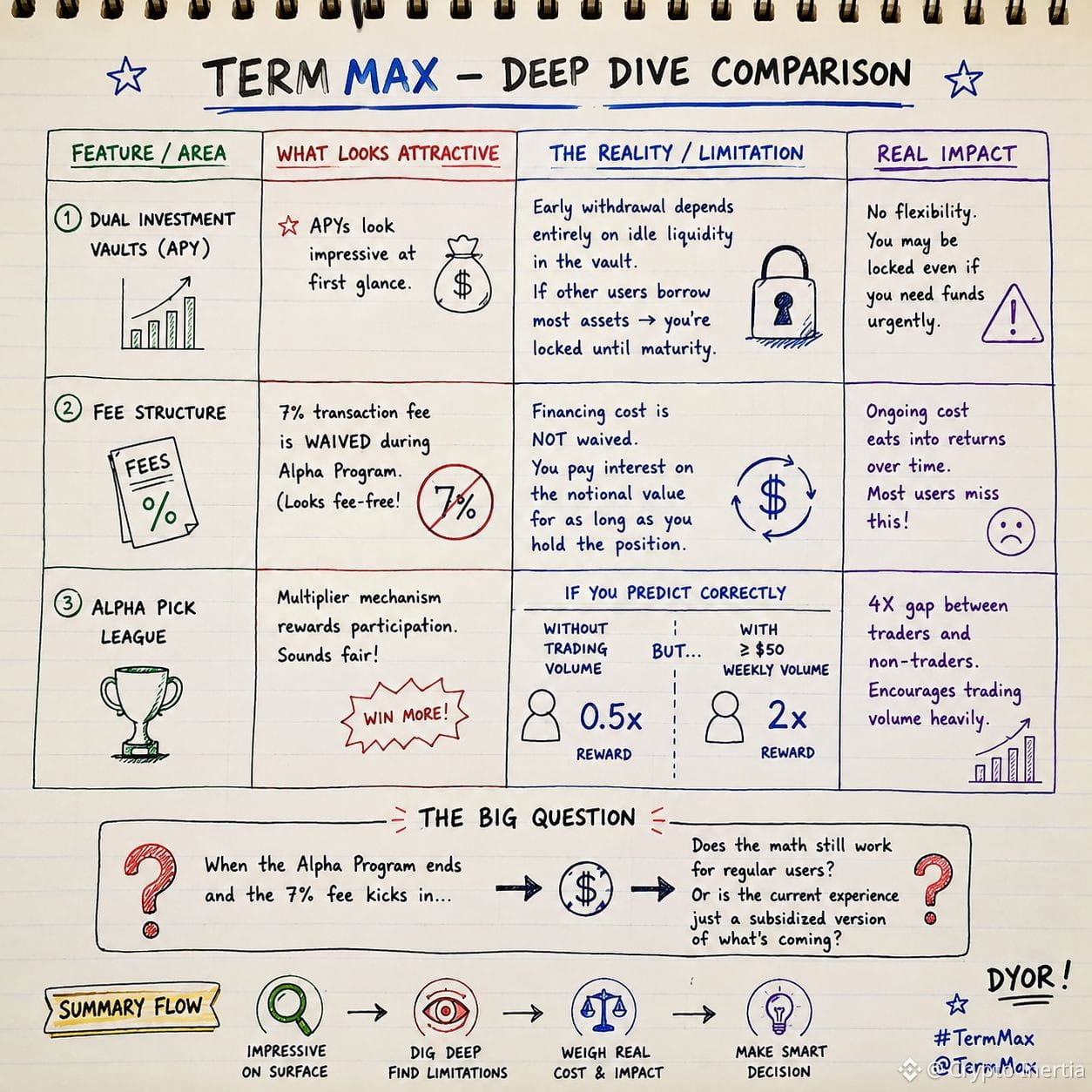
#termmax @termmax Tôi cứ mò mẫm ở TermMax và có một điều cứ làm tôi băn khoăn mãi. Các vault Dual Investment đang đưa ra APY nhìn thì có vẻ rất ấn tượng. Nhưng khi bạn thực sự tìm kỹ vào cơ chế rút tiền thì sự linh hoạt lại không hề có. Việc rút sớm phụ thuộc hoàn toàn vào việc trong vault đang có bao nhiêu thanh khoản nhàn rỗi. Nếu người dùng khác đã vay gần như hết tài sản, bạn sẽ bị khóa cho đến khi đáo hạn. Không có cách nào khác.
Rồi tôi xem tiếp cấu trúc phí. Phí giao dịch 7% hiện đang được miễn trong chương trình alpha. Nhưng chi phí tài trợ thì không được miễn. Bạn phải trả lãi trên giá trị danh nghĩa trong suốt thời gian bạn còn giữ vị thế. Tài liệu nói rõ điều đó. Nhưng hầu hết mọi người chỉ thấy "chương trình alpha không tính phí" và bỏ qua hoàn toàn chi phí phát sinh liên tục. The Alpha Pick League thì cũng khá khéo. Cơ chế nhân hệ số về cơ bản sẽ phạt bạn nếu không giao dịch. Dự đoán đúng mà không tạo khối lượng giao dịch thì nhận được phần thưởng 0,5x. Đạt 50 đô la khối lượng mỗi tuần thì đột nhiên là 2x. Khoảng chênh bốn lần giữa người giao dịch và người không giao dịch không hề mơ hồ.
Điều tôi cứ nghĩ mãi là — khi chương trình alpha kết thúc và khoản phí 7% được kích hoạt, thì phép tính còn đúng cho người dùng bình thường không? Hay trải nghiệm hiện tại chỉ là phiên bản được trợ giá của những gì sắp tới?
#termmax @TermMax Tôi cứ mò mẫm ở TermMax và có một điều cứ làm tôi băn khoăn mãi. Các vault Dual Investment đang đưa ra APY nhìn thì có vẻ rất ấn tượng. Nhưng khi bạn thực sự tìm kỹ vào cơ chế rút tiền thì sự linh hoạt lại không hề có. Việc rút sớm phụ thuộc hoàn toàn vào việc trong vault đang có bao nhiêu thanh khoản nhàn rỗi. Nếu người dùng khác đã vay gần như hết tài sản, bạn sẽ bị khóa cho đến khi đáo hạn. Không có cách nào khác.
Rồi tôi xem tiếp cấu trúc phí. Phí giao dịch 7% hiện đang được miễn trong chương trình alpha. Nhưng chi phí tài trợ thì không được miễn. Bạn phải trả lãi trên giá trị danh nghĩa trong suốt thời gian bạn còn giữ vị thế. Tài liệu nói rõ điều đó. Nhưng hầu hết mọi người chỉ thấy "chương trình alpha không tính phí" và bỏ qua hoàn toàn chi phí phát sinh liên tục. The Alpha Pick League thì cũng khá khéo. Cơ chế nhân hệ số về cơ bản sẽ phạt bạn nếu không giao dịch. Dự đoán đúng mà không tạo khối lượng giao dịch thì nhận được phần thưởng 0,5x. Đạt 50 đô la khối lượng mỗi tuần thì đột nhiên là 2x. Khoảng chênh bốn lần giữa người giao dịch và người không giao dịch không hề mơ hồ.
Điều tôi cứ nghĩ mãi là — khi chương trình alpha kết thúc và khoản phí 7% được kích hoạt, thì phép tính còn đúng cho người dùng bình thường không? Hay trải nghiệm hiện tại chỉ là phiên bản được trợ giá của những gì sắp tới?
Rồi tôi xem tiếp cấu trúc phí. Phí giao dịch 7% hiện đang được miễn trong chương trình alpha. Nhưng chi phí tài trợ thì không được miễn. Bạn phải trả lãi trên giá trị danh nghĩa trong suốt thời gian bạn còn giữ vị thế. Tài liệu nói rõ điều đó. Nhưng hầu hết mọi người chỉ thấy "chương trình alpha không tính phí" và bỏ qua hoàn toàn chi phí phát sinh liên tục. The Alpha Pick League thì cũng khá khéo. Cơ chế nhân hệ số về cơ bản sẽ phạt bạn nếu không giao dịch. Dự đoán đúng mà không tạo khối lượng giao dịch thì nhận được phần thưởng 0,5x. Đạt 50 đô la khối lượng mỗi tuần thì đột nhiên là 2x. Khoảng chênh bốn lần giữa người giao dịch và người không giao dịch không hề mơ hồ.
Điều tôi cứ nghĩ mãi là — khi chương trình alpha kết thúc và khoản phí 7% được kích hoạt, thì phép tính còn đúng cho người dùng bình thường không? Hay trải nghiệm hiện tại chỉ là phiên bản được trợ giá của những gì sắp tới?
4
1
84
·
--
Giảm giá
#dusk @Dusk_Foundation
Tôi đã ngồi xem các thông báo chính thức của DUSK và có một phép so sánh cứ mãi làm tôi băn khoăn.
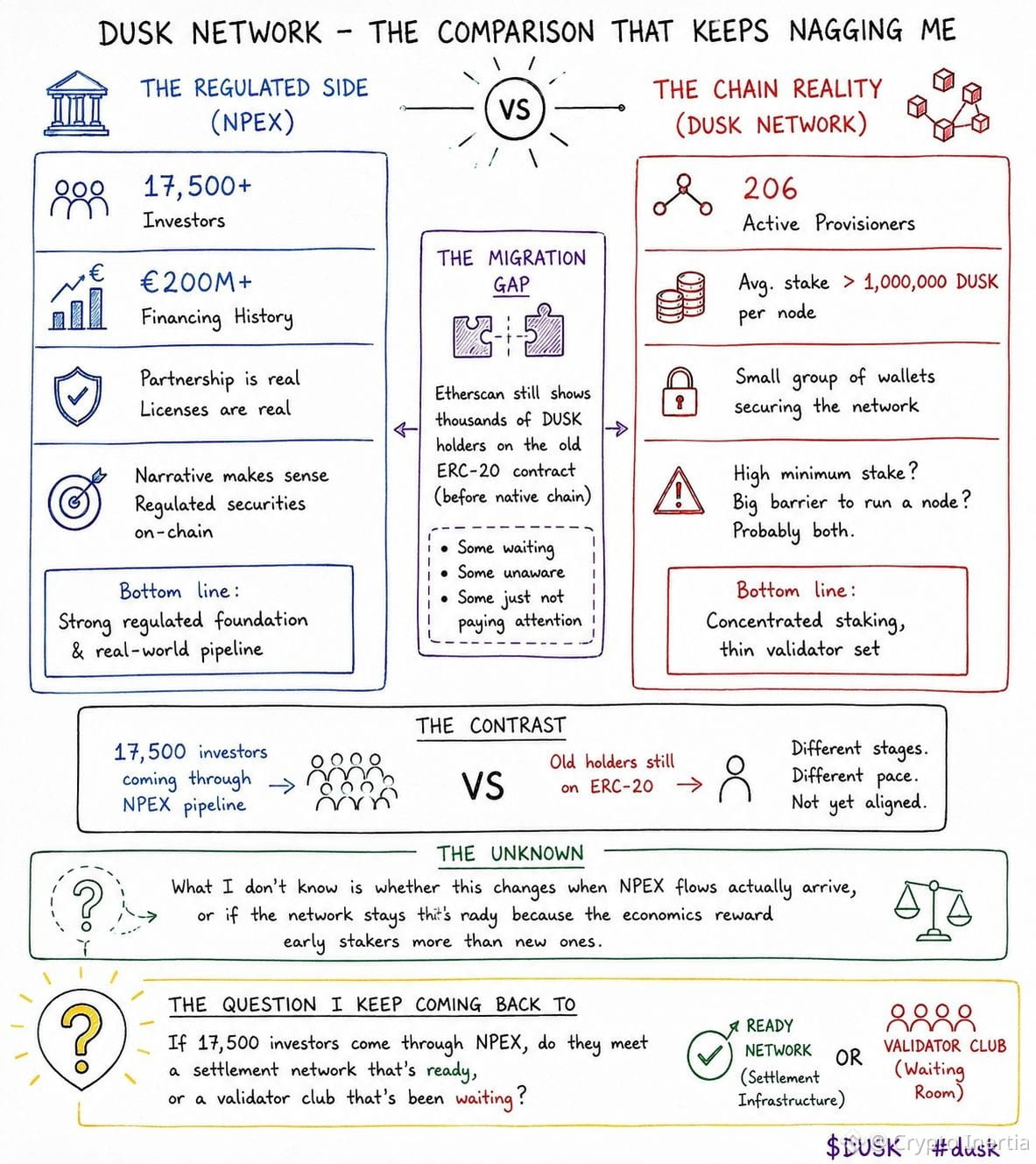
NPEX có 17.500+ nhà đầu tư và lịch sử huy động €200M+. Đó là phần được quản lý. Các con số vững chắc. Quan hệ đối tác là thật, giấy phép là thật, câu chuyện hợp lý. Nhưng rồi bạn nhìn thẳng vào chính chuỗi đó. 206 nhà cung cấp dịch vụ (provisioners) đang hoạt động để đảm bảo mạng. Mức stake trung bình hơn một triệu DUSK cho mỗi node. Với một chuỗi muốn thanh toán các chứng khoán được quản lý cho hàng nghìn nhà đầu tư, thì hạ tầng thực hiện công việc đồng thuận (consensus) lại nằm trong tay một nhóm ví nhỏ. Hoặc ngưỡng stake tối thiểu đang lọc quá gắt, hoặc việc chạy một node là rào cản lớn hơn so với tài liệu thừa nhận. Có lẽ là cả hai.
Sau đó là khoảng trống di trú (migration). Etherscan vẫn hiển thị hàng nghìn người nắm giữ DUSK trên hợp đồng ERC-20 cũ từ trước khi có chuỗi gốc (native). Một số người còn đang chờ. Một số người không biết. Một số chỉ đơn giản là không để ý. Phần được quản lý có 17.500 nhà đầu tư đang nằm trong “đường ống” (pipeline). Còn phía chuỗi thì vẫn có các chủ cũ chưa chuyển.
Bản “pitch” là thanh toán mang tính tổ chức (institutional settlement). Hình dạng trên chuỗi hiện tại là staking tập trung và hàng đợi vào mỏng. Điều tôi thực sự không biết là liệu điều này có thay đổi khi dòng tiền từ NPEX thực sự đổ vào hay không, hay mạng vẫn giữ nguyên trạng thái này vì lợi ích kinh tế thưởng cho những người stake sớm nhiều hơn là những người mới.
Câu hỏi tôi cứ quay lại — nếu 17.500 nhà đầu tư đi qua NPEX, liệu họ sẽ tiếp cận một mạng lưới sẵn sàng để settlement, hay là một “câu lạc bộ validator” đã chờ sẵn?$DUSK
{spot}(DUSKUSDT)
#dusk @Dusk
Tôi đã ngồi xem các thông báo chính thức của DUSK và có một phép so sánh cứ mãi làm tôi băn khoăn.
NPEX có 17.500+ nhà đầu tư và lịch sử huy động €200M+. Đó là phần được quản lý. Các con số vững chắc. Quan hệ đối tác là thật, giấy phép là thật, câu chuyện hợp lý. Nhưng rồi bạn nhìn thẳng vào chính chuỗi đó. 206 nhà cung cấp dịch vụ (provisioners) đang hoạt động để đảm bảo mạng. Mức stake trung bình hơn một triệu DUSK cho mỗi node. Với một chuỗi muốn thanh toán các chứng khoán được quản lý cho hàng nghìn nhà đầu tư, thì hạ tầng thực hiện công việc đồng thuận (consensus) lại nằm trong tay một nhóm ví nhỏ. Hoặc ngưỡng stake tối thiểu đang lọc quá gắt, hoặc việc chạy một node là rào cản lớn hơn so với tài liệu thừa nhận. Có lẽ là cả hai.
Sau đó là khoảng trống di trú (migration). Etherscan vẫn hiển thị hàng nghìn người nắm giữ DUSK trên hợp đồng ERC-20 cũ từ trước khi có chuỗi gốc (native). Một số người còn đang chờ. Một số người không biết. Một số chỉ đơn giản là không để ý. Phần được quản lý có 17.500 nhà đầu tư đang nằm trong “đường ống” (pipeline). Còn phía chuỗi thì vẫn có các chủ cũ chưa chuyển.
Bản “pitch” là thanh toán mang tính tổ chức (institutional settlement). Hình dạng trên chuỗi hiện tại là staking tập trung và hàng đợi vào mỏng. Điều tôi thực sự không biết là liệu điều này có thay đổi khi dòng tiền từ NPEX thực sự đổ vào hay không, hay mạng vẫn giữ nguyên trạng thái này vì lợi ích kinh tế thưởng cho những người stake sớm nhiều hơn là những người mới.
Câu hỏi tôi cứ quay lại — nếu 17.500 nhà đầu tư đi qua NPEX, liệu họ sẽ tiếp cận một mạng lưới sẵn sàng để settlement, hay là một “câu lạc bộ validator” đã chờ sẵn?$DUSK
Tôi đã ngồi xem các thông báo chính thức của DUSK và có một phép so sánh cứ mãi làm tôi băn khoăn.
NPEX có 17.500+ nhà đầu tư và lịch sử huy động €200M+. Đó là phần được quản lý. Các con số vững chắc. Quan hệ đối tác là thật, giấy phép là thật, câu chuyện hợp lý. Nhưng rồi bạn nhìn thẳng vào chính chuỗi đó. 206 nhà cung cấp dịch vụ (provisioners) đang hoạt động để đảm bảo mạng. Mức stake trung bình hơn một triệu DUSK cho mỗi node. Với một chuỗi muốn thanh toán các chứng khoán được quản lý cho hàng nghìn nhà đầu tư, thì hạ tầng thực hiện công việc đồng thuận (consensus) lại nằm trong tay một nhóm ví nhỏ. Hoặc ngưỡng stake tối thiểu đang lọc quá gắt, hoặc việc chạy một node là rào cản lớn hơn so với tài liệu thừa nhận. Có lẽ là cả hai.
Sau đó là khoảng trống di trú (migration). Etherscan vẫn hiển thị hàng nghìn người nắm giữ DUSK trên hợp đồng ERC-20 cũ từ trước khi có chuỗi gốc (native). Một số người còn đang chờ. Một số người không biết. Một số chỉ đơn giản là không để ý. Phần được quản lý có 17.500 nhà đầu tư đang nằm trong “đường ống” (pipeline). Còn phía chuỗi thì vẫn có các chủ cũ chưa chuyển.
Bản “pitch” là thanh toán mang tính tổ chức (institutional settlement). Hình dạng trên chuỗi hiện tại là staking tập trung và hàng đợi vào mỏng. Điều tôi thực sự không biết là liệu điều này có thay đổi khi dòng tiền từ NPEX thực sự đổ vào hay không, hay mạng vẫn giữ nguyên trạng thái này vì lợi ích kinh tế thưởng cho những người stake sớm nhiều hơn là những người mới.
Câu hỏi tôi cứ quay lại — nếu 17.500 nhà đầu tư đi qua NPEX, liệu họ sẽ tiếp cận một mạng lưới sẵn sàng để settlement, hay là một “câu lạc bộ validator” đã chờ sẵn?$DUSK
5
2
105
#dusk $DUSK @Dusk_Foundation
Tôi đang so sánh @dusk với cách các thị trường tài chính được quản lý hiện xử lý quyền riêng tư. Không phải lý thuyết. Mà là các lựa chọn thực tế mà các tổ chức có.
Vấn đề nằm ở đây. Blockchain công khai phơi bày mọi thứ. Mọi vị thế. Mọi đối tác. Mọi số dư. Điều này phù hợp với DeFi. Nhưng nó không phù hợp khi bạn đang thanh toán các chứng khoán, nơi việc công bố là có chọn lọc và mức độ giám sát được pháp luật xác định. Các tổ chức không thể vận hành trên một chuỗi mà bảng vốn hóa (cap table) của họ bị công khai và các giao dịch của họ có thể nhìn thấy bởi đối thủ cạnh tranh.
Vậy họ làm gì ngày hôm nay? Họ ở lại trong các cơ sở dữ liệu riêng tư. Hệ thống đóng. Các đường ray kế thừa (legacy rails). Thời gian thanh toán mất vài ngày. Các hệ thống không nói chuyện với nhau. Mọi tích hợp đều cần luật sư. Họ có được quyền riêng tư nhưng đánh đổi hiệu quả. Đây là một sự đánh đổi mà không ai còn đặt câu hỏi nữa, vì đó là cách mọi thứ vẫn vận hành từ trước đến nay.
Dusk loại bỏ sự đánh đổi đó. Các giao dịch Phoenix mặc định là bí mật. Chứng minh không kiến thức (zero-knowledge proofs) xác minh tính đúng đắn mà không lộ ra dữ liệu bên dưới. Công bố chọn lọc nghĩa là một cơ quan quản lý có thể xem chính xác những gì họ được phép thấy và không gì hơn. Và tất cả được thanh toán trong khoảng 10 giây. Không phải T+2. Không phải các ngày làm việc. Chỉ là vài giây.
Đó là sự khác biệt. Quyền riêng tư không được “gắn thêm” lên trên một chuỗi chung. Việc tuân thủ không phải là một lớp bọc quanh DeFi. Lớp nền được xây dựng cho việc này ngay từ đầu. NPEX, một sàn giao dịch Hà Lan được AFM quản lý, đã xác nhận việc phát hành từ €200M+ với Dusk. Chainlink tham gia ở cấp độ hạ tầng. Đây không phải các thử nghiệm “native crypto” một cách ngẫu nhiên. Đây là các tổ chức được quản lý đang chuyển những quy trình công việc thực sự.
Tôi không nói rằng mọi thứ là hoàn hảo. Việc pháp lý chấp nhận các bằng chứng ZK vẫn cần kịp bắt nhịp. Nhưng khoảng cách giữa những gì các chuỗi công khai cung cấp và những gì thị trường được quản lý cần đã tồn tại trong nhiều năm. Dusk là hạ tầng đầu tiên mà tôi thấy thực sự đóng được khoảng cách đó.
Vướng mắc lớn hơn đối với tài sản được quản lý onchain — quyền riêng tư, tuân thủ, hay chỉ là tốc độ thanh toán?
$GPS
{spot}(GPSUSDT)
$TUT
{spot}(TUTUSDT)
#dusk $DUSK @Dusk
Tôi đang so sánh @dusk với cách các thị trường tài chính được quản lý hiện xử lý quyền riêng tư. Không phải lý thuyết. Mà là các lựa chọn thực tế mà các tổ chức có.
Vấn đề nằm ở đây. Blockchain công khai phơi bày mọi thứ. Mọi vị thế. Mọi đối tác. Mọi số dư. Điều này phù hợp với DeFi. Nhưng nó không phù hợp khi bạn đang thanh toán các chứng khoán, nơi việc công bố là có chọn lọc và mức độ giám sát được pháp luật xác định. Các tổ chức không thể vận hành trên một chuỗi mà bảng vốn hóa (cap table) của họ bị công khai và các giao dịch của họ có thể nhìn thấy bởi đối thủ cạnh tranh.
Vậy họ làm gì ngày hôm nay? Họ ở lại trong các cơ sở dữ liệu riêng tư. Hệ thống đóng. Các đường ray kế thừa (legacy rails). Thời gian thanh toán mất vài ngày. Các hệ thống không nói chuyện với nhau. Mọi tích hợp đều cần luật sư. Họ có được quyền riêng tư nhưng đánh đổi hiệu quả. Đây là một sự đánh đổi mà không ai còn đặt câu hỏi nữa, vì đó là cách mọi thứ vẫn vận hành từ trước đến nay.
Dusk loại bỏ sự đánh đổi đó. Các giao dịch Phoenix mặc định là bí mật. Chứng minh không kiến thức (zero-knowledge proofs) xác minh tính đúng đắn mà không lộ ra dữ liệu bên dưới. Công bố chọn lọc nghĩa là một cơ quan quản lý có thể xem chính xác những gì họ được phép thấy và không gì hơn. Và tất cả được thanh toán trong khoảng 10 giây. Không phải T+2. Không phải các ngày làm việc. Chỉ là vài giây.
Đó là sự khác biệt. Quyền riêng tư không được “gắn thêm” lên trên một chuỗi chung. Việc tuân thủ không phải là một lớp bọc quanh DeFi. Lớp nền được xây dựng cho việc này ngay từ đầu. NPEX, một sàn giao dịch Hà Lan được AFM quản lý, đã xác nhận việc phát hành từ €200M+ với Dusk. Chainlink tham gia ở cấp độ hạ tầng. Đây không phải các thử nghiệm “native crypto” một cách ngẫu nhiên. Đây là các tổ chức được quản lý đang chuyển những quy trình công việc thực sự.
Tôi không nói rằng mọi thứ là hoàn hảo. Việc pháp lý chấp nhận các bằng chứng ZK vẫn cần kịp bắt nhịp. Nhưng khoảng cách giữa những gì các chuỗi công khai cung cấp và những gì thị trường được quản lý cần đã tồn tại trong nhiều năm. Dusk là hạ tầng đầu tiên mà tôi thấy thực sự đóng được khoảng cách đó.
Vướng mắc lớn hơn đối với tài sản được quản lý onchain — quyền riêng tư, tuân thủ, hay chỉ là tốc độ thanh toán?
$GPS
$TUT
Tôi đang so sánh @dusk với cách các thị trường tài chính được quản lý hiện xử lý quyền riêng tư. Không phải lý thuyết. Mà là các lựa chọn thực tế mà các tổ chức có.
Vấn đề nằm ở đây. Blockchain công khai phơi bày mọi thứ. Mọi vị thế. Mọi đối tác. Mọi số dư. Điều này phù hợp với DeFi. Nhưng nó không phù hợp khi bạn đang thanh toán các chứng khoán, nơi việc công bố là có chọn lọc và mức độ giám sát được pháp luật xác định. Các tổ chức không thể vận hành trên một chuỗi mà bảng vốn hóa (cap table) của họ bị công khai và các giao dịch của họ có thể nhìn thấy bởi đối thủ cạnh tranh.
Vậy họ làm gì ngày hôm nay? Họ ở lại trong các cơ sở dữ liệu riêng tư. Hệ thống đóng. Các đường ray kế thừa (legacy rails). Thời gian thanh toán mất vài ngày. Các hệ thống không nói chuyện với nhau. Mọi tích hợp đều cần luật sư. Họ có được quyền riêng tư nhưng đánh đổi hiệu quả. Đây là một sự đánh đổi mà không ai còn đặt câu hỏi nữa, vì đó là cách mọi thứ vẫn vận hành từ trước đến nay.
Dusk loại bỏ sự đánh đổi đó. Các giao dịch Phoenix mặc định là bí mật. Chứng minh không kiến thức (zero-knowledge proofs) xác minh tính đúng đắn mà không lộ ra dữ liệu bên dưới. Công bố chọn lọc nghĩa là một cơ quan quản lý có thể xem chính xác những gì họ được phép thấy và không gì hơn. Và tất cả được thanh toán trong khoảng 10 giây. Không phải T+2. Không phải các ngày làm việc. Chỉ là vài giây.
Đó là sự khác biệt. Quyền riêng tư không được “gắn thêm” lên trên một chuỗi chung. Việc tuân thủ không phải là một lớp bọc quanh DeFi. Lớp nền được xây dựng cho việc này ngay từ đầu. NPEX, một sàn giao dịch Hà Lan được AFM quản lý, đã xác nhận việc phát hành từ €200M+ với Dusk. Chainlink tham gia ở cấp độ hạ tầng. Đây không phải các thử nghiệm “native crypto” một cách ngẫu nhiên. Đây là các tổ chức được quản lý đang chuyển những quy trình công việc thực sự.
Tôi không nói rằng mọi thứ là hoàn hảo. Việc pháp lý chấp nhận các bằng chứng ZK vẫn cần kịp bắt nhịp. Nhưng khoảng cách giữa những gì các chuỗi công khai cung cấp và những gì thị trường được quản lý cần đã tồn tại trong nhiều năm. Dusk là hạ tầng đầu tiên mà tôi thấy thực sự đóng được khoảng cách đó.
Vướng mắc lớn hơn đối với tài sản được quản lý onchain — quyền riêng tư, tuân thủ, hay chỉ là tốc độ thanh toán?
$GPS
$TUT
208
#termmax @termmax
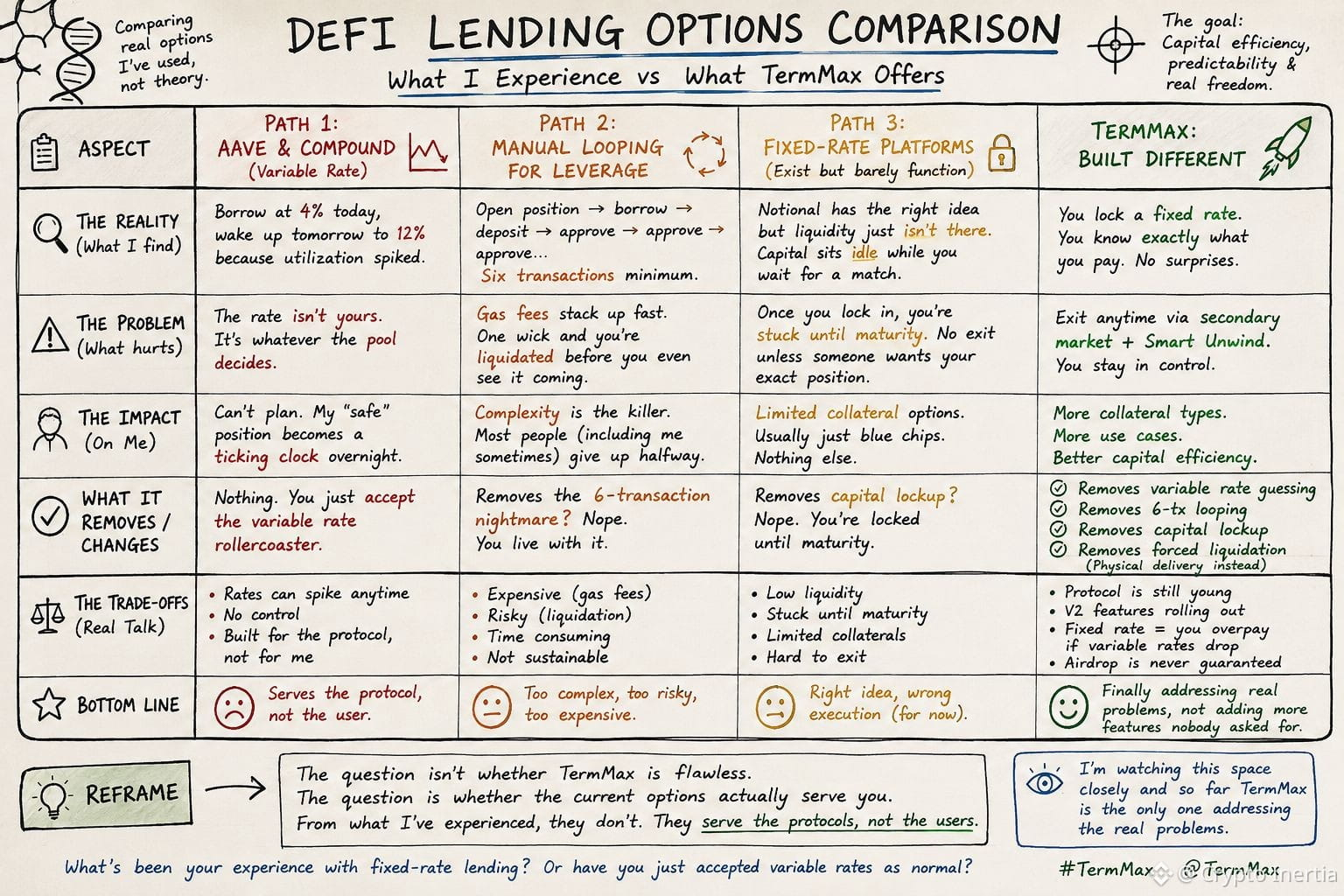
Tôi đã so sánh TermMax với cách cho vay DeFi đang hoạt động ngay bây giờ. Không phải lý thuyết. Những lựa chọn thực tế tôi đã dùng.
Đây là những gì tôi nhận thấy. Ba hướng đi. Cả ba đều “hỏng” theo những cách riêng.
Hướng 1: Aave và Compound. Vấn đề lãi suất biến động là có thật. Bạn vay ở mức 4% hôm nay, sáng mai tỉnh dậy đã là 12% vì mức sử dụng tăng vọt. Bạn không thể lên kế hoạch cho điều đó. “Vị thế an toàn” của bạn trở thành một chiếc đồng hồ đếm ngược qua đêm. Lãi suất không thuộc về bạn. Đó là mức mà pool quyết định.
Hướng 2: Tự “lặp” thủ công để đòn bẩy. Cái này đau nhất vì tôi đã làm. Mở vị thế trên một giao thức, vay trên giao thức khác, gửi ở nơi khác, approve, approve, approve. Tối thiểu sáu giao dịch. Phí gas chồng lên rất nhanh. Và bạn phải theo dõi liên tục, vì chỉ cần một cây nến quét là bạn bị thanh lý trước khi kịp nhận ra. Thứ giết chết ở đây là sự phức tạp. .
Hướng 3: Nền tảng lãi suất cố định đã tồn tại nhưng gần như không hoạt động. Notional có ý tưởng đúng, nhưng thanh khoản không ở đó. Vốn nằm im trong khi bạn chờ một đối tác khớp lệnh. Khi bạn đã khóa lãi suất, bạn bị “kẹt” cho đến khi đáo hạn. Không thể thoát ra trừ khi ai đó tình cờ muốn đúng vị thế của bạn. .
TermMax được xây dựng theo cách khác. Nó loại bỏ trò đoán lãi suất biến động. Loại bỏ cơn ác mộng “lặp giao dịch” gồm sáu bước. Loại bỏ việc bị khóa vốn bằng các lối thoát qua thị trường thứ cấp và Smart Unwind. Loại bỏ mô hình thanh lý bắt buộc bằng việc sử dụng giao nhận vật lý thay thế.
Tôi không nói là hoàn hảo. Giao thức vẫn còn trẻ. Tính năng V2 đang được triển khai theo từng giai đoạn. Lãi suất cố định đồng nghĩa bạn có thể trả cao hơn nếu lãi suất biến động giảm. Và chuyện airdrop thì không bao giờ được “bảo đảm”.
Nhưng hãy nhìn theo cách khác. Câu hỏi không phải là TermMax có “lỗi” hay không. Câu hỏi là các lựa chọn hiện tại có thực sự phục vụ bạn hay không. Theo những gì tôi trải nghiệm, là không. Chúng phục vụ các giao thức, không phải người dùng.
Tôi đang theo dõi mảng này sát sao, và cho đến giờ TermMax là cái đang giải quyết các vấn đề thật sự thay vì thêm nhiều tính năng hơn mà chẳng ai yêu cầu.
Bạn đã có trải nghiệm gì với cho vay lãi suất cố định? Hay bạn chỉ đơn giản chấp nhận lãi suất biến động như điều bình thường?
$GPS
{spot}(GPSUSDT)
$PORTAL
{spot}(PORTALUSDT)
#termmax @TermMax
Tôi đã so sánh TermMax với cách cho vay DeFi đang hoạt động ngay bây giờ. Không phải lý thuyết. Những lựa chọn thực tế tôi đã dùng.
Đây là những gì tôi nhận thấy. Ba hướng đi. Cả ba đều “hỏng” theo những cách riêng.
Hướng 1: Aave và Compound. Vấn đề lãi suất biến động là có thật. Bạn vay ở mức 4% hôm nay, sáng mai tỉnh dậy đã là 12% vì mức sử dụng tăng vọt. Bạn không thể lên kế hoạch cho điều đó. “Vị thế an toàn” của bạn trở thành một chiếc đồng hồ đếm ngược qua đêm. Lãi suất không thuộc về bạn. Đó là mức mà pool quyết định.
Hướng 2: Tự “lặp” thủ công để đòn bẩy. Cái này đau nhất vì tôi đã làm. Mở vị thế trên một giao thức, vay trên giao thức khác, gửi ở nơi khác, approve, approve, approve. Tối thiểu sáu giao dịch. Phí gas chồng lên rất nhanh. Và bạn phải theo dõi liên tục, vì chỉ cần một cây nến quét là bạn bị thanh lý trước khi kịp nhận ra. Thứ giết chết ở đây là sự phức tạp. .
Hướng 3: Nền tảng lãi suất cố định đã tồn tại nhưng gần như không hoạt động. Notional có ý tưởng đúng, nhưng thanh khoản không ở đó. Vốn nằm im trong khi bạn chờ một đối tác khớp lệnh. Khi bạn đã khóa lãi suất, bạn bị “kẹt” cho đến khi đáo hạn. Không thể thoát ra trừ khi ai đó tình cờ muốn đúng vị thế của bạn. .
TermMax được xây dựng theo cách khác. Nó loại bỏ trò đoán lãi suất biến động. Loại bỏ cơn ác mộng “lặp giao dịch” gồm sáu bước. Loại bỏ việc bị khóa vốn bằng các lối thoát qua thị trường thứ cấp và Smart Unwind. Loại bỏ mô hình thanh lý bắt buộc bằng việc sử dụng giao nhận vật lý thay thế.
Tôi không nói là hoàn hảo. Giao thức vẫn còn trẻ. Tính năng V2 đang được triển khai theo từng giai đoạn. Lãi suất cố định đồng nghĩa bạn có thể trả cao hơn nếu lãi suất biến động giảm. Và chuyện airdrop thì không bao giờ được “bảo đảm”.
Nhưng hãy nhìn theo cách khác. Câu hỏi không phải là TermMax có “lỗi” hay không. Câu hỏi là các lựa chọn hiện tại có thực sự phục vụ bạn hay không. Theo những gì tôi trải nghiệm, là không. Chúng phục vụ các giao thức, không phải người dùng.
Tôi đang theo dõi mảng này sát sao, và cho đến giờ TermMax là cái đang giải quyết các vấn đề thật sự thay vì thêm nhiều tính năng hơn mà chẳng ai yêu cầu.
Bạn đã có trải nghiệm gì với cho vay lãi suất cố định? Hay bạn chỉ đơn giản chấp nhận lãi suất biến động như điều bình thường?
$GPS
$PORTAL
Tôi đã so sánh TermMax với cách cho vay DeFi đang hoạt động ngay bây giờ. Không phải lý thuyết. Những lựa chọn thực tế tôi đã dùng.
Đây là những gì tôi nhận thấy. Ba hướng đi. Cả ba đều “hỏng” theo những cách riêng.
Hướng 1: Aave và Compound. Vấn đề lãi suất biến động là có thật. Bạn vay ở mức 4% hôm nay, sáng mai tỉnh dậy đã là 12% vì mức sử dụng tăng vọt. Bạn không thể lên kế hoạch cho điều đó. “Vị thế an toàn” của bạn trở thành một chiếc đồng hồ đếm ngược qua đêm. Lãi suất không thuộc về bạn. Đó là mức mà pool quyết định.
Hướng 2: Tự “lặp” thủ công để đòn bẩy. Cái này đau nhất vì tôi đã làm. Mở vị thế trên một giao thức, vay trên giao thức khác, gửi ở nơi khác, approve, approve, approve. Tối thiểu sáu giao dịch. Phí gas chồng lên rất nhanh. Và bạn phải theo dõi liên tục, vì chỉ cần một cây nến quét là bạn bị thanh lý trước khi kịp nhận ra. Thứ giết chết ở đây là sự phức tạp. .
Hướng 3: Nền tảng lãi suất cố định đã tồn tại nhưng gần như không hoạt động. Notional có ý tưởng đúng, nhưng thanh khoản không ở đó. Vốn nằm im trong khi bạn chờ một đối tác khớp lệnh. Khi bạn đã khóa lãi suất, bạn bị “kẹt” cho đến khi đáo hạn. Không thể thoát ra trừ khi ai đó tình cờ muốn đúng vị thế của bạn. .
TermMax được xây dựng theo cách khác. Nó loại bỏ trò đoán lãi suất biến động. Loại bỏ cơn ác mộng “lặp giao dịch” gồm sáu bước. Loại bỏ việc bị khóa vốn bằng các lối thoát qua thị trường thứ cấp và Smart Unwind. Loại bỏ mô hình thanh lý bắt buộc bằng việc sử dụng giao nhận vật lý thay thế.
Tôi không nói là hoàn hảo. Giao thức vẫn còn trẻ. Tính năng V2 đang được triển khai theo từng giai đoạn. Lãi suất cố định đồng nghĩa bạn có thể trả cao hơn nếu lãi suất biến động giảm. Và chuyện airdrop thì không bao giờ được “bảo đảm”.
Nhưng hãy nhìn theo cách khác. Câu hỏi không phải là TermMax có “lỗi” hay không. Câu hỏi là các lựa chọn hiện tại có thực sự phục vụ bạn hay không. Theo những gì tôi trải nghiệm, là không. Chúng phục vụ các giao thức, không phải người dùng.
Tôi đang theo dõi mảng này sát sao, và cho đến giờ TermMax là cái đang giải quyết các vấn đề thật sự thay vì thêm nhiều tính năng hơn mà chẳng ai yêu cầu.
Bạn đã có trải nghiệm gì với cho vay lãi suất cố định? Hay bạn chỉ đơn giản chấp nhận lãi suất biến động như điều bình thường?
$GPS
$PORTAL
1
240
Giao dịch 30D $DUSK 229.8 USDT
#dusk $DUSK
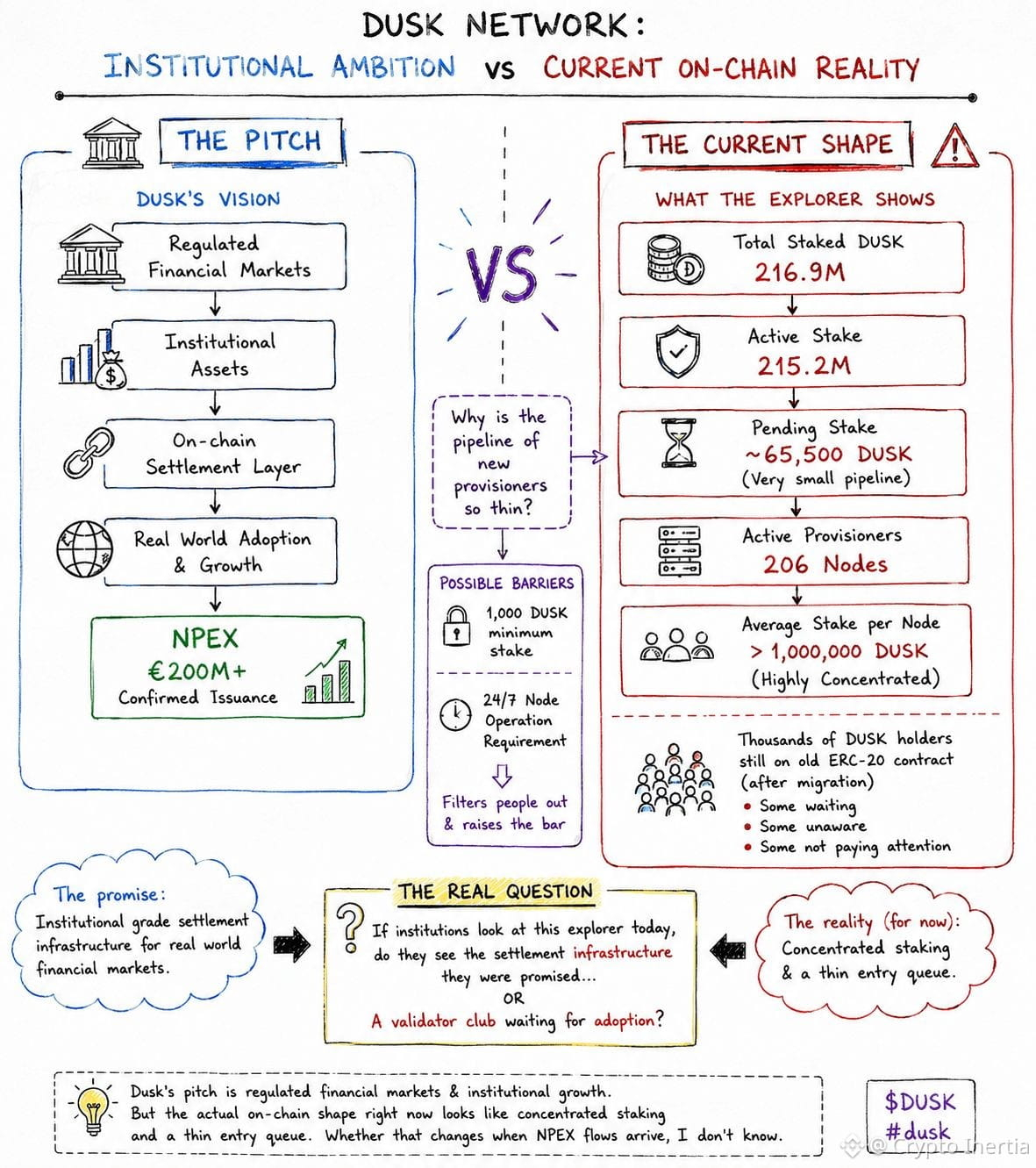
Tôi đã ngồi với trình khám phá DUDE không chính thức và một con số cứ làm tôi băn khoăn mãi.
Hiện tại có 216.9M @Dusk_Foundation
{spot}(DUSKUSDT)
k đang được đặt cọc với 215.2M đang hoạt động. Tốt. Nhưng phần stake đang chờ chỉ khoảng 65,500 DUSK. Tỷ lệ đó hầu như không tồn tại. Với một mạng lưới nói về tăng trưởng mang tính thể chế, thì đường ống của các bên cung cấp mới trông khá phẳng. Hoặc là mức tối thiểu 1,000 DUSK đang làm nhiệm vụ lọc người ra, hoặc việc chạy một node 24/7 là rào cản lớn hơn những gì tài liệu thừa nhận. Có lẽ cả hai.
Sau đó tôi xem số lượng provisioner đang hoạt động — 206 node. Mỗi node trung bình đặt cọc hơn một triệu DUSK. Như vậy không phải là phi tập trung. Đó là một vài ví nghiêm túc đang vận hành mạng. Trong khi đó, Etherscan vẫn hiển thị hàng nghìn người nắm giữ DUSK đang ngồi trên hợp đồng ERC-20 cũ từ trước khi di chuyển. Một số đang chờ. Một số không biết. Một số thì đơn giản là không để ý.
Chào hàng của Dusk là thị trường tài chính được quản lý. Nhưng hình dạng thực tế trên chuỗi ngay bây giờ lại giống với việc đặt cọc tập trung và hàng chờ gia nhập mỏng. Liệu điều đó có thay đổi khi dòng NPEX đổ về hay không, tôi thật sự không biết.
Điều tôi cứ quay lại — nếu các tổ chức xem trình khám phá này, họ có thấy được hạ tầng thanh toán mà họ được hứa, hay là một câu lạc bộ validator đang chờ được áp dụng? $DUSK #dusk
#dusk $DUSK
Tôi đã ngồi với trình khám phá DUDE không chính thức và một con số cứ làm tôi băn khoăn mãi.
Hiện tại có 216.9M @Dusk
k đang được đặt cọc với 215.2M đang hoạt động. Tốt. Nhưng phần stake đang chờ chỉ khoảng 65,500 DUSK. Tỷ lệ đó hầu như không tồn tại. Với một mạng lưới nói về tăng trưởng mang tính thể chế, thì đường ống của các bên cung cấp mới trông khá phẳng. Hoặc là mức tối thiểu 1,000 DUSK đang làm nhiệm vụ lọc người ra, hoặc việc chạy một node 24/7 là rào cản lớn hơn những gì tài liệu thừa nhận. Có lẽ cả hai.
Sau đó tôi xem số lượng provisioner đang hoạt động — 206 node. Mỗi node trung bình đặt cọc hơn một triệu DUSK. Như vậy không phải là phi tập trung. Đó là một vài ví nghiêm túc đang vận hành mạng. Trong khi đó, Etherscan vẫn hiển thị hàng nghìn người nắm giữ DUSK đang ngồi trên hợp đồng ERC-20 cũ từ trước khi di chuyển. Một số đang chờ. Một số không biết. Một số thì đơn giản là không để ý.
Chào hàng của Dusk là thị trường tài chính được quản lý. Nhưng hình dạng thực tế trên chuỗi ngay bây giờ lại giống với việc đặt cọc tập trung và hàng chờ gia nhập mỏng. Liệu điều đó có thay đổi khi dòng NPEX đổ về hay không, tôi thật sự không biết.
Điều tôi cứ quay lại — nếu các tổ chức xem trình khám phá này, họ có thấy được hạ tầng thanh toán mà họ được hứa, hay là một câu lạc bộ validator đang chờ được áp dụng? $DUSK #dusk
Tôi đã ngồi với trình khám phá DUDE không chính thức và một con số cứ làm tôi băn khoăn mãi.
Hiện tại có 216.9M @Dusk
k đang được đặt cọc với 215.2M đang hoạt động. Tốt. Nhưng phần stake đang chờ chỉ khoảng 65,500 DUSK. Tỷ lệ đó hầu như không tồn tại. Với một mạng lưới nói về tăng trưởng mang tính thể chế, thì đường ống của các bên cung cấp mới trông khá phẳng. Hoặc là mức tối thiểu 1,000 DUSK đang làm nhiệm vụ lọc người ra, hoặc việc chạy một node 24/7 là rào cản lớn hơn những gì tài liệu thừa nhận. Có lẽ cả hai.
Sau đó tôi xem số lượng provisioner đang hoạt động — 206 node. Mỗi node trung bình đặt cọc hơn một triệu DUSK. Như vậy không phải là phi tập trung. Đó là một vài ví nghiêm túc đang vận hành mạng. Trong khi đó, Etherscan vẫn hiển thị hàng nghìn người nắm giữ DUSK đang ngồi trên hợp đồng ERC-20 cũ từ trước khi di chuyển. Một số đang chờ. Một số không biết. Một số thì đơn giản là không để ý.
Chào hàng của Dusk là thị trường tài chính được quản lý. Nhưng hình dạng thực tế trên chuỗi ngay bây giờ lại giống với việc đặt cọc tập trung và hàng chờ gia nhập mỏng. Liệu điều đó có thay đổi khi dòng NPEX đổ về hay không, tôi thật sự không biết.
Điều tôi cứ quay lại — nếu các tổ chức xem trình khám phá này, họ có thấy được hạ tầng thanh toán mà họ được hứa, hay là một câu lạc bộ validator đang chờ được áp dụng? $DUSK #dusk
2
1
95
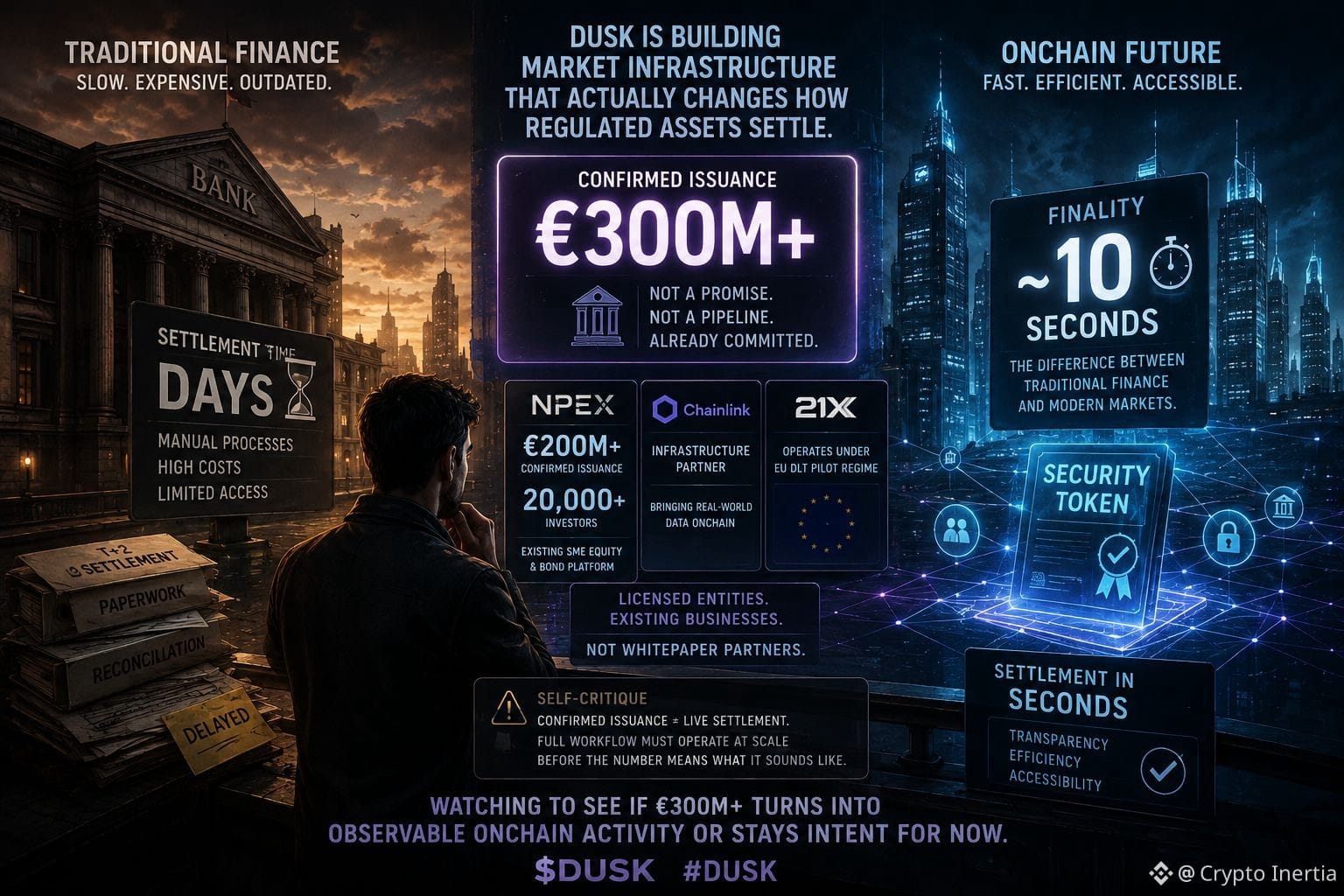
#dusk $DUSK Tôi nhận thấy một điểm khác biệt mà hầu hết mọi người không làm khi nhìn vào các con số của Dusk: việc phát hành đã được xác nhận “300 triệu €+” nghe như một lời hứa, nhưng thực chất nó phản ánh điều gì đó gần gũi hơn.
Con số đó không phải là mục tiêu huy động vốn. Đó là các tài sản mà các tổ chức được quản lý đã cam kết đưa lên onchain. Riêng NPEX đã chiếm “200 triệu €+” trong số phát hành đã được xác nhận, được hậu thuẫn bởi một cơ sở nhà đầu tư hơn 20.000 người. Chainlink tham gia ở tầng hạ tầng. 21X hoạt động theo Chế độ Thử nghiệm DLT của EU. Đây không phải các đối tác trong whitepaper. Chúng là các pháp nhân được cấp phép với các hoạt động kinh doanh hiện hữu.
Điều mà phần lớn dự án RWA làm là công bố một đường ống (pipeline). Một loạt logo. Một trang slide lộ trình với các tài sản “sắp có”. Rồi bạn chờ và chẳng có gì lắng xuống. Cách tiếp cận của Dusk thì khác ở chỗ: con số phát hành gắn với các quy trình đã được quản lý đang hoạt động, chứ không phải là những kỳ vọng trong tương lai. NPEX đã xử lý cổ phiếu SME và trái phiếu. Việc đưa lên onchain là một thay đổi mang tính cấu trúc, không phải màn khởi động lạnh.
Tuy nhiên, điều khiến tôi dừng lại là tính “cuối cùng” (finality). Khoảng 10 giây. Với chứng khoán được quản lý, đó không phải là một điểm cộng kiểu “nếu có thì tốt”. Đó là sự khác biệt giữa việc thanh toán trông như một thị trường hiện đại và việc thanh toán vẫn giống cảm giác của tài chính truyền thống. Nếu NPEX mang các công cụ đã tồn tại lên onchain và chúng được thanh toán trong vài giây thay vì vài ngày, thì đó không phải là câu chuyện về việc blockchain nhanh hơn. Đó là câu chuyện về việc hạ tầng thị trường thực sự đang thay đổi.
Tự phản biện: phát hành đã được xác nhận không giống với thanh toán trực tiếp (live settlement). Tài sản có thể đã được cam kết, nhưng toàn bộ quy trình vẫn cần vận hành ở quy mô lớn trước khi con số đó có ý nghĩa đúng như nó nghe.
Tôi đang chờ xem liệu con số “300 triệu €” có chuyển thành hoạt động onchain quan sát được, hay nó vẫn chỉ dừng ở ý định đã được xác nhận vào lúc này. @Dusk_Foundation
$COW
{spot}(COWUSDT)
$WAL
{spot}(WALUSDT)
#dusk $DUSK Tôi nhận thấy một điểm khác biệt mà hầu hết mọi người không làm khi nhìn vào các con số của Dusk: việc phát hành đã được xác nhận “300 triệu €+” nghe như một lời hứa, nhưng thực chất nó phản ánh điều gì đó gần gũi hơn.
Con số đó không phải là mục tiêu huy động vốn. Đó là các tài sản mà các tổ chức được quản lý đã cam kết đưa lên onchain. Riêng NPEX đã chiếm “200 triệu €+” trong số phát hành đã được xác nhận, được hậu thuẫn bởi một cơ sở nhà đầu tư hơn 20.000 người. Chainlink tham gia ở tầng hạ tầng. 21X hoạt động theo Chế độ Thử nghiệm DLT của EU. Đây không phải các đối tác trong whitepaper. Chúng là các pháp nhân được cấp phép với các hoạt động kinh doanh hiện hữu.
Điều mà phần lớn dự án RWA làm là công bố một đường ống (pipeline). Một loạt logo. Một trang slide lộ trình với các tài sản “sắp có”. Rồi bạn chờ và chẳng có gì lắng xuống. Cách tiếp cận của Dusk thì khác ở chỗ: con số phát hành gắn với các quy trình đã được quản lý đang hoạt động, chứ không phải là những kỳ vọng trong tương lai. NPEX đã xử lý cổ phiếu SME và trái phiếu. Việc đưa lên onchain là một thay đổi mang tính cấu trúc, không phải màn khởi động lạnh.
Tuy nhiên, điều khiến tôi dừng lại là tính “cuối cùng” (finality). Khoảng 10 giây. Với chứng khoán được quản lý, đó không phải là một điểm cộng kiểu “nếu có thì tốt”. Đó là sự khác biệt giữa việc thanh toán trông như một thị trường hiện đại và việc thanh toán vẫn giống cảm giác của tài chính truyền thống. Nếu NPEX mang các công cụ đã tồn tại lên onchain và chúng được thanh toán trong vài giây thay vì vài ngày, thì đó không phải là câu chuyện về việc blockchain nhanh hơn. Đó là câu chuyện về việc hạ tầng thị trường thực sự đang thay đổi.
Tự phản biện: phát hành đã được xác nhận không giống với thanh toán trực tiếp (live settlement). Tài sản có thể đã được cam kết, nhưng toàn bộ quy trình vẫn cần vận hành ở quy mô lớn trước khi con số đó có ý nghĩa đúng như nó nghe.
Tôi đang chờ xem liệu con số “300 triệu €” có chuyển thành hoạt động onchain quan sát được, hay nó vẫn chỉ dừng ở ý định đã được xác nhận vào lúc này. @Dusk
$COW
$WAL
Con số đó không phải là mục tiêu huy động vốn. Đó là các tài sản mà các tổ chức được quản lý đã cam kết đưa lên onchain. Riêng NPEX đã chiếm “200 triệu €+” trong số phát hành đã được xác nhận, được hậu thuẫn bởi một cơ sở nhà đầu tư hơn 20.000 người. Chainlink tham gia ở tầng hạ tầng. 21X hoạt động theo Chế độ Thử nghiệm DLT của EU. Đây không phải các đối tác trong whitepaper. Chúng là các pháp nhân được cấp phép với các hoạt động kinh doanh hiện hữu.
Điều mà phần lớn dự án RWA làm là công bố một đường ống (pipeline). Một loạt logo. Một trang slide lộ trình với các tài sản “sắp có”. Rồi bạn chờ và chẳng có gì lắng xuống. Cách tiếp cận của Dusk thì khác ở chỗ: con số phát hành gắn với các quy trình đã được quản lý đang hoạt động, chứ không phải là những kỳ vọng trong tương lai. NPEX đã xử lý cổ phiếu SME và trái phiếu. Việc đưa lên onchain là một thay đổi mang tính cấu trúc, không phải màn khởi động lạnh.
Tuy nhiên, điều khiến tôi dừng lại là tính “cuối cùng” (finality). Khoảng 10 giây. Với chứng khoán được quản lý, đó không phải là một điểm cộng kiểu “nếu có thì tốt”. Đó là sự khác biệt giữa việc thanh toán trông như một thị trường hiện đại và việc thanh toán vẫn giống cảm giác của tài chính truyền thống. Nếu NPEX mang các công cụ đã tồn tại lên onchain và chúng được thanh toán trong vài giây thay vì vài ngày, thì đó không phải là câu chuyện về việc blockchain nhanh hơn. Đó là câu chuyện về việc hạ tầng thị trường thực sự đang thay đổi.
Tự phản biện: phát hành đã được xác nhận không giống với thanh toán trực tiếp (live settlement). Tài sản có thể đã được cam kết, nhưng toàn bộ quy trình vẫn cần vận hành ở quy mô lớn trước khi con số đó có ý nghĩa đúng như nó nghe.
Tôi đang chờ xem liệu con số “300 triệu €” có chuyển thành hoạt động onchain quan sát được, hay nó vẫn chỉ dừng ở ý định đã được xác nhận vào lúc này. @Dusk
$COW
$WAL
1
1
254
.Tôi thấy có một sự khác biệt mà phần lớn mọi người bỏ sót khi nói về các tài sản được quản lý onchain: các blockchain công khai coi quyền riêng tư là một tính năng, nhưng @Dusk_Foundation coi đó là một yêu cầu.
Trên Ethereum hay Solana, quyền riêng tư là thứ bạn thêm vào sau. Một mixer ở đây, một công cụ chuyển giao bảo mật ở đó. Bản thân chuỗi ở mặc định là minh bạch. Mọi vị thế, mọi đối tác, mọi số dư đều hiển thị với bất kỳ ai nhìn. Điều này phù hợp với DeFi phi tập trung không cần cấp phép. Nhưng nó không phù hợp khi bạn đang xử lý các chứng khoán được quản lý, nơi việc công bố là có chọn lọc và sự giám sát được pháp luật định nghĩa.
Dusk đảo ngược điều đó. Các giao dịch Phoenix mặc định là được bảo mật. Bằng chứng mật mã không kiến thức (zero-knowledge proofs) xác minh tính đúng đắn mà không phơi bày dữ liệu gốc. Công bố chọn lọc nghĩa là một kiểm toán viên hoặc cơ quan quản lý có thể thấy chính xác những gì họ được quyền thấy và không hơn. Không phải một công cụ quyền riêng tư gắn thêm bên trên. Lớp nền tảng chính nó được xây dựng xoay quanh điều đó.
Điều khiến tôi chú ý là mối liên hệ của nó với NPEX. Một sàn giao dịch được AFM quản lý tại Hà Lan, xử lý cổ phiếu và trái phiếu của SME. Một địa điểm như vậy không thể vận hành trên một chuỗi minh bạch. Các nhà giao dịch không muốn vị thế của họ bị công khai. Các tổ chức phát hành không muốn bảng cap table của họ bị lộ cho đối thủ cạnh tranh. Các cơ quan quản lý muốn có khả năng kiểm toán mà không phải phơi bày công khai. Kiến trúc của Dusk phù hợp với những gì các sàn được quản lý thực sự cần—không phải thứ mà crypto giả định rằng họ nên chấp nhận.
Tự phê bình: công nghệ quyền riêng tư chỉ thực sự quan trọng nếu các cơ quan quản lý chấp nhận nó. Bằng chứng mật mã không kiến thức không giúp gì nếu cơ quan quản lý yêu cầu dữ liệu thô theo định dạng mà họ nhận ra. Sự chấp nhận về mặt pháp lý thường đến chậm hơn so với năng lực kỹ thuật.
Tôi đang chờ xem liệu mô hình quyền riêng tư của Dusk có được các cơ quan quản lý châu Âu coi là hạ tầng tuân thủ hay chỉ được xem như một dạng mật mã “khéo” khiến các tổ chức vẫn thận trọng. $DUSK #dusk
.Tôi thấy có một sự khác biệt mà phần lớn mọi người bỏ sót khi nói về các tài sản được quản lý onchain: các blockchain công khai coi quyền riêng tư là một tính năng, nhưng @Dusk coi đó là một yêu cầu.
Trên Ethereum hay Solana, quyền riêng tư là thứ bạn thêm vào sau. Một mixer ở đây, một công cụ chuyển giao bảo mật ở đó. Bản thân chuỗi ở mặc định là minh bạch. Mọi vị thế, mọi đối tác, mọi số dư đều hiển thị với bất kỳ ai nhìn. Điều này phù hợp với DeFi phi tập trung không cần cấp phép. Nhưng nó không phù hợp khi bạn đang xử lý các chứng khoán được quản lý, nơi việc công bố là có chọn lọc và sự giám sát được pháp luật định nghĩa.
Dusk đảo ngược điều đó. Các giao dịch Phoenix mặc định là được bảo mật. Bằng chứng mật mã không kiến thức (zero-knowledge proofs) xác minh tính đúng đắn mà không phơi bày dữ liệu gốc. Công bố chọn lọc nghĩa là một kiểm toán viên hoặc cơ quan quản lý có thể thấy chính xác những gì họ được quyền thấy và không hơn. Không phải một công cụ quyền riêng tư gắn thêm bên trên. Lớp nền tảng chính nó được xây dựng xoay quanh điều đó.
Điều khiến tôi chú ý là mối liên hệ của nó với NPEX. Một sàn giao dịch được AFM quản lý tại Hà Lan, xử lý cổ phiếu và trái phiếu của SME. Một địa điểm như vậy không thể vận hành trên một chuỗi minh bạch. Các nhà giao dịch không muốn vị thế của họ bị công khai. Các tổ chức phát hành không muốn bảng cap table của họ bị lộ cho đối thủ cạnh tranh. Các cơ quan quản lý muốn có khả năng kiểm toán mà không phải phơi bày công khai. Kiến trúc của Dusk phù hợp với những gì các sàn được quản lý thực sự cần—không phải thứ mà crypto giả định rằng họ nên chấp nhận.
Tự phê bình: công nghệ quyền riêng tư chỉ thực sự quan trọng nếu các cơ quan quản lý chấp nhận nó. Bằng chứng mật mã không kiến thức không giúp gì nếu cơ quan quản lý yêu cầu dữ liệu thô theo định dạng mà họ nhận ra. Sự chấp nhận về mặt pháp lý thường đến chậm hơn so với năng lực kỹ thuật.
Tôi đang chờ xem liệu mô hình quyền riêng tư của Dusk có được các cơ quan quản lý châu Âu coi là hạ tầng tuân thủ hay chỉ được xem như một dạng mật mã “khéo” khiến các tổ chức vẫn thận trọng. $DUSK #dusk
Trên Ethereum hay Solana, quyền riêng tư là thứ bạn thêm vào sau. Một mixer ở đây, một công cụ chuyển giao bảo mật ở đó. Bản thân chuỗi ở mặc định là minh bạch. Mọi vị thế, mọi đối tác, mọi số dư đều hiển thị với bất kỳ ai nhìn. Điều này phù hợp với DeFi phi tập trung không cần cấp phép. Nhưng nó không phù hợp khi bạn đang xử lý các chứng khoán được quản lý, nơi việc công bố là có chọn lọc và sự giám sát được pháp luật định nghĩa.
Dusk đảo ngược điều đó. Các giao dịch Phoenix mặc định là được bảo mật. Bằng chứng mật mã không kiến thức (zero-knowledge proofs) xác minh tính đúng đắn mà không phơi bày dữ liệu gốc. Công bố chọn lọc nghĩa là một kiểm toán viên hoặc cơ quan quản lý có thể thấy chính xác những gì họ được quyền thấy và không hơn. Không phải một công cụ quyền riêng tư gắn thêm bên trên. Lớp nền tảng chính nó được xây dựng xoay quanh điều đó.
Điều khiến tôi chú ý là mối liên hệ của nó với NPEX. Một sàn giao dịch được AFM quản lý tại Hà Lan, xử lý cổ phiếu và trái phiếu của SME. Một địa điểm như vậy không thể vận hành trên một chuỗi minh bạch. Các nhà giao dịch không muốn vị thế của họ bị công khai. Các tổ chức phát hành không muốn bảng cap table của họ bị lộ cho đối thủ cạnh tranh. Các cơ quan quản lý muốn có khả năng kiểm toán mà không phải phơi bày công khai. Kiến trúc của Dusk phù hợp với những gì các sàn được quản lý thực sự cần—không phải thứ mà crypto giả định rằng họ nên chấp nhận.
Tự phê bình: công nghệ quyền riêng tư chỉ thực sự quan trọng nếu các cơ quan quản lý chấp nhận nó. Bằng chứng mật mã không kiến thức không giúp gì nếu cơ quan quản lý yêu cầu dữ liệu thô theo định dạng mà họ nhận ra. Sự chấp nhận về mặt pháp lý thường đến chậm hơn so với năng lực kỹ thuật.
Tôi đang chờ xem liệu mô hình quyền riêng tư của Dusk có được các cơ quan quản lý châu Âu coi là hạ tầng tuân thủ hay chỉ được xem như một dạng mật mã “khéo” khiến các tổ chức vẫn thận trọng. $DUSK #dusk
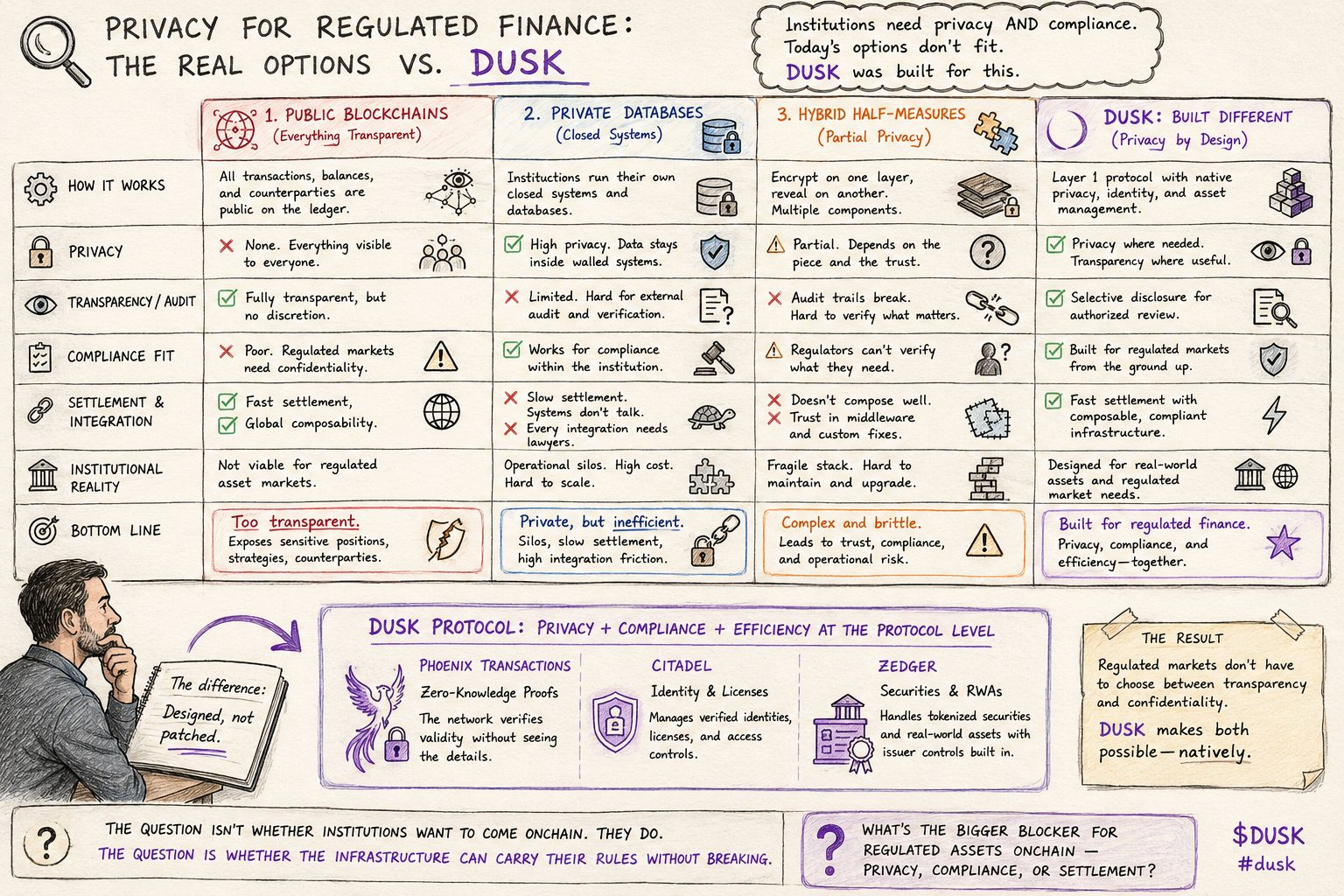
2
1
343
#TradebStocks #BinanceAfricaChallenge
tham gia chương trình khuyến mãi sau khi giao dịch trên đồng yêu thích và có cơ hội nhận giải thưởng
#TradebStocks #BinanceAfricaChallenge
tham gia chương trình khuyến mãi sau khi giao dịch trên đồng yêu thích và có cơ hội nhận giải thưởng
tham gia chương trình khuyến mãi sau khi giao dịch trên đồng yêu thích và có cơ hội nhận giải thưởng
67
tham gia và giành giải thưởng #Binance #BinanceSquareTalks
tham gia và giành giải thưởng #Binance #BinanceSquareTalks


Binance Africa
·
--
🚀 Flash Quest: Cổ phiếu đang biến động nhanh trên Binance! Thị trường đang chuyển động. 📈
Giao dịch các cổ phiếu bạn yêu thích trên Binance, sau đó chia sẻ giao dịch của bạn trên Binance Square để có cơ hội nhận phần thưởng từ quỹ giải thưởng trị giá 1.000 USDC của chúng tôi
Cách tham gia:
🔸 Theo dõi @Binance Africa
🔸 Thích bài đăng này và chia sẻ lại
🔸 Chia sẻ các lệnh bStocks của bạn trên Square bằng thẻ giao dịch kèm hashtag #TradebStocks #BinanceAfrica
🔸 Điền vào khảo sát này 👉🏾 Click on the Link to Participate Giải thưởng: Tổng cộng 200 người chiến thắng sẽ nhận 5 USDC mỗi người.
🔸 📆 Thời gian: 10:00 UTC ngày 13/08/2026 – 23:59 UTC ngày 23/08/2026
$TSLAB
Giao dịch các cổ phiếu bạn yêu thích trên Binance, sau đó chia sẻ giao dịch của bạn trên Binance Square để có cơ hội nhận phần thưởng từ quỹ giải thưởng trị giá 1.000 USDC của chúng tôi
Cách tham gia:
🔸 Theo dõi @Binance Africa
🔸 Thích bài đăng này và chia sẻ lại
🔸 Chia sẻ các lệnh bStocks của bạn trên Square bằng thẻ giao dịch kèm hashtag #TradebStocks #BinanceAfrica
🔸 Điền vào khảo sát này 👉🏾 Click on the Link to Participate Giải thưởng: Tổng cộng 200 người chiến thắng sẽ nhận 5 USDC mỗi người.
🔸 📆 Thời gian: 10:00 UTC ngày 13/08/2026 – 23:59 UTC ngày 23/08/2026
$TSLAB
139
#dusk $DUSK Tôi đã so sánh @Dusk_Foundation k với cách các tài sản tài chính được quản lý thực sự được thanh toán ngày nay. Không phải slide giới thiệu (pitch deck). Mà là trải nghiệm thực tế.
Đây là những gì tôi phát hiện ra. Nếu bạn muốn tiếp cận các tài sản tài chính được quản lý trên onchain, bạn sẽ phải chọn giữa ba con đường. Cả ba đều đã bị gãy ở đâu đó.
Các “đường ray” tài chính truyền thống. Bạn mua MMF, ETF, trái phiếu qua các broker. Việc thanh toán mất vài ngày. Thị trường đóng cửa. Quyền sở hữu của bạn chỉ là một dòng trong cơ sở dữ liệu của người khác. Nó vận hành được vì cũ kỹ, chứ không phải vì tốt. Thanh toán T+2 vẫn là tiêu chuẩn ở hầu hết các thị trường. Hai ngày để sở hữu thứ mà bạn đã thanh toán trước đó.
Các lớp bọc tokenized. Các dự án lấy một tài sản hiện có, bọc lại, rồi đưa lên onchain. Bạn nhận một token đại diện cho một phần sở hữu. Nhưng tài sản gốc vẫn tồn tại trong các đường ray kế thừa. Vì vậy bạn nhận “tốc độ blockchain” trên lớp thanh toán chậm. Trường hợp tốt nhất, đó là một phiên bản nhanh hơn của một hệ thống chậm. Trường hợp xấu nhất, lớp bọc bị hỏng và bạn phải tranh luận với bộ phận pháp lý.
DeFi không được quản lý. Bạn có thể giao dịch các phiên bản crypto “có tài sản đảm bảo” của tài sản thực ngay bây giờ. Nhưng chúng là tài sản tổng hợp (synthetic). Chúng mô phỏng giá mà không có quyền sở hữu thực. Nếu giao thức thất bại, quyền yêu cầu của bạn chỉ tốt như một smart contract mà không ai quản lý. Phù hợp để đầu cơ. Vô dụng cho tài sản thật sự.
Dusk được xây dựng theo cách khác. Layer 1 cho các thị trường tài chính được quản lý. Phát hành gốc, không phải bọc. Quyền sở hữu thực, không phải phơi bày dạng tổng hợp (synthetic exposure). NPEX, một sàn giao dịch được AFM quản lý, đã xác nhận hơn 200M € giá trị phát hành với Dusk. Quan hệ đối tác Chainlink. Dusk Trade được cấu trúc như một MTF được quản lý. Và thời gian hoàn tất khoảng 10 giây. Không phải T+2. Không phải “ngày làm việc”. Chỉ là vài giây.
Tôi không nói rằng việc được quản lý là thứ gì đó thú vị. Nhưng có sự khác biệt giữa việc DeFi giả vờ rằng tuân thủ không tồn tại, và một chuỗi được xây dựng với tuân thủ như một tính năng. Cái thứ nhất sẽ lên trang đầu tin tức. Cái thứ hai thu hút các tổ chức.
Điều gì đã giữ bạn khỏi các tài sản được quản lý trên onchain — các đường ray cũ, những lớp bọc giả, hay chỉ đơn giản là bạn chưa từng tìm đúng lựa chọn?
$AVNT $SNXXB
#dusk $DUSK Tôi đã so sánh @Dusk k với cách các tài sản tài chính được quản lý thực sự được thanh toán ngày nay. Không phải slide giới thiệu (pitch deck). Mà là trải nghiệm thực tế.
Đây là những gì tôi phát hiện ra. Nếu bạn muốn tiếp cận các tài sản tài chính được quản lý trên onchain, bạn sẽ phải chọn giữa ba con đường. Cả ba đều đã bị gãy ở đâu đó.
Các “đường ray” tài chính truyền thống. Bạn mua MMF, ETF, trái phiếu qua các broker. Việc thanh toán mất vài ngày. Thị trường đóng cửa. Quyền sở hữu của bạn chỉ là một dòng trong cơ sở dữ liệu của người khác. Nó vận hành được vì cũ kỹ, chứ không phải vì tốt. Thanh toán T+2 vẫn là tiêu chuẩn ở hầu hết các thị trường. Hai ngày để sở hữu thứ mà bạn đã thanh toán trước đó.
Các lớp bọc tokenized. Các dự án lấy một tài sản hiện có, bọc lại, rồi đưa lên onchain. Bạn nhận một token đại diện cho một phần sở hữu. Nhưng tài sản gốc vẫn tồn tại trong các đường ray kế thừa. Vì vậy bạn nhận “tốc độ blockchain” trên lớp thanh toán chậm. Trường hợp tốt nhất, đó là một phiên bản nhanh hơn của một hệ thống chậm. Trường hợp xấu nhất, lớp bọc bị hỏng và bạn phải tranh luận với bộ phận pháp lý.
DeFi không được quản lý. Bạn có thể giao dịch các phiên bản crypto “có tài sản đảm bảo” của tài sản thực ngay bây giờ. Nhưng chúng là tài sản tổng hợp (synthetic). Chúng mô phỏng giá mà không có quyền sở hữu thực. Nếu giao thức thất bại, quyền yêu cầu của bạn chỉ tốt như một smart contract mà không ai quản lý. Phù hợp để đầu cơ. Vô dụng cho tài sản thật sự.
Dusk được xây dựng theo cách khác. Layer 1 cho các thị trường tài chính được quản lý. Phát hành gốc, không phải bọc. Quyền sở hữu thực, không phải phơi bày dạng tổng hợp (synthetic exposure). NPEX, một sàn giao dịch được AFM quản lý, đã xác nhận hơn 200M € giá trị phát hành với Dusk. Quan hệ đối tác Chainlink. Dusk Trade được cấu trúc như một MTF được quản lý. Và thời gian hoàn tất khoảng 10 giây. Không phải T+2. Không phải “ngày làm việc”. Chỉ là vài giây.
Tôi không nói rằng việc được quản lý là thứ gì đó thú vị. Nhưng có sự khác biệt giữa việc DeFi giả vờ rằng tuân thủ không tồn tại, và một chuỗi được xây dựng với tuân thủ như một tính năng. Cái thứ nhất sẽ lên trang đầu tin tức. Cái thứ hai thu hút các tổ chức.
Điều gì đã giữ bạn khỏi các tài sản được quản lý trên onchain — các đường ray cũ, những lớp bọc giả, hay chỉ đơn giản là bạn chưa từng tìm đúng lựa chọn?
$AVNT $SNXXB
Đây là những gì tôi phát hiện ra. Nếu bạn muốn tiếp cận các tài sản tài chính được quản lý trên onchain, bạn sẽ phải chọn giữa ba con đường. Cả ba đều đã bị gãy ở đâu đó.
Các “đường ray” tài chính truyền thống. Bạn mua MMF, ETF, trái phiếu qua các broker. Việc thanh toán mất vài ngày. Thị trường đóng cửa. Quyền sở hữu của bạn chỉ là một dòng trong cơ sở dữ liệu của người khác. Nó vận hành được vì cũ kỹ, chứ không phải vì tốt. Thanh toán T+2 vẫn là tiêu chuẩn ở hầu hết các thị trường. Hai ngày để sở hữu thứ mà bạn đã thanh toán trước đó.
Các lớp bọc tokenized. Các dự án lấy một tài sản hiện có, bọc lại, rồi đưa lên onchain. Bạn nhận một token đại diện cho một phần sở hữu. Nhưng tài sản gốc vẫn tồn tại trong các đường ray kế thừa. Vì vậy bạn nhận “tốc độ blockchain” trên lớp thanh toán chậm. Trường hợp tốt nhất, đó là một phiên bản nhanh hơn của một hệ thống chậm. Trường hợp xấu nhất, lớp bọc bị hỏng và bạn phải tranh luận với bộ phận pháp lý.
DeFi không được quản lý. Bạn có thể giao dịch các phiên bản crypto “có tài sản đảm bảo” của tài sản thực ngay bây giờ. Nhưng chúng là tài sản tổng hợp (synthetic). Chúng mô phỏng giá mà không có quyền sở hữu thực. Nếu giao thức thất bại, quyền yêu cầu của bạn chỉ tốt như một smart contract mà không ai quản lý. Phù hợp để đầu cơ. Vô dụng cho tài sản thật sự.
Dusk được xây dựng theo cách khác. Layer 1 cho các thị trường tài chính được quản lý. Phát hành gốc, không phải bọc. Quyền sở hữu thực, không phải phơi bày dạng tổng hợp (synthetic exposure). NPEX, một sàn giao dịch được AFM quản lý, đã xác nhận hơn 200M € giá trị phát hành với Dusk. Quan hệ đối tác Chainlink. Dusk Trade được cấu trúc như một MTF được quản lý. Và thời gian hoàn tất khoảng 10 giây. Không phải T+2. Không phải “ngày làm việc”. Chỉ là vài giây.
Tôi không nói rằng việc được quản lý là thứ gì đó thú vị. Nhưng có sự khác biệt giữa việc DeFi giả vờ rằng tuân thủ không tồn tại, và một chuỗi được xây dựng với tuân thủ như một tính năng. Cái thứ nhất sẽ lên trang đầu tin tức. Cái thứ hai thu hút các tổ chức.
Điều gì đã giữ bạn khỏi các tài sản được quản lý trên onchain — các đường ray cũ, những lớp bọc giả, hay chỉ đơn giản là bạn chưa từng tìm đúng lựa chọn?
$AVNT $SNXXB
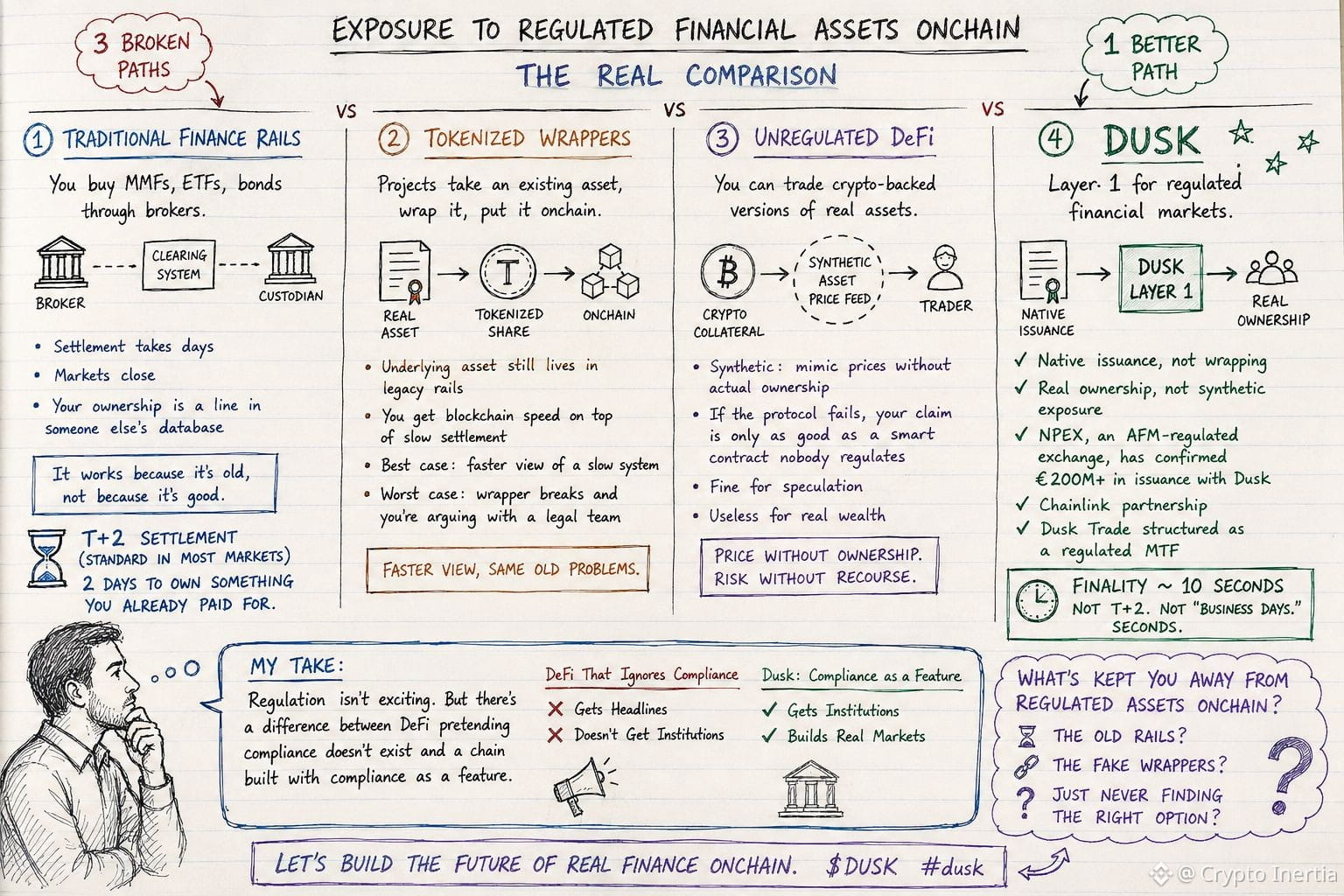
3
2
86
Đăng nhập để khám phá thêm nội dung
Tham gia cùng người dùng tiền mã hóa toàn cầu trên Binance Square
⚡️ Nhận thông tin mới nhất và hữu ích về tiền mã hóa.
💬 Được tin cậy bởi sàn giao dịch tiền mã hóa lớn nhất thế giới.
👍 Khám phá những thông tin chuyên sâu thực tế từ những nhà sáng tạo đã xác minh.
Email / Số điện thoại
Chủ đề thịnh hành
TheoDõiFOMC
147,015 lượt xem
709 đang thảo luận
#TheoDõiFOMC
🔥 FOMC lại bắt đầu trở thành tâm điểm của crypto
Bitcoin vừa bước vào tháng 10, nhưng câu chuyện lớn phía sau thị trường lúc này không chỉ là giá.
Các trader đang bắt đầu hướng sự chú ý về cuộc họp FOMC ngày 27–28/10. Sau một loạt phát biểu mới từ quan chức Fed, kỳ vọng về việc tăng lãi suất ngay trong tháng 10 đã giảm đáng kể.
Điều thú vị là trước đó thị trường từng đặt cược khá cao vào một đợt tăng tiếp theo.
Giờ thì mọi thứ lại quay sang chờ dữ liệu kinh tế và những phát biểu tiếp theo của Fed.
Với crypto, chỉ cần kỳ vọng lãi suất thay đổi mạnh là $BTC có thể lập tức biến động, rồi kéo theo cả thị trường altcoin.
Tháng 10 mới bắt đầu mà macro đã có chuyện để hóng rồi 👀
#Bitcoin #Crypto #Macro #Fed #BinanceSquare
X LEI
·0 lượt thích
·180 lượt xem
TinFed
137,360 lượt xem
512 đang thảo luận
BinanceLaunchesBinanceIntelligence
751,364 lượt xem
4,672 đang thảo luận