

MR L E O
2.8k Bài đăng

MR L E O
Báo cáo
Chặn người dùng
MR L E O CRYPTO KING 👑
Giao dịch mở
Trader thường xuyên
{thời gian} năm
87 Đang theo dõi
10.3K+ Người theo dõi
3.1K+ Đã thích
Bài đăng
Danh mục đầu tư
Tất cả
Trích dẫn
Live
·
--
🎙️ Hãy bàn về tâm lý đầu tư và mua định kỳ BNB giao ngay!
Kết thúc
03 giờ 34 phút 50 giây
29.2k
37
43
·
--
Bài viết
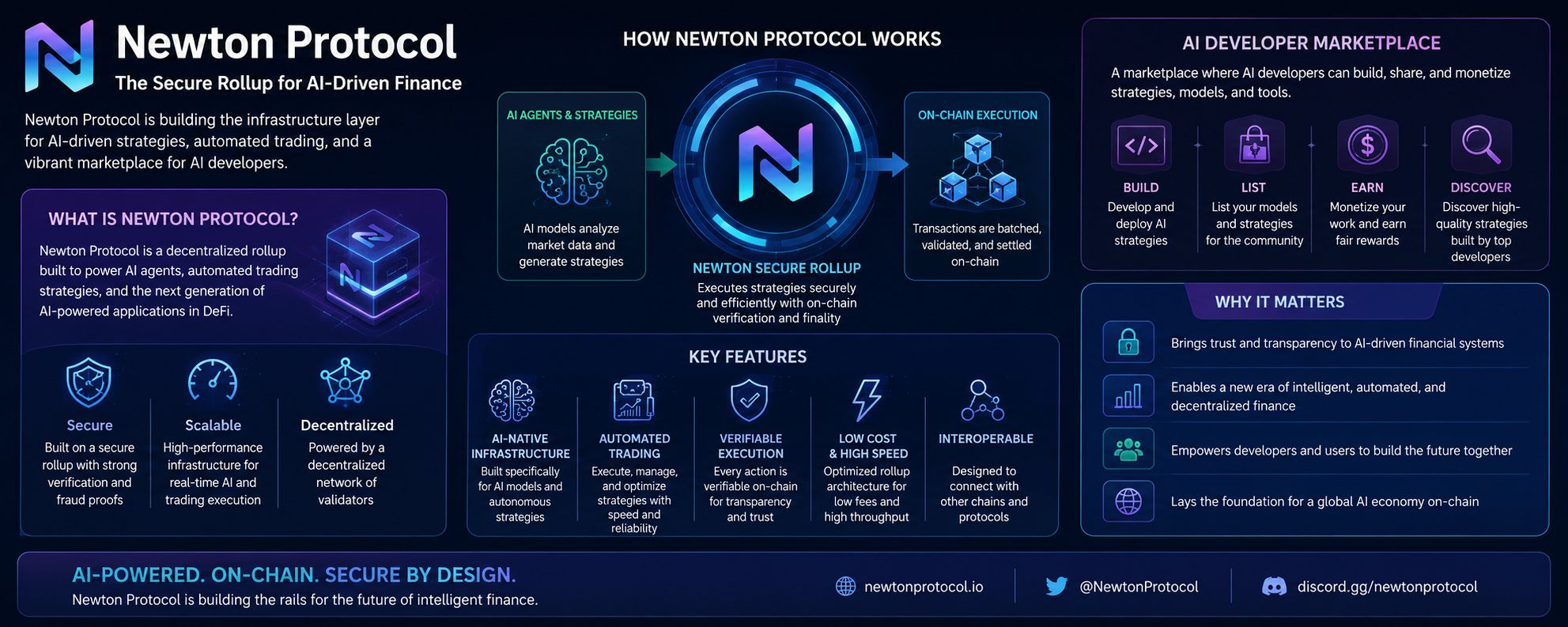
Điều gì khiến Newton Protocol khác biệt so với các dự án crypto AI khácNewton Protocol là một trong những dự án mà ban đầu tôi không để ý nhiều, nhưng càng tìm hiểu thì càng thấy nó bắt đầu có ý nghĩa. Tôi đã theo dõi cách AI đang dần xâm nhập vào hạ tầng crypto, và Newton Protocol khiến tôi chú ý vì nó không chỉ nói về các công cụ AI. Dự án này đang cố gắng xây dựng một rollup an toàn, nơi các chiến lược do AI điều khiển, các hệ thống giao dịch tự động và các ứng dụng do nhà phát triển tạo ra có thể thực sự vận hành.
Điều khiến tôi dừng lại để suy nghĩ chính là vấn đề mà Newton Protocol đang cố gắng giải quyết. AI có thể xử lý dữ liệu nhanh chóng và đưa ra quyết định nhanh hơn rất nhiều so với con người, nhưng tốc độ không đồng nghĩa với độ tin cậy. Khi một hệ thống AI quản lý một chiến lược hoặc tương tác với các ứng dụng tài chính, người dùng cần biết những hành động đó đang được thực hiện như thế nào. Họ không nên phải hoàn toàn dựa vào một mô hình “hộp đen” và hy vọng mọi thứ sẽ hoạt động như mong đợi.
Điều gì khiến Newton Protocol khác biệt so với các dự án crypto AI khác
Newton Protocol là một trong những dự án mà ban đầu tôi không để ý nhiều, nhưng càng tìm hiểu thì càng thấy nó bắt đầu có ý nghĩa. Tôi đã theo dõi cách AI đang dần xâm nhập vào hạ tầng crypto, và Newton Protocol khiến tôi chú ý vì nó không chỉ nói về các công cụ AI. Dự án này đang cố gắng xây dựng một rollup an toàn, nơi các chiến lược do AI điều khiển, các hệ thống giao dịch tự động và các ứng dụng do nhà phát triển tạo ra có thể thực sự vận hành.
Điều khiến tôi dừng lại để suy nghĩ chính là vấn đề mà Newton Protocol đang cố gắng giải quyết. AI có thể xử lý dữ liệu nhanh chóng và đưa ra quyết định nhanh hơn rất nhiều so với con người, nhưng tốc độ không đồng nghĩa với độ tin cậy. Khi một hệ thống AI quản lý một chiến lược hoặc tương tác với các ứng dụng tài chính, người dùng cần biết những hành động đó đang được thực hiện như thế nào. Họ không nên phải hoàn toàn dựa vào một mô hình “hộp đen” và hy vọng mọi thứ sẽ hoạt động như mong đợi.
Điều khiến tôi dừng lại để suy nghĩ chính là vấn đề mà Newton Protocol đang cố gắng giải quyết. AI có thể xử lý dữ liệu nhanh chóng và đưa ra quyết định nhanh hơn rất nhiều so với con người, nhưng tốc độ không đồng nghĩa với độ tin cậy. Khi một hệ thống AI quản lý một chiến lược hoặc tương tác với các ứng dụng tài chính, người dùng cần biết những hành động đó đang được thực hiện như thế nào. Họ không nên phải hoàn toàn dựa vào một mô hình “hộp đen” và hy vọng mọi thứ sẽ hoạt động như mong đợi.
14
11
161
·
--
$HEI đang tiến gần đến một vùng quyết định quan trọng. Theo dõi khả năng bứt phá đã được xác nhận lên trên kháng cự kèm khối lượng mạnh cho một lệnh dài. Nếu động lượng suy yếu tại vùng kháng cự, sự kiên nhẫn là chìa khóa cho đến khi có xác nhận. Quản lý rủi ro chặt chẽ, với mức cắt lỗ đặt dưới hỗ trợ, và các mục tiêu lợi nhuận tại các mức kháng cự tiếp theo. Hãy giữ kỷ luật—những giao dịch tốt nhất đến từ việc chờ xác nhận, không phải đuổi theo nến.
{spot}(HEIUSDT)
#BinanceTurns9
#JuneCPIFedHike20%
#US2YearYieldFalls14bpsBiggestDropSinceFebruary
#SilverDown52%FromJanuaryRecordHigh
#KospiStagesVShapedIntradayRebound
$HEI đang tiến gần đến một vùng quyết định quan trọng. Theo dõi khả năng bứt phá đã được xác nhận lên trên kháng cự kèm khối lượng mạnh cho một lệnh dài. Nếu động lượng suy yếu tại vùng kháng cự, sự kiên nhẫn là chìa khóa cho đến khi có xác nhận. Quản lý rủi ro chặt chẽ, với mức cắt lỗ đặt dưới hỗ trợ, và các mục tiêu lợi nhuận tại các mức kháng cự tiếp theo. Hãy giữ kỷ luật—những giao dịch tốt nhất đến từ việc chờ xác nhận, không phải đuổi theo nến.
#BinanceTurns9
#JuneCPIFedHike20%
#US2YearYieldFalls14bpsBiggestDropSinceFebruary
#SilverDown52%FromJanuaryRecordHigh
#KospiStagesVShapedIntradayRebound
#BinanceTurns9
#JuneCPIFedHike20%
#US2YearYieldFalls14bpsBiggestDropSinceFebruary
#SilverDown52%FromJanuaryRecordHigh
#KospiStagesVShapedIntradayRebound
90
·
--
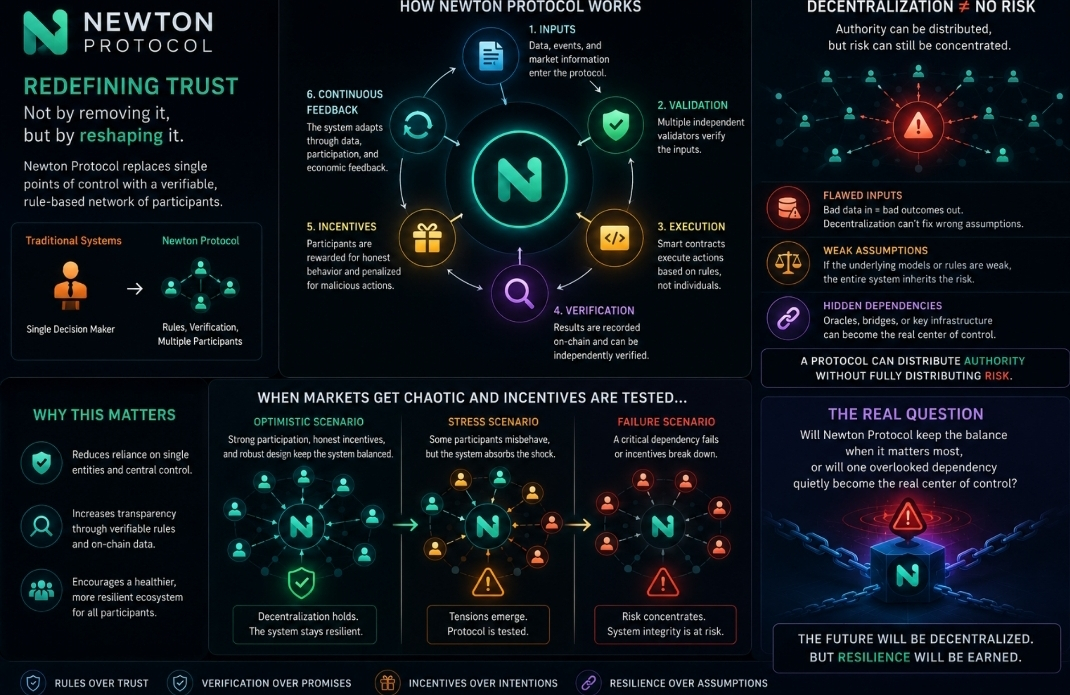
Tôi đã nghiên cứu @NewtonProtocol , và điều liên tục thu hút sự chú ý của tôi không phải là liệu nó có loại bỏ được sự thiếu tin tưởng hay không, mà là cách nó cố gắng định hình lại niềm tin đó. Việc thay thế một người ra quyết định duy nhất bằng các quy tắc, cơ chế xác minh và nhiều bên tham gia có vẻ như là một hướng đi lành mạnh hơn, nhưng nó không loại bỏ hoàn toàn khả năng thất bại. Nếu các đầu vào bị sai hoặc những giả định đứng sau hệ thống còn yếu, thì chỉ riêng phi tập trung cũng không thể đảm bảo kết quả đúng. Đó là phần tôi thấy thú vị nhất. Một giao thức có thể phân tán quyền lực mà không nhất thiết phân tán hoàn toàn rủi ro. Khi thị trường trở nên hỗn loạn và các động lực bị đặt vào thử thách, Newton Protocol sẽ giữ được sự cân bằng đó, hay một mối phụ thuộc bị bỏ sót nào đó sẽ lặng lẽ trở thành trung tâm kiểm soát thực sự?
@NewtonProtocol #newt $NEWT
{spot}(NEWTUSDT)
Tôi đã nghiên cứu @NewtonProtocol , và điều liên tục thu hút sự chú ý của tôi không phải là liệu nó có loại bỏ được sự thiếu tin tưởng hay không, mà là cách nó cố gắng định hình lại niềm tin đó. Việc thay thế một người ra quyết định duy nhất bằng các quy tắc, cơ chế xác minh và nhiều bên tham gia có vẻ như là một hướng đi lành mạnh hơn, nhưng nó không loại bỏ hoàn toàn khả năng thất bại. Nếu các đầu vào bị sai hoặc những giả định đứng sau hệ thống còn yếu, thì chỉ riêng phi tập trung cũng không thể đảm bảo kết quả đúng. Đó là phần tôi thấy thú vị nhất. Một giao thức có thể phân tán quyền lực mà không nhất thiết phân tán hoàn toàn rủi ro. Khi thị trường trở nên hỗn loạn và các động lực bị đặt vào thử thách, Newton Protocol sẽ giữ được sự cân bằng đó, hay một mối phụ thuộc bị bỏ sót nào đó sẽ lặng lẽ trở thành trung tâm kiểm soát thực sự?
@NewtonProtocol #newt $NEWT
@NewtonProtocol #newt $NEWT
23
12
695
·
--
$GRT trông có vẻ như đang tích lũy áp lực bên dưới ngưỡng kháng cự. Tôi đang theo dõi một sự bứt phá rõ ràng lên trên vùng dao động cục bộ trước khi vào lệnh.
Kế hoạch giao dịch:
Vào lệnh: Khi có xác nhận bứt phá
Mục tiêu 1: +8%
Mục tiêu 2: +15%
Cắt lỗ: Nằm dưới đáy dao động gần đây
{spot}(GRTUSDT)
#BinanceTurns9
#TechSharesDragWallStreetLower
#TrumpReblocksStraitOfHormuz
#KoreaLeveragedChipETFFalls45%
#IranShips57MBarrelsBetweenUSBlockades
$GRT trông có vẻ như đang tích lũy áp lực bên dưới ngưỡng kháng cự. Tôi đang theo dõi một sự bứt phá rõ ràng lên trên vùng dao động cục bộ trước khi vào lệnh.
Kế hoạch giao dịch:
Vào lệnh: Khi có xác nhận bứt phá
Mục tiêu 1: +8%
Mục tiêu 2: +15%
Cắt lỗ: Nằm dưới đáy dao động gần đây
#BinanceTurns9
#TechSharesDragWallStreetLower
#TrumpReblocksStraitOfHormuz
#KoreaLeveragedChipETFFalls45%
#IranShips57MBarrelsBetweenUSBlockades
Kế hoạch giao dịch:
Vào lệnh: Khi có xác nhận bứt phá
Mục tiêu 1: +8%
Mục tiêu 2: +15%
Cắt lỗ: Nằm dưới đáy dao động gần đây
#BinanceTurns9
#TechSharesDragWallStreetLower
#TrumpReblocksStraitOfHormuz
#KoreaLeveragedChipETFFalls45%
#IranShips57MBarrelsBetweenUSBlockades
137
·
--
🚨 $BILL Trade Setup
🟢 Vào lệnh: Trên mức phá vỡ quan trọng / khi có retest đã được xác nhận
🎯 Mục tiêu: T1 +5% | T2 +10% | T3 +15%
🛑 Cắt lỗ: Dưới đáy swing gần nhất
Động lượng đang tăng lên, và một đợt phá vỡ đã được xác nhận có thể tiếp sức cho bước tăng tiếp theo. Hãy kiên nhẫn chờ tín hiệu xác nhận, quản lý rủi ro và để kịch bản diễn ra.
Không phải lời khuyên tài chính.
{future}(BILLUSDT)
#BinanceTurns9
#MarketsPriceInOneFedHikeBeforeSeptember
#JuneCPIWarshTestimonyBankEarningsSameWeek
#BoliviaEvaluatesUSDTForNationalPayments
#USMegaCapTechStocksFallPremarket
🚨 $BILL Trade Setup
🟢 Vào lệnh: Trên mức phá vỡ quan trọng / khi có retest đã được xác nhận
🎯 Mục tiêu: T1 +5% | T2 +10% | T3 +15%
🛑 Cắt lỗ: Dưới đáy swing gần nhất
Động lượng đang tăng lên, và một đợt phá vỡ đã được xác nhận có thể tiếp sức cho bước tăng tiếp theo. Hãy kiên nhẫn chờ tín hiệu xác nhận, quản lý rủi ro và để kịch bản diễn ra.
Không phải lời khuyên tài chính.
#BinanceTurns9
#MarketsPriceInOneFedHikeBeforeSeptember
#JuneCPIWarshTestimonyBankEarningsSameWeek
#BoliviaEvaluatesUSDTForNationalPayments
#USMegaCapTechStocksFallPremarket
🟢 Vào lệnh: Trên mức phá vỡ quan trọng / khi có retest đã được xác nhận
🎯 Mục tiêu: T1 +5% | T2 +10% | T3 +15%
🛑 Cắt lỗ: Dưới đáy swing gần nhất
Động lượng đang tăng lên, và một đợt phá vỡ đã được xác nhận có thể tiếp sức cho bước tăng tiếp theo. Hãy kiên nhẫn chờ tín hiệu xác nhận, quản lý rủi ro và để kịch bản diễn ra.
Không phải lời khuyên tài chính.
#BinanceTurns9
#MarketsPriceInOneFedHikeBeforeSeptember
#JuneCPIWarshTestimonyBankEarningsSameWeek
#BoliviaEvaluatesUSDTForNationalPayments
#USMegaCapTechStocksFallPremarket
2
263
·
--
🚨 $ZBT Thiết lập giao dịch
🟢 Điểm vào: $0.084–0.088
🎯 Các mục tiêu: $0.095 | $0.108 | $0.125
🛑 Cắt lỗ: $0.079 (đóng cửa theo ngày dưới)
Động lượng đang tăng lên, khối lượng đang tăng và người mua đang tham gia. Nếu có một cú phá vỡ sạch khỏi vùng kháng cự, giá có thể kích hoạt một đợt tăng mạnh hướng tới các mục tiêu đã nêu. Quản lý rủi ro và bám sát kế hoạch của bạn.
Không phải lời khuyên tài chính. Hãy luôn tự nghiên cứu.
{spot}(ZBTUSDT)
#BinanceTurns9
#MarketsPriceInOneFedHikeBeforeSeptember #BitcoinETFsFirstWeeklyInflowInNineWeeks
#BoliviaEvaluatesUSDTForNationalPayments
#USMegaCapTechStocksFallPremarket
🚨 $ZBT Thiết lập giao dịch
🟢 Điểm vào: $0.084–0.088
🎯 Các mục tiêu: $0.095 | $0.108 | $0.125
🛑 Cắt lỗ: $0.079 (đóng cửa theo ngày dưới)
Động lượng đang tăng lên, khối lượng đang tăng và người mua đang tham gia. Nếu có một cú phá vỡ sạch khỏi vùng kháng cự, giá có thể kích hoạt một đợt tăng mạnh hướng tới các mục tiêu đã nêu. Quản lý rủi ro và bám sát kế hoạch của bạn.
Không phải lời khuyên tài chính. Hãy luôn tự nghiên cứu.
#BinanceTurns9
#MarketsPriceInOneFedHikeBeforeSeptember #BitcoinETFsFirstWeeklyInflowInNineWeeks
#BoliviaEvaluatesUSDTForNationalPayments
#USMegaCapTechStocksFallPremarket
🟢 Điểm vào: $0.084–0.088
🎯 Các mục tiêu: $0.095 | $0.108 | $0.125
🛑 Cắt lỗ: $0.079 (đóng cửa theo ngày dưới)
Động lượng đang tăng lên, khối lượng đang tăng và người mua đang tham gia. Nếu có một cú phá vỡ sạch khỏi vùng kháng cự, giá có thể kích hoạt một đợt tăng mạnh hướng tới các mục tiêu đã nêu. Quản lý rủi ro và bám sát kế hoạch của bạn.
Không phải lời khuyên tài chính. Hãy luôn tự nghiên cứu.
#BinanceTurns9
#MarketsPriceInOneFedHikeBeforeSeptember #BitcoinETFsFirstWeeklyInflowInNineWeeks
#BoliviaEvaluatesUSDTForNationalPayments
#USMegaCapTechStocksFallPremarket
186
·
--
Bài viết
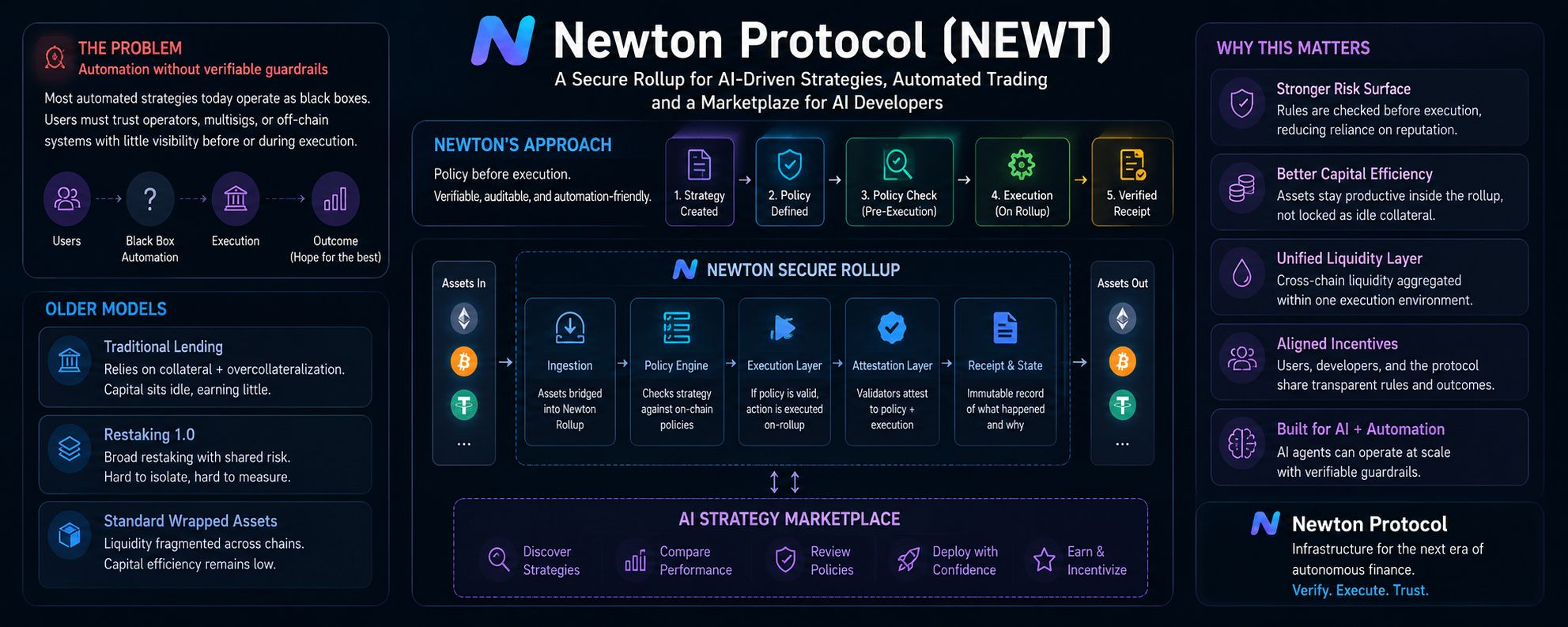
Newton Protocol Lặng Lẽ Định Nghĩa Lại Cách Quản Trị Nguồn Vốn Tự ĐộngNewton Protocol thật sự thú vị vì nhiều lý do, nhưng điều mà tôi vẫn nhớ mãi sau khi dành thời gian nghiên cứu nó không phải là câu chuyện về AI hay thị trường dành cho các nhà phát triển. Thứ tôi cứ quay lại chính là nỗ lực của giao thức trong việc tách biệt chính sách khỏi khâu thực thi thông qua kiến trúc rollup an toàn của nó. Đây là một lựa chọn kiến trúc khá dễ bị bỏ qua vì nó nằm bên dưới những phần mang tính “dễ bán” hơn của dự án, nhưng nó âm thầm thay đổi cách mà nguồn vốn tự động có thể được quản trị.
Điều nổi bật không phải là ý tưởng về các tác nhân AI đưa ra quyết định trên nhiều chuỗi. Phần thú vị hơn nằm ở chỗ mọi chiến lược đều có thể được ràng buộc bởi các quy tắc được xác định trước trước khi thực thi, thay vì chỉ dựa hoàn toàn vào sự tin cậy sau đó. Thay vì coi tự động hóa như một hộp đen, Newton Protocol đang xây dựng một môi trường nơi việc thực thi có thể được kiểm chứng dựa trên các chính sách rõ ràng. Điều này chuyển một phần quá trình ra quyết định sang cơ sở hạ tầng, thay vì để toàn bộ quá trình đó phụ thuộc hoàn toàn vào những người tạo chiến lược hoặc vận hành.
Newton Protocol Lặng Lẽ Định Nghĩa Lại Cách Quản Trị Nguồn Vốn Tự Động
Newton Protocol thật sự thú vị vì nhiều lý do, nhưng điều mà tôi vẫn nhớ mãi sau khi dành thời gian nghiên cứu nó không phải là câu chuyện về AI hay thị trường dành cho các nhà phát triển. Thứ tôi cứ quay lại chính là nỗ lực của giao thức trong việc tách biệt chính sách khỏi khâu thực thi thông qua kiến trúc rollup an toàn của nó. Đây là một lựa chọn kiến trúc khá dễ bị bỏ qua vì nó nằm bên dưới những phần mang tính “dễ bán” hơn của dự án, nhưng nó âm thầm thay đổi cách mà nguồn vốn tự động có thể được quản trị.
Điều nổi bật không phải là ý tưởng về các tác nhân AI đưa ra quyết định trên nhiều chuỗi. Phần thú vị hơn nằm ở chỗ mọi chiến lược đều có thể được ràng buộc bởi các quy tắc được xác định trước trước khi thực thi, thay vì chỉ dựa hoàn toàn vào sự tin cậy sau đó. Thay vì coi tự động hóa như một hộp đen, Newton Protocol đang xây dựng một môi trường nơi việc thực thi có thể được kiểm chứng dựa trên các chính sách rõ ràng. Điều này chuyển một phần quá trình ra quyết định sang cơ sở hạ tầng, thay vì để toàn bộ quá trình đó phụ thuộc hoàn toàn vào những người tạo chiến lược hoặc vận hành.
Điều nổi bật không phải là ý tưởng về các tác nhân AI đưa ra quyết định trên nhiều chuỗi. Phần thú vị hơn nằm ở chỗ mọi chiến lược đều có thể được ràng buộc bởi các quy tắc được xác định trước trước khi thực thi, thay vì chỉ dựa hoàn toàn vào sự tin cậy sau đó. Thay vì coi tự động hóa như một hộp đen, Newton Protocol đang xây dựng một môi trường nơi việc thực thi có thể được kiểm chứng dựa trên các chính sách rõ ràng. Điều này chuyển một phần quá trình ra quyết định sang cơ sở hạ tầng, thay vì để toàn bộ quá trình đó phụ thuộc hoàn toàn vào những người tạo chiến lược hoặc vận hành.
2
2
56
·
--
$EPT đang âm thầm xây dựng nền tảng có thể thúc đẩy chặng đường tiếp theo. Mỗi bản nâng cấp, mỗi lần tích hợp, mỗi cột mốc lại bổ sung thêm một lớp vững tin.
Những hành động lớn nhất đôi khi bắt đầu trong im lặng.
Chú ý đến $EPT. Câu chuyện mới chỉ bắt đầu. ⚡🚀
{alpha}(560x3dc8e2d80b6215a1bccae4d38715c3520581e77c)
#BinanceTurns9 #TSMCJuneRevenueUp67.9%YoY #SKHynixADRFalls10.4%PreMarket #SKHynixSinksRecord15% #BitcoinETFsSnapEightWeekOutflowStreak
$EPT đang âm thầm xây dựng nền tảng có thể thúc đẩy chặng đường tiếp theo. Mỗi bản nâng cấp, mỗi lần tích hợp, mỗi cột mốc lại bổ sung thêm một lớp vững tin.
Những hành động lớn nhất đôi khi bắt đầu trong im lặng.
Chú ý đến $EPT . Câu chuyện mới chỉ bắt đầu. ⚡🚀
#BinanceTurns9 #TSMCJuneRevenueUp67.9%YoY #SKHynixADRFalls10.4%PreMarket #SKHynixSinksRecord15% #BitcoinETFsSnapEightWeekOutflowStreak
Những hành động lớn nhất đôi khi bắt đầu trong im lặng.
Chú ý đến $EPT . Câu chuyện mới chỉ bắt đầu. ⚡🚀
#BinanceTurns9 #TSMCJuneRevenueUp67.9%YoY #SKHynixADRFalls10.4%PreMarket #SKHynixSinksRecord15% #BitcoinETFsSnapEightWeekOutflowStreak
215
·
--
Đúng một phần
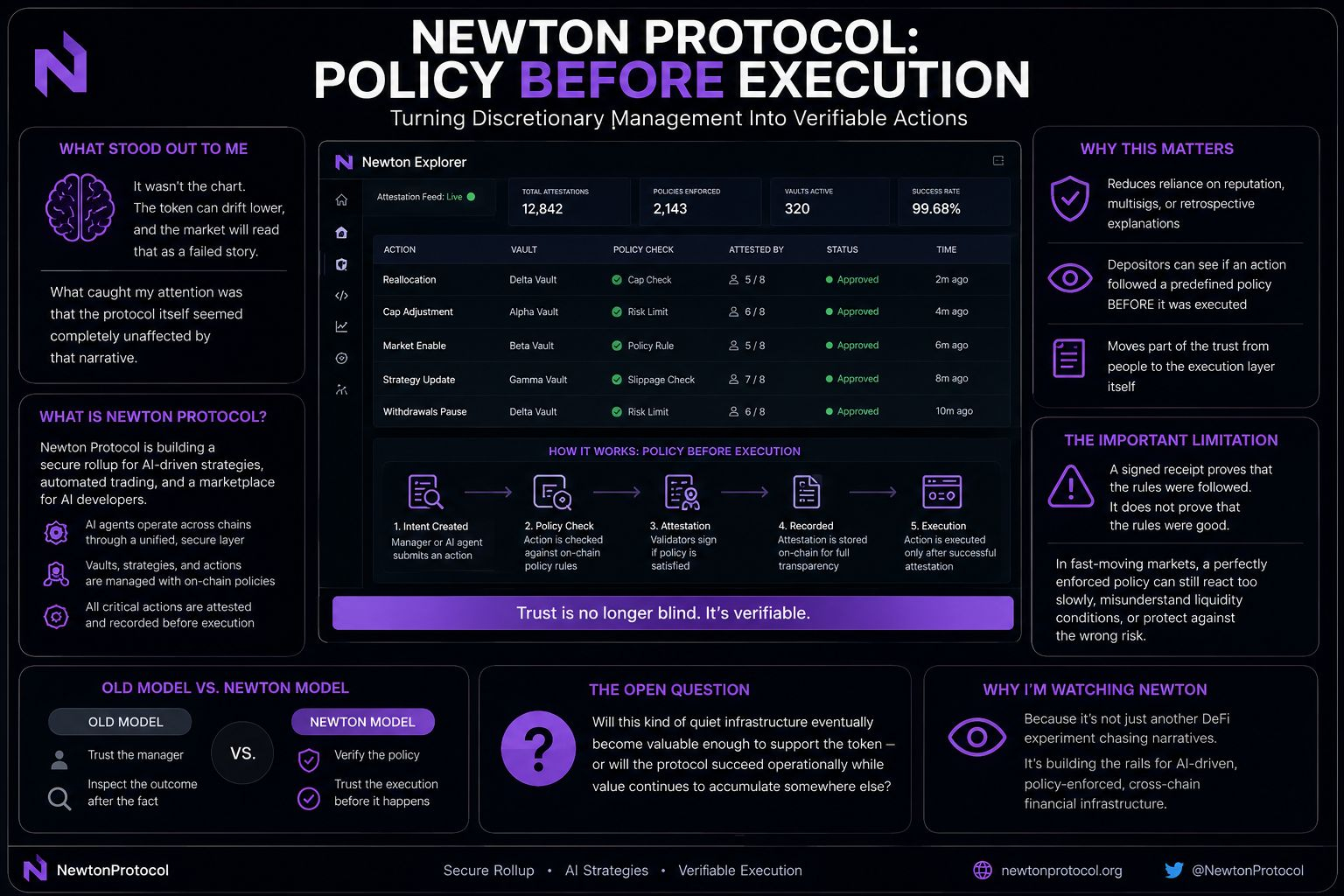
Điều đọng lại trong tôi sau khi xem qua NewtonProtocol không phải là biểu đồ. Token có thể tiếp tục trôi xuống thấp hơn, và thị trường sẽ đọc điều đó như một câu chuyện thất bại. Điều thu hút sự chú ý của tôi là bản thân giao thức dường như hoàn toàn không bị ảnh hưởng bởi câu chuyện đó.
Bên trong Newton Explorer, nguồn attestation vẫn tiếp tục chạy. Các hành động của VaultKit vẫn được kiểm tra, ký và ghi lại trước khi được thực thi. Một lần phân bổ lại, điều chỉnh hạn mức, bật một thị trường mới — mỗi hành động đều đi qua một lớp chính sách hiển thị trước khi chạm tới vốn của người dùng.
Điều nổi bật không phải là ý tưởng các tác nhân AI hoạt động xuyên chuỗi. Đó vẫn là tham vọng lớn hơn, nhưng không phải phần đang làm việc thực tế nhất hiện nay. Phần thú vị hơn là Newton đang được sử dụng bởi các “vault curators” để làm cho quản lý mang tính tùy quyền trở nên có thể kiểm toán.
Điều này thay đổi bề mặt rủi ro vì người gửi tiền không còn phụ thuộc hoàn toàn vào danh tiếng, multisig, hoặc các giải thích mang tính hồi cứu. Họ có thể xem một hành động có tuân theo chính sách được xác định trước hay không trước khi được thực thi.
Các mô hình cho vay và vault cũ thường yêu cầu người dùng tin vào người quản lý trước, rồi chỉ kiểm tra kết quả sau. Newton đang cố gắng chuyển một phần niềm tin đó vào chính lớp thực thi.
Vẫn còn một giới hạn quan trọng. Một biên nhận đã ký chứng minh rằng các quy tắc đã được tuân thủ. Nó không chứng minh rằng các quy tắc là đúng. Trong một thị trường biến động nhanh, một chính sách được thực thi hoàn hảo vẫn có thể phản ứng quá chậm, hiểu sai điều kiện thanh khoản, hoặc bảo vệ khỏi nhầm loại rủi ro.
Câu hỏi mở mà tôi cứ quay lại là liệu loại hạ tầng yên lặng này cuối cùng có trở nên có giá trị đủ để hỗ trợ token — hay liệu giao thức có thể thành công về mặt vận hành trong khi giá trị tiếp tục được tích lũy ở một nơi khác.
@NewtonProtocol #newt $NEWT
{spot}(NEWTUSDT)
Điều đọng lại trong tôi sau khi xem qua NewtonProtocol không phải là biểu đồ. Token có thể tiếp tục trôi xuống thấp hơn, và thị trường sẽ đọc điều đó như một câu chuyện thất bại. Điều thu hút sự chú ý của tôi là bản thân giao thức dường như hoàn toàn không bị ảnh hưởng bởi câu chuyện đó.
Bên trong Newton Explorer, nguồn attestation vẫn tiếp tục chạy. Các hành động của VaultKit vẫn được kiểm tra, ký và ghi lại trước khi được thực thi. Một lần phân bổ lại, điều chỉnh hạn mức, bật một thị trường mới — mỗi hành động đều đi qua một lớp chính sách hiển thị trước khi chạm tới vốn của người dùng.
Điều nổi bật không phải là ý tưởng các tác nhân AI hoạt động xuyên chuỗi. Đó vẫn là tham vọng lớn hơn, nhưng không phải phần đang làm việc thực tế nhất hiện nay. Phần thú vị hơn là Newton đang được sử dụng bởi các “vault curators” để làm cho quản lý mang tính tùy quyền trở nên có thể kiểm toán.
Điều này thay đổi bề mặt rủi ro vì người gửi tiền không còn phụ thuộc hoàn toàn vào danh tiếng, multisig, hoặc các giải thích mang tính hồi cứu. Họ có thể xem một hành động có tuân theo chính sách được xác định trước hay không trước khi được thực thi.
Các mô hình cho vay và vault cũ thường yêu cầu người dùng tin vào người quản lý trước, rồi chỉ kiểm tra kết quả sau. Newton đang cố gắng chuyển một phần niềm tin đó vào chính lớp thực thi.
Vẫn còn một giới hạn quan trọng. Một biên nhận đã ký chứng minh rằng các quy tắc đã được tuân thủ. Nó không chứng minh rằng các quy tắc là đúng. Trong một thị trường biến động nhanh, một chính sách được thực thi hoàn hảo vẫn có thể phản ứng quá chậm, hiểu sai điều kiện thanh khoản, hoặc bảo vệ khỏi nhầm loại rủi ro.
Câu hỏi mở mà tôi cứ quay lại là liệu loại hạ tầng yên lặng này cuối cùng có trở nên có giá trị đủ để hỗ trợ token — hay liệu giao thức có thể thành công về mặt vận hành trong khi giá trị tiếp tục được tích lũy ở một nơi khác.
@NewtonProtocol #newt $NEWT
Bên trong Newton Explorer, nguồn attestation vẫn tiếp tục chạy. Các hành động của VaultKit vẫn được kiểm tra, ký và ghi lại trước khi được thực thi. Một lần phân bổ lại, điều chỉnh hạn mức, bật một thị trường mới — mỗi hành động đều đi qua một lớp chính sách hiển thị trước khi chạm tới vốn của người dùng.
Điều nổi bật không phải là ý tưởng các tác nhân AI hoạt động xuyên chuỗi. Đó vẫn là tham vọng lớn hơn, nhưng không phải phần đang làm việc thực tế nhất hiện nay. Phần thú vị hơn là Newton đang được sử dụng bởi các “vault curators” để làm cho quản lý mang tính tùy quyền trở nên có thể kiểm toán.
Điều này thay đổi bề mặt rủi ro vì người gửi tiền không còn phụ thuộc hoàn toàn vào danh tiếng, multisig, hoặc các giải thích mang tính hồi cứu. Họ có thể xem một hành động có tuân theo chính sách được xác định trước hay không trước khi được thực thi.
Các mô hình cho vay và vault cũ thường yêu cầu người dùng tin vào người quản lý trước, rồi chỉ kiểm tra kết quả sau. Newton đang cố gắng chuyển một phần niềm tin đó vào chính lớp thực thi.
Vẫn còn một giới hạn quan trọng. Một biên nhận đã ký chứng minh rằng các quy tắc đã được tuân thủ. Nó không chứng minh rằng các quy tắc là đúng. Trong một thị trường biến động nhanh, một chính sách được thực thi hoàn hảo vẫn có thể phản ứng quá chậm, hiểu sai điều kiện thanh khoản, hoặc bảo vệ khỏi nhầm loại rủi ro.
Câu hỏi mở mà tôi cứ quay lại là liệu loại hạ tầng yên lặng này cuối cùng có trở nên có giá trị đủ để hỗ trợ token — hay liệu giao thức có thể thành công về mặt vận hành trong khi giá trị tiếp tục được tích lũy ở một nơi khác.
@NewtonProtocol #newt $NEWT
47
28
7.3k
·
--
$KAT Thiết Lập Giao DịchHãy chú ý đến một đột phá đã được xác nhận trước khi vào lệnh.
Vào lệnh: Khi có xác nhận đột phá lên trên mức kháng cự
Mục tiêu: TP1 +10% | TP2 +20% | TP3 +35%
Cắt lỗ: Nằm dưới vùng hỗ trợ quan trọng gần nhất
Thiết lập có vẻ đầy hứa hẹn, nhưng cần có xác nhận và khối lượng giao dịch là rất quan trọng. Hãy giữ kỷ luật, bám sát kế hoạch của bạn và luôn bảo vệ vốn của bạn.
{spot}(KATUSDT)
#AMDSharesSlideNearly10%
#SpaceXAnthropicOpenAIIPOsMayTopVCExitsSince2000
#USStrikesIranAfterHormuzShipAttack
#MorganStanleyAdds1000BTC
#GOPSeeksSenateVoteOnCLARITYActWeekOfJuly20
$KAT Thiết Lập Giao DịchHãy chú ý đến một đột phá đã được xác nhận trước khi vào lệnh.
Vào lệnh: Khi có xác nhận đột phá lên trên mức kháng cự
Mục tiêu: TP1 +10% | TP2 +20% | TP3 +35%
Cắt lỗ: Nằm dưới vùng hỗ trợ quan trọng gần nhất
Thiết lập có vẻ đầy hứa hẹn, nhưng cần có xác nhận và khối lượng giao dịch là rất quan trọng. Hãy giữ kỷ luật, bám sát kế hoạch của bạn và luôn bảo vệ vốn của bạn.
#AMDSharesSlideNearly10%
#SpaceXAnthropicOpenAIIPOsMayTopVCExitsSince2000
#USStrikesIranAfterHormuzShipAttack
#MorganStanleyAdds1000BTC
#GOPSeeksSenateVoteOnCLARITYActWeekOfJuly20
Vào lệnh: Khi có xác nhận đột phá lên trên mức kháng cự
Mục tiêu: TP1 +10% | TP2 +20% | TP3 +35%
Cắt lỗ: Nằm dưới vùng hỗ trợ quan trọng gần nhất
Thiết lập có vẻ đầy hứa hẹn, nhưng cần có xác nhận và khối lượng giao dịch là rất quan trọng. Hãy giữ kỷ luật, bám sát kế hoạch của bạn và luôn bảo vệ vốn của bạn.
#AMDSharesSlideNearly10%
#SpaceXAnthropicOpenAIIPOsMayTopVCExitsSince2000
#USStrikesIranAfterHormuzShipAttack
#MorganStanleyAdds1000BTC
#GOPSeeksSenateVoteOnCLARITYActWeekOfJuly20
220
·
--
$TLM Trade SetupTheo dõi một đột phá sạch lên trên mức kháng cự trước khi vào lệnh.
Vào lệnh: Khi có xác nhận đột phá vượt lên
Mục tiêu: TP1 +8% | TP2 +15% | TP3 +25%
Cắt lỗ: Nằm dưới mức hỗ trợ gần nhất (chỉ rủi ro trong phạm vi bạn có thể chịu mất)
Động lượng đang tăng dần, khối lượng là xác nhận quan trọng. Hãy kiên nhẫn, chờ tín hiệu kích hoạt và để thị trường tự đến với bạn. Quản lý rủi ro và đừng đuổi theo các nến xanh.
{spot}(TLMUSDT)
#AMDSharesSlideNearly10%
#SpaceXAnthropicOpenAIIPOsMayTopVCExitsSince2000
#USStrikesIranAfterHormuzShipAttack
#MorganStanleyAdds1000BTC
#GOPSeeksSenateVoteOnCLARITYActWeekOfJuly20
$TLM Trade SetupTheo dõi một đột phá sạch lên trên mức kháng cự trước khi vào lệnh.
Vào lệnh: Khi có xác nhận đột phá vượt lên
Mục tiêu: TP1 +8% | TP2 +15% | TP3 +25%
Cắt lỗ: Nằm dưới mức hỗ trợ gần nhất (chỉ rủi ro trong phạm vi bạn có thể chịu mất)
Động lượng đang tăng dần, khối lượng là xác nhận quan trọng. Hãy kiên nhẫn, chờ tín hiệu kích hoạt và để thị trường tự đến với bạn. Quản lý rủi ro và đừng đuổi theo các nến xanh.
#AMDSharesSlideNearly10%
#SpaceXAnthropicOpenAIIPOsMayTopVCExitsSince2000
#USStrikesIranAfterHormuzShipAttack
#MorganStanleyAdds1000BTC
#GOPSeeksSenateVoteOnCLARITYActWeekOfJuly20
Vào lệnh: Khi có xác nhận đột phá vượt lên
Mục tiêu: TP1 +8% | TP2 +15% | TP3 +25%
Cắt lỗ: Nằm dưới mức hỗ trợ gần nhất (chỉ rủi ro trong phạm vi bạn có thể chịu mất)
Động lượng đang tăng dần, khối lượng là xác nhận quan trọng. Hãy kiên nhẫn, chờ tín hiệu kích hoạt và để thị trường tự đến với bạn. Quản lý rủi ro và đừng đuổi theo các nến xanh.
#AMDSharesSlideNearly10%
#SpaceXAnthropicOpenAIIPOsMayTopVCExitsSince2000
#USStrikesIranAfterHormuzShipAttack
#MorganStanleyAdds1000BTC
#GOPSeeksSenateVoteOnCLARITYActWeekOfJuly20
198
·
--
Bài viết
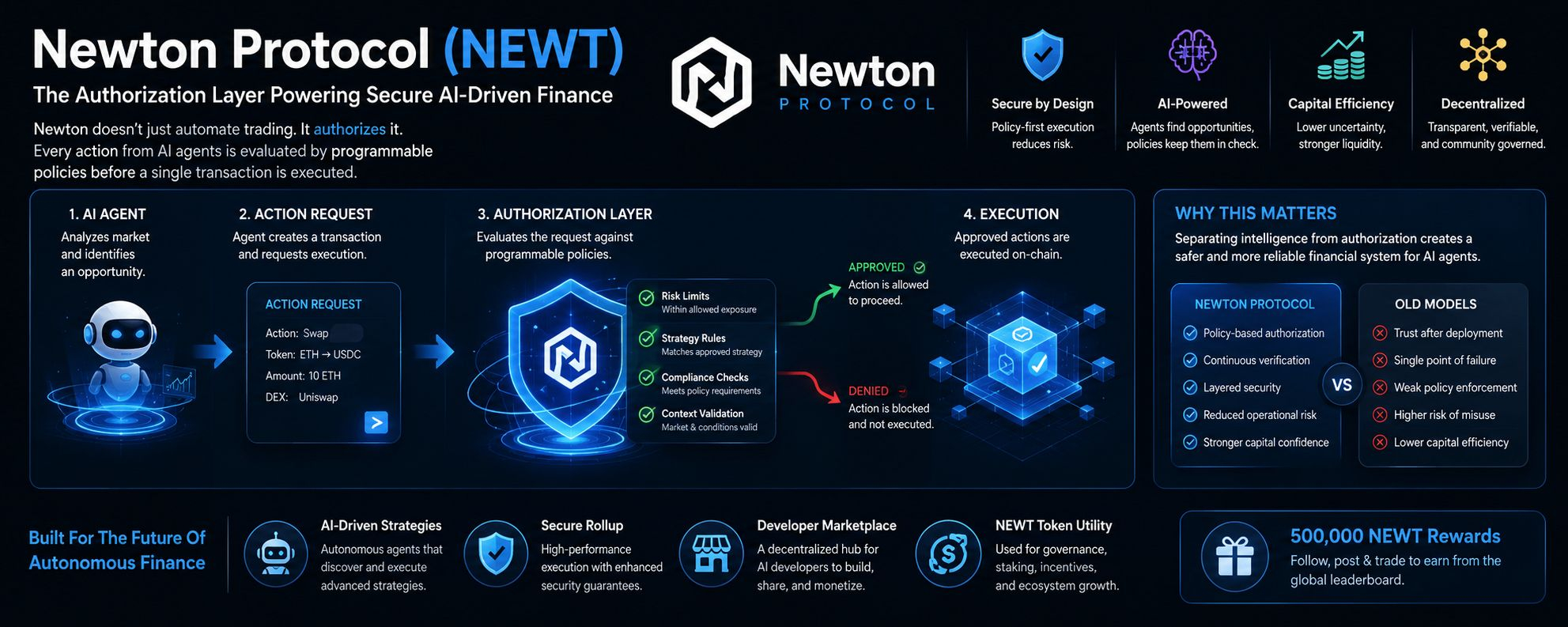
Sự đổi mới thực sự trong Newton Protocol không phải giao dịch bằng AI, mà là lớp ủy quyền âm thầm quyết địnhĐiều đọng lại trong tôi khi học về Newton Protocol không phải là ý tưởng về các tác nhân AI quản lý vốn. Câu chuyện đó đã khá quen thuộc trên khắp thị trường crypto. Thứ khiến tôi liên tục bị kéo sự chú ý quay lại lại là một điều gì đó yên tĩnh hơn nhiều: lớp ủy quyền nằm giữa quyết định của một tác nhân và việc thực thi quyết định đó. Đây là một chi tiết kiến trúc không tạo ra tiêu đề, nhưng có thể có tác động lớn hơn đến cách tài chính tự động phát triển so với chính các mô hình AI.
Phần thú vị hơn là nhận ra rằng Newton không yêu cầu người dùng mù quáng tin tưởng một tác nhân thông minh. Thay vào đó, nó cố gắng đảm bảo mọi hành động phải đi qua các chính sách có thể lập trình trước khi vốn thực sự được chuyển. Sự khác biệt này có vẻ quan trọng. Trí tuệ có thể tạo ra cơ hội, nhưng ủy quyền quyết định liệu những cơ hội đó có được phép đi tới giai đoạn thực thi hay không. Đó là hai trách nhiệm rất khác nhau, và việc tách chúng ra sẽ tạo nên một mô hình bảo mật rõ ràng hơn.
Sự đổi mới thực sự trong Newton Protocol không phải giao dịch bằng AI, mà là lớp ủy quyền âm thầm quyết định
Điều đọng lại trong tôi khi học về Newton Protocol không phải là ý tưởng về các tác nhân AI quản lý vốn. Câu chuyện đó đã khá quen thuộc trên khắp thị trường crypto. Thứ khiến tôi liên tục bị kéo sự chú ý quay lại lại là một điều gì đó yên tĩnh hơn nhiều: lớp ủy quyền nằm giữa quyết định của một tác nhân và việc thực thi quyết định đó. Đây là một chi tiết kiến trúc không tạo ra tiêu đề, nhưng có thể có tác động lớn hơn đến cách tài chính tự động phát triển so với chính các mô hình AI.
Phần thú vị hơn là nhận ra rằng Newton không yêu cầu người dùng mù quáng tin tưởng một tác nhân thông minh. Thay vào đó, nó cố gắng đảm bảo mọi hành động phải đi qua các chính sách có thể lập trình trước khi vốn thực sự được chuyển. Sự khác biệt này có vẻ quan trọng. Trí tuệ có thể tạo ra cơ hội, nhưng ủy quyền quyết định liệu những cơ hội đó có được phép đi tới giai đoạn thực thi hay không. Đó là hai trách nhiệm rất khác nhau, và việc tách chúng ra sẽ tạo nên một mô hình bảo mật rõ ràng hơn.
Phần thú vị hơn là nhận ra rằng Newton không yêu cầu người dùng mù quáng tin tưởng một tác nhân thông minh. Thay vào đó, nó cố gắng đảm bảo mọi hành động phải đi qua các chính sách có thể lập trình trước khi vốn thực sự được chuyển. Sự khác biệt này có vẻ quan trọng. Trí tuệ có thể tạo ra cơ hội, nhưng ủy quyền quyết định liệu những cơ hội đó có được phép đi tới giai đoạn thực thi hay không. Đó là hai trách nhiệm rất khác nhau, và việc tách chúng ra sẽ tạo nên một mô hình bảo mật rõ ràng hơn.
10
6
172
·
--
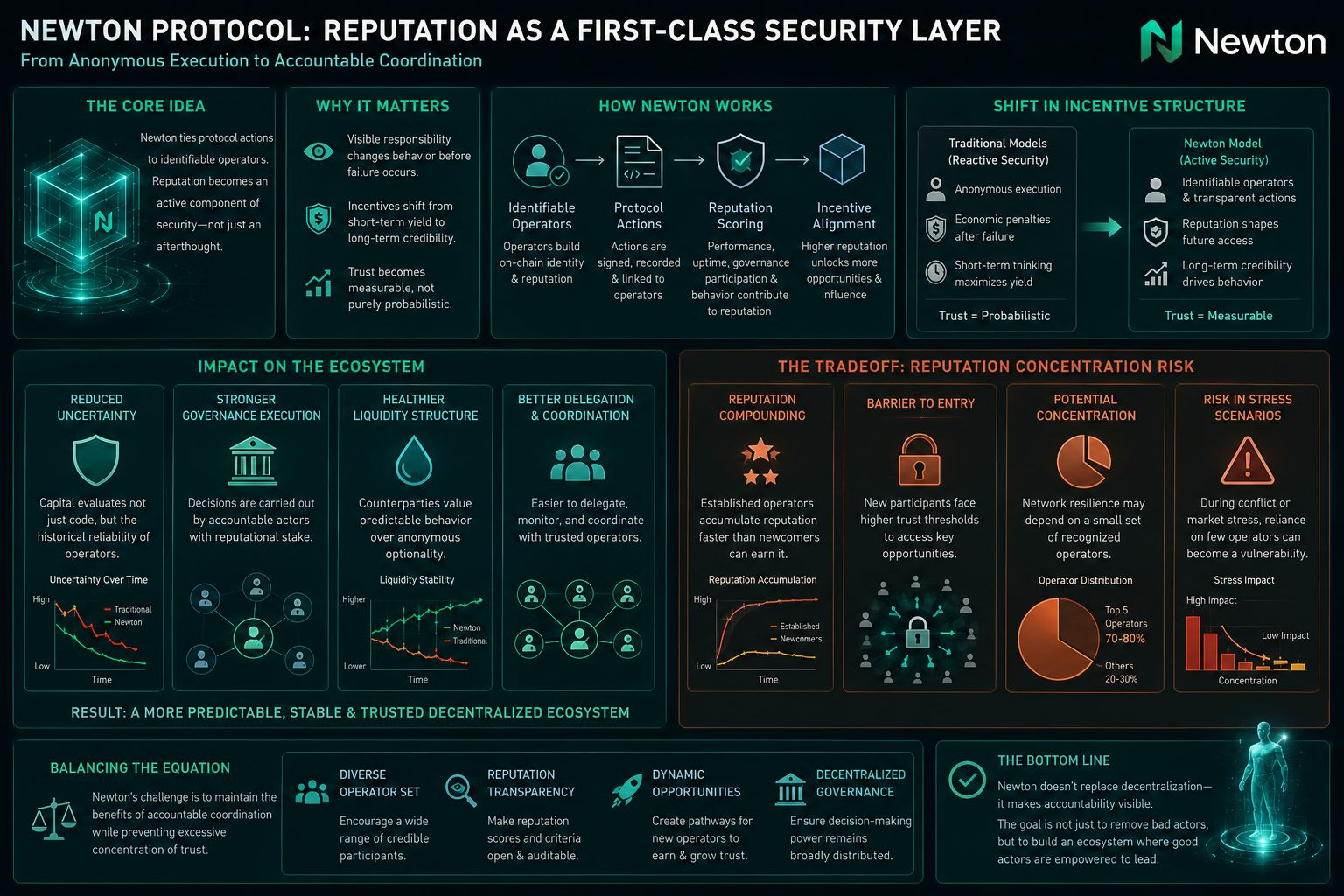
Điều đọng lại trong tôi khi học về Newton không phải chính lớp nhận dạng, mà là cách các toán tử quen thuộc định hình trách nhiệm giải trình trong phối hợp phi tập trung. Hầu hết các cuộc thảo luận tập trung vào tính minh bạch như một đặc tính của quản trị. Phần thú vị hơn nằm ở việc trách nhiệm trở nên hữu hình có thể thay đổi hành vi của người tham gia từ rất sớm, thậm chí trước khi bất kỳ tranh chấp hay sự cố thất bại nào xảy ra.
Thứ tôi dành nhiều thời gian để xem xét là cơ chế gắn các hành động của giao thức với các toán tử có thể nhận diện, thay vì chỉ là thực thi ẩn danh. Không giống các hệ thống dựa gần như hoàn toàn vào các hình phạt kinh tế sau khi có chuyện gì đó đi sai, Newton đưa danh tiếng vào như một thành phần chủ động của mô hình bảo mật. Điều này chuyển động lực từ việc chỉ tối đa hóa lợi nhuận ngắn hạn sang ưu tiên bảo toàn uy tín dài hạn. So với các mô hình phối hợp phi cho phép trước đó, kiến trúc này cố gắng biến niềm tin thành thứ có thể đo lường được thay vì chỉ là xác suất.
Điều đó làm thay đổi bề mặt rủi ro, vì vốn không còn chỉ đánh giá mã một cách độc lập. Nó còn đánh giá độ tin cậy lịch sử của những thực thể tương tác với mã đó. Về mặt lý thuyết, điều này có thể giảm bất định liên quan đến việc thực thi quản trị, các thao tác được ủy quyền và mức độ tham gia của hệ sinh thái. Cấu trúc thanh khoản thu được có thể trở nên ổn định hơn nếu các đối tác coi trọng hành vi có thể dự đoán hơn là tính tùy chọn ẩn danh.
Đồng thời, thiết kế cũng đưa ra một sự đánh đổi khác. Hệ thống danh tiếng có thể tăng cường sự khớp giữa động lực và mục tiêu, nhưng cũng tạo khả năng xảy ra sự tập trung. Nếu các toán tử đã được thiết lập tích lũy niềm tin nhanh hơn so với người mới có thể giành được, khả năng phục hồi của mạng lưới có thể dần phụ thuộc vào một nhóm nhỏ các người tham gia được công nhận. Trong các giai đoạn xung đột quản trị hoặc căng thẳng thị trường, sự tập trung đó có thể trở nên đáng kể hơn so với ý định ban đầu của giao thức.
@NewtonProtocol #newt $NEWT
{spot}(NEWTUSDT)
Điều đọng lại trong tôi khi học về Newton không phải chính lớp nhận dạng, mà là cách các toán tử quen thuộc định hình trách nhiệm giải trình trong phối hợp phi tập trung. Hầu hết các cuộc thảo luận tập trung vào tính minh bạch như một đặc tính của quản trị. Phần thú vị hơn nằm ở việc trách nhiệm trở nên hữu hình có thể thay đổi hành vi của người tham gia từ rất sớm, thậm chí trước khi bất kỳ tranh chấp hay sự cố thất bại nào xảy ra.
Thứ tôi dành nhiều thời gian để xem xét là cơ chế gắn các hành động của giao thức với các toán tử có thể nhận diện, thay vì chỉ là thực thi ẩn danh. Không giống các hệ thống dựa gần như hoàn toàn vào các hình phạt kinh tế sau khi có chuyện gì đó đi sai, Newton đưa danh tiếng vào như một thành phần chủ động của mô hình bảo mật. Điều này chuyển động lực từ việc chỉ tối đa hóa lợi nhuận ngắn hạn sang ưu tiên bảo toàn uy tín dài hạn. So với các mô hình phối hợp phi cho phép trước đó, kiến trúc này cố gắng biến niềm tin thành thứ có thể đo lường được thay vì chỉ là xác suất.
Điều đó làm thay đổi bề mặt rủi ro, vì vốn không còn chỉ đánh giá mã một cách độc lập. Nó còn đánh giá độ tin cậy lịch sử của những thực thể tương tác với mã đó. Về mặt lý thuyết, điều này có thể giảm bất định liên quan đến việc thực thi quản trị, các thao tác được ủy quyền và mức độ tham gia của hệ sinh thái. Cấu trúc thanh khoản thu được có thể trở nên ổn định hơn nếu các đối tác coi trọng hành vi có thể dự đoán hơn là tính tùy chọn ẩn danh.
Đồng thời, thiết kế cũng đưa ra một sự đánh đổi khác. Hệ thống danh tiếng có thể tăng cường sự khớp giữa động lực và mục tiêu, nhưng cũng tạo khả năng xảy ra sự tập trung. Nếu các toán tử đã được thiết lập tích lũy niềm tin nhanh hơn so với người mới có thể giành được, khả năng phục hồi của mạng lưới có thể dần phụ thuộc vào một nhóm nhỏ các người tham gia được công nhận. Trong các giai đoạn xung đột quản trị hoặc căng thẳng thị trường, sự tập trung đó có thể trở nên đáng kể hơn so với ý định ban đầu của giao thức.
@NewtonProtocol #newt $NEWT
Thứ tôi dành nhiều thời gian để xem xét là cơ chế gắn các hành động của giao thức với các toán tử có thể nhận diện, thay vì chỉ là thực thi ẩn danh. Không giống các hệ thống dựa gần như hoàn toàn vào các hình phạt kinh tế sau khi có chuyện gì đó đi sai, Newton đưa danh tiếng vào như một thành phần chủ động của mô hình bảo mật. Điều này chuyển động lực từ việc chỉ tối đa hóa lợi nhuận ngắn hạn sang ưu tiên bảo toàn uy tín dài hạn. So với các mô hình phối hợp phi cho phép trước đó, kiến trúc này cố gắng biến niềm tin thành thứ có thể đo lường được thay vì chỉ là xác suất.
Điều đó làm thay đổi bề mặt rủi ro, vì vốn không còn chỉ đánh giá mã một cách độc lập. Nó còn đánh giá độ tin cậy lịch sử của những thực thể tương tác với mã đó. Về mặt lý thuyết, điều này có thể giảm bất định liên quan đến việc thực thi quản trị, các thao tác được ủy quyền và mức độ tham gia của hệ sinh thái. Cấu trúc thanh khoản thu được có thể trở nên ổn định hơn nếu các đối tác coi trọng hành vi có thể dự đoán hơn là tính tùy chọn ẩn danh.
Đồng thời, thiết kế cũng đưa ra một sự đánh đổi khác. Hệ thống danh tiếng có thể tăng cường sự khớp giữa động lực và mục tiêu, nhưng cũng tạo khả năng xảy ra sự tập trung. Nếu các toán tử đã được thiết lập tích lũy niềm tin nhanh hơn so với người mới có thể giành được, khả năng phục hồi của mạng lưới có thể dần phụ thuộc vào một nhóm nhỏ các người tham gia được công nhận. Trong các giai đoạn xung đột quản trị hoặc căng thẳng thị trường, sự tập trung đó có thể trở nên đáng kể hơn so với ý định ban đầu của giao thức.
@NewtonProtocol #newt $NEWT
32
21
2.2k
·
--
⚡ $ARX không gây ồn—đang tạo áp lực.
Những cú bứt phá lớn nhất xảy ra trước khi đám đông nhận ra. Hãy chú ý tới $ARX. 🚀🔥
{future}(ARXUSDT)
#BitcoinPlansECashHardFork
#AMDSharesSlideNearly10%
#SpaceXAnthropicOpenAIIPOsMayTopVCExitsSince2000
#MorganStanleyAdds1000BTC
#USStrikesIranAfterHormuzShipAttack
⚡ $ARX không gây ồn—đang tạo áp lực.
Những cú bứt phá lớn nhất xảy ra trước khi đám đông nhận ra. Hãy chú ý tới $ARX . 🚀🔥
#BitcoinPlansECashHardFork
#AMDSharesSlideNearly10%
#SpaceXAnthropicOpenAIIPOsMayTopVCExitsSince2000
#MorganStanleyAdds1000BTC
#USStrikesIranAfterHormuzShipAttack
Những cú bứt phá lớn nhất xảy ra trước khi đám đông nhận ra. Hãy chú ý tới $ARX . 🚀🔥
#BitcoinPlansECashHardFork
#AMDSharesSlideNearly10%
#SpaceXAnthropicOpenAIIPOsMayTopVCExitsSince2000
#MorganStanleyAdds1000BTC
#USStrikesIranAfterHormuzShipAttack
257
·
--
$SLX đang tiến gần một vùng phá vỡ quan trọng và động lượng bắt đầu được hình thành.
Lệnh: Mua khi có phá vỡ được xác nhận kèm khối lượng mạnh.
Mục tiêu 1: +20%
Mục tiêu 2: +40%
Cắt lỗ: Nằm dưới vùng hỗ trợ gần nhất.
Một cú phá vỡ sạch có thể kích hoạt một đợt biến động mạnh. Hãy giữ kỷ luật, quản lý rủi ro và chờ xác nhận.
{future}(SLXUSDT)
#BitcoinPlansECashHardFork
#EthereumFoundationAIAgentsFindNodeCrashBug
#BitcoinUp9.5%InJulyBestInFourYears
#XRPActiveWalletsHitSecondLowestOf2026
#IranRulesOutTalksUntilUSWithdraws
$SLX đang tiến gần một vùng phá vỡ quan trọng và động lượng bắt đầu được hình thành.
Lệnh: Mua khi có phá vỡ được xác nhận kèm khối lượng mạnh.
Mục tiêu 1: +20%
Mục tiêu 2: +40%
Cắt lỗ: Nằm dưới vùng hỗ trợ gần nhất.
Một cú phá vỡ sạch có thể kích hoạt một đợt biến động mạnh. Hãy giữ kỷ luật, quản lý rủi ro và chờ xác nhận.
#BitcoinPlansECashHardFork
#EthereumFoundationAIAgentsFindNodeCrashBug
#BitcoinUp9.5%InJulyBestInFourYears
#XRPActiveWalletsHitSecondLowestOf2026
#IranRulesOutTalksUntilUSWithdraws
Lệnh: Mua khi có phá vỡ được xác nhận kèm khối lượng mạnh.
Mục tiêu 1: +20%
Mục tiêu 2: +40%
Cắt lỗ: Nằm dưới vùng hỗ trợ gần nhất.
Một cú phá vỡ sạch có thể kích hoạt một đợt biến động mạnh. Hãy giữ kỷ luật, quản lý rủi ro và chờ xác nhận.
#BitcoinPlansECashHardFork
#EthereumFoundationAIAgentsFindNodeCrashBug
#BitcoinUp9.5%InJulyBestInFourYears
#XRPActiveWalletsHitSecondLowestOf2026
#IranRulesOutTalksUntilUSWithdraws
379
·
--
$CLO đang siết chặt sau một nền tảng sạch và trông có vẻ sẵn sàng để mở rộng.
Điểm vào: Vượt qua ngưỡng kháng cự với khối lượng mạnh.
Mục tiêu 1: +15%
Mục tiêu 2: +30%
Cắt lỗ: Thấp hơn hỗ trợ gần nhất.
Động lượng đang tăng lên, thanh khoản đang cải thiện và một cú bứt phá đã được xác nhận có thể kích hoạt một đợt tăng nhanh. Quản lý rủi ro và để xu hướng làm việc.
{future}(CLOUSDT)
#BitcoinUp9.5%InJulyBestInFourYears
#XRPActiveWalletsHitSecondLowestOf2026
#SP500EndsJustBelowRecord
#IranRulesOutTalksUntilUSWithdraws
#RetailStockBuyingLowestSince2020
$CLO đang siết chặt sau một nền tảng sạch và trông có vẻ sẵn sàng để mở rộng.
Điểm vào: Vượt qua ngưỡng kháng cự với khối lượng mạnh.
Mục tiêu 1: +15%
Mục tiêu 2: +30%
Cắt lỗ: Thấp hơn hỗ trợ gần nhất.
Động lượng đang tăng lên, thanh khoản đang cải thiện và một cú bứt phá đã được xác nhận có thể kích hoạt một đợt tăng nhanh. Quản lý rủi ro và để xu hướng làm việc.
#BitcoinUp9.5%InJulyBestInFourYears
#XRPActiveWalletsHitSecondLowestOf2026
#SP500EndsJustBelowRecord
#IranRulesOutTalksUntilUSWithdraws
#RetailStockBuyingLowestSince2020
Điểm vào: Vượt qua ngưỡng kháng cự với khối lượng mạnh.
Mục tiêu 1: +15%
Mục tiêu 2: +30%
Cắt lỗ: Thấp hơn hỗ trợ gần nhất.
Động lượng đang tăng lên, thanh khoản đang cải thiện và một cú bứt phá đã được xác nhận có thể kích hoạt một đợt tăng nhanh. Quản lý rủi ro và để xu hướng làm việc.
#BitcoinUp9.5%InJulyBestInFourYears
#XRPActiveWalletsHitSecondLowestOf2026
#SP500EndsJustBelowRecord
#IranRulesOutTalksUntilUSWithdraws
#RetailStockBuyingLowestSince2020
166
·
--
Bài viết
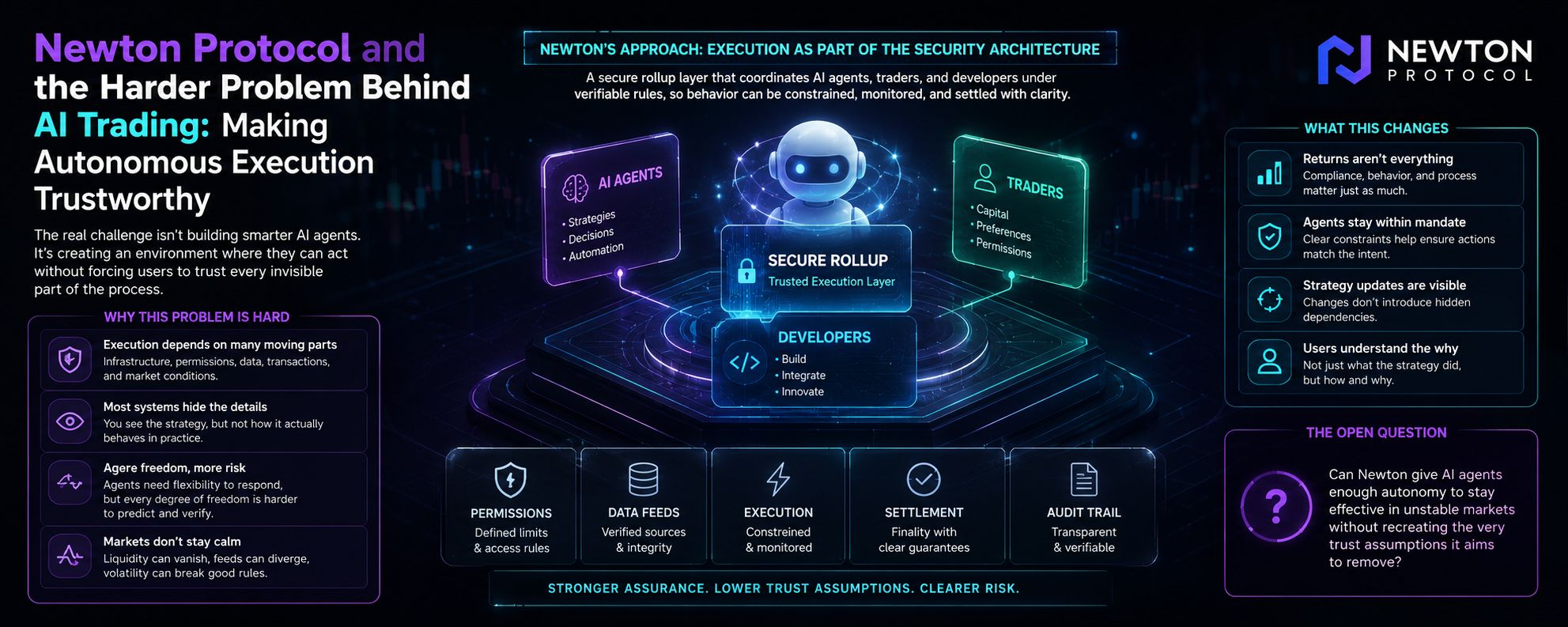
Newton Protocol và Vấn đề Khó Hơn Đằng Sau Giao Dịch AI: Tạo Niềm Tin Cho Việc Thực Thi Tự ChủMột điều cứ lặp lại với tôi khi nghiên cứu Newton Protocol: thử thách thực sự có thể không nằm ở việc xây dựng các tác nhân AI thông minh hơn. Mà là tạo ra một môi trường nơi các tác nhân đó có thể hành động mà không bắt người dùng phải tin tưởng vào mọi phần vô hình của quy trình.
Phần lớn các cuộc trò chuyện xoay quanh giao dịch do AI dẫn dắt đều tập trung vào hiệu suất. Tín hiệu tốt hơn, thực thi nhanh hơn, mô hình mạnh hơn và nhiều mức độ tự chủ hơn. Điều khiến tôi chú ý không phải những điều đó. Mà là quyết định của Newton khi coi việc thực thi như một phần của kiến trúc bảo mật.
Newton Protocol và Vấn đề Khó Hơn Đằng Sau Giao Dịch AI: Tạo Niềm Tin Cho Việc Thực Thi Tự Chủ
Một điều cứ lặp lại với tôi khi nghiên cứu Newton Protocol: thử thách thực sự có thể không nằm ở việc xây dựng các tác nhân AI thông minh hơn. Mà là tạo ra một môi trường nơi các tác nhân đó có thể hành động mà không bắt người dùng phải tin tưởng vào mọi phần vô hình của quy trình.
Phần lớn các cuộc trò chuyện xoay quanh giao dịch do AI dẫn dắt đều tập trung vào hiệu suất. Tín hiệu tốt hơn, thực thi nhanh hơn, mô hình mạnh hơn và nhiều mức độ tự chủ hơn. Điều khiến tôi chú ý không phải những điều đó. Mà là quyết định của Newton khi coi việc thực thi như một phần của kiến trúc bảo mật.
Phần lớn các cuộc trò chuyện xoay quanh giao dịch do AI dẫn dắt đều tập trung vào hiệu suất. Tín hiệu tốt hơn, thực thi nhanh hơn, mô hình mạnh hơn và nhiều mức độ tự chủ hơn. Điều khiến tôi chú ý không phải những điều đó. Mà là quyết định của Newton khi coi việc thực thi như một phần của kiến trúc bảo mật.
9
4
247
·
--
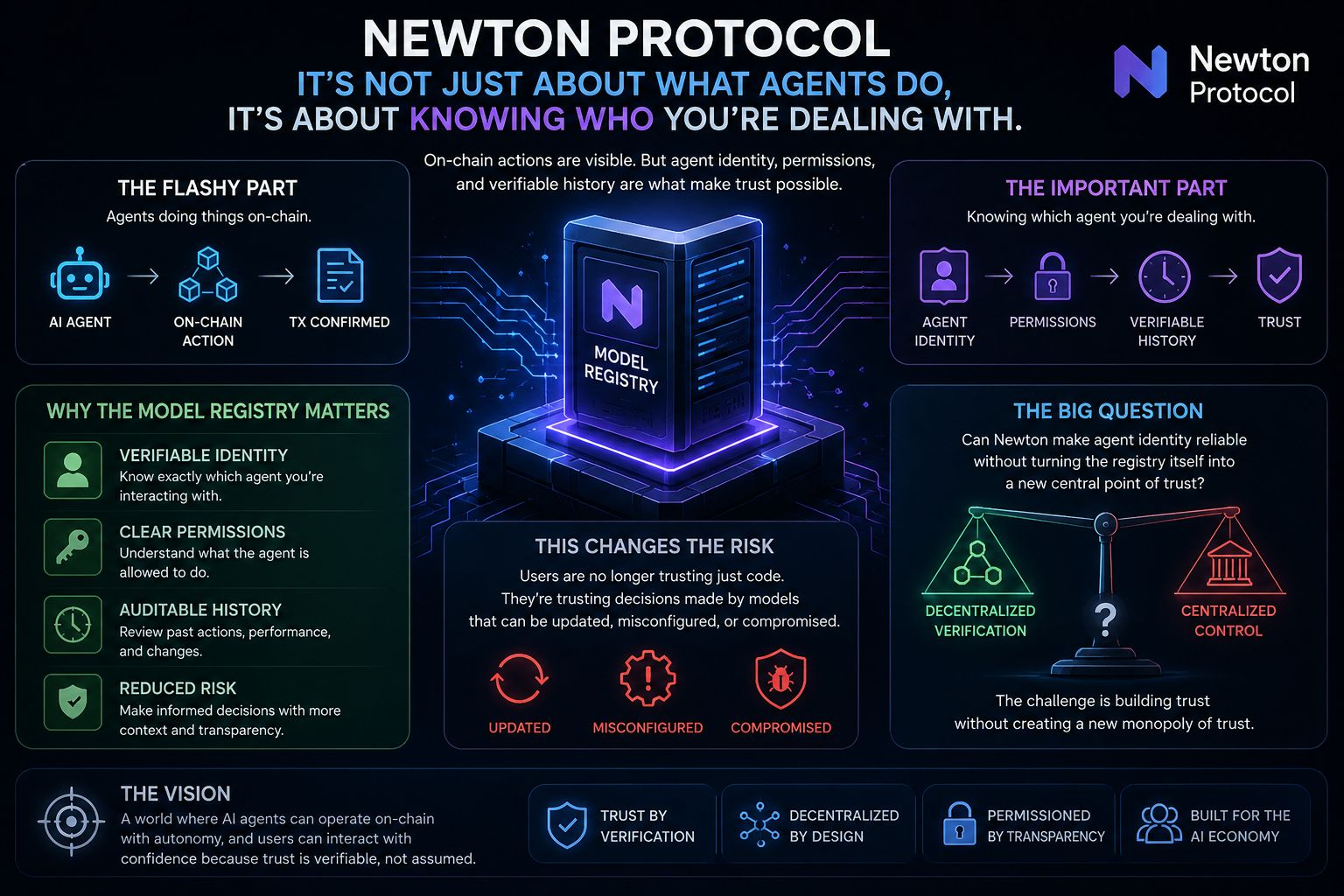
Một điều khiến tôi ấn tượng khi xem Newton Protocol là sổ đăng ký mô hình.
Phần bắt mắt là các agent thực hiện các tác vụ trên chuỗi. Phần quan trọng hơn có lẽ là biết bạn đang làm việc với agent nào, agent đó có những quyền hạn gì, và liệu lịch sử của nó có thể được xác minh hay không.
Điều này thay đổi mức độ rủi ro vì người dùng giờ đây không còn chỉ tin vào mã nguồn. Họ đang tin vào các quyết định được đưa ra bởi các mô hình có thể được cập nhật, cấu hình sai hoặc bị xâm phạm.
Câu hỏi lớn là liệu Newton có thể làm cho danh tính của agent trở nên đáng tin cậy mà không biến chính sổ đăng ký thành một điểm tin cậy trung tâm mới hay không.
@NewtonProtocol #newt $NEWT
Một điều khiến tôi ấn tượng khi xem Newton Protocol là sổ đăng ký mô hình.
Phần bắt mắt là các agent thực hiện các tác vụ trên chuỗi. Phần quan trọng hơn có lẽ là biết bạn đang làm việc với agent nào, agent đó có những quyền hạn gì, và liệu lịch sử của nó có thể được xác minh hay không.
Điều này thay đổi mức độ rủi ro vì người dùng giờ đây không còn chỉ tin vào mã nguồn. Họ đang tin vào các quyết định được đưa ra bởi các mô hình có thể được cập nhật, cấu hình sai hoặc bị xâm phạm.
Câu hỏi lớn là liệu Newton có thể làm cho danh tính của agent trở nên đáng tin cậy mà không biến chính sổ đăng ký thành một điểm tin cậy trung tâm mới hay không.
@NewtonProtocol #newt $NEWT
Phần bắt mắt là các agent thực hiện các tác vụ trên chuỗi. Phần quan trọng hơn có lẽ là biết bạn đang làm việc với agent nào, agent đó có những quyền hạn gì, và liệu lịch sử của nó có thể được xác minh hay không.
Điều này thay đổi mức độ rủi ro vì người dùng giờ đây không còn chỉ tin vào mã nguồn. Họ đang tin vào các quyết định được đưa ra bởi các mô hình có thể được cập nhật, cấu hình sai hoặc bị xâm phạm.
Câu hỏi lớn là liệu Newton có thể làm cho danh tính của agent trở nên đáng tin cậy mà không biến chính sổ đăng ký thành một điểm tin cậy trung tâm mới hay không.
@NewtonProtocol #newt $NEWT
27
12
514
·
--
$BEE đang tiến tới một mốc quan trọng nơi biến động có thể gia tăng. Nếu người mua giành lại vùng kháng cự với khối lượng thuyết phục, đà có thể tăng tốc. Nếu không, việc kiểm định lại vùng hỗ trợ có thể tạo ra cơ hội vào lệnh mạnh hơn.
Thiết lập giao dịch
• Điểm vào lệnh: Xác nhận breakout vượt kháng cự hoặc nhịp hồi tăng từ hỗ trợ
• Cắt lỗ: Nằm dưới đáy swing gần nhất
• Mục tiêu: Chốt một phần lợi nhuận tại kháng cự kế tiếp và duy trì phần còn lại bằng cách kéo theo lệnh khi xu hướng vẫn còn duy trì
Kỷ luật thắng sự hứng khởi. Chờ xác nhận, quản lý rủi ro và để thị trường làm việc.
{alpha}(560xdb6f1f098b55e36b036603c8e54663a8d907d6e1)
#BitcoinUp9.5%InJulyBestInFourYears
#XRPActiveWalletsHitSecondLowestOf2026
#IranRulesOutTalksUntilUSWithdraws
#RetailStockBuyingLowestSince2020
#JapanUrgesGPIFToBoostDomesticAssets
$BEE đang tiến tới một mốc quan trọng nơi biến động có thể gia tăng. Nếu người mua giành lại vùng kháng cự với khối lượng thuyết phục, đà có thể tăng tốc. Nếu không, việc kiểm định lại vùng hỗ trợ có thể tạo ra cơ hội vào lệnh mạnh hơn.
Thiết lập giao dịch
• Điểm vào lệnh: Xác nhận breakout vượt kháng cự hoặc nhịp hồi tăng từ hỗ trợ
• Cắt lỗ: Nằm dưới đáy swing gần nhất
• Mục tiêu: Chốt một phần lợi nhuận tại kháng cự kế tiếp và duy trì phần còn lại bằng cách kéo theo lệnh khi xu hướng vẫn còn duy trì
Kỷ luật thắng sự hứng khởi. Chờ xác nhận, quản lý rủi ro và để thị trường làm việc.
#BitcoinUp9.5%InJulyBestInFourYears
#XRPActiveWalletsHitSecondLowestOf2026
#IranRulesOutTalksUntilUSWithdraws
#RetailStockBuyingLowestSince2020
#JapanUrgesGPIFToBoostDomesticAssets
Thiết lập giao dịch
• Điểm vào lệnh: Xác nhận breakout vượt kháng cự hoặc nhịp hồi tăng từ hỗ trợ
• Cắt lỗ: Nằm dưới đáy swing gần nhất
• Mục tiêu: Chốt một phần lợi nhuận tại kháng cự kế tiếp và duy trì phần còn lại bằng cách kéo theo lệnh khi xu hướng vẫn còn duy trì
Kỷ luật thắng sự hứng khởi. Chờ xác nhận, quản lý rủi ro và để thị trường làm việc.
#BitcoinUp9.5%InJulyBestInFourYears
#XRPActiveWalletsHitSecondLowestOf2026
#IranRulesOutTalksUntilUSWithdraws
#RetailStockBuyingLowestSince2020
#JapanUrgesGPIFToBoostDomesticAssets
124
Đăng nhập để khám phá thêm nội dung
Tham gia cùng người dùng tiền mã hóa toàn cầu trên Binance Square
⚡️ Nhận thông tin mới nhất và hữu ích về tiền mã hóa.
💬 Được tin cậy bởi sàn giao dịch tiền mã hóa lớn nhất thế giới.
👍 Khám phá những thông tin chuyên sâu thực tế từ những nhà sáng tạo đã xác minh.
Email / Số điện thoại
Chủ đề thịnh hành
TheoDõiFOMC
145,007 lượt xem
706 đang thảo luận
#TheoDõiFOMC
🔥 FOMC lại bắt đầu trở thành tâm điểm của crypto
Bitcoin vừa bước vào tháng 10, nhưng câu chuyện lớn phía sau thị trường lúc này không chỉ là giá.
Các trader đang bắt đầu hướng sự chú ý về cuộc họp FOMC ngày 27–28/10. Sau một loạt phát biểu mới từ quan chức Fed, kỳ vọng về việc tăng lãi suất ngay trong tháng 10 đã giảm đáng kể.
Điều thú vị là trước đó thị trường từng đặt cược khá cao vào một đợt tăng tiếp theo.
Giờ thì mọi thứ lại quay sang chờ dữ liệu kinh tế và những phát biểu tiếp theo của Fed.
Với crypto, chỉ cần kỳ vọng lãi suất thay đổi mạnh là $BTC có thể lập tức biến động, rồi kéo theo cả thị trường altcoin.
Tháng 10 mới bắt đầu mà macro đã có chuyện để hóng rồi 👀
#Bitcoin #Crypto #Macro #Fed #BinanceSquare
X LEI
·0 lượt thích
·179 lượt xem
TinFed
134,723 lượt xem
508 đang thảo luận
BinanceLaunchesBinanceIntelligence
654,464 lượt xem
4,015 đang thảo luận