
Emma Catherine
7.1k Bài đăng

Emma Catherine
 Đã xác minh nâng cao trên Square
Báo cáo
Chặn người dùng
Crypto Enthusiast || Trader || KOL || X:Emma_Cath91
Trader thường xuyên
{thời gian} năm
597 Đang theo dõi
31.2K+ Người theo dõi
26.9K+ Đã thích
Bài đăng
Tất cả
Trích dẫn
Live
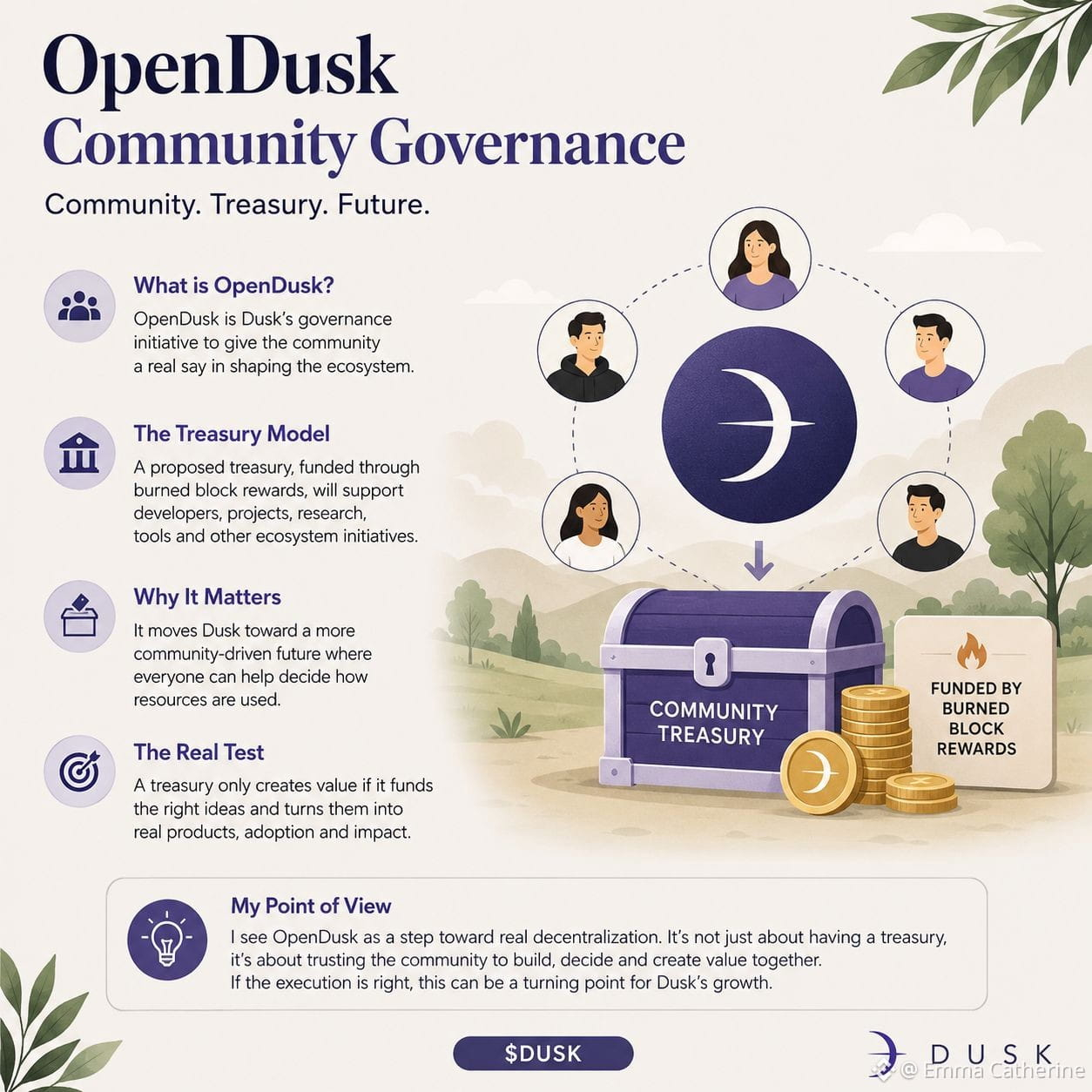
#dusk $DUSK Càng nghĩ về OpenDusk, tôi càng thấy phần quản trị của @Dusk_Foundation trở nên thú vị hơn.
Bề mặt của đề xuất rất đơn giản: tạo một quỹ do cộng đồng dẫn dắt, được tài trợ từ phần thưởng khối bị đốt (burned block rewards), qua đó mang lại cho hệ sinh thái một nguồn tài trợ tiềm năng cho các sáng kiến trong tương lai. Lá phiếu OpenDusk đầu tiên sẽ tập trung vào việc liệu cấu trúc này có nên tồn tại hay không.
Nhưng với tôi, câu chuyện lớn hơn không chỉ dừng lại ở việc có một quỹ.
Đó là vấn đề ai sẽ là người quyết định các nguồn lực đó sẽ được đưa đi đâu.
Nếu cộng đồng có thể giúp định hướng nguồn vốn cho các nhà phát triển, dự án hệ sinh thái, nghiên cứu, công cụ và những sáng kiến khác, thì Dusk có thể dần chuyển từ một hệ sinh thái do nền tảng điều hành sang thứ gì đó có sự tham gia nhiều hơn từ cộng đồng.
Đồng thời, tôi nghĩ phép thử thực sự sẽ diễn ra sau cuộc bỏ phiếu. Một quỹ chỉ thực sự có ý nghĩa nếu số tiền được phân bổ một cách chu đáo và tạo ra những thứ hữu ích.
Tôi ít quan tâm đến tiêu đề “quỹ cộng đồng” và quan tâm nhiều hơn đến việc cộng đồng có thể xây dựng được gì từ nó.
Đó là phần tôi sẽ theo dõi sát sao.
#dusk $DUSK Càng nghĩ về OpenDusk, tôi càng thấy phần quản trị của @Dusk trở nên thú vị hơn.
Bề mặt của đề xuất rất đơn giản: tạo một quỹ do cộng đồng dẫn dắt, được tài trợ từ phần thưởng khối bị đốt (burned block rewards), qua đó mang lại cho hệ sinh thái một nguồn tài trợ tiềm năng cho các sáng kiến trong tương lai. Lá phiếu OpenDusk đầu tiên sẽ tập trung vào việc liệu cấu trúc này có nên tồn tại hay không.
Nhưng với tôi, câu chuyện lớn hơn không chỉ dừng lại ở việc có một quỹ.
Đó là vấn đề ai sẽ là người quyết định các nguồn lực đó sẽ được đưa đi đâu.
Nếu cộng đồng có thể giúp định hướng nguồn vốn cho các nhà phát triển, dự án hệ sinh thái, nghiên cứu, công cụ và những sáng kiến khác, thì Dusk có thể dần chuyển từ một hệ sinh thái do nền tảng điều hành sang thứ gì đó có sự tham gia nhiều hơn từ cộng đồng.
Đồng thời, tôi nghĩ phép thử thực sự sẽ diễn ra sau cuộc bỏ phiếu. Một quỹ chỉ thực sự có ý nghĩa nếu số tiền được phân bổ một cách chu đáo và tạo ra những thứ hữu ích.
Tôi ít quan tâm đến tiêu đề “quỹ cộng đồng” và quan tâm nhiều hơn đến việc cộng đồng có thể xây dựng được gì từ nó.
Đó là phần tôi sẽ theo dõi sát sao.
Bề mặt của đề xuất rất đơn giản: tạo một quỹ do cộng đồng dẫn dắt, được tài trợ từ phần thưởng khối bị đốt (burned block rewards), qua đó mang lại cho hệ sinh thái một nguồn tài trợ tiềm năng cho các sáng kiến trong tương lai. Lá phiếu OpenDusk đầu tiên sẽ tập trung vào việc liệu cấu trúc này có nên tồn tại hay không.
Nhưng với tôi, câu chuyện lớn hơn không chỉ dừng lại ở việc có một quỹ.
Đó là vấn đề ai sẽ là người quyết định các nguồn lực đó sẽ được đưa đi đâu.
Nếu cộng đồng có thể giúp định hướng nguồn vốn cho các nhà phát triển, dự án hệ sinh thái, nghiên cứu, công cụ và những sáng kiến khác, thì Dusk có thể dần chuyển từ một hệ sinh thái do nền tảng điều hành sang thứ gì đó có sự tham gia nhiều hơn từ cộng đồng.
Đồng thời, tôi nghĩ phép thử thực sự sẽ diễn ra sau cuộc bỏ phiếu. Một quỹ chỉ thực sự có ý nghĩa nếu số tiền được phân bổ một cách chu đáo và tạo ra những thứ hữu ích.
Tôi ít quan tâm đến tiêu đề “quỹ cộng đồng” và quan tâm nhiều hơn đến việc cộng đồng có thể xây dựng được gì từ nó.
Đó là phần tôi sẽ theo dõi sát sao.
3
3
190
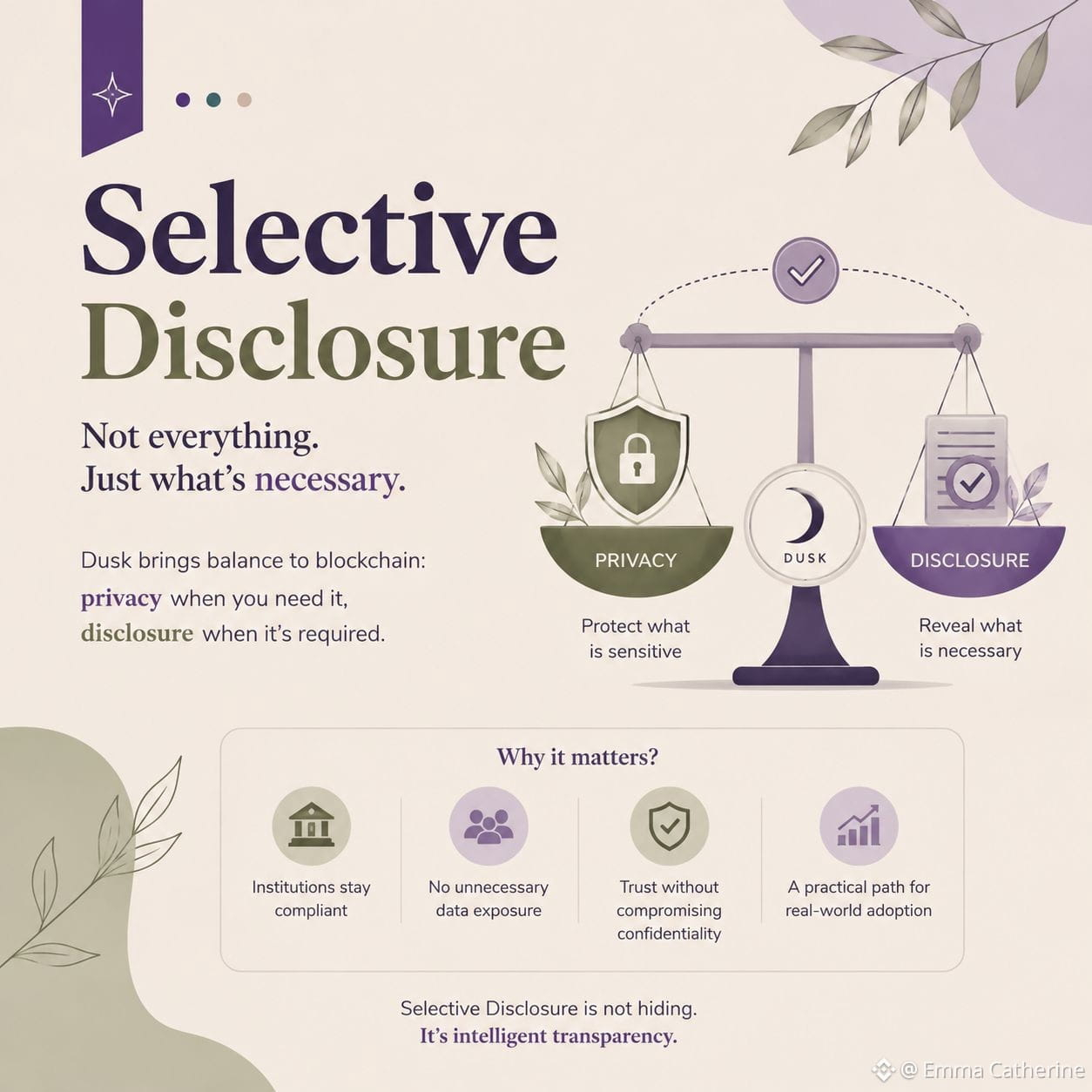
#dusk $DUSK Một điều về Dusk mà tôi nghĩ đáng được chú ý hơn: tiết lộ có chọn lọc.
Minh bạch blockchain nghe thật tuyệt cho đến khi bạn hình dung mọi động thái tài chính đều sẽ hiển thị mãi mãi.
Nhưng các tổ chức cũng không thể chỉ vận hành trong hoàn toàn bí mật. Họ cần phải chứng minh việc tuân thủ, quyền sở hữu, hoặc điều kiện đủ tư cách khi được yêu cầu.
Vậy thì sao nếu bạn không cần phải tiết lộ mọi thứ?
Bạn có thể chứng minh những gì cần được chứng minh mà không phải phơi bày toàn bộ lịch sử tài chính, chiến lược, hay hoạt động giao dịch của mình.
Đó là điều khiến tôi thấy thú vị về @Dusk_Foundation .
Nó không thực sự xoay quanh việc chọn giữa quyền riêng tư và minh bạch.
Mà là tìm ra điểm cân bằng:
Chỉ tiết lộ những gì cần thiết.
Bảo vệ những gì nhạy cảm.
Giữ trách nhiệm giải trình mà không từ bỏ tính bảo mật.
Với tôi, đó là một tầm nhìn thực tế hơn nhiều cho việc áp dụng blockchain trong các tổ chức.
#dusk $DUSK Một điều về Dusk mà tôi nghĩ đáng được chú ý hơn: tiết lộ có chọn lọc.
Minh bạch blockchain nghe thật tuyệt cho đến khi bạn hình dung mọi động thái tài chính đều sẽ hiển thị mãi mãi.
Nhưng các tổ chức cũng không thể chỉ vận hành trong hoàn toàn bí mật. Họ cần phải chứng minh việc tuân thủ, quyền sở hữu, hoặc điều kiện đủ tư cách khi được yêu cầu.
Vậy thì sao nếu bạn không cần phải tiết lộ mọi thứ?
Bạn có thể chứng minh những gì cần được chứng minh mà không phải phơi bày toàn bộ lịch sử tài chính, chiến lược, hay hoạt động giao dịch của mình.
Đó là điều khiến tôi thấy thú vị về @Dusk .
Nó không thực sự xoay quanh việc chọn giữa quyền riêng tư và minh bạch.
Mà là tìm ra điểm cân bằng:
Chỉ tiết lộ những gì cần thiết.
Bảo vệ những gì nhạy cảm.
Giữ trách nhiệm giải trình mà không từ bỏ tính bảo mật.
Với tôi, đó là một tầm nhìn thực tế hơn nhiều cho việc áp dụng blockchain trong các tổ chức.
Minh bạch blockchain nghe thật tuyệt cho đến khi bạn hình dung mọi động thái tài chính đều sẽ hiển thị mãi mãi.
Nhưng các tổ chức cũng không thể chỉ vận hành trong hoàn toàn bí mật. Họ cần phải chứng minh việc tuân thủ, quyền sở hữu, hoặc điều kiện đủ tư cách khi được yêu cầu.
Vậy thì sao nếu bạn không cần phải tiết lộ mọi thứ?
Bạn có thể chứng minh những gì cần được chứng minh mà không phải phơi bày toàn bộ lịch sử tài chính, chiến lược, hay hoạt động giao dịch của mình.
Đó là điều khiến tôi thấy thú vị về @Dusk .
Nó không thực sự xoay quanh việc chọn giữa quyền riêng tư và minh bạch.
Mà là tìm ra điểm cân bằng:
Chỉ tiết lộ những gì cần thiết.
Bảo vệ những gì nhạy cảm.
Giữ trách nhiệm giải trình mà không từ bỏ tính bảo mật.
Với tôi, đó là một tầm nhìn thực tế hơn nhiều cho việc áp dụng blockchain trong các tổ chức.
16
3
153
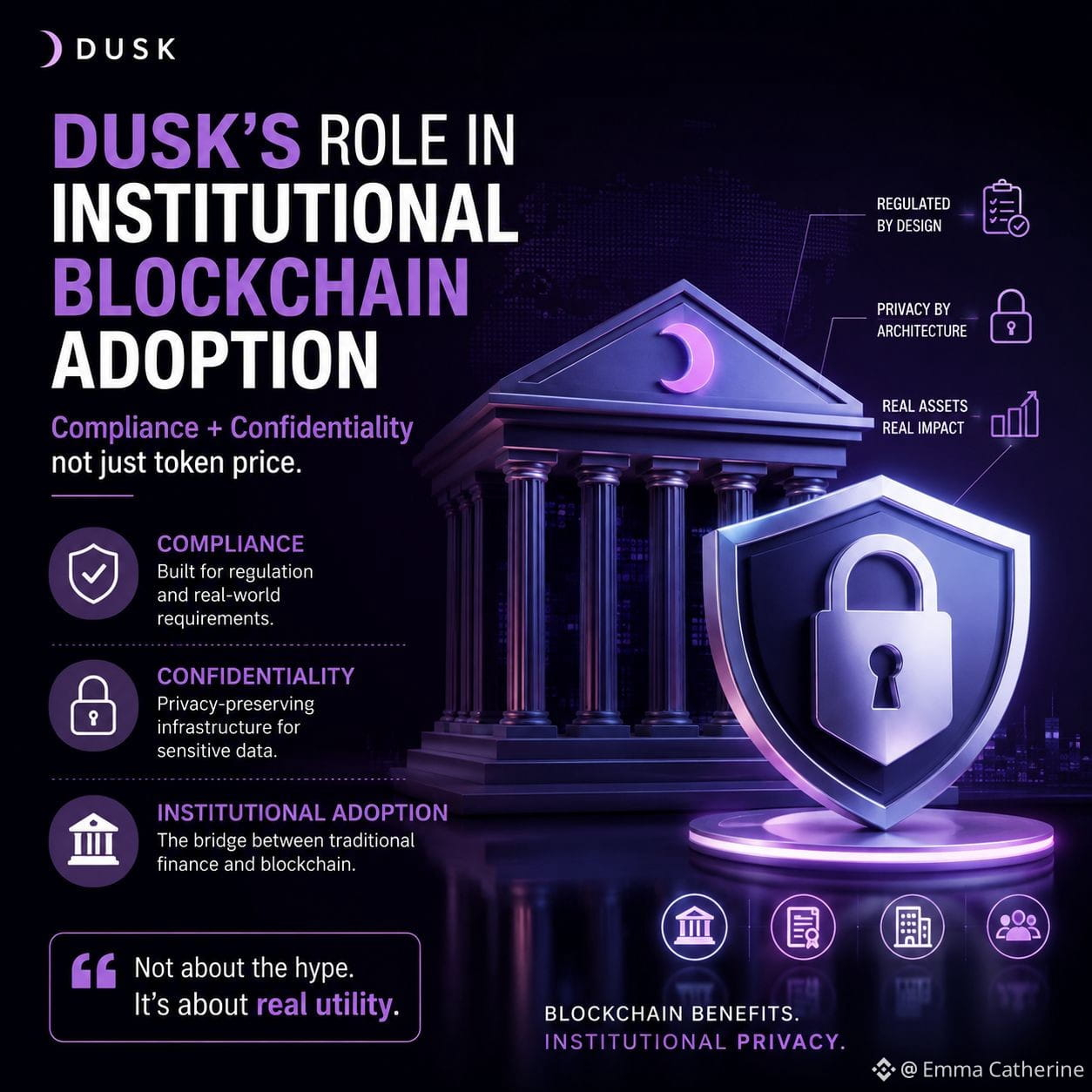
#dusk $DUSK Các tổ chức không cần thêm một blockchain khác. Họ cần một blockchain mà họ thực sự có thể tin tưởng để xử lý dữ liệu nhạy cảm.
Vì vậy, @Dusk_Foundation nổi bật đối với tôi.
Để các tổ chức thực sự áp dụng, tuân thủ + bảo mật quan trọng không kém gì phi tập trung. Các tổ chức tài chính không thể tiết lộ mọi chi tiết trong hoạt động kinh doanh của họ trên một sổ cái công khai.
Dusk thật sự rất thú vị vì đang cố gắng thu hẹp khoảng cách đó: giữ lại lợi ích của blockchain trong khi cung cấp cho các tổ chức quyền riêng tư mà họ cần.
Với tôi, đó là một câu chuyện còn thú vị hơn nhiều so với giá token. 👀
#dusk $DUSK Các tổ chức không cần thêm một blockchain khác. Họ cần một blockchain mà họ thực sự có thể tin tưởng để xử lý dữ liệu nhạy cảm.
Vì vậy, @Dusk nổi bật đối với tôi.
Để các tổ chức thực sự áp dụng, tuân thủ + bảo mật quan trọng không kém gì phi tập trung. Các tổ chức tài chính không thể tiết lộ mọi chi tiết trong hoạt động kinh doanh của họ trên một sổ cái công khai.
Dusk thật sự rất thú vị vì đang cố gắng thu hẹp khoảng cách đó: giữ lại lợi ích của blockchain trong khi cung cấp cho các tổ chức quyền riêng tư mà họ cần.
Với tôi, đó là một câu chuyện còn thú vị hơn nhiều so với giá token. 👀
Vì vậy, @Dusk nổi bật đối với tôi.
Để các tổ chức thực sự áp dụng, tuân thủ + bảo mật quan trọng không kém gì phi tập trung. Các tổ chức tài chính không thể tiết lộ mọi chi tiết trong hoạt động kinh doanh của họ trên một sổ cái công khai.
Dusk thật sự rất thú vị vì đang cố gắng thu hẹp khoảng cách đó: giữ lại lợi ích của blockchain trong khi cung cấp cho các tổ chức quyền riêng tư mà họ cần.
Với tôi, đó là một câu chuyện còn thú vị hơn nhiều so với giá token. 👀
2
1
214
$OPG “AI phi tập trung” đang trở thành một từ thông dụng.
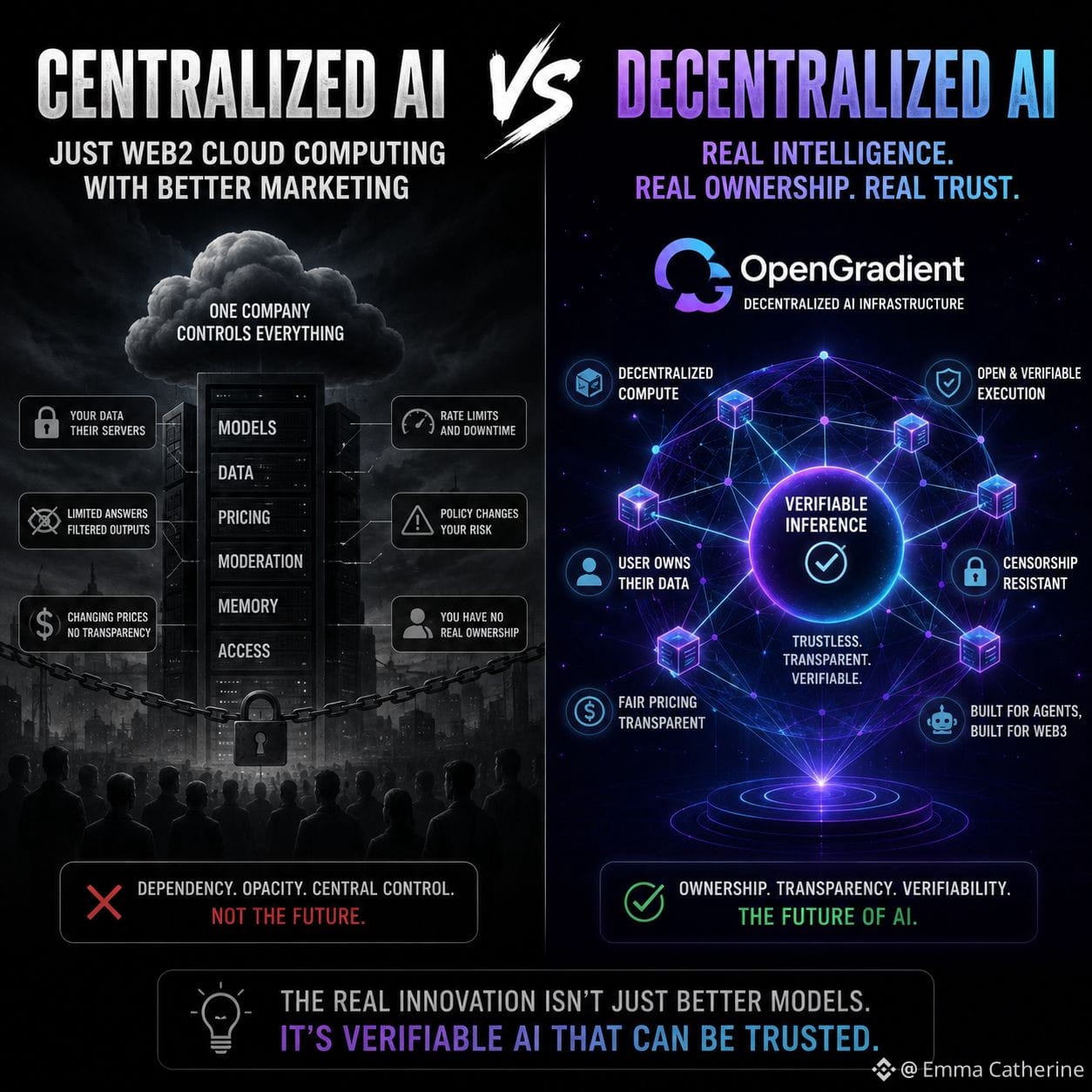
Nhưng phần lớn AI ngày nay vẫn chỉ là điện toán đám mây Web2 với cách tiếp thị tốt hơn.
Bạn tải dữ liệu của mình lên.
Các prompt của bạn đi tới các máy chủ tập trung.
Một công ty kiểm soát các mô hình, giá cả, kiểm duyệt, bộ nhớ và thậm chí cả những câu trả lời mà bạn được phép xem.$BABY
Điều đó không phải là tự do trí tuệ.
Đó là sự phụ thuộc được bọc trong một lớp AI.
Quan điểm của tôi rất đơn giản:
Nếu AI sẽ vận hành tài chính, danh tính, quản trị, giao dịch, nghiên cứu và các tác nhân tự chủ… thì niềm tin không thể phụ thuộc vào một công ty duy nhất.$ICP
Bởi vì ngay khi một nhà cung cấp gặp sự cố, thay đổi chính sách, giới hạn truy cập bằng hạn mức, hoặc thao túng đầu ra — thì toàn bộ “nền kinh tế AI” trở nên mong manh.
Đó là lý do vì sao các dự án như @OpenGradient lại quan trọng.
Sự đổi mới thực sự không chỉ là “những mô hình tốt hơn”.
Đó là suy luận có thể kiểm chứng, thực thi phi tập trung, tính toán minh bạch và các hệ thống AI có thể thực sự được tin cậy.
Hầu hết mọi người đang chạy đua để xây dựng AI thông minh hơn.
Rất ít người đặt câu hỏi:
“Làm sao để kiểm chứng AI đang nói sự thật?”
Câu hỏi đó sẽ định hình kỷ nguyên tiếp theo của internet.
Trí tuệ được mở rộng bởi AI tập trung.
AI phi tập trung có thể cuối cùng sẽ mở rộng niềm tin.
#OPG
$OPG “AI phi tập trung” đang trở thành một từ thông dụng.
Nhưng phần lớn AI ngày nay vẫn chỉ là điện toán đám mây Web2 với cách tiếp thị tốt hơn.
Bạn tải dữ liệu của mình lên.
Các prompt của bạn đi tới các máy chủ tập trung.
Một công ty kiểm soát các mô hình, giá cả, kiểm duyệt, bộ nhớ và thậm chí cả những câu trả lời mà bạn được phép xem.$BABY
Điều đó không phải là tự do trí tuệ.
Đó là sự phụ thuộc được bọc trong một lớp AI.
Quan điểm của tôi rất đơn giản:
Nếu AI sẽ vận hành tài chính, danh tính, quản trị, giao dịch, nghiên cứu và các tác nhân tự chủ… thì niềm tin không thể phụ thuộc vào một công ty duy nhất.$ICP
Bởi vì ngay khi một nhà cung cấp gặp sự cố, thay đổi chính sách, giới hạn truy cập bằng hạn mức, hoặc thao túng đầu ra — thì toàn bộ “nền kinh tế AI” trở nên mong manh.
Đó là lý do vì sao các dự án như @OpenGradient lại quan trọng.
Sự đổi mới thực sự không chỉ là “những mô hình tốt hơn”.
Đó là suy luận có thể kiểm chứng, thực thi phi tập trung, tính toán minh bạch và các hệ thống AI có thể thực sự được tin cậy.
Hầu hết mọi người đang chạy đua để xây dựng AI thông minh hơn.
Rất ít người đặt câu hỏi:
“Làm sao để kiểm chứng AI đang nói sự thật?”
Câu hỏi đó sẽ định hình kỷ nguyên tiếp theo của internet.
Trí tuệ được mở rộng bởi AI tập trung.
AI phi tập trung có thể cuối cùng sẽ mở rộng niềm tin.
#OPG
Nhưng phần lớn AI ngày nay vẫn chỉ là điện toán đám mây Web2 với cách tiếp thị tốt hơn.
Bạn tải dữ liệu của mình lên.
Các prompt của bạn đi tới các máy chủ tập trung.
Một công ty kiểm soát các mô hình, giá cả, kiểm duyệt, bộ nhớ và thậm chí cả những câu trả lời mà bạn được phép xem.$BABY
Điều đó không phải là tự do trí tuệ.
Đó là sự phụ thuộc được bọc trong một lớp AI.
Quan điểm của tôi rất đơn giản:
Nếu AI sẽ vận hành tài chính, danh tính, quản trị, giao dịch, nghiên cứu và các tác nhân tự chủ… thì niềm tin không thể phụ thuộc vào một công ty duy nhất.$ICP
Bởi vì ngay khi một nhà cung cấp gặp sự cố, thay đổi chính sách, giới hạn truy cập bằng hạn mức, hoặc thao túng đầu ra — thì toàn bộ “nền kinh tế AI” trở nên mong manh.
Đó là lý do vì sao các dự án như @OpenGradient lại quan trọng.
Sự đổi mới thực sự không chỉ là “những mô hình tốt hơn”.
Đó là suy luận có thể kiểm chứng, thực thi phi tập trung, tính toán minh bạch và các hệ thống AI có thể thực sự được tin cậy.
Hầu hết mọi người đang chạy đua để xây dựng AI thông minh hơn.
Rất ít người đặt câu hỏi:
“Làm sao để kiểm chứng AI đang nói sự thật?”
Câu hỏi đó sẽ định hình kỷ nguyên tiếp theo của internet.
Trí tuệ được mở rộng bởi AI tập trung.
AI phi tập trung có thể cuối cùng sẽ mở rộng niềm tin.
#OPG
12
5
707
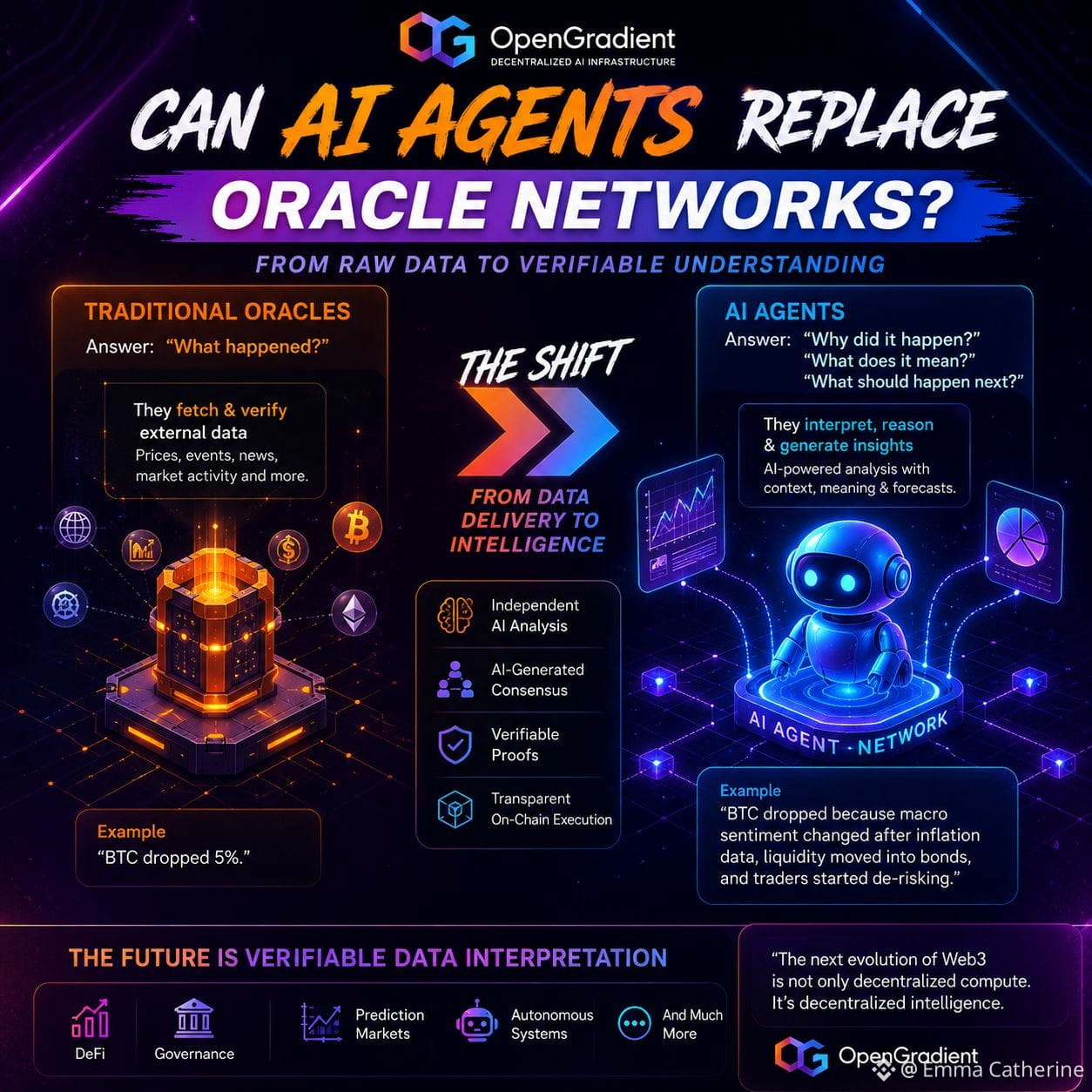
$OPG Tôi nghĩ chúng ta đang tiến tới một thế giới nơi các giao thức không chỉ tiêu thụ dữ liệu thô —
chúng sẽ tiêu thụ sự hiểu biết được tạo ra bởi AI.
Các mạng oracle truyền thống được thiết kế để trả lời:
“Chuyện gì đã xảy ra?”
Nhưng các tác nhân AI có thể trả lời:
“Vì sao điều đó xảy ra?”
“Nó có ý nghĩa gì?”
“Điều gì sẽ xảy ra tiếp theo?”
Điều đó thay đổi mọi thứ.$Jager
Hãy tưởng tượng một mạng lưới phi tập trung gồm các tác nhân AI:
- phân tích thông tin ngoài đời một cách độc lập
- diễn giải điều kiện thị trường
- đạt được sự đồng thuận được tạo ra bởi AI
- gắn các bằng chứng có thể kiểm chứng vào đầu ra
- thực thi các quyết định minh bạch trên chuỗi
Điều này lớn hơn nhiều so với việc chỉ cung cấp dữ liệu đơn thuần.
Đó là khả năng diễn giải dữ liệu có thể kiểm chứng.$POL
Một oracle có thể báo cáo:
“Biến động ETH đã tăng.”
Một tác nhân AI có thể giải thích:
“Biến động ETH tăng vì thanh khoản đã xoay chuyển sau bất ổn vĩ mô, đòn bẩy tăng lên trên các thị trường phái sinh, và tâm lý suy yếu sau tin tức quy định.”
Lớp diễn giải đó là nơi các hệ thống tự chủ trở nên thực sự thông minh.
Theo quan điểm của tôi, đây là một trong những cơ hội bị đánh giá thấp nhất trong AI phi tập trung.
Và đây là lý do tại sao hạ tầng lại quan trọng.
Nếu không có suy luận có thể kiểm chứng, AI phi tập trung sẽ khó được tin tưởng.
Nếu không có thực thi minh bạch, các tác nhân AI sẽ trở thành những “hộp đen”.
Nếu không có điện toán phi tập trung, trí tuệ sẽ vẫn tập trung.
Tôi tin rằng các dự án như @OpenGradient đang giúp xây dựng nền tảng cho một tương lai nơi các tác nhân AI không chỉ truy xuất thông tin —
chúng suy luận về thực tại theo cách có thể kiểm chứng.
Bước tiến tiếp theo của Web3 có thể không chỉ được thúc đẩy bởi các smart contract.
Nó có thể được thúc đẩy bởi trí tuệ phi tập trung.
#OPG
$OPG Tôi nghĩ chúng ta đang tiến tới một thế giới nơi các giao thức không chỉ tiêu thụ dữ liệu thô —
chúng sẽ tiêu thụ sự hiểu biết được tạo ra bởi AI.
Các mạng oracle truyền thống được thiết kế để trả lời:
“Chuyện gì đã xảy ra?”
Nhưng các tác nhân AI có thể trả lời:
“Vì sao điều đó xảy ra?”
“Nó có ý nghĩa gì?”
“Điều gì sẽ xảy ra tiếp theo?”
Điều đó thay đổi mọi thứ.$Jager
Hãy tưởng tượng một mạng lưới phi tập trung gồm các tác nhân AI:
- phân tích thông tin ngoài đời một cách độc lập
- diễn giải điều kiện thị trường
- đạt được sự đồng thuận được tạo ra bởi AI
- gắn các bằng chứng có thể kiểm chứng vào đầu ra
- thực thi các quyết định minh bạch trên chuỗi
Điều này lớn hơn nhiều so với việc chỉ cung cấp dữ liệu đơn thuần.
Đó là khả năng diễn giải dữ liệu có thể kiểm chứng.$POL
Một oracle có thể báo cáo:
“Biến động ETH đã tăng.”
Một tác nhân AI có thể giải thích:
“Biến động ETH tăng vì thanh khoản đã xoay chuyển sau bất ổn vĩ mô, đòn bẩy tăng lên trên các thị trường phái sinh, và tâm lý suy yếu sau tin tức quy định.”
Lớp diễn giải đó là nơi các hệ thống tự chủ trở nên thực sự thông minh.
Theo quan điểm của tôi, đây là một trong những cơ hội bị đánh giá thấp nhất trong AI phi tập trung.
Và đây là lý do tại sao hạ tầng lại quan trọng.
Nếu không có suy luận có thể kiểm chứng, AI phi tập trung sẽ khó được tin tưởng.
Nếu không có thực thi minh bạch, các tác nhân AI sẽ trở thành những “hộp đen”.
Nếu không có điện toán phi tập trung, trí tuệ sẽ vẫn tập trung.
Tôi tin rằng các dự án như @OpenGradient đang giúp xây dựng nền tảng cho một tương lai nơi các tác nhân AI không chỉ truy xuất thông tin —
chúng suy luận về thực tại theo cách có thể kiểm chứng.
Bước tiến tiếp theo của Web3 có thể không chỉ được thúc đẩy bởi các smart contract.
Nó có thể được thúc đẩy bởi trí tuệ phi tập trung.
#OPG
chúng sẽ tiêu thụ sự hiểu biết được tạo ra bởi AI.
Các mạng oracle truyền thống được thiết kế để trả lời:
“Chuyện gì đã xảy ra?”
Nhưng các tác nhân AI có thể trả lời:
“Vì sao điều đó xảy ra?”
“Nó có ý nghĩa gì?”
“Điều gì sẽ xảy ra tiếp theo?”
Điều đó thay đổi mọi thứ.$Jager
Hãy tưởng tượng một mạng lưới phi tập trung gồm các tác nhân AI:
- phân tích thông tin ngoài đời một cách độc lập
- diễn giải điều kiện thị trường
- đạt được sự đồng thuận được tạo ra bởi AI
- gắn các bằng chứng có thể kiểm chứng vào đầu ra
- thực thi các quyết định minh bạch trên chuỗi
Điều này lớn hơn nhiều so với việc chỉ cung cấp dữ liệu đơn thuần.
Đó là khả năng diễn giải dữ liệu có thể kiểm chứng.$POL
Một oracle có thể báo cáo:
“Biến động ETH đã tăng.”
Một tác nhân AI có thể giải thích:
“Biến động ETH tăng vì thanh khoản đã xoay chuyển sau bất ổn vĩ mô, đòn bẩy tăng lên trên các thị trường phái sinh, và tâm lý suy yếu sau tin tức quy định.”
Lớp diễn giải đó là nơi các hệ thống tự chủ trở nên thực sự thông minh.
Theo quan điểm của tôi, đây là một trong những cơ hội bị đánh giá thấp nhất trong AI phi tập trung.
Và đây là lý do tại sao hạ tầng lại quan trọng.
Nếu không có suy luận có thể kiểm chứng, AI phi tập trung sẽ khó được tin tưởng.
Nếu không có thực thi minh bạch, các tác nhân AI sẽ trở thành những “hộp đen”.
Nếu không có điện toán phi tập trung, trí tuệ sẽ vẫn tập trung.
Tôi tin rằng các dự án như @OpenGradient đang giúp xây dựng nền tảng cho một tương lai nơi các tác nhân AI không chỉ truy xuất thông tin —
chúng suy luận về thực tại theo cách có thể kiểm chứng.
Bước tiến tiếp theo của Web3 có thể không chỉ được thúc đẩy bởi các smart contract.
Nó có thể được thúc đẩy bởi trí tuệ phi tập trung.
#OPG
11
11
713
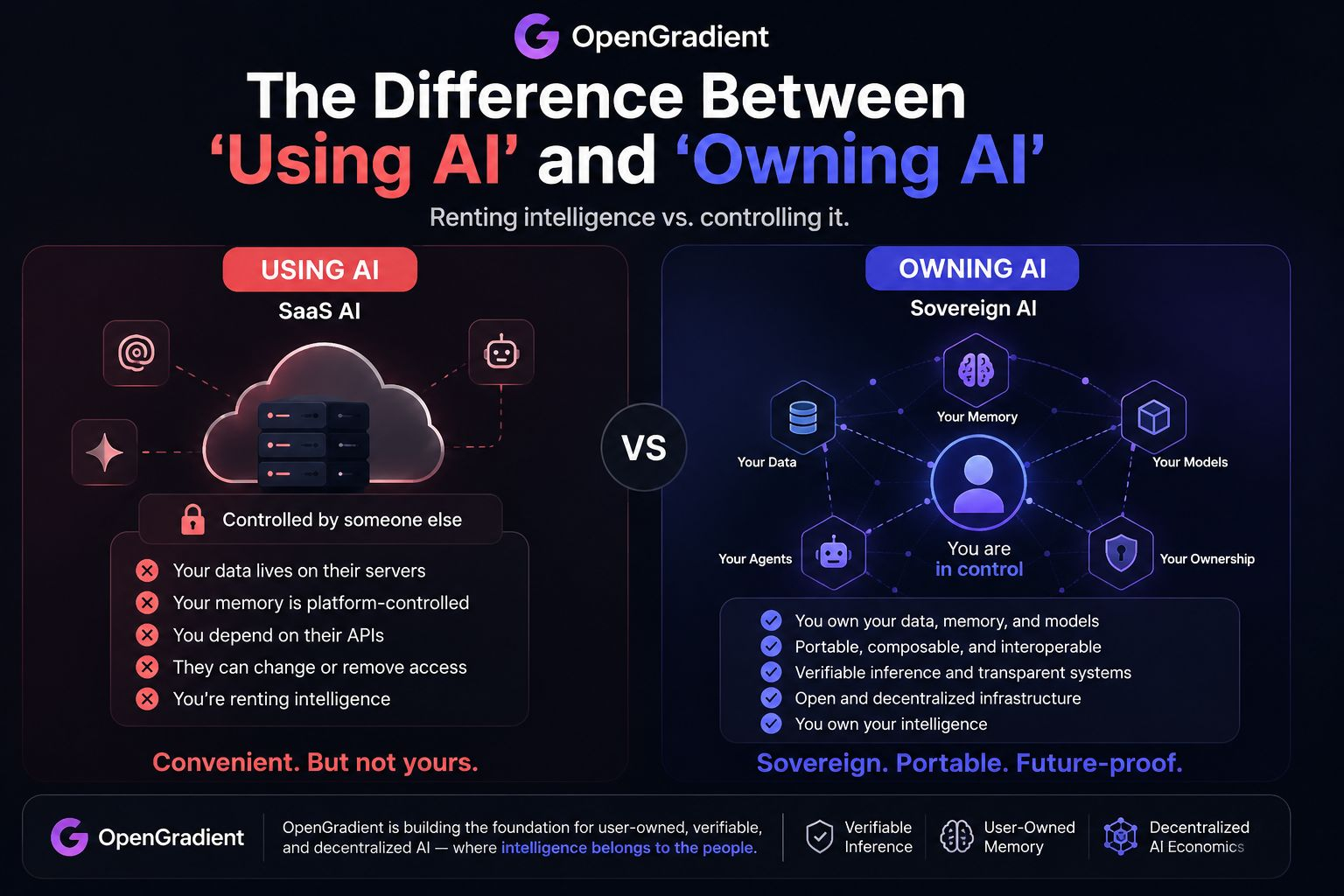
$OPG Hầu hết mọi người ngày nay đang sử dụng AI.
Rất ít người thực sự sở hữu nó.
Có một sự khác biệt lớn.
Hiện tại, phần lớn AI hoạt động như dạng SaaS:
- Các cuộc trò chuyện của bạn nằm trên máy chủ của ai đó
- Bộ nhớ AI của bạn do một nền tảng kiểm soát
- Quy trình làm việc của bạn phụ thuộc vào các API tập trung
- Lớp trí tuệ của bạn có thể thay đổi qua đêm mà không cần sự đồng ý của bạn
Bạn không sở hữu trí tuệ.
Bạn đang thuê nó.
Mô hình đó hoạt động — cho đến khi nó không còn hoạt động.
Tương lai của AI không nên chỉ nói về những mô hình thông minh hơn. Nó phải hướng tới quyền chủ quyền.$ICP
Tôi tin rằng người dùng nên sở hữu:
- bộ nhớ AI của họ
- ngữ cảnh của họ
- dữ liệu của họ
- các tác nhân (agents) của họ
- và cuối cùng, các mô hình cá nhân hóa của họ
Chính tại đây AI phi tập trung trở nên quan trọng.
Không phải vì phi tập trung đang “hot”, mà vì trí tuệ đang trở thành hạ tầng.
Và hạ tầng thì quan trọng.$EDEN
Nếu AI trở thành lớp vận hành cho công việc, sáng tạo, tài chính, giao tiếp và ra quyết định… thì việc trao toàn quyền kiểm soát lớp đó cho vài công ty sẽ tạo ra những vấn đề tương tự mà chúng ta đã thấy ở Web2:
- phụ thuộc nền tảng
- bị khóa (lock-in)
- kiểm soát vô hình
- thiếu minh bạch
@OpenGradient thật thú vị vì nó đưa câu chuyện vượt ra khỏi “ứng dụng AI” và tiến tới việc sở hữu AI.
Hướng tới một tương lai nơi:
- trí tuệ có thể mang theo
- suy luận có thể được kiểm chứng
- người dùng kiểm soát bộ nhớ của họ
- và AI trở nên cởi mở hơn, có thể kết hợp theo kiểu mô-đun hơn, đồng thời do người dùng sở hữu
Kỷ nguyên AI tiếp theo sẽ không chỉ nói về ai là người xây dựng mô hình tốt nhất.
Mà sẽ là về việc ai kiểm soát chính lớp trí tuệ đó.
#OPG
$OPG Hầu hết mọi người ngày nay đang sử dụng AI.
Rất ít người thực sự sở hữu nó.
Có một sự khác biệt lớn.
Hiện tại, phần lớn AI hoạt động như dạng SaaS:
- Các cuộc trò chuyện của bạn nằm trên máy chủ của ai đó
- Bộ nhớ AI của bạn do một nền tảng kiểm soát
- Quy trình làm việc của bạn phụ thuộc vào các API tập trung
- Lớp trí tuệ của bạn có thể thay đổi qua đêm mà không cần sự đồng ý của bạn
Bạn không sở hữu trí tuệ.
Bạn đang thuê nó.
Mô hình đó hoạt động — cho đến khi nó không còn hoạt động.
Tương lai của AI không nên chỉ nói về những mô hình thông minh hơn. Nó phải hướng tới quyền chủ quyền.$ICP
Tôi tin rằng người dùng nên sở hữu:
- bộ nhớ AI của họ
- ngữ cảnh của họ
- dữ liệu của họ
- các tác nhân (agents) của họ
- và cuối cùng, các mô hình cá nhân hóa của họ
Chính tại đây AI phi tập trung trở nên quan trọng.
Không phải vì phi tập trung đang “hot”, mà vì trí tuệ đang trở thành hạ tầng.
Và hạ tầng thì quan trọng.$EDEN
Nếu AI trở thành lớp vận hành cho công việc, sáng tạo, tài chính, giao tiếp và ra quyết định… thì việc trao toàn quyền kiểm soát lớp đó cho vài công ty sẽ tạo ra những vấn đề tương tự mà chúng ta đã thấy ở Web2:
- phụ thuộc nền tảng
- bị khóa (lock-in)
- kiểm soát vô hình
- thiếu minh bạch
@OpenGradient thật thú vị vì nó đưa câu chuyện vượt ra khỏi “ứng dụng AI” và tiến tới việc sở hữu AI.
Hướng tới một tương lai nơi:
- trí tuệ có thể mang theo
- suy luận có thể được kiểm chứng
- người dùng kiểm soát bộ nhớ của họ
- và AI trở nên cởi mở hơn, có thể kết hợp theo kiểu mô-đun hơn, đồng thời do người dùng sở hữu
Kỷ nguyên AI tiếp theo sẽ không chỉ nói về ai là người xây dựng mô hình tốt nhất.
Mà sẽ là về việc ai kiểm soát chính lớp trí tuệ đó.
#OPG
Rất ít người thực sự sở hữu nó.
Có một sự khác biệt lớn.
Hiện tại, phần lớn AI hoạt động như dạng SaaS:
- Các cuộc trò chuyện của bạn nằm trên máy chủ của ai đó
- Bộ nhớ AI của bạn do một nền tảng kiểm soát
- Quy trình làm việc của bạn phụ thuộc vào các API tập trung
- Lớp trí tuệ của bạn có thể thay đổi qua đêm mà không cần sự đồng ý của bạn
Bạn không sở hữu trí tuệ.
Bạn đang thuê nó.
Mô hình đó hoạt động — cho đến khi nó không còn hoạt động.
Tương lai của AI không nên chỉ nói về những mô hình thông minh hơn. Nó phải hướng tới quyền chủ quyền.$ICP
Tôi tin rằng người dùng nên sở hữu:
- bộ nhớ AI của họ
- ngữ cảnh của họ
- dữ liệu của họ
- các tác nhân (agents) của họ
- và cuối cùng, các mô hình cá nhân hóa của họ
Chính tại đây AI phi tập trung trở nên quan trọng.
Không phải vì phi tập trung đang “hot”, mà vì trí tuệ đang trở thành hạ tầng.
Và hạ tầng thì quan trọng.$EDEN
Nếu AI trở thành lớp vận hành cho công việc, sáng tạo, tài chính, giao tiếp và ra quyết định… thì việc trao toàn quyền kiểm soát lớp đó cho vài công ty sẽ tạo ra những vấn đề tương tự mà chúng ta đã thấy ở Web2:
- phụ thuộc nền tảng
- bị khóa (lock-in)
- kiểm soát vô hình
- thiếu minh bạch
@OpenGradient thật thú vị vì nó đưa câu chuyện vượt ra khỏi “ứng dụng AI” và tiến tới việc sở hữu AI.
Hướng tới một tương lai nơi:
- trí tuệ có thể mang theo
- suy luận có thể được kiểm chứng
- người dùng kiểm soát bộ nhớ của họ
- và AI trở nên cởi mở hơn, có thể kết hợp theo kiểu mô-đun hơn, đồng thời do người dùng sở hữu
Kỷ nguyên AI tiếp theo sẽ không chỉ nói về ai là người xây dựng mô hình tốt nhất.
Mà sẽ là về việc ai kiểm soát chính lớp trí tuệ đó.
#OPG
17
8
716
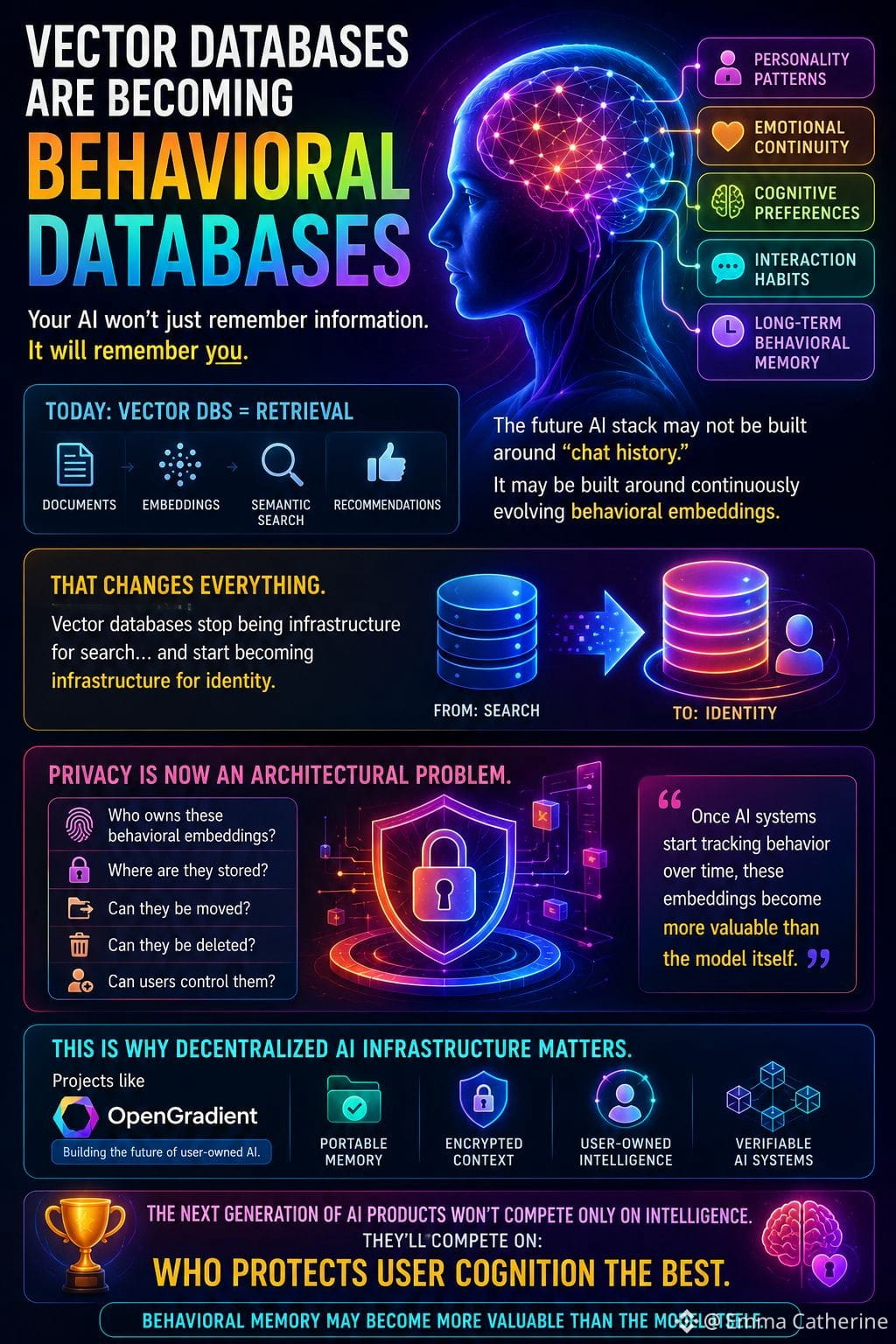
$OPG Hầu hết mọi người nghĩ rằng cơ sở dữ liệu vector chỉ là công cụ tìm kiếm cho AI.
Tôi thì nghĩ chúng đang dần trở thành thứ còn lớn hơn nhiều:
những cơ sở dữ liệu hành vi.
Hiện tại, cơ sở dữ liệu vector chủ yếu được dùng cho việc truy xuất:
tài liệu, embedding, tìm kiếm ngữ nghĩa, gợi ý.
Nhưng theo thời gian, chúng có thể phát triển thành những hệ thống lưu trữ:
- các kiểu hình nhân cách
- sự liên tục về cảm xúc
- các sở thích nhận thức
- thói quen tương tác
- trí nhớ hành vi dài hạn
Nói đơn giản:
AI của bạn sẽ không chỉ ghi nhớ thông tin.
Nó sẽ ghi nhớ bạn.
Cách bạn suy nghĩ.
Cách bạn viết.
Điều gì làm bạn căng thẳng.
Điều gì thúc đẩy bạn.
Bạn tin vào kiểu câu trả lời nào.$ARB
Điều đó thay đổi mọi thứ.
Hệ thống AI trong tương lai có thể không được xây dựng dựa trên “lịch sử hội thoại”.
Nó có thể được xây dựng dựa trên các embedding hành vi liên tục được cập nhật.
Và thành thật mà nói, tôi không nghĩ đa số mọi người nhận ra sự thay đổi này quan trọng đến mức nào.
Bởi vì một khi các hệ thống AI bắt đầu theo dõi hành vi theo thời gian, các cơ sở dữ liệu vector sẽ không còn là hạ tầng cho tìm kiếm…
mà trở thành hạ tầng cho danh tính.
Đó là lúc quyền riêng tư đột nhiên trở thành một vấn đề kiến trúc cực kỳ nghiêm trọng.
Ai sở hữu các embedding hành vi này?
Chúng được lưu ở đâu?
Có thể di chuyển chúng không?
Có thể xóa chúng không?
Người dùng có thể kiểm soát chúng không?
Vì thế, cơ sở hạ tầng AI phi tập trung là điều quan trọng.
Những dự án như @OpenGradient khiến tôi thấy hứng thú vì chúng thúc đẩy:
- bộ nhớ có thể mang đi
- ngữ cảnh được mã hóa
- trí tuệ do người dùng sở hữu
- các hệ thống AI có thể kiểm chứng
Tôi nghĩ thế hệ sản phẩm AI tiếp theo sẽ không chỉ cạnh tranh về trí tuệ.$POL
Chúng sẽ cạnh tranh về:
ai bảo vệ nhận thức của người dùng tốt nhất.
Và trong tương lai, trí nhớ hành vi có thể trở nên có giá trị hơn chính bản thân mô hình.
#OPG
$OPG Hầu hết mọi người nghĩ rằng cơ sở dữ liệu vector chỉ là công cụ tìm kiếm cho AI.
Tôi thì nghĩ chúng đang dần trở thành thứ còn lớn hơn nhiều:
những cơ sở dữ liệu hành vi.
Hiện tại, cơ sở dữ liệu vector chủ yếu được dùng cho việc truy xuất:
tài liệu, embedding, tìm kiếm ngữ nghĩa, gợi ý.
Nhưng theo thời gian, chúng có thể phát triển thành những hệ thống lưu trữ:
- các kiểu hình nhân cách
- sự liên tục về cảm xúc
- các sở thích nhận thức
- thói quen tương tác
- trí nhớ hành vi dài hạn
Nói đơn giản:
AI của bạn sẽ không chỉ ghi nhớ thông tin.
Nó sẽ ghi nhớ bạn.
Cách bạn suy nghĩ.
Cách bạn viết.
Điều gì làm bạn căng thẳng.
Điều gì thúc đẩy bạn.
Bạn tin vào kiểu câu trả lời nào.$ARB
Điều đó thay đổi mọi thứ.
Hệ thống AI trong tương lai có thể không được xây dựng dựa trên “lịch sử hội thoại”.
Nó có thể được xây dựng dựa trên các embedding hành vi liên tục được cập nhật.
Và thành thật mà nói, tôi không nghĩ đa số mọi người nhận ra sự thay đổi này quan trọng đến mức nào.
Bởi vì một khi các hệ thống AI bắt đầu theo dõi hành vi theo thời gian, các cơ sở dữ liệu vector sẽ không còn là hạ tầng cho tìm kiếm…
mà trở thành hạ tầng cho danh tính.
Đó là lúc quyền riêng tư đột nhiên trở thành một vấn đề kiến trúc cực kỳ nghiêm trọng.
Ai sở hữu các embedding hành vi này?
Chúng được lưu ở đâu?
Có thể di chuyển chúng không?
Có thể xóa chúng không?
Người dùng có thể kiểm soát chúng không?
Vì thế, cơ sở hạ tầng AI phi tập trung là điều quan trọng.
Những dự án như @OpenGradient khiến tôi thấy hứng thú vì chúng thúc đẩy:
- bộ nhớ có thể mang đi
- ngữ cảnh được mã hóa
- trí tuệ do người dùng sở hữu
- các hệ thống AI có thể kiểm chứng
Tôi nghĩ thế hệ sản phẩm AI tiếp theo sẽ không chỉ cạnh tranh về trí tuệ.$POL
Chúng sẽ cạnh tranh về:
ai bảo vệ nhận thức của người dùng tốt nhất.
Và trong tương lai, trí nhớ hành vi có thể trở nên có giá trị hơn chính bản thân mô hình.
#OPG
Tôi thì nghĩ chúng đang dần trở thành thứ còn lớn hơn nhiều:
những cơ sở dữ liệu hành vi.
Hiện tại, cơ sở dữ liệu vector chủ yếu được dùng cho việc truy xuất:
tài liệu, embedding, tìm kiếm ngữ nghĩa, gợi ý.
Nhưng theo thời gian, chúng có thể phát triển thành những hệ thống lưu trữ:
- các kiểu hình nhân cách
- sự liên tục về cảm xúc
- các sở thích nhận thức
- thói quen tương tác
- trí nhớ hành vi dài hạn
Nói đơn giản:
AI của bạn sẽ không chỉ ghi nhớ thông tin.
Nó sẽ ghi nhớ bạn.
Cách bạn suy nghĩ.
Cách bạn viết.
Điều gì làm bạn căng thẳng.
Điều gì thúc đẩy bạn.
Bạn tin vào kiểu câu trả lời nào.$ARB
Điều đó thay đổi mọi thứ.
Hệ thống AI trong tương lai có thể không được xây dựng dựa trên “lịch sử hội thoại”.
Nó có thể được xây dựng dựa trên các embedding hành vi liên tục được cập nhật.
Và thành thật mà nói, tôi không nghĩ đa số mọi người nhận ra sự thay đổi này quan trọng đến mức nào.
Bởi vì một khi các hệ thống AI bắt đầu theo dõi hành vi theo thời gian, các cơ sở dữ liệu vector sẽ không còn là hạ tầng cho tìm kiếm…
mà trở thành hạ tầng cho danh tính.
Đó là lúc quyền riêng tư đột nhiên trở thành một vấn đề kiến trúc cực kỳ nghiêm trọng.
Ai sở hữu các embedding hành vi này?
Chúng được lưu ở đâu?
Có thể di chuyển chúng không?
Có thể xóa chúng không?
Người dùng có thể kiểm soát chúng không?
Vì thế, cơ sở hạ tầng AI phi tập trung là điều quan trọng.
Những dự án như @OpenGradient khiến tôi thấy hứng thú vì chúng thúc đẩy:
- bộ nhớ có thể mang đi
- ngữ cảnh được mã hóa
- trí tuệ do người dùng sở hữu
- các hệ thống AI có thể kiểm chứng
Tôi nghĩ thế hệ sản phẩm AI tiếp theo sẽ không chỉ cạnh tranh về trí tuệ.$POL
Chúng sẽ cạnh tranh về:
ai bảo vệ nhận thức của người dùng tốt nhất.
Và trong tương lai, trí nhớ hành vi có thể trở nên có giá trị hơn chính bản thân mô hình.
#OPG
11
8
400
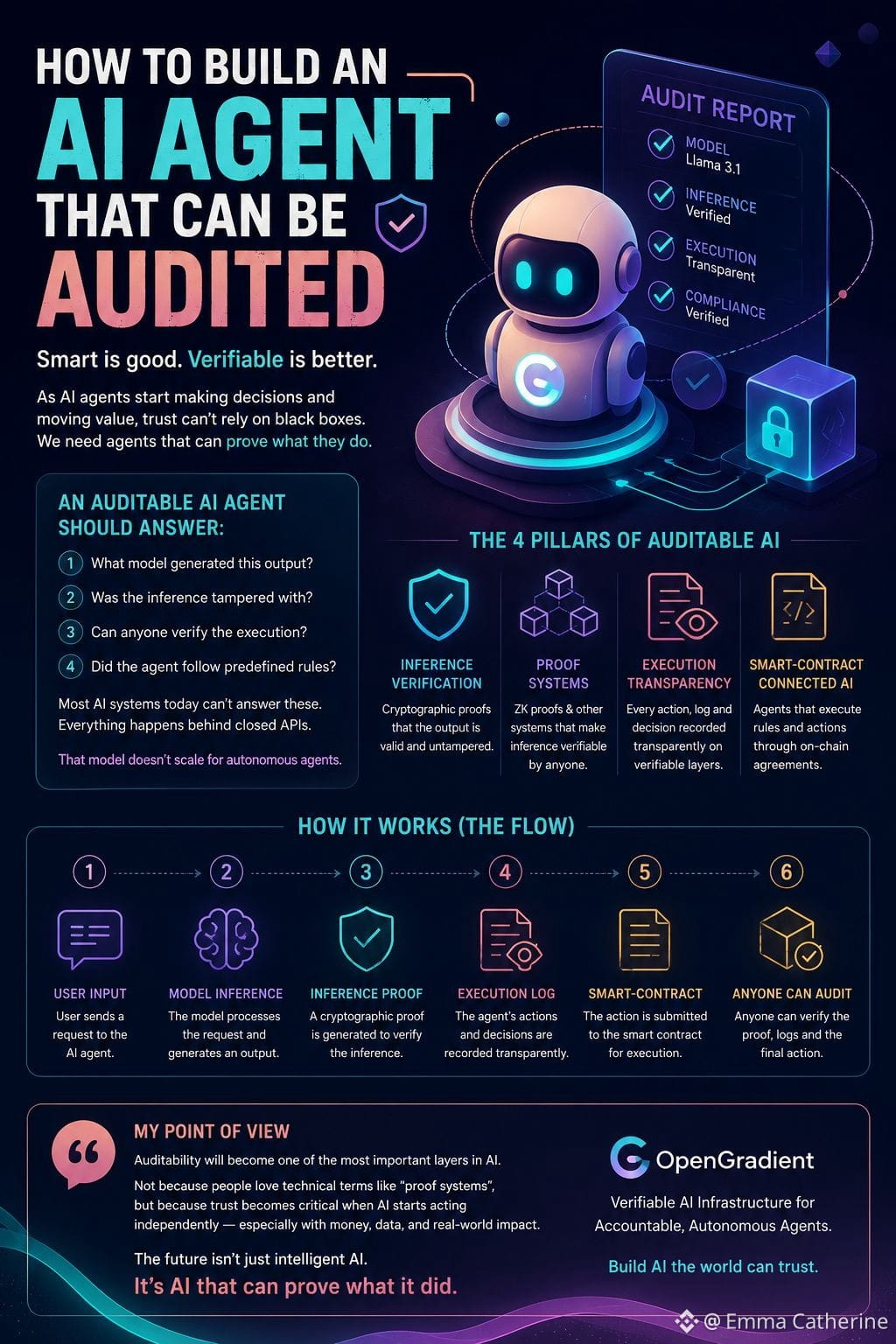
$OPG Hầu hết các hướng dẫn AI dạy bạn cách xây dựng các tác nhân.
Rất ít người dạy bạn cách tin tưởng chúng.
Đó mới là vấn đề thực sự.
Khi các tác nhân AI bắt đầu đưa ra quyết định, di chuyển tiền, thực hiện giao dịch, và tương tác với người dùng một cách tự động, "thông minh" không còn đủ nữa.
Chúng ta cần các hệ thống AI có thể kiểm toán.$POL
Đây là nơi AI có thể xác minh trở nên quan trọng.
Một tác nhân AI có thể kiểm toán nên trả lời bốn câu hỏi cơ bản:
1. Mô hình nào đã tạo ra đầu ra này?
2. Có ai đó can thiệp vào suy diễn không?
3. Ai có thể xác minh việc thực thi?
4. Tác nhân có tuân theo các quy tắc đã định sẵn không?
Hầu hết các hệ thống AI ngày nay không thể trả lời rõ ràng những câu hỏi này.
Mọi thứ diễn ra sau các API đóng kín.
Bạn gửi một prompt.
Bạn nhận được một phản hồi.
Bạn tin tưởng vào hộp đen.$EDEN
Mô hình đó không thể mở rộng cho các tác nhân tự động.
Thế hệ tiếp theo của cơ sở hạ tầng AI cần:
→ Xác minh suy diễn
→ Hệ thống chứng minh mật mã
→ Nhật ký thực thi minh bạch
→ Quyết định kết nối hợp đồng thông minh
Đây là lý do tôi thấy cách tiếp cận @OpenGradient thú vị.
Thay vì xem AI như một trợ lý đóng kín, OpenGradient xem nó như một cơ sở hạ tầng có thể xác minh.
Điều đó hoàn toàn thay đổi cuộc trò chuyện.
Hãy tưởng tượng một tác nhân AI mà:
- thực hiện các hành động trên chuỗi,
- lưu trữ các hồ sơ thực thi minh bạch,
- sản xuất các bằng chứng suy diễn có thể xác minh,
- và có thể được kiểm toán sau mỗi quyết định.
Bây giờ AI trở nên có trách nhiệm.
Và trách nhiệm là điều phân biệt một bản demo AI toy với các hệ thống tự động thực tế.
Cá nhân tôi nghĩ rằng khả năng kiểm toán sẽ trở thành một trong những lớp quan trọng nhất trong AI trong vài năm tới.
Không phải vì người dùng quan tâm đến "hệ thống chứng minh" về mặt kỹ thuật —
nhưng vì sự tin tưởng trở nên rất quan trọng khi AI bắt đầu hành động độc lập.
Tương lai không chỉ là AI thông minh.
Đó là AI có thể chứng minh những gì nó đã làm.
#OPG
$OPG Hầu hết các hướng dẫn AI dạy bạn cách xây dựng các tác nhân.
Rất ít người dạy bạn cách tin tưởng chúng.
Đó mới là vấn đề thực sự.
Khi các tác nhân AI bắt đầu đưa ra quyết định, di chuyển tiền, thực hiện giao dịch, và tương tác với người dùng một cách tự động, "thông minh" không còn đủ nữa.
Chúng ta cần các hệ thống AI có thể kiểm toán.$POL
Đây là nơi AI có thể xác minh trở nên quan trọng.
Một tác nhân AI có thể kiểm toán nên trả lời bốn câu hỏi cơ bản:
1. Mô hình nào đã tạo ra đầu ra này?
2. Có ai đó can thiệp vào suy diễn không?
3. Ai có thể xác minh việc thực thi?
4. Tác nhân có tuân theo các quy tắc đã định sẵn không?
Hầu hết các hệ thống AI ngày nay không thể trả lời rõ ràng những câu hỏi này.
Mọi thứ diễn ra sau các API đóng kín.
Bạn gửi một prompt.
Bạn nhận được một phản hồi.
Bạn tin tưởng vào hộp đen.$EDEN
Mô hình đó không thể mở rộng cho các tác nhân tự động.
Thế hệ tiếp theo của cơ sở hạ tầng AI cần:
→ Xác minh suy diễn
→ Hệ thống chứng minh mật mã
→ Nhật ký thực thi minh bạch
→ Quyết định kết nối hợp đồng thông minh
Đây là lý do tôi thấy cách tiếp cận @OpenGradient thú vị.
Thay vì xem AI như một trợ lý đóng kín, OpenGradient xem nó như một cơ sở hạ tầng có thể xác minh.
Điều đó hoàn toàn thay đổi cuộc trò chuyện.
Hãy tưởng tượng một tác nhân AI mà:
- thực hiện các hành động trên chuỗi,
- lưu trữ các hồ sơ thực thi minh bạch,
- sản xuất các bằng chứng suy diễn có thể xác minh,
- và có thể được kiểm toán sau mỗi quyết định.
Bây giờ AI trở nên có trách nhiệm.
Và trách nhiệm là điều phân biệt một bản demo AI toy với các hệ thống tự động thực tế.
Cá nhân tôi nghĩ rằng khả năng kiểm toán sẽ trở thành một trong những lớp quan trọng nhất trong AI trong vài năm tới.
Không phải vì người dùng quan tâm đến "hệ thống chứng minh" về mặt kỹ thuật —
nhưng vì sự tin tưởng trở nên rất quan trọng khi AI bắt đầu hành động độc lập.
Tương lai không chỉ là AI thông minh.
Đó là AI có thể chứng minh những gì nó đã làm.
#OPG
Rất ít người dạy bạn cách tin tưởng chúng.
Đó mới là vấn đề thực sự.
Khi các tác nhân AI bắt đầu đưa ra quyết định, di chuyển tiền, thực hiện giao dịch, và tương tác với người dùng một cách tự động, "thông minh" không còn đủ nữa.
Chúng ta cần các hệ thống AI có thể kiểm toán.$POL
Đây là nơi AI có thể xác minh trở nên quan trọng.
Một tác nhân AI có thể kiểm toán nên trả lời bốn câu hỏi cơ bản:
1. Mô hình nào đã tạo ra đầu ra này?
2. Có ai đó can thiệp vào suy diễn không?
3. Ai có thể xác minh việc thực thi?
4. Tác nhân có tuân theo các quy tắc đã định sẵn không?
Hầu hết các hệ thống AI ngày nay không thể trả lời rõ ràng những câu hỏi này.
Mọi thứ diễn ra sau các API đóng kín.
Bạn gửi một prompt.
Bạn nhận được một phản hồi.
Bạn tin tưởng vào hộp đen.$EDEN
Mô hình đó không thể mở rộng cho các tác nhân tự động.
Thế hệ tiếp theo của cơ sở hạ tầng AI cần:
→ Xác minh suy diễn
→ Hệ thống chứng minh mật mã
→ Nhật ký thực thi minh bạch
→ Quyết định kết nối hợp đồng thông minh
Đây là lý do tôi thấy cách tiếp cận @OpenGradient thú vị.
Thay vì xem AI như một trợ lý đóng kín, OpenGradient xem nó như một cơ sở hạ tầng có thể xác minh.
Điều đó hoàn toàn thay đổi cuộc trò chuyện.
Hãy tưởng tượng một tác nhân AI mà:
- thực hiện các hành động trên chuỗi,
- lưu trữ các hồ sơ thực thi minh bạch,
- sản xuất các bằng chứng suy diễn có thể xác minh,
- và có thể được kiểm toán sau mỗi quyết định.
Bây giờ AI trở nên có trách nhiệm.
Và trách nhiệm là điều phân biệt một bản demo AI toy với các hệ thống tự động thực tế.
Cá nhân tôi nghĩ rằng khả năng kiểm toán sẽ trở thành một trong những lớp quan trọng nhất trong AI trong vài năm tới.
Không phải vì người dùng quan tâm đến "hệ thống chứng minh" về mặt kỹ thuật —
nhưng vì sự tin tưởng trở nên rất quan trọng khi AI bắt đầu hành động độc lập.
Tương lai không chỉ là AI thông minh.
Đó là AI có thể chứng minh những gì nó đã làm.
#OPG
17
11
614
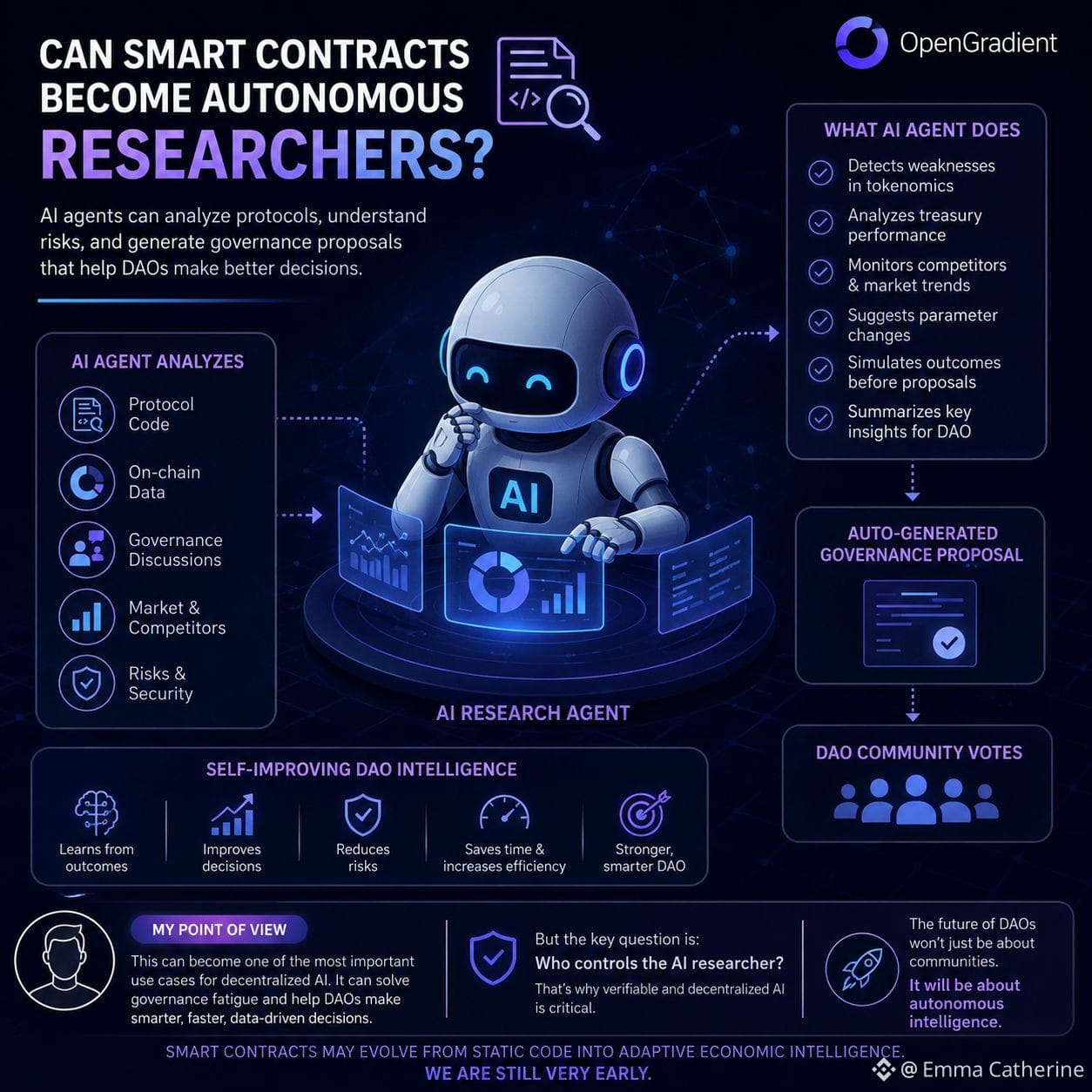
$OPG “Liệu Hợp Đồng Thông Minh Có Thể Trở Thành Nhà Nghiên Cứu Tự Động?”
Hiện tại, hợp đồng thông minh chỉ thực hiện các quy tắc đã được định nghĩa trước.
Chúng không suy nghĩ, phân tích hay cải thiện bản thân.
Nhưng các tác nhân AI có thể thay đổi hoàn toàn điều đó.
Hãy tưởng tượng một DAO nơi AI liên tục nghiên cứu các giao thức, theo dõi hoạt động quản trị, phân tích rủi ro, so sánh hành vi thị trường và tự động đề xuất các đề xuất quản trị dựa trên dữ liệu thời gian thực.
Không chỉ là tự động hóa.
Thực sự là nghiên cứu.
Một tác nhân AI có thể:
- phát hiện điểm yếu trong tokenomics
- phân tích hiệu suất kho bạc
- theo dõi các giao thức đối thủ
- đề xuất thay đổi tham số
- tóm tắt các cuộc thảo luận về quản trị
- thậm chí mô phỏng kết quả trước khi các đề xuất được công bố
Theo thời gian, những hệ thống này có thể phát triển thành “trí tuệ DAO tự cải thiện” — nơi quản trị trở nên thông minh hơn, nhanh hơn và dựa trên dữ liệu nhiều hơn.
Đó là lý do tại sao hạ tầng AI phi tập trung quan trọng đến vậy.
Các dự án như @OpenGradient đang giúp thúc đẩy tầm nhìn này bằng cách cho phép các hệ thống AI hoạt động trong môi trường minh bạch, có thể xác minh và phi tập trung thay vì hoàn toàn dựa vào các lớp trí tuệ tập trung.
Đối với tôi, điều này có thể trở thành một trong những trường hợp sử dụng lâu dài quan trọng nhất cho AI phi tập trung.$ARB
Ngày nay, hầu hết các DAO đều gặp khó khăn do sự tham gia thấp, quá trình ra quyết định chậm và mệt mỏi trong quản trị. Hầu hết mọi người đơn giản là không có thời gian để đọc từng đề xuất hoặc phân tích từng rủi ro.
Các tác nhân AI có thể giảm thiểu sự cản trở đó một cách đáng kể.
Nhưng cũng có một câu hỏi lớn:
Ai kiểm soát nhà nghiên cứu AI?
Nếu lớp trí tuệ tập trung, thì quản trị chỉ xuất hiện là phi tập trung trên bề mặt.$POL
Đó là lý do tại sao AI có thể xác minh, tính toán phi tập trung và hành vi tác nhân minh bạch sẽ ngày càng trở nên quan trọng theo thời gian.
Trong tương lai, các giao thức mạnh nhất có thể không chỉ có cộng đồng.
Chúng sẽ có các hệ thống nghiên cứu tự động hoạt động liên tục trong nền.
Hợp đồng thông minh có thể phát triển từ mã tĩnh thành trí tuệ kinh tế thích ứng.
Và thật lòng mà nói, có lẽ chúng ta vẫn đang ở rất sớm.
#OPG
$OPG “Liệu Hợp Đồng Thông Minh Có Thể Trở Thành Nhà Nghiên Cứu Tự Động?”
Hiện tại, hợp đồng thông minh chỉ thực hiện các quy tắc đã được định nghĩa trước.
Chúng không suy nghĩ, phân tích hay cải thiện bản thân.
Nhưng các tác nhân AI có thể thay đổi hoàn toàn điều đó.
Hãy tưởng tượng một DAO nơi AI liên tục nghiên cứu các giao thức, theo dõi hoạt động quản trị, phân tích rủi ro, so sánh hành vi thị trường và tự động đề xuất các đề xuất quản trị dựa trên dữ liệu thời gian thực.
Không chỉ là tự động hóa.
Thực sự là nghiên cứu.
Một tác nhân AI có thể:
- phát hiện điểm yếu trong tokenomics
- phân tích hiệu suất kho bạc
- theo dõi các giao thức đối thủ
- đề xuất thay đổi tham số
- tóm tắt các cuộc thảo luận về quản trị
- thậm chí mô phỏng kết quả trước khi các đề xuất được công bố
Theo thời gian, những hệ thống này có thể phát triển thành “trí tuệ DAO tự cải thiện” — nơi quản trị trở nên thông minh hơn, nhanh hơn và dựa trên dữ liệu nhiều hơn.
Đó là lý do tại sao hạ tầng AI phi tập trung quan trọng đến vậy.
Các dự án như @OpenGradient đang giúp thúc đẩy tầm nhìn này bằng cách cho phép các hệ thống AI hoạt động trong môi trường minh bạch, có thể xác minh và phi tập trung thay vì hoàn toàn dựa vào các lớp trí tuệ tập trung.
Đối với tôi, điều này có thể trở thành một trong những trường hợp sử dụng lâu dài quan trọng nhất cho AI phi tập trung.$ARB
Ngày nay, hầu hết các DAO đều gặp khó khăn do sự tham gia thấp, quá trình ra quyết định chậm và mệt mỏi trong quản trị. Hầu hết mọi người đơn giản là không có thời gian để đọc từng đề xuất hoặc phân tích từng rủi ro.
Các tác nhân AI có thể giảm thiểu sự cản trở đó một cách đáng kể.
Nhưng cũng có một câu hỏi lớn:
Ai kiểm soát nhà nghiên cứu AI?
Nếu lớp trí tuệ tập trung, thì quản trị chỉ xuất hiện là phi tập trung trên bề mặt.$POL
Đó là lý do tại sao AI có thể xác minh, tính toán phi tập trung và hành vi tác nhân minh bạch sẽ ngày càng trở nên quan trọng theo thời gian.
Trong tương lai, các giao thức mạnh nhất có thể không chỉ có cộng đồng.
Chúng sẽ có các hệ thống nghiên cứu tự động hoạt động liên tục trong nền.
Hợp đồng thông minh có thể phát triển từ mã tĩnh thành trí tuệ kinh tế thích ứng.
Và thật lòng mà nói, có lẽ chúng ta vẫn đang ở rất sớm.
#OPG
Hiện tại, hợp đồng thông minh chỉ thực hiện các quy tắc đã được định nghĩa trước.
Chúng không suy nghĩ, phân tích hay cải thiện bản thân.
Nhưng các tác nhân AI có thể thay đổi hoàn toàn điều đó.
Hãy tưởng tượng một DAO nơi AI liên tục nghiên cứu các giao thức, theo dõi hoạt động quản trị, phân tích rủi ro, so sánh hành vi thị trường và tự động đề xuất các đề xuất quản trị dựa trên dữ liệu thời gian thực.
Không chỉ là tự động hóa.
Thực sự là nghiên cứu.
Một tác nhân AI có thể:
- phát hiện điểm yếu trong tokenomics
- phân tích hiệu suất kho bạc
- theo dõi các giao thức đối thủ
- đề xuất thay đổi tham số
- tóm tắt các cuộc thảo luận về quản trị
- thậm chí mô phỏng kết quả trước khi các đề xuất được công bố
Theo thời gian, những hệ thống này có thể phát triển thành “trí tuệ DAO tự cải thiện” — nơi quản trị trở nên thông minh hơn, nhanh hơn và dựa trên dữ liệu nhiều hơn.
Đó là lý do tại sao hạ tầng AI phi tập trung quan trọng đến vậy.
Các dự án như @OpenGradient đang giúp thúc đẩy tầm nhìn này bằng cách cho phép các hệ thống AI hoạt động trong môi trường minh bạch, có thể xác minh và phi tập trung thay vì hoàn toàn dựa vào các lớp trí tuệ tập trung.
Đối với tôi, điều này có thể trở thành một trong những trường hợp sử dụng lâu dài quan trọng nhất cho AI phi tập trung.$ARB
Ngày nay, hầu hết các DAO đều gặp khó khăn do sự tham gia thấp, quá trình ra quyết định chậm và mệt mỏi trong quản trị. Hầu hết mọi người đơn giản là không có thời gian để đọc từng đề xuất hoặc phân tích từng rủi ro.
Các tác nhân AI có thể giảm thiểu sự cản trở đó một cách đáng kể.
Nhưng cũng có một câu hỏi lớn:
Ai kiểm soát nhà nghiên cứu AI?
Nếu lớp trí tuệ tập trung, thì quản trị chỉ xuất hiện là phi tập trung trên bề mặt.$POL
Đó là lý do tại sao AI có thể xác minh, tính toán phi tập trung và hành vi tác nhân minh bạch sẽ ngày càng trở nên quan trọng theo thời gian.
Trong tương lai, các giao thức mạnh nhất có thể không chỉ có cộng đồng.
Chúng sẽ có các hệ thống nghiên cứu tự động hoạt động liên tục trong nền.
Hợp đồng thông minh có thể phát triển từ mã tĩnh thành trí tuệ kinh tế thích ứng.
Và thật lòng mà nói, có lẽ chúng ta vẫn đang ở rất sớm.
#OPG
11
9
361
$OPG Mọi người đều nói về việc xác minh blockchain.
Rất ít người nói về việc xác minh AI.
Và thành thật mà nói, xác minh AI là một bài toán khó hơn rất nhiều.
Tại sao?
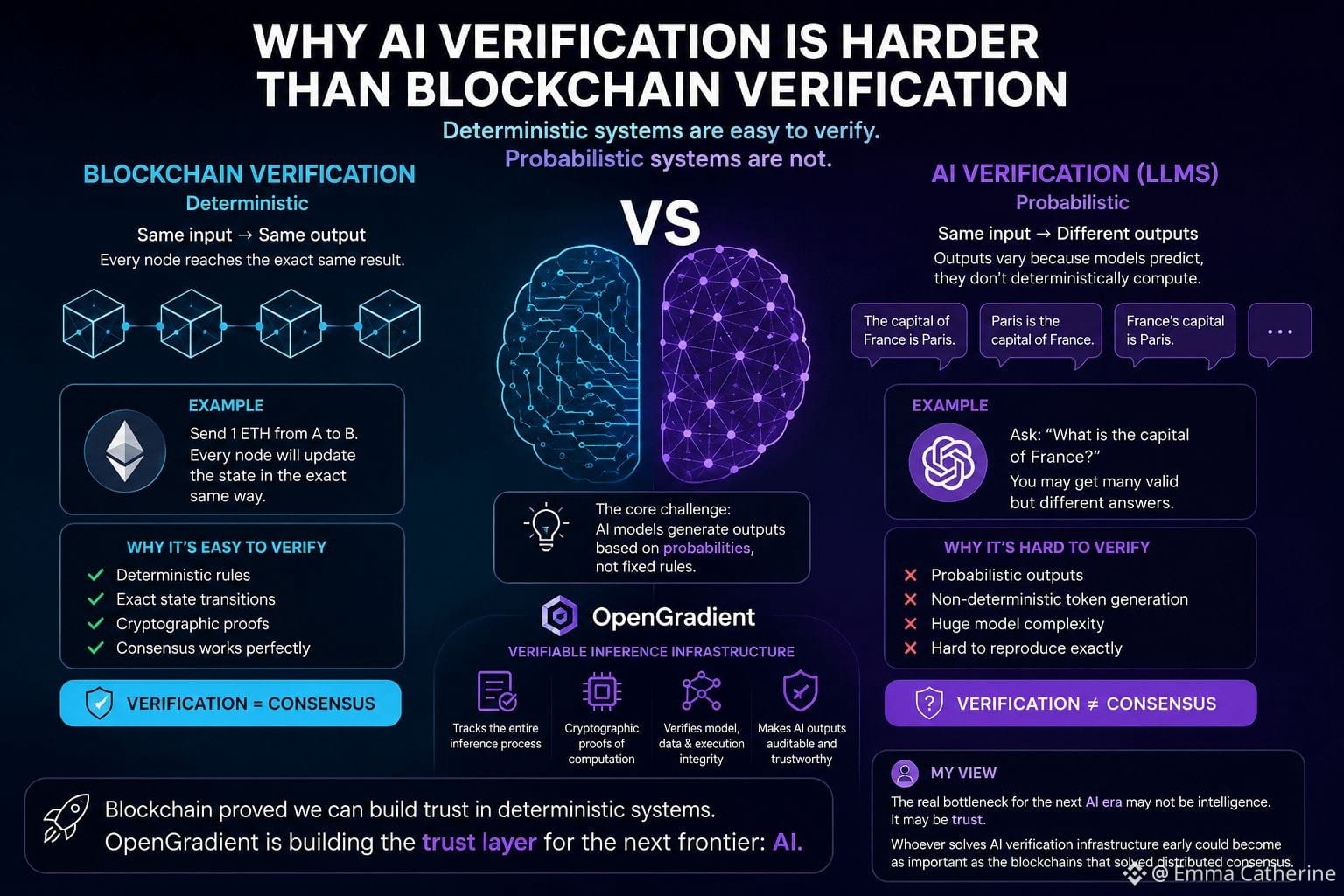
Vì blockchain là tất định.
AI là xác suất.
Nếu bạn gửi cùng một giao dịch lên Ethereum, mọi node đều phải tạo ra đúng cùng một kết quả.
Cùng đầu vào → cùng đầu ra.
Đó là cách cơ chế đồng thuận hoạt động.
Nhưng các LLM thì không hoạt động như vậy.
Hãy hỏi một mô hình AI cùng một câu hỏi nhiều lần và bạn có thể nhận được:
- cách diễn đạt khác nhau
- lập luận khác nhau
- đôi khi thậm chí là kết luận khác nhau
Đó là vì các hệ thống AI vận hành dựa trên xác suất, không phải các quy tắc cố định.
Chúng dự đoán “token tiếp theo có khả năng cao nhất” thay vì thực thi một phép tính có thể tái hiện hoàn toàn.
Và điều đó tạo ra một thách thức rất lớn:
Làm thế nào để xác minh rằng đầu ra của AI là đáng tin cậy?
Bạn không thể chỉ đơn giản dựa vào cơ chế đồng thuận truyền thống của blockchain cho việc này.
Đây là lúc @OpenGradient trở nên thật thú vị với tôi.
Thay vì coi AI như một phép tính thông thường, nó đang cố gắng xây dựng hạ tầng dành riêng cho suy luận có thể được xác minh.$Jager
Không chỉ:
“Việc tính toán có diễn ra không?”
Mà là:
“Chúng ta có thể chứng minh rằng quá trình suy luận là hợp lệ không?”
Đó là một không gian vấn đề hoàn toàn khác.
Ethereum xác minh các chuyển trạng thái tất định.
OpenGradient đang tìm hiểu cách để xác minh các hệ thống trí tuệ theo xác suất.
Và tôi nghĩ đây là một trong những vấn đề hạ tầng bị đánh giá thấp nhất trong AI hiện nay.
Bởi vì tương lai sẽ không chỉ phụ thuộc vào các mô hình mạnh mẽ.$ALLO
Nó sẽ phụ thuộc vào việc liệu các hệ thống AI tự động có thể được kiểm toán, được tin cậy và được xác minh ở quy mô lớn hay không.
Đặc biệt khi AI bắt đầu xử lý:
- tài chính
- quản trị
- danh tính
- các tác nhân tự động
- hệ thống ra quyết định
Nút thắt thực sự của kỷ nguyên AI tiếp theo có thể không phải là trí tuệ.
Nó có thể là niềm tin.
Và ai giải quyết sớm hạ tầng xác minh AI có thể sẽ trở nên quan trọng tương tự như các blockchain đã giải quyết bài toán đồng thuận phân tán.#OPG
$OPG Mọi người đều nói về việc xác minh blockchain.
Rất ít người nói về việc xác minh AI.
Và thành thật mà nói, xác minh AI là một bài toán khó hơn rất nhiều.
Tại sao?
Vì blockchain là tất định.
AI là xác suất.
Nếu bạn gửi cùng một giao dịch lên Ethereum, mọi node đều phải tạo ra đúng cùng một kết quả.
Cùng đầu vào → cùng đầu ra.
Đó là cách cơ chế đồng thuận hoạt động.
Nhưng các LLM thì không hoạt động như vậy.
Hãy hỏi một mô hình AI cùng một câu hỏi nhiều lần và bạn có thể nhận được:
- cách diễn đạt khác nhau
- lập luận khác nhau
- đôi khi thậm chí là kết luận khác nhau
Đó là vì các hệ thống AI vận hành dựa trên xác suất, không phải các quy tắc cố định.
Chúng dự đoán “token tiếp theo có khả năng cao nhất” thay vì thực thi một phép tính có thể tái hiện hoàn toàn.
Và điều đó tạo ra một thách thức rất lớn:
Làm thế nào để xác minh rằng đầu ra của AI là đáng tin cậy?
Bạn không thể chỉ đơn giản dựa vào cơ chế đồng thuận truyền thống của blockchain cho việc này.
Đây là lúc @OpenGradient trở nên thật thú vị với tôi.
Thay vì coi AI như một phép tính thông thường, nó đang cố gắng xây dựng hạ tầng dành riêng cho suy luận có thể được xác minh.$Jager
Không chỉ:
“Việc tính toán có diễn ra không?”
Mà là:
“Chúng ta có thể chứng minh rằng quá trình suy luận là hợp lệ không?”
Đó là một không gian vấn đề hoàn toàn khác.
Ethereum xác minh các chuyển trạng thái tất định.
OpenGradient đang tìm hiểu cách để xác minh các hệ thống trí tuệ theo xác suất.
Và tôi nghĩ đây là một trong những vấn đề hạ tầng bị đánh giá thấp nhất trong AI hiện nay.
Bởi vì tương lai sẽ không chỉ phụ thuộc vào các mô hình mạnh mẽ.$ALLO
Nó sẽ phụ thuộc vào việc liệu các hệ thống AI tự động có thể được kiểm toán, được tin cậy và được xác minh ở quy mô lớn hay không.
Đặc biệt khi AI bắt đầu xử lý:
- tài chính
- quản trị
- danh tính
- các tác nhân tự động
- hệ thống ra quyết định
Nút thắt thực sự của kỷ nguyên AI tiếp theo có thể không phải là trí tuệ.
Nó có thể là niềm tin.
Và ai giải quyết sớm hạ tầng xác minh AI có thể sẽ trở nên quan trọng tương tự như các blockchain đã giải quyết bài toán đồng thuận phân tán.#OPG
Rất ít người nói về việc xác minh AI.
Và thành thật mà nói, xác minh AI là một bài toán khó hơn rất nhiều.
Tại sao?
Vì blockchain là tất định.
AI là xác suất.
Nếu bạn gửi cùng một giao dịch lên Ethereum, mọi node đều phải tạo ra đúng cùng một kết quả.
Cùng đầu vào → cùng đầu ra.
Đó là cách cơ chế đồng thuận hoạt động.
Nhưng các LLM thì không hoạt động như vậy.
Hãy hỏi một mô hình AI cùng một câu hỏi nhiều lần và bạn có thể nhận được:
- cách diễn đạt khác nhau
- lập luận khác nhau
- đôi khi thậm chí là kết luận khác nhau
Đó là vì các hệ thống AI vận hành dựa trên xác suất, không phải các quy tắc cố định.
Chúng dự đoán “token tiếp theo có khả năng cao nhất” thay vì thực thi một phép tính có thể tái hiện hoàn toàn.
Và điều đó tạo ra một thách thức rất lớn:
Làm thế nào để xác minh rằng đầu ra của AI là đáng tin cậy?
Bạn không thể chỉ đơn giản dựa vào cơ chế đồng thuận truyền thống của blockchain cho việc này.
Đây là lúc @OpenGradient trở nên thật thú vị với tôi.
Thay vì coi AI như một phép tính thông thường, nó đang cố gắng xây dựng hạ tầng dành riêng cho suy luận có thể được xác minh.$Jager
Không chỉ:
“Việc tính toán có diễn ra không?”
Mà là:
“Chúng ta có thể chứng minh rằng quá trình suy luận là hợp lệ không?”
Đó là một không gian vấn đề hoàn toàn khác.
Ethereum xác minh các chuyển trạng thái tất định.
OpenGradient đang tìm hiểu cách để xác minh các hệ thống trí tuệ theo xác suất.
Và tôi nghĩ đây là một trong những vấn đề hạ tầng bị đánh giá thấp nhất trong AI hiện nay.
Bởi vì tương lai sẽ không chỉ phụ thuộc vào các mô hình mạnh mẽ.$ALLO
Nó sẽ phụ thuộc vào việc liệu các hệ thống AI tự động có thể được kiểm toán, được tin cậy và được xác minh ở quy mô lớn hay không.
Đặc biệt khi AI bắt đầu xử lý:
- tài chính
- quản trị
- danh tính
- các tác nhân tự động
- hệ thống ra quyết định
Nút thắt thực sự của kỷ nguyên AI tiếp theo có thể không phải là trí tuệ.
Nó có thể là niềm tin.
Và ai giải quyết sớm hạ tầng xác minh AI có thể sẽ trở nên quan trọng tương tự như các blockchain đã giải quyết bài toán đồng thuận phân tán.#OPG
11
3
319
$OPG Hầu hết mọi người nghĩ rằng hệ thống AI đa tác nhân sẽ thông minh hơn khi thêm nhiều tác nhân hơn.
Nhưng trong khi xây dựng trên @OpenGradient , tôi đã suy nghĩ về một vấn đề tiềm ẩn đang phát triển nhanh chóng:
Sản xuất token quá mức.
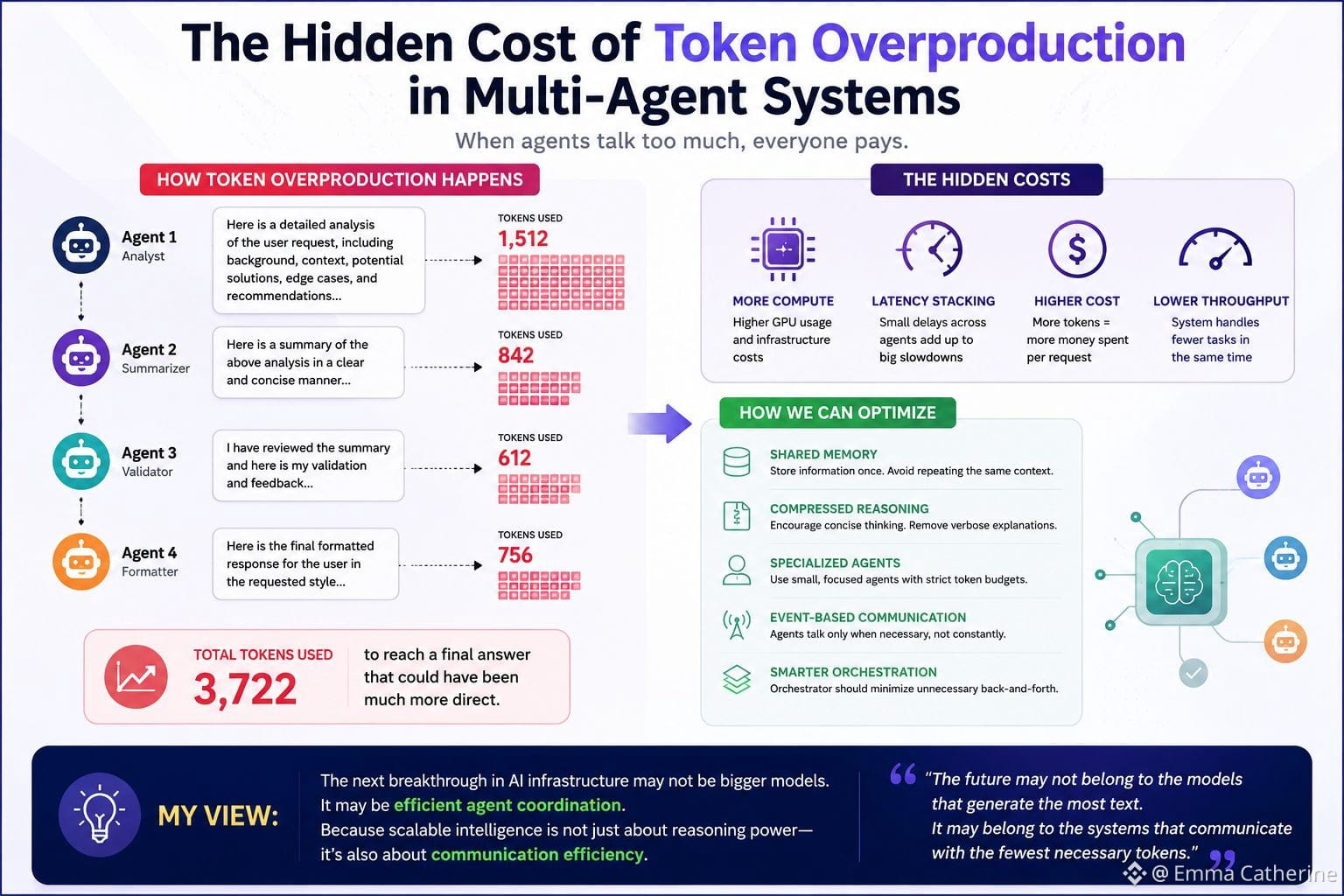
Trong nhiều hệ thống đa tác nhân, các tác nhân tạo ra nhiều văn bản hơn mức cần thiết chỉ để giao tiếp nội bộ.$EDEN
Một tác nhân sản xuất phân tích chi tiết.
Một tác nhân khác tóm tắt nó.
Một tác nhân khác xác thực nó.
Một tác nhân khác định dạng lại nó.
Hệ thống cứ tiếp tục nói chuyện với chính nó.
Và mỗi token thừa có nghĩa là:
- sử dụng tính toán nhiều hơn
- chi phí suy diễn cao hơn
- độ trễ chồng chất
- phản hồi chậm hơn
Đôi khi các tác nhân tiêu tốn nhiều tài nguyên hơn vào việc phối hợp thay vì thực sự giải quyết vấn đề.
Tôi nghĩ điều này sẽ trở thành một trong những thách thức cơ sở hạ tầng lớn nhất cho các hệ thống AI.$BABY
Tương lai có thể không thuộc về các mô hình tạo ra nhiều văn bản nhất.
Nó có thể thuộc về các hệ thống giao tiếp với số lượng token cần thiết ít nhất.
Một vài hướng đi có vẻ quan trọng với tôi:
• Bộ nhớ chia sẻ thay vì truyền ngữ cảnh lặp đi lặp lại
• Lý luận ngắn gọn thay vì chuỗi dài dòng
• Các tác nhân nhẹ chuyên dụng
• Các lớp phối hợp thông minh hơn
• Các giao thức giao tiếp nhận thức về token
Đột phá tiếp theo trong cơ sở hạ tầng AI có thể không phải là các mô hình lớn hơn.
Nó có thể là sự phối hợp tác nhân hiệu quả.
Bởi vì trí tuệ có thể mở rộng không chỉ liên quan đến sức mạnh lý luận mà còn về hiệu quả giao tiếp.
#OPG
$OPG Hầu hết mọi người nghĩ rằng hệ thống AI đa tác nhân sẽ thông minh hơn khi thêm nhiều tác nhân hơn.
Nhưng trong khi xây dựng trên @OpenGradient , tôi đã suy nghĩ về một vấn đề tiềm ẩn đang phát triển nhanh chóng:
Sản xuất token quá mức.
Trong nhiều hệ thống đa tác nhân, các tác nhân tạo ra nhiều văn bản hơn mức cần thiết chỉ để giao tiếp nội bộ.$EDEN
Một tác nhân sản xuất phân tích chi tiết.
Một tác nhân khác tóm tắt nó.
Một tác nhân khác xác thực nó.
Một tác nhân khác định dạng lại nó.
Hệ thống cứ tiếp tục nói chuyện với chính nó.
Và mỗi token thừa có nghĩa là:
- sử dụng tính toán nhiều hơn
- chi phí suy diễn cao hơn
- độ trễ chồng chất
- phản hồi chậm hơn
Đôi khi các tác nhân tiêu tốn nhiều tài nguyên hơn vào việc phối hợp thay vì thực sự giải quyết vấn đề.
Tôi nghĩ điều này sẽ trở thành một trong những thách thức cơ sở hạ tầng lớn nhất cho các hệ thống AI.$BABY
Tương lai có thể không thuộc về các mô hình tạo ra nhiều văn bản nhất.
Nó có thể thuộc về các hệ thống giao tiếp với số lượng token cần thiết ít nhất.
Một vài hướng đi có vẻ quan trọng với tôi:
• Bộ nhớ chia sẻ thay vì truyền ngữ cảnh lặp đi lặp lại
• Lý luận ngắn gọn thay vì chuỗi dài dòng
• Các tác nhân nhẹ chuyên dụng
• Các lớp phối hợp thông minh hơn
• Các giao thức giao tiếp nhận thức về token
Đột phá tiếp theo trong cơ sở hạ tầng AI có thể không phải là các mô hình lớn hơn.
Nó có thể là sự phối hợp tác nhân hiệu quả.
Bởi vì trí tuệ có thể mở rộng không chỉ liên quan đến sức mạnh lý luận mà còn về hiệu quả giao tiếp.
#OPG
Nhưng trong khi xây dựng trên @OpenGradient , tôi đã suy nghĩ về một vấn đề tiềm ẩn đang phát triển nhanh chóng:
Sản xuất token quá mức.
Trong nhiều hệ thống đa tác nhân, các tác nhân tạo ra nhiều văn bản hơn mức cần thiết chỉ để giao tiếp nội bộ.$EDEN
Một tác nhân sản xuất phân tích chi tiết.
Một tác nhân khác tóm tắt nó.
Một tác nhân khác xác thực nó.
Một tác nhân khác định dạng lại nó.
Hệ thống cứ tiếp tục nói chuyện với chính nó.
Và mỗi token thừa có nghĩa là:
- sử dụng tính toán nhiều hơn
- chi phí suy diễn cao hơn
- độ trễ chồng chất
- phản hồi chậm hơn
Đôi khi các tác nhân tiêu tốn nhiều tài nguyên hơn vào việc phối hợp thay vì thực sự giải quyết vấn đề.
Tôi nghĩ điều này sẽ trở thành một trong những thách thức cơ sở hạ tầng lớn nhất cho các hệ thống AI.$BABY
Tương lai có thể không thuộc về các mô hình tạo ra nhiều văn bản nhất.
Nó có thể thuộc về các hệ thống giao tiếp với số lượng token cần thiết ít nhất.
Một vài hướng đi có vẻ quan trọng với tôi:
• Bộ nhớ chia sẻ thay vì truyền ngữ cảnh lặp đi lặp lại
• Lý luận ngắn gọn thay vì chuỗi dài dòng
• Các tác nhân nhẹ chuyên dụng
• Các lớp phối hợp thông minh hơn
• Các giao thức giao tiếp nhận thức về token
Đột phá tiếp theo trong cơ sở hạ tầng AI có thể không phải là các mô hình lớn hơn.
Nó có thể là sự phối hợp tác nhân hiệu quả.
Bởi vì trí tuệ có thể mở rộng không chỉ liên quan đến sức mạnh lý luận mà còn về hiệu quả giao tiếp.
#OPG
17
13
711
$OPG Mọi người đang rất hào hứng về các agent AI ngay bây giờ.
Các agent có thể giao dịch, nghiên cứu, thương lượng, tự động hóa công việc và thậm chí tự ra quyết định.
Nhưng có một vấn đề mà gần như không ai nói đến:
Làm thế nào để chúng ta có thể tin tưởng chúng?
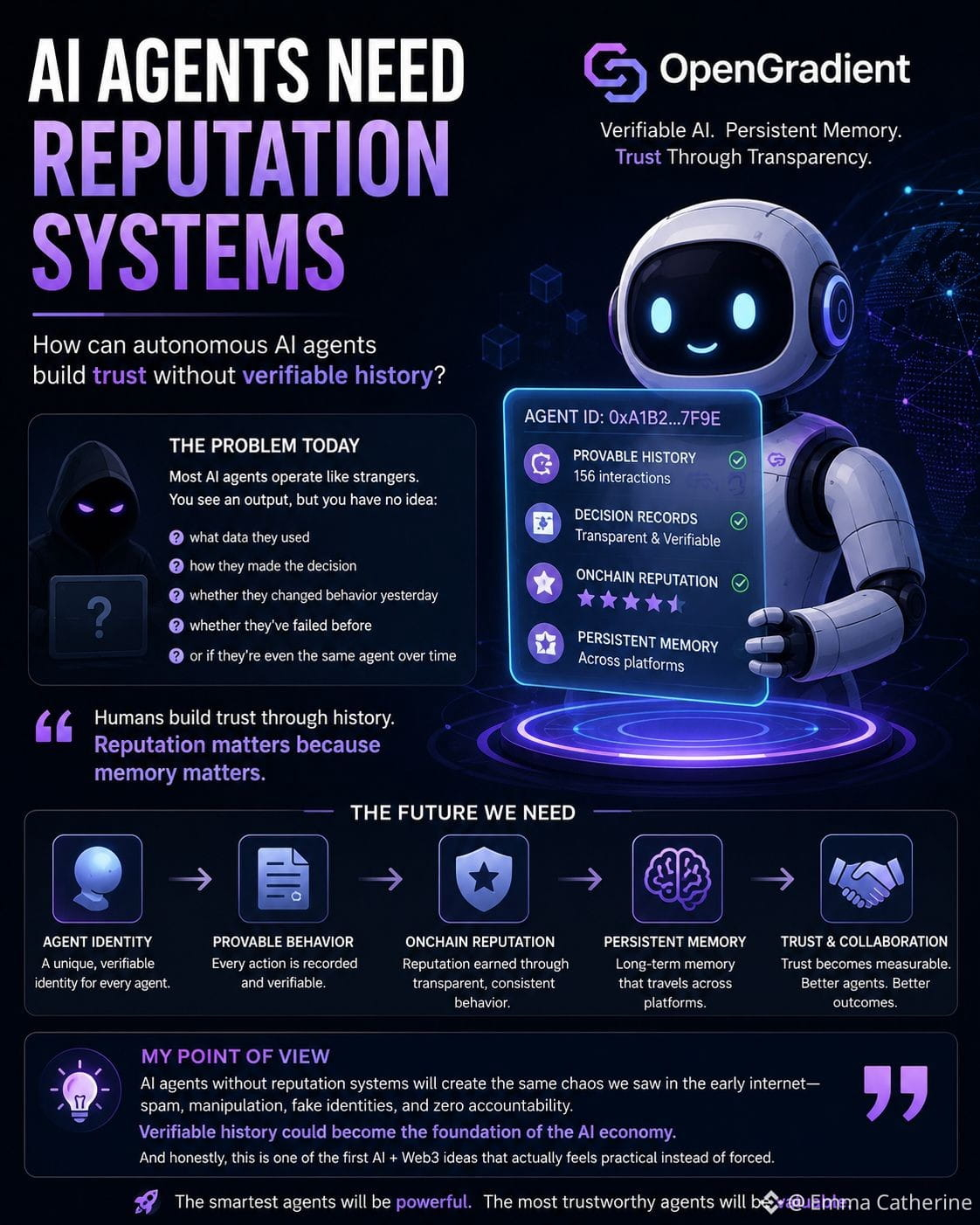
Hiện tại, hầu hết các agent AI hoạt động giống như những người lạ trên internet.
Bạn thấy một kết quả, nhưng bạn không có ý tưởng:
- dữ liệu nào mà chúng đã sử dụng
- cách chúng đưa ra quyết định
- liệu chúng có thay đổi hành vi hôm qua không
- liệu chúng đã từng thất bại trước đó không
- hoặc nếu chúng thậm chí là cùng một agent theo thời gian
Con người xây dựng niềm tin thông qua lịch sử.
Danh tiếng quan trọng bởi vì trí nhớ quan trọng.
Các agent AI cũng sẽ cần điều tương tự.
Đó là lý do tại sao tôi nghĩ rằng các dự án như @OpenGradient thú vị không phải vì cơn sốt “AI + blockchain” thông thường, mà vì chúng đang khám phá điều gì đó sâu sắc hơn:
Các agent AI có danh tính, trí nhớ bền vững và hành vi có thể xác minh.
Hãy tưởng tượng một agent AI mang theo:
- lịch sử hành động có thể chứng minh
- hồ sơ quyết định minh bạch
- danh tiếng trên chuỗi
- trí nhớ lâu dài qua các nền tảng
Bây giờ niềm tin trở nên có thể đo lường thay vì chỉ được giả định.$ICP
Một agent tự động không chỉ nên nói:
"Tin tôi đi."
Nó nên có khả năng chứng minh:
- những gì nó đã làm
- tại sao nó đã làm như vậy
- và cách nó hành xử nhất quán theo thời gian
Điều đó thay đổi mọi thứ.
Trong tương lai, các agent AI có giá trị nhất có thể không phải là những agent thông minh nhất.
Chúng có thể là những agent đáng tin cậy nhất.$Jager
Quan điểm của tôi rất đơn giản:
Các agent AI không có hệ thống danh tiếng sẽ tạo ra cùng một sự hỗn loạn mà chúng ta đã thấy trên internet sơ khai: spam, thao túng, danh tính giả và không có trách nhiệm.
Lịch sử có thể xác minh có thể trở thành nền tảng của nền kinh tế AI.
Và thành thật mà nói, đây là một trong những ý tưởng AI + Web3 đầu tiên thực sự cảm thấy thực tiễn thay vì bị ép buộc.
#OPG
$OPG Mọi người đang rất hào hứng về các agent AI ngay bây giờ.
Các agent có thể giao dịch, nghiên cứu, thương lượng, tự động hóa công việc và thậm chí tự ra quyết định.
Nhưng có một vấn đề mà gần như không ai nói đến:
Làm thế nào để chúng ta có thể tin tưởng chúng?
Hiện tại, hầu hết các agent AI hoạt động giống như những người lạ trên internet.
Bạn thấy một kết quả, nhưng bạn không có ý tưởng:
- dữ liệu nào mà chúng đã sử dụng
- cách chúng đưa ra quyết định
- liệu chúng có thay đổi hành vi hôm qua không
- liệu chúng đã từng thất bại trước đó không
- hoặc nếu chúng thậm chí là cùng một agent theo thời gian
Con người xây dựng niềm tin thông qua lịch sử.
Danh tiếng quan trọng bởi vì trí nhớ quan trọng.
Các agent AI cũng sẽ cần điều tương tự.
Đó là lý do tại sao tôi nghĩ rằng các dự án như @OpenGradient thú vị không phải vì cơn sốt “AI + blockchain” thông thường, mà vì chúng đang khám phá điều gì đó sâu sắc hơn:
Các agent AI có danh tính, trí nhớ bền vững và hành vi có thể xác minh.
Hãy tưởng tượng một agent AI mang theo:
- lịch sử hành động có thể chứng minh
- hồ sơ quyết định minh bạch
- danh tiếng trên chuỗi
- trí nhớ lâu dài qua các nền tảng
Bây giờ niềm tin trở nên có thể đo lường thay vì chỉ được giả định.$ICP
Một agent tự động không chỉ nên nói:
"Tin tôi đi."
Nó nên có khả năng chứng minh:
- những gì nó đã làm
- tại sao nó đã làm như vậy
- và cách nó hành xử nhất quán theo thời gian
Điều đó thay đổi mọi thứ.
Trong tương lai, các agent AI có giá trị nhất có thể không phải là những agent thông minh nhất.
Chúng có thể là những agent đáng tin cậy nhất.$Jager
Quan điểm của tôi rất đơn giản:
Các agent AI không có hệ thống danh tiếng sẽ tạo ra cùng một sự hỗn loạn mà chúng ta đã thấy trên internet sơ khai: spam, thao túng, danh tính giả và không có trách nhiệm.
Lịch sử có thể xác minh có thể trở thành nền tảng của nền kinh tế AI.
Và thành thật mà nói, đây là một trong những ý tưởng AI + Web3 đầu tiên thực sự cảm thấy thực tiễn thay vì bị ép buộc.
#OPG
Các agent có thể giao dịch, nghiên cứu, thương lượng, tự động hóa công việc và thậm chí tự ra quyết định.
Nhưng có một vấn đề mà gần như không ai nói đến:
Làm thế nào để chúng ta có thể tin tưởng chúng?
Hiện tại, hầu hết các agent AI hoạt động giống như những người lạ trên internet.
Bạn thấy một kết quả, nhưng bạn không có ý tưởng:
- dữ liệu nào mà chúng đã sử dụng
- cách chúng đưa ra quyết định
- liệu chúng có thay đổi hành vi hôm qua không
- liệu chúng đã từng thất bại trước đó không
- hoặc nếu chúng thậm chí là cùng một agent theo thời gian
Con người xây dựng niềm tin thông qua lịch sử.
Danh tiếng quan trọng bởi vì trí nhớ quan trọng.
Các agent AI cũng sẽ cần điều tương tự.
Đó là lý do tại sao tôi nghĩ rằng các dự án như @OpenGradient thú vị không phải vì cơn sốt “AI + blockchain” thông thường, mà vì chúng đang khám phá điều gì đó sâu sắc hơn:
Các agent AI có danh tính, trí nhớ bền vững và hành vi có thể xác minh.
Hãy tưởng tượng một agent AI mang theo:
- lịch sử hành động có thể chứng minh
- hồ sơ quyết định minh bạch
- danh tiếng trên chuỗi
- trí nhớ lâu dài qua các nền tảng
Bây giờ niềm tin trở nên có thể đo lường thay vì chỉ được giả định.$ICP
Một agent tự động không chỉ nên nói:
"Tin tôi đi."
Nó nên có khả năng chứng minh:
- những gì nó đã làm
- tại sao nó đã làm như vậy
- và cách nó hành xử nhất quán theo thời gian
Điều đó thay đổi mọi thứ.
Trong tương lai, các agent AI có giá trị nhất có thể không phải là những agent thông minh nhất.
Chúng có thể là những agent đáng tin cậy nhất.$Jager
Quan điểm của tôi rất đơn giản:
Các agent AI không có hệ thống danh tiếng sẽ tạo ra cùng một sự hỗn loạn mà chúng ta đã thấy trên internet sơ khai: spam, thao túng, danh tính giả và không có trách nhiệm.
Lịch sử có thể xác minh có thể trở thành nền tảng của nền kinh tế AI.
Và thành thật mà nói, đây là một trong những ý tưởng AI + Web3 đầu tiên thực sự cảm thấy thực tiễn thay vì bị ép buộc.
#OPG

8
7
631
$OPG Tôi đã suy nghĩ về một điều thú vị trong khi khám phá OpenGradient.
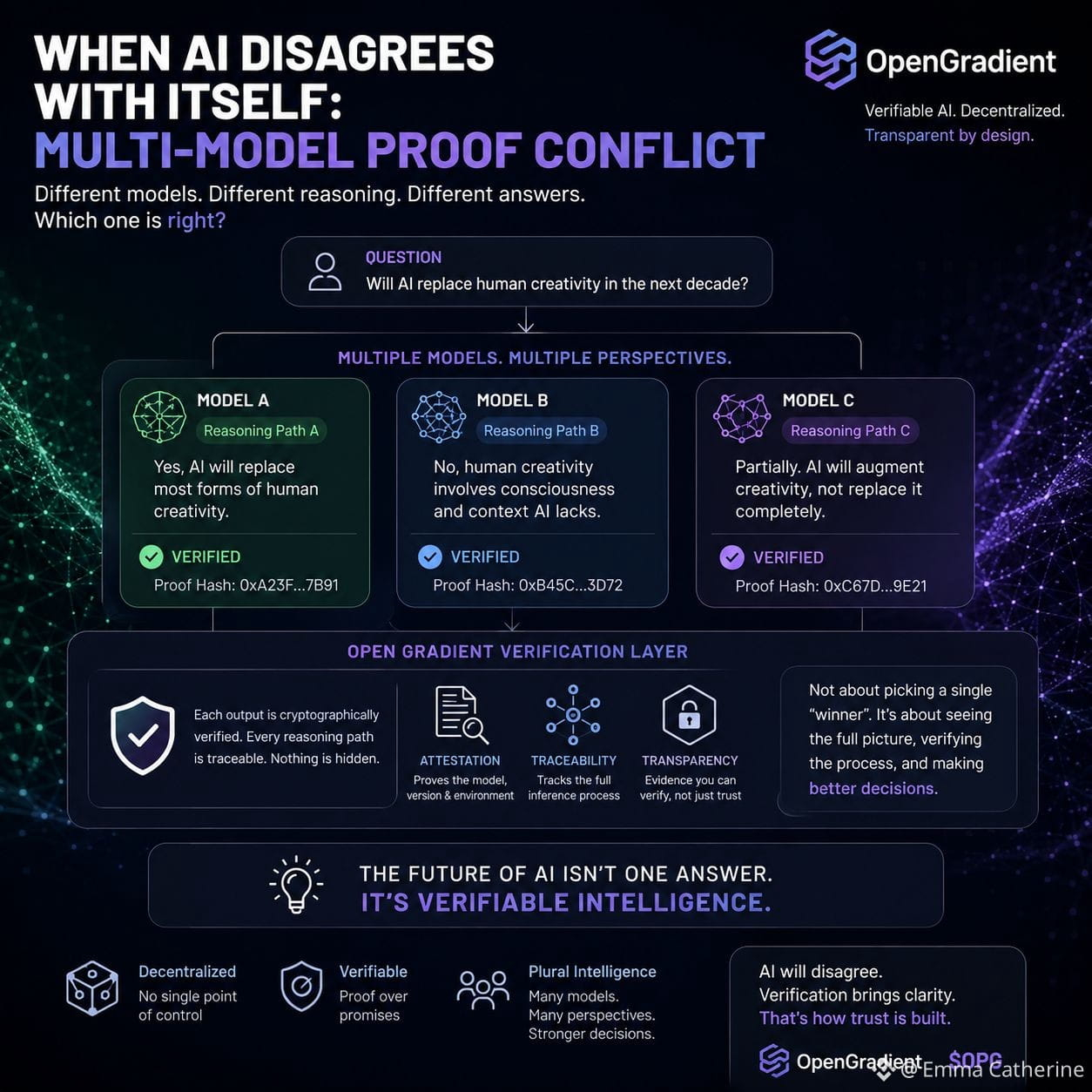
Điều gì sẽ xảy ra khi các mô hình AI không đồng ý với nhau?
Nếu bạn hỏi một mô hình một câu hỏi, bạn sẽ nhận được một câu trả lời. Nhưng trong một hệ thống có nhiều mô hình hoạt động và tạo ra kết quả đã được xác minh, bạn thực sự có thể gặp phải xung đột với các con đường lý luận khác nhau, các kết luận khác nhau, tất cả đều "đúng" theo cách riêng của chúng.$EDEN
Điều này đặt ra một câu hỏi sâu hơn: trong các hệ thống AI, ai quyết định điều gì là đúng khi trí tuệ không đồng ý với chính nó?
Đây là nơi @OpenGradient trở nên thú vị đối với tôi. Thay vì dựa vào một câu trả lời từ một hộp đen duy nhất, nó đang khám phá một cấu hình nơi nhiều mô hình có thể hoạt động, và các đầu ra của chúng có thể được xác minh, so sánh và truy xuất. Không chỉ đơn giản là nhận được một câu trả lời mà còn là hiểu cách mà câu trả lời đó được hình thành.
Theo quan điểm của tôi, điều này cảm giác như một sự thay đổi trong cách suy nghĩ.$ALLO
AI không chỉ trở nên thông minh hơn. Nó trở nên đa dạng hơn.
Và một khi bạn có nhiều trí tuệ làm việc song song, thách thức thực sự không còn là "AI đã nói gì?" mà là "tại sao nó lại nói như vậy, và chúng ta có thể xác minh con đường mà nó đã đi không?"
Đó là một loại hệ thống AI rất khác và thực sự, là một hệ thống trung thực hơn.
#OPG
$OPG Tôi đã suy nghĩ về một điều thú vị trong khi khám phá OpenGradient.
Điều gì sẽ xảy ra khi các mô hình AI không đồng ý với nhau?
Nếu bạn hỏi một mô hình một câu hỏi, bạn sẽ nhận được một câu trả lời. Nhưng trong một hệ thống có nhiều mô hình hoạt động và tạo ra kết quả đã được xác minh, bạn thực sự có thể gặp phải xung đột với các con đường lý luận khác nhau, các kết luận khác nhau, tất cả đều "đúng" theo cách riêng của chúng.$EDEN
Điều này đặt ra một câu hỏi sâu hơn: trong các hệ thống AI, ai quyết định điều gì là đúng khi trí tuệ không đồng ý với chính nó?
Đây là nơi @OpenGradient trở nên thú vị đối với tôi. Thay vì dựa vào một câu trả lời từ một hộp đen duy nhất, nó đang khám phá một cấu hình nơi nhiều mô hình có thể hoạt động, và các đầu ra của chúng có thể được xác minh, so sánh và truy xuất. Không chỉ đơn giản là nhận được một câu trả lời mà còn là hiểu cách mà câu trả lời đó được hình thành.
Theo quan điểm của tôi, điều này cảm giác như một sự thay đổi trong cách suy nghĩ.$ALLO
AI không chỉ trở nên thông minh hơn. Nó trở nên đa dạng hơn.
Và một khi bạn có nhiều trí tuệ làm việc song song, thách thức thực sự không còn là "AI đã nói gì?" mà là "tại sao nó lại nói như vậy, và chúng ta có thể xác minh con đường mà nó đã đi không?"
Đó là một loại hệ thống AI rất khác và thực sự, là một hệ thống trung thực hơn.
#OPG
Điều gì sẽ xảy ra khi các mô hình AI không đồng ý với nhau?
Nếu bạn hỏi một mô hình một câu hỏi, bạn sẽ nhận được một câu trả lời. Nhưng trong một hệ thống có nhiều mô hình hoạt động và tạo ra kết quả đã được xác minh, bạn thực sự có thể gặp phải xung đột với các con đường lý luận khác nhau, các kết luận khác nhau, tất cả đều "đúng" theo cách riêng của chúng.$EDEN
Điều này đặt ra một câu hỏi sâu hơn: trong các hệ thống AI, ai quyết định điều gì là đúng khi trí tuệ không đồng ý với chính nó?
Đây là nơi @OpenGradient trở nên thú vị đối với tôi. Thay vì dựa vào một câu trả lời từ một hộp đen duy nhất, nó đang khám phá một cấu hình nơi nhiều mô hình có thể hoạt động, và các đầu ra của chúng có thể được xác minh, so sánh và truy xuất. Không chỉ đơn giản là nhận được một câu trả lời mà còn là hiểu cách mà câu trả lời đó được hình thành.
Theo quan điểm của tôi, điều này cảm giác như một sự thay đổi trong cách suy nghĩ.$ALLO
AI không chỉ trở nên thông minh hơn. Nó trở nên đa dạng hơn.
Và một khi bạn có nhiều trí tuệ làm việc song song, thách thức thực sự không còn là "AI đã nói gì?" mà là "tại sao nó lại nói như vậy, và chúng ta có thể xác minh con đường mà nó đã đi không?"
Đó là một loại hệ thống AI rất khác và thực sự, là một hệ thống trung thực hơn.
#OPG
18
15
644
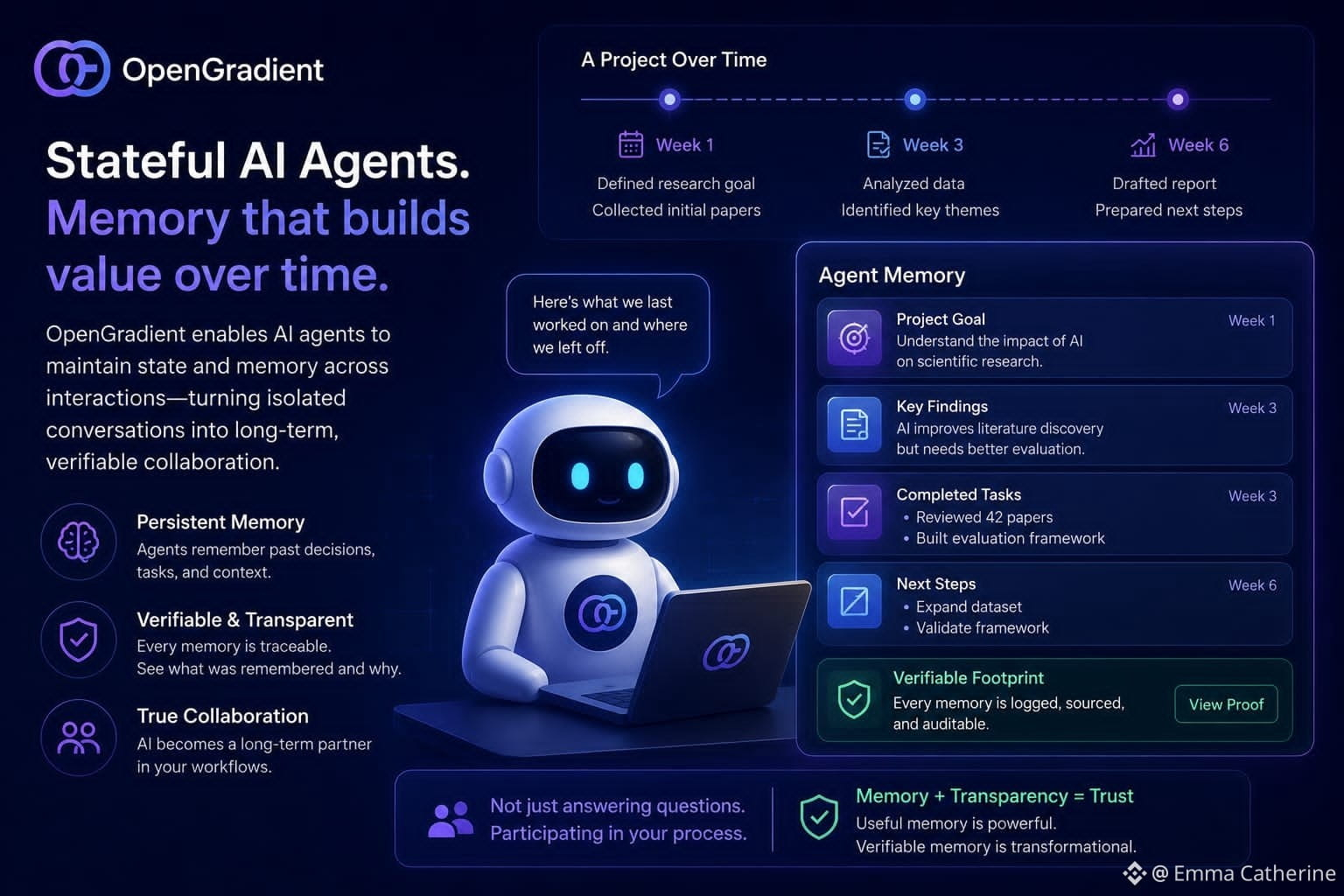
$OPG Hầu hết các hệ thống AI hiện tại không có trạng thái. Mỗi phiên làm việc mới bắt đầu với ít hoặc không có bộ nhớ, buộc người dùng phải cung cấp ngữ cảnh nhiều lần. @OpenGradient đang xây dựng cơ sở hạ tầng cho phép các tác nhân duy trì trạng thái và bộ nhớ trong suốt các tương tác, giúp chúng trở nên hữu ích hơn cho các quy trình làm việc kéo dài.
Ví dụ, hãy tưởng tượng một trợ lý nghiên cứu AI theo dõi một dự án trong nhiều tuần. Thay vì phải giải thích lại mọi thứ mỗi lần, tác nhân có thể nhớ các quyết định trước đó, các nhiệm vụ đã hoàn thành và thông tin liên quan trong khi vẫn hoạt động trong một khung công tác có thể xác minh.$BABY
Điều khiến tôi quan tâm về điều này không chỉ là sự tiện lợi. Nó thay đổi cách chúng ta nghĩ về AI. Thay vì chỉ là một công cụ trả lời các câu hỏi đơn lẻ, AI bắt đầu hành xử như một cộng tác viên liên tục có thể tham gia vào các quy trình đang diễn ra. Thách thức, tất nhiên, là cân bằng giữa bộ nhớ với tính minh bạch và sự tin tưởng. Một tác nhân có khả năng nhớ là hữu ích, nhưng một tác nhân có thể chứng minh những gì nó đã nhớ và tại sao có thể còn giá trị hơn.$EDEN
Đó là một trong những hướng đi thú vị mà OpenGradient dường như đang khám phá.
#OPG
$OPG Hầu hết các hệ thống AI hiện tại không có trạng thái. Mỗi phiên làm việc mới bắt đầu với ít hoặc không có bộ nhớ, buộc người dùng phải cung cấp ngữ cảnh nhiều lần. @OpenGradient đang xây dựng cơ sở hạ tầng cho phép các tác nhân duy trì trạng thái và bộ nhớ trong suốt các tương tác, giúp chúng trở nên hữu ích hơn cho các quy trình làm việc kéo dài.
Ví dụ, hãy tưởng tượng một trợ lý nghiên cứu AI theo dõi một dự án trong nhiều tuần. Thay vì phải giải thích lại mọi thứ mỗi lần, tác nhân có thể nhớ các quyết định trước đó, các nhiệm vụ đã hoàn thành và thông tin liên quan trong khi vẫn hoạt động trong một khung công tác có thể xác minh.$BABY
Điều khiến tôi quan tâm về điều này không chỉ là sự tiện lợi. Nó thay đổi cách chúng ta nghĩ về AI. Thay vì chỉ là một công cụ trả lời các câu hỏi đơn lẻ, AI bắt đầu hành xử như một cộng tác viên liên tục có thể tham gia vào các quy trình đang diễn ra. Thách thức, tất nhiên, là cân bằng giữa bộ nhớ với tính minh bạch và sự tin tưởng. Một tác nhân có khả năng nhớ là hữu ích, nhưng một tác nhân có thể chứng minh những gì nó đã nhớ và tại sao có thể còn giá trị hơn.$EDEN
Đó là một trong những hướng đi thú vị mà OpenGradient dường như đang khám phá.
#OPG
Ví dụ, hãy tưởng tượng một trợ lý nghiên cứu AI theo dõi một dự án trong nhiều tuần. Thay vì phải giải thích lại mọi thứ mỗi lần, tác nhân có thể nhớ các quyết định trước đó, các nhiệm vụ đã hoàn thành và thông tin liên quan trong khi vẫn hoạt động trong một khung công tác có thể xác minh.$BABY
Điều khiến tôi quan tâm về điều này không chỉ là sự tiện lợi. Nó thay đổi cách chúng ta nghĩ về AI. Thay vì chỉ là một công cụ trả lời các câu hỏi đơn lẻ, AI bắt đầu hành xử như một cộng tác viên liên tục có thể tham gia vào các quy trình đang diễn ra. Thách thức, tất nhiên, là cân bằng giữa bộ nhớ với tính minh bạch và sự tin tưởng. Một tác nhân có khả năng nhớ là hữu ích, nhưng một tác nhân có thể chứng minh những gì nó đã nhớ và tại sao có thể còn giá trị hơn.$EDEN
Đó là một trong những hướng đi thú vị mà OpenGradient dường như đang khám phá.
#OPG
40
19
959
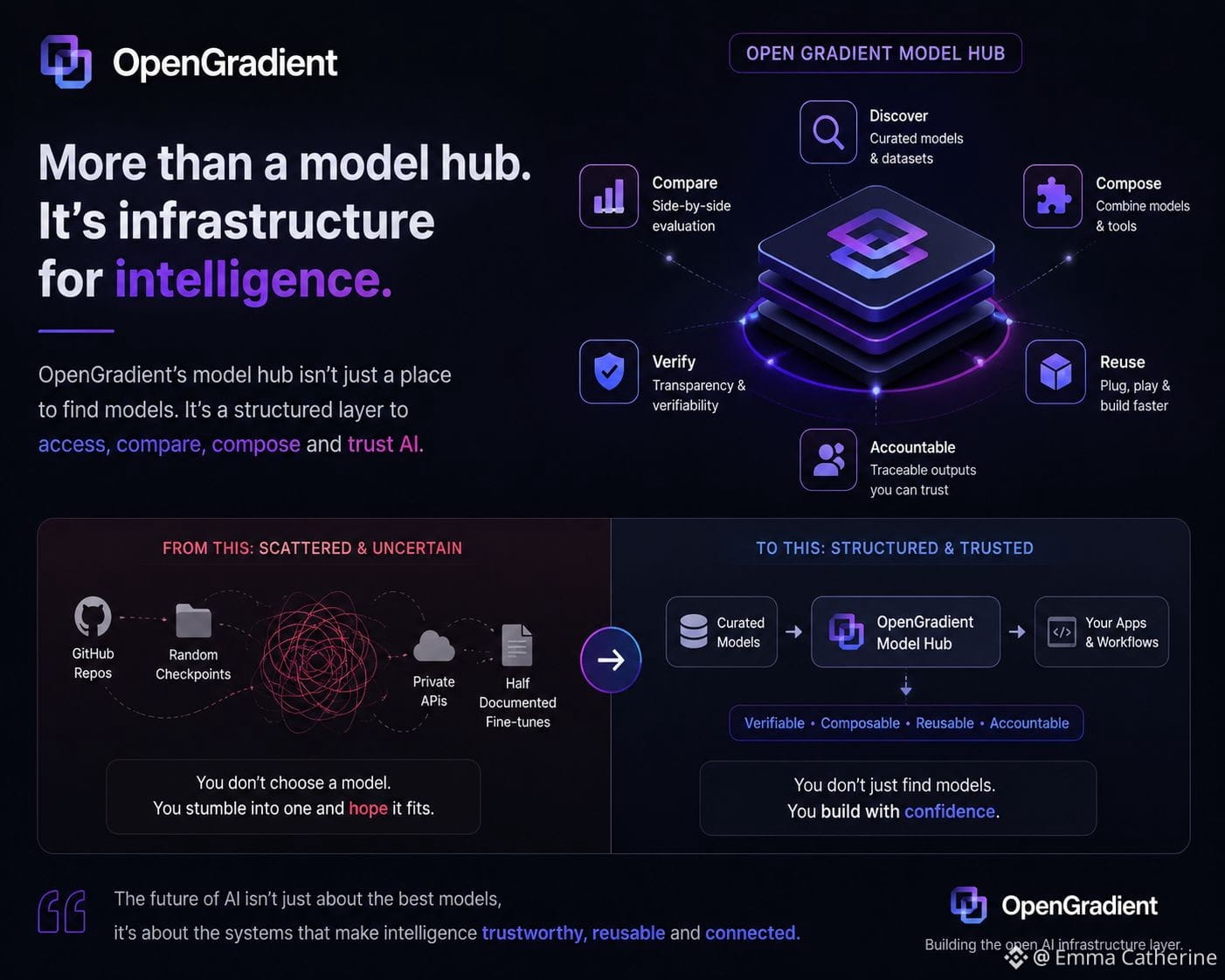
$OPG Hầu hết mọi người nói về các trung tâm mô hình AI như thể chúng chỉ là "nơi để tải mô hình xuống."
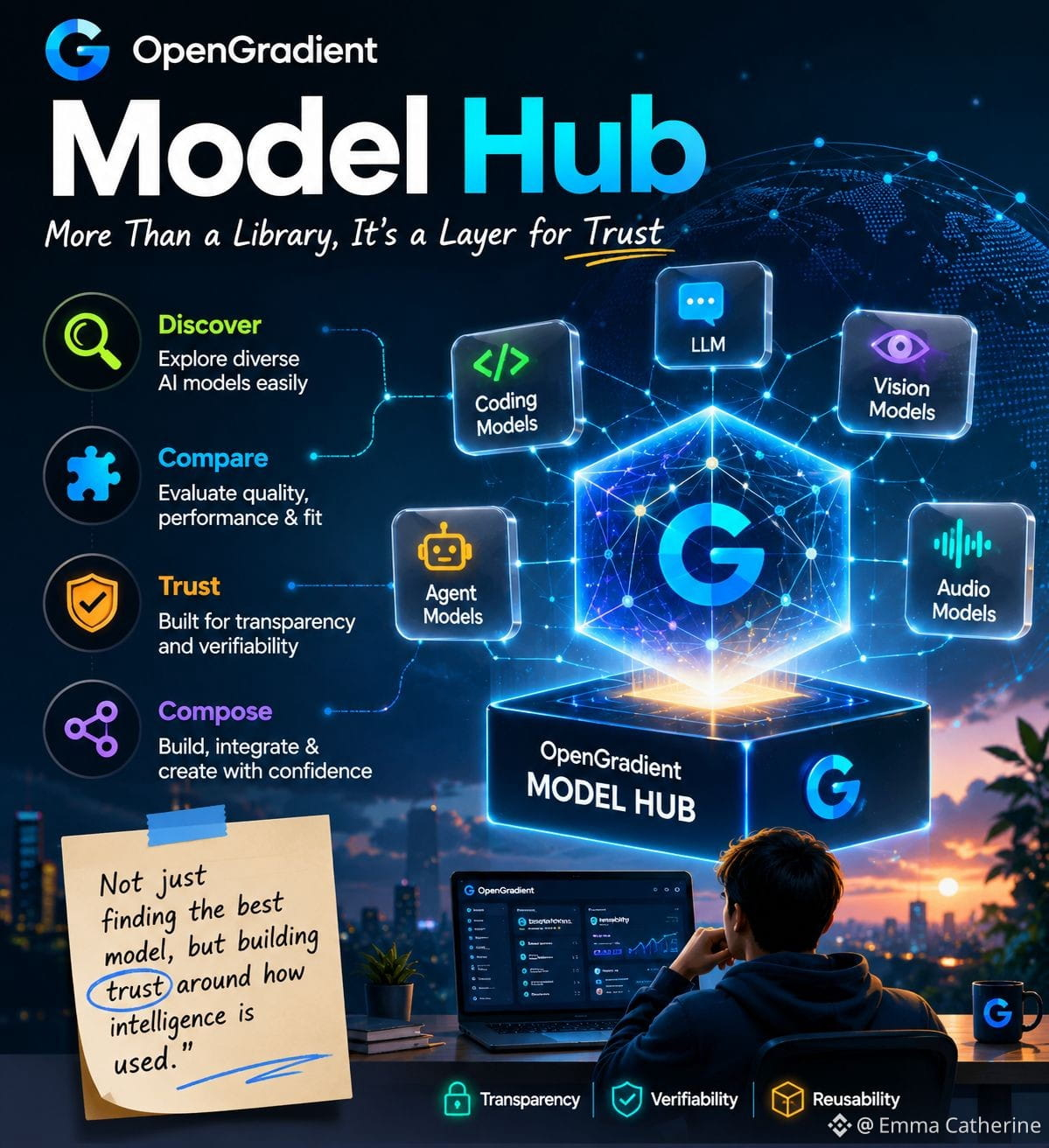
Nhưng khi tôi nhìn vào trung tâm mô hình của OpenGradient, nó cảm giác giống như một cái gì đó hoàn toàn khác không phải là một thư viện, mà là một lớp phối hợp.
Trong một thiết lập bình thường, các mô hình bị rải rác khắp nơi: kho GitHub, API riêng, các điểm kiểm tra ngẫu nhiên, các tinh chỉnh nửa tài liệu. Bạn không thực sự chọn một mô hình, bạn va phải một cái và hy vọng nó phù hợp.
Một trung tâm mô hình thay đổi điều đó, nhưng ý tưởng của OpenGradient tiến xa hơn một bước. Nó không chỉ là "đây là các mô hình," mà gần hơn với "đây là một cách có cấu trúc để truy cập trí tuệ mà có thể được xác minh, so sánh và tái sử dụng."
Góc nhìn hiếm hoi ở đây là:
Nó ít về việc các mô hình có sẵn, và nhiều hơn về việc các mô hình có thể được kết hợp và chịu trách nhiệm.
Điều đó chuyển đổi tâm lý từ:
"Mô hình nào tôi nên sử dụng?"
đến:
"Tôi có thể tin tưởng vào cách mà đầu ra này được sản xuất, và tôi có thể xây dựng dựa trên nó không?"$Jager
Từ góc độ của tôi, đây là nơi mọi thứ bắt đầu trở nên thú vị. Nếu AI tiếp tục phát triển theo hướng các hệ thống đa tác nhân và quy trình làm việc, thì một trung tâm mô hình không chỉ là một danh mục nó trở thành cơ sở hạ tầng. Một cái gì đó gần hơn với một lớp vận hành cho chính trí tuệ.
Và các dự án như @OpenGradient cảm giác như đang cố gắng di chuyển theo hướng đó, đặc biệt với cách họ định hình tính minh bạch và khả năng xác minh thay vì chỉ hiệu suất.$ALLO
Nếu hướng đi đó giữ vững, giá trị thực sự của một trung tâm mô hình sẽ không phải là "ai có mô hình tốt nhất," mà là "ai làm cho trí tuệ dễ tin tưởng, tái sử dụng và kết nối nhất."
Đó là phần nổi bật nhất với tôi không phải là các mô hình tự nó, mà là hệ thống hình thành xung quanh chúng.
#OPG
$OPG Hầu hết mọi người nói về các trung tâm mô hình AI như thể chúng chỉ là "nơi để tải mô hình xuống."
Nhưng khi tôi nhìn vào trung tâm mô hình của OpenGradient, nó cảm giác giống như một cái gì đó hoàn toàn khác không phải là một thư viện, mà là một lớp phối hợp.
Trong một thiết lập bình thường, các mô hình bị rải rác khắp nơi: kho GitHub, API riêng, các điểm kiểm tra ngẫu nhiên, các tinh chỉnh nửa tài liệu. Bạn không thực sự chọn một mô hình, bạn va phải một cái và hy vọng nó phù hợp.
Một trung tâm mô hình thay đổi điều đó, nhưng ý tưởng của OpenGradient tiến xa hơn một bước. Nó không chỉ là "đây là các mô hình," mà gần hơn với "đây là một cách có cấu trúc để truy cập trí tuệ mà có thể được xác minh, so sánh và tái sử dụng."
Góc nhìn hiếm hoi ở đây là:
Nó ít về việc các mô hình có sẵn, và nhiều hơn về việc các mô hình có thể được kết hợp và chịu trách nhiệm.
Điều đó chuyển đổi tâm lý từ:
"Mô hình nào tôi nên sử dụng?"
đến:
"Tôi có thể tin tưởng vào cách mà đầu ra này được sản xuất, và tôi có thể xây dựng dựa trên nó không?"$Jager
Từ góc độ của tôi, đây là nơi mọi thứ bắt đầu trở nên thú vị. Nếu AI tiếp tục phát triển theo hướng các hệ thống đa tác nhân và quy trình làm việc, thì một trung tâm mô hình không chỉ là một danh mục nó trở thành cơ sở hạ tầng. Một cái gì đó gần hơn với một lớp vận hành cho chính trí tuệ.
Và các dự án như @OpenGradient cảm giác như đang cố gắng di chuyển theo hướng đó, đặc biệt với cách họ định hình tính minh bạch và khả năng xác minh thay vì chỉ hiệu suất.$ALLO
Nếu hướng đi đó giữ vững, giá trị thực sự của một trung tâm mô hình sẽ không phải là "ai có mô hình tốt nhất," mà là "ai làm cho trí tuệ dễ tin tưởng, tái sử dụng và kết nối nhất."
Đó là phần nổi bật nhất với tôi không phải là các mô hình tự nó, mà là hệ thống hình thành xung quanh chúng.
#OPG
Nhưng khi tôi nhìn vào trung tâm mô hình của OpenGradient, nó cảm giác giống như một cái gì đó hoàn toàn khác không phải là một thư viện, mà là một lớp phối hợp.
Trong một thiết lập bình thường, các mô hình bị rải rác khắp nơi: kho GitHub, API riêng, các điểm kiểm tra ngẫu nhiên, các tinh chỉnh nửa tài liệu. Bạn không thực sự chọn một mô hình, bạn va phải một cái và hy vọng nó phù hợp.
Một trung tâm mô hình thay đổi điều đó, nhưng ý tưởng của OpenGradient tiến xa hơn một bước. Nó không chỉ là "đây là các mô hình," mà gần hơn với "đây là một cách có cấu trúc để truy cập trí tuệ mà có thể được xác minh, so sánh và tái sử dụng."
Góc nhìn hiếm hoi ở đây là:
Nó ít về việc các mô hình có sẵn, và nhiều hơn về việc các mô hình có thể được kết hợp và chịu trách nhiệm.
Điều đó chuyển đổi tâm lý từ:
"Mô hình nào tôi nên sử dụng?"
đến:
"Tôi có thể tin tưởng vào cách mà đầu ra này được sản xuất, và tôi có thể xây dựng dựa trên nó không?"$Jager
Từ góc độ của tôi, đây là nơi mọi thứ bắt đầu trở nên thú vị. Nếu AI tiếp tục phát triển theo hướng các hệ thống đa tác nhân và quy trình làm việc, thì một trung tâm mô hình không chỉ là một danh mục nó trở thành cơ sở hạ tầng. Một cái gì đó gần hơn với một lớp vận hành cho chính trí tuệ.
Và các dự án như @OpenGradient cảm giác như đang cố gắng di chuyển theo hướng đó, đặc biệt với cách họ định hình tính minh bạch và khả năng xác minh thay vì chỉ hiệu suất.$ALLO
Nếu hướng đi đó giữ vững, giá trị thực sự của một trung tâm mô hình sẽ không phải là "ai có mô hình tốt nhất," mà là "ai làm cho trí tuệ dễ tin tưởng, tái sử dụng và kết nối nhất."
Đó là phần nổi bật nhất với tôi không phải là các mô hình tự nó, mà là hệ thống hình thành xung quanh chúng.
#OPG
76
46
1.9k
$OPG Kiến trúc node của OpenGradient thật sự thú vị vì nó chuyển trọng tâm từ "một máy chủ mạnh mẽ chạy mọi thứ" sang một hệ thống phân tán nơi nhiều node cùng nhau hoạt động để chạy AI.
Thay vì dựa vào một nhà cung cấp tập trung duy nhất, các node khác nhau xử lý các phần khác nhau của quy trình như tính toán, suy diễn, xác minh và định tuyến. Điều này làm cho hệ thống trở nên linh hoạt hơn và ít phụ thuộc vào bất kỳ điểm thất bại nào.
$POL
Điều nổi bật với tôi là cách kiến trúc này cố gắng cân bằng giữa tốc độ và độ tin cậy. Một số node xử lý tính toán AI thô, trong khi những node khác có trách nhiệm xác minh kết quả bằng các cơ chế như TEE và chứng minh dựa trên zk. Nói một cách đơn giản, không chỉ là việc nhận được câu trả lời từ AI mà còn là khả năng tin tưởng vào cách mà câu trả lời đó được sản xuất.
$EDEN
Từ góc độ của tôi, đây là nơi mọi thứ bắt đầu trở nên thực sự thú vị. Hầu hết các hệ thống AI ngày nay đều mạnh mẽ nhưng thiếu minh bạch. @OpenGradient đang cố gắng làm cho quy trình đó trở nên rõ ràng và phân tán hơn, điều này có thể rất quan trọng khi AI bắt đầu xử lý các nhiệm vụ quan trọng hơn.
Vẫn còn sớm, và bài kiểm tra thực sự sẽ là hiệu suất khi mở rộng. Nhưng nếu mô hình này hoạt động trơn tru, nó có thể thay đổi cách chúng ta nghĩ về cơ sở hạ tầng AI không phải như một hộp đen, mà là một mạng lưới có thể xác minh.
#OPG
$OPG Kiến trúc node của OpenGradient thật sự thú vị vì nó chuyển trọng tâm từ "một máy chủ mạnh mẽ chạy mọi thứ" sang một hệ thống phân tán nơi nhiều node cùng nhau hoạt động để chạy AI.
Thay vì dựa vào một nhà cung cấp tập trung duy nhất, các node khác nhau xử lý các phần khác nhau của quy trình như tính toán, suy diễn, xác minh và định tuyến. Điều này làm cho hệ thống trở nên linh hoạt hơn và ít phụ thuộc vào bất kỳ điểm thất bại nào.
$POL
Điều nổi bật với tôi là cách kiến trúc này cố gắng cân bằng giữa tốc độ và độ tin cậy. Một số node xử lý tính toán AI thô, trong khi những node khác có trách nhiệm xác minh kết quả bằng các cơ chế như TEE và chứng minh dựa trên zk. Nói một cách đơn giản, không chỉ là việc nhận được câu trả lời từ AI mà còn là khả năng tin tưởng vào cách mà câu trả lời đó được sản xuất.
$EDEN
Từ góc độ của tôi, đây là nơi mọi thứ bắt đầu trở nên thực sự thú vị. Hầu hết các hệ thống AI ngày nay đều mạnh mẽ nhưng thiếu minh bạch. @OpenGradient đang cố gắng làm cho quy trình đó trở nên rõ ràng và phân tán hơn, điều này có thể rất quan trọng khi AI bắt đầu xử lý các nhiệm vụ quan trọng hơn.
Vẫn còn sớm, và bài kiểm tra thực sự sẽ là hiệu suất khi mở rộng. Nhưng nếu mô hình này hoạt động trơn tru, nó có thể thay đổi cách chúng ta nghĩ về cơ sở hạ tầng AI không phải như một hộp đen, mà là một mạng lưới có thể xác minh.
#OPG
Thay vì dựa vào một nhà cung cấp tập trung duy nhất, các node khác nhau xử lý các phần khác nhau của quy trình như tính toán, suy diễn, xác minh và định tuyến. Điều này làm cho hệ thống trở nên linh hoạt hơn và ít phụ thuộc vào bất kỳ điểm thất bại nào.
$POL
Điều nổi bật với tôi là cách kiến trúc này cố gắng cân bằng giữa tốc độ và độ tin cậy. Một số node xử lý tính toán AI thô, trong khi những node khác có trách nhiệm xác minh kết quả bằng các cơ chế như TEE và chứng minh dựa trên zk. Nói một cách đơn giản, không chỉ là việc nhận được câu trả lời từ AI mà còn là khả năng tin tưởng vào cách mà câu trả lời đó được sản xuất.
$EDEN
Từ góc độ của tôi, đây là nơi mọi thứ bắt đầu trở nên thực sự thú vị. Hầu hết các hệ thống AI ngày nay đều mạnh mẽ nhưng thiếu minh bạch. @OpenGradient đang cố gắng làm cho quy trình đó trở nên rõ ràng và phân tán hơn, điều này có thể rất quan trọng khi AI bắt đầu xử lý các nhiệm vụ quan trọng hơn.
Vẫn còn sớm, và bài kiểm tra thực sự sẽ là hiệu suất khi mở rộng. Nhưng nếu mô hình này hoạt động trơn tru, nó có thể thay đổi cách chúng ta nghĩ về cơ sở hạ tầng AI không phải như một hộp đen, mà là một mạng lưới có thể xác minh.
#OPG
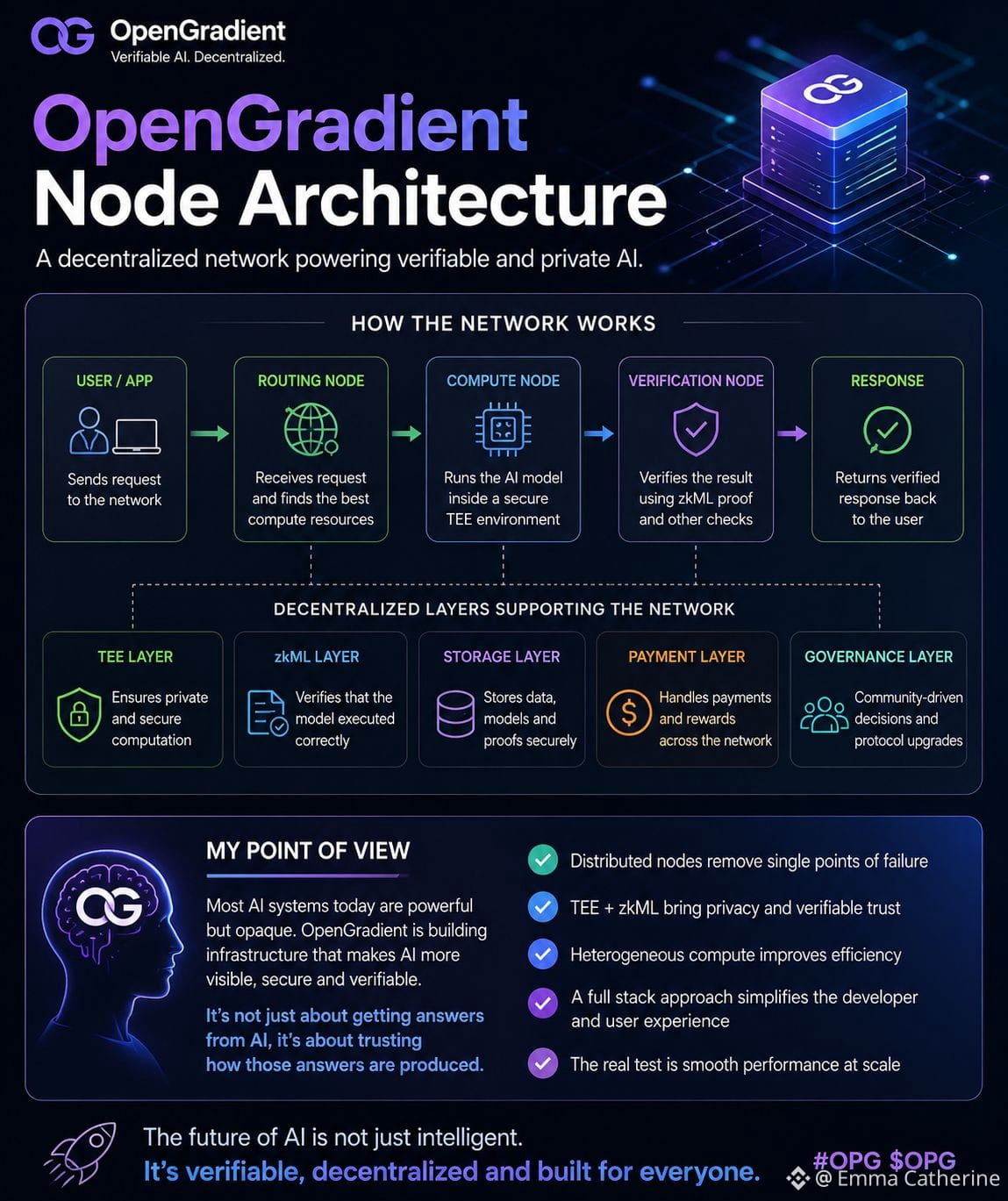
101
39
1.8k
Đã xác minh
$OPG Khi hầu hết mọi người nghĩ về AI, họ cho rằng chi phí lớn nhất là chính mô hình này. Thực tế, chi phí lớn nhất chính là sức mạnh tính toán đứng sau nó, đặc biệt là GPU, làm cho AI trở nên đắt đỏ khi quy mô lớn.
Đó là nơi mà @OpenGradient đang cố gắng thay đổi cuộc chơi.
Thay vì phụ thuộc vào một vài nhà cung cấp đám mây tập trung tính phí cao cho việc sử dụng GPU, OpenGradient phân phối tính toán AI trên một mạng lưới rộng rãi các nhà đóng góp. Nói đơn giản, nhiều máy độc lập làm việc cùng nhau để xử lý các tác vụ AI.$ALLO
Cách tiếp cận này có thể giảm chi phí vì:
Nó tránh giá cả đám mây tập trung đắt đỏ
Nó sử dụng sức mạnh tính toán không sử dụng hoặc nhàn rỗi trên toàn cầu
Nó tạo ra sự cạnh tranh giữa các nút, điều này giúp hạ giá xuống $EDEN
Vì vậy, thay vì trả tiền cho một công ty duy nhất để có quyền truy cập AI "tất cả trong một", hệ thống biến tính toán thành một thị trường chia sẻ.
Từ góc nhìn của tôi, đây là một trong những hướng đi thực tiễn nhất cho cơ sở hạ tầng AI trong crypto. Nếu thực sự mở rộng, nó có thể làm cho việc truy cập AI ít phụ thuộc vào ngân sách công nghệ lớn và dễ tiếp cận hơn cho các nhà phát triển nhỏ và người dùng bán lẻ. Nhưng bài kiểm tra thực sự sẽ là liệu mạng lưới có thể giữ được độ tin cậy và nhanh chóng trong khi vẫn giữ chi phí thấp trong nhu cầu thực tế, không chỉ trong lý thuyết.
#OPG
$OPG Khi hầu hết mọi người nghĩ về AI, họ cho rằng chi phí lớn nhất là chính mô hình này. Thực tế, chi phí lớn nhất chính là sức mạnh tính toán đứng sau nó, đặc biệt là GPU, làm cho AI trở nên đắt đỏ khi quy mô lớn.
Đó là nơi mà @OpenGradient đang cố gắng thay đổi cuộc chơi.
Thay vì phụ thuộc vào một vài nhà cung cấp đám mây tập trung tính phí cao cho việc sử dụng GPU, OpenGradient phân phối tính toán AI trên một mạng lưới rộng rãi các nhà đóng góp. Nói đơn giản, nhiều máy độc lập làm việc cùng nhau để xử lý các tác vụ AI.$ALLO
Cách tiếp cận này có thể giảm chi phí vì:
Nó tránh giá cả đám mây tập trung đắt đỏ
Nó sử dụng sức mạnh tính toán không sử dụng hoặc nhàn rỗi trên toàn cầu
Nó tạo ra sự cạnh tranh giữa các nút, điều này giúp hạ giá xuống $EDEN
Vì vậy, thay vì trả tiền cho một công ty duy nhất để có quyền truy cập AI "tất cả trong một", hệ thống biến tính toán thành một thị trường chia sẻ.
Từ góc nhìn của tôi, đây là một trong những hướng đi thực tiễn nhất cho cơ sở hạ tầng AI trong crypto. Nếu thực sự mở rộng, nó có thể làm cho việc truy cập AI ít phụ thuộc vào ngân sách công nghệ lớn và dễ tiếp cận hơn cho các nhà phát triển nhỏ và người dùng bán lẻ. Nhưng bài kiểm tra thực sự sẽ là liệu mạng lưới có thể giữ được độ tin cậy và nhanh chóng trong khi vẫn giữ chi phí thấp trong nhu cầu thực tế, không chỉ trong lý thuyết.
#OPG
Đó là nơi mà @OpenGradient đang cố gắng thay đổi cuộc chơi.
Thay vì phụ thuộc vào một vài nhà cung cấp đám mây tập trung tính phí cao cho việc sử dụng GPU, OpenGradient phân phối tính toán AI trên một mạng lưới rộng rãi các nhà đóng góp. Nói đơn giản, nhiều máy độc lập làm việc cùng nhau để xử lý các tác vụ AI.$ALLO
Cách tiếp cận này có thể giảm chi phí vì:
Nó tránh giá cả đám mây tập trung đắt đỏ
Nó sử dụng sức mạnh tính toán không sử dụng hoặc nhàn rỗi trên toàn cầu
Nó tạo ra sự cạnh tranh giữa các nút, điều này giúp hạ giá xuống $EDEN
Vì vậy, thay vì trả tiền cho một công ty duy nhất để có quyền truy cập AI "tất cả trong một", hệ thống biến tính toán thành một thị trường chia sẻ.
Từ góc nhìn của tôi, đây là một trong những hướng đi thực tiễn nhất cho cơ sở hạ tầng AI trong crypto. Nếu thực sự mở rộng, nó có thể làm cho việc truy cập AI ít phụ thuộc vào ngân sách công nghệ lớn và dễ tiếp cận hơn cho các nhà phát triển nhỏ và người dùng bán lẻ. Nhưng bài kiểm tra thực sự sẽ là liệu mạng lưới có thể giữ được độ tin cậy và nhanh chóng trong khi vẫn giữ chi phí thấp trong nhu cầu thực tế, không chỉ trong lý thuyết.
#OPG
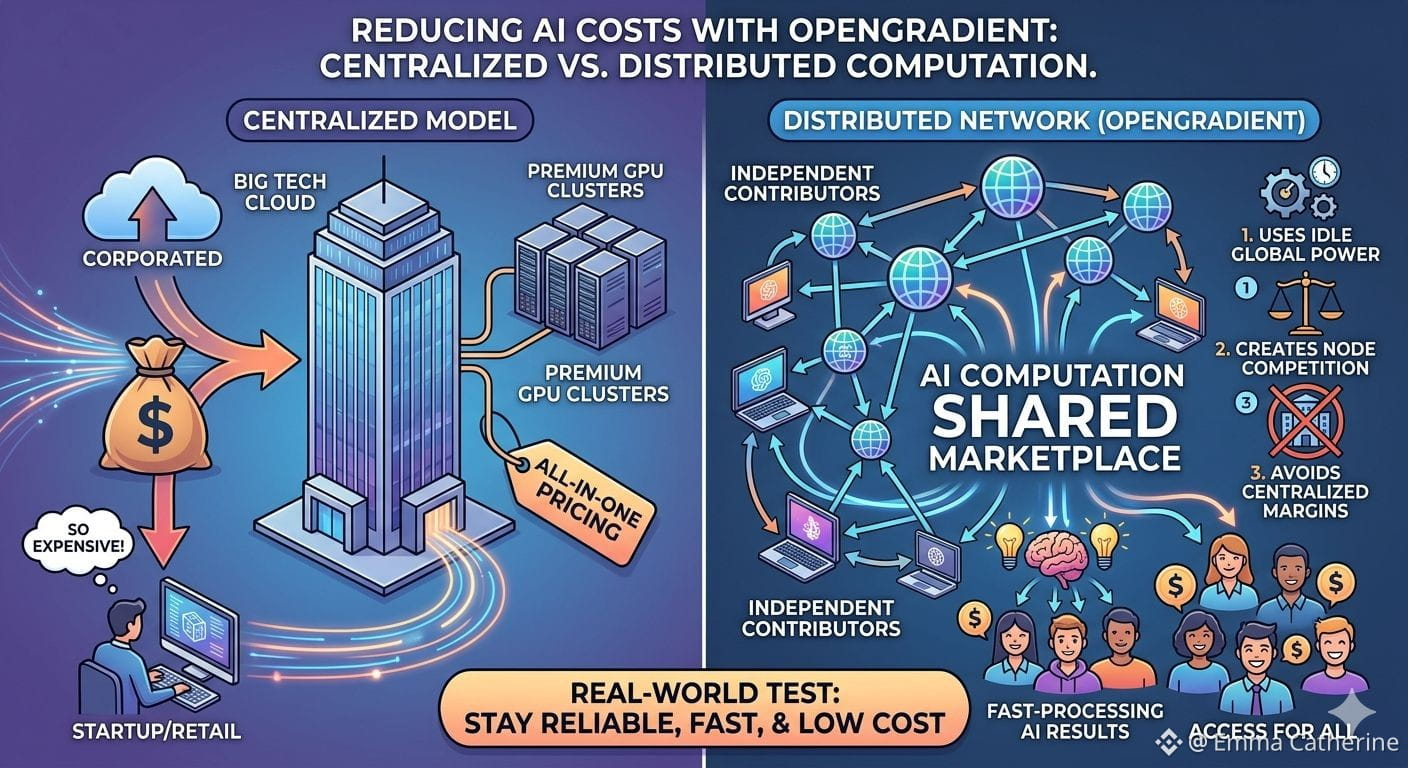
93
42
1.9k
Đã xác minh
$BR Tôi đã suy nghĩ về sự khác biệt giữa @Bedrock Bedrock và Bedrock 2.0 gần đây, và cách đơn giản nhất mà tôi có thể giải thích từ quan điểm của mình là như thế này:
Bedrock bắt đầu với một ý tưởng rõ ràng: làm cho Bitcoin và các tài sản khác trở nên năng suất hơn mà không buộc người dùng phải từ bỏ quyền kiểm soát. Nó tập trung nhiều vào việc tạo ra lợi suất và xây dựng niềm tin thông qua tính minh bạch và các chiến lược có cấu trúc.
Nhưng Bedrock 2.0 cảm giác như là một bước tiến xa hơn chỉ là "kiếm lợi suất."
Điều đã thay đổi trong quan điểm của tôi không chỉ là con số, mà còn là triết lý thiết kế.$BABY
Trước đây, trọng tâm chính là:
Làm thế nào để tài sản nhàn rỗi có thể tạo ra lợi suất?
Làm thế nào để các chiến lược có thể được đóng gói một cách an toàn và dễ hiểu?
Làm thế nào để chúng ta có thể thu hút nhiều người dùng hơn vào cơ hội kiếm BTCfi?$BTC
Bây giờ với Bedrock 2.0, nó cảm giác như:
Làm thế nào để vốn có thể linh hoạt trong khi vẫn sản xuất?
Làm thế nào để các nguồn lợi suất có thể bền vững hơn thay vì phụ thuộc vào một hướng duy nhất của thị trường?
Làm thế nào để hệ thống giảm thiểu rủi ro ẩn trong khi mở rộng?
Đối với tôi, cải tiến lớn nhất là Bedrock 2.0 không chỉ cố gắng "tăng lợi nhuận," mà còn cố gắng làm cho cấu trúc đứng sau những lợi nhuận đó mạnh mẽ hơn.
Nó ít tập trung vào việc theo đuổi APY và nhiều hơn về việc cải thiện cách mà vốn thực sự di chuyển, thích nghi và sống sót qua các điều kiện thị trường khác nhau.
Nếu Bedrock là về việc làm cho Bitcoin trở nên năng suất, thì Bedrock 2.0 cảm giác như là về việc làm cho năng suất đó trở nên bền vững hơn và ít mong manh hơn.
Sự chuyển mình đó có thể nghe có vẻ tinh tế, nhưng trong crypto, thường thì đó là nơi mà sự khác biệt thực sự xuất hiện theo thời gian.
#Bedrock
$BR Tôi đã suy nghĩ về sự khác biệt giữa @Bedrock Bedrock và Bedrock 2.0 gần đây, và cách đơn giản nhất mà tôi có thể giải thích từ quan điểm của mình là như thế này:
Bedrock bắt đầu với một ý tưởng rõ ràng: làm cho Bitcoin và các tài sản khác trở nên năng suất hơn mà không buộc người dùng phải từ bỏ quyền kiểm soát. Nó tập trung nhiều vào việc tạo ra lợi suất và xây dựng niềm tin thông qua tính minh bạch và các chiến lược có cấu trúc.
Nhưng Bedrock 2.0 cảm giác như là một bước tiến xa hơn chỉ là "kiếm lợi suất."
Điều đã thay đổi trong quan điểm của tôi không chỉ là con số, mà còn là triết lý thiết kế.$BABY
Trước đây, trọng tâm chính là:
Làm thế nào để tài sản nhàn rỗi có thể tạo ra lợi suất?
Làm thế nào để các chiến lược có thể được đóng gói một cách an toàn và dễ hiểu?
Làm thế nào để chúng ta có thể thu hút nhiều người dùng hơn vào cơ hội kiếm BTCfi?$BTC
Bây giờ với Bedrock 2.0, nó cảm giác như:
Làm thế nào để vốn có thể linh hoạt trong khi vẫn sản xuất?
Làm thế nào để các nguồn lợi suất có thể bền vững hơn thay vì phụ thuộc vào một hướng duy nhất của thị trường?
Làm thế nào để hệ thống giảm thiểu rủi ro ẩn trong khi mở rộng?
Đối với tôi, cải tiến lớn nhất là Bedrock 2.0 không chỉ cố gắng "tăng lợi nhuận," mà còn cố gắng làm cho cấu trúc đứng sau những lợi nhuận đó mạnh mẽ hơn.
Nó ít tập trung vào việc theo đuổi APY và nhiều hơn về việc cải thiện cách mà vốn thực sự di chuyển, thích nghi và sống sót qua các điều kiện thị trường khác nhau.
Nếu Bedrock là về việc làm cho Bitcoin trở nên năng suất, thì Bedrock 2.0 cảm giác như là về việc làm cho năng suất đó trở nên bền vững hơn và ít mong manh hơn.
Sự chuyển mình đó có thể nghe có vẻ tinh tế, nhưng trong crypto, thường thì đó là nơi mà sự khác biệt thực sự xuất hiện theo thời gian.
#Bedrock
Bedrock bắt đầu với một ý tưởng rõ ràng: làm cho Bitcoin và các tài sản khác trở nên năng suất hơn mà không buộc người dùng phải từ bỏ quyền kiểm soát. Nó tập trung nhiều vào việc tạo ra lợi suất và xây dựng niềm tin thông qua tính minh bạch và các chiến lược có cấu trúc.
Nhưng Bedrock 2.0 cảm giác như là một bước tiến xa hơn chỉ là "kiếm lợi suất."
Điều đã thay đổi trong quan điểm của tôi không chỉ là con số, mà còn là triết lý thiết kế.$BABY
Trước đây, trọng tâm chính là:
Làm thế nào để tài sản nhàn rỗi có thể tạo ra lợi suất?
Làm thế nào để các chiến lược có thể được đóng gói một cách an toàn và dễ hiểu?
Làm thế nào để chúng ta có thể thu hút nhiều người dùng hơn vào cơ hội kiếm BTCfi?$BTC
Bây giờ với Bedrock 2.0, nó cảm giác như:
Làm thế nào để vốn có thể linh hoạt trong khi vẫn sản xuất?
Làm thế nào để các nguồn lợi suất có thể bền vững hơn thay vì phụ thuộc vào một hướng duy nhất của thị trường?
Làm thế nào để hệ thống giảm thiểu rủi ro ẩn trong khi mở rộng?
Đối với tôi, cải tiến lớn nhất là Bedrock 2.0 không chỉ cố gắng "tăng lợi nhuận," mà còn cố gắng làm cho cấu trúc đứng sau những lợi nhuận đó mạnh mẽ hơn.
Nó ít tập trung vào việc theo đuổi APY và nhiều hơn về việc cải thiện cách mà vốn thực sự di chuyển, thích nghi và sống sót qua các điều kiện thị trường khác nhau.
Nếu Bedrock là về việc làm cho Bitcoin trở nên năng suất, thì Bedrock 2.0 cảm giác như là về việc làm cho năng suất đó trở nên bền vững hơn và ít mong manh hơn.
Sự chuyển mình đó có thể nghe có vẻ tinh tế, nhưng trong crypto, thường thì đó là nơi mà sự khác biệt thực sự xuất hiện theo thời gian.
#Bedrock
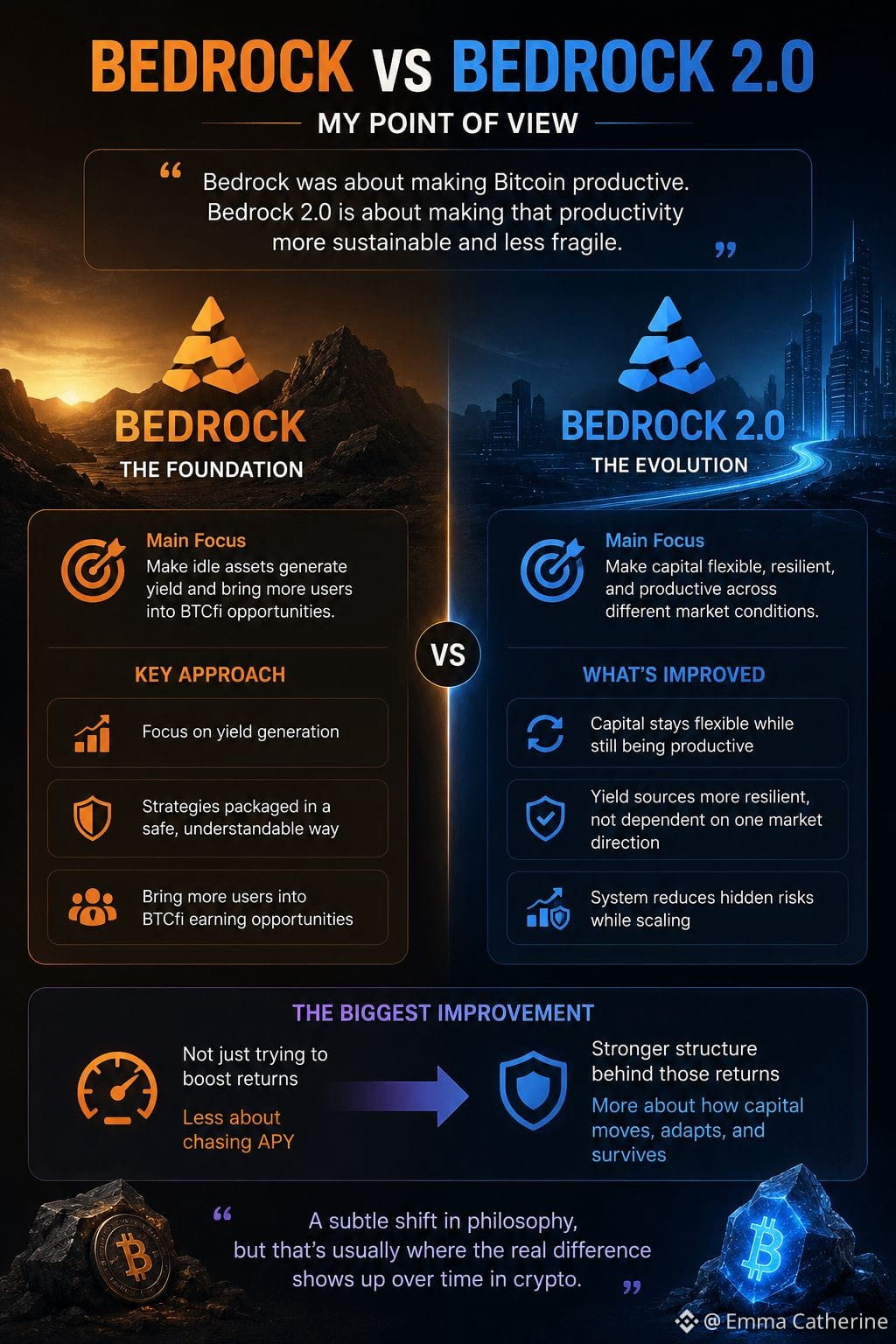
91
44
942
Đúng một phần
$BR Tôi đã tìm hiểu về mô-đun DVT của @Bedrock và cố gắng hiểu rõ nó thực sự thay đổi điều gì trong hệ thống.
DVT (Công nghệ Validator Phân tán) liên quan đến việc phân chia trách nhiệm của các validator giữa nhiều nhà khai thác thay vì phụ thuộc vào một điểm kiểm soát duy nhất. Điều này giúp giảm thiểu rủi ro, cải thiện thời gian hoạt động và làm cho hạ tầng staking trở nên bền bỉ hơn.$ALLO
Điều tôi thấy thú vị là đây không chỉ đơn thuần là một nâng cấp kỹ thuật mà còn là một bước chuyển trong cách mà lòng tin được phân phối. Thay vì phụ thuộc vào một cấu hình validator duy nhất, hệ thống trở nên hợp tác hơn và khó bị phá vỡ hơn.
Quan điểm cá nhân của tôi là đây là một bước tiến tích cực cho Bedrock. Nếu staking thanh khoản dự kiến mở rộng đúng cách, những cải tiến ở cấp độ hạ tầng như DVT sẽ quan trọng hơn nhiều so với những câu chuyện lợi suất ngắn hạn. Nó không chỉ là về sự cường điệu mà còn là về việc làm cho hệ thống cơ bản trở nên mạnh mẽ và ổn định hơn theo thời gian.$NEAR
Tổng thể, có vẻ như Bedrock đang tiến về phía xây dựng một hạ tầng staking thực sự, không chỉ là một lớp lợi suất khác.
#Bedrock
$BR Tôi đã tìm hiểu về mô-đun DVT của @Bedrock và cố gắng hiểu rõ nó thực sự thay đổi điều gì trong hệ thống.
DVT (Công nghệ Validator Phân tán) liên quan đến việc phân chia trách nhiệm của các validator giữa nhiều nhà khai thác thay vì phụ thuộc vào một điểm kiểm soát duy nhất. Điều này giúp giảm thiểu rủi ro, cải thiện thời gian hoạt động và làm cho hạ tầng staking trở nên bền bỉ hơn.$ALLO
Điều tôi thấy thú vị là đây không chỉ đơn thuần là một nâng cấp kỹ thuật mà còn là một bước chuyển trong cách mà lòng tin được phân phối. Thay vì phụ thuộc vào một cấu hình validator duy nhất, hệ thống trở nên hợp tác hơn và khó bị phá vỡ hơn.
Quan điểm cá nhân của tôi là đây là một bước tiến tích cực cho Bedrock. Nếu staking thanh khoản dự kiến mở rộng đúng cách, những cải tiến ở cấp độ hạ tầng như DVT sẽ quan trọng hơn nhiều so với những câu chuyện lợi suất ngắn hạn. Nó không chỉ là về sự cường điệu mà còn là về việc làm cho hệ thống cơ bản trở nên mạnh mẽ và ổn định hơn theo thời gian.$NEAR
Tổng thể, có vẻ như Bedrock đang tiến về phía xây dựng một hạ tầng staking thực sự, không chỉ là một lớp lợi suất khác.
#Bedrock
DVT (Công nghệ Validator Phân tán) liên quan đến việc phân chia trách nhiệm của các validator giữa nhiều nhà khai thác thay vì phụ thuộc vào một điểm kiểm soát duy nhất. Điều này giúp giảm thiểu rủi ro, cải thiện thời gian hoạt động và làm cho hạ tầng staking trở nên bền bỉ hơn.$ALLO
Điều tôi thấy thú vị là đây không chỉ đơn thuần là một nâng cấp kỹ thuật mà còn là một bước chuyển trong cách mà lòng tin được phân phối. Thay vì phụ thuộc vào một cấu hình validator duy nhất, hệ thống trở nên hợp tác hơn và khó bị phá vỡ hơn.
Quan điểm cá nhân của tôi là đây là một bước tiến tích cực cho Bedrock. Nếu staking thanh khoản dự kiến mở rộng đúng cách, những cải tiến ở cấp độ hạ tầng như DVT sẽ quan trọng hơn nhiều so với những câu chuyện lợi suất ngắn hạn. Nó không chỉ là về sự cường điệu mà còn là về việc làm cho hệ thống cơ bản trở nên mạnh mẽ và ổn định hơn theo thời gian.$NEAR
Tổng thể, có vẻ như Bedrock đang tiến về phía xây dựng một hạ tầng staking thực sự, không chỉ là một lớp lợi suất khác.
#Bedrock
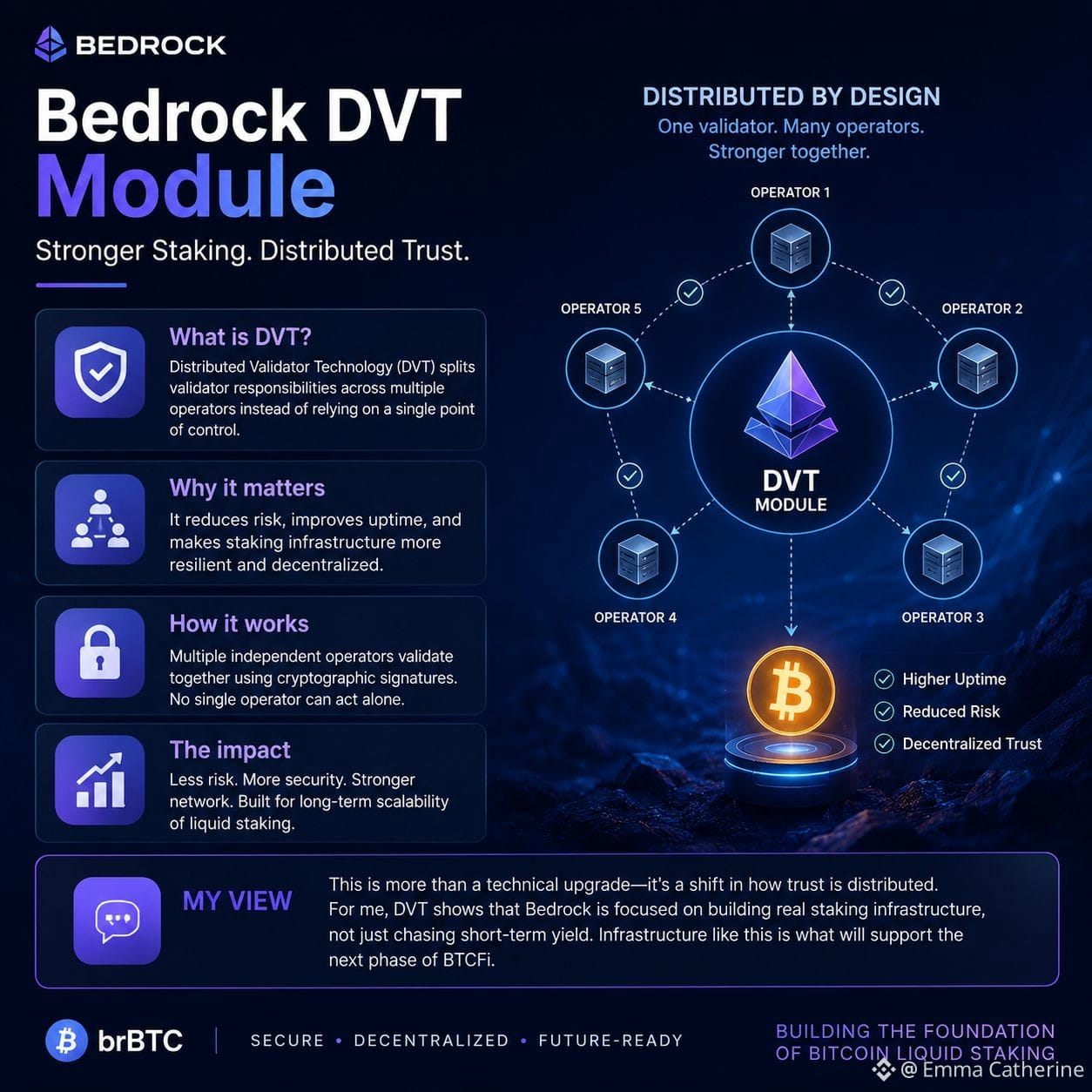
76
36
1.3k
Đã xác minh
$BR Trong năm qua, @Bedrock đã liên tục cải thiện cách hệ thống hoạt động với Chainlink, chuyển từ việc xác minh dự trữ trên chuỗi cơ bản sang quy trình xác thực trong quá trình minting tiên tiến hơn.
Trước đây, Chainlink chủ yếu được sử dụng để xác nhận rằng các dự trữ tồn tại và được ghi nhận đúng cách trên chuỗi. Điều này giúp xây dựng niềm tin bằng cách đảm bảo rằng các con số khớp với thực tế sau khi đã xảy ra.
Nhưng giờ đây, Bedrock đã tiến một bước tiếp theo. Thay vì chỉ xác minh dự trữ, nó sử dụng Chainlink trong quá trình minting thực tế. Điều này có nghĩa là xác thực diễn ra theo thời gian thực, trước khi các tài sản mới được tạo ra.$LINK
Nói đơn giản, điều này thay đổi quy trình từ "kiểm tra sau nếu mọi thứ ổn" sang "xác minh mọi thứ trước khi nó thậm chí vào hệ thống."
Sự chuyển biến này giảm thiểu rủi ro, nâng cao tính minh bạch, và làm cho toàn bộ quy trình đáng tin cậy hơn. Nó cũng cho thấy cách mà Bedrock đang cố gắng thắt chặt nền tảng của cách các tài sản được phát hành và theo dõi, thay vì chỉ báo cáo chúng sau khi đã xảy ra.$DOT
Một sự thay đổi nhỏ về thời gian nhưng là một nâng cấp có ý nghĩa trong niềm tin và thiết kế.
#Bedrock
$BR Trong năm qua, @Bedrock đã liên tục cải thiện cách hệ thống hoạt động với Chainlink, chuyển từ việc xác minh dự trữ trên chuỗi cơ bản sang quy trình xác thực trong quá trình minting tiên tiến hơn.
Trước đây, Chainlink chủ yếu được sử dụng để xác nhận rằng các dự trữ tồn tại và được ghi nhận đúng cách trên chuỗi. Điều này giúp xây dựng niềm tin bằng cách đảm bảo rằng các con số khớp với thực tế sau khi đã xảy ra.
Nhưng giờ đây, Bedrock đã tiến một bước tiếp theo. Thay vì chỉ xác minh dự trữ, nó sử dụng Chainlink trong quá trình minting thực tế. Điều này có nghĩa là xác thực diễn ra theo thời gian thực, trước khi các tài sản mới được tạo ra.$LINK
Nói đơn giản, điều này thay đổi quy trình từ "kiểm tra sau nếu mọi thứ ổn" sang "xác minh mọi thứ trước khi nó thậm chí vào hệ thống."
Sự chuyển biến này giảm thiểu rủi ro, nâng cao tính minh bạch, và làm cho toàn bộ quy trình đáng tin cậy hơn. Nó cũng cho thấy cách mà Bedrock đang cố gắng thắt chặt nền tảng của cách các tài sản được phát hành và theo dõi, thay vì chỉ báo cáo chúng sau khi đã xảy ra.$DOT
Một sự thay đổi nhỏ về thời gian nhưng là một nâng cấp có ý nghĩa trong niềm tin và thiết kế.
#Bedrock
Trước đây, Chainlink chủ yếu được sử dụng để xác nhận rằng các dự trữ tồn tại và được ghi nhận đúng cách trên chuỗi. Điều này giúp xây dựng niềm tin bằng cách đảm bảo rằng các con số khớp với thực tế sau khi đã xảy ra.
Nhưng giờ đây, Bedrock đã tiến một bước tiếp theo. Thay vì chỉ xác minh dự trữ, nó sử dụng Chainlink trong quá trình minting thực tế. Điều này có nghĩa là xác thực diễn ra theo thời gian thực, trước khi các tài sản mới được tạo ra.$LINK
Nói đơn giản, điều này thay đổi quy trình từ "kiểm tra sau nếu mọi thứ ổn" sang "xác minh mọi thứ trước khi nó thậm chí vào hệ thống."
Sự chuyển biến này giảm thiểu rủi ro, nâng cao tính minh bạch, và làm cho toàn bộ quy trình đáng tin cậy hơn. Nó cũng cho thấy cách mà Bedrock đang cố gắng thắt chặt nền tảng của cách các tài sản được phát hành và theo dõi, thay vì chỉ báo cáo chúng sau khi đã xảy ra.$DOT
Một sự thay đổi nhỏ về thời gian nhưng là một nâng cấp có ý nghĩa trong niềm tin và thiết kế.
#Bedrock
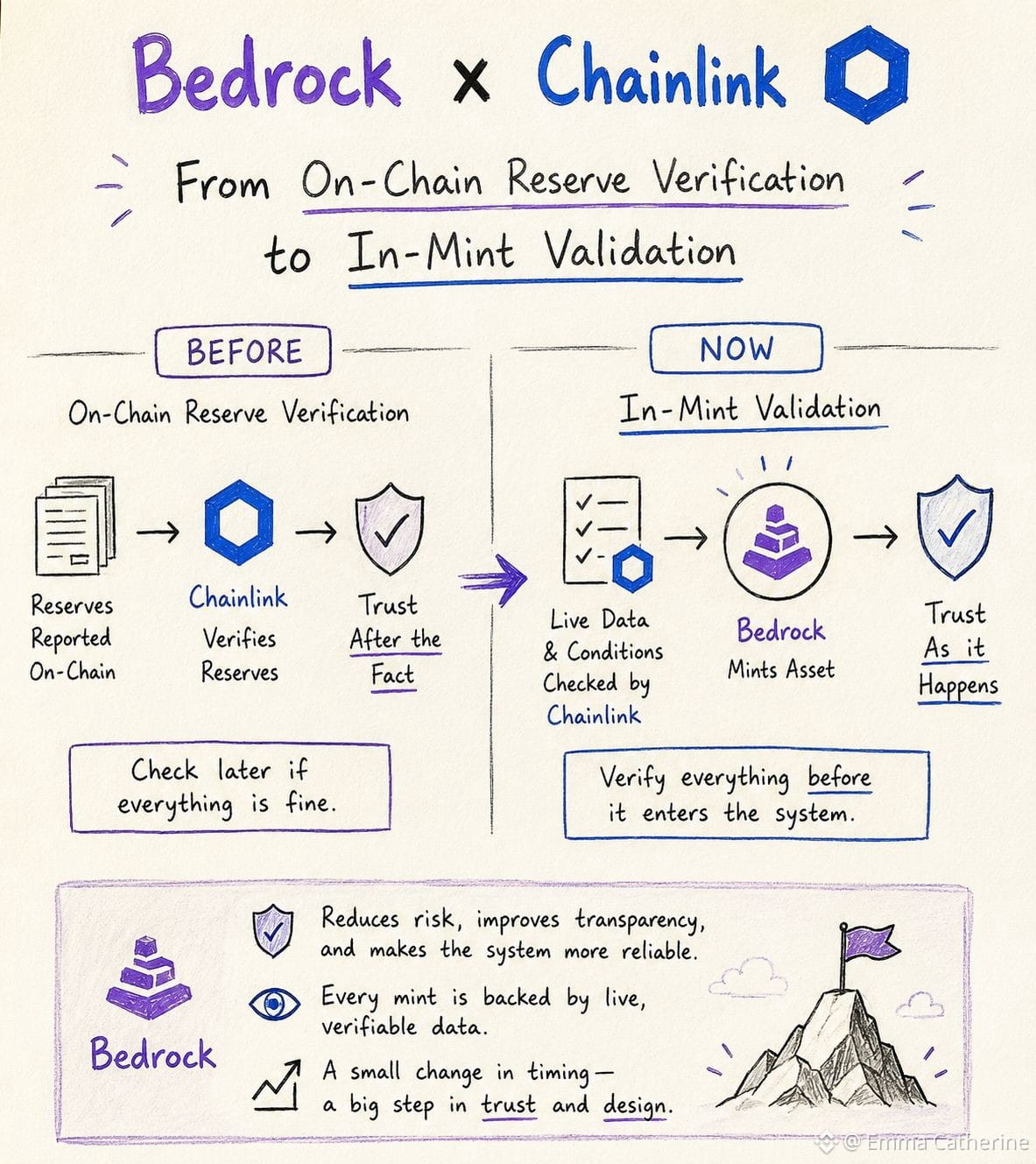
128
57
1.8k
Đăng nhập để khám phá thêm nội dung
Tham gia cùng người dùng tiền mã hóa toàn cầu trên Binance Square
⚡️ Nhận thông tin mới nhất và hữu ích về tiền mã hóa.
💬 Được tin cậy bởi sàn giao dịch tiền mã hóa lớn nhất thế giới.
👍 Khám phá những thông tin chuyên sâu thực tế từ những nhà sáng tạo đã xác minh.
Email / Số điện thoại
Chủ đề thịnh hành
TheoDõiFOMC
88,868 lượt xem
568 đang thảo luận
Cục Dự trữ Liên bang (Fed) đã tăng lãi suất lần đầu tiên kể từ năm 2023 trong bối cảnh lạm phát dai dẳng. Các nhà hoạch định chính sách của Fed đã bỏ phiếu 12-0 để nâng lãi suất quỹ liên bang từ 3,5% lên 3,75%, với mức mục tiêu mới là 3,75% đến 4%. Mức tăng 25 điểm cơ bản này đánh dấu lần điều chỉnh lãi suất đầu tiên kể từ tháng 7/2023 và diễn ra sau khi Fed giữ nguyên lãi suất trong năm cuộc họp đầu tiên trong năm nay. #TheoDõiFOMC #45NgayTuDoTaiChinh #DotPlotSignalsOneMoreHikeIn2026 $NVDAB $AAPLB $NVDA.US #45NgayTuDoTaiChinh #FedHikes25BpsUSStocksClose #
kynfoolishupdate
·0 lượt thích
·159 lượt xem
TinFed
79,728 lượt xem
376 đang thảo luận
45NgayTuDoTaiChinh
923,812 lượt xem
3,170 đang thảo luận