
Zoya_BNB
12.9k Bài đăng

Zoya_BNB
Báo cáo
Chặn người dùng
Giao dịch mở
Trader thường xuyên
11.4 tháng
625 Đang theo dõi
25.2K+ Người theo dõi
11.1K+ Đã thích
Bài đăng
Danh mục đầu tư
Tất cả
Trích dẫn
Live
·
--
Tăng giá
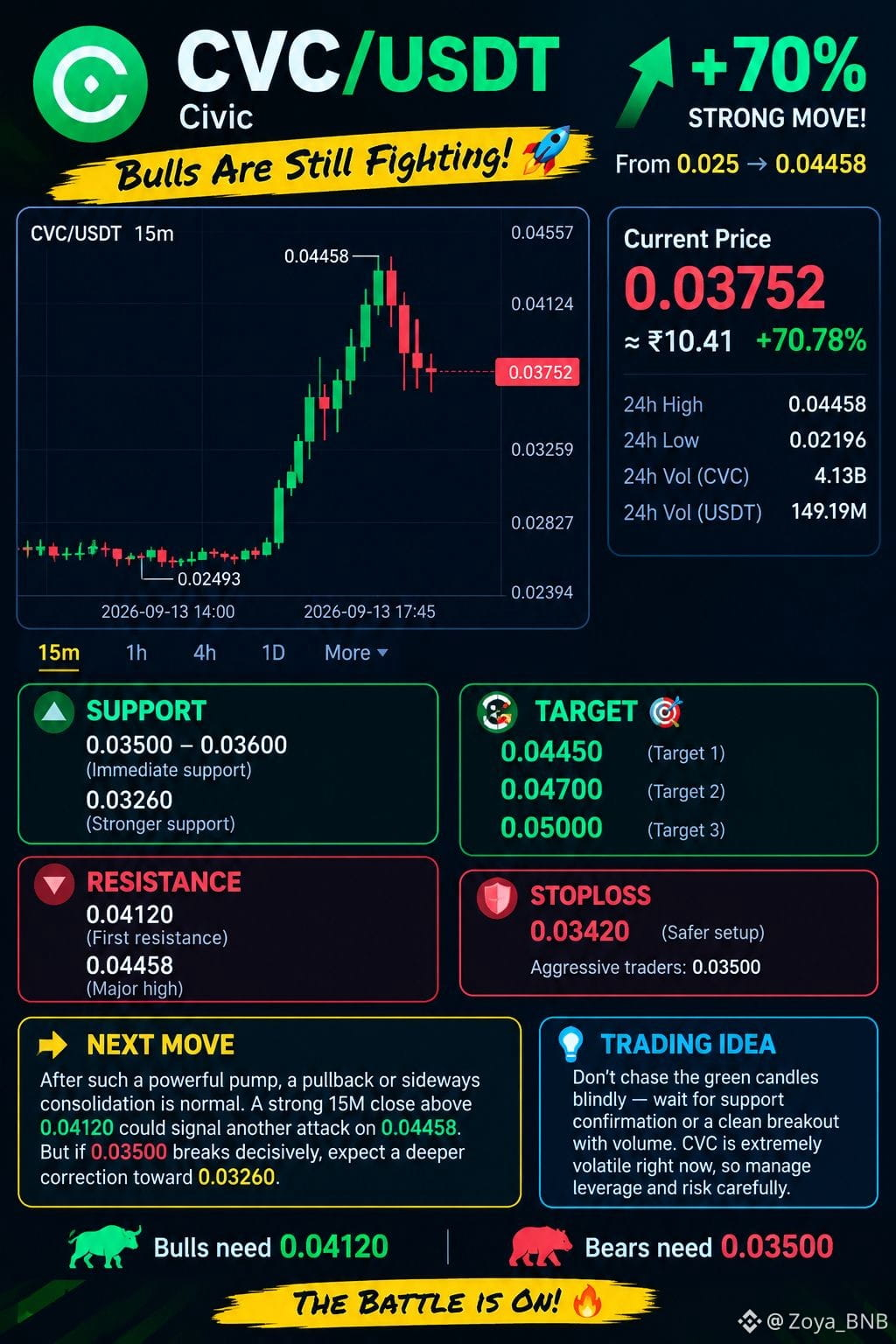
$CVC /USDT — Bò Tót Vẫn Còn Chiến Đấu! 🚀
CVC đã bùng nổ với một bước tăng mạnh +70, đẩy giá từ khoảng 0.025 lên mức cao 0.04458 trước khi đối mặt với lực chốt lời mạnh. Trên khung 15M, giá hiện đang quanh 0.03752, nên vài cây nến tiếp theo có thể quyết định liệu phe bò nạp lại đà hay phe bán giành quyền kiểm soát. 📈 Hỗ trợ: 0.03500–0.03600, với hỗ trợ mạnh hơn quanh 0.03260. Kháng cự: 0.04120, tiếp theo là đỉnh quan trọng tại 0.04458. 🎯 Mục tiêu: Nếu CVC giữ vững trên 0.035–0.036 và giành lại được 0.04120, các mục tiêu tăng giá là 0.04450 → 0.04700 → 0.05000. 🛑 Cắt lỗ: Khoảng 0.03420 cho kịch bản an toàn hơn; nhà giao dịch chủ động có thể theo dõi sát 0.03500. Bước tiếp theo: Sau một cú bơm mạnh như vậy, việc điều chỉnh lùi hoặc đi ngang tích lũy là điều bình thường. Một cây đóng cửa 15M mạnh trên 0.04120 có thể báo hiệu đợt tấn công tiếp theo vào 0.04458. Nhưng nếu 0.03500 bị phá vỡ một cách dứt khoát, hãy kỳ vọng đợt điều chỉnh sâu hơn về 0.03260. ⚡ Ý tưởng giao dịch: Đừng đuổi theo những cây nến xanh một cách mù quáng—hãy chờ xác nhận từ vùng hỗ trợ hoặc một cú breakout rõ ràng kèm khối lượng. CVC hiện đang cực kỳ biến động, nên hãy quản lý đòn bẩy và rủi ro thật cẩn thận. Bò cần 0.04120; Gấu cần 0.03500. Cuộc chiến LÀ CÓ! 🔥🎯
$CVC
{future}(CVCUSDT)
$CVC /USDT — Bò Tót Vẫn Còn Chiến Đấu! 🚀
CVC đã bùng nổ với một bước tăng mạnh +70, đẩy giá từ khoảng 0.025 lên mức cao 0.04458 trước khi đối mặt với lực chốt lời mạnh. Trên khung 15M, giá hiện đang quanh 0.03752, nên vài cây nến tiếp theo có thể quyết định liệu phe bò nạp lại đà hay phe bán giành quyền kiểm soát. 📈 Hỗ trợ: 0.03500–0.03600, với hỗ trợ mạnh hơn quanh 0.03260. Kháng cự: 0.04120, tiếp theo là đỉnh quan trọng tại 0.04458. 🎯 Mục tiêu: Nếu CVC giữ vững trên 0.035–0.036 và giành lại được 0.04120, các mục tiêu tăng giá là 0.04450 → 0.04700 → 0.05000. 🛑 Cắt lỗ: Khoảng 0.03420 cho kịch bản an toàn hơn; nhà giao dịch chủ động có thể theo dõi sát 0.03500. Bước tiếp theo: Sau một cú bơm mạnh như vậy, việc điều chỉnh lùi hoặc đi ngang tích lũy là điều bình thường. Một cây đóng cửa 15M mạnh trên 0.04120 có thể báo hiệu đợt tấn công tiếp theo vào 0.04458. Nhưng nếu 0.03500 bị phá vỡ một cách dứt khoát, hãy kỳ vọng đợt điều chỉnh sâu hơn về 0.03260. ⚡ Ý tưởng giao dịch: Đừng đuổi theo những cây nến xanh một cách mù quáng—hãy chờ xác nhận từ vùng hỗ trợ hoặc một cú breakout rõ ràng kèm khối lượng. CVC hiện đang cực kỳ biến động, nên hãy quản lý đòn bẩy và rủi ro thật cẩn thận. Bò cần 0.04120; Gấu cần 0.03500. Cuộc chiến LÀ CÓ! 🔥🎯
$CVC
CVC đã bùng nổ với một bước tăng mạnh +70, đẩy giá từ khoảng 0.025 lên mức cao 0.04458 trước khi đối mặt với lực chốt lời mạnh. Trên khung 15M, giá hiện đang quanh 0.03752, nên vài cây nến tiếp theo có thể quyết định liệu phe bò nạp lại đà hay phe bán giành quyền kiểm soát. 📈 Hỗ trợ: 0.03500–0.03600, với hỗ trợ mạnh hơn quanh 0.03260. Kháng cự: 0.04120, tiếp theo là đỉnh quan trọng tại 0.04458. 🎯 Mục tiêu: Nếu CVC giữ vững trên 0.035–0.036 và giành lại được 0.04120, các mục tiêu tăng giá là 0.04450 → 0.04700 → 0.05000. 🛑 Cắt lỗ: Khoảng 0.03420 cho kịch bản an toàn hơn; nhà giao dịch chủ động có thể theo dõi sát 0.03500. Bước tiếp theo: Sau một cú bơm mạnh như vậy, việc điều chỉnh lùi hoặc đi ngang tích lũy là điều bình thường. Một cây đóng cửa 15M mạnh trên 0.04120 có thể báo hiệu đợt tấn công tiếp theo vào 0.04458. Nhưng nếu 0.03500 bị phá vỡ một cách dứt khoát, hãy kỳ vọng đợt điều chỉnh sâu hơn về 0.03260. ⚡ Ý tưởng giao dịch: Đừng đuổi theo những cây nến xanh một cách mù quáng—hãy chờ xác nhận từ vùng hỗ trợ hoặc một cú breakout rõ ràng kèm khối lượng. CVC hiện đang cực kỳ biến động, nên hãy quản lý đòn bẩy và rủi ro thật cẩn thận. Bò cần 0.04120; Gấu cần 0.03500. Cuộc chiến LÀ CÓ! 🔥🎯
$CVC
3
402
·
--
Tăng giá
$LSK /USDT BIẾN ĐỘNG QUÁ ĐIÊN RỒ!
Lisk $LSK hiện đang thể hiện một đà tăng mạnh mẽ, giá quanh $0.5295 sau một đợt bứt phá bùng nổ. Biểu đồ
khung 15 phút kể một câu chuyện thú vị:
LSK đã tăng từ khoảng $0.22 lên mức cao gần $0.6603, sau đó bước vào pha điều chỉnh sâu và tích lũy. Đây giờ là một vùng then chốt, nơi
đợt bứt phá tiếp theo có thể quyết định hướng đi ngắn hạn. ⚡📈
🟢 Vùng hỗ trợ: $0.489 $0.500
🟢 Hỗ trợ mạnh hơn: $0.393
🔴 Kháng cự: $0.586
🔥 Kháng cự chính: $0.660–$0.682
Nếu LSK giữ vững trên $0.489 và bên mua giành lại $0.586, bước đi tiếp theo có thể nhắm tới $0.625 🎯, sau đó kiểm tra lại
$0.660 $0.682 🎯. Một đợt bứt phá sạch sẽ vượt qua đỉnh trước đó có thể tạo thêm một làn sóng đà tăng,
nhưng sau một cú tăng khổng lồ như vậy, biến động và các nhịp
điều chỉnh bất ngờ không nên bị xem nhẹ.
Đối với kịch bản tăng giá, tôi sẽ theo dõi vùng $0.50–$0.53 để xác nhận thay vì đuổi theo một cây nến dựng đứng. 📊
⚠️ Vô hiệu / Cắt lỗ: Một sự phá vỡ dứt khoát xuống dưới $0.489 sẽ làm suy yếu kịch bản tăng giá; một giao dịch
quyết liệt có thể cân nhắc mức dừng lỗ quanh $0.475.
$GRIFFAIN
{alpha}(CT_501KENJSUYLASHUMfHyy5o4Hp2FdNqZg1AsUPhfH2kYvEP)
$LSK /USDT BIẾN ĐỘNG QUÁ ĐIÊN RỒ!
Lisk $LSK hiện đang thể hiện một đà tăng mạnh mẽ, giá quanh $0.5295 sau một đợt bứt phá bùng nổ. Biểu đồ
khung 15 phút kể một câu chuyện thú vị:
LSK đã tăng từ khoảng $0.22 lên mức cao gần $0.6603, sau đó bước vào pha điều chỉnh sâu và tích lũy. Đây giờ là một vùng then chốt, nơi
đợt bứt phá tiếp theo có thể quyết định hướng đi ngắn hạn. ⚡📈
🟢 Vùng hỗ trợ: $0.489 $0.500
🟢 Hỗ trợ mạnh hơn: $0.393
🔴 Kháng cự: $0.586
🔥 Kháng cự chính: $0.660–$0.682
Nếu LSK giữ vững trên $0.489 và bên mua giành lại $0.586, bước đi tiếp theo có thể nhắm tới $0.625 🎯, sau đó kiểm tra lại
$0.660 $0.682 🎯. Một đợt bứt phá sạch sẽ vượt qua đỉnh trước đó có thể tạo thêm một làn sóng đà tăng,
nhưng sau một cú tăng khổng lồ như vậy, biến động và các nhịp
điều chỉnh bất ngờ không nên bị xem nhẹ.
Đối với kịch bản tăng giá, tôi sẽ theo dõi vùng $0.50–$0.53 để xác nhận thay vì đuổi theo một cây nến dựng đứng. 📊
⚠️ Vô hiệu / Cắt lỗ: Một sự phá vỡ dứt khoát xuống dưới $0.489 sẽ làm suy yếu kịch bản tăng giá; một giao dịch
quyết liệt có thể cân nhắc mức dừng lỗ quanh $0.475.
$GRIFFAIN
Lisk $LSK hiện đang thể hiện một đà tăng mạnh mẽ, giá quanh $0.5295 sau một đợt bứt phá bùng nổ. Biểu đồ
khung 15 phút kể một câu chuyện thú vị:
LSK đã tăng từ khoảng $0.22 lên mức cao gần $0.6603, sau đó bước vào pha điều chỉnh sâu và tích lũy. Đây giờ là một vùng then chốt, nơi
đợt bứt phá tiếp theo có thể quyết định hướng đi ngắn hạn. ⚡📈
🟢 Vùng hỗ trợ: $0.489 $0.500
🟢 Hỗ trợ mạnh hơn: $0.393
🔴 Kháng cự: $0.586
🔥 Kháng cự chính: $0.660–$0.682
Nếu LSK giữ vững trên $0.489 và bên mua giành lại $0.586, bước đi tiếp theo có thể nhắm tới $0.625 🎯, sau đó kiểm tra lại
$0.660 $0.682 🎯. Một đợt bứt phá sạch sẽ vượt qua đỉnh trước đó có thể tạo thêm một làn sóng đà tăng,
nhưng sau một cú tăng khổng lồ như vậy, biến động và các nhịp
điều chỉnh bất ngờ không nên bị xem nhẹ.
Đối với kịch bản tăng giá, tôi sẽ theo dõi vùng $0.50–$0.53 để xác nhận thay vì đuổi theo một cây nến dựng đứng. 📊
⚠️ Vô hiệu / Cắt lỗ: Một sự phá vỡ dứt khoát xuống dưới $0.489 sẽ làm suy yếu kịch bản tăng giá; một giao dịch
quyết liệt có thể cân nhắc mức dừng lỗ quanh $0.475.
$GRIFFAIN
Bhules❤️
25%
Banate 💚
75%
4 phiếu bầu • Cuộc bỏ phiếu đã kết thúc
3
676
·
--
Tăng giá
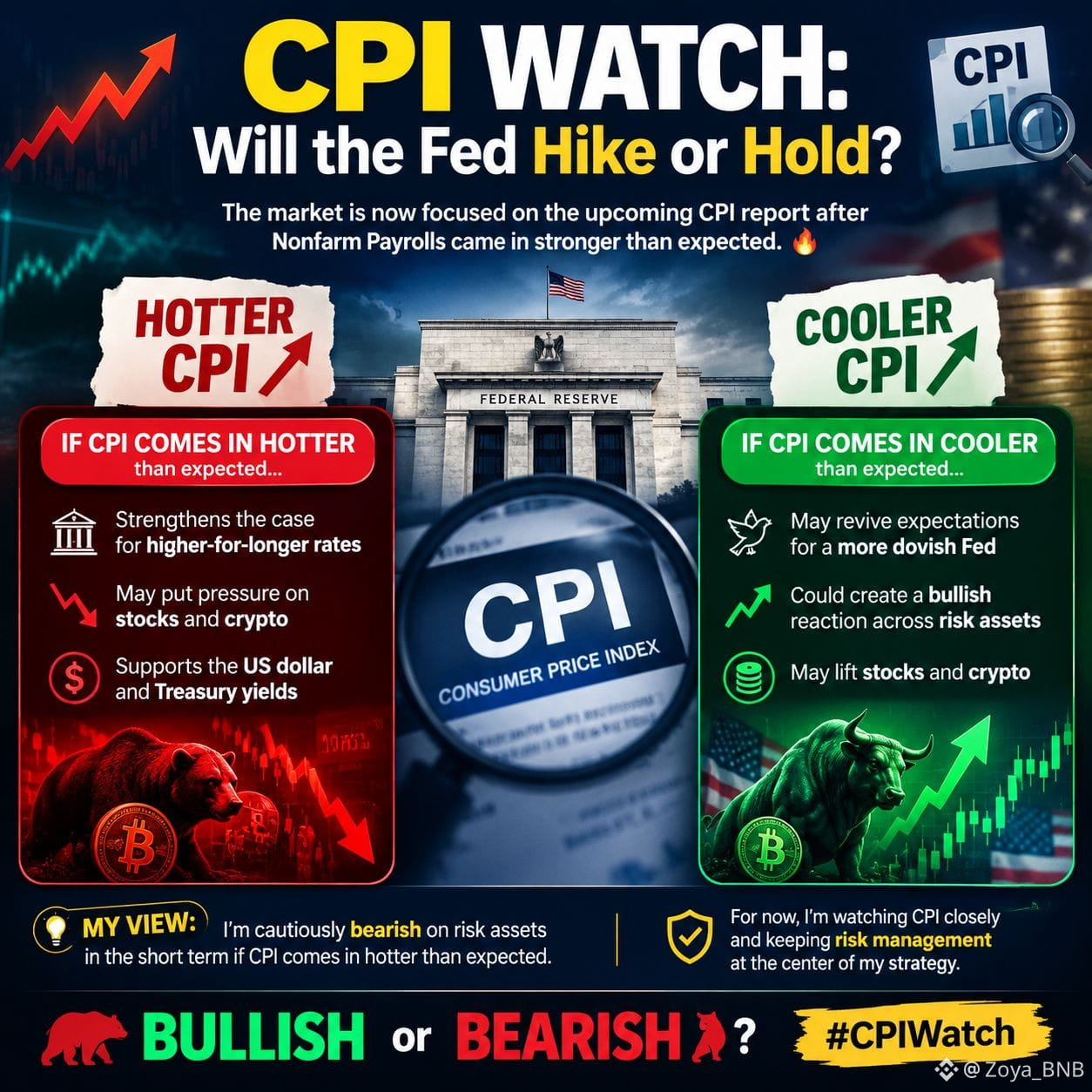
📊 ĐIỂM NHẤN CPI: Fed sẽ tăng hay giữ nguyên?
Thị trường hiện đang tập trung vào báo cáo CPI sắp tới sau khi Dữ liệu Bảng lương phi nông nghiệp (Nonfarm Payrolls) vừa cho thấy kết quả mạnh hơn dự kiến. 🔥
Câu hỏi then chốt là liệu dữ liệu việc làm mạnh hơn, kết hợp với lạm phát vẫn dai dẳng, có thúc đẩy Fed thêm một lần tăng lãi suất hay không — hay các nhà hoạch định chính sách sẽ chọn giữ lãi suất và chờ thêm bằng chứng rõ ràng hơn.
Quan điểm của tôi: Tôi đang thận trọng nghiêng về bi quan đối với các tài sản rủi ro trong ngắn hạn nếu CPI cao hơn dự kiến. 📉 CPI nóng hơn có thể củng cố luận điểm cho lãi suất “cao hơn trong thời gian dài”, từ đó gây áp lực lên cổ phiếu và crypto trong khi lại hỗ trợ đồng USD và lợi suất TPCP Mỹ.
Nếu CPI thấp hơn dự kiến, bức tranh có thể thay đổi rất nhanh. Lạm phát giảm có thể làm sống lại kỳ vọng về một Fed “dễ dãi” hơn và tạo phản ứng tích cực trên toàn bộ nhóm tài sản rủi ro. 📈
Tạm thời, tôi đang theo dõi CPI sát sao và đặt quản trị rủi ro ở vị trí trung tâm trong chiến lược của mình.
🔥 Tăng giá hay giảm giá — ý kiến của bạn là gì?
#CPIWatch #CPI数据
$LAB
{future}(LABUSDT)
$LSK
{spot}(LSKUSDT)
$GRIFFAIN
📊 ĐIỂM NHẤN CPI: Fed sẽ tăng hay giữ nguyên?
Thị trường hiện đang tập trung vào báo cáo CPI sắp tới sau khi Dữ liệu Bảng lương phi nông nghiệp (Nonfarm Payrolls) vừa cho thấy kết quả mạnh hơn dự kiến. 🔥
Câu hỏi then chốt là liệu dữ liệu việc làm mạnh hơn, kết hợp với lạm phát vẫn dai dẳng, có thúc đẩy Fed thêm một lần tăng lãi suất hay không — hay các nhà hoạch định chính sách sẽ chọn giữ lãi suất và chờ thêm bằng chứng rõ ràng hơn.
Quan điểm của tôi: Tôi đang thận trọng nghiêng về bi quan đối với các tài sản rủi ro trong ngắn hạn nếu CPI cao hơn dự kiến. 📉 CPI nóng hơn có thể củng cố luận điểm cho lãi suất “cao hơn trong thời gian dài”, từ đó gây áp lực lên cổ phiếu và crypto trong khi lại hỗ trợ đồng USD và lợi suất TPCP Mỹ.
Nếu CPI thấp hơn dự kiến, bức tranh có thể thay đổi rất nhanh. Lạm phát giảm có thể làm sống lại kỳ vọng về một Fed “dễ dãi” hơn và tạo phản ứng tích cực trên toàn bộ nhóm tài sản rủi ro. 📈
Tạm thời, tôi đang theo dõi CPI sát sao và đặt quản trị rủi ro ở vị trí trung tâm trong chiến lược của mình.
🔥 Tăng giá hay giảm giá — ý kiến của bạn là gì?
#CPIWatch #CPI数据
$LAB
$LSK
$GRIFFAIN
Thị trường hiện đang tập trung vào báo cáo CPI sắp tới sau khi Dữ liệu Bảng lương phi nông nghiệp (Nonfarm Payrolls) vừa cho thấy kết quả mạnh hơn dự kiến. 🔥
Câu hỏi then chốt là liệu dữ liệu việc làm mạnh hơn, kết hợp với lạm phát vẫn dai dẳng, có thúc đẩy Fed thêm một lần tăng lãi suất hay không — hay các nhà hoạch định chính sách sẽ chọn giữ lãi suất và chờ thêm bằng chứng rõ ràng hơn.
Quan điểm của tôi: Tôi đang thận trọng nghiêng về bi quan đối với các tài sản rủi ro trong ngắn hạn nếu CPI cao hơn dự kiến. 📉 CPI nóng hơn có thể củng cố luận điểm cho lãi suất “cao hơn trong thời gian dài”, từ đó gây áp lực lên cổ phiếu và crypto trong khi lại hỗ trợ đồng USD và lợi suất TPCP Mỹ.
Nếu CPI thấp hơn dự kiến, bức tranh có thể thay đổi rất nhanh. Lạm phát giảm có thể làm sống lại kỳ vọng về một Fed “dễ dãi” hơn và tạo phản ứng tích cực trên toàn bộ nhóm tài sản rủi ro. 📈
Tạm thời, tôi đang theo dõi CPI sát sao và đặt quản trị rủi ro ở vị trí trung tâm trong chiến lược của mình.
🔥 Tăng giá hay giảm giá — ý kiến của bạn là gì?
#CPIWatch #CPI数据
$LAB
$LSK
$GRIFFAIN
2
123
·
--
Tăng giá
📊 THEO DÕI CPI: Fed sẽ Tăng hay Giữ nguyên?
Thị trường đang bước vào một thời điểm then chốt. Sau khi Bảng lương phi nông nghiệp (Nonfarm Payrolls) vượt kỳ vọng, sự chú ý giờ chuyển sang báo cáo CPI sắp tới. 🔥
Câu hỏi lớn là: Dữ liệu việc làm mạnh hơn có đẩy Fed đến một lần tăng lãi suất nữa, hay các nhà hoạch định chính sách sẽ chọn giữ nguyên lãi suất và chờ thêm dữ liệu lạm phát?
Quan điểm của tôi: Tôi nghiêng về xu hướng bi quan một cách thận trọng đối với tài sản rủi ro trong ngắn hạn nếu CPI cao hơn dự kiến. 📉 Số liệu lạm phát cao hơn kỳ vọng có thể củng cố lập luận cho chính sách tiền tệ thắt chặt hơn, từ đó gây áp lực lên cổ phiếu và làm tăng nhu cầu đối với đồng đô la Mỹ.
Ngược lại, một CPI “mềm” hơn có thể nhanh chóng thay đổi câu chuyện và hỗ trợ một nhịp tăng giá trên các nhóm cổ phiếu lẫn vàng. 🟡📈
Với tôi, đây là một thị trường chờ dữ liệu. CPI có thể là chất xúc tác quyết định hướng đi lớn tiếp theo.
Ý kiến của bạn là gì: Fed Tăng hay Giữ? Tăng giá hay Bi quan?
#CPIWatch
#CPIWatch #CPIWatch #CPIWatch #CPIWatch
$牛来
{future}(牛来USDT)
$RAYSOL
{future}(RAYSOLUSDT)
📊 THEO DÕI CPI: Fed sẽ Tăng hay Giữ nguyên?
Thị trường đang bước vào một thời điểm then chốt. Sau khi Bảng lương phi nông nghiệp (Nonfarm Payrolls) vượt kỳ vọng, sự chú ý giờ chuyển sang báo cáo CPI sắp tới. 🔥
Câu hỏi lớn là: Dữ liệu việc làm mạnh hơn có đẩy Fed đến một lần tăng lãi suất nữa, hay các nhà hoạch định chính sách sẽ chọn giữ nguyên lãi suất và chờ thêm dữ liệu lạm phát?
Quan điểm của tôi: Tôi nghiêng về xu hướng bi quan một cách thận trọng đối với tài sản rủi ro trong ngắn hạn nếu CPI cao hơn dự kiến. 📉 Số liệu lạm phát cao hơn kỳ vọng có thể củng cố lập luận cho chính sách tiền tệ thắt chặt hơn, từ đó gây áp lực lên cổ phiếu và làm tăng nhu cầu đối với đồng đô la Mỹ.
Ngược lại, một CPI “mềm” hơn có thể nhanh chóng thay đổi câu chuyện và hỗ trợ một nhịp tăng giá trên các nhóm cổ phiếu lẫn vàng. 🟡📈
Với tôi, đây là một thị trường chờ dữ liệu. CPI có thể là chất xúc tác quyết định hướng đi lớn tiếp theo.
Ý kiến của bạn là gì: Fed Tăng hay Giữ? Tăng giá hay Bi quan?
#CPIWatch
#CPIWatch #CPIWatch #CPIWatch #CPIWatch
$牛来
$RAYSOL
Thị trường đang bước vào một thời điểm then chốt. Sau khi Bảng lương phi nông nghiệp (Nonfarm Payrolls) vượt kỳ vọng, sự chú ý giờ chuyển sang báo cáo CPI sắp tới. 🔥
Câu hỏi lớn là: Dữ liệu việc làm mạnh hơn có đẩy Fed đến một lần tăng lãi suất nữa, hay các nhà hoạch định chính sách sẽ chọn giữ nguyên lãi suất và chờ thêm dữ liệu lạm phát?
Quan điểm của tôi: Tôi nghiêng về xu hướng bi quan một cách thận trọng đối với tài sản rủi ro trong ngắn hạn nếu CPI cao hơn dự kiến. 📉 Số liệu lạm phát cao hơn kỳ vọng có thể củng cố lập luận cho chính sách tiền tệ thắt chặt hơn, từ đó gây áp lực lên cổ phiếu và làm tăng nhu cầu đối với đồng đô la Mỹ.
Ngược lại, một CPI “mềm” hơn có thể nhanh chóng thay đổi câu chuyện và hỗ trợ một nhịp tăng giá trên các nhóm cổ phiếu lẫn vàng. 🟡📈
Với tôi, đây là một thị trường chờ dữ liệu. CPI có thể là chất xúc tác quyết định hướng đi lớn tiếp theo.
Ý kiến của bạn là gì: Fed Tăng hay Giữ? Tăng giá hay Bi quan?
#CPIWatch
#CPIWatch #CPIWatch #CPIWatch #CPIWatch
$牛来
$RAYSOL

2
3
162
·
--
tất cả mọi người theo dõi @SmartBoy_007 và nhận
tất cả mọi người theo dõi @Ethan_Blake và nhận


Ethan_Blake
·
--
Tăng giá🎁 QUÀ TẶNG HỒNG BAO! 🚀🔥
Tôi đang tặng một Hồng Bao cho cộng đồng của mình! ❤️
Muốn tham gia chứ? 👀
✅ Theo dõi tôi
❤️ Thích bài viết này
💬 Bình luận XONG
Hãy luôn năng động và đón chờ — còn nhiều điều bất ngờ nữa sắp đến! 🔥
Hãy cùng nhau phát triển! 🚀📈
$BULLA
#RedPacket #Giveaway #Binance #CryptoCommunity #Followers
$MARSCOIN $AKE
Tôi đang tặng một Hồng Bao cho cộng đồng của mình! ❤️
Muốn tham gia chứ? 👀
✅ Theo dõi tôi
❤️ Thích bài viết này
💬 Bình luận XONG
Hãy luôn năng động và đón chờ — còn nhiều điều bất ngờ nữa sắp đến! 🔥
Hãy cùng nhau phát triển! 🚀📈
$BULLA
#RedPacket #Giveaway #Binance #CryptoCommunity #Followers
$MARSCOIN $AKE

1
2
38
·
--
Tăng giá
Các đồng tiền tăng giá hôm nay của Guy's Vua 👑👑
$BULLA $0.060614
{future}(BULLAUSDT)
$4 $0.025942
{future}(4USDT)
$AKE $0.019397
{future}(AKEUSDT)
Các đồng tiền tăng giá hôm nay của Guy's Vua 👑👑
$BULLA $0.060614
$4 $0.025942
$AKE $0.019397
$BULLA $0.060614
$4 $0.025942
$AKE $0.019397
bullish
59%
bearish
41%
34 phiếu bầu • Cuộc bỏ phiếu đã kết thúc
3
2.6k
·
--
Tăng giá
tiền tăng hôm nay là gì bạn nghĩ sao 🤔💬
$AKE
{future}(AKEUSDT)
$T
{future}(TUSDT)
$BULLA
{future}(BULLAUSDT)
tiền tăng hôm nay là gì bạn nghĩ sao 🤔💬
$AKE
$T
$BULLA
$AKE
$T
$BULLA
$bulla
16%
$T
29%
$ake
55%
51 phiếu bầu • Cuộc bỏ phiếu đã kết thúc
3
1.7k
·
--
Tăng giá
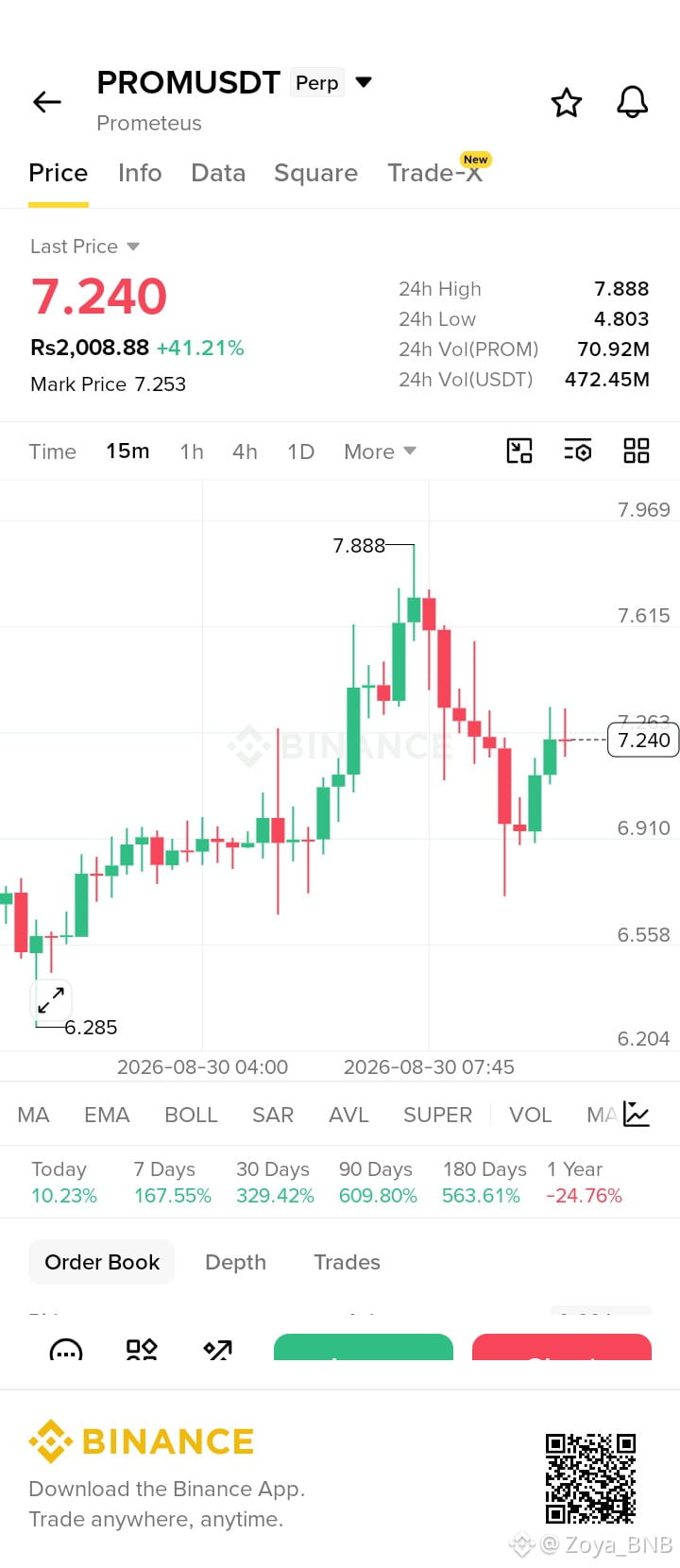
PROMUSDT – LONG (BREAKOUT PLAY)
🚀 $PROM đang thể hiện ĐỘNG LỰC TĂNG GIÁ KHỔNG LỒ với mức TĂNG +41,21% vô cùng ấn tượng! Bên mua vẫn hoàn toàn nắm quyền kiểm soát khi khối lượng bùng nổ lên 472,45M USDT. Cấu trúc vẫn mang tính tích cực với thanh khoản nằm quanh $7.888.
EP: $7.20 – $7.25
TP1: $7.45
TP2: $7.65
TP3: $7.888
SL: $6.90
Thanh khoản đã bị quét gần $4.803 trước khi xuất hiện phản ứng mua mạnh. Cấu trúc vẫn tích cực trên $6.90, với thanh khoản nằm quanh $7.888. Khối lượng 24h ở mức cực lớn: 70,92M PROM, xác nhận sự quan tâm mạnh mẽ từ tổ chức. Mức tăng 30 ngày là 329,42% và mức tăng 90 ngày là 609,80% cho thấy đợt tăng này có nền tảng rất vững!
Nào nào $PROM 🚀
PROMUSDT – LONG (BREAKOUT PLAY)
🚀 $PROM đang thể hiện ĐỘNG LỰC TĂNG GIÁ KHỔNG LỒ với mức TĂNG +41,21% vô cùng ấn tượng! Bên mua vẫn hoàn toàn nắm quyền kiểm soát khi khối lượng bùng nổ lên 472,45M USDT. Cấu trúc vẫn mang tính tích cực với thanh khoản nằm quanh $7.888.
EP: $7.20 – $7.25
TP1: $7.45
TP2: $7.65
TP3: $7.888
SL: $6.90
Thanh khoản đã bị quét gần $4.803 trước khi xuất hiện phản ứng mua mạnh. Cấu trúc vẫn tích cực trên $6.90, với thanh khoản nằm quanh $7.888. Khối lượng 24h ở mức cực lớn: 70,92M PROM, xác nhận sự quan tâm mạnh mẽ từ tổ chức. Mức tăng 30 ngày là 329,42% và mức tăng 90 ngày là 609,80% cho thấy đợt tăng này có nền tảng rất vững!
Nào nào $PROM 🚀
🚀 $PROM đang thể hiện ĐỘNG LỰC TĂNG GIÁ KHỔNG LỒ với mức TĂNG +41,21% vô cùng ấn tượng! Bên mua vẫn hoàn toàn nắm quyền kiểm soát khi khối lượng bùng nổ lên 472,45M USDT. Cấu trúc vẫn mang tính tích cực với thanh khoản nằm quanh $7.888.
EP: $7.20 – $7.25
TP1: $7.45
TP2: $7.65
TP3: $7.888
SL: $6.90
Thanh khoản đã bị quét gần $4.803 trước khi xuất hiện phản ứng mua mạnh. Cấu trúc vẫn tích cực trên $6.90, với thanh khoản nằm quanh $7.888. Khối lượng 24h ở mức cực lớn: 70,92M PROM, xác nhận sự quan tâm mạnh mẽ từ tổ chức. Mức tăng 30 ngày là 329,42% và mức tăng 90 ngày là 609,80% cho thấy đợt tăng này có nền tảng rất vững!
Nào nào $PROM 🚀
1
3
104
·
--
Tăng giá
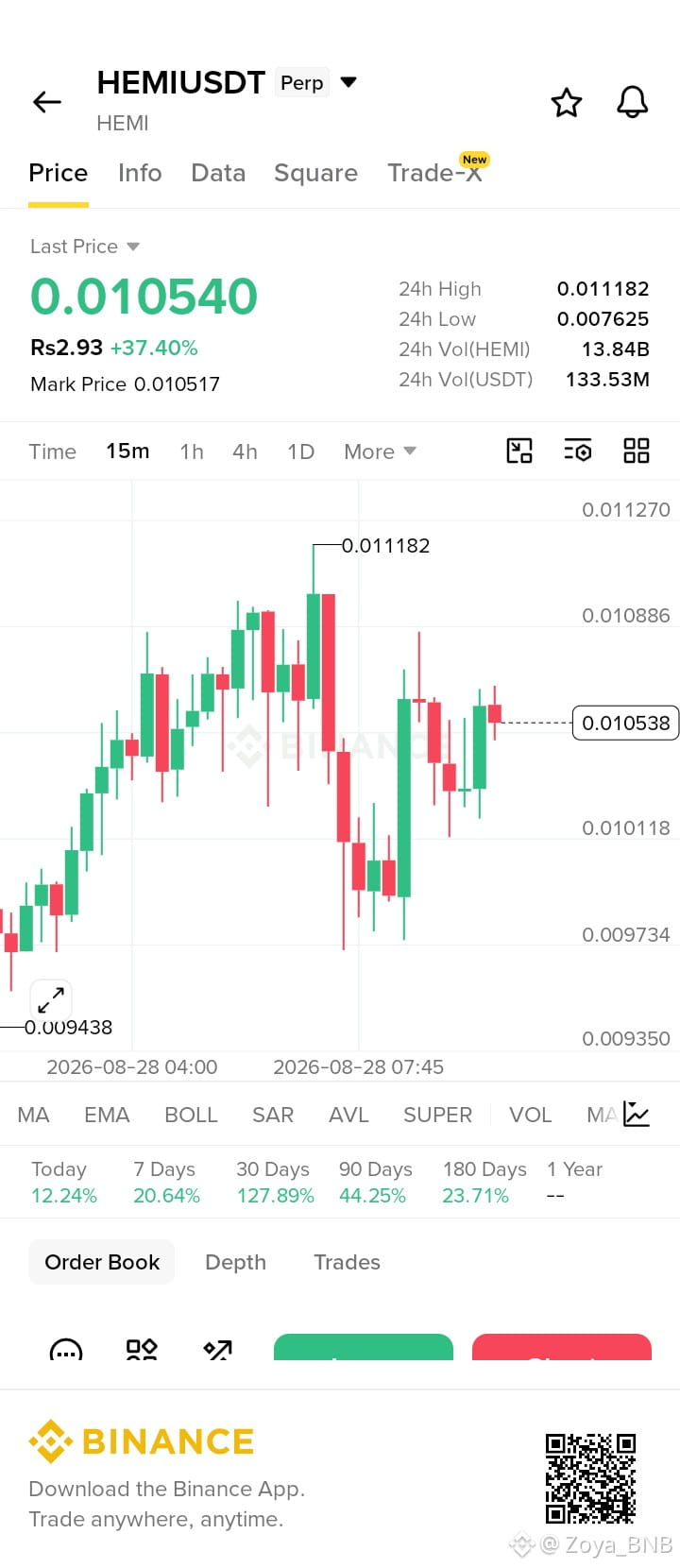
HEMIUSDT – LONG (BREAKOUT PLAY)
🚀 $HEMI đang cho thấy đà tăng mạnh mẽ với mức tăng ấn tượng +37.40%! Bên mua vẫn hoàn toàn nắm quyền kiểm soát khi khối lượng bùng nổ lên 133.53M USDT. Cấu trúc vẫn mang tính tích cực với thanh khoản nằm quanh $0.011182.
EP: $0.01050 – $0.01055
TP1: $0.01080
TP2: $0.01100
TP3: $0.011182
SL: $0.01020
Thanh khoản đã bị quét gần $0.007625 trước khi xuất hiện phản ứng mua mạnh. Cấu trúc vẫn mang tính tích cực trên $0.01020, với thanh khoản nằm quanh $0.011182. Khối lượng 24h đạt mức rất lớn là 13.84B HEMI, xác nhận sự quan tâm mạnh mẽ từ tổ chức. Mức tăng 30 ngày là 127.89% cho thấy đợt bứt phá này có đà rất vững!
Cùng đi nào $HEMI
{future}(HEMIUSDT)
HEMIUSDT – LONG (BREAKOUT PLAY)
🚀 $HEMI đang cho thấy đà tăng mạnh mẽ với mức tăng ấn tượng +37.40%! Bên mua vẫn hoàn toàn nắm quyền kiểm soát khi khối lượng bùng nổ lên 133.53M USDT. Cấu trúc vẫn mang tính tích cực với thanh khoản nằm quanh $0.011182.
EP: $0.01050 – $0.01055
TP1: $0.01080
TP2: $0.01100
TP3: $0.011182
SL: $0.01020
Thanh khoản đã bị quét gần $0.007625 trước khi xuất hiện phản ứng mua mạnh. Cấu trúc vẫn mang tính tích cực trên $0.01020, với thanh khoản nằm quanh $0.011182. Khối lượng 24h đạt mức rất lớn là 13.84B HEMI, xác nhận sự quan tâm mạnh mẽ từ tổ chức. Mức tăng 30 ngày là 127.89% cho thấy đợt bứt phá này có đà rất vững!
Cùng đi nào $HEMI
🚀 $HEMI đang cho thấy đà tăng mạnh mẽ với mức tăng ấn tượng +37.40%! Bên mua vẫn hoàn toàn nắm quyền kiểm soát khi khối lượng bùng nổ lên 133.53M USDT. Cấu trúc vẫn mang tính tích cực với thanh khoản nằm quanh $0.011182.
EP: $0.01050 – $0.01055
TP1: $0.01080
TP2: $0.01100
TP3: $0.011182
SL: $0.01020
Thanh khoản đã bị quét gần $0.007625 trước khi xuất hiện phản ứng mua mạnh. Cấu trúc vẫn mang tính tích cực trên $0.01020, với thanh khoản nằm quanh $0.011182. Khối lượng 24h đạt mức rất lớn là 13.84B HEMI, xác nhận sự quan tâm mạnh mẽ từ tổ chức. Mức tăng 30 ngày là 127.89% cho thấy đợt bứt phá này có đà rất vững!
Cùng đi nào $HEMI
2
121
·
--
Tối qua, tôi cứ ngồi nhìn một ứng dụng ngân hàng và nghĩ về việc chúng ta vô tư lộ ra bao nhiêu dữ liệu tài chính chỉ để chuyển tiền.
Rồi tôi chợt nhận ra — các tổ chức lại gặp vấn đề ngược lại.
Họ cần quyền riêng tư.
Nhưng họ cũng cần bằng chứng.
Đó là lúc Dusk trở nên thú vị.
Một tổ chức được quản lý không thể chỉ nói: “Tin tôi đi, giao dịch này tuân thủ.” Cơ quan quản lý có thể cần bằng chứng rằng nhà đầu tư đủ điều kiện, lệnh chuyển tiền tuân thủ các giới hạn, và tài sản tuân theo các ràng buộc của nó — mà không cần xem toàn bộ số dư, danh tính hay chi tiết giao dịch.
Đó là lời hứa của ZK.
Chứng minh quy tắc.
Ẩn dữ liệu nền.
Nhưng nói thật thì phần khó không nằm ở phép toán.
Mà nằm ở mạch.
Một bằng chứng ZK có thể hoàn toàn hợp lệ nhưng lại chứng minh sai điều nếu logic tuân thủ bị thiếu. Thêm các quy tắc về đủ điều kiện, kiểm tra thẩm quyền pháp lý, thời gian nắm giữ, các hạn chế chuyển nhượng, thông tin xác thực, kiểm toán và các hành động bắt buộc — đột nhiên quyền riêng tư trở thành một bài toán kỹ thuật nghiêm túc.
Và còn một điểm ma sát khác: siêu dữ liệu, hành vi ví, dòng chảy thanh khoản và hạ tầng công bố thông tin vẫn có thể làm rò rỉ dữ liệu.
Dusk không cần quyền riêng tư tối đa.
Nó cần mức độ công bố tối thiểu + khả năng xác minh tối đa.
Đó là cuộc chiến của các tổ chức.
@Dusk_Foundation #dusk $DUSK
Tối qua, tôi cứ ngồi nhìn một ứng dụng ngân hàng và nghĩ về việc chúng ta vô tư lộ ra bao nhiêu dữ liệu tài chính chỉ để chuyển tiền.
Rồi tôi chợt nhận ra — các tổ chức lại gặp vấn đề ngược lại.
Họ cần quyền riêng tư.
Nhưng họ cũng cần bằng chứng.
Đó là lúc Dusk trở nên thú vị.
Một tổ chức được quản lý không thể chỉ nói: “Tin tôi đi, giao dịch này tuân thủ.” Cơ quan quản lý có thể cần bằng chứng rằng nhà đầu tư đủ điều kiện, lệnh chuyển tiền tuân thủ các giới hạn, và tài sản tuân theo các ràng buộc của nó — mà không cần xem toàn bộ số dư, danh tính hay chi tiết giao dịch.
Đó là lời hứa của ZK.
Chứng minh quy tắc.
Ẩn dữ liệu nền.
Nhưng nói thật thì phần khó không nằm ở phép toán.
Mà nằm ở mạch.
Một bằng chứng ZK có thể hoàn toàn hợp lệ nhưng lại chứng minh sai điều nếu logic tuân thủ bị thiếu. Thêm các quy tắc về đủ điều kiện, kiểm tra thẩm quyền pháp lý, thời gian nắm giữ, các hạn chế chuyển nhượng, thông tin xác thực, kiểm toán và các hành động bắt buộc — đột nhiên quyền riêng tư trở thành một bài toán kỹ thuật nghiêm túc.
Và còn một điểm ma sát khác: siêu dữ liệu, hành vi ví, dòng chảy thanh khoản và hạ tầng công bố thông tin vẫn có thể làm rò rỉ dữ liệu.
Dusk không cần quyền riêng tư tối đa.
Nó cần mức độ công bố tối thiểu + khả năng xác minh tối đa.
Đó là cuộc chiến của các tổ chức.
@Dusk #dusk $DUSK
Rồi tôi chợt nhận ra — các tổ chức lại gặp vấn đề ngược lại.
Họ cần quyền riêng tư.
Nhưng họ cũng cần bằng chứng.
Đó là lúc Dusk trở nên thú vị.
Một tổ chức được quản lý không thể chỉ nói: “Tin tôi đi, giao dịch này tuân thủ.” Cơ quan quản lý có thể cần bằng chứng rằng nhà đầu tư đủ điều kiện, lệnh chuyển tiền tuân thủ các giới hạn, và tài sản tuân theo các ràng buộc của nó — mà không cần xem toàn bộ số dư, danh tính hay chi tiết giao dịch.
Đó là lời hứa của ZK.
Chứng minh quy tắc.
Ẩn dữ liệu nền.
Nhưng nói thật thì phần khó không nằm ở phép toán.
Mà nằm ở mạch.
Một bằng chứng ZK có thể hoàn toàn hợp lệ nhưng lại chứng minh sai điều nếu logic tuân thủ bị thiếu. Thêm các quy tắc về đủ điều kiện, kiểm tra thẩm quyền pháp lý, thời gian nắm giữ, các hạn chế chuyển nhượng, thông tin xác thực, kiểm toán và các hành động bắt buộc — đột nhiên quyền riêng tư trở thành một bài toán kỹ thuật nghiêm túc.
Và còn một điểm ma sát khác: siêu dữ liệu, hành vi ví, dòng chảy thanh khoản và hạ tầng công bố thông tin vẫn có thể làm rò rỉ dữ liệu.
Dusk không cần quyền riêng tư tối đa.
Nó cần mức độ công bố tối thiểu + khả năng xác minh tối đa.
Đó là cuộc chiến của các tổ chức.
@Dusk #dusk $DUSK
3
158
·
--
Tăng giá
Đã xác minh
🚨 Thế hệ Hạ tầng Tài chính tiếp theo đã xuất hiện
Dusk Network là blockchain Layer-1 được tối ưu bởi AI, được thiết kế riêng cho các giao dịch tài chính bí mật đạt chuẩn cấp tổ chức.
⚡ Hợp đồng thông minh bảo mật: Thực thi logic tài chính phức tạp với quyền riêng tư mật mã mật hóa không kiến thức (zero-knowledge).
🔐 Quyền riêng tư Zero-Knowledge: Bảo vệ dữ liệu doanh nghiệp độc quyền một cách an toàn mà không làm ảnh hưởng đến việc giám sát tuân thủ quy định.
📜 Tuân thủ chuẩn XSC: Khung nền tảng gốc được xây dựng để hỗ trợ tuân thủ pháp lý và tự động hóa việc phát hành tài sản.
🏦 Kiến trúc quy mô cấp tổ chức: Kết nối các thị trường vốn truyền thống với thanh khoản phi tập trung.
Trong khi các blockchain công khai truyền thống mặc định tiết lộ dữ liệu giám sát giao dịch (telemetry), Dusk Network cung cấp mức độ bảo mật hoàn chỉnh cho các chuyển trạng thái và số dư tài khoản.
Bảo mật không phải là một phần bổ sung.
Mà là kiến trúc nền tảng của giao thức.
Chào mừng đến với tương lai của tài chính phi tập trung dành cho tổ chức. 🌐
{spot}(DUSKUSDT)
#dusk $DUSK @Dusk_Foundation
🚨 Thế hệ Hạ tầng Tài chính tiếp theo đã xuất hiện
Dusk Network là blockchain Layer-1 được tối ưu bởi AI, được thiết kế riêng cho các giao dịch tài chính bí mật đạt chuẩn cấp tổ chức.
⚡ Hợp đồng thông minh bảo mật: Thực thi logic tài chính phức tạp với quyền riêng tư mật mã mật hóa không kiến thức (zero-knowledge).
🔐 Quyền riêng tư Zero-Knowledge: Bảo vệ dữ liệu doanh nghiệp độc quyền một cách an toàn mà không làm ảnh hưởng đến việc giám sát tuân thủ quy định.
📜 Tuân thủ chuẩn XSC: Khung nền tảng gốc được xây dựng để hỗ trợ tuân thủ pháp lý và tự động hóa việc phát hành tài sản.
🏦 Kiến trúc quy mô cấp tổ chức: Kết nối các thị trường vốn truyền thống với thanh khoản phi tập trung.
Trong khi các blockchain công khai truyền thống mặc định tiết lộ dữ liệu giám sát giao dịch (telemetry), Dusk Network cung cấp mức độ bảo mật hoàn chỉnh cho các chuyển trạng thái và số dư tài khoản.
Bảo mật không phải là một phần bổ sung.
Mà là kiến trúc nền tảng của giao thức.
Chào mừng đến với tương lai của tài chính phi tập trung dành cho tổ chức. 🌐
#dusk $DUSK @Dusk
Dusk Network là blockchain Layer-1 được tối ưu bởi AI, được thiết kế riêng cho các giao dịch tài chính bí mật đạt chuẩn cấp tổ chức.
⚡ Hợp đồng thông minh bảo mật: Thực thi logic tài chính phức tạp với quyền riêng tư mật mã mật hóa không kiến thức (zero-knowledge).
🔐 Quyền riêng tư Zero-Knowledge: Bảo vệ dữ liệu doanh nghiệp độc quyền một cách an toàn mà không làm ảnh hưởng đến việc giám sát tuân thủ quy định.
📜 Tuân thủ chuẩn XSC: Khung nền tảng gốc được xây dựng để hỗ trợ tuân thủ pháp lý và tự động hóa việc phát hành tài sản.
🏦 Kiến trúc quy mô cấp tổ chức: Kết nối các thị trường vốn truyền thống với thanh khoản phi tập trung.
Trong khi các blockchain công khai truyền thống mặc định tiết lộ dữ liệu giám sát giao dịch (telemetry), Dusk Network cung cấp mức độ bảo mật hoàn chỉnh cho các chuyển trạng thái và số dư tài khoản.
Bảo mật không phải là một phần bổ sung.
Mà là kiến trúc nền tảng của giao thức.
Chào mừng đến với tương lai của tài chính phi tập trung dành cho tổ chức. 🌐
#dusk $DUSK @Dusk
1
2
109
·
--
Tăng giá
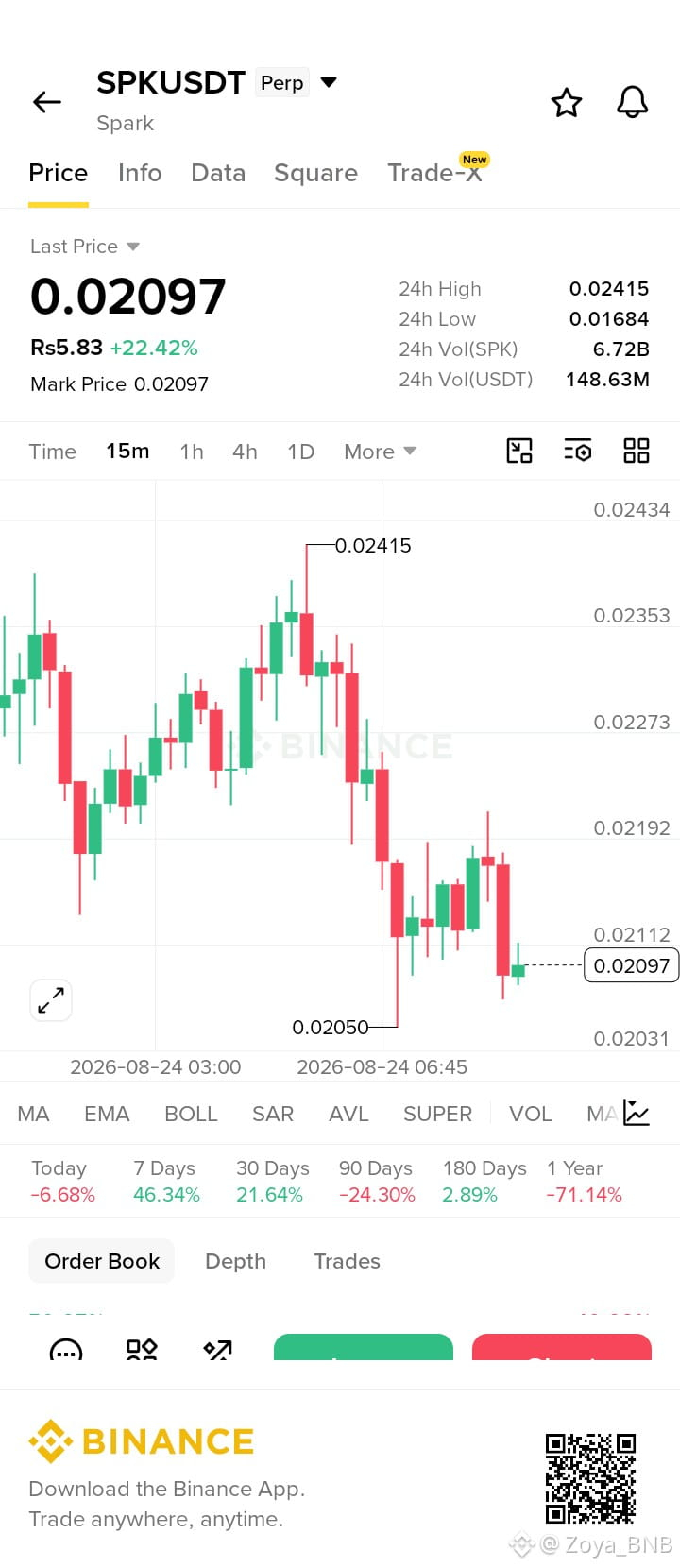
SPKUSDT – LONG (BREAKOUT PLAY)
🚀 đang thể hiện động lượng tăng mạnh sau đợt bứt phá +22.42% khổng lồ! Bên mua vẫn nắm quyền kiểm soát khi khối lượng bùng nổ lên 148.63M USDT. Cấu trúc vẫn mang tính tích cực với thanh khoản nằm quanh mức $0.02415.
EP: $0.02090 – $0.02100
TP1: $0.02200
TP2: $0.02300
TP3: $0.02415
SL: $0.02000
Thanh khoản đã bị quét gần $0.01684 trước khi có phản ứng mua mạnh. Cấu trúc vẫn tích cực trên $0.02000, với thanh khoản nằm quanh $0.02415. Khối lượng 24h ở mức khổng lồ 6.72B SPK, xác nhận sự quan tâm mạnh từ các tổ chức. Mức tăng 7 ngày đạt 46.34% cho thấy đợt rally này còn nhiều dư địa!
Let's go $SPK 🚀
{future}(SPKUSDT)
SPKUSDT – LONG (BREAKOUT PLAY)
🚀 đang thể hiện động lượng tăng mạnh sau đợt bứt phá +22.42% khổng lồ! Bên mua vẫn nắm quyền kiểm soát khi khối lượng bùng nổ lên 148.63M USDT. Cấu trúc vẫn mang tính tích cực với thanh khoản nằm quanh mức $0.02415.
EP: $0.02090 – $0.02100
TP1: $0.02200
TP2: $0.02300
TP3: $0.02415
SL: $0.02000
Thanh khoản đã bị quét gần $0.01684 trước khi có phản ứng mua mạnh. Cấu trúc vẫn tích cực trên $0.02000, với thanh khoản nằm quanh $0.02415. Khối lượng 24h ở mức khổng lồ 6.72B SPK, xác nhận sự quan tâm mạnh từ các tổ chức. Mức tăng 7 ngày đạt 46.34% cho thấy đợt rally này còn nhiều dư địa!
Let's go $SPK 🚀
🚀 đang thể hiện động lượng tăng mạnh sau đợt bứt phá +22.42% khổng lồ! Bên mua vẫn nắm quyền kiểm soát khi khối lượng bùng nổ lên 148.63M USDT. Cấu trúc vẫn mang tính tích cực với thanh khoản nằm quanh mức $0.02415.
EP: $0.02090 – $0.02100
TP1: $0.02200
TP2: $0.02300
TP3: $0.02415
SL: $0.02000
Thanh khoản đã bị quét gần $0.01684 trước khi có phản ứng mua mạnh. Cấu trúc vẫn tích cực trên $0.02000, với thanh khoản nằm quanh $0.02415. Khối lượng 24h ở mức khổng lồ 6.72B SPK, xác nhận sự quan tâm mạnh từ các tổ chức. Mức tăng 7 ngày đạt 46.34% cho thấy đợt rally này còn nhiều dư địa!
Let's go $SPK 🚀
2
152
·
--
Đã xác minh
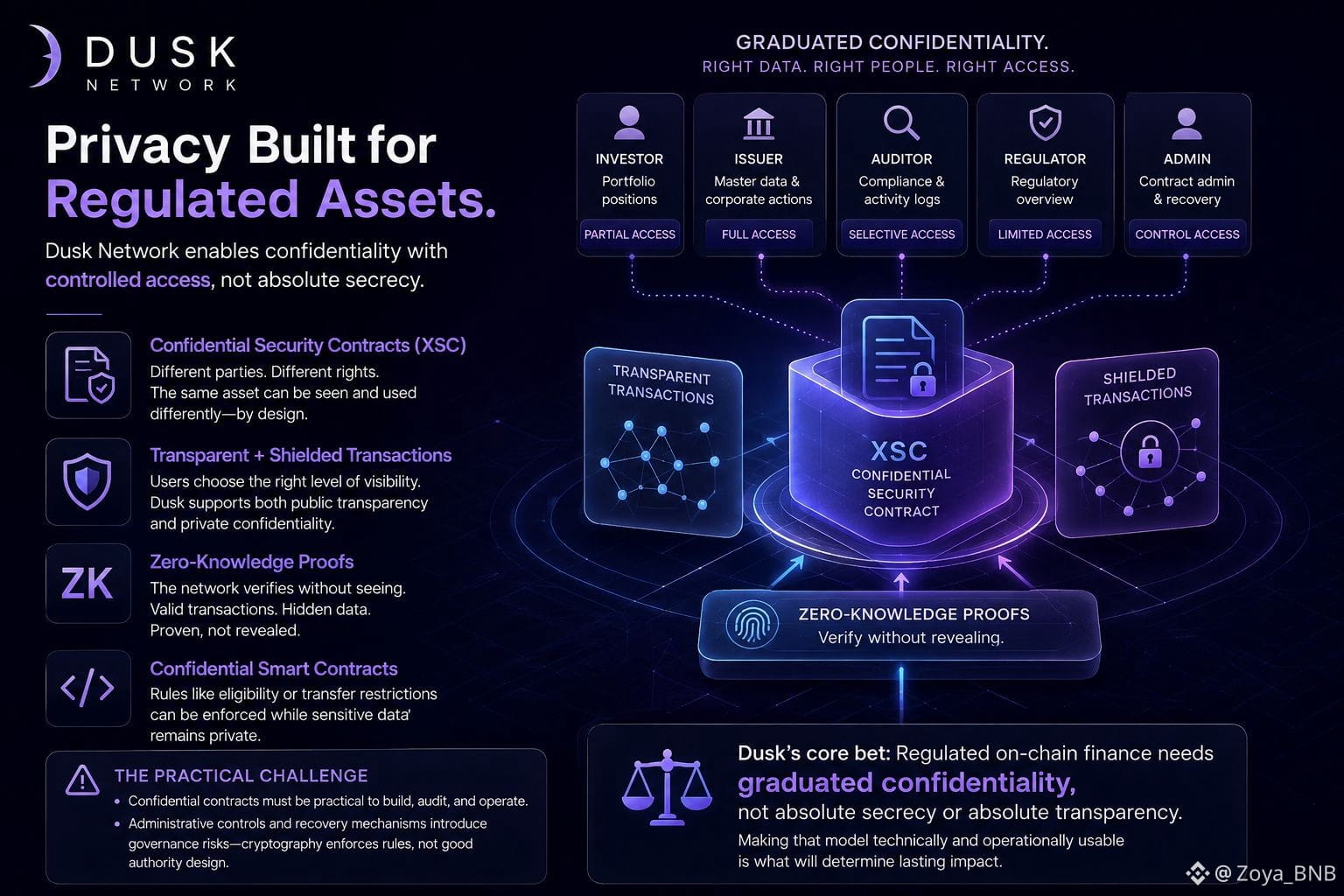
Mạng Dusk được xây dựng cho quyền riêng tư mà tài sản được quản lý thực sự cần
Ý tưởng nổi bật nhất của Mạng Dusk không chỉ đơn thuần là che giấu dữ liệu tài chính. Nó hướng tới việc làm cho tính bảo mật tương thích với các mức độ truy cập và kiểm soát không đồng đều mà các tài sản được quản lý yêu cầu.
Logic phía sau điều đó là chuẩn Confidential Security Contract, XSC. Một nhà đầu tư, tổ chức phát hành, kiểm toán viên hoặc bên được ủy quyền khác có thể cần các quyền khác nhau đối với cùng một tài sản. Dusk nhắm tới việc hỗ trợ điều đó mà không đưa toàn bộ vị thế và chi tiết giao dịch lên một sổ cái hoàn toàn minh bạch.
Kiến trúc của Dusk kết hợp các mô hình giao dịch minh bạch và được che chắn, với các bằng chứng mật mã không tiết lộ (zero-knowledge proofs) cho phép mạng xác thực hoạt động riêng tư mà không phơi bày dữ liệu nền tảng. Bước khó hơn là mở rộng ý tưởng đó sang hợp đồng thông minh, nơi các quy tắc như điều kiện đủ tư cách hoặc hạn chế chuyển nhượng có thể cần được thực thi trong khi thông tin nhạy cảm vẫn được giấu kín.
Điều này tạo ra thách thức thực tiễn lớn nhất của Dusk. Hạ tầng quyền riêng tư chỉ hữu ích nếu các hợp đồng bảo mật vẫn khả thi để xây dựng, kiểm toán và vận hành. Các cơ chế kiểm soát hành chính và khôi phục cũng đặt ra các câu hỏi về quản trị: mật mã có thể thực thi các quy tắc, nhưng nó không thể khiến những cấu trúc thẩm quyền được thiết kế kém an toàn.
Cược cốt lõi của Dusk là tài chính on-chain được quản lý cần mức bảo mật theo bậc thang, chứ không phải bí mật tuyệt đối hay minh bạch tuyệt đối. Việc biến mô hình đó thành có thể sử dụng được về mặt kỹ thuật và vận hành sẽ quyết định liệu kiến trúc của họ có sức bền thực sự hay không.
#dusk $DUSK @Dusk_Foundation
Mạng Dusk được xây dựng cho quyền riêng tư mà tài sản được quản lý thực sự cần
Ý tưởng nổi bật nhất của Mạng Dusk không chỉ đơn thuần là che giấu dữ liệu tài chính. Nó hướng tới việc làm cho tính bảo mật tương thích với các mức độ truy cập và kiểm soát không đồng đều mà các tài sản được quản lý yêu cầu.
Logic phía sau điều đó là chuẩn Confidential Security Contract, XSC. Một nhà đầu tư, tổ chức phát hành, kiểm toán viên hoặc bên được ủy quyền khác có thể cần các quyền khác nhau đối với cùng một tài sản. Dusk nhắm tới việc hỗ trợ điều đó mà không đưa toàn bộ vị thế và chi tiết giao dịch lên một sổ cái hoàn toàn minh bạch.
Kiến trúc của Dusk kết hợp các mô hình giao dịch minh bạch và được che chắn, với các bằng chứng mật mã không tiết lộ (zero-knowledge proofs) cho phép mạng xác thực hoạt động riêng tư mà không phơi bày dữ liệu nền tảng. Bước khó hơn là mở rộng ý tưởng đó sang hợp đồng thông minh, nơi các quy tắc như điều kiện đủ tư cách hoặc hạn chế chuyển nhượng có thể cần được thực thi trong khi thông tin nhạy cảm vẫn được giấu kín.
Điều này tạo ra thách thức thực tiễn lớn nhất của Dusk. Hạ tầng quyền riêng tư chỉ hữu ích nếu các hợp đồng bảo mật vẫn khả thi để xây dựng, kiểm toán và vận hành. Các cơ chế kiểm soát hành chính và khôi phục cũng đặt ra các câu hỏi về quản trị: mật mã có thể thực thi các quy tắc, nhưng nó không thể khiến những cấu trúc thẩm quyền được thiết kế kém an toàn.
Cược cốt lõi của Dusk là tài chính on-chain được quản lý cần mức bảo mật theo bậc thang, chứ không phải bí mật tuyệt đối hay minh bạch tuyệt đối. Việc biến mô hình đó thành có thể sử dụng được về mặt kỹ thuật và vận hành sẽ quyết định liệu kiến trúc của họ có sức bền thực sự hay không.
#dusk $DUSK @Dusk
Ý tưởng nổi bật nhất của Mạng Dusk không chỉ đơn thuần là che giấu dữ liệu tài chính. Nó hướng tới việc làm cho tính bảo mật tương thích với các mức độ truy cập và kiểm soát không đồng đều mà các tài sản được quản lý yêu cầu.
Logic phía sau điều đó là chuẩn Confidential Security Contract, XSC. Một nhà đầu tư, tổ chức phát hành, kiểm toán viên hoặc bên được ủy quyền khác có thể cần các quyền khác nhau đối với cùng một tài sản. Dusk nhắm tới việc hỗ trợ điều đó mà không đưa toàn bộ vị thế và chi tiết giao dịch lên một sổ cái hoàn toàn minh bạch.
Kiến trúc của Dusk kết hợp các mô hình giao dịch minh bạch và được che chắn, với các bằng chứng mật mã không tiết lộ (zero-knowledge proofs) cho phép mạng xác thực hoạt động riêng tư mà không phơi bày dữ liệu nền tảng. Bước khó hơn là mở rộng ý tưởng đó sang hợp đồng thông minh, nơi các quy tắc như điều kiện đủ tư cách hoặc hạn chế chuyển nhượng có thể cần được thực thi trong khi thông tin nhạy cảm vẫn được giấu kín.
Điều này tạo ra thách thức thực tiễn lớn nhất của Dusk. Hạ tầng quyền riêng tư chỉ hữu ích nếu các hợp đồng bảo mật vẫn khả thi để xây dựng, kiểm toán và vận hành. Các cơ chế kiểm soát hành chính và khôi phục cũng đặt ra các câu hỏi về quản trị: mật mã có thể thực thi các quy tắc, nhưng nó không thể khiến những cấu trúc thẩm quyền được thiết kế kém an toàn.
Cược cốt lõi của Dusk là tài chính on-chain được quản lý cần mức bảo mật theo bậc thang, chứ không phải bí mật tuyệt đối hay minh bạch tuyệt đối. Việc biến mô hình đó thành có thể sử dụng được về mặt kỹ thuật và vận hành sẽ quyết định liệu kiến trúc của họ có sức bền thực sự hay không.
#dusk $DUSK @Dusk
1
4
125
·
--
Tăng giá
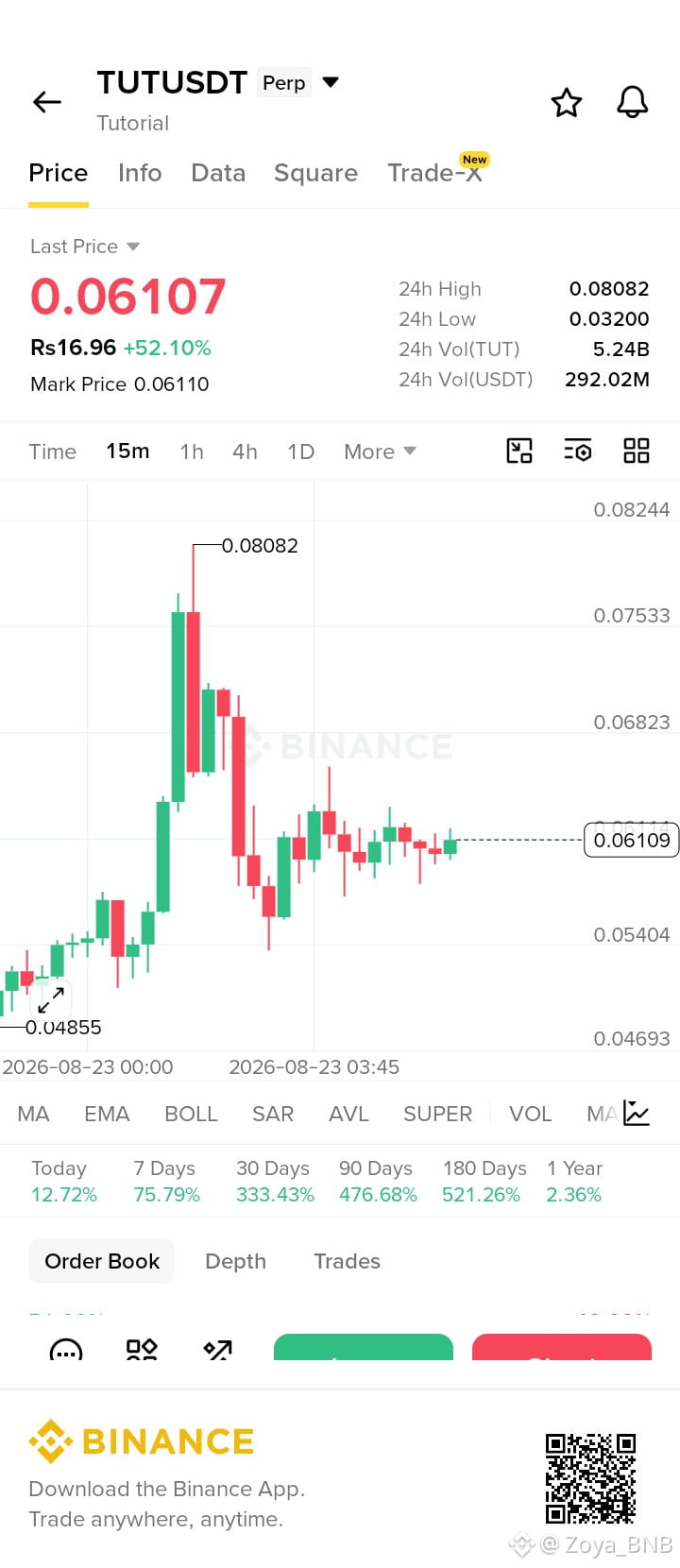
TUTUSDT – DÀI
🚀 $TUT đang cho thấy đà tăng mạnh mẽ sau một đợt bùng nổ tăng giá từ $0.03200! Bên mua vẫn hoàn toàn nắm quyền kiểm soát khi khối lượng tăng vọt lên 292.02M USDT. Cấu trúc vẫn mang tính tích cực, với thanh khoản nằm quanh $0.08082.
EP: $0.06050 – $0.06150
TP1: $0.06500
TP2: $0.07000
TP3: $0.08082
SL: $0.05500
Thanh khoản đã bị quét gần $0.03200 trước khi có phản ứng mạnh từ người mua. Cấu trúc vẫn tích cực trên $0.05500, với thanh khoản nằm quanh $0.08082. Khối lượng 24h ở mức rất lớn là 5.24B TUT, xác nhận sự quan tâm mạnh mẽ từ tổ chức. Mức tăng 7 ngày là 75.79% và mức tăng 30 ngày là 333.43% cho thấy đợt tăng này còn rất dài hơi. Với đỉnh 24h ở $0.08082, chúng ta có thể sớm thấy một lần kiểm tra lại (retest) mức này. Xu hướng là bạn của bạn — và ngay lúc này, xu hướng là không thể phủ nhận đang đi lên!
Hãy cùng đi $TUT
{future}(TUTUSDT)
TUTUSDT – DÀI
🚀 $TUT đang cho thấy đà tăng mạnh mẽ sau một đợt bùng nổ tăng giá từ $0.03200! Bên mua vẫn hoàn toàn nắm quyền kiểm soát khi khối lượng tăng vọt lên 292.02M USDT. Cấu trúc vẫn mang tính tích cực, với thanh khoản nằm quanh $0.08082.
EP: $0.06050 – $0.06150
TP1: $0.06500
TP2: $0.07000
TP3: $0.08082
SL: $0.05500
Thanh khoản đã bị quét gần $0.03200 trước khi có phản ứng mạnh từ người mua. Cấu trúc vẫn tích cực trên $0.05500, với thanh khoản nằm quanh $0.08082. Khối lượng 24h ở mức rất lớn là 5.24B TUT, xác nhận sự quan tâm mạnh mẽ từ tổ chức. Mức tăng 7 ngày là 75.79% và mức tăng 30 ngày là 333.43% cho thấy đợt tăng này còn rất dài hơi. Với đỉnh 24h ở $0.08082, chúng ta có thể sớm thấy một lần kiểm tra lại (retest) mức này. Xu hướng là bạn của bạn — và ngay lúc này, xu hướng là không thể phủ nhận đang đi lên!
Hãy cùng đi $TUT
🚀 $TUT đang cho thấy đà tăng mạnh mẽ sau một đợt bùng nổ tăng giá từ $0.03200! Bên mua vẫn hoàn toàn nắm quyền kiểm soát khi khối lượng tăng vọt lên 292.02M USDT. Cấu trúc vẫn mang tính tích cực, với thanh khoản nằm quanh $0.08082.
EP: $0.06050 – $0.06150
TP1: $0.06500
TP2: $0.07000
TP3: $0.08082
SL: $0.05500
Thanh khoản đã bị quét gần $0.03200 trước khi có phản ứng mạnh từ người mua. Cấu trúc vẫn tích cực trên $0.05500, với thanh khoản nằm quanh $0.08082. Khối lượng 24h ở mức rất lớn là 5.24B TUT, xác nhận sự quan tâm mạnh mẽ từ tổ chức. Mức tăng 7 ngày là 75.79% và mức tăng 30 ngày là 333.43% cho thấy đợt tăng này còn rất dài hơi. Với đỉnh 24h ở $0.08082, chúng ta có thể sớm thấy một lần kiểm tra lại (retest) mức này. Xu hướng là bạn của bạn — và ngay lúc này, xu hướng là không thể phủ nhận đang đi lên!
Hãy cùng đi $TUT
1
280
·
--
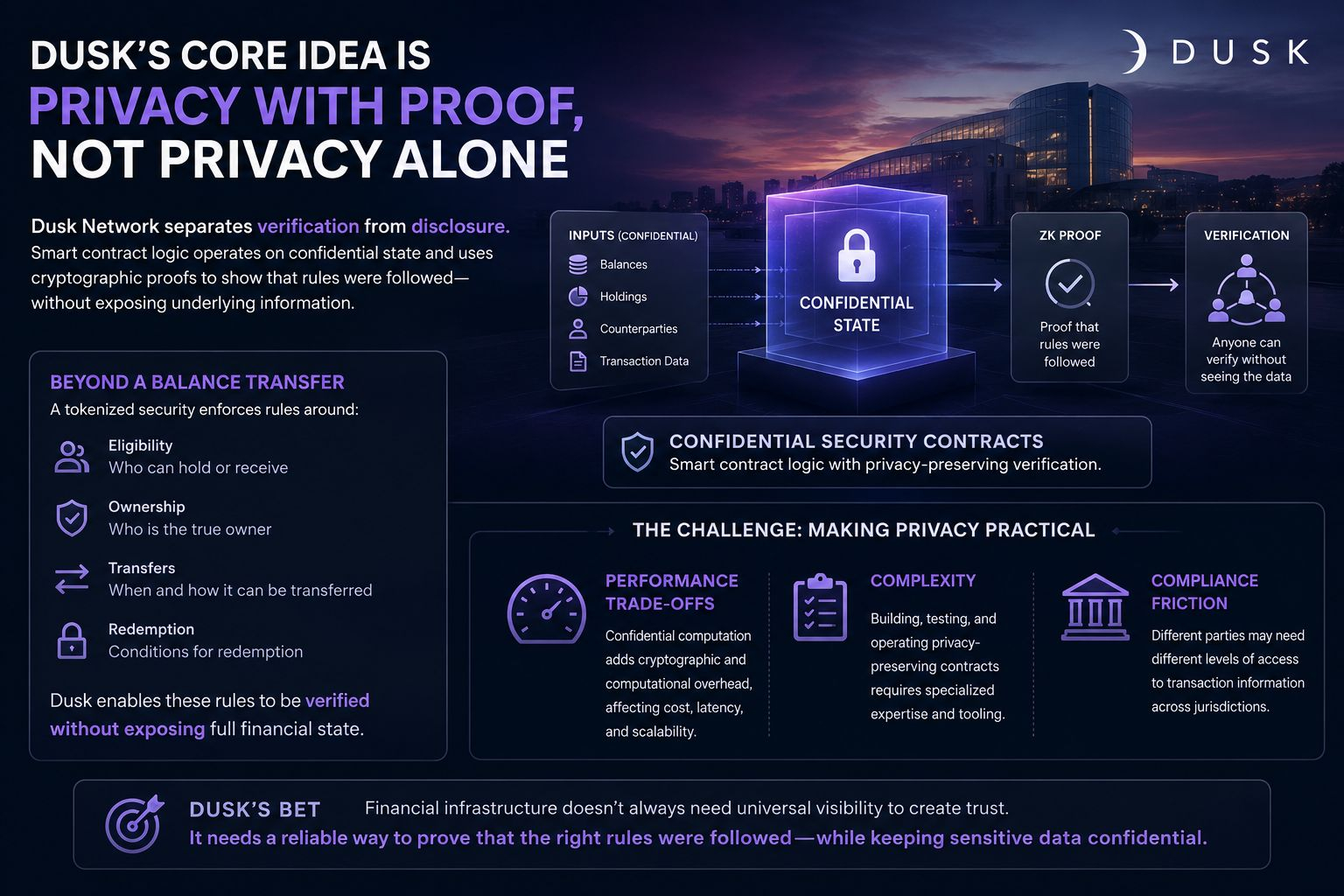
Ý tưởng cốt lõi của Dusk là quyền riêng tư kèm theo bằng chứng, chứ không chỉ là quyền riêng tư
Ý tưởng quan trọng nhất của Mạng lưới Dusk không chỉ đơn thuần là làm cho các hoạt động blockchain trở nên riêng tư. Đó là việc tách biệt giữa xác thực và công bố.
Chuẩn Hợp đồng Bảo mật Bảo mật (Confidential Security Contract) của họ cho phép logic của smart contract vận hành trên trạng thái bí mật (confidential state), sử dụng các bằng chứng mật mã để chứng minh rằng các quy tắc đã được tuân thủ mà không lộ toàn bộ thông tin nền tảng. Sự khác biệt này đặc biệt quan trọng đối với tài sản tài chính, nơi dữ liệu giao dịch, số dư nắm giữ và các đối tác có thể nhạy cảm về mặt thương mại, nhưng các quy tắc về sở hữu và chuyển nhượng vẫn cần phải được thực thi.
Ví dụ, một chứng khoán được token hóa không chỉ là việc số dư chuyển động giữa các địa chỉ. Nó có thể kèm theo các ràng buộc về điều kiện đủ tư cách, sở hữu, chuyển nhượng hoặc mua lại (redemption). Cách tiếp cận của Dusk được thiết kế để cho phép các quy tắc này được xác minh mà không khiến toàn bộ trạng thái tài chính bị lộ cho mọi người tham gia.
Thách thức là biến điều này thành thực tế. Điện toán bảo mật (confidential computation) bổ sung độ phức tạp về mật mã và tính toán, có thể ảnh hưởng đến chi phí, độ trễ (latency) và độ phức tạp vận hành. Việc tuân thủ (compliance) cũng tạo thêm ma sát vì các bên khác nhau có thể cần các mức độ truy cập khác nhau đối với thông tin giao dịch.
Đó chính là “cược” thực sự của Dusk: hạ tầng tài chính không phải lúc nào cũng cần tầm nhìn phổ quát để tạo niềm tin. Nó cần một cách thức đáng tin cậy để chứng minh rằng các quy tắc đúng đã được tuân thủ trong khi vẫn giữ dữ liệu nhạy cảm ở chế độ bí mật.
#dusk
$DUSK @Dusk_Foundation
Ý tưởng cốt lõi của Dusk là quyền riêng tư kèm theo bằng chứng, chứ không chỉ là quyền riêng tư
Ý tưởng quan trọng nhất của Mạng lưới Dusk không chỉ đơn thuần là làm cho các hoạt động blockchain trở nên riêng tư. Đó là việc tách biệt giữa xác thực và công bố.
Chuẩn Hợp đồng Bảo mật Bảo mật (Confidential Security Contract) của họ cho phép logic của smart contract vận hành trên trạng thái bí mật (confidential state), sử dụng các bằng chứng mật mã để chứng minh rằng các quy tắc đã được tuân thủ mà không lộ toàn bộ thông tin nền tảng. Sự khác biệt này đặc biệt quan trọng đối với tài sản tài chính, nơi dữ liệu giao dịch, số dư nắm giữ và các đối tác có thể nhạy cảm về mặt thương mại, nhưng các quy tắc về sở hữu và chuyển nhượng vẫn cần phải được thực thi.
Ví dụ, một chứng khoán được token hóa không chỉ là việc số dư chuyển động giữa các địa chỉ. Nó có thể kèm theo các ràng buộc về điều kiện đủ tư cách, sở hữu, chuyển nhượng hoặc mua lại (redemption). Cách tiếp cận của Dusk được thiết kế để cho phép các quy tắc này được xác minh mà không khiến toàn bộ trạng thái tài chính bị lộ cho mọi người tham gia.
Thách thức là biến điều này thành thực tế. Điện toán bảo mật (confidential computation) bổ sung độ phức tạp về mật mã và tính toán, có thể ảnh hưởng đến chi phí, độ trễ (latency) và độ phức tạp vận hành. Việc tuân thủ (compliance) cũng tạo thêm ma sát vì các bên khác nhau có thể cần các mức độ truy cập khác nhau đối với thông tin giao dịch.
Đó chính là “cược” thực sự của Dusk: hạ tầng tài chính không phải lúc nào cũng cần tầm nhìn phổ quát để tạo niềm tin. Nó cần một cách thức đáng tin cậy để chứng minh rằng các quy tắc đúng đã được tuân thủ trong khi vẫn giữ dữ liệu nhạy cảm ở chế độ bí mật.
#dusk
$DUSK @Dusk
Ý tưởng quan trọng nhất của Mạng lưới Dusk không chỉ đơn thuần là làm cho các hoạt động blockchain trở nên riêng tư. Đó là việc tách biệt giữa xác thực và công bố.
Chuẩn Hợp đồng Bảo mật Bảo mật (Confidential Security Contract) của họ cho phép logic của smart contract vận hành trên trạng thái bí mật (confidential state), sử dụng các bằng chứng mật mã để chứng minh rằng các quy tắc đã được tuân thủ mà không lộ toàn bộ thông tin nền tảng. Sự khác biệt này đặc biệt quan trọng đối với tài sản tài chính, nơi dữ liệu giao dịch, số dư nắm giữ và các đối tác có thể nhạy cảm về mặt thương mại, nhưng các quy tắc về sở hữu và chuyển nhượng vẫn cần phải được thực thi.
Ví dụ, một chứng khoán được token hóa không chỉ là việc số dư chuyển động giữa các địa chỉ. Nó có thể kèm theo các ràng buộc về điều kiện đủ tư cách, sở hữu, chuyển nhượng hoặc mua lại (redemption). Cách tiếp cận của Dusk được thiết kế để cho phép các quy tắc này được xác minh mà không khiến toàn bộ trạng thái tài chính bị lộ cho mọi người tham gia.
Thách thức là biến điều này thành thực tế. Điện toán bảo mật (confidential computation) bổ sung độ phức tạp về mật mã và tính toán, có thể ảnh hưởng đến chi phí, độ trễ (latency) và độ phức tạp vận hành. Việc tuân thủ (compliance) cũng tạo thêm ma sát vì các bên khác nhau có thể cần các mức độ truy cập khác nhau đối với thông tin giao dịch.
Đó chính là “cược” thực sự của Dusk: hạ tầng tài chính không phải lúc nào cũng cần tầm nhìn phổ quát để tạo niềm tin. Nó cần một cách thức đáng tin cậy để chứng minh rằng các quy tắc đúng đã được tuân thủ trong khi vẫn giữ dữ liệu nhạy cảm ở chế độ bí mật.
#dusk
$DUSK @Dusk
2
4
123
·
--
Đã xác minh
#dusk Cơ chế lõi của Dusk có thể lập trình được quyền bảo mật
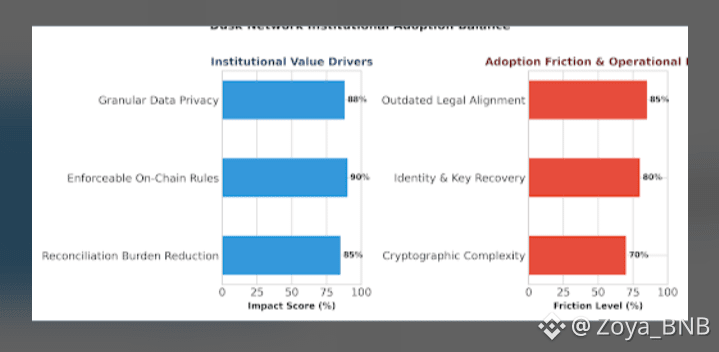
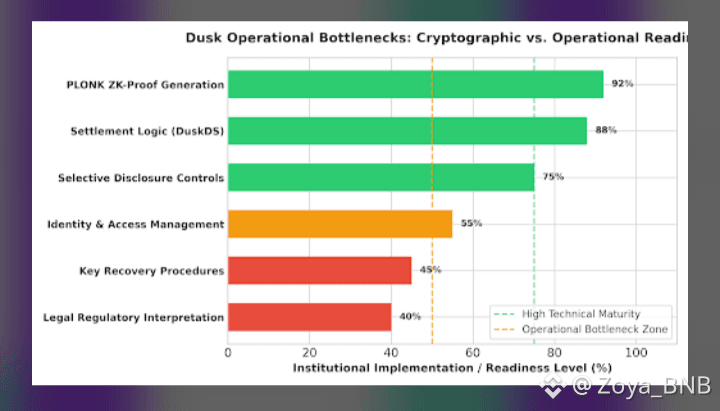
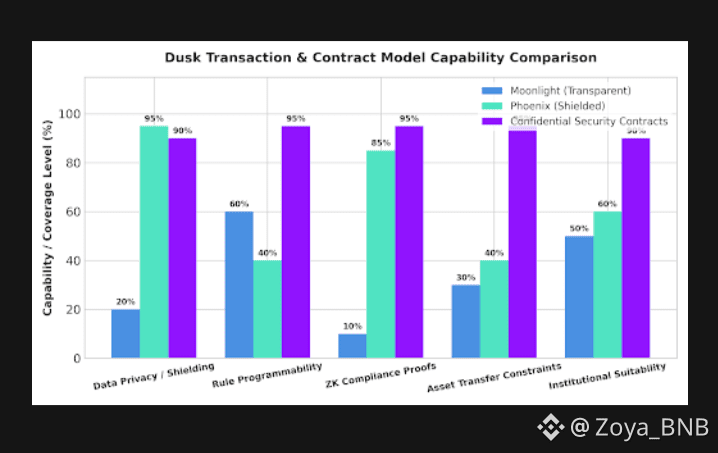
Tính năng cấu trúc quan trọng nhất của Mạng Dusk không phải là quyền riêng tư chỉ để tách biệt, mà là khả năng kết hợp thực thi bảo mật với các quy tắc tài chính có thể được thực thi. Kiến trúc của nó tách việc thanh toán qua DuskDS khỏi phần thực thi, đồng thời hỗ trợ các giao dịch Moonlight minh bạch và các giao dịch Phoenix được che chắn. Chuẩn Hợp đồng Bảo mật Confidential Security Contract mở rộng mô hình này cho các tài sản được quản lý bằng cách nhúng các ràng buộc về chuyển nhượng, tính đủ điều kiện và quyền sở hữu vào logic hợp đồng mà không cần mọi điểm dữ liệu nền tảng phải trở nên công khai. Các bằng chứng không kiến thức (zero-knowledge proofs), được hỗ trợ bởi cơ chế chứng minh dựa trên PLONK và nền tảng mật mã của mạng, là trung tâm của thiết kế này vì có thể chứng minh tuân thủ mà không lộ toàn bộ trạng thái giao dịch.
Nút thắt trong phần thực thi mang tính vận hành hơn là thuần túy mang tính mật mã. Các bằng chứng hiệu quả không giải quyết việc quản lý danh tính, khôi phục khóa, tiết lộ có chọn lọc hay việc diễn giải pháp lý đối với các ràng buộc lập trình được. Các tổ chức cũng cần báo cáo đáng tin cậy và quy trình rõ ràng để xác định ai được phép truy cập thông tin bảo mật. Một hợp đồng có thể thực thi một quy tắc một cách chính xác trong khi vẫn phản ánh một yêu cầu pháp lý đã lỗi thời hoặc bị hiểu sai.
Điều đó tạo nên bài kiểm tra thể chế thực sự của Dusk. Việc chấp nhận phụ thuộc vào việc các quy trình on-chain bảo mật có giảm gánh nặng đối soát và chia sẻ dữ liệu của hạ tầng tài chính hiện có hay không, mà không đưa thêm một lớp phức tạp về mật mã và vận hành. Giá trị của giao thức nằm ở việc làm cho ranh giới giữa công bố và bảo mật có thể lập trình, nhưng ranh giới đó cũng phải hoạt động trong hệ thống quản lý tài sản, tuân thủ và pháp lý mà mã blockchain không thể kiểm soát.
$DUSK @Dusk_Foundation
#dusk Cơ chế lõi của Dusk có thể lập trình được quyền bảo mật
Tính năng cấu trúc quan trọng nhất của Mạng Dusk không phải là quyền riêng tư chỉ để tách biệt, mà là khả năng kết hợp thực thi bảo mật với các quy tắc tài chính có thể được thực thi. Kiến trúc của nó tách việc thanh toán qua DuskDS khỏi phần thực thi, đồng thời hỗ trợ các giao dịch Moonlight minh bạch và các giao dịch Phoenix được che chắn. Chuẩn Hợp đồng Bảo mật Confidential Security Contract mở rộng mô hình này cho các tài sản được quản lý bằng cách nhúng các ràng buộc về chuyển nhượng, tính đủ điều kiện và quyền sở hữu vào logic hợp đồng mà không cần mọi điểm dữ liệu nền tảng phải trở nên công khai. Các bằng chứng không kiến thức (zero-knowledge proofs), được hỗ trợ bởi cơ chế chứng minh dựa trên PLONK và nền tảng mật mã của mạng, là trung tâm của thiết kế này vì có thể chứng minh tuân thủ mà không lộ toàn bộ trạng thái giao dịch.
Nút thắt trong phần thực thi mang tính vận hành hơn là thuần túy mang tính mật mã. Các bằng chứng hiệu quả không giải quyết việc quản lý danh tính, khôi phục khóa, tiết lộ có chọn lọc hay việc diễn giải pháp lý đối với các ràng buộc lập trình được. Các tổ chức cũng cần báo cáo đáng tin cậy và quy trình rõ ràng để xác định ai được phép truy cập thông tin bảo mật. Một hợp đồng có thể thực thi một quy tắc một cách chính xác trong khi vẫn phản ánh một yêu cầu pháp lý đã lỗi thời hoặc bị hiểu sai.
Điều đó tạo nên bài kiểm tra thể chế thực sự của Dusk. Việc chấp nhận phụ thuộc vào việc các quy trình on-chain bảo mật có giảm gánh nặng đối soát và chia sẻ dữ liệu của hạ tầng tài chính hiện có hay không, mà không đưa thêm một lớp phức tạp về mật mã và vận hành. Giá trị của giao thức nằm ở việc làm cho ranh giới giữa công bố và bảo mật có thể lập trình, nhưng ranh giới đó cũng phải hoạt động trong hệ thống quản lý tài sản, tuân thủ và pháp lý mà mã blockchain không thể kiểm soát.
$DUSK @Dusk
Tính năng cấu trúc quan trọng nhất của Mạng Dusk không phải là quyền riêng tư chỉ để tách biệt, mà là khả năng kết hợp thực thi bảo mật với các quy tắc tài chính có thể được thực thi. Kiến trúc của nó tách việc thanh toán qua DuskDS khỏi phần thực thi, đồng thời hỗ trợ các giao dịch Moonlight minh bạch và các giao dịch Phoenix được che chắn. Chuẩn Hợp đồng Bảo mật Confidential Security Contract mở rộng mô hình này cho các tài sản được quản lý bằng cách nhúng các ràng buộc về chuyển nhượng, tính đủ điều kiện và quyền sở hữu vào logic hợp đồng mà không cần mọi điểm dữ liệu nền tảng phải trở nên công khai. Các bằng chứng không kiến thức (zero-knowledge proofs), được hỗ trợ bởi cơ chế chứng minh dựa trên PLONK và nền tảng mật mã của mạng, là trung tâm của thiết kế này vì có thể chứng minh tuân thủ mà không lộ toàn bộ trạng thái giao dịch.
Nút thắt trong phần thực thi mang tính vận hành hơn là thuần túy mang tính mật mã. Các bằng chứng hiệu quả không giải quyết việc quản lý danh tính, khôi phục khóa, tiết lộ có chọn lọc hay việc diễn giải pháp lý đối với các ràng buộc lập trình được. Các tổ chức cũng cần báo cáo đáng tin cậy và quy trình rõ ràng để xác định ai được phép truy cập thông tin bảo mật. Một hợp đồng có thể thực thi một quy tắc một cách chính xác trong khi vẫn phản ánh một yêu cầu pháp lý đã lỗi thời hoặc bị hiểu sai.
Điều đó tạo nên bài kiểm tra thể chế thực sự của Dusk. Việc chấp nhận phụ thuộc vào việc các quy trình on-chain bảo mật có giảm gánh nặng đối soát và chia sẻ dữ liệu của hạ tầng tài chính hiện có hay không, mà không đưa thêm một lớp phức tạp về mật mã và vận hành. Giá trị của giao thức nằm ở việc làm cho ranh giới giữa công bố và bảo mật có thể lập trình, nhưng ranh giới đó cũng phải hoạt động trong hệ thống quản lý tài sản, tuân thủ và pháp lý mà mã blockchain không thể kiểm soát.
$DUSK @Dusk
7
8
143
·
--
Tăng giá
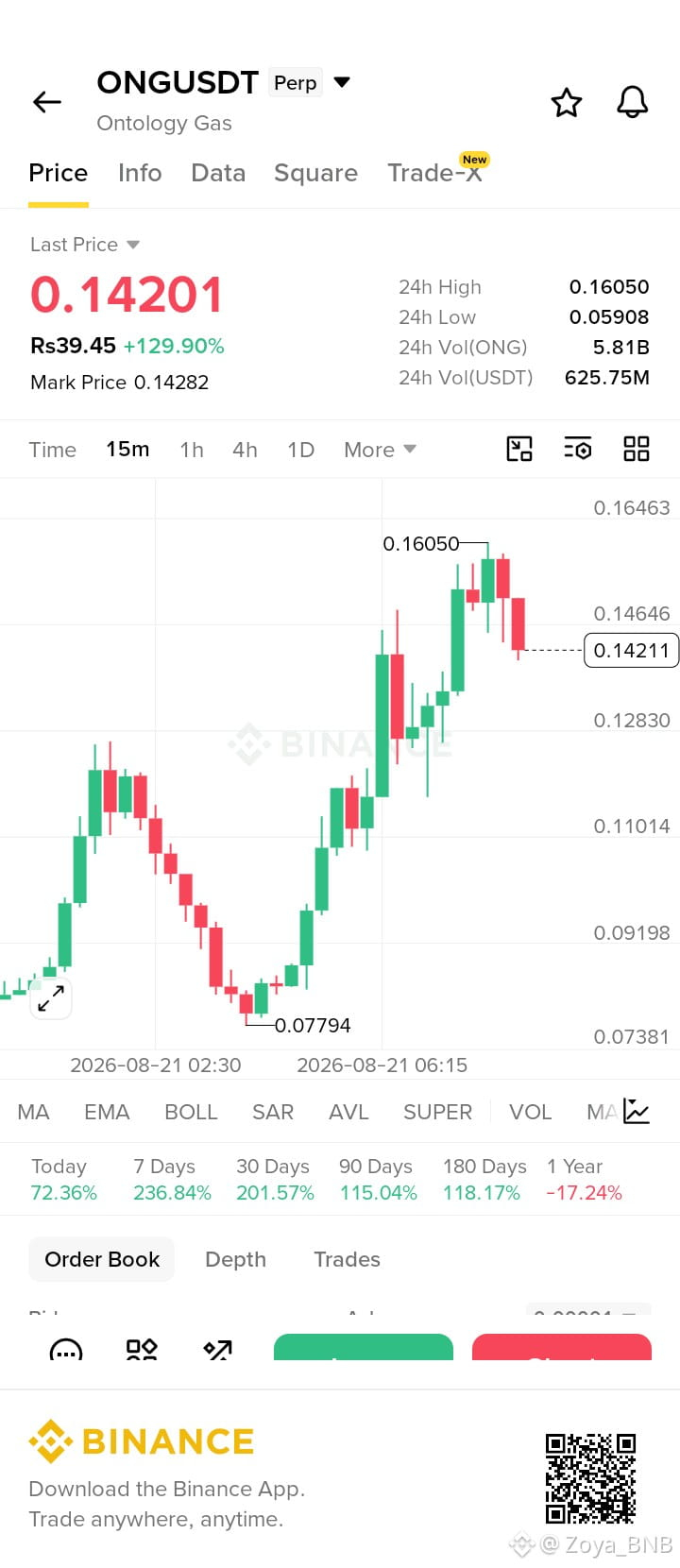
$ONG USDT – DÀI (+129,90%)
🚀 CÁC BẠN ƠI, MÌNH SẼ LONG – THIẾT LẬP MẠNH, BÙNG NỔ KHỔNG LỒ!
ONG đang bùng nổ hoàn toàn với mức tăng gây choáng 129,90%! Đây không chỉ là một cú bơm – mà là một pha bứt phá đầy đủ khỏi vùng tích lũy nhiều tháng. Khối lượng đạt mức khổng lồ 625,75M USDT, xác nhận tiền của tổ chức đang đổ vào. Bên mua (bulls) đã hoàn toàn nắm quyền, và đợt tăng này không có dấu hiệu dừng lại!
Vào lệnh: $0,1400 – $0,1420
SL: $0,1300
TP1: $0,1550
TP2: $0,1650
TP3: $0,1800
Mức cao 24h là $0,16050, và chúng ta đang thấy một cú bứt phá sạch khỏi vùng kháng cự. RSI đang cho thấy động lượng mạnh mẽ, và MACD đang phát tín hiệu cho sự tiếp diễn bullish cực kỳ rõ ràng. Mức tăng hôm nay là 72,36%, tăng 7 ngày là 236,84%, và tăng 30 ngày là 201,57% – xu hướng rõ ràng là tăng giá!
Đây là một thiết lập LONG có xác suất cao với tỷ lệ rủi ro/lợi nhuận rất tốt. Đừng bỏ lỡ “con tên lửa” này – ONG đang tăng mạnh hơn bất cứ thứ gì khác trên thị trường ngay lúc này. Nắm bắt con sóng với sự tự tin, chốt lợi nhuận tại các mục tiêu, và để động lượng đưa bạn tới những khoản lời khổng lồ!$ONG
{future}(ONGUSDT)
$ONG USDT – DÀI (+129,90%)
🚀 CÁC BẠN ƠI, MÌNH SẼ LONG – THIẾT LẬP MẠNH, BÙNG NỔ KHỔNG LỒ!
ONG đang bùng nổ hoàn toàn với mức tăng gây choáng 129,90%! Đây không chỉ là một cú bơm – mà là một pha bứt phá đầy đủ khỏi vùng tích lũy nhiều tháng. Khối lượng đạt mức khổng lồ 625,75M USDT, xác nhận tiền của tổ chức đang đổ vào. Bên mua (bulls) đã hoàn toàn nắm quyền, và đợt tăng này không có dấu hiệu dừng lại!
Vào lệnh: $0,1400 – $0,1420
SL: $0,1300
TP1: $0,1550
TP2: $0,1650
TP3: $0,1800
Mức cao 24h là $0,16050, và chúng ta đang thấy một cú bứt phá sạch khỏi vùng kháng cự. RSI đang cho thấy động lượng mạnh mẽ, và MACD đang phát tín hiệu cho sự tiếp diễn bullish cực kỳ rõ ràng. Mức tăng hôm nay là 72,36%, tăng 7 ngày là 236,84%, và tăng 30 ngày là 201,57% – xu hướng rõ ràng là tăng giá!
Đây là một thiết lập LONG có xác suất cao với tỷ lệ rủi ro/lợi nhuận rất tốt. Đừng bỏ lỡ “con tên lửa” này – ONG đang tăng mạnh hơn bất cứ thứ gì khác trên thị trường ngay lúc này. Nắm bắt con sóng với sự tự tin, chốt lợi nhuận tại các mục tiêu, và để động lượng đưa bạn tới những khoản lời khổng lồ!$ONG
🚀 CÁC BẠN ƠI, MÌNH SẼ LONG – THIẾT LẬP MẠNH, BÙNG NỔ KHỔNG LỒ!
ONG đang bùng nổ hoàn toàn với mức tăng gây choáng 129,90%! Đây không chỉ là một cú bơm – mà là một pha bứt phá đầy đủ khỏi vùng tích lũy nhiều tháng. Khối lượng đạt mức khổng lồ 625,75M USDT, xác nhận tiền của tổ chức đang đổ vào. Bên mua (bulls) đã hoàn toàn nắm quyền, và đợt tăng này không có dấu hiệu dừng lại!
Vào lệnh: $0,1400 – $0,1420
SL: $0,1300
TP1: $0,1550
TP2: $0,1650
TP3: $0,1800
Mức cao 24h là $0,16050, và chúng ta đang thấy một cú bứt phá sạch khỏi vùng kháng cự. RSI đang cho thấy động lượng mạnh mẽ, và MACD đang phát tín hiệu cho sự tiếp diễn bullish cực kỳ rõ ràng. Mức tăng hôm nay là 72,36%, tăng 7 ngày là 236,84%, và tăng 30 ngày là 201,57% – xu hướng rõ ràng là tăng giá!
Đây là một thiết lập LONG có xác suất cao với tỷ lệ rủi ro/lợi nhuận rất tốt. Đừng bỏ lỡ “con tên lửa” này – ONG đang tăng mạnh hơn bất cứ thứ gì khác trên thị trường ngay lúc này. Nắm bắt con sóng với sự tự tin, chốt lợi nhuận tại các mục tiêu, và để động lượng đưa bạn tới những khoản lời khổng lồ!$ONG
4
204
·
--
Tăng giá
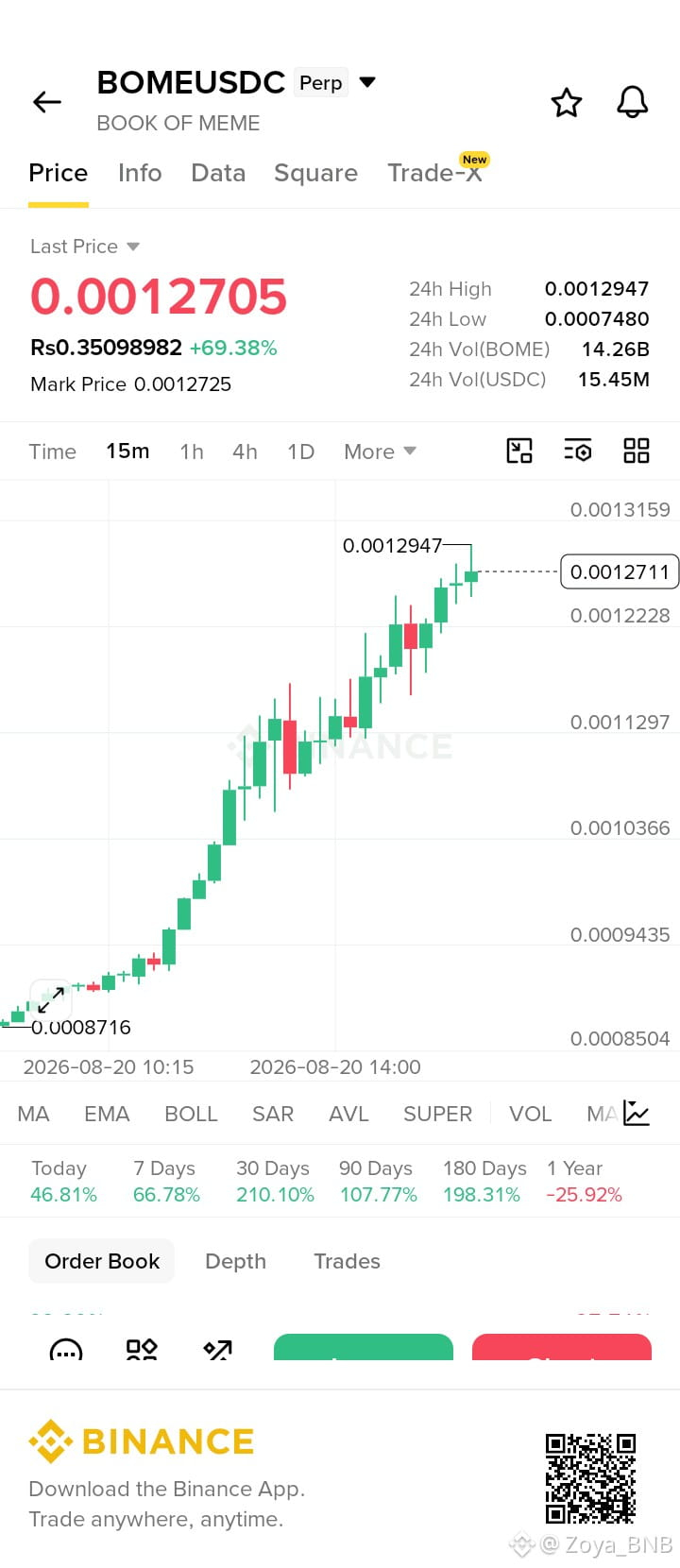
$BOME /USDC PERP – CẬP NHẬT THỊ TRƯỜNG
Giá hiện tại: $0.0012705 | +69.38% trong ngày | Khối lượng 24h: 14.26B BOME
$BOME đang trải qua một cú bứt phá mạnh mẽ, tăng gần 70% so với mức thấp nhất 24 giờ là $0.0007480. Lượng giao dịch tăng vọt lên 14,26 tỷ token cho thấy sự quan tâm mạnh từ các tổ chức hơn là đầu cơ nhỏ lẻ. Giá niêm yết nằm tại $0.0012725, rất gần với giá được giao dịch gần nhất, xác nhận thị trường vẫn ổn định bất chấp cú tăng mạnh.
Các mốc Hỗ trợ:
Hỗ trợ ngay lập tức nằm ở $0.0012228, với lực đỡ mạnh hơn tại $0.0011297. Nếu giá giảm thủng các mức này, điều đó sẽ báo hiệu trạng thái kiệt sức.
Các mốc Kháng cự:
Mức trần ngay lập tức ở $0.00131459. Nếu bứt phá sạch qua ngưỡng này có thể kích hoạt động lực tăng đáng kể.
Các mục tiêu:
Mục tiêu 1: $0.0014000
Mục tiêu 2: $0.0016000
Mục tiêu mở rộng: $0.0020000
Dừng lỗ (Stop Loss):
Dừng lỗ thận trọng: $0.0012200
Dừng lỗ rộng hơn: $0.0011800
Bước tiếp theo:
Biểu đồ khung 4 giờ cho thấy mô hình tiếp diễn tăng giá với khối lượng duy trì. Các chỉ báo cho thấy chúng ta có thể kiểm tra kháng cự ở $0.00131459 trong vài giờ tới. Nếu bứt phá qua mức này có thể kích hoạt lực mua quyết liệt, trong khi bị từ chối có thể dẫn đến việc kiểm tra lại hỗ trợ $0.0012228 trước khi bước đi cao hơn tiếp theo.
Lợi nhuận 30 ngày đạt 210% và lợi nhuận 180 ngày đạt 198% xác nhận xu hướng tăng mạnh. Mặc dù lợi nhuận 1 năm đang ở -25.92%, nhưng diễn biến hiện tại cho thấy chúng ta đã đảo ngược xu hướng giảm đó hoàn toàn.
Quản lý rủi ro là vô cùng quan trọng ở đây. Đây là một đồng meme coin có biến động cao, vì vậy việc xác định quy mô vị thế và đặt dừng lỗ là thiết yếu. Xu hướng vẫn nghiêng mạnh về phía tăng khi giá điều chỉnh.
{future}(BOMEUSDT)
$BOME /USDC PERP – CẬP NHẬT THỊ TRƯỜNG
Giá hiện tại: $0.0012705 | +69.38% trong ngày | Khối lượng 24h: 14.26B BOME
$BOME đang trải qua một cú bứt phá mạnh mẽ, tăng gần 70% so với mức thấp nhất 24 giờ là $0.0007480. Lượng giao dịch tăng vọt lên 14,26 tỷ token cho thấy sự quan tâm mạnh từ các tổ chức hơn là đầu cơ nhỏ lẻ. Giá niêm yết nằm tại $0.0012725, rất gần với giá được giao dịch gần nhất, xác nhận thị trường vẫn ổn định bất chấp cú tăng mạnh.
Các mốc Hỗ trợ:
Hỗ trợ ngay lập tức nằm ở $0.0012228, với lực đỡ mạnh hơn tại $0.0011297. Nếu giá giảm thủng các mức này, điều đó sẽ báo hiệu trạng thái kiệt sức.
Các mốc Kháng cự:
Mức trần ngay lập tức ở $0.00131459. Nếu bứt phá sạch qua ngưỡng này có thể kích hoạt động lực tăng đáng kể.
Các mục tiêu:
Mục tiêu 1: $0.0014000
Mục tiêu 2: $0.0016000
Mục tiêu mở rộng: $0.0020000
Dừng lỗ (Stop Loss):
Dừng lỗ thận trọng: $0.0012200
Dừng lỗ rộng hơn: $0.0011800
Bước tiếp theo:
Biểu đồ khung 4 giờ cho thấy mô hình tiếp diễn tăng giá với khối lượng duy trì. Các chỉ báo cho thấy chúng ta có thể kiểm tra kháng cự ở $0.00131459 trong vài giờ tới. Nếu bứt phá qua mức này có thể kích hoạt lực mua quyết liệt, trong khi bị từ chối có thể dẫn đến việc kiểm tra lại hỗ trợ $0.0012228 trước khi bước đi cao hơn tiếp theo.
Lợi nhuận 30 ngày đạt 210% và lợi nhuận 180 ngày đạt 198% xác nhận xu hướng tăng mạnh. Mặc dù lợi nhuận 1 năm đang ở -25.92%, nhưng diễn biến hiện tại cho thấy chúng ta đã đảo ngược xu hướng giảm đó hoàn toàn.
Quản lý rủi ro là vô cùng quan trọng ở đây. Đây là một đồng meme coin có biến động cao, vì vậy việc xác định quy mô vị thế và đặt dừng lỗ là thiết yếu. Xu hướng vẫn nghiêng mạnh về phía tăng khi giá điều chỉnh.
Giá hiện tại: $0.0012705 | +69.38% trong ngày | Khối lượng 24h: 14.26B BOME
$BOME đang trải qua một cú bứt phá mạnh mẽ, tăng gần 70% so với mức thấp nhất 24 giờ là $0.0007480. Lượng giao dịch tăng vọt lên 14,26 tỷ token cho thấy sự quan tâm mạnh từ các tổ chức hơn là đầu cơ nhỏ lẻ. Giá niêm yết nằm tại $0.0012725, rất gần với giá được giao dịch gần nhất, xác nhận thị trường vẫn ổn định bất chấp cú tăng mạnh.
Các mốc Hỗ trợ:
Hỗ trợ ngay lập tức nằm ở $0.0012228, với lực đỡ mạnh hơn tại $0.0011297. Nếu giá giảm thủng các mức này, điều đó sẽ báo hiệu trạng thái kiệt sức.
Các mốc Kháng cự:
Mức trần ngay lập tức ở $0.00131459. Nếu bứt phá sạch qua ngưỡng này có thể kích hoạt động lực tăng đáng kể.
Các mục tiêu:
Mục tiêu 1: $0.0014000
Mục tiêu 2: $0.0016000
Mục tiêu mở rộng: $0.0020000
Dừng lỗ (Stop Loss):
Dừng lỗ thận trọng: $0.0012200
Dừng lỗ rộng hơn: $0.0011800
Bước tiếp theo:
Biểu đồ khung 4 giờ cho thấy mô hình tiếp diễn tăng giá với khối lượng duy trì. Các chỉ báo cho thấy chúng ta có thể kiểm tra kháng cự ở $0.00131459 trong vài giờ tới. Nếu bứt phá qua mức này có thể kích hoạt lực mua quyết liệt, trong khi bị từ chối có thể dẫn đến việc kiểm tra lại hỗ trợ $0.0012228 trước khi bước đi cao hơn tiếp theo.
Lợi nhuận 30 ngày đạt 210% và lợi nhuận 180 ngày đạt 198% xác nhận xu hướng tăng mạnh. Mặc dù lợi nhuận 1 năm đang ở -25.92%, nhưng diễn biến hiện tại cho thấy chúng ta đã đảo ngược xu hướng giảm đó hoàn toàn.
Quản lý rủi ro là vô cùng quan trọng ở đây. Đây là một đồng meme coin có biến động cao, vì vậy việc xác định quy mô vị thế và đặt dừng lỗ là thiết yếu. Xu hướng vẫn nghiêng mạnh về phía tăng khi giá điều chỉnh.
4
242
·
--
Tăng giá
#dusk Tôi đã suy nghĩ về một vấn đề trong blockchain mà được nhắc đến liên tục nhưng hiếm khi được giải quyết đúng cách: quyền riêng tư. Chúng ta muốn các hệ thống tài chính vừa mở vừa có thể xác minh, nhưng liệu chúng ta có thực sự muốn mọi hành động tài chính đều trở thành công khai vĩnh viễn không?
Trước đây, tôi từng nghĩ rằng minh bạch gần như lúc nào cũng là một tính năng. Theo thời gian, tôi nhận ra điều đó là chưa đầy đủ. Trong tài chính thực tế, không phải mọi chi tiết đều cần phải công khai để một hệ thống vẫn đáng tin cậy.
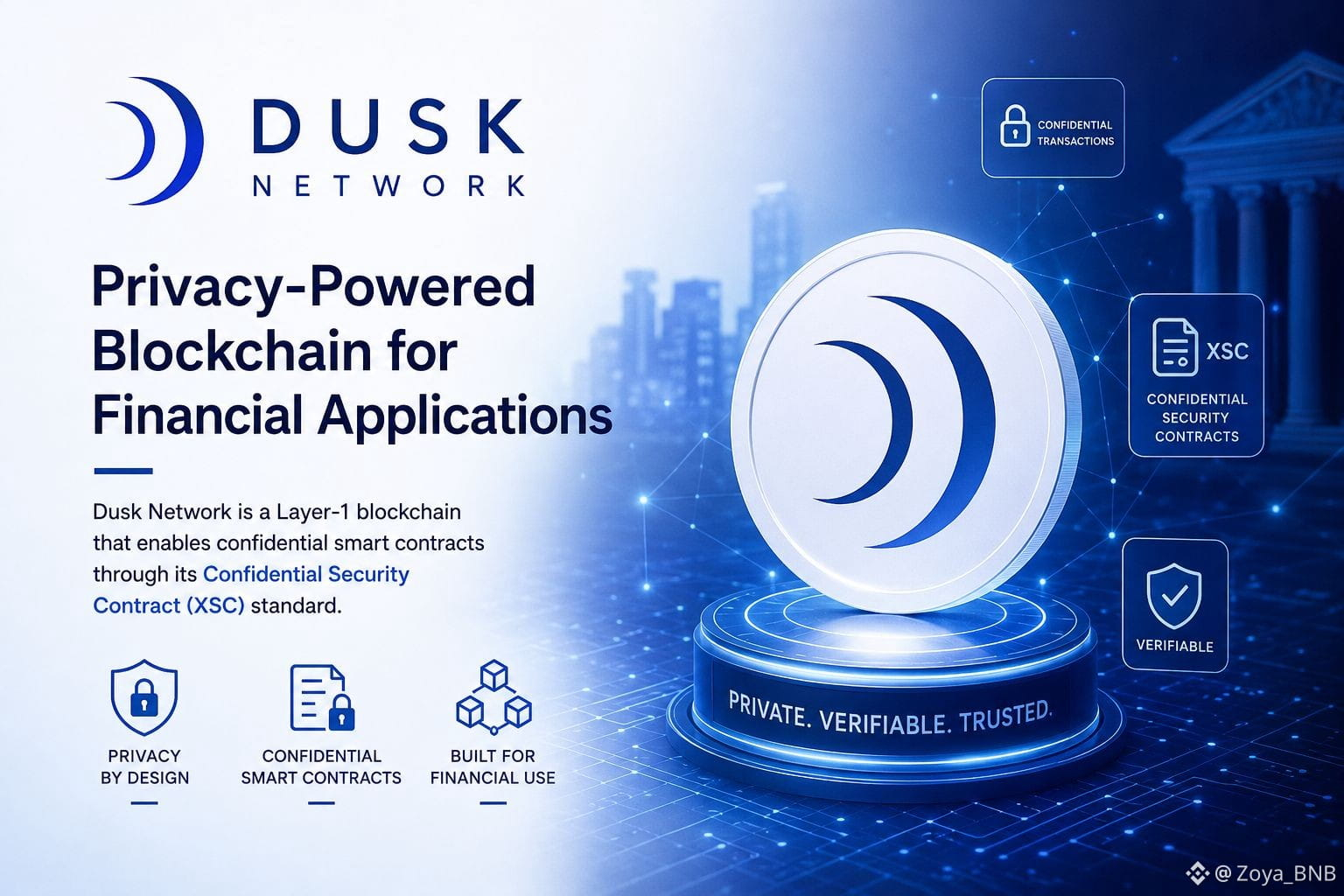
Chính sự giằng co đó đã khiến $DUSK Network thu hút sự chú ý của tôi. Đây là một blockchain Layer-1 tập trung vào các ứng dụng tài chính, với quyền riêng tư được xây dựng dựa trên chuẩn Confidential Security Contract (XSC) và các smart contract (hợp đồng thông minh) bí mật.
Ý tưởng khá đơn giản: liệu blockchain có thể bảo toàn tính xác minh và khả năng lập trình mà không phải phơi bày mọi thứ không?
Câu hỏi này trở nên quan trọng khi các tài sản được token hóa, tài chính được quản lý và các thị trường trên chuỗi ngày càng phát triển. Nhưng phần khó không nằm ở khái niệm. Liệu các nhà phát triển có thể thực sự xây dựng được các ứng dụng hữu ích trên nền tảng này không? Các tổ chức có thể tin tưởng vào hạ tầng không? Quyền riêng tư có thể song tồn với tuân thủ (compliance) và việc áp dụng trong thực tế hay không?
$DUSK không cần thêm chiêu trò thổi phồng. Nó cần được sử dụng thật sự, vận hành đáng tin cậy và những nhà phát triển sẵn sàng xây dựng.
Với tôi, câu hỏi lớn hơn là liệu tương lai của tài chính có thể vừa được xác minh vừa vẫn riêng tư hay không.:::
@Dusk_Foundation #dusk. $DUSK
{future}(DUSKUSDT)
#dusk Tôi đã suy nghĩ về một vấn đề trong blockchain mà được nhắc đến liên tục nhưng hiếm khi được giải quyết đúng cách: quyền riêng tư. Chúng ta muốn các hệ thống tài chính vừa mở vừa có thể xác minh, nhưng liệu chúng ta có thực sự muốn mọi hành động tài chính đều trở thành công khai vĩnh viễn không?
Trước đây, tôi từng nghĩ rằng minh bạch gần như lúc nào cũng là một tính năng. Theo thời gian, tôi nhận ra điều đó là chưa đầy đủ. Trong tài chính thực tế, không phải mọi chi tiết đều cần phải công khai để một hệ thống vẫn đáng tin cậy.
Chính sự giằng co đó đã khiến $DUSK Network thu hút sự chú ý của tôi. Đây là một blockchain Layer-1 tập trung vào các ứng dụng tài chính, với quyền riêng tư được xây dựng dựa trên chuẩn Confidential Security Contract (XSC) và các smart contract (hợp đồng thông minh) bí mật.
Ý tưởng khá đơn giản: liệu blockchain có thể bảo toàn tính xác minh và khả năng lập trình mà không phải phơi bày mọi thứ không?
Câu hỏi này trở nên quan trọng khi các tài sản được token hóa, tài chính được quản lý và các thị trường trên chuỗi ngày càng phát triển. Nhưng phần khó không nằm ở khái niệm. Liệu các nhà phát triển có thể thực sự xây dựng được các ứng dụng hữu ích trên nền tảng này không? Các tổ chức có thể tin tưởng vào hạ tầng không? Quyền riêng tư có thể song tồn với tuân thủ (compliance) và việc áp dụng trong thực tế hay không?
$DUSK không cần thêm chiêu trò thổi phồng. Nó cần được sử dụng thật sự, vận hành đáng tin cậy và những nhà phát triển sẵn sàng xây dựng.
Với tôi, câu hỏi lớn hơn là liệu tương lai của tài chính có thể vừa được xác minh vừa vẫn riêng tư hay không.:::
@Dusk #dusk. $DUSK
Trước đây, tôi từng nghĩ rằng minh bạch gần như lúc nào cũng là một tính năng. Theo thời gian, tôi nhận ra điều đó là chưa đầy đủ. Trong tài chính thực tế, không phải mọi chi tiết đều cần phải công khai để một hệ thống vẫn đáng tin cậy.
Chính sự giằng co đó đã khiến $DUSK Network thu hút sự chú ý của tôi. Đây là một blockchain Layer-1 tập trung vào các ứng dụng tài chính, với quyền riêng tư được xây dựng dựa trên chuẩn Confidential Security Contract (XSC) và các smart contract (hợp đồng thông minh) bí mật.
Ý tưởng khá đơn giản: liệu blockchain có thể bảo toàn tính xác minh và khả năng lập trình mà không phải phơi bày mọi thứ không?
Câu hỏi này trở nên quan trọng khi các tài sản được token hóa, tài chính được quản lý và các thị trường trên chuỗi ngày càng phát triển. Nhưng phần khó không nằm ở khái niệm. Liệu các nhà phát triển có thể thực sự xây dựng được các ứng dụng hữu ích trên nền tảng này không? Các tổ chức có thể tin tưởng vào hạ tầng không? Quyền riêng tư có thể song tồn với tuân thủ (compliance) và việc áp dụng trong thực tế hay không?
$DUSK không cần thêm chiêu trò thổi phồng. Nó cần được sử dụng thật sự, vận hành đáng tin cậy và những nhà phát triển sẵn sàng xây dựng.
Với tôi, câu hỏi lớn hơn là liệu tương lai của tài chính có thể vừa được xác minh vừa vẫn riêng tư hay không.:::
@Dusk #dusk. $DUSK
7
6
154
·
--
Giảm giá
#dusk Tôi đã suy nghĩ về một vấn đề mà crypto thường nhắc tới nhưng hiếm khi giải quyết tốt: minh bạch là hữu ích, nhưng minh bạch hoàn toàn có thể trở thành một điểm yếu. Chúng ta muốn các hệ thống tài chính cởi mở và có thể được xác minh, nhưng liệu mọi giao dịch, số dư hay chi tiết kinh doanh có thật sự cần phải được nhìn thấy bởi tất cả mọi người không?
Trước đây, tôi từng nghĩ minh bạch gần như luôn là câu trả lời. Nhưng quan điểm đó giờ đây cảm thấy chưa trọn vẹn. Các hệ thống tài chính thực sự cũng cần quyền riêng tư. Nếu không có nó, các tổ chức có thể ngần ngại sử dụng blockchain công khai cho các hoạt động nhạy cảm.
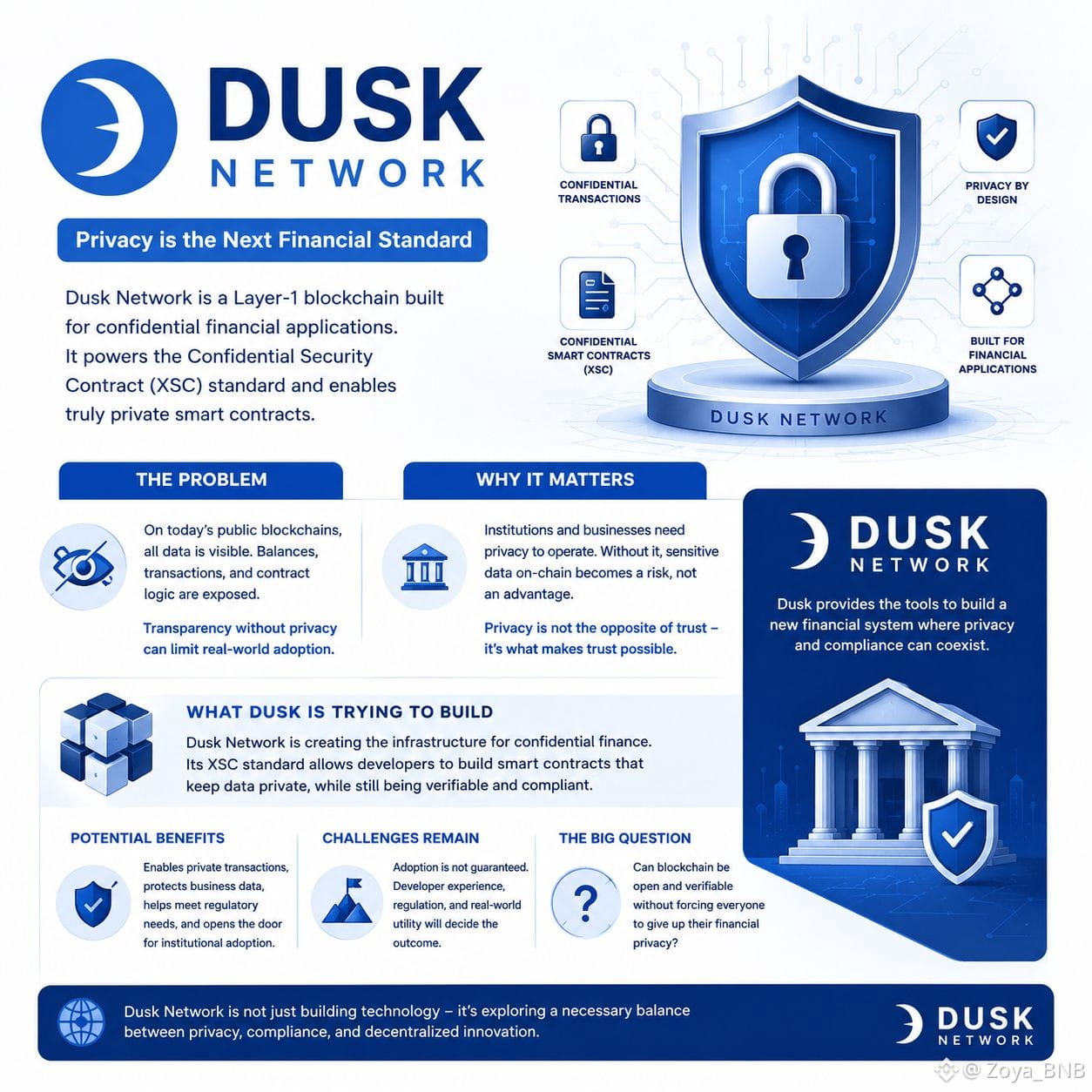
Chính tại đây, Dusk Network đã thu hút sự chú ý của tôi. Thay vì xem quyền riêng tư như một tính năng tùy chọn, họ đang xây dựng một Layer-1 tập trung cho các ứng dụng tài chính, bao gồm các smart contract bí mật thông qua chuẩn XSC của mình.
Nhưng câu hỏi khó vẫn còn: liệu quyền riêng tư có thực sự trở nên hữu ích như một hạ tầng thay vì chỉ là một câu chuyện khác của crypto không?
Tiềm năng là đáng kể. Các giao dịch bí mật có thể giúp đưa tài chính được quản lý và blockchain xích lại gần nhau mà không phơi bày mọi thứ ra công khai. Tuy nhiên, công nghệ một mình là chưa đủ. Việc áp dụng, tuân thủ, trải nghiệm của nhà phát triển, bảo mật và nhu cầu trong thế giới thực sẽ quyết định liệu ý tưởng này có thực sự đáng quan tâm hay không.
Với tôi, Dusk đặt ra một câu hỏi lớn hơn: Liệu blockchain có thể trở nên thực sự cởi mở và có thể được xác minh mà không buộc tất cả mọi người phải đánh đổi quyền riêng tư tài chính không?
@Dusk_Foundation #dusk. $DUSK
{future}(DUSKUSDT)
$ST
{alpha}(560x70be40667385500c5da7f108a022e21b606045dd)
$AA
{alpha}(560x01bf3d77cd08b19bf3f2309972123a2cca0f6936)
#dusk Tôi đã suy nghĩ về một vấn đề mà crypto thường nhắc tới nhưng hiếm khi giải quyết tốt: minh bạch là hữu ích, nhưng minh bạch hoàn toàn có thể trở thành một điểm yếu. Chúng ta muốn các hệ thống tài chính cởi mở và có thể được xác minh, nhưng liệu mọi giao dịch, số dư hay chi tiết kinh doanh có thật sự cần phải được nhìn thấy bởi tất cả mọi người không?
Trước đây, tôi từng nghĩ minh bạch gần như luôn là câu trả lời. Nhưng quan điểm đó giờ đây cảm thấy chưa trọn vẹn. Các hệ thống tài chính thực sự cũng cần quyền riêng tư. Nếu không có nó, các tổ chức có thể ngần ngại sử dụng blockchain công khai cho các hoạt động nhạy cảm.
Chính tại đây, Dusk Network đã thu hút sự chú ý của tôi. Thay vì xem quyền riêng tư như một tính năng tùy chọn, họ đang xây dựng một Layer-1 tập trung cho các ứng dụng tài chính, bao gồm các smart contract bí mật thông qua chuẩn XSC của mình.
Nhưng câu hỏi khó vẫn còn: liệu quyền riêng tư có thực sự trở nên hữu ích như một hạ tầng thay vì chỉ là một câu chuyện khác của crypto không?
Tiềm năng là đáng kể. Các giao dịch bí mật có thể giúp đưa tài chính được quản lý và blockchain xích lại gần nhau mà không phơi bày mọi thứ ra công khai. Tuy nhiên, công nghệ một mình là chưa đủ. Việc áp dụng, tuân thủ, trải nghiệm của nhà phát triển, bảo mật và nhu cầu trong thế giới thực sẽ quyết định liệu ý tưởng này có thực sự đáng quan tâm hay không.
Với tôi, Dusk đặt ra một câu hỏi lớn hơn: Liệu blockchain có thể trở nên thực sự cởi mở và có thể được xác minh mà không buộc tất cả mọi người phải đánh đổi quyền riêng tư tài chính không?
@Dusk #dusk. $DUSK
$ST
$AA
Trước đây, tôi từng nghĩ minh bạch gần như luôn là câu trả lời. Nhưng quan điểm đó giờ đây cảm thấy chưa trọn vẹn. Các hệ thống tài chính thực sự cũng cần quyền riêng tư. Nếu không có nó, các tổ chức có thể ngần ngại sử dụng blockchain công khai cho các hoạt động nhạy cảm.
Chính tại đây, Dusk Network đã thu hút sự chú ý của tôi. Thay vì xem quyền riêng tư như một tính năng tùy chọn, họ đang xây dựng một Layer-1 tập trung cho các ứng dụng tài chính, bao gồm các smart contract bí mật thông qua chuẩn XSC của mình.
Nhưng câu hỏi khó vẫn còn: liệu quyền riêng tư có thực sự trở nên hữu ích như một hạ tầng thay vì chỉ là một câu chuyện khác của crypto không?
Tiềm năng là đáng kể. Các giao dịch bí mật có thể giúp đưa tài chính được quản lý và blockchain xích lại gần nhau mà không phơi bày mọi thứ ra công khai. Tuy nhiên, công nghệ một mình là chưa đủ. Việc áp dụng, tuân thủ, trải nghiệm của nhà phát triển, bảo mật và nhu cầu trong thế giới thực sẽ quyết định liệu ý tưởng này có thực sự đáng quan tâm hay không.
Với tôi, Dusk đặt ra một câu hỏi lớn hơn: Liệu blockchain có thể trở nên thực sự cởi mở và có thể được xác minh mà không buộc tất cả mọi người phải đánh đổi quyền riêng tư tài chính không?
@Dusk #dusk. $DUSK
$ST
$AA
11
12
120
Đăng nhập để khám phá thêm nội dung
Tham gia cùng người dùng tiền mã hóa toàn cầu trên Binance Square
⚡️ Nhận thông tin mới nhất và hữu ích về tiền mã hóa.
💬 Được tin cậy bởi sàn giao dịch tiền mã hóa lớn nhất thế giới.
👍 Khám phá những thông tin chuyên sâu thực tế từ những nhà sáng tạo đã xác minh.
Email / Số điện thoại
Chủ đề thịnh hành
TheoDõiFOMC
77,201 lượt xem
508 đang thảo luận
Điểm tin quan trọng tuần này cần lưu ý:
*14–20/9/2026, quy đổi sang giờ Việt Nam (UTC+7). Đây là một tuần rất quan trọng đối với crypto, vì 3 biến số lớn — Fed, CLARITY Act và BoJ — dồn vào vài ngày.
Điểm tôi đặc biệt lưu ý: thị trường hiện đang nghiêng về khả năng Fed tăng lãi suất 25 điểm cơ bản, sau khi lạm phát Mỹ nóng hơn dự kiến; Reuters cho biết Goldman Sachs và JPMorgan đã nâng kỳ vọng Fed tăng 25 bp trong tháng 9, với xác suất thị trường khoảng 87%.
🔥 Lịch các sự kiện quan trọng — giờ Việt Nam
*16/9 – ~01:15 🇺🇸 Thượng viện Mỹ bắt đầu thủ tục/vote liên quan CLARITY Act
*16/9 – 19:30 🇺🇸 Retail Sales tháng 8
* 17/9 – 01:00 🇺🇸 Fed công bố quyết định lãi suất
*17/9 – 01:30 🇺🇸 Họp báo Fed + Dot Plot/SEP
*17/9 🇬🇧 Bank of England quyết định lãi suất
*18/9 – khoảng 09:30 🇯🇵 BoJ quyết định lãi suất
*18/9 – 19:00 🇺🇸 Industrial Production/Capacity Utilization
🔴 Fed — sự kiện quan trọng nhất tuần
Lịch FOMC chính thức của Federal Reserve
Fed họp 15–16/9, với quyết định vào 14:00 ET ngày 16/9, họp báo lúc 14:30 ET. Quy đổi sang Việt Nam là:
01:00 sáng 17/9: quyết định lãi suất
01:30 sáng 17/9: họp báo
Đồng thời có Summary of Economic Projections / Dot Plot.
⏰ Hai khung giờ tôi sẽ đặc biệt tránh FOMO
01:00–02:30 sáng 17/9
Fed + Dot Plot + họp báo
Đây có thể là vùng biến động cực lớn.
Không nên nhìn cây nến đầu tiên rồi kết luận trend.
19:30 ngày 16/9 → 02:30 ngày 17/9
Đây là "siêu phiên":
Retail Sales → CLARITY aftermath → Fed → Dot Plot → Press Conference
$🥰🥰🥰
Chúc anh em sáng suốt để ra quyết định trước khi giao dịch và thắng lớn tuần này nhé!!!!
#TinFed #TheoDõiFOMC
智能投资 x 1000
·0 lượt thích
·635 lượt xem
45NgayTuDoTaiChinh
898,520 lượt xem
3,061 đang thảo luận
TinFed
67,839 lượt xem
310 đang thảo luận