

VICTORIA _777
13.3k Bài đăng

VICTORIA _777
 Đã xác minh nâng cao trên Square
Báo cáo
Chặn người dùng
Giao dịch mở
Trader thường xuyên
{thời gian} năm
106 Đang theo dõi
34.3K+ Người theo dõi
28.8K+ Đã thích
Bài đăng
Danh mục đầu tư
Tất cả
Trích dẫn
Live
PINNED
·
--
Tăng giá
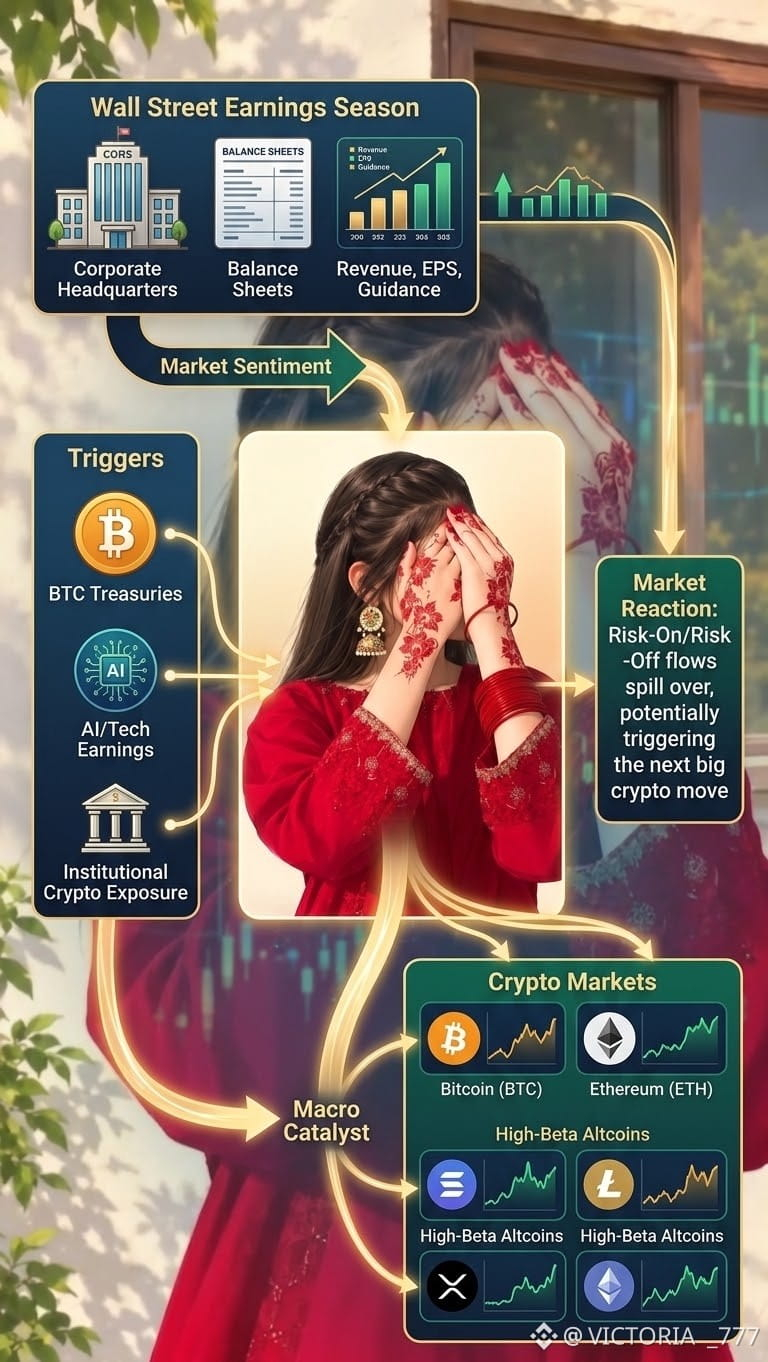
#EarningsSeason đang trở thành một chất xúc tác vĩ mô quan trọng cho crypto.
Lợi nhuận của Phố Wall không còn chỉ nằm trên Phố Wall nữa.
Các nhà nắm giữ Bitcoin doanh nghiệp, thợ đào và các công ty công nghệ lớn đang đặt bảng cân đối kế toán, thanh khoản và khẩu vị rủi ro dưới “lớp kính hiển vi”.
Kết quả doanh nghiệp mạnh có thể củng cố niềm tin và dòng chảy hướng tới trạng thái “risk-on”, trong khi dự báo yếu có thể kích hoạt sự chuyển dịch nhanh sang vị thế “risk-off”.
Tín hiệu lớn nhất không chỉ là EPS hay doanh thu.
Theo dõi hoạt động kho bạc BTC, kết quả kinh doanh AI/công nghệ, mức độ tiếp xúc crypto của tổ chức và định hướng từ ban quản lý.
Khi ngày càng nhiều báo cáo lợi nhuận được công bố, phản ứng ở thị trường cổ phiếu có thể nhanh chóng lan sang BTC, ETH và các altcoin nhạy rủi ro cao.
Bước đi lớn tiếp theo của thị trường crypto có thể bắt đầu từ một báo cáo lợi nhuận của Phố Wall.
#Bitcoin #BTC #ETH #Crypto
$OG
{future}(OGUSDT)
$ESPORTS
{future}(ESPORTSUSDT)
$CRV
{future}(CRVUSDT)
#EarningsSeason đang trở thành một chất xúc tác vĩ mô quan trọng cho crypto.
Lợi nhuận của Phố Wall không còn chỉ nằm trên Phố Wall nữa.
Các nhà nắm giữ Bitcoin doanh nghiệp, thợ đào và các công ty công nghệ lớn đang đặt bảng cân đối kế toán, thanh khoản và khẩu vị rủi ro dưới “lớp kính hiển vi”.
Kết quả doanh nghiệp mạnh có thể củng cố niềm tin và dòng chảy hướng tới trạng thái “risk-on”, trong khi dự báo yếu có thể kích hoạt sự chuyển dịch nhanh sang vị thế “risk-off”.
Tín hiệu lớn nhất không chỉ là EPS hay doanh thu.
Theo dõi hoạt động kho bạc BTC, kết quả kinh doanh AI/công nghệ, mức độ tiếp xúc crypto của tổ chức và định hướng từ ban quản lý.
Khi ngày càng nhiều báo cáo lợi nhuận được công bố, phản ứng ở thị trường cổ phiếu có thể nhanh chóng lan sang BTC, ETH và các altcoin nhạy rủi ro cao.
Bước đi lớn tiếp theo của thị trường crypto có thể bắt đầu từ một báo cáo lợi nhuận của Phố Wall.
#Bitcoin #BTC #ETH #Crypto
$OG
$ESPORTS
$CRV
Lợi nhuận của Phố Wall không còn chỉ nằm trên Phố Wall nữa.
Các nhà nắm giữ Bitcoin doanh nghiệp, thợ đào và các công ty công nghệ lớn đang đặt bảng cân đối kế toán, thanh khoản và khẩu vị rủi ro dưới “lớp kính hiển vi”.
Kết quả doanh nghiệp mạnh có thể củng cố niềm tin và dòng chảy hướng tới trạng thái “risk-on”, trong khi dự báo yếu có thể kích hoạt sự chuyển dịch nhanh sang vị thế “risk-off”.
Tín hiệu lớn nhất không chỉ là EPS hay doanh thu.
Theo dõi hoạt động kho bạc BTC, kết quả kinh doanh AI/công nghệ, mức độ tiếp xúc crypto của tổ chức và định hướng từ ban quản lý.
Khi ngày càng nhiều báo cáo lợi nhuận được công bố, phản ứng ở thị trường cổ phiếu có thể nhanh chóng lan sang BTC, ETH và các altcoin nhạy rủi ro cao.
Bước đi lớn tiếp theo của thị trường crypto có thể bắt đầu từ một báo cáo lợi nhuận của Phố Wall.
#Bitcoin #BTC #ETH #Crypto
$OG
$ESPORTS
$CRV
5
7
506
·
--
Tăng giá
Đã xác minh
Đã làm việc trong 15 giây
Phiên bản này kết hợp dữ liệu đã được xác minh mới nhất—cùng với Nvidia, Reuters, Goldman Sachs và các số liệu thị trường hiện tại.
#AIStocksWhatNext
Cổ phiếu AI vừa bước vào một tầm cao mới—nhưng những con số đằng sau đợt tăng này mới là phần thú vị.
Vào ngày 22 tháng 9, Nasdaq đạt kỷ lục trong ngày là 27.212,68, trong khi AMD vượt mốc giá trị vốn hóa 1 nghìn tỷ USD.
Kỳ gần đây nhất của Nvidia ghi nhận doanh thu 96,2B USD, tăng 106% so với cùng kỳ năm trước (YoY), với mảng Doanh thu Trung tâm Dữ liệu đạt 89B USD, tăng 117%. Nvidia cũng dự kiến mức tăng trưởng doanh thu khoảng 70% cho tài khóa 2028.
Giờ đến cú sốc: Goldman Sachs ước tính các siêu quy mô AI lớn có thể chi khoảng 527B USD cho capex vào năm 2026, trong khi đầu tư AI toàn cầu rộng hơn có thể vượt 1T USD trong năm nay.
Điều đó có nghĩa là câu chuyện tiếp theo về cổ phiếu AI có thể không chỉ xoay quanh nhu cầu.
Câu hỏi thực sự thì đơn giản:
Liệu doanh thu, biên lợi nhuận và dòng tiền có theo kịp mức chi tiêu lịch sử này không?
Cơn bùng nổ AI là có thật. Giờ thị trường muốn bằng chứng.
$TAKE
{future}(TAKEUSDT)
$MET
{future}(METUSDT)
$DASH
{future}(DASHUSDT)
#AIStocksWhatNext #Stocks #Nvidia #Investing
#aistockswhatnext
Đã làm việc trong 15 giây
Phiên bản này kết hợp dữ liệu đã được xác minh mới nhất—cùng với Nvidia, Reuters, Goldman Sachs và các số liệu thị trường hiện tại.
#AIStocksWhatNext
Cổ phiếu AI vừa bước vào một tầm cao mới—nhưng những con số đằng sau đợt tăng này mới là phần thú vị.
Vào ngày 22 tháng 9, Nasdaq đạt kỷ lục trong ngày là 27.212,68, trong khi AMD vượt mốc giá trị vốn hóa 1 nghìn tỷ USD.
Kỳ gần đây nhất của Nvidia ghi nhận doanh thu 96,2B USD, tăng 106% so với cùng kỳ năm trước (YoY), với mảng Doanh thu Trung tâm Dữ liệu đạt 89B USD, tăng 117%. Nvidia cũng dự kiến mức tăng trưởng doanh thu khoảng 70% cho tài khóa 2028.
Giờ đến cú sốc: Goldman Sachs ước tính các siêu quy mô AI lớn có thể chi khoảng 527B USD cho capex vào năm 2026, trong khi đầu tư AI toàn cầu rộng hơn có thể vượt 1T USD trong năm nay.
Điều đó có nghĩa là câu chuyện tiếp theo về cổ phiếu AI có thể không chỉ xoay quanh nhu cầu.
Câu hỏi thực sự thì đơn giản:
Liệu doanh thu, biên lợi nhuận và dòng tiền có theo kịp mức chi tiêu lịch sử này không?
Cơn bùng nổ AI là có thật. Giờ thị trường muốn bằng chứng.
$TAKE
$MET
$DASH
#AIStocksWhatNext #Stocks #Nvidia #Investing
#aistockswhatnext
Phiên bản này kết hợp dữ liệu đã được xác minh mới nhất—cùng với Nvidia, Reuters, Goldman Sachs và các số liệu thị trường hiện tại.
#AIStocksWhatNext
Cổ phiếu AI vừa bước vào một tầm cao mới—nhưng những con số đằng sau đợt tăng này mới là phần thú vị.
Vào ngày 22 tháng 9, Nasdaq đạt kỷ lục trong ngày là 27.212,68, trong khi AMD vượt mốc giá trị vốn hóa 1 nghìn tỷ USD.
Kỳ gần đây nhất của Nvidia ghi nhận doanh thu 96,2B USD, tăng 106% so với cùng kỳ năm trước (YoY), với mảng Doanh thu Trung tâm Dữ liệu đạt 89B USD, tăng 117%. Nvidia cũng dự kiến mức tăng trưởng doanh thu khoảng 70% cho tài khóa 2028.
Giờ đến cú sốc: Goldman Sachs ước tính các siêu quy mô AI lớn có thể chi khoảng 527B USD cho capex vào năm 2026, trong khi đầu tư AI toàn cầu rộng hơn có thể vượt 1T USD trong năm nay.
Điều đó có nghĩa là câu chuyện tiếp theo về cổ phiếu AI có thể không chỉ xoay quanh nhu cầu.
Câu hỏi thực sự thì đơn giản:
Liệu doanh thu, biên lợi nhuận và dòng tiền có theo kịp mức chi tiêu lịch sử này không?
Cơn bùng nổ AI là có thật. Giờ thị trường muốn bằng chứng.
$TAKE
$MET
$DASH
#AIStocksWhatNext #Stocks #Nvidia #Investing
#aistockswhatnext

10
15
1.6k
·
--
Tăng giá
Cục Dự trữ Liên bang (Fed) có thể tăng lãi suất.
Nhưng thành thật mà nói, tôi không nghĩ việc tăng lãi suất chính là rủi ro lớn nhất.
Thị trường đã kỳ vọng điều đó rồi.
Câu hỏi thực sự là Powell sẽ nói gì sau quyết định.
Nếu Fed phát tín hiệu rằng đây chỉ là một lần điều chỉnh duy nhất, tài sản rủi ro có thể thở phào trở lại.
Nhưng nếu thông điệp cho thấy sẽ còn thắt chặt hơn nữa, thì mọi thứ sẽ thay đổi.
Lợi suất cao hơn.
Đồng USD mạnh hơn.
Áp lực lên công nghệ nhiều hơn.
Áp lực lên vàng nhiều hơn.
Và BTC có thể chứng kiến biến động khá nghiêm trọng.
Vì vậy, tôi không hứng thú với việc đuổi theo tiêu đề tin tức.
Tôi đang theo dõi phản ứng.
BTC trước.
Sau đó là vàng.
Rồi đến công nghệ.
Nếu BTC đứng vững trong khi lợi suất vẫn ở mức cao, điều đó nói với tôi một điều.
Nếu BTC suy yếu và đồng USD tiếp tục đẩy cao, điều đó nói với tôi một điều khác.
Việc tăng lãi suất là phần tiêu đề.
Định hướng/gợi ý chính sách là giao dịch.
Và đôi khi, đợt biến động lớn nhất lại xảy ra sau khi mọi người đều nghĩ rằng sự kiện đó đã được định giá sẵn.
#FedRateWatch
$AIN
{future}(AINUSDT)
$AKE
{future}(AKEUSDT)
$POWER
{future}(POWERUSDT)
Cục Dự trữ Liên bang (Fed) có thể tăng lãi suất.
Nhưng thành thật mà nói, tôi không nghĩ việc tăng lãi suất chính là rủi ro lớn nhất.
Thị trường đã kỳ vọng điều đó rồi.
Câu hỏi thực sự là Powell sẽ nói gì sau quyết định.
Nếu Fed phát tín hiệu rằng đây chỉ là một lần điều chỉnh duy nhất, tài sản rủi ro có thể thở phào trở lại.
Nhưng nếu thông điệp cho thấy sẽ còn thắt chặt hơn nữa, thì mọi thứ sẽ thay đổi.
Lợi suất cao hơn.
Đồng USD mạnh hơn.
Áp lực lên công nghệ nhiều hơn.
Áp lực lên vàng nhiều hơn.
Và BTC có thể chứng kiến biến động khá nghiêm trọng.
Vì vậy, tôi không hứng thú với việc đuổi theo tiêu đề tin tức.
Tôi đang theo dõi phản ứng.
BTC trước.
Sau đó là vàng.
Rồi đến công nghệ.
Nếu BTC đứng vững trong khi lợi suất vẫn ở mức cao, điều đó nói với tôi một điều.
Nếu BTC suy yếu và đồng USD tiếp tục đẩy cao, điều đó nói với tôi một điều khác.
Việc tăng lãi suất là phần tiêu đề.
Định hướng/gợi ý chính sách là giao dịch.
Và đôi khi, đợt biến động lớn nhất lại xảy ra sau khi mọi người đều nghĩ rằng sự kiện đó đã được định giá sẵn.
#FedRateWatch
$AIN
$AKE
$POWER
Nhưng thành thật mà nói, tôi không nghĩ việc tăng lãi suất chính là rủi ro lớn nhất.
Thị trường đã kỳ vọng điều đó rồi.
Câu hỏi thực sự là Powell sẽ nói gì sau quyết định.
Nếu Fed phát tín hiệu rằng đây chỉ là một lần điều chỉnh duy nhất, tài sản rủi ro có thể thở phào trở lại.
Nhưng nếu thông điệp cho thấy sẽ còn thắt chặt hơn nữa, thì mọi thứ sẽ thay đổi.
Lợi suất cao hơn.
Đồng USD mạnh hơn.
Áp lực lên công nghệ nhiều hơn.
Áp lực lên vàng nhiều hơn.
Và BTC có thể chứng kiến biến động khá nghiêm trọng.
Vì vậy, tôi không hứng thú với việc đuổi theo tiêu đề tin tức.
Tôi đang theo dõi phản ứng.
BTC trước.
Sau đó là vàng.
Rồi đến công nghệ.
Nếu BTC đứng vững trong khi lợi suất vẫn ở mức cao, điều đó nói với tôi một điều.
Nếu BTC suy yếu và đồng USD tiếp tục đẩy cao, điều đó nói với tôi một điều khác.
Việc tăng lãi suất là phần tiêu đề.
Định hướng/gợi ý chính sách là giao dịch.
Và đôi khi, đợt biến động lớn nhất lại xảy ra sau khi mọi người đều nghĩ rằng sự kiện đó đã được định giá sẵn.
#FedRateWatch
$AIN
$AKE
$POWER

13
7
30
2.3k
·
--
Tăng giá
🚀$BR
{future}(BRUSDT)
NỔ BÙNG KHỎI NỀN — +49.77%**
BR đang trong một chuỗi bứt phá cực mạnh. Sau khi tích lũy quanh mức gần 0.29754, giá đã lao dốc theo một cú bật dọc cực lớn thẳng lên đỉnh mới 0.39541, rồi hạ nhiệt đôi chút để ổn định ở vùng hiện tại.
📊 **Đỉnh 24h:** 0.39541
📉 **Đáy 24h:** 0.24699
💰 **Hiện tại:** 0.37125
📦 **Khối lượng 24h:** 187.63M BR (63.55M USDT)
Cây nến phá vỡ ở đây cực kỳ lớn — giá gần như tăng gấp đôi từ nền trong một khoảng thời gian ngắn, cho thấy lực mua đang dồn dập ngay lập tức. Kể từ khi chạm đỉnh, giá đã điều chỉnh nhẹ và hiện đang đi ngang/tiếp tục tích lũy quanh 0.37125, vẫn giữ vững tốt phía trên vùng phá vỡ.
🔑 **Mức quan trọng cần theo dõi:** 0.35724. Giữ vững trên mức này thì phe bò vẫn nắm quyền chắc chắn, mở ra cánh cửa cho một cú đẩy tiếp hướng tới 0.39541. Nếu đánh mất mức này, rủi ro sẽ là một đợt trượt lùi về 0.33571.
Khối lượng lớn, biến động lớn — +227.84% trong 90 ngày và vẫn đang tăng. Dòng này có đà đi lên rất nghiêm túc.
**CÙNG ĐI VÀO GIAO DỊCH NGAY VỚI $BR
$BTW
{future}(BTWUSDT)
$REZ
{future}(REZUSDT)
🚀$BR
NỔ BÙNG KHỎI NỀN — +49.77%**
BR đang trong một chuỗi bứt phá cực mạnh. Sau khi tích lũy quanh mức gần 0.29754, giá đã lao dốc theo một cú bật dọc cực lớn thẳng lên đỉnh mới 0.39541, rồi hạ nhiệt đôi chút để ổn định ở vùng hiện tại.
📊 **Đỉnh 24h:** 0.39541
📉 **Đáy 24h:** 0.24699
💰 **Hiện tại:** 0.37125
📦 **Khối lượng 24h:** 187.63M BR (63.55M USDT)
Cây nến phá vỡ ở đây cực kỳ lớn — giá gần như tăng gấp đôi từ nền trong một khoảng thời gian ngắn, cho thấy lực mua đang dồn dập ngay lập tức. Kể từ khi chạm đỉnh, giá đã điều chỉnh nhẹ và hiện đang đi ngang/tiếp tục tích lũy quanh 0.37125, vẫn giữ vững tốt phía trên vùng phá vỡ.
🔑 **Mức quan trọng cần theo dõi:** 0.35724. Giữ vững trên mức này thì phe bò vẫn nắm quyền chắc chắn, mở ra cánh cửa cho một cú đẩy tiếp hướng tới 0.39541. Nếu đánh mất mức này, rủi ro sẽ là một đợt trượt lùi về 0.33571.
Khối lượng lớn, biến động lớn — +227.84% trong 90 ngày và vẫn đang tăng. Dòng này có đà đi lên rất nghiêm túc.
**CÙNG ĐI VÀO GIAO DỊCH NGAY VỚI $BR
$BTW
$REZ
NỔ BÙNG KHỎI NỀN — +49.77%**
BR đang trong một chuỗi bứt phá cực mạnh. Sau khi tích lũy quanh mức gần 0.29754, giá đã lao dốc theo một cú bật dọc cực lớn thẳng lên đỉnh mới 0.39541, rồi hạ nhiệt đôi chút để ổn định ở vùng hiện tại.
📊 **Đỉnh 24h:** 0.39541
📉 **Đáy 24h:** 0.24699
💰 **Hiện tại:** 0.37125
📦 **Khối lượng 24h:** 187.63M BR (63.55M USDT)
Cây nến phá vỡ ở đây cực kỳ lớn — giá gần như tăng gấp đôi từ nền trong một khoảng thời gian ngắn, cho thấy lực mua đang dồn dập ngay lập tức. Kể từ khi chạm đỉnh, giá đã điều chỉnh nhẹ và hiện đang đi ngang/tiếp tục tích lũy quanh 0.37125, vẫn giữ vững tốt phía trên vùng phá vỡ.
🔑 **Mức quan trọng cần theo dõi:** 0.35724. Giữ vững trên mức này thì phe bò vẫn nắm quyền chắc chắn, mở ra cánh cửa cho một cú đẩy tiếp hướng tới 0.39541. Nếu đánh mất mức này, rủi ro sẽ là một đợt trượt lùi về 0.33571.
Khối lượng lớn, biến động lớn — +227.84% trong 90 ngày và vẫn đang tăng. Dòng này có đà đi lên rất nghiêm túc.
**CÙNG ĐI VÀO GIAO DỊCH NGAY VỚI $BR
$BTW
$REZ
$BR 🫣
25%
$BTW 🧐
44%
$REZ 🫠
31%
16 phiếu bầu • Cuộc bỏ phiếu đã kết thúc
1
1.4k
·
--
Tăng giá
$BTW
{future}(BTWUSDT)
USDT 🔥
BTWUSDT hiện đang giao dịch quanh mức 0.49963, tăng +8.80%. Có thể không phải là mức tăng mạnh nhất trong danh sách, nhưng động lượng đang được hình thành. Tôi đang theo dõi một cú bứt phá rõ ràng và sau đó là kiểm định lại (retest) thay vì vào lệnh chỉ vì nến đang xanh.
TP: 0.550 → 0.600
SL: 0.470
Không FOMO. Không giao dịch trả đũa. Chỉ có các mốc, sự xác nhận và hành động thực thi. 🚀
$BTW
USDT 🔥
BTWUSDT hiện đang giao dịch quanh mức 0.49963, tăng +8.80%. Có thể không phải là mức tăng mạnh nhất trong danh sách, nhưng động lượng đang được hình thành. Tôi đang theo dõi một cú bứt phá rõ ràng và sau đó là kiểm định lại (retest) thay vì vào lệnh chỉ vì nến đang xanh.
TP: 0.550 → 0.600
SL: 0.470
Không FOMO. Không giao dịch trả đũa. Chỉ có các mốc, sự xác nhận và hành động thực thi. 🚀
USDT 🔥
BTWUSDT hiện đang giao dịch quanh mức 0.49963, tăng +8.80%. Có thể không phải là mức tăng mạnh nhất trong danh sách, nhưng động lượng đang được hình thành. Tôi đang theo dõi một cú bứt phá rõ ràng và sau đó là kiểm định lại (retest) thay vì vào lệnh chỉ vì nến đang xanh.
TP: 0.550 → 0.600
SL: 0.470
Không FOMO. Không giao dịch trả đũa. Chỉ có các mốc, sự xác nhận và hành động thực thi. 🚀
1
67
$THETA
{future}(THETAUSDT)
USDT 📈
THETAUSDT đang cho thấy gần +10%, hiện quanh mức 0.1907. Đà tăng đang tích cực, nhưng bước đi lớn tiếp theo sẽ phụ thuộc vào việc liệu người mua có thể xác nhận pha bứt phá khỏi vùng kháng cự hay không. Nếu làm được, các mục tiêu cao hơn có thể sẽ xuất hiện.
TP: 0.210 → 0.228
SL: 0.179
Biểu đồ mang đến cơ hội. Quản lý rủi ro quyết định liệu bạn có giữ chúng lại hay không. ⚡
$THETA
USDT 📈
THETAUSDT đang cho thấy gần +10%, hiện quanh mức 0.1907. Đà tăng đang tích cực, nhưng bước đi lớn tiếp theo sẽ phụ thuộc vào việc liệu người mua có thể xác nhận pha bứt phá khỏi vùng kháng cự hay không. Nếu làm được, các mục tiêu cao hơn có thể sẽ xuất hiện.
TP: 0.210 → 0.228
SL: 0.179
Biểu đồ mang đến cơ hội. Quản lý rủi ro quyết định liệu bạn có giữ chúng lại hay không. ⚡
USDT 📈
THETAUSDT đang cho thấy gần +10%, hiện quanh mức 0.1907. Đà tăng đang tích cực, nhưng bước đi lớn tiếp theo sẽ phụ thuộc vào việc liệu người mua có thể xác nhận pha bứt phá khỏi vùng kháng cự hay không. Nếu làm được, các mục tiêu cao hơn có thể sẽ xuất hiện.
TP: 0.210 → 0.228
SL: 0.179
Biểu đồ mang đến cơ hội. Quản lý rủi ro quyết định liệu bạn có giữ chúng lại hay không. ⚡
1
45
$4
{future}(4USDT)
USDT 🚀
4USDT đã tăng +10,06%, hiện đang giao dịch quanh mức 0,019485. Động lượng hai chữ số luôn thu hút sự chú ý, nhưng cũng có thể thu hút những người mua trễ. Tôi thà chờ một nhịp điều chỉnh, xác nhận hỗ trợ rồi mới tiếp tục, hơn là đuổi theo một cây nến đã bị kéo dài.
TP: 0.0214 → 0.0233
SL: 0.0182
Rủi ro nhỏ. Vô hiệu hóa rõ ràng. Kỷ luật vững vàng. 🎯
$4
USDT 🚀
4USDT đã tăng +10,06%, hiện đang giao dịch quanh mức 0,019485. Động lượng hai chữ số luôn thu hút sự chú ý, nhưng cũng có thể thu hút những người mua trễ. Tôi thà chờ một nhịp điều chỉnh, xác nhận hỗ trợ rồi mới tiếp tục, hơn là đuổi theo một cây nến đã bị kéo dài.
TP: 0.0214 → 0.0233
SL: 0.0182
Rủi ro nhỏ. Vô hiệu hóa rõ ràng. Kỷ luật vững vàng. 🎯
USDT 🚀
4USDT đã tăng +10,06%, hiện đang giao dịch quanh mức 0,019485. Động lượng hai chữ số luôn thu hút sự chú ý, nhưng cũng có thể thu hút những người mua trễ. Tôi thà chờ một nhịp điều chỉnh, xác nhận hỗ trợ rồi mới tiếp tục, hơn là đuổi theo một cây nến đã bị kéo dài.
TP: 0.0214 → 0.0233
SL: 0.0182
Rủi ro nhỏ. Vô hiệu hóa rõ ràng. Kỷ luật vững vàng. 🎯
1
80
$FF
{future}(FFUSDT)
USDT ⚡
FFUSDT đã tăng +10.21%, đạt khoảng 0.16489. Câu hỏi hiện tại là liệu đây chỉ là một nhịp hồi hay là sự bắt đầu của một đợt tiếp diễn lớn hơn. Tôi đang theo dõi sát hơn các đáy cao dần và khối lượng.
TP: 0.181 → 0.197
SL: 0.155
Mục tiêu là lợi nhuận. Kiểm soát rủi ro là chiến lược để tồn tại. 🔥
$FF
USDT ⚡
FFUSDT đã tăng +10.21%, đạt khoảng 0.16489. Câu hỏi hiện tại là liệu đây chỉ là một nhịp hồi hay là sự bắt đầu của một đợt tiếp diễn lớn hơn. Tôi đang theo dõi sát hơn các đáy cao dần và khối lượng.
TP: 0.181 → 0.197
SL: 0.155
Mục tiêu là lợi nhuận. Kiểm soát rủi ro là chiến lược để tồn tại. 🔥
USDT ⚡
FFUSDT đã tăng +10.21%, đạt khoảng 0.16489. Câu hỏi hiện tại là liệu đây chỉ là một nhịp hồi hay là sự bắt đầu của một đợt tiếp diễn lớn hơn. Tôi đang theo dõi sát hơn các đáy cao dần và khối lượng.
TP: 0.181 → 0.197
SL: 0.155
Mục tiêu là lợi nhuận. Kiểm soát rủi ro là chiến lược để tồn tại. 🔥
2
93
$SAGA
{future}(SAGAUSDT)
USDT 🔥
SAGAUSDT hiện đang quanh mức 0.01623, tăng +10.78%. Động thái này đang thu hút sự chú ý, nhưng bước đột phá tiếp theo sẽ nói lên câu chuyện thật sự. Nếu người mua vượt qua vùng kháng cự kèm khối lượng, khả năng xu hướng tiếp diễn có thể theo sau.
TP: 0.0178 → 0.0192
SL: 0.0152
Không vào lệnh mù. Xác nhận trước. 🎯
$SAGA
USDT 🔥
SAGAUSDT hiện đang quanh mức 0.01623, tăng +10.78%. Động thái này đang thu hút sự chú ý, nhưng bước đột phá tiếp theo sẽ nói lên câu chuyện thật sự. Nếu người mua vượt qua vùng kháng cự kèm khối lượng, khả năng xu hướng tiếp diễn có thể theo sau.
TP: 0.0178 → 0.0192
SL: 0.0152
Không vào lệnh mù. Xác nhận trước. 🎯
USDT 🔥
SAGAUSDT hiện đang quanh mức 0.01623, tăng +10.78%. Động thái này đang thu hút sự chú ý, nhưng bước đột phá tiếp theo sẽ nói lên câu chuyện thật sự. Nếu người mua vượt qua vùng kháng cự kèm khối lượng, khả năng xu hướng tiếp diễn có thể theo sau.
TP: 0.0178 → 0.0192
SL: 0.0152
Không vào lệnh mù. Xác nhận trước. 🎯
1
58
$我踏马来了
{alpha}(560xc51a9250795c0186a6fb4a7d20a90330651e4444)
USDT 👀
Tôi đến rồiUSDT đang tăng +14.86%, giao dịch quanh mức 0.011951. Đây là kiểu biến động cao, nơi nến có thể di chuyển cực nhanh theo cả hai hướng. Quy mô vị thế và mức vô hiệu hóa rõ ràng quan trọng hơn bao giờ hết.
TP: 0.0130 → 0.0140
SL: 0.0112
Biến động cao. Cơ hội lớn. Nhưng cũng rủi ro cao. ⚠️
$我踏马来了
USDT 👀
Tôi đến rồiUSDT đang tăng +14.86%, giao dịch quanh mức 0.011951. Đây là kiểu biến động cao, nơi nến có thể di chuyển cực nhanh theo cả hai hướng. Quy mô vị thế và mức vô hiệu hóa rõ ràng quan trọng hơn bao giờ hết.
TP: 0.0130 → 0.0140
SL: 0.0112
Biến động cao. Cơ hội lớn. Nhưng cũng rủi ro cao. ⚠️
USDT 👀
Tôi đến rồiUSDT đang tăng +14.86%, giao dịch quanh mức 0.011951. Đây là kiểu biến động cao, nơi nến có thể di chuyển cực nhanh theo cả hai hướng. Quy mô vị thế và mức vô hiệu hóa rõ ràng quan trọng hơn bao giờ hết.
TP: 0.0130 → 0.0140
SL: 0.0112
Biến động cao. Cơ hội lớn. Nhưng cũng rủi ro cao. ⚠️
3
259
$RAYSOL
{future}(RAYSOLUSDT)
USDT 🚀
RAYSOLUSDT đang cho thấy sức mạnh nghiêm túc với +17,91%, hiện quanh mức 1.5894. Nếu người mua biến vùng phá vỡ thành hỗ trợ vững chắc, nhịp tiếp theo có thể sẽ trở nên rất đáng chú ý. Nhưng nếu đánh mất cấu trúc đó, có thể kích hoạt việc chốt lời nhanh.
TP: 1.72 → 1.85
SL: 1.50
Động lượng mạnh cần quản lý rủi ro mạnh. 🔥
$RAYSOL
USDT 🚀
RAYSOLUSDT đang cho thấy sức mạnh nghiêm túc với +17,91%, hiện quanh mức 1.5894. Nếu người mua biến vùng phá vỡ thành hỗ trợ vững chắc, nhịp tiếp theo có thể sẽ trở nên rất đáng chú ý. Nhưng nếu đánh mất cấu trúc đó, có thể kích hoạt việc chốt lời nhanh.
TP: 1.72 → 1.85
SL: 1.50
Động lượng mạnh cần quản lý rủi ro mạnh. 🔥
USDT 🚀
RAYSOLUSDT đang cho thấy sức mạnh nghiêm túc với +17,91%, hiện quanh mức 1.5894. Nếu người mua biến vùng phá vỡ thành hỗ trợ vững chắc, nhịp tiếp theo có thể sẽ trở nên rất đáng chú ý. Nhưng nếu đánh mất cấu trúc đó, có thể kích hoạt việc chốt lời nhanh.
TP: 1.72 → 1.85
SL: 1.50
Động lượng mạnh cần quản lý rủi ro mạnh. 🔥
1
122
$MET
{future}(METUSDT)
USDT 🔥
METUSDT đang dao động quanh 0.2536, tăng +19.40%. Đà đang rất rõ ràng, nhưng sau một cú bơm mạnh, việc tích lũy có thể giá trị hơn một lần vào lệnh ngay lập tức. Tôi đang theo dõi một lần retest sạch và xác nhận hỗ trợ.
TP: 0.275 → 0.295
SL: 0.240
Hãy để thị trường đến với điểm vào lệnh của bạn. Đừng đuổi theo nó. ⚡
$MET
USDT 🔥
METUSDT đang dao động quanh 0.2536, tăng +19.40%. Đà đang rất rõ ràng, nhưng sau một cú bơm mạnh, việc tích lũy có thể giá trị hơn một lần vào lệnh ngay lập tức. Tôi đang theo dõi một lần retest sạch và xác nhận hỗ trợ.
TP: 0.275 → 0.295
SL: 0.240
Hãy để thị trường đến với điểm vào lệnh của bạn. Đừng đuổi theo nó. ⚡
USDT 🔥
METUSDT đang dao động quanh 0.2536, tăng +19.40%. Đà đang rất rõ ràng, nhưng sau một cú bơm mạnh, việc tích lũy có thể giá trị hơn một lần vào lệnh ngay lập tức. Tôi đang theo dõi một lần retest sạch và xác nhận hỗ trợ.
TP: 0.275 → 0.295
SL: 0.240
Hãy để thị trường đến với điểm vào lệnh của bạn. Đừng đuổi theo nó. ⚡
58
$LSK
{future}(LSKUSDT)
USDT ⚡
LSKUSDT đã có một đợt tăng mạnh +19.50% và hiện đang quanh mức 0.13646. Bên mua đang có đà, nhưng lực cản có thể tạo ra biến động. Một nhịp điều chỉnh lành mạnh rồi hình thành mức đáy cao hơn sẽ khiến kịch bản hấp dẫn hơn nhiều.
TP: 0.148 → 0.160
SL: 0.128
Sự kiên nhẫn có thể là điểm khác biệt giữa một giao dịch và một cái bẫy. 🎯
$LSK
USDT ⚡
LSKUSDT đã có một đợt tăng mạnh +19.50% và hiện đang quanh mức 0.13646. Bên mua đang có đà, nhưng lực cản có thể tạo ra biến động. Một nhịp điều chỉnh lành mạnh rồi hình thành mức đáy cao hơn sẽ khiến kịch bản hấp dẫn hơn nhiều.
TP: 0.148 → 0.160
SL: 0.128
Sự kiên nhẫn có thể là điểm khác biệt giữa một giao dịch và một cái bẫy. 🎯
USDT ⚡
LSKUSDT đã có một đợt tăng mạnh +19.50% và hiện đang quanh mức 0.13646. Bên mua đang có đà, nhưng lực cản có thể tạo ra biến động. Một nhịp điều chỉnh lành mạnh rồi hình thành mức đáy cao hơn sẽ khiến kịch bản hấp dẫn hơn nhiều.
TP: 0.148 → 0.160
SL: 0.128
Sự kiên nhẫn có thể là điểm khác biệt giữa một giao dịch và một cái bẫy. 🎯
65
$MARSCOIN
{future}(MARSCOINUSDT)
USDT 🚀
MARSCOINUSDT tăng +22.82%, đang giao dịch quanh mức 0.12692. Đây là một cú bứt phá động lượng nghiêm túc. Cuộc chiến thực sự bắt đầu từ đây: liệu bên mua có thể bảo vệ được vùng hỗ trợ mới và đẩy lên các đỉnh cao mới, hay việc chốt lời sẽ giành quyền kiểm soát?
TP: 0.138 → 0.150
SL: 0.119
Tôi đang theo dõi cấu trúc, khối lượng và sự xác nhận—không theo cảm xúc. 🔥
$MARSCOIN
USDT 🚀
MARSCOINUSDT tăng +22.82%, đang giao dịch quanh mức 0.12692. Đây là một cú bứt phá động lượng nghiêm túc. Cuộc chiến thực sự bắt đầu từ đây: liệu bên mua có thể bảo vệ được vùng hỗ trợ mới và đẩy lên các đỉnh cao mới, hay việc chốt lời sẽ giành quyền kiểm soát?
TP: 0.138 → 0.150
SL: 0.119
Tôi đang theo dõi cấu trúc, khối lượng và sự xác nhận—không theo cảm xúc. 🔥
USDT 🚀
MARSCOINUSDT tăng +22.82%, đang giao dịch quanh mức 0.12692. Đây là một cú bứt phá động lượng nghiêm túc. Cuộc chiến thực sự bắt đầu từ đây: liệu bên mua có thể bảo vệ được vùng hỗ trợ mới và đẩy lên các đỉnh cao mới, hay việc chốt lời sẽ giành quyền kiểm soát?
TP: 0.138 → 0.150
SL: 0.119
Tôi đang theo dõi cấu trúc, khối lượng và sự xác nhận—không theo cảm xúc. 🔥
113
$LAB
{future}(LABUSDT)
USDT 🧪🔥
LABUSDT đang biến động mạnh, hiện ở mức 0.06064 với mức tăng +23.30%. Bên mua đã thể hiện sự hiện diện rõ ràng. Giờ mình muốn xem liệu giá có thể giữ vững vùng phá vỡ thay vì ngay lập tức trả lại đà tăng.
TP: 0.066 → 0.072
SL: 0.057
Phá vỡ + xác nhận = thú vị. FOMO = nguy hiểm. 👀
$LAB
USDT 🧪🔥
LABUSDT đang biến động mạnh, hiện ở mức 0.06064 với mức tăng +23.30%. Bên mua đã thể hiện sự hiện diện rõ ràng. Giờ mình muốn xem liệu giá có thể giữ vững vùng phá vỡ thay vì ngay lập tức trả lại đà tăng.
TP: 0.066 → 0.072
SL: 0.057
Phá vỡ + xác nhận = thú vị. FOMO = nguy hiểm. 👀
USDT 🧪🔥
LABUSDT đang biến động mạnh, hiện ở mức 0.06064 với mức tăng +23.30%. Bên mua đã thể hiện sự hiện diện rõ ràng. Giờ mình muốn xem liệu giá có thể giữ vững vùng phá vỡ thay vì ngay lập tức trả lại đà tăng.
TP: 0.066 → 0.072
SL: 0.057
Phá vỡ + xác nhận = thú vị. FOMO = nguy hiểm. 👀
187
$哈基米
{future}(哈基米USDT)
USDT ⚡
哈基米 USDT đang tăng ấn tượng +33,13%, giao dịch quanh mức 0.03958. Bên mua đang thể hiện rõ sức mạnh, nhưng sau một cú bật như vậy, phản ứng tiếp theo trở nên cực kỳ quan trọng. Nếu đột phá được giữ vững và vùng hỗ trợ trở nên mạnh lên, có thể một đợt đẩy nữa sắp diễn ra.
TP: 0.043 → 0.047
SL: 0.037
Đừng đuổi theo nến xanh. Hãy giao dịch theo kịch bản. 🎯
$哈基米
USDT ⚡
哈基米 USDT đang tăng ấn tượng +33,13%, giao dịch quanh mức 0.03958. Bên mua đang thể hiện rõ sức mạnh, nhưng sau một cú bật như vậy, phản ứng tiếp theo trở nên cực kỳ quan trọng. Nếu đột phá được giữ vững và vùng hỗ trợ trở nên mạnh lên, có thể một đợt đẩy nữa sắp diễn ra.
TP: 0.043 → 0.047
SL: 0.037
Đừng đuổi theo nến xanh. Hãy giao dịch theo kịch bản. 🎯
USDT ⚡
哈基米 USDT đang tăng ấn tượng +33,13%, giao dịch quanh mức 0.03958. Bên mua đang thể hiện rõ sức mạnh, nhưng sau một cú bật như vậy, phản ứng tiếp theo trở nên cực kỳ quan trọng. Nếu đột phá được giữ vững và vùng hỗ trợ trở nên mạnh lên, có thể một đợt đẩy nữa sắp diễn ra.
TP: 0.043 → 0.047
SL: 0.037
Đừng đuổi theo nến xanh. Hãy giao dịch theo kịch bản. 🎯
326
$牛来
{future}(牛来USDT)
USDT 🚀
牛来USDT đang thu hút mọi sự chú ý với mức tăng bùng nổ +90.90%, hiện vào khoảng 0.14558. Động lực kiểu này có thể kích hoạt nỗi sợ bỏ lỡ (FOMO) rất lớn, nhưng việc đuổi theo một đợt tăng thẳng đứng chính là lúc nhiều trader bị mắc kẹt. Tôi đang chờ tín hiệu xác nhận và một lần retest (kiểm tra lại) rõ ràng trước khi vào bất kỳ vị thế “aggressive” nào.
TP: 0.157 → 0.168
SL: 0.137
Động lượng rất mạnh, nhưng kỷ luật còn mạnh hơn. 🔥
$牛来
USDT 🚀
牛来USDT đang thu hút mọi sự chú ý với mức tăng bùng nổ +90.90%, hiện vào khoảng 0.14558. Động lực kiểu này có thể kích hoạt nỗi sợ bỏ lỡ (FOMO) rất lớn, nhưng việc đuổi theo một đợt tăng thẳng đứng chính là lúc nhiều trader bị mắc kẹt. Tôi đang chờ tín hiệu xác nhận và một lần retest (kiểm tra lại) rõ ràng trước khi vào bất kỳ vị thế “aggressive” nào.
TP: 0.157 → 0.168
SL: 0.137
Động lượng rất mạnh, nhưng kỷ luật còn mạnh hơn. 🔥
USDT 🚀
牛来USDT đang thu hút mọi sự chú ý với mức tăng bùng nổ +90.90%, hiện vào khoảng 0.14558. Động lực kiểu này có thể kích hoạt nỗi sợ bỏ lỡ (FOMO) rất lớn, nhưng việc đuổi theo một đợt tăng thẳng đứng chính là lúc nhiều trader bị mắc kẹt. Tôi đang chờ tín hiệu xác nhận và một lần retest (kiểm tra lại) rõ ràng trước khi vào bất kỳ vị thế “aggressive” nào.
TP: 0.157 → 0.168
SL: 0.137
Động lượng rất mạnh, nhưng kỷ luật còn mạnh hơn. 🔥
633
🎙️ Xá lợi tử khởi động lại 200.000 quỹ thưởng, mọi người cùng nhau giải trí!
Kết thúc
02 giờ 08 phút 57 giây
8.5k
14
21
·
--
Tăng giá
Đã xác minh
Thị trường lao động vừa khiến công việc của Fed trở nên khó hơn. 👀
NFP tháng 8 đạt 162K, cao hơn dự kiến, trong khi tỷ lệ thất nghiệp giữ ở mức 4,1%.
Điều đó cho thấy nền kinh tế không hề thể hiện đủ dấu hiệu suy yếu để buộc Fed phải chuyển sang chính sách dễ dãi hơn.
Nhưng giờ đây lạm phát lại trở thành tâm điểm.
PPI tháng 8 nóng lên ở mức 0,4% MoM và 5,4% YoY, trong khi giá năng lượng tăng có thể tạo thêm áp lực.
Vì vậy, tôi hơi nghiêng về hướng phòng thủ rủi ro (risk-off) trước thềm CPI.
Một CPI nóng hơn — đặc biệt là phần lõi dai dẳng — có thể đẩy kỳ vọng lãi suất lên cao hơn, kéo lợi suất Trái phiếu tăng và làm đồng USD mạnh lên. Đây không phải là bối cảnh mà cổ phiếu và vàng muốn.
Nhưng đây mới là phần thú vị.
Nếu CPI ra thấp hơn dự kiến, toàn bộ câu chuyện có thể đảo chiều gần như ngay lập tức.
Thị trường không chỉ giao dịch mỗi con số.
Họ giao dịch phần “bất ngờ”.
Nóng hơn dự kiến = có thể gây áp lực giảm giá.
Thấp hơn dự kiến = có thể mang tính tích cực.
Hiện tại, tôi chưa chọn phe.
Tôi đang theo dõi khoảng chênh giữa CPI và kỳ vọng.
Đó mới là nơi biến động thực sự có thể bắt đầu. 👀
#CPIWatch
$RAYSOL
{future}(RAYSOLUSDT)
$KOMA
{future}(KOMAUSDT)
Thị trường lao động vừa khiến công việc của Fed trở nên khó hơn. 👀
NFP tháng 8 đạt 162K, cao hơn dự kiến, trong khi tỷ lệ thất nghiệp giữ ở mức 4,1%.
Điều đó cho thấy nền kinh tế không hề thể hiện đủ dấu hiệu suy yếu để buộc Fed phải chuyển sang chính sách dễ dãi hơn.
Nhưng giờ đây lạm phát lại trở thành tâm điểm.
PPI tháng 8 nóng lên ở mức 0,4% MoM và 5,4% YoY, trong khi giá năng lượng tăng có thể tạo thêm áp lực.
Vì vậy, tôi hơi nghiêng về hướng phòng thủ rủi ro (risk-off) trước thềm CPI.
Một CPI nóng hơn — đặc biệt là phần lõi dai dẳng — có thể đẩy kỳ vọng lãi suất lên cao hơn, kéo lợi suất Trái phiếu tăng và làm đồng USD mạnh lên. Đây không phải là bối cảnh mà cổ phiếu và vàng muốn.
Nhưng đây mới là phần thú vị.
Nếu CPI ra thấp hơn dự kiến, toàn bộ câu chuyện có thể đảo chiều gần như ngay lập tức.
Thị trường không chỉ giao dịch mỗi con số.
Họ giao dịch phần “bất ngờ”.
Nóng hơn dự kiến = có thể gây áp lực giảm giá.
Thấp hơn dự kiến = có thể mang tính tích cực.
Hiện tại, tôi chưa chọn phe.
Tôi đang theo dõi khoảng chênh giữa CPI và kỳ vọng.
Đó mới là nơi biến động thực sự có thể bắt đầu. 👀
#CPIWatch
$RAYSOL
$KOMA
NFP tháng 8 đạt 162K, cao hơn dự kiến, trong khi tỷ lệ thất nghiệp giữ ở mức 4,1%.
Điều đó cho thấy nền kinh tế không hề thể hiện đủ dấu hiệu suy yếu để buộc Fed phải chuyển sang chính sách dễ dãi hơn.
Nhưng giờ đây lạm phát lại trở thành tâm điểm.
PPI tháng 8 nóng lên ở mức 0,4% MoM và 5,4% YoY, trong khi giá năng lượng tăng có thể tạo thêm áp lực.
Vì vậy, tôi hơi nghiêng về hướng phòng thủ rủi ro (risk-off) trước thềm CPI.
Một CPI nóng hơn — đặc biệt là phần lõi dai dẳng — có thể đẩy kỳ vọng lãi suất lên cao hơn, kéo lợi suất Trái phiếu tăng và làm đồng USD mạnh lên. Đây không phải là bối cảnh mà cổ phiếu và vàng muốn.
Nhưng đây mới là phần thú vị.
Nếu CPI ra thấp hơn dự kiến, toàn bộ câu chuyện có thể đảo chiều gần như ngay lập tức.
Thị trường không chỉ giao dịch mỗi con số.
Họ giao dịch phần “bất ngờ”.
Nóng hơn dự kiến = có thể gây áp lực giảm giá.
Thấp hơn dự kiến = có thể mang tính tích cực.
Hiện tại, tôi chưa chọn phe.
Tôi đang theo dõi khoảng chênh giữa CPI và kỳ vọng.
Đó mới là nơi biến động thực sự có thể bắt đầu. 👀
#CPIWatch
$RAYSOL
$KOMA

90
19
55
1.2k
·
--
Tăng giá
🔥 **$ORDER
{future}(ORDERUSDT)
ĐANG TRỞ LẠI TRONG VÙNG BREAKOUT, TĂNG +6.30%** 🔥
Orderly hôm nay đã có một đà tăng mạnh, giống như một làn sóng. Xuất phát từ mức thấp **0.03411**, nó xây dựng một xu hướng tăng vững chắc qua nhiều giai đoạn bứt phá, chạm đỉnh **0.03860**, điều chỉnh để nạp lại lực, và hiện đang đẩy giá lên lại với một nhịp tăng mới tại **0.03781**.
📊 **Đỉnh 24h:** 0.03860
📊 **Đáy 24h:** 0.03374
📊 **Hiện tại:** 0.03781 (Rs10.49)
📊 **Giá Mark:** 0.03797
📊 **Khối lượng (ORDER):** 171.79M
📊 **Khối lượng (USDT):** 6.30M
Biểu đồ cho thấy một nhịp rally theo kiểu “bậc thang” khá lành mạnh — bứt phá đầu tiên mạnh từ 0.0341, sau đó là giai đoạn tích lũy giữa phiên, rồi một làn sóng thứ hai đưa giá lên đỉnh 0.0386. Từ đó, nhịp điều chỉnh về 0.0359 đã tạo cho bên mua một nền tảng mới, và đợt bứt phá gần nhất đã kéo giá quay trở lại đúng vùng đỉnh gần đây.
🎯 **Mốc quan trọng cần theo dõi:** 0.03860 — nếu vượt qua và giữ vững trên mức này thì cánh cửa sẽ mở ra cho những đỉnh mới.
⚠️ **Hỗ trợ cần bảo vệ:** 0.03685 — nếu mất mốc này có thể làm chậm lại nhịp tăng hiện tại.
Khối lượng mạnh, xu hướng tăng nhiều nhịp rõ ràng — bên mua đang đẩy giá tiến về cuối phiên.
**CÙNG ĐI VÀO GIAO DỊCH NGAY $ORDER * 🚀
🔥 **$ORDER
ĐANG TRỞ LẠI TRONG VÙNG BREAKOUT, TĂNG +6.30%** 🔥
Orderly hôm nay đã có một đà tăng mạnh, giống như một làn sóng. Xuất phát từ mức thấp **0.03411**, nó xây dựng một xu hướng tăng vững chắc qua nhiều giai đoạn bứt phá, chạm đỉnh **0.03860**, điều chỉnh để nạp lại lực, và hiện đang đẩy giá lên lại với một nhịp tăng mới tại **0.03781**.
📊 **Đỉnh 24h:** 0.03860
📊 **Đáy 24h:** 0.03374
📊 **Hiện tại:** 0.03781 (Rs10.49)
📊 **Giá Mark:** 0.03797
📊 **Khối lượng (ORDER):** 171.79M
📊 **Khối lượng (USDT):** 6.30M
Biểu đồ cho thấy một nhịp rally theo kiểu “bậc thang” khá lành mạnh — bứt phá đầu tiên mạnh từ 0.0341, sau đó là giai đoạn tích lũy giữa phiên, rồi một làn sóng thứ hai đưa giá lên đỉnh 0.0386. Từ đó, nhịp điều chỉnh về 0.0359 đã tạo cho bên mua một nền tảng mới, và đợt bứt phá gần nhất đã kéo giá quay trở lại đúng vùng đỉnh gần đây.
🎯 **Mốc quan trọng cần theo dõi:** 0.03860 — nếu vượt qua và giữ vững trên mức này thì cánh cửa sẽ mở ra cho những đỉnh mới.
⚠️ **Hỗ trợ cần bảo vệ:** 0.03685 — nếu mất mốc này có thể làm chậm lại nhịp tăng hiện tại.
Khối lượng mạnh, xu hướng tăng nhiều nhịp rõ ràng — bên mua đang đẩy giá tiến về cuối phiên.
**CÙNG ĐI VÀO GIAO DỊCH NGAY $ORDER * 🚀
ĐANG TRỞ LẠI TRONG VÙNG BREAKOUT, TĂNG +6.30%** 🔥
Orderly hôm nay đã có một đà tăng mạnh, giống như một làn sóng. Xuất phát từ mức thấp **0.03411**, nó xây dựng một xu hướng tăng vững chắc qua nhiều giai đoạn bứt phá, chạm đỉnh **0.03860**, điều chỉnh để nạp lại lực, và hiện đang đẩy giá lên lại với một nhịp tăng mới tại **0.03781**.
📊 **Đỉnh 24h:** 0.03860
📊 **Đáy 24h:** 0.03374
📊 **Hiện tại:** 0.03781 (Rs10.49)
📊 **Giá Mark:** 0.03797
📊 **Khối lượng (ORDER):** 171.79M
📊 **Khối lượng (USDT):** 6.30M
Biểu đồ cho thấy một nhịp rally theo kiểu “bậc thang” khá lành mạnh — bứt phá đầu tiên mạnh từ 0.0341, sau đó là giai đoạn tích lũy giữa phiên, rồi một làn sóng thứ hai đưa giá lên đỉnh 0.0386. Từ đó, nhịp điều chỉnh về 0.0359 đã tạo cho bên mua một nền tảng mới, và đợt bứt phá gần nhất đã kéo giá quay trở lại đúng vùng đỉnh gần đây.
🎯 **Mốc quan trọng cần theo dõi:** 0.03860 — nếu vượt qua và giữ vững trên mức này thì cánh cửa sẽ mở ra cho những đỉnh mới.
⚠️ **Hỗ trợ cần bảo vệ:** 0.03685 — nếu mất mốc này có thể làm chậm lại nhịp tăng hiện tại.
Khối lượng mạnh, xu hướng tăng nhiều nhịp rõ ràng — bên mua đang đẩy giá tiến về cuối phiên.
**CÙNG ĐI VÀO GIAO DỊCH NGAY $ORDER * 🚀

1
568
Đăng nhập để khám phá thêm nội dung
Tham gia cùng người dùng tiền mã hóa toàn cầu trên Binance Square
⚡️ Nhận thông tin mới nhất và hữu ích về tiền mã hóa.
💬 Được tin cậy bởi sàn giao dịch tiền mã hóa lớn nhất thế giới.
👍 Khám phá những thông tin chuyên sâu thực tế từ những nhà sáng tạo đã xác minh.
Email / Số điện thoại
Chủ đề thịnh hành
TheoDõiFOMC
112,582 lượt xem
650 đang thảo luận
#TheoDõiFOMC $BTC $ETH
FOMC không chỉ là một cuộc họp về lãi suất.
Đây là nơi mà hướng đi của “tiền lớn” có thể bắt đầu thay đổi.
Một câu nói từ Fed có thể trở thành tín hiệu cho thị trường.
Lãi suất có thể không đổi, nhưng kỳ vọng của nhà đầu tư có thể thay đổi trước.
Với Bitcoin, câu hỏi thực sự không phải lúc nào cũng là:
“Fed sẽ tăng hay cắt giảm lãi suất?”
Mà là:
“Fed muốn thị trường tin điều gì?”
Trong crypto, giá thường biến động trước cả tin tức.
Vì vậy, trước mỗi kỳ FOMC, đừng chỉ nhìn vào biểu đồ.
Hãy theo dõi kỳ vọng, thanh khoản và tâm lý thị trường.
🌊 Thị trường không chỉ phản ứng với những gì Fed làm.
Mà nó phản ứng với những gì thị trường tin rằng Fed sẽ làm.
#FOMC #Bitcoin #Crypto #Fed #BinanceSquare
Cristore-trading
·1 lượt thích
·130 lượt xem
TinFed
94,436 lượt xem
452 đang thảo luận
EtherGains70.9%InQ3
64,947 lượt xem
734 đang thảo luận