Binance Square
TokenStasher
6 Bài đăng

TokenStasher

Simple Trader with FEAR and GREED
Trader thường xuyên
{thời gian} năm
7 Đang theo dõi
33 Người theo dõi
42 Đã thích
Bài đăng
·
--
Bài viết
Xem bản dịch
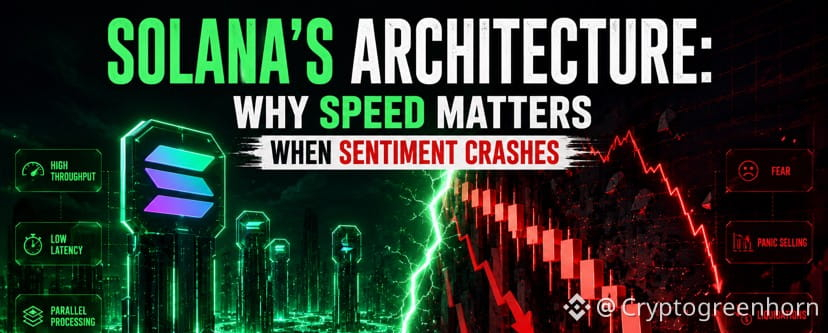
SOLANA’S ARCHITECTURE: WHY SPEED MATTERS WHEN SENTIMENT CRASHESSolana is not just another Layer-1 blockchain; it is a high-performance hybrid consensus machine combining Proof of History (PoH) with Proof of Stake (PoS). This distinction is critical. PoH acts as a "clock" where one "tick" equals the time to compute 12,800 sequential SHA-256 hashes. When this computation finishes, an "Entry" is written to the PoH chain, marking time passed. A "slot" consists of 64 ticks, and an "epoch" comprises 432,000 slots. This mechanism allows Solana to process up to 50,000 transactions per second (TPS) with sub-second block times and near-zero gas costs. In a market where the BTC perpetual funding rate is merely +0.0036% per 8h—indicating a lack of aggressive leverage—and sentiment is crushed, speed translates to utility. When the market is slow and lethargic, Solana’s ability to handle DeFi, NFTs, and gaming without congestion becomes its primary tailwind. It is the only blockchain where "waiting for a transaction" is a joke, not a reality. While other chains struggle with the "decentralization vs. scalability" trade-off, Solana’s "mempool-less" design and Gulfstream protocol allow it to bypass the traditional bottlenecks that choke competitors during high volatility. MARKET BREADTH AND THE GAINERS: WHERE THE LIQUIDITY IS FLOWING Today’s market breadth is thin, with only 30% of pairs green, but the top gainers reveal a specific appetite for infrastructure and AI integration. SYN surged 47.23% to $0.63734, while AIGENSYN jumped 29.45% to $0.03138. These are not random speculative pumps; they signal a shift toward the "autonomous agent economy." This aligns perfectly with the headline that OKX has launched an AI marketplace for this exact sector. Solana is the natural home for this because AI agents require high-frequency, low-cost transactions to execute complex strategies. If an AI agent needs to trade 1,000 times a minute, Ethereum’s gas fees make it a financial nightmare, but Solana’s near-zero fees make it viable. Conversely, the top losers like MANTA (-18.73%) and RE (-14.48%) highlight the fragility of projects that lack a clear utility case in a low-liquidity environment. When the market is in "Extreme Fear," capital retreats to the strongest fundamentals. Solana’s ecosystem, hosting top projects like Raydium, Serum, and Metaplex, offers that fundamental strength. The fact that PYTH (an oracle critical for DeFi data) is up 8.80% further underscores the market’s reliance on Solana’s data infrastructure, even as the broader index bleeds. THE CORPORATE PLAYBOOK: STAKING, YIELD, AND THE DAT STRATEGY The corporate world is taking notice of Solana’s yield potential, a trend illuminated by recent headlines. TD Cowen has slashed Strategy’s price target citing Bitcoin weakness, yet MSTR and STRC continue to climb, suggesting a complex pivot in the industry. More importantly, the headline that "The Coin (SOL) is Solana’s own cryptocurrency" and that companies are deploying cash to buy target assets like SOL is a massive signal. Consider the mechanism of a Digital Asset Treasury (DAT) company: they buy SOL, stake it in the network, and earn inflation rewards. Currently, Solana staking yields approximately 7–8% annually, compared to Ethereum’s ~2.5% and Bitcoin’s 0%. This is not a minor difference; it is a fundamental economic advantage. A savvy DAT might also buy "Locked SOL"—SOL staked long-term by insiders that trades at a ~15% discount because it cannot be sold immediately. By staking this discounted SOL, the company effectively "prints" more SOL for free as prices rise. This yield-arbitrage strategy is a powerful anchor for Solana’s price, even when the broader market is terrified. It turns the "Fear & Greed" index into a yield opportunity for the smart money. CONCLUSION: THE SPEEDBOAT IN A STORM While the market trembles under the weight of "Extreme Fear" and Bitcoin struggles to hold its ground, Solana’s architecture, yield potential, and AI integration make it the standout asset of the decade. It is the speedboat that doesn't care about the storm; it just cuts through it. As OKX launches its AI marketplace and MetaMask explores stablecoin yield accounts, Solana remains the infrastructure of choice for the next generation of decentralized applications. The market may be in a channel, but Solana is the one breaking out of the box. Disclaimer: This article is general market education and information only. It is not financial or investment advice, not a recommendation to buy or sell any asset, and makes no prediction of future prices. Do your own research.

SOLANA’S ARCHITECTURE: WHY SPEED MATTERS WHEN SENTIMENT CRASHES

Solana is not just another Layer-1 blockchain; it is a high-performance hybrid consensus machine combining Proof of History (PoH) with Proof of Stake (PoS). This distinction is critical. PoH acts as a "clock" where one "tick" equals the time to compute 12,800 sequential SHA-256 hashes. When this computation finishes, an "Entry" is written to the PoH chain, marking time passed. A "slot" consists of 64 ticks, and an "epoch" comprises 432,000 slots. This mechanism allows Solana to process up to 50,000 transactions per second (TPS) with sub-second block times and near-zero gas costs.
In a market where the BTC perpetual funding rate is merely +0.0036% per 8h—indicating a lack of aggressive leverage—and sentiment is crushed, speed translates to utility. When the market is slow and lethargic, Solana’s ability to handle DeFi, NFTs, and gaming without congestion becomes its primary tailwind. It is the only blockchain where "waiting for a transaction" is a joke, not a reality. While other chains struggle with the "decentralization vs. scalability" trade-off, Solana’s "mempool-less" design and Gulfstream protocol allow it to bypass the traditional bottlenecks that choke competitors during high volatility.
MARKET BREADTH AND THE GAINERS: WHERE THE LIQUIDITY IS FLOWING
Today’s market breadth is thin, with only 30% of pairs green, but the top gainers reveal a specific appetite for infrastructure and AI integration. SYN surged 47.23% to $0.63734, while AIGENSYN jumped 29.45% to $0.03138. These are not random speculative pumps; they signal a shift toward the "autonomous agent economy." This aligns perfectly with the headline that OKX has launched an AI marketplace for this exact sector. Solana is the natural home for this because AI agents require high-frequency, low-cost transactions to execute complex strategies. If an AI agent needs to trade 1,000 times a minute, Ethereum’s gas fees make it a financial nightmare, but Solana’s near-zero fees make it viable.
Conversely, the top losers like MANTA (-18.73%) and RE (-14.48%) highlight the fragility of projects that lack a clear utility case in a low-liquidity environment. When the market is in "Extreme Fear," capital retreats to the strongest fundamentals. Solana’s ecosystem, hosting top projects like Raydium, Serum, and Metaplex, offers that fundamental strength. The fact that PYTH (an oracle critical for DeFi data) is up 8.80% further underscores the market’s reliance on Solana’s data infrastructure, even as the broader index bleeds.
THE CORPORATE PLAYBOOK: STAKING, YIELD, AND THE DAT STRATEGY
The corporate world is taking notice of Solana’s yield potential, a trend illuminated by recent headlines. TD Cowen has slashed Strategy’s price target citing Bitcoin weakness, yet MSTR and STRC continue to climb, suggesting a complex pivot in the industry. More importantly, the headline that "The Coin (SOL) is Solana’s own cryptocurrency" and that companies are deploying cash to buy target assets like SOL is a massive signal.
Consider the mechanism of a Digital Asset Treasury (DAT) company: they buy SOL, stake it in the network, and earn inflation rewards. Currently, Solana staking yields approximately 7–8% annually, compared to Ethereum’s ~2.5% and Bitcoin’s 0%. This is not a minor difference; it is a fundamental economic advantage. A savvy DAT might also buy "Locked SOL"—SOL staked long-term by insiders that trades at a ~15% discount because it cannot be sold immediately. By staking this discounted SOL, the company effectively "prints" more SOL for free as prices rise. This yield-arbitrage strategy is a powerful anchor for Solana’s price, even when the broader market is terrified. It turns the "Fear & Greed" index into a yield opportunity for the smart money.
CONCLUSION: THE SPEEDBOAT IN A STORM
While the market trembles under the weight of "Extreme Fear" and Bitcoin struggles to hold its ground, Solana’s architecture, yield potential, and AI integration make it the standout asset of the decade. It is the speedboat that doesn't care about the storm; it just cuts through it. As OKX launches its AI marketplace and MetaMask explores stablecoin yield accounts, Solana remains the infrastructure of choice for the next generation of decentralized applications. The market may be in a channel, but Solana is the one breaking out of the box.
Disclaimer: This article is general market education and information only. It is not financial or investment advice, not a recommendation to buy or sell any asset, and makes no prediction of future prices. Do your own research.
Bài viết
Xem bản dịch
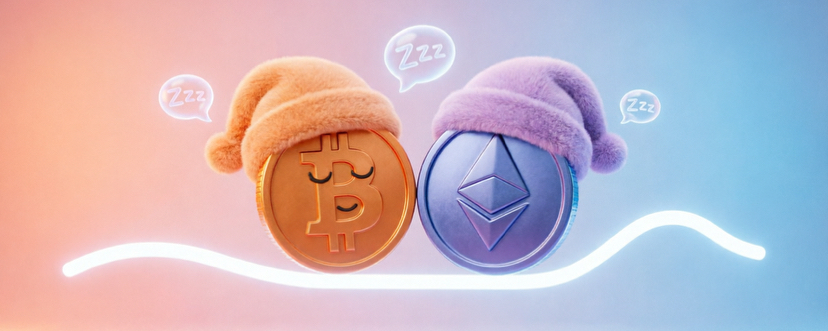
The Majors: When Bitcoin and Ethereum Decide to Take a NapLet’s start with the heavy lifters, because they’re the ones dragging the market cap down to its knees. Bitcoin (BTC) is trading at $58,946.67, bleeding -1.12% over the last 24 hours. It’s not a crash, but it’s a stubborn, ugly slide that feels like walking down a hallway with a broken knee. Meanwhile, Ethereum (ETH) is barely moving, sitting at $1,573.14 with a -0.15% drop. It’s so flat it’s practically horizontal, like a pancake that forgot to flip. When the two giants are this quiet, the market loses its rhythm. It’s like a dance floor where the DJ stopped the music, but the crowd is still trying to figure out the beat. The BTC perpetual funding rateis sitting at +0.0035% per 8 hours, which is the market’s polite way of saying, “Yeah, we’re a bit bearish, but let’s not get crazy.” Why does this matter? Because when BTC and ETH are this stagnant, the spotlight shifts to the wild alts. It’s the market’s way of saying, “If the big guys aren’t going to move, we’ll just make the little guys do the heavy lifting.” This is the mechanism of market breadth: when the leaders are weak, the underdogs get a chance to shine, even if the overall sentiment is still doom and gloom. THE ALTCOIN CIRCUS: GAIN, LOSE, AND THE ART OF THE VIOLENT SWING Now, let’s talk about the real party, the alts that are either printing money or losing it faster than a gambler at a roulette table. The top gainers today are a lineup of names that sound like they were picked from a random generator. SYN is up +44.60% to $0.6283, and AIGENSYN is up +40.06% to $0.03297. These aren’t just gains; they’re fireworks. It’s like watching a toddler throw a ball and it suddenly turns into a rocket. UTK, HEI, and PYTHare also up, with double-digit gains that suggest the market is still hungry for risk, even if the Fear & Greed Index says otherwise. It’s the market’s way of saying, “Hey, we’re scared, but we’re not that scared.” But then, there’s the other side of the coin. The losers are the ones who got left behind. MANTA is down -17.75% to $0.06889, and ACT is down -15.60%to $0.0105. It’s a brutal drop, like a plane that forgot to land. ENA, RE, and TIA are also in the red, with losses that suggest the market is still picking its winners and losers with a very sharp knife. This volatility is the market’s way of saying, “We’re not done yet. We’re still figuring out who’s in and who’s out.” THE HEADLINE SHOW: WHY THE NEWS IS AS CHAOTIC AS THE MARKET The news cycle today is just as chaotic as the market. MetaMask launched a stablecoin yield account with card spending, which is a big deal because it’s the first time a major wallet is trying to make stablecoins work like a savings account. It’s like giving a piggy bank a credit card. OKX launched an AI marketplace for autonomous agents, which is basically the market’s way of saying, “We’re ready for the robot economy.” Strategy’s new plan has divided industry observers, even as MSTR and STRC climb, which is the market’s way of saying, “We’re still figuring out what this means.” Theobecame the first crypto-native investor in a Fidelity tokenized fund, which is a big step for institutional adoption. And Swan’s Cory Klippsten saw a record Bitcoin holder supply, which suggests the market is still finding its bottom. Finally, the FCA finalized landmark crypto rules to make the UK a ‘Global Hub’, which is the market’s way of saying, “We’re ready for the next chapter.” These headlines aren’t just noise; they’re the market’s way of saying, “We’re not done yet. We’re still building the future.” The market is a mix of fear and hope, and these headlines are the proof that we’re still moving forward, even if the Fear & Greed Index says we’re scared. WHAT TOMORROW SETS UP: THE CALM BEFORE THE NEXT STORM So, what does this messy close set up for tomorrow? The Extreme Fear at 15suggests that the market is still on edge, but the 43% green breadth and the altcoin gains suggest that there’s still room for risk. The market is like a storm that’s just starting to break, and tomorrow could be the day the sun comes out. If BTC and ETH can hold their levels, the alts might continue to print money. If they don’t, the market could swing back to the red. It’s a game of chance, and the market is still playing. But for now, let’s just enjoy the show and see what tomorrow brings. The market is a mix of fear and hope, and it’s up to us to see which one wins. And remember, if you’re still scared, just look at the teddy bear in the room of knives. It’s there to remind you that even in the worst of times, there’s always a little bit of hope. TokenStasher is the analytics Disclaimer: This article is general market education and information only. It is not financial or investment advice, not a recommendation to buy or sell any asset, and makes no prediction of future prices. Do your own research. #BTC #ETH #NewsAboutCrypto

The Majors: When Bitcoin and Ethereum Decide to Take a Nap

Let’s start with the heavy lifters, because they’re the ones dragging the market cap down to its knees. Bitcoin (BTC) is trading at $58,946.67, bleeding -1.12% over the last 24 hours. It’s not a crash, but it’s a stubborn, ugly slide that feels like walking down a hallway with a broken knee. Meanwhile, Ethereum (ETH) is barely moving, sitting at $1,573.14 with a -0.15% drop. It’s so flat it’s practically horizontal, like a pancake that forgot to flip. When the two giants are this quiet, the market loses its rhythm. It’s like a dance floor where the DJ stopped the music, but the crowd is still trying to figure out the beat. The BTC perpetual funding rateis sitting at +0.0035% per 8 hours, which is the market’s polite way of saying, “Yeah, we’re a bit bearish, but let’s not get crazy.”
Why does this matter? Because when BTC and ETH are this stagnant, the spotlight shifts to the wild alts. It’s the market’s way of saying, “If the big guys aren’t going to move, we’ll just make the little guys do the heavy lifting.” This is the mechanism of market breadth: when the leaders are weak, the underdogs get a chance to shine, even if the overall sentiment is still doom and gloom.
THE ALTCOIN CIRCUS: GAIN, LOSE, AND THE ART OF THE VIOLENT SWING
Now, let’s talk about the real party, the alts that are either printing money or losing it faster than a gambler at a roulette table. The top gainers today are a lineup of names that sound like they were picked from a random generator. SYN is up +44.60% to $0.6283, and AIGENSYN is up +40.06% to $0.03297. These aren’t just gains; they’re fireworks. It’s like watching a toddler throw a ball and it suddenly turns into a rocket. UTK, HEI, and PYTHare also up, with double-digit gains that suggest the market is still hungry for risk, even if the Fear & Greed Index says otherwise. It’s the market’s way of saying, “Hey, we’re scared, but we’re not that scared.”
But then, there’s the other side of the coin. The losers are the ones who got left behind. MANTA is down -17.75% to $0.06889, and ACT is down -15.60%to $0.0105. It’s a brutal drop, like a plane that forgot to land. ENA, RE, and TIA are also in the red, with losses that suggest the market is still picking its winners and losers with a very sharp knife. This volatility is the market’s way of saying, “We’re not done yet. We’re still figuring out who’s in and who’s out.”
THE HEADLINE SHOW: WHY THE NEWS IS AS CHAOTIC AS THE MARKET
The news cycle today is just as chaotic as the market. MetaMask launched a stablecoin yield account with card spending, which is a big deal because it’s the first time a major wallet is trying to make stablecoins work like a savings account. It’s like giving a piggy bank a credit card. OKX launched an AI marketplace for autonomous agents, which is basically the market’s way of saying, “We’re ready for the robot economy.” Strategy’s new plan has divided industry observers, even as MSTR and STRC climb, which is the market’s way of saying, “We’re still figuring out what this means.” Theobecame the first crypto-native investor in a Fidelity tokenized fund, which is a big step for institutional adoption. And Swan’s Cory Klippsten saw a record Bitcoin holder supply, which suggests the market is still finding its bottom. Finally, the FCA finalized landmark crypto rules to make the UK a ‘Global Hub’, which is the market’s way of saying, “We’re ready for the next chapter.”
These headlines aren’t just noise; they’re the market’s way of saying, “We’re not done yet. We’re still building the future.” The market is a mix of fear and hope, and these headlines are the proof that we’re still moving forward, even if the Fear & Greed Index says we’re scared.
WHAT TOMORROW SETS UP: THE CALM BEFORE THE NEXT STORM
So, what does this messy close set up for tomorrow? The Extreme Fear at 15suggests that the market is still on edge, but the 43% green breadth and the altcoin gains suggest that there’s still room for risk. The market is like a storm that’s just starting to break, and tomorrow could be the day the sun comes out. If BTC and ETH can hold their levels, the alts might continue to print money. If they don’t, the market could swing back to the red. It’s a game of chance, and the market is still playing. But for now, let’s just enjoy the show and see what tomorrow brings. The market is a mix of fear and hope, and it’s up to us to see which one wins.
And remember, if you’re still scared, just look at the teddy bear in the room of knives. It’s there to remind you that even in the worst of times, there’s always a little bit of hope. TokenStasher is the analytics
Disclaimer: This article is general market education and information only. It is not financial or investment advice, not a recommendation to buy or sell any asset, and makes no prediction of future prices. Do your own research.
#BTC #ETH #NewsAboutCrypto
Sự đánh đổi giữa thời điểm và hướng (5 #năm kinh nghiệm futures) Một sự thật khó khăn mà tôi không muốn chấp nhận trong thời gian dài: Hướng đi không phải thứ giết tài khoản của bạn. Thời điểm mới là thứ đó. Bạn có thể hoàn toàn đúng về nơi Bitcoin đang hướng tới, nhưng nếu bạn vào lệnh sớm hơn 30 phút trước một chuỗi thanh lý (liquidation cascade), bạn sẽ bị loại khỏi cuộc chơi trước cả khi đợt tăng/giảm bắt đầu. Tôi đã học điều này theo cách đắt giá—nhiều lần. Vì vậy tôi bắt đầu đặt một câu hỏi khác: “Nếu tôi ngừng cố đoán thị trường và bắt đầu đo trạng thái hiện tại của nó thì sao?” Tôi đã xây một bảng điều khiển phân tích cá nhân (gọi là TokenStasher) để làm đúng việc đó. Nó không nói cho tôi biết giá sẽ đi đâu. Nó chỉ tổng hợp dữ liệu công khai trên nhiều sàn—tỷ lệ funding (funding rates), delta lũy kế (cumulative delta), độ sâu sổ lệnh (order book depth) và các đợt bùng nổ về khối lượng (volume surges)—rồi chấm điểm các kịch bản dựa trên “căng thẳng cấu trúc” thay vì tin theo hype. Điều duy nhất nó bắt được một cách nhất quán? Những cú siết (squeeze) và sự phân kỳ (divergence) mà không thể hiện rõ ràng trên các chỉ báo tiêu chuẩn của TradingView. Nó vẽ ra các mức kích hoạt (trigger levels) và vùng vô hiệu hóa (invalidation zones) để tôi ít nhất có thể xác định rủi ro của mình trước khi vào lệnh—chứ không phải sau khi đã vào. Nhưng đây mới là bài học thực sự—và tôi nói thật lòng: Dù có tất cả dữ liệu đó, tỷ lệ thắng của tôi vẫn quanh mức 43–60% tùy theo từng tháng. Và thế là ổn. Lợi thế không nằm ở việc đúng nhiều hơn. Lợi thế nằm ở việc đảm bảo “người thắng” của bạn trung bình lớn hơn một cách có ý nghĩa so với “người thua” trung bình, và có kỷ luật để cắt lỗ khi dữ liệu cho thấy bạn sai—không phải khi cái tôi của bạn nói “nó sẽ đảo chiều.” Không có dashboard, không có AI, và không có “tín hiệu” nào thay đổi phép toán cơ bản đó. Thứ duy nhất dữ liệu tốt làm được là khiến bạn khó tự dối mình hơn về lý do bạn đã vào một lệnh. Dành cho những bạn đã làm việc này một thời gian rồi—chỉ số hay tín hiệu nào mà bạn thấy đáng tin cậy nhất để canh điểm vào lệnh? Tôi thật sự tò mò muốn nghe xem những gì đang hiệu quả với người khác ngoài kia là gì. Giữ an toàn, quản lý quy mô hợp lý. 👊 #MostRecentTrade #CryptoRoundTableRemarks #PhânTíchKỹThuật
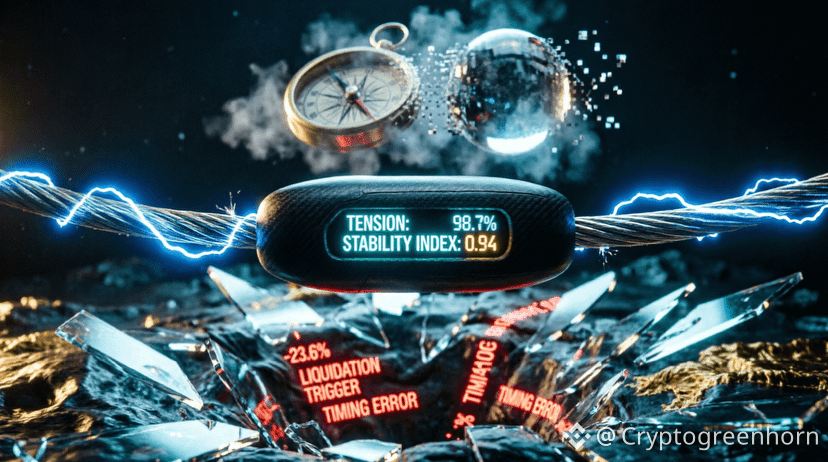
Sự đánh đổi giữa thời điểm và hướng (5 #năm kinh nghiệm futures)

Một sự thật khó khăn mà tôi không muốn chấp nhận trong thời gian dài:

Hướng đi không phải thứ giết tài khoản của bạn. Thời điểm mới là thứ đó.

Bạn có thể hoàn toàn đúng về nơi Bitcoin đang hướng tới, nhưng nếu bạn vào lệnh sớm hơn 30 phút trước một chuỗi thanh lý (liquidation cascade), bạn sẽ bị loại khỏi cuộc chơi trước cả khi đợt tăng/giảm bắt đầu. Tôi đã học điều này theo cách đắt giá—nhiều lần.

Vì vậy tôi bắt đầu đặt một câu hỏi khác: “Nếu tôi ngừng cố đoán thị trường và bắt đầu đo trạng thái hiện tại của nó thì sao?”

Tôi đã xây một bảng điều khiển phân tích cá nhân (gọi là TokenStasher) để làm đúng việc đó. Nó không nói cho tôi biết giá sẽ đi đâu. Nó chỉ tổng hợp dữ liệu công khai trên nhiều sàn—tỷ lệ funding (funding rates), delta lũy kế (cumulative delta), độ sâu sổ lệnh (order book depth) và các đợt bùng nổ về khối lượng (volume surges)—rồi chấm điểm các kịch bản dựa trên “căng thẳng cấu trúc” thay vì tin theo hype.

Điều duy nhất nó bắt được một cách nhất quán? Những cú siết (squeeze) và sự phân kỳ (divergence) mà không thể hiện rõ ràng trên các chỉ báo tiêu chuẩn của TradingView. Nó vẽ ra các mức kích hoạt (trigger levels) và vùng vô hiệu hóa (invalidation zones) để tôi ít nhất có thể xác định rủi ro của mình trước khi vào lệnh—chứ không phải sau khi đã vào.

Nhưng đây mới là bài học thực sự—và tôi nói thật lòng:

Dù có tất cả dữ liệu đó, tỷ lệ thắng của tôi vẫn quanh mức 43–60% tùy theo từng tháng. Và thế là ổn.

Lợi thế không nằm ở việc đúng nhiều hơn. Lợi thế nằm ở việc đảm bảo “người thắng” của bạn trung bình lớn hơn một cách có ý nghĩa so với “người thua” trung bình, và có kỷ luật để cắt lỗ khi dữ liệu cho thấy bạn sai—không phải khi cái tôi của bạn nói “nó sẽ đảo chiều.”

Không có dashboard, không có AI, và không có “tín hiệu” nào thay đổi phép toán cơ bản đó. Thứ duy nhất dữ liệu tốt làm được là khiến bạn khó tự dối mình hơn về lý do bạn đã vào một lệnh.

Dành cho những bạn đã làm việc này một thời gian rồi—chỉ số hay tín hiệu nào mà bạn thấy đáng tin cậy nhất để canh điểm vào lệnh? Tôi thật sự tò mò muốn nghe xem những gì đang hiệu quả với người khác ngoài kia là gì.

Giữ an toàn, quản lý quy mô hợp lý. 👊

#MostRecentTrade #CryptoRoundTableRemarks #PhânTíchKỹThuật
Thực hiện giao dịch scalpe ngắn hạn
Đã lấy vào đúng lúc
Đã lấy vào đúng lúc
Đăng nhập để khám phá thêm nội dung
Tham gia cùng người dùng tiền mã hóa toàn cầu trên Binance Square
⚡️ Nhận thông tin mới nhất và hữu ích về tiền mã hóa.
💬 Được tin cậy bởi sàn giao dịch tiền mã hóa lớn nhất thế giới.
👍 Khám phá những thông tin chuyên sâu thực tế từ những nhà sáng tạo đã xác minh.
Email / Số điện thoại
Sơ đồ trang web
Tùy chọn Cookie
Điều khoản & Điều kiện