PetrosNoah

Giao dịch mở
Trader thường xuyên
{thời gian} năm
67 Đang theo dõi
39 Người theo dõi
255 Đã thích
Bài đăng
Danh mục đầu tư
·
--
Xem bản dịch
Sometimes I doubt and wonder if crypto is really the way to financial freedom.
Nếu bạn đang thắng, bạn sẽ vui. Nếu bạn đang thua, bạn sẽ buồn. Nếu bạn không tham gia giao dịch, bạn sẽ cảm thấy bình thản 😑. Không có biến động cảm xúc. Tôi chọn sự bình yên.
Nếu bạn đang thắng, bạn sẽ vui.
Nếu bạn đang thua, bạn sẽ buồn.
Nếu bạn không tham gia giao dịch, bạn sẽ cảm thấy bình thản 😑. Không có biến động cảm xúc.

Tôi chọn sự bình yên.
Xem bản dịch
{spot}(BTCUSDT) $BTC the bullrun is never going to happen right? It seems we're stuck in this endless circle of consolidation and patience before the macro liquidity shifts. Longs are rekt. Waiting for the liquidation figures to be announced.
$BTC the bullrun is never going to happen right? It seems we're stuck in this endless circle of consolidation and patience before the macro liquidity shifts. Longs are rekt. Waiting for the liquidation figures to be announced.
Xem bản dịch
What's worth trading today? $BNB chart is looking good
·
--
Bài viết
Xem bản dịch
He Died With The Keys, You Shouldn't!One password. $190 million. Gone. That's the whole story. Gerald Cotten built QuadrigaCX, one of Canada's biggest crypto exchanges. He was 30. Sharp, driven, in control of everything. In December 2018, he died unexpectedly while traveling in India. Here's the part that should make you put your phone down for a second: He was the only person who knew the private keys to the cold wallets. No backup. No shared custody. No plan for a world where he wasn't around to manage it. $190 million in customer funds didn't get stolen. It didn't get hacked. It just... stopped existing. Frozen behind a password that died with him. Don't be Gerald Cotten. Crypto Doesn't Die Like Other Assets Most wealth lives inside a system built to outlast the person who created it. Banks. Brokerages. Courts. Paperwork trails designed for exactly this moment. Crypto doesn't work that way. It's self-custodied. Decentralized. Often anonymous by design. Which means it doesn't recognize you. It recognizes the keys. The blockchain has never seen a death certificate and never will. No key, no access. No access, no transfer. No transfer, and the wealth might as well have never existed. Cotten's mistake wasn't holding crypto. His mistake was building a system that only worked while he was breathing. The Real Problem: You Optimized For The Wrong Thing Here's the uncomfortable truth underneath all of this: Ownership is technical. Inheritance is human. Most people spend years optimizing for security, control, and privacy. Almost no one optimizes for the three things that actually end up mattering: AbsenceConfusionStress And when those three show up — and they always eventually show up — the assets don't get stolen. They get locked forever. You didn't lose the money. You just never built a system that could survive without you standing over it. How To Not Become The Next Cautionary Tweet This isn't complicated. It just requires you to think past the version of yourself who's still alive and in control. 1. Stop being the single point of failure If you're the only one who can move the funds, your crypto isn't secure. It's fragile. Those are different things. Use multi-signature wallets for anything that matters. A 2-of-3 or 3-of-5 setup, split like this: One key with youOne key with someone you trustOne key with a neutral third party — a lawyer, a trust company, a vault One key gone, or one person gone, and the system still works. Cotten held every key himself. That single decision made the failure inevitable before it ever happened. 2. Separate the "how" from the "why" A seed phrase taped somewhere isn't a plan. It's a rumor of a plan. You need two separate things: The access material — keys, hardware wallets, seed phrasesThe instructions — a plain-language explanation of what exists and where Never store these together. Keys unlock the assets. Instructions unlock the understanding of the assets. One without the other is just an expensive puzzle for the people you leave behind. 3. Write it for someone who knows nothing Assume the person reading your instructions has never touched a hardware wallet. Never signed a transaction. Never heard the words "seed phrase" in their life. Because in the moment they need this document, they'll be grieving, confused, and under pressure. Intelligent people freeze under that combination constantly. If your plan requires fluency, your plan will fail. 4. Automate it. Don't memorize it. Humans forget. Systems don't. Use password managers with emergency access timers. Encrypted documents that release after a period of inactivity. Multi-sig arrangements that activate on verified death documentation. Think of it as a dead man's switch, minus the single point of failure. The goal isn't a dramatic reveal. It's quiet continuity. 5. Build a bridge to the legal system A will doesn't move crypto. But it can point the way. Do it like this: The will references where the instructions live, not the keys themselvesExecutors know who holds which pieceLawyers understand they're authorizing recovery, not custody Crypto will never fit neatly inside estate law. That's fine. It just needs a bridge to it. Cotten built no bridge at all. 6. The more wallets you have, the less recoverable you are More wallets feels like more security. It's usually just more surface area for the whole thing to fall apart. Keep it simple: One long-term cold storage setupOne operational walletOne clearly documented structure connecting the two If you can't explain your own system in under a minute while you're alive, no one is recovering it once you're not. 7. Test it like you'd test a fire escape Once a year, actually walk someone through it. Confirm the instructions are where you think they are. Confirm the devices still work. Confirm none of it secretly depends on your memory. If the plan doesn't work with you standing right there, it will not work in your absence. 8. Use exchanges that plan for death, when it makes sense Self-custody isn't the only option. Centralized exchanges like @Binance supports inheritance structures, allowing designated beneficiaries to claim assets after death. CZ has publicly pushed for this to become standard across the industry: every platform should have a "will function," because none of us are getting out of here alive. If you keep funds on an exchange, document: Which platforms you useWhere the credentials liveWho should contact support, and how Heirs will still need a death certificate, proof of legal authority, and valid ID. Logging into your account "just to help" after you're gone can break the law and the platform's terms. Don't put people in that position. The Lesson Underneath The Lesson Cotten optimized for control, speed, and secrecy. He never designed for absence. For confusion. For continuity. And that's not really a crypto lesson. That's a life lesson wearing a crypto costume. Because here's what nobody tells you when you're deep in the game, stacking sats, guarding your keys like state secrets: Security and survivability are not the same skill. One protects your wealth from other people. The other protects your wealth for the people you love, after you're not around to protect anything. You can be the most disciplined, most private, most "I don't trust anyone with my keys" person in the room — and still leave behind nothing but a locked wallet and a grieving family staring at a screen they don't understand. That's not security. That's just delayed loss. So ask yourself the question Cotten never did: If I disappeared tonight, would my wealth survive me — or would it just quietly expire with me? Build the system now, while you have the luxury of time and clarity. Not later. Not "when it matters more." Now is when it matters. Because the market will forgive a bad trade. It will not forgive a system that only worked while you were alive to run it. Don't let your legacy end at your last login. — Noah

He Died With The Keys, You Shouldn't!

One password.
$190 million. Gone.
That's the whole story.
Gerald Cotten built QuadrigaCX, one of Canada's biggest crypto exchanges. He was 30. Sharp, driven, in control of everything.
In December 2018, he died unexpectedly while traveling in India.
Here's the part that should make you put your phone down for a second:
He was the only person who knew the private keys to the cold wallets.
No backup. No shared custody. No plan for a world where he wasn't around to manage it.
$190 million in customer funds didn't get stolen. It didn't get hacked.
It just... stopped existing. Frozen behind a password that died with him.
Don't be Gerald Cotten.
Crypto Doesn't Die Like Other Assets
Most wealth lives inside a system built to outlast the person who created it. Banks. Brokerages. Courts. Paperwork trails designed for exactly this moment.
Crypto doesn't work that way.
It's self-custodied. Decentralized. Often anonymous by design.
Which means it doesn't recognize you. It recognizes the keys.
The blockchain has never seen a death certificate and never will.
No key, no access. No access, no transfer. No transfer, and the wealth might as well have never existed.
Cotten's mistake wasn't holding crypto. His mistake was building a system that only worked while he was breathing.
The Real Problem: You Optimized For The Wrong Thing
Here's the uncomfortable truth underneath all of this:
Ownership is technical. Inheritance is human.
Most people spend years optimizing for security, control, and privacy.
Almost no one optimizes for the three things that actually end up mattering:
AbsenceConfusionStress
And when those three show up — and they always eventually show up — the assets don't get stolen.
They get locked forever.
You didn't lose the money. You just never built a system that could survive without you standing over it.
How To Not Become The Next Cautionary Tweet
This isn't complicated. It just requires you to think past the version of yourself who's still alive and in control.
1. Stop being the single point of failure
If you're the only one who can move the funds, your crypto isn't secure. It's fragile. Those are different things.
Use multi-signature wallets for anything that matters. A 2-of-3 or 3-of-5 setup, split like this:
One key with youOne key with someone you trustOne key with a neutral third party — a lawyer, a trust company, a vault
One key gone, or one person gone, and the system still works.
Cotten held every key himself. That single decision made the failure inevitable before it ever happened.
2. Separate the "how" from the "why"
A seed phrase taped somewhere isn't a plan. It's a rumor of a plan.
You need two separate things:
The access material — keys, hardware wallets, seed phrasesThe instructions — a plain-language explanation of what exists and where
Never store these together. Keys unlock the assets. Instructions unlock the understanding of the assets.
One without the other is just an expensive puzzle for the people you leave behind.
3. Write it for someone who knows nothing
Assume the person reading your instructions has never touched a hardware wallet. Never signed a transaction. Never heard the words "seed phrase" in their life.
Because in the moment they need this document, they'll be grieving, confused, and under pressure. Intelligent people freeze under that combination constantly.
If your plan requires fluency, your plan will fail.
4. Automate it. Don't memorize it.
Humans forget. Systems don't.
Use password managers with emergency access timers. Encrypted documents that release after a period of inactivity. Multi-sig arrangements that activate on verified death documentation.
Think of it as a dead man's switch, minus the single point of failure.
The goal isn't a dramatic reveal. It's quiet continuity.
5. Build a bridge to the legal system
A will doesn't move crypto. But it can point the way.
Do it like this:
The will references where the instructions live, not the keys themselvesExecutors know who holds which pieceLawyers understand they're authorizing recovery, not custody
Crypto will never fit neatly inside estate law. That's fine. It just needs a bridge to it. Cotten built no bridge at all.
6. The more wallets you have, the less recoverable you are
More wallets feels like more security. It's usually just more surface area for the whole thing to fall apart.
Keep it simple:
One long-term cold storage setupOne operational walletOne clearly documented structure connecting the two
If you can't explain your own system in under a minute while you're alive, no one is recovering it once you're not.
7. Test it like you'd test a fire escape
Once a year, actually walk someone through it.
Confirm the instructions are where you think they are. Confirm the devices still work. Confirm none of it secretly depends on your memory.
If the plan doesn't work with you standing right there, it will not work in your absence.
8. Use exchanges that plan for death, when it makes sense
Self-custody isn't the only option. Centralized exchanges like @Binance supports inheritance structures, allowing designated beneficiaries to claim assets after death.
CZ has publicly pushed for this to become standard across the industry: every platform should have a "will function," because none of us are getting out of here alive.
If you keep funds on an exchange, document:
Which platforms you useWhere the credentials liveWho should contact support, and how
Heirs will still need a death certificate, proof of legal authority, and valid ID. Logging into your account "just to help" after you're gone can break the law and the platform's terms. Don't put people in that position.
The Lesson Underneath The Lesson
Cotten optimized for control, speed, and secrecy.
He never designed for absence. For confusion. For continuity.
And that's not really a crypto lesson. That's a life lesson wearing a crypto costume.
Because here's what nobody tells you when you're deep in the game, stacking sats, guarding your keys like state secrets:
Security and survivability are not the same skill.
One protects your wealth from other people.
The other protects your wealth for the people you love, after you're not around to protect anything.
You can be the most disciplined, most private, most "I don't trust anyone with my keys" person in the room — and still leave behind nothing but a locked wallet and a grieving family staring at a screen they don't understand.
That's not security. That's just delayed loss.
So ask yourself the question Cotten never did:
If I disappeared tonight, would my wealth survive me — or would it just quietly expire with me?
Build the system now, while you have the luxury of time and clarity. Not later. Not "when it matters more." Now is when it matters.
Because the market will forgive a bad trade.
It will not forgive a system that only worked while you were alive to run it.
Don't let your legacy end at your last login.
— Noah
Xem bản dịch
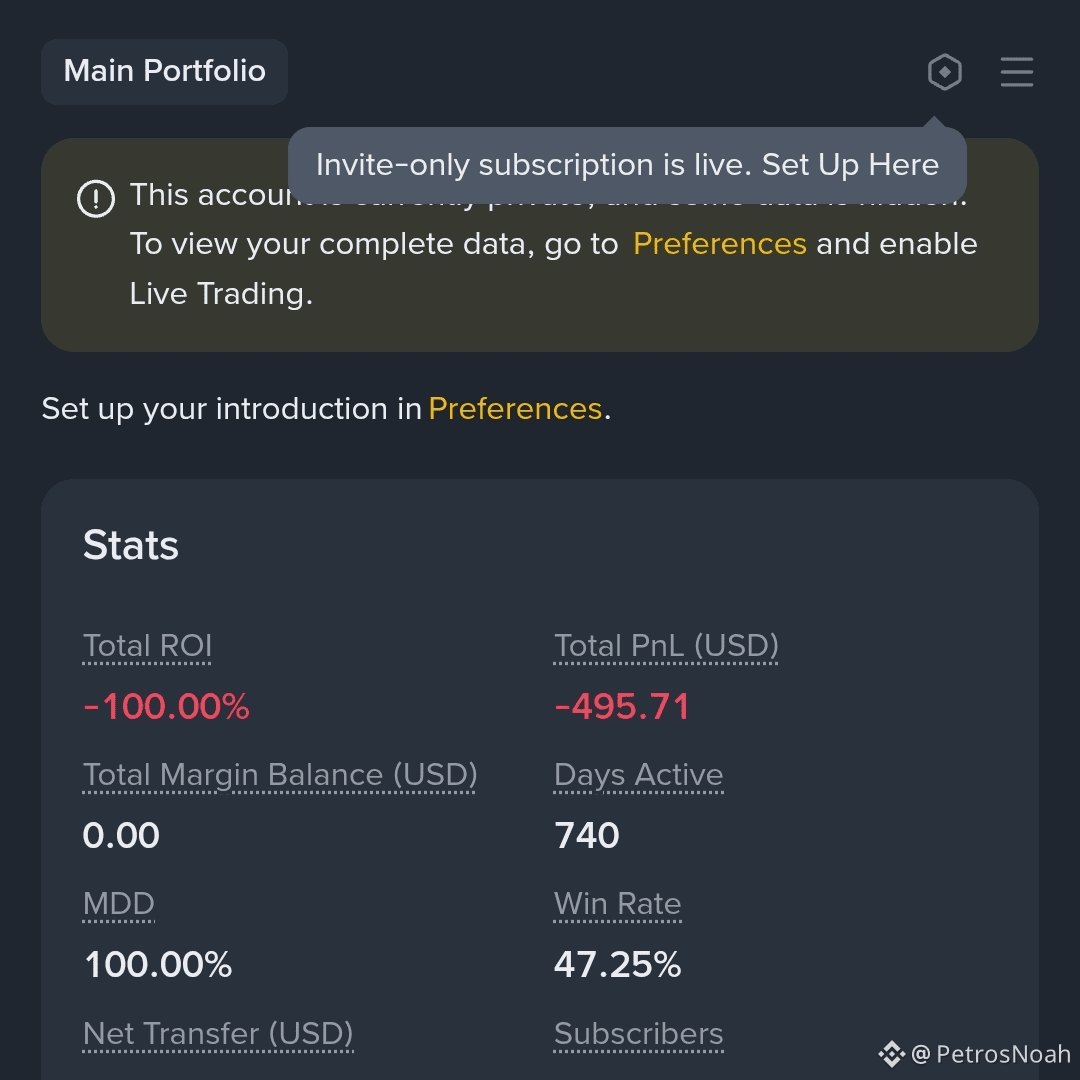
I quit leverage the moment I blew my last 500$. At first the profits came but then it's loss after loss. Took a break, allowed the market to settle. Yet it's from one loss to the other. Every strategy I learnt was working against me. Even signal groups working for people decided to work against me the moment I entered each trade. It's frustrating. I'm angry, I'm lost, I'm in debt. I'm just tired 😩
Gm, nhưng không phải từ SBF.
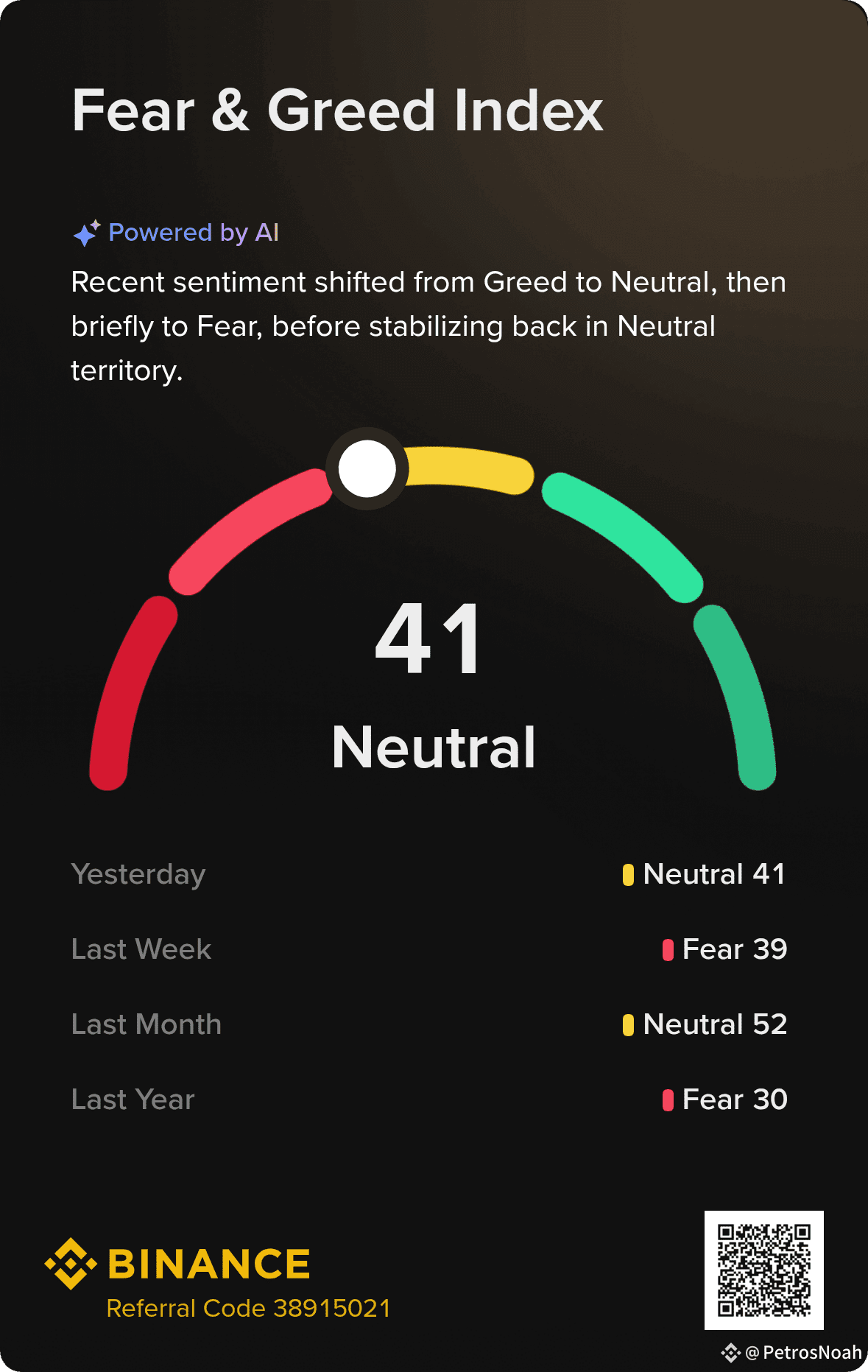
Chỉ số Sợ Hãi & Tham Lam trong crypto hiện đang ở mức 41/100, được phân loại là Trung Lập. Nhưng có phải nó đang tiến gần đến vùng Sợ Hãi? Lưu ý rằng trong tháng qua, tâm lý đã giảm từ khoảng giữa 50 (gọi là tham lam nhẹ) xuống mức thấp 40, cho thấy sự giảm dần của khẩu vị rủi ro. Có thể nói rằng sự trôi dạt này là một phản ánh của một thị trường đang tiêu hóa sự biến động gần đây. Vốn hóa toàn cầu đã giảm khoảng 1.6%, và các nhà đầu tư có vẻ ít sẵn lòng theo đuổi các đợt tăng giá.
Chỉ số Sợ Hãi & Tham Lam trong crypto hiện đang ở mức 41/100, được phân loại là Trung Lập.

Nhưng có phải nó đang tiến gần đến vùng Sợ Hãi?

Lưu ý rằng trong tháng qua, tâm lý đã giảm từ khoảng giữa 50 (gọi là tham lam nhẹ) xuống mức thấp 40, cho thấy sự giảm dần của khẩu vị rủi ro.

Có thể nói rằng sự trôi dạt này là một phản ánh của một thị trường đang tiêu hóa sự biến động gần đây. Vốn hóa toàn cầu đã giảm khoảng 1.6%, và các nhà đầu tư có vẻ ít sẵn lòng theo đuổi các đợt tăng giá.
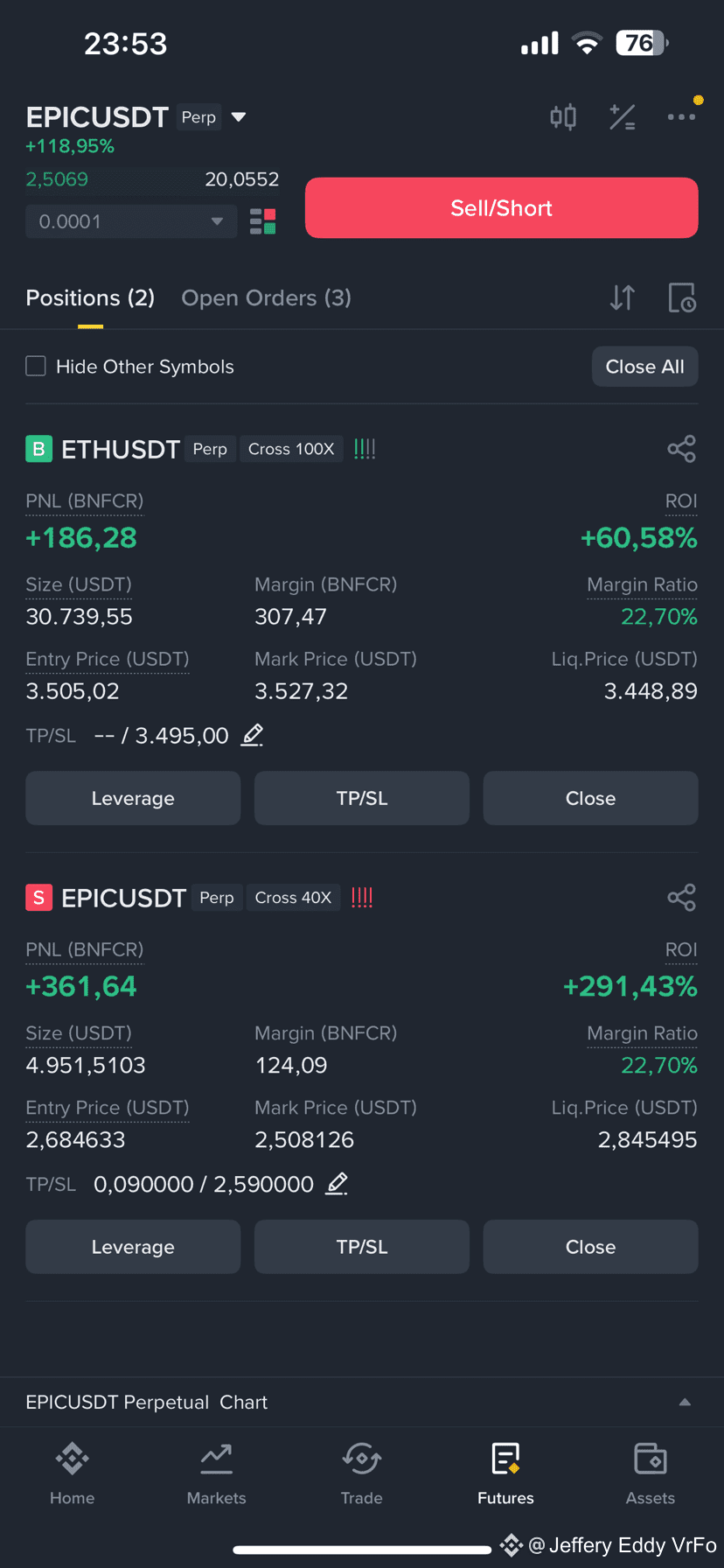
Anh ơi, hiện tại anh đang chảy máu. Nhưng tôi chân thành hy vọng nó sẽ phục hồi để mang lại cho anh một số lợi nhuận.
Nội dung được trích dẫn đã bị xóa
🚀
🚀
Trend Coin
·
--
Tăng giá
🚀 TrendCoin đang tìm kiếm 1000 tình nguyện viên sớm.

Chúng tôi đang cung cấp một sứ mệnh — với 🧨 5x phần thưởng cho tình nguyện viên.

📈 Hơn 100,000 người dùng đang tải
🛠️ Xây dựng cùng chúng tôi trước khi chúng tôi niêm yết
🎁 Nhận phần thưởng như chưa từng có trước đây

Trả lời “🚀” với id twitter của bạn nếu bạn tham gia.

#TrendCoin #CryptoVolunteers #BinanceSquare #BSC #AirdropAlert

Hãy nhớ lấy lợi nhuận của bạn. Biểu đồ có thể đi ngược lại với bạn vào lúc bạn ít mong đợi nhất.
TeleMining
·
--
$PENGU Tôi thích chấp nhận rủi ro 🙅
#pengu đã giao dịch với mã thông báo này hơn 10 lần và kiếm được gần 7k đô la. Nếu bạn không tin lời tôi thì hãy cho tôi biết, tôi sẽ cung cấp ảnh chụp màn hình 😏
Tôi muốn biết về chiến lược này. Bạn có thể chia sẻ chi tiết không?
John willem
·
--
Biến $10 thành $50 chỉ trong 3 ngày bằng cách sử dụng biên nhỏ, đòn bẩy thấp và rủi ro tối thiểu—trong khi theo dõi chặt chẽ sự hướng dẫn của người cố vấn của tôi. 📈💡#StrategyBTCPurchase #StablecoinLaw
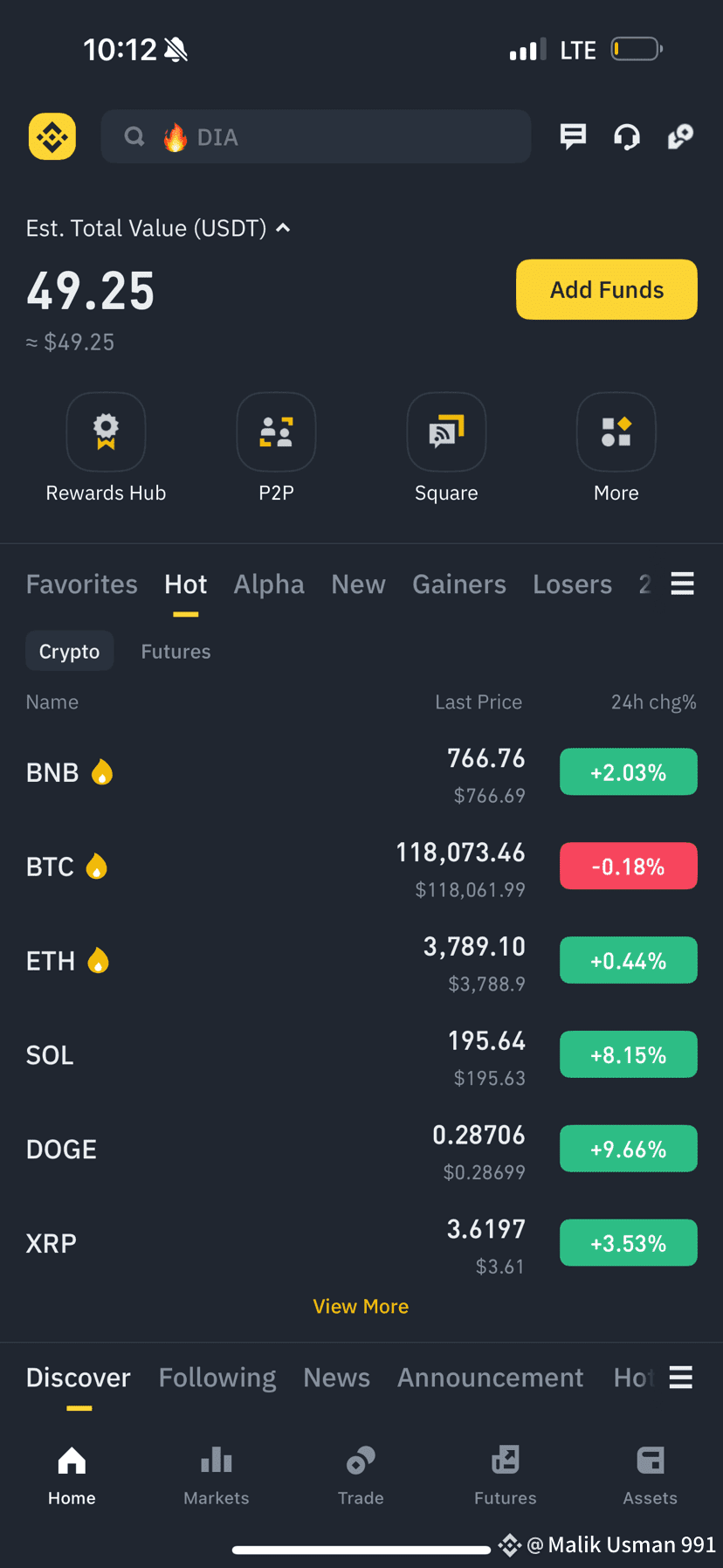
Tôi đồng ý rằng Arbitrum là một lựa chọn mua tốt.
Blockchain-Insider
·
--
Tăng giá
$ARB đang trên đường $1 🔥🔥🚀🚀

đây là tin nội bộ về $ARB 🔥🔥💥

nhấn vào đây để mua $ARB

#CryptoMarket4T #GENIUSAct #BinanceHODLerERA #BTCWhaleTracker
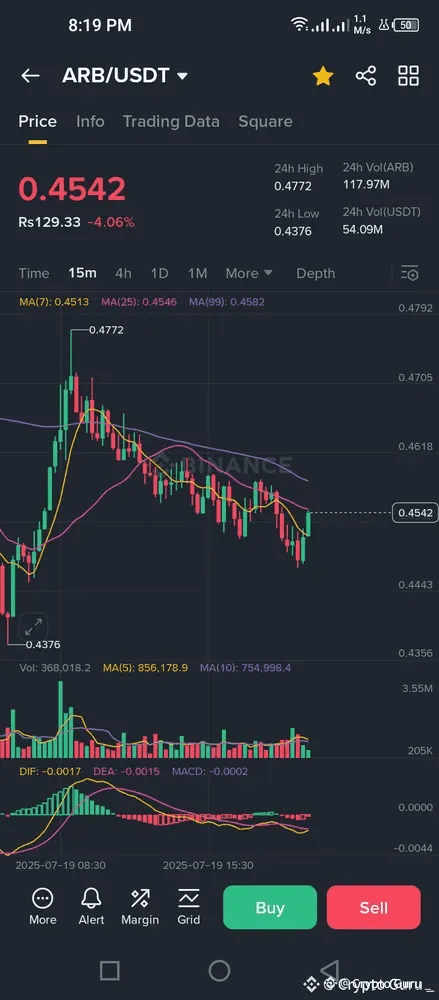
Chúc mừng. Hãy tỏa sáng vận may của bạn lên tôi nữa, anh trai. 😁
Crypto_king daily
·
--
Tăng giá
Hôm nay tôi cảm thấy may mắn 😀

#GENIUSAct #ETHBreakout3.5k
Cảm ơn vì đã chia sẻ. Đã bị thanh lý vài lần rồi trong tháng này.
Sienna Leo-你真棒-带我走
·
--
🐋💥 Cá Voi Lợi Dụng Thị Trường Hợp Đồng Tương Lai Để Có Lợi — Trên Chi Phí Của Bạn? 💥🐋

Bạn nghĩ rằng bạn đang giao dịch theo biểu đồ… nhưng bạn thường chỉ đang bơi trong vùng nước do cá voi điều khiển. 🐟➡️🐋

Nếu bạn đang giao dịch hợp đồng tương lai mà không hiểu cách cá voi thao túng trò chơi, bạn không chỉ bị bỏ lại — bạn là mục tiêu. Đây là những gì họ không muốn bạn biết 👇

🎯 1. Cá Voi Kích Hoạt Thanh Lý Có Chủ Đích

Họ theo dõi mức thanh lý của các nhà giao dịch bán lẻ sử dụng đòn bẩy cao. Một cú đẩy giá nhỏ theo bất kỳ hướng nào có thể buộc một làn sóng thanh lý, tạo ra sự biến động lớn — và họ thu được lợi nhuận lớn từ điều đó.

📉 2. Giả Mạo & Săn Dừng

Cá voi sử dụng các lệnh lớn để tạo ra các đột phá hoặc sụt giảm giả mạo. Bạn đuổi theo động thái, họ đảo ngược lại. Kết quả? Bạn bị dừng lỗ, họ thu thập thanh khoản mà bạn để lại.

🧾 3. Chiến Lược Tỷ Lệ Tài Trợ

Cá voi giữ các vị thế khi tỷ lệ tài trợ thuận lợi. Trong khi các nhà bán lẻ đang trả phí một cách mù quáng, họ đang kiếm tiền từ tỷ lệ hoặc định vị trước khi đám đông tham gia.

⚖️ 4. Áp Lực Sổ Lệnh

Họ xếp chồng sổ lệnh với các lệnh mua/bán giả (còn gọi là giả mạo) để thao túng tâm lý thị trường. Các nhà bán lẻ phản ứng. Cá voi biến mất — và thực hiện các động thái khi thị trường thay đổi về mặt cảm xúc.

💡 Cách Bạn Giữ Vững Vị Thế

🚫 Đừng sử dụng đòn bẩy quá mức — đó là thức ăn cho cá voi

🔍 Theo dõi tỷ lệ tài trợ trước khi mở bất kỳ giao dịch hợp đồng tương lai nào

🛡️ Đặt lệnh dừng lỗ chặt chẽ, nhưng đặt chúng ở những nơi cá voi sẽ không săn tìm

📊 Sử dụng các công cụ khối lượng và lãi suất mở để phát hiện các trò chơi thao túng

🧠 Trong lãnh thổ của cá voi, sự sống sót là kỹ năng — không phải may mắn.

✨ Theo dõi để có những hiểu biết sâu sắc hơn từ chiến trường crypto
💛 Thích nếu bạn đã từng bị thanh lý và học hỏi theo cách khó khăn
🔁 Chia sẻ để giúp người khác tránh xa thực đơn của cá voi
Hãy cùng giúp đỡ, phát triển và chiến thắng cùng nhau — với tình yêu! 🚀🧠

#BinanceFutures #SmartCryptoMoves #Web3TradingTips
#Write2Earn #BinanceSquare

Kinh ngạc
Kinh ngạc
Trynna
·
--
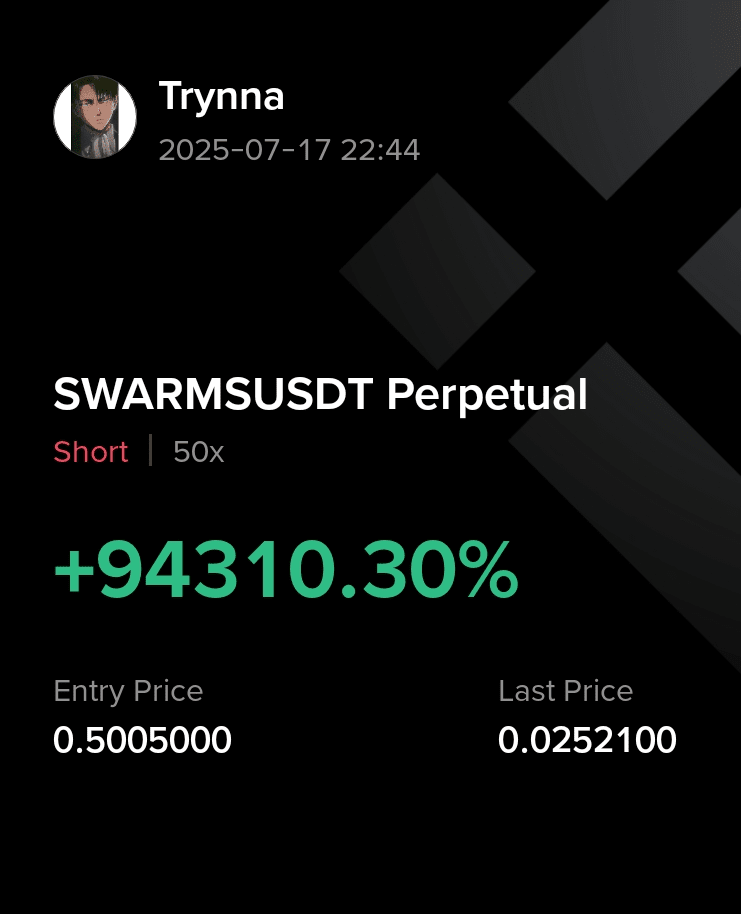
Khóa lợi nhuận lớn. ❣️❣️❣️
Đặt lệnh cắt lỗ tại lợi nhuận +75000% 😘
Các altcoin sẽ điên cuồng nên không thể bỏ lỡ lợi nhuận. 🏆
#trynna #short
#Bơm PUMP vừa thanh lý tôi. Tôi đã rời khỏi thị trường. Cảm thấy buồn. 😔 ☹️
#BinanceTurns8 Thu thập tất cả #BinanceTurns8 dấu sao tiền điện tử để có cơ hội nhận phần thưởng BNB bonus! https://www.binance.com/activity/binance-turns-8?ref=GRO_19600_64FWO
#BinanceTurns8 Tham gia chúng tôi trong lễ kỷ niệm #BinanceTurns8 và giành một phần lên tới $888,888 bằng BNB! https://www.binance.com/activity/binance-turns-8?ref=GRO_19600_64FWO
Đăng nhập để khám phá thêm nội dung
Tham gia cùng người dùng tiền mã hóa toàn cầu trên Binance Square
⚡️ Nhận thông tin mới nhất và hữu ích về tiền mã hóa.
💬 Được tin cậy bởi sàn giao dịch tiền mã hóa lớn nhất thế giới.
👍 Khám phá những thông tin chuyên sâu thực tế từ những nhà sáng tạo đã xác minh.
Email / Số điện thoại
Sơ đồ trang web
Tùy chọn Cookie
Điều khoản & Điều kiện