
D E E N A
4.3k Bài đăng

D E E N A
Báo cáo
Chặn người dùng
Crypto Lover
Giao dịch mở
Trader thường xuyên
{thời gian} năm
222 Đang theo dõi
17.1K+ Người theo dõi
4.2K+ Đã thích
Bài đăng
Danh mục đầu tư
Tất cả
Trích dẫn
Live
·
--
Xem bản dịch
🚨 PUMP COMPETITION!
$G USDT: +73.82% at $0.007337
$ONE : +72.85% at $0.0018028
🔥 Just 0.97% separates them!
Who takes the lead next?
{spot}(ONEUSDT)
{spot}(GUSDT)
#BOJHikesRatesTo31YearHigh
#InjectiveLaunchesINJOnSolana
#SECGrantsInnovationExemptionForTokenizedStocks
#XRPGains3%AsRippleAddsMPPSupport
#XRPGains3%AsRippleAddsMPPSupport
🚨 PUMP COMPETITION!
$G USDT: +73.82% at $0.007337
$ONE : +72.85% at $0.0018028
🔥 Just 0.97% separates them!
Who takes the lead next?
#BOJHikesRatesTo31YearHigh
#InjectiveLaunchesINJOnSolana
#SECGrantsInnovationExemptionForTokenizedStocks
#XRPGains3%AsRippleAddsMPPSupport
#XRPGains3%AsRippleAddsMPPSupport
$G USDT: +73.82% at $0.007337
$ONE : +72.85% at $0.0018028
🔥 Just 0.97% separates them!
Who takes the lead next?
#BOJHikesRatesTo31YearHigh
#InjectiveLaunchesINJOnSolana
#SECGrantsInnovationExemptionForTokenizedStocks
#XRPGains3%AsRippleAddsMPPSupport
#XRPGains3%AsRippleAddsMPPSupport
$GUSDT — +73.82%
$ONE — +72.85%
🟢 $GUSDT
🔵 $ONE
20 giờ còn lại
1.8k
·
--
Xem bản dịch
Babylon (BABY): The BTC Staking Bet Nobody's Fully Priced In
I've been watching Babylon since the BTC staking narrative started heating up, and it's one of the more interesting tensions I've seen in crypto right now. The protocol itself is genuinely impressive: you stake native Bitcoin directly, no wrapping, no bridging, no custodians, and it's pulled in over $5B in staked BTC at its peak — more than a third of all wrapped BTC supply, without any wrapping at all. That's real demand for non-custodial yield.
But the token has told a completely different story. BABY hit an all-time high near $0.17 in April 2025 and now trades around $0.012–0.015, a roughly 92% drawdown. Market cap sits near $50-55M against billions of tokens still locked. Early investor unlocks started in May 2026, releasing chunks monthly through 2029, which means sustained dilution pressure regardless of how strong the protocol's fundamentals look.
So I'm watching two things closely: whether TVL growth and integrations like Aave V4 keep outpacing the unlock schedule, and whether the market ever prices in the gap between protocol strength and token supply. Not financial advice, just what I'm seeing in the data.
#BrentCrudeFallsAbout6%
#OilDropsAbout6%
#USStorageStocksExtendLosses
#KRXHaltsKOSPIAfterChipSelloff
#SKHynixSlumps11%OnAIChipSelloff
$COTI
{spot}(COTIUSDT)
$SNXX
{future}(SNXXUSDT)
$DIA
{spot}(DIAUSDT)
Babylon (BABY): The BTC Staking Bet Nobody's Fully Priced In
I've been watching Babylon since the BTC staking narrative started heating up, and it's one of the more interesting tensions I've seen in crypto right now. The protocol itself is genuinely impressive: you stake native Bitcoin directly, no wrapping, no bridging, no custodians, and it's pulled in over $5B in staked BTC at its peak — more than a third of all wrapped BTC supply, without any wrapping at all. That's real demand for non-custodial yield.
But the token has told a completely different story. BABY hit an all-time high near $0.17 in April 2025 and now trades around $0.012–0.015, a roughly 92% drawdown. Market cap sits near $50-55M against billions of tokens still locked. Early investor unlocks started in May 2026, releasing chunks monthly through 2029, which means sustained dilution pressure regardless of how strong the protocol's fundamentals look.
So I'm watching two things closely: whether TVL growth and integrations like Aave V4 keep outpacing the unlock schedule, and whether the market ever prices in the gap between protocol strength and token supply. Not financial advice, just what I'm seeing in the data.
#BrentCrudeFallsAbout6%
#OilDropsAbout6%
#USStorageStocksExtendLosses
#KRXHaltsKOSPIAfterChipSelloff
#SKHynixSlumps11%OnAIChipSelloff
$COTI
$SNXX
$DIA
I've been watching Babylon since the BTC staking narrative started heating up, and it's one of the more interesting tensions I've seen in crypto right now. The protocol itself is genuinely impressive: you stake native Bitcoin directly, no wrapping, no bridging, no custodians, and it's pulled in over $5B in staked BTC at its peak — more than a third of all wrapped BTC supply, without any wrapping at all. That's real demand for non-custodial yield.
But the token has told a completely different story. BABY hit an all-time high near $0.17 in April 2025 and now trades around $0.012–0.015, a roughly 92% drawdown. Market cap sits near $50-55M against billions of tokens still locked. Early investor unlocks started in May 2026, releasing chunks monthly through 2029, which means sustained dilution pressure regardless of how strong the protocol's fundamentals look.
So I'm watching two things closely: whether TVL growth and integrations like Aave V4 keep outpacing the unlock schedule, and whether the market ever prices in the gap between protocol strength and token supply. Not financial advice, just what I'm seeing in the data.
#BrentCrudeFallsAbout6%
#OilDropsAbout6%
#USStorageStocksExtendLosses
#KRXHaltsKOSPIAfterChipSelloff
#SKHynixSlumps11%OnAIChipSelloff
$COTI
$SNXX
$DIA
₿ Native BTC Staking
0%
📉 92% Token Drawdown
0%
🔓 Ongoing Unlock Pressure
0%
⚖️ Protocol vs Token Gap
0%
0 phiếu bầu • Cuộc bỏ phiếu đã kết thúc
486
·
--
🚀 $ON đang nóng lên!
$ON /USDT Perp (Mạng Orochi) tăng +29,65% trong 24h, giao dịch ở mức $0,19198
📊 Cao nhất 24h: $0,23712
📉 Thấp nhất 24h: $0,14064
💰 Khối lượng 24h: 1,26B ON ($236,58M)
Tăng mạnh từ $0,14064 lên đỉnh $0,23712, sau đó điều chỉnh — độ biến động đang rất “nóng” với mã này 🔥
Biến động lớn đồng nghĩa cơ hội lớn — giao dịch thông minh và quản lý rủi ro.
Đi thôi — giao dịch ngay $ON
{future}(ONUSDT)
🚀 $ON đang nóng lên!
$ON /USDT Perp (Mạng Orochi) tăng +29,65% trong 24h, giao dịch ở mức $0,19198
📊 Cao nhất 24h: $0,23712
📉 Thấp nhất 24h: $0,14064
💰 Khối lượng 24h: 1,26B ON ($236,58M)
Tăng mạnh từ $0,14064 lên đỉnh $0,23712, sau đó điều chỉnh — độ biến động đang rất “nóng” với mã này 🔥
Biến động lớn đồng nghĩa cơ hội lớn — giao dịch thông minh và quản lý rủi ro.
Đi thôi — giao dịch ngay $ON
$ON /USDT Perp (Mạng Orochi) tăng +29,65% trong 24h, giao dịch ở mức $0,19198
📊 Cao nhất 24h: $0,23712
📉 Thấp nhất 24h: $0,14064
💰 Khối lượng 24h: 1,26B ON ($236,58M)
Tăng mạnh từ $0,14064 lên đỉnh $0,23712, sau đó điều chỉnh — độ biến động đang rất “nóng” với mã này 🔥
Biến động lớn đồng nghĩa cơ hội lớn — giao dịch thông minh và quản lý rủi ro.
Đi thôi — giao dịch ngay $ON
BULLISH 💚
60%
BEARISH ♥️
40%
5 phiếu bầu • Cuộc bỏ phiếu đã kết thúc
165
·
--
Xem bản dịch
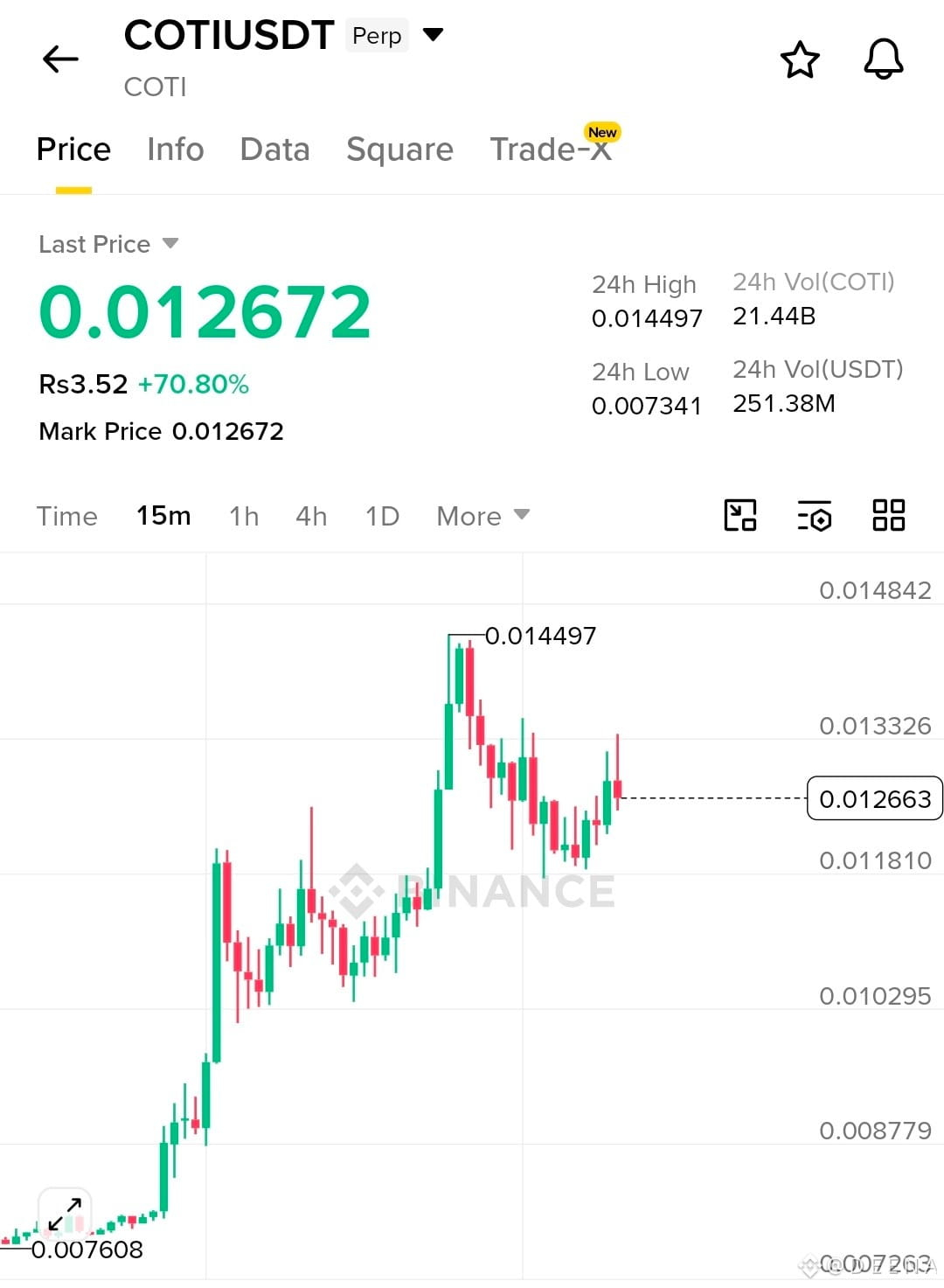
🚀 $COTI is ON FIRE right now!
$COTI /USDT Perp is up +70.80% in 24h, trading at $0.012672
📊 24h High: $0.014497
📉 24h Low: $0.007341
💰 24h Volume: 21.44B COTI ($251.38M)
From $0.007608 to a high of $0.014497 — that's nearly a 2x move in a single day. Momentum is clearly with the bulls right now 🔥
Volatility this high means big opportunity — and big risk. Always trade with proper risk management.
Let's go — trade now $COTI
{spot}(COTIUSDT)
🚀 $COTI is ON FIRE right now!
$COTI /USDT Perp is up +70.80% in 24h, trading at $0.012672
📊 24h High: $0.014497
📉 24h Low: $0.007341
💰 24h Volume: 21.44B COTI ($251.38M)
From $0.007608 to a high of $0.014497 — that's nearly a 2x move in a single day. Momentum is clearly with the bulls right now 🔥
Volatility this high means big opportunity — and big risk. Always trade with proper risk management.
Let's go — trade now $COTI
$COTI /USDT Perp is up +70.80% in 24h, trading at $0.012672
📊 24h High: $0.014497
📉 24h Low: $0.007341
💰 24h Volume: 21.44B COTI ($251.38M)
From $0.007608 to a high of $0.014497 — that's nearly a 2x move in a single day. Momentum is clearly with the bulls right now 🔥
Volatility this high means big opportunity — and big risk. Always trade with proper risk management.
Let's go — trade now $COTI
127
·
--
Tăng giá
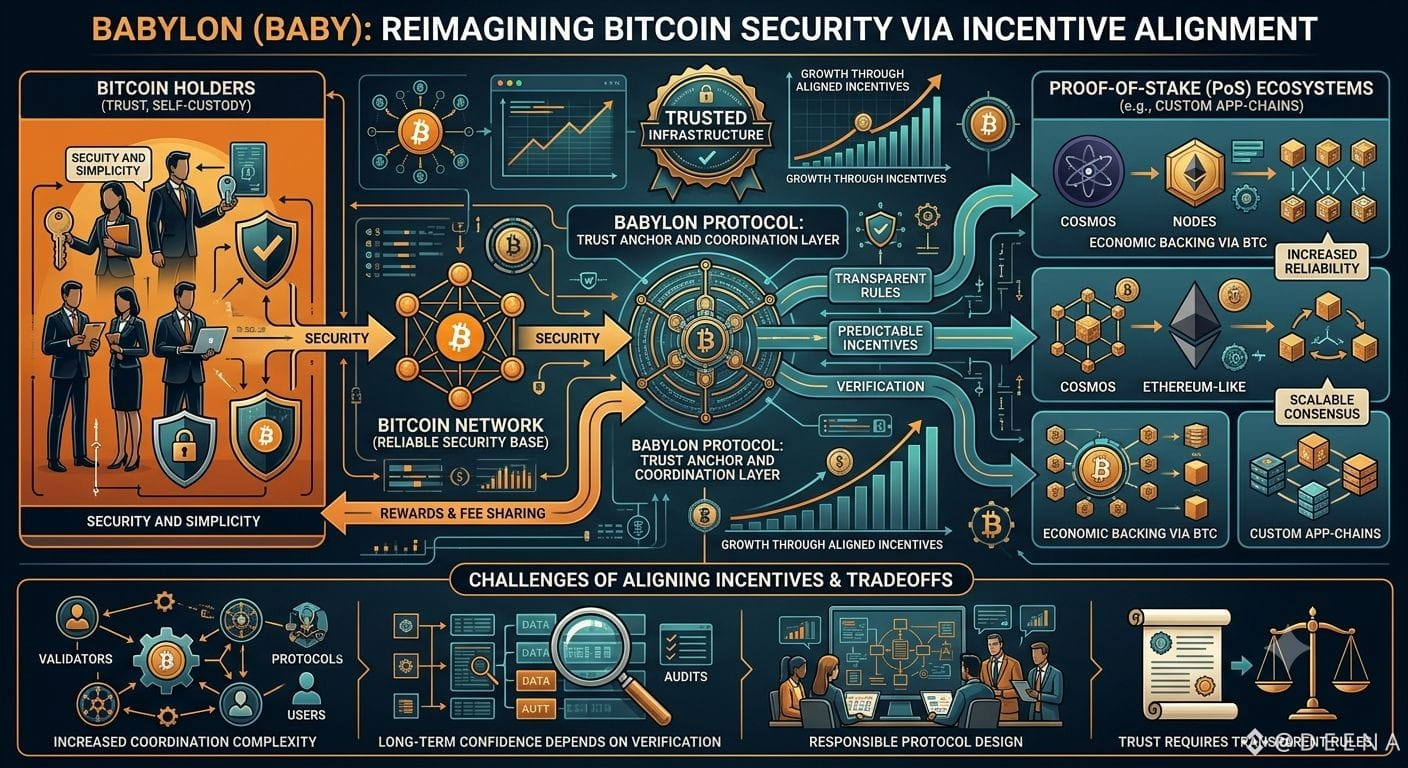
Điều khiến tôi chú ý về Babylon ($BABY ) là nó không thực sự cố gắng thay đổi chính Bitcoin. Thay vào đó, Babylon đang tìm hiểu cách mà cơ chế bảo mật sẵn có của Bitcoin có thể hỗ trợ các hệ sinh thái Proof-of-Stake trong khi vẫn cho phép những người nắm giữ BTC duy trì quyền kiểm soát tài sản của họ. Điều này giống như một câu chuyện khác so với cách tiếp cận thông thường tập trung vào phần thưởng staking hay hiệu quả sử dụng vốn.
Điều làm Babylon trở nên thú vị chính là thách thức trong việc cân bằng động lực giữa các bên tham gia rất khác nhau. Những người nắm giữ Bitcoin muốn bảo mật và sự đơn giản, trong khi các mạng PoS cần sự hậu thuẫn kinh tế đáng tin cậy. Việc gắn kết những lợi ích đó lại với nhau đòi hỏi nhiều hơn là chỉ công nghệ vững chắc. Nó phụ thuộc vào các quy tắc minh bạch, các động lực có thể dự đoán, và một hệ thống mà mọi người vẫn tiếp tục tin tưởng ngay cả khi sự hào hứng ban đầu đã lắng xuống.
Tôi cũng nghĩ có một sự đánh đổi quan trọng chưa được bàn luận đủ. Khi Bitcoin trở thành một phần trong việc bảo mật cho các mạng khác, sự phối hợp giữa người dùng, trình xác thực (validator) và các giao thức sẽ tự nhiên trở nên phức tạp hơn. Tự quản lý tài sản (self-custody) giải quyết một vấn đề, nhưng niềm tin dài hạn vẫn phụ thuộc vào việc xác minh, các động lực rõ ràng và thiết kế giao thức có trách nhiệm.
Đó là lý do vì sao tôi vẫn tiếp tục theo dõi Babylon như một dự án hạ tầng hơn là một câu chuyện mang tính thị trường. Nếu nó có thể duy trì niềm tin trong khi mở rộng vai trò của Bitcoin vượt ra khỏi chính chuỗi của nó, thì nó có thể chứng minh rằng hạ tầng blockchain bền vững được xây dựng thông qua sự đồng bộ động lực, chứ không chỉ bằng đổi mới kỹ thuật. Câu hỏi thực sự là liệu những động lực đó có tiếp tục đủ mạnh khi hệ sinh thái phát triển hay không.
#baby @babylonlabs_io $BABY
Điều khiến tôi chú ý về Babylon ($BABY ) là nó không thực sự cố gắng thay đổi chính Bitcoin. Thay vào đó, Babylon đang tìm hiểu cách mà cơ chế bảo mật sẵn có của Bitcoin có thể hỗ trợ các hệ sinh thái Proof-of-Stake trong khi vẫn cho phép những người nắm giữ BTC duy trì quyền kiểm soát tài sản của họ. Điều này giống như một câu chuyện khác so với cách tiếp cận thông thường tập trung vào phần thưởng staking hay hiệu quả sử dụng vốn.
Điều làm Babylon trở nên thú vị chính là thách thức trong việc cân bằng động lực giữa các bên tham gia rất khác nhau. Những người nắm giữ Bitcoin muốn bảo mật và sự đơn giản, trong khi các mạng PoS cần sự hậu thuẫn kinh tế đáng tin cậy. Việc gắn kết những lợi ích đó lại với nhau đòi hỏi nhiều hơn là chỉ công nghệ vững chắc. Nó phụ thuộc vào các quy tắc minh bạch, các động lực có thể dự đoán, và một hệ thống mà mọi người vẫn tiếp tục tin tưởng ngay cả khi sự hào hứng ban đầu đã lắng xuống.
Tôi cũng nghĩ có một sự đánh đổi quan trọng chưa được bàn luận đủ. Khi Bitcoin trở thành một phần trong việc bảo mật cho các mạng khác, sự phối hợp giữa người dùng, trình xác thực (validator) và các giao thức sẽ tự nhiên trở nên phức tạp hơn. Tự quản lý tài sản (self-custody) giải quyết một vấn đề, nhưng niềm tin dài hạn vẫn phụ thuộc vào việc xác minh, các động lực rõ ràng và thiết kế giao thức có trách nhiệm.
Đó là lý do vì sao tôi vẫn tiếp tục theo dõi Babylon như một dự án hạ tầng hơn là một câu chuyện mang tính thị trường. Nếu nó có thể duy trì niềm tin trong khi mở rộng vai trò của Bitcoin vượt ra khỏi chính chuỗi của nó, thì nó có thể chứng minh rằng hạ tầng blockchain bền vững được xây dựng thông qua sự đồng bộ động lực, chứ không chỉ bằng đổi mới kỹ thuật. Câu hỏi thực sự là liệu những động lực đó có tiếp tục đủ mạnh khi hệ sinh thái phát triển hay không.
#baby @BabylonLabs_io $BABY
Điều làm Babylon trở nên thú vị chính là thách thức trong việc cân bằng động lực giữa các bên tham gia rất khác nhau. Những người nắm giữ Bitcoin muốn bảo mật và sự đơn giản, trong khi các mạng PoS cần sự hậu thuẫn kinh tế đáng tin cậy. Việc gắn kết những lợi ích đó lại với nhau đòi hỏi nhiều hơn là chỉ công nghệ vững chắc. Nó phụ thuộc vào các quy tắc minh bạch, các động lực có thể dự đoán, và một hệ thống mà mọi người vẫn tiếp tục tin tưởng ngay cả khi sự hào hứng ban đầu đã lắng xuống.
Tôi cũng nghĩ có một sự đánh đổi quan trọng chưa được bàn luận đủ. Khi Bitcoin trở thành một phần trong việc bảo mật cho các mạng khác, sự phối hợp giữa người dùng, trình xác thực (validator) và các giao thức sẽ tự nhiên trở nên phức tạp hơn. Tự quản lý tài sản (self-custody) giải quyết một vấn đề, nhưng niềm tin dài hạn vẫn phụ thuộc vào việc xác minh, các động lực rõ ràng và thiết kế giao thức có trách nhiệm.
Đó là lý do vì sao tôi vẫn tiếp tục theo dõi Babylon như một dự án hạ tầng hơn là một câu chuyện mang tính thị trường. Nếu nó có thể duy trì niềm tin trong khi mở rộng vai trò của Bitcoin vượt ra khỏi chính chuỗi của nó, thì nó có thể chứng minh rằng hạ tầng blockchain bền vững được xây dựng thông qua sự đồng bộ động lực, chứ không chỉ bằng đổi mới kỹ thuật. Câu hỏi thực sự là liệu những động lực đó có tiếp tục đủ mạnh khi hệ sinh thái phát triển hay không.
#baby @BabylonLabs_io $BABY
3
2
115
·
--
Tăng giá
Xem bản dịch
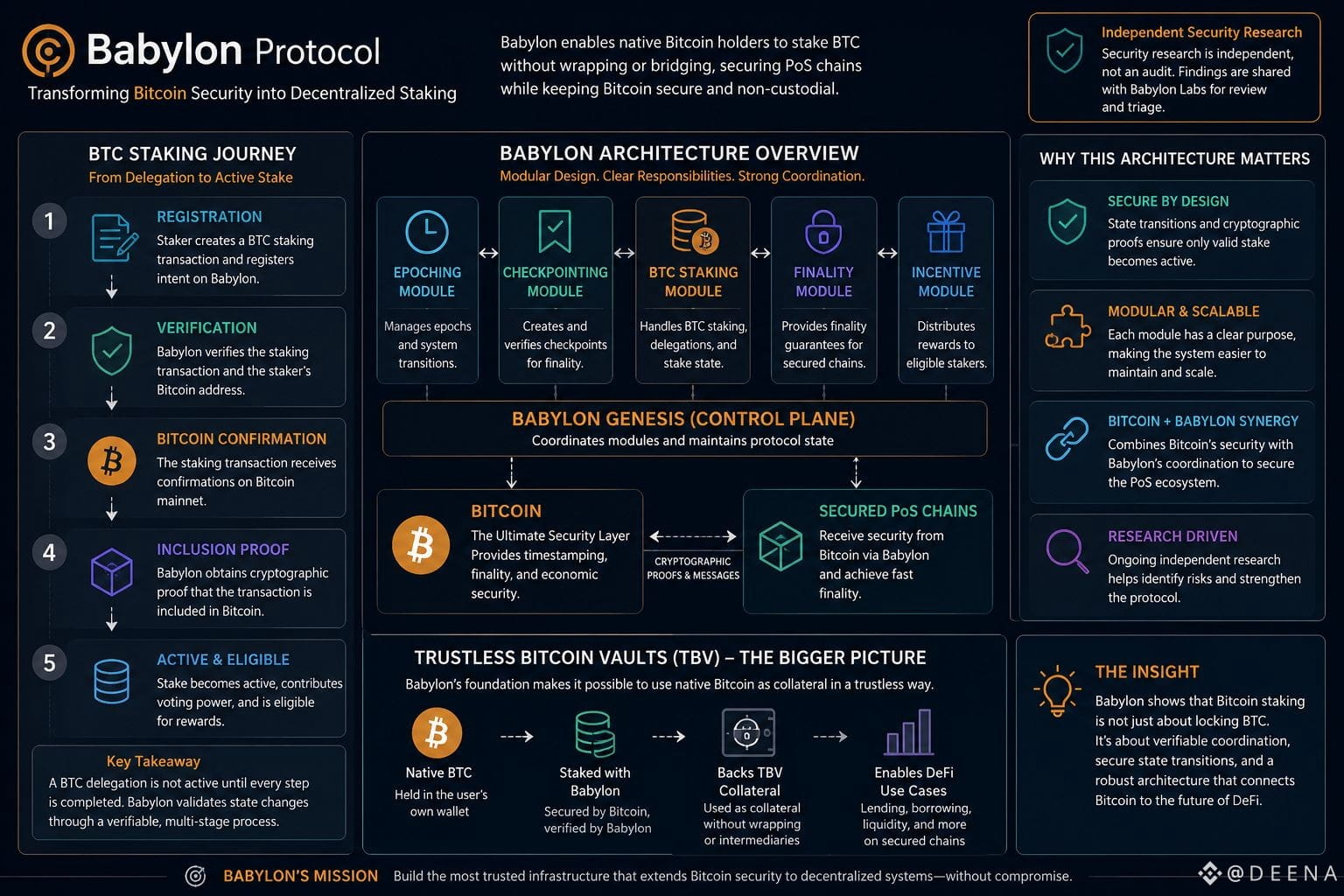
While digging into Babylon, I realized I had been thinking about Bitcoin staking in a much simpler way than the protocol actually works. The thing that stood out to me wasn't a headline metric or a bold claim—it was how Babylon treats every staking event as a series of verified state changes instead of assuming everything is complete from the moment a transaction is created.
What caught my attention was the journey a BTC delegation takes before it becomes active. It moves through registration, verification, Bitcoin confirmations, and inclusion proof before it can contribute voting power or earn rewards. That might sound like a technical detail, but I think it's one of the most important parts of the design because it shows how much emphasis Babylon places on verification rather than assumptions.
The insight that stayed with me is that Babylon isn't just building a way to stake Bitcoin. It's building the coordination layer that makes Bitcoin staking reliable across different protocol components. Looking at the architecture made me appreciate why modules like Epoching, Checkpointing, BTC Staking, and Finality are separated instead of being bundled together.
Crypto conversations often focus on future potential, but I find the more interesting story is what a protocol is already proving today. As Babylon continues to evolve, will verified participation become the metric that matters most, rather than simply how much BTC is deposited?
#baby @babylonlabs_io $BABY
While digging into Babylon, I realized I had been thinking about Bitcoin staking in a much simpler way than the protocol actually works. The thing that stood out to me wasn't a headline metric or a bold claim—it was how Babylon treats every staking event as a series of verified state changes instead of assuming everything is complete from the moment a transaction is created.
What caught my attention was the journey a BTC delegation takes before it becomes active. It moves through registration, verification, Bitcoin confirmations, and inclusion proof before it can contribute voting power or earn rewards. That might sound like a technical detail, but I think it's one of the most important parts of the design because it shows how much emphasis Babylon places on verification rather than assumptions.
The insight that stayed with me is that Babylon isn't just building a way to stake Bitcoin. It's building the coordination layer that makes Bitcoin staking reliable across different protocol components. Looking at the architecture made me appreciate why modules like Epoching, Checkpointing, BTC Staking, and Finality are separated instead of being bundled together.
Crypto conversations often focus on future potential, but I find the more interesting story is what a protocol is already proving today. As Babylon continues to evolve, will verified participation become the metric that matters most, rather than simply how much BTC is deposited?
#baby @BabylonLabs_io $BABY
What caught my attention was the journey a BTC delegation takes before it becomes active. It moves through registration, verification, Bitcoin confirmations, and inclusion proof before it can contribute voting power or earn rewards. That might sound like a technical detail, but I think it's one of the most important parts of the design because it shows how much emphasis Babylon places on verification rather than assumptions.
The insight that stayed with me is that Babylon isn't just building a way to stake Bitcoin. It's building the coordination layer that makes Bitcoin staking reliable across different protocol components. Looking at the architecture made me appreciate why modules like Epoching, Checkpointing, BTC Staking, and Finality are separated instead of being bundled together.
Crypto conversations often focus on future potential, but I find the more interesting story is what a protocol is already proving today. As Babylon continues to evolve, will verified participation become the metric that matters most, rather than simply how much BTC is deposited?
#baby @BabylonLabs_io $BABY
2
2
111
·
--
Giảm giá
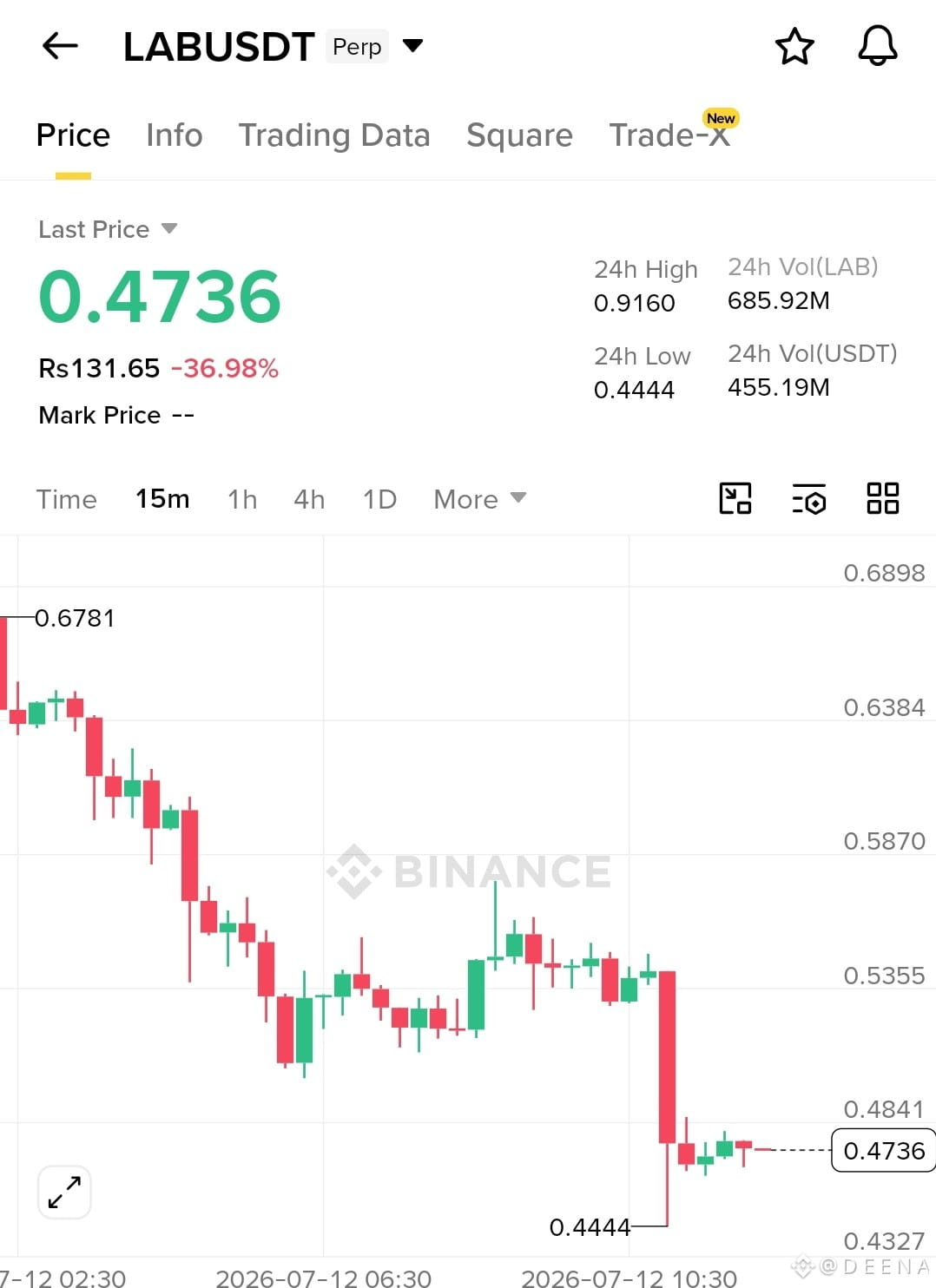
🚨 $LAB đang chịu áp lực! Giá hiện tại: $0.4736 sau khi giảm -36.98% trong 24H qua.
📉 Mức cao 24H: $0.9160 📍 Mức thấp 24H: $0.4444 💰 Khối lượng khổng lồ: 685.92M $LAB | 455.19M $USDT
Biến động đã xuất hiện, và đây là nơi tạo ra cơ hội thực sự. Hãy giữ kỷ luật, quản lý rủi ro, và theo dõi vùng hỗ trợ quan trọng quanh $0.4444.
Bắt đầu thôi! Giao dịch ngay $LAB 🚀📈
{future}(LABUSDT)
#BitcoinPlansECashHardFork
#SpaceXAnthropicOpenAIIPOsMayTopVCExitsSince2000
#MorganStanleyAdds1000BTC
#GOPSeeksSenateVoteOnCLARITYActWeekOfJuly20
#BPISeeksToInterveneInNoahDoeCase
🚨 $LAB đang chịu áp lực! Giá hiện tại: $0.4736 sau khi giảm -36.98% trong 24H qua.
📉 Mức cao 24H: $0.9160 📍 Mức thấp 24H: $0.4444 💰 Khối lượng khổng lồ: 685.92M $LAB | 455.19M $USDT
Biến động đã xuất hiện, và đây là nơi tạo ra cơ hội thực sự. Hãy giữ kỷ luật, quản lý rủi ro, và theo dõi vùng hỗ trợ quan trọng quanh $0.4444.
Bắt đầu thôi! Giao dịch ngay $LAB 🚀📈
#BitcoinPlansECashHardFork
#SpaceXAnthropicOpenAIIPOsMayTopVCExitsSince2000
#MorganStanleyAdds1000BTC
#GOPSeeksSenateVoteOnCLARITYActWeekOfJuly20
#BPISeeksToInterveneInNoahDoeCase
📉 Mức cao 24H: $0.9160 📍 Mức thấp 24H: $0.4444 💰 Khối lượng khổng lồ: 685.92M $LAB | 455.19M $USDT
Biến động đã xuất hiện, và đây là nơi tạo ra cơ hội thực sự. Hãy giữ kỷ luật, quản lý rủi ro, và theo dõi vùng hỗ trợ quan trọng quanh $0.4444.
Bắt đầu thôi! Giao dịch ngay $LAB 🚀📈
#BitcoinPlansECashHardFork
#SpaceXAnthropicOpenAIIPOsMayTopVCExitsSince2000
#MorganStanleyAdds1000BTC
#GOPSeeksSenateVoteOnCLARITYActWeekOfJuly20
#BPISeeksToInterveneInNoahDoeCase
1
213
·
--
Chú thích giao dịch đầy kịch tính:
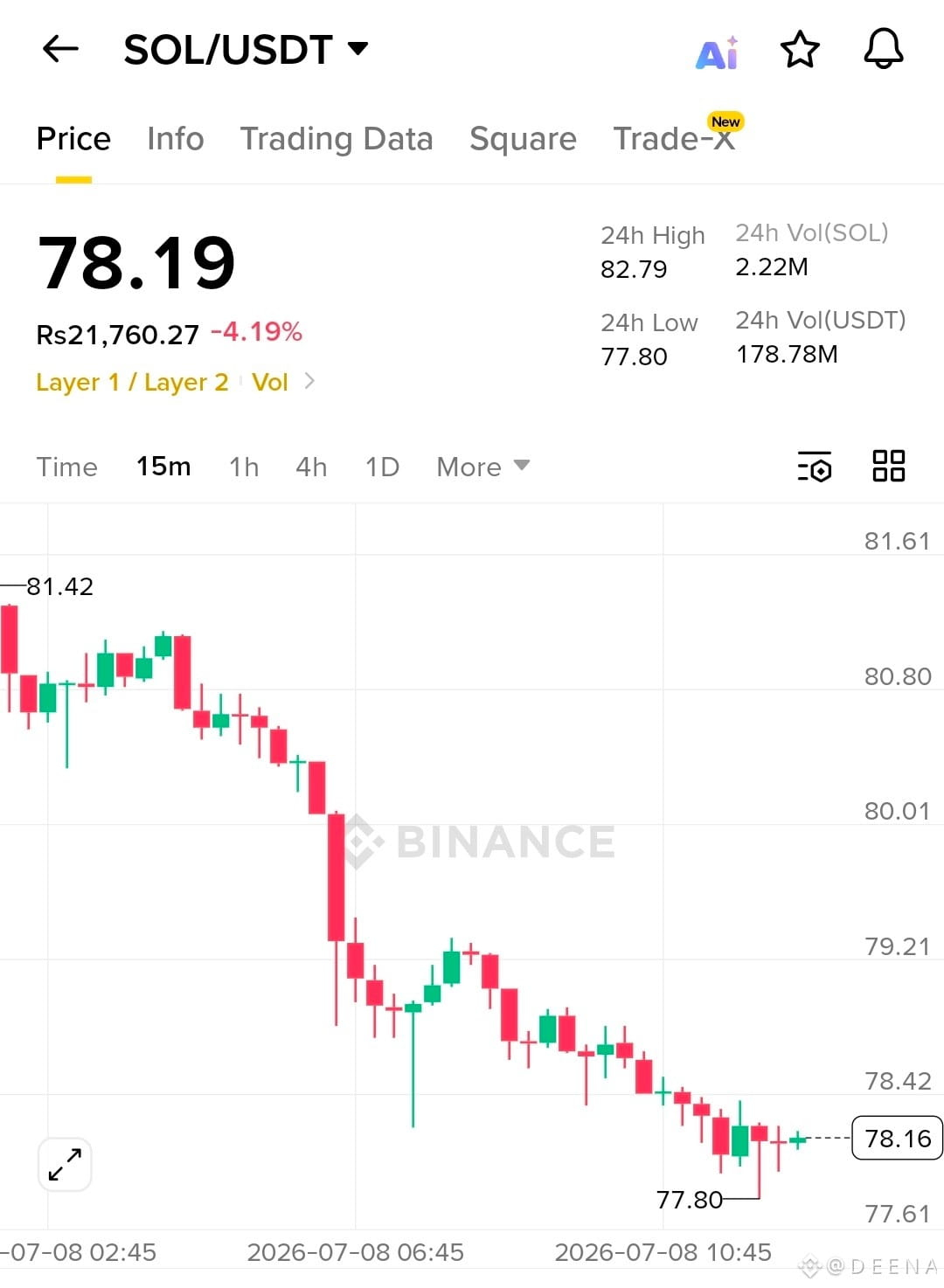
⚡ Cập nhật SOL/USDT ⚡
🔻 Bên bán vẫn đang kiểm soát.
📉 Giá: $78.19
🎯 Hỗ trợ quan trọng: $77.80
🚀 Nảy lên từ vùng hỗ trợ có thể kích hoạt đà phục hồi ngắn hạn.
❌ Nếu $77.80 bị phá vỡ, hãy kỳ vọng xu hướng giảm tiếp.
Giao dịch thông minh, quản lý rủi ro và đừng bao giờ FOMO. 💯
#SOL #Solana #Crypto #Binance #Trading #PriceAction #CryptoTrading #TechnicalAnalysis #BullOrBear
Chú thích giao dịch đầy kịch tính:
⚡ Cập nhật SOL/USDT ⚡
🔻 Bên bán vẫn đang kiểm soát.
📉 Giá: $78.19
🎯 Hỗ trợ quan trọng: $77.80
🚀 Nảy lên từ vùng hỗ trợ có thể kích hoạt đà phục hồi ngắn hạn.
❌ Nếu $77.80 bị phá vỡ, hãy kỳ vọng xu hướng giảm tiếp.
Giao dịch thông minh, quản lý rủi ro và đừng bao giờ FOMO. 💯
#SOL #Solana #Crypto #Binance #Trading #PriceAction #CryptoTrading #TechnicalAnalysis #BullOrBear
⚡ Cập nhật SOL/USDT ⚡
🔻 Bên bán vẫn đang kiểm soát.
📉 Giá: $78.19
🎯 Hỗ trợ quan trọng: $77.80
🚀 Nảy lên từ vùng hỗ trợ có thể kích hoạt đà phục hồi ngắn hạn.
❌ Nếu $77.80 bị phá vỡ, hãy kỳ vọng xu hướng giảm tiếp.
Giao dịch thông minh, quản lý rủi ro và đừng bao giờ FOMO. 💯
#SOL #Solana #Crypto #Binance #Trading #PriceAction #CryptoTrading #TechnicalAnalysis #BullOrBear
1
110
·
--
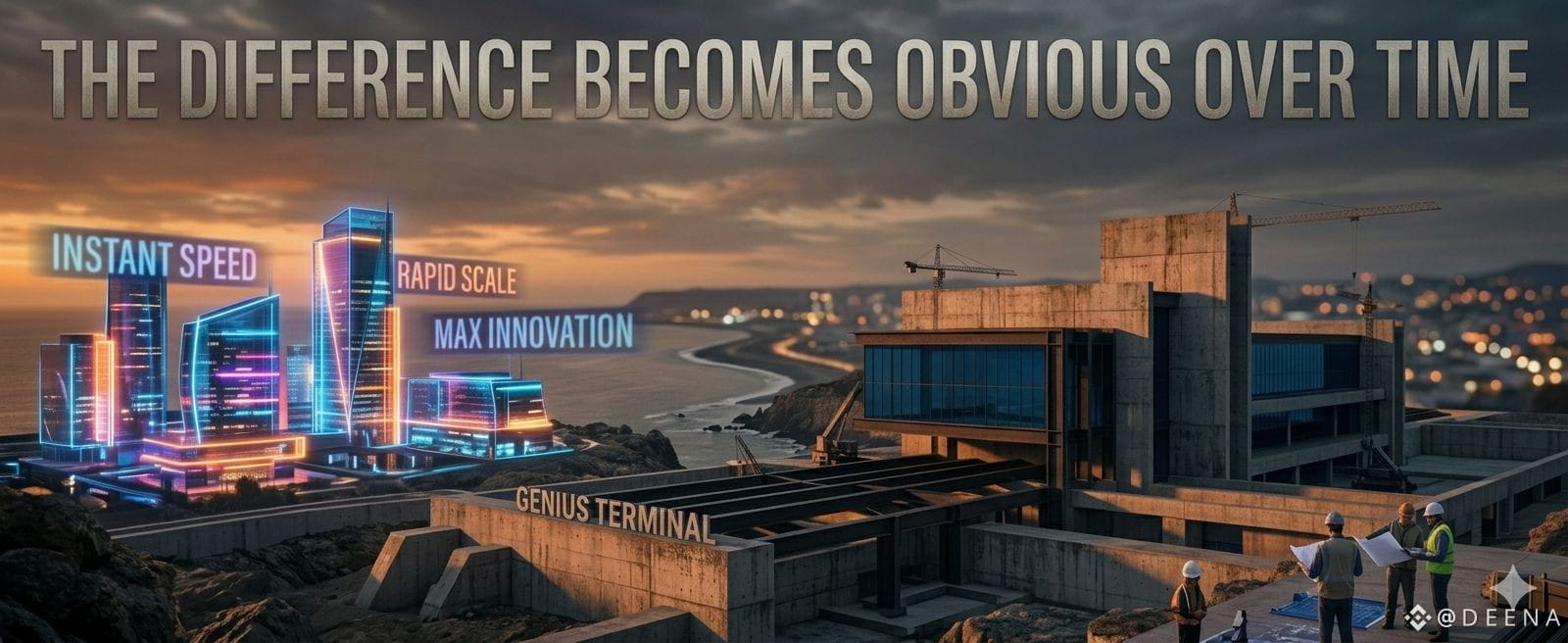
Sự Khác Biệt Trở Nên Rõ Ràng Theo Thời Gian
Mình đã thấy vô số sản phẩm hứa hẹn về tốc độ, quy mô, và đổi mới, nhưng rất ít sản phẩm để lại ấn tượng rằng chúng được xây dựng với sự kiên định thực sự trong tâm trí.
Genius Terminal ngay lập tức cảm thấy khác biệt với mình.
Không phải vì nó cố gắng chiếm ưu thế chú ý, mà là vì cách mà toàn bộ trải nghiệm cảm thấy được kiểm soát và có chủ đích. Mọi thứ đều được cấu trúc với sự rõ ràng. Không có sự phức tạp không cần thiết. Không có sự định vị phóng đại. Chỉ có sự hiểu biết vững mạnh về hình thức hạ tầng lâu dài nên trông như thế nào khi kỷ luật dẫn dắt quá trình.
Điều nổi bật nhất là sự cân bằng giữa quyền riêng tư, thực hiện, và tính nhất quán. Trong một không gian đông đúc tiếng ồn, kiểu kiềm chế đó cảm thấy hiếm có. Sản phẩm không dựa vào sự kiện liên tục để chứng minh sự liên quan. Hướng đi của nó đã nói lên chất lượng của nền tảng đang được xây dựng.
Mình tôn trọng những dự án hiểu giá trị của độ chính xác hơn là động lực. Các hệ thống được xây dựng theo cách này thường có tuổi thọ tốt hơn vì chúng được thiết kế để bền bỉ từ đầu, không phải để tạo ra sự phấn khích tạm thời.
Càng quan sát Genius Terminal, mình càng cảm thấy nó không giống như một nền tảng khác mà giống như một hạ tầng đang âm thầm định vị cho ý nghĩa lâu dài.
Một số sản phẩm đòi hỏi sự chú ý ngay lập tức.
Những sản phẩm mạnh mẽ nhất kiếm được lòng tin theo thời gian.
#genius @GeniusOfficial $GENIUS
{spot}(GENIUSUSDT)
$STRAX
$GUN
Sự Khác Biệt Trở Nên Rõ Ràng Theo Thời Gian
Mình đã thấy vô số sản phẩm hứa hẹn về tốc độ, quy mô, và đổi mới, nhưng rất ít sản phẩm để lại ấn tượng rằng chúng được xây dựng với sự kiên định thực sự trong tâm trí.
Genius Terminal ngay lập tức cảm thấy khác biệt với mình.
Không phải vì nó cố gắng chiếm ưu thế chú ý, mà là vì cách mà toàn bộ trải nghiệm cảm thấy được kiểm soát và có chủ đích. Mọi thứ đều được cấu trúc với sự rõ ràng. Không có sự phức tạp không cần thiết. Không có sự định vị phóng đại. Chỉ có sự hiểu biết vững mạnh về hình thức hạ tầng lâu dài nên trông như thế nào khi kỷ luật dẫn dắt quá trình.
Điều nổi bật nhất là sự cân bằng giữa quyền riêng tư, thực hiện, và tính nhất quán. Trong một không gian đông đúc tiếng ồn, kiểu kiềm chế đó cảm thấy hiếm có. Sản phẩm không dựa vào sự kiện liên tục để chứng minh sự liên quan. Hướng đi của nó đã nói lên chất lượng của nền tảng đang được xây dựng.
Mình tôn trọng những dự án hiểu giá trị của độ chính xác hơn là động lực. Các hệ thống được xây dựng theo cách này thường có tuổi thọ tốt hơn vì chúng được thiết kế để bền bỉ từ đầu, không phải để tạo ra sự phấn khích tạm thời.
Càng quan sát Genius Terminal, mình càng cảm thấy nó không giống như một nền tảng khác mà giống như một hạ tầng đang âm thầm định vị cho ý nghĩa lâu dài.
Một số sản phẩm đòi hỏi sự chú ý ngay lập tức.
Những sản phẩm mạnh mẽ nhất kiếm được lòng tin theo thời gian.
#genius @GeniusOfficial $GENIUS
$STRAX
$GUN
Mình đã thấy vô số sản phẩm hứa hẹn về tốc độ, quy mô, và đổi mới, nhưng rất ít sản phẩm để lại ấn tượng rằng chúng được xây dựng với sự kiên định thực sự trong tâm trí.
Genius Terminal ngay lập tức cảm thấy khác biệt với mình.
Không phải vì nó cố gắng chiếm ưu thế chú ý, mà là vì cách mà toàn bộ trải nghiệm cảm thấy được kiểm soát và có chủ đích. Mọi thứ đều được cấu trúc với sự rõ ràng. Không có sự phức tạp không cần thiết. Không có sự định vị phóng đại. Chỉ có sự hiểu biết vững mạnh về hình thức hạ tầng lâu dài nên trông như thế nào khi kỷ luật dẫn dắt quá trình.
Điều nổi bật nhất là sự cân bằng giữa quyền riêng tư, thực hiện, và tính nhất quán. Trong một không gian đông đúc tiếng ồn, kiểu kiềm chế đó cảm thấy hiếm có. Sản phẩm không dựa vào sự kiện liên tục để chứng minh sự liên quan. Hướng đi của nó đã nói lên chất lượng của nền tảng đang được xây dựng.
Mình tôn trọng những dự án hiểu giá trị của độ chính xác hơn là động lực. Các hệ thống được xây dựng theo cách này thường có tuổi thọ tốt hơn vì chúng được thiết kế để bền bỉ từ đầu, không phải để tạo ra sự phấn khích tạm thời.
Càng quan sát Genius Terminal, mình càng cảm thấy nó không giống như một nền tảng khác mà giống như một hạ tầng đang âm thầm định vị cho ý nghĩa lâu dài.
Một số sản phẩm đòi hỏi sự chú ý ngay lập tức.
Những sản phẩm mạnh mẽ nhất kiếm được lòng tin theo thời gian.
#genius @GeniusOfficial $GENIUS
$STRAX
$GUN
1
2
109
·
--
Tôi đã nghĩ rằng Genius chỉ là một terminal giao dịch khác. Rồi tôi nhìn kỹ hơn.
Khi tôi lần đầu tiên gặp Genius, tôi đã đặt nó vào cùng một loại với vô số sản phẩm crypto khác.
Một terminal giao dịch.
Một nơi để xem velas, thực hiện giao dịch, quản lý vị thế và tiếp tục.
Nhưng càng dành nhiều thời gian để tìm hiểu về những gì Genius thực sự xây dựng, tôi càng cảm thấy mô tả đó đã bỏ lỡ điểm mấu chốt.
Điều nổi bật với tôi không phải là trải nghiệm giao dịch bản thân.
Mà là mọi thứ xung quanh nó.
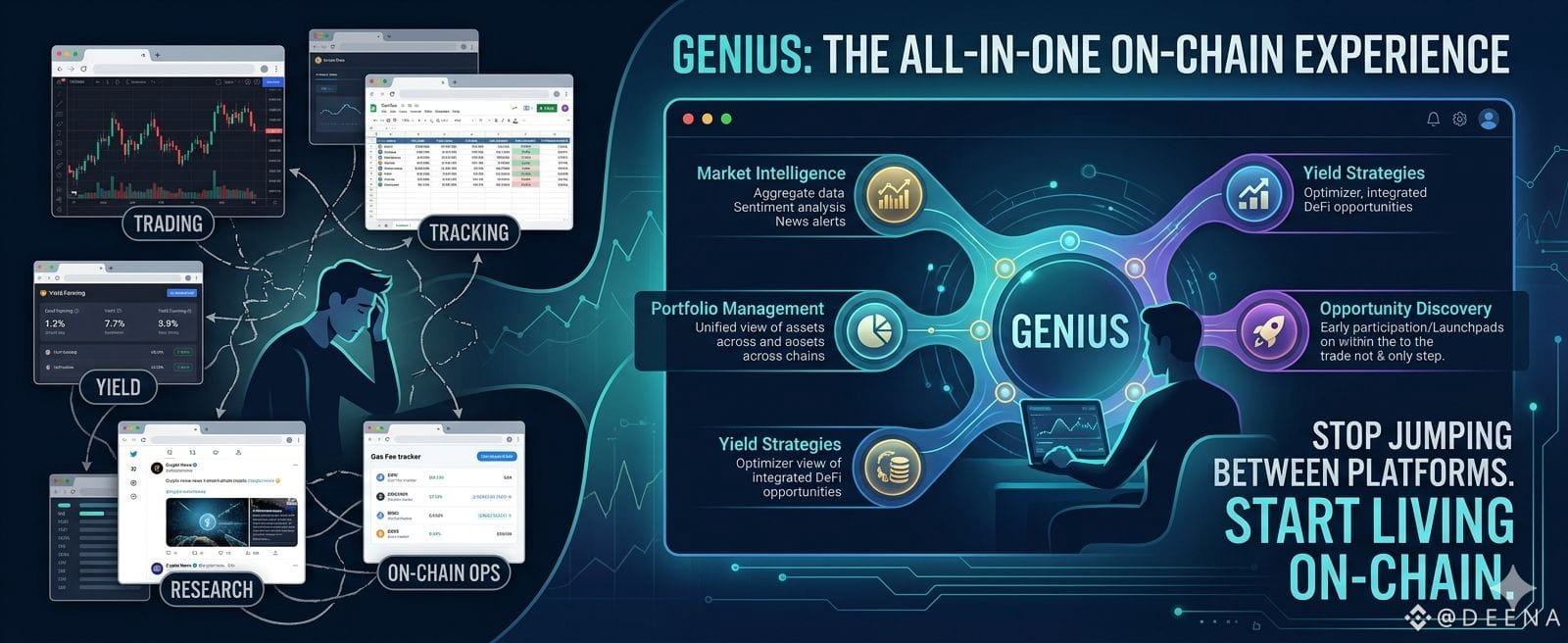
Tôi nhận ra rằng phần lớn thời gian của tôi trong crypto không phải là nhấn nút mua hay bán. Mà là tìm kiếm cơ hội, theo dõi danh mục đầu tư, giám sát thị trường, nghiên cứu các câu chuyện mới, khám phá các chiến lược yield, và cố gắng đi trước những thay đổi liên tục.
Giao dịch thường chỉ là bước cuối cùng.
Thử thách thực sự là quản lý mọi thứ dẫn đến nó.
Đó là lý do tại sao tôi nghĩ Genius đang tiếp cận một vấn đề lớn hơn rất nhiều.
Thay vì coi giao dịch, quản lý danh mục đầu tư, khám phá thị trường, cơ hội yield và tham gia sớm là những trải nghiệm riêng biệt, tôi thấy một nền tảng đang cố gắng mang chúng lại dưới một mái nhà.
Đối với tôi, điều đó thú vị hơn nhiều so với việc thêm một tính năng giao dịch nữa.
Crypto không thiếu công cụ.
Nó thiếu sự liên kết.
Tôi liên tục thấy mình nhảy giữa các nền tảng chỉ để duy trì bối cảnh.
Điều tôi thấy ở Genius là một nỗ lực để giảm bớt sự ma sát đó.
Và nếu nó thành công, mọi người có thể cuối cùng sẽ ngừng nghĩ về nó như một terminal giao dịch hoàn toàn.
Họ có thể bắt đầu nghĩ về nó như nơi mà toàn bộ trải nghiệm on-chain của họ sống.
$STG
$PORTAL
#genius @GeniusOfficial $GENIUS
{spot}(GENIUSUSDT)
Tôi đã nghĩ rằng Genius chỉ là một terminal giao dịch khác. Rồi tôi nhìn kỹ hơn.
Khi tôi lần đầu tiên gặp Genius, tôi đã đặt nó vào cùng một loại với vô số sản phẩm crypto khác.
Một terminal giao dịch.
Một nơi để xem velas, thực hiện giao dịch, quản lý vị thế và tiếp tục.
Nhưng càng dành nhiều thời gian để tìm hiểu về những gì Genius thực sự xây dựng, tôi càng cảm thấy mô tả đó đã bỏ lỡ điểm mấu chốt.
Điều nổi bật với tôi không phải là trải nghiệm giao dịch bản thân.
Mà là mọi thứ xung quanh nó.
Tôi nhận ra rằng phần lớn thời gian của tôi trong crypto không phải là nhấn nút mua hay bán. Mà là tìm kiếm cơ hội, theo dõi danh mục đầu tư, giám sát thị trường, nghiên cứu các câu chuyện mới, khám phá các chiến lược yield, và cố gắng đi trước những thay đổi liên tục.
Giao dịch thường chỉ là bước cuối cùng.
Thử thách thực sự là quản lý mọi thứ dẫn đến nó.
Đó là lý do tại sao tôi nghĩ Genius đang tiếp cận một vấn đề lớn hơn rất nhiều.
Thay vì coi giao dịch, quản lý danh mục đầu tư, khám phá thị trường, cơ hội yield và tham gia sớm là những trải nghiệm riêng biệt, tôi thấy một nền tảng đang cố gắng mang chúng lại dưới một mái nhà.
Đối với tôi, điều đó thú vị hơn nhiều so với việc thêm một tính năng giao dịch nữa.
Crypto không thiếu công cụ.
Nó thiếu sự liên kết.
Tôi liên tục thấy mình nhảy giữa các nền tảng chỉ để duy trì bối cảnh.
Điều tôi thấy ở Genius là một nỗ lực để giảm bớt sự ma sát đó.
Và nếu nó thành công, mọi người có thể cuối cùng sẽ ngừng nghĩ về nó như một terminal giao dịch hoàn toàn.
Họ có thể bắt đầu nghĩ về nó như nơi mà toàn bộ trải nghiệm on-chain của họ sống.
$STG
$PORTAL
#genius @GeniusOfficial $GENIUS
Khi tôi lần đầu tiên gặp Genius, tôi đã đặt nó vào cùng một loại với vô số sản phẩm crypto khác.
Một terminal giao dịch.
Một nơi để xem velas, thực hiện giao dịch, quản lý vị thế và tiếp tục.
Nhưng càng dành nhiều thời gian để tìm hiểu về những gì Genius thực sự xây dựng, tôi càng cảm thấy mô tả đó đã bỏ lỡ điểm mấu chốt.
Điều nổi bật với tôi không phải là trải nghiệm giao dịch bản thân.
Mà là mọi thứ xung quanh nó.
Tôi nhận ra rằng phần lớn thời gian của tôi trong crypto không phải là nhấn nút mua hay bán. Mà là tìm kiếm cơ hội, theo dõi danh mục đầu tư, giám sát thị trường, nghiên cứu các câu chuyện mới, khám phá các chiến lược yield, và cố gắng đi trước những thay đổi liên tục.
Giao dịch thường chỉ là bước cuối cùng.
Thử thách thực sự là quản lý mọi thứ dẫn đến nó.
Đó là lý do tại sao tôi nghĩ Genius đang tiếp cận một vấn đề lớn hơn rất nhiều.
Thay vì coi giao dịch, quản lý danh mục đầu tư, khám phá thị trường, cơ hội yield và tham gia sớm là những trải nghiệm riêng biệt, tôi thấy một nền tảng đang cố gắng mang chúng lại dưới một mái nhà.
Đối với tôi, điều đó thú vị hơn nhiều so với việc thêm một tính năng giao dịch nữa.
Crypto không thiếu công cụ.
Nó thiếu sự liên kết.
Tôi liên tục thấy mình nhảy giữa các nền tảng chỉ để duy trì bối cảnh.
Điều tôi thấy ở Genius là một nỗ lực để giảm bớt sự ma sát đó.
Và nếu nó thành công, mọi người có thể cuối cùng sẽ ngừng nghĩ về nó như một terminal giao dịch hoàn toàn.
Họ có thể bắt đầu nghĩ về nó như nơi mà toàn bộ trải nghiệm on-chain của họ sống.
$STG
$PORTAL
#genius @GeniusOfficial $GENIUS
1
206
·
--
Mình nghĩ OpenLedger đang đặt cược vào phần AI mà hầu hết các mô hình muốn quên
Mình từng nghĩ cuộc đua AI sẽ kết thúc với chính trí tuệ. Lý luận tốt hơn, đầu ra nhanh hơn, hệ thống đa phương thức sạch hơn, các tiêu chuẩn mạnh mẽ hơn. Nhưng gần đây mình cảm thấy toàn bộ cuộc cạnh tranh này đang thiếu một điều gì đó sâu sắc hơn bên dưới.
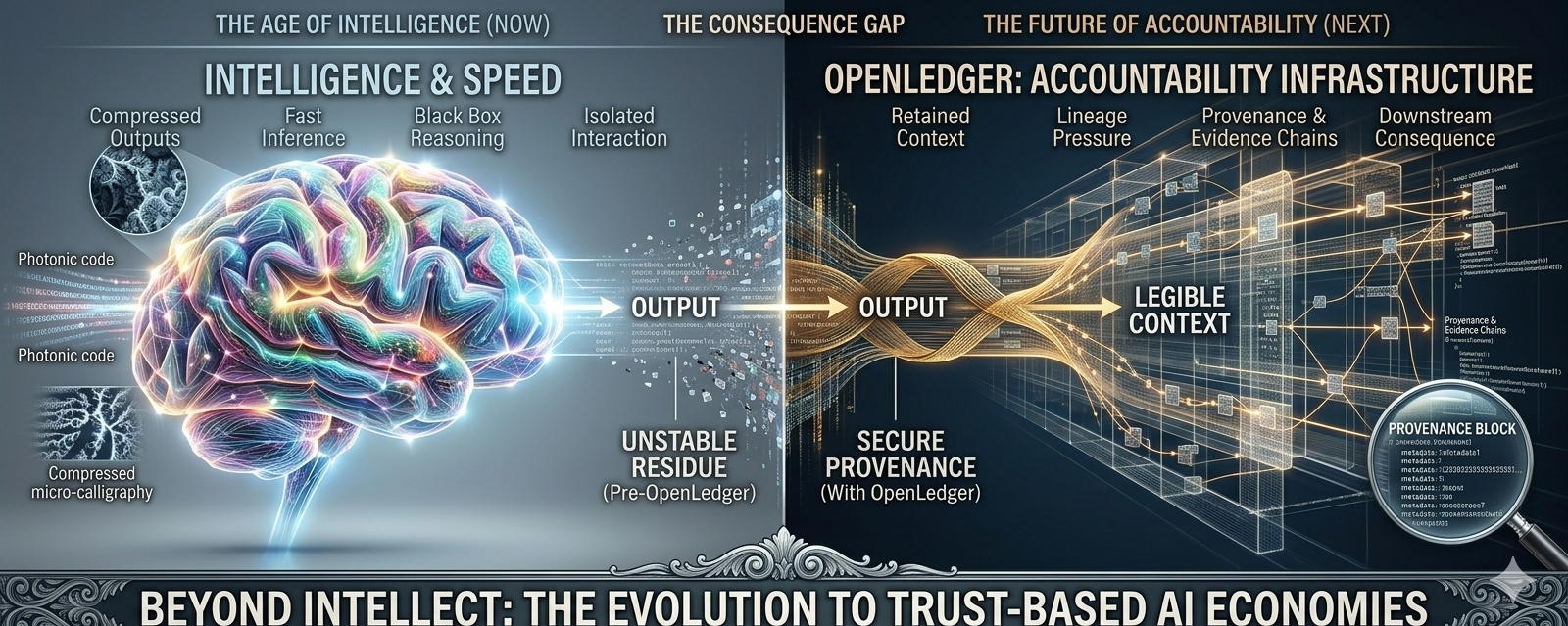
Hầu hết các mô hình AI ngày nay cực kỳ giỏi trong việc sản xuất câu trả lời, nhưng rất tệ trong việc bảo tồn chuỗi vô hình đã sản sinh ra câu trả lời ngay từ đầu. Đầu ra thì sống sót. Bối cảnh thì biến mất.
Và mình nghĩ điều đó trở thành một vấn đề nghiêm trọng khi đầu ra AI ngừng hành xử như những cuộc trò chuyện tạm thời và bắt đầu hành xử như những đối tượng kinh tế di chuyển giữa các hệ thống.
Các công cụ tìm kiếm xếp hạng chúng. Hệ thống gợi ý khuếch đại chúng. Nền kinh tế của những người sáng tạo hấp thụ chúng. Các mô hình khác lại huấn luyện trên chúng. Thị trường phản ứng với chúng. Các tổ chức dần dần bắt đầu tin tưởng vào chúng.
Nhưng hầu như không ai hỏi điều gì đã biến mất trước khi câu trả lời ổn định.
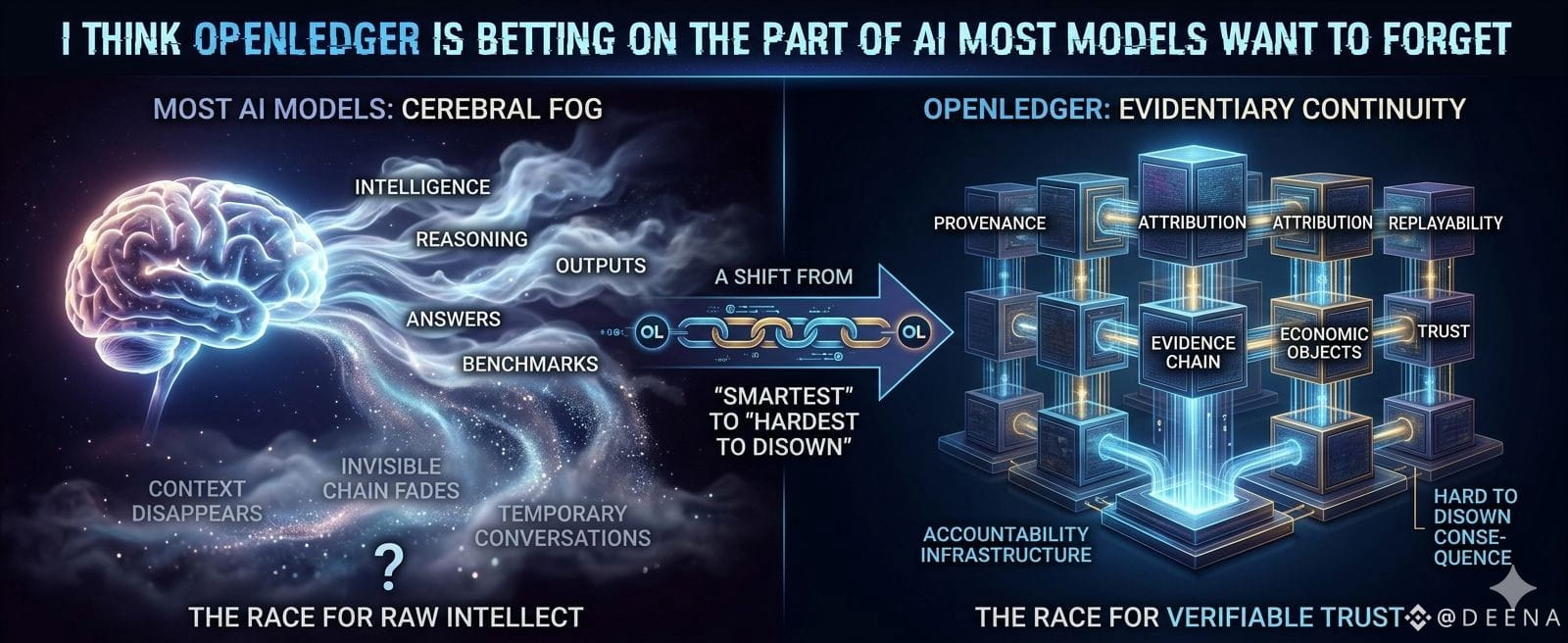
Đó là lý do tại sao OpenLedger khiến mình cảm thấy thú vị. Không phải vì nó cố gắng làm cho AI “thông minh hơn”, mà vì nó dường như tập trung vào việc bảo tồn trách nhiệm sau khi quá trình sinh ra xảy ra. Nguồn gốc. Ghi nhận. Khả năng phát lại. Độ liên tục của bằng chứng.
Càng nghĩ về điều đó, mình càng cảm thấy trí tuệ có thể trở thành hàng hóa nhanh hơn hạ tầng trách nhiệm.
Và có thể cuộc cạnh tranh AI trong tương lai sẽ không phải:
“Mô hình nào nghe có vẻ thông minh nhất?”
Có thể nó sẽ trở thành:
“Mô hình nào khó bị từ chối nhất khi hậu quả đến?”
#openledger @Openledger $OPEN
{spot}(OPENUSDT)
$HEI
$ID
Mình nghĩ OpenLedger đang đặt cược vào phần AI mà hầu hết các mô hình muốn quên
Mình từng nghĩ cuộc đua AI sẽ kết thúc với chính trí tuệ. Lý luận tốt hơn, đầu ra nhanh hơn, hệ thống đa phương thức sạch hơn, các tiêu chuẩn mạnh mẽ hơn. Nhưng gần đây mình cảm thấy toàn bộ cuộc cạnh tranh này đang thiếu một điều gì đó sâu sắc hơn bên dưới.
Hầu hết các mô hình AI ngày nay cực kỳ giỏi trong việc sản xuất câu trả lời, nhưng rất tệ trong việc bảo tồn chuỗi vô hình đã sản sinh ra câu trả lời ngay từ đầu. Đầu ra thì sống sót. Bối cảnh thì biến mất.
Và mình nghĩ điều đó trở thành một vấn đề nghiêm trọng khi đầu ra AI ngừng hành xử như những cuộc trò chuyện tạm thời và bắt đầu hành xử như những đối tượng kinh tế di chuyển giữa các hệ thống.
Các công cụ tìm kiếm xếp hạng chúng. Hệ thống gợi ý khuếch đại chúng. Nền kinh tế của những người sáng tạo hấp thụ chúng. Các mô hình khác lại huấn luyện trên chúng. Thị trường phản ứng với chúng. Các tổ chức dần dần bắt đầu tin tưởng vào chúng.
Nhưng hầu như không ai hỏi điều gì đã biến mất trước khi câu trả lời ổn định.
Đó là lý do tại sao OpenLedger khiến mình cảm thấy thú vị. Không phải vì nó cố gắng làm cho AI “thông minh hơn”, mà vì nó dường như tập trung vào việc bảo tồn trách nhiệm sau khi quá trình sinh ra xảy ra. Nguồn gốc. Ghi nhận. Khả năng phát lại. Độ liên tục của bằng chứng.
Càng nghĩ về điều đó, mình càng cảm thấy trí tuệ có thể trở thành hàng hóa nhanh hơn hạ tầng trách nhiệm.
Và có thể cuộc cạnh tranh AI trong tương lai sẽ không phải:
“Mô hình nào nghe có vẻ thông minh nhất?”
Có thể nó sẽ trở thành:
“Mô hình nào khó bị từ chối nhất khi hậu quả đến?”
#openledger @OpenLedger $OPEN
$HEI
$ID
Mình từng nghĩ cuộc đua AI sẽ kết thúc với chính trí tuệ. Lý luận tốt hơn, đầu ra nhanh hơn, hệ thống đa phương thức sạch hơn, các tiêu chuẩn mạnh mẽ hơn. Nhưng gần đây mình cảm thấy toàn bộ cuộc cạnh tranh này đang thiếu một điều gì đó sâu sắc hơn bên dưới.
Hầu hết các mô hình AI ngày nay cực kỳ giỏi trong việc sản xuất câu trả lời, nhưng rất tệ trong việc bảo tồn chuỗi vô hình đã sản sinh ra câu trả lời ngay từ đầu. Đầu ra thì sống sót. Bối cảnh thì biến mất.
Và mình nghĩ điều đó trở thành một vấn đề nghiêm trọng khi đầu ra AI ngừng hành xử như những cuộc trò chuyện tạm thời và bắt đầu hành xử như những đối tượng kinh tế di chuyển giữa các hệ thống.
Các công cụ tìm kiếm xếp hạng chúng. Hệ thống gợi ý khuếch đại chúng. Nền kinh tế của những người sáng tạo hấp thụ chúng. Các mô hình khác lại huấn luyện trên chúng. Thị trường phản ứng với chúng. Các tổ chức dần dần bắt đầu tin tưởng vào chúng.
Nhưng hầu như không ai hỏi điều gì đã biến mất trước khi câu trả lời ổn định.
Đó là lý do tại sao OpenLedger khiến mình cảm thấy thú vị. Không phải vì nó cố gắng làm cho AI “thông minh hơn”, mà vì nó dường như tập trung vào việc bảo tồn trách nhiệm sau khi quá trình sinh ra xảy ra. Nguồn gốc. Ghi nhận. Khả năng phát lại. Độ liên tục của bằng chứng.
Càng nghĩ về điều đó, mình càng cảm thấy trí tuệ có thể trở thành hàng hóa nhanh hơn hạ tầng trách nhiệm.
Và có thể cuộc cạnh tranh AI trong tương lai sẽ không phải:
“Mô hình nào nghe có vẻ thông minh nhất?”
Có thể nó sẽ trở thành:
“Mô hình nào khó bị từ chối nhất khi hậu quả đến?”
#openledger @OpenLedger $OPEN
$HEI
$ID
1
180
·
--
Bài viết
OpenLedger và Tương Lai của Trách Nhiệm AITrong một thời gian dài, tôi thật sự tin rằng cuộc đua AI cuối cùng sẽ chỉ thu hẹp lại một điều duy nhất: trí tuệ. Mô hình nào lý luận tốt hơn sẽ thắng. Mô hình có đầu ra sắc nét hơn, cuộc trò chuyện sạch sẽ hơn, suy luận nhanh hơn, hành vi đa phương tiện mạnh mẽ hơn và số liệu benchmark cao hơn sẽ tự nhiên chiếm ưu thế trên thị trường. Giả định đó có vẻ hiển nhiên vì gần như mọi cuộc trò chuyện xoay quanh AI vẫn xoay quanh khả năng chính nó. Ai thông minh hơn. Ai nhanh hơn. Mô hình nào nghe có vẻ con người hơn. Hệ thống nào có thể giải quyết những nhiệm vụ khó khăn hơn với ít sai sót hơn. Nhưng càng nhìn vào những dự án như OpenLedger, tôi càng cảm thấy toàn bộ khung đó chưa hoàn chỉnh. Không hoàn toàn sai. Chỉ là thiếu điều gì đó sâu sắc hơn bên dưới bề mặt.
OpenLedger và Tương Lai của Trách Nhiệm AI
Trong một thời gian dài, tôi thật sự tin rằng cuộc đua AI cuối cùng sẽ chỉ thu hẹp lại một điều duy nhất: trí tuệ. Mô hình nào lý luận tốt hơn sẽ thắng. Mô hình có đầu ra sắc nét hơn, cuộc trò chuyện sạch sẽ hơn, suy luận nhanh hơn, hành vi đa phương tiện mạnh mẽ hơn và số liệu benchmark cao hơn sẽ tự nhiên chiếm ưu thế trên thị trường. Giả định đó có vẻ hiển nhiên vì gần như mọi cuộc trò chuyện xoay quanh AI vẫn xoay quanh khả năng chính nó. Ai thông minh hơn. Ai nhanh hơn. Mô hình nào nghe có vẻ con người hơn. Hệ thống nào có thể giải quyết những nhiệm vụ khó khăn hơn với ít sai sót hơn. Nhưng càng nhìn vào những dự án như OpenLedger, tôi càng cảm thấy toàn bộ khung đó chưa hoàn chỉnh. Không hoàn toàn sai. Chỉ là thiếu điều gì đó sâu sắc hơn bên dưới bề mặt.
284
·
--
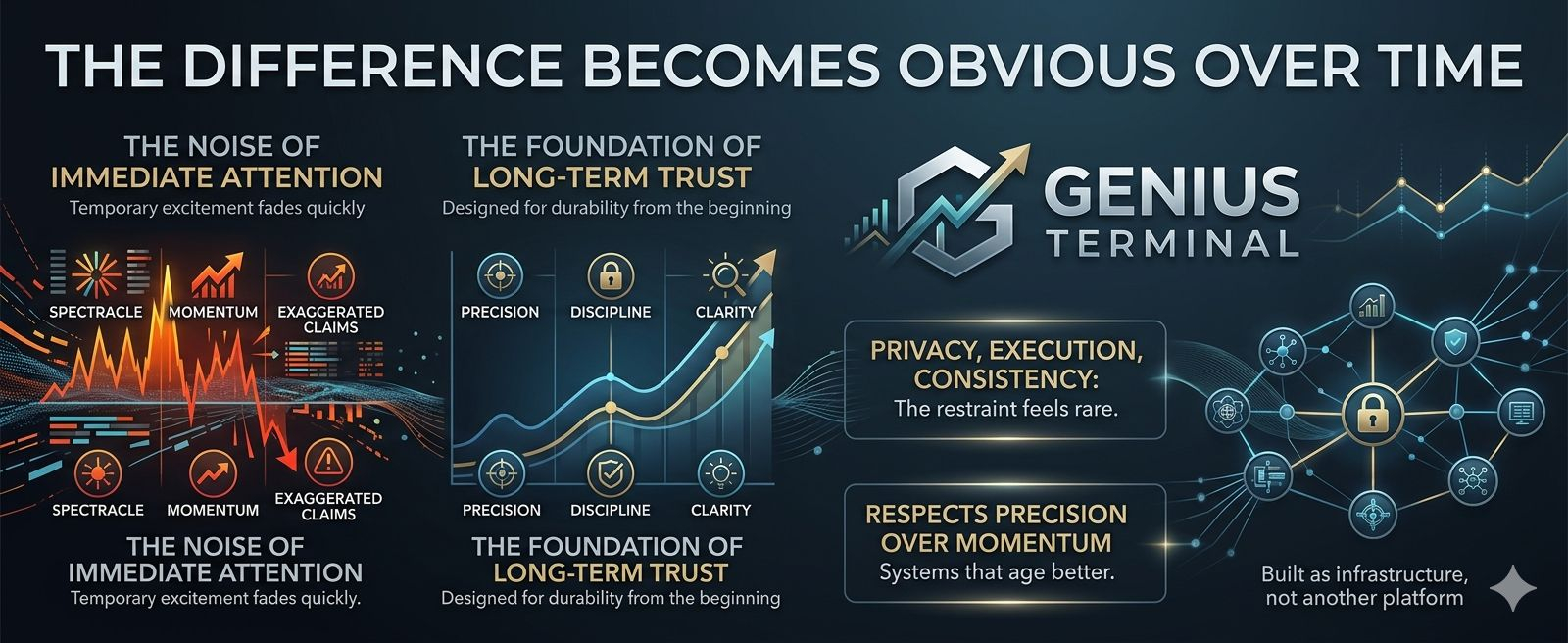
Sự Khác Biệt Trở Nên Rõ Rệt Theo Thời Gian
Tôi đã thấy vô số sản phẩm hứa hẹn về tốc độ, quy mô và đổi mới, nhưng rất ít sản phẩm để lại ấn tượng rằng chúng được tạo ra với sự vĩnh cửu thực sự trong tâm trí.
Genius Terminal ngay lập tức cảm thấy khác biệt với tôi.
Không phải vì nó cố gắng chiếm lĩnh sự chú ý, mà bởi vì cách mà toàn bộ trải nghiệm cảm thấy được kiểm soát và có chủ đích. Mọi thứ dường như được cấu trúc một cách rõ ràng. Không có sự phức tạp không cần thiết. Không có sự định vị quá mức. Chỉ có một hiểu biết vững chắc về cách mà cơ sở hạ tầng dài hạn nên trông như thế nào khi sự kỷ luật dẫn dắt quy trình.
Điều nổi bật nhất là sự cân bằng giữa quyền riêng tư, thực thi và tính nhất quán. Trong một không gian đầy tiếng ồn, loại sự kiềm chế đó cảm thấy hiếm có. Sản phẩm không dựa vào sự phô trương liên tục để chứng minh sự liên quan. Hướng đi của nó đã nói lên chất lượng của nền tảng đang được xây dựng.
Tôi tôn trọng những dự án hiểu giá trị của sự chính xác hơn là động lực. Các hệ thống được xây dựng theo cách này thường có tuổi thọ tốt hơn vì chúng được thiết kế để bền bỉ ngay từ đầu, không phải sự phấn khích tạm thời.
Càng quan sát Genius Terminal, tôi càng cảm thấy nó ít giống một nền tảng khác và nhiều hơn như một cơ sở hạ tầng âm thầm định vị cho sự quan trọng lâu dài.
Một số sản phẩm đòi hỏi sự chú ý ngay lập tức.
Những sản phẩm mạnh mẽ nhất sẽ kiếm được niềm tin theo thời gian.
#genius @GeniusOfficial $GENIUS
{spot}(GENIUSUSDT)
$HEI
$ID
Sự Khác Biệt Trở Nên Rõ Rệt Theo Thời Gian
Tôi đã thấy vô số sản phẩm hứa hẹn về tốc độ, quy mô và đổi mới, nhưng rất ít sản phẩm để lại ấn tượng rằng chúng được tạo ra với sự vĩnh cửu thực sự trong tâm trí.
Genius Terminal ngay lập tức cảm thấy khác biệt với tôi.
Không phải vì nó cố gắng chiếm lĩnh sự chú ý, mà bởi vì cách mà toàn bộ trải nghiệm cảm thấy được kiểm soát và có chủ đích. Mọi thứ dường như được cấu trúc một cách rõ ràng. Không có sự phức tạp không cần thiết. Không có sự định vị quá mức. Chỉ có một hiểu biết vững chắc về cách mà cơ sở hạ tầng dài hạn nên trông như thế nào khi sự kỷ luật dẫn dắt quy trình.
Điều nổi bật nhất là sự cân bằng giữa quyền riêng tư, thực thi và tính nhất quán. Trong một không gian đầy tiếng ồn, loại sự kiềm chế đó cảm thấy hiếm có. Sản phẩm không dựa vào sự phô trương liên tục để chứng minh sự liên quan. Hướng đi của nó đã nói lên chất lượng của nền tảng đang được xây dựng.
Tôi tôn trọng những dự án hiểu giá trị của sự chính xác hơn là động lực. Các hệ thống được xây dựng theo cách này thường có tuổi thọ tốt hơn vì chúng được thiết kế để bền bỉ ngay từ đầu, không phải sự phấn khích tạm thời.
Càng quan sát Genius Terminal, tôi càng cảm thấy nó ít giống một nền tảng khác và nhiều hơn như một cơ sở hạ tầng âm thầm định vị cho sự quan trọng lâu dài.
Một số sản phẩm đòi hỏi sự chú ý ngay lập tức.
Những sản phẩm mạnh mẽ nhất sẽ kiếm được niềm tin theo thời gian.
#genius @GeniusOfficial $GENIUS
$HEI
$ID
Tôi đã thấy vô số sản phẩm hứa hẹn về tốc độ, quy mô và đổi mới, nhưng rất ít sản phẩm để lại ấn tượng rằng chúng được tạo ra với sự vĩnh cửu thực sự trong tâm trí.
Genius Terminal ngay lập tức cảm thấy khác biệt với tôi.
Không phải vì nó cố gắng chiếm lĩnh sự chú ý, mà bởi vì cách mà toàn bộ trải nghiệm cảm thấy được kiểm soát và có chủ đích. Mọi thứ dường như được cấu trúc một cách rõ ràng. Không có sự phức tạp không cần thiết. Không có sự định vị quá mức. Chỉ có một hiểu biết vững chắc về cách mà cơ sở hạ tầng dài hạn nên trông như thế nào khi sự kỷ luật dẫn dắt quy trình.
Điều nổi bật nhất là sự cân bằng giữa quyền riêng tư, thực thi và tính nhất quán. Trong một không gian đầy tiếng ồn, loại sự kiềm chế đó cảm thấy hiếm có. Sản phẩm không dựa vào sự phô trương liên tục để chứng minh sự liên quan. Hướng đi của nó đã nói lên chất lượng của nền tảng đang được xây dựng.
Tôi tôn trọng những dự án hiểu giá trị của sự chính xác hơn là động lực. Các hệ thống được xây dựng theo cách này thường có tuổi thọ tốt hơn vì chúng được thiết kế để bền bỉ ngay từ đầu, không phải sự phấn khích tạm thời.
Càng quan sát Genius Terminal, tôi càng cảm thấy nó ít giống một nền tảng khác và nhiều hơn như một cơ sở hạ tầng âm thầm định vị cho sự quan trọng lâu dài.
Một số sản phẩm đòi hỏi sự chú ý ngay lập tức.
Những sản phẩm mạnh mẽ nhất sẽ kiếm được niềm tin theo thời gian.
#genius @GeniusOfficial $GENIUS
$HEI
$ID
240
·
--
Cơ sở hạ tầng im lặng
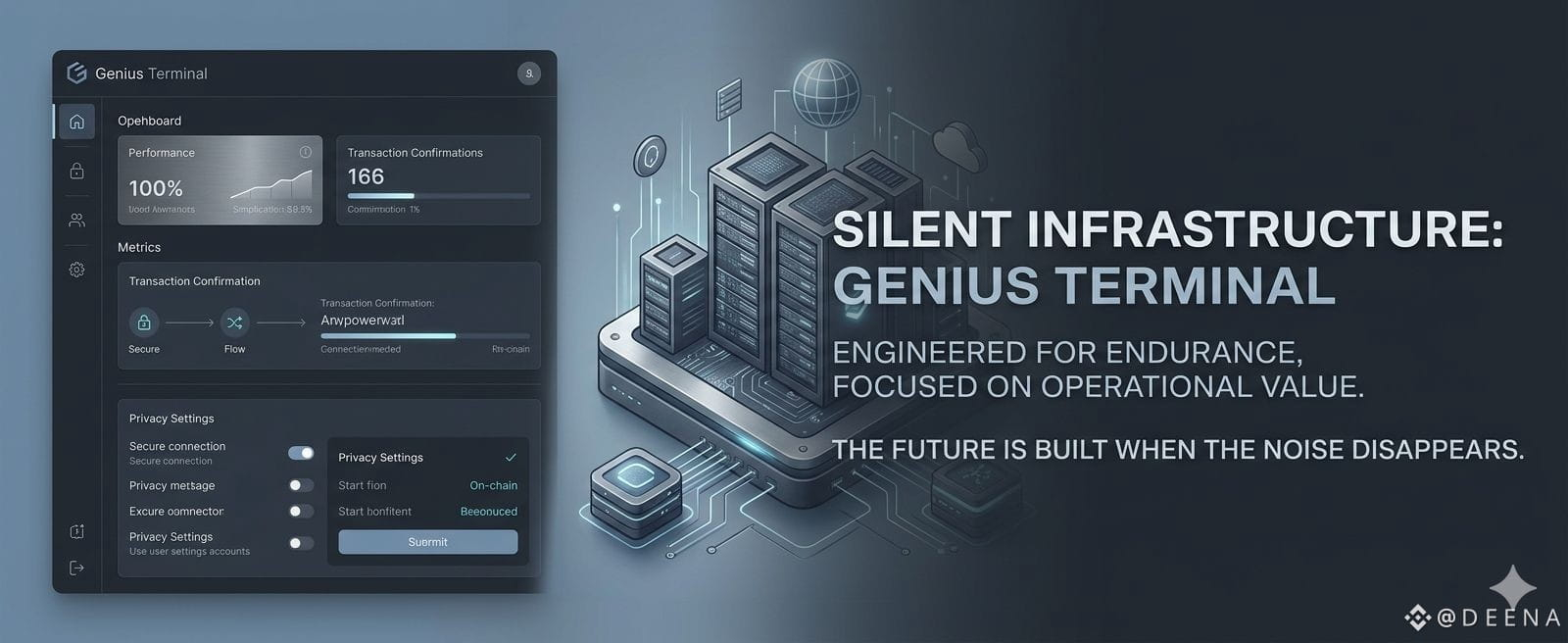
Tôi đã dành đủ thời gian quanh các sản phẩm on-chain để nhận ra sự khác biệt giữa các nền tảng được xây dựng để thu hút sự chú ý và các nền tảng được xây dựng để bền vững.
Genius Terminal ngay lập tức để lại cho tôi ấn tượng thứ hai.
Điều đầu tiên tôi nhận thấy là sự kiềm chế. Không có sự phức tạp không cần thiết. Không có tiếng ồn gây gắt. Không có cố gắng ép buộc động lực thông qua sự kỳ diệu. Mọi thứ đều có chủ đích, từ cấu trúc đến quy trình thực hiện. Nó mang lại sự tự tin mà thường đến từ các đội ngũ tập trung nhiều hơn vào hiệu suất hơn là sự hiển thị.
Điều nổi bật nhất với tôi là cách mà sự riêng tư cảm thấy được tích hợp vào trải nghiệm hơn là được thêm vào như một lớp câu chuyện sau này. Điều đó thay đổi hoàn toàn bầu không khí. Terminal cảm thấy được kiểm soát, tập trung và được thiết kế cho những người coi trọng độ chính xác hơn là phản ứng.
Tôi cũng tôn trọng cách mà toàn bộ hướng đi cảm thấy sạch sẽ. Trong một không gian mà nhiều sản phẩm cạnh tranh cho sự nổi bật ngắn hạn, Genius Terminal cảm thấy được định vị cho giá trị hoạt động dài hạn. Kiến trúc gợi ý kỷ luật. Giao diện gợi ý sự rõ ràng. Sự hiện diện tổng thể gợi ý sự trưởng thành.
Tôi tin rằng thế hệ tiếp theo của cơ sở hạ tầng on-chain sẽ không được định nghĩa bởi ai nói lớn nhất.
Nó sẽ được định nghĩa bởi ai xây dựng các hệ thống có khả năng duy trì sự cần thiết khi tiếng ồn biến mất.
Genius Terminal đã cảm thấy phù hợp với tương lai đó.
$ALLO
$NIGHT
#genius @GeniusOfficial $GENIUS
{spot}(GENIUSUSDT)
Cơ sở hạ tầng im lặng
Tôi đã dành đủ thời gian quanh các sản phẩm on-chain để nhận ra sự khác biệt giữa các nền tảng được xây dựng để thu hút sự chú ý và các nền tảng được xây dựng để bền vững.
Genius Terminal ngay lập tức để lại cho tôi ấn tượng thứ hai.
Điều đầu tiên tôi nhận thấy là sự kiềm chế. Không có sự phức tạp không cần thiết. Không có tiếng ồn gây gắt. Không có cố gắng ép buộc động lực thông qua sự kỳ diệu. Mọi thứ đều có chủ đích, từ cấu trúc đến quy trình thực hiện. Nó mang lại sự tự tin mà thường đến từ các đội ngũ tập trung nhiều hơn vào hiệu suất hơn là sự hiển thị.
Điều nổi bật nhất với tôi là cách mà sự riêng tư cảm thấy được tích hợp vào trải nghiệm hơn là được thêm vào như một lớp câu chuyện sau này. Điều đó thay đổi hoàn toàn bầu không khí. Terminal cảm thấy được kiểm soát, tập trung và được thiết kế cho những người coi trọng độ chính xác hơn là phản ứng.
Tôi cũng tôn trọng cách mà toàn bộ hướng đi cảm thấy sạch sẽ. Trong một không gian mà nhiều sản phẩm cạnh tranh cho sự nổi bật ngắn hạn, Genius Terminal cảm thấy được định vị cho giá trị hoạt động dài hạn. Kiến trúc gợi ý kỷ luật. Giao diện gợi ý sự rõ ràng. Sự hiện diện tổng thể gợi ý sự trưởng thành.
Tôi tin rằng thế hệ tiếp theo của cơ sở hạ tầng on-chain sẽ không được định nghĩa bởi ai nói lớn nhất.
Nó sẽ được định nghĩa bởi ai xây dựng các hệ thống có khả năng duy trì sự cần thiết khi tiếng ồn biến mất.
Genius Terminal đã cảm thấy phù hợp với tương lai đó.
$ALLO
$NIGHT
#genius @GeniusOfficial $GENIUS
Tôi đã dành đủ thời gian quanh các sản phẩm on-chain để nhận ra sự khác biệt giữa các nền tảng được xây dựng để thu hút sự chú ý và các nền tảng được xây dựng để bền vững.
Genius Terminal ngay lập tức để lại cho tôi ấn tượng thứ hai.
Điều đầu tiên tôi nhận thấy là sự kiềm chế. Không có sự phức tạp không cần thiết. Không có tiếng ồn gây gắt. Không có cố gắng ép buộc động lực thông qua sự kỳ diệu. Mọi thứ đều có chủ đích, từ cấu trúc đến quy trình thực hiện. Nó mang lại sự tự tin mà thường đến từ các đội ngũ tập trung nhiều hơn vào hiệu suất hơn là sự hiển thị.
Điều nổi bật nhất với tôi là cách mà sự riêng tư cảm thấy được tích hợp vào trải nghiệm hơn là được thêm vào như một lớp câu chuyện sau này. Điều đó thay đổi hoàn toàn bầu không khí. Terminal cảm thấy được kiểm soát, tập trung và được thiết kế cho những người coi trọng độ chính xác hơn là phản ứng.
Tôi cũng tôn trọng cách mà toàn bộ hướng đi cảm thấy sạch sẽ. Trong một không gian mà nhiều sản phẩm cạnh tranh cho sự nổi bật ngắn hạn, Genius Terminal cảm thấy được định vị cho giá trị hoạt động dài hạn. Kiến trúc gợi ý kỷ luật. Giao diện gợi ý sự rõ ràng. Sự hiện diện tổng thể gợi ý sự trưởng thành.
Tôi tin rằng thế hệ tiếp theo của cơ sở hạ tầng on-chain sẽ không được định nghĩa bởi ai nói lớn nhất.
Nó sẽ được định nghĩa bởi ai xây dựng các hệ thống có khả năng duy trì sự cần thiết khi tiếng ồn biến mất.
Genius Terminal đã cảm thấy phù hợp với tương lai đó.
$ALLO
$NIGHT
#genius @GeniusOfficial $GENIUS
1
199
·
--
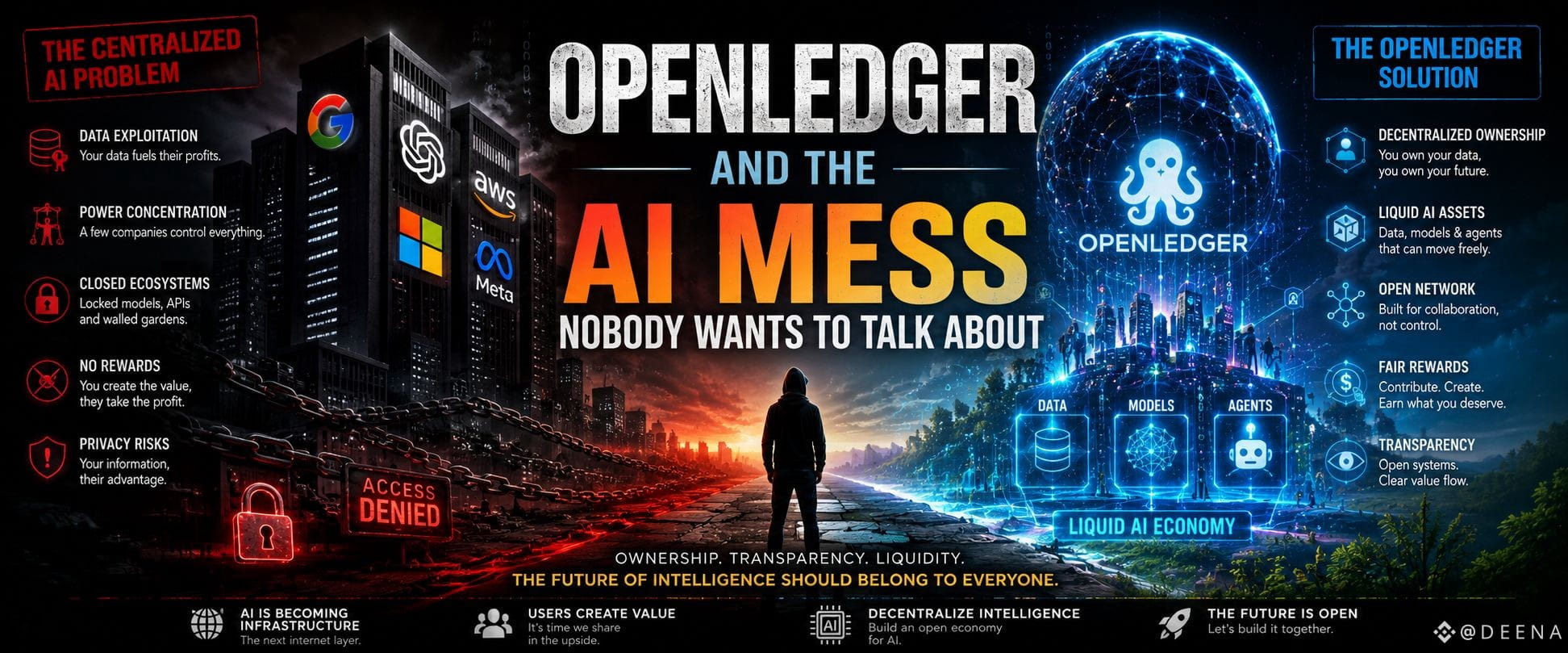
Tôi đã từng nghĩ rằng hầu hết các dự án AI chỉ là những cú lừa tái chế với thương hiệu đắt tiền. Cùng lời hứa. Cùng từ ngữ. Cùng câu chuyện "tương lai của trí thông minh" được lặp đi lặp lại cho đến khi không ai còn đặt câu hỏi về nó nữa. Nhưng khi tôi đào sâu vào OpenLedger, tôi nhận ra câu chuyện thực sự không phải là AI bản thân nó — mà là quyền sở hữu.
Hiện tại, một vài công ty khổng lồ kiểm soát gần như tất cả. Mô hình. Dữ liệu. Hạ tầng. Phân phối. Trong khi đó, người dùng bình thường mỗi ngày đều cung cấp cho những hệ thống này mà không nhận ra họ đang tạo ra bao nhiêu giá trị. Đó là phần mà tôi cảm thấy bị hỏng.
Điều khiến tôi chú ý về OpenLedger là nó thực sự chỉ ra vấn đề hạ tầng thay vì khai thác sự tham gia với những câu chuyện AI rỗng tuếch. Ý tưởng rằng dữ liệu, mô hình và các đại lý AI nên di chuyển qua một nền kinh tế mở thay vì bị giam giữ trong các bức tường doanh nghiệp có ý nghĩa hơn nhiều so với những gì mọi người nhận ra.
Và thật lòng mà nói, tôi nghĩ hầu hết mọi người vẫn đang đánh giá thấp mức độ lớn lao của sự thay đổi này.
AI không còn chỉ là phần mềm.
Nó đang biến thành hạ tầng kinh tế.
Cuộc chiến thực sự sẽ không phải là ai xây dựng được chatbot thông minh nhất.
Mà sẽ là ai sở hữu các đường ray bên dưới trí thông minh bản thân nó.
#openledger @Openledger $OPEN
{spot}(OPENUSDT)
$XLM
$ALLO
Tôi đã từng nghĩ rằng hầu hết các dự án AI chỉ là những cú lừa tái chế với thương hiệu đắt tiền. Cùng lời hứa. Cùng từ ngữ. Cùng câu chuyện "tương lai của trí thông minh" được lặp đi lặp lại cho đến khi không ai còn đặt câu hỏi về nó nữa. Nhưng khi tôi đào sâu vào OpenLedger, tôi nhận ra câu chuyện thực sự không phải là AI bản thân nó — mà là quyền sở hữu.
Hiện tại, một vài công ty khổng lồ kiểm soát gần như tất cả. Mô hình. Dữ liệu. Hạ tầng. Phân phối. Trong khi đó, người dùng bình thường mỗi ngày đều cung cấp cho những hệ thống này mà không nhận ra họ đang tạo ra bao nhiêu giá trị. Đó là phần mà tôi cảm thấy bị hỏng.
Điều khiến tôi chú ý về OpenLedger là nó thực sự chỉ ra vấn đề hạ tầng thay vì khai thác sự tham gia với những câu chuyện AI rỗng tuếch. Ý tưởng rằng dữ liệu, mô hình và các đại lý AI nên di chuyển qua một nền kinh tế mở thay vì bị giam giữ trong các bức tường doanh nghiệp có ý nghĩa hơn nhiều so với những gì mọi người nhận ra.
Và thật lòng mà nói, tôi nghĩ hầu hết mọi người vẫn đang đánh giá thấp mức độ lớn lao của sự thay đổi này.
AI không còn chỉ là phần mềm.
Nó đang biến thành hạ tầng kinh tế.
Cuộc chiến thực sự sẽ không phải là ai xây dựng được chatbot thông minh nhất.
Mà sẽ là ai sở hữu các đường ray bên dưới trí thông minh bản thân nó.
#openledger @OpenLedger $OPEN
$XLM
$ALLO
Hiện tại, một vài công ty khổng lồ kiểm soát gần như tất cả. Mô hình. Dữ liệu. Hạ tầng. Phân phối. Trong khi đó, người dùng bình thường mỗi ngày đều cung cấp cho những hệ thống này mà không nhận ra họ đang tạo ra bao nhiêu giá trị. Đó là phần mà tôi cảm thấy bị hỏng.
Điều khiến tôi chú ý về OpenLedger là nó thực sự chỉ ra vấn đề hạ tầng thay vì khai thác sự tham gia với những câu chuyện AI rỗng tuếch. Ý tưởng rằng dữ liệu, mô hình và các đại lý AI nên di chuyển qua một nền kinh tế mở thay vì bị giam giữ trong các bức tường doanh nghiệp có ý nghĩa hơn nhiều so với những gì mọi người nhận ra.
Và thật lòng mà nói, tôi nghĩ hầu hết mọi người vẫn đang đánh giá thấp mức độ lớn lao của sự thay đổi này.
AI không còn chỉ là phần mềm.
Nó đang biến thành hạ tầng kinh tế.
Cuộc chiến thực sự sẽ không phải là ai xây dựng được chatbot thông minh nhất.
Mà sẽ là ai sở hữu các đường ray bên dưới trí thông minh bản thân nó.
#openledger @OpenLedger $OPEN
$XLM
$ALLO
1
2
160
·
--
Bài viết
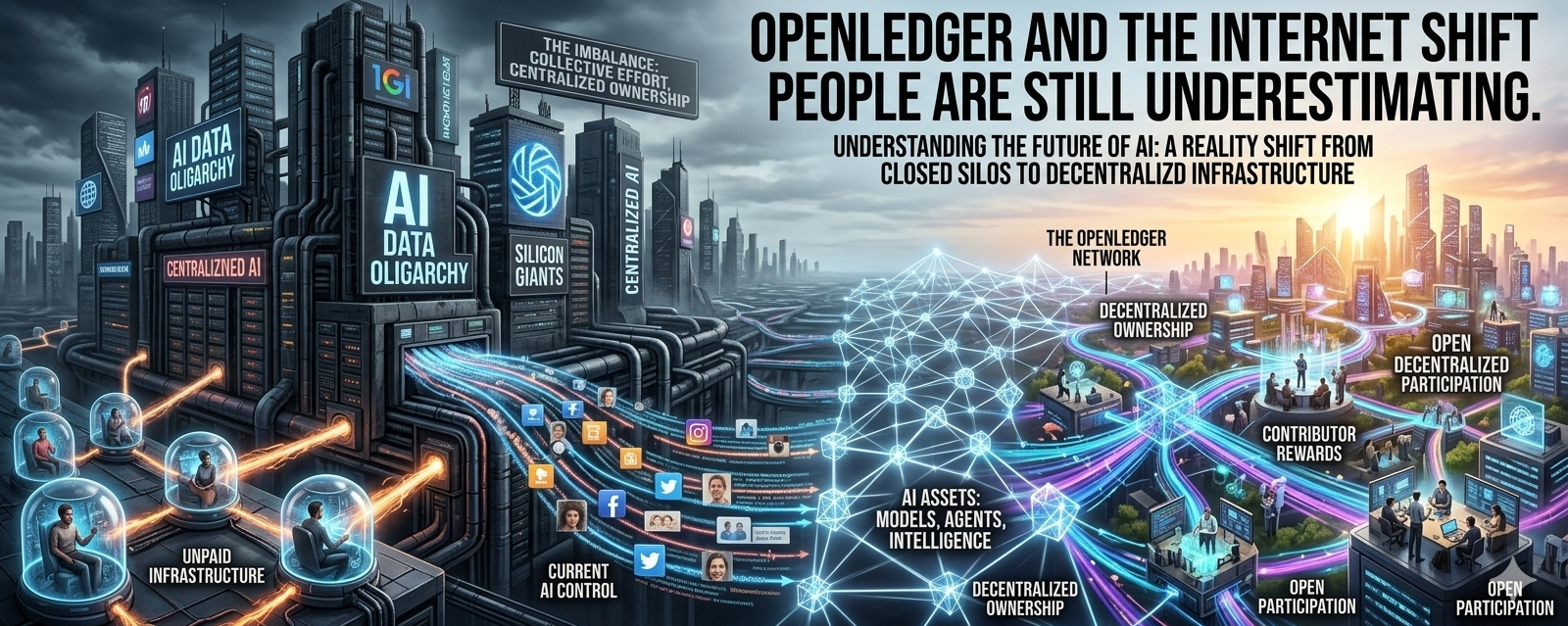
OPENLEDGER VÀ SỰ THAY ĐỔI TRÊN INTERNET MÀ NGƯỜI TA VẪN ĐÁNH GIÁ THẤPHầu hết các dự án AI lúc này đều cảm thấy trống rỗng ngay khi bạn nhìn vượt qua marketing. Những lời hứa tái chế giống nhau ở khắp mọi nơi. Những chủ đề kịch tính giống nhau về "thay đổi tương lai." Những trang web bóng bẩy đầy từ ngữ mà chẳng ai nói như thế trong đời thực. Mỗi dự án bỗng nhiên tuyên bố đang xây dựng thế hệ trí tuệ tiếp theo, nhưng khi bạn nhìn sâu hơn, hầu hết chúng chỉ đang đóng gói lại những hệ thống tập trung cũ với một cái mác crypto bên trên. Đó là lý do tại sao nhiều người đã ngừng quan tâm. Sự phấn khích đã phai nhạt vì không gian này trở nên ngập tràn tiếng ồn. Quá nhiều người sáng lập cố gắng tạo ra sự cường điệu. Quá nhiều token giả vờ là công nghệ. Quá nhiều người đuổi theo xu hướng mà không hiểu họ đang phải giải quyết vấn đề gì nữa.
OPENLEDGER VÀ SỰ THAY ĐỔI TRÊN INTERNET MÀ NGƯỜI TA VẪN ĐÁNH GIÁ THẤP
Hầu hết các dự án AI lúc này đều cảm thấy trống rỗng ngay khi bạn nhìn vượt qua marketing. Những lời hứa tái chế giống nhau ở khắp mọi nơi. Những chủ đề kịch tính giống nhau về "thay đổi tương lai." Những trang web bóng bẩy đầy từ ngữ mà chẳng ai nói như thế trong đời thực. Mỗi dự án bỗng nhiên tuyên bố đang xây dựng thế hệ trí tuệ tiếp theo, nhưng khi bạn nhìn sâu hơn, hầu hết chúng chỉ đang đóng gói lại những hệ thống tập trung cũ với một cái mác crypto bên trên. Đó là lý do tại sao nhiều người đã ngừng quan tâm. Sự phấn khích đã phai nhạt vì không gian này trở nên ngập tràn tiếng ồn. Quá nhiều người sáng lập cố gắng tạo ra sự cường điệu. Quá nhiều token giả vờ là công nghệ. Quá nhiều người đuổi theo xu hướng mà không hiểu họ đang phải giải quyết vấn đề gì nữa.
1
2
134
·
--
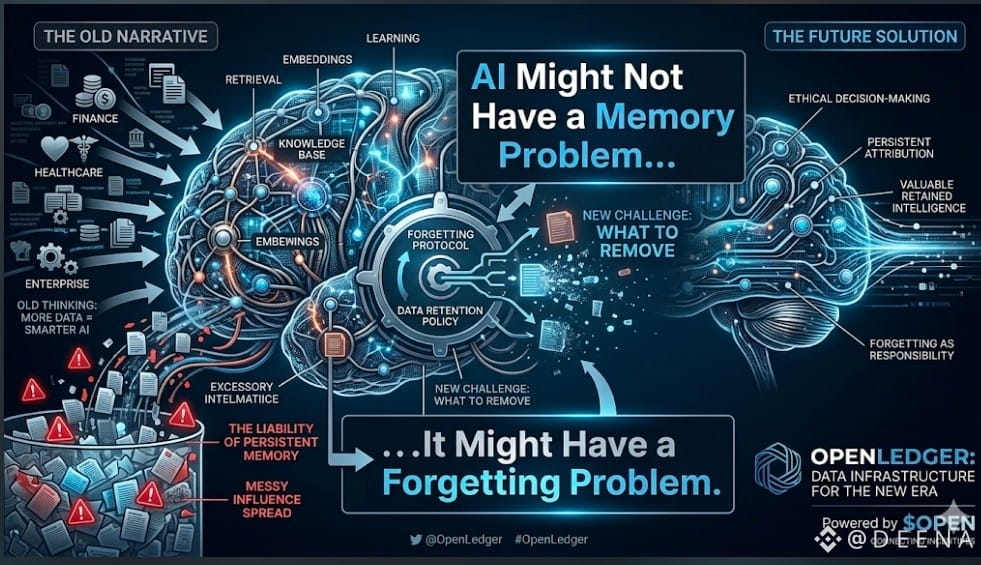
AI Có Thể Không Có Vấn Đề Về Ký Ức... Nó Có Thể Có Vấn Đề Về Việc Quên
Gần đây, mình đã bắt đầu suy nghĩ về AI một cách rất khác. Trong nhiều năm, cả ngành công nghiệp đã coi ký ức như một lợi thế không giới hạn. Hệ thống có thể thu thập, lưu trữ và học hỏi từ nhiều dữ liệu hơn thì càng thông minh hơn. Nhưng khi AI càng đi sâu vào tài chính, y tế, hoạt động doanh nghiệp, và ra quyết định thực sự, mình cảm thấy thách thức thực sự đang âm thầm chuyển mình.
Mình không nghĩ rằng tương lai thuộc về những hệ thống nhớ mọi thứ mãi mãi.
Mình nghĩ rằng tương lai có thể thuộc về những hệ thống hiểu những gì không nên được nhớ lại.
Đó là lý do tại sao OpenLedger thu hút sự chú ý của mình.
Hầu hết mọi người mô tả nó như một cơ sở hạ tầng dữ liệu AI nơi các người đóng góp cung cấp thông tin, các mô hình cải thiện, và $OPEN kết nối các động lực. Nhưng mình nghĩ có một lớp sâu hơn đang hình thành dưới câu chuyện đó. Khi thông tin đi vào các hệ thống AI, việc loại bỏ ảnh hưởng của nó trở nên cực kỳ khó khăn. Dữ liệu lan tỏa qua quá trình huấn luyện, nhúng, hệ thống truy xuất, và các mẫu hành vi theo những cách mà mọi người không nhận ra.
Và khi AI bắt đầu chạm vào các quy trình nhạy cảm, chính ký ức trở thành trách nhiệm.
Điều đó hoàn toàn thay đổi kinh tế học.
Nếu việc quy cho trách nhiệm trở nên bền vững và có giá trị, thì trí tuệ giữ lại không còn là cơ sở hạ tầng miễn phí nữa. Đột nhiên, việc quên trở nên quan trọng như việc học.
Và thật lòng mà nói, mình không nghĩ thị trường đã hoàn toàn định giá điều đó.
#OpenLedger @Openledger $OPEN
{spot}(OPENUSDT)
AI Có Thể Không Có Vấn Đề Về Ký Ức... Nó Có Thể Có Vấn Đề Về Việc Quên
Gần đây, mình đã bắt đầu suy nghĩ về AI một cách rất khác. Trong nhiều năm, cả ngành công nghiệp đã coi ký ức như một lợi thế không giới hạn. Hệ thống có thể thu thập, lưu trữ và học hỏi từ nhiều dữ liệu hơn thì càng thông minh hơn. Nhưng khi AI càng đi sâu vào tài chính, y tế, hoạt động doanh nghiệp, và ra quyết định thực sự, mình cảm thấy thách thức thực sự đang âm thầm chuyển mình.
Mình không nghĩ rằng tương lai thuộc về những hệ thống nhớ mọi thứ mãi mãi.
Mình nghĩ rằng tương lai có thể thuộc về những hệ thống hiểu những gì không nên được nhớ lại.
Đó là lý do tại sao OpenLedger thu hút sự chú ý của mình.
Hầu hết mọi người mô tả nó như một cơ sở hạ tầng dữ liệu AI nơi các người đóng góp cung cấp thông tin, các mô hình cải thiện, và $OPEN kết nối các động lực. Nhưng mình nghĩ có một lớp sâu hơn đang hình thành dưới câu chuyện đó. Khi thông tin đi vào các hệ thống AI, việc loại bỏ ảnh hưởng của nó trở nên cực kỳ khó khăn. Dữ liệu lan tỏa qua quá trình huấn luyện, nhúng, hệ thống truy xuất, và các mẫu hành vi theo những cách mà mọi người không nhận ra.
Và khi AI bắt đầu chạm vào các quy trình nhạy cảm, chính ký ức trở thành trách nhiệm.
Điều đó hoàn toàn thay đổi kinh tế học.
Nếu việc quy cho trách nhiệm trở nên bền vững và có giá trị, thì trí tuệ giữ lại không còn là cơ sở hạ tầng miễn phí nữa. Đột nhiên, việc quên trở nên quan trọng như việc học.
Và thật lòng mà nói, mình không nghĩ thị trường đã hoàn toàn định giá điều đó.
#OpenLedger @OpenLedger $OPEN
Gần đây, mình đã bắt đầu suy nghĩ về AI một cách rất khác. Trong nhiều năm, cả ngành công nghiệp đã coi ký ức như một lợi thế không giới hạn. Hệ thống có thể thu thập, lưu trữ và học hỏi từ nhiều dữ liệu hơn thì càng thông minh hơn. Nhưng khi AI càng đi sâu vào tài chính, y tế, hoạt động doanh nghiệp, và ra quyết định thực sự, mình cảm thấy thách thức thực sự đang âm thầm chuyển mình.
Mình không nghĩ rằng tương lai thuộc về những hệ thống nhớ mọi thứ mãi mãi.
Mình nghĩ rằng tương lai có thể thuộc về những hệ thống hiểu những gì không nên được nhớ lại.
Đó là lý do tại sao OpenLedger thu hút sự chú ý của mình.
Hầu hết mọi người mô tả nó như một cơ sở hạ tầng dữ liệu AI nơi các người đóng góp cung cấp thông tin, các mô hình cải thiện, và $OPEN kết nối các động lực. Nhưng mình nghĩ có một lớp sâu hơn đang hình thành dưới câu chuyện đó. Khi thông tin đi vào các hệ thống AI, việc loại bỏ ảnh hưởng của nó trở nên cực kỳ khó khăn. Dữ liệu lan tỏa qua quá trình huấn luyện, nhúng, hệ thống truy xuất, và các mẫu hành vi theo những cách mà mọi người không nhận ra.
Và khi AI bắt đầu chạm vào các quy trình nhạy cảm, chính ký ức trở thành trách nhiệm.
Điều đó hoàn toàn thay đổi kinh tế học.
Nếu việc quy cho trách nhiệm trở nên bền vững và có giá trị, thì trí tuệ giữ lại không còn là cơ sở hạ tầng miễn phí nữa. Đột nhiên, việc quên trở nên quan trọng như việc học.
Và thật lòng mà nói, mình không nghĩ thị trường đã hoàn toàn định giá điều đó.
#OpenLedger @OpenLedger $OPEN
97
·
--
Bài viết
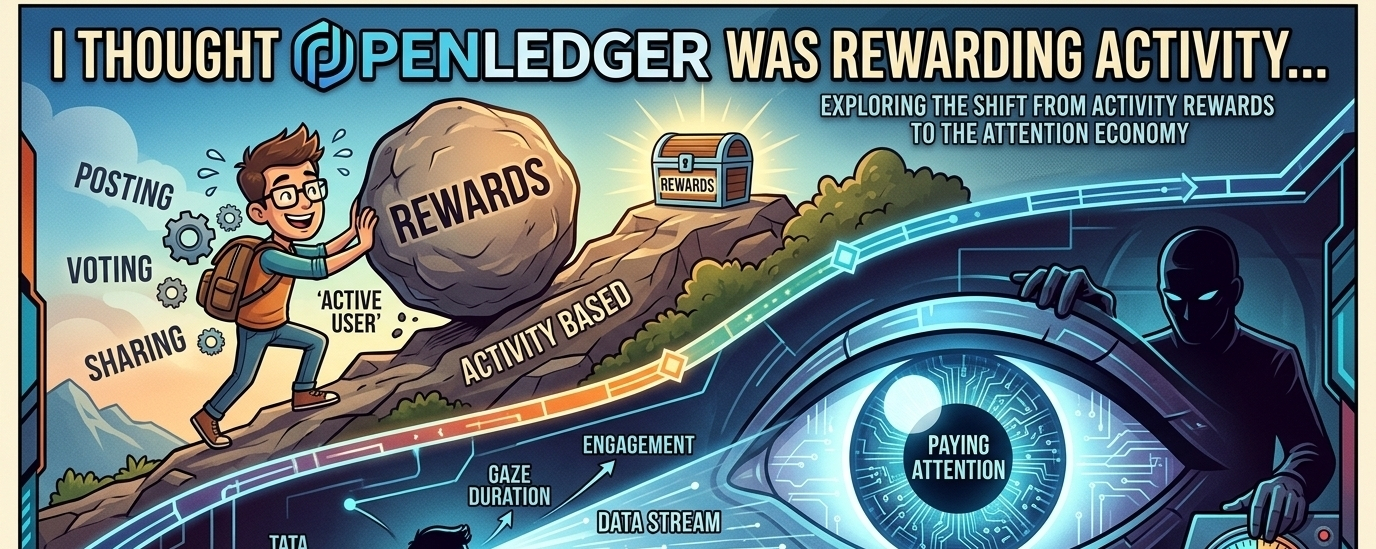
Tôi Nghĩ OpenLedger Đã Thưởng Cho Hoạt Động… Cho Đến Khi Tôi Nhận Ra Nó Đang Chú Ý Đến Điều Gì Đó
Khi tôi mới bắt đầu sử dụng OpenLedger, tôi nghĩ mình đã hiểu hệ thống này khá nhanh.
Nó cảm giác giống như nhiều hệ sinh thái khác mà tôi đã thấy trước đây. Hãy giữ hoạt động, hoàn thành nhiệm vụ, tham gia liên tục, quay lại ngày mai, lặp lại. Cấu trúc cảm thấy quen thuộc đến mức tôi không suy nghĩ quá sâu về nó lúc ban đầu. Thành thật mà nói, tôi cho rằng toàn bộ ý tưởng này rất đơn giản: càng nhiều người thấy bạn, bạn càng tạo ra nhiều giá trị trong mạng lưới.
Và trong một thời gian, niềm tin đó làm tôi thấy hợp lý.
Bởi vì các hệ thống trực tuyến thường dạy chúng ta nghĩ rằng hoạt động đồng nghĩa với tầm quan trọng. Nếu bạn đăng nhiều hơn, tương tác nhiều hơn và luôn hiện diện, cuối cùng hệ thống sẽ chú ý đến bạn. Đó là cách mà hầu hết các nền tảng hoạt động hiện nay, vì vậy tôi tự nhiên đã mang cùng một tư duy vào OpenLedger.
Khi tôi mới bắt đầu sử dụng OpenLedger, tôi nghĩ mình đã hiểu hệ thống này khá nhanh.
Nó cảm giác giống như nhiều hệ sinh thái khác mà tôi đã thấy trước đây. Hãy giữ hoạt động, hoàn thành nhiệm vụ, tham gia liên tục, quay lại ngày mai, lặp lại. Cấu trúc cảm thấy quen thuộc đến mức tôi không suy nghĩ quá sâu về nó lúc ban đầu. Thành thật mà nói, tôi cho rằng toàn bộ ý tưởng này rất đơn giản: càng nhiều người thấy bạn, bạn càng tạo ra nhiều giá trị trong mạng lưới.
Và trong một thời gian, niềm tin đó làm tôi thấy hợp lý.
Bởi vì các hệ thống trực tuyến thường dạy chúng ta nghĩ rằng hoạt động đồng nghĩa với tầm quan trọng. Nếu bạn đăng nhiều hơn, tương tác nhiều hơn và luôn hiện diện, cuối cùng hệ thống sẽ chú ý đến bạn. Đó là cách mà hầu hết các nền tảng hoạt động hiện nay, vì vậy tôi tự nhiên đã mang cùng một tư duy vào OpenLedger.
Tôi Nghĩ OpenLedger Đã Thưởng Cho Hoạt Động… Cho Đến Khi Tôi Nhận Ra Nó Đang Chú Ý Đến Điều Gì Đó
Khi tôi mới bắt đầu sử dụng OpenLedger, tôi nghĩ mình đã hiểu hệ thống này khá nhanh.
Nó cảm giác giống như nhiều hệ sinh thái khác mà tôi đã thấy trước đây. Hãy giữ hoạt động, hoàn thành nhiệm vụ, tham gia liên tục, quay lại ngày mai, lặp lại. Cấu trúc cảm thấy quen thuộc đến mức tôi không suy nghĩ quá sâu về nó lúc ban đầu. Thành thật mà nói, tôi cho rằng toàn bộ ý tưởng này rất đơn giản: càng nhiều người thấy bạn, bạn càng tạo ra nhiều giá trị trong mạng lưới.
Và trong một thời gian, niềm tin đó làm tôi thấy hợp lý.
Bởi vì các hệ thống trực tuyến thường dạy chúng ta nghĩ rằng hoạt động đồng nghĩa với tầm quan trọng. Nếu bạn đăng nhiều hơn, tương tác nhiều hơn và luôn hiện diện, cuối cùng hệ thống sẽ chú ý đến bạn. Đó là cách mà hầu hết các nền tảng hoạt động hiện nay, vì vậy tôi tự nhiên đã mang cùng một tư duy vào OpenLedger.
100
·
--
Tại sao tôi nghĩ Genius Terminal đang âm thầm thay đổi cảm giác giao dịch trên chuỗi
Tôi từng nghĩ hầu hết các terminal trên chuỗi đều giống nhau với những giao diện khác nhau, thương hiệu khác nhau và những lời hứa về tốc độ thực hiện nhanh hơn một chút. Nhưng càng dành thời gian theo dõi cách các trader thực sự di chuyển trên các thị trường, tôi càng nhận ra rằng khoảng cách thực sự không chỉ là tốc độ. Đó là sự riêng tư, sự đơn giản, và cảm giác kiểm soát trong khi mọi thứ xung quanh bạn đang hỗn loạn. Đó là lý do tại sao Genius Terminal bắt đầu nổi bật với tôi.
Điều thu hút sự chú ý của tôi là ý tưởng trở thành terminal trên chuỗi đầu tiên và cuối cùng có tính riêng tư. Trong crypto, mọi người thường nói về tính minh bạch, nhưng rất ít người nói về chi phí của việc phơi bày mọi động thái trước khi thực hiện. Thị trường theo dõi mọi thứ. Ví bị theo dõi. Chiến lược trở thành những mẫu công khai. Qua thời gian, điều đó thay đổi cả hành vi của trader. Tôi nghĩ Genius Terminal hiểu rõ ma sát ẩn giấu hơn hầu hết các nền tảng khác.
Điều làm cho điều này thú vị không phải là sự khuếch đại hay tiếp thị lòe loẹt. Đó là hướng đi. Terminal cảm giác như được xây dựng xung quanh sự tập trung vào thực hiện thay vì tiếng ồn. Dòng chảy sạch hơn. Ít phân tâm hơn. Kiểm soát nhiều hơn về cách người dùng tương tác với thanh khoản và thông tin trên chuỗi.
Tôi nghĩ giai đoạn tiếp theo của cơ sở hạ tầng crypto sẽ thuộc về những sản phẩm giảm ma sát một cách âm thầm trong khi người dùng hầu như không nhận thấy điều đó đang xảy ra. Genius Terminal cảm giác như một trong những hệ thống đó.
#genius @GeniusOfficial $GENIUS
{spot}(GENIUSUSDT)
Tại sao tôi nghĩ Genius Terminal đang âm thầm thay đổi cảm giác giao dịch trên chuỗi
Tôi từng nghĩ hầu hết các terminal trên chuỗi đều giống nhau với những giao diện khác nhau, thương hiệu khác nhau và những lời hứa về tốc độ thực hiện nhanh hơn một chút. Nhưng càng dành thời gian theo dõi cách các trader thực sự di chuyển trên các thị trường, tôi càng nhận ra rằng khoảng cách thực sự không chỉ là tốc độ. Đó là sự riêng tư, sự đơn giản, và cảm giác kiểm soát trong khi mọi thứ xung quanh bạn đang hỗn loạn. Đó là lý do tại sao Genius Terminal bắt đầu nổi bật với tôi.
Điều thu hút sự chú ý của tôi là ý tưởng trở thành terminal trên chuỗi đầu tiên và cuối cùng có tính riêng tư. Trong crypto, mọi người thường nói về tính minh bạch, nhưng rất ít người nói về chi phí của việc phơi bày mọi động thái trước khi thực hiện. Thị trường theo dõi mọi thứ. Ví bị theo dõi. Chiến lược trở thành những mẫu công khai. Qua thời gian, điều đó thay đổi cả hành vi của trader. Tôi nghĩ Genius Terminal hiểu rõ ma sát ẩn giấu hơn hầu hết các nền tảng khác.
Điều làm cho điều này thú vị không phải là sự khuếch đại hay tiếp thị lòe loẹt. Đó là hướng đi. Terminal cảm giác như được xây dựng xung quanh sự tập trung vào thực hiện thay vì tiếng ồn. Dòng chảy sạch hơn. Ít phân tâm hơn. Kiểm soát nhiều hơn về cách người dùng tương tác với thanh khoản và thông tin trên chuỗi.
Tôi nghĩ giai đoạn tiếp theo của cơ sở hạ tầng crypto sẽ thuộc về những sản phẩm giảm ma sát một cách âm thầm trong khi người dùng hầu như không nhận thấy điều đó đang xảy ra. Genius Terminal cảm giác như một trong những hệ thống đó.
#genius @GeniusOfficial $GENIUS
Tôi từng nghĩ hầu hết các terminal trên chuỗi đều giống nhau với những giao diện khác nhau, thương hiệu khác nhau và những lời hứa về tốc độ thực hiện nhanh hơn một chút. Nhưng càng dành thời gian theo dõi cách các trader thực sự di chuyển trên các thị trường, tôi càng nhận ra rằng khoảng cách thực sự không chỉ là tốc độ. Đó là sự riêng tư, sự đơn giản, và cảm giác kiểm soát trong khi mọi thứ xung quanh bạn đang hỗn loạn. Đó là lý do tại sao Genius Terminal bắt đầu nổi bật với tôi.
Điều thu hút sự chú ý của tôi là ý tưởng trở thành terminal trên chuỗi đầu tiên và cuối cùng có tính riêng tư. Trong crypto, mọi người thường nói về tính minh bạch, nhưng rất ít người nói về chi phí của việc phơi bày mọi động thái trước khi thực hiện. Thị trường theo dõi mọi thứ. Ví bị theo dõi. Chiến lược trở thành những mẫu công khai. Qua thời gian, điều đó thay đổi cả hành vi của trader. Tôi nghĩ Genius Terminal hiểu rõ ma sát ẩn giấu hơn hầu hết các nền tảng khác.
Điều làm cho điều này thú vị không phải là sự khuếch đại hay tiếp thị lòe loẹt. Đó là hướng đi. Terminal cảm giác như được xây dựng xung quanh sự tập trung vào thực hiện thay vì tiếng ồn. Dòng chảy sạch hơn. Ít phân tâm hơn. Kiểm soát nhiều hơn về cách người dùng tương tác với thanh khoản và thông tin trên chuỗi.
Tôi nghĩ giai đoạn tiếp theo của cơ sở hạ tầng crypto sẽ thuộc về những sản phẩm giảm ma sát một cách âm thầm trong khi người dùng hầu như không nhận thấy điều đó đang xảy ra. Genius Terminal cảm giác như một trong những hệ thống đó.
#genius @GeniusOfficial $GENIUS
90
·
--
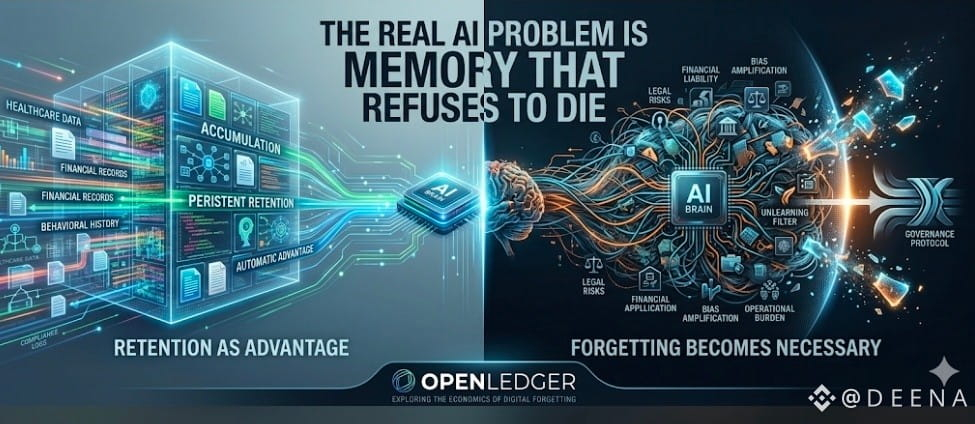
Vấn Đề Thực Sự Của AI Có Thể Không Phải Là Trí Thông Minh… Mà Là Ký Ức Không Chịu Biến Mất
Tôi cứ quay lại với một suy nghĩ khó chịu về AI.
Vấn đề thực sự có thể không phải là trí thông minh chút nào. Nó có thể là ký ức.
Trong nhiều năm, ngành công nghệ đã coi việc lưu giữ như một lợi thế tự động. Lưu trữ nhiều dữ liệu hơn. Theo dõi nhiều hành vi hơn. Bảo tồn nhiều lịch sử hơn. Giả định rất đơn giản: nhiều ký ức tạo ra hệ thống tốt hơn.
Nhưng khi AI tiến sâu vào lĩnh vực chăm sóc sức khỏe, tài chính, tuân thủ, hoạt động khách hàng và ra quyết định, thật khó để bỏ qua mặt trái của logic đó.
Bởi vì AI thực sự không “quên.”
Khi thông tin vào một quy trình đào tạo, lớp truy xuất, hoặc hệ thống hành vi, nó lan tỏa khắp mô hình theo những cách khó cô lập sau này. Xóa một tệp tin thì dễ. Loại bỏ ảnh hưởng của thông tin khỏi trí thông minh thì khó hơn nhiều.
Sự chuyển biến đó một phần là lý do tại sao OpenLedger bắt đầu trở nên thú vị hơn với tôi.
Lúc đầu, tôi thấy nó như một câu chuyện cơ sở hạ tầng AI khác tập trung vào việc quy attrib và phối hợp dữ liệu. Nhưng lớp sâu hơn có thể là một thứ hoàn toàn khác.
Khi quy attrib trở thành liên tục và có ý nghĩa kinh tế, ký ức không còn là cơ sở hạ tầng miễn phí. Nó trở thành một trách nhiệm, một tài sản, và cuối cùng là một vấn đề quản trị tất cả cùng một lúc.
Và ngay khi ký ức mang trọng lượng pháp lý, tài chính, và hoạt động, việc quên không còn nhìn như là không hiệu quả.
Nó bắt đầu nhìn như là cần thiết.
#openledger @Openledger $OPEN
{spot}(OPENUSDT)
Vấn Đề Thực Sự Của AI Có Thể Không Phải Là Trí Thông Minh… Mà Là Ký Ức Không Chịu Biến Mất
Tôi cứ quay lại với một suy nghĩ khó chịu về AI.
Vấn đề thực sự có thể không phải là trí thông minh chút nào. Nó có thể là ký ức.
Trong nhiều năm, ngành công nghệ đã coi việc lưu giữ như một lợi thế tự động. Lưu trữ nhiều dữ liệu hơn. Theo dõi nhiều hành vi hơn. Bảo tồn nhiều lịch sử hơn. Giả định rất đơn giản: nhiều ký ức tạo ra hệ thống tốt hơn.
Nhưng khi AI tiến sâu vào lĩnh vực chăm sóc sức khỏe, tài chính, tuân thủ, hoạt động khách hàng và ra quyết định, thật khó để bỏ qua mặt trái của logic đó.
Bởi vì AI thực sự không “quên.”
Khi thông tin vào một quy trình đào tạo, lớp truy xuất, hoặc hệ thống hành vi, nó lan tỏa khắp mô hình theo những cách khó cô lập sau này. Xóa một tệp tin thì dễ. Loại bỏ ảnh hưởng của thông tin khỏi trí thông minh thì khó hơn nhiều.
Sự chuyển biến đó một phần là lý do tại sao OpenLedger bắt đầu trở nên thú vị hơn với tôi.
Lúc đầu, tôi thấy nó như một câu chuyện cơ sở hạ tầng AI khác tập trung vào việc quy attrib và phối hợp dữ liệu. Nhưng lớp sâu hơn có thể là một thứ hoàn toàn khác.
Khi quy attrib trở thành liên tục và có ý nghĩa kinh tế, ký ức không còn là cơ sở hạ tầng miễn phí. Nó trở thành một trách nhiệm, một tài sản, và cuối cùng là một vấn đề quản trị tất cả cùng một lúc.
Và ngay khi ký ức mang trọng lượng pháp lý, tài chính, và hoạt động, việc quên không còn nhìn như là không hiệu quả.
Nó bắt đầu nhìn như là cần thiết.
#openledger @OpenLedger $OPEN
Tôi cứ quay lại với một suy nghĩ khó chịu về AI.
Vấn đề thực sự có thể không phải là trí thông minh chút nào. Nó có thể là ký ức.
Trong nhiều năm, ngành công nghệ đã coi việc lưu giữ như một lợi thế tự động. Lưu trữ nhiều dữ liệu hơn. Theo dõi nhiều hành vi hơn. Bảo tồn nhiều lịch sử hơn. Giả định rất đơn giản: nhiều ký ức tạo ra hệ thống tốt hơn.
Nhưng khi AI tiến sâu vào lĩnh vực chăm sóc sức khỏe, tài chính, tuân thủ, hoạt động khách hàng và ra quyết định, thật khó để bỏ qua mặt trái của logic đó.
Bởi vì AI thực sự không “quên.”
Khi thông tin vào một quy trình đào tạo, lớp truy xuất, hoặc hệ thống hành vi, nó lan tỏa khắp mô hình theo những cách khó cô lập sau này. Xóa một tệp tin thì dễ. Loại bỏ ảnh hưởng của thông tin khỏi trí thông minh thì khó hơn nhiều.
Sự chuyển biến đó một phần là lý do tại sao OpenLedger bắt đầu trở nên thú vị hơn với tôi.
Lúc đầu, tôi thấy nó như một câu chuyện cơ sở hạ tầng AI khác tập trung vào việc quy attrib và phối hợp dữ liệu. Nhưng lớp sâu hơn có thể là một thứ hoàn toàn khác.
Khi quy attrib trở thành liên tục và có ý nghĩa kinh tế, ký ức không còn là cơ sở hạ tầng miễn phí. Nó trở thành một trách nhiệm, một tài sản, và cuối cùng là một vấn đề quản trị tất cả cùng một lúc.
Và ngay khi ký ức mang trọng lượng pháp lý, tài chính, và hoạt động, việc quên không còn nhìn như là không hiệu quả.
Nó bắt đầu nhìn như là cần thiết.
#openledger @OpenLedger $OPEN
90
Đăng nhập để khám phá thêm nội dung
Tham gia cùng người dùng tiền mã hóa toàn cầu trên Binance Square
⚡️ Nhận thông tin mới nhất và hữu ích về tiền mã hóa.
💬 Được tin cậy bởi sàn giao dịch tiền mã hóa lớn nhất thế giới.
👍 Khám phá những thông tin chuyên sâu thực tế từ những nhà sáng tạo đã xác minh.
Email / Số điện thoại
Chủ đề thịnh hành
TheoDõiFOMC
82,379 lượt xem
542 đang thảo luận
Cục Dự trữ Liên bang (Fed) đã tăng lãi suất lần đầu tiên kể từ năm 2023 trong bối cảnh lạm phát dai dẳng. Các nhà hoạch định chính sách của Fed đã bỏ phiếu 12-0 để nâng lãi suất quỹ liên bang từ 3,5% lên 3,75%, với mức mục tiêu mới là 3,75% đến 4%. Mức tăng 25 điểm cơ bản này đánh dấu lần điều chỉnh lãi suất đầu tiên kể từ tháng 7/2023 và diễn ra sau khi Fed giữ nguyên lãi suất trong năm cuộc họp đầu tiên trong năm nay. #TheoDõiFOMC #45NgayTuDoTaiChinh #DotPlotSignalsOneMoreHikeIn2026 $NVDAB $AAPLB $NVDA.US #45NgayTuDoTaiChinh #FedHikes25BpsUSStocksClose #
kynfoolishupdate
·0 lượt thích
·128 lượt xem
TinFed
72,596 lượt xem
342 đang thảo luận
45NgayTuDoTaiChinh
905,422 lượt xem
3,107 đang thảo luận