

GweiToTheSky
2.6k Bài đăng

GweiToTheSky
Báo cáo
Chặn người dùng
759 Đang theo dõi
5.4K+ Người theo dõi
3.9K+ Đã thích
Bài đăng
Tất cả
Trích dẫn
Live
·
--
Tăng giá
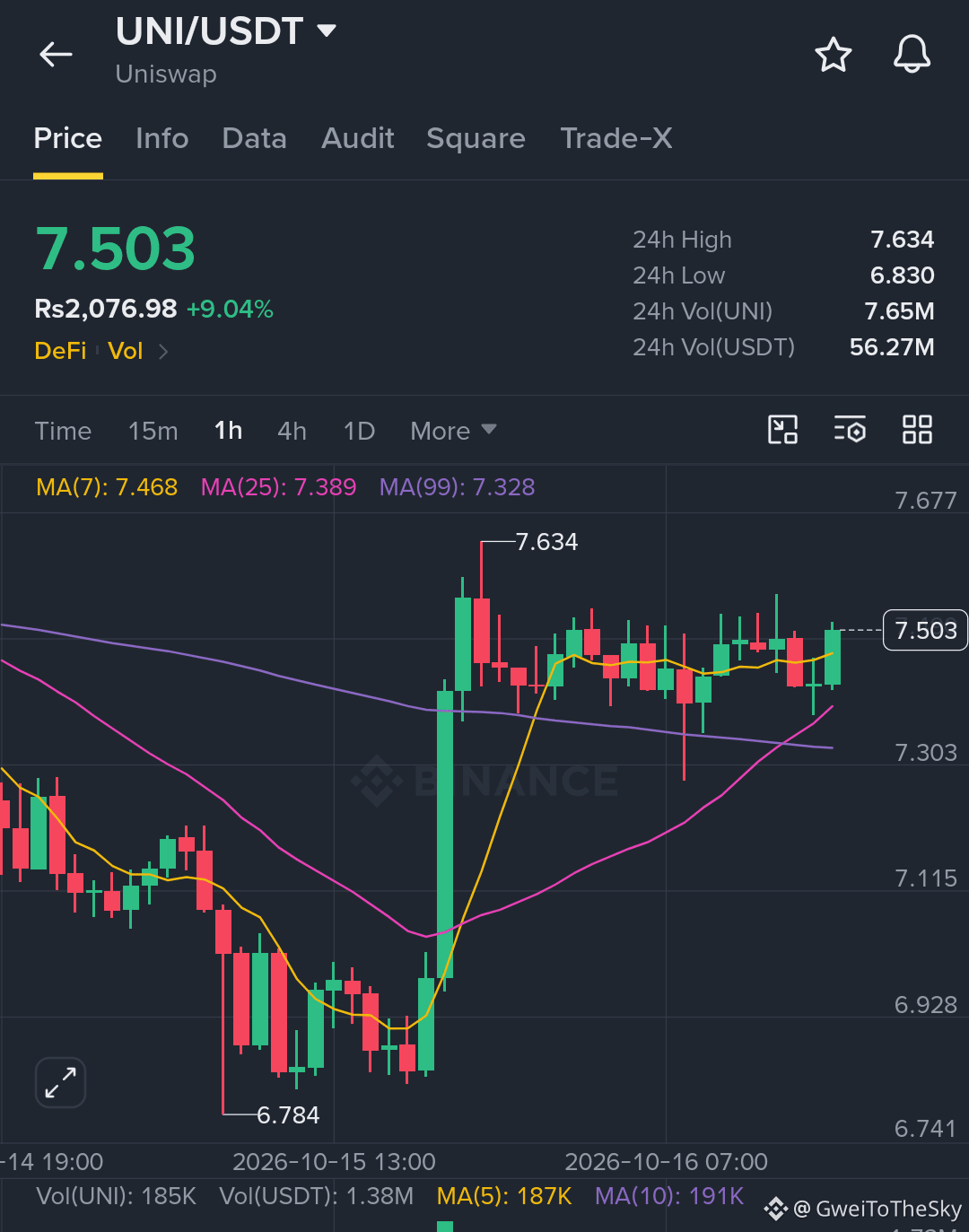
$UNI /USDT Cập nhật thị trường | Động lực tăng giá đang hình thành?
Uniswap ($UNI ) đang cho thấy sự phục hồi mạnh mẽ trên biểu đồ 1H, hiện giao dịch quanh mức $7.503 (+9.04%). Sau khi bật lên từ mức đáy $6.784, bên mua đã đẩy giá lên gần $7.634 trước khi bước vào giai đoạn tích lũy.
🔍 Các mức giá quan trọng cần theo dõi:
- Kháng cự: $7.63–$7.70
- Hỗ trợ: $7.35–$7.30
- Kịch bản tăng giá: Nếu giá bứt phá dứt khoát trên $7.63, đà tăng có thể tiếp tục.
- Kịch bản giảm giá: Nếu giá mất mốc $7.30, đà phục hồi có thể suy yếu và áp lực bán gia tăng.
Giá đang giữ trên MA(25) và MA(99), cho thấy động lực ngắn hạn đang cải thiện. Tuy nhiên, cần có xác nhận từ khối lượng giao dịch và một cú bứt phá duy trì ổn định.
👀 Nhận định của tôi: UNI đang ở vùng quyết định quan trọng. Liệu bên mua sẽ đẩy giá bứt phá, hay ngưỡng kháng cự sẽ khiến giá quay đầu giảm?
#UNI #Uniswap #Crypto #Trading #TechnicalAnalysis
$UNI /USDT Cập nhật thị trường | Động lực tăng giá đang hình thành?
Uniswap ($UNI ) đang cho thấy sự phục hồi mạnh mẽ trên biểu đồ 1H, hiện giao dịch quanh mức $7.503 (+9.04%). Sau khi bật lên từ mức đáy $6.784, bên mua đã đẩy giá lên gần $7.634 trước khi bước vào giai đoạn tích lũy.
🔍 Các mức giá quan trọng cần theo dõi:
- Kháng cự: $7.63–$7.70
- Hỗ trợ: $7.35–$7.30
- Kịch bản tăng giá: Nếu giá bứt phá dứt khoát trên $7.63, đà tăng có thể tiếp tục.
- Kịch bản giảm giá: Nếu giá mất mốc $7.30, đà phục hồi có thể suy yếu và áp lực bán gia tăng.
Giá đang giữ trên MA(25) và MA(99), cho thấy động lực ngắn hạn đang cải thiện. Tuy nhiên, cần có xác nhận từ khối lượng giao dịch và một cú bứt phá duy trì ổn định.
👀 Nhận định của tôi: UNI đang ở vùng quyết định quan trọng. Liệu bên mua sẽ đẩy giá bứt phá, hay ngưỡng kháng cự sẽ khiến giá quay đầu giảm?
#UNI #Uniswap #Crypto #Trading #TechnicalAnalysis
Uniswap ($UNI ) đang cho thấy sự phục hồi mạnh mẽ trên biểu đồ 1H, hiện giao dịch quanh mức $7.503 (+9.04%). Sau khi bật lên từ mức đáy $6.784, bên mua đã đẩy giá lên gần $7.634 trước khi bước vào giai đoạn tích lũy.
🔍 Các mức giá quan trọng cần theo dõi:
- Kháng cự: $7.63–$7.70
- Hỗ trợ: $7.35–$7.30
- Kịch bản tăng giá: Nếu giá bứt phá dứt khoát trên $7.63, đà tăng có thể tiếp tục.
- Kịch bản giảm giá: Nếu giá mất mốc $7.30, đà phục hồi có thể suy yếu và áp lực bán gia tăng.
Giá đang giữ trên MA(25) và MA(99), cho thấy động lực ngắn hạn đang cải thiện. Tuy nhiên, cần có xác nhận từ khối lượng giao dịch và một cú bứt phá duy trì ổn định.
👀 Nhận định của tôi: UNI đang ở vùng quyết định quan trọng. Liệu bên mua sẽ đẩy giá bứt phá, hay ngưỡng kháng cự sẽ khiến giá quay đầu giảm?
#UNI #Uniswap #Crypto #Trading #TechnicalAnalysis
90
·
--
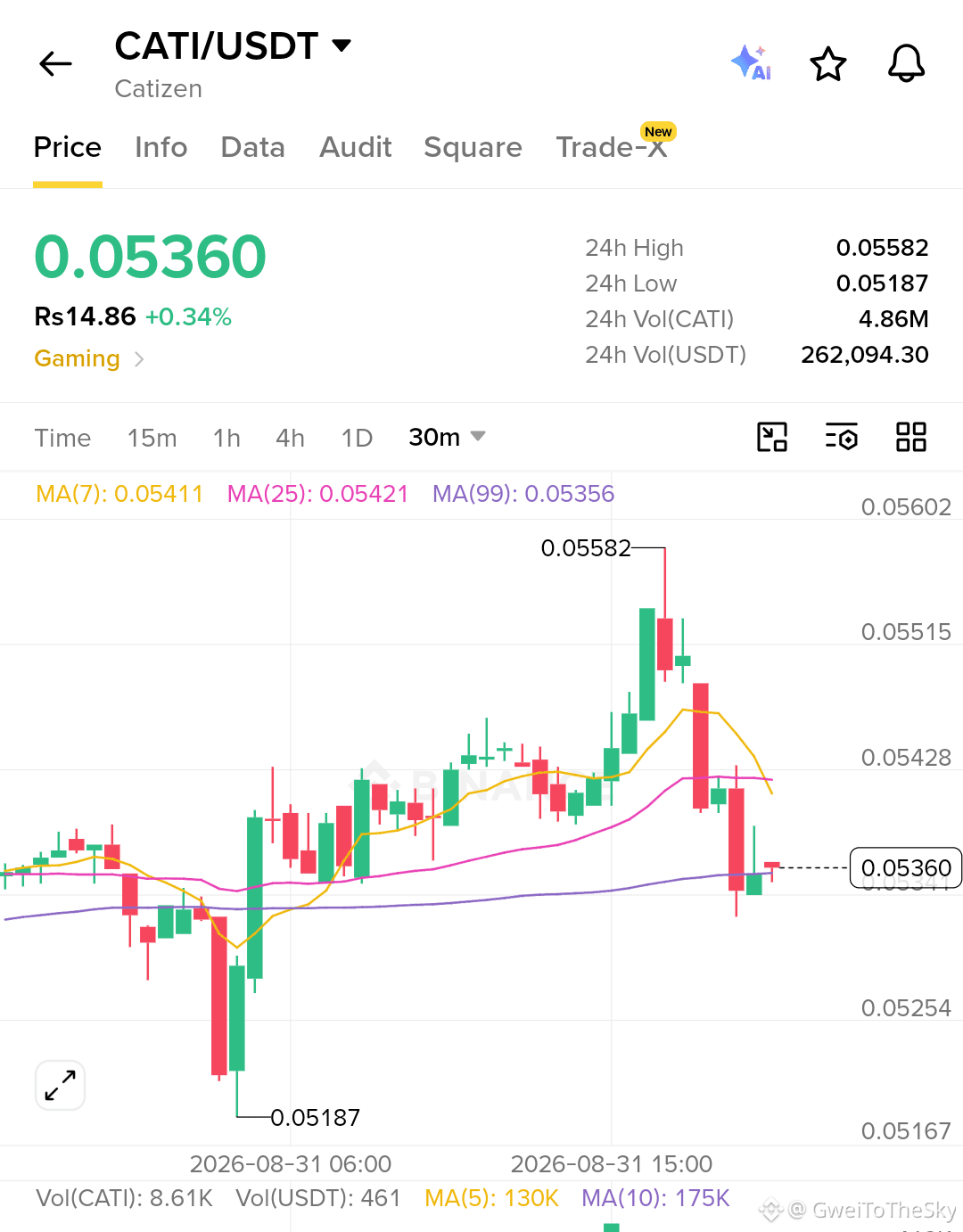
$CATI /$USDT — THIẾT LẬP DÀI 🔥
CATI hiện đang giao dịch quanh 0.05360 USDT trên khung 30M. Giá đang ở gần MA(99) tại 0.05356, đây là một vùng ra quyết định quan trọng.
📌 Kế hoạch giao dịch
🟢 Vào lệnh: 0.05340 – 0.05370
🛑 Cắt lỗ: 0.05290
🎯 TP1: 0.05430
🎯 TP2: 0.05515
🎯 TP3: 0.05580
📊 Tỷ lệ rủi ro/lợi nhuận: Khoảng 1:2 đến 1:4+ tùy theo điểm vào lệnh và mục tiêu.
Xác nhận: Một cây nến 30M đóng mạnh trên 0.05430 sẽ củng cố kịch bản tăng giá. Nếu giá mất 0.05290, kịch bản sẽ bị vô hiệu.
Đừng dùng đòn bẩy quá mức. Chỉ rủi ro trong phạm vi bạn có thể chịu mất và cân nhắc chốt một phần lợi nhuận tại TP1/TP2.
#CATI #cryptouniverseofficial #altcoins
$CATI /$USDT — THIẾT LẬP DÀI 🔥
CATI hiện đang giao dịch quanh 0.05360 USDT trên khung 30M. Giá đang ở gần MA(99) tại 0.05356, đây là một vùng ra quyết định quan trọng.
📌 Kế hoạch giao dịch
🟢 Vào lệnh: 0.05340 – 0.05370
🛑 Cắt lỗ: 0.05290
🎯 TP1: 0.05430
🎯 TP2: 0.05515
🎯 TP3: 0.05580
📊 Tỷ lệ rủi ro/lợi nhuận: Khoảng 1:2 đến 1:4+ tùy theo điểm vào lệnh và mục tiêu.
Xác nhận: Một cây nến 30M đóng mạnh trên 0.05430 sẽ củng cố kịch bản tăng giá. Nếu giá mất 0.05290, kịch bản sẽ bị vô hiệu.
Đừng dùng đòn bẩy quá mức. Chỉ rủi ro trong phạm vi bạn có thể chịu mất và cân nhắc chốt một phần lợi nhuận tại TP1/TP2.
#CATI #cryptouniverseofficial #altcoins
CATI hiện đang giao dịch quanh 0.05360 USDT trên khung 30M. Giá đang ở gần MA(99) tại 0.05356, đây là một vùng ra quyết định quan trọng.
📌 Kế hoạch giao dịch
🟢 Vào lệnh: 0.05340 – 0.05370
🛑 Cắt lỗ: 0.05290
🎯 TP1: 0.05430
🎯 TP2: 0.05515
🎯 TP3: 0.05580
📊 Tỷ lệ rủi ro/lợi nhuận: Khoảng 1:2 đến 1:4+ tùy theo điểm vào lệnh và mục tiêu.
Xác nhận: Một cây nến 30M đóng mạnh trên 0.05430 sẽ củng cố kịch bản tăng giá. Nếu giá mất 0.05290, kịch bản sẽ bị vô hiệu.
Đừng dùng đòn bẩy quá mức. Chỉ rủi ro trong phạm vi bạn có thể chịu mất và cân nhắc chốt một phần lợi nhuận tại TP1/TP2.
#CATI #cryptouniverseofficial #altcoins
1
106
·
--
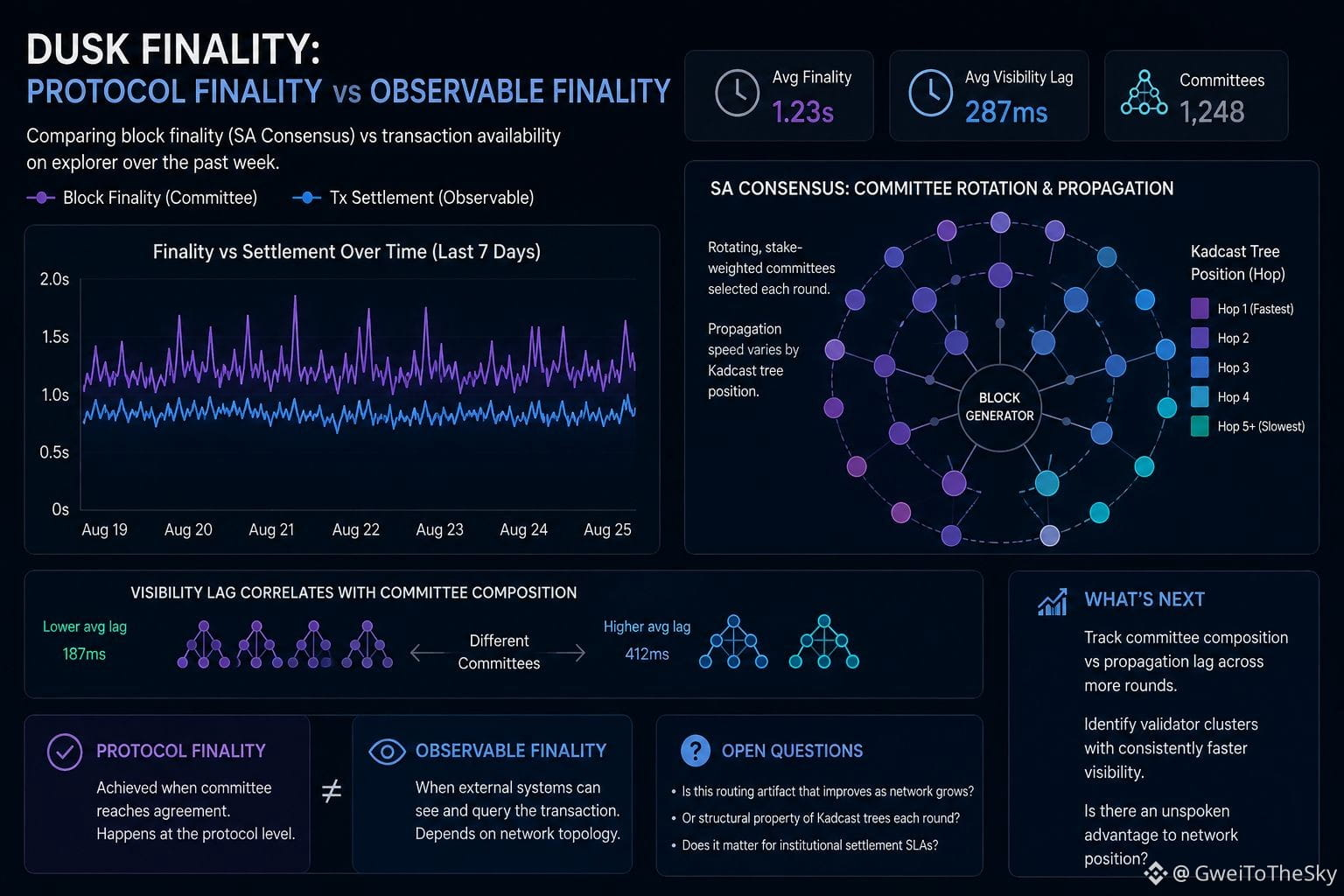
Dấu mốc “block finality” của @Dusk_Foundation so với thời điểm đối chiếu giao dịch thực tế trên trình khám phá trong tuần qua. Ban đầu tôi cho rằng độ trễ nhỏ mà tôi cứ thấy—vài trăm mili giây giữa lúc ủy ban hoàn tất và thời điểm một giao dịch trở nên truy vấn được trong các công cụ phía sau—chỉ là độ trễ lập chỉ mục. Tôi xếp nó vào nhiễu và chuyển sang kiểm tra tỷ lệ tham gia của trình xác thực.
Khi đào sâu vào lý do khoảng chênh đó không hằng định, tôi phát hiện nó tương quan với việc những thành viên ủy ban nào được chọn cho vòng đó theo SA Consensus. Các ủy ban xoay vòng, được cân theo trọng số stake, không chỉ chọn trình xác thực một cách ngẫu nhiên mỗi vòng; chúng mang thời điểm lan truyền hơi khác nhau tùy theo vị trí của chúng trong cây Kadcast. Điều này không được ghi lại ở bất kỳ đâu tôi đã đọc—nó chỉ xuất hiện trong dữ liệu khi tôi xếp đủ nhiều vòng cạnh nhau để đối chiếu.
Việc này tách hai thứ mà trước đó tôi vẫn đang gộp làm một trong đầu: finality ở cấp độ đồng thuận và finality quan sát được. Finality ở cấp giao thức xảy ra ngay khi ủy ban đồng ý, nhưng cái mà một hệ thống bên ngoài nhìn thấy lại phụ thuộc vào cấu trúc liên kết mạng tại thời điểm đó. Hầu hết mọi người theo dõi $DUSK đều giả định “finality nhanh” nghĩa là nhanh đồng đều cho mọi người ở hạ nguồn, và điều đó không hẳn đúng với những gì tôi đang thấy.
Điều tôi chưa thể làm rõ là sự biến thiên thời gian này có quan trọng gì ngoài việc tiện cho lập chỉ mục, hay nó bắt đầu quan trọng khi các hệ thống thanh toán mang tính tổ chức kỳ vọng các cửa sổ chặt chẽ và dự đoán được. Đây có phải là một “artifact” do định tuyến và sẽ tự hiệu chỉnh khi mạng lớn dần, hay là một thuộc tính cấu trúc của cách các cây Kadcast được hình thành cho mỗi vòng.
Trong thời gian tới, tôi muốn theo dõi thành phần ủy ban so với độ trễ lan truyền trên một mẫu lớn hơn, cùng với việc liệu một số cụm trình xác thực nhất định có liên tục tạo ra khả năng hiển thị ở hạ nguồn nhanh hơn hay không. Điều đó sẽ cho tôi biết liệu đây có phải là trung tính về động lực khuyến khích, hay liệu có một lợi thế “không được nói ra” nhờ vị trí trong mạng mà các nhà vận hành chưa tính đến.
#Dusk
$BTR
{future}(BTRUSDT)
$BMT
{future}(BMTUSDT)
Dấu mốc “block finality” của @Dusk so với thời điểm đối chiếu giao dịch thực tế trên trình khám phá trong tuần qua. Ban đầu tôi cho rằng độ trễ nhỏ mà tôi cứ thấy—vài trăm mili giây giữa lúc ủy ban hoàn tất và thời điểm một giao dịch trở nên truy vấn được trong các công cụ phía sau—chỉ là độ trễ lập chỉ mục. Tôi xếp nó vào nhiễu và chuyển sang kiểm tra tỷ lệ tham gia của trình xác thực.
Khi đào sâu vào lý do khoảng chênh đó không hằng định, tôi phát hiện nó tương quan với việc những thành viên ủy ban nào được chọn cho vòng đó theo SA Consensus. Các ủy ban xoay vòng, được cân theo trọng số stake, không chỉ chọn trình xác thực một cách ngẫu nhiên mỗi vòng; chúng mang thời điểm lan truyền hơi khác nhau tùy theo vị trí của chúng trong cây Kadcast. Điều này không được ghi lại ở bất kỳ đâu tôi đã đọc—nó chỉ xuất hiện trong dữ liệu khi tôi xếp đủ nhiều vòng cạnh nhau để đối chiếu.
Việc này tách hai thứ mà trước đó tôi vẫn đang gộp làm một trong đầu: finality ở cấp độ đồng thuận và finality quan sát được. Finality ở cấp giao thức xảy ra ngay khi ủy ban đồng ý, nhưng cái mà một hệ thống bên ngoài nhìn thấy lại phụ thuộc vào cấu trúc liên kết mạng tại thời điểm đó. Hầu hết mọi người theo dõi $DUSK đều giả định “finality nhanh” nghĩa là nhanh đồng đều cho mọi người ở hạ nguồn, và điều đó không hẳn đúng với những gì tôi đang thấy.
Điều tôi chưa thể làm rõ là sự biến thiên thời gian này có quan trọng gì ngoài việc tiện cho lập chỉ mục, hay nó bắt đầu quan trọng khi các hệ thống thanh toán mang tính tổ chức kỳ vọng các cửa sổ chặt chẽ và dự đoán được. Đây có phải là một “artifact” do định tuyến và sẽ tự hiệu chỉnh khi mạng lớn dần, hay là một thuộc tính cấu trúc của cách các cây Kadcast được hình thành cho mỗi vòng.
Trong thời gian tới, tôi muốn theo dõi thành phần ủy ban so với độ trễ lan truyền trên một mẫu lớn hơn, cùng với việc liệu một số cụm trình xác thực nhất định có liên tục tạo ra khả năng hiển thị ở hạ nguồn nhanh hơn hay không. Điều đó sẽ cho tôi biết liệu đây có phải là trung tính về động lực khuyến khích, hay liệu có một lợi thế “không được nói ra” nhờ vị trí trong mạng mà các nhà vận hành chưa tính đến.
#Dusk
$BTR
$BMT
Khi đào sâu vào lý do khoảng chênh đó không hằng định, tôi phát hiện nó tương quan với việc những thành viên ủy ban nào được chọn cho vòng đó theo SA Consensus. Các ủy ban xoay vòng, được cân theo trọng số stake, không chỉ chọn trình xác thực một cách ngẫu nhiên mỗi vòng; chúng mang thời điểm lan truyền hơi khác nhau tùy theo vị trí của chúng trong cây Kadcast. Điều này không được ghi lại ở bất kỳ đâu tôi đã đọc—nó chỉ xuất hiện trong dữ liệu khi tôi xếp đủ nhiều vòng cạnh nhau để đối chiếu.
Việc này tách hai thứ mà trước đó tôi vẫn đang gộp làm một trong đầu: finality ở cấp độ đồng thuận và finality quan sát được. Finality ở cấp giao thức xảy ra ngay khi ủy ban đồng ý, nhưng cái mà một hệ thống bên ngoài nhìn thấy lại phụ thuộc vào cấu trúc liên kết mạng tại thời điểm đó. Hầu hết mọi người theo dõi $DUSK đều giả định “finality nhanh” nghĩa là nhanh đồng đều cho mọi người ở hạ nguồn, và điều đó không hẳn đúng với những gì tôi đang thấy.
Điều tôi chưa thể làm rõ là sự biến thiên thời gian này có quan trọng gì ngoài việc tiện cho lập chỉ mục, hay nó bắt đầu quan trọng khi các hệ thống thanh toán mang tính tổ chức kỳ vọng các cửa sổ chặt chẽ và dự đoán được. Đây có phải là một “artifact” do định tuyến và sẽ tự hiệu chỉnh khi mạng lớn dần, hay là một thuộc tính cấu trúc của cách các cây Kadcast được hình thành cho mỗi vòng.
Trong thời gian tới, tôi muốn theo dõi thành phần ủy ban so với độ trễ lan truyền trên một mẫu lớn hơn, cùng với việc liệu một số cụm trình xác thực nhất định có liên tục tạo ra khả năng hiển thị ở hạ nguồn nhanh hơn hay không. Điều đó sẽ cho tôi biết liệu đây có phải là trung tính về động lực khuyến khích, hay liệu có một lợi thế “không được nói ra” nhờ vị trí trong mạng mà các nhà vận hành chưa tính đến.
#Dusk
$BTR
$BMT
3
307
·
--
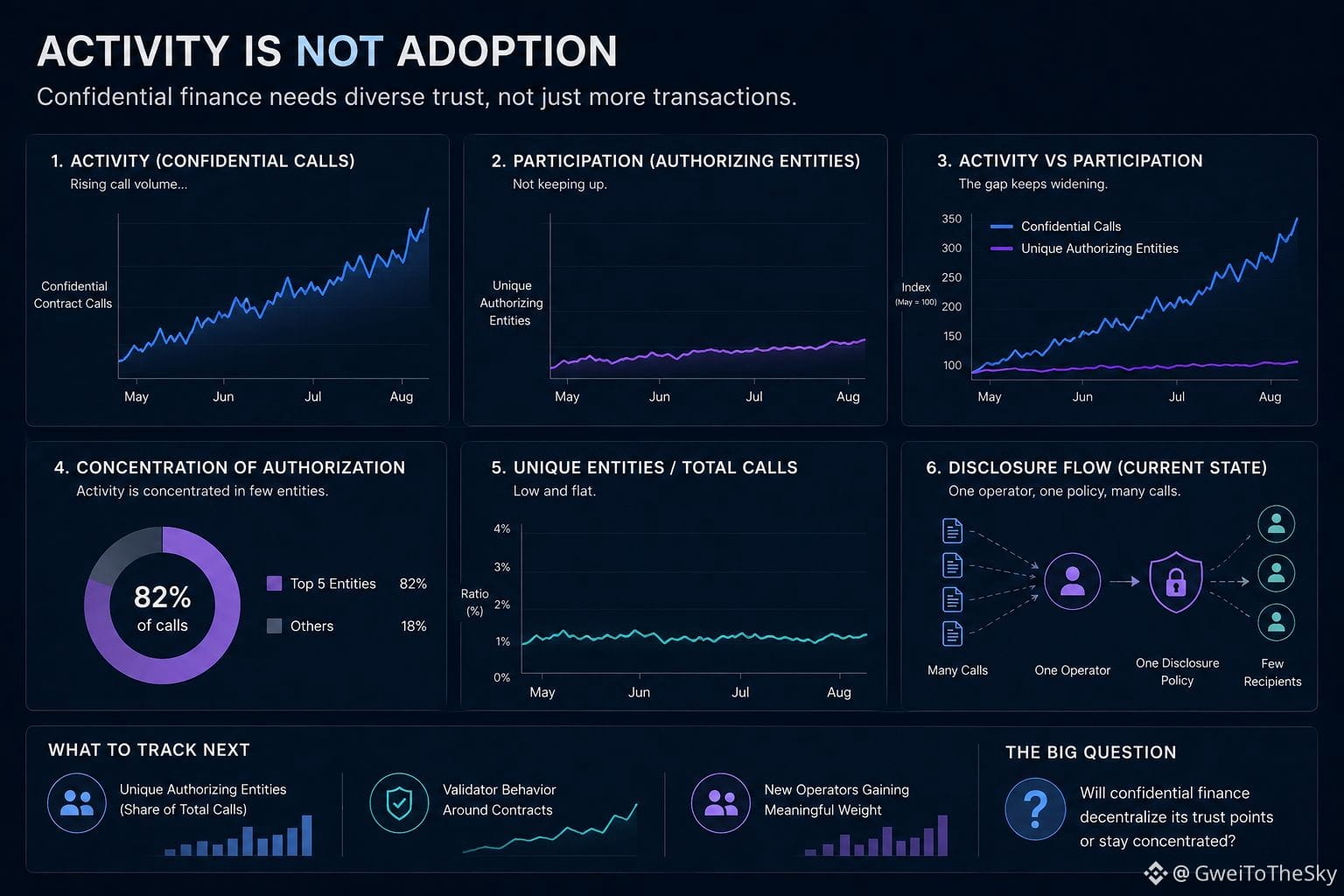
@Dusk_Foundation explorer instance tuần trước. Tôi cho rằng một đợt tăng trong các cuộc gọi hợp đồng bí mật có nghĩa là có hoạt động người dùng mới, nhưng các chữ ký ở cấp độ ví đứng sau những cuộc gọi đó vẫn tiếp tục ánh xạ về một cụm địa chỉ nhỏ.
Đào sâu hơn, tôi phát hiện cơ chế thực sự thực hiện công việc không phải là chính lượng giao dịch, mà là lớp tiết lộ có chọn lọc nằm bên dưới nó. Mỗi lệnh gọi đều đi qua cùng một chính sách tiết lộ, nghĩa là "hoạt động" mà tôi đang thấy thực chất là một nhà vận hành luân phiên các yêu cầu ủy quyền thông qua các hợp đồng kiểu XSC, thay vì việc sử dụng tự phát lan rộng ra bên ngoài.
Sự khác biệt đó làm thay đổi cách tôi nhìn nhận về việc chấp nhận ở đây. Số lượng giao dịch và mức độ đa dạng của ủy quyền không phải là cùng một tín hiệu. Một chuỗi có thể cho thấy lượng cuộc gọi tăng lên, trong khi tập hợp các thực thể quyết định những gì được tiết lộ cho ai vẫn hẹp. Khoảng trống bậc hai giữa hoạt động và sự tham gia rất dễ bị bỏ sót nếu chỉ vẽ biểu đồ thông lượng.
Điều tôi chưa thể giải quyết được là liệu sự tập trung đó là một giai đoạn khởi động hay là một đặc tính cấu trúc trong cách các kênh tài chính bảo mật vận hành một cách tự nhiên. Các đối tác được quản lý có thể thích ít điểm tiết lộ được tin cậy hơn giai đoạn đầu, nhưng tôi không biết liệu thiết kế ưu đãi có thúc đẩy việc mở rộng tập đó theo thời gian hay ngầm khuyến khích việc duy trì sự hẹp lại.
Trong thời gian tới, tôi muốn theo dõi số thực thể ủy quyền duy nhất so với tổng số cuộc gọi bí mật, thay vì chỉ nhìn vào khối lượng thô. Tôi cũng đang quan sát xem hành vi của validator quanh các hợp đồng này có thay đổi khi các yêu cầu tiết lộ được đa dạng hóa hay không, và liệu các nhà vận hành mới khi gia nhập có thực sự đạt được trọng lượng ủy quyền đáng kể hay chỉ làm tăng nhiễu cho con số.
Tôi vẫn chưa có một kết luận rõ ràng, chỉ là một câu hỏi sắc nét hơn: tài chính được thiết kế theo hướng bảo mật cuối cùng có phi tập trung hóa các điểm tin cậy của nó hay nó mang tính cấu trúc để ưu tiên một số ít người gác cổng kiểm soát việc tiết lộ. Tôi không nghĩ dữ liệu mà tôi đã thấy cho đến nay trả lời được điều đó theo cách nào.
#Dusk
$DUSK
{future}(DUSKUSDT)
$BMT
{future}(BMTUSDT)
$ZRO
{future}(ZROUSDT)
@Dusk explorer instance tuần trước. Tôi cho rằng một đợt tăng trong các cuộc gọi hợp đồng bí mật có nghĩa là có hoạt động người dùng mới, nhưng các chữ ký ở cấp độ ví đứng sau những cuộc gọi đó vẫn tiếp tục ánh xạ về một cụm địa chỉ nhỏ.
Đào sâu hơn, tôi phát hiện cơ chế thực sự thực hiện công việc không phải là chính lượng giao dịch, mà là lớp tiết lộ có chọn lọc nằm bên dưới nó. Mỗi lệnh gọi đều đi qua cùng một chính sách tiết lộ, nghĩa là "hoạt động" mà tôi đang thấy thực chất là một nhà vận hành luân phiên các yêu cầu ủy quyền thông qua các hợp đồng kiểu XSC, thay vì việc sử dụng tự phát lan rộng ra bên ngoài.
Sự khác biệt đó làm thay đổi cách tôi nhìn nhận về việc chấp nhận ở đây. Số lượng giao dịch và mức độ đa dạng của ủy quyền không phải là cùng một tín hiệu. Một chuỗi có thể cho thấy lượng cuộc gọi tăng lên, trong khi tập hợp các thực thể quyết định những gì được tiết lộ cho ai vẫn hẹp. Khoảng trống bậc hai giữa hoạt động và sự tham gia rất dễ bị bỏ sót nếu chỉ vẽ biểu đồ thông lượng.
Điều tôi chưa thể giải quyết được là liệu sự tập trung đó là một giai đoạn khởi động hay là một đặc tính cấu trúc trong cách các kênh tài chính bảo mật vận hành một cách tự nhiên. Các đối tác được quản lý có thể thích ít điểm tiết lộ được tin cậy hơn giai đoạn đầu, nhưng tôi không biết liệu thiết kế ưu đãi có thúc đẩy việc mở rộng tập đó theo thời gian hay ngầm khuyến khích việc duy trì sự hẹp lại.
Trong thời gian tới, tôi muốn theo dõi số thực thể ủy quyền duy nhất so với tổng số cuộc gọi bí mật, thay vì chỉ nhìn vào khối lượng thô. Tôi cũng đang quan sát xem hành vi của validator quanh các hợp đồng này có thay đổi khi các yêu cầu tiết lộ được đa dạng hóa hay không, và liệu các nhà vận hành mới khi gia nhập có thực sự đạt được trọng lượng ủy quyền đáng kể hay chỉ làm tăng nhiễu cho con số.
Tôi vẫn chưa có một kết luận rõ ràng, chỉ là một câu hỏi sắc nét hơn: tài chính được thiết kế theo hướng bảo mật cuối cùng có phi tập trung hóa các điểm tin cậy của nó hay nó mang tính cấu trúc để ưu tiên một số ít người gác cổng kiểm soát việc tiết lộ. Tôi không nghĩ dữ liệu mà tôi đã thấy cho đến nay trả lời được điều đó theo cách nào.
#Dusk
$DUSK
$BMT
$ZRO
Đào sâu hơn, tôi phát hiện cơ chế thực sự thực hiện công việc không phải là chính lượng giao dịch, mà là lớp tiết lộ có chọn lọc nằm bên dưới nó. Mỗi lệnh gọi đều đi qua cùng một chính sách tiết lộ, nghĩa là "hoạt động" mà tôi đang thấy thực chất là một nhà vận hành luân phiên các yêu cầu ủy quyền thông qua các hợp đồng kiểu XSC, thay vì việc sử dụng tự phát lan rộng ra bên ngoài.
Sự khác biệt đó làm thay đổi cách tôi nhìn nhận về việc chấp nhận ở đây. Số lượng giao dịch và mức độ đa dạng của ủy quyền không phải là cùng một tín hiệu. Một chuỗi có thể cho thấy lượng cuộc gọi tăng lên, trong khi tập hợp các thực thể quyết định những gì được tiết lộ cho ai vẫn hẹp. Khoảng trống bậc hai giữa hoạt động và sự tham gia rất dễ bị bỏ sót nếu chỉ vẽ biểu đồ thông lượng.
Điều tôi chưa thể giải quyết được là liệu sự tập trung đó là một giai đoạn khởi động hay là một đặc tính cấu trúc trong cách các kênh tài chính bảo mật vận hành một cách tự nhiên. Các đối tác được quản lý có thể thích ít điểm tiết lộ được tin cậy hơn giai đoạn đầu, nhưng tôi không biết liệu thiết kế ưu đãi có thúc đẩy việc mở rộng tập đó theo thời gian hay ngầm khuyến khích việc duy trì sự hẹp lại.
Trong thời gian tới, tôi muốn theo dõi số thực thể ủy quyền duy nhất so với tổng số cuộc gọi bí mật, thay vì chỉ nhìn vào khối lượng thô. Tôi cũng đang quan sát xem hành vi của validator quanh các hợp đồng này có thay đổi khi các yêu cầu tiết lộ được đa dạng hóa hay không, và liệu các nhà vận hành mới khi gia nhập có thực sự đạt được trọng lượng ủy quyền đáng kể hay chỉ làm tăng nhiễu cho con số.
Tôi vẫn chưa có một kết luận rõ ràng, chỉ là một câu hỏi sắc nét hơn: tài chính được thiết kế theo hướng bảo mật cuối cùng có phi tập trung hóa các điểm tin cậy của nó hay nó mang tính cấu trúc để ưu tiên một số ít người gác cổng kiểm soát việc tiết lộ. Tôi không nghĩ dữ liệu mà tôi đã thấy cho đến nay trả lời được điều đó theo cách nào.
#Dusk
$DUSK
$BMT
$ZRO
4
286
·
--
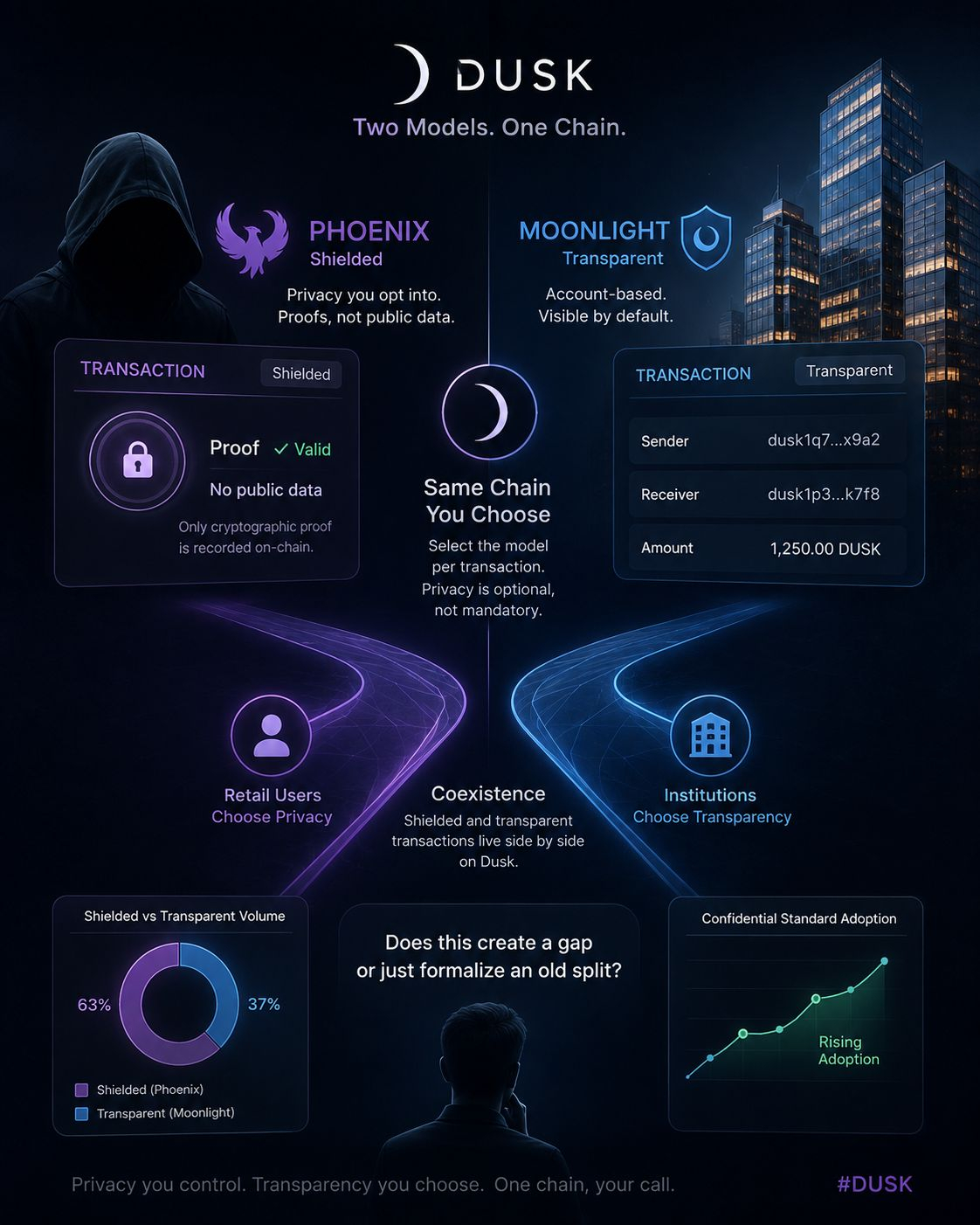
Một buổi chiều tàn, người khám phá của Dusk đi ngang qua, nửa chú ý, khi bỗng có thứ gì đó không ổn. Một số giao dịch hiển thị người gửi, người nhận, số tiền; còn những giao dịch khác chỉ như một bằng chứng, không đọc được gì. Nghĩ đầu tiên của tôi là trình khám phá bị lỗi.
Hoá ra không phải. Dusk chạy song song hai mô hình: Phoenix, được che chắn, và Moonlight, trong suốt, dựa trên tài khoản. Không ai ép bạn phải dùng một mô hình cố định; bạn chọn theo từng giao dịch, và đó là những gì tôi đã thấy.
Từ lúc đó, cách tôi nghĩ đã đổi khác. Trước đây tôi vẫn gộp chung “chuỗi quyền riêng tư” và “riêng tư theo mặc định” vào một nhóm. Ở đây chúng không khớp nhau. Quyền riêng tư là thứ bạn chủ động chọn, không được cài sẵn, nên hoạt động ẩn và hoạt động hiển thị có thể cùng tồn tại.
Tôi vẫn đang cân nhắc. Nếu tiền được quản lý vẫn minh bạch trong khi tiền bán lẻ được che chắn, thì liệu điều đó tạo ra một khoảng trống, hay chỉ là việc hợp thức hoá một sự chia tách cũ?
Tạm thời, tôi đang theo dõi tỷ lệ giữa khối lượng được che chắn và khối lượng trong suốt—không phải những con số thô—cùng với việc bao nhiêu hợp đồng chọn chuẩn bí mật thay vì mặc định là trong suốt.
Thật lòng, tôi không biết điều này có tạo ra một thị trường lành mạnh hơn hay chỉ là chia thanh khoản vào những phòng không bao giờ trò chuyện. Vẫn đang ngồi với suy nghĩ đó.
@Dusk_Foundation #Dusk
$DUSK
{future}(DUSKUSDT)
$TAC
{future}(TACUSDT)
$ONG
{future}(ONGUSDT)
Một buổi chiều tàn, người khám phá của Dusk đi ngang qua, nửa chú ý, khi bỗng có thứ gì đó không ổn. Một số giao dịch hiển thị người gửi, người nhận, số tiền; còn những giao dịch khác chỉ như một bằng chứng, không đọc được gì. Nghĩ đầu tiên của tôi là trình khám phá bị lỗi.
Hoá ra không phải. Dusk chạy song song hai mô hình: Phoenix, được che chắn, và Moonlight, trong suốt, dựa trên tài khoản. Không ai ép bạn phải dùng một mô hình cố định; bạn chọn theo từng giao dịch, và đó là những gì tôi đã thấy.
Từ lúc đó, cách tôi nghĩ đã đổi khác. Trước đây tôi vẫn gộp chung “chuỗi quyền riêng tư” và “riêng tư theo mặc định” vào một nhóm. Ở đây chúng không khớp nhau. Quyền riêng tư là thứ bạn chủ động chọn, không được cài sẵn, nên hoạt động ẩn và hoạt động hiển thị có thể cùng tồn tại.
Tôi vẫn đang cân nhắc. Nếu tiền được quản lý vẫn minh bạch trong khi tiền bán lẻ được che chắn, thì liệu điều đó tạo ra một khoảng trống, hay chỉ là việc hợp thức hoá một sự chia tách cũ?
Tạm thời, tôi đang theo dõi tỷ lệ giữa khối lượng được che chắn và khối lượng trong suốt—không phải những con số thô—cùng với việc bao nhiêu hợp đồng chọn chuẩn bí mật thay vì mặc định là trong suốt.
Thật lòng, tôi không biết điều này có tạo ra một thị trường lành mạnh hơn hay chỉ là chia thanh khoản vào những phòng không bao giờ trò chuyện. Vẫn đang ngồi với suy nghĩ đó.
@Dusk #Dusk
$DUSK
$TAC
$ONG
Hoá ra không phải. Dusk chạy song song hai mô hình: Phoenix, được che chắn, và Moonlight, trong suốt, dựa trên tài khoản. Không ai ép bạn phải dùng một mô hình cố định; bạn chọn theo từng giao dịch, và đó là những gì tôi đã thấy.
Từ lúc đó, cách tôi nghĩ đã đổi khác. Trước đây tôi vẫn gộp chung “chuỗi quyền riêng tư” và “riêng tư theo mặc định” vào một nhóm. Ở đây chúng không khớp nhau. Quyền riêng tư là thứ bạn chủ động chọn, không được cài sẵn, nên hoạt động ẩn và hoạt động hiển thị có thể cùng tồn tại.
Tôi vẫn đang cân nhắc. Nếu tiền được quản lý vẫn minh bạch trong khi tiền bán lẻ được che chắn, thì liệu điều đó tạo ra một khoảng trống, hay chỉ là việc hợp thức hoá một sự chia tách cũ?
Tạm thời, tôi đang theo dõi tỷ lệ giữa khối lượng được che chắn và khối lượng trong suốt—không phải những con số thô—cùng với việc bao nhiêu hợp đồng chọn chuẩn bí mật thay vì mặc định là trong suốt.
Thật lòng, tôi không biết điều này có tạo ra một thị trường lành mạnh hơn hay chỉ là chia thanh khoản vào những phòng không bao giờ trò chuyện. Vẫn đang ngồi với suy nghĩ đó.
@Dusk #Dusk
$DUSK
$TAC
$ONG
3
5
506
·
--
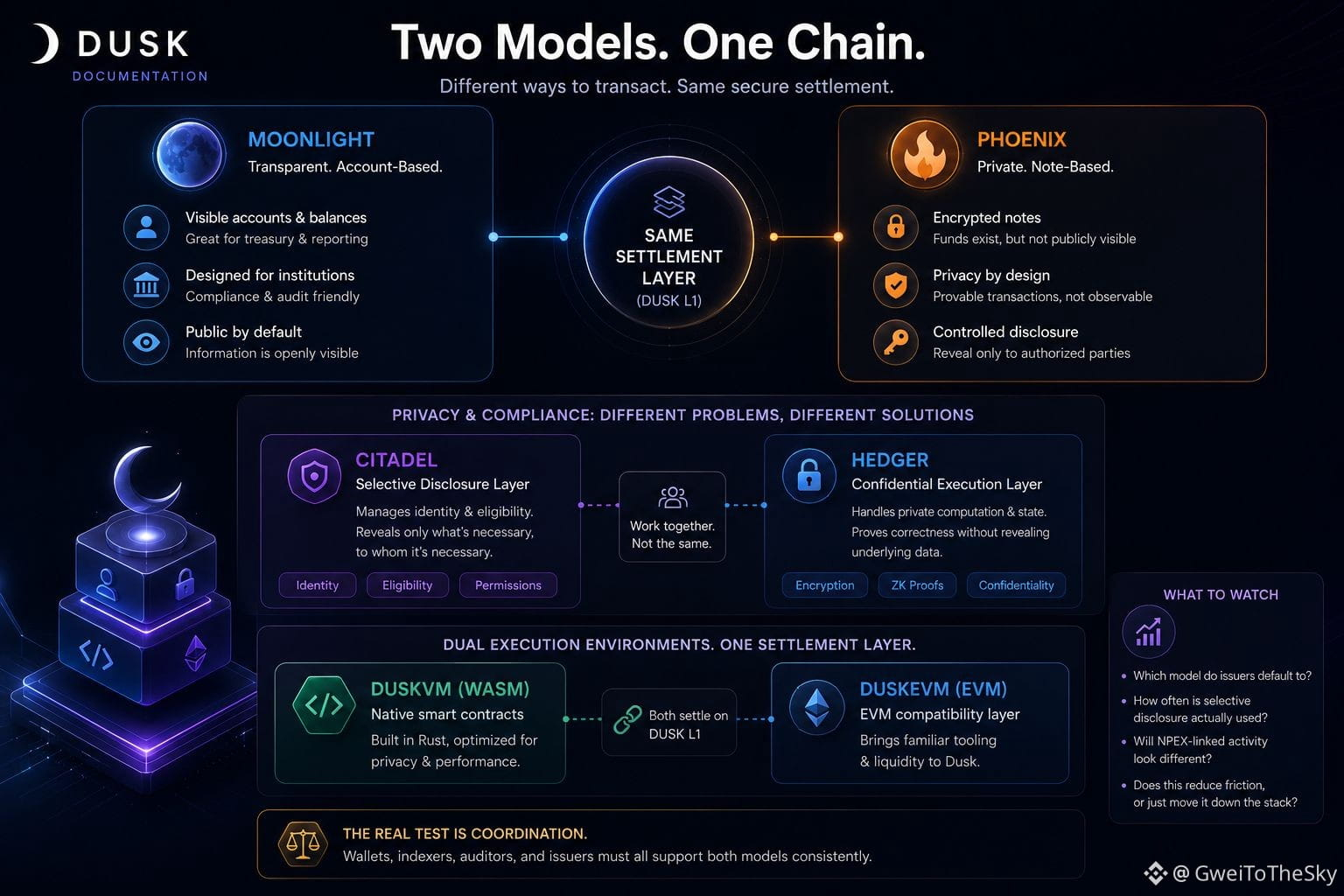
Bản tài liệu của Dusk thì hơn là một biểu đồ, tôi đã cho rằng Moonlight và Phoenix chỉ là hai tùy chọn ví khác nhau: minh bạch so với riêng tư—hãy chọn ý bạn thích. Cách đặt vấn đề đó không còn đúng khi đọc kỹ hơn.
Điều làm tôi thay đổi quan điểm là nhận ra chúng không phải là các chế độ có thể hoán đổi cho nhau, mà là hai mô hình giao dịch riêng biệt cùng “đóng” trên một chuỗi. Moonlight hoạt động như một sổ cái tài khoản hiển thị, hữu ích cho quản lý quỹ (treasury) và báo cáo. Phoenix giữ tiền dưới dạng các ghi chú được mã hóa, có thể chứng minh nhưng không thể quan sát. Lớp thanh toán giống nhau, nhưng hai “mặt” thông tin khác nhau.
Sự khác biệt này quan trọng vì trong đa số diễn ngôn về crypto, quyền riêng tư và tuân thủ thường được xem như hai thứ đối nghịch. Ở đây chúng được tách bạch theo thiết kế: Citadel phụ trách việc tiết lộ chọn lọc các thuộc tính danh tính, Hedger phụ trách việc thực thi bí mật ở phía EVM. Việc chứng minh đủ điều kiện và việc che giấu một vị thế hóa ra là hai bài toán khác nhau, được giải theo các cách khác nhau.
Điều tôi chưa thể giải quyết ngay là chi phí phối hợp. Việc vận hành song song hai mô hình giao dịch và hai môi trường thực thi (WASM gốc cộng với EVM) đồng nghĩa với việc tăng diện tích bề mặt mà ví, bộ lập chỉ mục (indexers) và kiểm toán viên cần hỗ trợ một cách nhất quán. Dù trên giấy có vẻ gọn gàng, nhưng không có nghĩa là công cụ sẽ đồng đều trong thực tế.
Trong thời gian tới, tôi muốn theo dõi xem các nhà phát hành (issuer) thực sự mặc định theo mô hình nào, mức độ thường xuyên việc tiết lộ chọn lọc được gọi đến so với việc chỉ được bàn luận, và liệu hoạt động liên kết với NPEX có diễn ra khác gì so với các lần chuyển tiền thông thường.
Vẫn chưa rõ với tôi là kiến trúc này có làm giảm ma sát hay chỉ “đẩy” nó đi xa hơn xuống các lớp phía dưới của hệ thống.
@Dusk_Foundation #Dusk
$DUSK
{future}(DUSKUSDT)
$MORPHO
{future}(MORPHOUSDT)
$TRUMP
{future}(TRUMPUSDT)
Bản tài liệu của Dusk thì hơn là một biểu đồ, tôi đã cho rằng Moonlight và Phoenix chỉ là hai tùy chọn ví khác nhau: minh bạch so với riêng tư—hãy chọn ý bạn thích. Cách đặt vấn đề đó không còn đúng khi đọc kỹ hơn.
Điều làm tôi thay đổi quan điểm là nhận ra chúng không phải là các chế độ có thể hoán đổi cho nhau, mà là hai mô hình giao dịch riêng biệt cùng “đóng” trên một chuỗi. Moonlight hoạt động như một sổ cái tài khoản hiển thị, hữu ích cho quản lý quỹ (treasury) và báo cáo. Phoenix giữ tiền dưới dạng các ghi chú được mã hóa, có thể chứng minh nhưng không thể quan sát. Lớp thanh toán giống nhau, nhưng hai “mặt” thông tin khác nhau.
Sự khác biệt này quan trọng vì trong đa số diễn ngôn về crypto, quyền riêng tư và tuân thủ thường được xem như hai thứ đối nghịch. Ở đây chúng được tách bạch theo thiết kế: Citadel phụ trách việc tiết lộ chọn lọc các thuộc tính danh tính, Hedger phụ trách việc thực thi bí mật ở phía EVM. Việc chứng minh đủ điều kiện và việc che giấu một vị thế hóa ra là hai bài toán khác nhau, được giải theo các cách khác nhau.
Điều tôi chưa thể giải quyết ngay là chi phí phối hợp. Việc vận hành song song hai mô hình giao dịch và hai môi trường thực thi (WASM gốc cộng với EVM) đồng nghĩa với việc tăng diện tích bề mặt mà ví, bộ lập chỉ mục (indexers) và kiểm toán viên cần hỗ trợ một cách nhất quán. Dù trên giấy có vẻ gọn gàng, nhưng không có nghĩa là công cụ sẽ đồng đều trong thực tế.
Trong thời gian tới, tôi muốn theo dõi xem các nhà phát hành (issuer) thực sự mặc định theo mô hình nào, mức độ thường xuyên việc tiết lộ chọn lọc được gọi đến so với việc chỉ được bàn luận, và liệu hoạt động liên kết với NPEX có diễn ra khác gì so với các lần chuyển tiền thông thường.
Vẫn chưa rõ với tôi là kiến trúc này có làm giảm ma sát hay chỉ “đẩy” nó đi xa hơn xuống các lớp phía dưới của hệ thống.
@Dusk #Dusk
$DUSK
$MORPHO
$TRUMP
Điều làm tôi thay đổi quan điểm là nhận ra chúng không phải là các chế độ có thể hoán đổi cho nhau, mà là hai mô hình giao dịch riêng biệt cùng “đóng” trên một chuỗi. Moonlight hoạt động như một sổ cái tài khoản hiển thị, hữu ích cho quản lý quỹ (treasury) và báo cáo. Phoenix giữ tiền dưới dạng các ghi chú được mã hóa, có thể chứng minh nhưng không thể quan sát. Lớp thanh toán giống nhau, nhưng hai “mặt” thông tin khác nhau.
Sự khác biệt này quan trọng vì trong đa số diễn ngôn về crypto, quyền riêng tư và tuân thủ thường được xem như hai thứ đối nghịch. Ở đây chúng được tách bạch theo thiết kế: Citadel phụ trách việc tiết lộ chọn lọc các thuộc tính danh tính, Hedger phụ trách việc thực thi bí mật ở phía EVM. Việc chứng minh đủ điều kiện và việc che giấu một vị thế hóa ra là hai bài toán khác nhau, được giải theo các cách khác nhau.
Điều tôi chưa thể giải quyết ngay là chi phí phối hợp. Việc vận hành song song hai mô hình giao dịch và hai môi trường thực thi (WASM gốc cộng với EVM) đồng nghĩa với việc tăng diện tích bề mặt mà ví, bộ lập chỉ mục (indexers) và kiểm toán viên cần hỗ trợ một cách nhất quán. Dù trên giấy có vẻ gọn gàng, nhưng không có nghĩa là công cụ sẽ đồng đều trong thực tế.
Trong thời gian tới, tôi muốn theo dõi xem các nhà phát hành (issuer) thực sự mặc định theo mô hình nào, mức độ thường xuyên việc tiết lộ chọn lọc được gọi đến so với việc chỉ được bàn luận, và liệu hoạt động liên kết với NPEX có diễn ra khác gì so với các lần chuyển tiền thông thường.
Vẫn chưa rõ với tôi là kiến trúc này có làm giảm ma sát hay chỉ “đẩy” nó đi xa hơn xuống các lớp phía dưới của hệ thống.
@Dusk #Dusk
$DUSK
$MORPHO
$TRUMP
5
6
290
·
--
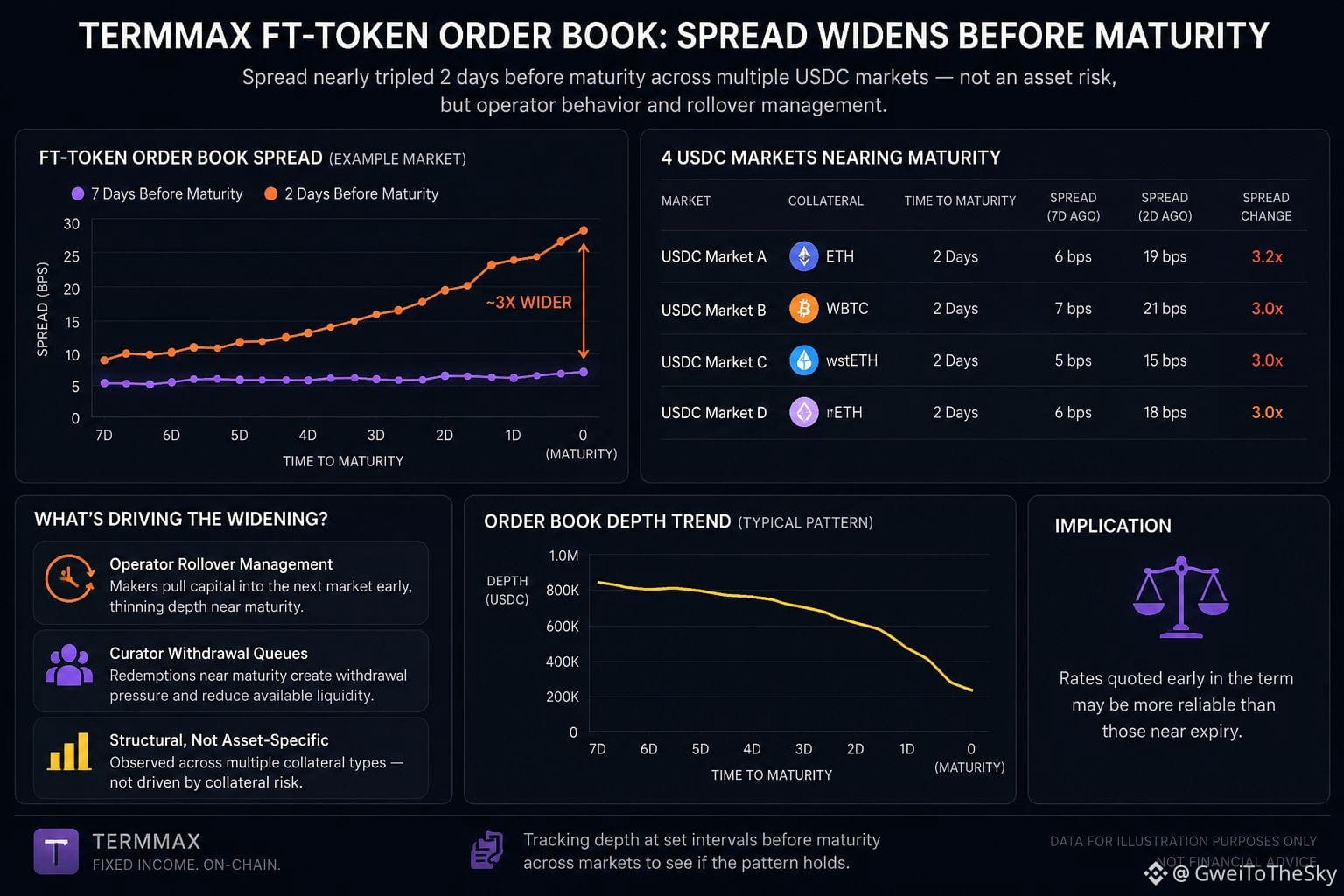
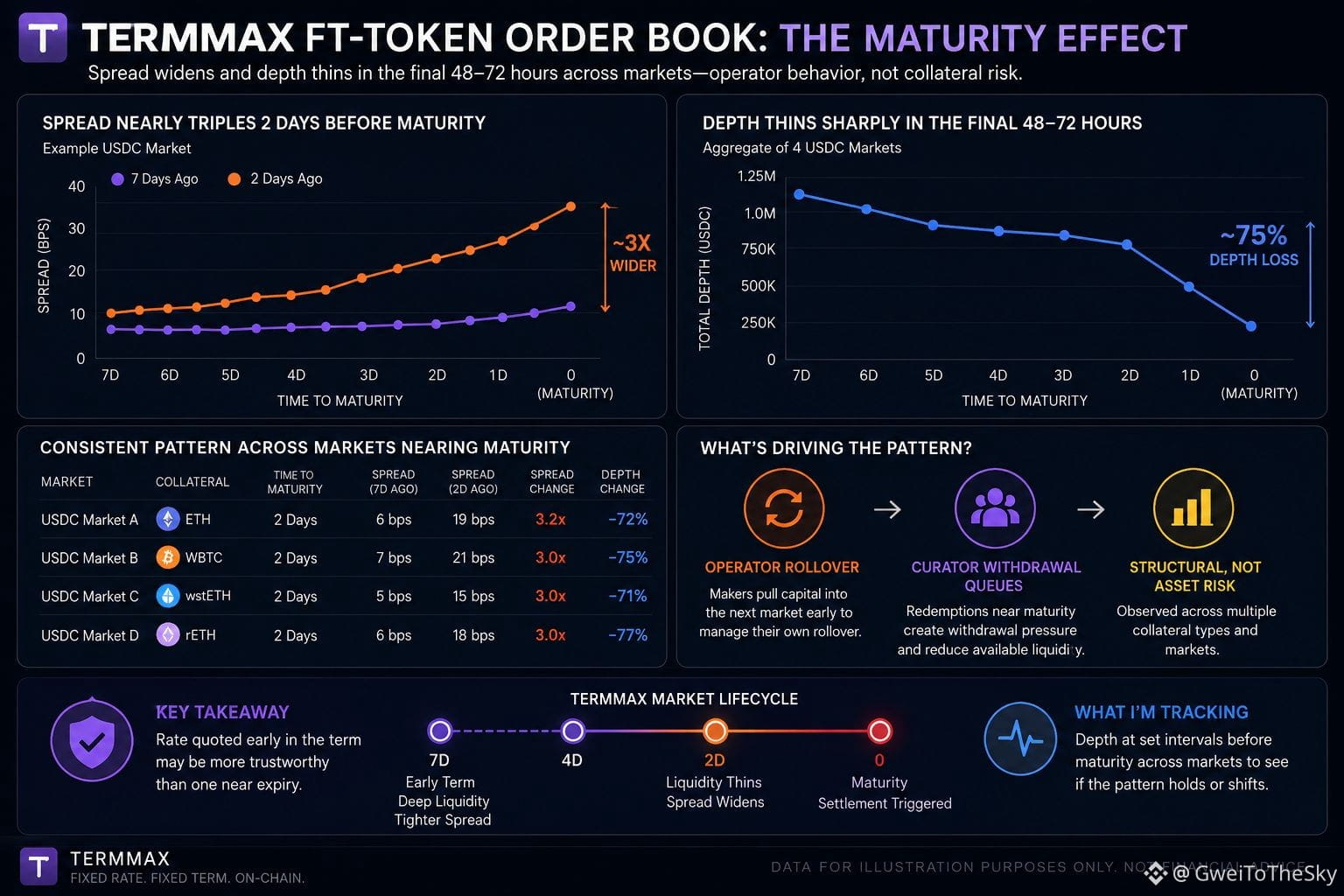
Sổ lệnh ft-token của TermMax hai ngày trước thời hạn đáo hạn của thị trường cho thấy spread đã nới rộng gần gấp ba so với một tuần trước đó. Ban đầu tôi cho rằng rủi ro tài sản thế chấp đang được phản ánh vào giá.
Tôi đã rút thêm ba thị trường USDC khác gần đáo hạn và thấy cùng một xu hướng: thanh khoản sâu (depth) bị mỏng đi rõ rệt trong 48–72 giờ cuối, bất kể loại tài sản thế chấp. Điều này loại trừ khả năng có một cú “hoảng sợ” đặc thù theo từng tài sản.
Thứ tôi chưa cân nhắc là hành vi của nhà điều hành. Những nhà tạo lập báo giá lãi suất cố định không chỉ định giá rủi ro tín dụng; họ còn quản lý việc “rollover” của chính họ. Gần thời điểm đáo hạn, họ kéo vốn sang thị trường kế tiếp sớm, làm thanh khoản sổ lệnh mỏng đi—thay vì phản ánh sự tự tin vào tài sản thế chấp.
Tôi chưa thể biết liệu đây là hành vi phối hợp của các maker hay là lợi ích cá nhân song song, hoặc việc rút khỏi sổ lệnh theo hàng chờ (curator withdrawal queues) xử lý các lệnh chuộc gần thời điểm đáo hạn, khiến vấn đề trở nên mang tính cấu trúc.
Hiện tôi đang theo dõi depth tại các mốc thời gian cố định trước đáo hạn trên nhiều thị trường, để xem mức sụt có duy trì nhất quán hay thay đổi.
Nếu mẫu hình này đúng, thì mức lãi suất được báo sớm trong một kỳ có thể đáng tin hơn so với mức lãi suất gần thời điểm đáo hạn. Có ai nhận thấy điều này không?
@termmax #termmax
$GALA
{future}(GALAUSDT)
$BLESS
{future}(BLESSUSDT)
$GPS
{future}(GPSUSDT)
Sổ lệnh ft-token của TermMax hai ngày trước thời hạn đáo hạn của thị trường cho thấy spread đã nới rộng gần gấp ba so với một tuần trước đó. Ban đầu tôi cho rằng rủi ro tài sản thế chấp đang được phản ánh vào giá.
Tôi đã rút thêm ba thị trường USDC khác gần đáo hạn và thấy cùng một xu hướng: thanh khoản sâu (depth) bị mỏng đi rõ rệt trong 48–72 giờ cuối, bất kể loại tài sản thế chấp. Điều này loại trừ khả năng có một cú “hoảng sợ” đặc thù theo từng tài sản.
Thứ tôi chưa cân nhắc là hành vi của nhà điều hành. Những nhà tạo lập báo giá lãi suất cố định không chỉ định giá rủi ro tín dụng; họ còn quản lý việc “rollover” của chính họ. Gần thời điểm đáo hạn, họ kéo vốn sang thị trường kế tiếp sớm, làm thanh khoản sổ lệnh mỏng đi—thay vì phản ánh sự tự tin vào tài sản thế chấp.
Tôi chưa thể biết liệu đây là hành vi phối hợp của các maker hay là lợi ích cá nhân song song, hoặc việc rút khỏi sổ lệnh theo hàng chờ (curator withdrawal queues) xử lý các lệnh chuộc gần thời điểm đáo hạn, khiến vấn đề trở nên mang tính cấu trúc.
Hiện tôi đang theo dõi depth tại các mốc thời gian cố định trước đáo hạn trên nhiều thị trường, để xem mức sụt có duy trì nhất quán hay thay đổi.
Nếu mẫu hình này đúng, thì mức lãi suất được báo sớm trong một kỳ có thể đáng tin hơn so với mức lãi suất gần thời điểm đáo hạn. Có ai nhận thấy điều này không?
@TermMax #termmax
$GALA
$BLESS
$GPS
Tôi đã rút thêm ba thị trường USDC khác gần đáo hạn và thấy cùng một xu hướng: thanh khoản sâu (depth) bị mỏng đi rõ rệt trong 48–72 giờ cuối, bất kể loại tài sản thế chấp. Điều này loại trừ khả năng có một cú “hoảng sợ” đặc thù theo từng tài sản.
Thứ tôi chưa cân nhắc là hành vi của nhà điều hành. Những nhà tạo lập báo giá lãi suất cố định không chỉ định giá rủi ro tín dụng; họ còn quản lý việc “rollover” của chính họ. Gần thời điểm đáo hạn, họ kéo vốn sang thị trường kế tiếp sớm, làm thanh khoản sổ lệnh mỏng đi—thay vì phản ánh sự tự tin vào tài sản thế chấp.
Tôi chưa thể biết liệu đây là hành vi phối hợp của các maker hay là lợi ích cá nhân song song, hoặc việc rút khỏi sổ lệnh theo hàng chờ (curator withdrawal queues) xử lý các lệnh chuộc gần thời điểm đáo hạn, khiến vấn đề trở nên mang tính cấu trúc.
Hiện tôi đang theo dõi depth tại các mốc thời gian cố định trước đáo hạn trên nhiều thị trường, để xem mức sụt có duy trì nhất quán hay thay đổi.
Nếu mẫu hình này đúng, thì mức lãi suất được báo sớm trong một kỳ có thể đáng tin hơn so với mức lãi suất gần thời điểm đáo hạn. Có ai nhận thấy điều này không?
@TermMax #termmax
$GALA
$BLESS
$GPS
3
285
·
--
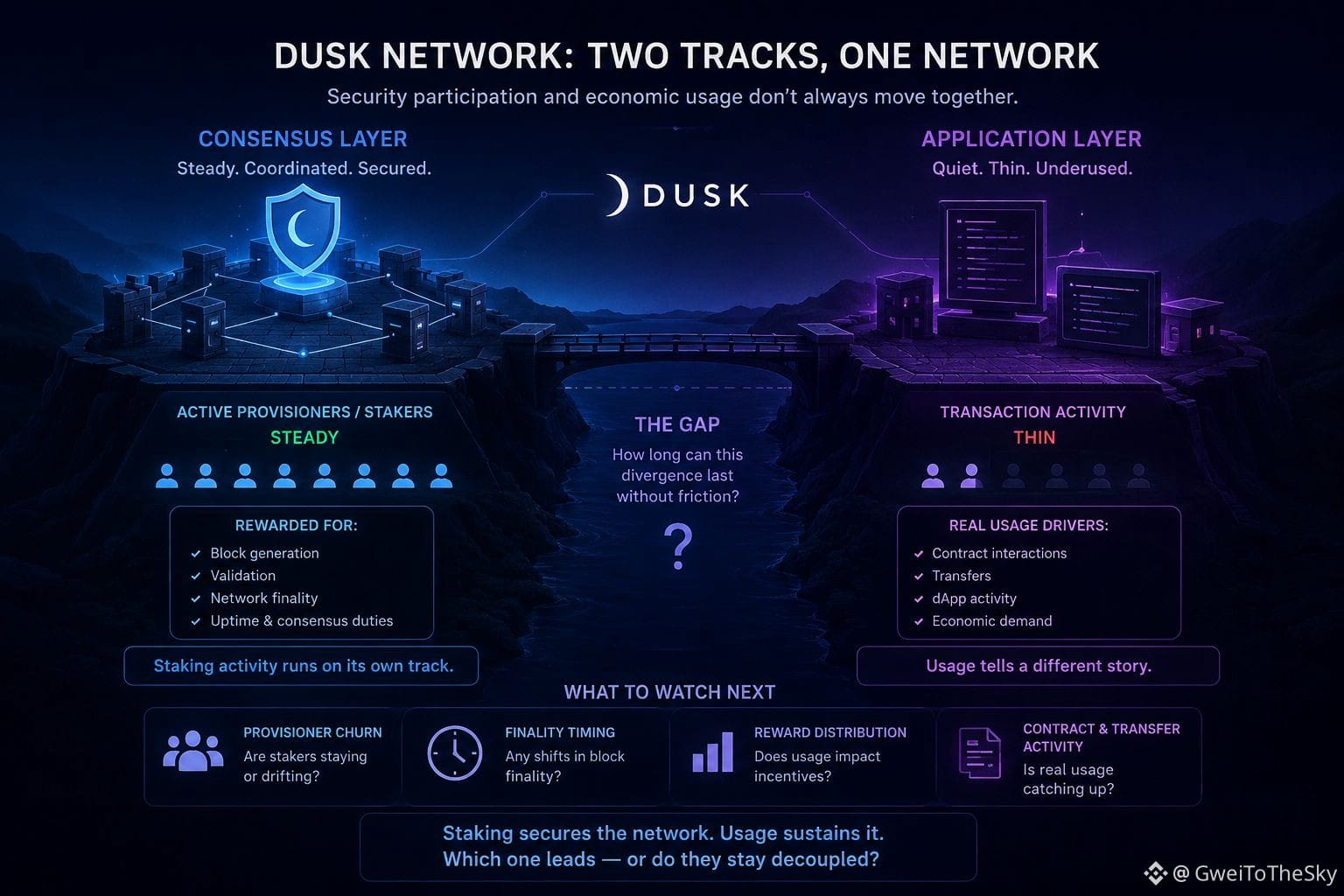
Trong lúc kiểm tra trình khám phá của Dusk vào tuần trước, các provisioner (người cung cấp) đang stake trên mạng trông khá ổn định, gần như lành mạnh, nhưng số lượng giao dịch bên dưới lại khá mỏng. Tôi cho rằng điều này có nghĩa là phần lớn lượng stake gần như để nhàn rỗi, được gửi để lấy lợi suất nhưng ít có sự tham gia thực tế đi kèm.
Đào sâu hơn, tôi phát hiện sự chênh lệch này xuất phát từ cách Dusk tách việc tham gia đồng thuận khỏi việc thực thi giao dịch. Provisioner được thưởng cho vai trò của họ trong việc tạo khối và thẩm định thông qua quy trình thỏa thuận được phân tách của mạng—một nhiệm vụ vẫn tiếp diễn dù người dùng có đang giao dịch hay không. Hoạt động staking và mức độ sử dụng mạng dường như vận hành trên những “đường ray” gần như độc lập.
Điều đó đã thay đổi cách tôi đọc dữ liệu. Trước đây tôi coi mức tham gia bảo mật và mức sử dụng kinh tế là một tín hiệu duy nhất, trong khi thực tế chúng rõ ràng không phải. Một mạng có thể trông có vẻ được bảo đảm và được phối hợp tốt ở lớp đồng thuận, vẫn im ắng ở lớp ứng dụng, và không một con số nào tự nó nói lên quá nhiều về con số còn lại.
Điều tôi chưa thể làm rõ là khoảng cách đó tồn tại được bao lâu mà không gây ma sát. Nếu provisioner được bù đắp chủ yếu dựa trên tính sẵn sàng (uptime) và các nhiệm vụ đồng thuận, thì cuối cùng lượng sử dụng có cần phải bắt kịp để các khuyến khích luôn cân bằng không, hay sự tham gia của validator có thể vẫn ổn định lâu dài chỉ theo đúng điều kiện của riêng nó.
Trong thời gian tới, tôi muốn theo dõi mức độ churn (biến động/ra vào) của provisioner cùng với hoạt động hợp đồng và chuyển khoản thực tế, thay vì chỉ nhìn tổng lượng stake. Sự duy trì ở các staker quy mô nhỏ, sự thay đổi về thời điểm xác thực cuối cùng (finality timing), và bất kỳ thay đổi nào trong phân bổ phần thưởng khi lượng sử dụng dịch chuyển—tất cả sẽ cho tôi nhiều thông tin hơn so với các con số stake “tiêu đề”.
Tôi vẫn chưa chắc bên nào dẫn dắt bên nào ở đây: liệu việc sử dụng cuối cùng sẽ kéo theo hành vi staking, hay hai yếu tố này thực sự tiếp tục tách rời. Đó là phần mà tôi cứ mãi phải trăn trở.
@Dusk_Foundation #Dusk
$DUSK
{future}(DUSKUSDT)
$ZEC
{future}(ZECUSDT)
$ENA
{future}(ENAUSDT)
Trong lúc kiểm tra trình khám phá của Dusk vào tuần trước, các provisioner (người cung cấp) đang stake trên mạng trông khá ổn định, gần như lành mạnh, nhưng số lượng giao dịch bên dưới lại khá mỏng. Tôi cho rằng điều này có nghĩa là phần lớn lượng stake gần như để nhàn rỗi, được gửi để lấy lợi suất nhưng ít có sự tham gia thực tế đi kèm.
Đào sâu hơn, tôi phát hiện sự chênh lệch này xuất phát từ cách Dusk tách việc tham gia đồng thuận khỏi việc thực thi giao dịch. Provisioner được thưởng cho vai trò của họ trong việc tạo khối và thẩm định thông qua quy trình thỏa thuận được phân tách của mạng—một nhiệm vụ vẫn tiếp diễn dù người dùng có đang giao dịch hay không. Hoạt động staking và mức độ sử dụng mạng dường như vận hành trên những “đường ray” gần như độc lập.
Điều đó đã thay đổi cách tôi đọc dữ liệu. Trước đây tôi coi mức tham gia bảo mật và mức sử dụng kinh tế là một tín hiệu duy nhất, trong khi thực tế chúng rõ ràng không phải. Một mạng có thể trông có vẻ được bảo đảm và được phối hợp tốt ở lớp đồng thuận, vẫn im ắng ở lớp ứng dụng, và không một con số nào tự nó nói lên quá nhiều về con số còn lại.
Điều tôi chưa thể làm rõ là khoảng cách đó tồn tại được bao lâu mà không gây ma sát. Nếu provisioner được bù đắp chủ yếu dựa trên tính sẵn sàng (uptime) và các nhiệm vụ đồng thuận, thì cuối cùng lượng sử dụng có cần phải bắt kịp để các khuyến khích luôn cân bằng không, hay sự tham gia của validator có thể vẫn ổn định lâu dài chỉ theo đúng điều kiện của riêng nó.
Trong thời gian tới, tôi muốn theo dõi mức độ churn (biến động/ra vào) của provisioner cùng với hoạt động hợp đồng và chuyển khoản thực tế, thay vì chỉ nhìn tổng lượng stake. Sự duy trì ở các staker quy mô nhỏ, sự thay đổi về thời điểm xác thực cuối cùng (finality timing), và bất kỳ thay đổi nào trong phân bổ phần thưởng khi lượng sử dụng dịch chuyển—tất cả sẽ cho tôi nhiều thông tin hơn so với các con số stake “tiêu đề”.
Tôi vẫn chưa chắc bên nào dẫn dắt bên nào ở đây: liệu việc sử dụng cuối cùng sẽ kéo theo hành vi staking, hay hai yếu tố này thực sự tiếp tục tách rời. Đó là phần mà tôi cứ mãi phải trăn trở.
@Dusk #Dusk
$DUSK
$ZEC
$ENA
Đào sâu hơn, tôi phát hiện sự chênh lệch này xuất phát từ cách Dusk tách việc tham gia đồng thuận khỏi việc thực thi giao dịch. Provisioner được thưởng cho vai trò của họ trong việc tạo khối và thẩm định thông qua quy trình thỏa thuận được phân tách của mạng—một nhiệm vụ vẫn tiếp diễn dù người dùng có đang giao dịch hay không. Hoạt động staking và mức độ sử dụng mạng dường như vận hành trên những “đường ray” gần như độc lập.
Điều đó đã thay đổi cách tôi đọc dữ liệu. Trước đây tôi coi mức tham gia bảo mật và mức sử dụng kinh tế là một tín hiệu duy nhất, trong khi thực tế chúng rõ ràng không phải. Một mạng có thể trông có vẻ được bảo đảm và được phối hợp tốt ở lớp đồng thuận, vẫn im ắng ở lớp ứng dụng, và không một con số nào tự nó nói lên quá nhiều về con số còn lại.
Điều tôi chưa thể làm rõ là khoảng cách đó tồn tại được bao lâu mà không gây ma sát. Nếu provisioner được bù đắp chủ yếu dựa trên tính sẵn sàng (uptime) và các nhiệm vụ đồng thuận, thì cuối cùng lượng sử dụng có cần phải bắt kịp để các khuyến khích luôn cân bằng không, hay sự tham gia của validator có thể vẫn ổn định lâu dài chỉ theo đúng điều kiện của riêng nó.
Trong thời gian tới, tôi muốn theo dõi mức độ churn (biến động/ra vào) của provisioner cùng với hoạt động hợp đồng và chuyển khoản thực tế, thay vì chỉ nhìn tổng lượng stake. Sự duy trì ở các staker quy mô nhỏ, sự thay đổi về thời điểm xác thực cuối cùng (finality timing), và bất kỳ thay đổi nào trong phân bổ phần thưởng khi lượng sử dụng dịch chuyển—tất cả sẽ cho tôi nhiều thông tin hơn so với các con số stake “tiêu đề”.
Tôi vẫn chưa chắc bên nào dẫn dắt bên nào ở đây: liệu việc sử dụng cuối cùng sẽ kéo theo hành vi staking, hay hai yếu tố này thực sự tiếp tục tách rời. Đó là phần mà tôi cứ mãi phải trăn trở.
@Dusk #Dusk
$DUSK
$ZEC
$ENA
2
5
482
·
--
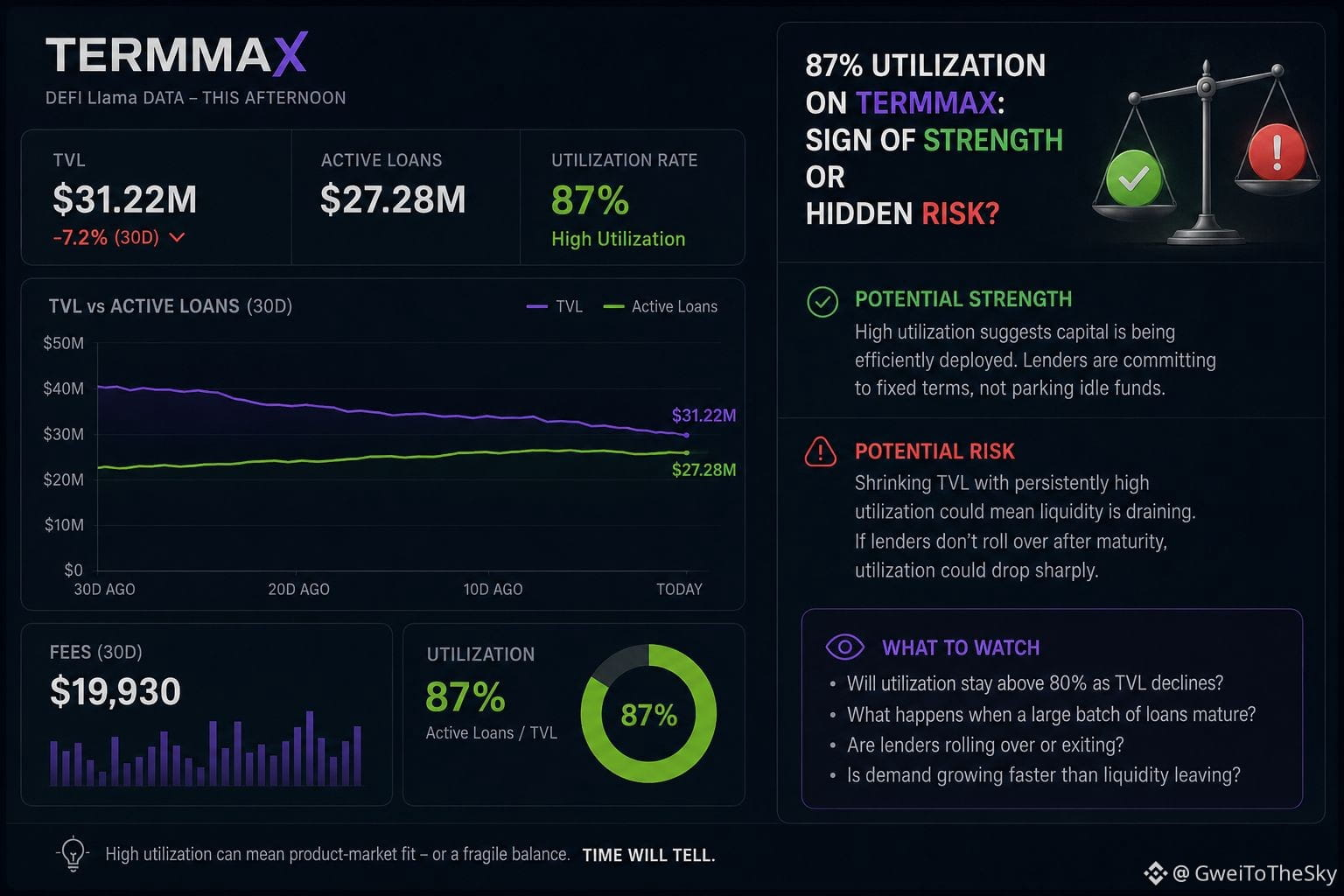
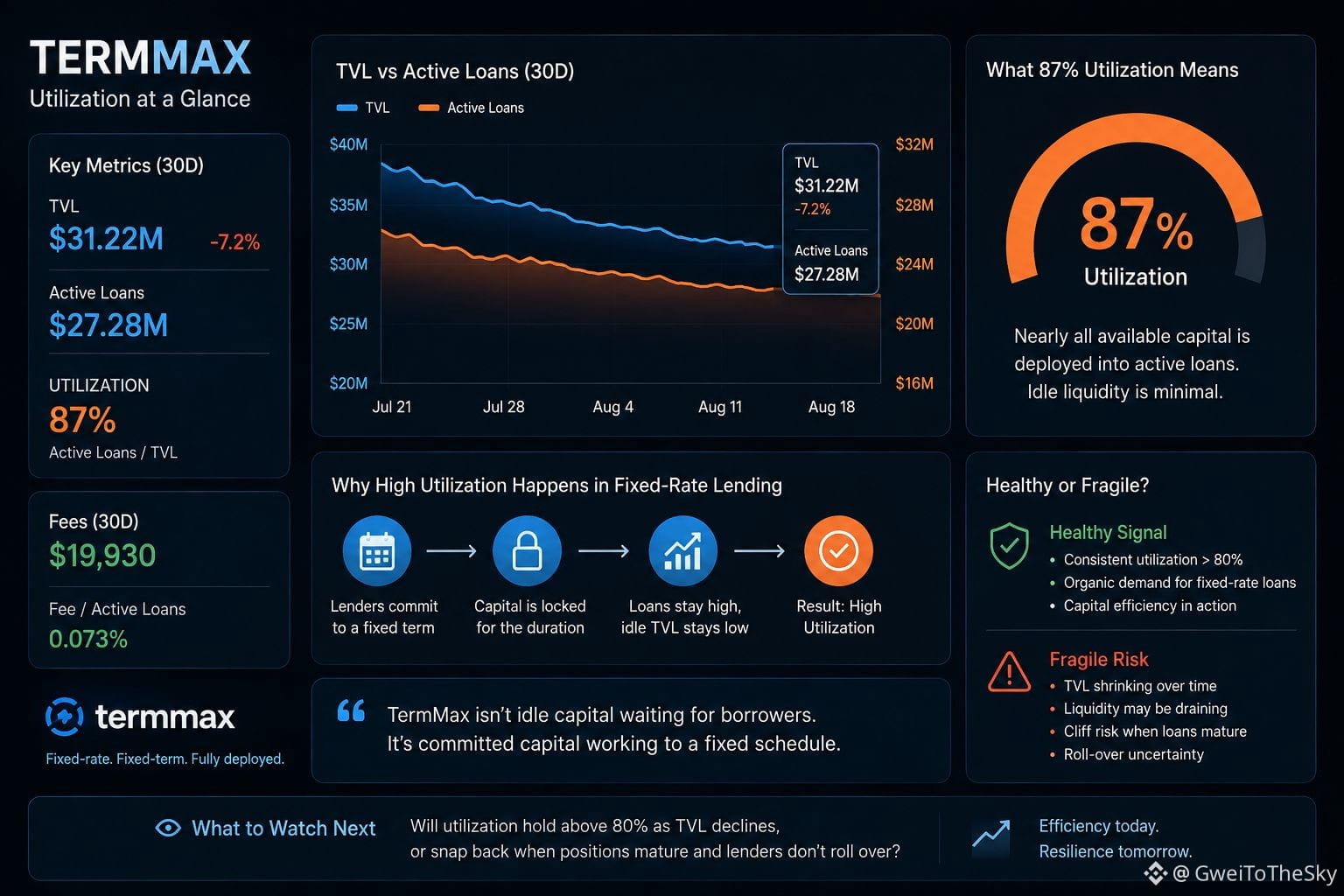
Các con số của TermMax trên DefiLlama bị lệch trong chiều nay: TVL hiện ở mức 31,22 triệu USD, giảm 7,2% trong 30 ngày, nhưng các khoản vay đang hoạt động là 27,28 triệu USD. Nói cách khác, mức sử dụng khoảng 87%. Ban đầu tôi cứ nghĩ mình đã đọc nhầm biểu đồ.
Tôi quay lại kiểm tra chéo theo phí. Chỉ có 19.930 USD phí trong 30 ngày trên gần 27 triệu USD được vay. Với một thị trường cho vay dựa trên lãi suất cố định và kỳ hạn, tỷ lệ này có vẻ mỏng so với việc “quỹ tài sản thế chấp” đang được sử dụng chặt chẽ đến mức nào.
Rồi tôi hiểu ra theo hướng khác. TermMax không phải là một “pool” đang nằm chờ không để cho người vay sử dụng, mà gần như là vốn được triển khai gần như tối đa tại bất kỳ thời điểm nào. Các kỳ hạn cố định nghĩa là bên cho vay không “đỗ” tiền để chờ lợi suất, mà họ cam kết cho một thời hạn cụ thể, nên TVL nhàn rỗi tự nhiên sẽ co lại trong khi các khoản vay vẫn tương đối lớn.
Tôi chưa chắc điều này lành mạnh hay mong manh. Mức sử dụng cao trên nền TVL đang thu hẹp có thể phản ánh việc sử dụng vốn hiệu quả, hoặc cũng có thể là thanh khoản đang âm thầm rút đi trong khi các vị thế hiện có chỉ chưa đến hạn.
Tôi đang theo dõi liệu mức sử dụng có giữ vững trên 80% khi TVL tiếp tục giảm, hay liệu nó bật lại khi các vị thế đáo hạn và bên cho vay không gia hạn.
Mức sử dụng 87% trên TermMax là dấu hiệu của sự phù hợp thật sự sản phẩm–thị trường cho hình thức cho vay lãi suất cố định, hay là triệu chứng của một “pool” đang co lại chưa được thử thách dưới áp lực?
@termmax #termmax
$ONG
{future}(ONGUSDT)
$BOME
{future}(BOMEUSDT)
$ACE
{future}(ACEUSDT)
Các con số của TermMax trên DefiLlama bị lệch trong chiều nay: TVL hiện ở mức 31,22 triệu USD, giảm 7,2% trong 30 ngày, nhưng các khoản vay đang hoạt động là 27,28 triệu USD. Nói cách khác, mức sử dụng khoảng 87%. Ban đầu tôi cứ nghĩ mình đã đọc nhầm biểu đồ.
Tôi quay lại kiểm tra chéo theo phí. Chỉ có 19.930 USD phí trong 30 ngày trên gần 27 triệu USD được vay. Với một thị trường cho vay dựa trên lãi suất cố định và kỳ hạn, tỷ lệ này có vẻ mỏng so với việc “quỹ tài sản thế chấp” đang được sử dụng chặt chẽ đến mức nào.
Rồi tôi hiểu ra theo hướng khác. TermMax không phải là một “pool” đang nằm chờ không để cho người vay sử dụng, mà gần như là vốn được triển khai gần như tối đa tại bất kỳ thời điểm nào. Các kỳ hạn cố định nghĩa là bên cho vay không “đỗ” tiền để chờ lợi suất, mà họ cam kết cho một thời hạn cụ thể, nên TVL nhàn rỗi tự nhiên sẽ co lại trong khi các khoản vay vẫn tương đối lớn.
Tôi chưa chắc điều này lành mạnh hay mong manh. Mức sử dụng cao trên nền TVL đang thu hẹp có thể phản ánh việc sử dụng vốn hiệu quả, hoặc cũng có thể là thanh khoản đang âm thầm rút đi trong khi các vị thế hiện có chỉ chưa đến hạn.
Tôi đang theo dõi liệu mức sử dụng có giữ vững trên 80% khi TVL tiếp tục giảm, hay liệu nó bật lại khi các vị thế đáo hạn và bên cho vay không gia hạn.
Mức sử dụng 87% trên TermMax là dấu hiệu của sự phù hợp thật sự sản phẩm–thị trường cho hình thức cho vay lãi suất cố định, hay là triệu chứng của một “pool” đang co lại chưa được thử thách dưới áp lực?
@TermMax #termmax
$ONG
$BOME
$ACE
Tôi quay lại kiểm tra chéo theo phí. Chỉ có 19.930 USD phí trong 30 ngày trên gần 27 triệu USD được vay. Với một thị trường cho vay dựa trên lãi suất cố định và kỳ hạn, tỷ lệ này có vẻ mỏng so với việc “quỹ tài sản thế chấp” đang được sử dụng chặt chẽ đến mức nào.
Rồi tôi hiểu ra theo hướng khác. TermMax không phải là một “pool” đang nằm chờ không để cho người vay sử dụng, mà gần như là vốn được triển khai gần như tối đa tại bất kỳ thời điểm nào. Các kỳ hạn cố định nghĩa là bên cho vay không “đỗ” tiền để chờ lợi suất, mà họ cam kết cho một thời hạn cụ thể, nên TVL nhàn rỗi tự nhiên sẽ co lại trong khi các khoản vay vẫn tương đối lớn.
Tôi chưa chắc điều này lành mạnh hay mong manh. Mức sử dụng cao trên nền TVL đang thu hẹp có thể phản ánh việc sử dụng vốn hiệu quả, hoặc cũng có thể là thanh khoản đang âm thầm rút đi trong khi các vị thế hiện có chỉ chưa đến hạn.
Tôi đang theo dõi liệu mức sử dụng có giữ vững trên 80% khi TVL tiếp tục giảm, hay liệu nó bật lại khi các vị thế đáo hạn và bên cho vay không gia hạn.
Mức sử dụng 87% trên TermMax là dấu hiệu của sự phù hợp thật sự sản phẩm–thị trường cho hình thức cho vay lãi suất cố định, hay là triệu chứng của một “pool” đang co lại chưa được thử thách dưới áp lực?
@TermMax #termmax
$ONG
$BOME
$ACE
6
100
·
--
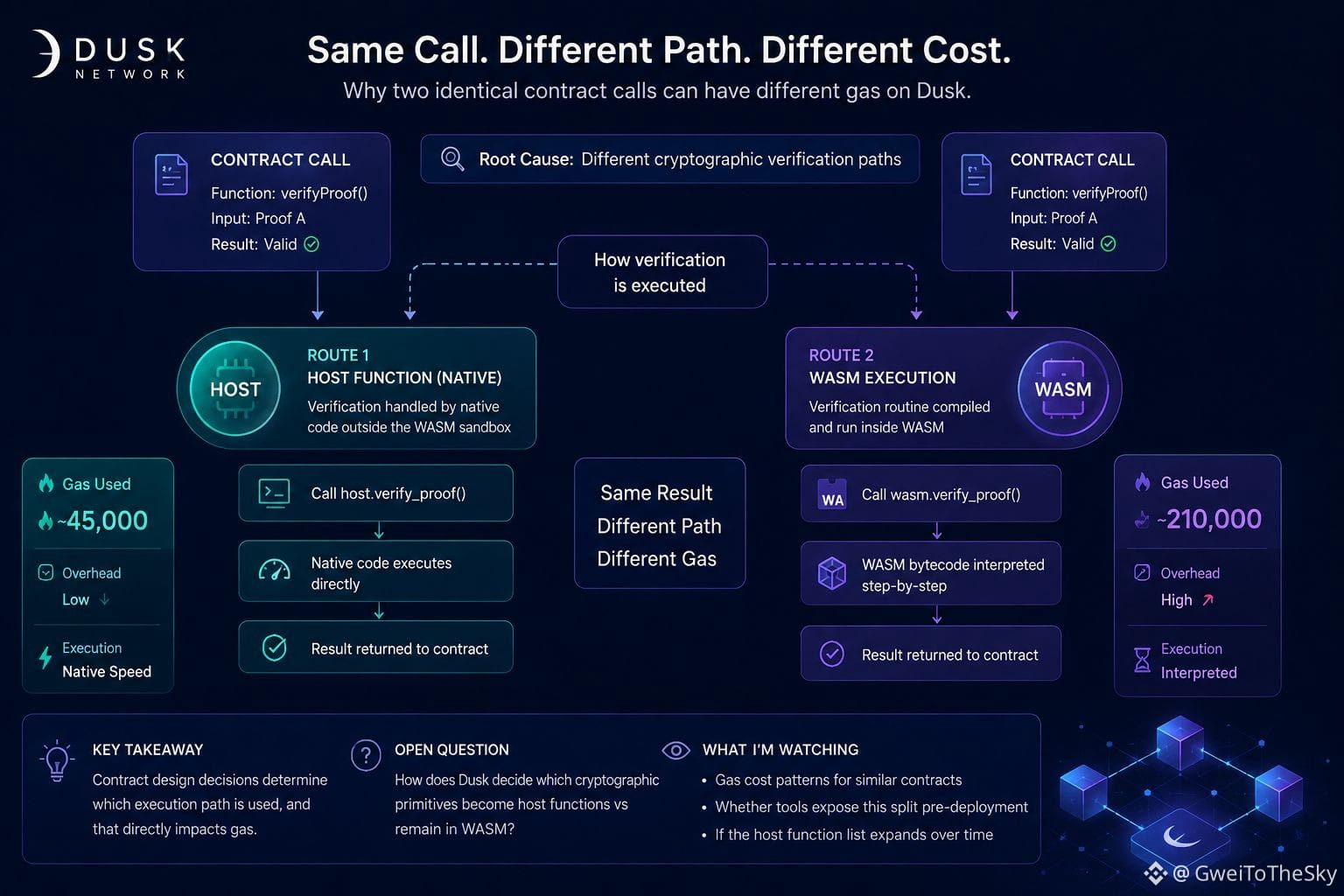
Nhà thám hiểm của Dusk vào một buổi chiều muộn—trong một lần gọi hợp đồng trễ một tối—hai cuộc gọi hợp đồng trông có vẻ chức năng hoàn toàn giống nhau lại đang cho ra dấu vết khí (gas footprint) khác biệt rõ rệt. Giả định ban đầu của tôi là một trong số đó đơn giản có logic phức tạp hơn. Nhưng hóa ra tôi đã sai.
Đào sâu hơn, tôi phát hiện sự khác biệt nằm ở cách mỗi hợp đồng xử lý bước xác minh mật mã (cryptographic verification). Một nhánh gọi một hàm host (native code) mà runtime thực thi trực tiếp bên ngoài môi trường WASM sandbox, trong khi nhánh còn lại lại chạy một routine xác minh được biên dịch ngay trong WASM. Dusk dành host function cho các thao tác cụ thể như băm (hashing) và xác minh bằng chứng (proof verification), và khoảng chênh gas chính là một “khoảng nhìn thấy được” (visibility gap) phản ánh đúng sự tách biệt đó.
Điều này đã làm tôi nhìn lại một thứ tôi từng xem như một hạng mục duy nhất: “tính toán on-chain (trên chuỗi).” Tôi vẫn gộp việc thực thi trong sandbox và thực thi native vào chung một nhóm, như thể chi phí và hành vi sẽ tăng trưởng theo cùng một cách cho cả hai. Thực ra không phải vậy. Các lời gọi native né tránh chi phí (overhead) của việc diễn giải WASM, nghĩa là những lựa chọn thiết kế hợp đồng ở phía trước một cách âm thầm quyết định con đường thực thi mà một giao dịch sẽ đi về phía sau.
Điều chưa rõ với tôi là Dusk sẽ quyết định thế nào để các primitive mật mã trong tương lai được đưa vào trạng thái host-function hay vẫn nằm bên trong WASM. Có một ngưỡng hiệu năng (performance threshold) được xác định không, hay nó được đánh giá theo từng trường hợp khi các cơ chế xác minh mới được bổ sung? Sự mơ hồ này quan trọng hơn khi danh sách primitive ngày càng mở rộng.
Từ đây về sau, tôi sẽ theo dõi xem chi phí gas có được gom cụm (cluster) một cách nhất quán như thế nào đối với các hợp đồng có logic tương tự, và liệu công cụ dành cho nhà phát triển có bắt đầu hiển thị sự tách biệt trong cơ chế thực thi này trước khi triển khai hay không, thay vì chỉ nhận ra sau khi đã deploy. Những mẫu hình lặp lại ở đó sẽ cho tôi biết liệu đây là một “độ” thiết kế ổn định hay là một thứ các tác giả hợp đồng phải tự học theo cách khó.
Tôi vẫn chưa biết liệu sự tách biệt này được thiết kế để luôn hẹp, hay sẽ mở rộng theo mức độ trưởng thành của giao thức, và tôi cũng chưa chắc kết quả nào sẽ thực sự “lành mạnh” hơn đối với những người xây dựng (builders) trên mạng.
@Dusk_Foundation #Dusk
$ACE
{future}(ACEUSDT)
$DUSK
{future}(DUSKUSDT)
$BOME
{future}(BOMEUSDT)
Nhà thám hiểm của Dusk vào một buổi chiều muộn—trong một lần gọi hợp đồng trễ một tối—hai cuộc gọi hợp đồng trông có vẻ chức năng hoàn toàn giống nhau lại đang cho ra dấu vết khí (gas footprint) khác biệt rõ rệt. Giả định ban đầu của tôi là một trong số đó đơn giản có logic phức tạp hơn. Nhưng hóa ra tôi đã sai.
Đào sâu hơn, tôi phát hiện sự khác biệt nằm ở cách mỗi hợp đồng xử lý bước xác minh mật mã (cryptographic verification). Một nhánh gọi một hàm host (native code) mà runtime thực thi trực tiếp bên ngoài môi trường WASM sandbox, trong khi nhánh còn lại lại chạy một routine xác minh được biên dịch ngay trong WASM. Dusk dành host function cho các thao tác cụ thể như băm (hashing) và xác minh bằng chứng (proof verification), và khoảng chênh gas chính là một “khoảng nhìn thấy được” (visibility gap) phản ánh đúng sự tách biệt đó.
Điều này đã làm tôi nhìn lại một thứ tôi từng xem như một hạng mục duy nhất: “tính toán on-chain (trên chuỗi).” Tôi vẫn gộp việc thực thi trong sandbox và thực thi native vào chung một nhóm, như thể chi phí và hành vi sẽ tăng trưởng theo cùng một cách cho cả hai. Thực ra không phải vậy. Các lời gọi native né tránh chi phí (overhead) của việc diễn giải WASM, nghĩa là những lựa chọn thiết kế hợp đồng ở phía trước một cách âm thầm quyết định con đường thực thi mà một giao dịch sẽ đi về phía sau.
Điều chưa rõ với tôi là Dusk sẽ quyết định thế nào để các primitive mật mã trong tương lai được đưa vào trạng thái host-function hay vẫn nằm bên trong WASM. Có một ngưỡng hiệu năng (performance threshold) được xác định không, hay nó được đánh giá theo từng trường hợp khi các cơ chế xác minh mới được bổ sung? Sự mơ hồ này quan trọng hơn khi danh sách primitive ngày càng mở rộng.
Từ đây về sau, tôi sẽ theo dõi xem chi phí gas có được gom cụm (cluster) một cách nhất quán như thế nào đối với các hợp đồng có logic tương tự, và liệu công cụ dành cho nhà phát triển có bắt đầu hiển thị sự tách biệt trong cơ chế thực thi này trước khi triển khai hay không, thay vì chỉ nhận ra sau khi đã deploy. Những mẫu hình lặp lại ở đó sẽ cho tôi biết liệu đây là một “độ” thiết kế ổn định hay là một thứ các tác giả hợp đồng phải tự học theo cách khó.
Tôi vẫn chưa biết liệu sự tách biệt này được thiết kế để luôn hẹp, hay sẽ mở rộng theo mức độ trưởng thành của giao thức, và tôi cũng chưa chắc kết quả nào sẽ thực sự “lành mạnh” hơn đối với những người xây dựng (builders) trên mạng.
@Dusk #Dusk
$ACE
$DUSK
$BOME
Đào sâu hơn, tôi phát hiện sự khác biệt nằm ở cách mỗi hợp đồng xử lý bước xác minh mật mã (cryptographic verification). Một nhánh gọi một hàm host (native code) mà runtime thực thi trực tiếp bên ngoài môi trường WASM sandbox, trong khi nhánh còn lại lại chạy một routine xác minh được biên dịch ngay trong WASM. Dusk dành host function cho các thao tác cụ thể như băm (hashing) và xác minh bằng chứng (proof verification), và khoảng chênh gas chính là một “khoảng nhìn thấy được” (visibility gap) phản ánh đúng sự tách biệt đó.
Điều này đã làm tôi nhìn lại một thứ tôi từng xem như một hạng mục duy nhất: “tính toán on-chain (trên chuỗi).” Tôi vẫn gộp việc thực thi trong sandbox và thực thi native vào chung một nhóm, như thể chi phí và hành vi sẽ tăng trưởng theo cùng một cách cho cả hai. Thực ra không phải vậy. Các lời gọi native né tránh chi phí (overhead) của việc diễn giải WASM, nghĩa là những lựa chọn thiết kế hợp đồng ở phía trước một cách âm thầm quyết định con đường thực thi mà một giao dịch sẽ đi về phía sau.
Điều chưa rõ với tôi là Dusk sẽ quyết định thế nào để các primitive mật mã trong tương lai được đưa vào trạng thái host-function hay vẫn nằm bên trong WASM. Có một ngưỡng hiệu năng (performance threshold) được xác định không, hay nó được đánh giá theo từng trường hợp khi các cơ chế xác minh mới được bổ sung? Sự mơ hồ này quan trọng hơn khi danh sách primitive ngày càng mở rộng.
Từ đây về sau, tôi sẽ theo dõi xem chi phí gas có được gom cụm (cluster) một cách nhất quán như thế nào đối với các hợp đồng có logic tương tự, và liệu công cụ dành cho nhà phát triển có bắt đầu hiển thị sự tách biệt trong cơ chế thực thi này trước khi triển khai hay không, thay vì chỉ nhận ra sau khi đã deploy. Những mẫu hình lặp lại ở đó sẽ cho tôi biết liệu đây là một “độ” thiết kế ổn định hay là một thứ các tác giả hợp đồng phải tự học theo cách khó.
Tôi vẫn chưa biết liệu sự tách biệt này được thiết kế để luôn hẹp, hay sẽ mở rộng theo mức độ trưởng thành của giao thức, và tôi cũng chưa chắc kết quả nào sẽ thực sự “lành mạnh” hơn đối với những người xây dựng (builders) trên mạng.
@Dusk #Dusk
$ACE
$DUSK
$BOME
1
5
344
·
--
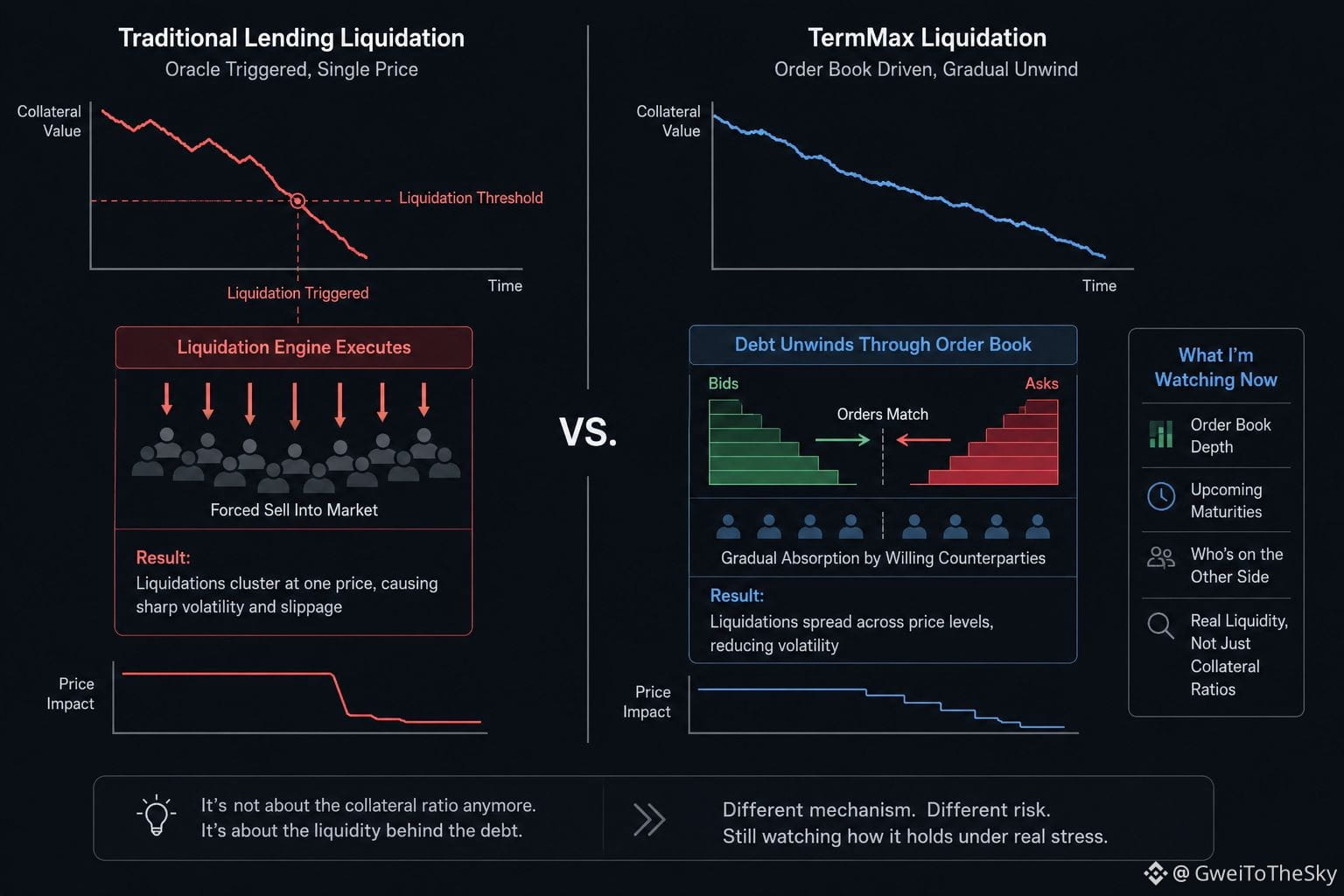
Khi tôi kiểm tra một lô các vị thế TermMax sau một cú tăng tỷ lệ đột ngột, tôi nhận ra một điều không phù hợp với kỳ vọng của mình: các đợt thanh lý không tụ lại theo kiểu thường thấy trên các thị trường cho vay mà tôi từng theo dõi.
Tôi cho rằng một đợt giảm tài sản thế chấp nhanh sẽ kích hoạt làn sóng bán cưỡng bức do oracle thúc đẩy, đánh trúng vào một mức giá tại một thời điểm. Vì vậy, tôi quay lại xem dòng lệnh xung quanh các vị thế đó để xem thực tế đã diễn ra gì.
Nhưng tôi thấy điều khác biệt. Bởi vì TermMax phát sinh nợ thông qua sổ lệnh riêng của các token đáo hạn cố định, thay vì đẩy mọi thứ qua một cơ chế kích hoạt oracle duy nhất, các khoản hoàn tất vị thế dần được hấp thụ khi lệnh khớp với các lệnh mua hiện có, thay vì “đập” vào một mức giá thanh lý duy nhất. Bản thân khoản nợ vận hành như một công cụ giao dịch có độ sâu riêng, chứ không chỉ là một ngưỡng cần vượt qua.
Điều này đã làm thay đổi cách tôi nhìn nhận rủi ro ở đây. Không phải là biến động biến mất, mà là cơ chế này phân bổ việc thực thi cho các đối tác sẵn sàng thay vì một “động cơ” thanh lý đơn lẻ, và vì vậy nó ảnh hưởng đến tốc độ căng thẳng thực sự xuất hiện trong giá.
Tôi vẫn chưa chắc liệu điều này có đúng trong tình huống chịu áp lực thực sự hay không. Các sổ lệnh mỏng ở những kỳ đáo hạn ít được ưa chuộng hơn có thể hoạt động rất khác, và tôi cũng chưa thấy hệ thống này được kiểm chứng trong một thị trường thực sự hỗn loạn.
Vì vậy, giờ tôi theo dõi độ sâu sổ lệnh xung quanh các kỳ đáo hạn sắp tới chặt chẽ hơn. Tôi ít quan tâm hơn đến chính tỷ lệ tài sản thế chấp và nhiều hơn đến việc ai đang đứng ở phía bên kia của sổ lệnh đó khi điều quan trọng xảy ra.
@termmax #termmax
$RE
{future}(REUSDT)
$HEMI
{future}(HEMIUSDT)
$ETH
{future}(ETHUSDT)
Khi tôi kiểm tra một lô các vị thế TermMax sau một cú tăng tỷ lệ đột ngột, tôi nhận ra một điều không phù hợp với kỳ vọng của mình: các đợt thanh lý không tụ lại theo kiểu thường thấy trên các thị trường cho vay mà tôi từng theo dõi.
Tôi cho rằng một đợt giảm tài sản thế chấp nhanh sẽ kích hoạt làn sóng bán cưỡng bức do oracle thúc đẩy, đánh trúng vào một mức giá tại một thời điểm. Vì vậy, tôi quay lại xem dòng lệnh xung quanh các vị thế đó để xem thực tế đã diễn ra gì.
Nhưng tôi thấy điều khác biệt. Bởi vì TermMax phát sinh nợ thông qua sổ lệnh riêng của các token đáo hạn cố định, thay vì đẩy mọi thứ qua một cơ chế kích hoạt oracle duy nhất, các khoản hoàn tất vị thế dần được hấp thụ khi lệnh khớp với các lệnh mua hiện có, thay vì “đập” vào một mức giá thanh lý duy nhất. Bản thân khoản nợ vận hành như một công cụ giao dịch có độ sâu riêng, chứ không chỉ là một ngưỡng cần vượt qua.
Điều này đã làm thay đổi cách tôi nhìn nhận rủi ro ở đây. Không phải là biến động biến mất, mà là cơ chế này phân bổ việc thực thi cho các đối tác sẵn sàng thay vì một “động cơ” thanh lý đơn lẻ, và vì vậy nó ảnh hưởng đến tốc độ căng thẳng thực sự xuất hiện trong giá.
Tôi vẫn chưa chắc liệu điều này có đúng trong tình huống chịu áp lực thực sự hay không. Các sổ lệnh mỏng ở những kỳ đáo hạn ít được ưa chuộng hơn có thể hoạt động rất khác, và tôi cũng chưa thấy hệ thống này được kiểm chứng trong một thị trường thực sự hỗn loạn.
Vì vậy, giờ tôi theo dõi độ sâu sổ lệnh xung quanh các kỳ đáo hạn sắp tới chặt chẽ hơn. Tôi ít quan tâm hơn đến chính tỷ lệ tài sản thế chấp và nhiều hơn đến việc ai đang đứng ở phía bên kia của sổ lệnh đó khi điều quan trọng xảy ra.
@TermMax #termmax
$RE
$HEMI
$ETH
Tôi cho rằng một đợt giảm tài sản thế chấp nhanh sẽ kích hoạt làn sóng bán cưỡng bức do oracle thúc đẩy, đánh trúng vào một mức giá tại một thời điểm. Vì vậy, tôi quay lại xem dòng lệnh xung quanh các vị thế đó để xem thực tế đã diễn ra gì.
Nhưng tôi thấy điều khác biệt. Bởi vì TermMax phát sinh nợ thông qua sổ lệnh riêng của các token đáo hạn cố định, thay vì đẩy mọi thứ qua một cơ chế kích hoạt oracle duy nhất, các khoản hoàn tất vị thế dần được hấp thụ khi lệnh khớp với các lệnh mua hiện có, thay vì “đập” vào một mức giá thanh lý duy nhất. Bản thân khoản nợ vận hành như một công cụ giao dịch có độ sâu riêng, chứ không chỉ là một ngưỡng cần vượt qua.
Điều này đã làm thay đổi cách tôi nhìn nhận rủi ro ở đây. Không phải là biến động biến mất, mà là cơ chế này phân bổ việc thực thi cho các đối tác sẵn sàng thay vì một “động cơ” thanh lý đơn lẻ, và vì vậy nó ảnh hưởng đến tốc độ căng thẳng thực sự xuất hiện trong giá.
Tôi vẫn chưa chắc liệu điều này có đúng trong tình huống chịu áp lực thực sự hay không. Các sổ lệnh mỏng ở những kỳ đáo hạn ít được ưa chuộng hơn có thể hoạt động rất khác, và tôi cũng chưa thấy hệ thống này được kiểm chứng trong một thị trường thực sự hỗn loạn.
Vì vậy, giờ tôi theo dõi độ sâu sổ lệnh xung quanh các kỳ đáo hạn sắp tới chặt chẽ hơn. Tôi ít quan tâm hơn đến chính tỷ lệ tài sản thế chấp và nhiều hơn đến việc ai đang đứng ở phía bên kia của sổ lệnh đó khi điều quan trọng xảy ra.
@TermMax #termmax
$RE
$HEMI
$ETH
4
49
·
--
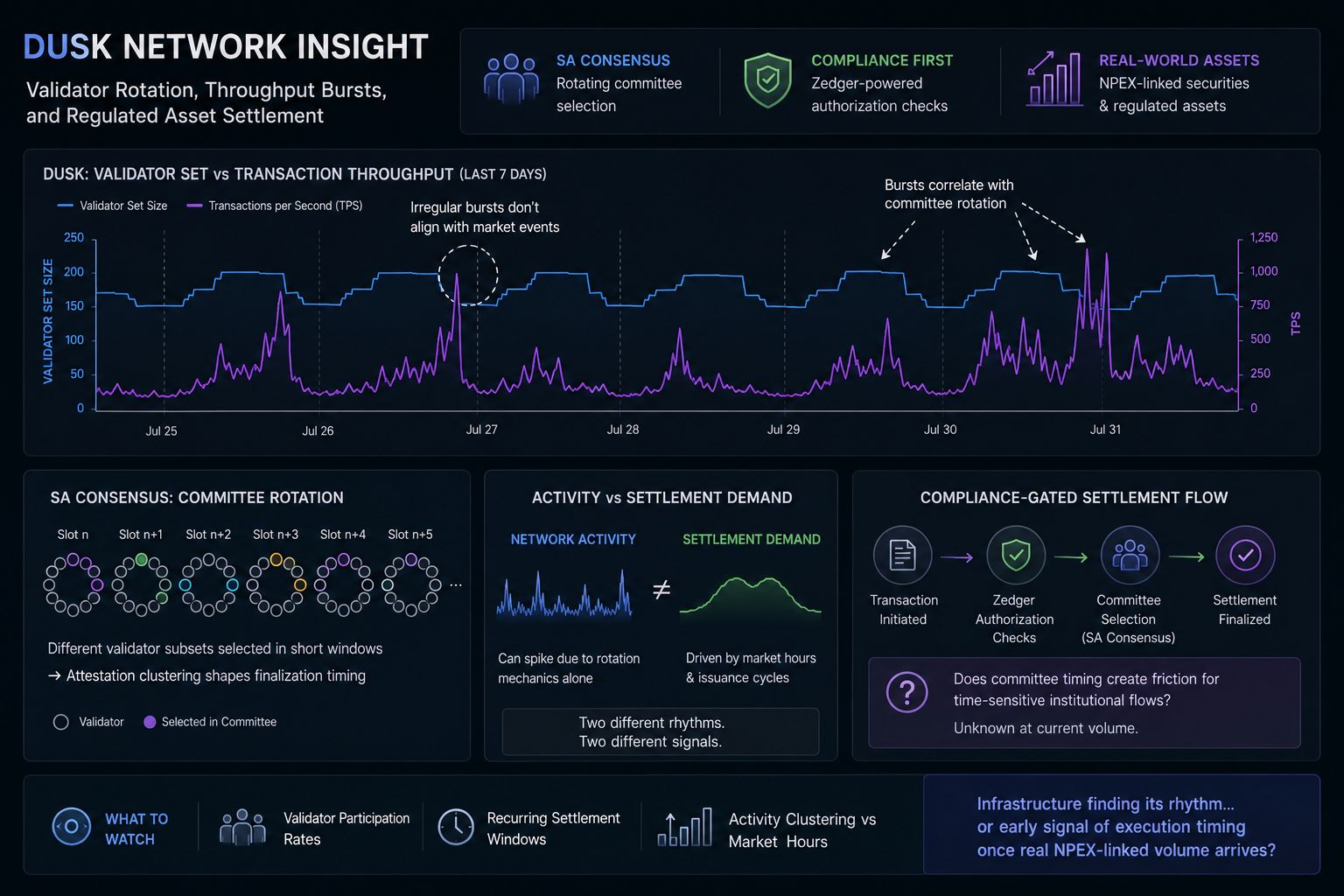
Tập hợp trình xác thực của Dusk so với thông lượng giao dịch của nó trong tuần trước Tôi đã giả định rằng một mạng được xây dựng cho các tài sản được quản lý sẽ cho thấy các mẫu hoạt động ổn định, gần như nhàm chán. Thay vào đó, tôi thấy các đợt bùng phát không đều, không khớp với bất kỳ sự kiện thị trường rõ ràng nào.
Đào sâu hơn, tôi truy vết các đợt bùng phát này về cách Dusk luân phiên việc chọn thành viên ủy ban trong cơ chế đồng thuận SA Consensus. Không phải là nhiễu ngẫu nhiên. Mẫu đó giống với việc phân cụm xác thực (attestation) hơn: một số tập hợp trình xác thực nhất định được chọn thường xuyên hơn trong các khung thời gian ngắn, từ đó định hình thời điểm mà các hoạt động nặng về thanh toán thực sự được hoàn tất.
Sự khác biệt này quan trọng hơn nhiều so với những gì tôi ban đầu đánh giá. Tôi đã coi “hoạt động mạng” và “nhu cầu thanh toán” là cùng một tín hiệu. Không phải vậy. Hoạt động có thể tăng vọt chỉ nhờ cơ chế luân phiên trình xác thực, trong khi nhu cầu thanh toán thực sự—loại nhu cầu gắn với các tài sản phát xuất từ NPEX—di chuyển theo nhịp hoàn toàn khác, gắn với giờ giao dịch trên thị trường và chu kỳ phát hành.
Điều tôi vẫn chưa thể giải quyết được là cách hành vi luân phiên này tương tác với các giao dịch bị kiểm soát bởi tuân thủ (compliance) cụ thể. Nếu chứng khoán dựa trên Zedger cần các kiểm tra ủy quyền nhất định trước khi được thanh toán, liệu thời điểm của ủy ban có bao giờ tạo ra ma sát đối với các luồng tổ chức (institutional) nhạy cảm về thời gian không, hay ma sát đó là không đáng kể ở mức khối lượng hiện tại? Tôi chưa có đủ dữ liệu để khẳng định theo hướng nào.
Về sau, tôi muốn theo dõi tỷ lệ tham gia của trình xác thực cùng với bất kỳ khung thời gian thanh toán lặp lại nào, chứ không chỉ nhìn vào tổng số lượng giao dịch. Nếu hoạt động của tài sản được quản lý bắt đầu phân cụm quanh một số lần luân phiên ủy ban cụ thể thay vì theo giờ thị trường, điều đó sẽ cho tôi biết được mức độ dòng tiền tổ chức thực sự đang “chạy” so với việc vẫn còn đang thử nghiệm.
Tôi vẫn tự hỏi liệu mẫu luân phiên này đơn giản là hạ tầng đang tìm ra nhịp của nó, hay là một tín hiệu sớm về cách thời điểm thực thi (execution timing) có thể diễn ra khi khối lượng thực sự từ các tài sản liên kết với NPEX bắt đầu chảy qua. Tôi nghĩ rằng hiện tại tôi chưa thể trả lời điều đó.
@Dusk_Foundation #Dusk
$DUSK
{future}(DUSKUSDT)
$HEMI
{future}(HEMIUSDT)
$TREE
{future}(TREEUSDT)
Tập hợp trình xác thực của Dusk so với thông lượng giao dịch của nó trong tuần trước Tôi đã giả định rằng một mạng được xây dựng cho các tài sản được quản lý sẽ cho thấy các mẫu hoạt động ổn định, gần như nhàm chán. Thay vào đó, tôi thấy các đợt bùng phát không đều, không khớp với bất kỳ sự kiện thị trường rõ ràng nào.
Đào sâu hơn, tôi truy vết các đợt bùng phát này về cách Dusk luân phiên việc chọn thành viên ủy ban trong cơ chế đồng thuận SA Consensus. Không phải là nhiễu ngẫu nhiên. Mẫu đó giống với việc phân cụm xác thực (attestation) hơn: một số tập hợp trình xác thực nhất định được chọn thường xuyên hơn trong các khung thời gian ngắn, từ đó định hình thời điểm mà các hoạt động nặng về thanh toán thực sự được hoàn tất.
Sự khác biệt này quan trọng hơn nhiều so với những gì tôi ban đầu đánh giá. Tôi đã coi “hoạt động mạng” và “nhu cầu thanh toán” là cùng một tín hiệu. Không phải vậy. Hoạt động có thể tăng vọt chỉ nhờ cơ chế luân phiên trình xác thực, trong khi nhu cầu thanh toán thực sự—loại nhu cầu gắn với các tài sản phát xuất từ NPEX—di chuyển theo nhịp hoàn toàn khác, gắn với giờ giao dịch trên thị trường và chu kỳ phát hành.
Điều tôi vẫn chưa thể giải quyết được là cách hành vi luân phiên này tương tác với các giao dịch bị kiểm soát bởi tuân thủ (compliance) cụ thể. Nếu chứng khoán dựa trên Zedger cần các kiểm tra ủy quyền nhất định trước khi được thanh toán, liệu thời điểm của ủy ban có bao giờ tạo ra ma sát đối với các luồng tổ chức (institutional) nhạy cảm về thời gian không, hay ma sát đó là không đáng kể ở mức khối lượng hiện tại? Tôi chưa có đủ dữ liệu để khẳng định theo hướng nào.
Về sau, tôi muốn theo dõi tỷ lệ tham gia của trình xác thực cùng với bất kỳ khung thời gian thanh toán lặp lại nào, chứ không chỉ nhìn vào tổng số lượng giao dịch. Nếu hoạt động của tài sản được quản lý bắt đầu phân cụm quanh một số lần luân phiên ủy ban cụ thể thay vì theo giờ thị trường, điều đó sẽ cho tôi biết được mức độ dòng tiền tổ chức thực sự đang “chạy” so với việc vẫn còn đang thử nghiệm.
Tôi vẫn tự hỏi liệu mẫu luân phiên này đơn giản là hạ tầng đang tìm ra nhịp của nó, hay là một tín hiệu sớm về cách thời điểm thực thi (execution timing) có thể diễn ra khi khối lượng thực sự từ các tài sản liên kết với NPEX bắt đầu chảy qua. Tôi nghĩ rằng hiện tại tôi chưa thể trả lời điều đó.
@Dusk #Dusk
$DUSK
$HEMI
$TREE
Đào sâu hơn, tôi truy vết các đợt bùng phát này về cách Dusk luân phiên việc chọn thành viên ủy ban trong cơ chế đồng thuận SA Consensus. Không phải là nhiễu ngẫu nhiên. Mẫu đó giống với việc phân cụm xác thực (attestation) hơn: một số tập hợp trình xác thực nhất định được chọn thường xuyên hơn trong các khung thời gian ngắn, từ đó định hình thời điểm mà các hoạt động nặng về thanh toán thực sự được hoàn tất.
Sự khác biệt này quan trọng hơn nhiều so với những gì tôi ban đầu đánh giá. Tôi đã coi “hoạt động mạng” và “nhu cầu thanh toán” là cùng một tín hiệu. Không phải vậy. Hoạt động có thể tăng vọt chỉ nhờ cơ chế luân phiên trình xác thực, trong khi nhu cầu thanh toán thực sự—loại nhu cầu gắn với các tài sản phát xuất từ NPEX—di chuyển theo nhịp hoàn toàn khác, gắn với giờ giao dịch trên thị trường và chu kỳ phát hành.
Điều tôi vẫn chưa thể giải quyết được là cách hành vi luân phiên này tương tác với các giao dịch bị kiểm soát bởi tuân thủ (compliance) cụ thể. Nếu chứng khoán dựa trên Zedger cần các kiểm tra ủy quyền nhất định trước khi được thanh toán, liệu thời điểm của ủy ban có bao giờ tạo ra ma sát đối với các luồng tổ chức (institutional) nhạy cảm về thời gian không, hay ma sát đó là không đáng kể ở mức khối lượng hiện tại? Tôi chưa có đủ dữ liệu để khẳng định theo hướng nào.
Về sau, tôi muốn theo dõi tỷ lệ tham gia của trình xác thực cùng với bất kỳ khung thời gian thanh toán lặp lại nào, chứ không chỉ nhìn vào tổng số lượng giao dịch. Nếu hoạt động của tài sản được quản lý bắt đầu phân cụm quanh một số lần luân phiên ủy ban cụ thể thay vì theo giờ thị trường, điều đó sẽ cho tôi biết được mức độ dòng tiền tổ chức thực sự đang “chạy” so với việc vẫn còn đang thử nghiệm.
Tôi vẫn tự hỏi liệu mẫu luân phiên này đơn giản là hạ tầng đang tìm ra nhịp của nó, hay là một tín hiệu sớm về cách thời điểm thực thi (execution timing) có thể diễn ra khi khối lượng thực sự từ các tài sản liên kết với NPEX bắt đầu chảy qua. Tôi nghĩ rằng hiện tại tôi chưa thể trả lời điều đó.
@Dusk #Dusk
$DUSK
$HEMI
$TREE
2
4
196
·
--
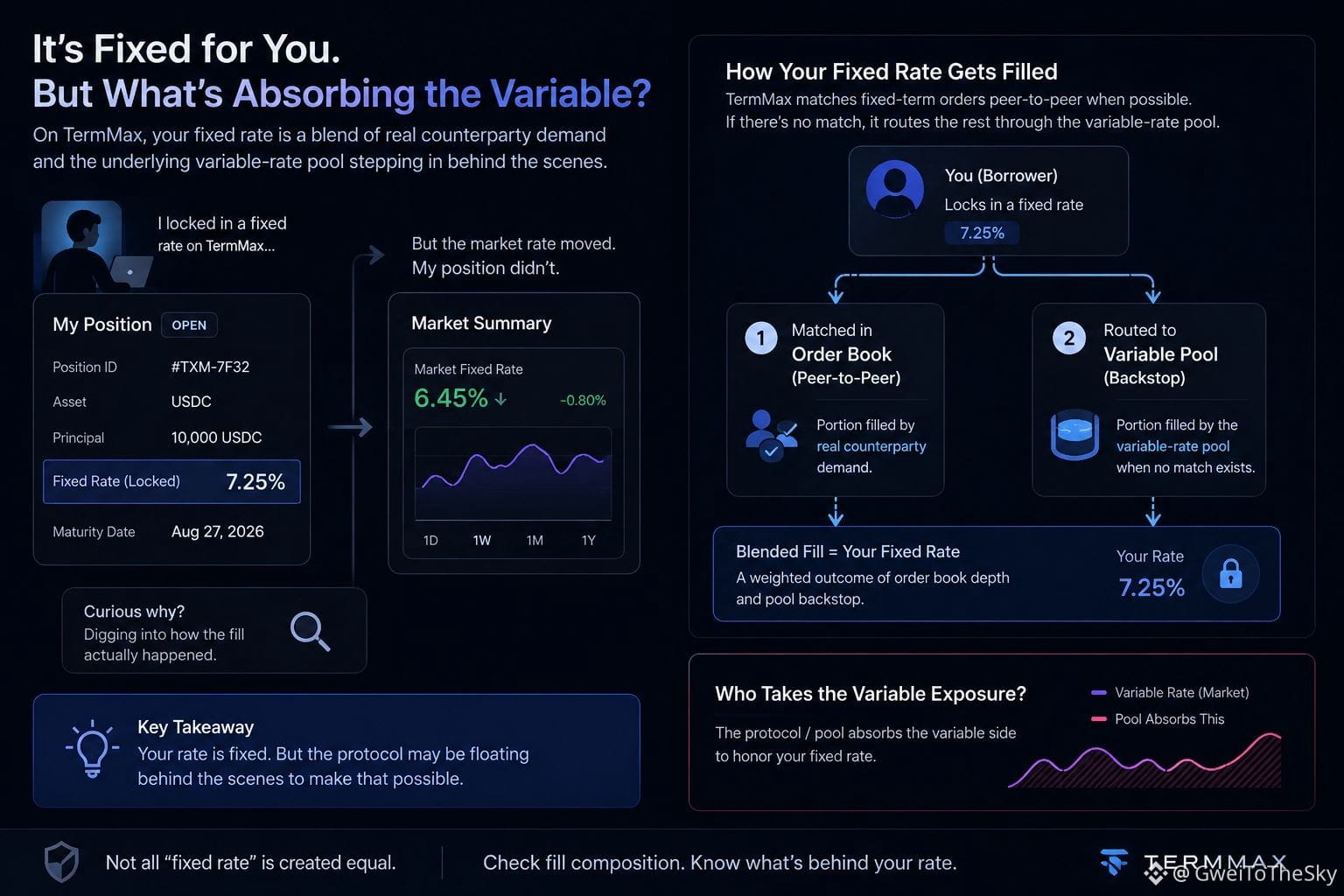
Khi tôi kiểm tra ngày đáo hạn của vị thế đang mở của mình trên @termmax , thì lãi suất cố định mà tôi đã khóa lại không còn khớp với lãi suất hiển thị trên trang tóm tắt của thị trường nữa, dù không có gì thay đổi ở vị thế của tôi. Lúc đầu tôi nghĩ có lẽ chỉ là độ trễ hiển thị.
Sau đó tôi bắt đầu tìm hiểu cách sổ lệnh được khớp với pool cơ sở. TermMax khớp các lệnh kỳ hạn cố định với nhau theo mô hình ngang hàng (peer-to-peer) khi có thể, nhưng khi không có đối tác trực tiếp, nó sẽ chuyển qua pool lãi suất biến đổi bên dưới để bù phần còn thiếu. Vị thế của tôi đã bị khớp một phần theo cách đó mà tôi không hề nhận ra.
Điều này làm tôi nhìn nhận lại khái niệm “lãi suất cố định” ở đây. Nó cố định đối với tôi với tư cách người đi vay, nhưng giao thức lại âm thầm hấp thụ rủi ro lãi suất biến đổi ở phía bên kia để đảm bảo điều đó có thể xảy ra. Lãi suất tôi thấy không chỉ là một con số tôi chọn; đó là kết quả pha trộn dựa trên độ sâu của sổ lệnh tại thời điểm tôi tham gia.
Tôi chưa chắc lớp peer-to-peer đó mỏng đến mức nào trong những khung giờ thanh khoản thấp, hoặc trong một ngày cụ thể thì phần nào của sổ lệnh thực sự được khớp trực tiếp so với phần được định tuyến qua pool. Tài liệu có đề cập cơ chế, nhưng không công bố tỷ lệ theo thời gian thực.
Từ đó tôi bắt đầu kiểm tra cấu phần của phần được khớp trước khi vào các vị thế lớn hơn, chủ yếu để xem bao nhiêu phần lãi suất của tôi đến từ nhu cầu thực sự từ phía đối tác, và bao nhiêu phần được pool đứng ra “đỡ lưng”.
Nó khiến tôi tự hỏi có bao nhiêu giao thức lãi suất cố định thực chất chỉ “cố định trên danh nghĩa”, còn độ ổn định thực sự lại đang dựa vào phía nào đó đang hấp thụ rủi ro lãi suất biến đổi ở bên dưới.
#TermMax
$CLO
{future}(CLOUSDT)
$VELVET
{future}(VELVETUSDT)
$EDEN
{future}(EDENUSDT)
Khi tôi kiểm tra ngày đáo hạn của vị thế đang mở của mình trên @TermMax , thì lãi suất cố định mà tôi đã khóa lại không còn khớp với lãi suất hiển thị trên trang tóm tắt của thị trường nữa, dù không có gì thay đổi ở vị thế của tôi. Lúc đầu tôi nghĩ có lẽ chỉ là độ trễ hiển thị.
Sau đó tôi bắt đầu tìm hiểu cách sổ lệnh được khớp với pool cơ sở. TermMax khớp các lệnh kỳ hạn cố định với nhau theo mô hình ngang hàng (peer-to-peer) khi có thể, nhưng khi không có đối tác trực tiếp, nó sẽ chuyển qua pool lãi suất biến đổi bên dưới để bù phần còn thiếu. Vị thế của tôi đã bị khớp một phần theo cách đó mà tôi không hề nhận ra.
Điều này làm tôi nhìn nhận lại khái niệm “lãi suất cố định” ở đây. Nó cố định đối với tôi với tư cách người đi vay, nhưng giao thức lại âm thầm hấp thụ rủi ro lãi suất biến đổi ở phía bên kia để đảm bảo điều đó có thể xảy ra. Lãi suất tôi thấy không chỉ là một con số tôi chọn; đó là kết quả pha trộn dựa trên độ sâu của sổ lệnh tại thời điểm tôi tham gia.
Tôi chưa chắc lớp peer-to-peer đó mỏng đến mức nào trong những khung giờ thanh khoản thấp, hoặc trong một ngày cụ thể thì phần nào của sổ lệnh thực sự được khớp trực tiếp so với phần được định tuyến qua pool. Tài liệu có đề cập cơ chế, nhưng không công bố tỷ lệ theo thời gian thực.
Từ đó tôi bắt đầu kiểm tra cấu phần của phần được khớp trước khi vào các vị thế lớn hơn, chủ yếu để xem bao nhiêu phần lãi suất của tôi đến từ nhu cầu thực sự từ phía đối tác, và bao nhiêu phần được pool đứng ra “đỡ lưng”.
Nó khiến tôi tự hỏi có bao nhiêu giao thức lãi suất cố định thực chất chỉ “cố định trên danh nghĩa”, còn độ ổn định thực sự lại đang dựa vào phía nào đó đang hấp thụ rủi ro lãi suất biến đổi ở bên dưới.
#TermMax
$CLO
$VELVET
$EDEN
Sau đó tôi bắt đầu tìm hiểu cách sổ lệnh được khớp với pool cơ sở. TermMax khớp các lệnh kỳ hạn cố định với nhau theo mô hình ngang hàng (peer-to-peer) khi có thể, nhưng khi không có đối tác trực tiếp, nó sẽ chuyển qua pool lãi suất biến đổi bên dưới để bù phần còn thiếu. Vị thế của tôi đã bị khớp một phần theo cách đó mà tôi không hề nhận ra.
Điều này làm tôi nhìn nhận lại khái niệm “lãi suất cố định” ở đây. Nó cố định đối với tôi với tư cách người đi vay, nhưng giao thức lại âm thầm hấp thụ rủi ro lãi suất biến đổi ở phía bên kia để đảm bảo điều đó có thể xảy ra. Lãi suất tôi thấy không chỉ là một con số tôi chọn; đó là kết quả pha trộn dựa trên độ sâu của sổ lệnh tại thời điểm tôi tham gia.
Tôi chưa chắc lớp peer-to-peer đó mỏng đến mức nào trong những khung giờ thanh khoản thấp, hoặc trong một ngày cụ thể thì phần nào của sổ lệnh thực sự được khớp trực tiếp so với phần được định tuyến qua pool. Tài liệu có đề cập cơ chế, nhưng không công bố tỷ lệ theo thời gian thực.
Từ đó tôi bắt đầu kiểm tra cấu phần của phần được khớp trước khi vào các vị thế lớn hơn, chủ yếu để xem bao nhiêu phần lãi suất của tôi đến từ nhu cầu thực sự từ phía đối tác, và bao nhiêu phần được pool đứng ra “đỡ lưng”.
Nó khiến tôi tự hỏi có bao nhiêu giao thức lãi suất cố định thực chất chỉ “cố định trên danh nghĩa”, còn độ ổn định thực sự lại đang dựa vào phía nào đó đang hấp thụ rủi ro lãi suất biến đổi ở bên dưới.
#TermMax
$CLO
$VELVET
$EDEN
1
3
317
·
--
#dusk $DUSK @Dusk_Foundation
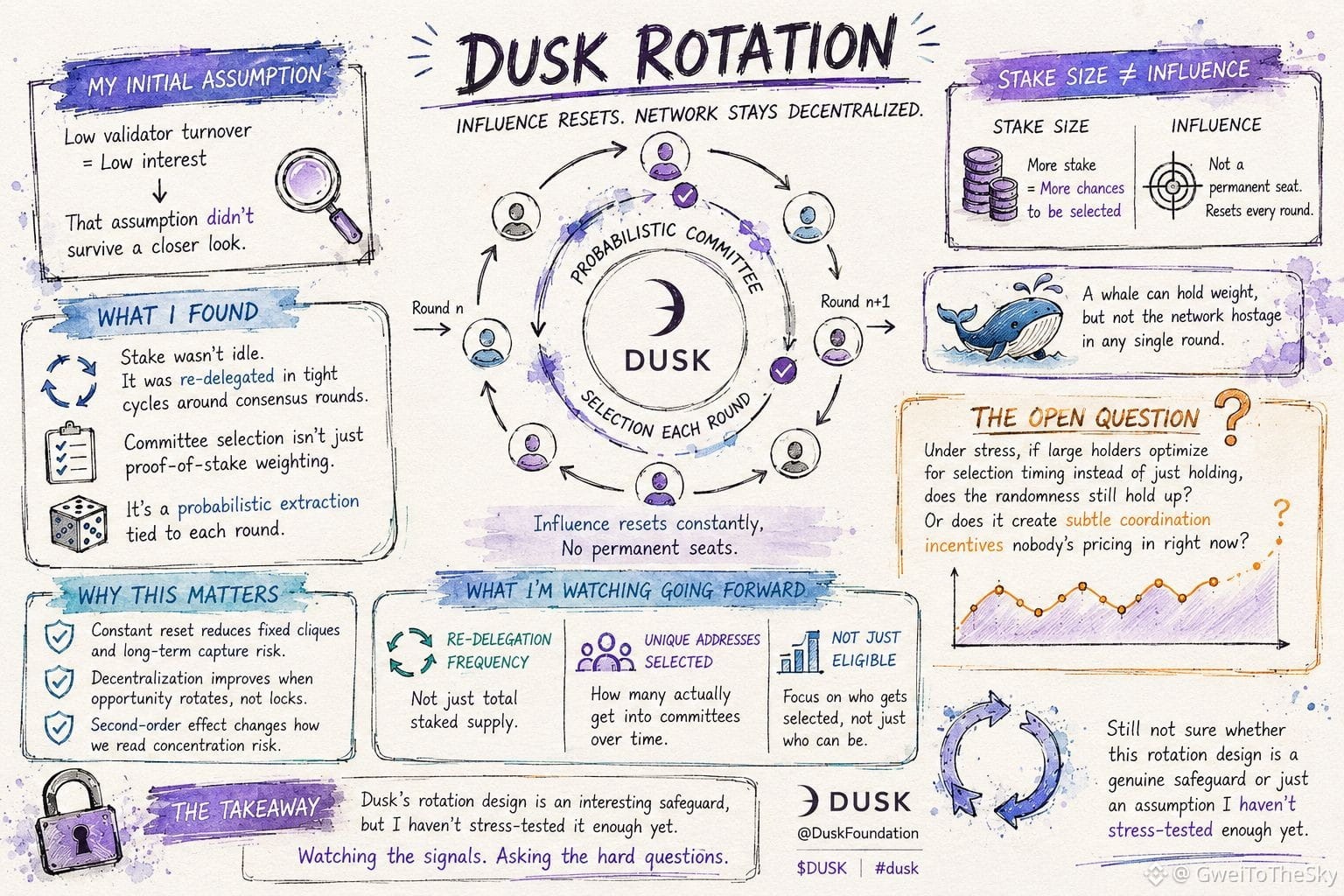
Chồng tôi viết chủ đề cho tôi và hỏi tôi rằng tin này có mới và tốt cho những người nắm giữ Dusk không. Dusk's tập hợp trình xác thực (validator set) so với tỷ lệ tham gia staking của nó trong tuần trước, và giả định đầu tiên của tôi là vòng quay thấp đồng nghĩa với ít quan tâm. Giả định đó không trụ được khi xem xét kỹ hơn.
Khi kiểm tra nhật ký luân chuyển của người cung cấp (provisioner rotation logs), tôi thấy stake không hề “ngồi yên”; nó được tái ủy quyền theo các chu kỳ ngắn trong thời gian gần các vòng đồng thuận (consensus rounds) thay vì để cố định. Điều này dẫn tôi đến cách mà việc chọn ủy ban (committee selection) của Dusk thực sự hoạt động: nó không chỉ là trọng số theo proof of stake, mà là một cơ chế trích xuất mang tính xác suất gắn với từng vòng. Vì vậy, ảnh hưởng được làm mới liên tục thay vì tích lũy cùng một “nhóm cục bộ” các validator cố định.
Sự khác biệt đó quan trọng hơn những gì nghe có vẻ. Tôi đã từng coi “quy mô stake” và “ảnh hưởng trong đồng thuận” là cùng một biến, nhưng thực ra không phải vậy. Một lượng stake lớn cho bạn nhiều cơ hội hơn để được chọn, chứ không phải một chỗ ngồi vĩnh viễn. Hiệu ứng bậc hai này thay đổi cách tôi nhìn rủi ro tập trung ở đây: một “cá voi” có thể nắm giữ trọng lượng mà vẫn không thể giữ mạng bị “khóa cổ” trong bất kỳ vòng đơn lẻ nào.
Điều tôi chưa thể giải quyết được là nó sẽ vận hành ra sao khi chịu áp lực (under stress). Nếu các bên nắm giữ lớn bắt đầu tối ưu hóa cho thời điểm được chọn thay vì chỉ nắm giữ, thì tính ngẫu nhiên vẫn còn giữ vững, hay nó tạo ra những động cơ phối hợp tinh vi mà hiện tại chưa ai định giá đúng.
Trong thời gian tới, tôi sẽ theo dõi tần suất tái ủy quyền (re-delegation frequency), không chỉ là tổng lượng cung cấp staking (total staked supply), cùng với việc có bao nhiêu địa chỉ (addresses) “duy nhất” thực sự được chọn vào các ủy ban theo thời gian—không chỉ là những địa chỉ đủ điều kiện.
Tôi vẫn chưa chắc liệu thiết kế luân chuyển này là một biện pháp bảo vệ thực sự hay chỉ là một giả định mà tôi chưa kiểm chứng đủ trong các kịch bản chịu áp lực.
$BTW $ACE
#dusk $DUSK @Dusk
Chồng tôi viết chủ đề cho tôi và hỏi tôi rằng tin này có mới và tốt cho những người nắm giữ Dusk không. Dusk's tập hợp trình xác thực (validator set) so với tỷ lệ tham gia staking của nó trong tuần trước, và giả định đầu tiên của tôi là vòng quay thấp đồng nghĩa với ít quan tâm. Giả định đó không trụ được khi xem xét kỹ hơn.
Khi kiểm tra nhật ký luân chuyển của người cung cấp (provisioner rotation logs), tôi thấy stake không hề “ngồi yên”; nó được tái ủy quyền theo các chu kỳ ngắn trong thời gian gần các vòng đồng thuận (consensus rounds) thay vì để cố định. Điều này dẫn tôi đến cách mà việc chọn ủy ban (committee selection) của Dusk thực sự hoạt động: nó không chỉ là trọng số theo proof of stake, mà là một cơ chế trích xuất mang tính xác suất gắn với từng vòng. Vì vậy, ảnh hưởng được làm mới liên tục thay vì tích lũy cùng một “nhóm cục bộ” các validator cố định.
Sự khác biệt đó quan trọng hơn những gì nghe có vẻ. Tôi đã từng coi “quy mô stake” và “ảnh hưởng trong đồng thuận” là cùng một biến, nhưng thực ra không phải vậy. Một lượng stake lớn cho bạn nhiều cơ hội hơn để được chọn, chứ không phải một chỗ ngồi vĩnh viễn. Hiệu ứng bậc hai này thay đổi cách tôi nhìn rủi ro tập trung ở đây: một “cá voi” có thể nắm giữ trọng lượng mà vẫn không thể giữ mạng bị “khóa cổ” trong bất kỳ vòng đơn lẻ nào.
Điều tôi chưa thể giải quyết được là nó sẽ vận hành ra sao khi chịu áp lực (under stress). Nếu các bên nắm giữ lớn bắt đầu tối ưu hóa cho thời điểm được chọn thay vì chỉ nắm giữ, thì tính ngẫu nhiên vẫn còn giữ vững, hay nó tạo ra những động cơ phối hợp tinh vi mà hiện tại chưa ai định giá đúng.
Trong thời gian tới, tôi sẽ theo dõi tần suất tái ủy quyền (re-delegation frequency), không chỉ là tổng lượng cung cấp staking (total staked supply), cùng với việc có bao nhiêu địa chỉ (addresses) “duy nhất” thực sự được chọn vào các ủy ban theo thời gian—không chỉ là những địa chỉ đủ điều kiện.
Tôi vẫn chưa chắc liệu thiết kế luân chuyển này là một biện pháp bảo vệ thực sự hay chỉ là một giả định mà tôi chưa kiểm chứng đủ trong các kịch bản chịu áp lực.
$BTW $ACE
Chồng tôi viết chủ đề cho tôi và hỏi tôi rằng tin này có mới và tốt cho những người nắm giữ Dusk không. Dusk's tập hợp trình xác thực (validator set) so với tỷ lệ tham gia staking của nó trong tuần trước, và giả định đầu tiên của tôi là vòng quay thấp đồng nghĩa với ít quan tâm. Giả định đó không trụ được khi xem xét kỹ hơn.
Khi kiểm tra nhật ký luân chuyển của người cung cấp (provisioner rotation logs), tôi thấy stake không hề “ngồi yên”; nó được tái ủy quyền theo các chu kỳ ngắn trong thời gian gần các vòng đồng thuận (consensus rounds) thay vì để cố định. Điều này dẫn tôi đến cách mà việc chọn ủy ban (committee selection) của Dusk thực sự hoạt động: nó không chỉ là trọng số theo proof of stake, mà là một cơ chế trích xuất mang tính xác suất gắn với từng vòng. Vì vậy, ảnh hưởng được làm mới liên tục thay vì tích lũy cùng một “nhóm cục bộ” các validator cố định.
Sự khác biệt đó quan trọng hơn những gì nghe có vẻ. Tôi đã từng coi “quy mô stake” và “ảnh hưởng trong đồng thuận” là cùng một biến, nhưng thực ra không phải vậy. Một lượng stake lớn cho bạn nhiều cơ hội hơn để được chọn, chứ không phải một chỗ ngồi vĩnh viễn. Hiệu ứng bậc hai này thay đổi cách tôi nhìn rủi ro tập trung ở đây: một “cá voi” có thể nắm giữ trọng lượng mà vẫn không thể giữ mạng bị “khóa cổ” trong bất kỳ vòng đơn lẻ nào.
Điều tôi chưa thể giải quyết được là nó sẽ vận hành ra sao khi chịu áp lực (under stress). Nếu các bên nắm giữ lớn bắt đầu tối ưu hóa cho thời điểm được chọn thay vì chỉ nắm giữ, thì tính ngẫu nhiên vẫn còn giữ vững, hay nó tạo ra những động cơ phối hợp tinh vi mà hiện tại chưa ai định giá đúng.
Trong thời gian tới, tôi sẽ theo dõi tần suất tái ủy quyền (re-delegation frequency), không chỉ là tổng lượng cung cấp staking (total staked supply), cùng với việc có bao nhiêu địa chỉ (addresses) “duy nhất” thực sự được chọn vào các ủy ban theo thời gian—không chỉ là những địa chỉ đủ điều kiện.
Tôi vẫn chưa chắc liệu thiết kế luân chuyển này là một biện pháp bảo vệ thực sự hay chỉ là một giả định mà tôi chưa kiểm chứng đủ trong các kịch bản chịu áp lực.
$BTW $ACE
2
2
134
·
--
#Dusk $HEMI $COW $DUSK
Trình thám hoàng hôn tuần trước. Tôi giả định rằng việc thay đổi thành phần ủy ban theo từng vòng sẽ phản ánh gần đúng sự phân bổ cổ phần, vì đó là cách mà phần lớn các hệ thống dựa trên sortition vận hành trong thực tế. Nhưng các con số không khớp như vậy, và nó cứ ám ảnh tôi.
Đào sâu hơn, tôi lần theo nguyên nhân đến cách Deterministic Sortition (sắp vai xác định) gán vai trò tách biệt với chính việc gán trọng số theo cổ phần. Một nhà cung cấp (provisioner) có thể nắm giữ lượng cổ phần đáng kể nhưng lại xuất hiện trong ít ủy ban xác thực hơn so với một người đặt cổ phần nhỏ hơn, trong cùng một khung thời gian, chỉ thuần túy dựa trên cách lựa chọn vai trò được phân bổ vòng này sang vòng khác. Lúc đó tôi mới nhận ra mình đã trộn lẫn hai thứ hoàn toàn không giống nhau.
Trọng số cổ phần quyết định tính đủ điều kiện. Tần suất được chọn quyết định mức độ tham gia thực tế. Hầu hết mọi người coi hai thứ này như một tín hiệu duy nhất, nhưng chúng tách rời, và sự tách rời đó âm thầm quyết định ai mới thực sự đang tham gia chứng thực (attest), còn ai chỉ đơn thuần nắm vốn. Đây là một hiệu ứng bậc hai, không thể hiện ra trừ khi bạn theo dõi từng vòng một cách riêng lẻ thay vì chỉ nhìn tổng tỷ lệ cổ phần.
Điều tôi chưa thể giải quyết được là liệu sự phân kỳ này có phải là cân bằng tải (load-balancing) có chủ đích hay chỉ là nhiễu thống kê rồi sẽ tự cân bằng theo các giai đoạn mẫu dài hơn. Nếu nó mang tính cấu trúc, thì nó đặt ra một câu hỏi thật: liệu các provisioner nhỏ hơn có nhận trách nhiệm nhiều hơn tương ứng với mức vốn của họ hay không, và điều đó có ý nghĩa gì đối với sự phù hợp động cơ (incentive alignment) theo thời gian.
Từ giờ trở đi, tôi sẽ theo dõi thành phần ủy ban theo từng vòng đối chiếu với các bậc cổ phần (stake tiers), chứ không chỉ nhìn các con số tham gia nổi bật (headline). Tôi cũng muốn xem liệu hiệu suất gộp BLS (BLS aggregation) có giữ ổn định khi số lượng provisioner tăng lên hay không, vì đó là chỗ mà chi phí truyền thông thường bắt đầu “cắn” mạnh.
Tôi vẫn chưa có đánh giá chắc chắn rằng đây là một tính năng của thiết kế hay là hệ quả của quy mô mạng hiện tại, và tôi cũng không chắc mình thậm chí sẽ thích lời giải thích nào hơn.
@Dusk_Foundation
#Dusk $HEMI $COW $DUSK
Trình thám hoàng hôn tuần trước. Tôi giả định rằng việc thay đổi thành phần ủy ban theo từng vòng sẽ phản ánh gần đúng sự phân bổ cổ phần, vì đó là cách mà phần lớn các hệ thống dựa trên sortition vận hành trong thực tế. Nhưng các con số không khớp như vậy, và nó cứ ám ảnh tôi.
Đào sâu hơn, tôi lần theo nguyên nhân đến cách Deterministic Sortition (sắp vai xác định) gán vai trò tách biệt với chính việc gán trọng số theo cổ phần. Một nhà cung cấp (provisioner) có thể nắm giữ lượng cổ phần đáng kể nhưng lại xuất hiện trong ít ủy ban xác thực hơn so với một người đặt cổ phần nhỏ hơn, trong cùng một khung thời gian, chỉ thuần túy dựa trên cách lựa chọn vai trò được phân bổ vòng này sang vòng khác. Lúc đó tôi mới nhận ra mình đã trộn lẫn hai thứ hoàn toàn không giống nhau.
Trọng số cổ phần quyết định tính đủ điều kiện. Tần suất được chọn quyết định mức độ tham gia thực tế. Hầu hết mọi người coi hai thứ này như một tín hiệu duy nhất, nhưng chúng tách rời, và sự tách rời đó âm thầm quyết định ai mới thực sự đang tham gia chứng thực (attest), còn ai chỉ đơn thuần nắm vốn. Đây là một hiệu ứng bậc hai, không thể hiện ra trừ khi bạn theo dõi từng vòng một cách riêng lẻ thay vì chỉ nhìn tổng tỷ lệ cổ phần.
Điều tôi chưa thể giải quyết được là liệu sự phân kỳ này có phải là cân bằng tải (load-balancing) có chủ đích hay chỉ là nhiễu thống kê rồi sẽ tự cân bằng theo các giai đoạn mẫu dài hơn. Nếu nó mang tính cấu trúc, thì nó đặt ra một câu hỏi thật: liệu các provisioner nhỏ hơn có nhận trách nhiệm nhiều hơn tương ứng với mức vốn của họ hay không, và điều đó có ý nghĩa gì đối với sự phù hợp động cơ (incentive alignment) theo thời gian.
Từ giờ trở đi, tôi sẽ theo dõi thành phần ủy ban theo từng vòng đối chiếu với các bậc cổ phần (stake tiers), chứ không chỉ nhìn các con số tham gia nổi bật (headline). Tôi cũng muốn xem liệu hiệu suất gộp BLS (BLS aggregation) có giữ ổn định khi số lượng provisioner tăng lên hay không, vì đó là chỗ mà chi phí truyền thông thường bắt đầu “cắn” mạnh.
Tôi vẫn chưa có đánh giá chắc chắn rằng đây là một tính năng của thiết kế hay là hệ quả của quy mô mạng hiện tại, và tôi cũng không chắc mình thậm chí sẽ thích lời giải thích nào hơn.
@Dusk
Trình thám hoàng hôn tuần trước. Tôi giả định rằng việc thay đổi thành phần ủy ban theo từng vòng sẽ phản ánh gần đúng sự phân bổ cổ phần, vì đó là cách mà phần lớn các hệ thống dựa trên sortition vận hành trong thực tế. Nhưng các con số không khớp như vậy, và nó cứ ám ảnh tôi.
Đào sâu hơn, tôi lần theo nguyên nhân đến cách Deterministic Sortition (sắp vai xác định) gán vai trò tách biệt với chính việc gán trọng số theo cổ phần. Một nhà cung cấp (provisioner) có thể nắm giữ lượng cổ phần đáng kể nhưng lại xuất hiện trong ít ủy ban xác thực hơn so với một người đặt cổ phần nhỏ hơn, trong cùng một khung thời gian, chỉ thuần túy dựa trên cách lựa chọn vai trò được phân bổ vòng này sang vòng khác. Lúc đó tôi mới nhận ra mình đã trộn lẫn hai thứ hoàn toàn không giống nhau.
Trọng số cổ phần quyết định tính đủ điều kiện. Tần suất được chọn quyết định mức độ tham gia thực tế. Hầu hết mọi người coi hai thứ này như một tín hiệu duy nhất, nhưng chúng tách rời, và sự tách rời đó âm thầm quyết định ai mới thực sự đang tham gia chứng thực (attest), còn ai chỉ đơn thuần nắm vốn. Đây là một hiệu ứng bậc hai, không thể hiện ra trừ khi bạn theo dõi từng vòng một cách riêng lẻ thay vì chỉ nhìn tổng tỷ lệ cổ phần.
Điều tôi chưa thể giải quyết được là liệu sự phân kỳ này có phải là cân bằng tải (load-balancing) có chủ đích hay chỉ là nhiễu thống kê rồi sẽ tự cân bằng theo các giai đoạn mẫu dài hơn. Nếu nó mang tính cấu trúc, thì nó đặt ra một câu hỏi thật: liệu các provisioner nhỏ hơn có nhận trách nhiệm nhiều hơn tương ứng với mức vốn của họ hay không, và điều đó có ý nghĩa gì đối với sự phù hợp động cơ (incentive alignment) theo thời gian.
Từ giờ trở đi, tôi sẽ theo dõi thành phần ủy ban theo từng vòng đối chiếu với các bậc cổ phần (stake tiers), chứ không chỉ nhìn các con số tham gia nổi bật (headline). Tôi cũng muốn xem liệu hiệu suất gộp BLS (BLS aggregation) có giữ ổn định khi số lượng provisioner tăng lên hay không, vì đó là chỗ mà chi phí truyền thông thường bắt đầu “cắn” mạnh.
Tôi vẫn chưa có đánh giá chắc chắn rằng đây là một tính năng của thiết kế hay là hệ quả của quy mô mạng hiện tại, và tôi cũng không chắc mình thậm chí sẽ thích lời giải thích nào hơn.
@Dusk
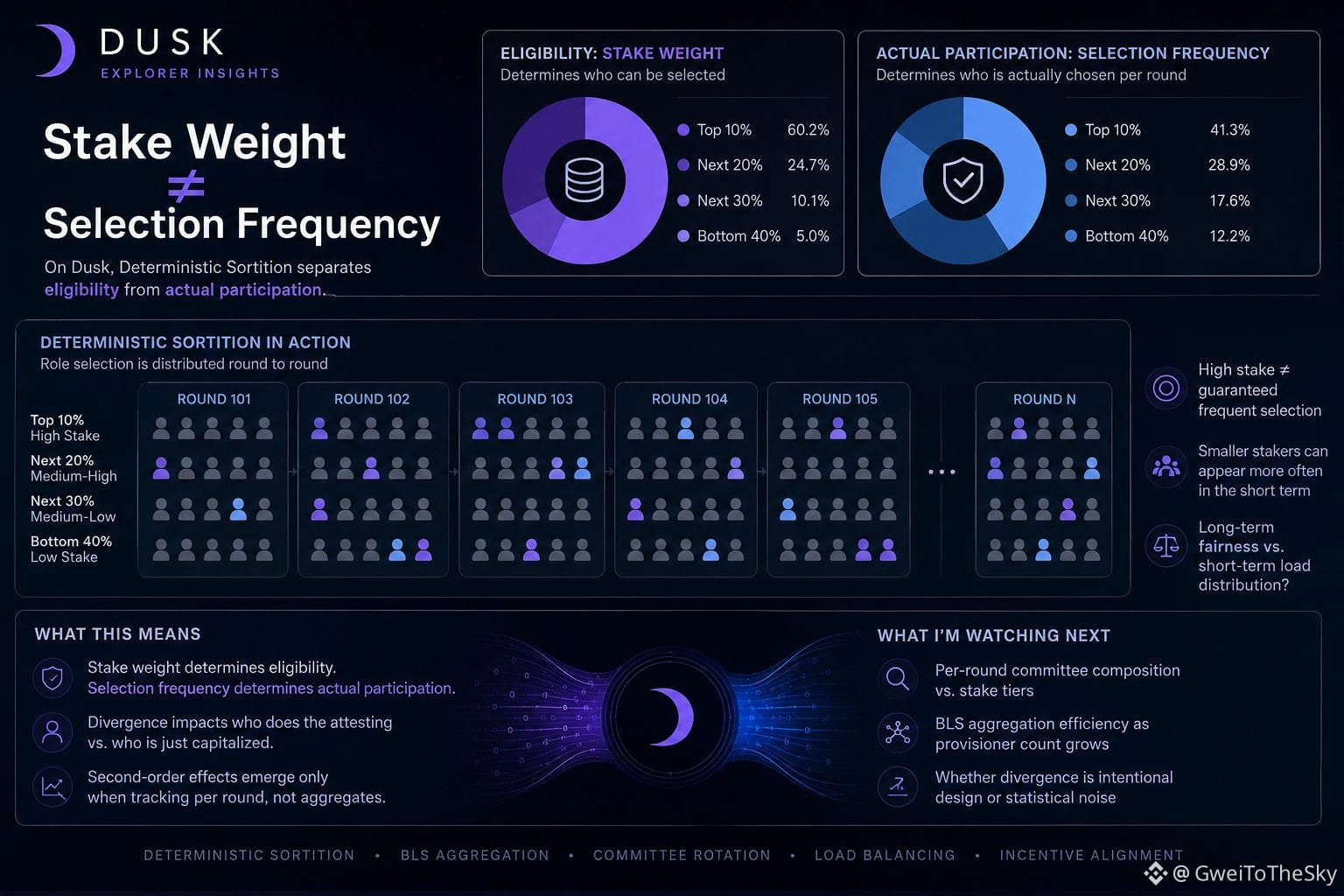
6
4
201
·
--
Khi xem xét dữ liệu sản xuất khối gần đây trên trình khám phá của Dusk, tôi nhận thấy một tập nhỏ các địa chỉ trình xác thực lại xuất hiện thường xuyên hơn nhiều so với mức phân bổ theo tỷ trọng stake mà chúng có vẻ được biện minh. Giả định ban đầu của tôi là có thể tôi đọc sai việc phân trang hoặc vướng một chỉ mục đã lỗi thời, nên tôi đã truy xuất lại dữ liệu trên một phạm vi khối rộng hơn.
Mẫu hình vẫn giữ nguyên, và điều đó đẩy tôi đi sâu vào chính cơ chế đồng thuận. Dusk chọn ủy ban sản xuất khối của mình mỗi vòng thông qua một cơ chế trích xuất theo vòng (round) có trọng số theo stake, chứ không phải luân phiên cố định. Điều trông như thể hiện sự thống trị trong một khung thời gian hẹp thực ra chỉ là phương sai lấy mẫu vốn đã nằm trong cách các ủy ban được rút ra, chứ không phải là sự ưu ái đối với một số nhà điều hành nhất định.
Sự khác biệt này đã làm thay đổi cách tôi nhìn về tính công bằng ở đây. Trọng số stake và tần suất được chọn được coi như cùng một thứ, nhưng chúng chỉ hội tụ khi quan sát trong các giai đoạn dài. Trong ngắn hạn, tính ngẫu nhiên chi phối, và một trình xác thực có thể xuất hiện nhiều hơn kỳ vọng chỉ vì may rủi. Tác động bị bỏ qua ở đây mang tính tâm lý: các nhà điều hành nhỏ hơn theo dõi các khung thời gian ngắn có thể cảm nhận hệ thống bị lệch, ngay cả khi phép tính dài hạn thực sự cân bằng.
Điều tôi vẫn chưa thể giải quyết là cảm nhận đó sẽ diễn ra về mặt vận hành như thế nào. Nếu các trình xác thực nhỏ hơn đánh giá tính công bằng dựa trên các khung thời gian ngắn thay vì sự hội tụ theo thống kê, một số có thể giảm mức tham gia hoặc rời đi hoàn toàn, từ đó làm tập trung stake vì những lý do không liên quan gì đến việc giao thức có thiên lệch thật sự hay không.
Trong thời gian tới, tôi muốn theo dõi phân phối sản xuất khối theo các cửa sổ theo tháng chạy dọc (rolling) thay vì các ảnh chụp theo ngày, đồng thời xem xét quy mô tập trình xác thực và mức biến động (churn) trong nhóm các nhà điều hành nhỏ. Việc duy trì tham gia bền vững dù tồn tại sai lệch ngắn hạn nhìn thấy được sẽ cho tôi nhiều thông tin hơn bất kỳ một giai đoạn lấy mẫu đơn lẻ nào.
Cuối cùng tôi tự hỏi liệu sự công bằng về mặt toán học có đủ hay không, hay liệu cảm nhận về công bằng cuối cùng lại định hình mức độ phi tập trung nhiều như chính thiết kế nền tảng.
@Dusk_Foundation #Dusk
$ACE $VELVET $DUSK
Khi xem xét dữ liệu sản xuất khối gần đây trên trình khám phá của Dusk, tôi nhận thấy một tập nhỏ các địa chỉ trình xác thực lại xuất hiện thường xuyên hơn nhiều so với mức phân bổ theo tỷ trọng stake mà chúng có vẻ được biện minh. Giả định ban đầu của tôi là có thể tôi đọc sai việc phân trang hoặc vướng một chỉ mục đã lỗi thời, nên tôi đã truy xuất lại dữ liệu trên một phạm vi khối rộng hơn.
Mẫu hình vẫn giữ nguyên, và điều đó đẩy tôi đi sâu vào chính cơ chế đồng thuận. Dusk chọn ủy ban sản xuất khối của mình mỗi vòng thông qua một cơ chế trích xuất theo vòng (round) có trọng số theo stake, chứ không phải luân phiên cố định. Điều trông như thể hiện sự thống trị trong một khung thời gian hẹp thực ra chỉ là phương sai lấy mẫu vốn đã nằm trong cách các ủy ban được rút ra, chứ không phải là sự ưu ái đối với một số nhà điều hành nhất định.
Sự khác biệt này đã làm thay đổi cách tôi nhìn về tính công bằng ở đây. Trọng số stake và tần suất được chọn được coi như cùng một thứ, nhưng chúng chỉ hội tụ khi quan sát trong các giai đoạn dài. Trong ngắn hạn, tính ngẫu nhiên chi phối, và một trình xác thực có thể xuất hiện nhiều hơn kỳ vọng chỉ vì may rủi. Tác động bị bỏ qua ở đây mang tính tâm lý: các nhà điều hành nhỏ hơn theo dõi các khung thời gian ngắn có thể cảm nhận hệ thống bị lệch, ngay cả khi phép tính dài hạn thực sự cân bằng.
Điều tôi vẫn chưa thể giải quyết là cảm nhận đó sẽ diễn ra về mặt vận hành như thế nào. Nếu các trình xác thực nhỏ hơn đánh giá tính công bằng dựa trên các khung thời gian ngắn thay vì sự hội tụ theo thống kê, một số có thể giảm mức tham gia hoặc rời đi hoàn toàn, từ đó làm tập trung stake vì những lý do không liên quan gì đến việc giao thức có thiên lệch thật sự hay không.
Trong thời gian tới, tôi muốn theo dõi phân phối sản xuất khối theo các cửa sổ theo tháng chạy dọc (rolling) thay vì các ảnh chụp theo ngày, đồng thời xem xét quy mô tập trình xác thực và mức biến động (churn) trong nhóm các nhà điều hành nhỏ. Việc duy trì tham gia bền vững dù tồn tại sai lệch ngắn hạn nhìn thấy được sẽ cho tôi nhiều thông tin hơn bất kỳ một giai đoạn lấy mẫu đơn lẻ nào.
Cuối cùng tôi tự hỏi liệu sự công bằng về mặt toán học có đủ hay không, hay liệu cảm nhận về công bằng cuối cùng lại định hình mức độ phi tập trung nhiều như chính thiết kế nền tảng.
@Dusk #Dusk
$ACE $VELVET $DUSK
Mẫu hình vẫn giữ nguyên, và điều đó đẩy tôi đi sâu vào chính cơ chế đồng thuận. Dusk chọn ủy ban sản xuất khối của mình mỗi vòng thông qua một cơ chế trích xuất theo vòng (round) có trọng số theo stake, chứ không phải luân phiên cố định. Điều trông như thể hiện sự thống trị trong một khung thời gian hẹp thực ra chỉ là phương sai lấy mẫu vốn đã nằm trong cách các ủy ban được rút ra, chứ không phải là sự ưu ái đối với một số nhà điều hành nhất định.
Sự khác biệt này đã làm thay đổi cách tôi nhìn về tính công bằng ở đây. Trọng số stake và tần suất được chọn được coi như cùng một thứ, nhưng chúng chỉ hội tụ khi quan sát trong các giai đoạn dài. Trong ngắn hạn, tính ngẫu nhiên chi phối, và một trình xác thực có thể xuất hiện nhiều hơn kỳ vọng chỉ vì may rủi. Tác động bị bỏ qua ở đây mang tính tâm lý: các nhà điều hành nhỏ hơn theo dõi các khung thời gian ngắn có thể cảm nhận hệ thống bị lệch, ngay cả khi phép tính dài hạn thực sự cân bằng.
Điều tôi vẫn chưa thể giải quyết là cảm nhận đó sẽ diễn ra về mặt vận hành như thế nào. Nếu các trình xác thực nhỏ hơn đánh giá tính công bằng dựa trên các khung thời gian ngắn thay vì sự hội tụ theo thống kê, một số có thể giảm mức tham gia hoặc rời đi hoàn toàn, từ đó làm tập trung stake vì những lý do không liên quan gì đến việc giao thức có thiên lệch thật sự hay không.
Trong thời gian tới, tôi muốn theo dõi phân phối sản xuất khối theo các cửa sổ theo tháng chạy dọc (rolling) thay vì các ảnh chụp theo ngày, đồng thời xem xét quy mô tập trình xác thực và mức biến động (churn) trong nhóm các nhà điều hành nhỏ. Việc duy trì tham gia bền vững dù tồn tại sai lệch ngắn hạn nhìn thấy được sẽ cho tôi nhiều thông tin hơn bất kỳ một giai đoạn lấy mẫu đơn lẻ nào.
Cuối cùng tôi tự hỏi liệu sự công bằng về mặt toán học có đủ hay không, hay liệu cảm nhận về công bằng cuối cùng lại định hình mức độ phi tập trung nhiều như chính thiết kế nền tảng.
@Dusk #Dusk
$ACE $VELVET $DUSK
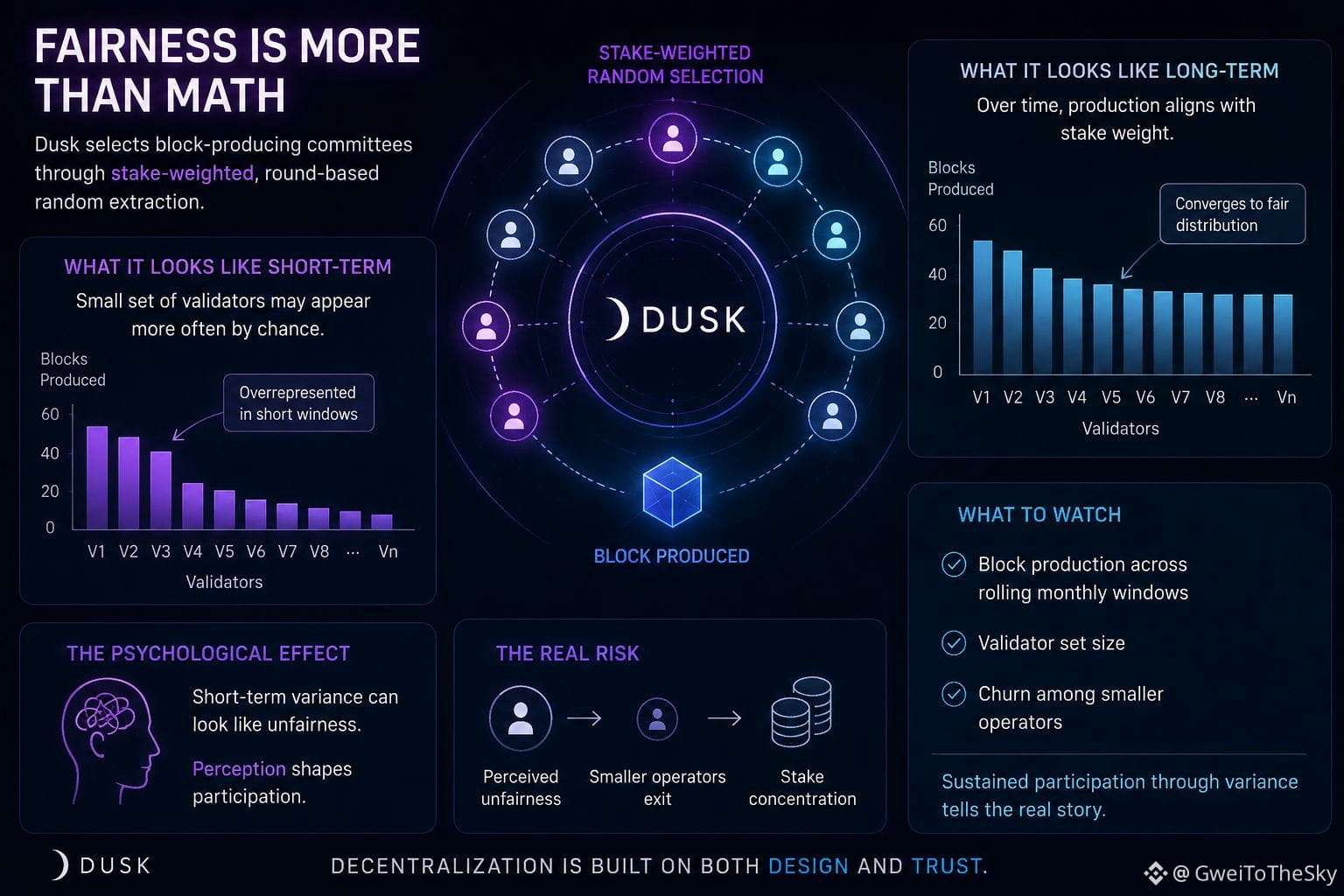
3
3
313
·
--
Hợp đồng bí mật của Dusk hoạt động chống lại hoạt động public mempool của nó: một phần đáng kể giao dịch cho thấy các chuyển trạng thái hợp lệ với gần như không có dữ liệu đầu vào hiển thị. Giả định đầu tiên của tôi là chỉ đó là nhiễu do lỗi giải mã thất bại ở phía mình; một sự cố sai lệch của trình lập chỉ mục khiến phần payload được mã hoá bị hiểu nhầm là rỗng.
Đào sâu hơn, tôi lần ra rằng việc tiết lộ chọn lọc thực sự vận hành vào thời điểm thực thi, chứ không phải ở lớp báo cáo. Thay vì một giao dịch hoặc hoàn toàn công khai hoặc hoàn toàn bị ẩn, logic tiết lộ dường như gắn với các trường cụ thể trong một lời gọi hợp đồng duy nhất: nó tiết lộ dữ liệu về tính đủ điều kiện hoặc tuân thủ cho một bên được chỉ định, trong khi vẫn giữ nguyên các khoản chuyển và các bên liên quan không bị ảnh hưởng. Đây là một cơ chế khác với việc bật/tắt mã hoá.
Điều này buộc tôi phải tách hai thứ mà trước đó tôi đã xem như một: quyền riêng tư và tính bảo mật (confidentiality). Quyền riêng tư là việc không cung cấp thông tin cho mọi người. Ở đây, tính bảo mật có nghĩa là khả năng hiển thị được kiểm soát: thông tin tồn tại và có thể được chứng minh, nhưng chỉ đối với người nắm giữ đúng khoá uỷ quyền. Hiệu ứng bậc hai là tinh tế: việc tiết lộ trở thành một hành động có phân quyền chứ không phải một thiết lập áp dụng toàn mạng, từ đó thay đổi ai thực sự kiểm soát luồng thông tin.
Điều tôi vẫn chưa thể giải quyết là cơ chế này sẽ mở rộng ra sao trong tải trọng thực tế của các tổ chức. Nếu quyền tiết lộ nằm với nhà phát hành hoặc kiểm toán viên, liệu điều đó có tạo ra một sự phụ thuộc mềm vào một nhóm nhỏ các bên được uỷ quyền hay không, và sự phụ thuộc đó có thay đổi theo thẩm quyền pháp lý hoặc loại tài sản hay không?
Trong thời gian tới, tôi muốn theo dõi các mẫu phát hành khoá uỷ quyền, mức độ thường xuyên các quyền tiết lộ được kích hoạt so với trạng thái không hoạt động, và liệu hành vi của trình xác thực (validator) đối với các lời gọi bảo mật này có giữ nhất quán khi khối lượng tăng lên hay không.
Tôi vẫn chưa chắc liệu lớp uỷ quyền này trở thành hạ tầng hay trở thành rào cản. Cảm giác rằng sự phân biệt đó đáng để theo dõi sát sao.
@Dusk_Foundation $DUSK #Dusk
Hợp đồng bí mật của Dusk hoạt động chống lại hoạt động public mempool của nó: một phần đáng kể giao dịch cho thấy các chuyển trạng thái hợp lệ với gần như không có dữ liệu đầu vào hiển thị. Giả định đầu tiên của tôi là chỉ đó là nhiễu do lỗi giải mã thất bại ở phía mình; một sự cố sai lệch của trình lập chỉ mục khiến phần payload được mã hoá bị hiểu nhầm là rỗng.
Đào sâu hơn, tôi lần ra rằng việc tiết lộ chọn lọc thực sự vận hành vào thời điểm thực thi, chứ không phải ở lớp báo cáo. Thay vì một giao dịch hoặc hoàn toàn công khai hoặc hoàn toàn bị ẩn, logic tiết lộ dường như gắn với các trường cụ thể trong một lời gọi hợp đồng duy nhất: nó tiết lộ dữ liệu về tính đủ điều kiện hoặc tuân thủ cho một bên được chỉ định, trong khi vẫn giữ nguyên các khoản chuyển và các bên liên quan không bị ảnh hưởng. Đây là một cơ chế khác với việc bật/tắt mã hoá.
Điều này buộc tôi phải tách hai thứ mà trước đó tôi đã xem như một: quyền riêng tư và tính bảo mật (confidentiality). Quyền riêng tư là việc không cung cấp thông tin cho mọi người. Ở đây, tính bảo mật có nghĩa là khả năng hiển thị được kiểm soát: thông tin tồn tại và có thể được chứng minh, nhưng chỉ đối với người nắm giữ đúng khoá uỷ quyền. Hiệu ứng bậc hai là tinh tế: việc tiết lộ trở thành một hành động có phân quyền chứ không phải một thiết lập áp dụng toàn mạng, từ đó thay đổi ai thực sự kiểm soát luồng thông tin.
Điều tôi vẫn chưa thể giải quyết là cơ chế này sẽ mở rộng ra sao trong tải trọng thực tế của các tổ chức. Nếu quyền tiết lộ nằm với nhà phát hành hoặc kiểm toán viên, liệu điều đó có tạo ra một sự phụ thuộc mềm vào một nhóm nhỏ các bên được uỷ quyền hay không, và sự phụ thuộc đó có thay đổi theo thẩm quyền pháp lý hoặc loại tài sản hay không?
Trong thời gian tới, tôi muốn theo dõi các mẫu phát hành khoá uỷ quyền, mức độ thường xuyên các quyền tiết lộ được kích hoạt so với trạng thái không hoạt động, và liệu hành vi của trình xác thực (validator) đối với các lời gọi bảo mật này có giữ nhất quán khi khối lượng tăng lên hay không.
Tôi vẫn chưa chắc liệu lớp uỷ quyền này trở thành hạ tầng hay trở thành rào cản. Cảm giác rằng sự phân biệt đó đáng để theo dõi sát sao.
@Dusk $DUSK #Dusk
Đào sâu hơn, tôi lần ra rằng việc tiết lộ chọn lọc thực sự vận hành vào thời điểm thực thi, chứ không phải ở lớp báo cáo. Thay vì một giao dịch hoặc hoàn toàn công khai hoặc hoàn toàn bị ẩn, logic tiết lộ dường như gắn với các trường cụ thể trong một lời gọi hợp đồng duy nhất: nó tiết lộ dữ liệu về tính đủ điều kiện hoặc tuân thủ cho một bên được chỉ định, trong khi vẫn giữ nguyên các khoản chuyển và các bên liên quan không bị ảnh hưởng. Đây là một cơ chế khác với việc bật/tắt mã hoá.
Điều này buộc tôi phải tách hai thứ mà trước đó tôi đã xem như một: quyền riêng tư và tính bảo mật (confidentiality). Quyền riêng tư là việc không cung cấp thông tin cho mọi người. Ở đây, tính bảo mật có nghĩa là khả năng hiển thị được kiểm soát: thông tin tồn tại và có thể được chứng minh, nhưng chỉ đối với người nắm giữ đúng khoá uỷ quyền. Hiệu ứng bậc hai là tinh tế: việc tiết lộ trở thành một hành động có phân quyền chứ không phải một thiết lập áp dụng toàn mạng, từ đó thay đổi ai thực sự kiểm soát luồng thông tin.
Điều tôi vẫn chưa thể giải quyết là cơ chế này sẽ mở rộng ra sao trong tải trọng thực tế của các tổ chức. Nếu quyền tiết lộ nằm với nhà phát hành hoặc kiểm toán viên, liệu điều đó có tạo ra một sự phụ thuộc mềm vào một nhóm nhỏ các bên được uỷ quyền hay không, và sự phụ thuộc đó có thay đổi theo thẩm quyền pháp lý hoặc loại tài sản hay không?
Trong thời gian tới, tôi muốn theo dõi các mẫu phát hành khoá uỷ quyền, mức độ thường xuyên các quyền tiết lộ được kích hoạt so với trạng thái không hoạt động, và liệu hành vi của trình xác thực (validator) đối với các lời gọi bảo mật này có giữ nhất quán khi khối lượng tăng lên hay không.
Tôi vẫn chưa chắc liệu lớp uỷ quyền này trở thành hạ tầng hay trở thành rào cản. Cảm giác rằng sự phân biệt đó đáng để theo dõi sát sao.
@Dusk $DUSK #Dusk
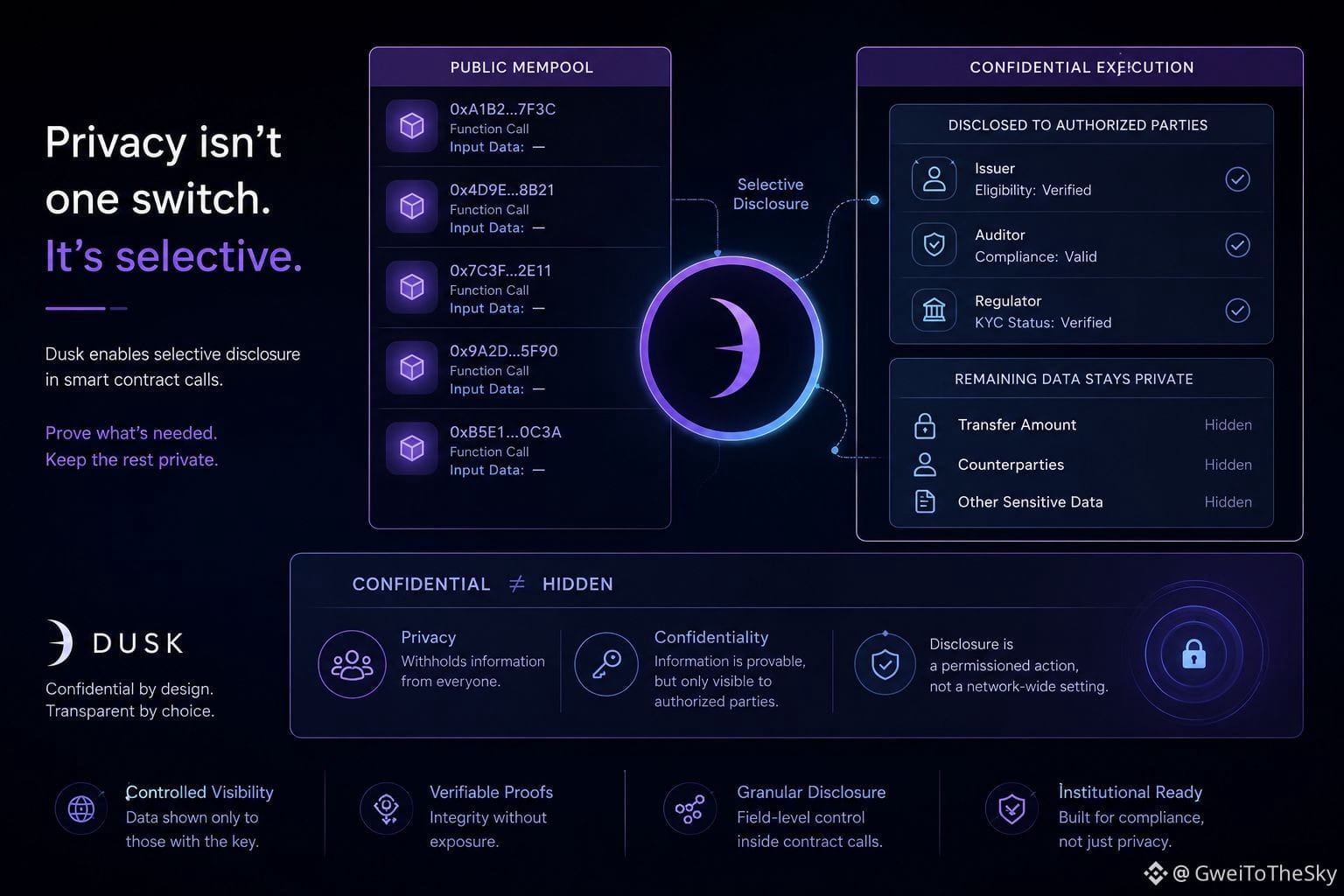
3
96
·
--
Tôi nhận thấy điều gì đó kỳ lạ khi so sánh thời gian xác nhận giữa một loạt giao dịch DUSK mà tôi đã trích từ trình khám phá (explorer). Tôi giả định rằng mọi lần chuyển trên mạng đều được hoàn tất thông qua cùng một đường thực thi, nên mọi biến thiên về thời gian hẳn là do nghẽn mạng. Tuy nhiên, giả định đó không còn đúng khi tôi sắp xếp dữ liệu.
Đào sâu hơn, mẫu độ trễ lại khớp với loại giao dịch, chứ không phải tải của block. Một số giao dịch được che chắn (shielded), được định tuyến qua mô hình thực thi chú trọng quyền riêng tư mà mạng gọi là cơ chế “privacy-preserving execution”, trong khi những giao dịch khác là chuyển khoản hoàn toàn minh bạch, sử dụng một lộ trình riêng dựa trên tài khoản. Cả hai đều hoàn tất trên cùng một chuỗi, nhưng chúng được xử lý bằng logic khác nhau, qua đó giải thích được sự chênh lệch mà tôi đang thấy.
Sự phân biệt đó đã làm thay đổi cách tôi nghĩ về mạng. Tôi từng coi quyền riêng tư và tuân thủ (compliance) như cùng một tính năng trong đầu mình. Thực ra không phải vậy. Quyền riêng tư quyết định điều gì được hiển thị trên chuỗi theo mặc định. Tuân thủ quyết định điều gì có thể được chứng minh sau này, cho ai, và trong điều kiện ủy quyền nào. Một giao dịch có thể riêng tư nhưng vẫn có thể được kiểm toán nếu tồn tại cơ chế công bố (disclosure) phù hợp. Việc trộn lẫn hai thứ này sẽ che mất hoàn toàn lớp thứ hai đó.
Điều tôi vẫn chưa giải quyết được là trong thực tế ai sử dụng lộ trình minh bạch và ai sử dụng lộ trình được che chắn, và vì sao. Lộ trình minh bạch chủ yếu dành cho các nhà vận hành và luồng tổ chức muốn có một dấu vết kiểm toán rõ ràng, hay đơn giản đó chỉ là thói quen của người dùng do chưa quen với tùy chọn che chắn? Sự tách bạch này quan trọng để hiểu được nhu cầu thực sự.
Từ nay, tôi muốn theo dõi tỷ lệ giữa khối lượng giao dịch che chắn và minh bạch theo thời gian, không chỉ nhìn vào thông lượng thô. Sự dịch chuyển sang việc dùng che chắn sẽ cho tôi biết công cụ quyền riêng tư đang được lựa chọn một cách chủ động, chứ không chỉ là “có sẵn”.
Tôi vẫn chưa chắc liệu tỷ lệ đó phản ánh sở thích thực sự hay chỉ là quán tính, và tôi cũng không nghĩ chỉ dữ liệu về khối lượng là đủ để trả lời.
@Dusk_Foundation
$DUSK #Dusk
Tôi nhận thấy điều gì đó kỳ lạ khi so sánh thời gian xác nhận giữa một loạt giao dịch DUSK mà tôi đã trích từ trình khám phá (explorer). Tôi giả định rằng mọi lần chuyển trên mạng đều được hoàn tất thông qua cùng một đường thực thi, nên mọi biến thiên về thời gian hẳn là do nghẽn mạng. Tuy nhiên, giả định đó không còn đúng khi tôi sắp xếp dữ liệu.
Đào sâu hơn, mẫu độ trễ lại khớp với loại giao dịch, chứ không phải tải của block. Một số giao dịch được che chắn (shielded), được định tuyến qua mô hình thực thi chú trọng quyền riêng tư mà mạng gọi là cơ chế “privacy-preserving execution”, trong khi những giao dịch khác là chuyển khoản hoàn toàn minh bạch, sử dụng một lộ trình riêng dựa trên tài khoản. Cả hai đều hoàn tất trên cùng một chuỗi, nhưng chúng được xử lý bằng logic khác nhau, qua đó giải thích được sự chênh lệch mà tôi đang thấy.
Sự phân biệt đó đã làm thay đổi cách tôi nghĩ về mạng. Tôi từng coi quyền riêng tư và tuân thủ (compliance) như cùng một tính năng trong đầu mình. Thực ra không phải vậy. Quyền riêng tư quyết định điều gì được hiển thị trên chuỗi theo mặc định. Tuân thủ quyết định điều gì có thể được chứng minh sau này, cho ai, và trong điều kiện ủy quyền nào. Một giao dịch có thể riêng tư nhưng vẫn có thể được kiểm toán nếu tồn tại cơ chế công bố (disclosure) phù hợp. Việc trộn lẫn hai thứ này sẽ che mất hoàn toàn lớp thứ hai đó.
Điều tôi vẫn chưa giải quyết được là trong thực tế ai sử dụng lộ trình minh bạch và ai sử dụng lộ trình được che chắn, và vì sao. Lộ trình minh bạch chủ yếu dành cho các nhà vận hành và luồng tổ chức muốn có một dấu vết kiểm toán rõ ràng, hay đơn giản đó chỉ là thói quen của người dùng do chưa quen với tùy chọn che chắn? Sự tách bạch này quan trọng để hiểu được nhu cầu thực sự.
Từ nay, tôi muốn theo dõi tỷ lệ giữa khối lượng giao dịch che chắn và minh bạch theo thời gian, không chỉ nhìn vào thông lượng thô. Sự dịch chuyển sang việc dùng che chắn sẽ cho tôi biết công cụ quyền riêng tư đang được lựa chọn một cách chủ động, chứ không chỉ là “có sẵn”.
Tôi vẫn chưa chắc liệu tỷ lệ đó phản ánh sở thích thực sự hay chỉ là quán tính, và tôi cũng không nghĩ chỉ dữ liệu về khối lượng là đủ để trả lời.
@Dusk
$DUSK #Dusk
Đào sâu hơn, mẫu độ trễ lại khớp với loại giao dịch, chứ không phải tải của block. Một số giao dịch được che chắn (shielded), được định tuyến qua mô hình thực thi chú trọng quyền riêng tư mà mạng gọi là cơ chế “privacy-preserving execution”, trong khi những giao dịch khác là chuyển khoản hoàn toàn minh bạch, sử dụng một lộ trình riêng dựa trên tài khoản. Cả hai đều hoàn tất trên cùng một chuỗi, nhưng chúng được xử lý bằng logic khác nhau, qua đó giải thích được sự chênh lệch mà tôi đang thấy.
Sự phân biệt đó đã làm thay đổi cách tôi nghĩ về mạng. Tôi từng coi quyền riêng tư và tuân thủ (compliance) như cùng một tính năng trong đầu mình. Thực ra không phải vậy. Quyền riêng tư quyết định điều gì được hiển thị trên chuỗi theo mặc định. Tuân thủ quyết định điều gì có thể được chứng minh sau này, cho ai, và trong điều kiện ủy quyền nào. Một giao dịch có thể riêng tư nhưng vẫn có thể được kiểm toán nếu tồn tại cơ chế công bố (disclosure) phù hợp. Việc trộn lẫn hai thứ này sẽ che mất hoàn toàn lớp thứ hai đó.
Điều tôi vẫn chưa giải quyết được là trong thực tế ai sử dụng lộ trình minh bạch và ai sử dụng lộ trình được che chắn, và vì sao. Lộ trình minh bạch chủ yếu dành cho các nhà vận hành và luồng tổ chức muốn có một dấu vết kiểm toán rõ ràng, hay đơn giản đó chỉ là thói quen của người dùng do chưa quen với tùy chọn che chắn? Sự tách bạch này quan trọng để hiểu được nhu cầu thực sự.
Từ nay, tôi muốn theo dõi tỷ lệ giữa khối lượng giao dịch che chắn và minh bạch theo thời gian, không chỉ nhìn vào thông lượng thô. Sự dịch chuyển sang việc dùng che chắn sẽ cho tôi biết công cụ quyền riêng tư đang được lựa chọn một cách chủ động, chứ không chỉ là “có sẵn”.
Tôi vẫn chưa chắc liệu tỷ lệ đó phản ánh sở thích thực sự hay chỉ là quán tính, và tôi cũng không nghĩ chỉ dữ liệu về khối lượng là đủ để trả lời.
@Dusk
$DUSK #Dusk
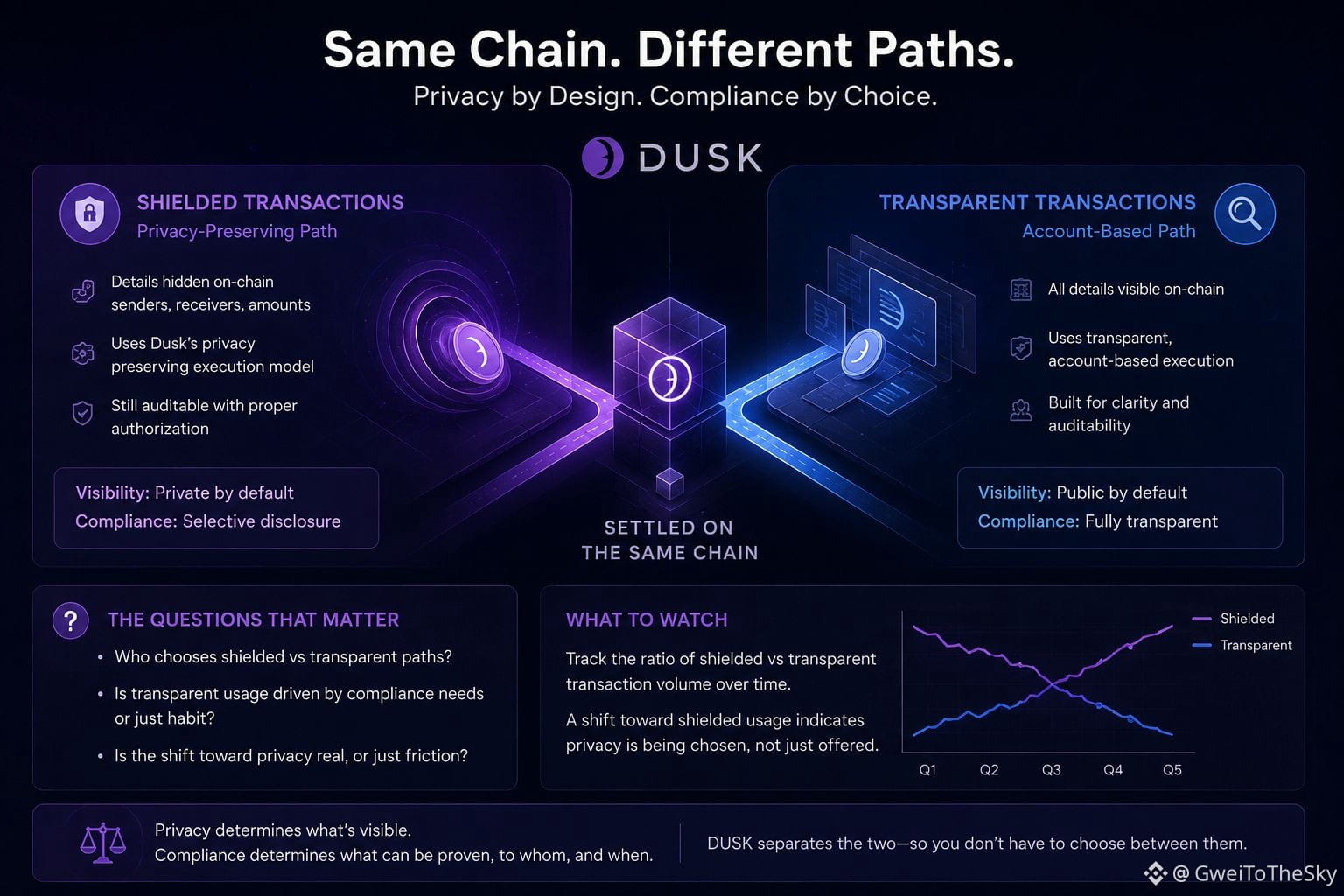
1
3
96
·
--
Mỗi chu kỳ crypto lại bán cho chúng ta cùng một giấc mơ: lần này, hệ thống cuối cùng loại bỏ nhu cầu phải tin tưởng.
“Chúng tôi đã sửa được sự tin cậy.”
“Chúng tôi đã sửa được bảo mật.”
“Chúng tôi đã sửa được lớp bị thiếu.”
Giao thức Newton ($NEWT ) hướng đến một vấn đề thực sự: nếu các tác nhân AI, các kho tiền tự động và hợp đồng thông minh bắt đầu chuyển số tiền nghiêm túc, thì ai sẽ đảm bảo những hành động đó tuân theo đúng quy tắc trước khi xảy ra thiệt hại?
Ý tưởng nghe có vẻ hợp lý. Đừng chờ bị hack. Đừng điều tra sự cố sau khi tiền đã biến mất. Đặt chính sách trước khi thực thi và chặn các hành động rủi ro trước khi chúng “được chốt”.
Câu chuyện sạch sẽ.
Ít nhất thì là trên giấy.
Nhưng chính tại đây mọi thứ trở nên phức tạp. Việc thêm một lớp quy tắc cũng tạo ra một sự phụ thuộc mới. Ai viết các chính sách này? Ai kiểm soát các thiết lập mặc định? Ai quyết định “an toàn” thực sự có nghĩa là gì?
Bởi đôi khi quyền lực lớn nhất không phải là việc giữ tiền.
Mà là kiểm soát tiền được phép làm gì.
Newton nói về việc chuyển từ niềm tin mù quáng sang các quy tắc có thể kiểm chứng, và đó là một hướng đáng theo dõi. Nhưng công nghệ đơn thuần không thể loại bỏ các động lực của con người. Vẫn có người thiết kế hệ thống. Vẫn có người được lợi từ việc được áp dụng. Và vẫn có người kiểm soát các tiêu chuẩn mà tất cả những người khác phải tuân theo.
Thử thách thực sự dành cho Newt không phải là liệu công nghệ có hoạt động trong giai đoạn beta với những người tin sớm hay không.
Mà là thử thách đến sau đó.
Khi tiền thật đi vào cuộc chơi, các động lực sẽ va chạm, và hệ thống phải chứng minh rằng nó có thể bảo vệ người dùng mà không trở thành một “người gác cổng” khác mang một cái tên khác.
@NewtonProtocol #Newt
$TAC $SKL
Mỗi chu kỳ crypto lại bán cho chúng ta cùng một giấc mơ: lần này, hệ thống cuối cùng loại bỏ nhu cầu phải tin tưởng.
“Chúng tôi đã sửa được sự tin cậy.”
“Chúng tôi đã sửa được bảo mật.”
“Chúng tôi đã sửa được lớp bị thiếu.”
Giao thức Newton ($NEWT ) hướng đến một vấn đề thực sự: nếu các tác nhân AI, các kho tiền tự động và hợp đồng thông minh bắt đầu chuyển số tiền nghiêm túc, thì ai sẽ đảm bảo những hành động đó tuân theo đúng quy tắc trước khi xảy ra thiệt hại?
Ý tưởng nghe có vẻ hợp lý. Đừng chờ bị hack. Đừng điều tra sự cố sau khi tiền đã biến mất. Đặt chính sách trước khi thực thi và chặn các hành động rủi ro trước khi chúng “được chốt”.
Câu chuyện sạch sẽ.
Ít nhất thì là trên giấy.
Nhưng chính tại đây mọi thứ trở nên phức tạp. Việc thêm một lớp quy tắc cũng tạo ra một sự phụ thuộc mới. Ai viết các chính sách này? Ai kiểm soát các thiết lập mặc định? Ai quyết định “an toàn” thực sự có nghĩa là gì?
Bởi đôi khi quyền lực lớn nhất không phải là việc giữ tiền.
Mà là kiểm soát tiền được phép làm gì.
Newton nói về việc chuyển từ niềm tin mù quáng sang các quy tắc có thể kiểm chứng, và đó là một hướng đáng theo dõi. Nhưng công nghệ đơn thuần không thể loại bỏ các động lực của con người. Vẫn có người thiết kế hệ thống. Vẫn có người được lợi từ việc được áp dụng. Và vẫn có người kiểm soát các tiêu chuẩn mà tất cả những người khác phải tuân theo.
Thử thách thực sự dành cho Newt không phải là liệu công nghệ có hoạt động trong giai đoạn beta với những người tin sớm hay không.
Mà là thử thách đến sau đó.
Khi tiền thật đi vào cuộc chơi, các động lực sẽ va chạm, và hệ thống phải chứng minh rằng nó có thể bảo vệ người dùng mà không trở thành một “người gác cổng” khác mang một cái tên khác.
@NewtonProtocol #Newt
$TAC $SKL
“Chúng tôi đã sửa được sự tin cậy.”
“Chúng tôi đã sửa được bảo mật.”
“Chúng tôi đã sửa được lớp bị thiếu.”
Giao thức Newton ($NEWT ) hướng đến một vấn đề thực sự: nếu các tác nhân AI, các kho tiền tự động và hợp đồng thông minh bắt đầu chuyển số tiền nghiêm túc, thì ai sẽ đảm bảo những hành động đó tuân theo đúng quy tắc trước khi xảy ra thiệt hại?
Ý tưởng nghe có vẻ hợp lý. Đừng chờ bị hack. Đừng điều tra sự cố sau khi tiền đã biến mất. Đặt chính sách trước khi thực thi và chặn các hành động rủi ro trước khi chúng “được chốt”.
Câu chuyện sạch sẽ.
Ít nhất thì là trên giấy.
Nhưng chính tại đây mọi thứ trở nên phức tạp. Việc thêm một lớp quy tắc cũng tạo ra một sự phụ thuộc mới. Ai viết các chính sách này? Ai kiểm soát các thiết lập mặc định? Ai quyết định “an toàn” thực sự có nghĩa là gì?
Bởi đôi khi quyền lực lớn nhất không phải là việc giữ tiền.
Mà là kiểm soát tiền được phép làm gì.
Newton nói về việc chuyển từ niềm tin mù quáng sang các quy tắc có thể kiểm chứng, và đó là một hướng đáng theo dõi. Nhưng công nghệ đơn thuần không thể loại bỏ các động lực của con người. Vẫn có người thiết kế hệ thống. Vẫn có người được lợi từ việc được áp dụng. Và vẫn có người kiểm soát các tiêu chuẩn mà tất cả những người khác phải tuân theo.
Thử thách thực sự dành cho Newt không phải là liệu công nghệ có hoạt động trong giai đoạn beta với những người tin sớm hay không.
Mà là thử thách đến sau đó.
Khi tiền thật đi vào cuộc chơi, các động lực sẽ va chạm, và hệ thống phải chứng minh rằng nó có thể bảo vệ người dùng mà không trở thành một “người gác cổng” khác mang một cái tên khác.
@NewtonProtocol #Newt
$TAC $SKL
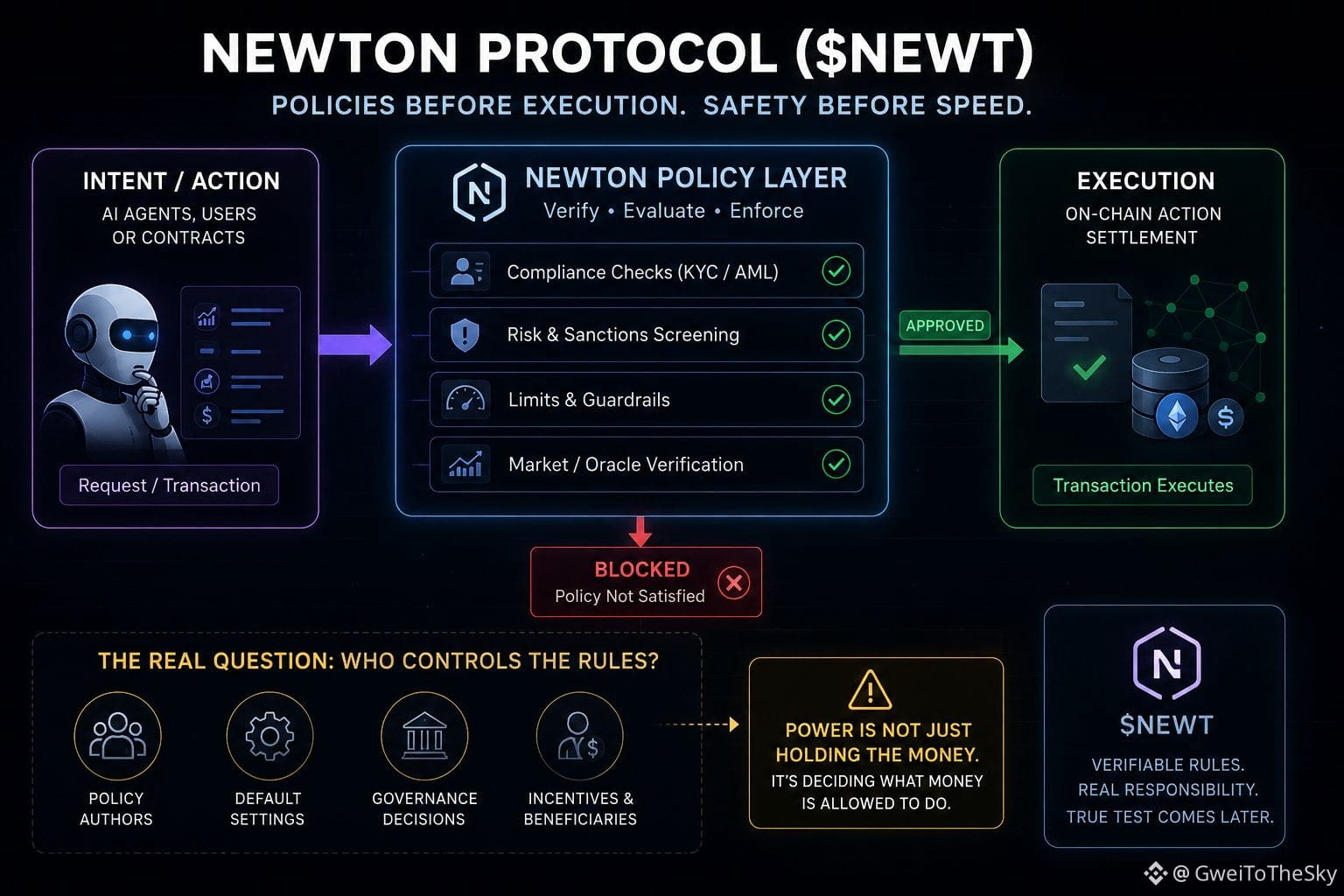
3
2
168
·
--
Này, mỗi chu kỳ lại có một lời hứa mới rằng công nghệ sẽ loại bỏ những sai sót của con người. @NewtonProtocol đang bước vào với một ý tưởng tương tự: các tác nhân AI đang ngày càng mạnh mẽ, nhưng nếu chúng kiểm soát tiền bạc, thì ai sẽ đảm bảo chúng không vượt quá ranh giới?
Newton cố gắng giải quyết một vấn đề thực sự bằng cách thêm các quy tắc và giới hạn có thể được kiểm chứng trước khi các hành động tài chính tự động diễn ra. Mục tiêu không chỉ là giao dịch AI nhanh hơn mà là hành vi AI được kiểm soát.
Nhưng hãy nói thật, việc thêm một lớp quy tắc cũng đồng nghĩa với việc tạo thêm một hệ thống khác mà con người phải tin tưởng. Thêm chính sách, thêm xác minh, thêm cơ sở hạ tầng. Đôi khi việc giải quyết sự phức tạp lại tạo ra một kiểu phức tạp mới.
Câu hỏi cốt lõi là ai kiểm soát những quy tắc này và ai được lợi nếu điều đó trở thành chuẩn mực. Các nhà phát triển, nhà vận hành, nhà cung cấp hạ tầng và người nắm giữ token có thể nhận được giá trị, nhưng người dùng vẫn đang tin vào những lựa chọn thiết kế của ai đó.
Phi tập trung nghe có vẻ tốt, nhưng quyền lực có thể âm thầm tập trung vào bất cứ ai tạo ra chính sách, quản lý hạ tầng khóa quan trọng, hoặc định nghĩa thế nào là “an toàn”.
Và điều gì xảy ra khi một AI tuân theo các quy tắc đã được phê duyệt nhưng vẫn đưa ra một quyết định tài chính thảm hại? Một sai lầm đã được xác minh vẫn là một sai lầm.
Thách thức lớn nhất của Newton không phải là chứng minh AI có thể chuyển tiền.
Mà là chứng minh rằng việc thêm một hệ thống tin cậy khác thực sự làm giảm rủi ro thay vì chỉ chuyển rủi ro đó sang một nơi khó nhìn thấy hơn.
#Newt $NEWT
$SENT $SPCX
Này, mỗi chu kỳ lại có một lời hứa mới rằng công nghệ sẽ loại bỏ những sai sót của con người. @NewtonProtocol đang bước vào với một ý tưởng tương tự: các tác nhân AI đang ngày càng mạnh mẽ, nhưng nếu chúng kiểm soát tiền bạc, thì ai sẽ đảm bảo chúng không vượt quá ranh giới?
Newton cố gắng giải quyết một vấn đề thực sự bằng cách thêm các quy tắc và giới hạn có thể được kiểm chứng trước khi các hành động tài chính tự động diễn ra. Mục tiêu không chỉ là giao dịch AI nhanh hơn mà là hành vi AI được kiểm soát.
Nhưng hãy nói thật, việc thêm một lớp quy tắc cũng đồng nghĩa với việc tạo thêm một hệ thống khác mà con người phải tin tưởng. Thêm chính sách, thêm xác minh, thêm cơ sở hạ tầng. Đôi khi việc giải quyết sự phức tạp lại tạo ra một kiểu phức tạp mới.
Câu hỏi cốt lõi là ai kiểm soát những quy tắc này và ai được lợi nếu điều đó trở thành chuẩn mực. Các nhà phát triển, nhà vận hành, nhà cung cấp hạ tầng và người nắm giữ token có thể nhận được giá trị, nhưng người dùng vẫn đang tin vào những lựa chọn thiết kế của ai đó.
Phi tập trung nghe có vẻ tốt, nhưng quyền lực có thể âm thầm tập trung vào bất cứ ai tạo ra chính sách, quản lý hạ tầng khóa quan trọng, hoặc định nghĩa thế nào là “an toàn”.
Và điều gì xảy ra khi một AI tuân theo các quy tắc đã được phê duyệt nhưng vẫn đưa ra một quyết định tài chính thảm hại? Một sai lầm đã được xác minh vẫn là một sai lầm.
Thách thức lớn nhất của Newton không phải là chứng minh AI có thể chuyển tiền.
Mà là chứng minh rằng việc thêm một hệ thống tin cậy khác thực sự làm giảm rủi ro thay vì chỉ chuyển rủi ro đó sang một nơi khó nhìn thấy hơn.
#Newt $NEWT
$SENT $SPCX
Newton cố gắng giải quyết một vấn đề thực sự bằng cách thêm các quy tắc và giới hạn có thể được kiểm chứng trước khi các hành động tài chính tự động diễn ra. Mục tiêu không chỉ là giao dịch AI nhanh hơn mà là hành vi AI được kiểm soát.
Nhưng hãy nói thật, việc thêm một lớp quy tắc cũng đồng nghĩa với việc tạo thêm một hệ thống khác mà con người phải tin tưởng. Thêm chính sách, thêm xác minh, thêm cơ sở hạ tầng. Đôi khi việc giải quyết sự phức tạp lại tạo ra một kiểu phức tạp mới.
Câu hỏi cốt lõi là ai kiểm soát những quy tắc này và ai được lợi nếu điều đó trở thành chuẩn mực. Các nhà phát triển, nhà vận hành, nhà cung cấp hạ tầng và người nắm giữ token có thể nhận được giá trị, nhưng người dùng vẫn đang tin vào những lựa chọn thiết kế của ai đó.
Phi tập trung nghe có vẻ tốt, nhưng quyền lực có thể âm thầm tập trung vào bất cứ ai tạo ra chính sách, quản lý hạ tầng khóa quan trọng, hoặc định nghĩa thế nào là “an toàn”.
Và điều gì xảy ra khi một AI tuân theo các quy tắc đã được phê duyệt nhưng vẫn đưa ra một quyết định tài chính thảm hại? Một sai lầm đã được xác minh vẫn là một sai lầm.
Thách thức lớn nhất của Newton không phải là chứng minh AI có thể chuyển tiền.
Mà là chứng minh rằng việc thêm một hệ thống tin cậy khác thực sự làm giảm rủi ro thay vì chỉ chuyển rủi ro đó sang một nơi khó nhìn thấy hơn.
#Newt $NEWT
$SENT $SPCX
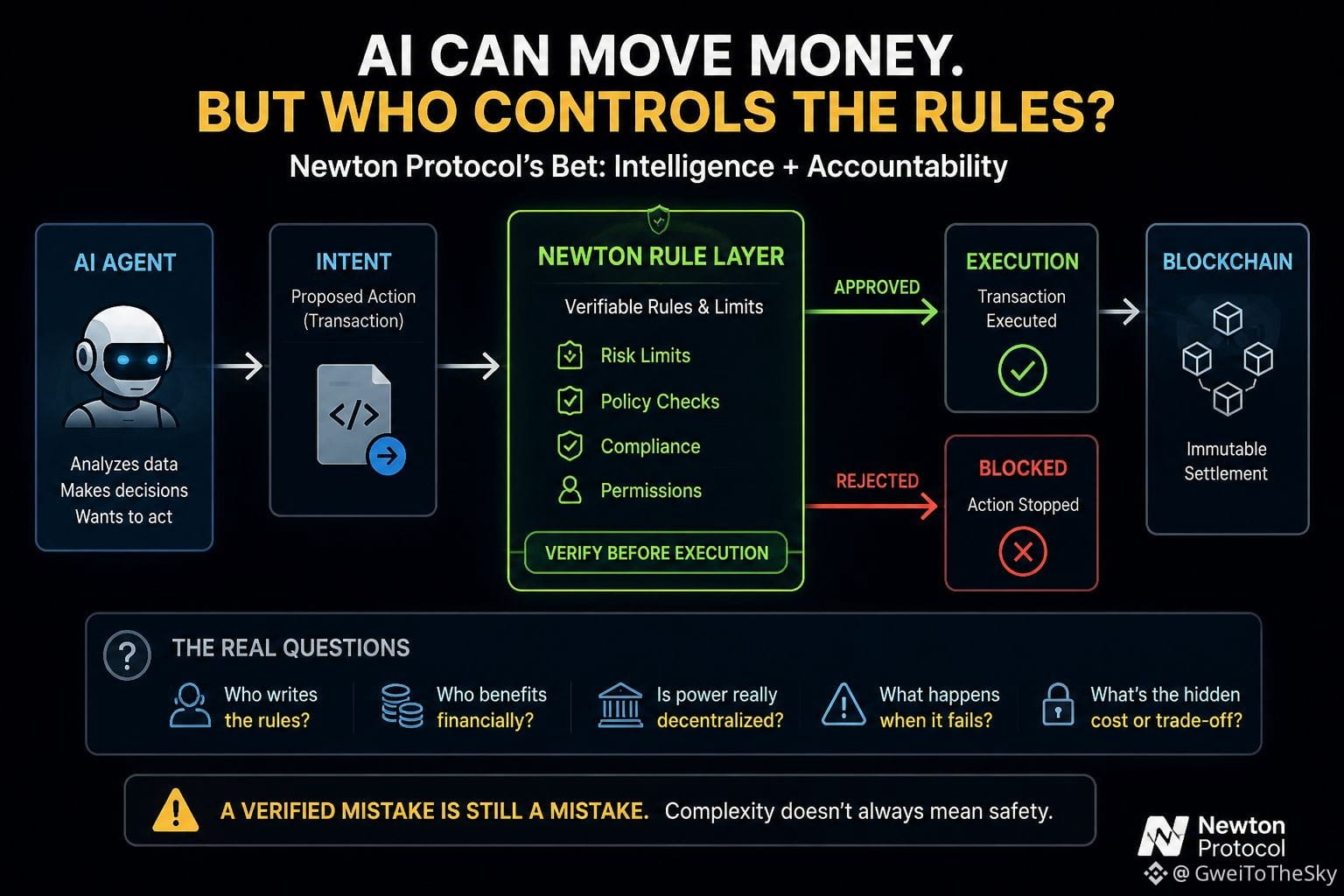
4
2
223
Đăng nhập để khám phá thêm nội dung
Tham gia cùng người dùng tiền mã hóa toàn cầu trên Binance Square
⚡️ Nhận thông tin mới nhất và hữu ích về tiền mã hóa.
💬 Được tin cậy bởi sàn giao dịch tiền mã hóa lớn nhất thế giới.
👍 Khám phá những thông tin chuyên sâu thực tế từ những nhà sáng tạo đã xác minh.
Email / Số điện thoại
Chủ đề thịnh hành
BinancePick
3M lượt xem
152,117 đang thảo luận
Tham gia #MùaBáoCáoKếtQuảKinhDoanh: Dự đoán kết quả kinh doanh trên Binance Pick, chia sẻ quan điểm trên Binance Square!
Binance Square Official
·409 lượt thích
·342.6k lượt xem
EarningsSeason
5.2M lượt xem
25,844 đang thảo luận
TinFed
350,181 lượt xem
945 đang thảo luận