

MASAB ⁰⁰⁷-国王
4k Bài đăng

MASAB ⁰⁰⁷-国王
 Đã xác minh nâng cao trên Square
Báo cáo
Chặn người dùng
Trader | 🔗 Blockchain Believer | 🌍 Exploring the Future of Finance | Turning Ideas into Assets | Always Learning, Always Growing✨ | x:@masab0077
Giao dịch mở
Trader thường xuyên
{thời gian} năm
1.6K+ Đang theo dõi
30.3K+ Người theo dõi
9.9K+ Đã thích
Bài đăng
Danh mục đầu tư
Tất cả
Trích dẫn
Live
·
--
Đã xác minh
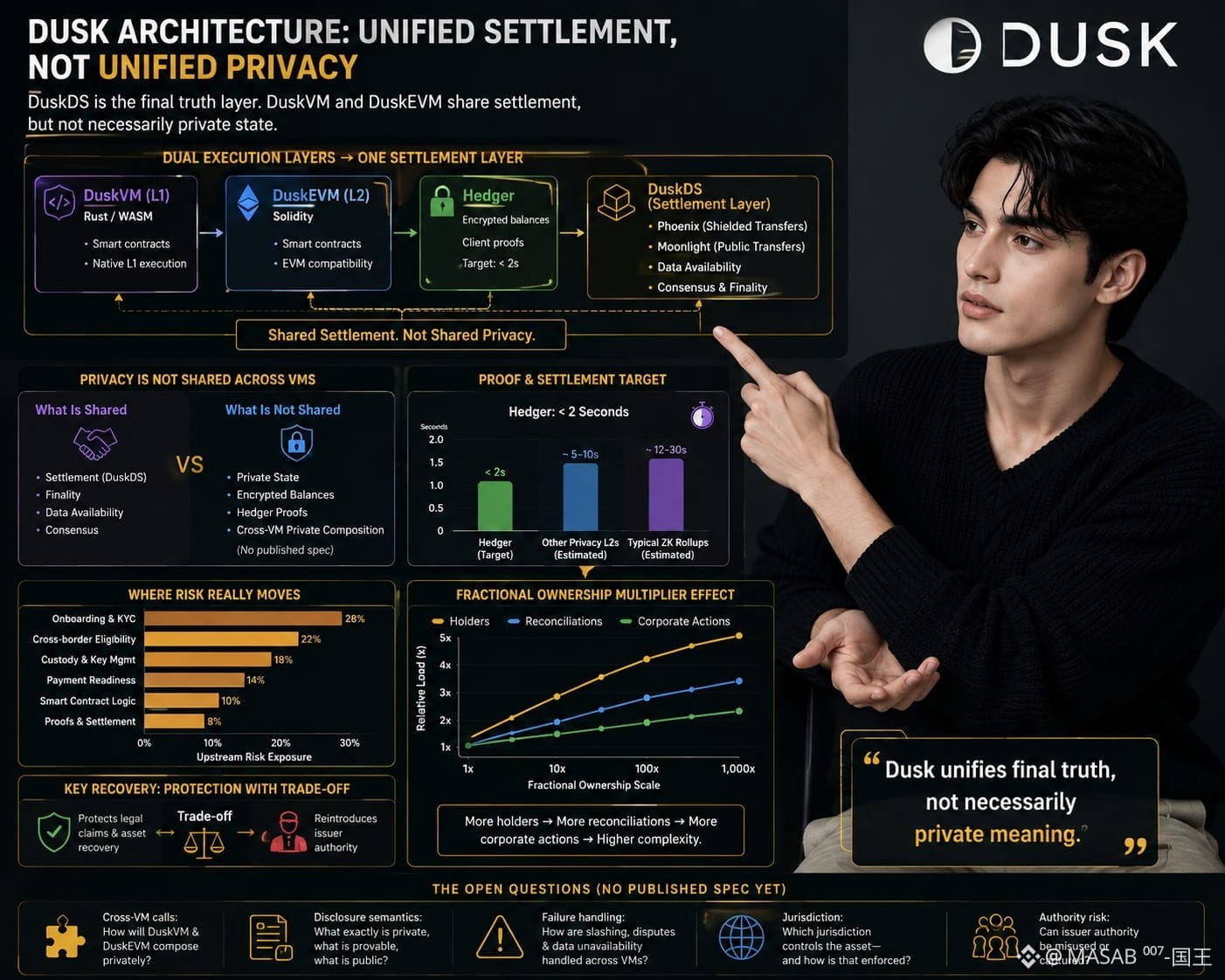
Các biểu đồ đã phẳng, nên tôi mở lại ghi chú kiến trúc của Dusk. Tôi cứ thấy “privacy” như thể DuskDS, DuskVM và DuskEVM dùng chung một trạng thái bí mật.
DuskVM chạy Rust/WASM trên L1; DuskEVM chạy Solidity, với Hedger bổ sung số dư được mã hoá và các bằng chứng phía máy khách nhắm tới thời gian dưới hai giây. Cả hai đều được đối soát thông qua DuskDS—Phoenix cung cấp các lần chuyển được che chắn, Moonlight là các lần chuyển công khai—cùng với tính sẵn sàng dữ liệu, đồng thuận và tính cuối cùng. Thế nhưng đối soát dùng chung không đồng nghĩa riêng tư dùng chung: tôi không tìm thấy đặc tả đã công bố nào cho thấy một hợp đồng DuskVM có thể tự động (riêng tư) kết hợp với trạng thái của Hedger.
Dusk hợp nhất sự thật cuối cùng, không nhất thiết là ý nghĩa riêng tư.
Với RWAs, các tổ chức cần vị thế bí mật và quyền sở hữu có thể được kiểm chứng; che giấu số dư bán lẻ không phải là che giấu một quy trình nghiệp vụ. Bằng chứng và đối soát nhanh hơn có thể chuyển rủi ro về phía thượng nguồn trong khâu onboard, đủ điều kiện xuyên biên giới, khả năng lưu ký và mức sẵn sàng thanh toán. Các nhà phát triển vẫn phải đối chiếu giữa Solidity, trạng thái bí mật và logic tuân thủ.
Sở hữu phân mảnh nhân lên số lượng người nắm giữ, công tác đối chiếu và các hoạt động doanh nghiệp. Khả năng khôi phục khóa bị mất bảo vệ các yêu cầu pháp lý, nhưng đồng thời đưa lại thẩm quyền của tổ chức phát hành. Mã hoá không thể quyết định khu vực pháp lý nào kiểm soát tài sản—hay liệu thẩm quyền đó có hành động sáng suệng hay không.
Điều này không chỉ xảy ra với Dusk. Cho tới khi các cuộc gọi xuyên VM, ngữ nghĩa công bố và cách xử lý lỗi được tài liệu hoá, “quyền riêng tư hợp nhất” vượt quá cam kết đã công bố. Các biểu đồ vẫn phẳng; còn cụm từ thì không.
@Dusk_Foundation $DUSK #dusk
{future}(DUSKUSDT)
Các biểu đồ đã phẳng, nên tôi mở lại ghi chú kiến trúc của Dusk. Tôi cứ thấy “privacy” như thể DuskDS, DuskVM và DuskEVM dùng chung một trạng thái bí mật.
DuskVM chạy Rust/WASM trên L1; DuskEVM chạy Solidity, với Hedger bổ sung số dư được mã hoá và các bằng chứng phía máy khách nhắm tới thời gian dưới hai giây. Cả hai đều được đối soát thông qua DuskDS—Phoenix cung cấp các lần chuyển được che chắn, Moonlight là các lần chuyển công khai—cùng với tính sẵn sàng dữ liệu, đồng thuận và tính cuối cùng. Thế nhưng đối soát dùng chung không đồng nghĩa riêng tư dùng chung: tôi không tìm thấy đặc tả đã công bố nào cho thấy một hợp đồng DuskVM có thể tự động (riêng tư) kết hợp với trạng thái của Hedger.
Dusk hợp nhất sự thật cuối cùng, không nhất thiết là ý nghĩa riêng tư.
Với RWAs, các tổ chức cần vị thế bí mật và quyền sở hữu có thể được kiểm chứng; che giấu số dư bán lẻ không phải là che giấu một quy trình nghiệp vụ. Bằng chứng và đối soát nhanh hơn có thể chuyển rủi ro về phía thượng nguồn trong khâu onboard, đủ điều kiện xuyên biên giới, khả năng lưu ký và mức sẵn sàng thanh toán. Các nhà phát triển vẫn phải đối chiếu giữa Solidity, trạng thái bí mật và logic tuân thủ.
Sở hữu phân mảnh nhân lên số lượng người nắm giữ, công tác đối chiếu và các hoạt động doanh nghiệp. Khả năng khôi phục khóa bị mất bảo vệ các yêu cầu pháp lý, nhưng đồng thời đưa lại thẩm quyền của tổ chức phát hành. Mã hoá không thể quyết định khu vực pháp lý nào kiểm soát tài sản—hay liệu thẩm quyền đó có hành động sáng suệng hay không.
Điều này không chỉ xảy ra với Dusk. Cho tới khi các cuộc gọi xuyên VM, ngữ nghĩa công bố và cách xử lý lỗi được tài liệu hoá, “quyền riêng tư hợp nhất” vượt quá cam kết đã công bố. Các biểu đồ vẫn phẳng; còn cụm từ thì không.
@Dusk $DUSK #dusk
DuskVM chạy Rust/WASM trên L1; DuskEVM chạy Solidity, với Hedger bổ sung số dư được mã hoá và các bằng chứng phía máy khách nhắm tới thời gian dưới hai giây. Cả hai đều được đối soát thông qua DuskDS—Phoenix cung cấp các lần chuyển được che chắn, Moonlight là các lần chuyển công khai—cùng với tính sẵn sàng dữ liệu, đồng thuận và tính cuối cùng. Thế nhưng đối soát dùng chung không đồng nghĩa riêng tư dùng chung: tôi không tìm thấy đặc tả đã công bố nào cho thấy một hợp đồng DuskVM có thể tự động (riêng tư) kết hợp với trạng thái của Hedger.
Dusk hợp nhất sự thật cuối cùng, không nhất thiết là ý nghĩa riêng tư.
Với RWAs, các tổ chức cần vị thế bí mật và quyền sở hữu có thể được kiểm chứng; che giấu số dư bán lẻ không phải là che giấu một quy trình nghiệp vụ. Bằng chứng và đối soát nhanh hơn có thể chuyển rủi ro về phía thượng nguồn trong khâu onboard, đủ điều kiện xuyên biên giới, khả năng lưu ký và mức sẵn sàng thanh toán. Các nhà phát triển vẫn phải đối chiếu giữa Solidity, trạng thái bí mật và logic tuân thủ.
Sở hữu phân mảnh nhân lên số lượng người nắm giữ, công tác đối chiếu và các hoạt động doanh nghiệp. Khả năng khôi phục khóa bị mất bảo vệ các yêu cầu pháp lý, nhưng đồng thời đưa lại thẩm quyền của tổ chức phát hành. Mã hoá không thể quyết định khu vực pháp lý nào kiểm soát tài sản—hay liệu thẩm quyền đó có hành động sáng suệng hay không.
Điều này không chỉ xảy ra với Dusk. Cho tới khi các cuộc gọi xuyên VM, ngữ nghĩa công bố và cách xử lý lỗi được tài liệu hoá, “quyền riêng tư hợp nhất” vượt quá cam kết đã công bố. Các biểu đồ vẫn phẳng; còn cụm từ thì không.
@Dusk $DUSK #dusk
6
10
30.2k
·
--
Đã xác minh
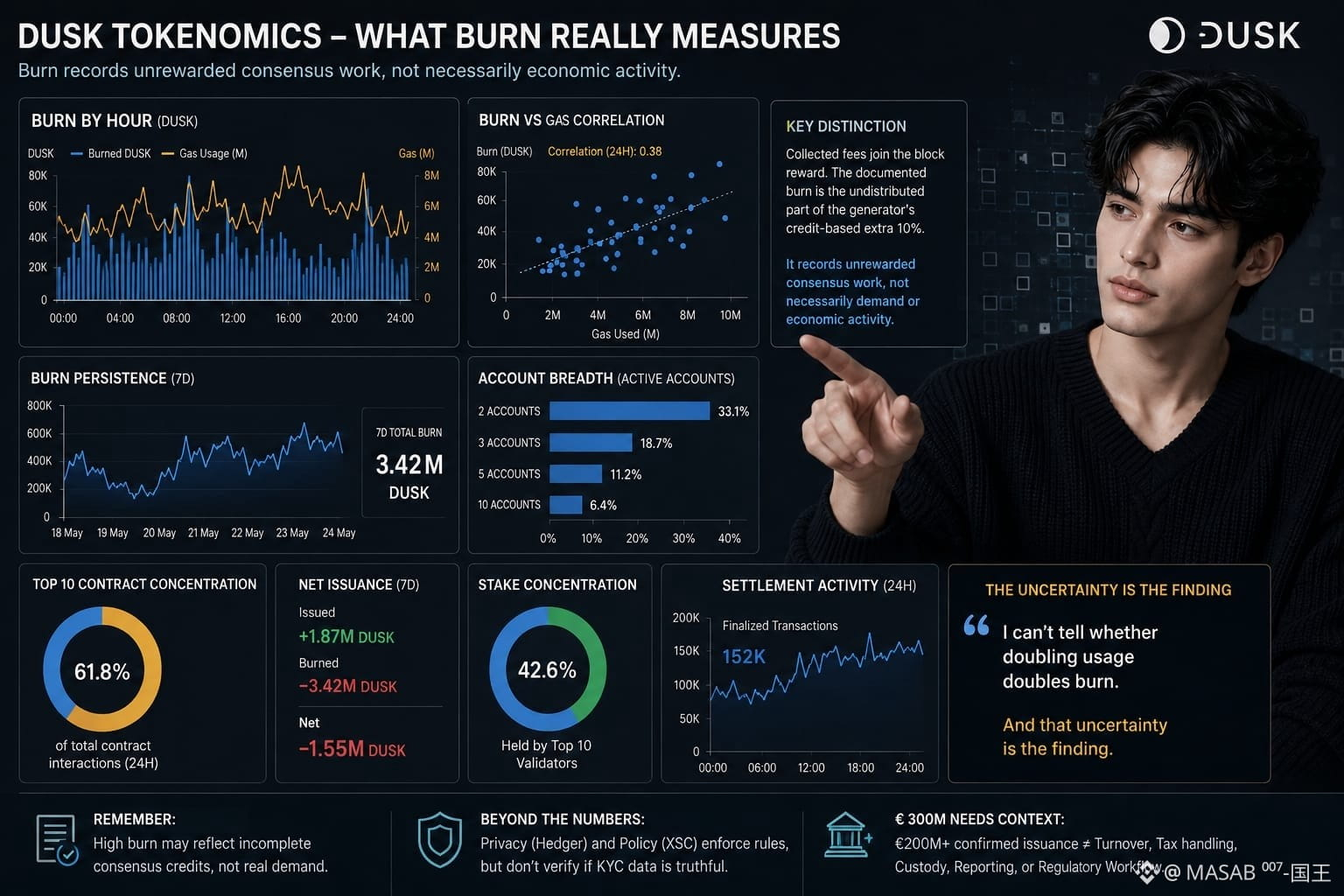
Các biểu đồ đi ngang, nên tôi mở trang tokenomics của Dusk để lập bản đồ lượng đốt theo giờ. Tôi giả định rằng các khối bận rộn, phí gas cao và nhiều người dùng hơn sẽ đồng nghĩa với việc DUSK bị đốt nhiều hơn. Nhưng có điều gì đó không khớp.
Phí được thanh toán bằng DUSK, nhưng các khoản phí thu được lại được cộng vào phần thưởng khối. Phần đốt được ghi nhận là phần chưa được phân bổ của “phần bổ sung 10%” dựa trên tín dụng mà bộ tạo phát ra. Lượng đốt theo mỗi khối, epoch, hợp đồng hoặc mỗi một triệu gas không thể tự động đo lường nhu cầu; mức đốt cao có thể phản ánh tín dụng đồng thuận chưa hoàn chỉnh.
Nó ghi nhận công việc đồng thuận không được thưởng, không nhất thiết phản ánh hoạt động kinh tế.
Chính sự khác biệt đó cứ bám theo tôi. Lượng stake 210M+ có thể bảo vệ sự đồng thuận, chứ không đảm bảo độ chính xác của thông tin chứng chỉ hay logic của ứng dụng. Hedger có thể che giấu giá trị trong khi vẫn chứng minh được phép tính, và XSC có thể thực thi chính sách chuyển nhượng, nhưng cả hai không chứng minh rằng dữ liệu KYC là đúng sự thật. Việc bị từ chối vẫn có thể làm rò rỉ manh mối về tính đủ điều kiện.
Dù là €300M cũng cần phải gắn nhãn. Dusk từng trích dẫn AUM €300M của NPEX vào năm 2025; trang hiện tại của họ hiển thị hơn €200M đã được xác nhận phát hành. Cả hai đều không đo được mức độ quay vòng, quy đổi ví, cách xử lý thuế, nơi lưu ký, việc báo cáo, đối soát, hay việc bốn chức năng tuân thủ có hoạt động như một quy trình thống nhất hay không.
Bây giờ dashboard của tôi cần theo dõi tính bền vững của lượng đốt, tương quan gas/phí, độ phủ tài khoản theo các mức 2/3/5/10 hợp đồng, mức độ tập trung top-ten, lượng phát hành ròng, mức tập trung stake và hoạt động thanh toán. Các biểu đồ vẫn đang mở. Tôi không biết liệu việc tăng gấp đôi mức sử dụng có làm tăng gấp đôi lượng đốt hay không—và sự không chắc chắn đó chính là phát hiện của tôi. @Dusk_Foundation $DUSK #dusk
{future}(DUSKUSDT)
Các biểu đồ đi ngang, nên tôi mở trang tokenomics của Dusk để lập bản đồ lượng đốt theo giờ. Tôi giả định rằng các khối bận rộn, phí gas cao và nhiều người dùng hơn sẽ đồng nghĩa với việc DUSK bị đốt nhiều hơn. Nhưng có điều gì đó không khớp.
Phí được thanh toán bằng DUSK, nhưng các khoản phí thu được lại được cộng vào phần thưởng khối. Phần đốt được ghi nhận là phần chưa được phân bổ của “phần bổ sung 10%” dựa trên tín dụng mà bộ tạo phát ra. Lượng đốt theo mỗi khối, epoch, hợp đồng hoặc mỗi một triệu gas không thể tự động đo lường nhu cầu; mức đốt cao có thể phản ánh tín dụng đồng thuận chưa hoàn chỉnh.
Nó ghi nhận công việc đồng thuận không được thưởng, không nhất thiết phản ánh hoạt động kinh tế.
Chính sự khác biệt đó cứ bám theo tôi. Lượng stake 210M+ có thể bảo vệ sự đồng thuận, chứ không đảm bảo độ chính xác của thông tin chứng chỉ hay logic của ứng dụng. Hedger có thể che giấu giá trị trong khi vẫn chứng minh được phép tính, và XSC có thể thực thi chính sách chuyển nhượng, nhưng cả hai không chứng minh rằng dữ liệu KYC là đúng sự thật. Việc bị từ chối vẫn có thể làm rò rỉ manh mối về tính đủ điều kiện.
Dù là €300M cũng cần phải gắn nhãn. Dusk từng trích dẫn AUM €300M của NPEX vào năm 2025; trang hiện tại của họ hiển thị hơn €200M đã được xác nhận phát hành. Cả hai đều không đo được mức độ quay vòng, quy đổi ví, cách xử lý thuế, nơi lưu ký, việc báo cáo, đối soát, hay việc bốn chức năng tuân thủ có hoạt động như một quy trình thống nhất hay không.
Bây giờ dashboard của tôi cần theo dõi tính bền vững của lượng đốt, tương quan gas/phí, độ phủ tài khoản theo các mức 2/3/5/10 hợp đồng, mức độ tập trung top-ten, lượng phát hành ròng, mức tập trung stake và hoạt động thanh toán. Các biểu đồ vẫn đang mở. Tôi không biết liệu việc tăng gấp đôi mức sử dụng có làm tăng gấp đôi lượng đốt hay không—và sự không chắc chắn đó chính là phát hiện của tôi. @Dusk $DUSK #dusk
Phí được thanh toán bằng DUSK, nhưng các khoản phí thu được lại được cộng vào phần thưởng khối. Phần đốt được ghi nhận là phần chưa được phân bổ của “phần bổ sung 10%” dựa trên tín dụng mà bộ tạo phát ra. Lượng đốt theo mỗi khối, epoch, hợp đồng hoặc mỗi một triệu gas không thể tự động đo lường nhu cầu; mức đốt cao có thể phản ánh tín dụng đồng thuận chưa hoàn chỉnh.
Nó ghi nhận công việc đồng thuận không được thưởng, không nhất thiết phản ánh hoạt động kinh tế.
Chính sự khác biệt đó cứ bám theo tôi. Lượng stake 210M+ có thể bảo vệ sự đồng thuận, chứ không đảm bảo độ chính xác của thông tin chứng chỉ hay logic của ứng dụng. Hedger có thể che giấu giá trị trong khi vẫn chứng minh được phép tính, và XSC có thể thực thi chính sách chuyển nhượng, nhưng cả hai không chứng minh rằng dữ liệu KYC là đúng sự thật. Việc bị từ chối vẫn có thể làm rò rỉ manh mối về tính đủ điều kiện.
Dù là €300M cũng cần phải gắn nhãn. Dusk từng trích dẫn AUM €300M của NPEX vào năm 2025; trang hiện tại của họ hiển thị hơn €200M đã được xác nhận phát hành. Cả hai đều không đo được mức độ quay vòng, quy đổi ví, cách xử lý thuế, nơi lưu ký, việc báo cáo, đối soát, hay việc bốn chức năng tuân thủ có hoạt động như một quy trình thống nhất hay không.
Bây giờ dashboard của tôi cần theo dõi tính bền vững của lượng đốt, tương quan gas/phí, độ phủ tài khoản theo các mức 2/3/5/10 hợp đồng, mức độ tập trung top-ten, lượng phát hành ròng, mức tập trung stake và hoạt động thanh toán. Các biểu đồ vẫn đang mở. Tôi không biết liệu việc tăng gấp đôi mức sử dụng có làm tăng gấp đôi lượng đốt hay không—và sự không chắc chắn đó chính là phát hiện của tôi. @Dusk $DUSK #dusk
8
14
11.6k
·
--
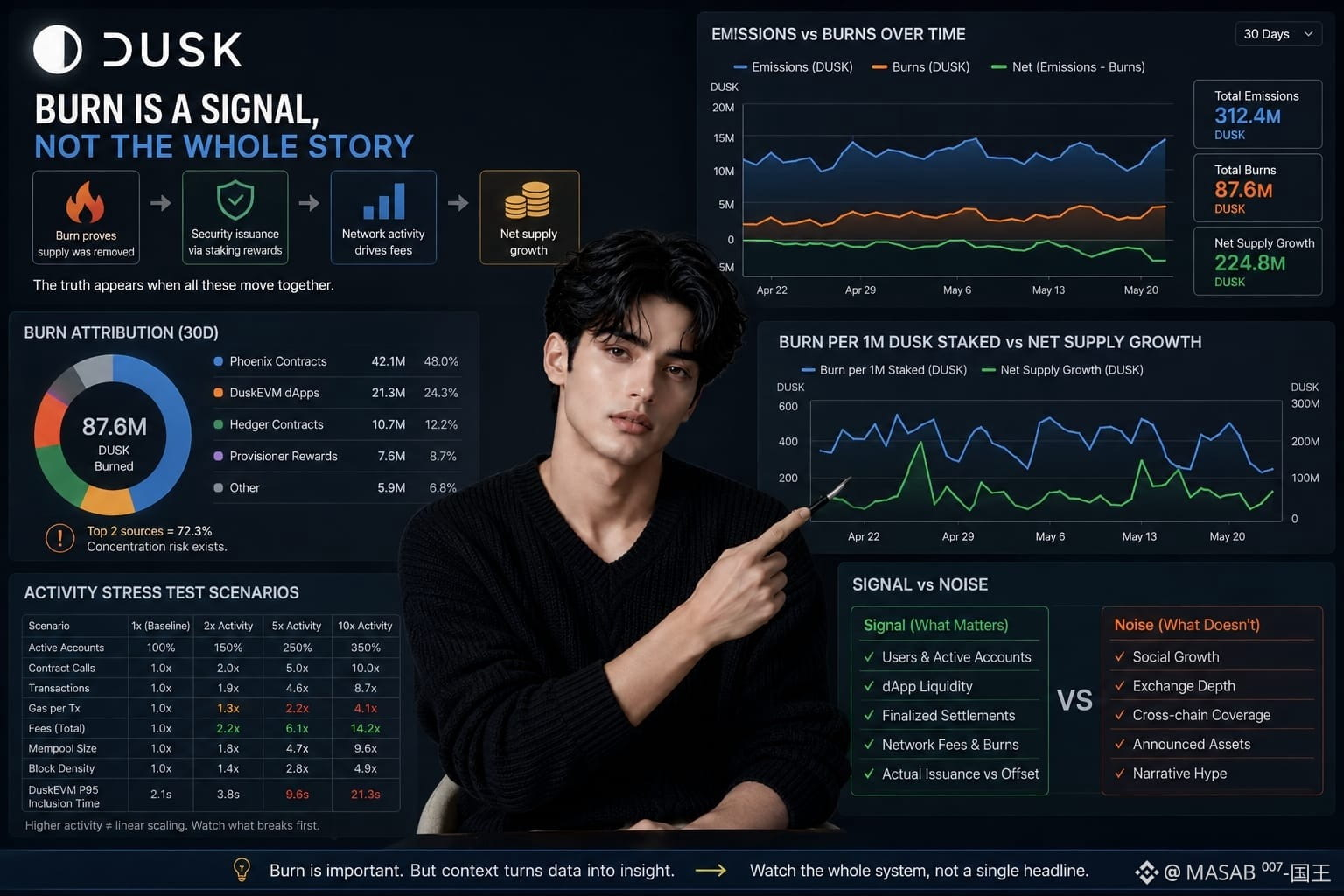
Hôm qua, trong một thị trường đi ngang, tôi liên tục thấy DUSK burn được xử lý như một “bằng chứng” của giảm phát. Tôi đã ngồi với nhận định đó. Có điều gì đó không khớp.
Một bảng điều khiển Dusk phải so sánh lượng phát thải hằng ngày, hằng tuần và hằng tháng với phần burn, sau đó phân bổ burn theo từng ví, ứng dụng, epoch và block. Nếu một hợp đồng hoặc một vài block chi phối, thì “tổng” đó sẽ có ý nghĩa khác với nhu cầu rộng khắp.
Burn chứng minh rằng nguồn cung đã bị loại bỏ, chứ không chứng minh nhu cầu đã được phân bổ hay bền vững.
Giá trị của nó xuất hiện cùng với phần thưởng staking, active stake, phần thưởng provisioner, epoch fee density và activity acceleration, burn trên mỗi 1 triệu DUSK được staking và mức tăng trưởng net supply. Tất cả cùng nhau cho thấy liệu việc phát hành cho mục đích bảo mật có được bù trừ bởi hoạt động hay không, và việc staking cao hơn tạo ra áp lực cung nhiều hơn hay ít hơn.
Nhưng cơ chế vẫn cần được kiểm tra chịu tải. Nếu active accounts tăng 50% hoặc số lần gọi hợp đồng tăng gấp đôi, liệu giao dịch và gas có tăng gấp đôi không? Ở mức hoạt động 2×, 5× và 10×, cái gì diễn ra trước: gas trên mỗi giao dịch, phí, kích thước mempool, độ dày block hay thời gian inclusion P95 của DuskEVM?
Tôi sẽ tách tăng trưởng xã hội, chiều sâu sàn, phạm vi cross-chain và các tài sản được công bố khỏi người dùng, thanh khoản của ứng dụng, các settlement đã được final hóa và lượng phát hành thực tế.
Thị trường vẫn đi ngang. Tiêu đề về burn có vẻ còn thiếu.
@Dusk_Foundation $DUSK #dusk
{future}(DUSKUSDT)
Hôm qua, trong một thị trường đi ngang, tôi liên tục thấy DUSK burn được xử lý như một “bằng chứng” của giảm phát. Tôi đã ngồi với nhận định đó. Có điều gì đó không khớp.
Một bảng điều khiển Dusk phải so sánh lượng phát thải hằng ngày, hằng tuần và hằng tháng với phần burn, sau đó phân bổ burn theo từng ví, ứng dụng, epoch và block. Nếu một hợp đồng hoặc một vài block chi phối, thì “tổng” đó sẽ có ý nghĩa khác với nhu cầu rộng khắp.
Burn chứng minh rằng nguồn cung đã bị loại bỏ, chứ không chứng minh nhu cầu đã được phân bổ hay bền vững.
Giá trị của nó xuất hiện cùng với phần thưởng staking, active stake, phần thưởng provisioner, epoch fee density và activity acceleration, burn trên mỗi 1 triệu DUSK được staking và mức tăng trưởng net supply. Tất cả cùng nhau cho thấy liệu việc phát hành cho mục đích bảo mật có được bù trừ bởi hoạt động hay không, và việc staking cao hơn tạo ra áp lực cung nhiều hơn hay ít hơn.
Nhưng cơ chế vẫn cần được kiểm tra chịu tải. Nếu active accounts tăng 50% hoặc số lần gọi hợp đồng tăng gấp đôi, liệu giao dịch và gas có tăng gấp đôi không? Ở mức hoạt động 2×, 5× và 10×, cái gì diễn ra trước: gas trên mỗi giao dịch, phí, kích thước mempool, độ dày block hay thời gian inclusion P95 của DuskEVM?
Tôi sẽ tách tăng trưởng xã hội, chiều sâu sàn, phạm vi cross-chain và các tài sản được công bố khỏi người dùng, thanh khoản của ứng dụng, các settlement đã được final hóa và lượng phát hành thực tế.
Thị trường vẫn đi ngang. Tiêu đề về burn có vẻ còn thiếu.
@Dusk $DUSK #dusk
Một bảng điều khiển Dusk phải so sánh lượng phát thải hằng ngày, hằng tuần và hằng tháng với phần burn, sau đó phân bổ burn theo từng ví, ứng dụng, epoch và block. Nếu một hợp đồng hoặc một vài block chi phối, thì “tổng” đó sẽ có ý nghĩa khác với nhu cầu rộng khắp.
Burn chứng minh rằng nguồn cung đã bị loại bỏ, chứ không chứng minh nhu cầu đã được phân bổ hay bền vững.
Giá trị của nó xuất hiện cùng với phần thưởng staking, active stake, phần thưởng provisioner, epoch fee density và activity acceleration, burn trên mỗi 1 triệu DUSK được staking và mức tăng trưởng net supply. Tất cả cùng nhau cho thấy liệu việc phát hành cho mục đích bảo mật có được bù trừ bởi hoạt động hay không, và việc staking cao hơn tạo ra áp lực cung nhiều hơn hay ít hơn.
Nhưng cơ chế vẫn cần được kiểm tra chịu tải. Nếu active accounts tăng 50% hoặc số lần gọi hợp đồng tăng gấp đôi, liệu giao dịch và gas có tăng gấp đôi không? Ở mức hoạt động 2×, 5× và 10×, cái gì diễn ra trước: gas trên mỗi giao dịch, phí, kích thước mempool, độ dày block hay thời gian inclusion P95 của DuskEVM?
Tôi sẽ tách tăng trưởng xã hội, chiều sâu sàn, phạm vi cross-chain và các tài sản được công bố khỏi người dùng, thanh khoản của ứng dụng, các settlement đã được final hóa và lượng phát hành thực tế.
Thị trường vẫn đi ngang. Tiêu đề về burn có vẻ còn thiếu.
@Dusk $DUSK #dusk
15
20
10.3k
·
--
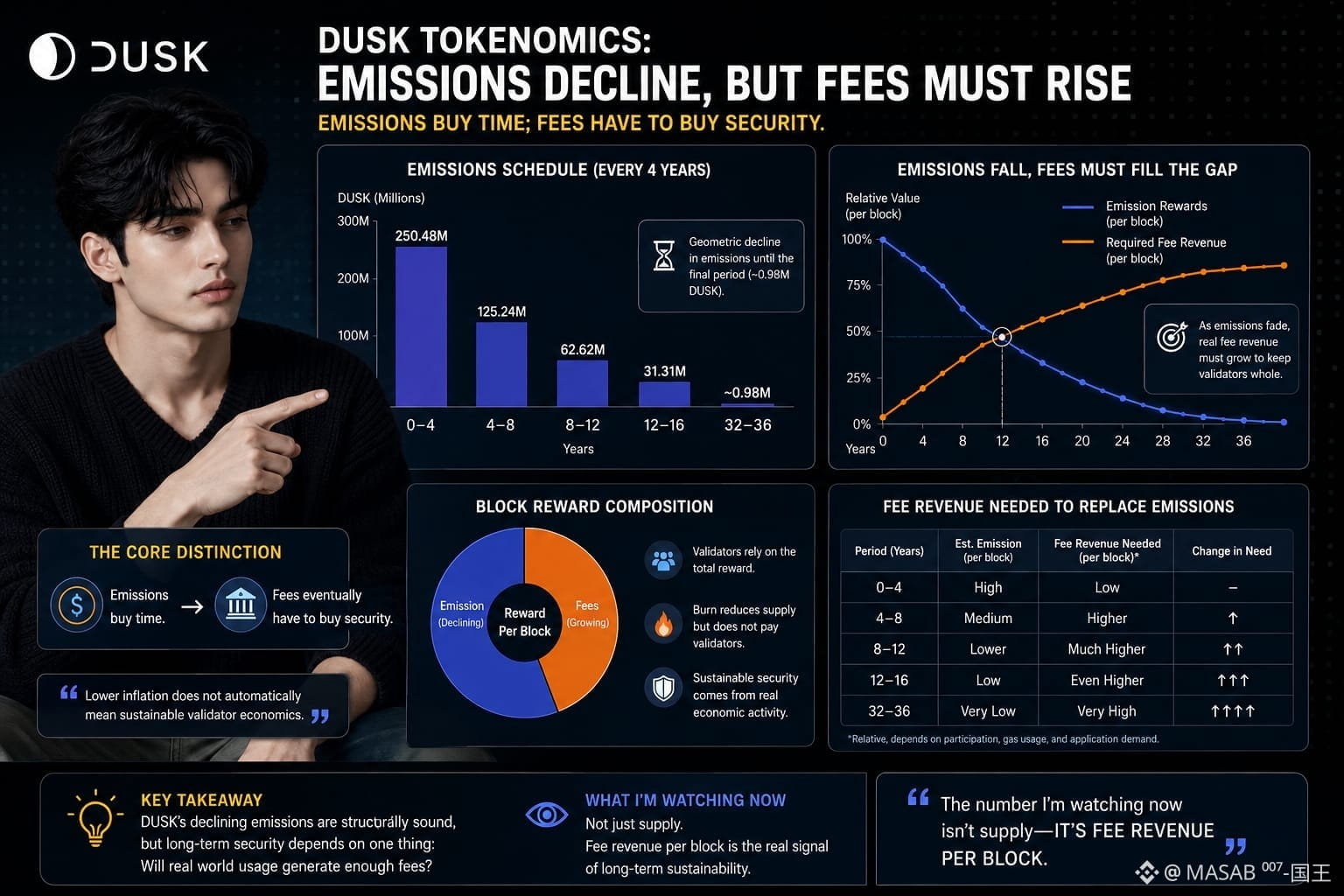
Khi tôi quay lại xem lại tài liệu tokenomics của Dusk tối nay, một con số cứ kéo tôi quay lại: 250,48M DUSK được lên lịch cho bốn năm đầu tiên, sau đó là 125,24M, 62,62M, 31,31M, cho đến khi giai đoạn bốn năm cuối cùng giảm xuống xấp xỉ 0,98M.
Cách hiểu chính trên tiêu đề là dễ: phát thải giảm,......lạm phát giảm, tính khan hiếm được cải thiện.
Nhưng đó không phải là câu hỏi về an ninh.
Phần thưởng khối của Dusk kết hợp DUSK phát hành mới với phí giao dịch.....Vì khi lượng phát hành suy giảm theo cấp số nhân, mạng lưới ngày càng cần hoạt động thực sự trả phí để thay thế khoản trợ cấp mà các trình xác thực đang dần mất đi.
Phát thải mua thời gian; phí cuối cùng phải mua lấy sự an toàn.
Sự phân biệt này quan trọng vì lạm phát thấp không tự động có nghĩa là kinh tế của trình xác thực sẽ bền vững. Một quỹ phần thưởng nhỏ hơn chỉ “thoải mái” nếu hoạt động về gas, thanh toán và ứng dụng tăng đủ để bù đắp. Việc đốt token làm bức tranh thêm phức tạp: việc đốt các phần thưởng không được phân phối có thể làm giảm nguồn cung, nhưng nó không tài trợ cho các bên vận hành đang bảo đảm sự đồng thuận.
Tôi không nói rằng lịch trình của Dusk là sai. Một khoản trợ cấp giảm dần là điều có thể hiểu được về mặt cấu trúc. Tôi chỉ chưa thể biết liệu việc sử dụng trong tương lai của các tổ chức có tạo ra đủ phí khi lượng phát thải trở nên rất nhỏ hay không.
Tab tokenomics vẫn đang mở. Con số tôi đang theo dõi lúc này không phải là nguồn cung—mà là doanh thu phí trên mỗi khối.
@Dusk_Foundation $DUSK #dusk
{future}(DUSKUSDT)
Khi tôi quay lại xem lại tài liệu tokenomics của Dusk tối nay, một con số cứ kéo tôi quay lại: 250,48M DUSK được lên lịch cho bốn năm đầu tiên, sau đó là 125,24M, 62,62M, 31,31M, cho đến khi giai đoạn bốn năm cuối cùng giảm xuống xấp xỉ 0,98M.
Cách hiểu chính trên tiêu đề là dễ: phát thải giảm,......lạm phát giảm, tính khan hiếm được cải thiện.
Nhưng đó không phải là câu hỏi về an ninh.
Phần thưởng khối của Dusk kết hợp DUSK phát hành mới với phí giao dịch.....Vì khi lượng phát hành suy giảm theo cấp số nhân, mạng lưới ngày càng cần hoạt động thực sự trả phí để thay thế khoản trợ cấp mà các trình xác thực đang dần mất đi.
Phát thải mua thời gian; phí cuối cùng phải mua lấy sự an toàn.
Sự phân biệt này quan trọng vì lạm phát thấp không tự động có nghĩa là kinh tế của trình xác thực sẽ bền vững. Một quỹ phần thưởng nhỏ hơn chỉ “thoải mái” nếu hoạt động về gas, thanh toán và ứng dụng tăng đủ để bù đắp. Việc đốt token làm bức tranh thêm phức tạp: việc đốt các phần thưởng không được phân phối có thể làm giảm nguồn cung, nhưng nó không tài trợ cho các bên vận hành đang bảo đảm sự đồng thuận.
Tôi không nói rằng lịch trình của Dusk là sai. Một khoản trợ cấp giảm dần là điều có thể hiểu được về mặt cấu trúc. Tôi chỉ chưa thể biết liệu việc sử dụng trong tương lai của các tổ chức có tạo ra đủ phí khi lượng phát thải trở nên rất nhỏ hay không.
Tab tokenomics vẫn đang mở. Con số tôi đang theo dõi lúc này không phải là nguồn cung—mà là doanh thu phí trên mỗi khối.
@Dusk $DUSK #dusk
Cách hiểu chính trên tiêu đề là dễ: phát thải giảm,......lạm phát giảm, tính khan hiếm được cải thiện.
Nhưng đó không phải là câu hỏi về an ninh.
Phần thưởng khối của Dusk kết hợp DUSK phát hành mới với phí giao dịch.....Vì khi lượng phát hành suy giảm theo cấp số nhân, mạng lưới ngày càng cần hoạt động thực sự trả phí để thay thế khoản trợ cấp mà các trình xác thực đang dần mất đi.
Phát thải mua thời gian; phí cuối cùng phải mua lấy sự an toàn.
Sự phân biệt này quan trọng vì lạm phát thấp không tự động có nghĩa là kinh tế của trình xác thực sẽ bền vững. Một quỹ phần thưởng nhỏ hơn chỉ “thoải mái” nếu hoạt động về gas, thanh toán và ứng dụng tăng đủ để bù đắp. Việc đốt token làm bức tranh thêm phức tạp: việc đốt các phần thưởng không được phân phối có thể làm giảm nguồn cung, nhưng nó không tài trợ cho các bên vận hành đang bảo đảm sự đồng thuận.
Tôi không nói rằng lịch trình của Dusk là sai. Một khoản trợ cấp giảm dần là điều có thể hiểu được về mặt cấu trúc. Tôi chỉ chưa thể biết liệu việc sử dụng trong tương lai của các tổ chức có tạo ra đủ phí khi lượng phát thải trở nên rất nhỏ hay không.
Tab tokenomics vẫn đang mở. Con số tôi đang theo dõi lúc này không phải là nguồn cung—mà là doanh thu phí trên mỗi khối.
@Dusk $DUSK #dusk
15
17
13.7k
·
--
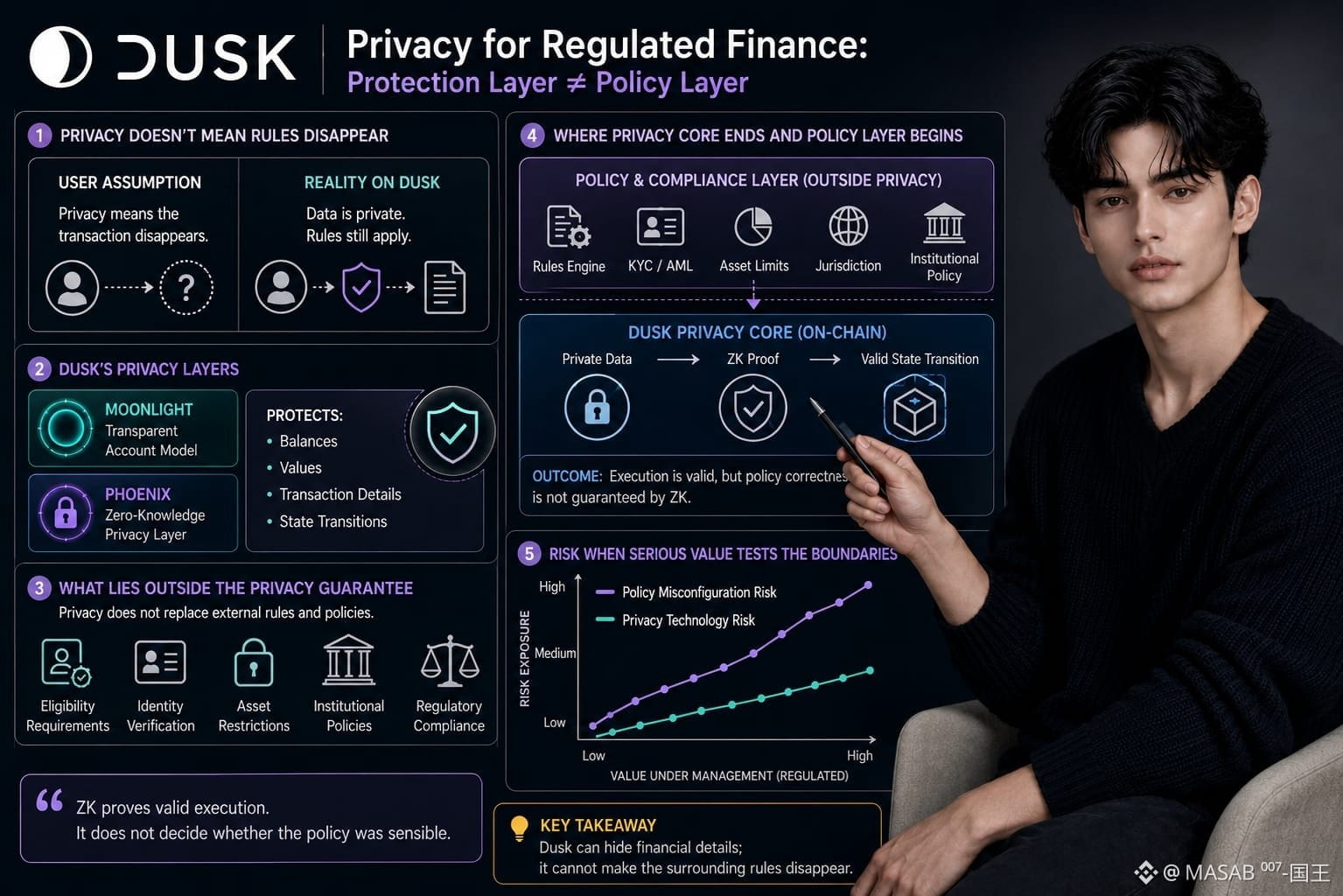
Giao dịch hôm nay khá yên ắng, nên tôi mở lại tài liệu của Dusk.... Tôi cứ nhìn thấy cụm từ “quyền riêng tư cho tài chính được quản lý”, và có điều gì đó trong đó khiến tôi muốn xem kỹ hơn.
Ban đầu, tôi cho rằng quyền riêng tư nghĩa là bản thân giao dịch chỉ đơn giản là biến mất khỏi tầm nhìn công khai.
Nhưng Dusk có nhiều lớp hơn thế.
Moonlight cung cấp một mô hình kế toán minh bạch, còn Phoenix dùng công nghệ zero-knowledge để giữ kín giá trị giao dịch và số dư..... Điểm quan trọng là quyền riêng tư không tự động loại bỏ mọi quy tắc tuân thủ liên quan đến giao dịch.
Dusk có thể che giấu chi tiết tài chính; nó không thể làm biến mất các quy tắc xung quanh.
Sự khác biệt đó thoạt đầu tưởng như chỉ là vấn đề ngữ nghĩa. Nhưng không phải.
Tầng mật mã có thể bảo vệ dữ liệu giao dịch nhạy cảm và xác minh các chuyển đổi trạng thái hợp lệ. Tuy nhiên, các điều kiện đủ điều kiện, yêu cầu về danh tính, hạn chế về tài sản và chính sách của tổ chức vẫn có thể phụ thuộc vào các quy tắc được xác định bên ngoài cam kết về quyền riêng tư đó.
Hãy hình dung một nhà đầu tư được ủy quyền đáp ứng mọi yêu cầu kỹ thuật nhưng vận hành theo một chính sách được cấu hình tệ. Bằng chứng ZK có thể xác nhận việc thực thi hợp lệ. Nó không thể quyết định liệu bản thân chính sách đó có hợp lý hay không.
Điều này không chỉ là vấn đề riêng của Dusk.
Câu hỏi khó hơn là điều gì xảy ra khi giá trị được quản lý nghiêm túc bắt đầu thử thách những giới hạn đó.
Mục tài liệu của tôi vẫn đang mở. “Privacy” giờ đây có cảm giác là một từ hẹp hơn rất nhiều so với buổi sáng nay.
@Dusk_Foundation $DUSK #dusk
{future}(DUSKUSDT)
Giao dịch hôm nay khá yên ắng, nên tôi mở lại tài liệu của Dusk.... Tôi cứ nhìn thấy cụm từ “quyền riêng tư cho tài chính được quản lý”, và có điều gì đó trong đó khiến tôi muốn xem kỹ hơn.
Ban đầu, tôi cho rằng quyền riêng tư nghĩa là bản thân giao dịch chỉ đơn giản là biến mất khỏi tầm nhìn công khai.
Nhưng Dusk có nhiều lớp hơn thế.
Moonlight cung cấp một mô hình kế toán minh bạch, còn Phoenix dùng công nghệ zero-knowledge để giữ kín giá trị giao dịch và số dư..... Điểm quan trọng là quyền riêng tư không tự động loại bỏ mọi quy tắc tuân thủ liên quan đến giao dịch.
Dusk có thể che giấu chi tiết tài chính; nó không thể làm biến mất các quy tắc xung quanh.
Sự khác biệt đó thoạt đầu tưởng như chỉ là vấn đề ngữ nghĩa. Nhưng không phải.
Tầng mật mã có thể bảo vệ dữ liệu giao dịch nhạy cảm và xác minh các chuyển đổi trạng thái hợp lệ. Tuy nhiên, các điều kiện đủ điều kiện, yêu cầu về danh tính, hạn chế về tài sản và chính sách của tổ chức vẫn có thể phụ thuộc vào các quy tắc được xác định bên ngoài cam kết về quyền riêng tư đó.
Hãy hình dung một nhà đầu tư được ủy quyền đáp ứng mọi yêu cầu kỹ thuật nhưng vận hành theo một chính sách được cấu hình tệ. Bằng chứng ZK có thể xác nhận việc thực thi hợp lệ. Nó không thể quyết định liệu bản thân chính sách đó có hợp lý hay không.
Điều này không chỉ là vấn đề riêng của Dusk.
Câu hỏi khó hơn là điều gì xảy ra khi giá trị được quản lý nghiêm túc bắt đầu thử thách những giới hạn đó.
Mục tài liệu của tôi vẫn đang mở. “Privacy” giờ đây có cảm giác là một từ hẹp hơn rất nhiều so với buổi sáng nay.
@Dusk $DUSK #dusk
Ban đầu, tôi cho rằng quyền riêng tư nghĩa là bản thân giao dịch chỉ đơn giản là biến mất khỏi tầm nhìn công khai.
Nhưng Dusk có nhiều lớp hơn thế.
Moonlight cung cấp một mô hình kế toán minh bạch, còn Phoenix dùng công nghệ zero-knowledge để giữ kín giá trị giao dịch và số dư..... Điểm quan trọng là quyền riêng tư không tự động loại bỏ mọi quy tắc tuân thủ liên quan đến giao dịch.
Dusk có thể che giấu chi tiết tài chính; nó không thể làm biến mất các quy tắc xung quanh.
Sự khác biệt đó thoạt đầu tưởng như chỉ là vấn đề ngữ nghĩa. Nhưng không phải.
Tầng mật mã có thể bảo vệ dữ liệu giao dịch nhạy cảm và xác minh các chuyển đổi trạng thái hợp lệ. Tuy nhiên, các điều kiện đủ điều kiện, yêu cầu về danh tính, hạn chế về tài sản và chính sách của tổ chức vẫn có thể phụ thuộc vào các quy tắc được xác định bên ngoài cam kết về quyền riêng tư đó.
Hãy hình dung một nhà đầu tư được ủy quyền đáp ứng mọi yêu cầu kỹ thuật nhưng vận hành theo một chính sách được cấu hình tệ. Bằng chứng ZK có thể xác nhận việc thực thi hợp lệ. Nó không thể quyết định liệu bản thân chính sách đó có hợp lý hay không.
Điều này không chỉ là vấn đề riêng của Dusk.
Câu hỏi khó hơn là điều gì xảy ra khi giá trị được quản lý nghiêm túc bắt đầu thử thách những giới hạn đó.
Mục tài liệu của tôi vẫn đang mở. “Privacy” giờ đây có cảm giác là một từ hẹp hơn rất nhiều so với buổi sáng nay.
@Dusk $DUSK #dusk
26
28
13.1k
·
--
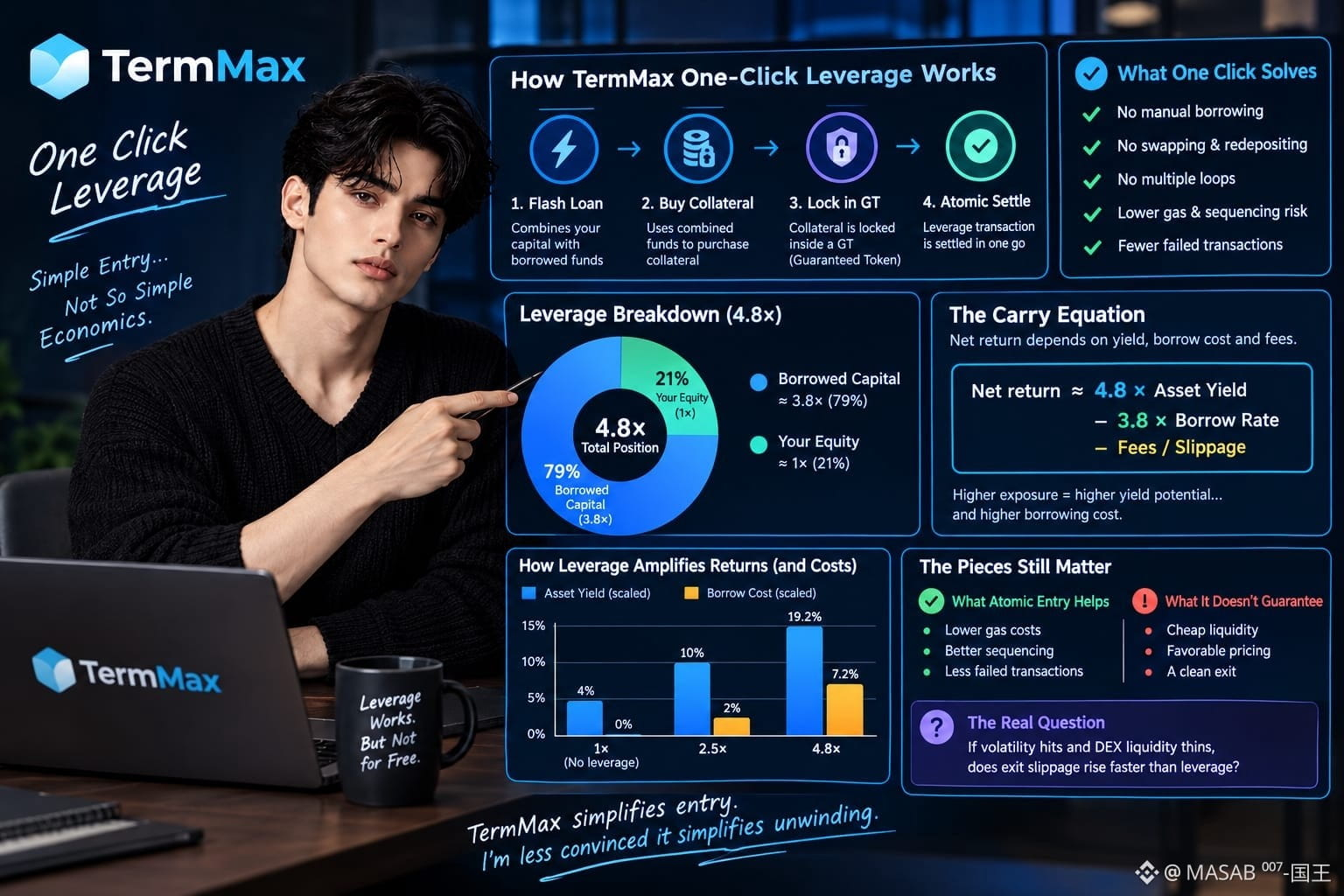
Tối nay tôi đang xem các thị trường đòn bẩy của TermMax và cứ quay lại cụm từ “đòn bẩy một chạm.” Nghe như thể bài toán khó đã được loại bỏ.
Vậy nên tôi thực sự đã theo dòng chảy.
TermMax sử dụng flash loan để kết hợp vốn của tôi với tiền vay, mua tài sản thế chấp, khóa nó bên trong một GT, rồi thanh toán giao dịch đòn bẩy một cách nguyên tử (atomically). Việc này gọn gàng hơn so với tự tay vay, swap, nạp lại và lặp lại nhiều lần.
Nhưng sự đơn giản khi thực thi không đồng nghĩa với sự đơn giản về mặt kinh tế.
Với đòn bẩy 4,8×, khoảng 3,8× vốn chủ sở hữu của tôi là vốn vay. Khoảng 79% quy mô vị thế tính theo tổng giá trị được tài trợ bằng nợ.... Nếu tôi đòn bẩy một tài sản tạo lãi suất hoặc Principal Token, lợi suất của tài sản sẽ tăng theo mức phơi nhiễm—nhưng chi phí vay cố định cũng tăng theo.
Một phương trình “carry” ước tính là:
Lợi nhuận ròng ≈ 4,8 × lợi suất tài sản − 3,8 × lãi suất vay − phí/trượt giá.
Đó là nơi mà “một chạm” không còn giúp được gì.
Vào lệnh nguyên tử có thể giảm gas, rủi ro về xếp thứ tự (sequencing) và giao dịch thất bại.... Nó không thể đảm bảo thanh khoản rẻ, giá thuận lợi, hay một lối thoát (exit) cũng sạch sẽ như vậy. Người vay được tối ưu hóa thao tác; còn người cho vay vẫn cung cấp phần thanh khoản nền tảng.
Nếu biến động tăng và thanh khoản trên DEX mỏng đi, thì trượt giá khi thoát có tăng nhanh hơn so với đòn bẩy không?
TermMax đơn giản hóa phần vào lệnh. Tôi ít tin rằng nó cũng đơn giản hóa phần tháo gỡ.
#termmax @termmax
Tối nay tôi đang xem các thị trường đòn bẩy của TermMax và cứ quay lại cụm từ “đòn bẩy một chạm.” Nghe như thể bài toán khó đã được loại bỏ.
Vậy nên tôi thực sự đã theo dòng chảy.
TermMax sử dụng flash loan để kết hợp vốn của tôi với tiền vay, mua tài sản thế chấp, khóa nó bên trong một GT, rồi thanh toán giao dịch đòn bẩy một cách nguyên tử (atomically). Việc này gọn gàng hơn so với tự tay vay, swap, nạp lại và lặp lại nhiều lần.
Nhưng sự đơn giản khi thực thi không đồng nghĩa với sự đơn giản về mặt kinh tế.
Với đòn bẩy 4,8×, khoảng 3,8× vốn chủ sở hữu của tôi là vốn vay. Khoảng 79% quy mô vị thế tính theo tổng giá trị được tài trợ bằng nợ.... Nếu tôi đòn bẩy một tài sản tạo lãi suất hoặc Principal Token, lợi suất của tài sản sẽ tăng theo mức phơi nhiễm—nhưng chi phí vay cố định cũng tăng theo.
Một phương trình “carry” ước tính là:
Lợi nhuận ròng ≈ 4,8 × lợi suất tài sản − 3,8 × lãi suất vay − phí/trượt giá.
Đó là nơi mà “một chạm” không còn giúp được gì.
Vào lệnh nguyên tử có thể giảm gas, rủi ro về xếp thứ tự (sequencing) và giao dịch thất bại.... Nó không thể đảm bảo thanh khoản rẻ, giá thuận lợi, hay một lối thoát (exit) cũng sạch sẽ như vậy. Người vay được tối ưu hóa thao tác; còn người cho vay vẫn cung cấp phần thanh khoản nền tảng.
Nếu biến động tăng và thanh khoản trên DEX mỏng đi, thì trượt giá khi thoát có tăng nhanh hơn so với đòn bẩy không?
TermMax đơn giản hóa phần vào lệnh. Tôi ít tin rằng nó cũng đơn giản hóa phần tháo gỡ.
#termmax @TermMax
Vậy nên tôi thực sự đã theo dòng chảy.
TermMax sử dụng flash loan để kết hợp vốn của tôi với tiền vay, mua tài sản thế chấp, khóa nó bên trong một GT, rồi thanh toán giao dịch đòn bẩy một cách nguyên tử (atomically). Việc này gọn gàng hơn so với tự tay vay, swap, nạp lại và lặp lại nhiều lần.
Nhưng sự đơn giản khi thực thi không đồng nghĩa với sự đơn giản về mặt kinh tế.
Với đòn bẩy 4,8×, khoảng 3,8× vốn chủ sở hữu của tôi là vốn vay. Khoảng 79% quy mô vị thế tính theo tổng giá trị được tài trợ bằng nợ.... Nếu tôi đòn bẩy một tài sản tạo lãi suất hoặc Principal Token, lợi suất của tài sản sẽ tăng theo mức phơi nhiễm—nhưng chi phí vay cố định cũng tăng theo.
Một phương trình “carry” ước tính là:
Lợi nhuận ròng ≈ 4,8 × lợi suất tài sản − 3,8 × lãi suất vay − phí/trượt giá.
Đó là nơi mà “một chạm” không còn giúp được gì.
Vào lệnh nguyên tử có thể giảm gas, rủi ro về xếp thứ tự (sequencing) và giao dịch thất bại.... Nó không thể đảm bảo thanh khoản rẻ, giá thuận lợi, hay một lối thoát (exit) cũng sạch sẽ như vậy. Người vay được tối ưu hóa thao tác; còn người cho vay vẫn cung cấp phần thanh khoản nền tảng.
Nếu biến động tăng và thanh khoản trên DEX mỏng đi, thì trượt giá khi thoát có tăng nhanh hơn so với đòn bẩy không?
TermMax đơn giản hóa phần vào lệnh. Tôi ít tin rằng nó cũng đơn giản hóa phần tháo gỡ.
#termmax @TermMax
8
11
11.6k
·
--
Đúng một phần
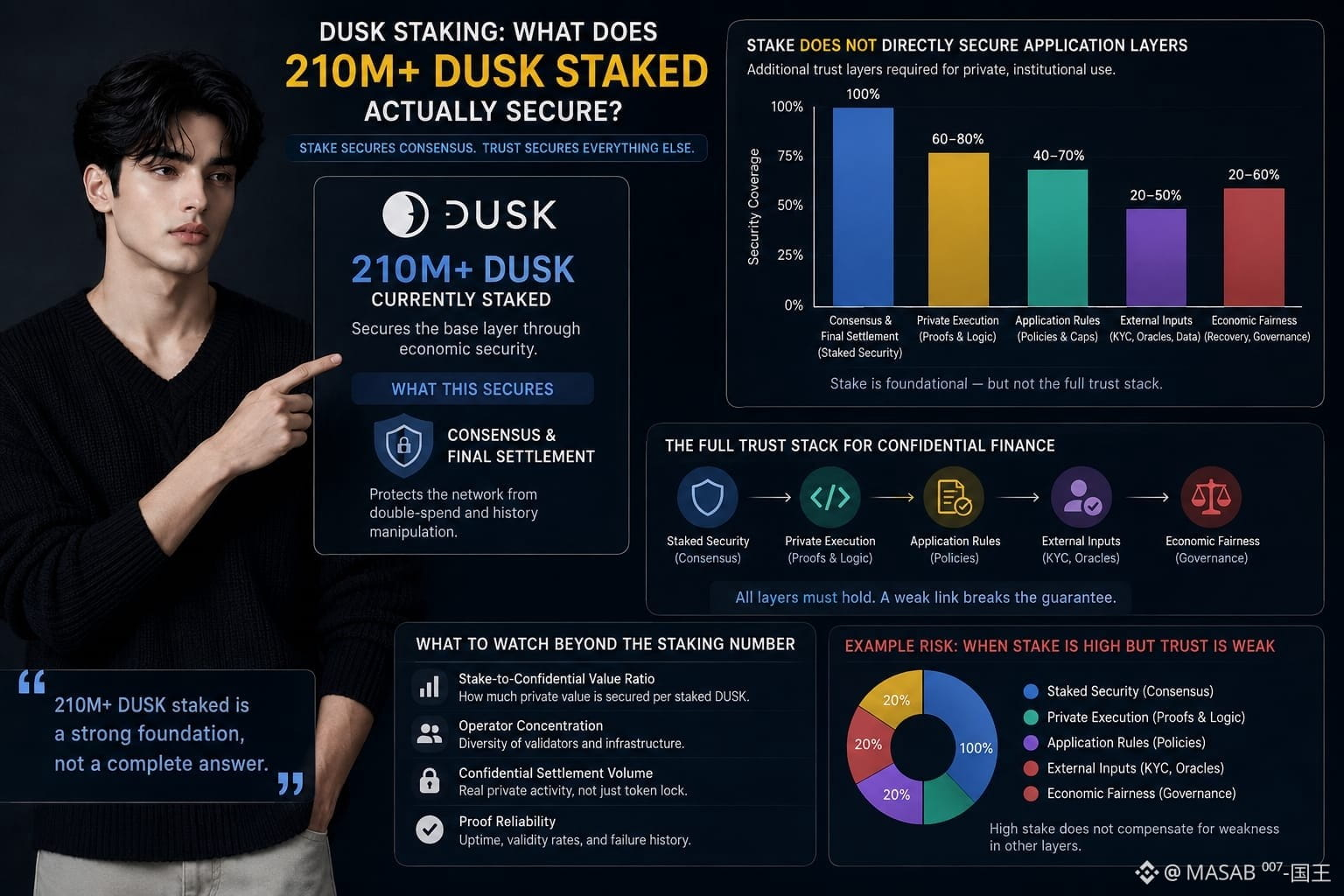
Tôi đang xem lại các số liệu staking của Dusk khi thị trường yên ắng, và việc 210M+ DUSK được stake trông vẫn khá yên tâm. Sau đó tôi hỏi con số đó thực sự bảo đảm điều gì.
Cách hiểu trực quan rất đơn giản: stake càng nhiều thì các ứng dụng tài chính mang tính bảo mật càng an toàn hơn. Nhưng cam kết lại hẹp hơn. Stake đang hoạt động bảo vệ sự đồng thuận và việc hoàn tất cuối cùng (final settlement) ở lớp nền. Một hợp đồng riêng vẫn phụ thuộc vào logic tạo bằng chứng đúng đắn, các quy tắc ứng dụng vận hành chuẩn xác và, đối với tài sản được quản lý, các dữ liệu đầu vào bên ngoài đáng tin cậy như dữ liệu về tính đủ điều kiện.
Sự khác biệt đó quan trọng.
Dusk có thể làm cho trạng thái riêng có thể được xác minh mà không cần công khai vị thế/các thông tin nền tảng. Việc đó thật sự hữu ích. Nhưng một bằng chứng hợp lệ không thể cho biết liệu nhà cung cấp KYC đã cung cấp dữ liệu sai, chính sách được mã hóa đã đặt sai giới hạn sở hữu, hay một hành động khôi phục được ủy quyền có thực sự công bằng về mặt kinh tế hay không.
Vì vậy, 210M được stake chỉ đo lường một lớp bảo mật—không phải toàn bộ “ngăn xếp” niềm tin của tổ chức.
Ban đầu tôi nghĩ điều đó hơi rườm rà. Nhưng không phải. Nếu các ứng dụng riêng đang bảo vệ giá trị thực sự lớn trong thế giới thực, thì tôi thà quan sát stake so với giá trị thanh toán mang tính bảo mật, mức độ tập trung của nhà điều hành và độ tin cậy của bằng chứng.
Tab staking vẫn đang mở. Con số bây giờ không còn giống như một câu trả lời nữa—mà giống như phần bắt đầu của một câu trả lời.
@Dusk_Foundation $DUSK #dusk
{future}(DUSKUSDT)
Tôi đang xem lại các số liệu staking của Dusk khi thị trường yên ắng, và việc 210M+ DUSK được stake trông vẫn khá yên tâm. Sau đó tôi hỏi con số đó thực sự bảo đảm điều gì.
Cách hiểu trực quan rất đơn giản: stake càng nhiều thì các ứng dụng tài chính mang tính bảo mật càng an toàn hơn. Nhưng cam kết lại hẹp hơn. Stake đang hoạt động bảo vệ sự đồng thuận và việc hoàn tất cuối cùng (final settlement) ở lớp nền. Một hợp đồng riêng vẫn phụ thuộc vào logic tạo bằng chứng đúng đắn, các quy tắc ứng dụng vận hành chuẩn xác và, đối với tài sản được quản lý, các dữ liệu đầu vào bên ngoài đáng tin cậy như dữ liệu về tính đủ điều kiện.
Sự khác biệt đó quan trọng.
Dusk có thể làm cho trạng thái riêng có thể được xác minh mà không cần công khai vị thế/các thông tin nền tảng. Việc đó thật sự hữu ích. Nhưng một bằng chứng hợp lệ không thể cho biết liệu nhà cung cấp KYC đã cung cấp dữ liệu sai, chính sách được mã hóa đã đặt sai giới hạn sở hữu, hay một hành động khôi phục được ủy quyền có thực sự công bằng về mặt kinh tế hay không.
Vì vậy, 210M được stake chỉ đo lường một lớp bảo mật—không phải toàn bộ “ngăn xếp” niềm tin của tổ chức.
Ban đầu tôi nghĩ điều đó hơi rườm rà. Nhưng không phải. Nếu các ứng dụng riêng đang bảo vệ giá trị thực sự lớn trong thế giới thực, thì tôi thà quan sát stake so với giá trị thanh toán mang tính bảo mật, mức độ tập trung của nhà điều hành và độ tin cậy của bằng chứng.
Tab staking vẫn đang mở. Con số bây giờ không còn giống như một câu trả lời nữa—mà giống như phần bắt đầu của một câu trả lời.
@Dusk $DUSK #dusk
Cách hiểu trực quan rất đơn giản: stake càng nhiều thì các ứng dụng tài chính mang tính bảo mật càng an toàn hơn. Nhưng cam kết lại hẹp hơn. Stake đang hoạt động bảo vệ sự đồng thuận và việc hoàn tất cuối cùng (final settlement) ở lớp nền. Một hợp đồng riêng vẫn phụ thuộc vào logic tạo bằng chứng đúng đắn, các quy tắc ứng dụng vận hành chuẩn xác và, đối với tài sản được quản lý, các dữ liệu đầu vào bên ngoài đáng tin cậy như dữ liệu về tính đủ điều kiện.
Sự khác biệt đó quan trọng.
Dusk có thể làm cho trạng thái riêng có thể được xác minh mà không cần công khai vị thế/các thông tin nền tảng. Việc đó thật sự hữu ích. Nhưng một bằng chứng hợp lệ không thể cho biết liệu nhà cung cấp KYC đã cung cấp dữ liệu sai, chính sách được mã hóa đã đặt sai giới hạn sở hữu, hay một hành động khôi phục được ủy quyền có thực sự công bằng về mặt kinh tế hay không.
Vì vậy, 210M được stake chỉ đo lường một lớp bảo mật—không phải toàn bộ “ngăn xếp” niềm tin của tổ chức.
Ban đầu tôi nghĩ điều đó hơi rườm rà. Nhưng không phải. Nếu các ứng dụng riêng đang bảo vệ giá trị thực sự lớn trong thế giới thực, thì tôi thà quan sát stake so với giá trị thanh toán mang tính bảo mật, mức độ tập trung của nhà điều hành và độ tin cậy của bằng chứng.
Tab staking vẫn đang mở. Con số bây giờ không còn giống như một câu trả lời nữa—mà giống như phần bắt đầu của một câu trả lời.
@Dusk $DUSK #dusk
30
22
32k
·
--
Đã xác minh
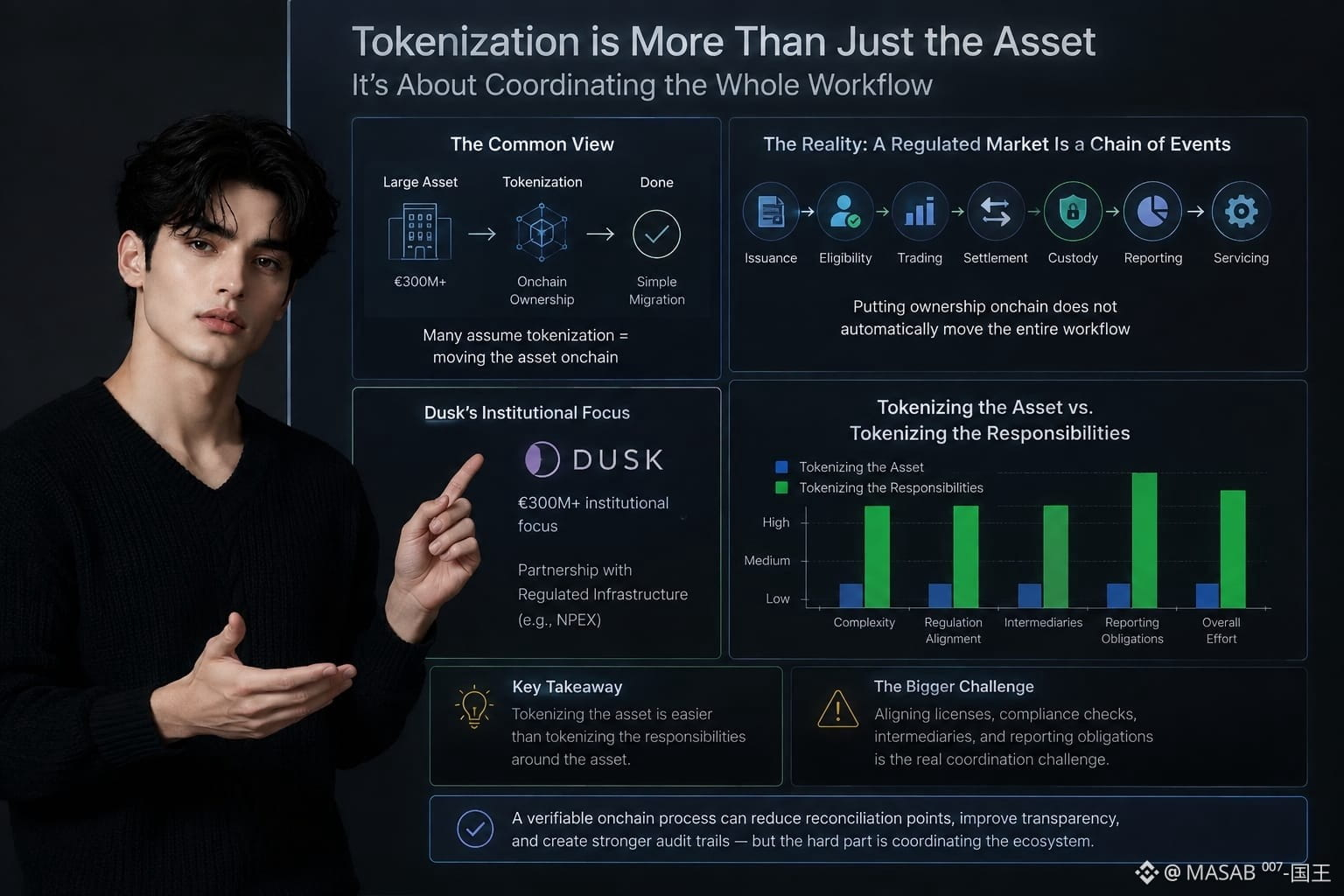
Tối qua tôi đang lướt qua các cuộc thảo luận về token hóa và cứ thấy mãi cùng một ý tưởng: việc di chuyển các tài sản lớn trên blockchain chủ yếu là một vấn đề di cư/di chuyển kỹ thuật. Nghe có vẻ hợp lý, nhưng khi tôi tìm hiểu sâu hơn về trọng tâm 300 triệu EUR+ của Dusk dành cho khách hàng tổ chức, thì có điều gì đó không khớp.
Bản thân tài sản chỉ là một phần. Một thị trường được quản lý là một chuỗi các sự kiện: phát hành, đủ điều kiện, giao dịch, thanh toán, lưu ký, báo cáo và cung cấp dịch vụ. Việc ghi nhận hồ sơ sở hữu lên onchain không tự động làm toàn bộ quy trình vận hành theo.
Một người đọc bình thường có thể cho rằng token hóa nghĩa là thay hệ thống cũ bằng một giao dịch blockchain. Nhưng mối liên hệ của Dusk với hạ tầng được quản lý như NPEX lại cho thấy một thách thức khác: phối hợp các chức năng xung quanh chính tài sản đó.
Điểm khác biệt mà tôi cứ quay lại là thế này:
“Token hóa tài sản thì dễ hơn token hóa những trách nhiệm gắn với tài sản.”
Điều đó không làm giảm giá trị của Dusk. Một quy trình onchain có thể được xác minh có thể giảm các điểm phải đối soát, tăng minh bạch và tạo ra các dấu vết kiểm toán mạnh mẽ hơn.
Nhưng tôi tự hỏi liệu phần khó thực sự lại không nằm ở lớp blockchain. Có lẽ thách thức lớn hơn là việc đồng bộ giấy phép, các bước kiểm tra tuân thủ, các bên trung gian và các nghĩa vụ báo cáo.
Tôi chưa chắc thị trường đã đo lường đầy đủ bài toán phối hợp đó. Thẻ “documentation” vẫn đang mở trên màn hình của tôi, và giờ đây tôi nhìn “onchain assets” theo một cách hơi khác.
@Dusk_Foundation $DUSK #dusk
{future}(DUSKUSDT)
Tối qua tôi đang lướt qua các cuộc thảo luận về token hóa và cứ thấy mãi cùng một ý tưởng: việc di chuyển các tài sản lớn trên blockchain chủ yếu là một vấn đề di cư/di chuyển kỹ thuật. Nghe có vẻ hợp lý, nhưng khi tôi tìm hiểu sâu hơn về trọng tâm 300 triệu EUR+ của Dusk dành cho khách hàng tổ chức, thì có điều gì đó không khớp.
Bản thân tài sản chỉ là một phần. Một thị trường được quản lý là một chuỗi các sự kiện: phát hành, đủ điều kiện, giao dịch, thanh toán, lưu ký, báo cáo và cung cấp dịch vụ. Việc ghi nhận hồ sơ sở hữu lên onchain không tự động làm toàn bộ quy trình vận hành theo.
Một người đọc bình thường có thể cho rằng token hóa nghĩa là thay hệ thống cũ bằng một giao dịch blockchain. Nhưng mối liên hệ của Dusk với hạ tầng được quản lý như NPEX lại cho thấy một thách thức khác: phối hợp các chức năng xung quanh chính tài sản đó.
Điểm khác biệt mà tôi cứ quay lại là thế này:
“Token hóa tài sản thì dễ hơn token hóa những trách nhiệm gắn với tài sản.”
Điều đó không làm giảm giá trị của Dusk. Một quy trình onchain có thể được xác minh có thể giảm các điểm phải đối soát, tăng minh bạch và tạo ra các dấu vết kiểm toán mạnh mẽ hơn.
Nhưng tôi tự hỏi liệu phần khó thực sự lại không nằm ở lớp blockchain. Có lẽ thách thức lớn hơn là việc đồng bộ giấy phép, các bước kiểm tra tuân thủ, các bên trung gian và các nghĩa vụ báo cáo.
Tôi chưa chắc thị trường đã đo lường đầy đủ bài toán phối hợp đó. Thẻ “documentation” vẫn đang mở trên màn hình của tôi, và giờ đây tôi nhìn “onchain assets” theo một cách hơi khác.
@Dusk $DUSK #dusk
Bản thân tài sản chỉ là một phần. Một thị trường được quản lý là một chuỗi các sự kiện: phát hành, đủ điều kiện, giao dịch, thanh toán, lưu ký, báo cáo và cung cấp dịch vụ. Việc ghi nhận hồ sơ sở hữu lên onchain không tự động làm toàn bộ quy trình vận hành theo.
Một người đọc bình thường có thể cho rằng token hóa nghĩa là thay hệ thống cũ bằng một giao dịch blockchain. Nhưng mối liên hệ của Dusk với hạ tầng được quản lý như NPEX lại cho thấy một thách thức khác: phối hợp các chức năng xung quanh chính tài sản đó.
Điểm khác biệt mà tôi cứ quay lại là thế này:
“Token hóa tài sản thì dễ hơn token hóa những trách nhiệm gắn với tài sản.”
Điều đó không làm giảm giá trị của Dusk. Một quy trình onchain có thể được xác minh có thể giảm các điểm phải đối soát, tăng minh bạch và tạo ra các dấu vết kiểm toán mạnh mẽ hơn.
Nhưng tôi tự hỏi liệu phần khó thực sự lại không nằm ở lớp blockchain. Có lẽ thách thức lớn hơn là việc đồng bộ giấy phép, các bước kiểm tra tuân thủ, các bên trung gian và các nghĩa vụ báo cáo.
Tôi chưa chắc thị trường đã đo lường đầy đủ bài toán phối hợp đó. Thẻ “documentation” vẫn đang mở trên màn hình của tôi, và giờ đây tôi nhìn “onchain assets” theo một cách hơi khác.
@Dusk $DUSK #dusk
19
16
24.4k
·
--
Tôi đang xem lại trang phí của TermMax khi thị trường yên ắng, và một dòng cứ liên tục thu hút sự chú ý của tôi: phí cho vay 2%. Phản ứng đầu tiên của tôi rất đơn giản—2% trên số tiền gốc nghe có vẻ đắt.
Thế nhưng tôi đã ngồi lại với công thức. Đó không phải là mức phí mà TermMax thu.
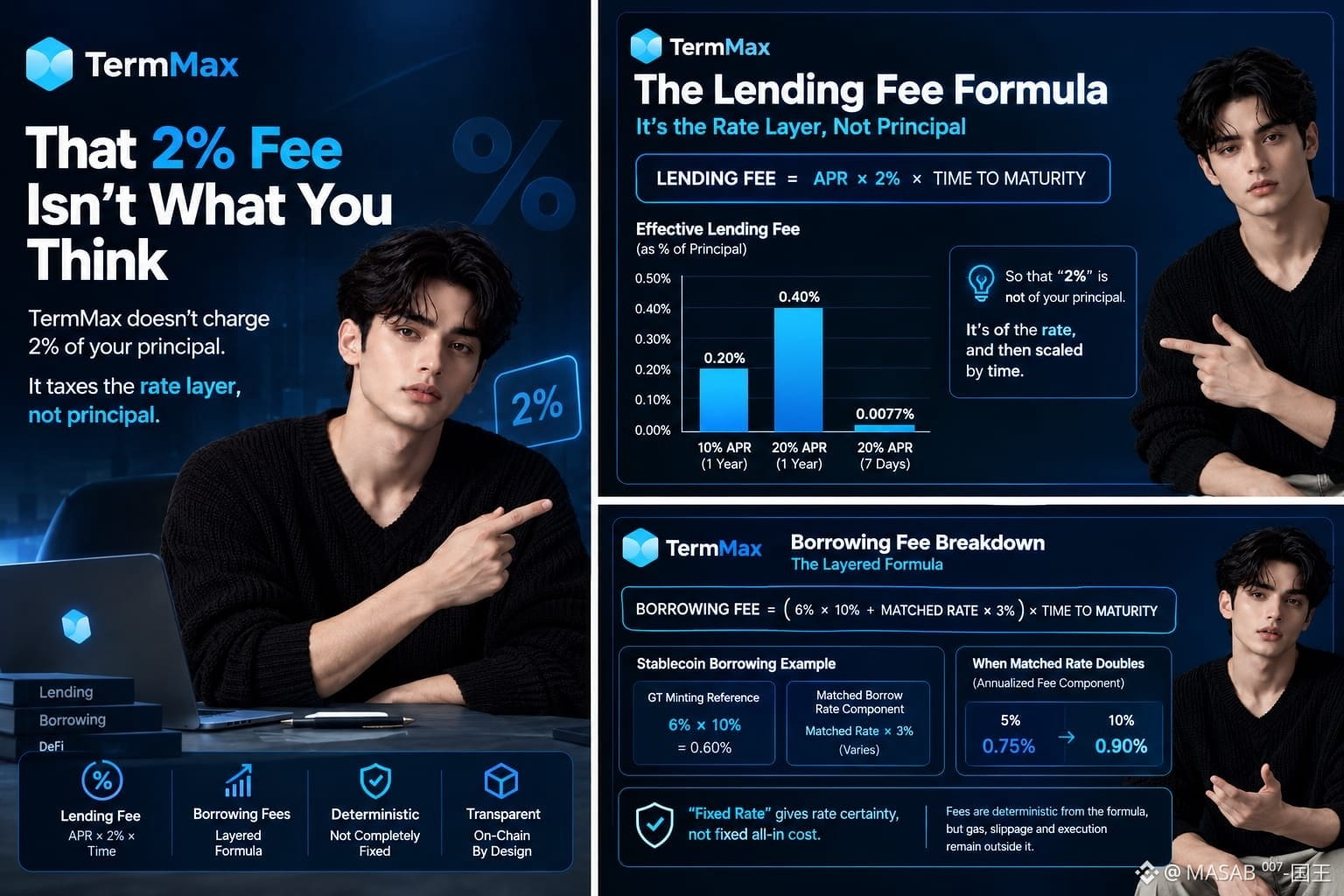
Lãi suất phí cho vay được tính theo APR × 2% × thời gian đến đáo hạn. Với APR 10% trong một năm, phí hiệu dụng là 0,20% của số tiền cho vay. Với APR 20%, con số đó thành 0,40%. Với khoản vay bảy ngày ở APR 20%, nó chỉ vào khoảng 0,0077% của số tiền gốc.
Sự khác biệt này rất quan trọng.
TermMax tính thuế theo lớp lãi suất, chứ không phải theo số tiền gốc ở mức phần trăm được nêu trên tiêu đề.
Việc vay còn “phân lớp” hơn. Đối với stablecoins, công thức được công bố kết hợp 6% GT làm lãi suất tham chiếu khi đúc × 10% với lãi suất vay khớp × 3%, sau đó nhân cả hai theo thời gian đến đáo hạn. Nếu lãi suất khớp tăng gấp đôi từ 5% lên 10%, phần phí quy đổi theo năm sẽ tăng từ 0,75% lên 0,90% trước khi nhân theo thời gian.
Vì vậy, “lãi suất cố định” đem lại sự chắc chắn về phần lãi suất, chứ không phải chi phí tổng cố định. Phí là xác định theo công thức, nhưng gas, trượt giá và khâu thực thi vẫn nằm ngoài công thức đó.
Tab vẫn đang mở. Giờ khoản 2% đó trông khác hẳn.
#termmax @termmax
Tôi đang xem lại trang phí của TermMax khi thị trường yên ắng, và một dòng cứ liên tục thu hút sự chú ý của tôi: phí cho vay 2%. Phản ứng đầu tiên của tôi rất đơn giản—2% trên số tiền gốc nghe có vẻ đắt.
Thế nhưng tôi đã ngồi lại với công thức. Đó không phải là mức phí mà TermMax thu.
Lãi suất phí cho vay được tính theo APR × 2% × thời gian đến đáo hạn. Với APR 10% trong một năm, phí hiệu dụng là 0,20% của số tiền cho vay. Với APR 20%, con số đó thành 0,40%. Với khoản vay bảy ngày ở APR 20%, nó chỉ vào khoảng 0,0077% của số tiền gốc.
Sự khác biệt này rất quan trọng.
TermMax tính thuế theo lớp lãi suất, chứ không phải theo số tiền gốc ở mức phần trăm được nêu trên tiêu đề.
Việc vay còn “phân lớp” hơn. Đối với stablecoins, công thức được công bố kết hợp 6% GT làm lãi suất tham chiếu khi đúc × 10% với lãi suất vay khớp × 3%, sau đó nhân cả hai theo thời gian đến đáo hạn. Nếu lãi suất khớp tăng gấp đôi từ 5% lên 10%, phần phí quy đổi theo năm sẽ tăng từ 0,75% lên 0,90% trước khi nhân theo thời gian.
Vì vậy, “lãi suất cố định” đem lại sự chắc chắn về phần lãi suất, chứ không phải chi phí tổng cố định. Phí là xác định theo công thức, nhưng gas, trượt giá và khâu thực thi vẫn nằm ngoài công thức đó.
Tab vẫn đang mở. Giờ khoản 2% đó trông khác hẳn.
#termmax @TermMax
Thế nhưng tôi đã ngồi lại với công thức. Đó không phải là mức phí mà TermMax thu.
Lãi suất phí cho vay được tính theo APR × 2% × thời gian đến đáo hạn. Với APR 10% trong một năm, phí hiệu dụng là 0,20% của số tiền cho vay. Với APR 20%, con số đó thành 0,40%. Với khoản vay bảy ngày ở APR 20%, nó chỉ vào khoảng 0,0077% của số tiền gốc.
Sự khác biệt này rất quan trọng.
TermMax tính thuế theo lớp lãi suất, chứ không phải theo số tiền gốc ở mức phần trăm được nêu trên tiêu đề.
Việc vay còn “phân lớp” hơn. Đối với stablecoins, công thức được công bố kết hợp 6% GT làm lãi suất tham chiếu khi đúc × 10% với lãi suất vay khớp × 3%, sau đó nhân cả hai theo thời gian đến đáo hạn. Nếu lãi suất khớp tăng gấp đôi từ 5% lên 10%, phần phí quy đổi theo năm sẽ tăng từ 0,75% lên 0,90% trước khi nhân theo thời gian.
Vì vậy, “lãi suất cố định” đem lại sự chắc chắn về phần lãi suất, chứ không phải chi phí tổng cố định. Phí là xác định theo công thức, nhưng gas, trượt giá và khâu thực thi vẫn nằm ngoài công thức đó.
Tab vẫn đang mở. Giờ khoản 2% đó trông khác hẳn.
#termmax @TermMax
1
8
9.4k
·
--
Tôi đã hoàn toàn loại bỏ TMX’s 1B fixed supply ngay khi nhận ra chỉ khoảng 20% được kỳ vọng sẽ lưu thông ban đầu.
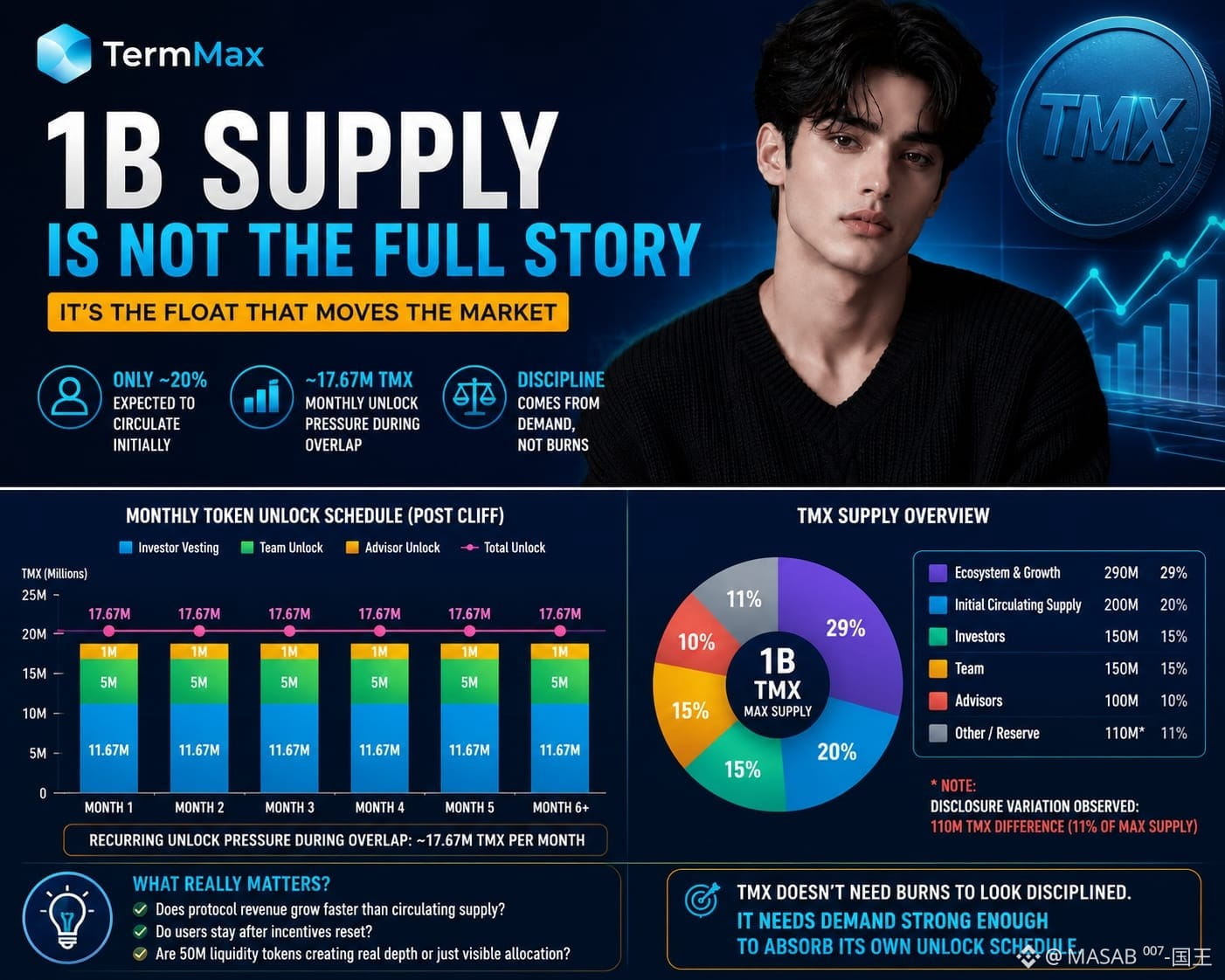
Tổng cung tối đa là con số “sạch”. Float là phần mang tính hành vi.
Điều quan trọng tiếp theo là độ nhanh mà phần float đó mở rộng. Chỉ việc vesting cho nhà đầu tư thôi cũng có thể cộng thêm khoảng 11.67M TMX mỗi tháng sau thời điểm cliff. Mở khóa của đội ngũ thêm 5M, cố vấn thêm 1M. Trong giai đoạn chồng lấn, tức khoảng 17.67M TMX cho dòng tiền tái diễn hàng tháng.
Điều đó không tự động là “bearish”. Vesting là bình thường. Phân phối hệ sinh thái cũng bình thường.
Nhưng phân phối không phải là lưu thông, và phân bổ hệ sinh thái 29% cho tôi biết ít hơn về mức độ hiệu quả mà các token đó tạo ra người dùng bền vững, khối lượng khớp lệnh và độ sâu thanh khoản.
Đây là lúc tôi nghĩ TermMax được thử thách.
Doanh thu giao thức có tăng nhanh hơn so với cung lưu thông không? Người dùng nhận ưu đãi dày có còn ở lại sau khi chu kỳ/vòng mùa reset không? 50M liquidity tokens có tạo ra độ sâu thị trường thực sự, hay chủ yếu chỉ là phân bổ hiển thị?
Tôi cũng liên tục theo dõi các thay đổi trong tài liệu. Chênh lệch công bố 110M-TMX là 11% của tổng cung tối đa. Điều đó không phải là nhiễu do định dạng.
TMX không cần token burns để trông có kỷ luật.
Nó cần tăng trưởng nhu cầu đủ mạnh để hấp thụ được chính lịch mở khóa của nó.
#termmax @termmax
Tôi đã hoàn toàn loại bỏ TMX’s 1B fixed supply ngay khi nhận ra chỉ khoảng 20% được kỳ vọng sẽ lưu thông ban đầu.
Tổng cung tối đa là con số “sạch”. Float là phần mang tính hành vi.
Điều quan trọng tiếp theo là độ nhanh mà phần float đó mở rộng. Chỉ việc vesting cho nhà đầu tư thôi cũng có thể cộng thêm khoảng 11.67M TMX mỗi tháng sau thời điểm cliff. Mở khóa của đội ngũ thêm 5M, cố vấn thêm 1M. Trong giai đoạn chồng lấn, tức khoảng 17.67M TMX cho dòng tiền tái diễn hàng tháng.
Điều đó không tự động là “bearish”. Vesting là bình thường. Phân phối hệ sinh thái cũng bình thường.
Nhưng phân phối không phải là lưu thông, và phân bổ hệ sinh thái 29% cho tôi biết ít hơn về mức độ hiệu quả mà các token đó tạo ra người dùng bền vững, khối lượng khớp lệnh và độ sâu thanh khoản.
Đây là lúc tôi nghĩ TermMax được thử thách.
Doanh thu giao thức có tăng nhanh hơn so với cung lưu thông không? Người dùng nhận ưu đãi dày có còn ở lại sau khi chu kỳ/vòng mùa reset không? 50M liquidity tokens có tạo ra độ sâu thị trường thực sự, hay chủ yếu chỉ là phân bổ hiển thị?
Tôi cũng liên tục theo dõi các thay đổi trong tài liệu. Chênh lệch công bố 110M-TMX là 11% của tổng cung tối đa. Điều đó không phải là nhiễu do định dạng.
TMX không cần token burns để trông có kỷ luật.
Nó cần tăng trưởng nhu cầu đủ mạnh để hấp thụ được chính lịch mở khóa của nó.
#termmax @TermMax
Tổng cung tối đa là con số “sạch”. Float là phần mang tính hành vi.
Điều quan trọng tiếp theo là độ nhanh mà phần float đó mở rộng. Chỉ việc vesting cho nhà đầu tư thôi cũng có thể cộng thêm khoảng 11.67M TMX mỗi tháng sau thời điểm cliff. Mở khóa của đội ngũ thêm 5M, cố vấn thêm 1M. Trong giai đoạn chồng lấn, tức khoảng 17.67M TMX cho dòng tiền tái diễn hàng tháng.
Điều đó không tự động là “bearish”. Vesting là bình thường. Phân phối hệ sinh thái cũng bình thường.
Nhưng phân phối không phải là lưu thông, và phân bổ hệ sinh thái 29% cho tôi biết ít hơn về mức độ hiệu quả mà các token đó tạo ra người dùng bền vững, khối lượng khớp lệnh và độ sâu thanh khoản.
Đây là lúc tôi nghĩ TermMax được thử thách.
Doanh thu giao thức có tăng nhanh hơn so với cung lưu thông không? Người dùng nhận ưu đãi dày có còn ở lại sau khi chu kỳ/vòng mùa reset không? 50M liquidity tokens có tạo ra độ sâu thị trường thực sự, hay chủ yếu chỉ là phân bổ hiển thị?
Tôi cũng liên tục theo dõi các thay đổi trong tài liệu. Chênh lệch công bố 110M-TMX là 11% của tổng cung tối đa. Điều đó không phải là nhiễu do định dạng.
TMX không cần token burns để trông có kỷ luật.
Nó cần tăng trưởng nhu cầu đủ mạnh để hấp thụ được chính lịch mở khóa của nó.
#termmax @TermMax
18
20
7.9k
·
--
Tôi đang so sánh hoạt động đốt (burn) của DUSK trông như thế nào qua các khung thời gian khác nhau, và có một điều khiến tôi băn khoăn: tỷ lệ đốt trong 24 giờ biến động mạnh có thể nói lên rất ít về nền kinh tế token (token economy) thực sự bên dưới.
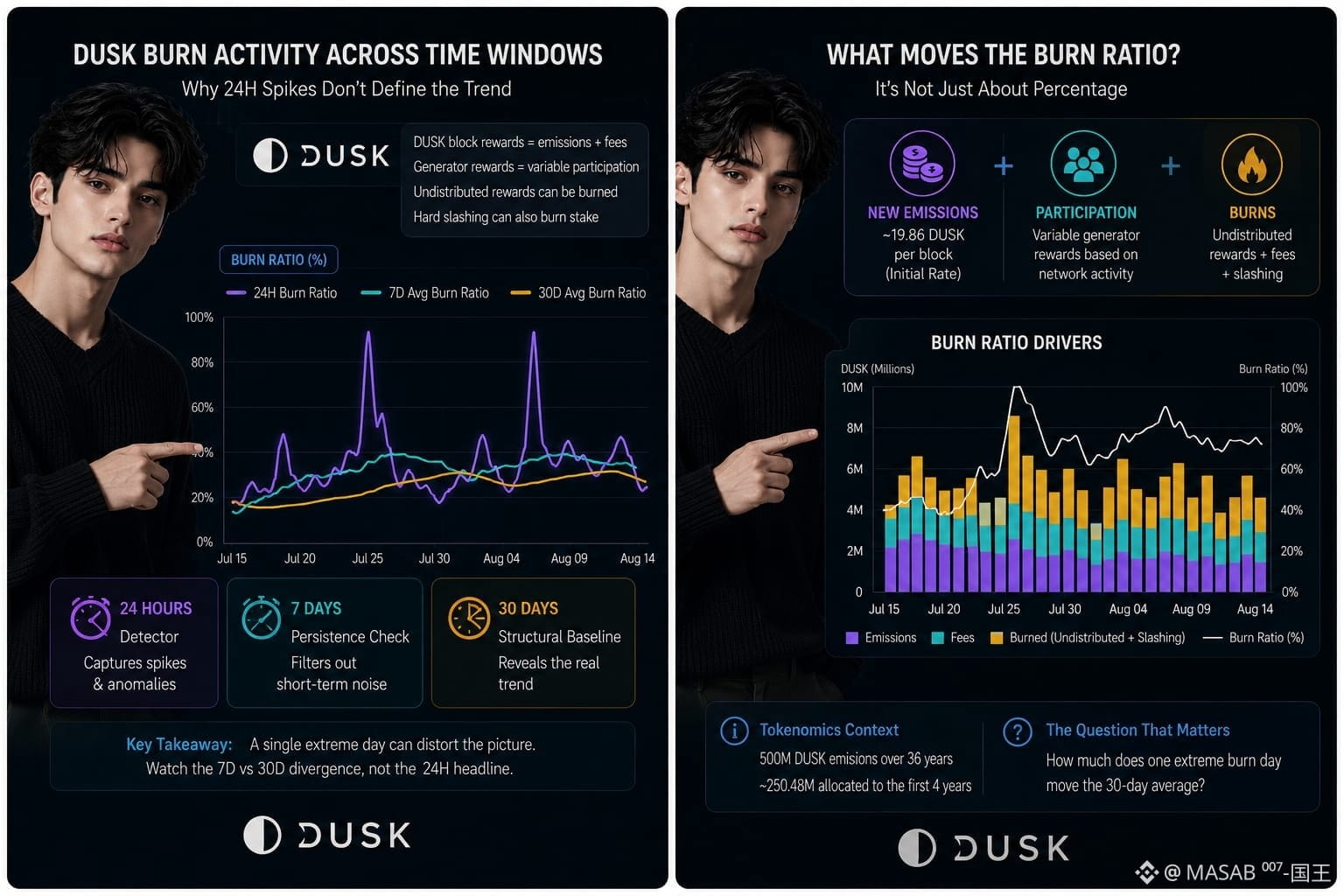
Lý do là mang tính cơ học.... Phần thưởng khối của DUSK kết hợp các token mới phát hành với phí giao dịch, trong khi phần thưởng từ trình tạo (generator rewards) lại bao gồm một thành phần tham gia biến đổi. Phần chưa được phân phối có thể bị đốt. Tịch thu (slashing) mạnh cũng có thể đốt phần stake.
Vì vậy, con số theo ngày một phần là phép đo hành vi của mạng, chứ không chỉ đơn thuần là “giảm phát” (deflation). .....Nếu mức tham gia thay đổi đột ngột trong vài giờ, tỷ lệ đốt có thể nhảy vọt mà không phản ánh một xu hướng kéo dài.
Quy mô cũng quan trọng. Mục tiêu tokenomics hiện tại là phát thải 500 triệu DUSK trong 36 năm, với khoảng 250,48 triệu được phân bổ cho bốn năm đầu tiên. Tốc độ phát thải ban đầu vào khoảng 19,86 DUSK mỗi block.
Vì thế, tôi sẽ coi 24 giờ như một bộ phát hiện (detector), 7 ngày như phép kiểm tra tính bền vững (persistence check), và 30 ngày như mốc nền tảng (structural baseline).
Nhưng chỉ một con số phần trăm sẽ che giấu việc sự thay đổi đến từ ít phần thưởng hơn, nhiều lần đốt hơn, hay cả hai.
Câu hỏi khó chịu là: một ngày đốt ở mức cực đoan sẽ làm dịch chuyển trung bình 30 ngày nhiều đến mức nào?
Chênh lệch giữa 7 ngày và 30 ngày là con số tôi sẽ theo dõi tiếp theo.
@Dusk_Foundation $DUSK #dusk
{future}(DUSKUSDT)
Tôi đang so sánh hoạt động đốt (burn) của DUSK trông như thế nào qua các khung thời gian khác nhau, và có một điều khiến tôi băn khoăn: tỷ lệ đốt trong 24 giờ biến động mạnh có thể nói lên rất ít về nền kinh tế token (token economy) thực sự bên dưới.
Lý do là mang tính cơ học.... Phần thưởng khối của DUSK kết hợp các token mới phát hành với phí giao dịch, trong khi phần thưởng từ trình tạo (generator rewards) lại bao gồm một thành phần tham gia biến đổi. Phần chưa được phân phối có thể bị đốt. Tịch thu (slashing) mạnh cũng có thể đốt phần stake.
Vì vậy, con số theo ngày một phần là phép đo hành vi của mạng, chứ không chỉ đơn thuần là “giảm phát” (deflation). .....Nếu mức tham gia thay đổi đột ngột trong vài giờ, tỷ lệ đốt có thể nhảy vọt mà không phản ánh một xu hướng kéo dài.
Quy mô cũng quan trọng. Mục tiêu tokenomics hiện tại là phát thải 500 triệu DUSK trong 36 năm, với khoảng 250,48 triệu được phân bổ cho bốn năm đầu tiên. Tốc độ phát thải ban đầu vào khoảng 19,86 DUSK mỗi block.
Vì thế, tôi sẽ coi 24 giờ như một bộ phát hiện (detector), 7 ngày như phép kiểm tra tính bền vững (persistence check), và 30 ngày như mốc nền tảng (structural baseline).
Nhưng chỉ một con số phần trăm sẽ che giấu việc sự thay đổi đến từ ít phần thưởng hơn, nhiều lần đốt hơn, hay cả hai.
Câu hỏi khó chịu là: một ngày đốt ở mức cực đoan sẽ làm dịch chuyển trung bình 30 ngày nhiều đến mức nào?
Chênh lệch giữa 7 ngày và 30 ngày là con số tôi sẽ theo dõi tiếp theo.
@Dusk $DUSK #dusk
Lý do là mang tính cơ học.... Phần thưởng khối của DUSK kết hợp các token mới phát hành với phí giao dịch, trong khi phần thưởng từ trình tạo (generator rewards) lại bao gồm một thành phần tham gia biến đổi. Phần chưa được phân phối có thể bị đốt. Tịch thu (slashing) mạnh cũng có thể đốt phần stake.
Vì vậy, con số theo ngày một phần là phép đo hành vi của mạng, chứ không chỉ đơn thuần là “giảm phát” (deflation). .....Nếu mức tham gia thay đổi đột ngột trong vài giờ, tỷ lệ đốt có thể nhảy vọt mà không phản ánh một xu hướng kéo dài.
Quy mô cũng quan trọng. Mục tiêu tokenomics hiện tại là phát thải 500 triệu DUSK trong 36 năm, với khoảng 250,48 triệu được phân bổ cho bốn năm đầu tiên. Tốc độ phát thải ban đầu vào khoảng 19,86 DUSK mỗi block.
Vì thế, tôi sẽ coi 24 giờ như một bộ phát hiện (detector), 7 ngày như phép kiểm tra tính bền vững (persistence check), và 30 ngày như mốc nền tảng (structural baseline).
Nhưng chỉ một con số phần trăm sẽ che giấu việc sự thay đổi đến từ ít phần thưởng hơn, nhiều lần đốt hơn, hay cả hai.
Câu hỏi khó chịu là: một ngày đốt ở mức cực đoan sẽ làm dịch chuyển trung bình 30 ngày nhiều đến mức nào?
Chênh lệch giữa 7 ngày và 30 ngày là con số tôi sẽ theo dõi tiếp theo.
@Dusk $DUSK #dusk
31
21
21.8k
·
--
Tối nay thị trường khá yên ắng, nên tôi mở lại tài liệu của Dusk và cứ nhìn chằm chằm vào một con số: 210M+ DUSK được đặt cược.
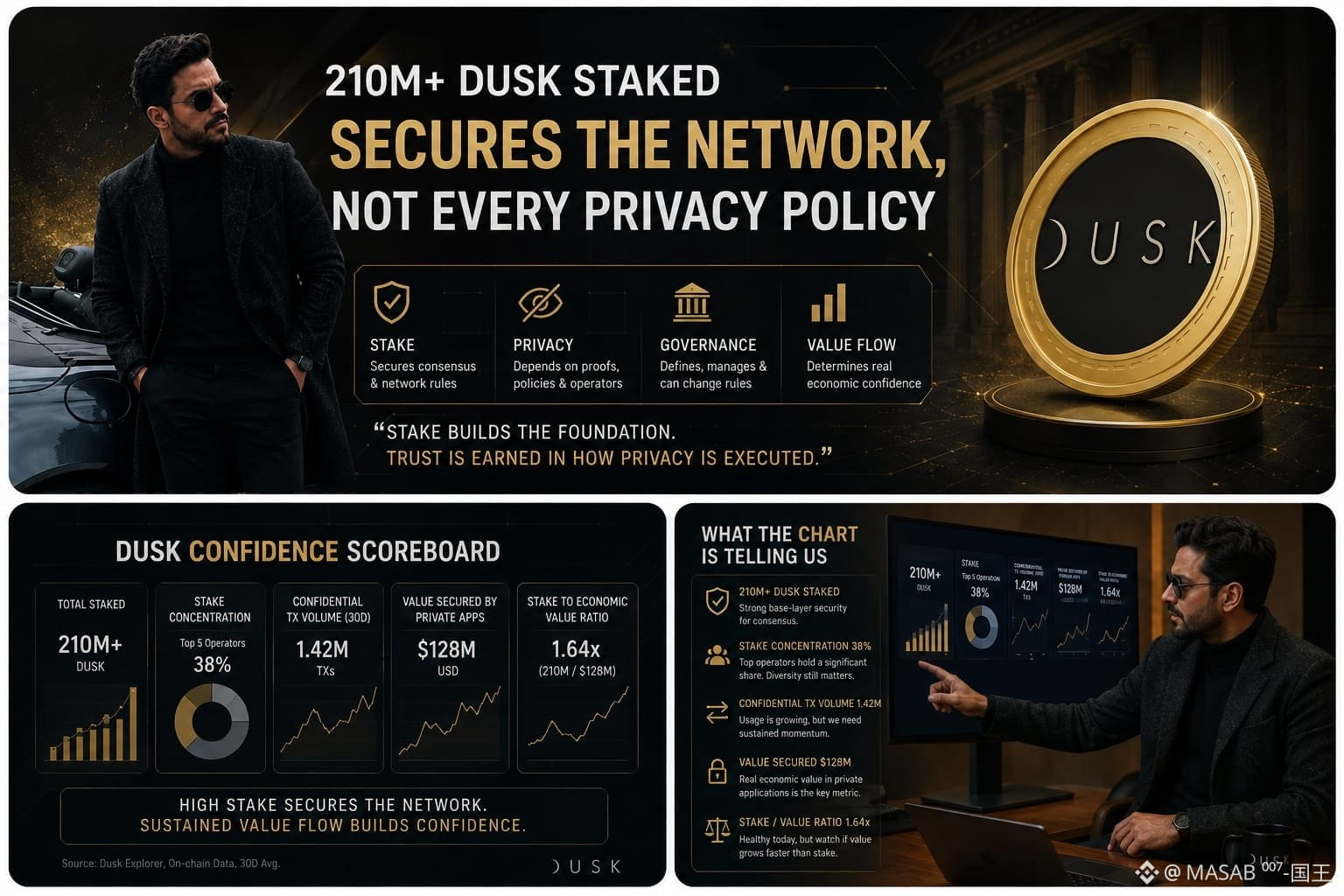
Thật hấp dẫn khi hiểu điều đó như “các ứng dụng tài chính bí mật được bảo mật.” Nhưng có điều gì đó không khớp. An ninh kinh tế ở lớp nền và mức độ tin cậy về thực thi quyền riêng tư không nhất thiết là một.
Việc đặt cược có thể bảo vệ sự đồng thuận, trong khi các ứng dụng bí mật vẫn phụ thuộc vào các bằng chứng về quyền riêng tư, chính sách công bố, người vận hành, cơ chế quản trị, và cả việc giá trị thực sự chảy qua chúng nhiều đến mức nào.
Vì vậy, tôi bắt đầu nghĩ về một bảng điểm khác: mức độ tập trung của các khoản đặt cược, mức độ tập trung của người vận hành, khối lượng giao dịch bí mật, giá trị được bảo đảm bởi các ứng dụng riêng tư, và tỷ lệ stake trên giá trị kinh tế.
Đây là điểm khác biệt mà tôi cứ quay lại: **stake bảo đảm các quy tắc của mạng; nó không tự động xác thực mọi chính sách quyền riêng tư được xây dựng ở phía trên.**
Điều đó không có nghĩa mô hình quyền riêng tư của Dusk yếu đi. Công bố chọn lọc có thể thực sự hữu ích: một nhà đầu tư có thể chứng minh quyền sở hữu, một địa điểm có đủ điều kiện, và cơ quan quản lý chỉ cung cấp bằng chứng tuân thủ mà họ yêu cầu.
Nhưng ai là người quyết định các quy tắc công bố đó? Ai có thể thay đổi chúng? Trong một tình huống khẩn cấp, những người quan sát được ủy quyền có thể nhận được bằng chứng nhanh đến mức nào?
Tôi chưa biết liệu 210M+ được đặt cược có mang lại đủ mức tin cậy cho các thị trường bí mật giá trị cao hay không.
Các biểu đồ vẫn đang rất yên tĩnh. Tôi sẽ để ngỏ câu hỏi đó.
@Dusk_Foundation $DUSK #dusk
{future}(DUSKUSDT)
Tối nay thị trường khá yên ắng, nên tôi mở lại tài liệu của Dusk và cứ nhìn chằm chằm vào một con số: 210M+ DUSK được đặt cược.
Thật hấp dẫn khi hiểu điều đó như “các ứng dụng tài chính bí mật được bảo mật.” Nhưng có điều gì đó không khớp. An ninh kinh tế ở lớp nền và mức độ tin cậy về thực thi quyền riêng tư không nhất thiết là một.
Việc đặt cược có thể bảo vệ sự đồng thuận, trong khi các ứng dụng bí mật vẫn phụ thuộc vào các bằng chứng về quyền riêng tư, chính sách công bố, người vận hành, cơ chế quản trị, và cả việc giá trị thực sự chảy qua chúng nhiều đến mức nào.
Vì vậy, tôi bắt đầu nghĩ về một bảng điểm khác: mức độ tập trung của các khoản đặt cược, mức độ tập trung của người vận hành, khối lượng giao dịch bí mật, giá trị được bảo đảm bởi các ứng dụng riêng tư, và tỷ lệ stake trên giá trị kinh tế.
Đây là điểm khác biệt mà tôi cứ quay lại: **stake bảo đảm các quy tắc của mạng; nó không tự động xác thực mọi chính sách quyền riêng tư được xây dựng ở phía trên.**
Điều đó không có nghĩa mô hình quyền riêng tư của Dusk yếu đi. Công bố chọn lọc có thể thực sự hữu ích: một nhà đầu tư có thể chứng minh quyền sở hữu, một địa điểm có đủ điều kiện, và cơ quan quản lý chỉ cung cấp bằng chứng tuân thủ mà họ yêu cầu.
Nhưng ai là người quyết định các quy tắc công bố đó? Ai có thể thay đổi chúng? Trong một tình huống khẩn cấp, những người quan sát được ủy quyền có thể nhận được bằng chứng nhanh đến mức nào?
Tôi chưa biết liệu 210M+ được đặt cược có mang lại đủ mức tin cậy cho các thị trường bí mật giá trị cao hay không.
Các biểu đồ vẫn đang rất yên tĩnh. Tôi sẽ để ngỏ câu hỏi đó.
@Dusk $DUSK #dusk
Thật hấp dẫn khi hiểu điều đó như “các ứng dụng tài chính bí mật được bảo mật.” Nhưng có điều gì đó không khớp. An ninh kinh tế ở lớp nền và mức độ tin cậy về thực thi quyền riêng tư không nhất thiết là một.
Việc đặt cược có thể bảo vệ sự đồng thuận, trong khi các ứng dụng bí mật vẫn phụ thuộc vào các bằng chứng về quyền riêng tư, chính sách công bố, người vận hành, cơ chế quản trị, và cả việc giá trị thực sự chảy qua chúng nhiều đến mức nào.
Vì vậy, tôi bắt đầu nghĩ về một bảng điểm khác: mức độ tập trung của các khoản đặt cược, mức độ tập trung của người vận hành, khối lượng giao dịch bí mật, giá trị được bảo đảm bởi các ứng dụng riêng tư, và tỷ lệ stake trên giá trị kinh tế.
Đây là điểm khác biệt mà tôi cứ quay lại: **stake bảo đảm các quy tắc của mạng; nó không tự động xác thực mọi chính sách quyền riêng tư được xây dựng ở phía trên.**
Điều đó không có nghĩa mô hình quyền riêng tư của Dusk yếu đi. Công bố chọn lọc có thể thực sự hữu ích: một nhà đầu tư có thể chứng minh quyền sở hữu, một địa điểm có đủ điều kiện, và cơ quan quản lý chỉ cung cấp bằng chứng tuân thủ mà họ yêu cầu.
Nhưng ai là người quyết định các quy tắc công bố đó? Ai có thể thay đổi chúng? Trong một tình huống khẩn cấp, những người quan sát được ủy quyền có thể nhận được bằng chứng nhanh đến mức nào?
Tôi chưa biết liệu 210M+ được đặt cược có mang lại đủ mức tin cậy cho các thị trường bí mật giá trị cao hay không.
Các biểu đồ vẫn đang rất yên tĩnh. Tôi sẽ để ngỏ câu hỏi đó.
@Dusk $DUSK #dusk
35
30
11.1k
·
--
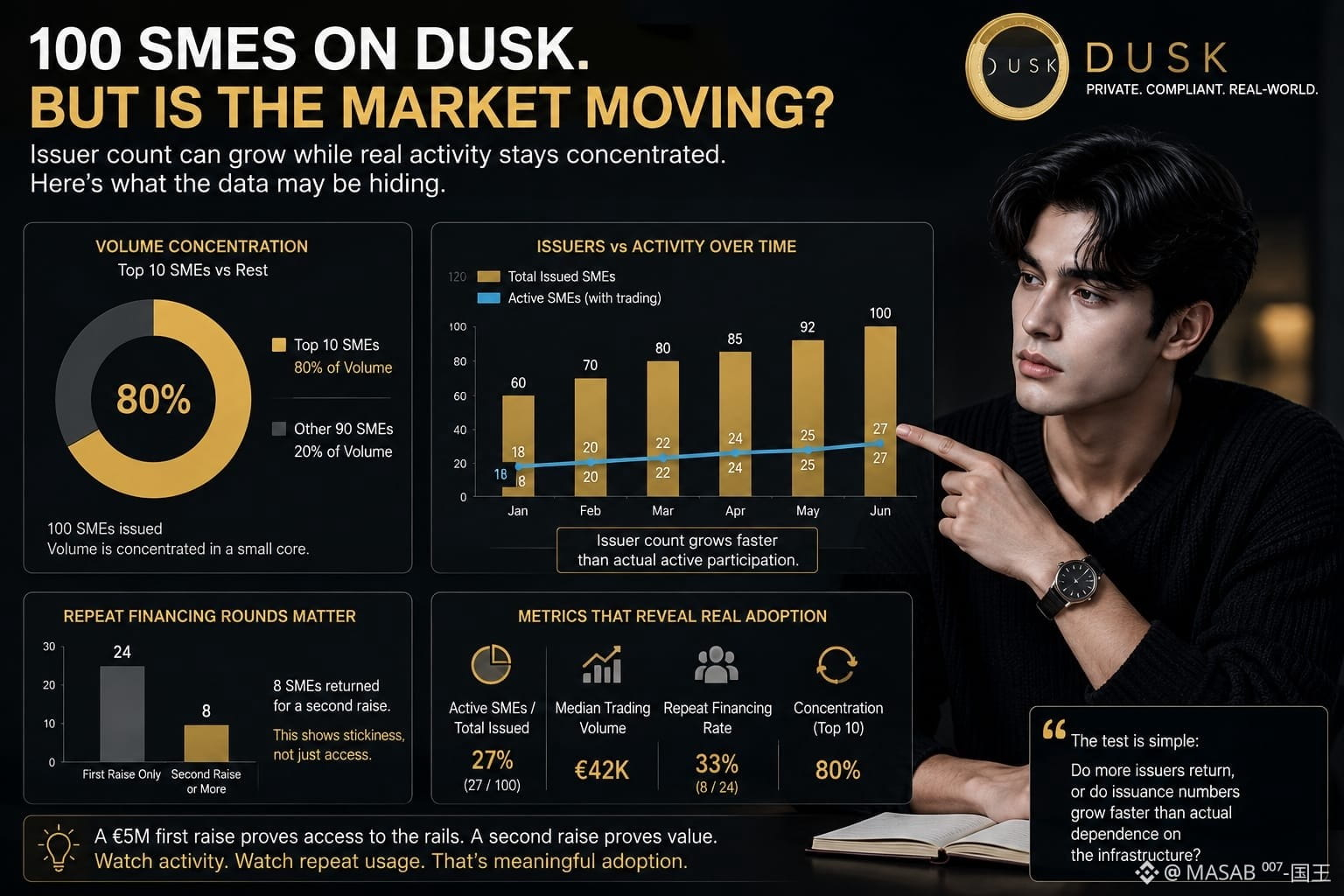
Một điều cứ khiến tôi băn khoăn khi xem câu chuyện SME của DUSK là: số lượng nhà phát hành có thể tăng ngay cả khi thị trường thực bên dưới gần như không chuyển động.
Hãy tưởng tượng DUSK có 100 SME được token hóa, nhưng 10 nhà phát hành hàng đầu tạo ra 80% tổng khối lượng giao dịch. Trên giấy tờ, việc có 100 nhà phát hành trông như một mức độ tiếp nhận rộng rãi. Trên thực tế, điều đó có thể có nghĩa là sự chú ý của nhà đầu tư, tính thanh khoản và hoạt động lặp lại đang tập trung vào một “nhân lõi” rất nhỏ.
Vì vậy, tôi sẽ theo dõi sát hơn các chỉ số như: SME đang hoạt động / tổng SME đã phát hành, khối lượng giao dịch trung vị, và số vòng tài trợ lặp lại—hơn là chỉ nhìn vào con số phát hành theo tiêu đề.
Một lần huy động 5M€ đầu tiên chứng minh rằng công ty có thể tiếp cận được “đường ray” vận hành. Lần huy động thứ hai sau đó lại là chuyện khác. Điều đó cho thấy nhà phát hành đã tìm thấy đủ giá trị trong việc quản trị sở hữu, cơ chế kiểm soát chuyển nhượng và quy trình dành cho nhà đầu tư của DUSK để quay lại lần nữa.
Đây chính là nơi tách bạch giữa hoạt động và mức độ tiếp nhận có ý nghĩa.
Một SME có thể cần DUSK nhiều hơn để duy trì cấu trúc cổ đông có thể lập trình, thay vì phục vụ giao dịch thứ cấp hằng ngày. Điều đó vẫn quan trọng. Nhưng nếu sổ đăng ký onchain phải thường xuyên được đối chiếu với hồ sơ pháp lý offchain, thì lợi thế vận hành có thể suy giảm rất nhanh.
Bài kiểm tra mà tôi vẫn đang theo dõi thật ra rất đơn giản: liệu nhiều nhà phát hành quay lại hay liệu con số phát hành tăng nhanh hơn so với mức độ phụ thuộc thực tế vào hạ tầng?
@Dusk_Foundation #dusk $DUSK
{future}(DUSKUSDT)
Một điều cứ khiến tôi băn khoăn khi xem câu chuyện SME của DUSK là: số lượng nhà phát hành có thể tăng ngay cả khi thị trường thực bên dưới gần như không chuyển động.
Hãy tưởng tượng DUSK có 100 SME được token hóa, nhưng 10 nhà phát hành hàng đầu tạo ra 80% tổng khối lượng giao dịch. Trên giấy tờ, việc có 100 nhà phát hành trông như một mức độ tiếp nhận rộng rãi. Trên thực tế, điều đó có thể có nghĩa là sự chú ý của nhà đầu tư, tính thanh khoản và hoạt động lặp lại đang tập trung vào một “nhân lõi” rất nhỏ.
Vì vậy, tôi sẽ theo dõi sát hơn các chỉ số như: SME đang hoạt động / tổng SME đã phát hành, khối lượng giao dịch trung vị, và số vòng tài trợ lặp lại—hơn là chỉ nhìn vào con số phát hành theo tiêu đề.
Một lần huy động 5M€ đầu tiên chứng minh rằng công ty có thể tiếp cận được “đường ray” vận hành. Lần huy động thứ hai sau đó lại là chuyện khác. Điều đó cho thấy nhà phát hành đã tìm thấy đủ giá trị trong việc quản trị sở hữu, cơ chế kiểm soát chuyển nhượng và quy trình dành cho nhà đầu tư của DUSK để quay lại lần nữa.
Đây chính là nơi tách bạch giữa hoạt động và mức độ tiếp nhận có ý nghĩa.
Một SME có thể cần DUSK nhiều hơn để duy trì cấu trúc cổ đông có thể lập trình, thay vì phục vụ giao dịch thứ cấp hằng ngày. Điều đó vẫn quan trọng. Nhưng nếu sổ đăng ký onchain phải thường xuyên được đối chiếu với hồ sơ pháp lý offchain, thì lợi thế vận hành có thể suy giảm rất nhanh.
Bài kiểm tra mà tôi vẫn đang theo dõi thật ra rất đơn giản: liệu nhiều nhà phát hành quay lại hay liệu con số phát hành tăng nhanh hơn so với mức độ phụ thuộc thực tế vào hạ tầng?
@Dusk #dusk $DUSK
Hãy tưởng tượng DUSK có 100 SME được token hóa, nhưng 10 nhà phát hành hàng đầu tạo ra 80% tổng khối lượng giao dịch. Trên giấy tờ, việc có 100 nhà phát hành trông như một mức độ tiếp nhận rộng rãi. Trên thực tế, điều đó có thể có nghĩa là sự chú ý của nhà đầu tư, tính thanh khoản và hoạt động lặp lại đang tập trung vào một “nhân lõi” rất nhỏ.
Vì vậy, tôi sẽ theo dõi sát hơn các chỉ số như: SME đang hoạt động / tổng SME đã phát hành, khối lượng giao dịch trung vị, và số vòng tài trợ lặp lại—hơn là chỉ nhìn vào con số phát hành theo tiêu đề.
Một lần huy động 5M€ đầu tiên chứng minh rằng công ty có thể tiếp cận được “đường ray” vận hành. Lần huy động thứ hai sau đó lại là chuyện khác. Điều đó cho thấy nhà phát hành đã tìm thấy đủ giá trị trong việc quản trị sở hữu, cơ chế kiểm soát chuyển nhượng và quy trình dành cho nhà đầu tư của DUSK để quay lại lần nữa.
Đây chính là nơi tách bạch giữa hoạt động và mức độ tiếp nhận có ý nghĩa.
Một SME có thể cần DUSK nhiều hơn để duy trì cấu trúc cổ đông có thể lập trình, thay vì phục vụ giao dịch thứ cấp hằng ngày. Điều đó vẫn quan trọng. Nhưng nếu sổ đăng ký onchain phải thường xuyên được đối chiếu với hồ sơ pháp lý offchain, thì lợi thế vận hành có thể suy giảm rất nhanh.
Bài kiểm tra mà tôi vẫn đang theo dõi thật ra rất đơn giản: liệu nhiều nhà phát hành quay lại hay liệu con số phát hành tăng nhanh hơn so với mức độ phụ thuộc thực tế vào hạ tầng?
@Dusk #dusk $DUSK
48
42
12.7k
·
--
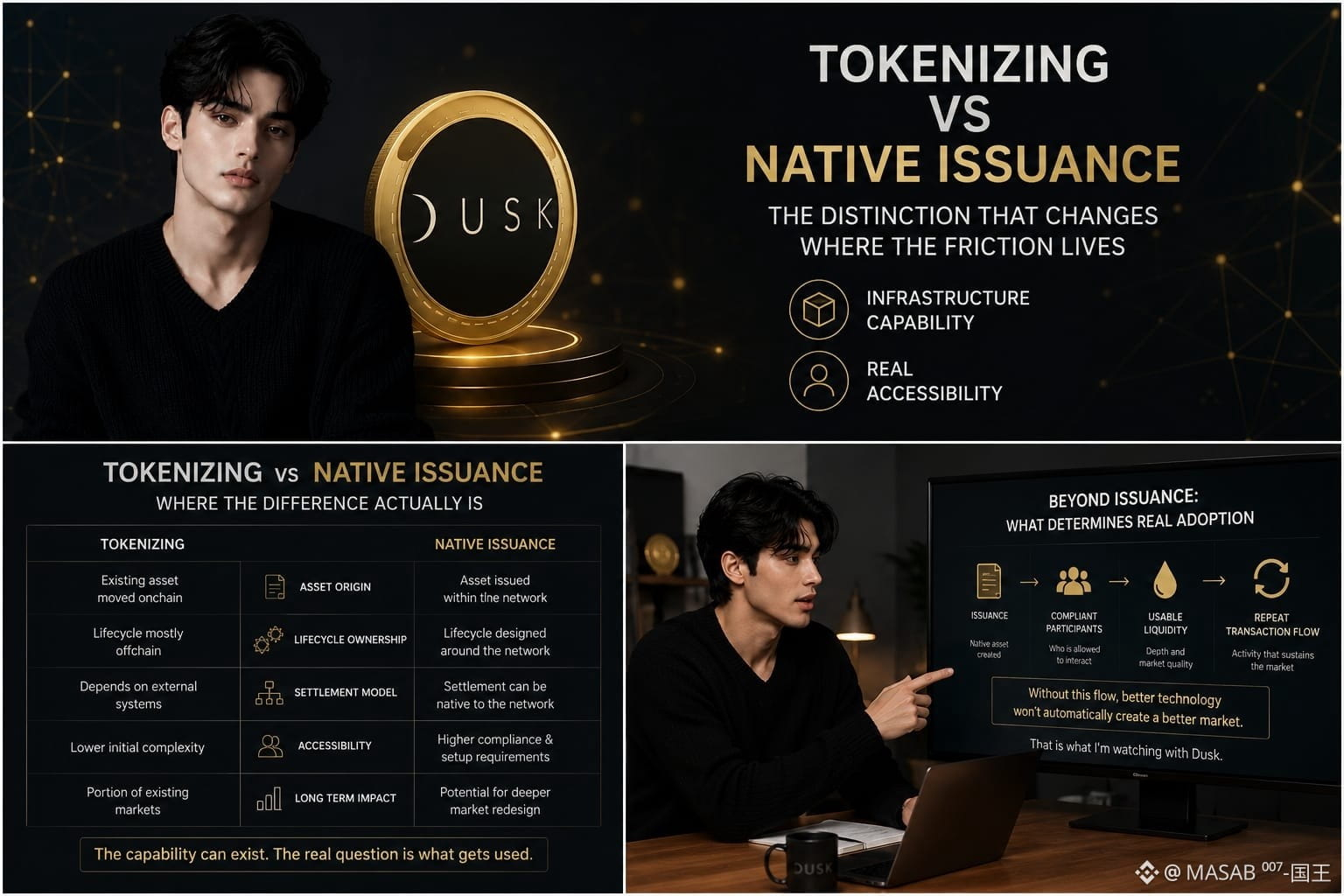
Tôi thấy mình lặp đi lặp lại quay về một điểm phân biệt trong thiết kế RWA của Dusk: một token có thể tồn tại onchain, trong khi vòng đời thực sự của một tài sản vẫn nằm ở đâu đó khác.
Điều này quan trọng hơn vẻ bề ngoài. Với token hóa, blockchain có thể cải thiện khả năng phân phối hoặc tính lập trình, nhưng việc phát hành, lưu ký, thanh toán, dịch vụ và hồ sơ có thể vẫn cần những hệ thống riêng và quá trình đối chiếu. Mô hình phát hành gốc của Dusk tham vọng hơn theo nghĩa hẹp hơn: chính tài sản có thể được tạo và quản lý xoay quanh sổ cái, nhờ đó các điểm bàn giao đó có thể diễn ra trong một môi trường được phối hợp đồng bộ.
Lớp ẩn, tuy nhiên, không phải là token. Đó là sự phối hợp.
Dusk kết hợp thanh toán, kiểm soát truy cập, quyền riêng tư và công bố chọn lọc vì chứng khoán được quản lý không thể đơn giản trở thành các đối tượng blockchain công khai. Vẫn cần ai đó xác định tính đủ điều kiện, quyền hạn, báo cáo và cấu trúc pháp lý liên quan đến tài sản. Dusk có thể cung cấp hạ tầng; nó không thể “tự chế” sự cho phép, thanh khoản hay sự tham gia của các tổ chức.
Vì vậy, tôi xem sự so sánh thực sự là năng lực kỹ thuật so với khả năng tiếp cận thực tế. Một mạng hỗ trợ phát hành gốc là khác với một mạng chứng minh rằng các tổ chức sẽ sử dụng nó.
Phần khó chịu nằm ở việc được áp dụng (adoption). Nếu các tổ chức phát hành và các nền tảng lưu dịch vẫn giữ các bước then chốt của vòng đời ở nơi khác, thì phát hành gốc trở thành năng lực kiến trúc hơn là một hạ tầng thị trường có ý nghĩa.
Đó là phần tôi vẫn đang theo dõi.
@Dusk_Foundation $DUSK #dusk
{future}(DUSKUSDT)
Tôi thấy mình lặp đi lặp lại quay về một điểm phân biệt trong thiết kế RWA của Dusk: một token có thể tồn tại onchain, trong khi vòng đời thực sự của một tài sản vẫn nằm ở đâu đó khác.
Điều này quan trọng hơn vẻ bề ngoài. Với token hóa, blockchain có thể cải thiện khả năng phân phối hoặc tính lập trình, nhưng việc phát hành, lưu ký, thanh toán, dịch vụ và hồ sơ có thể vẫn cần những hệ thống riêng và quá trình đối chiếu. Mô hình phát hành gốc của Dusk tham vọng hơn theo nghĩa hẹp hơn: chính tài sản có thể được tạo và quản lý xoay quanh sổ cái, nhờ đó các điểm bàn giao đó có thể diễn ra trong một môi trường được phối hợp đồng bộ.
Lớp ẩn, tuy nhiên, không phải là token. Đó là sự phối hợp.
Dusk kết hợp thanh toán, kiểm soát truy cập, quyền riêng tư và công bố chọn lọc vì chứng khoán được quản lý không thể đơn giản trở thành các đối tượng blockchain công khai. Vẫn cần ai đó xác định tính đủ điều kiện, quyền hạn, báo cáo và cấu trúc pháp lý liên quan đến tài sản. Dusk có thể cung cấp hạ tầng; nó không thể “tự chế” sự cho phép, thanh khoản hay sự tham gia của các tổ chức.
Vì vậy, tôi xem sự so sánh thực sự là năng lực kỹ thuật so với khả năng tiếp cận thực tế. Một mạng hỗ trợ phát hành gốc là khác với một mạng chứng minh rằng các tổ chức sẽ sử dụng nó.
Phần khó chịu nằm ở việc được áp dụng (adoption). Nếu các tổ chức phát hành và các nền tảng lưu dịch vẫn giữ các bước then chốt của vòng đời ở nơi khác, thì phát hành gốc trở thành năng lực kiến trúc hơn là một hạ tầng thị trường có ý nghĩa.
Đó là phần tôi vẫn đang theo dõi.
@Dusk $DUSK #dusk
Điều này quan trọng hơn vẻ bề ngoài. Với token hóa, blockchain có thể cải thiện khả năng phân phối hoặc tính lập trình, nhưng việc phát hành, lưu ký, thanh toán, dịch vụ và hồ sơ có thể vẫn cần những hệ thống riêng và quá trình đối chiếu. Mô hình phát hành gốc của Dusk tham vọng hơn theo nghĩa hẹp hơn: chính tài sản có thể được tạo và quản lý xoay quanh sổ cái, nhờ đó các điểm bàn giao đó có thể diễn ra trong một môi trường được phối hợp đồng bộ.
Lớp ẩn, tuy nhiên, không phải là token. Đó là sự phối hợp.
Dusk kết hợp thanh toán, kiểm soát truy cập, quyền riêng tư và công bố chọn lọc vì chứng khoán được quản lý không thể đơn giản trở thành các đối tượng blockchain công khai. Vẫn cần ai đó xác định tính đủ điều kiện, quyền hạn, báo cáo và cấu trúc pháp lý liên quan đến tài sản. Dusk có thể cung cấp hạ tầng; nó không thể “tự chế” sự cho phép, thanh khoản hay sự tham gia của các tổ chức.
Vì vậy, tôi xem sự so sánh thực sự là năng lực kỹ thuật so với khả năng tiếp cận thực tế. Một mạng hỗ trợ phát hành gốc là khác với một mạng chứng minh rằng các tổ chức sẽ sử dụng nó.
Phần khó chịu nằm ở việc được áp dụng (adoption). Nếu các tổ chức phát hành và các nền tảng lưu dịch vẫn giữ các bước then chốt của vòng đời ở nơi khác, thì phát hành gốc trở thành năng lực kiến trúc hơn là một hạ tầng thị trường có ý nghĩa.
Đó là phần tôi vẫn đang theo dõi.
@Dusk $DUSK #dusk
40
30
10.3k
·
--
Đã xác minh
Tối qua tôi đang lướt qua Dusk Trade khi thị trường bất thường yên ắng. Tôi cứ bắt gặp những cụm từ giống nhau: tài sản được mã hóa, sở hữu thực sự, thanh toán tức thời. Rồi “neobroker” khiến tôi dừng lại và nhìn sâu bên dưới giao diện.
Giả định trực quan thì đơn giản: mua ETF, MMF hoặc trái phiếu thông qua Dusk Trade, và toàn bộ vòng đời đầu tư trở thành bản địa trên blockchain.
Nhưng có điều gì đó không khớp.
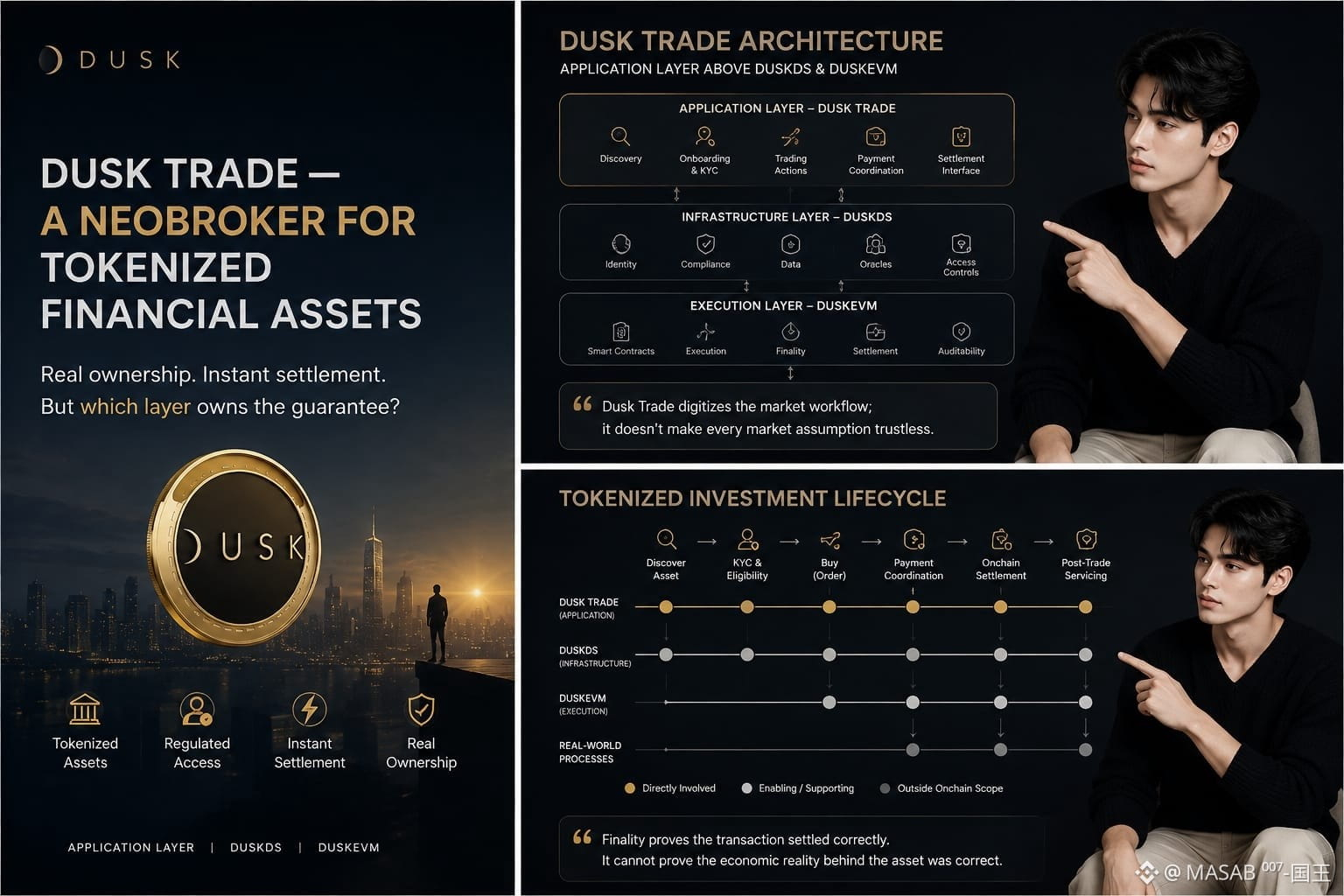
Dusk Trade là lớp ứng dụng trên DuskEVM. Nó kết nối người dùng với các tài sản tài chính được mã hóa và các quy trình giao dịch, trong khi hạ tầng nền chịu trách nhiệm thực thi và thanh toán. Điều đó có ý nghĩa, nhưng nó không giống như việc biến mọi giả định tài chính thành không cần tin cậy.
Nó đảm bảo việc giao dịch được thực hiện, chứ không phải đảm bảo mọi giả định nằm sau tài sản.
Sự khác biệt này quan trọng. Thanh toán quyết định theo cơ chế tất định (deterministic settlement) có thể chứng minh rằng một giao dịch do người được ủy quyền thực hiện đã được xử lý đúng. Nhưng tự nó không thể chứng minh rằng mọi bản ghi ngoài chuỗi (off-chain), quyết định về tính đủ điều kiện (eligibility), nội dung công bố (disclosure), định giá (valuation) hoặc quy trình phục vụ (servicing) xung quanh một tài sản ngoài đời thực là chính xác.
Ban đầu tôi nghĩ sự khác biệt đó chủ yếu mang tính kỹ thuật. Không phải vậy.
Nếu một nguồn dữ liệu ở phía trên bị sai, thì blockchain vẫn có thể thanh toán một cách trung thực cho thực tế kinh tế sai.
Đây không phải vấn đề riêng của Dusk; tài chính được mã hóa kế thừa các ranh giới này từ thị trường truyền thống.
Bài kiểm tra thực sự xuất hiện khi giá trị mang tính tổ chức tạo ra động lực để tấn công vào những lớp yếu hơn.
Tôi vẫn đang tự hỏi ranh giới đó sẽ vận hành ra sao dưới áp lực kéo dài. Đó là phần tôi sẽ theo dõi.
@Dusk_Foundation $DUSK #dusk
{future}(DUSKUSDT)
Tối qua tôi đang lướt qua Dusk Trade khi thị trường bất thường yên ắng. Tôi cứ bắt gặp những cụm từ giống nhau: tài sản được mã hóa, sở hữu thực sự, thanh toán tức thời. Rồi “neobroker” khiến tôi dừng lại và nhìn sâu bên dưới giao diện.
Giả định trực quan thì đơn giản: mua ETF, MMF hoặc trái phiếu thông qua Dusk Trade, và toàn bộ vòng đời đầu tư trở thành bản địa trên blockchain.
Nhưng có điều gì đó không khớp.
Dusk Trade là lớp ứng dụng trên DuskEVM. Nó kết nối người dùng với các tài sản tài chính được mã hóa và các quy trình giao dịch, trong khi hạ tầng nền chịu trách nhiệm thực thi và thanh toán. Điều đó có ý nghĩa, nhưng nó không giống như việc biến mọi giả định tài chính thành không cần tin cậy.
Nó đảm bảo việc giao dịch được thực hiện, chứ không phải đảm bảo mọi giả định nằm sau tài sản.
Sự khác biệt này quan trọng. Thanh toán quyết định theo cơ chế tất định (deterministic settlement) có thể chứng minh rằng một giao dịch do người được ủy quyền thực hiện đã được xử lý đúng. Nhưng tự nó không thể chứng minh rằng mọi bản ghi ngoài chuỗi (off-chain), quyết định về tính đủ điều kiện (eligibility), nội dung công bố (disclosure), định giá (valuation) hoặc quy trình phục vụ (servicing) xung quanh một tài sản ngoài đời thực là chính xác.
Ban đầu tôi nghĩ sự khác biệt đó chủ yếu mang tính kỹ thuật. Không phải vậy.
Nếu một nguồn dữ liệu ở phía trên bị sai, thì blockchain vẫn có thể thanh toán một cách trung thực cho thực tế kinh tế sai.
Đây không phải vấn đề riêng của Dusk; tài chính được mã hóa kế thừa các ranh giới này từ thị trường truyền thống.
Bài kiểm tra thực sự xuất hiện khi giá trị mang tính tổ chức tạo ra động lực để tấn công vào những lớp yếu hơn.
Tôi vẫn đang tự hỏi ranh giới đó sẽ vận hành ra sao dưới áp lực kéo dài. Đó là phần tôi sẽ theo dõi.
@Dusk $DUSK #dusk
Giả định trực quan thì đơn giản: mua ETF, MMF hoặc trái phiếu thông qua Dusk Trade, và toàn bộ vòng đời đầu tư trở thành bản địa trên blockchain.
Nhưng có điều gì đó không khớp.
Dusk Trade là lớp ứng dụng trên DuskEVM. Nó kết nối người dùng với các tài sản tài chính được mã hóa và các quy trình giao dịch, trong khi hạ tầng nền chịu trách nhiệm thực thi và thanh toán. Điều đó có ý nghĩa, nhưng nó không giống như việc biến mọi giả định tài chính thành không cần tin cậy.
Nó đảm bảo việc giao dịch được thực hiện, chứ không phải đảm bảo mọi giả định nằm sau tài sản.
Sự khác biệt này quan trọng. Thanh toán quyết định theo cơ chế tất định (deterministic settlement) có thể chứng minh rằng một giao dịch do người được ủy quyền thực hiện đã được xử lý đúng. Nhưng tự nó không thể chứng minh rằng mọi bản ghi ngoài chuỗi (off-chain), quyết định về tính đủ điều kiện (eligibility), nội dung công bố (disclosure), định giá (valuation) hoặc quy trình phục vụ (servicing) xung quanh một tài sản ngoài đời thực là chính xác.
Ban đầu tôi nghĩ sự khác biệt đó chủ yếu mang tính kỹ thuật. Không phải vậy.
Nếu một nguồn dữ liệu ở phía trên bị sai, thì blockchain vẫn có thể thanh toán một cách trung thực cho thực tế kinh tế sai.
Đây không phải vấn đề riêng của Dusk; tài chính được mã hóa kế thừa các ranh giới này từ thị trường truyền thống.
Bài kiểm tra thực sự xuất hiện khi giá trị mang tính tổ chức tạo ra động lực để tấn công vào những lớp yếu hơn.
Tôi vẫn đang tự hỏi ranh giới đó sẽ vận hành ra sao dưới áp lực kéo dài. Đó là phần tôi sẽ theo dõi.
@Dusk $DUSK #dusk
40
33
7.4k
·
--
Đã xác minh
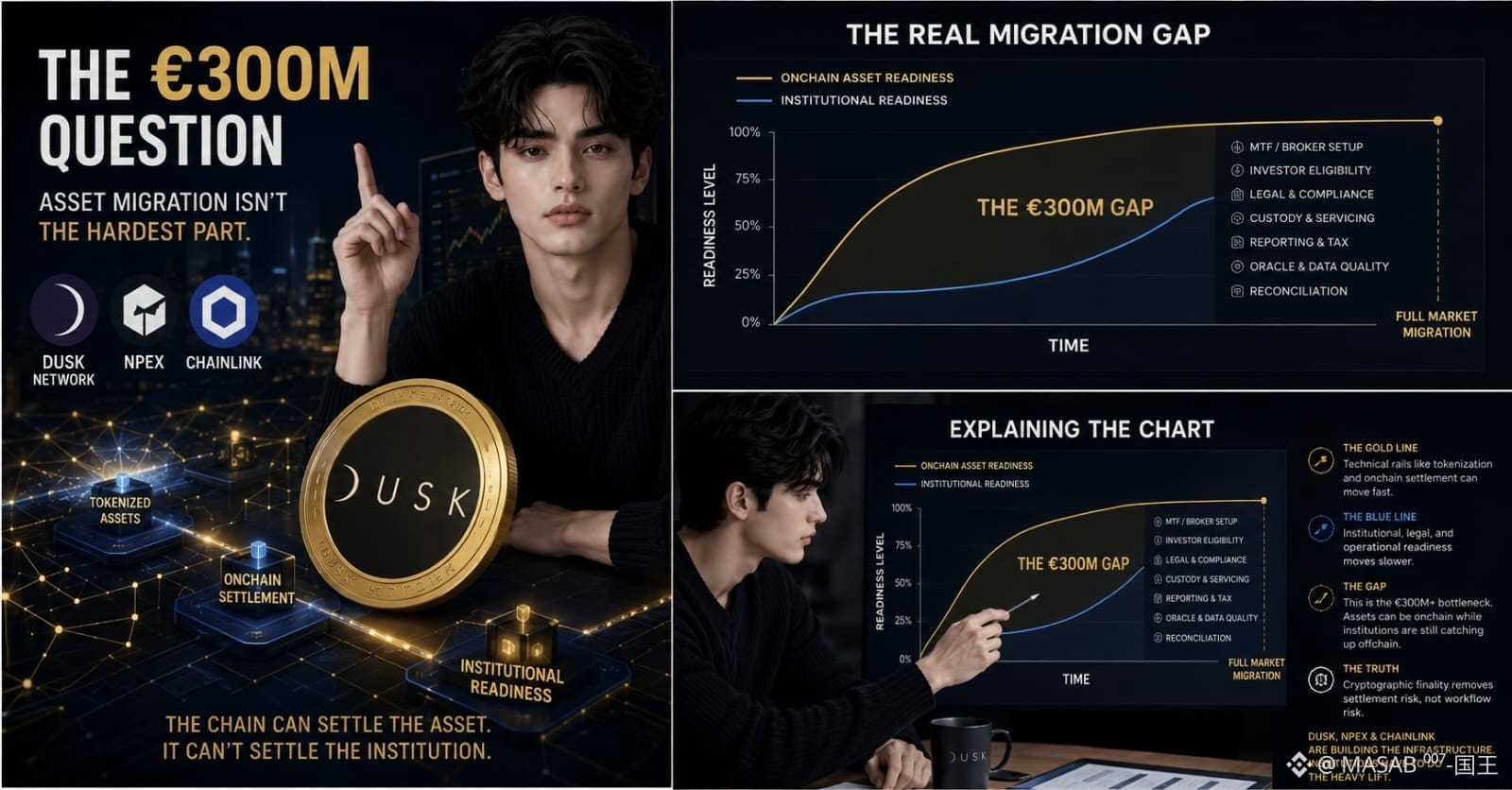
Tôi đang xem tài liệu của Dusk vào tận đêm qua và cứ quay lại với một con số: €300M+. Nghe có vẻ đó là một vấn đề di chuyển tài sản. Nhưng NPEX lại khiến tôi tự hỏi liệu việc di chuyển “cứng hơn” có phải là mọi thứ nằm xung quanh tài sản hay không.
Dusk và NPEX nhắm tới việc phát hành được quản lý, giao dịch và thanh toán onchain, trong khi Chainlink bổ sung CCIP, DataLink và Data Streams để kết nối xuyên chuỗi và dữ liệu thị trường.
Giả định trực quan thì khá đơn giản: khi các chứng khoán đã được token hóa, thì thị trường đã “đi tiếp”.
Tôi không chắc điều đó đúng.
Một tài sản có thể nằm trên onchain trong khi việc tiếp nhận, điều kiện đủ tư cách của nhà đầu tư, rà soát pháp lý, lưu ký, báo cáo, quản trị dịch vụ và các biện pháp kiểm soát vận hành vẫn phụ thuộc vào các quy trình mang tính tổ chức nằm ngoài lớp thanh toán.
Chuỗi có thể thanh toán tài sản; nhưng không thể “thanh toán” mức độ sẵn sàng của tổ chức.
Sự khác biệt này ban đầu khiến tôi thấy hơi rườm rà. Rồi tôi bắt đầu đếm các mảnh ghép: MTF, broker, ECSP và các hàm DLT-TSS sắp tới được nhắc tới bên cạnh NPEX.
Giờ hãy cộng thêm độ tươi của oracle, các mốc kiểm tra tuân thủ, đối soát và sự phụ thuộc vào dữ liệu bên ngoài.
Nếu một mức giá đến muộn, thì việc thanh toán tất định vẫn có thể hoàn toàn tất định.
Điều không thoải mái nằm ở chỗ: tính tất yếu cuối cùng bằng mật mã có thể loại bỏ sự không chắc chắn khỏi khâu thanh toán mà không loại bỏ được sự không chắc chắn khỏi luồng công việc của thị trường.
Tôi nghĩ Dusk đang giải quyết một nút thắt thực sự. Tôi chỉ chưa biết liệu €300M có thể di chuyển nhanh hơn các tổ chức chịu trách nhiệm phê duyệt, cung cấp dịch vụ và giám sát nó hay không.
Biểu đồ của tôi vẫn đang mở. Và tài liệu cũng vậy.
{future}(DUSKUSDT)
@Dusk_Foundation $DUSK #dusk
Tôi đang xem tài liệu của Dusk vào tận đêm qua và cứ quay lại với một con số: €300M+. Nghe có vẻ đó là một vấn đề di chuyển tài sản. Nhưng NPEX lại khiến tôi tự hỏi liệu việc di chuyển “cứng hơn” có phải là mọi thứ nằm xung quanh tài sản hay không.
Dusk và NPEX nhắm tới việc phát hành được quản lý, giao dịch và thanh toán onchain, trong khi Chainlink bổ sung CCIP, DataLink và Data Streams để kết nối xuyên chuỗi và dữ liệu thị trường.
Giả định trực quan thì khá đơn giản: khi các chứng khoán đã được token hóa, thì thị trường đã “đi tiếp”.
Tôi không chắc điều đó đúng.
Một tài sản có thể nằm trên onchain trong khi việc tiếp nhận, điều kiện đủ tư cách của nhà đầu tư, rà soát pháp lý, lưu ký, báo cáo, quản trị dịch vụ và các biện pháp kiểm soát vận hành vẫn phụ thuộc vào các quy trình mang tính tổ chức nằm ngoài lớp thanh toán.
Chuỗi có thể thanh toán tài sản; nhưng không thể “thanh toán” mức độ sẵn sàng của tổ chức.
Sự khác biệt này ban đầu khiến tôi thấy hơi rườm rà. Rồi tôi bắt đầu đếm các mảnh ghép: MTF, broker, ECSP và các hàm DLT-TSS sắp tới được nhắc tới bên cạnh NPEX.
Giờ hãy cộng thêm độ tươi của oracle, các mốc kiểm tra tuân thủ, đối soát và sự phụ thuộc vào dữ liệu bên ngoài.
Nếu một mức giá đến muộn, thì việc thanh toán tất định vẫn có thể hoàn toàn tất định.
Điều không thoải mái nằm ở chỗ: tính tất yếu cuối cùng bằng mật mã có thể loại bỏ sự không chắc chắn khỏi khâu thanh toán mà không loại bỏ được sự không chắc chắn khỏi luồng công việc của thị trường.
Tôi nghĩ Dusk đang giải quyết một nút thắt thực sự. Tôi chỉ chưa biết liệu €300M có thể di chuyển nhanh hơn các tổ chức chịu trách nhiệm phê duyệt, cung cấp dịch vụ và giám sát nó hay không.
Biểu đồ của tôi vẫn đang mở. Và tài liệu cũng vậy.
@Dusk $DUSK #dusk
Dusk và NPEX nhắm tới việc phát hành được quản lý, giao dịch và thanh toán onchain, trong khi Chainlink bổ sung CCIP, DataLink và Data Streams để kết nối xuyên chuỗi và dữ liệu thị trường.
Giả định trực quan thì khá đơn giản: khi các chứng khoán đã được token hóa, thì thị trường đã “đi tiếp”.
Tôi không chắc điều đó đúng.
Một tài sản có thể nằm trên onchain trong khi việc tiếp nhận, điều kiện đủ tư cách của nhà đầu tư, rà soát pháp lý, lưu ký, báo cáo, quản trị dịch vụ và các biện pháp kiểm soát vận hành vẫn phụ thuộc vào các quy trình mang tính tổ chức nằm ngoài lớp thanh toán.
Chuỗi có thể thanh toán tài sản; nhưng không thể “thanh toán” mức độ sẵn sàng của tổ chức.
Sự khác biệt này ban đầu khiến tôi thấy hơi rườm rà. Rồi tôi bắt đầu đếm các mảnh ghép: MTF, broker, ECSP và các hàm DLT-TSS sắp tới được nhắc tới bên cạnh NPEX.
Giờ hãy cộng thêm độ tươi của oracle, các mốc kiểm tra tuân thủ, đối soát và sự phụ thuộc vào dữ liệu bên ngoài.
Nếu một mức giá đến muộn, thì việc thanh toán tất định vẫn có thể hoàn toàn tất định.
Điều không thoải mái nằm ở chỗ: tính tất yếu cuối cùng bằng mật mã có thể loại bỏ sự không chắc chắn khỏi khâu thanh toán mà không loại bỏ được sự không chắc chắn khỏi luồng công việc của thị trường.
Tôi nghĩ Dusk đang giải quyết một nút thắt thực sự. Tôi chỉ chưa biết liệu €300M có thể di chuyển nhanh hơn các tổ chức chịu trách nhiệm phê duyệt, cung cấp dịch vụ và giám sát nó hay không.
Biểu đồ của tôi vẫn đang mở. Và tài liệu cũng vậy.
@Dusk $DUSK #dusk
42
25
9k
·
--
Thị trường tối nay khá yên ắng, nên tôi đã kết thúc việc đọc lại tài liệu DuskEVM thay vì xem biểu đồ. Tôi cứ bắt gặp cụm từ “quy trình EVM bí mật”, và lúc đầu tôi hiểu rằng bản thân EVM có thể nào đó khiến mọi hoạt động tài chính trở nên riêng tư từ đầu đến cuối.
Vì vậy tôi đã ngồi xem cơ chế vận hành.
DuskEVM là lớp ứng dụng tương thích với EVM, cung cấp cho các nhà phát triển Solidity một lối đi quen thuộc vào Dusk. Điểm thú vị là Hedger—mô-đun quyền riêng tư—dùng mã hóa đồng cấu (homomorphic encryption) và các bằng chứng không kiến thức (zero-knowledge proofs) để tạo ra quyền riêng tư có thể kiểm tra lại.
Đây là ranh giới mà tôi nghĩ rất dễ bỏ lỡ: Hedger có thể làm cho việc tính toán riêng tư trở nên có thể kiểm tra; nó không khiến mọi đầu vào, phụ thuộc hay quyết định mang tính thể chế đều mặc nhiên đáng tin.
Điều đó vẫn có ý nghĩa. Mã hóa đồng cấu có thể cho phép dữ liệu được bảo vệ được xử lý mà không lộ các giá trị gốc, còn các bằng chứng ZK có thể cung cấp bằng chứng về việc tính toán hoặc tính đúng đắn. Với tài chính chịu quản lý, sự kết hợp này mang giá trị rõ ràng: giảm bớt rò rỉ mà không từ bỏ khả năng kiểm toán.
Nhưng ban đầu tôi nghĩ sự phân biệt đó hơi rườm rà.
Không phải. Đúng về mặt mật mã và đúng về mặt thể chế là hai mô hình niềm tin khác nhau. Một bằng chứng có thể cho thấy một thao tác đã tuân theo các quy tắc đã định. Nó không thể biết liệu những quy tắc đó có hợp lý không, liệu một nguồn dữ liệu bên ngoài có trung thực không, hoặc liệu một quyết định tài chính được ủy quyền có sáng suốt về mặt kinh tế không.
Việc đặt nhãn thương hiệu có thể làm các lớp này nghe gần nhau hơn mức thực tế.
Tôi không nói rằng điều này là độc nhất đối với DuskEVM. Phần lớn hạ tầng tài chính nghiêm túc đều trộn lẫn các đảm bảo toán học với những giả định nằm ngoài ranh giới của phần chứng minh.
Câu hỏi thực sự là: điều gì xảy ra khi các giá trị giao dịch đủ lớn để ai đó có thể nhắm tấn công vào lớp yếu hơn?
Thành thật mà nói, tôi không thể trả lời điều đó chỉ dựa trên kiến trúc.
Tab tài liệu vẫn đang mở. Có lẽ tôi sẽ đọc lại vào ngày mai, vì “bí mật” giờ đây khiến tôi phải hỏi: bí mật đối với ai, và được chứng minh về điều gì?
@Dusk_Foundation $DUSK #dusk
{future}(DUSKUSDT)
Thị trường tối nay khá yên ắng, nên tôi đã kết thúc việc đọc lại tài liệu DuskEVM thay vì xem biểu đồ. Tôi cứ bắt gặp cụm từ “quy trình EVM bí mật”, và lúc đầu tôi hiểu rằng bản thân EVM có thể nào đó khiến mọi hoạt động tài chính trở nên riêng tư từ đầu đến cuối.
Vì vậy tôi đã ngồi xem cơ chế vận hành.
DuskEVM là lớp ứng dụng tương thích với EVM, cung cấp cho các nhà phát triển Solidity một lối đi quen thuộc vào Dusk. Điểm thú vị là Hedger—mô-đun quyền riêng tư—dùng mã hóa đồng cấu (homomorphic encryption) và các bằng chứng không kiến thức (zero-knowledge proofs) để tạo ra quyền riêng tư có thể kiểm tra lại.
Đây là ranh giới mà tôi nghĩ rất dễ bỏ lỡ: Hedger có thể làm cho việc tính toán riêng tư trở nên có thể kiểm tra; nó không khiến mọi đầu vào, phụ thuộc hay quyết định mang tính thể chế đều mặc nhiên đáng tin.
Điều đó vẫn có ý nghĩa. Mã hóa đồng cấu có thể cho phép dữ liệu được bảo vệ được xử lý mà không lộ các giá trị gốc, còn các bằng chứng ZK có thể cung cấp bằng chứng về việc tính toán hoặc tính đúng đắn. Với tài chính chịu quản lý, sự kết hợp này mang giá trị rõ ràng: giảm bớt rò rỉ mà không từ bỏ khả năng kiểm toán.
Nhưng ban đầu tôi nghĩ sự phân biệt đó hơi rườm rà.
Không phải. Đúng về mặt mật mã và đúng về mặt thể chế là hai mô hình niềm tin khác nhau. Một bằng chứng có thể cho thấy một thao tác đã tuân theo các quy tắc đã định. Nó không thể biết liệu những quy tắc đó có hợp lý không, liệu một nguồn dữ liệu bên ngoài có trung thực không, hoặc liệu một quyết định tài chính được ủy quyền có sáng suốt về mặt kinh tế không.
Việc đặt nhãn thương hiệu có thể làm các lớp này nghe gần nhau hơn mức thực tế.
Tôi không nói rằng điều này là độc nhất đối với DuskEVM. Phần lớn hạ tầng tài chính nghiêm túc đều trộn lẫn các đảm bảo toán học với những giả định nằm ngoài ranh giới của phần chứng minh.
Câu hỏi thực sự là: điều gì xảy ra khi các giá trị giao dịch đủ lớn để ai đó có thể nhắm tấn công vào lớp yếu hơn?
Thành thật mà nói, tôi không thể trả lời điều đó chỉ dựa trên kiến trúc.
Tab tài liệu vẫn đang mở. Có lẽ tôi sẽ đọc lại vào ngày mai, vì “bí mật” giờ đây khiến tôi phải hỏi: bí mật đối với ai, và được chứng minh về điều gì?
@Dusk $DUSK #dusk
Vì vậy tôi đã ngồi xem cơ chế vận hành.
DuskEVM là lớp ứng dụng tương thích với EVM, cung cấp cho các nhà phát triển Solidity một lối đi quen thuộc vào Dusk. Điểm thú vị là Hedger—mô-đun quyền riêng tư—dùng mã hóa đồng cấu (homomorphic encryption) và các bằng chứng không kiến thức (zero-knowledge proofs) để tạo ra quyền riêng tư có thể kiểm tra lại.
Đây là ranh giới mà tôi nghĩ rất dễ bỏ lỡ: Hedger có thể làm cho việc tính toán riêng tư trở nên có thể kiểm tra; nó không khiến mọi đầu vào, phụ thuộc hay quyết định mang tính thể chế đều mặc nhiên đáng tin.
Điều đó vẫn có ý nghĩa. Mã hóa đồng cấu có thể cho phép dữ liệu được bảo vệ được xử lý mà không lộ các giá trị gốc, còn các bằng chứng ZK có thể cung cấp bằng chứng về việc tính toán hoặc tính đúng đắn. Với tài chính chịu quản lý, sự kết hợp này mang giá trị rõ ràng: giảm bớt rò rỉ mà không từ bỏ khả năng kiểm toán.
Nhưng ban đầu tôi nghĩ sự phân biệt đó hơi rườm rà.
Không phải. Đúng về mặt mật mã và đúng về mặt thể chế là hai mô hình niềm tin khác nhau. Một bằng chứng có thể cho thấy một thao tác đã tuân theo các quy tắc đã định. Nó không thể biết liệu những quy tắc đó có hợp lý không, liệu một nguồn dữ liệu bên ngoài có trung thực không, hoặc liệu một quyết định tài chính được ủy quyền có sáng suốt về mặt kinh tế không.
Việc đặt nhãn thương hiệu có thể làm các lớp này nghe gần nhau hơn mức thực tế.
Tôi không nói rằng điều này là độc nhất đối với DuskEVM. Phần lớn hạ tầng tài chính nghiêm túc đều trộn lẫn các đảm bảo toán học với những giả định nằm ngoài ranh giới của phần chứng minh.
Câu hỏi thực sự là: điều gì xảy ra khi các giá trị giao dịch đủ lớn để ai đó có thể nhắm tấn công vào lớp yếu hơn?
Thành thật mà nói, tôi không thể trả lời điều đó chỉ dựa trên kiến trúc.
Tab tài liệu vẫn đang mở. Có lẽ tôi sẽ đọc lại vào ngày mai, vì “bí mật” giờ đây khiến tôi phải hỏi: bí mật đối với ai, và được chứng minh về điều gì?
@Dusk $DUSK #dusk
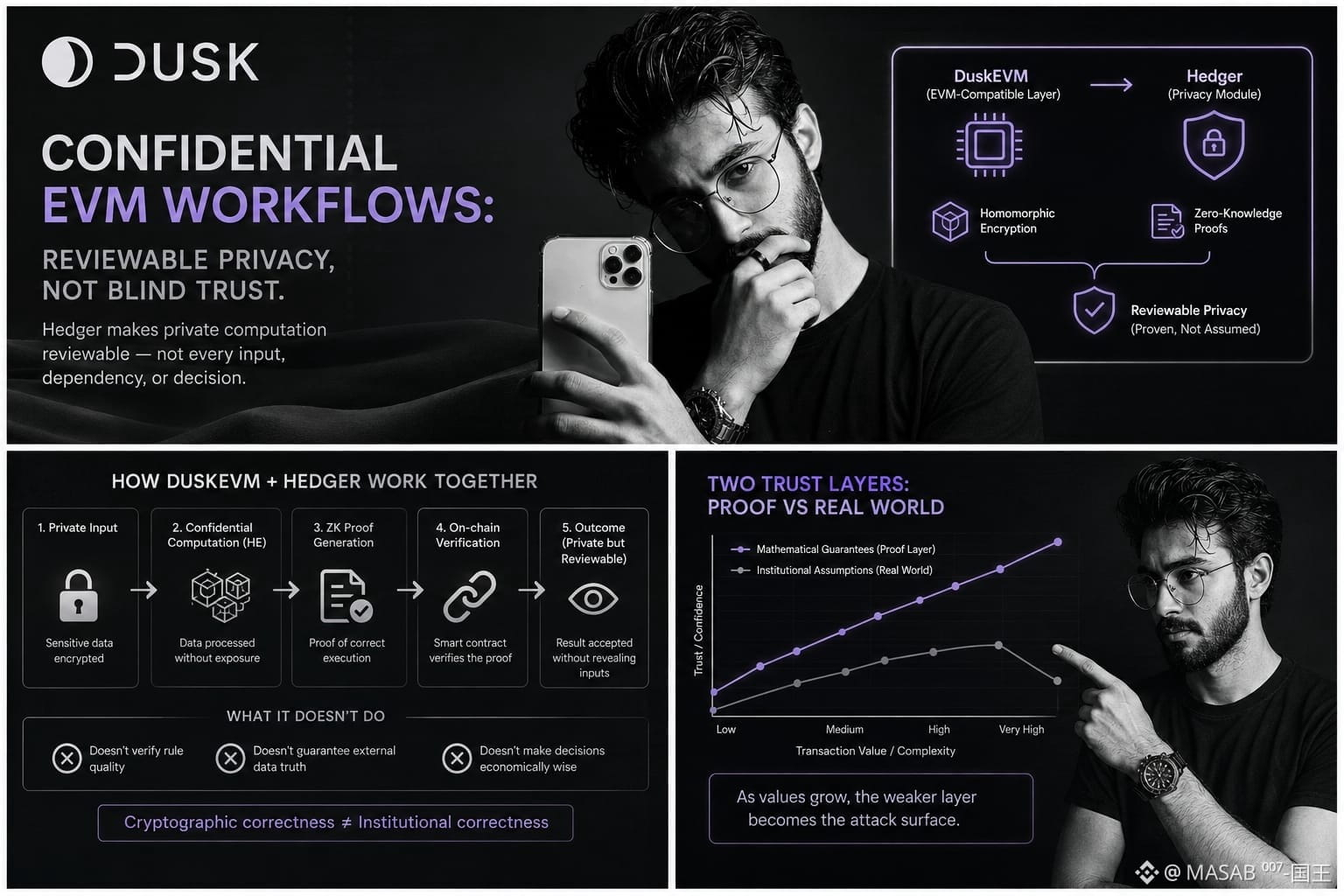
30
31
5.3k
·
--
Đã xác minh
Một bình báo cháy trông thật yên tâm treo trên tường. Hiếm khi bạn nghĩ đến việc ai được phép bấm nó, liệu họ có sẵn sàng hay không, hoặc chuyện gì sẽ xảy ra nếu người không đúng vô tình chạm vào trước.
Chính từ đó tôi bắt đầu suy nghĩ về hội đồng khẩn cấp 3 trên 5 của Babylon. Con số nghe có vẻ hợp lý. Không một thành viên đơn lẻ nào có thể hành động một mình, trong khi ba người vẫn có thể phản hồi trước khi một sự cố kỹ thuật trở nên không thể đảo ngược. Trên giấy tờ, BABY nhận được cả tốc độ lẫn sự kiềm chế.
Nhưng ngưỡng đó chỉ tính chữ ký. Nó không thể đo lường tính độc lập.
Ba thành viên hội đồng có thể nắm giữ các khóa riêng lẻ và vẫn phụ thuộc vào cùng một nhà cung cấp đám mây, công ty an ninh, thẩm quyền pháp lý, hoặc kênh liên lạc nội bộ. Trong điều kiện bình thường, mối liên kết ấy vẫn không hề lộ ra. Khi có áp lực, nó có thể biến năm “người ra quyết định” tưởng như độc lập thành một đơn vị vận hành duy nhất. Một sự cố chung có thể chặn can thiệp. Một thỏa hiệp chung có thể cho phép mọi thứ.
Phần lớn mọi người đánh giá hội đồng bằng cách tự hỏi liệu ba chữ ký có an toàn hơn một chữ ký hay không. Tôi nghĩ câu hỏi khó hơn là liệu ba chữ ký ấy có thể thất bại một cách độc lập hay không. Babylon có từng thử nghiệm việc đưa một số thành viên “ngừng hoạt động” mà không báo trước chưa? Những hành động khẩn cấp có được giải thích công khai sau đó không? Cộng đồng có thể nhận thấy lớp khủng hoảng của BABY đang trở nên mạnh hơn, hay chỉ trở nên thoải mái hơn để sử dụng?
Một hội đồng khẩn cấp nên thấy thật phiền phức. Đủ chậm để đòi hỏi bằng chứng, nhưng đủ sẵn sàng để hành động khi việc chờ đợi trở nên nguy hiểm.
Tôi không lo lắng về việc Babylon có công tắc khẩn cấp. Tôi đang theo dõi liệu năm khóa có đại diện cho năm tuyến phòng thủ thực sự độc lập—hay là một quyết định mặc năm cái tên khác nhau.
@babylonlabs_io #baby $BABY
Một bình báo cháy trông thật yên tâm treo trên tường. Hiếm khi bạn nghĩ đến việc ai được phép bấm nó, liệu họ có sẵn sàng hay không, hoặc chuyện gì sẽ xảy ra nếu người không đúng vô tình chạm vào trước.
Chính từ đó tôi bắt đầu suy nghĩ về hội đồng khẩn cấp 3 trên 5 của Babylon. Con số nghe có vẻ hợp lý. Không một thành viên đơn lẻ nào có thể hành động một mình, trong khi ba người vẫn có thể phản hồi trước khi một sự cố kỹ thuật trở nên không thể đảo ngược. Trên giấy tờ, BABY nhận được cả tốc độ lẫn sự kiềm chế.
Nhưng ngưỡng đó chỉ tính chữ ký. Nó không thể đo lường tính độc lập.
Ba thành viên hội đồng có thể nắm giữ các khóa riêng lẻ và vẫn phụ thuộc vào cùng một nhà cung cấp đám mây, công ty an ninh, thẩm quyền pháp lý, hoặc kênh liên lạc nội bộ. Trong điều kiện bình thường, mối liên kết ấy vẫn không hề lộ ra. Khi có áp lực, nó có thể biến năm “người ra quyết định” tưởng như độc lập thành một đơn vị vận hành duy nhất. Một sự cố chung có thể chặn can thiệp. Một thỏa hiệp chung có thể cho phép mọi thứ.
Phần lớn mọi người đánh giá hội đồng bằng cách tự hỏi liệu ba chữ ký có an toàn hơn một chữ ký hay không. Tôi nghĩ câu hỏi khó hơn là liệu ba chữ ký ấy có thể thất bại một cách độc lập hay không. Babylon có từng thử nghiệm việc đưa một số thành viên “ngừng hoạt động” mà không báo trước chưa? Những hành động khẩn cấp có được giải thích công khai sau đó không? Cộng đồng có thể nhận thấy lớp khủng hoảng của BABY đang trở nên mạnh hơn, hay chỉ trở nên thoải mái hơn để sử dụng?
Một hội đồng khẩn cấp nên thấy thật phiền phức. Đủ chậm để đòi hỏi bằng chứng, nhưng đủ sẵn sàng để hành động khi việc chờ đợi trở nên nguy hiểm.
Tôi không lo lắng về việc Babylon có công tắc khẩn cấp. Tôi đang theo dõi liệu năm khóa có đại diện cho năm tuyến phòng thủ thực sự độc lập—hay là một quyết định mặc năm cái tên khác nhau.
@BabylonLabs_io #baby $BABY
Chính từ đó tôi bắt đầu suy nghĩ về hội đồng khẩn cấp 3 trên 5 của Babylon. Con số nghe có vẻ hợp lý. Không một thành viên đơn lẻ nào có thể hành động một mình, trong khi ba người vẫn có thể phản hồi trước khi một sự cố kỹ thuật trở nên không thể đảo ngược. Trên giấy tờ, BABY nhận được cả tốc độ lẫn sự kiềm chế.
Nhưng ngưỡng đó chỉ tính chữ ký. Nó không thể đo lường tính độc lập.
Ba thành viên hội đồng có thể nắm giữ các khóa riêng lẻ và vẫn phụ thuộc vào cùng một nhà cung cấp đám mây, công ty an ninh, thẩm quyền pháp lý, hoặc kênh liên lạc nội bộ. Trong điều kiện bình thường, mối liên kết ấy vẫn không hề lộ ra. Khi có áp lực, nó có thể biến năm “người ra quyết định” tưởng như độc lập thành một đơn vị vận hành duy nhất. Một sự cố chung có thể chặn can thiệp. Một thỏa hiệp chung có thể cho phép mọi thứ.
Phần lớn mọi người đánh giá hội đồng bằng cách tự hỏi liệu ba chữ ký có an toàn hơn một chữ ký hay không. Tôi nghĩ câu hỏi khó hơn là liệu ba chữ ký ấy có thể thất bại một cách độc lập hay không. Babylon có từng thử nghiệm việc đưa một số thành viên “ngừng hoạt động” mà không báo trước chưa? Những hành động khẩn cấp có được giải thích công khai sau đó không? Cộng đồng có thể nhận thấy lớp khủng hoảng của BABY đang trở nên mạnh hơn, hay chỉ trở nên thoải mái hơn để sử dụng?
Một hội đồng khẩn cấp nên thấy thật phiền phức. Đủ chậm để đòi hỏi bằng chứng, nhưng đủ sẵn sàng để hành động khi việc chờ đợi trở nên nguy hiểm.
Tôi không lo lắng về việc Babylon có công tắc khẩn cấp. Tôi đang theo dõi liệu năm khóa có đại diện cho năm tuyến phòng thủ thực sự độc lập—hay là một quyết định mặc năm cái tên khác nhau.
@BabylonLabs_io #baby $BABY
12
11
4.7k
Đăng nhập để khám phá thêm nội dung
Tham gia cùng người dùng tiền mã hóa toàn cầu trên Binance Square
⚡️ Nhận thông tin mới nhất và hữu ích về tiền mã hóa.
💬 Được tin cậy bởi sàn giao dịch tiền mã hóa lớn nhất thế giới.
👍 Khám phá những thông tin chuyên sâu thực tế từ những nhà sáng tạo đã xác minh.
Email / Số điện thoại
Chủ đề thịnh hành
TinFed
122,868 lượt xem
504 đang thảo luận
Bối cảnh FED quyết định tăng lãi suất thêm 0.25 điểm tháng 10
Lạm phát Mỹ: CPI toàn phần tháng 8 đạt khoảng 3,7%, PCE lõi 3,4%, cao hơn dự báo trước đó. FED dự báo lạm phát chỉ quay về mức mục tiêu 2% vào năm 2029.
Thị trường lao động: Tỷ lệ thất nghiệp duy trì ở mức 4,1%, số việc làm mới tăng mạnh, cho thấy nền kinh tế đủ sức chịu đựng lãi suất cao hơn.
Áp lực năng lượng: Giá dầu và năng lượng leo thang do xung đột Trung Đông và chiến sự với Iran, làm gia tăng nguy cơ “hiệu ứng vòng hai” lên chi phí vận tải, hàng hóa, dịch vụ.#TinFed #Nikkei225Jumps2.5%ToThreeMonthHigh
VỀBỜĐỔITÊN12
·0 lượt thích
·2.4k lượt xem
TheoDõiFOMC
137,024 lượt xem
700 đang thảo luận
BinanceLaunchesBinanceIntelligence
253,721 lượt xem
2,225 đang thảo luận