

crypto mega Zeus
148 Bài đăng

crypto mega Zeus
Báo cáo
Chặn người dùng
crypto enthusiastic, trader and investor
10 Đang theo dõi
1.1K+ Người theo dõi
663 Đã thích
Bài đăng
Tất cả
Trích dẫn
Xem bản dịch
🚨 1000X TIME IS COMING… Are You Ready?
The next big crypto move won’t wait for you.
Here’s how to prepare:
💰 Build your bags strategically.
📚 Know what you’re holding.
🧠 Ignore FOMO and emotional decisions.
🛡️ Manage your risk.
👀 Stay alert for opportunities.
The goal isn’t to chase the pump — it’s to be prepared before it happens.
🔥 If you’re getting ready for the next big move, LIKE ❤️ and FOLLOW ➕ me for more crypto insights.
$PEPE
🚨 1000X TIME IS COMING… Are You Ready?
The next big crypto move won’t wait for you.
Here’s how to prepare:
💰 Build your bags strategically.
📚 Know what you’re holding.
🧠 Ignore FOMO and emotional decisions.
🛡️ Manage your risk.
👀 Stay alert for opportunities.
The goal isn’t to chase the pump — it’s to be prepared before it happens.
🔥 If you’re getting ready for the next big move, LIKE ❤️ and FOLLOW ➕ me for more crypto insights.
$PEPE
The next big crypto move won’t wait for you.
Here’s how to prepare:
💰 Build your bags strategically.
📚 Know what you’re holding.
🧠 Ignore FOMO and emotional decisions.
🛡️ Manage your risk.
👀 Stay alert for opportunities.
The goal isn’t to chase the pump — it’s to be prepared before it happens.
🔥 If you’re getting ready for the next big move, LIKE ❤️ and FOLLOW ➕ me for more crypto insights.
$PEPE

71
Xem bản dịch
BTC as Your Bank
What if Bitcoin isn’t just your investment… but your bank?
Think about it.
A traditional bank gives you an account number.
Bitcoin gives you a wallet address.
A bank can limit when and how you move your money.
Bitcoin lets you send value across the world, 24/7.
A bank can freeze an account.
Bitcoin runs on a decentralized network where you control your keys.
And unlike a bank, Bitcoin doesn’t ask for permission to exist.
That’s the bigger idea behind BTC:
Not just digital gold.
Not just a trading asset.
A new way to think about owning and moving money.
Of course, BTC comes with real risks — volatility, transaction fees, security responsibilities, and irreversible transactions. So “being your own bank” also means **being responsible for your own money.**
The real question is:
Are we looking at Bitcoin as an asset… when we should also be looking at it as financial infrastructure?
👇 What does BTC mean to you — investment, money, or your own bank?
#BTC #BinanceSquareFamily #CryptoNewss #Write2Earn!
BTC as Your Bank
What if Bitcoin isn’t just your investment… but your bank?
Think about it.
A traditional bank gives you an account number.
Bitcoin gives you a wallet address.
A bank can limit when and how you move your money.
Bitcoin lets you send value across the world, 24/7.
A bank can freeze an account.
Bitcoin runs on a decentralized network where you control your keys.
And unlike a bank, Bitcoin doesn’t ask for permission to exist.
That’s the bigger idea behind BTC:
Not just digital gold.
Not just a trading asset.
A new way to think about owning and moving money.
Of course, BTC comes with real risks — volatility, transaction fees, security responsibilities, and irreversible transactions. So “being your own bank” also means **being responsible for your own money.**
The real question is:
Are we looking at Bitcoin as an asset… when we should also be looking at it as financial infrastructure?
👇 What does BTC mean to you — investment, money, or your own bank?
#BTC #BinanceSquareFamily #CryptoNewss #Write2Earn!
BTC as Your Bank
What if Bitcoin isn’t just your investment… but your bank?
Think about it.
A traditional bank gives you an account number.
Bitcoin gives you a wallet address.
A bank can limit when and how you move your money.
Bitcoin lets you send value across the world, 24/7.
A bank can freeze an account.
Bitcoin runs on a decentralized network where you control your keys.
And unlike a bank, Bitcoin doesn’t ask for permission to exist.
That’s the bigger idea behind BTC:
Not just digital gold.
Not just a trading asset.
A new way to think about owning and moving money.
Of course, BTC comes with real risks — volatility, transaction fees, security responsibilities, and irreversible transactions. So “being your own bank” also means **being responsible for your own money.**
The real question is:
Are we looking at Bitcoin as an asset… when we should also be looking at it as financial infrastructure?
👇 What does BTC mean to you — investment, money, or your own bank?
#BTC #BinanceSquareFamily #CryptoNewss #Write2Earn!

41
Xem bản dịch
🚨 Why You Should Be Paying Attention to Crypto Now
Don’t wait until everyone is talking about crypto.
Blockchain, Bitcoin, stablecoins, DeFi and digital assets are reshaping how money moves. 🌍
You don’t have to go all-in.
**Learn early. Understand the risks. Stay informed.
The biggest opportunity might be simply being prepared before the next wave arrives.
🚨 Why You Should Be Paying Attention to Crypto Now
Don’t wait until everyone is talking about crypto.
Blockchain, Bitcoin, stablecoins, DeFi and digital assets are reshaping how money moves. 🌍
You don’t have to go all-in.
**Learn early. Understand the risks. Stay informed.
The biggest opportunity might be simply being prepared before the next wave arrives.
Don’t wait until everyone is talking about crypto.
Blockchain, Bitcoin, stablecoins, DeFi and digital assets are reshaping how money moves. 🌍
You don’t have to go all-in.
**Learn early. Understand the risks. Stay informed.
The biggest opportunity might be simply being prepared before the next wave arrives.

1
45
Xem bản dịch
🚨📢 2 serious ways to know we’re in a crypto bull market 👀
1. Bitcoin stops needing hype to move.
When BTC starts breaking major resistance, holding higher lows, and pulling liquidity into the market without endless “bull run” headlines… pay attention.
2. Altcoins start outperforming BTC.
When capital begins rotating from BTC → ETH → large caps → smaller alts, it shows risk appetite is expanding across the market.
The key? Don’t confuse one green week with a bull market.
Bull markets reveal themselves through sustained price structure + capital rotation. 📈
Are you watching these two signals?
🚨📢 2 serious ways to know we’re in a crypto bull market 👀
1. Bitcoin stops needing hype to move.
When BTC starts breaking major resistance, holding higher lows, and pulling liquidity into the market without endless “bull run” headlines… pay attention.
2. Altcoins start outperforming BTC.
When capital begins rotating from BTC → ETH → large caps → smaller alts, it shows risk appetite is expanding across the market.
The key? Don’t confuse one green week with a bull market.
Bull markets reveal themselves through sustained price structure + capital rotation. 📈
Are you watching these two signals?
1. Bitcoin stops needing hype to move.
When BTC starts breaking major resistance, holding higher lows, and pulling liquidity into the market without endless “bull run” headlines… pay attention.
2. Altcoins start outperforming BTC.
When capital begins rotating from BTC → ETH → large caps → smaller alts, it shows risk appetite is expanding across the market.
The key? Don’t confuse one green week with a bull market.
Bull markets reveal themselves through sustained price structure + capital rotation. 📈
Are you watching these two signals?

1
111
Xem bản dịch
The Arnold Haro Lesson Crypto Traders Need
Arnold Haro was only 23.
A young crypto trader who became part of a story that should make every trader stop and think.
The biggest lesson isn't about one token, one trade, or one market crash.
It's about risk.
Crypto can move fast.
Your portfolio can go from +100% to -80%.
A meme coin can make you feel like a genius today and leave you questioning everything tomorrow.
That's why traders need to understand one simple rule:
Never let the market control your life.
Don't put your entire savings into one coin.
Don't trade with money you can't afford to lose.
Don't borrow money to chase a pump.
Don't make your self-worth dependent on your P&L.
And don't let social media convince you that everyone else is getting rich while you're falling behind.
The market will always create another opportunity.
There will always be another narrative.
Another meme coin.
Another bull run.
Another entry.
You don't need to win every trade. You need to survive long enough to take the next one.
Arnold's story is a reminder that behind every wallet is a real person.
Trade smart.
Manage risk.
Take profits.
And most importantly:
Don't let crypto become your entire life.
The Arnold Haro Lesson Crypto Traders Need
Arnold Haro was only 23.
A young crypto trader who became part of a story that should make every trader stop and think.
The biggest lesson isn't about one token, one trade, or one market crash.
It's about risk.
Crypto can move fast.
Your portfolio can go from +100% to -80%.
A meme coin can make you feel like a genius today and leave you questioning everything tomorrow.
That's why traders need to understand one simple rule:
Never let the market control your life.
Don't put your entire savings into one coin.
Don't trade with money you can't afford to lose.
Don't borrow money to chase a pump.
Don't make your self-worth dependent on your P&L.
And don't let social media convince you that everyone else is getting rich while you're falling behind.
The market will always create another opportunity.
There will always be another narrative.
Another meme coin.
Another bull run.
Another entry.
You don't need to win every trade. You need to survive long enough to take the next one.
Arnold's story is a reminder that behind every wallet is a real person.
Trade smart.
Manage risk.
Take profits.
And most importantly:
Don't let crypto become your entire life.
Arnold Haro was only 23.
A young crypto trader who became part of a story that should make every trader stop and think.
The biggest lesson isn't about one token, one trade, or one market crash.
It's about risk.
Crypto can move fast.
Your portfolio can go from +100% to -80%.
A meme coin can make you feel like a genius today and leave you questioning everything tomorrow.
That's why traders need to understand one simple rule:
Never let the market control your life.
Don't put your entire savings into one coin.
Don't trade with money you can't afford to lose.
Don't borrow money to chase a pump.
Don't make your self-worth dependent on your P&L.
And don't let social media convince you that everyone else is getting rich while you're falling behind.
The market will always create another opportunity.
There will always be another narrative.
Another meme coin.
Another bull run.
Another entry.
You don't need to win every trade. You need to survive long enough to take the next one.
Arnold's story is a reminder that behind every wallet is a real person.
Trade smart.
Manage risk.
Take profits.
And most importantly:
Don't let crypto become your entire life.

1
103
Xem bản dịch
🚨 **Crypto investing doesn’t have to feel like a 24/7 rollercoaster.**
If you’re constantly checking charts and questioning every decision, try these **2 simple rules:**
**1️⃣ Stop watching every candle.**\
A red candle doesn’t mean your strategy is broken. Give your investment room to breathe.
**2️⃣ Trust your plan, not your emotions.**\
Set your goals, know your risk, and don’t let fear or FOMO make decisions for you.
The market will keep moving.\
Your job is to stay focused, keep learning, and keep building…
**Because the journey doesn’t end with one trade. It keeps going. 🚀**
🚨 **Crypto investing doesn’t have to feel like a 24/7 rollercoaster.**
If you’re constantly checking charts and questioning every decision, try these **2 simple rules:**
**1️⃣ Stop watching every candle.**\
A red candle doesn’t mean your strategy is broken. Give your investment room to breathe.
**2️⃣ Trust your plan, not your emotions.**\
Set your goals, know your risk, and don’t let fear or FOMO make decisions for you.
The market will keep moving.\
Your job is to stay focused, keep learning, and keep building…
**Because the journey doesn’t end with one trade. It keeps going. 🚀**
If you’re constantly checking charts and questioning every decision, try these **2 simple rules:**
**1️⃣ Stop watching every candle.**\
A red candle doesn’t mean your strategy is broken. Give your investment room to breathe.
**2️⃣ Trust your plan, not your emotions.**\
Set your goals, know your risk, and don’t let fear or FOMO make decisions for you.
The market will keep moving.\
Your job is to stay focused, keep learning, and keep building…
**Because the journey doesn’t end with one trade. It keeps going. 🚀**
1
88
Bài viết
Xem bản dịch
Why Accumulating BTC Now May Be a Macroeconomics Story, Not a Crypto StoryThere is a strange thing happening in Bitcoin.
The asset that was created as an alternative to the traditional financial system is becoming increasingly dependent on understanding that very system.
To understand Bitcoin today, you have to understand the Federal Reserve.
You have to understand Treasury issuance.
You have to understand interest rates.
You have to understand the dollar.
You have to understand global money supply.
You have to understand credit.
You have to understand what happens when liquidity disappears from financial markets—and what happens when it comes back.
And perhaps most importantly, you have to understand something most Bitcoin investors spend surprisingly little time studying:
cycles.
Because Bitcoin does not exist in a vacuum.
It exists inside the largest financial system in human history.
And that system expands and contracts.
Liquidity expands.
Liquidity contracts.
Credit expands.
Credit contracts.
Central banks tighten.
Eventually, financial conditions change.
Governments borrow.
Treasuries issue debt.
Banks create credit.
Investors move between cash, bonds, equities and alternative assets.
Then the cycle turns again.
Bitcoin sits inside all of it.
That is why the question facing Bitcoin investors in 2026 may not simply be:
“Where is Bitcoin going?”
A more useful question may be:
“Where are we in the global liquidity cycle?”
That question is much harder.
But it may also be much more important.
The Bitcoin story most people are telling is too small
Bitcoin is usually presented through one of three narratives.
The first is technological.
Bitcoin is decentralized money.
The second is scarcity.
There will only ever be 21 million Bitcoin.
The third is speculation.
Bitcoin has historically produced extraordinary returns—and extraordinary drawdowns.
All three narratives contain something important.
But none of them fully explains the extraordinary timing of Bitcoin's largest historical moves.
Because Bitcoin's history is also a history of monetary conditions.
Bitcoin was born in the aftermath of the 2008 financial crisis.
That timing matters.
In 2008, the world witnessed something that had previously existed largely inside textbooks and central-bank balance sheets.
The monetary system could expand at extraordinary speed when the financial system was under stress.
Interest rates could be pushed toward zero.
Central banks could purchase enormous quantities of financial assets.
Governments could run enormous fiscal deficits.
Banks could receive extraordinary liquidity support.
The monetary system could become dramatically more elastic.
And in January 2009, Bitcoin's genesis block was created.
Embedded inside that first block was a reference to a newspaper headline about bank bailouts.
Bitcoin did not emerge in an ordinary monetary environment.
It emerged at the moment the modern financial system demonstrated just how aggressively it could intervene when things broke.
That doesn't prove Bitcoin was destined to succeed.
It doesn't prove central-bank policy caused Bitcoin's rise.
But the historical coincidence is impossible to ignore.
Bitcoin was born into the age of monetary experimentation.
And ever since, its market history has unfolded alongside increasingly dramatic changes in global liquidity.
The first principle: Bitcoin has a liquidity problem
Here is where the story becomes uncomfortable.
Bitcoin is often described as an inflation hedge.
But Bitcoin can fall dramatically during periods of monetary stress.
That sounds contradictory.
It isn't.
Imagine an investor owns Bitcoin, technology stocks, emerging-market assets and other risk assets.
Then suddenly interest rates rise.
Credit becomes expensive.
The dollar strengthens.
Liquidity tightens.
Leverage gets unwound.
The investor needs cash.
What happens?
The investor doesn't necessarily sell the asset they dislike most.
They sell the asset that is liquid.
Bitcoin is extremely liquid.
So during an acute liquidity shock, Bitcoin can behave less like digital gold and more like a high-beta liquidity asset.
This is one of the reasons the distinction between long-term monetary thesis and short-term market behavior is so important.
A liquidity crisis can be bearish for Bitcoin even if the crisis eventually creates the conditions for a new liquidity response.
That distinction explains something that confuses many investors:
The same monetary system that can hurt Bitcoin in the short term can eventually create the environment in which Bitcoin performs strongly.
The timing is the difficult part.
The second principle: money does not move in a straight line
Look at the modern monetary system as a giant tide.
When the tide comes in, financial assets can benefit from an abundance of capital.
When the tide goes out, investors suddenly discover that liquidity was doing more work than they realized.
This is why macroeconomic cycles matter.
Consider the broad sequence:
Lower rates
↓
Easier financial conditions
↓
More borrowing and risk-taking
↓
Higher asset valuations
↓
Inflation / financial overheating
↓
Tighter monetary policy
↓
Higher real yields
↓
Deleveraging
↓
Liquidity contraction
↓
Economic and financial stress
↓
Policy response
↓
Liquidity expansion
And then the cycle begins again.
Bitcoin participates in this cycle.
But Bitcoin has one unusual characteristic.
Its supply cannot respond to higher demand in the way the supply of a conventional financial asset can.
There is no Bitcoin central bank.
There is no committee that can decide to issue another 5 million coins because demand suddenly increased.
Its monetary issuance is predetermined.
That creates an unusual collision:
elastic money meets inelastic supply.
And that is the foundation of the macro thesis.
The 2020 experiment was the clearest demonstration
If you want to understand the relationship between Bitcoin and liquidity, don't begin with a Bitcoin chart.
Begin with 2020.
The world shut down.
Economic activity collapsed.
Financial markets experienced an extraordinary shock.
Central banks responded.
Governments responded.
The Federal Reserve expanded its balance sheet dramatically.
Interest rates were pushed to exceptionally low levels.
Fiscal transfers put enormous amounts of purchasing power into the economy.
Financial conditions eventually loosened.
And risk assets exploded higher.
Bitcoin participated in that move.
Then something equally important happened.
Inflation became persistent.
The Federal Reserve reversed direction.
Rates rose.
Quantitative tightening began.
The dollar strengthened during parts of the tightening cycle.
Liquidity became more expensive.
Risk assets suffered.
Bitcoin suffered dramatically.
That sequence doesn't establish a simple mechanical rule that:
“More M2 equals higher Bitcoin.”
The real world is far more complicated.
But it demonstrates something much more useful:
Bitcoin's market regime can change when the monetary environment changes.
The M2 argument is useful—but incomplete
For years, one of the favorite charts in Bitcoin macro analysis has been Bitcoin versus global M2.
The logic is intuitive.
M2 broadly captures money and near-money deposits.
When money supply expands, more capital theoretically becomes available to pursue financial assets.
When money supply contracts, the opposite pressure can emerge.
And historically, Bitcoin has shown periods of substantial co-movement with global liquidity.
Coinbase Institutional has even constructed a global M2 liquidity index and reported a strong historical relationship between its measure and Bitcoin, while emphasizing that the relationship depends on how liquidity is measured and weighted. Coinbase
But there is a problem.
M2 is not liquidity itself.
It is one measurement of money.
Modern financial markets are considerably more complicated.
Liquidity also moves through:
repo markets;
derivatives;
bank balance sheets;
credit markets;
Treasury markets;
institutional financing;
securities lending;
collateral markets;
and other forms of market-based finance.
Fidelity Digital Assets has recently made precisely this argument: traditional M2 may no longer capture the full set of liquidity channels relevant to financial markets, particularly because modern liquidity is also created and absorbed through repo, derivatives and market-based financing. Fidelity Digital Assets
This matters enormously.
Because it means the serious Bitcoin macro thesis is not:
M2 goes up → Bitcoin goes up.
It is:
Financial liquidity changes → the opportunity set for scarce, liquid assets changes.
M2 is one window.
It is not the entire building.
And this is where the Federal Reserve enters the story
The Federal Reserve is not Bitcoin's central bank.
But it is impossible to understand the macro environment surrounding Bitcoin without watching the Fed.
As of September 23, 2026, Federal Reserve data showed reserve-bank credit of approximately $6.70 trillion and securities held outright of approximately $6.47 trillion. Reserve balances were around $2.93 trillion, while the Treasury General Account stood at roughly $947 billion. Federal Reserve
Those numbers are not Bitcoin numbers.
That is precisely the point.
Bitcoin investors should be watching the machinery around Bitcoin.
The Federal Reserve's balance sheet matters.
But the balance sheet alone is not enough.
The Treasury's cash balance matters.
Bank reserves matter.
The reverse repo facility matters.
Treasury issuance matters.
Interest rates matter.
Real yields matter.
The dollar matters.
Credit conditions matter.
And the interaction between all of these variables matters even more.
This is why a serious Bitcoin macro framework should never consist of one chart.
It should be a dashboard.
The liquidity dashboard
Imagine that instead of opening X every morning to find out whether someone is bullish on Bitcoin, you opened a macro dashboard.
You see:
Global liquidity: expanding or contracting?
U.S. financial conditions: tightening or easing?
Real yields: rising or falling?
Dollar: strengthening or weakening?
Credit: expanding or contracting?
Treasury liquidity: adding or removing pressure?
Fed balance sheet: expanding or shrinking?
Bitcoin exchange supply: rising or falling?
Long-term holder supply: increasing or decreasing?
Institutional demand: accelerating or weakening?
Suddenly Bitcoin becomes much easier to study.
Not easier to predict.
But easier to understand.
And understanding is more valuable than prediction.
The Treasury matters more than most Bitcoin investors realize
Here is another piece of the puzzle.
The U.S. government does not simply spend money.
It finances itself.
That means Treasury issuance becomes part of the liquidity story.
The Treasury General Account—the government's checking account at the Federal Reserve—can also influence the distribution of liquidity across the financial system.
When Treasury cash balances change, reserves and liquidity conditions can be affected through the plumbing of the financial system.
This is why someone studying Bitcoin purely through the Federal Reserve's balance sheet can miss important information.
The Fed is one actor.
The Treasury is another.
Commercial banks are another.
Money-market funds are another.
Global central banks are another.
And investors themselves are constantly reallocating capital.
The modern liquidity cycle is therefore less like a faucet and more like an enormous network of pipes.
Bitcoin is sitting somewhere downstream.
Then there is the dollar
The U.S. dollar is one of the most important variables in the global financial system.
A stronger dollar can tighten financial conditions internationally, particularly for borrowers and economies exposed to dollar funding.
And Bitcoin does not exist outside that dollar system.
This is why the dollar can become a strange paradox for Bitcoin.
Bitcoin may represent an alternative monetary asset.
Yet its global price is still predominantly quoted in dollars.
When dollar liquidity becomes scarce, Bitcoin can suffer.
When dollar conditions become less restrictive and global liquidity expands, Bitcoin can benefit.
Fidelity Digital Assets recently highlighted the same issue, noting that the dollar had strengthened materially from Bitcoin's October 2025 high and arguing that a stronger dollar can act as a tightening force for assets such as Bitcoin. Fidelity Digital Assets
So when someone says:
“Bitcoin is going up because people don't trust fiat currency.”
That may be part of the story.
But it isn't the whole story.
Sometimes Bitcoin is moving because the global price of liquidity is changing.
The real-yield problem
Now we arrive at one of the most important concepts in macroeconomics.
Real yields.
If an investor can hold a relatively low-risk asset and receive an attractive inflation-adjusted return, the opportunity cost of owning a non-yielding asset increases.
Bitcoin does not pay a coupon.
It does not generate corporate earnings.
It does not distribute cash flow.
Its investment case therefore depends heavily on what investors believe its monetary properties are worth.
When real yields rise significantly, the opportunity cost of holding Bitcoin can rise.
When real yields fall, that opportunity cost can decline.
Again, this is not a mechanical trading rule.
But it is part of the macro architecture.
The Bitcoin investor who ignores real yields is ignoring one of the most important competing Assets reported in July 2026 that nearly 15 million BTC had remained unmoved for at least 155 days, describing long Assets reported that, as of January 30, 2026, U.S. spot Bitcoin ETPs collectively held nearly 1.3 million BTC, equivalent to about 6.4% of circulating supply. It also reported that public companies holding's four-year cycle may be changing as the asset becomes larger, more liquid and more institutionally integrated. Its research points to lower volatility, greater institutional participation and different valuation behavior compared with earlier cycles. becoming a macro asset, then the Bitcoin chart itself may be one of the least useful forces in the global capital market.
Then Bitcoin's supply enters the equation
This is where the story gets particularly interesting.
Bitcoin has a predetermined issuance schedule.
Approximately every four years, the block subsidy is cut in half.
That means the flow of newly created Bitcoin entering the market declines.
But we should be careful here.
It is tempting to reduce the entire Bitcoin cycle to:
Halving → supply shock → price explosion.
History is not that clean.
There have been only a handful of Bitcoin halvings.
That is an extremely small sample from which to establish a robust causal law.
And the market surrounding Bitcoin has changed dramatically between those cycles.
Still, the halving matters.
Why?
Because Bitcoin's supply response is unusual.
Suppose demand increases.
A traditional commodity producer may increase production.
A company can issue more shares.
A central bank can expand the monetary base.
A cryptocurrency protocol with a predetermined issuance schedule has much less flexibility.
The supply side is constrained by design.
So the macro question becomes:
What happens when liquidity begins expanding at the same time that the growth rate of new Bitcoin supply is structurally declining?
That is the experiment worth watching.
But supply is not just the 21 million headline
There is another layer.
Not all Bitcoin is equally available for sale.
Some coins are held by long-term investors.
Some are held by companies.
Some are held by funds and exchange-traded products.
Some coins have not moved for years.
This is why the concept of liquid supply matters.
Fidelity Digital Assets reported in July 2026 that nearly 15 million BTC had remained unmoved for at least 155 days, describing long-term-holder supply as having reached a new all-time high. Fidelity Digital Assets
That does not mean those coins can never be sold.
It means they have not recently been participating in the active market.
This distinction matters.
The relevant question isn't simply:
“How many Bitcoin exist?”
It is:
“How much Bitcoin is actually available to absorb marginal demand at current prices?”
That is a much more sophisticated supply question.
And Bitcoin's market structure is changing
This is where comparing today's Bitcoin to 2017 becomes dangerous.
Bitcoin is no longer the same market.
Institutional access has expanded.
Public companies hold Bitcoin.
Spot Bitcoin exchange-traded products have created new channels for capital.
Market infrastructure is deeper.
The investor base is broader.
Volatility has changed.
And the traditional four-year cycle may not behave exactly as it did in earlier eras.
Fidelity Digital Assets reported that, as of January 30, 2026, U.S. spot Bitcoin ETPs collectively held nearly 1.3 million BTC, equivalent to about 6.4% of circulating supply. It also reported that public companies holding at least 1,000 BTC collectively held more than 1 million BTC. Fidelity Digital Assets
That changes the equation.
The marginal Bitcoin buyer is no longer necessarily a retail investor opening an exchange account after seeing a viral post.
It can be an institution allocating capital through a regulated investment vehicle.
It can be a corporation allocating part of its treasury.
It can be a fund manager responding to portfolio construction.
It can be an investor treating Bitcoin as a monetary or alternative asset.
The market is becoming institutionalized.
That does not eliminate volatility.
It changes the mechanism through which demand can arrive.
This is why the four-year cycle may be evolving
The old Bitcoin narrative is simple.
Halving.
Bull market.
Parabolic rise.
Peak.
Crash.
Bear market.
Accumulation.
Repeat.
There is historical evidence for something resembling this pattern.
But a pattern is not a law.
Fidelity Digital Assets has argued that Bitcoin's four-year cycle may be changing as the asset becomes larger, more liquid and more institutionally integrated. Its research points to lower volatility, greater institutional participation and different valuation behavior compared with earlier cycles. Fidelity Digital Assets
That creates an uncomfortable possibility.
Maybe Bitcoin's future is not necessarily another series of identical four-year bubbles.
Maybe the asset is gradually becoming something different.
Something less explosive.
Something more integrated into traditional capital markets.
Something increasingly sensitive to macroeconomic liquidity.
If that happens, the investor who studies Bitcoin only through its historical halving cycles may be studying yesterday's Bitcoin.
The most important chart may not be Bitcoin
Here is the uncomfortable conclusion.
If Bitcoin is increasingly becoming a macro asset, then the Bitcoin chart itself may be one of the least useful charts to watch in isolation.
Instead, watch the environment.
Watch liquidity.
Watch the dollar.
Watch real yields.
Watch credit.
Watch Treasury cash.
Watch global money supply.
Watch institutional flows.
Watch Bitcoin's liquid supply.
Then ask:
Are these variables moving in the same direction or fighting each other?
Because markets become interesting when several independent forces begin pointing toward the same regime.
That is when the probability distribution changes.
Not because one indicator says:
BUY.
But because the underlying environment begins changing.
The strongest argument against the thesis
Now let's do something that most Bitcoin articles don't do.
Let's try to destroy the thesis.
What if Bitcoin's historical relationship with liquidity was largely a product of one unusual monetary era?
What if the post-2008 period was exceptional?
What if Bitcoin's correlation with M2 was never causal?
What if institutional investors increasingly treat Bitcoin as a risk asset rather than a monetary asset?
What if inflation remains elevated and forces real yields higher liquidity is being redirected toward AI-related capital expenditure, while also noting that M somebody on social media has drawn a line on a chart pointing toward a response to the weaknesses of the monetary system may ultimately require a opening without pretending the evidence guarantees a particular Bitcoin outcome. The next installments can now go much?
What if the dollar remains strong?
What if global liquidity expands but flows into AI infrastructure, commodities, private credit or productive investment instead of Bitcoin?
These are not theoretical objections.
They are legitimate risks.
Fidelity Digital Assets has specifically pointed to the possibility that liquidity is being redirected toward AI-related capital expenditure, while also noting that M2 may not capture the full set of financial-market liquidity channels. Fidelity Digital Assets
This is why the thesis should never be:
“Liquidity is going up, therefore Bitcoin must go up.”
That is too simplistic.
The better thesis is:
Bitcoin's long-term monetary properties become particularly interesting when scarce supply meets expanding financial liquidity—but the transmission mechanism is neither immediate nor guaranteed.
That distinction separates analysis from advertising.
The accumulation question
And now we can finally return to the original question.
Why might someone consider accumulating Bitcoin during a period when the macro picture is still uncertain?
Not because Bitcoin cannot fall.
It can.
Not because the next halving guarantees another bull market.
It doesn't.
Not because M2 has become a magical Bitcoin price predictor.
It hasn't.
And not because somebody on social media has drawn a line on a chart pointing toward the sky.
The more serious argument is structural.
Bitcoin has a predetermined monetary policy.
The global financial system does not.
The supply of Bitcoin is constrained.
The supply of money and credit is elastic.
Bitcoin's market is becoming increasingly integrated into institutional finance.
And history has repeatedly demonstrated that financial conditions can change dramatically over relatively short periods.
That creates an unusual asymmetry of attention.
Most investors watch Bitcoin after liquidity has already changed.
The more interesting exercise is to understand the liquidity regime before the market fully reprices it.
That is what accumulation means in a macro framework.
It does not mean predicting the bottom.
It does not mean buying every dip.
It does not mean assuming Bitcoin can only rise.
It means recognizing that long-term positioning and short-term timing are two different problems.
The first is about understanding the asset.
The second is about predicting markets.
And predicting markets is extraordinarily difficult.
The real Bitcoin thesis
Maybe the biggest mistake is asking:
“Will Bitcoin go up?”
That question is almost impossible to answer consistently.
A better question is:
“What happens to a scarce, globally liquid, non-sovereign monetary asset when the world's financial system repeatedly expands and contracts the quantity of liquidity available to investors?”
Now we have something we can study.
We can go back to 2008.
We can examine 2013.
We can examine 2017.
We can examine 2020.
We can examine 2022.
We can examine 2025 and 2026.
We can map Bitcoin against liquidity.
We can study the Fed.
We can study Treasury operations.
We can study the dollar.
We can study real yields.
We can study credit.
We can study institutional flows.
We can study long-term holders.
And then we can ask whether the evidence supports the thesis.
That is a much more interesting investment conversation than:
“Bitcoin to $1 million.”
Because price targets are conclusions.
Macro analysis is a framework.
And frameworks survive longer than predictions.
The liquidity cycle is the story
The most important thing to understand is that liquidity doesn't move in a straight line.
It pulses.
It expands.
It contracts.
It disappears when everyone wants cash.
It returns when policymakers respond to financial stress.
And markets often begin moving before the average investor understands why.
That is why the next Bitcoin opportunity—if one develops—may not announce itself with a Bitcoin headline.
It may first appear somewhere else.
In Treasury markets.
In the dollar.
In real yields.
In bank reserves.
In credit spreads.
In global money supply.
In financial conditions.
And eventually, perhaps, in Bitcoin.
The irony is beautiful.
The asset created partly as a response to the weaknesses of the monetary system may ultimately require a deep understanding of that monetary system to understand its own cycles.
Bitcoin may be a crypto asset.
But increasingly, its biggest story may be macroeconomics.
And if that is true, then the most important Bitcoin research may not begin with Bitcoin at all.
It may begin with the liquidity cycle.
That is where this story starts.
$BTC
Why Accumulating BTC Now May Be a Macroeconomics Story, Not a Crypto Story
There is a strange thing happening in Bitcoin.
The asset that was created as an alternative to the traditional financial system is becoming increasingly dependent on understanding that very system.
To understand Bitcoin today, you have to understand the Federal Reserve.
You have to understand Treasury issuance.
You have to understand interest rates.
You have to understand the dollar.
You have to understand global money supply.
You have to understand credit.
You have to understand what happens when liquidity disappears from financial markets—and what happens when it comes back.
And perhaps most importantly, you have to understand something most Bitcoin investors spend surprisingly little time studying:
cycles.
Because Bitcoin does not exist in a vacuum.
It exists inside the largest financial system in human history.
And that system expands and contracts.
Liquidity expands.
Liquidity contracts.
Credit expands.
Credit contracts.
Central banks tighten.
Eventually, financial conditions change.
Governments borrow.
Treasuries issue debt.
Banks create credit.
Investors move between cash, bonds, equities and alternative assets.
Then the cycle turns again.
Bitcoin sits inside all of it.
That is why the question facing Bitcoin investors in 2026 may not simply be:
“Where is Bitcoin going?”
A more useful question may be:
“Where are we in the global liquidity cycle?”
That question is much harder.
But it may also be much more important.
The Bitcoin story most people are telling is too small
Bitcoin is usually presented through one of three narratives.
The first is technological.
Bitcoin is decentralized money.
The second is scarcity.
There will only ever be 21 million Bitcoin.
The third is speculation.
Bitcoin has historically produced extraordinary returns—and extraordinary drawdowns.
All three narratives contain something important.
But none of them fully explains the extraordinary timing of Bitcoin's largest historical moves.
Because Bitcoin's history is also a history of monetary conditions.
Bitcoin was born in the aftermath of the 2008 financial crisis.
That timing matters.
In 2008, the world witnessed something that had previously existed largely inside textbooks and central-bank balance sheets.
The monetary system could expand at extraordinary speed when the financial system was under stress.
Interest rates could be pushed toward zero.
Central banks could purchase enormous quantities of financial assets.
Governments could run enormous fiscal deficits.
Banks could receive extraordinary liquidity support.
The monetary system could become dramatically more elastic.
And in January 2009, Bitcoin's genesis block was created.
Embedded inside that first block was a reference to a newspaper headline about bank bailouts.
Bitcoin did not emerge in an ordinary monetary environment.
It emerged at the moment the modern financial system demonstrated just how aggressively it could intervene when things broke.
That doesn't prove Bitcoin was destined to succeed.
It doesn't prove central-bank policy caused Bitcoin's rise.
But the historical coincidence is impossible to ignore.
Bitcoin was born into the age of monetary experimentation.
And ever since, its market history has unfolded alongside increasingly dramatic changes in global liquidity.
The first principle: Bitcoin has a liquidity problem
Here is where the story becomes uncomfortable.
Bitcoin is often described as an inflation hedge.
But Bitcoin can fall dramatically during periods of monetary stress.
That sounds contradictory.
It isn't.
Imagine an investor owns Bitcoin, technology stocks, emerging-market assets and other risk assets.
Then suddenly interest rates rise.
Credit becomes expensive.
The dollar strengthens.
Liquidity tightens.
Leverage gets unwound.
The investor needs cash.
What happens?
The investor doesn't necessarily sell the asset they dislike most.
They sell the asset that is liquid.
Bitcoin is extremely liquid.
So during an acute liquidity shock, Bitcoin can behave less like digital gold and more like a high-beta liquidity asset.
This is one of the reasons the distinction between long-term monetary thesis and short-term market behavior is so important.
A liquidity crisis can be bearish for Bitcoin even if the crisis eventually creates the conditions for a new liquidity response.
That distinction explains something that confuses many investors:
The same monetary system that can hurt Bitcoin in the short term can eventually create the environment in which Bitcoin performs strongly.
The timing is the difficult part.
The second principle: money does not move in a straight line
Look at the modern monetary system as a giant tide.
When the tide comes in, financial assets can benefit from an abundance of capital.
When the tide goes out, investors suddenly discover that liquidity was doing more work than they realized.
This is why macroeconomic cycles matter.
Consider the broad sequence:
Lower rates
↓
Easier financial conditions
↓
More borrowing and risk-taking
↓
Higher asset valuations
↓
Inflation / financial overheating
↓
Tighter monetary policy
↓
Higher real yields
↓
Deleveraging
↓
Liquidity contraction
↓
Economic and financial stress
↓
Policy response
↓
Liquidity expansion
And then the cycle begins again.
Bitcoin participates in this cycle.
But Bitcoin has one unusual characteristic.
Its supply cannot respond to higher demand in the way the supply of a conventional financial asset can.
There is no Bitcoin central bank.
There is no committee that can decide to issue another 5 million coins because demand suddenly increased.
Its monetary issuance is predetermined.
That creates an unusual collision:
elastic money meets inelastic supply.
And that is the foundation of the macro thesis.
The 2020 experiment was the clearest demonstration
If you want to understand the relationship between Bitcoin and liquidity, don't begin with a Bitcoin chart.
Begin with 2020.
The world shut down.
Economic activity collapsed.
Financial markets experienced an extraordinary shock.
Central banks responded.
Governments responded.
The Federal Reserve expanded its balance sheet dramatically.
Interest rates were pushed to exceptionally low levels.
Fiscal transfers put enormous amounts of purchasing power into the economy.
Financial conditions eventually loosened.
And risk assets exploded higher.
Bitcoin participated in that move.
Then something equally important happened.
Inflation became persistent.
The Federal Reserve reversed direction.
Rates rose.
Quantitative tightening began.
The dollar strengthened during parts of the tightening cycle.
Liquidity became more expensive.
Risk assets suffered.
Bitcoin suffered dramatically.
That sequence doesn't establish a simple mechanical rule that:
“More M2 equals higher Bitcoin.”
The real world is far more complicated.
But it demonstrates something much more useful:
Bitcoin's market regime can change when the monetary environment changes.
The M2 argument is useful—but incomplete
For years, one of the favorite charts in Bitcoin macro analysis has been Bitcoin versus global M2.
The logic is intuitive.
M2 broadly captures money and near-money deposits.
When money supply expands, more capital theoretically becomes available to pursue financial assets.
When money supply contracts, the opposite pressure can emerge.
And historically, Bitcoin has shown periods of substantial co-movement with global liquidity.
Coinbase Institutional has even constructed a global M2 liquidity index and reported a strong historical relationship between its measure and Bitcoin, while emphasizing that the relationship depends on how liquidity is measured and weighted. Coinbase
But there is a problem.
M2 is not liquidity itself.
It is one measurement of money.
Modern financial markets are considerably more complicated.
Liquidity also moves through:
repo markets;
derivatives;
bank balance sheets;
credit markets;
Treasury markets;
institutional financing;
securities lending;
collateral markets;
and other forms of market-based finance.
Fidelity Digital Assets has recently made precisely this argument: traditional M2 may no longer capture the full set of liquidity channels relevant to financial markets, particularly because modern liquidity is also created and absorbed through repo, derivatives and market-based financing. Fidelity Digital Assets
This matters enormously.
Because it means the serious Bitcoin macro thesis is not:
M2 goes up → Bitcoin goes up.
It is:
Financial liquidity changes → the opportunity set for scarce, liquid assets changes.
M2 is one window.
It is not the entire building.
And this is where the Federal Reserve enters the story
The Federal Reserve is not Bitcoin's central bank.
But it is impossible to understand the macro environment surrounding Bitcoin without watching the Fed.
As of September 23, 2026, Federal Reserve data showed reserve-bank credit of approximately $6.70 trillion and securities held outright of approximately $6.47 trillion. Reserve balances were around $2.93 trillion, while the Treasury General Account stood at roughly $947 billion. Federal Reserve
Those numbers are not Bitcoin numbers.
That is precisely the point.
Bitcoin investors should be watching the machinery around Bitcoin.
The Federal Reserve's balance sheet matters.
But the balance sheet alone is not enough.
The Treasury's cash balance matters.
Bank reserves matter.
The reverse repo facility matters.
Treasury issuance matters.
Interest rates matter.
Real yields matter.
The dollar matters.
Credit conditions matter.
And the interaction between all of these variables matters even more.
This is why a serious Bitcoin macro framework should never consist of one chart.
It should be a dashboard.
The liquidity dashboard
Imagine that instead of opening X every morning to find out whether someone is bullish on Bitcoin, you opened a macro dashboard.
You see:
Global liquidity: expanding or contracting?
U.S. financial conditions: tightening or easing?
Real yields: rising or falling?
Dollar: strengthening or weakening?
Credit: expanding or contracting?
Treasury liquidity: adding or removing pressure?
Fed balance sheet: expanding or shrinking?
Bitcoin exchange supply: rising or falling?
Long-term holder supply: increasing or decreasing?
Institutional demand: accelerating or weakening?
Suddenly Bitcoin becomes much easier to study.
Not easier to predict.
But easier to understand.
And understanding is more valuable than prediction.
The Treasury matters more than most Bitcoin investors realize
Here is another piece of the puzzle.
The U.S. government does not simply spend money.
It finances itself.
That means Treasury issuance becomes part of the liquidity story.
The Treasury General Account—the government's checking account at the Federal Reserve—can also influence the distribution of liquidity across the financial system.
When Treasury cash balances change, reserves and liquidity conditions can be affected through the plumbing of the financial system.
This is why someone studying Bitcoin purely through the Federal Reserve's balance sheet can miss important information.
The Fed is one actor.
The Treasury is another.
Commercial banks are another.
Money-market funds are another.
Global central banks are another.
And investors themselves are constantly reallocating capital.
The modern liquidity cycle is therefore less like a faucet and more like an enormous network of pipes.
Bitcoin is sitting somewhere downstream.
Then there is the dollar
The U.S. dollar is one of the most important variables in the global financial system.
A stronger dollar can tighten financial conditions internationally, particularly for borrowers and economies exposed to dollar funding.
And Bitcoin does not exist outside that dollar system.
This is why the dollar can become a strange paradox for Bitcoin.
Bitcoin may represent an alternative monetary asset.
Yet its global price is still predominantly quoted in dollars.
When dollar liquidity becomes scarce, Bitcoin can suffer.
When dollar conditions become less restrictive and global liquidity expands, Bitcoin can benefit.
Fidelity Digital Assets recently highlighted the same issue, noting that the dollar had strengthened materially from Bitcoin's October 2025 high and arguing that a stronger dollar can act as a tightening force for assets such as Bitcoin. Fidelity Digital Assets
So when someone says:
“Bitcoin is going up because people don't trust fiat currency.”
That may be part of the story.
But it isn't the whole story.
Sometimes Bitcoin is moving because the global price of liquidity is changing.
The real-yield problem
Now we arrive at one of the most important concepts in macroeconomics.
Real yields.
If an investor can hold a relatively low-risk asset and receive an attractive inflation-adjusted return, the opportunity cost of owning a non-yielding asset increases.
Bitcoin does not pay a coupon.
It does not generate corporate earnings.
It does not distribute cash flow.
Its investment case therefore depends heavily on what investors believe its monetary properties are worth.
When real yields rise significantly, the opportunity cost of holding Bitcoin can rise.
When real yields fall, that opportunity cost can decline.
Again, this is not a mechanical trading rule.
But it is part of the macro architecture.
The Bitcoin investor who ignores real yields is ignoring one of the most important competing Assets reported in July 2026 that nearly 15 million BTC had remained unmoved for at least 155 days, describing long Assets reported that, as of January 30, 2026, U.S. spot Bitcoin ETPs collectively held nearly 1.3 million BTC, equivalent to about 6.4% of circulating supply. It also reported that public companies holding's four-year cycle may be changing as the asset becomes larger, more liquid and more institutionally integrated. Its research points to lower volatility, greater institutional participation and different valuation behavior compared with earlier cycles. becoming a macro asset, then the Bitcoin chart itself may be one of the least useful forces in the global capital market.
Then Bitcoin's supply enters the equation
This is where the story gets particularly interesting.
Bitcoin has a predetermined issuance schedule.
Approximately every four years, the block subsidy is cut in half.
That means the flow of newly created Bitcoin entering the market declines.
But we should be careful here.
It is tempting to reduce the entire Bitcoin cycle to:
Halving → supply shock → price explosion.
History is not that clean.
There have been only a handful of Bitcoin halvings.
That is an extremely small sample from which to establish a robust causal law.
And the market surrounding Bitcoin has changed dramatically between those cycles.
Still, the halving matters.
Why?
Because Bitcoin's supply response is unusual.
Suppose demand increases.
A traditional commodity producer may increase production.
A company can issue more shares.
A central bank can expand the monetary base.
A cryptocurrency protocol with a predetermined issuance schedule has much less flexibility.
The supply side is constrained by design.
So the macro question becomes:
What happens when liquidity begins expanding at the same time that the growth rate of new Bitcoin supply is structurally declining?
That is the experiment worth watching.
But supply is not just the 21 million headline
There is another layer.
Not all Bitcoin is equally available for sale.
Some coins are held by long-term investors.
Some are held by companies.
Some are held by funds and exchange-traded products.
Some coins have not moved for years.
This is why the concept of liquid supply matters.
Fidelity Digital Assets reported in July 2026 that nearly 15 million BTC had remained unmoved for at least 155 days, describing long-term-holder supply as having reached a new all-time high. Fidelity Digital Assets
That does not mean those coins can never be sold.
It means they have not recently been participating in the active market.
This distinction matters.
The relevant question isn't simply:
“How many Bitcoin exist?”
It is:
“How much Bitcoin is actually available to absorb marginal demand at current prices?”
That is a much more sophisticated supply question.
And Bitcoin's market structure is changing
This is where comparing today's Bitcoin to 2017 becomes dangerous.
Bitcoin is no longer the same market.
Institutional access has expanded.
Public companies hold Bitcoin.
Spot Bitcoin exchange-traded products have created new channels for capital.
Market infrastructure is deeper.
The investor base is broader.
Volatility has changed.
And the traditional four-year cycle may not behave exactly as it did in earlier eras.
Fidelity Digital Assets reported that, as of January 30, 2026, U.S. spot Bitcoin ETPs collectively held nearly 1.3 million BTC, equivalent to about 6.4% of circulating supply. It also reported that public companies holding at least 1,000 BTC collectively held more than 1 million BTC. Fidelity Digital Assets
That changes the equation.
The marginal Bitcoin buyer is no longer necessarily a retail investor opening an exchange account after seeing a viral post.
It can be an institution allocating capital through a regulated investment vehicle.
It can be a corporation allocating part of its treasury.
It can be a fund manager responding to portfolio construction.
It can be an investor treating Bitcoin as a monetary or alternative asset.
The market is becoming institutionalized.
That does not eliminate volatility.
It changes the mechanism through which demand can arrive.
This is why the four-year cycle may be evolving
The old Bitcoin narrative is simple.
Halving.
Bull market.
Parabolic rise.
Peak.
Crash.
Bear market.
Accumulation.
Repeat.
There is historical evidence for something resembling this pattern.
But a pattern is not a law.
Fidelity Digital Assets has argued that Bitcoin's four-year cycle may be changing as the asset becomes larger, more liquid and more institutionally integrated. Its research points to lower volatility, greater institutional participation and different valuation behavior compared with earlier cycles. Fidelity Digital Assets
That creates an uncomfortable possibility.
Maybe Bitcoin's future is not necessarily another series of identical four-year bubbles.
Maybe the asset is gradually becoming something different.
Something less explosive.
Something more integrated into traditional capital markets.
Something increasingly sensitive to macroeconomic liquidity.
If that happens, the investor who studies Bitcoin only through its historical halving cycles may be studying yesterday's Bitcoin.
The most important chart may not be Bitcoin
Here is the uncomfortable conclusion.
If Bitcoin is increasingly becoming a macro asset, then the Bitcoin chart itself may be one of the least useful charts to watch in isolation.
Instead, watch the environment.
Watch liquidity.
Watch the dollar.
Watch real yields.
Watch credit.
Watch Treasury cash.
Watch global money supply.
Watch institutional flows.
Watch Bitcoin's liquid supply.
Then ask:
Are these variables moving in the same direction or fighting each other?
Because markets become interesting when several independent forces begin pointing toward the same regime.
That is when the probability distribution changes.
Not because one indicator says:
BUY.
But because the underlying environment begins changing.
The strongest argument against the thesis
Now let's do something that most Bitcoin articles don't do.
Let's try to destroy the thesis.
What if Bitcoin's historical relationship with liquidity was largely a product of one unusual monetary era?
What if the post-2008 period was exceptional?
What if Bitcoin's correlation with M2 was never causal?
What if institutional investors increasingly treat Bitcoin as a risk asset rather than a monetary asset?
What if inflation remains elevated and forces real yields higher liquidity is being redirected toward AI-related capital expenditure, while also noting that M somebody on social media has drawn a line on a chart pointing toward a response to the weaknesses of the monetary system may ultimately require a opening without pretending the evidence guarantees a particular Bitcoin outcome. The next installments can now go much?
What if the dollar remains strong?
What if global liquidity expands but flows into AI infrastructure, commodities, private credit or productive investment instead of Bitcoin?
These are not theoretical objections.
They are legitimate risks.
Fidelity Digital Assets has specifically pointed to the possibility that liquidity is being redirected toward AI-related capital expenditure, while also noting that M2 may not capture the full set of financial-market liquidity channels. Fidelity Digital Assets
This is why the thesis should never be:
“Liquidity is going up, therefore Bitcoin must go up.”
That is too simplistic.
The better thesis is:
Bitcoin's long-term monetary properties become particularly interesting when scarce supply meets expanding financial liquidity—but the transmission mechanism is neither immediate nor guaranteed.
That distinction separates analysis from advertising.
The accumulation question
And now we can finally return to the original question.
Why might someone consider accumulating Bitcoin during a period when the macro picture is still uncertain?
Not because Bitcoin cannot fall.
It can.
Not because the next halving guarantees another bull market.
It doesn't.
Not because M2 has become a magical Bitcoin price predictor.
It hasn't.
And not because somebody on social media has drawn a line on a chart pointing toward the sky.
The more serious argument is structural.
Bitcoin has a predetermined monetary policy.
The global financial system does not.
The supply of Bitcoin is constrained.
The supply of money and credit is elastic.
Bitcoin's market is becoming increasingly integrated into institutional finance.
And history has repeatedly demonstrated that financial conditions can change dramatically over relatively short periods.
That creates an unusual asymmetry of attention.
Most investors watch Bitcoin after liquidity has already changed.
The more interesting exercise is to understand the liquidity regime before the market fully reprices it.
That is what accumulation means in a macro framework.
It does not mean predicting the bottom.
It does not mean buying every dip.
It does not mean assuming Bitcoin can only rise.
It means recognizing that long-term positioning and short-term timing are two different problems.
The first is about understanding the asset.
The second is about predicting markets.
And predicting markets is extraordinarily difficult.
The real Bitcoin thesis
Maybe the biggest mistake is asking:
“Will Bitcoin go up?”
That question is almost impossible to answer consistently.
A better question is:
“What happens to a scarce, globally liquid, non-sovereign monetary asset when the world's financial system repeatedly expands and contracts the quantity of liquidity available to investors?”
Now we have something we can study.
We can go back to 2008.
We can examine 2013.
We can examine 2017.
We can examine 2020.
We can examine 2022.
We can examine 2025 and 2026.
We can map Bitcoin against liquidity.
We can study the Fed.
We can study Treasury operations.
We can study the dollar.
We can study real yields.
We can study credit.
We can study institutional flows.
We can study long-term holders.
And then we can ask whether the evidence supports the thesis.
That is a much more interesting investment conversation than:
“Bitcoin to $1 million.”
Because price targets are conclusions.
Macro analysis is a framework.
And frameworks survive longer than predictions.
The liquidity cycle is the story
The most important thing to understand is that liquidity doesn't move in a straight line.
It pulses.
It expands.
It contracts.
It disappears when everyone wants cash.
It returns when policymakers respond to financial stress.
And markets often begin moving before the average investor understands why.
That is why the next Bitcoin opportunity—if one develops—may not announce itself with a Bitcoin headline.
It may first appear somewhere else.
In Treasury markets.
In the dollar.
In real yields.
In bank reserves.
In credit spreads.
In global money supply.
In financial conditions.
And eventually, perhaps, in Bitcoin.
The irony is beautiful.
The asset created partly as a response to the weaknesses of the monetary system may ultimately require a deep understanding of that monetary system to understand its own cycles.
Bitcoin may be a crypto asset.
But increasingly, its biggest story may be macroeconomics.
And if that is true, then the most important Bitcoin research may not begin with Bitcoin at all.
It may begin with the liquidity cycle.
That is where this story starts.
$BTC
The asset that was created as an alternative to the traditional financial system is becoming increasingly dependent on understanding that very system.
To understand Bitcoin today, you have to understand the Federal Reserve.
You have to understand Treasury issuance.
You have to understand interest rates.
You have to understand the dollar.
You have to understand global money supply.
You have to understand credit.
You have to understand what happens when liquidity disappears from financial markets—and what happens when it comes back.
And perhaps most importantly, you have to understand something most Bitcoin investors spend surprisingly little time studying:
cycles.
Because Bitcoin does not exist in a vacuum.
It exists inside the largest financial system in human history.
And that system expands and contracts.
Liquidity expands.
Liquidity contracts.
Credit expands.
Credit contracts.
Central banks tighten.
Eventually, financial conditions change.
Governments borrow.
Treasuries issue debt.
Banks create credit.
Investors move between cash, bonds, equities and alternative assets.
Then the cycle turns again.
Bitcoin sits inside all of it.
That is why the question facing Bitcoin investors in 2026 may not simply be:
“Where is Bitcoin going?”
A more useful question may be:
“Where are we in the global liquidity cycle?”
That question is much harder.
But it may also be much more important.
The Bitcoin story most people are telling is too small
Bitcoin is usually presented through one of three narratives.
The first is technological.
Bitcoin is decentralized money.
The second is scarcity.
There will only ever be 21 million Bitcoin.
The third is speculation.
Bitcoin has historically produced extraordinary returns—and extraordinary drawdowns.
All three narratives contain something important.
But none of them fully explains the extraordinary timing of Bitcoin's largest historical moves.
Because Bitcoin's history is also a history of monetary conditions.
Bitcoin was born in the aftermath of the 2008 financial crisis.
That timing matters.
In 2008, the world witnessed something that had previously existed largely inside textbooks and central-bank balance sheets.
The monetary system could expand at extraordinary speed when the financial system was under stress.
Interest rates could be pushed toward zero.
Central banks could purchase enormous quantities of financial assets.
Governments could run enormous fiscal deficits.
Banks could receive extraordinary liquidity support.
The monetary system could become dramatically more elastic.
And in January 2009, Bitcoin's genesis block was created.
Embedded inside that first block was a reference to a newspaper headline about bank bailouts.
Bitcoin did not emerge in an ordinary monetary environment.
It emerged at the moment the modern financial system demonstrated just how aggressively it could intervene when things broke.
That doesn't prove Bitcoin was destined to succeed.
It doesn't prove central-bank policy caused Bitcoin's rise.
But the historical coincidence is impossible to ignore.
Bitcoin was born into the age of monetary experimentation.
And ever since, its market history has unfolded alongside increasingly dramatic changes in global liquidity.
The first principle: Bitcoin has a liquidity problem
Here is where the story becomes uncomfortable.
Bitcoin is often described as an inflation hedge.
But Bitcoin can fall dramatically during periods of monetary stress.
That sounds contradictory.
It isn't.
Imagine an investor owns Bitcoin, technology stocks, emerging-market assets and other risk assets.
Then suddenly interest rates rise.
Credit becomes expensive.
The dollar strengthens.
Liquidity tightens.
Leverage gets unwound.
The investor needs cash.
What happens?
The investor doesn't necessarily sell the asset they dislike most.
They sell the asset that is liquid.
Bitcoin is extremely liquid.
So during an acute liquidity shock, Bitcoin can behave less like digital gold and more like a high-beta liquidity asset.
This is one of the reasons the distinction between long-term monetary thesis and short-term market behavior is so important.
A liquidity crisis can be bearish for Bitcoin even if the crisis eventually creates the conditions for a new liquidity response.
That distinction explains something that confuses many investors:
The same monetary system that can hurt Bitcoin in the short term can eventually create the environment in which Bitcoin performs strongly.
The timing is the difficult part.
The second principle: money does not move in a straight line
Look at the modern monetary system as a giant tide.
When the tide comes in, financial assets can benefit from an abundance of capital.
When the tide goes out, investors suddenly discover that liquidity was doing more work than they realized.
This is why macroeconomic cycles matter.
Consider the broad sequence:
Lower rates
↓
Easier financial conditions
↓
More borrowing and risk-taking
↓
Higher asset valuations
↓
Inflation / financial overheating
↓
Tighter monetary policy
↓
Higher real yields
↓
Deleveraging
↓
Liquidity contraction
↓
Economic and financial stress
↓
Policy response
↓
Liquidity expansion
And then the cycle begins again.
Bitcoin participates in this cycle.
But Bitcoin has one unusual characteristic.
Its supply cannot respond to higher demand in the way the supply of a conventional financial asset can.
There is no Bitcoin central bank.
There is no committee that can decide to issue another 5 million coins because demand suddenly increased.
Its monetary issuance is predetermined.
That creates an unusual collision:
elastic money meets inelastic supply.
And that is the foundation of the macro thesis.
The 2020 experiment was the clearest demonstration
If you want to understand the relationship between Bitcoin and liquidity, don't begin with a Bitcoin chart.
Begin with 2020.
The world shut down.
Economic activity collapsed.
Financial markets experienced an extraordinary shock.
Central banks responded.
Governments responded.
The Federal Reserve expanded its balance sheet dramatically.
Interest rates were pushed to exceptionally low levels.
Fiscal transfers put enormous amounts of purchasing power into the economy.
Financial conditions eventually loosened.
And risk assets exploded higher.
Bitcoin participated in that move.
Then something equally important happened.
Inflation became persistent.
The Federal Reserve reversed direction.
Rates rose.
Quantitative tightening began.
The dollar strengthened during parts of the tightening cycle.
Liquidity became more expensive.
Risk assets suffered.
Bitcoin suffered dramatically.
That sequence doesn't establish a simple mechanical rule that:
“More M2 equals higher Bitcoin.”
The real world is far more complicated.
But it demonstrates something much more useful:
Bitcoin's market regime can change when the monetary environment changes.
The M2 argument is useful—but incomplete
For years, one of the favorite charts in Bitcoin macro analysis has been Bitcoin versus global M2.
The logic is intuitive.
M2 broadly captures money and near-money deposits.
When money supply expands, more capital theoretically becomes available to pursue financial assets.
When money supply contracts, the opposite pressure can emerge.
And historically, Bitcoin has shown periods of substantial co-movement with global liquidity.
Coinbase Institutional has even constructed a global M2 liquidity index and reported a strong historical relationship between its measure and Bitcoin, while emphasizing that the relationship depends on how liquidity is measured and weighted. Coinbase
But there is a problem.
M2 is not liquidity itself.
It is one measurement of money.
Modern financial markets are considerably more complicated.
Liquidity also moves through:
repo markets;
derivatives;
bank balance sheets;
credit markets;
Treasury markets;
institutional financing;
securities lending;
collateral markets;
and other forms of market-based finance.
Fidelity Digital Assets has recently made precisely this argument: traditional M2 may no longer capture the full set of liquidity channels relevant to financial markets, particularly because modern liquidity is also created and absorbed through repo, derivatives and market-based financing. Fidelity Digital Assets
This matters enormously.
Because it means the serious Bitcoin macro thesis is not:
M2 goes up → Bitcoin goes up.
It is:
Financial liquidity changes → the opportunity set for scarce, liquid assets changes.
M2 is one window.
It is not the entire building.
And this is where the Federal Reserve enters the story
The Federal Reserve is not Bitcoin's central bank.
But it is impossible to understand the macro environment surrounding Bitcoin without watching the Fed.
As of September 23, 2026, Federal Reserve data showed reserve-bank credit of approximately $6.70 trillion and securities held outright of approximately $6.47 trillion. Reserve balances were around $2.93 trillion, while the Treasury General Account stood at roughly $947 billion. Federal Reserve
Those numbers are not Bitcoin numbers.
That is precisely the point.
Bitcoin investors should be watching the machinery around Bitcoin.
The Federal Reserve's balance sheet matters.
But the balance sheet alone is not enough.
The Treasury's cash balance matters.
Bank reserves matter.
The reverse repo facility matters.
Treasury issuance matters.
Interest rates matter.
Real yields matter.
The dollar matters.
Credit conditions matter.
And the interaction between all of these variables matters even more.
This is why a serious Bitcoin macro framework should never consist of one chart.
It should be a dashboard.
The liquidity dashboard
Imagine that instead of opening X every morning to find out whether someone is bullish on Bitcoin, you opened a macro dashboard.
You see:
Global liquidity: expanding or contracting?
U.S. financial conditions: tightening or easing?
Real yields: rising or falling?
Dollar: strengthening or weakening?
Credit: expanding or contracting?
Treasury liquidity: adding or removing pressure?
Fed balance sheet: expanding or shrinking?
Bitcoin exchange supply: rising or falling?
Long-term holder supply: increasing or decreasing?
Institutional demand: accelerating or weakening?
Suddenly Bitcoin becomes much easier to study.
Not easier to predict.
But easier to understand.
And understanding is more valuable than prediction.
The Treasury matters more than most Bitcoin investors realize
Here is another piece of the puzzle.
The U.S. government does not simply spend money.
It finances itself.
That means Treasury issuance becomes part of the liquidity story.
The Treasury General Account—the government's checking account at the Federal Reserve—can also influence the distribution of liquidity across the financial system.
When Treasury cash balances change, reserves and liquidity conditions can be affected through the plumbing of the financial system.
This is why someone studying Bitcoin purely through the Federal Reserve's balance sheet can miss important information.
The Fed is one actor.
The Treasury is another.
Commercial banks are another.
Money-market funds are another.
Global central banks are another.
And investors themselves are constantly reallocating capital.
The modern liquidity cycle is therefore less like a faucet and more like an enormous network of pipes.
Bitcoin is sitting somewhere downstream.
Then there is the dollar
The U.S. dollar is one of the most important variables in the global financial system.
A stronger dollar can tighten financial conditions internationally, particularly for borrowers and economies exposed to dollar funding.
And Bitcoin does not exist outside that dollar system.
This is why the dollar can become a strange paradox for Bitcoin.
Bitcoin may represent an alternative monetary asset.
Yet its global price is still predominantly quoted in dollars.
When dollar liquidity becomes scarce, Bitcoin can suffer.
When dollar conditions become less restrictive and global liquidity expands, Bitcoin can benefit.
Fidelity Digital Assets recently highlighted the same issue, noting that the dollar had strengthened materially from Bitcoin's October 2025 high and arguing that a stronger dollar can act as a tightening force for assets such as Bitcoin. Fidelity Digital Assets
So when someone says:
“Bitcoin is going up because people don't trust fiat currency.”
That may be part of the story.
But it isn't the whole story.
Sometimes Bitcoin is moving because the global price of liquidity is changing.
The real-yield problem
Now we arrive at one of the most important concepts in macroeconomics.
Real yields.
If an investor can hold a relatively low-risk asset and receive an attractive inflation-adjusted return, the opportunity cost of owning a non-yielding asset increases.
Bitcoin does not pay a coupon.
It does not generate corporate earnings.
It does not distribute cash flow.
Its investment case therefore depends heavily on what investors believe its monetary properties are worth.
When real yields rise significantly, the opportunity cost of holding Bitcoin can rise.
When real yields fall, that opportunity cost can decline.
Again, this is not a mechanical trading rule.
But it is part of the macro architecture.
The Bitcoin investor who ignores real yields is ignoring one of the most important competing Assets reported in July 2026 that nearly 15 million BTC had remained unmoved for at least 155 days, describing long Assets reported that, as of January 30, 2026, U.S. spot Bitcoin ETPs collectively held nearly 1.3 million BTC, equivalent to about 6.4% of circulating supply. It also reported that public companies holding's four-year cycle may be changing as the asset becomes larger, more liquid and more institutionally integrated. Its research points to lower volatility, greater institutional participation and different valuation behavior compared with earlier cycles. becoming a macro asset, then the Bitcoin chart itself may be one of the least useful forces in the global capital market.
Then Bitcoin's supply enters the equation
This is where the story gets particularly interesting.
Bitcoin has a predetermined issuance schedule.
Approximately every four years, the block subsidy is cut in half.
That means the flow of newly created Bitcoin entering the market declines.
But we should be careful here.
It is tempting to reduce the entire Bitcoin cycle to:
Halving → supply shock → price explosion.
History is not that clean.
There have been only a handful of Bitcoin halvings.
That is an extremely small sample from which to establish a robust causal law.
And the market surrounding Bitcoin has changed dramatically between those cycles.
Still, the halving matters.
Why?
Because Bitcoin's supply response is unusual.
Suppose demand increases.
A traditional commodity producer may increase production.
A company can issue more shares.
A central bank can expand the monetary base.
A cryptocurrency protocol with a predetermined issuance schedule has much less flexibility.
The supply side is constrained by design.
So the macro question becomes:
What happens when liquidity begins expanding at the same time that the growth rate of new Bitcoin supply is structurally declining?
That is the experiment worth watching.
But supply is not just the 21 million headline
There is another layer.
Not all Bitcoin is equally available for sale.
Some coins are held by long-term investors.
Some are held by companies.
Some are held by funds and exchange-traded products.
Some coins have not moved for years.
This is why the concept of liquid supply matters.
Fidelity Digital Assets reported in July 2026 that nearly 15 million BTC had remained unmoved for at least 155 days, describing long-term-holder supply as having reached a new all-time high. Fidelity Digital Assets
That does not mean those coins can never be sold.
It means they have not recently been participating in the active market.
This distinction matters.
The relevant question isn't simply:
“How many Bitcoin exist?”
It is:
“How much Bitcoin is actually available to absorb marginal demand at current prices?”
That is a much more sophisticated supply question.
And Bitcoin's market structure is changing
This is where comparing today's Bitcoin to 2017 becomes dangerous.
Bitcoin is no longer the same market.
Institutional access has expanded.
Public companies hold Bitcoin.
Spot Bitcoin exchange-traded products have created new channels for capital.
Market infrastructure is deeper.
The investor base is broader.
Volatility has changed.
And the traditional four-year cycle may not behave exactly as it did in earlier eras.
Fidelity Digital Assets reported that, as of January 30, 2026, U.S. spot Bitcoin ETPs collectively held nearly 1.3 million BTC, equivalent to about 6.4% of circulating supply. It also reported that public companies holding at least 1,000 BTC collectively held more than 1 million BTC. Fidelity Digital Assets
That changes the equation.
The marginal Bitcoin buyer is no longer necessarily a retail investor opening an exchange account after seeing a viral post.
It can be an institution allocating capital through a regulated investment vehicle.
It can be a corporation allocating part of its treasury.
It can be a fund manager responding to portfolio construction.
It can be an investor treating Bitcoin as a monetary or alternative asset.
The market is becoming institutionalized.
That does not eliminate volatility.
It changes the mechanism through which demand can arrive.
This is why the four-year cycle may be evolving
The old Bitcoin narrative is simple.
Halving.
Bull market.
Parabolic rise.
Peak.
Crash.
Bear market.
Accumulation.
Repeat.
There is historical evidence for something resembling this pattern.
But a pattern is not a law.
Fidelity Digital Assets has argued that Bitcoin's four-year cycle may be changing as the asset becomes larger, more liquid and more institutionally integrated. Its research points to lower volatility, greater institutional participation and different valuation behavior compared with earlier cycles. Fidelity Digital Assets
That creates an uncomfortable possibility.
Maybe Bitcoin's future is not necessarily another series of identical four-year bubbles.
Maybe the asset is gradually becoming something different.
Something less explosive.
Something more integrated into traditional capital markets.
Something increasingly sensitive to macroeconomic liquidity.
If that happens, the investor who studies Bitcoin only through its historical halving cycles may be studying yesterday's Bitcoin.
The most important chart may not be Bitcoin
Here is the uncomfortable conclusion.
If Bitcoin is increasingly becoming a macro asset, then the Bitcoin chart itself may be one of the least useful charts to watch in isolation.
Instead, watch the environment.
Watch liquidity.
Watch the dollar.
Watch real yields.
Watch credit.
Watch Treasury cash.
Watch global money supply.
Watch institutional flows.
Watch Bitcoin's liquid supply.
Then ask:
Are these variables moving in the same direction or fighting each other?
Because markets become interesting when several independent forces begin pointing toward the same regime.
That is when the probability distribution changes.
Not because one indicator says:
BUY.
But because the underlying environment begins changing.
The strongest argument against the thesis
Now let's do something that most Bitcoin articles don't do.
Let's try to destroy the thesis.
What if Bitcoin's historical relationship with liquidity was largely a product of one unusual monetary era?
What if the post-2008 period was exceptional?
What if Bitcoin's correlation with M2 was never causal?
What if institutional investors increasingly treat Bitcoin as a risk asset rather than a monetary asset?
What if inflation remains elevated and forces real yields higher liquidity is being redirected toward AI-related capital expenditure, while also noting that M somebody on social media has drawn a line on a chart pointing toward a response to the weaknesses of the monetary system may ultimately require a opening without pretending the evidence guarantees a particular Bitcoin outcome. The next installments can now go much?
What if the dollar remains strong?
What if global liquidity expands but flows into AI infrastructure, commodities, private credit or productive investment instead of Bitcoin?
These are not theoretical objections.
They are legitimate risks.
Fidelity Digital Assets has specifically pointed to the possibility that liquidity is being redirected toward AI-related capital expenditure, while also noting that M2 may not capture the full set of financial-market liquidity channels. Fidelity Digital Assets
This is why the thesis should never be:
“Liquidity is going up, therefore Bitcoin must go up.”
That is too simplistic.
The better thesis is:
Bitcoin's long-term monetary properties become particularly interesting when scarce supply meets expanding financial liquidity—but the transmission mechanism is neither immediate nor guaranteed.
That distinction separates analysis from advertising.
The accumulation question
And now we can finally return to the original question.
Why might someone consider accumulating Bitcoin during a period when the macro picture is still uncertain?
Not because Bitcoin cannot fall.
It can.
Not because the next halving guarantees another bull market.
It doesn't.
Not because M2 has become a magical Bitcoin price predictor.
It hasn't.
And not because somebody on social media has drawn a line on a chart pointing toward the sky.
The more serious argument is structural.
Bitcoin has a predetermined monetary policy.
The global financial system does not.
The supply of Bitcoin is constrained.
The supply of money and credit is elastic.
Bitcoin's market is becoming increasingly integrated into institutional finance.
And history has repeatedly demonstrated that financial conditions can change dramatically over relatively short periods.
That creates an unusual asymmetry of attention.
Most investors watch Bitcoin after liquidity has already changed.
The more interesting exercise is to understand the liquidity regime before the market fully reprices it.
That is what accumulation means in a macro framework.
It does not mean predicting the bottom.
It does not mean buying every dip.
It does not mean assuming Bitcoin can only rise.
It means recognizing that long-term positioning and short-term timing are two different problems.
The first is about understanding the asset.
The second is about predicting markets.
And predicting markets is extraordinarily difficult.
The real Bitcoin thesis
Maybe the biggest mistake is asking:
“Will Bitcoin go up?”
That question is almost impossible to answer consistently.
A better question is:
“What happens to a scarce, globally liquid, non-sovereign monetary asset when the world's financial system repeatedly expands and contracts the quantity of liquidity available to investors?”
Now we have something we can study.
We can go back to 2008.
We can examine 2013.
We can examine 2017.
We can examine 2020.
We can examine 2022.
We can examine 2025 and 2026.
We can map Bitcoin against liquidity.
We can study the Fed.
We can study Treasury operations.
We can study the dollar.
We can study real yields.
We can study credit.
We can study institutional flows.
We can study long-term holders.
And then we can ask whether the evidence supports the thesis.
That is a much more interesting investment conversation than:
“Bitcoin to $1 million.”
Because price targets are conclusions.
Macro analysis is a framework.
And frameworks survive longer than predictions.
The liquidity cycle is the story
The most important thing to understand is that liquidity doesn't move in a straight line.
It pulses.
It expands.
It contracts.
It disappears when everyone wants cash.
It returns when policymakers respond to financial stress.
And markets often begin moving before the average investor understands why.
That is why the next Bitcoin opportunity—if one develops—may not announce itself with a Bitcoin headline.
It may first appear somewhere else.
In Treasury markets.
In the dollar.
In real yields.
In bank reserves.
In credit spreads.
In global money supply.
In financial conditions.
And eventually, perhaps, in Bitcoin.
The irony is beautiful.
The asset created partly as a response to the weaknesses of the monetary system may ultimately require a deep understanding of that monetary system to understand its own cycles.
Bitcoin may be a crypto asset.
But increasingly, its biggest story may be macroeconomics.
And if that is true, then the most important Bitcoin research may not begin with Bitcoin at all.
It may begin with the liquidity cycle.
That is where this story starts.
$BTC
1
89
🌶️ Tôi thà ăn ớt còn hơn giao dịch trả đũa 😂📉
Một giao dịch tệ thôi à? Chấp nhận thua (take the L) rồi bước đi.\
Đừng biến một lần lỗ thành năm lần lỗ nữa chỉ vì cảm xúc của bạn bảo rằng: “GỠ LẤY NÓ LẠI!” 😭
Đôi khi giao dịch tốt nhất là đóng ứng dụng, ăn chút ớt 🌶️, và bảo vệ tài khoản của bạn.
**Không giao dịch trả đũa. Không vào lệnh theo cảm xúc. Chỉ có kỷ luật. 🧠📈**
🌶️ Tôi thà ăn ớt còn hơn giao dịch trả đũa 😂📉
Một giao dịch tệ thôi à? Chấp nhận thua (take the L) rồi bước đi.\
Đừng biến một lần lỗ thành năm lần lỗ nữa chỉ vì cảm xúc của bạn bảo rằng: “GỠ LẤY NÓ LẠI!” 😭
Đôi khi giao dịch tốt nhất là đóng ứng dụng, ăn chút ớt 🌶️, và bảo vệ tài khoản của bạn.
**Không giao dịch trả đũa. Không vào lệnh theo cảm xúc. Chỉ có kỷ luật. 🧠📈**
Một giao dịch tệ thôi à? Chấp nhận thua (take the L) rồi bước đi.\
Đừng biến một lần lỗ thành năm lần lỗ nữa chỉ vì cảm xúc của bạn bảo rằng: “GỠ LẤY NÓ LẠI!” 😭
Đôi khi giao dịch tốt nhất là đóng ứng dụng, ăn chút ớt 🌶️, và bảo vệ tài khoản của bạn.
**Không giao dịch trả đũa. Không vào lệnh theo cảm xúc. Chỉ có kỷ luật. 🧠📈**
54
·
--
Tăng giá
Xem bản dịch
Asset Heavy✓
Being asset-heavy as a crypto trader can be a trap.
The more capital you keep tied up, the less flexibility you have when the market shifts.
Cash = optionality.
Keep enough liquidity to:
- Take new setups
- Manage drawdowns
- Avoid forced selling
- Stay patient when the market gets volatile
In crypto, **survival and flexibility matter just as much as returns.
$BTC $ETH $SOL
Asset Heavy✓
Being asset-heavy as a crypto trader can be a trap.
The more capital you keep tied up, the less flexibility you have when the market shifts.
Cash = optionality.
Keep enough liquidity to:
- Take new setups
- Manage drawdowns
- Avoid forced selling
- Stay patient when the market gets volatile
In crypto, **survival and flexibility matter just as much as returns.
$BTC $ETH $SOL
Being asset-heavy as a crypto trader can be a trap.
The more capital you keep tied up, the less flexibility you have when the market shifts.
Cash = optionality.
Keep enough liquidity to:
- Take new setups
- Manage drawdowns
- Avoid forced selling
- Stay patient when the market gets volatile
In crypto, **survival and flexibility matter just as much as returns.
$BTC $ETH $SOL
50

Bài viết
Vụ Sụp Đổ Tài Chính Lớn Nhất Từng Xảy Ra: Thực Sự Đã Diễn Ra Điều Gì Ở Năm 1929?Hãy tưởng tượng việc xem giá trị các khoản đầu tư của bạn sụt giảm…
10%.
20%.
50%.
Rồi nhận ra rằng cuộc sụp đổ vẫn chưa kết thúc.
Đó là thực tế sau cú Sập Phố Wall năm 1929 — một trong những vụ sụp đổ tài chính tàn khốc nhất trong lịch sử hiện đại.
Nhưng đây là phần quan trọng:
Vụ sụp đổ không chỉ đơn giản là do mọi người bất ngờ quyết định bán ra.
Đó là kết quả của một hệ thống tài chính đã trở nên cực kỳ mong manh.
🚨 Bong Bóng Đã Được Xây Dựng Như Thế Nào
Trong suốt thập niên 1920, giá cổ phiếu bùng nổ.
Chỉ số Công nghiệp Dow Jones đã tăng từ 63 vào tháng 8 năm 1921 lên 381 vào tháng 9 năm 1929 — tức là tăng khoảng sáu lần.
Vụ Sụp Đổ Tài Chính Lớn Nhất Từng Xảy Ra: Thực Sự Đã Diễn Ra Điều Gì Ở Năm 1929?
Hãy tưởng tượng việc xem giá trị các khoản đầu tư của bạn sụt giảm…
10%.
20%.
50%.
Rồi nhận ra rằng cuộc sụp đổ vẫn chưa kết thúc.
Đó là thực tế sau cú Sập Phố Wall năm 1929 — một trong những vụ sụp đổ tài chính tàn khốc nhất trong lịch sử hiện đại.
Nhưng đây là phần quan trọng:
Vụ sụp đổ không chỉ đơn giản là do mọi người bất ngờ quyết định bán ra.
Đó là kết quả của một hệ thống tài chính đã trở nên cực kỳ mong manh.
🚨 Bong Bóng Đã Được Xây Dựng Như Thế Nào
Trong suốt thập niên 1920, giá cổ phiếu bùng nổ.
Chỉ số Công nghiệp Dow Jones đã tăng từ 63 vào tháng 8 năm 1921 lên 381 vào tháng 9 năm 1929 — tức là tăng khoảng sáu lần.
10%.
20%.
50%.
Rồi nhận ra rằng cuộc sụp đổ vẫn chưa kết thúc.
Đó là thực tế sau cú Sập Phố Wall năm 1929 — một trong những vụ sụp đổ tài chính tàn khốc nhất trong lịch sử hiện đại.
Nhưng đây là phần quan trọng:
Vụ sụp đổ không chỉ đơn giản là do mọi người bất ngờ quyết định bán ra.
Đó là kết quả của một hệ thống tài chính đã trở nên cực kỳ mong manh.
🚨 Bong Bóng Đã Được Xây Dựng Như Thế Nào
Trong suốt thập niên 1920, giá cổ phiếu bùng nổ.
Chỉ số Công nghiệp Dow Jones đã tăng từ 63 vào tháng 8 năm 1921 lên 381 vào tháng 9 năm 1929 — tức là tăng khoảng sáu lần.
63

Bài viết
TƯ DUY TẠO RA SỰ GIÀU CÓ BỀN VỮNG TRONG CRYPTO 📢 Tất cả các ngành nghề đều có những người mà tư duy và cách họ làm mọi việc đã khiến họ trở nên đặc biệt. hãy nhìn vào anh chàng này
Thomas Addison: nhìn vào thành công của anh chàng này, bạn sẽ thấy rằng anh ấy thực sự tin vào những gì mình đang làm; anh ấy tiếp tục đầu tư vào phát minh của mình, học từ những sai lầm của mình cho đến khi một trong những phát minh vĩ đại nhất thế giới ra đời (bóng đèn). cũng giống như người tạo ra $BTC (Satoshi Nakamoto)
Bạn có biết rằng những người giàu có nhất trong crypto không phải là các trader hay nhà đầu tư, mà là những người đã yêu thích phát minh, tin tưởng vào ý tưởng đó và tiếp tục ủng hộ cộng đồng những người xây dựng trong ngành
TƯ DUY TẠO RA SỰ GIÀU CÓ BỀN VỮNG TRONG CRYPTO 📢
Tất cả các ngành nghề đều có những người mà tư duy và cách họ làm mọi việc đã khiến họ trở nên đặc biệt. hãy nhìn vào anh chàng này
Thomas Addison: nhìn vào thành công của anh chàng này, bạn sẽ thấy rằng anh ấy thực sự tin vào những gì mình đang làm; anh ấy tiếp tục đầu tư vào phát minh của mình, học từ những sai lầm của mình cho đến khi một trong những phát minh vĩ đại nhất thế giới ra đời (bóng đèn). cũng giống như người tạo ra $BTC (Satoshi Nakamoto)
Bạn có biết rằng những người giàu có nhất trong crypto không phải là các trader hay nhà đầu tư, mà là những người đã yêu thích phát minh, tin tưởng vào ý tưởng đó và tiếp tục ủng hộ cộng đồng những người xây dựng trong ngành
Thomas Addison: nhìn vào thành công của anh chàng này, bạn sẽ thấy rằng anh ấy thực sự tin vào những gì mình đang làm; anh ấy tiếp tục đầu tư vào phát minh của mình, học từ những sai lầm của mình cho đến khi một trong những phát minh vĩ đại nhất thế giới ra đời (bóng đèn). cũng giống như người tạo ra $BTC (Satoshi Nakamoto)
Bạn có biết rằng những người giàu có nhất trong crypto không phải là các trader hay nhà đầu tư, mà là những người đã yêu thích phát minh, tin tưởng vào ý tưởng đó và tiếp tục ủng hộ cộng đồng những người xây dựng trong ngành
85
Xem bản dịch
#BinanceTurns9 Binance Turns 9 - Built By You
#BinanceTurns9 Binance Turns 9 - Built By You
1
18
·
--
Tăng giá
Bạn không bao giờ đạt được thành công trong crypto hay bất kỳ thị trường nào mà không học được bài học quan trọng này
!
!
!
Cố gắng vừa kiếm tiền vừa cho rằng mình đang “vui” thì cách nghĩ như vậy có thể rất nguy hiểm. Vui vẻ đồng nghĩa với việc bạn đang chơi đùa với cảm xúc hạnh phúc, điều này rất tệ trong giao dịch vì cảm xúc này sẽ dẫn bạn đến những quyết định tồi tệ: chẳng hạn như “gồng” thêm vào lệnh đang thua. Bạn sẽ không muốn chấp nhận thua lỗ vì bạn đang vui và không muốn phải buồn. Tệ hơn nữa là kiểu tư duy này sẽ đánh lừa bộ não của bạn rằng kết quả giao dịch trong ngày, trong tuần hay trong vài tháng là tương đương với “chế độ sống” của bạn. Với tư duy đó, bạn sẽ bắt đầu hành động như thể đang chạy bằng cơ chế tự động: bạn mua khi bạn thấy vui và bán khi bạn thấy buồn. Bạn sẽ bắt đầu coi giao dịch như một trò chơi điện tử. Bộ não của bạn sẽ không còn có thể kiên nhẫn với bất cứ điều gì liên quan đến thị trường nữa: nến đỏ giờ đây trở thành một “món quà”, còn nến xanh thành “ngày hội”.
Chúng ta tham gia thị trường để giành quyền tự chủ tài chính, và để làm được điều đó thì phải làm việc; mà làm việc thì không bao giờ thực sự vui. Hãy học cách làm việc hiệu quả hơn ✌️.
$BTC
Bạn không bao giờ đạt được thành công trong crypto hay bất kỳ thị trường nào mà không học được bài học quan trọng này
!
!
!
Cố gắng vừa kiếm tiền vừa cho rằng mình đang “vui” thì cách nghĩ như vậy có thể rất nguy hiểm. Vui vẻ đồng nghĩa với việc bạn đang chơi đùa với cảm xúc hạnh phúc, điều này rất tệ trong giao dịch vì cảm xúc này sẽ dẫn bạn đến những quyết định tồi tệ: chẳng hạn như “gồng” thêm vào lệnh đang thua. Bạn sẽ không muốn chấp nhận thua lỗ vì bạn đang vui và không muốn phải buồn. Tệ hơn nữa là kiểu tư duy này sẽ đánh lừa bộ não của bạn rằng kết quả giao dịch trong ngày, trong tuần hay trong vài tháng là tương đương với “chế độ sống” của bạn. Với tư duy đó, bạn sẽ bắt đầu hành động như thể đang chạy bằng cơ chế tự động: bạn mua khi bạn thấy vui và bán khi bạn thấy buồn. Bạn sẽ bắt đầu coi giao dịch như một trò chơi điện tử. Bộ não của bạn sẽ không còn có thể kiên nhẫn với bất cứ điều gì liên quan đến thị trường nữa: nến đỏ giờ đây trở thành một “món quà”, còn nến xanh thành “ngày hội”.
Chúng ta tham gia thị trường để giành quyền tự chủ tài chính, và để làm được điều đó thì phải làm việc; mà làm việc thì không bao giờ thực sự vui. Hãy học cách làm việc hiệu quả hơn ✌️.
$BTC
!
!
!
Cố gắng vừa kiếm tiền vừa cho rằng mình đang “vui” thì cách nghĩ như vậy có thể rất nguy hiểm. Vui vẻ đồng nghĩa với việc bạn đang chơi đùa với cảm xúc hạnh phúc, điều này rất tệ trong giao dịch vì cảm xúc này sẽ dẫn bạn đến những quyết định tồi tệ: chẳng hạn như “gồng” thêm vào lệnh đang thua. Bạn sẽ không muốn chấp nhận thua lỗ vì bạn đang vui và không muốn phải buồn. Tệ hơn nữa là kiểu tư duy này sẽ đánh lừa bộ não của bạn rằng kết quả giao dịch trong ngày, trong tuần hay trong vài tháng là tương đương với “chế độ sống” của bạn. Với tư duy đó, bạn sẽ bắt đầu hành động như thể đang chạy bằng cơ chế tự động: bạn mua khi bạn thấy vui và bán khi bạn thấy buồn. Bạn sẽ bắt đầu coi giao dịch như một trò chơi điện tử. Bộ não của bạn sẽ không còn có thể kiên nhẫn với bất cứ điều gì liên quan đến thị trường nữa: nến đỏ giờ đây trở thành một “món quà”, còn nến xanh thành “ngày hội”.
Chúng ta tham gia thị trường để giành quyền tự chủ tài chính, và để làm được điều đó thì phải làm việc; mà làm việc thì không bao giờ thực sự vui. Hãy học cách làm việc hiệu quả hơn ✌️.
$BTC

240
·
--
Tăng giá
$BTC nhiều khả năng sẽ tiếp tục dao động giữa mức cao 67k và mức thấp 61k trong suốt những ngày còn lại của tháng; khả năng sụp đổ đang đến nhưng có thể không phải trong tháng này. Khả năng cao là xu hướng vẫn nghiêng về tăng trong suốt tháng
Tôi đang chờ xác nhận để mở vị thế long quanh 62.300, mục tiêu là 64.800
$BTC nhiều khả năng sẽ tiếp tục dao động giữa mức cao 67k và mức thấp 61k trong suốt những ngày còn lại của tháng; khả năng sụp đổ đang đến nhưng có thể không phải trong tháng này. Khả năng cao là xu hướng vẫn nghiêng về tăng trong suốt tháng
Tôi đang chờ xác nhận để mở vị thế long quanh 62.300, mục tiêu là 64.800
Tôi đang chờ xác nhận để mở vị thế long quanh 62.300, mục tiêu là 64.800
471
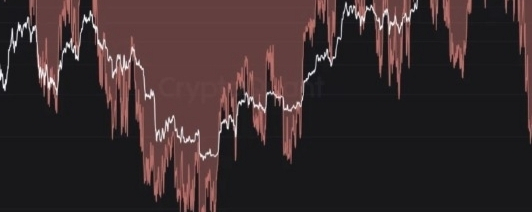
Bài viết
tại sao bạn có thể không kiếm được gì với crypto 💩💩🚨🚨Các altcoin hàng đầu sẽ sớm vượt qua mức ath trước đó và
sẽ đạt 200k sớm thôi, sau đó bạn có thể có thêm một đứa trẻ, tất cả điều này sẽ sớm xảy ra, nhưng bạn sẽ không thể tham gia nếu không sống sót.
🚨🚨🚨🚨🚨🚨Chìa khóa là quản lý rủi ro của bạn một cách hợp lý
tại sao bạn có thể không kiếm được gì với crypto 💩💩🚨🚨
Các altcoin hàng đầu sẽ sớm vượt qua mức ath trước đó và
sẽ đạt 200k sớm thôi, sau đó bạn có thể có thêm một đứa trẻ, tất cả điều này sẽ sớm xảy ra, nhưng bạn sẽ không thể tham gia nếu không sống sót.
🚨🚨🚨🚨🚨🚨Chìa khóa là quản lý rủi ro của bạn một cách hợp lý
sẽ đạt 200k sớm thôi, sau đó bạn có thể có thêm một đứa trẻ, tất cả điều này sẽ sớm xảy ra, nhưng bạn sẽ không thể tham gia nếu không sống sót.
🚨🚨🚨🚨🚨🚨Chìa khóa là quản lý rủi ro của bạn một cách hợp lý
1
43
·
--
Tăng giá
Fomo đã chết!!, $BTC prompt it 🚨🚨🚨💯😭
Tôi nghĩ rằng cú sập này bây giờ cho thấy điều gì thực sự quan trọng.
Hype đã lâu không còn và bây giờ chúng ta có thể thấy rõ điều mà trước đây chúng ta không thể thấy.
$ETH
Fomo đã chết!!, $BTC prompt it 🚨🚨🚨💯😭
Tôi nghĩ rằng cú sập này bây giờ cho thấy điều gì thực sự quan trọng.
Hype đã lâu không còn và bây giờ chúng ta có thể thấy rõ điều mà trước đây chúng ta không thể thấy.
$ETH
Tôi nghĩ rằng cú sập này bây giờ cho thấy điều gì thực sự quan trọng.
Hype đã lâu không còn và bây giờ chúng ta có thể thấy rõ điều mà trước đây chúng ta không thể thấy.
$ETH
1
1
115
😕
😕

Roy Prochazka LhKH
·
--
Anh ơi, đây là điều mà tôi vừa trải qua gần đây, mất hơn 4000 đô la vào hợp đồng tương lai 😔
78
·
--
Tăng giá
🚨Một cách nhanh nhất để mất hết tiền của bạn trong tiền điện tử 🚨🚨🚨🚨🚨🚨💯💯💯💯📢📢📢
?
Hiểu được cách mọi người mất tiền của họ trong tiền điện tử là một điều rất quan trọng để bạn có thể tránh được những cái bẫy như vậy về cơ bản đối với những nhà đầu tư mới không có nhiều kinh nghiệm trên thị trường, bạn nên hiểu rằng mất hết tiền của mình trong tiền điện tử đau đớn hơn niềm vui kiếm được nhiều tiền trong tiền điện tử, vì vậy đó là lý do tại sao bạn cần có một chiến lược quản lý rủi ro tốt để việc mất hết tiền của bạn sẽ không buộc bạn phải rời khỏi thị trường, tin tôi đi, bạn chưa sẵn sàng để mất hết tiền của mình đâu.
Có nhiều cách khiến mọi người mất tiền trong tiền điện tử nhưng cách nhanh nhất để mất tiền trong tiền điện tử là
{nghĩ rằng tiền điện tử sẽ giúp bạn giàu có}
Bạn nghe tôi nói đúng, nghĩ rằng tiền điện tử sẽ giúp bạn giàu có nghe có vẻ đơn giản nhưng luôn đi kèm với một cảm xúc rất nguy hiểm, đó là lý do tại sao mọi người sử dụng đòn bẩy quá mức trong giao dịch tương lai và cuối cùng làm nổ tung tài khoản của họ.
Đó là lý do tại sao mọi người đặt tất cả tiền của họ vào một meme coin lừa đảo và mất tất cả tiền của họ
Đó là lý do tại sao mọi người fomo vào các dự án mà không nghiên cứu và cuối cùng hối tiếc
Hậu quả của suy nghĩ đơn lẻ này là vô tận, khi nghĩ rằng bạn phải làm giàu trong tiền điện tử sẽ luôn khiến bạn chấp nhận những rủi ro ngu ngốc mà cuối cùng bạn sẽ hối tiếc.
Giữ an toàn ✌️
#BTC
🚨Một cách nhanh nhất để mất hết tiền của bạn trong tiền điện tử 🚨🚨🚨🚨🚨🚨💯💯💯💯📢📢📢
?
Hiểu được cách mọi người mất tiền của họ trong tiền điện tử là một điều rất quan trọng để bạn có thể tránh được những cái bẫy như vậy về cơ bản đối với những nhà đầu tư mới không có nhiều kinh nghiệm trên thị trường, bạn nên hiểu rằng mất hết tiền của mình trong tiền điện tử đau đớn hơn niềm vui kiếm được nhiều tiền trong tiền điện tử, vì vậy đó là lý do tại sao bạn cần có một chiến lược quản lý rủi ro tốt để việc mất hết tiền của bạn sẽ không buộc bạn phải rời khỏi thị trường, tin tôi đi, bạn chưa sẵn sàng để mất hết tiền của mình đâu.
Có nhiều cách khiến mọi người mất tiền trong tiền điện tử nhưng cách nhanh nhất để mất tiền trong tiền điện tử là
{nghĩ rằng tiền điện tử sẽ giúp bạn giàu có}
Bạn nghe tôi nói đúng, nghĩ rằng tiền điện tử sẽ giúp bạn giàu có nghe có vẻ đơn giản nhưng luôn đi kèm với một cảm xúc rất nguy hiểm, đó là lý do tại sao mọi người sử dụng đòn bẩy quá mức trong giao dịch tương lai và cuối cùng làm nổ tung tài khoản của họ.
Đó là lý do tại sao mọi người đặt tất cả tiền của họ vào một meme coin lừa đảo và mất tất cả tiền của họ
Đó là lý do tại sao mọi người fomo vào các dự án mà không nghiên cứu và cuối cùng hối tiếc
Hậu quả của suy nghĩ đơn lẻ này là vô tận, khi nghĩ rằng bạn phải làm giàu trong tiền điện tử sẽ luôn khiến bạn chấp nhận những rủi ro ngu ngốc mà cuối cùng bạn sẽ hối tiếc.
Giữ an toàn ✌️
#BTC
?
Hiểu được cách mọi người mất tiền của họ trong tiền điện tử là một điều rất quan trọng để bạn có thể tránh được những cái bẫy như vậy về cơ bản đối với những nhà đầu tư mới không có nhiều kinh nghiệm trên thị trường, bạn nên hiểu rằng mất hết tiền của mình trong tiền điện tử đau đớn hơn niềm vui kiếm được nhiều tiền trong tiền điện tử, vì vậy đó là lý do tại sao bạn cần có một chiến lược quản lý rủi ro tốt để việc mất hết tiền của bạn sẽ không buộc bạn phải rời khỏi thị trường, tin tôi đi, bạn chưa sẵn sàng để mất hết tiền của mình đâu.
Có nhiều cách khiến mọi người mất tiền trong tiền điện tử nhưng cách nhanh nhất để mất tiền trong tiền điện tử là
{nghĩ rằng tiền điện tử sẽ giúp bạn giàu có}
Bạn nghe tôi nói đúng, nghĩ rằng tiền điện tử sẽ giúp bạn giàu có nghe có vẻ đơn giản nhưng luôn đi kèm với một cảm xúc rất nguy hiểm, đó là lý do tại sao mọi người sử dụng đòn bẩy quá mức trong giao dịch tương lai và cuối cùng làm nổ tung tài khoản của họ.
Đó là lý do tại sao mọi người đặt tất cả tiền của họ vào một meme coin lừa đảo và mất tất cả tiền của họ
Đó là lý do tại sao mọi người fomo vào các dự án mà không nghiên cứu và cuối cùng hối tiếc
Hậu quả của suy nghĩ đơn lẻ này là vô tận, khi nghĩ rằng bạn phải làm giàu trong tiền điện tử sẽ luôn khiến bạn chấp nhận những rủi ro ngu ngốc mà cuối cùng bạn sẽ hối tiếc.
Giữ an toàn ✌️
#BTC

8
4
4
7k
·
--
Tăng giá
Từ 10 đô la đến 1 triệu đô la, hãy xem cách biến nó thành hiện thực.
Điều duy nhất hạn chế khả năng kiếm đủ tiền của bạn trên thị trường này là nỗi sợ hãi và lòng tham của bạn, khi nói đến việc biến một số tiền nhỏ thành một số tiền hợp lý, chỉ là vấn đề thời gian và khả năng học cách phân bổ tiền đúng đắn của bạn.
Nếu bạn chỉ có 10 đô la làm thanh khoản và bạn tự hỏi liệu mình có thể kiếm được lợi nhuận hợp lý từ 10 đô la của mình không? Câu trả lời là có, và đó là những gì bài viết này sắp chỉ cho bạn cách thực hiện,
tăng từ 10 đô la đến 1 triệu đô la rõ ràng là 100000 lần phải không? Đó là một khoản lợi nhuận điên rồ, nhưng nếu tôi nói với bạn rằng có một cách đã được chứng minh để kiếm được loại lợi nhuận này trong tiền điện tử, biết đúng thời điểm và có thông tin phù hợp là một trong những công cụ mạnh mẽ nhất để kiếm được lợi nhuận cao nhất trong tiền điện tử, ngay bây giờ, tiền meme và tiền chơi game là một trong những câu chuyện hấp dẫn nhất có thể giúp bạn kiếm được lợi nhuận nghiêm túc nếu có thể nghiên cứu kỹ và tìm ra loại phù hợp.
tìm một dự án có vốn hóa thị trường dưới 1 triệu đô la với một đội ngũ mạnh và cộng đồng tận tâm, nếu bạn quyết tâm đầu tư, hãy đầu tư 5 đô la và giữ 5 đô la ổn định (USDT)
sau khi đầu tư, đừng bao giờ bán cho đến khi nó tăng rất cao, theo cách đó, bạn có thể tăng gấp 100 lần 5 đô la của mình và tiếp tục đầu tư cho đến khi đạt được mục tiêu 1 triệu đô la của mình.
$BTC
Từ 10 đô la đến 1 triệu đô la, hãy xem cách biến nó thành hiện thực.
Điều duy nhất hạn chế khả năng kiếm đủ tiền của bạn trên thị trường này là nỗi sợ hãi và lòng tham của bạn, khi nói đến việc biến một số tiền nhỏ thành một số tiền hợp lý, chỉ là vấn đề thời gian và khả năng học cách phân bổ tiền đúng đắn của bạn.
Nếu bạn chỉ có 10 đô la làm thanh khoản và bạn tự hỏi liệu mình có thể kiếm được lợi nhuận hợp lý từ 10 đô la của mình không? Câu trả lời là có, và đó là những gì bài viết này sắp chỉ cho bạn cách thực hiện,
tăng từ 10 đô la đến 1 triệu đô la rõ ràng là 100000 lần phải không? Đó là một khoản lợi nhuận điên rồ, nhưng nếu tôi nói với bạn rằng có một cách đã được chứng minh để kiếm được loại lợi nhuận này trong tiền điện tử, biết đúng thời điểm và có thông tin phù hợp là một trong những công cụ mạnh mẽ nhất để kiếm được lợi nhuận cao nhất trong tiền điện tử, ngay bây giờ, tiền meme và tiền chơi game là một trong những câu chuyện hấp dẫn nhất có thể giúp bạn kiếm được lợi nhuận nghiêm túc nếu có thể nghiên cứu kỹ và tìm ra loại phù hợp.
tìm một dự án có vốn hóa thị trường dưới 1 triệu đô la với một đội ngũ mạnh và cộng đồng tận tâm, nếu bạn quyết tâm đầu tư, hãy đầu tư 5 đô la và giữ 5 đô la ổn định (USDT)
sau khi đầu tư, đừng bao giờ bán cho đến khi nó tăng rất cao, theo cách đó, bạn có thể tăng gấp 100 lần 5 đô la của mình và tiếp tục đầu tư cho đến khi đạt được mục tiêu 1 triệu đô la của mình.
$BTC
Điều duy nhất hạn chế khả năng kiếm đủ tiền của bạn trên thị trường này là nỗi sợ hãi và lòng tham của bạn, khi nói đến việc biến một số tiền nhỏ thành một số tiền hợp lý, chỉ là vấn đề thời gian và khả năng học cách phân bổ tiền đúng đắn của bạn.
Nếu bạn chỉ có 10 đô la làm thanh khoản và bạn tự hỏi liệu mình có thể kiếm được lợi nhuận hợp lý từ 10 đô la của mình không? Câu trả lời là có, và đó là những gì bài viết này sắp chỉ cho bạn cách thực hiện,
tăng từ 10 đô la đến 1 triệu đô la rõ ràng là 100000 lần phải không? Đó là một khoản lợi nhuận điên rồ, nhưng nếu tôi nói với bạn rằng có một cách đã được chứng minh để kiếm được loại lợi nhuận này trong tiền điện tử, biết đúng thời điểm và có thông tin phù hợp là một trong những công cụ mạnh mẽ nhất để kiếm được lợi nhuận cao nhất trong tiền điện tử, ngay bây giờ, tiền meme và tiền chơi game là một trong những câu chuyện hấp dẫn nhất có thể giúp bạn kiếm được lợi nhuận nghiêm túc nếu có thể nghiên cứu kỹ và tìm ra loại phù hợp.
tìm một dự án có vốn hóa thị trường dưới 1 triệu đô la với một đội ngũ mạnh và cộng đồng tận tâm, nếu bạn quyết tâm đầu tư, hãy đầu tư 5 đô la và giữ 5 đô la ổn định (USDT)
sau khi đầu tư, đừng bao giờ bán cho đến khi nó tăng rất cao, theo cách đó, bạn có thể tăng gấp 100 lần 5 đô la của mình và tiếp tục đầu tư cho đến khi đạt được mục tiêu 1 triệu đô la của mình.
$BTC
369
·
--
Tăng giá
Những đồng tiền này có khả năng tăng giá gấp 20 lần trước khi kết thúc năm 2025
1.$STX
2.$PEPE
3.Bonk
4.beamx
5.POL
6.$JASMY
7.FET
Hãy nhớ rằng tiền điện tử là một thị trường rất biến động và nếu bạn chưa phải là nhà đầu tư dày dạn kinh nghiệm thì thị trường có thể sẽ đùa giỡn với cảm xúc của bạn, cố gắng khiến bạn bán sớm hoặc fomo (sợ hãi và tham lam), nhưng sự bình tĩnh và kiên nhẫn là những gì bạn cần, một khi bạn có những dự án tốt trong danh mục đầu tư của mình thì không cần phải hoảng sợ nếu bạn thực sự đang làm đúng. hãy giữ an toàn
Những đồng tiền này có khả năng tăng giá gấp 20 lần trước khi kết thúc năm 2025
1.$STX
2.$PEPE
3.Bonk
4.beamx
5.POL
6.$JASMY
7.FET
Hãy nhớ rằng tiền điện tử là một thị trường rất biến động và nếu bạn chưa phải là nhà đầu tư dày dạn kinh nghiệm thì thị trường có thể sẽ đùa giỡn với cảm xúc của bạn, cố gắng khiến bạn bán sớm hoặc fomo (sợ hãi và tham lam), nhưng sự bình tĩnh và kiên nhẫn là những gì bạn cần, một khi bạn có những dự án tốt trong danh mục đầu tư của mình thì không cần phải hoảng sợ nếu bạn thực sự đang làm đúng. hãy giữ an toàn
1.$STX
2.$PEPE
3.Bonk
4.beamx
5.POL
6.$JASMY
7.FET
Hãy nhớ rằng tiền điện tử là một thị trường rất biến động và nếu bạn chưa phải là nhà đầu tư dày dạn kinh nghiệm thì thị trường có thể sẽ đùa giỡn với cảm xúc của bạn, cố gắng khiến bạn bán sớm hoặc fomo (sợ hãi và tham lam), nhưng sự bình tĩnh và kiên nhẫn là những gì bạn cần, một khi bạn có những dự án tốt trong danh mục đầu tư của mình thì không cần phải hoảng sợ nếu bạn thực sự đang làm đúng. hãy giữ an toàn
5
3.5k
Đăng nhập để khám phá thêm nội dung
Tham gia cùng người dùng tiền mã hóa toàn cầu trên Binance Square
⚡️ Nhận thông tin mới nhất và hữu ích về tiền mã hóa.
💬 Được tin cậy bởi sàn giao dịch tiền mã hóa lớn nhất thế giới.
👍 Khám phá những thông tin chuyên sâu thực tế từ những nhà sáng tạo đã xác minh.
Email / Số điện thoại