
Crypto A_24
346 Bài đăng

Crypto A_24
Báo cáo
Chặn người dùng
No need to verify me because i am always verified✅
11 Đang theo dõi
34 Người theo dõi
91 Đã thích
Bài đăng
Tất cả
Trích dẫn
·
--
Xem bản dịch
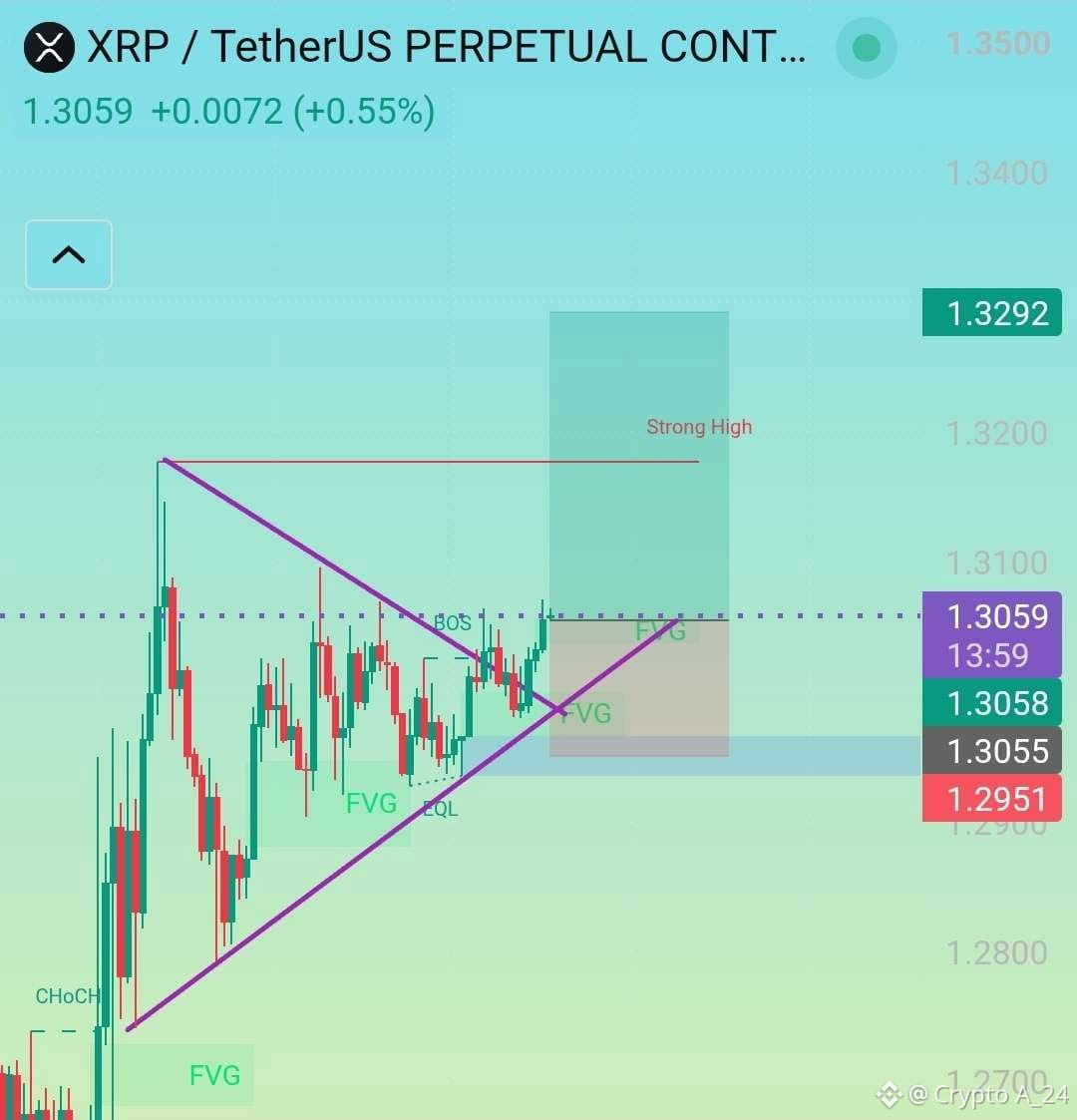
Clean higher-low structure holding. Watching for volume to clear the $1.32 high. $XRP handle the super support level...
Entry: $1.295 – $1.305 (FVG retest)
SL: $1.290
TP: $1.329
Clean higher-low structure holding. Watching for volume to clear the $1.32 high. $XRP handle the super support level...
Entry: $1.295 – $1.305 (FVG retest)
SL: $1.290
TP: $1.329
Entry: $1.295 – $1.305 (FVG retest)
SL: $1.290
TP: $1.329
60
·
--
Xem bản dịch
USDT Moved the Money - but It Couldn’t Remove Counterparty Risk
$USDT sat at the center of a $230M Venezuelan oil transaction that ultimately delivered only a fraction of the contracted cargo, according to a Financial Times investigation into Poland’s state-controlled energy group Orlen.
The deal can be reduced to one chain:
Orlen Trading Switzerland → $230M advance → intermediaries → USDT conversion → local brokers → PDVSA-linked oil supply
The original contract covered roughly 6M barrels worth $345M. Yet only one fuel-oil cargo valued at about $28.8M was reportedly delivered. Including shipping and legal costs, the Polish government now estimates Orlen’s wider losses at around $424M.
What stands out is where the risk actually accumulated. USDT solved the settlement problem created by restricted banking access: value could move quickly across borders and outside conventional correspondent-bank rails. But every additional intermediary introduced another layer of execution, custody and counterparty risk. At one point, according to the FT, staff physically carried USB devices containing tens of millions of dollars in USDT to meetings in Caracas.
That makes this less a story about stablecoin technology failing and more about what stablecoins cannot solve. A payment rail can make settlement faster and more accessible; it cannot guarantee that the seller, broker or intermediary on the other side of the transaction will ultimately deliver the underlying asset.
USDT Moved the Money - but It Couldn’t Remove Counterparty Risk
$USDT sat at the center of a $230M Venezuelan oil transaction that ultimately delivered only a fraction of the contracted cargo, according to a Financial Times investigation into Poland’s state-controlled energy group Orlen.
The deal can be reduced to one chain:
Orlen Trading Switzerland → $230M advance → intermediaries → USDT conversion → local brokers → PDVSA-linked oil supply
The original contract covered roughly 6M barrels worth $345M. Yet only one fuel-oil cargo valued at about $28.8M was reportedly delivered. Including shipping and legal costs, the Polish government now estimates Orlen’s wider losses at around $424M.
What stands out is where the risk actually accumulated. USDT solved the settlement problem created by restricted banking access: value could move quickly across borders and outside conventional correspondent-bank rails. But every additional intermediary introduced another layer of execution, custody and counterparty risk. At one point, according to the FT, staff physically carried USB devices containing tens of millions of dollars in USDT to meetings in Caracas.
That makes this less a story about stablecoin technology failing and more about what stablecoins cannot solve. A payment rail can make settlement faster and more accessible; it cannot guarantee that the seller, broker or intermediary on the other side of the transaction will ultimately deliver the underlying asset.
$USDT sat at the center of a $230M Venezuelan oil transaction that ultimately delivered only a fraction of the contracted cargo, according to a Financial Times investigation into Poland’s state-controlled energy group Orlen.
The deal can be reduced to one chain:
Orlen Trading Switzerland → $230M advance → intermediaries → USDT conversion → local brokers → PDVSA-linked oil supply
The original contract covered roughly 6M barrels worth $345M. Yet only one fuel-oil cargo valued at about $28.8M was reportedly delivered. Including shipping and legal costs, the Polish government now estimates Orlen’s wider losses at around $424M.
What stands out is where the risk actually accumulated. USDT solved the settlement problem created by restricted banking access: value could move quickly across borders and outside conventional correspondent-bank rails. But every additional intermediary introduced another layer of execution, custody and counterparty risk. At one point, according to the FT, staff physically carried USB devices containing tens of millions of dollars in USDT to meetings in Caracas.
That makes this less a story about stablecoin technology failing and more about what stablecoins cannot solve. A payment rail can make settlement faster and more accessible; it cannot guarantee that the seller, broker or intermediary on the other side of the transaction will ultimately deliver the underlying asset.

1
·
--
$XRP 3. Các kịch bản và điều cần theo dõi
Bình luận từ các nhà phân tích vĩ mô và crypto nhìn chung phác thảo ba hướng. Thứ nhất, khả năng tăng lãi suất kèm định hướng “diều hâu”, với việc nói về các đợt tăng tiếp theo hoặc lộ trình cắt giảm chậm rãi; kịch bản này thường gây áp lực lên các tài sản không sinh lãi và có lợi cho Bitcoin hơn là các token nhỏ, kém thanh khoản. Thứ hai, một đợt tăng lãi suất được định khung như là gần cuối chu kỳ thắt chặt, điều này có thể hỗ trợ lực mua giải tỏa vào các tài sản lớn và sau đó lan sang altcoin nếu lãi suất thực sự ổn định. Thứ ba, kịch bản không tăng lãi suất (xác suất thấp hơn), có thể sẽ kích hoạt biến động ngắn hạn khi các nhà giao dịch tháo gỡ các vị thế đã đặt.
Kết hợp với điều này, cùng trong tuần đó còn có cuộc bỏ phiếu Đạo luật CLARITY của Mỹ và các quyết định của Ngân hàng Trung ương Anh (Bank of England) và Ngân hàng Trung ương Nhật Bản (Bank of Japan), vì vậy các điều kiện tài trợ và các tiêu đề về quy định có thể khuếch đại bất kỳ diễn biến crypto nào do Fed thúc đẩy.
Điều này có nghĩa là: Theo dõi giọng điệu trong tuyên bố của Fed, cách Bitcoin phản ứng quanh vùng hỗ trợ và kháng cự đã xác định, và dòng tiền ETF đi kèm sẽ hữu ích hơn nhiều so với việc chỉ phản ứng với con số lãi suất trên tiêu đề.
#XRP
$XRP 3. Các kịch bản và điều cần theo dõi
Bình luận từ các nhà phân tích vĩ mô và crypto nhìn chung phác thảo ba hướng. Thứ nhất, khả năng tăng lãi suất kèm định hướng “diều hâu”, với việc nói về các đợt tăng tiếp theo hoặc lộ trình cắt giảm chậm rãi; kịch bản này thường gây áp lực lên các tài sản không sinh lãi và có lợi cho Bitcoin hơn là các token nhỏ, kém thanh khoản. Thứ hai, một đợt tăng lãi suất được định khung như là gần cuối chu kỳ thắt chặt, điều này có thể hỗ trợ lực mua giải tỏa vào các tài sản lớn và sau đó lan sang altcoin nếu lãi suất thực sự ổn định. Thứ ba, kịch bản không tăng lãi suất (xác suất thấp hơn), có thể sẽ kích hoạt biến động ngắn hạn khi các nhà giao dịch tháo gỡ các vị thế đã đặt.
Kết hợp với điều này, cùng trong tuần đó còn có cuộc bỏ phiếu Đạo luật CLARITY của Mỹ và các quyết định của Ngân hàng Trung ương Anh (Bank of England) và Ngân hàng Trung ương Nhật Bản (Bank of Japan), vì vậy các điều kiện tài trợ và các tiêu đề về quy định có thể khuếch đại bất kỳ diễn biến crypto nào do Fed thúc đẩy.
Điều này có nghĩa là: Theo dõi giọng điệu trong tuyên bố của Fed, cách Bitcoin phản ứng quanh vùng hỗ trợ và kháng cự đã xác định, và dòng tiền ETF đi kèm sẽ hữu ích hơn nhiều so với việc chỉ phản ứng với con số lãi suất trên tiêu đề.
#XRP
Bình luận từ các nhà phân tích vĩ mô và crypto nhìn chung phác thảo ba hướng. Thứ nhất, khả năng tăng lãi suất kèm định hướng “diều hâu”, với việc nói về các đợt tăng tiếp theo hoặc lộ trình cắt giảm chậm rãi; kịch bản này thường gây áp lực lên các tài sản không sinh lãi và có lợi cho Bitcoin hơn là các token nhỏ, kém thanh khoản. Thứ hai, một đợt tăng lãi suất được định khung như là gần cuối chu kỳ thắt chặt, điều này có thể hỗ trợ lực mua giải tỏa vào các tài sản lớn và sau đó lan sang altcoin nếu lãi suất thực sự ổn định. Thứ ba, kịch bản không tăng lãi suất (xác suất thấp hơn), có thể sẽ kích hoạt biến động ngắn hạn khi các nhà giao dịch tháo gỡ các vị thế đã đặt.
Kết hợp với điều này, cùng trong tuần đó còn có cuộc bỏ phiếu Đạo luật CLARITY của Mỹ và các quyết định của Ngân hàng Trung ương Anh (Bank of England) và Ngân hàng Trung ương Nhật Bản (Bank of Japan), vì vậy các điều kiện tài trợ và các tiêu đề về quy định có thể khuếch đại bất kỳ diễn biến crypto nào do Fed thúc đẩy.
Điều này có nghĩa là: Theo dõi giọng điệu trong tuyên bố của Fed, cách Bitcoin phản ứng quanh vùng hỗ trợ và kháng cự đã xác định, và dòng tiền ETF đi kèm sẽ hữu ích hơn nhiều so với việc chỉ phản ứng với con số lãi suất trên tiêu đề.
#XRP
107
·
--
Xem bản dịch
$BTC Bitcoin Warning: Is BTC Still a Risk Asset?
- Bloomberg Intelligence strategist Mike McGlone has issued a bearish warning about Bitcoin’s current setup
- His concern: $BTC has delivered returns broadly comparable to the S&P 500 over the past five years, but with roughly 3× more volatility
- That creates a difficult risk-reward profile for traditional portfolio managers
- Bitcoin is also facing resistance near the $80,000 area while equity valuations remain elevated
- Futures markets are reportedly pricing in approximately 70 basis points of potential Fed rate hikes over the next year
- If liquidity tightens, high-beta assets such as Bitcoin could face serious selling pressure
- McGlone argues that Bitcoin has recently behaved more like a leveraged risk asset than a completely independent store of value
- His extreme downside scenario points toward the $10,000 zone if the S&P 500 suffers a sustained decline of around 20%
- But this is the key condition that could invalidate the bearish thesis:
- $BTC must decouple from equities and continue performing strongly even if the stock market falls
- If Bitcoin holds its strength during an equity sell-off, it could prove that the asset is maturing beyond its traditional high-beta profile
- That would be a major signal for the entire crypto market
- The real question is no longer only “Can Bitcoin reach higher?”
- The bigger question is: “Can Bitcoin remain strong when traditional markets weaken?”
- Watch the $80,000 resistance zone, Fed expectations, S&P 500 momentum, ETF flows, and Bitcoin’s correlation with equities
- One analyst’s warning is not a guaranteed prediction, but it highlights the macro risks every crypto investor should monitor
Is Bitcoin becoming a true macro hedge — or is it still just the riskiest trade in the room?
$BTC Bitcoin Warning: Is BTC Still a Risk Asset?
- Bloomberg Intelligence strategist Mike McGlone has issued a bearish warning about Bitcoin’s current setup
- His concern: $BTC has delivered returns broadly comparable to the S&P 500 over the past five years, but with roughly 3× more volatility
- That creates a difficult risk-reward profile for traditional portfolio managers
- Bitcoin is also facing resistance near the $80,000 area while equity valuations remain elevated
- Futures markets are reportedly pricing in approximately 70 basis points of potential Fed rate hikes over the next year
- If liquidity tightens, high-beta assets such as Bitcoin could face serious selling pressure
- McGlone argues that Bitcoin has recently behaved more like a leveraged risk asset than a completely independent store of value
- His extreme downside scenario points toward the $10,000 zone if the S&P 500 suffers a sustained decline of around 20%
- But this is the key condition that could invalidate the bearish thesis:
- $BTC must decouple from equities and continue performing strongly even if the stock market falls
- If Bitcoin holds its strength during an equity sell-off, it could prove that the asset is maturing beyond its traditional high-beta profile
- That would be a major signal for the entire crypto market
- The real question is no longer only “Can Bitcoin reach higher?”
- The bigger question is: “Can Bitcoin remain strong when traditional markets weaken?”
- Watch the $80,000 resistance zone, Fed expectations, S&P 500 momentum, ETF flows, and Bitcoin’s correlation with equities
- One analyst’s warning is not a guaranteed prediction, but it highlights the macro risks every crypto investor should monitor
Is Bitcoin becoming a true macro hedge — or is it still just the riskiest trade in the room?
- Bloomberg Intelligence strategist Mike McGlone has issued a bearish warning about Bitcoin’s current setup
- His concern: $BTC has delivered returns broadly comparable to the S&P 500 over the past five years, but with roughly 3× more volatility
- That creates a difficult risk-reward profile for traditional portfolio managers
- Bitcoin is also facing resistance near the $80,000 area while equity valuations remain elevated
- Futures markets are reportedly pricing in approximately 70 basis points of potential Fed rate hikes over the next year
- If liquidity tightens, high-beta assets such as Bitcoin could face serious selling pressure
- McGlone argues that Bitcoin has recently behaved more like a leveraged risk asset than a completely independent store of value
- His extreme downside scenario points toward the $10,000 zone if the S&P 500 suffers a sustained decline of around 20%
- But this is the key condition that could invalidate the bearish thesis:
- $BTC must decouple from equities and continue performing strongly even if the stock market falls
- If Bitcoin holds its strength during an equity sell-off, it could prove that the asset is maturing beyond its traditional high-beta profile
- That would be a major signal for the entire crypto market
- The real question is no longer only “Can Bitcoin reach higher?”
- The bigger question is: “Can Bitcoin remain strong when traditional markets weaken?”
- Watch the $80,000 resistance zone, Fed expectations, S&P 500 momentum, ETF flows, and Bitcoin’s correlation with equities
- One analyst’s warning is not a guaranteed prediction, but it highlights the macro risks every crypto investor should monitor
Is Bitcoin becoming a true macro hedge — or is it still just the riskiest trade in the room?
57
·
--
Xem bản dịch
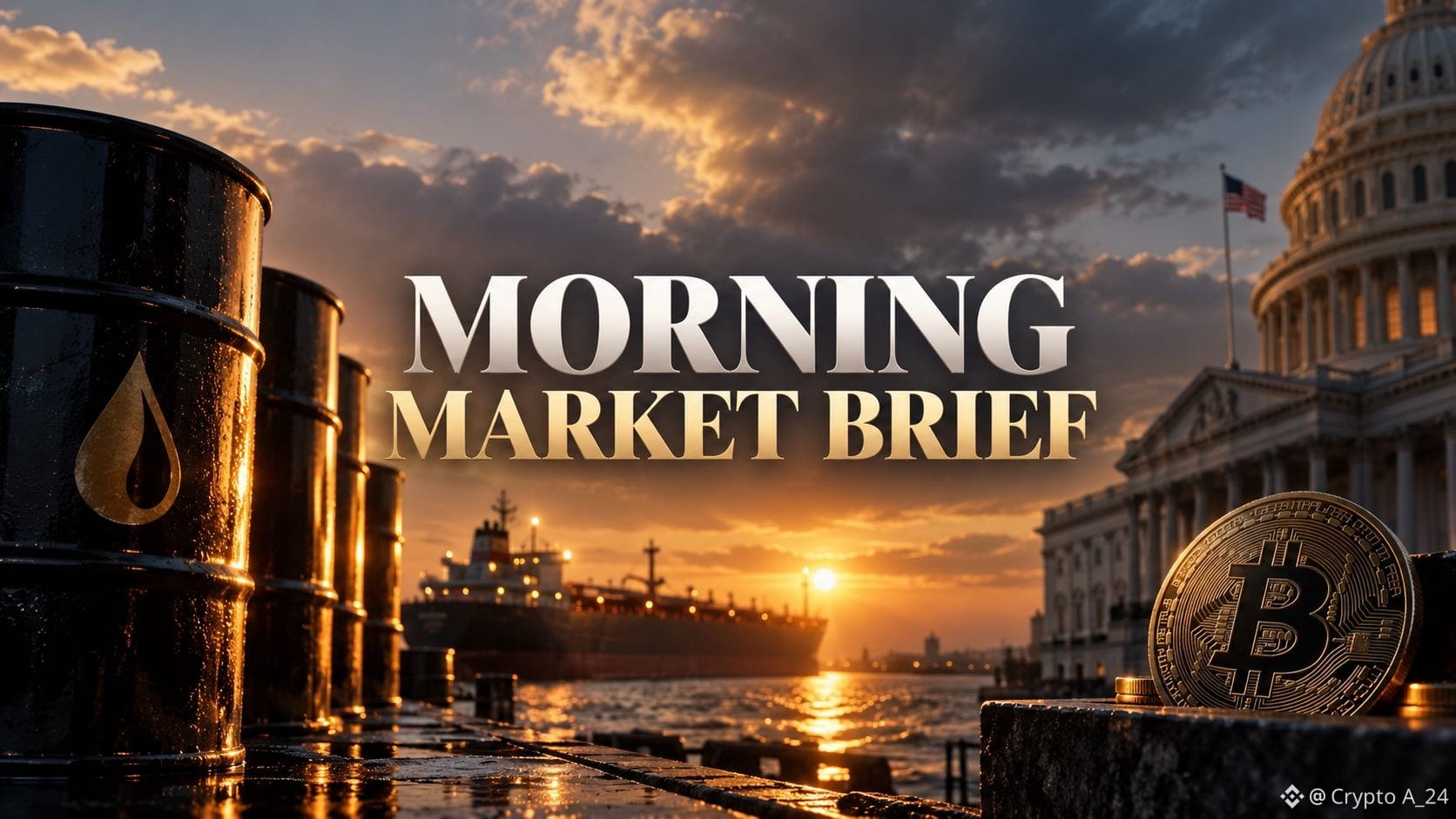
🚨 Market Brief: Oil Is Driving the Market Again
Markets enter Fed week with a difficult macro setup: Brent above $107, US 10Y near 5%, and $BTC below $77K.
₿ Crypto: Bitcoin is trading around $76.7K, while ETH is near $2.48K. Macro remains the main pressure point. For a stronger risk-on signal, I want to see BTC reclaim $80K + Treasury yields move lower.
🇺🇸 US Macro:
CPI: 3.4% YoY
PPI: 5.4% YoY
Payrolls: +162K
Unemployment: 4.1%
US 10Y: ~4.97%
The market is heavily pricing another Fed hike.
📉 Stocks: US futures are under pressure as higher oil and yields hit growth valuations. A sustained 10Y >5% remains the key risk for Nasdaq.
🇨🇳 China & Geopolitics: China is pushing for deeper BRICS cooperation and Middle East de-escalation. For markets, diplomacy matters because it could directly affect oil:
De-escalation → Oil ↓ → Inflation ↓ → Yields ↓ → Risk assets ↑
🤖 AI: the AI race is entering a new phase. Anthropic is calling for slower frontier-model development and stronger safety standards, while capital continues chasing major AI opportunities.
🎯 My view: today, oil matters more than Bitcoin.
Brent >$110 → Fed hawkish → 10Y >5% → Nasdaq ↓ → BTC pressure
The bullish alternative:
Oil ↓ → Yields ↓ → #BTC >$80K → Risk-On
Key levels: BTC $80K | Brent $110 | US 10Y 5% | DXY 100
#BTC #Price #Analysis
🚨 Market Brief: Oil Is Driving the Market Again
Markets enter Fed week with a difficult macro setup: Brent above $107, US 10Y near 5%, and $BTC below $77K.
₿ Crypto: Bitcoin is trading around $76.7K, while ETH is near $2.48K. Macro remains the main pressure point. For a stronger risk-on signal, I want to see BTC reclaim $80K + Treasury yields move lower.
🇺🇸 US Macro:
CPI: 3.4% YoY
PPI: 5.4% YoY
Payrolls: +162K
Unemployment: 4.1%
US 10Y: ~4.97%
The market is heavily pricing another Fed hike.
📉 Stocks: US futures are under pressure as higher oil and yields hit growth valuations. A sustained 10Y >5% remains the key risk for Nasdaq.
🇨🇳 China & Geopolitics: China is pushing for deeper BRICS cooperation and Middle East de-escalation. For markets, diplomacy matters because it could directly affect oil:
De-escalation → Oil ↓ → Inflation ↓ → Yields ↓ → Risk assets ↑
🤖 AI: the AI race is entering a new phase. Anthropic is calling for slower frontier-model development and stronger safety standards, while capital continues chasing major AI opportunities.
🎯 My view: today, oil matters more than Bitcoin.
Brent >$110 → Fed hawkish → 10Y >5% → Nasdaq ↓ → BTC pressure
The bullish alternative:
Oil ↓ → Yields ↓ → #BTC >$80K → Risk-On
Key levels: BTC $80K | Brent $110 | US 10Y 5% | DXY 100
#BTC #Price #Analysis
Markets enter Fed week with a difficult macro setup: Brent above $107, US 10Y near 5%, and $BTC below $77K.
₿ Crypto: Bitcoin is trading around $76.7K, while ETH is near $2.48K. Macro remains the main pressure point. For a stronger risk-on signal, I want to see BTC reclaim $80K + Treasury yields move lower.
🇺🇸 US Macro:
CPI: 3.4% YoY
PPI: 5.4% YoY
Payrolls: +162K
Unemployment: 4.1%
US 10Y: ~4.97%
The market is heavily pricing another Fed hike.
📉 Stocks: US futures are under pressure as higher oil and yields hit growth valuations. A sustained 10Y >5% remains the key risk for Nasdaq.
🇨🇳 China & Geopolitics: China is pushing for deeper BRICS cooperation and Middle East de-escalation. For markets, diplomacy matters because it could directly affect oil:
De-escalation → Oil ↓ → Inflation ↓ → Yields ↓ → Risk assets ↑
🤖 AI: the AI race is entering a new phase. Anthropic is calling for slower frontier-model development and stronger safety standards, while capital continues chasing major AI opportunities.
🎯 My view: today, oil matters more than Bitcoin.
Brent >$110 → Fed hawkish → 10Y >5% → Nasdaq ↓ → BTC pressure
The bullish alternative:
Oil ↓ → Yields ↓ → #BTC >$80K → Risk-On
Key levels: BTC $80K | Brent $110 | US 10Y 5% | DXY 100
#BTC #Price #Analysis
70
·
--
Xem bản dịch
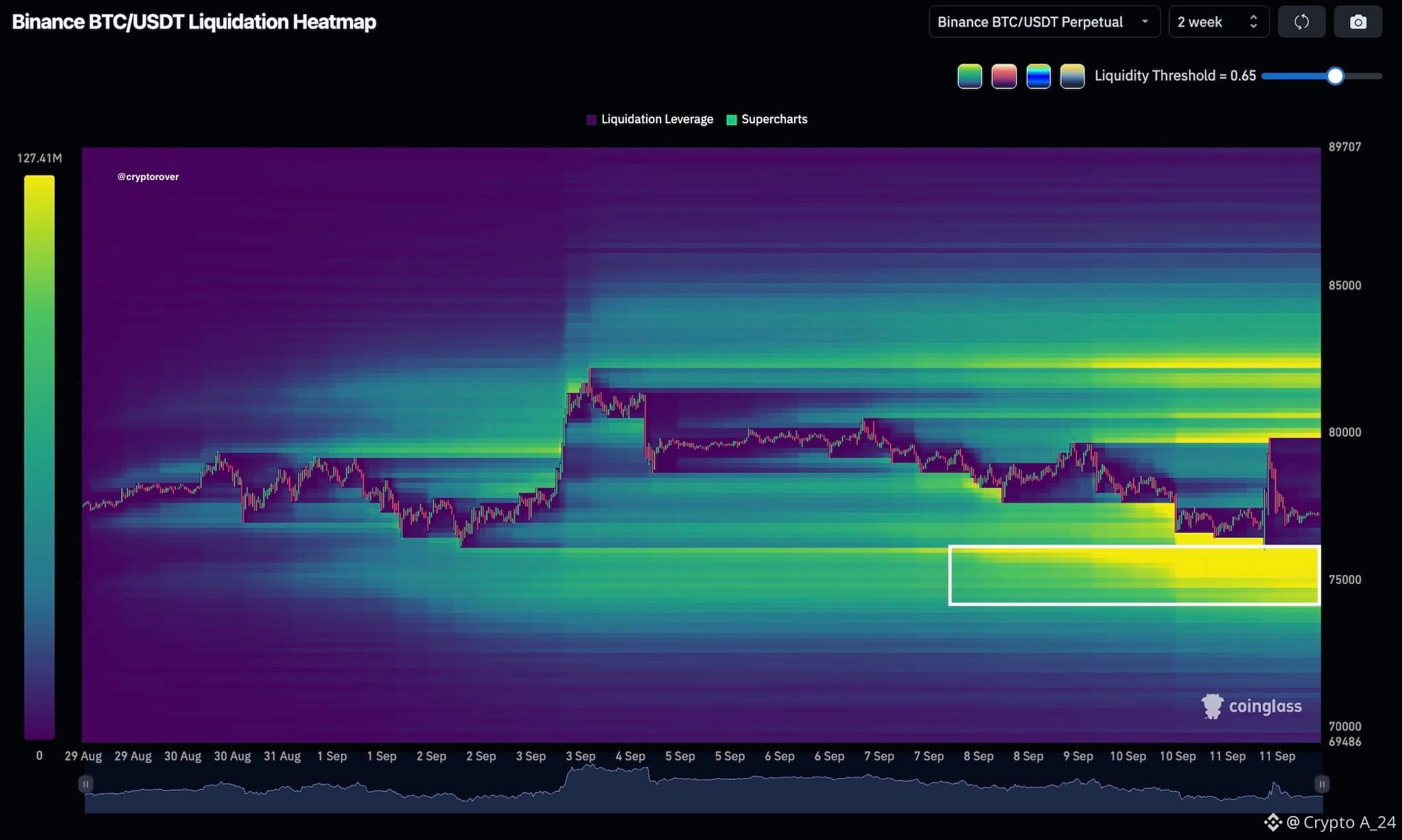
Most of the upside liquidity has already been swept.
That changes the short-term setup for BTC.
When price clears a large amount of liquidity above the market, the easy upside fuel can start drying up. From here, Bitcoin may need fresh spot demand to push meaningfully higher instead of simply continuing to squeeze shorts.
That doesn’t mean a reversal is guaranteed. It means the next move becomes more dependent on real buying pressure and how BTC reacts around key resistance.
After the recent volatility, I’m watching whether buyers can keep absorbing supply.
The liquidity has been taken. Now we see if demand is still there.
#BTC #Price #Analysis
#BTC $BTC $ETH
Most of the upside liquidity has already been swept.
That changes the short-term setup for BTC.
When price clears a large amount of liquidity above the market, the easy upside fuel can start drying up. From here, Bitcoin may need fresh spot demand to push meaningfully higher instead of simply continuing to squeeze shorts.
That doesn’t mean a reversal is guaranteed. It means the next move becomes more dependent on real buying pressure and how BTC reacts around key resistance.
After the recent volatility, I’m watching whether buyers can keep absorbing supply.
The liquidity has been taken. Now we see if demand is still there.
#BTC #Price #Analysis
#BTC $BTC $ETH
That changes the short-term setup for BTC.
When price clears a large amount of liquidity above the market, the easy upside fuel can start drying up. From here, Bitcoin may need fresh spot demand to push meaningfully higher instead of simply continuing to squeeze shorts.
That doesn’t mean a reversal is guaranteed. It means the next move becomes more dependent on real buying pressure and how BTC reacts around key resistance.
After the recent volatility, I’m watching whether buyers can keep absorbing supply.
The liquidity has been taken. Now we see if demand is still there.
#BTC #Price #Analysis
#BTC $BTC $ETH
52
·
--
Xem bản dịch
$BTC is testing the 50W EMA 👀
This level could decide the next major move.
If BTC gets a weekly close below the 50W EMA, I’d be watching the $72K–$74K zone next.
Key support. Key week.
$BTC #Crypto
Follow for more signals & updates
$BTC is testing the 50W EMA 👀
This level could decide the next major move.
If BTC gets a weekly close below the 50W EMA, I’d be watching the $72K–$74K zone next.
Key support. Key week.
$BTC #Crypto
Follow for more signals & updates
This level could decide the next major move.
If BTC gets a weekly close below the 50W EMA, I’d be watching the $72K–$74K zone next.
Key support. Key week.
$BTC #Crypto
Follow for more signals & updates

69
·
--
Xem bản dịch
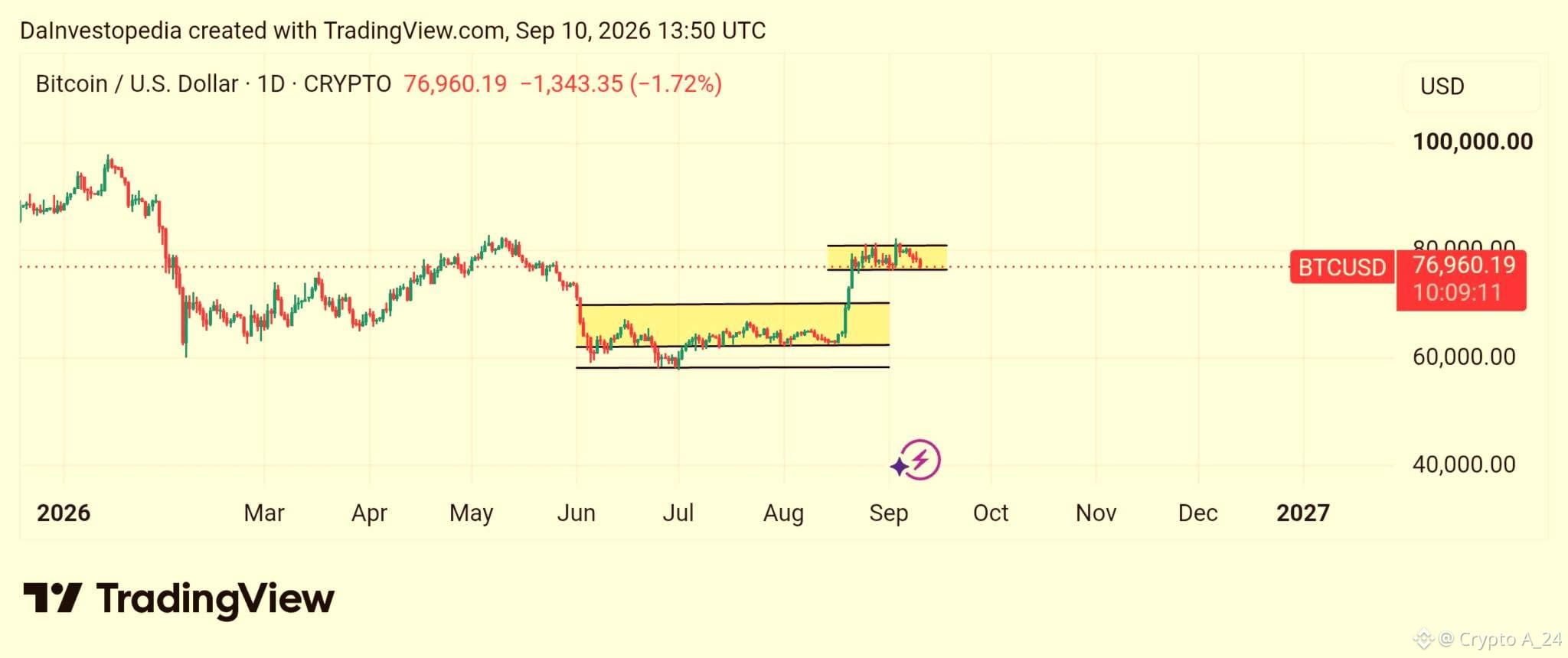
$BTC remains structurally bullish after breaking above the $70K range. Price is now consolidating around $77K–$80K, with $80K as the key resistance. A clean breakout above $80K could target $85K–$90K, while losing $75K may bring a retest of the $70K breakout zone. Overall, the trend remains bullish, but confirmation above $80K is crucial.
#BTC #BTC #Price #Analysis
$BTC remains structurally bullish after breaking above the $70K range. Price is now consolidating around $77K–$80K, with $80K as the key resistance. A clean breakout above $80K could target $85K–$90K, while losing $75K may bring a retest of the $70K breakout zone. Overall, the trend remains bullish, but confirmation above $80K is crucial.
#BTC #BTC #Price #Analysis
#BTC #BTC #Price #Analysis
53
·
--
Xem bản dịch
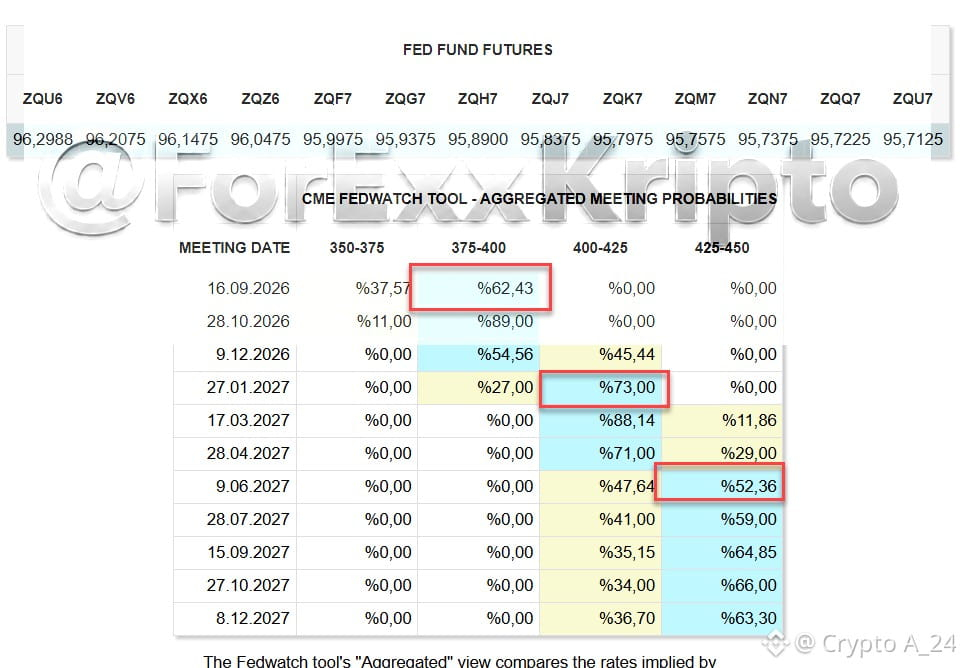
$BTC Ahead of Friday’s CPI data, the probability of a **rate hike** at the September 16 meeting is currently around 62%. Today’s PPI data at 15:30 TRT could serve as a preview of tomorrow’s CPI report, and the market could react sharply to today’s figure as well.
Markets are now pricing **three Fed rate hikes across 2026–2027**, whereas just last week the expectation was for a total of only one rate hike.
Pricing has been extremely aggressive because the environment remains highly uncertain, and this uncertainty is driving elevated volatility across markets.
$BTC Ahead of Friday’s CPI data, the probability of a **rate hike** at the September 16 meeting is currently around 62%. Today’s PPI data at 15:30 TRT could serve as a preview of tomorrow’s CPI report, and the market could react sharply to today’s figure as well.
Markets are now pricing **three Fed rate hikes across 2026–2027**, whereas just last week the expectation was for a total of only one rate hike.
Pricing has been extremely aggressive because the environment remains highly uncertain, and this uncertainty is driving elevated volatility across markets.
Markets are now pricing **three Fed rate hikes across 2026–2027**, whereas just last week the expectation was for a total of only one rate hike.
Pricing has been extremely aggressive because the environment remains highly uncertain, and this uncertainty is driving elevated volatility across markets.
55
·
--
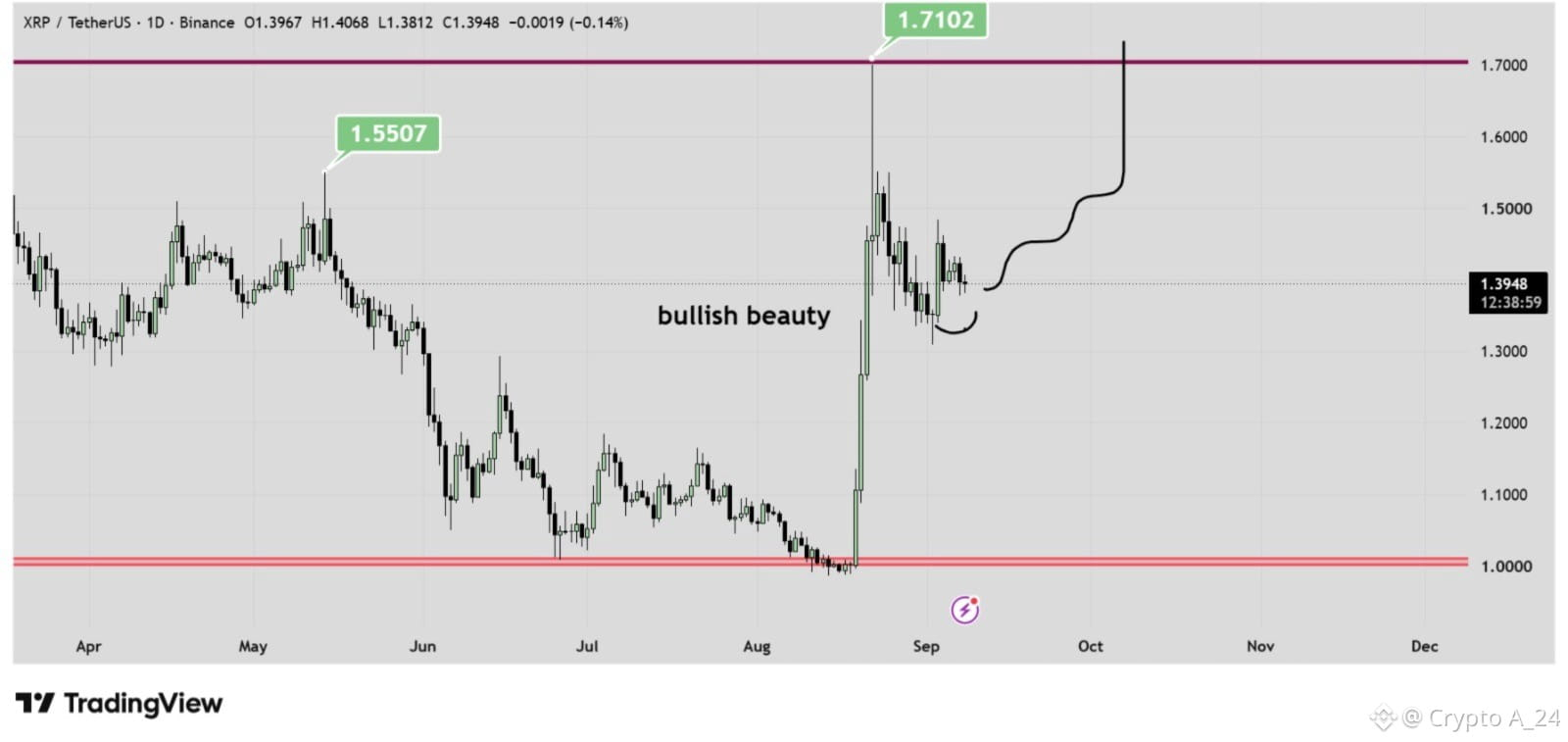
$XRP đã bật mạnh khỏi mức hỗ trợ 1,00 đô la và hiện đang giữ quanh 1,39 đô la sau đợt bứt phá.
Nếu bên mua tiếp tục duy trì đà này, 1,55 đô la là mức đầu tiên cần giành lại, tiếp theo là mục tiêu lớn 1,70 đô la.
$XRP đã bật mạnh khỏi mức hỗ trợ 1,00 đô la và hiện đang giữ quanh 1,39 đô la sau đợt bứt phá.
Nếu bên mua tiếp tục duy trì đà này, 1,55 đô la là mức đầu tiên cần giành lại, tiếp theo là mục tiêu lớn 1,70 đô la.
Nếu bên mua tiếp tục duy trì đà này, 1,55 đô la là mức đầu tiên cần giành lại, tiếp theo là mục tiêu lớn 1,70 đô la.
38
·
--
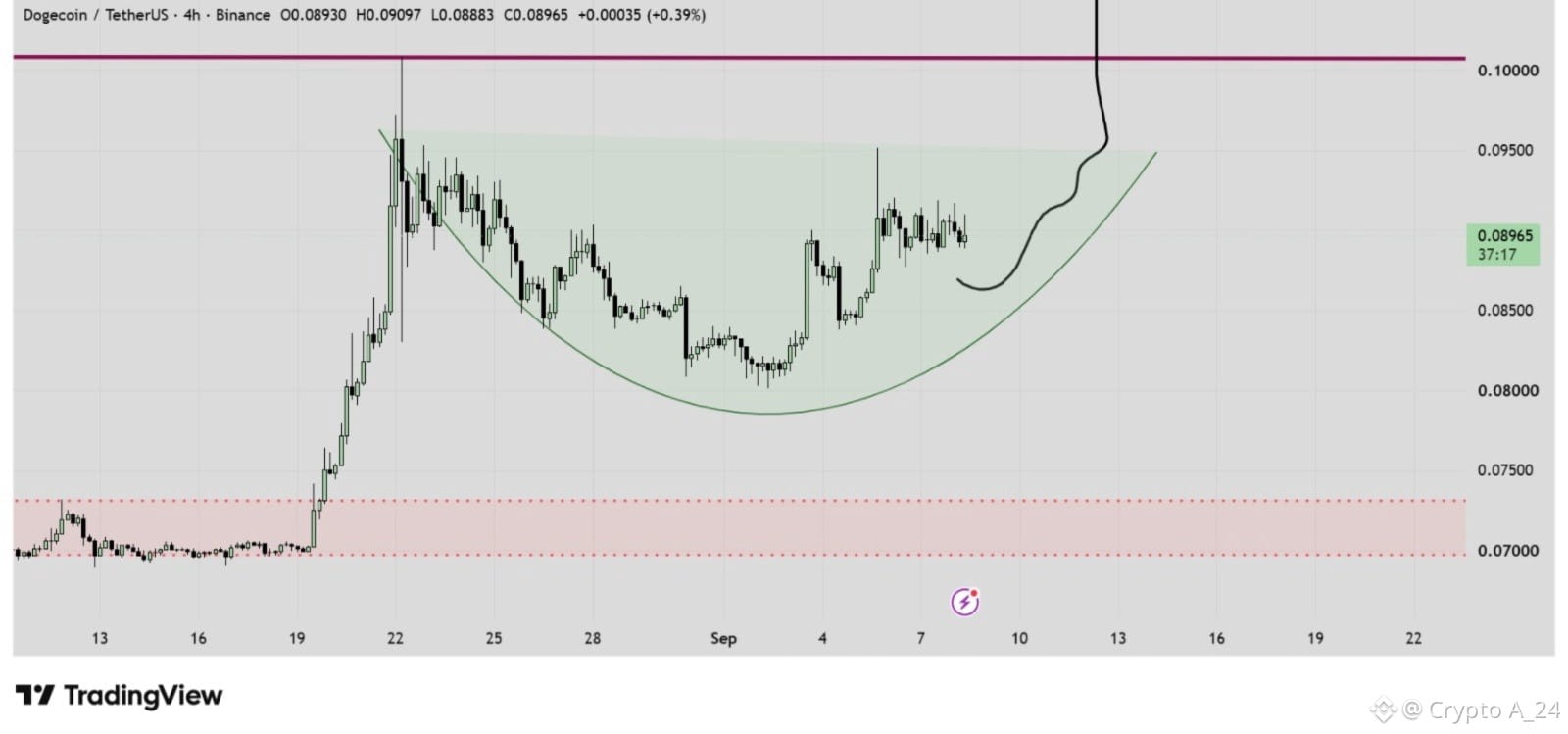
$DOGE đang hình thành một cấu trúc tăng dạng bo tròn quanh mức $0.089.
Nếu người mua tiếp tục kiểm soát và giá vượt lên trên $0.095, mục tiêu lớn tiếp theo nằm quanh $0.10.
$DOGE đang hình thành một cấu trúc tăng dạng bo tròn quanh mức $0.089.
Nếu người mua tiếp tục kiểm soát và giá vượt lên trên $0.095, mục tiêu lớn tiếp theo nằm quanh $0.10.
Nếu người mua tiếp tục kiểm soát và giá vượt lên trên $0.095, mục tiêu lớn tiếp theo nằm quanh $0.10.
40
·
--
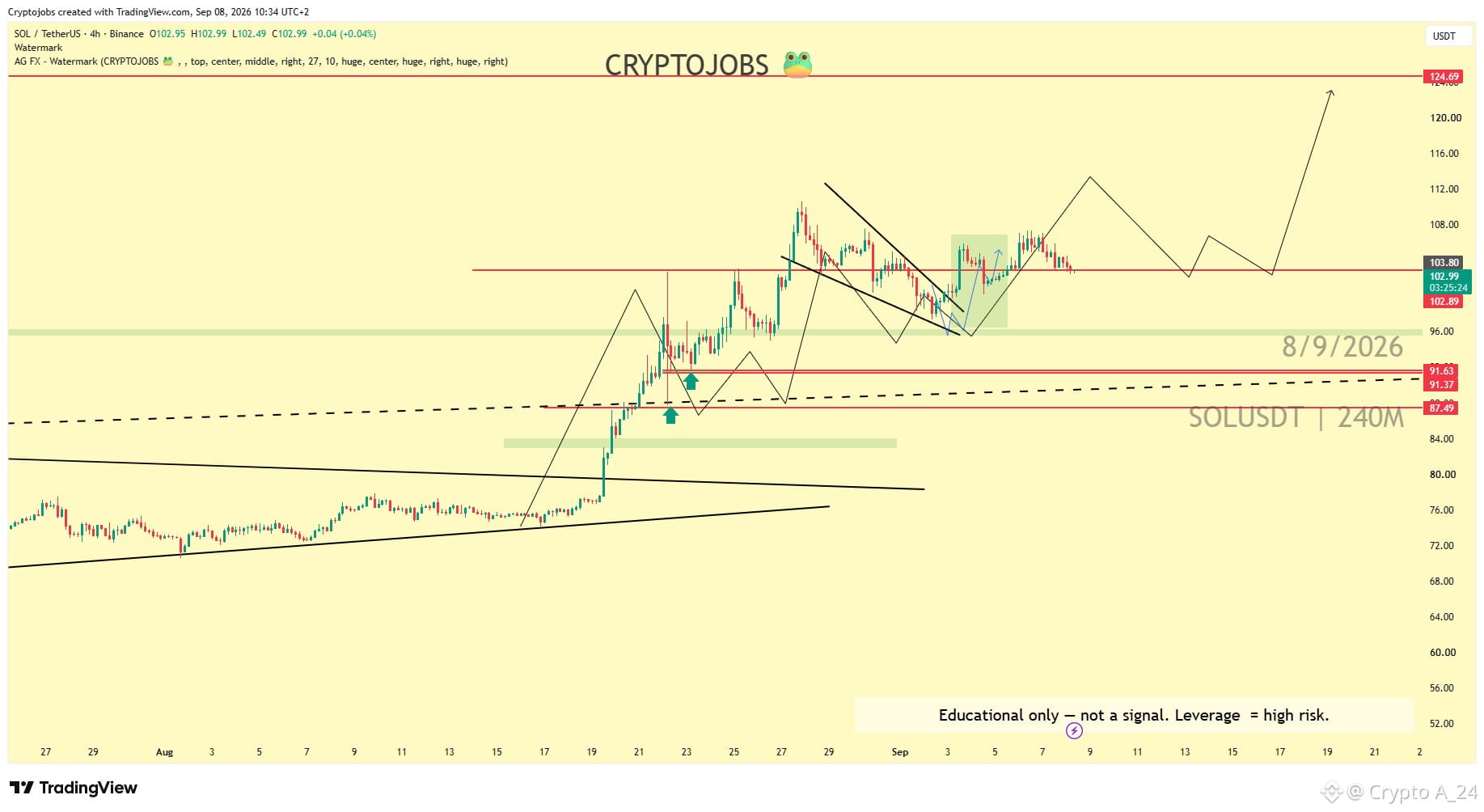
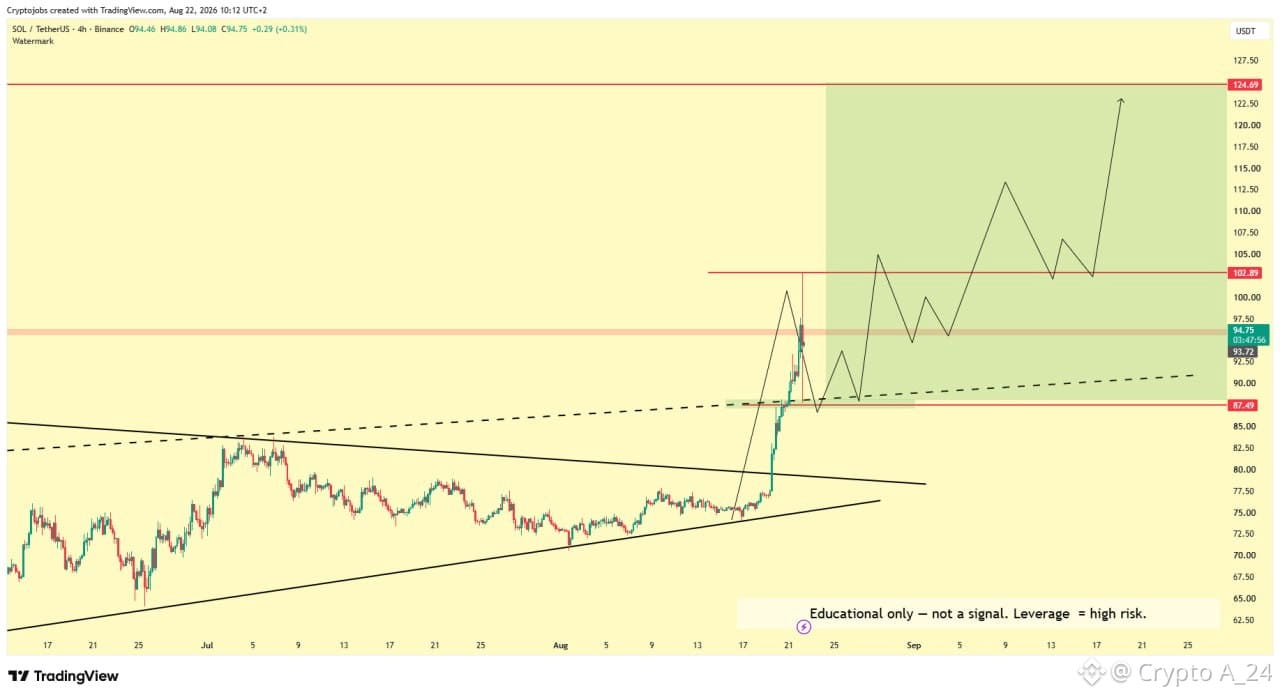
$SOL cuộc chạy yên lặng này điên rồ 📈
17/08 → 79$
08/09 → 103$
+40% hầu như không gây tiếng động. Nhận định của tôi? Sự chú ý của thị trường bị phân tán, các altcoin di chuyển theo từng cụm. Cấu trúc mà tôi đang theo dõi không được nhận “spotlight” xứng đáng.
Biểu đồ & nhóm đã có cái này từ sớm, khoảng trống về mức độ tiếp cận là có thật.
#SOL #Trading
$SOL cuộc chạy yên lặng này điên rồ 📈
17/08 → 79$
08/09 → 103$
+40% hầu như không gây tiếng động. Nhận định của tôi? Sự chú ý của thị trường bị phân tán, các altcoin di chuyển theo từng cụm. Cấu trúc mà tôi đang theo dõi không được nhận “spotlight” xứng đáng.
Biểu đồ & nhóm đã có cái này từ sớm, khoảng trống về mức độ tiếp cận là có thật.
#SOL #Trading
17/08 → 79$
08/09 → 103$
+40% hầu như không gây tiếng động. Nhận định của tôi? Sự chú ý của thị trường bị phân tán, các altcoin di chuyển theo từng cụm. Cấu trúc mà tôi đang theo dõi không được nhận “spotlight” xứng đáng.
Biểu đồ & nhóm đã có cái này từ sớm, khoảng trống về mức độ tiếp cận là có thật.
#SOL #Trading
58
·
--
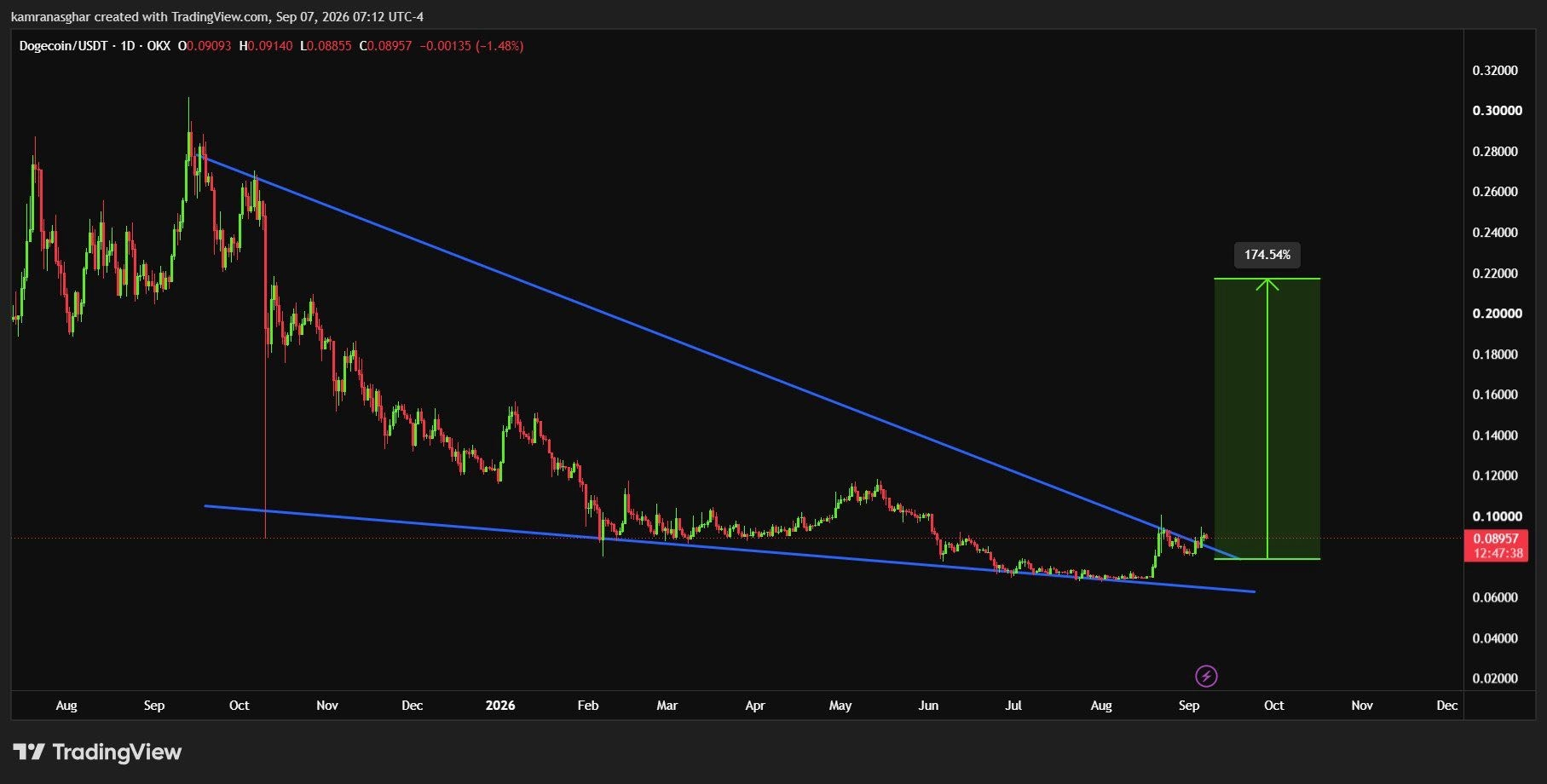
🚀 $DOGE Phá vỡ mô hình tam giác giảm dần:
Giá phá vỡ một cấu trúc tam giác giảm dần trong nhiều tháng, nhắm mục tiêu $0.2180
🚀 $DOGE Phá vỡ mô hình tam giác giảm dần:
Giá phá vỡ một cấu trúc tam giác giảm dần trong nhiều tháng, nhắm mục tiêu $0.2180
Giá phá vỡ một cấu trúc tam giác giảm dần trong nhiều tháng, nhắm mục tiêu $0.2180
54
·
--
CÁC Ví BITCOIN CỔ ĐẠI TỈNH DẬY
• Galaxy Research: 4 ví BTC đã ngủ yên lâu ngày đã chuyển 202.84 BTC (~15.73M USD) từ ngày 29/8 đến 4/9.
• Lớn nhất: 146.06 BTC (~11.31M USD), không hề được đụng đến kể từ tháng 11/2013, tăng khoảng ~12,902% so với giá vốn.
• Một ví 40 BTC từ tháng 11/2011 đã biến khoảng 120 USD thành hơn 3M USD.
• 6.78 BTC được chuyển đến một địa chỉ liên quan đến Coinbase, thường gắn với khả năng giao dịch.
Hãy tự nghiên cứu kỹ trước khi thực hiện bất kỳ giao dịch nào (DYOR). $BTC
#Bitcoin
CÁC Ví BITCOIN CỔ ĐẠI TỈNH DẬY
• Galaxy Research: 4 ví BTC đã ngủ yên lâu ngày đã chuyển 202.84 BTC (~15.73M USD) từ ngày 29/8 đến 4/9.
• Lớn nhất: 146.06 BTC (~11.31M USD), không hề được đụng đến kể từ tháng 11/2013, tăng khoảng ~12,902% so với giá vốn.
• Một ví 40 BTC từ tháng 11/2011 đã biến khoảng 120 USD thành hơn 3M USD.
• 6.78 BTC được chuyển đến một địa chỉ liên quan đến Coinbase, thường gắn với khả năng giao dịch.
Hãy tự nghiên cứu kỹ trước khi thực hiện bất kỳ giao dịch nào (DYOR). $BTC
#Bitcoin
• Galaxy Research: 4 ví BTC đã ngủ yên lâu ngày đã chuyển 202.84 BTC (~15.73M USD) từ ngày 29/8 đến 4/9.
• Lớn nhất: 146.06 BTC (~11.31M USD), không hề được đụng đến kể từ tháng 11/2013, tăng khoảng ~12,902% so với giá vốn.
• Một ví 40 BTC từ tháng 11/2011 đã biến khoảng 120 USD thành hơn 3M USD.
• 6.78 BTC được chuyển đến một địa chỉ liên quan đến Coinbase, thường gắn với khả năng giao dịch.
Hãy tự nghiên cứu kỹ trước khi thực hiện bất kỳ giao dịch nào (DYOR). $BTC
#Bitcoin

80
·
--
📊 PHÁI SINH (BINANCE)
$GLM
LONG DƯỚI : 0.11300
TỐI ĐA 👉 ĐÒN BẨY 3x-7x GIỮ
CHỐT LỜI:0.13000 |0.16000|0.18000+
Cắt lỗ 0.0850
📊 PHÁI SINH (BINANCE)
$GLM
LONG DƯỚI : 0.11300
TỐI ĐA 👉 ĐÒN BẨY 3x-7x GIỮ
CHỐT LỜI:0.13000 |0.16000|0.18000+
Cắt lỗ 0.0850
$GLM
LONG DƯỚI : 0.11300
TỐI ĐA 👉 ĐÒN BẨY 3x-7x GIỮ
CHỐT LỜI:0.13000 |0.16000|0.18000+
Cắt lỗ 0.0850
69
·
--
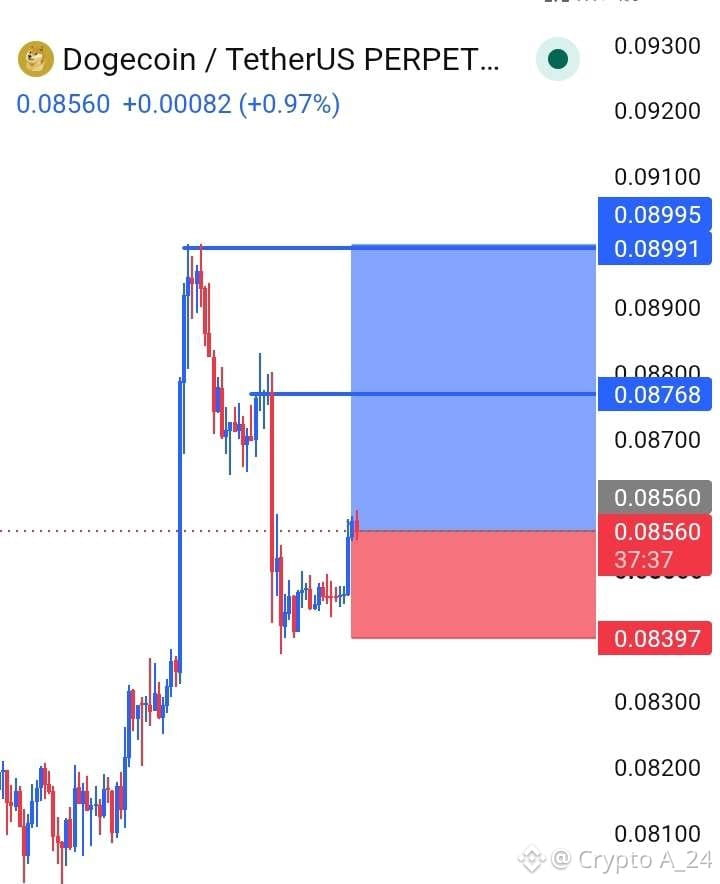
🪙 $DOGE ...!!...Thiết lập phá vỡ tăng giá...!!...
Giá đang giữ trên vùng nền gần đây và phe mua đang thúc đẩy một nhịp phục hồi... Tôi đang vào lệnh mua 🪙 $DOGE với đòn bẩy tối đa 30x...
Động thái tiếp theo có thể đến rất nhanh...!!
SL: 0.08397
TP: 0.08768
MUA và GIAO DỊCH 🪙 $DOGE
🪙 $DOGE ...!!...Thiết lập phá vỡ tăng giá...!!...
Giá đang giữ trên vùng nền gần đây và phe mua đang thúc đẩy một nhịp phục hồi... Tôi đang vào lệnh mua 🪙 $DOGE với đòn bẩy tối đa 30x...
Động thái tiếp theo có thể đến rất nhanh...!!
SL: 0.08397
TP: 0.08768
MUA và GIAO DỊCH 🪙 $DOGE
Giá đang giữ trên vùng nền gần đây và phe mua đang thúc đẩy một nhịp phục hồi... Tôi đang vào lệnh mua 🪙 $DOGE với đòn bẩy tối đa 30x...
Động thái tiếp theo có thể đến rất nhanh...!!
SL: 0.08397
TP: 0.08768
MUA và GIAO DỊCH 🪙 $DOGE
73
·
--
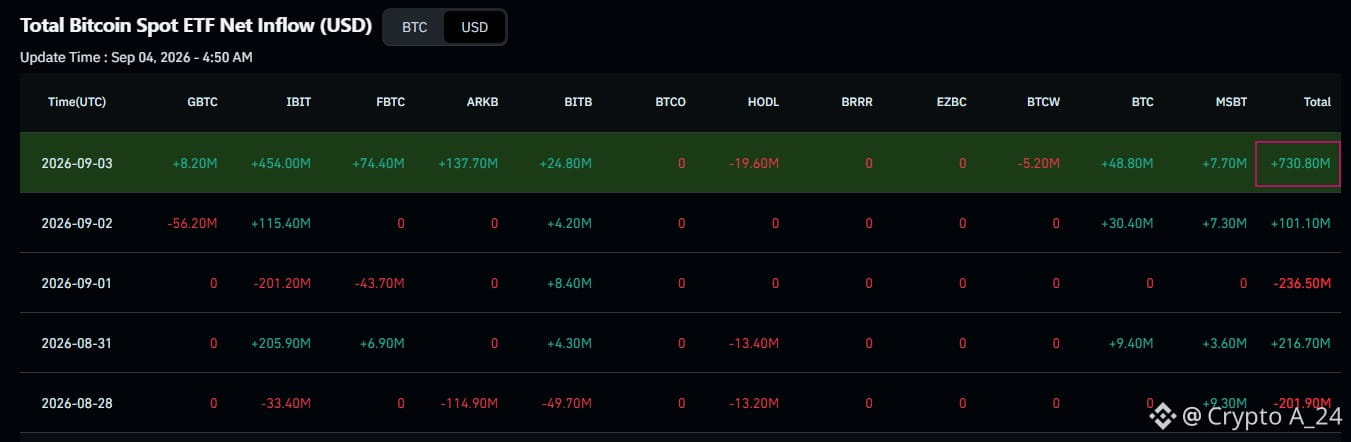
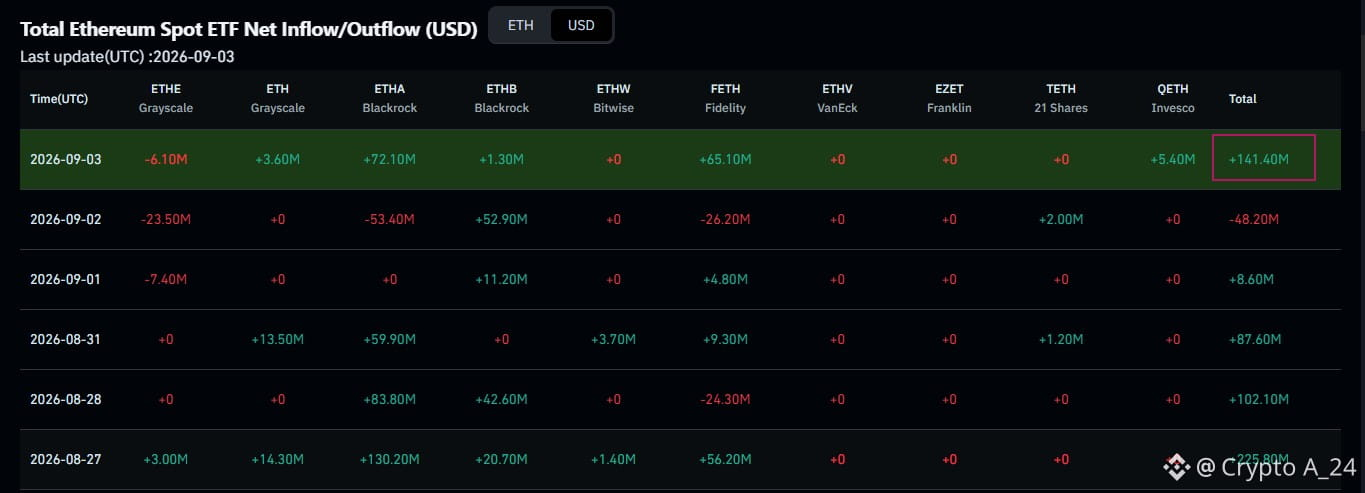
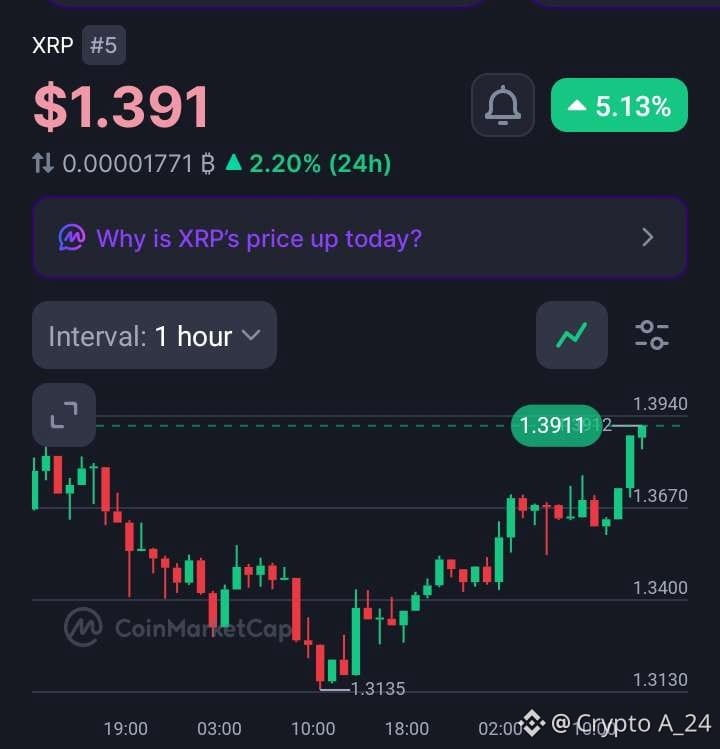
$XRP 3.65% biến động lên $1.37 nổi bật vì đợt tăng này có sự hậu thuẫn thực sự từ các tổ chức. Các ETF giao ngay ghi nhận 14,38 triệu USD dòng vốn ròng vào mà không có dòng vốn rút ra, trong khi ETF XRP của Bitwise đạt 507 triệu USD tài sản. Điều đó cho thấy nhu cầu được quản lý vẫn đang tăng trưởng đều đặn.
Tôi cũng thích điểm rằng #XRP không chỉ dựa vào sự hưng phấn từ ETF. Quan hệ đối tác của Ripple với SettleMint và hoạt động ngày càng tăng trên XRP Ledger cho thấy tiến triển ở mảng ứng dụng. Nguồn cung RLUSD vượt 1 tỷ USD trên sổ cái bổ sung thêm một lớp nữa cho câu chuyện hệ sinh thái rộng hơn.
$1.34 là mức cần theo dõi lúc này. Giữ vững trên mức này có thể đưa $1.40 đến $1.43 trở lại tâm điểm. Nhưng các sự kiện sắp tới có thể tạo ra biến động. Dòng vốn ETF tiếp tục sẽ củng cố luận điểm tăng giá. Bạn có thấy các tổ chức sẽ trở thành động lực tăng trưởng lớn nhất của XRP không?
#Macro #Insights #Altcoin #Season
$XRP 3.65% biến động lên $1.37 nổi bật vì đợt tăng này có sự hậu thuẫn thực sự từ các tổ chức. Các ETF giao ngay ghi nhận 14,38 triệu USD dòng vốn ròng vào mà không có dòng vốn rút ra, trong khi ETF XRP của Bitwise đạt 507 triệu USD tài sản. Điều đó cho thấy nhu cầu được quản lý vẫn đang tăng trưởng đều đặn.
Tôi cũng thích điểm rằng #XRP không chỉ dựa vào sự hưng phấn từ ETF. Quan hệ đối tác của Ripple với SettleMint và hoạt động ngày càng tăng trên XRP Ledger cho thấy tiến triển ở mảng ứng dụng. Nguồn cung RLUSD vượt 1 tỷ USD trên sổ cái bổ sung thêm một lớp nữa cho câu chuyện hệ sinh thái rộng hơn.
$1.34 là mức cần theo dõi lúc này. Giữ vững trên mức này có thể đưa $1.40 đến $1.43 trở lại tâm điểm. Nhưng các sự kiện sắp tới có thể tạo ra biến động. Dòng vốn ETF tiếp tục sẽ củng cố luận điểm tăng giá. Bạn có thấy các tổ chức sẽ trở thành động lực tăng trưởng lớn nhất của XRP không?
#Macro #Insights #Altcoin #Season
Tôi cũng thích điểm rằng #XRP không chỉ dựa vào sự hưng phấn từ ETF. Quan hệ đối tác của Ripple với SettleMint và hoạt động ngày càng tăng trên XRP Ledger cho thấy tiến triển ở mảng ứng dụng. Nguồn cung RLUSD vượt 1 tỷ USD trên sổ cái bổ sung thêm một lớp nữa cho câu chuyện hệ sinh thái rộng hơn.
$1.34 là mức cần theo dõi lúc này. Giữ vững trên mức này có thể đưa $1.40 đến $1.43 trở lại tâm điểm. Nhưng các sự kiện sắp tới có thể tạo ra biến động. Dòng vốn ETF tiếp tục sẽ củng cố luận điểm tăng giá. Bạn có thấy các tổ chức sẽ trở thành động lực tăng trưởng lớn nhất của XRP không?
#Macro #Insights #Altcoin #Season
78
·
--
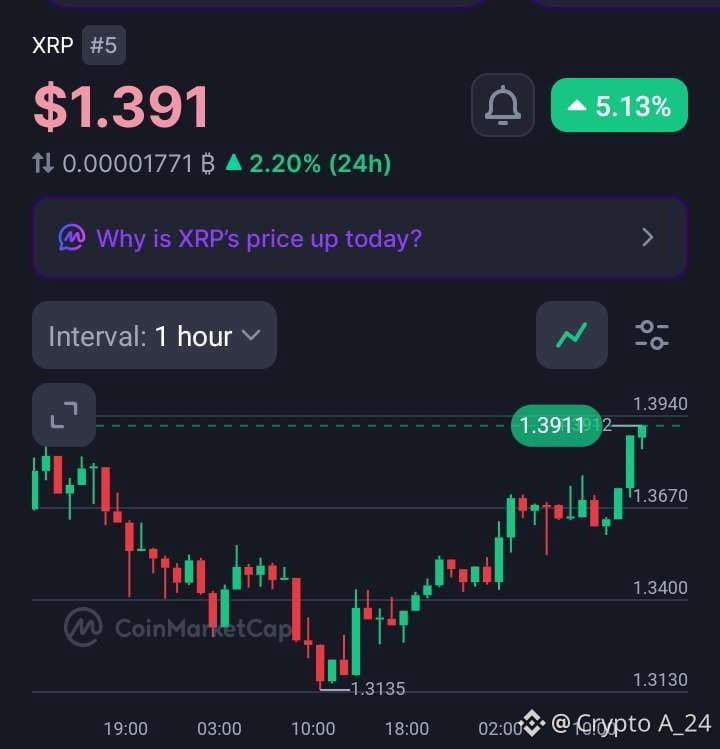
$XRP 3.65% tăng lên mức $1,37 nổi bật vì đợt tăng này có sự ủng hộ thực chất từ các tổ chức đứng sau. Spot ETF ghi nhận 14,38 triệu USD dòng tiền ròng vào mà không có dòng tiền rút ra, trong khi ETF XRP của Bitwise đạt 507 triệu USD tài sản. Điều này cho thấy nhu cầu được quản lý vẫn đang tăng trưởng ổn định.
Tôi cũng thích điểm rằng #XRP không chỉ dựa vào sự hứng khởi từ ETF. Quan hệ hợp tác của Ripple với SettleMint và hoạt động ngày càng tăng trên XRP Ledger cho thấy tiến triển ở mặt ứng dụng. Nguồn cung RLUSD vượt 1 tỷ USD trên sổ cái bổ sung thêm một lớp nữa cho câu chuyện hệ sinh thái rộng hơn.
Mức cần theo dõi hiện tại là $1,34. Giữ vững trên mức này có thể đưa $1,40 đến $1,43 quay lại tâm điểm. Nhưng các sự kiện sắp tới có thể tạo ra biến động. Dòng tiền ETF tiếp tục chảy vào sẽ củng cố luận điểm tăng giá. Bạn có thấy các tổ chức sẽ trở thành động lực tăng trưởng lớn nhất của XRP không?
#Macro #Insights #Altcoin #Season
$XRP 3.65% tăng lên mức $1,37 nổi bật vì đợt tăng này có sự ủng hộ thực chất từ các tổ chức đứng sau. Spot ETF ghi nhận 14,38 triệu USD dòng tiền ròng vào mà không có dòng tiền rút ra, trong khi ETF XRP của Bitwise đạt 507 triệu USD tài sản. Điều này cho thấy nhu cầu được quản lý vẫn đang tăng trưởng ổn định.
Tôi cũng thích điểm rằng #XRP không chỉ dựa vào sự hứng khởi từ ETF. Quan hệ hợp tác của Ripple với SettleMint và hoạt động ngày càng tăng trên XRP Ledger cho thấy tiến triển ở mặt ứng dụng. Nguồn cung RLUSD vượt 1 tỷ USD trên sổ cái bổ sung thêm một lớp nữa cho câu chuyện hệ sinh thái rộng hơn.
Mức cần theo dõi hiện tại là $1,34. Giữ vững trên mức này có thể đưa $1,40 đến $1,43 quay lại tâm điểm. Nhưng các sự kiện sắp tới có thể tạo ra biến động. Dòng tiền ETF tiếp tục chảy vào sẽ củng cố luận điểm tăng giá. Bạn có thấy các tổ chức sẽ trở thành động lực tăng trưởng lớn nhất của XRP không?
#Macro #Insights #Altcoin #Season
Tôi cũng thích điểm rằng #XRP không chỉ dựa vào sự hứng khởi từ ETF. Quan hệ hợp tác của Ripple với SettleMint và hoạt động ngày càng tăng trên XRP Ledger cho thấy tiến triển ở mặt ứng dụng. Nguồn cung RLUSD vượt 1 tỷ USD trên sổ cái bổ sung thêm một lớp nữa cho câu chuyện hệ sinh thái rộng hơn.
Mức cần theo dõi hiện tại là $1,34. Giữ vững trên mức này có thể đưa $1,40 đến $1,43 quay lại tâm điểm. Nhưng các sự kiện sắp tới có thể tạo ra biến động. Dòng tiền ETF tiếp tục chảy vào sẽ củng cố luận điểm tăng giá. Bạn có thấy các tổ chức sẽ trở thành động lực tăng trưởng lớn nhất của XRP không?
#Macro #Insights #Altcoin #Season
80
·
--
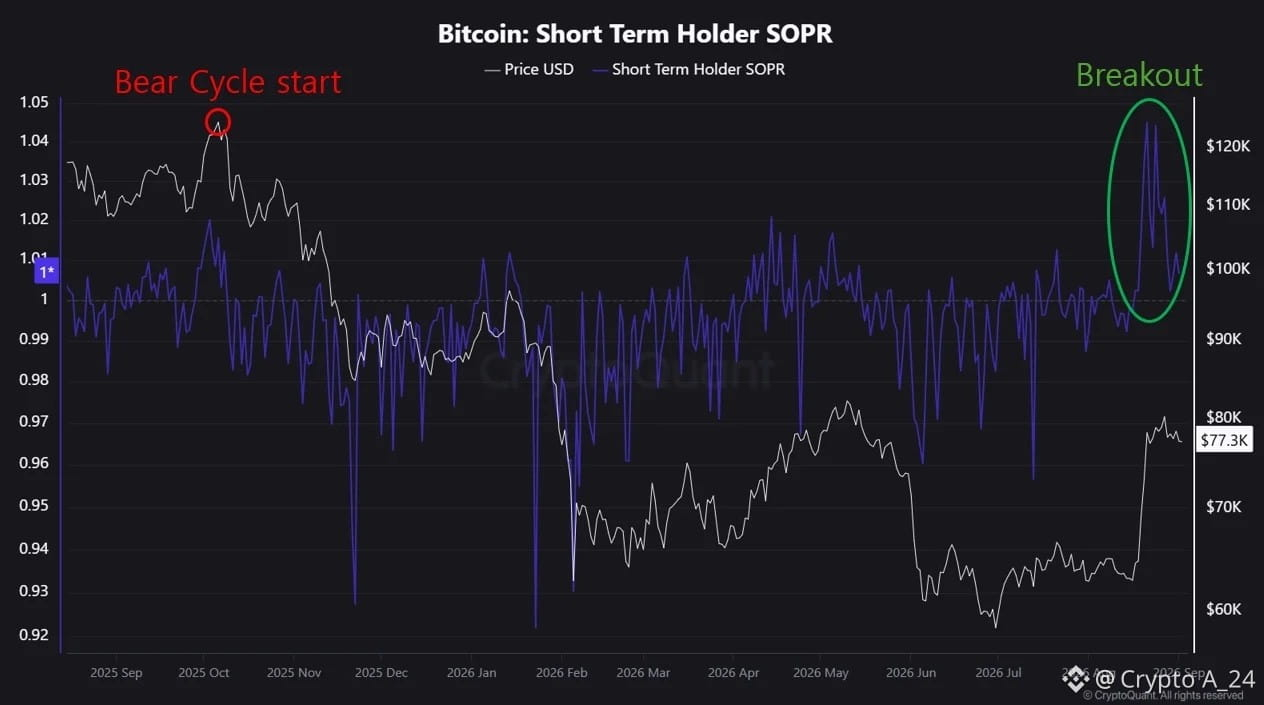
$BTC CÓ THỂ ĐANG TÍN HIỆU MỘT CHU KỲ
ĐẢO CHIỀU
Sau TOP 126K USD, Bitcoin đã dành ~11 tháng
trong Áp Lực Bán Mạnh, với nhiều
Người nắm giữ bán ra ở mức lỗ hoặc gần Hòa vốn.
BTC Cuối cùng đã giảm xuống khoảng ~$58K.
Hiện, Chốt Lời đã quay trở lại nhưng Giá
đang giữ vững.
Liệu Chu Kỳ Gấu cuối cùng đã kết thúc?
$BTC CÓ THỂ ĐANG TÍN HIỆU MỘT CHU KỲ
ĐẢO CHIỀU
Sau TOP 126K USD, Bitcoin đã dành ~11 tháng
trong Áp Lực Bán Mạnh, với nhiều
Người nắm giữ bán ra ở mức lỗ hoặc gần Hòa vốn.
BTC Cuối cùng đã giảm xuống khoảng ~$58K.
Hiện, Chốt Lời đã quay trở lại nhưng Giá
đang giữ vững.
Liệu Chu Kỳ Gấu cuối cùng đã kết thúc?
ĐẢO CHIỀU
Sau TOP 126K USD, Bitcoin đã dành ~11 tháng
trong Áp Lực Bán Mạnh, với nhiều
Người nắm giữ bán ra ở mức lỗ hoặc gần Hòa vốn.
BTC Cuối cùng đã giảm xuống khoảng ~$58K.
Hiện, Chốt Lời đã quay trở lại nhưng Giá
đang giữ vững.
Liệu Chu Kỳ Gấu cuối cùng đã kết thúc?
79
Đăng nhập để khám phá thêm nội dung
Tham gia cùng người dùng tiền mã hóa toàn cầu trên Binance Square
⚡️ Nhận thông tin mới nhất và hữu ích về tiền mã hóa.
💬 Được tin cậy bởi sàn giao dịch tiền mã hóa lớn nhất thế giới.
👍 Khám phá những thông tin chuyên sâu thực tế từ những nhà sáng tạo đã xác minh.
Email / Số điện thoại
Chủ đề thịnh hành
TheoDõiFOMC
82,369 lượt xem
542 đang thảo luận
Cục Dự trữ Liên bang (Fed) đã tăng lãi suất lần đầu tiên kể từ năm 2023 trong bối cảnh lạm phát dai dẳng. Các nhà hoạch định chính sách của Fed đã bỏ phiếu 12-0 để nâng lãi suất quỹ liên bang từ 3,5% lên 3,75%, với mức mục tiêu mới là 3,75% đến 4%. Mức tăng 25 điểm cơ bản này đánh dấu lần điều chỉnh lãi suất đầu tiên kể từ tháng 7/2023 và diễn ra sau khi Fed giữ nguyên lãi suất trong năm cuộc họp đầu tiên trong năm nay. #TheoDõiFOMC #45NgayTuDoTaiChinh #DotPlotSignalsOneMoreHikeIn2026 $NVDAB $AAPLB $NVDA.US #45NgayTuDoTaiChinh #FedHikes25BpsUSStocksClose #
kynfoolishupdate
·0 lượt thích
·128 lượt xem
TinFed
72,589 lượt xem
342 đang thảo luận
45NgayTuDoTaiChinh
905,408 lượt xem
3,107 đang thảo luận