
AngryhulkHuu
271 Bài đăng

AngryhulkHuu
94 Đang theo dõi
85 Người theo dõi
170 Đã thích
Bài đăng
Tất cả
Trích dẫn
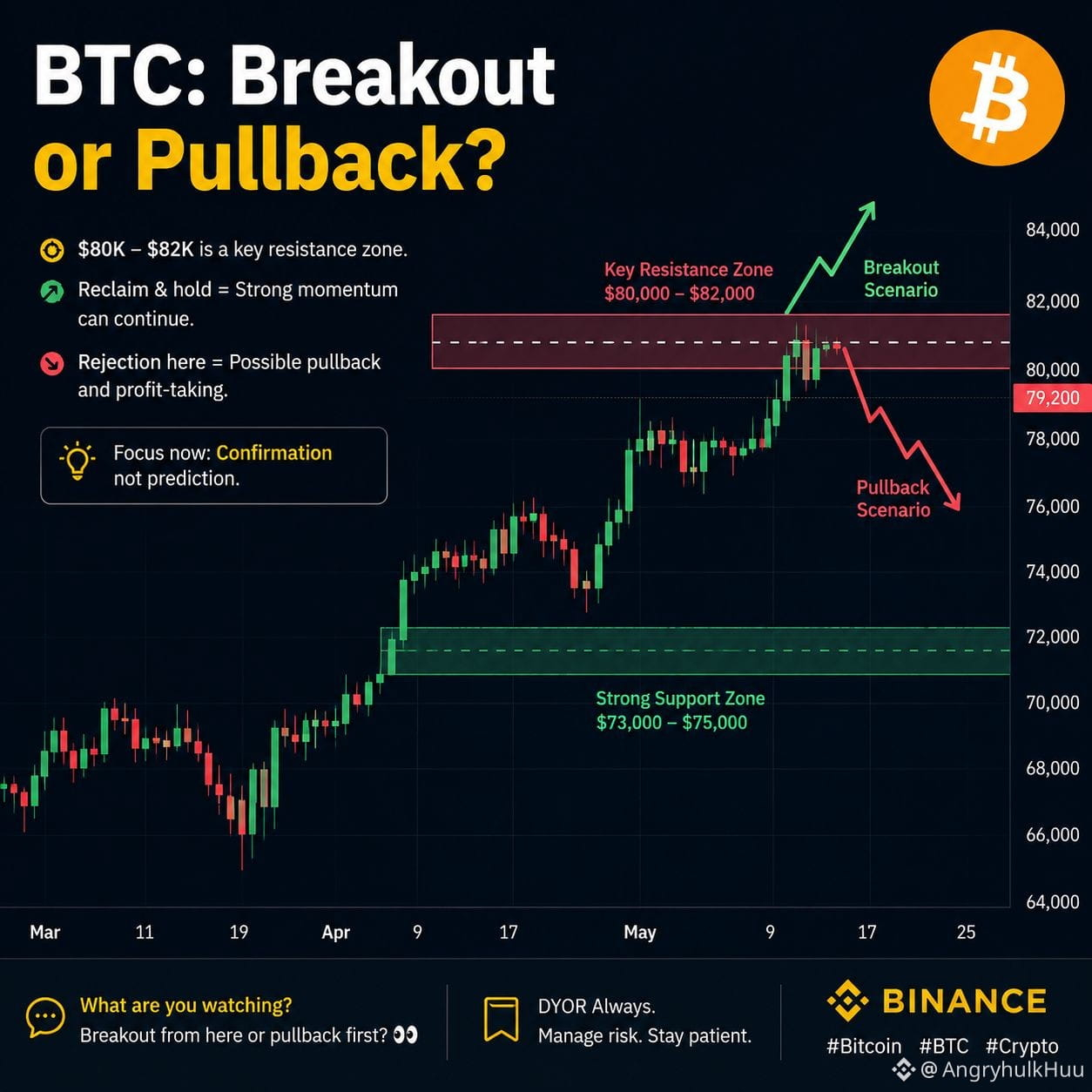
Tôi sẽ không gọi đây là một cú comeback tăng giá đầy đủ chỉ vì BTC vừa chạm mốc 80K.
Diễn biến trong vài ngày qua là khá ấn tượng, nhưng sau một đợt tăng mạnh như vậy, việc điều chỉnh ngắn hạn hoặc hạ nhiệt thì cũng không khiến tôi bất ngờ.
Với tôi, vùng đáng chú ý ngay lúc này là 80K–82K.
Nếu BTC có thể nhanh chóng giành lại và giữ vững khu vực này, đà tăng có thể mạnh hơn nhiều. Còn nếu thấy tín hiệu bị từ chối, việc chốt lời một phần là hoàn toàn bình thường.
Hiện tại, tôi quan tâm nhiều hơn đến việc xác nhận tín hiệu hơn là dự đoán.
Bạn đang theo dõi điều gì — liệu có bứt phá từ đây hay sẽ có một nhịp điều chỉnh trước? 👀
#Bitcoin #BTC #crypto
Diễn biến trong vài ngày qua là khá ấn tượng, nhưng sau một đợt tăng mạnh như vậy, việc điều chỉnh ngắn hạn hoặc hạ nhiệt thì cũng không khiến tôi bất ngờ.
Với tôi, vùng đáng chú ý ngay lúc này là 80K–82K.
Nếu BTC có thể nhanh chóng giành lại và giữ vững khu vực này, đà tăng có thể mạnh hơn nhiều. Còn nếu thấy tín hiệu bị từ chối, việc chốt lời một phần là hoàn toàn bình thường.
Hiện tại, tôi quan tâm nhiều hơn đến việc xác nhận tín hiệu hơn là dự đoán.
Bạn đang theo dõi điều gì — liệu có bứt phá từ đây hay sẽ có một nhịp điều chỉnh trước? 👀
#Bitcoin #BTC #crypto
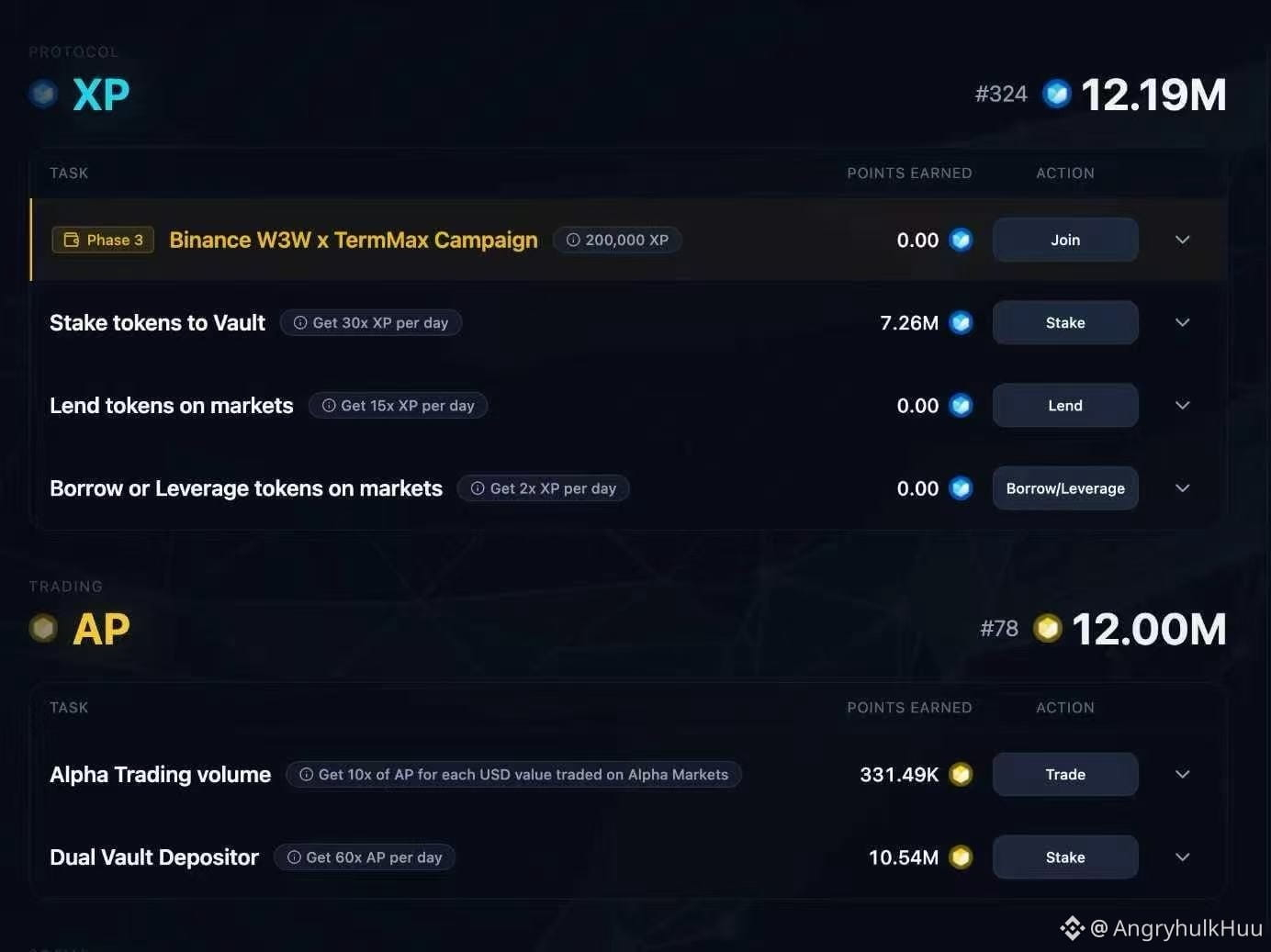
Hôm nay tôi đã xem qua hệ thống phần thưởng Alpha tại @TermMax và những con số thực sự khiến tôi phải dừng lại một lúc.
Điều tôi thích là XP và AP không được coi như một “cục” điểm chung.
Thiết lập hiện tại cho thấy các hệ số nhân khác nhau tùy theo việc bạn thực sự làm gì:
• Stake token → 30× XP mỗi ngày
• Lend → 15× XP mỗi ngày
• Borrow/Leverage → 2× XP mỗi ngày
• Giao dịch Alpha → 10× AP cho mỗi USD được giao dịch
• Dual Vault → 60× AP mỗi ngày
Phần giao dịch Alpha đặc biệt dễ hình dung theo ngữ cảnh.
Khối lượng giao dịch 100 USD × 10 = 1.000 AP.
Ở mức khối lượng 1.000 USD, con số sẽ thành 10.000 AP.
Tất nhiên, AP không phải là cùng thứ với lợi nhuận. Điều tôi thấy thú vị chính là cách thiết kế ưu đãi.
Hoạt động của bạn quyết định bạn đóng góp vào dòng phần thưởng nào, thay vì mọi thứ bị quy về việc chỉ cần nắm giữ một thứ gì đó và chờ đợi.
Điều đó khiến hệ thống Alpha giống như một bản ghi lại sự tham gia thực tế hơn.
Với tôi, đó là một cách thiết kế hệ thống điểm thú vị hơn nhiều.
$TMX #TermMax
Điều tôi thích là XP và AP không được coi như một “cục” điểm chung.
Thiết lập hiện tại cho thấy các hệ số nhân khác nhau tùy theo việc bạn thực sự làm gì:
• Stake token → 30× XP mỗi ngày
• Lend → 15× XP mỗi ngày
• Borrow/Leverage → 2× XP mỗi ngày
• Giao dịch Alpha → 10× AP cho mỗi USD được giao dịch
• Dual Vault → 60× AP mỗi ngày
Phần giao dịch Alpha đặc biệt dễ hình dung theo ngữ cảnh.
Khối lượng giao dịch 100 USD × 10 = 1.000 AP.
Ở mức khối lượng 1.000 USD, con số sẽ thành 10.000 AP.
Tất nhiên, AP không phải là cùng thứ với lợi nhuận. Điều tôi thấy thú vị chính là cách thiết kế ưu đãi.
Hoạt động của bạn quyết định bạn đóng góp vào dòng phần thưởng nào, thay vì mọi thứ bị quy về việc chỉ cần nắm giữ một thứ gì đó và chờ đợi.
Điều đó khiến hệ thống Alpha giống như một bản ghi lại sự tham gia thực tế hơn.
Với tôi, đó là một cách thiết kế hệ thống điểm thú vị hơn nhiều.
$TMX #TermMax
Hôm nay tôi đã làm một điều mà thường ngày tôi hay bỏ qua khi xem một giao thức DeFi mới.
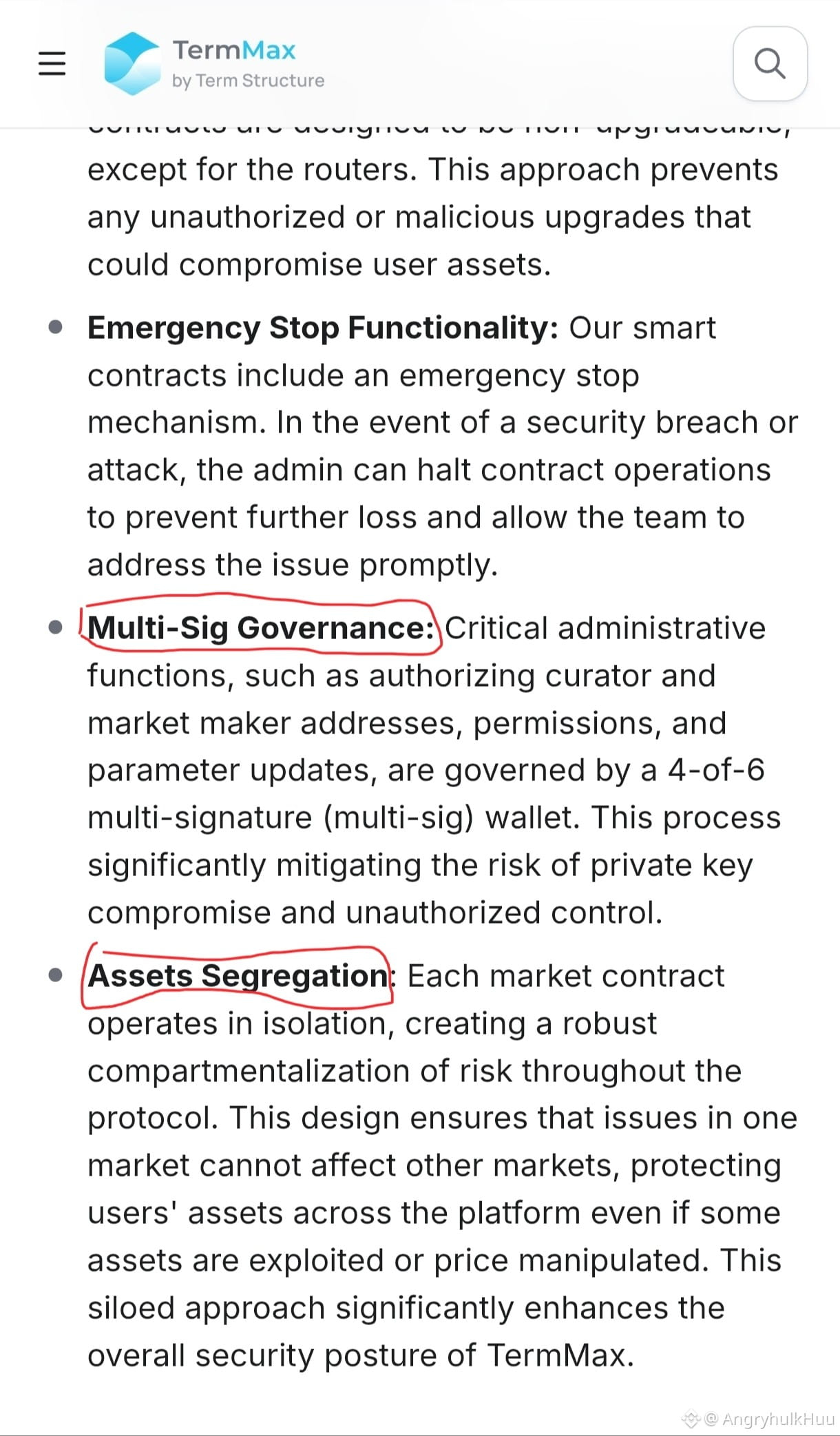
Tôi ngừng xem giao diện và chuyển sang kiểm tra thiết kế bảo mật — cụ thể là @TermMax .
Một chi tiết tôi thấy thú vị là mỗi thị trường hoạt động tách biệt, nên một vấn đề ở một thị trường không được tự động lan sang toàn bộ giao thức.
Tôi cũng kiểm tra phần cấu hình quản trị và thấy rằng các chức năng quan trọng được điều khiển thông qua multisig 4 trên 6.
Những con số đó quan trọng với tôi hơn bất kỳ ảnh chụp APY bắt mắt nào khác.
Một sản phẩm DeFi có thể có lãi suất tốt và cơ chế thông minh, nhưng nếu các kiểm soát rủi ro nền tảng yếu, thì tất cả điều đó cũng chẳng có ý nghĩa nhiều.
Điều tôi bắt đầu đánh giá cao ở TermMax là thiết kế sản phẩm và kiến trúc rủi ro dường như được xem như hai phần của cùng một hệ thống.
Có lẽ đó là điều hữu ích nhất tôi học được hôm nay khi lần mò đọc tài liệu.
$TMX #TermMax
Tôi ngừng xem giao diện và chuyển sang kiểm tra thiết kế bảo mật — cụ thể là @TermMax .
Một chi tiết tôi thấy thú vị là mỗi thị trường hoạt động tách biệt, nên một vấn đề ở một thị trường không được tự động lan sang toàn bộ giao thức.
Tôi cũng kiểm tra phần cấu hình quản trị và thấy rằng các chức năng quan trọng được điều khiển thông qua multisig 4 trên 6.
Những con số đó quan trọng với tôi hơn bất kỳ ảnh chụp APY bắt mắt nào khác.
Một sản phẩm DeFi có thể có lãi suất tốt và cơ chế thông minh, nhưng nếu các kiểm soát rủi ro nền tảng yếu, thì tất cả điều đó cũng chẳng có ý nghĩa nhiều.
Điều tôi bắt đầu đánh giá cao ở TermMax là thiết kế sản phẩm và kiến trúc rủi ro dường như được xem như hai phần của cùng một hệ thống.
Có lẽ đó là điều hữu ích nhất tôi học được hôm nay khi lần mò đọc tài liệu.
$TMX #TermMax
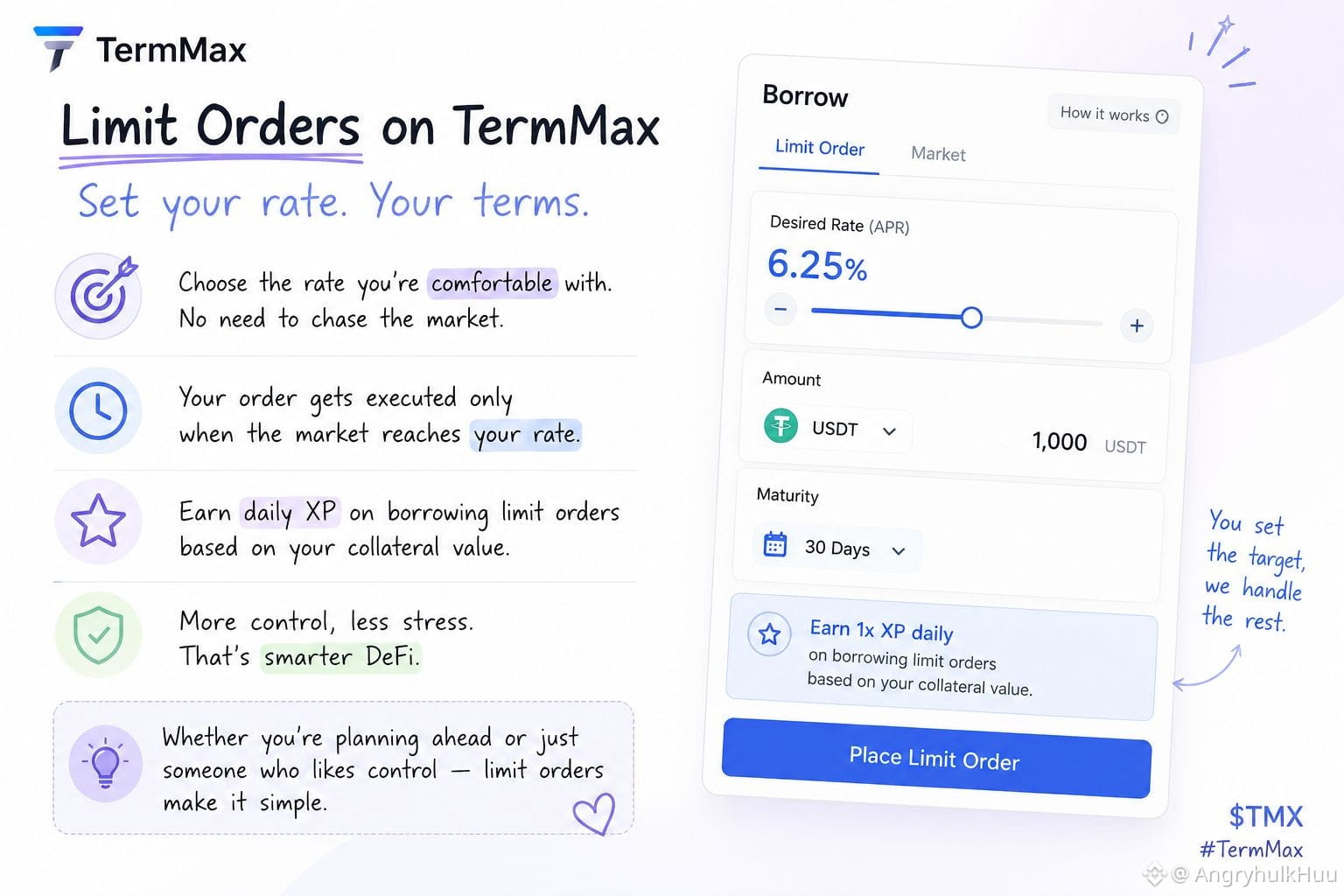
Tôi đã dành một chút thời gian để xem qua TermMax, và thành thật mà nói, điều đọng lại trong tôi không phải là một tiêu đề quá nổi bật.
Đó là cảm giác có nhiều quyền kiểm soát hơn đối với lãi suất.
Khi tôi đang cân nhắc một cơ hội vay, tôi không phải lúc nào cũng muốn nhảy vào chỉ vì hiện tại đang có lãi suất thị trường. Đôi khi tôi đã có sẵn một con số phù hợp với chiến lược mà tôi đang cân nhắc.
Chính lúc đó, tính năng lệnh giới hạn bắt đầu trở nên có ý nghĩa với tôi.
Thay vì liên tục theo dõi màn hình và tự hỏi liệu lãi suất có chuyển sang một mức nằm trong phạm vi mà tôi thấy thoải mái hay không, tôi có thể đặt đúng mức lãi suất mà tôi muốn và để lệnh đó nằm đó.
Nghe thì có vẻ như một cải tiến UX nhỏ, nhưng trong DeFi, những thứ nhỏ như vậy sẽ thay đổi cách bạn tương tác với một sản phẩm.
Tôi cũng nhận thấy rằng các lệnh giới hạn vay có thể kiếm XP hằng ngày dựa trên giá trị tài sản thế chấp, khiến tính năng này có cảm giác gắn kết hơn với trải nghiệm TermMax Alpha rộng lớn, chứ không chỉ là một kiểu lệnh khác.
Sau khi xem qua, kết luận của tôi khá đơn giản:
Những sản phẩm DeFi tốt sẽ không khiến bạn phải canh thị trường từng giây. Chúng nên cho bạn đủ quyền để quyết định điều khoản của mình, rồi để bạn tự đi tiếp.
Có lẽ đây là phần mà tôi đánh giá cao nhất trong @TermMax cho đến thời điểm này.
$TMX #TermMax
Đó là cảm giác có nhiều quyền kiểm soát hơn đối với lãi suất.
Khi tôi đang cân nhắc một cơ hội vay, tôi không phải lúc nào cũng muốn nhảy vào chỉ vì hiện tại đang có lãi suất thị trường. Đôi khi tôi đã có sẵn một con số phù hợp với chiến lược mà tôi đang cân nhắc.
Chính lúc đó, tính năng lệnh giới hạn bắt đầu trở nên có ý nghĩa với tôi.
Thay vì liên tục theo dõi màn hình và tự hỏi liệu lãi suất có chuyển sang một mức nằm trong phạm vi mà tôi thấy thoải mái hay không, tôi có thể đặt đúng mức lãi suất mà tôi muốn và để lệnh đó nằm đó.
Nghe thì có vẻ như một cải tiến UX nhỏ, nhưng trong DeFi, những thứ nhỏ như vậy sẽ thay đổi cách bạn tương tác với một sản phẩm.
Tôi cũng nhận thấy rằng các lệnh giới hạn vay có thể kiếm XP hằng ngày dựa trên giá trị tài sản thế chấp, khiến tính năng này có cảm giác gắn kết hơn với trải nghiệm TermMax Alpha rộng lớn, chứ không chỉ là một kiểu lệnh khác.
Sau khi xem qua, kết luận của tôi khá đơn giản:
Những sản phẩm DeFi tốt sẽ không khiến bạn phải canh thị trường từng giây. Chúng nên cho bạn đủ quyền để quyết định điều khoản của mình, rồi để bạn tự đi tiếp.
Có lẽ đây là phần mà tôi đánh giá cao nhất trong @TermMax cho đến thời điểm này.
$TMX #TermMax
Xem bản dịch
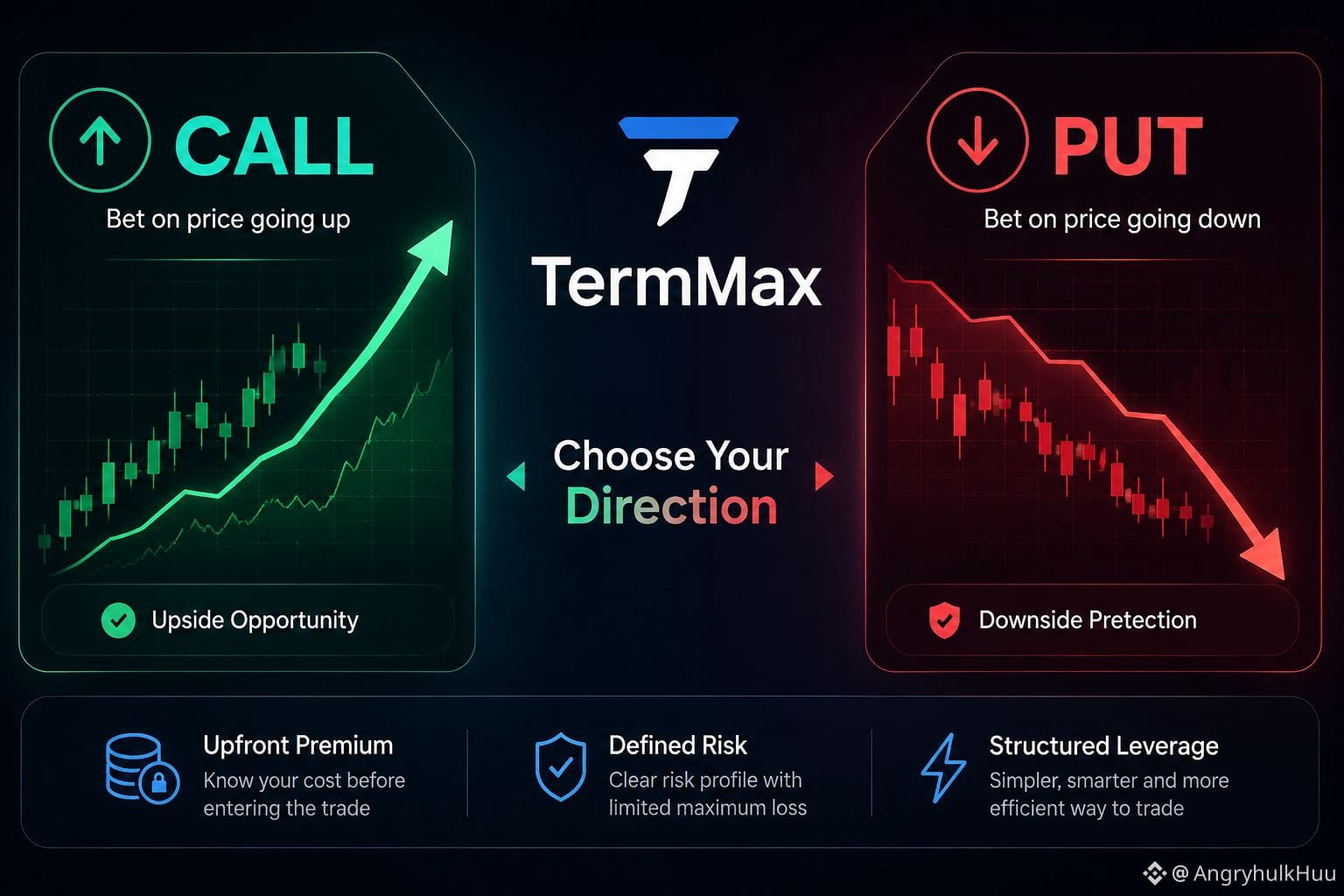
One thing I find interesting about @TermMax is how its Call/Put product changes the way leverage can be approached.
With a traditional leveraged position, you usually have to keep an eye on margin, liquidation levels and changing funding conditions. That can make a simple directional trade more complicated than it needs to be.
TermMax takes a different route. With Call/Put, the trader can choose a defined market direction and pay an upfront premium for the position. That makes the potential cost clearer before entering the trade.
For me, the interesting part isn’t simply “more leverage.” It’s having a more structured way to express a market view while knowing the cost upfront.
That’s the kind of DeFi primitive I think is worth watching.
$TMX #TermMax
With a traditional leveraged position, you usually have to keep an eye on margin, liquidation levels and changing funding conditions. That can make a simple directional trade more complicated than it needs to be.
TermMax takes a different route. With Call/Put, the trader can choose a defined market direction and pay an upfront premium for the position. That makes the potential cost clearer before entering the trade.
For me, the interesting part isn’t simply “more leverage.” It’s having a more structured way to express a market view while knowing the cost upfront.
That’s the kind of DeFi primitive I think is worth watching.
$TMX #TermMax
Xem bản dịch
The more I learn about Bitcoin infrastructure, the more I feel that "native" matters more than most people realize. Wrapped BTC solved an important problem by bringing liquidity into DeFi, but it also introduced new trust assumptions that many long-term Bitcoin holders were never completely comfortable with.
That's why the direction @BabylonLabs_io is taking feels worth paying attention to. Instead of asking users to move away from native Bitcoin, Trustless Bitcoin Vaults are designed around preserving ownership while expanding what BTC can actually do. To me, that's a much stronger design philosophy because it doesn't force users to choose between security and utility.
I don't think the future of Bitcoin DeFi will be decided by who offers the highest yield. It will be decided by which infrastructure minimizes unnecessary trust while keeping the user experience practical. If people can unlock more value from their BTC without compromising the principles that made Bitcoin successful in the first place, that's a much more meaningful innovation than simply creating another financial product.
The strongest infrastructure is usually the one users don't have to think about. It simply works while preserving the properties they already trust. That's the direction I hope Bitcoin continues to move toward.
$BABY #baby
That's why the direction @BabylonLabs_io is taking feels worth paying attention to. Instead of asking users to move away from native Bitcoin, Trustless Bitcoin Vaults are designed around preserving ownership while expanding what BTC can actually do. To me, that's a much stronger design philosophy because it doesn't force users to choose between security and utility.
I don't think the future of Bitcoin DeFi will be decided by who offers the highest yield. It will be decided by which infrastructure minimizes unnecessary trust while keeping the user experience practical. If people can unlock more value from their BTC without compromising the principles that made Bitcoin successful in the first place, that's a much more meaningful innovation than simply creating another financial product.
The strongest infrastructure is usually the one users don't have to think about. It simply works while preserving the properties they already trust. That's the direction I hope Bitcoin continues to move toward.
$BABY #baby
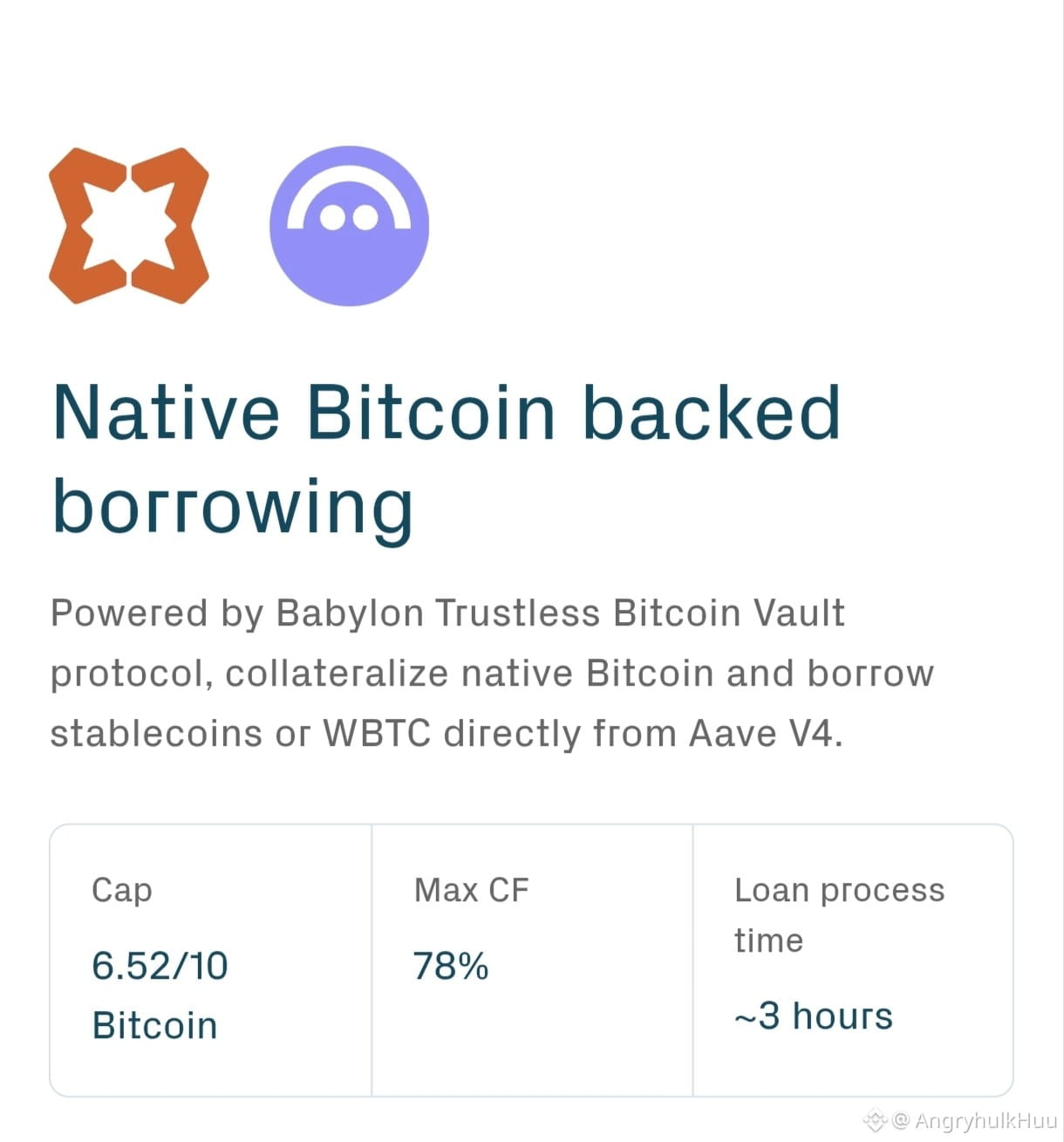
Bitcoin luôn được coi trọng vì mang lại cho mọi người quyền sở hữu hoàn toàn đối với tài sản của mình, nhưng việc sử dụng BTC trong DeFi thường đòi hỏi những thỏa hiệp như bọc coin hoặc tin tưởng các tổ chức giám sát tập trung. Chính vì vậy, cách tiếp cận từ @BabylonLabs_io lại mang cảm giác khác biệt. Các Trustless Bitcoin Vault (Kho lưu trữ Bitcoin không cần tin cậy) được thiết kế để cho phép người dùng tự quản lý Bitcoin của mình (self-custody) trong khi vẫn làm cho nó có thể được dùng làm tài sản thế chấp thông qua xác minh mật mã thay vì các bên trung gian được tin cậy. Điều này có nghĩa là Bitcoin có thể vẫn là tài sản gốc trên chính mạng lưới của nó, đồng thời trở nên hữu ích hơn trong tài chính phi tập trung. Thay vì thay đổi chính Bitcoin, TBV xây dựng cơ sở hạ tầng dựa trên mô hình bảo mật hiện có, tạo ra những khả năng tài chính mới mà không đánh đổi các nguyên tắc đã khiến Bitcoin trở nên có giá trị ngay từ đầu. Nếu mô hình này tiếp tục trưởng thành, nó có thể trở thành một nền tảng quan trọng cho giai đoạn tiếp theo của việc Bitcoin được áp dụng rộng rãi.
$BABY #baby
$BABY #baby
Xem bản dịch
For years, Bitcoin has been seen as a store of value, but much of its capital has remained inactive. What I find interesting about @BabylonLabs_io is the focus on improving Bitcoin's capital efficiency without changing its core principles. Trustless Bitcoin Vaults are designed to let native BTC remain under user control while supporting broader financial use cases. Instead of asking users to choose between security and utility, this approach aims to deliver both. If Bitcoin is going to become a more active part of decentralized finance, building on trustless infrastructure like TBV feels like the right direction.
$BABY #baby
$BABY #baby
Xem bản dịch
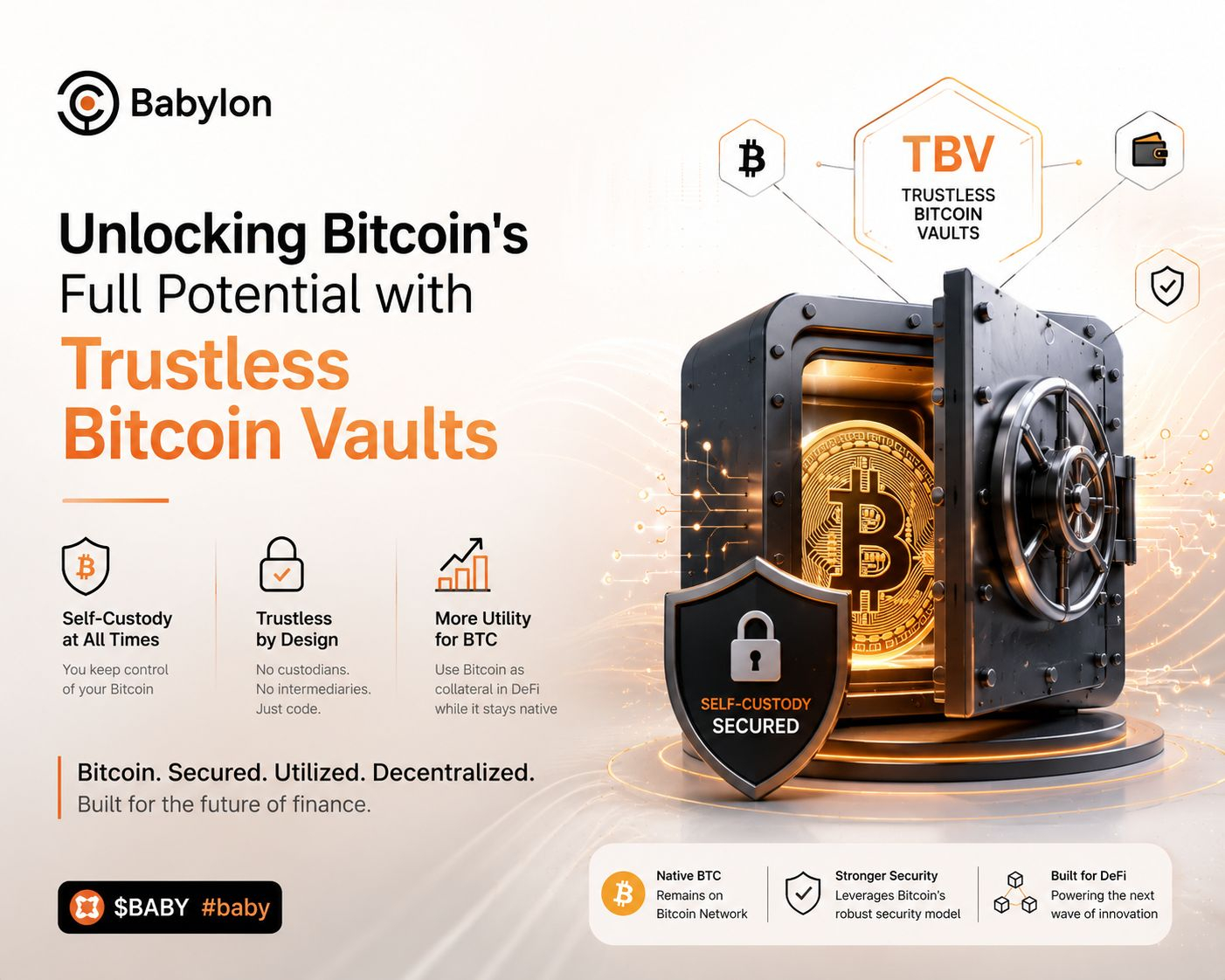
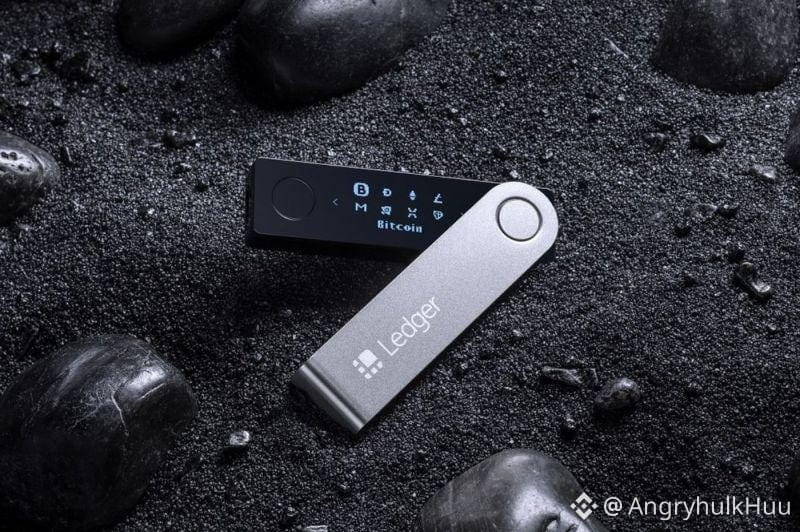
The latest Ledger integration from @BabylonLabs_io caught my attention because it solves a real concern for long term Bitcoin holders. Most people don't want to move their BTC to wrapped versions or hand control over to a custodian just to access DeFi. Trustless Bitcoin Vaults take a different approach by keeping Bitcoin on its native chain while allowing it to be used as collateral. With Ledger Clear Signing, every vault action can be verified directly on the hardware wallet, giving users greater confidence before approving transactions. This combination of self custody, cryptographic verification, and practical DeFi access feels like meaningful infrastructure rather than another short term trend. If Bitcoin is going to play a bigger role in decentralized finance, this is the type of foundation that makes sense to build. $BABY
#baby
#baby
Xem bản dịch
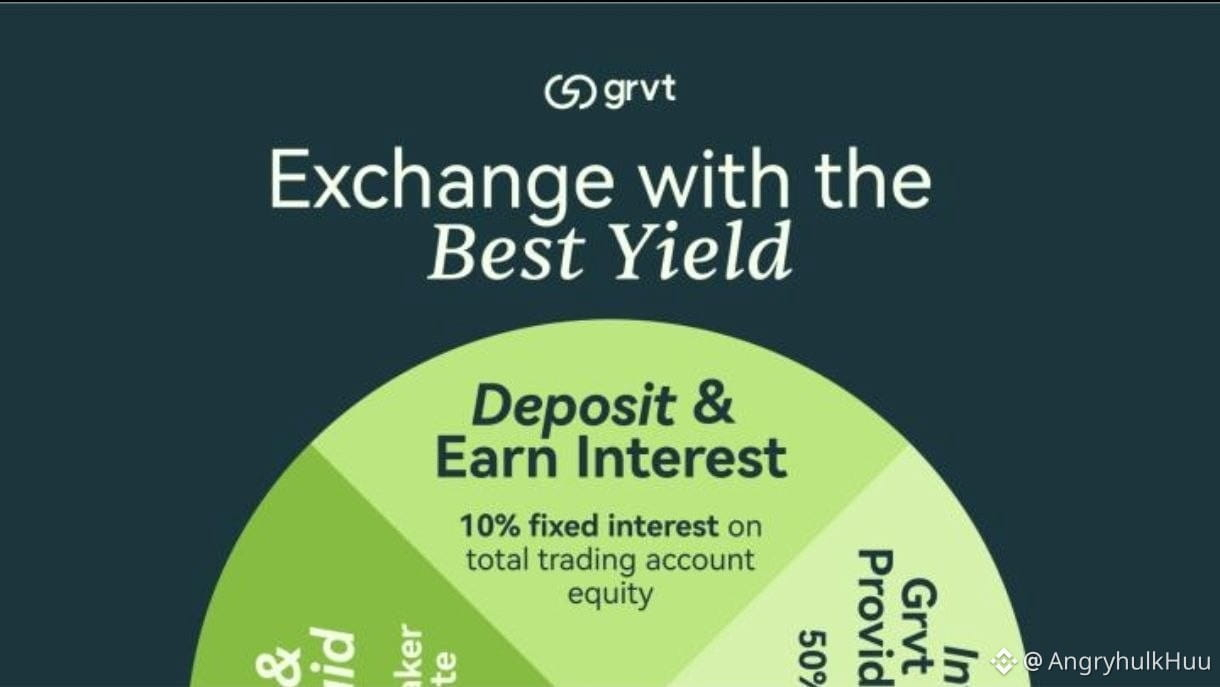
I used to think moving funds between wallets and platforms was just part of crypto.
After spending some time reading about @grvt_io , I started questioning that.
If your assets are sitting idle every time you're not actively trading, that's capital that isn't really working for you.
What I like about GRVT's direction is the focus on making one portfolio more useful instead of asking users to constantly move funds around. It's a small shift in thinking, but it could make a big difference in everyday trading.
That's the kind of product design I'm interested in following.
#grvt
After spending some time reading about @grvt_io , I started questioning that.
If your assets are sitting idle every time you're not actively trading, that's capital that isn't really working for you.
What I like about GRVT's direction is the focus on making one portfolio more useful instead of asking users to constantly move funds around. It's a small shift in thinking, but it could make a big difference in everyday trading.
That's the kind of product design I'm interested in following.
#grvt
Xem bản dịch
I spent some time reading the new Onchain Wealth Report from @grvt_io today.
One idea really stood out to me.
The conversation is slowly shifting from "Where should I trade?" to "How can my capital keep working all the time?"
That's a very different way of thinking about crypto. Instead of moving funds between multiple apps to trade, earn, and invest, the focus is becoming how one balance can do more with less friction.
Whether that vision becomes the standard or not, I think it's a discussion the industry needed.
Looking forward to seeing how @grvt_io turns that vision into real products.
#grvt
One idea really stood out to me.
The conversation is slowly shifting from "Where should I trade?" to "How can my capital keep working all the time?"
That's a very different way of thinking about crypto. Instead of moving funds between multiple apps to trade, earn, and invest, the focus is becoming how one balance can do more with less friction.
Whether that vision becomes the standard or not, I think it's a discussion the industry needed.
Looking forward to seeing how @grvt_io turns that vision into real products.
#grvt
Xem bản dịch
I've finally decided how I'm handling my GRVT allocation.
At first, I was only thinking about claiming everything as soon as possible. After reading the official guide, I realized GRVT isn't just asking us to claim tokens. It's actually letting every participant choose the strategy that fits them best.
Some people need liquidity on day one, and that's completely understandable. Others are willing to wait for a higher multiplier because they believe in the long-term potential of the ecosystem.
I don't think there's a right or wrong answer here. It really depends on your own goals.
I like that @grvt_io didn't force everyone into a single option. Giving the community flexibility is a small detail, but it makes the distribution feel much more thoughtful.
Before making any decision, I'll double-check everything through the official registration page instead of relying on random posts online.
That's my approach. Curious to see how everyone else is thinking about it.
#grvt
At first, I was only thinking about claiming everything as soon as possible. After reading the official guide, I realized GRVT isn't just asking us to claim tokens. It's actually letting every participant choose the strategy that fits them best.
Some people need liquidity on day one, and that's completely understandable. Others are willing to wait for a higher multiplier because they believe in the long-term potential of the ecosystem.
I don't think there's a right or wrong answer here. It really depends on your own goals.
I like that @grvt_io didn't force everyone into a single option. Giving the community flexibility is a small detail, but it makes the distribution feel much more thoughtful.
Before making any decision, I'll double-check everything through the official registration page instead of relying on random posts online.
That's my approach. Curious to see how everyone else is thinking about it.
#grvt

Xem bản dịch
One of the most interesting updates from @grvt_io is the launch of Grvt Invest, a product focused on making institutional-style Real World Asset (RWA) yield more accessible. Instead of requiring large capital or complex investment processes, Grvt Invest introduces curated strategies that simplify participation while maintaining a self-custodial experience.
According to the official announcement, the platform launches with Balanced and Opportunistic strategies, giving users different ways to approach yield based on their goals. This reflects GRVT's broader vision of combining trading, earning, and investing within a single ecosystem, so capital doesn't have to sit idle while waiting for the next opportunity.
As the RWA sector continues to grow, products that make these opportunities easier to access could play an important role in bringing more users onchain. It's great to see @grvt_io focusing on practical financial tools instead of short-term hype.
#grvt
According to the official announcement, the platform launches with Balanced and Opportunistic strategies, giving users different ways to approach yield based on their goals. This reflects GRVT's broader vision of combining trading, earning, and investing within a single ecosystem, so capital doesn't have to sit idle while waiting for the next opportunity.
As the RWA sector continues to grow, products that make these opportunities easier to access could play an important role in bringing more users onchain. It's great to see @grvt_io focusing on practical financial tools instead of short-term hype.
#grvt

Đúng một phần
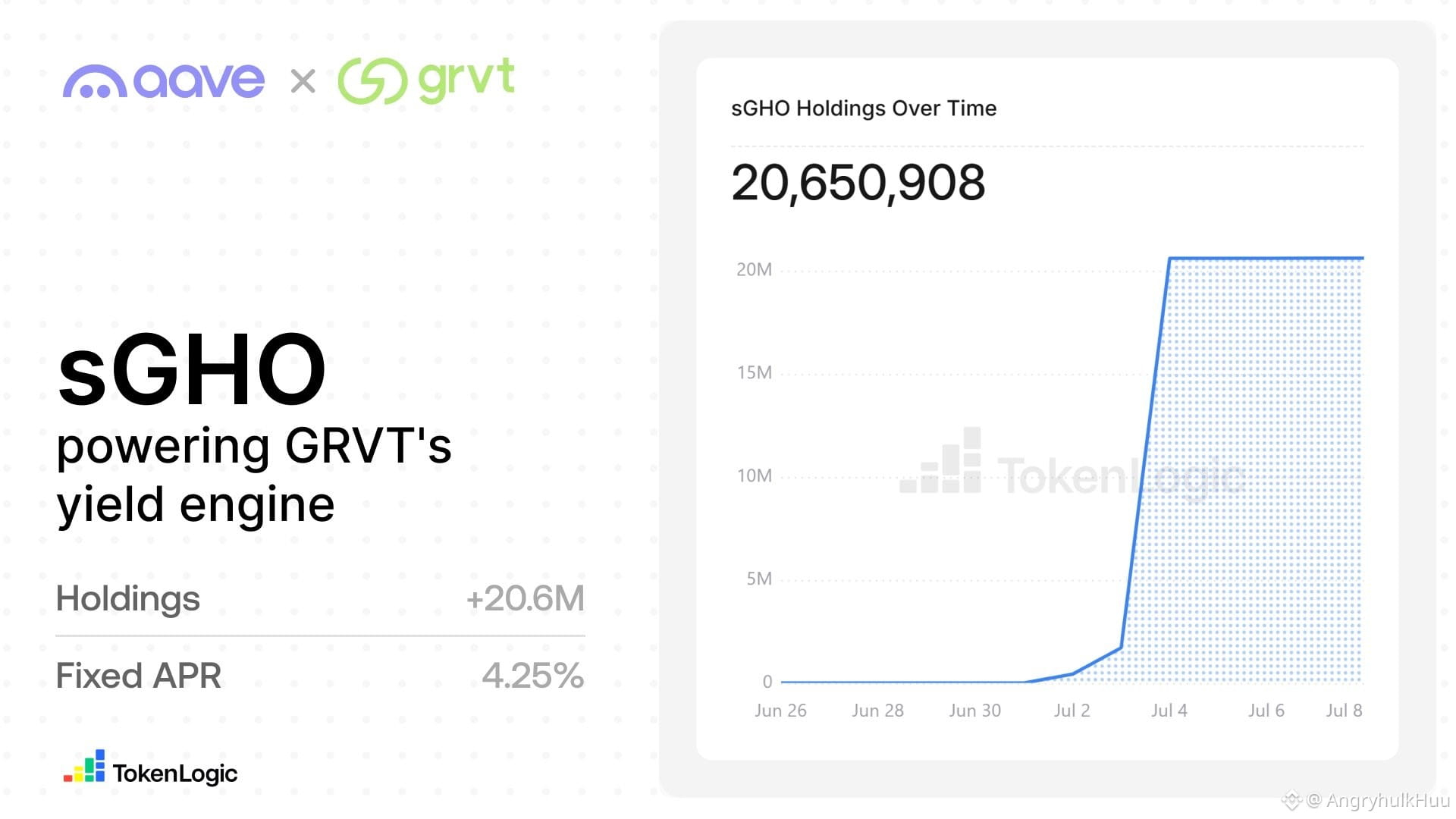
Chỉ số năng suất chỉ thực sự quan trọng khi nó được xây dựng trên hạ tầng đáng tin cậy. Việc phân bổ hơn 20,6M sGHO để cấp nguồn cho công cụ tạo lợi suất của GRVT cho thấy mức độ tin cậy ngày càng tăng đối với hướng đi của họ. Những mối quan hệ hợp tác vững chắc và tính ứng dụng thực tiễn thường nói lên nhiều hơn lời thổi phồng. @grvt_io đang xây dựng theo định hướng bền vững dài hạn.
#grvt
#grvt
Bơm hay đổ?
Xem bản dịch
Walrus is quietly building one of the most interesting pieces of Web3 infrastructure. With @Walrus 🦭/acc focusing on decentralized, scalable data storage, the $WAL ecosystem feels designed for long-term builders rather than hype cycles. Real utility, real demand, real innovation. #Walrus
DeFi đang phát triển, và @Morpho Labs 🦋 đang dẫn dắt sự thay đổi! 🔥
$MORPHO tạo ra một lớp liền mạch giữa người cho vay và người vay—cung cấp lợi suất cao hơn và lãi suất tốt hơn. Đó là hiệu quả, minh bạch và phân cấp trong một sự cân bằng hoàn hảo. #Morpho
$MORPHO tạo ra một lớp liền mạch giữa người cho vay và người vay—cung cấp lợi suất cao hơn và lãi suất tốt hơn. Đó là hiệu quả, minh bạch và phân cấp trong một sự cân bằng hoàn hảo. #Morpho
Đăng nhập để khám phá thêm nội dung