

Mrpeter0
194 Bài đăng

Mrpeter0
Báo cáo
Chặn người dùng
$TRX $BNB $SUI
Giao dịch mở
Trader tần suất thấp
{thời gian} năm
71 Đang theo dõi
43 Người theo dõi
77 Đã thích
Bài đăng
Danh mục đầu tư
Tất cả
Trích dẫn
·
--
Xem bản dịch
🇺🇸 𝐓𝐑𝐎𝐍 𝐈𝐍 𝐖𝐀𝐒𝐇𝐈𝐍𝐆𝐓𝐎𝐍, 𝐃.𝐂.
Blockchain is no longer something happening somewhere far away from traditional institutions.
The conversation is reaching the places where the future of financial technology, digital assets, and regulation is being discussed.
TRON being present in Washington, D.C. reflects a broader shift in how the blockchain industry is engaging with policymakers, institutions, and the wider financial system.
From stablecoins and payments to digital assets and on-chain infrastructure, the technology is becoming part of a much bigger conversation.
The next phase of Web3 will not only be about building networks.
It will also be about creating useful infrastructure, supporting responsible innovation, and helping more people understand how blockchain technology can work in the real world.
TRON is part of that conversation.
🇺🇸 From on-chain activity to Washington, D.C.
The journey continues.
@JustinSun @TRONDAO #TRONEcoStar
🇺🇸 𝐓𝐑𝐎𝐍 𝐈𝐍 𝐖𝐀𝐒𝐇𝐈𝐍𝐆𝐓𝐎𝐍, 𝐃.𝐂.
Blockchain is no longer something happening somewhere far away from traditional institutions.
The conversation is reaching the places where the future of financial technology, digital assets, and regulation is being discussed.
TRON being present in Washington, D.C. reflects a broader shift in how the blockchain industry is engaging with policymakers, institutions, and the wider financial system.
From stablecoins and payments to digital assets and on-chain infrastructure, the technology is becoming part of a much bigger conversation.
The next phase of Web3 will not only be about building networks.
It will also be about creating useful infrastructure, supporting responsible innovation, and helping more people understand how blockchain technology can work in the real world.
TRON is part of that conversation.
🇺🇸 From on-chain activity to Washington, D.C.
The journey continues.
@Justin Sun孙宇晨 @TRON DAO #TRONEcoStar
Blockchain is no longer something happening somewhere far away from traditional institutions.
The conversation is reaching the places where the future of financial technology, digital assets, and regulation is being discussed.
TRON being present in Washington, D.C. reflects a broader shift in how the blockchain industry is engaging with policymakers, institutions, and the wider financial system.
From stablecoins and payments to digital assets and on-chain infrastructure, the technology is becoming part of a much bigger conversation.
The next phase of Web3 will not only be about building networks.
It will also be about creating useful infrastructure, supporting responsible innovation, and helping more people understand how blockchain technology can work in the real world.
TRON is part of that conversation.
🇺🇸 From on-chain activity to Washington, D.C.
The journey continues.
@Justin Sun孙宇晨 @TRON DAO #TRONEcoStar


Justin Sun孙宇晨
·
--
TRON tại Washington, D.C. 🇺🇸
1
25
·
--
Xem bản dịch
𝐓𝐑𝐎𝐍 𝐇𝐚𝐬 𝐌𝐨𝐯𝐞𝐝 $𝟑𝟎 𝐓𝐫𝐢𝐥𝐥𝐢𝐨𝐧 𝐢𝐧 𝐓𝐨𝐭𝐚𝐥 𝐓𝐫𝐚𝐧𝐬𝐟𝐞𝐫 𝐕𝐨𝐥𝐮𝐦𝐞
Eight years is a long time in crypto.
Networks come and go, narratives change, and entire parts of the industry can look completely different from one year to the next.
Through all of that, TRON has continued building and processing activity across its network.
Now, the network is marking a major milestone: $30 trillion in total transfer volume over its eight-year journey.
That number represents more than a headline.
Behind every transaction is someone moving value, using an application, interacting with a protocol, transferring stablecoins, or simply taking part in the growing on-chain economy.
It also shows how much activity can accumulate when infrastructure continues operating over years rather than chasing every short-term trend.
From payments and stablecoins to DeFi and other on-chain applications, TRON has become a network where a large amount of value continues to move.
And the journey is still ongoing.
The next stage will be about continuing to improve the infrastructure, bringing more useful applications on-chain, and making blockchain technology easier for more people to actually use.
$30T is a major milestone.
But after eight years of building, TRON's next chapter is already underway.
Thank you to everyone who has contributed to the journey so far.
There is still much more to build.
@JustinSun @TRONDAO #TRONEcoStar
𝐓𝐑𝐎𝐍 𝐇𝐚𝐬 𝐌𝐨𝐯𝐞𝐝 $𝟑𝟎 𝐓𝐫𝐢𝐥𝐥𝐢𝐨𝐧 𝐢𝐧 𝐓𝐨𝐭𝐚𝐥 𝐓𝐫𝐚𝐧𝐬𝐟𝐞𝐫 𝐕𝐨𝐥𝐮𝐦𝐞
Eight years is a long time in crypto.
Networks come and go, narratives change, and entire parts of the industry can look completely different from one year to the next.
Through all of that, TRON has continued building and processing activity across its network.
Now, the network is marking a major milestone: $30 trillion in total transfer volume over its eight-year journey.
That number represents more than a headline.
Behind every transaction is someone moving value, using an application, interacting with a protocol, transferring stablecoins, or simply taking part in the growing on-chain economy.
It also shows how much activity can accumulate when infrastructure continues operating over years rather than chasing every short-term trend.
From payments and stablecoins to DeFi and other on-chain applications, TRON has become a network where a large amount of value continues to move.
And the journey is still ongoing.
The next stage will be about continuing to improve the infrastructure, bringing more useful applications on-chain, and making blockchain technology easier for more people to actually use.
$30T is a major milestone.
But after eight years of building, TRON's next chapter is already underway.
Thank you to everyone who has contributed to the journey so far.
There is still much more to build.
@Justin Sun孙宇晨 @TRON DAO #TRONEcoStar
Eight years is a long time in crypto.
Networks come and go, narratives change, and entire parts of the industry can look completely different from one year to the next.
Through all of that, TRON has continued building and processing activity across its network.
Now, the network is marking a major milestone: $30 trillion in total transfer volume over its eight-year journey.
That number represents more than a headline.
Behind every transaction is someone moving value, using an application, interacting with a protocol, transferring stablecoins, or simply taking part in the growing on-chain economy.
It also shows how much activity can accumulate when infrastructure continues operating over years rather than chasing every short-term trend.
From payments and stablecoins to DeFi and other on-chain applications, TRON has become a network where a large amount of value continues to move.
And the journey is still ongoing.
The next stage will be about continuing to improve the infrastructure, bringing more useful applications on-chain, and making blockchain technology easier for more people to actually use.
$30T is a major milestone.
But after eight years of building, TRON's next chapter is already underway.
Thank you to everyone who has contributed to the journey so far.
There is still much more to build.
@Justin Sun孙宇晨 @TRON DAO #TRONEcoStar

Justin Sun孙宇晨
·
--
$30 nghìn tỷ về tổng giá trị chuyển giao.
Tám năm xây dựng vì tác động toàn cầu.
Cảm ơn tất cả những ai đã đồng hành cùng hành trình của TRON. Chúng tôi mới chỉ bắt đầu.
Tám năm xây dựng vì tác động toàn cầu.
Cảm ơn tất cả những ai đã đồng hành cùng hành trình của TRON. Chúng tôi mới chỉ bắt đầu.
1
24
·
--
Xem bản dịch
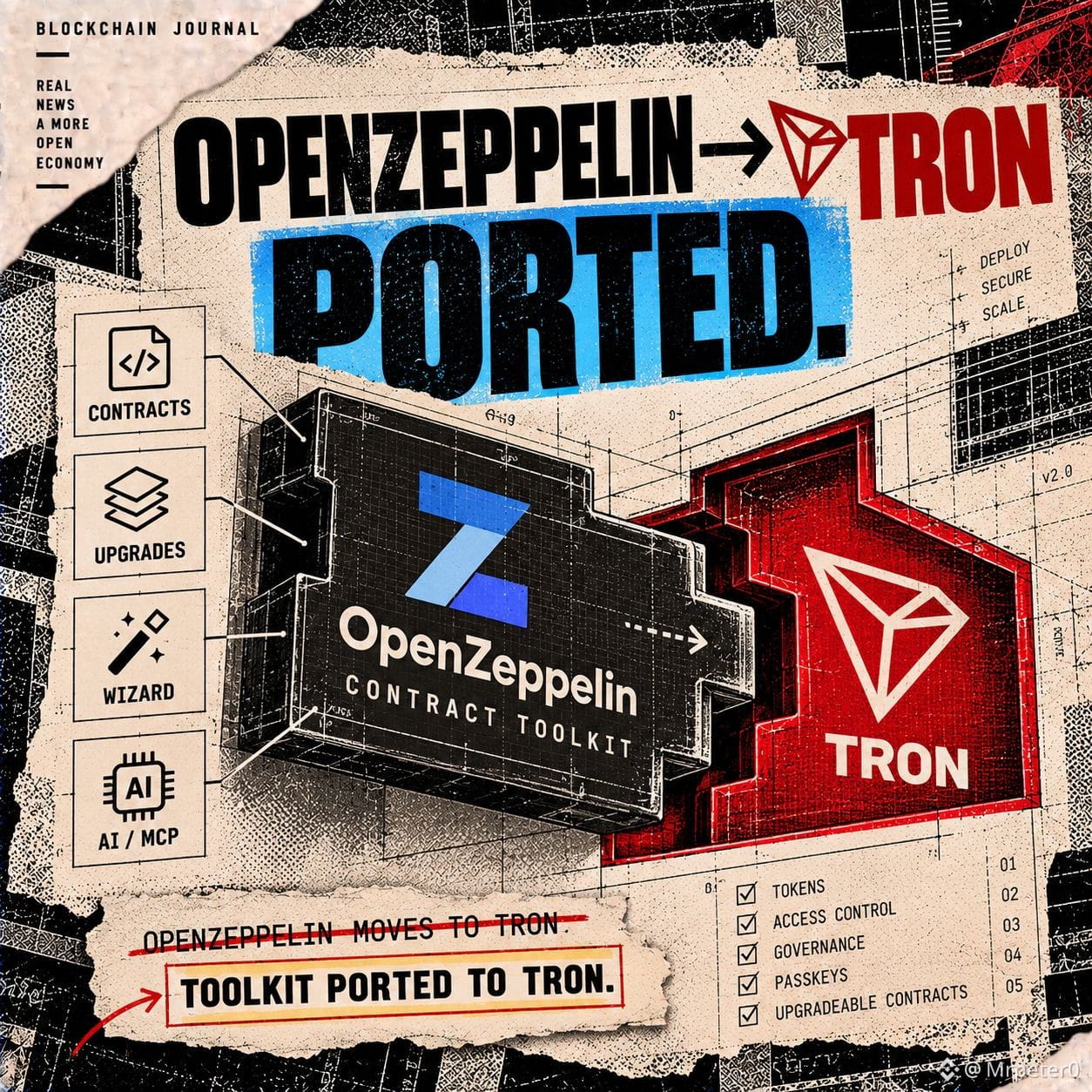
𝐎𝐩𝐞𝐧𝐙𝐞𝐩𝐩𝐞𝐥𝐢𝐧 𝐃𝐞𝐯𝐞𝐥𝐨𝐩𝐦𝐞𝐧𝐭 𝐓𝐨𝐨𝐥𝐬 𝐀𝐫𝐫𝐢𝐯𝐞 𝐨𝐧 𝐓𝐑𝐎𝐍
Building smart contracts on a new network is not just about deploying code. Developers also need reliable libraries, testing tools, upgrade systems, security patterns, and a workflow that makes development easier.
That is where this OpenZeppelin integration with TRON becomes interesting.
The toolkit is being adapted for TRON, giving developers access to familiar OpenZeppelin development primitives while working within the TRON environment.
The suite includes TRON-compatible contract libraries, upgrade plugins, Contracts Wizard, and an MCP server designed to support AI-assisted development workflows with tools such as Cursor and Claude.
Developers can work with common building blocks for things like token contracts, access control, governance, passkeys, and upgradeable contracts.
Instead of starting everything from scratch, developers can work with established contract patterns and adapt them to their TRON applications.
The AI side is also worth paying attention to.
With an MCP server available for development workflows, AI coding tools can become part of the process of creating and working with smart contracts on TRON.
That can make it easier to explore contract structures, generate components, understand implementations, and move from an idea toward a working application.
And there is an important distinction here.
This does not mean OpenZeppelin is moving its entire operation to TRON.
The key development is that its smart contract development stack is being adapted for the TRON network.
For builders, that means more familiar tooling around the development process and another option for creating applications on TRON.
Infrastructure like this may not always get as much attention as a new token or protocol launch
And more accessible development workflows can help bring new applications into the TRON ecosystem.
@JustinSun @TRONDAO #TRONEcoStar
𝐎𝐩𝐞𝐧𝐙𝐞𝐩𝐩𝐞𝐥𝐢𝐧 𝐃𝐞𝐯𝐞𝐥𝐨𝐩𝐦𝐞𝐧𝐭 𝐓𝐨𝐨𝐥𝐬 𝐀𝐫𝐫𝐢𝐯𝐞 𝐨𝐧 𝐓𝐑𝐎𝐍
Building smart contracts on a new network is not just about deploying code. Developers also need reliable libraries, testing tools, upgrade systems, security patterns, and a workflow that makes development easier.
That is where this OpenZeppelin integration with TRON becomes interesting.
The toolkit is being adapted for TRON, giving developers access to familiar OpenZeppelin development primitives while working within the TRON environment.
The suite includes TRON-compatible contract libraries, upgrade plugins, Contracts Wizard, and an MCP server designed to support AI-assisted development workflows with tools such as Cursor and Claude.
Developers can work with common building blocks for things like token contracts, access control, governance, passkeys, and upgradeable contracts.
Instead of starting everything from scratch, developers can work with established contract patterns and adapt them to their TRON applications.
The AI side is also worth paying attention to.
With an MCP server available for development workflows, AI coding tools can become part of the process of creating and working with smart contracts on TRON.
That can make it easier to explore contract structures, generate components, understand implementations, and move from an idea toward a working application.
And there is an important distinction here.
This does not mean OpenZeppelin is moving its entire operation to TRON.
The key development is that its smart contract development stack is being adapted for the TRON network.
For builders, that means more familiar tooling around the development process and another option for creating applications on TRON.
Infrastructure like this may not always get as much attention as a new token or protocol launch
And more accessible development workflows can help bring new applications into the TRON ecosystem.
@Justin Sun孙宇晨 @TRON DAO #TRONEcoStar
Building smart contracts on a new network is not just about deploying code. Developers also need reliable libraries, testing tools, upgrade systems, security patterns, and a workflow that makes development easier.
That is where this OpenZeppelin integration with TRON becomes interesting.
The toolkit is being adapted for TRON, giving developers access to familiar OpenZeppelin development primitives while working within the TRON environment.
The suite includes TRON-compatible contract libraries, upgrade plugins, Contracts Wizard, and an MCP server designed to support AI-assisted development workflows with tools such as Cursor and Claude.
Developers can work with common building blocks for things like token contracts, access control, governance, passkeys, and upgradeable contracts.
Instead of starting everything from scratch, developers can work with established contract patterns and adapt them to their TRON applications.
The AI side is also worth paying attention to.
With an MCP server available for development workflows, AI coding tools can become part of the process of creating and working with smart contracts on TRON.
That can make it easier to explore contract structures, generate components, understand implementations, and move from an idea toward a working application.
And there is an important distinction here.
This does not mean OpenZeppelin is moving its entire operation to TRON.
The key development is that its smart contract development stack is being adapted for the TRON network.
For builders, that means more familiar tooling around the development process and another option for creating applications on TRON.
Infrastructure like this may not always get as much attention as a new token or protocol launch
And more accessible development workflows can help bring new applications into the TRON ecosystem.
@Justin Sun孙宇晨 @TRON DAO #TRONEcoStar
1
46
·
--
Xem bản dịch
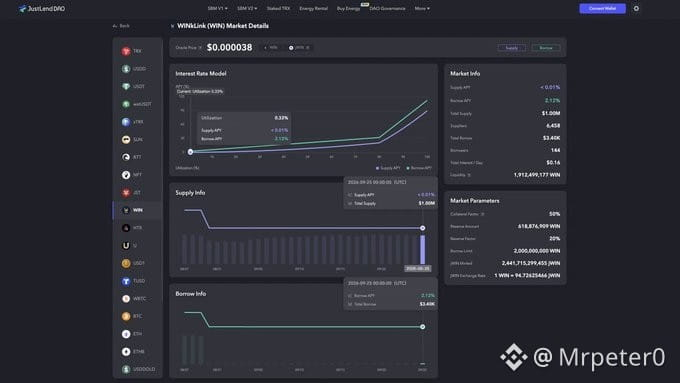
𝐖𝐈𝐍 𝐑𝐞𝐦𝐚𝐢𝐧𝐬 𝐀𝐜𝐭𝐢𝐯𝐞 𝐨𝐧 𝐉𝐮𝐬𝐭𝐋𝐞𝐧𝐝𝐃𝐀𝐎
The latest weekly numbers for WIN on JustLendDAO show something simple but worth watching: total supply is still around $1M.
While borrowing activity is lighter this week at about $3.40K, the supply side continues to hold its ground.
That means a significant amount of WIN remains supplied within the lending market rather than simply sitting outside the ecosystem.
For a lending protocol, these numbers give a useful view of how users are interacting with the market.
Some users are supplying assets.
Others are borrowing.
And as these figures change from week to week, they provide a clearer picture of the activity taking place around WIN on TRON.
The current numbers may not tell the whole story, but steady supply is certainly a metric worth keeping an eye on.
JustLendDAO continues to give users a place to put their assets to work within TRON's DeFi ecosystem, while market data makes it easier to follow how participation is developing.
If you're tracking WIN, the weekly stats are worth checking regularly.
@WINkLink_Official @JustinSun #TRONEcoStar #JUSTLENDDAO
𝐖𝐈𝐍 𝐑𝐞𝐦𝐚𝐢𝐧𝐬 𝐀𝐜𝐭𝐢𝐯𝐞 𝐨𝐧 𝐉𝐮𝐬𝐭𝐋𝐞𝐧𝐝𝐃𝐀𝐎
The latest weekly numbers for WIN on JustLendDAO show something simple but worth watching: total supply is still around $1M.
While borrowing activity is lighter this week at about $3.40K, the supply side continues to hold its ground.
That means a significant amount of WIN remains supplied within the lending market rather than simply sitting outside the ecosystem.
For a lending protocol, these numbers give a useful view of how users are interacting with the market.
Some users are supplying assets.
Others are borrowing.
And as these figures change from week to week, they provide a clearer picture of the activity taking place around WIN on TRON.
The current numbers may not tell the whole story, but steady supply is certainly a metric worth keeping an eye on.
JustLendDAO continues to give users a place to put their assets to work within TRON's DeFi ecosystem, while market data makes it easier to follow how participation is developing.
If you're tracking WIN, the weekly stats are worth checking regularly.
@WINkLink_Official @Justin Sun孙宇晨 #TRONEcoStar #JUSTLENDDAO
The latest weekly numbers for WIN on JustLendDAO show something simple but worth watching: total supply is still around $1M.
While borrowing activity is lighter this week at about $3.40K, the supply side continues to hold its ground.
That means a significant amount of WIN remains supplied within the lending market rather than simply sitting outside the ecosystem.
For a lending protocol, these numbers give a useful view of how users are interacting with the market.
Some users are supplying assets.
Others are borrowing.
And as these figures change from week to week, they provide a clearer picture of the activity taking place around WIN on TRON.
The current numbers may not tell the whole story, but steady supply is certainly a metric worth keeping an eye on.
JustLendDAO continues to give users a place to put their assets to work within TRON's DeFi ecosystem, while market data makes it easier to follow how participation is developing.
If you're tracking WIN, the weekly stats are worth checking regularly.
@WINkLink_Official @Justin Sun孙宇晨 #TRONEcoStar #JUSTLENDDAO
1
2
87
·
--
Xem bản dịch
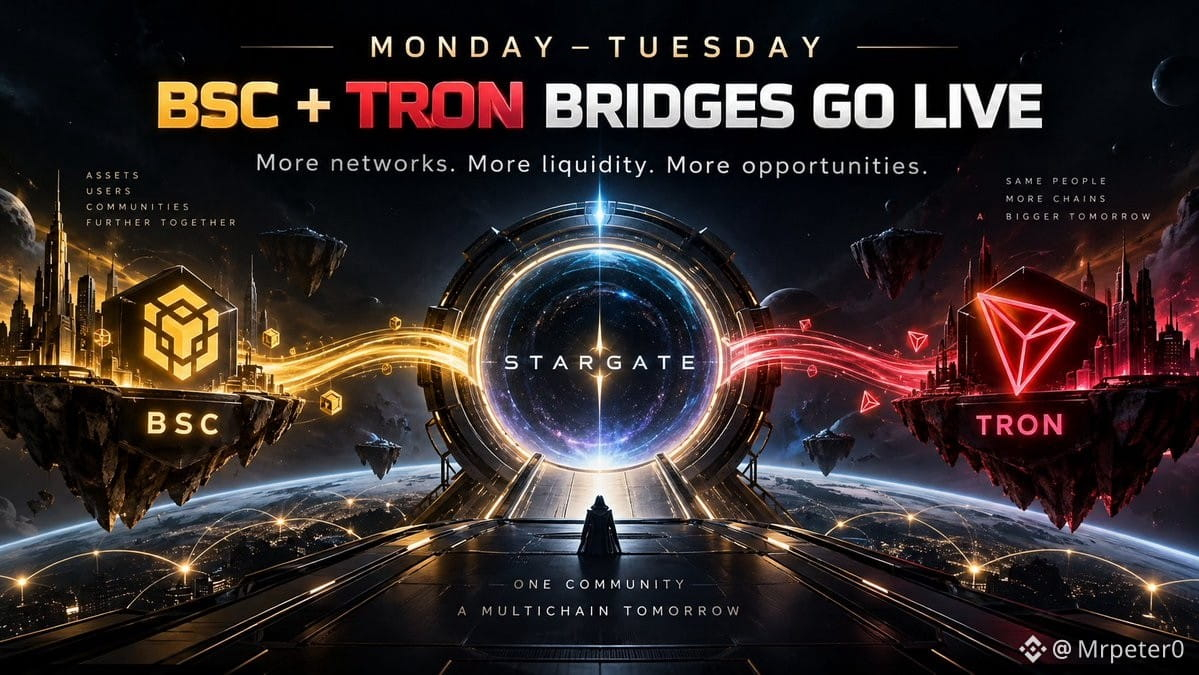
𝐒𝐓𝐀𝐑𝐆𝐀𝐓𝐄 𝐈𝐬 𝐄𝐱𝐩𝐚𝐧𝐝𝐢𝐧𝐠 𝐀𝐜𝐫𝐨𝐬𝐬 𝐌𝐨𝐫𝐞 𝐍𝐞𝐭𝐰𝐨𝐫𝐤𝐬 🔥
The multichain journey is getting bigger.
Sl8 is bringing both Binance Smart Chain and TRON into the picture, with the two bridges set to launch Monday–Tuesday.
For users, this means fewer limitations when moving between ecosystems.
You don't have to think about staying inside one network just because that's where your assets started. As more chains become connected, moving liquidity and exploring different opportunities becomes much more straightforward.
One wallet can become the place where you manage activity across multiple networks.
More networks means more places to move.
More connections can mean more liquidity.
And for users exploring different parts of Web3, it creates more opportunities without constantly switching between completely different environments.
Adding TRON is especially interesting because of the network's large stablecoin activity and growing role in on-chain payments and DeFi.
With Binance Smart Chain and TRON joining the expansion, Sl8 is taking another step toward making its ecosystem more connected.
The goal is simple:
Use one wallet.
Access more networks.
Move assets with less friction.
Explore more of what Web3 has to offer.
STARGATE keeps moving, and the multichain expansion is only getting started. 🔥
@JustinSun @TRONDAO
$TRX #TRONEcoStar
𝐒𝐓𝐀𝐑𝐆𝐀𝐓𝐄 𝐈𝐬 𝐄𝐱𝐩𝐚𝐧𝐝𝐢𝐧𝐠 𝐀𝐜𝐫𝐨𝐬𝐬 𝐌𝐨𝐫𝐞 𝐍𝐞𝐭𝐰𝐨𝐫𝐤𝐬 🔥
The multichain journey is getting bigger.
Sl8 is bringing both Binance Smart Chain and TRON into the picture, with the two bridges set to launch Monday–Tuesday.
For users, this means fewer limitations when moving between ecosystems.
You don't have to think about staying inside one network just because that's where your assets started. As more chains become connected, moving liquidity and exploring different opportunities becomes much more straightforward.
One wallet can become the place where you manage activity across multiple networks.
More networks means more places to move.
More connections can mean more liquidity.
And for users exploring different parts of Web3, it creates more opportunities without constantly switching between completely different environments.
Adding TRON is especially interesting because of the network's large stablecoin activity and growing role in on-chain payments and DeFi.
With Binance Smart Chain and TRON joining the expansion, Sl8 is taking another step toward making its ecosystem more connected.
The goal is simple:
Use one wallet.
Access more networks.
Move assets with less friction.
Explore more of what Web3 has to offer.
STARGATE keeps moving, and the multichain expansion is only getting started. 🔥
@Justin Sun孙宇晨 @TRON DAO
$TRX #TRONEcoStar
The multichain journey is getting bigger.
Sl8 is bringing both Binance Smart Chain and TRON into the picture, with the two bridges set to launch Monday–Tuesday.
For users, this means fewer limitations when moving between ecosystems.
You don't have to think about staying inside one network just because that's where your assets started. As more chains become connected, moving liquidity and exploring different opportunities becomes much more straightforward.
One wallet can become the place where you manage activity across multiple networks.
More networks means more places to move.
More connections can mean more liquidity.
And for users exploring different parts of Web3, it creates more opportunities without constantly switching between completely different environments.
Adding TRON is especially interesting because of the network's large stablecoin activity and growing role in on-chain payments and DeFi.
With Binance Smart Chain and TRON joining the expansion, Sl8 is taking another step toward making its ecosystem more connected.
The goal is simple:
Use one wallet.
Access more networks.
Move assets with less friction.
Explore more of what Web3 has to offer.
STARGATE keeps moving, and the multichain expansion is only getting started. 🔥
@Justin Sun孙宇晨 @TRON DAO
$TRX #TRONEcoStar
1
60
·
--
Xem bản dịch
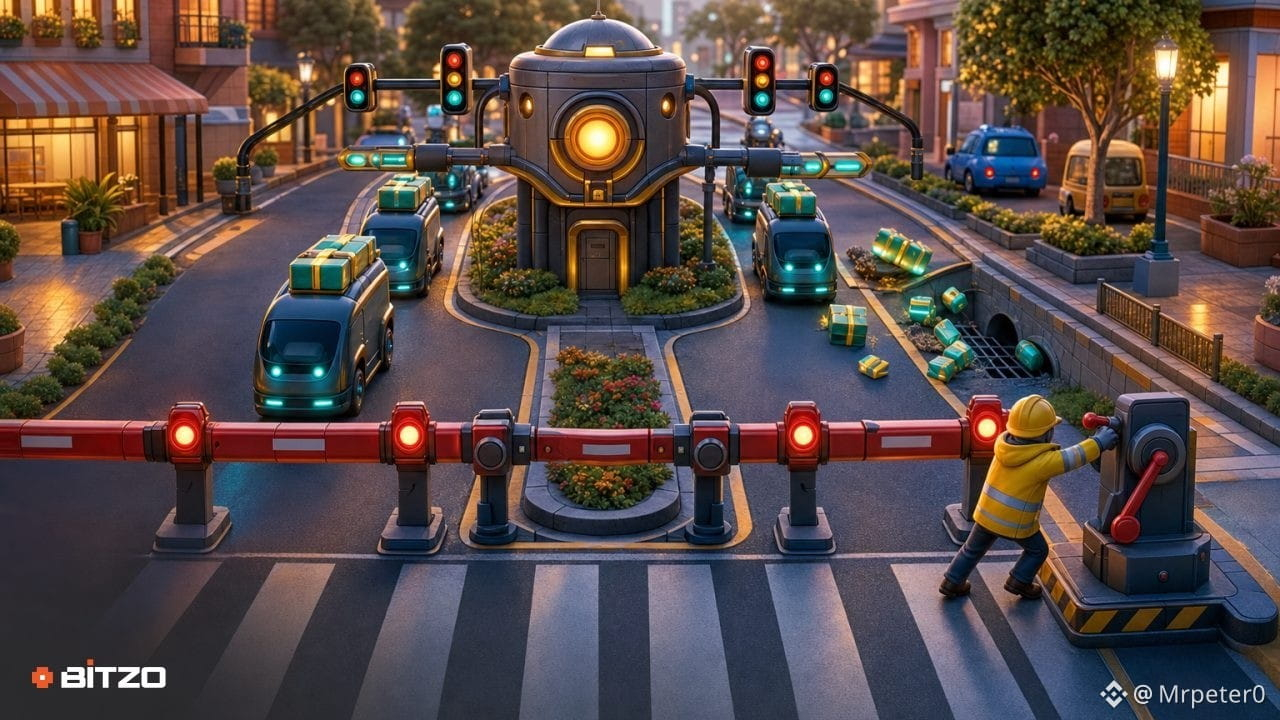
𝐂𝐡𝐚𝐢𝐧𝐟𝐥𝐢𝐩 𝐓𝐑𝐎𝐍 𝐔𝐒𝐃𝐓 𝐈𝐧𝐜𝐢𝐝𝐞𝐧𝐭: 𝐖𝐡𝐚𝐭 𝐇𝐚𝐩𝐩𝐞𝐧𝐞𝐝?
Chainflip recently faced a serious security incident involving its TRON USDT integration, resulting in 736,442.17 USDT being taken through six unauthorized payouts. Chainflip said the issue came from how its system handled transaction memos on TRON, rather than from a compromise of the TRON blockchain or USDT itself.
The interesting part of the incident is how simple the weakness sounds.
Chainflip uses transaction memos on TRON to read swap instructions. An attacker found a way to attach their own memo to a transaction that had already been signed by Chainflip validators.
The system then interpreted that additional memo as another swap.
When that swap appeared to fail, the protocol issued a refund.
The problem was that the original transaction had already resulted in a payout.
So the same underlying deposit could effectively trigger two payouts.
The attacker repeated this process eight times over roughly 90 minutes. Six attempts resulted in unauthorized payouts, with the total reaching 736,442.17 USDT.
Chainflip responded by pausing its network while the team investigated the issue and prepared a fix.
The vulnerability has since been patched, and Chainflip later restored the protocol through a network upgrade. Its status page now lists the TRON USDT incident as resolved.
What stands out here is that cross-chain infrastructure has many moving parts.
A blockchain can continue operating normally while an application built around it can still have a vulnerability in the way it interprets transactions.
That distinction is important.
The incident was tied to Chainflip's own TRON integration and memo-processing logic. Chainflip said other funds were unaffected and that affected LPs would be made whole. Later, its Proposal 008 passed with 91 of 128 validators supporting the use of surplus protocol funds to cover the affected TRON USDT LPs.
@JustinSun @TRONDAO #TRONEcoStar
𝐂𝐡𝐚𝐢𝐧𝐟𝐥𝐢𝐩 𝐓𝐑𝐎𝐍 𝐔𝐒𝐃𝐓 𝐈𝐧𝐜𝐢𝐝𝐞𝐧𝐭: 𝐖𝐡𝐚𝐭 𝐇𝐚𝐩𝐩𝐞𝐧𝐞𝐝?
Chainflip recently faced a serious security incident involving its TRON USDT integration, resulting in 736,442.17 USDT being taken through six unauthorized payouts. Chainflip said the issue came from how its system handled transaction memos on TRON, rather than from a compromise of the TRON blockchain or USDT itself.
The interesting part of the incident is how simple the weakness sounds.
Chainflip uses transaction memos on TRON to read swap instructions. An attacker found a way to attach their own memo to a transaction that had already been signed by Chainflip validators.
The system then interpreted that additional memo as another swap.
When that swap appeared to fail, the protocol issued a refund.
The problem was that the original transaction had already resulted in a payout.
So the same underlying deposit could effectively trigger two payouts.
The attacker repeated this process eight times over roughly 90 minutes. Six attempts resulted in unauthorized payouts, with the total reaching 736,442.17 USDT.
Chainflip responded by pausing its network while the team investigated the issue and prepared a fix.
The vulnerability has since been patched, and Chainflip later restored the protocol through a network upgrade. Its status page now lists the TRON USDT incident as resolved.
What stands out here is that cross-chain infrastructure has many moving parts.
A blockchain can continue operating normally while an application built around it can still have a vulnerability in the way it interprets transactions.
That distinction is important.
The incident was tied to Chainflip's own TRON integration and memo-processing logic. Chainflip said other funds were unaffected and that affected LPs would be made whole. Later, its Proposal 008 passed with 91 of 128 validators supporting the use of surplus protocol funds to cover the affected TRON USDT LPs.
@Justin Sun孙宇晨 @TRON DAO #TRONEcoStar
Chainflip recently faced a serious security incident involving its TRON USDT integration, resulting in 736,442.17 USDT being taken through six unauthorized payouts. Chainflip said the issue came from how its system handled transaction memos on TRON, rather than from a compromise of the TRON blockchain or USDT itself.
The interesting part of the incident is how simple the weakness sounds.
Chainflip uses transaction memos on TRON to read swap instructions. An attacker found a way to attach their own memo to a transaction that had already been signed by Chainflip validators.
The system then interpreted that additional memo as another swap.
When that swap appeared to fail, the protocol issued a refund.
The problem was that the original transaction had already resulted in a payout.
So the same underlying deposit could effectively trigger two payouts.
The attacker repeated this process eight times over roughly 90 minutes. Six attempts resulted in unauthorized payouts, with the total reaching 736,442.17 USDT.
Chainflip responded by pausing its network while the team investigated the issue and prepared a fix.
The vulnerability has since been patched, and Chainflip later restored the protocol through a network upgrade. Its status page now lists the TRON USDT incident as resolved.
What stands out here is that cross-chain infrastructure has many moving parts.
A blockchain can continue operating normally while an application built around it can still have a vulnerability in the way it interprets transactions.
That distinction is important.
The incident was tied to Chainflip's own TRON integration and memo-processing logic. Chainflip said other funds were unaffected and that affected LPs would be made whole. Later, its Proposal 008 passed with 91 of 128 validators supporting the use of surplus protocol funds to cover the affected TRON USDT LPs.
@Justin Sun孙宇晨 @TRON DAO #TRONEcoStar
1
1
·
--

Bài viết
Xem bản dịch
𝐖𝐈𝐍𝐤𝐋𝐢𝐧𝐤 𝐈𝐬 𝐌𝐚𝐤𝐢𝐧𝐠 𝐎𝐧-𝐂𝐡𝐚𝐢𝐧 𝐃𝐚𝐭𝐚 𝐄𝐚𝐬𝐢𝐞𝐫 𝐓𝐨 𝐖𝐨𝐫𝐤 𝐖𝐢𝐭𝐡
OneOne of the things that can slow down development in Web3 is not always the coding itself.
Sometimes, the frustrating part comes before the building even starts.
You need a specific market feed.
You need to check the right asset.
You need to understand the feed parameters.
Then you move between different places trying to confirm that everything matches.
That may sound small, but when you're working on multiple integrations, those extra steps quickly become a real headache.
This is where WINkLink is making things more straightforward.
By bringing important oracle information such as market data, feed parameters, and asset details into one place, developers can spend less time searching and more time actually building.
Instead of constantly asking:
“Where is the data I need?”
“Which feed should I use?”
“Are these the right parameters?”
You can get the information, understand what you're working with, and keep moving.
That matters because good infrastructure isn't only about what happens behind the scenes.
It is also about how easy it is for developers to use.
When the process is simpler, integrations can become easier to manage. Developers can test faster, reduce unnecessary back-and-forth, and focus more of their attention on the actual application they are creating.
And as more DeFi protocols, trading applications, and on-chain products depend on reliable external data, the role of oracle infrastructure becomes even more important.
The data feeding an application needs to be accessible, understandable, and ready for developers to work with.
WINkLink is helping bring that experience closer together.
Less searching.
Less switching between resources.
Less unnecessary friction.
Just the information you need to get started and keep building.
That's the kind of improvement that may look simple on the surface, but can make a meaningful difference to the people building inside Web3.
@WINkLink_Official @JustinSun #TRONEcoStar
𝐖𝐈𝐍𝐤𝐋𝐢𝐧𝐤 𝐈𝐬 𝐌𝐚𝐤𝐢𝐧𝐠 𝐎𝐧-𝐂𝐡𝐚𝐢𝐧 𝐃𝐚𝐭𝐚 𝐄𝐚𝐬𝐢𝐞𝐫 𝐓𝐨 𝐖𝐨𝐫𝐤 𝐖𝐢𝐭𝐡 One
One of the things that can slow down development in Web3 is not always the coding itself.
Sometimes, the frustrating part comes before the building even starts.
You need a specific market feed.
You need to check the right asset.
You need to understand the feed parameters.
Then you move between different places trying to confirm that everything matches.
That may sound small, but when you're working on multiple integrations, those extra steps quickly become a real headache.
This is where WINkLink is making things more straightforward.
By bringing important oracle information such as market data, feed parameters, and asset details into one place, developers can spend less time searching and more time actually building.
Instead of constantly asking:
“Where is the data I need?”
“Which feed should I use?”
“Are these the right parameters?”
You can get the information, understand what you're working with, and keep moving.
That matters because good infrastructure isn't only about what happens behind the scenes.
It is also about how easy it is for developers to use.
When the process is simpler, integrations can become easier to manage. Developers can test faster, reduce unnecessary back-and-forth, and focus more of their attention on the actual application they are creating.
And as more DeFi protocols, trading applications, and on-chain products depend on reliable external data, the role of oracle infrastructure becomes even more important.
The data feeding an application needs to be accessible, understandable, and ready for developers to work with.
WINkLink is helping bring that experience closer together.
Less searching.
Less switching between resources.
Less unnecessary friction.
Just the information you need to get started and keep building.
That's the kind of improvement that may look simple on the surface, but can make a meaningful difference to the people building inside Web3.
@WINkLink_Official @Justin Sun孙宇晨 #TRONEcoStar
Sometimes, the frustrating part comes before the building even starts.
You need a specific market feed.
You need to check the right asset.
You need to understand the feed parameters.
Then you move between different places trying to confirm that everything matches.
That may sound small, but when you're working on multiple integrations, those extra steps quickly become a real headache.
This is where WINkLink is making things more straightforward.
By bringing important oracle information such as market data, feed parameters, and asset details into one place, developers can spend less time searching and more time actually building.
Instead of constantly asking:
“Where is the data I need?”
“Which feed should I use?”
“Are these the right parameters?”
You can get the information, understand what you're working with, and keep moving.
That matters because good infrastructure isn't only about what happens behind the scenes.
It is also about how easy it is for developers to use.
When the process is simpler, integrations can become easier to manage. Developers can test faster, reduce unnecessary back-and-forth, and focus more of their attention on the actual application they are creating.
And as more DeFi protocols, trading applications, and on-chain products depend on reliable external data, the role of oracle infrastructure becomes even more important.
The data feeding an application needs to be accessible, understandable, and ready for developers to work with.
WINkLink is helping bring that experience closer together.
Less searching.
Less switching between resources.
Less unnecessary friction.
Just the information you need to get started and keep building.
That's the kind of improvement that may look simple on the surface, but can make a meaningful difference to the people building inside Web3.
@WINkLink_Official @Justin Sun孙宇晨 #TRONEcoStar
2
21
·
--
Đã xác minh
𝐁𝐈𝐓𝐓𝐎𝐑𝐑𝐄𝐍𝐓 𝐇𝐀𝐒 𝐀 𝐍𝐔𝐌𝐁𝐄𝐑 𝐖𝐎𝐑𝐓𝐇 𝐑𝐄𝐌𝐄𝐌𝐁𝐄𝐑𝐈𝐍𝐆 🤯
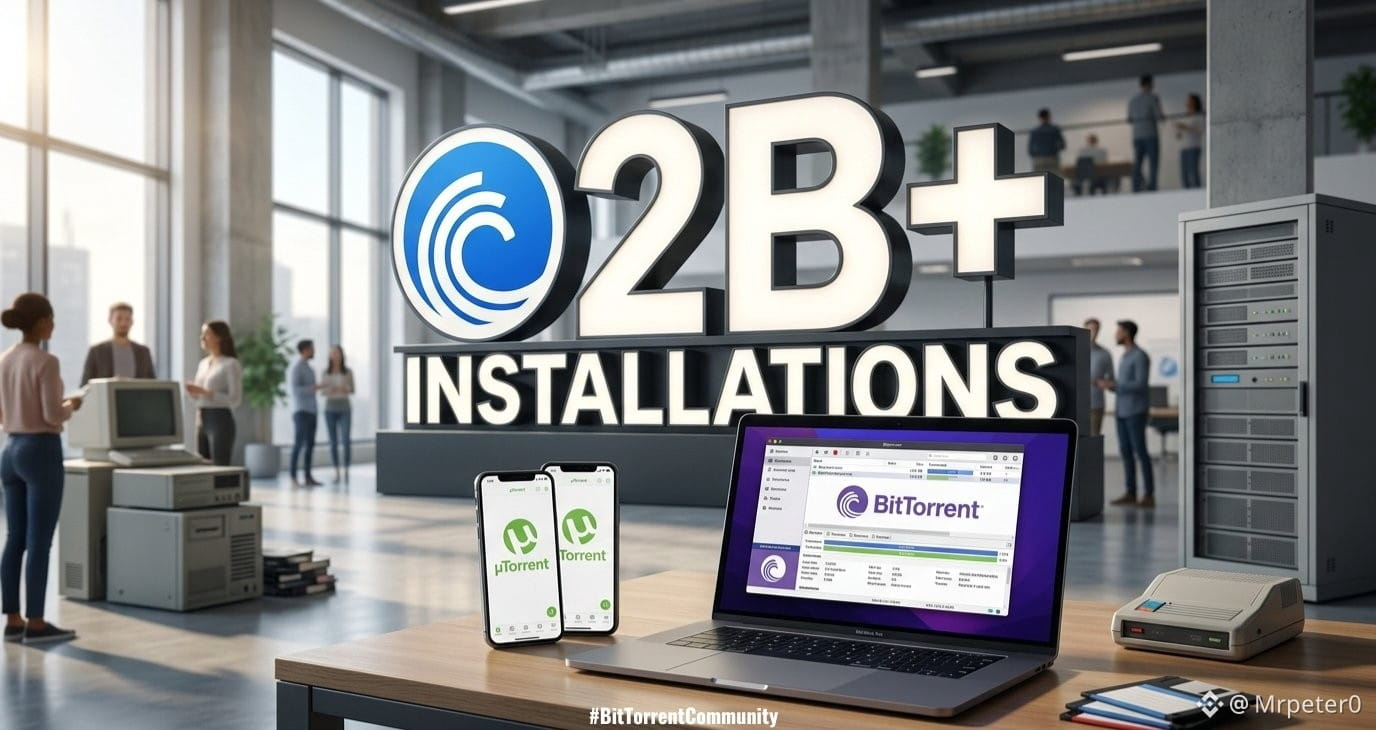
2+ tỷ lượt cài đặt.
Đây là cột mốc tổng hợp mà BitTorrent và µTorrent đạt được—một quy mô được xây dựng qua nhiều năm nhờ hàng loạt người dùng các sản phẩm của họ để chia sẻ và truy cập nội dung số.
Những con số như thế này không chỉ là một tiêu đề.
Chúng đại diện cho một lịch sử tiếp nhận khổng lồ, việc sử dụng lặp lại, và một công nghệ vẫn giữ được độ phù hợp qua nhiều thế hệ của internet.
Và câu chuyện không chỉ nói về những gì đã xảy ra trong quá khứ.
BitTorrent tiếp tục phát triển song hành cùng bối cảnh Web3 rộng lớn hơn, với hạ tầng blockchain như BTTC bổ sung thêm một lớp cho hệ sinh thái và $BTT đóng vai trò trong đó.
Từ chia sẻ tệp ngang hàng đến hạ tầng blockchain phi tập trung, công nghệ vẫn tiếp tục tiến cùng với sự thay đổi của internet.
2+ tỷ lượt cài đặt ở phía sau.
Hạ tầng mới ở phía trước.
Vẫn đang phát triển.
@BitTorrent_Official @JustinSun #TRONEcoStar
𝐁𝐈𝐓𝐓𝐎𝐑𝐑𝐄𝐍𝐓 𝐇𝐀𝐒 𝐀 𝐍𝐔𝐌𝐁𝐄𝐑 𝐖𝐎𝐑𝐓𝐇 𝐑𝐄𝐌𝐄𝐌𝐁𝐄𝐑𝐈𝐍𝐆 🤯
2+ tỷ lượt cài đặt.
Đây là cột mốc tổng hợp mà BitTorrent và µTorrent đạt được—một quy mô được xây dựng qua nhiều năm nhờ hàng loạt người dùng các sản phẩm của họ để chia sẻ và truy cập nội dung số.
Những con số như thế này không chỉ là một tiêu đề.
Chúng đại diện cho một lịch sử tiếp nhận khổng lồ, việc sử dụng lặp lại, và một công nghệ vẫn giữ được độ phù hợp qua nhiều thế hệ của internet.
Và câu chuyện không chỉ nói về những gì đã xảy ra trong quá khứ.
BitTorrent tiếp tục phát triển song hành cùng bối cảnh Web3 rộng lớn hơn, với hạ tầng blockchain như BTTC bổ sung thêm một lớp cho hệ sinh thái và $BTT đóng vai trò trong đó.
Từ chia sẻ tệp ngang hàng đến hạ tầng blockchain phi tập trung, công nghệ vẫn tiếp tục tiến cùng với sự thay đổi của internet.
2+ tỷ lượt cài đặt ở phía sau.
Hạ tầng mới ở phía trước.
Vẫn đang phát triển.
@BitTorrent_Official @Justin Sun孙宇晨 #TRONEcoStar
2+ tỷ lượt cài đặt.
Đây là cột mốc tổng hợp mà BitTorrent và µTorrent đạt được—một quy mô được xây dựng qua nhiều năm nhờ hàng loạt người dùng các sản phẩm của họ để chia sẻ và truy cập nội dung số.
Những con số như thế này không chỉ là một tiêu đề.
Chúng đại diện cho một lịch sử tiếp nhận khổng lồ, việc sử dụng lặp lại, và một công nghệ vẫn giữ được độ phù hợp qua nhiều thế hệ của internet.
Và câu chuyện không chỉ nói về những gì đã xảy ra trong quá khứ.
BitTorrent tiếp tục phát triển song hành cùng bối cảnh Web3 rộng lớn hơn, với hạ tầng blockchain như BTTC bổ sung thêm một lớp cho hệ sinh thái và $BTT đóng vai trò trong đó.
Từ chia sẻ tệp ngang hàng đến hạ tầng blockchain phi tập trung, công nghệ vẫn tiếp tục tiến cùng với sự thay đổi của internet.
2+ tỷ lượt cài đặt ở phía sau.
Hạ tầng mới ở phía trước.
Vẫn đang phát triển.
@BitTorrent_Official @Justin Sun孙宇晨 #TRONEcoStar
3
139
·
--
𝐓𝐀𝐋𝐊𝐈𝐍𝐆 𝐀𝐁𝐎𝐔𝐓 𝐓𝐇𝐄 𝐅𝐔𝐓𝐔𝐑𝐄 𝐈𝐒 𝐄𝐀𝐒𝐘.
Hầu như mọi dự án crypto đều có một tầm nhìn về việc Web3 có thể sẽ trông như thế nào trong vài năm tới.
Nhưng có một câu hỏi quan trọng hơn cần đặt ra:
Hôm nay, bạn thực sự có thể cho thấy điều gì? 👀
Hạ tầng thực sự có thể được kiểm thử.
Sản phẩm thực sự có thể được sử dụng.
Mạng lưới thực sự có thể xử lý hoạt động.
Dữ liệu thực sự có thể được kiểm tra.
Sự khác biệt đó là rất quan trọng.
Thay vì chỉ đưa ra những lời hứa về điều có thể xảy ra trong tương lai, các dự án có thể chỉ ra công nghệ, sản phẩm, người dùng, giao dịch và hạ tầng đã và đang tồn tại.
Đối với hệ sinh thái BitTorrent, câu chuyện không chỉ dừng lại ở một token. Đó là một mạng lưới rộng hơn gồm các sản phẩm và hạ tầng đang được phát triển xoay quanh BitTorrent, BTTC và $BTTC .
Tương lai luôn đáng để bàn luận.
Nhưng đôi khi, câu hỏi hay hơn lại đơn giản hơn rất nhiều:
Bạn đã xây dựng được gì mà mọi người có thể nhìn thấy, sử dụng và xác minh?
@BitTorrent_Official @JustinSun #TRONEcoStar
𝐓𝐀𝐋𝐊𝐈𝐍𝐆 𝐀𝐁𝐎𝐔𝐓 𝐓𝐇𝐄 𝐅𝐔𝐓𝐔𝐑𝐄 𝐈𝐒 𝐄𝐀𝐒𝐘.
Hầu như mọi dự án crypto đều có một tầm nhìn về việc Web3 có thể sẽ trông như thế nào trong vài năm tới.
Nhưng có một câu hỏi quan trọng hơn cần đặt ra:
Hôm nay, bạn thực sự có thể cho thấy điều gì? 👀
Hạ tầng thực sự có thể được kiểm thử.
Sản phẩm thực sự có thể được sử dụng.
Mạng lưới thực sự có thể xử lý hoạt động.
Dữ liệu thực sự có thể được kiểm tra.
Sự khác biệt đó là rất quan trọng.
Thay vì chỉ đưa ra những lời hứa về điều có thể xảy ra trong tương lai, các dự án có thể chỉ ra công nghệ, sản phẩm, người dùng, giao dịch và hạ tầng đã và đang tồn tại.
Đối với hệ sinh thái BitTorrent, câu chuyện không chỉ dừng lại ở một token. Đó là một mạng lưới rộng hơn gồm các sản phẩm và hạ tầng đang được phát triển xoay quanh BitTorrent, BTTC và $BTTC .
Tương lai luôn đáng để bàn luận.
Nhưng đôi khi, câu hỏi hay hơn lại đơn giản hơn rất nhiều:
Bạn đã xây dựng được gì mà mọi người có thể nhìn thấy, sử dụng và xác minh?
@BitTorrent_Official @Justin Sun孙宇晨 #TRONEcoStar
Hầu như mọi dự án crypto đều có một tầm nhìn về việc Web3 có thể sẽ trông như thế nào trong vài năm tới.
Nhưng có một câu hỏi quan trọng hơn cần đặt ra:
Hôm nay, bạn thực sự có thể cho thấy điều gì? 👀
Hạ tầng thực sự có thể được kiểm thử.
Sản phẩm thực sự có thể được sử dụng.
Mạng lưới thực sự có thể xử lý hoạt động.
Dữ liệu thực sự có thể được kiểm tra.
Sự khác biệt đó là rất quan trọng.
Thay vì chỉ đưa ra những lời hứa về điều có thể xảy ra trong tương lai, các dự án có thể chỉ ra công nghệ, sản phẩm, người dùng, giao dịch và hạ tầng đã và đang tồn tại.
Đối với hệ sinh thái BitTorrent, câu chuyện không chỉ dừng lại ở một token. Đó là một mạng lưới rộng hơn gồm các sản phẩm và hạ tầng đang được phát triển xoay quanh BitTorrent, BTTC và $BTTC .
Tương lai luôn đáng để bàn luận.
Nhưng đôi khi, câu hỏi hay hơn lại đơn giản hơn rất nhiều:
Bạn đã xây dựng được gì mà mọi người có thể nhìn thấy, sử dụng và xác minh?
@BitTorrent_Official @Justin Sun孙宇晨 #TRONEcoStar
1
56
·
--
𝐃𝐄𝐂𝐄𝐍𝐓𝐑𝐀𝐋𝐈𝐙𝐀𝐓𝐈𝐎𝐍 𝐈𝐒 𝐄𝐀𝐒𝐘 𝐓𝐎 𝐓𝐀𝐋𝐊 𝐀𝐁𝐎𝐔𝐓.
Nhưng bài kiểm tra thực sự bắt đầu khi mọi người phải sử dụng hạ tầng đó.
Không ai muốn chọn một mạng phi tập trung chỉ vì nó nghe hay trên giấy tờ. Người dùng cuối cùng sẽ đặt những câu hỏi thực tế:
⚡ Tốc độ thế nào?
🔒 Tôi có thể tin cậy vào nó không?
💰 Chi phí là bao nhiêu?
🌐 Nó có đáp ứng được nhu cầu thực tế ngoài đời không?
🔗 Nó có thể kết nối với phần còn lại của hệ sinh thái không?
Những câu hỏi này quan trọng vì hạ tầng chỉ thật sự hữu ích khi có thể mang lại trải nghiệm mượt mà ở quy mô lớn.
Đó là lý do các dự án như BitTorrent và BTTC thật đáng để theo dõi. Cuộc trò chuyện chuyển từ ý tưởng phi tập trung sang cách hạ tầng phi tập trung hoạt động khi người dùng thực, ứng dụng, tài sản và giao dịch bắt đầu phụ thuộc vào nó.
Tương lai của Web3 sẽ không chỉ được xây dựng dựa trên phi tập trung.
Mà nó còn phụ thuộc vào tốc độ, độ tin cậy, khả năng tiếp cận và tính hữu dụng thực tế.
Đó là nơi cuộc trò chuyện thực sự bắt đầu.
@BitTorrent_Official @JustinSun #TRONEcoStar
𝐃𝐄𝐂𝐄𝐍𝐓𝐑𝐀𝐋𝐈𝐙𝐀𝐓𝐈𝐎𝐍 𝐈𝐒 𝐄𝐀𝐒𝐘 𝐓𝐎 𝐓𝐀𝐋𝐊 𝐀𝐁𝐎𝐔𝐓.
Nhưng bài kiểm tra thực sự bắt đầu khi mọi người phải sử dụng hạ tầng đó.
Không ai muốn chọn một mạng phi tập trung chỉ vì nó nghe hay trên giấy tờ. Người dùng cuối cùng sẽ đặt những câu hỏi thực tế:
⚡ Tốc độ thế nào?
🔒 Tôi có thể tin cậy vào nó không?
💰 Chi phí là bao nhiêu?
🌐 Nó có đáp ứng được nhu cầu thực tế ngoài đời không?
🔗 Nó có thể kết nối với phần còn lại của hệ sinh thái không?
Những câu hỏi này quan trọng vì hạ tầng chỉ thật sự hữu ích khi có thể mang lại trải nghiệm mượt mà ở quy mô lớn.
Đó là lý do các dự án như BitTorrent và BTTC thật đáng để theo dõi. Cuộc trò chuyện chuyển từ ý tưởng phi tập trung sang cách hạ tầng phi tập trung hoạt động khi người dùng thực, ứng dụng, tài sản và giao dịch bắt đầu phụ thuộc vào nó.
Tương lai của Web3 sẽ không chỉ được xây dựng dựa trên phi tập trung.
Mà nó còn phụ thuộc vào tốc độ, độ tin cậy, khả năng tiếp cận và tính hữu dụng thực tế.
Đó là nơi cuộc trò chuyện thực sự bắt đầu.
@BitTorrent_Official @Justin Sun孙宇晨 #TRONEcoStar
Nhưng bài kiểm tra thực sự bắt đầu khi mọi người phải sử dụng hạ tầng đó.
Không ai muốn chọn một mạng phi tập trung chỉ vì nó nghe hay trên giấy tờ. Người dùng cuối cùng sẽ đặt những câu hỏi thực tế:
⚡ Tốc độ thế nào?
🔒 Tôi có thể tin cậy vào nó không?
💰 Chi phí là bao nhiêu?
🌐 Nó có đáp ứng được nhu cầu thực tế ngoài đời không?
🔗 Nó có thể kết nối với phần còn lại của hệ sinh thái không?
Những câu hỏi này quan trọng vì hạ tầng chỉ thật sự hữu ích khi có thể mang lại trải nghiệm mượt mà ở quy mô lớn.
Đó là lý do các dự án như BitTorrent và BTTC thật đáng để theo dõi. Cuộc trò chuyện chuyển từ ý tưởng phi tập trung sang cách hạ tầng phi tập trung hoạt động khi người dùng thực, ứng dụng, tài sản và giao dịch bắt đầu phụ thuộc vào nó.
Tương lai của Web3 sẽ không chỉ được xây dựng dựa trên phi tập trung.
Mà nó còn phụ thuộc vào tốc độ, độ tin cậy, khả năng tiếp cận và tính hữu dụng thực tế.
Đó là nơi cuộc trò chuyện thực sự bắt đầu.
@BitTorrent_Official @Justin Sun孙宇晨 #TRONEcoStar
2
78
·
--
Xem bản dịch
𝐁𝐈𝐓𝐓𝐎𝐑𝐑𝐄𝐍𝐓 𝐇𝐀𝐒 𝐓𝐖𝐎 𝐕𝐄𝐑𝐘 𝐃𝐈𝐅𝐅𝐄𝐑𝐄𝐍𝐓 𝐍𝐔𝐌𝐁𝐄𝐑𝐒 👀
One number represents activity.
The other represents token ownership.
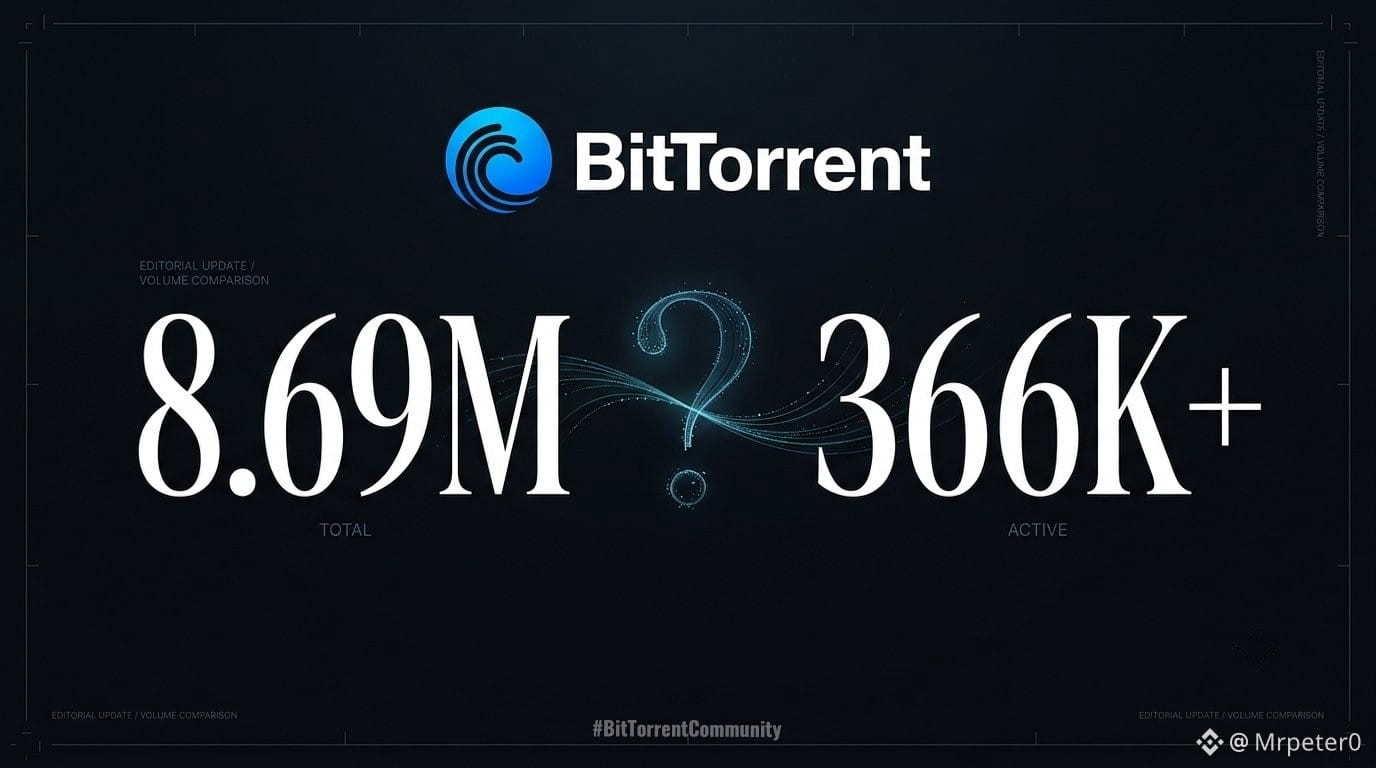
BitTorrent has reported around 8.69M daily active users, showing the scale of activity around its broader user base.
At the same time, there are 366K+ $BTT holders.
These numbers measure completely different things, so they shouldn’t be treated as if they mean the same thing. Daily active users indicate people interacting with the BitTorrent ecosystem, while holder numbers show the size of the group holding $BTT.
Still, putting the two figures side by side creates an interesting point to watch.
There is a large user base and a much smaller group of token holders. How that relationship develops over time could be worth monitoring as the BitTorrent ecosystem continues to evolve.
For $BTT, the interesting story isn’t always just the price.
Sometimes, the relationship between users, holders, activity, and adoption tells you more.
@BitTorrent_Official @JustinSun #TRONEcoStar
𝐁𝐈𝐓𝐓𝐎𝐑𝐑𝐄𝐍𝐓 𝐇𝐀𝐒 𝐓𝐖𝐎 𝐕𝐄𝐑𝐘 𝐃𝐈𝐅𝐅𝐄𝐑𝐄𝐍𝐓 𝐍𝐔𝐌𝐁𝐄𝐑𝐒 👀
One number represents activity.
The other represents token ownership.
BitTorrent has reported around 8.69M daily active users, showing the scale of activity around its broader user base.
At the same time, there are 366K+ $BTT holders.
These numbers measure completely different things, so they shouldn’t be treated as if they mean the same thing. Daily active users indicate people interacting with the BitTorrent ecosystem, while holder numbers show the size of the group holding $BTT.
Still, putting the two figures side by side creates an interesting point to watch.
There is a large user base and a much smaller group of token holders. How that relationship develops over time could be worth monitoring as the BitTorrent ecosystem continues to evolve.
For $BTT, the interesting story isn’t always just the price.
Sometimes, the relationship between users, holders, activity, and adoption tells you more.
@BitTorrent_Official @Justin Sun孙宇晨 #TRONEcoStar
One number represents activity.
The other represents token ownership.
BitTorrent has reported around 8.69M daily active users, showing the scale of activity around its broader user base.
At the same time, there are 366K+ $BTT holders.
These numbers measure completely different things, so they shouldn’t be treated as if they mean the same thing. Daily active users indicate people interacting with the BitTorrent ecosystem, while holder numbers show the size of the group holding $BTT.
Still, putting the two figures side by side creates an interesting point to watch.
There is a large user base and a much smaller group of token holders. How that relationship develops over time could be worth monitoring as the BitTorrent ecosystem continues to evolve.
For $BTT, the interesting story isn’t always just the price.
Sometimes, the relationship between users, holders, activity, and adoption tells you more.
@BitTorrent_Official @Justin Sun孙宇晨 #TRONEcoStar
1
1
·
--
Xem bản dịch
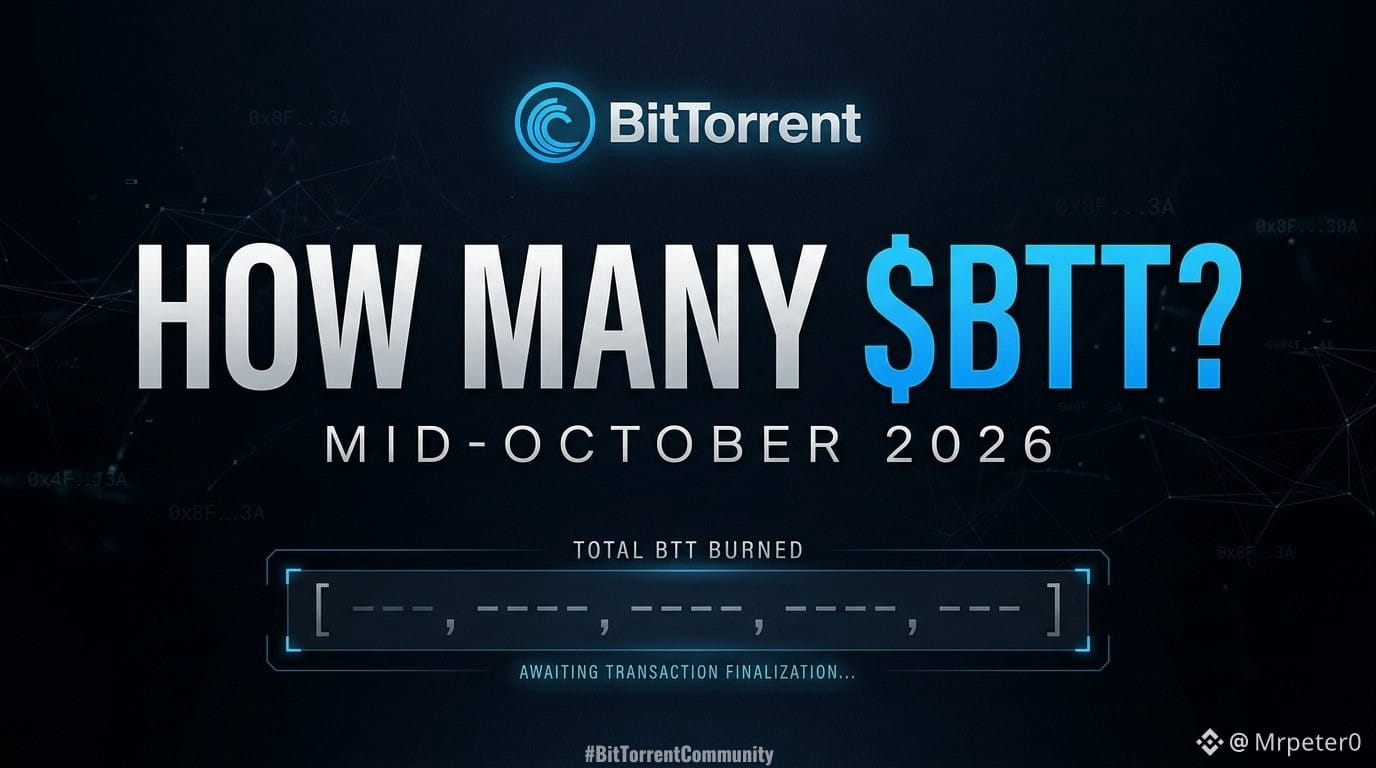
𝐓𝐇𝐄 𝐍𝐄𝐗𝐓 $𝐁𝐓𝐓 𝐍𝐔𝐌𝐁𝐄𝐑 𝐓𝐎 𝐖𝐀𝐓𝐂𝐇
Price and volume often get most of the attention, but another number could become important for $BTT: the amount of tokens burned.
The expected update is set for mid-October, when the burn activity should provide a clearer picture of how many BTT tokens are being removed from circulation.
What makes this especially interesting is that the transaction should be verifiable on-chain.
That means the community won’t have to rely only on a headline or announcement. The blockchain can provide the transaction data and allow anyone to verify what actually happened.
So as October approaches, keep an eye on one simple metric:
🔥 How much $BTT was actually burned?
The number itself could give the market more information about BTT’s supply activity and the mechanics behind the ecosystem.
@BitTorrent_Official @JustinSun #TRONEcoStar
𝐓𝐇𝐄 𝐍𝐄𝐗𝐓 $𝐁𝐓𝐓 𝐍𝐔𝐌𝐁𝐄𝐑 𝐓𝐎 𝐖𝐀𝐓𝐂𝐇
Price and volume often get most of the attention, but another number could become important for $BTT: the amount of tokens burned.
The expected update is set for mid-October, when the burn activity should provide a clearer picture of how many BTT tokens are being removed from circulation.
What makes this especially interesting is that the transaction should be verifiable on-chain.
That means the community won’t have to rely only on a headline or announcement. The blockchain can provide the transaction data and allow anyone to verify what actually happened.
So as October approaches, keep an eye on one simple metric:
🔥 How much $BTT was actually burned?
The number itself could give the market more information about BTT’s supply activity and the mechanics behind the ecosystem.
@BitTorrent_Official @Justin Sun孙宇晨 #TRONEcoStar
Price and volume often get most of the attention, but another number could become important for $BTT: the amount of tokens burned.
The expected update is set for mid-October, when the burn activity should provide a clearer picture of how many BTT tokens are being removed from circulation.
What makes this especially interesting is that the transaction should be verifiable on-chain.
That means the community won’t have to rely only on a headline or announcement. The blockchain can provide the transaction data and allow anyone to verify what actually happened.
So as October approaches, keep an eye on one simple metric:
🔥 How much $BTT was actually burned?
The number itself could give the market more information about BTT’s supply activity and the mechanics behind the ecosystem.
@BitTorrent_Official @Justin Sun孙宇晨 #TRONEcoStar
1
1
·
--
Tăng giá
𝐁𝐓𝐓 𝐉𝐔𝐒𝐓 𝐒𝐀𝐖 𝐀 𝐌𝐀𝐉𝐎𝐑 𝐋𝐄𝐀𝐏 𝐈𝐍 𝐕𝐎𝐋𝐔𝐌𝐄
Thị trường $BTT trông có vẻ rất khác nhau qua từng ngày.
Vào ngày 22 tháng 9, khối lượng giao dịch vào khoảng $11.8M.
Đến ngày 23 tháng 9, con số đó đã tăng lên khoảng $52.2M.
Đó là mức tăng xấp xỉ 4.4 lần về khối lượng giao dịch hằng ngày.
Với mức giá khoảng $0.000000384, phần đáng chú ý không chỉ là giá token. Mà là sự thay đổi đột ngột về lượng hoạt động giao dịch diễn ra quanh $BTTC .
Một biến động như vậy cho thấy giá trị được chuyển nhượng trong một ngày đã lớn đáng kể so với phiên trước.
Đây là một chỉ số hữu ích để theo dõi, vì khối lượng có thể phản ánh những thay đổi trong mức độ tham gia thị trường mà không phải lúc nào cũng nhận ra ngay chỉ từ giá.
Câu hỏi tiếp theo là liệu mức hoạt động cao hơn này có tiếp tục duy trì hay nhanh chóng suy giảm.
Với $BTT, khối lượng chắc chắn là một chỉ số đáng theo dõi ngay lúc này.
#BTT @BitTorrent_Official @JustinSun #TRONEcoStar
𝐁𝐓𝐓 𝐉𝐔𝐒𝐓 𝐒𝐀𝐖 𝐀 𝐌𝐀𝐉𝐎𝐑 𝐋𝐄𝐀𝐏 𝐈𝐍 𝐕𝐎𝐋𝐔𝐌𝐄
Thị trường $BTT trông có vẻ rất khác nhau qua từng ngày.
Vào ngày 22 tháng 9, khối lượng giao dịch vào khoảng $11.8M.
Đến ngày 23 tháng 9, con số đó đã tăng lên khoảng $52.2M.
Đó là mức tăng xấp xỉ 4.4 lần về khối lượng giao dịch hằng ngày.
Với mức giá khoảng $0.000000384, phần đáng chú ý không chỉ là giá token. Mà là sự thay đổi đột ngột về lượng hoạt động giao dịch diễn ra quanh $BTTC .
Một biến động như vậy cho thấy giá trị được chuyển nhượng trong một ngày đã lớn đáng kể so với phiên trước.
Đây là một chỉ số hữu ích để theo dõi, vì khối lượng có thể phản ánh những thay đổi trong mức độ tham gia thị trường mà không phải lúc nào cũng nhận ra ngay chỉ từ giá.
Câu hỏi tiếp theo là liệu mức hoạt động cao hơn này có tiếp tục duy trì hay nhanh chóng suy giảm.
Với $BTT, khối lượng chắc chắn là một chỉ số đáng theo dõi ngay lúc này.
#BTT @BitTorrent_Official @Justin Sun孙宇晨 #TRONEcoStar
Thị trường $BTT trông có vẻ rất khác nhau qua từng ngày.
Vào ngày 22 tháng 9, khối lượng giao dịch vào khoảng $11.8M.
Đến ngày 23 tháng 9, con số đó đã tăng lên khoảng $52.2M.
Đó là mức tăng xấp xỉ 4.4 lần về khối lượng giao dịch hằng ngày.
Với mức giá khoảng $0.000000384, phần đáng chú ý không chỉ là giá token. Mà là sự thay đổi đột ngột về lượng hoạt động giao dịch diễn ra quanh $BTTC .
Một biến động như vậy cho thấy giá trị được chuyển nhượng trong một ngày đã lớn đáng kể so với phiên trước.
Đây là một chỉ số hữu ích để theo dõi, vì khối lượng có thể phản ánh những thay đổi trong mức độ tham gia thị trường mà không phải lúc nào cũng nhận ra ngay chỉ từ giá.
Câu hỏi tiếp theo là liệu mức hoạt động cao hơn này có tiếp tục duy trì hay nhanh chóng suy giảm.
Với $BTT, khối lượng chắc chắn là một chỉ số đáng theo dõi ngay lúc này.
#BTT @BitTorrent_Official @Justin Sun孙宇晨 #TRONEcoStar
1
78
·
--
Xem bản dịch
𝐁𝐓𝐓’𝐬 𝐒𝐔𝐏𝐏𝐋𝐘 𝐈𝐒 𝐀𝐋𝐑𝐄𝐀𝐃𝐘 𝐍𝐄𝐀𝐑𝐋𝐘 𝐅𝐔𝐋𝐋𝐘 𝐈𝐍 𝐂𝐈𝐑𝐂𝐔𝐋𝐀𝐓𝐈𝐎𝐍 👀
Most conversations around $BTT usually start with price.
But there’s another number worth paying attention to: how much of the total supply is already circulating.
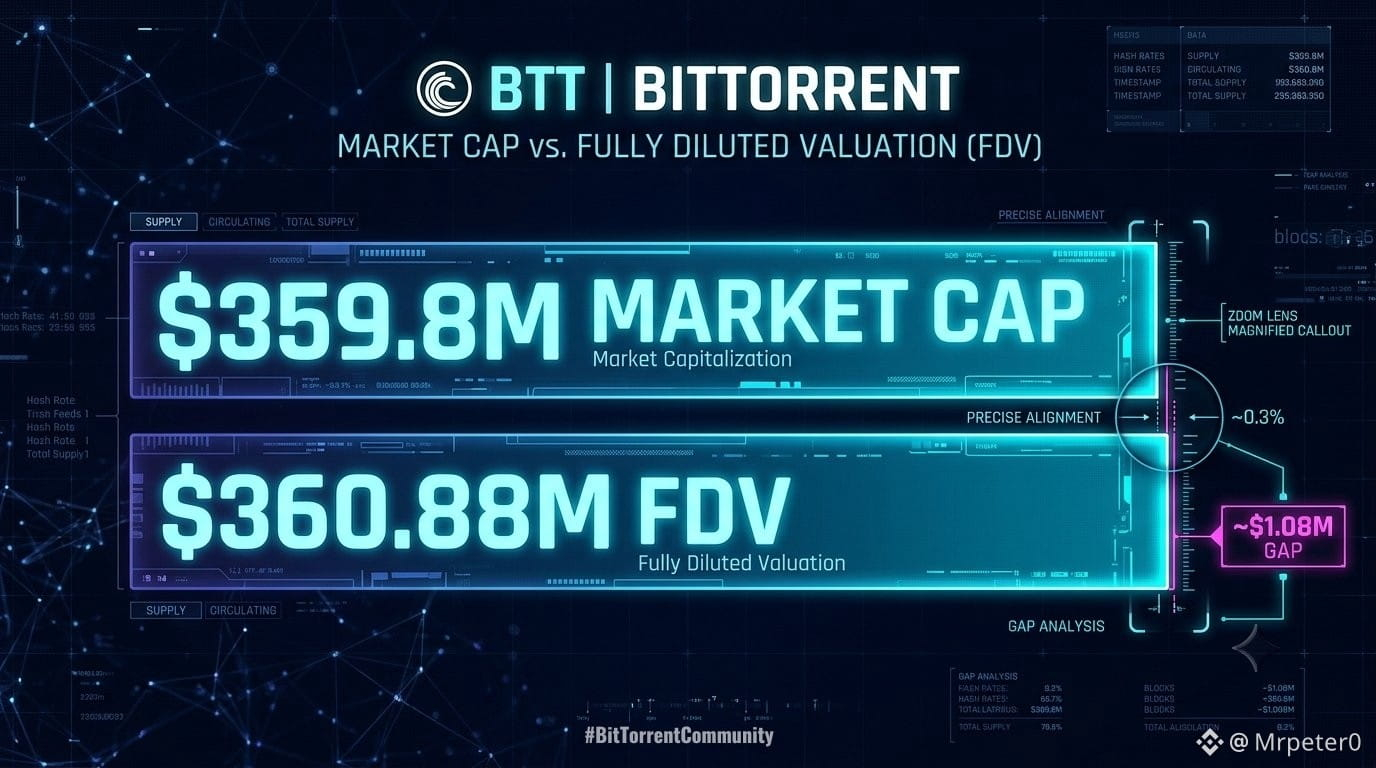
Based on the figures here, around 99.7% of BTT’s supply is already in circulation, leaving only a very small portion outside the circulating supply.
The numbers make the difference even clearer:
💰 Market Cap: $359.8M
📊 FDV: $360.88M
🔎 Difference: ~$1.08M
That puts the market cap and fully diluted valuation extremely close together.
In simple terms, the current circulating supply is already very close to the reported maximum supply, so there isn’t a large supply gap sitting between today’s market valuation and the fully diluted figure.
For anyone studying $BTT, this is an important part of the tokenomics to keep in mind.
Price tells you where the token is trading.
Supply tells you more about how much of the asset is already out in the market.
And with ~99.7% of BTT already circulating, the supply structure is definitely a number worth keeping on the radar.
@JustinSun @BitTorrent_Official #TRONEcoStar
𝐁𝐓𝐓’𝐬 𝐒𝐔𝐏𝐏𝐋𝐘 𝐈𝐒 𝐀𝐋𝐑𝐄𝐀𝐃𝐘 𝐍𝐄𝐀𝐑𝐋𝐘 𝐅𝐔𝐋𝐋𝐘 𝐈𝐍 𝐂𝐈𝐑𝐂𝐔𝐋𝐀𝐓𝐈𝐎𝐍 👀
Most conversations around $BTT usually start with price.
But there’s another number worth paying attention to: how much of the total supply is already circulating.
Based on the figures here, around 99.7% of BTT’s supply is already in circulation, leaving only a very small portion outside the circulating supply.
The numbers make the difference even clearer:
💰 Market Cap: $359.8M
📊 FDV: $360.88M
🔎 Difference: ~$1.08M
That puts the market cap and fully diluted valuation extremely close together.
In simple terms, the current circulating supply is already very close to the reported maximum supply, so there isn’t a large supply gap sitting between today’s market valuation and the fully diluted figure.
For anyone studying $BTT, this is an important part of the tokenomics to keep in mind.
Price tells you where the token is trading.
Supply tells you more about how much of the asset is already out in the market.
And with ~99.7% of BTT already circulating, the supply structure is definitely a number worth keeping on the radar.
@Justin Sun孙宇晨 @BitTorrent_Official #TRONEcoStar
Most conversations around $BTT usually start with price.
But there’s another number worth paying attention to: how much of the total supply is already circulating.
Based on the figures here, around 99.7% of BTT’s supply is already in circulation, leaving only a very small portion outside the circulating supply.
The numbers make the difference even clearer:
💰 Market Cap: $359.8M
📊 FDV: $360.88M
🔎 Difference: ~$1.08M
That puts the market cap and fully diluted valuation extremely close together.
In simple terms, the current circulating supply is already very close to the reported maximum supply, so there isn’t a large supply gap sitting between today’s market valuation and the fully diluted figure.
For anyone studying $BTT, this is an important part of the tokenomics to keep in mind.
Price tells you where the token is trading.
Supply tells you more about how much of the asset is already out in the market.
And with ~99.7% of BTT already circulating, the supply structure is definitely a number worth keeping on the radar.
@Justin Sun孙宇晨 @BitTorrent_Official #TRONEcoStar
1
1
·
--
Xem bản dịch
𝐁𝐓𝐓𝐂 𝐈𝐒 𝐁𝐔𝐈𝐋𝐓 𝐅𝐎𝐑 𝐒𝐏𝐄𝐄𝐃 ⚡
When people look at a blockchain, they often focus on token price, transaction volume, or the number of users. But one important part of the infrastructure is easy to overlook: how quickly the network can produce blocks.
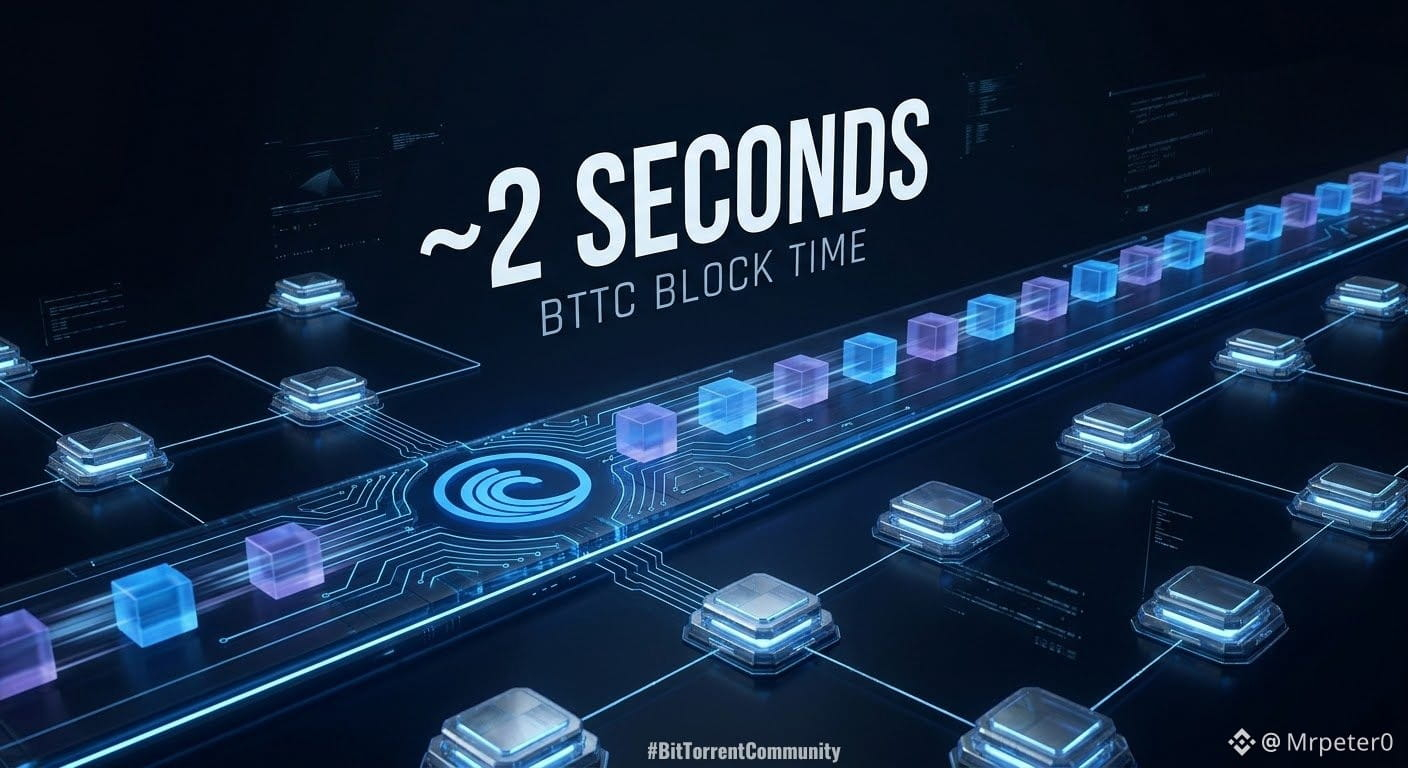
According to BitTorrent Chain documentation, BTTC has an approximate 2-second block production time.
That means the network is designed to keep block creation moving at a fast pace, giving applications and users a quicker environment for processing on-chain activity.
And BTTC is not only focused on speed.
The chain is designed around cross-chain infrastructure, creating a framework for assets and applications to operate across different blockchain environments.
At the center of the ecosystem is $BTT, which plays a role within the BitTorrent Chain network.
So, when you put the pieces together:
⚡ ~2-second block production
🌐 Cross-chain infrastructure
🔗 Blockchain interoperability
💰 $BTT supporting the ecosystem
The important point is that blockchain infrastructure is not only about what happens on the surface. The underlying architecture matters too.
Fast block production can help create a responsive network, while cross-chain functionality expands the environments BTTC can connect with.
That combination gives BTTC a design focused on speed, connectivity, and blockchain utility.
Sometimes, a simple number like 2 seconds tells you more about a blockchain’s architecture than a long list of marketing claims.
@BitTorrent_Official @JustinSun #TRONEcoStar
𝐁𝐓𝐓𝐂 𝐈𝐒 𝐁𝐔𝐈𝐋𝐓 𝐅𝐎𝐑 𝐒𝐏𝐄𝐄𝐃 ⚡
When people look at a blockchain, they often focus on token price, transaction volume, or the number of users. But one important part of the infrastructure is easy to overlook: how quickly the network can produce blocks.
According to BitTorrent Chain documentation, BTTC has an approximate 2-second block production time.
That means the network is designed to keep block creation moving at a fast pace, giving applications and users a quicker environment for processing on-chain activity.
And BTTC is not only focused on speed.
The chain is designed around cross-chain infrastructure, creating a framework for assets and applications to operate across different blockchain environments.
At the center of the ecosystem is $BTT, which plays a role within the BitTorrent Chain network.
So, when you put the pieces together:
⚡ ~2-second block production
🌐 Cross-chain infrastructure
🔗 Blockchain interoperability
💰 $BTT supporting the ecosystem
The important point is that blockchain infrastructure is not only about what happens on the surface. The underlying architecture matters too.
Fast block production can help create a responsive network, while cross-chain functionality expands the environments BTTC can connect with.
That combination gives BTTC a design focused on speed, connectivity, and blockchain utility.
Sometimes, a simple number like 2 seconds tells you more about a blockchain’s architecture than a long list of marketing claims.
@BitTorrent_Official @Justin Sun孙宇晨 #TRONEcoStar
When people look at a blockchain, they often focus on token price, transaction volume, or the number of users. But one important part of the infrastructure is easy to overlook: how quickly the network can produce blocks.
According to BitTorrent Chain documentation, BTTC has an approximate 2-second block production time.
That means the network is designed to keep block creation moving at a fast pace, giving applications and users a quicker environment for processing on-chain activity.
And BTTC is not only focused on speed.
The chain is designed around cross-chain infrastructure, creating a framework for assets and applications to operate across different blockchain environments.
At the center of the ecosystem is $BTT, which plays a role within the BitTorrent Chain network.
So, when you put the pieces together:
⚡ ~2-second block production
🌐 Cross-chain infrastructure
🔗 Blockchain interoperability
💰 $BTT supporting the ecosystem
The important point is that blockchain infrastructure is not only about what happens on the surface. The underlying architecture matters too.
Fast block production can help create a responsive network, while cross-chain functionality expands the environments BTTC can connect with.
That combination gives BTTC a design focused on speed, connectivity, and blockchain utility.
Sometimes, a simple number like 2 seconds tells you more about a blockchain’s architecture than a long list of marketing claims.
@BitTorrent_Official @Justin Sun孙宇晨 #TRONEcoStar
1
2
·
--
Xem bản dịch
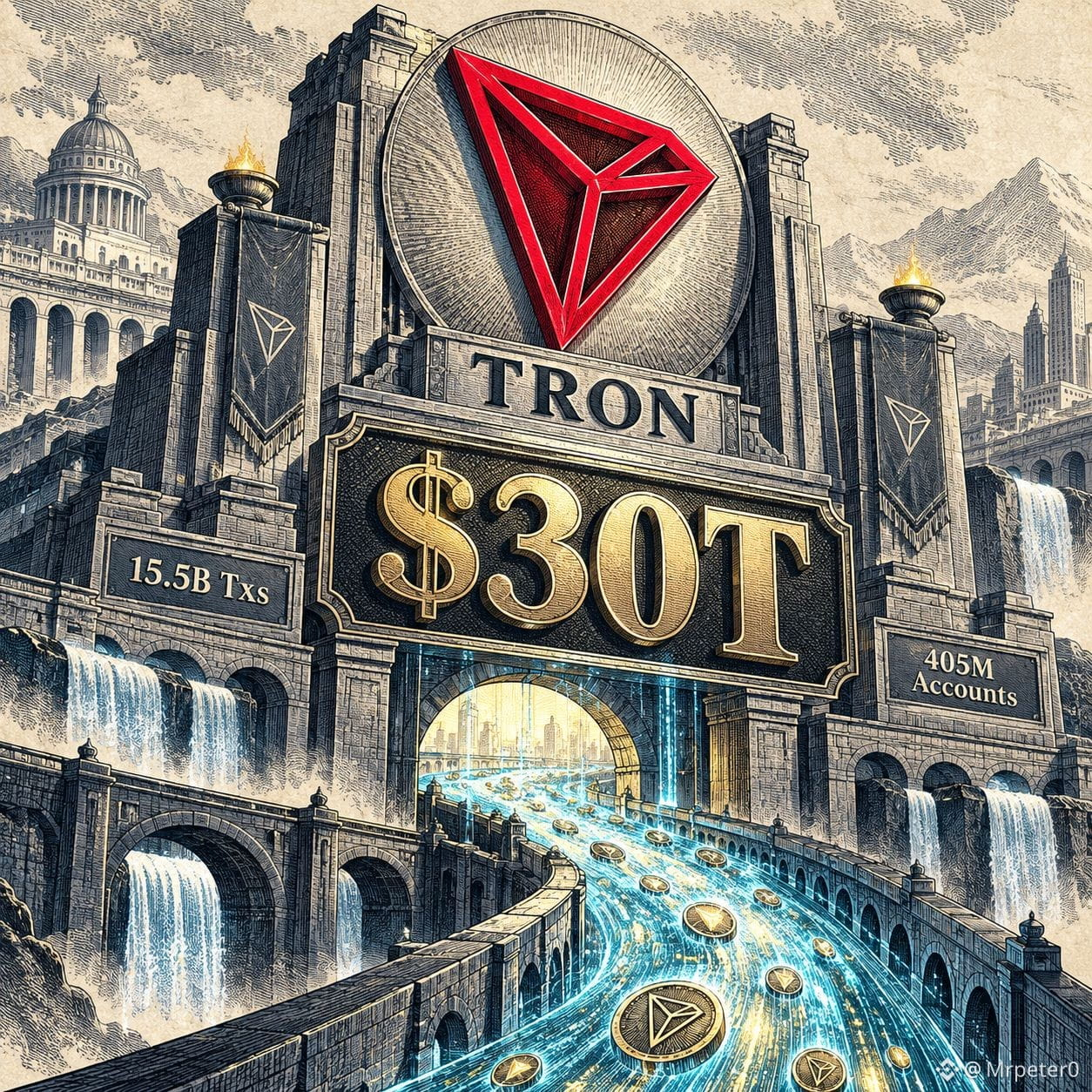
TRON Crosses $30 Trillion in Cumulative Transfer Volume
TRON has reached a major network milestone, surpassing $30 trillion in cumulative value transferred, according to TRONSCAN data.
The figure represents the total value transferred across the network, not the number of transactions. TRON has separately processed more than 15.5 billion transactions across over 405 million accounts.
The milestone highlights the scale of activity TRON has accumulated as its network continues to serve as a major settlement layer for digital assets, particularly stablecoins.
@JustinSun @TRONDAO #TRONEcoStar
TRON Crosses $30 Trillion in Cumulative Transfer Volume
TRON has reached a major network milestone, surpassing $30 trillion in cumulative value transferred, according to TRONSCAN data.
The figure represents the total value transferred across the network, not the number of transactions. TRON has separately processed more than 15.5 billion transactions across over 405 million accounts.
The milestone highlights the scale of activity TRON has accumulated as its network continues to serve as a major settlement layer for digital assets, particularly stablecoins.
@Justin Sun孙宇晨 @TRON DAO #TRONEcoStar
TRON has reached a major network milestone, surpassing $30 trillion in cumulative value transferred, according to TRONSCAN data.
The figure represents the total value transferred across the network, not the number of transactions. TRON has separately processed more than 15.5 billion transactions across over 405 million accounts.
The milestone highlights the scale of activity TRON has accumulated as its network continues to serve as a major settlement layer for digital assets, particularly stablecoins.
@Justin Sun孙宇晨 @TRON DAO #TRONEcoStar
1
32
·
--
Xem bản dịch
𝐓𝐑𝐎𝐍 𝐈𝐍𝐂𝐄𝐍𝐓𝐈𝐕𝐄𝐒 𝐀𝐑𝐄 𝐆𝐄𝐓𝐓𝐈𝐍𝐆 𝐒𝐓𝐑𝐎𝐍𝐆𝐄𝐑
Sometimes, the most important changes in Web3 aren't the loudest ones.
They are the changes that make people want to participate more.
This update is a good example of that.
Here’s what changed:
→ All-chains mission: 300 → 3,000 miles
→ TRON volume-based miles: 25% → 100%
→ Other supported networks: remain at 25% of eligible swap volume.
So what does that actually mean?
A qualifying $100 cross-chain swap to or from TRON can now generate 100 miles, compared with just 25 miles before.
That is a major shift in the incentive structure.
It gives users a stronger reason to explore cross-chain activity involving TRON while making the campaign more rewarding for eligible participants.
But there’s an important point to remember:
→ Miles are campaign points.
→ They are not trading profits or investment returns.
What I find interesting here is the strategy behind it.
Good incentive design can turn attention into participation.
More attractive incentives → more user activity → more interaction with the ecosystem → more opportunities for people to discover what TRON is building.
Web3 isn't only about technology.
It's also about creating systems that give people a reason to participate.
And when the incentives are designed well, even a small change can create a much bigger difference.
@JustinSun @TRONDAO #TRONEcoStar
𝐓𝐑𝐎𝐍 𝐈𝐍𝐂𝐄𝐍𝐓𝐈𝐕𝐄𝐒 𝐀𝐑𝐄 𝐆𝐄𝐓𝐓𝐈𝐍𝐆 𝐒𝐓𝐑𝐎𝐍𝐆𝐄𝐑
Sometimes, the most important changes in Web3 aren't the loudest ones.
They are the changes that make people want to participate more.
This update is a good example of that.
Here’s what changed:
→ All-chains mission: 300 → 3,000 miles
→ TRON volume-based miles: 25% → 100%
→ Other supported networks: remain at 25% of eligible swap volume.
So what does that actually mean?
A qualifying $100 cross-chain swap to or from TRON can now generate 100 miles, compared with just 25 miles before.
That is a major shift in the incentive structure.
It gives users a stronger reason to explore cross-chain activity involving TRON while making the campaign more rewarding for eligible participants.
But there’s an important point to remember:
→ Miles are campaign points.
→ They are not trading profits or investment returns.
What I find interesting here is the strategy behind it.
Good incentive design can turn attention into participation.
More attractive incentives → more user activity → more interaction with the ecosystem → more opportunities for people to discover what TRON is building.
Web3 isn't only about technology.
It's also about creating systems that give people a reason to participate.
And when the incentives are designed well, even a small change can create a much bigger difference.
@Justin Sun孙宇晨 @TRON DAO #TRONEcoStar
Sometimes, the most important changes in Web3 aren't the loudest ones.
They are the changes that make people want to participate more.
This update is a good example of that.
Here’s what changed:
→ All-chains mission: 300 → 3,000 miles
→ TRON volume-based miles: 25% → 100%
→ Other supported networks: remain at 25% of eligible swap volume.
So what does that actually mean?
A qualifying $100 cross-chain swap to or from TRON can now generate 100 miles, compared with just 25 miles before.
That is a major shift in the incentive structure.
It gives users a stronger reason to explore cross-chain activity involving TRON while making the campaign more rewarding for eligible participants.
But there’s an important point to remember:
→ Miles are campaign points.
→ They are not trading profits or investment returns.
What I find interesting here is the strategy behind it.
Good incentive design can turn attention into participation.
More attractive incentives → more user activity → more interaction with the ecosystem → more opportunities for people to discover what TRON is building.
Web3 isn't only about technology.
It's also about creating systems that give people a reason to participate.
And when the incentives are designed well, even a small change can create a much bigger difference.
@Justin Sun孙宇晨 @TRON DAO #TRONEcoStar
65
·
--
Xem bản dịch
𝐒𝐌𝐀𝐑𝐓 𝐂𝐎𝐍𝐓𝐑𝐀𝐂𝐓 𝐒𝐄𝐂𝐔𝐑𝐈𝐓𝐘 𝐈𝐒 𝐂𝐎𝐌𝐈𝐍𝐆 𝐓𝐎 𝐓𝐑𝐎𝐍
@OpenZeppelin is bringing its smart contract security stack to TRON, and this is the kind of infrastructure that can quietly make a big difference.
→ Audited contract libraries
→ Upgrade plugins
→ Contracts Wizard
→ TRC20 & TRC721 support
→ Role-based access control
→ Upgradeable contracts
→ Passkey-based account architectures
And the experience behind it is serious.
OpenZeppelin says its Contracts library has facilitated more than $37T in value transferred, with 900+ security engagements since 2015.
What makes this interesting is that the tooling isn't simply being copied from Ethereum.
→ OpenZeppelin has adapted the libraries to TRON's TVM
→ TRON-specific standards are supported
→ Execution differences are taken into account
That matters because TRON already plays a major role in stablecoin activity, especially USDT.
As more money, users and applications move onchain, security can't remain an afterthought.
𝐓𝐡𝐞 𝐫𝐞𝐚𝐥 𝐨𝐩𝐩𝐨𝐫𝐭𝐮𝐧𝐢𝐭𝐲 𝐢𝐬 𝐛𝐮𝐢𝐥𝐝𝐢𝐧𝐠 𝐬𝐚𝐟𝐞𝐫.
Better tools → better development practices → stronger applications → more confidence for builders and users.
Of course, no security framework makes a protocol automatically safe. Testing, audits, access controls, governance and dependency reviews still matter.
But giving TRON developers stronger tools from the start raises the standard of what can be built.
And that's what makes this integration worth watching.
The infrastructure is getting stronger. Now it's up to developers to build something meaningful with it.
@JustinSun @TRONDAO #TRONEcoStar
𝐒𝐌𝐀𝐑𝐓 𝐂𝐎𝐍𝐓𝐑𝐀𝐂𝐓 𝐒𝐄𝐂𝐔𝐑𝐈𝐓𝐘 𝐈𝐒 𝐂𝐎𝐌𝐈𝐍𝐆 𝐓𝐎 𝐓𝐑𝐎𝐍
@OpenZeppelin is bringing its smart contract security stack to TRON, and this is the kind of infrastructure that can quietly make a big difference.
→ Audited contract libraries
→ Upgrade plugins
→ Contracts Wizard
→ TRC20 & TRC721 support
→ Role-based access control
→ Upgradeable contracts
→ Passkey-based account architectures
And the experience behind it is serious.
OpenZeppelin says its Contracts library has facilitated more than $37T in value transferred, with 900+ security engagements since 2015.
What makes this interesting is that the tooling isn't simply being copied from Ethereum.
→ OpenZeppelin has adapted the libraries to TRON's TVM
→ TRON-specific standards are supported
→ Execution differences are taken into account
That matters because TRON already plays a major role in stablecoin activity, especially USDT.
As more money, users and applications move onchain, security can't remain an afterthought.
𝐓𝐡𝐞 𝐫𝐞𝐚𝐥 𝐨𝐩𝐩𝐨𝐫𝐭𝐮𝐧𝐢𝐭𝐲 𝐢𝐬 𝐛𝐮𝐢𝐥𝐝𝐢𝐧𝐠 𝐬𝐚𝐟𝐞𝐫.
Better tools → better development practices → stronger applications → more confidence for builders and users.
Of course, no security framework makes a protocol automatically safe. Testing, audits, access controls, governance and dependency reviews still matter.
But giving TRON developers stronger tools from the start raises the standard of what can be built.
And that's what makes this integration worth watching.
The infrastructure is getting stronger. Now it's up to developers to build something meaningful with it.
@Justin Sun孙宇晨 @TRON DAO #TRONEcoStar
@OpenZeppelin is bringing its smart contract security stack to TRON, and this is the kind of infrastructure that can quietly make a big difference.
→ Audited contract libraries
→ Upgrade plugins
→ Contracts Wizard
→ TRC20 & TRC721 support
→ Role-based access control
→ Upgradeable contracts
→ Passkey-based account architectures
And the experience behind it is serious.
OpenZeppelin says its Contracts library has facilitated more than $37T in value transferred, with 900+ security engagements since 2015.
What makes this interesting is that the tooling isn't simply being copied from Ethereum.
→ OpenZeppelin has adapted the libraries to TRON's TVM
→ TRON-specific standards are supported
→ Execution differences are taken into account
That matters because TRON already plays a major role in stablecoin activity, especially USDT.
As more money, users and applications move onchain, security can't remain an afterthought.
𝐓𝐡𝐞 𝐫𝐞𝐚𝐥 𝐨𝐩𝐩𝐨𝐫𝐭𝐮𝐧𝐢𝐭𝐲 𝐢𝐬 𝐛𝐮𝐢𝐥𝐝𝐢𝐧𝐠 𝐬𝐚𝐟𝐞𝐫.
Better tools → better development practices → stronger applications → more confidence for builders and users.
Of course, no security framework makes a protocol automatically safe. Testing, audits, access controls, governance and dependency reviews still matter.
But giving TRON developers stronger tools from the start raises the standard of what can be built.
And that's what makes this integration worth watching.
The infrastructure is getting stronger. Now it's up to developers to build something meaningful with it.
@Justin Sun孙宇晨 @TRON DAO #TRONEcoStar
72
·
--
Xem bản dịch
💰 $30 TRILLION MOVED: WHAT DOES THE ACTIVITY REALLY TELL US?
A $30 trillion cumulative transfer milestone is a huge amount of value moving through a network.
But the number itself is only the beginning.
To understand what it says about TRON, we need to look beyond the headline and ask a more important question:
Why is all this value moving?
Transfers can happen for many different reasons:
▪️ Moving funds between wallets
▪️ Settling payments
▪️ Managing exchange balances
▪️ Interacting with decentralized applications
▪️ Transferring assets between users and services
So, a cumulative volume figure by itself doesn't tell us exactly how much activity comes from each use case.
That's where the deeper data becomes interesting. 👇
📊 Transfer frequency can show how often the network is being used.
💰 Transaction sizes can help us understand whether activity is spread across many smaller transfers or concentrated in larger movements.
🔄 Repeat activity can provide clues about recurring use rather than one-time transactions.
And there's another important point:
Addresses aren't the same as people.
One individual, company, exchange, or application can operate multiple addresses, so blockchain activity needs to be interpreted carefully.
Eight years of cumulative activity gives the $30T milestone significant historical scale. But the more useful question isn't simply “How much moved?”
It's:
Who is using the network, what are they using it for, and how consistently are they coming back?
That's where transaction data can move from a headline number into a clearer picture of actual network usage.
@JustinSun @TRONDAO
#TRONEcoStar
💰 $30 TRILLION MOVED: WHAT DOES THE ACTIVITY REALLY TELL US?
A $30 trillion cumulative transfer milestone is a huge amount of value moving through a network.
But the number itself is only the beginning.
To understand what it says about TRON, we need to look beyond the headline and ask a more important question:
Why is all this value moving?
Transfers can happen for many different reasons:
▪️ Moving funds between wallets
▪️ Settling payments
▪️ Managing exchange balances
▪️ Interacting with decentralized applications
▪️ Transferring assets between users and services
So, a cumulative volume figure by itself doesn't tell us exactly how much activity comes from each use case.
That's where the deeper data becomes interesting. 👇
📊 Transfer frequency can show how often the network is being used.
💰 Transaction sizes can help us understand whether activity is spread across many smaller transfers or concentrated in larger movements.
🔄 Repeat activity can provide clues about recurring use rather than one-time transactions.
And there's another important point:
Addresses aren't the same as people.
One individual, company, exchange, or application can operate multiple addresses, so blockchain activity needs to be interpreted carefully.
Eight years of cumulative activity gives the $30T milestone significant historical scale. But the more useful question isn't simply “How much moved?”
It's:
Who is using the network, what are they using it for, and how consistently are they coming back?
That's where transaction data can move from a headline number into a clearer picture of actual network usage.
@Justin Sun孙宇晨 @TRON DAO
#TRONEcoStar
A $30 trillion cumulative transfer milestone is a huge amount of value moving through a network.
But the number itself is only the beginning.
To understand what it says about TRON, we need to look beyond the headline and ask a more important question:
Why is all this value moving?
Transfers can happen for many different reasons:
▪️ Moving funds between wallets
▪️ Settling payments
▪️ Managing exchange balances
▪️ Interacting with decentralized applications
▪️ Transferring assets between users and services
So, a cumulative volume figure by itself doesn't tell us exactly how much activity comes from each use case.
That's where the deeper data becomes interesting. 👇
📊 Transfer frequency can show how often the network is being used.
💰 Transaction sizes can help us understand whether activity is spread across many smaller transfers or concentrated in larger movements.
🔄 Repeat activity can provide clues about recurring use rather than one-time transactions.
And there's another important point:
Addresses aren't the same as people.
One individual, company, exchange, or application can operate multiple addresses, so blockchain activity needs to be interpreted carefully.
Eight years of cumulative activity gives the $30T milestone significant historical scale. But the more useful question isn't simply “How much moved?”
It's:
Who is using the network, what are they using it for, and how consistently are they coming back?
That's where transaction data can move from a headline number into a clearer picture of actual network usage.
@Justin Sun孙宇晨 @TRON DAO
#TRONEcoStar
8
·
--
Thế giới có thể sẽ trông như thế nào nếu $30 nghìn tỷ được đầu tư để xây dựng tương lai trong tám năm tới?
@TRONDAO @JustinSun #TRONEcoStar
Thế giới có thể sẽ trông như thế nào nếu $30 nghìn tỷ được đầu tư để xây dựng tương lai trong tám năm tới?
@TRON DAO @Justin Sun孙宇晨 #TRONEcoStar
@TRON DAO @Justin Sun孙宇晨 #TRONEcoStar
TRON DAO
·
--
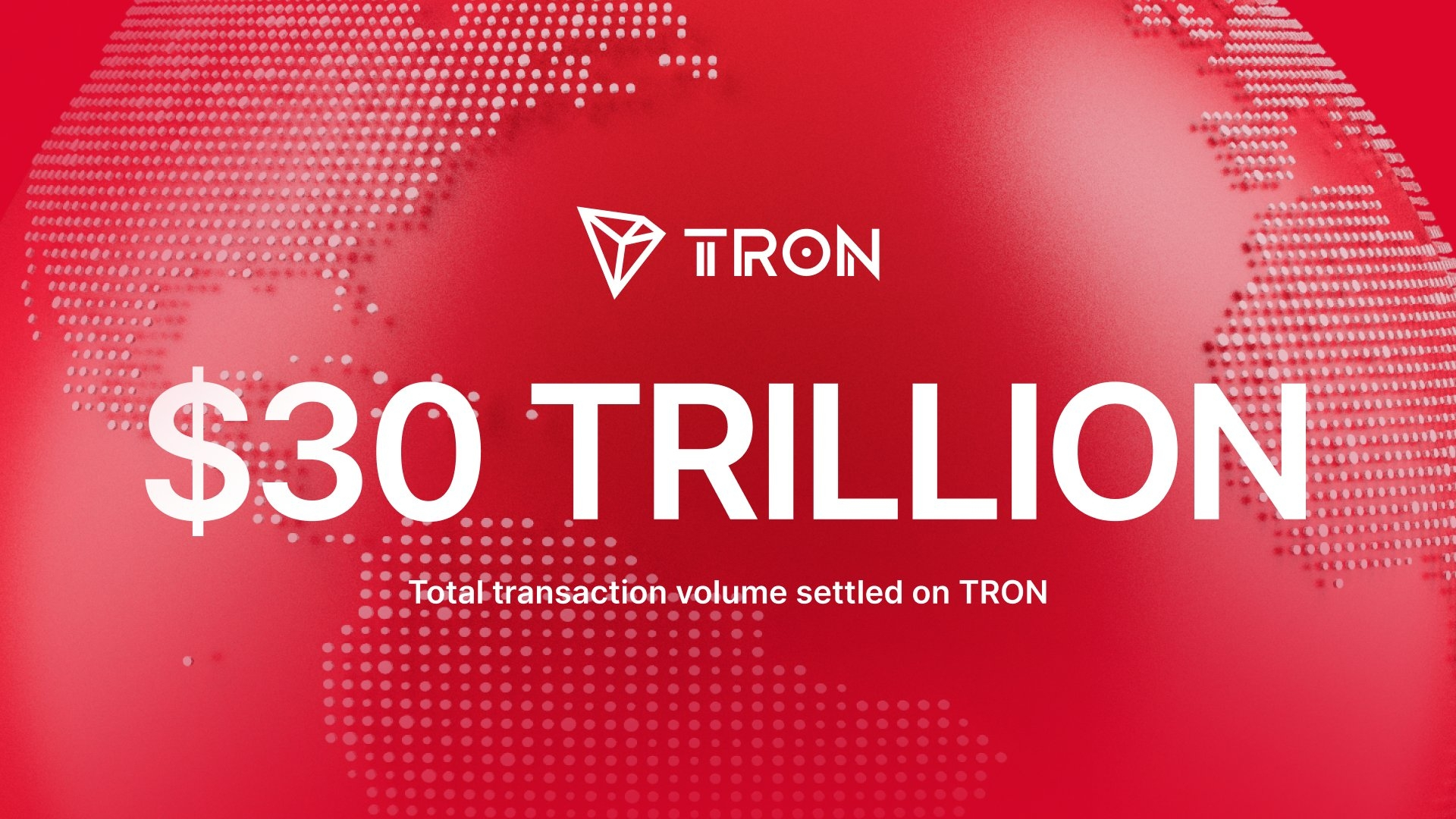
30 nghìn tỷ USD đã được giao dịch trên TRON.🔻
Trong tám năm, TRON đã phát triển lên hơn 405M tài khoản và 15B giao dịch.
Chuyển động hàng nghìn tỷ. Trao quyền cho hàng tỷ.
Xem thêm chi tiết từ TheBlock 👇
https://theblock.co/sponsored/2026-09-23-tron-surpasses-30t-in-total-transaction-volume-as-it-secures-its-place-as-leading-chain-for-stablecoins-416228
Trong tám năm, TRON đã phát triển lên hơn 405M tài khoản và 15B giao dịch.
Chuyển động hàng nghìn tỷ. Trao quyền cho hàng tỷ.
Xem thêm chi tiết từ TheBlock 👇
https://theblock.co/sponsored/2026-09-23-tron-surpasses-30t-in-total-transaction-volume-as-it-secures-its-place-as-leading-chain-for-stablecoins-416228
1
Đăng nhập để khám phá thêm nội dung
Tham gia cùng người dùng tiền mã hóa toàn cầu trên Binance Square
⚡️ Nhận thông tin mới nhất và hữu ích về tiền mã hóa.
💬 Được tin cậy bởi sàn giao dịch tiền mã hóa lớn nhất thế giới.
👍 Khám phá những thông tin chuyên sâu thực tế từ những nhà sáng tạo đã xác minh.
Email / Số điện thoại