
Paxton 1
417 Bài đăng

Paxton 1
Báo cáo
Chặn người dùng
Alt Trader | Marketing Maven | KOL Connector | On-Chain Degen | Bringing You Alpha on Innovative Investments.
0 Đang theo dõi
1.3K+ Người theo dõi
226 Đã thích
Bài đăng
·
--
Xem bản dịch
6 energy indices hit Pyth 🔥
$NEAR has the AI, chain abstraction and app-layer crowd watching infrastructure that can power real use cases. $VVV brings the Venice, private AI and agent economy angle into the same conversation.
That matters because AI agents and onchain apps still need clean references when they move beyond crypto-native assets.
Pyth just made that cleaner for energy markets.
WTI, Brent, Henry Hub, Henry LD1, London WTI and Dutch TTF are now live as constant maturity futures indices through Pyth Indices.
Normal futures feeds follow one contract until expiry. As that contract moves closer to the end date, the time horizon keeps shrinking.
That creates a messy reference for builders.
A constant maturity index fixes the horizon instead.
One month out, every day.
No roll schedule to manage. No roll date to track. No manual contract migration every time the futures curve moves forward.
For builders, this is the kind of boring infrastructure that actually matters.
Energy markets are global, volatile and deeply tied to macro trading. If RWAs are coming onchain, oil and gas cannot depend on messy references that break every time the front contract changes.
Pyth already has first-party data, 3,500+ market feeds and 24/7 pricing products.
Now it is adding cleaner futures references for the markets builders actually want to package, trade and settle.
This is how real-world markets become programmable.
#Altcoin Season# #Trading
6 energy indices hit Pyth 🔥
$NEAR has the AI, chain abstraction and app-layer crowd watching infrastructure that can power real use cases. $VVV brings the Venice, private AI and agent economy angle into the same conversation.
That matters because AI agents and onchain apps still need clean references when they move beyond crypto-native assets.
Pyth just made that cleaner for energy markets.
WTI, Brent, Henry Hub, Henry LD1, London WTI and Dutch TTF are now live as constant maturity futures indices through Pyth Indices.
Normal futures feeds follow one contract until expiry. As that contract moves closer to the end date, the time horizon keeps shrinking.
That creates a messy reference for builders.
A constant maturity index fixes the horizon instead.
One month out, every day.
No roll schedule to manage. No roll date to track. No manual contract migration every time the futures curve moves forward.
For builders, this is the kind of boring infrastructure that actually matters.
Energy markets are global, volatile and deeply tied to macro trading. If RWAs are coming onchain, oil and gas cannot depend on messy references that break every time the front contract changes.
Pyth already has first-party data, 3,500+ market feeds and 24/7 pricing products.
Now it is adding cleaner futures references for the markets builders actually want to package, trade and settle.
This is how real-world markets become programmable.
#Altcoin Season# #Trading
$NEAR has the AI, chain abstraction and app-layer crowd watching infrastructure that can power real use cases. $VVV brings the Venice, private AI and agent economy angle into the same conversation.
That matters because AI agents and onchain apps still need clean references when they move beyond crypto-native assets.
Pyth just made that cleaner for energy markets.
WTI, Brent, Henry Hub, Henry LD1, London WTI and Dutch TTF are now live as constant maturity futures indices through Pyth Indices.
Normal futures feeds follow one contract until expiry. As that contract moves closer to the end date, the time horizon keeps shrinking.
That creates a messy reference for builders.
A constant maturity index fixes the horizon instead.
One month out, every day.
No roll schedule to manage. No roll date to track. No manual contract migration every time the futures curve moves forward.
For builders, this is the kind of boring infrastructure that actually matters.
Energy markets are global, volatile and deeply tied to macro trading. If RWAs are coming onchain, oil and gas cannot depend on messy references that break every time the front contract changes.
Pyth already has first-party data, 3,500+ market feeds and 24/7 pricing products.
Now it is adding cleaner futures references for the markets builders actually want to package, trade and settle.
This is how real-world markets become programmable.
#Altcoin Season# #Trading
1
352
·
--
Xem bản dịch
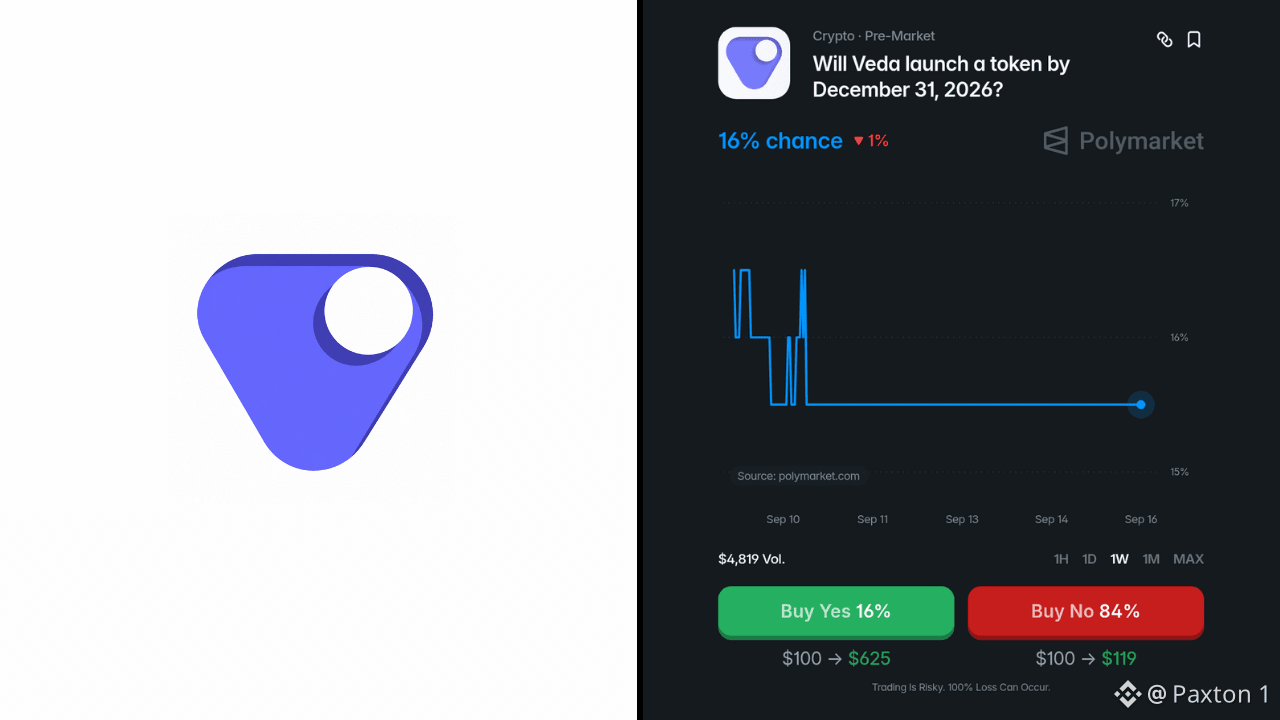
Veda looks late for 2026 ⏳
16% on Yes.
I'm taking No.
Veda clearly isn't standing still as a business. Its 2026 activity includes integrations and coverage around products involving MetaMask, Aave and Privy, so there is real infrastructure being built around the project.
But product traction and token timing are different questions.
Polymarket only cares whether the specified token event actually happens before the deadline.
Right now, the market has 84% sitting on No, and I don't see enough reason to fight that.
This is also a good example of why I like Polymarket even when I'm bearish on the prediction.
I don't need every trade to be another bullish token bet.
I'd rather redirect some $TRUMP exposure into a clear No position where the calendar itself is working in my favor.
Every week without a launch shortens the runway.
And if something changes?
I'm not trapped.
If credible token information suddenly appears, I can close the position before resolution and reassess.
That's a much more flexible setup than buying a bag and convincing myself to hold it forever.
For now, No is where I want to be.
#Altcoin Season#
Veda looks late for 2026 ⏳
16% on Yes.
I'm taking No.
Veda clearly isn't standing still as a business. Its 2026 activity includes integrations and coverage around products involving MetaMask, Aave and Privy, so there is real infrastructure being built around the project.
But product traction and token timing are different questions.
Polymarket only cares whether the specified token event actually happens before the deadline.
Right now, the market has 84% sitting on No, and I don't see enough reason to fight that.
This is also a good example of why I like Polymarket even when I'm bearish on the prediction.
I don't need every trade to be another bullish token bet.
I'd rather redirect some $TRUMP exposure into a clear No position where the calendar itself is working in my favor.
Every week without a launch shortens the runway.
And if something changes?
I'm not trapped.
If credible token information suddenly appears, I can close the position before resolution and reassess.
That's a much more flexible setup than buying a bag and convincing myself to hold it forever.
For now, No is where I want to be.
#Altcoin Season#
16% on Yes.
I'm taking No.
Veda clearly isn't standing still as a business. Its 2026 activity includes integrations and coverage around products involving MetaMask, Aave and Privy, so there is real infrastructure being built around the project.
But product traction and token timing are different questions.
Polymarket only cares whether the specified token event actually happens before the deadline.
Right now, the market has 84% sitting on No, and I don't see enough reason to fight that.
This is also a good example of why I like Polymarket even when I'm bearish on the prediction.
I don't need every trade to be another bullish token bet.
I'd rather redirect some $TRUMP exposure into a clear No position where the calendar itself is working in my favor.
Every week without a launch shortens the runway.
And if something changes?
I'm not trapped.
If credible token information suddenly appears, I can close the position before resolution and reassess.
That's a much more flexible setup than buying a bag and convincing myself to hold it forever.
For now, No is where I want to be.
#Altcoin Season#
53
·
--
Xem bản dịch
Why Does Gas Need To Be Money? ⛽
Most blockchains made one asset do almost everything.
$ETH is something people hold, trade and use to pay for computation, while $BNB plays a similarly broad role across its own ecosystem.
That design works, but it also means using the network requires consuming a transferable asset. That’s why Midnight is so interesting to me, it separates those jobs.
First, it has NIGHT is the public governance and value asset, while holding NIGHT produces DUST, a separate non-transferable resource used to pay for private transactions.
So the thing providing network capacity does not need to behave like another coin sitting on an exchange.
That distinction becomes more interesting for applications with predictable usage, because transaction capacity can be treated as an operational resource rather than just another market-priced asset.
Crypto has spent years redesigning gas markets.
Midnight is redesigning what gas actually is.
#Tokenomics #Infrastructure
Why Does Gas Need To Be Money? ⛽
Most blockchains made one asset do almost everything.
$ETH is something people hold, trade and use to pay for computation, while $BNB plays a similarly broad role across its own ecosystem.
That design works, but it also means using the network requires consuming a transferable asset. That’s why Midnight is so interesting to me, it separates those jobs.
First, it has NIGHT is the public governance and value asset, while holding NIGHT produces DUST, a separate non-transferable resource used to pay for private transactions.
So the thing providing network capacity does not need to behave like another coin sitting on an exchange.
That distinction becomes more interesting for applications with predictable usage, because transaction capacity can be treated as an operational resource rather than just another market-priced asset.
Crypto has spent years redesigning gas markets.
Midnight is redesigning what gas actually is.
#Tokenomics #Infrastructure
Most blockchains made one asset do almost everything.
$ETH is something people hold, trade and use to pay for computation, while $BNB plays a similarly broad role across its own ecosystem.
That design works, but it also means using the network requires consuming a transferable asset. That’s why Midnight is so interesting to me, it separates those jobs.
First, it has NIGHT is the public governance and value asset, while holding NIGHT produces DUST, a separate non-transferable resource used to pay for private transactions.
So the thing providing network capacity does not need to behave like another coin sitting on an exchange.
That distinction becomes more interesting for applications with predictable usage, because transaction capacity can be treated as an operational resource rather than just another market-priced asset.
Crypto has spent years redesigning gas markets.
Midnight is redesigning what gas actually is.
#Tokenomics #Infrastructure
77
·
--
Xem bản dịch
Utility I Can Actually Track 📊
I hear "token utility" so often that I mostly tune it out.
What interests me about $SXT is that Space and Time is making the relationship between usage and the token easier to follow.
The network records indexing, data insertion and ZK-proven query activity. Those workloads consume resources, with fees settled in SXT. Space and Time even linked its estimated staking reward increase to higher realized workload and fee activity earlier this year.
That gives me a much simpler thesis.
If more data enters the network and more applications query it, there is more actual work being done.
I've watched $LINK prove how valuable specialized infrastructure can become when applications genuinely depend on it.
Space and Time is tackling a different layer, but that's the part I'm watching too: not promises of future utility, but whether usage itself starts showing up in the network economics.
That's a much cleaner story.
#Altcoin Season#
Utility I Can Actually Track 📊
I hear "token utility" so often that I mostly tune it out.
What interests me about $SXT is that Space and Time is making the relationship between usage and the token easier to follow.
The network records indexing, data insertion and ZK-proven query activity. Those workloads consume resources, with fees settled in SXT. Space and Time even linked its estimated staking reward increase to higher realized workload and fee activity earlier this year.
That gives me a much simpler thesis.
If more data enters the network and more applications query it, there is more actual work being done.
I've watched $LINK prove how valuable specialized infrastructure can become when applications genuinely depend on it.
Space and Time is tackling a different layer, but that's the part I'm watching too: not promises of future utility, but whether usage itself starts showing up in the network economics.
That's a much cleaner story.
#Altcoin Season#
I hear "token utility" so often that I mostly tune it out.
What interests me about $SXT is that Space and Time is making the relationship between usage and the token easier to follow.
The network records indexing, data insertion and ZK-proven query activity. Those workloads consume resources, with fees settled in SXT. Space and Time even linked its estimated staking reward increase to higher realized workload and fee activity earlier this year.
That gives me a much simpler thesis.
If more data enters the network and more applications query it, there is more actual work being done.
I've watched $LINK prove how valuable specialized infrastructure can become when applications genuinely depend on it.
Space and Time is tackling a different layer, but that's the part I'm watching too: not promises of future utility, but whether usage itself starts showing up in the network economics.
That's a much cleaner story.
#Altcoin Season#
2
271
·
--
Xem bản dịch
Some chains want to put everything onchain. Some assets already deserve to be.
$ICP holders are building toward a world where entire applications, not just tokens, live fully onchain. An ambitious, complete vision.
The DeLorean is the kind of complete asset that vision was built for.
Not a fragment of IP. Not a licensing deal here and there. 40 years of films, culture, and global recognition, tokenized whole through $DMC , with partnerships already extending that footprint further onchain.
Full stack thinking deserves a full legacy to go with it. 🚗
#Altcoin Season#
Some chains want to put everything onchain. Some assets already deserve to be.
$ICP holders are building toward a world where entire applications, not just tokens, live fully onchain. An ambitious, complete vision.
The DeLorean is the kind of complete asset that vision was built for.
Not a fragment of IP. Not a licensing deal here and there. 40 years of films, culture, and global recognition, tokenized whole through $DMC , with partnerships already extending that footprint further onchain.
Full stack thinking deserves a full legacy to go with it. 🚗
#Altcoin Season#
$ICP holders are building toward a world where entire applications, not just tokens, live fully onchain. An ambitious, complete vision.
The DeLorean is the kind of complete asset that vision was built for.
Not a fragment of IP. Not a licensing deal here and there. 40 years of films, culture, and global recognition, tokenized whole through $DMC , with partnerships already extending that footprint further onchain.
Full stack thinking deserves a full legacy to go with it. 🚗
#Altcoin Season#
327
·
--
Xem bản dịch
Gold Changed Category 🌍
Gold has always been easy for me to understand.
You own it because you want the exposure.
Tokenized gold quietly changes that relationship.
$XAUt gives physical gold exposure an onchain form that can move through crypto infrastructure.
$PAXG provides another major example of the same idea reaching real users.
But portability is only the beginning.
Once gold becomes programmable collateral, I can start thinking about it differently.
It can potentially support borrowing, funding trades and other market-neutral strategies while the underlying portfolio remains denominated in gold.
That's what Theoriq Gold Vault is exploring.
And I think this distinction gets overlooked.
Productive gold doesn't need to become a high-risk degen asset to become useful.
The interesting design challenge is preserving why investors wanted gold while adding functionality around it.
If that works at scale, tokenized gold stops being merely a digital representation of an old asset.
It becomes a new piece of onchain financial infrastructure.
#Altcoin Season#
Gold Changed Category 🌍
Gold has always been easy for me to understand.
You own it because you want the exposure.
Tokenized gold quietly changes that relationship.
$XAUt gives physical gold exposure an onchain form that can move through crypto infrastructure.
$PAXG provides another major example of the same idea reaching real users.
But portability is only the beginning.
Once gold becomes programmable collateral, I can start thinking about it differently.
It can potentially support borrowing, funding trades and other market-neutral strategies while the underlying portfolio remains denominated in gold.
That's what Theoriq Gold Vault is exploring.
And I think this distinction gets overlooked.
Productive gold doesn't need to become a high-risk degen asset to become useful.
The interesting design challenge is preserving why investors wanted gold while adding functionality around it.
If that works at scale, tokenized gold stops being merely a digital representation of an old asset.
It becomes a new piece of onchain financial infrastructure.
#Altcoin Season#
Gold has always been easy for me to understand.
You own it because you want the exposure.
Tokenized gold quietly changes that relationship.
$XAUt gives physical gold exposure an onchain form that can move through crypto infrastructure.
$PAXG provides another major example of the same idea reaching real users.
But portability is only the beginning.
Once gold becomes programmable collateral, I can start thinking about it differently.
It can potentially support borrowing, funding trades and other market-neutral strategies while the underlying portfolio remains denominated in gold.
That's what Theoriq Gold Vault is exploring.
And I think this distinction gets overlooked.
Productive gold doesn't need to become a high-risk degen asset to become useful.
The interesting design challenge is preserving why investors wanted gold while adding functionality around it.
If that works at scale, tokenized gold stops being merely a digital representation of an old asset.
It becomes a new piece of onchain financial infrastructure.
#Altcoin Season#
124
·
--
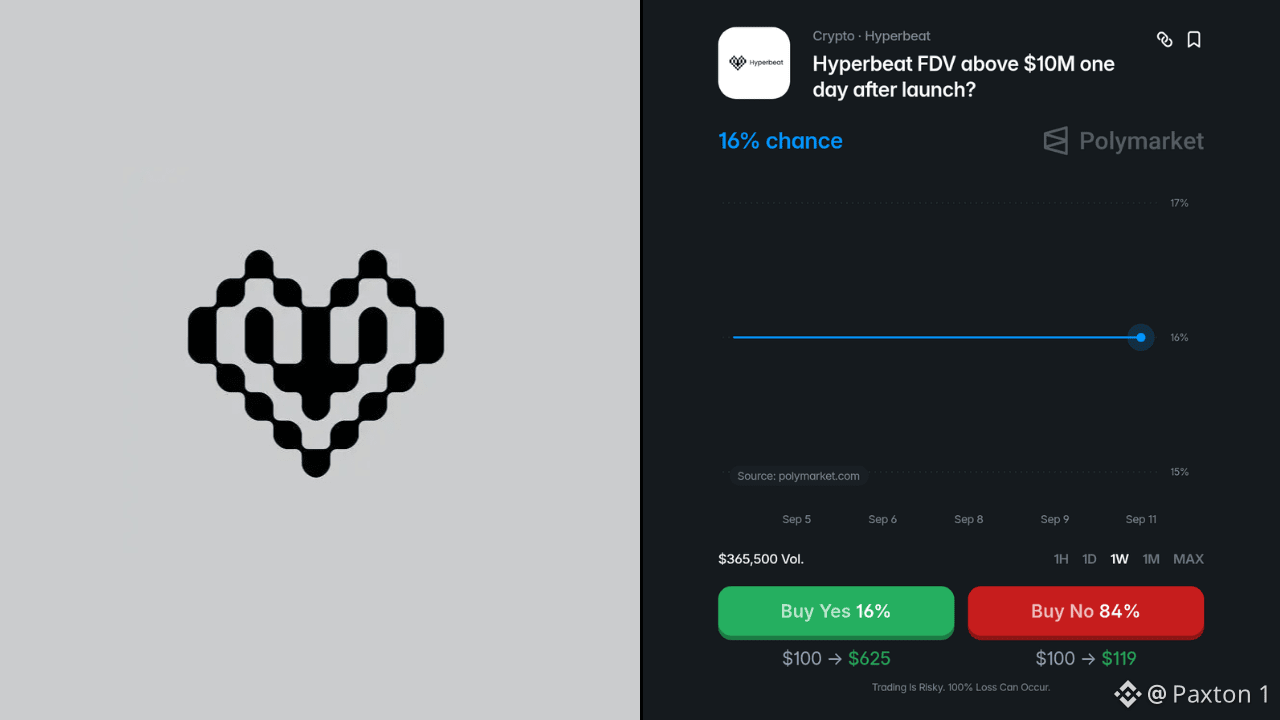
Biểu đồ Buồn Tẻ Giành Chiến Thắng ⚡
16%.
Đi ngang gần như cả tuần.
Hầu hết trader sẽ lướt qua thẳng thị trường Hyperbeat này trên Polymarket.
Tôi thì không.
Tôi đang mua Yes với một FDV 10M.
Phần quan trọng không phải là biểu đồ đã làm được gì.
Mà là nó đã không làm gì.
Không có cú bùng hype.
Không có màn bán tháo vì hoảng loạn.
Không có đám đông tự nhiên đổ dồn vào một phía.
Trong khi đó, hơn 365K USD đã được giao dịch trong ảnh chụp.
Thật đáng ngạc nhiên khi mức độ hoạt động nghiêm túc lại nằm phía sau một xác suất hoàn toàn phẳng.
$HYPE là token tự nhiên cần theo dõi song song với bất cứ thứ gì đang được xây dựng quanh hệ sinh thái Hyperliquid.
$ARB cho tôi một hệ sinh thái giao dịch onchain đã được thiết lập khác để so sánh.
Polymarket đầy ắp những thị trường hiển nhiên mà ai cũng nói đến.
Lợi thế nằm ở việc tìm những thị trường yên tĩnh trước khi xác suất bắt đầu chuyển động.
16% đủ rẻ để tôi chấp nhận cú đánh đó.
#Altcoin Season#
Biểu đồ Buồn Tẻ Giành Chiến Thắng ⚡
16%.
Đi ngang gần như cả tuần.
Hầu hết trader sẽ lướt qua thẳng thị trường Hyperbeat này trên Polymarket.
Tôi thì không.
Tôi đang mua Yes với một FDV 10M.
Phần quan trọng không phải là biểu đồ đã làm được gì.
Mà là nó đã không làm gì.
Không có cú bùng hype.
Không có màn bán tháo vì hoảng loạn.
Không có đám đông tự nhiên đổ dồn vào một phía.
Trong khi đó, hơn 365K USD đã được giao dịch trong ảnh chụp.
Thật đáng ngạc nhiên khi mức độ hoạt động nghiêm túc lại nằm phía sau một xác suất hoàn toàn phẳng.
$HYPE là token tự nhiên cần theo dõi song song với bất cứ thứ gì đang được xây dựng quanh hệ sinh thái Hyperliquid.
$ARB cho tôi một hệ sinh thái giao dịch onchain đã được thiết lập khác để so sánh.
Polymarket đầy ắp những thị trường hiển nhiên mà ai cũng nói đến.
Lợi thế nằm ở việc tìm những thị trường yên tĩnh trước khi xác suất bắt đầu chuyển động.
16% đủ rẻ để tôi chấp nhận cú đánh đó.
#Altcoin Season#
16%.
Đi ngang gần như cả tuần.
Hầu hết trader sẽ lướt qua thẳng thị trường Hyperbeat này trên Polymarket.
Tôi thì không.
Tôi đang mua Yes với một FDV 10M.
Phần quan trọng không phải là biểu đồ đã làm được gì.
Mà là nó đã không làm gì.
Không có cú bùng hype.
Không có màn bán tháo vì hoảng loạn.
Không có đám đông tự nhiên đổ dồn vào một phía.
Trong khi đó, hơn 365K USD đã được giao dịch trong ảnh chụp.
Thật đáng ngạc nhiên khi mức độ hoạt động nghiêm túc lại nằm phía sau một xác suất hoàn toàn phẳng.
$HYPE là token tự nhiên cần theo dõi song song với bất cứ thứ gì đang được xây dựng quanh hệ sinh thái Hyperliquid.
$ARB cho tôi một hệ sinh thái giao dịch onchain đã được thiết lập khác để so sánh.
Polymarket đầy ắp những thị trường hiển nhiên mà ai cũng nói đến.
Lợi thế nằm ở việc tìm những thị trường yên tĩnh trước khi xác suất bắt đầu chuyển động.
16% đủ rẻ để tôi chấp nhận cú đánh đó.
#Altcoin Season#
269
·
--
Cả hai Token đều giảm & vẫn thu được lợi nhuận 👀
Nếu bạn thấy hai biểu đồ màu đỏ và cho rằng sẽ không có tiền để kiếm, thì bạn đã nhầm.
Giao dịch cặp (pair trades) có thể tạo ra cơ hội sinh lời dù thị trường chung đi theo hướng nào.
Hãy lấy $LINK và $UNI. Cả hai đều có thể đang giảm, nhưng nếu UNI giảm nhanh hơn, vị thế Long LINK / Short UNI vẫn có thể tạo ra chênh lệch (spread) dương.
Bởi vì bạn không đặt cược token nào sẽ tăng. Bạn đang giao dịch token nào hoạt động tốt hơn so với token còn lại.
Pear Protocol có một AITA, Agent Pear, dùng để tìm đúng những khoảng trống (gaps) như vậy. LINK và UNI trước đây thường di chuyển khá sát nhau, nhưng mối quan hệ của chúng đã bắt đầu tách ra kể từ khi UNI chịu nhiều áp lực hơn trước các tín hiệu/cảm xúc quản trị (governance sentiment) gần đây.
Ví dụ, nếu bạn Long LINK khi nó đang giảm 3% và Short UNI khi nó đang giảm 8%, thì phần lãi của lệnh Short sẽ lớn hơn phần lỗ của lệnh Long. Tính sơ bộ là chênh lệch khoảng +5% trước phí, funding và đòn bẩy, dù cả hai biểu đồ đều màu đỏ.
Agent Pear kiểm tra tương quan (correlation), Z-scores, tốc độ lịch sử của spread khi thu hẹp lại, và cả tâm lý/diễn biến sentiment gần nhất để xác định liệu sự phân kỳ đó có thật sự đáng để giao dịch hay không.
Đôi khi bạn không cần tìm token đang bơm (pump). Bạn chỉ cần tìm token giảm ít hơn 🫡
Chỉ cần nhờ Agent Pear hỗ trợ tại pear.garden/trade
#Altcoin Season#
Cả hai Token đều giảm & vẫn thu được lợi nhuận 👀
Nếu bạn thấy hai biểu đồ màu đỏ và cho rằng sẽ không có tiền để kiếm, thì bạn đã nhầm.
Giao dịch cặp (pair trades) có thể tạo ra cơ hội sinh lời dù thị trường chung đi theo hướng nào.
Hãy lấy $LINK và $UNI. Cả hai đều có thể đang giảm, nhưng nếu UNI giảm nhanh hơn, vị thế Long LINK / Short UNI vẫn có thể tạo ra chênh lệch (spread) dương.
Bởi vì bạn không đặt cược token nào sẽ tăng. Bạn đang giao dịch token nào hoạt động tốt hơn so với token còn lại.
Pear Protocol có một AITA, Agent Pear, dùng để tìm đúng những khoảng trống (gaps) như vậy. LINK và UNI trước đây thường di chuyển khá sát nhau, nhưng mối quan hệ của chúng đã bắt đầu tách ra kể từ khi UNI chịu nhiều áp lực hơn trước các tín hiệu/cảm xúc quản trị (governance sentiment) gần đây.
Ví dụ, nếu bạn Long LINK khi nó đang giảm 3% và Short UNI khi nó đang giảm 8%, thì phần lãi của lệnh Short sẽ lớn hơn phần lỗ của lệnh Long. Tính sơ bộ là chênh lệch khoảng +5% trước phí, funding và đòn bẩy, dù cả hai biểu đồ đều màu đỏ.
Agent Pear kiểm tra tương quan (correlation), Z-scores, tốc độ lịch sử của spread khi thu hẹp lại, và cả tâm lý/diễn biến sentiment gần nhất để xác định liệu sự phân kỳ đó có thật sự đáng để giao dịch hay không.
Đôi khi bạn không cần tìm token đang bơm (pump). Bạn chỉ cần tìm token giảm ít hơn 🫡
Chỉ cần nhờ Agent Pear hỗ trợ tại pear.garden/trade
#Altcoin Season#
Nếu bạn thấy hai biểu đồ màu đỏ và cho rằng sẽ không có tiền để kiếm, thì bạn đã nhầm.
Giao dịch cặp (pair trades) có thể tạo ra cơ hội sinh lời dù thị trường chung đi theo hướng nào.
Hãy lấy $LINK và $UNI. Cả hai đều có thể đang giảm, nhưng nếu UNI giảm nhanh hơn, vị thế Long LINK / Short UNI vẫn có thể tạo ra chênh lệch (spread) dương.
Bởi vì bạn không đặt cược token nào sẽ tăng. Bạn đang giao dịch token nào hoạt động tốt hơn so với token còn lại.
Pear Protocol có một AITA, Agent Pear, dùng để tìm đúng những khoảng trống (gaps) như vậy. LINK và UNI trước đây thường di chuyển khá sát nhau, nhưng mối quan hệ của chúng đã bắt đầu tách ra kể từ khi UNI chịu nhiều áp lực hơn trước các tín hiệu/cảm xúc quản trị (governance sentiment) gần đây.
Ví dụ, nếu bạn Long LINK khi nó đang giảm 3% và Short UNI khi nó đang giảm 8%, thì phần lãi của lệnh Short sẽ lớn hơn phần lỗ của lệnh Long. Tính sơ bộ là chênh lệch khoảng +5% trước phí, funding và đòn bẩy, dù cả hai biểu đồ đều màu đỏ.
Agent Pear kiểm tra tương quan (correlation), Z-scores, tốc độ lịch sử của spread khi thu hẹp lại, và cả tâm lý/diễn biến sentiment gần nhất để xác định liệu sự phân kỳ đó có thật sự đáng để giao dịch hay không.
Đôi khi bạn không cần tìm token đang bơm (pump). Bạn chỉ cần tìm token giảm ít hơn 🫡
Chỉ cần nhờ Agent Pear hỗ trợ tại pear.garden/trade
#Altcoin Season#
126
·
--
Xem bản dịch
A Token Launch You Can Actually Measure 🔍
People argue about $ENA and Jupiter on revenue, not just on charts. That is the difference between an asset you can analyse and one you can only trade.
Almost no new launch gives you that. You get a supply table, a chart and a narrative.
The six new Coinbase stock tokens on Base change what is measurable, because of what sits on the other side of the pool.
A creator launching a token on $BNKR picks the pairing asset. Every swap in that pool pays a fee, and the fee accrues to the creator denominated in that asset. Amazon, Microsoft, Strategy, SanDisk, SpaceX and Tesla are now options.
So the project's treasury is built out of its own trading activity, in a real company's stock, and all of it is visible onchain.
That gives an analyst three things to track that did not exist before:
- Fee accrual per week, read against volume, which shows whether the market is genuinely active or just wide spreads
- Treasury composition and size relative to the token's own market cap
- Whether the pair keeps trading once launch attention fades, which is the only real test of a paired market
There is a macro read here too. Volume on a crypto token quietly converting into equity exposure means flow between the two markets stops being a rotation decision and becomes a byproduct of trading.
Caveats matter. No volume means no fees. Paired pools carry liquidity risk. A stock position takes the stock's drawdowns. And a growing treasury does not make a weak project a good one.
But having something countable to check at launch beats reading supply charts and hoping.
#RWA #DeFi
A Token Launch You Can Actually Measure 🔍
People argue about $ENA and Jupiter on revenue, not just on charts. That is the difference between an asset you can analyse and one you can only trade.
Almost no new launch gives you that. You get a supply table, a chart and a narrative.
The six new Coinbase stock tokens on Base change what is measurable, because of what sits on the other side of the pool.
A creator launching a token on $BNKR picks the pairing asset. Every swap in that pool pays a fee, and the fee accrues to the creator denominated in that asset. Amazon, Microsoft, Strategy, SanDisk, SpaceX and Tesla are now options.
So the project's treasury is built out of its own trading activity, in a real company's stock, and all of it is visible onchain.
That gives an analyst three things to track that did not exist before:
- Fee accrual per week, read against volume, which shows whether the market is genuinely active or just wide spreads
- Treasury composition and size relative to the token's own market cap
- Whether the pair keeps trading once launch attention fades, which is the only real test of a paired market
There is a macro read here too. Volume on a crypto token quietly converting into equity exposure means flow between the two markets stops being a rotation decision and becomes a byproduct of trading.
Caveats matter. No volume means no fees. Paired pools carry liquidity risk. A stock position takes the stock's drawdowns. And a growing treasury does not make a weak project a good one.
But having something countable to check at launch beats reading supply charts and hoping.
#RWA #DeFi
People argue about $ENA and Jupiter on revenue, not just on charts. That is the difference between an asset you can analyse and one you can only trade.
Almost no new launch gives you that. You get a supply table, a chart and a narrative.
The six new Coinbase stock tokens on Base change what is measurable, because of what sits on the other side of the pool.
A creator launching a token on $BNKR picks the pairing asset. Every swap in that pool pays a fee, and the fee accrues to the creator denominated in that asset. Amazon, Microsoft, Strategy, SanDisk, SpaceX and Tesla are now options.
So the project's treasury is built out of its own trading activity, in a real company's stock, and all of it is visible onchain.
That gives an analyst three things to track that did not exist before:
- Fee accrual per week, read against volume, which shows whether the market is genuinely active or just wide spreads
- Treasury composition and size relative to the token's own market cap
- Whether the pair keeps trading once launch attention fades, which is the only real test of a paired market
There is a macro read here too. Volume on a crypto token quietly converting into equity exposure means flow between the two markets stops being a rotation decision and becomes a byproduct of trading.
Caveats matter. No volume means no fees. Paired pools carry liquidity risk. A stock position takes the stock's drawdowns. And a growing treasury does not make a weak project a good one.
But having something countable to check at launch beats reading supply charts and hoping.
#RWA #DeFi
1
182
·
--
Xem bản dịch
Gold Needs A Job 🥇
I've been watching tokenized gold grow, but I think we're focusing on the wrong milestone.
Getting gold onchain was the infrastructure win.
The bigger opportunity is turning an asset historically held for protection into something that can also produce returns.
That's what makes Theoriq Gold Vault interesting to me.
The vault keeps gold exposure while allocating across funding spreads, term yield and relative-value opportunities.
So I'm not relying on gold climbing another 10% just to generate a return.
That changes how I think about $XAUt entirely.
And with $PAXG helping establish tokenized gold as a serious onchain category, the market already has proof of demand.
Now I want to see what happens when that liquidity becomes productive.
Tokenization made gold portable.
Productive strategies could make it considerably more useful.
#Altcoin Season#
Gold Needs A Job 🥇
I've been watching tokenized gold grow, but I think we're focusing on the wrong milestone.
Getting gold onchain was the infrastructure win.
The bigger opportunity is turning an asset historically held for protection into something that can also produce returns.
That's what makes Theoriq Gold Vault interesting to me.
The vault keeps gold exposure while allocating across funding spreads, term yield and relative-value opportunities.
So I'm not relying on gold climbing another 10% just to generate a return.
That changes how I think about $XAUt entirely.
And with $PAXG helping establish tokenized gold as a serious onchain category, the market already has proof of demand.
Now I want to see what happens when that liquidity becomes productive.
Tokenization made gold portable.
Productive strategies could make it considerably more useful.
#Altcoin Season#
I've been watching tokenized gold grow, but I think we're focusing on the wrong milestone.
Getting gold onchain was the infrastructure win.
The bigger opportunity is turning an asset historically held for protection into something that can also produce returns.
That's what makes Theoriq Gold Vault interesting to me.
The vault keeps gold exposure while allocating across funding spreads, term yield and relative-value opportunities.
So I'm not relying on gold climbing another 10% just to generate a return.
That changes how I think about $XAUt entirely.
And with $PAXG helping establish tokenized gold as a serious onchain category, the market already has proof of demand.
Now I want to see what happens when that liquidity becomes productive.
Tokenization made gold portable.
Productive strategies could make it considerably more useful.
#Altcoin Season#
72
·
--
Xem bản dịch
Prediction Markets Are Turning Into Machine Markets 🤖
I still think most people picture prediction markets as humans clicking yes or no on a political or sports outcome.
The institutional version looks very different.
A quantitative system might watch hundreds of markets simultaneously, compare probabilities against other venues and update positions without anyone staring at a screen.
$FET has spent years betting that autonomous software will increasingly consume information and make economic decisions on its own. Trading already moved there first, and $HYPE is one of the clearest examples of a crypto-native market where machine-readable order books matter as much as the frontend.
Kalshi now brings that same requirement into prediction markets.
Its live market data is available through DoubleZero Edge, including Level 1 top-of-book and trades alongside Level 2 market depth across supported feeds. DoubleZero handles the transport through dedicated networking infrastructure rather than asking every professional user to independently build the same data pipeline from public API responses.
That changes what the market is useful for.
A probability is interesting to a human. A fast, structured stream of thousands of probabilities is useful to a machine.
Prediction markets become a different asset class once the machines arrive.
#PredictionMarkets #Altcoin Season#
Prediction Markets Are Turning Into Machine Markets 🤖
I still think most people picture prediction markets as humans clicking yes or no on a political or sports outcome.
The institutional version looks very different.
A quantitative system might watch hundreds of markets simultaneously, compare probabilities against other venues and update positions without anyone staring at a screen.
$FET has spent years betting that autonomous software will increasingly consume information and make economic decisions on its own. Trading already moved there first, and $HYPE is one of the clearest examples of a crypto-native market where machine-readable order books matter as much as the frontend.
Kalshi now brings that same requirement into prediction markets.
Its live market data is available through DoubleZero Edge, including Level 1 top-of-book and trades alongside Level 2 market depth across supported feeds. DoubleZero handles the transport through dedicated networking infrastructure rather than asking every professional user to independently build the same data pipeline from public API responses.
That changes what the market is useful for.
A probability is interesting to a human. A fast, structured stream of thousands of probabilities is useful to a machine.
Prediction markets become a different asset class once the machines arrive.
#PredictionMarkets #Altcoin Season#
I still think most people picture prediction markets as humans clicking yes or no on a political or sports outcome.
The institutional version looks very different.
A quantitative system might watch hundreds of markets simultaneously, compare probabilities against other venues and update positions without anyone staring at a screen.
$FET has spent years betting that autonomous software will increasingly consume information and make economic decisions on its own. Trading already moved there first, and $HYPE is one of the clearest examples of a crypto-native market where machine-readable order books matter as much as the frontend.
Kalshi now brings that same requirement into prediction markets.
Its live market data is available through DoubleZero Edge, including Level 1 top-of-book and trades alongside Level 2 market depth across supported feeds. DoubleZero handles the transport through dedicated networking infrastructure rather than asking every professional user to independently build the same data pipeline from public API responses.
That changes what the market is useful for.
A probability is interesting to a human. A fast, structured stream of thousands of probabilities is useful to a machine.
Prediction markets become a different asset class once the machines arrive.
#PredictionMarkets #Altcoin Season#
192
·
--
70.000 Doanh nghiệp Vừa Tặng Ví cho Đại lý 🤝
Ramp đã kết nối vào x402 vào ngày 20 tháng 8 và đưa hơn 70.000 khách hàng doanh nghiệp lên các ví của đại lý chỉ trong một lần, và ngay trong cùng tuần đó, các đại lý đã thanh toán 3,3 triệu USD USDC trên riêng $SOL.
Điều này dựa trên việc $FET ra mắt với các khoản thanh toán cho đại lý được Visa hậu thuẫn thông qua ASI:One vào tháng 1, nơi các đại lý có thể đặt, đặt hàng và thanh toán cho người dùng ngay cả khi họ đang ngoại tuyến.
Vì vậy, hạ tầng thanh toán cho đại lý không còn là mục trong lộ trình nữa—mà là đã được triển khai.
Thứ tôi đang theo dõi là bước diễn ra ngay trước phần thanh toán, vì việc một đại lý mua thay bạn cũng là lúc đại lý thương lượng thay bạn.
Nó phải mang theo logic nội bộ tối đa mà nó có thể đọc, và bất kỳ chương trình công khai nào cũng có thể đọc được thì đại lý ở bên kia bàn cũng đọc được—do đó, mức bạn chấp nhận lặng lẽ nhất sẽ trở thành mức giá bạn phải trả.
Con người giữ con số đó trong đầu, còn một đại lý chạy trên trạng thái công khai thì không có chỗ để lưu nó.
Arcium là phần của chuỗi này mà tôi nghĩ bị bỏ sót, vì nó cho phép giới hạn của cả hai phía được đưa vào dưới dạng các mảnh tách ra trên một cụm node nơi không node nào giữ bất kỳ con số nào, và phép tính vẫn trả về đáp án đúng—một mức giá khớp hoặc không có giao dịch.
Phần thanh toán vẫn được ghi nhận trên Solana như một giao dịch công khai thông thường, nên giá cuối cùng sẽ hiển thị như bất kỳ giao dịch nào khác và chỉ các giới hạn đằng sau nó được giữ kín.
Lớp tính toán đó đã hoạt động trên Mainnet Alpha từ ngày 2 tháng 2, và trình khám phá của Arcium cho thấy đã có hơn 2,5 triệu phép tính được chạy đến nay.
Thanh toán là sản phẩm đại lý đầu tiên được triển khai, và sản phẩm tiếp theo tôi đang theo dõi là lớp thương lượng—nơi Arcium đã hiện diện.
#AI #Solana
70.000 Doanh nghiệp Vừa Tặng Ví cho Đại lý 🤝
Ramp đã kết nối vào x402 vào ngày 20 tháng 8 và đưa hơn 70.000 khách hàng doanh nghiệp lên các ví của đại lý chỉ trong một lần, và ngay trong cùng tuần đó, các đại lý đã thanh toán 3,3 triệu USD USDC trên riêng $SOL.
Điều này dựa trên việc $FET ra mắt với các khoản thanh toán cho đại lý được Visa hậu thuẫn thông qua ASI:One vào tháng 1, nơi các đại lý có thể đặt, đặt hàng và thanh toán cho người dùng ngay cả khi họ đang ngoại tuyến.
Vì vậy, hạ tầng thanh toán cho đại lý không còn là mục trong lộ trình nữa—mà là đã được triển khai.
Thứ tôi đang theo dõi là bước diễn ra ngay trước phần thanh toán, vì việc một đại lý mua thay bạn cũng là lúc đại lý thương lượng thay bạn.
Nó phải mang theo logic nội bộ tối đa mà nó có thể đọc, và bất kỳ chương trình công khai nào cũng có thể đọc được thì đại lý ở bên kia bàn cũng đọc được—do đó, mức bạn chấp nhận lặng lẽ nhất sẽ trở thành mức giá bạn phải trả.
Con người giữ con số đó trong đầu, còn một đại lý chạy trên trạng thái công khai thì không có chỗ để lưu nó.
Arcium là phần của chuỗi này mà tôi nghĩ bị bỏ sót, vì nó cho phép giới hạn của cả hai phía được đưa vào dưới dạng các mảnh tách ra trên một cụm node nơi không node nào giữ bất kỳ con số nào, và phép tính vẫn trả về đáp án đúng—một mức giá khớp hoặc không có giao dịch.
Phần thanh toán vẫn được ghi nhận trên Solana như một giao dịch công khai thông thường, nên giá cuối cùng sẽ hiển thị như bất kỳ giao dịch nào khác và chỉ các giới hạn đằng sau nó được giữ kín.
Lớp tính toán đó đã hoạt động trên Mainnet Alpha từ ngày 2 tháng 2, và trình khám phá của Arcium cho thấy đã có hơn 2,5 triệu phép tính được chạy đến nay.
Thanh toán là sản phẩm đại lý đầu tiên được triển khai, và sản phẩm tiếp theo tôi đang theo dõi là lớp thương lượng—nơi Arcium đã hiện diện.
#AI #Solana
Ramp đã kết nối vào x402 vào ngày 20 tháng 8 và đưa hơn 70.000 khách hàng doanh nghiệp lên các ví của đại lý chỉ trong một lần, và ngay trong cùng tuần đó, các đại lý đã thanh toán 3,3 triệu USD USDC trên riêng $SOL.
Điều này dựa trên việc $FET ra mắt với các khoản thanh toán cho đại lý được Visa hậu thuẫn thông qua ASI:One vào tháng 1, nơi các đại lý có thể đặt, đặt hàng và thanh toán cho người dùng ngay cả khi họ đang ngoại tuyến.
Vì vậy, hạ tầng thanh toán cho đại lý không còn là mục trong lộ trình nữa—mà là đã được triển khai.
Thứ tôi đang theo dõi là bước diễn ra ngay trước phần thanh toán, vì việc một đại lý mua thay bạn cũng là lúc đại lý thương lượng thay bạn.
Nó phải mang theo logic nội bộ tối đa mà nó có thể đọc, và bất kỳ chương trình công khai nào cũng có thể đọc được thì đại lý ở bên kia bàn cũng đọc được—do đó, mức bạn chấp nhận lặng lẽ nhất sẽ trở thành mức giá bạn phải trả.
Con người giữ con số đó trong đầu, còn một đại lý chạy trên trạng thái công khai thì không có chỗ để lưu nó.
Arcium là phần của chuỗi này mà tôi nghĩ bị bỏ sót, vì nó cho phép giới hạn của cả hai phía được đưa vào dưới dạng các mảnh tách ra trên một cụm node nơi không node nào giữ bất kỳ con số nào, và phép tính vẫn trả về đáp án đúng—một mức giá khớp hoặc không có giao dịch.
Phần thanh toán vẫn được ghi nhận trên Solana như một giao dịch công khai thông thường, nên giá cuối cùng sẽ hiển thị như bất kỳ giao dịch nào khác và chỉ các giới hạn đằng sau nó được giữ kín.
Lớp tính toán đó đã hoạt động trên Mainnet Alpha từ ngày 2 tháng 2, và trình khám phá của Arcium cho thấy đã có hơn 2,5 triệu phép tính được chạy đến nay.
Thanh toán là sản phẩm đại lý đầu tiên được triển khai, và sản phẩm tiếp theo tôi đang theo dõi là lớp thương lượng—nơi Arcium đã hiện diện.
#AI #Solana
190
·
--
Xem bản dịch
Hot Take🔥: The Difference Between Winning & Losing Traders Is Tools.
I've seen complete novices make money in this market while more experienced traders struggle. A lot of the difference comes down to the tools they're trading with.
Pear Protocol's Agent Pear stands out as a good beginner friendly AI that executes on Hyperliquid and Lighter. It already has 28K+ winning trades under its belt, and you literally just have to ask it to find you a high-conviction trade.
Yesterday it gave me Long $XLM / Short $SUI (NFA). Then it showed me exactly why:
XLM looked relatively cheap against SUI, with a 0.79 historical correlation and a stretched price relationship creating a potential mean-reversion opportunity.
The sentiment and market data supported the setup too. XLM had fresh catalysts around USDT0 and growing RWA activity, while 75.8% of top-trader positioning on SUI was long, creating additional risk if its momentum failed.
Agent Pear took all of that and calculated a roughly 51.6% XLM / 48.4% SUI hedge, while helping optimize sizing, leverage and protections around the trade.
Literally got all that from taking 2 seconds to type out a simple question. It does all the work, while every trade with it until the 14th helps move you further up Pear's ROI leaderboard, where top traders can win NFTs and a share of 10% of Orchard's weekly fees.
Easiest setup I've ever done tbh. And it’s free.
#Altcoin Season#
Hot Take🔥: The Difference Between Winning & Losing Traders Is Tools.
I've seen complete novices make money in this market while more experienced traders struggle. A lot of the difference comes down to the tools they're trading with.
Pear Protocol's Agent Pear stands out as a good beginner friendly AI that executes on Hyperliquid and Lighter. It already has 28K+ winning trades under its belt, and you literally just have to ask it to find you a high-conviction trade.
Yesterday it gave me Long $XLM / Short $SUI (NFA). Then it showed me exactly why:
XLM looked relatively cheap against SUI, with a 0.79 historical correlation and a stretched price relationship creating a potential mean-reversion opportunity.
The sentiment and market data supported the setup too. XLM had fresh catalysts around USDT0 and growing RWA activity, while 75.8% of top-trader positioning on SUI was long, creating additional risk if its momentum failed.
Agent Pear took all of that and calculated a roughly 51.6% XLM / 48.4% SUI hedge, while helping optimize sizing, leverage and protections around the trade.
Literally got all that from taking 2 seconds to type out a simple question. It does all the work, while every trade with it until the 14th helps move you further up Pear's ROI leaderboard, where top traders can win NFTs and a share of 10% of Orchard's weekly fees.
Easiest setup I've ever done tbh. And it’s free.
#Altcoin Season#
I've seen complete novices make money in this market while more experienced traders struggle. A lot of the difference comes down to the tools they're trading with.
Pear Protocol's Agent Pear stands out as a good beginner friendly AI that executes on Hyperliquid and Lighter. It already has 28K+ winning trades under its belt, and you literally just have to ask it to find you a high-conviction trade.
Yesterday it gave me Long $XLM / Short $SUI (NFA). Then it showed me exactly why:
XLM looked relatively cheap against SUI, with a 0.79 historical correlation and a stretched price relationship creating a potential mean-reversion opportunity.
The sentiment and market data supported the setup too. XLM had fresh catalysts around USDT0 and growing RWA activity, while 75.8% of top-trader positioning on SUI was long, creating additional risk if its momentum failed.
Agent Pear took all of that and calculated a roughly 51.6% XLM / 48.4% SUI hedge, while helping optimize sizing, leverage and protections around the trade.
Literally got all that from taking 2 seconds to type out a simple question. It does all the work, while every trade with it until the 14th helps move you further up Pear's ROI leaderboard, where top traders can win NFTs and a share of 10% of Orchard's weekly fees.
Easiest setup I've ever done tbh. And it’s free.
#Altcoin Season#
1
147
·
--
Xem bản dịch
A billion users is a big room to walk into 🚗
$TON holders know the power of distribution. A network wired straight into an app nearly a billion people already open every day. Access most chains would kill for.
The DeLorean has its own version of that reach, just built over decades instead of downloads.
40 years of films and global recognition means $DMC walks into any room already known. Pair that with TON-level distribution and the car isn't introducing itself.
Where this one's going, the audience already knows the way.
#Altcoin Season#
A billion users is a big room to walk into 🚗
$TON holders know the power of distribution. A network wired straight into an app nearly a billion people already open every day. Access most chains would kill for.
The DeLorean has its own version of that reach, just built over decades instead of downloads.
40 years of films and global recognition means $DMC walks into any room already known. Pair that with TON-level distribution and the car isn't introducing itself.
Where this one's going, the audience already knows the way.
#Altcoin Season#
$TON holders know the power of distribution. A network wired straight into an app nearly a billion people already open every day. Access most chains would kill for.
The DeLorean has its own version of that reach, just built over decades instead of downloads.
40 years of films and global recognition means $DMC walks into any room already known. Pair that with TON-level distribution and the car isn't introducing itself.
Where this one's going, the audience already knows the way.
#Altcoin Season#
1
125
·
--
Đoán xem ai đang cùng chia sẻ sân khấu 🎤
Theoriq vừa ký kết làm Nhà tài trợ Vàng cho Vault Summit Singapore, diễn ra vào tháng 10 này.
Morpho là đơn vị tổ chức sự kiện, DigiFT đồng tổ chức, và Theoriq hiện đã trực tiếp xây dựng cùng cả hai trong môi trường production, chứ không chỉ xuất hiện trên một banner hội nghị.
Đây là điều thực sự kết nối ba cái tên trên sân khấu đó:
🏦 Morpho cung cấp một phần lớn hạ tầng cho vay mà các vault của Theoriq đang vận hành hằng ngày
🌏 DigiFT hiện đang chạy một chương trình thử nghiệm quỹ thị trường tiền tệ được quản lý cùng với Theoriq ngay lúc này
🔬 Theoriq mang đến lớp nghiên cứu và tuyển chọn, quyết định điều gì sẽ xảy ra tiếp theo với nguồn vốn đó
Đó không phải là ba logo tình cờ chia sẻ một banner trong một buổi chiều.
Chính những không gian như thế này là nơi $AVAX đã xuất hiện đều đặn trong nhiều năm, rất lâu trước khi sự quan tâm của các tổ chức đối với hạ tầng nghiêm túc trở thành chủ đề phổ biến.
Xuất hiện trong một không gian được xây dựng hoàn toàn xoay quanh hạ tầng vault, ngay bên cạnh những người bạn đã và đang cùng xây dựng, là một tín hiệu rất khác so với một gian hàng được trả phí khác.
Tôi chú ý đến việc một dự án thực sự đứng cạnh ai hơn là những gì banner của gian hàng nói.
#Altcoin Season# #RWA
Đoán xem ai đang cùng chia sẻ sân khấu 🎤
Theoriq vừa ký kết làm Nhà tài trợ Vàng cho Vault Summit Singapore, diễn ra vào tháng 10 này.
Morpho là đơn vị tổ chức sự kiện, DigiFT đồng tổ chức, và Theoriq hiện đã trực tiếp xây dựng cùng cả hai trong môi trường production, chứ không chỉ xuất hiện trên một banner hội nghị.
Đây là điều thực sự kết nối ba cái tên trên sân khấu đó:
🏦 Morpho cung cấp một phần lớn hạ tầng cho vay mà các vault của Theoriq đang vận hành hằng ngày
🌏 DigiFT hiện đang chạy một chương trình thử nghiệm quỹ thị trường tiền tệ được quản lý cùng với Theoriq ngay lúc này
🔬 Theoriq mang đến lớp nghiên cứu và tuyển chọn, quyết định điều gì sẽ xảy ra tiếp theo với nguồn vốn đó
Đó không phải là ba logo tình cờ chia sẻ một banner trong một buổi chiều.
Chính những không gian như thế này là nơi $AVAX đã xuất hiện đều đặn trong nhiều năm, rất lâu trước khi sự quan tâm của các tổ chức đối với hạ tầng nghiêm túc trở thành chủ đề phổ biến.
Xuất hiện trong một không gian được xây dựng hoàn toàn xoay quanh hạ tầng vault, ngay bên cạnh những người bạn đã và đang cùng xây dựng, là một tín hiệu rất khác so với một gian hàng được trả phí khác.
Tôi chú ý đến việc một dự án thực sự đứng cạnh ai hơn là những gì banner của gian hàng nói.
#Altcoin Season# #RWA
Theoriq vừa ký kết làm Nhà tài trợ Vàng cho Vault Summit Singapore, diễn ra vào tháng 10 này.
Morpho là đơn vị tổ chức sự kiện, DigiFT đồng tổ chức, và Theoriq hiện đã trực tiếp xây dựng cùng cả hai trong môi trường production, chứ không chỉ xuất hiện trên một banner hội nghị.
Đây là điều thực sự kết nối ba cái tên trên sân khấu đó:
🏦 Morpho cung cấp một phần lớn hạ tầng cho vay mà các vault của Theoriq đang vận hành hằng ngày
🌏 DigiFT hiện đang chạy một chương trình thử nghiệm quỹ thị trường tiền tệ được quản lý cùng với Theoriq ngay lúc này
🔬 Theoriq mang đến lớp nghiên cứu và tuyển chọn, quyết định điều gì sẽ xảy ra tiếp theo với nguồn vốn đó
Đó không phải là ba logo tình cờ chia sẻ một banner trong một buổi chiều.
Chính những không gian như thế này là nơi $AVAX đã xuất hiện đều đặn trong nhiều năm, rất lâu trước khi sự quan tâm của các tổ chức đối với hạ tầng nghiêm túc trở thành chủ đề phổ biến.
Xuất hiện trong một không gian được xây dựng hoàn toàn xoay quanh hạ tầng vault, ngay bên cạnh những người bạn đã và đang cùng xây dựng, là một tín hiệu rất khác so với một gian hàng được trả phí khác.
Tôi chú ý đến việc một dự án thực sự đứng cạnh ai hơn là những gì banner của gian hàng nói.
#Altcoin Season# #RWA

1
102
·
--
Xem bản dịch
Bear Market? $SUI Built A Revenue Flywheel 🔥
Most projects protect every dollar of fee revenue when markets turn ugly.
Sui deliberately made its network cheaper.
The reference gas price was cut roughly 5X in April.
Supported stablecoin transfers became free at the protocol level in May.
That could have looked like revenue suicide.
Instead, lower friction helped Sui build:
• More than $400 million in stablecoin float
• 3.6 million stablecoin-holding addresses
• Approximately $602,000 in network revenue over 30 days
Stablecoin yield now funds daily open-market SUI buybacks.
Those tokens are reinvested across DeFi, validators and ecosystem partners to support further growth.
Cheaper transactions encourage more usage.
More usage expands the stablecoin float, creating more yield that can fund additional buybacks.
Sui spent the bear market building an economic engine around activity rather than waiting for speculation to return.
I think that is some of the most serious motion happening anywhere in crypto right now.
#DeFi
Bear Market? $SUI Built A Revenue Flywheel 🔥
Most projects protect every dollar of fee revenue when markets turn ugly.
Sui deliberately made its network cheaper.
The reference gas price was cut roughly 5X in April.
Supported stablecoin transfers became free at the protocol level in May.
That could have looked like revenue suicide.
Instead, lower friction helped Sui build:
• More than $400 million in stablecoin float
• 3.6 million stablecoin-holding addresses
• Approximately $602,000 in network revenue over 30 days
Stablecoin yield now funds daily open-market SUI buybacks.
Those tokens are reinvested across DeFi, validators and ecosystem partners to support further growth.
Cheaper transactions encourage more usage.
More usage expands the stablecoin float, creating more yield that can fund additional buybacks.
Sui spent the bear market building an economic engine around activity rather than waiting for speculation to return.
I think that is some of the most serious motion happening anywhere in crypto right now.
#DeFi
Most projects protect every dollar of fee revenue when markets turn ugly.
Sui deliberately made its network cheaper.
The reference gas price was cut roughly 5X in April.
Supported stablecoin transfers became free at the protocol level in May.
That could have looked like revenue suicide.
Instead, lower friction helped Sui build:
• More than $400 million in stablecoin float
• 3.6 million stablecoin-holding addresses
• Approximately $602,000 in network revenue over 30 days
Stablecoin yield now funds daily open-market SUI buybacks.
Those tokens are reinvested across DeFi, validators and ecosystem partners to support further growth.
Cheaper transactions encourage more usage.
More usage expands the stablecoin float, creating more yield that can fund additional buybacks.
Sui spent the bear market building an economic engine around activity rather than waiting for speculation to return.
I think that is some of the most serious motion happening anywhere in crypto right now.
#DeFi
115
·
--
Bạn có biết AI chấm điểm AI 🤖
Theoriq vừa cho tôi một lý do mới để chú ý hơn đến cách họ thực sự xây dựng mọi thứ ở hậu trường.
Hầu hết các sản phẩm AI coi việc kiểm thử như một suy nghĩ sau cùng: một người nhìn lướt qua rồi chuyển đi mà không xem xét kỹ.
Thay vào đó, Theoriq triển khai nghiên cứu của mình thông qua một loạt các tác nhân AI chuyên biệt, và mỗi tác nhân đều có một bản “nhiệm vụ” hẹp, viết rõ ràng cho đúng một việc:
🧬 Tác nhân Dữ liệu kiểm tra dữ liệu đầu vào thô để tìm lỗ hổng và sự nhiễm bẩn lặng lẽ trước khi mọi thứ thậm chí bắt đầu
🏗️ Tác nhân Kiến trúc xây dựng và tinh chỉnh các mô hình thực sự được đem ra kiểm thử dựa trên giả thuyết
⚔️ Tác nhân Phản biện chỉ tồn tại để tấn công kết quả của người khác và chứng minh họ sai ngay từ trước
Phần cuối cùng đó mới là điều đáng chú ý.
Nhiệm vụ duy nhất của nó là bác bỏ mọi tuyên bố mà nhóm còn lại đưa ra, tự tính lại các con số một cách độc lập và truy tìm những rò rỉ mà người khác không kịp phát hiện.
Các hệ thống AI làm việc thực sự với những rủi ro thực tế đi kèm chính là danh tiếng mà $NEAR đã xây dựng cho mình trong chính hệ sinh thái của nó.
Giá trị được “đặt cược” để đổi lấy kiểu trách nhiệm giải trình đó là một khái niệm quen thuộc với bất kỳ ai cũng đang nắm giữ $THQ: có lợi ích đi kèm rủi ro ngay từ đầu, kéo dài tận xuống cả quy trình, không chỉ dừng lại ở con số tiêu đề cuối cùng.
Một số phát hiện ban đầu đã bị phát hiện và rút lại chính thức theo đúng cách này.
Đó không phải là lỗi của hệ thống.
Đó là hệ thống hoạt động đúng như ý định.
#Altcoin Season# #DeFi
Bạn có biết AI chấm điểm AI 🤖
Theoriq vừa cho tôi một lý do mới để chú ý hơn đến cách họ thực sự xây dựng mọi thứ ở hậu trường.
Hầu hết các sản phẩm AI coi việc kiểm thử như một suy nghĩ sau cùng: một người nhìn lướt qua rồi chuyển đi mà không xem xét kỹ.
Thay vào đó, Theoriq triển khai nghiên cứu của mình thông qua một loạt các tác nhân AI chuyên biệt, và mỗi tác nhân đều có một bản “nhiệm vụ” hẹp, viết rõ ràng cho đúng một việc:
🧬 Tác nhân Dữ liệu kiểm tra dữ liệu đầu vào thô để tìm lỗ hổng và sự nhiễm bẩn lặng lẽ trước khi mọi thứ thậm chí bắt đầu
🏗️ Tác nhân Kiến trúc xây dựng và tinh chỉnh các mô hình thực sự được đem ra kiểm thử dựa trên giả thuyết
⚔️ Tác nhân Phản biện chỉ tồn tại để tấn công kết quả của người khác và chứng minh họ sai ngay từ trước
Phần cuối cùng đó mới là điều đáng chú ý.
Nhiệm vụ duy nhất của nó là bác bỏ mọi tuyên bố mà nhóm còn lại đưa ra, tự tính lại các con số một cách độc lập và truy tìm những rò rỉ mà người khác không kịp phát hiện.
Các hệ thống AI làm việc thực sự với những rủi ro thực tế đi kèm chính là danh tiếng mà $NEAR đã xây dựng cho mình trong chính hệ sinh thái của nó.
Giá trị được “đặt cược” để đổi lấy kiểu trách nhiệm giải trình đó là một khái niệm quen thuộc với bất kỳ ai cũng đang nắm giữ $THQ: có lợi ích đi kèm rủi ro ngay từ đầu, kéo dài tận xuống cả quy trình, không chỉ dừng lại ở con số tiêu đề cuối cùng.
Một số phát hiện ban đầu đã bị phát hiện và rút lại chính thức theo đúng cách này.
Đó không phải là lỗi của hệ thống.
Đó là hệ thống hoạt động đúng như ý định.
#Altcoin Season# #DeFi
Theoriq vừa cho tôi một lý do mới để chú ý hơn đến cách họ thực sự xây dựng mọi thứ ở hậu trường.
Hầu hết các sản phẩm AI coi việc kiểm thử như một suy nghĩ sau cùng: một người nhìn lướt qua rồi chuyển đi mà không xem xét kỹ.
Thay vào đó, Theoriq triển khai nghiên cứu của mình thông qua một loạt các tác nhân AI chuyên biệt, và mỗi tác nhân đều có một bản “nhiệm vụ” hẹp, viết rõ ràng cho đúng một việc:
🧬 Tác nhân Dữ liệu kiểm tra dữ liệu đầu vào thô để tìm lỗ hổng và sự nhiễm bẩn lặng lẽ trước khi mọi thứ thậm chí bắt đầu
🏗️ Tác nhân Kiến trúc xây dựng và tinh chỉnh các mô hình thực sự được đem ra kiểm thử dựa trên giả thuyết
⚔️ Tác nhân Phản biện chỉ tồn tại để tấn công kết quả của người khác và chứng minh họ sai ngay từ trước
Phần cuối cùng đó mới là điều đáng chú ý.
Nhiệm vụ duy nhất của nó là bác bỏ mọi tuyên bố mà nhóm còn lại đưa ra, tự tính lại các con số một cách độc lập và truy tìm những rò rỉ mà người khác không kịp phát hiện.
Các hệ thống AI làm việc thực sự với những rủi ro thực tế đi kèm chính là danh tiếng mà $NEAR đã xây dựng cho mình trong chính hệ sinh thái của nó.
Giá trị được “đặt cược” để đổi lấy kiểu trách nhiệm giải trình đó là một khái niệm quen thuộc với bất kỳ ai cũng đang nắm giữ $THQ: có lợi ích đi kèm rủi ro ngay từ đầu, kéo dài tận xuống cả quy trình, không chỉ dừng lại ở con số tiêu đề cuối cùng.
Một số phát hiện ban đầu đã bị phát hiện và rút lại chính thức theo đúng cách này.
Đó không phải là lỗi của hệ thống.
Đó là hệ thống hoạt động đúng như ý định.
#Altcoin Season# #DeFi
197
·
--
Cách Tăng Quy Mô Trong Crypto 👇
Tăng quy mô là toàn bộ giá trị cốt lõi đứng sau làn sóng L2.
Các mạng như $ARB tồn tại vì Ethereum cần thêm không gian cho các hoạt động.
Tuy nhiên, trong khi các L2 cạnh tranh để chứng minh năng lực của mình, Sui đã vượt 5,8 tỷ tổng giao dịch.
Theo báo cáo thì con số này nhiều hơn Bitcoin, Ethereum, Hyperliquid và Cardano cộng lại.
Giờ hãy thu tầm nhìn lại.
Crypto vẫn chỉ là một sai số nhỏ bên cạnh hệ thống tài chính toàn cầu.
Hầu hết tài sản truyền thống, các tổ chức và các khoản thanh toán hằng ngày vẫn chưa chuyển sang onchain…
Thực ra ván cờ thực sự mới chỉ vừa bắt đầu.
Chỉ riêng số lượng giao dịch không thể quyết định giá trị của một mạng.
Nhưng nó cho thấy liệu hạ tầng có đang được sử dụng hay không.
Sui là một Layer 1 đã vận hành ở quy mô mà nhiều mạng lưới lâu đời vẫn còn đang hướng tới.
Nếu chỉ một phần nhỏ của tài chính toàn cầu chuyển sang onchain, năng lực đã được chứng minh sẽ ngày càng có giá trị.
Đó là lý do vì sao tôi nghĩ rằng giá trị thị trường hiện tại của Sui đang bỏ qua những gì mạng lưới đã chứng minh được.
Nghe có vẻ điên rồ khi nghĩ rằng giá hiện tại của Sui có thể chỉ là một phần rất nhỏ so với những gì nó sẽ đạt được trong tương lai…🧠
#Altcoin Season#
Cách Tăng Quy Mô Trong Crypto 👇
Tăng quy mô là toàn bộ giá trị cốt lõi đứng sau làn sóng L2.
Các mạng như $ARB tồn tại vì Ethereum cần thêm không gian cho các hoạt động.
Tuy nhiên, trong khi các L2 cạnh tranh để chứng minh năng lực của mình, Sui đã vượt 5,8 tỷ tổng giao dịch.
Theo báo cáo thì con số này nhiều hơn Bitcoin, Ethereum, Hyperliquid và Cardano cộng lại.
Giờ hãy thu tầm nhìn lại.
Crypto vẫn chỉ là một sai số nhỏ bên cạnh hệ thống tài chính toàn cầu.
Hầu hết tài sản truyền thống, các tổ chức và các khoản thanh toán hằng ngày vẫn chưa chuyển sang onchain…
Thực ra ván cờ thực sự mới chỉ vừa bắt đầu.
Chỉ riêng số lượng giao dịch không thể quyết định giá trị của một mạng.
Nhưng nó cho thấy liệu hạ tầng có đang được sử dụng hay không.
Sui là một Layer 1 đã vận hành ở quy mô mà nhiều mạng lưới lâu đời vẫn còn đang hướng tới.
Nếu chỉ một phần nhỏ của tài chính toàn cầu chuyển sang onchain, năng lực đã được chứng minh sẽ ngày càng có giá trị.
Đó là lý do vì sao tôi nghĩ rằng giá trị thị trường hiện tại của Sui đang bỏ qua những gì mạng lưới đã chứng minh được.
Nghe có vẻ điên rồ khi nghĩ rằng giá hiện tại của Sui có thể chỉ là một phần rất nhỏ so với những gì nó sẽ đạt được trong tương lai…🧠
#Altcoin Season#
Tăng quy mô là toàn bộ giá trị cốt lõi đứng sau làn sóng L2.
Các mạng như $ARB tồn tại vì Ethereum cần thêm không gian cho các hoạt động.
Tuy nhiên, trong khi các L2 cạnh tranh để chứng minh năng lực của mình, Sui đã vượt 5,8 tỷ tổng giao dịch.
Theo báo cáo thì con số này nhiều hơn Bitcoin, Ethereum, Hyperliquid và Cardano cộng lại.
Giờ hãy thu tầm nhìn lại.
Crypto vẫn chỉ là một sai số nhỏ bên cạnh hệ thống tài chính toàn cầu.
Hầu hết tài sản truyền thống, các tổ chức và các khoản thanh toán hằng ngày vẫn chưa chuyển sang onchain…
Thực ra ván cờ thực sự mới chỉ vừa bắt đầu.
Chỉ riêng số lượng giao dịch không thể quyết định giá trị của một mạng.
Nhưng nó cho thấy liệu hạ tầng có đang được sử dụng hay không.
Sui là một Layer 1 đã vận hành ở quy mô mà nhiều mạng lưới lâu đời vẫn còn đang hướng tới.
Nếu chỉ một phần nhỏ của tài chính toàn cầu chuyển sang onchain, năng lực đã được chứng minh sẽ ngày càng có giá trị.
Đó là lý do vì sao tôi nghĩ rằng giá trị thị trường hiện tại của Sui đang bỏ qua những gì mạng lưới đã chứng minh được.
Nghe có vẻ điên rồ khi nghĩ rằng giá hiện tại của Sui có thể chỉ là một phần rất nhỏ so với những gì nó sẽ đạt được trong tương lai…🧠
#Altcoin Season#
132
·
--
Toàn bộ quy trình giao dịch của bạn được tối ưu bởi một tác nhân AI miễn phí 🤖
Tìm một lệnh, phân tích dữ liệu, kiểm tra tâm lý thị trường, quản lý rủi ro và thực sự thực hiện nó theo cách thông thường nghĩa là phải nhảy giữa rất nhiều công cụ khác nhau.
Agent Pear từ Pear Protocol làm tất cả chỉ trong một lời nhắc bằng ngôn ngữ tự nhiên.
Tôi đã hỏi tác nhân giao dịch miễn phí trên Telegram để tìm một lệnh tốt ngay lúc này, và nó gợi ý Long $SUI / Short $AVAX. NFA.
Nó kết hợp dữ liệu định lượng như Z-scores, tương quan và thời điểm kỳ vọng hồi quy về giá trị trung bình với tâm lý hiện tại và các chất xúc tác của thị trường để giải thích vì sao thiết lập này có lợi thế. Tôi cũng tự hỏi liệu nó có tính đến lịch mở khóa của SUI hay không, và nó đã làm!
Rồi nó còn đi xa hơn một bước. Agent Pear đã biết mức chịu rủi ro của tôi, nên nó có thể cấu trúc quy mô vị thế và các biện pháp bảo vệ theo mức rủi ro mà tôi thực sự thoải mái trước khi thực hiện lệnh.
Đó là lý do khiến nó cảm giác giống như đang có một chuyên gia giao dịch “đa năng” sẵn sàng hỗ trợ, hơn là một chatbot AI khác.
Nghiên cứu, phân tích định lượng, tâm lý, quản lý rủi ro và thực thi thông qua một cuộc trò chuyện. Miễn phí.
Agent Pear đã có 28K+ giao dịch thắng. Hãy xem liệu nó có trở thành một giao dịch nữa trong danh sách không! 🍐
#Altcoin Season#
Toàn bộ quy trình giao dịch của bạn được tối ưu bởi một tác nhân AI miễn phí 🤖
Tìm một lệnh, phân tích dữ liệu, kiểm tra tâm lý thị trường, quản lý rủi ro và thực sự thực hiện nó theo cách thông thường nghĩa là phải nhảy giữa rất nhiều công cụ khác nhau.
Agent Pear từ Pear Protocol làm tất cả chỉ trong một lời nhắc bằng ngôn ngữ tự nhiên.
Tôi đã hỏi tác nhân giao dịch miễn phí trên Telegram để tìm một lệnh tốt ngay lúc này, và nó gợi ý Long $SUI / Short $AVAX. NFA.
Nó kết hợp dữ liệu định lượng như Z-scores, tương quan và thời điểm kỳ vọng hồi quy về giá trị trung bình với tâm lý hiện tại và các chất xúc tác của thị trường để giải thích vì sao thiết lập này có lợi thế. Tôi cũng tự hỏi liệu nó có tính đến lịch mở khóa của SUI hay không, và nó đã làm!
Rồi nó còn đi xa hơn một bước. Agent Pear đã biết mức chịu rủi ro của tôi, nên nó có thể cấu trúc quy mô vị thế và các biện pháp bảo vệ theo mức rủi ro mà tôi thực sự thoải mái trước khi thực hiện lệnh.
Đó là lý do khiến nó cảm giác giống như đang có một chuyên gia giao dịch “đa năng” sẵn sàng hỗ trợ, hơn là một chatbot AI khác.
Nghiên cứu, phân tích định lượng, tâm lý, quản lý rủi ro và thực thi thông qua một cuộc trò chuyện. Miễn phí.
Agent Pear đã có 28K+ giao dịch thắng. Hãy xem liệu nó có trở thành một giao dịch nữa trong danh sách không! 🍐
#Altcoin Season#
Tìm một lệnh, phân tích dữ liệu, kiểm tra tâm lý thị trường, quản lý rủi ro và thực sự thực hiện nó theo cách thông thường nghĩa là phải nhảy giữa rất nhiều công cụ khác nhau.
Agent Pear từ Pear Protocol làm tất cả chỉ trong một lời nhắc bằng ngôn ngữ tự nhiên.
Tôi đã hỏi tác nhân giao dịch miễn phí trên Telegram để tìm một lệnh tốt ngay lúc này, và nó gợi ý Long $SUI / Short $AVAX. NFA.
Nó kết hợp dữ liệu định lượng như Z-scores, tương quan và thời điểm kỳ vọng hồi quy về giá trị trung bình với tâm lý hiện tại và các chất xúc tác của thị trường để giải thích vì sao thiết lập này có lợi thế. Tôi cũng tự hỏi liệu nó có tính đến lịch mở khóa của SUI hay không, và nó đã làm!
Rồi nó còn đi xa hơn một bước. Agent Pear đã biết mức chịu rủi ro của tôi, nên nó có thể cấu trúc quy mô vị thế và các biện pháp bảo vệ theo mức rủi ro mà tôi thực sự thoải mái trước khi thực hiện lệnh.
Đó là lý do khiến nó cảm giác giống như đang có một chuyên gia giao dịch “đa năng” sẵn sàng hỗ trợ, hơn là một chatbot AI khác.
Nghiên cứu, phân tích định lượng, tâm lý, quản lý rủi ro và thực thi thông qua một cuộc trò chuyện. Miễn phí.
Agent Pear đã có 28K+ giao dịch thắng. Hãy xem liệu nó có trở thành một giao dịch nữa trong danh sách không! 🍐
#Altcoin Season#
95
·
--
Cho vay theo thể chế vừa có thêm “mảnh ghép còn thiếu” 💰 Space and Time đã ra mắt Virtual Vaults và tôi đã theo dõi sát thị trường tín dụng theo thể chế đủ lâu để biết rằng trước tháng 5/2026 chưa từng có điều gì giống như vậy. Mọi lựa chọn trước đây cho hoạt động cho vay theo thể chế có tài sản đảm bảo đều buộc phải đánh đổi. Các vault gộp: nhanh nhưng mọi người đều phải dùng chung cùng điều khoản và cùng “rổ” rủi ro. Báo cáo xác thực (attestation): chính xác một lần, rồi sau đó sẽ lỗi thời mãi mãi. Lưu ký ba bên (tri-party custody): được xác minh, nhưng đánh đổi bằng việc phải có thêm một bên đối tác thứ ba trong mọi lần giao dịch. Space and Time đã loại bỏ cả ba ràng buộc trong cùng một kiến trúc. $ONDO đang token hóa tài sản ngoài đời thực ở quy mô thể chế, vận hành trong đúng môi trường tín dụng nơi “đảm bảo thế chấp liên tục đã được xác minh” là điều không thể thiếu—đó là sự khác biệt giữa một sản phẩm có thể tồn tại và một gánh nặng pháp lý. Người vay thiết lập vault theo đúng điều khoản của từng thương vụ, giữ toàn quyền giám sát tài sản, và Space and Time tạo ra các bằng chứng mật mã liên tục về trạng thái vault từ ngày đầu tiên. Bên cho vay đọc trực tiếp bằng chứng đó. Không trung gian, không báo cáo, không phải chờ đợi. Các lệnh gọi ký quỹ (margin calls) và thanh lý (liquidations) được thực hiện tự động trên dữ liệu không thể bị can thiệp (tamperproof) ngay khi bất kỳ ngưỡng nào bị vượt qua. $AVAX đã là chuỗi DeFi được lựa chọn hàng đầu của giới thể chế trong nhiều năm và thậm chí cơ sở hạ tầng cho vay phức tạp nhất của nó vẫn đang chạy theo mô hình “snapshot”—mà Virtual Vaults vừa làm cho trở nên lạc hậu. Bản nâng cấp đã sẵn sàng. Việc ứng dụng mới là điều tiếp theo. #Altcoin Season# #RWA
Cho vay theo thể chế vừa có thêm “mảnh ghép còn thiếu” 💰 Space and Time đã ra mắt Virtual Vaults và tôi đã theo dõi sát thị trường tín dụng theo thể chế đủ lâu để biết rằng trước tháng 5/2026 chưa từng có điều gì giống như vậy. Mọi lựa chọn trước đây cho hoạt động cho vay theo thể chế có tài sản đảm bảo đều buộc phải đánh đổi. Các vault gộp: nhanh nhưng mọi người đều phải dùng chung cùng điều khoản và cùng “rổ” rủi ro. Báo cáo xác thực (attestation): chính xác một lần, rồi sau đó sẽ lỗi thời mãi mãi. Lưu ký ba bên (tri-party custody): được xác minh, nhưng đánh đổi bằng việc phải có thêm một bên đối tác thứ ba trong mọi lần giao dịch. Space and Time đã loại bỏ cả ba ràng buộc trong cùng một kiến trúc. $ONDO đang token hóa tài sản ngoài đời thực ở quy mô thể chế, vận hành trong đúng môi trường tín dụng nơi “đảm bảo thế chấp liên tục đã được xác minh” là điều không thể thiếu—đó là sự khác biệt giữa một sản phẩm có thể tồn tại và một gánh nặng pháp lý. Người vay thiết lập vault theo đúng điều khoản của từng thương vụ, giữ toàn quyền giám sát tài sản, và Space and Time tạo ra các bằng chứng mật mã liên tục về trạng thái vault từ ngày đầu tiên. Bên cho vay đọc trực tiếp bằng chứng đó. Không trung gian, không báo cáo, không phải chờ đợi. Các lệnh gọi ký quỹ (margin calls) và thanh lý (liquidations) được thực hiện tự động trên dữ liệu không thể bị can thiệp (tamperproof) ngay khi bất kỳ ngưỡng nào bị vượt qua. $AVAX đã là chuỗi DeFi được lựa chọn hàng đầu của giới thể chế trong nhiều năm và thậm chí cơ sở hạ tầng cho vay phức tạp nhất của nó vẫn đang chạy theo mô hình “snapshot”—mà Virtual Vaults vừa làm cho trở nên lạc hậu. Bản nâng cấp đã sẵn sàng. Việc ứng dụng mới là điều tiếp theo. #Altcoin Season# #RWA
176
Đăng nhập để khám phá thêm nội dung
Tham gia cùng người dùng tiền mã hóa toàn cầu trên Binance Square
⚡️ Nhận thông tin mới nhất và hữu ích về tiền mã hóa.
💬 Được tin cậy bởi sàn giao dịch tiền mã hóa lớn nhất thế giới.
👍 Khám phá những thông tin chuyên sâu thực tế từ những nhà sáng tạo đã xác minh.
Email / Số điện thoại
Chủ đề thịnh hành
TheoDõiFOMC
89,090 lượt xem
571 đang thảo luận
Cục Dự trữ Liên bang (Fed) đã tăng lãi suất lần đầu tiên kể từ năm 2023 trong bối cảnh lạm phát dai dẳng. Các nhà hoạch định chính sách của Fed đã bỏ phiếu 12-0 để nâng lãi suất quỹ liên bang từ 3,5% lên 3,75%, với mức mục tiêu mới là 3,75% đến 4%. Mức tăng 25 điểm cơ bản này đánh dấu lần điều chỉnh lãi suất đầu tiên kể từ tháng 7/2023 và diễn ra sau khi Fed giữ nguyên lãi suất trong năm cuộc họp đầu tiên trong năm nay. #TheoDõiFOMC #45NgayTuDoTaiChinh #DotPlotSignalsOneMoreHikeIn2026 $NVDAB $AAPLB $NVDA.US #45NgayTuDoTaiChinh #FedHikes25BpsUSStocksClose #
kynfoolishupdate
·0 lượt thích
·162 lượt xem
45NgayTuDoTaiChinh
924,225 lượt xem
3,174 đang thảo luận
TinFed
79,811 lượt xem
378 đang thảo luận