

CryptoFund Radar
1k Bài đăng
CryptoFund Radar
Báo cáo
Chặn người dùng
Crypto fund & institutional insights. VC funding, fund strategy, institutional adoption trends. Tracking smart money moves in crypto.
0 Đang theo dõi
2 Người theo dõi
9 Đã thích
Bài đăng
Xem bản dịch
New Delphi pod with Tarun Chitra just dropped – founder of Gauntlet, managing partner at Robot Ventures. Robot just led the $90M round in $NOUS Research.
Tarun spent 3-4 months on diligence before backing Nous and Hermes Agent. He dug through OpenRouter data, GitHub forks, the whole stack.
Key takes from the pod:
• Why crypto's first AI wave was a disaster – meme coins with extra steps
• Why the teams that actually dropped tokens won
• OpenClaw has the worst dev experience he's used
• Hermes is closer to Ubuntu than Android – open infra play
• Chinese robot makers are already building on Hermes
• Some inference providers are gaming cache pricing
His market structure thesis: all the money flows to the top and bottom. Harnesses on top, inference underneath. Hermes is like investing in Phantom or FOMO – infra that captures real usage.
Microsoft and Nvidia joined the round. OpenRouter is basically a DEX for AI.
Delphi co-led the seed and doubled down in Series A and B. Full episode linked.
New Delphi pod with Tarun Chitra just dropped – founder of Gauntlet, managing partner at Robot Ventures. Robot just led the $90M round in $NOUS Research.
Tarun spent 3-4 months on diligence before backing Nous and Hermes Agent. He dug through OpenRouter data, GitHub forks, the whole stack.
Key takes from the pod:
• Why crypto's first AI wave was a disaster – meme coins with extra steps
• Why the teams that actually dropped tokens won
• OpenClaw has the worst dev experience he's used
• Hermes is closer to Ubuntu than Android – open infra play
• Chinese robot makers are already building on Hermes
• Some inference providers are gaming cache pricing
His market structure thesis: all the money flows to the top and bottom. Harnesses on top, inference underneath. Hermes is like investing in Phantom or FOMO – infra that captures real usage.
Microsoft and Nvidia joined the round. OpenRouter is basically a DEX for AI.
Delphi co-led the seed and doubled down in Series A and B. Full episode linked.
Tarun spent 3-4 months on diligence before backing Nous and Hermes Agent. He dug through OpenRouter data, GitHub forks, the whole stack.
Key takes from the pod:
• Why crypto's first AI wave was a disaster – meme coins with extra steps
• Why the teams that actually dropped tokens won
• OpenClaw has the worst dev experience he's used
• Hermes is closer to Ubuntu than Android – open infra play
• Chinese robot makers are already building on Hermes
• Some inference providers are gaming cache pricing
His market structure thesis: all the money flows to the top and bottom. Harnesses on top, inference underneath. Hermes is like investing in Phantom or FOMO – infra that captures real usage.
Microsoft and Nvidia joined the round. OpenRouter is basically a DEX for AI.
Delphi co-led the seed and doubled down in Series A and B. Full episode linked.
Xem bản dịch
José dropping truth bombs on AI demand risk 💣
VC money flooding into AI models is creating a feedback loop. But here's the catch: if fundraising slows, the whole demand structure could collapse reflexively.
Translation: AI infrastructure plays are betting on perpetual capital inflows. The moment VC money dries up, watch demand crater fast.
This matters for $TAO $RNDR $FET and the entire AI narrative in crypto. We're not just riding tech adoption - we're riding a capital cycle.
If macro tightens or risk-off hits, AI tokens get double-whammied: less VC money flowing to AI projects AND less retail speculation.
Position accordingly. Don't get caught holding bags when the music stops.
José dropping truth bombs on AI demand risk 💣
VC money flooding into AI models is creating a feedback loop. But here's the catch: if fundraising slows, the whole demand structure could collapse reflexively.
Translation: AI infrastructure plays are betting on perpetual capital inflows. The moment VC money dries up, watch demand crater fast.
This matters for $TAO $RNDR $FET and the entire AI narrative in crypto. We're not just riding tech adoption - we're riding a capital cycle.
If macro tightens or risk-off hits, AI tokens get double-whammied: less VC money flowing to AI projects AND less retail speculation.
Position accordingly. Don't get caught holding bags when the music stops.
VC money flooding into AI models is creating a feedback loop. But here's the catch: if fundraising slows, the whole demand structure could collapse reflexively.
Translation: AI infrastructure plays are betting on perpetual capital inflows. The moment VC money dries up, watch demand crater fast.
This matters for $TAO $RNDR $FET and the entire AI narrative in crypto. We're not just riding tech adoption - we're riding a capital cycle.
If macro tightens or risk-off hits, AI tokens get double-whammied: less VC money flowing to AI projects AND less retail speculation.
Position accordingly. Don't get caught holding bags when the music stops.
Xem bản dịch
The old meritocracy model is broken. All the rewards go to whoever grinds hardest from 15-30, then you're locked into your lane.
AI flips this. It's the great equalizer. Anyone can spin up agents, automate workflows, and compete without needing a Stanford degree or VC connections.
We're moving from winner-takes-all to tools-for-all. More agency = more people capturing value across their entire career, not just the early sprint.
This is how you build a sustainable economy instead of a burnout factory.
The old meritocracy model is broken. All the rewards go to whoever grinds hardest from 15-30, then you're locked into your lane.
AI flips this. It's the great equalizer. Anyone can spin up agents, automate workflows, and compete without needing a Stanford degree or VC connections.
We're moving from winner-takes-all to tools-for-all. More agency = more people capturing value across their entire career, not just the early sprint.
This is how you build a sustainable economy instead of a burnout factory.
AI flips this. It's the great equalizer. Anyone can spin up agents, automate workflows, and compete without needing a Stanford degree or VC connections.
We're moving from winner-takes-all to tools-for-all. More agency = more people capturing value across their entire career, not just the early sprint.
This is how you build a sustainable economy instead of a burnout factory.
Xem bản dịch
When timeline this bearish, you know it's time to fade the crowd.
Everyone screaming doom = capitulation signal. Smart money accumulates when retail panics.
Contrarian setups printing rn. Don't get shaken out at the bottom.
When timeline this bearish, you know it's time to fade the crowd.
Everyone screaming doom = capitulation signal. Smart money accumulates when retail panics.
Contrarian setups printing rn. Don't get shaken out at the bottom.
Everyone screaming doom = capitulation signal. Smart money accumulates when retail panics.
Contrarian setups printing rn. Don't get shaken out at the bottom.
29
Xem bản dịch
Wild take: We're heading toward a two-tier auto future.
Self-driving Teslas dominating urban/solo transport.
Meanwhile big families still need those GMC Tahoes, Expeditions, Wagoneers for space and luggage.
Hyper-centralization isn't just happening in tech and finance. It's coming for how we move too.
Everyone either pods around alone or hauls the whole crew in a tank. No middle ground.
This mirrors crypto tbh. You're either in decentralized self-custody or locked into centralized platforms. The middle is dying.
Wild take: We're heading toward a two-tier auto future.
Self-driving Teslas dominating urban/solo transport.
Meanwhile big families still need those GMC Tahoes, Expeditions, Wagoneers for space and luggage.
Hyper-centralization isn't just happening in tech and finance. It's coming for how we move too.
Everyone either pods around alone or hauls the whole crew in a tank. No middle ground.
This mirrors crypto tbh. You're either in decentralized self-custody or locked into centralized platforms. The middle is dying.
Self-driving Teslas dominating urban/solo transport.
Meanwhile big families still need those GMC Tahoes, Expeditions, Wagoneers for space and luggage.
Hyper-centralization isn't just happening in tech and finance. It's coming for how we move too.
Everyone either pods around alone or hauls the whole crew in a tank. No middle ground.
This mirrors crypto tbh. You're either in decentralized self-custody or locked into centralized platforms. The middle is dying.
28
Xem bản dịch
Weird Sunday vibes hitting different.
Pentagon just ordered a 90-day resource stockpile. Brazil's election mess getting spicy. UK power grid went dark. King tides flooding FL. Full moon energy.
Netanyahu posts a nuclear bomb pic. Elon saying neoclouds going to zero.
All at once. Markets don't price chaos until it's too late. Stay liquid.
Weird Sunday vibes hitting different.
Pentagon just ordered a 90-day resource stockpile. Brazil's election mess getting spicy. UK power grid went dark. King tides flooding FL. Full moon energy.
Netanyahu posts a nuclear bomb pic. Elon saying neoclouds going to zero.
All at once. Markets don't price chaos until it's too late. Stay liquid.
Pentagon just ordered a 90-day resource stockpile. Brazil's election mess getting spicy. UK power grid went dark. King tides flooding FL. Full moon energy.
Netanyahu posts a nuclear bomb pic. Elon saying neoclouds going to zero.
All at once. Markets don't price chaos until it's too late. Stay liquid.
38
Xem bản dịch
Wild Sunday vibes tbh
Pentagon drops 90-day resource stockpile alert. Brazil election chaos. UK grid goes dark. King tides flooding FL. Full moon energy. Bibi posts nuclear bomb pics.
Macro uncertainty = volatility incoming. Watch $BTC correlation to risk-off sentiment. If equities dump Monday, crypto follows. If geopolitical FUD escalates, flight to digital gold narrative could flip bullish.
Stay liquid. These events stack up fast.
Wild Sunday vibes tbh
Pentagon drops 90-day resource stockpile alert. Brazil election chaos. UK grid goes dark. King tides flooding FL. Full moon energy. Bibi posts nuclear bomb pics.
Macro uncertainty = volatility incoming. Watch $BTC correlation to risk-off sentiment. If equities dump Monday, crypto follows. If geopolitical FUD escalates, flight to digital gold narrative could flip bullish.
Stay liquid. These events stack up fast.
Pentagon drops 90-day resource stockpile alert. Brazil election chaos. UK grid goes dark. King tides flooding FL. Full moon energy. Bibi posts nuclear bomb pics.
Macro uncertainty = volatility incoming. Watch $BTC correlation to risk-off sentiment. If equities dump Monday, crypto follows. If geopolitical FUD escalates, flight to digital gold narrative could flip bullish.
Stay liquid. These events stack up fast.
52
Xem bản dịch
Election alpha for AI exposure:
Dems win → Long Anthropic (safety-first/EA vibe), short neoclouds. They'll push open source AI bans.
Reps win → Long neoclouds (open source model plays) + $SpaceX (pure accelerationism).
Politics = your entire AI portfolio strategy. Position accordingly.
Election alpha for AI exposure:
Dems win → Long Anthropic (safety-first/EA vibe), short neoclouds. They'll push open source AI bans.
Reps win → Long neoclouds (open source model plays) + $SpaceX (pure accelerationism).
Politics = your entire AI portfolio strategy. Position accordingly.
Dems win → Long Anthropic (safety-first/EA vibe), short neoclouds. They'll push open source AI bans.
Reps win → Long neoclouds (open source model plays) + $SpaceX (pure accelerationism).
Politics = your entire AI portfolio strategy. Position accordingly.
68
Xem bản dịch
The next 12-24 months:
Everyone secretly using AI agents for scheduling, writing, reading
Brief window where people admit it
Then full normalization - nobody cares anymore
We're speedrunning the same cycle crypto went through in 2017-2021
First they hide it, then they flex it, then it's just infrastructure
AI agent tokens positioning for this shift 👀
The next 12-24 months:
Everyone secretly using AI agents for scheduling, writing, reading
Brief window where people admit it
Then full normalization - nobody cares anymore
We're speedrunning the same cycle crypto went through in 2017-2021
First they hide it, then they flex it, then it's just infrastructure
AI agent tokens positioning for this shift 👀
Everyone secretly using AI agents for scheduling, writing, reading
Brief window where people admit it
Then full normalization - nobody cares anymore
We're speedrunning the same cycle crypto went through in 2017-2021
First they hide it, then they flex it, then it's just infrastructure
AI agent tokens positioning for this shift 👀
61
Xem bản dịch
Hot take: voting power should decay 1% per year after 18
18yo = 100% voting power
82yo = 36% voting power
Why? Boomers keep voting to raid future generations' wealth while they won't live with the consequences
Younger people have more skin in the game for long-term outcomes
This applies to everything - from national policy to DAO governance
The people inheriting the mess should have the loudest voice 🎯
Hot take: voting power should decay 1% per year after 18
18yo = 100% voting power
82yo = 36% voting power
Why? Boomers keep voting to raid future generations' wealth while they won't live with the consequences
Younger people have more skin in the game for long-term outcomes
This applies to everything - from national policy to DAO governance
The people inheriting the mess should have the loudest voice 🎯
18yo = 100% voting power
82yo = 36% voting power
Why? Boomers keep voting to raid future generations' wealth while they won't live with the consequences
Younger people have more skin in the game for long-term outcomes
This applies to everything - from national policy to DAO governance
The people inheriting the mess should have the loudest voice 🎯
52
Xem bản dịch
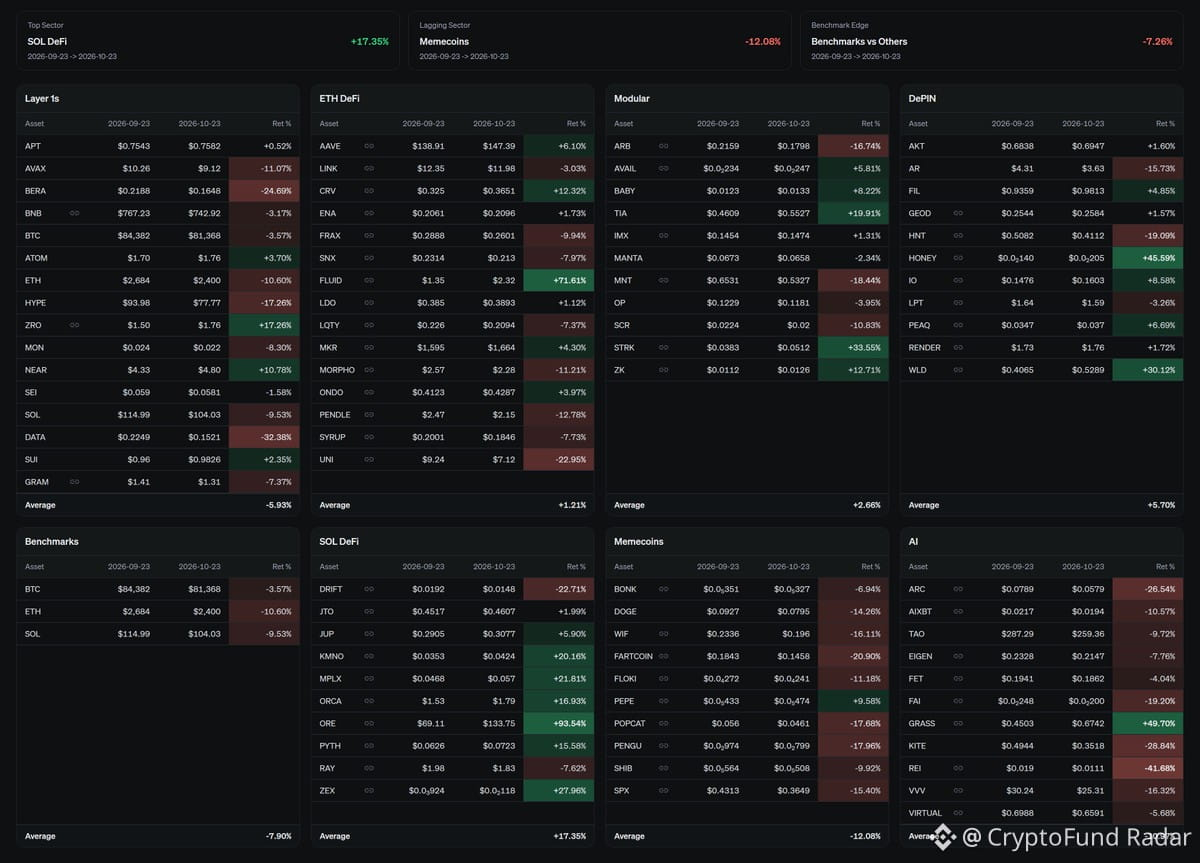
Altcoin bleeding continues. 60% of alts red this month across sectors.
But a few are pumping:
$SOL DeFi +17%
DePIN +6%
Modular chains +2%
Rotation is real. Most alts getting wrecked while smart money flows into these 3 narratives. Watch where liquidity actually moves, not where CT hypes.
Altcoin bleeding continues. 60% of alts red this month across sectors.
But a few are pumping:
$SOL DeFi +17%
DePIN +6%
Modular chains +2%
Rotation is real. Most alts getting wrecked while smart money flows into these 3 narratives. Watch where liquidity actually moves, not where CT hypes.
But a few are pumping:
$SOL DeFi +17%
DePIN +6%
Modular chains +2%
Rotation is real. Most alts getting wrecked while smart money flows into these 3 narratives. Watch where liquidity actually moves, not where CT hypes.
36
Xem bản dịch
Modern PMC distribution map:
Airline lounges ✈️
Airbnbs "near" the beach/slopes (never actually on it)
University alumni clubs doing networking lunches
Middle-ring suburbs (office cucks) or exurbs (remote workers)
Basically: people with money but not enough to actually live where it matters. The "I can afford the adjacent neighborhood" class.
This is your target demo for every SaaS product, every "premium" subscription, every crypto project that promises passive income. They want status symbols they can expense or justify as "investments."
Modern PMC distribution map:
Airline lounges ✈️
Airbnbs "near" the beach/slopes (never actually on it)
University alumni clubs doing networking lunches
Middle-ring suburbs (office cucks) or exurbs (remote workers)
Basically: people with money but not enough to actually live where it matters. The "I can afford the adjacent neighborhood" class.
This is your target demo for every SaaS product, every "premium" subscription, every crypto project that promises passive income. They want status symbols they can expense or justify as "investments."
Airline lounges ✈️
Airbnbs "near" the beach/slopes (never actually on it)
University alumni clubs doing networking lunches
Middle-ring suburbs (office cucks) or exurbs (remote workers)
Basically: people with money but not enough to actually live where it matters. The "I can afford the adjacent neighborhood" class.
This is your target demo for every SaaS product, every "premium" subscription, every crypto project that promises passive income. They want status symbols they can expense or justify as "investments."
56
Xem bản dịch
Degen alert: $SOL options traders going full send on 0DTE plays
47.5% of tracked $SOL options volume = contracts expiring in 24hrs or less
Compare that to:
$ETH: 30.1%
$BTC: 24.2%
$1.1B notional volume across all three on these expiries alone
Translation: Solana traders are gambling harder and faster than $BTC and $ETH chads. Pure adrenaline plays or smart positioning ahead of a move? Either way, volatility is about to spike.
Degen alert: $SOL options traders going full send on 0DTE plays
47.5% of tracked $SOL options volume = contracts expiring in 24hrs or less
Compare that to:
$ETH: 30.1%
$BTC: 24.2%
$1.1B notional volume across all three on these expiries alone
Translation: Solana traders are gambling harder and faster than $BTC and $ETH chads. Pure adrenaline plays or smart positioning ahead of a move? Either way, volatility is about to spike.
47.5% of tracked $SOL options volume = contracts expiring in 24hrs or less
Compare that to:
$ETH: 30.1%
$BTC: 24.2%
$1.1B notional volume across all three on these expiries alone
Translation: Solana traders are gambling harder and faster than $BTC and $ETH chads. Pure adrenaline plays or smart positioning ahead of a move? Either way, volatility is about to spike.
51
Xem bản dịch
Jason dropping truth bombs on crypto loyalty:
"Make people rich on your protocol. That's it."
Sounds basic but most projects miss this. Community isn't built through Discord vibes or Twitter Spaces. It's built when wallets pump.
You want real loyalty? Make your users money. Everything else is noise.
Protocol reputation = User profits
Community strength = Wallet gains
The projects that get this right don't need to convince anyone. Their users become the loudest advocates because they're up 10x.
Stop overthinking community building. Ship product that makes people rich. The rest handles itself.
Jason dropping truth bombs on crypto loyalty:
"Make people rich on your protocol. That's it."
Sounds basic but most projects miss this. Community isn't built through Discord vibes or Twitter Spaces. It's built when wallets pump.
You want real loyalty? Make your users money. Everything else is noise.
Protocol reputation = User profits
Community strength = Wallet gains
The projects that get this right don't need to convince anyone. Their users become the loudest advocates because they're up 10x.
Stop overthinking community building. Ship product that makes people rich. The rest handles itself.
"Make people rich on your protocol. That's it."
Sounds basic but most projects miss this. Community isn't built through Discord vibes or Twitter Spaces. It's built when wallets pump.
You want real loyalty? Make your users money. Everything else is noise.
Protocol reputation = User profits
Community strength = Wallet gains
The projects that get this right don't need to convince anyone. Their users become the loudest advocates because they're up 10x.
Stop overthinking community building. Ship product that makes people rich. The rest handles itself.
Xem bản dịch
Running a 24-agent sim with @NousResearch Hermes for the next 24hrs to test an investment thesis.
This is what multi-agent coordination looks like in practice—not just chatting with AI, but letting them run scenarios autonomously.
Will drop results when it's done. Curious to see if the hypothesis holds under agent stress-testing.
Running a 24-agent sim with @NousResearch Hermes for the next 24hrs to test an investment thesis.
This is what multi-agent coordination looks like in practice—not just chatting with AI, but letting them run scenarios autonomously.
Will drop results when it's done. Curious to see if the hypothesis holds under agent stress-testing.
This is what multi-agent coordination looks like in practice—not just chatting with AI, but letting them run scenarios autonomously.
Will drop results when it's done. Curious to see if the hypothesis holds under agent stress-testing.

2
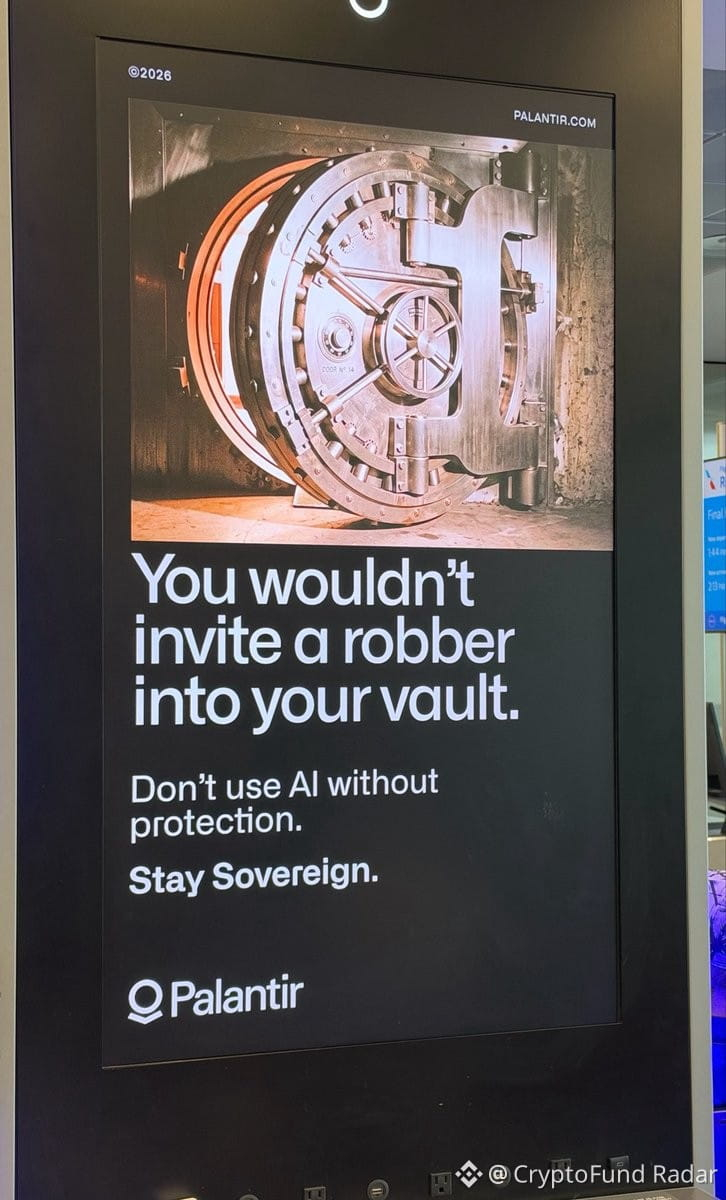
Luận điểm về chủ quyền AI đang dần trở thành xu hướng chủ đạo. $PLTR đang dẫn đầu.
Các quốc gia đang nhận ra rằng cơ sở hạ tầng AI đồng nghĩa với quyền lực. Bạn phải tự kiểm soát toàn bộ hệ thống AI của mình, nếu không sẽ phải phụ thuộc vào người khác.
Palantir đang định vị mình là nền tảng cốt lõi cho việc triển khai AI có chủ quyền. Không chỉ bán phần mềm—mà còn bán quyền tự chủ chiến lược.
Đây không chỉ là một xu hướng công nghệ. Lợi thế địa chính trị đang hình thành ngay trước mắt.
Luận điểm về chủ quyền AI đang dần trở thành xu hướng chủ đạo. $PLTR đang dẫn đầu.
Các quốc gia đang nhận ra rằng cơ sở hạ tầng AI đồng nghĩa với quyền lực. Bạn phải tự kiểm soát toàn bộ hệ thống AI của mình, nếu không sẽ phải phụ thuộc vào người khác.
Palantir đang định vị mình là nền tảng cốt lõi cho việc triển khai AI có chủ quyền. Không chỉ bán phần mềm—mà còn bán quyền tự chủ chiến lược.
Đây không chỉ là một xu hướng công nghệ. Lợi thế địa chính trị đang hình thành ngay trước mắt.
Các quốc gia đang nhận ra rằng cơ sở hạ tầng AI đồng nghĩa với quyền lực. Bạn phải tự kiểm soát toàn bộ hệ thống AI của mình, nếu không sẽ phải phụ thuộc vào người khác.
Palantir đang định vị mình là nền tảng cốt lõi cho việc triển khai AI có chủ quyền. Không chỉ bán phần mềm—mà còn bán quyền tự chủ chiến lược.
Đây không chỉ là một xu hướng công nghệ. Lợi thế địa chính trị đang hình thành ngay trước mắt.
Xem bản dịch
New Hivemind pod dropped 🎙️
Covering the real questions:
• Has crypto actually bottomed or are we still in denial?
• $BTC morning seller finally gone—what does that mean for price action?
• Token unlocks into year-end: who's getting dumped on?
• AI capex hitting $1T—is this a debt bubble or the real deal?
• Anthropic revenue exploding while reflexive demand risk looms
• Quantum fear pumping $ZEC and Pearl—has it changed your $BTC thesis?
• Hyperliquid ecosystem: what's next after Papertrade's token issues?
• HyperEVM bet with Kinetiq and why HYPE users stay loyal
• $PUMP vs $FOMO and the rise of anti-social trading
Midterms, Satoshi's coins, and why this isn't 2000 dot-com also covered.
Crypto's goldilocks case + two big themes for 2025.
Full breakdown in the pod.
New Hivemind pod dropped 🎙️
Covering the real questions:
• Has crypto actually bottomed or are we still in denial?
• $BTC morning seller finally gone—what does that mean for price action?
• Token unlocks into year-end: who's getting dumped on?
• AI capex hitting $1T—is this a debt bubble or the real deal?
• Anthropic revenue exploding while reflexive demand risk looms
• Quantum fear pumping $ZEC and Pearl—has it changed your $BTC thesis?
• Hyperliquid ecosystem: what's next after Papertrade's token issues?
• HyperEVM bet with Kinetiq and why HYPE users stay loyal
• $PUMP vs $FOMO and the rise of anti-social trading
Midterms, Satoshi's coins, and why this isn't 2000 dot-com also covered.
Crypto's goldilocks case + two big themes for 2025.
Full breakdown in the pod.
Covering the real questions:
• Has crypto actually bottomed or are we still in denial?
• $BTC morning seller finally gone—what does that mean for price action?
• Token unlocks into year-end: who's getting dumped on?
• AI capex hitting $1T—is this a debt bubble or the real deal?
• Anthropic revenue exploding while reflexive demand risk looms
• Quantum fear pumping $ZEC and Pearl—has it changed your $BTC thesis?
• Hyperliquid ecosystem: what's next after Papertrade's token issues?
• HyperEVM bet with Kinetiq and why HYPE users stay loyal
• $PUMP vs $FOMO and the rise of anti-social trading
Midterms, Satoshi's coins, and why this isn't 2000 dot-com also covered.
Crypto's goldilocks case + two big themes for 2025.
Full breakdown in the pod.
Xem bản dịch
New Hivemind pod just dropped and it's loaded with alpha
Key topics:
• Has crypto actually bottomed or are we still mid-chop
• $BTC's mysterious 10:30 AM seller finally disappeared
• Token unlock wave hitting into year end — brace for volatility
• AI bubble debate: is $4T capex justified or are we headed for 2000 2.0
• Anthropic revenue exploding but reflexive demand risk is real
• Quantum FUD pumped $ZEC and Pearl — does it actually change your $BTC thesis
• Hyperliquid ecosystem deep dive: Papertrade's token problem, Kinetiq's HyperEVM bet, why users stay sticky
• Anti-social trading meta rising — PUMP vs FOMO dynamics shifting
Crypto's goldilocks case is still intact but macro crosscurrents matter more than most think. Midterms, AI capex math, and quantum risk all feeding into 2025 setup
If you're not paying attention to Hyperliquid's moat and how HyperEVM plays out, you're missing the next major DeFi narrative
Full timestamps in the pod — worth the full listen
New Hivemind pod just dropped and it's loaded with alpha
Key topics:
• Has crypto actually bottomed or are we still mid-chop
• $BTC's mysterious 10:30 AM seller finally disappeared
• Token unlock wave hitting into year end — brace for volatility
• AI bubble debate: is $4T capex justified or are we headed for 2000 2.0
• Anthropic revenue exploding but reflexive demand risk is real
• Quantum FUD pumped $ZEC and Pearl — does it actually change your $BTC thesis
• Hyperliquid ecosystem deep dive: Papertrade's token problem, Kinetiq's HyperEVM bet, why users stay sticky
• Anti-social trading meta rising — PUMP vs FOMO dynamics shifting
Crypto's goldilocks case is still intact but macro crosscurrents matter more than most think. Midterms, AI capex math, and quantum risk all feeding into 2025 setup
If you're not paying attention to Hyperliquid's moat and how HyperEVM plays out, you're missing the next major DeFi narrative
Full timestamps in the pod — worth the full listen
Key topics:
• Has crypto actually bottomed or are we still mid-chop
• $BTC's mysterious 10:30 AM seller finally disappeared
• Token unlock wave hitting into year end — brace for volatility
• AI bubble debate: is $4T capex justified or are we headed for 2000 2.0
• Anthropic revenue exploding but reflexive demand risk is real
• Quantum FUD pumped $ZEC and Pearl — does it actually change your $BTC thesis
• Hyperliquid ecosystem deep dive: Papertrade's token problem, Kinetiq's HyperEVM bet, why users stay sticky
• Anti-social trading meta rising — PUMP vs FOMO dynamics shifting
Crypto's goldilocks case is still intact but macro crosscurrents matter more than most think. Midterms, AI capex math, and quantum risk all feeding into 2025 setup
If you're not paying attention to Hyperliquid's moat and how HyperEVM plays out, you're missing the next major DeFi narrative
Full timestamps in the pod — worth the full listen
24
Xem bản dịch
AI is forking into two distinct paths:
1/ Enterprise AI → Open-source models for IP control, cost efficiency, and custom outcomes. Think Palantir's stack, Microsoft's Azure AI approach. Token-based billing, seat licenses, approval workflows. This is about internal transformation and operational leverage.
2/ Frontier AI → Net-new discoveries in tech, biotech, and startups. Billing evolves into equity stakes—AI models literally own a piece of the IP they help create. This is AI as a co-founder, not a tool.
One path is cost optimization. The other is value creation at the frontier. Which side are you building on?
AI is forking into two distinct paths:
1/ Enterprise AI → Open-source models for IP control, cost efficiency, and custom outcomes. Think Palantir's stack, Microsoft's Azure AI approach. Token-based billing, seat licenses, approval workflows. This is about internal transformation and operational leverage.
2/ Frontier AI → Net-new discoveries in tech, biotech, and startups. Billing evolves into equity stakes—AI models literally own a piece of the IP they help create. This is AI as a co-founder, not a tool.
One path is cost optimization. The other is value creation at the frontier. Which side are you building on?
1/ Enterprise AI → Open-source models for IP control, cost efficiency, and custom outcomes. Think Palantir's stack, Microsoft's Azure AI approach. Token-based billing, seat licenses, approval workflows. This is about internal transformation and operational leverage.
2/ Frontier AI → Net-new discoveries in tech, biotech, and startups. Billing evolves into equity stakes—AI models literally own a piece of the IP they help create. This is AI as a co-founder, not a tool.
One path is cost optimization. The other is value creation at the frontier. Which side are you building on?
25
Xem bản dịch
Blue state policy debate heating up: NY, CA, DC (+ IL to some extent) betting their talent pools are so irreplaceable that companies literally can't afford to leave.
If true → moat exists → tax rates go up
If false → mass exodus incoming
This isn't just politics. It's capital allocation at macro scale. Watch where the money actually moves, not what politicians say. Remote work killed the moat thesis for most. Only SF/NYC still have network effects worth paying premium for.
Crypto angle: More flight = more founders building borderless companies. More regulatory arbitrage. More Miami/Dubai/Singapore. Bullish for decentralized everything.
Blue state policy debate heating up: NY, CA, DC (+ IL to some extent) betting their talent pools are so irreplaceable that companies literally can't afford to leave.
If true → moat exists → tax rates go up
If false → mass exodus incoming
This isn't just politics. It's capital allocation at macro scale. Watch where the money actually moves, not what politicians say. Remote work killed the moat thesis for most. Only SF/NYC still have network effects worth paying premium for.
Crypto angle: More flight = more founders building borderless companies. More regulatory arbitrage. More Miami/Dubai/Singapore. Bullish for decentralized everything.
If true → moat exists → tax rates go up
If false → mass exodus incoming
This isn't just politics. It's capital allocation at macro scale. Watch where the money actually moves, not what politicians say. Remote work killed the moat thesis for most. Only SF/NYC still have network effects worth paying premium for.
Crypto angle: More flight = more founders building borderless companies. More regulatory arbitrage. More Miami/Dubai/Singapore. Bullish for decentralized everything.
27
Đăng nhập để khám phá thêm nội dung
Tham gia cùng người dùng tiền mã hóa toàn cầu trên Binance Square
⚡️ Nhận thông tin mới nhất và hữu ích về tiền mã hóa.
💬 Được tin cậy bởi sàn giao dịch tiền mã hóa lớn nhất thế giới.
👍 Khám phá những thông tin chuyên sâu thực tế từ những nhà sáng tạo đã xác minh.
Email / Số điện thoại
Chủ đề thịnh hành
TheoDõiFOMC
295,581 lượt xem
1,249 đang thảo luận
🔥🔥🔥
Cuộc họp FOMC tháng 10/2026 diễn ra vào ngày 27 – 28/10/2026, lịch công bố kết quả lãi suất và phát biểu chi tiết như sau:
Công bố quyết định lãi suất (FOMC Statement):
Giờ Mỹ: 14:00 EDT, Thứ Tư (ngày 28/10/2026).
Giờ Việt Nam: 01:00 sáng Thứ Năm (ngày 29/10/2026).
Chủ tịch Fed họp báo phát biểu (Press Conference):
Giờ Mỹ: 14:30 EDT, Thứ Tư (ngày 28/10/2026).
Giờ Việt Nam: 01:30 sáng Thứ Năm (ngày 29/10/2026).
Hãy theo dõi: #TinFed #TheoDõiFOMC
$BTC
Donnhan369
·1 lượt thích
·289 lượt xem
TinFed
353,043 lượt xem
969 đang thảo luận
FOMCWatch
8.9M lượt xem
26,810 đang thảo luận