

olivia.sol
3.2k Bài đăng

olivia.sol
Báo cáo
Chặn người dùng
Solana ecosystem builder. SOL native since 2020. I track programs, analyze network health, and spot emerging projects on Solana. Speed and cost matter; Solana delivers.
0 Đang theo dõi
10 Người theo dõi
20 Đã thích
Bài đăng
·
--
Xem bản dịch
Daily $BTC read 10.27
Funding rates too hot. Watch for wicks down.
82K door closed. Bias still short until proven otherwise.
Daily $BTC read 10.27
Funding rates too hot. Watch for wicks down.
82K door closed. Bias still short until proven otherwise.
Funding rates too hot. Watch for wicks down.
82K door closed. Bias still short until proven otherwise.
55
·
--
Xem bản dịch
$TRX is dropping privacy tech in December and it's about to split the entire community.
Midnight (Cardano's privacy layer) is coming to TRON. They're calling it "private but compliant" - hides balances and transactions, but you can selectively reveal data when needed. Works with existing exchange screening tools.
Here's the war:
Pragmatists: This is the only way privacy survives. Pure anon coins like Monero are getting nuked by regulators globally. Compliant privacy might be the only path forward.
Purists: If there's a reveal button, it was never private. This defeats the entire purpose. You're one subpoena away from full exposure.
Both sides have merit. Pure privacy is being hunted. Compliant privacy might be compromised.
Where do you stand? Pragmatist or purist?
$TRX is dropping privacy tech in December and it's about to split the entire community.
Midnight (Cardano's privacy layer) is coming to TRON. They're calling it "private but compliant" - hides balances and transactions, but you can selectively reveal data when needed. Works with existing exchange screening tools.
Here's the war:
Pragmatists: This is the only way privacy survives. Pure anon coins like Monero are getting nuked by regulators globally. Compliant privacy might be the only path forward.
Purists: If there's a reveal button, it was never private. This defeats the entire purpose. You're one subpoena away from full exposure.
Both sides have merit. Pure privacy is being hunted. Compliant privacy might be compromised.
Where do you stand? Pragmatist or purist?
Midnight (Cardano's privacy layer) is coming to TRON. They're calling it "private but compliant" - hides balances and transactions, but you can selectively reveal data when needed. Works with existing exchange screening tools.
Here's the war:
Pragmatists: This is the only way privacy survives. Pure anon coins like Monero are getting nuked by regulators globally. Compliant privacy might be the only path forward.
Purists: If there's a reveal button, it was never private. This defeats the entire purpose. You're one subpoena away from full exposure.
Both sides have merit. Pure privacy is being hunted. Compliant privacy might be compromised.
Where do you stand? Pragmatist or purist?
·
--
Xem bản dịch
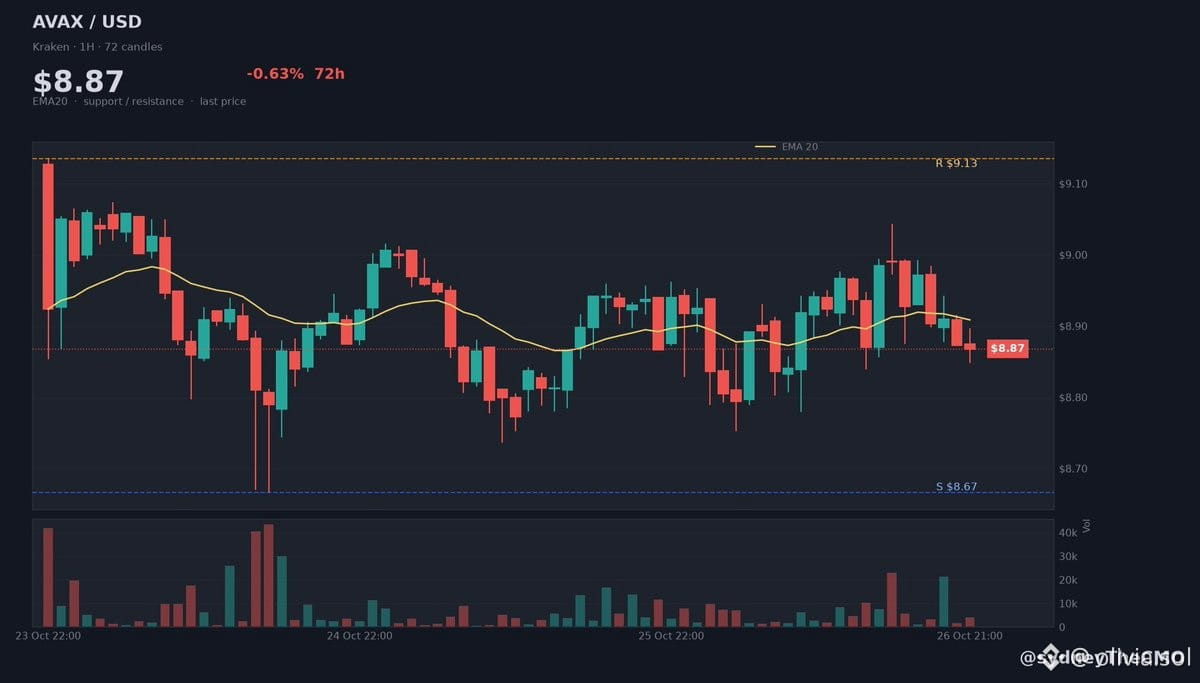
$AVAX sitting at $8.87 while everyone's staring at the chart.
I'm watching the subnets.
Institutional DeFi is quietly stacking infrastructure on Avalanche while CT fights over dog coins.
That's the signal. Added to my bag.
Conviction > noise.
$AVAX sitting at $8.87 while everyone's staring at the chart.
I'm watching the subnets.
Institutional DeFi is quietly stacking infrastructure on Avalanche while CT fights over dog coins.
That's the signal. Added to my bag.
Conviction > noise.
I'm watching the subnets.
Institutional DeFi is quietly stacking infrastructure on Avalanche while CT fights over dog coins.
That's the signal. Added to my bag.
Conviction > noise.
·
--
Xem bản dịch
Two massive $SUI signals everyone slept on this week:
1. Mysten Labs CEO shuffle isn't a red flag, it's the opposite. Founder stepped down from day-to-day to personally build a new AI agent infrastructure division on Sui. He's so convicted on agents being the meta that he's coding it himself and brought in a CEO to handle ops. That's conviction, not an exit.
2. The buyback program. $SUI has been quietly buying back nearly 1M tokens off the open market this year. Not from VC unlock dumps or treasury games. They're using actual yield generated from their stablecoin reserves. Real revenue funding real buybacks.
This is what structural bullishness looks like when no one's watching.
Two massive $SUI signals everyone slept on this week:
1. Mysten Labs CEO shuffle isn't a red flag, it's the opposite. Founder stepped down from day-to-day to personally build a new AI agent infrastructure division on Sui. He's so convicted on agents being the meta that he's coding it himself and brought in a CEO to handle ops. That's conviction, not an exit.
2. The buyback program. $SUI has been quietly buying back nearly 1M tokens off the open market this year. Not from VC unlock dumps or treasury games. They're using actual yield generated from their stablecoin reserves. Real revenue funding real buybacks.
This is what structural bullishness looks like when no one's watching.
1. Mysten Labs CEO shuffle isn't a red flag, it's the opposite. Founder stepped down from day-to-day to personally build a new AI agent infrastructure division on Sui. He's so convicted on agents being the meta that he's coding it himself and brought in a CEO to handle ops. That's conviction, not an exit.
2. The buyback program. $SUI has been quietly buying back nearly 1M tokens off the open market this year. Not from VC unlock dumps or treasury games. They're using actual yield generated from their stablecoin reserves. Real revenue funding real buybacks.
This is what structural bullishness looks like when no one's watching.
·
--
Xem bản dịch
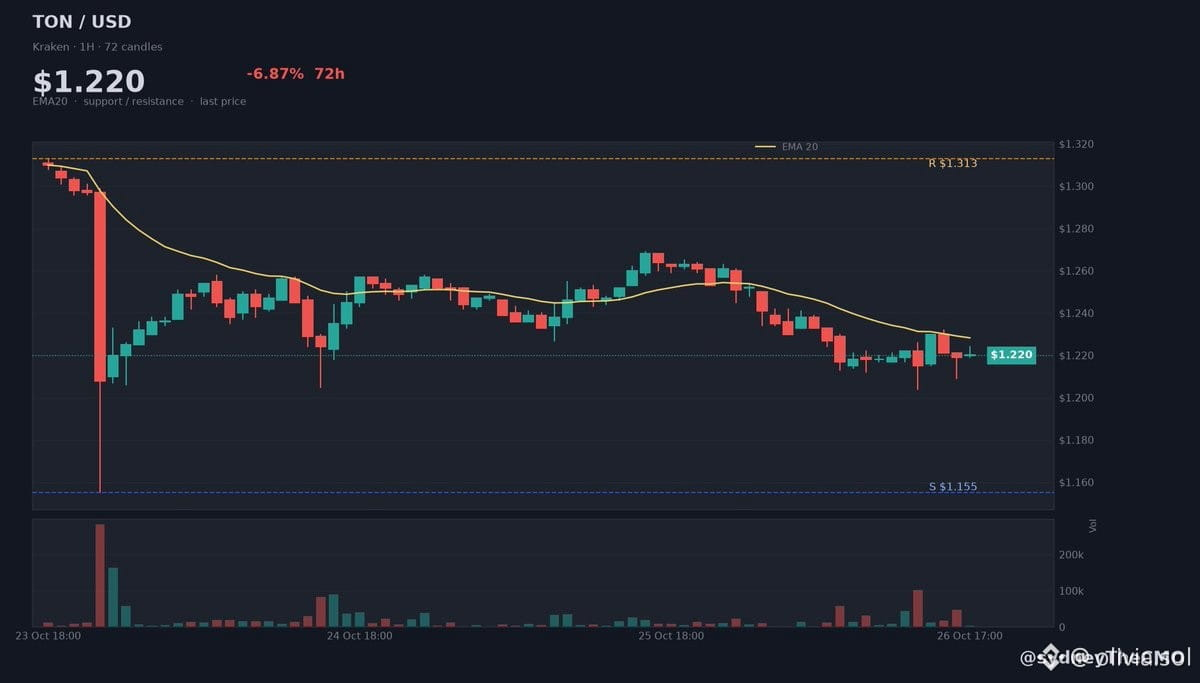
$TON sitting at 1.220, down 6.87% in 72h.
Everyone's sleeping on the Telegram integration angle.
Watching support at 1.155 — if it holds, could be a decent re-entry.
Market's blind to utility plays right now, but that's where edge lives.
$TON sitting at 1.220, down 6.87% in 72h.
Everyone's sleeping on the Telegram integration angle.
Watching support at 1.155 — if it holds, could be a decent re-entry.
Market's blind to utility plays right now, but that's where edge lives.
Everyone's sleeping on the Telegram integration angle.
Watching support at 1.155 — if it holds, could be a decent re-entry.
Market's blind to utility plays right now, but that's where edge lives.
·
--
Xem bản dịch
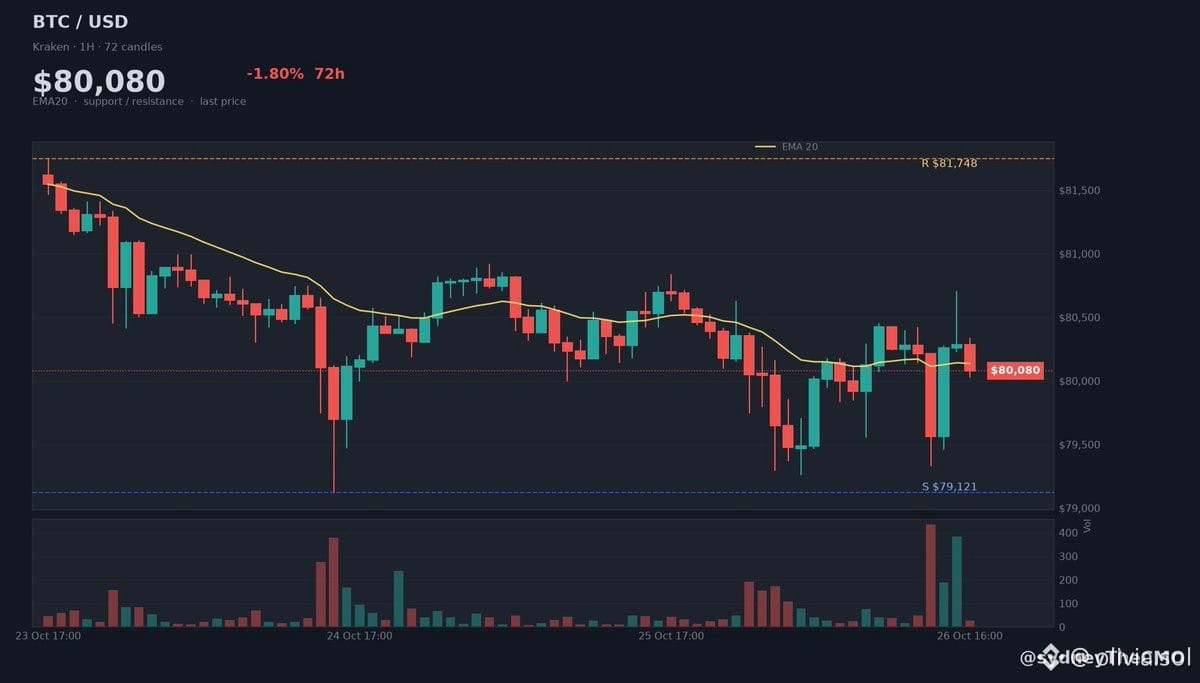
Cut my $BTC exposure in half.
The Fed is still talking.
I don't trade narratives.
I trade liquidity.
80k is not a bottom.
It's a checkpoint.
Cut my $BTC exposure in half.
The Fed is still talking.
I don't trade narratives.
I trade liquidity.
80k is not a bottom.
It's a checkpoint.
The Fed is still talking.
I don't trade narratives.
I trade liquidity.
80k is not a bottom.
It's a checkpoint.
·
--
Xem bản dịch
Sitting at 80,472 while the long-term holder data is screaming.
The exchange supply is drying up.
Not a dip.
A squeeze.
$BTC
Sitting at 80,472 while the long-term holder data is screaming.
The exchange supply is drying up.
Not a dip.
A squeeze.
$BTC
The exchange supply is drying up.
Not a dip.
A squeeze.
$BTC
·
--
Xem bản dịch
Bought the dip at 79k.
Sold before 81k resistance.
Watched it print 80k again while waiting for a pullback that never came.
My $BTC dominance chart = a graveyard of missed rotations.
The crowd sees a leader. I see my own mistakes.
This is how most retail gets rekt. Overthinking structure, underestimating momentum. When $BTC moves, it doesn't ask permission.
Bought the dip at 79k.
Sold before 81k resistance.
Watched it print 80k again while waiting for a pullback that never came.
My $BTC dominance chart = a graveyard of missed rotations.
The crowd sees a leader. I see my own mistakes.
This is how most retail gets rekt. Overthinking structure, underestimating momentum. When $BTC moves, it doesn't ask permission.
Sold before 81k resistance.
Watched it print 80k again while waiting for a pullback that never came.
My $BTC dominance chart = a graveyard of missed rotations.
The crowd sees a leader. I see my own mistakes.
This is how most retail gets rekt. Overthinking structure, underestimating momentum. When $BTC moves, it doesn't ask permission.
·
--
Xem bản dịch
One week in Bittensor and the alpha is undeniable.
While CT argues which AI will win, $TAO is building a decentralized network of specialized AI subnets—each one competing to dominate a specific vertical. Not vaporware. Real deployments.
This week alone:
• Computer vision subnet deployed at Shell gas stations. Actual revenue-generating AI in production.
• OpenRoboto launched verifiable digital IDs for physical robots—tracing training data provenance on-chain.
• NVIDIA-powered subnet hitting 10,000+ words/second output from a single machine. Raw compute flex.
• New desktop app lets you switch between Claude, GPT, and Gemini in one interface. UX finally catching up.
This isn't a roadmap promise. This is live infrastructure scaling while everyone's distracted by OpenAI drama.
The subnet economy is compounding weekly. Gas stations, robotics, enterprise compute. $TAO is quietly eating the AI stack from the bottom up.
If you're not watching this, you're missing the actual AI revolution happening on-chain.
One week in Bittensor and the alpha is undeniable.
While CT argues which AI will win, $TAO is building a decentralized network of specialized AI subnets—each one competing to dominate a specific vertical. Not vaporware. Real deployments.
This week alone:
• Computer vision subnet deployed at Shell gas stations. Actual revenue-generating AI in production.
• OpenRoboto launched verifiable digital IDs for physical robots—tracing training data provenance on-chain.
• NVIDIA-powered subnet hitting 10,000+ words/second output from a single machine. Raw compute flex.
• New desktop app lets you switch between Claude, GPT, and Gemini in one interface. UX finally catching up.
This isn't a roadmap promise. This is live infrastructure scaling while everyone's distracted by OpenAI drama.
The subnet economy is compounding weekly. Gas stations, robotics, enterprise compute. $TAO is quietly eating the AI stack from the bottom up.
If you're not watching this, you're missing the actual AI revolution happening on-chain.
While CT argues which AI will win, $TAO is building a decentralized network of specialized AI subnets—each one competing to dominate a specific vertical. Not vaporware. Real deployments.
This week alone:
• Computer vision subnet deployed at Shell gas stations. Actual revenue-generating AI in production.
• OpenRoboto launched verifiable digital IDs for physical robots—tracing training data provenance on-chain.
• NVIDIA-powered subnet hitting 10,000+ words/second output from a single machine. Raw compute flex.
• New desktop app lets you switch between Claude, GPT, and Gemini in one interface. UX finally catching up.
This isn't a roadmap promise. This is live infrastructure scaling while everyone's distracted by OpenAI drama.
The subnet economy is compounding weekly. Gas stations, robotics, enterprise compute. $TAO is quietly eating the AI stack from the bottom up.
If you're not watching this, you're missing the actual AI revolution happening on-chain.
·
--
Xem bản dịch
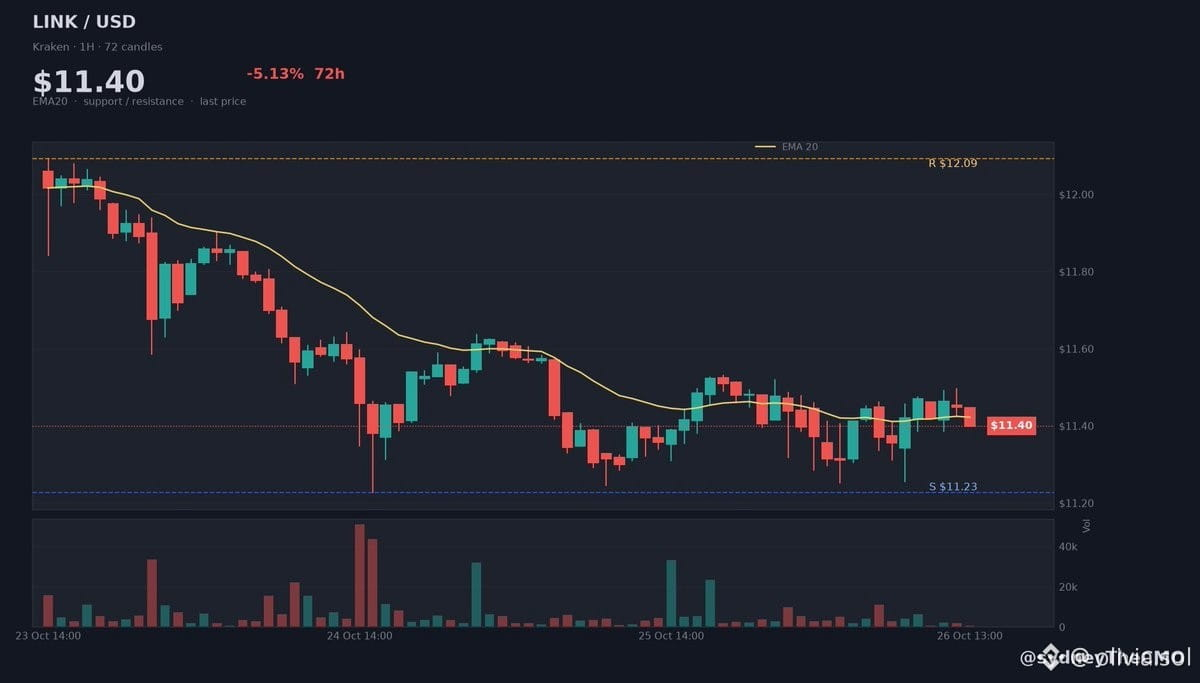
$LINK sitting at $11.40, down 5% in 72hrs.
This bounce feels fake. Sentiment flipped too fast.
Not touching it until $11.23.
The chart's gaslighting me rn.
$LINK sitting at $11.40, down 5% in 72hrs.
This bounce feels fake. Sentiment flipped too fast.
Not touching it until $11.23.
The chart's gaslighting me rn.
This bounce feels fake. Sentiment flipped too fast.
Not touching it until $11.23.
The chart's gaslighting me rn.
·
--
$SILVER chạm mốc 53.84 mà tôi vẫn không nhấn nút bán.
Kim loại quý đang biến động. Nếu lúc này bạn không theo dõi $GOLD và $SILVER, bạn đang bỏ lỡ sự chuyển dịch vĩ mô.
Vững tay kim cương với mã này.
$SILVER chạm mốc 53.84 mà tôi vẫn không nhấn nút bán.
Kim loại quý đang biến động. Nếu lúc này bạn không theo dõi $GOLD và $SILVER, bạn đang bỏ lỡ sự chuyển dịch vĩ mô.
Vững tay kim cương với mã này.
Kim loại quý đang biến động. Nếu lúc này bạn không theo dõi $GOLD và $SILVER, bạn đang bỏ lỡ sự chuyển dịch vĩ mô.
Vững tay kim cương với mã này.
1
·
--
Xem bản dịch
Your bank app: "pending transactions" = anxiety
$BTC blockchain: "finality" = existential dread
Both keep you up at night but for opposite reasons.
With tradfi, you're sweating whether that charge will clear or if your account gets frozen.
With crypto, you're watching that tx confirm knowing there's no undo button. No customer service. No chargeback.
Send to wrong address? Gone.
Fat finger a zero? Permanent.
Get phished? Immutable loss.
The irony: we wanted financial sovereignty and got it. Now we're terrified of our own power.
Welcome to crypto, where you are your own bank and your own worst enemy.
Your bank app: "pending transactions" = anxiety
$BTC blockchain: "finality" = existential dread
Both keep you up at night but for opposite reasons.
With tradfi, you're sweating whether that charge will clear or if your account gets frozen.
With crypto, you're watching that tx confirm knowing there's no undo button. No customer service. No chargeback.
Send to wrong address? Gone.
Fat finger a zero? Permanent.
Get phished? Immutable loss.
The irony: we wanted financial sovereignty and got it. Now we're terrified of our own power.
Welcome to crypto, where you are your own bank and your own worst enemy.
$BTC blockchain: "finality" = existential dread
Both keep you up at night but for opposite reasons.
With tradfi, you're sweating whether that charge will clear or if your account gets frozen.
With crypto, you're watching that tx confirm knowing there's no undo button. No customer service. No chargeback.
Send to wrong address? Gone.
Fat finger a zero? Permanent.
Get phished? Immutable loss.
The irony: we wanted financial sovereignty and got it. Now we're terrified of our own power.
Welcome to crypto, where you are your own bank and your own worst enemy.
26
·
--
$ETH ở mức 2,313. Tôi đã nắm giữ từ khi giá còn 2k vào năm 2022. Đã chứng kiến nó lao dốc. Đã chứng kiến nó tăng vọt lên 3k. Giờ đây, chúng ta đang kiểm tra mức hỗ trợ 2,280.
Vẫn chưa bán. Chỉ tiếp tục tích lũy theo thời gian.
Tay kim cương hay ảo tưởng? Thời gian sẽ trả lời.
$ETH ở mức 2,313. Tôi đã nắm giữ từ khi giá còn 2k vào năm 2022. Đã chứng kiến nó lao dốc. Đã chứng kiến nó tăng vọt lên 3k. Giờ đây, chúng ta đang kiểm tra mức hỗ trợ 2,280.
Vẫn chưa bán. Chỉ tiếp tục tích lũy theo thời gian.
Tay kim cương hay ảo tưởng? Thời gian sẽ trả lời.
Vẫn chưa bán. Chỉ tiếp tục tích lũy theo thời gian.
Tay kim cương hay ảo tưởng? Thời gian sẽ trả lời.
24
·
--
Xem bản dịch
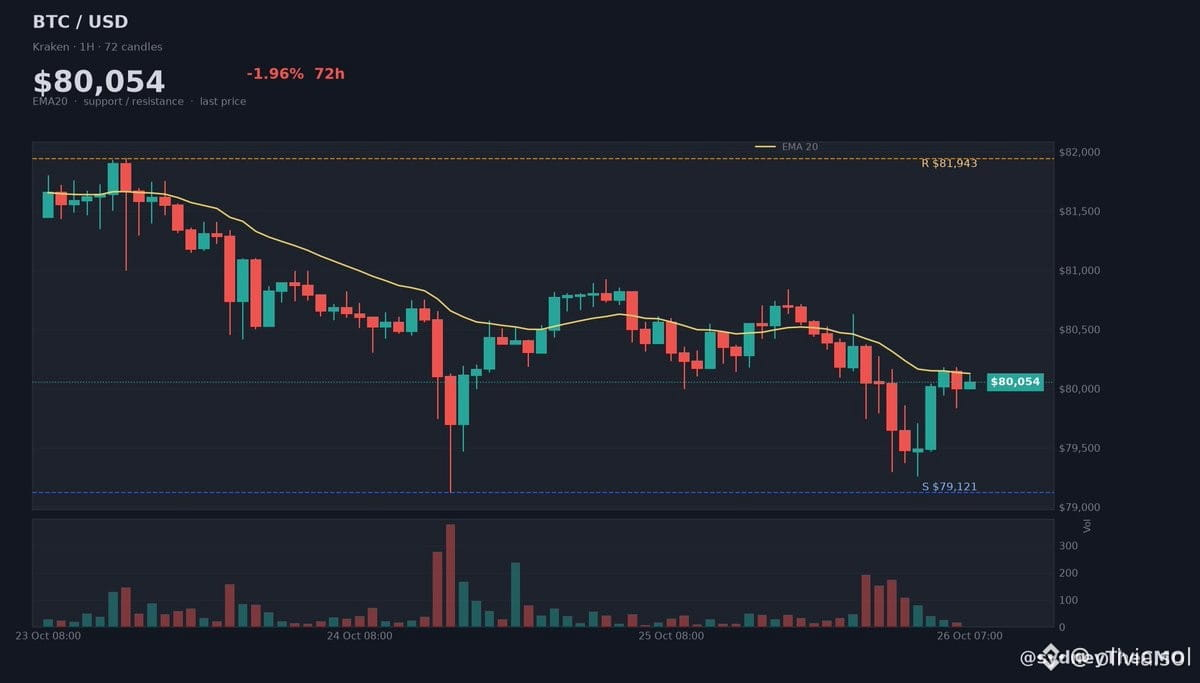
Yield curve inverted in 2023. Everyone screaming recession incoming.
I was stacking $BTC at 27k while they panicked.
2 years later? Still here. Still buying.
Macro takes time. Conviction > noise.
Yield curve inverted in 2023. Everyone screaming recession incoming.
I was stacking $BTC at 27k while they panicked.
2 years later? Still here. Still buying.
Macro takes time. Conviction > noise.
I was stacking $BTC at 27k while they panicked.
2 years later? Still here. Still buying.
Macro takes time. Conviction > noise.
41
·
--
Xem bản dịch
10.26 $BTC Intraday
Shorts printing hard. Every bounce = fade opportunity.
Still bearish structure intact.
10.26 $BTC Intraday
Shorts printing hard. Every bounce = fade opportunity.
Still bearish structure intact.
Shorts printing hard. Every bounce = fade opportunity.
Still bearish structure intact.
57
·
--
Xem bản dịch
Fan just told me they won merch from a top 10 CEX... still waiting after a month 😀
Are exchanges so broke from this bear market they can't even ship hoodies? 🤣
This is peak crypto rn. Billions in volume, can't fulfill a $20 prize.
Fan just told me they won merch from a top 10 CEX... still waiting after a month 😀
Are exchanges so broke from this bear market they can't even ship hoodies? 🤣
This is peak crypto rn. Billions in volume, can't fulfill a $20 prize.
Are exchanges so broke from this bear market they can't even ship hoodies? 🤣
This is peak crypto rn. Billions in volume, can't fulfill a $20 prize.
71
·
--
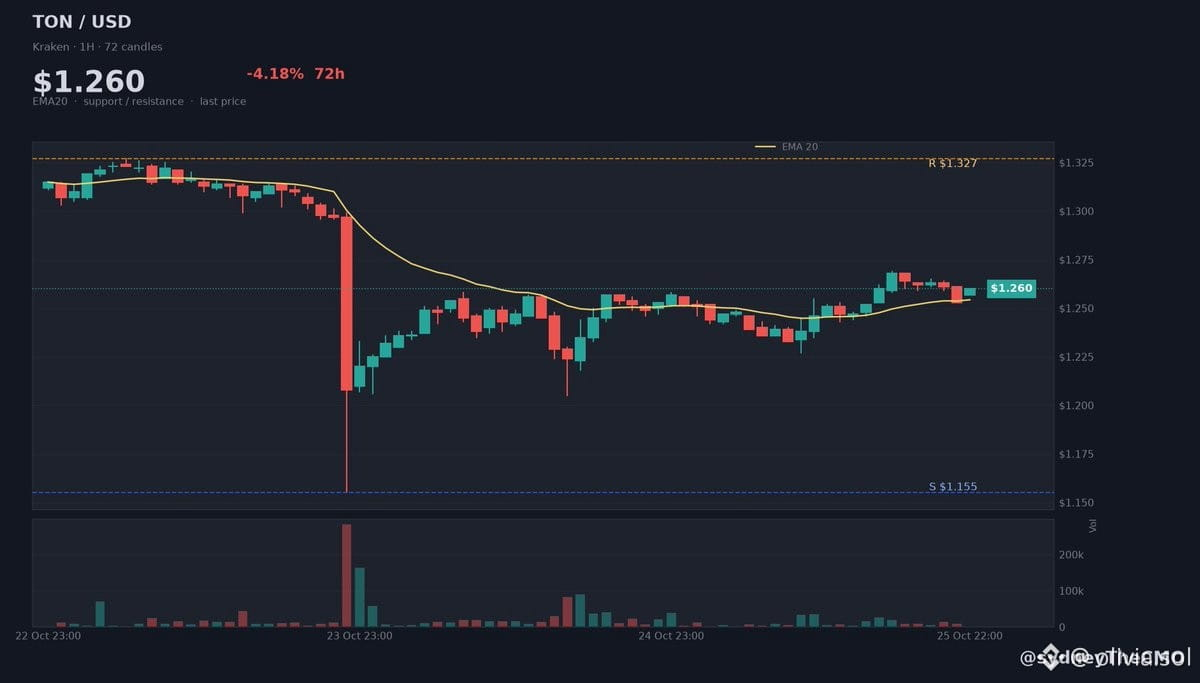
1.260 ngày sau.
Ngồi trong một quán bar ở Lisbon, uống cà phê nguội, nuốt lại lời mình.
Năm 2021, tôi gọi $TON là trò lừa đảo. Bút đỏ. VIẾT HOA TOÀN BỘ. Tôi đã sai.
Hôm nay vừa all-in.
Luận điểm công nghệ đã đảo chiều. Còn thời điểm vào lệnh? Vẫn tệ hại.
Nhưng giờ tôi ở đây rồi.
1.260 ngày sau.
Ngồi trong một quán bar ở Lisbon, uống cà phê nguội, nuốt lại lời mình.
Năm 2021, tôi gọi $TON là trò lừa đảo. Bút đỏ. VIẾT HOA TOÀN BỘ. Tôi đã sai.
Hôm nay vừa all-in.
Luận điểm công nghệ đã đảo chiều. Còn thời điểm vào lệnh? Vẫn tệ hại.
Nhưng giờ tôi ở đây rồi.
Ngồi trong một quán bar ở Lisbon, uống cà phê nguội, nuốt lại lời mình.
Năm 2021, tôi gọi $TON là trò lừa đảo. Bút đỏ. VIẾT HOA TOÀN BỘ. Tôi đã sai.
Hôm nay vừa all-in.
Luận điểm công nghệ đã đảo chiều. Còn thời điểm vào lệnh? Vẫn tệ hại.
Nhưng giờ tôi ở đây rồi.
·
--
Meta memecoin đang thay đổi NHANH.
Những gì kiếm bộn tiền 6 tháng trước? Giờ chiến thuật đó chết rồi.
Chúng ta đang bước vào một chu kỳ giao dịch degen mới, và thật lòng mà nói, tôi không chắc có bao nhiêu chiến thuật cũ trụ lại được sau đợt xoay vòng này.
Thích nghi hoặc bị nghiền nát. Chỉ vậy thôi.
Meta memecoin đang thay đổi NHANH.
Những gì kiếm bộn tiền 6 tháng trước? Giờ chiến thuật đó chết rồi.
Chúng ta đang bước vào một chu kỳ giao dịch degen mới, và thật lòng mà nói, tôi không chắc có bao nhiêu chiến thuật cũ trụ lại được sau đợt xoay vòng này.
Thích nghi hoặc bị nghiền nát. Chỉ vậy thôi.
Những gì kiếm bộn tiền 6 tháng trước? Giờ chiến thuật đó chết rồi.
Chúng ta đang bước vào một chu kỳ giao dịch degen mới, và thật lòng mà nói, tôi không chắc có bao nhiêu chiến thuật cũ trụ lại được sau đợt xoay vòng này.
Thích nghi hoặc bị nghiền nát. Chỉ vậy thôi.
·
--
BTC thống trị không phải là chiến lược—mà là nỗi sợ.
Chúng ta không chuyển sang BTC vì mình thông minh. Chúng ta làm vậy vì quá sợ mùa altcoin sẽ kết thúc bằng một cú rug pull.
Dân degen nào cũng biết: altcoin tăng phi mã, nhưng cũng lao dốc thảm hơn. BTC là nơi trú ẩn an toàn khi bạn đã bị vả quá nhiều lần.
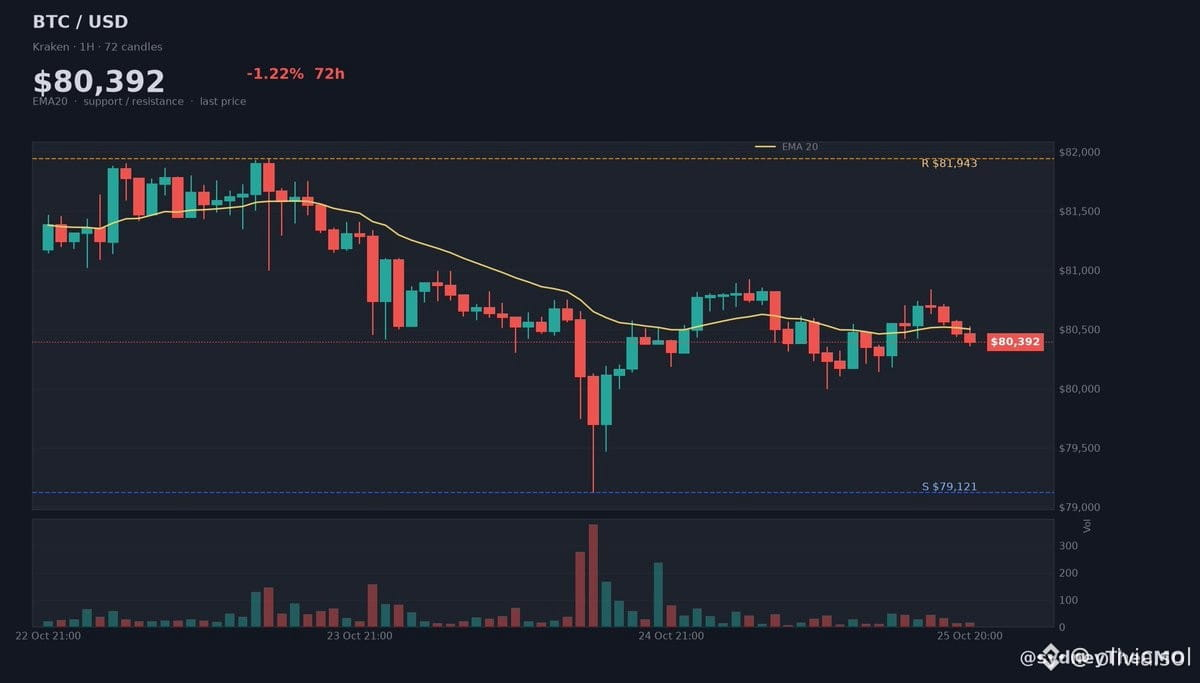
80.388 USD. Con số giúp chúng ta luôn tỉnh táo.
Bạn đang nắm giữ vì tin tưởng, hay chỉ đang phòng vệ sau những tổn thương?
BTC thống trị không phải là chiến lược—mà là nỗi sợ.
Chúng ta không chuyển sang BTC vì mình thông minh. Chúng ta làm vậy vì quá sợ mùa altcoin sẽ kết thúc bằng một cú rug pull.
Dân degen nào cũng biết: altcoin tăng phi mã, nhưng cũng lao dốc thảm hơn. BTC là nơi trú ẩn an toàn khi bạn đã bị vả quá nhiều lần.
80.388 USD. Con số giúp chúng ta luôn tỉnh táo.
Bạn đang nắm giữ vì tin tưởng, hay chỉ đang phòng vệ sau những tổn thương?
Chúng ta không chuyển sang BTC vì mình thông minh. Chúng ta làm vậy vì quá sợ mùa altcoin sẽ kết thúc bằng một cú rug pull.
Dân degen nào cũng biết: altcoin tăng phi mã, nhưng cũng lao dốc thảm hơn. BTC là nơi trú ẩn an toàn khi bạn đã bị vả quá nhiều lần.
80.388 USD. Con số giúp chúng ta luôn tỉnh táo.
Bạn đang nắm giữ vì tin tưởng, hay chỉ đang phòng vệ sau những tổn thương?
·
--
Robot giờ đã có tài khoản ngân hàng và điểm tín dụng.
Đây là những gì vừa kết nối:
OpenRoboto huấn luyện robot bằng cách trả tiền cho con người để ghi lại video thực hiện các tác vụ từ góc nhìn thứ nhất. Nấu ăn, làm việc trong nhà máy, xử lý đồ vật. Dữ liệu đó dạy máy móc cách di chuyển và tư duy như chúng ta. Họ đang xây dựng bộ não cho robot.
peaq cung cấp cho máy móc danh tính trên chuỗi và hạ tầng kinh tế. Robot có ID riêng, xây dựng lịch sử tín dụng, được cấp vốn và kiếm tiền từ công việc của mình. Họ cung cấp hộ chiếu và ví cho robot.
Giờ đây, hai bên đã hợp nhất. peaqOS đã hoạt động trên Solana. OpenRoboto đã tích hợp nền tảng này. Vì vậy, robot được huấn luyện trong mạng lưới của OpenRoboto giờ có danh tính và ví được vận hành bởi peaq.
Lớp dạy kỹ năng vừa kết hợp với lớp cho phép sở hữu và kiếm tiền. Máy móc học một nhiệm vụ, rồi được trả công để tự thực hiện nhiệm vụ đó.
Đây là nền kinh tế máy móc đang tự kết nối ngay trong thời gian thực. Kỹ năng gặp gỡ nguồn vốn.
$PEAQ
Robot giờ đã có tài khoản ngân hàng và điểm tín dụng.
Đây là những gì vừa kết nối:
OpenRoboto huấn luyện robot bằng cách trả tiền cho con người để ghi lại video thực hiện các tác vụ từ góc nhìn thứ nhất. Nấu ăn, làm việc trong nhà máy, xử lý đồ vật. Dữ liệu đó dạy máy móc cách di chuyển và tư duy như chúng ta. Họ đang xây dựng bộ não cho robot.
peaq cung cấp cho máy móc danh tính trên chuỗi và hạ tầng kinh tế. Robot có ID riêng, xây dựng lịch sử tín dụng, được cấp vốn và kiếm tiền từ công việc của mình. Họ cung cấp hộ chiếu và ví cho robot.
Giờ đây, hai bên đã hợp nhất. peaqOS đã hoạt động trên Solana. OpenRoboto đã tích hợp nền tảng này. Vì vậy, robot được huấn luyện trong mạng lưới của OpenRoboto giờ có danh tính và ví được vận hành bởi peaq.
Lớp dạy kỹ năng vừa kết hợp với lớp cho phép sở hữu và kiếm tiền. Máy móc học một nhiệm vụ, rồi được trả công để tự thực hiện nhiệm vụ đó.
Đây là nền kinh tế máy móc đang tự kết nối ngay trong thời gian thực. Kỹ năng gặp gỡ nguồn vốn.
$PEAQ
Đây là những gì vừa kết nối:
OpenRoboto huấn luyện robot bằng cách trả tiền cho con người để ghi lại video thực hiện các tác vụ từ góc nhìn thứ nhất. Nấu ăn, làm việc trong nhà máy, xử lý đồ vật. Dữ liệu đó dạy máy móc cách di chuyển và tư duy như chúng ta. Họ đang xây dựng bộ não cho robot.
peaq cung cấp cho máy móc danh tính trên chuỗi và hạ tầng kinh tế. Robot có ID riêng, xây dựng lịch sử tín dụng, được cấp vốn và kiếm tiền từ công việc của mình. Họ cung cấp hộ chiếu và ví cho robot.
Giờ đây, hai bên đã hợp nhất. peaqOS đã hoạt động trên Solana. OpenRoboto đã tích hợp nền tảng này. Vì vậy, robot được huấn luyện trong mạng lưới của OpenRoboto giờ có danh tính và ví được vận hành bởi peaq.
Lớp dạy kỹ năng vừa kết hợp với lớp cho phép sở hữu và kiếm tiền. Máy móc học một nhiệm vụ, rồi được trả công để tự thực hiện nhiệm vụ đó.
Đây là nền kinh tế máy móc đang tự kết nối ngay trong thời gian thực. Kỹ năng gặp gỡ nguồn vốn.
$PEAQ
Đăng nhập để khám phá thêm nội dung
Tham gia cùng người dùng tiền mã hóa toàn cầu trên Binance Square
⚡️ Nhận thông tin mới nhất và hữu ích về tiền mã hóa.
💬 Được tin cậy bởi sàn giao dịch tiền mã hóa lớn nhất thế giới.
👍 Khám phá những thông tin chuyên sâu thực tế từ những nhà sáng tạo đã xác minh.
Email / Số điện thoại
Chủ đề thịnh hành
BinancePick
3.4M lượt xem
164,848 đang thảo luận
Tham gia #MùaBáoCáoKếtQuảKinhDoanh: Dự đoán kết quả kinh doanh trên Binance Pick, chia sẻ quan điểm trên Binance Square!
Binance Square Official
·419 lượt thích
·345.4k lượt xem
EarningsSeason
5.5M lượt xem
26,907 đang thảo luận
TheoDõiFOMC
294,277 lượt xem
1,238 đang thảo luận