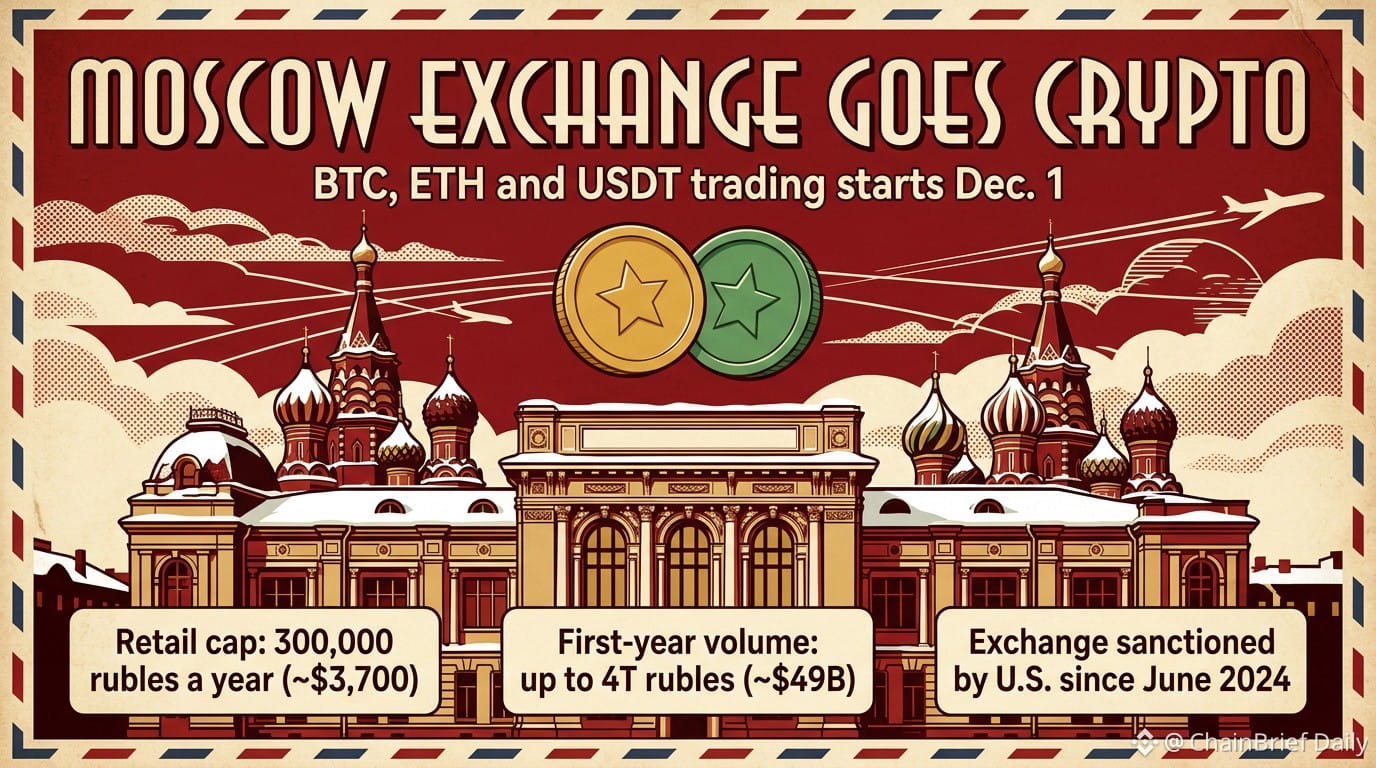
Russia's biggest stock exchange is putting crypto on the same screens traders use for Sberbank and Gazprom shares.
According to CoinDesk, Moscow Exchange plans to start trading bitcoin, ether and USDT on Dec. 1. Trading hours will match the stock market, 06:50 to 23:50 Moscow time, with the National Clearing Centre clearing trades on same-day or next-day settlement.
The details that stand out:
• Ordinary investors must pass a test and can buy up to 300,000 rubles per year (about $3,700) through a single broker. Qualified investors have no cap.
• A Moscow Exchange deputy chairman has said first-year volume could reach up to 4 trillion rubles (about $49B).
• Russia's finance ministry put daily crypto turnover at roughly 50B rubles in February, so the first-year estimate works out to about 11B a day. Most flow would likely stay on offshore exchanges and P2P desks.
The catch: both the exchange and its clearing house have been under U.S. sanctions since June 2024, while Tether freezes wallets linked to sanctioned addresses. How that policy applies to USDT held through the clearing house is an open question; CoinDesk says it has asked Tether for comment.
Why it matters: regulated, on-exchange access could pull crypto activity back onshore in one of the largest retail markets, but sanctions, limits and compliance rules may shape how much actually moves. Launch plans can also change before December.
Do you think regulated local venues will pull volume from offshore exchanges, or will most traders stay where they are?
#Crypto #Stablecoins #Regulation $BTC $USDT
Not financial advice.