

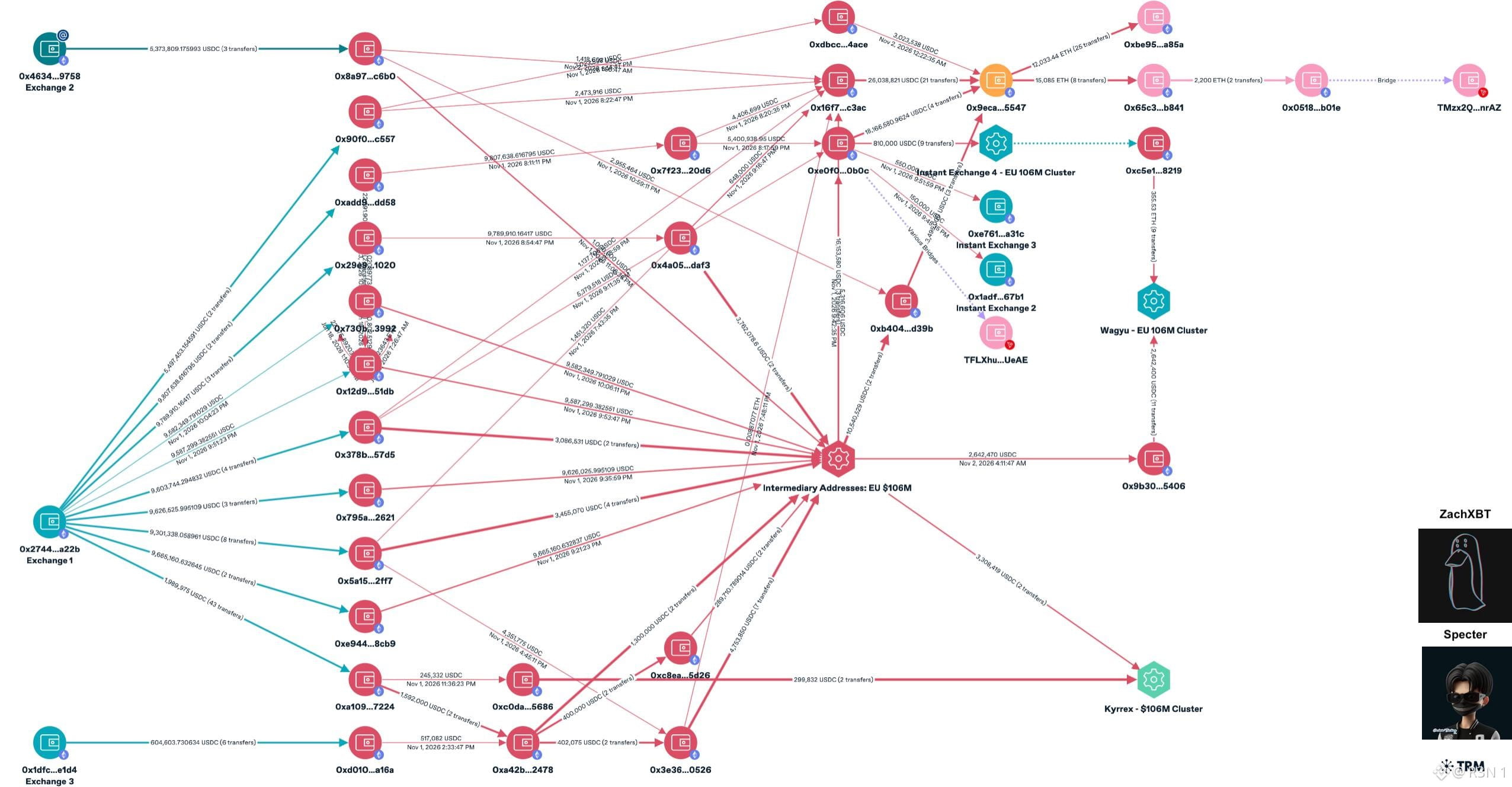
A second theft, a different playbook, and a race against the freeze button. On-chain investigator ZachXBT says an EU entity is suspected of losing $106M+ from multiple centralized exchange accounts on November 1. The funds were withdrawn as USDC and USDT, and neither the entity nor the exchanges have publicly confirmed the loss. The method of attack isn’t known. altcoinbuzz The laundering route is the interesting part. The attacker repeatedly swapped USDC for ETH, sent funds through instant-swap services like WellWallet and Kyrrex, converted some into Monero through Wagyu, and bridged across chains. That sequence matters because USDC and USDT can be frozen by their issuers, while ETH and Monero cannot. Every swap out of a stablecoin shrinks what can still be recovered. tokenpost cryptonews ZachXBT also says he’s highly confident this isn’t Lazarus Group, based on multiple laundering indicators. He hasn’t published those indicators, so treat it as his assessment for now. It’s worth noting because the FBI attributed the Binance attack to North Korea’s TraderTraitor group, so this looks like a different actor. cryptonews cryptonews He argues the lack of a proper disclosure let $30M+ be laundered that could have been frozen. That’s his claim, but it points at something real: in a theft, the first hours decide what can still be recovered. The sentiment is easy to read. One record hack, then a second theft within days, and security anxiety builds fast. The risk is that people read two events as a trend before there’s evidence of one. The bullish possibility is that investigators are publishing addresses faster than ever, which gives exchanges and issuers more time to act. Speed beats everything in a hack. $BTC #BTC Price Analysis# $ETH #Meme Alpha#
Tham gia cùng người dùng tiền mã hóa toàn cầu trên Binance Square
⚡️ Nhận thông tin mới nhất và hữu ích về tiền mã hóa.
💬 Được tin cậy bởi sàn giao dịch tiền mã hóa lớn nhất thế giới.
👍 Khám phá những thông tin chuyên sâu thực tế từ những nhà sáng tạo đã xác minh.
Email / Số điện thoại