


30% OF ALASKA’S GAS. A 20-YEAR COMMITMENT. BILLIONS AT STAKE. AND A GEOPOLITICAL GAME FAR BIGGER THAN ENERGY.
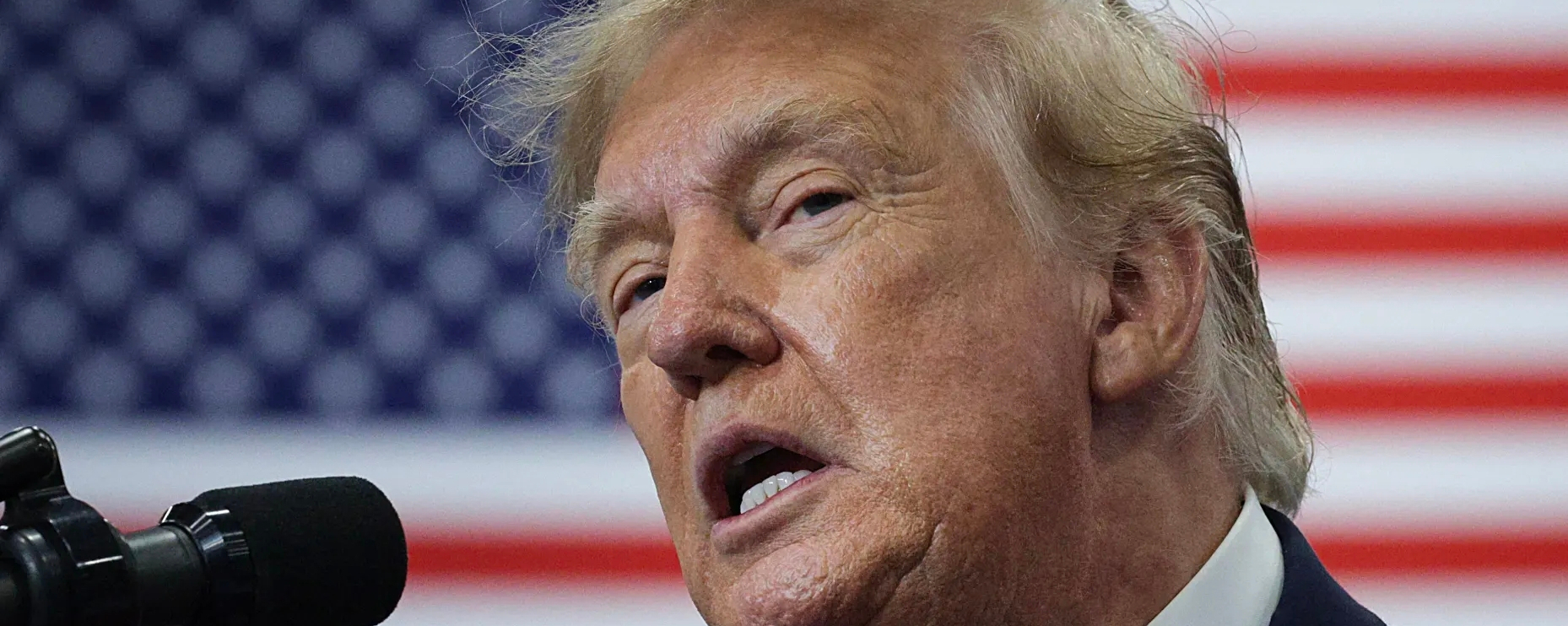
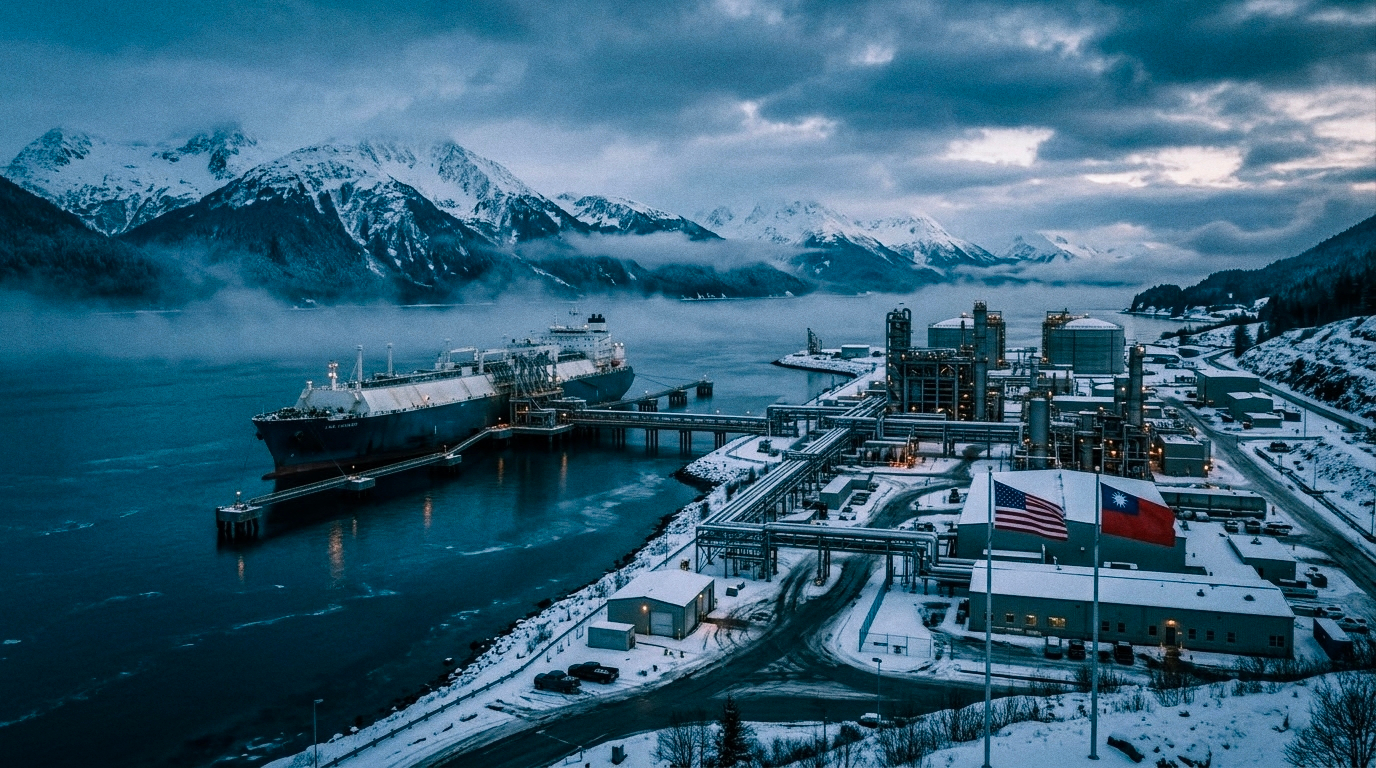
Donald Trump has made a massive claim: Taiwan has agreed to purchase 30% of the natural gas expected to flow through the proposed Alaska LNG project over the next 20 years.
Speaking at a rally in Alaska on October 13, Trump declared that the commitment “guarantees success.”
But let’s get one thing straight: a presidential announcement is not the same as a fully verified, finalized commercial agreement. The details matter. The financial commitments matter. And the consequences could reach far beyond the American energy industry.
Because this is not just about selling gas.
THIS IS ABOUT ENERGY SECURITY, ECONOMIC LEVERAGE, AND WHO HOLDS THE CARDS IN THE NEXT PHASE OF GLOBAL POWER POLITICS.
1. TAIWAN NEEDS ENERGY. AMERICA WANTS STRATEGIC LEVERAGE.
Taiwan is one of the world's most important technology economies, home to semiconductor giant TSMC and a critical part of the global supply chain powering artificial intelligence.
But there is a fundamental vulnerability beneath that technological dominance: Taiwan relies heavily on imported energy.
According to the report, the island imports more than 90% of its energy supply. Meanwhile, demand for electricity is growing as AI infrastructure, advanced manufacturing, and the semiconductor industry require enormous amounts of reliable power.
No electricity. No semiconductor production at scale. No technological dominance without an energy system capable of supporting it.
That is the brutal reality.
For Taiwan, diversifying gas supplies could strengthen long-term energy security. For Washington, securing a major buyer for American LNG could reinforce commercial ties with a strategically important partner.
Energy is no longer merely a commodity. It is infrastructure, leverage, and national security rolled into one.
2. THE $50 BILLION QUESTION: WHO IS ACTUALLY PAYING?
The proposed Alaska LNG project carries an estimated price tag of approximately $50 billion.
That is an enormous financial undertaking involving infrastructure, pipelines, liquefaction facilities, financing, construction risks, and decades of commercial assumptions.
Trump has also claimed that South Korea has committed $50 billion to Alaska, while referring to Taiwan's reported $4.4 billion investment in the project.
But there is a critical distinction: these figures and commitments must not automatically be treated as independently verified, finalized investments.
South Korea's participation has remained uncertain, according to the report, despite Trump's repeated assertions that Seoul has agreed to join.
And Taiwan's latest alleged 30% purchasing commitment also lacks publicly clarified details in the report.
So the questions are unavoidable:
Who has signed binding agreements? How much capital has actually been committed? What prices will buyers pay? Who bears the construction and financing risks? And what happens if the project becomes more expensive or misses its deadlines?
A $50 BILLION PROJECT DOES NOT BECOME A SUCCESS STORY JUST BECAUSE A POLITICAL LEADER SAYS IT WILL SUCCEED.
It needs contracts, financing, infrastructure, customers, and commercially viable economics.
Anything less is a promise carrying a very expensive price tag.
3. THE 20-YEAR DEAL: SECURITY OR DEPENDENCE?
Trump says Taiwan has agreed to buy 30% of the gas coming through the pipeline for the next 20 years.
If finalized on the terms described, a commitment of that scale could provide the project with a major long-term customer.
But long-term energy agreements create obligations as well as opportunities.
Buyers must consider pricing, contract flexibility, shipping and delivery infrastructure, market conditions, and the risk of locking themselves into commitments that may become less attractive over time.
For Taiwan, the calculation is particularly sensitive.
The island needs reliable energy to support its industrial base. Yet any major supply agreement must be evaluated against other suppliers, alternative energy sources, infrastructure requirements, and the possibility of future price shocks.
For the United States, meanwhile, long-term export contracts could support investment and expand its position in international LNG markets.
That is the strategic attraction.
But the real test is whether the agreement delivers affordable, dependable energy without creating unacceptable financial or supply risks.
DEPENDABLE ENERGY IS POWER. BUT DEPENDENCE ON ANY SINGLE SUPPLIER CAN ALSO BECOME A WEAKNESS.
4. SOUTH KOREA IS THE OTHER BIG QUESTION MARK.
The uncertainty surrounding Seoul makes this story even more significant.
Trump has repeatedly claimed that South Korea has agreed to participate in the Alaska LNG project. However, the report says Seoul has maintained that its participation is not yet final.
Trump has also threatened to impose additional costs on South Korea if it fails to sign an agreement promptly, warning that those costs could double without specifying exactly what would be doubled.
That has fueled speculation in South Korean media that he may have been referring to higher tariffs.
This is where energy economics collides with trade pressure.
If countries are being pushed to support a major infrastructure project amid tariff threats and broader geopolitical negotiations, the situation becomes much more complicated than a straightforward commercial transaction.
Are governments participating because the economics make sense? Because energy security demands diversification? Because they see strategic benefits? Or because the cost of refusing could be politically and economically painful?
The answer may involve several factors at once.
But one principle remains: commercial commitments should stand on transparent terms, not merely on political declarations.
5. WHY THIS MATTERS FOR THE GLOBAL AI RACE.
The AI boom is often discussed in terms of chips, algorithms, computing power, and technological supremacy.
Yet none of these systems operates in a vacuum.
Data centers consume electricity. Semiconductor manufacturing requires reliable industrial power. Advanced economies need resilient energy infrastructure to sustain their technological ambitions.
Taiwan sits at the heart of this equation because of its role in the semiconductor supply chain.
Its rising energy demand therefore has implications beyond the island itself.
If Taiwan secures additional reliable gas supplies, that could help diversify its energy portfolio. If Alaska LNG attracts major long-term buyers, it could strengthen the commercial case for expanding American LNG exports.
But if construction costs rise, financing becomes difficult, or the project fails to deliver competitive prices, the entire equation could change.
The AI revolution is creating new opportunities for energy producers. It is also exposing the infrastructure constraints that technology companies and governments cannot ignore.
THE NEXT BATTLE FOR TECHNOLOGICAL DOMINANCE WILL NOT BE FOUGHT ONLY IN LABORATORIES AND CHIP FACTORIES. IT WILL ALSO BE FOUGHT OVER ELECTRICITY, GAS, GRIDS, AND CAPITAL.
6. THE GEOPOLITICAL SHADOW: CHINA IS WATCHING.
Taiwan is a self-governing democracy that Beijing claims as part of its territory.
That political reality makes Taiwan's economic and energy relationships with the United States strategically sensitive.
However, an LNG purchase agreement would not, by itself, establish a new military alliance or prove that Taiwan's security position has fundamentally changed.
The strategic significance is more nuanced.
Commercial energy ties can deepen economic relationships, create long-term interests, and influence how governments assess supply-chain resilience. Yet the actual geopolitical consequences depend on the terms of the agreement, the scale of investment, and the broader relationship between Washington, Taipei, and Beijing.
For China, Taiwan's economic connections with the United States are part of a much larger strategic picture.
For Taiwan, the challenge is balancing energy security, economic competitiveness, and political risk.
For Washington, the opportunity is to strengthen American energy exports while deepening commercial ties with a strategically important economy.
THIS IS HOW ECONOMIC POWER WORKS: THROUGH CONTRACTS, CAPITAL FLOWS, INFRASTRUCTURE, AND LONG-TERM DEPENDENCIES.
Not every deal is a geopolitical masterstroke. But in a contested region, even commercial decisions can carry strategic weight.
7. THE REAL TEST BEGINS AFTER THE HEADLINES.
According to the report, Alaska LNG developer Glenfarne told the U.S. government this month that the project aims to deliver its first gas in 2029.
That is a target, not a guarantee.
Major energy projects can face delays, cost overruns, financing challenges, regulatory obstacles, construction risks, and shifts in global demand.
A long-term buyer can improve the commercial outlook. It cannot magically eliminate those risks.
Before declaring victory, investors and the public should demand answers to five essential questions:
CONTRACTS: Is Taiwan's reported 30% commitment formally signed, binding, and supported by publicly established terms?
CAPITAL: What portion of the project's financing is secured, and which investment figures have been independently confirmed?
ECONOMICS: Will the delivered LNG be competitive with alternative supplies once transportation and infrastructure costs are included?
EXECUTION: Can the project meet its 2029 target without unacceptable delays or cost overruns?
STRATEGY: Will the agreements strengthen energy security without creating excessive financial exposure or inflexible long-term dependence?
Until these questions are answered, the headline should be treated as a significant political and commercial claim—not proof that the project is already guaranteed to succeed.
THE BOTTOM LINE
Trump wants Alaska LNG to become a major American energy success story.
Taiwan needs dependable energy supplies to support a technology economy increasingly shaped by AI and semiconductor manufacturing.
South Korea's participation remains an important unresolved question.
And a project carrying an estimated $50 billion price tag must still prove that its financing, infrastructure, contracts, and economics can withstand reality.
There is a powerful opportunity here. There are also substantial risks.
THE WORLD DOES NOT RUN ON POLITICAL SPEECHES. IT RUNS ON ENERGY, INFRASTRUCTURE, CAPITAL, AND CONTRACTS THAT ACTUALLY DELIVER.
If Taiwan's reported commitment is finalized, Alaska LNG could gain a significant commercial anchor. If the numbers fail to work, however, no amount of political confidence will erase the bill.
The question is not whether Trump can announce a deal.
The question is whether the deal can survive the real world.
Because in global power politics, promises make headlines. Execution determines who wins.
— ZACKY VICENT | GLOBAL SIGNAL
Source basis: CNBC report by Jenny Lee and Evelyn Cheng, published October 13, 2026. Claims attributed to Trump are distinguished from independently established project details. Financial and contractual terms remain subject to verification.
#GlobalSignal #Geopolitics #AlaskaLNG #DonaldTrump #Taiwan #SouthKorea #EnergySecurity #LNG #ArtificialIntelligence #Semiconductors #GlobalEconomy #USChinaRelations