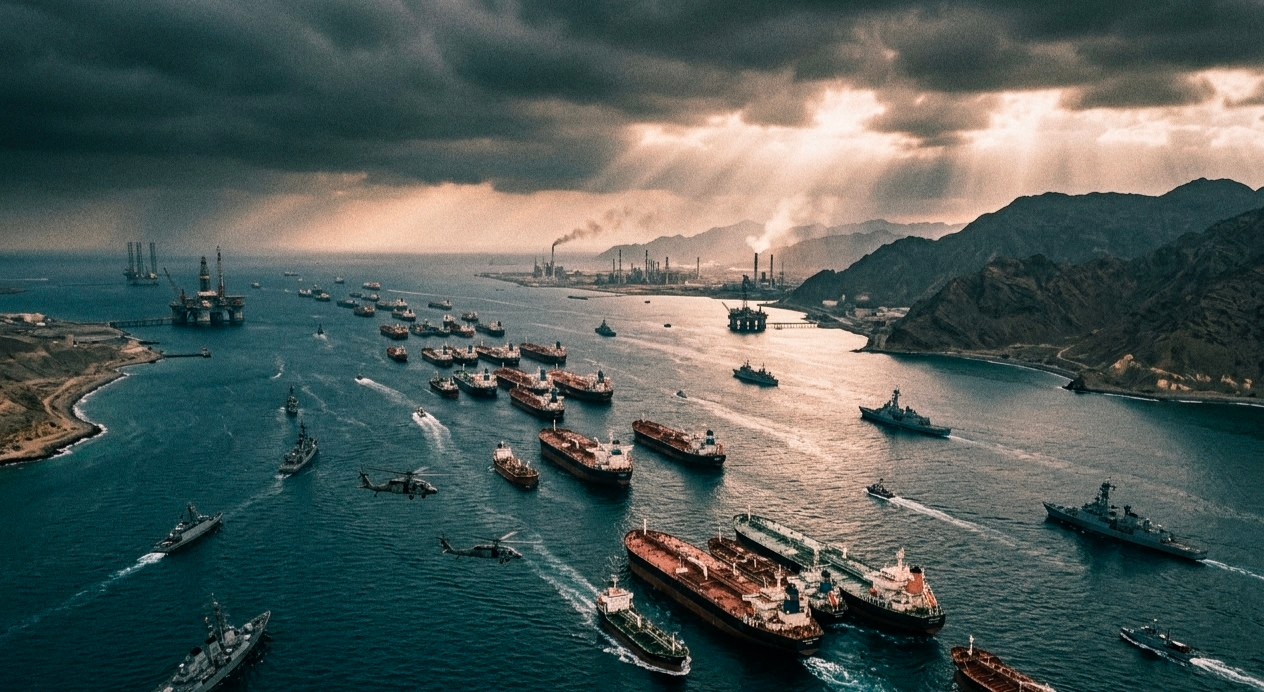

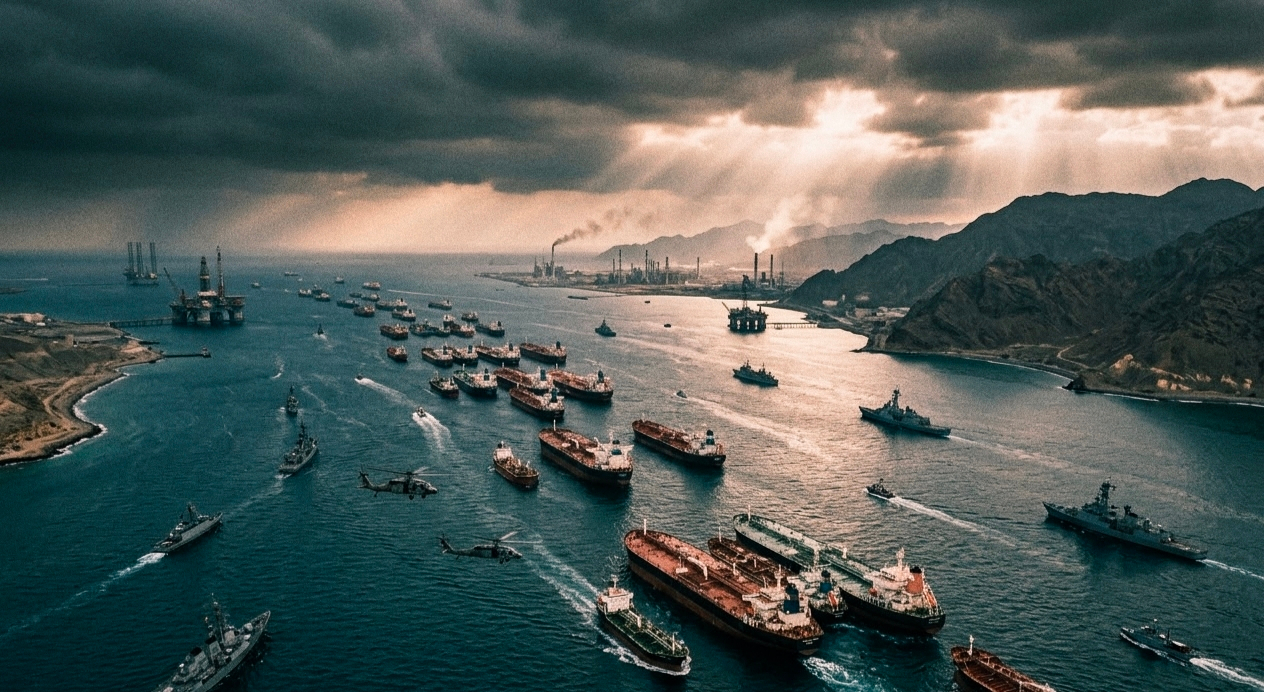
Iran has now put a price on reopening the world’s most important oil chokepoint.
Tehran says it is willing to restore traffic through the Strait of Hormuz within roughly seven days — but only if Washington reduces military pressure, ends the naval blockade, stops its economic warfare, and releases frozen Iranian assets.
That is not a minor diplomatic detail.
It is a negotiation over the artery of the global energy system.
Before the war, roughly one-fifth of global oil and gas shipments moved through Hormuz.
Now the system is crippled.
Kpler data cited in the latest reports put confirmed oil flows through the strait at around 6.98 million barrels per day in the seven days through September 20 — only about 38% of the pre-war baseline of 18.3 million barrels per day.
Iranian crude exports have effectively collapsed:
893,000 barrels/day in July → ZERO in September.
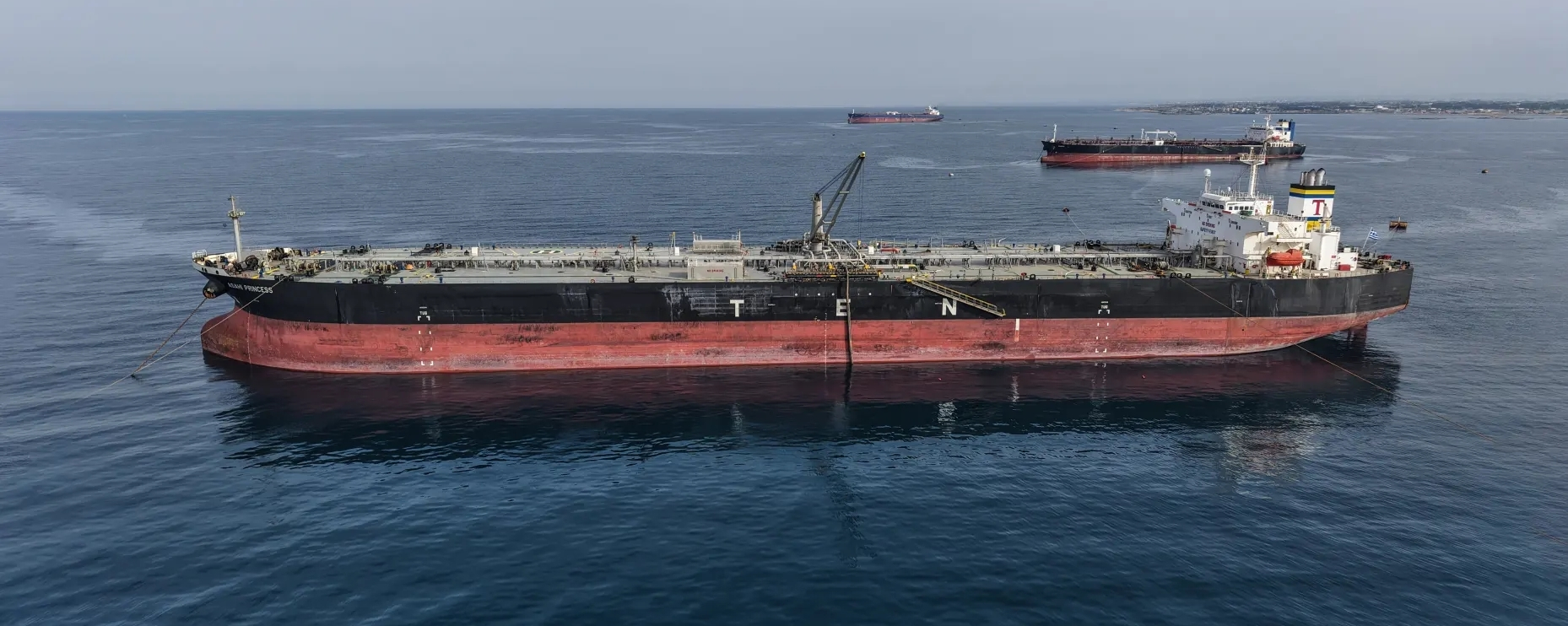
And vessel traffic has become brutally thin. Reuters reported only two commodity vessels crossing on September 21, compared with roughly 125 large commercial vessels per day before the conflict escalated.
This is where the shit gets serious.
Every tanker that cannot move means more pressure on:
Oil → freight → insurance → refining → fuel prices → inflation → consumers → central banks.
The market already reacted.
Brent futures were around $98.37/barrel, while WTI was around $89.16, as hopes for diplomacy pushed crude lower.
But don't confuse a lower oil price with a solved crisis.
THE PIPELINE IS STILL BROKEN.
Iran wants sanctions and the blockade reduced before reopening Hormuz.
Washington wants pressure on Tehran.
Trump says a deal could come after the U.S. November midterm elections, while U.S. and Iranian representatives have already held lengthy indirect discussions in New York through intermediaries.
And Saudi Arabia is being dragged deeper into the logistics nightmare.
Its alternative East-West pipeline route toward the Red Sea has also been disrupted, forcing more crude back toward Gulf shipping routes.
So the world is trapped inside a vicious loop:
BLOCKADE → LESS OIL FLOW → SHIPPING RISK → HIGHER LOGISTICS COSTS → ENERGY SHOCK → INFLATION → POLITICAL PRESSURE → NEGOTIATIONS.
That is the real battlefield.
Not just missiles.
Not just warships.
ENERGY. SHIPPING. MONEY.
Hormuz is a geographical bottleneck.
And whoever controls the conditions under which that bottleneck opens or closes can move billions of dollars through the global economy without firing a single shot.
The terrifying part?
The Strait does not need to be completely closed to damage the world.
It only needs to become too dangerous, too expensive, or too unpredictable for normal commercial traffic.
That is already happening.
The global economy isn't waiting for a declaration of peace.
It is waiting to see whether Hormuz becomes a highway again — or remains a weapon.