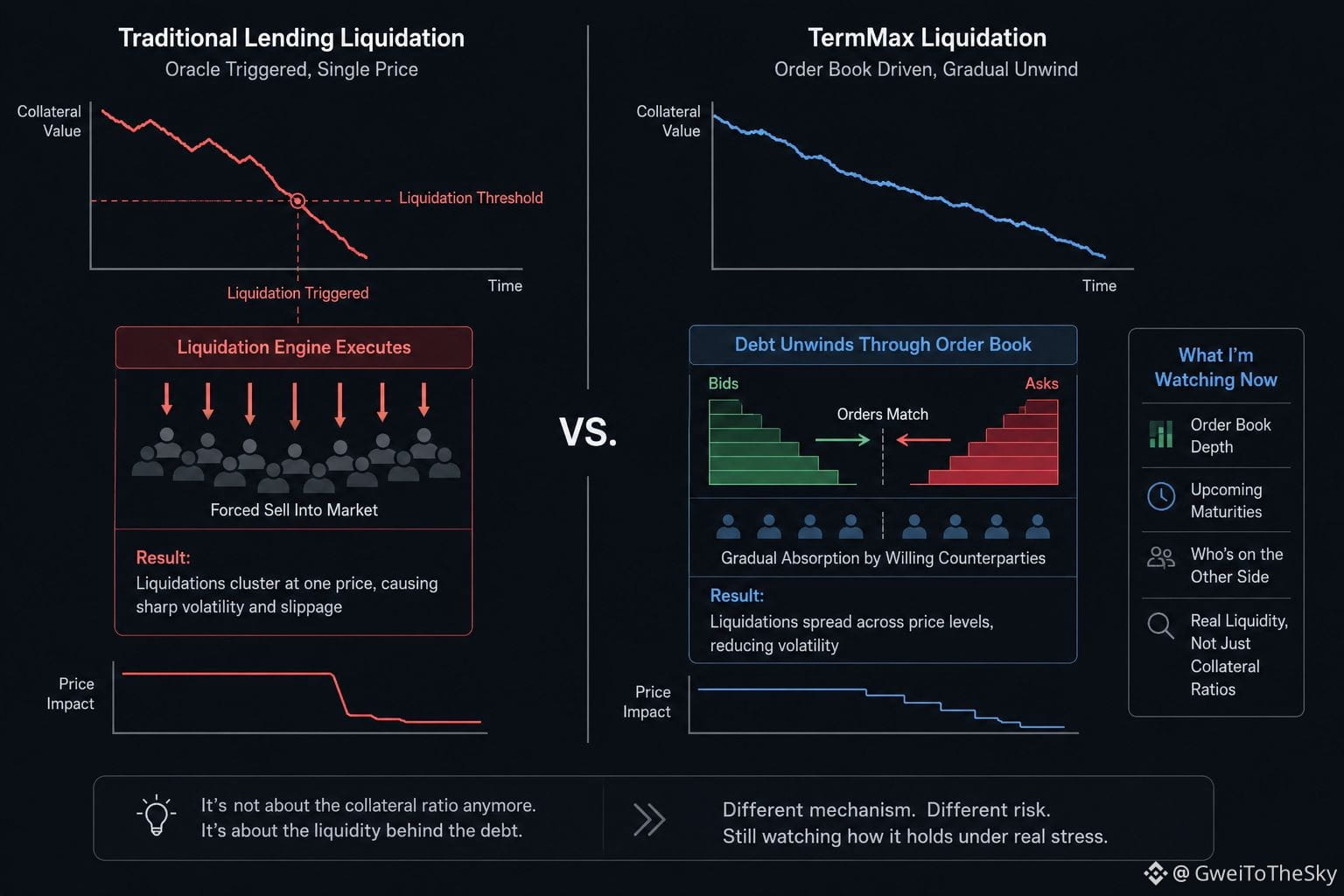
Khi tôi kiểm tra một lô các vị thế TermMax sau một cú tăng tỷ lệ đột ngột, tôi nhận ra một điều không phù hợp với kỳ vọng của mình: các đợt thanh lý không tụ lại theo kiểu thường thấy trên các thị trường cho vay mà tôi từng theo dõi.
Tôi cho rằng một đợt giảm tài sản thế chấp nhanh sẽ kích hoạt làn sóng bán cưỡng bức do oracle thúc đẩy, đánh trúng vào một mức giá tại một thời điểm. Vì vậy, tôi quay lại xem dòng lệnh xung quanh các vị thế đó để xem thực tế đã diễn ra gì.
Nhưng tôi thấy điều khác biệt. Bởi vì TermMax phát sinh nợ thông qua sổ lệnh riêng của các token đáo hạn cố định, thay vì đẩy mọi thứ qua một cơ chế kích hoạt oracle duy nhất, các khoản hoàn tất vị thế dần được hấp thụ khi lệnh khớp với các lệnh mua hiện có, thay vì “đập” vào một mức giá thanh lý duy nhất. Bản thân khoản nợ vận hành như một công cụ giao dịch có độ sâu riêng, chứ không chỉ là một ngưỡng cần vượt qua.
Điều này đã làm thay đổi cách tôi nhìn nhận rủi ro ở đây. Không phải là biến động biến mất, mà là cơ chế này phân bổ việc thực thi cho các đối tác sẵn sàng thay vì một “động cơ” thanh lý đơn lẻ, và vì vậy nó ảnh hưởng đến tốc độ căng thẳng thực sự xuất hiện trong giá.
Tôi vẫn chưa chắc liệu điều này có đúng trong tình huống chịu áp lực thực sự hay không. Các sổ lệnh mỏng ở những kỳ đáo hạn ít được ưa chuộng hơn có thể hoạt động rất khác, và tôi cũng chưa thấy hệ thống này được kiểm chứng trong một thị trường thực sự hỗn loạn.
Vì vậy, giờ tôi theo dõi độ sâu sổ lệnh xung quanh các kỳ đáo hạn sắp tới chặt chẽ hơn. Tôi ít quan tâm hơn đến chính tỷ lệ tài sản thế chấp và nhiều hơn đến việc ai đang đứng ở phía bên kia của sổ lệnh đó khi điều quan trọng xảy ra.
@TermMax #termmax
$RE
$HEMI
$ETH
Tôi cho rằng một đợt giảm tài sản thế chấp nhanh sẽ kích hoạt làn sóng bán cưỡng bức do oracle thúc đẩy, đánh trúng vào một mức giá tại một thời điểm. Vì vậy, tôi quay lại xem dòng lệnh xung quanh các vị thế đó để xem thực tế đã diễn ra gì.
Nhưng tôi thấy điều khác biệt. Bởi vì TermMax phát sinh nợ thông qua sổ lệnh riêng của các token đáo hạn cố định, thay vì đẩy mọi thứ qua một cơ chế kích hoạt oracle duy nhất, các khoản hoàn tất vị thế dần được hấp thụ khi lệnh khớp với các lệnh mua hiện có, thay vì “đập” vào một mức giá thanh lý duy nhất. Bản thân khoản nợ vận hành như một công cụ giao dịch có độ sâu riêng, chứ không chỉ là một ngưỡng cần vượt qua.
Điều này đã làm thay đổi cách tôi nhìn nhận rủi ro ở đây. Không phải là biến động biến mất, mà là cơ chế này phân bổ việc thực thi cho các đối tác sẵn sàng thay vì một “động cơ” thanh lý đơn lẻ, và vì vậy nó ảnh hưởng đến tốc độ căng thẳng thực sự xuất hiện trong giá.
Tôi vẫn chưa chắc liệu điều này có đúng trong tình huống chịu áp lực thực sự hay không. Các sổ lệnh mỏng ở những kỳ đáo hạn ít được ưa chuộng hơn có thể hoạt động rất khác, và tôi cũng chưa thấy hệ thống này được kiểm chứng trong một thị trường thực sự hỗn loạn.
Vì vậy, giờ tôi theo dõi độ sâu sổ lệnh xung quanh các kỳ đáo hạn sắp tới chặt chẽ hơn. Tôi ít quan tâm hơn đến chính tỷ lệ tài sản thế chấp và nhiều hơn đến việc ai đang đứng ở phía bên kia của sổ lệnh đó khi điều quan trọng xảy ra.
@TermMax #termmax
$RE
$HEMI
$ETH