@TermMax #termmax : Tôi đang nghĩ về một câu hỏi: Điều gì sẽ xảy ra nếu chính “lãi suất” có thể trở thành một tài sản onchain?
Nhìn chung, chúng ta thường xem lãi suất như một thứ tích lũy theo thời gian. Thông thường, chúng ta không nghĩ rằng “khoản lợi nhuận trong tương lai” đó có thể được biểu diễn và giao dịch như một loại tài sản. Điều khiến tôi ấn tượng về Token Lãi suất Cố định của TermMax, hay FT, là ở chỗ đó.
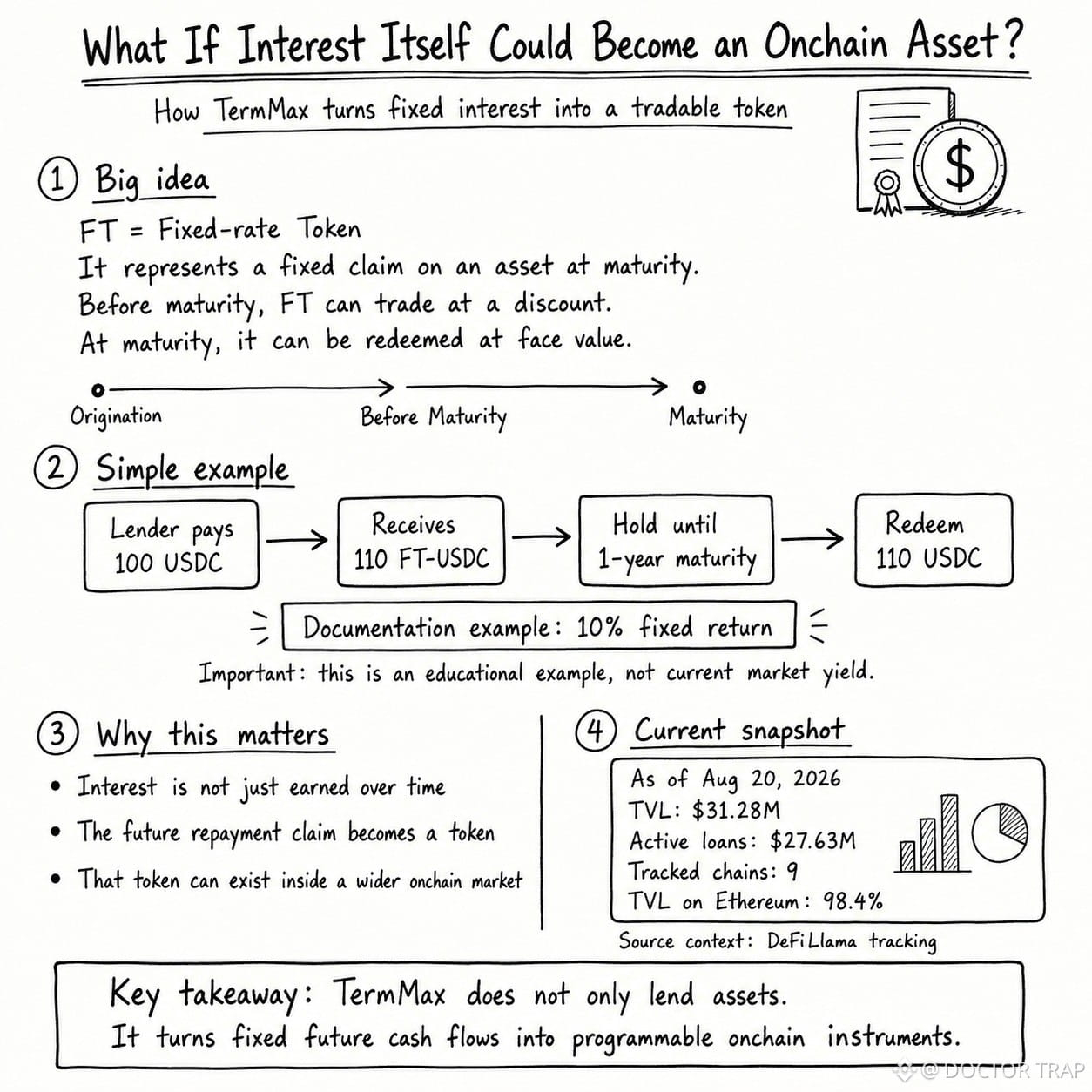
FT đại diện cho một quyền đòi cố định đối với một tài sản cơ sở khi đáo hạn. Trước khi đáo hạn, nó có thể giao dịch với mức chiết khấu. Đến ngày đáo hạn, nó có thể được hoàn lại theo mệnh giá. Tài liệu của TermMax đưa ra một ví dụ đơn giản về trường hợp sử dụng trong thế giới thực. Một bên cho vay chi 100 USDC để mua 110 FT-USDC. Nếu thời hạn là một năm, 110 FT-USDC đó sau này có thể được đổi lại lấy 110 USDC. Trong ví dụ này, phần chênh lệch tạo ra mức lợi nhuận cố định 10%.
Điểm quan trọng: 10% này là ví dụ mang tính minh họa từ tài liệu, chứ không phải mức lợi suất hiện tại trên thị trường của TermMax.
Điều này làm thay đổi góc nhìn của tôi về lãi suất cố định. Lợi suất không còn chỉ là một tỷ lệ gắn với một khoản vay. Quyền đối với khoản thanh toán trong tương lai đó trở thành một token onchain có thể tồn tại trong một thị trường rộng hơn. Và mô hình này đã cho thấy hoạt động ngoài đời thực.
Tính đến ngày 20 tháng 8 năm 2026, DeFiLlama theo dõi xấp xỉ 31,28 triệu USD TVL của TermMax và 27,63 triệu USD các khoản vay đang hoạt động trên 9 chuỗi. Thú vị là, khoảng 98,4% tổng TVL được theo dõi vẫn tập trung trên Ethereum.
Sự tập trung đó đáng để theo dõi. TermMax đã đa chuỗi, nhưng phần lớn vốn của nó vẫn nằm trong một thị trường cốt lõi. Có lẽ ý tưởng lớn hơn không chỉ là cho vay theo lãi suất cố định. Đó là liệu các dòng tiền cố định trong tương lai có thể trở thành tài sản onchain có tính thanh khoản và có thể lập trình hay không. Vậy nếu lãi suất trong tương lai có thể được đóng gói thành một token giao dịch ngay hôm nay, thì DeFi có bắt đầu trông ít giống “cho vay đơn giản” hơn và giống hơn một thị trường thu nhập cố định onchain không? Ý kiến của bạn là gì?
Nhìn chung, chúng ta thường xem lãi suất như một thứ tích lũy theo thời gian. Thông thường, chúng ta không nghĩ rằng “khoản lợi nhuận trong tương lai” đó có thể được biểu diễn và giao dịch như một loại tài sản. Điều khiến tôi ấn tượng về Token Lãi suất Cố định của TermMax, hay FT, là ở chỗ đó.
FT đại diện cho một quyền đòi cố định đối với một tài sản cơ sở khi đáo hạn. Trước khi đáo hạn, nó có thể giao dịch với mức chiết khấu. Đến ngày đáo hạn, nó có thể được hoàn lại theo mệnh giá. Tài liệu của TermMax đưa ra một ví dụ đơn giản về trường hợp sử dụng trong thế giới thực. Một bên cho vay chi 100 USDC để mua 110 FT-USDC. Nếu thời hạn là một năm, 110 FT-USDC đó sau này có thể được đổi lại lấy 110 USDC. Trong ví dụ này, phần chênh lệch tạo ra mức lợi nhuận cố định 10%.
Điểm quan trọng: 10% này là ví dụ mang tính minh họa từ tài liệu, chứ không phải mức lợi suất hiện tại trên thị trường của TermMax.
Điều này làm thay đổi góc nhìn của tôi về lãi suất cố định. Lợi suất không còn chỉ là một tỷ lệ gắn với một khoản vay. Quyền đối với khoản thanh toán trong tương lai đó trở thành một token onchain có thể tồn tại trong một thị trường rộng hơn. Và mô hình này đã cho thấy hoạt động ngoài đời thực.
Tính đến ngày 20 tháng 8 năm 2026, DeFiLlama theo dõi xấp xỉ 31,28 triệu USD TVL của TermMax và 27,63 triệu USD các khoản vay đang hoạt động trên 9 chuỗi. Thú vị là, khoảng 98,4% tổng TVL được theo dõi vẫn tập trung trên Ethereum.
Sự tập trung đó đáng để theo dõi. TermMax đã đa chuỗi, nhưng phần lớn vốn của nó vẫn nằm trong một thị trường cốt lõi. Có lẽ ý tưởng lớn hơn không chỉ là cho vay theo lãi suất cố định. Đó là liệu các dòng tiền cố định trong tương lai có thể trở thành tài sản onchain có tính thanh khoản và có thể lập trình hay không. Vậy nếu lãi suất trong tương lai có thể được đóng gói thành một token giao dịch ngay hôm nay, thì DeFi có bắt đầu trông ít giống “cho vay đơn giản” hơn và giống hơn một thị trường thu nhập cố định onchain không? Ý kiến của bạn là gì?