Europe is entering a dangerous new era.
This is no longer just another summer heatwave. This is an economic emergency.
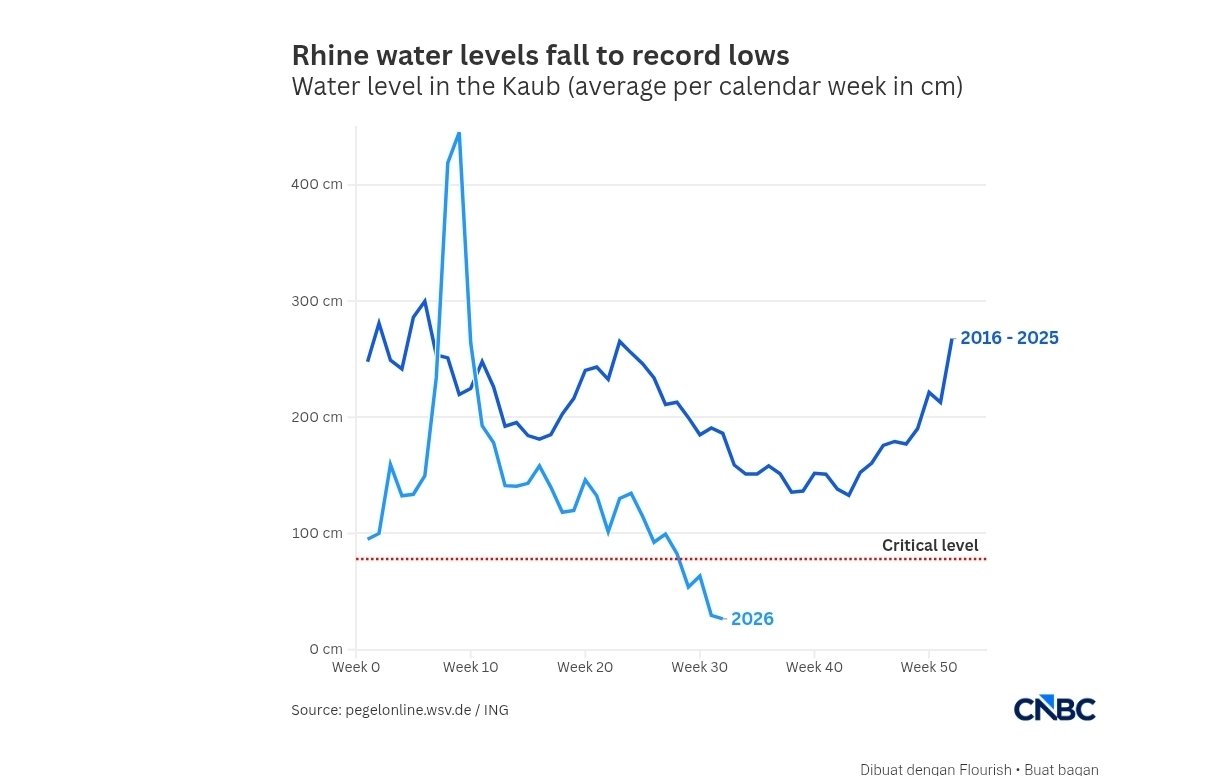
Across Europe, historic drought has pushed the Rhine and Danube Rivers to critically low levels, threatening energy security, manufacturing, transportation, agriculture, and international trade. Governments are now taking extraordinary measures—including controlled underwater explosions—to keep water flowing.
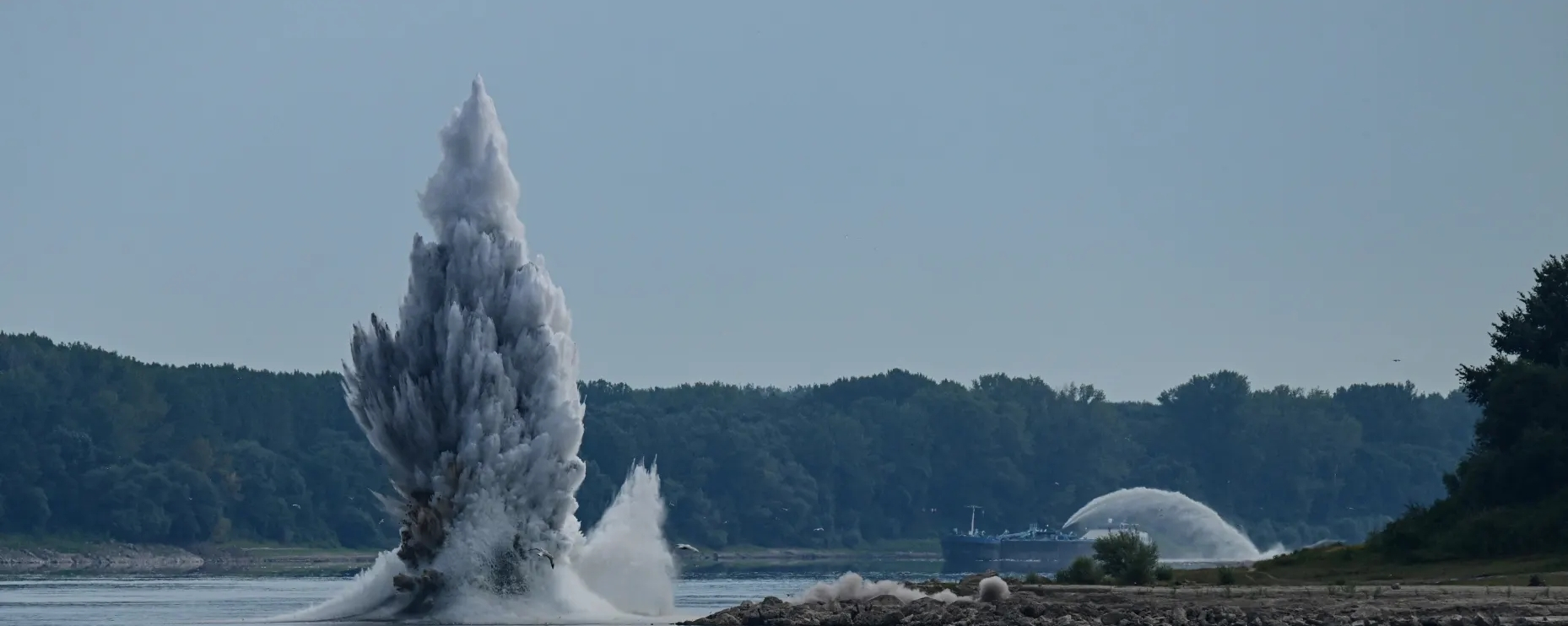
Romania was forced to deploy its navy to blast rocks beneath the Danube in an attempt to redirect more water toward the cooling system of the Cernavodă Nuclear Power Plant after shutting down its only operating reactor for the first time because of insufficient cooling water.
Think about that.
A modern European nation had to use military explosives on a river just to keep critical infrastructure alive.
Meanwhile:
• The Rhine River has fallen to its lowest recorded level in nearly 150 years.
• Cargo ships can no longer operate at full capacity, forcing massive reductions in freight loads.
• Transportation costs are soaring.
• Supply chains are slowing.
• Businesses are paying higher logistics costs.
• Inflation risks are rising again.
Germany—the industrial engine of Europe—is taking a direct hit.
Economists estimate that low water levels alone could reduce Germany's third-quarter GDP by up to 0.2%, translating into economic losses of roughly €1–2 billion in just one quarter.
This isn't merely a shipping problem.
The Rhine and Danube are economic arteries that support:
- Nuclear power plant cooling
- Hydroelectric generation
- Heavy industry
- Agricultural exports
- International freight
- Tourism
- Manufacturing supply chains
When these rivers begin to fail, the consequences ripple through the entire economy.
Hungary has already reduced nuclear generation.
Serbia has cut hydroelectric production.
Farmers along the Danube struggle to transport crops.
River cruise tourism is disrupted.
Factories face rising transportation costs.
Power systems become increasingly vulnerable.
And this is happening while Europe is already battling weak economic growth, stubborn inflation, and persistent geopolitical uncertainty.
Climate stress is no longer a future scenario.
It is becoming an economic variable.
Infrastructure built for the climate of the past is now confronting conditions it was never designed to handle.
The result is higher energy costs, weaker productivity, disrupted logistics, damaged infrastructure, and growing financial pressure across multiple sectors simultaneously.
Europe is not simply fighting drought.
It is fighting to preserve the foundations of its own economy.
When governments begin blasting riverbeds just to keep water flowing, the warning signs are impossible to ignore.
This is no longer only an environmental story.
It is an energy story.
A supply-chain story.
An inflation story.
An economic story.
And perhaps most importantly—
A warning about how quickly climate extremes can evolve into systemic economic risk.