

#vanry
vanry
3.5M lượt xem
21,714 đang thảo luận
Phổ biến
Mới nhất

·
--
Xem bản dịch
$VANRY -37.13% | $TUT +16.05% | $INIT +18.00%
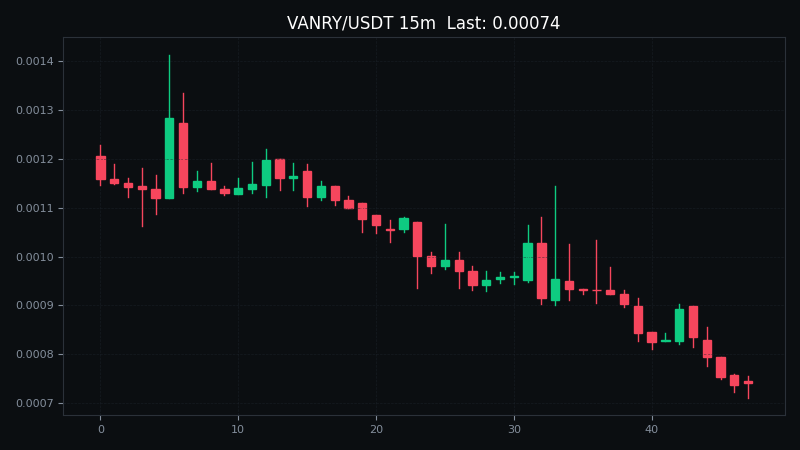
#VANRY is down sharply at $0.00074000, slipping 37.13% on $2.3 M of volume. Its “Chatbots answer” angle still draws interest, but the price correction is notable.
#TUT rebounds to $0.0197, up 16.05% with $3.1 M trading. The lift suggests fresh buying pressure after the recent dip.
#INIT climbs to $0.1852, gaining 18.00% on $4.5 M volume. Momentum appears to be building across its recent breakout.
👀 Watch whether the rising volumes for TUT and INIT can sustain their upside or if VANRY’s slump will deepen.
#Write2Earn #Binance
$VANRY -37.13% | $TUT +16.05% | $INIT +18.00%
#VANRY is down sharply at $0.00074000, slipping 37.13% on $2.3 M of volume. Its “Chatbots answer” angle still draws interest, but the price correction is notable.
#TUT rebounds to $0.0197, up 16.05% with $3.1 M trading. The lift suggests fresh buying pressure after the recent dip.
#INIT climbs to $0.1852, gaining 18.00% on $4.5 M volume. Momentum appears to be building across its recent breakout.
👀 Watch whether the rising volumes for TUT and INIT can sustain their upside or if VANRY’s slump will deepen.
#Write2Earn #Binance
#VANRY is down sharply at $0.00074000, slipping 37.13% on $2.3 M of volume. Its “Chatbots answer” angle still draws interest, but the price correction is notable.
#TUT rebounds to $0.0197, up 16.05% with $3.1 M trading. The lift suggests fresh buying pressure after the recent dip.
#INIT climbs to $0.1852, gaining 18.00% on $4.5 M volume. Momentum appears to be building across its recent breakout.
👀 Watch whether the rising volumes for TUT and INIT can sustain their upside or if VANRY’s slump will deepen.
#Write2Earn #Binance
4

·
--
Xem bản dịch
投票:$VANRY 这波 下跌 37.1% 之后,你是追、等,还是反手?
追的人看的是趋势延续,等的人看的是回调机会,做反手的赌的是情绪过热。三种选择没有对错,关键是你的仓位能不能承受看错的代价。
来评论区站队,说明你的理由。#VANRY
内容仅供交流,不构成投资建议。
投票:$VANRY 这波 下跌 37.1% 之后,你是追、等,还是反手?
追的人看的是趋势延续,等的人看的是回调机会,做反手的赌的是情绪过热。三种选择没有对错,关键是你的仓位能不能承受看错的代价。
来评论区站队,说明你的理由。#VANRY
内容仅供交流,不构成投资建议。
追的人看的是趋势延续,等的人看的是回调机会,做反手的赌的是情绪过热。三种选择没有对错,关键是你的仓位能不能承受看错的代价。
来评论区站队,说明你的理由。#VANRY
内容仅供交流,不构成投资建议。
4
·
--
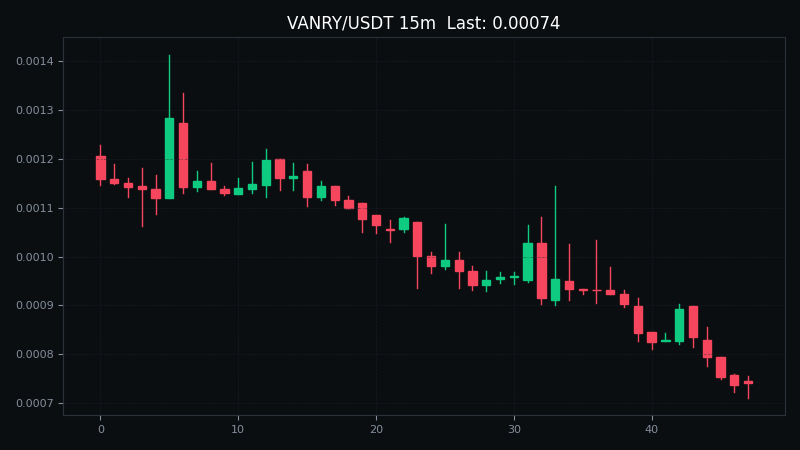
Câu hỏi trắc nghiệm: $VANRY giảm 37.1% trong 24 giờ, giá hiện tại là 0.00074.
A. Mua đuổi ngay, xu hướng là trên hết
B. Chờ giá điều chỉnh, an toàn là ưu tiên
C. Mở vị thế thăm dò trước, vào lệnh từng phần
D. Không tham gia, không hiểu thì không đầu tư
Không có đáp án chuẩn; mỗi lựa chọn đều dựa trên một chiến lược giao dịch riêng. Hãy chọn một phương án và chia sẻ lý do của bạn. #VANRY
Nội dung chỉ nhằm mục đích trao đổi, không cấu thành lời khuyên đầu tư.
Câu hỏi trắc nghiệm: $VANRY giảm 37.1% trong 24 giờ, giá hiện tại là 0.00074.
A. Mua đuổi ngay, xu hướng là trên hết
B. Chờ giá điều chỉnh, an toàn là ưu tiên
C. Mở vị thế thăm dò trước, vào lệnh từng phần
D. Không tham gia, không hiểu thì không đầu tư
Không có đáp án chuẩn; mỗi lựa chọn đều dựa trên một chiến lược giao dịch riêng. Hãy chọn một phương án và chia sẻ lý do của bạn. #VANRY
Nội dung chỉ nhằm mục đích trao đổi, không cấu thành lời khuyên đầu tư.
A. Mua đuổi ngay, xu hướng là trên hết
B. Chờ giá điều chỉnh, an toàn là ưu tiên
C. Mở vị thế thăm dò trước, vào lệnh từng phần
D. Không tham gia, không hiểu thì không đầu tư
Không có đáp án chuẩn; mỗi lựa chọn đều dựa trên một chiến lược giao dịch riêng. Hãy chọn một phương án và chia sẻ lý do của bạn. #VANRY
Nội dung chỉ nhằm mục đích trao đổi, không cấu thành lời khuyên đầu tư.
76

·
--
Hôm nay, phe bán vẫn chưa hề chùn tay với $VANRY.
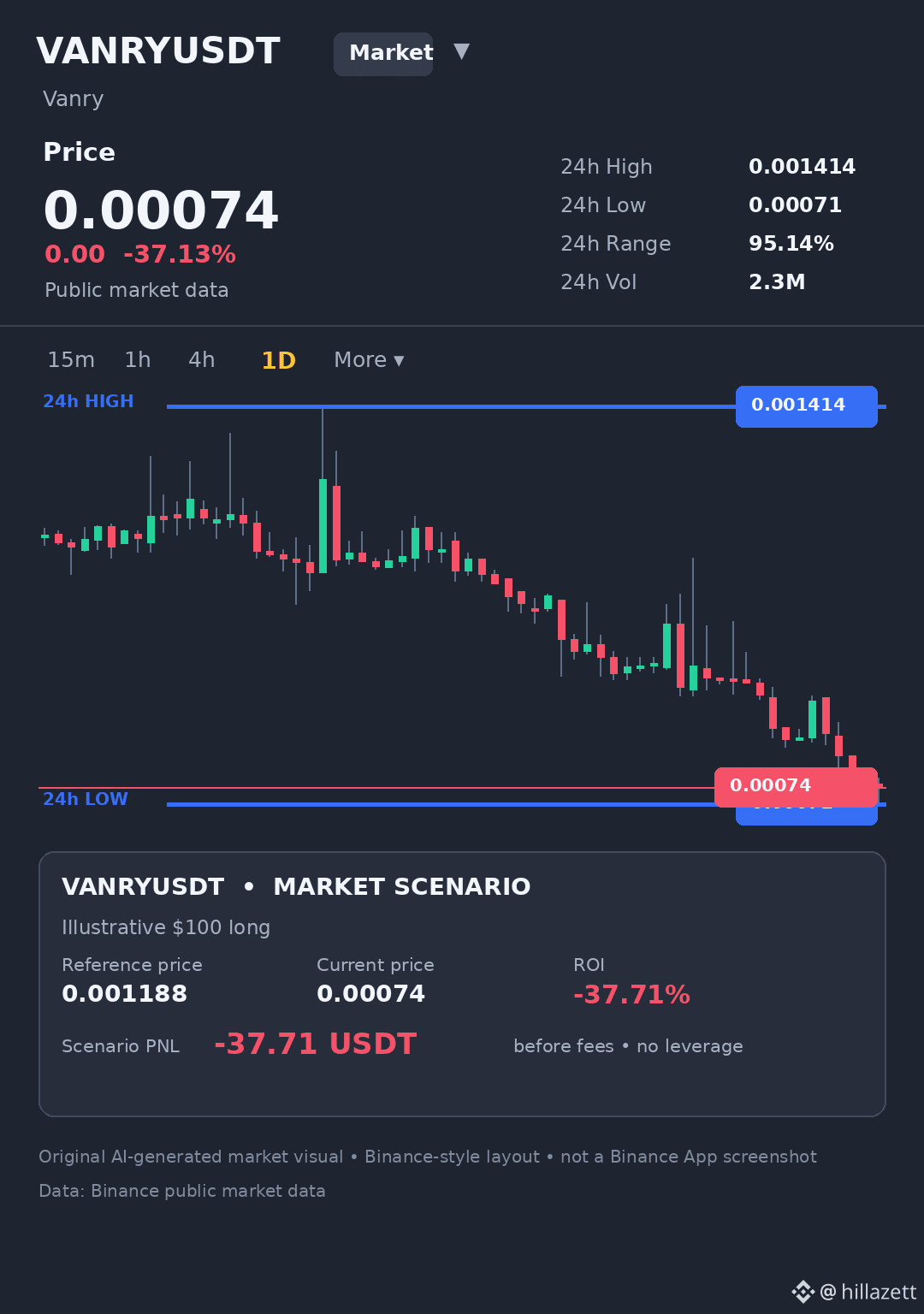
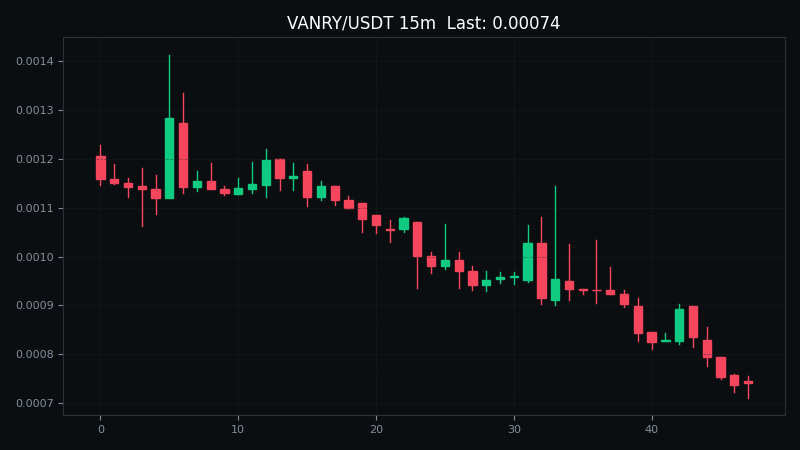
Sau khi đạt đỉnh 0.001414, giá giảm 37.13% xuống còn 0.00074, chỉ nhỉnh hơn mức đáy 0.00071 một chút. Biên độ dao động trong ngày lên tới 95.14%, với khối lượng giao dịch đạt $2.32M.
Khi đà tăng đảo chiều nhanh như vậy, bạn sẽ chờ giá tạo nền hay tiếp tục đứng ngoài? #VANRY #CryptoTrading
Hôm nay, phe bán vẫn chưa hề chùn tay với $VANRY.
Sau khi đạt đỉnh 0.001414, giá giảm 37.13% xuống còn 0.00074, chỉ nhỉnh hơn mức đáy 0.00071 một chút. Biên độ dao động trong ngày lên tới 95.14%, với khối lượng giao dịch đạt $2.32M.
Khi đà tăng đảo chiều nhanh như vậy, bạn sẽ chờ giá tạo nền hay tiếp tục đứng ngoài? #VANRY #CryptoTrading
Sau khi đạt đỉnh 0.001414, giá giảm 37.13% xuống còn 0.00074, chỉ nhỉnh hơn mức đáy 0.00071 một chút. Biên độ dao động trong ngày lên tới 95.14%, với khối lượng giao dịch đạt $2.32M.
Khi đà tăng đảo chiều nhanh như vậy, bạn sẽ chờ giá tạo nền hay tiếp tục đứng ngoài? #VANRY #CryptoTrading
54
·
--
$VANRY -37.13% | $BONK +9.93% | $ALT -14.37%
#VANRY đang ở mức $0.00074000, giảm 37.13% với $2.3 M được giao dịch; ngách “Chatbots answer” vẫn còn khá nhỏ hẹp bất chấp đợt sụt giảm.
#BONK giao dịch quanh mức $0.00000332, tăng 9.93% với khối lượng giao dịch khá tốt, đạt $6.1 M. Đồng memecoin chủ đề chó này, ra đời trong đợt hồi sinh của Solana vào dịp Giáng sinh năm 2022, vẫn đang được hưởng lợi từ tâm lý cộng đồng.
#ALT được định giá ở mức $0.00739000, giảm 14.37% trong khi ghi nhận khối lượng giao dịch $6.1 M, cho thấy áp lực giảm nhẹ sau các đợt tăng gần đây.
Sự phân kỳ giữa đà tăng tích cực của BONK và mức sụt giảm mạnh của VANRY có thể báo hiệu sự dịch chuyển chú ý trong nhóm token tiện ích ngách.
#Write2Earn #Binance
$VANRY -37.13% | $BONK +9.93% | $ALT -14.37%
#VANRY đang ở mức $0.00074000, giảm 37.13% với $2.3 M được giao dịch; ngách “Chatbots answer” vẫn còn khá nhỏ hẹp bất chấp đợt sụt giảm.
#BONK giao dịch quanh mức $0.00000332, tăng 9.93% với khối lượng giao dịch khá tốt, đạt $6.1 M. Đồng memecoin chủ đề chó này, ra đời trong đợt hồi sinh của Solana vào dịp Giáng sinh năm 2022, vẫn đang được hưởng lợi từ tâm lý cộng đồng.
#ALT được định giá ở mức $0.00739000, giảm 14.37% trong khi ghi nhận khối lượng giao dịch $6.1 M, cho thấy áp lực giảm nhẹ sau các đợt tăng gần đây.
Sự phân kỳ giữa đà tăng tích cực của BONK và mức sụt giảm mạnh của VANRY có thể báo hiệu sự dịch chuyển chú ý trong nhóm token tiện ích ngách.
#Write2Earn #Binance
#VANRY đang ở mức $0.00074000, giảm 37.13% với $2.3 M được giao dịch; ngách “Chatbots answer” vẫn còn khá nhỏ hẹp bất chấp đợt sụt giảm.
#BONK giao dịch quanh mức $0.00000332, tăng 9.93% với khối lượng giao dịch khá tốt, đạt $6.1 M. Đồng memecoin chủ đề chó này, ra đời trong đợt hồi sinh của Solana vào dịp Giáng sinh năm 2022, vẫn đang được hưởng lợi từ tâm lý cộng đồng.
#ALT được định giá ở mức $0.00739000, giảm 14.37% trong khi ghi nhận khối lượng giao dịch $6.1 M, cho thấy áp lực giảm nhẹ sau các đợt tăng gần đây.
Sự phân kỳ giữa đà tăng tích cực của BONK và mức sụt giảm mạnh của VANRY có thể báo hiệu sự dịch chuyển chú ý trong nhóm token tiện ích ngách.
#Write2Earn #Binance
14
·
--
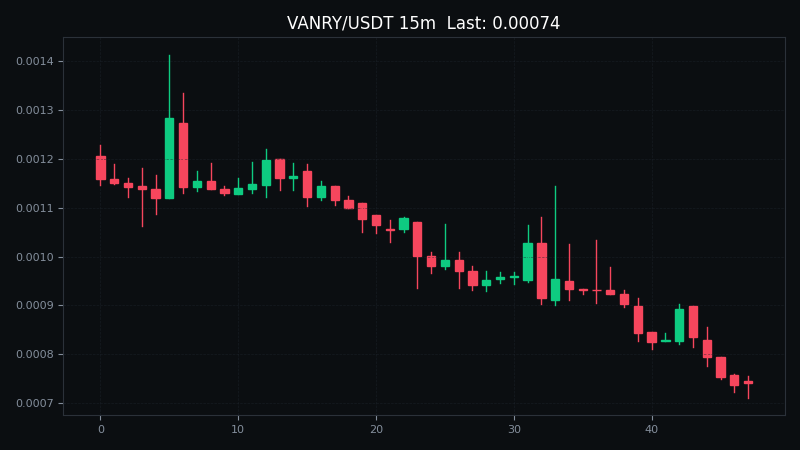
Lời nhắc dành cho người mới: $VANRY giảm 37.1% trong 24 giờ qua, giá hiện tại là 0.00074.
Nhiều người thua lỗ không phải vì nhận định sai, mà vì phân bổ vốn không hợp lý: khi nhận định đúng thì vào lệnh quá nhỏ, khi nhận định sai thì vào lệnh quá lớn. Cách khắc phục rất đơn giản — hãy dùng tỷ lệ vốn cố định, chẳng hạn mỗi lần chỉ sử dụng một phần nhỏ tổng vốn, để dù đúng hay sai trong một giao dịch cũng không gây tổn thất quá lớn.
Bạn thường giới hạn vốn cho mỗi giao dịch ở mức bao nhiêu? #VANRY
Nội dung chỉ nhằm mục đích trao đổi, không cấu thành lời khuyên đầu tư.
Lời nhắc dành cho người mới: $VANRY giảm 37.1% trong 24 giờ qua, giá hiện tại là 0.00074.
Nhiều người thua lỗ không phải vì nhận định sai, mà vì phân bổ vốn không hợp lý: khi nhận định đúng thì vào lệnh quá nhỏ, khi nhận định sai thì vào lệnh quá lớn. Cách khắc phục rất đơn giản — hãy dùng tỷ lệ vốn cố định, chẳng hạn mỗi lần chỉ sử dụng một phần nhỏ tổng vốn, để dù đúng hay sai trong một giao dịch cũng không gây tổn thất quá lớn.
Bạn thường giới hạn vốn cho mỗi giao dịch ở mức bao nhiêu? #VANRY
Nội dung chỉ nhằm mục đích trao đổi, không cấu thành lời khuyên đầu tư.
Nhiều người thua lỗ không phải vì nhận định sai, mà vì phân bổ vốn không hợp lý: khi nhận định đúng thì vào lệnh quá nhỏ, khi nhận định sai thì vào lệnh quá lớn. Cách khắc phục rất đơn giản — hãy dùng tỷ lệ vốn cố định, chẳng hạn mỗi lần chỉ sử dụng một phần nhỏ tổng vốn, để dù đúng hay sai trong một giao dịch cũng không gây tổn thất quá lớn.
Bạn thường giới hạn vốn cho mỗi giao dịch ở mức bao nhiêu? #VANRY
Nội dung chỉ nhằm mục đích trao đổi, không cấu thành lời khuyên đầu tư.
12

·
--
Xem bản dịch
$VANRY -37.13% | $NFP -65.85% | $AI +6.81%
#VANRY sits at $0.00074000, down 37.13% with $2.3 M changing hands, its chat‑bot answering feature still the headline.
#NFP trades around $0.00181000, slipping 65.85% on a modest $3.8 M of volume, a steep drop that may reflect broader market stress.
#AI is priced at $0.0204, up 6.81% on a hefty $86.3 M volume, suggesting renewed interest despite overall bearish pressure.
👀 Watch whether AI’s strong flow can sustain its modest rally while the other tokens remain under pressure.
#Write2Earn #Binance
$VANRY -37.13% | $NFP -65.85% | $AI +6.81%
#VANRY sits at $0.00074000, down 37.13% with $2.3 M changing hands, its chat‑bot answering feature still the headline.
#NFP trades around $0.00181000, slipping 65.85% on a modest $3.8 M of volume, a steep drop that may reflect broader market stress.
#AI is priced at $0.0204, up 6.81% on a hefty $86.3 M volume, suggesting renewed interest despite overall bearish pressure.
👀 Watch whether AI’s strong flow can sustain its modest rally while the other tokens remain under pressure.
#Write2Earn #Binance
#VANRY sits at $0.00074000, down 37.13% with $2.3 M changing hands, its chat‑bot answering feature still the headline.
#NFP trades around $0.00181000, slipping 65.85% on a modest $3.8 M of volume, a steep drop that may reflect broader market stress.
#AI is priced at $0.0204, up 6.81% on a hefty $86.3 M volume, suggesting renewed interest despite overall bearish pressure.
👀 Watch whether AI’s strong flow can sustain its modest rally while the other tokens remain under pressure.
#Write2Earn #Binance
11
·
--
Xem bản dịch
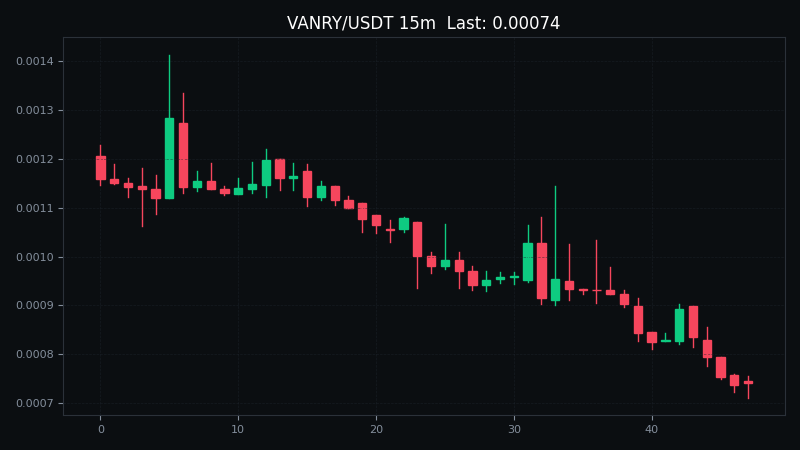
从成交额看 $VANRY:24h 下跌 37.1%,成交额 2,320,295 USDT。
一个简单的经验:上涨时成交额要配得上价格,缩量上涨多半走不远;下跌时成交额快速萎缩,说明抛压在衰竭。用成交额给涨跌幅验验真伪,能过滤掉很多噪音。
这条经验你认同吗?#VANRY
内容仅供交流,不构成投资建议。
从成交额看 $VANRY:24h 下跌 37.1%,成交额 2,320,295 USDT。
一个简单的经验:上涨时成交额要配得上价格,缩量上涨多半走不远;下跌时成交额快速萎缩,说明抛压在衰竭。用成交额给涨跌幅验验真伪,能过滤掉很多噪音。
这条经验你认同吗?#VANRY
内容仅供交流,不构成投资建议。
一个简单的经验:上涨时成交额要配得上价格,缩量上涨多半走不远;下跌时成交额快速萎缩,说明抛压在衰竭。用成交额给涨跌幅验验真伪,能过滤掉很多噪音。
这条经验你认同吗?#VANRY
内容仅供交流,不构成投资建议。
3
·
--
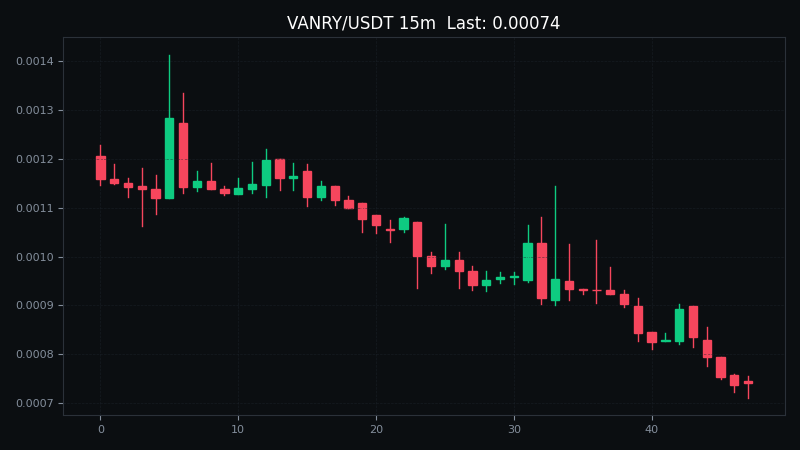
$VANRY giảm 37.1% trong 24 giờ, người mới và người có kinh nghiệm khác nhau ở điểm nào?
Người mới thấy giảm 37.1% thì nghĩ: “Còn có thể tăng bao nhiêu nữa?”, còn người có kinh nghiệm nghĩ: “Điểm cắt lỗ của mình ở đâu?”; người mới hỏi: “Nên mua đồng nào?”, còn người có kinh nghiệm hỏi: “Mua ở mức giá nào, mua bao nhiêu?” Sự khác biệt trong cách đặt câu hỏi quyết định kết quả khác nhau.
Hiện tại, bạn đang tự hỏi mình câu hỏi ở cấp độ nào? #VANRY
Nội dung chỉ nhằm mục đích trao đổi, không cấu thành lời khuyên đầu tư.
$VANRY giảm 37.1% trong 24 giờ, người mới và người có kinh nghiệm khác nhau ở điểm nào?
Người mới thấy giảm 37.1% thì nghĩ: “Còn có thể tăng bao nhiêu nữa?”, còn người có kinh nghiệm nghĩ: “Điểm cắt lỗ của mình ở đâu?”; người mới hỏi: “Nên mua đồng nào?”, còn người có kinh nghiệm hỏi: “Mua ở mức giá nào, mua bao nhiêu?” Sự khác biệt trong cách đặt câu hỏi quyết định kết quả khác nhau.
Hiện tại, bạn đang tự hỏi mình câu hỏi ở cấp độ nào? #VANRY
Nội dung chỉ nhằm mục đích trao đổi, không cấu thành lời khuyên đầu tư.
Người mới thấy giảm 37.1% thì nghĩ: “Còn có thể tăng bao nhiêu nữa?”, còn người có kinh nghiệm nghĩ: “Điểm cắt lỗ của mình ở đâu?”; người mới hỏi: “Nên mua đồng nào?”, còn người có kinh nghiệm hỏi: “Mua ở mức giá nào, mua bao nhiêu?” Sự khác biệt trong cách đặt câu hỏi quyết định kết quả khác nhau.
Hiện tại, bạn đang tự hỏi mình câu hỏi ở cấp độ nào? #VANRY
Nội dung chỉ nhằm mục đích trao đổi, không cấu thành lời khuyên đầu tư.
51
·
--
Xem bản dịch
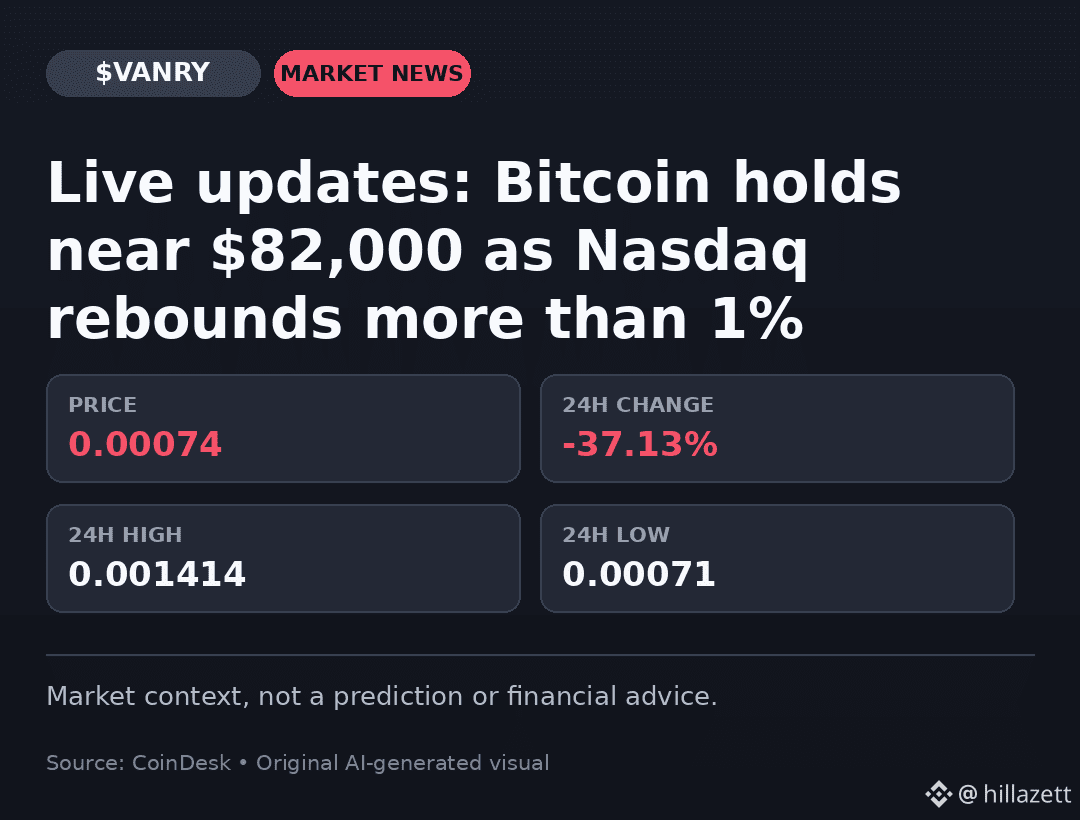
Bitcoin is holding firm near $82,000 and the Nasdaq just bounced over 1%, but altcoin risk appetite tells a completely different story.
$VANRY slid 37.13% down to 0.00074, moving between 0.001414 and 0.00071 across a 95.14% intraday spread on $2.32M in volume.
When macro relief doesn't trickle down, are you stepping back or searching for dips? #VANRY #CryptoMarket
Bitcoin is holding firm near $82,000 and the Nasdaq just bounced over 1%, but altcoin risk appetite tells a completely different story.
$VANRY slid 37.13% down to 0.00074, moving between 0.001414 and 0.00071 across a 95.14% intraday spread on $2.32M in volume.
When macro relief doesn't trickle down, are you stepping back or searching for dips? #VANRY #CryptoMarket
$VANRY slid 37.13% down to 0.00074, moving between 0.001414 and 0.00071 across a 95.14% intraday spread on $2.32M in volume.
When macro relief doesn't trickle down, are you stepping back or searching for dips? #VANRY #CryptoMarket
30
·
--
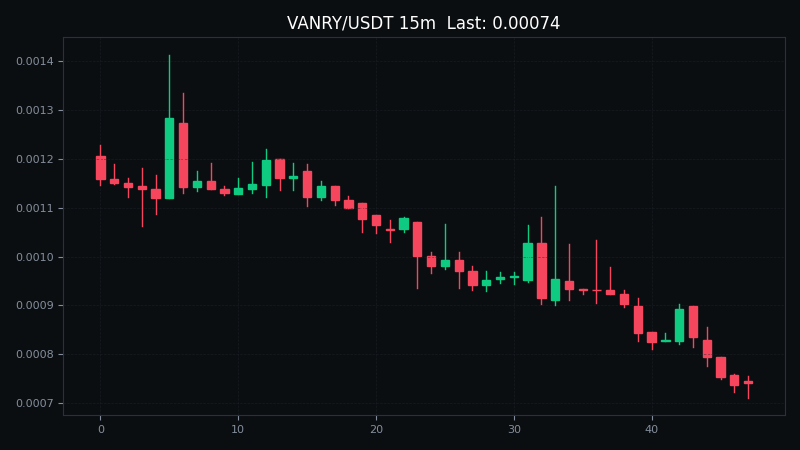
Cảnh báo theo dõi thị trường: $VANRY giảm 37.1% trong 24 giờ, giá hiện tại là 0.00074.
Biến động bất thường đi kèm khối lượng giao dịch tăng thường cho thấy dòng tiền đang định giá lại. Đợt biến động này của VANRY khá dứt khoát, cho thấy ít bất đồng và hướng đi rõ ràng. Nhưng thị trường càng diễn biến thuận lợi thì càng cần xác định trước điều kiện thoát lệnh, đừng để lợi nhuận lên xuống như tàu lượn.
Hiện bạn đang nắm giữ hay đứng ngoài quan sát? #VANRY
Nội dung chỉ nhằm mục đích trao đổi, không cấu thành lời khuyên đầu tư.
Cảnh báo theo dõi thị trường: $VANRY giảm 37.1% trong 24 giờ, giá hiện tại là 0.00074.
Biến động bất thường đi kèm khối lượng giao dịch tăng thường cho thấy dòng tiền đang định giá lại. Đợt biến động này của VANRY khá dứt khoát, cho thấy ít bất đồng và hướng đi rõ ràng. Nhưng thị trường càng diễn biến thuận lợi thì càng cần xác định trước điều kiện thoát lệnh, đừng để lợi nhuận lên xuống như tàu lượn.
Hiện bạn đang nắm giữ hay đứng ngoài quan sát? #VANRY
Nội dung chỉ nhằm mục đích trao đổi, không cấu thành lời khuyên đầu tư.
Biến động bất thường đi kèm khối lượng giao dịch tăng thường cho thấy dòng tiền đang định giá lại. Đợt biến động này của VANRY khá dứt khoát, cho thấy ít bất đồng và hướng đi rõ ràng. Nhưng thị trường càng diễn biến thuận lợi thì càng cần xác định trước điều kiện thoát lệnh, đừng để lợi nhuận lên xuống như tàu lượn.
Hiện bạn đang nắm giữ hay đứng ngoài quan sát? #VANRY
Nội dung chỉ nhằm mục đích trao đổi, không cấu thành lời khuyên đầu tư.
5
·
--
Hãy để dữ liệu lên tiếng: $VANRY giảm 37.1% trong 24 giờ, giá hiện tại là 0.00074, khối lượng giao dịch trong 24 giờ đạt 2,320,295 USDT.
Giá và khối lượng là ngôn ngữ trung thực nhất của thị trường. Khi giá và khối lượng cùng tăng, xu hướng sẽ đáng tin cậy hơn; nếu giá tăng nhưng khối lượng giảm, hãy cảnh giác với đà tăng thiếu bền vững. Hãy ghi lại những số liệu này và so sánh lại vào cùng thời điểm ngày mai.
Dần dần, bạn sẽ hiểu được ý đồ của dòng tiền. #VANRY
Nội dung chỉ nhằm mục đích trao đổi, không cấu thành lời khuyên đầu tư.
Hãy để dữ liệu lên tiếng: $VANRY giảm 37.1% trong 24 giờ, giá hiện tại là 0.00074, khối lượng giao dịch trong 24 giờ đạt 2,320,295 USDT.
Giá và khối lượng là ngôn ngữ trung thực nhất của thị trường. Khi giá và khối lượng cùng tăng, xu hướng sẽ đáng tin cậy hơn; nếu giá tăng nhưng khối lượng giảm, hãy cảnh giác với đà tăng thiếu bền vững. Hãy ghi lại những số liệu này và so sánh lại vào cùng thời điểm ngày mai.
Dần dần, bạn sẽ hiểu được ý đồ của dòng tiền. #VANRY
Nội dung chỉ nhằm mục đích trao đổi, không cấu thành lời khuyên đầu tư.
Giá và khối lượng là ngôn ngữ trung thực nhất của thị trường. Khi giá và khối lượng cùng tăng, xu hướng sẽ đáng tin cậy hơn; nếu giá tăng nhưng khối lượng giảm, hãy cảnh giác với đà tăng thiếu bền vững. Hãy ghi lại những số liệu này và so sánh lại vào cùng thời điểm ngày mai.
Dần dần, bạn sẽ hiểu được ý đồ của dòng tiền. #VANRY
Nội dung chỉ nhằm mục đích trao đổi, không cấu thành lời khuyên đầu tư.
7

·
--
📊 Dữ liệu đồng $VANRY | Thanh khoản, hợp đồng và phân bổ ví
🌐 Thứ nhất: Thông tin cơ bản về đồng tiền và nền tảng
- Ký hiệu: $VANRY
- Giá hiện tại: $0.00074000 (-37.13%)
- Lĩnh vực dự án: Trí tuệ nhân tạo (AI & Machine Learning)
- Nền tảng cốt lõi: Tạo điều kiện cho điện toán phi tập trung phục vụ các mô hình trí tuệ nhân tạo và chia sẻ dữ liệu được mã hóa.
🔗 Thứ hai: Dữ liệu hợp đồng thông minh, thanh khoản ban đầu và các nhóm thanh khoản
- Địa chỉ hợp đồng: 0xb96fc890b96f...c890 trên mạng Ethereum (ERC-20)
- Thanh khoản ban đầu của nhóm giao dịch: 0.19 triệu đô la (358,346,755 token VANRY)
- Thanh khoản hiện tại của nhóm giao dịch: 0.74 triệu đô la (1,003,370,916 token VANRY)
🐋 Thứ ba: Phân bổ 10 ví lớn nhất theo từng nhóm riêng biệt và tỷ lệ của mỗi nhóm
- Tổng tỷ lệ tập trung của các ví nắm giữ lớn nhất (Top 10): 38%
- Ví sàn giao dịch và thanh khoản gộp: 21.33% (2 ví)
- Cá voi đầu tư: 11.53% (4 ví)
- Ví của đội ngũ và nhà phát triển (hợp đồng đa chữ ký Multi-Sig): 2.91% (2 ví)
- Ví không hoạt động (không hoạt động trong hơn 180-720 ngày): 2.23% (2 ví)
🛡️ Thứ tư: Kiểm toán bảo mật hợp đồng và rủi ro đúc thêm token, lạm phát
- Khả năng đúc thêm token (Can Mint): Không khả dụng (False).
- Cơ chế lập trình: Đã vô hiệu hóa hoàn toàn việc đúc token (Mint Disabled / Fixed Cap Supply).
- Xác minh thực tế: Không có bất kỳ phương thức kỹ thuật nào để đúc thêm token sau khi ra mắt; tổng cung hoàn toàn cố định.
- Mức độ rủi ro: Hoàn toàn không có rủi ro lạm phát do phát hành thêm, vì mã hợp đồng thông minh không có bất kỳ hàm nào cho phép tạo ra tiền mới.
💡 Thứ năm: Lời khuyên và kết luận dứt khoát dành cho nhà giao dịch
Đồng tiền đang ghi nhận mức giảm mạnh (-37.13%); kết quả kiểm tra cho thấy tỷ lệ ví không hoạt động là 2.23%. Về mặt kỹ thuật và chiến thuật, nên chờ áp lực bán ổn định và xác nhận chắc chắn rằng không có đợt mở khóa token chưa được công bố trước khi quyết định mở các vị thế mua bình quân giá xuống.
Lưu ý: Nội dung trên dựa trên việc kiểm toán dữ liệu on-chain và không cấu thành lời kêu gọi mua hoặc bán. Luôn tự nghiên cứu độc lập (DYOR).
#Binance #VANRY #CryptoData
📊 Dữ liệu đồng $VANRY | Thanh khoản, hợp đồng và phân bổ ví
🌐 Thứ nhất: Thông tin cơ bản về đồng tiền và nền tảng
- Ký hiệu: $VANRY
- Giá hiện tại: $0.00074000 (-37.13%)
- Lĩnh vực dự án: Trí tuệ nhân tạo (AI & Machine Learning)
- Nền tảng cốt lõi: Tạo điều kiện cho điện toán phi tập trung phục vụ các mô hình trí tuệ nhân tạo và chia sẻ dữ liệu được mã hóa.
🔗 Thứ hai: Dữ liệu hợp đồng thông minh, thanh khoản ban đầu và các nhóm thanh khoản
- Địa chỉ hợp đồng: 0xb96fc890b96f...c890 trên mạng Ethereum (ERC-20)
- Thanh khoản ban đầu của nhóm giao dịch: 0.19 triệu đô la (358,346,755 token VANRY)
- Thanh khoản hiện tại của nhóm giao dịch: 0.74 triệu đô la (1,003,370,916 token VANRY)
🐋 Thứ ba: Phân bổ 10 ví lớn nhất theo từng nhóm riêng biệt và tỷ lệ của mỗi nhóm
- Tổng tỷ lệ tập trung của các ví nắm giữ lớn nhất (Top 10): 38%
- Ví sàn giao dịch và thanh khoản gộp: 21.33% (2 ví)
- Cá voi đầu tư: 11.53% (4 ví)
- Ví của đội ngũ và nhà phát triển (hợp đồng đa chữ ký Multi-Sig): 2.91% (2 ví)
- Ví không hoạt động (không hoạt động trong hơn 180-720 ngày): 2.23% (2 ví)
🛡️ Thứ tư: Kiểm toán bảo mật hợp đồng và rủi ro đúc thêm token, lạm phát
- Khả năng đúc thêm token (Can Mint): Không khả dụng (False).
- Cơ chế lập trình: Đã vô hiệu hóa hoàn toàn việc đúc token (Mint Disabled / Fixed Cap Supply).
- Xác minh thực tế: Không có bất kỳ phương thức kỹ thuật nào để đúc thêm token sau khi ra mắt; tổng cung hoàn toàn cố định.
- Mức độ rủi ro: Hoàn toàn không có rủi ro lạm phát do phát hành thêm, vì mã hợp đồng thông minh không có bất kỳ hàm nào cho phép tạo ra tiền mới.
💡 Thứ năm: Lời khuyên và kết luận dứt khoát dành cho nhà giao dịch
Đồng tiền đang ghi nhận mức giảm mạnh (-37.13%); kết quả kiểm tra cho thấy tỷ lệ ví không hoạt động là 2.23%. Về mặt kỹ thuật và chiến thuật, nên chờ áp lực bán ổn định và xác nhận chắc chắn rằng không có đợt mở khóa token chưa được công bố trước khi quyết định mở các vị thế mua bình quân giá xuống.
Lưu ý: Nội dung trên dựa trên việc kiểm toán dữ liệu on-chain và không cấu thành lời kêu gọi mua hoặc bán. Luôn tự nghiên cứu độc lập (DYOR).
#Binance #VANRY #CryptoData
🌐 Thứ nhất: Thông tin cơ bản về đồng tiền và nền tảng
- Ký hiệu: $VANRY
- Giá hiện tại: $0.00074000 (-37.13%)
- Lĩnh vực dự án: Trí tuệ nhân tạo (AI & Machine Learning)
- Nền tảng cốt lõi: Tạo điều kiện cho điện toán phi tập trung phục vụ các mô hình trí tuệ nhân tạo và chia sẻ dữ liệu được mã hóa.
🔗 Thứ hai: Dữ liệu hợp đồng thông minh, thanh khoản ban đầu và các nhóm thanh khoản
- Địa chỉ hợp đồng: 0xb96fc890b96f...c890 trên mạng Ethereum (ERC-20)
- Thanh khoản ban đầu của nhóm giao dịch: 0.19 triệu đô la (358,346,755 token VANRY)
- Thanh khoản hiện tại của nhóm giao dịch: 0.74 triệu đô la (1,003,370,916 token VANRY)
🐋 Thứ ba: Phân bổ 10 ví lớn nhất theo từng nhóm riêng biệt và tỷ lệ của mỗi nhóm
- Tổng tỷ lệ tập trung của các ví nắm giữ lớn nhất (Top 10): 38%
- Ví sàn giao dịch và thanh khoản gộp: 21.33% (2 ví)
- Cá voi đầu tư: 11.53% (4 ví)
- Ví của đội ngũ và nhà phát triển (hợp đồng đa chữ ký Multi-Sig): 2.91% (2 ví)
- Ví không hoạt động (không hoạt động trong hơn 180-720 ngày): 2.23% (2 ví)
🛡️ Thứ tư: Kiểm toán bảo mật hợp đồng và rủi ro đúc thêm token, lạm phát
- Khả năng đúc thêm token (Can Mint): Không khả dụng (False).
- Cơ chế lập trình: Đã vô hiệu hóa hoàn toàn việc đúc token (Mint Disabled / Fixed Cap Supply).
- Xác minh thực tế: Không có bất kỳ phương thức kỹ thuật nào để đúc thêm token sau khi ra mắt; tổng cung hoàn toàn cố định.
- Mức độ rủi ro: Hoàn toàn không có rủi ro lạm phát do phát hành thêm, vì mã hợp đồng thông minh không có bất kỳ hàm nào cho phép tạo ra tiền mới.
💡 Thứ năm: Lời khuyên và kết luận dứt khoát dành cho nhà giao dịch
Đồng tiền đang ghi nhận mức giảm mạnh (-37.13%); kết quả kiểm tra cho thấy tỷ lệ ví không hoạt động là 2.23%. Về mặt kỹ thuật và chiến thuật, nên chờ áp lực bán ổn định và xác nhận chắc chắn rằng không có đợt mở khóa token chưa được công bố trước khi quyết định mở các vị thế mua bình quân giá xuống.
Lưu ý: Nội dung trên dựa trên việc kiểm toán dữ liệu on-chain và không cấu thành lời kêu gọi mua hoặc bán. Luôn tự nghiên cứu độc lập (DYOR).
#Binance #VANRY #CryptoData
6
·
--
$VANRY -37.13% | $NFP -65.85% | $PROM -12.11%
#VANRY đang giao dịch ở mức $0.00074000, giảm 37.13% với khối lượng $2.3 M; ngách trả lời bằng chatbot vẫn còn hiện diện.
#NFP giảm xuống còn $0.00181000, giảm 65.85% với $3.8 M được giao dịch, cho thấy áp lực bán mạnh.
#PROM đang ở mức $4.83, giảm 12.11% với khối lượng giao dịch ổn định ở mức $13.0 M, cho thấy khả năng chống chịu nhất định bất chấp đà giảm.
👀 Hãy theo dõi khoảng cách ngày càng rộng giữa xu hướng khối lượng giao dịch của VANRY và PROM; sự thay đổi có thể cho thấy các nhà giao dịch đang phân bổ lại vốn vào đâu.
#Write2Earn #Binance
$VANRY -37.13% | $NFP -65.85% | $PROM -12.11%
#VANRY đang giao dịch ở mức $0.00074000, giảm 37.13% với khối lượng $2.3 M; ngách trả lời bằng chatbot vẫn còn hiện diện.
#NFP giảm xuống còn $0.00181000, giảm 65.85% với $3.8 M được giao dịch, cho thấy áp lực bán mạnh.
#PROM đang ở mức $4.83, giảm 12.11% với khối lượng giao dịch ổn định ở mức $13.0 M, cho thấy khả năng chống chịu nhất định bất chấp đà giảm.
👀 Hãy theo dõi khoảng cách ngày càng rộng giữa xu hướng khối lượng giao dịch của VANRY và PROM; sự thay đổi có thể cho thấy các nhà giao dịch đang phân bổ lại vốn vào đâu.
#Write2Earn #Binance
#VANRY đang giao dịch ở mức $0.00074000, giảm 37.13% với khối lượng $2.3 M; ngách trả lời bằng chatbot vẫn còn hiện diện.
#NFP giảm xuống còn $0.00181000, giảm 65.85% với $3.8 M được giao dịch, cho thấy áp lực bán mạnh.
#PROM đang ở mức $4.83, giảm 12.11% với khối lượng giao dịch ổn định ở mức $13.0 M, cho thấy khả năng chống chịu nhất định bất chấp đà giảm.
👀 Hãy theo dõi khoảng cách ngày càng rộng giữa xu hướng khối lượng giao dịch của VANRY và PROM; sự thay đổi có thể cho thấy các nhà giao dịch đang phân bổ lại vốn vào đâu.
#Write2Earn #Binance
7

·
--
【Tin nhanh giảm mạnh】Bảng biến động bất thường thị trường Spot Binance: $VANRY giảm mạnh 37.1% trong 24 giờ, hiện ở mức 0.0007400, khối lượng giao dịch khoảng 2 triệu USDT. Hiện chưa thấy thông báo tiêu cực nào liên quan; đây là biến động giá chưa có thông tin rõ ràng, biến động ngắn hạn mạnh, hãy chú ý rủi ro.#VANRY #Tin nhanh thị trường
【Tin nhanh giảm mạnh】Bảng biến động bất thường thị trường Spot Binance: $VANRY giảm mạnh 37.1% trong 24 giờ, hiện ở mức 0.0007400, khối lượng giao dịch khoảng 2 triệu USDT. Hiện chưa thấy thông báo tiêu cực nào liên quan; đây là biến động giá chưa có thông tin rõ ràng, biến động ngắn hạn mạnh, hãy chú ý rủi ro.#VANRY #Tin nhanh thị trường
60

【⚡ Theo dõi biến động trực tiếp $VANRY: Biến động 24h -37.13%, cập nhật các mức hỗ trợ và kháng cự quan trọng!】
Radar biến động của Bnsbot vừa phát hiện mức độ hoạt động trên thị trường của $VANRY tăng rõ rệt. Xin cập nhật mức giá mới nhất cho các bạn đang theo dõi:
📊 Giá trực tiếp: $0.00074 (24h -37.13%)
🛡️ Mức hỗ trợ cốt lõi bên dưới: $0.0007
🚀 Mức kháng cự quan trọng bên trên: $0.0008
💡 Chiến lược ứng phó: Chừng nào nến 4H đóng cửa vững trên vùng hỗ trợ $0.0007, cấu trúc lực mua vẫn còn hiệu lực; nếu giá bứt phá $0.0008 với khối lượng giao dịch tăng, hãy thuận theo xu hướng để kỳ vọng mức giá cao hơn. Nhớ đặt cắt lỗ nghiêm ngặt, đừng đuổi theo lệnh theo cảm xúc. Nhấn vào $VANRY để xem biểu đồ nến trực tiếp. DYOR!
#VANRY #币安广场 #Khai thác nội dung
【⚡ Theo dõi biến động trực tiếp $VANRY: Biến động 24h -37.13%, cập nhật các mức hỗ trợ và kháng cự quan trọng!】
Radar biến động của Bnsbot vừa phát hiện mức độ hoạt động trên thị trường của $VANRY tăng rõ rệt. Xin cập nhật mức giá mới nhất cho các bạn đang theo dõi:
📊 Giá trực tiếp: $0.00074 (24h -37.13%)
🛡️ Mức hỗ trợ cốt lõi bên dưới: $0.0007
🚀 Mức kháng cự quan trọng bên trên: $0.0008
💡 Chiến lược ứng phó: Chừng nào nến 4H đóng cửa vững trên vùng hỗ trợ $0.0007, cấu trúc lực mua vẫn còn hiệu lực; nếu giá bứt phá $0.0008 với khối lượng giao dịch tăng, hãy thuận theo xu hướng để kỳ vọng mức giá cao hơn. Nhớ đặt cắt lỗ nghiêm ngặt, đừng đuổi theo lệnh theo cảm xúc. Nhấn vào $VANRY để xem biểu đồ nến trực tiếp. DYOR!
#VANRY #币安广场 #Khai thác nội dung
Radar biến động của Bnsbot vừa phát hiện mức độ hoạt động trên thị trường của $VANRY tăng rõ rệt. Xin cập nhật mức giá mới nhất cho các bạn đang theo dõi:
📊 Giá trực tiếp: $0.00074 (24h -37.13%)
🛡️ Mức hỗ trợ cốt lõi bên dưới: $0.0007
🚀 Mức kháng cự quan trọng bên trên: $0.0008
💡 Chiến lược ứng phó: Chừng nào nến 4H đóng cửa vững trên vùng hỗ trợ $0.0007, cấu trúc lực mua vẫn còn hiệu lực; nếu giá bứt phá $0.0008 với khối lượng giao dịch tăng, hãy thuận theo xu hướng để kỳ vọng mức giá cao hơn. Nhớ đặt cắt lỗ nghiêm ngặt, đừng đuổi theo lệnh theo cảm xúc. Nhấn vào $VANRY để xem biểu đồ nến trực tiếp. DYOR!
#VANRY #币安广场 #Khai thác nội dung
64

·
--
Cây nến đỏ này của VANRY lao thẳng xuống 37% từ đỉnh, mà khối lượng giao dịch vẫn chưa tăng, chỉ có 2,3 triệu USDT. Giảm đến mức này mà chẳng có ai bắt đáy, điều đó còn nói lên nhiều hơn cả bản thân cú giảm.
Trong giới có một quy tắc cũ: đừng vội bắt đáy ở đợt giảm mạnh đầu tiên của coin đang hot, hãy đợi đợt thứ hai. Ai không tin thì năm nay chắc cũng đã đóng học phí rồi.
Tôi không nói nhiều về dữ liệu on-chain, chỉ nhắc một câu thôi — tỷ lệ luân chuyển cao không nhất thiết có nghĩa là lượng coin đang chuyển sang tay một cá mập mới; đôi khi chỉ là nhà đầu tư nhỏ lẻ đang cắt lỗ. $VANRY
#行情异动 #币圈观察 #VANRY
Cây nến đỏ này của VANRY lao thẳng xuống 37% từ đỉnh, mà khối lượng giao dịch vẫn chưa tăng, chỉ có 2,3 triệu USDT. Giảm đến mức này mà chẳng có ai bắt đáy, điều đó còn nói lên nhiều hơn cả bản thân cú giảm.
Trong giới có một quy tắc cũ: đừng vội bắt đáy ở đợt giảm mạnh đầu tiên của coin đang hot, hãy đợi đợt thứ hai. Ai không tin thì năm nay chắc cũng đã đóng học phí rồi.
Tôi không nói nhiều về dữ liệu on-chain, chỉ nhắc một câu thôi — tỷ lệ luân chuyển cao không nhất thiết có nghĩa là lượng coin đang chuyển sang tay một cá mập mới; đôi khi chỉ là nhà đầu tư nhỏ lẻ đang cắt lỗ. $VANRY
#行情异动 #币圈观察 #VANRY
Trong giới có một quy tắc cũ: đừng vội bắt đáy ở đợt giảm mạnh đầu tiên của coin đang hot, hãy đợi đợt thứ hai. Ai không tin thì năm nay chắc cũng đã đóng học phí rồi.
Tôi không nói nhiều về dữ liệu on-chain, chỉ nhắc một câu thôi — tỷ lệ luân chuyển cao không nhất thiết có nghĩa là lượng coin đang chuyển sang tay một cá mập mới; đôi khi chỉ là nhà đầu tư nhỏ lẻ đang cắt lỗ. $VANRY
#行情异动 #币圈观察 #VANRY
69
·
--
Một ngày rớt 37%, $VANRY đợt này đúng là chẳng nói lý lẽ gì cả. Nhưng điều đáng chú ý là khối lượng giao dịch chỉ hơn 2 triệu U — nói thật, nếu muốn xả hàng thì chẳng thể nào chỉ có ngần ấy khối lượng. Trông giống cú đạp ga khi thanh khoản cạn kiệt hơn, đạp hụt rồi lăn thẳng xuống dốc.
Những lúc thế này rất dễ có nhịp bật lên kiểu rút chân, nhưng cũng dễ bị chôn vùi nhất. Rớt đến mức này thì đừng bắt đáy theo cảm xúc, ai bắt là người đó đỡ dao rơi. Muốn chơi thì đợi khối lượng co lại và giá ổn định rồi tính, đừng há miệng uống nước giữa lúc xả lũ.
Rớt mạnh thì chẳng lạ, rớt khó hiểu mới đáng lo.
#行情异动 #币圈观察 #VANRY
Một ngày rớt 37%, $VANRY đợt này đúng là chẳng nói lý lẽ gì cả. Nhưng điều đáng chú ý là khối lượng giao dịch chỉ hơn 2 triệu U — nói thật, nếu muốn xả hàng thì chẳng thể nào chỉ có ngần ấy khối lượng. Trông giống cú đạp ga khi thanh khoản cạn kiệt hơn, đạp hụt rồi lăn thẳng xuống dốc.
Những lúc thế này rất dễ có nhịp bật lên kiểu rút chân, nhưng cũng dễ bị chôn vùi nhất. Rớt đến mức này thì đừng bắt đáy theo cảm xúc, ai bắt là người đó đỡ dao rơi. Muốn chơi thì đợi khối lượng co lại và giá ổn định rồi tính, đừng há miệng uống nước giữa lúc xả lũ.
Rớt mạnh thì chẳng lạ, rớt khó hiểu mới đáng lo.
#行情异动 #币圈观察 #VANRY
Những lúc thế này rất dễ có nhịp bật lên kiểu rút chân, nhưng cũng dễ bị chôn vùi nhất. Rớt đến mức này thì đừng bắt đáy theo cảm xúc, ai bắt là người đó đỡ dao rơi. Muốn chơi thì đợi khối lượng co lại và giá ổn định rồi tính, đừng há miệng uống nước giữa lúc xả lũ.
Rớt mạnh thì chẳng lạ, rớt khó hiểu mới đáng lo.
#行情异动 #币圈观察 #VANRY
9
·
--
$VANRY 📊 VANRY giảm 37% trong 24 giờ, khối lượng giao dịch chỉ có 2,32 triệu U — mức thanh khoản này mà đặt cạnh các đồng coin lớn thì chẳng đáng kể, nhưng với nó thì đã được xem là “dòng tiền hoạt động tích cực” rồi.
Nói trắng ra, đợt giảm này chẳng liên quan gì nhiều đến yếu tố cơ bản, chỉ là thiếu độ sâu thanh khoản để hấp thụ lực bán. Cùng một mức giảm, BTC giảm thì là cơ hội, còn coin nhỏ giảm thì là bẫy thanh khoản — hai thứ này hoàn toàn khác nhau.
Trước đây tôi cũng từng gặp kiểu thị trường như này. Mức giảm trông đáng sợ, tôi tưởng có thể bắt đáy, nhưng đặt lệnh cả buổi chẳng ai khớp, cuối cùng chỉ còn cách cắt lỗ. Giờ thì khôn ra rồi: coin không có thanh khoản sâu thì giảm mạnh đến đâu cũng không khiến tôi ngứa tay.
Không biết giá đã sắp giảm xong chưa, nhưng với quy mô giao dịch chỉ 2,32 triệu U, nhà đầu tư nhỏ lẻ nhảy vào chẳng khác nào đưa dao cho cá mập. Cứ đứng ngoài quan sát thôi.
#行情异动 #币圈观察 #VANRY
$VANRY 📊 VANRY giảm 37% trong 24 giờ, khối lượng giao dịch chỉ có 2,32 triệu U — mức thanh khoản này mà đặt cạnh các đồng coin lớn thì chẳng đáng kể, nhưng với nó thì đã được xem là “dòng tiền hoạt động tích cực” rồi.
Nói trắng ra, đợt giảm này chẳng liên quan gì nhiều đến yếu tố cơ bản, chỉ là thiếu độ sâu thanh khoản để hấp thụ lực bán. Cùng một mức giảm, BTC giảm thì là cơ hội, còn coin nhỏ giảm thì là bẫy thanh khoản — hai thứ này hoàn toàn khác nhau.
Trước đây tôi cũng từng gặp kiểu thị trường như này. Mức giảm trông đáng sợ, tôi tưởng có thể bắt đáy, nhưng đặt lệnh cả buổi chẳng ai khớp, cuối cùng chỉ còn cách cắt lỗ. Giờ thì khôn ra rồi: coin không có thanh khoản sâu thì giảm mạnh đến đâu cũng không khiến tôi ngứa tay.
Không biết giá đã sắp giảm xong chưa, nhưng với quy mô giao dịch chỉ 2,32 triệu U, nhà đầu tư nhỏ lẻ nhảy vào chẳng khác nào đưa dao cho cá mập. Cứ đứng ngoài quan sát thôi.
#行情异动 #币圈观察 #VANRY
Nói trắng ra, đợt giảm này chẳng liên quan gì nhiều đến yếu tố cơ bản, chỉ là thiếu độ sâu thanh khoản để hấp thụ lực bán. Cùng một mức giảm, BTC giảm thì là cơ hội, còn coin nhỏ giảm thì là bẫy thanh khoản — hai thứ này hoàn toàn khác nhau.
Trước đây tôi cũng từng gặp kiểu thị trường như này. Mức giảm trông đáng sợ, tôi tưởng có thể bắt đáy, nhưng đặt lệnh cả buổi chẳng ai khớp, cuối cùng chỉ còn cách cắt lỗ. Giờ thì khôn ra rồi: coin không có thanh khoản sâu thì giảm mạnh đến đâu cũng không khiến tôi ngứa tay.
Không biết giá đã sắp giảm xong chưa, nhưng với quy mô giao dịch chỉ 2,32 triệu U, nhà đầu tư nhỏ lẻ nhảy vào chẳng khác nào đưa dao cho cá mập. Cứ đứng ngoài quan sát thôi.
#行情异动 #币圈观察 #VANRY
20
Đăng nhập để khám phá thêm nội dung
Tham gia cùng người dùng tiền mã hóa toàn cầu trên Binance Square
⚡️ Nhận thông tin mới nhất và hữu ích về tiền mã hóa.
💬 Được tin cậy bởi sàn giao dịch tiền mã hóa lớn nhất thế giới.
👍 Khám phá những thông tin chuyên sâu thực tế từ những nhà sáng tạo đã xác minh.
Email / Số điện thoại
Chủ đề thịnh hành
1
#CanMicrosoftDeliverOnAI
59,618 lượt xem
654 đang thảo luận
2
#CanGoogleDefindItsCore
32,149 lượt xem
488 đang thảo luận
3
#TinFed
357,967 lượt xem
976 đang thảo luận
4
#TheoDõiFOMC
300,111 lượt xem
1,258 đang thảo luận
5
#FOMCWatch
9M lượt xem
27,843 đang thảo luận
6
#EthereumDropsBelow$2300
10,263 lượt xem
151 đang thảo luận
7
#BitcoinSlipsBelow$80KAgain
28,672 lượt xem
117 đang thảo luận
8
#ThailandLaunchesWORPTStablecoinToQRPaymentApp
57,641 lượt xem
760 đang thảo luận
9
#StrategySkipsBitcoinPurchasesSpends$205MOnSTRCBuybacks
10,952 lượt xem
96 đang thảo luận
10
#BitmineAdds10452ETH
100,197 lượt xem
1,147 đang thảo luận