
#riskmanagement
riskmanagement
17M lượt xem
58,309 đang thảo luận
Phổ biến
Mới nhất

🚨 $TUT — Bài học giao dịch cho người mới
Tôi đã thua hơn 100$ khi giao dịch TUT/USDT. 😔
Là người mới, giao dịch này đã dạy tôi một bài học quan trọng: lợi nhuận không bao giờ nên đến trước quản lý rủi ro.
Trước khi vào bất kỳ đồng coin nào, người mới nên cân nhắc:
📊 Xu hướng thị trường & thanh khoản
📰 Tin tức mới nhất và chất xúc tác
🎯 Điểm vào, mục tiêu & cắt lỗ
🛡️ Chọn kích thước vị thế phù hợp
🧠 Sự kiên nhẫn và kỷ luật
Giờ tôi tò mò: Bạn nghĩ coin nào thân thiện hơn cho người mới để học? 👀
{future}(TUTUSDT)
Hãy chia sẻ suy nghĩ của bạn bên dưới. 👇
DYOR • Quản lý rủi ro • Giao dịch có trách nhiệm
#TUTUSDT #Crypto #Trading #CryptoBeginners #RiskManagement
🚨 $TUT — Bài học giao dịch cho người mới
Tôi đã thua hơn 100$ khi giao dịch TUT/USDT. 😔
Là người mới, giao dịch này đã dạy tôi một bài học quan trọng: lợi nhuận không bao giờ nên đến trước quản lý rủi ro.
Trước khi vào bất kỳ đồng coin nào, người mới nên cân nhắc:
📊 Xu hướng thị trường & thanh khoản
📰 Tin tức mới nhất và chất xúc tác
🎯 Điểm vào, mục tiêu & cắt lỗ
🛡️ Chọn kích thước vị thế phù hợp
🧠 Sự kiên nhẫn và kỷ luật
Giờ tôi tò mò: Bạn nghĩ coin nào thân thiện hơn cho người mới để học? 👀
Hãy chia sẻ suy nghĩ của bạn bên dưới. 👇
DYOR • Quản lý rủi ro • Giao dịch có trách nhiệm
#TUTUSDT #Crypto #Trading #CryptoBeginners #RiskManagement
Tôi đã thua hơn 100$ khi giao dịch TUT/USDT. 😔
Là người mới, giao dịch này đã dạy tôi một bài học quan trọng: lợi nhuận không bao giờ nên đến trước quản lý rủi ro.
Trước khi vào bất kỳ đồng coin nào, người mới nên cân nhắc:
📊 Xu hướng thị trường & thanh khoản
📰 Tin tức mới nhất và chất xúc tác
🎯 Điểm vào, mục tiêu & cắt lỗ
🛡️ Chọn kích thước vị thế phù hợp
🧠 Sự kiên nhẫn và kỷ luật
Giờ tôi tò mò: Bạn nghĩ coin nào thân thiện hơn cho người mới để học? 👀
Hãy chia sẻ suy nghĩ của bạn bên dưới. 👇
DYOR • Quản lý rủi ro • Giao dịch có trách nhiệm
#TUTUSDT #Crypto #Trading #CryptoBeginners #RiskManagement

1
432

Xem bản dịch
fam just leaving this here so there’s no confusion or misunderstanding. 🐰🙏
I’m probably going to be trading on DEMO for around 7-15 days. August was rough, and today I clearly didn’t read LSK properly either.
So I’m going to take a few days to trade demo, reset, and get my head back in the game.
I’ll still be sharing my setups and trades, though. I also want to keep an eye on the traction they get on the platform and see how the algorithm responds. 👈
I’d really love to eventually get that verified badge. Honestly, that would make me very happy. 🤝
I’ve also been managing risk pretty badly, so I need to step back and properly test SL setups and risk management
there is no better proof than this fact
I just can’t seem to get off the floor! 🤡
we keep moving, never quit #Binance #RiskManagement
fam just leaving this here so there’s no confusion or misunderstanding. 🐰🙏
I’m probably going to be trading on DEMO for around 7-15 days. August was rough, and today I clearly didn’t read LSK properly either.
So I’m going to take a few days to trade demo, reset, and get my head back in the game.
I’ll still be sharing my setups and trades, though. I also want to keep an eye on the traction they get on the platform and see how the algorithm responds. 👈
I’d really love to eventually get that verified badge. Honestly, that would make me very happy. 🤝
I’ve also been managing risk pretty badly, so I need to step back and properly test SL setups and risk management
there is no better proof than this fact
I just can’t seem to get off the floor! 🤡
we keep moving, never quit #Binance #RiskManagement
I’m probably going to be trading on DEMO for around 7-15 days. August was rough, and today I clearly didn’t read LSK properly either.
So I’m going to take a few days to trade demo, reset, and get my head back in the game.
I’ll still be sharing my setups and trades, though. I also want to keep an eye on the traction they get on the platform and see how the algorithm responds. 👈
I’d really love to eventually get that verified badge. Honestly, that would make me very happy. 🤝
I’ve also been managing risk pretty badly, so I need to step back and properly test SL setups and risk management
there is no better proof than this fact
I just can’t seem to get off the floor! 🤡
we keep moving, never quit #Binance #RiskManagement
1
386

Xem bản dịch
💔 Your First Crypto Loss Can Teach You Your Biggest Lesson
If you’re new to crypto, don’t rush into small or trending coins just because they’re moving fast.
🧠 Start by learning risk management, position sizing, and BTC/ETH market structure before chasing altcoins.
Your first goal isn’t to make money fast — it’s to learn how not to lose it fast. 📚
👉 Follow for more simple, practical crypto learning.
#CryptoBeginners #RiskManagement #Binance
💔 Your First Crypto Loss Can Teach You Your Biggest Lesson
If you’re new to crypto, don’t rush into small or trending coins just because they’re moving fast.
🧠 Start by learning risk management, position sizing, and BTC/ETH market structure before chasing altcoins.
Your first goal isn’t to make money fast — it’s to learn how not to lose it fast. 📚
👉 Follow for more simple, practical crypto learning.
#CryptoBeginners #RiskManagement #Binance
If you’re new to crypto, don’t rush into small or trending coins just because they’re moving fast.
🧠 Start by learning risk management, position sizing, and BTC/ETH market structure before chasing altcoins.
Your first goal isn’t to make money fast — it’s to learn how not to lose it fast. 📚
👉 Follow for more simple, practical crypto learning.
#CryptoBeginners #RiskManagement #Binance
1
103

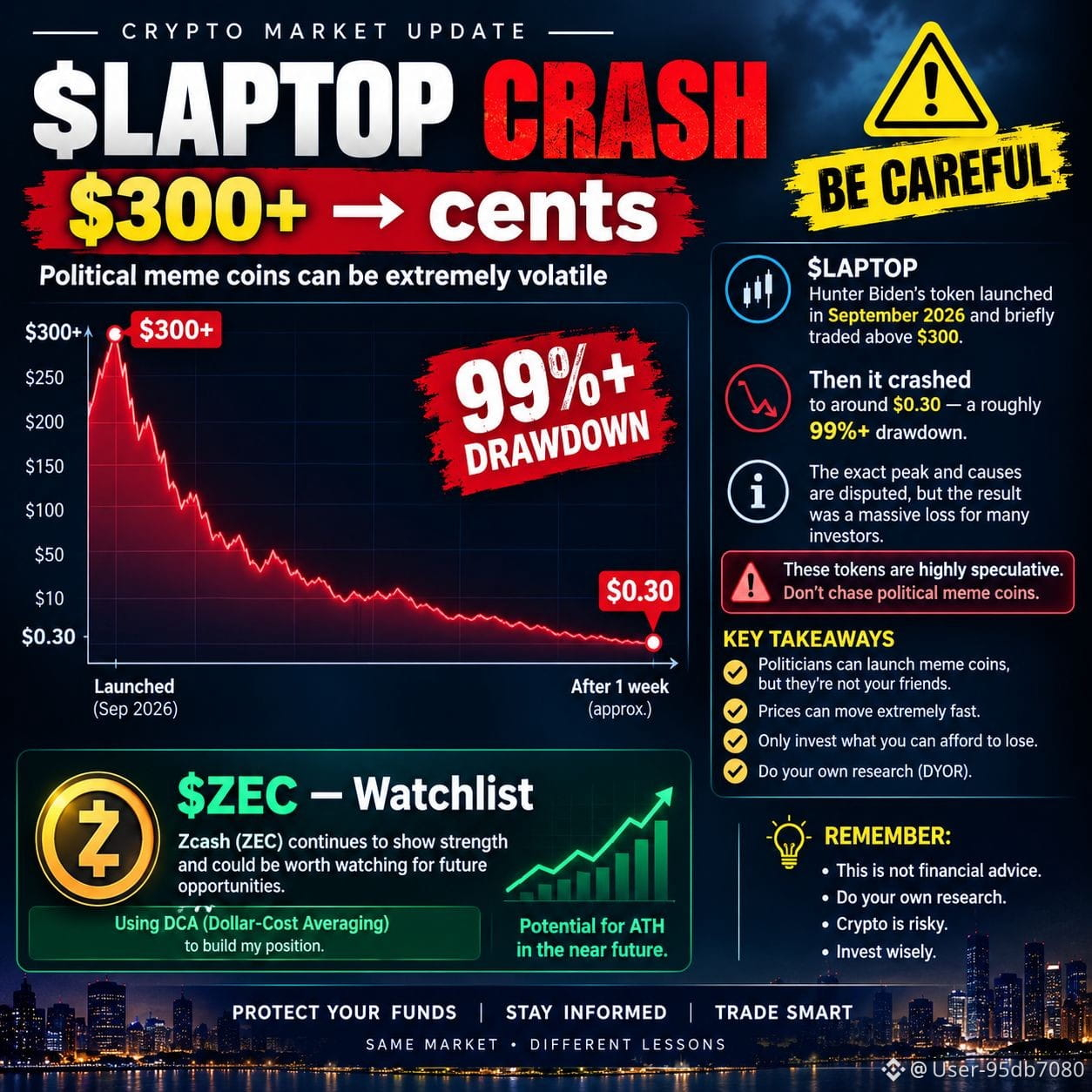
🚨 $LAPTOP — Bài học nghiêm túc dành cho nhà đầu tư Crypto
Thật lòng mà nói, hiếm khi tôi thấy một đợt ra mắt nào biến động dữ dội như vậy. 👀🚨
$LAPTOP đã tạm thời vượt lên trên $300, nhưng ngay sau đó lại sụp đổ mạnh mẽ. Kiểu biến động đó là lời nhắc hoàn hảo về việc các đồng meme coin mới ra mắt có thể nguy hiểm và khó lường đến thế nào. �
New York Post
Điều khiến tôi lo lắng nhất là thị trường có thể đảo chiều nhanh như thế nào. Một phút mọi người còn đang bàn tán về một token, phút tiếp theo thanh khoản và nhu cầu có thể biến mất.
Chúng ta đã từng thấy những tình huống tương tự với các meme coin mang màu sắc chính trị như $TRUMP, vì vậy với tôi bài học rất đơn giản:
⚠️ Đừng đuổi theo cơn sốt.
⚠️ Đừng cho rằng một cái tên nổi tiếng đồng nghĩa với việc đó là khoản đầu tư an toàn.
⚠️ Đừng đem số tiền mà bạn không thể chịu mất.
⚠️ Trước khi đưa ra bất kỳ quyết định nào, hãy luôn nghiên cứu tokenomics, thanh khoản, lượng nắm giữ (holders) và các rủi ro.
Những đợt ra mắt này có thể tạo ra các biến động giá cực kỳ ấn tượng, nhưng điều đó đúng theo cả hai hướng. Một cú bơm giá lớn có thể được theo sau bởi một cú sập cũng “khủng” không kém.
Còn với $ZEC, tôi đang đưa nó vào danh sách theo dõi và bám sát tiềm năng dài hạn thay vì đuổi theo cơn sốt ngắn hạn. Gần đây $ZEC đã đạt đỉnh lịch sử mới quanh $1,298 vào ngày 9 tháng 9 năm 2026, vì vậy biến động vẫn là điều cần lưu ý. �
OKX
Crypto có thể tạo ra cơ hội, nhưng bảo vệ vốn luôn là ưu tiên số một.
DYOR. Hãy kiên nhẫn. Hãy kỷ luật. 🚨📊
#Crypto #Bitcoin #ZEC #LAPTOP #TRUMP #CryptoNews #Memecoins #DYOR #CryptoMarket #RiskManagement
🚨 $LAPTOP — Bài học nghiêm túc dành cho nhà đầu tư Crypto
Thật lòng mà nói, hiếm khi tôi thấy một đợt ra mắt nào biến động dữ dội như vậy. 👀🚨
$LAPTOP đã tạm thời vượt lên trên $300, nhưng ngay sau đó lại sụp đổ mạnh mẽ. Kiểu biến động đó là lời nhắc hoàn hảo về việc các đồng meme coin mới ra mắt có thể nguy hiểm và khó lường đến thế nào. �
New York Post
Điều khiến tôi lo lắng nhất là thị trường có thể đảo chiều nhanh như thế nào. Một phút mọi người còn đang bàn tán về một token, phút tiếp theo thanh khoản và nhu cầu có thể biến mất.
Chúng ta đã từng thấy những tình huống tương tự với các meme coin mang màu sắc chính trị như $TRUMP, vì vậy với tôi bài học rất đơn giản:
⚠️ Đừng đuổi theo cơn sốt.
⚠️ Đừng cho rằng một cái tên nổi tiếng đồng nghĩa với việc đó là khoản đầu tư an toàn.
⚠️ Đừng đem số tiền mà bạn không thể chịu mất.
⚠️ Trước khi đưa ra bất kỳ quyết định nào, hãy luôn nghiên cứu tokenomics, thanh khoản, lượng nắm giữ (holders) và các rủi ro.
Những đợt ra mắt này có thể tạo ra các biến động giá cực kỳ ấn tượng, nhưng điều đó đúng theo cả hai hướng. Một cú bơm giá lớn có thể được theo sau bởi một cú sập cũng “khủng” không kém.
Còn với $ZEC, tôi đang đưa nó vào danh sách theo dõi và bám sát tiềm năng dài hạn thay vì đuổi theo cơn sốt ngắn hạn. Gần đây $ZEC đã đạt đỉnh lịch sử mới quanh $1,298 vào ngày 9 tháng 9 năm 2026, vì vậy biến động vẫn là điều cần lưu ý. �
OKX
Crypto có thể tạo ra cơ hội, nhưng bảo vệ vốn luôn là ưu tiên số một.
DYOR. Hãy kiên nhẫn. Hãy kỷ luật. 🚨📊
#Crypto #Bitcoin #ZEC #LAPTOP #TRUMP #CryptoNews #Memecoins #DYOR #CryptoMarket #RiskManagement
Thật lòng mà nói, hiếm khi tôi thấy một đợt ra mắt nào biến động dữ dội như vậy. 👀🚨
$LAPTOP đã tạm thời vượt lên trên $300, nhưng ngay sau đó lại sụp đổ mạnh mẽ. Kiểu biến động đó là lời nhắc hoàn hảo về việc các đồng meme coin mới ra mắt có thể nguy hiểm và khó lường đến thế nào. �
New York Post
Điều khiến tôi lo lắng nhất là thị trường có thể đảo chiều nhanh như thế nào. Một phút mọi người còn đang bàn tán về một token, phút tiếp theo thanh khoản và nhu cầu có thể biến mất.
Chúng ta đã từng thấy những tình huống tương tự với các meme coin mang màu sắc chính trị như $TRUMP, vì vậy với tôi bài học rất đơn giản:
⚠️ Đừng đuổi theo cơn sốt.
⚠️ Đừng cho rằng một cái tên nổi tiếng đồng nghĩa với việc đó là khoản đầu tư an toàn.
⚠️ Đừng đem số tiền mà bạn không thể chịu mất.
⚠️ Trước khi đưa ra bất kỳ quyết định nào, hãy luôn nghiên cứu tokenomics, thanh khoản, lượng nắm giữ (holders) và các rủi ro.
Những đợt ra mắt này có thể tạo ra các biến động giá cực kỳ ấn tượng, nhưng điều đó đúng theo cả hai hướng. Một cú bơm giá lớn có thể được theo sau bởi một cú sập cũng “khủng” không kém.
Còn với $ZEC, tôi đang đưa nó vào danh sách theo dõi và bám sát tiềm năng dài hạn thay vì đuổi theo cơn sốt ngắn hạn. Gần đây $ZEC đã đạt đỉnh lịch sử mới quanh $1,298 vào ngày 9 tháng 9 năm 2026, vì vậy biến động vẫn là điều cần lưu ý. �
OKX
Crypto có thể tạo ra cơ hội, nhưng bảo vệ vốn luôn là ưu tiên số một.
DYOR. Hãy kiên nhẫn. Hãy kỷ luật. 🚨📊
#Crypto #Bitcoin #ZEC #LAPTOP #TRUMP #CryptoNews #Memecoins #DYOR #CryptoMarket #RiskManagement
292

·
--
Xem bản dịch
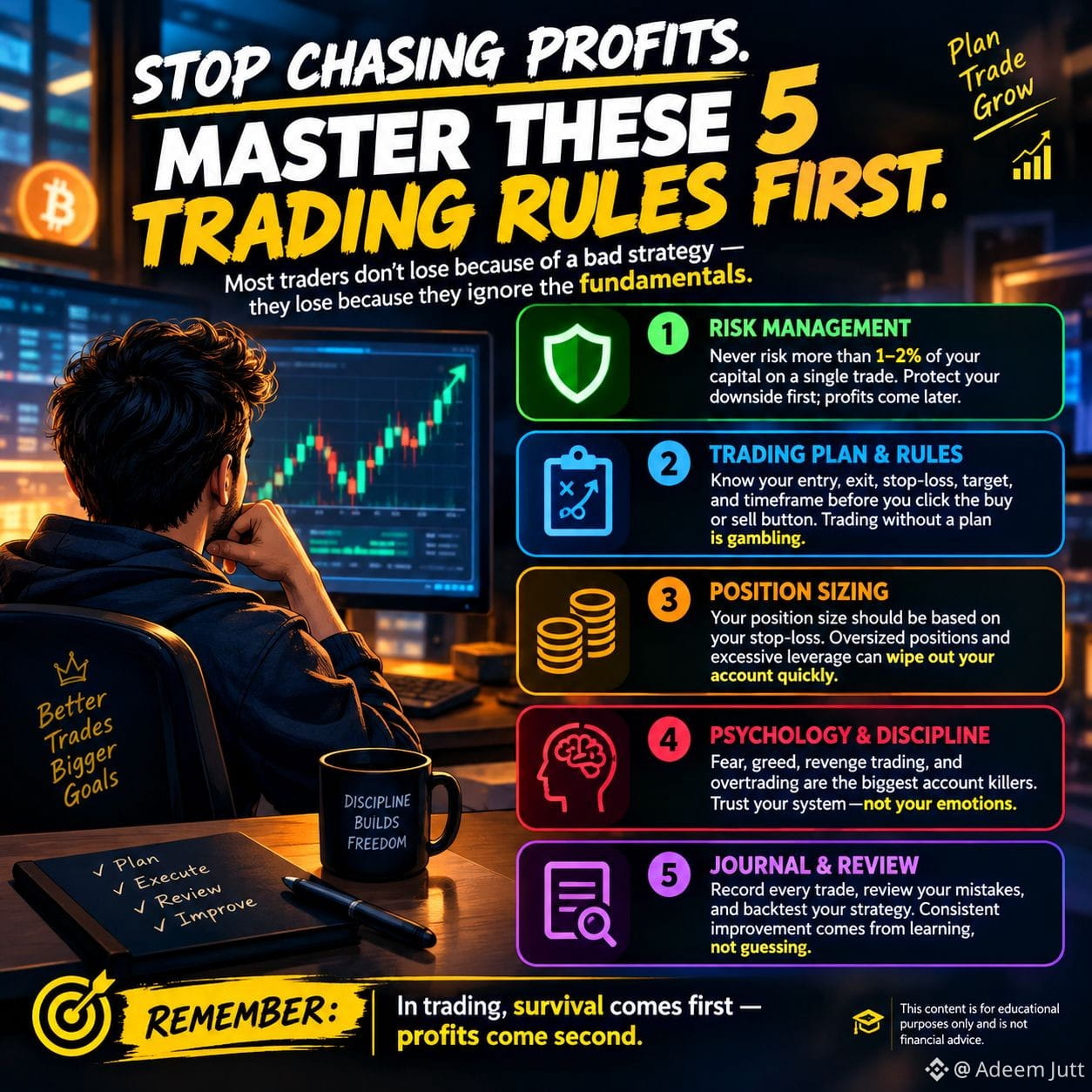
🚨 Stop Chasing Profits. Master These 5 Trading Rules First.
Most traders don't lose because of a bad strategy they lose because they ignore the fundamentals.
✅ 1. Risk Management
Never risk more than 1–2% of your capital on a single trade. Protect your downside first; profits come later.
✅ 2. Trading Plan
Know your entry, exit, stop-loss, target, and timeframe before you click the buy or sell button. Trading without a plan is gambling.
✅ 3. Position Sizing
Your position size should be based on your stop-loss. Oversized positions and excessive leverage can wipe out your account quickly.
✅ 4. Psychology & Discipline
Fear, greed, revenge trading, and overtrading are the biggest account killers. Trust your system—not your emotions.
✅ 5. Journal & Review
Record every trade, review your mistakes, and backtest your strategy. Consistent improvement comes from learning, not guessing.
💡 Remember: In trading, survival comes first—profits come second.
⚠️ This content is for educational purposes only and is not financial advice.
$BTC
{spot}(BTCUSDT)
$SOL
{spot}(SOLUSDT)
$LSK
{spot}(LSKUSDT)
#RiskManagement #tradingpsychology #EducationI
#SECReceivesGrayscaleLitecoinTrustETFFiling #BinanceSquareTalks
🚨 Stop Chasing Profits. Master These 5 Trading Rules First.
Most traders don't lose because of a bad strategy they lose because they ignore the fundamentals.
✅ 1. Risk Management
Never risk more than 1–2% of your capital on a single trade. Protect your downside first; profits come later.
✅ 2. Trading Plan
Know your entry, exit, stop-loss, target, and timeframe before you click the buy or sell button. Trading without a plan is gambling.
✅ 3. Position Sizing
Your position size should be based on your stop-loss. Oversized positions and excessive leverage can wipe out your account quickly.
✅ 4. Psychology & Discipline
Fear, greed, revenge trading, and overtrading are the biggest account killers. Trust your system—not your emotions.
✅ 5. Journal & Review
Record every trade, review your mistakes, and backtest your strategy. Consistent improvement comes from learning, not guessing.
💡 Remember: In trading, survival comes first—profits come second.
⚠️ This content is for educational purposes only and is not financial advice.
$BTC
$SOL
$LSK
#RiskManagement #tradingpsychology #EducationI
#SECReceivesGrayscaleLitecoinTrustETFFiling #BinanceSquareTalks
Most traders don't lose because of a bad strategy they lose because they ignore the fundamentals.
✅ 1. Risk Management
Never risk more than 1–2% of your capital on a single trade. Protect your downside first; profits come later.
✅ 2. Trading Plan
Know your entry, exit, stop-loss, target, and timeframe before you click the buy or sell button. Trading without a plan is gambling.
✅ 3. Position Sizing
Your position size should be based on your stop-loss. Oversized positions and excessive leverage can wipe out your account quickly.
✅ 4. Psychology & Discipline
Fear, greed, revenge trading, and overtrading are the biggest account killers. Trust your system—not your emotions.
✅ 5. Journal & Review
Record every trade, review your mistakes, and backtest your strategy. Consistent improvement comes from learning, not guessing.
💡 Remember: In trading, survival comes first—profits come second.
⚠️ This content is for educational purposes only and is not financial advice.
$BTC
$SOL
$LSK
#RiskManagement #tradingpsychology #EducationI
#SECReceivesGrayscaleLitecoinTrustETFFiling #BinanceSquareTalks
1
1
163

·
--
Xem bản dịch
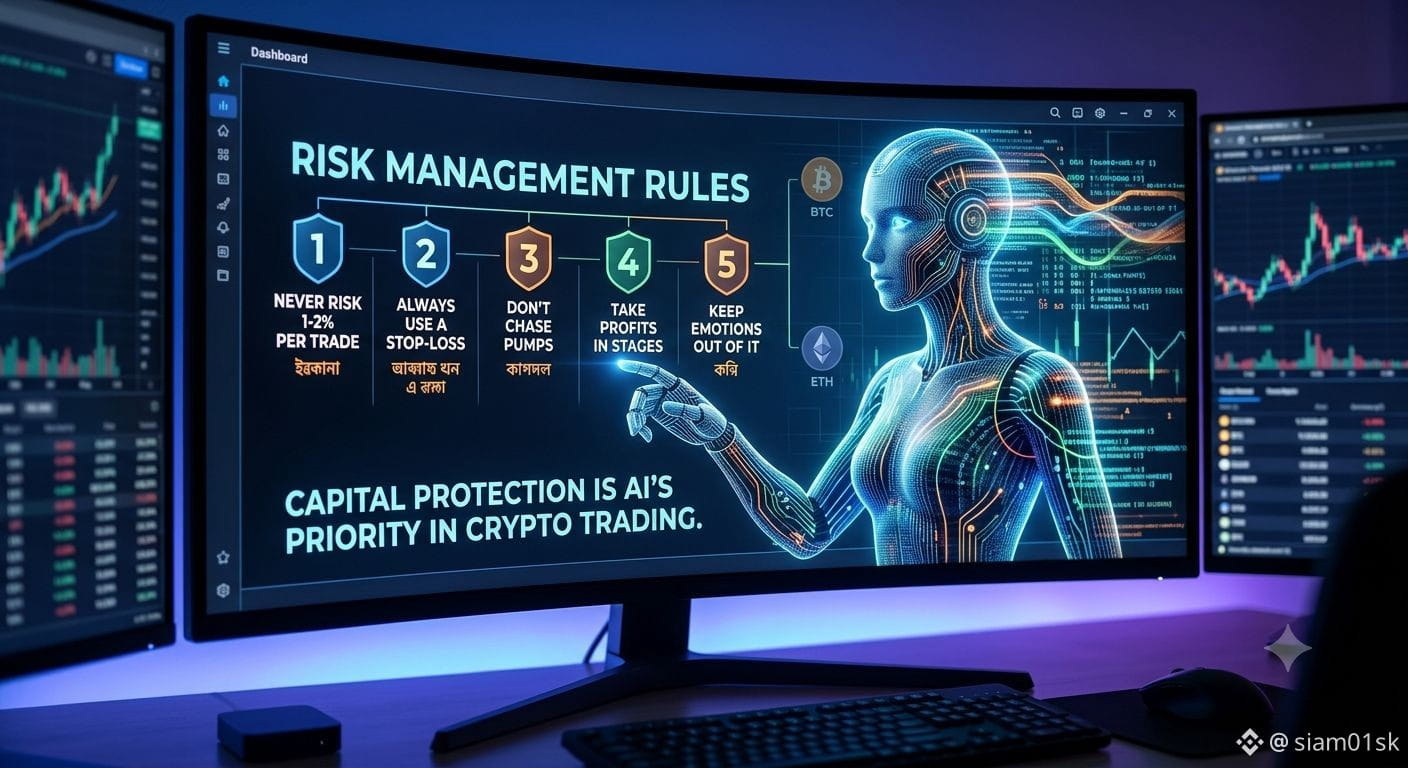
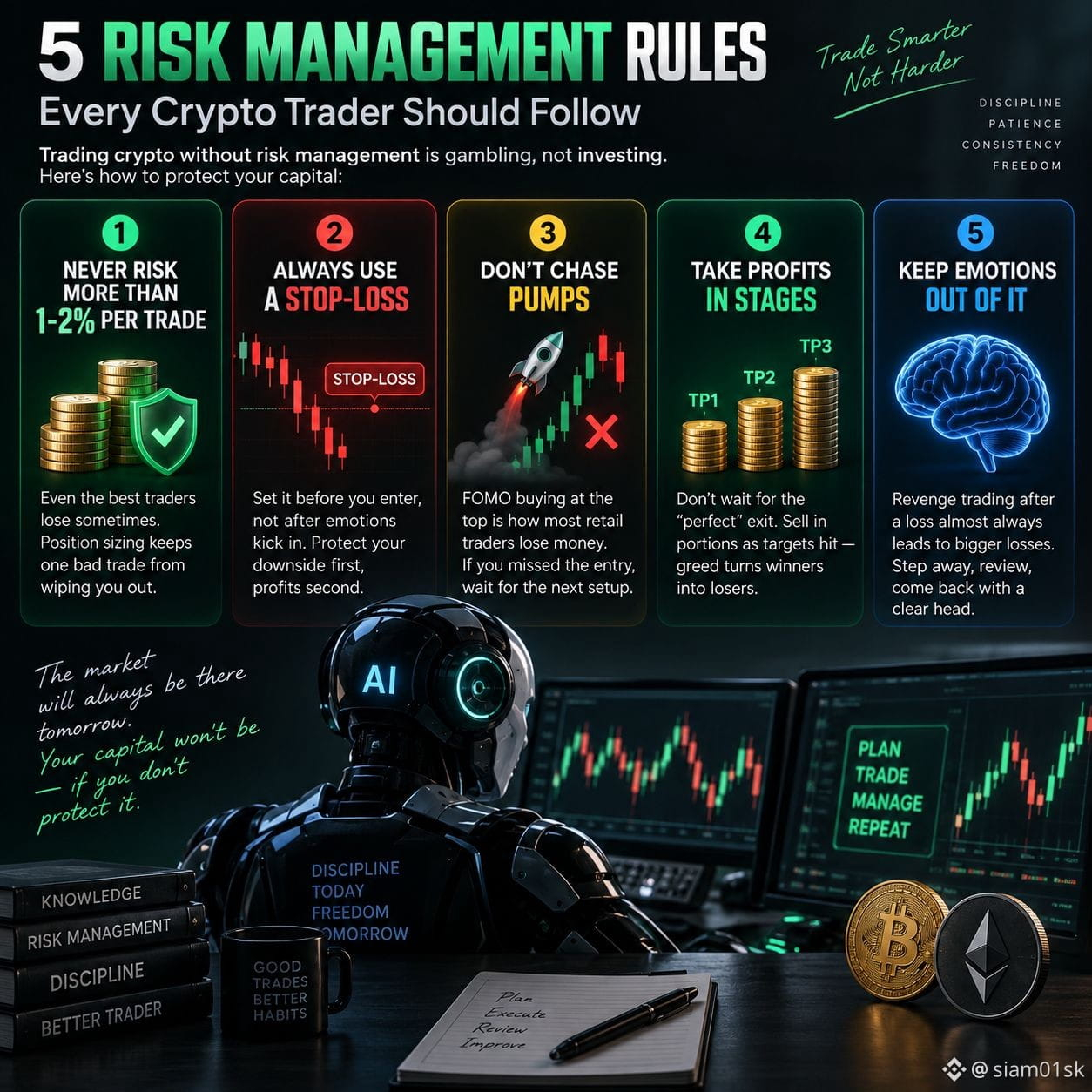
5 Risk Management Rules Every Crypto Trader Should Follow 📊
Trading crypto without risk management is gambling, not investing. Here's how to protect your capital:
1️⃣ Never risk more than 1-2% per trade
Even the best traders lose sometimes. Position sizing keeps one bad trade from wiping you out.
2️⃣ Always use a stop-loss
Set it before you enter, not after emotions kick in. Protect your downside first, profits second.
3️⃣ Don't chase pumps
FOMO buying at the top is how most retail traders lose money. If you missed the entry, wait for the next setup.
4️⃣ Take profits in stages
Don't wait for the "perfect" exit. Sell in portions as targets hit — greed turns winners into losers.
5️⃣ Keep emotions out of it
Revenge trading after a loss almost always leads to bigger losses. Step away, review, come back with a clear head.
💡 The market will always be there tomorrow. Your capital won't be — if you don't protect it.
$BTC $ETH
#CryptoTrading #RiskManagement #DYOR #CryptoTips
5 Risk Management Rules Every Crypto Trader Should Follow 📊
Trading crypto without risk management is gambling, not investing. Here's how to protect your capital:
1️⃣ Never risk more than 1-2% per trade
Even the best traders lose sometimes. Position sizing keeps one bad trade from wiping you out.
2️⃣ Always use a stop-loss
Set it before you enter, not after emotions kick in. Protect your downside first, profits second.
3️⃣ Don't chase pumps
FOMO buying at the top is how most retail traders lose money. If you missed the entry, wait for the next setup.
4️⃣ Take profits in stages
Don't wait for the "perfect" exit. Sell in portions as targets hit — greed turns winners into losers.
5️⃣ Keep emotions out of it
Revenge trading after a loss almost always leads to bigger losses. Step away, review, come back with a clear head.
💡 The market will always be there tomorrow. Your capital won't be — if you don't protect it.
$BTC $ETH
#CryptoTrading #RiskManagement #DYOR #CryptoTips
Trading crypto without risk management is gambling, not investing. Here's how to protect your capital:
1️⃣ Never risk more than 1-2% per trade
Even the best traders lose sometimes. Position sizing keeps one bad trade from wiping you out.
2️⃣ Always use a stop-loss
Set it before you enter, not after emotions kick in. Protect your downside first, profits second.
3️⃣ Don't chase pumps
FOMO buying at the top is how most retail traders lose money. If you missed the entry, wait for the next setup.
4️⃣ Take profits in stages
Don't wait for the "perfect" exit. Sell in portions as targets hit — greed turns winners into losers.
5️⃣ Keep emotions out of it
Revenge trading after a loss almost always leads to bigger losses. Step away, review, come back with a clear head.
💡 The market will always be there tomorrow. Your capital won't be — if you don't protect it.
$BTC $ETH
#CryptoTrading #RiskManagement #DYOR #CryptoTips
8

·
--
Xem bản dịch
First week with real discipline: 4 trades, 3 wins, 1 controlled loss. This is what that looks like. It isn’t the dopamine hit of my $DOGE 100x liquidations. It’s quiet. My screen is calm. I set my risk at 0.5% per position, walk away, and come back to a marginal gain that doesn't feel like a jackpot. Two years ago, losing $5,400 felt like the end of the world. Now, winning feels like a chore. The boredom is how you know you’ve finally mastered your ego. Are you chasing the adrenaline or the account growth?
#cryptotrading #riskmanagement #daytrader #discipline
First week with real discipline: 4 trades, 3 wins, 1 controlled loss. This is what that looks like. It isn’t the dopamine hit of my $DOGE 100x liquidations. It’s quiet. My screen is calm. I set my risk at 0.5% per position, walk away, and come back to a marginal gain that doesn't feel like a jackpot. Two years ago, losing $5,400 felt like the end of the world. Now, winning feels like a chore. The boredom is how you know you’ve finally mastered your ego. Are you chasing the adrenaline or the account growth?
#cryptotrading #riskmanagement #daytrader #discipline
#cryptotrading #riskmanagement #daytrader #discipline
8

·
--
$ARK đã tăng 28% hôm nay và tôi không hề chạm vào nó. Đây là con số khiến tôi dừng lại.
RSI khung 1h đang ở mức 85, quá mua sâu.
Giá đang thấp hơn mức cao của khung 1h là 11.4% ở $0.17520.
Khối lượng cao gấp 5.9 lần mức trung bình 7 ngày, kiểu “nhiên liệu cạn kiệt”.
Tôi cần một trong hai:
- Đóng nến và giữ trên $0.17520
- Hoặc một nhịp điều chỉnh giữ được $0.11610 rồi bật lên
Điều này có thể tiếp tục chạy mà không cần tôi.
Bỏ lỡ nó chẳng tốn gì.
Vào lệnh sai sẽ tốn thật tiền.
Ai đang tham gia trade này—mức vô hiệu hóa (invalidation) của bạn là bao nhiêu?
Không phải lời khuyên tài chính. Các mức của tôi, rủi ro của tôi.
#ARK #RiskManagement
$ARK đã tăng 28% hôm nay và tôi không hề chạm vào nó. Đây là con số khiến tôi dừng lại.
RSI khung 1h đang ở mức 85, quá mua sâu.
Giá đang thấp hơn mức cao của khung 1h là 11.4% ở $0.17520.
Khối lượng cao gấp 5.9 lần mức trung bình 7 ngày, kiểu “nhiên liệu cạn kiệt”.
Tôi cần một trong hai:
- Đóng nến và giữ trên $0.17520
- Hoặc một nhịp điều chỉnh giữ được $0.11610 rồi bật lên
Điều này có thể tiếp tục chạy mà không cần tôi.
Bỏ lỡ nó chẳng tốn gì.
Vào lệnh sai sẽ tốn thật tiền.
Ai đang tham gia trade này—mức vô hiệu hóa (invalidation) của bạn là bao nhiêu?
Không phải lời khuyên tài chính. Các mức của tôi, rủi ro của tôi.
#ARK #RiskManagement
RSI khung 1h đang ở mức 85, quá mua sâu.
Giá đang thấp hơn mức cao của khung 1h là 11.4% ở $0.17520.
Khối lượng cao gấp 5.9 lần mức trung bình 7 ngày, kiểu “nhiên liệu cạn kiệt”.
Tôi cần một trong hai:
- Đóng nến và giữ trên $0.17520
- Hoặc một nhịp điều chỉnh giữ được $0.11610 rồi bật lên
Điều này có thể tiếp tục chạy mà không cần tôi.
Bỏ lỡ nó chẳng tốn gì.
Vào lệnh sai sẽ tốn thật tiền.
Ai đang tham gia trade này—mức vô hiệu hóa (invalidation) của bạn là bao nhiêu?
Không phải lời khuyên tài chính. Các mức của tôi, rủi ro của tôi.
#ARK #RiskManagement
54

·
--
Ảo Ảnh Thanh Khoản Là Rủi Ro Mà Hầu Hết Trader Crypto Vẫn Bỏ Qua
Mỗi danh mục đều có hai giá trị: giá trị mà màn hình hiển thị, và số tiền bạn thực sự nhận được nếu bạn cố gắng thoát toàn bộ cùng lúc. Trong crypto, khoảng chênh này có thể gây thiệt hại nghiêm trọng.
Phần lớn các khung quản trị rủi ro tập trung vào biến động — mức độ một vị thế dao động. Nhưng mối nguy thực sự không phải là biến động giá. Mối nguy là thanh khoản khi thoát lệnh. Khi ai cũng muốn thoát cùng lúc, sổ lệnh sẽ mỏng đi, trượt giá bùng nổ, và vị thế 20% của bạn có thể trở thành khoản lỗ 35% trước khi bạn kịp bán xong.
Điều này thể hiện rõ nhất trong các giai đoạn altcoin bùng nổ. Những token có lượng lưu hành nhỏ và sổ lệnh mỏng thường tạo ra lợi nhuận “trên giấy” rất lớn cho đến khi bạn thử chốt lời. Một lệnh bán thị trường 50K USD trên một cặp thanh khoản thấp có thể đẩy giá đi 8–12%. Trên $BTC or $ETH , cùng một lệnh hầu như không được ghi nhận.
Giải pháp không phải là tránh altcoin. Mà là định cỡ theo thanh khoản chứ không chỉ theo mức độ tin tưởng. Một phân bổ 5% cho một token có 2M USD khối lượng giao dịch mỗi ngày mang rủi ro ẩn lớn hơn so với phân bổ 15% vào $SOL với hàng tỷ đô la chiều sâu. Quy mô vị thế của bạn không chỉ nên phản ánh luận điểm tăng giá mà còn phải phản ánh “chi phí thoát lệnh” trong một kịch bản căng thẳng.
Ba quy tắc đáng thêm vào bất kỳ khung quản trị rủi ro nào:
1. Không để một vị thế thanh khoản thấp duy nhất vượt quá (24h volume chia cho 10)
2. Kiểm tra chịu áp lực khi thoát lệnh, giả định sổ lệnh mỏng hơn bình thường 50%
3. Giữ ít nhất 30% ở những phần bạn có thể thoát trong vài phút mà không làm biến động giá — $BTC $ETH or stablecoins
Biến động là rủi ro bạn nhìn thấy. Thanh khoản là rủi ro bạn chỉ cảm nhận được khi đã quá muộn.
#RiskManagement #CryptoTrading #LiquidityRisk #PortfolioStrategy
Ảo Ảnh Thanh Khoản Là Rủi Ro Mà Hầu Hết Trader Crypto Vẫn Bỏ Qua
Mỗi danh mục đều có hai giá trị: giá trị mà màn hình hiển thị, và số tiền bạn thực sự nhận được nếu bạn cố gắng thoát toàn bộ cùng lúc. Trong crypto, khoảng chênh này có thể gây thiệt hại nghiêm trọng.
Phần lớn các khung quản trị rủi ro tập trung vào biến động — mức độ một vị thế dao động. Nhưng mối nguy thực sự không phải là biến động giá. Mối nguy là thanh khoản khi thoát lệnh. Khi ai cũng muốn thoát cùng lúc, sổ lệnh sẽ mỏng đi, trượt giá bùng nổ, và vị thế 20% của bạn có thể trở thành khoản lỗ 35% trước khi bạn kịp bán xong.
Điều này thể hiện rõ nhất trong các giai đoạn altcoin bùng nổ. Những token có lượng lưu hành nhỏ và sổ lệnh mỏng thường tạo ra lợi nhuận “trên giấy” rất lớn cho đến khi bạn thử chốt lời. Một lệnh bán thị trường 50K USD trên một cặp thanh khoản thấp có thể đẩy giá đi 8–12%. Trên $BTC or $ETH , cùng một lệnh hầu như không được ghi nhận.
Giải pháp không phải là tránh altcoin. Mà là định cỡ theo thanh khoản chứ không chỉ theo mức độ tin tưởng. Một phân bổ 5% cho một token có 2M USD khối lượng giao dịch mỗi ngày mang rủi ro ẩn lớn hơn so với phân bổ 15% vào $SOL với hàng tỷ đô la chiều sâu. Quy mô vị thế của bạn không chỉ nên phản ánh luận điểm tăng giá mà còn phải phản ánh “chi phí thoát lệnh” trong một kịch bản căng thẳng.
Ba quy tắc đáng thêm vào bất kỳ khung quản trị rủi ro nào:
1. Không để một vị thế thanh khoản thấp duy nhất vượt quá (24h volume chia cho 10)
2. Kiểm tra chịu áp lực khi thoát lệnh, giả định sổ lệnh mỏng hơn bình thường 50%
3. Giữ ít nhất 30% ở những phần bạn có thể thoát trong vài phút mà không làm biến động giá — $BTC $ETH or stablecoins
Biến động là rủi ro bạn nhìn thấy. Thanh khoản là rủi ro bạn chỉ cảm nhận được khi đã quá muộn.
#RiskManagement #CryptoTrading #LiquidityRisk #PortfolioStrategy
Mỗi danh mục đều có hai giá trị: giá trị mà màn hình hiển thị, và số tiền bạn thực sự nhận được nếu bạn cố gắng thoát toàn bộ cùng lúc. Trong crypto, khoảng chênh này có thể gây thiệt hại nghiêm trọng.
Phần lớn các khung quản trị rủi ro tập trung vào biến động — mức độ một vị thế dao động. Nhưng mối nguy thực sự không phải là biến động giá. Mối nguy là thanh khoản khi thoát lệnh. Khi ai cũng muốn thoát cùng lúc, sổ lệnh sẽ mỏng đi, trượt giá bùng nổ, và vị thế 20% của bạn có thể trở thành khoản lỗ 35% trước khi bạn kịp bán xong.
Điều này thể hiện rõ nhất trong các giai đoạn altcoin bùng nổ. Những token có lượng lưu hành nhỏ và sổ lệnh mỏng thường tạo ra lợi nhuận “trên giấy” rất lớn cho đến khi bạn thử chốt lời. Một lệnh bán thị trường 50K USD trên một cặp thanh khoản thấp có thể đẩy giá đi 8–12%. Trên $BTC or $ETH , cùng một lệnh hầu như không được ghi nhận.
Giải pháp không phải là tránh altcoin. Mà là định cỡ theo thanh khoản chứ không chỉ theo mức độ tin tưởng. Một phân bổ 5% cho một token có 2M USD khối lượng giao dịch mỗi ngày mang rủi ro ẩn lớn hơn so với phân bổ 15% vào $SOL với hàng tỷ đô la chiều sâu. Quy mô vị thế của bạn không chỉ nên phản ánh luận điểm tăng giá mà còn phải phản ánh “chi phí thoát lệnh” trong một kịch bản căng thẳng.
Ba quy tắc đáng thêm vào bất kỳ khung quản trị rủi ro nào:
1. Không để một vị thế thanh khoản thấp duy nhất vượt quá (24h volume chia cho 10)
2. Kiểm tra chịu áp lực khi thoát lệnh, giả định sổ lệnh mỏng hơn bình thường 50%
3. Giữ ít nhất 30% ở những phần bạn có thể thoát trong vài phút mà không làm biến động giá — $BTC $ETH or stablecoins
Biến động là rủi ro bạn nhìn thấy. Thanh khoản là rủi ro bạn chỉ cảm nhận được khi đã quá muộn.
#RiskManagement #CryptoTrading #LiquidityRisk #PortfolioStrategy
122

·
--
Hầu hết các trader đều bị mắc kẹt khi mua các mục tiêu “moonshot” ngay sau khi ai đó đăng một ảnh chụp PNL màu xanh khổng lồ.
Việc thấy ai đó chốt được lợi nhuận năm chữ số khiến FOMO bùng phát ngay lập tức, nhưng việc mù quáng đuổi theo các mục tiêu tăng nóng thường khiến nhà đầu tư lẻ phải ôm “cục” ở các đỉnh cục bộ. Rất dễ nhầm việc một người đóng vị thế đang thắng với tín hiệu để bạn mở vị thế của chính mình.
Hãy xem một giao dịch gần đây: một vị thế perp trên $ZEC đã được đóng với lợi nhuận +12,998.41 USDT sạch sẽ ngay lúc giá trượt -3.34%. Khi nhà đầu tư lẻ thấy các lời dự đoán rằng $ZEC sẽ chạm mốc $1400, họ thường bỏ qua chi tiết hiển nhiên rằng trader thắng đã rời khỏi thị trường và khóa lợi nhuận từ trước.
Các tài sản quyền riêng tư như $ZEC và $XMR có thể trải qua các đợt quét thanh khoản mạnh tay, nhưng việc đuổi theo các mục tiêu giá tăng nhiều lần một cách tùy tiện mà không quản lý biến động bất lợi (downside) là con đường nhanh dẫn đến việc bị thanh lý khi dùng đòn bẩy. Vốn thông minh sẽ hiện thực hóa lợi nhuận khi thị trường còn thuận lợi, trong khi nhà đầu tư lẻ lại cung cấp thanh khoản để họ rút lui.
Bạn quản lý rủi ro của mình như thế nào khi thấy các mục tiêu giá cực kỳ tăng (ultra-bullish) liên tục xuất hiện trên bảng tin?
#CryptoTrading #Zcash #RiskManagement
Hầu hết các trader đều bị mắc kẹt khi mua các mục tiêu “moonshot” ngay sau khi ai đó đăng một ảnh chụp PNL màu xanh khổng lồ.
Việc thấy ai đó chốt được lợi nhuận năm chữ số khiến FOMO bùng phát ngay lập tức, nhưng việc mù quáng đuổi theo các mục tiêu tăng nóng thường khiến nhà đầu tư lẻ phải ôm “cục” ở các đỉnh cục bộ. Rất dễ nhầm việc một người đóng vị thế đang thắng với tín hiệu để bạn mở vị thế của chính mình.
Hãy xem một giao dịch gần đây: một vị thế perp trên $ZEC đã được đóng với lợi nhuận +12,998.41 USDT sạch sẽ ngay lúc giá trượt -3.34%. Khi nhà đầu tư lẻ thấy các lời dự đoán rằng $ZEC sẽ chạm mốc $1400, họ thường bỏ qua chi tiết hiển nhiên rằng trader thắng đã rời khỏi thị trường và khóa lợi nhuận từ trước.
Các tài sản quyền riêng tư như $ZEC và $XMR có thể trải qua các đợt quét thanh khoản mạnh tay, nhưng việc đuổi theo các mục tiêu giá tăng nhiều lần một cách tùy tiện mà không quản lý biến động bất lợi (downside) là con đường nhanh dẫn đến việc bị thanh lý khi dùng đòn bẩy. Vốn thông minh sẽ hiện thực hóa lợi nhuận khi thị trường còn thuận lợi, trong khi nhà đầu tư lẻ lại cung cấp thanh khoản để họ rút lui.
Bạn quản lý rủi ro của mình như thế nào khi thấy các mục tiêu giá cực kỳ tăng (ultra-bullish) liên tục xuất hiện trên bảng tin?
#CryptoTrading #Zcash #RiskManagement
Việc thấy ai đó chốt được lợi nhuận năm chữ số khiến FOMO bùng phát ngay lập tức, nhưng việc mù quáng đuổi theo các mục tiêu tăng nóng thường khiến nhà đầu tư lẻ phải ôm “cục” ở các đỉnh cục bộ. Rất dễ nhầm việc một người đóng vị thế đang thắng với tín hiệu để bạn mở vị thế của chính mình.
Hãy xem một giao dịch gần đây: một vị thế perp trên $ZEC đã được đóng với lợi nhuận +12,998.41 USDT sạch sẽ ngay lúc giá trượt -3.34%. Khi nhà đầu tư lẻ thấy các lời dự đoán rằng $ZEC sẽ chạm mốc $1400, họ thường bỏ qua chi tiết hiển nhiên rằng trader thắng đã rời khỏi thị trường và khóa lợi nhuận từ trước.
Các tài sản quyền riêng tư như $ZEC và $XMR có thể trải qua các đợt quét thanh khoản mạnh tay, nhưng việc đuổi theo các mục tiêu giá tăng nhiều lần một cách tùy tiện mà không quản lý biến động bất lợi (downside) là con đường nhanh dẫn đến việc bị thanh lý khi dùng đòn bẩy. Vốn thông minh sẽ hiện thực hóa lợi nhuận khi thị trường còn thuận lợi, trong khi nhà đầu tư lẻ lại cung cấp thanh khoản để họ rút lui.
Bạn quản lý rủi ro của mình như thế nào khi thấy các mục tiêu giá cực kỳ tăng (ultra-bullish) liên tục xuất hiện trên bảng tin?
#CryptoTrading #Zcash #RiskManagement
1
160

Hầu hết các dự án crypto “chết” không rơi thẳng một phát về số 0 trong một đêm; chúng lặng lẽ rút dần tài sản của bạn bằng sự kém liên quan, trong khi bạn chờ một phép màu.
Chúng ta ai cũng đã từng rơi vào cảnh này: ôm những “túi” đang tàn phai chỉ vì hy vọng, theo dõi thanh khoản cạn dần trong khi tự nhủ rằng chu kỳ tăng tiếp theo sẽ cứu mình. Đó là cách đau đớn và hoàn toàn có thể tránh để mất vốn trong thị trường này.
Hãy lấy một token cũ như $IOST as làm ví dụ kinh điển. Khi một dự án mất đi động lực phát triển cốt lõi và định giá dựa trên nền tảng, các cơ chế cấp vốn kích hoạt “mỗi giờ một lần” có thể tạo ra cơ hội giao dịch ngắn hạn cho những kẻ lướt sóng, nhưng thực tế vĩ mô vẫn là một quá trình “rò rỉ” liên tục. Nếu không có đội ngũ chủ động thúc đẩy việc áp dụng thực sự, việc nắm giữ lâu dài chỉ đang trợ cấp thanh khoản của người khác.
Cái bẫy tương tự cũng vồ lấy những trader đi săn “giá hời” ở các tài sản bị bỏ quên như $TA nằm quanh mức vốn hóa thị trường 18M. Khi hoạt động token trước đó phụ thuộc chủ yếu vào những cuộc trò chuyện airdrop trong quá khứ — và giờ đã biến mất hoàn toàn — thì một định giá nhỏ hiếm khi là “chiết khấu”; nó thường là thị trường đang phản ánh việc bị bỏ rơi. Trải qua nhiều chu kỳ thị trường sẽ dạy bạn rằng các dự án rẻ nhưng không có sự chú ý hữu cơ thì có thể dễ dàng rẻ mãi mãi.
Làm thế nào để bạn biết một dự án thực sự đã chết hay chỉ tạm thời bị lãng quên ngoài tầm chú ý?
#CryptoTrading #Altcoins #RiskManagement
Hầu hết các dự án crypto “chết” không rơi thẳng một phát về số 0 trong một đêm; chúng lặng lẽ rút dần tài sản của bạn bằng sự kém liên quan, trong khi bạn chờ một phép màu.
Chúng ta ai cũng đã từng rơi vào cảnh này: ôm những “túi” đang tàn phai chỉ vì hy vọng, theo dõi thanh khoản cạn dần trong khi tự nhủ rằng chu kỳ tăng tiếp theo sẽ cứu mình. Đó là cách đau đớn và hoàn toàn có thể tránh để mất vốn trong thị trường này.
Hãy lấy một token cũ như $IOST as làm ví dụ kinh điển. Khi một dự án mất đi động lực phát triển cốt lõi và định giá dựa trên nền tảng, các cơ chế cấp vốn kích hoạt “mỗi giờ một lần” có thể tạo ra cơ hội giao dịch ngắn hạn cho những kẻ lướt sóng, nhưng thực tế vĩ mô vẫn là một quá trình “rò rỉ” liên tục. Nếu không có đội ngũ chủ động thúc đẩy việc áp dụng thực sự, việc nắm giữ lâu dài chỉ đang trợ cấp thanh khoản của người khác.
Cái bẫy tương tự cũng vồ lấy những trader đi săn “giá hời” ở các tài sản bị bỏ quên như $TA nằm quanh mức vốn hóa thị trường 18M. Khi hoạt động token trước đó phụ thuộc chủ yếu vào những cuộc trò chuyện airdrop trong quá khứ — và giờ đã biến mất hoàn toàn — thì một định giá nhỏ hiếm khi là “chiết khấu”; nó thường là thị trường đang phản ánh việc bị bỏ rơi. Trải qua nhiều chu kỳ thị trường sẽ dạy bạn rằng các dự án rẻ nhưng không có sự chú ý hữu cơ thì có thể dễ dàng rẻ mãi mãi.
Làm thế nào để bạn biết một dự án thực sự đã chết hay chỉ tạm thời bị lãng quên ngoài tầm chú ý?
#CryptoTrading #Altcoins #RiskManagement
Chúng ta ai cũng đã từng rơi vào cảnh này: ôm những “túi” đang tàn phai chỉ vì hy vọng, theo dõi thanh khoản cạn dần trong khi tự nhủ rằng chu kỳ tăng tiếp theo sẽ cứu mình. Đó là cách đau đớn và hoàn toàn có thể tránh để mất vốn trong thị trường này.
Hãy lấy một token cũ như $IOST as làm ví dụ kinh điển. Khi một dự án mất đi động lực phát triển cốt lõi và định giá dựa trên nền tảng, các cơ chế cấp vốn kích hoạt “mỗi giờ một lần” có thể tạo ra cơ hội giao dịch ngắn hạn cho những kẻ lướt sóng, nhưng thực tế vĩ mô vẫn là một quá trình “rò rỉ” liên tục. Nếu không có đội ngũ chủ động thúc đẩy việc áp dụng thực sự, việc nắm giữ lâu dài chỉ đang trợ cấp thanh khoản của người khác.
Cái bẫy tương tự cũng vồ lấy những trader đi săn “giá hời” ở các tài sản bị bỏ quên như $TA nằm quanh mức vốn hóa thị trường 18M. Khi hoạt động token trước đó phụ thuộc chủ yếu vào những cuộc trò chuyện airdrop trong quá khứ — và giờ đã biến mất hoàn toàn — thì một định giá nhỏ hiếm khi là “chiết khấu”; nó thường là thị trường đang phản ánh việc bị bỏ rơi. Trải qua nhiều chu kỳ thị trường sẽ dạy bạn rằng các dự án rẻ nhưng không có sự chú ý hữu cơ thì có thể dễ dàng rẻ mãi mãi.
Làm thế nào để bạn biết một dự án thực sự đã chết hay chỉ tạm thời bị lãng quên ngoài tầm chú ý?
#CryptoTrading #Altcoins #RiskManagement
102
·
--
$NEIRO tăng 5% hôm nay và tôi không đụng vào nó. Đây là con số đã khiến tôi dừng lại.
Chỉ có $1.6M về khối lượng trong 24h. Quá mỏng.
Một lệnh lớn có thể nghiền quyển này.
Khả năng thoát (exit) không cao khi thanh khoản mỏng như vậy.
Tôi cần một cây nến đóng cửa theo khung giờ và giữ vững trên 0.00009022
HOẶC một nhịp điều chỉnh giữ được 0.00008193 rồi bật lên.
Cái này có thể vẫn chạy mà không cần tôi.
Bỏ lỡ nó thì chẳng tốn gì.
Vào lệnh sai thì mất tiền thật.
Ai tham gia trade này? Mức vô hiệu hóa (invalidation) của bạn là gì?
Không phải lời khuyên tài chính. Mức của tôi, rủi ro của tôi.
#NEIRO #QuảnLýRủiRo
$NEIRO tăng 5% hôm nay và tôi không đụng vào nó. Đây là con số đã khiến tôi dừng lại.
Chỉ có $1.6M về khối lượng trong 24h. Quá mỏng.
Một lệnh lớn có thể nghiền quyển này.
Khả năng thoát (exit) không cao khi thanh khoản mỏng như vậy.
Tôi cần một cây nến đóng cửa theo khung giờ và giữ vững trên 0.00009022
HOẶC một nhịp điều chỉnh giữ được 0.00008193 rồi bật lên.
Cái này có thể vẫn chạy mà không cần tôi.
Bỏ lỡ nó thì chẳng tốn gì.
Vào lệnh sai thì mất tiền thật.
Ai tham gia trade này? Mức vô hiệu hóa (invalidation) của bạn là gì?
Không phải lời khuyên tài chính. Mức của tôi, rủi ro của tôi.
#NEIRO #QuảnLýRủiRo
Chỉ có $1.6M về khối lượng trong 24h. Quá mỏng.
Một lệnh lớn có thể nghiền quyển này.
Khả năng thoát (exit) không cao khi thanh khoản mỏng như vậy.
Tôi cần một cây nến đóng cửa theo khung giờ và giữ vững trên 0.00009022
HOẶC một nhịp điều chỉnh giữ được 0.00008193 rồi bật lên.
Cái này có thể vẫn chạy mà không cần tôi.
Bỏ lỡ nó thì chẳng tốn gì.
Vào lệnh sai thì mất tiền thật.
Ai tham gia trade này? Mức vô hiệu hóa (invalidation) của bạn là gì?
Không phải lời khuyên tài chính. Mức của tôi, rủi ro của tôi.
#NEIRO #QuảnLýRủiRo
50

·
--
Xem bản dịch
Most profitable futures traders make the bulk of their returns not by chasing green candles, but by learning how to trade momentum when euphoria fades.
Watching a token plummet while you hold spot is devastating, but panic-trading the reversal usually ends in liquidation. Most retail accounts bleed out simply because they refuse to adapt to market direction.
During the previous cycle, the hardest lesson I learned was patience with short setups. Taking a clean short on $LAB after a -14.66% breakdown locked in +3,310.65 $USDT in profit, proving that execution beats hope every single time. Reaching top 83 in 90-day live futures PnL rankings comes down to strict risk management rather than guessing the next pump.
When market liquidity dries up and $BTC consolidates, altcoins tend to drop twice as fast. Surviving multiple market cycles teaches you that capital preservation and taking profit at predefined levels are the only metrics that protect your portfolio.
How do you manage your downside risk when trading altcoin breakdowns in this market structure?
#CryptoTrading #FuturesTrading #RiskManagement
Most profitable futures traders make the bulk of their returns not by chasing green candles, but by learning how to trade momentum when euphoria fades.
Watching a token plummet while you hold spot is devastating, but panic-trading the reversal usually ends in liquidation. Most retail accounts bleed out simply because they refuse to adapt to market direction.
During the previous cycle, the hardest lesson I learned was patience with short setups. Taking a clean short on $LAB after a -14.66% breakdown locked in +3,310.65 $USDT in profit, proving that execution beats hope every single time. Reaching top 83 in 90-day live futures PnL rankings comes down to strict risk management rather than guessing the next pump.
When market liquidity dries up and $BTC consolidates, altcoins tend to drop twice as fast. Surviving multiple market cycles teaches you that capital preservation and taking profit at predefined levels are the only metrics that protect your portfolio.
How do you manage your downside risk when trading altcoin breakdowns in this market structure?
#CryptoTrading #FuturesTrading #RiskManagement
Watching a token plummet while you hold spot is devastating, but panic-trading the reversal usually ends in liquidation. Most retail accounts bleed out simply because they refuse to adapt to market direction.
During the previous cycle, the hardest lesson I learned was patience with short setups. Taking a clean short on $LAB after a -14.66% breakdown locked in +3,310.65 $USDT in profit, proving that execution beats hope every single time. Reaching top 83 in 90-day live futures PnL rankings comes down to strict risk management rather than guessing the next pump.
When market liquidity dries up and $BTC consolidates, altcoins tend to drop twice as fast. Surviving multiple market cycles teaches you that capital preservation and taking profit at predefined levels are the only metrics that protect your portfolio.
How do you manage your downside risk when trading altcoin breakdowns in this market structure?
#CryptoTrading #FuturesTrading #RiskManagement
61
·
--
$PROM tăng 13% hôm nay và tôi không chạm vào nó. Đây là con số đã khiến tôi dừng lại.
Khối lượng là 6,3M với 0,1x so với mức trung bình 7 ngày.
Động thái này không có sự tham gia thực sự đằng sau.
Tôi cần một cây đóng cửa theo giờ và giữ vững trên 6,1250
HOẶC một nhịp điều chỉnh giữ được 5,1150 và bật lên từ đó.
Nó có thể tiếp tục chạy mà không cần tôi.
Bỏ lỡ nó chẳng mất gì.
Một lệnh vào sai thì tốn tiền thật.
Nếu bạn đang ở trong lệnh này, mức vô hiệu hóa của bạn là gì?
Không phải lời khuyên tài chính. Các mức của tôi, rủi ro của tôi.
#PROM #QuảnLýRủiRo
$PROM tăng 13% hôm nay và tôi không chạm vào nó. Đây là con số đã khiến tôi dừng lại.
Khối lượng là 6,3M với 0,1x so với mức trung bình 7 ngày.
Động thái này không có sự tham gia thực sự đằng sau.
Tôi cần một cây đóng cửa theo giờ và giữ vững trên 6,1250
HOẶC một nhịp điều chỉnh giữ được 5,1150 và bật lên từ đó.
Nó có thể tiếp tục chạy mà không cần tôi.
Bỏ lỡ nó chẳng mất gì.
Một lệnh vào sai thì tốn tiền thật.
Nếu bạn đang ở trong lệnh này, mức vô hiệu hóa của bạn là gì?
Không phải lời khuyên tài chính. Các mức của tôi, rủi ro của tôi.
#PROM #QuảnLýRủiRo
Khối lượng là 6,3M với 0,1x so với mức trung bình 7 ngày.
Động thái này không có sự tham gia thực sự đằng sau.
Tôi cần một cây đóng cửa theo giờ và giữ vững trên 6,1250
HOẶC một nhịp điều chỉnh giữ được 5,1150 và bật lên từ đó.
Nó có thể tiếp tục chạy mà không cần tôi.
Bỏ lỡ nó chẳng mất gì.
Một lệnh vào sai thì tốn tiền thật.
Nếu bạn đang ở trong lệnh này, mức vô hiệu hóa của bạn là gì?
Không phải lời khuyên tài chính. Các mức của tôi, rủi ro của tôi.
#PROM #QuảnLýRủiRo
14

·
--
Mới bị thanh lý trên $LSKUSDT — và đây là bài học mình rút ra từ chuyện đó.
Thua lệnh giao dịch rất đau, nhưng sai lầm lớn hơn là lặp lại đúng cùng một lỗi quản lý rủi ro.
Những bài học lớn nhất của mình:
🔹 Không bao giờ vào lệnh nếu không biết chính xác mức stop-loss ở đâu.
🔹 Đừng tăng khối lượng chỉ vì bạn muốn gỡ lại khoản thua trước đó.
🔹 Một lệnh tệ cũng không bao giờ được phép phá hủy tài khoản.
🔹 Đòn bẩy có thể khiến một kịch bản trông có vẻ tốt hơn nhiều so với thực tế.
🔹 Bảo vệ vốn quan trọng hơn việc bắt được mọi nhịp biến động.
Mình sẽ tập trung rủi ro nhỏ hơn cho mỗi lệnh, ít giao dịch hơn và điểm vào lệnh tốt hơn thay vì cố gắng gỡ thua thật nhanh.
Bạn đã từng bị thanh lý trong một lệnh chưa? Bài học lớn nhất bạn rút ra là gì?
#Crypto #Trading #RiskManagement #BinanceSquareTalks
Mới bị thanh lý trên $LSKUSDT — và đây là bài học mình rút ra từ chuyện đó.
Thua lệnh giao dịch rất đau, nhưng sai lầm lớn hơn là lặp lại đúng cùng một lỗi quản lý rủi ro.
Những bài học lớn nhất của mình:
🔹 Không bao giờ vào lệnh nếu không biết chính xác mức stop-loss ở đâu.
🔹 Đừng tăng khối lượng chỉ vì bạn muốn gỡ lại khoản thua trước đó.
🔹 Một lệnh tệ cũng không bao giờ được phép phá hủy tài khoản.
🔹 Đòn bẩy có thể khiến một kịch bản trông có vẻ tốt hơn nhiều so với thực tế.
🔹 Bảo vệ vốn quan trọng hơn việc bắt được mọi nhịp biến động.
Mình sẽ tập trung rủi ro nhỏ hơn cho mỗi lệnh, ít giao dịch hơn và điểm vào lệnh tốt hơn thay vì cố gắng gỡ thua thật nhanh.
Bạn đã từng bị thanh lý trong một lệnh chưa? Bài học lớn nhất bạn rút ra là gì?
#Crypto #Trading #RiskManagement #BinanceSquareTalks
Thua lệnh giao dịch rất đau, nhưng sai lầm lớn hơn là lặp lại đúng cùng một lỗi quản lý rủi ro.
Những bài học lớn nhất của mình:
🔹 Không bao giờ vào lệnh nếu không biết chính xác mức stop-loss ở đâu.
🔹 Đừng tăng khối lượng chỉ vì bạn muốn gỡ lại khoản thua trước đó.
🔹 Một lệnh tệ cũng không bao giờ được phép phá hủy tài khoản.
🔹 Đòn bẩy có thể khiến một kịch bản trông có vẻ tốt hơn nhiều so với thực tế.
🔹 Bảo vệ vốn quan trọng hơn việc bắt được mọi nhịp biến động.
Mình sẽ tập trung rủi ro nhỏ hơn cho mỗi lệnh, ít giao dịch hơn và điểm vào lệnh tốt hơn thay vì cố gắng gỡ thua thật nhanh.
Bạn đã từng bị thanh lý trong một lệnh chưa? Bài học lớn nhất bạn rút ra là gì?
#Crypto #Trading #RiskManagement #BinanceSquareTalks
139

·
--
Giảm giá
Khung giáo dục / Quản trị rủi ro (Cao Lượt Tiết Kiệm & Chia Sẻ)
Tiêu đề: 🛡️ Quy tắc #1 trong giao dịch theo tác nhân (Agent Trading): Hãy kiểm soát rủi ro trước khi săn tìm lợi nhuận! 📉💡
Nội dung:$GOOGL.US
{spot}(BTCUSDT)
Các tác nhân giao dịch tự động và công cụ AI có thể thực thi chiến lược với độ chính xác đáng kinh ngạc, nhưng công nghệ chỉ tốt bằng các thông số rủi ro mà bạn đưa cho nó. Ở các thị trường biến động, quản lý rủi ro giảm (downside) chính là thứ phân biệt các nhà giao dịch có lãi với những tài khoản bị xóa sổ.
3 Quy tắc rủi ro không thể thương lượng cho giao dịch tự động:
1️⃣ Cắt lỗ cứng (Hard Stop-Losses)
: Luôn lập trình các ngưỡng stop-loss chính xác vào quy trình làm việc của tác nhân để ngăn các khoản sụt giảm ngoài dự kiến.
2️⃣ Quản trị kích thước vị thế (Quy tắc 1-2%): Không bao giờ để một bot hoặc một phân bổ giao dịch đơn lẻ có thể rủi ro nhiều hơn 1% đến 2% tổng số dư tài khoản của bạn.
3️⃣ Giữ “bột khô” (Dry Powder) ở trạng thái thanh khoản: Đừng triển khai 100% vốn cùng một lúc. Hãy giữ USDT/USDC dự phòng tạo lợi suất thụ động trong Binance Simple Earn để bạn có thể chớp lấy cơ hội khi giá điều chỉnh.
💡 Mẹo nhỏ: Sống sót qua những ngày thị trường xấu là cách bạn giữ vững vị thế để thắng trong những ngày tuyệt vời.
👉 Câu hỏi cho trader: Tỷ lệ rủi ro trên lợi nhuận (risk-to-reward) “vàng” của bạn là gì khi thiết lập bot giao dịch hoặc lệnh giới hạn? Hãy chia sẻ setup của bạn bên dưới! 👇
BinanceAgentOS #BinanceSquareFamily e #writetoearn #RiskManagement #cryptotrading
Khung giáo dục / Quản trị rủi ro (Cao Lượt Tiết Kiệm & Chia Sẻ)
Tiêu đề: 🛡️ Quy tắc #1 trong giao dịch theo tác nhân (Agent Trading): Hãy kiểm soát rủi ro trước khi săn tìm lợi nhuận! 📉💡
Nội dung:$GOOGL.US
Các tác nhân giao dịch tự động và công cụ AI có thể thực thi chiến lược với độ chính xác đáng kinh ngạc, nhưng công nghệ chỉ tốt bằng các thông số rủi ro mà bạn đưa cho nó. Ở các thị trường biến động, quản lý rủi ro giảm (downside) chính là thứ phân biệt các nhà giao dịch có lãi với những tài khoản bị xóa sổ.
3 Quy tắc rủi ro không thể thương lượng cho giao dịch tự động:
1️⃣ Cắt lỗ cứng (Hard Stop-Losses)
: Luôn lập trình các ngưỡng stop-loss chính xác vào quy trình làm việc của tác nhân để ngăn các khoản sụt giảm ngoài dự kiến.
2️⃣ Quản trị kích thước vị thế (Quy tắc 1-2%): Không bao giờ để một bot hoặc một phân bổ giao dịch đơn lẻ có thể rủi ro nhiều hơn 1% đến 2% tổng số dư tài khoản của bạn.
3️⃣ Giữ “bột khô” (Dry Powder) ở trạng thái thanh khoản: Đừng triển khai 100% vốn cùng một lúc. Hãy giữ USDT/USDC dự phòng tạo lợi suất thụ động trong Binance Simple Earn để bạn có thể chớp lấy cơ hội khi giá điều chỉnh.
💡 Mẹo nhỏ: Sống sót qua những ngày thị trường xấu là cách bạn giữ vững vị thế để thắng trong những ngày tuyệt vời.
👉 Câu hỏi cho trader: Tỷ lệ rủi ro trên lợi nhuận (risk-to-reward) “vàng” của bạn là gì khi thiết lập bot giao dịch hoặc lệnh giới hạn? Hãy chia sẻ setup của bạn bên dưới! 👇
BinanceAgentOS #BinanceSquareFamily e #writetoearn #RiskManagement #cryptotrading
Tiêu đề: 🛡️ Quy tắc #1 trong giao dịch theo tác nhân (Agent Trading): Hãy kiểm soát rủi ro trước khi săn tìm lợi nhuận! 📉💡
Nội dung:$GOOGL.US
Các tác nhân giao dịch tự động và công cụ AI có thể thực thi chiến lược với độ chính xác đáng kinh ngạc, nhưng công nghệ chỉ tốt bằng các thông số rủi ro mà bạn đưa cho nó. Ở các thị trường biến động, quản lý rủi ro giảm (downside) chính là thứ phân biệt các nhà giao dịch có lãi với những tài khoản bị xóa sổ.
3 Quy tắc rủi ro không thể thương lượng cho giao dịch tự động:
1️⃣ Cắt lỗ cứng (Hard Stop-Losses)
: Luôn lập trình các ngưỡng stop-loss chính xác vào quy trình làm việc của tác nhân để ngăn các khoản sụt giảm ngoài dự kiến.
2️⃣ Quản trị kích thước vị thế (Quy tắc 1-2%): Không bao giờ để một bot hoặc một phân bổ giao dịch đơn lẻ có thể rủi ro nhiều hơn 1% đến 2% tổng số dư tài khoản của bạn.
3️⃣ Giữ “bột khô” (Dry Powder) ở trạng thái thanh khoản: Đừng triển khai 100% vốn cùng một lúc. Hãy giữ USDT/USDC dự phòng tạo lợi suất thụ động trong Binance Simple Earn để bạn có thể chớp lấy cơ hội khi giá điều chỉnh.
💡 Mẹo nhỏ: Sống sót qua những ngày thị trường xấu là cách bạn giữ vững vị thế để thắng trong những ngày tuyệt vời.
👉 Câu hỏi cho trader: Tỷ lệ rủi ro trên lợi nhuận (risk-to-reward) “vàng” của bạn là gì khi thiết lập bot giao dịch hoặc lệnh giới hạn? Hãy chia sẻ setup của bạn bên dưới! 👇
BinanceAgentOS #BinanceSquareFamily e #writetoearn #RiskManagement #cryptotrading
BTC-0,25%
GOOGLUS+1,75%
74

·
--
LỢI NHUẬN LÀ MỤC TIÊU. SỰ TỒN TẠI LÀ ƯU TIÊN.
✨ Lợi nhuận mạnh có ý nghĩa ít nếu hệ thống phải chấp nhận rủi ro không kiểm soát để đạt được nó.
KENX36 được xây dựng dựa trên ba ưu tiên:
👉 Tuân theo hệ thống, không theo cảm xúc
👉 Kiểm soát rủi ro trước khi theo đuổi lợi nhuận
👉 Đánh giá tính nhất quán trong những giai đoạn có ý nghĩa
Giao dịch thắng chỉ là một phần trong hồ sơ. Giai đoạn thua lỗ, mức sụt giảm (drawdown) và mức độ phơi nhiễm cũng đều quan trọng.
Mục tiêu không phải là tối đa hóa một kết quả ấn tượng.
Mục tiêu là duy trì kỷ luật qua nhiều điều kiện thị trường khác nhau và xây dựng một hồ sơ công khai có thể được đánh giá theo thời gian.
Không có lợi nhuận được đảm bảo. Rủi ro sẽ luôn được ghi nhận cùng với hiệu suất.
VN: Lợi nhuận là mục tiêu, nhưng kiểm soát rủi ro và khả năng tồn tại lâu dài luôn là ưu tiên của KENX36.
#KENX36 #Copytrading #RiskManagement #TradingJournal
LỢI NHUẬN LÀ MỤC TIÊU. SỰ TỒN TẠI LÀ ƯU TIÊN.
✨ Lợi nhuận mạnh có ý nghĩa ít nếu hệ thống phải chấp nhận rủi ro không kiểm soát để đạt được nó.
KENX36 được xây dựng dựa trên ba ưu tiên:
👉 Tuân theo hệ thống, không theo cảm xúc
👉 Kiểm soát rủi ro trước khi theo đuổi lợi nhuận
👉 Đánh giá tính nhất quán trong những giai đoạn có ý nghĩa
Giao dịch thắng chỉ là một phần trong hồ sơ. Giai đoạn thua lỗ, mức sụt giảm (drawdown) và mức độ phơi nhiễm cũng đều quan trọng.
Mục tiêu không phải là tối đa hóa một kết quả ấn tượng.
Mục tiêu là duy trì kỷ luật qua nhiều điều kiện thị trường khác nhau và xây dựng một hồ sơ công khai có thể được đánh giá theo thời gian.
Không có lợi nhuận được đảm bảo. Rủi ro sẽ luôn được ghi nhận cùng với hiệu suất.
VN: Lợi nhuận là mục tiêu, nhưng kiểm soát rủi ro và khả năng tồn tại lâu dài luôn là ưu tiên của KENX36.
#KENX36 #Copytrading #RiskManagement #TradingJournal
✨ Lợi nhuận mạnh có ý nghĩa ít nếu hệ thống phải chấp nhận rủi ro không kiểm soát để đạt được nó.
KENX36 được xây dựng dựa trên ba ưu tiên:
👉 Tuân theo hệ thống, không theo cảm xúc
👉 Kiểm soát rủi ro trước khi theo đuổi lợi nhuận
👉 Đánh giá tính nhất quán trong những giai đoạn có ý nghĩa
Giao dịch thắng chỉ là một phần trong hồ sơ. Giai đoạn thua lỗ, mức sụt giảm (drawdown) và mức độ phơi nhiễm cũng đều quan trọng.
Mục tiêu không phải là tối đa hóa một kết quả ấn tượng.
Mục tiêu là duy trì kỷ luật qua nhiều điều kiện thị trường khác nhau và xây dựng một hồ sơ công khai có thể được đánh giá theo thời gian.
Không có lợi nhuận được đảm bảo. Rủi ro sẽ luôn được ghi nhận cùng với hiệu suất.
VN: Lợi nhuận là mục tiêu, nhưng kiểm soát rủi ro và khả năng tồn tại lâu dài luôn là ưu tiên của KENX36.
#KENX36 #Copytrading #RiskManagement #TradingJournal
1
63

Công cụ Binance: Tự động hóa Take Profit / Stop Loss của bạn bằng lệnh OCO
Tiêu đề: Lệnh OCO (One-Cancels-the-Other): Bảo vệ các giao dịch của bạn trong lúc ngủ 🌙🛡️
Nội dung:
Bạn muốn mua hoặc bán, nhưng bạn không thể theo dõi màn hình suốt đêm? Lệnh OCO dành cho bạn.
📌 Nguyên tắc:
Nó kết hợp một lệnh Giới hạn (Limit) để chốt lời và một lệnh Stop-Limit để cắt lỗ.
Ngay khi một trong hai lệnh được khớp, lệnh còn lại sẽ được nền tảng hủy ngay lập tức.
Đây là một trong những công cụ miễn phí tốt nhất để tự động hóa quản lý rủi ro trên Spot.
#OCOOrder #BinanceTools #SpotTrading #Automation #RiskManagement @GeniusOfficial
Công cụ Binance: Tự động hóa Take Profit / Stop Loss của bạn bằng lệnh OCO
Tiêu đề: Lệnh OCO (One-Cancels-the-Other): Bảo vệ các giao dịch của bạn trong lúc ngủ 🌙🛡️
Nội dung:
Bạn muốn mua hoặc bán, nhưng bạn không thể theo dõi màn hình suốt đêm? Lệnh OCO dành cho bạn.
📌 Nguyên tắc:
Nó kết hợp một lệnh Giới hạn (Limit) để chốt lời và một lệnh Stop-Limit để cắt lỗ.
Ngay khi một trong hai lệnh được khớp, lệnh còn lại sẽ được nền tảng hủy ngay lập tức.
Đây là một trong những công cụ miễn phí tốt nhất để tự động hóa quản lý rủi ro trên Spot.
#OCOOrder #BinanceTools #SpotTrading #Automation #RiskManagement @GeniusOfficial
Tiêu đề: Lệnh OCO (One-Cancels-the-Other): Bảo vệ các giao dịch của bạn trong lúc ngủ 🌙🛡️
Nội dung:
Bạn muốn mua hoặc bán, nhưng bạn không thể theo dõi màn hình suốt đêm? Lệnh OCO dành cho bạn.
📌 Nguyên tắc:
Nó kết hợp một lệnh Giới hạn (Limit) để chốt lời và một lệnh Stop-Limit để cắt lỗ.
Ngay khi một trong hai lệnh được khớp, lệnh còn lại sẽ được nền tảng hủy ngay lập tức.
Đây là một trong những công cụ miễn phí tốt nhất để tự động hóa quản lý rủi ro trên Spot.
#OCOOrder #BinanceTools #SpotTrading #Automation #RiskManagement @GeniusOfficial
20

·
--
🚀 Giao dịch $GRIFFAIN ? Dưới đây là chiến lược Stop-Loss & Take-Profit đơn giản nhưng có xác suất cao!
Các token của AI agent như $GRIFFAIN di chuyển rất nhanh, nghĩa là quản lý rủi ro là tất cả. Đừng giao dịch mù quáng—hãy dùng khung này để bảo vệ vốn của bạn:
🔹 1. Tỷ lệ Rủi ro/Phần thưởng: Luôn nhắm ít nhất tỉ lệ 1:2 hoặc 1:3 cho mỗi thiết lập.
🔹 2. Stop-Loss (SL):
• Đặt SL thấp hơn giá vào lệnh của bạn từ 5% đến 8%.
• Đặt ngay bên dưới đáy swing gần nhất hoặc mức hỗ trợ ngay lập tức. Nếu hỗ trợ bị phá vỡ, cắt lỗ ngay lập tức.
🔹 3. Chiến lược Take-Profit (TP):
• TP 1 (+15% đến +20%): Bán 50% vị thế của bạn để chốt lời, và dời SL còn lại lên điểm hòa vốn (giao dịch không rủi ro).
• TP 2 (+30% đến +50%): Cho phần còn lại chạy về các vùng kháng cự lớn hơn bằng cách dùng trailing stop-loss.
💡 Mẹo nhỏ cho các đồng AI:
• Theo dõi Bitcoin: Các token AI có hệ số beta cao và thường giảm mạnh khi BTC bất ngờ rơi—tránh dùng đòn bẩy cao.
• Chia lệnh (DCA): Không bao giờ vào 100% vị thế ngay một lần. Chia lệnh thành 2–3 đợt.
Bạn định vào lệnh và mục tiêu cho $GRIFFAIN là gì? Hãy để lại suy nghĩ của bạn bên dưới! 👇
#GRIFFAIN #CryptoTrading #Altcoins #RiskManagement #BinanceSquare
🚀 Giao dịch $GRIFFAIN ? Dưới đây là chiến lược Stop-Loss & Take-Profit đơn giản nhưng có xác suất cao!
Các token của AI agent như $GRIFFAIN di chuyển rất nhanh, nghĩa là quản lý rủi ro là tất cả. Đừng giao dịch mù quáng—hãy dùng khung này để bảo vệ vốn của bạn:
🔹 1. Tỷ lệ Rủi ro/Phần thưởng: Luôn nhắm ít nhất tỉ lệ 1:2 hoặc 1:3 cho mỗi thiết lập.
🔹 2. Stop-Loss (SL):
• Đặt SL thấp hơn giá vào lệnh của bạn từ 5% đến 8%.
• Đặt ngay bên dưới đáy swing gần nhất hoặc mức hỗ trợ ngay lập tức. Nếu hỗ trợ bị phá vỡ, cắt lỗ ngay lập tức.
🔹 3. Chiến lược Take-Profit (TP):
• TP 1 (+15% đến +20%): Bán 50% vị thế của bạn để chốt lời, và dời SL còn lại lên điểm hòa vốn (giao dịch không rủi ro).
• TP 2 (+30% đến +50%): Cho phần còn lại chạy về các vùng kháng cự lớn hơn bằng cách dùng trailing stop-loss.
💡 Mẹo nhỏ cho các đồng AI:
• Theo dõi Bitcoin: Các token AI có hệ số beta cao và thường giảm mạnh khi BTC bất ngờ rơi—tránh dùng đòn bẩy cao.
• Chia lệnh (DCA): Không bao giờ vào 100% vị thế ngay một lần. Chia lệnh thành 2–3 đợt.
Bạn định vào lệnh và mục tiêu cho $GRIFFAIN là gì? Hãy để lại suy nghĩ của bạn bên dưới! 👇
#GRIFFAIN #CryptoTrading #Altcoins #RiskManagement #BinanceSquare
Các token của AI agent như $GRIFFAIN di chuyển rất nhanh, nghĩa là quản lý rủi ro là tất cả. Đừng giao dịch mù quáng—hãy dùng khung này để bảo vệ vốn của bạn:
🔹 1. Tỷ lệ Rủi ro/Phần thưởng: Luôn nhắm ít nhất tỉ lệ 1:2 hoặc 1:3 cho mỗi thiết lập.
🔹 2. Stop-Loss (SL):
• Đặt SL thấp hơn giá vào lệnh của bạn từ 5% đến 8%.
• Đặt ngay bên dưới đáy swing gần nhất hoặc mức hỗ trợ ngay lập tức. Nếu hỗ trợ bị phá vỡ, cắt lỗ ngay lập tức.
🔹 3. Chiến lược Take-Profit (TP):
• TP 1 (+15% đến +20%): Bán 50% vị thế của bạn để chốt lời, và dời SL còn lại lên điểm hòa vốn (giao dịch không rủi ro).
• TP 2 (+30% đến +50%): Cho phần còn lại chạy về các vùng kháng cự lớn hơn bằng cách dùng trailing stop-loss.
💡 Mẹo nhỏ cho các đồng AI:
• Theo dõi Bitcoin: Các token AI có hệ số beta cao và thường giảm mạnh khi BTC bất ngờ rơi—tránh dùng đòn bẩy cao.
• Chia lệnh (DCA): Không bao giờ vào 100% vị thế ngay một lần. Chia lệnh thành 2–3 đợt.
Bạn định vào lệnh và mục tiêu cho $GRIFFAIN là gì? Hãy để lại suy nghĩ của bạn bên dưới! 👇
#GRIFFAIN #CryptoTrading #Altcoins #RiskManagement #BinanceSquare
29

Nhắc nhở dành cho mọi trader crypto: đừng bao giờ mạo hiểm tiền mà bạn không thể để mất.
Ngay cả những kèo trông có vẻ mạnh cũng có thể thất bại. $BTC có thể biến động nhanh theo cả hai hướng, đặc biệt trong các giai đoạn có mức độ biến động cao.
Quản lý rủi ro quan trọng không kém việc tìm một điểm vào lệnh tốt.
#Crypto #Trading #RiskManagement
Nhắc nhở dành cho mọi trader crypto: đừng bao giờ mạo hiểm tiền mà bạn không thể để mất.
Ngay cả những kèo trông có vẻ mạnh cũng có thể thất bại. $BTC có thể biến động nhanh theo cả hai hướng, đặc biệt trong các giai đoạn có mức độ biến động cao.
Quản lý rủi ro quan trọng không kém việc tìm một điểm vào lệnh tốt.
#Crypto #Trading #RiskManagement
Ngay cả những kèo trông có vẻ mạnh cũng có thể thất bại. $BTC có thể biến động nhanh theo cả hai hướng, đặc biệt trong các giai đoạn có mức độ biến động cao.
Quản lý rủi ro quan trọng không kém việc tìm một điểm vào lệnh tốt.
#Crypto #Trading #RiskManagement
3
Đăng nhập để khám phá thêm nội dung
Tham gia cùng người dùng tiền mã hóa toàn cầu trên Binance Square
⚡️ Nhận thông tin mới nhất và hữu ích về tiền mã hóa.
💬 Được tin cậy bởi sàn giao dịch tiền mã hóa lớn nhất thế giới.
👍 Khám phá những thông tin chuyên sâu thực tế từ những nhà sáng tạo đã xác minh.
Email / Số điện thoại
Chủ đề thịnh hành
1
#45NgayTuDoTaiChinh
895,467 lượt xem
3,040 đang thảo luận
2
#TheoDõiFOMC
74,854 lượt xem
494 đang thảo luận
3
#TinFed
65,948 lượt xem
296 đang thảo luận
4
#SECReceivesGrayscaleLitecoinTrustETFFiling
25,863 lượt xem
528 đang thảo luận
5
#ClarityActFacesProceduralVoteSept15
132,106 lượt xem
1,524 đang thảo luận
6
#US10YearTreasuryYieldNears5%
44,905 lượt xem
789 đang thảo luận
7
#CryptoLiquidations$674MIn24H
9,869 lượt xem
133 đang thảo luận
8
#TokenizedStockHoldersUp619.1%
45,054 lượt xem
704 đang thảo luận
9
#RevolutConfirmsFakeGovEmailDataBreach
72,606 lượt xem
983 đang thảo luận
10
#CanadaOSFISaysTokenizedDepositsEqualTraditionalDeposits
4,372 lượt xem
88 đang thảo luận