
Aftab-tabi
4.8k Postlar
Aftab-tabi
Shikoyat qilish
Foydalanuvchini bloklash
Everyday Learn & Earn From Binance
Ochiq savdo
Yuqori chastotali treyder
2.7 yil
283 Kuzatilmoqda
11.2K+ Kuzatuvchilar
4.5K+ Yoqdi
Postlar
Portfel
Barchasi
Iqtiboslar
Jonli
·
--
Yaxshi kun, #BinanceSquareFamily , eng yaxshisiga umid qiling va #trade , ishonch bilan
$EVAA
{future}(EVAAUSDT)
$ONE
{future}(ONEUSDT)
$TRX
{future}(TRXUSDT)
Yaxshi kun, #BinanceSquareFamily , eng yaxshisiga umid qiling va #trade , ishonch bilan
$EVAA
$ONE
$TRX
$EVAA
$ONE
$TRX

1
186
·
--
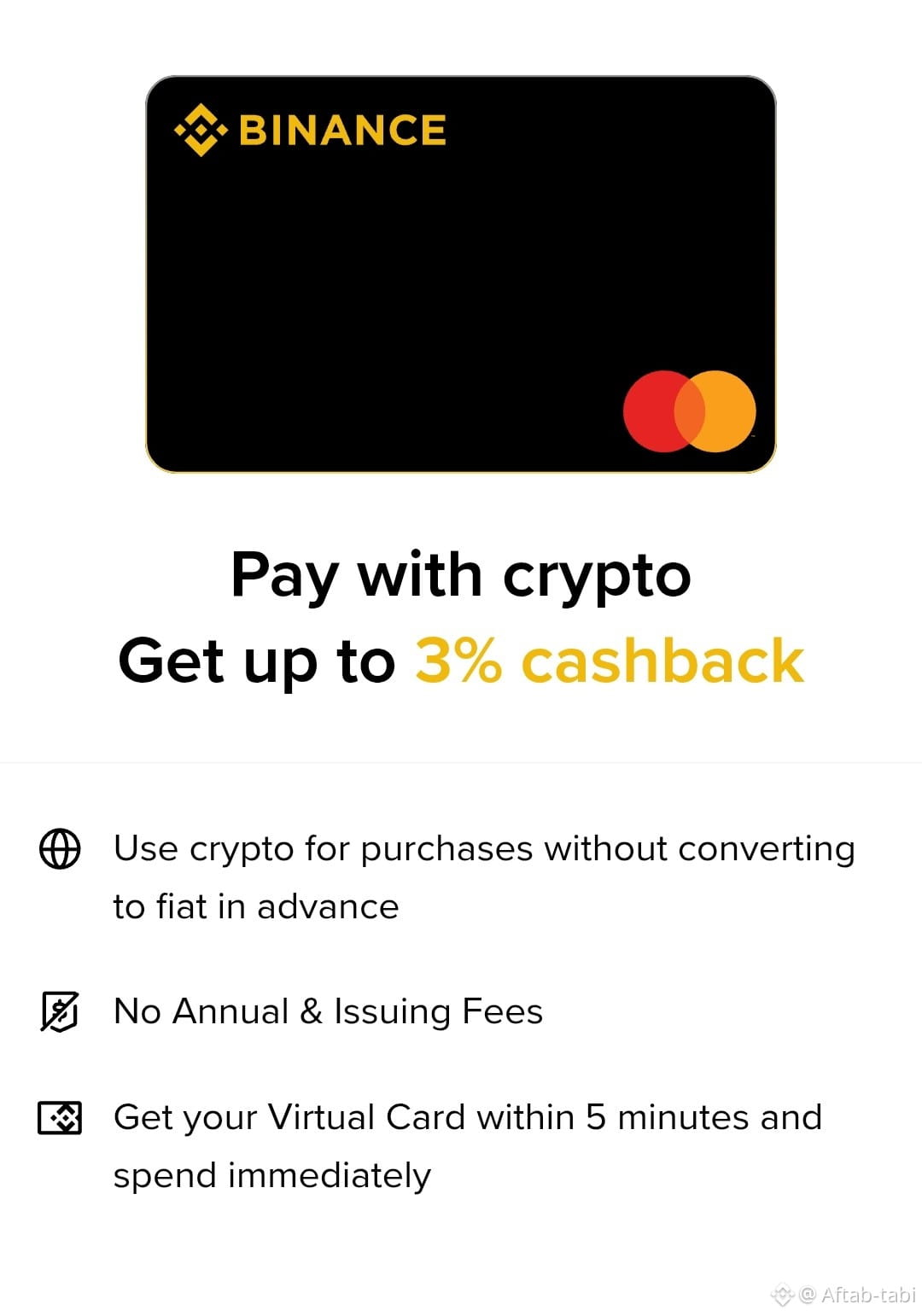
Bu juda yaxshi taklif! Hozir murojaat qiling #binanceCard raqamingiz istalgan joyda foydalaning. #crypto bilan to‘lang va 3% oling #cashback
$BTC $USDT $BR
Bu juda yaxshi taklif! Hozir murojaat qiling #binanceCard raqamingiz istalgan joyda foydalaning. #crypto bilan to‘lang va 3% oling #cashback
$BTC $USDT $BR
$BTC $USDT $BR
2
846
·
--
🎙️ Camping Hali Nahi, Kutish 😉
Tugashi
47 daqiqa 09 soniya
21
2
0
·
--
#Binance raqamda ulaning #trading ga ulaning #BinanceSquareFamily & va har kuni #REWARDS
$BR
{future}(BRUSDT)
$BTW
{future}(BTWUSDT)
$KOMA
{future}(KOMAUSDT)
#Binance raqamda ulaning #trading ga ulaning #BinanceSquareFamily & va har kuni #REWARDS
$BR
$BTW
$KOMA
$BR
$BTW
$KOMA
230
2
11
264
·
--
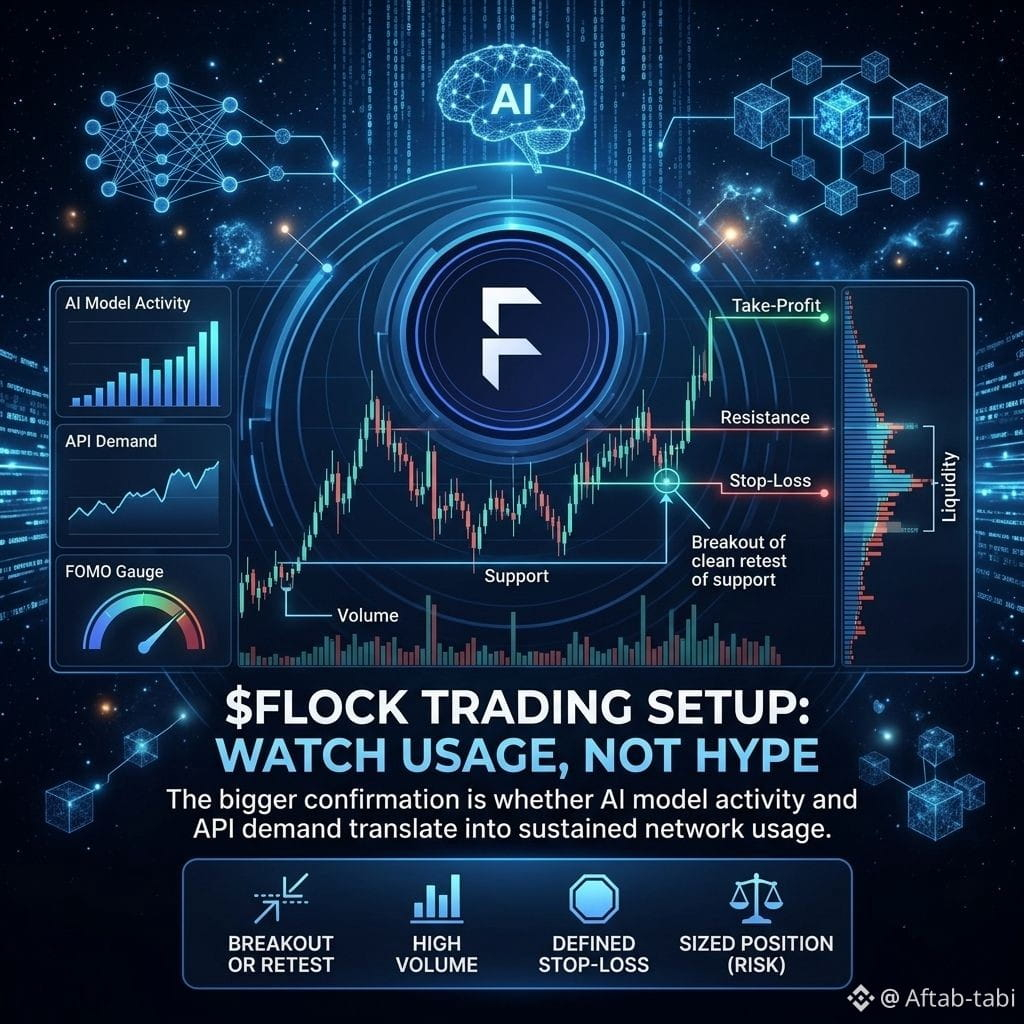
$FLOCK Savdo strategiyasi — Faqat shov-shuv emas, tomosha qiling
FLock federativ o‘rganish, blokcheyn tekshiruvi, AI Arena, FL Alliance, API’ni joylashtirish va FOMO’ni birlashtirgan holda markazlashmagan AI infratuzilmasini qurmoqda. AI Arena murabbiylar, validatorlar va delegatorlarga $FLOCK yordamida ishtirok etish imkonini beradi
Savdogarlar uchun esa kirishdan oldin savdo hajmi, qo‘llab-quvvatlash/qarshilik, impuls (momentum) va likvidlikni kuzatar edim. Kattaroq tasdiq — AI model faoliyati va API talabi barqaror tarmoqdan foydalanishga olib keladimi-yo‘qmi. FOMO AI model’larini bozor talabi bilan bog‘lash uchun yaratilgan bo‘lib, yana bitta potentsial faoliyat katalizatori vazifasini bajaradi.
Mening tavsiyam: vertikal shamlarni quvlamang. Hajm bilan breakout (bosib o‘tish)ni kuting yoki qo‘llab-quvvatlashning aniq retesti (qayta sinovi)ni qiling. Stop-loss (zararni cheklash)ni aniq belgilang va pozitsiya hajmini risk bo‘yicha hisoblang.
$FLOCK
{future}(FLOCKUSDT)
#SECReceivesGrayscaleLitecoinTrustETFFiling #ClarityActFacesProceduralVoteSept15 #US10YearTreasuryYieldNears5% #TokenizedStockHoldersUp619.1% #RevolutConfirmsFakeGovEmailDataBreach
$FLOCK Savdo strategiyasi — Faqat shov-shuv emas, tomosha qiling
FLock federativ o‘rganish, blokcheyn tekshiruvi, AI Arena, FL Alliance, API’ni joylashtirish va FOMO’ni birlashtirgan holda markazlashmagan AI infratuzilmasini qurmoqda. AI Arena murabbiylar, validatorlar va delegatorlarga $FLOCK yordamida ishtirok etish imkonini beradi
Savdogarlar uchun esa kirishdan oldin savdo hajmi, qo‘llab-quvvatlash/qarshilik, impuls (momentum) va likvidlikni kuzatar edim. Kattaroq tasdiq — AI model faoliyati va API talabi barqaror tarmoqdan foydalanishga olib keladimi-yo‘qmi. FOMO AI model’larini bozor talabi bilan bog‘lash uchun yaratilgan bo‘lib, yana bitta potentsial faoliyat katalizatori vazifasini bajaradi.
Mening tavsiyam: vertikal shamlarni quvlamang. Hajm bilan breakout (bosib o‘tish)ni kuting yoki qo‘llab-quvvatlashning aniq retesti (qayta sinovi)ni qiling. Stop-loss (zararni cheklash)ni aniq belgilang va pozitsiya hajmini risk bo‘yicha hisoblang.
$FLOCK
#SECReceivesGrayscaleLitecoinTrustETFFiling #ClarityActFacesProceduralVoteSept15 #US10YearTreasuryYieldNears5% #TokenizedStockHoldersUp619.1% #RevolutConfirmsFakeGovEmailDataBreach
FLock federativ o‘rganish, blokcheyn tekshiruvi, AI Arena, FL Alliance, API’ni joylashtirish va FOMO’ni birlashtirgan holda markazlashmagan AI infratuzilmasini qurmoqda. AI Arena murabbiylar, validatorlar va delegatorlarga $FLOCK yordamida ishtirok etish imkonini beradi
Savdogarlar uchun esa kirishdan oldin savdo hajmi, qo‘llab-quvvatlash/qarshilik, impuls (momentum) va likvidlikni kuzatar edim. Kattaroq tasdiq — AI model faoliyati va API talabi barqaror tarmoqdan foydalanishga olib keladimi-yo‘qmi. FOMO AI model’larini bozor talabi bilan bog‘lash uchun yaratilgan bo‘lib, yana bitta potentsial faoliyat katalizatori vazifasini bajaradi.
Mening tavsiyam: vertikal shamlarni quvlamang. Hajm bilan breakout (bosib o‘tish)ni kuting yoki qo‘llab-quvvatlashning aniq retesti (qayta sinovi)ni qiling. Stop-loss (zararni cheklash)ni aniq belgilang va pozitsiya hajmini risk bo‘yicha hisoblang.
$FLOCK
#SECReceivesGrayscaleLitecoinTrustETFFiling #ClarityActFacesProceduralVoteSept15 #US10YearTreasuryYieldNears5% #TokenizedStockHoldersUp619.1% #RevolutConfirmsFakeGovEmailDataBreach
2
177
·
--
O‘suvchi
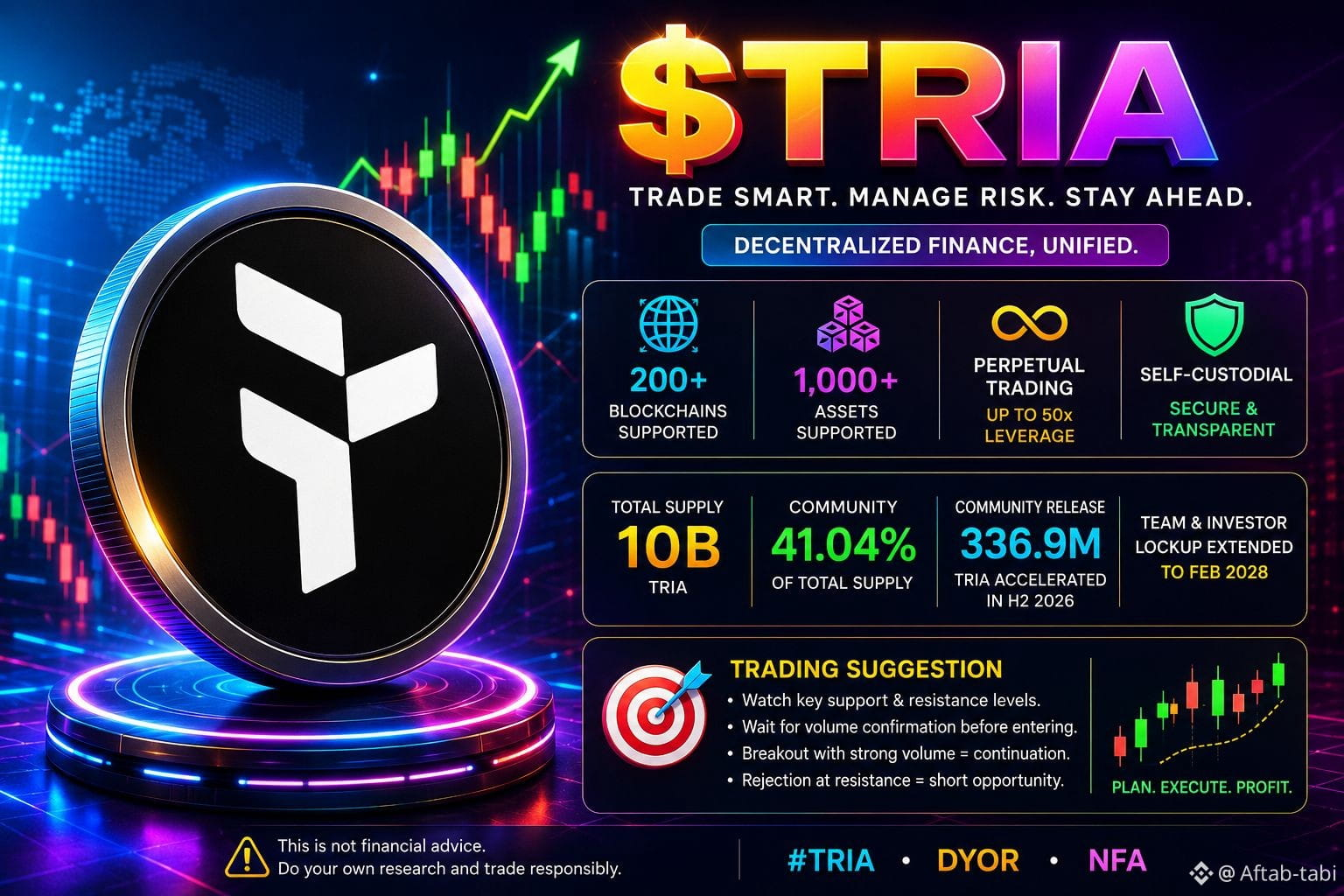
🔥 $TRIA Trading sozlamasi kuzatishga arziydi
TRIA 200+ zanjir va 1000+ dan ortiq aktivlar bo‘ylab svoplar, to‘lovlar, daromad olish va doimiy savdoni qamrab olgan, o‘z-o‘zini saqlovchi kripto moliya ekotizimini qurmoqda. Token 10 mlrd lik qat’iy taklifga ega bo‘lib, uning 41.04% qismi jamiyatga ajratilgan.
Muhim katalizatorlardan biri shuki, Tria yaqinda jamoa va investorlarning lockup muddatlarini 2028-yil fevraligacha uzaytirdi, biroq 336.9 mln TRIA jamoaviy release’larni 2026-yilning ikkinchi yarmiga tezlashtirdi.
📊 Savdo g‘oyasi shuki, yashil shamlarni quvlamang. Hajm + support/resistance tasdig‘ini kuzating. Kuchli hajm bilan breakout davom etishni bildirishi mumkin, resistance’da rad etilish esa short setup taklif qilishi mumkin.
⚠️ Leveraj va riskni ehtiyotkorlik bilan boshqaring. Bu moliyaviy maslahat emas.
#Tria $TRIA @useTria
{future}(TRIAUSDT)
🔥 $TRIA Trading sozlamasi kuzatishga arziydi
TRIA 200+ zanjir va 1000+ dan ortiq aktivlar bo‘ylab svoplar, to‘lovlar, daromad olish va doimiy savdoni qamrab olgan, o‘z-o‘zini saqlovchi kripto moliya ekotizimini qurmoqda. Token 10 mlrd lik qat’iy taklifga ega bo‘lib, uning 41.04% qismi jamiyatga ajratilgan.
Muhim katalizatorlardan biri shuki, Tria yaqinda jamoa va investorlarning lockup muddatlarini 2028-yil fevraligacha uzaytirdi, biroq 336.9 mln TRIA jamoaviy release’larni 2026-yilning ikkinchi yarmiga tezlashtirdi.
📊 Savdo g‘oyasi shuki, yashil shamlarni quvlamang. Hajm + support/resistance tasdig‘ini kuzating. Kuchli hajm bilan breakout davom etishni bildirishi mumkin, resistance’da rad etilish esa short setup taklif qilishi mumkin.
⚠️ Leveraj va riskni ehtiyotkorlik bilan boshqaring. Bu moliyaviy maslahat emas.
#Tria $TRIA @Tria Official
TRIA 200+ zanjir va 1000+ dan ortiq aktivlar bo‘ylab svoplar, to‘lovlar, daromad olish va doimiy savdoni qamrab olgan, o‘z-o‘zini saqlovchi kripto moliya ekotizimini qurmoqda. Token 10 mlrd lik qat’iy taklifga ega bo‘lib, uning 41.04% qismi jamiyatga ajratilgan.
Muhim katalizatorlardan biri shuki, Tria yaqinda jamoa va investorlarning lockup muddatlarini 2028-yil fevraligacha uzaytirdi, biroq 336.9 mln TRIA jamoaviy release’larni 2026-yilning ikkinchi yarmiga tezlashtirdi.
📊 Savdo g‘oyasi shuki, yashil shamlarni quvlamang. Hajm + support/resistance tasdig‘ini kuzating. Kuchli hajm bilan breakout davom etishni bildirishi mumkin, resistance’da rad etilish esa short setup taklif qilishi mumkin.
⚠️ Leveraj va riskni ehtiyotkorlik bilan boshqaring. Bu moliyaviy maslahat emas.
#Tria $TRIA @Tria Official
1
3
191
·
--
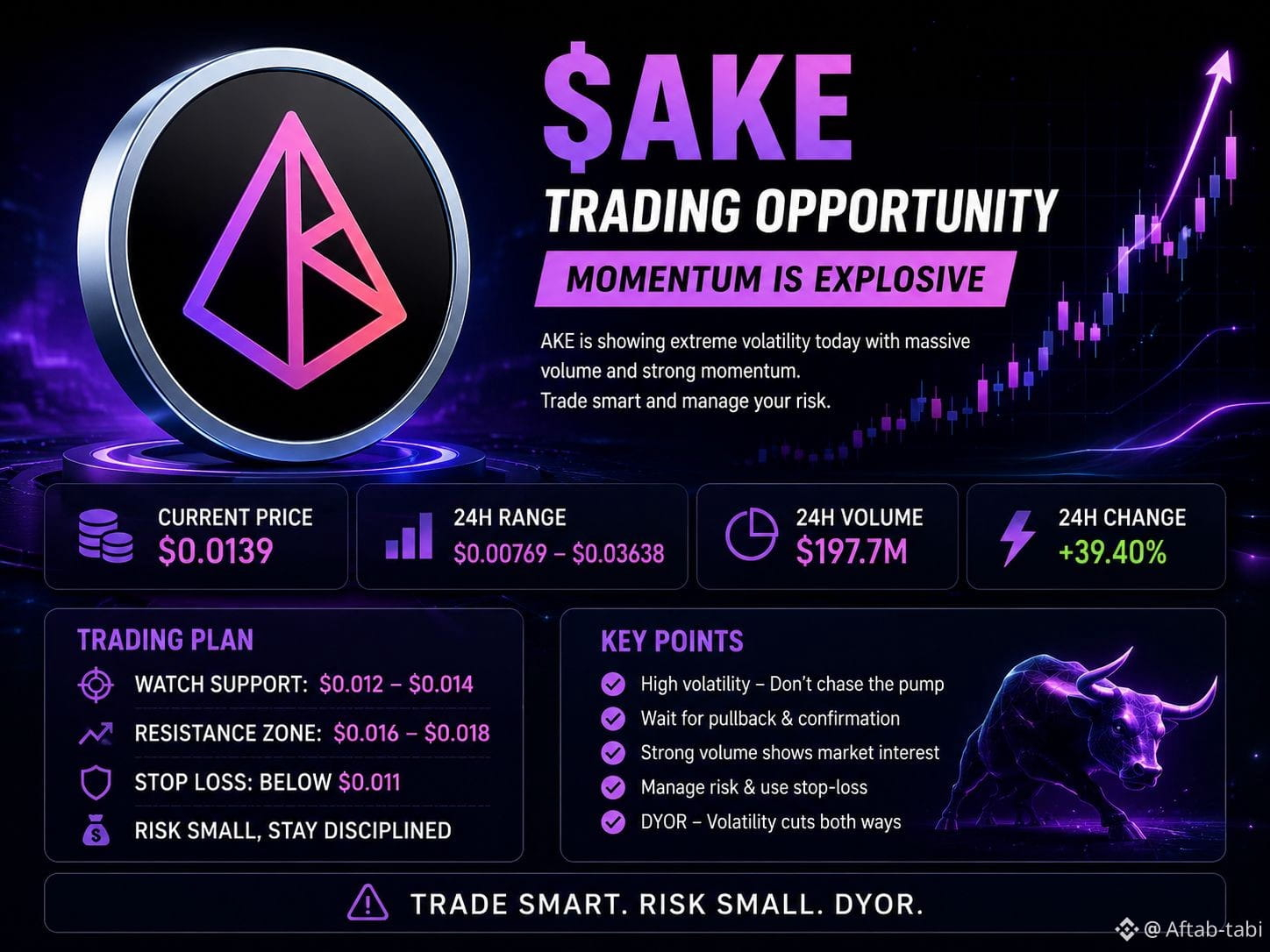
🔥 $AKE Savdo sozlamasi: impuls juda kuchli
AKE bugun juda keskin o‘zgaruvchanlik ko‘rsatmoqda. Narx taxminan $0.0139 atrofida, 24 soatlik diapazon esa $0.00769–$0.03638 va hajm deyarli $197.7M. Bu impuls kuchli ekanini bildiradi, ammo uzun yashil yoki qizil shamlarni quvish xavfli bo‘lishi mumkin.
Mening yondashuvim — vertikal harakatni sotib olishdan ko‘ra, orqaga chekinish va tasdiqni kutish. $0.012–$0.014 darajalarini ehtimoliy reaksiya zonasi sifatida kuzating; kuchli hajm bilan $0.016–$0.018 ni qayta egallash davom etish signalini berishi mumkin. Qo‘llab-quvvatlashdan pastga buzilish esa chuqurroq qaytishni keltirishi mumkin.
Kichik risk oling, stop-loss ishlating va esda tuting: o‘zgaruvchanlik ikki tomonga ham ishlaydi. DYOR.
#AKE #Binance #memecoin🚀🚀🚀
#trading #BinanceSquareFamily
$AKE
{future}(AKEUSDT)
🔥 $AKE Savdo sozlamasi: impuls juda kuchli
AKE bugun juda keskin o‘zgaruvchanlik ko‘rsatmoqda. Narx taxminan $0.0139 atrofida, 24 soatlik diapazon esa $0.00769–$0.03638 va hajm deyarli $197.7M. Bu impuls kuchli ekanini bildiradi, ammo uzun yashil yoki qizil shamlarni quvish xavfli bo‘lishi mumkin.
Mening yondashuvim — vertikal harakatni sotib olishdan ko‘ra, orqaga chekinish va tasdiqni kutish. $0.012–$0.014 darajalarini ehtimoliy reaksiya zonasi sifatida kuzating; kuchli hajm bilan $0.016–$0.018 ni qayta egallash davom etish signalini berishi mumkin. Qo‘llab-quvvatlashdan pastga buzilish esa chuqurroq qaytishni keltirishi mumkin.
Kichik risk oling, stop-loss ishlating va esda tuting: o‘zgaruvchanlik ikki tomonga ham ishlaydi. DYOR.
#AKE #Binance #memecoin🚀🚀🚀
#trading #BinanceSquareFamily
$AKE
AKE bugun juda keskin o‘zgaruvchanlik ko‘rsatmoqda. Narx taxminan $0.0139 atrofida, 24 soatlik diapazon esa $0.00769–$0.03638 va hajm deyarli $197.7M. Bu impuls kuchli ekanini bildiradi, ammo uzun yashil yoki qizil shamlarni quvish xavfli bo‘lishi mumkin.
Mening yondashuvim — vertikal harakatni sotib olishdan ko‘ra, orqaga chekinish va tasdiqni kutish. $0.012–$0.014 darajalarini ehtimoliy reaksiya zonasi sifatida kuzating; kuchli hajm bilan $0.016–$0.018 ni qayta egallash davom etish signalini berishi mumkin. Qo‘llab-quvvatlashdan pastga buzilish esa chuqurroq qaytishni keltirishi mumkin.
Kichik risk oling, stop-loss ishlating va esda tuting: o‘zgaruvchanlik ikki tomonga ham ishlaydi. DYOR.
#AKE #Binance #memecoin🚀🚀🚀
#trading #BinanceSquareFamily
$AKE
2
229
·
--
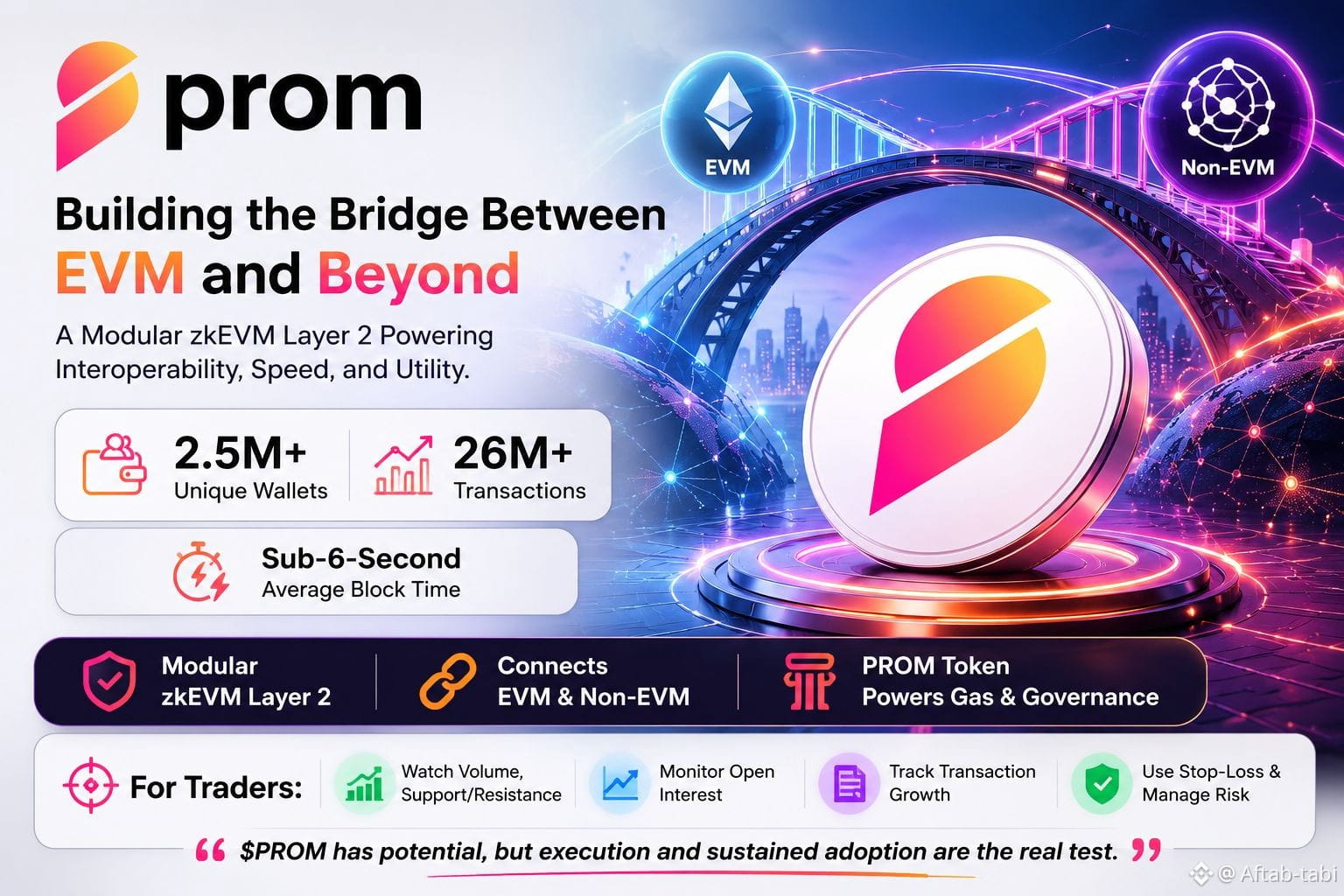
🔥 $PROM o‘zini EVM va EVM bo‘lmagan ekotizimlar bo‘ylab likvidlik va ilovalarni bog‘lash uchun mo‘ljallangan modulli zkEVM Layer 2 sifatida joylashtirmoqda. U tarmoq hozirda 2.5M+ noyob hamyonlar va 26M+ tranzaksiyalar hamda 6 soniyadan kam o‘rtacha blok vaqtlarini qayd etmoqda.
PROM tokeni gaz to‘lovlari va boshqaruvni ta’minlaydi, bu esa tarmoq faolligini token foydasi bilan bevosita bog‘laydi.
Treyderlar uchun menimcha, asosiy narsa — shov-shuv emas, tasdiq. Kirishdan oldin hajm, support/resistance, open interest va tranzaksiya o‘sishini kuzating. Vertikal pomplarni quvlamang, stop-lossdan foydalaning va pozitsiya hajmini riskka qarab belgilang.
$PROM da salohiyat bor, ammo ijro va barqaror qabul qilinishi haqiqiy sinov bo‘lib qoladi.
#prom @Prom #Binance #MEME
#TradingCommunity #TradingSignals
{future}(PROMUSDT)
🔥 $PROM o‘zini EVM va EVM bo‘lmagan ekotizimlar bo‘ylab likvidlik va ilovalarni bog‘lash uchun mo‘ljallangan modulli zkEVM Layer 2 sifatida joylashtirmoqda. U tarmoq hozirda 2.5M+ noyob hamyonlar va 26M+ tranzaksiyalar hamda 6 soniyadan kam o‘rtacha blok vaqtlarini qayd etmoqda.
PROM tokeni gaz to‘lovlari va boshqaruvni ta’minlaydi, bu esa tarmoq faolligini token foydasi bilan bevosita bog‘laydi.
Treyderlar uchun menimcha, asosiy narsa — shov-shuv emas, tasdiq. Kirishdan oldin hajm, support/resistance, open interest va tranzaksiya o‘sishini kuzating. Vertikal pomplarni quvlamang, stop-lossdan foydalaning va pozitsiya hajmini riskka qarab belgilang.
$PROM da salohiyat bor, ammo ijro va barqaror qabul qilinishi haqiqiy sinov bo‘lib qoladi.
#prom @Prom #Binance #MEME
#TradingCommunity #TradingSignals
PROM tokeni gaz to‘lovlari va boshqaruvni ta’minlaydi, bu esa tarmoq faolligini token foydasi bilan bevosita bog‘laydi.
Treyderlar uchun menimcha, asosiy narsa — shov-shuv emas, tasdiq. Kirishdan oldin hajm, support/resistance, open interest va tranzaksiya o‘sishini kuzating. Vertikal pomplarni quvlamang, stop-lossdan foydalaning va pozitsiya hajmini riskka qarab belgilang.
$PROM da salohiyat bor, ammo ijro va barqaror qabul qilinishi haqiqiy sinov bo‘lib qoladi.
#prom @Prom #Binance #MEME
#TradingCommunity #TradingSignals
1
4
152
·
--
Maqola
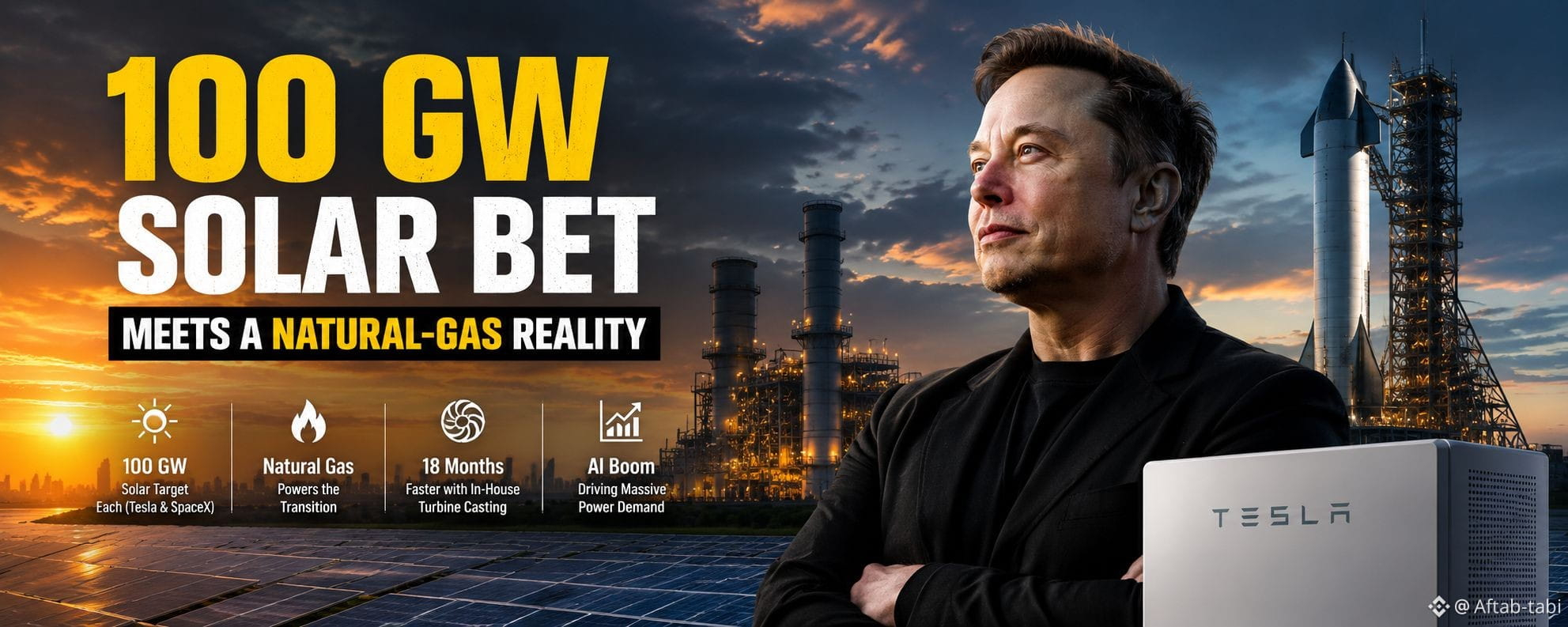
Elon Maskning 100 GW quyosh bo‘yicha garovi tabiiy gaz haqiqatigа duch kelmoqdaElon Muskning aytishicha, Tesla va SpaceX har biri AQShda yiliga 100 GW quyosh energiyasi uskunalari ishlab chiqarish quvvatiga erishish ustida ishlamoqda, bu esa Amerikaning energiya ta’minoti zanjirini tubdan o‘zgartiradigan maqsaddir. Taqqoslash uchun, AQShdagi amaldagi quyosh modullari ishlab chiqarish quvvati hozirda taxminan 74.1 GWni tashkil etadi.
Ammo Elon Musk shuningdek, faqat quyosh energiyasining o‘zi AI ma’lumot markazlari va ilg‘or ishlab chiqarishdan kelayotgan tez o‘sib borayotgan talabni qoplay olmasligini ham tan oladi. Ishonchli, kecha-kunduz uzluksiz quvvat uchun tabiiy gaz turbinalari muhim bo‘lib qoladi. Asosiy to‘siq esa turbina ishlab chiqarishidir, ayniqsa pichoqlar va qanotchalarni quyish jarayoni.
Elon Maskning 100 GW quyosh bo‘yicha garovi tabiiy gaz haqiqatigа duch kelmoqda
Elon Muskning aytishicha, Tesla va SpaceX har biri AQShda yiliga 100 GW quyosh energiyasi uskunalari ishlab chiqarish quvvatiga erishish ustida ishlamoqda, bu esa Amerikaning energiya ta’minoti zanjirini tubdan o‘zgartiradigan maqsaddir. Taqqoslash uchun, AQShdagi amaldagi quyosh modullari ishlab chiqarish quvvati hozirda taxminan 74.1 GWni tashkil etadi.
Ammo Elon Musk shuningdek, faqat quyosh energiyasining o‘zi AI ma’lumot markazlari va ilg‘or ishlab chiqarishdan kelayotgan tez o‘sib borayotgan talabni qoplay olmasligini ham tan oladi. Ishonchli, kecha-kunduz uzluksiz quvvat uchun tabiiy gaz turbinalari muhim bo‘lib qoladi. Asosiy to‘siq esa turbina ishlab chiqarishidir, ayniqsa pichoqlar va qanotchalarni quyish jarayoni.
Ammo Elon Musk shuningdek, faqat quyosh energiyasining o‘zi AI ma’lumot markazlari va ilg‘or ishlab chiqarishdan kelayotgan tez o‘sib borayotgan talabni qoplay olmasligini ham tan oladi. Ishonchli, kecha-kunduz uzluksiz quvvat uchun tabiiy gaz turbinalari muhim bo‘lib qoladi. Asosiy to‘siq esa turbina ishlab chiqarishidir, ayniqsa pichoqlar va qanotchalarni quyish jarayoni.
5
8
456
·
--
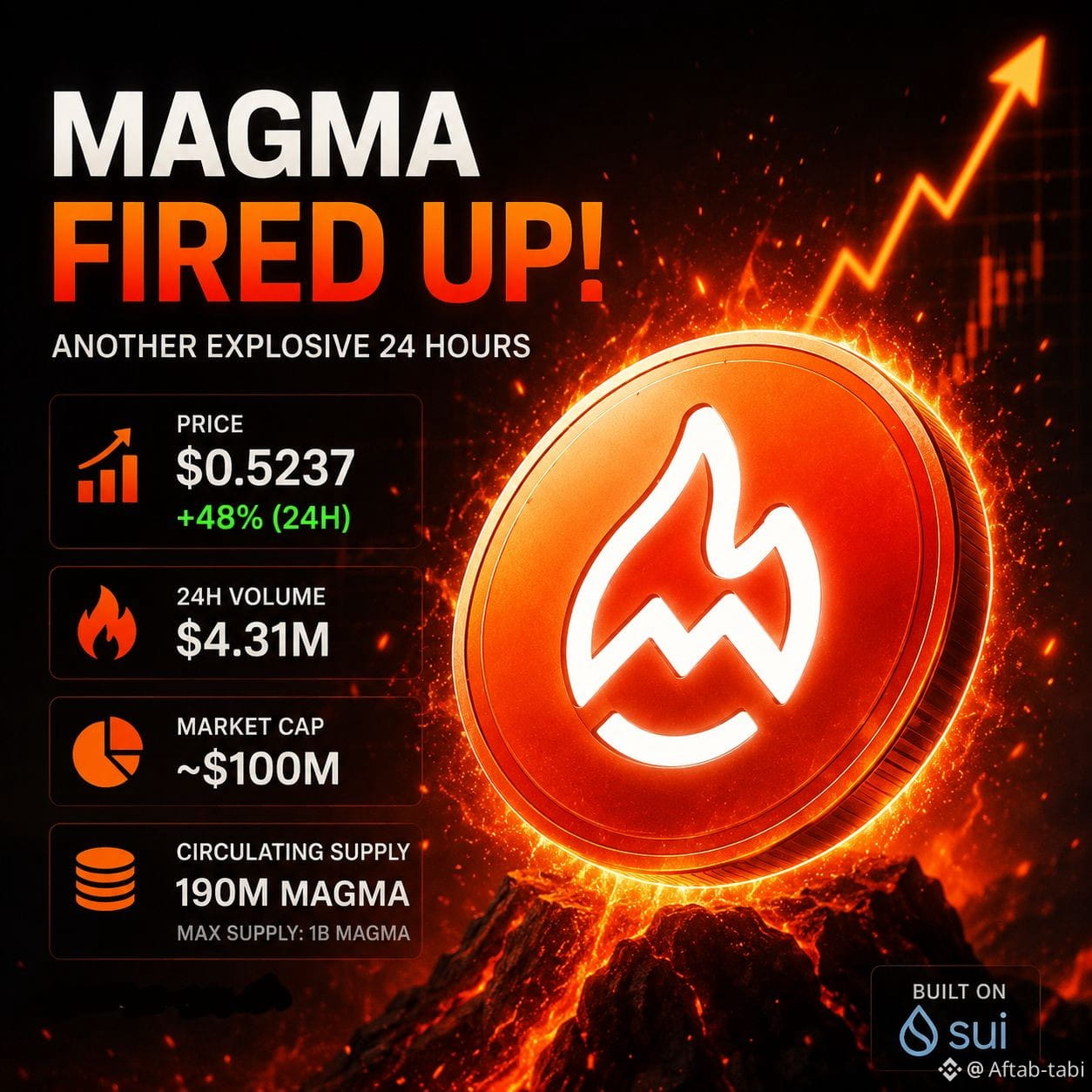
#MAGMAUSDT Men MAGMA-ni yana bir portlovchi 24 soatlik harakatdan so‘ng diqqat bilan kuzatyapman. MAGMA taxminan $0.52 atrofida savdo qilinmoqda va so‘nggi bir kunda qariyb 48% ga oshgan, bozor kapitallashuvi esa $100M ga yaqin. Token, shuningdek, 24 soatlik eng yuqori daraja bo‘lgan taxminan $0.57 tomonga surilmoqda, bu esa impuls qanchalik agressiv bo‘lib qolganini ko‘rsatadi.
Menga ayniqsa hajm tashlanmoqda: faollik keskin kengaydi va bozorlar bo‘ylab millionlab dollar almashmoqda. Aylanmadagi 190M MAGMA va 1B maksimal taklif fonida men bu impuls barqaror likvidlik va haqiqiy protokol faolligi bilan qo‘llab-quvvatlanadimi-yo‘qmi, shuni kuzatyapman.
$MAGMA #MAGMAUSD #trading
#Binance #meme板块关注热点
#MAGMAUSDT Men MAGMA-ni yana bir portlovchi 24 soatlik harakatdan so‘ng diqqat bilan kuzatyapman. MAGMA taxminan $0.52 atrofida savdo qilinmoqda va so‘nggi bir kunda qariyb 48% ga oshgan, bozor kapitallashuvi esa $100M ga yaqin. Token, shuningdek, 24 soatlik eng yuqori daraja bo‘lgan taxminan $0.57 tomonga surilmoqda, bu esa impuls qanchalik agressiv bo‘lib qolganini ko‘rsatadi.
Menga ayniqsa hajm tashlanmoqda: faollik keskin kengaydi va bozorlar bo‘ylab millionlab dollar almashmoqda. Aylanmadagi 190M MAGMA va 1B maksimal taklif fonida men bu impuls barqaror likvidlik va haqiqiy protokol faolligi bilan qo‘llab-quvvatlanadimi-yo‘qmi, shuni kuzatyapman.
$MAGMA #MAGMAUSD #trading
#Binance #meme板块关注热点
Menga ayniqsa hajm tashlanmoqda: faollik keskin kengaydi va bozorlar bo‘ylab millionlab dollar almashmoqda. Aylanmadagi 190M MAGMA va 1B maksimal taklif fonida men bu impuls barqaror likvidlik va haqiqiy protokol faolligi bilan qo‘llab-quvvatlanadimi-yo‘qmi, shuni kuzatyapman.
$MAGMA #MAGMAUSD #trading
#Binance #meme板块关注热点
5
188
·
--
Tasdiqlangan
Maqola
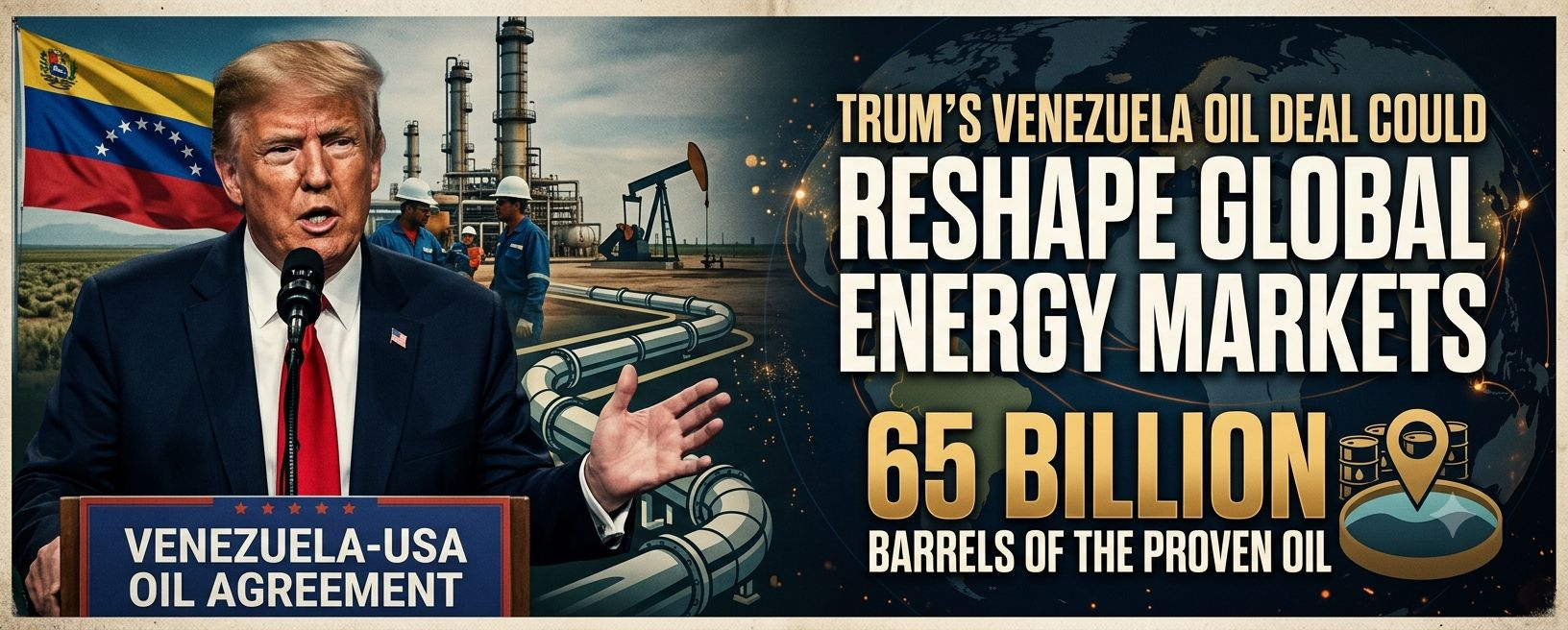
Trampning Venesuela neft kelishuvi global energiya bozorlarini o‘zgartirishi mumkin2026-yil 28-avgustda Prezident Donald Tramp Amerika Qo‘shma Shtatlari Venesuela bilan katta neft kelishuviga erishganini e’lon qildi; bu kelishuv tasdiqlangan neft zaxiralarining 65 milliard barrelidan ortig‘i ustidan nazoratning ko‘pchilik ulushini o‘z ichiga oladi. Ushbu e’lon energiya bozorlari va geosiyosat uchun sezilarli oqibatlarga olib kelishi mumkin.
Venesuela dunyodagi eng yirik tasdiqlangan xom neft zaxiralariga ega, biroq yillar davom etgan kam investitsiya, infratuzilma muammolari va siyosiy beqarorlik ishlab chiqarishni uning salohiyatidan ancha past darajada ushlab turadi.
Bozorlar uchun asosiy nuqta shuki, 65 milliard barrel zaxira bu 65 milliard barrel darhol yetkazib beriladigan neft degani emas. Bu resurslarni ishlab chiqarishga aylantirish uchun burg‘ulash, transport, elektr energiyasi va eksport infratuzilmasiga katta investitsiya talab qilinadi.
Trampning Venesuela neft kelishuvi global energiya bozorlarini o‘zgartirishi mumkin
2026-yil 28-avgustda Prezident Donald Tramp Amerika Qo‘shma Shtatlari Venesuela bilan katta neft kelishuviga erishganini e’lon qildi; bu kelishuv tasdiqlangan neft zaxiralarining 65 milliard barrelidan ortig‘i ustidan nazoratning ko‘pchilik ulushini o‘z ichiga oladi. Ushbu e’lon energiya bozorlari va geosiyosat uchun sezilarli oqibatlarga olib kelishi mumkin.
Venesuela dunyodagi eng yirik tasdiqlangan xom neft zaxiralariga ega, biroq yillar davom etgan kam investitsiya, infratuzilma muammolari va siyosiy beqarorlik ishlab chiqarishni uning salohiyatidan ancha past darajada ushlab turadi.
Bozorlar uchun asosiy nuqta shuki, 65 milliard barrel zaxira bu 65 milliard barrel darhol yetkazib beriladigan neft degani emas. Bu resurslarni ishlab chiqarishga aylantirish uchun burg‘ulash, transport, elektr energiyasi va eksport infratuzilmasiga katta investitsiya talab qilinadi.
Venesuela dunyodagi eng yirik tasdiqlangan xom neft zaxiralariga ega, biroq yillar davom etgan kam investitsiya, infratuzilma muammolari va siyosiy beqarorlik ishlab chiqarishni uning salohiyatidan ancha past darajada ushlab turadi.
Bozorlar uchun asosiy nuqta shuki, 65 milliard barrel zaxira bu 65 milliard barrel darhol yetkazib beriladigan neft degani emas. Bu resurslarni ishlab chiqarishga aylantirish uchun burg‘ulash, transport, elektr energiyasi va eksport infratuzilmasiga katta investitsiya talab qilinadi.
4
6
811
·
--
#SOLJumps20%OnTheWeek
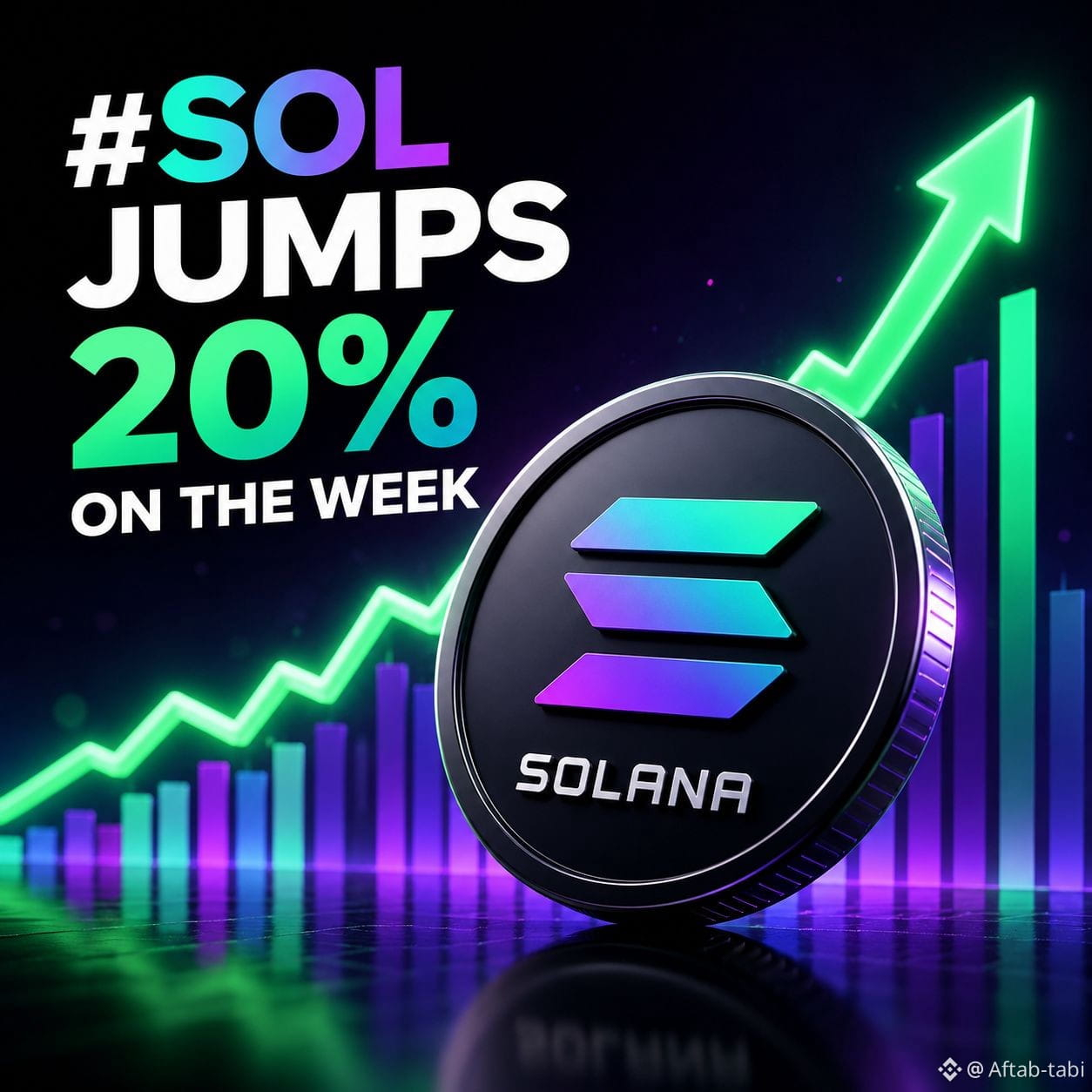
SOL haftalik kuchli momentum ko‘rsatmoqda va xaridorlar qayta kirib kelishi bilan taxminan 20% o‘sdi. Bu harakat Solanani yana diqqat markaziga olib chiqdi, ammo asosiy savol — hajm, tarmoq faolligi va barqaror talab bu breakoutni qo‘llab-quvvatlay oladimi. Treyderlar bir kuchli hafta uzoq muddatli trendni tasdiqladi deb taxmin qilmasdan, davomiylik belgilari uchun kuzatishlari kerak. $SOL #sol
#solana
{spot}(SOLUSDT)
#SOLJumps20%OnTheWeek
SOL haftalik kuchli momentum ko‘rsatmoqda va xaridorlar qayta kirib kelishi bilan taxminan 20% o‘sdi. Bu harakat Solanani yana diqqat markaziga olib chiqdi, ammo asosiy savol — hajm, tarmoq faolligi va barqaror talab bu breakoutni qo‘llab-quvvatlay oladimi. Treyderlar bir kuchli hafta uzoq muddatli trendni tasdiqladi deb taxmin qilmasdan, davomiylik belgilari uchun kuzatishlari kerak. $SOL #sol
#solana
SOL haftalik kuchli momentum ko‘rsatmoqda va xaridorlar qayta kirib kelishi bilan taxminan 20% o‘sdi. Bu harakat Solanani yana diqqat markaziga olib chiqdi, ammo asosiy savol — hajm, tarmoq faolligi va barqaror talab bu breakoutni qo‘llab-quvvatlay oladimi. Treyderlar bir kuchli hafta uzoq muddatli trendni tasdiqladi deb taxmin qilmasdan, davomiylik belgilari uchun kuzatishlari kerak. $SOL #sol
#solana
2
114
·
--
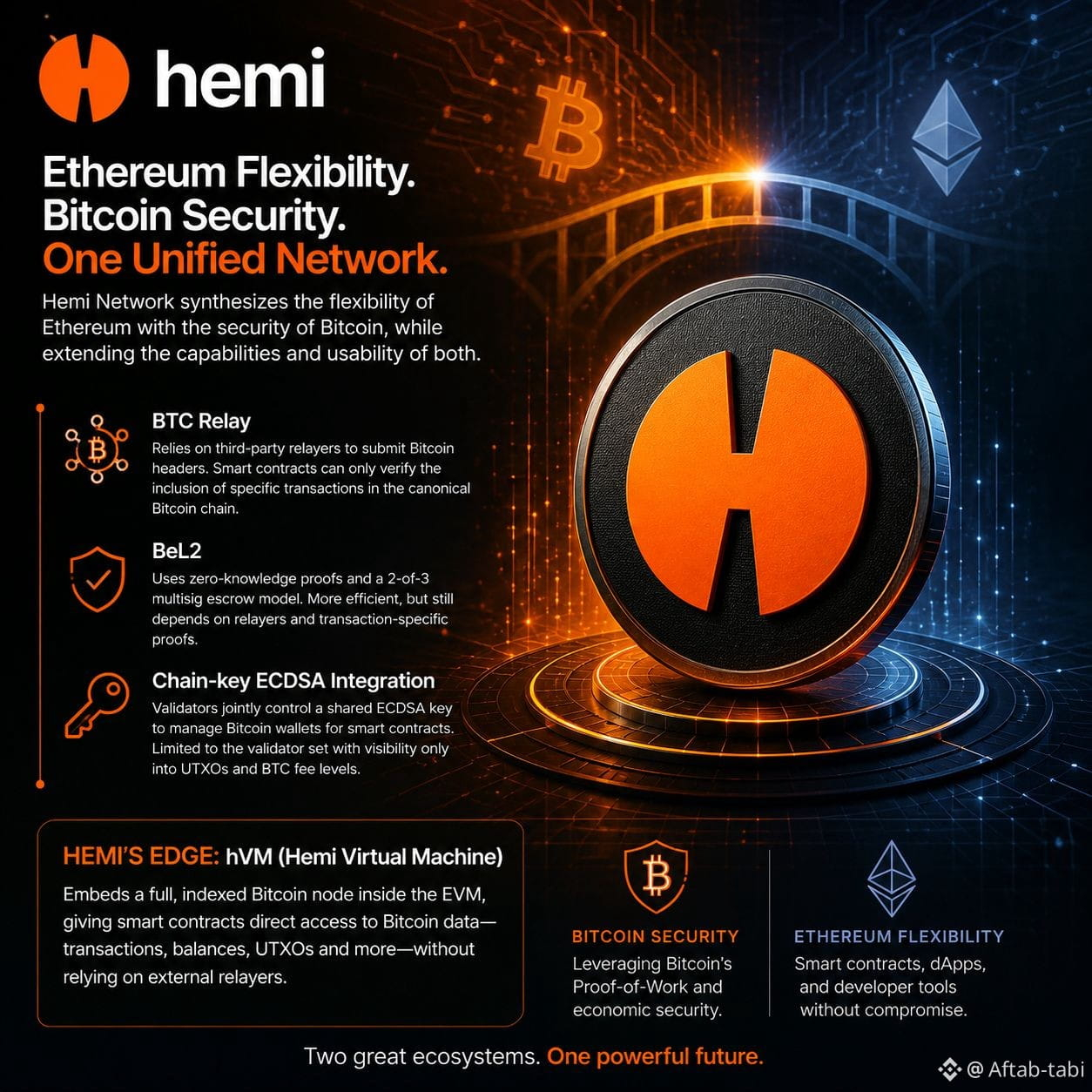
@Hemi Men Hemi Networkning Bitcoin bilan o‘zaro ishlashga boshqacha yondashuvini kuzatdim: u Ethereumning dasturlanish imkoniyatlarini Bitcoinning xavfsizligi bilan birlashtiradi. An’anaviy BTC Relay tizimlari Bitcoin sarlavhalarini yuborish uchun uchinchi tomon relayerlariga tayanadi va aqlli shartnomalarga muayyan tranzaksiya kiritilishini tekshirish imkonini beradi, biroq Bitcoin holatiga cheklangan kirishni taklif qiladi. BeL2 nol-bilim isbotlaridan va 2-of-3 multisig escrow modelidan foydalanadi, ammo baribir relayerlar va tranzaksiyaga xos isbotlarga bog‘liq bo‘lib qoladi. Chain-key ECDSA aqlli shartnomalarga umumiy validatorlar boshqaradigan kalit orqali Bitcoin hamyonlarini boshqarish imkonini beradi, lekin bu validatorlar to‘plamiga bog‘liqlikni ham keltirib chiqaradi.
Hemi bu cheklovlarni o‘zining Hemi Virtual Machine (hVM) orqali bartaraf etadi; u to‘liq, indekslangan Bitcoin tugunini EVM ichiga joylaydi. Bu esa aqlli shartnomalarga tashqi relayerlarsiz tranzaksiyalar, balanslar va UTXOlar jumladan Bitcoin ma’lumotlariga bevosita kirish imkonini beradi.
#HEMI #HEMİ $HEMI
{future}(HEMIUSDT)
$BTC
{future}(BTCUSDT)
$ETH
{future}(ETHUSDT)
#BTC #ETH #altcoins
@Hemi Men Hemi Networkning Bitcoin bilan o‘zaro ishlashga boshqacha yondashuvini kuzatdim: u Ethereumning dasturlanish imkoniyatlarini Bitcoinning xavfsizligi bilan birlashtiradi. An’anaviy BTC Relay tizimlari Bitcoin sarlavhalarini yuborish uchun uchinchi tomon relayerlariga tayanadi va aqlli shartnomalarga muayyan tranzaksiya kiritilishini tekshirish imkonini beradi, biroq Bitcoin holatiga cheklangan kirishni taklif qiladi. BeL2 nol-bilim isbotlaridan va 2-of-3 multisig escrow modelidan foydalanadi, ammo baribir relayerlar va tranzaksiyaga xos isbotlarga bog‘liq bo‘lib qoladi. Chain-key ECDSA aqlli shartnomalarga umumiy validatorlar boshqaradigan kalit orqali Bitcoin hamyonlarini boshqarish imkonini beradi, lekin bu validatorlar to‘plamiga bog‘liqlikni ham keltirib chiqaradi.
Hemi bu cheklovlarni o‘zining Hemi Virtual Machine (hVM) orqali bartaraf etadi; u to‘liq, indekslangan Bitcoin tugunini EVM ichiga joylaydi. Bu esa aqlli shartnomalarga tashqi relayerlarsiz tranzaksiyalar, balanslar va UTXOlar jumladan Bitcoin ma’lumotlariga bevosita kirish imkonini beradi.
#HEMI #HEMİ $HEMI
$BTC
$ETH
#BTC #ETH #altcoins
Hemi bu cheklovlarni o‘zining Hemi Virtual Machine (hVM) orqali bartaraf etadi; u to‘liq, indekslangan Bitcoin tugunini EVM ichiga joylaydi. Bu esa aqlli shartnomalarga tashqi relayerlarsiz tranzaksiyalar, balanslar va UTXOlar jumladan Bitcoin ma’lumotlariga bevosita kirish imkonini beradi.
#HEMI #HEMİ $HEMI
$BTC
$ETH
#BTC #ETH #altcoins
2
131
·
--
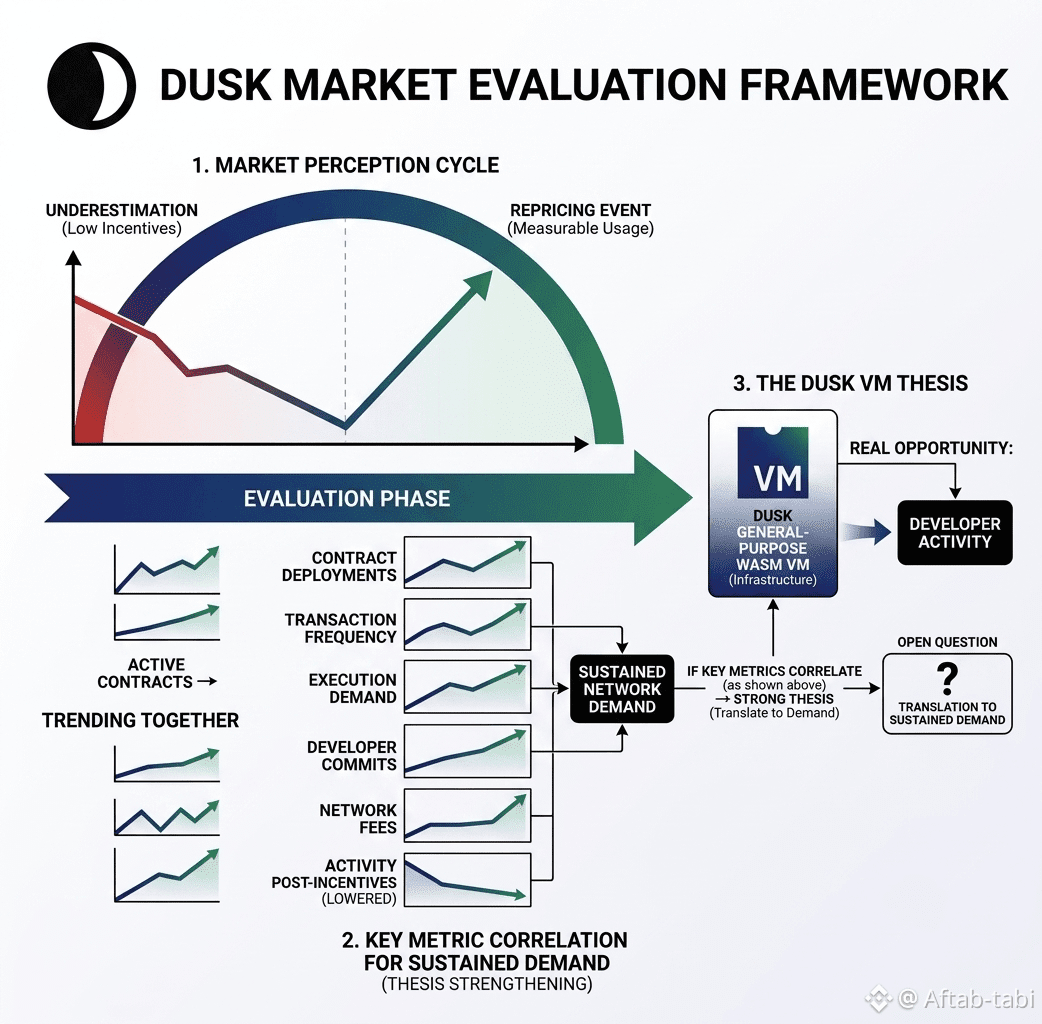
#dusk Kecha men do‘stlarimdan biri bilan suhbatlashdim, biz bozor nuqtai nazaridan Dusk’ni kuzatayotgan edik va shuni payqadikki, bozorlarda rag‘batlar past bo‘lganda infratuzilma ko‘pincha yetarlicha baholanmaydi, keyin esa undan foydalanish o‘lchab bo‘ladigan darajaga yetgach, narxini qayta belgilaydi. Dusk’ning umumiy maqsadli WASM virtual mashinasi shu nuqtai nazardan qiziq, imkoniyat esa ishlab chiquvchilar faolligida, VM’ning o‘zida emas.
Men kontraktlarni joylashtirishlar, faol kontraktlar, tranzaksiya chastotasi, ijro talabi, ishlab chiquvchi commit’lari, to‘lovlar va rag‘batlar zaiflashgandan keyin faollik saqlanib qolish-qolmasligini kuzataman. Shunday qilib, agar bu ko‘rsatkichlar birga trend qilsa, nazariya yanada kuchayadi. Hozircha men VM’ni faqat foydali infratuzilma deb ko‘raman, ammo u barqaror tarmoq talabiga aylana oladimi, degan savol ochiq qolmoqda.
@Dusk_Foundation $DUSK
#dusk Kecha men do‘stlarimdan biri bilan suhbatlashdim, biz bozor nuqtai nazaridan Dusk’ni kuzatayotgan edik va shuni payqadikki, bozorlarda rag‘batlar past bo‘lganda infratuzilma ko‘pincha yetarlicha baholanmaydi, keyin esa undan foydalanish o‘lchab bo‘ladigan darajaga yetgach, narxini qayta belgilaydi. Dusk’ning umumiy maqsadli WASM virtual mashinasi shu nuqtai nazardan qiziq, imkoniyat esa ishlab chiquvchilar faolligida, VM’ning o‘zida emas.
Men kontraktlarni joylashtirishlar, faol kontraktlar, tranzaksiya chastotasi, ijro talabi, ishlab chiquvchi commit’lari, to‘lovlar va rag‘batlar zaiflashgandan keyin faollik saqlanib qolish-qolmasligini kuzataman. Shunday qilib, agar bu ko‘rsatkichlar birga trend qilsa, nazariya yanada kuchayadi. Hozircha men VM’ni faqat foydali infratuzilma deb ko‘raman, ammo u barqaror tarmoq talabiga aylana oladimi, degan savol ochiq qolmoqda.
@Dusk $DUSK
Men kontraktlarni joylashtirishlar, faol kontraktlar, tranzaksiya chastotasi, ijro talabi, ishlab chiquvchi commit’lari, to‘lovlar va rag‘batlar zaiflashgandan keyin faollik saqlanib qolish-qolmasligini kuzataman. Shunday qilib, agar bu ko‘rsatkichlar birga trend qilsa, nazariya yanada kuchayadi. Hozircha men VM’ni faqat foydali infratuzilma deb ko‘raman, ammo u barqaror tarmoq talabiga aylana oladimi, degan savol ochiq qolmoqda.
@Dusk $DUSK
17
11
185
·
--
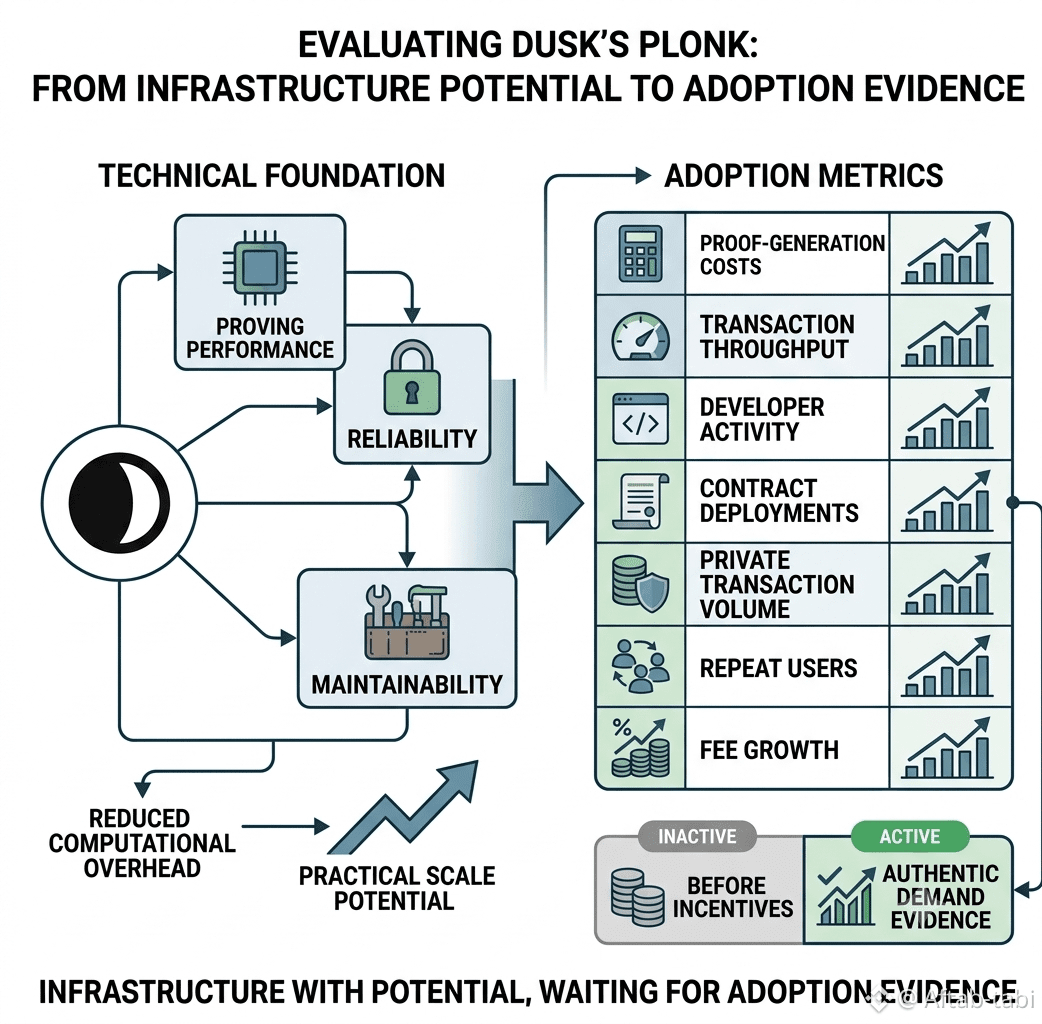
#dusk Men Dusk’ning Pure Rust PLONK amalga oshirilishi quyidagi sabablarga ko‘ra qiziqarli ekanini payqadim: isbotlash samaradorligi, ishonchlilik va qo‘llab-quvvatlash qulayligi nol-bilim infratuzilmasi keng miqyosda amaliy bo‘lishiga ta’sir qilishi mumkin.
Imkoniyat haqiqatga yaqin, ayniqsa ishlab chiquvchilar maxfiylik ilovalarini ortiqcha hisoblash yukisiz yarata olsalar. Ammo faqat amalga oshirish sifati talabni yaratmaydi. Men isbot yaratish xarajatlari, tranzaksiya o‘tkazuvchanligi, ishlab chiquvchilar faolligi, shartnoma joylashtirishlar, xususiy tranzaksiya hajmi, takroriy foydalanuvchilar va komissiya o‘sishi birga yaxshilanayotganini ko‘rishni istardim.
Shuning uchun agar bu ko‘rsatkichlar katta rag‘batlarsiz harakatlana boshlasa, men bu narsalarni ancha jiddiyroq qabul qilaman. Hozircha esa men kriptografiyani qabul qilinishning isboti emas, balki salohiyatga ega infratuzilma deb ko‘raman.
@Dusk_Foundation $DUSK
#dusk Men Dusk’ning Pure Rust PLONK amalga oshirilishi quyidagi sabablarga ko‘ra qiziqarli ekanini payqadim: isbotlash samaradorligi, ishonchlilik va qo‘llab-quvvatlash qulayligi nol-bilim infratuzilmasi keng miqyosda amaliy bo‘lishiga ta’sir qilishi mumkin.
Imkoniyat haqiqatga yaqin, ayniqsa ishlab chiquvchilar maxfiylik ilovalarini ortiqcha hisoblash yukisiz yarata olsalar. Ammo faqat amalga oshirish sifati talabni yaratmaydi. Men isbot yaratish xarajatlari, tranzaksiya o‘tkazuvchanligi, ishlab chiquvchilar faolligi, shartnoma joylashtirishlar, xususiy tranzaksiya hajmi, takroriy foydalanuvchilar va komissiya o‘sishi birga yaxshilanayotganini ko‘rishni istardim.
Shuning uchun agar bu ko‘rsatkichlar katta rag‘batlarsiz harakatlana boshlasa, men bu narsalarni ancha jiddiyroq qabul qilaman. Hozircha esa men kriptografiyani qabul qilinishning isboti emas, balki salohiyatga ega infratuzilma deb ko‘raman.
@Dusk $DUSK
Imkoniyat haqiqatga yaqin, ayniqsa ishlab chiquvchilar maxfiylik ilovalarini ortiqcha hisoblash yukisiz yarata olsalar. Ammo faqat amalga oshirish sifati talabni yaratmaydi. Men isbot yaratish xarajatlari, tranzaksiya o‘tkazuvchanligi, ishlab chiquvchilar faolligi, shartnoma joylashtirishlar, xususiy tranzaksiya hajmi, takroriy foydalanuvchilar va komissiya o‘sishi birga yaxshilanayotganini ko‘rishni istardim.
Shuning uchun agar bu ko‘rsatkichlar katta rag‘batlarsiz harakatlana boshlasa, men bu narsalarni ancha jiddiyroq qabul qilaman. Hozircha esa men kriptografiyani qabul qilinishning isboti emas, balki salohiyatga ega infratuzilma deb ko‘raman.
@Dusk $DUSK
10
9
159
·
--
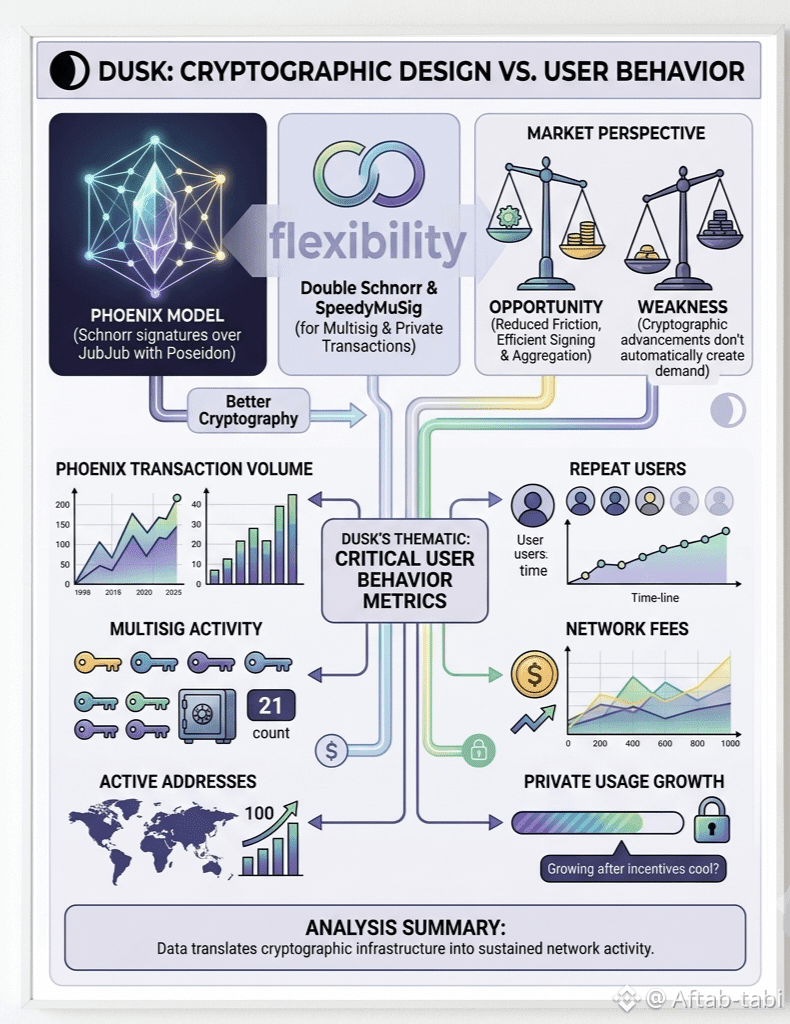
#dusk Menimcha, Dusk menga diqqat bilan kuzatishga majbur qiladigan bir narsa shuki, kriptografik dizayn foydalanuvchi xulq-atvoriga qanchalik ta’sir qilishini ko‘rsatadi. Bu yerda Phoenix modeli JubJub ustida Poseidon bilan Schnorr imzolaridan foydalanadi, ikki martalik Schnorr imzolari va SpeedyMuSig esa xususiy tranzaksiyalar hamda ko‘p imzoli foydalanish atrofida qo‘shimcha moslashuvchanlik beradi.
Bozor nuqtayi nazaridan imkoniyat juda sodda: samarali imzolash va agregatsiya xususiy tranzaksiya faolligi oshgani sayin ishqalanishni kamaytirishi mumkin. Ammo zaiflik ham xuddi shunday aniq: yaxshiroq kriptografiya avtomatik tarzda talab yaratmaydi.
Men bu g‘oyani faqat texnologiyaning o‘ziga qarab baholamasdim. Men Phoenix tranzaksiya hajmi, takroriy foydalanuvchilar, multisig faolligi, to‘lovlar, faol manzillar va rag‘batlar pasaygandan keyin xususiy foydalanish o‘sishda davom etyaptimi-yo‘qmi, shularni kuzatardim. O‘sha ma’lumotlar menga kriptografik infratuzilma haqiqatan ham barqaror tarmoq faolligiga aylanayaptimi-yo‘qmi, shuni ko‘rsatardi.
@Dusk_Foundation $DUSK
#dusk Menimcha, Dusk menga diqqat bilan kuzatishga majbur qiladigan bir narsa shuki, kriptografik dizayn foydalanuvchi xulq-atvoriga qanchalik ta’sir qilishini ko‘rsatadi. Bu yerda Phoenix modeli JubJub ustida Poseidon bilan Schnorr imzolaridan foydalanadi, ikki martalik Schnorr imzolari va SpeedyMuSig esa xususiy tranzaksiyalar hamda ko‘p imzoli foydalanish atrofida qo‘shimcha moslashuvchanlik beradi.
Bozor nuqtayi nazaridan imkoniyat juda sodda: samarali imzolash va agregatsiya xususiy tranzaksiya faolligi oshgani sayin ishqalanishni kamaytirishi mumkin. Ammo zaiflik ham xuddi shunday aniq: yaxshiroq kriptografiya avtomatik tarzda talab yaratmaydi.
Men bu g‘oyani faqat texnologiyaning o‘ziga qarab baholamasdim. Men Phoenix tranzaksiya hajmi, takroriy foydalanuvchilar, multisig faolligi, to‘lovlar, faol manzillar va rag‘batlar pasaygandan keyin xususiy foydalanish o‘sishda davom etyaptimi-yo‘qmi, shularni kuzatardim. O‘sha ma’lumotlar menga kriptografik infratuzilma haqiqatan ham barqaror tarmoq faolligiga aylanayaptimi-yo‘qmi, shuni ko‘rsatardi.
@Dusk $DUSK
Bozor nuqtayi nazaridan imkoniyat juda sodda: samarali imzolash va agregatsiya xususiy tranzaksiya faolligi oshgani sayin ishqalanishni kamaytirishi mumkin. Ammo zaiflik ham xuddi shunday aniq: yaxshiroq kriptografiya avtomatik tarzda talab yaratmaydi.
Men bu g‘oyani faqat texnologiyaning o‘ziga qarab baholamasdim. Men Phoenix tranzaksiya hajmi, takroriy foydalanuvchilar, multisig faolligi, to‘lovlar, faol manzillar va rag‘batlar pasaygandan keyin xususiy foydalanish o‘sishda davom etyaptimi-yo‘qmi, shularni kuzatardim. O‘sha ma’lumotlar menga kriptografik infratuzilma haqiqatan ham barqaror tarmoq faolligiga aylanayaptimi-yo‘qmi, shuni ko‘rsatardi.
@Dusk $DUSK
17
10
136
·
--
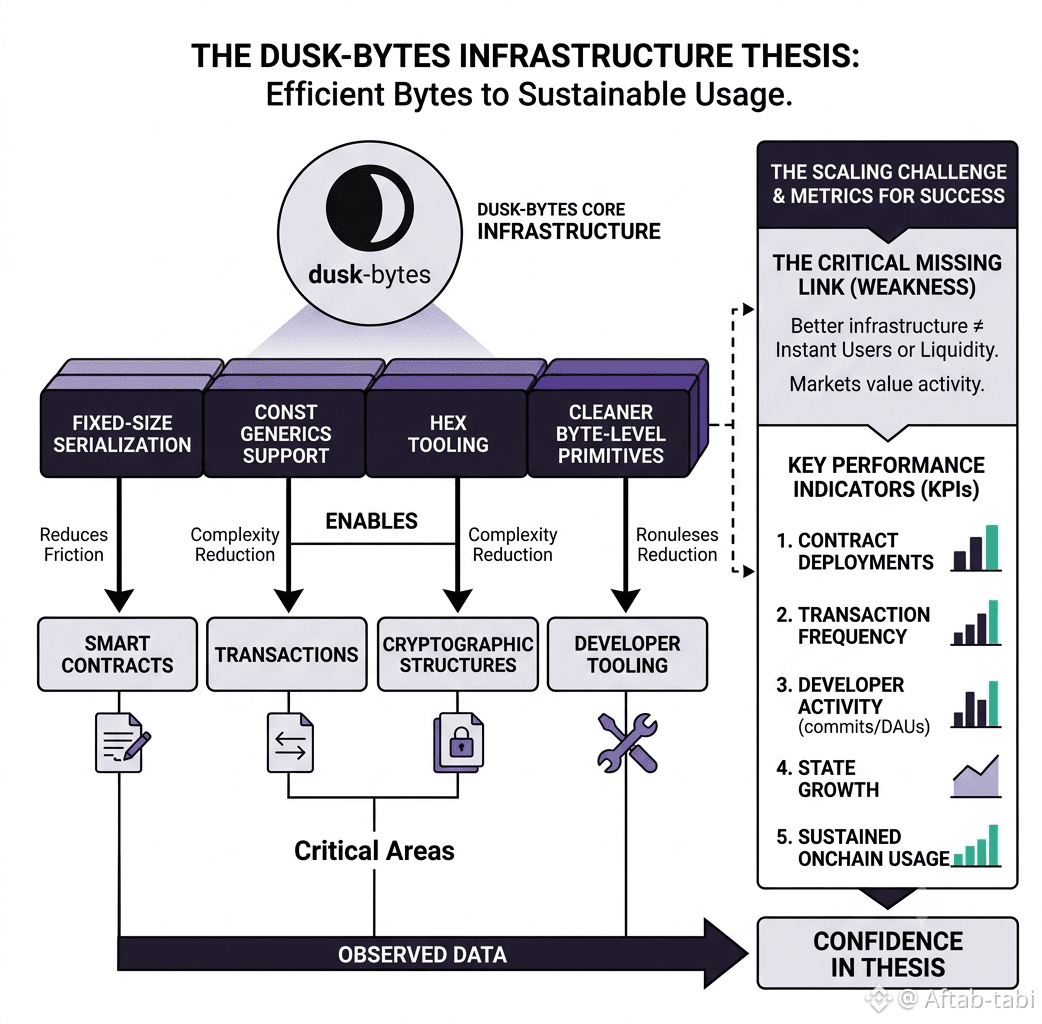
#dusk Men kriptoda kichik infratuzilma qismlari tranzaksiya faolligi oshgani sayin, avvaliga ko‘ringanidan ham muhimroq bo‘lishi mumkinligini payqadim. Dusk-bytes buning yaxshi misoli: qat’iy o‘lchamli serializatsiya, support, const generics va hex vositalari butun stek bo‘ylab ma’lumotlar bilan ishlashni oldindan bashorat qilinadigan qiladi.
Bu muhim, chunki serializatsiya smart-kontraktlar, tranzaksiyalar, kriptografik tuzilmalar va ishlab chiquvchi vositalar ostida turadi. Tozaroq bayt darajasidagi primitivlar ish jarayonidagi noqulaylik va keraksiz murakkablikni kamaytirishi mumkin.
Zaif tomoni shundaki, yaxshiroq infratuzilma avtomatik ravishda foydalanuvchilar, likvidlik yoki komissiyalarni yaratmaydi. Bozorlar oxir-oqibat faqat nafis kodni emas, faollikni ham baholaydi.
Men shaxsan tezisga ishonchim ortishidan oldin kontrakt joylashtirishlar, tranzaksiya chastotasi, ishlab chiquvchi faolligi, holat (state) o‘sishi va Dusk’ning vositalari haqiqatan ham barqaror onchain foydalanishga aylanyaptimi-yo‘qligini kuzataman.
@Dusk_Foundation $DUSK
{future}(DUSKUSDT)
#dusk Men kriptoda kichik infratuzilma qismlari tranzaksiya faolligi oshgani sayin, avvaliga ko‘ringanidan ham muhimroq bo‘lishi mumkinligini payqadim. Dusk-bytes buning yaxshi misoli: qat’iy o‘lchamli serializatsiya, support, const generics va hex vositalari butun stek bo‘ylab ma’lumotlar bilan ishlashni oldindan bashorat qilinadigan qiladi.
Bu muhim, chunki serializatsiya smart-kontraktlar, tranzaksiyalar, kriptografik tuzilmalar va ishlab chiquvchi vositalar ostida turadi. Tozaroq bayt darajasidagi primitivlar ish jarayonidagi noqulaylik va keraksiz murakkablikni kamaytirishi mumkin.
Zaif tomoni shundaki, yaxshiroq infratuzilma avtomatik ravishda foydalanuvchilar, likvidlik yoki komissiyalarni yaratmaydi. Bozorlar oxir-oqibat faqat nafis kodni emas, faollikni ham baholaydi.
Men shaxsan tezisga ishonchim ortishidan oldin kontrakt joylashtirishlar, tranzaksiya chastotasi, ishlab chiquvchi faolligi, holat (state) o‘sishi va Dusk’ning vositalari haqiqatan ham barqaror onchain foydalanishga aylanyaptimi-yo‘qligini kuzataman.
@Dusk $DUSK
Bu muhim, chunki serializatsiya smart-kontraktlar, tranzaksiyalar, kriptografik tuzilmalar va ishlab chiquvchi vositalar ostida turadi. Tozaroq bayt darajasidagi primitivlar ish jarayonidagi noqulaylik va keraksiz murakkablikni kamaytirishi mumkin.
Zaif tomoni shundaki, yaxshiroq infratuzilma avtomatik ravishda foydalanuvchilar, likvidlik yoki komissiyalarni yaratmaydi. Bozorlar oxir-oqibat faqat nafis kodni emas, faollikni ham baholaydi.
Men shaxsan tezisga ishonchim ortishidan oldin kontrakt joylashtirishlar, tranzaksiya chastotasi, ishlab chiquvchi faolligi, holat (state) o‘sishi va Dusk’ning vositalari haqiqatan ham barqaror onchain foydalanishga aylanyaptimi-yo‘qligini kuzataman.
@Dusk $DUSK
15
7
193
·
--
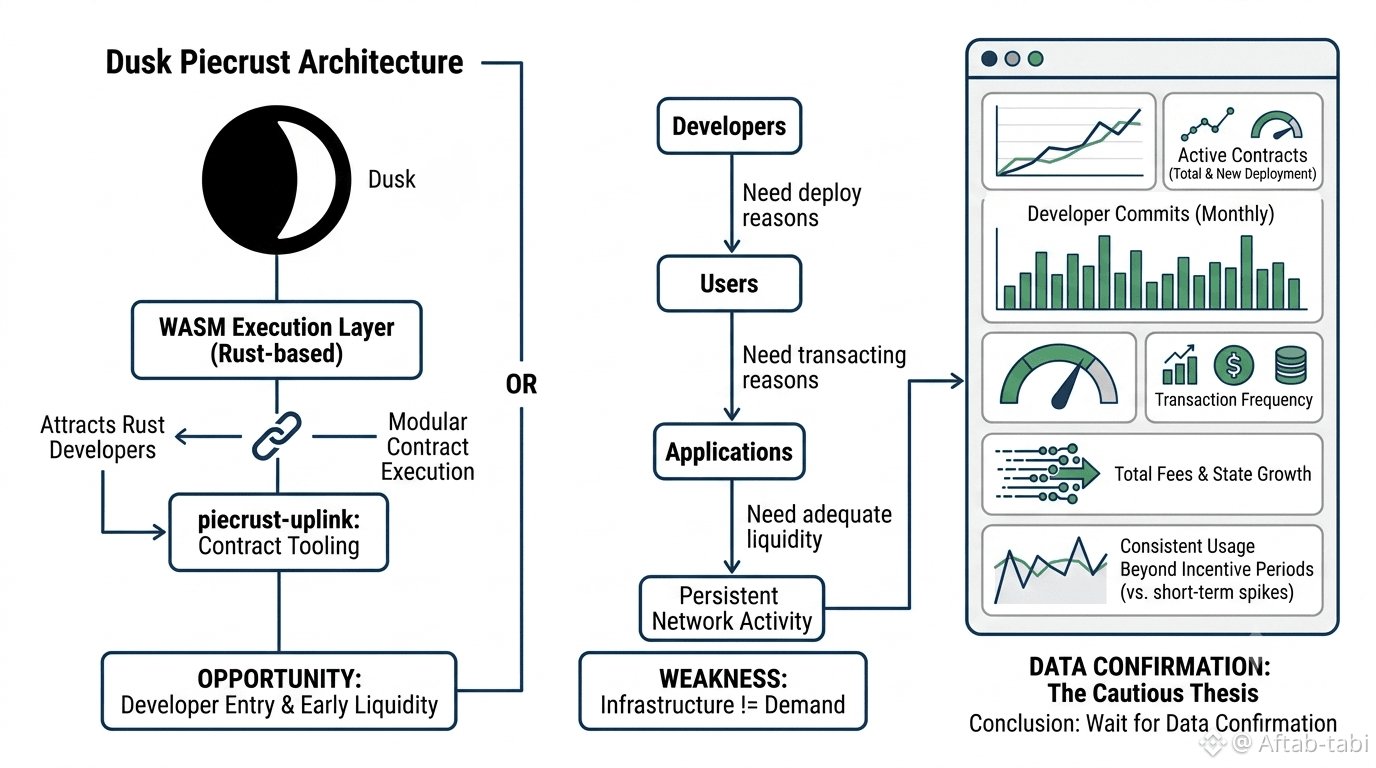
#dusk Men aslida kuzatyapman va Dusk’ning Piecrust arxitekturasini ishlab chiquvchi-likvidlik nuqtai nazaridan qiziqarli deb topaman. Piecrust WASM bajarilish qatlamini taqdim etadi, piecrust-uplink esa ishlab chiquvchilarga smart-kontraktlarni uning ustiga bevosita qurish uchun vositalarni beradi.
Men uchun muhim jihat — bu arxitektura doimiy tarmoq faolligiga aylana oladimi-yo‘qmi. Rust-ga asoslangan WASM muhiti allaqachon Rust bilan bemalol ishlaydigan ishlab chiquvchilarni jalb qilishi va kontrakt bajarilishini yanada modulli qilishi mumkin. Demak, imkoniyat shunda.
Zaif tomoni oddiy: yaxshi infratuzilma avtomatik ravishda talab yaratmaydi. Ishlab chiquvchilarga hanuz joylashtirish uchun sabablar kerak, foydalanuvchilarga tranzaksiya qilish uchun sabablar kerak, ilovalarga esa faol bo‘lib qolish uchun yetarli likvidlik kerak.
Men ma’lumotlar bu tezisni tasdiqlamaguncha ehtiyotkor bo‘lib qolaman. Shaxsan men kontrakt joylashtirishlari, faol kontraktlar, tranzaksiya chastotasi, ishlab chiquvchi commitlari, komissiyalar, holat o‘sishi va qisqa muddatli rag‘batlantirish davrlaridan keyin ham foydalanish barqaror qolish-qolmasligini kuzataman.
@Dusk_Foundation $DUSK
#dusk Men aslida kuzatyapman va Dusk’ning Piecrust arxitekturasini ishlab chiquvchi-likvidlik nuqtai nazaridan qiziqarli deb topaman. Piecrust WASM bajarilish qatlamini taqdim etadi, piecrust-uplink esa ishlab chiquvchilarga smart-kontraktlarni uning ustiga bevosita qurish uchun vositalarni beradi.
Men uchun muhim jihat — bu arxitektura doimiy tarmoq faolligiga aylana oladimi-yo‘qmi. Rust-ga asoslangan WASM muhiti allaqachon Rust bilan bemalol ishlaydigan ishlab chiquvchilarni jalb qilishi va kontrakt bajarilishini yanada modulli qilishi mumkin. Demak, imkoniyat shunda.
Zaif tomoni oddiy: yaxshi infratuzilma avtomatik ravishda talab yaratmaydi. Ishlab chiquvchilarga hanuz joylashtirish uchun sabablar kerak, foydalanuvchilarga tranzaksiya qilish uchun sabablar kerak, ilovalarga esa faol bo‘lib qolish uchun yetarli likvidlik kerak.
Men ma’lumotlar bu tezisni tasdiqlamaguncha ehtiyotkor bo‘lib qolaman. Shaxsan men kontrakt joylashtirishlari, faol kontraktlar, tranzaksiya chastotasi, ishlab chiquvchi commitlari, komissiyalar, holat o‘sishi va qisqa muddatli rag‘batlantirish davrlaridan keyin ham foydalanish barqaror qolish-qolmasligini kuzataman.
@Dusk $DUSK
Men uchun muhim jihat — bu arxitektura doimiy tarmoq faolligiga aylana oladimi-yo‘qmi. Rust-ga asoslangan WASM muhiti allaqachon Rust bilan bemalol ishlaydigan ishlab chiquvchilarni jalb qilishi va kontrakt bajarilishini yanada modulli qilishi mumkin. Demak, imkoniyat shunda.
Zaif tomoni oddiy: yaxshi infratuzilma avtomatik ravishda talab yaratmaydi. Ishlab chiquvchilarga hanuz joylashtirish uchun sabablar kerak, foydalanuvchilarga tranzaksiya qilish uchun sabablar kerak, ilovalarga esa faol bo‘lib qolish uchun yetarli likvidlik kerak.
Men ma’lumotlar bu tezisni tasdiqlamaguncha ehtiyotkor bo‘lib qolaman. Shaxsan men kontrakt joylashtirishlari, faol kontraktlar, tranzaksiya chastotasi, ishlab chiquvchi commitlari, komissiyalar, holat o‘sishi va qisqa muddatli rag‘batlantirish davrlaridan keyin ham foydalanish barqaror qolish-qolmasligini kuzataman.
@Dusk $DUSK
13
11
288
·
--
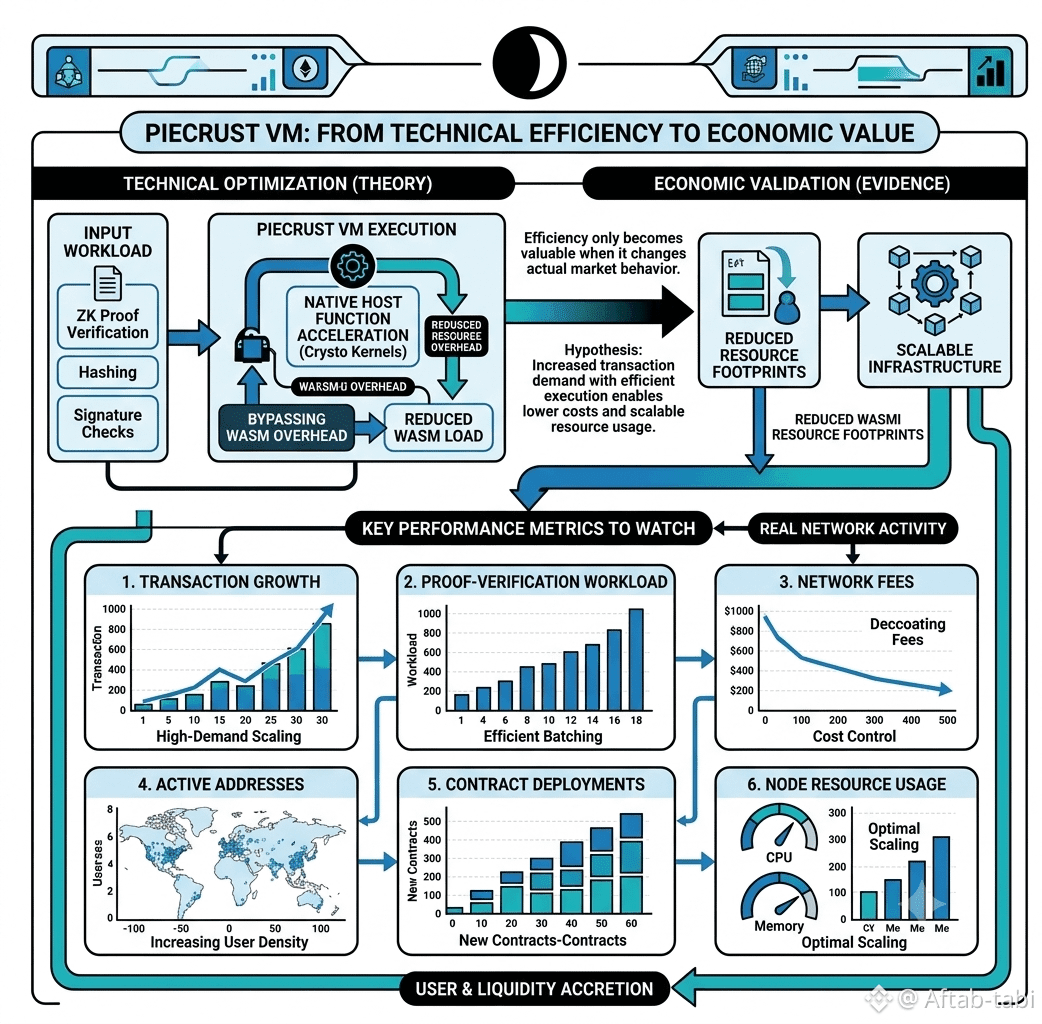
#dusk Men infratuzilma kriptoda faqat samaradorlik haqiqiy bozor xatti-harakatini o‘zgartirgandagina qimmatli bo‘lib qolishini payqadim.
Dusk’ning Piecrust VM’i og‘ir kriptografik ishlarni mahalliy xost funksiyalariga ko‘chirish orqali qiziqarli yo‘lni tanlaydi. ZK isbotini tekshirish, xeshlash va imzo tekshiruvlari WASM ijrosidagi ba’zi qo‘shimcha xarajatlarni kamaytirishi mumkin.
Imkoniyat sodda: agar tranzaksiya talabi o‘ssa, samarali ijro xarajatlar va resurs sarfini nazorat ostida ushlab turishga yordam berishi mumkin.
Ammo bu g‘oya hanuz dalilga muhtoj. Yaxshiroq arxitektura avtomatik ravishda likvidlik yoki foydalanuvchilarni yaratmaydi.
Men tranzaksiya o‘sishi, isbotni tekshirish yuklamasi, komissiyalar, faol manzillar, kontrakt joylashtirishlari va tugun resurs sarfini kuzatgan bo‘lardim. Agar ular haqiqiy tarmoq faolligi bilan birga yaxshilansa, Piecrust’ning samaradorligi nafaqat texnik, balki iqtisodiy jihatdan ham muhimligiga ko‘proq ishonchim komil bo‘lardi.
@Dusk_Foundation $DUSK
#dusk Men infratuzilma kriptoda faqat samaradorlik haqiqiy bozor xatti-harakatini o‘zgartirgandagina qimmatli bo‘lib qolishini payqadim.
Dusk’ning Piecrust VM’i og‘ir kriptografik ishlarni mahalliy xost funksiyalariga ko‘chirish orqali qiziqarli yo‘lni tanlaydi. ZK isbotini tekshirish, xeshlash va imzo tekshiruvlari WASM ijrosidagi ba’zi qo‘shimcha xarajatlarni kamaytirishi mumkin.
Imkoniyat sodda: agar tranzaksiya talabi o‘ssa, samarali ijro xarajatlar va resurs sarfini nazorat ostida ushlab turishga yordam berishi mumkin.
Ammo bu g‘oya hanuz dalilga muhtoj. Yaxshiroq arxitektura avtomatik ravishda likvidlik yoki foydalanuvchilarni yaratmaydi.
Men tranzaksiya o‘sishi, isbotni tekshirish yuklamasi, komissiyalar, faol manzillar, kontrakt joylashtirishlari va tugun resurs sarfini kuzatgan bo‘lardim. Agar ular haqiqiy tarmoq faolligi bilan birga yaxshilansa, Piecrust’ning samaradorligi nafaqat texnik, balki iqtisodiy jihatdan ham muhimligiga ko‘proq ishonchim komil bo‘lardi.
@Dusk $DUSK
Dusk’ning Piecrust VM’i og‘ir kriptografik ishlarni mahalliy xost funksiyalariga ko‘chirish orqali qiziqarli yo‘lni tanlaydi. ZK isbotini tekshirish, xeshlash va imzo tekshiruvlari WASM ijrosidagi ba’zi qo‘shimcha xarajatlarni kamaytirishi mumkin.
Imkoniyat sodda: agar tranzaksiya talabi o‘ssa, samarali ijro xarajatlar va resurs sarfini nazorat ostida ushlab turishga yordam berishi mumkin.
Ammo bu g‘oya hanuz dalilga muhtoj. Yaxshiroq arxitektura avtomatik ravishda likvidlik yoki foydalanuvchilarni yaratmaydi.
Men tranzaksiya o‘sishi, isbotni tekshirish yuklamasi, komissiyalar, faol manzillar, kontrakt joylashtirishlari va tugun resurs sarfini kuzatgan bo‘lardim. Agar ular haqiqiy tarmoq faolligi bilan birga yaxshilansa, Piecrust’ning samaradorligi nafaqat texnik, balki iqtisodiy jihatdan ham muhimligiga ko‘proq ishonchim komil bo‘lardi.
@Dusk $DUSK
14
10
191
·
--
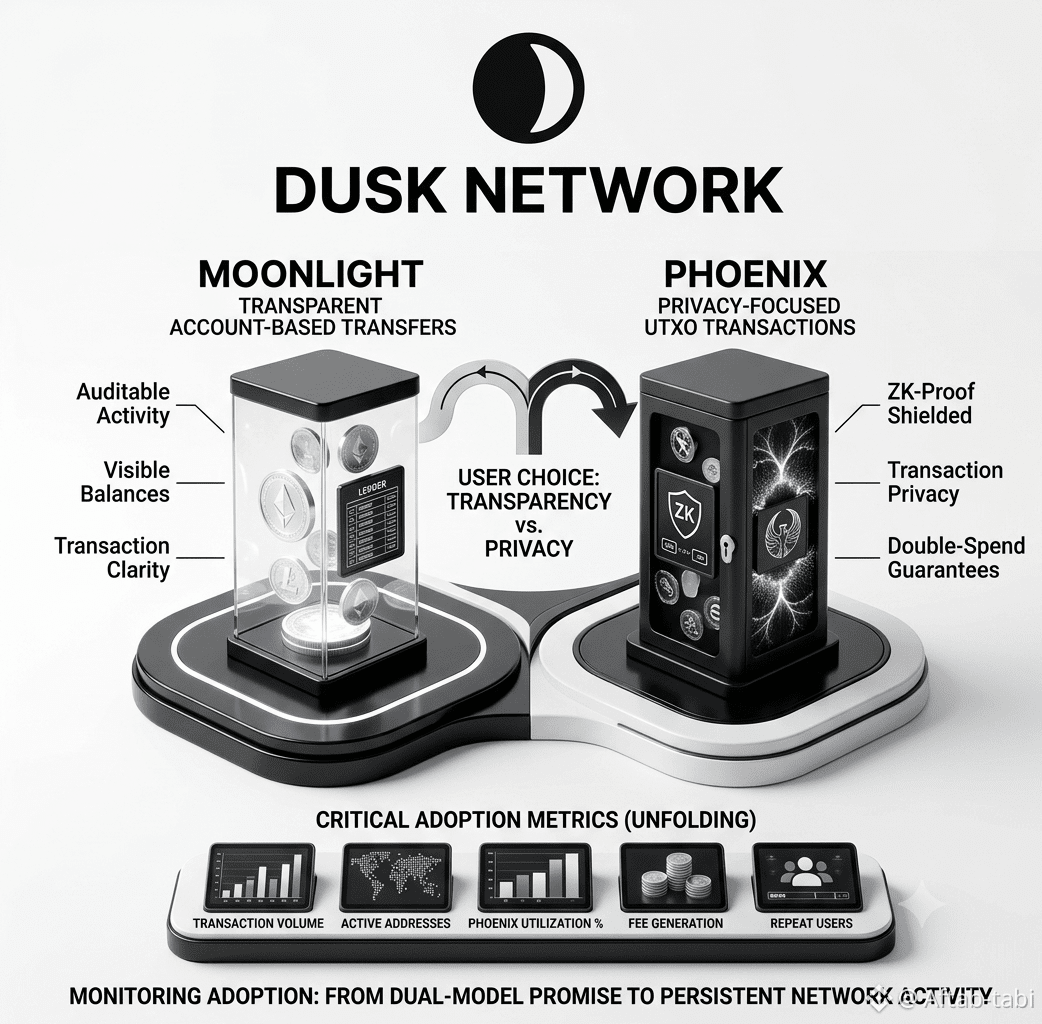
#dusk Men ko‘pincha bozorlarda tranzaksiya dizayni kapital qayerga ko‘chishga tayyor bo‘lishiga qanday ta’sir qilishini e’tibordan chetda qoldirishini payqadim. Dusk qiziqarli yondashuvni tanlagan: u ham Moonlight, ham Phoenixni qo‘llab-quvvatlab, foydalanuvchilarga shaffof hisobga asoslangan o‘tkazmalarni ham, maxfiylikka yo‘naltirilgan UTXO tranzaksiyalarini ham taklif qiladi.
Agar moliyaviy ilovalar turli darajadagi oshkoralikka muhtoj bo‘lsa, bu moslashuvchanlik muhim bo‘lishi mumkin. Moonlight balans va faollikni tekshirishni osonlashtiradi, Phoenix esa tranzaksiya maxfiyligini saqlash uchun nol-bilim (ZK) isbotlari va nullifierlardan foydalanishi mumkin; bunda asosiy egalik, balans va ikki marta sarflashga qarshi kafolatlar saqlanib qoladi.
Biroq men bu ikki rejimli modelni o‘zi bilan birga qabul qilinish tezisi deb hisoblamas edim. Ko‘proq variantlar faqat foydalanuvchilar ularni haqiqatan ham tanlaganida va faollik barqaror bo‘lgandagina ahamiyatli bo‘ladi.
Imkoniyat haqiqatdan ham bor, ammo noaniqlik ham xuddi shuncha muhim. Teziska nisbatan ishonchim ortishidan oldin tranzaksiya hajmi, faol manzillar, Phoenixdan foydalanish, komissiya tushumi, takroriy foydalanuvchilar va shaffof hamda maxfiy faollik o‘rtasidagi nisbatni kuzatib borardim.
@Dusk_Foundation $DUSK
{future}(DUSKUSDT)
#dusk Men ko‘pincha bozorlarda tranzaksiya dizayni kapital qayerga ko‘chishga tayyor bo‘lishiga qanday ta’sir qilishini e’tibordan chetda qoldirishini payqadim. Dusk qiziqarli yondashuvni tanlagan: u ham Moonlight, ham Phoenixni qo‘llab-quvvatlab, foydalanuvchilarga shaffof hisobga asoslangan o‘tkazmalarni ham, maxfiylikka yo‘naltirilgan UTXO tranzaksiyalarini ham taklif qiladi.
Agar moliyaviy ilovalar turli darajadagi oshkoralikka muhtoj bo‘lsa, bu moslashuvchanlik muhim bo‘lishi mumkin. Moonlight balans va faollikni tekshirishni osonlashtiradi, Phoenix esa tranzaksiya maxfiyligini saqlash uchun nol-bilim (ZK) isbotlari va nullifierlardan foydalanishi mumkin; bunda asosiy egalik, balans va ikki marta sarflashga qarshi kafolatlar saqlanib qoladi.
Biroq men bu ikki rejimli modelni o‘zi bilan birga qabul qilinish tezisi deb hisoblamas edim. Ko‘proq variantlar faqat foydalanuvchilar ularni haqiqatan ham tanlaganida va faollik barqaror bo‘lgandagina ahamiyatli bo‘ladi.
Imkoniyat haqiqatdan ham bor, ammo noaniqlik ham xuddi shuncha muhim. Teziska nisbatan ishonchim ortishidan oldin tranzaksiya hajmi, faol manzillar, Phoenixdan foydalanish, komissiya tushumi, takroriy foydalanuvchilar va shaffof hamda maxfiy faollik o‘rtasidagi nisbatni kuzatib borardim.
@Dusk $DUSK
Agar moliyaviy ilovalar turli darajadagi oshkoralikka muhtoj bo‘lsa, bu moslashuvchanlik muhim bo‘lishi mumkin. Moonlight balans va faollikni tekshirishni osonlashtiradi, Phoenix esa tranzaksiya maxfiyligini saqlash uchun nol-bilim (ZK) isbotlari va nullifierlardan foydalanishi mumkin; bunda asosiy egalik, balans va ikki marta sarflashga qarshi kafolatlar saqlanib qoladi.
Biroq men bu ikki rejimli modelni o‘zi bilan birga qabul qilinish tezisi deb hisoblamas edim. Ko‘proq variantlar faqat foydalanuvchilar ularni haqiqatan ham tanlaganida va faollik barqaror bo‘lgandagina ahamiyatli bo‘ladi.
Imkoniyat haqiqatdan ham bor, ammo noaniqlik ham xuddi shuncha muhim. Teziska nisbatan ishonchim ortishidan oldin tranzaksiya hajmi, faol manzillar, Phoenixdan foydalanish, komissiya tushumi, takroriy foydalanuvchilar va shaffof hamda maxfiy faollik o‘rtasidagi nisbatni kuzatib borardim.
@Dusk $DUSK
32
13
175
Ko‘proq kontentni ko‘rish uchun tizimga kiring
Binance Square'da global kriptovalyuta foydalanuvchilariga qo‘shiling
⚡️ Kriptovalyuta haqida eng so‘nggi va foydali ma’lumotlarni oling.
💬 Dunyoning eng yirik kriptovalyuta birjasi tomonidan ishonchli deb topilgan.
👍 Tasdiqlangan mualliflardan haqiqiy tahlillarni kashf eting.
Email / telefon raqami
Trenddagi mavzular
NEARRisesNearly80%InAWeek
21,913 marta koʻrilgan
699 muhokama qilmoqda
#nearrisesnearly80%inaweek
Bu hafta NEAR bo‘yicha mutlaq yuksalish protokoli — mana nimasi sabab bo‘lyapti 🔥
NEAR uchun qanday hafta bo‘ldi! 🚀 7 kun ichida taxminan 80% atrofida foyda qilish bu shunchaki omad emas; bu NEAR’ning zanjirni “ajrashish” (detach) va sun’iy intellekt integratsiyasi haqidagi qarashiga atrofda katta impuls paydo bo‘layotganini ko‘rsatadi. Texnologiya samaradorligi treyderlar bozor ishtiyoqi bilan uchrashganda, aynan shunday narx harakatini ko‘ramiz.
Siz NEARni uzoq muddatga ushlab qolasizmi, yoki hozirgi darajalarda foydani olib ketasizmi? Quyi qismda strategiyangizni ayting! 👇
Iltimos, kuzatib boring
$NEAR
#BitcoinHits$85K #Near #SolanaCutsTargetSlotTimeTo250ms
Shamika Metting
·2 ta layk
·1.7k marta koʻrilgan
MultiversXPlansHardForkRecovery
20,071 marta koʻrilgan
539 muhokama qilmoqda
CircleLaunchesInstitutionalBTCBackedBorrowing
20,545 marta koʻrilgan
660 muhokama qilmoqda