
BEENER
98 Postlar

BEENER
Shikoyat qilish
Foydalanuvchini bloklash
Content Creator ll WEB3 enthusias ll Community manager ll @ston_fi Amb ll KOLs
Ochiq savdo

LUNC egasi
Tez-tez savdo qiluvchi
5.6 yil
56 Kuzatilmoqda
105 Kuzatuvchilar
63 Yoqdi
Postlar
Portfel
Barchasi
Iqtiboslar
·
--
O‘suvchi
Tarjimani ko‘rish
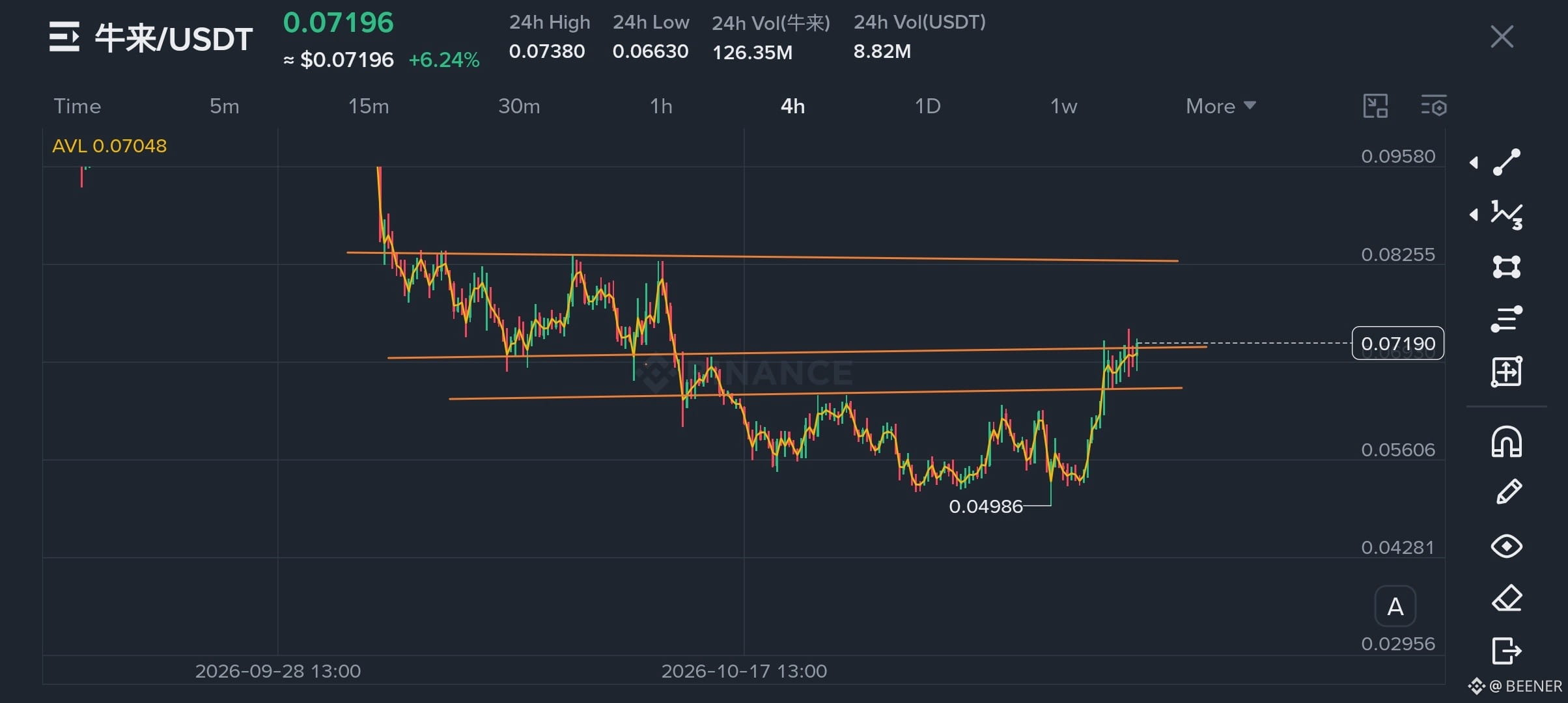
As $牛来 ($NIULAI) consolidates after reclaiming key horizontal levels, price action is setting up a critical range retest on the 4H timeframe.
Price Analysis.
Price Level: ($NIULAI) is trading around $0.07196 USD, posting a +6.24 percent gain over the past 24 hours, after fluctuating between a low of $0.06630 and a high of $0.07380.
Support and Resistance Zones.
The $0.0630 to $0.0660 area serves as a key and important support level that if it holds can protect the price.
The $0.0738 to $0.0825 level is the next major resistance to watch if the momentum continues upward.
News and Fundamentals.
Ecosystem Updates: The $牛来 ($NIULAI) community continues to experience solid trading interest across centralized platforms, holding a 24-hour volume of over $8.82M USDT. Market participants are watching to see if this range breakout converts former resistance into structural support.
Market Sentiment: The token shows healthy consolidation above previous structural lows, requiring traders to exercise caution and manage risk effectively.
Bullish Range Continuation.
$1000CAT
{spot}(1000CATUSDT)
As $牛来 ($NIULAI) consolidates after reclaiming key horizontal levels, price action is setting up a critical range retest on the 4H timeframe.
Price Analysis.
Price Level: ($NIULAI) is trading around $0.07196 USD, posting a +6.24 percent gain over the past 24 hours, after fluctuating between a low of $0.06630 and a high of $0.07380.
Support and Resistance Zones.
The $0.0630 to $0.0660 area serves as a key and important support level that if it holds can protect the price.
The $0.0738 to $0.0825 level is the next major resistance to watch if the momentum continues upward.
News and Fundamentals.
Ecosystem Updates: The $牛来 ($NIULAI) community continues to experience solid trading interest across centralized platforms, holding a 24-hour volume of over $8.82M USDT. Market participants are watching to see if this range breakout converts former resistance into structural support.
Market Sentiment: The token shows healthy consolidation above previous structural lows, requiring traders to exercise caution and manage risk effectively.
Bullish Range Continuation.
$1000CAT
1
254
·
--
O‘suvchi
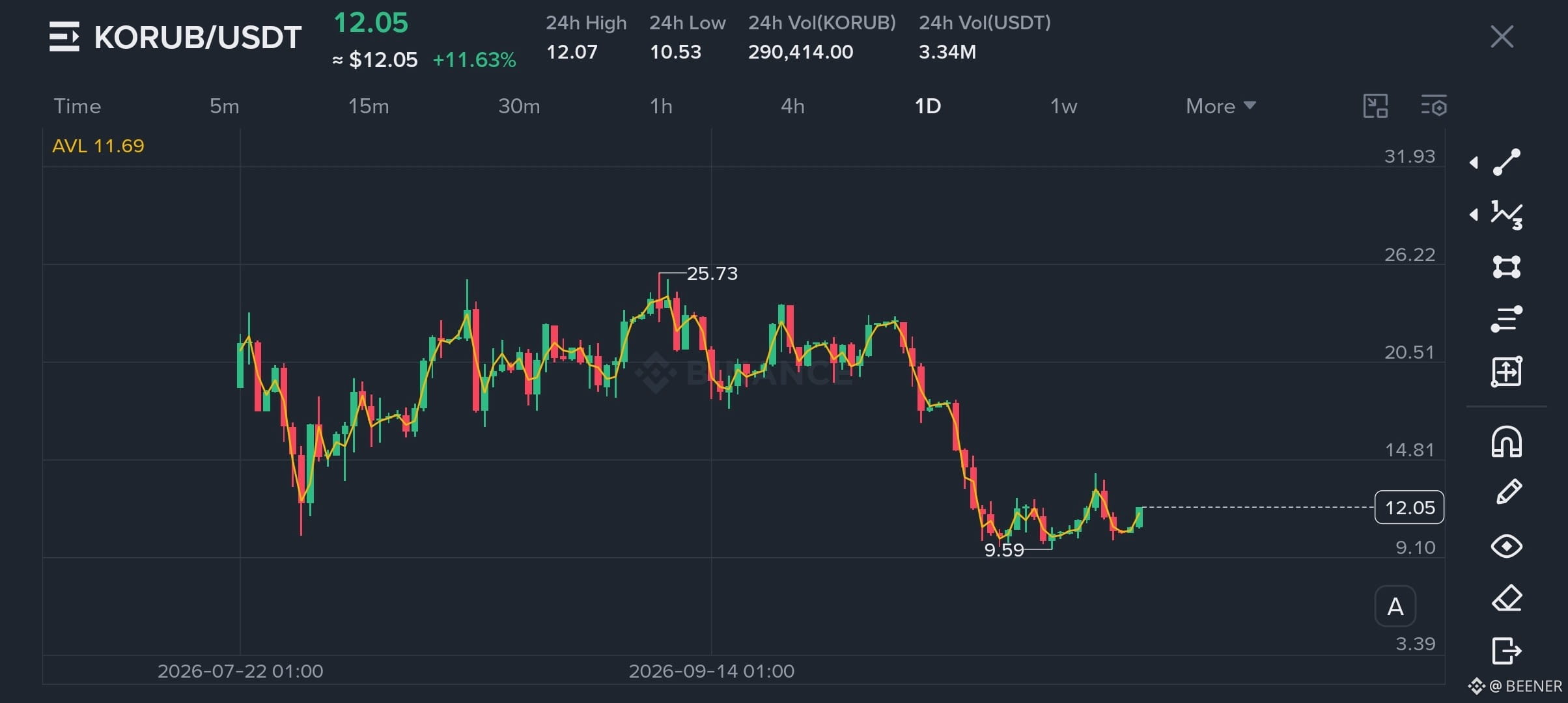
KORUB tarixiy yuqori ko‘rsatkichlardan keskin pasayganidan so‘ng qisqa muddatli tiklanish uchun tayanch darajasini shakllantirishga urinayotgan bir paytda, treyderlar barqaror trend o‘zgarishi belgilarini aniqlash uchun yaqin muddatdagi narx chegaralarini diqqat bilan kuzatmoqda.
Narx tahlili.
Narx darajasi: KORUB taxminan 12,05 AQSh dollari atrofida savdo qilinmoqda. So‘nggi 24 soatda qariyb 11,63 foizga ko‘tarilib, 9,59 dollar atrofidagi eng past nuqtadan qaytdi va mahalliy cho‘qqi — 12,07 dollarni sinab ko‘rdi.
Qo‘llab-quvvatlash va qarshilik zonalari.
9,50–10,50 dollar oralig‘i muhim qo‘llab-quvvatlash darajasi hisoblanadi; u saqlanib qolsa, narxni himoya qilishi mumkin.
Agar pastroq vaqt oralig‘ida ko‘tarilish sur’ati kuchayishda davom etsa, keyingi asosiy qarshilik darajasi sifatida 14,80–20,50 dollar oralig‘ini kuzatish lozim.
Yangiliklar va fundamental omillar.
Ekotizim yangiliklari: KORUB kabi tokenlashtirilgan aktivlar markazlashtirilgan platformalarda kengroq aksiyalar bozori kayfiyati va likvidlikdagi o‘zgarishlarga moslashishda davom etmoqda. Bu savdo hajmining vaqti-vaqti bilan keskin oshishiga olib kelmoqda.
Bozor kayfiyati: Token narxining qisqa muddatda tebranish minimumlaridan qaytish alomatlari kuzatilmoqda, biroq yuqori o‘zgaruvchanlik treyderlardan ehtiyotkorlik va risklarni samarali boshqarishni talab qiladi.
Ko‘tarilish bilan bog‘liq tiklanish sur’ati.
$HOT
{future}(HOTUSDT)
$SUI
$KORUB
{spot}(KORUBUSDT)
KORUB tarixiy yuqori ko‘rsatkichlardan keskin pasayganidan so‘ng qisqa muddatli tiklanish uchun tayanch darajasini shakllantirishga urinayotgan bir paytda, treyderlar barqaror trend o‘zgarishi belgilarini aniqlash uchun yaqin muddatdagi narx chegaralarini diqqat bilan kuzatmoqda.
Narx tahlili.
Narx darajasi: KORUB taxminan 12,05 AQSh dollari atrofida savdo qilinmoqda. So‘nggi 24 soatda qariyb 11,63 foizga ko‘tarilib, 9,59 dollar atrofidagi eng past nuqtadan qaytdi va mahalliy cho‘qqi — 12,07 dollarni sinab ko‘rdi.
Qo‘llab-quvvatlash va qarshilik zonalari.
9,50–10,50 dollar oralig‘i muhim qo‘llab-quvvatlash darajasi hisoblanadi; u saqlanib qolsa, narxni himoya qilishi mumkin.
Agar pastroq vaqt oralig‘ida ko‘tarilish sur’ati kuchayishda davom etsa, keyingi asosiy qarshilik darajasi sifatida 14,80–20,50 dollar oralig‘ini kuzatish lozim.
Yangiliklar va fundamental omillar.
Ekotizim yangiliklari: KORUB kabi tokenlashtirilgan aktivlar markazlashtirilgan platformalarda kengroq aksiyalar bozori kayfiyati va likvidlikdagi o‘zgarishlarga moslashishda davom etmoqda. Bu savdo hajmining vaqti-vaqti bilan keskin oshishiga olib kelmoqda.
Bozor kayfiyati: Token narxining qisqa muddatda tebranish minimumlaridan qaytish alomatlari kuzatilmoqda, biroq yuqori o‘zgaruvchanlik treyderlardan ehtiyotkorlik va risklarni samarali boshqarishni talab qiladi.
Ko‘tarilish bilan bog‘liq tiklanish sur’ati.
$HOT
$SUI
$KORUB
2
383
·
--
O‘suvchi
Qisman to‘g‘ri
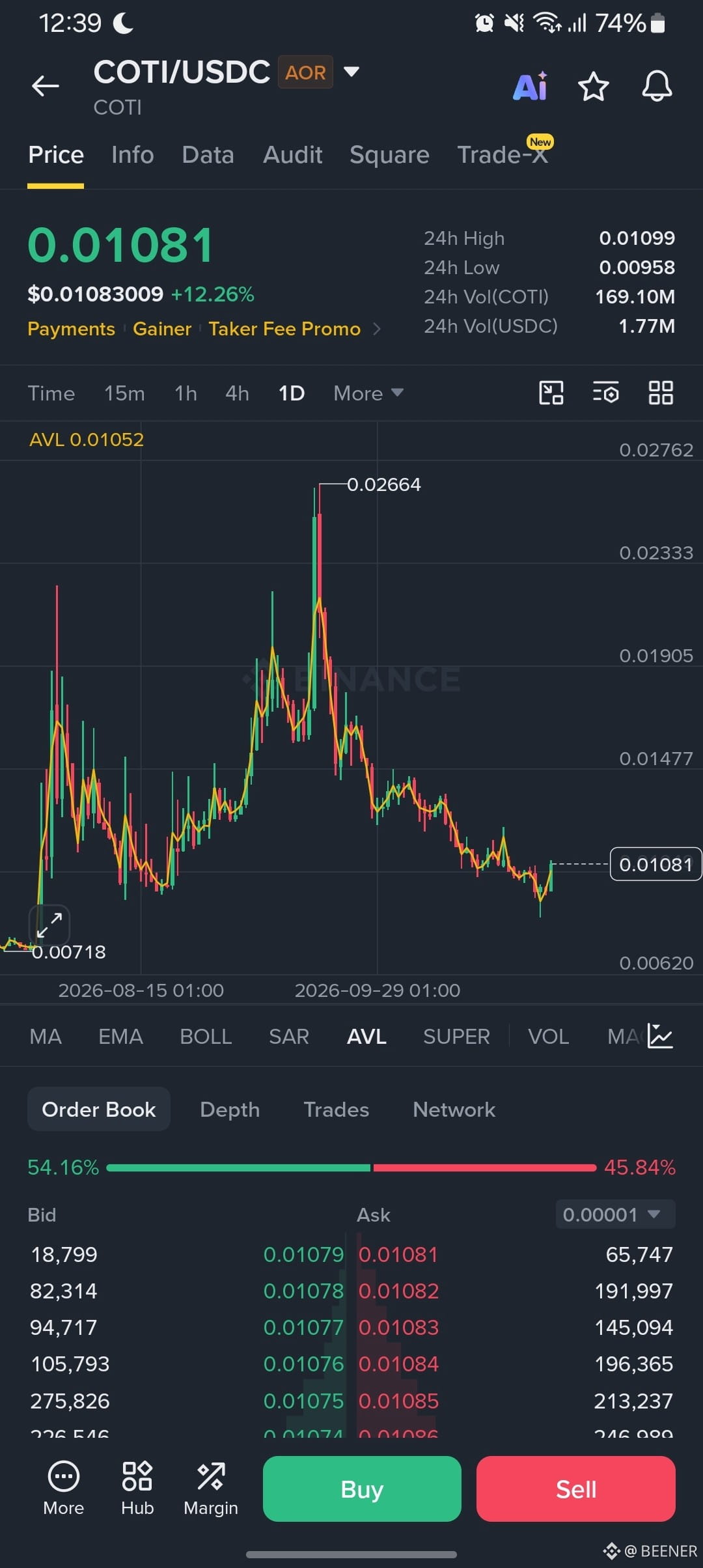
COTI so‘nggi maxfiylikka yo‘naltirilgan ekotizim yangilanishlari va tarmoq takomillashtirishlaridan so‘ng mustahkam o‘rin egallashga intilar ekan, bozor ishtirokchilari navbatdagi yo‘nalish harakatini baholash uchun muhim tarkibiy chegaralarni diqqat bilan kuzatmoqda.
Narx tahlili.
Narx darajasi: $COTI taxminan $0.01081 USD darajasida savdo qilmoqda. So‘nggi 24 soat ichida qariyb 12.26 foizga o‘sdi va tayanch darajasidan qaytganidan so‘ng kunlik eng yuqori ko‘rsatkichi — $0.01099 atrofini sinab ko‘rdi.
Tayanch va qarshilik zonalari.
$0.0095 dan $0.0098 gacha bo‘lgan hudud muhim tayanch darajasi hisoblanadi. Agar u saqlanib qolsa, narxni himoya qilishi mumkin.
Agar quyi vaqt oraliqlarida o‘sish sur’ati kuchayishda davom etsa, $0.014 dan $0.019 gacha bo‘lgan daraja kuzatish lozim bo‘lgan navbatdagi yirik qarshilik bo‘ladi.
Yangiliklar va fundamental omillar.
Maxfiylik tarmog‘ini kengaytirish: COTI maxfiylikka yo‘naltirilgan yo‘l xaritasi bo‘yicha ishlarni davom ettirdi. Bunda institutsional va markazlashmagan ilovalarning imkoniyatlarini kengaytirishga mo‘ljallangan, blokcheynlararo maxfiylik infratuzilmasi va xavfsiz ko‘p tomonlama hisoblash qatlamlariga urg‘u berilmoqda.
Bozor kayfiyati: Token narxi o‘zgaruvchanlikning kuchayishi va savdo hajmi tendensiyalarining o‘zgarishi bilan birga harakatlanmoqda. Bu treyderlardan risklarni intizom bilan boshqarishni talab qiladi.
O‘sish sur’atidagi qaytish.
$COTI
{future}(COTIUSDT)
$PONS
{alpha}(46630x39dbed3a2bd333467115de45665cc57f813c4571)
COTI so‘nggi maxfiylikka yo‘naltirilgan ekotizim yangilanishlari va tarmoq takomillashtirishlaridan so‘ng mustahkam o‘rin egallashga intilar ekan, bozor ishtirokchilari navbatdagi yo‘nalish harakatini baholash uchun muhim tarkibiy chegaralarni diqqat bilan kuzatmoqda.
Narx tahlili.
Narx darajasi: $COTI taxminan $0.01081 USD darajasida savdo qilmoqda. So‘nggi 24 soat ichida qariyb 12.26 foizga o‘sdi va tayanch darajasidan qaytganidan so‘ng kunlik eng yuqori ko‘rsatkichi — $0.01099 atrofini sinab ko‘rdi.
Tayanch va qarshilik zonalari.
$0.0095 dan $0.0098 gacha bo‘lgan hudud muhim tayanch darajasi hisoblanadi. Agar u saqlanib qolsa, narxni himoya qilishi mumkin.
Agar quyi vaqt oraliqlarida o‘sish sur’ati kuchayishda davom etsa, $0.014 dan $0.019 gacha bo‘lgan daraja kuzatish lozim bo‘lgan navbatdagi yirik qarshilik bo‘ladi.
Yangiliklar va fundamental omillar.
Maxfiylik tarmog‘ini kengaytirish: COTI maxfiylikka yo‘naltirilgan yo‘l xaritasi bo‘yicha ishlarni davom ettirdi. Bunda institutsional va markazlashmagan ilovalarning imkoniyatlarini kengaytirishga mo‘ljallangan, blokcheynlararo maxfiylik infratuzilmasi va xavfsiz ko‘p tomonlama hisoblash qatlamlariga urg‘u berilmoqda.
Bozor kayfiyati: Token narxi o‘zgaruvchanlikning kuchayishi va savdo hajmi tendensiyalarining o‘zgarishi bilan birga harakatlanmoqda. Bu treyderlardan risklarni intizom bilan boshqarishni talab qiladi.
O‘sish sur’atidagi qaytish.
$COTI
$PONS
1
894
·
--
O‘suvchi
Tarjimani ko‘rish
Congratulations 🎉
Target hit in style.
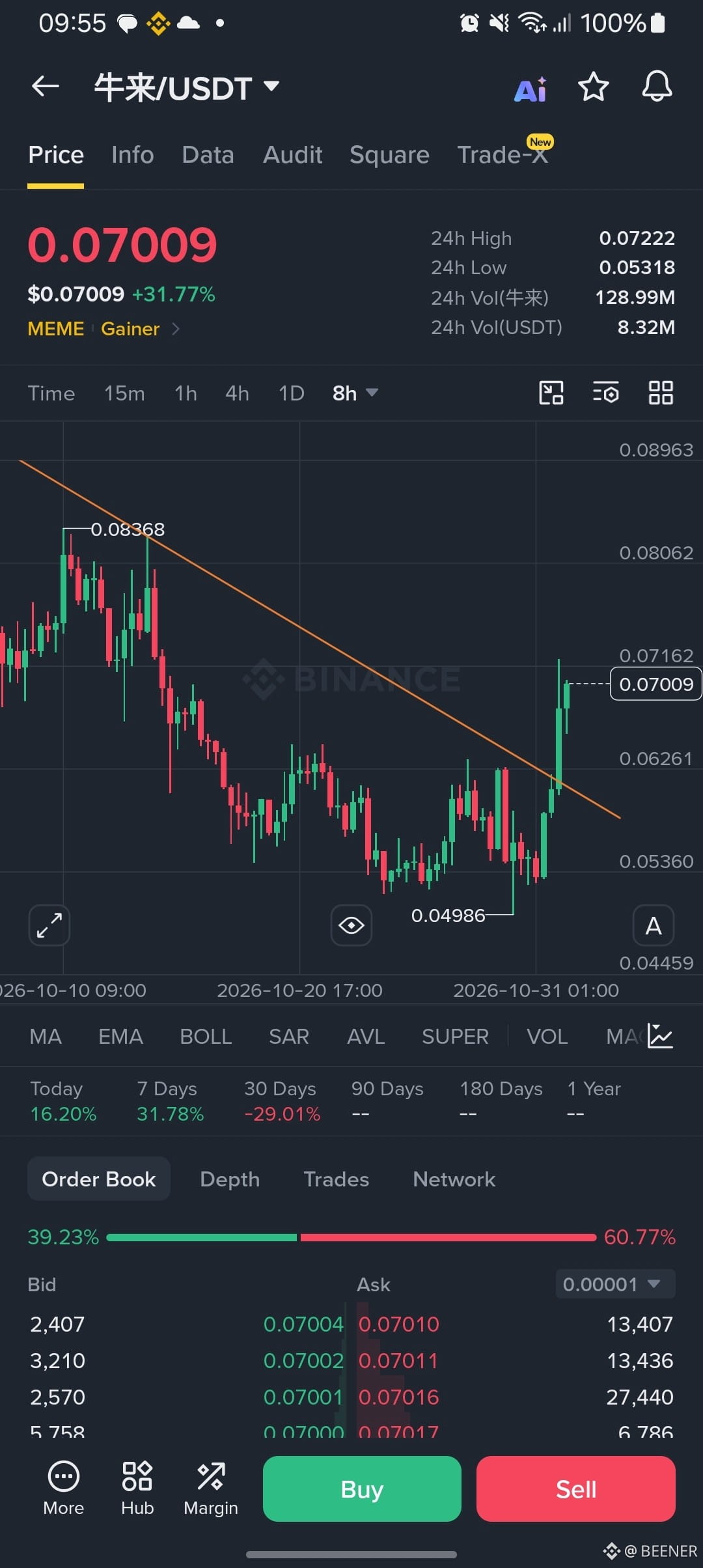
$牛来 来 ($NIULAI) just smashed through initial resistance with a solid +31.77% gain, proving once again that momentum and volume don't lie.
Bullish structure is firmly intact, but keeping eyes locked on the next resistance zone as buyers continue to dominate.
Who secured their gains and who is riding this higher?
$牛来
BEENER
·
--
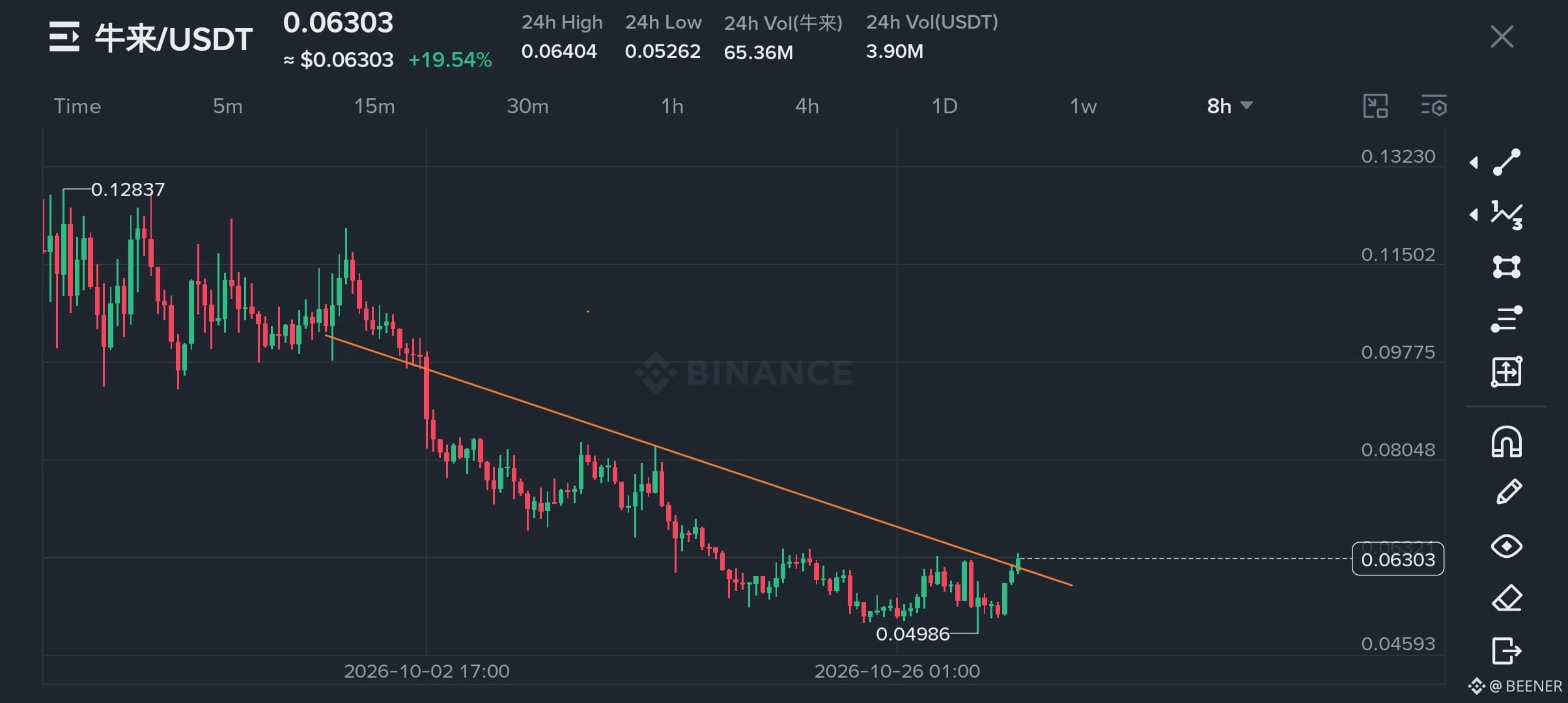
O‘suvchiAs 牛来I (Niu Lai) breaks out of its multi-week descending trendline, bullish traders are stepping in to capitalize on a potential shift in market momentum.
Price Analysis.
Price Level: $牛来
is trading around $0.06303 USD, having gained about 19.54 percent over the past 24 hours, after bouncing from a low near $0.04986 to test a peak near $0.06404.
Support and Resistance Zones.
The $0.049 to $0.052 area serves as a key and important support level that if it holds can protect the price.
The $0.064 to $0.070 level is the next major resistance to watch if the momentum continues upward.
News and Fundamentals.
Ecosystem Updates: Recently, the $牛来 community on the BNB Chain has experienced heightened trading activity and rising open interest across derivatives markets. This ongoing network attention continues to attract speculative interest as volumes scale across major centralized exchanges.
Market Sentiment: The token is seeing increased volume and volatility, which requires traders to exercise caution and manage risk effectively.
Bullish Breakout Momentum.
$ZAMA
1
290
·
--
O‘suvchi
Tarjimani ko‘rish
As 牛来I (Niu Lai) breaks out of its multi-week descending trendline, bullish traders are stepping in to capitalize on a potential shift in market momentum.
Price Analysis.
Price Level: $牛来
{future}(牛来USDT)
is trading around $0.06303 USD, having gained about 19.54 percent over the past 24 hours, after bouncing from a low near $0.04986 to test a peak near $0.06404.
Support and Resistance Zones.
The $0.049 to $0.052 area serves as a key and important support level that if it holds can protect the price.
The $0.064 to $0.070 level is the next major resistance to watch if the momentum continues upward.
News and Fundamentals.
Ecosystem Updates: Recently, the $牛来 community on the BNB Chain has experienced heightened trading activity and rising open interest across derivatives markets. This ongoing network attention continues to attract speculative interest as volumes scale across major centralized exchanges.
Market Sentiment: The token is seeing increased volume and volatility, which requires traders to exercise caution and manage risk effectively.
Bullish Breakout Momentum.
$ZAMA
{spot}(ZAMAUSDT)
As 牛来I (Niu Lai) breaks out of its multi-week descending trendline, bullish traders are stepping in to capitalize on a potential shift in market momentum.
Price Analysis.
Price Level: $牛来
is trading around $0.06303 USD, having gained about 19.54 percent over the past 24 hours, after bouncing from a low near $0.04986 to test a peak near $0.06404.
Support and Resistance Zones.
The $0.049 to $0.052 area serves as a key and important support level that if it holds can protect the price.
The $0.064 to $0.070 level is the next major resistance to watch if the momentum continues upward.
News and Fundamentals.
Ecosystem Updates: Recently, the $牛来 community on the BNB Chain has experienced heightened trading activity and rising open interest across derivatives markets. This ongoing network attention continues to attract speculative interest as volumes scale across major centralized exchanges.
Market Sentiment: The token is seeing increased volume and volatility, which requires traders to exercise caution and manage risk effectively.
Bullish Breakout Momentum.
$ZAMA
1
1
548
·
--
O‘suvchi
Tarjimani ko‘rish
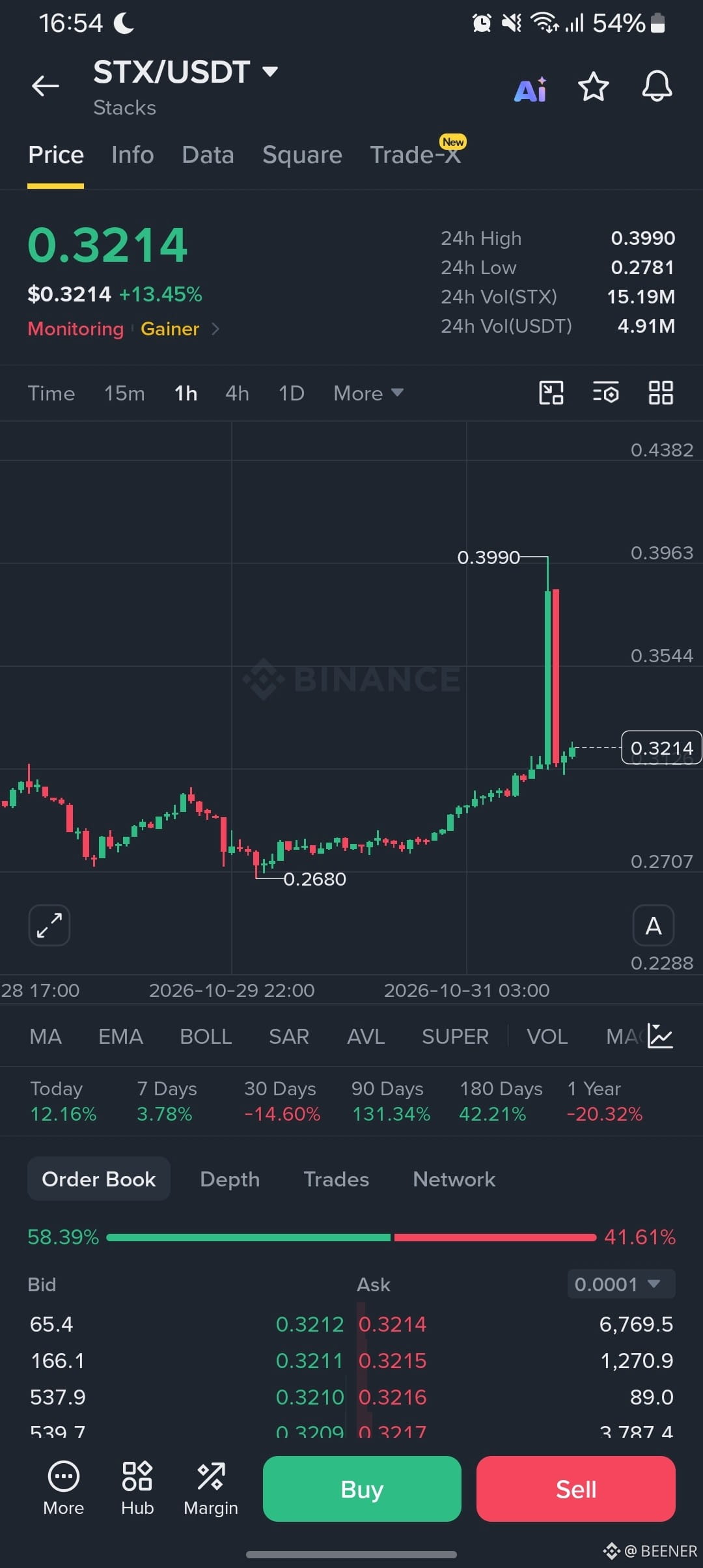
Price Level: $STX is trading around $0.3214 USD, having gained about 13.45 percent over the past 24 hours, after testing a high near $0.3990 before pulling back to its current level.
Support and Resistance Zones.
The $0.30 to $0.31 area serves as a key and important support level that if it holds can protect the price.
The $0.39 to $0.40 level is the next major resistance to watch if the momentum continues upward.
News and Fundamentals.
Bitcoin Staking Developments: Recently, the Stacks network reported that Bitcoin Staking and the PoX 5 hard fork have seen strong adoption, with over 735 $BTC entering the system during the first two bonding periods. This continues to attract investor attention due to using STX to earn yields from Bitcoin.
Monitoring Status: The token continues to be monitored under the Binance Monitoring tag, which requires traders to exercise caution and manage risk.
Stacks Breakout Momentum.
$STX
{future}(STXUSDT)
$CVCO.US
{stock_us}(CVCO.US)
Price Level: $STX is trading around $0.3214 USD, having gained about 13.45 percent over the past 24 hours, after testing a high near $0.3990 before pulling back to its current level.
Support and Resistance Zones.
The $0.30 to $0.31 area serves as a key and important support level that if it holds can protect the price.
The $0.39 to $0.40 level is the next major resistance to watch if the momentum continues upward.
News and Fundamentals.
Bitcoin Staking Developments: Recently, the Stacks network reported that Bitcoin Staking and the PoX 5 hard fork have seen strong adoption, with over 735 $BTC entering the system during the first two bonding periods. This continues to attract investor attention due to using STX to earn yields from Bitcoin.
Monitoring Status: The token continues to be monitored under the Binance Monitoring tag, which requires traders to exercise caution and manage risk.
Stacks Breakout Momentum.
$STX
$CVCO.US
1
162
·
--
Maqola
Tarjimani ko‘rish
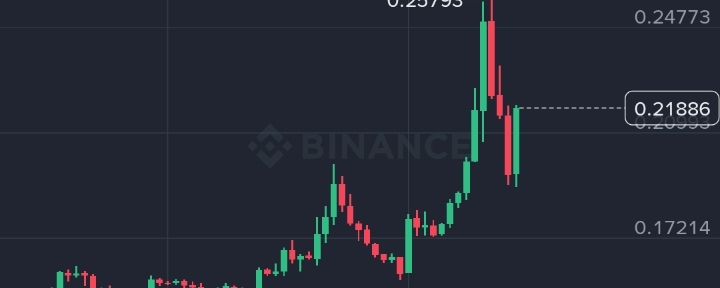
$INIT: Rallying Through an Active ExploitINIT trades at 0.21886, up a sharp 34.56% today, even while the underlying network remains halted following a security exploit. That combination — a token rallying hard while its own blockchain is offline — makes this one of the more unusual setups I've covered, and it's worth understanding exactly what's driving it.
On October 23, Initia halted its Layer 1 blockchain and rollups after a researcher flagged unauthorized token minting tied to a MoveVM vulnerability on Cosmos SDK. An attacker reportedly bridged out roughly $2.6-2.7 million by spoofing fake balances of AUSD and other bridged assets, not the native INIT token itself — Initia's co-founder has stated the bug "does not apply to native INIT tokens" and that total INIT supply is unaffected. That distinction matters: the exploit hit wrapped/bridged representations, not the asset you're looking at. Still, the fallout has been serious — South Korea's two largest exchanges, Upbit and Bithumb, both flagged INIT as a trading-caution asset this week, with Upbit suspending deposits and withdrawals entirely. The network remains halted as of the latest reporting, with Initia saying a security fix is being completed and audited "in a few days," though no restart date has been confirmed. Notably, INIT's price action has repeatedly defied the bad news — it dropped 14% immediately after the exploit was reported, then fully reversed to trade higher on the same day, and today's chart shows an even sharper spike from the 0.137 base to over 0.25 before pulling back to 0.219.
That sets up three ways this plays out.
**Bull case:** Initia successfully patches the vulnerability, the network restarts cleanly with recovered funds, exchange trading restrictions lift, and the "supply unaffected" narrative holds, letting the rally continue.
**Base case:** The network stays halted a bit longer while the patch is audited, INIT chops in a wide range as speculative trading continues on headlines rather than fundamentals.
**Bear case:** The restart reveals deeper issues than disclosed, exchange caution flags expand to other platforms, and INIT gives back this rally once speculative momentum fades.
**Investment takeaway**
A token rallying over 30% while its network sits offline and major exchanges flag it as high-risk is not a normal technical setup — this is speculative trading around exploit headlines and reassurance statements, not a reaction to improving fundamentals. The security warning on the trading screen itself is not boilerplate here.
I'm watching:
Official network restart timeline and the audited patch
Whether Upbit and Bithumb lift their trading-caution flags
Confirmation of total funds lost and any recovery progress
Whether this rally holds once the network actually resumes normal operation
The first move was the exploit testing whether native INIT holders would panic-sell. The next move is proving the network can restart cleanly and whether this speculative rally survives contact with that reality.
$INIT
{future}(INITUSDT)
$WENB
{spot}(WENBUSDT)
$BLUR
{spot}(BLURUSDT)
$INIT: Rallying Through an Active Exploit
INIT trades at 0.21886, up a sharp 34.56% today, even while the underlying network remains halted following a security exploit. That combination — a token rallying hard while its own blockchain is offline — makes this one of the more unusual setups I've covered, and it's worth understanding exactly what's driving it.
On October 23, Initia halted its Layer 1 blockchain and rollups after a researcher flagged unauthorized token minting tied to a MoveVM vulnerability on Cosmos SDK. An attacker reportedly bridged out roughly $2.6-2.7 million by spoofing fake balances of AUSD and other bridged assets, not the native INIT token itself — Initia's co-founder has stated the bug "does not apply to native INIT tokens" and that total INIT supply is unaffected. That distinction matters: the exploit hit wrapped/bridged representations, not the asset you're looking at. Still, the fallout has been serious — South Korea's two largest exchanges, Upbit and Bithumb, both flagged INIT as a trading-caution asset this week, with Upbit suspending deposits and withdrawals entirely. The network remains halted as of the latest reporting, with Initia saying a security fix is being completed and audited "in a few days," though no restart date has been confirmed. Notably, INIT's price action has repeatedly defied the bad news — it dropped 14% immediately after the exploit was reported, then fully reversed to trade higher on the same day, and today's chart shows an even sharper spike from the 0.137 base to over 0.25 before pulling back to 0.219.
That sets up three ways this plays out.
**Bull case:** Initia successfully patches the vulnerability, the network restarts cleanly with recovered funds, exchange trading restrictions lift, and the "supply unaffected" narrative holds, letting the rally continue.
**Base case:** The network stays halted a bit longer while the patch is audited, INIT chops in a wide range as speculative trading continues on headlines rather than fundamentals.
**Bear case:** The restart reveals deeper issues than disclosed, exchange caution flags expand to other platforms, and INIT gives back this rally once speculative momentum fades.
**Investment takeaway**
A token rallying over 30% while its network sits offline and major exchanges flag it as high-risk is not a normal technical setup — this is speculative trading around exploit headlines and reassurance statements, not a reaction to improving fundamentals. The security warning on the trading screen itself is not boilerplate here.
I'm watching:
Official network restart timeline and the audited patch
Whether Upbit and Bithumb lift their trading-caution flags
Confirmation of total funds lost and any recovery progress
Whether this rally holds once the network actually resumes normal operation
The first move was the exploit testing whether native INIT holders would panic-sell. The next move is proving the network can restart cleanly and whether this speculative rally survives contact with that reality.
$INIT
$WENB
$BLUR
212
·
--
Maqola
Tarjimani ko‘rish
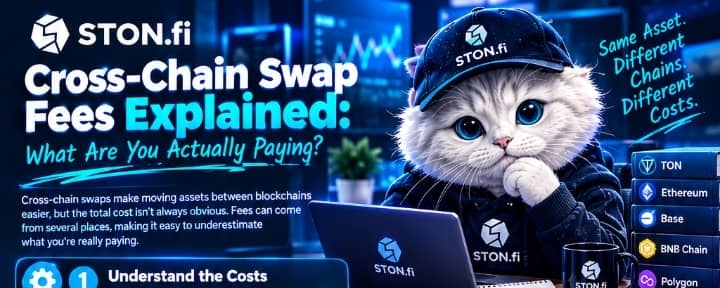
💸 Cross-Chain Swap Fees Explained: What Are You Actually Paying?Cross-chain swaps make moving assets between blockchains easier, but the total cost isn’t always obvious. Fees can come from several places, making it easy to underestimate what you’re really paying.
🔍 1. Understand the Costs
A cross-chain swap may involve:
Source-chain gas: Processing your transaction on the sending network.
Provider fees: Costs charged by the cross-chain service.
Destination-chain gas: Network fees for additional transactions on the receiving chain.
DEX fees: Charges for swapping tokens.
Slippage and price impact: Factors that can affect the final amount you receive.
Not every route includes all these costs separately, but understanding them helps you compare options.
⚙️ 2. Look Beyond Gas Fees
A route with low gas fees isn’t necessarily the cheapest. Provider fees, token conversion, and additional transactions can increase the total cost.
For example, moving assets to another chain may not be the final step if you still need to swap them into your preferred token.
💧 3. Don't Forget Liquidity Pool Fees
DEX trading fees vary by platform and pool. STON.fi's documented default pool fee is 0.3%, typically split between liquidity providers (0.2%) and the protocol (0.1%). Actual fees can vary by pool.
✅ 4. How to Avoid Costly Surprises
Before confirming a cross-chain swap:
✓ Review the quoted exchange rate and fees.
✓ Check the estimated amount you'll receive.
✓ Consider price impact and slippage.
✓ Account for any additional transactions on the destination chain.
✓ Compare the total cost, not just the gas fee.
🔑 The Key Takeaway
Cross-chain fees aren't always a single charge. The smartest way to evaluate a route is to understand every cost and focus on how much you’ll actually receive.
Fee transparency helps you move assets with fewer surprises and make better decisions.
#STONfi #Omniston #DeFi #CrossChain #TON @stonfi $GTC
{future}(GTCUSDT)
$OSMO
{spot}(OSMOUSDT)
$TON
💸 Cross-Chain Swap Fees Explained: What Are You Actually Paying?
Cross-chain swaps make moving assets between blockchains easier, but the total cost isn’t always obvious. Fees can come from several places, making it easy to underestimate what you’re really paying.
🔍 1. Understand the Costs
A cross-chain swap may involve:
Source-chain gas: Processing your transaction on the sending network.
Provider fees: Costs charged by the cross-chain service.
Destination-chain gas: Network fees for additional transactions on the receiving chain.
DEX fees: Charges for swapping tokens.
Slippage and price impact: Factors that can affect the final amount you receive.
Not every route includes all these costs separately, but understanding them helps you compare options.
⚙️ 2. Look Beyond Gas Fees
A route with low gas fees isn’t necessarily the cheapest. Provider fees, token conversion, and additional transactions can increase the total cost.
For example, moving assets to another chain may not be the final step if you still need to swap them into your preferred token.
💧 3. Don't Forget Liquidity Pool Fees
DEX trading fees vary by platform and pool. STON.fi's documented default pool fee is 0.3%, typically split between liquidity providers (0.2%) and the protocol (0.1%). Actual fees can vary by pool.
✅ 4. How to Avoid Costly Surprises
Before confirming a cross-chain swap:
✓ Review the quoted exchange rate and fees.
✓ Check the estimated amount you'll receive.
✓ Consider price impact and slippage.
✓ Account for any additional transactions on the destination chain.
✓ Compare the total cost, not just the gas fee.
🔑 The Key Takeaway
Cross-chain fees aren't always a single charge. The smartest way to evaluate a route is to understand every cost and focus on how much you’ll actually receive.
Fee transparency helps you move assets with fewer surprises and make better decisions.
#STONfi #Omniston #DeFi #CrossChain #TON @STONfi DEX $GTC
$OSMO
$TON
260
·
--
Maqola
Tarjimani ko‘rish
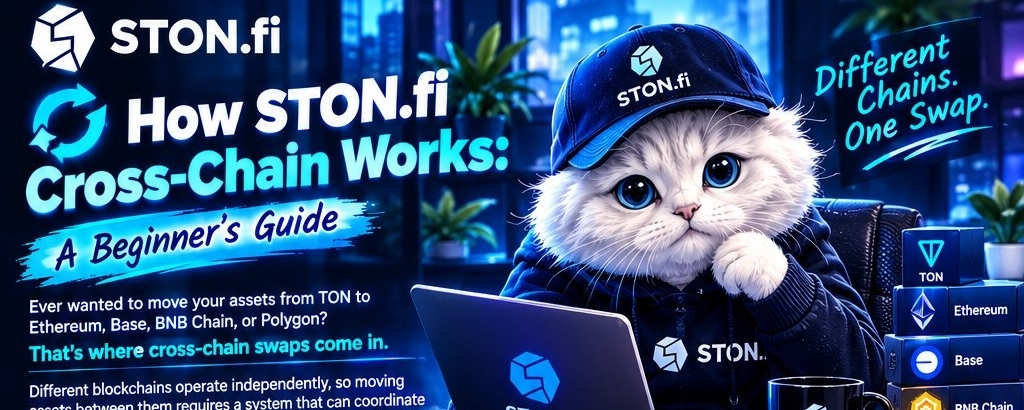
🔄 How STON.fi Cross-Chain Works: A Beginner’s GuideEver wanted to move your assets from TON to Ethereum, Base, BNB Chain, or Polygon? That’s where cross-chain swaps come in.
Different blockchains operate independently, so moving assets between them requires a system that can coordinate the process. That’s what Omniston, STON.fi’s cross-chain execution layer, is designed to do.
⚙️ How Does It Work?
Here’s the simple breakdown:
1️⃣ Choose your assets: Select what you want to send and what you want to receive.
2️⃣ Lock the assets: Your tokens are locked on the source chain, while a resolver locks the asset you want on the destination chain.
3️⃣ Connect both sides: The smart contracts use a shared cryptographic condition called a hashlock to link the swap.
4️⃣ Complete the swap: Once the condition is fulfilled, you receive your destination asset, and the resolver claims your original asset.
5️⃣ What if it fails? If the swap doesn’t complete within the required timeframe, the timelock mechanism allows the assets to be refunded.
🔐 Why Is This Important?
Unlike traditional bridge models that may rely on wrapped tokens, Omniston coordinates swaps so users can receive the destination asset directly.
The goal is to make cross-chain swaps simpler without requiring users to manage every technical step themselves.
Of course, smart contracts, resolvers, and network conditions still carry risks.
💡 When Would You Need It?
✓ Moving assets from TON to another supported blockchain.
✓ Accessing tokens on different networks.
✓ Swapping across chains without manually managing a traditional bridge.
If both tokens are already on TON, a regular STON.fi swap is usually the simpler option.
The idea is simple: choose your assets, select your destination, and let Omniston coordinate the cross-chain process.
#STONfi #Omniston #TON #DeFi #CrossChain @stonfi $OSMO
{spot}(OSMOUSDT)
$AMP
{spot}(AMPUSDT)
$TON
🔄 How STON.fi Cross-Chain Works: A Beginner’s Guide
Ever wanted to move your assets from TON to Ethereum, Base, BNB Chain, or Polygon? That’s where cross-chain swaps come in.
Different blockchains operate independently, so moving assets between them requires a system that can coordinate the process. That’s what Omniston, STON.fi’s cross-chain execution layer, is designed to do.
⚙️ How Does It Work?
Here’s the simple breakdown:
1️⃣ Choose your assets: Select what you want to send and what you want to receive.
2️⃣ Lock the assets: Your tokens are locked on the source chain, while a resolver locks the asset you want on the destination chain.
3️⃣ Connect both sides: The smart contracts use a shared cryptographic condition called a hashlock to link the swap.
4️⃣ Complete the swap: Once the condition is fulfilled, you receive your destination asset, and the resolver claims your original asset.
5️⃣ What if it fails? If the swap doesn’t complete within the required timeframe, the timelock mechanism allows the assets to be refunded.
🔐 Why Is This Important?
Unlike traditional bridge models that may rely on wrapped tokens, Omniston coordinates swaps so users can receive the destination asset directly.
The goal is to make cross-chain swaps simpler without requiring users to manage every technical step themselves.
Of course, smart contracts, resolvers, and network conditions still carry risks.
💡 When Would You Need It?
✓ Moving assets from TON to another supported blockchain.
✓ Accessing tokens on different networks.
✓ Swapping across chains without manually managing a traditional bridge.
If both tokens are already on TON, a regular STON.fi swap is usually the simpler option.
The idea is simple: choose your assets, select your destination, and let Omniston coordinate the cross-chain process.
#STONfi #Omniston #TON #DeFi #CrossChain @STONfi DEX $OSMO
$AMP
$TON
286
·
--
Tasdiqlangan
Maqola
Tarjimani ko‘rish
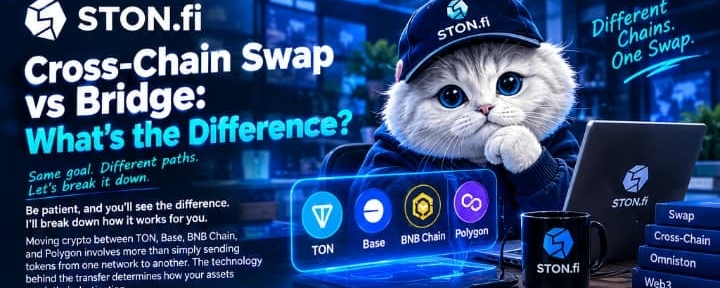
Cross-Chain Swap vs Bridge: What’s the Difference?Be patient, and you’ll see the difference. I’ll break down how it works for you.
Moving crypto between TON, Base, BNB Chain, and Polygon involves more than simply sending tokens from one network to another. The technology behind the transfer determines how your assets reach their destination.
There are two common approaches: traditional bridges and resolver-based cross-chain swaps.
🌉 1. How Traditional Bridges Work
A traditional bridge typically locks or burns tokens on the source chain and releases or mints a corresponding representation on the destination chain.
For example, moving assets from TON to Base may involve receiving a bridged version of an asset rather than the original token on Base.
The main consideration is the bridge’s security model, including its smart contracts, validators, or other mechanisms used to secure cross-chain transfers.
⚡ 2. How Resolver-Based Cross-Chain Swaps Work
STON.fi takes a different approach through Omniston, its cross-chain execution layer.
Instead of relying on a traditional lock-and-mint bridge model, Omniston coordinates swaps through resolvers and linked Hashed Timelock Contracts (HTLCs).
Here’s the basic process:
1. You select the asset you want to send and the asset you want to receive.
2. A resolver provides a quote and coordinates the swap.
3. Your source asset and the destination asset are locked through linked contracts.
4. When the required cryptographic condition is fulfilled, both sides can settle.
5. If the swap does not complete within the required timeframe, the timelock mechanism enables refunds.
The goal is to let users receive the destination asset directly, without creating a wrapped representation as part of the swap.
🧩 Why Is TON Different?
Base, BNB Chain, and Polygon are EVM-compatible networks, meaning they share compatibility with Ethereum’s smart-contract environment.
TON uses a different architecture, with its own smart-contract languages and asynchronous messaging model.
That means connecting TON with EVM networks requires infrastructure that can coordinate different execution environments and transaction flows.
With Omniston, the linked HTLCs coordinate the cross-chain settlement, rather than relying on a single transaction executing atomically across both blockchains.
💰 What About Fees?
Regardless of the method, consider the full cost:
Source-chain network fees
Protocol or swap fees
Destination-chain network fees, where applicable
Always review the quote, expected output, and transaction conditions before confirming.
🔑 The Key Difference
Traditional bridge: Transfers value using a bridge mechanism that may involve wrapped assets.
Resolver-based cross-chain swap: Coordinates an exchange between assets on different chains through resolvers and linked contracts.
Both approaches have risks, so the underlying security design matters.
With @stonfi Omniston aims to make cross-chain swaps simpler by coordinating the complex steps behind one user-facing flow.
Different chains. Different architectures. One coordinated swap experience.
#STONfi #Omniston #TON #DeFi #CrossChain
$EPIC
{spot}(EPICUSDT)
$AVA
{future}(AVAUSDT)
$GRAM
{future}(GRAMUSDT)
Cross-Chain Swap vs Bridge: What’s the Difference?
Be patient, and you’ll see the difference. I’ll break down how it works for you.
Moving crypto between TON, Base, BNB Chain, and Polygon involves more than simply sending tokens from one network to another. The technology behind the transfer determines how your assets reach their destination.
There are two common approaches: traditional bridges and resolver-based cross-chain swaps.
🌉 1. How Traditional Bridges Work
A traditional bridge typically locks or burns tokens on the source chain and releases or mints a corresponding representation on the destination chain.
For example, moving assets from TON to Base may involve receiving a bridged version of an asset rather than the original token on Base.
The main consideration is the bridge’s security model, including its smart contracts, validators, or other mechanisms used to secure cross-chain transfers.
⚡ 2. How Resolver-Based Cross-Chain Swaps Work
STON.fi takes a different approach through Omniston, its cross-chain execution layer.
Instead of relying on a traditional lock-and-mint bridge model, Omniston coordinates swaps through resolvers and linked Hashed Timelock Contracts (HTLCs).
Here’s the basic process:
1. You select the asset you want to send and the asset you want to receive.
2. A resolver provides a quote and coordinates the swap.
3. Your source asset and the destination asset are locked through linked contracts.
4. When the required cryptographic condition is fulfilled, both sides can settle.
5. If the swap does not complete within the required timeframe, the timelock mechanism enables refunds.
The goal is to let users receive the destination asset directly, without creating a wrapped representation as part of the swap.
🧩 Why Is TON Different?
Base, BNB Chain, and Polygon are EVM-compatible networks, meaning they share compatibility with Ethereum’s smart-contract environment.
TON uses a different architecture, with its own smart-contract languages and asynchronous messaging model.
That means connecting TON with EVM networks requires infrastructure that can coordinate different execution environments and transaction flows.
With Omniston, the linked HTLCs coordinate the cross-chain settlement, rather than relying on a single transaction executing atomically across both blockchains.
💰 What About Fees?
Regardless of the method, consider the full cost:
Source-chain network fees
Protocol or swap fees
Destination-chain network fees, where applicable
Always review the quote, expected output, and transaction conditions before confirming.
🔑 The Key Difference
Traditional bridge: Transfers value using a bridge mechanism that may involve wrapped assets.
Resolver-based cross-chain swap: Coordinates an exchange between assets on different chains through resolvers and linked contracts.
Both approaches have risks, so the underlying security design matters.
With @STONfi DEX Omniston aims to make cross-chain swaps simpler by coordinating the complex steps behind one user-facing flow.
Different chains. Different architectures. One coordinated swap experience.
#STONfi #Omniston #TON #DeFi #CrossChain
$EPIC
$AVA
$GRAM
1
670
·
--
Maqola
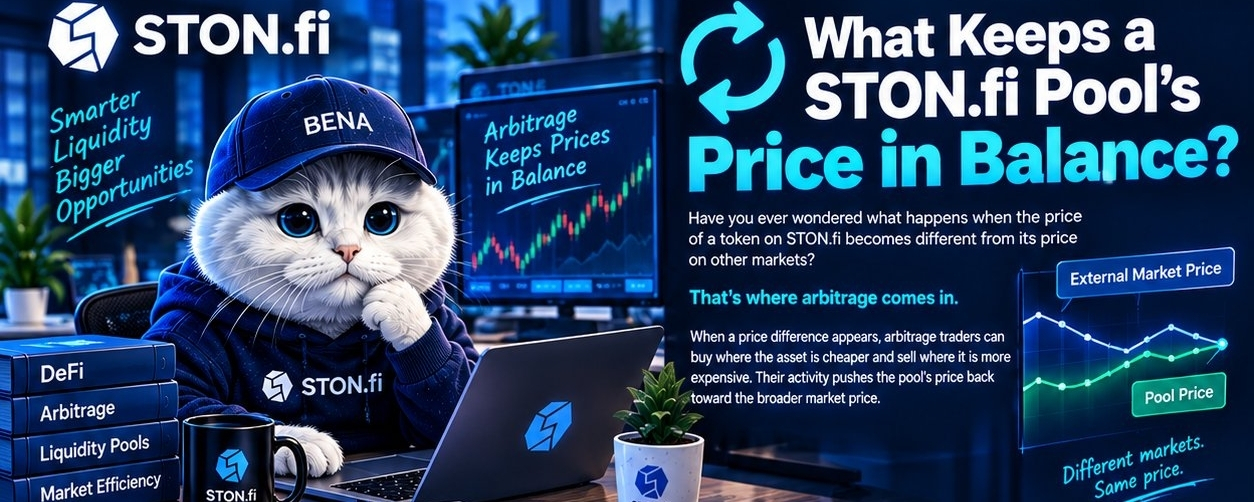
🔄 STON.fi pul hovuzining narxi muvozanatda nimasi bilan ushlanadi?STОN.fi’da token narxi boshqa bozorlardagi narxidan farq qolganda nima bo‘lishini hech o‘ylab ko‘rganmisiz?
Mana shunda arbitraj ishga tushadi.
Narx farqi paydo bo‘lganda, arbitraj treyderlari aktiv qayerda arzon bo‘lsa o‘sha joydan sotib olib, qayerda qimmatroq bo‘lsa o‘sha joyda sotadilar. Ularning faoliyati pul hovuzidagi narxni kengroq bozor narxiga yana yaqinlashtiradi.
Buning ahamiyati nimada?
✓ Yanada aniq narxlash — Arbitrage (arbitraj) pul hovuzlari narxlarini tashqi bozorlardagi narxlar bilan moslab turishga yordam beradi.
✓ Yaxshiroq svop shartlari — Narx farqlari savdo faoliyati orqali tuzatiladi.
🔄 STON.fi pul hovuzining narxi muvozanatda nimasi bilan ushlanadi?
STОN.fi’da token narxi boshqa bozorlardagi narxidan farq qolganda nima bo‘lishini hech o‘ylab ko‘rganmisiz?
Mana shunda arbitraj ishga tushadi.
Narx farqi paydo bo‘lganda, arbitraj treyderlari aktiv qayerda arzon bo‘lsa o‘sha joydan sotib olib, qayerda qimmatroq bo‘lsa o‘sha joyda sotadilar. Ularning faoliyati pul hovuzidagi narxni kengroq bozor narxiga yana yaqinlashtiradi.
Buning ahamiyati nimada?
✓ Yanada aniq narxlash — Arbitrage (arbitraj) pul hovuzlari narxlarini tashqi bozorlardagi narxlar bilan moslab turishga yordam beradi.
✓ Yaxshiroq svop shartlari — Narx farqlari savdo faoliyati orqali tuzatiladi.
1
472
·
--
Maqola
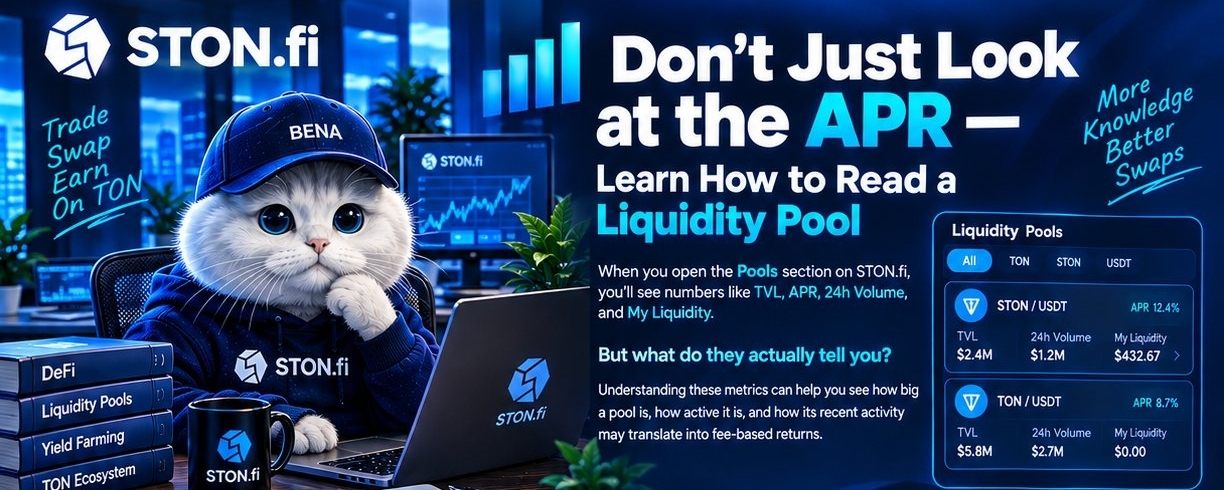
📊 Faqat APR’ga qaramang — Likvidlik hovuzini qanday o‘qishni o‘rganingSTON.fi saytida Pools bo‘limini ochganingizda, TVL, APR, 24 soatlik hajm (Volume) va My Liquidity kabi raqamlarni ko‘rasiz.
Lekin ular sizga aslida nimani bildiradi?
Ushbu ko‘rsatkichlarni tushunish sizga hovuz qanchalik katta ekanini, qanchalik faol ekanini va uning yaqindagi faolligi to‘lovga (fee) asoslangan daromadlarga qanday ta’sir qilishi mumkinligini ko‘rishga yordam beradi.
💰 TVL — Qancha likvidlik bor?
TVL (Total Value Locked) — bu pul mablag‘lari hovuzga depozit qilingan umumiy dollardagi qiymatni anglatadi.
Odatda, TVL qanchalik yuqori bo‘lsa, likvidlik shunchalik chuqur bo‘ladi — bu esa narxga ta’sir (price impact) pastroq bo‘lgan holda kattaroq svoplarni qo‘llab-quvvatlashga yordam berishi mumkin.
📊 Faqat APR’ga qaramang — Likvidlik hovuzini qanday o‘qishni o‘rganing
STON.fi saytida Pools bo‘limini ochganingizda, TVL, APR, 24 soatlik hajm (Volume) va My Liquidity kabi raqamlarni ko‘rasiz.
Lekin ular sizga aslida nimani bildiradi?
Ushbu ko‘rsatkichlarni tushunish sizga hovuz qanchalik katta ekanini, qanchalik faol ekanini va uning yaqindagi faolligi to‘lovga (fee) asoslangan daromadlarga qanday ta’sir qilishi mumkinligini ko‘rishga yordam beradi.
💰 TVL — Qancha likvidlik bor?
TVL (Total Value Locked) — bu pul mablag‘lari hovuzga depozit qilingan umumiy dollardagi qiymatni anglatadi.
Odatda, TVL qanchalik yuqori bo‘lsa, likvidlik shunchalik chuqur bo‘ladi — bu esa narxga ta’sir (price impact) pastroq bo‘lgan holda kattaroq svoplarni qo‘llab-quvvatlashga yordam berishi mumkin.
152
·
--
Maqola
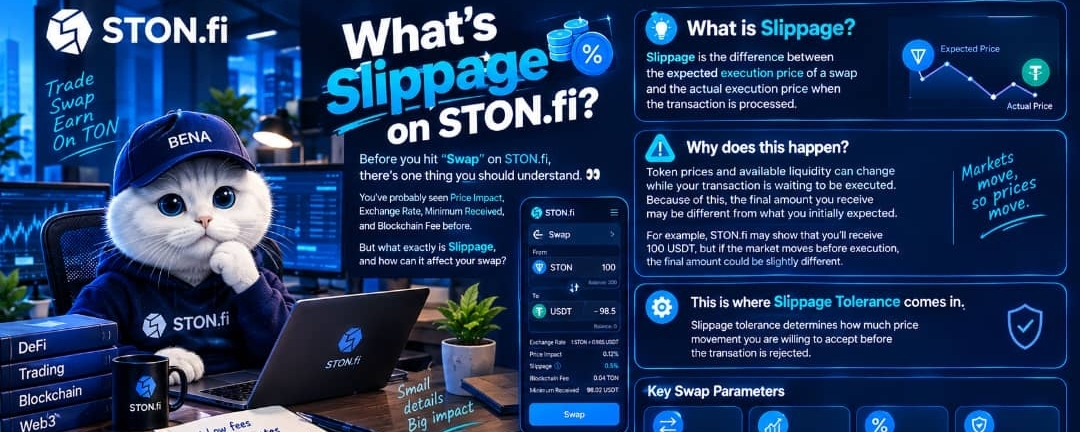
STON.fi’da slippage nima?STON.fi’da “Swap” tugmasini bosishdan oldin tushunishingiz kerak bo‘lgan bitta narsa bor. 👀
Siz avval Price Impact, Exchange Rate, Minimum Received va Blockchain Fee’ni ko‘rgansiz.
Unda Slippage’ning o‘zi nima va u swap’ingizga qanday ta’sir qiladi?
Slippage — bu birja almashinuvi (swap) kutilgan ijro etish narxi va tranzaksiya qayta ishlanganda amalda ijro etiladigan narx o‘rtasidagi farq.
Nega bu shunday bo‘ladi?
Token narxlari va mavjud likvidlik siz tranzaksiya bajarilishini kutayotganingizda o‘zgarishi mumkin. Shu sababli yakunda oladigan miqdoringiz dastlab o‘ylaganingizdan farq qilishi mumkin.
STON.fi’da slippage nima?
STON.fi’da “Swap” tugmasini bosishdan oldin tushunishingiz kerak bo‘lgan bitta narsa bor. 👀
Siz avval Price Impact, Exchange Rate, Minimum Received va Blockchain Fee’ni ko‘rgansiz.
Unda Slippage’ning o‘zi nima va u swap’ingizga qanday ta’sir qiladi?
Slippage — bu birja almashinuvi (swap) kutilgan ijro etish narxi va tranzaksiya qayta ishlanganda amalda ijro etiladigan narx o‘rtasidagi farq.
Nega bu shunday bo‘ladi?
Token narxlari va mavjud likvidlik siz tranzaksiya bajarilishini kutayotganingizda o‘zgarishi mumkin. Shu sababli yakunda oladigan miqdoringiz dastlab o‘ylaganingizdan farq qilishi mumkin.
440
·
--
Maqola
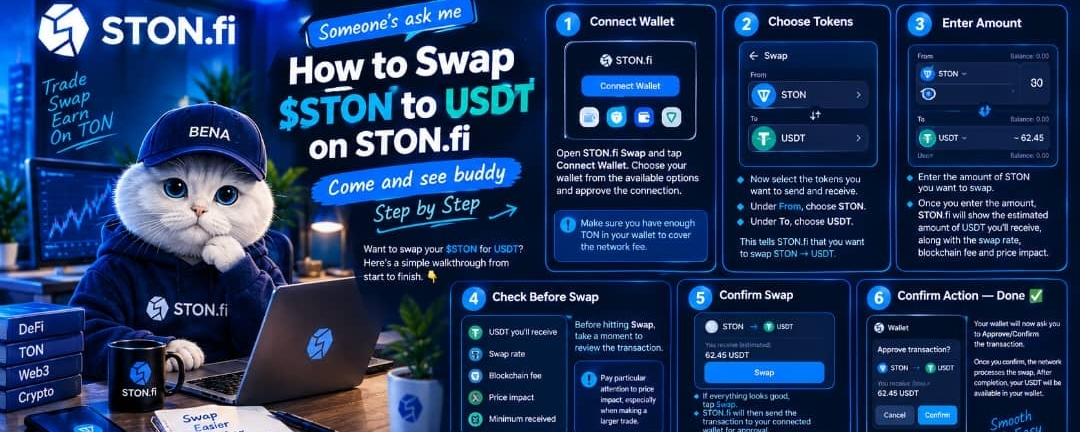
🧵 Kimdir menga STON.fi’da $STON’ni USDT ga qanday almashtirishni so‘radi — asta-sekin ko‘rish uchun keling, do‘stim.$STON’ni USDT ga almashtirmoqchimisiz? Mana boshidan oxirigacha oddiy yo‘riqnoma. 👇
1️⃣ Hamyoni ulash
STON.fi Swap’ni oching va Connect Wallet’ni bosing. Mavjud variantlardan hamyoningizni tanlang va ulanishga ruxsat bering.
Tarmoq to‘lovini qoplash uchun hamyoningizda yetarli TON borligiga ishonch hosil qiling.
2️⃣ Tokenlarni tanlang
Endi yubormoqchi va qabul qilmoqchi bo‘lgan tokenlarni tanlang.
From bo‘limidan STON ni tanlang.
To bo‘limidan USDT ni tanlang.
Bu STON.fi’ga STON → USDT almashtirmoqchi ekaningizni bildiradi.
3️⃣ Miqdorni kiriting
Qancha STON almashtirmoqchi ekaningizni kiriting.
🧵 Kimdir menga STON.fi’da $STON’ni USDT ga qanday almashtirishni so‘radi — asta-sekin ko‘rish uchun keling, do‘stim.
$STON’ni USDT ga almashtirmoqchimisiz? Mana boshidan oxirigacha oddiy yo‘riqnoma. 👇
1️⃣ Hamyoni ulash
STON.fi Swap’ni oching va Connect Wallet’ni bosing. Mavjud variantlardan hamyoningizni tanlang va ulanishga ruxsat bering.
Tarmoq to‘lovini qoplash uchun hamyoningizda yetarli TON borligiga ishonch hosil qiling.
2️⃣ Tokenlarni tanlang
Endi yubormoqchi va qabul qilmoqchi bo‘lgan tokenlarni tanlang.
From bo‘limidan STON ni tanlang.
To bo‘limidan USDT ni tanlang.
Bu STON.fi’ga STON → USDT almashtirmoqchi ekaningizni bildiradi.
3️⃣ Miqdorni kiriting
Qancha STON almashtirmoqchi ekaningizni kiriting.
476
·
--
Maqola
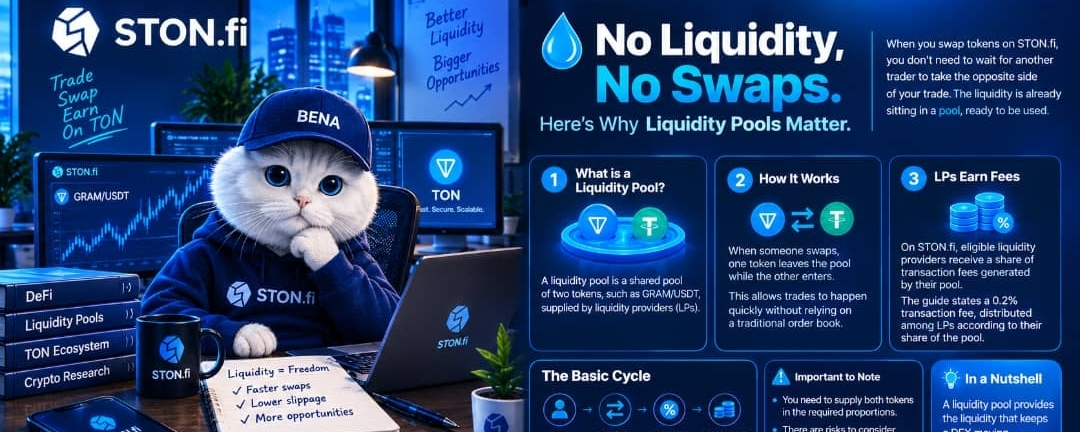
💧 Likvidliksiz — savdolar ham yo‘q. Nega likvidlik hovuzlari muhim?STON.fi’da tokenlarni almashganda, savdolaringizning qarama-qarshi tomonini bajaradigan boshqa treyderni kutishingiz shart emas. Likvidlik esa tayyor holda hovuzda turibdi va foydalanishga tayyor.
Likvidlik hovuzi — bu aslida ikki xil tokenning, masalan GRAM/USDT’ning, likvidlik provayderlari (LP) tomonidan kiritilgan umumiy hovuzi.
Kimdir almashsa, bitta token hovuzdan chiqadi, ikkinchisi esa kiradi. Bu esa an’anaviy order buketiga tayanmasdan, savdolar tezda amalga oshishiga imkon beradi.
Mana qiziqarli qismi shundaki: o‘sha likvidlikni ta’minlaydigan odamlar ushbu faoliyatdan daromad olishi mumkin.
💧 Likvidliksiz — savdolar ham yo‘q. Nega likvidlik hovuzlari muhim?
STON.fi’da tokenlarni almashganda, savdolaringizning qarama-qarshi tomonini bajaradigan boshqa treyderni kutishingiz shart emas. Likvidlik esa tayyor holda hovuzda turibdi va foydalanishga tayyor.
Likvidlik hovuzi — bu aslida ikki xil tokenning, masalan GRAM/USDT’ning, likvidlik provayderlari (LP) tomonidan kiritilgan umumiy hovuzi.
Kimdir almashsa, bitta token hovuzdan chiqadi, ikkinchisi esa kiradi. Bu esa an’anaviy order buketiga tayanmasdan, savdolar tezda amalga oshishiga imkon beradi.
Mana qiziqarli qismi shundaki: o‘sha likvidlikni ta’minlaydigan odamlar ushbu faoliyatdan daromad olishi mumkin.
538
·
--
Maqola
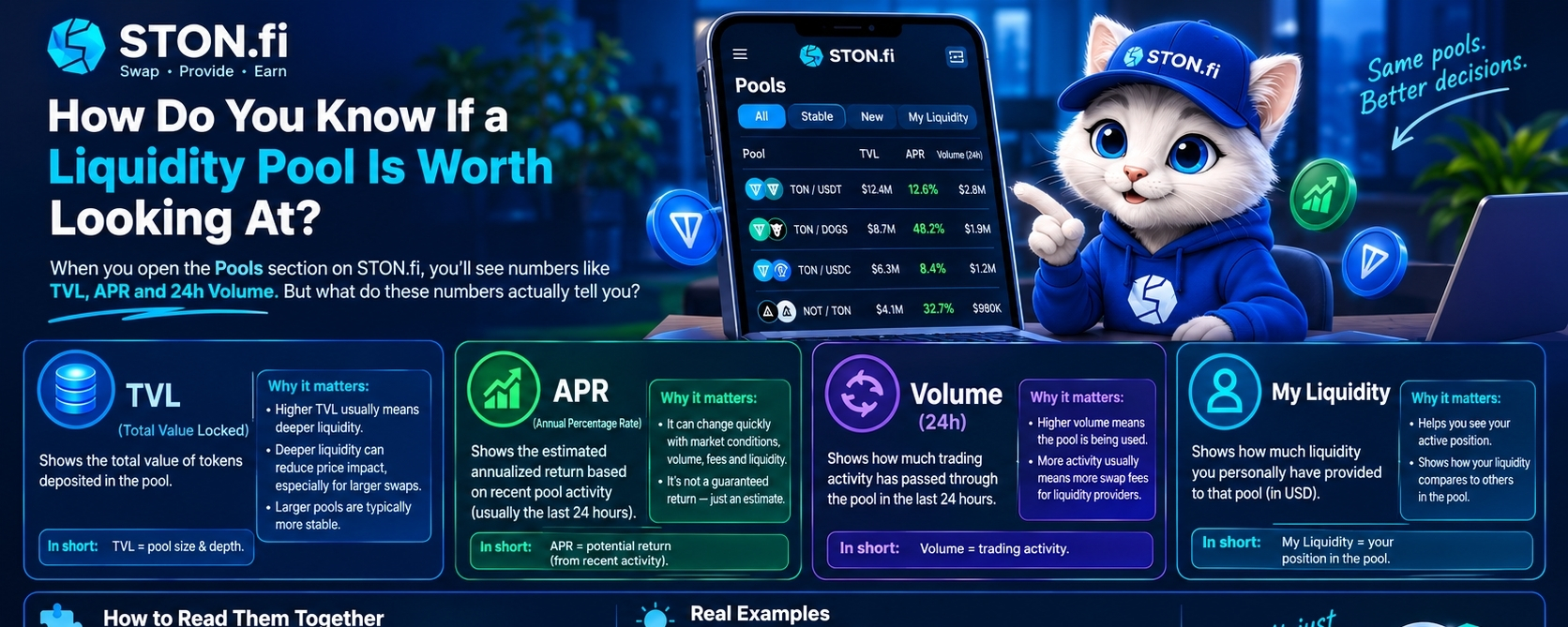
Likvidlik hovuzini ko‘rishga arziydimi yoki yo‘qligini qanday bilasiz?STON.fi’da Pools bo‘limini ochganingizda TVL, APR va 24 soatlik savdo hajmi kabi raqamlarni ko‘rasiz.
Lekin bu raqamlar sizga aslida nimani aytib beradi? 👇
TVL — Hovuz qanchalik chuqur?
TVL hovuz ichida bloklangan umumiy qiymatni ko‘rsatadi.
Odatda, TVL qanchalik yuqori bo‘lsa, likvidlik shunchalik chuqur bo‘ladi; bu esa treyderlarga narx ta’sirini (price impact) pastroq saqlashga yordam beradi, ayniqsa kattaroq svoplarni amalga oshirganda.
24 soatlik savdo hajmi — Hovuzdan foydalanilyaptimi?
Hajm so‘nggi 24 soat ichida savdo faoliyati hovuz orqali qanchaga o‘tganini ko‘rsatadi.
Ko‘proq savdo faolligi odatda likvidlik provayderlari uchun ko‘proq svop komissiyalari (to‘lovlar) generatsiya qilinishini anglatadi.
Likvidlik hovuzini ko‘rishga arziydimi yoki yo‘qligini qanday bilasiz?
STON.fi’da Pools bo‘limini ochganingizda TVL, APR va 24 soatlik savdo hajmi kabi raqamlarni ko‘rasiz.
Lekin bu raqamlar sizga aslida nimani aytib beradi? 👇
TVL — Hovuz qanchalik chuqur?
TVL hovuz ichida bloklangan umumiy qiymatni ko‘rsatadi.
Odatda, TVL qanchalik yuqori bo‘lsa, likvidlik shunchalik chuqur bo‘ladi; bu esa treyderlarga narx ta’sirini (price impact) pastroq saqlashga yordam beradi, ayniqsa kattaroq svoplarni amalga oshirganda.
24 soatlik savdo hajmi — Hovuzdan foydalanilyaptimi?
Hajm so‘nggi 24 soat ichida savdo faoliyati hovuz orqali qanchaga o‘tganini ko‘rsatadi.
Ko‘proq savdo faolligi odatda likvidlik provayderlari uchun ko‘proq svop komissiyalari (to‘lovlar) generatsiya qilinishini anglatadi.
736
·
--
Maqola
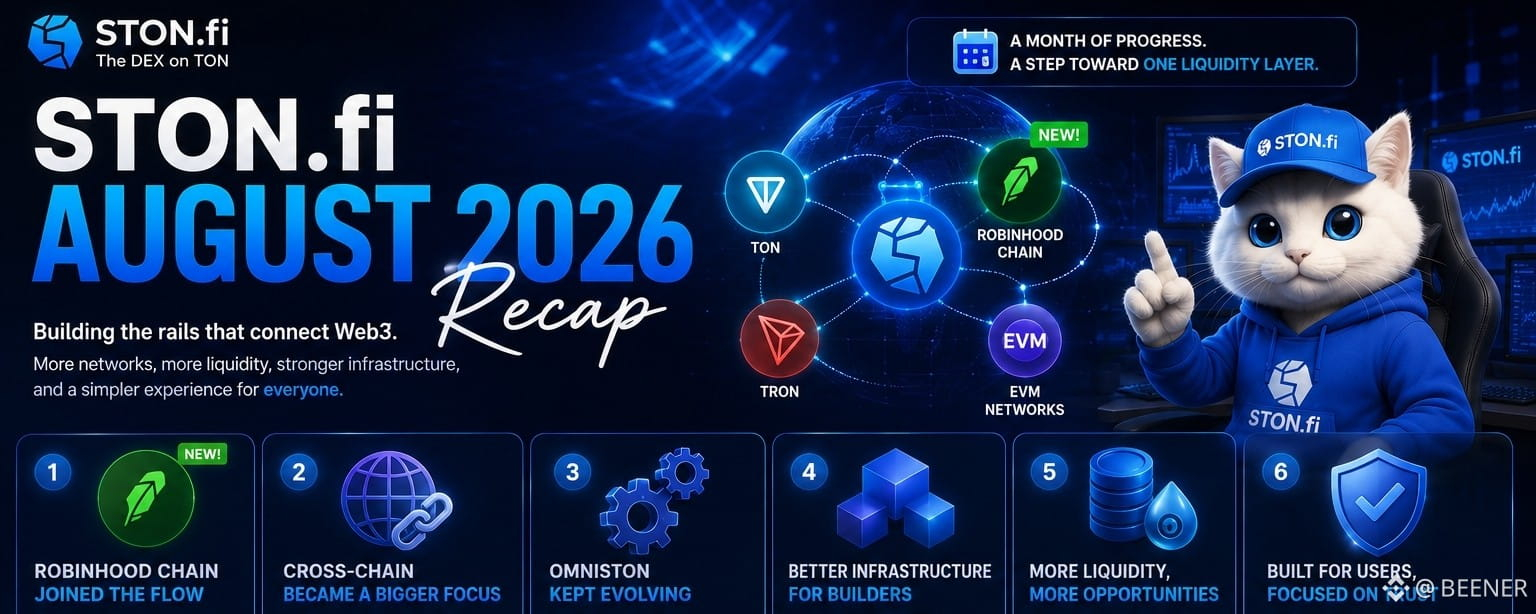
STON.fi August 2026 Recap: Kattaroq aloqalar oyligi.Avgust @stonfi uchun juda qiziqarli oy bo‘ldi
Menga ko‘proq ta’sir qilgani bitta yangi funksiya emas, balki hammasi yanada katta maqsad sari qanday davom etayotgani bo‘ldi: turli blokcheyn ekotizimlarini ulashni osonroq qilish.
🌉 Robinhood Chain cross-chain oqimiga qo‘shildi
Eng e’tiborga molik jihatlardan biri Robinhood Chain’ni STON.fi ekotizimiga olib kirish bo‘ldi. Endi foydalanuvchilar USDG’ga Robinhood Chain, $TON , TRON va boshqa qo‘llab-quvvatlanadigan tarmoqlar bo‘ylab cross-chain oqimi orqali kirishlari mumkin.
🔗 Cross-chain yanada kattaroq diqqat markaziga aylandi
STON.fi August 2026 Recap: Kattaroq aloqalar oyligi.
Avgust @STONfi DEX uchun juda qiziqarli oy bo‘ldi
Menga ko‘proq ta’sir qilgani bitta yangi funksiya emas, balki hammasi yanada katta maqsad sari qanday davom etayotgani bo‘ldi: turli blokcheyn ekotizimlarini ulashni osonroq qilish.
🌉 Robinhood Chain cross-chain oqimiga qo‘shildi
Eng e’tiborga molik jihatlardan biri Robinhood Chain’ni STON.fi ekotizimiga olib kirish bo‘ldi. Endi foydalanuvchilar USDG’ga Robinhood Chain, $TON , TRON va boshqa qo‘llab-quvvatlanadigan tarmoqlar bo‘ylab cross-chain oqimi orqali kirishlari mumkin.
🔗 Cross-chain yanada kattaroq diqqat markaziga aylandi
112
·
--
Maqola
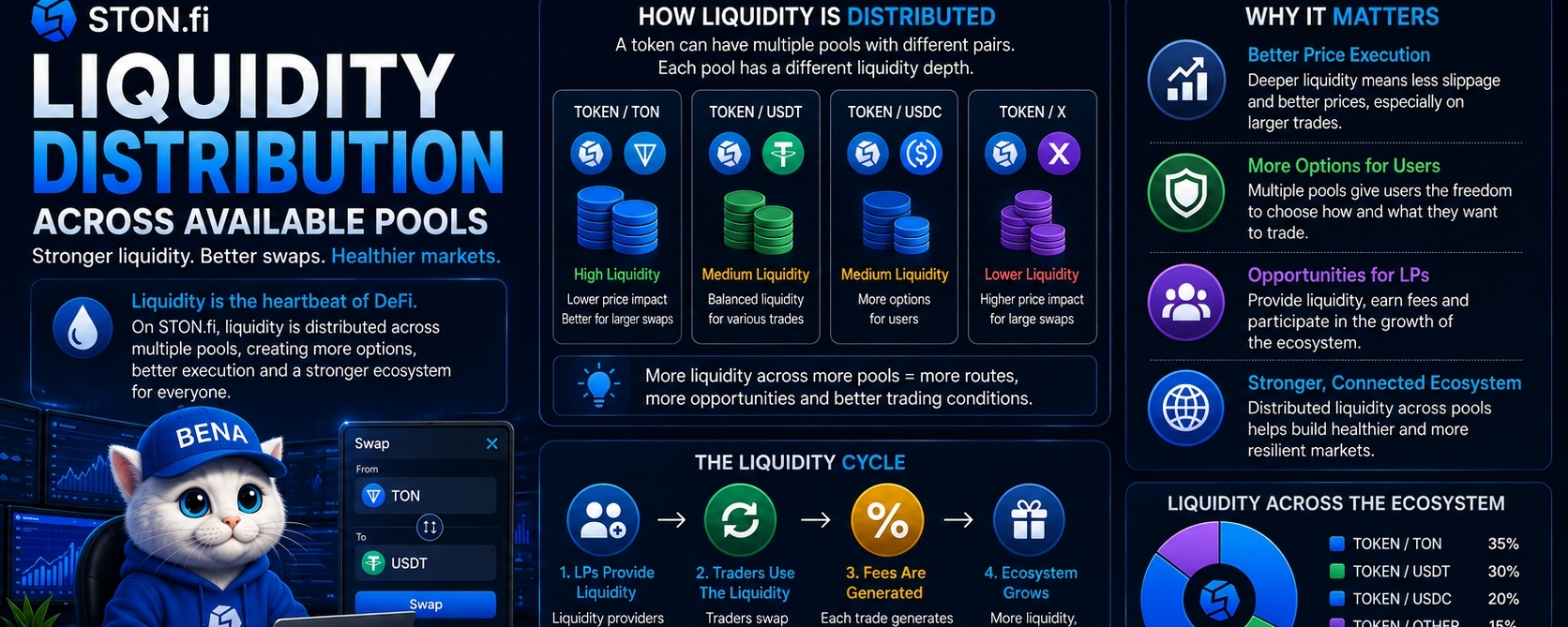
Mavjud pool’lar bo‘yicha likvidlik taqsimoti: STON.fi’da nega muhim
Siz swap qilganingizda STSTON.fi’da swap qilganingizda, ehtimol likvidlik qayerdan kelayotganini o‘ylab o‘tirmaysiz.
Siz tokenlaringizni tanlaysiz, oladigan miqdoringizni tekshirasiz va tasdiqlaysiz.
Bu oddiy tajriba ortida likvidlik asosiy og‘ir ishni bajaradi.
Unda likvidlik taqsimoti nimani anglatadi?
Oddiy qilib aytganda, u savdo uchun mavjud turli pool’lar bo‘yicha likvidlik qanday taqsimlanishini anglatadi.
Token $TON , USDT, USDC yoki boshqa aktivlar bilan juftlangan pool’larga ega bo‘lishi mumkin. Har bir pool’da foydalanuvchilar qancha mablag‘ depozit qilganiga qarab likvidlik miqdori turlicha bo‘lishi mumkin.
Mavjud pool’lar bo‘yicha likvidlik taqsimoti: STON.fi’da nega muhim Siz swap qilganingizda ST
STON.fi’da swap qilganingizda, ehtimol likvidlik qayerdan kelayotganini o‘ylab o‘tirmaysiz.
Siz tokenlaringizni tanlaysiz, oladigan miqdoringizni tekshirasiz va tasdiqlaysiz.
Bu oddiy tajriba ortida likvidlik asosiy og‘ir ishni bajaradi.
Unda likvidlik taqsimoti nimani anglatadi?
Oddiy qilib aytganda, u savdo uchun mavjud turli pool’lar bo‘yicha likvidlik qanday taqsimlanishini anglatadi.
Token $TON , USDT, USDC yoki boshqa aktivlar bilan juftlangan pool’larga ega bo‘lishi mumkin. Har bir pool’da foydalanuvchilar qancha mablag‘ depozit qilganiga qarab likvidlik miqdori turlicha bo‘lishi mumkin.
109
·
--
Maqola
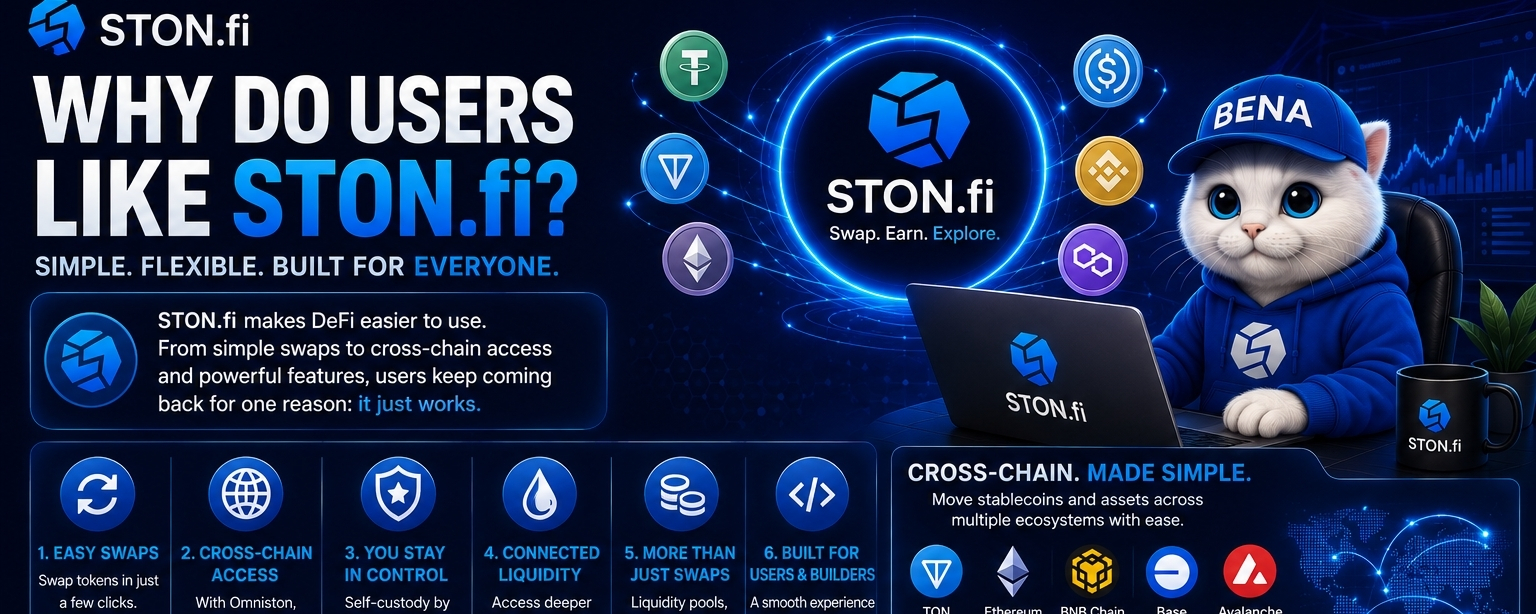
Nega foydalanuvchilar STON.fi ni yoqtiradi?Ko‘p DEXlar bor-ku, unda odamlarni STON.fi ga qayta-qayta nima qaytaradi?
Mening uchun hammasi soddalik va moslashuvchanlikka borib taqaladi.
✓ Oson svoplar
Murakkab savdo interfeyslari yoki keraksiz qadamlar bilan ovora bo‘lmasdan aktivlarni svop qilishingiz mumkin.
✓ Cross-chain svoplar
Omniston yordamida foydalanuvchilar qo‘llab-quvvatlanadigan aktivlarni TON va boshqa ulangan tarmoqlar bo‘ylab odatiy ko‘prikga tayanadigan jarayonsiz ko‘chirishi mumkin.
✓ Siz nazoratda qolasiz
STON.fi self-custody (o‘zingiz nazorat qilishingiz) atrofida qurilgan, shuning uchun foydalanuvchilar aktivlari ustidan nazoratni saqlab qoladi.
Nega foydalanuvchilar STON.fi ni yoqtiradi?
Ko‘p DEXlar bor-ku, unda odamlarni STON.fi ga qayta-qayta nima qaytaradi?
Mening uchun hammasi soddalik va moslashuvchanlikka borib taqaladi.
✓ Oson svoplar
Murakkab savdo interfeyslari yoki keraksiz qadamlar bilan ovora bo‘lmasdan aktivlarni svop qilishingiz mumkin.
✓ Cross-chain svoplar
Omniston yordamida foydalanuvchilar qo‘llab-quvvatlanadigan aktivlarni TON va boshqa ulangan tarmoqlar bo‘ylab odatiy ko‘prikga tayanadigan jarayonsiz ko‘chirishi mumkin.
✓ Siz nazoratda qolasiz
STON.fi self-custody (o‘zingiz nazorat qilishingiz) atrofida qurilgan, shuning uchun foydalanuvchilar aktivlari ustidan nazoratni saqlab qoladi.
129
·
--
Maqola
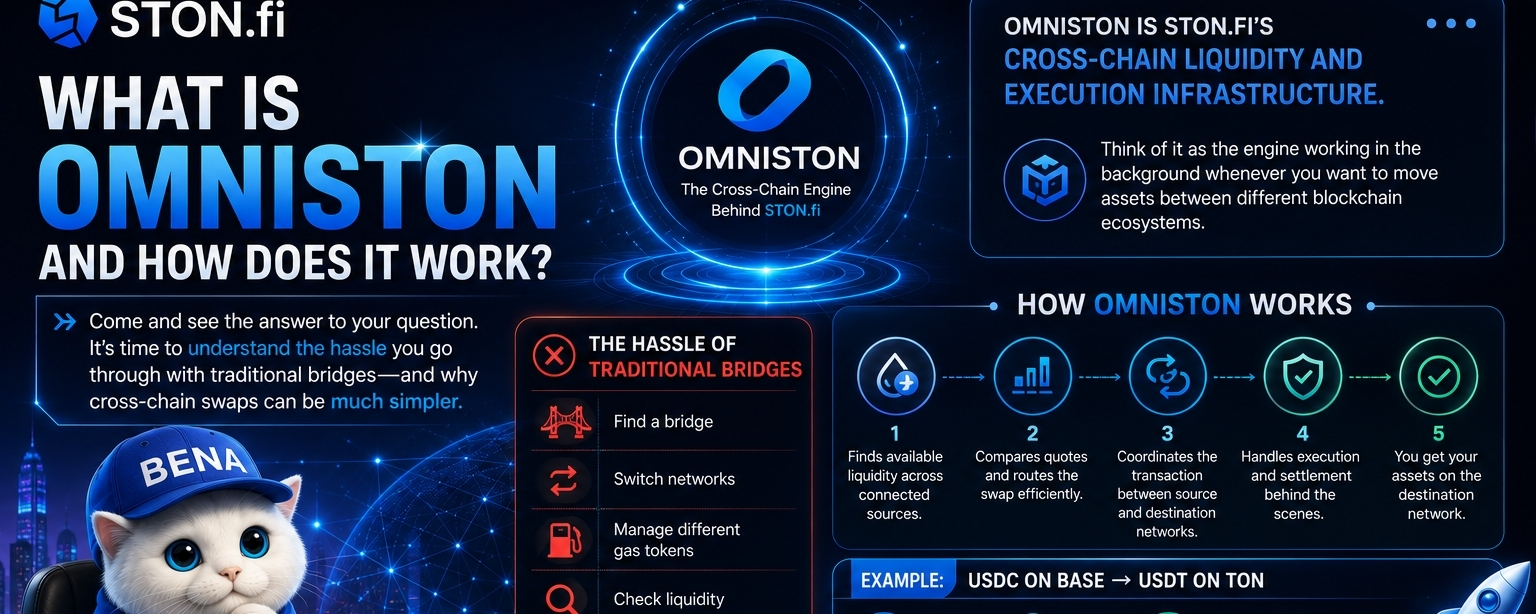
STON.fi’da Omniston nima va u amalda qanday ishlaydi?Savolingizga javobni ko‘rib chiqing. An’anaviy ko‘priklar bilan duch keladigan noqulaylikni tushunish va cross-chain swap’lar nega ancha sodda bo‘lishi mumkinligini vaqti keldi.
Eng sodda tushuntirish shunaqa:
Omniston — STON.fi ortidagi cross-chain likvidlik va ijro (execution) infratuzilmasi.
Buni turli blokcheyn ekotizimlari o‘rtasida aktivlarni ko‘chirmoqchi bo‘lganingizda fon rejimida ishlaydigan dvigatel sifatida tasavvur qiling.
Odatda cross-chain swap jarayoni chalkash bo‘lishi mumkin. Sizga ko‘prik (bridge) topish, tarmoqlarni almashtirish, turli gas tokenlarni boshqarish, likvidlikni tekshirish va bir nechta tranzaksiyalarni amalga oshirish kerak bo‘lishi ehtimol.
STON.fi’da Omniston nima va u amalda qanday ishlaydi?
Savolingizga javobni ko‘rib chiqing. An’anaviy ko‘priklar bilan duch keladigan noqulaylikni tushunish va cross-chain swap’lar nega ancha sodda bo‘lishi mumkinligini vaqti keldi.
Eng sodda tushuntirish shunaqa:
Omniston — STON.fi ortidagi cross-chain likvidlik va ijro (execution) infratuzilmasi.
Buni turli blokcheyn ekotizimlari o‘rtasida aktivlarni ko‘chirmoqchi bo‘lganingizda fon rejimida ishlaydigan dvigatel sifatida tasavvur qiling.
Odatda cross-chain swap jarayoni chalkash bo‘lishi mumkin. Sizga ko‘prik (bridge) topish, tarmoqlarni almashtirish, turli gas tokenlarni boshqarish, likvidlikni tekshirish va bir nechta tranzaksiyalarni amalga oshirish kerak bo‘lishi ehtimol.
99
Ko‘proq kontentni ko‘rish uchun tizimga kiring
Binance Square'da global kriptovalyuta foydalanuvchilariga qo‘shiling
⚡️ Kriptovalyuta haqida eng so‘nggi va foydali ma’lumotlarni oling.
💬 Dunyoning eng yirik kriptovalyuta birjasi tomonidan ishonchli deb topilgan.
👍 Tasdiqlangan mualliflardan haqiqiy tahlillarni kashf eting.
Email / telefon raqami
Trenddagi mavzular
BinanceReopensWithdrawalsForMoreAssets
633,078 marta koʻrilgan
3,077 muhokama qilmoqda
Xavfsizlik hodisasi | Tiklanish bo‘yicha yangilanish #8: Yana ko‘proq aktivlar uchun pul yechish qayta ochiladi (2026-11-05)
Binance Announcement
·169 ta layk
·554.9k marta koʻrilgan
BTCRebounds80K
142,918 marta koʻrilgan
1,368 muhokama qilmoqda
Binance98PercentReplenished
73,560 marta koʻrilgan
947 muhokama qilmoqda