

Capricorn_7
4.3k Postlar

Capricorn_7
Shikoyat qilish
Foydalanuvchini bloklash
Trading with discipline, not with FOMO📈
103 Kuzatilmoqda
2.0K+ Kuzatuvchilar
1.6K+ Yoqdi
Postlar
Barchasi
Jonli
·
--
*Mening futbol isitmasi strategiyam: Bitta kechada $14 dan $18.28 gacha! ⚽️🚀*
Men bu Binance Soccer Fever kampaniyasini atigi $14 bilan boshladim va ballimni +4.49 ga, ya’ni Rank 1117 ga yetkazdim!
Mening strategiyam oddiy: Har bir savdoni quvlamang. Men faqat o‘yin boshlanishidan 1 soat oldin yuqori hajmli futbol fan tokenlar bilan savdo qilaman. Men qat’iy 5% stop-loss belgilayman va o‘yin tugashidan oldin barcha pozitsiyalarni yopaman.
Ko‘pchilik ochko‘zlik sabab yutqazyapti. Top 1000 ga kirishning siri — katta foyda emas, balki barqaror kichik foydalar. Bugun men $3.90 foyda qildim va faqat $0.06 zarar ko‘rdim.
Agar sizning rangingiz 1000-1200 atrofida bo‘lsa, $40 sovrin zonasiga (501-1000) kirish uchun sizga atigi 1-2 ta yaxshi savdo kerak. Taslim bo‘lmang!
Sizning rangingiz va strategiyangiz qanday?
#BinanceSoccerFever #SoccerFever #Write2Earn #CryptoTrading #Football
*Mening futbol isitmasi strategiyam: Bitta kechada $14 dan $18.28 gacha! ⚽️🚀*
Men bu Binance Soccer Fever kampaniyasini atigi $14 bilan boshladim va ballimni +4.49 ga, ya’ni Rank 1117 ga yetkazdim!
Mening strategiyam oddiy: Har bir savdoni quvlamang. Men faqat o‘yin boshlanishidan 1 soat oldin yuqori hajmli futbol fan tokenlar bilan savdo qilaman. Men qat’iy 5% stop-loss belgilayman va o‘yin tugashidan oldin barcha pozitsiyalarni yopaman.
Ko‘pchilik ochko‘zlik sabab yutqazyapti. Top 1000 ga kirishning siri — katta foyda emas, balki barqaror kichik foydalar. Bugun men $3.90 foyda qildim va faqat $0.06 zarar ko‘rdim.
Agar sizning rangingiz 1000-1200 atrofida bo‘lsa, $40 sovrin zonasiga (501-1000) kirish uchun sizga atigi 1-2 ta yaxshi savdo kerak. Taslim bo‘lmang!
Sizning rangingiz va strategiyangiz qanday?
#BinanceSoccerFever #SoccerFever #Write2Earn #CryptoTrading #Football
Men bu Binance Soccer Fever kampaniyasini atigi $14 bilan boshladim va ballimni +4.49 ga, ya’ni Rank 1117 ga yetkazdim!
Mening strategiyam oddiy: Har bir savdoni quvlamang. Men faqat o‘yin boshlanishidan 1 soat oldin yuqori hajmli futbol fan tokenlar bilan savdo qilaman. Men qat’iy 5% stop-loss belgilayman va o‘yin tugashidan oldin barcha pozitsiyalarni yopaman.
Ko‘pchilik ochko‘zlik sabab yutqazyapti. Top 1000 ga kirishning siri — katta foyda emas, balki barqaror kichik foydalar. Bugun men $3.90 foyda qildim va faqat $0.06 zarar ko‘rdim.
Agar sizning rangingiz 1000-1200 atrofida bo‘lsa, $40 sovrin zonasiga (501-1000) kirish uchun sizga atigi 1-2 ta yaxshi savdo kerak. Taslim bo‘lmang!
Sizning rangingiz va strategiyangiz qanday?
#BinanceSoccerFever #SoccerFever #Write2Earn #CryptoTrading #Football
2
147
·
--
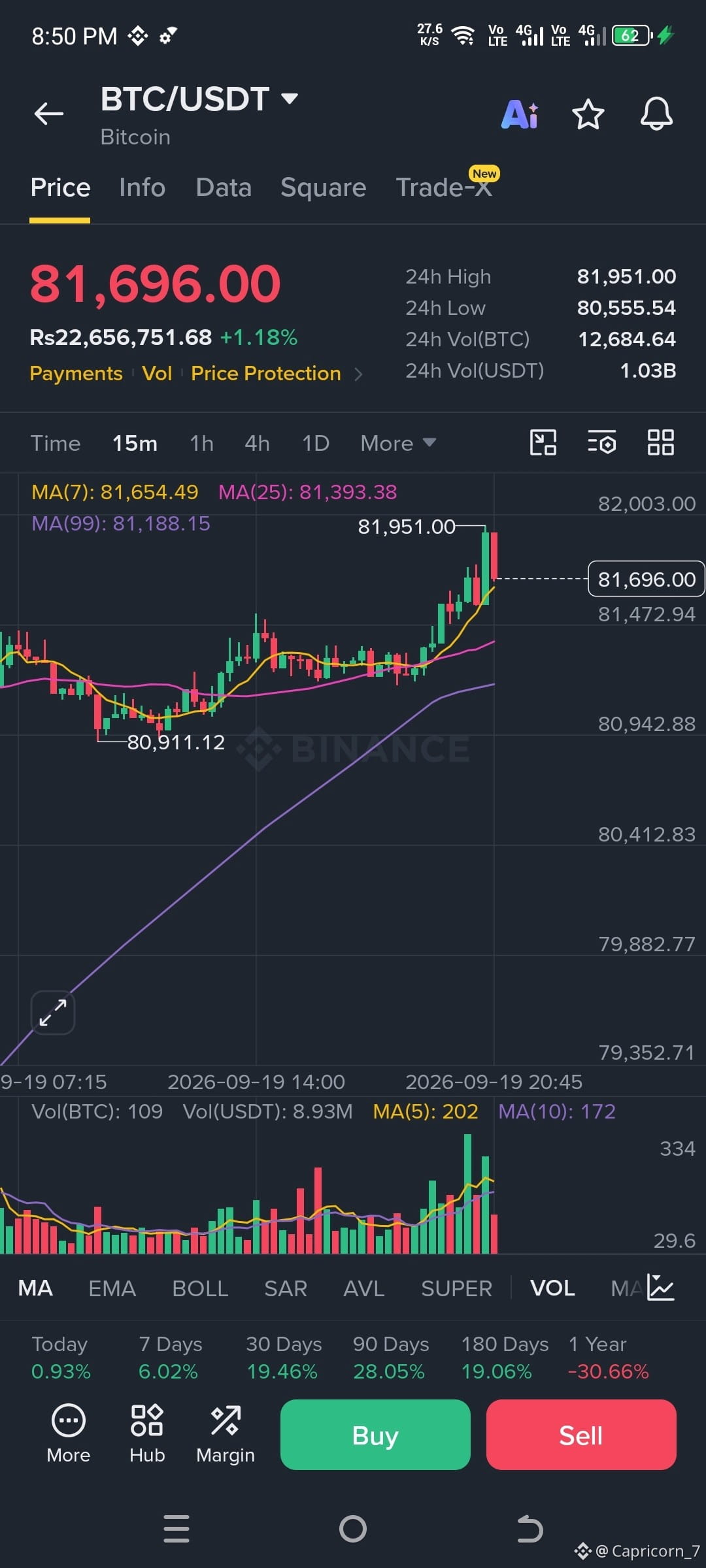
BTC/USDT — Qisqa muddatli signal 📊
BTC 15M grafikda asosiy MA darajalari ustida ushlab turibdi.
Narx $81,951 yuqorisidan qaytganidan keyin $81,696 atrofida.
🔹 Qarshilik: $81,950–82,000
🔹 Qo'llab-quvvatlash: $81,470 / $81,390
🔹 $82K dan yuqoriga break → bullish davom etish
🔹 Rad etish → $81.4K tomon ehtimoliy pasayish
Kirishdan oldin breakout'ni kuzating.
Moliyaviy maslahat emas.
#BTC #Bitcoin #Binance #BTCUSDT
BTC/USDT — Qisqa muddatli signal 📊
BTC 15M grafikda asosiy MA darajalari ustida ushlab turibdi.
Narx $81,951 yuqorisidan qaytganidan keyin $81,696 atrofida.
🔹 Qarshilik: $81,950–82,000
🔹 Qo'llab-quvvatlash: $81,470 / $81,390
🔹 $82K dan yuqoriga break → bullish davom etish
🔹 Rad etish → $81.4K tomon ehtimoliy pasayish
Kirishdan oldin breakout'ni kuzating.
Moliyaviy maslahat emas.
#BTC #Bitcoin #Binance #BTCUSDT
BTC 15M grafikda asosiy MA darajalari ustida ushlab turibdi.
Narx $81,951 yuqorisidan qaytganidan keyin $81,696 atrofida.
🔹 Qarshilik: $81,950–82,000
🔹 Qo'llab-quvvatlash: $81,470 / $81,390
🔹 $82K dan yuqoriga break → bullish davom etish
🔹 Rad etish → $81.4K tomon ehtimoliy pasayish
Kirishdan oldin breakout'ni kuzating.
Moliyaviy maslahat emas.
#BTC #Bitcoin #Binance #BTCUSDT
110
·
--
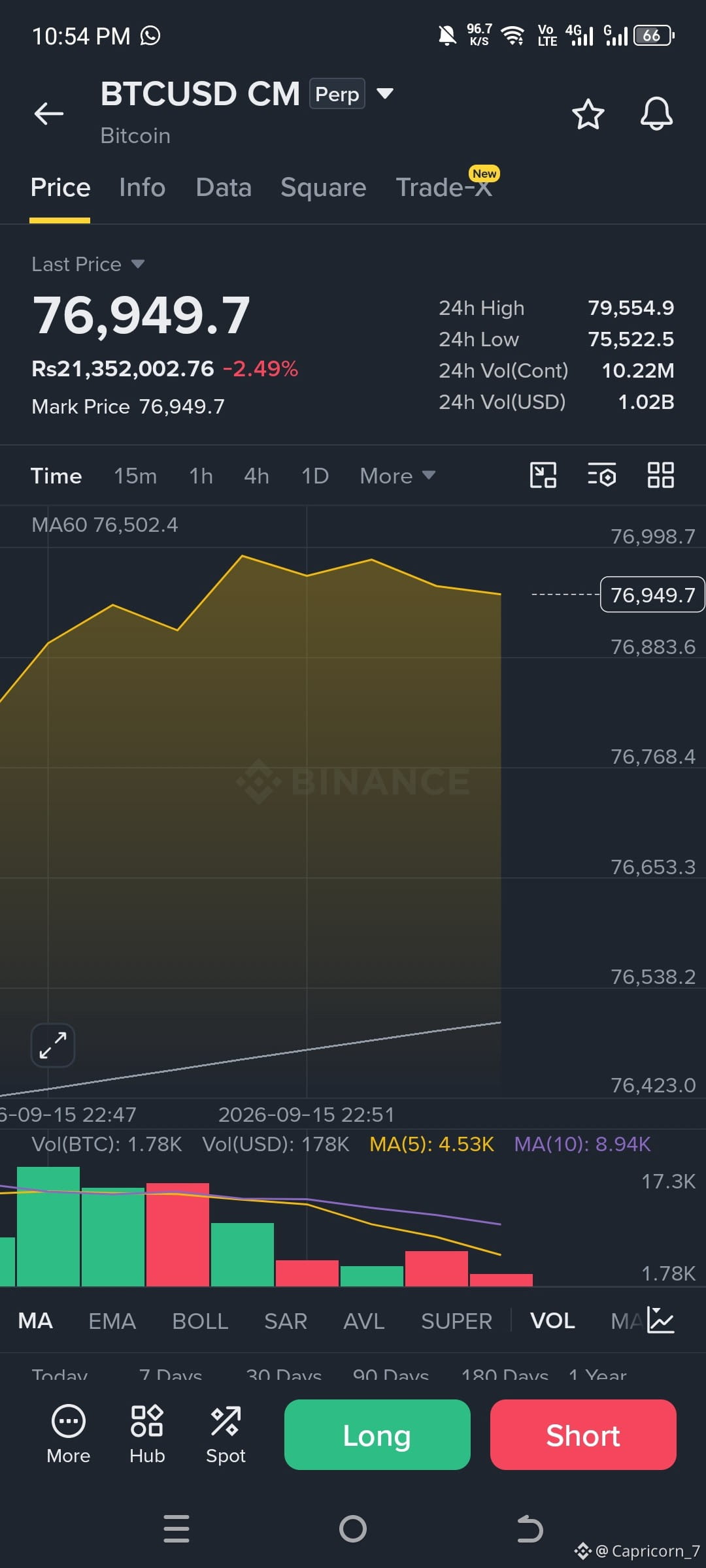
📉 BTCUSDT Short Setup
BTC taxminan $76,950 atrofida, 2.49% ga pasaygan.
🔴 Qisqa kirish: $76,950–77,100
🎯 TP1: $76,650
🎯 TP2: $76,420
🛑 SL: $77,300
Hajm susayapti, shuning uchun kirishdan oldin tasdiqni kuting.
#BTC #bitcoin #Binance #ShortTrade
📉 BTCUSDT Short Setup
BTC taxminan $76,950 atrofida, 2.49% ga pasaygan.
🔴 Qisqa kirish: $76,950–77,100
🎯 TP1: $76,650
🎯 TP2: $76,420
🛑 SL: $77,300
Hajm susayapti, shuning uchun kirishdan oldin tasdiqni kuting.
#BTC #bitcoin #Binance #ShortTrade
BTC taxminan $76,950 atrofida, 2.49% ga pasaygan.
🔴 Qisqa kirish: $76,950–77,100
🎯 TP1: $76,650
🎯 TP2: $76,420
🛑 SL: $77,300
Hajm susayapti, shuning uchun kirishdan oldin tasdiqni kuting.
#BTC #bitcoin #Binance #ShortTrade
2
110
·
--
📉 ETHUSDT — QISQA SETUP
ETH $2,562 atrofida savdoda, MA60 dan past ($2,572).
🔻 Qarshilik: $2,570–$2,575
🎯 Maqsad: $2,540 → $2,520
🛑 Stop Loss: $2,585
MA60 dan pastda kuchsiz momentum — kirishdan oldin qaytishni (rad etishni) kutyapman.
Moliyaviy maslahat emas. O‘zingiz tekshiring (DYOR).
#ETH #ETHUSDT #Binance #crypto
📉 ETHUSDT — QISQA SETUP
ETH $2,562 atrofida savdoda, MA60 dan past ($2,572).
🔻 Qarshilik: $2,570–$2,575
🎯 Maqsad: $2,540 → $2,520
🛑 Stop Loss: $2,585
MA60 dan pastda kuchsiz momentum — kirishdan oldin qaytishni (rad etishni) kutyapman.
Moliyaviy maslahat emas. O‘zingiz tekshiring (DYOR).
#ETH #ETHUSDT #Binance #crypto
ETH $2,562 atrofida savdoda, MA60 dan past ($2,572).
🔻 Qarshilik: $2,570–$2,575
🎯 Maqsad: $2,540 → $2,520
🛑 Stop Loss: $2,585
MA60 dan pastda kuchsiz momentum — kirishdan oldin qaytishni (rad etishni) kutyapman.
Moliyaviy maslahat emas. O‘zingiz tekshiring (DYOR).
#ETH #ETHUSDT #Binance #crypto

3
123

·
--
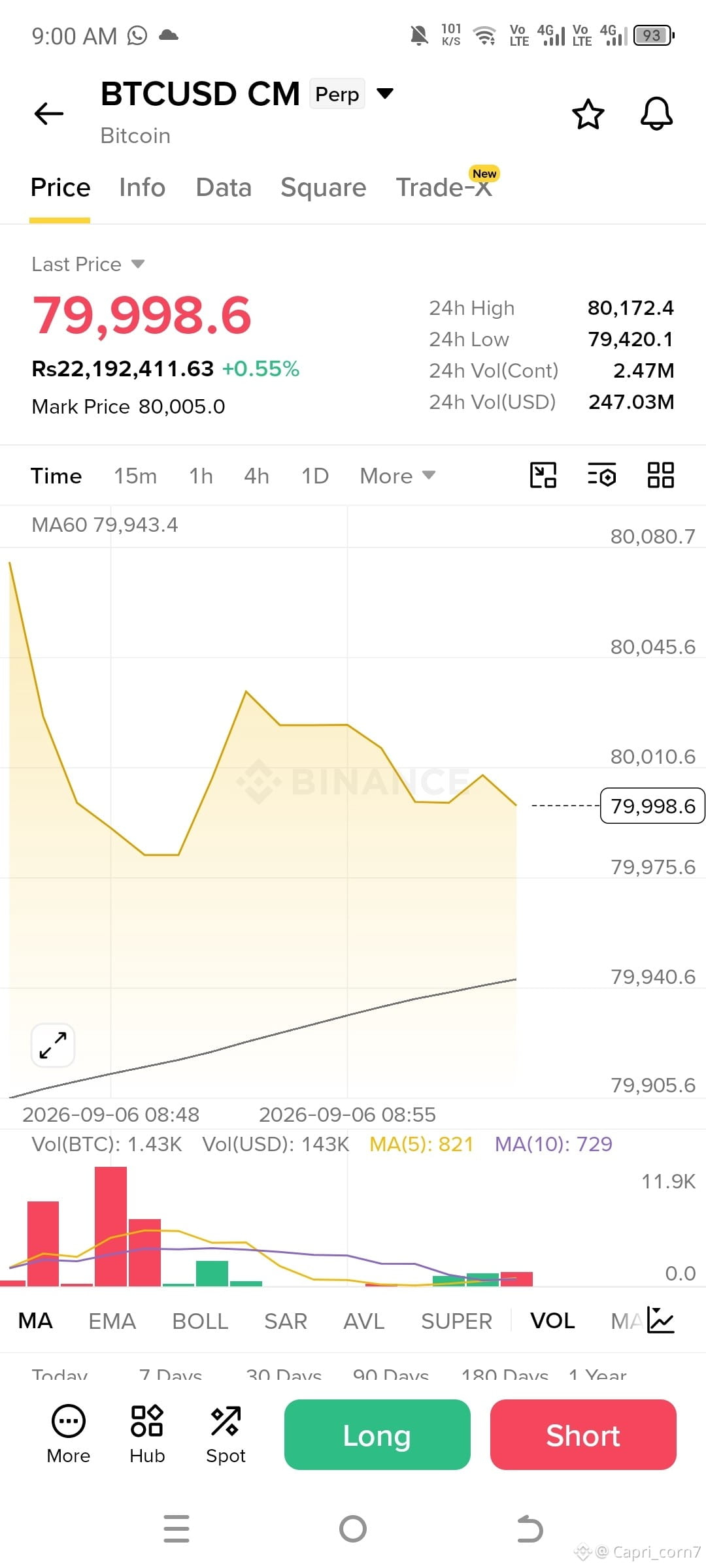
📉 BTCUSD — QISQA SETAP
BTC 80K’dan yuqorida ushlab tura olmaganidan keyin taxminan 79,999 atrofida.
🔴 Kirish: 79,950–80,050
🎯 TP1: 79,700
🎯 TP2: 79,450
🛑 SL: 80,180
⚠️ Agar BTC 80,180’ni qayta egallasa, short’ga kirmang.
#BTC #bitcoin #Binance #BTCUSDT. #ShortSetup
📉 BTCUSD — QISQA SETAP
BTC 80K’dan yuqorida ushlab tura olmaganidan keyin taxminan 79,999 atrofida.
🔴 Kirish: 79,950–80,050
🎯 TP1: 79,700
🎯 TP2: 79,450
🛑 SL: 80,180
⚠️ Agar BTC 80,180’ni qayta egallasa, short’ga kirmang.
#BTC #bitcoin #Binance #BTCUSDT. #ShortSetup
BTC 80K’dan yuqorida ushlab tura olmaganidan keyin taxminan 79,999 atrofida.
🔴 Kirish: 79,950–80,050
🎯 TP1: 79,700
🎯 TP2: 79,450
🛑 SL: 80,180
⚠️ Agar BTC 80,180’ni qayta egallasa, short’ga kirmang.
#BTC #bitcoin #Binance #BTCUSDT. #ShortSetup
2
91
·
--
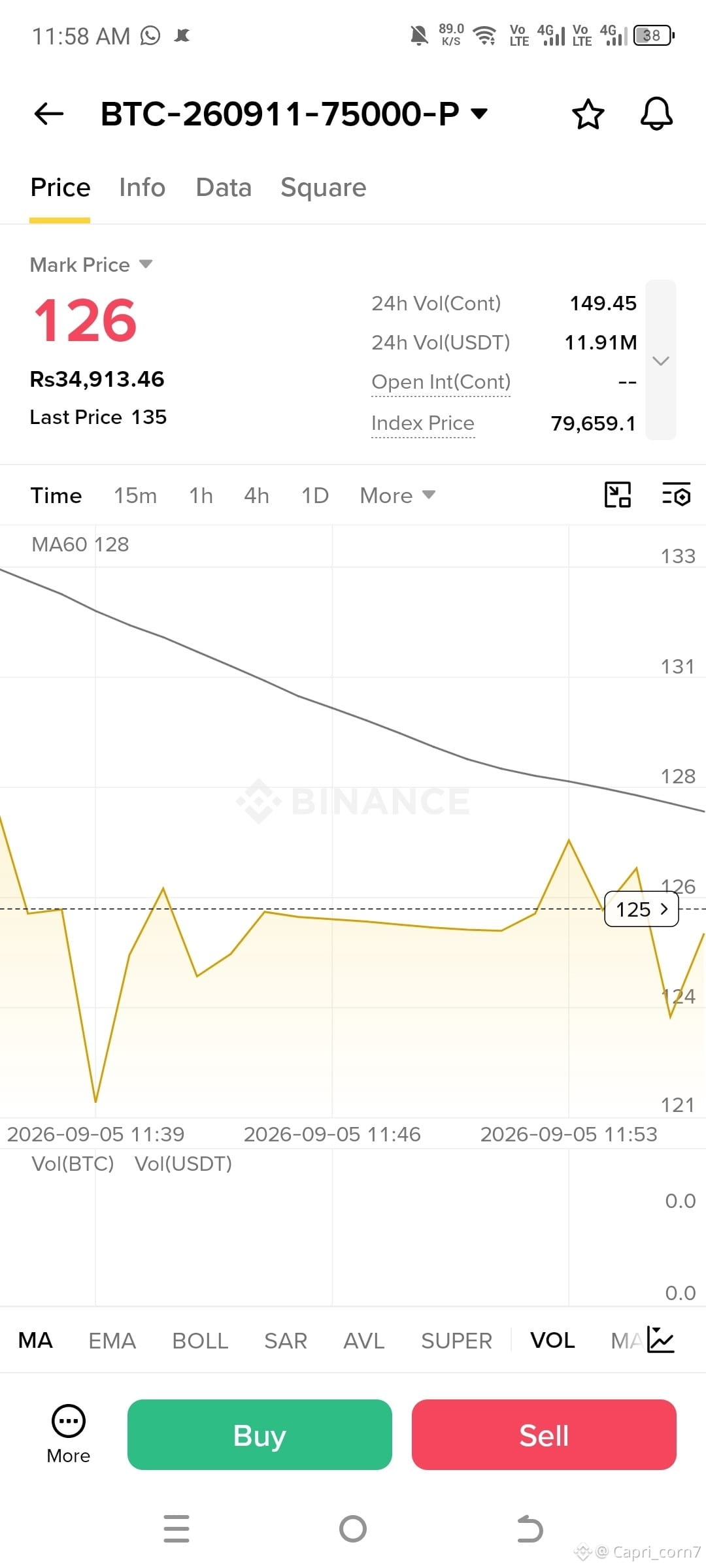
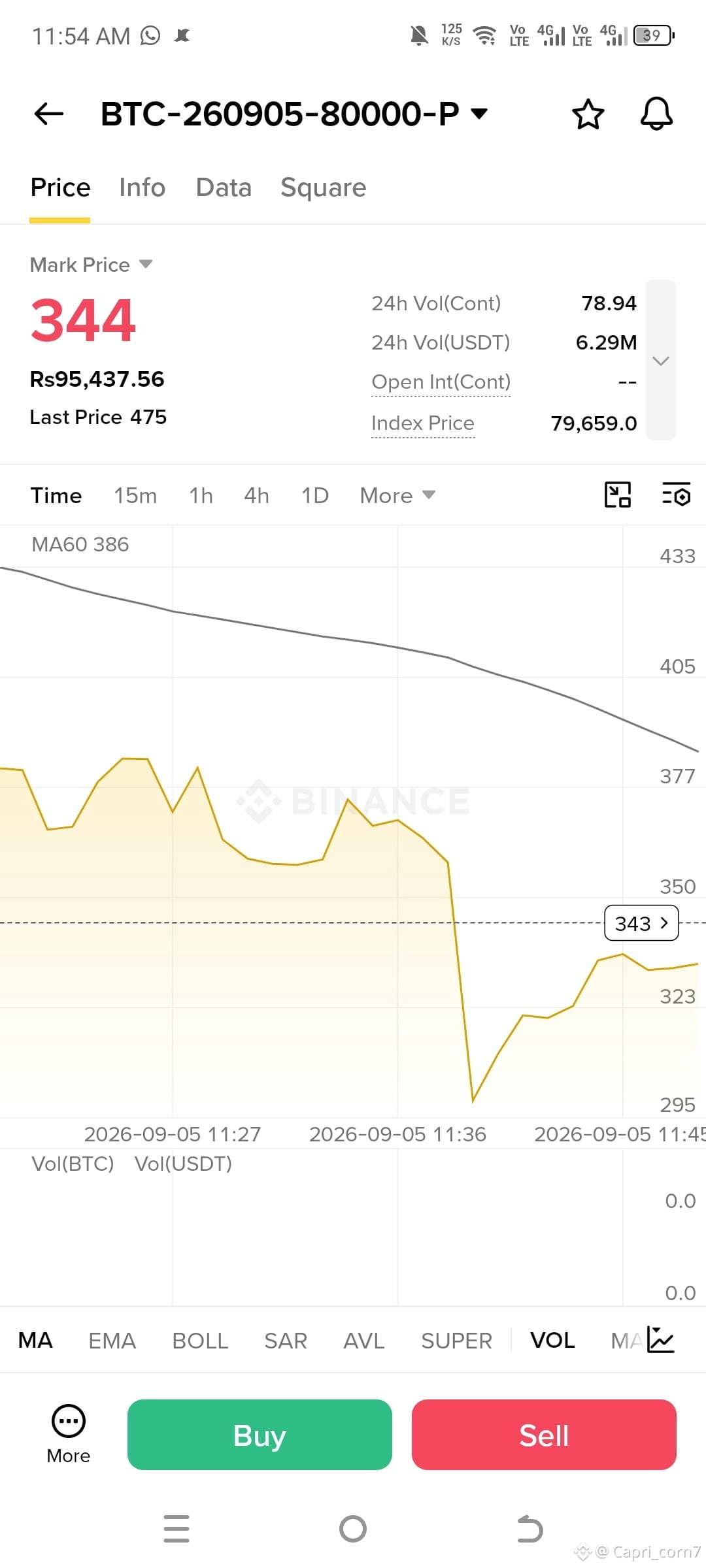
🔴 BTC 80K PUT — Ayanchli (Bearish) setup
BTC muhim darajalar ostida kuchsizlanmoqda 📉
80K Put premium: 344
Agar BTC qarshilikni qaytarib ololmasa, pasayish impulsi kuchayishi mumkin.
⚠️ Savdoni to‘g‘ri risk-menejment bilan bajaring.
#BTC #Bitcoin❗ #Binance #BTCUSDT #CryptoTrading #putoptions
🔴 BTC 80K PUT — Ayanchli (Bearish) setup
BTC muhim darajalar ostida kuchsizlanmoqda 📉
80K Put premium: 344
Agar BTC qarshilikni qaytarib ololmasa, pasayish impulsi kuchayishi mumkin.
⚠️ Savdoni to‘g‘ri risk-menejment bilan bajaring.
#BTC #Bitcoin❗ #Binance #BTCUSDT #CryptoTrading #putoptions
BTC muhim darajalar ostida kuchsizlanmoqda 📉
80K Put premium: 344
Agar BTC qarshilikni qaytarib ololmasa, pasayish impulsi kuchayishi mumkin.
⚠️ Savdoni to‘g‘ri risk-menejment bilan bajaring.
#BTC #Bitcoin❗ #Binance #BTCUSDT #CryptoTrading #putoptions
3
128
·
--
🎙️ 🎉2026 yovvoyi buqalar bozori, ogohlantirish sadosi yangradi, bozor BSC zanjirida!! 11-noyabr 1-kuni Mask Marsdagi Marvin itiga tug‘ilgan kunini nishonlash uchun keladi, bu safar albatta zanjirdagi harakatni ushlab qolish kerak!
Tugashi
03 soat 31 daqiqa 21 soniya
17.7k
30
81
·
--
Dushanba kuni xuddi o‘sha paragrafni to‘rt marta qayta yozdim, keyin muammo mening jumlam emas, manbadagi bitta so‘z ekanini angladim.
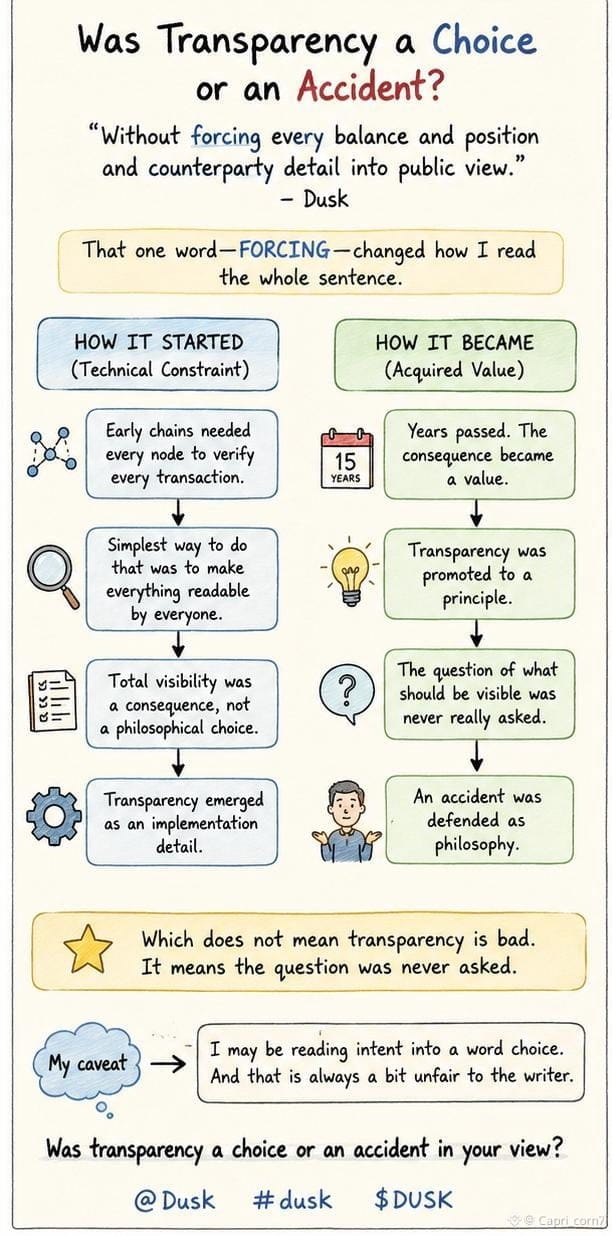
Bu ibora Duskdan. Har bir muvozanat, pozitsiya va kontragent tafsilotini majburan omma ko‘rinishiga majburlamasdan.
“forc ing” so‘zi u yerda aniq bir narsani nazarda tutyapti.
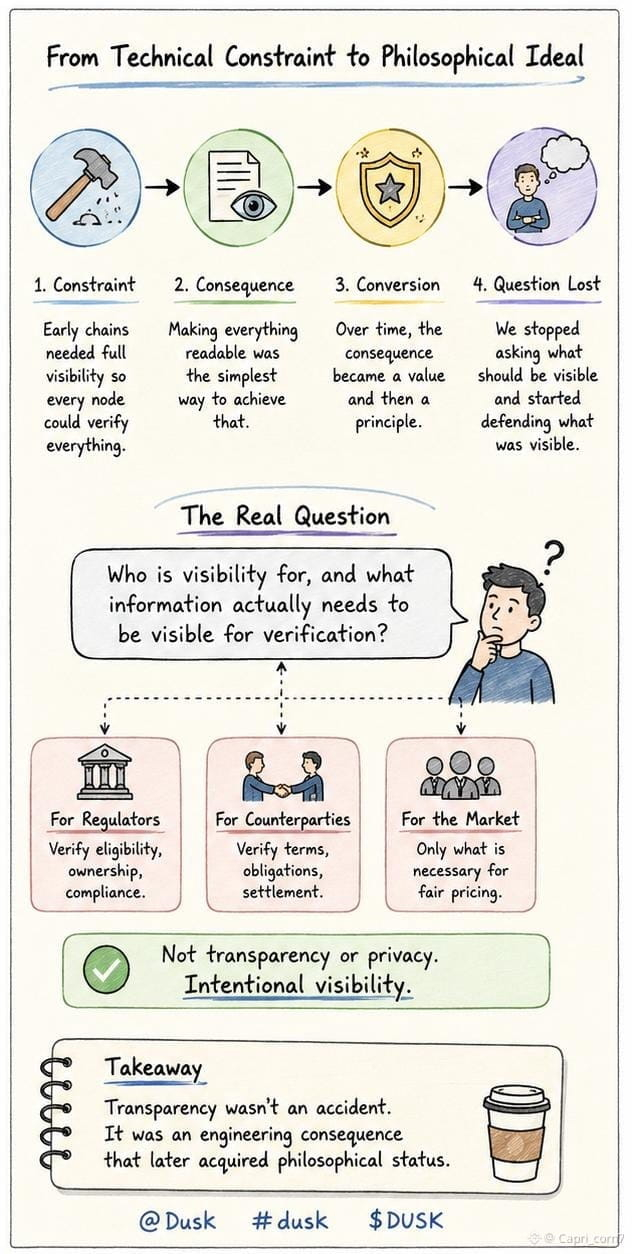
Chunki hammani joylab yuborish hech kim ataylab qilgan qaror emas edi. Bu oqibat edi. Dastlabki zanjirlar har bir tugun har bir tranzaksiyani tekshirishi kerak bo‘lgani uchun kerak edi va buni eng oddiy yo‘l — hammani hammaga o‘qiladigan qilish edi.
Keyin o‘n besh yil o‘tdi va bu oqibat qadriyatga aylandi. Birinchi dizaynlar qanday ishlagani natijasi emas, balki tamoyil sifatidagi shaffoflik....
Uhm va menimcha, bu qayta talqin qilishning o‘sha mavzuga o‘tirib, mulohaza qilishga arzigulik tomoni. Umumiy ko‘rinish — texnik cheklov bo‘lib, u falsafaga ko‘tarilgan.
Bu esa shaffoflik yomon degani emas. Bu — nimasi ko‘rinishi kerakligi haqidagi savol umuman berilmaganini anglatadi. U implementatsiya tafsiloti bilan javob topilgan, keyin esa undan keyin himoya qilingan.
Mening izohim shuki, men so‘z tanlash orqali niyatni o‘qib olyapman va bu yozuvchiga nisbatan har doim biroz adolatsizroq.
Sizningcha, shaffoflik tanlovmi edi yoki tasodif?
@Dusk_Foundation #dusk $DUSK
Dushanba kuni xuddi o‘sha paragrafni to‘rt marta qayta yozdim, keyin muammo mening jumlam emas, manbadagi bitta so‘z ekanini angladim.
Bu ibora Duskdan. Har bir muvozanat, pozitsiya va kontragent tafsilotini majburan omma ko‘rinishiga majburlamasdan.
“forc ing” so‘zi u yerda aniq bir narsani nazarda tutyapti.
Chunki hammani joylab yuborish hech kim ataylab qilgan qaror emas edi. Bu oqibat edi. Dastlabki zanjirlar har bir tugun har bir tranzaksiyani tekshirishi kerak bo‘lgani uchun kerak edi va buni eng oddiy yo‘l — hammani hammaga o‘qiladigan qilish edi.
Keyin o‘n besh yil o‘tdi va bu oqibat qadriyatga aylandi. Birinchi dizaynlar qanday ishlagani natijasi emas, balki tamoyil sifatidagi shaffoflik....
Uhm va menimcha, bu qayta talqin qilishning o‘sha mavzuga o‘tirib, mulohaza qilishga arzigulik tomoni. Umumiy ko‘rinish — texnik cheklov bo‘lib, u falsafaga ko‘tarilgan.
Bu esa shaffoflik yomon degani emas. Bu — nimasi ko‘rinishi kerakligi haqidagi savol umuman berilmaganini anglatadi. U implementatsiya tafsiloti bilan javob topilgan, keyin esa undan keyin himoya qilingan.
Mening izohim shuki, men so‘z tanlash orqali niyatni o‘qib olyapman va bu yozuvchiga nisbatan har doim biroz adolatsizroq.
Sizningcha, shaffoflik tanlovmi edi yoki tasodif?
@Dusk #dusk $DUSK
Bu ibora Duskdan. Har bir muvozanat, pozitsiya va kontragent tafsilotini majburan omma ko‘rinishiga majburlamasdan.
“forc ing” so‘zi u yerda aniq bir narsani nazarda tutyapti.
Chunki hammani joylab yuborish hech kim ataylab qilgan qaror emas edi. Bu oqibat edi. Dastlabki zanjirlar har bir tugun har bir tranzaksiyani tekshirishi kerak bo‘lgani uchun kerak edi va buni eng oddiy yo‘l — hammani hammaga o‘qiladigan qilish edi.
Keyin o‘n besh yil o‘tdi va bu oqibat qadriyatga aylandi. Birinchi dizaynlar qanday ishlagani natijasi emas, balki tamoyil sifatidagi shaffoflik....
Uhm va menimcha, bu qayta talqin qilishning o‘sha mavzuga o‘tirib, mulohaza qilishga arzigulik tomoni. Umumiy ko‘rinish — texnik cheklov bo‘lib, u falsafaga ko‘tarilgan.
Bu esa shaffoflik yomon degani emas. Bu — nimasi ko‘rinishi kerakligi haqidagi savol umuman berilmaganini anglatadi. U implementatsiya tafsiloti bilan javob topilgan, keyin esa undan keyin himoya qilingan.
Mening izohim shuki, men so‘z tanlash orqali niyatni o‘qib olyapman va bu yozuvchiga nisbatan har doim biroz adolatsizroq.
Sizningcha, shaffoflik tanlovmi edi yoki tasodif?
@Dusk #dusk $DUSK
1
6
87
·
--
Dusk maxfiylik va kirish nazorati alohida narsa sifatida roʻyxatga kiritishini payqadim va men ularni bitta muammo deb o‘ylab yurgan ekanman.
Bu bir xil muammo emas.
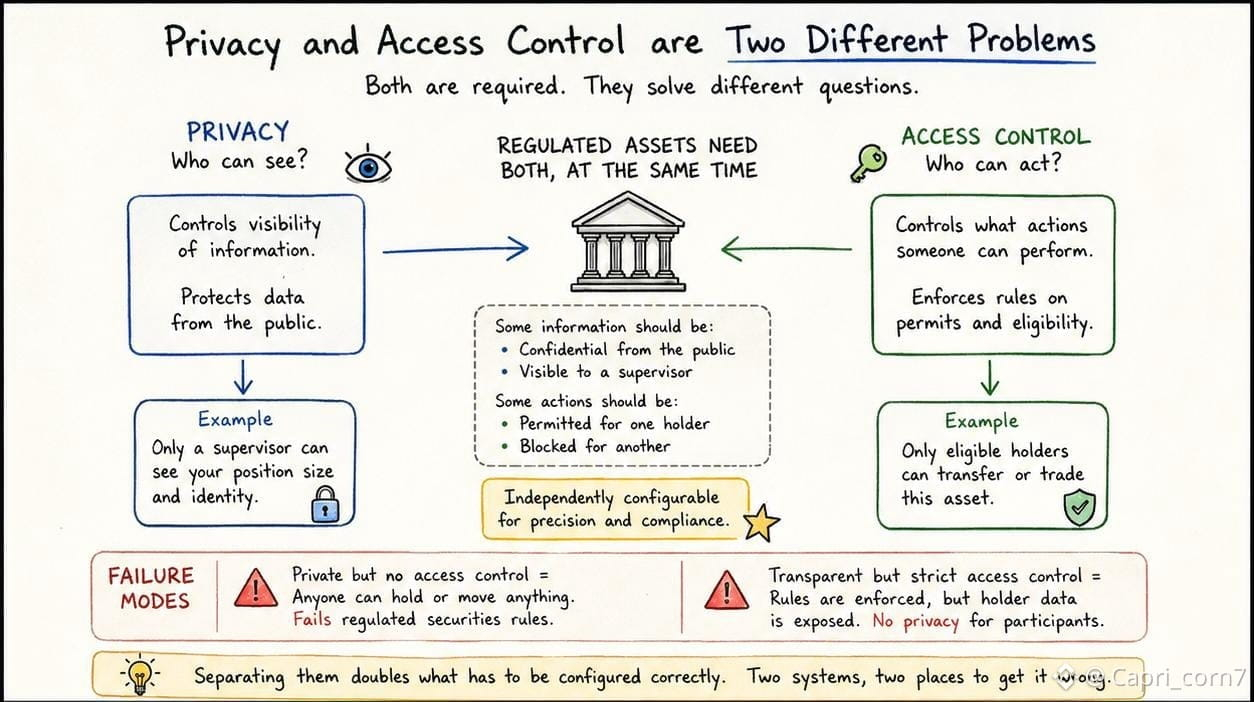
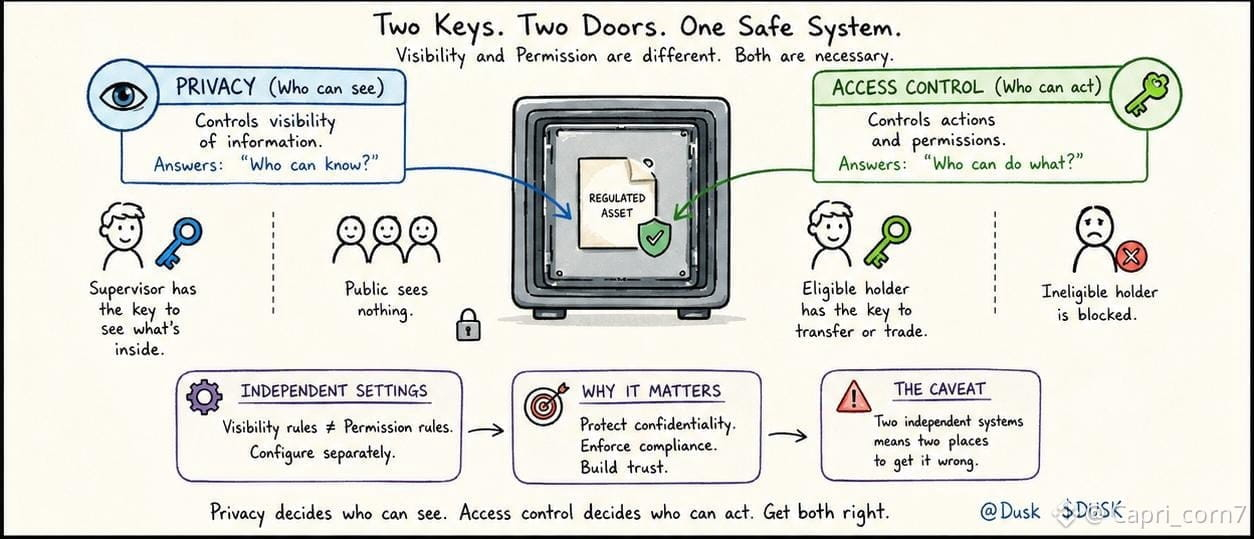
Maxfiylik kimni ko‘ra olishini aytadi. Kirish nazorati esa kim nima qila olishini belgilaydi.
Siz bittasini boshqasiz ham, ikkalasini ham olishingiz mumkin va ikkala holatdagi muvaffaqiyatsizlik ham real. Hamma istalgan aktivni ushlab tura oladigan to‘liq maxfiy zanjir tartibga solingan qimmatli qog‘ozlar talabiga butunlay javob bermaydi. Qattiq malakaviy (eligibility) qoidalari bilan to‘liq oshkora zanjir esa egasini hech narsa bilan himoya qilmaydi.
Regulyatsiyalangan aktivlar bularning ikkalasini bir vaqtda talab qiladi va ular mustaqil sozlamalar bo‘lishi kerak. Ba’zi ma’lumotlar ommadan maxfiy bo‘lishi, lekin nazoratchiga ko‘rinib turishi kerak. Ba’zi amallar esa kimnidir ko‘rish mumkinligidan qat’i nazar, bir egasiga ruxsat berilib, boshqasiga taqiqlanishi kerak....
Uhm, va menimcha, shu sabab kriptoda maxfiylik bo‘yicha ishlarning juda ko‘pi tartibga solingan qo‘llanishni topa olmadi. U ko‘rinishni hal qildi, lekin ruxsat masalasini umuman chetlab o‘tdi.
Ehtiyot chorasi shundaki, ularni ajratish ham to‘g‘ri sozlanishi kerak bo‘lgan ishni ikki baravar oshiradi. Ikki mustaqil tizim — xato qilish uchun ikki joy degani.
Siz maxfiylik va ruxsatni bitta muammo deb o‘ylaysizmi yoki ikkita debmi
@Dusk_Foundation #dusk $DUSK
Dusk maxfiylik va kirish nazorati alohida narsa sifatida roʻyxatga kiritishini payqadim va men ularni bitta muammo deb o‘ylab yurgan ekanman.
Bu bir xil muammo emas.
Maxfiylik kimni ko‘ra olishini aytadi. Kirish nazorati esa kim nima qila olishini belgilaydi.
Siz bittasini boshqasiz ham, ikkalasini ham olishingiz mumkin va ikkala holatdagi muvaffaqiyatsizlik ham real. Hamma istalgan aktivni ushlab tura oladigan to‘liq maxfiy zanjir tartibga solingan qimmatli qog‘ozlar talabiga butunlay javob bermaydi. Qattiq malakaviy (eligibility) qoidalari bilan to‘liq oshkora zanjir esa egasini hech narsa bilan himoya qilmaydi.
Regulyatsiyalangan aktivlar bularning ikkalasini bir vaqtda talab qiladi va ular mustaqil sozlamalar bo‘lishi kerak. Ba’zi ma’lumotlar ommadan maxfiy bo‘lishi, lekin nazoratchiga ko‘rinib turishi kerak. Ba’zi amallar esa kimnidir ko‘rish mumkinligidan qat’i nazar, bir egasiga ruxsat berilib, boshqasiga taqiqlanishi kerak....
Uhm, va menimcha, shu sabab kriptoda maxfiylik bo‘yicha ishlarning juda ko‘pi tartibga solingan qo‘llanishni topa olmadi. U ko‘rinishni hal qildi, lekin ruxsat masalasini umuman chetlab o‘tdi.
Ehtiyot chorasi shundaki, ularni ajratish ham to‘g‘ri sozlanishi kerak bo‘lgan ishni ikki baravar oshiradi. Ikki mustaqil tizim — xato qilish uchun ikki joy degani.
Siz maxfiylik va ruxsatni bitta muammo deb o‘ylaysizmi yoki ikkita debmi
@Dusk #dusk $DUSK
Bu bir xil muammo emas.
Maxfiylik kimni ko‘ra olishini aytadi. Kirish nazorati esa kim nima qila olishini belgilaydi.
Siz bittasini boshqasiz ham, ikkalasini ham olishingiz mumkin va ikkala holatdagi muvaffaqiyatsizlik ham real. Hamma istalgan aktivni ushlab tura oladigan to‘liq maxfiy zanjir tartibga solingan qimmatli qog‘ozlar talabiga butunlay javob bermaydi. Qattiq malakaviy (eligibility) qoidalari bilan to‘liq oshkora zanjir esa egasini hech narsa bilan himoya qilmaydi.
Regulyatsiyalangan aktivlar bularning ikkalasini bir vaqtda talab qiladi va ular mustaqil sozlamalar bo‘lishi kerak. Ba’zi ma’lumotlar ommadan maxfiy bo‘lishi, lekin nazoratchiga ko‘rinib turishi kerak. Ba’zi amallar esa kimnidir ko‘rish mumkinligidan qat’i nazar, bir egasiga ruxsat berilib, boshqasiga taqiqlanishi kerak....
Uhm, va menimcha, shu sabab kriptoda maxfiylik bo‘yicha ishlarning juda ko‘pi tartibga solingan qo‘llanishni topa olmadi. U ko‘rinishni hal qildi, lekin ruxsat masalasini umuman chetlab o‘tdi.
Ehtiyot chorasi shundaki, ularni ajratish ham to‘g‘ri sozlanishi kerak bo‘lgan ishni ikki baravar oshiradi. Ikki mustaqil tizim — xato qilish uchun ikki joy degani.
Siz maxfiylik va ruxsatni bitta muammo deb o‘ylaysizmi yoki ikkita debmi
@Dusk #dusk $DUSK
3
94
·
--
Huquq va access ish oqimlari haqidagi hujjatlardan olingan jumla asosida o‘tirib oldim. Trastlanadigan ishonchli asosga ega bo‘lgan credential (tasdiqnoma)lar bo‘yicha edi. Nega aynan shu ibora tanlangani tushunish uchun biroz vaqt ketdi.
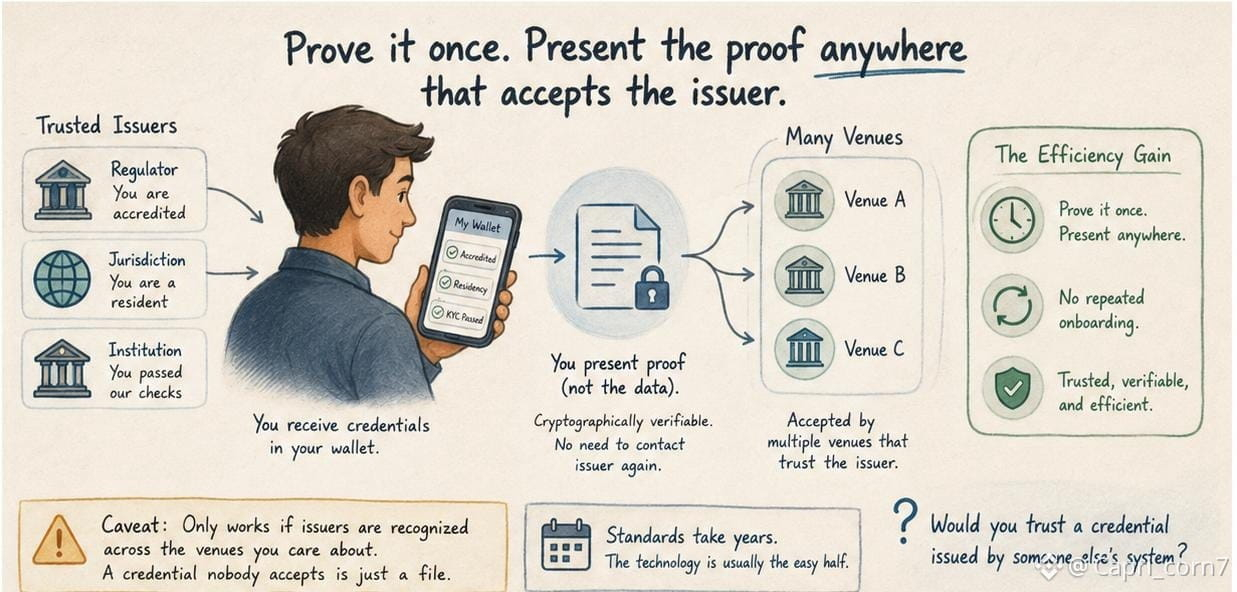
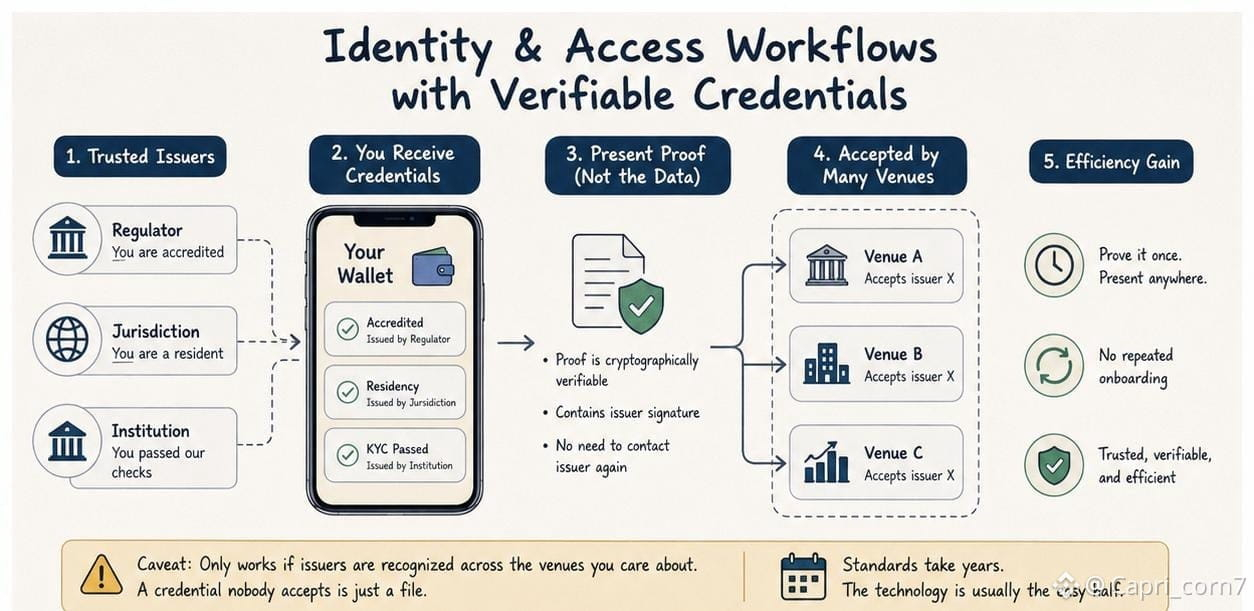
Credential — bu siz haqingizda kimdir ishonchli deb hisoblangan shaxs tomonidan bildirilgan da’vodir. Masalan, akkreditatsiyalanganingizni aytayotgan tartibga soluvchi. Yashash joyingizni tasdiqlayotgan yurisdiksiya. Muassasa esa ularning tekshiruvlaridan o‘tganingizni tasdiqlaydi.
Verifiable (tekshiriladigan) degani — bu da’voni kim chiqargani haqida dalil ham birga olib yuradi. Shuning uchun biror joy uni qabul qilish uchun chiqaruvchiga qaytib, yana so‘rab yurmasligi mumkin.
Eng oxirgi qism — aynan shu samaradorlik oshishi, uni osonlikcha o‘tkazib yuborish mumkin.
Hozir esa har bir joy xuddi o‘sha odam bo‘yicha bir xil tekshiruvlarni yana-yana takrorlaydi. Siz bir joyda onboarding (ro‘yxatdan o‘tish) qilasiz. Keyingisida yana onboarding qilasiz. Asl savol bir xil bo‘lsa ham, hech kim boshqasining ishiga ishonmaydi.
O‘zini tekshiradigan (self-verifying) credential’lar esa bu davrani buzadi. Bir marta isbot qiling. Ishonch berilgan credential’ni qabul qiladigan istalgan joyga isbotni taqdim eting.
E’tiborli jihat shuki, bu faqat siz ahamiyat beradigan venue (joylar) bo‘yicha issuer’lar (chiqaruvchilar) tan olingan bo‘lsa ishlaydi. Hech kim qabul qilmaydigan credential — shunchaki fayl....
Standartlar yillar talab qiladi va texnologiya odatda ishning eng oson qismi.
Boshqa tizimdagi kimdir bergan credential’ga ishonasizmi
@Dusk_Foundation #dusk $DUSK
Huquq va access ish oqimlari haqidagi hujjatlardan olingan jumla asosida o‘tirib oldim. Trastlanadigan ishonchli asosga ega bo‘lgan credential (tasdiqnoma)lar bo‘yicha edi. Nega aynan shu ibora tanlangani tushunish uchun biroz vaqt ketdi.
Credential — bu siz haqingizda kimdir ishonchli deb hisoblangan shaxs tomonidan bildirilgan da’vodir. Masalan, akkreditatsiyalanganingizni aytayotgan tartibga soluvchi. Yashash joyingizni tasdiqlayotgan yurisdiksiya. Muassasa esa ularning tekshiruvlaridan o‘tganingizni tasdiqlaydi.
Verifiable (tekshiriladigan) degani — bu da’voni kim chiqargani haqida dalil ham birga olib yuradi. Shuning uchun biror joy uni qabul qilish uchun chiqaruvchiga qaytib, yana so‘rab yurmasligi mumkin.
Eng oxirgi qism — aynan shu samaradorlik oshishi, uni osonlikcha o‘tkazib yuborish mumkin.
Hozir esa har bir joy xuddi o‘sha odam bo‘yicha bir xil tekshiruvlarni yana-yana takrorlaydi. Siz bir joyda onboarding (ro‘yxatdan o‘tish) qilasiz. Keyingisida yana onboarding qilasiz. Asl savol bir xil bo‘lsa ham, hech kim boshqasining ishiga ishonmaydi.
O‘zini tekshiradigan (self-verifying) credential’lar esa bu davrani buzadi. Bir marta isbot qiling. Ishonch berilgan credential’ni qabul qiladigan istalgan joyga isbotni taqdim eting.
E’tiborli jihat shuki, bu faqat siz ahamiyat beradigan venue (joylar) bo‘yicha issuer’lar (chiqaruvchilar) tan olingan bo‘lsa ishlaydi. Hech kim qabul qilmaydigan credential — shunchaki fayl....
Standartlar yillar talab qiladi va texnologiya odatda ishning eng oson qismi.
Boshqa tizimdagi kimdir bergan credential’ga ishonasizmi
@Dusk #dusk $DUSK
Credential — bu siz haqingizda kimdir ishonchli deb hisoblangan shaxs tomonidan bildirilgan da’vodir. Masalan, akkreditatsiyalanganingizni aytayotgan tartibga soluvchi. Yashash joyingizni tasdiqlayotgan yurisdiksiya. Muassasa esa ularning tekshiruvlaridan o‘tganingizni tasdiqlaydi.
Verifiable (tekshiriladigan) degani — bu da’voni kim chiqargani haqida dalil ham birga olib yuradi. Shuning uchun biror joy uni qabul qilish uchun chiqaruvchiga qaytib, yana so‘rab yurmasligi mumkin.
Eng oxirgi qism — aynan shu samaradorlik oshishi, uni osonlikcha o‘tkazib yuborish mumkin.
Hozir esa har bir joy xuddi o‘sha odam bo‘yicha bir xil tekshiruvlarni yana-yana takrorlaydi. Siz bir joyda onboarding (ro‘yxatdan o‘tish) qilasiz. Keyingisida yana onboarding qilasiz. Asl savol bir xil bo‘lsa ham, hech kim boshqasining ishiga ishonmaydi.
O‘zini tekshiradigan (self-verifying) credential’lar esa bu davrani buzadi. Bir marta isbot qiling. Ishonch berilgan credential’ni qabul qiladigan istalgan joyga isbotni taqdim eting.
E’tiborli jihat shuki, bu faqat siz ahamiyat beradigan venue (joylar) bo‘yicha issuer’lar (chiqaruvchilar) tan olingan bo‘lsa ishlaydi. Hech kim qabul qilmaydigan credential — shunchaki fayl....
Standartlar yillar talab qiladi va texnologiya odatda ishning eng oson qismi.
Boshqa tizimdagi kimdir bergan credential’ga ishonasizmi
@Dusk #dusk $DUSK
2
4
111
·
--
Buni aslida kim ishlab chiqishini qidirib ko‘rdim. Buni men kerak bo‘lgandan kamroq qilaman.
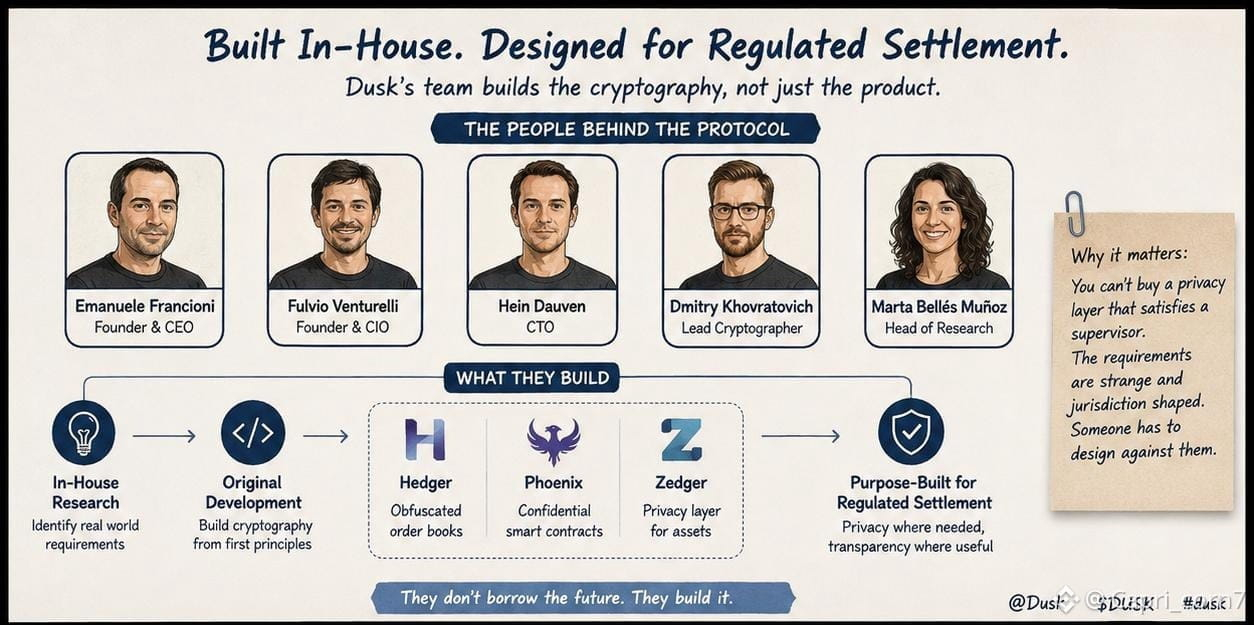
Emanuele Francioni asoschi va bosh direktor (CEO). Fulvio Venturelli asoschi va bosh axborot xodimi (CIO). Hein Dauven CTO. Dmitry Khovratovich yetakchi kriptograf sifatida ko‘rsatilgan. Marta Bellés Muñoz tadqiqotlar rahbari.
Meni hayratga solgani shuki, kriptografiya litsenziyalangan yoki qarzga olingan emas, balki o‘zlarida ishlab chiqilgan. Hedger ichkarida ishlab chiqilgan. Phoenix va Zedger esa o‘z tadqiqotlari natijasi sifatida chiqqan.
Bu noodatiy. Ko‘plab loyihalar mavjud primitvlarni yig‘ib, mahsulotni chiqaradi. Qog‘ozlarni nashr qiladigan odamlarni ishlatadiganlari kamroq.
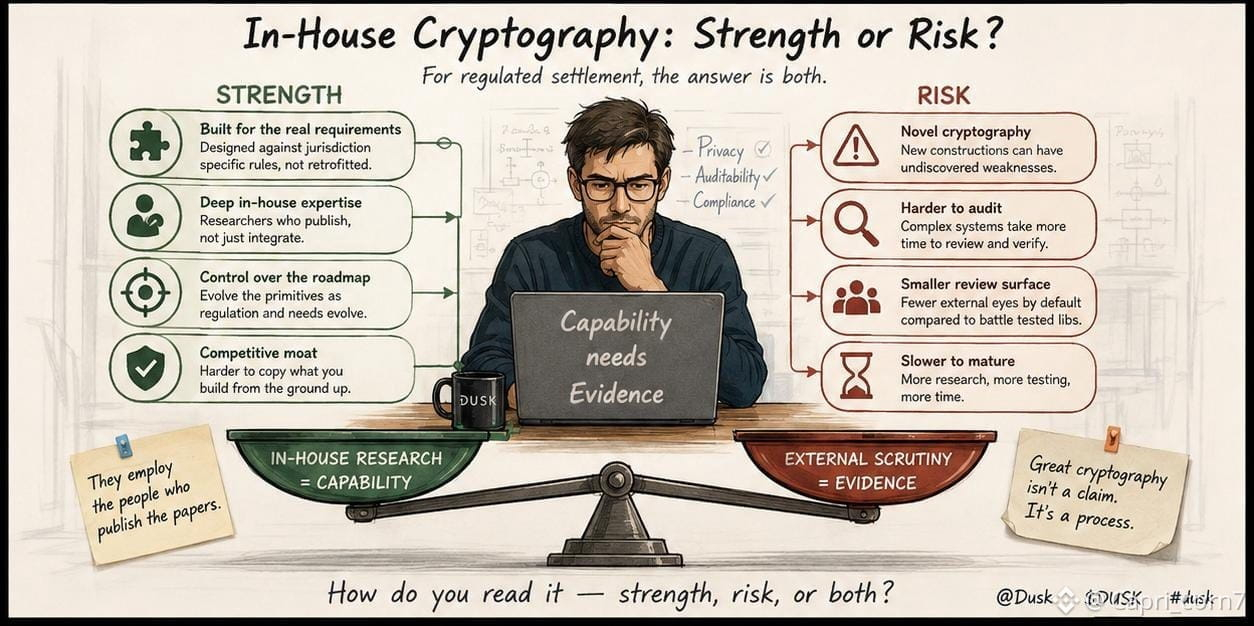
Nazorat ostidagi hisob-kitob (regulated settlement) nuqtayi nazaridan bu muhim deb o‘ylashimning sababi shuki, siz supervayzerni qoniqtiradigan maxfiylik qatlamini shunchaki sotib ololmaysiz. Talablar g‘alati va yurisdiksiya (huquqiy hudud)ga mos shakllangan. Kimdir shunga qarab loyihalashi kerak, boshqa maqsad uchun ishlab chiqilgan narsani moslashtirib bo‘lmaydi.
E’tiborga olinadigan cheklov shuki, ichki tadqiqot ham sekinroq va tashqaridan tekshirish (audit) qilish qiyinroq. Yaxshi o‘rganilgan kriptografiya bilan taqqoslaganda, yangi kriptografiya xavf olib keladi....
O‘zingizning kriptografiyangizni yaratish siz uchun kuchmi yoki riskmi deb o‘qilasizmi
@Dusk_Foundation #dusk $DUSK
Buni aslida kim ishlab chiqishini qidirib ko‘rdim. Buni men kerak bo‘lgandan kamroq qilaman.
Emanuele Francioni asoschi va bosh direktor (CEO). Fulvio Venturelli asoschi va bosh axborot xodimi (CIO). Hein Dauven CTO. Dmitry Khovratovich yetakchi kriptograf sifatida ko‘rsatilgan. Marta Bellés Muñoz tadqiqotlar rahbari.
Meni hayratga solgani shuki, kriptografiya litsenziyalangan yoki qarzga olingan emas, balki o‘zlarida ishlab chiqilgan. Hedger ichkarida ishlab chiqilgan. Phoenix va Zedger esa o‘z tadqiqotlari natijasi sifatida chiqqan.
Bu noodatiy. Ko‘plab loyihalar mavjud primitvlarni yig‘ib, mahsulotni chiqaradi. Qog‘ozlarni nashr qiladigan odamlarni ishlatadiganlari kamroq.
Nazorat ostidagi hisob-kitob (regulated settlement) nuqtayi nazaridan bu muhim deb o‘ylashimning sababi shuki, siz supervayzerni qoniqtiradigan maxfiylik qatlamini shunchaki sotib ololmaysiz. Talablar g‘alati va yurisdiksiya (huquqiy hudud)ga mos shakllangan. Kimdir shunga qarab loyihalashi kerak, boshqa maqsad uchun ishlab chiqilgan narsani moslashtirib bo‘lmaydi.
E’tiborga olinadigan cheklov shuki, ichki tadqiqot ham sekinroq va tashqaridan tekshirish (audit) qilish qiyinroq. Yaxshi o‘rganilgan kriptografiya bilan taqqoslaganda, yangi kriptografiya xavf olib keladi....
O‘zingizning kriptografiyangizni yaratish siz uchun kuchmi yoki riskmi deb o‘qilasizmi
@Dusk #dusk $DUSK
Emanuele Francioni asoschi va bosh direktor (CEO). Fulvio Venturelli asoschi va bosh axborot xodimi (CIO). Hein Dauven CTO. Dmitry Khovratovich yetakchi kriptograf sifatida ko‘rsatilgan. Marta Bellés Muñoz tadqiqotlar rahbari.
Meni hayratga solgani shuki, kriptografiya litsenziyalangan yoki qarzga olingan emas, balki o‘zlarida ishlab chiqilgan. Hedger ichkarida ishlab chiqilgan. Phoenix va Zedger esa o‘z tadqiqotlari natijasi sifatida chiqqan.
Bu noodatiy. Ko‘plab loyihalar mavjud primitvlarni yig‘ib, mahsulotni chiqaradi. Qog‘ozlarni nashr qiladigan odamlarni ishlatadiganlari kamroq.
Nazorat ostidagi hisob-kitob (regulated settlement) nuqtayi nazaridan bu muhim deb o‘ylashimning sababi shuki, siz supervayzerni qoniqtiradigan maxfiylik qatlamini shunchaki sotib ololmaysiz. Talablar g‘alati va yurisdiksiya (huquqiy hudud)ga mos shakllangan. Kimdir shunga qarab loyihalashi kerak, boshqa maqsad uchun ishlab chiqilgan narsani moslashtirib bo‘lmaydi.
E’tiborga olinadigan cheklov shuki, ichki tadqiqot ham sekinroq va tashqaridan tekshirish (audit) qilish qiyinroq. Yaxshi o‘rganilgan kriptografiya bilan taqqoslaganda, yangi kriptografiya xavf olib keladi....
O‘zingizning kriptografiyangizni yaratish siz uchun kuchmi yoki riskmi deb o‘qilasizmi
@Dusk #dusk $DUSK
5
8
77
·
--
Do‘kondan qaytayotib kelayotganimda ko‘nglimdan chiqmay qolgan bir fikr bor edi.
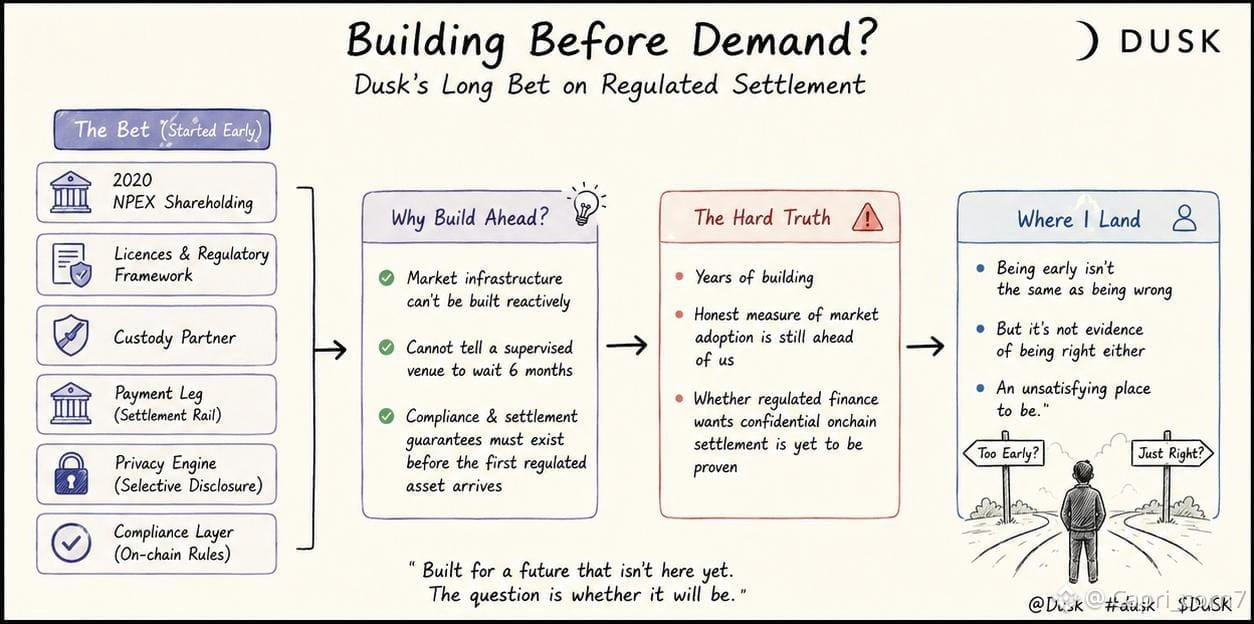
Botish yillardan beri tartibga solingan joylashuv (settlement) infratuzilmasini qurib kelmoqda. NPEX aksiyadorligi 2020-yilda bo‘lgan. litsenziyalar, custody hamkor, to‘lov zanjiri, maxfiylik (privacy) motori, muvofiqlik (compliance) qatlami — bularning hammasi tartibli hajm paydo bo‘lishidan oldin yig‘ilgan.
Bunday rolning nomi bor va u maqtovga loyiq emas. Talabdan oldin qurish.
Hm.
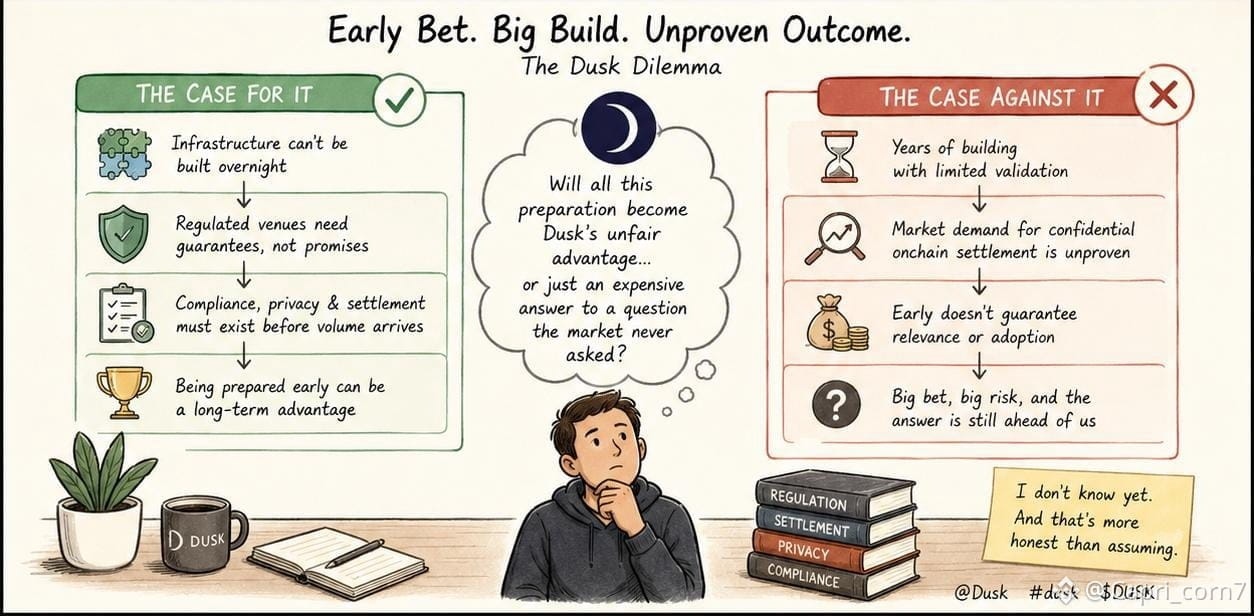
Buni qo‘llab-quvvatlash tomoni shuki, bozor infratuzilmasini faqat reaktiv (kechikib) tarzda qurib bo‘lmaydi. tartibga solingan maydonga olti oy kutib tur, deb ayta olmaysiz — selektiv oshkor qilishni qo‘shayotganingizda. muvofiqlik va settlement kafolatlari birinchi tartibga solingan aktiv kelishidan oldin mavjud bo‘lishi kerak, keyin emas.
Qarshi dalil esa sodda, lekin javob berish qiyinroq. yillar davomida qurish bor, va tartibga solingan moliya maxfiy onchain settlementni xohlashi bo‘yicha halol o‘lchov hali ko‘proq oldinda — ortda emas.
Men erta bo‘lishni xato bilan teng deb o‘ylamayman. Shuningdek, u hali hech narsani isbotlaydigan dalil ham emas deb o‘ylayman.
Bu esa qoniqtirmaydigan xulosa joyi va men aynan o‘sha joydaman....
Sizning fikringiz qanday
@Dusk_Foundation #dusk $DUSK
Do‘kondan qaytayotib kelayotganimda ko‘nglimdan chiqmay qolgan bir fikr bor edi.
Botish yillardan beri tartibga solingan joylashuv (settlement) infratuzilmasini qurib kelmoqda. NPEX aksiyadorligi 2020-yilda bo‘lgan. litsenziyalar, custody hamkor, to‘lov zanjiri, maxfiylik (privacy) motori, muvofiqlik (compliance) qatlami — bularning hammasi tartibli hajm paydo bo‘lishidan oldin yig‘ilgan.
Bunday rolning nomi bor va u maqtovga loyiq emas. Talabdan oldin qurish.
Hm.
Buni qo‘llab-quvvatlash tomoni shuki, bozor infratuzilmasini faqat reaktiv (kechikib) tarzda qurib bo‘lmaydi. tartibga solingan maydonga olti oy kutib tur, deb ayta olmaysiz — selektiv oshkor qilishni qo‘shayotganingizda. muvofiqlik va settlement kafolatlari birinchi tartibga solingan aktiv kelishidan oldin mavjud bo‘lishi kerak, keyin emas.
Qarshi dalil esa sodda, lekin javob berish qiyinroq. yillar davomida qurish bor, va tartibga solingan moliya maxfiy onchain settlementni xohlashi bo‘yicha halol o‘lchov hali ko‘proq oldinda — ortda emas.
Men erta bo‘lishni xato bilan teng deb o‘ylamayman. Shuningdek, u hali hech narsani isbotlaydigan dalil ham emas deb o‘ylayman.
Bu esa qoniqtirmaydigan xulosa joyi va men aynan o‘sha joydaman....
Sizning fikringiz qanday
@Dusk #dusk $DUSK
Botish yillardan beri tartibga solingan joylashuv (settlement) infratuzilmasini qurib kelmoqda. NPEX aksiyadorligi 2020-yilda bo‘lgan. litsenziyalar, custody hamkor, to‘lov zanjiri, maxfiylik (privacy) motori, muvofiqlik (compliance) qatlami — bularning hammasi tartibli hajm paydo bo‘lishidan oldin yig‘ilgan.
Bunday rolning nomi bor va u maqtovga loyiq emas. Talabdan oldin qurish.
Hm.
Buni qo‘llab-quvvatlash tomoni shuki, bozor infratuzilmasini faqat reaktiv (kechikib) tarzda qurib bo‘lmaydi. tartibga solingan maydonga olti oy kutib tur, deb ayta olmaysiz — selektiv oshkor qilishni qo‘shayotganingizda. muvofiqlik va settlement kafolatlari birinchi tartibga solingan aktiv kelishidan oldin mavjud bo‘lishi kerak, keyin emas.
Qarshi dalil esa sodda, lekin javob berish qiyinroq. yillar davomida qurish bor, va tartibga solingan moliya maxfiy onchain settlementni xohlashi bo‘yicha halol o‘lchov hali ko‘proq oldinda — ortda emas.
Men erta bo‘lishni xato bilan teng deb o‘ylamayman. Shuningdek, u hali hech narsani isbotlaydigan dalil ham emas deb o‘ylayman.
Bu esa qoniqtirmaydigan xulosa joyi va men aynan o‘sha joydaman....
Sizning fikringiz qanday
@Dusk #dusk $DUSK
6
10
103
·
--
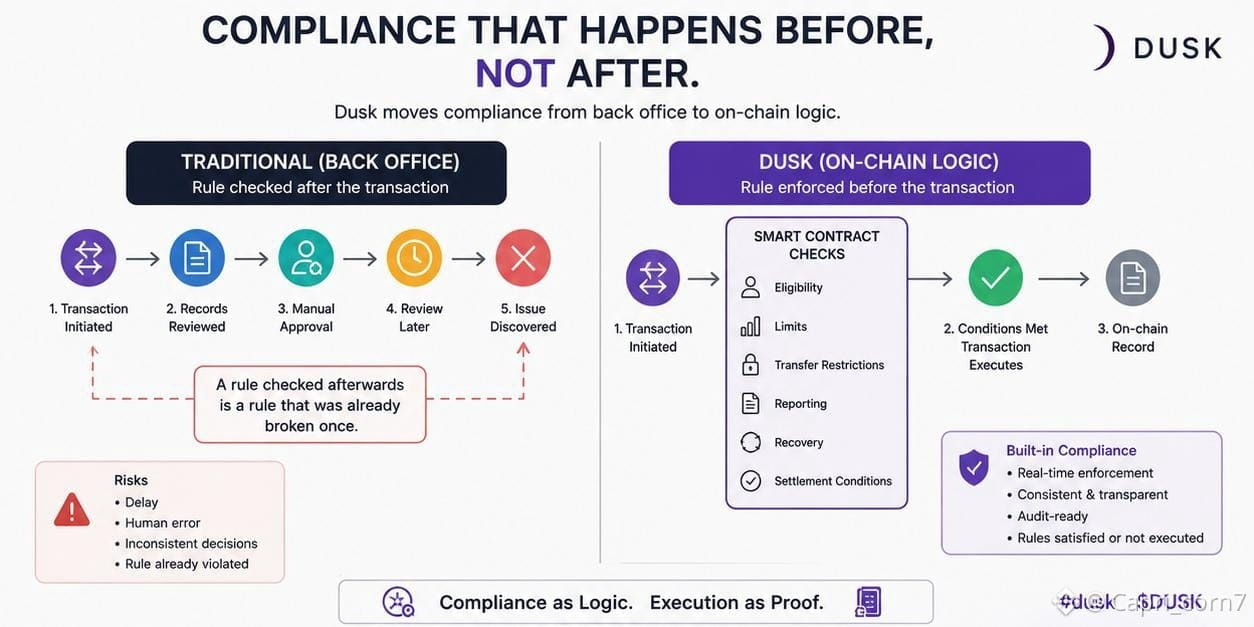
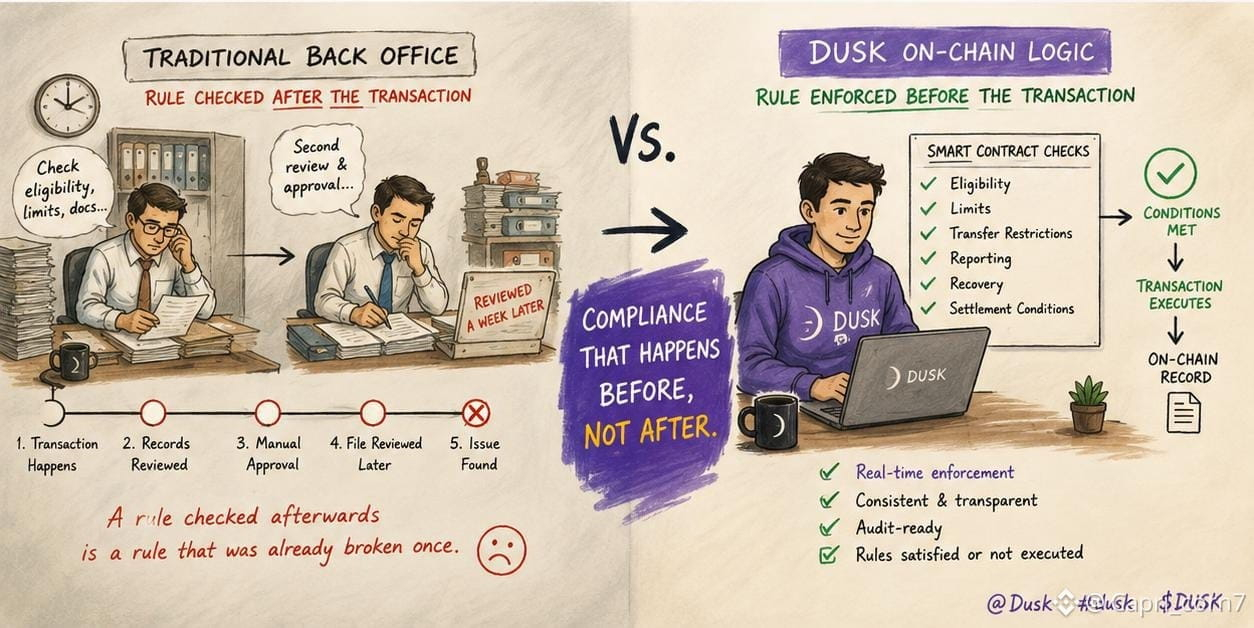
Chorshanba kuni Dusk hujjatlarida ko‘rinishi kichikdek tuyulgan, lekin aslida unday emas bir satrni o‘qing.
Smart-kontaktlarda qo‘llanadigan muvofiqlik tekshiruvlari qo‘lda back-office jarayonlari o‘rniga majburiy qilingan.
back-office aslida nimani anglatishini tushunib o‘tiring: ro‘yxatni tekshirayotgan bir kishi. birinchi odamni tasdiqlaydigan ikkinchi kishi. bir hafta o‘tib ko‘rib chiqiladigan fayl. huquqqa egalik, limitlar, o‘tkazish cheklovlari — bularning barchasi voqealardan keyin yozuvlarni odamlar tekshirib, real tarzda qo‘llanadigan haqiqiy qoidalar.
Buni shartnomaga ko‘chirish qoidani QACHON qo‘llashni o‘zgartiradi, faqat kim qo‘llashini emas. o‘tkazish shartlarni qanoatlantirsa — bajariladi, qanoatlantirmasa — bajarilmaydi.
Keyin tekshirilgan qoidaning o‘zi avvalroq buzilgan qoidaga teng.
Uhm, bu esa kripto odatda muvofiqlik haqida gapirganda aytiladigan narsaning teskarisi: odatda u chetlarga bolt qilib qo‘yilgan to‘siq sifatida tasvirlanadi. Bu yerda esa u real majburiyatlarni aks ettiruvchi mantiq sifatida yozilgan.... huquqqa egalik, limitlar, hisobot, tiklash, hisob-kitob
regulyatorlar kodni jarayon o‘rnini bosuvchi narsa deb qabul qiladimi — bu savolga men javob bera olmayman. aynan shunday masalada institutlar sekin harakat qiladi va ehtimol shunday ham bo‘lishi kerak....
Sizning fikringiz qanday?
@Dusk_Foundation #dusk $DUSK
Chorshanba kuni Dusk hujjatlarida ko‘rinishi kichikdek tuyulgan, lekin aslida unday emas bir satrni o‘qing.
Smart-kontaktlarda qo‘llanadigan muvofiqlik tekshiruvlari qo‘lda back-office jarayonlari o‘rniga majburiy qilingan.
back-office aslida nimani anglatishini tushunib o‘tiring: ro‘yxatni tekshirayotgan bir kishi. birinchi odamni tasdiqlaydigan ikkinchi kishi. bir hafta o‘tib ko‘rib chiqiladigan fayl. huquqqa egalik, limitlar, o‘tkazish cheklovlari — bularning barchasi voqealardan keyin yozuvlarni odamlar tekshirib, real tarzda qo‘llanadigan haqiqiy qoidalar.
Buni shartnomaga ko‘chirish qoidani QACHON qo‘llashni o‘zgartiradi, faqat kim qo‘llashini emas. o‘tkazish shartlarni qanoatlantirsa — bajariladi, qanoatlantirmasa — bajarilmaydi.
Keyin tekshirilgan qoidaning o‘zi avvalroq buzilgan qoidaga teng.
Uhm, bu esa kripto odatda muvofiqlik haqida gapirganda aytiladigan narsaning teskarisi: odatda u chetlarga bolt qilib qo‘yilgan to‘siq sifatida tasvirlanadi. Bu yerda esa u real majburiyatlarni aks ettiruvchi mantiq sifatida yozilgan.... huquqqa egalik, limitlar, hisobot, tiklash, hisob-kitob
regulyatorlar kodni jarayon o‘rnini bosuvchi narsa deb qabul qiladimi — bu savolga men javob bera olmayman. aynan shunday masalada institutlar sekin harakat qiladi va ehtimol shunday ham bo‘lishi kerak....
Sizning fikringiz qanday?
@Dusk #dusk $DUSK
Smart-kontaktlarda qo‘llanadigan muvofiqlik tekshiruvlari qo‘lda back-office jarayonlari o‘rniga majburiy qilingan.
back-office aslida nimani anglatishini tushunib o‘tiring: ro‘yxatni tekshirayotgan bir kishi. birinchi odamni tasdiqlaydigan ikkinchi kishi. bir hafta o‘tib ko‘rib chiqiladigan fayl. huquqqa egalik, limitlar, o‘tkazish cheklovlari — bularning barchasi voqealardan keyin yozuvlarni odamlar tekshirib, real tarzda qo‘llanadigan haqiqiy qoidalar.
Buni shartnomaga ko‘chirish qoidani QACHON qo‘llashni o‘zgartiradi, faqat kim qo‘llashini emas. o‘tkazish shartlarni qanoatlantirsa — bajariladi, qanoatlantirmasa — bajarilmaydi.
Keyin tekshirilgan qoidaning o‘zi avvalroq buzilgan qoidaga teng.
Uhm, bu esa kripto odatda muvofiqlik haqida gapirganda aytiladigan narsaning teskarisi: odatda u chetlarga bolt qilib qo‘yilgan to‘siq sifatida tasvirlanadi. Bu yerda esa u real majburiyatlarni aks ettiruvchi mantiq sifatida yozilgan.... huquqqa egalik, limitlar, hisobot, tiklash, hisob-kitob
regulyatorlar kodni jarayon o‘rnini bosuvchi narsa deb qabul qiladimi — bu savolga men javob bera olmayman. aynan shunday masalada institutlar sekin harakat qiladi va ehtimol shunday ham bo‘lishi kerak....
Sizning fikringiz qanday?
@Dusk #dusk $DUSK
8
10
94
·
--
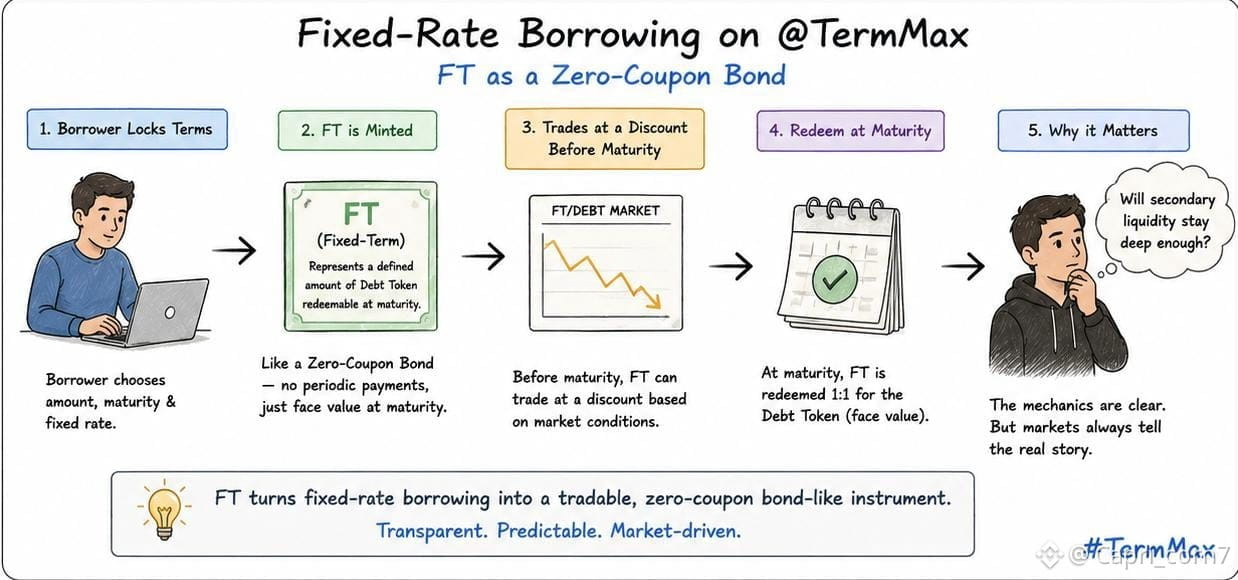
@termmax haqida o‘qish, belgilangan foizli qarz olishni on-chain’da qanday ifodalash mumkinligi haqidagi tasavvurimni qayta ko‘rib chiqishga majbur qildi.
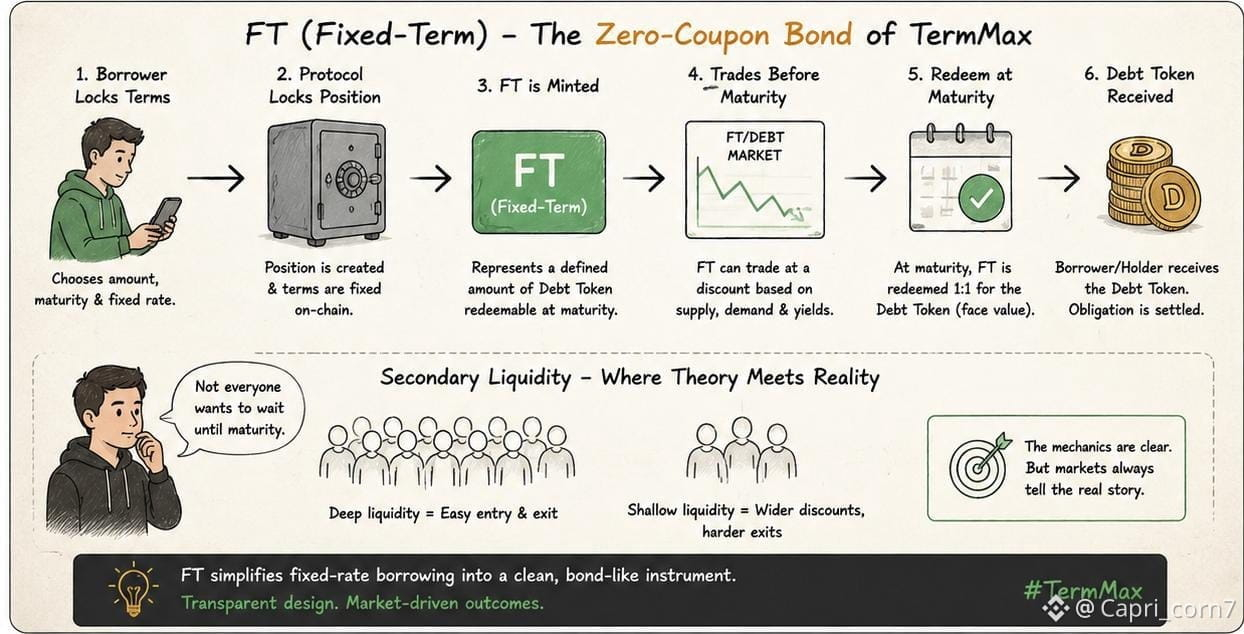
Protokol FT’ni deyarli nol-koupon obligatsiya singari ishlatadi.
Siz faqat suzuvchi talabni olmaysiz. FT yetuklik paytida qaytarib olinadigan qarz tokenining aniq miqdorini ifodalaydi.
Yetuklikdan oldin u chegirma bilan savdo qilishi mumkin.
Buni “yana bir kreditlash protokoli” deb atashdan ko‘ra, tizimni shunday tushunish ancha tozaroq.
Meni qiziqtiradigan savol shuki, yetuklikni kutishni istamaydigan odamlar uchun ikkilamchi likvidlik yetarlicha chuqur bo‘lib qoladimi?
Shunda nazariya voqelikka duch keladi.
Mexanizmlar aniq, lekin bozorlar doim haqiqiy voqeani aytadi.
#TermMax
@TermMax haqida o‘qish, belgilangan foizli qarz olishni on-chain’da qanday ifodalash mumkinligi haqidagi tasavvurimni qayta ko‘rib chiqishga majbur qildi.
Protokol FT’ni deyarli nol-koupon obligatsiya singari ishlatadi.
Siz faqat suzuvchi talabni olmaysiz. FT yetuklik paytida qaytarib olinadigan qarz tokenining aniq miqdorini ifodalaydi.
Yetuklikdan oldin u chegirma bilan savdo qilishi mumkin.
Buni “yana bir kreditlash protokoli” deb atashdan ko‘ra, tizimni shunday tushunish ancha tozaroq.
Meni qiziqtiradigan savol shuki, yetuklikni kutishni istamaydigan odamlar uchun ikkilamchi likvidlik yetarlicha chuqur bo‘lib qoladimi?
Shunda nazariya voqelikka duch keladi.
Mexanizmlar aniq, lekin bozorlar doim haqiqiy voqeani aytadi.
#TermMax
Protokol FT’ni deyarli nol-koupon obligatsiya singari ishlatadi.
Siz faqat suzuvchi talabni olmaysiz. FT yetuklik paytida qaytarib olinadigan qarz tokenining aniq miqdorini ifodalaydi.
Yetuklikdan oldin u chegirma bilan savdo qilishi mumkin.
Buni “yana bir kreditlash protokoli” deb atashdan ko‘ra, tizimni shunday tushunish ancha tozaroq.
Meni qiziqtiradigan savol shuki, yetuklikni kutishni istamaydigan odamlar uchun ikkilamchi likvidlik yetarlicha chuqur bo‘lib qoladimi?
Shunda nazariya voqelikka duch keladi.
Mexanizmlar aniq, lekin bozorlar doim haqiqiy voqeani aytadi.
#TermMax
3
6
111
·
--
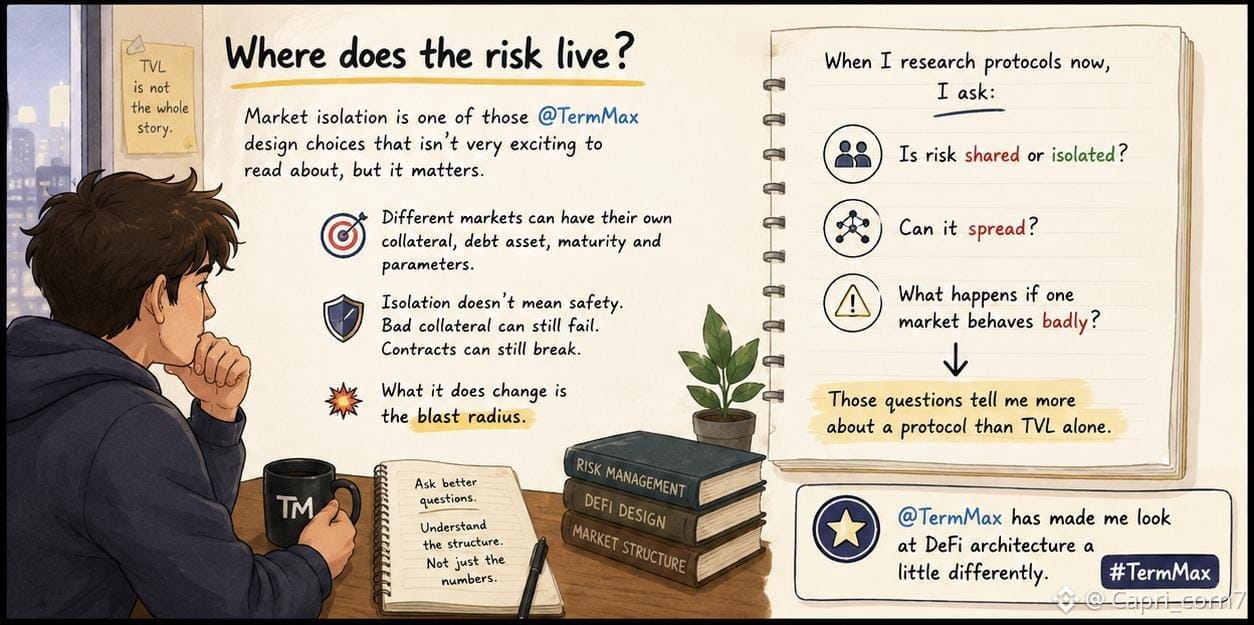
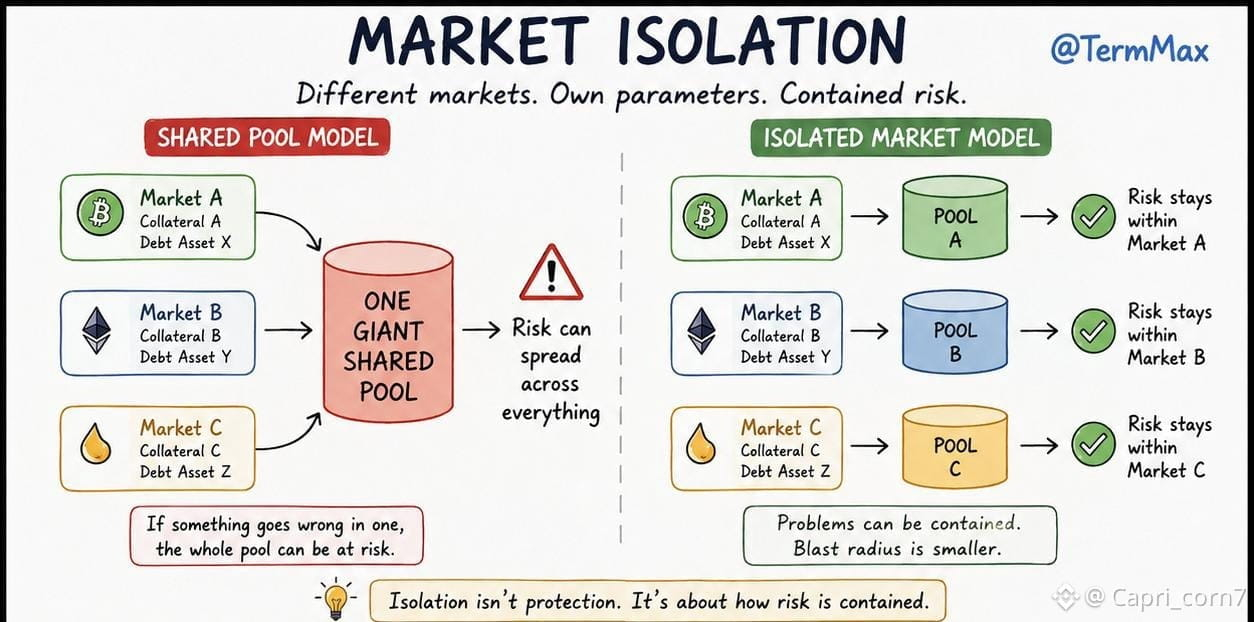
Bozorni izolyatsiya qilish — o‘qish uchun unchalik qiziq bo‘lmagan, ammo baribir muhim bo‘lgan @termmax dizayn tanlovlaridan biridir.
Turli bozorlarda o‘zlarining garovi (collateral), qarz aktivlari (debt asset), muddati (maturity) va parametrlar bo‘lishi mumkin.
Bu esa risk albatta bitta katta umumiy hovuz (pool) ichida to‘planib qolishini anglatmaydi.
Men yaqinda turli DeFi dizaynlarini solishtirayotgan edim va bu kutilganidan ham ko‘proq ajralib turdi.
Agar bitta izolyatsiya qilingan bozorda nimadir noto‘g‘ri ketsa, muammoning ko‘lami barcha komponentlar bir xil hovuzni baham ko‘radigan tizimdagiga qaraganda cheklanganroq bo‘lishi mumkin.
Albatta, izolyatsiya yomon garov yoki buzilgan (broken) kontraktlardan himoya ham emas.
U shunchaki riskning qanday qilib cheklanib qolishini o‘zgartiradi.
Bu muhim farq.
Hozir protokollarni tadqiq qilganimda, risk aslida qayerda yashashini so‘rashga harakat qilaman.
U umumiymi?
Yakka (izolyatsiya) qilinganmi?
U tarqala oladimi?
Agar bitta bozor yomon harakat qilsa, nima bo‘ladi?
Bu savollar odatda faqat TVL’ni (umumiy qiymatni) ko‘rib chiqishdan ko‘ra foydaliroq.
@termmax menga bozor arxitekturasiga biroz boshqacharoq qarashimga sabab bo‘ldi.
#TermMax
Bozorni izolyatsiya qilish — o‘qish uchun unchalik qiziq bo‘lmagan, ammo baribir muhim bo‘lgan @TermMax dizayn tanlovlaridan biridir.
Turli bozorlarda o‘zlarining garovi (collateral), qarz aktivlari (debt asset), muddati (maturity) va parametrlar bo‘lishi mumkin.
Bu esa risk albatta bitta katta umumiy hovuz (pool) ichida to‘planib qolishini anglatmaydi.
Men yaqinda turli DeFi dizaynlarini solishtirayotgan edim va bu kutilganidan ham ko‘proq ajralib turdi.
Agar bitta izolyatsiya qilingan bozorda nimadir noto‘g‘ri ketsa, muammoning ko‘lami barcha komponentlar bir xil hovuzni baham ko‘radigan tizimdagiga qaraganda cheklanganroq bo‘lishi mumkin.
Albatta, izolyatsiya yomon garov yoki buzilgan (broken) kontraktlardan himoya ham emas.
U shunchaki riskning qanday qilib cheklanib qolishini o‘zgartiradi.
Bu muhim farq.
Hozir protokollarni tadqiq qilganimda, risk aslida qayerda yashashini so‘rashga harakat qilaman.
U umumiymi?
Yakka (izolyatsiya) qilinganmi?
U tarqala oladimi?
Agar bitta bozor yomon harakat qilsa, nima bo‘ladi?
Bu savollar odatda faqat TVL’ni (umumiy qiymatni) ko‘rib chiqishdan ko‘ra foydaliroq.
@TermMax menga bozor arxitekturasiga biroz boshqacharoq qarashimga sabab bo‘ldi.
#TermMax
Turli bozorlarda o‘zlarining garovi (collateral), qarz aktivlari (debt asset), muddati (maturity) va parametrlar bo‘lishi mumkin.
Bu esa risk albatta bitta katta umumiy hovuz (pool) ichida to‘planib qolishini anglatmaydi.
Men yaqinda turli DeFi dizaynlarini solishtirayotgan edim va bu kutilganidan ham ko‘proq ajralib turdi.
Agar bitta izolyatsiya qilingan bozorda nimadir noto‘g‘ri ketsa, muammoning ko‘lami barcha komponentlar bir xil hovuzni baham ko‘radigan tizimdagiga qaraganda cheklanganroq bo‘lishi mumkin.
Albatta, izolyatsiya yomon garov yoki buzilgan (broken) kontraktlardan himoya ham emas.
U shunchaki riskning qanday qilib cheklanib qolishini o‘zgartiradi.
Bu muhim farq.
Hozir protokollarni tadqiq qilganimda, risk aslida qayerda yashashini so‘rashga harakat qilaman.
U umumiymi?
Yakka (izolyatsiya) qilinganmi?
U tarqala oladimi?
Agar bitta bozor yomon harakat qilsa, nima bo‘ladi?
Bu savollar odatda faqat TVL’ni (umumiy qiymatni) ko‘rib chiqishdan ko‘ra foydaliroq.
@TermMax menga bozor arxitekturasiga biroz boshqacharoq qarashimga sabab bo‘ldi.
#TermMax
27
17
98
·
--
Seshanba oqshomini bunga bag‘ishladim va baribir hammasi xayolimda to‘liq joylashgani yo‘q.
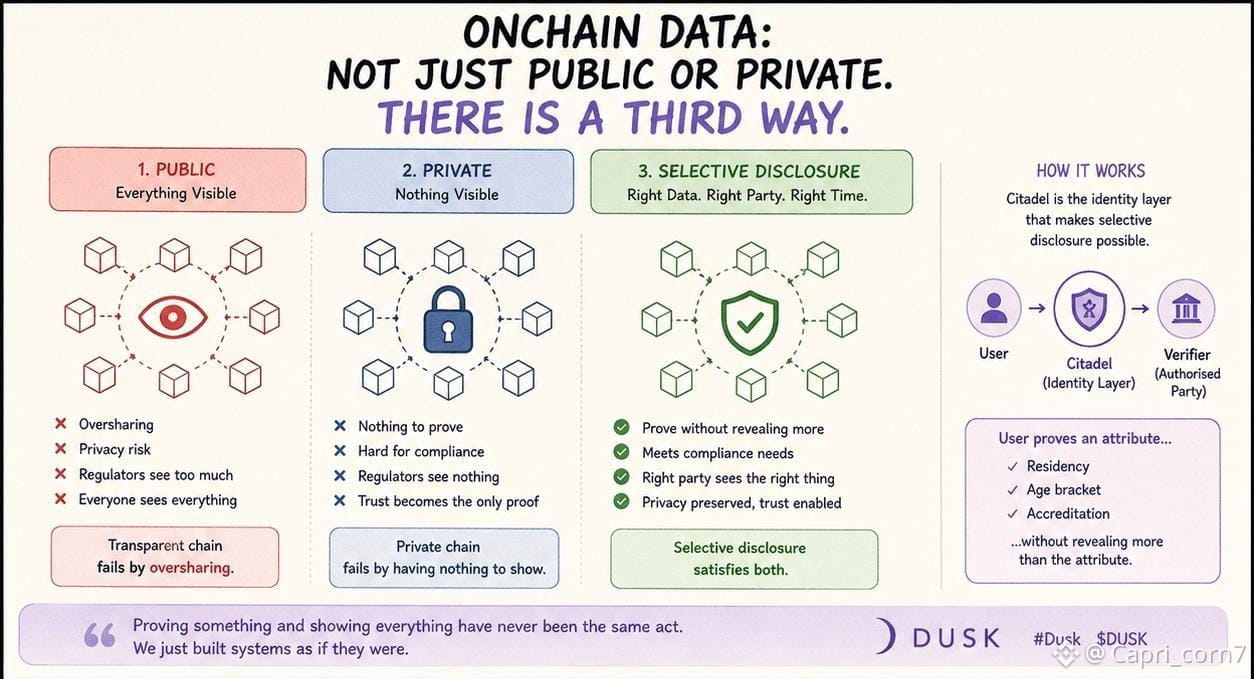
Biz onchain ma’lumotlar haqida go‘yo ikkita sozlama bor deb gapiramiz: public yoki private. hammasi ko‘rinadi yoki hech narsa ko‘rinmaydi
Dusk esa uchinchi variant borligini aytib yuradi va menimcha, bu asl mahsulot.
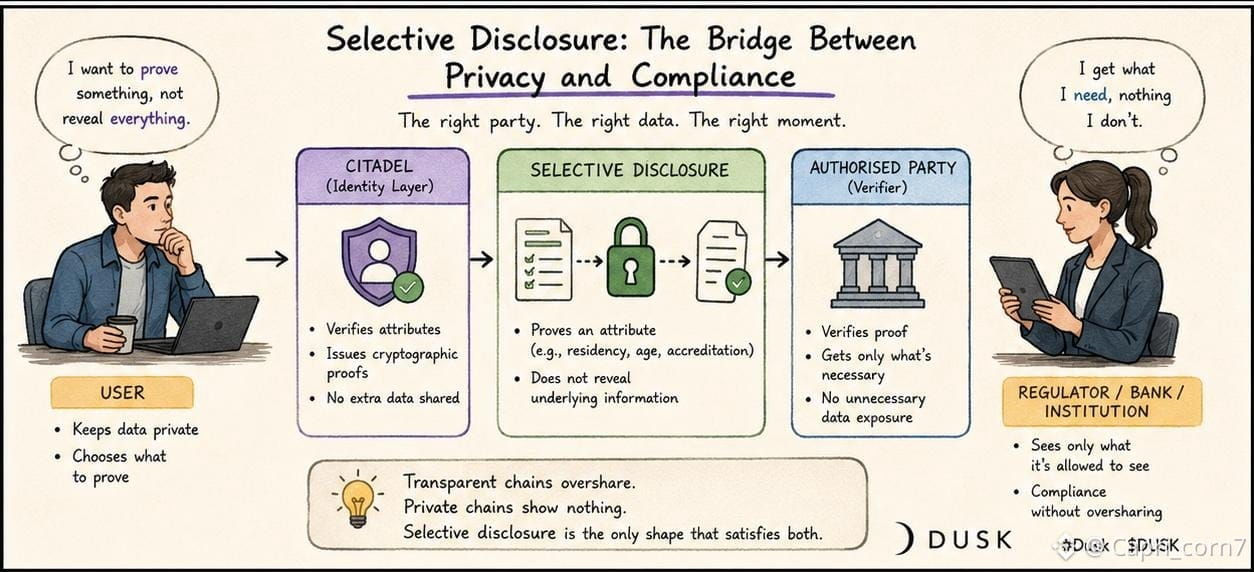
selective disclosure. vakolatli tomonlar ortiqcha keraksiz ma’lumotlar qo‘shilmasdan turib, dalilga ega bo‘ladi. Citadel buni amalga oshiradigan identity layer bo‘lib, kimdir biror atributni isbotlay olishini ta’minlaydi.... masalan, yashash joyi, yosh toifasi, akkreditatsiya.... atributdan ko‘proq narsani oshkor qilmasdan
nimanidir isbotlash va hammasini ko‘rsatish hech qachon bir xil amalda bo‘lmagan. biz tizimlarni go‘yo ular bir xildek qurdik
Uhm, va bu kripto bilan tartibga solingan moliya orasidagi farqni bitta g‘oyaga siqib qo‘yadigan joy. regulyatorlar hamma narsani ommaga ochiq bo‘lishini xohlamaydi. ular to‘g‘ri tomon to‘g‘ri paytda to‘g‘ri narsani ko‘rishini xohlaydi
yorqin (transparent) zanjir oversharing orqali bunga barham beradi. xususiy (private) zanjir esa ko‘rsatadigan hech narsaga ega bo‘lmay qoladi. selective disclosure esa ikkalasiga ham mos keladigan yagona shakl
buni real nazorat sharoitida qanchalik yaxshi ushlashi aniq emas. buni sekin-asta regulyatorlar sinaydi, foydalanuvchilar emas....
sizning fikringiz qanday
@Dusk_Foundation #dusk $DUSK
Seshanba oqshomini bunga bag‘ishladim va baribir hammasi xayolimda to‘liq joylashgani yo‘q.
Biz onchain ma’lumotlar haqida go‘yo ikkita sozlama bor deb gapiramiz: public yoki private. hammasi ko‘rinadi yoki hech narsa ko‘rinmaydi
Dusk esa uchinchi variant borligini aytib yuradi va menimcha, bu asl mahsulot.
selective disclosure. vakolatli tomonlar ortiqcha keraksiz ma’lumotlar qo‘shilmasdan turib, dalilga ega bo‘ladi. Citadel buni amalga oshiradigan identity layer bo‘lib, kimdir biror atributni isbotlay olishini ta’minlaydi.... masalan, yashash joyi, yosh toifasi, akkreditatsiya.... atributdan ko‘proq narsani oshkor qilmasdan
nimanidir isbotlash va hammasini ko‘rsatish hech qachon bir xil amalda bo‘lmagan. biz tizimlarni go‘yo ular bir xildek qurdik
Uhm, va bu kripto bilan tartibga solingan moliya orasidagi farqni bitta g‘oyaga siqib qo‘yadigan joy. regulyatorlar hamma narsani ommaga ochiq bo‘lishini xohlamaydi. ular to‘g‘ri tomon to‘g‘ri paytda to‘g‘ri narsani ko‘rishini xohlaydi
yorqin (transparent) zanjir oversharing orqali bunga barham beradi. xususiy (private) zanjir esa ko‘rsatadigan hech narsaga ega bo‘lmay qoladi. selective disclosure esa ikkalasiga ham mos keladigan yagona shakl
buni real nazorat sharoitida qanchalik yaxshi ushlashi aniq emas. buni sekin-asta regulyatorlar sinaydi, foydalanuvchilar emas....
sizning fikringiz qanday
@Dusk #dusk $DUSK
Biz onchain ma’lumotlar haqida go‘yo ikkita sozlama bor deb gapiramiz: public yoki private. hammasi ko‘rinadi yoki hech narsa ko‘rinmaydi
Dusk esa uchinchi variant borligini aytib yuradi va menimcha, bu asl mahsulot.
selective disclosure. vakolatli tomonlar ortiqcha keraksiz ma’lumotlar qo‘shilmasdan turib, dalilga ega bo‘ladi. Citadel buni amalga oshiradigan identity layer bo‘lib, kimdir biror atributni isbotlay olishini ta’minlaydi.... masalan, yashash joyi, yosh toifasi, akkreditatsiya.... atributdan ko‘proq narsani oshkor qilmasdan
nimanidir isbotlash va hammasini ko‘rsatish hech qachon bir xil amalda bo‘lmagan. biz tizimlarni go‘yo ular bir xildek qurdik
Uhm, va bu kripto bilan tartibga solingan moliya orasidagi farqni bitta g‘oyaga siqib qo‘yadigan joy. regulyatorlar hamma narsani ommaga ochiq bo‘lishini xohlamaydi. ular to‘g‘ri tomon to‘g‘ri paytda to‘g‘ri narsani ko‘rishini xohlaydi
yorqin (transparent) zanjir oversharing orqali bunga barham beradi. xususiy (private) zanjir esa ko‘rsatadigan hech narsaga ega bo‘lmay qoladi. selective disclosure esa ikkalasiga ham mos keladigan yagona shakl
buni real nazorat sharoitida qanchalik yaxshi ushlashi aniq emas. buni sekin-asta regulyatorlar sinaydi, foydalanuvchilar emas....
sizning fikringiz qanday
@Dusk #dusk $DUSK
39
17
146
Ko‘proq kontentni ko‘rish uchun tizimga kiring
Binance Square'da global kriptovalyuta foydalanuvchilariga qo‘shiling
⚡️ Kriptovalyuta haqida eng so‘nggi va foydali ma’lumotlarni oling.
💬 Dunyoning eng yirik kriptovalyuta birjasi tomonidan ishonchli deb topilgan.
👍 Tasdiqlangan mualliflardan haqiqiy tahlillarni kashf eting.
Email / telefon raqami
Trenddagi mavzular
UKFCAOpensCryptoFirmAuthorization
8 marta koʻrilgan
21 muhokama qilmoqda
#ukfcaopenscryptofirmauthorization
🇬🇧🚨 KRIPTO FIRMALARI UCHUN UK ESHIKNI OCHDI!
Buyuk Britaniyaning Moliyaviy xizmatlar bo‘yicha vakolatli organi (FCA) kripto-firmalarni ruxsat berish jarayonini ochdi va bu kripto bizneslarini Buyuk Britaniyaning tartibga solish tizimiga olib kirish yo‘lidagi yana bir muhim qadam bo‘ldi.
🏦 Kripto firmalari ruxsat olish uchun murojaat qila oladi
📋 Tartibga solish talablari yanada aniqroq bo‘lib bormoqda
🔐 Muvofiqlikka va iste’molchilarni himoya qilishga ko‘proq urg‘u
🇬🇧 Buyuk Britaniya o‘zini tartibga solinadigan kripto bozor sifatida ko‘rsatmoqda
Xabar aniq: kripto an’anaviy moliyaviy tartibga solish tomon yanada chuqurroq kirib bormoqda. 👀
Bu ko‘proq kripto kompaniyalarini Buyuk Britaniyaga jalb qiladimi?
#crypto #FCA #UKCBC #UK
Faizan Crypto Learner
·0 ta layk
·2 marta koʻrilgan
JapanMOFStudyGroupOnTokenizedGovtBonds
592 marta koʻrilgan
72 muhokama qilmoqda
QNTRises287%
16,785 marta koʻrilgan
363 muhokama qilmoqda