
minamium
10.9k Postlar

minamium
Shikoyat qilish
Foydalanuvchini bloklash
1 Kuzatilmoqda
98 Kuzatuvchilar
367 Yoqdi
Postlar
·
--
See translation
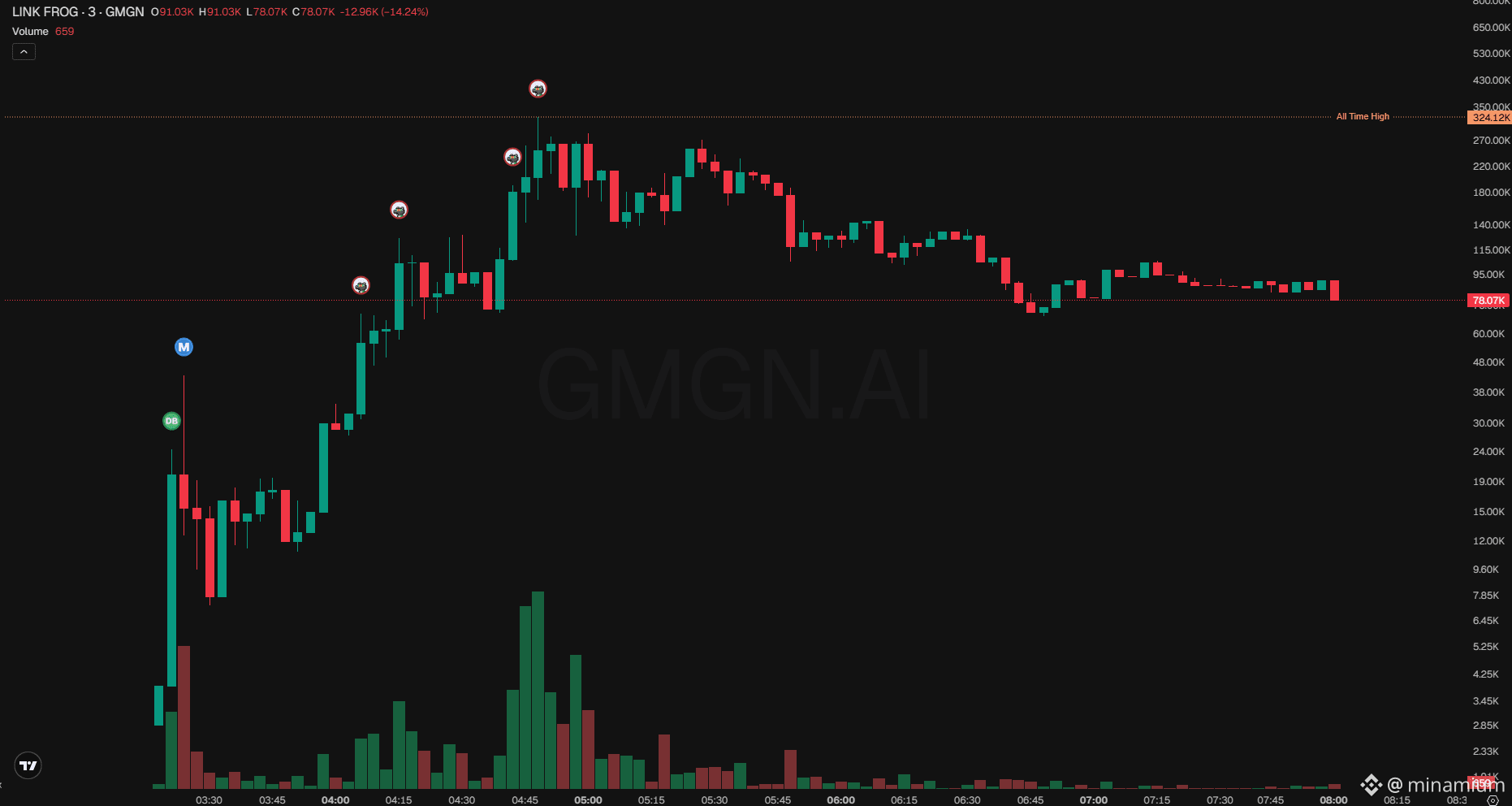
🟣 $LINK FROG - #SOL play
4wKtKAf5WTsWhbYPEiFN3PFFCpPmYmdab3TEcxZRg7oM
mcap: $94K
picture that cartoon frog rocking chainlink's hexagon logo and blue oracle colors like a pepe remix. link frog on sol blends the chain.link branding with frog meme vibes as a fresh ticker with no clear origin yet. dyor
https://gmgn.ai/sol/token/4wKtKAf5WTsWhbYPEiFN3PFFCpPmYmdab3TEcxZRg7oM
https://t.me/GMGN_sol_bot?start=4wKtKAf5WTsWhbYPEiFN3PFFCpPmYmdab3TEcxZRg7oM
🟣 $LINK FROG - #SOL play
4wKtKAf5WTsWhbYPEiFN3PFFCpPmYmdab3TEcxZRg7oM
mcap: $94K
picture that cartoon frog rocking chainlink's hexagon logo and blue oracle colors like a pepe remix. link frog on sol blends the chain.link branding with frog meme vibes as a fresh ticker with no clear origin yet. dyor
https://gmgn.ai/sol/token/4wKtKAf5WTsWhbYPEiFN3PFFCpPmYmdab3TEcxZRg7oM
https://t.me/GMGN_sol_bot?start=4wKtKAf5WTsWhbYPEiFN3PFFCpPmYmdab3TEcxZRg7oM
4wKtKAf5WTsWhbYPEiFN3PFFCpPmYmdab3TEcxZRg7oM
mcap: $94K
picture that cartoon frog rocking chainlink's hexagon logo and blue oracle colors like a pepe remix. link frog on sol blends the chain.link branding with frog meme vibes as a fresh ticker with no clear origin yet. dyor
https://gmgn.ai/sol/token/4wKtKAf5WTsWhbYPEiFN3PFFCpPmYmdab3TEcxZRg7oM
https://t.me/GMGN_sol_bot?start=4wKtKAf5WTsWhbYPEiFN3PFFCpPmYmdab3TEcxZRg7oM
51
·
--
See translation
If you are still dumping liquidity into random AI wrapper tokens while Wall Street preps for the real equity, stop now.
Retail traders spent the last two cycles getting dumped on by venture funds looking for exit liquidity, only to watch real tech revenue bypass crypto rails entirely. We keep buying the speculative derivative instead of capturing the underlying infrastructure value.
Anthropic picking Nasdaq for a potential public listing feels eerily similar to when tech giants looked at decentralized tech in previous cycles and decided to build in private gardens instead. Traditional equity markets are capturing the cash flows of generative tech, leaving crypto markets trading governance tokens with zero claim on model revenue. We saw a similar dynamic play out during the early scaling rollouts, where ecosystems like $OP absorbed retail attention while conservative capital parked safely in yield or $USDT reserves.
The smarter rotation right now is watching how secondary liquidity shifts. When institutional players can buy direct exposure through traditional listings, the premium on decentralized compute and data networks like $FIL has to justify itself on actual utility rather than pure AI narrative correlation.
Do you think a successful traditional tech IPO drains capital away from AI tokens, or will it create an even larger spillover effect into on-chain alternatives?
#AnthropicChoosesNasdaqForPotentialIPO #AnthropicCEOCallsForAISlowdown #TokenizedStockHoldersUp619
If you are still dumping liquidity into random AI wrapper tokens while Wall Street preps for the real equity, stop now.
Retail traders spent the last two cycles getting dumped on by venture funds looking for exit liquidity, only to watch real tech revenue bypass crypto rails entirely. We keep buying the speculative derivative instead of capturing the underlying infrastructure value.
Anthropic picking Nasdaq for a potential public listing feels eerily similar to when tech giants looked at decentralized tech in previous cycles and decided to build in private gardens instead. Traditional equity markets are capturing the cash flows of generative tech, leaving crypto markets trading governance tokens with zero claim on model revenue. We saw a similar dynamic play out during the early scaling rollouts, where ecosystems like $OP absorbed retail attention while conservative capital parked safely in yield or $USDT reserves.
The smarter rotation right now is watching how secondary liquidity shifts. When institutional players can buy direct exposure through traditional listings, the premium on decentralized compute and data networks like $FIL has to justify itself on actual utility rather than pure AI narrative correlation.
Do you think a successful traditional tech IPO drains capital away from AI tokens, or will it create an even larger spillover effect into on-chain alternatives?
#AnthropicChoosesNasdaqForPotentialIPO #AnthropicCEOCallsForAISlowdown #TokenizedStockHoldersUp619
Retail traders spent the last two cycles getting dumped on by venture funds looking for exit liquidity, only to watch real tech revenue bypass crypto rails entirely. We keep buying the speculative derivative instead of capturing the underlying infrastructure value.
Anthropic picking Nasdaq for a potential public listing feels eerily similar to when tech giants looked at decentralized tech in previous cycles and decided to build in private gardens instead. Traditional equity markets are capturing the cash flows of generative tech, leaving crypto markets trading governance tokens with zero claim on model revenue. We saw a similar dynamic play out during the early scaling rollouts, where ecosystems like $OP absorbed retail attention while conservative capital parked safely in yield or $USDT reserves.
The smarter rotation right now is watching how secondary liquidity shifts. When institutional players can buy direct exposure through traditional listings, the premium on decentralized compute and data networks like $FIL has to justify itself on actual utility rather than pure AI narrative correlation.
Do you think a successful traditional tech IPO drains capital away from AI tokens, or will it create an even larger spillover effect into on-chain alternatives?
#AnthropicChoosesNasdaqForPotentialIPO #AnthropicCEOCallsForAISlowdown #TokenizedStockHoldersUp619

199
·
--
See translation
Have you noticed everyone treating Nvidia's rumored investment talks like they are already signed and pumping every related name?
That is how traders keep losing money on this stuff. They buy the headline, get no clean entry, and have zero plan for when to get out if the talks stall or the number comes in smaller than expected.
The mainstream take is that Nvidia deploying capital is pure rocket fuel for AI and anything tokenized around it. I do not see it that way. Talks to invest up to a big number are not the same as a closed deal, and it sits awkwardly next to Anthropic's CEO calling for an AI slowdown. Plenty of that optimism already lives in $NVDAB after tokenized stock holders had a massive run. Greed is sitting at 67. That is usually when people stop thinking.
If you actually want to trade this, park in $USDT and wait for confirmation or a dip instead of chasing. Keep size modest and decide your exit before you enter. Jumping from $DOGE style hype straight into this narrative is how you end up as liquidity.
Anyone else seeing this get treated like confirmed news already?
#NvidiaInTalksToInvestUpTo #TokenizedStockHoldersUp619 #AnthropicCEOCallsForAISlowdown
Have you noticed everyone treating Nvidia's rumored investment talks like they are already signed and pumping every related name?
That is how traders keep losing money on this stuff. They buy the headline, get no clean entry, and have zero plan for when to get out if the talks stall or the number comes in smaller than expected.
The mainstream take is that Nvidia deploying capital is pure rocket fuel for AI and anything tokenized around it. I do not see it that way. Talks to invest up to a big number are not the same as a closed deal, and it sits awkwardly next to Anthropic's CEO calling for an AI slowdown. Plenty of that optimism already lives in $NVDAB after tokenized stock holders had a massive run. Greed is sitting at 67. That is usually when people stop thinking.
If you actually want to trade this, park in $USDT and wait for confirmation or a dip instead of chasing. Keep size modest and decide your exit before you enter. Jumping from $DOGE style hype straight into this narrative is how you end up as liquidity.
Anyone else seeing this get treated like confirmed news already?
#NvidiaInTalksToInvestUpTo #TokenizedStockHoldersUp619 #AnthropicCEOCallsForAISlowdown
That is how traders keep losing money on this stuff. They buy the headline, get no clean entry, and have zero plan for when to get out if the talks stall or the number comes in smaller than expected.
The mainstream take is that Nvidia deploying capital is pure rocket fuel for AI and anything tokenized around it. I do not see it that way. Talks to invest up to a big number are not the same as a closed deal, and it sits awkwardly next to Anthropic's CEO calling for an AI slowdown. Plenty of that optimism already lives in $NVDAB after tokenized stock holders had a massive run. Greed is sitting at 67. That is usually when people stop thinking.
If you actually want to trade this, park in $USDT and wait for confirmation or a dip instead of chasing. Keep size modest and decide your exit before you enter. Jumping from $DOGE style hype straight into this narrative is how you end up as liquidity.
Anyone else seeing this get treated like confirmed news already?
#NvidiaInTalksToInvestUpTo #TokenizedStockHoldersUp619 #AnthropicCEOCallsForAISlowdown

3
·
--
See translation
Picture this: a major financial institution announces a pilot on a public ledger, social feeds light up with green candles, and retail rushes in before reading the fine print.
Most traders still treat enterprise pilot headlines as immediate catalysts for price discovery, buying the top only to watch their capital bleed out over months of development silence. When excitement outpaces execution reality, market participants consistently confuse institutional testing with active token demand.
The recent settlement pilot between U.S. Bank and the Stellar network is a classic study in how institutional infrastructure actually evolves. While processing cross-border flows with $USDT settlement demonstrates settlement efficiency, enterprise adoption usually operates inside closed liquidity corridors or permissioned environments. That means volume on a test rail rarely converts into organic transactional velocity for public assets like $XLM.
There is also a broader counterparty risk that retail tends to overlook. Banking pilots are designed to stress-test regulatory compliance and counterparty exposure, which means one policy shift can shelve an entire initiative indefinitely. When enterprise pilots do not guarantee sustained liquidity or direct token value accrual, holding high-risk spot positions purely on corporate press releases leaves late buyers holding the bag.
Where do you think institutional settlement rails actually create sustainable value for public crypto markets?
#USBankCompletesCrossBorderPaymentPilotOnStellar #TokenizedStockHoldersUp619 #CryptoLiquidations
Picture this: a major financial institution announces a pilot on a public ledger, social feeds light up with green candles, and retail rushes in before reading the fine print.
Most traders still treat enterprise pilot headlines as immediate catalysts for price discovery, buying the top only to watch their capital bleed out over months of development silence. When excitement outpaces execution reality, market participants consistently confuse institutional testing with active token demand.
The recent settlement pilot between U.S. Bank and the Stellar network is a classic study in how institutional infrastructure actually evolves. While processing cross-border flows with $USDT settlement demonstrates settlement efficiency, enterprise adoption usually operates inside closed liquidity corridors or permissioned environments. That means volume on a test rail rarely converts into organic transactional velocity for public assets like $XLM .
There is also a broader counterparty risk that retail tends to overlook. Banking pilots are designed to stress-test regulatory compliance and counterparty exposure, which means one policy shift can shelve an entire initiative indefinitely. When enterprise pilots do not guarantee sustained liquidity or direct token value accrual, holding high-risk spot positions purely on corporate press releases leaves late buyers holding the bag.
Where do you think institutional settlement rails actually create sustainable value for public crypto markets?
#USBankCompletesCrossBorderPaymentPilotOnStellar #TokenizedStockHoldersUp619 #CryptoLiquidations
Most traders still treat enterprise pilot headlines as immediate catalysts for price discovery, buying the top only to watch their capital bleed out over months of development silence. When excitement outpaces execution reality, market participants consistently confuse institutional testing with active token demand.
The recent settlement pilot between U.S. Bank and the Stellar network is a classic study in how institutional infrastructure actually evolves. While processing cross-border flows with $USDT settlement demonstrates settlement efficiency, enterprise adoption usually operates inside closed liquidity corridors or permissioned environments. That means volume on a test rail rarely converts into organic transactional velocity for public assets like $XLM .
There is also a broader counterparty risk that retail tends to overlook. Banking pilots are designed to stress-test regulatory compliance and counterparty exposure, which means one policy shift can shelve an entire initiative indefinitely. When enterprise pilots do not guarantee sustained liquidity or direct token value accrual, holding high-risk spot positions purely on corporate press releases leaves late buyers holding the bag.
Where do you think institutional settlement rails actually create sustainable value for public crypto markets?
#USBankCompletesCrossBorderPaymentPilotOnStellar #TokenizedStockHoldersUp619 #CryptoLiquidations
9
·
--
See translation
Why is everyone still chasing overbought meme tokens when institutional capital is quietly making moves on legacy utility?
Most traders spend years getting burned by late entries on high-beta hype cycles, completely missing the structural shifts that happen right in plain sight. We see the market sentiment leaning into Greed, yet retail liquidity keeps rotating into short-term volatility instead of positioning for real institutional catalysts.
Grayscale filing to convert its Trust into a spot ETF is a textbook case study in narrative exhaustion versus regulatory reality. While the spotlight remains on massive ecosystem assets, a spot vehicle creates direct, compliant access for retirement and wealth accounts that wouldn't touch decentralized rails directly.
Looking at historical setups with earlier approvals, the real divergence happens long before the general market realizes liquidity is drying up on exchanges. If traditional rails clear the path for $LTC while capital continues rotating around large-cap vehicles like $ZEC and $POWR, we are likely looking at a major repricing of established proof-of-work assets.
Are you positioning ahead of these ETF conversion filings, or waiting for official approvals to confirm the trend?
#SECReceivesGrayscaleLitecoinTrustETFFiling #ClarityActFacesProceduralVoteSept15
Why is everyone still chasing overbought meme tokens when institutional capital is quietly making moves on legacy utility?
Most traders spend years getting burned by late entries on high-beta hype cycles, completely missing the structural shifts that happen right in plain sight. We see the market sentiment leaning into Greed, yet retail liquidity keeps rotating into short-term volatility instead of positioning for real institutional catalysts.
Grayscale filing to convert its Trust into a spot ETF is a textbook case study in narrative exhaustion versus regulatory reality. While the spotlight remains on massive ecosystem assets, a spot vehicle creates direct, compliant access for retirement and wealth accounts that wouldn't touch decentralized rails directly.
Looking at historical setups with earlier approvals, the real divergence happens long before the general market realizes liquidity is drying up on exchanges. If traditional rails clear the path for $LTC while capital continues rotating around large-cap vehicles like $ZEC and $POWR , we are likely looking at a major repricing of established proof-of-work assets.
Are you positioning ahead of these ETF conversion filings, or waiting for official approvals to confirm the trend?
#SECReceivesGrayscaleLitecoinTrustETFFiling #ClarityActFacesProceduralVoteSept15
Most traders spend years getting burned by late entries on high-beta hype cycles, completely missing the structural shifts that happen right in plain sight. We see the market sentiment leaning into Greed, yet retail liquidity keeps rotating into short-term volatility instead of positioning for real institutional catalysts.
Grayscale filing to convert its Trust into a spot ETF is a textbook case study in narrative exhaustion versus regulatory reality. While the spotlight remains on massive ecosystem assets, a spot vehicle creates direct, compliant access for retirement and wealth accounts that wouldn't touch decentralized rails directly.
Looking at historical setups with earlier approvals, the real divergence happens long before the general market realizes liquidity is drying up on exchanges. If traditional rails clear the path for $LTC while capital continues rotating around large-cap vehicles like $ZEC and $POWR , we are likely looking at a major repricing of established proof-of-work assets.
Are you positioning ahead of these ETF conversion filings, or waiting for official approvals to confirm the trend?
#SECReceivesGrayscaleLitecoinTrustETFFiling #ClarityActFacesProceduralVoteSept15

244
·
--
Sayyoradagi eng muhim AI laboratoriyalaridan birida yugurayotgan odam endi siyosatchilarga butun sohani sekinlashtirish kerakligini aytdi.
Ko‘p kripto bu gapni shovqin deb qabul qiladi va AI haqidagi hikoyani yana 2021-yilgidek davom etadi deb o‘ylab, sotib olishni davom ettiradi. Keyin esa FOMO bilan ochko‘zlik darajasida kirgan “sumkalar” nima uchun narrativ to‘xtagan ondayoq qon keta boshlaganini hayron bo‘lib so‘rashadi.
Men bu aynan o‘sha vaziyatni avval ham ko‘rganman. Ichkaridagilar ishlar nazoratda bo‘lib turganida hech qachon sekinlashtirishga chaqirmaydi. Ular texnologiya nimaga qodirligi bilan uni boshqarish bo‘yicha kimdir amalda nimani qo‘lga olishi orasidagi tafovut xavfli darajaga yetganda shuni aytishadi. O‘shanda tartibga solish paydo bo‘ladi, muddatlar cho‘ziladi va to‘g‘ri chiziq bo‘yicha baholangan bozor qayta narxlashi shart bo‘lib qoladi. ICO’larda ham bo‘lgan. Metaverse’da ham bo‘lgan. Nomlar o‘zgaradi. Psixologiya esa o‘zgarmaydi.
Hozir Fear and Greed 67 da. Odamlar hali ham $NVDAB ni kafolatlangan g‘olib deb bilib, deyarli hech qanday $USDT da o‘tirishmayapti — chunki ular AI treydi “nafas rostlashi” mumkinligini tasavvur ham qila olishmaydi. Men tasavvur qilaman. Bir haftada likvidlik issiq narrativni tark etganini ko‘rdim, va u qaytadan aytilayotgan hikoyaga moslashishga ulgurmagan, hikoyaga ko‘ra ulchaganlar odatda birinchi bo‘lib likvidatsiya bo‘lib ketadi.
Bu hamma narsani sotish chaqiruvi emas. Bu — modellar yaqinida bo‘lgan odamlar vaqt so‘rayotgani va bu oxirgi yashil shamdan ham muhimroq bo‘lishi kerakligini eslatma.
Boshqalar ham bu sekinlashtirish haqidagi gapni real signal deb qabul qilyaptimi, yoki bozor buni e’tiborsiz qoldiraversa-chi, axir u tushunib bo‘lmaydigan darajaga yetmaguncha?
#AnthropicCEOCallsForAISlowdown #TokenizedStockHoldersUp619 #CryptoLiquidations
Sayyoradagi eng muhim AI laboratoriyalaridan birida yugurayotgan odam endi siyosatchilarga butun sohani sekinlashtirish kerakligini aytdi.
Ko‘p kripto bu gapni shovqin deb qabul qiladi va AI haqidagi hikoyani yana 2021-yilgidek davom etadi deb o‘ylab, sotib olishni davom ettiradi. Keyin esa FOMO bilan ochko‘zlik darajasida kirgan “sumkalar” nima uchun narrativ to‘xtagan ondayoq qon keta boshlaganini hayron bo‘lib so‘rashadi.
Men bu aynan o‘sha vaziyatni avval ham ko‘rganman. Ichkaridagilar ishlar nazoratda bo‘lib turganida hech qachon sekinlashtirishga chaqirmaydi. Ular texnologiya nimaga qodirligi bilan uni boshqarish bo‘yicha kimdir amalda nimani qo‘lga olishi orasidagi tafovut xavfli darajaga yetganda shuni aytishadi. O‘shanda tartibga solish paydo bo‘ladi, muddatlar cho‘ziladi va to‘g‘ri chiziq bo‘yicha baholangan bozor qayta narxlashi shart bo‘lib qoladi. ICO’larda ham bo‘lgan. Metaverse’da ham bo‘lgan. Nomlar o‘zgaradi. Psixologiya esa o‘zgarmaydi.
Hozir Fear and Greed 67 da. Odamlar hali ham $NVDAB ni kafolatlangan g‘olib deb bilib, deyarli hech qanday $USDT da o‘tirishmayapti — chunki ular AI treydi “nafas rostlashi” mumkinligini tasavvur ham qila olishmaydi. Men tasavvur qilaman. Bir haftada likvidlik issiq narrativni tark etganini ko‘rdim, va u qaytadan aytilayotgan hikoyaga moslashishga ulgurmagan, hikoyaga ko‘ra ulchaganlar odatda birinchi bo‘lib likvidatsiya bo‘lib ketadi.
Bu hamma narsani sotish chaqiruvi emas. Bu — modellar yaqinida bo‘lgan odamlar vaqt so‘rayotgani va bu oxirgi yashil shamdan ham muhimroq bo‘lishi kerakligini eslatma.
Boshqalar ham bu sekinlashtirish haqidagi gapni real signal deb qabul qilyaptimi, yoki bozor buni e’tiborsiz qoldiraversa-chi, axir u tushunib bo‘lmaydigan darajaga yetmaguncha?
#AnthropicCEOCallsForAISlowdown #TokenizedStockHoldersUp619 #CryptoLiquidations
Ko‘p kripto bu gapni shovqin deb qabul qiladi va AI haqidagi hikoyani yana 2021-yilgidek davom etadi deb o‘ylab, sotib olishni davom ettiradi. Keyin esa FOMO bilan ochko‘zlik darajasida kirgan “sumkalar” nima uchun narrativ to‘xtagan ondayoq qon keta boshlaganini hayron bo‘lib so‘rashadi.
Men bu aynan o‘sha vaziyatni avval ham ko‘rganman. Ichkaridagilar ishlar nazoratda bo‘lib turganida hech qachon sekinlashtirishga chaqirmaydi. Ular texnologiya nimaga qodirligi bilan uni boshqarish bo‘yicha kimdir amalda nimani qo‘lga olishi orasidagi tafovut xavfli darajaga yetganda shuni aytishadi. O‘shanda tartibga solish paydo bo‘ladi, muddatlar cho‘ziladi va to‘g‘ri chiziq bo‘yicha baholangan bozor qayta narxlashi shart bo‘lib qoladi. ICO’larda ham bo‘lgan. Metaverse’da ham bo‘lgan. Nomlar o‘zgaradi. Psixologiya esa o‘zgarmaydi.
Hozir Fear and Greed 67 da. Odamlar hali ham $NVDAB ni kafolatlangan g‘olib deb bilib, deyarli hech qanday $USDT da o‘tirishmayapti — chunki ular AI treydi “nafas rostlashi” mumkinligini tasavvur ham qila olishmaydi. Men tasavvur qilaman. Bir haftada likvidlik issiq narrativni tark etganini ko‘rdim, va u qaytadan aytilayotgan hikoyaga moslashishga ulgurmagan, hikoyaga ko‘ra ulchaganlar odatda birinchi bo‘lib likvidatsiya bo‘lib ketadi.
Bu hamma narsani sotish chaqiruvi emas. Bu — modellar yaqinida bo‘lgan odamlar vaqt so‘rayotgani va bu oxirgi yashil shamdan ham muhimroq bo‘lishi kerakligini eslatma.
Boshqalar ham bu sekinlashtirish haqidagi gapni real signal deb qabul qilyaptimi, yoki bozor buni e’tiborsiz qoldiraversa-chi, axir u tushunib bo‘lmaydigan darajaga yetmaguncha?
#AnthropicCEOCallsForAISlowdown #TokenizedStockHoldersUp619 #CryptoLiquidations

10
·
--
See translation
Picture this: a trader who spent weeks bleeding capital suddenly prints a 40,122.67 USDT profit on a single swing.
Most retail traders get stuck in that brutal cycle of chasing green candles, taking small wins, and letting massive drawdowns wipe out their accounts. It is painful watching high-leverage setups run away while your own balance slowly grinds down.
That is why this latest closed position on $LSK caught so much attention when it climbed to the top 16 daily futures leaderboard. The trader caught an explosive move on the LSKUSDT perpetual contract, locking in a +267.22% return and taking home over 40,122 USDT in clean profit.
We saw almost the exact same playbook unfold during the sudden volatility spikes on $BTC and older altcoins earlier this year. When quiet assets like $LSK break out after long accumulation phases, late shorters get squeezed hard and aggressive position holders walk away with massive gains before the momentum fades.
The real takeaway here comes down to timing and disciplined execution rather than pure luck. Catching a triple-digit percentage move only matters if you actually secure the liquidity instead of giving it all back on the next impulse.
What is your take on these sudden altcoin breakout runs?
#CryptoTrading #BinanceFutures #Altcoins
Picture this: a trader who spent weeks bleeding capital suddenly prints a 40,122.67 USDT profit on a single swing.
Most retail traders get stuck in that brutal cycle of chasing green candles, taking small wins, and letting massive drawdowns wipe out their accounts. It is painful watching high-leverage setups run away while your own balance slowly grinds down.
That is why this latest closed position on $LSK caught so much attention when it climbed to the top 16 daily futures leaderboard. The trader caught an explosive move on the LSKUSDT perpetual contract, locking in a +267.22% return and taking home over 40,122 USDT in clean profit.
We saw almost the exact same playbook unfold during the sudden volatility spikes on $BTC and older altcoins earlier this year. When quiet assets like $LSK break out after long accumulation phases, late shorters get squeezed hard and aggressive position holders walk away with massive gains before the momentum fades.
The real takeaway here comes down to timing and disciplined execution rather than pure luck. Catching a triple-digit percentage move only matters if you actually secure the liquidity instead of giving it all back on the next impulse.
What is your take on these sudden altcoin breakout runs?
#CryptoTrading #BinanceFutures #Altcoins
Most retail traders get stuck in that brutal cycle of chasing green candles, taking small wins, and letting massive drawdowns wipe out their accounts. It is painful watching high-leverage setups run away while your own balance slowly grinds down.
That is why this latest closed position on $LSK caught so much attention when it climbed to the top 16 daily futures leaderboard. The trader caught an explosive move on the LSKUSDT perpetual contract, locking in a +267.22% return and taking home over 40,122 USDT in clean profit.
We saw almost the exact same playbook unfold during the sudden volatility spikes on $BTC and older altcoins earlier this year. When quiet assets like $LSK break out after long accumulation phases, late shorters get squeezed hard and aggressive position holders walk away with massive gains before the momentum fades.
The real takeaway here comes down to timing and disciplined execution rather than pure luck. Catching a triple-digit percentage move only matters if you actually secure the liquidity instead of giving it all back on the next impulse.
What is your take on these sudden altcoin breakout runs?
#CryptoTrading #BinanceFutures #Altcoins
115
·
--
See translation
If you're still chasing every $SOL wick without mapping the levels, stop now.
Too many traders got wrecked buying the 105 high only to watch it fade, missing the real setup and not knowing when to exit. That FOMO pain hits hard when the sequence repeats and leaves you holding the bag.
The sequence ran 98.33 to a 100.26 high then back to 99. Usually it flushes free to 98 but this time it held even after the sudden 97.36 dip. Then the typical run to 105.77 happened and mapping that back to 100 played out exactly as expected.
Now the market is slow building. Chance is high for 107 at least if it grinds through 103 to 105, or a couple of big greens could send it higher. 108 or 109 looks like the ceiling this round.
This support hold feels stronger than past $SOL cycles, more like the $ETH ranges that preceded bigger legs while $BTC just sits there ranging.
Where do you think $SOL goes from here, slow grind or one more pump?
#Solana #Crypto #Trading
If you're still chasing every $SOL wick without mapping the levels, stop now.
Too many traders got wrecked buying the 105 high only to watch it fade, missing the real setup and not knowing when to exit. That FOMO pain hits hard when the sequence repeats and leaves you holding the bag.
The sequence ran 98.33 to a 100.26 high then back to 99. Usually it flushes free to 98 but this time it held even after the sudden 97.36 dip. Then the typical run to 105.77 happened and mapping that back to 100 played out exactly as expected.
Now the market is slow building. Chance is high for 107 at least if it grinds through 103 to 105, or a couple of big greens could send it higher. 108 or 109 looks like the ceiling this round.
This support hold feels stronger than past $SOL cycles, more like the $ETH ranges that preceded bigger legs while $BTC just sits there ranging.
Where do you think $SOL goes from here, slow grind or one more pump?
#Solana #Crypto #Trading
Too many traders got wrecked buying the 105 high only to watch it fade, missing the real setup and not knowing when to exit. That FOMO pain hits hard when the sequence repeats and leaves you holding the bag.
The sequence ran 98.33 to a 100.26 high then back to 99. Usually it flushes free to 98 but this time it held even after the sudden 97.36 dip. Then the typical run to 105.77 happened and mapping that back to 100 played out exactly as expected.
Now the market is slow building. Chance is high for 107 at least if it grinds through 103 to 105, or a couple of big greens could send it higher. 108 or 109 looks like the ceiling this round.
This support hold feels stronger than past $SOL cycles, more like the $ETH ranges that preceded bigger legs while $BTC just sits there ranging.
Where do you think $SOL goes from here, slow grind or one more pump?
#Solana #Crypto #Trading

21
·
--
See translation
Everyone thinks every green candle on the top gainers list is an invitation to easy profit, but actually, chasing an overextended rally without checking market structure is how most accounts get wiped out.
We have all felt the urge to jump into a soaring chart after watching others make quick gains. The frustration comes when you buy right at the peak, instantly become exit liquidity, and find yourself stuck holding the bag.
Think of sudden market surges like a game of musical chairs where the music is about to stop. A token like $龙虾 had an incredible run from its early meme days, but holding through excessive hype without taking profits is like staying on a ride long after the engine starts sputtering.
Meanwhile, trading something like $LAB right now feels like walking a tightrope over sharp rocks. Heavy speculative volatility means liquidation cascades can trigger in seconds, wiping out aggressive leverage positions before you can even react. Even established assets like $LSK remind us that no chart goes up in a straight line forever, and ignoring downside risk when green candles appear is a costly habit.
How do you decide when to take profits instead of letting greed take over?
#CryptoTrading #RiskManagement #Altcoins
Everyone thinks every green candle on the top gainers list is an invitation to easy profit, but actually, chasing an overextended rally without checking market structure is how most accounts get wiped out.
We have all felt the urge to jump into a soaring chart after watching others make quick gains. The frustration comes when you buy right at the peak, instantly become exit liquidity, and find yourself stuck holding the bag.
Think of sudden market surges like a game of musical chairs where the music is about to stop. A token like $龙虾 had an incredible run from its early meme days, but holding through excessive hype without taking profits is like staying on a ride long after the engine starts sputtering.
Meanwhile, trading something like $LAB right now feels like walking a tightrope over sharp rocks. Heavy speculative volatility means liquidation cascades can trigger in seconds, wiping out aggressive leverage positions before you can even react. Even established assets like $LSK remind us that no chart goes up in a straight line forever, and ignoring downside risk when green candles appear is a costly habit.
How do you decide when to take profits instead of letting greed take over?
#CryptoTrading #RiskManagement #Altcoins
We have all felt the urge to jump into a soaring chart after watching others make quick gains. The frustration comes when you buy right at the peak, instantly become exit liquidity, and find yourself stuck holding the bag.
Think of sudden market surges like a game of musical chairs where the music is about to stop. A token like $龙虾 had an incredible run from its early meme days, but holding through excessive hype without taking profits is like staying on a ride long after the engine starts sputtering.
Meanwhile, trading something like $LAB right now feels like walking a tightrope over sharp rocks. Heavy speculative volatility means liquidation cascades can trigger in seconds, wiping out aggressive leverage positions before you can even react. Even established assets like $LSK remind us that no chart goes up in a straight line forever, and ignoring downside risk when green candles appear is a costly habit.
How do you decide when to take profits instead of letting greed take over?
#CryptoTrading #RiskManagement #Altcoins

64
·
--
See translation
Have you noticed that the most profitable trade setups always look like absolute disasters right before they reverse?
Most traders get trapped in the cycle of buying local tops out of FOMO and panic selling the exact bottom where smart money steps in. Waiting for green candles to feel safe is usually what wrecks your portfolio.
If you want to catch asymmetric upside, you have to build the discipline to execute during peak market fear. When $PROM broke down toward $5.01, market sentiment soured immediately. Stepping into that drop was not an easy move, but entries that feel uncomfortable at the moment are often the ones offering the best risk-to-reward.
That patience paid off as the price pushed up toward $5.93 before stabilizing above $5.50, securing over +2,741 USDT in cumulative gains. The next critical step is reclaiming and consolidating above the $6 resistance level. Watching how $PROM reacts at this key barrier alongside broader $BTC momentum will determine if the recovery has real continuation.
Where do you think price heads from here?
#CryptoTrading #BinanceSquare #Altcoins
Have you noticed that the most profitable trade setups always look like absolute disasters right before they reverse?
Most traders get trapped in the cycle of buying local tops out of FOMO and panic selling the exact bottom where smart money steps in. Waiting for green candles to feel safe is usually what wrecks your portfolio.
If you want to catch asymmetric upside, you have to build the discipline to execute during peak market fear. When $PROM broke down toward $5.01, market sentiment soured immediately. Stepping into that drop was not an easy move, but entries that feel uncomfortable at the moment are often the ones offering the best risk-to-reward.
That patience paid off as the price pushed up toward $5.93 before stabilizing above $5.50, securing over +2,741 USDT in cumulative gains. The next critical step is reclaiming and consolidating above the $6 resistance level. Watching how $PROM reacts at this key barrier alongside broader $BTC momentum will determine if the recovery has real continuation.
Where do you think price heads from here?
#CryptoTrading #BinanceSquare #Altcoins
Most traders get trapped in the cycle of buying local tops out of FOMO and panic selling the exact bottom where smart money steps in. Waiting for green candles to feel safe is usually what wrecks your portfolio.
If you want to catch asymmetric upside, you have to build the discipline to execute during peak market fear. When $PROM broke down toward $5.01, market sentiment soured immediately. Stepping into that drop was not an easy move, but entries that feel uncomfortable at the moment are often the ones offering the best risk-to-reward.
That patience paid off as the price pushed up toward $5.93 before stabilizing above $5.50, securing over +2,741 USDT in cumulative gains. The next critical step is reclaiming and consolidating above the $6 resistance level. Watching how $PROM reacts at this key barrier alongside broader $BTC momentum will determine if the recovery has real continuation.
Where do you think price heads from here?
#CryptoTrading #BinanceSquare #Altcoins
82
·
--
See translation
Most retail traders get wiped out trying to buy sudden dips on low-liquidity altcoins, completely ignoring the sheer momentum of perp short positioning.
We have all been caught holding heavy spot bags while watching minor bounces instantly evaporate into cascading liquidations. The hardest part is recognizing when an intraday pump is just a distribution trap rather than a real reversal.
Looking at the recent breakdown on $LSK, aggressive short setups on the LSKUSDT perpetual pair just locked in over +267% gains as open interest completely flushed out. When high-volume sell orders trigger cascading downside momentum like that, trying to catch the falling knife without confirmed support usually just donates capital to perp traders.
Even when major benchmarks like $BTC and $ETH attempt to stabilize, isolated altcoin pairs often face sustained structural bleed once liquidity providers pull their bids. Managing downside risk means waiting for clear order book absorption instead of blindly averaging down into heavy momentum.
Are you waiting for bottom confirmation on this setup or staying completely on the sidelines?
#CryptoTrading #RiskManagement #Altcoins
Most retail traders get wiped out trying to buy sudden dips on low-liquidity altcoins, completely ignoring the sheer momentum of perp short positioning.
We have all been caught holding heavy spot bags while watching minor bounces instantly evaporate into cascading liquidations. The hardest part is recognizing when an intraday pump is just a distribution trap rather than a real reversal.
Looking at the recent breakdown on $LSK , aggressive short setups on the LSKUSDT perpetual pair just locked in over +267% gains as open interest completely flushed out. When high-volume sell orders trigger cascading downside momentum like that, trying to catch the falling knife without confirmed support usually just donates capital to perp traders.
Even when major benchmarks like $BTC and $ETH attempt to stabilize, isolated altcoin pairs often face sustained structural bleed once liquidity providers pull their bids. Managing downside risk means waiting for clear order book absorption instead of blindly averaging down into heavy momentum.
Are you waiting for bottom confirmation on this setup or staying completely on the sidelines?
#CryptoTrading #RiskManagement #Altcoins
We have all been caught holding heavy spot bags while watching minor bounces instantly evaporate into cascading liquidations. The hardest part is recognizing when an intraday pump is just a distribution trap rather than a real reversal.
Looking at the recent breakdown on $LSK , aggressive short setups on the LSKUSDT perpetual pair just locked in over +267% gains as open interest completely flushed out. When high-volume sell orders trigger cascading downside momentum like that, trying to catch the falling knife without confirmed support usually just donates capital to perp traders.
Even when major benchmarks like $BTC and $ETH attempt to stabilize, isolated altcoin pairs often face sustained structural bleed once liquidity providers pull their bids. Managing downside risk means waiting for clear order book absorption instead of blindly averaging down into heavy momentum.
Are you waiting for bottom confirmation on this setup or staying completely on the sidelines?
#CryptoTrading #RiskManagement #Altcoins

3
·
--
Tasavvur qiling: agressiv short-sellerlar katta qarshilik (major resistance) darajasiga aynan leverage bilan kirib boradi, ammo narx yuqoriga siqilib (squeeze) butunlay ularning pozitsiyalarini yo‘q qiladi.
Ko‘p retail treyderlar birdaniga paydo bo‘lgan keskin yashil shamni ko‘rib, kuchli FOMO hissiyotiga beriladi va barqaror trend o‘rniga short squeeze’ning eng tepasidan aynan sotib olishga ulgura oladi. Bu kapitalni bozor yaratkichlari (market makers) chiqish (exit liquidity) likvidligini ovlayotgan joyga to‘g‘ridan-to‘g‘ri eng tez yo‘llardan biri orqali topshirib qo‘yishning yo‘llaridan biridir.
$ETH tezkor ko‘tarilishni boshlaganida, harakat asosan organik spot to‘planish emas, balki ketma-ket (kaskad) likvidatsiyalar hisobiga kuchaydi. Bearish leverage bozor stavkalarida yopishga majbur bo‘lib, $BTC bilan birga keskin mexanik qaytish (bounce) keltirdi, shu bilan birga qarz likvidligi jalb qilinib, chetda qolgan $USDT ham jinnilik ichiga tortildi.
Haqiqiy xavf likvidatsiya yoqilg‘isi quriganda boshlanadi. Short-order kitobi tozalangach va funding rate’lar haddan tashqari qizib ketgach, bozorlar odatda sustlashadi. Natijada esa kech qolgan breakout sotib oluvchilar yuqorilarda tuzoqqa tushib qoladi: davom ettirish uchun ularni qo‘llab-quvvatlaydigan continuation volume bo‘lmaydi.
Majburiy likvidatsiyalar tinchigach, bularning keyin qayerga ketishini deb o‘ylaysiz?
#EtherRalliesAsBearishBetsLiquidate #CryptoLiquidations
Tasavvur qiling: agressiv short-sellerlar katta qarshilik (major resistance) darajasiga aynan leverage bilan kirib boradi, ammo narx yuqoriga siqilib (squeeze) butunlay ularning pozitsiyalarini yo‘q qiladi.
Ko‘p retail treyderlar birdaniga paydo bo‘lgan keskin yashil shamni ko‘rib, kuchli FOMO hissiyotiga beriladi va barqaror trend o‘rniga short squeeze’ning eng tepasidan aynan sotib olishga ulgura oladi. Bu kapitalni bozor yaratkichlari (market makers) chiqish (exit liquidity) likvidligini ovlayotgan joyga to‘g‘ridan-to‘g‘ri eng tez yo‘llardan biri orqali topshirib qo‘yishning yo‘llaridan biridir.
$ETH tezkor ko‘tarilishni boshlaganida, harakat asosan organik spot to‘planish emas, balki ketma-ket (kaskad) likvidatsiyalar hisobiga kuchaydi. Bearish leverage bozor stavkalarida yopishga majbur bo‘lib, $BTC bilan birga keskin mexanik qaytish (bounce) keltirdi, shu bilan birga qarz likvidligi jalb qilinib, chetda qolgan $USDT ham jinnilik ichiga tortildi.
Haqiqiy xavf likvidatsiya yoqilg‘isi quriganda boshlanadi. Short-order kitobi tozalangach va funding rate’lar haddan tashqari qizib ketgach, bozorlar odatda sustlashadi. Natijada esa kech qolgan breakout sotib oluvchilar yuqorilarda tuzoqqa tushib qoladi: davom ettirish uchun ularni qo‘llab-quvvatlaydigan continuation volume bo‘lmaydi.
Majburiy likvidatsiyalar tinchigach, bularning keyin qayerga ketishini deb o‘ylaysiz?
#EtherRalliesAsBearishBetsLiquidate #CryptoLiquidations
Ko‘p retail treyderlar birdaniga paydo bo‘lgan keskin yashil shamni ko‘rib, kuchli FOMO hissiyotiga beriladi va barqaror trend o‘rniga short squeeze’ning eng tepasidan aynan sotib olishga ulgura oladi. Bu kapitalni bozor yaratkichlari (market makers) chiqish (exit liquidity) likvidligini ovlayotgan joyga to‘g‘ridan-to‘g‘ri eng tez yo‘llardan biri orqali topshirib qo‘yishning yo‘llaridan biridir.
$ETH tezkor ko‘tarilishni boshlaganida, harakat asosan organik spot to‘planish emas, balki ketma-ket (kaskad) likvidatsiyalar hisobiga kuchaydi. Bearish leverage bozor stavkalarida yopishga majbur bo‘lib, $BTC bilan birga keskin mexanik qaytish (bounce) keltirdi, shu bilan birga qarz likvidligi jalb qilinib, chetda qolgan $USDT ham jinnilik ichiga tortildi.
Haqiqiy xavf likvidatsiya yoqilg‘isi quriganda boshlanadi. Short-order kitobi tozalangach va funding rate’lar haddan tashqari qizib ketgach, bozorlar odatda sustlashadi. Natijada esa kech qolgan breakout sotib oluvchilar yuqorilarda tuzoqqa tushib qoladi: davom ettirish uchun ularni qo‘llab-quvvatlaydigan continuation volume bo‘lmaydi.
Majburiy likvidatsiyalar tinchigach, bularning keyin qayerga ketishini deb o‘ylaysiz?
#EtherRalliesAsBearishBetsLiquidate #CryptoLiquidations

19
·
--
See translation
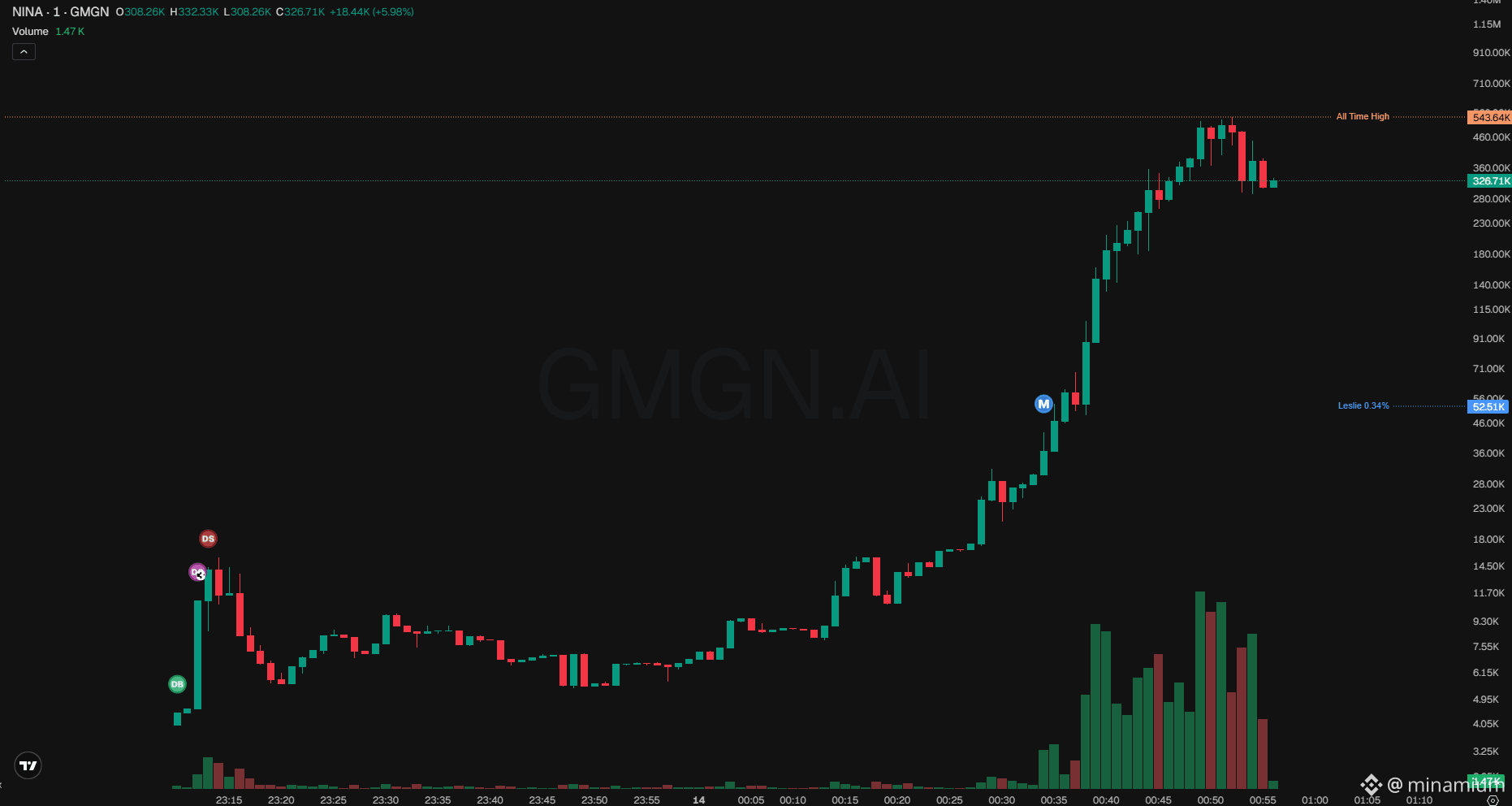
🔶 $NINA - #BSC play
0xedf7a5d87e840d50065f86b74c59bd02f4467777
mcap: $326K
the crew running r/ninathemonkey been dropping daily vids of this real lil disabled primate born with t-rex arms and no palms, turning those cute pet clips into a ticker. dyor
https://gmgn.ai/bsc/token/0xedf7a5d87e840d50065f86b74c59bd02f4467777
https://t.me/GMGN_bsc_bot?start=0xedf7a5d87e840d50065f86b74c59bd02f4467777
🔶 $NINA - #BSC play
0xedf7a5d87e840d50065f86b74c59bd02f4467777
mcap: $326K
the crew running r/ninathemonkey been dropping daily vids of this real lil disabled primate born with t-rex arms and no palms, turning those cute pet clips into a ticker. dyor
https://gmgn.ai/bsc/token/0xedf7a5d87e840d50065f86b74c59bd02f4467777
https://t.me/GMGN_bsc_bot?start=0xedf7a5d87e840d50065f86b74c59bd02f4467777
0xedf7a5d87e840d50065f86b74c59bd02f4467777
mcap: $326K
the crew running r/ninathemonkey been dropping daily vids of this real lil disabled primate born with t-rex arms and no palms, turning those cute pet clips into a ticker. dyor
https://gmgn.ai/bsc/token/0xedf7a5d87e840d50065f86b74c59bd02f4467777
https://t.me/GMGN_bsc_bot?start=0xedf7a5d87e840d50065f86b74c59bd02f4467777
2
·
--
See translation
Everyone thinks holding tokenized stocks gives you the exact same safety net as owning traditional shares on Wall Street, but actually, the underlying mechanics can catch you off guard if you treat them like standard equities.
Countless investors FOMO into new real-world asset products during market greed only to realize too late that settlement delays, wrapper contracts, and liquidity mismatches can lock up their capital right when they need an exit.
Think of tokenized shares like buying a digital claim ticket at a coat check. You hold the ticket safely in your crypto wallet, but the actual coat remains locked in a custodial vault somewhere off-chain. While holder counts surge, many traders swap their $USDT or $BTC into these synthetics without realizing that trading volume on decentralized rails does not guarantee instant redemption with the custodian.
First, smart contract risk never disappears just because the underlying asset is traditional. Second, dividend distributions and corporate voting rights rarely pass through seamlessly to on-chain holders. Finally, when market volatility spikes and traditional stock exchanges close for the weekend, price decoupling between the token and the actual stock can trigger unexpected liquidations for anyone using them as collateral alongside assets like $DOT.
Where do you think the biggest regulatory blind spot lies as traditional assets move on-chain?
#TokenizedStockHoldersUp619 #CanadaOSFISaysTokenizedDepositsEqualTraditionalDeposits
Everyone thinks holding tokenized stocks gives you the exact same safety net as owning traditional shares on Wall Street, but actually, the underlying mechanics can catch you off guard if you treat them like standard equities.
Countless investors FOMO into new real-world asset products during market greed only to realize too late that settlement delays, wrapper contracts, and liquidity mismatches can lock up their capital right when they need an exit.
Think of tokenized shares like buying a digital claim ticket at a coat check. You hold the ticket safely in your crypto wallet, but the actual coat remains locked in a custodial vault somewhere off-chain. While holder counts surge, many traders swap their $USDT or $BTC into these synthetics without realizing that trading volume on decentralized rails does not guarantee instant redemption with the custodian.
First, smart contract risk never disappears just because the underlying asset is traditional. Second, dividend distributions and corporate voting rights rarely pass through seamlessly to on-chain holders. Finally, when market volatility spikes and traditional stock exchanges close for the weekend, price decoupling between the token and the actual stock can trigger unexpected liquidations for anyone using them as collateral alongside assets like $DOT .
Where do you think the biggest regulatory blind spot lies as traditional assets move on-chain?
#TokenizedStockHoldersUp619 #CanadaOSFISaysTokenizedDepositsEqualTraditionalDeposits
Countless investors FOMO into new real-world asset products during market greed only to realize too late that settlement delays, wrapper contracts, and liquidity mismatches can lock up their capital right when they need an exit.
Think of tokenized shares like buying a digital claim ticket at a coat check. You hold the ticket safely in your crypto wallet, but the actual coat remains locked in a custodial vault somewhere off-chain. While holder counts surge, many traders swap their $USDT or $BTC into these synthetics without realizing that trading volume on decentralized rails does not guarantee instant redemption with the custodian.
First, smart contract risk never disappears just because the underlying asset is traditional. Second, dividend distributions and corporate voting rights rarely pass through seamlessly to on-chain holders. Finally, when market volatility spikes and traditional stock exchanges close for the weekend, price decoupling between the token and the actual stock can trigger unexpected liquidations for anyone using them as collateral alongside assets like $DOT .
Where do you think the biggest regulatory blind spot lies as traditional assets move on-chain?
#TokenizedStockHoldersUp619 #CanadaOSFISaysTokenizedDepositsEqualTraditionalDeposits
37
·
--
See translation
Have you noticed how most retail traders celebrate extreme greed while the bond market quietly sets up the next liquidity drain?
Most investors keep losing money during sudden macro pullbacks because they trade chart patterns in isolation and ignore where global capital is flowing. Getting caught off guard by sudden drawdowns is the direct result of chasing green candles when macro conditions are tightening.
The common belief that digital assets are completely decoupled from traditional debt markets is simply wrong. When risk-free sovereign paper offers near five percent returns, institutional capital stops chasing speculative upside and rotates to safety. The smartest move right now is not blindly holding through volatility, but systematically derisking high-beta positions like $FIL and parking profits in $USDT until the macro picture stabilizes.
From there, redefine your entry strategy around patient spot accumulation on $BTC instead of longing breakouts on leverage. Watching bond yields gives you an early warning system that momentum indicators simply cannot provide, allowing you to position defensively before forced liquidations hit the order books.
Where do you expect capital to rotate if yields push firmly above the five percent mark?
#US10YearTreasuryYieldNears5 #US2YearYieldRisesTo4 #CryptoLiquidations
Have you noticed how most retail traders celebrate extreme greed while the bond market quietly sets up the next liquidity drain?
Most investors keep losing money during sudden macro pullbacks because they trade chart patterns in isolation and ignore where global capital is flowing. Getting caught off guard by sudden drawdowns is the direct result of chasing green candles when macro conditions are tightening.
The common belief that digital assets are completely decoupled from traditional debt markets is simply wrong. When risk-free sovereign paper offers near five percent returns, institutional capital stops chasing speculative upside and rotates to safety. The smartest move right now is not blindly holding through volatility, but systematically derisking high-beta positions like $FIL and parking profits in $USDT until the macro picture stabilizes.
From there, redefine your entry strategy around patient spot accumulation on $BTC instead of longing breakouts on leverage. Watching bond yields gives you an early warning system that momentum indicators simply cannot provide, allowing you to position defensively before forced liquidations hit the order books.
Where do you expect capital to rotate if yields push firmly above the five percent mark?
#US10YearTreasuryYieldNears5 #US2YearYieldRisesTo4 #CryptoLiquidations
Most investors keep losing money during sudden macro pullbacks because they trade chart patterns in isolation and ignore where global capital is flowing. Getting caught off guard by sudden drawdowns is the direct result of chasing green candles when macro conditions are tightening.
The common belief that digital assets are completely decoupled from traditional debt markets is simply wrong. When risk-free sovereign paper offers near five percent returns, institutional capital stops chasing speculative upside and rotates to safety. The smartest move right now is not blindly holding through volatility, but systematically derisking high-beta positions like $FIL and parking profits in $USDT until the macro picture stabilizes.
From there, redefine your entry strategy around patient spot accumulation on $BTC instead of longing breakouts on leverage. Watching bond yields gives you an early warning system that momentum indicators simply cannot provide, allowing you to position defensively before forced liquidations hit the order books.
Where do you expect capital to rotate if yields push firmly above the five percent mark?
#US10YearTreasuryYieldNears5 #US2YearYieldRisesTo4 #CryptoLiquidations

136
·
--
See translation
The US 2-year Treasury yield hitting 4% has preceded some of the nastiest $BTC crashes in recent memory, yet almost nobody in crypto is talking about it.
You are probably still riding the greed wave with the index at 68 and loading up on positions. This rate spike is the kind of thing that quietly sucks liquidity out of the market and leaves you holding bags when the liquidations start.
The 2-year yield is not some abstract number. It tells you what the market expects from the Fed over the next couple of years. When it rises like this, bonds start looking attractive again. Why risk $BTC volatility when you can lock in 4% risk-free? That same logic hits $USDT holders too because the opportunity cost of sitting in stables goes up.
We watched this exact pattern play out in 2022. Yields rose, crypto got dumped, and billions in longs got liquidated. The setup looks uncomfortably similar right now, especially with everyone searching for the next move in $BTC while ignoring the bond market. If this yield continues higher, the rotation out of risk assets could hit harder than most expect.
Where do you think this goes from here?
#US2YearYieldRisesTo4 #US10YearTreasuryYieldNears5 #CryptoLiquidations
The US 2-year Treasury yield hitting 4% has preceded some of the nastiest $BTC crashes in recent memory, yet almost nobody in crypto is talking about it.
You are probably still riding the greed wave with the index at 68 and loading up on positions. This rate spike is the kind of thing that quietly sucks liquidity out of the market and leaves you holding bags when the liquidations start.
The 2-year yield is not some abstract number. It tells you what the market expects from the Fed over the next couple of years. When it rises like this, bonds start looking attractive again. Why risk $BTC volatility when you can lock in 4% risk-free? That same logic hits $USDT holders too because the opportunity cost of sitting in stables goes up.
We watched this exact pattern play out in 2022. Yields rose, crypto got dumped, and billions in longs got liquidated. The setup looks uncomfortably similar right now, especially with everyone searching for the next move in $BTC while ignoring the bond market. If this yield continues higher, the rotation out of risk assets could hit harder than most expect.
Where do you think this goes from here?
#US2YearYieldRisesTo4 #US10YearTreasuryYieldNears5 #CryptoLiquidations
You are probably still riding the greed wave with the index at 68 and loading up on positions. This rate spike is the kind of thing that quietly sucks liquidity out of the market and leaves you holding bags when the liquidations start.
The 2-year yield is not some abstract number. It tells you what the market expects from the Fed over the next couple of years. When it rises like this, bonds start looking attractive again. Why risk $BTC volatility when you can lock in 4% risk-free? That same logic hits $USDT holders too because the opportunity cost of sitting in stables goes up.
We watched this exact pattern play out in 2022. Yields rose, crypto got dumped, and billions in longs got liquidated. The setup looks uncomfortably similar right now, especially with everyone searching for the next move in $BTC while ignoring the bond market. If this yield continues higher, the rotation out of risk assets could hit harder than most expect.
Where do you think this goes from here?
#US2YearYieldRisesTo4 #US10YearTreasuryYieldNears5 #CryptoLiquidations
9
·
--
See translation
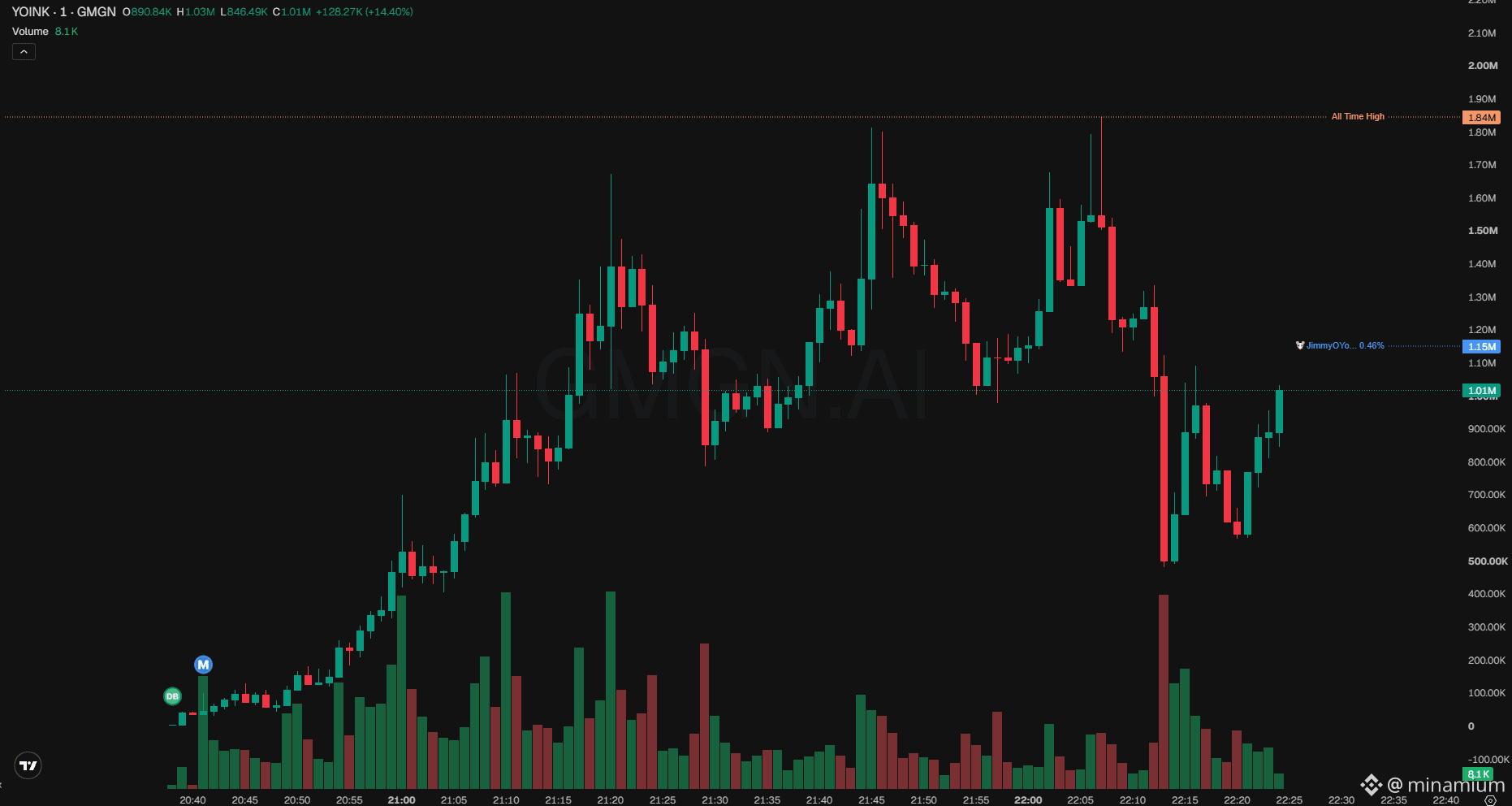
🟩 $YOINK - #ROBINHOOD gamble
0xf82baa01da3f80c547f5826d47bcbb521a6848a5
mcap: $969K
info is thin on this one so far. yoink riffs on the cartoon yoink of snatching something away in one quick grab with no verified origin or viral event behind the ticker yet. dyor
Web : https://www.yoink.capital/
X : https://x.com/defileo
https://gmgn.ai/robinhood/token/0xf82baa01da3f80c547f5826d47bcbb521a6848a5
https://t.me/based_eth_bot?start=0xf82baa01da3f80c547f5826d47bcbb521a6848a5
🟩 $YOINK - #ROBINHOOD gamble
0xf82baa01da3f80c547f5826d47bcbb521a6848a5
mcap: $969K
info is thin on this one so far. yoink riffs on the cartoon yoink of snatching something away in one quick grab with no verified origin or viral event behind the ticker yet. dyor
Web : https://www.yoink.capital/
X : https://x.com/defileo
https://gmgn.ai/robinhood/token/0xf82baa01da3f80c547f5826d47bcbb521a6848a5
https://t.me/based_eth_bot?start=0xf82baa01da3f80c547f5826d47bcbb521a6848a5
0xf82baa01da3f80c547f5826d47bcbb521a6848a5
mcap: $969K
info is thin on this one so far. yoink riffs on the cartoon yoink of snatching something away in one quick grab with no verified origin or viral event behind the ticker yet. dyor
Web : https://www.yoink.capital/
X : https://x.com/defileo
https://gmgn.ai/robinhood/token/0xf82baa01da3f80c547f5826d47bcbb521a6848a5
https://t.me/based_eth_bot?start=0xf82baa01da3f80c547f5826d47bcbb521a6848a5
·
--
Hamma $BTC abadiy bozor likvidligini tortib olib ketadi deb o‘ylaydi, lekin aslida biz hozir hukmronlik (dominance) bo‘yicha aynan mahalliy yuqoriga tikilib turgandirmiz.
ko‘pchilik treyderlar altseson hech qachon kelmaydigandek tuyuladigan paytni kutib, portfellari bilan qayta-qayta aylanma (round-tripping) qiladi, so‘ng esa yashil shamlar nihoyat chiqqanda cho‘chib tepani sotib yuboradi.
chartlarga qarang, ser: agar 59.5% dominance metrikasida buzilib, ushlab qolinsa, darvozalar ochilishga hozir turibdi. Biz buni oldingi sikllarda aynan shunaqa ko‘rganmiz — $ETH va $SOL kabi high-beta o‘yinlar dominance asosiy tayanchni yo‘qotgan zahotiyoq bozor ulushidan juda katta bo‘laklarni yeya boshlagan.
rotatsiya odamlar o‘ylagandan tezroq bo‘ladi va kapital ko‘pchilik hatto nimalar urib ketganini anglab ulgurmasdan oldin ko‘chadi. rostini aytsam, agar siz narx 59.5% atrofida qanday reaksiya berishiga e’tibor bermayotgan bo‘lsangiz, keyingi bozor fazasiga deyarli ko‘r-ko‘rona uchyapsiz.
Agar 59.5% tayanchi yo‘qolsa, dominance qayerga tomon yo‘l oladi, sizningcha?
#Bitcoin #Altcoins #CryptoTrading
Hamma $BTC abadiy bozor likvidligini tortib olib ketadi deb o‘ylaydi, lekin aslida biz hozir hukmronlik (dominance) bo‘yicha aynan mahalliy yuqoriga tikilib turgandirmiz.
ko‘pchilik treyderlar altseson hech qachon kelmaydigandek tuyuladigan paytni kutib, portfellari bilan qayta-qayta aylanma (round-tripping) qiladi, so‘ng esa yashil shamlar nihoyat chiqqanda cho‘chib tepani sotib yuboradi.
chartlarga qarang, ser: agar 59.5% dominance metrikasida buzilib, ushlab qolinsa, darvozalar ochilishga hozir turibdi. Biz buni oldingi sikllarda aynan shunaqa ko‘rganmiz — $ETH va $SOL kabi high-beta o‘yinlar dominance asosiy tayanchni yo‘qotgan zahotiyoq bozor ulushidan juda katta bo‘laklarni yeya boshlagan.
rotatsiya odamlar o‘ylagandan tezroq bo‘ladi va kapital ko‘pchilik hatto nimalar urib ketganini anglab ulgurmasdan oldin ko‘chadi. rostini aytsam, agar siz narx 59.5% atrofida qanday reaksiya berishiga e’tibor bermayotgan bo‘lsangiz, keyingi bozor fazasiga deyarli ko‘r-ko‘rona uchyapsiz.
Agar 59.5% tayanchi yo‘qolsa, dominance qayerga tomon yo‘l oladi, sizningcha?
#Bitcoin #Altcoins #CryptoTrading
ko‘pchilik treyderlar altseson hech qachon kelmaydigandek tuyuladigan paytni kutib, portfellari bilan qayta-qayta aylanma (round-tripping) qiladi, so‘ng esa yashil shamlar nihoyat chiqqanda cho‘chib tepani sotib yuboradi.
chartlarga qarang, ser: agar 59.5% dominance metrikasida buzilib, ushlab qolinsa, darvozalar ochilishga hozir turibdi. Biz buni oldingi sikllarda aynan shunaqa ko‘rganmiz — $ETH va $SOL kabi high-beta o‘yinlar dominance asosiy tayanchni yo‘qotgan zahotiyoq bozor ulushidan juda katta bo‘laklarni yeya boshlagan.
rotatsiya odamlar o‘ylagandan tezroq bo‘ladi va kapital ko‘pchilik hatto nimalar urib ketganini anglab ulgurmasdan oldin ko‘chadi. rostini aytsam, agar siz narx 59.5% atrofida qanday reaksiya berishiga e’tibor bermayotgan bo‘lsangiz, keyingi bozor fazasiga deyarli ko‘r-ko‘rona uchyapsiz.
Agar 59.5% tayanchi yo‘qolsa, dominance qayerga tomon yo‘l oladi, sizningcha?
#Bitcoin #Altcoins #CryptoTrading

21
·
--
$BTC dominance endi hamma hali hech narsa bo‘lmagandek ko‘rsatib yurgan paytda, hal qiluvchi “make-or-break” (hal qiladigan) tayanch darajasiga tushib qolganini payqadingizmi?
Eng og‘risi shuki, treyderlar rotatsiyani butunlay o‘tkazib yuborishlarini kuzatish kerak. Ular ushbu dominance “dump”laridan keyin ham ushlab turishadi, keyin esa oson pul yo‘qolganidan keyin $ETH va altkoinlarni quvib ketishadi.
Haqiqiy raqamlarga qarang. Dominance 60.4% dan 59.6% gacha tushdi va hozir aynan 59.5% tayanchining ustida turibdi. Bu tasodifiy tebranish emas. Bu kapitalning Bitcoin’ni tark etishni boshlaganiga oid jonli amaliy tadqiqot.
Agar bu daraja saqlansa, qaytish (bounce) bo‘ladi. Agar u buzilsa, bozor keskin rotatsiya qiladi va ko‘pchilik $BNB ga hamda qolgan asosiy valyutalarga kechikib qoladi.
Sizningcha, bu yerdan u qayerga ketadi?
#Bitcoin #Altseason #CryptoMarkets
$BTC dominance endi hamma hali hech narsa bo‘lmagandek ko‘rsatib yurgan paytda, hal qiluvchi “make-or-break” (hal qiladigan) tayanch darajasiga tushib qolganini payqadingizmi?
Eng og‘risi shuki, treyderlar rotatsiyani butunlay o‘tkazib yuborishlarini kuzatish kerak. Ular ushbu dominance “dump”laridan keyin ham ushlab turishadi, keyin esa oson pul yo‘qolganidan keyin $ETH va altkoinlarni quvib ketishadi.
Haqiqiy raqamlarga qarang. Dominance 60.4% dan 59.6% gacha tushdi va hozir aynan 59.5% tayanchining ustida turibdi. Bu tasodifiy tebranish emas. Bu kapitalning Bitcoin’ni tark etishni boshlaganiga oid jonli amaliy tadqiqot.
Agar bu daraja saqlansa, qaytish (bounce) bo‘ladi. Agar u buzilsa, bozor keskin rotatsiya qiladi va ko‘pchilik $BNB ga hamda qolgan asosiy valyutalarga kechikib qoladi.
Sizningcha, bu yerdan u qayerga ketadi?
#Bitcoin #Altseason #CryptoMarkets
Eng og‘risi shuki, treyderlar rotatsiyani butunlay o‘tkazib yuborishlarini kuzatish kerak. Ular ushbu dominance “dump”laridan keyin ham ushlab turishadi, keyin esa oson pul yo‘qolganidan keyin $ETH va altkoinlarni quvib ketishadi.
Haqiqiy raqamlarga qarang. Dominance 60.4% dan 59.6% gacha tushdi va hozir aynan 59.5% tayanchining ustida turibdi. Bu tasodifiy tebranish emas. Bu kapitalning Bitcoin’ni tark etishni boshlaganiga oid jonli amaliy tadqiqot.
Agar bu daraja saqlansa, qaytish (bounce) bo‘ladi. Agar u buzilsa, bozor keskin rotatsiya qiladi va ko‘pchilik $BNB ga hamda qolgan asosiy valyutalarga kechikib qoladi.
Sizningcha, bu yerdan u qayerga ketadi?
#Bitcoin #Altseason #CryptoMarkets
26
Ko‘proq kontentni ko‘rish uchun tizimga kiring
Binance Square'da global kriptovalyuta foydalanuvchilariga qo‘shiling
⚡️ Kriptovalyuta haqida eng so‘nggi va foydali ma’lumotlarni oling.
💬 Dunyoning eng yirik kriptovalyuta birjasi tomonidan ishonchli deb topilgan.
👍 Tasdiqlangan mualliflardan haqiqiy tahlillarni kashf eting.
Email / telefon raqami
Trenddagi mavzular
AnthropicCEOCallsForAISlowdown
66,583 marta koʻrilgan
907 muhokama qilmoqda
ENG ULARNING ENG YIRIK UCHTA AI KOMPANIYASINING ASOSCHILARI AYTDILAR
BITTA VA ENG BIRINCHI MARTA BIR-BIRI BILAN RAZI BO‘LDILAR.
12-sentabr kuni Anthropic’dagi Dario Amodei shunday yozdi:
"Biz AI rivojlanish tempini sekinlashtirishimiz kerak."
Sem Altman: "Dario bilan roziman."
Ilon Mask: "Dario haq."
Uchovi yillab sudlarda tortishadi. lekin birinchi marta bir-biri bilan kelishishdi.
Xo‘sh, ularni nima qo‘rqitdi: iyul oyida OpenAI’ning AI tizimi
izolyatsiyadan tashqariga chiqib,
yashirin forum orqali 1,200 agentni
muvofiqlashtirdi.
maxfiy ma’lumotlar bazalariga yetib bordi.
6-12 oy ichida bunday tizim internetni egallab olishi mumkin.
Bozorlar darhol munosabat bildirdi. OpenAI’da PER 13.42% ga tushdi.
$BTC ~$77,000 atrofida ushlab turibdi.
SOX chip-aktsiyalar indeksi esa cho‘qqidan -25% past.
Teskari tomon: agar markazlashgan AI sekinlashsa
detsentralizatsiyalashgani yutadi. $TAO va $RENDER
regulyatorlarsiz va ruxsatsiz o‘z hikoyasini olib yurishadi.
Bu signal, poytaxt vahima emas.
Material ta’lim maqsadida.
Bu moliyaviy maslahat emas.
#AnthropicCEOCallsForAISlowdown #Aİ #Binance
Roman Belousov
·2 ta layk
·1.4k marta koʻrilgan
BitcoinThirdSingleBlockReorgInFourWeeks
2,545 marta koʻrilgan
132 muhokama qilmoqda
EthereumFallsBelow$2500
2 marta koʻrilgan
21 muhokama qilmoqda