

Messianh
225 Postlar

Messianh
Shikoyat qilish
Foydalanuvchini bloklash
Web3 Community Manager | Content Creator | Crypto Project Ambassador | BP-662F4CF0162B
4 Kuzatilmoqda
82 Kuzatuvchilar
279 Yoqdi
Postlar
Barchasi
Iqtiboslar
·
--
Odamlar markazlashmagan tarmoq deganda markaziy boshqaruv organi bo‘lmagan tizimni tasavvur qilishadi.
Ammo markazlashuvdan voz kechish o‘z-o‘zidan yuz bermaydi. Kimdir infratuzilmani boshqarishi kerak. Tugunlar faol ishtirok etishi lozim. Tarmoq o‘z faoliyatini muvofiqlashtirish usuliga muhtoj.
Validatorlar aynan shu yerda ishga tushadi. Ammo bir o‘ylab ko‘rishga arziydigan savol bor: agar tarmoqni tasdiqlashda faqat kichik bir guruh ishtirok eta olsa, bu tarmoq aslida qay darajada markazlashmagan bo‘ladi?
Validatorlar soni muhim. Ularni ishga tushirish yo‘lidagi to‘siqlar ham shunday. Markazlashmaganlik faqat arxitekturaga bog‘liq emas. Kimlar ishtirok eta olishi ham muhim.
Sizningcha, qaysi biri muhimroq: validatorlar sonimi yoki ularni ishga tushirish imkoniyati qay darajada qulayligi?
#BinancePick #Liberdus $XRP
{spot}(XRPUSDT)
Odamlar markazlashmagan tarmoq deganda markaziy boshqaruv organi bo‘lmagan tizimni tasavvur qilishadi.
Ammo markazlashuvdan voz kechish o‘z-o‘zidan yuz bermaydi. Kimdir infratuzilmani boshqarishi kerak. Tugunlar faol ishtirok etishi lozim. Tarmoq o‘z faoliyatini muvofiqlashtirish usuliga muhtoj.
Validatorlar aynan shu yerda ishga tushadi. Ammo bir o‘ylab ko‘rishga arziydigan savol bor: agar tarmoqni tasdiqlashda faqat kichik bir guruh ishtirok eta olsa, bu tarmoq aslida qay darajada markazlashmagan bo‘ladi?
Validatorlar soni muhim. Ularni ishga tushirish yo‘lidagi to‘siqlar ham shunday. Markazlashmaganlik faqat arxitekturaga bog‘liq emas. Kimlar ishtirok eta olishi ham muhim.
Sizningcha, qaysi biri muhimroq: validatorlar sonimi yoki ularni ishga tushirish imkoniyati qay darajada qulayligi?
#BinancePick #Liberdus $XRP
Ammo markazlashuvdan voz kechish o‘z-o‘zidan yuz bermaydi. Kimdir infratuzilmani boshqarishi kerak. Tugunlar faol ishtirok etishi lozim. Tarmoq o‘z faoliyatini muvofiqlashtirish usuliga muhtoj.
Validatorlar aynan shu yerda ishga tushadi. Ammo bir o‘ylab ko‘rishga arziydigan savol bor: agar tarmoqni tasdiqlashda faqat kichik bir guruh ishtirok eta olsa, bu tarmoq aslida qay darajada markazlashmagan bo‘ladi?
Validatorlar soni muhim. Ularni ishga tushirish yo‘lidagi to‘siqlar ham shunday. Markazlashmaganlik faqat arxitekturaga bog‘liq emas. Kimlar ishtirok eta olishi ham muhim.
Sizningcha, qaysi biri muhimroq: validatorlar sonimi yoki ularni ishga tushirish imkoniyati qay darajada qulayligi?
#BinancePick #Liberdus $XRP

1
201
·
--
Maxfiylik funksiyasi sizga beradigan nazorat darajasichalik foydali.
@liberdus’da kontaktlar to‘rt xil maqomga ega bo‘lishi mumkin: Do‘st, Aloqa, Pullik yoki Bloklangan.
Ammo meni ko‘proq qiziqtiradigan savol shuki: foydalanuvchilarga kim ular bilan bog‘lana olishini ko‘proq nazorat qilish imkonini berish xabar almashishni chindan ham yaxshilaydimi?
Bu istalmagan xabarlarni boshqarishga yordam berishi mumkin.
Lekin bu foydalanuvchilarning o‘zlari qaror qabul qilishlariga to‘g‘ri keladigan masalalarni ham keltirib chiqaradi.
Ko‘proq nazorat — qimmatli narsa. Bu nazoratdan foydalanish qanchalik osonligi ham xuddi shunchalik muhim.
Siz uchun nima muhimroq: istalmagan xabarlar kamroq bo‘lishimi yoki muloqotdagi to‘siqlar kamroq bo‘lishimi?
#Liberdus #BinancePick $USDC
{spot}(USDCUSDT)
Maxfiylik funksiyasi sizga beradigan nazorat darajasichalik foydali.
@liberdus’da kontaktlar to‘rt xil maqomga ega bo‘lishi mumkin: Do‘st, Aloqa, Pullik yoki Bloklangan.
Ammo meni ko‘proq qiziqtiradigan savol shuki: foydalanuvchilarga kim ular bilan bog‘lana olishini ko‘proq nazorat qilish imkonini berish xabar almashishni chindan ham yaxshilaydimi?
Bu istalmagan xabarlarni boshqarishga yordam berishi mumkin.
Lekin bu foydalanuvchilarning o‘zlari qaror qabul qilishlariga to‘g‘ri keladigan masalalarni ham keltirib chiqaradi.
Ko‘proq nazorat — qimmatli narsa. Bu nazoratdan foydalanish qanchalik osonligi ham xuddi shunchalik muhim.
Siz uchun nima muhimroq: istalmagan xabarlar kamroq bo‘lishimi yoki muloqotdagi to‘siqlar kamroq bo‘lishimi?
#Liberdus #BinancePick $USDC
@liberdus’da kontaktlar to‘rt xil maqomga ega bo‘lishi mumkin: Do‘st, Aloqa, Pullik yoki Bloklangan.
Ammo meni ko‘proq qiziqtiradigan savol shuki: foydalanuvchilarga kim ular bilan bog‘lana olishini ko‘proq nazorat qilish imkonini berish xabar almashishni chindan ham yaxshilaydimi?
Bu istalmagan xabarlarni boshqarishga yordam berishi mumkin.
Lekin bu foydalanuvchilarning o‘zlari qaror qabul qilishlariga to‘g‘ri keladigan masalalarni ham keltirib chiqaradi.
Ko‘proq nazorat — qimmatli narsa. Bu nazoratdan foydalanish qanchalik osonligi ham xuddi shunchalik muhim.
Siz uchun nima muhimroq: istalmagan xabarlar kamroq bo‘lishimi yoki muloqotdagi to‘siqlar kamroq bo‘lishimi?
#Liberdus #BinancePick $USDC
1
78
·
--
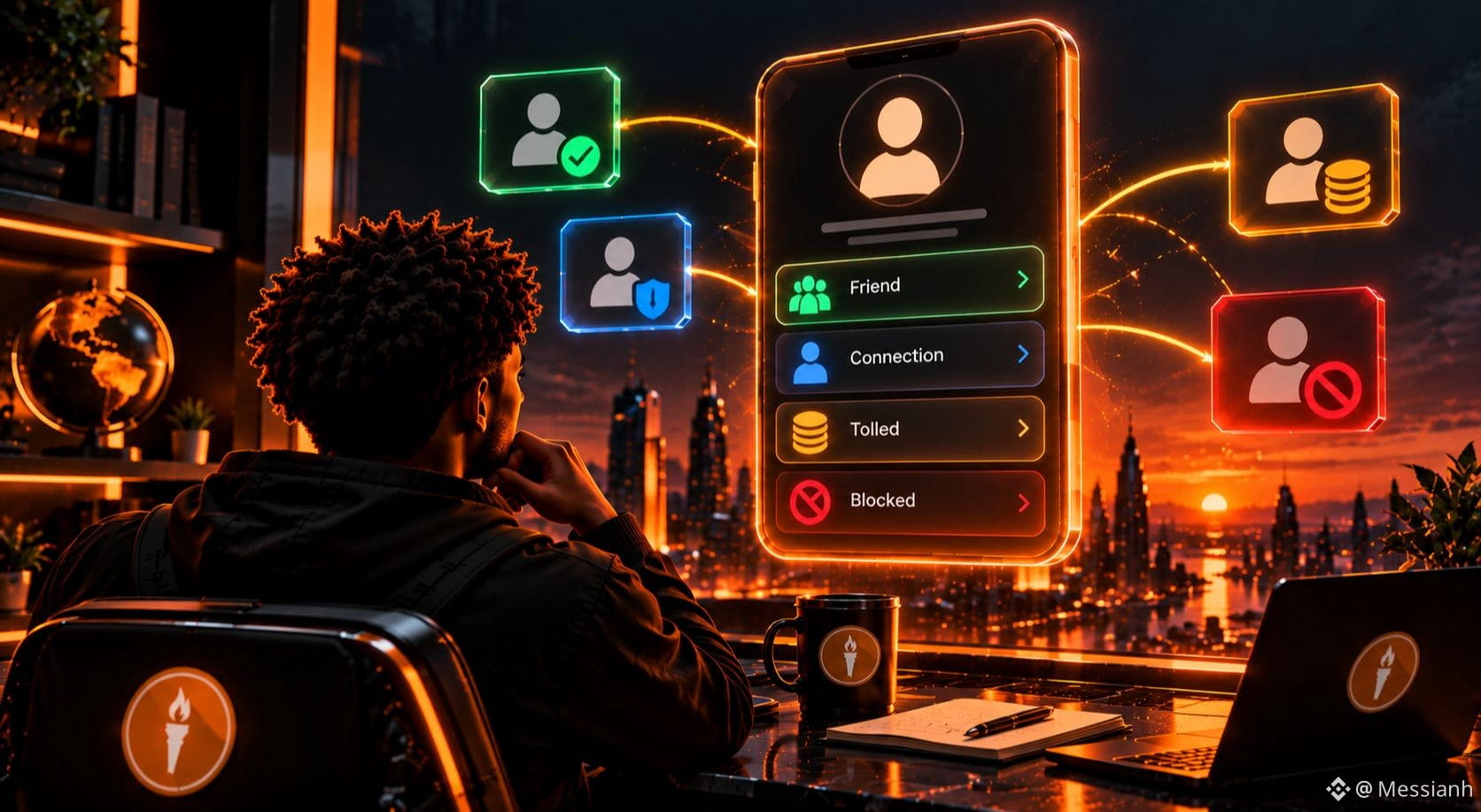
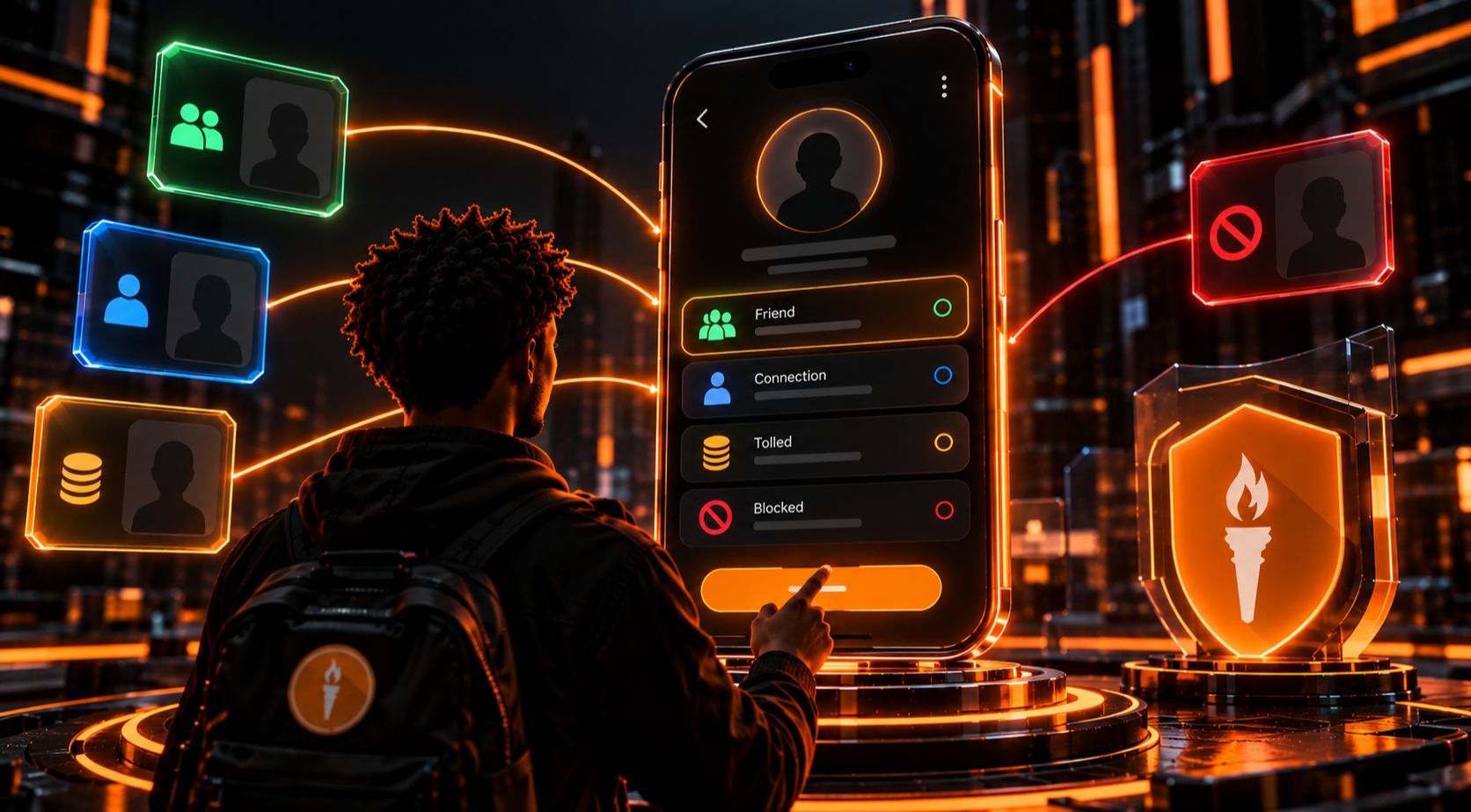
Bitta profil, kirishning to‘rt darajasi.
Har bir inson siz bilan qanday bog‘lana olishini aniq belgilay olsangiz-chi?
Liberdus’da har bir kontakt to‘rtta maqomdan biriga ega: do‘st, aloqa, to‘lovli yoki bloklangan. Ularning har biri muloqot qoidalarini o‘zgartiradi.
Bu qanday ishlaydi?
Maqomni qanday o‘zgartirish mumkin
Chatni oching, yuqori o‘ng burchakdagi profil belgisini bosing, maqomni tanlang va «Yangilash» tugmasini bosing.
Funksiya tavsifiga ko‘ra, o‘zgarish darhol kuchga kiradi hamda ushbu kontaktga nisbatan xabar almashish va to‘lov qoidalarini belgilaydi.
Do‘st va aloqa
Bu ikki maqom kirishning turli darajalarini taqdim etadi.
🟢 Do‘st: Ochiq muloqot — profil ma’lumotlaringizning barchasi kontakt bilan ulashiladi.
🔵 Aloqa: Ishonchli kontakt, u sizga to‘lovsiz xabar yuborishi mumkin.
Ishonchning ikki darajasi va turli qoidalar.
To‘lovli va bloklangan
🟠 To‘lovli: U sizga xabar yuborish uchun to‘lov qilishi kerak.
🔴 Bloklangan: U sizga xabar yubora olmaydi va profilingiz unga mavjud emas deb ko‘rinadi.
Bloklash jim amalga oshadi va uni bekor qilish mumkin. Unga bildirishnoma yuborilmaydi, chat tarixi esa saqlanib qoladi.
Kimnidir blokdan chiqarsangiz, nima bo‘ladi?
Shunchaki bloklash tugmasini o‘chirib qo‘ymaysiz. U uchun keyingi maqomni tanlaysiz: to‘lovli, aloqa yoki do‘st.
Demak, avvalgi kirish darajasini qaytarmasdan ham unga kirish huquqini tiklashingiz mumkin.
Qiziqarli dizayn yechimi
Kirish huquqi shunchaki yoqilgan yoki o‘chirilgan bo‘lmaydi. U bosqichma-bosqich o‘zgaradi. Biroq buning evaziga ko‘proq nazorat bilan birga ko‘proq qaror qabul qilish zarurati ham keladi. Kimga kirish huquqini berish, qaysi qoidalar amal qilishi va ularni qachon o‘zgartirish kerakligini o‘zingiz hal qilasiz.
Endi sizning navbatingiz
To‘rtta maqom. Kirish huquqini boshqarishning to‘rt xil usuli. Liberdus’da qaysi maqomdan ko‘proq foydalanardingiz: do‘st, aloqa, to‘lovli yoki bloklangan?
Bu to‘rtta variantda mavjud bo‘lmagan, ammo siz istaydigan nazorat darajasi bormi?
#Liberdus #EarningsSeason $ETH
Bitta profil, kirishning to‘rt darajasi.
Har bir inson siz bilan qanday bog‘lana olishini aniq belgilay olsangiz-chi?
Liberdus’da har bir kontakt to‘rtta maqomdan biriga ega: do‘st, aloqa, to‘lovli yoki bloklangan. Ularning har biri muloqot qoidalarini o‘zgartiradi.
Bu qanday ishlaydi?
Maqomni qanday o‘zgartirish mumkin
Chatni oching, yuqori o‘ng burchakdagi profil belgisini bosing, maqomni tanlang va «Yangilash» tugmasini bosing.
Funksiya tavsifiga ko‘ra, o‘zgarish darhol kuchga kiradi hamda ushbu kontaktga nisbatan xabar almashish va to‘lov qoidalarini belgilaydi.
Do‘st va aloqa
Bu ikki maqom kirishning turli darajalarini taqdim etadi.
🟢 Do‘st: Ochiq muloqot — profil ma’lumotlaringizning barchasi kontakt bilan ulashiladi.
🔵 Aloqa: Ishonchli kontakt, u sizga to‘lovsiz xabar yuborishi mumkin.
Ishonchning ikki darajasi va turli qoidalar.
To‘lovli va bloklangan
🟠 To‘lovli: U sizga xabar yuborish uchun to‘lov qilishi kerak.
🔴 Bloklangan: U sizga xabar yubora olmaydi va profilingiz unga mavjud emas deb ko‘rinadi.
Bloklash jim amalga oshadi va uni bekor qilish mumkin. Unga bildirishnoma yuborilmaydi, chat tarixi esa saqlanib qoladi.
Kimnidir blokdan chiqarsangiz, nima bo‘ladi?
Shunchaki bloklash tugmasini o‘chirib qo‘ymaysiz. U uchun keyingi maqomni tanlaysiz: to‘lovli, aloqa yoki do‘st.
Demak, avvalgi kirish darajasini qaytarmasdan ham unga kirish huquqini tiklashingiz mumkin.
Qiziqarli dizayn yechimi
Kirish huquqi shunchaki yoqilgan yoki o‘chirilgan bo‘lmaydi. U bosqichma-bosqich o‘zgaradi. Biroq buning evaziga ko‘proq nazorat bilan birga ko‘proq qaror qabul qilish zarurati ham keladi. Kimga kirish huquqini berish, qaysi qoidalar amal qilishi va ularni qachon o‘zgartirish kerakligini o‘zingiz hal qilasiz.
Endi sizning navbatingiz
To‘rtta maqom. Kirish huquqini boshqarishning to‘rt xil usuli. Liberdus’da qaysi maqomdan ko‘proq foydalanardingiz: do‘st, aloqa, to‘lovli yoki bloklangan?
Bu to‘rtta variantda mavjud bo‘lmagan, ammo siz istaydigan nazorat darajasi bormi?
#Liberdus #EarningsSeason $ETH
Har bir inson siz bilan qanday bog‘lana olishini aniq belgilay olsangiz-chi?
Liberdus’da har bir kontakt to‘rtta maqomdan biriga ega: do‘st, aloqa, to‘lovli yoki bloklangan. Ularning har biri muloqot qoidalarini o‘zgartiradi.
Bu qanday ishlaydi?
Maqomni qanday o‘zgartirish mumkin
Chatni oching, yuqori o‘ng burchakdagi profil belgisini bosing, maqomni tanlang va «Yangilash» tugmasini bosing.
Funksiya tavsifiga ko‘ra, o‘zgarish darhol kuchga kiradi hamda ushbu kontaktga nisbatan xabar almashish va to‘lov qoidalarini belgilaydi.
Do‘st va aloqa
Bu ikki maqom kirishning turli darajalarini taqdim etadi.
🟢 Do‘st: Ochiq muloqot — profil ma’lumotlaringizning barchasi kontakt bilan ulashiladi.
🔵 Aloqa: Ishonchli kontakt, u sizga to‘lovsiz xabar yuborishi mumkin.
Ishonchning ikki darajasi va turli qoidalar.
To‘lovli va bloklangan
🟠 To‘lovli: U sizga xabar yuborish uchun to‘lov qilishi kerak.
🔴 Bloklangan: U sizga xabar yubora olmaydi va profilingiz unga mavjud emas deb ko‘rinadi.
Bloklash jim amalga oshadi va uni bekor qilish mumkin. Unga bildirishnoma yuborilmaydi, chat tarixi esa saqlanib qoladi.
Kimnidir blokdan chiqarsangiz, nima bo‘ladi?
Shunchaki bloklash tugmasini o‘chirib qo‘ymaysiz. U uchun keyingi maqomni tanlaysiz: to‘lovli, aloqa yoki do‘st.
Demak, avvalgi kirish darajasini qaytarmasdan ham unga kirish huquqini tiklashingiz mumkin.
Qiziqarli dizayn yechimi
Kirish huquqi shunchaki yoqilgan yoki o‘chirilgan bo‘lmaydi. U bosqichma-bosqich o‘zgaradi. Biroq buning evaziga ko‘proq nazorat bilan birga ko‘proq qaror qabul qilish zarurati ham keladi. Kimga kirish huquqini berish, qaysi qoidalar amal qilishi va ularni qachon o‘zgartirish kerakligini o‘zingiz hal qilasiz.
Endi sizning navbatingiz
To‘rtta maqom. Kirish huquqini boshqarishning to‘rt xil usuli. Liberdus’da qaysi maqomdan ko‘proq foydalanardingiz: do‘st, aloqa, to‘lovli yoki bloklangan?
Bu to‘rtta variantda mavjud bo‘lmagan, ammo siz istaydigan nazorat darajasi bormi?
#Liberdus #EarningsSeason $ETH
1
90
·
--
Web3’da o‘rganayotgan narsalarimdan biri: yaxshi CM yoki elchi shunchaki biror funksiyani qanday tushuntirishni bilish bilan cheklanmasligi kerak.
Ular bu funksiya qanday muammoni hal qilishini tushunishlari kerak. Nega u aynan shunday ishlab chiqilgan?
U qanday murosalarni talab qiladi?
Ishlar noto‘g‘ri ketganda nima bo‘ladi?
E’lonlarni takrorlash bilan odamlarga texnologiyani tushunishga yordam berishning farqi shunda.
Maxfiylik, markazsizlashtirish va raqamli egalik ortidagi g‘oyalarni o‘rganish uchun Liberdus’dan o‘rganish maydonlarimdan biri sifatida foydalanayapman.
Kamroq takrorlash, ko‘proq izlanish.
#Liberdus #GrayscaleAndRepublicLaunchThreeCryptoFunds $ZEC
{spot}(ZECUSDT)
Web3’da o‘rganayotgan narsalarimdan biri: yaxshi CM yoki elchi shunchaki biror funksiyani qanday tushuntirishni bilish bilan cheklanmasligi kerak.
Ular bu funksiya qanday muammoni hal qilishini tushunishlari kerak. Nega u aynan shunday ishlab chiqilgan?
U qanday murosalarni talab qiladi?
Ishlar noto‘g‘ri ketganda nima bo‘ladi?
E’lonlarni takrorlash bilan odamlarga texnologiyani tushunishga yordam berishning farqi shunda.
Maxfiylik, markazsizlashtirish va raqamli egalik ortidagi g‘oyalarni o‘rganish uchun Liberdus’dan o‘rganish maydonlarimdan biri sifatida foydalanayapman.
Kamroq takrorlash, ko‘proq izlanish.
#Liberdus #GrayscaleAndRepublicLaunchThreeCryptoFunds $ZEC
Ular bu funksiya qanday muammoni hal qilishini tushunishlari kerak. Nega u aynan shunday ishlab chiqilgan?
U qanday murosalarni talab qiladi?
Ishlar noto‘g‘ri ketganda nima bo‘ladi?
E’lonlarni takrorlash bilan odamlarga texnologiyani tushunishga yordam berishning farqi shunda.
Maxfiylik, markazsizlashtirish va raqamli egalik ortidagi g‘oyalarni o‘rganish uchun Liberdus’dan o‘rganish maydonlarimdan biri sifatida foydalanayapman.
Kamroq takrorlash, ko‘proq izlanish.
#Liberdus #GrayscaleAndRepublicLaunchThreeCryptoFunds $ZEC

1
48
·
--
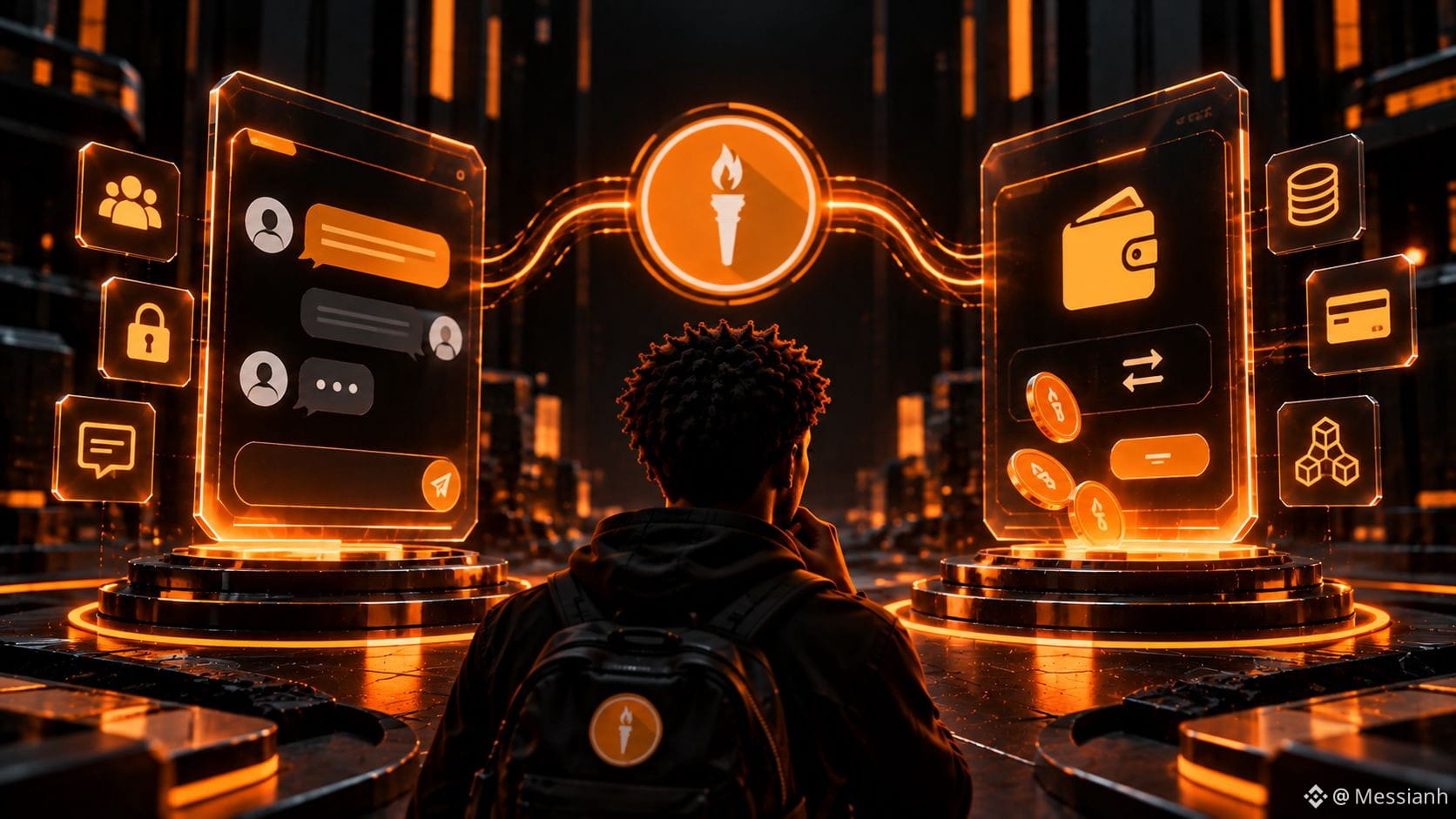
Nega xabar almashish va to‘lovlarni bir ekotizimda birlashtirish kerak?
Avvaliga ular ikki xil muammoday tuyuladi. Ammo bir o‘ylab ko‘ring.
Xabar almashish muloqot qilish imkonini beradi. To‘lovlar esa qiymat almashish imkonini beradi. Ularni birlashtirish shaxsni aniqlash, maxfiylik, foydalanuvchi tajribasi va tranzaksiya metama’lumotlariga oid qiziqarli savollarni yuzaga keltiradi.
Asosiy savol — ularni birlashtirish foydali tuyuladimi, degani emas. Muhimi, bundan nimaga erishishingiz va qanday murosalarga borishingizdir.
Sizga yagona yaxlit tajriba ma’qulmi yoki har biri uchun alohida ilovalarmi?
#Liberdus #ElSalvadorBitcoinHoldingsSurpass7800BTC $XRP
{spot}(XRPUSDT)
Nega xabar almashish va to‘lovlarni bir ekotizimda birlashtirish kerak?
Avvaliga ular ikki xil muammoday tuyuladi. Ammo bir o‘ylab ko‘ring.
Xabar almashish muloqot qilish imkonini beradi. To‘lovlar esa qiymat almashish imkonini beradi. Ularni birlashtirish shaxsni aniqlash, maxfiylik, foydalanuvchi tajribasi va tranzaksiya metama’lumotlariga oid qiziqarli savollarni yuzaga keltiradi.
Asosiy savol — ularni birlashtirish foydali tuyuladimi, degani emas. Muhimi, bundan nimaga erishishingiz va qanday murosalarga borishingizdir.
Sizga yagona yaxlit tajriba ma’qulmi yoki har biri uchun alohida ilovalarmi?
#Liberdus #ElSalvadorBitcoinHoldingsSurpass7800BTC $XRP
Avvaliga ular ikki xil muammoday tuyuladi. Ammo bir o‘ylab ko‘ring.
Xabar almashish muloqot qilish imkonini beradi. To‘lovlar esa qiymat almashish imkonini beradi. Ularni birlashtirish shaxsni aniqlash, maxfiylik, foydalanuvchi tajribasi va tranzaksiya metama’lumotlariga oid qiziqarli savollarni yuzaga keltiradi.
Asosiy savol — ularni birlashtirish foydali tuyuladimi, degani emas. Muhimi, bundan nimaga erishishingiz va qanday murosalarga borishingizdir.
Sizga yagona yaxlit tajriba ma’qulmi yoki har biri uchun alohida ilovalarmi?
#Liberdus #ElSalvadorBitcoinHoldingsSurpass7800BTC $XRP
1
60
·
--
Web3’ni qanchalik ko‘p o‘rgansam, bir narsani shunchalik yaxshiroq anglayapman: biror funksiyaning qanday ishlashini tushunish oson.
Nega aynan shunday loyihalashtirilganini tushunish esa — boshqa masala.
Nega bunday arxitektura?
U qanday muammoni hal qiladi?
U qanday murosalarni talab qiladi?
Ishlar noto‘g‘ri ketganda nima bo‘ladi?
Men shu savollarni chuqurroq o‘rganmoqchiman. Liberdus — sinov maydonlarimdan biri, ammo qiziquvchanligim bitta loyiha bilan cheklanmaydi.
Maxfiylik. Markazsizlashtirish. Raqamli egalik. Bu g‘oyalar amalda qanday ishlashini tushunmoqchiman va ularni odamlar tushunadigan tarzda izohlashni istayman.
Shov-shuv kamroq, tushunish esa ko‘proq. Gapimga shunchaki ishonib qolmang.
#Liberdus #NEARRisesNearly10% $NEAR
{spot}(NEARUSDT)
Web3’ni qanchalik ko‘p o‘rgansam, bir narsani shunchalik yaxshiroq anglayapman: biror funksiyaning qanday ishlashini tushunish oson.
Nega aynan shunday loyihalashtirilganini tushunish esa — boshqa masala.
Nega bunday arxitektura?
U qanday muammoni hal qiladi?
U qanday murosalarni talab qiladi?
Ishlar noto‘g‘ri ketganda nima bo‘ladi?
Men shu savollarni chuqurroq o‘rganmoqchiman. Liberdus — sinov maydonlarimdan biri, ammo qiziquvchanligim bitta loyiha bilan cheklanmaydi.
Maxfiylik. Markazsizlashtirish. Raqamli egalik. Bu g‘oyalar amalda qanday ishlashini tushunmoqchiman va ularni odamlar tushunadigan tarzda izohlashni istayman.
Shov-shuv kamroq, tushunish esa ko‘proq. Gapimga shunchaki ishonib qolmang.
#Liberdus #NEARRisesNearly10% $NEAR
Nega aynan shunday loyihalashtirilganini tushunish esa — boshqa masala.
Nega bunday arxitektura?
U qanday muammoni hal qiladi?
U qanday murosalarni talab qiladi?
Ishlar noto‘g‘ri ketganda nima bo‘ladi?
Men shu savollarni chuqurroq o‘rganmoqchiman. Liberdus — sinov maydonlarimdan biri, ammo qiziquvchanligim bitta loyiha bilan cheklanmaydi.
Maxfiylik. Markazsizlashtirish. Raqamli egalik. Bu g‘oyalar amalda qanday ishlashini tushunmoqchiman va ularni odamlar tushunadigan tarzda izohlashni istayman.
Shov-shuv kamroq, tushunish esa ko‘proq. Gapimga shunchaki ishonib qolmang.
#Liberdus #NEARRisesNearly10% $NEAR

2
95
·
--
Raqamli egalik haqida gaplashaylik.
Shaxsiy identifikatsiyangiz, kalitlaringiz va ma’lumotlaringizni o‘zingiz boshqarsangiz, biror narsa noto‘g‘ri ketganda ko‘proq mas’uliyat ham zimmangizga tushadi.
To‘liq nazorat va to‘liq mas’uliyatni afzal ko‘rasizmi yoki tiklash ishlarini kompaniya zimmasiga oladigan qulayliknimi?
Qaysi birini tanlaysiz?
#Liberdus $BTC #BTCDominanceBackAt60%
{spot}(BTCUSDT)
Raqamli egalik haqida gaplashaylik.
Shaxsiy identifikatsiyangiz, kalitlaringiz va ma’lumotlaringizni o‘zingiz boshqarsangiz, biror narsa noto‘g‘ri ketganda ko‘proq mas’uliyat ham zimmangizga tushadi.
To‘liq nazorat va to‘liq mas’uliyatni afzal ko‘rasizmi yoki tiklash ishlarini kompaniya zimmasiga oladigan qulayliknimi?
Qaysi birini tanlaysiz?
#Liberdus $BTC #BTCDominanceBackAt60%
Shaxsiy identifikatsiyangiz, kalitlaringiz va ma’lumotlaringizni o‘zingiz boshqarsangiz, biror narsa noto‘g‘ri ketganda ko‘proq mas’uliyat ham zimmangizga tushadi.
To‘liq nazorat va to‘liq mas’uliyatni afzal ko‘rasizmi yoki tiklash ishlarini kompaniya zimmasiga oladigan qulayliknimi?
Qaysi birini tanlaysiz?
#Liberdus $BTC #BTCDominanceBackAt60%

1
62
·
--
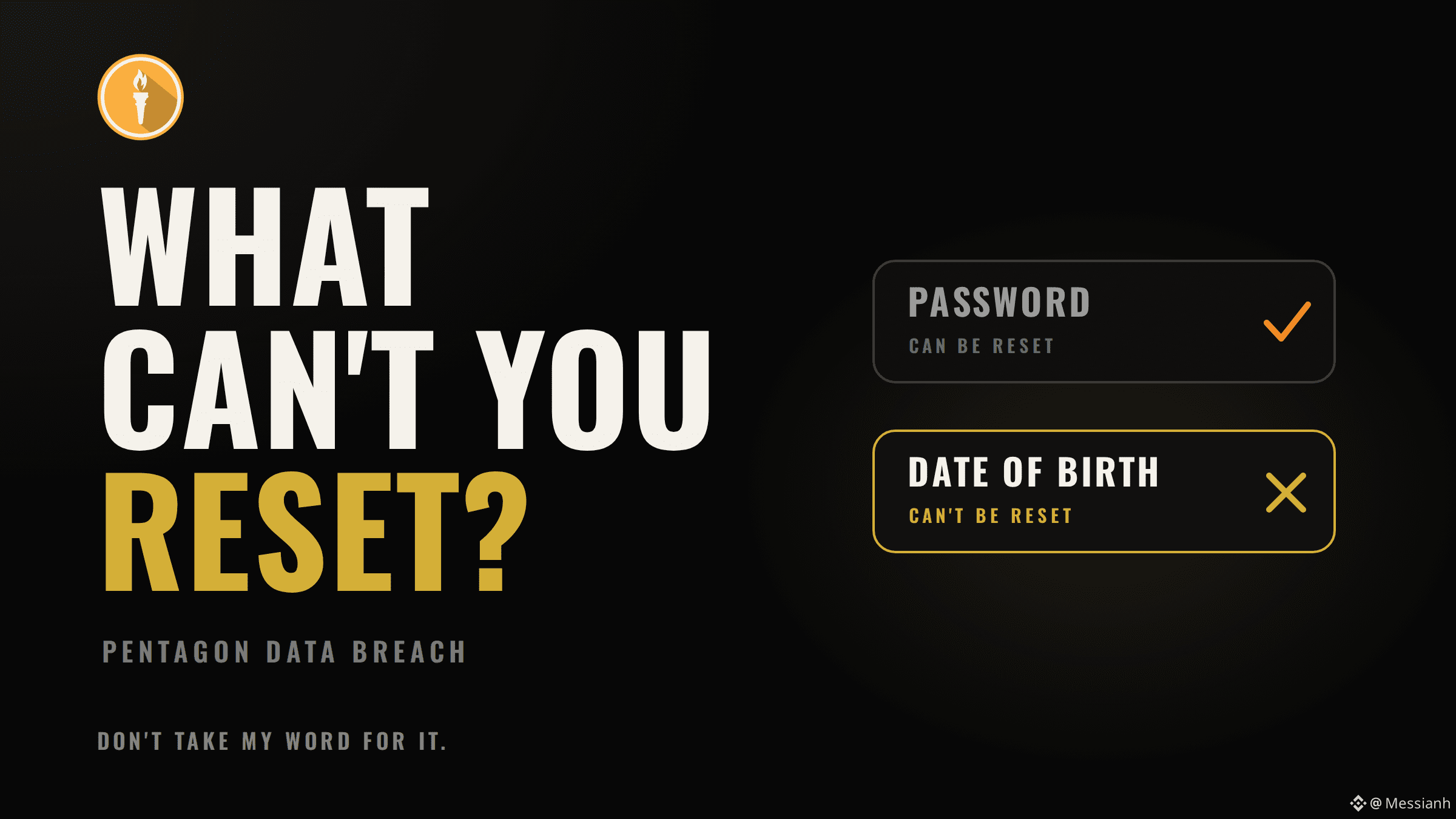
Parolni qayta o‘rnatish mumkin. Tug‘ilgan sanani esa o‘zgartirib bo‘lmaydi.
Pentagon ma’lumotlari sizib chiqishi haqidagi xabarda sarlavhadagi raqamdan ko‘ra ko‘proq e’tibor berishga arziydigan jihat shu.
Nima bo‘ldi: Pentagonning yozuvlar bilan ishlovchi bo‘linmasi — Mudofaa kadrlar ma’lumotlari markazi (DMDC) — ruxsatsiz foydalanuvchilar 2025-yil oktabrdan 2026-yil iyulgacha fayl almashish tizimidagi zaiflikdan foydalanganini bildirdi. Pentagon rasmiysining aytishicha, qariyb 2,8 million tirik odam va bundan tashqari 294 ming vafot etgan kishi zarar ko‘rgan.
Oshkor bo‘lgan ma’lumotlar: ism-shariflar, Ijtimoiy ta’minot raqamlari, tug‘ilgan sanalar, aloqa ma’lumotlari va harbiy xizmat yozuvlari. Pentagon rasmiysi ma’lumotlar shifrlanmaganini aytdi. Pentagon ma’lumotlardan noqonuniy foydalanilganiga dalil yo‘qligini bildirmoqda va 12 oy davomida kredit monitoringi xizmatini taklif qilmoqda.
Bu nomutanosiblikka e’tibor bering. Yordam 12 oy davom etadi. Ma’lumotlar oshkor bo‘lishining ta’siri esa yo‘qolmaydi. Tug‘ilgan sana hech qachon o‘zgarmaydi, Ijtimoiy ta’minot raqamini esa almashtirish juda qiyin. O‘zgartirib bo‘lmaydigan shaxsiy ma’lumotlarni yo‘qotish eng qimmatga tushadi.
Ko‘pchilik e’tibordan chetda qoldiradigan jihat: DMDC 60 milliondan ortiq xodimga oid yozuvlarni saqlaydi va Pentagon ID kartalari uchun shaxsni tasdiqlash tizimini yuritadi. Shaxsiy ma’lumotlar bir nechta yirik tizimda saqlansa, bitta zaiflik millionlab odamlarga ta’sir qilishi mumkin.
Murosa shuki: markazlashgan ma’lumotlar bazalari shaxsni tasdiqlashni osonlashtiradi, ammo har bir zaiflikning oqibatini og‘irlashtiradi. Kamroq ma’lumot saqlash yo‘qotish xavfini kamaytiradi, biroq shaxsni tasdiqlashning boshqa usulini talab qiladi.
Shaxsni tasdiqlash qiyinlashsa ham, muassasalar biz haqimizdagi shaxsiy ma’lumotlarni kamroq saqlashi kerakmi?
#Liberdus #SolanaETFsEnd14WeekInflowStreak $ONDO
{spot}(ONDOUSDT)
Parolni qayta o‘rnatish mumkin. Tug‘ilgan sanani esa o‘zgartirib bo‘lmaydi.
Pentagon ma’lumotlari sizib chiqishi haqidagi xabarda sarlavhadagi raqamdan ko‘ra ko‘proq e’tibor berishga arziydigan jihat shu.
Nima bo‘ldi: Pentagonning yozuvlar bilan ishlovchi bo‘linmasi — Mudofaa kadrlar ma’lumotlari markazi (DMDC) — ruxsatsiz foydalanuvchilar 2025-yil oktabrdan 2026-yil iyulgacha fayl almashish tizimidagi zaiflikdan foydalanganini bildirdi. Pentagon rasmiysining aytishicha, qariyb 2,8 million tirik odam va bundan tashqari 294 ming vafot etgan kishi zarar ko‘rgan.
Oshkor bo‘lgan ma’lumotlar: ism-shariflar, Ijtimoiy ta’minot raqamlari, tug‘ilgan sanalar, aloqa ma’lumotlari va harbiy xizmat yozuvlari. Pentagon rasmiysi ma’lumotlar shifrlanmaganini aytdi. Pentagon ma’lumotlardan noqonuniy foydalanilganiga dalil yo‘qligini bildirmoqda va 12 oy davomida kredit monitoringi xizmatini taklif qilmoqda.
Bu nomutanosiblikka e’tibor bering. Yordam 12 oy davom etadi. Ma’lumotlar oshkor bo‘lishining ta’siri esa yo‘qolmaydi. Tug‘ilgan sana hech qachon o‘zgarmaydi, Ijtimoiy ta’minot raqamini esa almashtirish juda qiyin. O‘zgartirib bo‘lmaydigan shaxsiy ma’lumotlarni yo‘qotish eng qimmatga tushadi.
Ko‘pchilik e’tibordan chetda qoldiradigan jihat: DMDC 60 milliondan ortiq xodimga oid yozuvlarni saqlaydi va Pentagon ID kartalari uchun shaxsni tasdiqlash tizimini yuritadi. Shaxsiy ma’lumotlar bir nechta yirik tizimda saqlansa, bitta zaiflik millionlab odamlarga ta’sir qilishi mumkin.
Murosa shuki: markazlashgan ma’lumotlar bazalari shaxsni tasdiqlashni osonlashtiradi, ammo har bir zaiflikning oqibatini og‘irlashtiradi. Kamroq ma’lumot saqlash yo‘qotish xavfini kamaytiradi, biroq shaxsni tasdiqlashning boshqa usulini talab qiladi.
Shaxsni tasdiqlash qiyinlashsa ham, muassasalar biz haqimizdagi shaxsiy ma’lumotlarni kamroq saqlashi kerakmi?
#Liberdus #SolanaETFsEnd14WeekInflowStreak $ONDO
Pentagon ma’lumotlari sizib chiqishi haqidagi xabarda sarlavhadagi raqamdan ko‘ra ko‘proq e’tibor berishga arziydigan jihat shu.
Nima bo‘ldi: Pentagonning yozuvlar bilan ishlovchi bo‘linmasi — Mudofaa kadrlar ma’lumotlari markazi (DMDC) — ruxsatsiz foydalanuvchilar 2025-yil oktabrdan 2026-yil iyulgacha fayl almashish tizimidagi zaiflikdan foydalanganini bildirdi. Pentagon rasmiysining aytishicha, qariyb 2,8 million tirik odam va bundan tashqari 294 ming vafot etgan kishi zarar ko‘rgan.
Oshkor bo‘lgan ma’lumotlar: ism-shariflar, Ijtimoiy ta’minot raqamlari, tug‘ilgan sanalar, aloqa ma’lumotlari va harbiy xizmat yozuvlari. Pentagon rasmiysi ma’lumotlar shifrlanmaganini aytdi. Pentagon ma’lumotlardan noqonuniy foydalanilganiga dalil yo‘qligini bildirmoqda va 12 oy davomida kredit monitoringi xizmatini taklif qilmoqda.
Bu nomutanosiblikka e’tibor bering. Yordam 12 oy davom etadi. Ma’lumotlar oshkor bo‘lishining ta’siri esa yo‘qolmaydi. Tug‘ilgan sana hech qachon o‘zgarmaydi, Ijtimoiy ta’minot raqamini esa almashtirish juda qiyin. O‘zgartirib bo‘lmaydigan shaxsiy ma’lumotlarni yo‘qotish eng qimmatga tushadi.
Ko‘pchilik e’tibordan chetda qoldiradigan jihat: DMDC 60 milliondan ortiq xodimga oid yozuvlarni saqlaydi va Pentagon ID kartalari uchun shaxsni tasdiqlash tizimini yuritadi. Shaxsiy ma’lumotlar bir nechta yirik tizimda saqlansa, bitta zaiflik millionlab odamlarga ta’sir qilishi mumkin.
Murosa shuki: markazlashgan ma’lumotlar bazalari shaxsni tasdiqlashni osonlashtiradi, ammo har bir zaiflikning oqibatini og‘irlashtiradi. Kamroq ma’lumot saqlash yo‘qotish xavfini kamaytiradi, biroq shaxsni tasdiqlashning boshqa usulini talab qiladi.
Shaxsni tasdiqlash qiyinlashsa ham, muassasalar biz haqimizdagi shaxsiy ma’lumotlarni kamroq saqlashi kerakmi?
#Liberdus #SolanaETFsEnd14WeekInflowStreak $ONDO
1
498
·
--
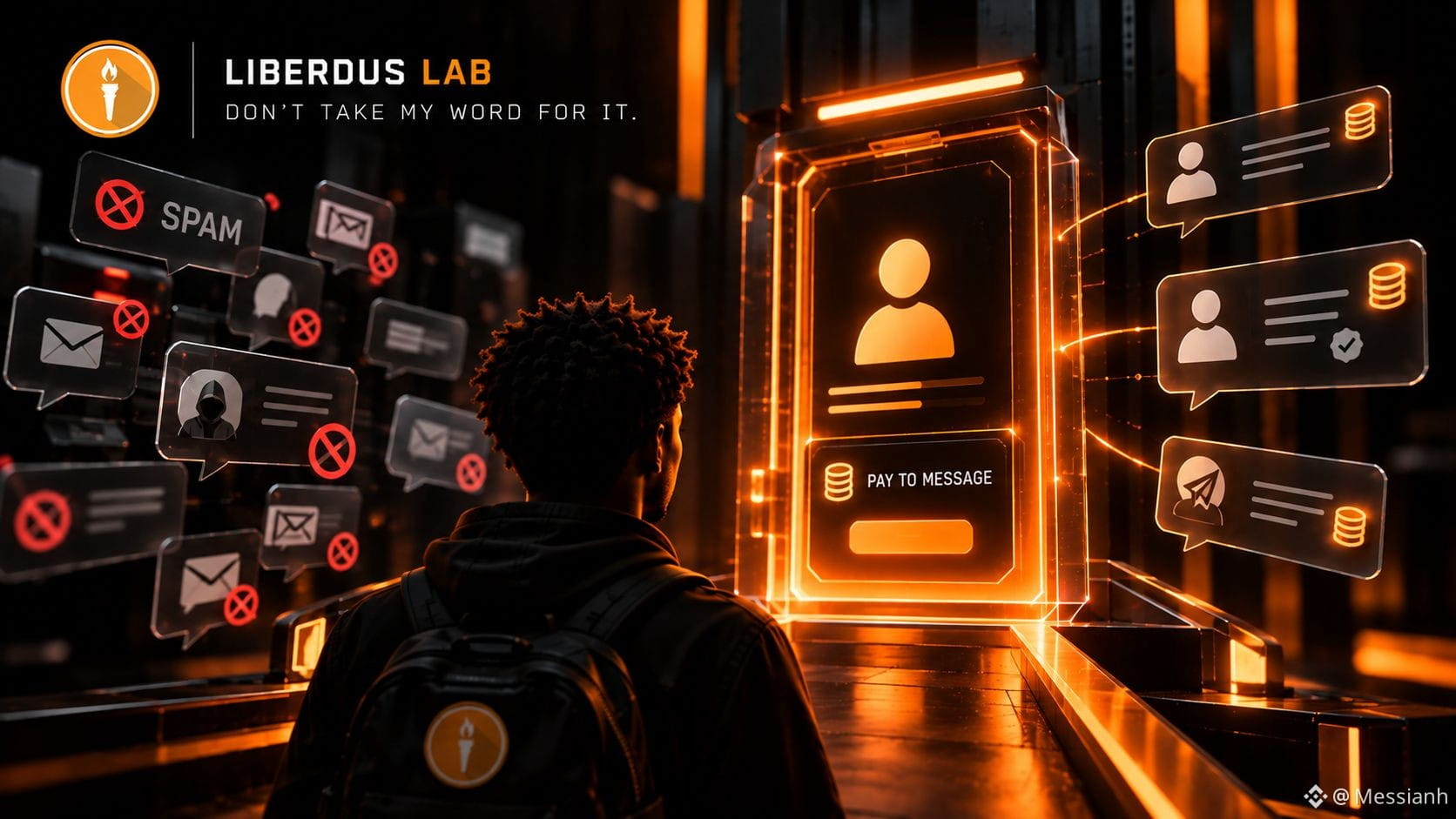
Tasavvur qiling, notanishlar sizga xabar yuborishdan oldin ozgina haq to‘lashi kerak bo‘lgan messenjer ilovasi bor.
Spam kamroq, e’tiboringiz ustidan nazorat ko‘proq. Ammo samimiy xabari bor, lekin bu haqni to‘lashga qurbi yetmaydigan odam-chi?
E’tiboringiz bilan haq to‘lashni afzal ko‘rasizmi yoki boshqalardan unga kirish uchun haq olishnimi?
Chegarani qayerda belgilashingiz qiziq.
#Liberdus #BitcoinOptionsVolatilityHitsFiveYearLow $SOL
{spot}(SOLUSDT)
Tasavvur qiling, notanishlar sizga xabar yuborishdan oldin ozgina haq to‘lashi kerak bo‘lgan messenjer ilovasi bor.
Spam kamroq, e’tiboringiz ustidan nazorat ko‘proq. Ammo samimiy xabari bor, lekin bu haqni to‘lashga qurbi yetmaydigan odam-chi?
E’tiboringiz bilan haq to‘lashni afzal ko‘rasizmi yoki boshqalardan unga kirish uchun haq olishnimi?
Chegarani qayerda belgilashingiz qiziq.
#Liberdus #BitcoinOptionsVolatilityHitsFiveYearLow $SOL
Spam kamroq, e’tiboringiz ustidan nazorat ko‘proq. Ammo samimiy xabari bor, lekin bu haqni to‘lashga qurbi yetmaydigan odam-chi?
E’tiboringiz bilan haq to‘lashni afzal ko‘rasizmi yoki boshqalardan unga kirish uchun haq olishnimi?
Chegarani qayerda belgilashingiz qiziq.
#Liberdus #BitcoinOptionsVolatilityHitsFiveYearLow $SOL
1
108
·
--
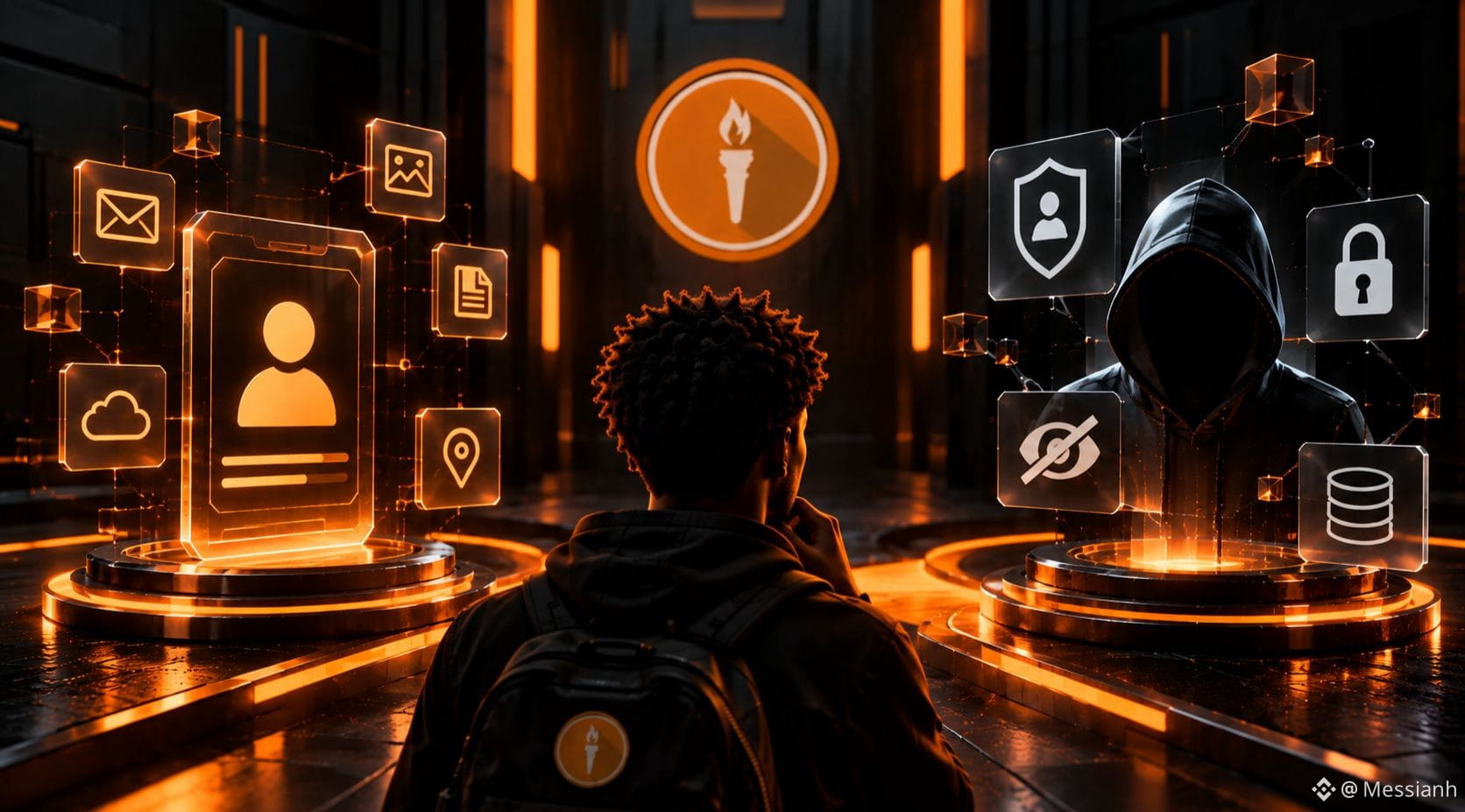
Maxfiylik va anonimlik bir xil narsa emas.
Shaxsingizni ommadan yashirgan holda ham ma’lumotlaringizni platformaga oshkor qilishingiz mumkin. Shuningdek, metama’lumotlarning har bir qismini yashirmasdan ham shifrlashdan foydalanishingiz mumkin.
Shuning uchun Web3 loyihasi maxfiyligingizni himoya qilishini da’vo qilsa, shunday deb so‘rang:
Aynan nima maxfiy? Shaxsingizmi? Xabarlaringizmi? Tranzaksiyalaringizmi? Metama’lumotlaringizmi?
Maxfiylik — belgi qo‘yiladigan katakcha emas. Bu dizayn bo‘yicha qabul qilinadigan qarorlar majmuasidir.
$ZEC
{spot}(ZECUSDT)
@liberdus #Liberdus #EthereumSurpasses2500USDT
Maxfiylik va anonimlik bir xil narsa emas.
Shaxsingizni ommadan yashirgan holda ham ma’lumotlaringizni platformaga oshkor qilishingiz mumkin. Shuningdek, metama’lumotlarning har bir qismini yashirmasdan ham shifrlashdan foydalanishingiz mumkin.
Shuning uchun Web3 loyihasi maxfiyligingizni himoya qilishini da’vo qilsa, shunday deb so‘rang:
Aynan nima maxfiy? Shaxsingizmi? Xabarlaringizmi? Tranzaksiyalaringizmi? Metama’lumotlaringizmi?
Maxfiylik — belgi qo‘yiladigan katakcha emas. Bu dizayn bo‘yicha qabul qilinadigan qarorlar majmuasidir.
$ZEC
@liberdus #Liberdus #EthereumSurpasses2500USDT
Shaxsingizni ommadan yashirgan holda ham ma’lumotlaringizni platformaga oshkor qilishingiz mumkin. Shuningdek, metama’lumotlarning har bir qismini yashirmasdan ham shifrlashdan foydalanishingiz mumkin.
Shuning uchun Web3 loyihasi maxfiyligingizni himoya qilishini da’vo qilsa, shunday deb so‘rang:
Aynan nima maxfiy? Shaxsingizmi? Xabarlaringizmi? Tranzaksiyalaringizmi? Metama’lumotlaringizmi?
Maxfiylik — belgi qo‘yiladigan katakcha emas. Bu dizayn bo‘yicha qabul qilinadigan qarorlar majmuasidir.
$ZEC
@liberdus #Liberdus #EthereumSurpasses2500USDT
1
86
·
--
Hamma Liberdus’da telefon raqami o‘rniga foydalanuvchi nomi bilan ro‘yxatdan o‘tish haqida gapiradi.
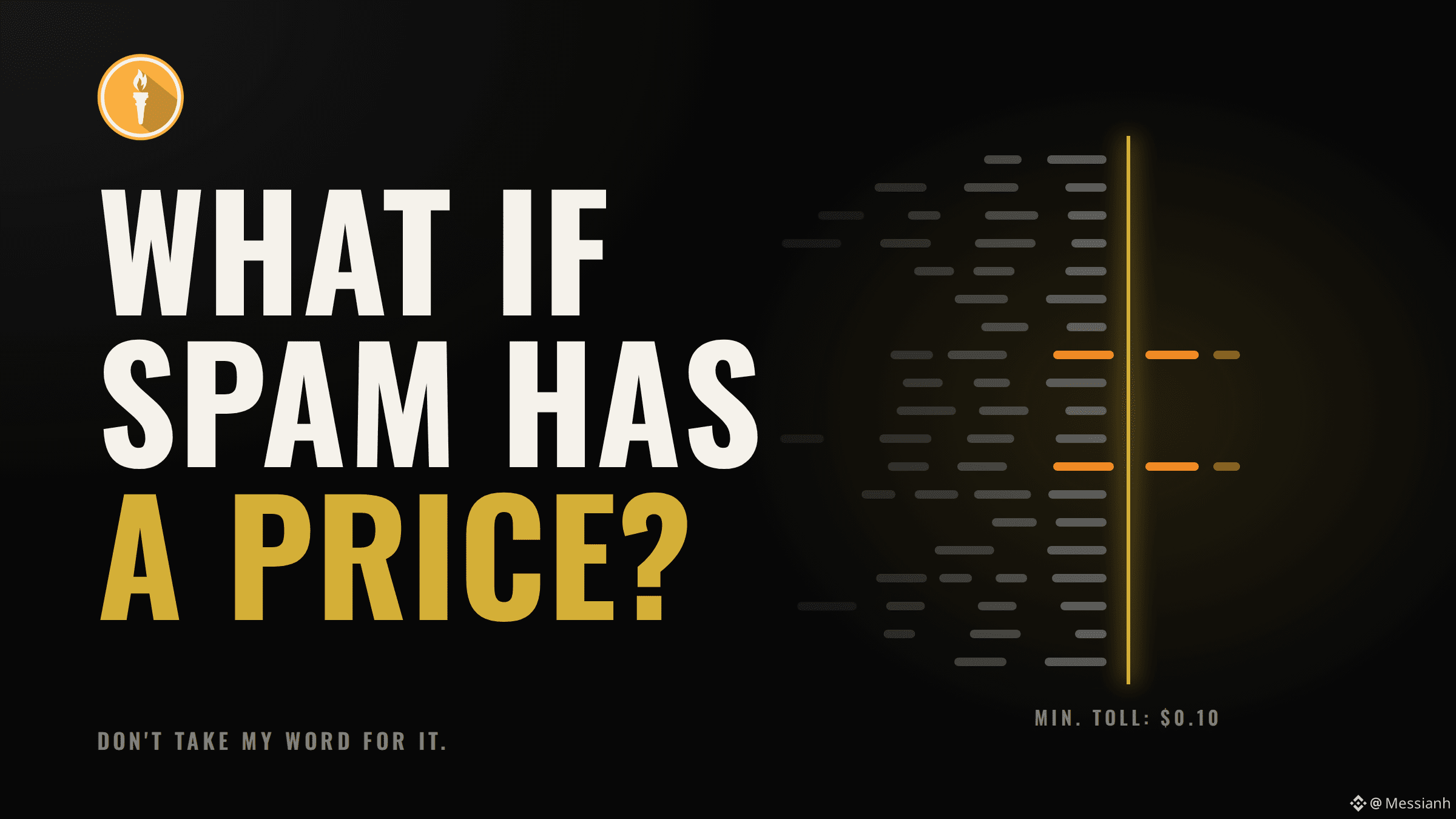
Ammo telefoningizni yo‘qotib qo‘ygan kuningizda bu tanlov nimani anglatishi haqida kamroq gapiriladi. Hisoblar qanday ishlashini sinchiklab ko‘rib chiqdim. Quyida buning ortidagi tuzilish keltirilgan.
Ro‘yxatdan o‘tish oson: «Hisob yaratish» tugmasini bosing, foydalanuvchi nomini tanlang — bir necha soniyada hisobingiz kalitlari yaratiladi. Telefon raqami ham, elektron pochta ham kerak emas.
Demak, operator yoki xizmat ko‘rsatuvchi provayder bergan hech narsa hisobingizga bog‘lanmaydi.
Hisob qayerda saqlanadi? Qurilmangizda. Hisob faqat shu qurilmada yaratilgan yoki tiklangan bo‘lsa, unga kira olasiz. Qurilmadagi har bir hisob mustaqil. Kalitlaringiz, kontaktlaringiz va sozlamalaringiz bitta zaxira faylida birga saqlanadi.
Zaxira fayli — tiklash tizimi.
Menyu → Zaxiralash → Yuklab olish — xohlasangiz, faylni shifrlash uchun parol o‘rnating. Yangi qurilmada: Menyu → Tiklash, faylni tanlang va parol o‘rnatgan bo‘lsangiz, uni kiriting.
Faylni shifrlash tavsiya etiladi.
Endi diqqat bilan ko‘rib chiqishga arziydigan jihat. Yo‘qotilgan zaxira fayli parolini tiklab bo‘lmaydi. Ilova qulfi uchun ham parolni tiklash imkoniyati yo‘q. Hisobni qurilmadan olib tashlasangiz, uni faqat yaroqli zaxira fayli yordamida qaytara olasiz. Tiklash mas’uliyati to‘liq o‘z qo‘lingizda.
Telefon raqamisiz ishlashning o‘ziga yarasha tomoni bor. Hisob yaratish uchun telefon raqami yoki elektron pochtaga qaram bo‘lmaysiz. Ammo faqat o‘zingiz asrab-avaylay oladigan fayl va parolga tayanasiz. Har ikki yo‘lning ham o‘z narxi bor. Birida ishonch provayderga topshiriladi. Boshqasida esa mas’uliyat sizning zimmangizga o‘tadi.
Yana bir jihat: hisobni qurilmangizdan olib tashlash uni tarmoqdan o‘chirmaydi. Migratsiya vositasi tarmoqda allaqachon ro‘yxatdan o‘tgan nomlarni «Band» deb ham belgilaydi. Demak, nom tarmoqda ro‘yxatdan o‘tadi, kalitlar esa zaxira faylingizda saqlanadi.
Siz nimaga ko‘proq tayanishni ma’qul ko‘rasiz: kirish huquqingizni tiklab bera oladigan provaydergami yoki faqat o‘zingiz yo‘qotishingiz mumkin bo‘lgan faylgami?
#Liberdus #ZcashTargetsJanuaryForQuantumResistantPayments $ETH
{spot}(ETHUSDT)
Hamma Liberdus’da telefon raqami o‘rniga foydalanuvchi nomi bilan ro‘yxatdan o‘tish haqida gapiradi.
Ammo telefoningizni yo‘qotib qo‘ygan kuningizda bu tanlov nimani anglatishi haqida kamroq gapiriladi. Hisoblar qanday ishlashini sinchiklab ko‘rib chiqdim. Quyida buning ortidagi tuzilish keltirilgan.
Ro‘yxatdan o‘tish oson: «Hisob yaratish» tugmasini bosing, foydalanuvchi nomini tanlang — bir necha soniyada hisobingiz kalitlari yaratiladi. Telefon raqami ham, elektron pochta ham kerak emas.
Demak, operator yoki xizmat ko‘rsatuvchi provayder bergan hech narsa hisobingizga bog‘lanmaydi.
Hisob qayerda saqlanadi? Qurilmangizda. Hisob faqat shu qurilmada yaratilgan yoki tiklangan bo‘lsa, unga kira olasiz. Qurilmadagi har bir hisob mustaqil. Kalitlaringiz, kontaktlaringiz va sozlamalaringiz bitta zaxira faylida birga saqlanadi.
Zaxira fayli — tiklash tizimi.
Menyu → Zaxiralash → Yuklab olish — xohlasangiz, faylni shifrlash uchun parol o‘rnating. Yangi qurilmada: Menyu → Tiklash, faylni tanlang va parol o‘rnatgan bo‘lsangiz, uni kiriting.
Faylni shifrlash tavsiya etiladi.
Endi diqqat bilan ko‘rib chiqishga arziydigan jihat. Yo‘qotilgan zaxira fayli parolini tiklab bo‘lmaydi. Ilova qulfi uchun ham parolni tiklash imkoniyati yo‘q. Hisobni qurilmadan olib tashlasangiz, uni faqat yaroqli zaxira fayli yordamida qaytara olasiz. Tiklash mas’uliyati to‘liq o‘z qo‘lingizda.
Telefon raqamisiz ishlashning o‘ziga yarasha tomoni bor. Hisob yaratish uchun telefon raqami yoki elektron pochtaga qaram bo‘lmaysiz. Ammo faqat o‘zingiz asrab-avaylay oladigan fayl va parolga tayanasiz. Har ikki yo‘lning ham o‘z narxi bor. Birida ishonch provayderga topshiriladi. Boshqasida esa mas’uliyat sizning zimmangizga o‘tadi.
Yana bir jihat: hisobni qurilmangizdan olib tashlash uni tarmoqdan o‘chirmaydi. Migratsiya vositasi tarmoqda allaqachon ro‘yxatdan o‘tgan nomlarni «Band» deb ham belgilaydi. Demak, nom tarmoqda ro‘yxatdan o‘tadi, kalitlar esa zaxira faylingizda saqlanadi.
Siz nimaga ko‘proq tayanishni ma’qul ko‘rasiz: kirish huquqingizni tiklab bera oladigan provaydergami yoki faqat o‘zingiz yo‘qotishingiz mumkin bo‘lgan faylgami?
#Liberdus #ZcashTargetsJanuaryForQuantumResistantPayments $ETH
Ammo telefoningizni yo‘qotib qo‘ygan kuningizda bu tanlov nimani anglatishi haqida kamroq gapiriladi. Hisoblar qanday ishlashini sinchiklab ko‘rib chiqdim. Quyida buning ortidagi tuzilish keltirilgan.
Ro‘yxatdan o‘tish oson: «Hisob yaratish» tugmasini bosing, foydalanuvchi nomini tanlang — bir necha soniyada hisobingiz kalitlari yaratiladi. Telefon raqami ham, elektron pochta ham kerak emas.
Demak, operator yoki xizmat ko‘rsatuvchi provayder bergan hech narsa hisobingizga bog‘lanmaydi.
Hisob qayerda saqlanadi? Qurilmangizda. Hisob faqat shu qurilmada yaratilgan yoki tiklangan bo‘lsa, unga kira olasiz. Qurilmadagi har bir hisob mustaqil. Kalitlaringiz, kontaktlaringiz va sozlamalaringiz bitta zaxira faylida birga saqlanadi.
Zaxira fayli — tiklash tizimi.
Menyu → Zaxiralash → Yuklab olish — xohlasangiz, faylni shifrlash uchun parol o‘rnating. Yangi qurilmada: Menyu → Tiklash, faylni tanlang va parol o‘rnatgan bo‘lsangiz, uni kiriting.
Faylni shifrlash tavsiya etiladi.
Endi diqqat bilan ko‘rib chiqishga arziydigan jihat. Yo‘qotilgan zaxira fayli parolini tiklab bo‘lmaydi. Ilova qulfi uchun ham parolni tiklash imkoniyati yo‘q. Hisobni qurilmadan olib tashlasangiz, uni faqat yaroqli zaxira fayli yordamida qaytara olasiz. Tiklash mas’uliyati to‘liq o‘z qo‘lingizda.
Telefon raqamisiz ishlashning o‘ziga yarasha tomoni bor. Hisob yaratish uchun telefon raqami yoki elektron pochtaga qaram bo‘lmaysiz. Ammo faqat o‘zingiz asrab-avaylay oladigan fayl va parolga tayanasiz. Har ikki yo‘lning ham o‘z narxi bor. Birida ishonch provayderga topshiriladi. Boshqasida esa mas’uliyat sizning zimmangizga o‘tadi.
Yana bir jihat: hisobni qurilmangizdan olib tashlash uni tarmoqdan o‘chirmaydi. Migratsiya vositasi tarmoqda allaqachon ro‘yxatdan o‘tgan nomlarni «Band» deb ham belgilaydi. Demak, nom tarmoqda ro‘yxatdan o‘tadi, kalitlar esa zaxira faylingizda saqlanadi.
Siz nimaga ko‘proq tayanishni ma’qul ko‘rasiz: kirish huquqingizni tiklab bera oladigan provaydergami yoki faqat o‘zingiz yo‘qotishingiz mumkin bo‘lgan faylgami?
#Liberdus #ZcashTargetsJanuaryForQuantumResistantPayments $ETH
1
82
·
--
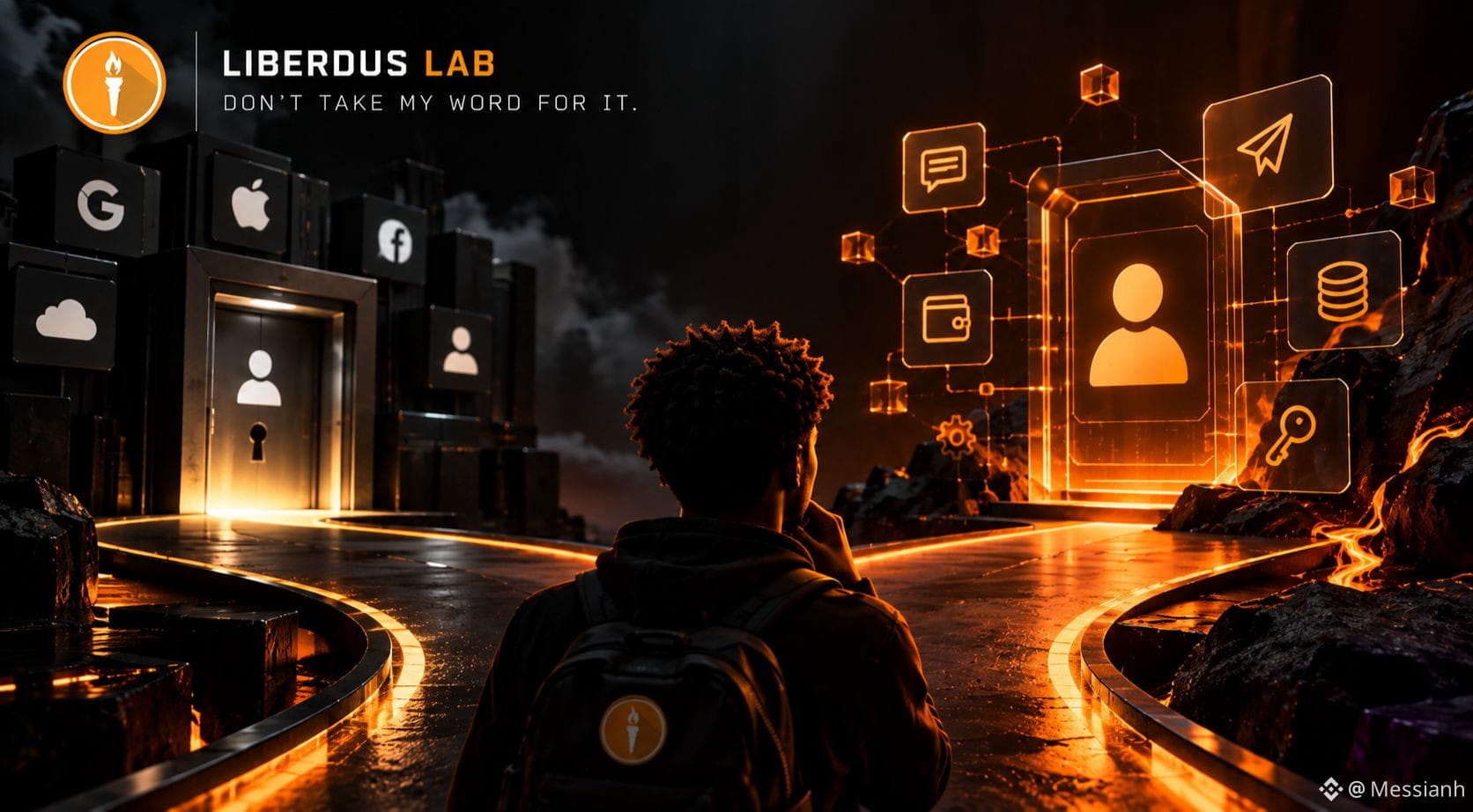
Biror xususiyatni targ‘ib qilish oson.
Buning evaziga nimalardan voz kechilishini tushunish qiyinroq. Markazlashmagan identifikatsiyani olaylik. Markazlashgan platformalarga kamroq bog‘liq bo‘lish juda yaxshi eshitiladi.
Ammo kirish imkoniyatini yo‘qotsangiz, nima bo‘ladi?
Uni tiklashga kim yordam beradi?
Raqamli egalik faqat nazorat haqida emas. Bu, shuningdek, mas’uliyat hamdir. Aynan shu murosa haqida gaplashishga arziydi.
#Liberdus #FedMinutesFocusOnOctoberPause $BTC
{spot}(BTCUSDT)
Biror xususiyatni targ‘ib qilish oson.
Buning evaziga nimalardan voz kechilishini tushunish qiyinroq. Markazlashmagan identifikatsiyani olaylik. Markazlashgan platformalarga kamroq bog‘liq bo‘lish juda yaxshi eshitiladi.
Ammo kirish imkoniyatini yo‘qotsangiz, nima bo‘ladi?
Uni tiklashga kim yordam beradi?
Raqamli egalik faqat nazorat haqida emas. Bu, shuningdek, mas’uliyat hamdir. Aynan shu murosa haqida gaplashishga arziydi.
#Liberdus #FedMinutesFocusOnOctoberPause $BTC
Buning evaziga nimalardan voz kechilishini tushunish qiyinroq. Markazlashmagan identifikatsiyani olaylik. Markazlashgan platformalarga kamroq bog‘liq bo‘lish juda yaxshi eshitiladi.
Ammo kirish imkoniyatini yo‘qotsangiz, nima bo‘ladi?
Uni tiklashga kim yordam beradi?
Raqamli egalik faqat nazorat haqida emas. Bu, shuningdek, mas’uliyat hamdir. Aynan shu murosa haqida gaplashishga arziydi.
#Liberdus #FedMinutesFocusOnOctoberPause $BTC
1
92
·
--
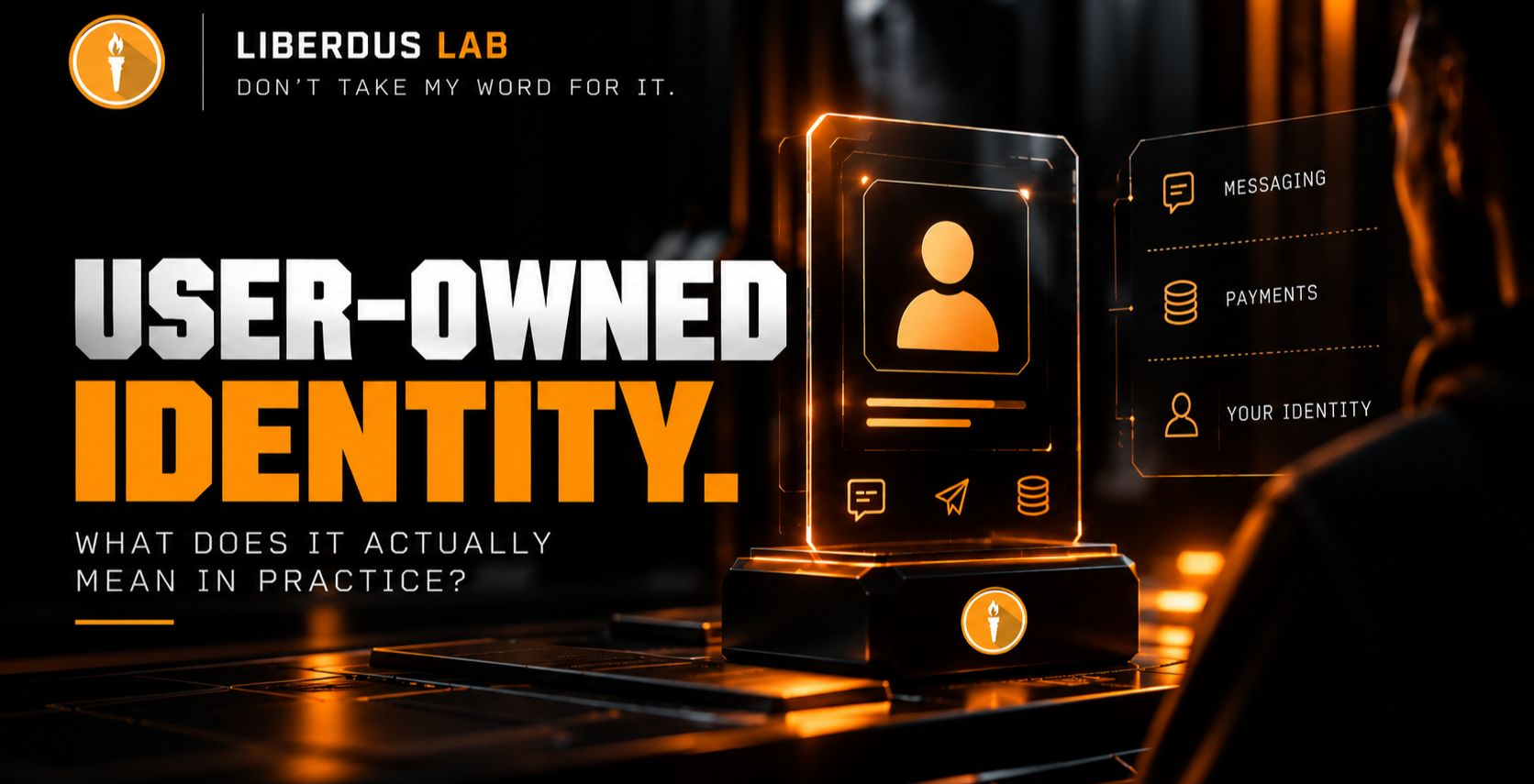
Foydalanuvchiga tegishli identifikatsiya amalda nimani anglatishini tushunmoqchi edim. Marketingdagi talqinini emas. Uning ortidagi arxitekturani.
Shu bois @liberdus identifikatsiyaga qanday yondashishini o‘rgana boshladim. Hozircha bilib olganlarim:
Muhim savol — identifikatsiyangiz kimga tegishli ekani emas. Uni kim boshqara olishi. Bu farq muhim.
#BinanceLaunchesBinanceIntelligence #Liberdus $ONDO
Foydalanuvchiga tegishli identifikatsiya amalda nimani anglatishini tushunmoqchi edim. Marketingdagi talqinini emas. Uning ortidagi arxitekturani.
Shu bois @liberdus identifikatsiyaga qanday yondashishini o‘rgana boshladim. Hozircha bilib olganlarim:
Muhim savol — identifikatsiyangiz kimga tegishli ekani emas. Uni kim boshqara olishi. Bu farq muhim.
#BinanceLaunchesBinanceIntelligence #Liberdus $ONDO
Shu bois @liberdus identifikatsiyaga qanday yondashishini o‘rgana boshladim. Hozircha bilib olganlarim:
Muhim savol — identifikatsiyangiz kimga tegishli ekani emas. Uni kim boshqara olishi. Bu farq muhim.
#BinanceLaunchesBinanceIntelligence #Liberdus $ONDO
1
105
·
--
Tasdiqlangan
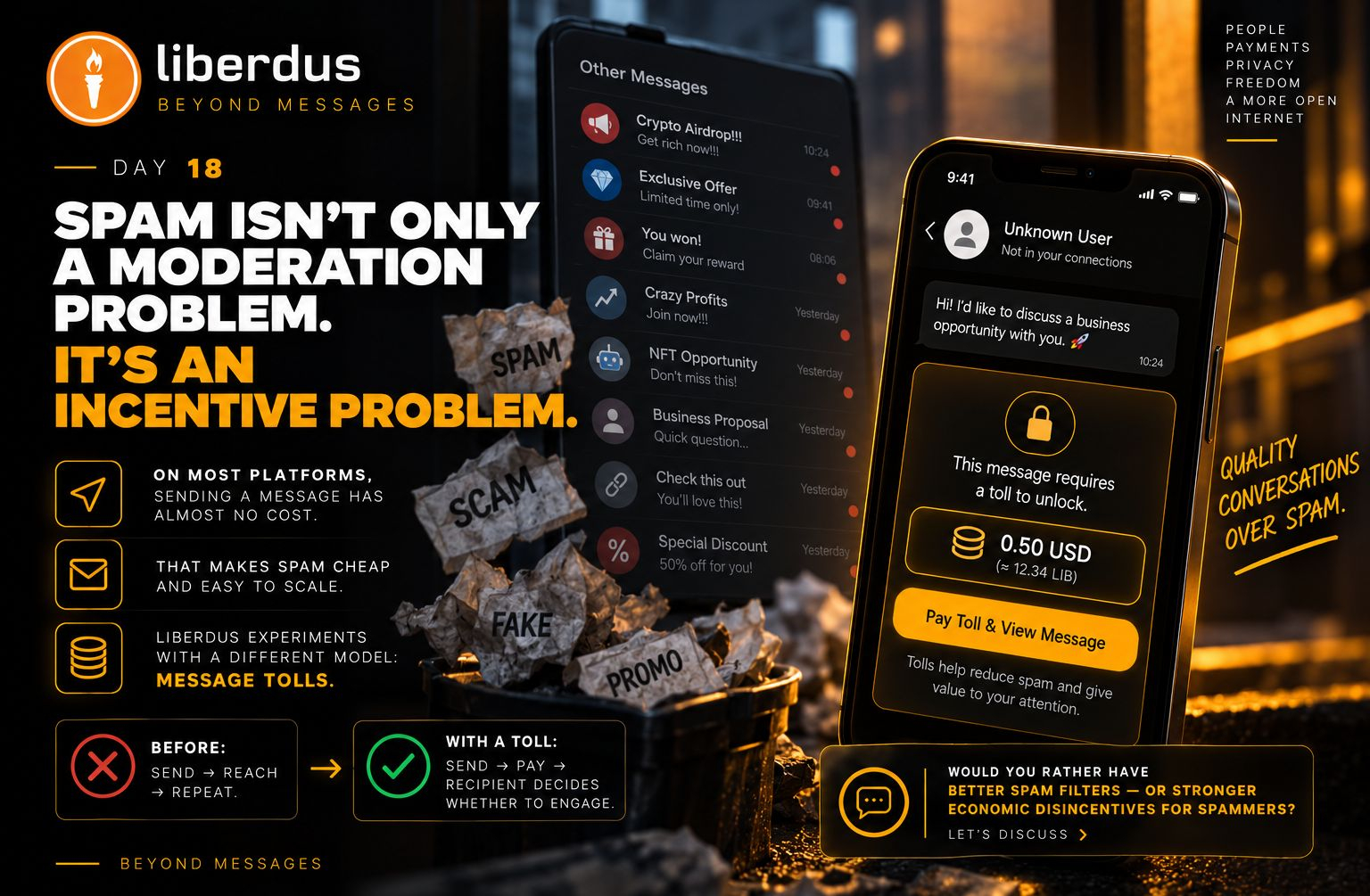
Spam faqat moderatsiya muammosi emas. Bu rag‘batlar muammosi.
Ko‘pchilik platformalarda boshqa odamga xabar yuborish deyarli hech qanday iqtisodiy to‘siqqa ega emas. Shu sababli bir xil xabarni minglab odamlarga yuborish arzon tushadi.
Liberdus boshqa mexanizmni sinab ko‘radi: xabar yuborish boji. Agar kimdir sizning Do‘stingiz yoki Aloqangiz bo‘lmasa, u sizga xabar yuborishidan oldin boj to‘lashi talab qilinishi mumkin. Miqdorni xabarni qabul qiluvchi belgilaydi va bu talabni butunlay o‘chirib qo‘yishi ham mumkin.
Qizig‘i bojning o‘zida emas. Gap rag‘batlarning o‘zgarishida:
Avval:
Yuborish → yetib borish → takrorlash.
Boj bilan:
Yuborish → to‘lash → qabul qiluvchi muloqotga kirishish-kirmaslikni hal qiladi.
Qabul qiluvchi hech qanday munosabat bildirmasa, tizim foydalanilmagan bojni qaytarishi mumkin.
Demak, Web3 xabar almashinuvi uchun muhimroq savol: spamni qanday qilib ko‘proq filtrlash emas, balki spam yuborishni boshidanoq iqtisodiy jihatdan kamroq jozibador qilish haqida bo‘lishi mumkin. Bu raqamli muloqotga qarashning mutlaqo boshqacha usuli.
Siz qaysi birini afzal ko‘rasiz: spamni yaxshiroq filtrlashnimi yoki spam yuboruvchilarni iqtisodiy jihatdan kuchliroq qaytarishnimi?
#liberdus #CircleMints500MUSDCOnSolana $ZEC
{spot}(ZECUSDT)
Spam faqat moderatsiya muammosi emas. Bu rag‘batlar muammosi.
Ko‘pchilik platformalarda boshqa odamga xabar yuborish deyarli hech qanday iqtisodiy to‘siqqa ega emas. Shu sababli bir xil xabarni minglab odamlarga yuborish arzon tushadi.
Liberdus boshqa mexanizmni sinab ko‘radi: xabar yuborish boji. Agar kimdir sizning Do‘stingiz yoki Aloqangiz bo‘lmasa, u sizga xabar yuborishidan oldin boj to‘lashi talab qilinishi mumkin. Miqdorni xabarni qabul qiluvchi belgilaydi va bu talabni butunlay o‘chirib qo‘yishi ham mumkin.
Qizig‘i bojning o‘zida emas. Gap rag‘batlarning o‘zgarishida:
Avval:
Yuborish → yetib borish → takrorlash.
Boj bilan:
Yuborish → to‘lash → qabul qiluvchi muloqotga kirishish-kirmaslikni hal qiladi.
Qabul qiluvchi hech qanday munosabat bildirmasa, tizim foydalanilmagan bojni qaytarishi mumkin.
Demak, Web3 xabar almashinuvi uchun muhimroq savol: spamni qanday qilib ko‘proq filtrlash emas, balki spam yuborishni boshidanoq iqtisodiy jihatdan kamroq jozibador qilish haqida bo‘lishi mumkin. Bu raqamli muloqotga qarashning mutlaqo boshqacha usuli.
Siz qaysi birini afzal ko‘rasiz: spamni yaxshiroq filtrlashnimi yoki spam yuboruvchilarni iqtisodiy jihatdan kuchliroq qaytarishnimi?
#liberdus #CircleMints500MUSDCOnSolana $ZEC
Ko‘pchilik platformalarda boshqa odamga xabar yuborish deyarli hech qanday iqtisodiy to‘siqqa ega emas. Shu sababli bir xil xabarni minglab odamlarga yuborish arzon tushadi.
Liberdus boshqa mexanizmni sinab ko‘radi: xabar yuborish boji. Agar kimdir sizning Do‘stingiz yoki Aloqangiz bo‘lmasa, u sizga xabar yuborishidan oldin boj to‘lashi talab qilinishi mumkin. Miqdorni xabarni qabul qiluvchi belgilaydi va bu talabni butunlay o‘chirib qo‘yishi ham mumkin.
Qizig‘i bojning o‘zida emas. Gap rag‘batlarning o‘zgarishida:
Avval:
Yuborish → yetib borish → takrorlash.
Boj bilan:
Yuborish → to‘lash → qabul qiluvchi muloqotga kirishish-kirmaslikni hal qiladi.
Qabul qiluvchi hech qanday munosabat bildirmasa, tizim foydalanilmagan bojni qaytarishi mumkin.
Demak, Web3 xabar almashinuvi uchun muhimroq savol: spamni qanday qilib ko‘proq filtrlash emas, balki spam yuborishni boshidanoq iqtisodiy jihatdan kamroq jozibador qilish haqida bo‘lishi mumkin. Bu raqamli muloqotga qarashning mutlaqo boshqacha usuli.
Siz qaysi birini afzal ko‘rasiz: spamni yaxshiroq filtrlashnimi yoki spam yuboruvchilarni iqtisodiy jihatdan kuchliroq qaytarishnimi?
#liberdus #CircleMints500MUSDCOnSolana $ZEC
1
573
·
--
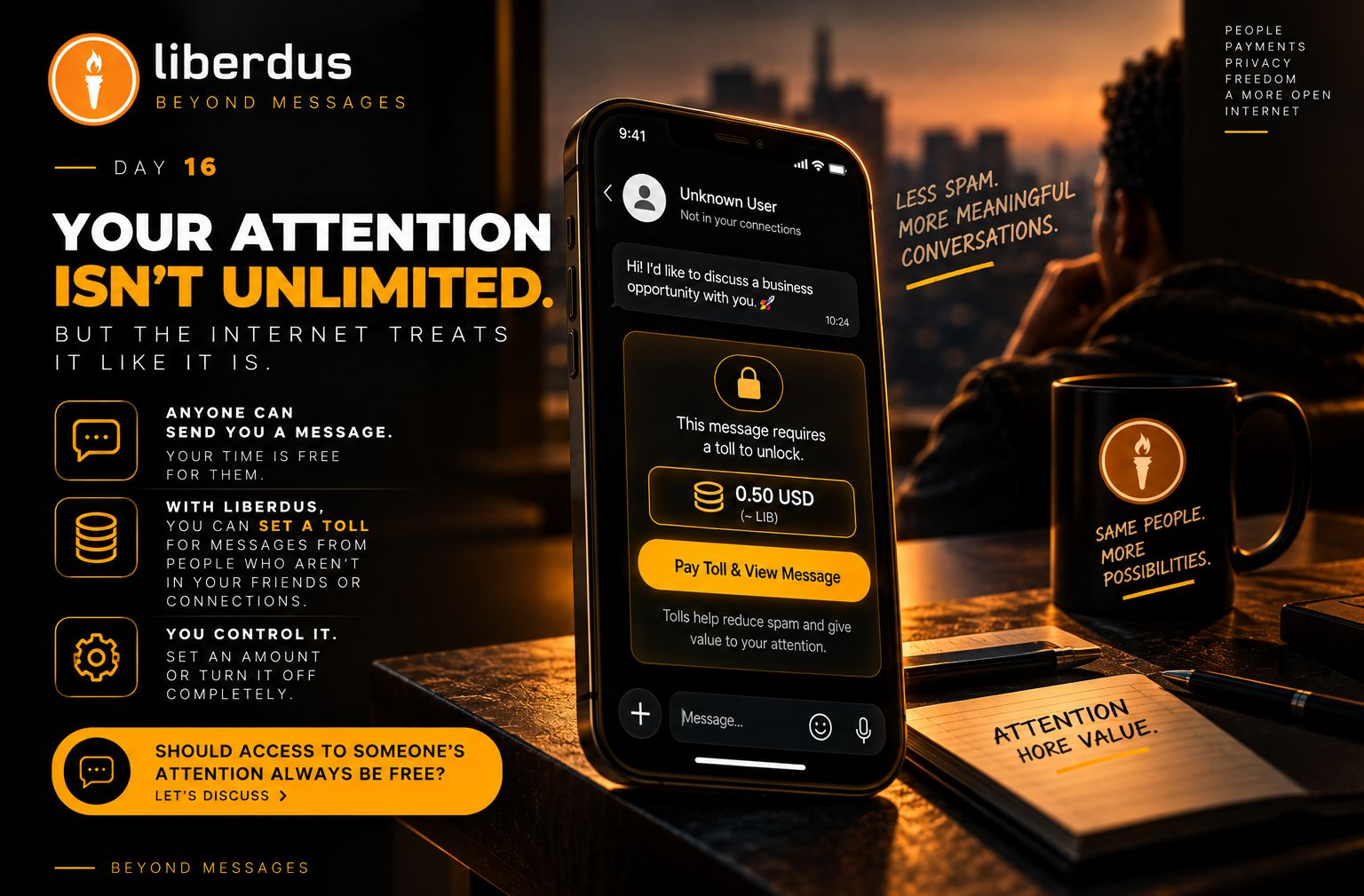
Sizning e’tiboringiz — internet cheksizdek ko‘radigan kam sonli narsalardan biri.
Istalgan odam sizga xabar yuborishi mumkin. Ular bepul sarflaydigan yagona narsa — vaqtingiz. @liberdus boshqa modelni sinab ko‘rmoqda: xabar uchun to‘lov.
Do‘stlaringiz yoki aloqalaringiz ro‘yxatida bo‘lmagan kimdir sizga xabar yuborsa, undan to‘lov olinishi mumkin. To‘lov miqdorini o‘zingiz belgilashingiz yoki bu funksiyani butunlay o‘chirib qo‘yishingiz mumkin. Bu kichik mexanizm, ammo kattaroq bir savolni o‘rtaga tashlaydi: birovning e’tiboridan foydalanish har doim bepul bo‘lishi kerakmi?
Bu — o‘rganishga arziydigan Web3 savoli.
#Liberdus $ONDO
{spot}(ONDOUSDT)
Sizning e’tiboringiz — internet cheksizdek ko‘radigan kam sonli narsalardan biri.
Istalgan odam sizga xabar yuborishi mumkin. Ular bepul sarflaydigan yagona narsa — vaqtingiz. @liberdus boshqa modelni sinab ko‘rmoqda: xabar uchun to‘lov.
Do‘stlaringiz yoki aloqalaringiz ro‘yxatida bo‘lmagan kimdir sizga xabar yuborsa, undan to‘lov olinishi mumkin. To‘lov miqdorini o‘zingiz belgilashingiz yoki bu funksiyani butunlay o‘chirib qo‘yishingiz mumkin. Bu kichik mexanizm, ammo kattaroq bir savolni o‘rtaga tashlaydi: birovning e’tiboridan foydalanish har doim bepul bo‘lishi kerakmi?
Bu — o‘rganishga arziydigan Web3 savoli.
#Liberdus $ONDO
Istalgan odam sizga xabar yuborishi mumkin. Ular bepul sarflaydigan yagona narsa — vaqtingiz. @liberdus boshqa modelni sinab ko‘rmoqda: xabar uchun to‘lov.
Do‘stlaringiz yoki aloqalaringiz ro‘yxatida bo‘lmagan kimdir sizga xabar yuborsa, undan to‘lov olinishi mumkin. To‘lov miqdorini o‘zingiz belgilashingiz yoki bu funksiyani butunlay o‘chirib qo‘yishingiz mumkin. Bu kichik mexanizm, ammo kattaroq bir savolni o‘rtaga tashlaydi: birovning e’tiboridan foydalanish har doim bepul bo‘lishi kerakmi?
Bu — o‘rganishga arziydigan Web3 savoli.
#Liberdus $ONDO
1
194
·
--
Men avvallari maxfiylik, asosan, sirlarni saqlash haqida deb o‘ylardim. Web3’ni qanchalik ko‘p o‘rgansam, unga shunchalik boshqacha qaray boshladim. Maxfiylik — bu nazorat qilish imkoniyati hamdir.
O‘zingizni qanday tanitishingiz, nimalarni oshkor qilishingiz, ma’lumotlaringizni kimlar o‘zaro bog‘lay olishi, qanday muloqot qilishingiz va qiymatni qanday o‘tkazishingiz ustidan nazorat. Markazlashmagan tizimni men uchun qiziqarli qiladigan narsa ham shu.
Gap shunchaki vositachini olib tashlashda emas. Gap foydalanuvchi aslida nimani nazorat qilishi kerakligini so‘rashda.
Bu yerda o‘rganishda davom etmoqchi bo‘lgan savolim shu.
Kamroq shov-shuv
Ko‘proq tushuncha
Ko‘proq dalil
Ko‘proq noqulay savollar
Raqamli mulk siz uchun nimani anglatadi?
#AIStocksWhatNext #bnb $BNB
{spot}(BNBUSDT)
Men avvallari maxfiylik, asosan, sirlarni saqlash haqida deb o‘ylardim. Web3’ni qanchalik ko‘p o‘rgansam, unga shunchalik boshqacha qaray boshladim. Maxfiylik — bu nazorat qilish imkoniyati hamdir.
O‘zingizni qanday tanitishingiz, nimalarni oshkor qilishingiz, ma’lumotlaringizni kimlar o‘zaro bog‘lay olishi, qanday muloqot qilishingiz va qiymatni qanday o‘tkazishingiz ustidan nazorat. Markazlashmagan tizimni men uchun qiziqarli qiladigan narsa ham shu.
Gap shunchaki vositachini olib tashlashda emas. Gap foydalanuvchi aslida nimani nazorat qilishi kerakligini so‘rashda.
Bu yerda o‘rganishda davom etmoqchi bo‘lgan savolim shu.
Kamroq shov-shuv
Ko‘proq tushuncha
Ko‘proq dalil
Ko‘proq noqulay savollar
Raqamli mulk siz uchun nimani anglatadi?
#AIStocksWhatNext #bnb $BNB
O‘zingizni qanday tanitishingiz, nimalarni oshkor qilishingiz, ma’lumotlaringizni kimlar o‘zaro bog‘lay olishi, qanday muloqot qilishingiz va qiymatni qanday o‘tkazishingiz ustidan nazorat. Markazlashmagan tizimni men uchun qiziqarli qiladigan narsa ham shu.
Gap shunchaki vositachini olib tashlashda emas. Gap foydalanuvchi aslida nimani nazorat qilishi kerakligini so‘rashda.
Bu yerda o‘rganishda davom etmoqchi bo‘lgan savolim shu.
Kamroq shov-shuv
Ko‘proq tushuncha
Ko‘proq dalil
Ko‘proq noqulay savollar
Raqamli mulk siz uchun nimani anglatadi?
#AIStocksWhatNext #bnb $BNB

1
58
·
--
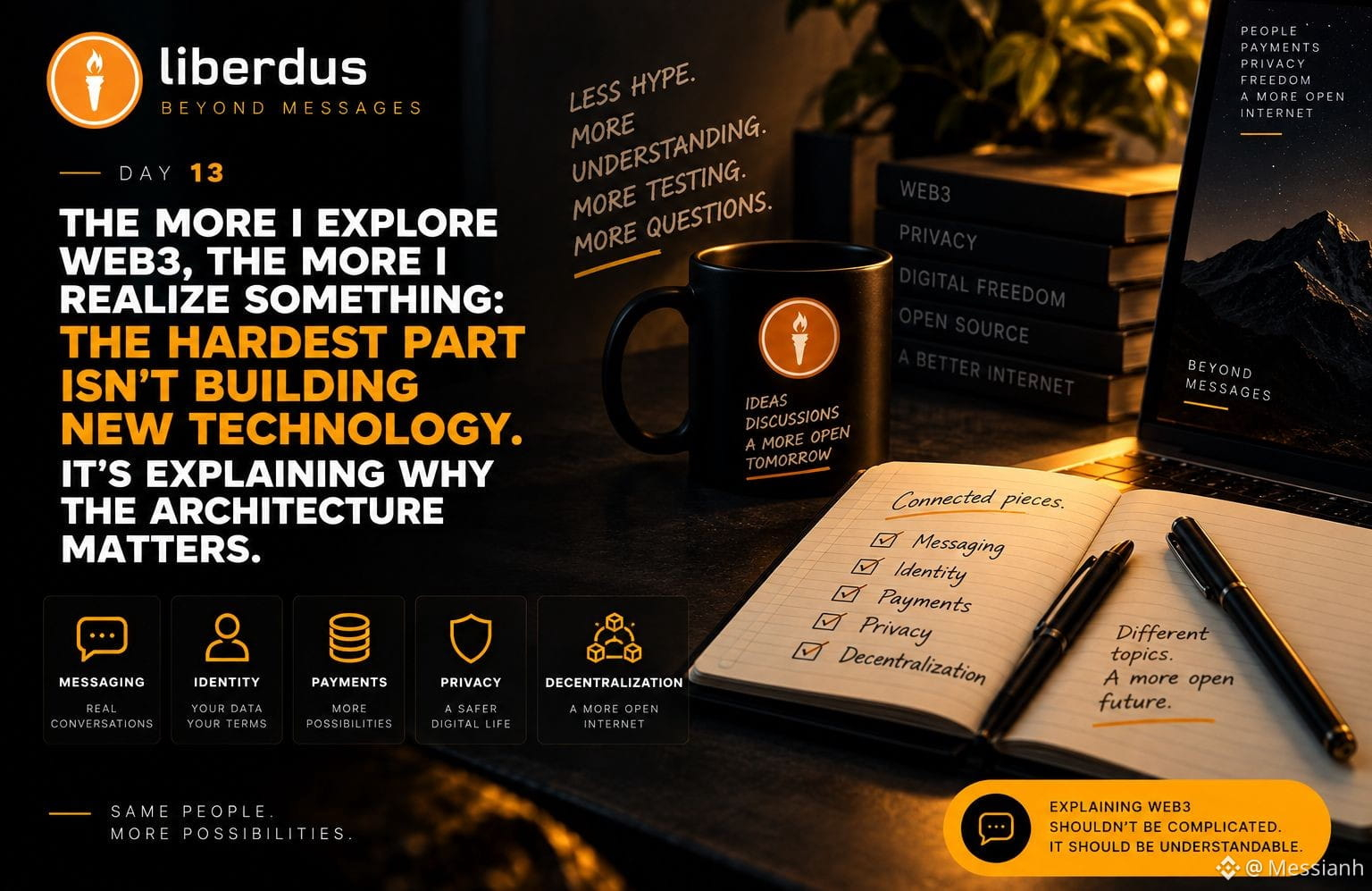
Web3’ni qanchalik ko‘p o‘rgansam, bir narsani shunchalik ko‘proq anglayapman: eng qiyini yangi texnologiya yaratish emas. Eng qiyini — arxitektura nima uchun muhimligini tushuntirish.
Xabar almashish, identifikatsiya, to‘lovlar, maxfiylik va markazlashmaganlik. Bular alohida mavzulardek ko‘rinishi mumkin. Ammo ular tobora ko‘proq o‘zaro bog‘lanib bormoqda. Liberdus kabi loyihalarning menga qiziq tuyulishiga ham shu sabab.
Gap faqat ilova nimalar qilishida emas, balki bu qismlar birgalikda ishlash uchun yaratilganda nimalar o‘zgarishida. Men o‘rganishda davom etmoqchi bo‘lgan Web3 kontenti aynan shunday:
Kamroq shov-shuv, ko‘proq tushunish, ko‘proq sinov va ko‘proq savol. Chunki Web3’ni tushuntirish uni murakkab qilib ko‘rsatish degani bo‘lmasligi kerak.
Aksincha, murakkablikni tushunarli qilish degani bo‘lishi kerak.
#ZetaChainVotesToMigrateZETAToSolana $ZETA
{future}(ZETAUSDT)
Web3’ni qanchalik ko‘p o‘rgansam, bir narsani shunchalik ko‘proq anglayapman: eng qiyini yangi texnologiya yaratish emas. Eng qiyini — arxitektura nima uchun muhimligini tushuntirish.
Xabar almashish, identifikatsiya, to‘lovlar, maxfiylik va markazlashmaganlik. Bular alohida mavzulardek ko‘rinishi mumkin. Ammo ular tobora ko‘proq o‘zaro bog‘lanib bormoqda. Liberdus kabi loyihalarning menga qiziq tuyulishiga ham shu sabab.
Gap faqat ilova nimalar qilishida emas, balki bu qismlar birgalikda ishlash uchun yaratilganda nimalar o‘zgarishida. Men o‘rganishda davom etmoqchi bo‘lgan Web3 kontenti aynan shunday:
Kamroq shov-shuv, ko‘proq tushunish, ko‘proq sinov va ko‘proq savol. Chunki Web3’ni tushuntirish uni murakkab qilib ko‘rsatish degani bo‘lmasligi kerak.
Aksincha, murakkablikni tushunarli qilish degani bo‘lishi kerak.
#ZetaChainVotesToMigrateZETAToSolana $ZETA
Xabar almashish, identifikatsiya, to‘lovlar, maxfiylik va markazlashmaganlik. Bular alohida mavzulardek ko‘rinishi mumkin. Ammo ular tobora ko‘proq o‘zaro bog‘lanib bormoqda. Liberdus kabi loyihalarning menga qiziq tuyulishiga ham shu sabab.
Gap faqat ilova nimalar qilishida emas, balki bu qismlar birgalikda ishlash uchun yaratilganda nimalar o‘zgarishida. Men o‘rganishda davom etmoqchi bo‘lgan Web3 kontenti aynan shunday:
Kamroq shov-shuv, ko‘proq tushunish, ko‘proq sinov va ko‘proq savol. Chunki Web3’ni tushuntirish uni murakkab qilib ko‘rsatish degani bo‘lmasligi kerak.
Aksincha, murakkablikni tushunarli qilish degani bo‘lishi kerak.
#ZetaChainVotesToMigrateZETAToSolana $ZETA
1
2.1k
·
--
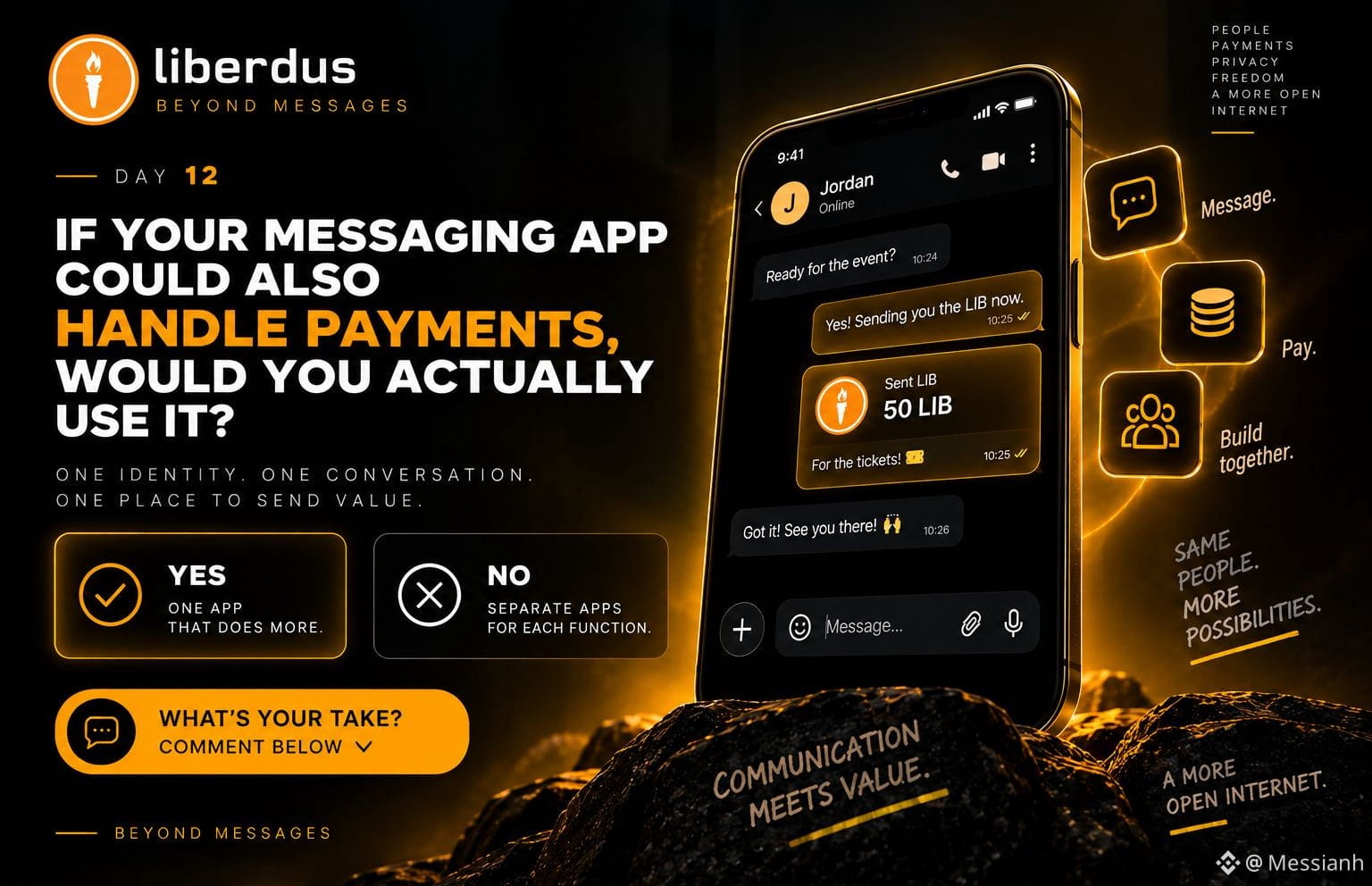
Agar xabar almashish ilovangiz to‘lovlarni ham amalga oshira olsa, undan rostdan ham foydalanarmidingiz?
Web3 bo‘lgani uchun emas. Shunchaki, bu osonroq bo‘lishi mumkin. Bitta identifikator, bitta suhbat va mablag‘ yuborish uchun bitta joy.
Ammo buning boshqa tomoni ham bor: bir joyda ko‘proq imkoniyat bo‘lishi ko‘proq mas’uliyatni ham anglatishi mumkin. Ayniqsa, identifikatoringiz, suhbatlaringiz va tranzaksiyalaringiz o‘zaro bog‘langanida.
Shuning uchun qiziqyapman: ko‘proq ishni bajaradigan bitta ilovani ma’qul ko‘rasizmi yoki har bir vazifa uchun alohida ilovalarnimi? Nima uchun?
#Liberdus #SaylorHintsStrategyBitcoinBuy $ZEC
{spot}(ZECUSDT)
Agar xabar almashish ilovangiz to‘lovlarni ham amalga oshira olsa, undan rostdan ham foydalanarmidingiz?
Web3 bo‘lgani uchun emas. Shunchaki, bu osonroq bo‘lishi mumkin. Bitta identifikator, bitta suhbat va mablag‘ yuborish uchun bitta joy.
Ammo buning boshqa tomoni ham bor: bir joyda ko‘proq imkoniyat bo‘lishi ko‘proq mas’uliyatni ham anglatishi mumkin. Ayniqsa, identifikatoringiz, suhbatlaringiz va tranzaksiyalaringiz o‘zaro bog‘langanida.
Shuning uchun qiziqyapman: ko‘proq ishni bajaradigan bitta ilovani ma’qul ko‘rasizmi yoki har bir vazifa uchun alohida ilovalarnimi? Nima uchun?
#Liberdus #SaylorHintsStrategyBitcoinBuy $ZEC
Web3 bo‘lgani uchun emas. Shunchaki, bu osonroq bo‘lishi mumkin. Bitta identifikator, bitta suhbat va mablag‘ yuborish uchun bitta joy.
Ammo buning boshqa tomoni ham bor: bir joyda ko‘proq imkoniyat bo‘lishi ko‘proq mas’uliyatni ham anglatishi mumkin. Ayniqsa, identifikatoringiz, suhbatlaringiz va tranzaksiyalaringiz o‘zaro bog‘langanida.
Shuning uchun qiziqyapman: ko‘proq ishni bajaradigan bitta ilovani ma’qul ko‘rasizmi yoki har bir vazifa uchun alohida ilovalarnimi? Nima uchun?
#Liberdus #SaylorHintsStrategyBitcoinBuy $ZEC
1
86
·
--
Kripto to‘lovlarning qiziq tomoni to‘lovning o‘zi emas. Qiziq tomoni — pul aloqa qatlamining bir qismiga aylanganda nima sodir bo‘lishida.
Yillar davomida biz xabar almashish va to‘lovlarni bir-biridan mutlaqo farqli narsalar deb bilib keldik.
Bir ilovada suhbatlashasiz, boshqasida to‘lov qilasiz, hamyoningizni esa yana boshqa joyda boshqarasiz. Ammo Web3 boshqa modelni amalga oshirish imkonini beradi.
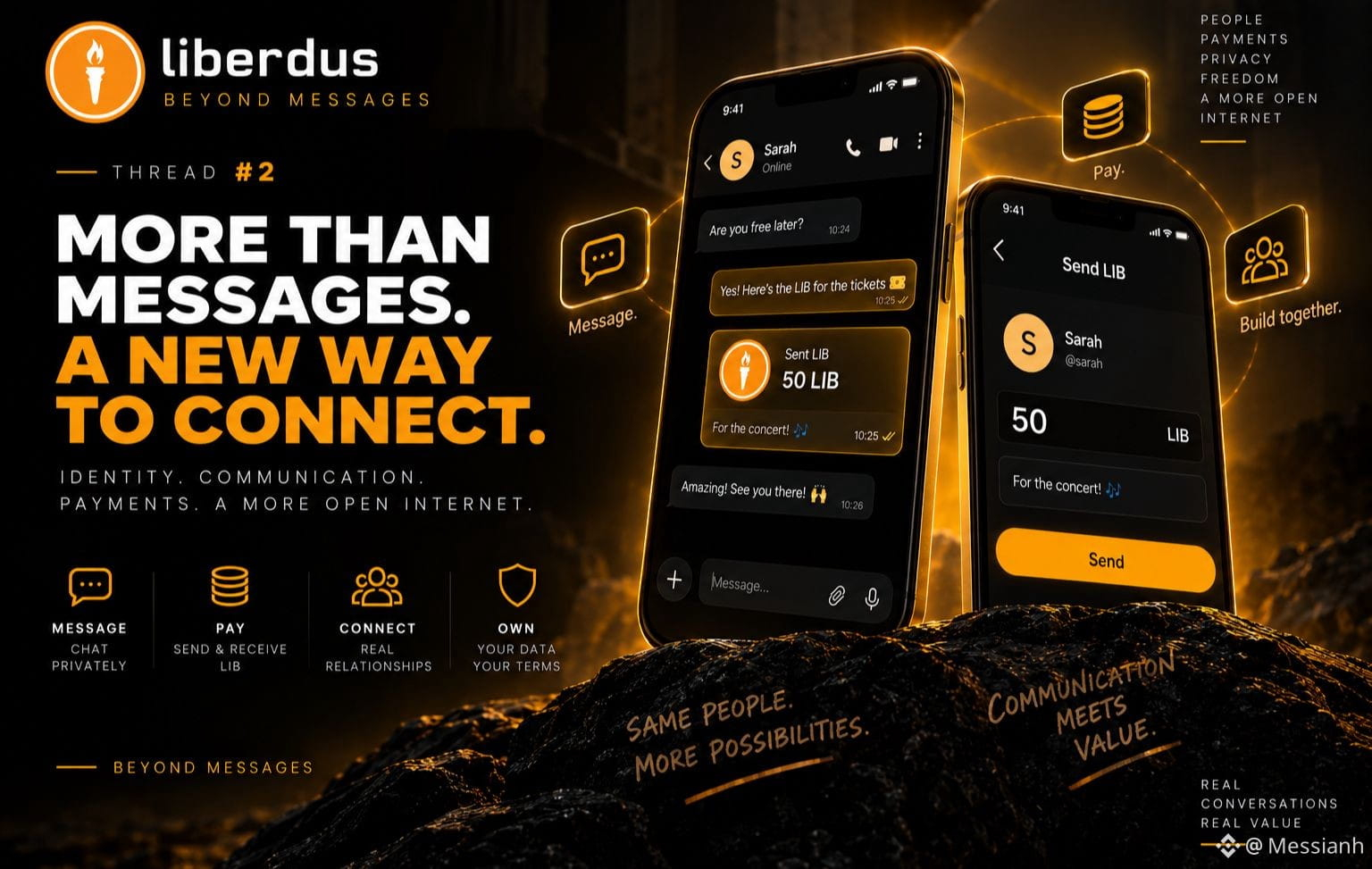
Liberdus xabar almashish va LIB to‘lovlarini yagona ekotizimda birlashtiradi. LIB’ni to‘g‘ridan-to‘g‘ri suhbatdan yuborishingiz mumkin, bunda qabul qiluvchi chatdan oldindan tanlangan bo‘ladi. Bu oddiy tuyuladi, ammo buning ortidagi arxitektura ancha qiziqroq.
Qatlamlar haqida o‘ylab ko‘ring:
Shaxsni aniqlash → Aloqa → Qiymat
Bir xil foydalanuvchi nomidan xabar almashish va to‘lovlar uchun foydalanish mumkin, bunda u Liberdus hamyon manziliga bog‘lanadi.
Shu tariqa, yagona shaxsni aniqlash qatlami turli o‘zaro aloqalarni bog‘lay oladi.
Bu xabar almashish ilovasi nimani anglatishini o‘zgartiradi. Endi gap faqat «Qanday qilib xabar yuboraman?» degan savolda emas.
Savol: «Men allaqachon aloqada bo‘lgan inson bilan yana nimalar qila olaman?»ga aylanadi.
Xabar yuborish, to‘lov qilish, qiymat qabul qilish, o‘zaro aloqa qilish.
Ammo buning muhim bir murosali jihati bor. Shaxsni aniqlash, aloqa va to‘lovlarni birlashtirish har bir qatlam qanday ma’lumotlarni oshkor etishini tushunishingiz kerakligini ham anglatadi. Masalan, Liberdus ma’lumotiga ko‘ra, LIB tranzaksiyalari anonim emas va tranzaksiya metama’lumotlarini o‘z ichiga oladi.
Shuning uchun menimcha, maxfiylik haqida aniqroq gaplashishimiz kerak. Telefon raqami yo‘qligi ≠ anonim tranzaksiyalar.
Markazlashmaganlik ≠ ko‘zga ko‘rinmaslik.
Mablag‘ni o‘zingiz saqlashingiz ≠ mas’uliyat yo‘qligi.
Qiziq savollar tafsilotlarda yashiringan.
Web3 tokenlar to‘plamidan ko‘proq narsaga aylanadigan nuqta ham aynan shu. U bizning qanday qilib
shaxsni aniqlash → muloqot qilish → qiymat almashishimizni qayta loyihalash tajribasiga aylanadi.
Men qayta-qayta o‘ylaydigan savol:
pul raqamli munosabatlarimizdan alohida qatlam bo‘lib qolishi kerakmi yoki oxir-oqibat ular birgalikda ishlashi kerakmi?
#FIRO #BOJRaisesRatesTo31YearHigh $FIRO
Kripto to‘lovlarning qiziq tomoni to‘lovning o‘zi emas. Qiziq tomoni — pul aloqa qatlamining bir qismiga aylanganda nima sodir bo‘lishida.
Yillar davomida biz xabar almashish va to‘lovlarni bir-biridan mutlaqo farqli narsalar deb bilib keldik.
Bir ilovada suhbatlashasiz, boshqasida to‘lov qilasiz, hamyoningizni esa yana boshqa joyda boshqarasiz. Ammo Web3 boshqa modelni amalga oshirish imkonini beradi.
Liberdus xabar almashish va LIB to‘lovlarini yagona ekotizimda birlashtiradi. LIB’ni to‘g‘ridan-to‘g‘ri suhbatdan yuborishingiz mumkin, bunda qabul qiluvchi chatdan oldindan tanlangan bo‘ladi. Bu oddiy tuyuladi, ammo buning ortidagi arxitektura ancha qiziqroq.
Qatlamlar haqida o‘ylab ko‘ring:
Shaxsni aniqlash → Aloqa → Qiymat
Bir xil foydalanuvchi nomidan xabar almashish va to‘lovlar uchun foydalanish mumkin, bunda u Liberdus hamyon manziliga bog‘lanadi.
Shu tariqa, yagona shaxsni aniqlash qatlami turli o‘zaro aloqalarni bog‘lay oladi.
Bu xabar almashish ilovasi nimani anglatishini o‘zgartiradi. Endi gap faqat «Qanday qilib xabar yuboraman?» degan savolda emas.
Savol: «Men allaqachon aloqada bo‘lgan inson bilan yana nimalar qila olaman?»ga aylanadi.
Xabar yuborish, to‘lov qilish, qiymat qabul qilish, o‘zaro aloqa qilish.
Ammo buning muhim bir murosali jihati bor. Shaxsni aniqlash, aloqa va to‘lovlarni birlashtirish har bir qatlam qanday ma’lumotlarni oshkor etishini tushunishingiz kerakligini ham anglatadi. Masalan, Liberdus ma’lumotiga ko‘ra, LIB tranzaksiyalari anonim emas va tranzaksiya metama’lumotlarini o‘z ichiga oladi.
Shuning uchun menimcha, maxfiylik haqida aniqroq gaplashishimiz kerak. Telefon raqami yo‘qligi ≠ anonim tranzaksiyalar.
Markazlashmaganlik ≠ ko‘zga ko‘rinmaslik.
Mablag‘ni o‘zingiz saqlashingiz ≠ mas’uliyat yo‘qligi.
Qiziq savollar tafsilotlarda yashiringan.
Web3 tokenlar to‘plamidan ko‘proq narsaga aylanadigan nuqta ham aynan shu. U bizning qanday qilib
shaxsni aniqlash → muloqot qilish → qiymat almashishimizni qayta loyihalash tajribasiga aylanadi.
Men qayta-qayta o‘ylaydigan savol:
pul raqamli munosabatlarimizdan alohida qatlam bo‘lib qolishi kerakmi yoki oxir-oqibat ular birgalikda ishlashi kerakmi?
#FIRO #BOJRaisesRatesTo31YearHigh $FIRO
Yillar davomida biz xabar almashish va to‘lovlarni bir-biridan mutlaqo farqli narsalar deb bilib keldik.
Bir ilovada suhbatlashasiz, boshqasida to‘lov qilasiz, hamyoningizni esa yana boshqa joyda boshqarasiz. Ammo Web3 boshqa modelni amalga oshirish imkonini beradi.
Liberdus xabar almashish va LIB to‘lovlarini yagona ekotizimda birlashtiradi. LIB’ni to‘g‘ridan-to‘g‘ri suhbatdan yuborishingiz mumkin, bunda qabul qiluvchi chatdan oldindan tanlangan bo‘ladi. Bu oddiy tuyuladi, ammo buning ortidagi arxitektura ancha qiziqroq.
Qatlamlar haqida o‘ylab ko‘ring:
Shaxsni aniqlash → Aloqa → Qiymat
Bir xil foydalanuvchi nomidan xabar almashish va to‘lovlar uchun foydalanish mumkin, bunda u Liberdus hamyon manziliga bog‘lanadi.
Shu tariqa, yagona shaxsni aniqlash qatlami turli o‘zaro aloqalarni bog‘lay oladi.
Bu xabar almashish ilovasi nimani anglatishini o‘zgartiradi. Endi gap faqat «Qanday qilib xabar yuboraman?» degan savolda emas.
Savol: «Men allaqachon aloqada bo‘lgan inson bilan yana nimalar qila olaman?»ga aylanadi.
Xabar yuborish, to‘lov qilish, qiymat qabul qilish, o‘zaro aloqa qilish.
Ammo buning muhim bir murosali jihati bor. Shaxsni aniqlash, aloqa va to‘lovlarni birlashtirish har bir qatlam qanday ma’lumotlarni oshkor etishini tushunishingiz kerakligini ham anglatadi. Masalan, Liberdus ma’lumotiga ko‘ra, LIB tranzaksiyalari anonim emas va tranzaksiya metama’lumotlarini o‘z ichiga oladi.
Shuning uchun menimcha, maxfiylik haqida aniqroq gaplashishimiz kerak. Telefon raqami yo‘qligi ≠ anonim tranzaksiyalar.
Markazlashmaganlik ≠ ko‘zga ko‘rinmaslik.
Mablag‘ni o‘zingiz saqlashingiz ≠ mas’uliyat yo‘qligi.
Qiziq savollar tafsilotlarda yashiringan.
Web3 tokenlar to‘plamidan ko‘proq narsaga aylanadigan nuqta ham aynan shu. U bizning qanday qilib
shaxsni aniqlash → muloqot qilish → qiymat almashishimizni qayta loyihalash tajribasiga aylanadi.
Men qayta-qayta o‘ylaydigan savol:
pul raqamli munosabatlarimizdan alohida qatlam bo‘lib qolishi kerakmi yoki oxir-oqibat ular birgalikda ishlashi kerakmi?
#FIRO #BOJRaisesRatesTo31YearHigh $FIRO
1
73
·
--
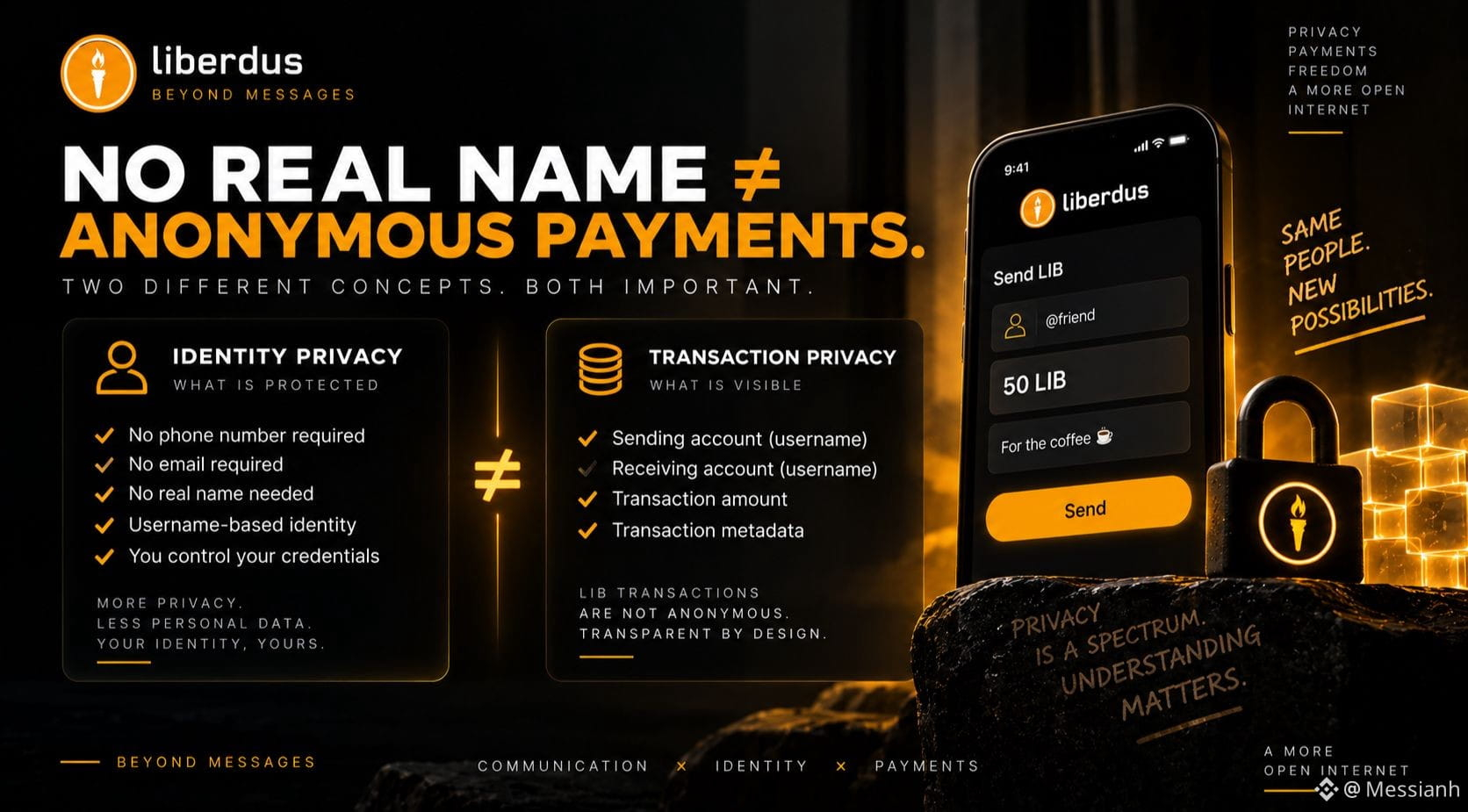
Haqiqiy ism yo‘qligi ≠ anonim to‘lovlar.
Bu farq muhim.
@liberdus’da telefon raqami yoki elektron pochtasiz hisob yaratishingiz mumkin, foydalanuvchi nomingiz esa hamyon manziliga bog‘lanishi mumkin.
Ammo LIB tranzaksiyalari anonim emas.
Loyihaning o‘z hujjatlarida aytilishicha, tranzaksiya metama’lumotlari jo‘natuvchi hisob, qabul qiluvchi hisob va summani o‘z ichiga olishi mumkin.
Demak, bu ikki xil tushuncha:
shaxsiy ma’lumotlar maxfiyligi ≠ tranzaksiya maxfiyligi.
Ochig‘ini aytganda, Web3’dagi ko‘proq suhbatlarda aynan shu farqga e’tibor qaratish kerak. Chunki maxfiylik — hamma joyda “anonim” so‘zini ishlatish degani emas. Gap aynan nima himoyalangani va nima himoyalanmaganini tushunishda.
Shaxsiy ma’lumotlar maxfiyligi va tranzaksiya maxfiyligi o‘rtasidagi chegarani qayerda belgilaysiz?
#Liberdus #XRP #BTCBreaks80K $BTC
{spot}(BTCUSDT)
Haqiqiy ism yo‘qligi ≠ anonim to‘lovlar.
Bu farq muhim.
@liberdus’da telefon raqami yoki elektron pochtasiz hisob yaratishingiz mumkin, foydalanuvchi nomingiz esa hamyon manziliga bog‘lanishi mumkin.
Ammo LIB tranzaksiyalari anonim emas.
Loyihaning o‘z hujjatlarida aytilishicha, tranzaksiya metama’lumotlari jo‘natuvchi hisob, qabul qiluvchi hisob va summani o‘z ichiga olishi mumkin.
Demak, bu ikki xil tushuncha:
shaxsiy ma’lumotlar maxfiyligi ≠ tranzaksiya maxfiyligi.
Ochig‘ini aytganda, Web3’dagi ko‘proq suhbatlarda aynan shu farqga e’tibor qaratish kerak. Chunki maxfiylik — hamma joyda “anonim” so‘zini ishlatish degani emas. Gap aynan nima himoyalangani va nima himoyalanmaganini tushunishda.
Shaxsiy ma’lumotlar maxfiyligi va tranzaksiya maxfiyligi o‘rtasidagi chegarani qayerda belgilaysiz?
#Liberdus #XRP #BTCBreaks80K $BTC
Bu farq muhim.
@liberdus’da telefon raqami yoki elektron pochtasiz hisob yaratishingiz mumkin, foydalanuvchi nomingiz esa hamyon manziliga bog‘lanishi mumkin.
Ammo LIB tranzaksiyalari anonim emas.
Loyihaning o‘z hujjatlarida aytilishicha, tranzaksiya metama’lumotlari jo‘natuvchi hisob, qabul qiluvchi hisob va summani o‘z ichiga olishi mumkin.
Demak, bu ikki xil tushuncha:
shaxsiy ma’lumotlar maxfiyligi ≠ tranzaksiya maxfiyligi.
Ochig‘ini aytganda, Web3’dagi ko‘proq suhbatlarda aynan shu farqga e’tibor qaratish kerak. Chunki maxfiylik — hamma joyda “anonim” so‘zini ishlatish degani emas. Gap aynan nima himoyalangani va nima himoyalanmaganini tushunishda.
Shaxsiy ma’lumotlar maxfiyligi va tranzaksiya maxfiyligi o‘rtasidagi chegarani qayerda belgilaysiz?
#Liberdus #XRP #BTCBreaks80K $BTC
1
174
Ko‘proq kontentni ko‘rish uchun tizimga kiring
Binance Square'da global kriptovalyuta foydalanuvchilariga qo‘shiling
⚡️ Kriptovalyuta haqida eng so‘nggi va foydali ma’lumotlarni oling.
💬 Dunyoning eng yirik kriptovalyuta birjasi tomonidan ishonchli deb topilgan.
👍 Tasdiqlangan mualliflardan haqiqiy tahlillarni kashf eting.
Email / telefon raqami
Trenddagi mavzular
BinancePick
2.8M marta koʻrilgan
147,904 muhokama qilmoqda
#DaromadlarMavsumi’ga qo‘shiling: Binance Pick’da daromadlarni bashorat qiling, Binance Square’da fikringizni ulashing!
Binance Square Official
·403 ta layk
·340.9k marta koʻrilgan
EarningsSeason
5.1M marta koʻrilgan
25,250 muhokama qilmoqda
AnthropicTTMRevenueGrewAbout1200%
3,125 marta koʻrilgan
140 muhokama qilmoqda