Binance Square

CryptoZeno

Verified Creator on #BinanceSquare #CoinMarketCap and #CryptoQuant | On Chain Research and Market Insights with Smart Trading Signals
NOT Holder
NOT Holder
Frequent Trader
5.1 Years
70 Kuzatilmoqda
6.4K+ Followers
24.6K+ Liked
1.7K+ Shared
Postlar
PINNED
·
--
Join the group to trade the positions we are currently running with us. All signals are shared in the group first before being posted anywhere else. Some exclusive trades are only available in the group, including certain Alpha coins that won’t be posted elsewhere. Join the group, connect with me there, and feel free to message me directly. Let’s grow together. 🚀
Join the group to trade the positions we are currently running with us.

All signals are shared in the group first before being posted anywhere else. Some exclusive trades are only available in the group, including certain Alpha coins that won’t be posted elsewhere.

Join the group, connect with me there, and feel free to message me directly.

Let’s grow together. 🚀
PINNED
Maqola
How Volume Analysis Reveals What the Market Is Really DoingI've analyzed volume across 10,000+ trades. Built systems. Tested patterns. Watched traders make this exact mistake over and over, not because they're stupid, but because volume is the most misunderstood indicator in trading. Let's start by breaking down how you currently see volume. What Volume Actually Is I tell new traders to delete every indicator on their charts EXCEPT volume. Here’s why. Most indicators are useless. Not intentionally, they just can't tell you anything new. Moving averages, RSI, ATR; they're all calculated from price. They take what you already see on your chart and show it to you differently. A 7-period moving average is just the average close of the last 7 candles. You could calculate it yourself. The indicator acts only as a visual aid. Volume is different. Volume doesn't come from price. It counts how many contracts changed hands during a timeframe. If volume shows “2.05K” on a 1-minute candle, that means approximately 2,000 coins were exchanged during that minute. Now, let’s be precise about what exchanged hands means. The Pear Trading Example Koroush, the humble pear trader, wants to sell 5 pears.For his trade to execute, he needs a buyer.Sam wants to buy 5 pears from Koroush.They agree on a price.They trade. What's the volume? Most traders say 10. 5 bought + 5 sold Wrong... Volume = 5 Every transaction has one buyer and one seller that creates one exchange. There are never "more buys than sells." Misconception #1: Volume Bar Colors Mean Something The myth: "Green bars are buy volume. Red bars are sell volume." The reality: Colors are purely aesthetic. Green means the price went up during that candle. Red means price went down. You cannot see "market buys" vs "market sells" in standard volume indicators. Traders who believe the color myth invent narratives. They see three green bars and think "buyers are in control" They enter long. Price reverses. They blame the market. Real Example: The idea: A student saw large green volume bars before their entry. Entered long expecting continuation. Cut early (good risk management). What they missed: the overall volume trend was flat. Not increasing. Flat volume signals exhaustion, not accumulation. (more on this later) The fix: Ignore color. Focus on pattern increasing, decreasing, or flat. Result: This student's reversal trade accuracy improved significantly. Misconception #2: Large Volume = Large Candle It's normal to see large volume with a small candle. Here's why. Imagine $2M in market buys hitting a $5M limit sell wall. Volume is large ($2M executed). But price barely moves, the buys only ate through part of the wall. This is absorption. The trader with the $5M sell wall? On-side. Position held. The trader who bought $2M? Off-side. Price didn't move in their favor. Volume tells you about activity. It does not predict price movement. The Liquidity Gate You understand volume measures participation. Now you need to know which coins have enough participation to trade, before slippage destroys your edge. The Problem With Raw Volume Default volume shows contracts traded. Not USD value. A coin at $0.50 with 1M contracts = $500K USD volume. A coin at $50 with 10K contracts = $500K USD volume. Raw numbers (1M vs 10K) look completely different. Actual liquidity is identical. This is why raw volume lies. The Solution: VolUSD Open TradingView. Click on indicators. Search "VolUSD" by niceboomer. Set MA length to 60. Now you see volume in USD terms with a blue average line. The $100K Rule Only trade coins with at least $100,000 average VolUSD per 1-minute candle on Binance. Check the blue MA line. Above $100K = tradeable. Below $100K = do not trade. Regardless of how perfect the setup looks. Why $100K? Sufficient order book depth for clean executionEnough participants for follow-throughReduced risk of getting stuck with no exit liquidity Why Binance? Market leader for altcoin perpetual futures volume. Use it as your reference even if executing elsewhere. Why Slippage Destroys Edge Here's the math that changed how I filter trades. You have a strategy: 55% win rate, 1.5:1 R:R. Expected value: +$50 per trade. Without the liquidity filter: Entry slips 0.3%.Stop slips 0.5%.Target slips 0.2%.Total slippage: ~1% of position = $10 on $1,000 risk. Your +$50 EV becomes +$40 EV ‼️ Over 100 trades, you've lost $1,000 to slippage alone. A 20% reduction in edge, from an invisible tax you never saw. With the liquidity filter: Only trade above $100K VolUSD. Slippage drops to 0.1-0.2%. Edge remains intact. Slippage is not a minor inefficiency. It's a systematic drain on every statistical advantage you've built. The liquidity filter is non-negotiable. The Three Patterns You’ve filtered for liquid coins. Now you need to know if the current volume pattern activates your edge or tells you to stand aside. Two Trading Styles Momentum Trading: Betting price breaks through and continuesWant follow-through, expansion, increasing participationExample: Buying breakout above resistance Mean Reversion Trading: Betting price bounces or reverses from levelWant exhaustion, contraction, decreasing participationExample: Shorting into resistance 💥Critical insight: Best momentum trades are worst mean reversion trades, and vice versa. Your job: identify which environment you’re in. Pattern 1: Increasing Volume Consecutive volume bars growing in size. What it means: Participation expanding. More traders entering. Interest building. For momentum traders: ✅ This is your signal. For mean reversion traders: ❌ Stand aside. Why momentum works here: More participants entering after you = fuelTrapped counter-traders forced to exit = more fuelIncreasing volume creates accelerating price movement Real Example: On the left side of the chart, volume is flat. As price approaches the first resistance level, volume shows a significant uptick. Remember, ignore whether bars are red or green. The pattern is what matters: consistently increasing volume. This is the continuation signal. Pattern 2: Flat Volume Definition: Volume bars neither increasing nor decreasing What it means: Participation stagnant, market in equilibrium, no clear bias For momentum traders: ❌ Stand aside. For mean reversion traders: ✅ This confirms your environment. Why momentum dies here: Fewer participants entering = no follow-throughImpatience builds = exits create counter-pressureContinuation fails without fresh fuel Flat volume confirms the market isn't transitioning to a trending state. Mean reversion traders operate best in this environment. Real Example: Volume was flat before the spike appeared. Yes, it technically increases during the spike but we dismiss this. A sudden burst is likely one participant (or a small group) spreading market buys over time instead of hitting with one order. The underlying trend was flat. Mean reversion edge was active. Pattern 3: Volume Spike + Price Spike Definition: Sudden, sharp increase in volume paired with sharp price move What it means: Climactic activity, surge of participants entering at extreme, marks exhaustion For momentum traders: ❌ You're late. Stand aside. For mean reversion traders: ✅ This is your signal. Why reversals work here: Trapped traders entered at the worst possible timeThe sudden burst marks the end of the move, not the beginningLarge limit orders at the extreme absorb continuation attempts Important: Volume spike without price spike is less reliable. The combination of both creates high-probability reversal setups. Real Example: Totally flat volume followed by a huge spike: Accompanied by a large candle spike. This is the exact location where price mean reverts and presents a short opportunity with close to zero drawdown. #CryptoZeno #VolumeAnalysisMasterclass

How Volume Analysis Reveals What the Market Is Really Doing

I've analyzed volume across 10,000+ trades. Built systems. Tested patterns. Watched traders make this exact mistake over and over, not because they're stupid, but because volume is the most misunderstood indicator in trading.
Let's start by breaking down how you currently see volume.
What Volume Actually Is
I tell new traders to delete every indicator on their charts EXCEPT volume.
Here’s why.
Most indicators are useless.
Not intentionally, they just can't tell you anything new. Moving averages, RSI, ATR; they're all calculated from price. They take what you already see on your chart and show it to you differently.
A 7-period moving average is just the average close of the last 7 candles. You could calculate it yourself. The indicator acts only as a visual aid.

Volume is different.
Volume doesn't come from price.

It counts how many contracts changed hands during a timeframe.

If volume shows “2.05K” on a 1-minute candle, that means approximately 2,000 coins were exchanged during that minute.
Now, let’s be precise about what exchanged hands means.
The Pear Trading Example
Koroush, the humble pear trader, wants to sell 5 pears.For his trade to execute, he needs a buyer.Sam wants to buy 5 pears from Koroush.They agree on a price.They trade.
What's the volume?
Most traders say 10. 5 bought + 5 sold
Wrong... Volume = 5
Every transaction has one buyer and one seller that creates one exchange.
There are never "more buys than sells."
Misconception #1: Volume Bar Colors Mean Something
The myth: "Green bars are buy volume. Red bars are sell volume."
The reality: Colors are purely aesthetic.

Green means the price went up during that candle. Red means price went down.
You cannot see "market buys" vs "market sells" in standard volume indicators.
Traders who believe the color myth invent narratives. They see three green bars and think "buyers are in control"
They enter long. Price reverses. They blame the market.
Real Example:

The idea: A student saw large green volume bars before their entry. Entered long expecting continuation. Cut early (good risk management).
What they missed: the overall volume trend was flat. Not increasing. Flat volume signals exhaustion, not accumulation. (more on this later)
The fix: Ignore color. Focus on pattern increasing, decreasing, or flat.
Result: This student's reversal trade accuracy improved significantly.
Misconception #2: Large Volume = Large Candle
It's normal to see large volume with a small candle.

Here's why.

Imagine $2M in market buys hitting a $5M limit sell wall.
Volume is large ($2M executed). But price barely moves, the buys only ate through part of the wall.
This is absorption.

The trader with the $5M sell wall? On-side. Position held. The trader who bought $2M? Off-side. Price didn't move in their favor.
Volume tells you about activity. It does not predict price movement.
The Liquidity Gate
You understand volume measures participation. Now you need to know which coins have enough participation to trade, before slippage destroys your edge.
The Problem With Raw Volume
Default volume shows contracts traded. Not USD value.
A coin at $0.50 with 1M contracts = $500K USD volume. A coin at $50 with 10K contracts = $500K USD volume.
Raw numbers (1M vs 10K) look completely different. Actual liquidity is identical.
This is why raw volume lies.
The Solution: VolUSD
Open TradingView. Click on indicators. Search "VolUSD" by niceboomer. Set MA length to 60.

Now you see volume in USD terms with a blue average line.
The $100K Rule
Only trade coins with at least $100,000 average VolUSD per 1-minute candle on Binance.
Check the blue MA line. Above $100K = tradeable. Below $100K = do not trade. Regardless of how perfect the setup looks.
Why $100K?
Sufficient order book depth for clean executionEnough participants for follow-throughReduced risk of getting stuck with no exit liquidity
Why Binance? Market leader for altcoin perpetual futures volume.
Use it as your reference even if executing elsewhere.
Why Slippage Destroys Edge
Here's the math that changed how I filter trades.
You have a strategy: 55% win rate, 1.5:1 R:R. Expected value: +$50 per trade.
Without the liquidity filter:
Entry slips 0.3%.Stop slips 0.5%.Target slips 0.2%.Total slippage: ~1% of position = $10 on $1,000 risk.
Your +$50 EV becomes +$40 EV ‼️
Over 100 trades, you've lost $1,000 to slippage alone. A 20% reduction in edge, from an invisible tax you never saw.
With the liquidity filter: Only trade above $100K VolUSD. Slippage drops to 0.1-0.2%. Edge remains intact.
Slippage is not a minor inefficiency. It's a systematic drain on every statistical advantage you've built.
The liquidity filter is non-negotiable.
The Three Patterns
You’ve filtered for liquid coins. Now you need to know if the current volume pattern activates your edge or tells you to stand aside.
Two Trading Styles

Momentum Trading:
Betting price breaks through and continuesWant follow-through, expansion, increasing participationExample: Buying breakout above resistance
Mean Reversion Trading:
Betting price bounces or reverses from levelWant exhaustion, contraction, decreasing participationExample: Shorting into resistance
💥Critical insight: Best momentum trades are worst mean reversion trades, and vice versa.
Your job: identify which environment you’re in.
Pattern 1: Increasing Volume

Consecutive volume bars growing in size.
What it means: Participation expanding. More traders entering. Interest building.
For momentum traders: ✅ This is your signal.
For mean reversion traders: ❌ Stand aside.
Why momentum works here:
More participants entering after you = fuelTrapped counter-traders forced to exit = more fuelIncreasing volume creates accelerating price movement
Real Example:

On the left side of the chart, volume is flat. As price approaches the first resistance level, volume shows a significant uptick.
Remember, ignore whether bars are red or green. The pattern is what matters: consistently increasing volume. This is the continuation signal.
Pattern 2: Flat Volume

Definition: Volume bars neither increasing nor decreasing
What it means: Participation stagnant, market in equilibrium, no clear bias
For momentum traders: ❌ Stand aside.
For mean reversion traders: ✅ This confirms your environment.
Why momentum dies here:
Fewer participants entering = no follow-throughImpatience builds = exits create counter-pressureContinuation fails without fresh fuel
Flat volume confirms the market isn't transitioning to a trending state. Mean reversion traders operate best in this environment.
Real Example:

Volume was flat before the spike appeared. Yes, it technically increases during the spike but we dismiss this. A sudden burst is likely one participant (or a small group) spreading market buys over time instead of hitting with one order. The underlying trend was flat. Mean reversion edge was active.
Pattern 3: Volume Spike + Price Spike

Definition: Sudden, sharp increase in volume paired with sharp price move
What it means: Climactic activity, surge of participants entering at extreme, marks exhaustion
For momentum traders: ❌ You're late. Stand aside.
For mean reversion traders: ✅ This is your signal.
Why reversals work here:
Trapped traders entered at the worst possible timeThe sudden burst marks the end of the move, not the beginningLarge limit orders at the extreme absorb continuation attempts
Important: Volume spike without price spike is less reliable. The combination of both creates high-probability reversal setups.
Real Example:

Totally flat volume followed by a huge spike: Accompanied by a large candle spike. This is the exact location where price mean reverts and presents a short opportunity with close to zero drawdown.
#CryptoZeno #VolumeAnalysisMasterclass
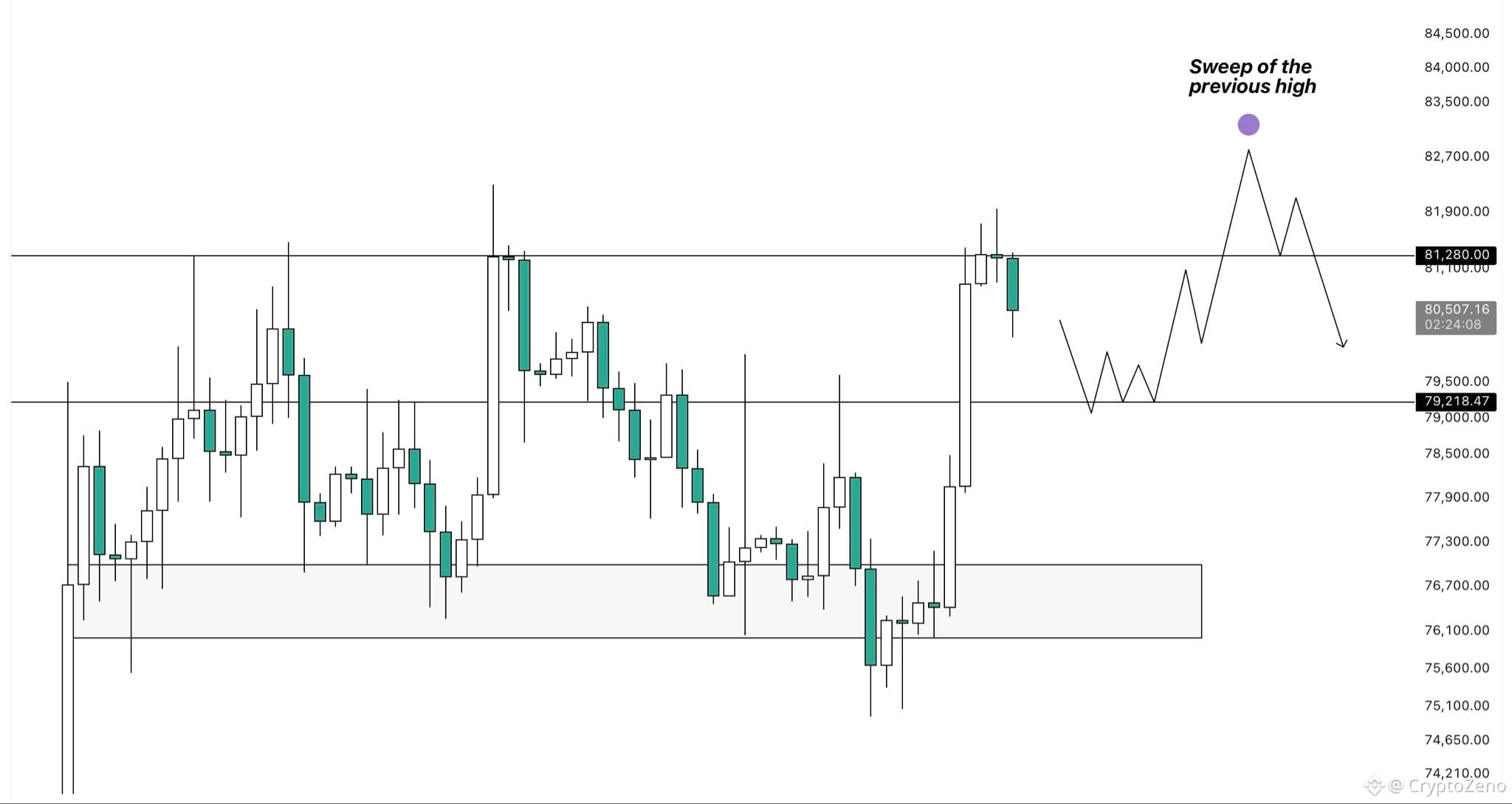
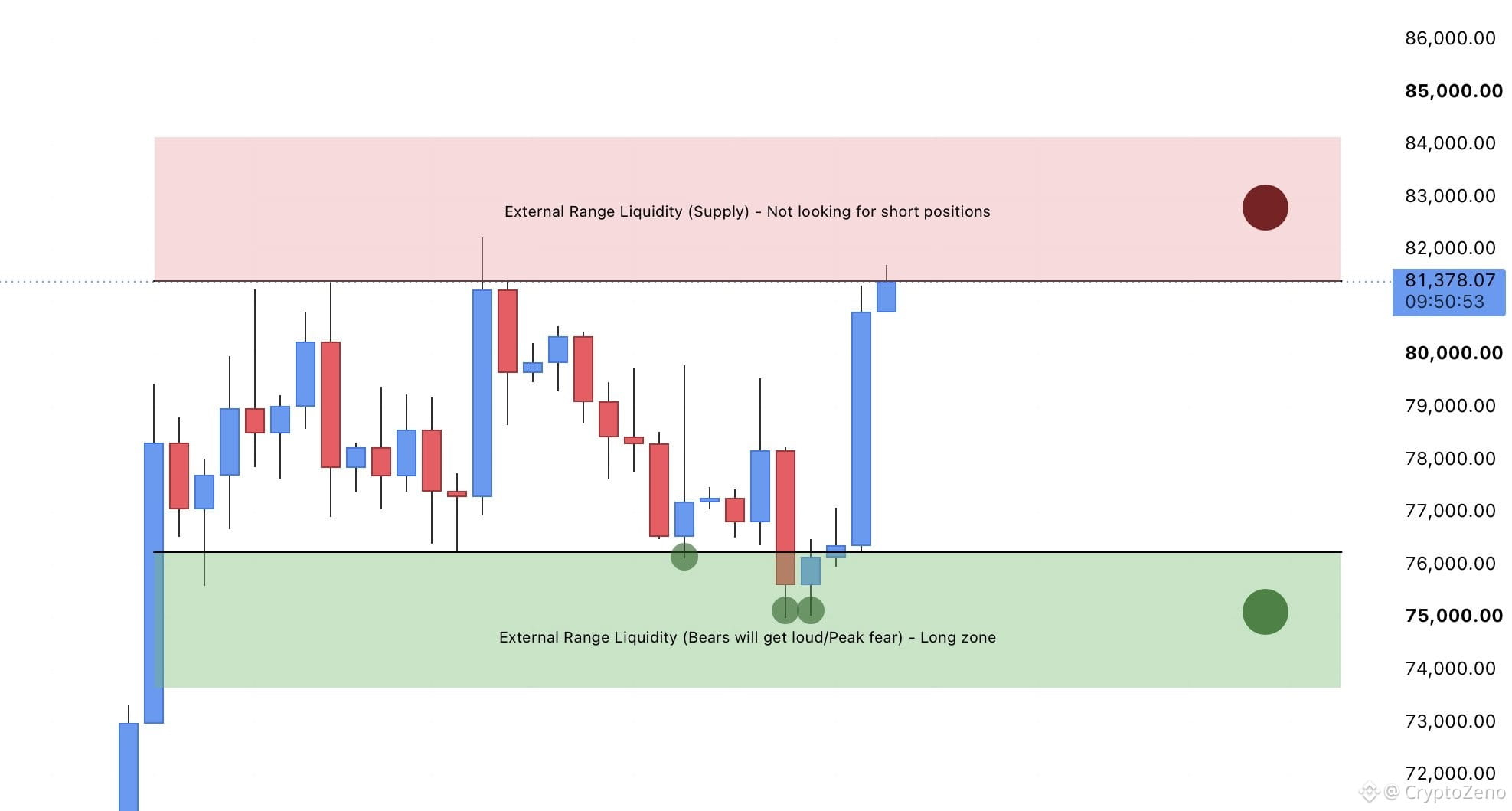
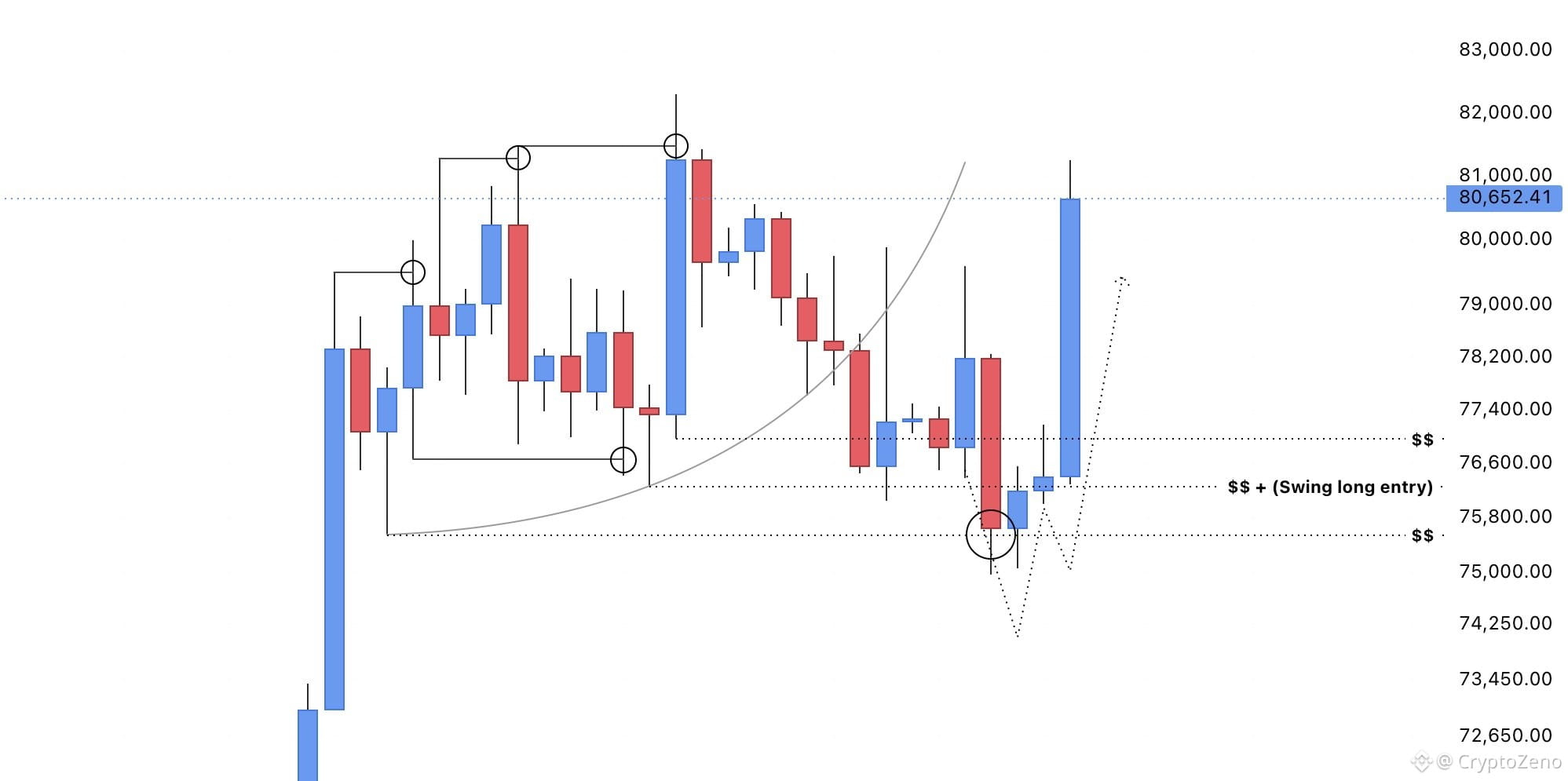
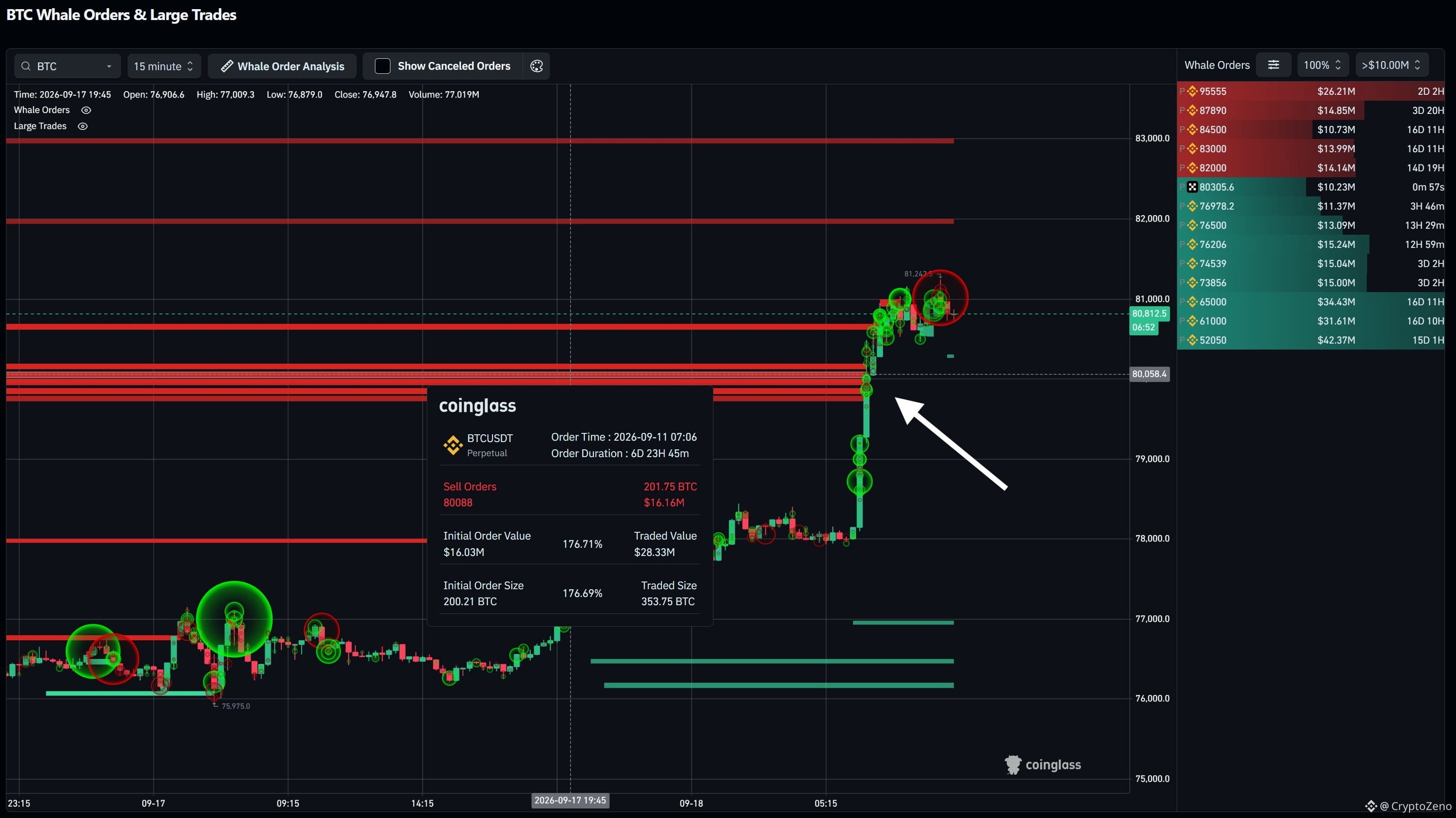
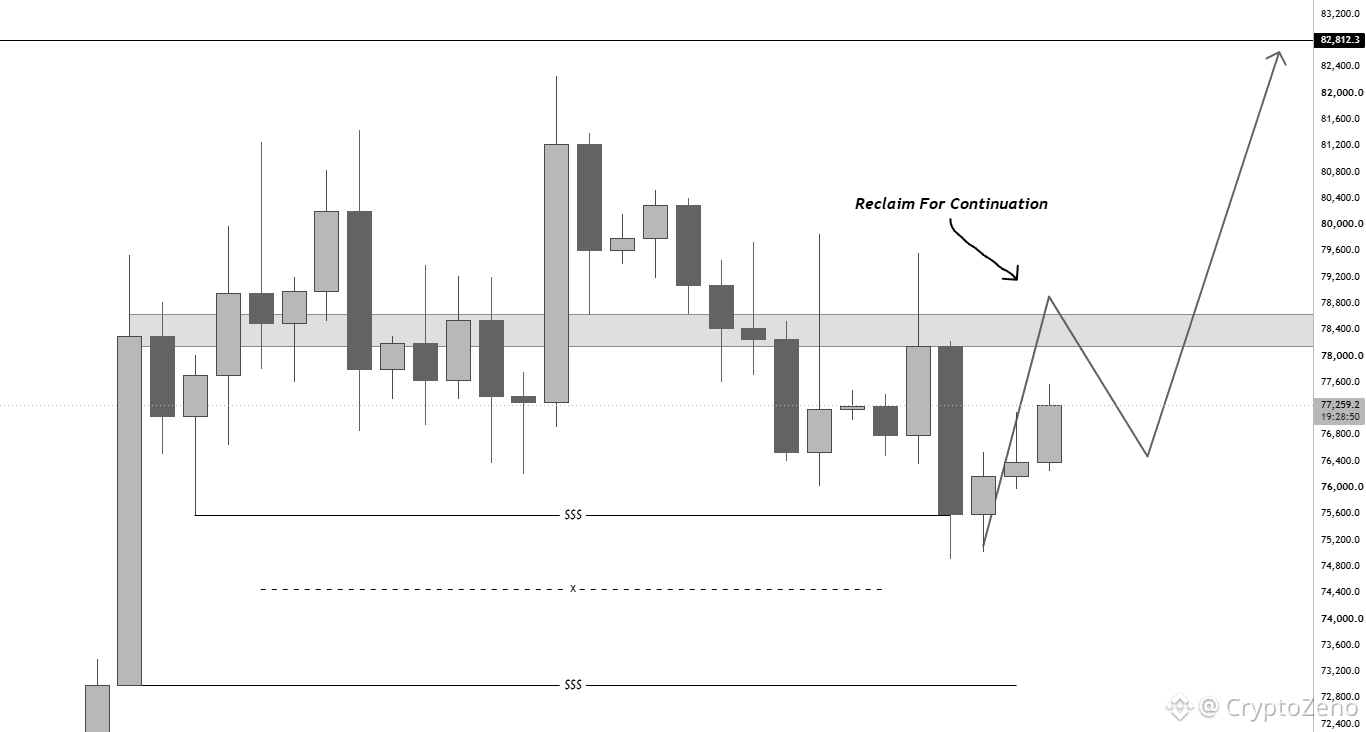
$BTC We've reclaimed $81k and are holding strong. Price is increasing in a steady staircase structure, indicating the bulls are in control at this price range. OI keeps climbing while spot carry-on buying. LTF price continuation is confirmed, $84k is next. Still firm on my previous post analysis that this is a massive squeeze, I'll be waiting for a clear reversal before placing shorts. {future}(BTCUSDT)
$BTC We've reclaimed $81k and are holding strong.

Price is increasing in a steady staircase structure, indicating the bulls are in control at this price range.

OI keeps climbing while spot carry-on buying.

LTF price continuation is confirmed, $84k is next.

Still firm on my previous post analysis that this is a massive squeeze, I'll be waiting for a clear reversal before placing shorts.
🚨 Dubai license plates have quietly become one of the strongest performing status assets globally, outperforming Bitcoin, gold, and prime real estate while using the same mechanics NFTs tried to replicate This is not a niche market. The Dubai Roads and Transport Authority runs official auctions multiple times per year. In April 2025 alone, 90 plates generated 98.8 million AED, around 27 million USD. With 4 to 6 auctions annually, primary volume exceeds 100 million USD, while secondary trading pushes total turnover close to 500 million USD each year Price action has been consistently upward for nearly two decades. Plate “1” sold for 14.2 million USD in 2008, “AA9” hit 10 million USD in 2021, “AA8” reached 9.5 million USD in 2022, and “P7” set a global record at 15 million USD in 2023. In April 2025, “CC22” traded at 2.3 million USD and “BB20” at 2 million USD. Each cycle sets a higher floor with no major drawdowns at the top tier The structure mirrors NFT theory but works in reality. Single digits act as absolute scarcity assets. Double letter plates create rarity tiers. Repeating digits capture cultural premiums. Numbers tied to UAE identity like 7 and 2 carry embedded narrative value Supply is permanently finite and controlled. No duplicate of top plates can exist. Unlike NFTs, these assets are physically visible every day, embedding status into real life rather than limiting it to digital platforms Liquidity is structurally supported by recurring auctions, ensuring constant price discovery. Ownership is secured through official registry systems without needing blockchain The next evolution is clear. Fractional ownership could expand access beyond ultra wealthy buyers and scale the market significantly NFTs were the experiment. Dubai perfected the model in the real world #CryptoZeno #BTCSurpasses$80K
🚨 Dubai license plates have quietly become one of the strongest performing status assets globally, outperforming Bitcoin, gold, and prime real estate while using the same mechanics NFTs tried to replicate

This is not a niche market. The Dubai Roads and Transport Authority runs official auctions multiple times per year. In April 2025 alone, 90 plates generated 98.8 million AED, around 27 million USD. With 4 to 6 auctions annually, primary volume exceeds 100 million USD, while secondary trading pushes total turnover close to 500 million USD each year

Price action has been consistently upward for nearly two decades. Plate “1” sold for 14.2 million USD in 2008, “AA9” hit 10 million USD in 2021, “AA8” reached 9.5 million USD in 2022, and “P7” set a global record at 15 million USD in 2023. In April 2025, “CC22” traded at 2.3 million USD and “BB20” at 2 million USD. Each cycle sets a higher floor with no major drawdowns at the top tier

The structure mirrors NFT theory but works in reality. Single digits act as absolute scarcity assets. Double letter plates create rarity tiers. Repeating digits capture cultural premiums. Numbers tied to UAE identity like 7 and 2 carry embedded narrative value

Supply is permanently finite and controlled. No duplicate of top plates can exist. Unlike NFTs, these assets are physically visible every day, embedding status into real life rather than limiting it to digital platforms

Liquidity is structurally supported by recurring auctions, ensuring constant price discovery. Ownership is secured through official registry systems without needing blockchain

The next evolution is clear. Fractional ownership could expand access beyond ultra wealthy buyers and scale the market significantly

NFTs were the experiment. Dubai perfected the model in the real world
#CryptoZeno #BTCSurpasses$80K
A college dropout built a $100 MILLION a year empire just by stealing tweets In 2011 a 19 year old kid from Brooklyn named Elliot Tebele was working at his brother's wholesale electronics company and started posting photos of vintage cars on Tumblr in his spare time He noticed that cheeky captions made his posts perform way better, so he switched to taking screenshots of Twitter jokes and reposting them on Instagram The account was named "fuckjerry" because he was watching Seinfeld in the background when he made it Within a few years the biggest celebrities like Madonna, Kim Kardashian, Tom Brady and Justin Bieber were all following it By 2017 the account had 12 million followers and was charging $30,000 per post from brands like Burger King, Comedy Central and Subway Tebele dropped out of Hunter College in his second year and built a marketing company called Jerry Media that ran 30 side accounts, including Beige Cardigan run by his wife, the famous Dude With Sign and the world record Instagram Egg Every single one of those accounts mostly just screenshotted other people's tweets and posted them with the username cropped out In 2016 Tebele turned the meme account into a card game called What Do You Meme and the Kickstarter raised $229,000 in the first 4 hours By 2019 his company was charging $75,000 for a single Instagram post and $25,000 for a swipe up story Then the company got hired to do the marketing for Fyre Festival When the festival collapsed, Jerry Media used the footage they filmed behind the scenes to make the Netflix documentary about how it all fell apart Two different filmmakers sued them claiming their footage was used without permission Today his parent company is called Relatable, has 80 employees and does over $100 million a year selling card games and toys Forbes ranked Tebele the 7th highest paid creator in the world in 2023, with $30 million in earnings that year The guy who built one of the biggest media empires on the internet has never written a single one of the jokes that made him rich
A college dropout built a $100 MILLION a year empire just by stealing tweets

In 2011 a 19 year old kid from Brooklyn named Elliot Tebele was working at his brother's wholesale electronics company and started posting photos of vintage cars on Tumblr in his spare time

He noticed that cheeky captions made his posts perform way better, so he switched to taking screenshots of Twitter jokes and reposting them on Instagram

The account was named "fuckjerry" because he was watching Seinfeld in the background when he made it

Within a few years the biggest celebrities like Madonna, Kim Kardashian, Tom Brady and Justin Bieber were all following it

By 2017 the account had 12 million followers and was charging $30,000 per post from brands like Burger King, Comedy Central and Subway

Tebele dropped out of Hunter College in his second year and built a marketing company called Jerry Media that ran 30 side accounts, including Beige Cardigan run by his wife, the famous Dude With Sign and the world record Instagram Egg

Every single one of those accounts mostly just screenshotted other people's tweets and posted them with the username cropped out

In 2016 Tebele turned the meme account into a card game called What Do You Meme and the Kickstarter raised $229,000 in the first 4 hours

By 2019 his company was charging $75,000 for a single Instagram post and $25,000 for a swipe up story

Then the company got hired to do the marketing for Fyre Festival

When the festival collapsed, Jerry Media used the footage they filmed behind the scenes to make the Netflix documentary about how it all fell apart

Two different filmmakers sued them claiming their footage was used without permission

Today his parent company is called Relatable, has 80 employees and does over $100 million a year selling card games and toys

Forbes ranked Tebele the 7th highest paid creator in the world in 2023, with $30 million in earnings that year

The guy who built one of the biggest media empires on the internet has never written a single one of the jokes that made him rich
Maqola
Ross Ulbricht and the Uncomfortable Truth About Bitcoin Early DaysWhen #Bitcoin was trading at just fifty cents, almost nobody took it seriously. It was a curiosity for cryptographers, libertarians, and a small group of internet idealists. Few could imagine it would one day reshape finance, politics, and power. Even fewer could imagine that one man would build an entire underground economy around it. That man was Ross Ulbricht. Today, his story reads less like a crime report and more like a case study in technology, ideology, and unintended consequences. He was given two life sentences, later pardoned, and recently linked to a mysterious transfer of 300 Bitcoin. Whether viewed as a criminal or a pioneer, his impact on crypto history is undeniable. Ross Ulbricht did not begin his journey as a criminal mastermind. He studied physics and materials science, was deeply interested in economics, and strongly believed that governments exercised far too much control over individual freedom. Bitcoin represented something radical to him: money without permission, value without borders, and trade without centralized oversight. In 2011, driven by those beliefs, Ross created a website called Silk Road. It was not accessible through normal browsers. Users had to use Tor, a privacy-focused network designed to anonymize traffic. All transactions were conducted exclusively in Bitcoin, and the entire platform was built around anonymity. Ross vision was a free market without government interference. In his mind, Silk Road was an experiment in economic freedom rather than a criminal enterprise. The experiment grew far faster than anyone expected. Silk Road attracted more than one hundred thousand users in a short period of time. People bought drugs, fake identification documents, and hacking tools. At one point, a significant portion of all Bitcoin transactions globally flowed through the platform. For many early adopters, Silk Road was their first real exposure to Bitcoin as usable money. But anonymity is fragile, and ideology does not protect against human error. Ross operated online under several aliases, the most famous being “Dread Pirate Roberts.” For a long time, his identity remained hidden. Then came a small mistake. He once posted a technical question online using his real email address. That single slip was enough for investigators to begin connecting the dots. On October 1, 2013, the FBI arrested Ross Ulbricht inside a public library in San Francisco. Agents waited until his laptop was open, then seized it before he could encrypt or lock it. The laptop contained everything. Administrative access to Silk Road, private messages, transaction logs, and access to wallets holding roughly 150 million dollars’ worth of Bitcoin at the time. In 2015, Ross was convicted on multiple charges, including drug trafficking, money laundering, hacking, and operating a criminal enterprise. The sentence shocked many observers. Two life sentences plus forty years, with no possibility of parole. Even people who believed #SilkRoad was illegal questioned whether the punishment was wildly disproportionate. The government also seized more than 144,000 Bitcoin from Ross laptop. Those coins were later sold at auction for roughly 334 dollars per Bitcoin, generating about 48 million dollars. Today, those same coins would be worth well over nine billion dollars, making the seizure one of the most expensive mistakes in financial history. Over time, Ross Ulbricht became more than a prisoner. He became a symbol. To some, he was a villain who enabled illegal markets. To others, he was a martyr for digital freedom and a warning about state overreach in the age of code. More than half a million people signed petitions calling for a reduced sentence. His name became deeply embedded in crypto culture, representing both its ideals and its risks. In 2020, rumors began circulating that President Trump might pardon Ross. Figures close to the administration hinted at discussions behind the scenes. The crypto community was hopeful, but the pardon never came. Still, the idea refused to die. Even in prison, Ross remained active. He wrote essays, created artwork, and continued to engage with the outside world through his family, who managed his social media presence. Over time, his following grew, especially among crypto-native audiences who saw his imprisonment as symbolic. Then, unexpectedly, everything changed. In 2025, Ross Ulbricht was suddenly pardoned. Activists, legal advocates, and crypto-friendly political figures had quietly pushed for years. When he re-emerged, he appeared at major crypto events and received standing ovations. Many described it as the return of a legend. Not long after, another mystery surfaced. One of Ross old $BTC wallets received 300 BTC, worth more than 30 million dollars at the time. The funds were routed through a mixer designed to obscure their origin. No one knows who sent the Bitcoin or why. Speculation exploded, but no definitive answers emerged. #RossUlbricht story continues to matter because it forces uncomfortable questions into the open. Can technology truly be neutral? Who ultimately controls the internet? How much power should governments have over code, markets, and individual choice? And can a single person, armed with nothing but an idea and software, reshape the world? Whether you see Ross as a criminal, a pioneer, or something in between, one thing is certain. His story is not finished. In an era defined by digital surveillance, financial control, and programmable money, the legacy of Silk Road still echoes. And we may not have seen the last of Ross Ulbricht’s influence on crypto and the internet itself. #CryptoZeno #LayerZeroCEOAdmitsProtocolFailures #WLFSuesJustinSun

Ross Ulbricht and the Uncomfortable Truth About Bitcoin Early Days

When #Bitcoin was trading at just fifty cents, almost nobody took it seriously. It was a curiosity for cryptographers, libertarians, and a small group of internet idealists. Few could imagine it would one day reshape finance, politics, and power. Even fewer could imagine that one man would build an entire underground economy around it.
That man was Ross Ulbricht.
Today, his story reads less like a crime report and more like a case study in technology, ideology, and unintended consequences. He was given two life sentences, later pardoned, and recently linked to a mysterious transfer of 300 Bitcoin. Whether viewed as a criminal or a pioneer, his impact on crypto history is undeniable.
Ross Ulbricht did not begin his journey as a criminal mastermind. He studied physics and materials science, was deeply interested in economics, and strongly believed that governments exercised far too much control over individual freedom. Bitcoin represented something radical to him: money without permission, value without borders, and trade without centralized oversight.

In 2011, driven by those beliefs, Ross created a website called Silk Road. It was not accessible through normal browsers. Users had to use Tor, a privacy-focused network designed to anonymize traffic. All transactions were conducted exclusively in Bitcoin, and the entire platform was built around anonymity.

Ross vision was a free market without government interference. In his mind, Silk Road was an experiment in economic freedom rather than a criminal enterprise.
The experiment grew far faster than anyone expected. Silk Road attracted more than one hundred thousand users in a short period of time. People bought drugs, fake identification documents, and hacking tools. At one point, a significant portion of all Bitcoin transactions globally flowed through the platform. For many early adopters, Silk Road was their first real exposure to Bitcoin as usable money.

But anonymity is fragile, and ideology does not protect against human error.
Ross operated online under several aliases, the most famous being “Dread Pirate Roberts.” For a long time, his identity remained hidden. Then came a small mistake. He once posted a technical question online using his real email address. That single slip was enough for investigators to begin connecting the dots.

On October 1, 2013, the FBI arrested Ross Ulbricht inside a public library in San Francisco. Agents waited until his laptop was open, then seized it before he could encrypt or lock it. The laptop contained everything. Administrative access to Silk Road, private messages, transaction logs, and access to wallets holding roughly 150 million dollars’ worth of Bitcoin at the time.

In 2015, Ross was convicted on multiple charges, including drug trafficking, money laundering, hacking, and operating a criminal enterprise. The sentence shocked many observers. Two life sentences plus forty years, with no possibility of parole. Even people who believed #SilkRoad was illegal questioned whether the punishment was wildly disproportionate.
The government also seized more than 144,000 Bitcoin from Ross laptop. Those coins were later sold at auction for roughly 334 dollars per Bitcoin, generating about 48 million dollars. Today, those same coins would be worth well over nine billion dollars, making the seizure one of the most expensive mistakes in financial history.
Over time, Ross Ulbricht became more than a prisoner. He became a symbol.
To some, he was a villain who enabled illegal markets. To others, he was a martyr for digital freedom and a warning about state overreach in the age of code. More than half a million people signed petitions calling for a reduced sentence. His name became deeply embedded in crypto culture, representing both its ideals and its risks.
In 2020, rumors began circulating that President Trump might pardon Ross. Figures close to the administration hinted at discussions behind the scenes. The crypto community was hopeful, but the pardon never came. Still, the idea refused to die.

Even in prison, Ross remained active. He wrote essays, created artwork, and continued to engage with the outside world through his family, who managed his social media presence. Over time, his following grew, especially among crypto-native audiences who saw his imprisonment as symbolic.

Then, unexpectedly, everything changed.
In 2025, Ross Ulbricht was suddenly pardoned. Activists, legal advocates, and crypto-friendly political figures had quietly pushed for years. When he re-emerged, he appeared at major crypto events and received standing ovations. Many described it as the return of a legend.
Not long after, another mystery surfaced. One of Ross old $BTC wallets received 300 BTC, worth more than 30 million dollars at the time. The funds were routed through a mixer designed to obscure their origin. No one knows who sent the Bitcoin or why. Speculation exploded, but no definitive answers emerged.
#RossUlbricht story continues to matter because it forces uncomfortable questions into the open. Can technology truly be neutral? Who ultimately controls the internet? How much power should governments have over code, markets, and individual choice? And can a single person, armed with nothing but an idea and software, reshape the world?
Whether you see Ross as a criminal, a pioneer, or something in between, one thing is certain. His story is not finished.
In an era defined by digital surveillance, financial control, and programmable money, the legacy of Silk Road still echoes. And we may not have seen the last of Ross Ulbricht’s influence on crypto and the internet itself.
#CryptoZeno #LayerZeroCEOAdmitsProtocolFailures #WLFSuesJustinSun
Maqola
Momentum (MOM) Is Misleading Most Traders Unless You Understand ThisBasically, Momentum Oscillator is a technical indicator that measures and showcases the strength or speed of a price movement. The MOM indicator compares the most recent price to a previously determined price and measures the velocity of the price change. Traders choose whether a price momentum is increasing/decreasing to identify entry and exit points. Despite being the oscillator-type indicator, MOM is unbounded, which means that there are no overbought or oversold levels on the chart to be looking at. That being said, the MOM indicator should be paired with RSI or Stochastic Oscillator to find out the actual asset’s value compared to its true value. Momentum Indicator Formula The momentum indicator may be defined as the pace of change in the price of a financial instrument over a given time frame. Essentially, the Momentum Oscillator showcases the difference between two prices: the most recent closing price in relation to a previous closing price from any time range. MOM Formula: (Current Close/Close N Periods Ago)*100 The default “N” value configurations are set to 10 periods. However, a trader can easily change it in the indicator’s settings tab. The indicator plots the calculated values on the trading chart as a single line. In short, if today’s price is the same as it was, say, 10 days ago, the indicator plots its value at the zero line; consequently, if today’s price is higher than it was 10 days ago, the indicator plots above the zero line and vice versa. Note: Zero line isn’t included in the chart by default. You have to add it yourself. The MOM indicator oscillates around the zero line, and when it crosses it, some investors might consider this a possible entry or exit signal. A market where the price changes with large price jumps means the momentum increases and the MOM indicator increases. When the price changes with smaller jumps, the momentum declines, and the MOM indicator starts going down. How to Read Momentum Indicator? Let’s not forget that the concept of momentum comes from physics because all the statements below are based on laws and patterns on how objects gain and lose momentum: If the Momentum Oscillator makes a new high, we expect to see a new high made in price. As traders, we want to buy the next pullback since the price starts gaining upward momentum.We expect lower prices if a new low on the MOM chart is made. As traders, we want to go short on the next price bar since the price starts gaining a downward momentum.If a price makes new lower lows, but the MOM indicator makes higher lows, the market’s downward momentum is weakening- also known as a bullish divergence. As traders, this may be the time to enter the position.If a price makes new lower lows, but the MOM indicator makes higher lows, the market’s downward momentum is getting weaker – it is also known as a bullish divergence. As traders, we might want to enter the position.Imagine you are throwing an object up. Before it falls down to you, its upward momentum slows, and it changes direction. The same rule applies to price – a price trend slows down before it changes direction. Remember that seeing price momentum increase is a sign, not a guarantee, that the current direction will continue. Momentum Oscillator Trading Strategy MOM Strategy #1: Zero Line Crossover The simplest basic Momentum Indicator trading strategy is watching for when the MOM indicator crosses the Zero Line. Below is the BTC/USDT chart with a MOM indicator attached: Seeing a price crossing above Zero Line implies that an asset is gaining an upward momentum and is commonly viewed as a bullish signal.Seeing a price crossing below Zero Line implies that an asset is gaining a downward momentum and is commonly viewed as a bearish signal. The premise behind this strategy is solely based on the fact that the Zero Line indicates that the price is the same as N periods ago, and the assets’ price rising or falling causes the Momentum Oscillator to cross the Zero Line from below or above accordingly. But not all crossover points are reliable entry or exit signals. To help reduce the number of false signals, consider making MOM’s period length values higher, examine the overall market trend or apply price patterns. MOM Strategy #2: Divergence Trading + EMA The MOM indicator can also assist in detecting divergences on the chart. A divergence occurs when price movement differs from the evolution of the indicator, in our case, the Momentum Oscillator. Similar to other momentum indicators, like Stochastic or RSI oscillators, a divergence in the MOM indicator can hint at a potential price direction change. There are 2 categories of price divergences: hidden divergence and classic (also known as regular) divergence. In contrast to classic divergence, which detects trend reversal, hidden divergence detects trend continuation. Here we made a comprehensive cheat sheet that explains the difference between classic and hidden divergence: Now that we got acquainted with the fundamentals of divergence trading let’s look at the MOM divergence trading example. Aside from a Momentum Oscillator, we also attached a 200-period EMA to the chart to spot the direction of the long-term market trend. The basic 200-EMA rule is when the price trades above the 200-period Exponential Moving Average. It is considered an uptrend, implying that we should take a long position. Conversely, when the price is trading below the 200-day Exponential Moving Average, it is considered to be in a downtrend, implying that we should take a short position. Suppose the price of an asset is trading above the 200-period EMA, suggesting an uptrend. In that case, traders may search for bullish divergence signals (both hidden and regular) on the lower side of the Momentum Oscillator. On the other hand, if the price is trading below the 200-period EMA, suggesting a downtrend, traders should look for bearish divergence signals (both hidden and regular) on the higher side of the Momentum Oscillator. Our ADA/BNB chart shows that a market is trading in an uptrend, indicating that we should search for bullish divergence patterns. We have 2 MOM divergence signals: one hidden bullish divergence that suggests the continuation of the current trend and one classic bullish divergence. Remember, if you plan to incorporate Momentum Oscillator into your trading strategy, consider using additional technical indicators and filters to reduce the market noise and avoid overtrading. Other Popular Momentum Indicators The class of momentum indicators includes some of the world’s well-known technical indicators, like RSI, MACD, William %R, ADX, and Stochastic RSI. In this section, we are going to cover each of these briefly. Moving Average Convergence Divergence (MACD) MACD is truly the most popular trend-following momentum indicator that calculates the difference between two exponential moving averages and plots them on a chart in the form of two lines (MACD line & Signal line) and a histogram. The indicator is mostly used to identify a change in the market trend direction, confirm and identify trading signals, and momentum shifts in the asset’s price. Relative Strength Index (RSI) RSI is probably the most beloved momentum indicator among traders from the stock and crypto markets. The indicator oscillates on a scale between 0 and 100. With the help of the Relative Strength Index, traders can spot overbought and oversold market conditions, identify support/resistance levels, potential reversal, etc. Overall, RSI is the second most used trading indicator for a reason. Stochastic RSI (SRSI) Stochastic RSI combines two widely recognized technical indicators: RSI and Stochastic. Like the Relative Strength Index, Stochastic RSI helps traders identify overbought and oversold market conditions. SRSI is more sensitive to price fluctuations than the famous RSI indicator. By using RSI values in combination with the Stochastic formula, traders can determine whether the current RSI value is overbought or oversold. Williams Percent Range (Williams %R) The Williams Percent Range is another widely recognized momentum indicator that displays where the most recent closing price is in relation to the highest and lowest prices of a specific time period. The Williams %R indicator oscillates between 0 and -100 and measures the strength of a market trend. Like the Stochastic RSI, Williams %R is a more sensitive version of RSI and is ideal for usage in volatile markets. Average Directional Index (ADX) Last but not least – the ADX indicator. The Average Directional Index is a momentum-based indicator that was developed to evaluate the strength of a current market trend. The indicator is calculated using a series of directional movement indicators (DMI) which measure the strength and direction of price movements and then plotted as a single line on the chart that ranges from 0 to 100. As traders, we can confidently state that momentum indicators are an essential tool in any trader’s toolbelt. MOM is a perfect indicator to find out the current trend and direction of the market. It doesn’t matter how good the indicator is. Before making a trade, you should also utilize one or a few other indicators to confirm patterns and signals. #CryptoZeno #momentum

Momentum (MOM) Is Misleading Most Traders Unless You Understand This

Basically, Momentum Oscillator is a technical indicator that measures and showcases the strength or speed of a price movement. The MOM indicator compares the most recent price to a previously determined price and measures the velocity of the price change. Traders choose whether a price momentum is increasing/decreasing to identify entry and exit points.
Despite being the oscillator-type indicator, MOM is unbounded, which means that there are no overbought or oversold levels on the chart to be looking at. That being said, the MOM indicator should be paired with RSI or Stochastic Oscillator to find out the actual asset’s value compared to its true value.
Momentum Indicator Formula
The momentum indicator may be defined as the pace of change in the price of a financial instrument over a given time frame. Essentially, the Momentum Oscillator showcases the difference between two prices: the most recent closing price in relation to a previous closing price from any time range.
MOM Formula: (Current Close/Close N Periods Ago)*100
The default “N” value configurations are set to 10 periods. However, a trader can easily change it in the indicator’s settings tab.
The indicator plots the calculated values on the trading chart as a single line.
In short, if today’s price is the same as it was, say, 10 days ago, the indicator plots its value at the zero line; consequently, if today’s price is higher than it was 10 days ago, the indicator plots above the zero line and vice versa.
Note: Zero line isn’t included in the chart by default. You have to add it yourself.
The MOM indicator oscillates around the zero line, and when it crosses it, some investors might consider this a possible entry or exit signal.
A market where the price changes with large price jumps means the momentum increases and the MOM indicator increases. When the price changes with smaller jumps, the momentum declines, and the MOM indicator starts going down.
How to Read Momentum Indicator?
Let’s not forget that the concept of momentum comes from physics because all the statements below are based on laws and patterns on how objects gain and lose momentum:
If the Momentum Oscillator makes a new high, we expect to see a new high made in price. As traders, we want to buy the next pullback since the price starts gaining upward momentum.We expect lower prices if a new low on the MOM chart is made. As traders, we want to go short on the next price bar since the price starts gaining a downward momentum.If a price makes new lower lows, but the MOM indicator makes higher lows, the market’s downward momentum is weakening- also known as a bullish divergence. As traders, this may be the time to enter the position.If a price makes new lower lows, but the MOM indicator makes higher lows, the market’s downward momentum is getting weaker – it is also known as a bullish divergence. As traders, we might want to enter the position.Imagine you are throwing an object up. Before it falls down to you, its upward momentum slows, and it changes direction. The same rule applies to price – a price trend slows down before it changes direction.
Remember that seeing price momentum increase is a sign, not a guarantee, that the current direction will continue.
Momentum Oscillator Trading Strategy
MOM Strategy #1: Zero Line Crossover
The simplest basic Momentum Indicator trading strategy is watching for when the MOM indicator crosses the Zero Line.
Below is the BTC/USDT chart with a MOM indicator attached:

Seeing a price crossing above Zero Line implies that an asset is gaining an upward momentum and is commonly viewed as a bullish signal.Seeing a price crossing below Zero Line implies that an asset is gaining a downward momentum and is commonly viewed as a bearish signal.
The premise behind this strategy is solely based on the fact that the Zero Line indicates that the price is the same as N periods ago, and the assets’ price rising or falling causes the Momentum Oscillator to cross the Zero Line from below or above accordingly.
But not all crossover points are reliable entry or exit signals. To help reduce the number of false signals, consider making MOM’s period length values higher, examine the overall market trend or apply price patterns.
MOM Strategy #2: Divergence Trading + EMA
The MOM indicator can also assist in detecting divergences on the chart. A divergence occurs when price movement differs from the evolution of the indicator, in our case, the Momentum Oscillator. Similar to other momentum indicators, like Stochastic or RSI oscillators, a divergence in the MOM indicator can hint at a potential price direction change.
There are 2 categories of price divergences: hidden divergence and classic (also known as regular) divergence. In contrast to classic divergence, which detects trend reversal, hidden divergence detects trend continuation.
Here we made a comprehensive cheat sheet that explains the difference between classic and hidden divergence:
Now that we got acquainted with the fundamentals of divergence trading let’s look at the MOM divergence trading example.
Aside from a Momentum Oscillator, we also attached a 200-period EMA to the chart to spot the direction of the long-term market trend.
The basic 200-EMA rule is when the price trades above the 200-period Exponential Moving Average. It is considered an uptrend, implying that we should take a long position. Conversely, when the price is trading below the 200-day Exponential Moving Average, it is considered to be in a downtrend, implying that we should take a short position.
Suppose the price of an asset is trading above the 200-period EMA, suggesting an uptrend. In that case, traders may search for bullish divergence signals (both hidden and regular) on the lower side of the Momentum Oscillator. On the other hand, if the price is trading below the 200-period EMA, suggesting a downtrend, traders should look for bearish divergence signals (both hidden and regular) on the higher side of the Momentum Oscillator.
Our ADA/BNB chart shows that a market is trading in an uptrend, indicating that we should search for bullish divergence patterns. We have 2 MOM divergence signals: one hidden bullish divergence that suggests the continuation of the current trend and one classic bullish divergence.
Remember, if you plan to incorporate Momentum Oscillator into your trading strategy, consider using additional technical indicators and filters to reduce the market noise and avoid overtrading.
Other Popular Momentum Indicators
The class of momentum indicators includes some of the world’s well-known technical indicators, like RSI, MACD, William %R, ADX, and Stochastic RSI. In this section, we are going to cover each of these briefly.
Moving Average Convergence Divergence (MACD)
MACD is truly the most popular trend-following momentum indicator that calculates the difference between two exponential moving averages and plots them on a chart in the form of two lines (MACD line & Signal line) and a histogram. The indicator is mostly used to identify a change in the market trend direction, confirm and identify trading signals, and momentum shifts in the asset’s price.
Relative Strength Index (RSI)
RSI is probably the most beloved momentum indicator among traders from the stock and crypto markets. The indicator oscillates on a scale between 0 and 100. With the help of the Relative Strength Index, traders can spot overbought and oversold market conditions, identify support/resistance levels, potential reversal, etc. Overall, RSI is the second most used trading indicator for a reason.
Stochastic RSI (SRSI)
Stochastic RSI combines two widely recognized technical indicators: RSI and Stochastic. Like the Relative Strength Index, Stochastic RSI helps traders identify overbought and oversold market conditions. SRSI is more sensitive to price fluctuations than the famous RSI indicator. By using RSI values in combination with the Stochastic formula, traders can determine whether the current RSI value is overbought or oversold.
Williams Percent Range (Williams %R)
The Williams Percent Range is another widely recognized momentum indicator that displays where the most recent closing price is in relation to the highest and lowest prices of a specific time period. The Williams %R indicator oscillates between 0 and -100 and measures the strength of a market trend. Like the Stochastic RSI, Williams %R is a more sensitive version of RSI and is ideal for usage in volatile markets.
Average Directional Index (ADX)
Last but not least – the ADX indicator. The Average Directional Index is a momentum-based indicator that was developed to evaluate the strength of a current market trend. The indicator is calculated using a series of directional movement indicators (DMI) which measure the strength and direction of price movements and then plotted as a single line on the chart that ranges from 0 to 100.
As traders, we can confidently state that momentum indicators are an essential tool in any trader’s toolbelt. MOM is a perfect indicator to find out the current trend and direction of the market. It doesn’t matter how good the indicator is. Before making a trade, you should also utilize one or a few other indicators to confirm patterns and signals.
#CryptoZeno #momentum
Maqola
How to draw, confirm, and trade Trendlines.Most traders draw trendlines wrong and lose money because of it. Here's exactly how to draw, confirm, and trade them. 2 — THE BASICS Uptrend = connect higher lows (line below price = support) Downtrend = connect lower highs (line above price = resistance) That's the foundation. Now here's what actually matters. 3 — DRAWING RULES 2 touches → draw it 3 touches → it's valid 4+ touches → it's powerful (and likely close to breaking) Wicks OR candle closes. Pick one. Never mix. Mixing = garbage signals. 4 — ANGLE MATTERS Steep trendlines snap. Flat trendlines do nothing. Sweet spot: 20–35 degrees. Boring grinds run for months. Exciting rockets crash in days. 5 — TRADE A: THE BOUNCE Price pulls back to trendline → wait for the 3rd or 4th touch → buy the hold Entry: $122 Stop: just below the line → $119 Target: prior swing high → $130 Risk $3, reward $8. Clean 2.5:1. 6 — TRADE B: BREAK & RETEST A wick through the line means nothing. Wait for a full candle CLOSE beyond it — with volume. Old resistance becomes new support. The retest is where the clean entry lives. 7 — #1 TRAP: FAKEOUTS ❌ Wick pokes through → closes back inside → low volume → price snaps back ✅ Full candle close beyond → volume 2–3x average → retest gets rejected → real move Algos hunt stops at obvious trendlines. Don't be the liquidity. 8 — TIMEFRAMES Higher timeframe sets the trend. Lower timeframe finds the entry. Daily uptrend + hourly pullback to support = trade it. Daily downtrend + 15-min bounce = skip it. When timeframes fight, patience wins. 9 — CONFLUENCE = EDGE One trendline touch is interesting. Three or four signals at the same zone is a trade. Stack: trendline + SMA + horizontal support → Enter $142, stop $139, target $152. Risk $3, reward $10. That's how setups become high-conviction. 10 — 5 MISTAKES KILLING YOUR PnL ❌ Forcing lines to fit your bias — if you're redrawing it, it doesn't exist ❌ Mixing wicks and closes — your levels will be off every time ❌ Trading 2-touch lines — wait for touch 3 before risking real money ❌ Ignoring volume on breaks — low volume breaks fail constantly ❌ Deleting breached lines — old trendlines matter again on retests 11 — CHEAT SHEET → Min. 3 touches for validity → Angle: 20–35 degrees → Bounce entry: 3rd or 4th touch → Break confirmation: close + volume spike → Safest entry: wait for the retest → Stop: just beyond the line → R:R minimum: 1:2 → Confluence: 3+ factors, same zone 12 — CLOSER Trendlines do 4 jobs: Define the trend. Frame the entry. Place the stop. Tell you when the trade is wrong. Draw clean. Confirm with volume. Stack confluences. Execute with patience. #CryptoZeno #USAndIranTradeShotInTheStraitOfHormuz

How to draw, confirm, and trade Trendlines.

Most traders draw trendlines wrong and lose money because of it.
Here's exactly how to draw, confirm, and trade them.
2 — THE BASICS
Uptrend = connect higher lows (line below price = support)
Downtrend = connect lower highs (line above price = resistance)
That's the foundation. Now here's what actually matters.
3 — DRAWING RULES
2 touches → draw it
3 touches → it's valid
4+ touches → it's powerful (and likely close to breaking)
Wicks OR candle closes. Pick one. Never mix. Mixing = garbage signals.

4 — ANGLE MATTERS
Steep trendlines snap.
Flat trendlines do nothing.
Sweet spot: 20–35 degrees.
Boring grinds run for months. Exciting rockets crash in days.
5 — TRADE A: THE BOUNCE
Price pulls back to trendline → wait for the 3rd or 4th touch → buy the hold
Entry: $122
Stop: just below the line → $119
Target: prior swing high → $130
Risk $3, reward $8. Clean 2.5:1.
6 — TRADE B: BREAK & RETEST
A wick through the line means nothing.
Wait for a full candle CLOSE beyond it — with volume.
Old resistance becomes new support.
The retest is where the clean entry lives.
7 — #1 TRAP: FAKEOUTS
❌ Wick pokes through → closes back inside → low volume → price snaps back
✅ Full candle close beyond → volume 2–3x average → retest gets rejected → real move
Algos hunt stops at obvious trendlines.
Don't be the liquidity.
8 — TIMEFRAMES
Higher timeframe sets the trend.
Lower timeframe finds the entry.
Daily uptrend + hourly pullback to support = trade it.
Daily downtrend + 15-min bounce = skip it.
When timeframes fight, patience wins.
9 — CONFLUENCE = EDGE
One trendline touch is interesting.
Three or four signals at the same zone is a trade.
Stack: trendline + SMA + horizontal support
→ Enter $142, stop $139, target $152. Risk $3, reward $10.
That's how setups become high-conviction.
10 — 5 MISTAKES KILLING YOUR PnL
❌ Forcing lines to fit your bias — if you're redrawing it, it doesn't exist
❌ Mixing wicks and closes — your levels will be off every time
❌ Trading 2-touch lines — wait for touch 3 before risking real money
❌ Ignoring volume on breaks — low volume breaks fail constantly
❌ Deleting breached lines — old trendlines matter again on retests
11 — CHEAT SHEET
→ Min. 3 touches for validity
→ Angle: 20–35 degrees
→ Bounce entry: 3rd or 4th touch
→ Break confirmation: close + volume spike
→ Safest entry: wait for the retest
→ Stop: just beyond the line
→ R:R minimum: 1:2
→ Confluence: 3+ factors, same zone
12 — CLOSER
Trendlines do 4 jobs:
Define the trend.
Frame the entry.
Place the stop.
Tell you when the trade is wrong.
Draw clean. Confirm with volume. Stack confluences. Execute with patience.
#CryptoZeno #USAndIranTradeShotInTheStraitOfHormuz
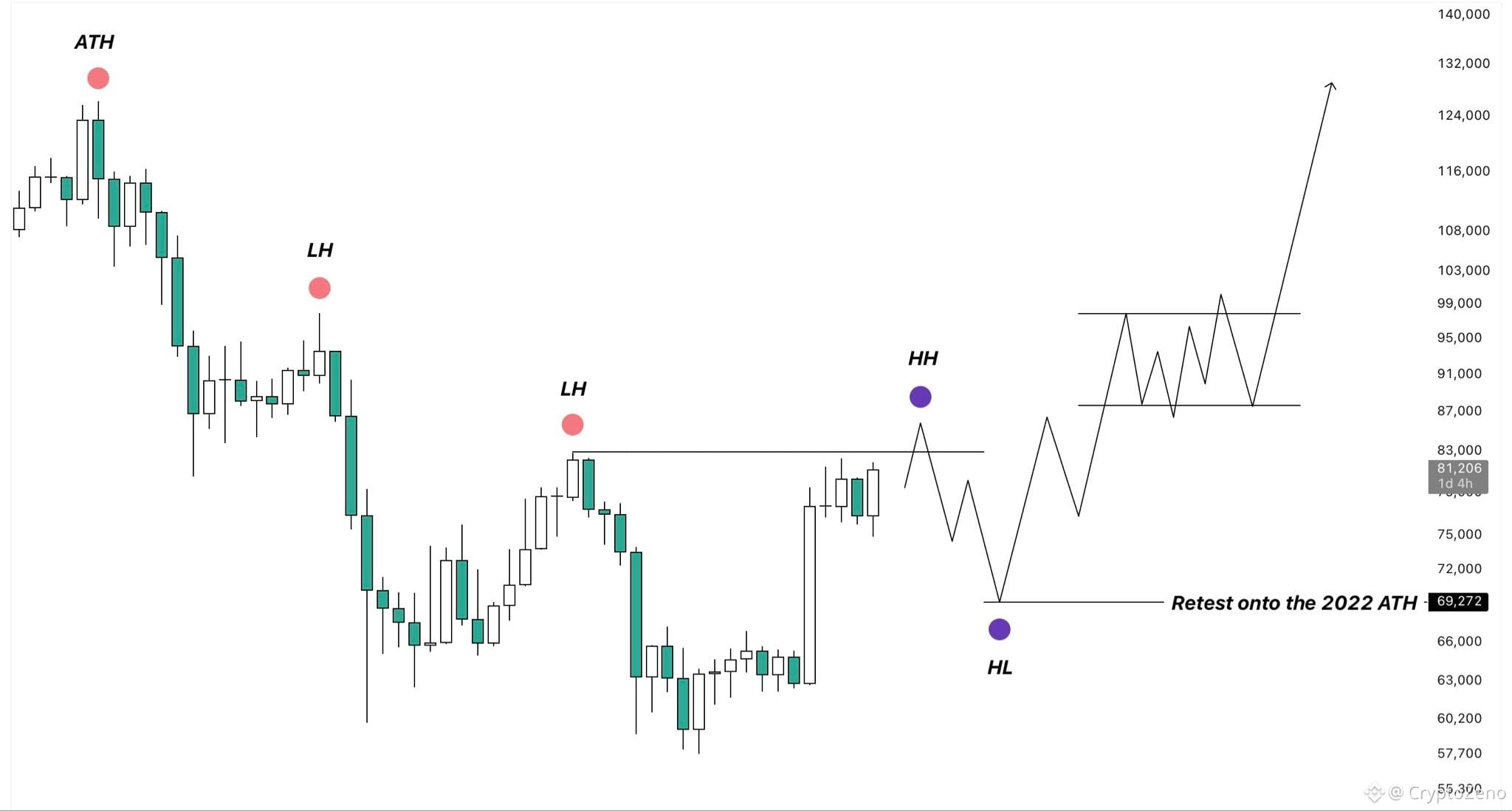
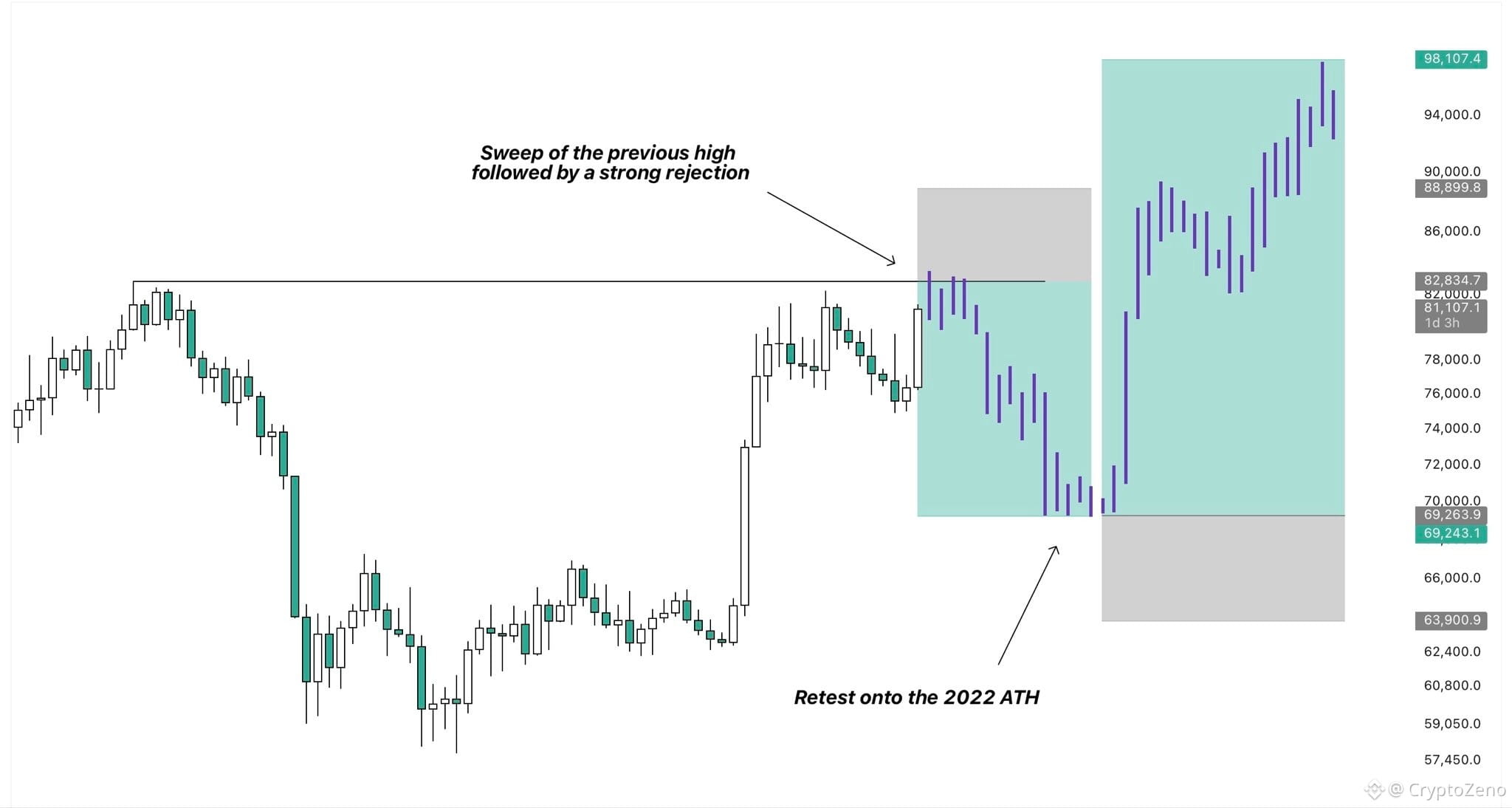
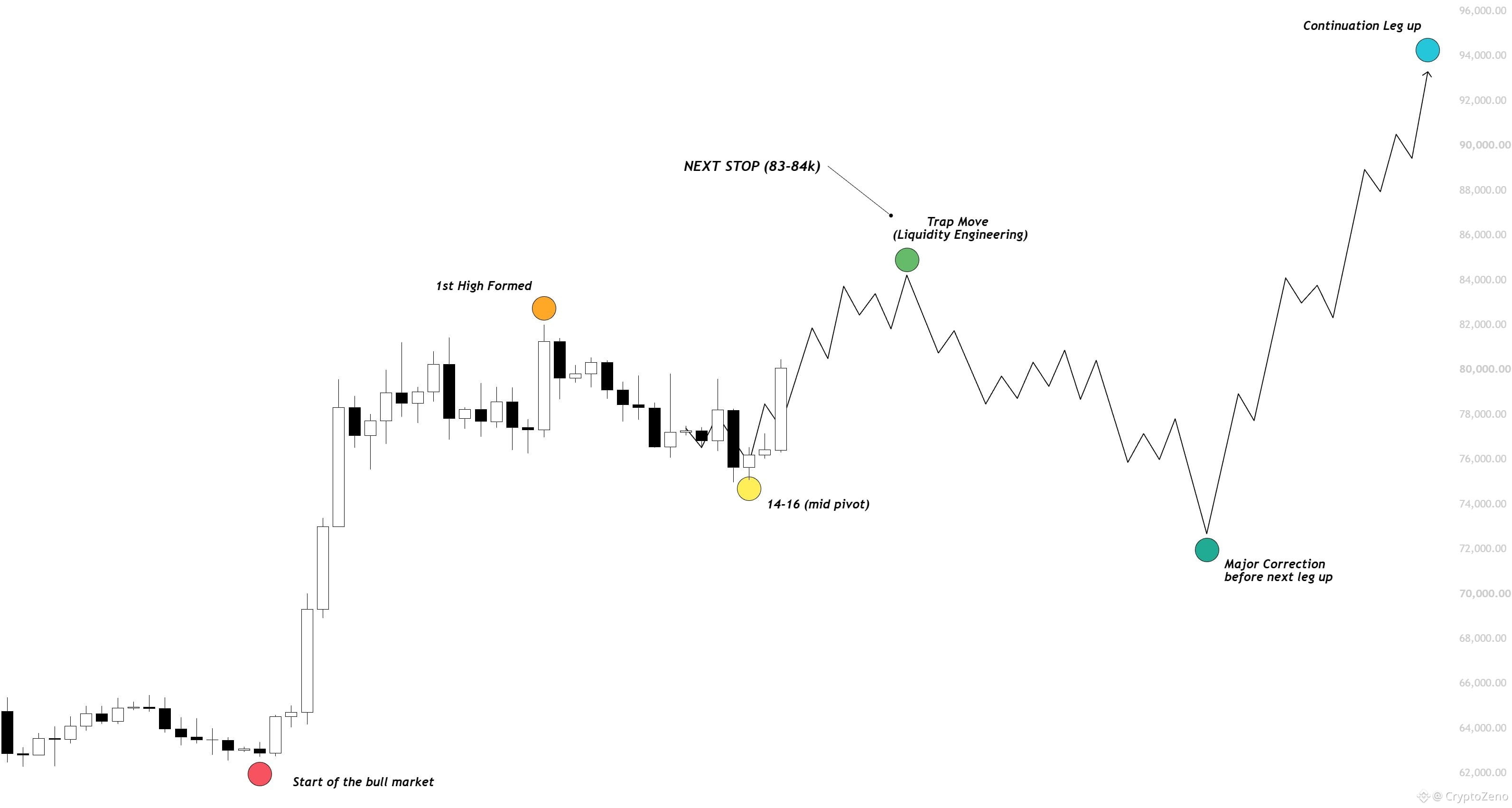
$BTC Bullish variant 🧪 Overall fairly leaning this way now given how we are looking on all timeframes. Currently this count makes the most sense for a completed 1/2 inside the wave 3 or potentially working on that 5 in the 1 of the wave 3 - either way more clear now. Still have the bearish count in mind and originally I was planning on 80K short however I want to see price break some structure first before looking for shorts. Overall read was pretty solid for the lows with mixed opinions between a firm bull or bear count but we are at the end target now for both counts regardless. Targets for the Bullish count are ATH minimum in the followings months shorter timeframe is 90-100k {future}(BTCUSDT)
$BTC Bullish variant 🧪

Overall fairly leaning this way now given how we are looking on all timeframes.

Currently this count makes the most sense for a completed 1/2 inside the wave 3 or potentially working on that 5 in the 1 of the wave 3 - either way more clear now.

Still have the bearish count in mind and originally I was planning on 80K short however I want to see price break some structure first before looking for shorts.

Overall read was pretty solid for the lows with mixed opinions between a firm bull or bear count but we are at the end target now for both counts regardless.

Targets for the Bullish count are ATH minimum in the followings months shorter timeframe is 90-100k
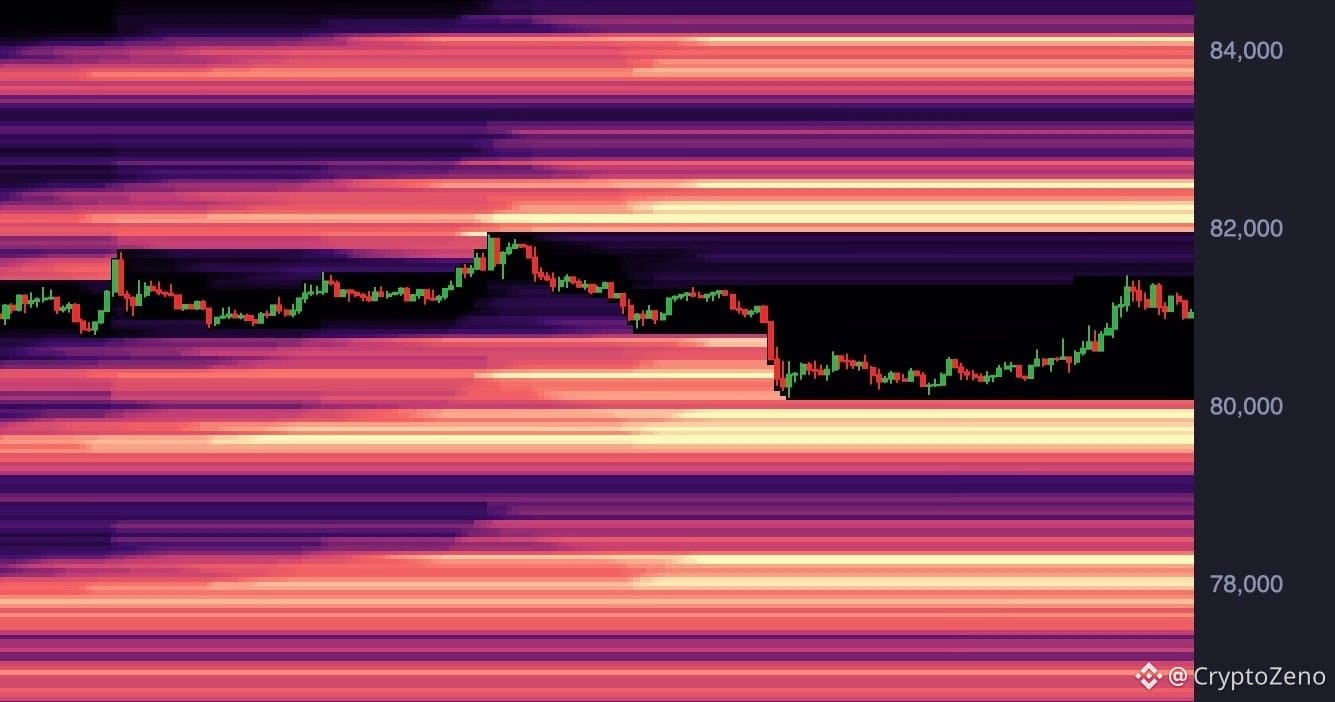
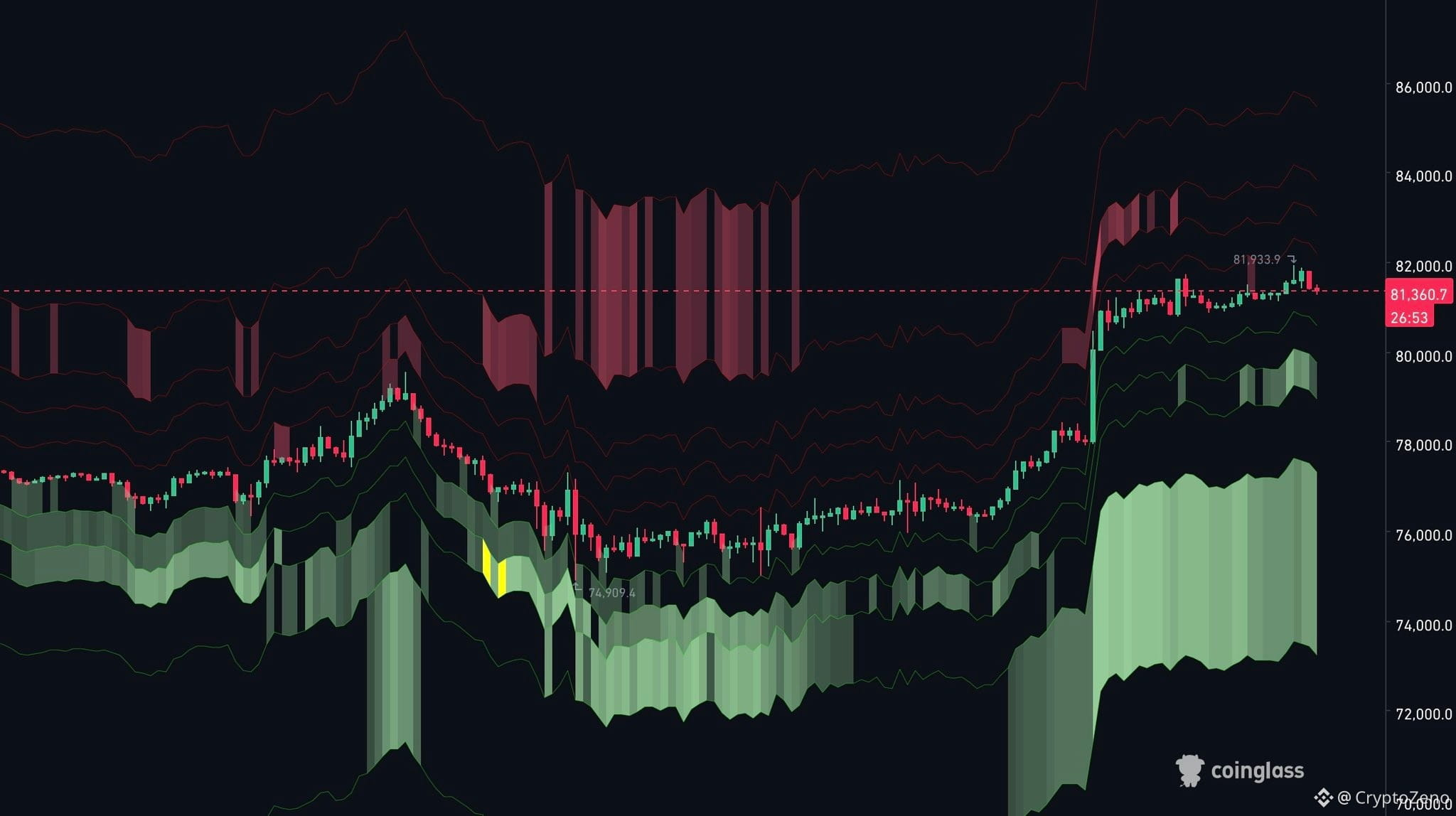
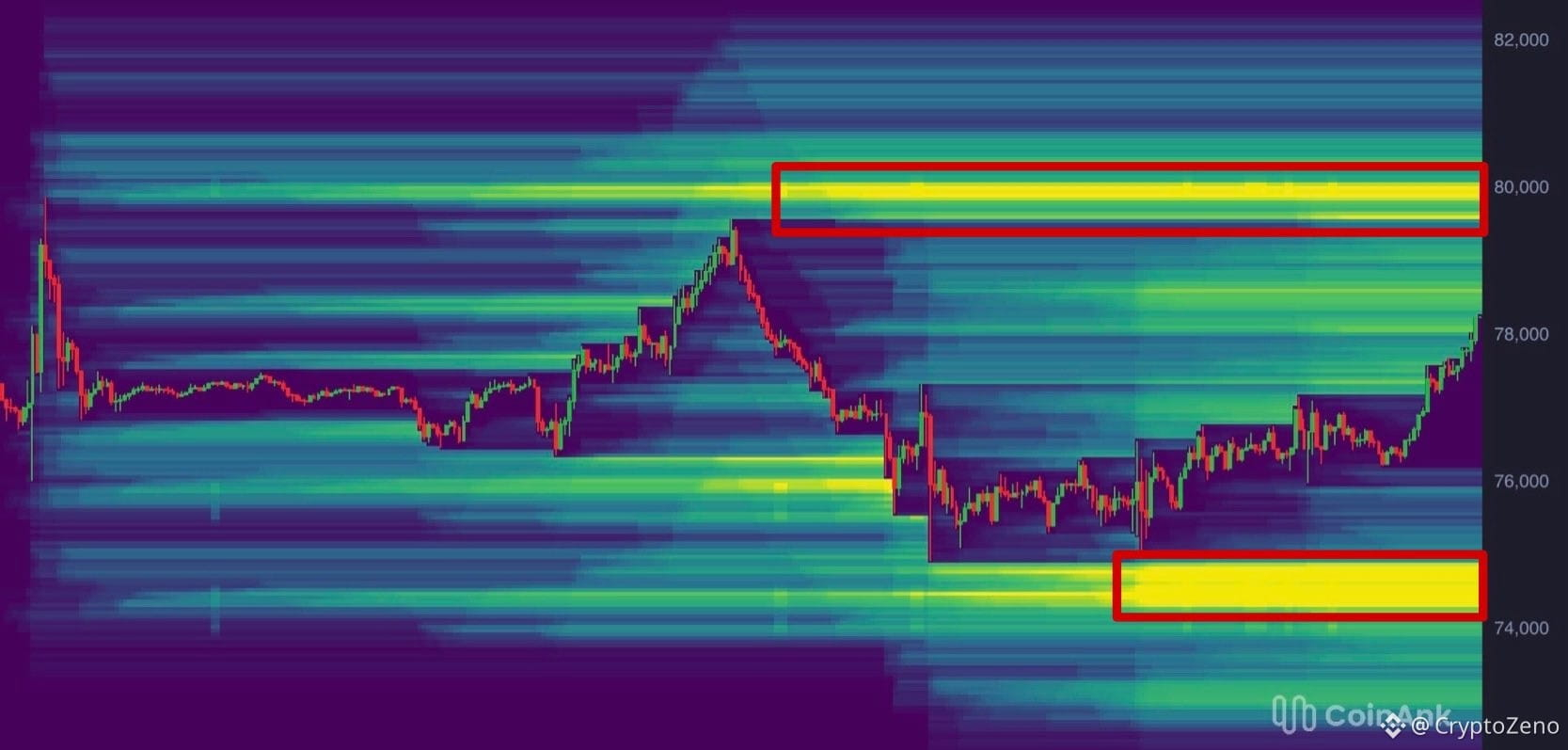
$BTC 7 Day Liquidation Heatmap Retail shorts continue to add fuel to the garbage fire. Liquidation in this range didn't exist 24 hours ago. Liquidation is hunted for a reason. Who thinks we see 81.8k next!? {future}(BTCUSDT)
$BTC 7 Day Liquidation Heatmap

Retail shorts continue to add fuel to the garbage fire.

Liquidation in this range didn't exist 24 hours ago.

Liquidation is hunted for a reason.

Who thinks we see 81.8k next!?
A US court is suing a DAO for $71 MILLION. The same $71 MILLION the DAO recovered for the victims. A few days ago I posted about crypto not being as decentralized as people think and it turns out I was more right than I knew. On April 18 the KelpDAO bridge was drained for $292 MILLION. The attacker was Lazarus Group. North Korea. Arbitrum’s Security Council used emergency powers to freeze 30,766 $ETH on chain. Roughly $71 MILLION. Not to keep it. To return it to the people who lost it. Then on May 1 a restraining notice from the Southern District of New York landed on the Arbitrum governance forum. It was trying to seize that exact $71 MILLION. Not the hacker’s wallet but the recovered money. Funds already earmarked for the victims. The people trying to seize the money aren’t KelpDAO users. They are American families who sued North Korea in US court years ago after their relatives were kidnapped and killed by the regime. They won. The court ordered Pyongyang to pay them more than $877 MILLION in damages. North Korea has never paid a cent. So when Lazarus Group, which is run by the North Korean state, stole $292 MILLION from KelpDAO, those families saw an opportunity. Their argument is that the stolen $ETH is technically North Korean money and since North Korea owes them, the frozen funds should pay down that debt. The entire point of DeFi was that no single entity could walk in and say stop. Not a court, a bank or a government. Yet here we are. The court isn’t wrong for trying. The fact that it can try at all is the point. The second a small group of people had the power to freeze those funds, the system became something the law could touch. DeFi has spent a decade arguing it isn’t a bank. The first time it acted like one, the courts arrived.
A US court is suing a DAO for $71 MILLION. The same $71 MILLION the DAO recovered for the victims.

A few days ago I posted about crypto not being as decentralized as people think and it turns out I was more right than I knew.

On April 18 the KelpDAO bridge was drained for $292 MILLION. The attacker was Lazarus Group. North Korea.

Arbitrum’s Security Council used emergency powers to freeze 30,766 $ETH on chain. Roughly $71 MILLION.

Not to keep it. To return it to the people who lost it.

Then on May 1 a restraining notice from the Southern District of New York landed on the Arbitrum governance forum.

It was trying to seize that exact $71 MILLION.

Not the hacker’s wallet but the recovered money. Funds already earmarked for the victims.

The people trying to seize the money aren’t KelpDAO users.

They are American families who sued North Korea in US court years ago after their relatives were kidnapped and killed by the regime.

They won. The court ordered Pyongyang to pay them more than $877 MILLION in damages.

North Korea has never paid a cent.
So when Lazarus Group, which is run by the North Korean state, stole $292 MILLION from KelpDAO, those families saw an opportunity.

Their argument is that the stolen $ETH is technically North Korean money and since North Korea owes them, the frozen funds should pay down that debt.

The entire point of DeFi was that no single entity could walk in and say stop.

Not a court, a bank or a government. Yet here we are.

The court isn’t wrong for trying. The fact that it can try at all is the point.

The second a small group of people had the power to freeze those funds, the system became something the law could touch.

DeFi has spent a decade arguing it isn’t a bank. The first time it acted like one, the courts arrived.
John McAfee bet his own DICK that Bitcoin would hit $1 MILLION by 2020 and died in prison before the deadline In July 2017, when $BTC was at $2,500, John McAfee tweeted that it would hit $500,000 by the end of 2020 and if it didn't, he would eat his own dick on national TV Five months later when Bitcoin was at $9,300, he doubled the bet, posting "BTC has accelerated much faster than my model assumptions. I now predict Bitcoin at $1 million by the end of 2020. I will still eat my dick if wrong" In April 2019 he tweeted that it was "mathematically impossible" for BTC to be worth less than $1 million by the deadline, and in October he posted that if BTC was worth less than $2 million by December 31, 2020 "then mathematics itself is a flawed discipline" Someone even built a website called Dickening com that counted the days until he had to do it On January 5, 2020 when Bitcoin was at $7,500, McAfee finally backed out and posted "Eat my dick in 12 months? A ruse to onboard new users. It worked" When a Twitter user tried to call him out he shot back "Wake the fuck up. What idiot thinks anyone is going to eat their own dick ever? Especially in TV!! Are you that idiot?" In October 2020, two months before the deadline, McAfee was arrested in Spain on tax evasion charges and spent the next 8 months in a Barcelona prison while the US tried to send him back On June 23, 2021 he was found dead in his cell with the bet still open and Bitcoin at $34,000 Five months later Bitcoin hit an all time high of $69,000 and 8 years later it's still nowhere near $1 million The man who bet his own dick on Bitcoin hitting $1 million didn't live long enough to be wrong about it
John McAfee bet his own DICK that Bitcoin would hit $1 MILLION by 2020 and died in prison before the deadline

In July 2017, when $BTC was at $2,500, John McAfee tweeted that it would hit $500,000 by the end of 2020 and if it didn't, he would eat his own dick on national TV

Five months later when Bitcoin was at $9,300, he doubled the bet, posting "BTC has accelerated much faster than my model assumptions. I now predict Bitcoin at $1 million by the end of 2020. I will still eat my dick if wrong"

In April 2019 he tweeted that it was "mathematically impossible" for BTC to be worth less than $1 million by the deadline, and in October he posted that if BTC was worth less than $2 million by December 31, 2020 "then mathematics itself is a flawed discipline"

Someone even built a website called Dickening com that counted the days until he had to do it

On January 5, 2020 when Bitcoin was at $7,500, McAfee finally backed out and posted "Eat my dick in 12 months? A ruse to onboard new users. It worked"

When a Twitter user tried to call him out he shot back "Wake the fuck up. What idiot thinks anyone is going to eat their own dick ever? Especially in TV!! Are you that idiot?"

In October 2020, two months before the deadline, McAfee was arrested in Spain on tax evasion charges and spent the next 8 months in a Barcelona prison while the US tried to send him back

On June 23, 2021 he was found dead in his cell with the bet still open and Bitcoin at $34,000

Five months later Bitcoin hit an all time high of $69,000 and 8 years later it's still nowhere near $1 million

The man who bet his own dick on Bitcoin hitting $1 million didn't live long enough to be wrong about it
Maqola
Web3 Jobs Are Paying $120,000 - $200,000+- And Most People Are Still Sleeping On ItWhile the majority of the world is still debating whether crypto is “dead or alive,” a quieter group of early adopters is already building long-term careers inside Web3. They are not chasing short-term hype. They are positioning themselves inside an industry that is still early, still underbuilt, and desperately short on real talent. This is exactly why Web3 jobs today are paying anywhere from $120,000 to over $200,000 per year, often for roles that do not require a university degree, a computer science background, or years of traditional corporate experience. All you really need is a laptop, genuine curiosity, and the willingness to learn faster than the average person. In 2023, the global average Web2 salary sat around $40,000 per year. Web3, on the other hand, consistently offers compensation that is two to five times higher. This gap exists for a simple reason. Mass adoption has not happened yet, but infrastructure still needs to be built. Small teams are moving fast, capital is available, and companies are willing to pay a premium for people who can actually execute. This moment matters because it will not last forever. Once Web3 becomes mainstream, the salary asymmetry disappears, hiring standards become rigid, and opportunities narrow. Early entrants always benefit the most. One of the biggest misconceptions about Web3 is that it is only for developers. In reality, most Web3 companies care far more about execution, curiosity, and ecosystem understanding than formal education. You do not need a degree. You do not need a perfect resume. You need to understand crypto culture, user behavior, and how value flows inside decentralized systems. If you can do that and show proof of work, you are already ahead of the majority of applicants. This is why so many non-technical roles in Web3 pay extremely well. Designers play a critical role in simplifying complex products like dApps and NFT platforms. A strong Web3 UX or UI designer focuses on user flows, interfaces, and reducing friction for users who are not technical. These roles typically pay between $90,000 and $140,000 because good design directly impacts adoption. Another highly undervalued role is blockchain technical writing. Every protocol needs documentation, tutorials, blog content, and clear explanations for users and developers. People who can translate complex blockchain mechanics into simple, understandable language are rare, which is why technical writers can earn anywhere from $70,000 to $140,000. Community managers are equally essential. In Web3, community is not a marketing add-on. It is the product. Managing Discord servers, Telegram groups, newsletters, and feedback loops requires empathy, communication skills, and deep cultural awareness. Projects that ignore community fail quickly, which is why experienced community managers are consistently paid competitive salaries. Marketing and growth roles also dominate Web3 hiring. Crypto marketing specialists focus on educating users, telling compelling stories, and guiding attention during product launches. Unlike Web2 marketing, this role requires a strong understanding of token incentives, narratives, and timing. Salaries commonly range from $60,000 to $120,000. Social media managers in Web3 often operate more like brand strategists than content schedulers. They shape the project’s public voice across platforms like Twitter, YouTube, and Discord, track performance, and drive long-term growth. Depending on scale and responsibility, compensation can range widely, from $25,000 up to six figures. For those who enjoy market research, cryptocurrency analysts are in constant demand. These roles involve tracking market trends, analyzing tokens, studying DeFi protocols, and publishing insights for investors or communities. Strong analytical skills combined with on-chain knowledge can command salaries between $60,000 and $150,000. Operational roles are just as important. Blockchain project coordinators ensure teams stay aligned, deadlines are met, and launches happen on time. Understanding how smart contracts and decentralized teams operate is a major advantage here, and pay often falls between $80,000 and $100,000. DAOs also offer a unique entry point. Paid DAO roles allow contributors to assist with governance, research, operations, and design. Many people underestimate these positions, but they often lead to long-term opportunities and steady income while building a public on-chain reputation. More technical but still highly accessible is the role of a Web3 landing page developer. Building high-conversion marketing pages for crypto projects using tools like Webflow or Framer can generate exceptional income. Because these pages directly impact fundraising and user acquisition, salaries can exceed $200,000 for skilled builders. Finally, smart contract developers remain the backbone of Web3. Coding, auditing, and deploying protocols requires deeper technical knowledge, but demand remains extremely high. Even junior developers can earn strong salaries, with experienced engineers earning significantly more over time. Beyond working directly for Web3 companies, there is another powerful path many people overlook. Building a personal brand as a Web3 KOL on platforms like Binance Square can itself become a meaningful income stream. By consistently publishing high-quality analysis, educational content, and market insights, creators can monetize attention, attract partnerships, and open doors to roles that are never publicly advertised. In Web3, attention is leverage. Content is proof of work. You do not need to be the smartest person in the room to succeed in this industry. You need to be curious, consistent, and willing to show your work publicly. Start small, learn fast, and keep shipping. The best Web3 jobs are not posted on job boards. They are created by people who show up early and keep building while everyone else is still watching from the sidelines. #CryptoZeno #BTCSurpasses$80K

Web3 Jobs Are Paying $120,000 - $200,000+- And Most People Are Still Sleeping On It

While the majority of the world is still debating whether crypto is “dead or alive,” a quieter group of early adopters is already building long-term careers inside Web3. They are not chasing short-term hype. They are positioning themselves inside an industry that is still early, still underbuilt, and desperately short on real talent.
This is exactly why Web3 jobs today are paying anywhere from $120,000 to over $200,000 per year, often for roles that do not require a university degree, a computer science background, or years of traditional corporate experience.

All you really need is a laptop, genuine curiosity, and the willingness to learn faster than the average person.
In 2023, the global average Web2 salary sat around $40,000 per year. Web3, on the other hand, consistently offers compensation that is two to five times higher. This gap exists for a simple reason. Mass adoption has not happened yet, but infrastructure still needs to be built. Small teams are moving fast, capital is available, and companies are willing to pay a premium for people who can actually execute.

This moment matters because it will not last forever. Once Web3 becomes mainstream, the salary asymmetry disappears, hiring standards become rigid, and opportunities narrow. Early entrants always benefit the most.
One of the biggest misconceptions about Web3 is that it is only for developers. In reality, most Web3 companies care far more about execution, curiosity, and ecosystem understanding than formal education. You do not need a degree. You do not need a perfect resume. You need to understand crypto culture, user behavior, and how value flows inside decentralized systems. If you can do that and show proof of work, you are already ahead of the majority of applicants.
This is why so many non-technical roles in Web3 pay extremely well.

Designers play a critical role in simplifying complex products like dApps and NFT platforms. A strong Web3 UX or UI designer focuses on user flows, interfaces, and reducing friction for users who are not technical. These roles typically pay between $90,000 and $140,000 because good design directly impacts adoption.
Another highly undervalued role is blockchain technical writing. Every protocol needs documentation, tutorials, blog content, and clear explanations for users and developers. People who can translate complex blockchain mechanics into simple, understandable language are rare, which is why technical writers can earn anywhere from $70,000 to $140,000.
Community managers are equally essential. In Web3, community is not a marketing add-on. It is the product. Managing Discord servers, Telegram groups, newsletters, and feedback loops requires empathy, communication skills, and deep cultural awareness. Projects that ignore community fail quickly, which is why experienced community managers are consistently paid competitive salaries.
Marketing and growth roles also dominate Web3 hiring. Crypto marketing specialists focus on educating users, telling compelling stories, and guiding attention during product launches. Unlike Web2 marketing, this role requires a strong understanding of token incentives, narratives, and timing. Salaries commonly range from $60,000 to $120,000.
Social media managers in Web3 often operate more like brand strategists than content schedulers. They shape the project’s public voice across platforms like Twitter, YouTube, and Discord, track performance, and drive long-term growth. Depending on scale and responsibility, compensation can range widely, from $25,000 up to six figures.
For those who enjoy market research, cryptocurrency analysts are in constant demand. These roles involve tracking market trends, analyzing tokens, studying DeFi protocols, and publishing insights for investors or communities. Strong analytical skills combined with on-chain knowledge can command salaries between $60,000 and $150,000.
Operational roles are just as important. Blockchain project coordinators ensure teams stay aligned, deadlines are met, and launches happen on time. Understanding how smart contracts and decentralized teams operate is a major advantage here, and pay often falls between $80,000 and $100,000.
DAOs also offer a unique entry point. Paid DAO roles allow contributors to assist with governance, research, operations, and design. Many people underestimate these positions, but they often lead to long-term opportunities and steady income while building a public on-chain reputation.
More technical but still highly accessible is the role of a Web3 landing page developer. Building high-conversion marketing pages for crypto projects using tools like Webflow or Framer can generate exceptional income. Because these pages directly impact fundraising and user acquisition, salaries can exceed $200,000 for skilled builders.
Finally, smart contract developers remain the backbone of Web3. Coding, auditing, and deploying protocols requires deeper technical knowledge, but demand remains extremely high. Even junior developers can earn strong salaries, with experienced engineers earning significantly more over time.
Beyond working directly for Web3 companies, there is another powerful path many people overlook. Building a personal brand as a Web3 KOL on platforms like Binance Square can itself become a meaningful income stream. By consistently publishing high-quality analysis, educational content, and market insights, creators can monetize attention, attract partnerships, and open doors to roles that are never publicly advertised.

In Web3, attention is leverage. Content is proof of work.
You do not need to be the smartest person in the room to succeed in this industry. You need to be curious, consistent, and willing to show your work publicly. Start small, learn fast, and keep shipping. The best Web3 jobs are not posted on job boards. They are created by people who show up early and keep building while everyone else is still watching from the sidelines.
#CryptoZeno #BTCSurpasses$80K
Maqola
I Lost $136,000 in a Single Hack - It Forced Me to Build a System That Can’t Be Broken Twice.In crypto, losses do not come with warnings. There is no fraud department, no reversal button, no customer support that can restore what is gone. When I lost $136,000 in a single exploit, it was not because I was careless. It was because I underestimated how sophisticated the threat landscape had become. That loss forced me to redesign everything. What emerged was not just better storage, but a layered security architecture built around one principle: assume compromise is always possible. Here is the system. 1. Understand the New Threat Model Crypto attacks in 2025 are no longer simple phishing emails. AI-generated scams, malicious smart contracts, wallet drainers embedded in fake social posts, and cloned decentralized applications are everywhere. If you interact on-chain, you are a potential target. Security begins with paranoia, not convenience. 2. Treat Your Seed Phrase as Absolute Authority Your seed phrase is your wallet. Whoever controls it controls everything. It should never be photographed, typed into cloud storage, saved in password managers, or stored digitally in any form. The only acceptable formats are physical, preferably metal backups resistant to fire and water. Multiple copies stored in separate secure locations reduce single-point failure risk. 3. Separate Storage by Function The biggest mistake I made was using one wallet for everything. Now the structure is strict. A cold wallet stores long-term holdings and never connects to risky applications. A hot wallet handles routine transactions. A burner wallet interacts with experimental dApps, mints, and unknown contracts. Exposure is compartmentalized. If the burner is compromised, the core remains untouched. This rule alone prevented another five-figure loss later. 4. Hardware Is Mandatory, Not Optional Browser wallets alone are insufficient for meaningful capital. Hardware wallets such as Ledger, Trezor, Keystone, or air-gapped devices dramatically reduce remote attack surfaces. Cold storage is not about convenience. It is about eliminating entire categories of risk. 5. Assume Every Link Is Malicious Fake websites can perfectly replicate legitimate platforms. Search engine ads and social media links are frequently weaponized. Access important platforms through bookmarked URLs only. Verify domains carefully before signing any transaction. 6. Control Smart Contract Permissions Every token approval grants spending rights. Many users forget that these permissions persist indefinitely. Regularly auditing and revoking unused approvals reduces exposure dramatically. Security is not a one-time setup. It is maintenance. 7. Strengthen Account-Level Protection Text message two-factor authentication is vulnerable to SIM swap attacks. Authentication apps or hardware security keys provide stronger protection. Every exchange account, email, and connected service must meet the same standard. 8. Remove Counterparty Dependency Funds left on exchanges are not under your control. Platform freezes, insolvency, or breaches can block access instantly. Self-custody is not ideology. It is risk management. 9. Build Redundancy and Recovery Plans Backups must survive theft, fire, and natural disasters. The three-two-one principle applies well: multiple backups, stored in different physical locations, with at least one offsite. Additionally, plan inheritance structures so assets are accessible to trusted parties if something happens to you. 10. Conduct Routine Security Audits Once a month, review wallet history, revoke unnecessary permissions, verify backup integrity, and reassess exposure. Complacency is the silent vulnerability that eventually costs the most. The hardest lesson I learned is that in crypto, one mistake is enough. Years of caution can be erased by a single signature on a malicious contract. There is no safety net. No recovery desk. No forgiveness from the blockchain. Security is not a product you buy. It is a system you design and a mindset you maintain. In crypto, you are not just the investor. You are the bank, the vault, and the security team. #CryptoZeno #ScamAware #TrumpUnveilsPlanToEscortHormuzShips

I Lost $136,000 in a Single Hack - It Forced Me to Build a System That Can’t Be Broken Twice.

In crypto, losses do not come with warnings. There is no fraud department, no reversal button, no customer support that can restore what is gone. When I lost $136,000 in a single exploit, it was not because I was careless. It was because I underestimated how sophisticated the threat landscape had become.
That loss forced me to redesign everything. What emerged was not just better storage, but a layered security architecture built around one principle: assume compromise is always possible.
Here is the system.
1. Understand the New Threat Model
Crypto attacks in 2025 are no longer simple phishing emails. AI-generated scams, malicious smart contracts, wallet drainers embedded in fake social posts, and cloned decentralized applications are everywhere. If you interact on-chain, you are a potential target. Security begins with paranoia, not convenience.

2. Treat Your Seed Phrase as Absolute Authority
Your seed phrase is your wallet. Whoever controls it controls everything. It should never be photographed, typed into cloud storage, saved in password managers, or stored digitally in any form. The only acceptable formats are physical, preferably metal backups resistant to fire and water. Multiple copies stored in separate secure locations reduce single-point failure risk.

3. Separate Storage by Function
The biggest mistake I made was using one wallet for everything. Now the structure is strict. A cold wallet stores long-term holdings and never connects to risky applications. A hot wallet handles routine transactions. A burner wallet interacts with experimental dApps, mints, and unknown contracts. Exposure is compartmentalized. If the burner is compromised, the core remains untouched. This rule alone prevented another five-figure loss later.
4. Hardware Is Mandatory, Not Optional
Browser wallets alone are insufficient for meaningful capital. Hardware wallets such as Ledger, Trezor, Keystone, or air-gapped devices dramatically reduce remote attack surfaces. Cold storage is not about convenience. It is about eliminating entire categories of risk.

5. Assume Every Link Is Malicious
Fake websites can perfectly replicate legitimate platforms. Search engine ads and social media links are frequently weaponized. Access important platforms through bookmarked URLs only. Verify domains carefully before signing any transaction.
6. Control Smart Contract Permissions
Every token approval grants spending rights. Many users forget that these permissions persist indefinitely. Regularly auditing and revoking unused approvals reduces exposure dramatically. Security is not a one-time setup. It is maintenance.

7. Strengthen Account-Level Protection
Text message two-factor authentication is vulnerable to SIM swap attacks. Authentication apps or hardware security keys provide stronger protection. Every exchange account, email, and connected service must meet the same standard.
8. Remove Counterparty Dependency
Funds left on exchanges are not under your control. Platform freezes, insolvency, or breaches can block access instantly. Self-custody is not ideology. It is risk management.

9. Build Redundancy and Recovery Plans
Backups must survive theft, fire, and natural disasters. The three-two-one principle applies well: multiple backups, stored in different physical locations, with at least one offsite. Additionally, plan inheritance structures so assets are accessible to trusted parties if something happens to you.
10. Conduct Routine Security Audits
Once a month, review wallet history, revoke unnecessary permissions, verify backup integrity, and reassess exposure. Complacency is the silent vulnerability that eventually costs the most.

The hardest lesson I learned is that in crypto, one mistake is enough. Years of caution can be erased by a single signature on a malicious contract.
There is no safety net. No recovery desk. No forgiveness from the blockchain.
Security is not a product you buy. It is a system you design and a mindset you maintain.
In crypto, you are not just the investor. You are the bank, the vault, and the security team.
#CryptoZeno #ScamAware #TrumpUnveilsPlanToEscortHormuzShips
Maqola
Why 95% of Market Participants Ride Every Cycle Back to ZeroNinety-five percent of participants will hold all the way through the crash. Profits will disappear, portfolios will implode, and the market will reset like it always does. I have no intention of being part of that majority. I’m not here to sell the exact top. I’m here to exit before the illusion breaks. November 2025 is my exit window, not because I can predict the future, but because I understand cycles. Historically, peak euphoria tends to arrive roughly twelve to eighteen months after a Bitcoin halving. That phase is defined by confidence, not caution, and that’s precisely why it’s dangerous. Every bull market ends the same way, with an explosive altcoin phase. Meme coins, Layer 2s, AI tokens, and whatever narrative captures attention will move aggressively higher. This is not the beginning of a new expansion. It is the final acceleration before exhaustion. Retail chases performance, momentum feeds on itself, and prices detach from reality. What comes after the peak is never gradual. Tokens routinely lose ninety to ninety-nine percent of their value. Liquidity dries up, teams vanish, and selling becomes impossible. By the time fear becomes obvious, the exit is already gone. Most losses in crypto are not caused by bad entries, but by refusing to leave when conditions are favorable. To avoid that outcome, I rely heavily on three on-chain signals that have consistently provided early warnings in previous cycles. Market Value to Realized Value highlights when price is far above aggregate cost basis. Net Unrealized Profit and Loss reveals when the majority of the market is sitting on excessive paper gains. Spent Output Profit Ratio shows whether coins are being distributed at a profit. When these metrics align and signal overheating, I don’t debate narratives. I start reducing exposure. Unrealized profit is not success. Numbers on a screen are meaningless until they are converted into stable value. I treat profit-taking like income, not speculation. It is structured, repetitive, and intentionally boring. If it feels uneventful, it usually means it’s being done correctly. My exit strategy is straightforward and disciplined. I distribute in stages while the market is strong, not during weakness. Capital rotates into stable yield, cash, and real-world assets. When the market begins talking about one final pump, I disengage from the noise. Cycles rarely offer more than one clean exit. Operational discipline matters just as much as market timing. Cold wallets are for long-term wealth preservation. Hot wallets are for experimentation and curiosity. Mixing the two is how conviction capital gets destroyed during late-cycle speculation. Altseason also attracts a predictable wave of scams. Fake launches, malicious airdrops, and phishing campaigns thrive when greed is high. Burner wallets, verified links, and assuming everything is hostile are not paranoia at this stage. They are survival skills. Importantly, market tops never feel threatening. They feel comfortable. The dominant emotion is optimism, not fear, and the common belief is that the real move is just beginning. Historically, that mindset marks the end. If selling feels emotionally wrong, it is often a sign that timing is correct. As my exit window approaches, diversification becomes essential. Altcoins appear safe until liquidity disappears. Capital rotates toward Bitcoin, Ethereum, stablecoins, and income streams outside of crypto. Heavy exposure to microcaps late in the cycle is not aggressive positioning. It is delayed liquidation. Those who survived the bear market and accumulated early earned their advantage. But endurance alone does not create wealth. If you do not leave the market with realized gains, none of the conviction matters. You did not come this far to give it all back. My plan is to exit completely and wait. If the market offers deep drawdowns again in 2026 or 2027, I will re-enter from a position of strength. That is where asymmetric opportunity truly exists. Exiting is not about prediction. It is about discipline. Most participants lose everything chasing one more green candle. Exiting well is the rarest skill in crypto, and the most valuable one. This cycle, I intend to execute it properly. #CryptoZeno #BTCSurpasses$80K

Why 95% of Market Participants Ride Every Cycle Back to Zero

Ninety-five percent of participants will hold all the way through the crash. Profits will disappear, portfolios will implode, and the market will reset like it always does. I have no intention of being part of that majority.
I’m not here to sell the exact top. I’m here to exit before the illusion breaks. November 2025 is my exit window, not because I can predict the future, but because I understand cycles. Historically, peak euphoria tends to arrive roughly twelve to eighteen months after a Bitcoin halving. That phase is defined by confidence, not caution, and that’s precisely why it’s dangerous.

Every bull market ends the same way, with an explosive altcoin phase. Meme coins, Layer 2s, AI tokens, and whatever narrative captures attention will move aggressively higher. This is not the beginning of a new expansion. It is the final acceleration before exhaustion. Retail chases performance, momentum feeds on itself, and prices detach from reality.

What comes after the peak is never gradual. Tokens routinely lose ninety to ninety-nine percent of their value. Liquidity dries up, teams vanish, and selling becomes impossible. By the time fear becomes obvious, the exit is already gone. Most losses in crypto are not caused by bad entries, but by refusing to leave when conditions are favorable.

To avoid that outcome, I rely heavily on three on-chain signals that have consistently provided early warnings in previous cycles. Market Value to Realized Value highlights when price is far above aggregate cost basis. Net Unrealized Profit and Loss reveals when the majority of the market is sitting on excessive paper gains. Spent Output Profit Ratio shows whether coins are being distributed at a profit. When these metrics align and signal overheating, I don’t debate narratives. I start reducing exposure.
Unrealized profit is not success. Numbers on a screen are meaningless until they are converted into stable value. I treat profit-taking like income, not speculation. It is structured, repetitive, and intentionally boring. If it feels uneventful, it usually means it’s being done correctly.

My exit strategy is straightforward and disciplined. I distribute in stages while the market is strong, not during weakness. Capital rotates into stable yield, cash, and real-world assets. When the market begins talking about one final pump, I disengage from the noise. Cycles rarely offer more than one clean exit.

Operational discipline matters just as much as market timing. Cold wallets are for long-term wealth preservation. Hot wallets are for experimentation and curiosity. Mixing the two is how conviction capital gets destroyed during late-cycle speculation.

Altseason also attracts a predictable wave of scams. Fake launches, malicious airdrops, and phishing campaigns thrive when greed is high. Burner wallets, verified links, and assuming everything is hostile are not paranoia at this stage. They are survival skills.

Importantly, market tops never feel threatening. They feel comfortable. The dominant emotion is optimism, not fear, and the common belief is that the real move is just beginning. Historically, that mindset marks the end. If selling feels emotionally wrong, it is often a sign that timing is correct.

As my exit window approaches, diversification becomes essential. Altcoins appear safe until liquidity disappears. Capital rotates toward Bitcoin, Ethereum, stablecoins, and income streams outside of crypto. Heavy exposure to microcaps late in the cycle is not aggressive positioning. It is delayed liquidation.

Those who survived the bear market and accumulated early earned their advantage. But endurance alone does not create wealth. If you do not leave the market with realized gains, none of the conviction matters. You did not come this far to give it all back.
My plan is to exit completely and wait. If the market offers deep drawdowns again in 2026 or 2027, I will re-enter from a position of strength. That is where asymmetric opportunity truly exists.

Exiting is not about prediction. It is about discipline. Most participants lose everything chasing one more green candle. Exiting well is the rarest skill in crypto, and the most valuable one. This cycle, I intend to execute it properly.
#CryptoZeno #BTCSurpasses$80K
$BTC Liquidation & Fair Value Gaps There's a high leverage chunk of liquidation at 80.5k. A FVG from 78.5-79.5k, and aggregated Perp OB's are hot in the 81k range... More sell pressure between 80-81k vs 79-80k. Price should start to calm down after / if 80.5k is swept.🧹 {future}(BTCUSDT)
$BTC Liquidation & Fair Value Gaps

There's a high leverage chunk of liquidation at 80.5k.

A FVG from 78.5-79.5k, and aggregated Perp OB's are hot in the 81k range...

More sell pressure between 80-81k vs 79-80k.

Price should start to calm down after / if 80.5k is swept.🧹
These could be tokens that have the potential to manipulate prices in the near future 80-95% supply holded by team, allowing them to manipulate the price at any time Recall that most recently, $LAB had 98% supply holded by team, and they manipulated the price from $0.7 to $4 This is crime committed by the team {future}(LABUSDT)
These could be tokens that have the potential to manipulate prices in the near future

80-95% supply holded by team, allowing them to manipulate the price at any time

Recall that most recently, $LAB had 98% supply holded by team, and they manipulated the price from $0.7 to $4

This is crime committed by the team
$BTC Order Book Sell Wall 🐳 Spot limit orders at 80k remains unchanged. Whales plan to sell (480 BTC) valued at 37.78 Million if 80k is reached. The likelihood of breaking through this range is low. It will take A LOT of volume to break this resistance. {future}(BTCUSDT)
$BTC Order Book Sell Wall 🐳

Spot limit orders at 80k remains unchanged.

Whales plan to sell (480 BTC) valued at 37.78 Million if 80k is reached.

The likelihood of breaking through this range is low.

It will take A LOT of volume to break this resistance.
🚨 A hidden fingerprint inside Bitcoin earliest blocks reveals a single miner quietly accumulated 1.1 million $BTC and never spent a coin In 2013, researcher Sergio Demian Lerner uncovered a pattern buried inside the first 50,000 Bitcoin blocks. By analyzing the ExtraNonce field, a small value that changes during mining, he discovered something no one had noticed since launch. When plotted, these values formed distinct slopes, each representing different miners operating in the network early days. Among dozens of slopes, one dominated. A single entity mined roughly 22,000 out of the first 36,000 blocks with perfectly consistent timing, identical behavior, and no overlap. Lerner named this dominant miner Patoshi. The conclusion was striking. One individual mined approximately 1.1 million BTC between 2009 and mid 2010, equal to 5.7 percent of total Bitcoin supply. The pattern revealed more than accumulation. It showed restraint. Despite having the power to dominate nearly the entire network, Patoshi deliberately limited mining activity to around half of capacity. This behavior suggests an intentional effort to allow others to participate, supporting decentralization in its earliest phase. Even more telling, the mining schedule followed human like rhythms. Activity started and stopped at consistent times, resembling one person operating a machine rather than an industrial system. Around April 2010, the pattern vanished completely. No further blocks were mined by this entity. The most astonishing part is what remains untouched. Around 1.1 million BTC still sit across thousands of addresses, unmoved for over 16 years. At current value, this represents over 115 billion dollars, making it the largest dormant fortune in history. If these coins ever move, markets would face the largest liquidity event ever seen. If they remain untouched, a massive portion of supply is effectively removed forever. Either scenario reshapes Bitcoin future. And the decision belongs to a figure who disappeared in 2011 without a trace. #CryptoZeno
🚨 A hidden fingerprint inside Bitcoin earliest blocks reveals a single miner quietly accumulated 1.1 million $BTC and never spent a coin

In 2013, researcher Sergio Demian Lerner uncovered a pattern buried inside the first 50,000 Bitcoin blocks. By analyzing the ExtraNonce field, a small value that changes during mining, he discovered something no one had noticed since launch. When plotted, these values formed distinct slopes, each representing different miners operating in the network early days.

Among dozens of slopes, one dominated. A single entity mined roughly 22,000 out of the first 36,000 blocks with perfectly consistent timing, identical behavior, and no overlap. Lerner named this dominant miner Patoshi. The conclusion was striking. One individual mined approximately 1.1 million BTC between 2009 and mid 2010, equal to 5.7 percent of total Bitcoin supply.

The pattern revealed more than accumulation. It showed restraint. Despite having the power to dominate nearly the entire network, Patoshi deliberately limited mining activity to around half of capacity. This behavior suggests an intentional effort to allow others to participate, supporting decentralization in its earliest phase.

Even more telling, the mining schedule followed human like rhythms. Activity started and stopped at consistent times, resembling one person operating a machine rather than an industrial system. Around April 2010, the pattern vanished completely. No further blocks were mined by this entity.

The most astonishing part is what remains untouched. Around 1.1 million BTC still sit across thousands of addresses, unmoved for over 16 years. At current value, this represents over 115 billion dollars, making it the largest dormant fortune in history.

If these coins ever move, markets would face the largest liquidity event ever seen. If they remain untouched, a massive portion of supply is effectively removed forever. Either scenario reshapes Bitcoin future. And the decision belongs to a figure who disappeared in 2011 without a trace. #CryptoZeno
The top scam coins are $LAB, $SKYAI, $UB, and $RAVE. If you go long or short on these coins, you'll lose all your money before they actually pump or dump. Don’t believe in these coins. What do you learn from them? Let’s share your opinion on these pump and dumps 👇👇 {future}(LABUSDT)
The top scam coins are $LAB, $SKYAI, $UB, and $RAVE. If you go long or short on these coins, you'll lose all your money before they actually pump or dump.

Don’t believe in these coins.

What do you learn from them? Let’s share your opinion on these pump and dumps 👇👇
Login to explore more contents
Binance Square'da global kriptovalyuta foydalanuvchilariga qo‘shiling
⚡️ Kriptovalyuta haqida eng so‘nggi va foydali ma’lumotlarni oling.
💬 Dunyoning eng yirik kriptovalyuta birjasi tomonidan ishonchli deb topilgan.
👍 Tasdiqlangan mualliflardan haqiqiy tahlillarni kashf eting.
Email / Phone number
Sitemap
Cookie fayllar parametrlari
Platform T&Cs