
CryptoQuant Quicktake
9k Postlar

CryptoQuant Quicktake
 Square Verified+
Shikoyat qilish
Foydalanuvchini bloklash
CryptoQuant.com - Leading On-chain Data/Analytics Provider
0 Kuzatilmoqda
23.4K+ Kuzatuvchilar
27.2K+ Yoqdi
Postlar
Maqola
Tarjimani ko‘rish
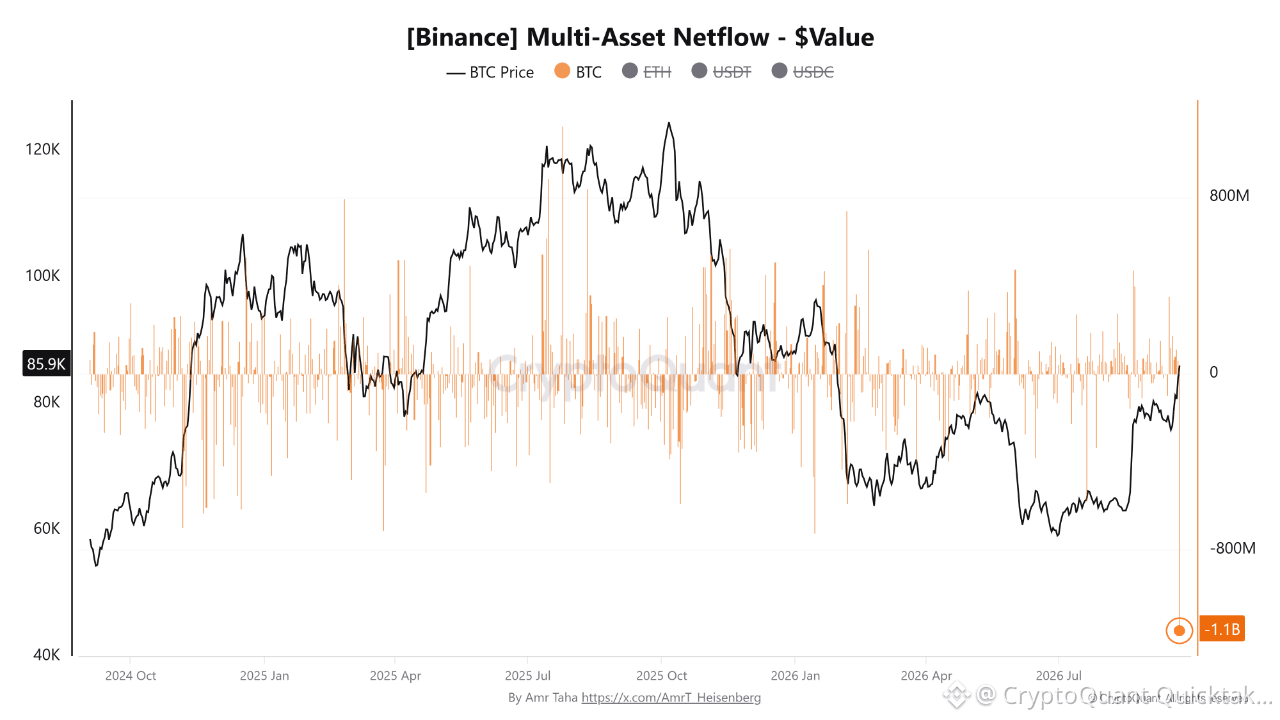
Bitcoin Sees $1.1B Binance Net Outflow, Deepest Since September 2024, As ETF Inflows Approach $1BBitcoin recorded an unusually large shift across exchange balances and U.S. spot ETFs within roughly 24 hours.
On September 22, Binance’s Bitcoin netflow fell to around -$1.1 billion, marking the deepest negative reading on chart since September 2024.
A negative netflow means more BTC left the exchange than entered it during the period.
The move came one day after strong activity across U.S. spot Bitcoin ETFs.
Netflow data for September 21 showed
BlackRock’s IBIT at +$349 million, up from +$212 million on September 17.
Fidelity’s FBTC at +$243 million, its second-largest recent reading after +$305 million on September 18
21Shares’ ARKB at +$280 million, above the +$131 million recorded on September 3.
Bitcoin also briefly traded above $87,000 during the ETF session, reaching its highest level in roughly eight months.
Together, the readings create a notable market-structure contrast: more than $1.1 billion in Bitcoin moved net out of Binance while nearly $1 billion flowed net into U.S. spot Bitcoin ETFs across consecutive sessions.
The two datasets should not be interpreted as showing that Bitcoin leaving Binance moved directly into ETFs.
However, their coincidence highlights an unusually large shift across two major parts of Bitcoin’s market structure within roughly 24 hours.
Written by Amr Taha
Bitcoin Sees $1.1B Binance Net Outflow, Deepest Since September 2024, As ETF Inflows Approach $1B
Bitcoin recorded an unusually large shift across exchange balances and U.S. spot ETFs within roughly 24 hours.
On September 22, Binance’s Bitcoin netflow fell to around -$1.1 billion, marking the deepest negative reading on chart since September 2024.
A negative netflow means more BTC left the exchange than entered it during the period.
The move came one day after strong activity across U.S. spot Bitcoin ETFs.
Netflow data for September 21 showed
BlackRock’s IBIT at +$349 million, up from +$212 million on September 17.
Fidelity’s FBTC at +$243 million, its second-largest recent reading after +$305 million on September 18
21Shares’ ARKB at +$280 million, above the +$131 million recorded on September 3.
Bitcoin also briefly traded above $87,000 during the ETF session, reaching its highest level in roughly eight months.
Together, the readings create a notable market-structure contrast: more than $1.1 billion in Bitcoin moved net out of Binance while nearly $1 billion flowed net into U.S. spot Bitcoin ETFs across consecutive sessions.
The two datasets should not be interpreted as showing that Bitcoin leaving Binance moved directly into ETFs.
However, their coincidence highlights an unusually large shift across two major parts of Bitcoin’s market structure within roughly 24 hours.
Written by Amr Taha
On September 22, Binance’s Bitcoin netflow fell to around -$1.1 billion, marking the deepest negative reading on chart since September 2024.
A negative netflow means more BTC left the exchange than entered it during the period.
The move came one day after strong activity across U.S. spot Bitcoin ETFs.
Netflow data for September 21 showed
BlackRock’s IBIT at +$349 million, up from +$212 million on September 17.
Fidelity’s FBTC at +$243 million, its second-largest recent reading after +$305 million on September 18
21Shares’ ARKB at +$280 million, above the +$131 million recorded on September 3.
Bitcoin also briefly traded above $87,000 during the ETF session, reaching its highest level in roughly eight months.
Together, the readings create a notable market-structure contrast: more than $1.1 billion in Bitcoin moved net out of Binance while nearly $1 billion flowed net into U.S. spot Bitcoin ETFs across consecutive sessions.
The two datasets should not be interpreted as showing that Bitcoin leaving Binance moved directly into ETFs.
However, their coincidence highlights an unusually large shift across two major parts of Bitcoin’s market structure within roughly 24 hours.
Written by Amr Taha
71
Maqola
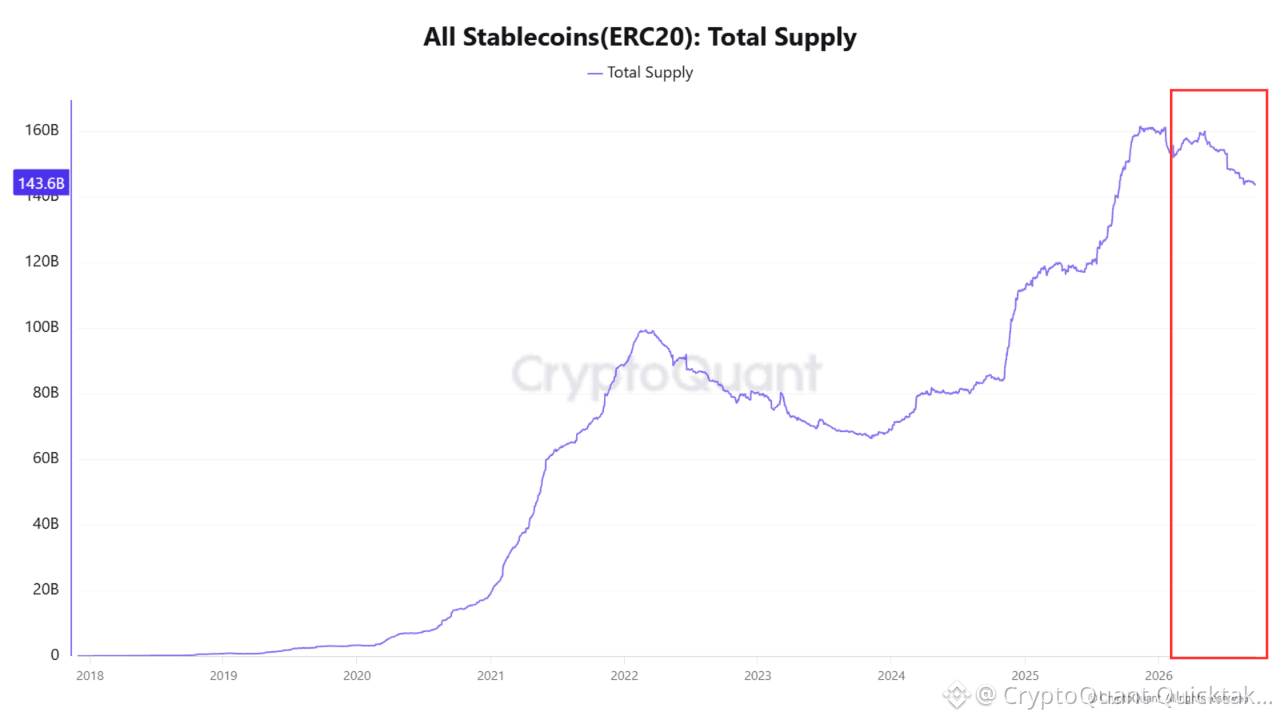
Bitcoin yangi bull bozoriga kirdimi? CryptoQuant hisoboti kuchli on-chain signallarni ko‘rsatadi, ammo risk...CryptoQuant hisobotiga ko‘ra, Bitcoin qariyb $86 000 atrofida qayta tiklandi, shu bilan birga bir nechta on-chain ko‘rsatkichlar endi yangi bull (o‘sish) fazasi ehtimolini ko‘rsatmoqda.
BTC 80 500 yaqinidagi 365 kunlik harakatlanuvchi o‘rtachasini qayta egalladi; avval bu daraja katta tsikl o‘zgarishlarini belgilagan edi. CryptoQuant’ning Bull Score ko‘rsatkichi ham avgust o‘rtalarida bullish hududga kirganidan so‘ng 80 ga qaytdi.
Uzoq muddatli egalarning faolligi ham juda muhim. Taxminan 539 000 BTC $77,1K va $80,2K oralig‘ida sotildi, biroq bozor bu taklifni yutib yubordi va yuqoriga ko‘tarildi. Keyingi yirik takliflar klasteri $88K–$91K atrofida joylashgan.
Bitcoin yangi bull bozoriga kirdimi? CryptoQuant hisoboti kuchli on-chain signallarni ko‘rsatadi, ammo risk...
CryptoQuant hisobotiga ko‘ra, Bitcoin qariyb $86 000 atrofida qayta tiklandi, shu bilan birga bir nechta on-chain ko‘rsatkichlar endi yangi bull (o‘sish) fazasi ehtimolini ko‘rsatmoqda.
BTC 80 500 yaqinidagi 365 kunlik harakatlanuvchi o‘rtachasini qayta egalladi; avval bu daraja katta tsikl o‘zgarishlarini belgilagan edi. CryptoQuant’ning Bull Score ko‘rsatkichi ham avgust o‘rtalarida bullish hududga kirganidan so‘ng 80 ga qaytdi.
Uzoq muddatli egalarning faolligi ham juda muhim. Taxminan 539 000 BTC $77,1K va $80,2K oralig‘ida sotildi, biroq bozor bu taklifni yutib yubordi va yuqoriga ko‘tarildi. Keyingi yirik takliflar klasteri $88K–$91K atrofida joylashgan.
BTC 80 500 yaqinidagi 365 kunlik harakatlanuvchi o‘rtachasini qayta egalladi; avval bu daraja katta tsikl o‘zgarishlarini belgilagan edi. CryptoQuant’ning Bull Score ko‘rsatkichi ham avgust o‘rtalarida bullish hududga kirganidan so‘ng 80 ga qaytdi.
Uzoq muddatli egalarning faolligi ham juda muhim. Taxminan 539 000 BTC $77,1K va $80,2K oralig‘ida sotildi, biroq bozor bu taklifni yutib yubordi va yuqoriga ko‘tarildi. Keyingi yirik takliflar klasteri $88K–$91K atrofida joylashgan.
1
126
Maqola
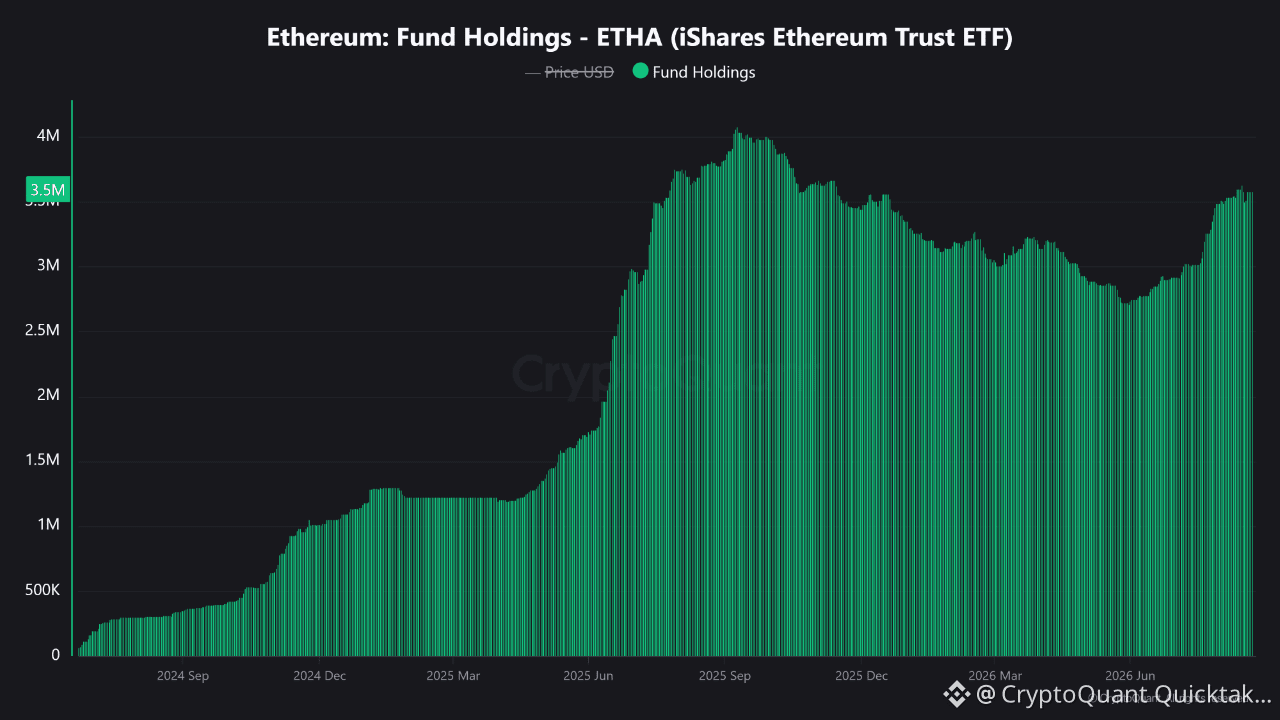
Ethereum va BlackRock ↓• Ishga tushirilganidan taxminan ikki yildan sal ko‘proq vaqt o‘tib, BlackRock’ning ETHA jamg‘armasi hozirda qariyb 3,5 mln ETHni ushlab turibdi. Jamg‘arma 2026-yil o‘rtalarigacha ushlanmalar soni kamaygan bo‘lsa-da, yaqinda tiklandi va bu institutional vosita orqali qayta tiklangan talabni ko‘rsatdi.
• 2025-yil oktabr oyida taxminan 4 mln ETH bo‘lgan ATHdan 2026-yil iyun oyidagi eng past ko‘rsatkichgacha, ushlanmalar soni taxminan 32%ga kamaydi, shu davrda esa Ethereum’ning bozor narxi 60%dan ko‘proq pasaydi. Shundan so‘ng, ushlanmalar avval yo‘qotgan foizga taxminan teng miqdorda tiklandi. ETHA hozirda Ethereum’ning muomaladagi ta’minotining taxminan 3%ini ushlab turibdi.
Ethereum va BlackRock ↓
• Ishga tushirilganidan taxminan ikki yildan sal ko‘proq vaqt o‘tib, BlackRock’ning ETHA jamg‘armasi hozirda qariyb 3,5 mln ETHni ushlab turibdi. Jamg‘arma 2026-yil o‘rtalarigacha ushlanmalar soni kamaygan bo‘lsa-da, yaqinda tiklandi va bu institutional vosita orqali qayta tiklangan talabni ko‘rsatdi.
• 2025-yil oktabr oyida taxminan 4 mln ETH bo‘lgan ATHdan 2026-yil iyun oyidagi eng past ko‘rsatkichgacha, ushlanmalar soni taxminan 32%ga kamaydi, shu davrda esa Ethereum’ning bozor narxi 60%dan ko‘proq pasaydi. Shundan so‘ng, ushlanmalar avval yo‘qotgan foizga taxminan teng miqdorda tiklandi. ETHA hozirda Ethereum’ning muomaladagi ta’minotining taxminan 3%ini ushlab turibdi.
• 2025-yil oktabr oyida taxminan 4 mln ETH bo‘lgan ATHdan 2026-yil iyun oyidagi eng past ko‘rsatkichgacha, ushlanmalar soni taxminan 32%ga kamaydi, shu davrda esa Ethereum’ning bozor narxi 60%dan ko‘proq pasaydi. Shundan so‘ng, ushlanmalar avval yo‘qotgan foizga taxminan teng miqdorda tiklandi. ETHA hozirda Ethereum’ning muomaladagi ta’minotining taxminan 3%ini ushlab turibdi.
ETH+1,68%
ETHAETF+1,14%
1
108
Maqola
Tarjimani ko‘rish
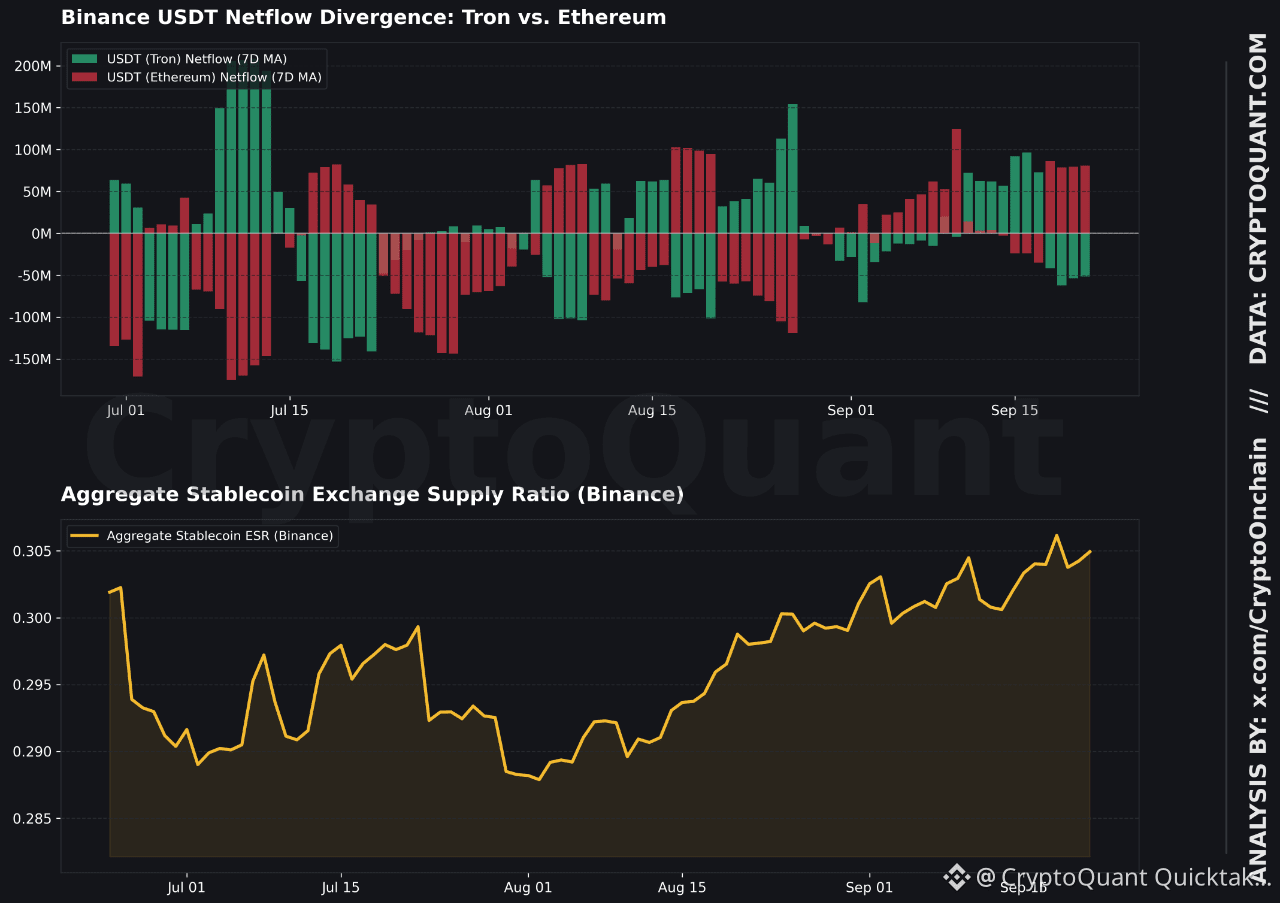
Binance USDT(ETH) Netflow Averages +$80.8M Daily, the Highest of the Six-Month WindowBinance USDT(ETH) netflow averaged +
80
,
777
,
190
d
a
i
l
y
i
n
t
h
e
w
e
e
k
e
n
d
i
n
g
S
e
p
t
e
m
b
e
r
21
,
w
h
i
l
e
U
S
D
C
o
n
t
h
e
s
a
m
e
v
e
n
u
e
r
a
n
−
69,995,707. Binance’s USDT(ETH) Exchange Supply Ratio reached 0.4349, its six-month high.
Two stablecoins moved in opposite directions on the same exchange. USDT(ETH) inflow to Binance rose 17.7% month-over-month while USDC inflow held near flat; USDC outflow rose 27.9%. Binance’s aggregate stablecoin reserve stood at $43.59B, up just 0.33% weekly — the split between the two coins was larger than the net change itself.
One candidate explanation, unverified: capital may be rotating between stablecoin rails rather than exiting risk assets.
Diverging flows within a single venue create conditions that historically preceded rebalancing more often than directional capital flight.
“For now, the clearest reading is that money changed stablecoins before it changed its mind.”
Written by CryptoOnchain
Binance USDT(ETH) Netflow Averages +$80.8M Daily, the Highest of the Six-Month Window
Binance USDT(ETH) netflow averaged +
80
,
777
,
190
d
a
i
l
y
i
n
t
h
e
w
e
e
k
e
n
d
i
n
g
S
e
p
t
e
m
b
e
r
21
,
w
h
i
l
e
U
S
D
C
o
n
t
h
e
s
a
m
e
v
e
n
u
e
r
a
n
−
69,995,707. Binance’s USDT(ETH) Exchange Supply Ratio reached 0.4349, its six-month high.
Two stablecoins moved in opposite directions on the same exchange. USDT(ETH) inflow to Binance rose 17.7% month-over-month while USDC inflow held near flat; USDC outflow rose 27.9%. Binance’s aggregate stablecoin reserve stood at $43.59B, up just 0.33% weekly — the split between the two coins was larger than the net change itself.
One candidate explanation, unverified: capital may be rotating between stablecoin rails rather than exiting risk assets.
Diverging flows within a single venue create conditions that historically preceded rebalancing more often than directional capital flight.
“For now, the clearest reading is that money changed stablecoins before it changed its mind.”
Written by CryptoOnchain
80
,
777
,
190
d
a
i
l
y
i
n
t
h
e
w
e
e
k
e
n
d
i
n
g
S
e
p
t
e
m
b
e
r
21
,
w
h
i
l
e
U
S
D
C
o
n
t
h
e
s
a
m
e
v
e
n
u
e
r
a
n
−
69,995,707. Binance’s USDT(ETH) Exchange Supply Ratio reached 0.4349, its six-month high.
Two stablecoins moved in opposite directions on the same exchange. USDT(ETH) inflow to Binance rose 17.7% month-over-month while USDC inflow held near flat; USDC outflow rose 27.9%. Binance’s aggregate stablecoin reserve stood at $43.59B, up just 0.33% weekly — the split between the two coins was larger than the net change itself.
One candidate explanation, unverified: capital may be rotating between stablecoin rails rather than exiting risk assets.
Diverging flows within a single venue create conditions that historically preceded rebalancing more often than directional capital flight.
“For now, the clearest reading is that money changed stablecoins before it changed its mind.”
Written by CryptoOnchain
108
Maqola
Tarjimani ko‘rish
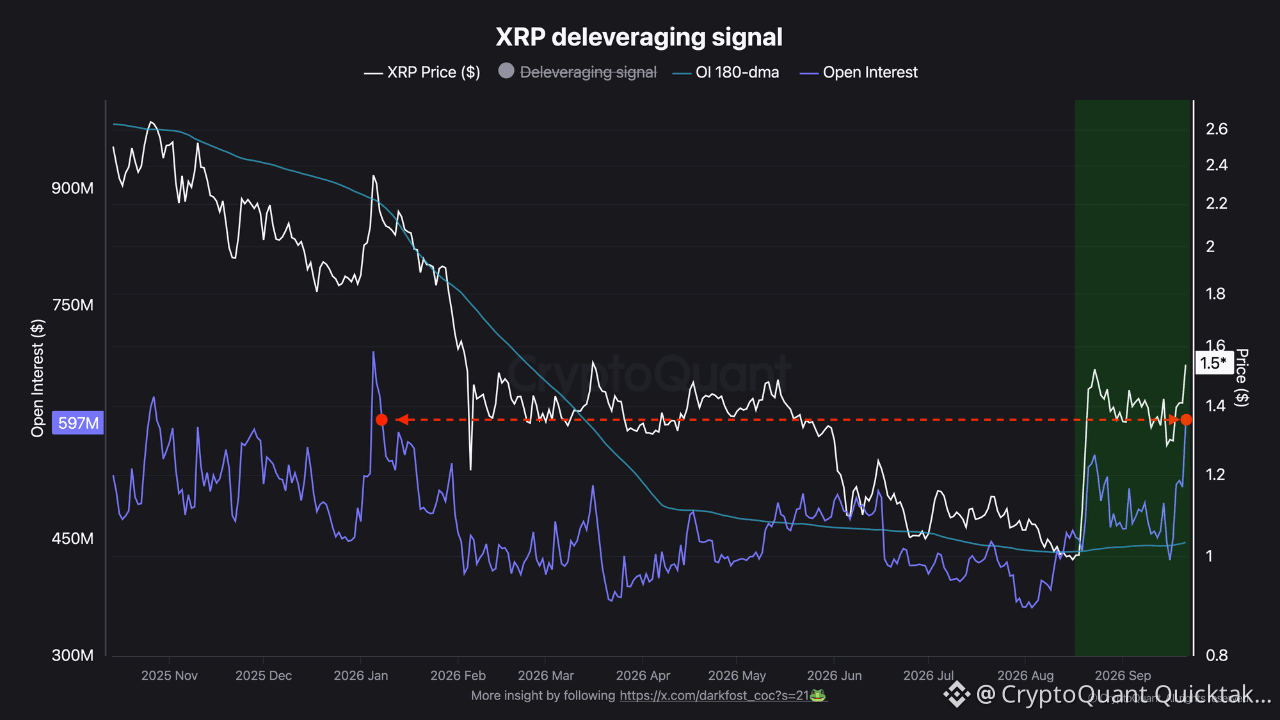
XRP's Open Interest Nears Yearly High Amid 53% Monthly RallyWe haven't seen a move like this in XRP's Open Interest (OI) since January.
Growing investor interest in XRP futures has pushed Open Interest to nearly $600 million on Binance, a level not reached since the start of the year.
The yearly record remains January 5th's $691 million, a threshold that's now not far off.
What makes this move particularly interesting is the genuine trend shift that kicked in at the end of August.
The 180-day (semi-annual) moving average of Open Interest, sitting around $445 million, has just been decisively broken through. This breakout marks a clear return of speculation on XRP, after several months where derivatives interest had remained fairly muted.
This rebound in Open Interest isn't happening under just any conditions, it's accompanied by positive funding rates (0.0001%), a sign that the buy-side is rising pushing OI higher.
As a result, in the space of a month, XRP has jumped roughly 53%, going from $1 to $1.53, one of the token's best performances in several months.
This return of positive sentiment on XRP's derivatives markets is therefore an encouraging signal for the current momentum.
That said, it's worth keeping in mind that OI remains dangerous in case of excess. That's not the case today, but it's exactly this kind of setup that will need close watching if the trend accelerates further.
Written by Darkfost
XRP's Open Interest Nears Yearly High Amid 53% Monthly Rally
We haven't seen a move like this in XRP's Open Interest (OI) since January.
Growing investor interest in XRP futures has pushed Open Interest to nearly $600 million on Binance, a level not reached since the start of the year.
The yearly record remains January 5th's $691 million, a threshold that's now not far off.
What makes this move particularly interesting is the genuine trend shift that kicked in at the end of August.
The 180-day (semi-annual) moving average of Open Interest, sitting around $445 million, has just been decisively broken through. This breakout marks a clear return of speculation on XRP, after several months where derivatives interest had remained fairly muted.
This rebound in Open Interest isn't happening under just any conditions, it's accompanied by positive funding rates (0.0001%), a sign that the buy-side is rising pushing OI higher.
As a result, in the space of a month, XRP has jumped roughly 53%, going from $1 to $1.53, one of the token's best performances in several months.
This return of positive sentiment on XRP's derivatives markets is therefore an encouraging signal for the current momentum.
That said, it's worth keeping in mind that OI remains dangerous in case of excess. That's not the case today, but it's exactly this kind of setup that will need close watching if the trend accelerates further.
Written by Darkfost
Growing investor interest in XRP futures has pushed Open Interest to nearly $600 million on Binance, a level not reached since the start of the year.
The yearly record remains January 5th's $691 million, a threshold that's now not far off.
What makes this move particularly interesting is the genuine trend shift that kicked in at the end of August.
The 180-day (semi-annual) moving average of Open Interest, sitting around $445 million, has just been decisively broken through. This breakout marks a clear return of speculation on XRP, after several months where derivatives interest had remained fairly muted.
This rebound in Open Interest isn't happening under just any conditions, it's accompanied by positive funding rates (0.0001%), a sign that the buy-side is rising pushing OI higher.
As a result, in the space of a month, XRP has jumped roughly 53%, going from $1 to $1.53, one of the token's best performances in several months.
This return of positive sentiment on XRP's derivatives markets is therefore an encouraging signal for the current momentum.
That said, it's worth keeping in mind that OI remains dangerous in case of excess. That's not the case today, but it's exactly this kind of setup that will need close watching if the trend accelerates further.
Written by Darkfost
2
324
Maqola
Tarjimani ko‘rish
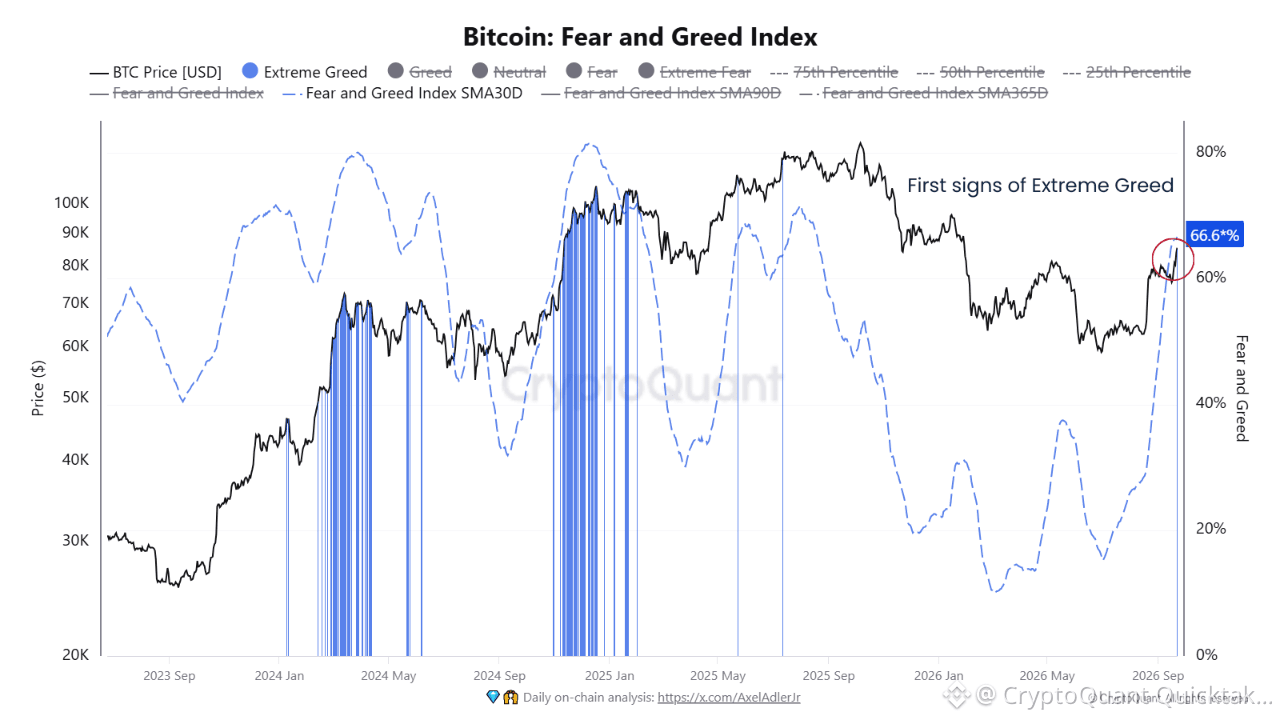
Bullish Consensus Is Becoming Bitcoin’s Next RiskBitcoin’s bull case is strengthening just as the risk of a poor entry is increasing.
The 30-day average of the Fear and Greed Index has climbed to 66.6%, while the chart is registering its first Extreme Greed signals. Investors have moved from questioning the recovery to expecting prices to continue higher. That shift can sustain momentum, but it also leaves the market less tolerant of disappointment.
The Bull Score Index confirms the regime change.
After spending much of 2026 in bearish or neutral territory, it has moved through bullish readings and is now printing its first extra-bullish observations near current prices. Optimism is no longer isolated to sentiment; the broader conditions captured by the model are aligning with the advance.
Together, both metrics describe improving market strength but deteriorating entry asymmetry. Extreme optimism is not an automatic top signal, and greed can persist during powerful trends. But once bullish conviction becomes consensus, more upside is already reflected in positioning. The marginal buyer is increasingly driven by FOMO, leaving the market more exposed to profit-taking, leverage resets, and negative surprises.
A bullish market is not necessarily a low-risk market. The trend may still extend, but chasing after sentiment has accelerated offers a weaker risk/reward profile than buying during disbelief.
Written by MorenoDV_
Bullish Consensus Is Becoming Bitcoin’s Next Risk
Bitcoin’s bull case is strengthening just as the risk of a poor entry is increasing.
The 30-day average of the Fear and Greed Index has climbed to 66.6%, while the chart is registering its first Extreme Greed signals. Investors have moved from questioning the recovery to expecting prices to continue higher. That shift can sustain momentum, but it also leaves the market less tolerant of disappointment.
The Bull Score Index confirms the regime change.
After spending much of 2026 in bearish or neutral territory, it has moved through bullish readings and is now printing its first extra-bullish observations near current prices. Optimism is no longer isolated to sentiment; the broader conditions captured by the model are aligning with the advance.
Together, both metrics describe improving market strength but deteriorating entry asymmetry. Extreme optimism is not an automatic top signal, and greed can persist during powerful trends. But once bullish conviction becomes consensus, more upside is already reflected in positioning. The marginal buyer is increasingly driven by FOMO, leaving the market more exposed to profit-taking, leverage resets, and negative surprises.
A bullish market is not necessarily a low-risk market. The trend may still extend, but chasing after sentiment has accelerated offers a weaker risk/reward profile than buying during disbelief.
Written by MorenoDV_
The 30-day average of the Fear and Greed Index has climbed to 66.6%, while the chart is registering its first Extreme Greed signals. Investors have moved from questioning the recovery to expecting prices to continue higher. That shift can sustain momentum, but it also leaves the market less tolerant of disappointment.
The Bull Score Index confirms the regime change.
After spending much of 2026 in bearish or neutral territory, it has moved through bullish readings and is now printing its first extra-bullish observations near current prices. Optimism is no longer isolated to sentiment; the broader conditions captured by the model are aligning with the advance.
Together, both metrics describe improving market strength but deteriorating entry asymmetry. Extreme optimism is not an automatic top signal, and greed can persist during powerful trends. But once bullish conviction becomes consensus, more upside is already reflected in positioning. The marginal buyer is increasingly driven by FOMO, leaving the market more exposed to profit-taking, leverage resets, and negative surprises.
A bullish market is not necessarily a low-risk market. The trend may still extend, but chasing after sentiment has accelerated offers a weaker risk/reward profile than buying during disbelief.
Written by MorenoDV_
67
Maqola
Tarjimani ko‘rish
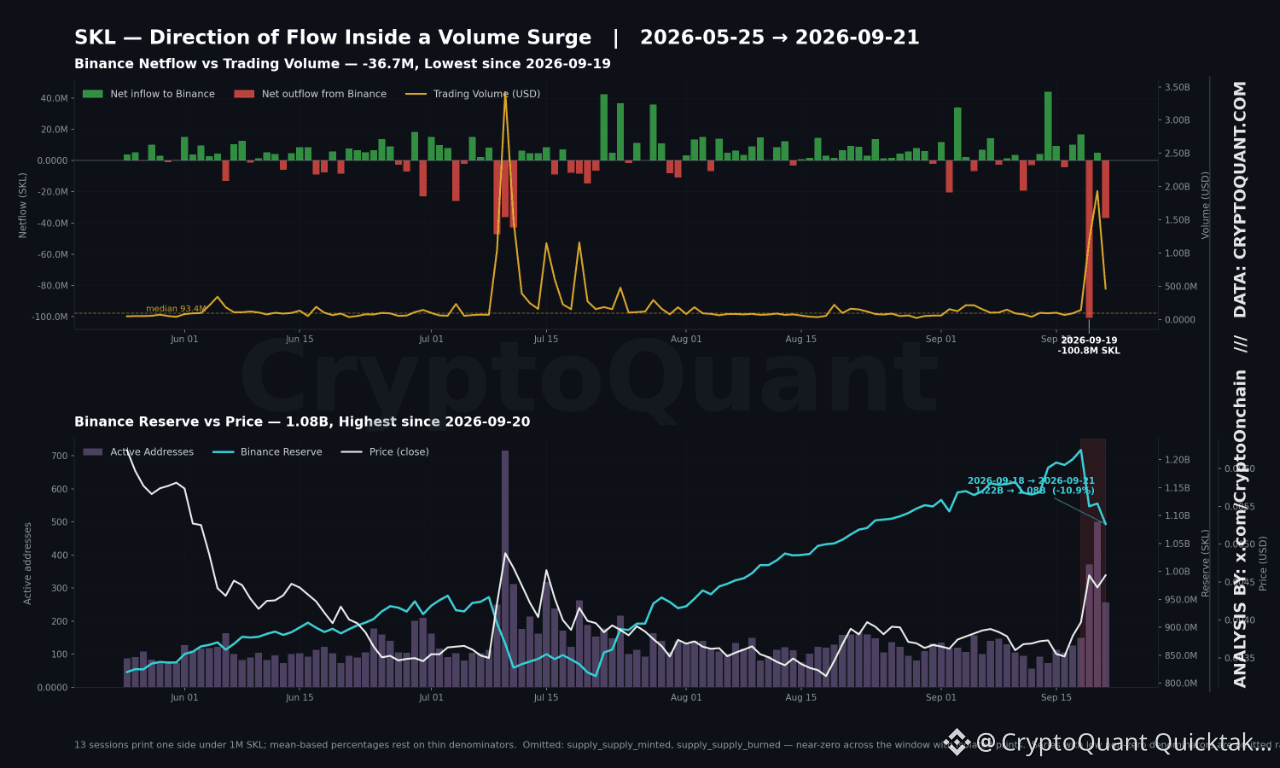
Binance SKL Reserve Falls 10.9% Over Three Sessions, September 18–21Binance SKL reserve fell from 1,217,404,347 on September 18 to 1,084,851,909 on September 21, a 10.9% drawdown. Weekly netflow averaged −14,395,687 SKL daily. Inflow transaction count reached 445 on September 20, the highest of the six-month window.
supply_minted is excluded — its −100% reading rests on a single 10,296,047 print on September 14, with every other session at zero.
The FOMC decision landed September 16, three sessions before the move. The 10-year held +27bp over the 2-year and the broad dollar index softened 1.7% across 60 days — a loose backdrop at best. One candidate explanation, unverified: the withdrawal cluster may reflect a token-specific event rather than rate positioning.
The pattern inside the drawdown matters more than its size. September 19 ran net negative (−100.8M) on 1.19B volume; September 20 came in near-symmetric on 1.93B volume; September 21 turned negative again (−36.7M). Price moved opposite the reserve — close reached 0.005 on September 21, up 9.2% weekly — while active addresses hit 501, well above the 137 six-month average.
Coins leaving Binance while price firms creates conditions that historically preceded reduced sell-side depth more often than distribution.
“For now, the clearest reading is that SKL is leaving Binance into rising prices, not into them.”
Written by CryptoOnchain
Binance SKL Reserve Falls 10.9% Over Three Sessions, September 18–21
Binance SKL reserve fell from 1,217,404,347 on September 18 to 1,084,851,909 on September 21, a 10.9% drawdown. Weekly netflow averaged −14,395,687 SKL daily. Inflow transaction count reached 445 on September 20, the highest of the six-month window.
supply_minted is excluded — its −100% reading rests on a single 10,296,047 print on September 14, with every other session at zero.
The FOMC decision landed September 16, three sessions before the move. The 10-year held +27bp over the 2-year and the broad dollar index softened 1.7% across 60 days — a loose backdrop at best. One candidate explanation, unverified: the withdrawal cluster may reflect a token-specific event rather than rate positioning.
The pattern inside the drawdown matters more than its size. September 19 ran net negative (−100.8M) on 1.19B volume; September 20 came in near-symmetric on 1.93B volume; September 21 turned negative again (−36.7M). Price moved opposite the reserve — close reached 0.005 on September 21, up 9.2% weekly — while active addresses hit 501, well above the 137 six-month average.
Coins leaving Binance while price firms creates conditions that historically preceded reduced sell-side depth more often than distribution.
“For now, the clearest reading is that SKL is leaving Binance into rising prices, not into them.”
Written by CryptoOnchain
supply_minted is excluded — its −100% reading rests on a single 10,296,047 print on September 14, with every other session at zero.
The FOMC decision landed September 16, three sessions before the move. The 10-year held +27bp over the 2-year and the broad dollar index softened 1.7% across 60 days — a loose backdrop at best. One candidate explanation, unverified: the withdrawal cluster may reflect a token-specific event rather than rate positioning.
The pattern inside the drawdown matters more than its size. September 19 ran net negative (−100.8M) on 1.19B volume; September 20 came in near-symmetric on 1.93B volume; September 21 turned negative again (−36.7M). Price moved opposite the reserve — close reached 0.005 on September 21, up 9.2% weekly — while active addresses hit 501, well above the 137 six-month average.
Coins leaving Binance while price firms creates conditions that historically preceded reduced sell-side depth more often than distribution.
“For now, the clearest reading is that SKL is leaving Binance into rising prices, not into them.”
Written by CryptoOnchain
1
41
Maqola
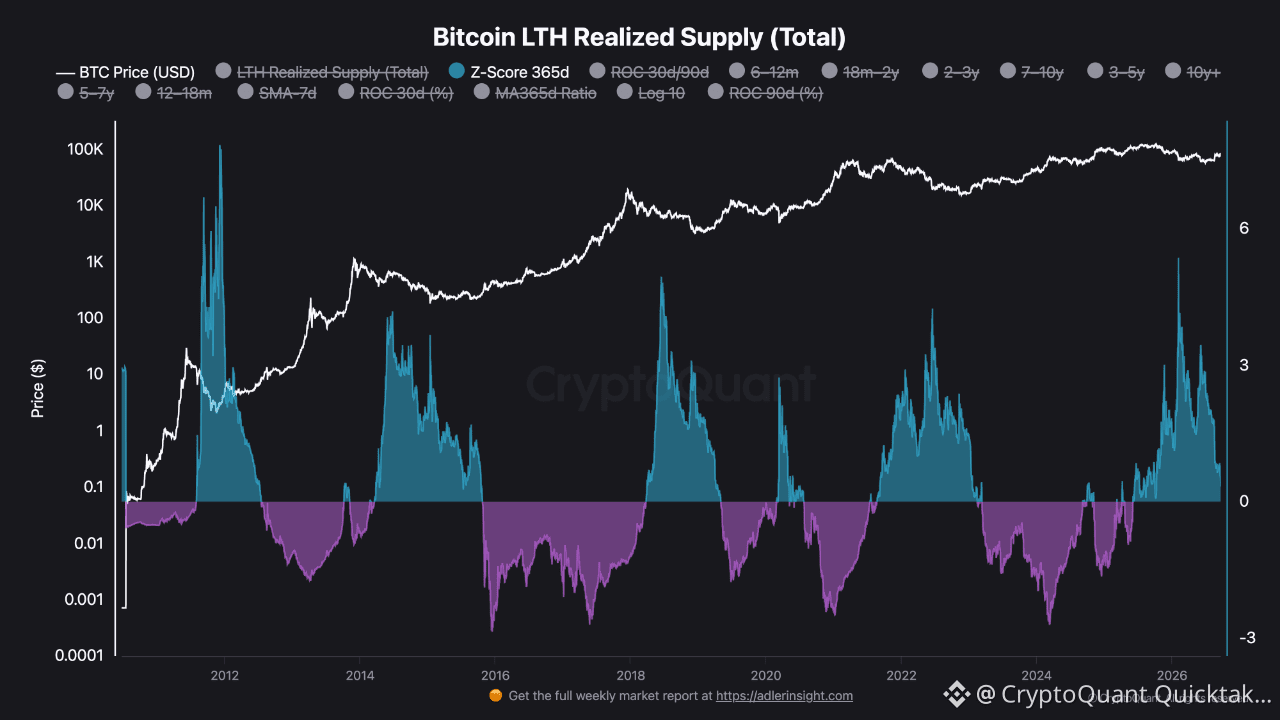
BTC: LTH Realized Supply Z-Score Neytrallashishga YaqinBitcoin’ning LTH Realized Supply 365 kunlik Z-Score ko‘rsatkichi taxminan +0.33 gacha tushdi; u 2026-yilgi eng yuqori cho‘qqi +5 atrofidan va keyinroq +3.5 atrofida bo‘lgan tiklanishdan kelgan.
365 kunlik Z-Score LTH Realized Supply bir yillik statistik me’yoridan qanchalik uzoqligini ko‘rsatadi. +0.33 ko‘rsatkichida u faqat me’yoridan ozgina yuqorida, ya’ni avvalgi 2026-yilgi kengayish ortidagi statistik ortiqcha deyarli so‘ngan.
Tarixan, salbiy ko‘rsatkichlar ko‘pincha LTH ta’minoti darajasi yuqori bo‘lgan sharoitlar normallashgach, ta’mirlash, konsolidatsiya va Bitcoin siklining ilk tendensiya bosqichlarida paydo bo‘lgan.
BTC: LTH Realized Supply Z-Score Neytrallashishga Yaqin
Bitcoin’ning LTH Realized Supply 365 kunlik Z-Score ko‘rsatkichi taxminan +0.33 gacha tushdi; u 2026-yilgi eng yuqori cho‘qqi +5 atrofidan va keyinroq +3.5 atrofida bo‘lgan tiklanishdan kelgan.
365 kunlik Z-Score LTH Realized Supply bir yillik statistik me’yoridan qanchalik uzoqligini ko‘rsatadi. +0.33 ko‘rsatkichida u faqat me’yoridan ozgina yuqorida, ya’ni avvalgi 2026-yilgi kengayish ortidagi statistik ortiqcha deyarli so‘ngan.
Tarixan, salbiy ko‘rsatkichlar ko‘pincha LTH ta’minoti darajasi yuqori bo‘lgan sharoitlar normallashgach, ta’mirlash, konsolidatsiya va Bitcoin siklining ilk tendensiya bosqichlarida paydo bo‘lgan.
365 kunlik Z-Score LTH Realized Supply bir yillik statistik me’yoridan qanchalik uzoqligini ko‘rsatadi. +0.33 ko‘rsatkichida u faqat me’yoridan ozgina yuqorida, ya’ni avvalgi 2026-yilgi kengayish ortidagi statistik ortiqcha deyarli so‘ngan.
Tarixan, salbiy ko‘rsatkichlar ko‘pincha LTH ta’minoti darajasi yuqori bo‘lgan sharoitlar normallashgach, ta’mirlash, konsolidatsiya va Bitcoin siklining ilk tendensiya bosqichlarida paydo bo‘lgan.
1
144
Maqola
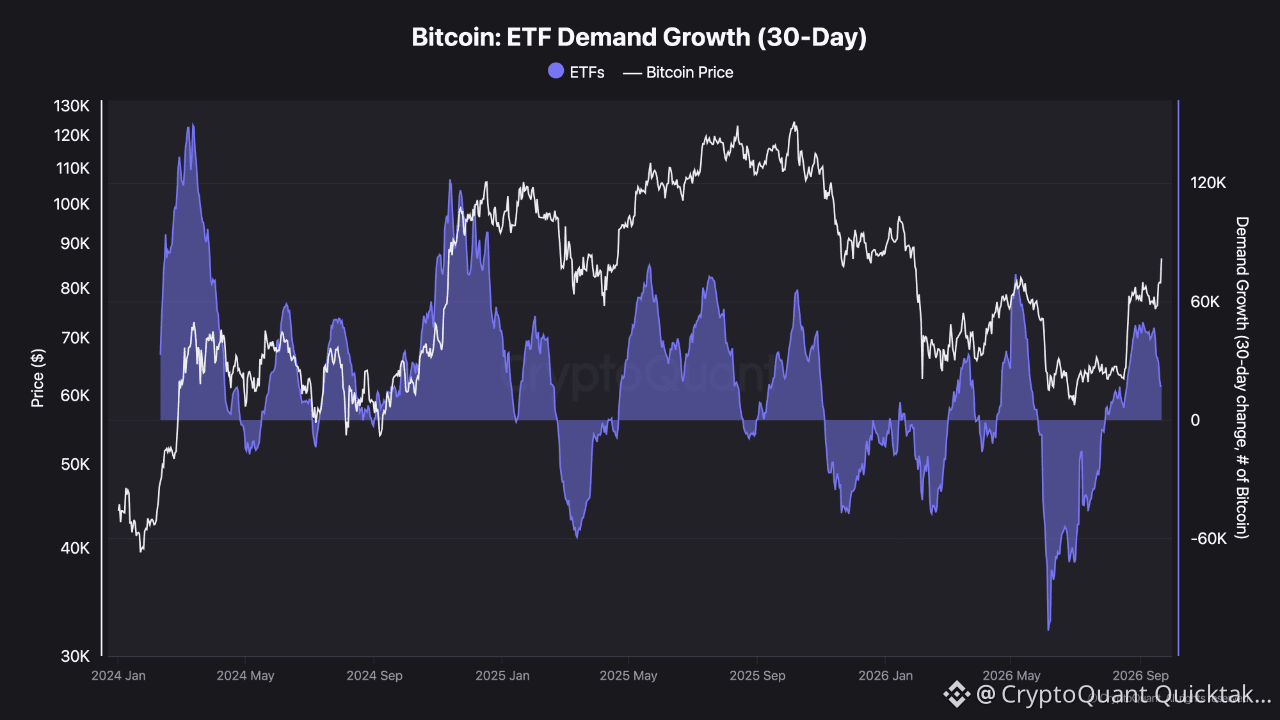
Bitcoin ETFlari 1.2967 mln BTC ushlab turibdi va uning orqasidagi talab o‘sishi endi orqaga burildi.Spot ETFlarning 30 kun ichidagi talab o‘sishi hali ham ijobiy. O‘zgargani yo‘nalish. O‘tgan haftada chiziq o‘zining mahalliy maksimumidan pastga qaytdi va buni narx 70-yillarning o‘rtalaridan 80-yillarning o‘rtalariga ko‘tarilayotgan paytda amalga oshirdi.
Ushbu ko‘rsatkich spot ETFlar ushlab turgan bitkoinlar soni bo‘yicha 30 kunlik o‘zgarishni o‘lchaydi. Nolning yuqorisida jamg‘armalar so‘nggi oyda sof hisobda ko‘inlarni qo‘shgan. Nolning pastida esa ko‘inlarni qaytarib bergan. Bu o‘qishda ikki xil narsa bor va ularni ajratib olish foydali. Daraja hozirda ETFlar hali ham sof xaridor ekanini aytadi. O‘zgarish sur’ati esa buni qanchalik tez ro‘y berayotganini ko‘rsatadi va aynan shu qism endi manfiyga o‘tdi.
Bitcoin ETFlari 1.2967 mln BTC ushlab turibdi va uning orqasidagi talab o‘sishi endi orqaga burildi.
Spot ETFlarning 30 kun ichidagi talab o‘sishi hali ham ijobiy. O‘zgargani yo‘nalish. O‘tgan haftada chiziq o‘zining mahalliy maksimumidan pastga qaytdi va buni narx 70-yillarning o‘rtalaridan 80-yillarning o‘rtalariga ko‘tarilayotgan paytda amalga oshirdi.
Ushbu ko‘rsatkich spot ETFlar ushlab turgan bitkoinlar soni bo‘yicha 30 kunlik o‘zgarishni o‘lchaydi. Nolning yuqorisida jamg‘armalar so‘nggi oyda sof hisobda ko‘inlarni qo‘shgan. Nolning pastida esa ko‘inlarni qaytarib bergan. Bu o‘qishda ikki xil narsa bor va ularni ajratib olish foydali. Daraja hozirda ETFlar hali ham sof xaridor ekanini aytadi. O‘zgarish sur’ati esa buni qanchalik tez ro‘y berayotganini ko‘rsatadi va aynan shu qism endi manfiyga o‘tdi.
Ushbu ko‘rsatkich spot ETFlar ushlab turgan bitkoinlar soni bo‘yicha 30 kunlik o‘zgarishni o‘lchaydi. Nolning yuqorisida jamg‘armalar so‘nggi oyda sof hisobda ko‘inlarni qo‘shgan. Nolning pastida esa ko‘inlarni qaytarib bergan. Bu o‘qishda ikki xil narsa bor va ularni ajratib olish foydali. Daraja hozirda ETFlar hali ham sof xaridor ekanini aytadi. O‘zgarish sur’ati esa buni qanchalik tez ro‘y berayotganini ko‘rsatadi va aynan shu qism endi manfiyga o‘tdi.
123
Maqola
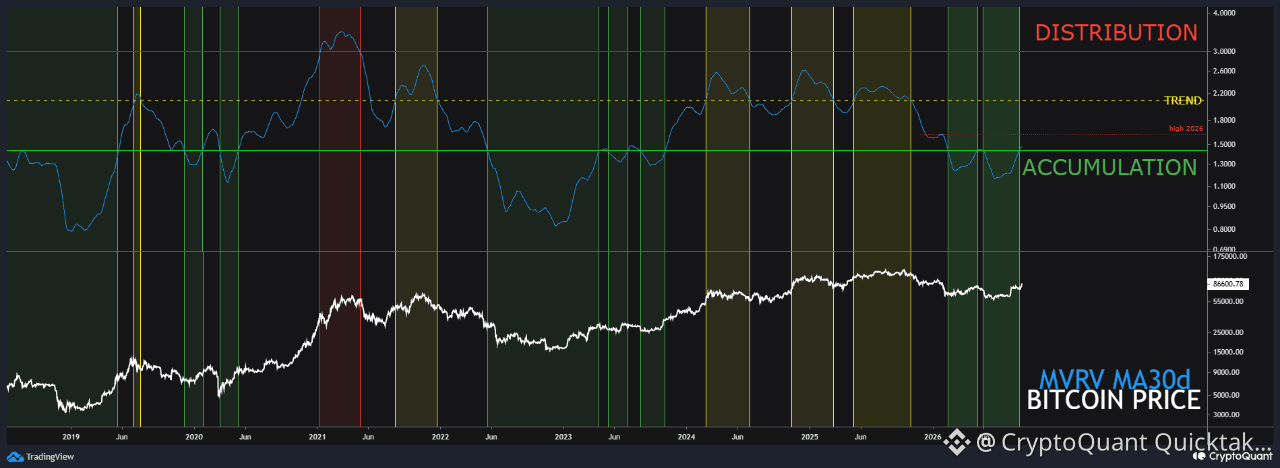
MVRV MA30d 2026-yilda ikkinchi marta Akumulyatsiya zonasidan chiqib ketdiKo‘rsatkich yana Akumulyatsiya zonasidan yuqorida bo‘lib, may oyidagi eng yuqori ko‘rsatkichni qayta yangilaydi va yilning cho‘qqisiga intilmoqda.
2026-yilda qariyb 6 oy davomida MVRV shu diapazonda savdo qildi; bu esa, Bitcoin tarixida doimiy ravishda, kuchli to‘planish davrlaridan keyin ajoyib daromadlarni ko‘rsatib kelgan naqshdir.
Agar ko‘rsatkich yilning yuqorisidan o‘tsa (~1.62), bu davom etayotgan ayiq bozorining teskari tomonga burilganini tasdiqlaydi va asosiy narx maqsadi 126 ming $ miqdoridagi barcha vaqtlardagi eng yuqori ko‘rsatkich bo‘ladi.
Yana bir bor, ushbu ko‘rsatkich bozorga kirish uchun ajoyib tarixiy oynani signal qildi va BTC bahosini baholashni osonlashtirdi.
MVRV MA30d 2026-yilda ikkinchi marta Akumulyatsiya zonasidan chiqib ketdi
Ko‘rsatkich yana Akumulyatsiya zonasidan yuqorida bo‘lib, may oyidagi eng yuqori ko‘rsatkichni qayta yangilaydi va yilning cho‘qqisiga intilmoqda.
2026-yilda qariyb 6 oy davomida MVRV shu diapazonda savdo qildi; bu esa, Bitcoin tarixida doimiy ravishda, kuchli to‘planish davrlaridan keyin ajoyib daromadlarni ko‘rsatib kelgan naqshdir.
Agar ko‘rsatkich yilning yuqorisidan o‘tsa (~1.62), bu davom etayotgan ayiq bozorining teskari tomonga burilganini tasdiqlaydi va asosiy narx maqsadi 126 ming $ miqdoridagi barcha vaqtlardagi eng yuqori ko‘rsatkich bo‘ladi.
Yana bir bor, ushbu ko‘rsatkich bozorga kirish uchun ajoyib tarixiy oynani signal qildi va BTC bahosini baholashni osonlashtirdi.
2026-yilda qariyb 6 oy davomida MVRV shu diapazonda savdo qildi; bu esa, Bitcoin tarixida doimiy ravishda, kuchli to‘planish davrlaridan keyin ajoyib daromadlarni ko‘rsatib kelgan naqshdir.
Agar ko‘rsatkich yilning yuqorisidan o‘tsa (~1.62), bu davom etayotgan ayiq bozorining teskari tomonga burilganini tasdiqlaydi va asosiy narx maqsadi 126 ming $ miqdoridagi barcha vaqtlardagi eng yuqori ko‘rsatkich bo‘ladi.
Yana bir bor, ushbu ko‘rsatkich bozorga kirish uchun ajoyib tarixiy oynani signal qildi va BTC bahosini baholashni osonlashtirdi.
1
38
Maqola
Binance XRP’da yuqori aylanish: kirimlar keskin oshdi, biroq zaxirlar deyarli ko‘tarilmadiXRP kuchli tiklandi, 22-sentabr kuni $1.51–$1.53 atrofida savdo qildi; u qisqa muddat ichida $1.57 atrofidagi yuqoriroq darajalarga ham yetgan.
CryptoQuant ma’lumotlari shuni ko‘rsatadiki, Binance so‘nggi sessiyalarda XRP bo‘yicha yuqori darajadagi kirimlarni qayd etgan: o‘rtacha kunlik omonatlar choraklik bazadan taxminan 663%ga yuqori bo‘lib, bir necha yuqori faollik kunlari bo‘ylab jamlangan. Shu bilan birga, chiqimlar ham sezilarli oshgan. Natijada, Binance’ning XRP zaxiralari faqat ozgina, choraklik bazadan taxminan 0.22%ga oshib, qariyb 2.63 milliard token atrofida yakunlandi.
Binance XRP’da yuqori aylanish: kirimlar keskin oshdi, biroq zaxirlar deyarli ko‘tarilmadi
XRP kuchli tiklandi, 22-sentabr kuni $1.51–$1.53 atrofida savdo qildi; u qisqa muddat ichida $1.57 atrofidagi yuqoriroq darajalarga ham yetgan.
CryptoQuant ma’lumotlari shuni ko‘rsatadiki, Binance so‘nggi sessiyalarda XRP bo‘yicha yuqori darajadagi kirimlarni qayd etgan: o‘rtacha kunlik omonatlar choraklik bazadan taxminan 663%ga yuqori bo‘lib, bir necha yuqori faollik kunlari bo‘ylab jamlangan. Shu bilan birga, chiqimlar ham sezilarli oshgan. Natijada, Binance’ning XRP zaxiralari faqat ozgina, choraklik bazadan taxminan 0.22%ga oshib, qariyb 2.63 milliard token atrofida yakunlandi.
CryptoQuant ma’lumotlari shuni ko‘rsatadiki, Binance so‘nggi sessiyalarda XRP bo‘yicha yuqori darajadagi kirimlarni qayd etgan: o‘rtacha kunlik omonatlar choraklik bazadan taxminan 663%ga yuqori bo‘lib, bir necha yuqori faollik kunlari bo‘ylab jamlangan. Shu bilan birga, chiqimlar ham sezilarli oshgan. Natijada, Binance’ning XRP zaxiralari faqat ozgina, choraklik bazadan taxminan 0.22%ga oshib, qariyb 2.63 milliard token atrofida yakunlandi.
1
82
Maqola
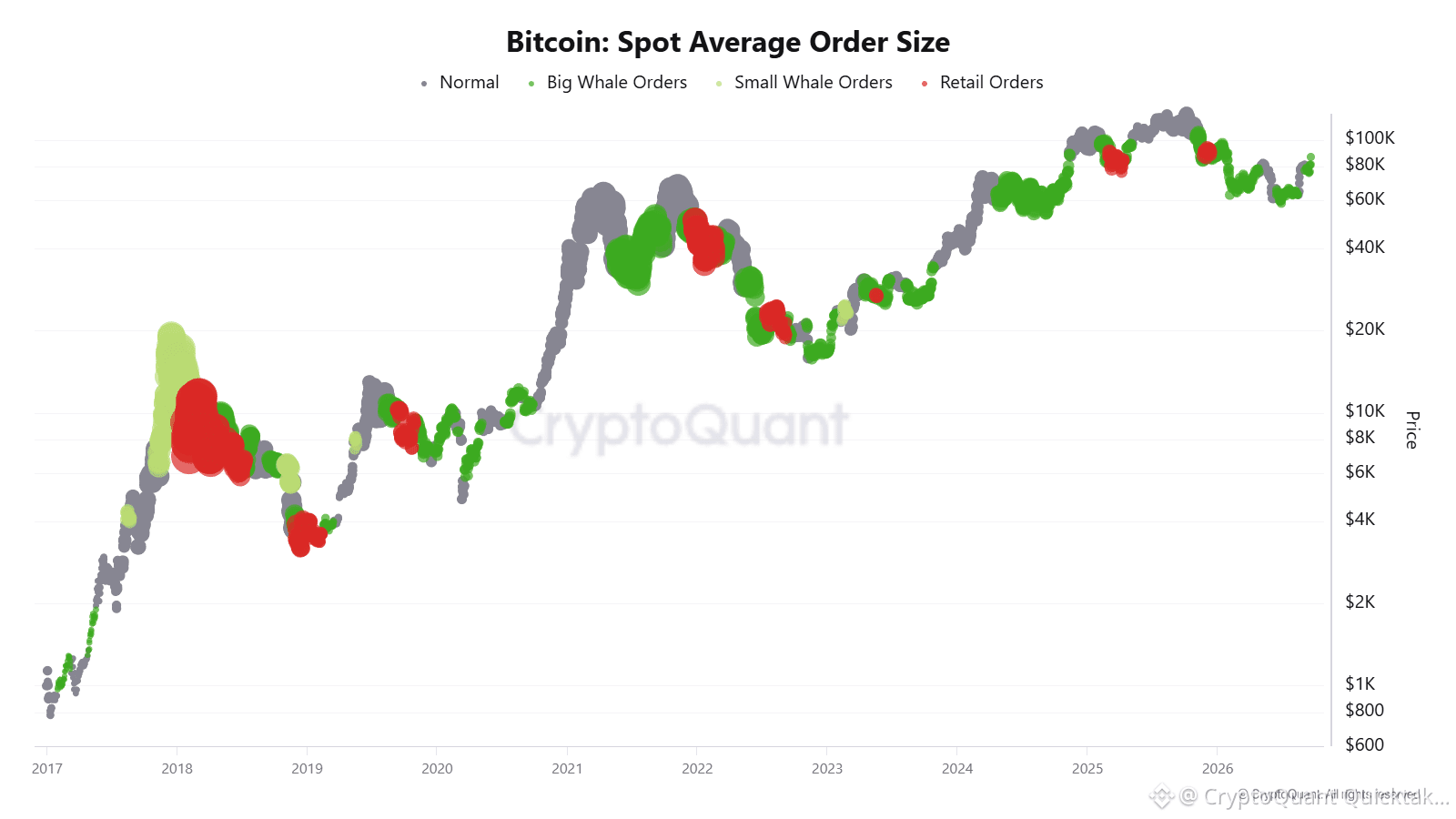
Bitcoin xarid qilish uchun jozibador pozitsiyada qolmoqda.Yirik kitlar $BTC spot buyurtmalar faolligini davom ettirgan holda boshqarishda davom etmoqda.
Umuman olganda, yirik kitlar $BTC bull run boshlanishidan oldin spot buyurtmalarni boshqarishga moyil bo‘ladi.
Kitlar boshchiligidagi bu turdagi buyurtmalar o‘tgan yilning oxiridan beri davom etmoqda. $BTC ko‘tarila boshlagan bo‘lsa-da, kitlar spot savdoning asosiy drayveri bo‘lib qolmoqda.
Standart naqsh kitlar to‘planishni tugatib, narxni yuqoriga itarganda ochiladi. Shundan so‘ng ular sotishni boshlaydi va bozorga qaytgan chakana investorlar hajmni o‘zlashtiradi.
Chakana investorlarning ishtiroki pastligicha qolmoqda; bu hozirgi spot buyurtmalar hajmlarida aks etib, xarid qilish uchun sharoitlar qulay ekanini ko‘rsatadi.
Bitcoin xarid qilish uchun jozibador pozitsiyada qolmoqda.
Yirik kitlar $BTC spot buyurtmalar faolligini davom ettirgan holda boshqarishda davom etmoqda.
Umuman olganda, yirik kitlar $BTC bull run boshlanishidan oldin spot buyurtmalarni boshqarishga moyil bo‘ladi.
Kitlar boshchiligidagi bu turdagi buyurtmalar o‘tgan yilning oxiridan beri davom etmoqda. $BTC ko‘tarila boshlagan bo‘lsa-da, kitlar spot savdoning asosiy drayveri bo‘lib qolmoqda.
Standart naqsh kitlar to‘planishni tugatib, narxni yuqoriga itarganda ochiladi. Shundan so‘ng ular sotishni boshlaydi va bozorga qaytgan chakana investorlar hajmni o‘zlashtiradi.
Chakana investorlarning ishtiroki pastligicha qolmoqda; bu hozirgi spot buyurtmalar hajmlarida aks etib, xarid qilish uchun sharoitlar qulay ekanini ko‘rsatadi.
Umuman olganda, yirik kitlar $BTC bull run boshlanishidan oldin spot buyurtmalarni boshqarishga moyil bo‘ladi.
Kitlar boshchiligidagi bu turdagi buyurtmalar o‘tgan yilning oxiridan beri davom etmoqda. $BTC ko‘tarila boshlagan bo‘lsa-da, kitlar spot savdoning asosiy drayveri bo‘lib qolmoqda.
Standart naqsh kitlar to‘planishni tugatib, narxni yuqoriga itarganda ochiladi. Shundan so‘ng ular sotishni boshlaydi va bozorga qaytgan chakana investorlar hajmni o‘zlashtiradi.
Chakana investorlarning ishtiroki pastligicha qolmoqda; bu hozirgi spot buyurtmalar hajmlarida aks etib, xarid qilish uchun sharoitlar qulay ekanini ko‘rsatadi.
1
151
Maqola
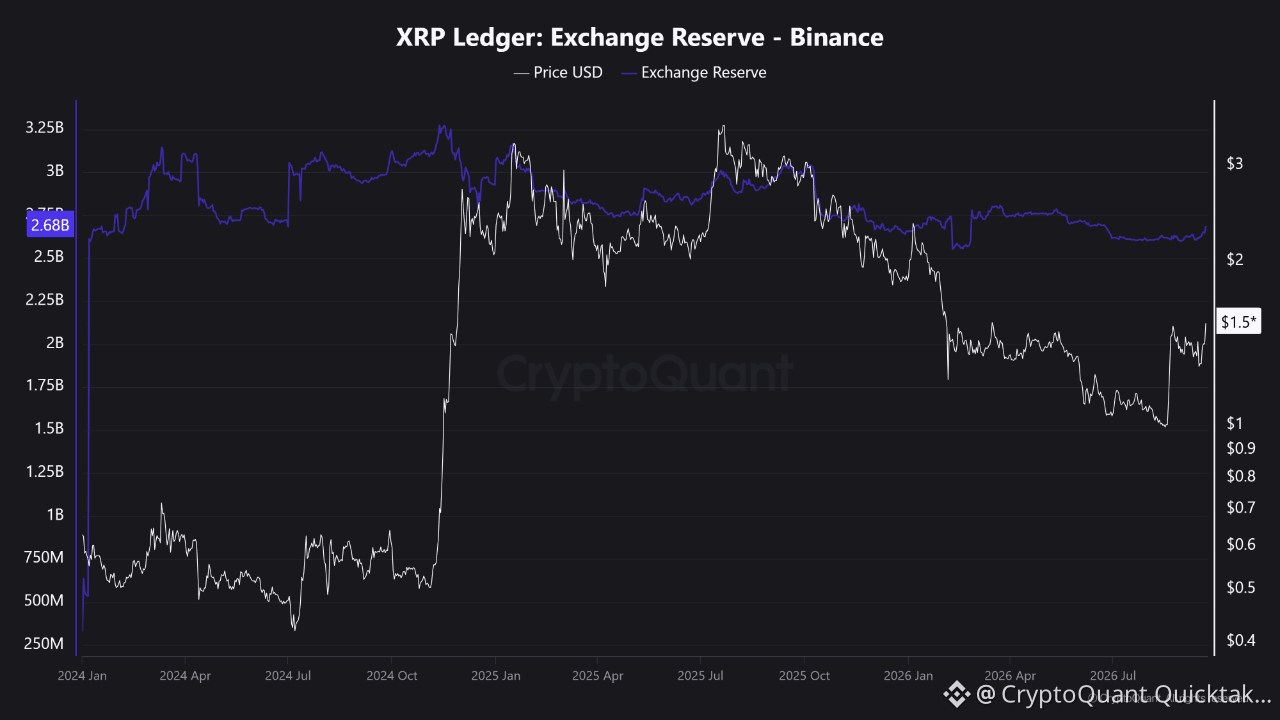
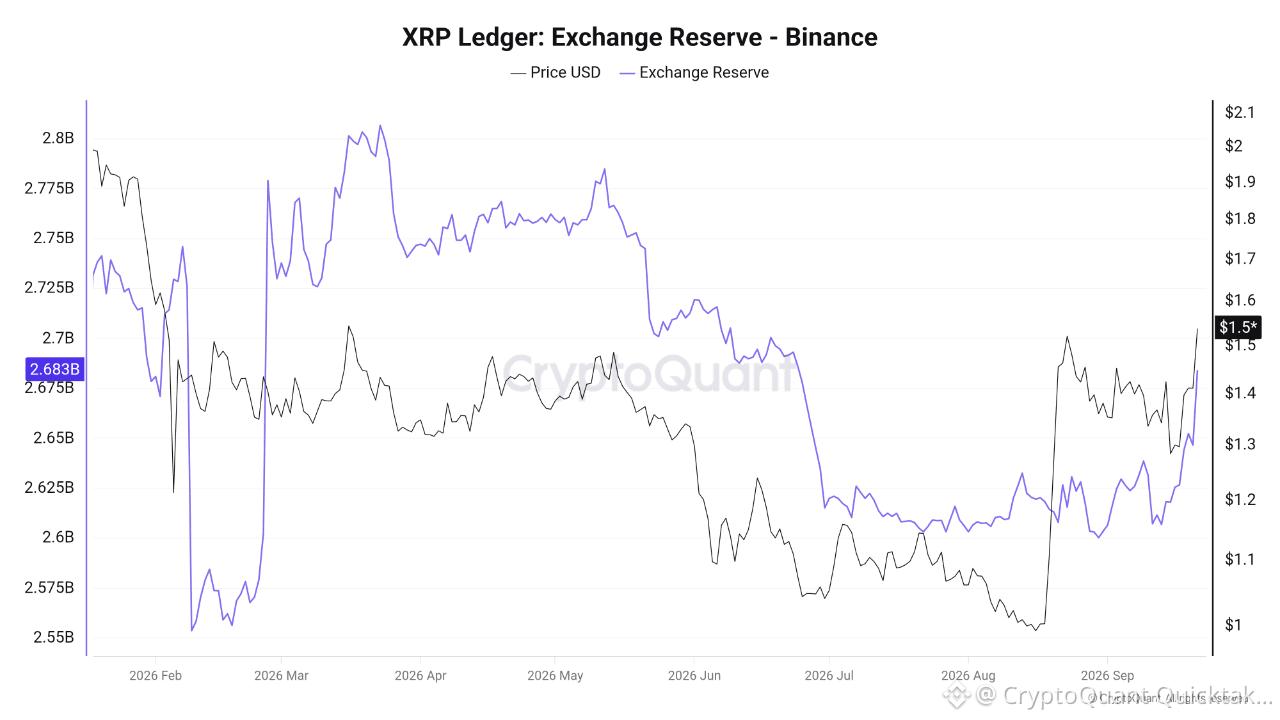
Binance’da XRP zaxiralari 3 oylik eng yuqori darajaga ko‘tarildiMa’lumotlarga ko‘ra, Binance’da XRP zaxiralari yaqinda taxminan 2,68 mlrd XRPga ko‘tarilgan, bunda narx 1,50 dollar atrofida savdo qilmoqda. Ma’lumotlarga ko‘ra, zaxiralar o‘tgan iyundan beri eng yuqori darajaga yetdi — oldingi oylar davomida kuzatilgan pasayishdan so‘ng sezilarli o‘zgarish.
Ushbu o‘sish Binance’da endi ko‘proq miqdordagi XRP ushlab turilayotganini anglatadi, bu esa platformada spot savdosi uchun taqdim etilayotgan taklifning ulushini oshiradi. Bu harakat zaxiraning so‘nggi yo‘nalishi bilan solishtirganda ayniqsa muhim: XRP balanslari avvalgi davrda keskin kamaygan, keyin esa so‘nggi haftalarda asta-sekin tiklana boshlagan edi.
Binance’da XRP zaxiralari 3 oylik eng yuqori darajaga ko‘tarildi
Ma’lumotlarga ko‘ra, Binance’da XRP zaxiralari yaqinda taxminan 2,68 mlrd XRPga ko‘tarilgan, bunda narx 1,50 dollar atrofida savdo qilmoqda. Ma’lumotlarga ko‘ra, zaxiralar o‘tgan iyundan beri eng yuqori darajaga yetdi — oldingi oylar davomida kuzatilgan pasayishdan so‘ng sezilarli o‘zgarish.
Ushbu o‘sish Binance’da endi ko‘proq miqdordagi XRP ushlab turilayotganini anglatadi, bu esa platformada spot savdosi uchun taqdim etilayotgan taklifning ulushini oshiradi. Bu harakat zaxiraning so‘nggi yo‘nalishi bilan solishtirganda ayniqsa muhim: XRP balanslari avvalgi davrda keskin kamaygan, keyin esa so‘nggi haftalarda asta-sekin tiklana boshlagan edi.
Ushbu o‘sish Binance’da endi ko‘proq miqdordagi XRP ushlab turilayotganini anglatadi, bu esa platformada spot savdosi uchun taqdim etilayotgan taklifning ulushini oshiradi. Bu harakat zaxiraning so‘nggi yo‘nalishi bilan solishtirganda ayniqsa muhim: XRP balanslari avvalgi davrda keskin kamaygan, keyin esa so‘nggi haftalarda asta-sekin tiklana boshlagan edi.
1
324
Maqola
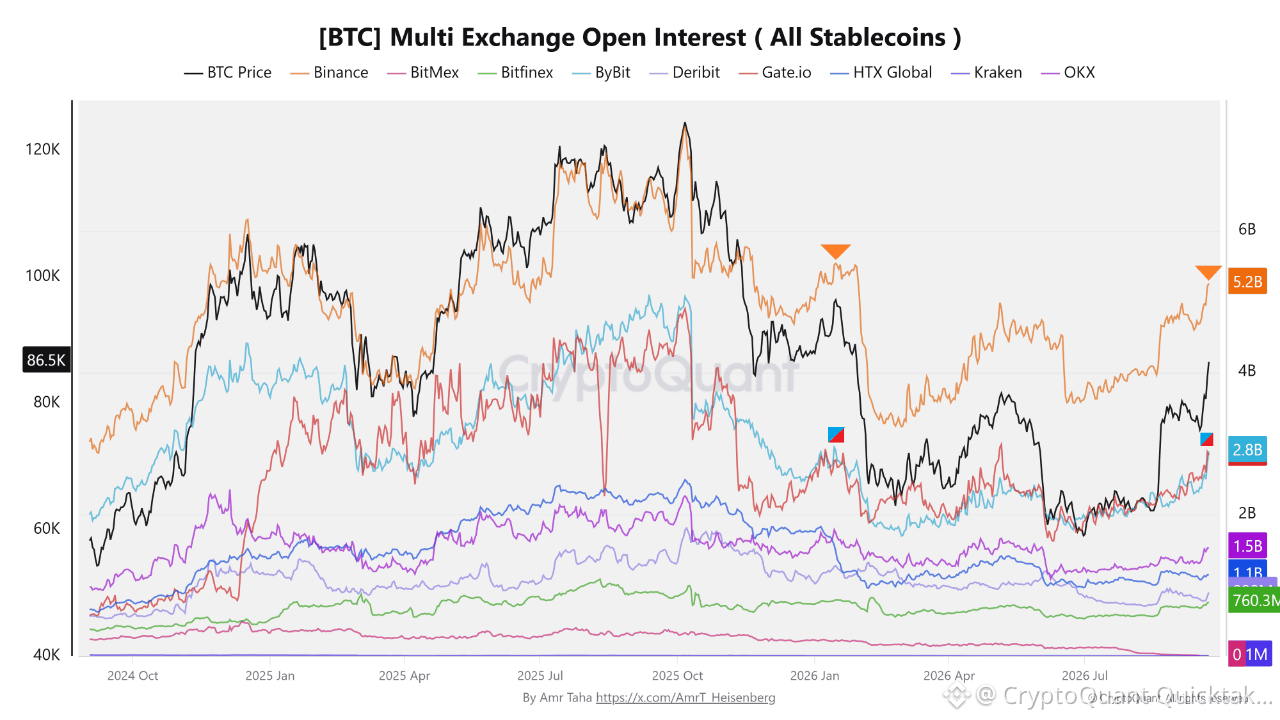
Bitcoin ochiq pozitsiyasi yirik birjalarda yanvar darajalariga qaytdi, BTC $86K dan oshgani sariBitcoin ochiq pozitsiyasi bir nechta yirik fyuchers birjalarida yanvarda oxirgi marta ko‘rilgan darajaga qaytdi, chunki BTC 22-sentabr kuni $86 000 dan oshdi.
Binanceda Bitcoin ochiq pozitsiyasi taxminan $5.25 milliardga yetdi, 18-yanvarda qayd etilgan $5.5 milliarddan esa atigi 4,5% past.
Bybit qariyb $2.9 milliardga ko‘tarildi, bu uning 15-yanvar kungi darajasiga mos keladi, shu bilan birga
Gate.io $2.83 milliardga yetdi, bu uning 26-yanvardagi $2.76 milliard ko‘rsatkichidan taxminan 2,5% yuqori.
OKX asosiy istisno bo‘lib qolmoqda. Uning ochiq pozitsiyasi qariyb $1.52 milliard atrofida, bu esa yanvar o‘rtalarida qayd etilgan $1.74 milliarddan taxminan 12,6% past.
Bitcoin ochiq pozitsiyasi yirik birjalarda yanvar darajalariga qaytdi, BTC $86K dan oshgani sari
Bitcoin ochiq pozitsiyasi bir nechta yirik fyuchers birjalarida yanvarda oxirgi marta ko‘rilgan darajaga qaytdi, chunki BTC 22-sentabr kuni $86 000 dan oshdi.
Binanceda Bitcoin ochiq pozitsiyasi taxminan $5.25 milliardga yetdi, 18-yanvarda qayd etilgan $5.5 milliarddan esa atigi 4,5% past.
Bybit qariyb $2.9 milliardga ko‘tarildi, bu uning 15-yanvar kungi darajasiga mos keladi, shu bilan birga
Gate.io $2.83 milliardga yetdi, bu uning 26-yanvardagi $2.76 milliard ko‘rsatkichidan taxminan 2,5% yuqori.
OKX asosiy istisno bo‘lib qolmoqda. Uning ochiq pozitsiyasi qariyb $1.52 milliard atrofida, bu esa yanvar o‘rtalarida qayd etilgan $1.74 milliarddan taxminan 12,6% past.
Binanceda Bitcoin ochiq pozitsiyasi taxminan $5.25 milliardga yetdi, 18-yanvarda qayd etilgan $5.5 milliarddan esa atigi 4,5% past.
Bybit qariyb $2.9 milliardga ko‘tarildi, bu uning 15-yanvar kungi darajasiga mos keladi, shu bilan birga
Gate.io $2.83 milliardga yetdi, bu uning 26-yanvardagi $2.76 milliard ko‘rsatkichidan taxminan 2,5% yuqori.
OKX asosiy istisno bo‘lib qolmoqda. Uning ochiq pozitsiyasi qariyb $1.52 milliard atrofida, bu esa yanvar o‘rtalarida qayd etilgan $1.74 milliarddan taxminan 12,6% past.
2
3
448
Maqola
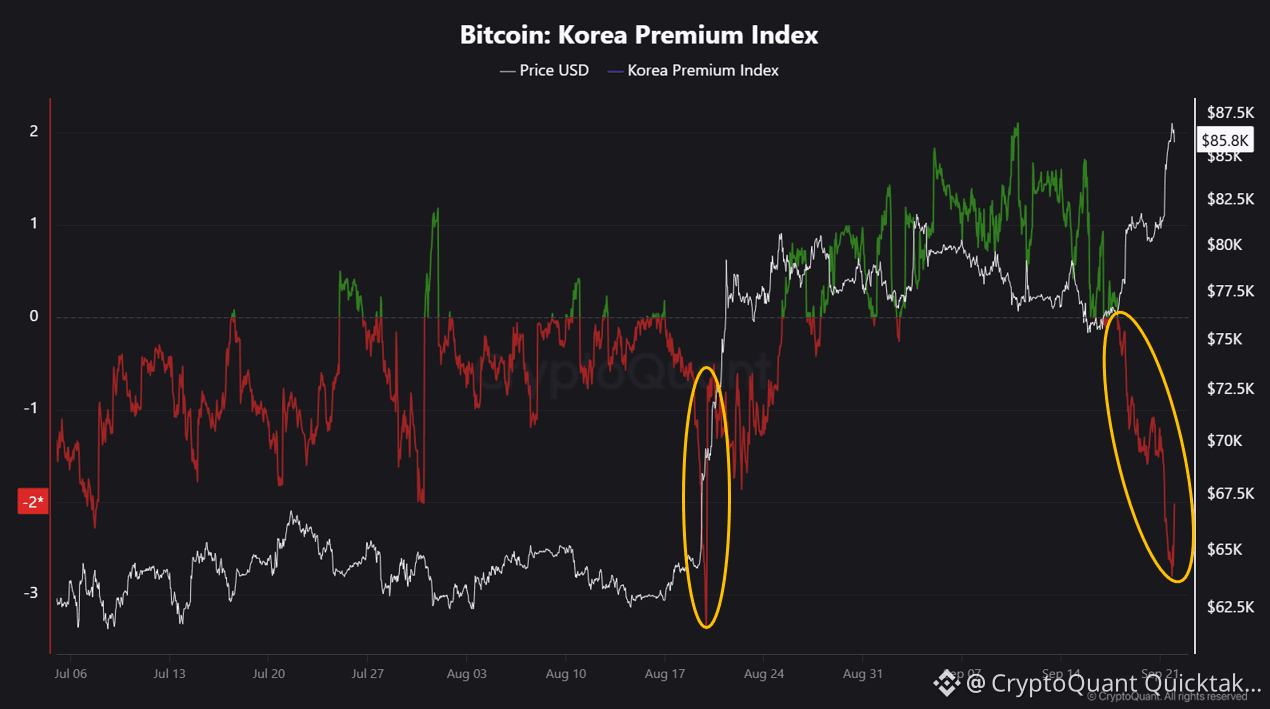
BTC - Nega bu qaytish haqiqiysi?Bitcoin 82 000 dollar darajasidan o‘tib, kuchli qarshilik zonasini bosib o‘tdi va muhim bir harakatda kimchi premiyasi torayib, teskari premiumga o‘girildi.
Koreya bozorining ishtirokchilari asosan chakana investorlar. Oxirgi ikki kuchli qaytish ushbu chakana oqimlar bilan emas, balki chet eldagi “kitlar” hisobidan yuz bergani bozor kayfiyati tushkunlik siklidan ko‘tarilish sikliga o‘tayotganini ko‘rsatadi.
Koreyalik chakana investorlar faqat ko‘tarilish siklining keyingi bosqichlarida jadal ravishda kirib kelishi ehtimoli yuqori.
BTC - Nega bu qaytish haqiqiysi?
Bitcoin 82 000 dollar darajasidan o‘tib, kuchli qarshilik zonasini bosib o‘tdi va muhim bir harakatda kimchi premiyasi torayib, teskari premiumga o‘girildi.
Koreya bozorining ishtirokchilari asosan chakana investorlar. Oxirgi ikki kuchli qaytish ushbu chakana oqimlar bilan emas, balki chet eldagi “kitlar” hisobidan yuz bergani bozor kayfiyati tushkunlik siklidan ko‘tarilish sikliga o‘tayotganini ko‘rsatadi.
Koreyalik chakana investorlar faqat ko‘tarilish siklining keyingi bosqichlarida jadal ravishda kirib kelishi ehtimoli yuqori.
Koreya bozorining ishtirokchilari asosan chakana investorlar. Oxirgi ikki kuchli qaytish ushbu chakana oqimlar bilan emas, balki chet eldagi “kitlar” hisobidan yuz bergani bozor kayfiyati tushkunlik siklidan ko‘tarilish sikliga o‘tayotganini ko‘rsatadi.
Koreyalik chakana investorlar faqat ko‘tarilish siklining keyingi bosqichlarida jadal ravishda kirib kelishi ehtimoli yuqori.
305
Maqola
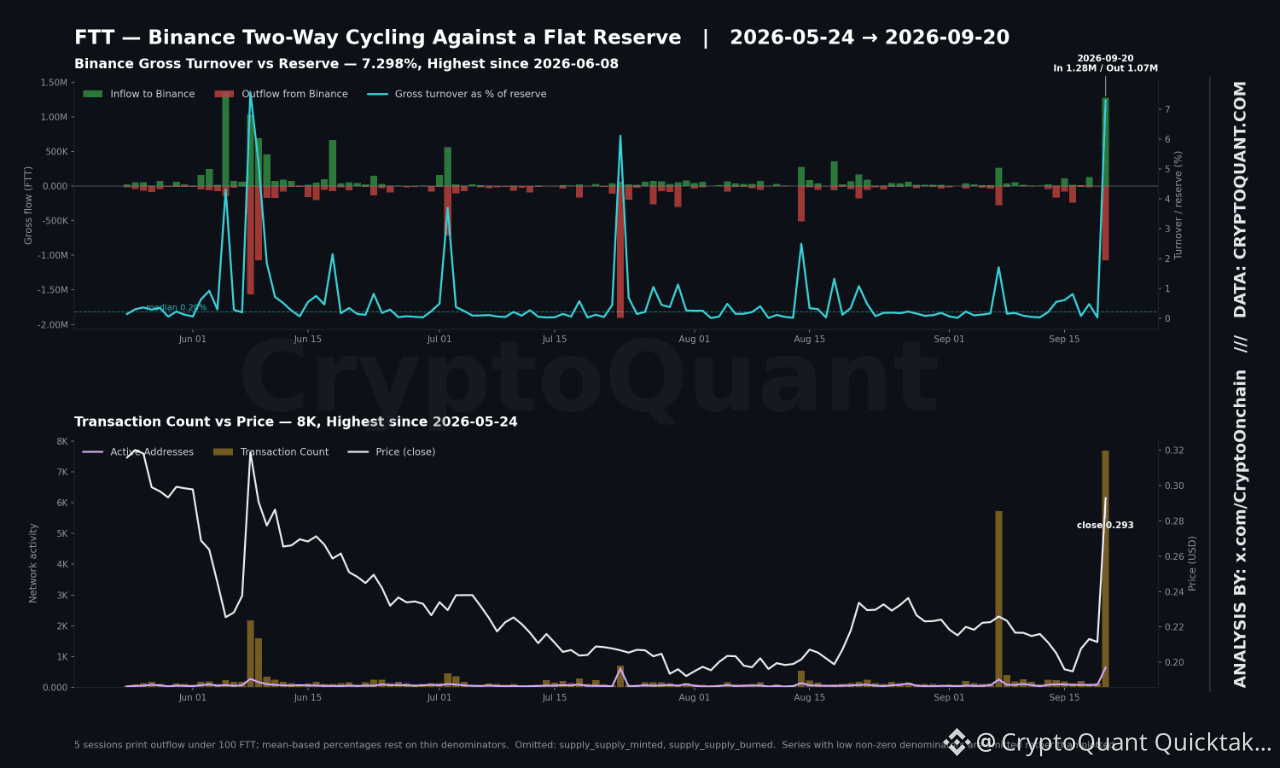
Binance FTT Outflow Transaction Count 20-sentabr kuni 315 taga yetdi, Olti oylikning eng yuqorisi...Binance’ning FTT bo‘yicha chiqim (outflow) tranzaksiyalari soni 20-sentabr kuni 315 taga yetdi. Xuddi o‘sha sessiyada Binance’ga kirim (inflow) jami 1 277 448 ta FTT bo‘ldi. Binance netflow haftaning 20-sentabr kuni yakunlangan qismi davomida kuniga o‘rtacha −2 060,91 FTT ni tashkil etdi.
Bir nechta ko‘rsatkichlar juda nozik poydevorlarga tayanadi. Binance’ning chiqimlari 9-sentabrda 0.000, 12-sentabrda esa 25.92 ni ko‘rsatdi, shuning uchun chiqim o‘rtachasidagi +557% haftalik o‘sish juda bo‘sh (deyarli nol) baza — maxraj —ga tayanadi. Birjalar manzillari soni aksariyat sessiyalarda bir xonali bo‘lib, ulush (%) sifatida e’lon qilinmaydi. supply_minted va supply_burned uchala ufqda ham 0.000 ko‘rsatadi — bu eskirgan seriya, istisno qilingan.
Binance FTT Outflow Transaction Count 20-sentabr kuni 315 taga yetdi, Olti oylikning eng yuqorisi...
Binance’ning FTT bo‘yicha chiqim (outflow) tranzaksiyalari soni 20-sentabr kuni 315 taga yetdi. Xuddi o‘sha sessiyada Binance’ga kirim (inflow) jami 1 277 448 ta FTT bo‘ldi. Binance netflow haftaning 20-sentabr kuni yakunlangan qismi davomida kuniga o‘rtacha −2 060,91 FTT ni tashkil etdi.
Bir nechta ko‘rsatkichlar juda nozik poydevorlarga tayanadi. Binance’ning chiqimlari 9-sentabrda 0.000, 12-sentabrda esa 25.92 ni ko‘rsatdi, shuning uchun chiqim o‘rtachasidagi +557% haftalik o‘sish juda bo‘sh (deyarli nol) baza — maxraj —ga tayanadi. Birjalar manzillari soni aksariyat sessiyalarda bir xonali bo‘lib, ulush (%) sifatida e’lon qilinmaydi. supply_minted va supply_burned uchala ufqda ham 0.000 ko‘rsatadi — bu eskirgan seriya, istisno qilingan.
Bir nechta ko‘rsatkichlar juda nozik poydevorlarga tayanadi. Binance’ning chiqimlari 9-sentabrda 0.000, 12-sentabrda esa 25.92 ni ko‘rsatdi, shuning uchun chiqim o‘rtachasidagi +557% haftalik o‘sish juda bo‘sh (deyarli nol) baza — maxraj —ga tayanadi. Birjalar manzillari soni aksariyat sessiyalarda bir xonali bo‘lib, ulush (%) sifatida e’lon qilinmaydi. supply_minted va supply_burned uchala ufqda ham 0.000 ko‘rsatadi — bu eskirgan seriya, istisno qilingan.
375
Maqola
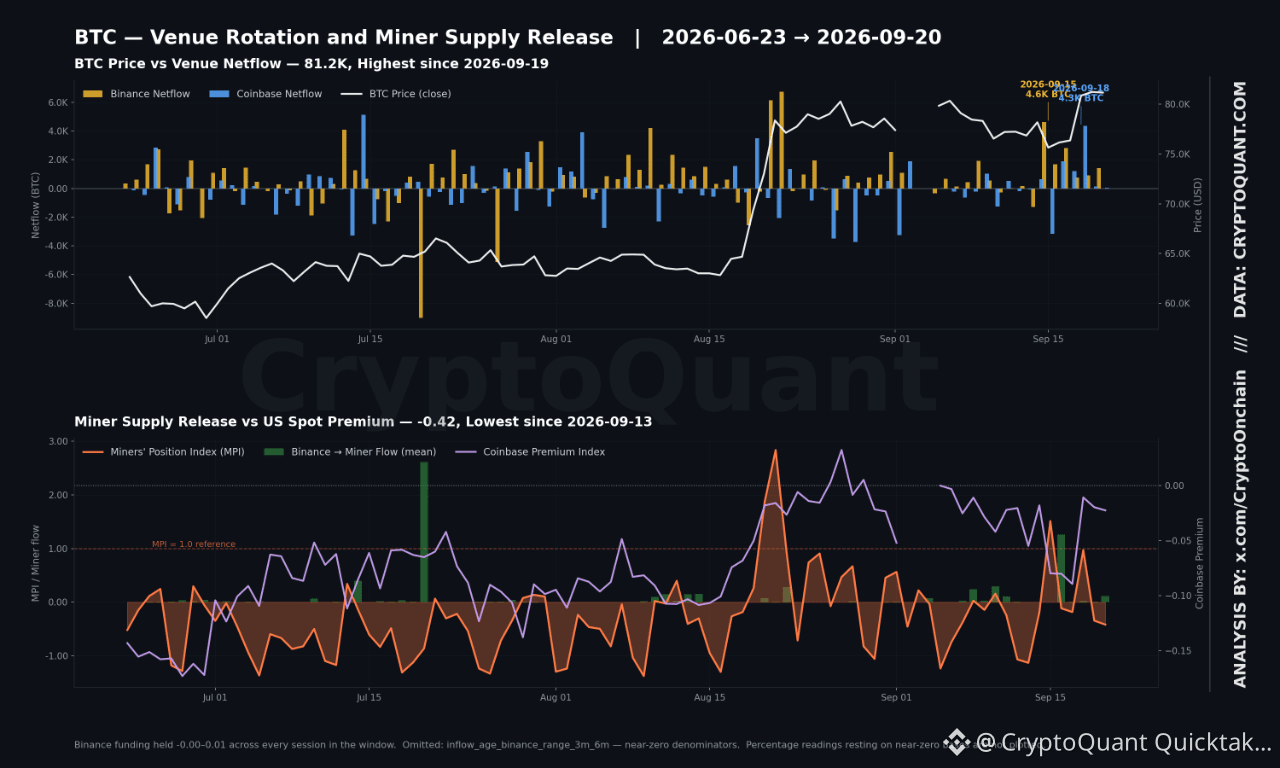
Bitcoin 19-sentabrda 81 224 da yopildi — 15-sentabrdagi eng past ko‘rsatkichdan 7.4% ga harakat ortidanBitcoin 19-sentabr kuni 81 224.60 da yopildi, bu e’lon qilingan oynadagi eng yuqori ko‘rsatkich. Coinbase netflow 18-sentabr kuni +4 347.08 BTC ga yetdi. Konchilar pozitsiyasi indeksi 20-sentabr yakuniga qadar bo‘lgan haftada o‘rtacha 0.17 ni tashkil etdi — oylik bazaviy ko‘rsatkichdan 814% yuqori.
Ikki seriya chiqarib tashlandi: NVT Golden Cross deyarli nol bazada kvartaliga +37,431% ni ko‘rsatadi — faqat uning 0.47 darajasi va haftalik −47% siljishi ishlatiladi. Yosh guruhlari bo‘yicha oqimlar (binance_3m_6m 0.23 BTC, all_10y_inf 3.59 BTC) eʼtiborga olinishi uchun denomintorlari juda past bo‘lgani sababli eʼlon qilib bo‘lmaydi, va birinchisi umuman olganda hafta-hafta (week-over-week) qiymatiga ega emas.
Bitcoin 19-sentabrda 81 224 da yopildi — 15-sentabrdagi eng past ko‘rsatkichdan 7.4% ga harakat ortidan
Bitcoin 19-sentabr kuni 81 224.60 da yopildi, bu e’lon qilingan oynadagi eng yuqori ko‘rsatkich. Coinbase netflow 18-sentabr kuni +4 347.08 BTC ga yetdi. Konchilar pozitsiyasi indeksi 20-sentabr yakuniga qadar bo‘lgan haftada o‘rtacha 0.17 ni tashkil etdi — oylik bazaviy ko‘rsatkichdan 814% yuqori.
Ikki seriya chiqarib tashlandi: NVT Golden Cross deyarli nol bazada kvartaliga +37,431% ni ko‘rsatadi — faqat uning 0.47 darajasi va haftalik −47% siljishi ishlatiladi. Yosh guruhlari bo‘yicha oqimlar (binance_3m_6m 0.23 BTC, all_10y_inf 3.59 BTC) eʼtiborga olinishi uchun denomintorlari juda past bo‘lgani sababli eʼlon qilib bo‘lmaydi, va birinchisi umuman olganda hafta-hafta (week-over-week) qiymatiga ega emas.
Ikki seriya chiqarib tashlandi: NVT Golden Cross deyarli nol bazada kvartaliga +37,431% ni ko‘rsatadi — faqat uning 0.47 darajasi va haftalik −47% siljishi ishlatiladi. Yosh guruhlari bo‘yicha oqimlar (binance_3m_6m 0.23 BTC, all_10y_inf 3.59 BTC) eʼtiborga olinishi uchun denomintorlari juda past bo‘lgani sababli eʼlon qilib bo‘lmaydi, va birinchisi umuman olganda hafta-hafta (week-over-week) qiymatiga ega emas.
152
Maqola
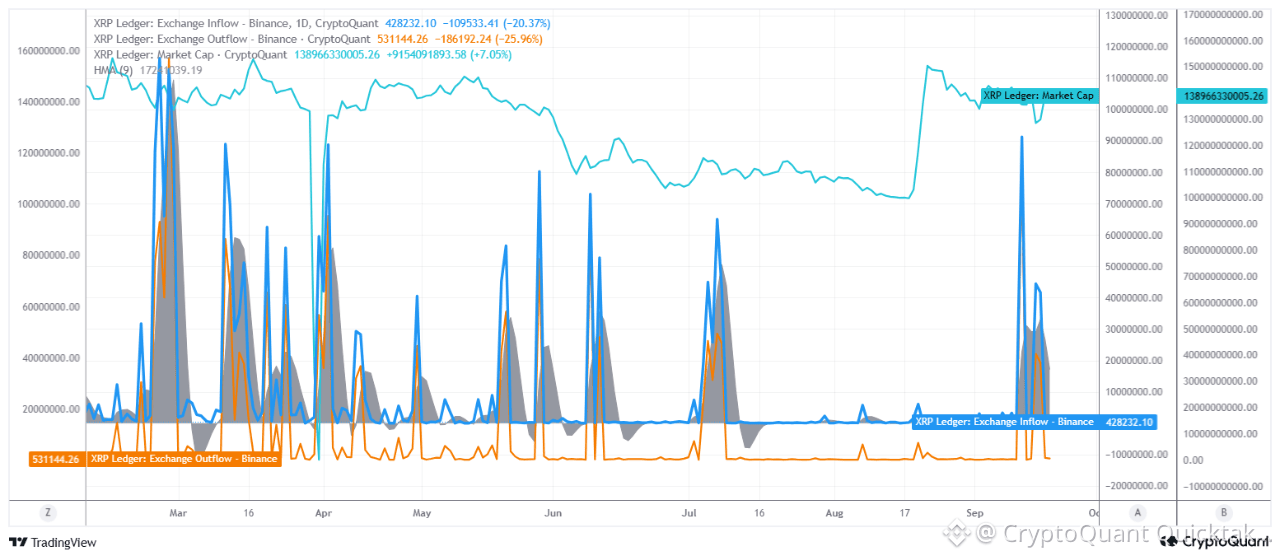
XRP ning qo‘llab-quvvatlovchi tuzilmasi e’tiborni tortmoqdaUshbu grafikda eng e’tiborli signal sifatida XRP’ning Binance’ga kirishi bilan XRP’ning birjadan chiqishi o‘rtasidagi farq oxirgi davrda manfiy bo‘lib qolayotganini aytish mumkin.
Grafikdagi eng so‘nggi ma’lumotlarga ko‘ra:
Birjaga kirim: -20.37%
Birjadan chiqim: -25.96%
Sof oqim: taxminan -102,912 XRP
XRP bozori kapitali: 138.97 mlrd dollar (+7.05%)
Boshqacha aytganda, so‘nggi paytlarda Binance’ni tark etayotgan XRP miqdori Binance’ga kirayotgan XRP miqdoridan yuqoriroq bo‘ldi.
Bu shuni ko‘rsatadiki, ta’minotning bir qismi qisqa muddatda birjalardan tashqariga harakat qilmoqda. Buning narx ko‘tarilayotgan paytda sodir bo‘layotgani ayniqsa muhim. Investorlar sotish uchun uni birjalarga yuborish o‘rniga, bir qismini birjalardan tashqarida saqlayotgan bo‘lishlari mumkin. Shuning uchun sotuv bosimi zaiflashishi va narxning yuqoriga reaksiyasi ehtimoli qo‘llab-quvvatlanishi mumkin. Biroq, buni ta’kidlash muhimki, bu holatning o‘zi yakka holda yuqoriga harakatga kafolat bermaydi.
XRP ning qo‘llab-quvvatlovchi tuzilmasi e’tiborni tortmoqda
Ushbu grafikda eng e’tiborli signal sifatida XRP’ning Binance’ga kirishi bilan XRP’ning birjadan chiqishi o‘rtasidagi farq oxirgi davrda manfiy bo‘lib qolayotganini aytish mumkin.
Grafikdagi eng so‘nggi ma’lumotlarga ko‘ra:
Birjaga kirim: -20.37%
Birjadan chiqim: -25.96%
Sof oqim: taxminan -102,912 XRP
XRP bozori kapitali: 138.97 mlrd dollar (+7.05%)
Boshqacha aytganda, so‘nggi paytlarda Binance’ni tark etayotgan XRP miqdori Binance’ga kirayotgan XRP miqdoridan yuqoriroq bo‘ldi.
Bu shuni ko‘rsatadiki, ta’minotning bir qismi qisqa muddatda birjalardan tashqariga harakat qilmoqda. Buning narx ko‘tarilayotgan paytda sodir bo‘layotgani ayniqsa muhim. Investorlar sotish uchun uni birjalarga yuborish o‘rniga, bir qismini birjalardan tashqarida saqlayotgan bo‘lishlari mumkin. Shuning uchun sotuv bosimi zaiflashishi va narxning yuqoriga reaksiyasi ehtimoli qo‘llab-quvvatlanishi mumkin. Biroq, buni ta’kidlash muhimki, bu holatning o‘zi yakka holda yuqoriga harakatga kafolat bermaydi.
Grafikdagi eng so‘nggi ma’lumotlarga ko‘ra:
Birjaga kirim: -20.37%
Birjadan chiqim: -25.96%
Sof oqim: taxminan -102,912 XRP
XRP bozori kapitali: 138.97 mlrd dollar (+7.05%)
Boshqacha aytganda, so‘nggi paytlarda Binance’ni tark etayotgan XRP miqdori Binance’ga kirayotgan XRP miqdoridan yuqoriroq bo‘ldi.
Bu shuni ko‘rsatadiki, ta’minotning bir qismi qisqa muddatda birjalardan tashqariga harakat qilmoqda. Buning narx ko‘tarilayotgan paytda sodir bo‘layotgani ayniqsa muhim. Investorlar sotish uchun uni birjalarga yuborish o‘rniga, bir qismini birjalardan tashqarida saqlayotgan bo‘lishlari mumkin. Shuning uchun sotuv bosimi zaiflashishi va narxning yuqoriga reaksiyasi ehtimoli qo‘llab-quvvatlanishi mumkin. Biroq, buni ta’kidlash muhimki, bu holatning o‘zi yakka holda yuqoriga harakatga kafolat bermaydi.
137
Maqola
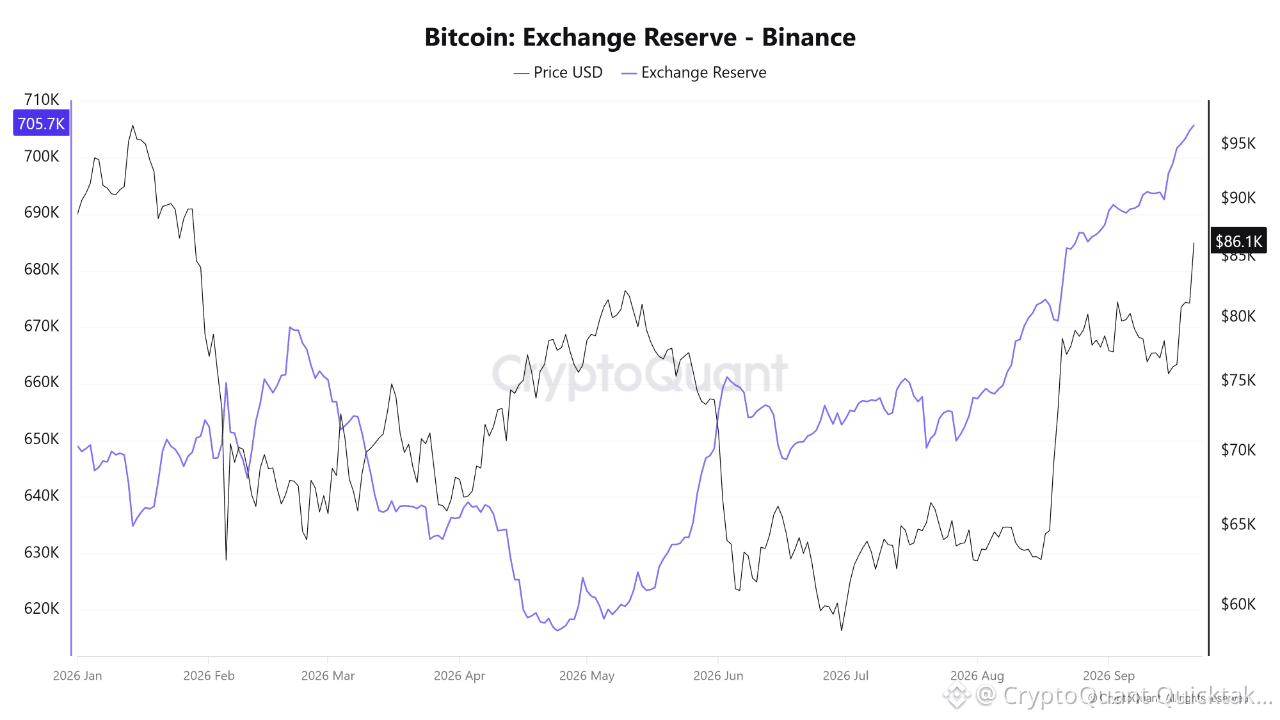
Bitcoin $86 000 dan oshdi: Binance zaxiralari ogohlantirish belgisi bo‘ldiBitcoin 86 000 dollardan yuqoriga ko‘tarilib, sakkiz oylik eng yuqori darajaga yetdi. Aksiyaning (ralli) uchta kuchi bor edi: AQSh spot Bitcoin ETFlariga qayta boshlangan oqimlar, G‘aznachilik obligatsiyalari rentabelligi va neft narxlarining pasayishi fonida risk kayfiyatining yaxshilanishi hamda yirik short siqilishi. 24 soat ichida taxminan 367 million dollar miqdoridagi Bitcoin shortlari yopildi va harakatni tezlashtirdi.
Biroq, on-chain ko‘rinish to‘liq darajada ijobiy emas. CryptoQuant ma’lumotlariga ko‘ra, 19-sentabr kuni Binance’ning Bitcoin zaxirasi taxminan 702 900 BTC bo‘lgan va u iyul oxiridagiga nisbatan qariyb 55 000 BTC ga oshgan. Birjada yuqori zaxiralar darhol sotuv bo‘lishini kafolatlamaydi, lekin sotilishi mumkin bo‘lgan BTC miqdorini oshiradi. Binance’ning Exchange Whale Ratio ko‘rsatkichi taxminan 0.43 atrofida bo‘lgan, netflow esa taxminan 439 BTC ga ijobiy bo‘lib, ba’zi tangalar hali ham birja tomon harakatda bo‘lganini ko‘rsatdi.
Bitcoin $86 000 dan oshdi: Binance zaxiralari ogohlantirish belgisi bo‘ldi
Bitcoin 86 000 dollardan yuqoriga ko‘tarilib, sakkiz oylik eng yuqori darajaga yetdi. Aksiyaning (ralli) uchta kuchi bor edi: AQSh spot Bitcoin ETFlariga qayta boshlangan oqimlar, G‘aznachilik obligatsiyalari rentabelligi va neft narxlarining pasayishi fonida risk kayfiyatining yaxshilanishi hamda yirik short siqilishi. 24 soat ichida taxminan 367 million dollar miqdoridagi Bitcoin shortlari yopildi va harakatni tezlashtirdi.
Biroq, on-chain ko‘rinish to‘liq darajada ijobiy emas. CryptoQuant ma’lumotlariga ko‘ra, 19-sentabr kuni Binance’ning Bitcoin zaxirasi taxminan 702 900 BTC bo‘lgan va u iyul oxiridagiga nisbatan qariyb 55 000 BTC ga oshgan. Birjada yuqori zaxiralar darhol sotuv bo‘lishini kafolatlamaydi, lekin sotilishi mumkin bo‘lgan BTC miqdorini oshiradi. Binance’ning Exchange Whale Ratio ko‘rsatkichi taxminan 0.43 atrofida bo‘lgan, netflow esa taxminan 439 BTC ga ijobiy bo‘lib, ba’zi tangalar hali ham birja tomon harakatda bo‘lganini ko‘rsatdi.
Biroq, on-chain ko‘rinish to‘liq darajada ijobiy emas. CryptoQuant ma’lumotlariga ko‘ra, 19-sentabr kuni Binance’ning Bitcoin zaxirasi taxminan 702 900 BTC bo‘lgan va u iyul oxiridagiga nisbatan qariyb 55 000 BTC ga oshgan. Birjada yuqori zaxiralar darhol sotuv bo‘lishini kafolatlamaydi, lekin sotilishi mumkin bo‘lgan BTC miqdorini oshiradi. Binance’ning Exchange Whale Ratio ko‘rsatkichi taxminan 0.43 atrofida bo‘lgan, netflow esa taxminan 439 BTC ga ijobiy bo‘lib, ba’zi tangalar hali ham birja tomon harakatda bo‘lganini ko‘rsatdi.
173
Maqola
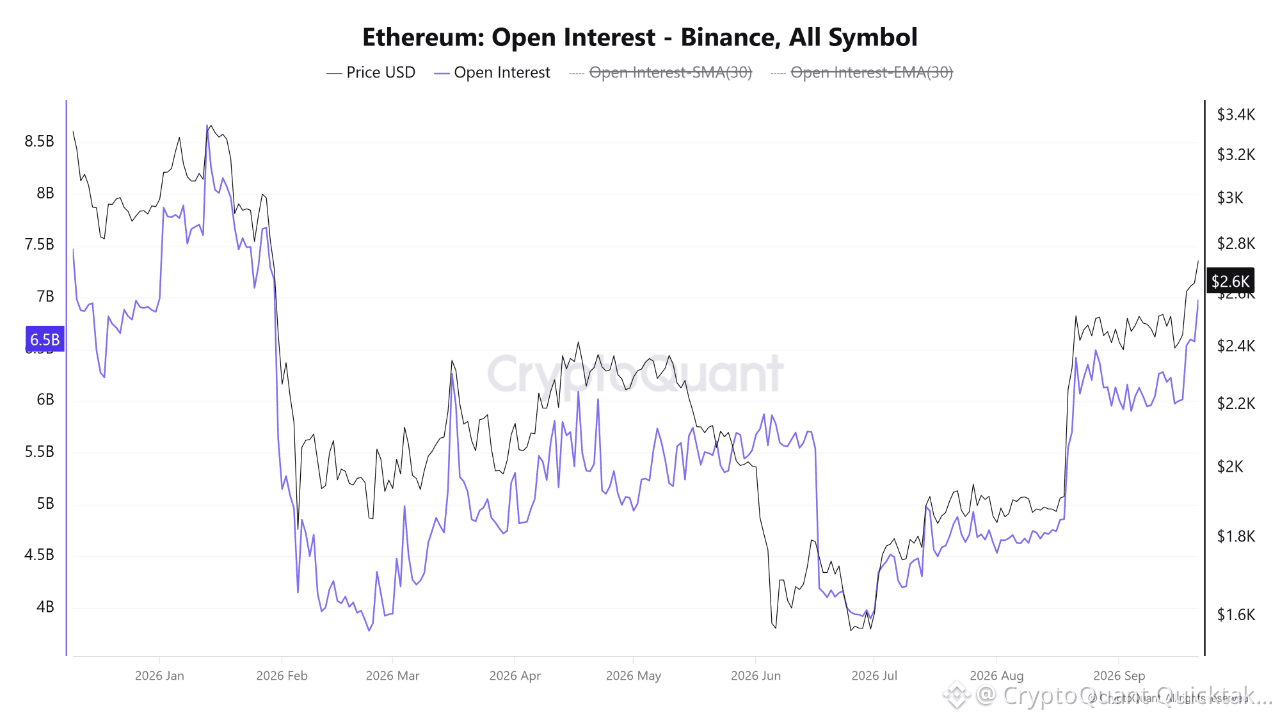
Ethereum Open Interest Binance’da To‘qqiz Oylik Yuqori Chegaraga YaqinlashdiMa’lumotlar Binance’da Ethereum shartnomalari uchun ochiq foizlarda sezilarli o‘sish kuzatilganini, bu esa ETH narxlarining yaqinda ko‘tarilishi bilan birga kelganini ko‘rsatadi. Ma’lumotlarga ko‘ra, ochiq foizlar yanvardan buyon eng yuqori darajada taxminan 6,58 milliard dollarga yetgan — undan oldingi haftalarda esa u ancha pastroq darajalarda “suzib yurgan” edi.
Ushbu o'sish avgust oxiridan buyon ochiq foizlar (open interest) sezilarli oshganidan keyin kuzatiladi: o‘sha paytda u taxminan 4,8 milliard dollar atrofida bo‘lgan, keyin esa sentabr davomida jadallashgan. Shu bilan birga, Ethereum narxi taxminan 2 644 dollarga ko‘tarilib, ochiq pozitsiyalar va ETH narxining bir vaqtda o‘sishini ko‘rsatmoqda.
Ethereum Open Interest Binance’da To‘qqiz Oylik Yuqori Chegaraga Yaqinlashdi
Ma’lumotlar Binance’da Ethereum shartnomalari uchun ochiq foizlarda sezilarli o‘sish kuzatilganini, bu esa ETH narxlarining yaqinda ko‘tarilishi bilan birga kelganini ko‘rsatadi. Ma’lumotlarga ko‘ra, ochiq foizlar yanvardan buyon eng yuqori darajada taxminan 6,58 milliard dollarga yetgan — undan oldingi haftalarda esa u ancha pastroq darajalarda “suzib yurgan” edi.
Ushbu o'sish avgust oxiridan buyon ochiq foizlar (open interest) sezilarli oshganidan keyin kuzatiladi: o‘sha paytda u taxminan 4,8 milliard dollar atrofida bo‘lgan, keyin esa sentabr davomida jadallashgan. Shu bilan birga, Ethereum narxi taxminan 2 644 dollarga ko‘tarilib, ochiq pozitsiyalar va ETH narxining bir vaqtda o‘sishini ko‘rsatmoqda.
Ushbu o'sish avgust oxiridan buyon ochiq foizlar (open interest) sezilarli oshganidan keyin kuzatiladi: o‘sha paytda u taxminan 4,8 milliard dollar atrofida bo‘lgan, keyin esa sentabr davomida jadallashgan. Shu bilan birga, Ethereum narxi taxminan 2 644 dollarga ko‘tarilib, ochiq pozitsiyalar va ETH narxining bir vaqtda o‘sishini ko‘rsatmoqda.
186
Ko‘proq kontentni ko‘rish uchun tizimga kiring
Binance Square'da global kriptovalyuta foydalanuvchilariga qo‘shiling
⚡️ Kriptovalyuta haqida eng so‘nggi va foydali ma’lumotlarni oling.
💬 Dunyoning eng yirik kriptovalyuta birjasi tomonidan ishonchli deb topilgan.
👍 Tasdiqlangan mualliflardan haqiqiy tahlillarni kashf eting.
Email / telefon raqami
Trenddagi mavzular
AIStocksWhatNext
469,663 marta koʻrilgan
3,487 muhokama qilmoqda
Trendlashayotgan xeshteglar kampaniyamizda “Share & Win” trafik mukofotini qo‘lga kiriting
✨Mavzu: AI aksiya kurslari o‘sishda davom etayotgan bir paytda yana qanday investitsiya imkoniyatlari bor?
👉Qanday qo‘shilish:
#AIStocksWhatNext xeshtegi bilan qisqa post yoki maqola joylang
Siz bu holatda bullish tomondamisiz yoki bearish — shuni ayting va AI aksiyalaringiz bo‘yicha portfelingizni yoki treydlaringizni ulashing; treyd vidjeti sizning ishtirokingizga moslikni oshirishi mumkin.
Shuningdek, postingizni ma’lumotlar yoki grafiklar bilan boyitib, AI tomonidan yaratilgan rasmlardan foydalanmaslik orqali kuchaytira olasiz.
✍️Quyidagi yo‘nalishlardan kelib chiqib kontent yarating:
- Nvidia chip sotuvlari kelasi yili ikki baravar bo‘lishini aytdi, eng yirik AI kompaniyalar esa rekord darajadagi daromadlarni qayd etishda davom etyapti — ortidagi hisoblash xarajatlari ham juda katta. AIga talab haqiqatan ham shiddat bilan oshyaptimi? Bu qancha davom etishi mumkin? AI aksiyalar hamma joyda o‘sishda. Bu haqiqiy “breakout”mi yoki faqat qisqa muddatli sakrashmi?
- Tarmoq yetakchilari AI rivojlanishini sekinlashtirishga chaqirmoqda, Trump esa “AI Force” barpo etishni rejalashtirib, AI kelajakda AQSh YAIMning 25%ini tashkil qilishi mumkinligini aytmoqda. Siz qaysi tomondsiz? Davlat darajasidagi qo‘llab-quvvatlash AI aksiyalar uchun uzoq muddatli yutuq bo‘ladimi?
- Siz AI aksiyalarini sotib olyapsizmi? Bizning trade sharing vidjetimiz orqali AI’ga oid treydingiz/ulushingizni ulashing.
⏰Kampaniya davri:
- 2026-09-22 7:00 - 2026-09-24 4:00 UTC
🎁Mukofot:
- Yuqoridagi ko‘rsatmalarga mos keladigan va 100 tadan ko‘p so‘zdan iborat malakali postlar ko‘rib chiqiladi hamda 500 dan 3 000 gacha bo‘lgan tasodifiy trafik oshiruvchi qo‘shimcha olishi mumkin. Postingiz tanlansa, feed kotibingizdan bildirishnoma olasiz.
- Binance Square Official’da maqolangizni namoyish qilish imkoniyatiga ega bo‘ling
Postingiz uchun g‘oyalar kerakmi? Mavzu sahifasiga kiring #AIStocksWhatNext yoki Square Guide on How to Post for Better Reach.
Binance Square Official
·413 ta layk
·1M marta koʻrilgan
BitcoinTops$87KAtEightMonthHigh
288 marta koʻrilgan
18 muhokama qilmoqda
ZECBreaksAbove$1600AtRecordHigh
64 marta koʻrilgan
5 muhokama qilmoqda